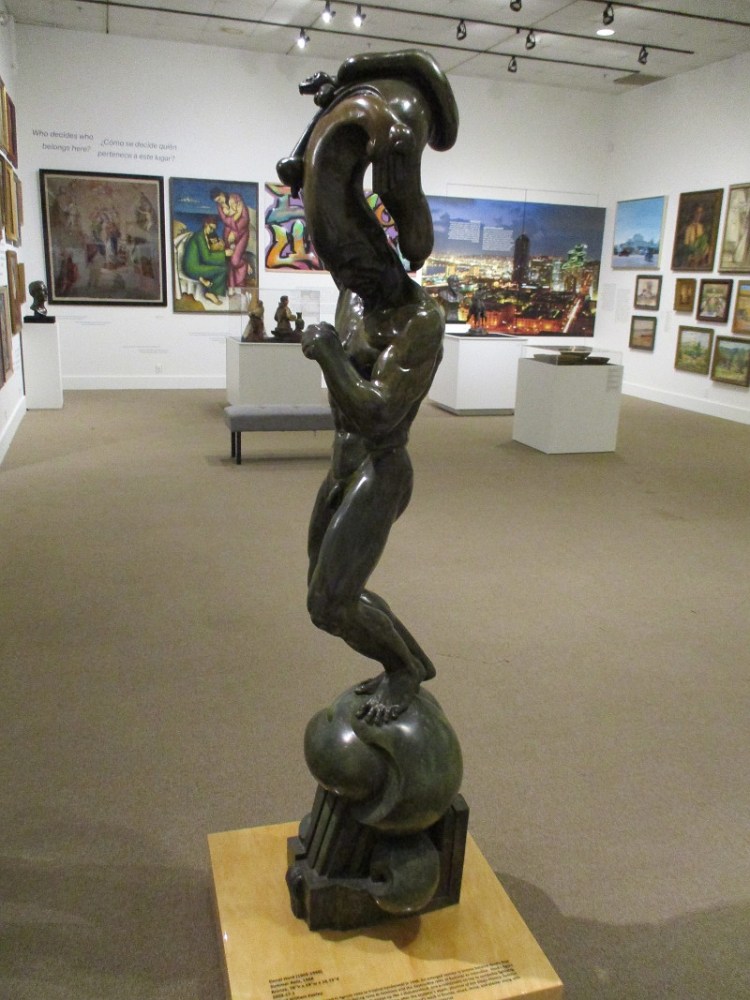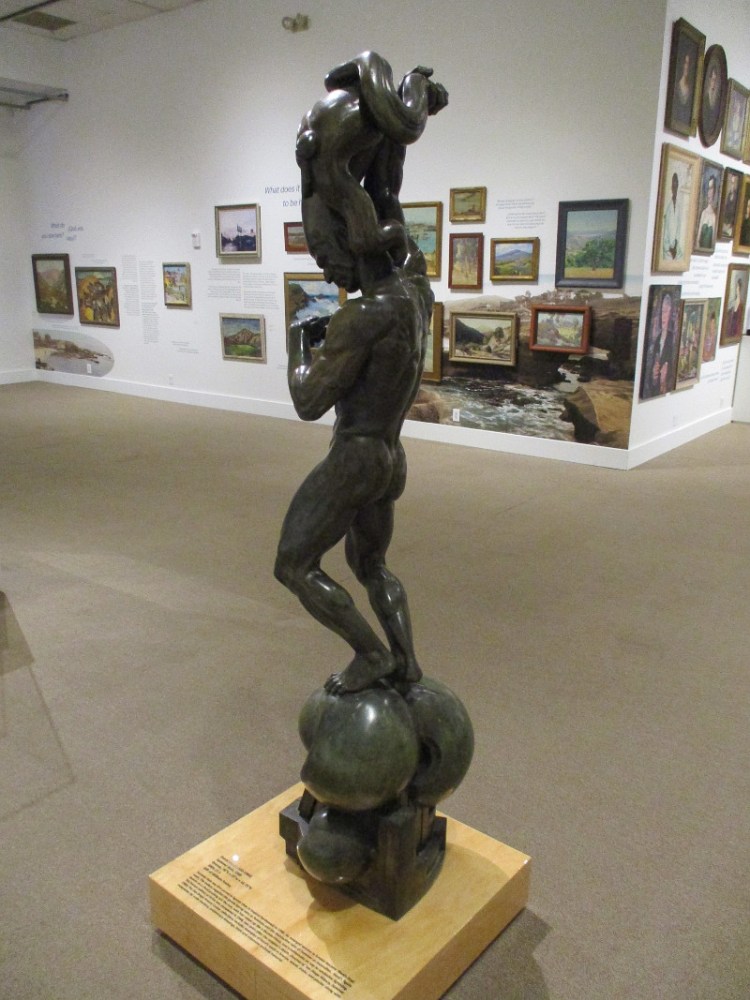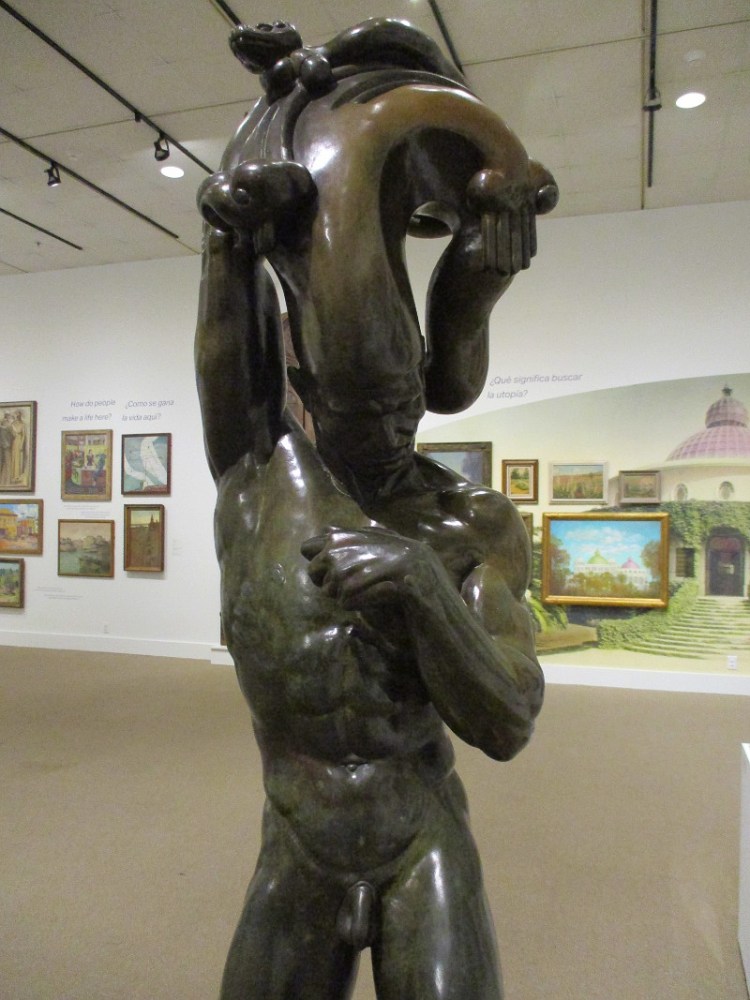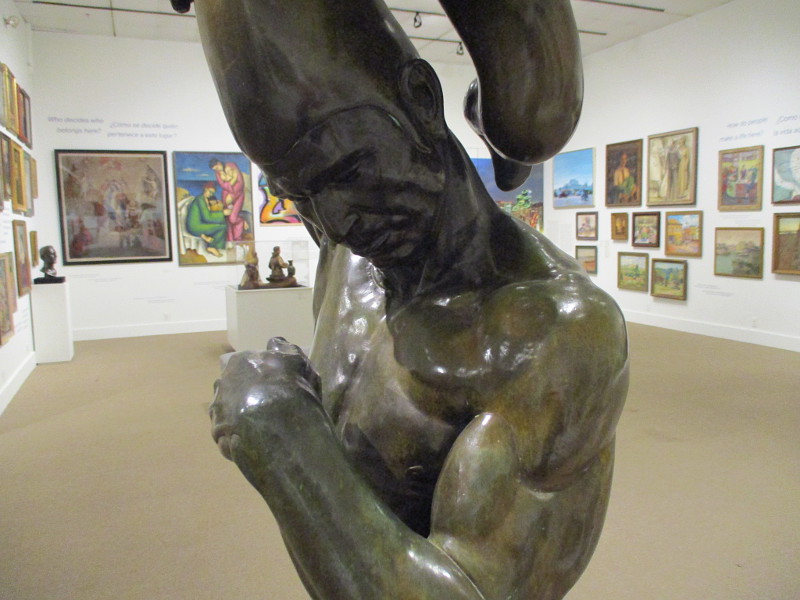
Donal Hord’s Summer Rain at San Diego History Center.

Several wonderful pieces of Donal Hord art are now on display at the San Diego History Center in Balboa Park. I noticed them last weekend.

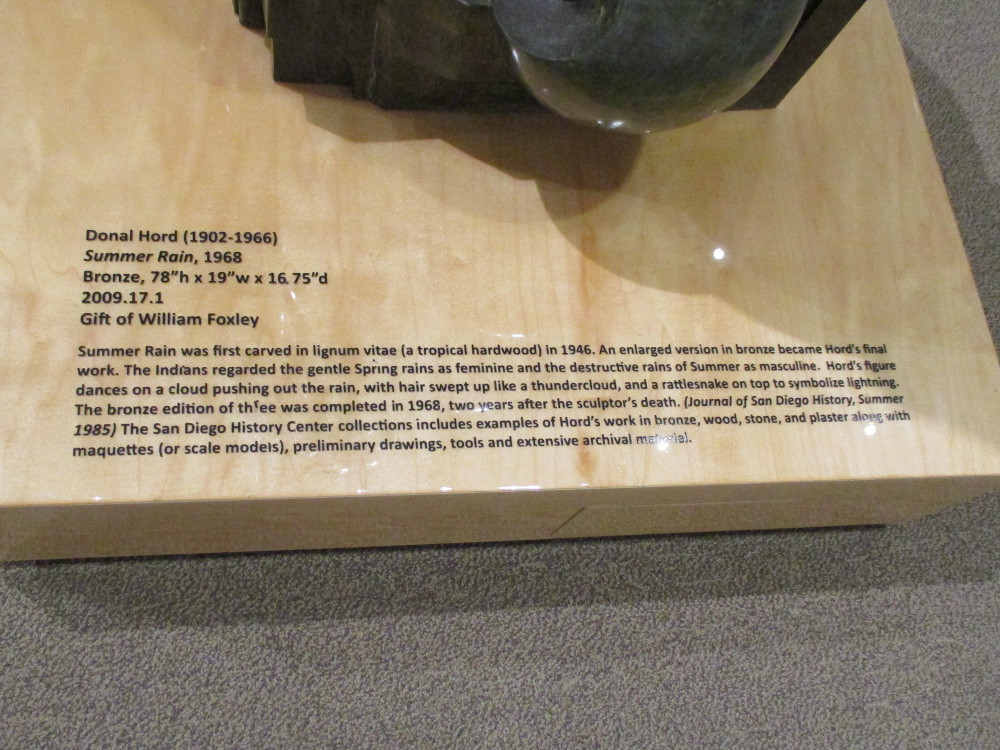
Most prominent is the extraordinary sculpture Summer Rain, Donal Hord’s final commission. Originally sculpted in 1946 from the dense wood lignum vitae, Summer Rain was cast in bronze in 1968 by Homer Dana, his assistant, two years after Hord’s death.

Donal Hord is considered San Diego’s greatest sculptor. He achieved international fame by bringing a variety of materials, including very hard stone, to life. Many of his spiritual, symbol-filled sculptures were inspired from a year he spent in Mexico, where he studied traditional Olmec and Zapotec art. Some of his public sculptures have become iconic landmarks or representations of our city.

Summer Rain stands near the center of the History Center’s fine art exhibition Be Here Now. The work of artists who lived or spent a great deal of time in San Diego fill a large gallery, and visitors are asked to consider what the collected artwork might say about our region.
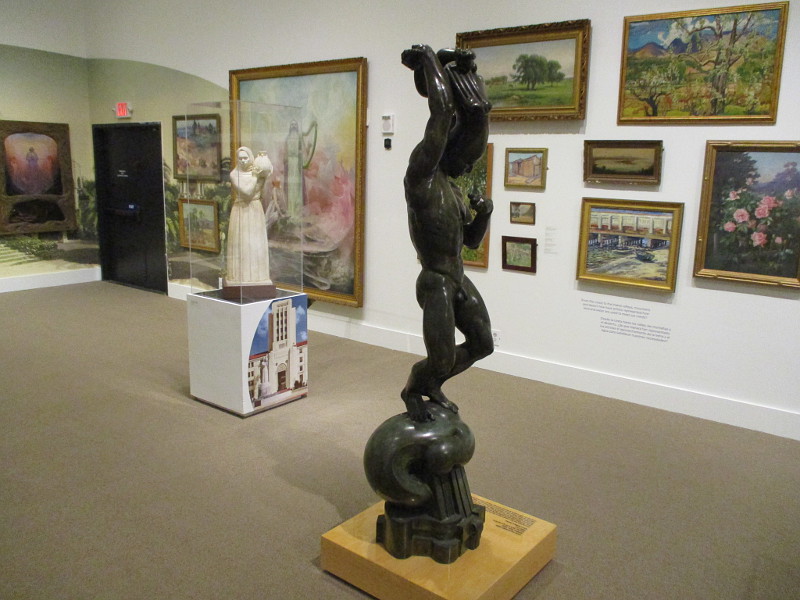
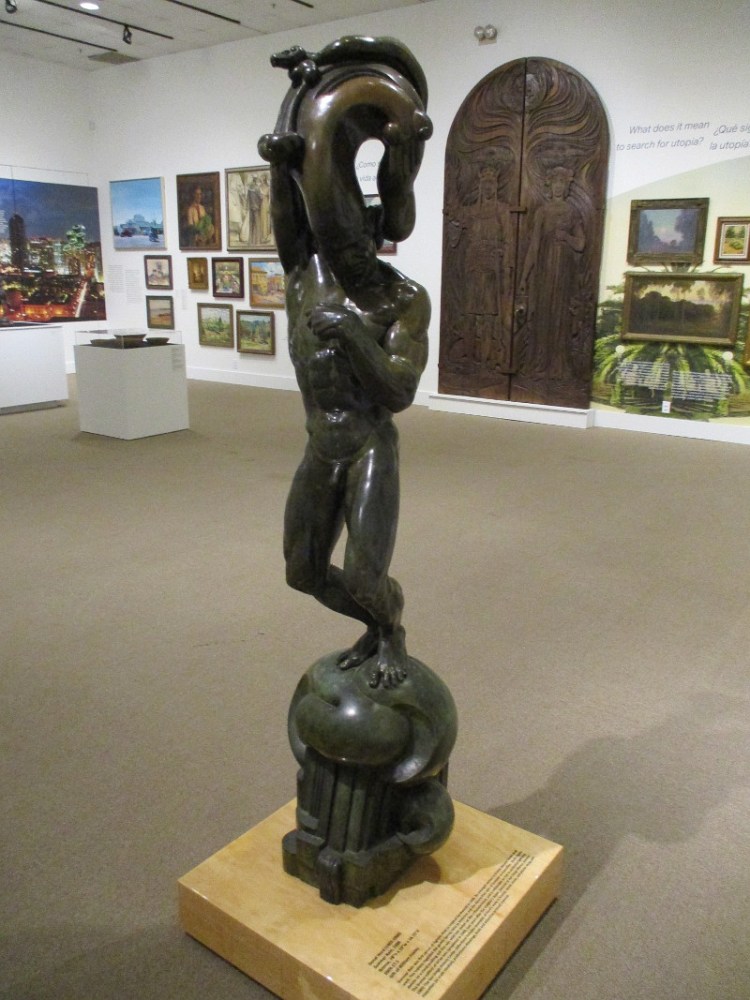
…Hord’s figure dances on a cloud pushing out the rain, with hair swept up like a thundercloud, and a rattlesnake on top to symbolize lightning…The San Diego History Center collections include examples of Hord’s work in bronze, wood, stone, and plaster along with maquettes (or scale models), preliminary drawings, tools and extensive archival material.

I live in downtown San Diego and love to walk around with my camera! You can follow Cool San Diego Sights via Facebook or Twitter!

You can easily explore Cool San Diego Sights by using the search box on my blog’s sidebar. Or click a tag! There are thousands upon thousands of photos for you to enjoy!
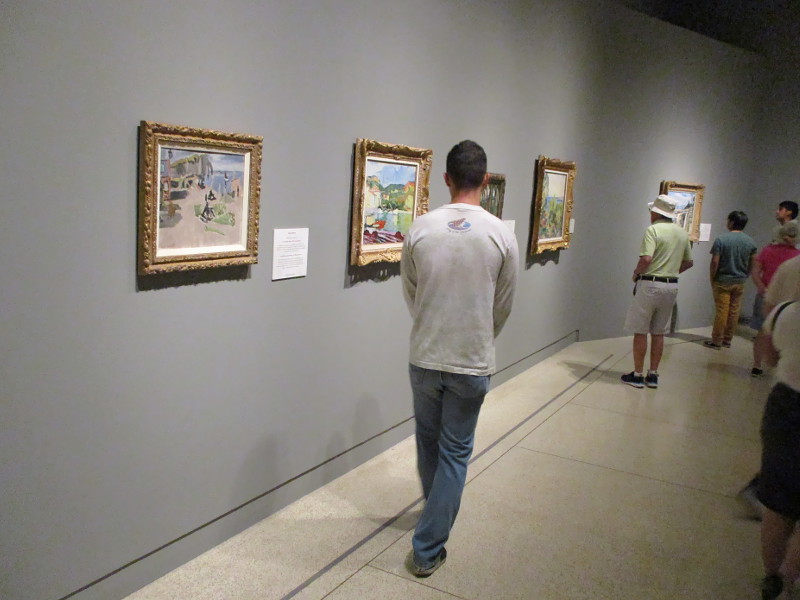
Impressionist masterpieces exhibited in San Diego!

Tired of living much of your life virtually for the last couple of years? Would you like an awe-inspiring, exhilarating first-hand experience of fine art?

At the San Diego Museum of Art in Balboa Park, numerous Impressionist masterpieces now await your eyes!

Monet to Matisse: Impressionist Masterpieces from the Bemberg Foundation showcases pieces from one of the finest art collections in Europe. And it’s right here in San Diego for much of the summer.

All I know is that I visited the museum yesterday and found myself drifting into dreamlike worlds through frames hung on gallery walls. Scenes composed with mere glimpses of light, color and form somehow became real–more than real.

It isn’t often eyes are privileged to absorb artwork this historically important, and excellent.

Artists I noticed include Monet, Pissarro, Cezanne, Matisse, Gauguin, Degas and Picasso. If you’ve never had the opportunity to view original artwork by some of the world’s greatest artists, now is your chance!

Just a few different examples…

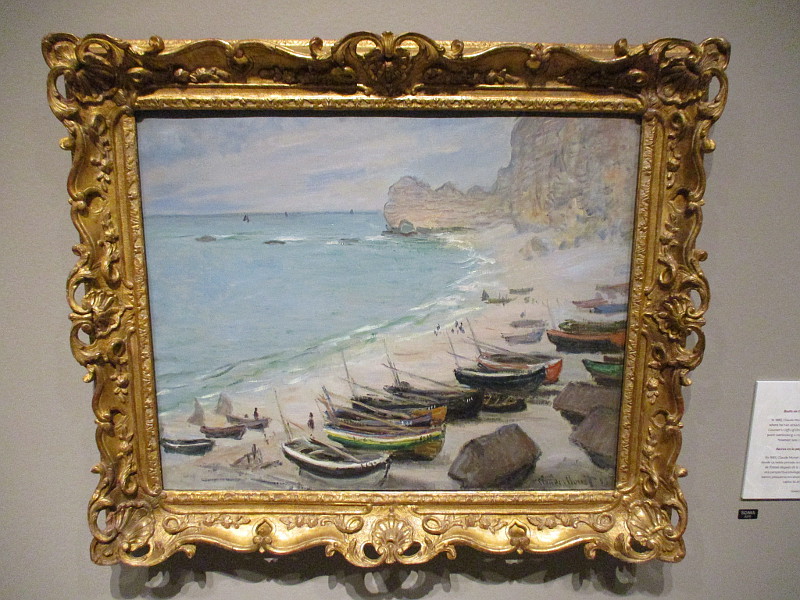
Boats on the Beach at Etretat, Claude Monet, 1883. Oil on canvas.
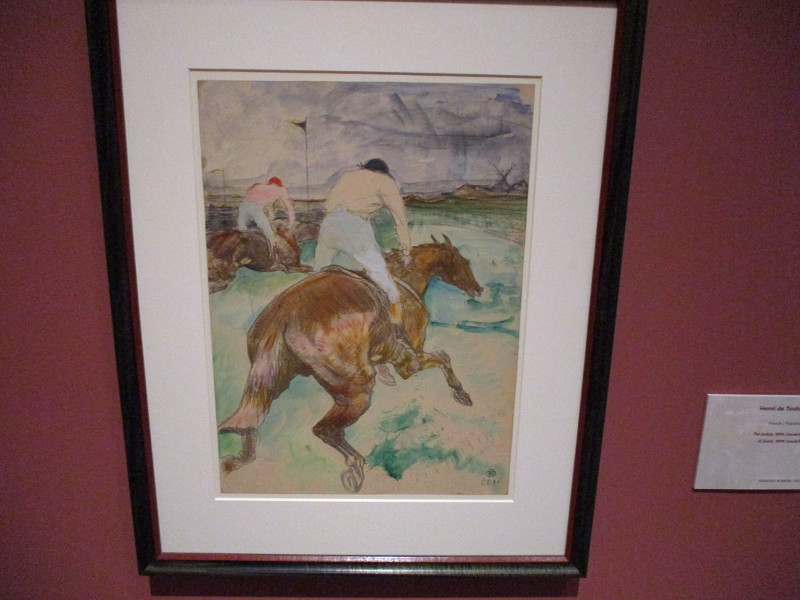
The Jockey, Henri de Toulouse-Lautrec, 1899. Gouache and lithograph.
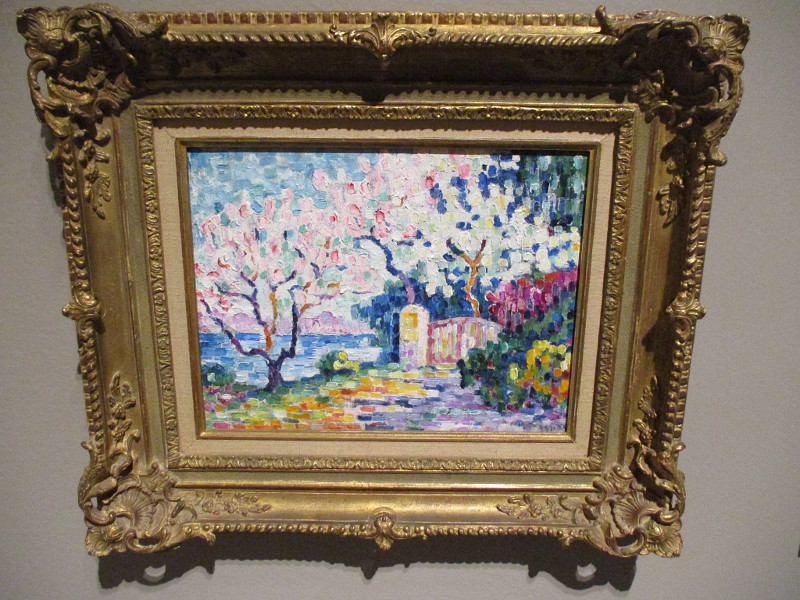
Almond Trees in Flower, Paul Signac, 1902-1904. Oil on canvas.
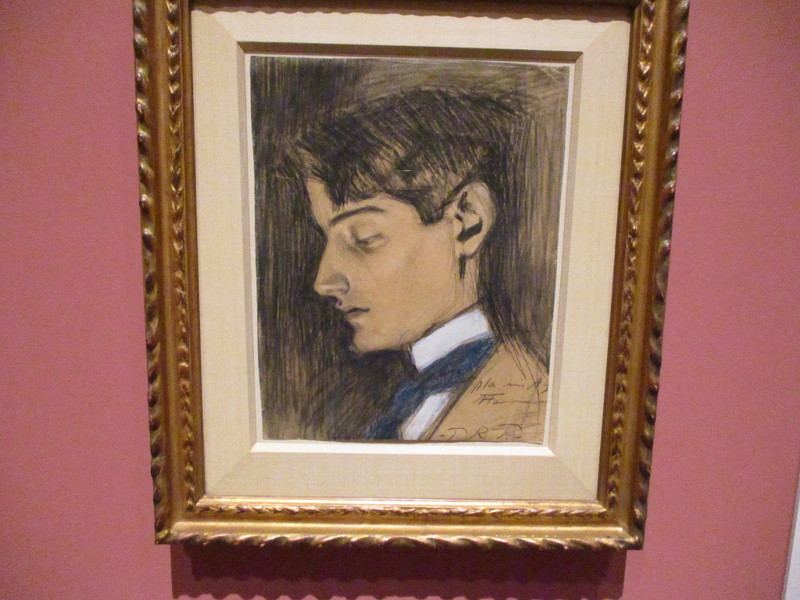
Portrait of Angel Fernandez del Soto, Pablo Picasso, 1903. Pastel.
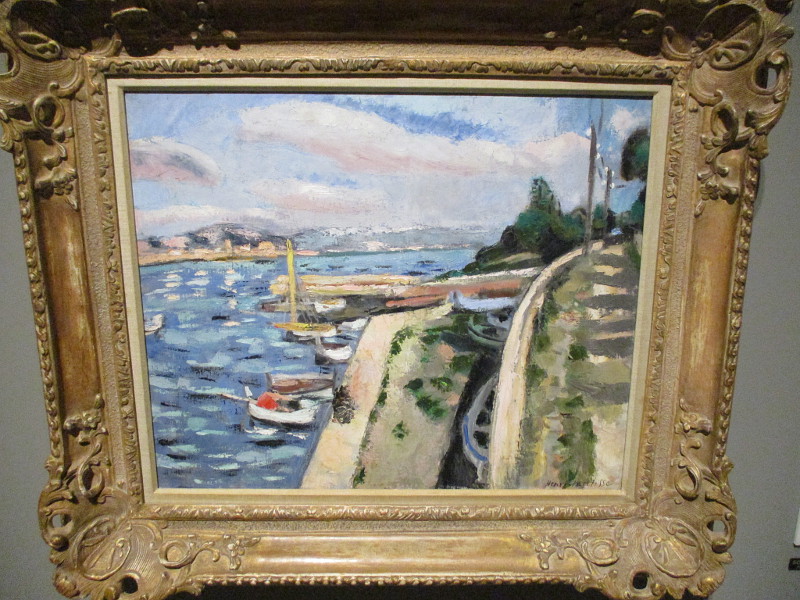
View of Antibes, Henri Matisse, 1925. Oil on canvas.

I live in downtown San Diego and love to walk around with my camera! You can follow Cool San Diego Sights via Facebook or Twitter!

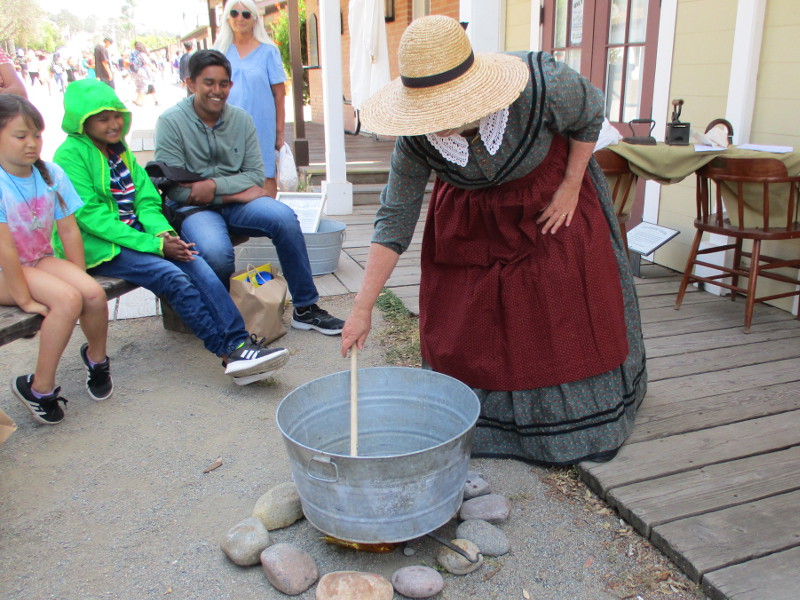
Doing the laundry in early San Diego.

You think doing the laundry is a pain?

Well, back in the mid-19th century, in early San Diego, doing the laundry was a very big pain!

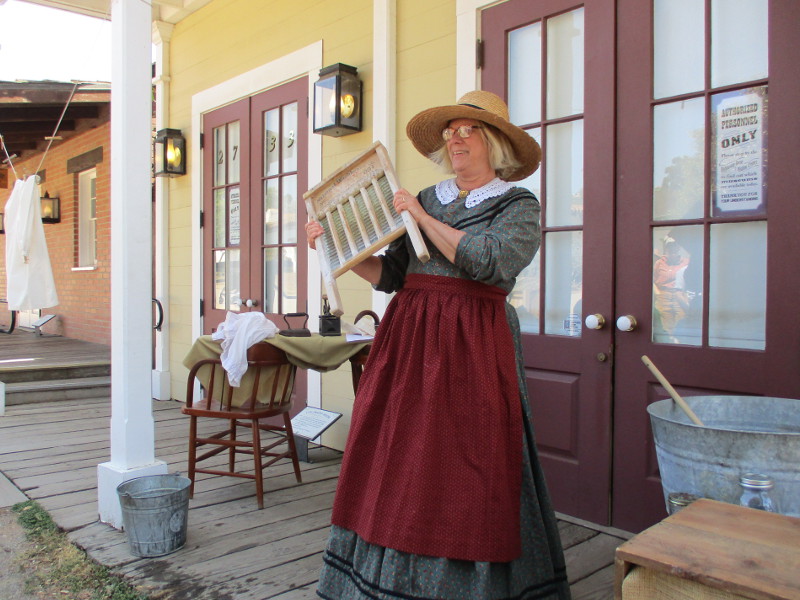
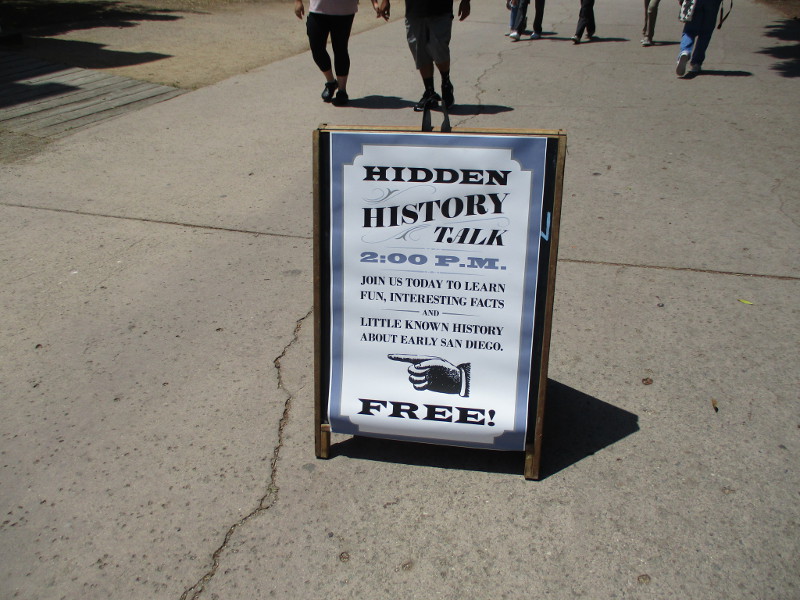
Last weekend I enjoyed listening to a Hidden History talk in Old Town San Diego State Historic Park about the difficulty of cleaning clothes before the advent of handy-dandy push-button washing machines.

Wash day was actually a three day project that began with walking down to the San Diego River multiple times while carrying a bucket. About 50 gallons would be required.

In dusty Old Town, with livestock running around, clothes would get really filthy. The sorting process included the consideration of material–often cotton or wool–and filthiness. After sorting came spot cleaning with lye soap (made by boiling wood ash) and borax (brought in from the desert).

Then clothes and under garments would be generally cleaned with boiling hot water in a big tub using a wooden paddle (for stirring) and washboard (possibly imported to the isolated, undeveloped town by ship) for scrubbing. (My arms are sore just thinking about it!)

Yes, then the hanging out to dry–fortunately San Diego has a warm, dry climate.

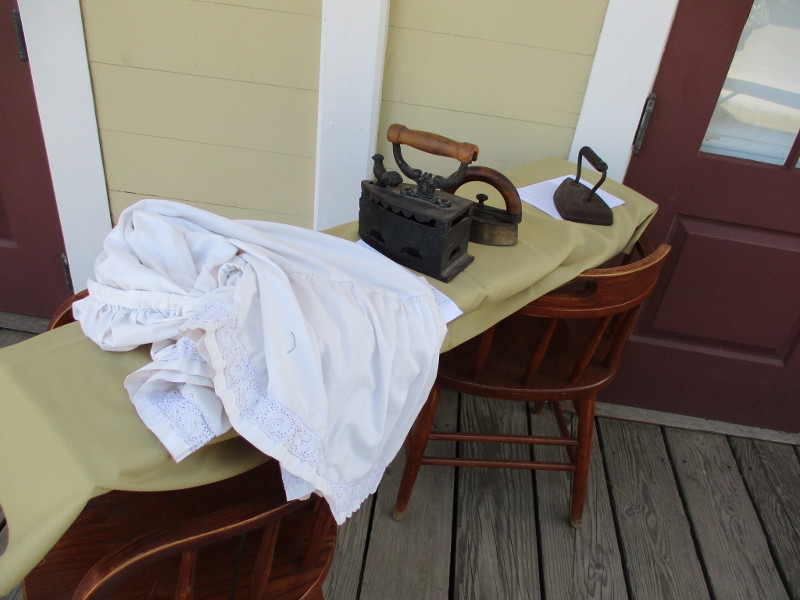
And then the ironing.

You had to prep the iron by scraping the bottom, put it on a stove and heat it to just the right temperature so you don’t burn yourself or the clothes, then more arm work. Later irons were more fancy–you could put coals in them. Just don’t get the ash from the coals on the clothes!

In those days, doing the laundry was a job designated for women. The process was so long and involved, they usually wouldn’t cook on wash days. Food for the family would be prepared in advance.

In 1860 San Diego had 4 dedicated laundresses–indigenous and Irish women. In 1870, when San Diego’s population had grown to 2300, there were 32, including Chinese immigrants who were then arriving in California.

That’s a hasty summary of the Hidden History talk, which everyone enjoyed as we sat on a pleasant Saturday in front of the State Park’s historic Colorado House.

On Sunday I threw my dirty clothes into a washing machine, added detergent from a plastic bottle and pressed a button. Transferring my clothes to the drier was oh-so difficult!

I tried to take good notes, but don’t rely on what I’ve written here as 100% accurate. If you’re doing research and came upon this blog post, make sure to read other sources!

I live in downtown San Diego and love to walk around with my camera! You can follow Cool San Diego Sights via Facebook or Twitter!

Vistacado Festival Parade mural celebrates Vista history!

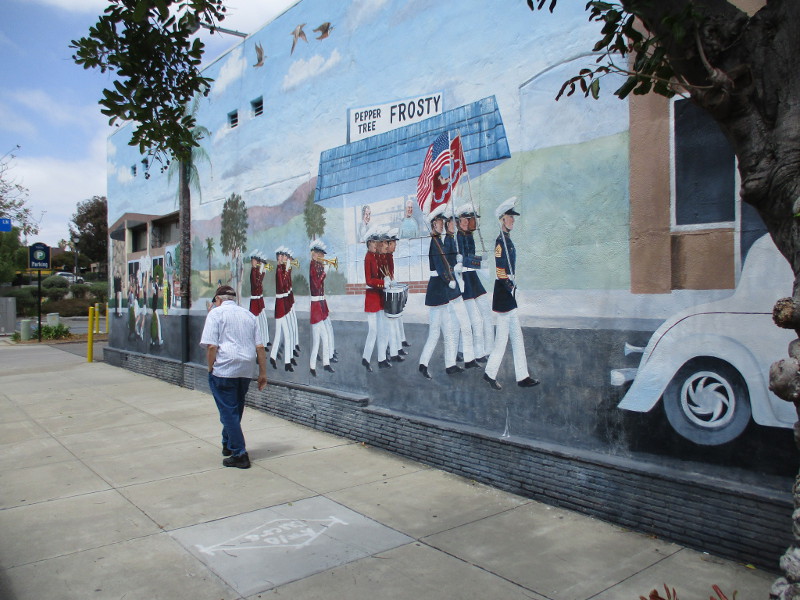
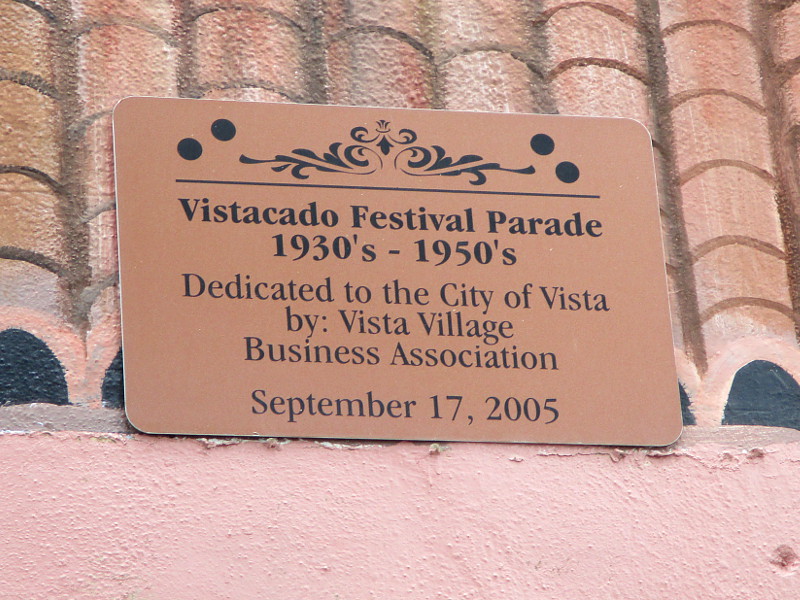
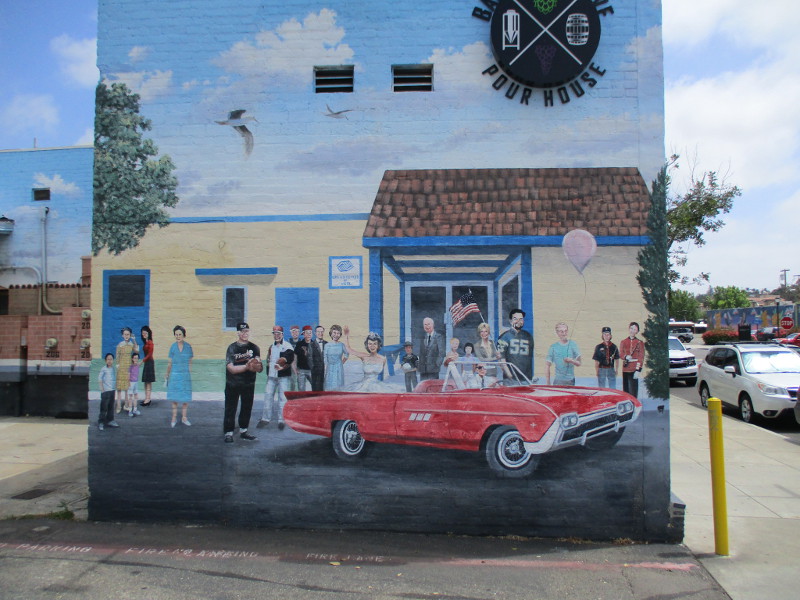
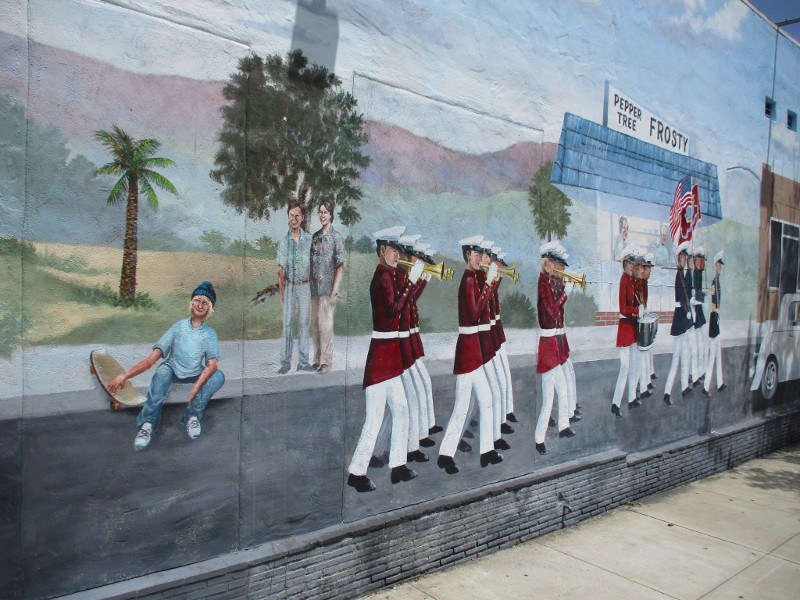
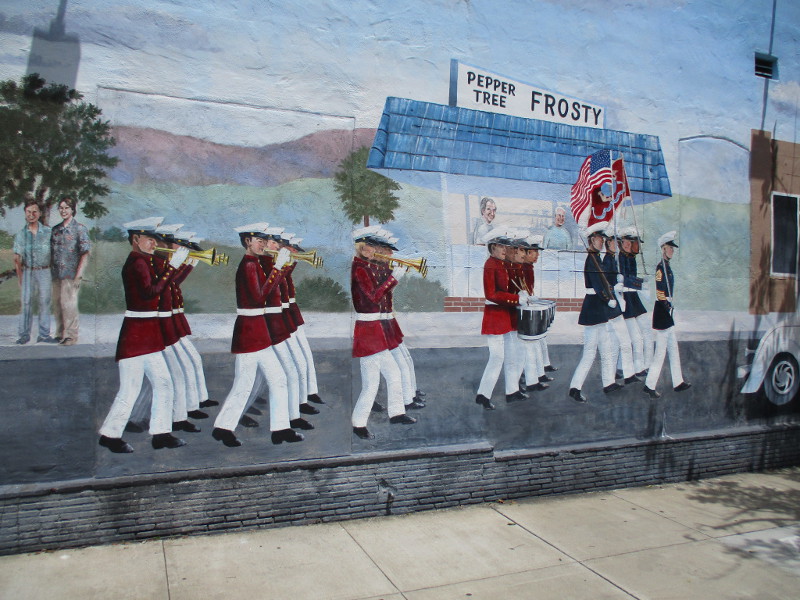
A nostalgic mural in downtown Vista, California depicts an annual community parade held in the 1930’s to 1950’s.

One recently restored end of the Vistacado Festival Parade mural, originally painted in 2005 by artist Clayton Parker, decorates the exterior of Barrel & Stave Pour House, near the corner of Main Street and Indiana Avenue.

The parade seems to proceed around the building. There are cool old cars, a marching band, cheerleaders, young baseball players, dignitaries, and even walking avocado mascots!

I smiled when I saw the mural includes an image of Pepper Tree Frosty, which I blogged about yesterday here!

This parade artwork is actually one small part of a much, much longer historical mural that runs 564 feet along Vistacado Lane between North Indiana and Michigan Avenue. The entire stretch of artwork has been recognized as Guinness World Record longest continuous mural!

I glimpsed the very long, somewhat faded artwork down Vistacado Lane during my walk yesterday, and in retrospect I should have photographed all of it. I’ll hopefully remember to do that on my next visit to Vista.

I learned about the longer mural when I read this article. It explains how the original artist, Clayton Parker, restored the portion you see in these photographs back in 2020.

UPDATE!

I later returned to Vista to photograph the entire length of the world record historical mural. You can see those photos here!

I live in downtown San Diego and love to walk around with my camera! You can follow Cool San Diego Sights via Facebook or Twitter!

You can easily explore Cool San Diego Sights by using the search box on my blog’s sidebar. Or click a tag! There are thousands upon thousands of photos for you to enjoy!
A hamburger and Vista’s old Wishing Well.

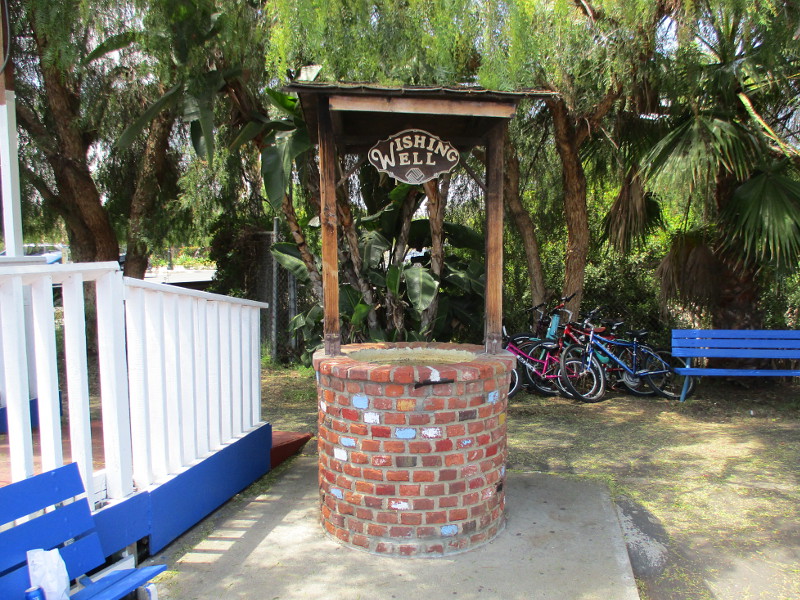
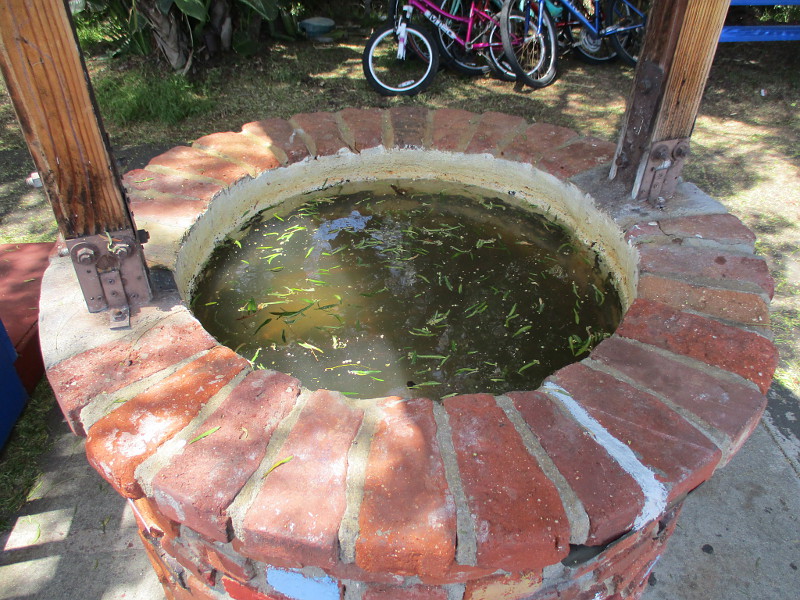
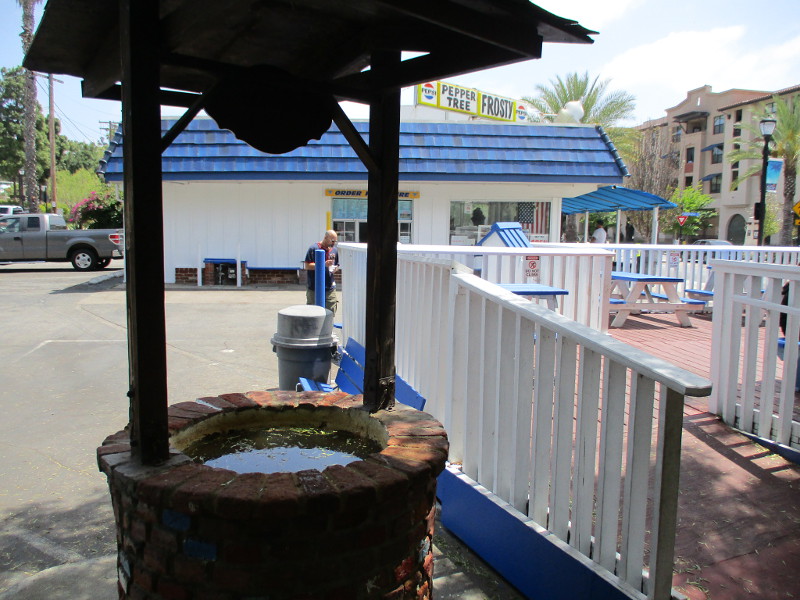
In Vista, California there’s a Wishing Well that is several generations old. It has gathered pennies in one spot for almost three quarters of a century.

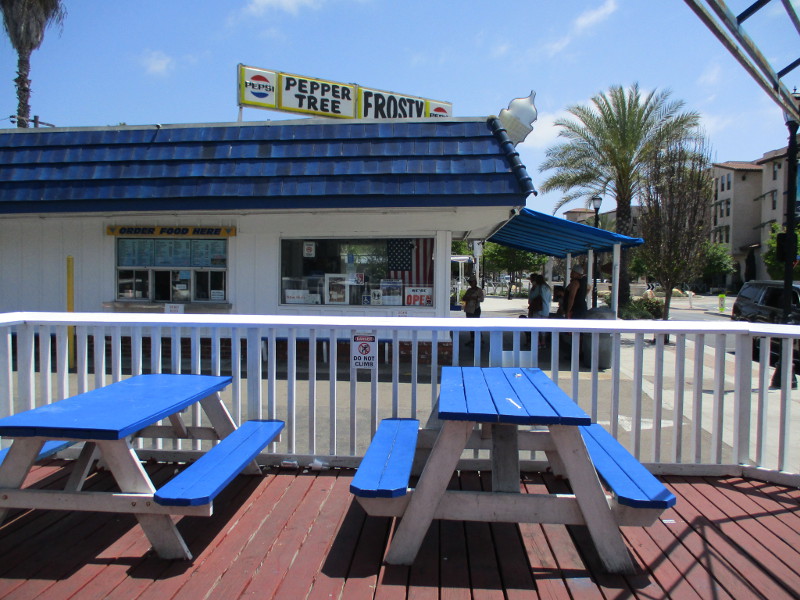
Curious eyes can discover this small Wishing Well across the driveway of Pepper Tree Frosty, right next to their outdoor eating area.

I happened to see it today while waiting for my order of a hamburger at the walk-up window. I can’t recall the last time I’ve seen a wishing well. When’s the last time you’ve seen one?

I learned from Dan, the friendly owner of Pepper Tree Frosty, that the well was created in the 1950’s by the Lions Club.

Pepper Tree Frosty, a popular ice cream and fast food destination at 270 South Santa Fe Avenue, was originally a Tastee-Freez, built in 1953. When acquired by Dan’s family years later, it was renamed for the pepper trees lining the nearby creek.

Dan said that coins dropped into the shallow, ornamental Wishing Well go to the Boys and Girls Clubs, although donations came to a long pause during the COVID-19 pandemic.

By the way, my hamburger and fries were super good!

(There’s an image of Pepper Tree Frosty in a cool mural in downtown Vista! I’ll be posting those photos soon! As “well” as more interesting stuff I saw today in Vista!)

I live in downtown San Diego and love to walk around with my camera! You can follow Cool San Diego Sights via Facebook or Twitter!

A mysterious bell in Old Town San Diego!

Help solve a rather strange historical mystery!

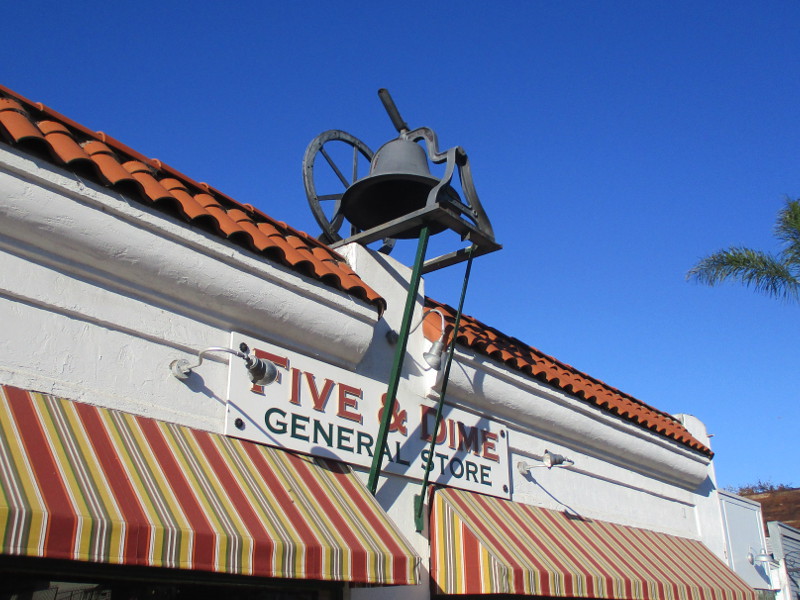
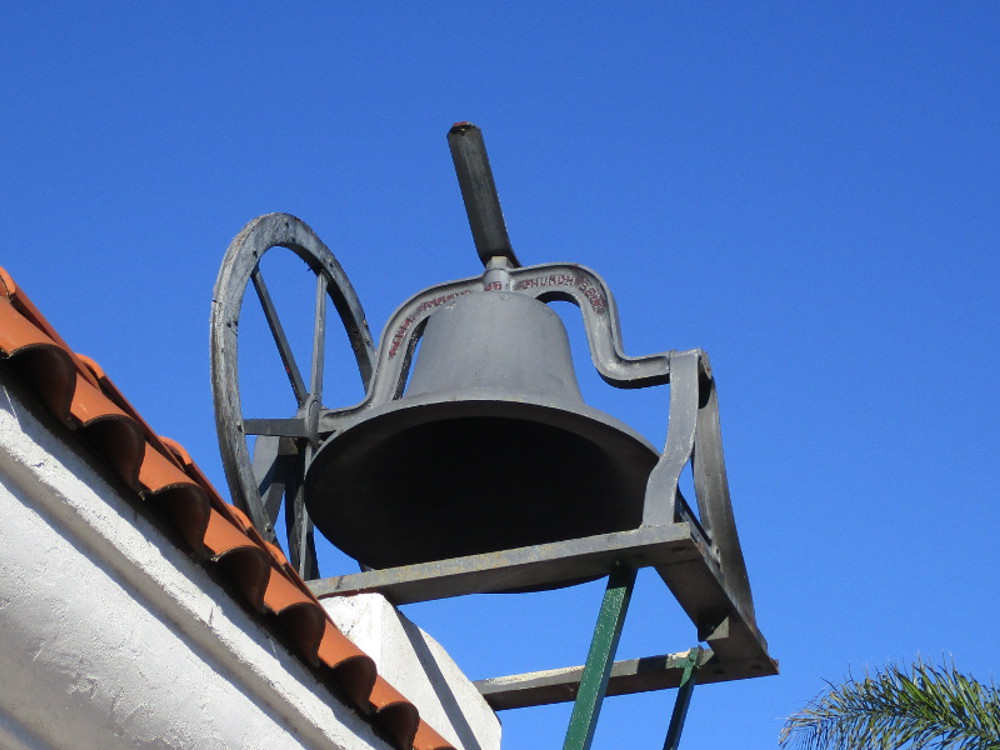
There’s a large bell mounted above the entrance of the Five & Dime General Store in Old Town, at 2501 San Diego Avenue, and nobody I’ve spoken to knows why it’s there!

I’ve spoken to friendly people who work at the store, and employees at nearby Old Town San Diego State Historic Park, and the bell remains a complete mystery! I’ve also performed searches on the internet, to no avail.

Written on the bell are the words STEEL ALLOY CHURCH BELL and the number 40, which means it’s a 40 inch bell. On the internet I’ve observed identical bells manufactured by the The C. S. Bell Company, which was in operation from 1875 to the 1970’s. The bell itself looks pretty old.

Another possible clue: this building was once the home of the Studio Gallery, which featured original artwork by famous artists, including Chuck Jones and Dr. Seuss.

Who out there knows anything about this large rooftop bell?

Why is it there? Where did it come from? Who mounted this old bell atop the building and when?

If you know or suspect anything, please leave a comment!

I live in downtown San Diego and love to walk around with my camera! You can follow Cool San Diego Sights via Facebook or Twitter!

Restoring a great San Diego treasure!

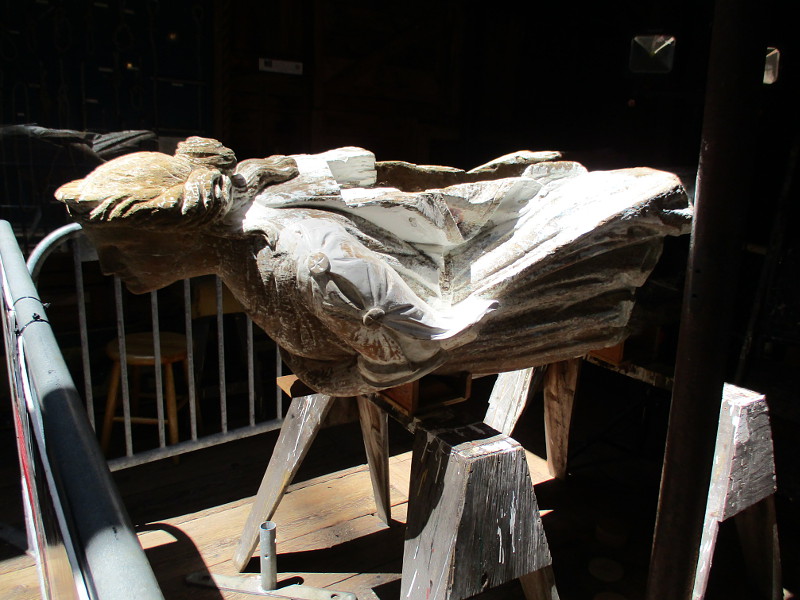
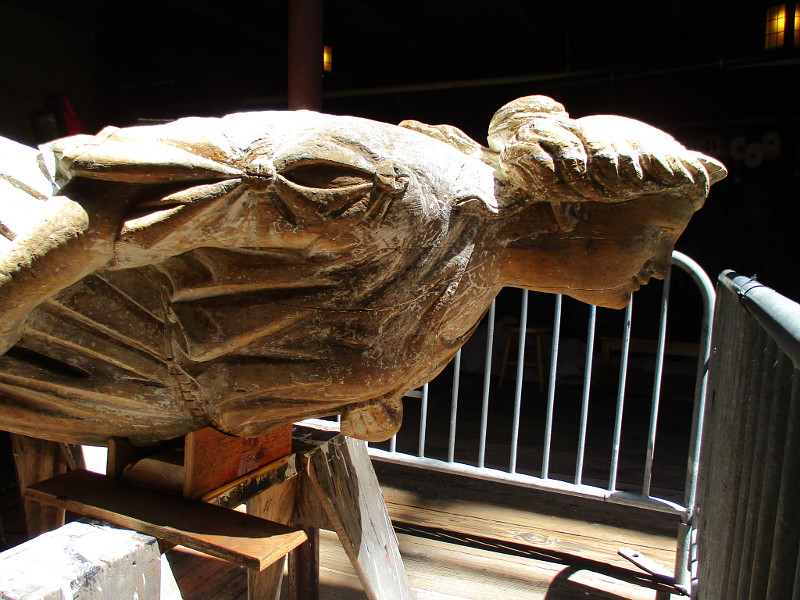
The historic ship Star of India is one of San Diego’s great treasures. Its figurehead, depicting the Greek Muse of music and lyric poetry Euterpe, is undergoing restoration at the Maritime Museum of San Diego. Euterpe was the original name of Star of India when it was launched in 1863 at the Isle of Man.

Should you venture down into the hold of Star of India, you’ll see how the carved wooden figurehead has had many layers of paint removed, in order to remove rot and fill in cracks. The last time the figurehead was removed from the tall ship’s bow was back in 1988.

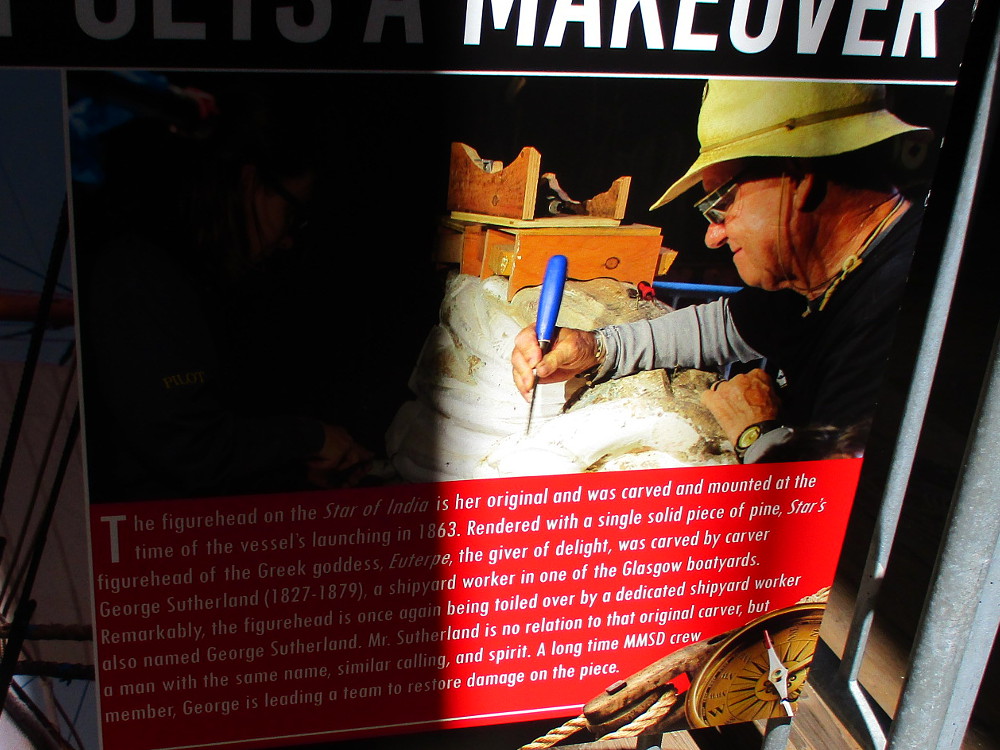
The figurehead was carved from a single piece of pine wood by a worker at a Glasgow boatyard named George Sutherland. By sheer coincidence, that is the exact name of the Maritime Museum crew member leading today’s restoration effort!

If you’re interested in seeing history close up, this is your chance! Head down to the Maritime Museum of San Diego, step aboard Star of India, the world’s oldest active sailing ship, and descend from the main deck down two levels into the hold, where you can view the renewal of beautiful Euterpe!

I live in downtown San Diego and love to walk around with my camera! You can follow Cool San Diego Sights via Facebook or Twitter!

San Diego River once flowed beside Old Town.

San Diego history buffs know that the San Diego River, where it approaches the Pacific Ocean, is not located where it flowed originally.

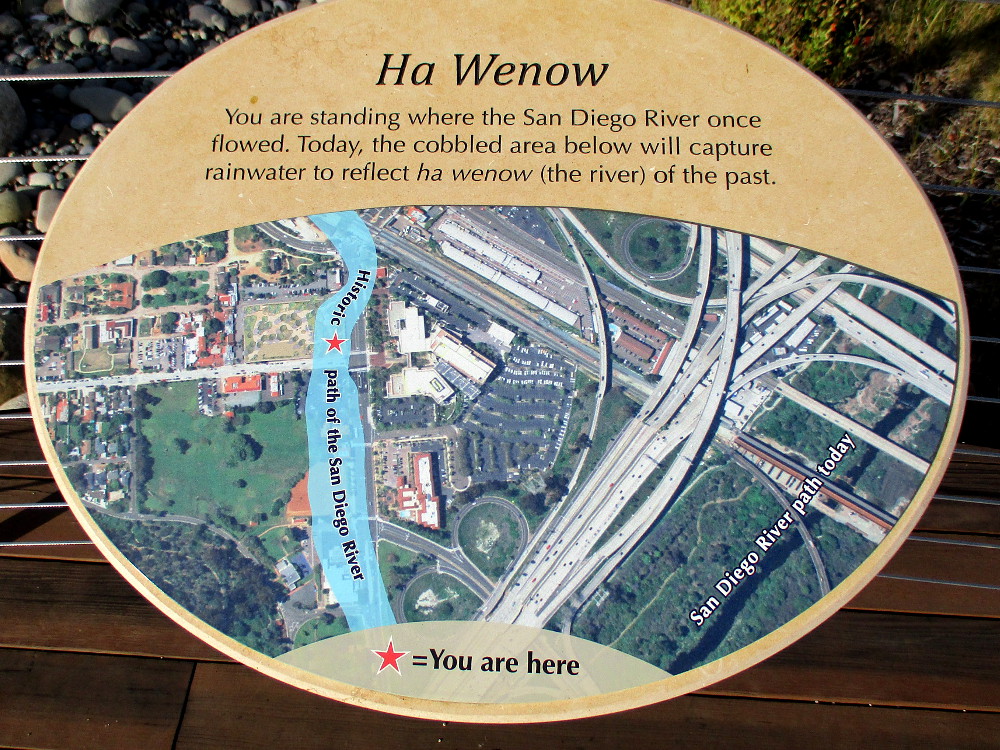
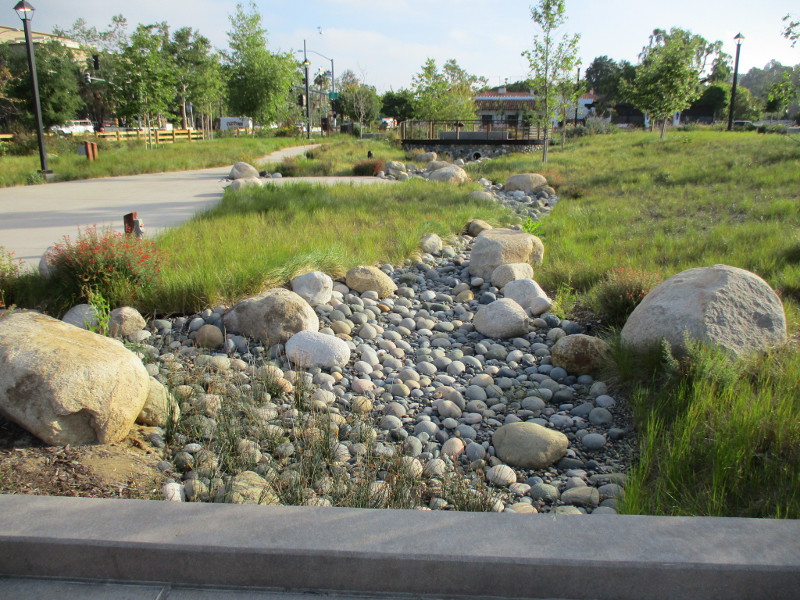
A cobblestone filled channel in Old Town San Diego State Historic Park is a visual reminder that the river once flowed directly next to our city’s birthplace.

In 1853, to prevent flooding in Old Town and the build-up of sediment in San Diego Bay, the Derby Dike was built, diverting the river into False Bay–today’s Mission Bay.

A sign by a footbridge over the modest cobblestone channel shows where the San Diego River was originally located in relation to the park and nearby Taylor Street. You can find this sign in the beautiful outdoor Iipay – Tipai Kumeyaay Mut Niihepok Land of the First People, at the northwest corner of the State Park.

Long before the arrival of explorer Juan Rodríguez Cabrillo in 1542, and the establishment of the nearby Spanish Presidio in 1769, the Native American Kumeyaay lived here on the banks of the life-sustaining river in a village called Kosa’aay. They called the river ha wenow.

I live in downtown San Diego and love to walk around with my camera! You can follow Cool San Diego Sights via Facebook or Twitter!

You can easily explore Cool San Diego Sights by using the search box on my blog’s sidebar. Or click a tag! There are thousands upon thousands of photos for you to enjoy!
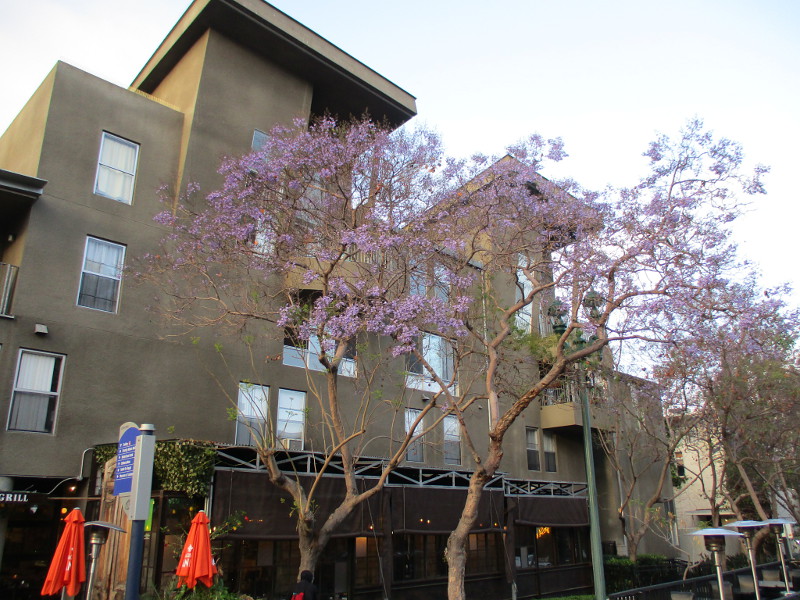
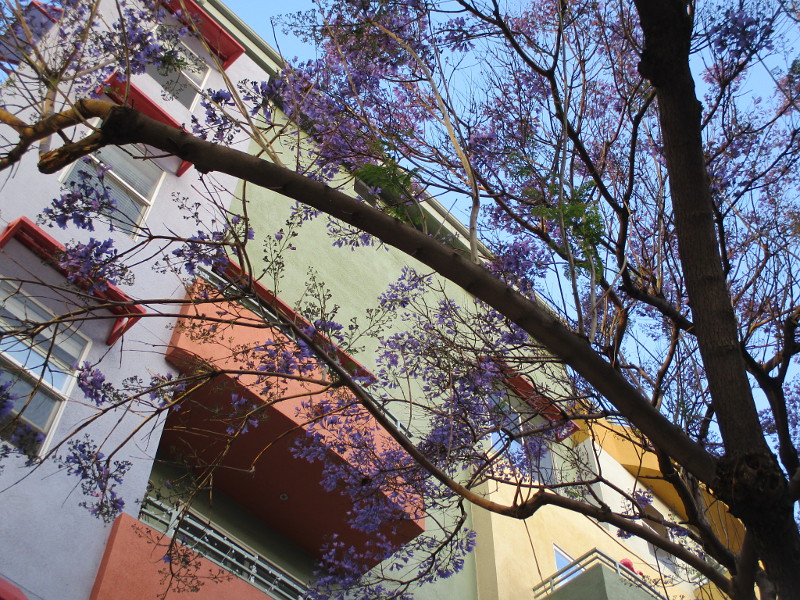
Downtown’s Jacarandas begin their Spring bloom!
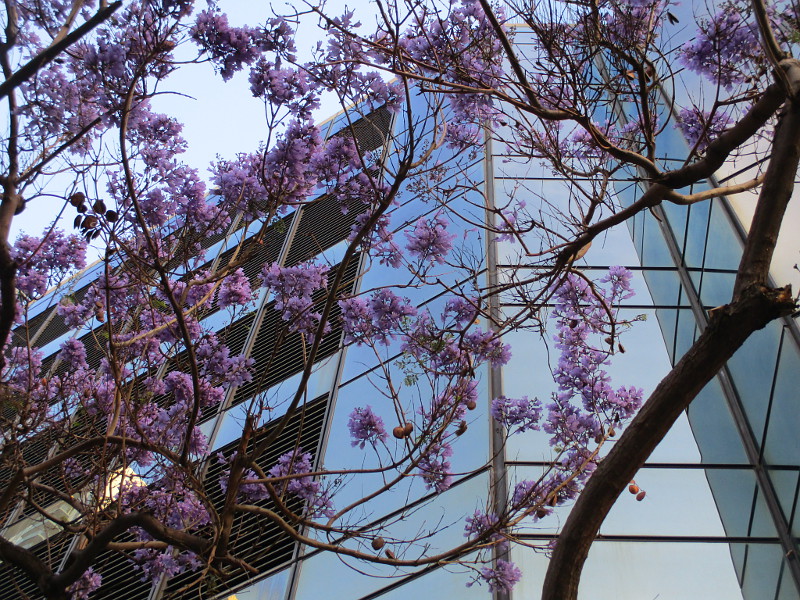
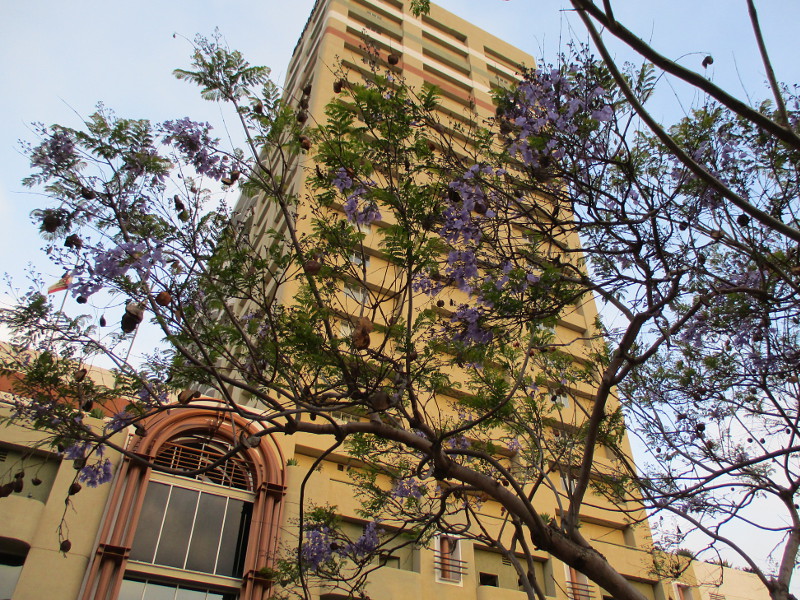
Do you know why there are so many Jacaranda trees in San Diego? A century ago, horticulturist Kate Sessions, the Mother of Balboa Park, planted hundreds of these colorful trees in the heart of our city. They are native to South America.

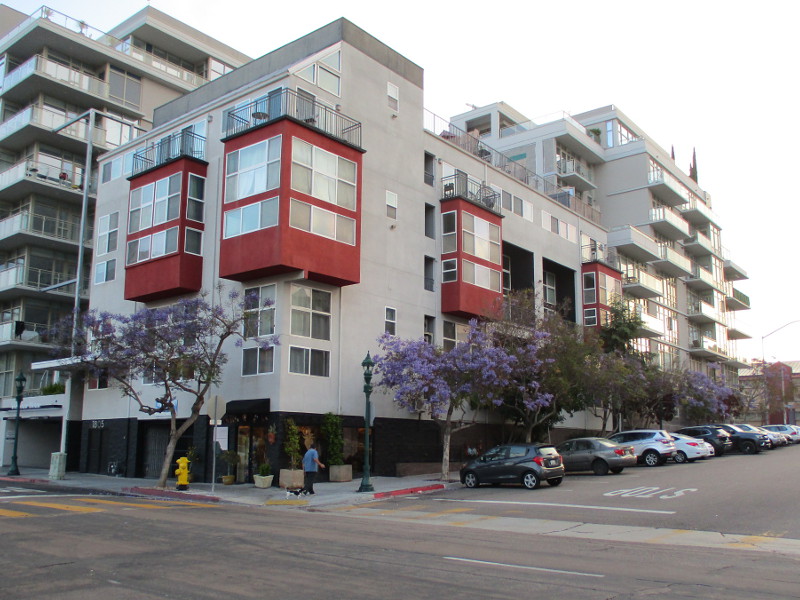
Twice a year–in Spring and Autumn–the striking lilac-blue blooms appear along city streets, adding their unique hue to sunny San Diego. Of course, they’re very messy trees, and you don’t want to park under them when the sticky flowers are dropping!

In 2000, Jacaranda mimosifolia was designated the official non-native tree of San Diego.

I walked from Cortez Hill to Little Italy this morning, and these photos represent a little of what I saw!

I live in downtown San Diego and love to walk around with my camera! You can follow Cool San Diego Sights via Facebook or Twitter!

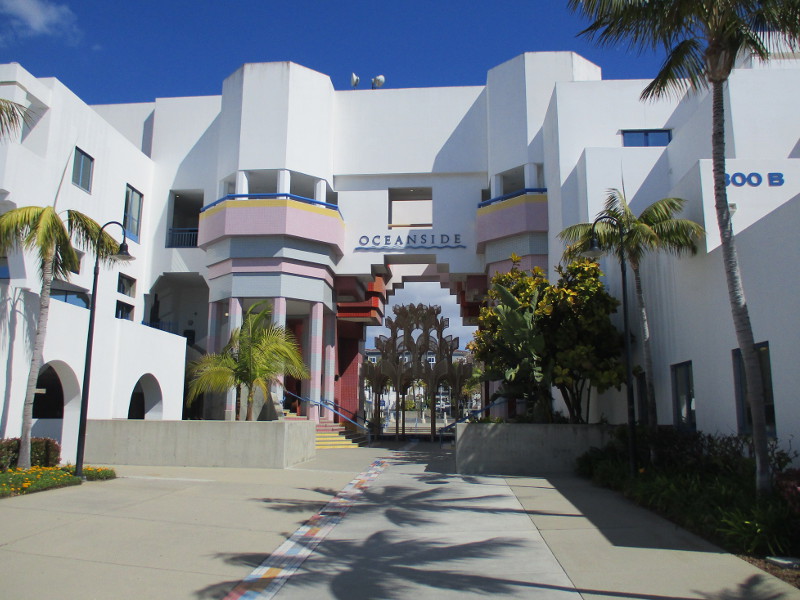
Sister cities observed at Oceanside Civic Center.

Curious eyes can make many interesting discoveries during a walk around the Oceanside Civic Center.

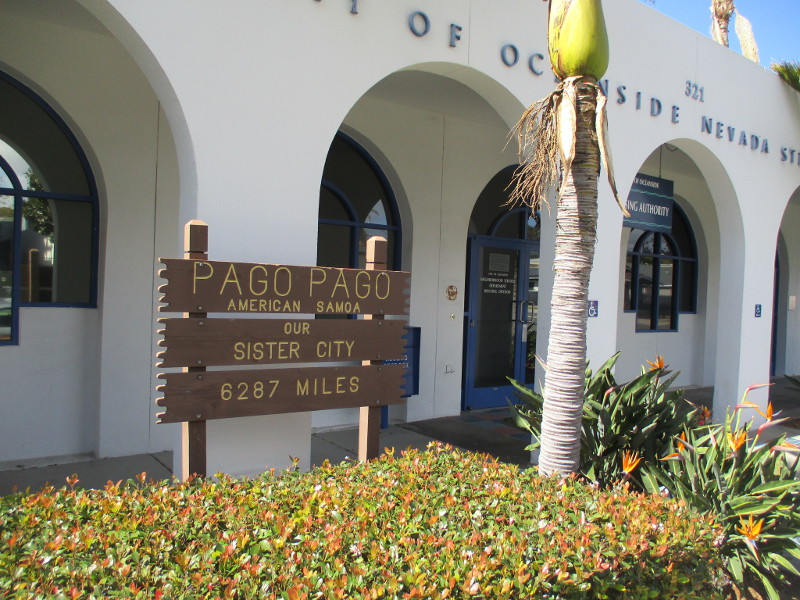
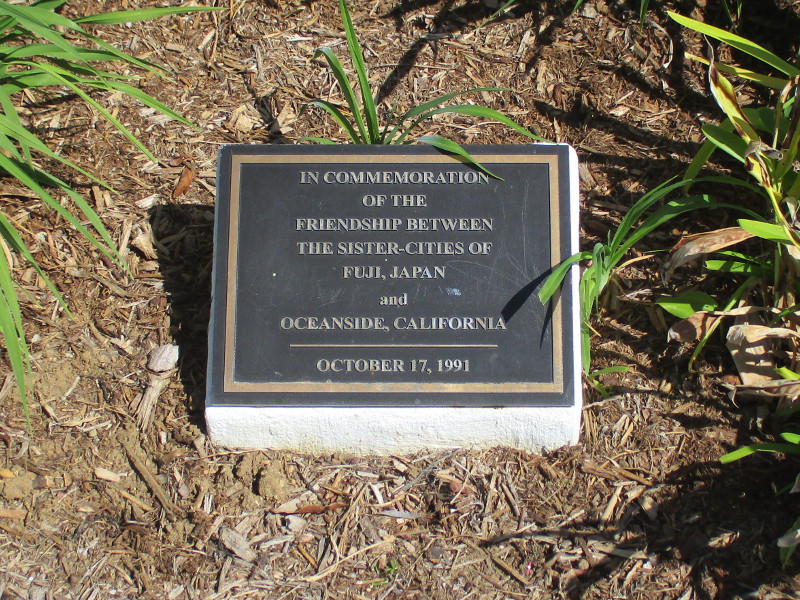
The last time I visited the beautiful Civic Center, I happened to notice a sign and a plaque that honor two of Oceanside’s sister cities: Pago Pago, American Samoa, and Fuji, Japan.

It might seem odd that Pago Pago maintains a close relationship with a city in Southern California, but Oceanside boasts one of the largest Samoan populations in the United States. Why? American Samoa has the highest rate of military enlistment of any U.S. state or territory. A large number of Marine Corps recruits are subsequently based at Camp Pendleton, Oceanside’s military neighbor.

Fuji, Japan has one sister city: Oceanside. The relationship was established in 1991. Fuji is located at the foot of tall, scenic Mount Fuji, one of Japan’s Three Holy Mountains.

I’ve learned that Oceanside has two additional sister cities: Ensenada, Mexico and Kisarazu, Japan.

I live in downtown San Diego and love to walk around with my camera! You can follow Cool San Diego Sights via Facebook or Twitter!