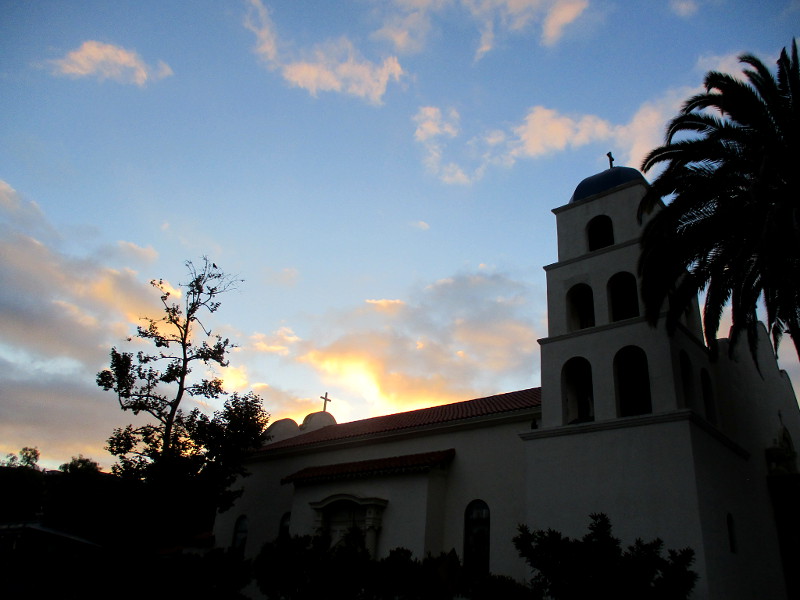
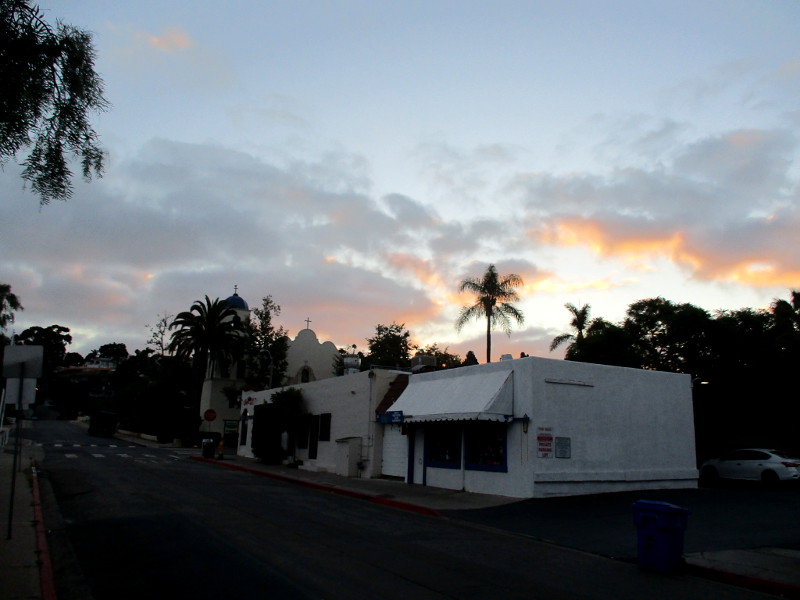
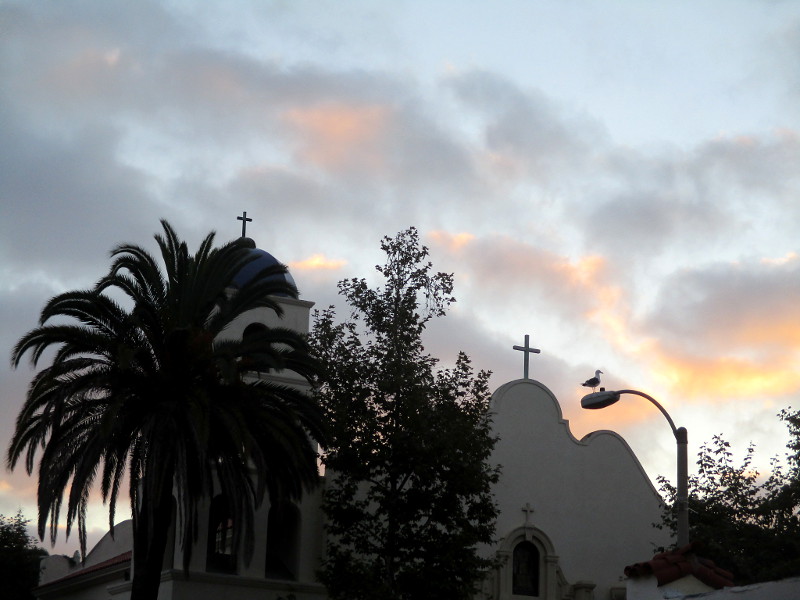
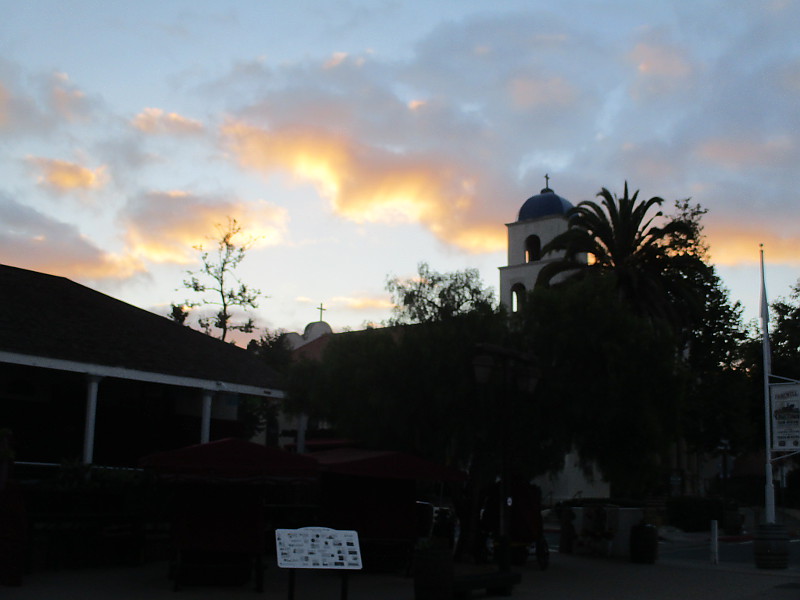
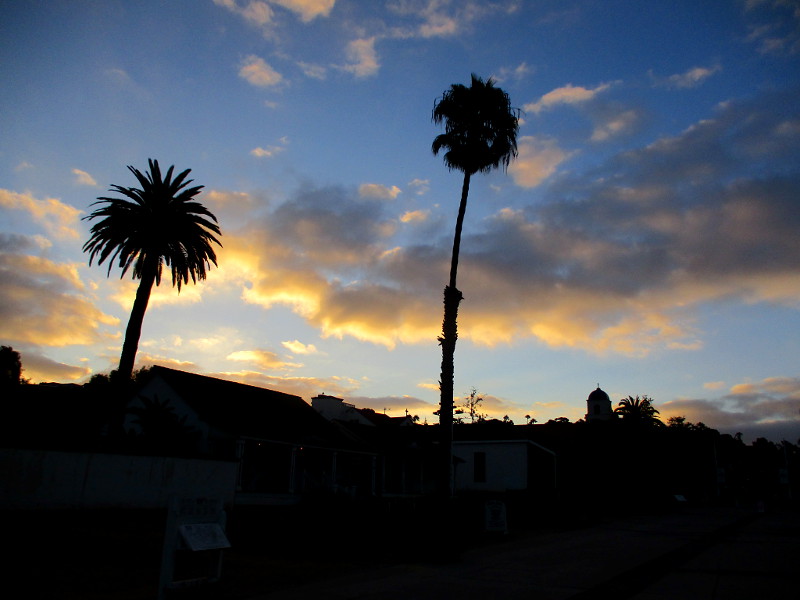
A beautiful sunrise illuminated San Diego this morning. Walking through Old Town, I watched scattered clouds to the east turn brilliantly yellow and orange.
The present-day Immaculate Conception Catholic Church stands adjacent to Old Town San Diego State Historic Park.
A modest adobe chapel that was built nearby in 1851 would be replaced by this church building. Its construction was begun in 1868 and, after various setbacks, was completed half a century later, in 1917.
In these photographs, you can glimpse a bit of the church’s façade and bell tower, elements of its Spanish Mission style architecture.
…
Thanks for visiting Cool San Diego Sights!
I post new blogs pretty often. If you like discovering new things, bookmark coolsandiegosights.com and swing on by occasionally!
I live in downtown San Diego and love to walk around with my camera! You can follow Cool San Diego Sights via Facebook or X.
Big news in San Diego today! After 14 long years, the unused Starlight Bowl in Balboa Park appears to be on the road to recovery!
The City of San Diego has announced that it is looking for organizations or individuals interested in bringing the historic and famed Starlight Bowl in Balboa Park back to life. The city has issued a Request for Proposals for the lease and renovation of the open-air amphitheater. Interested to learn more? Visit the pertinent City of San Diego web page by clicking here.
When I heard this news today I cheered. I voiced my support for the restoration of the Starlight Bowl back in 2016. I, like many others in San Diego, have fond memories of the unique outdoor venue. You can read what I wrote by clicking here.
Over the years, many people have worked hard to pull weeds, paint and rehabilitate parts of the building, and advocate tirelessly for the historic Starlight Bowl’s survival. Congratulations to the organization Save Starlight and to all who have been involved in this effort.
That photograph above is of a performance in the Ford Bowl (now the Starlight Bowl) during the 1935 California Pacific International Exposition in Balboa Park. The photograph below was taken with my camera eight years ago…
…
Thanks for visiting Cool San Diego Sights!
I post new blogs pretty often. If you like discovering new things, bookmark coolsandiegosights.com and swing on by occasionally!
I live in downtown San Diego and love to walk around with my camera! You can follow Cool San Diego Sights via Facebook or X.
The Granger Building in San Diego’s Gaslamp Quarter is undergoing a very big change. The historic downtown office building, erected in 1904, is being converted into an elegant hotel.
Those who walk past the intersection of Broadway and Fifth Avenue can view the construction now in progress. Surprising graphics along the sidewalk advertising the soon-to-open Granger Hotel really catch one’s attention, however. Why are there old-fashioned images of a monkey, tiger and giraffe?
Because the basement of the Granger Building once held zoo animals!
Before I get to the unusual explanation, you might wonder: why is it called the Granger Building?
This web page explains how Ralph Granger made his initial fortune from the Last Chance Silver Mine in Colorado. When he came to San Diego in 1891, he settled in National City, where, in a addition to a mansion, he built the architecturally important Granger Music Hall. (Those who drive down Interstate 805 can easily see the notable but dilapidated building. I once blogged about the Granger Music Hall here.)
Granger would then hire renowned architect William Quayle to design an office building in downtown San Diego: the Granger Building. The Romanesque style structure, built for $125,000, was steel framed and constructed of pressed bricks. It is five stories high and features embossed metal ceilings, gas lights and a manually operated elevator. The first floor would be home to the Merchant’s National Bank, with the son of President U.S. Grant the initial Director. In 1924, the bank became the Bank of Italy, the forerunner of the Bank of America.
But what about those zoo animals in the building’s basement?
Well, Dr. Harry Wegeforth was a physician who happened to have his practice in the Granger Building. He was also founder of the Zoological Society of San Diego and the San Diego Zoo. You might recall how he was inspired to start the zoo when he passed animals that had been displayed during the 1915 Panama-California Exposition in Balboa Park and heard a lion roar.
In the early days of the expanding San Diego Zoo, as Dr. Harry Wegeforth acquired new animals, he kept some of them in the basement of the Granger Building!
Guests of the new Granger Hotel will be staying in a property that is full of surprising history. Past tenants of the old office building have also included C. Arnholt Smith, owner of the Pacific Coast minor league Padres, and Joseph Jessop, our city’s most famous jeweler.
…
Thanks for visiting Cool San Diego Sights!
I post new blogs pretty often. If you like discovering new things, bookmark coolsandiegosights.com and swing on by occasionally!
I live in downtown San Diego and love to walk around with my camera! You can follow Cool San Diego Sights via Facebook or X.
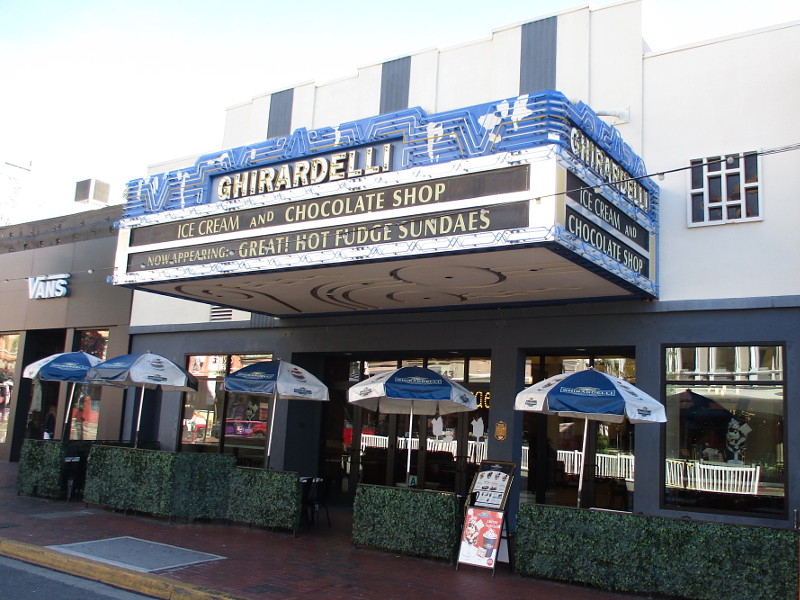
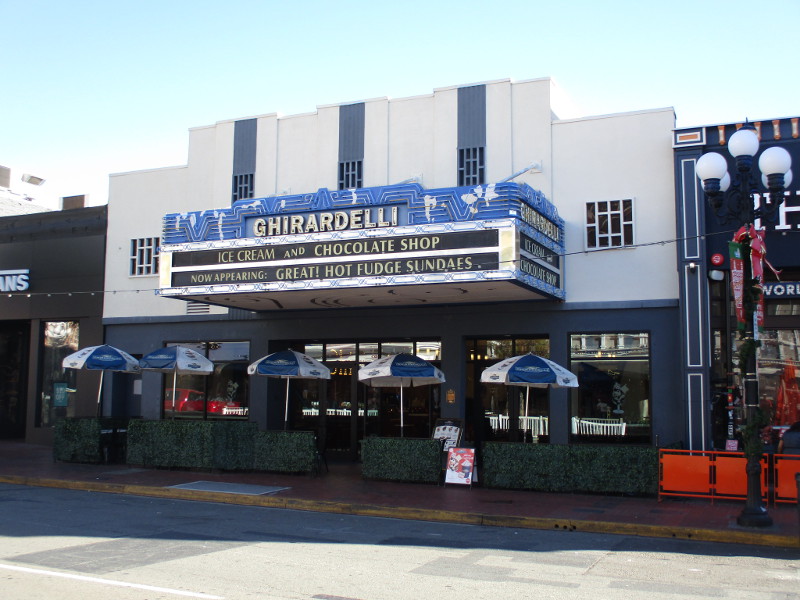
Have you ever wondered why the Ghirardelli Ice Cream & Chocolate Shop in San Diego’s historic Gaslamp Quarter has an old-fashioned theater marquee? That’s because the building, erected in 1912, was originally a movie theater!
The Casino Theatre at 643 Fifth Avenue opened in 1913 and was one of several movie theaters in the Gaslamp that provided entertainment for ever-changing audiences over the decades. In the 1930s it was remodeled into the Art Deco style. Here’s an image from the 40s, with the Casino Café “Lunch” restaurant located next door, offering breakfast, waffles and steaks.
In the 1950s and 60s, The Casino and its movie theater neighbors at Fifth and G Street–The Aztec and The Savoy–would be open all night and show 3 big features, according to a comment here. Slowly these old theaters would fall as television’s popularity rose.
In the 1970s, while the Gaslamp neighborhood experienced urban decay, The Casino Theatre began to show X-rated movies, along with the other nearby theaters. I’ve been told sailors made up much of the clientele.
Here’s a gallery of photos of the The Casino Theatre over many years. Some of the titles you’ll read in the marquee are a bit salacious!
I hadn’t realized the marquee was seen in Marty Feldman’s 1980 movie In God We Tru$t. That image can be viewed here.
Today you’ll find a plaque near the historic building’s front entrance:
The Casino Theatre, 1912
The first theatre to be built with the new building ordinance for fire safety. It had two doors near the stage for fire escape and a five-foot-wide exterior passage on both sides and the rear for the protection of other buildings in case of fire. However, two years after construction, the northern passage was occupied by a food stand, and the southern passage contained a shoe shining establishment.
Temptation of a different sort! In a historic Gaslamp Quarter that now attracts loads of tourists, the colorfully lit old marquee teases you with ice cream, chocolate and hot fudge sundaes!
…
Thanks for visiting Cool San Diego Sights!
I post new blogs pretty often. If you like discovering new things, bookmark coolsandiegosights.com and swing on by occasionally!
I live in downtown San Diego and love to walk around with my camera! You can follow Cool San Diego Sights via Facebook or X.
In the last couple weeks, several street lamps in the form of traditional Chinese lanterns have been replaced along Third Avenue in downtown San Diego. Third Avenue, between Market Street and J Street, is the heart of the Asian Pacific Thematic Historic District.
The original Chinese lanterns were installed in the 1980s, back when the historic district was first designated. Those lamps, however, had deteriorated over time and were badly in need of replacement.
Sadly, these beautiful Chinese lantern street lamps no longer run the entire distance to Market Street. I was told the City of San Diego disposed of several of the old lanterns that might have been given to the museum and also refurbished.
The San Diego Chinese Historical Museum has retained one of the newly refurbished lanterns for safe keeping as you can see from my next photograph. It will be used as a model for future lanterns, if money can be raised to produce them. Recreating them from scratch will be, unfortunately, fairly expensive for the nonprofit museum. (Would you like to help?)
The museum would also love to create an Asian Pacific Thematic Historic District gateway on Market Street. Chinatowns in other cities feature such gateways.
…
Thanks for visiting Cool San Diego Sights!
I post new blogs pretty often. If you like discovering new things, bookmark coolsandiegosights.com and swing on by occasionally!
I live in downtown San Diego and love to walk around with my camera! You can follow Cool San Diego Sights via Facebook or X (formerly known as Twitter)!
The Coronado Public Library occupies a 40,000 square feet building that serves as the community’s cultural center. The library contains a large public meeting room and smaller conference room, a separate Children’s Library and Teen area, an Exhibit Gallery, plus an employee work area and used bookstore.
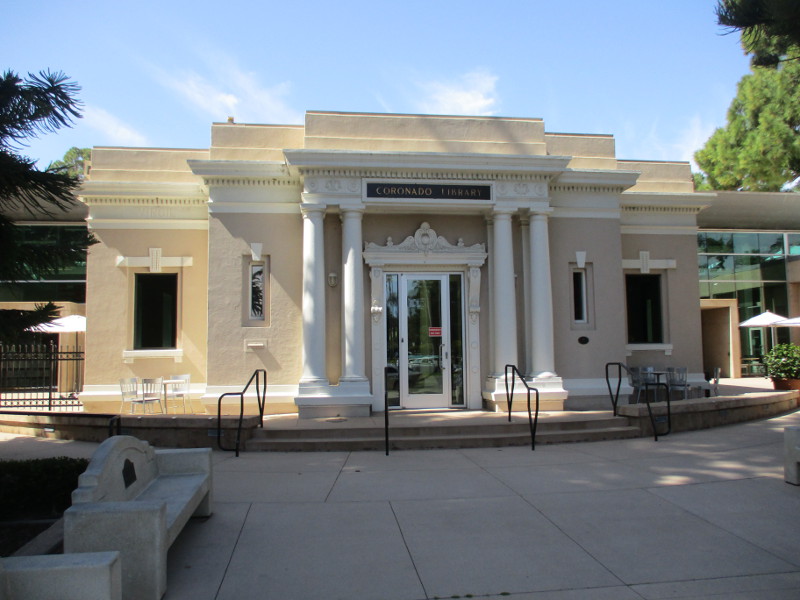
Back in 1909, however, when the original Coronado Public Library first opened, it measured a modest 1,700 square feet. You can see the front of the historic building with its stately columns in the above photograph.
Last month I learned the history of this original “Spreckels Building” during the San Diego Architectural Foundation’s Open House event. John D. Spreckels was owner of the nearby Hotel del Coronado in the early part of the 20th century.
An informative handout included: On February 17, 1908, the Library Board boldly voted to “request Mr. Spreckels to make a gift of a new library building”…public park land set aside by the Coronado Beach Company known as West Plaza was chosen for the location…Spreckels donated the services of his favorite architect, Harrison Albright…(His) design, in the style of the classic revival…was built at a cost of $10,000. It was one of the first California buildings built of reinforced concrete. It was designed to hold 5,000 books…
The following graphic depicts major additions that were made to the library over the years:
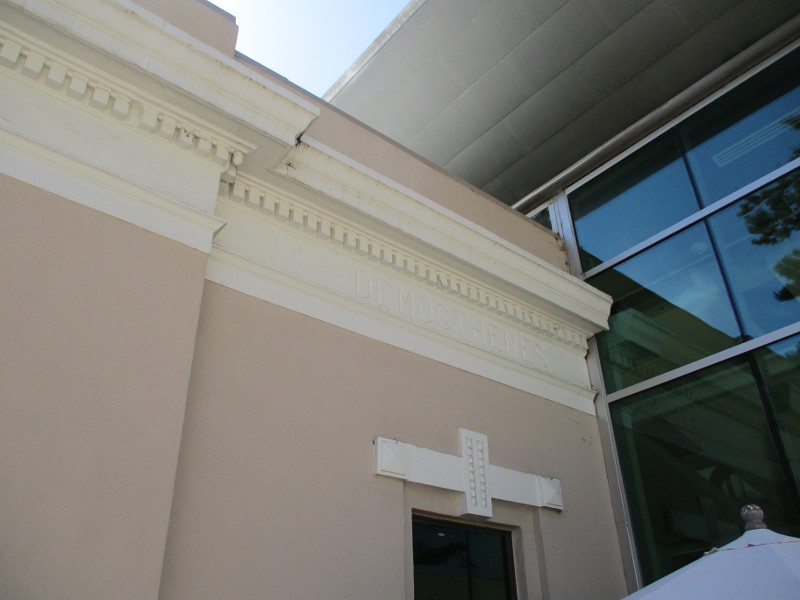
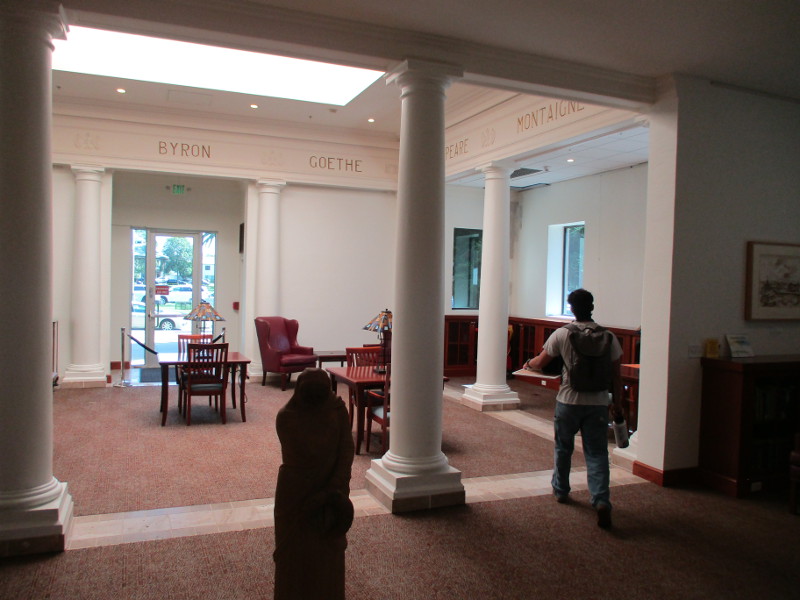
The next two photos demonstrate how the original building was cleverly joined to the glassy 2005 addition. (The 1974 addition demolished and replaced a hodgepodge of add-ons and wings that had been attached to the original building during the preceding decades.)
Today the original little library–the Spreckels Building–serves as a cozy, very elegant Reading Room!
…
Thanks for visiting Cool San Diego Sights!
I post new blogs pretty often. If you like discovering new things, bookmark coolsandiegosights.com and swing on by occasionally!
I live in downtown San Diego and love to walk around with my camera! You can follow Cool San Diego Sights via Facebook or X (formerly known as Twitter)!
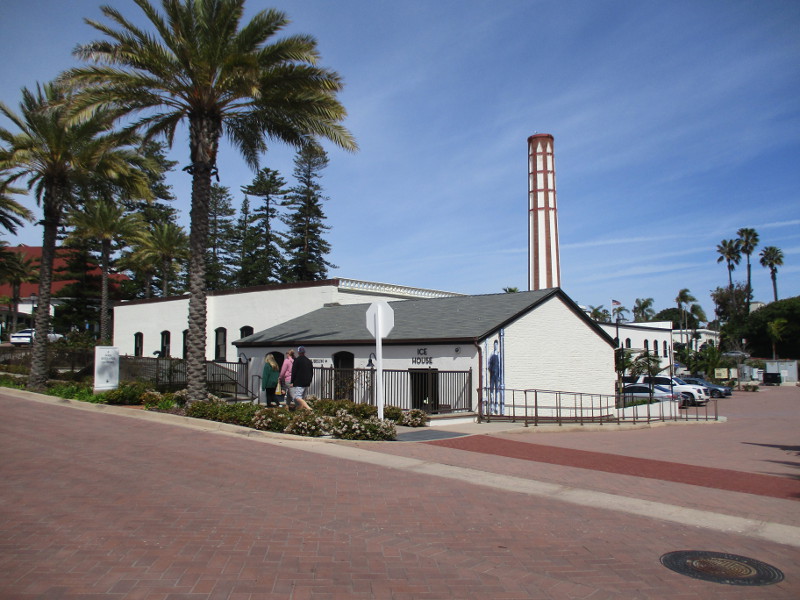
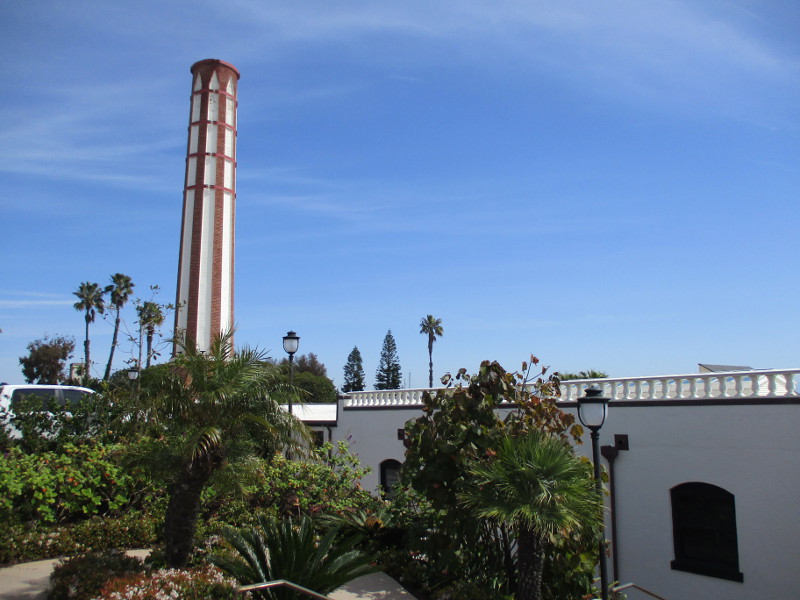
What’s that tall brick smokestack near the world-famous Hotel del Coronado?
It’s the most noticeable part of a historic industrial complex!
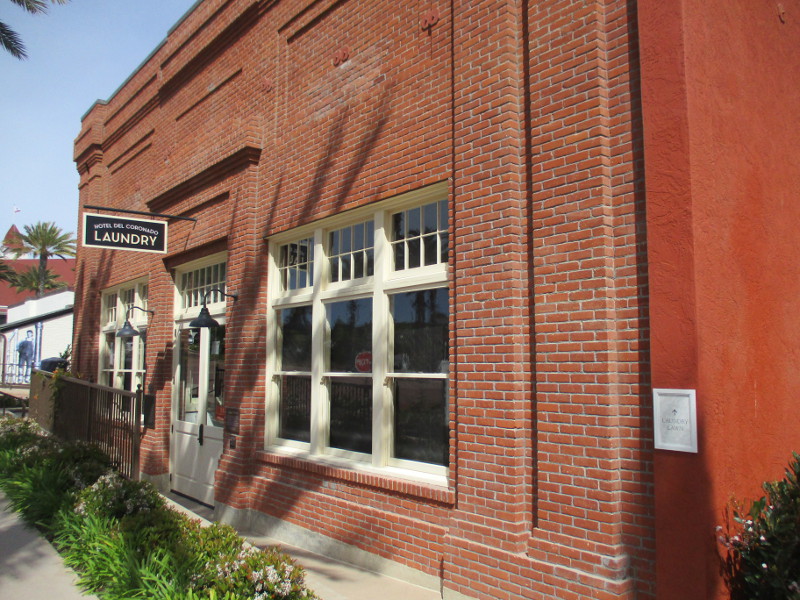
I walked around the Hotel Del’s old laundry building, ice house and power plant last month during the San Diego Architectural Foundation Open House event. I discovered several plaques that provide information about these three buildings, which, clustered south of the hotel lobby entrance, are called the industrial complex.
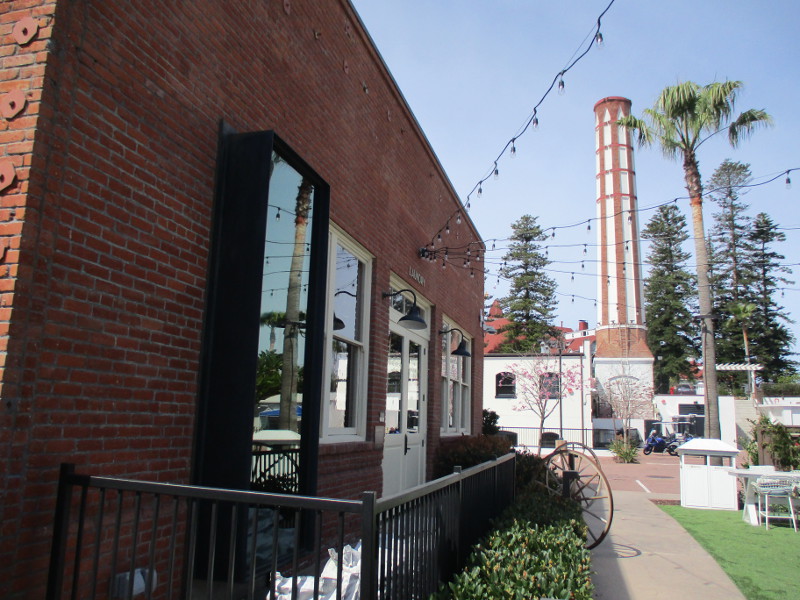
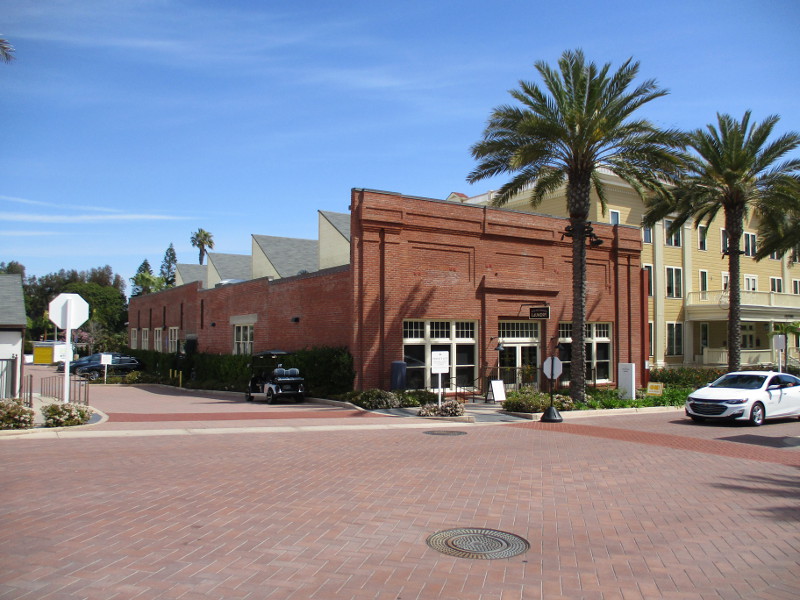
The brick building shown below once provided the Hotel del Coronado’s laundry service. It’s now home to The Laundry Pub!
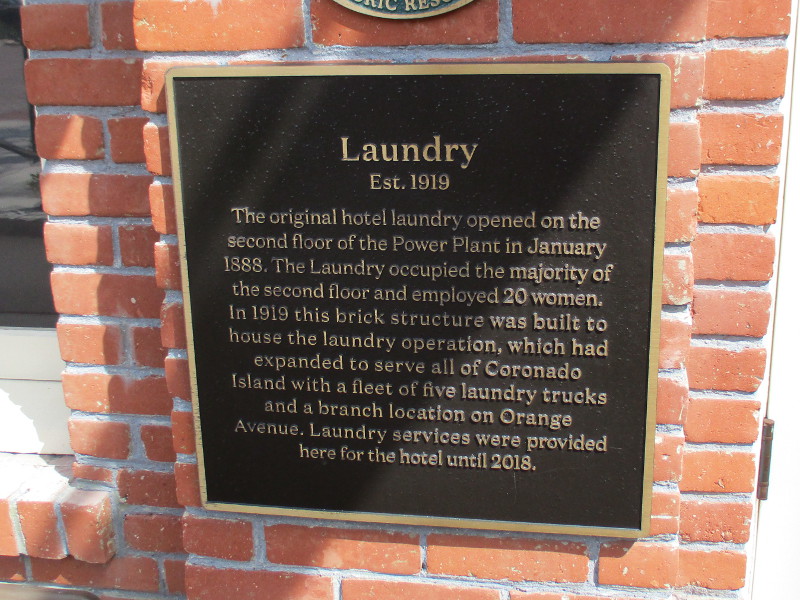
Laundry, established 1919.
The original hotel laundry opened on the second floor of the Power Plant in January 1888. The Laundry occupied the majority of the second floor and employed 20 women. In 1919 this brick structure was built to house the laundry operation, which had expanded to serve all of Coronado Island with a fleet of five laundry trucks and a branch location on Orange Avenue. Laundry services were provided here for the hotel until 2018.
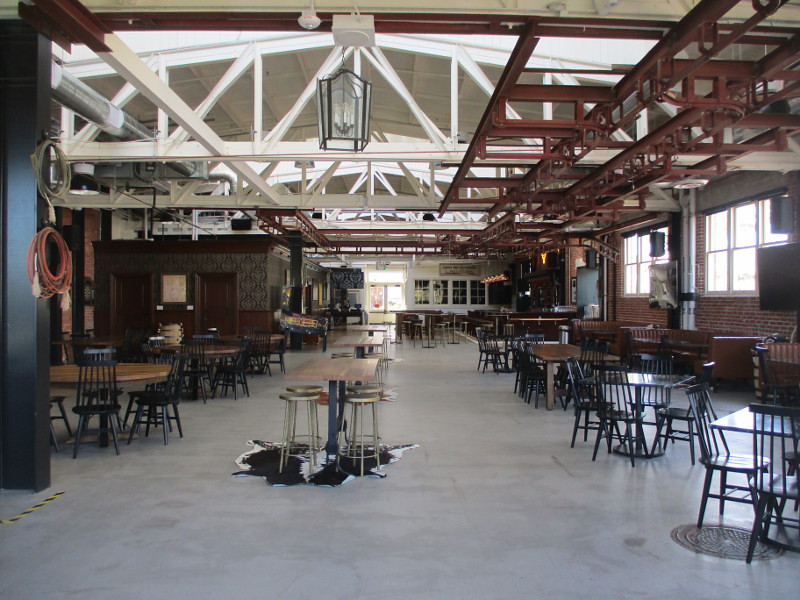
The next photo is through the window of The Laundry Pub, which features an 1880s-era bar and the laundry’s early conveyor system above restored wood floors.
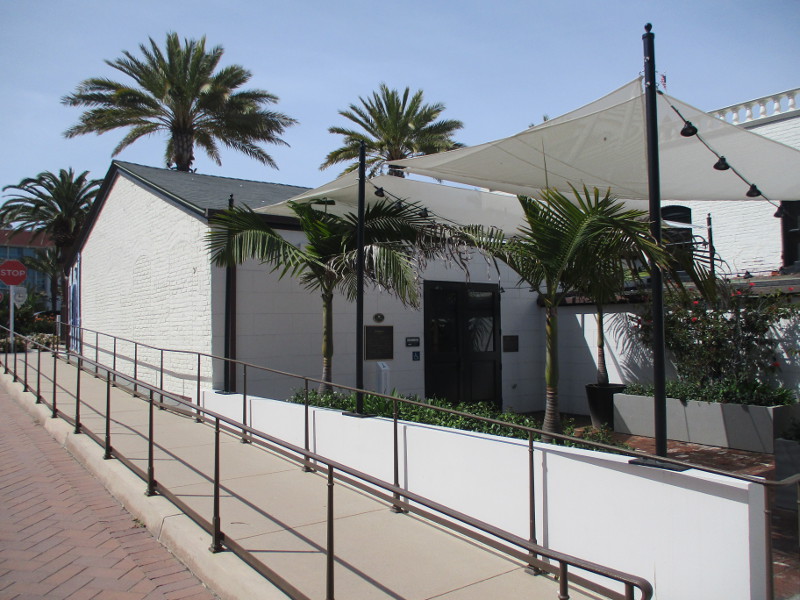
North of the brick laundry building is the hotel’s old ice house.
The ice house is now home to the fascinating Ice House Museum of the Hotel del Coronado, where you can view historical displays and artifacts, plus photographs of the many celebrities, movie stars and United States Presidents who’ve visited the Victorian resort over the years. I blogged about the museum two years ago here.
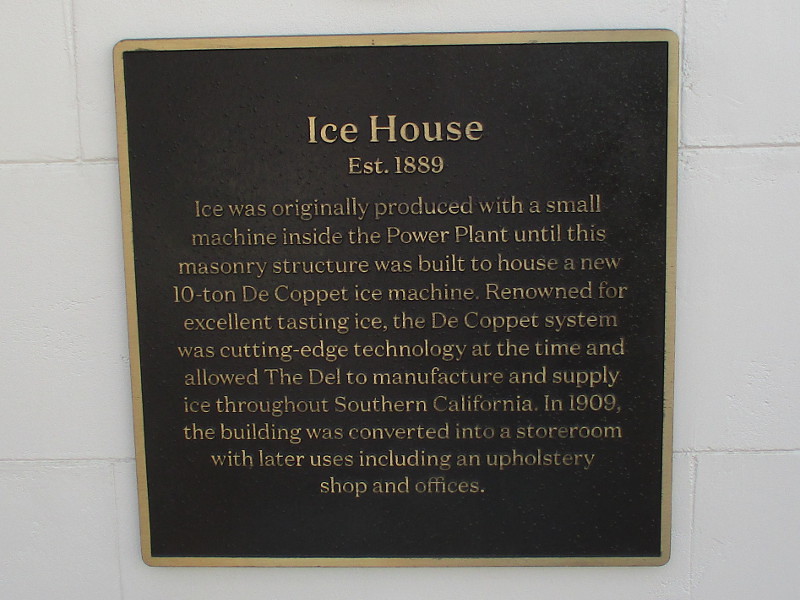
In the rear of the ice house is this plaque…
Ice House, established 1889.
Ice was originally produced with a small machine inside the Power Plant until this masonry structure was built to house a new 10-ton De Coppet ice machine. Renowned for excellent tasting ice, the De Coppet system was cutting edge technology at the time and allowed The Del to manufacture and supply ice throughout Southern California. In 1909, the building was converted into a storeroom with later uses including an upholstery shop and offices.
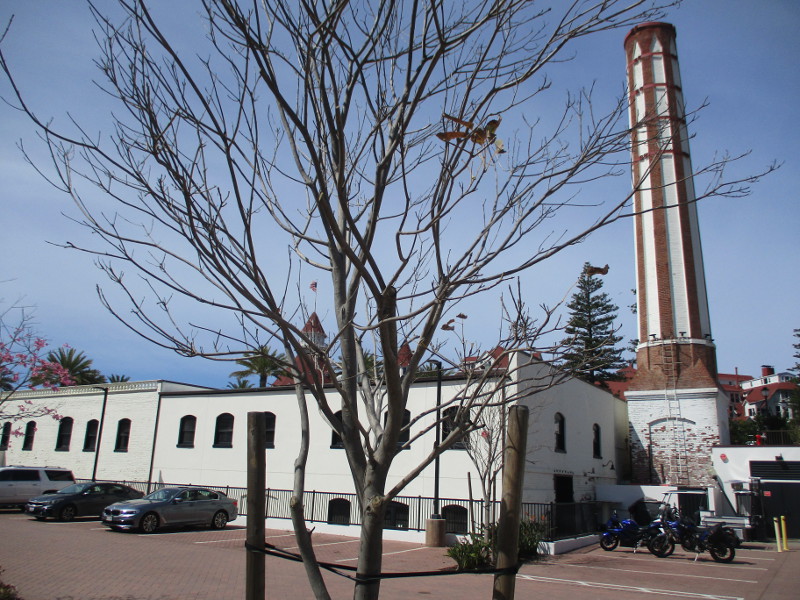
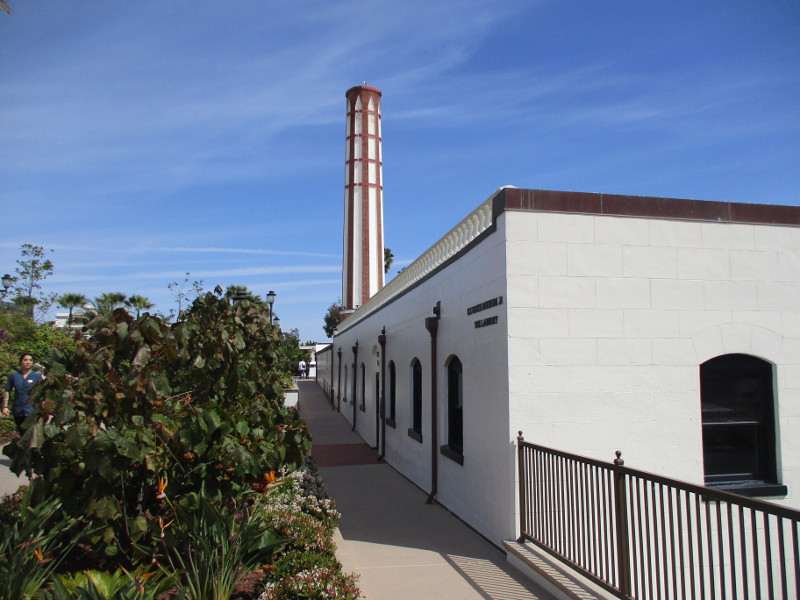
Lastly, north of the ice house is the old power plant with its tall, striped smokestack.
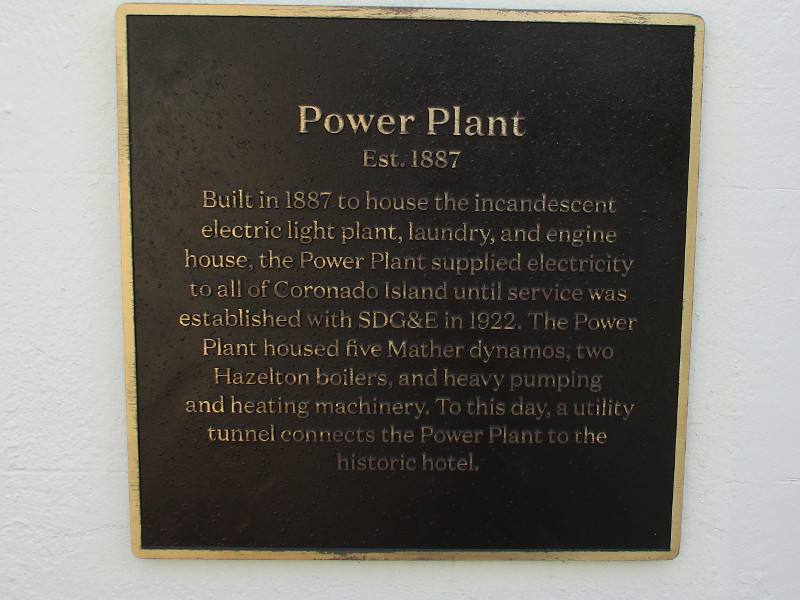
Power Plant, established 1887.
Built in 1887 to house the incandescent electric light plant, laundry, and engine house, the Power Plant supplied electricity to all of Coronado Island until service was established with SDG&E in 1922. The Power Plant housed five Mather dynamos, two Hazelton boilers, and heavy pumping and heating machinery. To this day, a utility tunnel connects the Power Plant to the historic hotel.
…
Thanks for visiting Cool San Diego Sights!
I post new blogs pretty often. If you like discovering new things, bookmark coolsandiegosights.com and swing on by occasionally!
I live in downtown San Diego and love to walk around with my camera! You can follow Cool San Diego Sights via Facebook or X (formerly known as Twitter)!
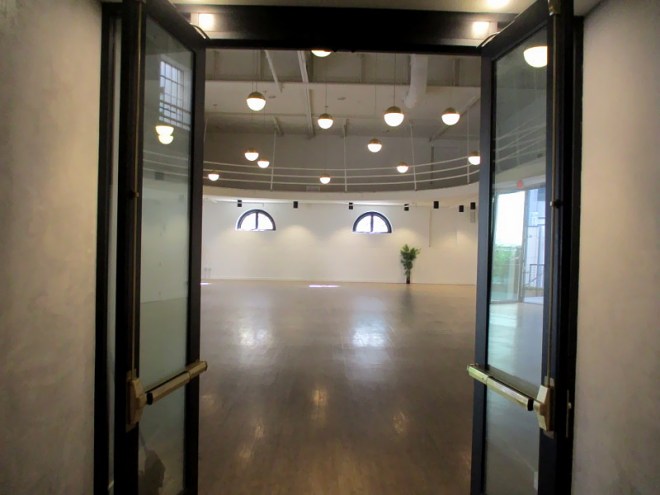
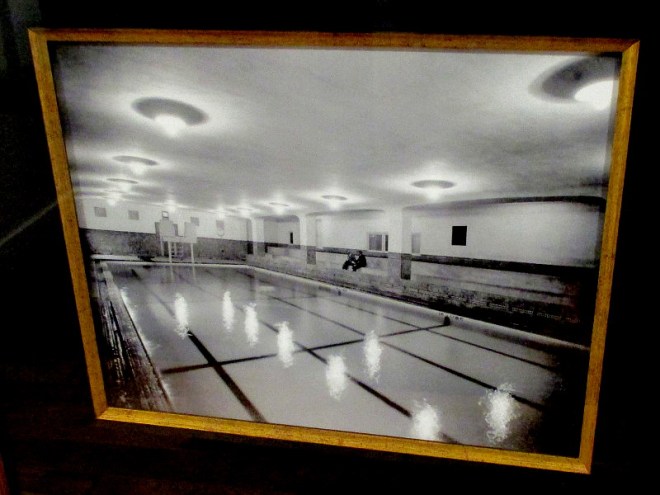
A luxurious hotel in downtown San Diego contains two huge rooms that are quite unusual. One used to be a basketball court, and another was an indoor swimming pool!
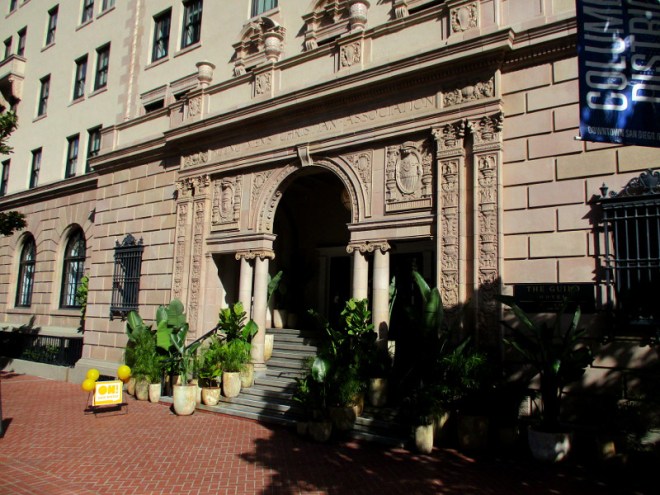
The Guild Hotel occupies the historic 1924 building that was originally home of the Army-Navy YMCA. For decades, tens of thousands of sailors and military men would head to this location on Broadway, not far from the waterfront, to recreate. They’d play basketball, run around an elevated indoor track, and swim in a basement pool.
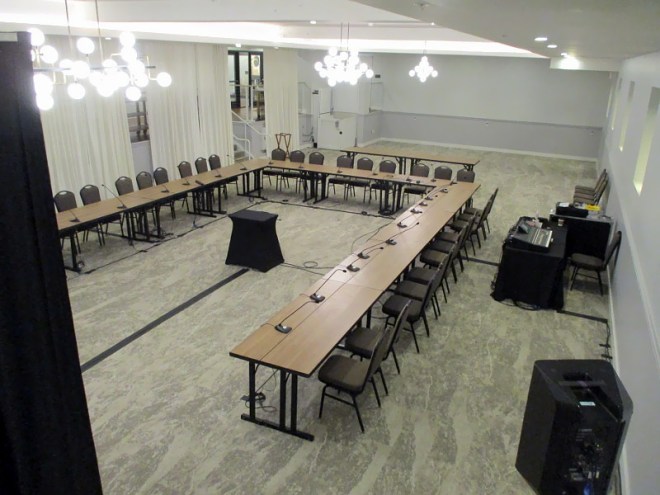
The Guild Hotel, when it moved into the iconic building, creatively repurposed two large indoor spaces. The huge basketball court was converted into the grand Grace Ballroom! The swimming pool was turned into the Society Ballroom!
I was shown these spaces several weeks ago during the San Diego Architectural Foundation Open House event.
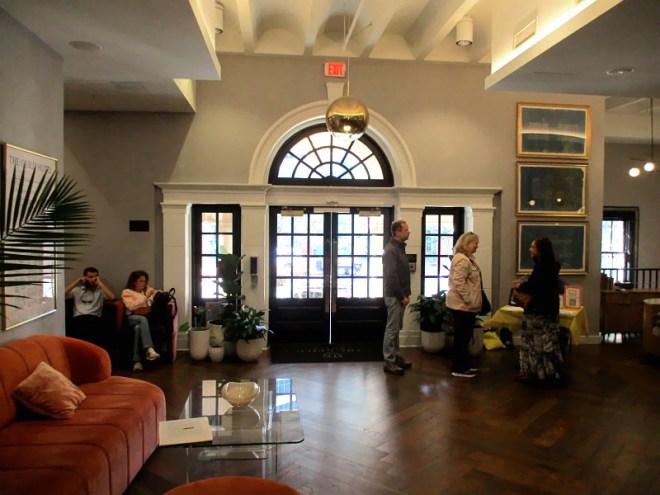
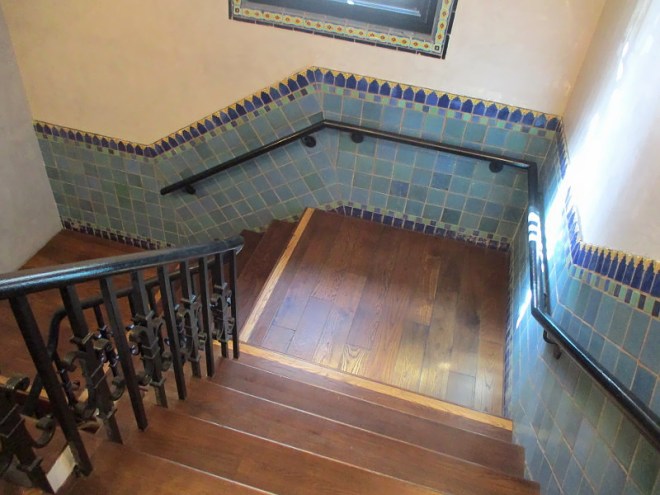
Just inside the front entrance of the luxurious The Guild Hotel in downtown San Diego.The Guild Bar in the hotel lobby.To the left of the bar, a door opens to the unusual Grace Ballroom.The Grace Ballroom at The Guild Hotel was originally an indoor basketball court. Military men shot hoops here for decades when the building was an Armed Services YMCA.An elevated platform intended for jogging or running continues to surround the hotel ballroom!Beautiful tiles along a stairway that descends from The Guild Hotel lobby to a lower level.An old photograph of the large swimming pool that once occupied the Army-Navy YMCA’s basement.The swimming pool is gone, replaced by the Society Ballroom! The historic space was set up as a meeting room when I toured the hotel.
…
Thanks for visiting Cool San Diego Sights!
I post new blogs pretty often. If you like discovering new things, bookmark coolsandiegosights.com and swing on by occasionally!
I live in downtown San Diego and love to walk around with my camera! You can follow Cool San Diego Sights via Facebook or X (formerly known as Twitter)!
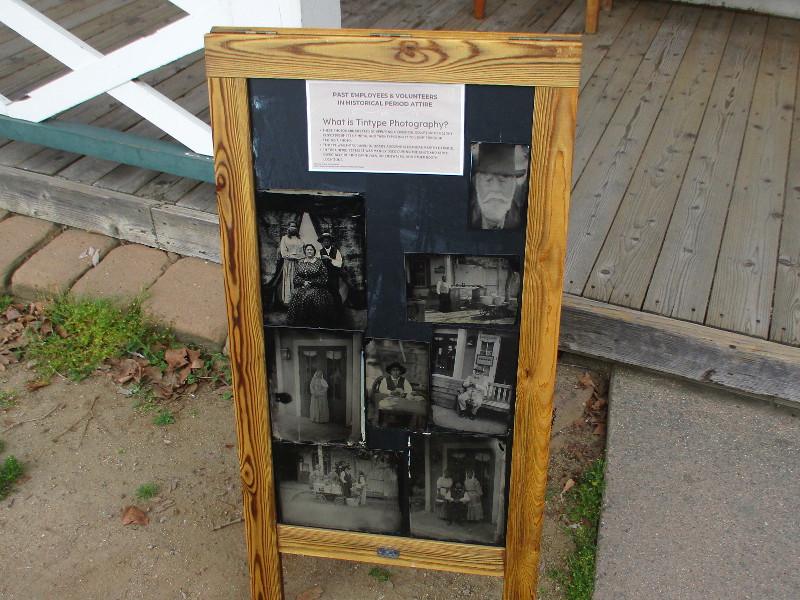
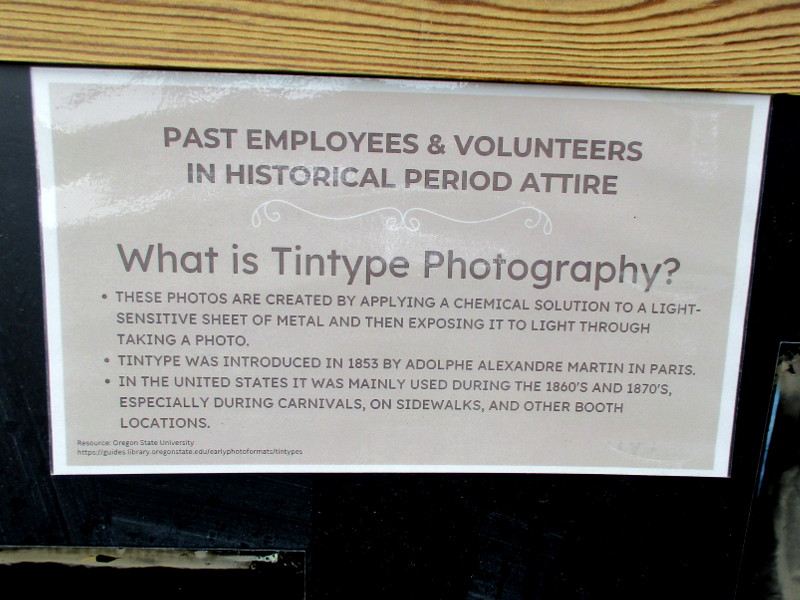
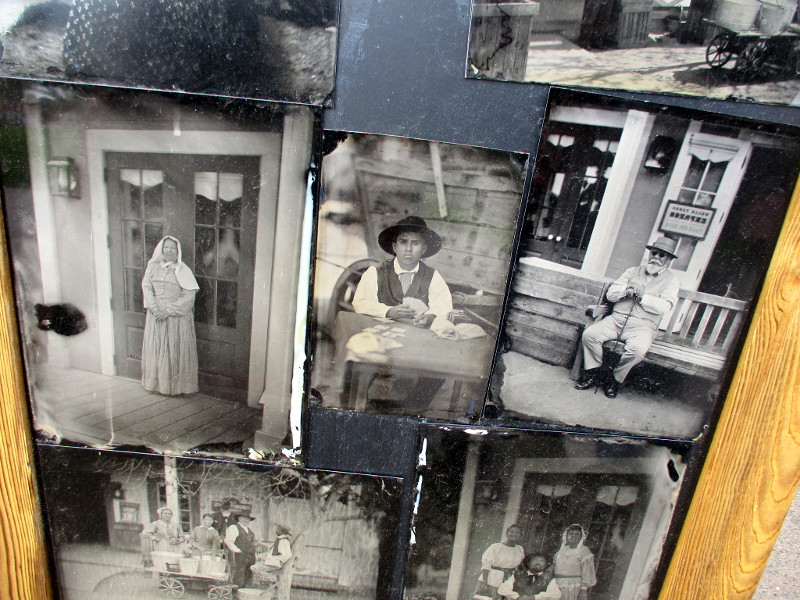
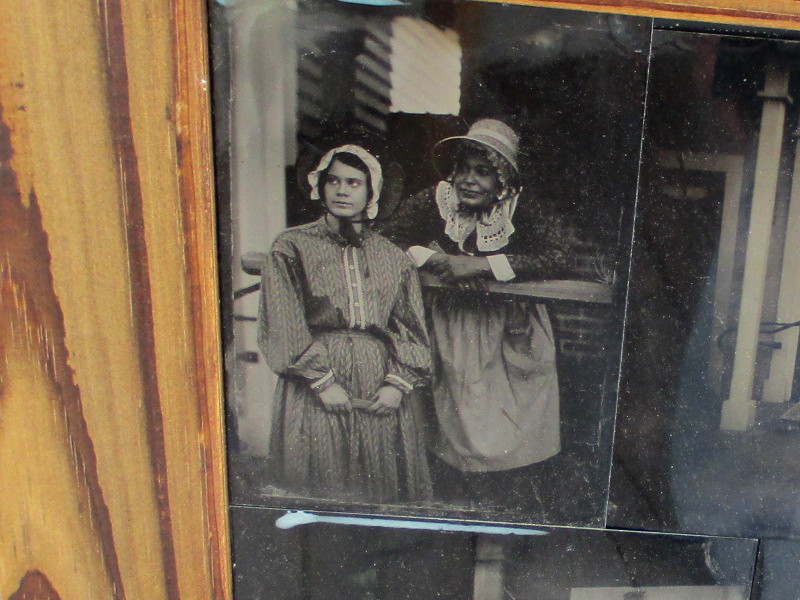
Employees and volunteers at Old Town San Diego State Historic Park have posed for old-fashioned tintype photographs, while dressed in period attire!
I spotted this display recently in front of the Robinson-Rose House Visitors Center. The “nineteenth century reproduction clothing” in these photographs reflects Old Town’s interpretive period, which is between 1821 and 1872.
If you want to see more photos of California State Park folks in period attire, click here. Or head over to Old Town San Diego State Historic Park and simply walk around. You’ll likely meet staff and volunteers who appear to have emerged from our city’s early history!
…
Thanks for visiting Cool San Diego Sights!
I post new blogs pretty often. If you like discovering new things, bookmark coolsandiegosights.com and swing on by occasionally!
I live in downtown San Diego and love to walk around with my camera! You can follow Cool San Diego Sights via Facebook or X (formerly known as Twitter)!
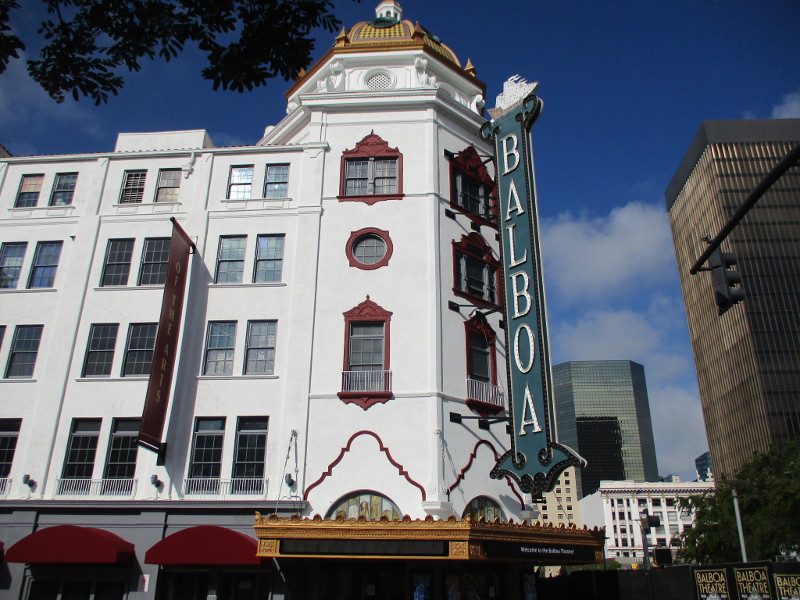
This coming Thursday–March 28, 2024–the Balboa Theatre in downtown San Diego will have been opened for 100 years!
Those walking down the sidewalk past the historic building might notice some intriguing graphics that celebrate the big anniversary.
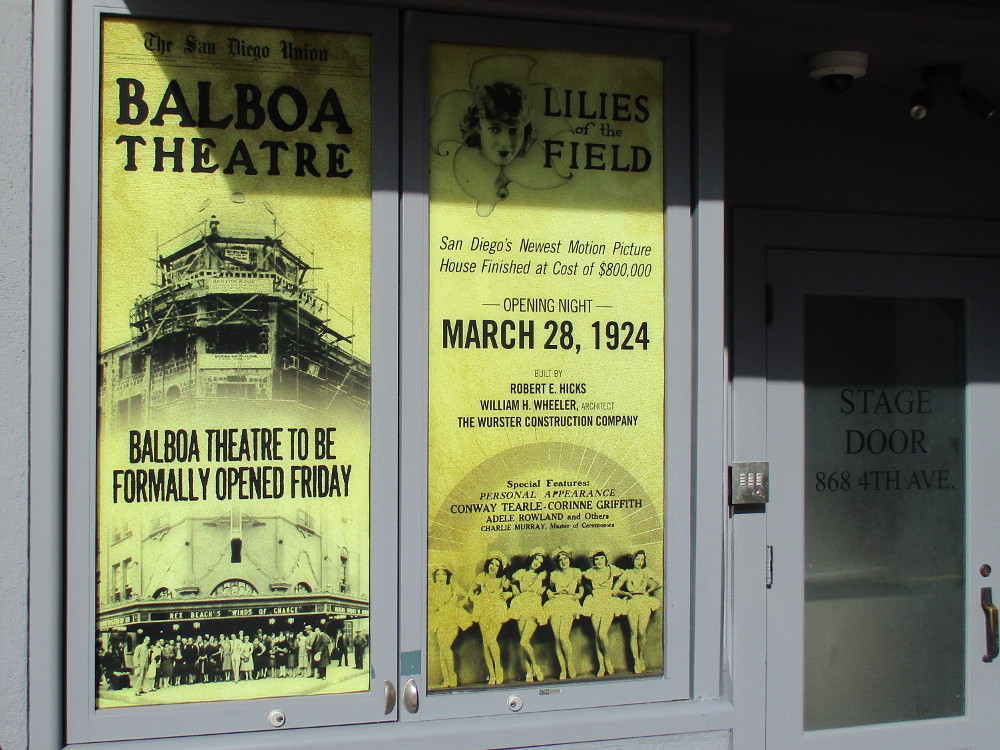
Look at my first photograph, taken this morning. Beside the stage door on Fourth Avenue you can see promotional material from 1924.
The Opening Night of San Diego’s Newest Motion Picture House Finished at Cost of $800,000 would feature Lilies of the Field. The film’s stars, Conway Tearle and Corinne Griffith, would also make a personal appearance.
Over the course of a century, the Balboa Theatre has undergone many changes, all the while remaining an important part of life in downtown San Diego.
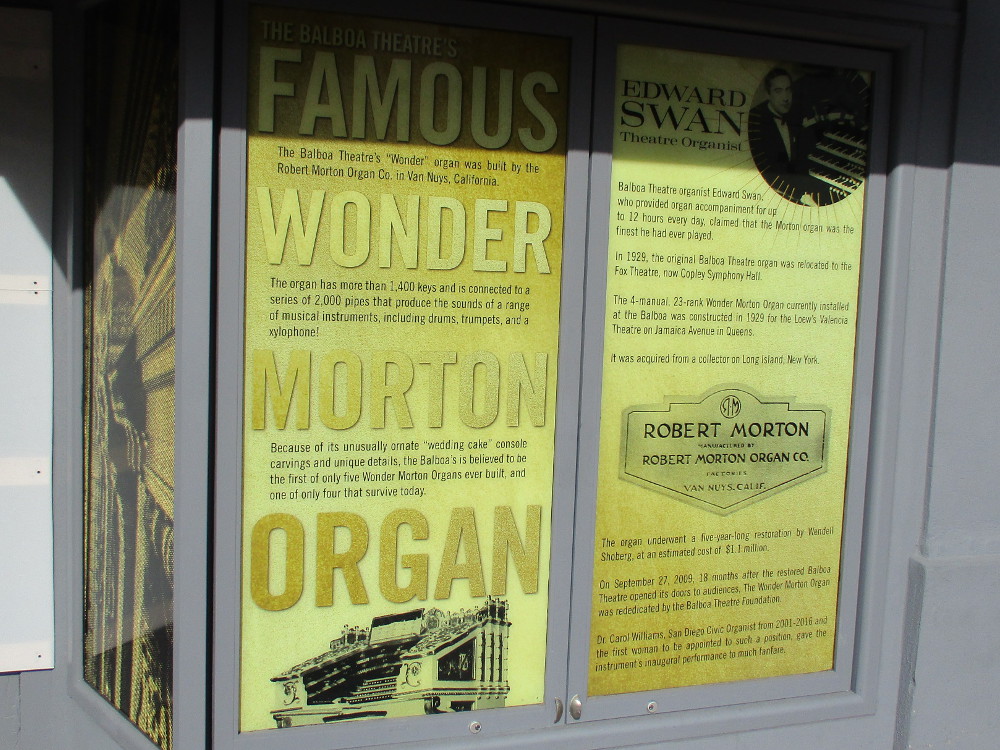
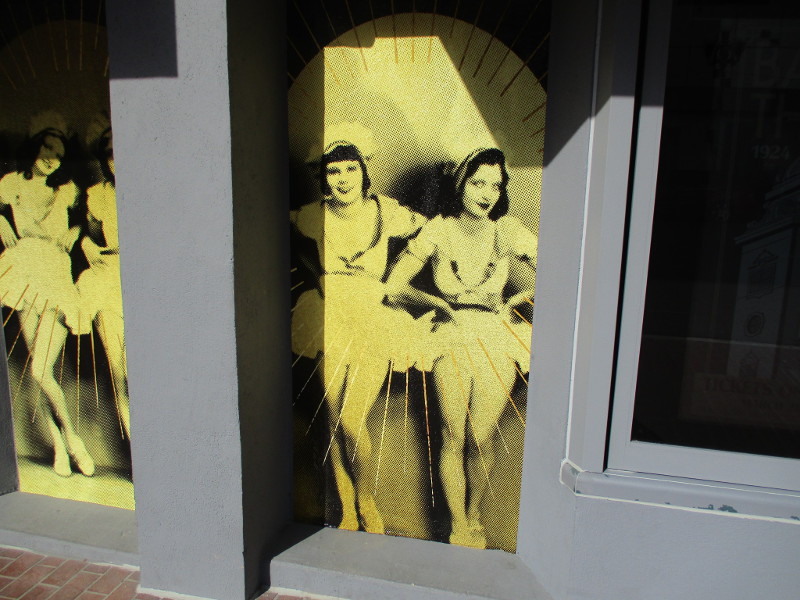
Additional graphics along the sidewalk tell more of the Balboa Theatre’s unique story:
The Balboa Theatre’s Famous Morton Organ
…The organ has more than 1400 keys and is connected to a series of 2,000 pipes that produce the sounds of a range of musical instruments, including drums, trumpets, and a xylophone!
Because of its unusually ornate “wedding cake” console carvings and unique details, the Balboa ‘s is believe to be the first of only five Wonder Morton Organs ever built and one of only four that survive today…
Balboa Theatre organist Edward Swan, who provides organ accompaniment for up to 12 hours every day, claimed that the Morton organ was the finest he had ever played.
In 1929, the original Balboa Theatre organ was relocated to the Fox Theatre, now Copley Symphony Hall.
The 4-manual, 23-rank Wonder Morton Organ currently installed at the Balboa was constructed in 1929 for the Loew’s Valencia Theatre on Jamaica Avenue in Queens…
There will be a special showing at the Balboa Theatre this Friday to celebrate the big 100 year anniversary. The Flying Fleet, a 1929 silent movie that features scenes in San Diego, will be accompanied by the current Wonder Morton theatre pipe organ.
You can learn more about the event by clicking here!
…
Thanks for visiting Cool San Diego Sights!
I post new blogs pretty often. If you like discovering new things, bookmark coolsandiegosights.com and swing on by occasionally!
I live in downtown San Diego and love to walk around with my camera! You can follow Cool San Diego Sights via Facebook or X (formerly known as Twitter)!














 Cool San Diego Sights!
