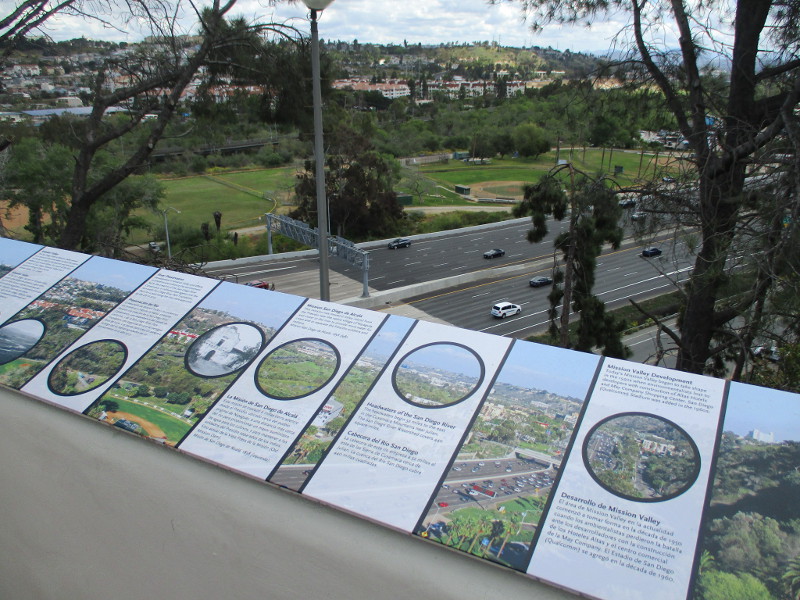
San Diego Riverview exhibit at Serra Museum.

The history of human activity beside the life-giving San Diego River can be viewed from the outdoor terrace of the Junípero Serra Museum.

The museum’s scenic San Diego Riverview exhibit helps visitors visualize the where and when of various important developments in the area. Historical images from the San Diego History Center Photo Collection can be compared to present-day sights in nearby Mission Valley and beyond.

I walked up Presidio Hill today to check out this relatively new exhibit.

As I write this, I can still remember my first visit to the Junípero Serra Museum. The landmark building stands high atop Presidio Hill overlooking Old Town and the west end of Mission Valley. Revisit those old photographs here.

Years ago I also posted a blog about climbing Presidio Hill, where Europeans first settled in California. See that here. Since then I’ve walked around Presidio Park many times and have shared all sorts of photographs. You can find many of them by using this website’s search box.

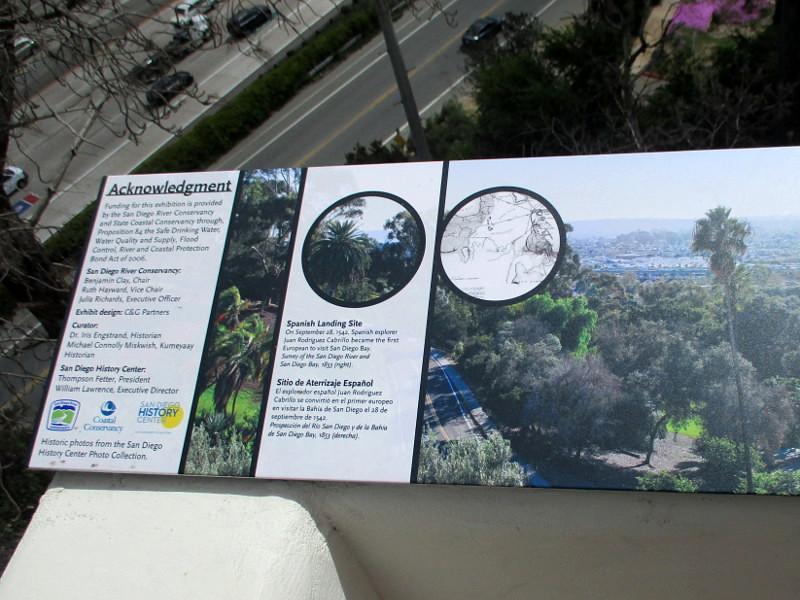
A plaque by the outdoor terrace acknowledges those who helped with the Serra Museum’s recent restorations.

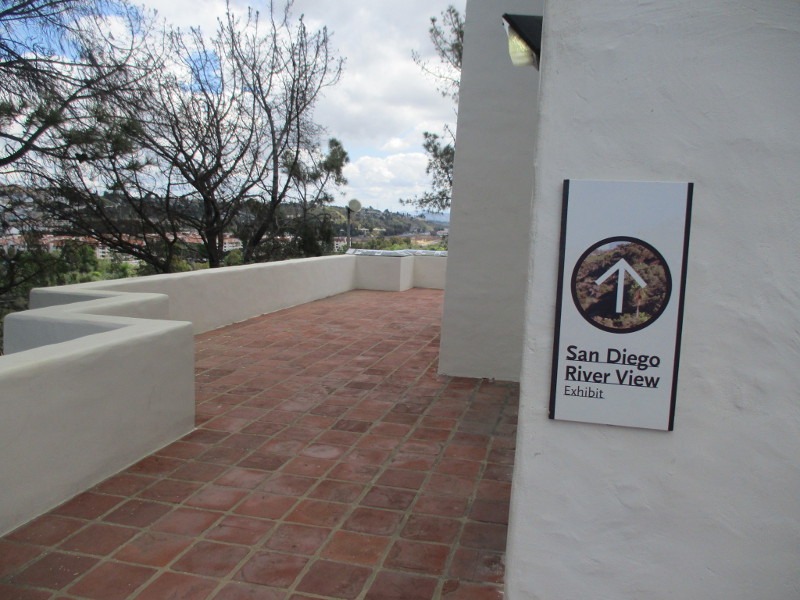
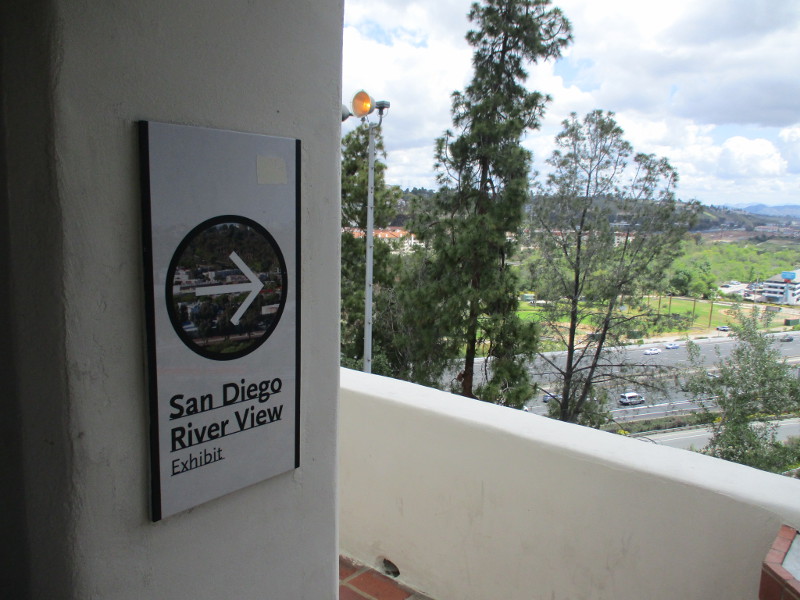
Look for several of these signs outside the Junípero Serra Museum.

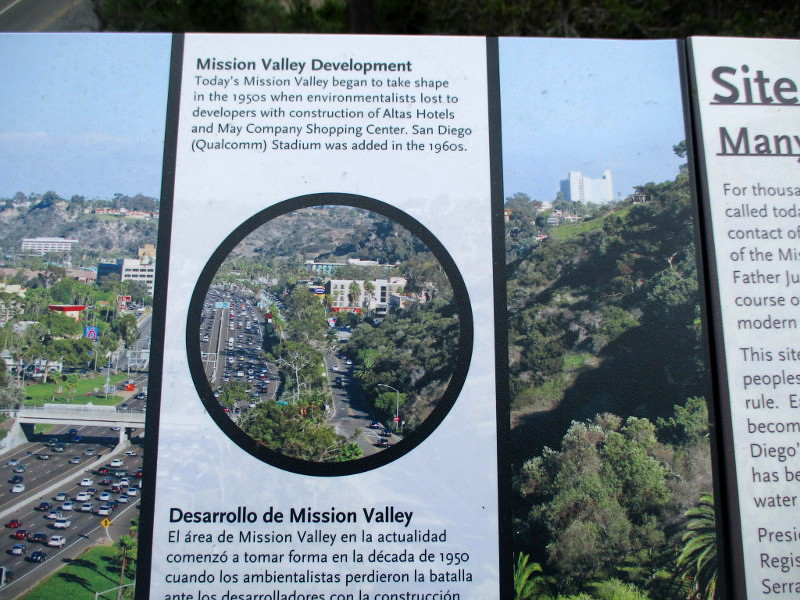
Interstate 8 runs through Mission Valley just below Presidio Hill.

Historical photos and information await visitors at the northeast corner of the Serra Museum’s outdoor terrace.

If you peer to the west beyond some trees, you can see San Diego Bay, which explorer Cabrillo discovered for Spain in 1542.

Survey of the San Diego River and San Diego Bay, 1853.

The Native American Kumeyaay lived in a village called Cosoy at the base of Presidio Hill near the San Diego River.

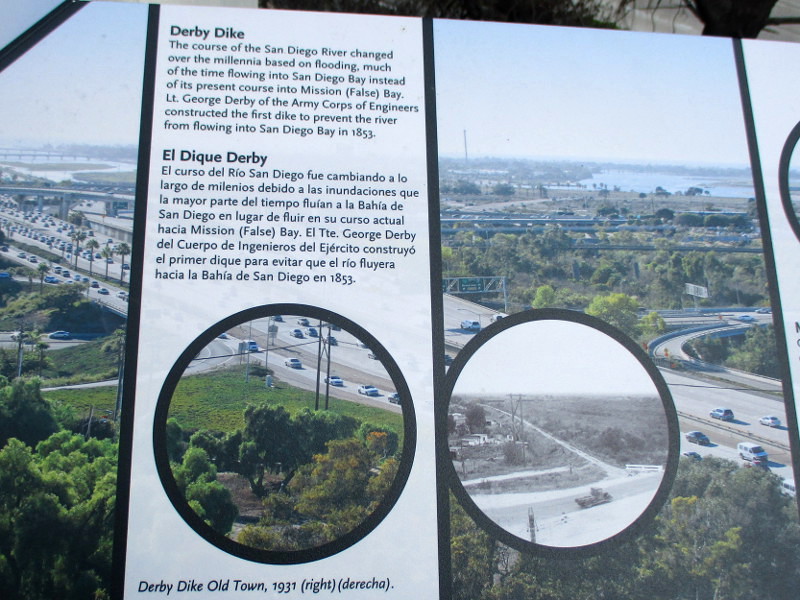
Derby Dike was built in 1853 by Lt. George Derby of the Army Corps of Engineers. The dike altered the course of the San Diego River, which periodically flooded Old Town, into False Bay–now called Mission Bay.

To see a historical plaque which marks the approximate location of old Derby Dike, click here.

Believe it or not, dike engineer Lieutenant George Horatio Derby was also a humorist who inspired Mark Twain! His pen name was Squibob. You can still see where he lodged while working in San Diego. Read about that here!
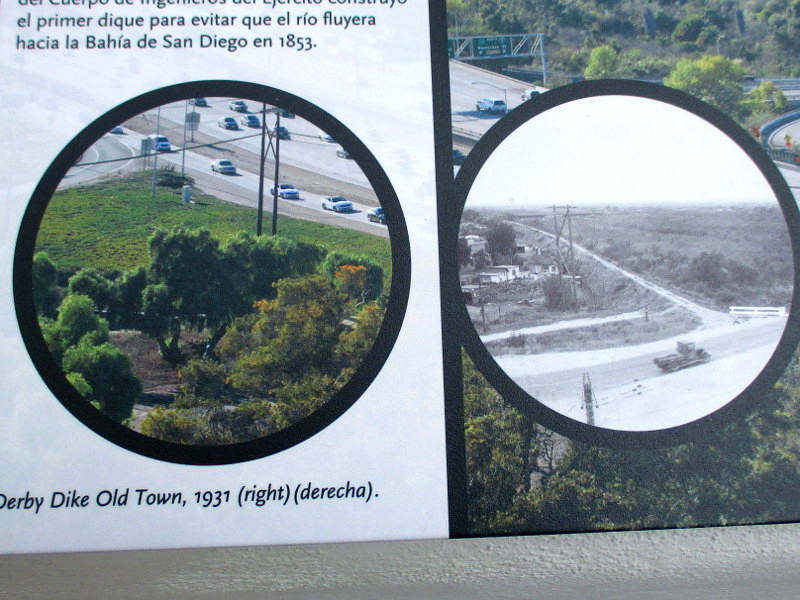
Photo of rebuilt Derby Dike in 1931.

Mission Bay can be spied to the northwest. The natural marsh and tidelands were enlarged by dredging from 1949 through the 1960s.

By looking from the Serra Museum’s terrace beyond nearby trees, you can glimpse La Jolla’s Mount Soledad to the northwest.

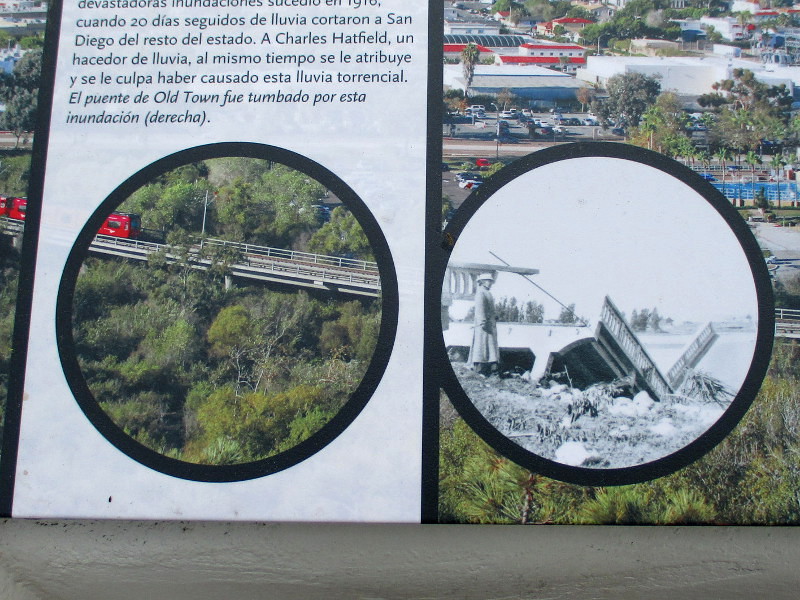
Photo of Old Town bridge washed out in 1916 flood. Rainmaker Charles Hatfield was both credited and blamed for the 20 day downpour!

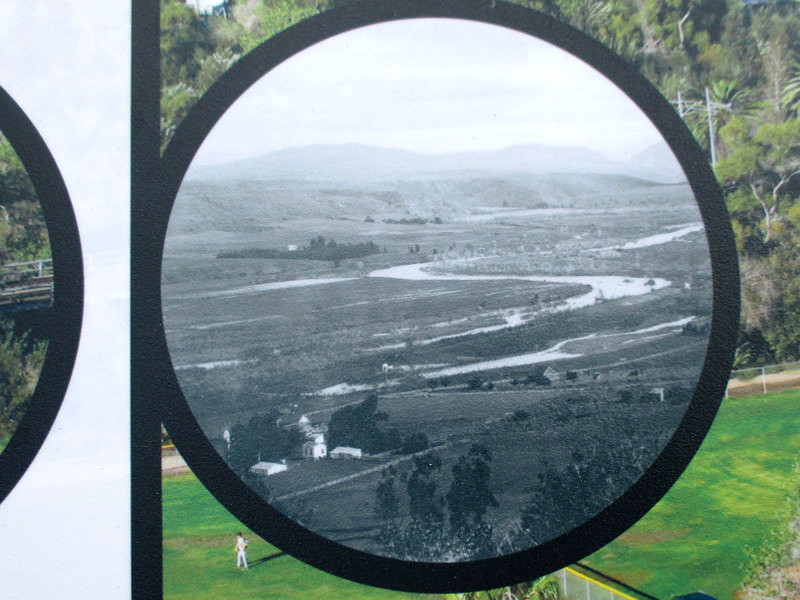
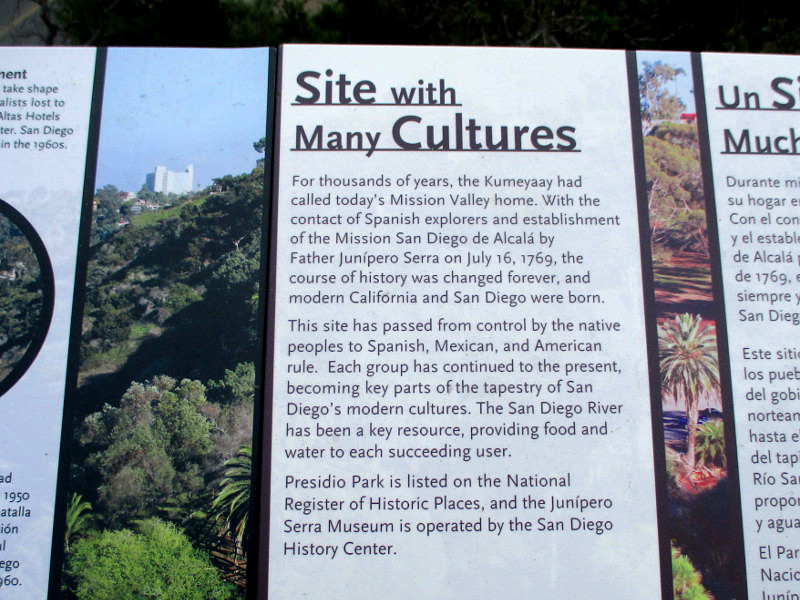
The San Diego River in Mission Valley has been a source of food and water for the Kumeyaay, Spanish, Mexicans and Americans over the years. Before its urban development, many dairy farms could be found in Mission Valley.

Photo of Mission Valley from 1915.

Display concerns efforts for environmental preservation, and the history Mission San Diego de Alcalá. In 1774 the Spanish mission moved 6 miles inland from its original 1769 location on Presidio Hill.

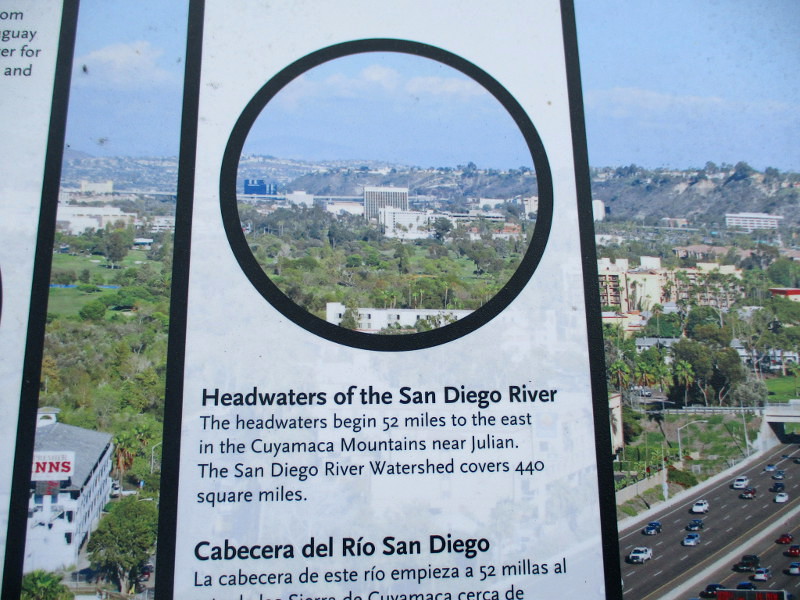
On a very clear day you can barely see the Cuyamaca Mountains to the east. That’s where the San Diego River begins.

Mission Valley’s development began in earnest in the 1950s, with the construction of Atlas Hotels and May Company Shopping Center. San Diego Stadium arrived in the 1960s.

Over the centuries, many people from diverse cultures have contributed to the history of this dynamic place. At the center of it all runs the San Diego River.

Thanks for visiting Cool San Diego Sights!

I post new blogs pretty often. If you like discovering new things, bookmark coolsandiegosights.com and swing on by occasionally!

I live in downtown San Diego and love to walk around with my camera! You can follow Cool San Diego Sights via Facebook or Twitter!

A hidden garden in Old Town San Diego.

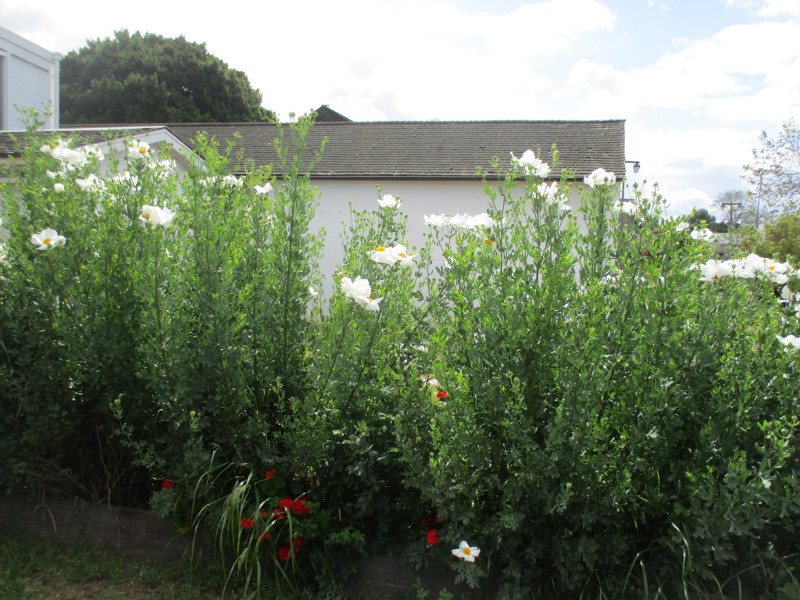
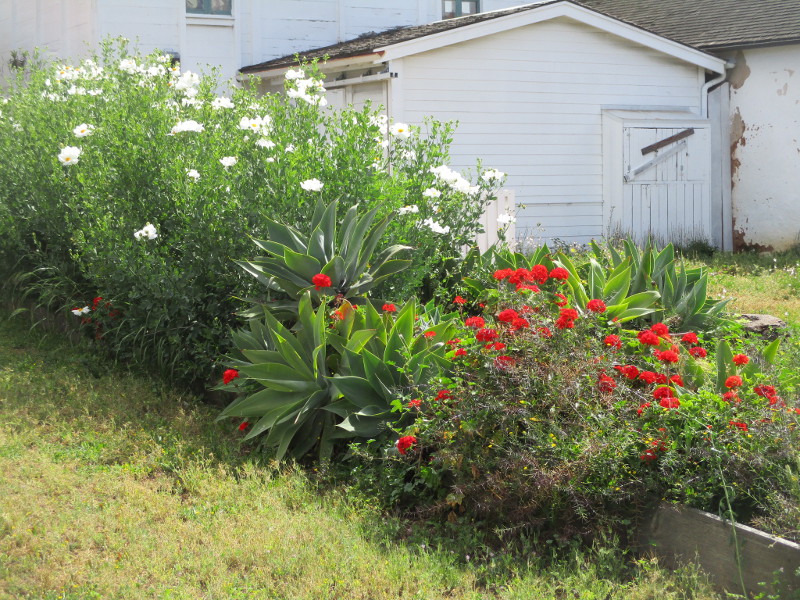
Most people visiting Old Town San Diego State Historic Park will not see the spring flowers now blooming in one beautiful but scraggly garden. That’s because the garden is a bit hidden, located near a walking path that is seldom traveled.

The garden can be found behind historic buildings that line the west edge of the State Park’s central plaza. If you walk into Old Town from the nearby trolley station, you’ll likely pass the path that leads behind these modest buildings, including Casa de Wrightington, San Diego House, U.S. House and Casa de Machado y Silvas.

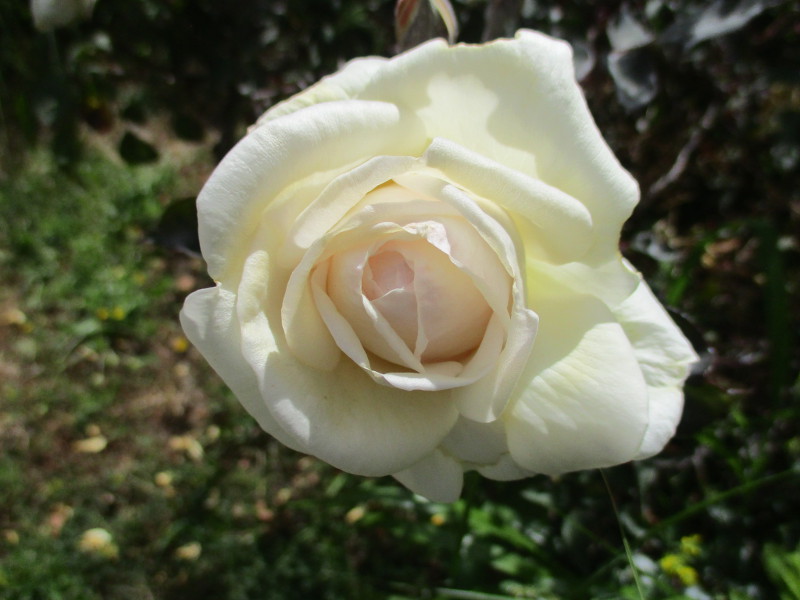
I saw roses today and many other flowers!

Thanks for visiting Cool San Diego Sights!

I post new blogs pretty often. If you like discovering new things, bookmark coolsandiegosights.com and swing on by occasionally!

I live in downtown San Diego and love to walk around with my camera! You can follow Cool San Diego Sights via Facebook or Twitter!

Terrazzo shop entries in historic Chula Vista.

Want to feel small town nostalgia?

Take a walk along Third Avenue in Chula Vista’s historic downtown.

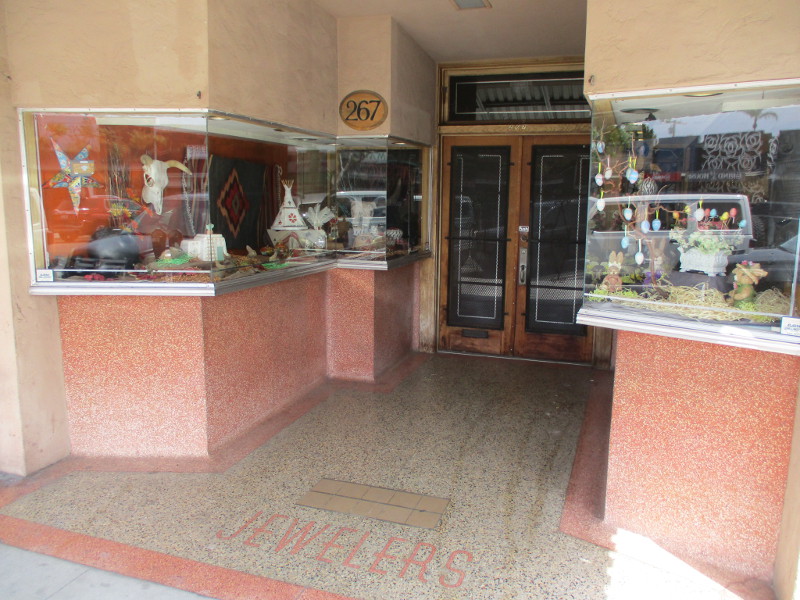
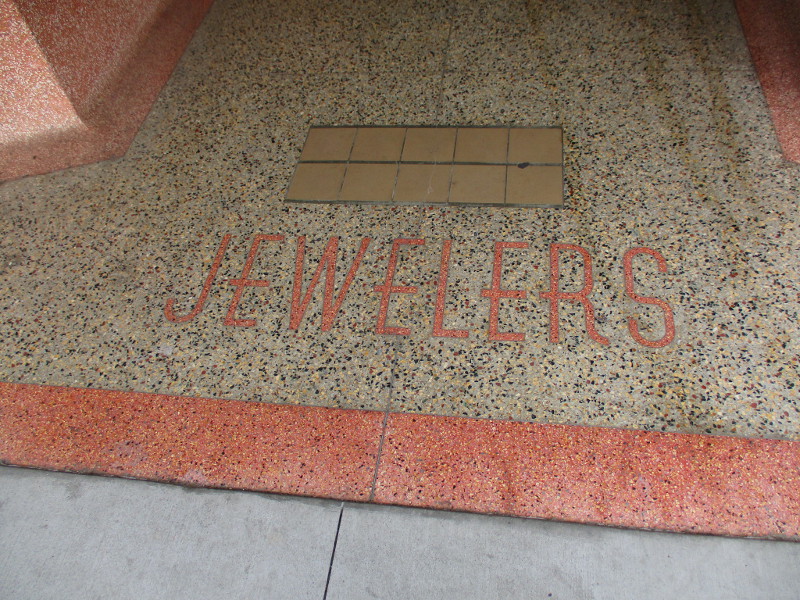
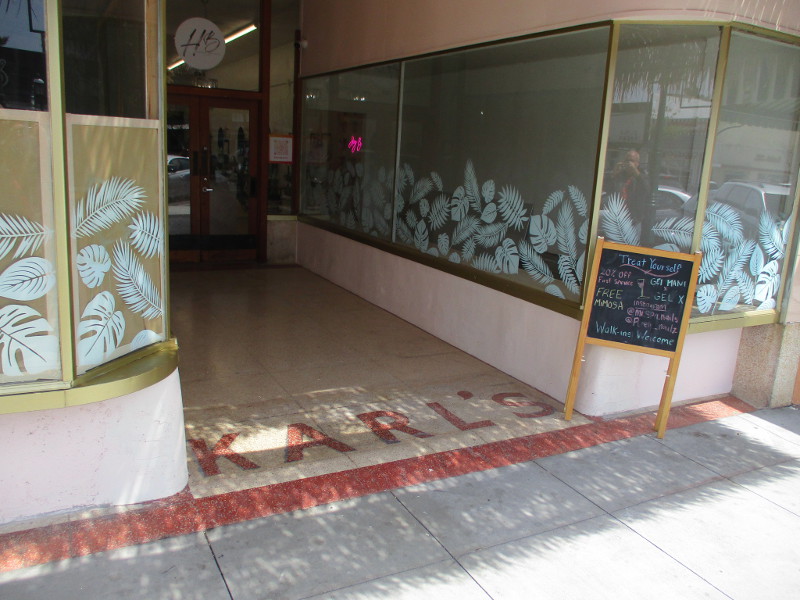
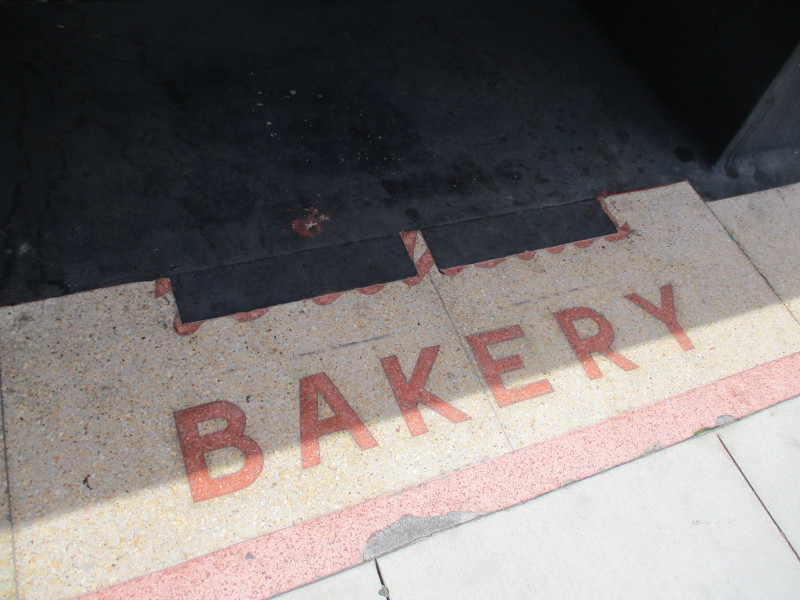
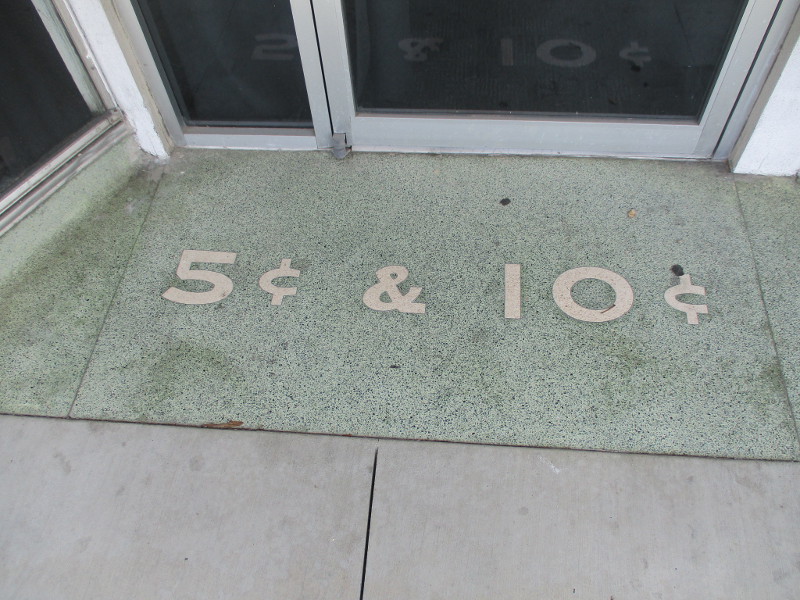
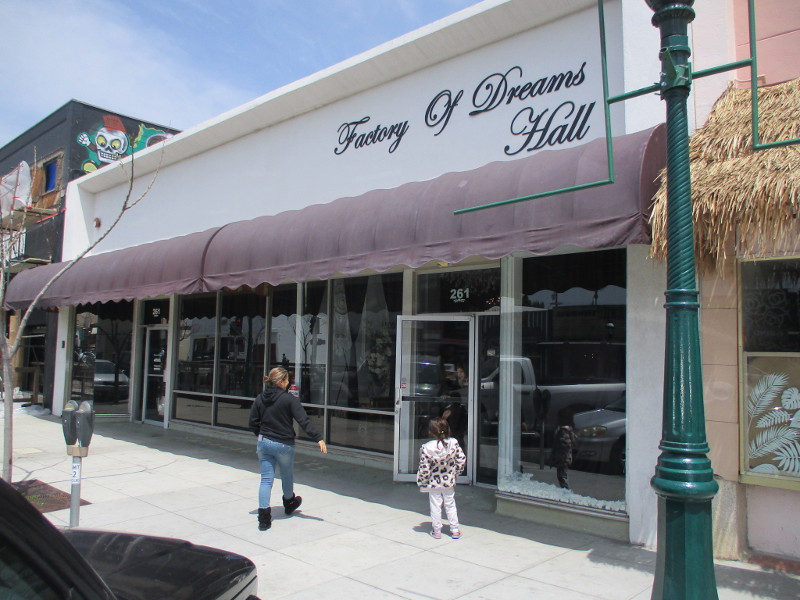
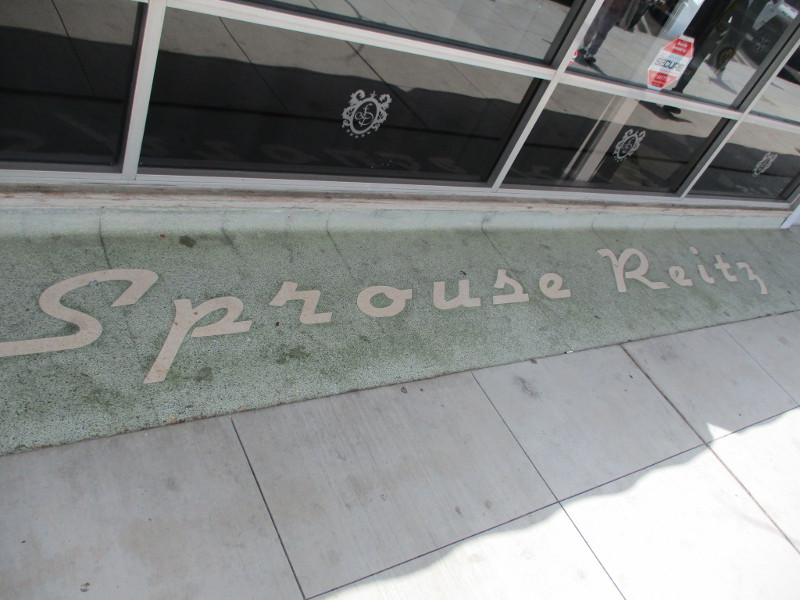
When I passed down the sidewalk on the east side of the street recently, I was pleased to see many shops with terrazzo entries that recall the names of past businesses.

I’ve paired photographs. The current building occupant is followed by old words spelled out in terrazzo at the front entrance.

Anyone more knowledgeable about the history of Chula Vista is invited to leave a comment!

Factory of Dreams Hall.

Sprouse Reitz.

Roy’s Jewelry & Loan

Jewelers.

Hidden Beauty Salon.

Karl’s.

Onstage Playhouse.

Bakery.

Maile’s Nail Spa.

Ferrantelli.

Thanks for visiting Cool San Diego Sights!

I post new blogs pretty often. If you like discovering new things, bookmark coolsandiegosights.com and swing on by occasionally!

I live in downtown San Diego and love to walk around with my camera! You can follow Cool San Diego Sights via Facebook or Twitter!
A famous architect and history in National City.

A very important architectural treasure stands in National City.

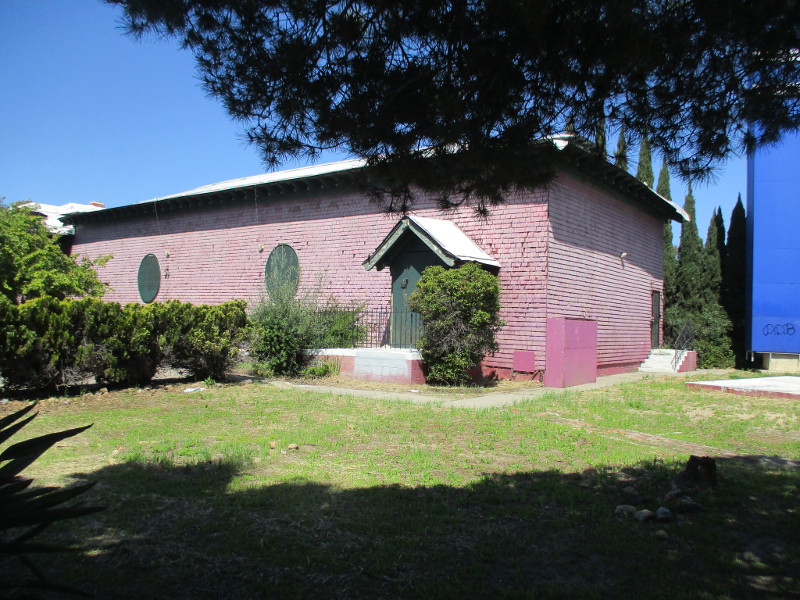
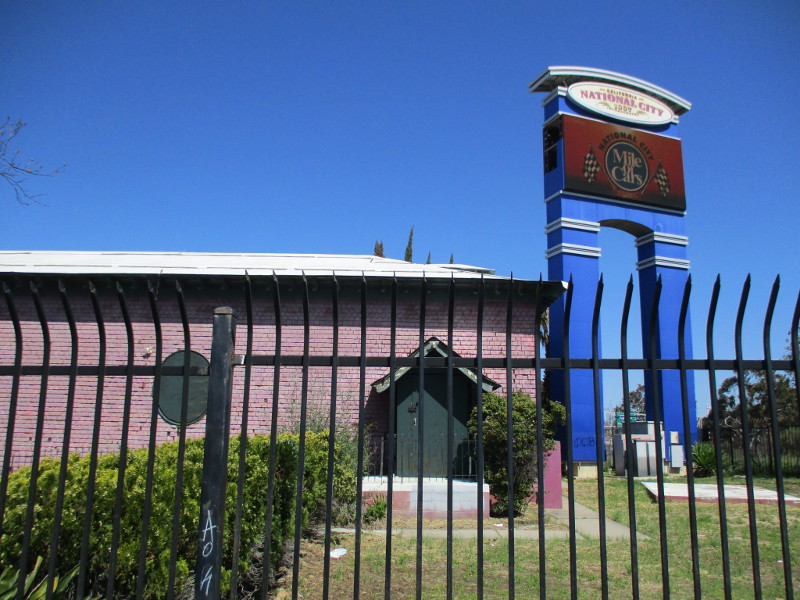
Granger Hall, built in 1898, was designed by a world-famous architect. The building can be spotted on East 4th Street near the base of the big electronic National City sign that rises next to Interstate 805.

I learned about Granger Hall when I read a Wikipedia article concerning Irving Gill, who is considered a pioneer of the modern movement in architecture. Twelve of his buildings throughout Southern California are listed on the National Register of Historic Places.

Granger Hall is such an important masterpiece that it has a full Wikipedia page. The hall was built in 1898 as an “acoustically perfect” music auditorium addition to a smaller music room in the Paradise Valley estate of Ralph Granger. Granger made a fortune in the “Last Chance” silver mine in Colorado during the 1890s. The building, moved later, has also been known as Granger Music Hall. It was listed on the National Register of Historic Places in 1975… The acoustic properties include a design having no parallel walls or surfaces, including having the floor slope slightly forward and the ceiling and walls having “a slight canter”…

Well, I had to go check it out!

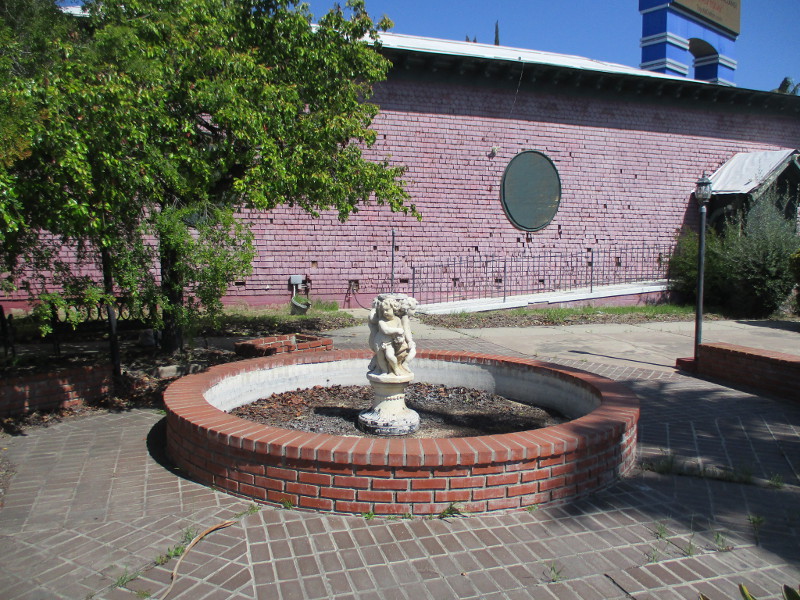
During my last walk through National City, I spied old Granger Hall behind a fence, apparently neglected and obviously deteriorating.

With my naked eye it was possible to see how the lines of the uniquely designed building aren’t exactly parallel. I could also see how, in its heyday, the music hall must have been glorious.

The Save Our Heritage Organisation has proposed having the building moved to Pepper Park and renovating it, so music can once again be heard from the acoustically perfect Granger Music Hall. On this SOHO web page you can view an old photograph of the hall’s elegant interior.

Thanks for visiting Cool San Diego Sights!

I post new blogs pretty often. If you like discovering new things, bookmark coolsandiegosights.com and swing on by occasionally!

I live in downtown San Diego and love to walk around with my camera! You can follow Cool San Diego Sights via Facebook or Twitter!

Reinforcing history in Balboa Park!

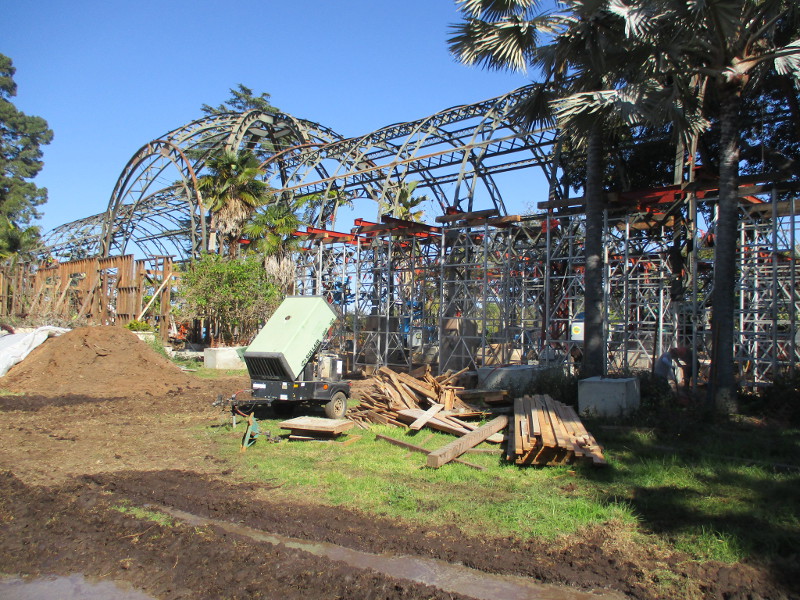
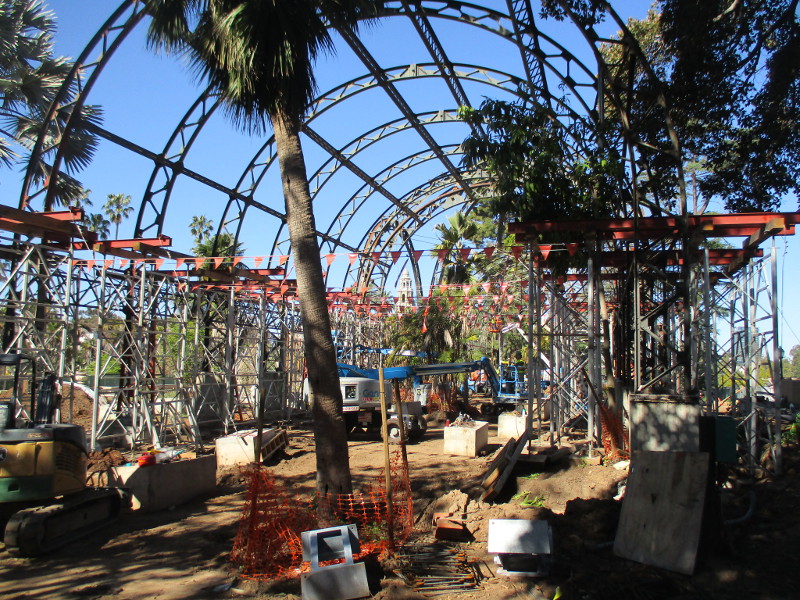
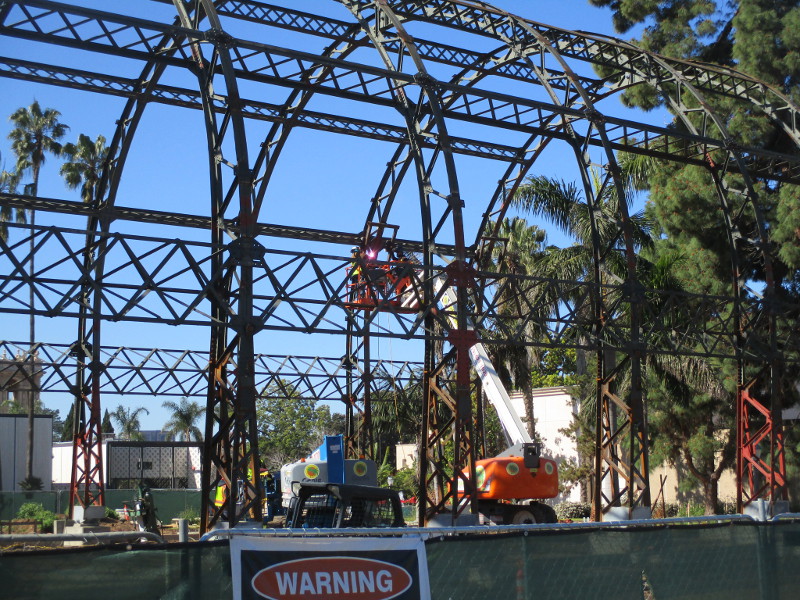
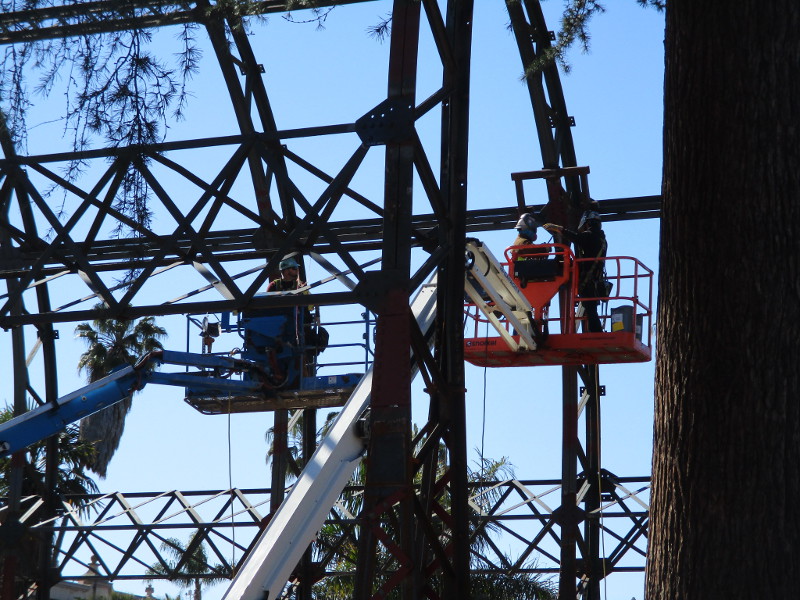
Sparks were flying today in San Diego’s amazing Balboa Park!

As I walked near the Botanical Building, I noticed a small army of people working to preserve and improve the historic structure.

I spoke briefly to someone working on the project. He explained that the base of the colossal, over one hundred year old steel structure is being replaced. That’s because there’s a lot of weight to support!

I also learned that the steel framework of the Botanical Building was originally assembled using rivets, as was common in the past. The aging upper structure is being reinforced where necessary, including areas where past patchwork repairs were made.

I asked why the steel skeleton couldn’t be entirely replaced. The answer, of course, is that the Botanical Building has special historical status. It was built in 1915 for the Panama-California Exposition. It was one of the few exposition structures intended to be permanent.

How long will the structure endure once this restoration is completed? I asked. Well over a century was the answer!

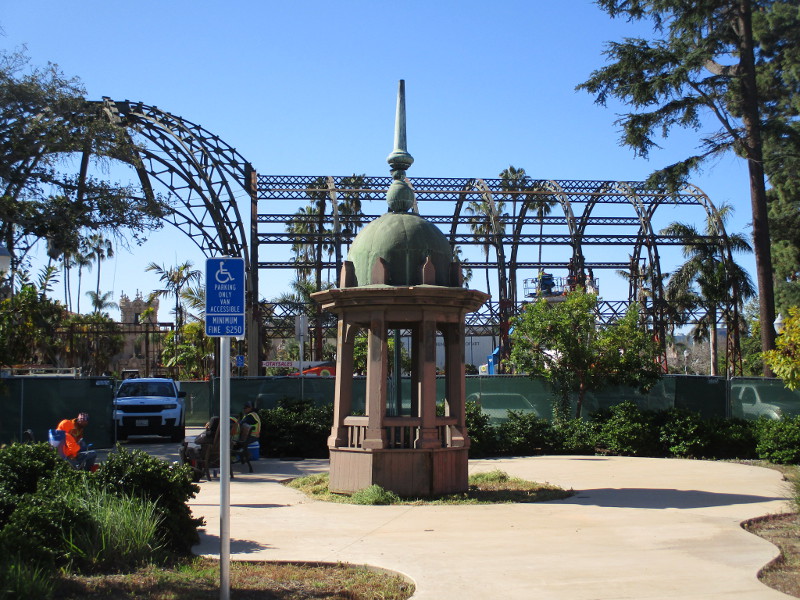
Finally, as I walked about I noticed the removed cupola has been placed in a fenced area at the center of a nearby parking lot.

Thanks for visiting Cool San Diego Sights!

I post new blogs pretty often. If you like discovering new things, bookmark coolsandiegosights.com and swing on by occasionally!

I live in downtown San Diego and love to walk around with my camera! You can follow Cool San Diego Sights via Facebook or Twitter!
Restoring the old Coronado ferry ticket booth.

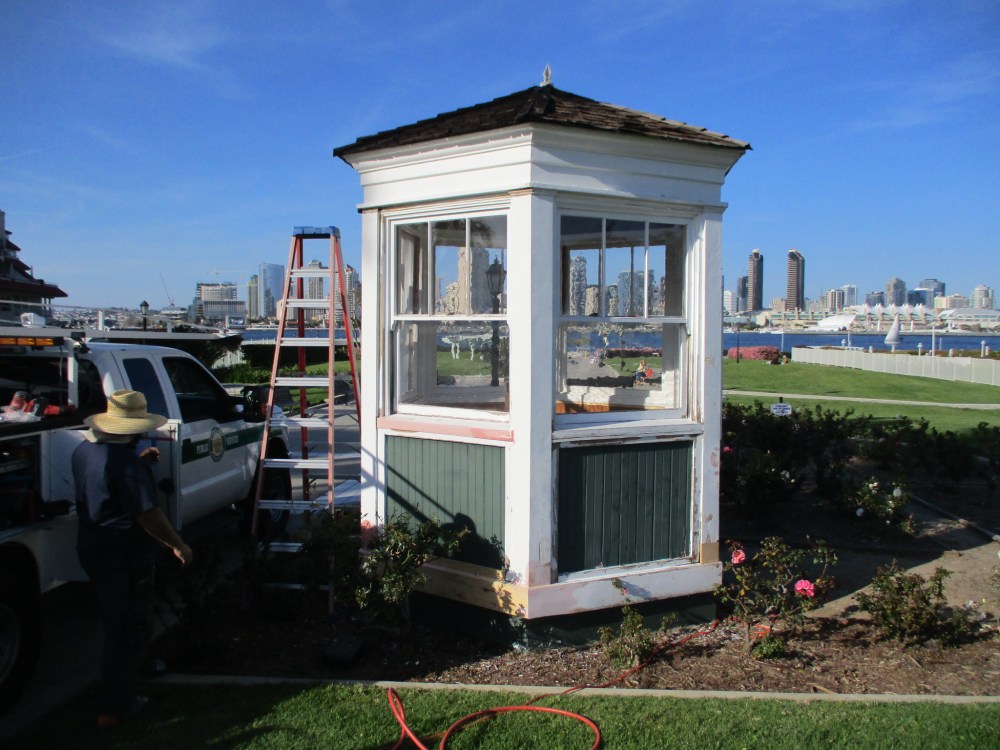
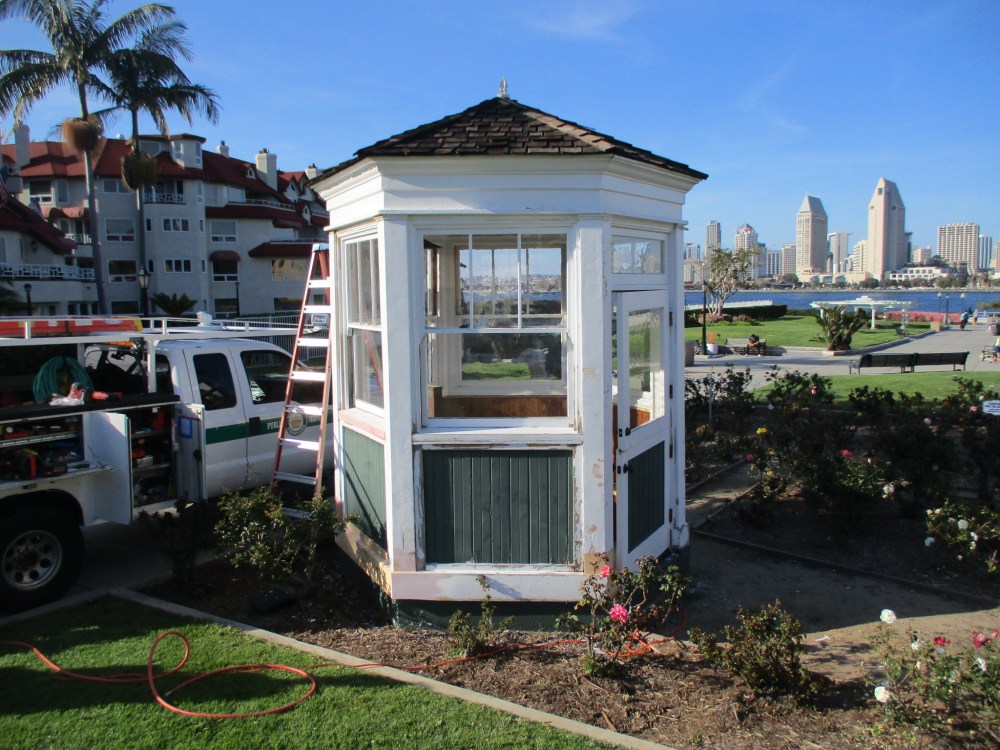
I had walked into Coronado’s bayfront Centennial Park this afternoon, making my way toward the Coronado Ferry Landing, when I noticed work being done on the historic old ferry ticket booth.

I paused to watch for a few moments, then asked some questions.

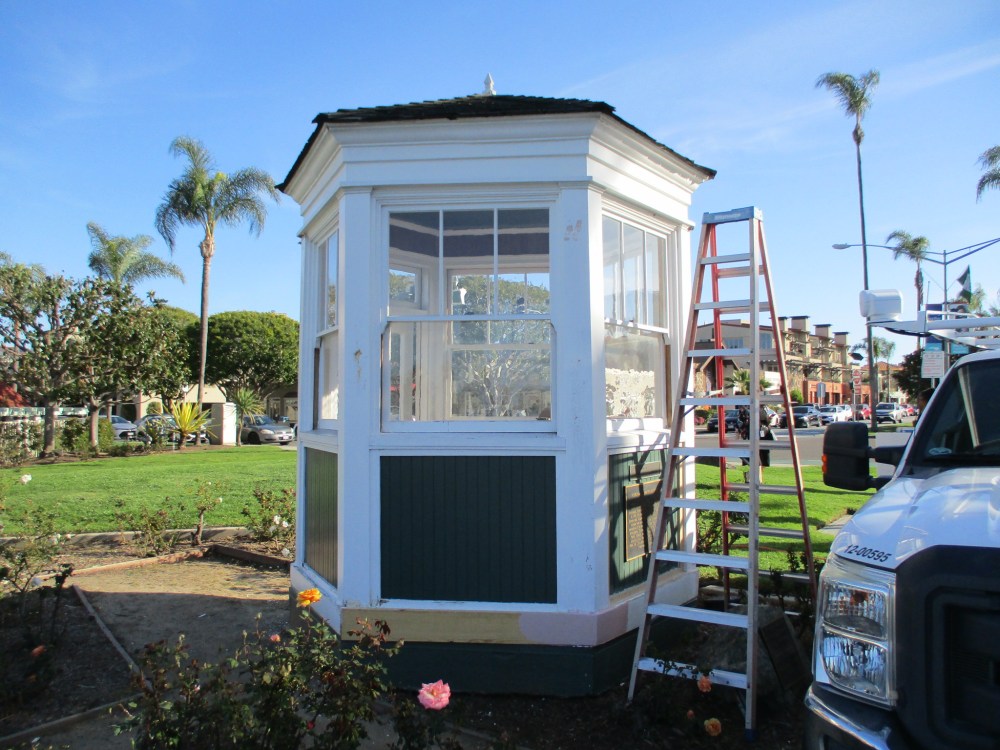
I learned this old ticket booth, dating from 1886, has suffered pretty badly from rot and termites. A substantial portion of the structure must be replaced.

I was also told this ticket booth, back in the day before the Coronado Bridge opened, was located closer to the water, where ferries crossing San Diego Bay would land. The booth also stocked newspapers that were sold to ferryboat passengers.

If you’d like to learn a little more about the booth and see its historical plaque, you can read a past blog post here.

Thanks for visiting Cool San Diego Sights!

I post new blogs pretty often. If you like discovering new things, bookmark coolsandiegosights.com and swing on by occasionally!

I live in downtown San Diego and love to walk around with my camera! You can follow Cool San Diego Sights via Facebook or Twitter!
Creating a huge bronze mural for Balboa Park!

A couple of incredible projects are now underway that will improve and beautify the Palisades area of Balboa Park.

One project I wrote about yesterday. Two life-size grizzly bear sculptures and two flagpoles will be added to the roof of the San Diego Automotive Museum. You can read that blog post here.

The second project concerns the historical building directly across Pan American Plaza: today’s Municipal Gymnasium. This building was originally built for the 1935-1936 California Pacific International Exposition in Balboa Park and was called the Palace of Electricity and Varied Industries.

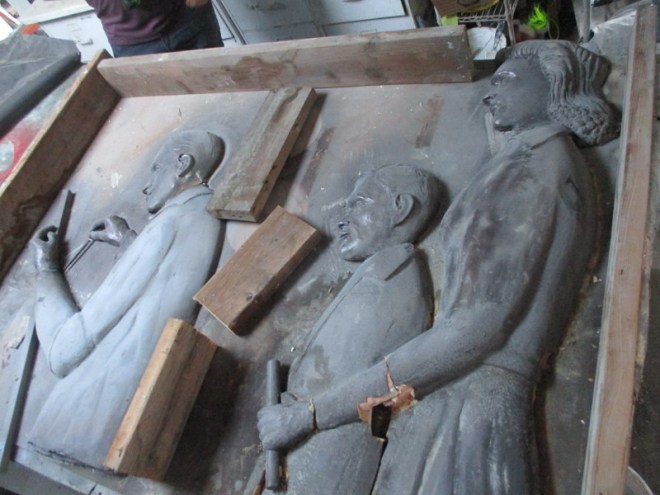
Back in 1935, a large themed mural greeted visitors above the entrance to the Palace of Electricity and Varied Industries. It was a bas-relief designed by Arturo Eneim, carved out of layers of wallboard. It’s long gone.

But that mural is coming back! And it will be made of cold cast bronze!

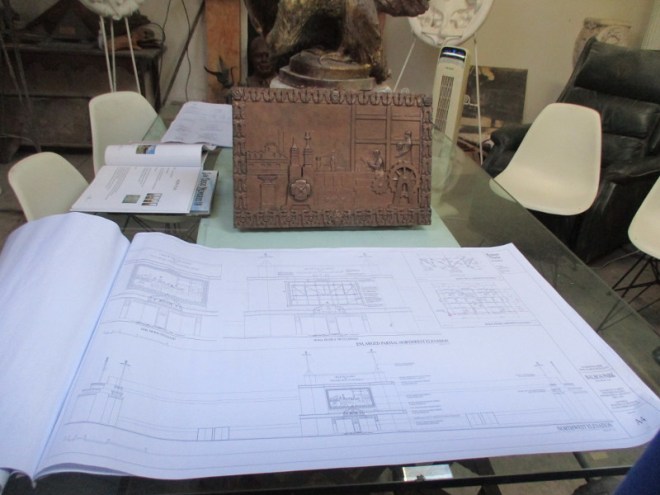
In late 2021 I visited the San Diego studio of Bellagio Precast where the 12′ x 20′ cold cast bronze fiber glass reinforced concrete mural is being created. You can see interesting photos from that visit, plus renderings and more description, by clicking here. And here.

I visited the same studio again a couple days ago and observed how the enormous mural is coming together, piece by piece!

Architectural plans for the Palace of Electricity and Varied Industries mural are spread near a small model at Bellagio Precast in San Diego.

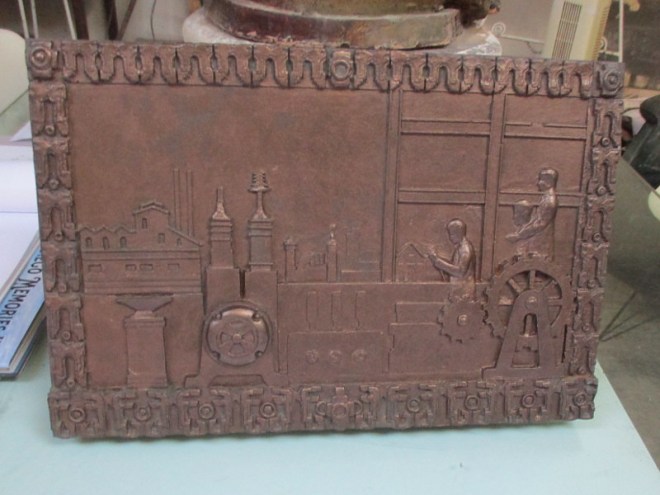
A small model of the cast bronze mural, which includes industrial imagery, an electrical generator, and three human figures.

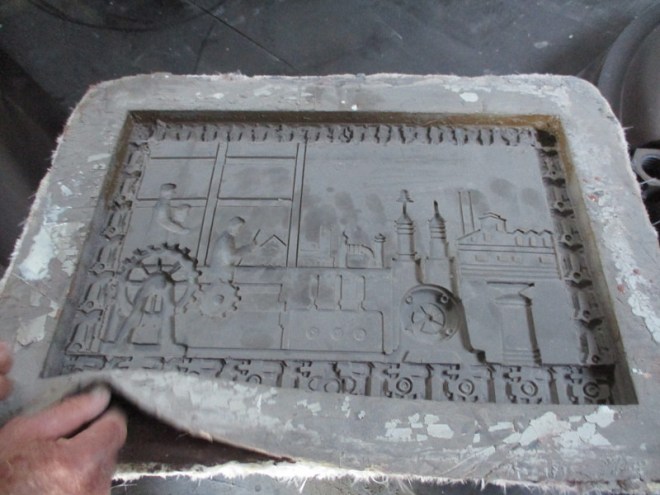
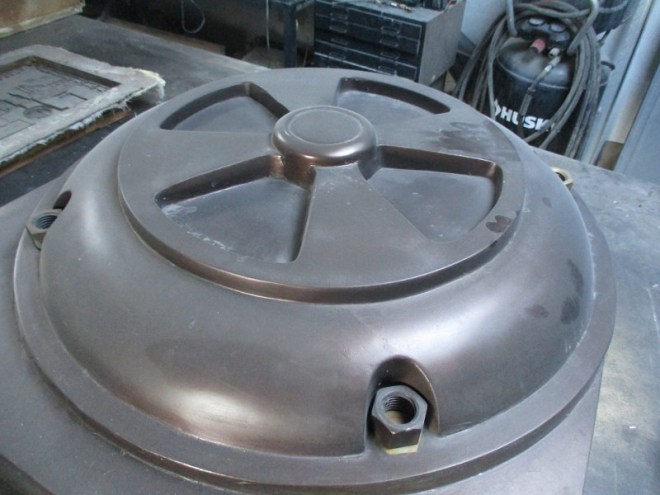
Here’s the mold used for the small model’s creation. You can see how the images are reversed.

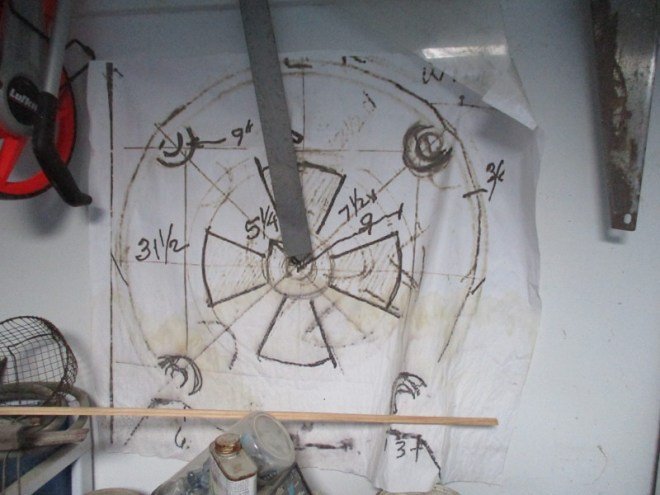
The design for the electrical generator element that will be included in the large, finished mural.

And here is the generator! Just one element of many that will be pieced together to create a mold for the massive cast bronze mural.

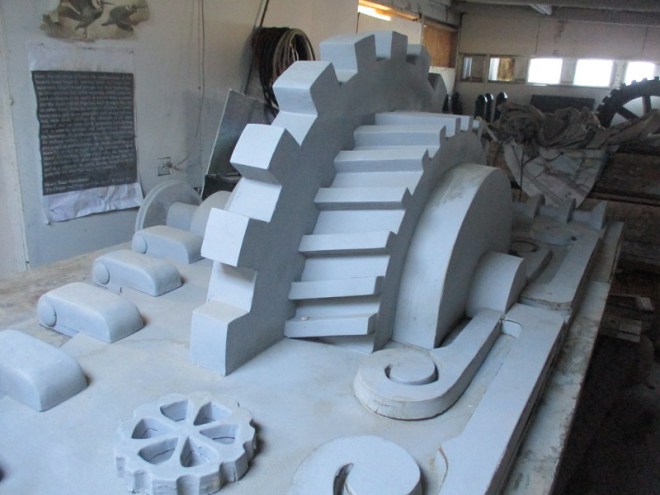
More elements to be incorporated into the Palace of Electricity and Varied Industries mural include huge gears!

This monumental project is being undertaken by the Balboa Park Committee of 100.

I’ve learned the fantastic mural should be completed and installed above the entrance to the Municipal Gymnasium building around September this year!

Thanks for visiting Cool San Diego Sights!

I post new blogs pretty often. If you like discovering new things, bookmark coolsandiegosights.com and swing on by occasionally!

I live in downtown San Diego and love to walk around with my camera! You can follow Cool San Diego Sights via Facebook or Twitter!
Grizzly bears ready for Balboa Park rooftop!

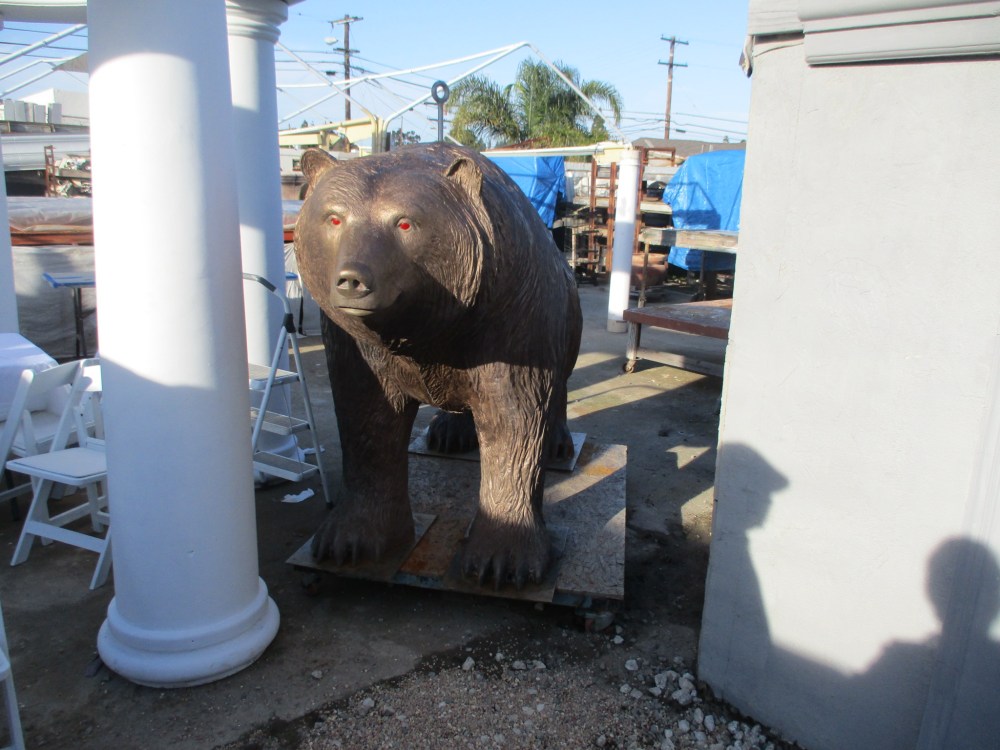
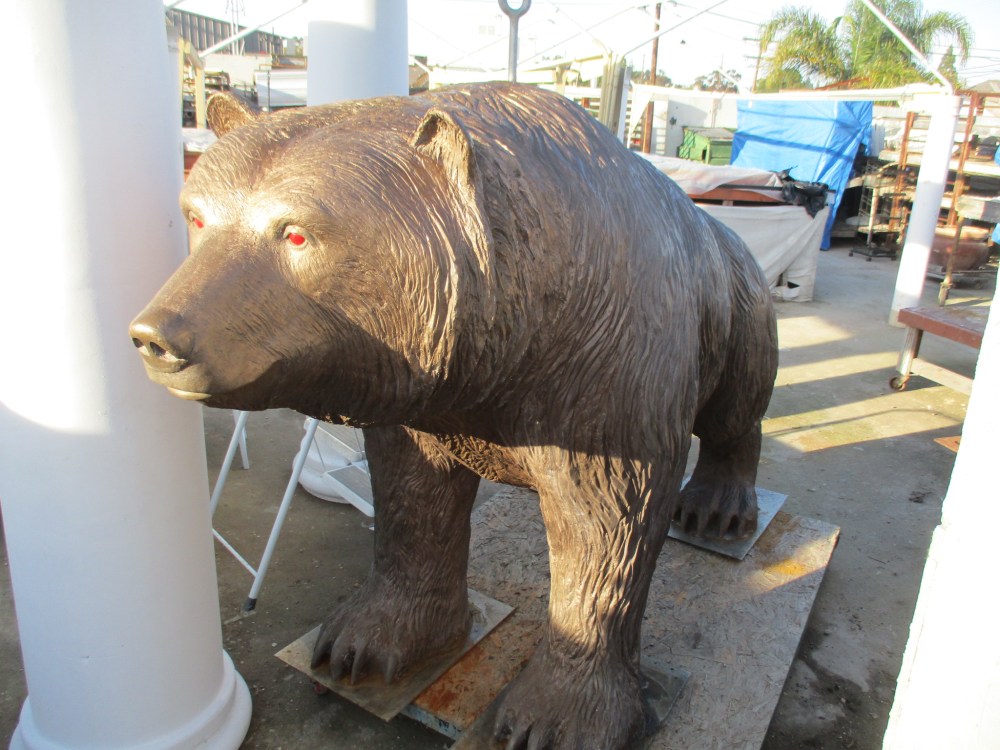
Two huge golden grizzly bears have come to life in San Diego, and are ready to stand on a Balboa Park rooftop!

Yesterday the two amazing sculptures were previewed. I took photographs!

The life-size bronze bears–weighing about 400 pounds–will soon be placed atop the roof of the 1935 California State Building, which today is home of the San Diego Automotive Museum. The sculptures will stand on the front corners of the building, as bears once did almost a century ago, back when the building debuted for the 1935-1936 California Pacific International Exposition.

Artists Mike and Kevin Matson of Bellagio Precast have been busy working on these new bear sculptures at their San Diego studio. Perhaps you remember my blog post from late 2021 with photos of one partially cold cast bronze bear.

The two huge bears are now one hundred percent finished and ready for transportation to Balboa Park! Once the roof of the San Diego Automotive Museum is structurally prepared for the heavy sculptures, they will be lifted by crane up to their respective corners. All of this should occur in April. Watch for it!

As I mentioned, the original 1935 bears were only temporary (likely made of plaster-like material) and disappeared long ago. A few old photographs show them atop the California State Building. Here’s one:

In the above enlarged photograph, you might also glimpse a flagpole over the building’s front entrance. Two flagpoles are also returning to the historic California State Building! Brackets for them have already been created:

The new bears and flagpoles are part of an ongoing effort by the Balboa Park Committee of 100 to restore the Palisades area of Balboa Park to something more like its original 1935 appearance. The organization has been working to preserve Balboa Park’s historic architecture, gardens and public spaces since 1967.

The Committee of 100’s initial undertaking in the Palisades was the reproduction of historical murals above the entrance to this same building. Perhaps you’ve seen those beautiful tile murals. If you haven’t, click here.

The California State Building’s new life-size bears have been years in the making. At yesterday’s event we were shown small working models that preceded the finished sculptures. Kevin Matson held them up for examination:

So how exactly were life-size cold cast bronze bears made?

Each of the finished bear sculptures has a Glass Fiber Reinforced Concrete skin that is about 3/8″ to 1/2” thick. Two sculpture halves are joined together with a stainless steel frame inside. Each bear’s volume is then filled with a high density urethane foam.

How awesome are these golden grizzlies? Take a look!

The Balboa Park Committee of 100 is engaged in another fantastic project! They are recreating a large historical mural that will be placed above the entrance of the Municipal Gymnasium building. It, too, will be breathtaking!

I’ll be blogging about that shortly!

Thanks for visiting Cool San Diego Sights!

I post new blogs pretty often. If you like discovering new things, bookmark coolsandiegosights.com and swing on by occasionally!

I live in downtown San Diego and love to walk around with my camera! You can follow Cool San Diego Sights via Facebook or Twitter!
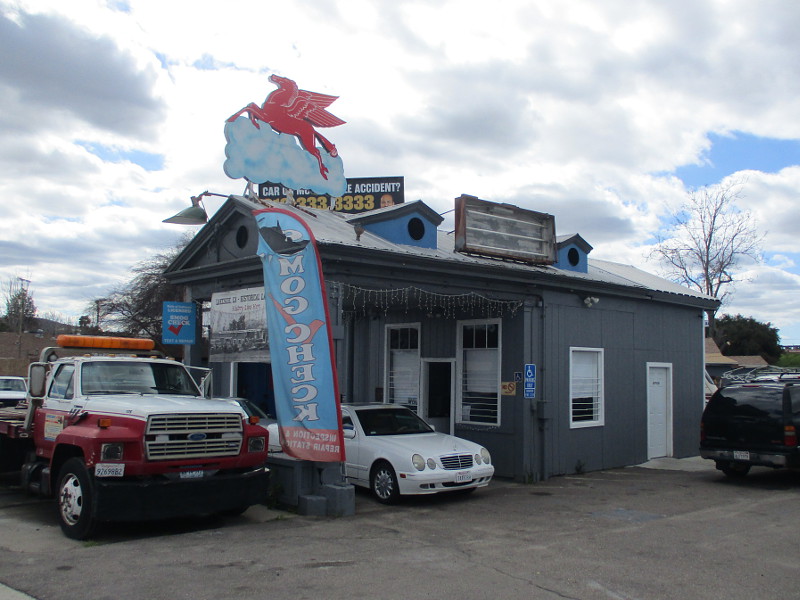
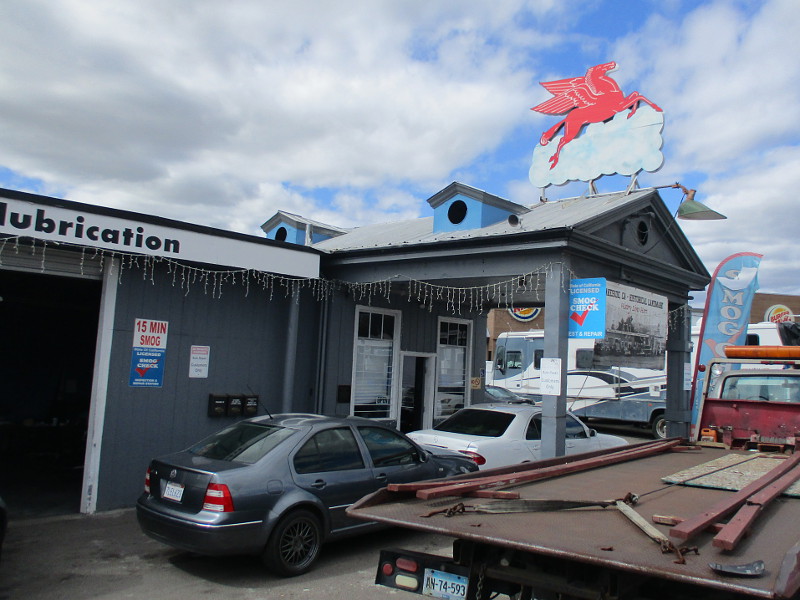
Historic 1930 Mobil Gas Station in Lakeside.

Drivers heading down Maine Avenue in Lakeside, California might recognize the old Mobil symbol of the winged red horse, Pegasus, flying above a smog check station. What they might not realize is the building they are passing is one of the oldest gas stations remaining in San Diego County.

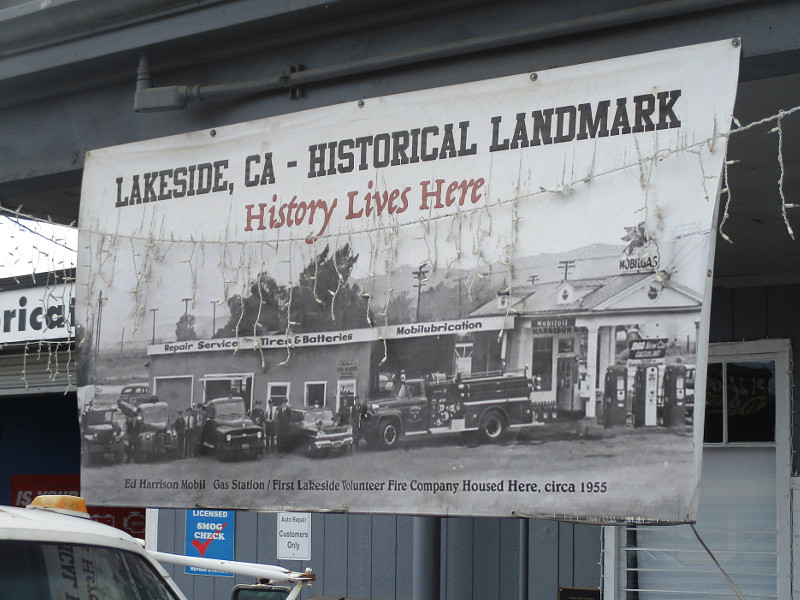
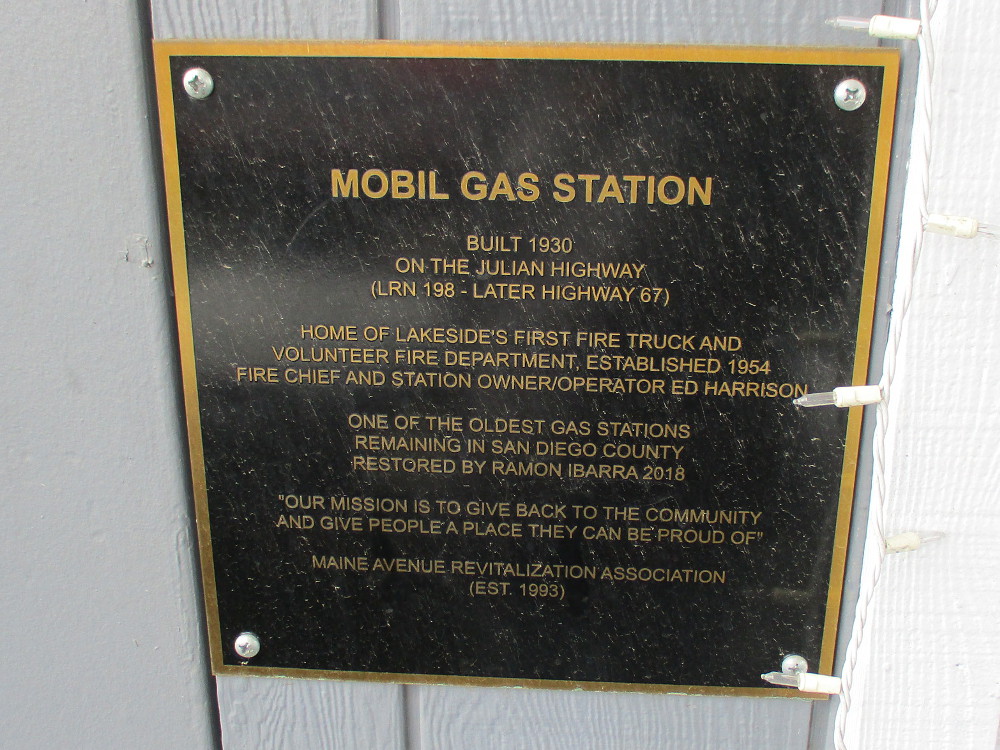
During my recent visit to Lakeside, I noticed a plaque near the front door of Lakeside Auto Service, so I had to check it out. I then met Ramon, the friendly owner, who told me a little about the history of his building. The original gas station was built in 1930. It also housed Lakeside’s first volunteer fire company.

I learned that Ramon has been working hard to maintain and improve the historic building. He takes pride in helping to preserve this important part of the community.

I was told that, among other plans, Ramon would like to add some old-fashioned gas pumps in front of the building. Like those you see in my photo of the Historical Landmark banner. That would be really cool!

MOBIL GAS STATION

BUILT 1930 ON THE JULIAN HIGHWAY (LRN 198 – LATER HIGHWAY 67)

HOME OF LAKESIDE’S FIRST FIRE TRUCK AND VOLUNTEER FIRE DEPARTMENT, ESTABLISHED 1954 FIRE CHIEF AND STATION OWNER/OPERATOR ED HARRISON

ONE OF THE OLDEST GAS STATIONS REMAINING IN SAN DIEGO COUNTY RESTORED BY RAMON IBARRA 2018

“OUR MISSION IS TO GIVE BACK TO THE COMMUNITY AND GIVE PEOPLE A PLACE THEY CAN BE PROUD OF”

MAINE AVENUE REVITALIZATION ASSOCIATION (EST. 1993)

Thanks for visiting Cool San Diego Sights!

I post new blogs pretty often. If you like discovering new things, bookmark coolsandiegosights.com and swing on by occasionally!

I live in downtown San Diego and love to walk around with my camera! You can follow Cool San Diego Sights via Facebook or Twitter!
Online exhibit: the Warner-Carrillo Ranch House.

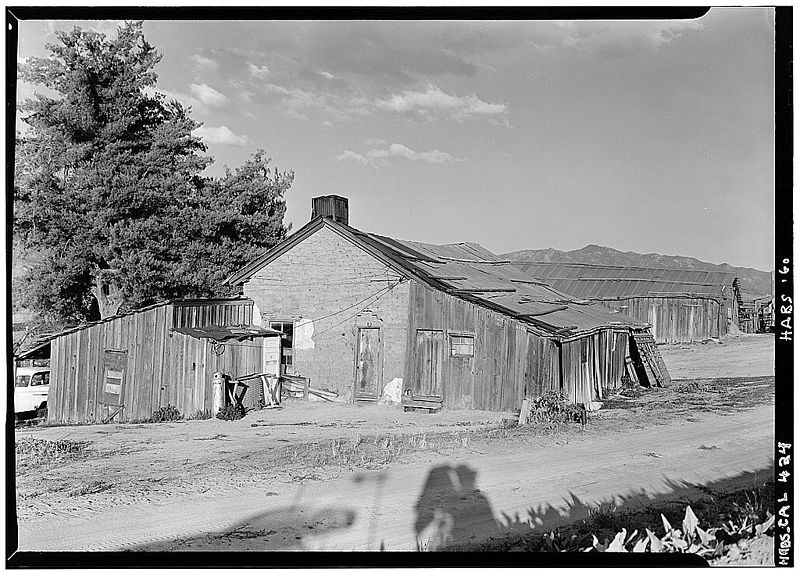
Warner’s Ranch — West Elevation of Ranch House. 1960. Historic American Buildings Survey. Public domain image courtesy Wikimedia Commons.

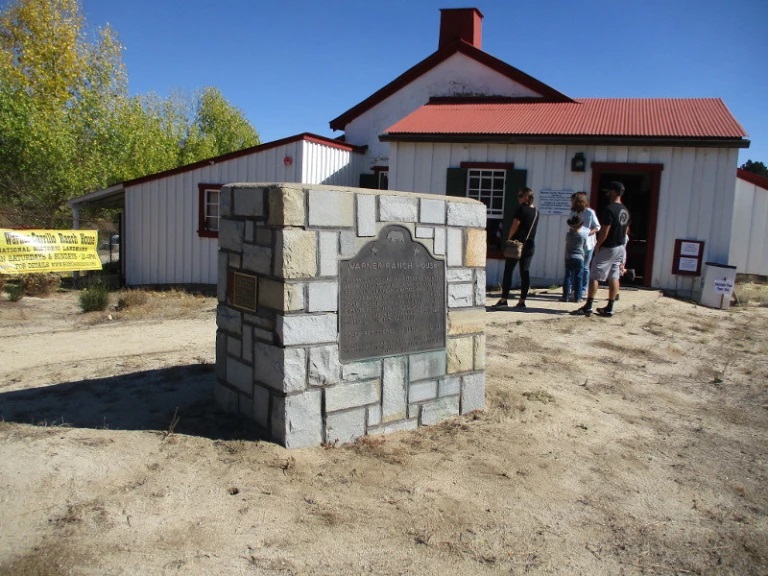
Anyone interested in the history of San Diego and the surrounding region should visit the Warner-Carrillo Ranch House near Warner Springs. If you can’t, there’s an online exhibit filled with photographs and detailed information concerning this National Historic Landmark, including its construction in 1857, its fascinating history and restoration.

I subscribe to the Save Our Heritage Organisation email list. Their most recent newsletter is how I learned about this.

To view the excellent online exhibit concerning the Warner-Carrillo Ranch House, click here.

I visited the old ranch house in 2021 and took some photos, which you can see here.

Thanks for visiting Cool San Diego Sights!
I post new blogs pretty often. If you like discovering new things, bookmark coolsandiegosights.com and swing on by occasionally!

I live in downtown San Diego and love to walk around with my camera! You can follow Cool San Diego Sights via Facebook or Twitter!