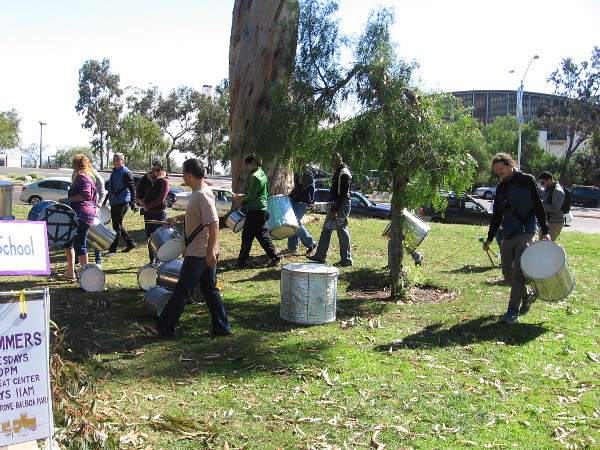
These folks were drumming their hearts out as I neared. Unfortunately, I arrived too late. Their musical performance ended a few moments later.
Okay, I was just walking along through Balboa Park this afternoon when I stumbled upon something really cool. Members of the Super Sonic Samba School were drumming like crazy in Pepper Grove!
I didn’t bother these folks, but their sign on the grass is probably seen by relatively few people–so I thought I might help and post a photo!
Read the sign to learn more about the Super Sonic Samba School. If you want to dance or drum in San Diego, this looks like great fun! And you can’t beat creating music outdoors on soft green grass, in fresh air and sunshine. And in beautiful Balboa Park!
The Super Sonic Samba School welcomes dancers and drummers at the World Beat Center and Pepper Grove in Balboa Park.If you drum in Pepper Grove, you get to create music near some cool art. This huge mural is on the Centro Cultural de la Raza.Another Sunday drumming session of the Super Sonic Samba School wraps up. Looks like a whole lot of fun!
…
I live in downtown San Diego and love to walk around with my camera! You can follow Cool San Diego Sights via Facebook or Twitter!
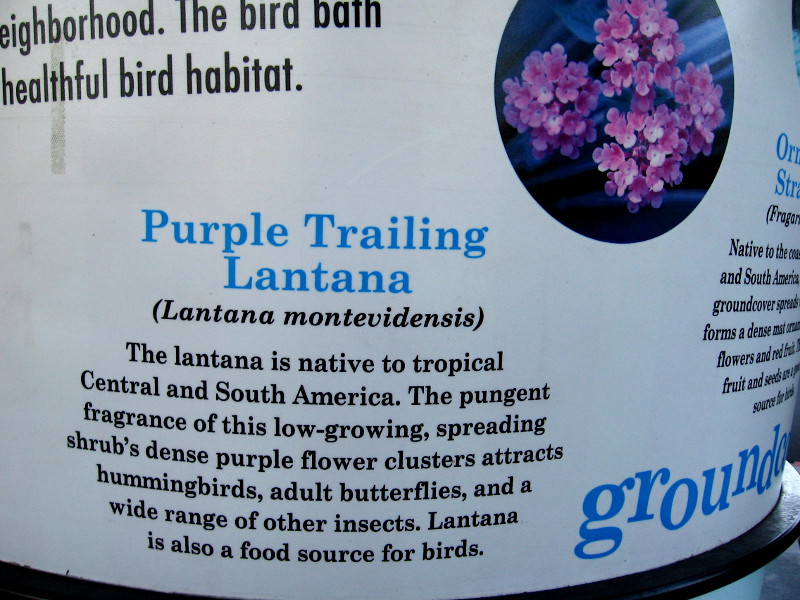
Purple Trailing Lantana (Lantana montevidensis) attracts hummingbirds, butterflies, and a wide range of feeding insects and birds.
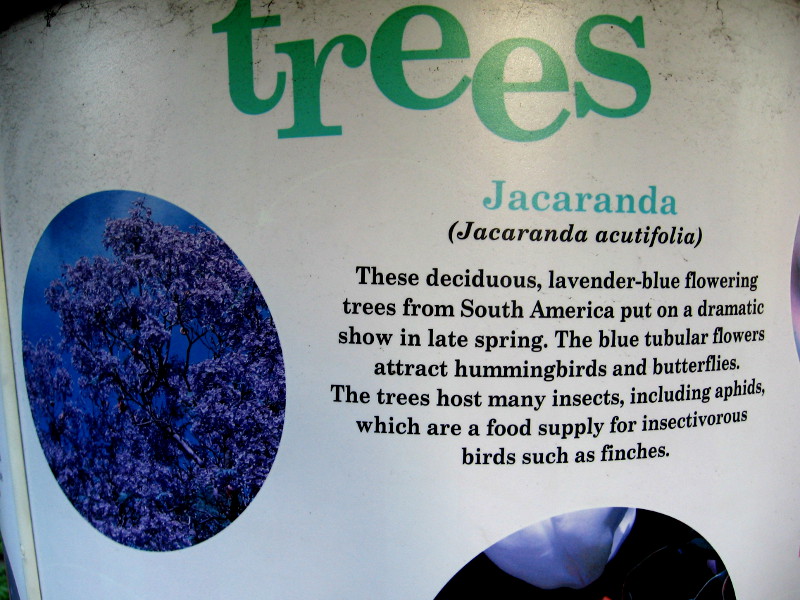
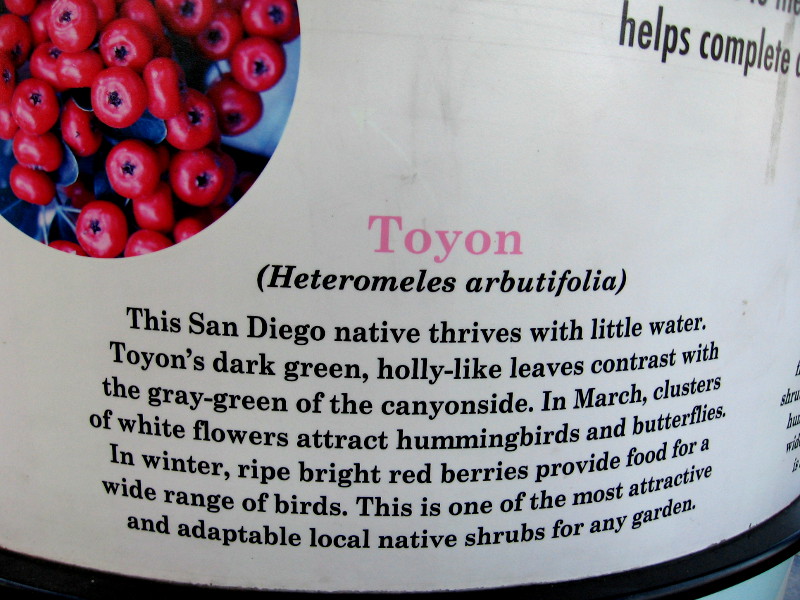
Tweet Street park on Cortez Hill has a sign with some very useful information. It shows shrubs and trees that attract local San Diego birds and butterflies.
Please refer to the information on the sign and my photo captions. As you can see, some of these plants are native to San Diego. All are beautiful and would fit nicely in most San Diego gardens. And all naturally attract winged life. Even in the heart of the big city.
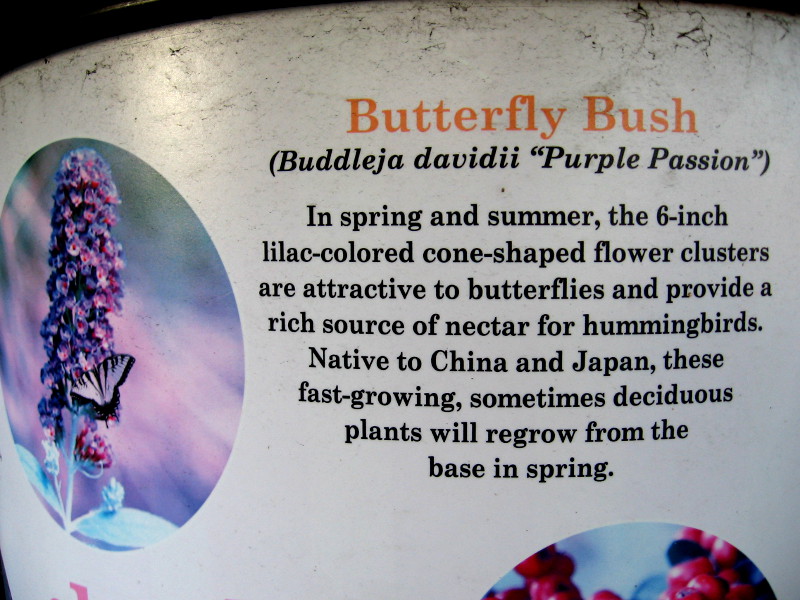
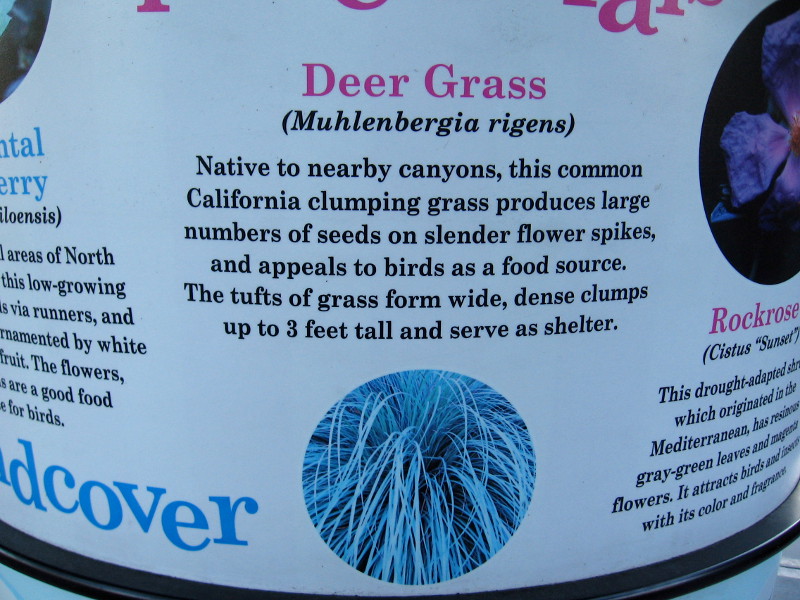
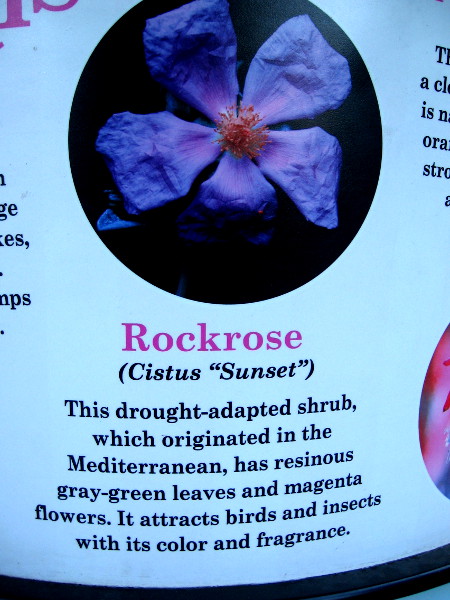
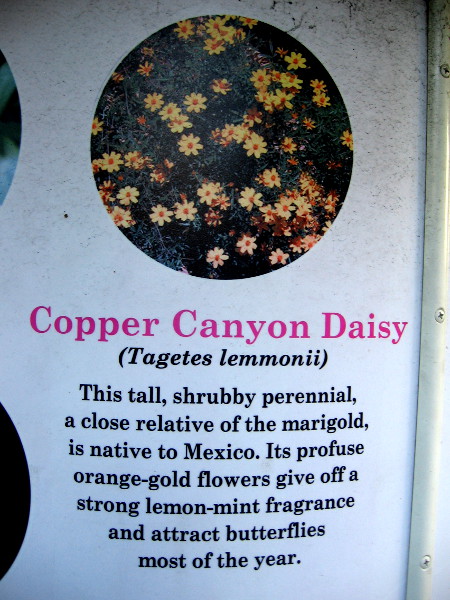
A sign at the Tweet Street linear park on Cortez Hill, a neighborhood in downtown San Diego. It shows beautiful plants that attract local birds and butterflies.Jacaranda (Jacaranda acutifolia) is a flowering tree that attracts hummingbirds and butterflies. The trees host insects that are a food supply for insectivorous birds such as finches.Toyon (Heteromeles arbutifolia) is a San Diego native. White flowers in March attract hummingbirds and butterflies. In winter, red berries are food for many different birds.Southern Magnolia (Magnolia grandiflora “Samuel Sommer”) provides shade and perches for birds. The fragrant white flowers attract bees and hummingbirds.Butterfly Bush (Buddleja davidii “Purple Passion”) has flowers that are a rich source of nectar, attracting hummingbirds and butterflies.Ornamental Strawberry (Fragaria chiloensis) has flowers, fruit and seeds that make a good food source for many birds.Prostrate Rosemary (Rosemarinus officinalis “Prostratus”) is an herb that attracts bees, butterflies and insects that many birds eat.Deer Grass (Muhlenbergia rigens) is a native clumping grass. It’s abundant with seeds that birds eat. The tall grass tufts also serve as shelter.Rockrose (Cistus “Sunset”) attracts birds and insects with its magenta color and fragrance.Copper Canyon Daisy (Tagetes lemmonii) is native to Mexico. It attracts butterflies most of the year with its strong lemon-mint fragrance.Torch Lily (Kniphofia uvaria) also known as Red Hot Poker, produces sweet nectar that hummingbirds absolutely love.Lily of the Nile (Agapanthus africanus) is a popular perennial that attracts both butterflies and hummingbirds.
…
I live in downtown San Diego and love to walk around with my camera! You can follow Cool San Diego Sights via Facebook or Twitter!
You can easily explore Cool San Diego Sights by using the search box on my blog’s sidebar. Or click a tag! There are thousands upon thousands of fun and useful photos that you can share and enjoy!
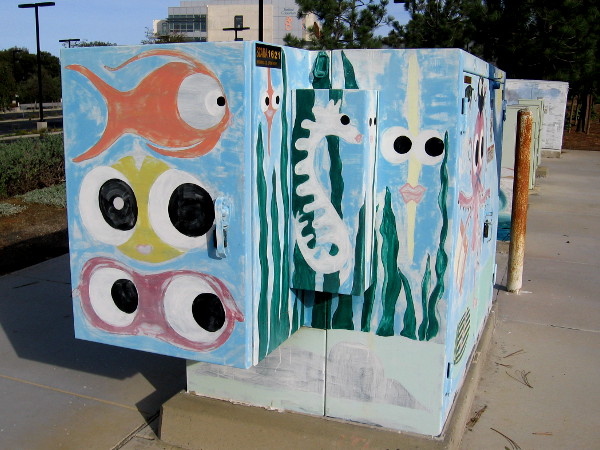
Electrical box on North Torrey Pines Road near the Gliderport intersection features colorful fish with huge eyeballs!
I walked around both the University of California San Diego and the Salk Institute in La Jolla this morning. Stay tuned to my blog and you’ll see why. (The next two posts are going to be very cool!)
As I headed up the sidewalk along North Torrey Pines Road back to my car, I spied all sorts of creative street art painted on utility boxes and transformers. In many instances, I believe, the art was produced by students at the university.
I was a student at UCSD’s Muir College decades ago. Wandering around the campus was like a brief voyage back in time. The years have gone by so very quickly…
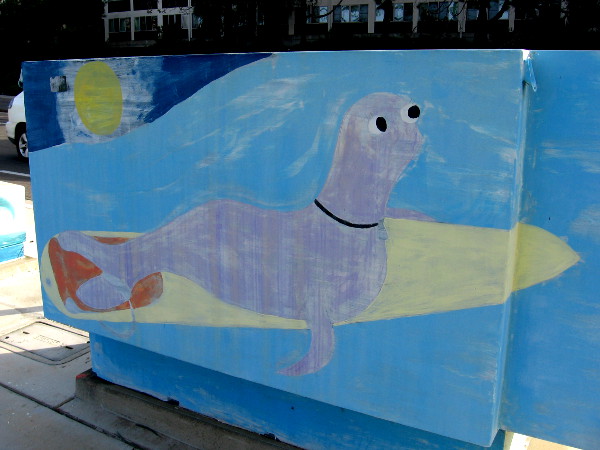
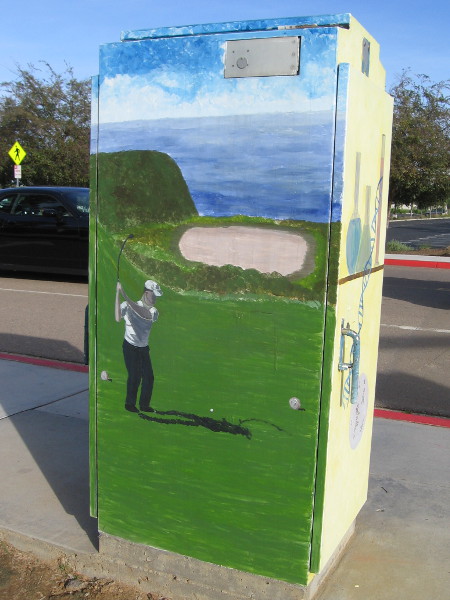
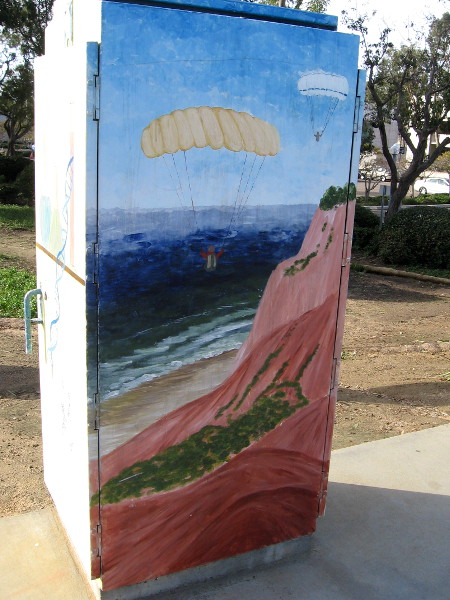
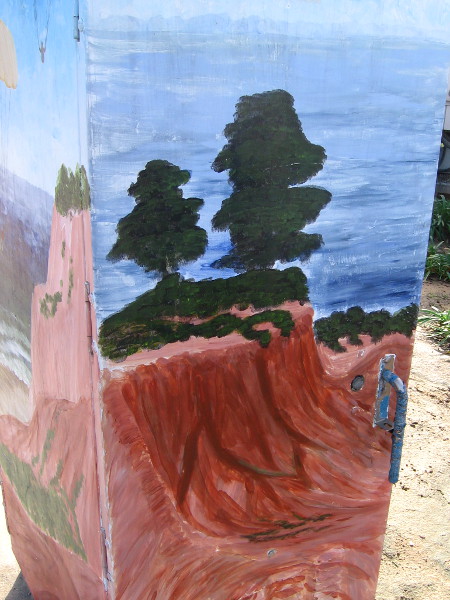
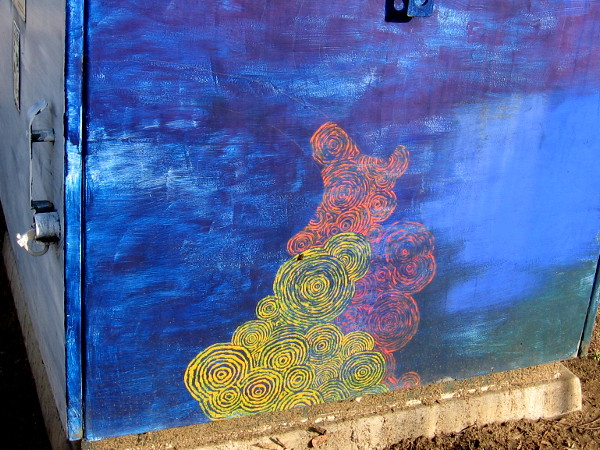
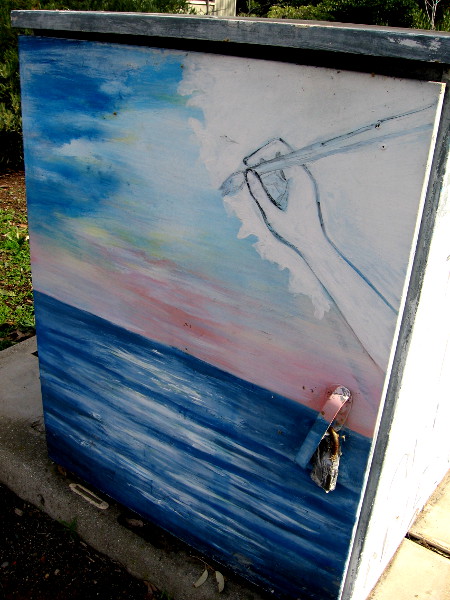
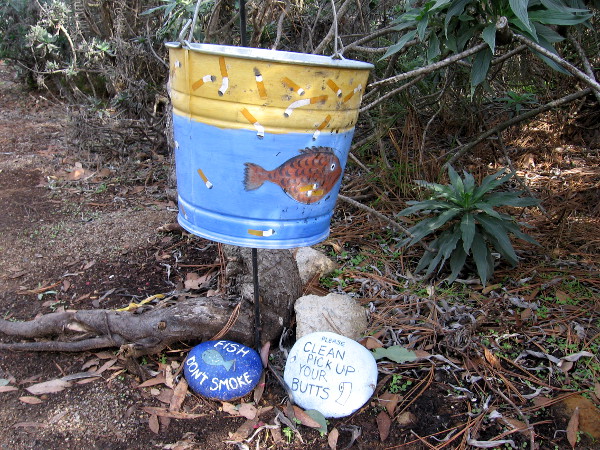
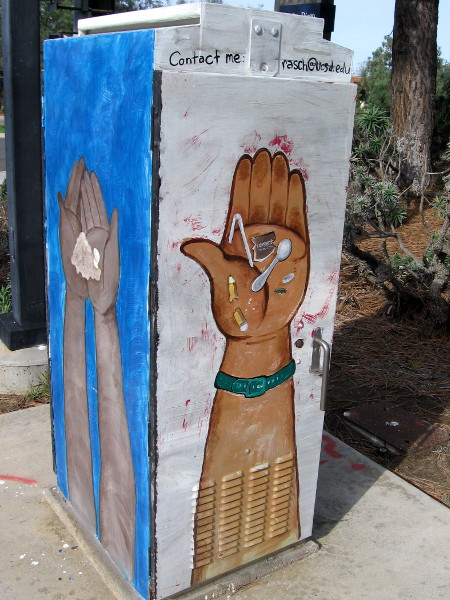
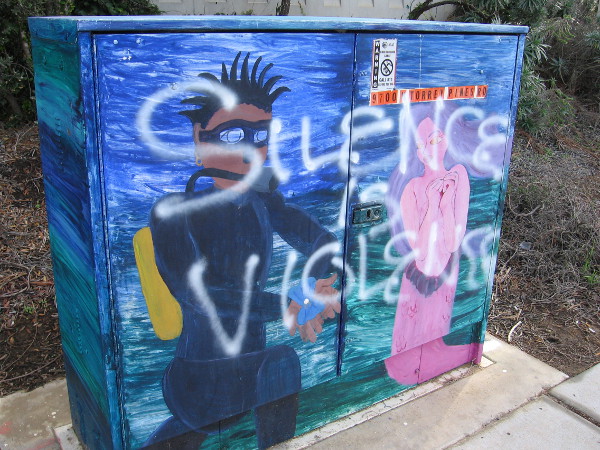
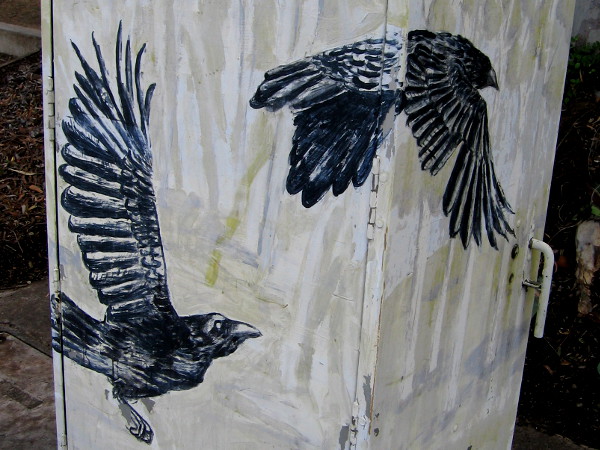
Across from the North Campus of UCSD, this octopus carrying a book and donning a graduation cap is also riding a surfboard!Another nearby box features street art in the form of a breaking ocean wave. Excellent surfing can be found nearby at Black’s Beach.Another side of the big utility box has yellow fish forming a triangle as they swim above seaweed.And lastly we see a purple seal on a surfboard!Another corner of the same intersection has a utility box with four cool images. This side shows a golfer taking a swing at the nearby Torrey Pines Golf Course.On this side we see the interior of a biotechnology lab. Of course, the internationally famous Salk Institute building is about a 30 second walk from here! You can just glimpse a part of the parking lot in this photo. Stay tuned to this blog for more!Also nearby is the Torrey Pines Gliderport. This fun street art depicts a couple of paragliders soaring above the Pacific Ocean! The Gliderport is one of my favorite places.The fourth side of the box shows the natural beauty along the coast of La Jolla. Pine trees rise atop eroded sandstone cliffs.Now for some more street art along North Torrey Pines Road. I took this photo while walking along the sidewalk.This urban art looks to me like a city inside the outline of a Christmas tree.More great urban street art on a utility box.Wisdom written for all to see. Make time to make art and make love.On the next side of this box we see a hand with brush, making beautiful art.A transformer box with fish and whales swimming among trees and flowers!Human creativity expressed in public with paint.A bucket for cigarette butts next to the sidewalk. Fish! Don’t Smoke! Now that was an unexpected discovery!One side of a box near an entrance to UCSD. Hands of La Jolla by Rebecca Asch. It’s holding food.Another hand. A broken pencil and perhaps caffeine for those late nights of studying.An underwater guy in scuba gear and a pink mermaid seem to be in love. The spray painted words Silence is Violence probably was applied later, or perhaps not.Colorful blooms on branches. I think those might be Japanese cherry blossoms on the right.There are many crows (and seagulls) that flock in this coastal cliff area near UCSD. They perch on lampposts all over the place. Crows are taking flight right here, as well!More cool street art. Two crows fly across the angled sides of a utility box on North Torrey Pines Road.
…
This blog now features thousands of photos around San Diego! Are you curious? There’s lots of cool stuff to check out!
Here’s the Cool San Diego Sights main page, where you can read the most current blog posts. If you’re using a small mobile device, click those three parallel lines up at the top–that opens up my website’s sidebar, where you’ll see the most popular posts, a search box, and more!
To enjoy future posts, you can also “like” Cool San Diego Sights on Facebook or follow me on Twitter.
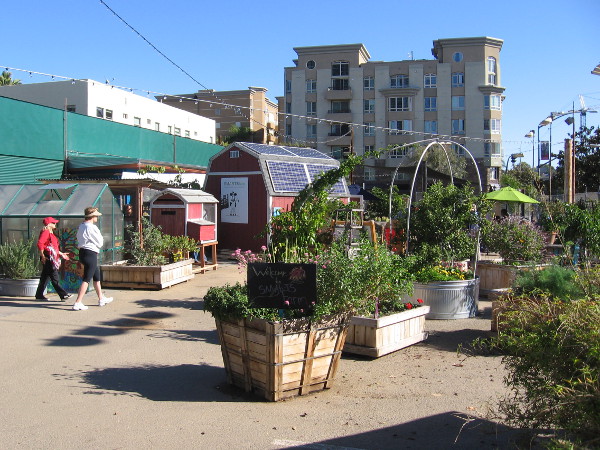
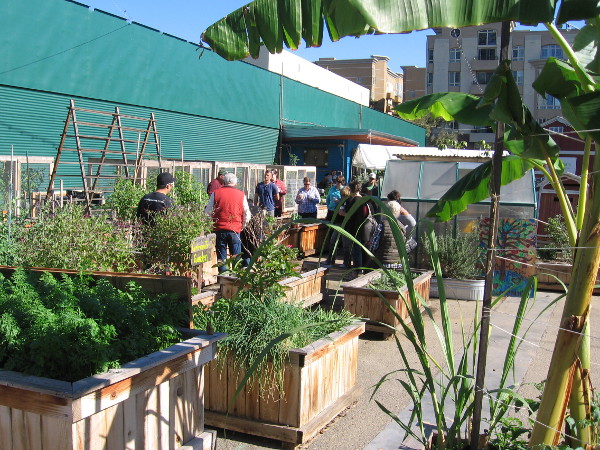
People check out many planters full of vegetables and flowers at the new SMARTS Farm in East Village.
Today I walked to East Village in downtown San Diego to check out a holiday event at SMARTS Farm. I didn’t realize that this cool community garden had recently moved. Their new and improved location is at the corner of 13th Street and Broadway.
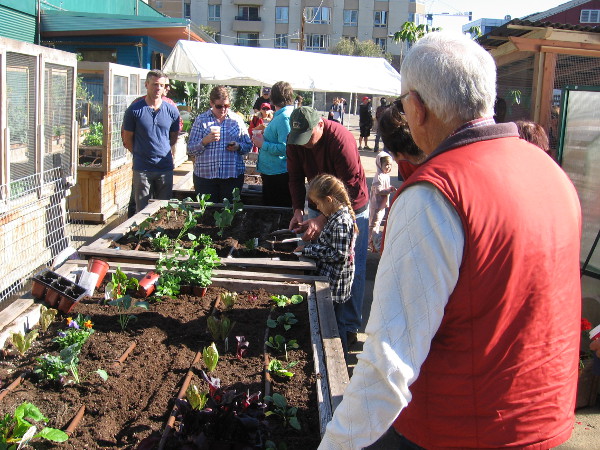
At SMARTS Farm, anybody is welcome to become an urban gardener–growing flowers or vegetables in the heart of our sunny city. Downtown residents can relax here, kids can learn about farming, botany and nature, and I believe photography classes are still offered.
If you’re ever downtown, swing on by to see for yourself!
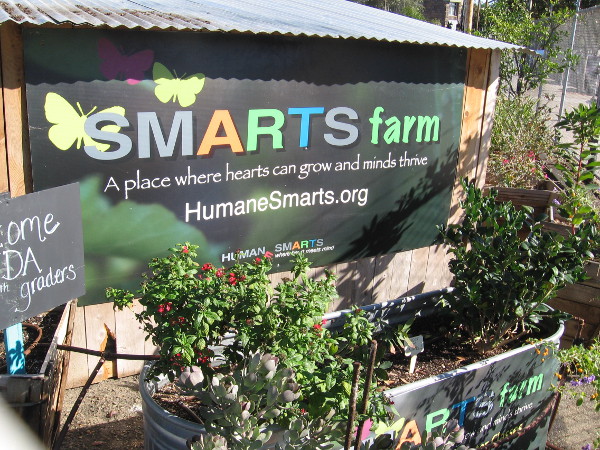
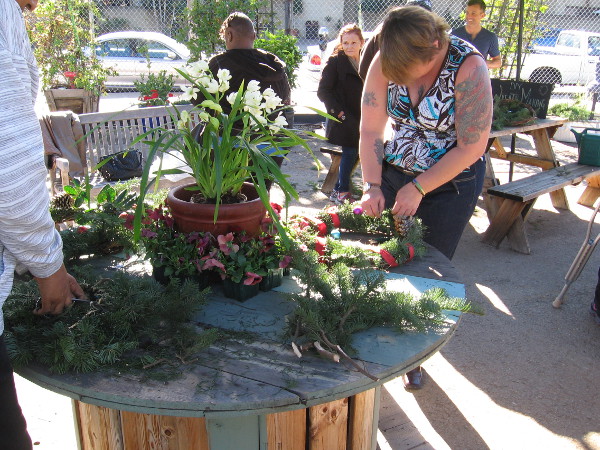
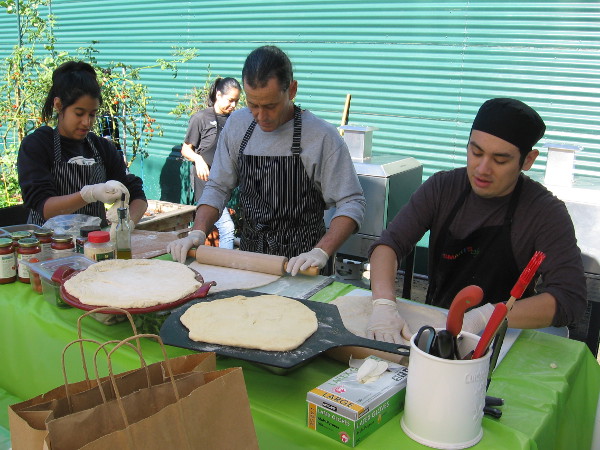
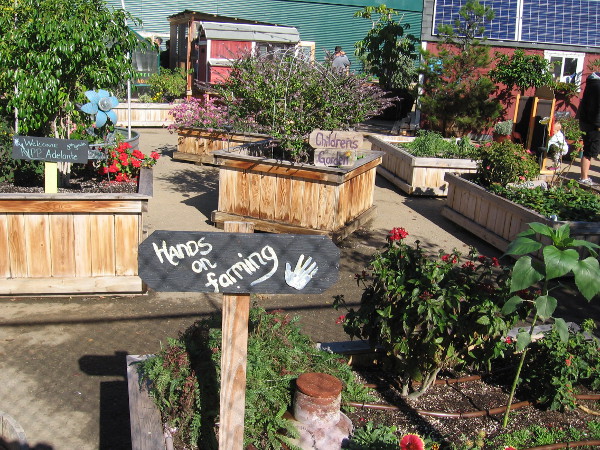
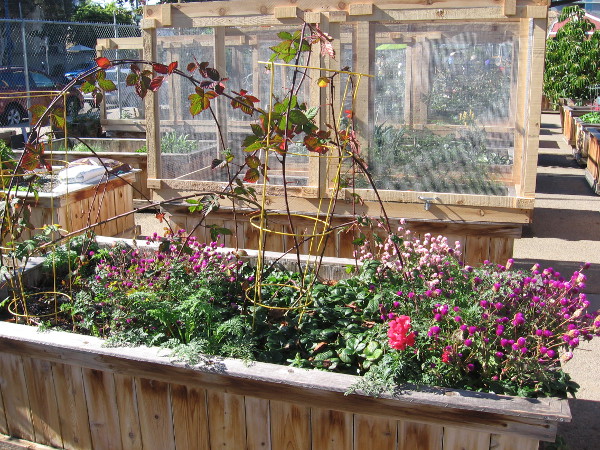
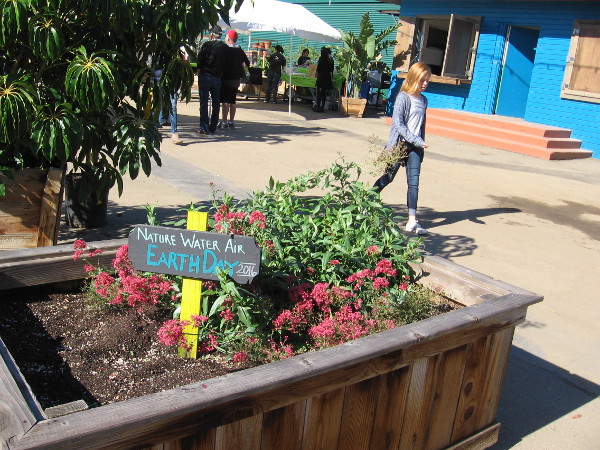
SMARTS Farm in San Diego’s East Village is a community garden where hearts can grow and minds thrive.A wreath is hung on the barn inside SMARTS Farm to celebrate the holiday season. They’ve moved to a new location and are open to everyone in the community!Someone makes a wreath the week before Christmas during a special SMARTS Farm holiday event.These guys were rolling out yummy pizzas!Walking around the large colorful garden. Schools and community groups can grow their own plants in an urban environment downtown.Lessons about how to plant urban crops were underway in the late morning.A young gardener sows some seeds at SMARTS Farm.Hands on farming includes a children’s garden and plants grown by nearby school KIPP Adelante Preparatory Academy–my neighbor on Cortez Hill.A pleasant day can be had tending a garden and learning about gardening in the middle of downtown San Diego!Nature, Water, Air. At SMARTS Farm, every day is Earth Day!
…
I live in downtown San Diego and love to walk around with my camera! You can follow Cool San Diego Sights via Facebook or Twitter!
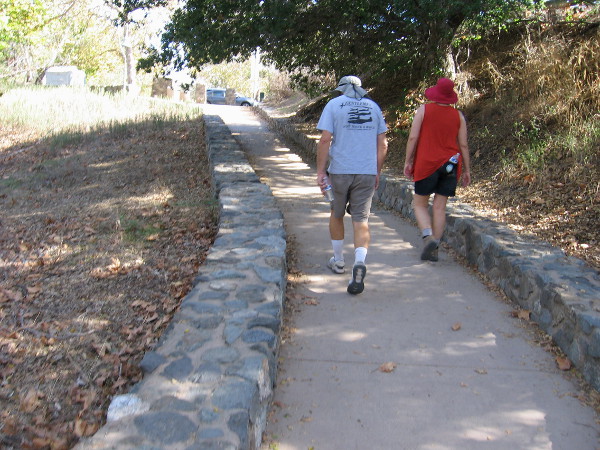
Hikers head from the Kumeyaay Campground at Mission Trails Regional Park toward a shady nature trail that runs beside Kumeyaay Lake.
I enjoyed an amazing walk last weekend at Mission Trails Regional Park. The guided hike met under the flagpoles of the Kumeyaay Campground, and started down a pleasant nature trail at nearby Kumeyaay Lake. The hike then proceeded at a leisurely, easy pace along several trails by the San Diego River, ending up at the Old Mission Dam.
Every month, anyone can go on a variety of free interpretative nature walks at Mission Trails Regional Park. The walks are led by experienced trail guides, who point out the native flora and fauna, and relate the fascinating history of this mountainous wilderness in the city. To learn more check out the park’s website.
Please enjoy my photos and read the descriptive captions to join me on a virtual hike. Not only will you experience natural beauty, but you’ll learn a bit about early San Diego history!
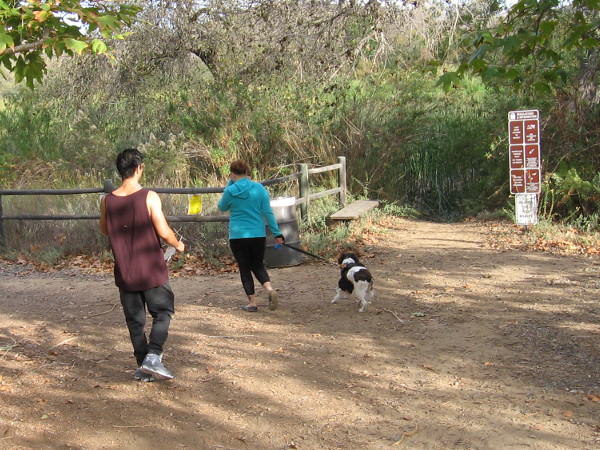
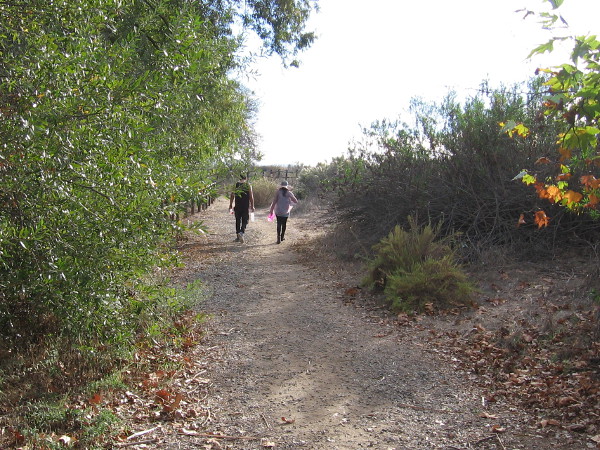
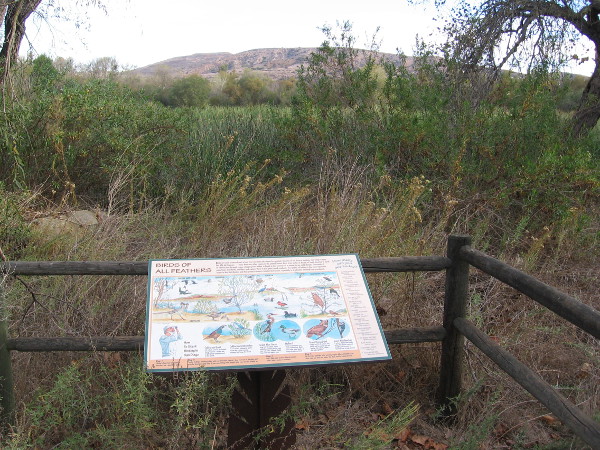
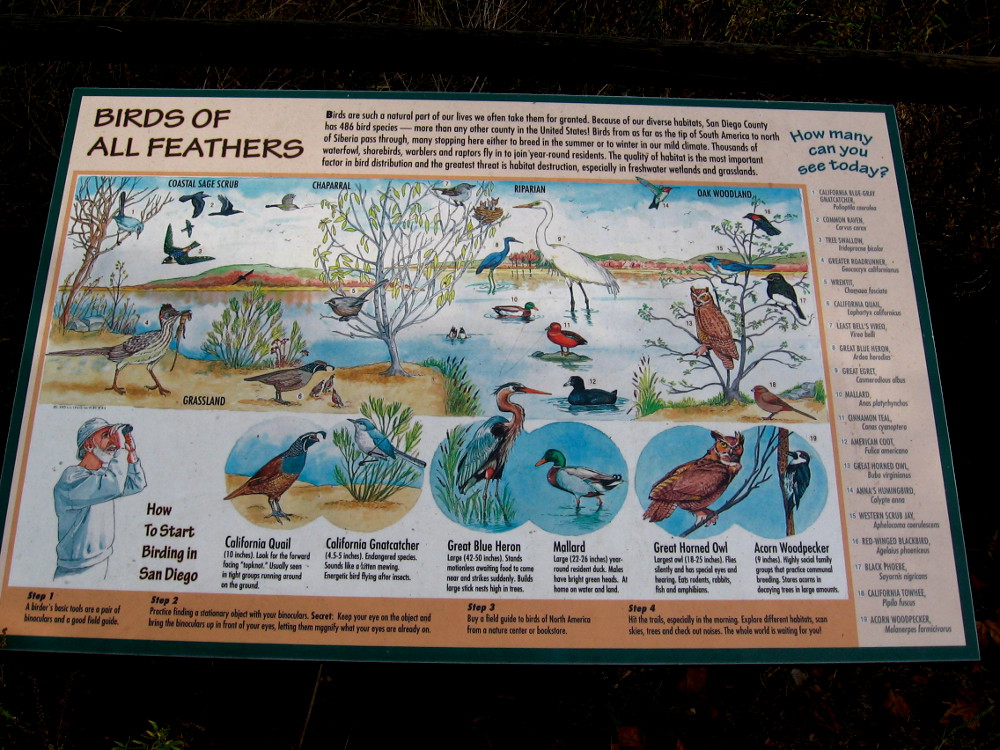
A couple walks slowly along the Kumeyaay Nature Trail, enjoying a beautiful November day.Signs along the nature trail include descriptions of wildlife that can be found around Kumeyaay Lake (once called Hollins Lake). Open water can be glimpsed beyond cattails.At Mission Trails Regional Park, birds of all feathers include quail, gnatcatchers, herons, egrets, ducks, woodpeckers, scrub jays, owls, and the endangered least Bell’s vireo!
The sign includes the following: “Because of our diverse habitats, San Diego County has 486 bird species–more than any other county in the United States! Birds from as far as the tip of South America to north of Siberia pass through, many stopping here either to breed in the summer or to winter in our mild climate.”
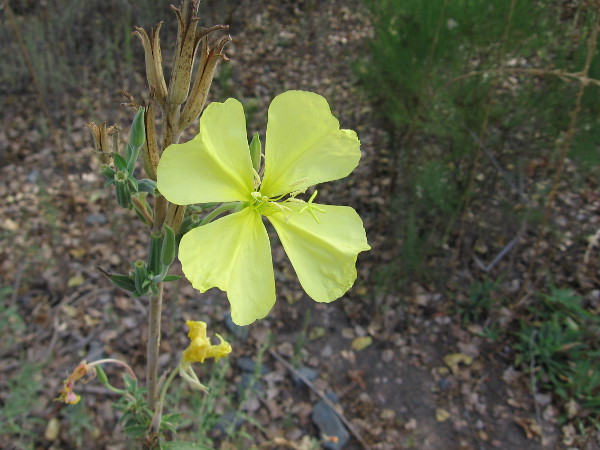
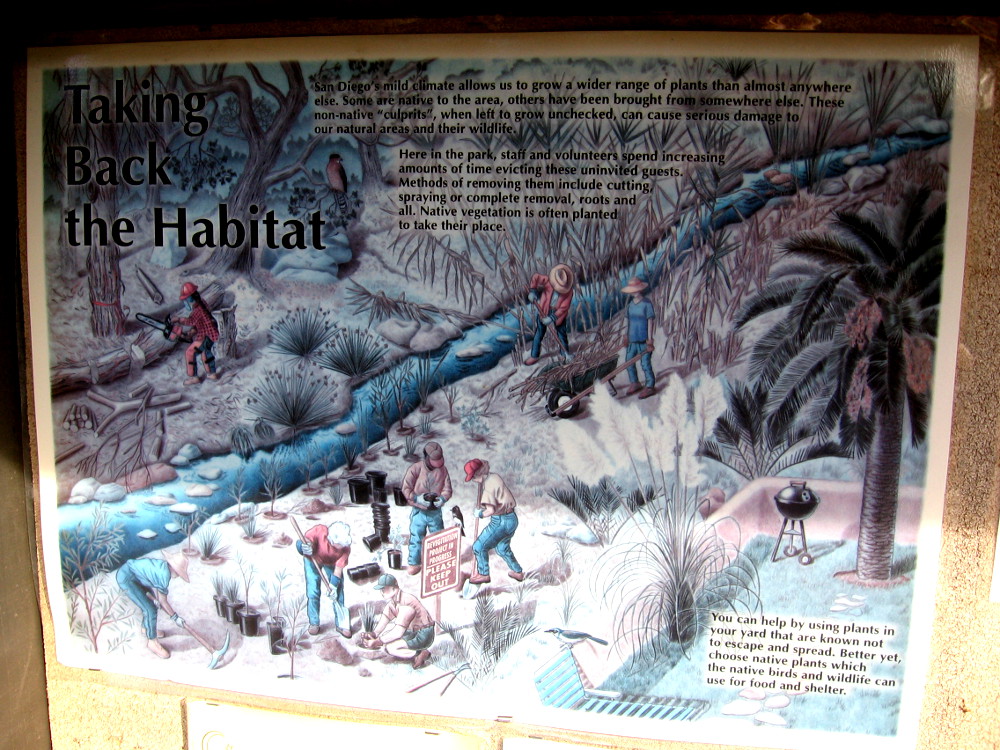
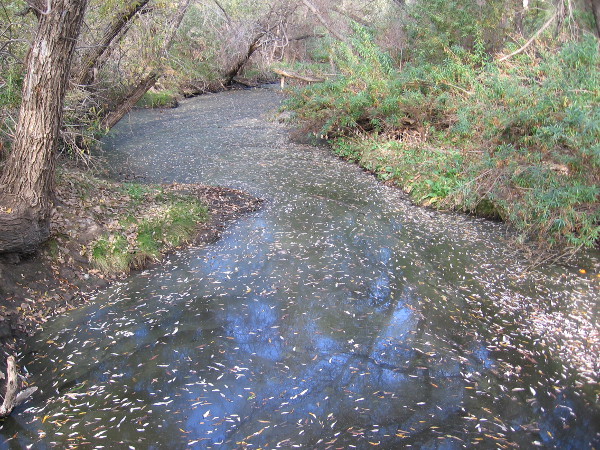
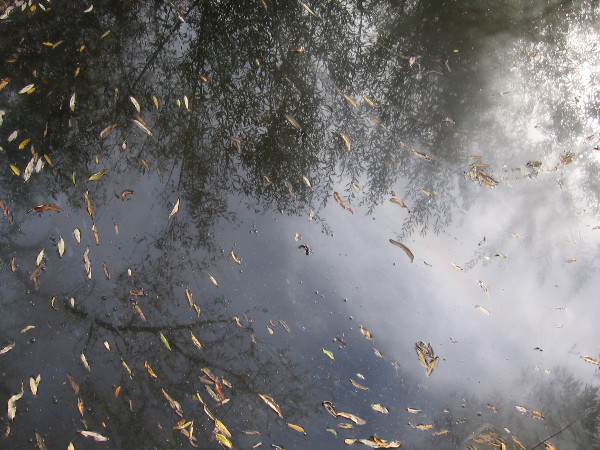
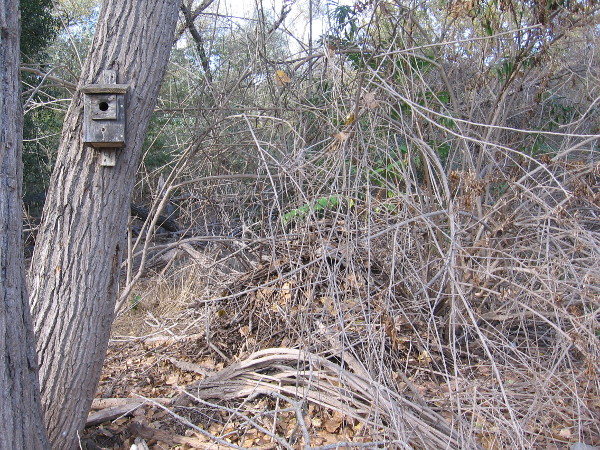
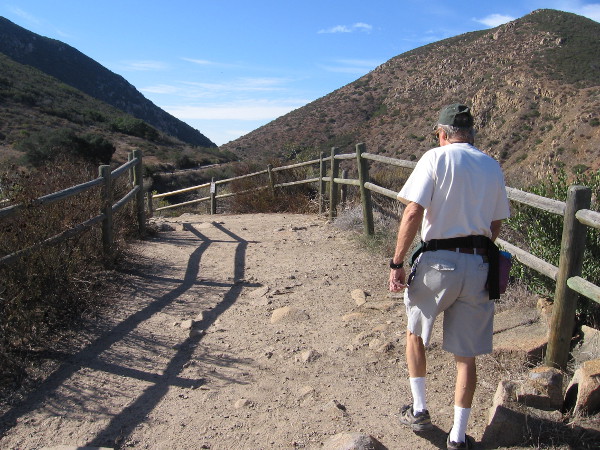
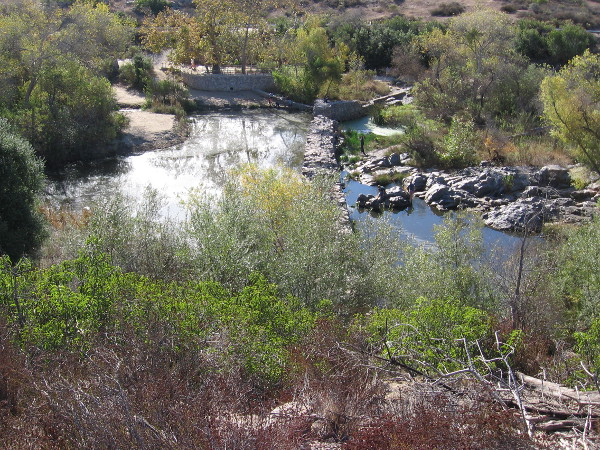
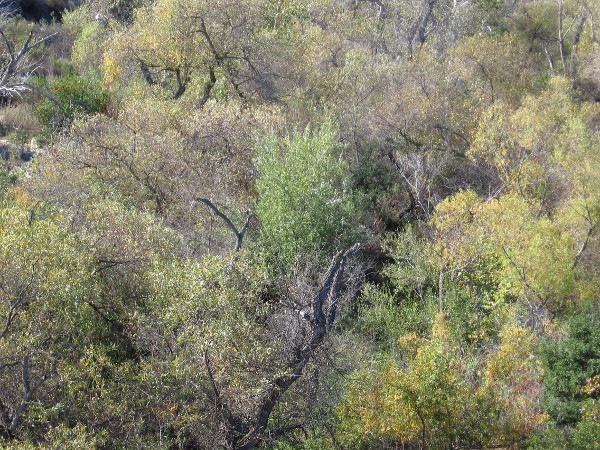
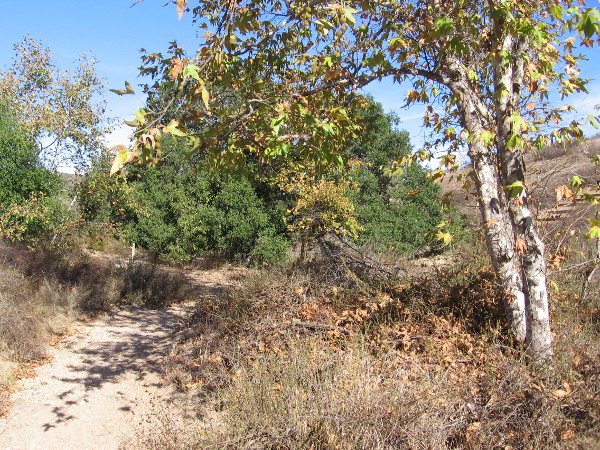
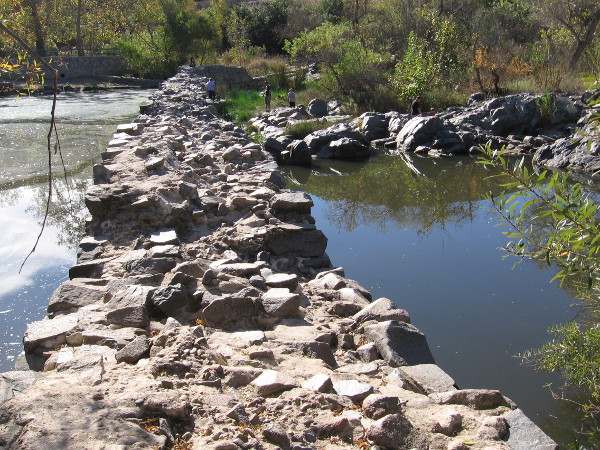
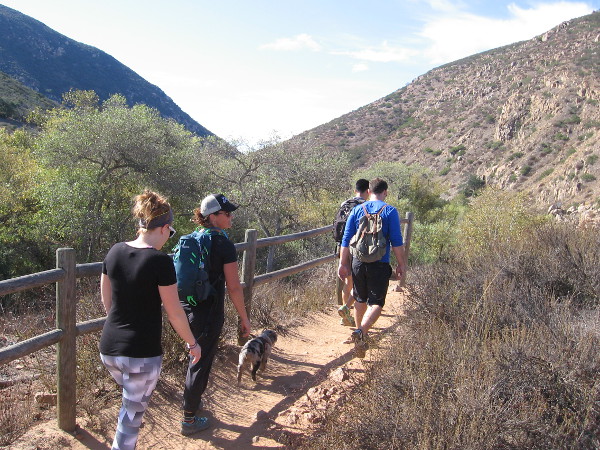
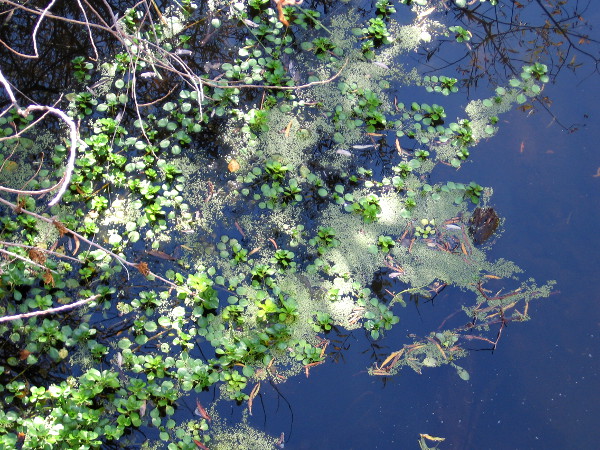
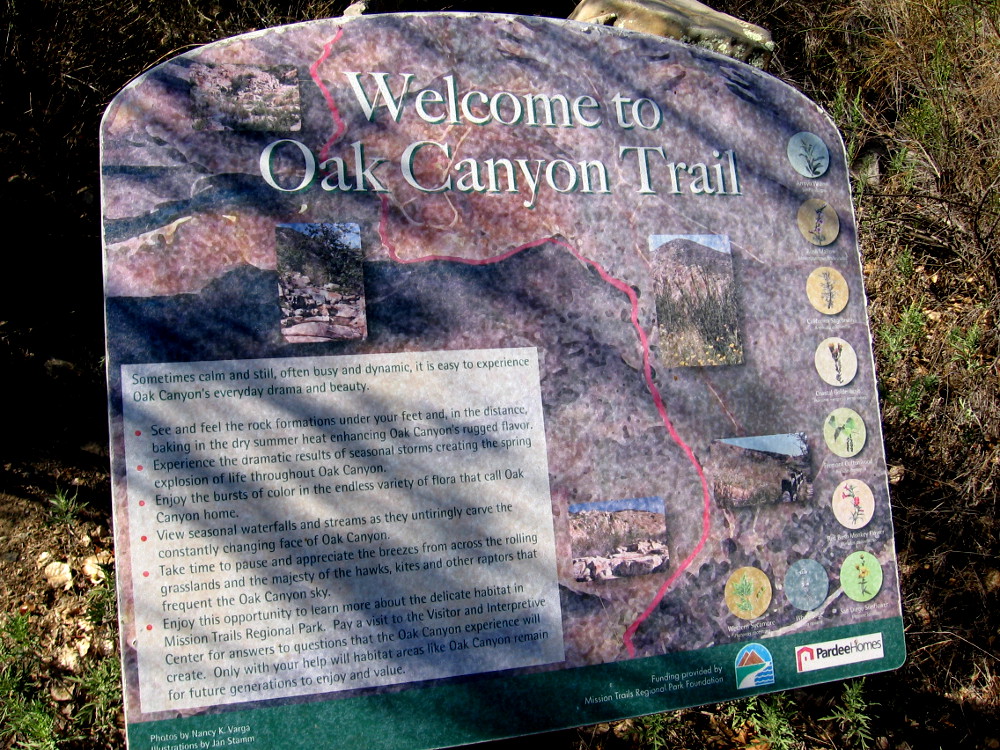
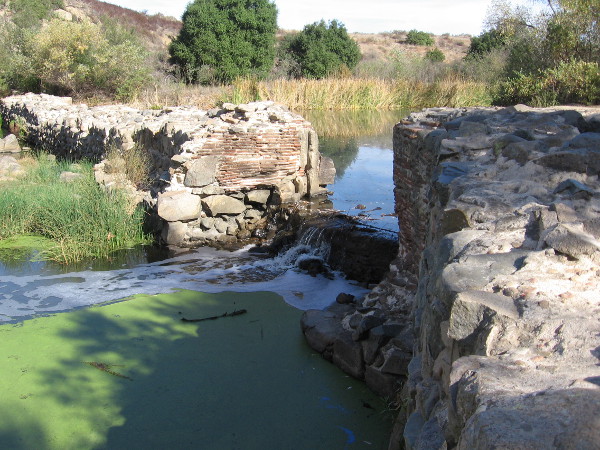
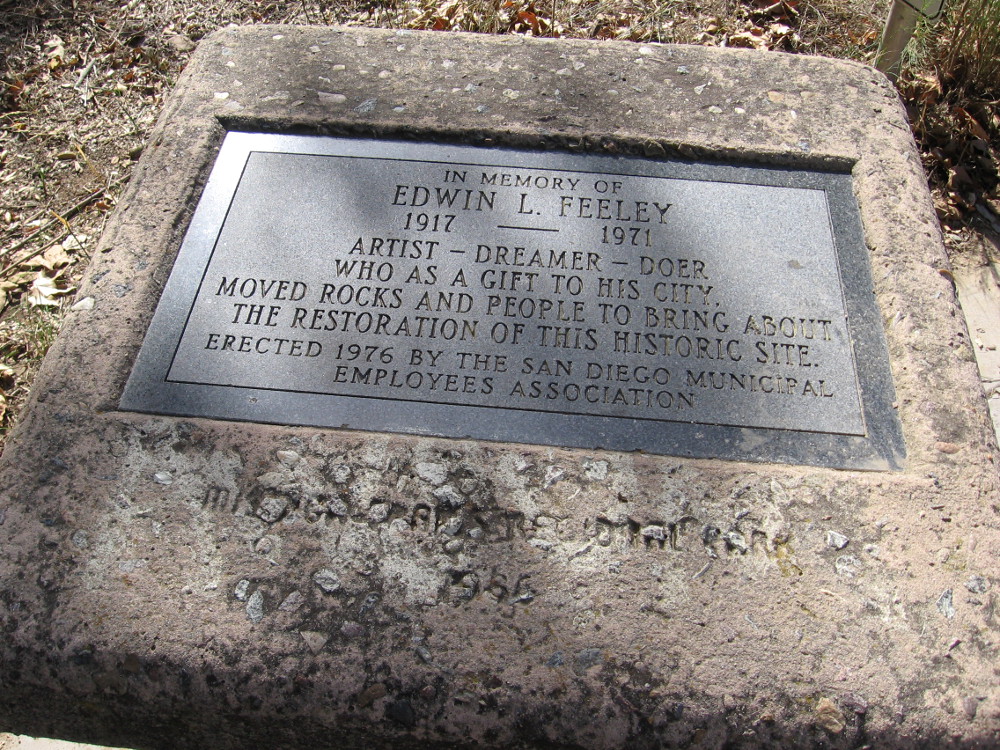
Photo of the San Diego River emerging from Kumeyaay Lake. This is near an outdoor amphitheater and fire pit. The park is a perfect place to learn about nature from rangers, and for stargazing at night!An Autumn wildflower at Mission Trails Regional Park.We head from the lake back toward the campground. Our pleasant hike has just begun.Non-native plants can cause serious damage to natural areas and wildlife. Park staff and volunteers work to protect the natural ecosystems.Hiking down the Grasslands Crossing Trail, my guide and I pass over the San Diego River. It has been a typically dry summer, and the pooled water here is still.Leaves and reflections of trees in the quiet water.We spied a wood rat’s nest of twigs and branches near the hiking trail. I learned these nests contain several rooms with different functions, not unlike a human home.Larry the trail guide showed me a photo of a wood rat.Now we are heading along the easy Grasslands Loop Trail, following the north bank of the San Diego River. Riparian trees such as willows, sycamores and cottonwoods thrive along the river.Mountain bikers enjoy a warm, sunny morning at Mission Trails Regional Park.Approaching an overlook of the Old Mission Dam.Photo of the Old Mission Dam from the north. The dam was built around 1813 and powered a water wheel that drove a grist mill. A tiled flume brought water to Mission San Diego de Alcala, about five miles away.Families play on the rocks near the Old Mission Dam at Mission Trails Regional Park.Lush trees along the San Diego River. Autumn leaves have yellowed a bit.We have descended onto Oak Canyon Trail, and are working our way down to the river and the historic dam.Standing on the north end of the Old Mission Dam. Materials used in constructing the dam include abundant volcanic rock found in this area.A slot in the dam wall where a water wheel was located. The river water, after driving the wheel, flowed along a tile-lined aqueduct south to the mission, where it was used to grow crops.Walking along the Oak Canyon Trail. Mission Trails Regional Park is like a small wilderness inside the city of San Diego. At 5,800 acres, it’s the largest city park in California.Riparian plants recover quickly after a fire because all are vigorous resprouters as long as they have a steady water supply.Granitic rocks seen along the trail.South Fortuna Mountain, elevation 1094 feet, rises to the south. Its sides are covered with native chaparral and sage scrub.Crossing the San Diego River via a steel footbridge.Looking down at the San Diego River. During rains, the river swells. The water runs down into Mission Valley and finally to the Pacific Ocean, sustaining an estuary near Mission Bay.Larry, my knowledgeable trail guide, informed me that the tiny green vegetation is duckweed, an aquatic plant that floats on the water’s surface.Sign at one end of the Oak Canyon Trail, near the Old Mission Dam.A cool 3-D model of the Old Mission Dam beside the trail. The dam was constructed from granite boulders and limestone mortar. At the gap there was a 12-foot wide floodgate.It’s possible to walk out onto the old dam, but one must be careful!A vertical groove in the dam wall shows where the floodgate used to exist. The dam was completed around 1813, and the long flume to Mission San Diego was completed several years later.Inscription in a boulder dated 1941, by the Daughters of the American Revolution. OLD MISSION DAM. Built 1813-1816. A part of the first permanent irrigation project by Padres and Indians in California.A plaque by the old dam. In memory of Edwin L. Feeley. 1917 – 1971. Artist – Dreamer – Doer who as a gift to his city, moved rocks and people to bring about the restoration of this historic site.Bright fluttering leaves of a river tree growing beside the Father Junipero Serra Trail, a road that leads past the Old Mission Dam.Walking to the parking lot by the Old Mission Dam, also called the Padre Dam.The site is a California historical landmark. A dam and flume system was finished between 1813 and 1816 by Indian laborers and Franciscan missionaries. It provided a reliable source of water for crops and livestock for Mission San Diego de Alcala. The system continued until 1831 when it fell into final disrepair.Beautiful hiking trails, and a fascinating look back at early San Diego and California history await at Mission Trails Regional Park.
…
I live in downtown San Diego and love to walk! You can follow Cool San Diego Sights via Facebook or Twitter!
You can easily explore Cool San Diego Sights by using the search box on my blog’s sidebar. Or click a tag! There are thousands upon thousands of fun photos for you to enjoy!
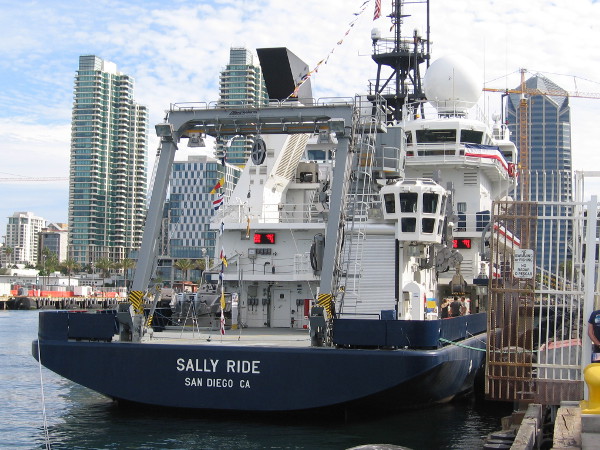
Scripps Institution of Oceanography’s new Research Vessel Sally Ride welcomes the public at San Diego’s Broadway Pier.
If you love science, technology and the study of our planet’s oceans, please enjoy the following photo tour of a very special ship. In this blog post we will visit the newest, most highly advanced oceanographic research ship in the world!
The world-famous Scripps Institution of Oceanography, a part of UC San Diego located in La Jolla, debuted their new research vessel Sally Ride this weekend at the Broadway Pier. Today the public was invited to come aboard and learn about the future work of scientists at sea.
The R/V Sally Ride is equipped with technologically advanced equipment, sensors, labs and computer systems. In the years ahead, it will be tasked with learning about and preserving the oceans, studying and protecting the environment, and inspiring the next generation. Using satellite communication and the scientists aboard, students and teachers throughout the world will actively participate in ocean exploration.
Except in documentary films, the public seldom sees the interior of an ocean-going research vessel. So today was an opportunity not to be missed!
Please read the photo captions where I’ve tried, to the best of my knowledge, to provide accurate details. But I’m no expert. If you’d like to leave a correction or useful information in a comment, please do!
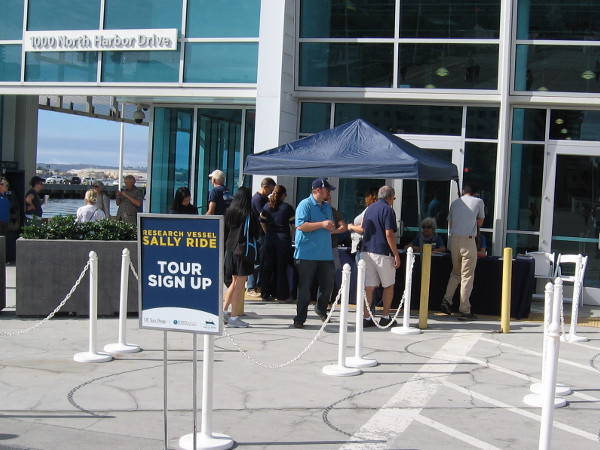
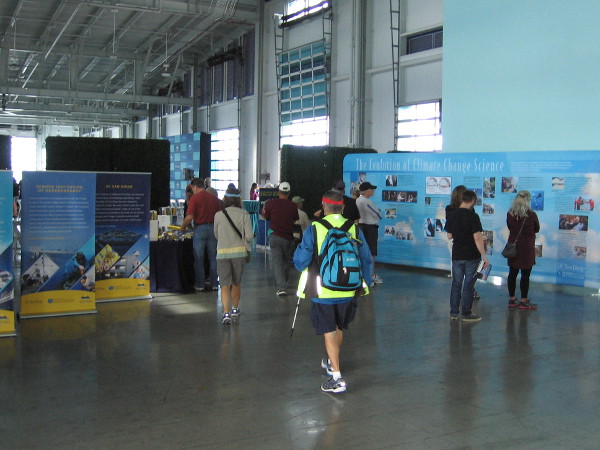
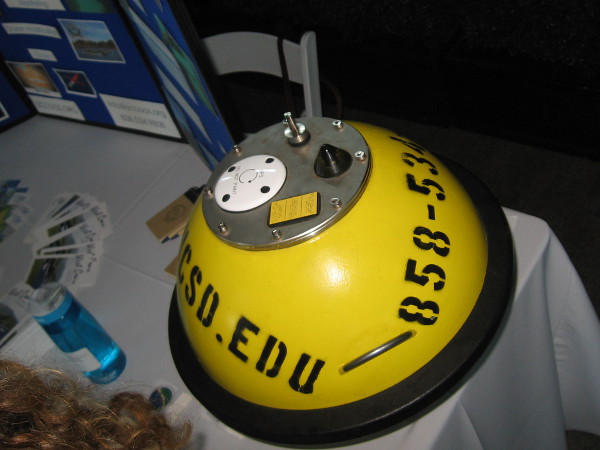
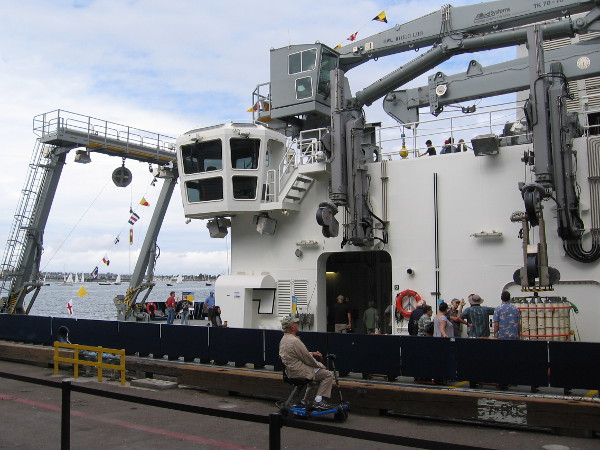
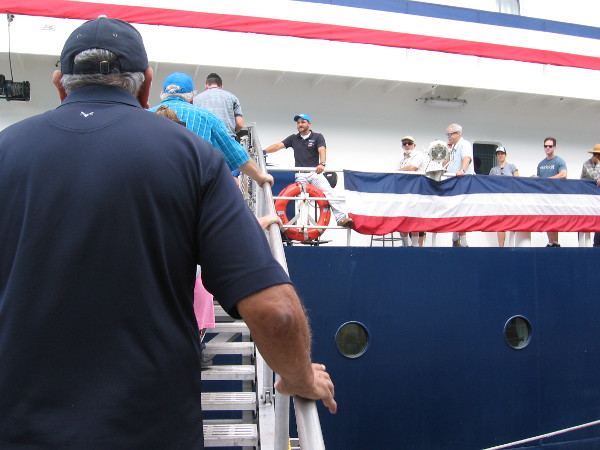
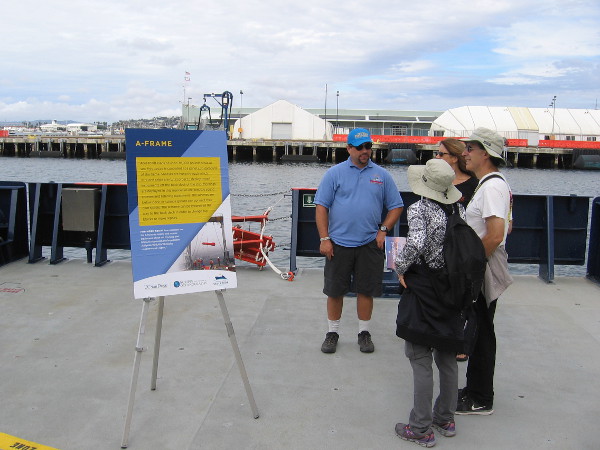
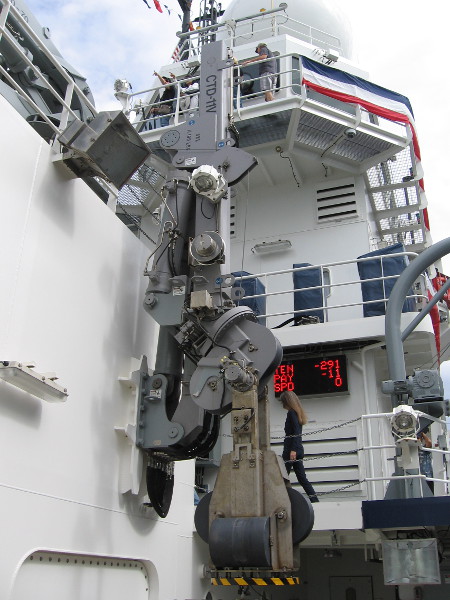
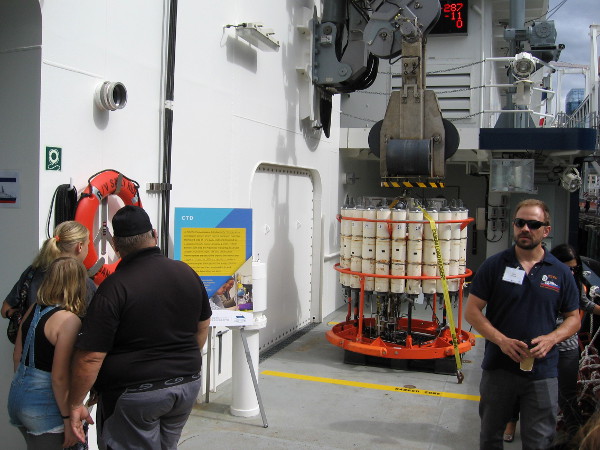
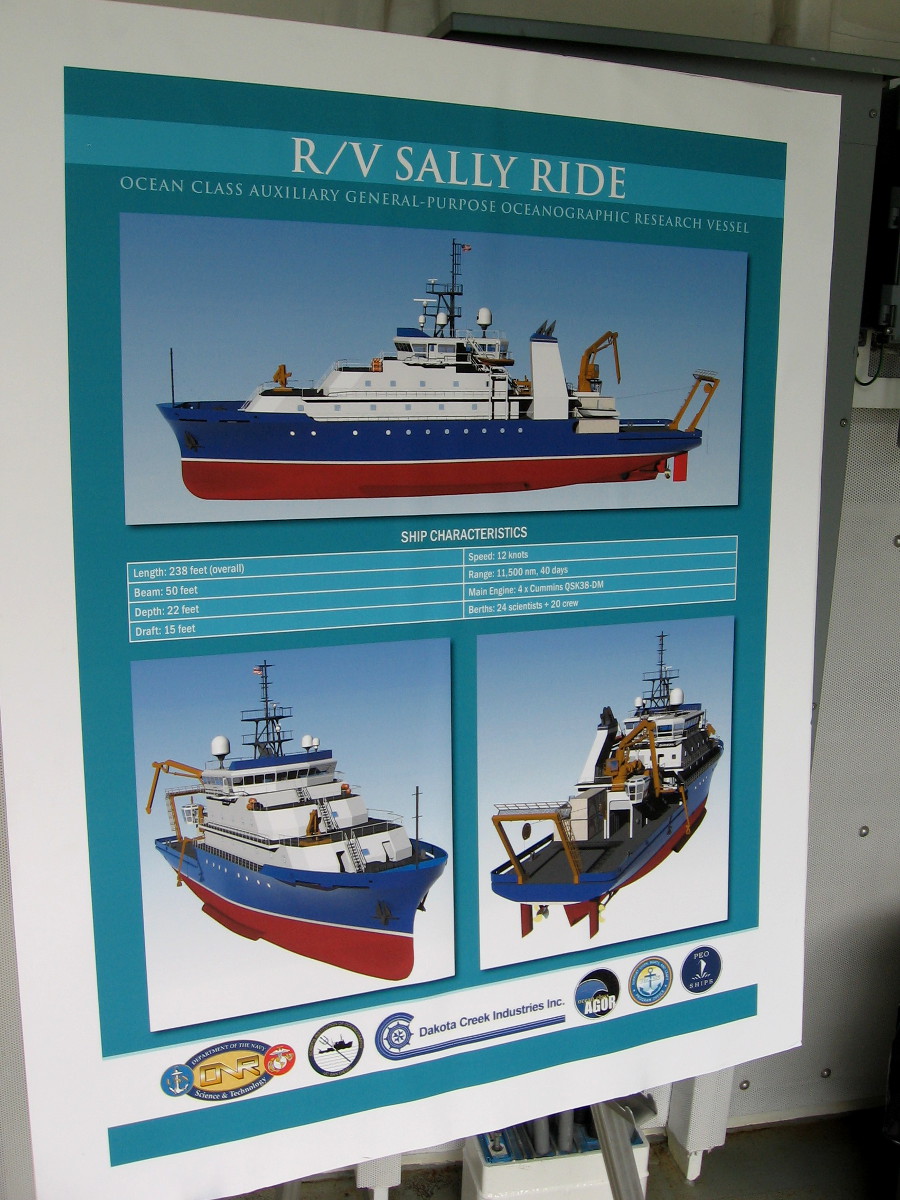
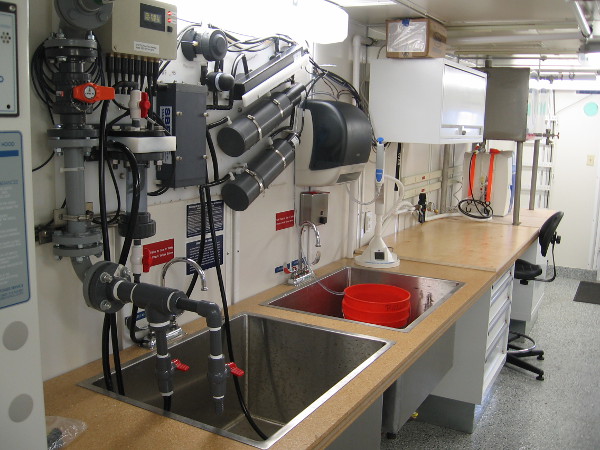
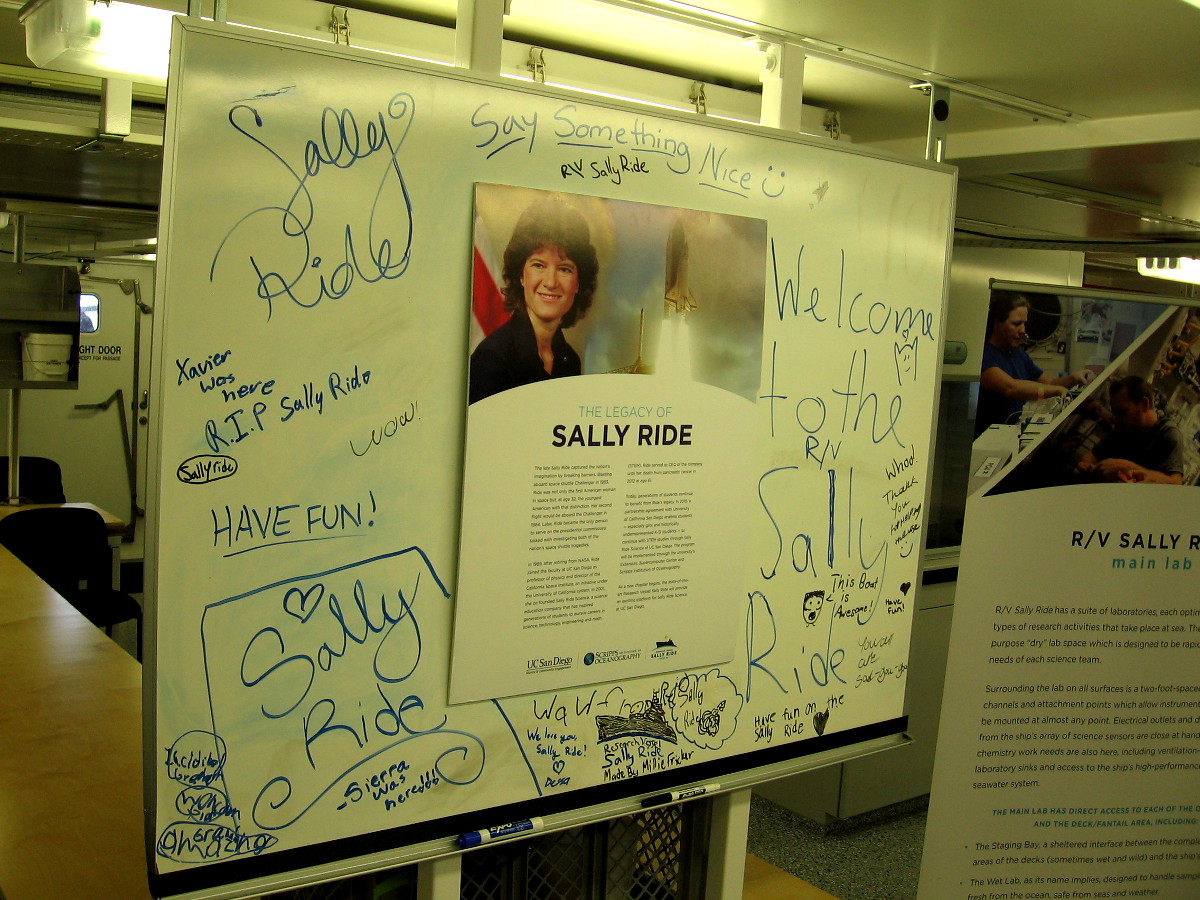
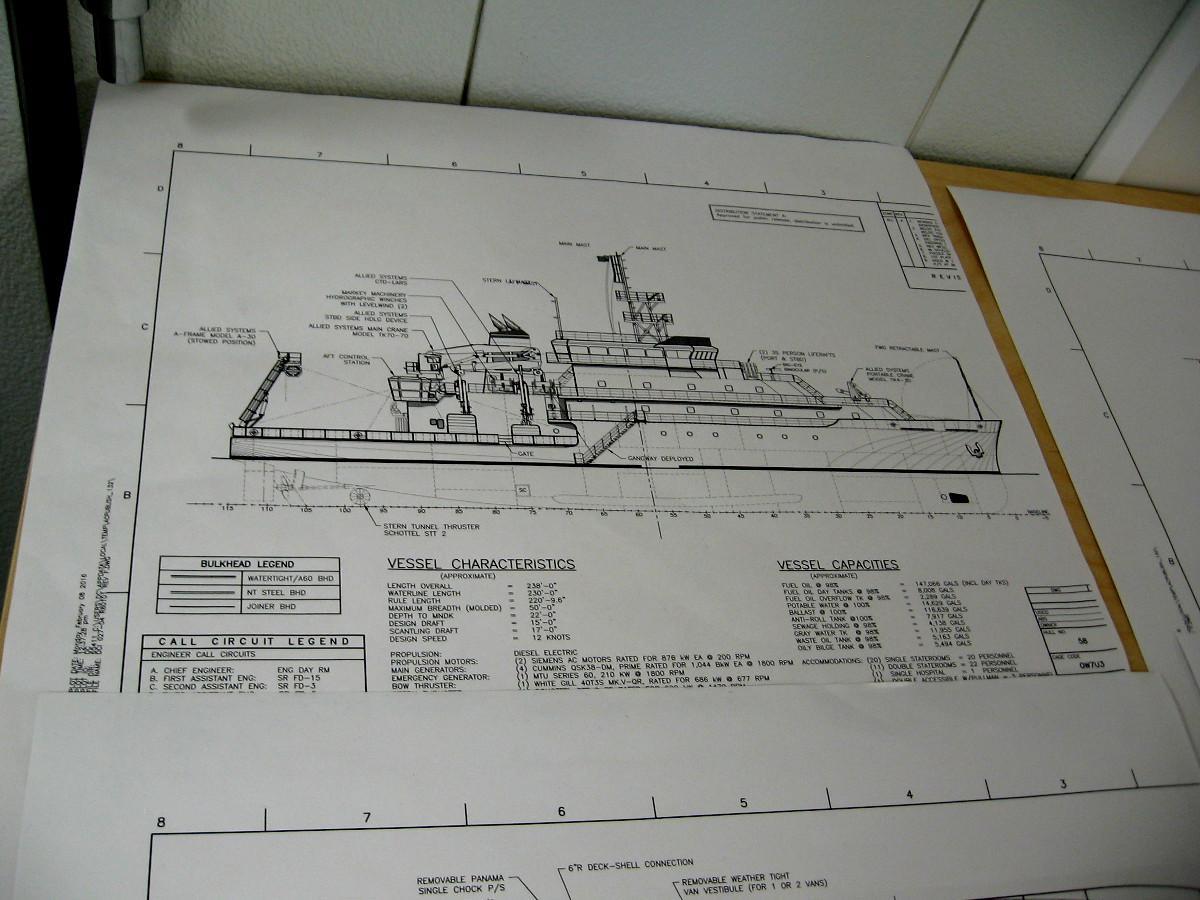
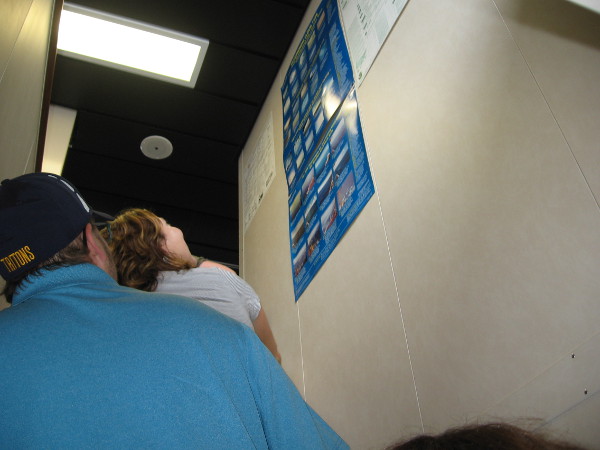
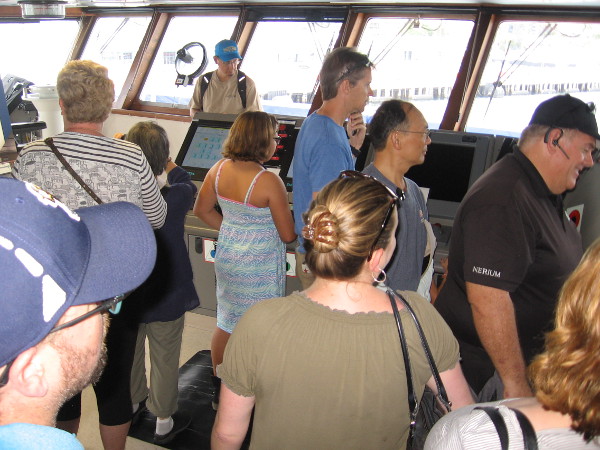
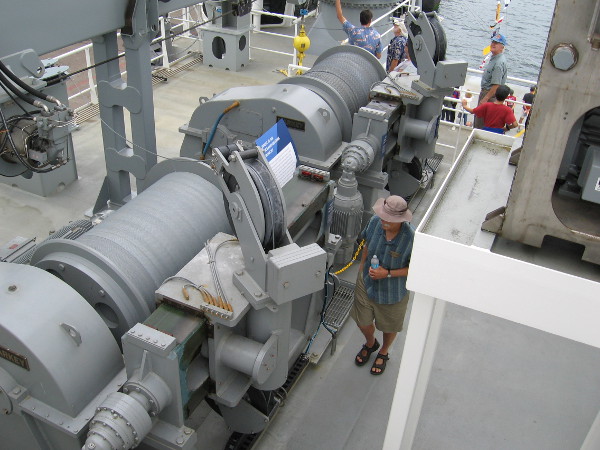
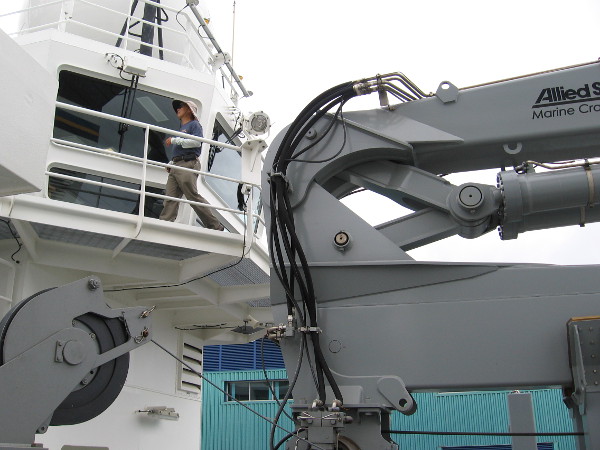
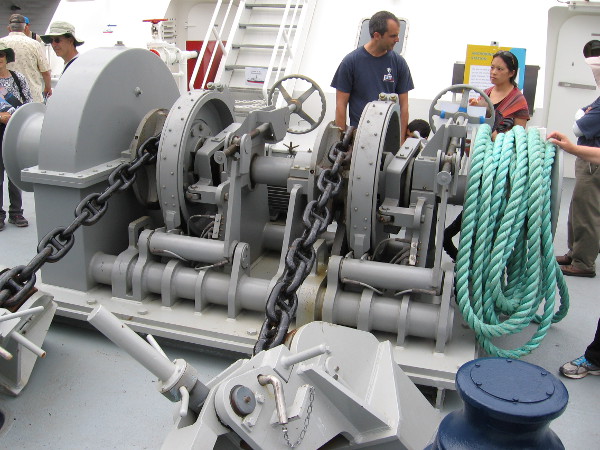
The public was invited to tour the new research ship Sally Ride. It was a rare opportunity to see how high tech exploration is carried out by UCSD Scripps scientists and oceanographers.The free public tours of R/V Sally Ride drew a good crowd on a Sunday in October, 2016. These people smartly arrived an hour early to reserve a time slot.The tour began inside the Port Pavilion on Broadway Pier. Many displays highlighted the work of UCSD’s Scripps Institution of Oceanography.UC San Diego embarks upon a new journey of exploration and boundary breaking with America’s newest research vessel R/V Sally Ride. Sally Ride was the first American woman in space.A large display goes over the history of The Evolution of Climate Change Science. UCSD scientists have made important contributions in this field.People inside the Port Pavilion learn about science and technology related to the understanding of planet Earth’s oceans.These examples of what is found when taking sediment cores on the ocean floor include tiny elegant Radiolaria.The Autonomously Deployed Deep-Ocean Seismic System’s Wave Glider is powered by solar and wave energy. It links with satellites and ocean bottom seismometers to help predict earthquakes and tsunamis.Some advanced visual equipment on display during the public debut of Research Vessel Sally Ride in San Diego. Multiple underwater photos can be taken in quick succession to form a 3-D model.Scripps Institution of Oceanography in La Jolla monitors climate variability and change, coastal hazards, marine operations, and ecosystems, fisheries and water quality.Floating device used to measure ocean wave characteristics.Peering out of the Port Pavilion at the R/V Sally Ride, docked at San Diego’s Broadway Pier.Photo aiming toward the stern of R/V Sally Ride. The big A frame, winch shack, extending crane, and two retractable arms on the starboard side of the ship are visible.Visitors eagerly head up the gangplank to explore America’s newest, most advanced research ship.Here we go!Looking down to our left.This rosette frame can be lowered into the water with a variety of mounted sensors. We’ll see it again in a bit.Heading down steep steps to the research ship’s fantail and work deck.We are halfway down. Many distant sailboats can be seen on San Diego Bay this beautiful but mostly overcast Sunday.R/V Sally Ride is equipped with shops, labs, winches, launch frames, booms and the newest scientific instruments and communication gear. The busy fantail and work deck are where science meets the sea.The gigantic A-Frame at the stern of RV Sally Ride can lift loads up to 30,000 pounds! Wire and cable deploy towed instruments. Moorings and acoustic equipment are also deployed in this manner.Visitors on the rear deck of R/V Sally Ride learn about science on the sea from a crewmember.Looking forward and up, we see several levels to the ship. If I understand correctly, the electronic display indicates a cable’s tension, payout and speed.Turning a bit to the right, we see the big crane atop a staging bay that is sheltered from the weather. Inside, equipment can be carefully prepared before deployment out in the elements.Now we are heading toward the windowed winch shack, along the starboard side of the ship toward the two retractable arms.One of two mechanical arms used to lower sensors, nets, and other oceanographic equipment into the water. They are called LARS, which stands for launch and recovery systems.A member of the public reads a sign explaining that the LARS are controlled from the winch shack. Wire or cable is used to lower equipment overboard.This rosette frame is holding a CTD, or conductivity, temperature and depth sensor. It can be lowered to a depth of nearly 4 miles! Niskin bottles attached to the frame can capture samples to be analyzed on the ship or at a later time.A poster inside the R/V Sally Ride’s staging bay details the ship’s main characteristics.Heading through a watertight door into the Wet Lab. Water samples are brought here for storage and analysis. There are drains in the floor!Another poster contains photos taken during RV Sally Ride’s construction. (Click image to enlarge.)A look inside the Wet Lab.R/V Sally Ride is the newest member of the Office of Naval Research’s fleet. These ships are owned by the U.S. Navy, but operated by university employees and professional mariners. Science teams rotate on a regular basis every two or three weeks.Heading from the Wet Lab into the Main Lab.Lab stations on the R/V Sally Ride are optimized for the different types of research activities that take place at sea.Visitors have written comments near a sign that describes the legacy of Sally Ride, our country’s first female astronaut. Sally was on the faculty of UC San Diego.A diagram of R/V Sally Ride with detailed information about the ship.Now we’ve arrived at the ship’s nerve center, the control station for CTD operations. Here scientists monitor ship location, sensor readouts, and trip bottles to collect samples.After quickly passing the no-nonsense mess deck and through two rather bare state rooms, visitors head up stairs to check out the pilot house.The high tech pilot house, or bridge, attracted a big crowd of curious visitors!One of the seats where the ship’s captain can place himself. When at sea or holding station, a deck officer is present on the bridge at all times.The huge computerized control console looks like it belongs on a spaceship!Aft of the starboard side of the bridge is the chart room, where navigational plans are made for each expedition. Old-fashioned maps are still used as an emergency backup!Heading around the pilot house, back toward the stern of R/V Sally Ride.Looking down at the telescoping knuckleboom crane and other outdoor machinery used to carry out research on the often stormy ocean.People examine an oceanographic winch. Drums can have upwards of 10,000 meters of wire or cable spooled on them.As I understand it, this sturdy telescoping knuckleboom crane can be extended in all directions for multiple purposes, including lifting the gangplank!Two impressive winches aboard R/V Sally Ride.Looking back up toward the rear of the pilot house.One last look at the aft deck and impressive A-Frame of the amazing new Research Vessel Sally Ride.I’m not the only one who is impressed.Heading forward along the ship’s port side. Downtown San Diego buildings rise across the water.We’ve arrived at the ship’s bow, just below the pilot house, where we find the anchoring station. The big windlass mechanism lowers and raises an anchor.R/V Sally Ride has three anchors, each weighing 5,000 pounds. Two are on either side of the bow and the third is a spare. Each anchor is connected to 720 feet of chain, which is stored below decks.An orange life ring reads R/V Sally Ride, San Diego.One last photo of R/V Sally ride during her debut at San Diego’s Broadway Pier. She begins her first research expedition in a matter of days!
…
I live in downtown San Diego and love to walk! You can follow Cool San Diego Sights via Facebook or Twitter!
You can easily explore Cool San Diego Sights by using the search box on my blog’s sidebar. Or click a tag! There are thousands upon thousands of fun photos for you to enjoy!
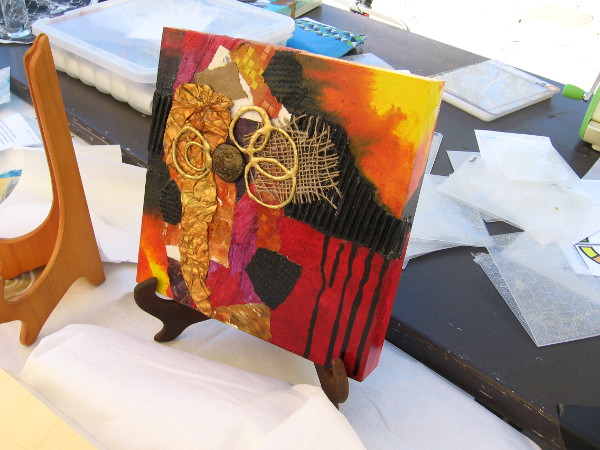
A cool work of art pieced together in Balboa Park’s Spanish Village. Anyone can do this!
My weekend walk in Balboa Park took me through Spanish Village Art Center. For a few pleasant minutes I paused to watch artist Kathi Vargo piecing together collages and unique assemblage at a table in the middle of the patio. Anyone passing by was invited to join in!
I learned that Kathi offers Paint and Paper Play classes where absolutely anybody can learn to create mixed media collages. If you’re interested, visit her website!
Kathi Vargo was having a fun Paint and Paper Play Collage Workshop in the middle of the Spanish Village Art Center’s colorful patio.All sorts of objects can be used to assemble this unique artwork.Applying some paint to a strip of material.Creating art expands the mind, enriches the spirit, and is just plain fun!You can make this!
…
I live in downtown San Diego and love to walk! You can follow Cool San Diego Sights via Facebook or Twitter!
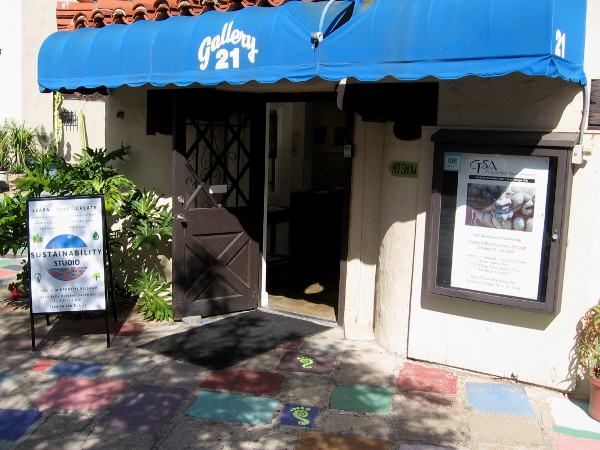
Gallery 21 in Balboa Park’s Spanish Village features a special environmental exhibit called Sustainability Studio!
I discovered a fascinating environmental exhibit in Balboa Park this weekend. The Sustainability Studio is located in Gallery 21 near the center of the Spanish Village Art Center.
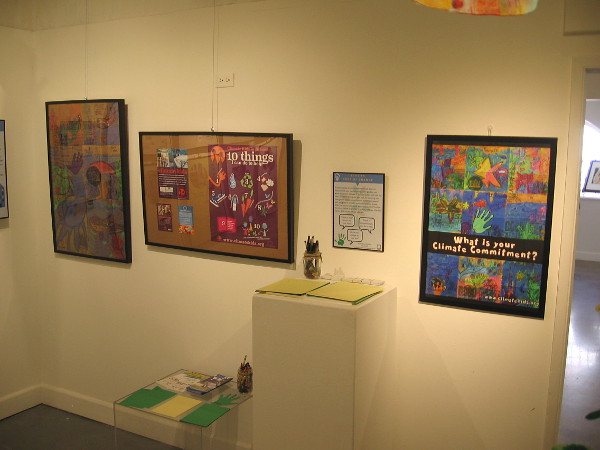
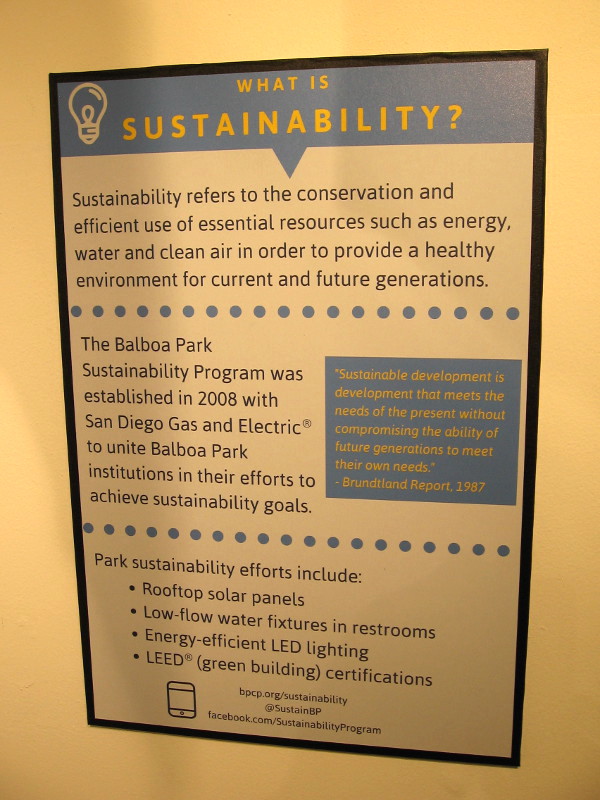
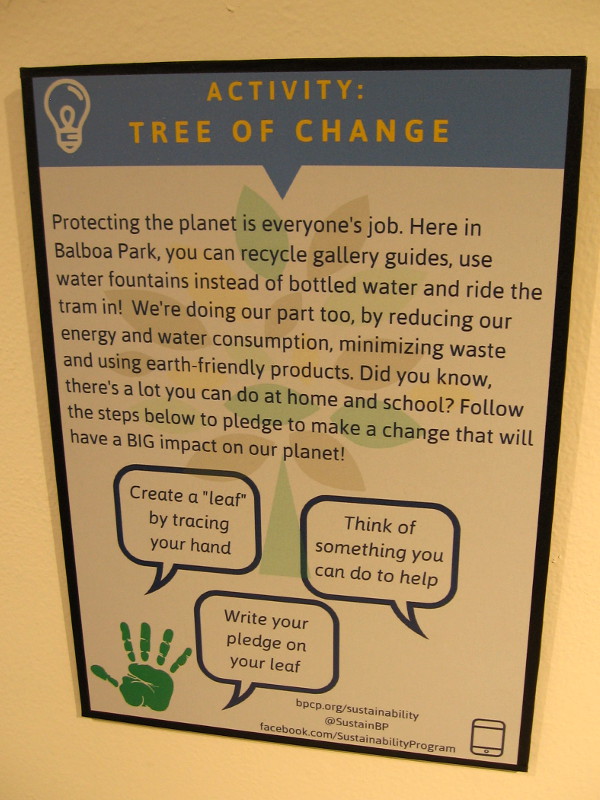
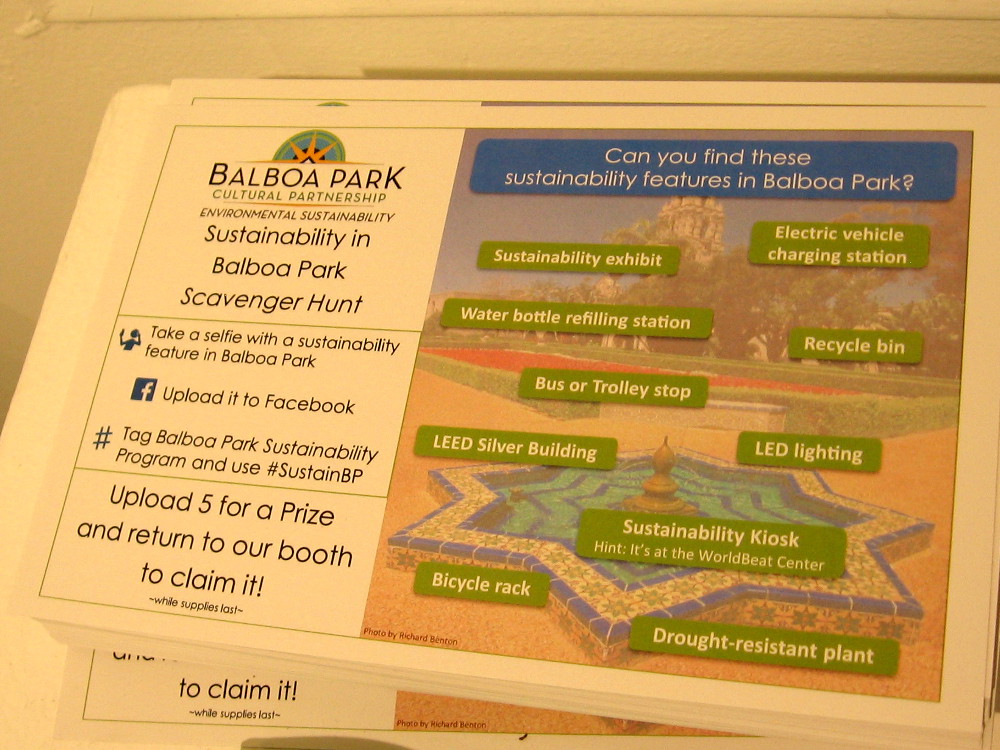
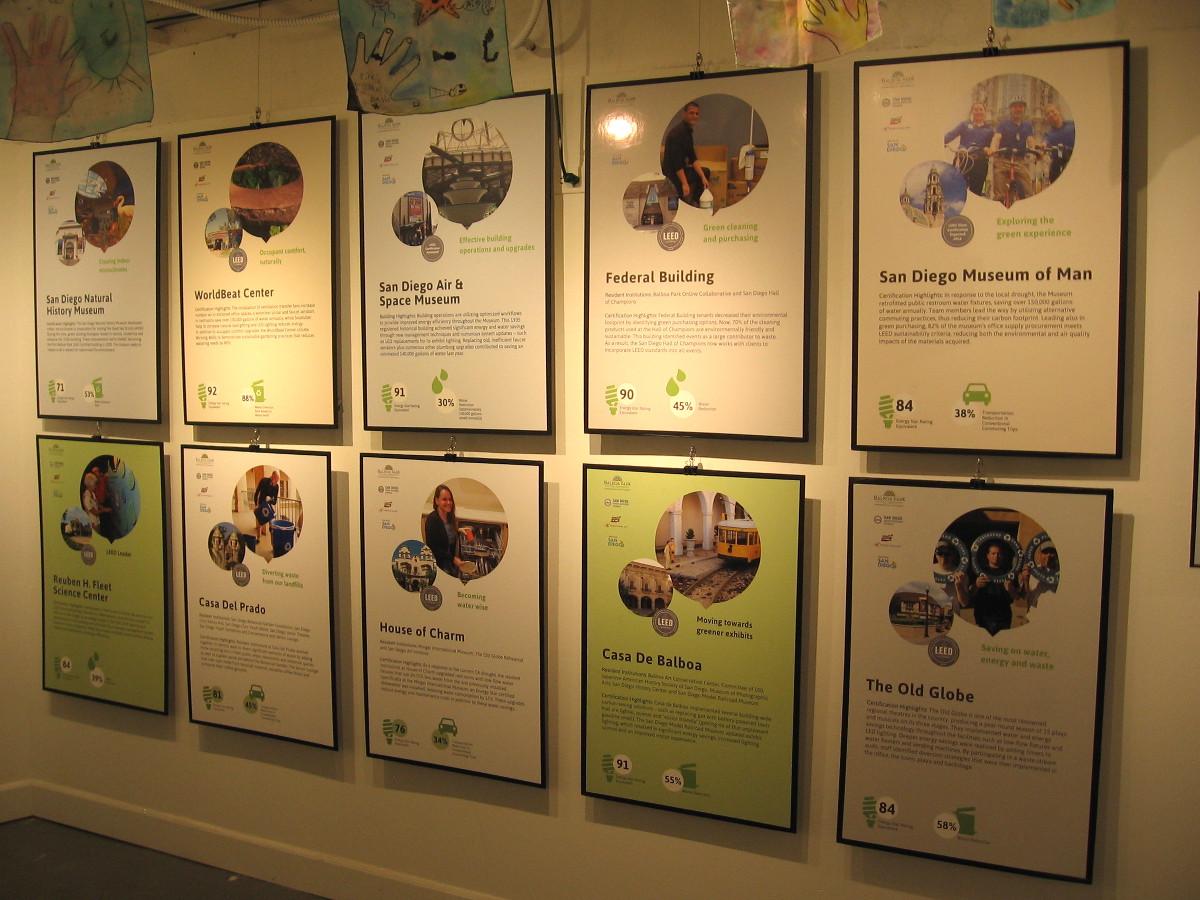
This small but information-packed exhibit discusses how various museums and buildings in Balboa Park are engaging in conservation efforts, by using solar panels, low-flow water fixtures, LED lighting, and the intelligent use of resources. The exhibit also encourages kids to think about the environment and pledge to protect it. Fun activities include making leaves for the Tree of Change and a Balboa Park scavenger hunt!
To read the signs, click the images and they will enlarge.
The Sustainability Studio will remain open to the public through December. Bring the kids! They can learn something new, create some fun art, and engage in the easy scavenger hunt and win a cool prize!
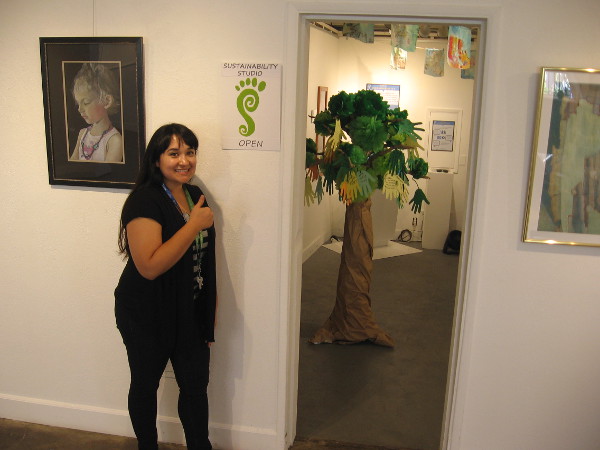
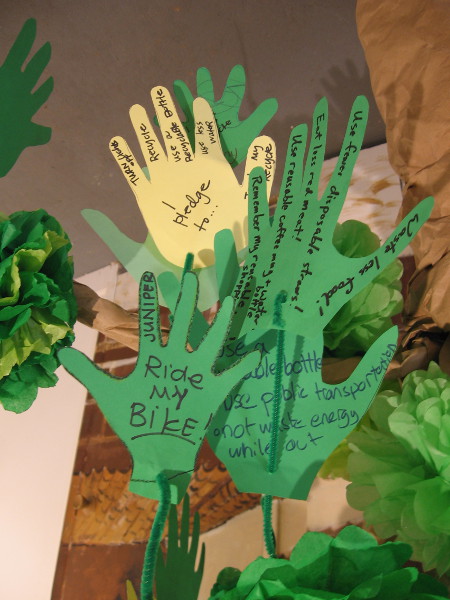
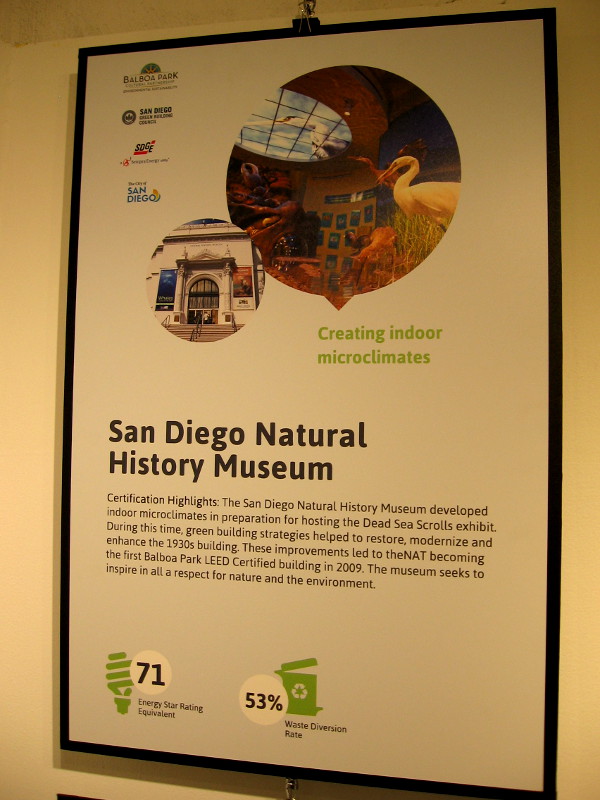
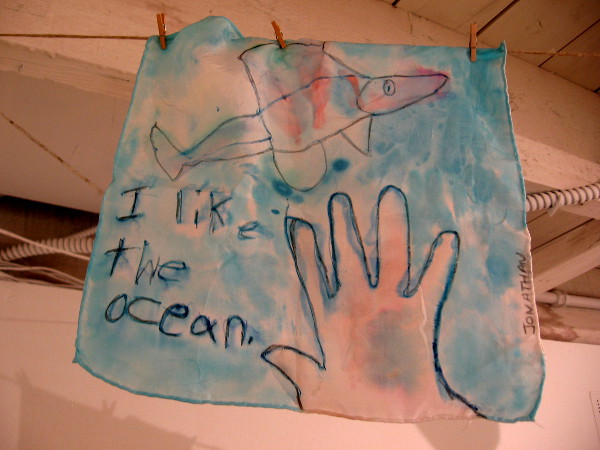
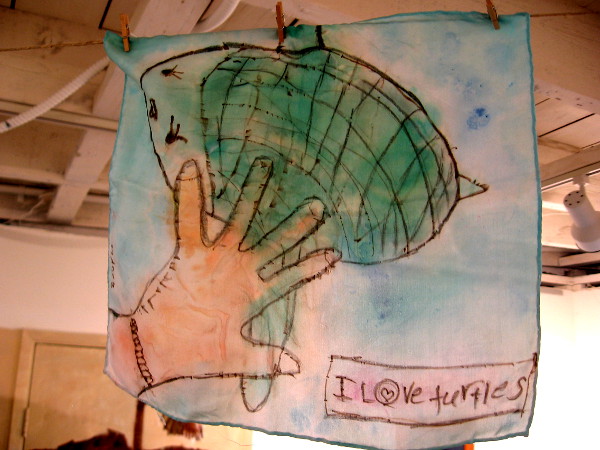
Rubi welcomes visitors into the Sustainability Studio, where one can learn about the conservation efforts of various organizations in Balboa Park.Signs and posters in the special exhibit raise awareness about various important environmental issues. Kids are provided with fun activities that promote activism and conservation.Sustainability refers to the conservation and efficient use of essential resources. Balboa Park’s efforts include solar panels, low-flow water fixtures and LED lighting.Kids visiting the exhibit are encouraged to make a leaf with a hand tracing, then inscribe it with an environmental pledge.Leaves on the Tree of Change. Kids pledge to ride bikes, turn off lights, recycle, use less water . . .A scavenger hunt is described on this flyer. Upload 5 selfies to Facebook that include a Balboa Park sustainability feature and claim a great prize!Various museums and buildings in Balboa Park are working to become more environmentally friendly.The San Diego Natural History Museum became the first Balboa Park LEED Certified building in 2009.The San Diego Air and Space Museum has increased energy efficiency and achieved significant water savings.Fun works of art produced by creative kids hang from the ceiling. I like the ocean!I love turtles!
I live in downtown San Diego and love to walk! You can follow Cool San Diego Sights via Facebook or Twitter!
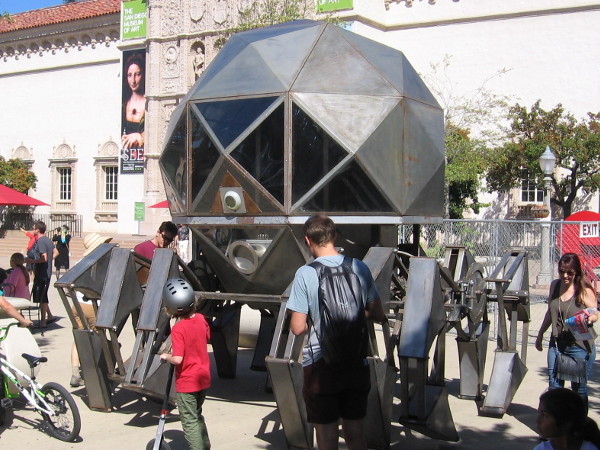
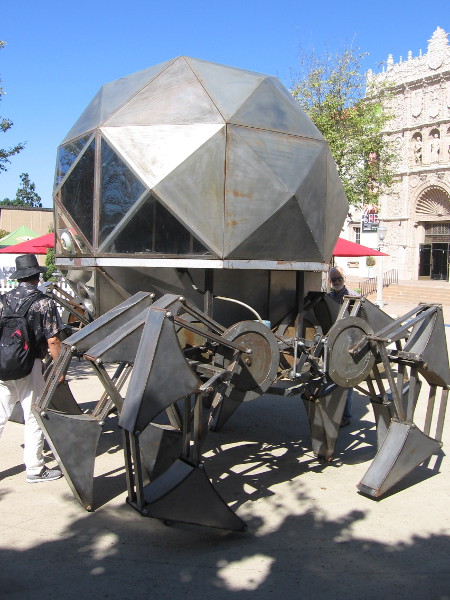
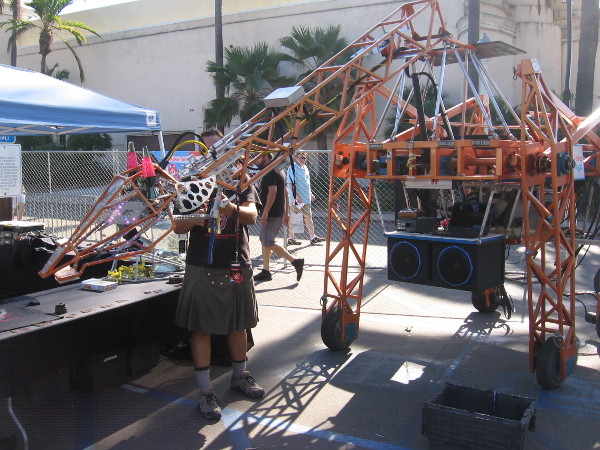
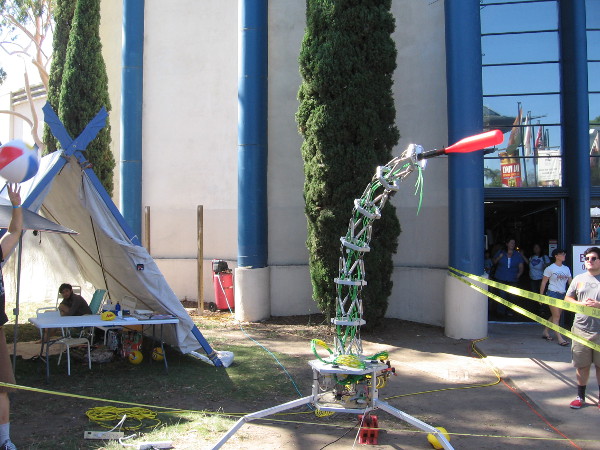
A huge spider-like working octopod vehicle on display in the Plaza de Panama at 2016 Maker Faire San Diego!
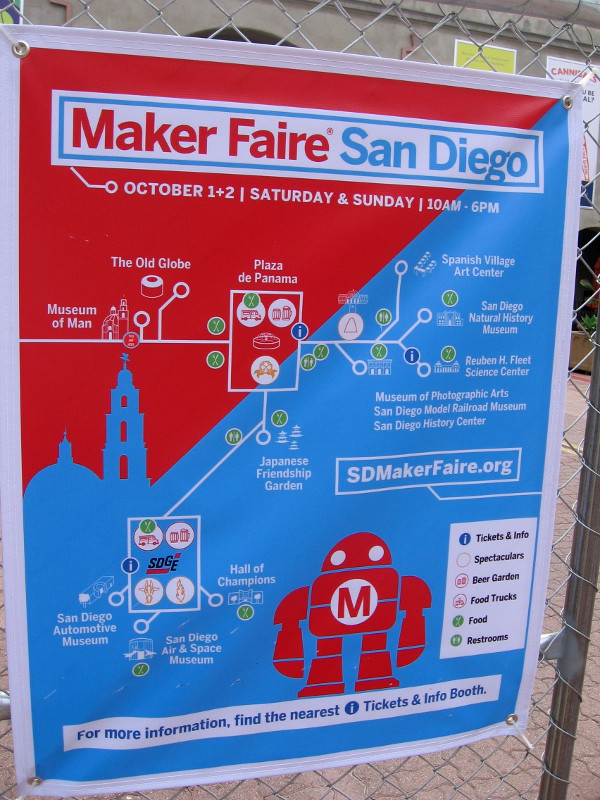
Check out some cool photos! I took these this morning at 2016 Maker Faire San Diego which is being held this weekend in Balboa Park!
This now annual event–I believe this is the second year–attracts creative people of every type: engineers, inventors, dreamers, artists, students . . . If the human imagination can envision it, these folks will build it!
If you are a dreamer and a doer, head down to Balboa Park and be inspired!
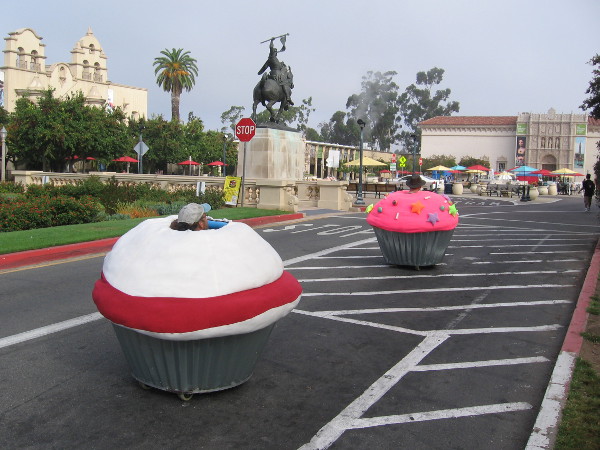
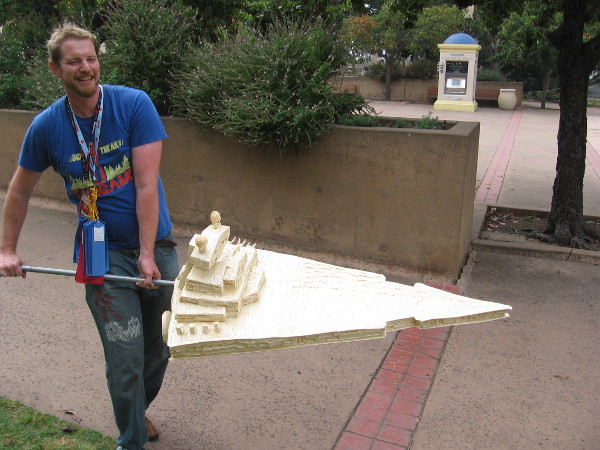
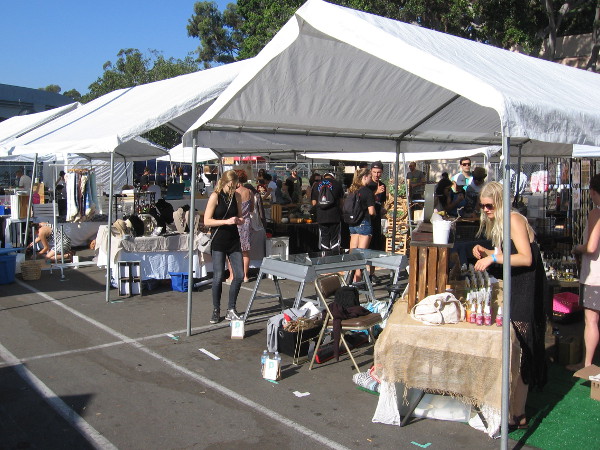
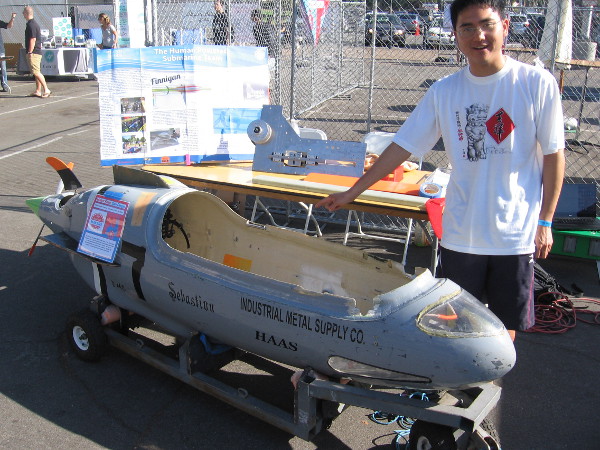
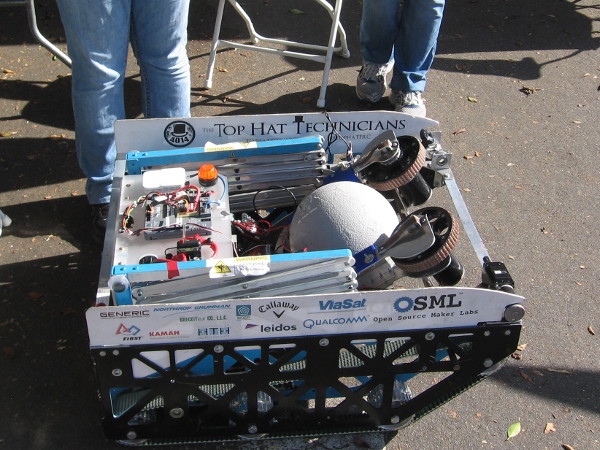
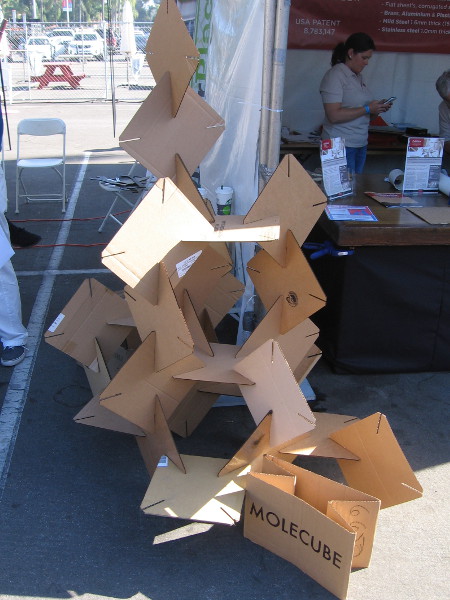
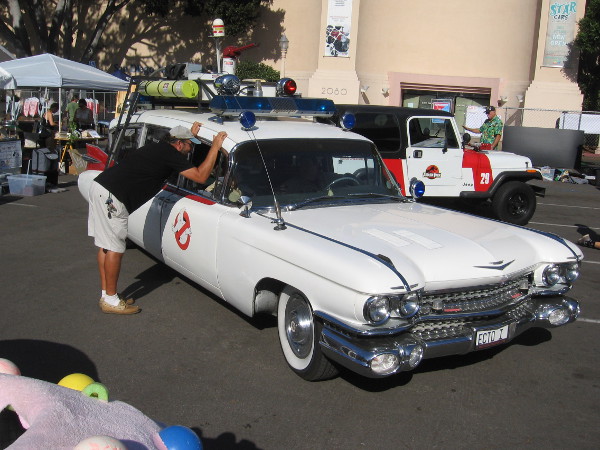
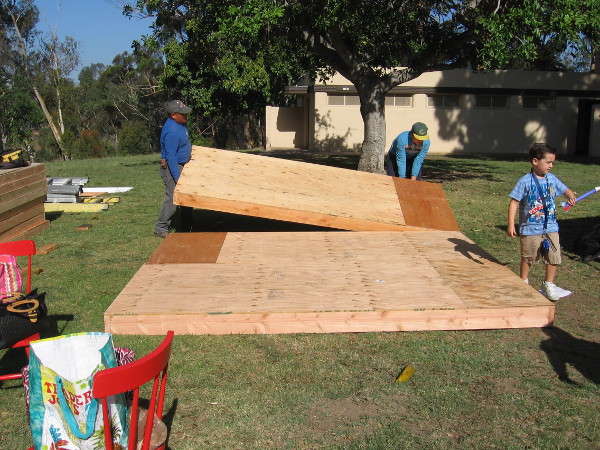
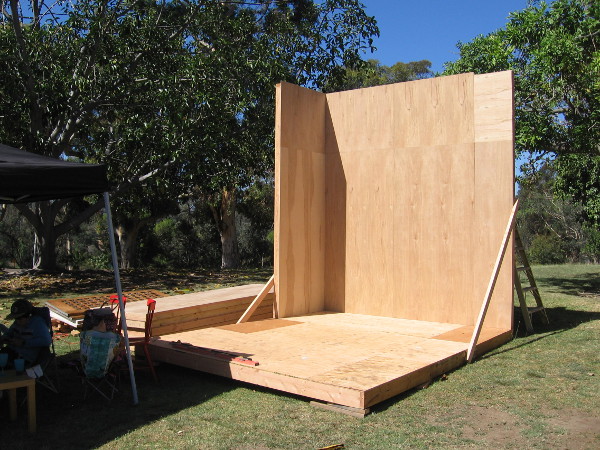
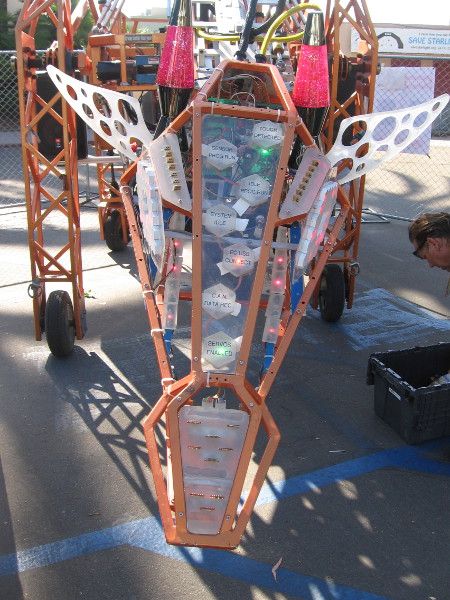
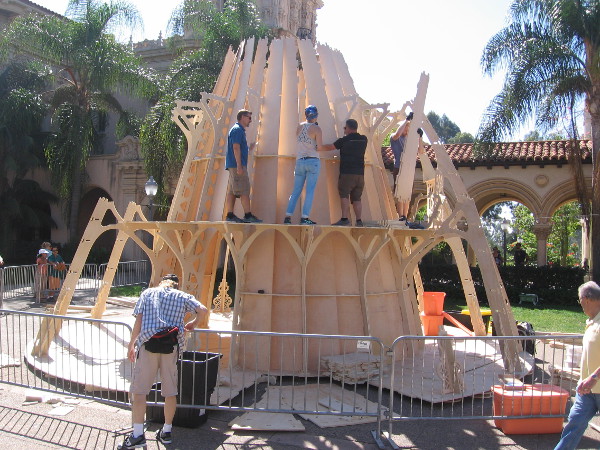
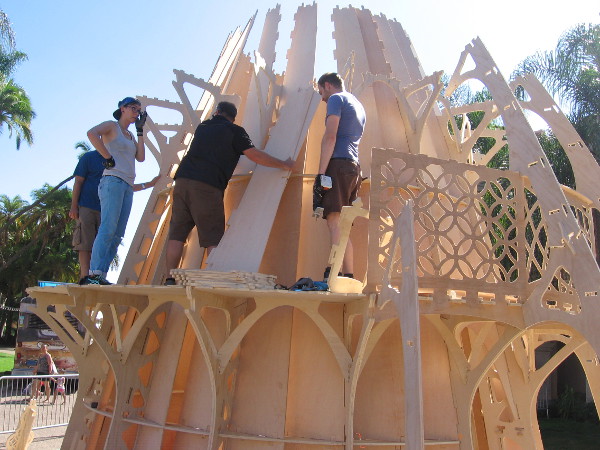
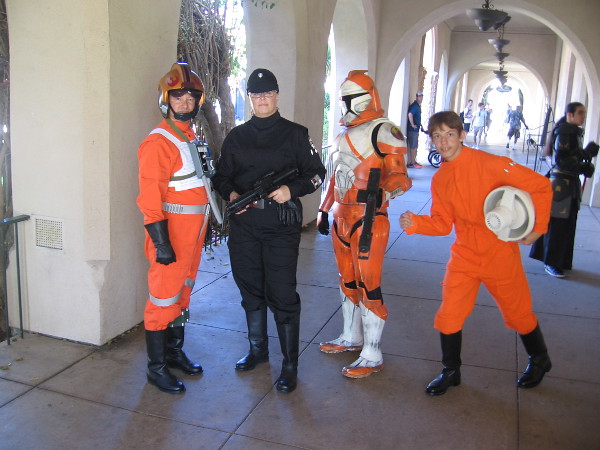
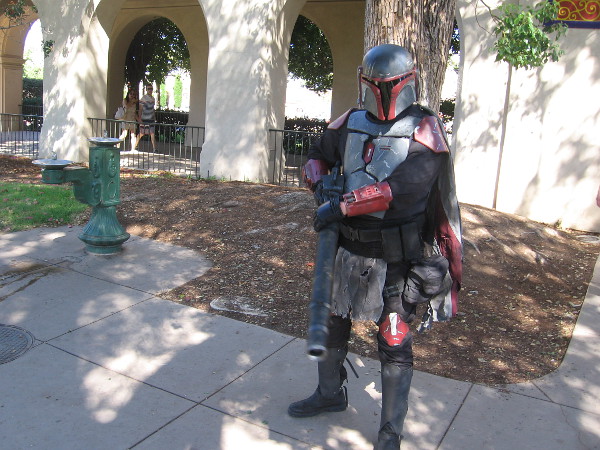
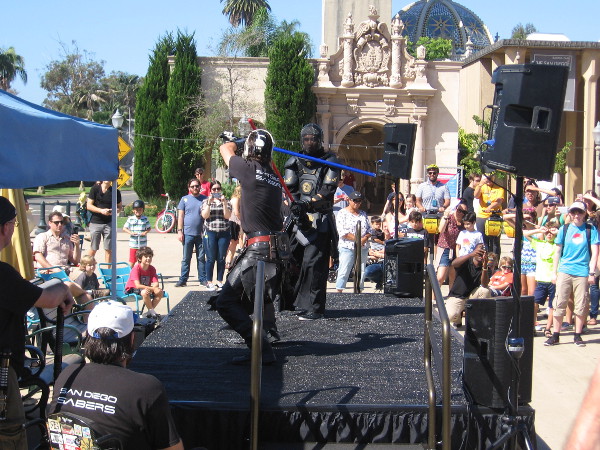
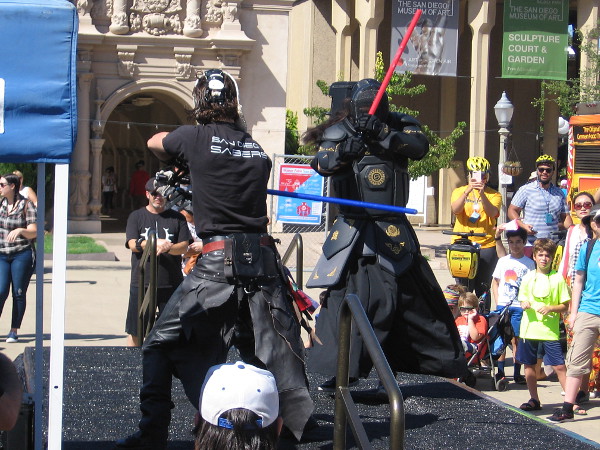
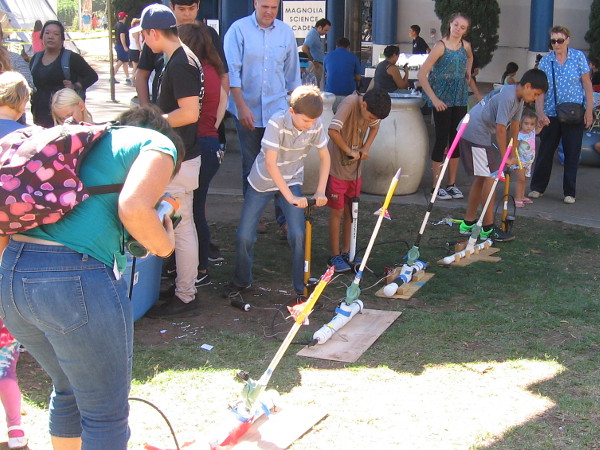
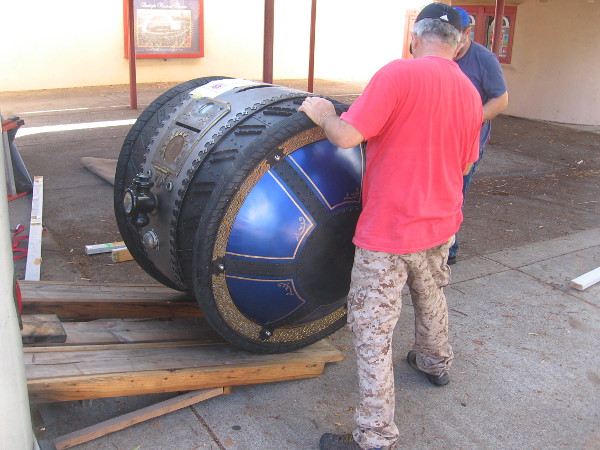
Maker Faire San Diego has taken over Balboa Park this weekend. The annual event features fantastic creations and the inspired creators who like building cool stuff!This super cool octopod moves slowly forward and backward using its spider-like feet. I’d love to sit inside and drive it! I learned that it doesn’t steer very well, however.In the morning, before the Maker Faire officially opened, I spotted two cupcake cars heading through Balboa Park!This guy was flying what appeared to be a huge model of a Star Wars Imperial Star Destroyer down Balboa Park’s El Prado!A bunch of Maker Faire exhibitors set up on Saturday morning in front of the San Diego Air and Space Museum in Balboa Park.This human powered submarine was created by a team of students at UCSD. It competed in the International Submarine Race and was propelled by a 3-D printed fin.This cool robot was created by high school students, namely High Tech High’s Top Hat Technicians. It competed in an event where a ball had to be shot at a goal.Make your own molecule using this cardboard Molecube!These awesome guitars were made by students in a special STEM Guitar-Building class at San Diego City College.The Ghostbusters ECTO-1 vehicle has arrived for Maker Faire San Diego, as well as a Jeep from Jurassic Park.Commissioner Gordon must be nearby. I spotted his Gotham Police Department vehicle.A tiny house would be built here during the Maker Faire weekend. When I first walked by, the floor was being laid down.About an hour later, one wall was already up!The Electric Giraffe returned for 2016 Maker Faire San Diego. It walks, talks, and has become quite a phenomenon. It has even appeared at the White House!The Electric Giraffe is 17 feet tall when its neck is fully raised. Its “horns” (actually ossicones) appear to be lava lamps!These creators at Maker Faire San Diego were building the Temple for Youtopia. It’s an interlocking plywood parabaloid with a single light source at it’s focal point. When finished, light shines out everywhere.A similar Temple is built each year at Burning Man and set on fire.I noticed a lot of cool Star Wars cosplay at 2016 Maker Faire San Diego.I caught this Star Wars cosplay between Balboa Park’s House of Hospitality and the Japanese Friendship Garden.Back in Balboa Park’s central Plaza de Panama, the San Diego Sabers engaged in a fast-paced lightsaber battle!Enthusiasts in cool protective costumes engage in lightsaber combat as a crowd watches during 2016 Maker Faire San Diego!Anybody passing by was invited to Paint a Prius near the San Diego Automotive Museum!Kids have a blast in front of the San Diego Air and Space Museum. Air-propelled rockets were flying all over the place.Kids at Maker Faire San Diego test a carbon dioxide cannon, made from a garbage can!This remote control robot batter was swinging wildly at beach balls. A rather amusing scene! (Wish I’d taken a better photo.)Here comes AR-Duo, the Caloric Rover, a cool steampunk rolling doohickey which is beyond awesome.There’s just too much fun at 2016 Maker Faire San Diego! Head over to Balboa Park this weekend!
…
This blog now features thousands of photos around San Diego! Are you curious? There’s lots of cool stuff to check out!
Here’s the Cool San Diego Sights main page, where you can read the most current blog posts. If you’re using a small mobile device, click those three parallel lines up at the top–that opens up my website’s sidebar, where you’ll see the most popular posts, a search box, and more!
To enjoy future posts, you can also “like” Cool San Diego Sights on Facebook or follow me on Twitter.
Special education kids in San Diego are fortunate to have a non-profit school that turns young lives around, helping emotionally disturbed and learning disabled students make their way toward a positive future. This school is called Aseltine.
The awesome people at Aseltine School believe that all children deserve access to the full opportunities of life. They also believe that when troubled kids are encouraged to take purposeful action, they develop self-esteem and overcome self-doubt.
I am privileged to know some of the friendly people who work at Aseltine. I recently learned that the small school exists due to the generosity of others. Here is their Mission Statement.
When I visit Aseltine from time to time, I see polite students laughing, smiling and learning to live life the way it should be lived–with optimism and gladness.
Please consider offering the good people of Aseltine a little bit of help. There are many different ways to get involved. Click this link to learn more!
Work of art by a student at the non-profit Aseltine School in San Diego. Aseltine helps special education kids make their way toward a bright, positive future.
In case you’re in San Diego and you read this in time, Aseltine School’s Festival of the Arts event is coming up on July 13, 2016, and will take place from 5 pm to 7pm at Cafe on Park, which is located at 3831 Park Boulevard. Student poetry and artwork will be featured, and those attending can help the school out with donations, purchases of art, or even by grabbing a bite to eat.
I urge those who enjoy following my blog to check out Aseltine’s website. Can you help?

























































 Cool San Diego Sights!