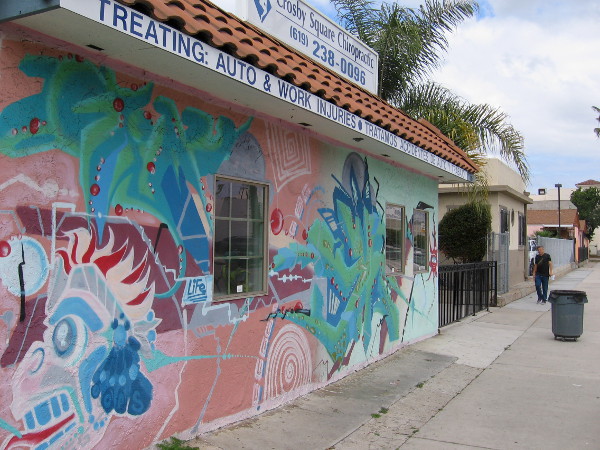
Awesome street art on a chiropractic office near Cesar Chavez Pkwy in Barrio Logan.
I have some time off from work, so I’m able to do a little more weekday walking than usual. Yesterday I wandered through a gritty but fascinating neighborhood near downtown that’s a bit off the beaten track. A stretch of National Avenue runs through a narrow section of the city between Logan Heights and downtown San Diego, directly east of the rail and trolley yards; I walked from Imperial Avenue to Cesar E. Chavez Parkway, then back.
The area contains many car repair shops, welding shops, warehouses, and other small businesses which occupy modest, often decayed buildings. In a few places, groups of homeless had gathered. Small, neglected shanty-like houses are interspersed with elegant historic old homes and newer apartment buildings. Yet vibrant life was active everywhere. And everyone I met gave me a friendly greeting!
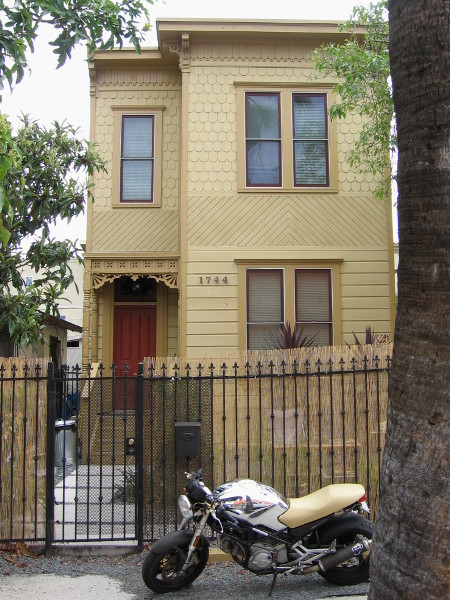
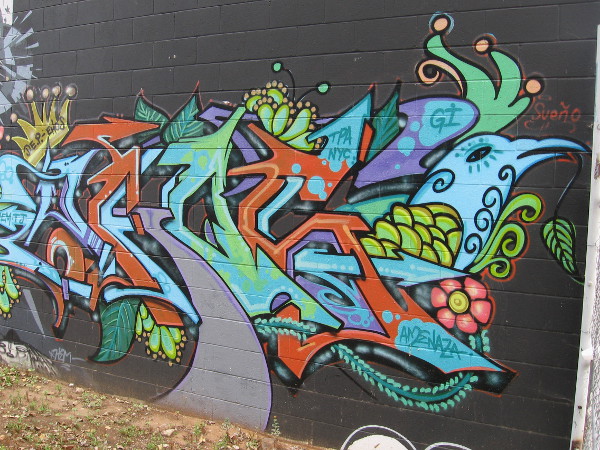
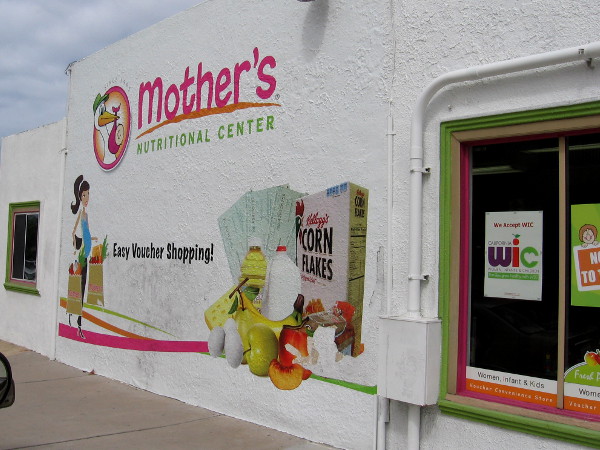
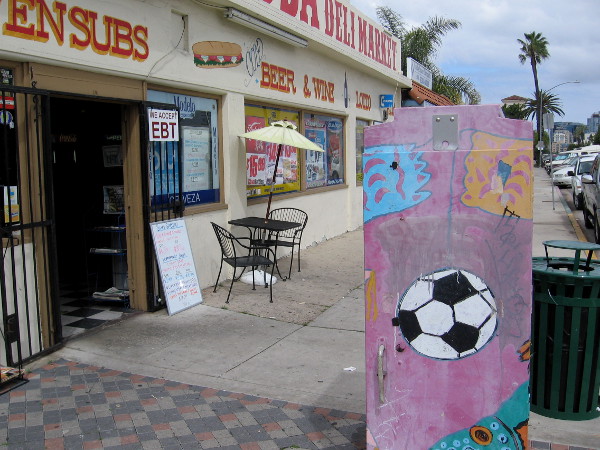
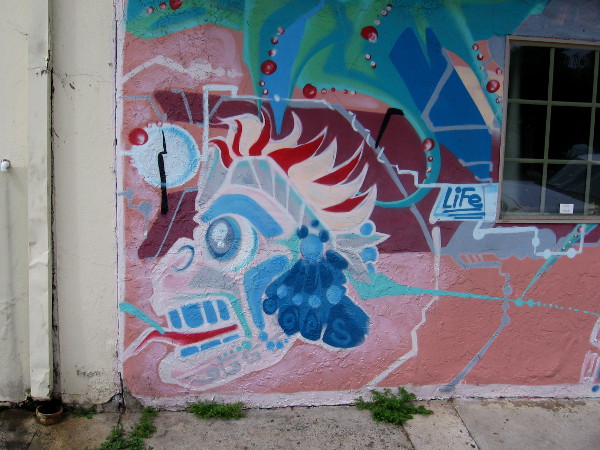
Cool mural on residential building features an eagle, cacti, palm trees.Quaint narrow house on National Avenue near downtown San Diego.Portion of colorful graffiti in a weedy space between buildings.This very cool mural caught my eye as I walked down the street. It’s on Logan Avenue, a couple blocks from National Avenue.Plaque on La Entrada project explains reconstructed Mission Revival facade.The Mission Revival facade on La Entrada apartments is an homage to the region’s history.Local vendor is selling tamales under a canopy by the sidewalk.Mother’s Nutritional Center helps local low-income women with young children.A soccer ball on utility box by a small local market known for their sub sandwiches.One word on this fantastic old wall says it all: Life.
…
To enjoy future posts, you can “like” Cool San Diego Sights on Facebook or follow me on Twitter.
Several faces line the bottom of a downtown window.
Yesterday morning I walked south on Seventh Avenue through a thin slice of downtown San Diego. I began at the tippy top of Cortez Hill and ended near Petco Park. Looking about for random cool sights, just swinging my camera right or left, I took a few pics…
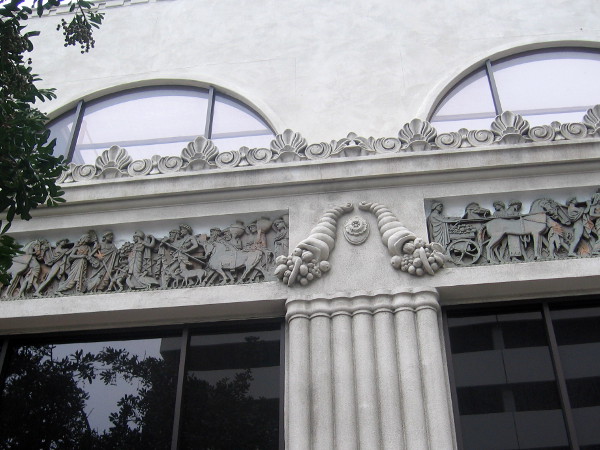
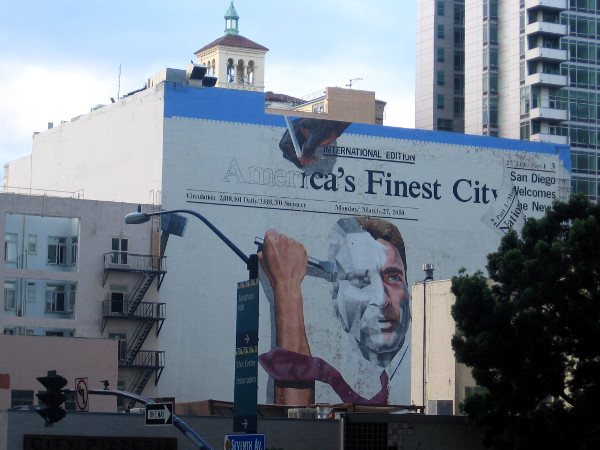
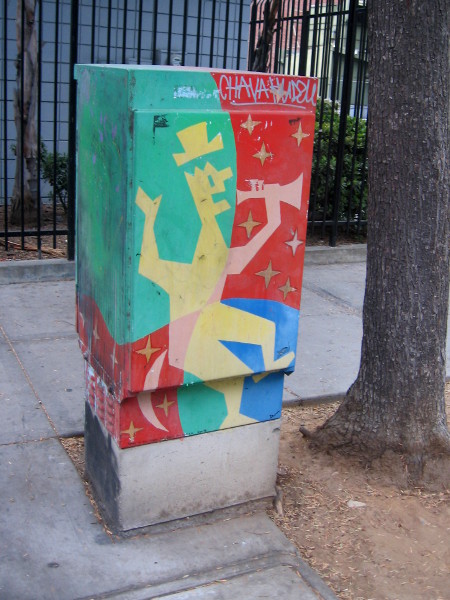
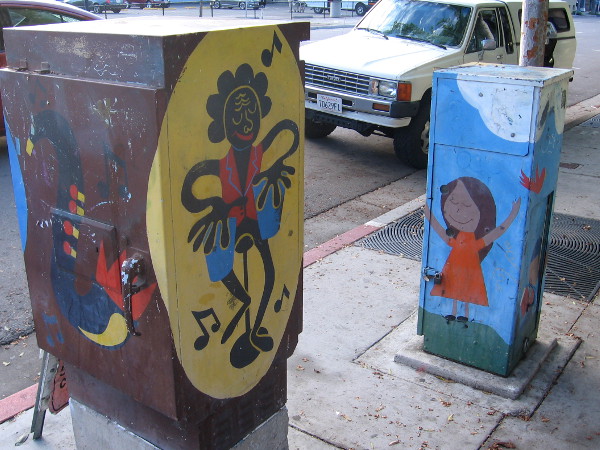
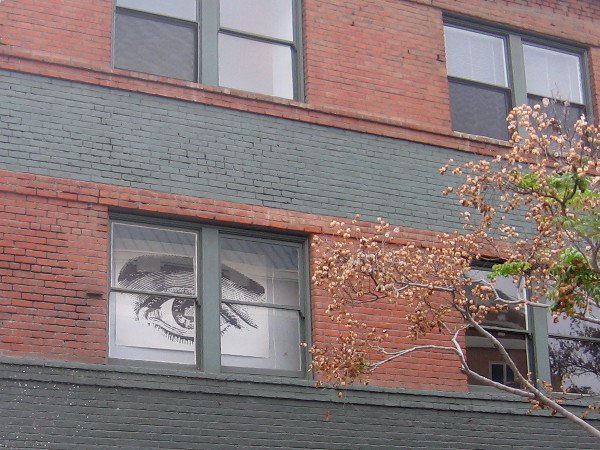
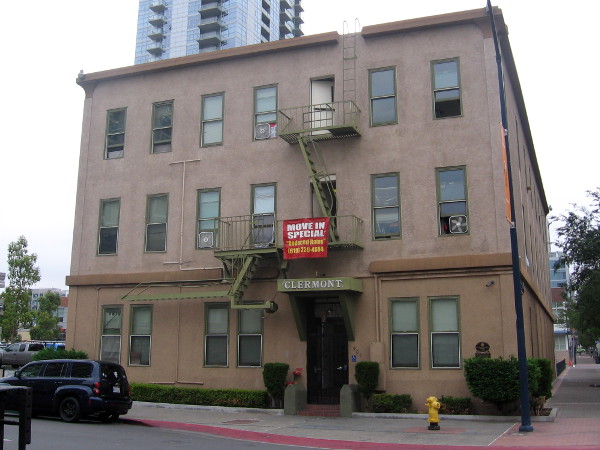
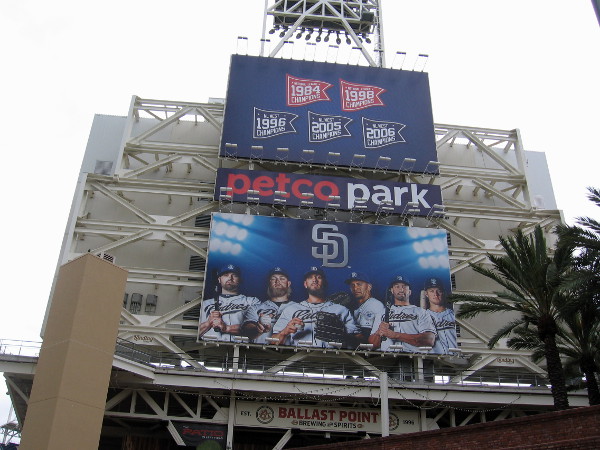
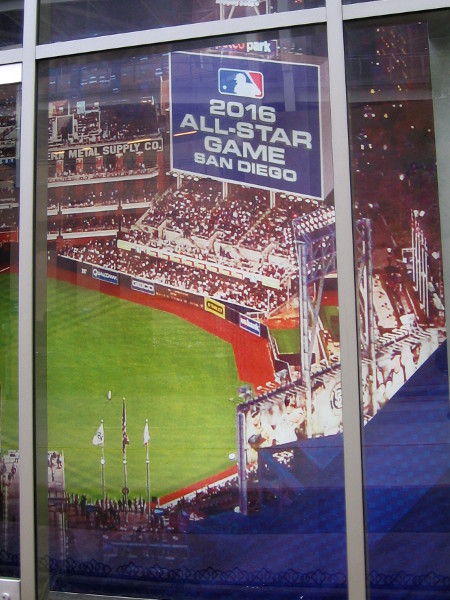
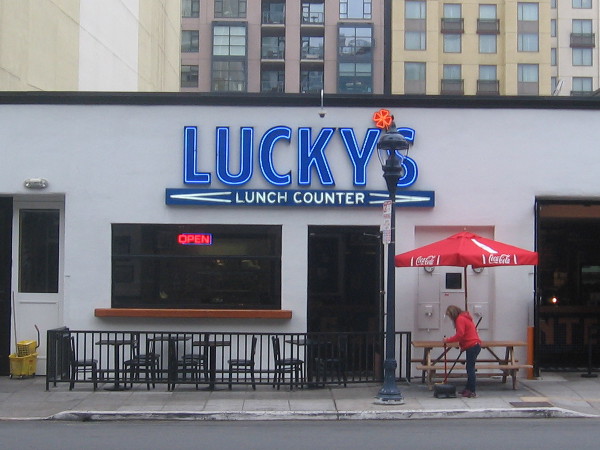
Classic figures in a frieze on a building at the corner of Seventh and C Street. The cool Computer Museum of America used to be here.View of the iconic America’s Finest City mural from a spot on Seventh Avenue.Happy reveler painted at the corner of Seventh and E Street.More cool street art on some boxes at Seventh and F Street.Fun utility box street art photographed during a morning walk through downtown San Diego.The images might be weathered, but the playful spirit remains strong.Gigantic eye stares out of one window at me as I continue to walk south down Seventh Avenue.The Clermont/Coast Hotel, built in 1887, is a Black Historic Site. During the days of racial segregation, is was one of the largest “colored” hotels in downtown San Diego.Seventh Avenue has turned into Tony Gwynn Drive. With the new Padres baseball season, brand new graphics have appeared on the sign behind Petco Park’s big videoboard.Poster inside Omni Hotel window looks forward to San Diego’s 2016 All-Star Game.Sweeping the front of Lucky’s Lunch Counter early one weekday morning.
…
To enjoy future posts, you can “like” Cool San Diego Sights on Facebook or follow me on Twitter.
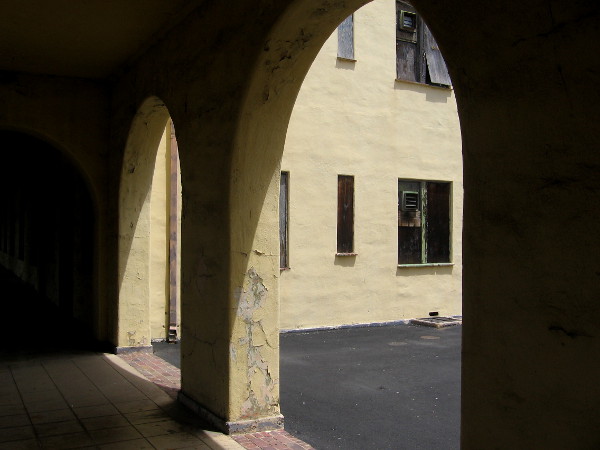
Photo of old, shuttered windows taken through dark, weathered archway.
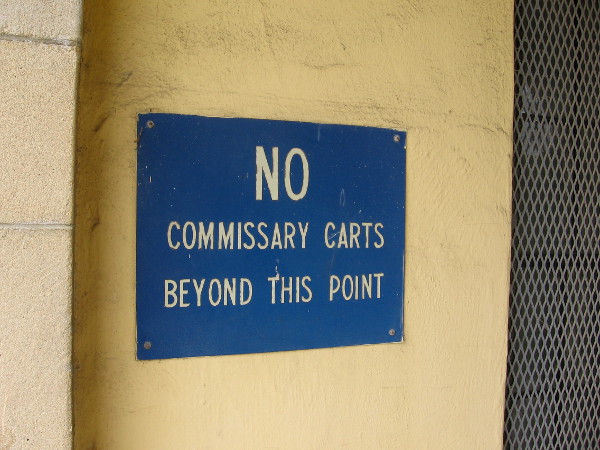
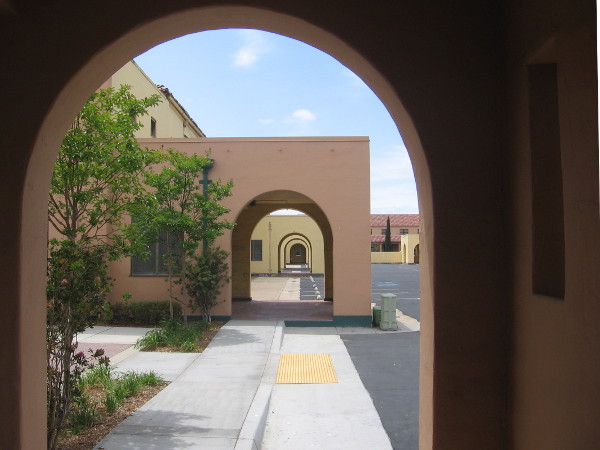
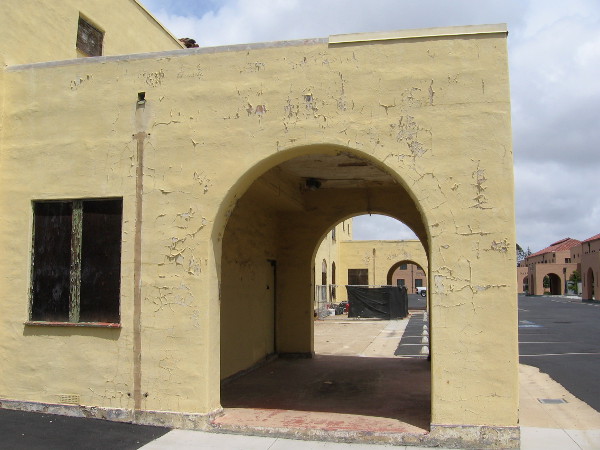
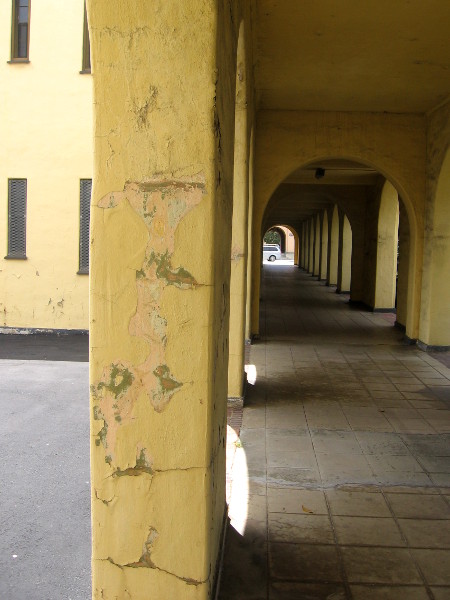
During my recent ramble around NTC Liberty Station, I did some nosing around. I took a few interesting photos of a lonely portion of the old Naval Training Center San Diego that has yet to be renovated. A row of old, weathered barracks along the North Promenade are vacant and locked shut. But if you listen closely, and use a little imagination, it might be possible to hear the echoing footsteps of naval recruits from decades ago.
The old Naval Training Center in Point Loma is a fascinating place with a significant place in United States history. The idea of training sailors in San Diego was first explored in 1915 by Assistant Secretary of the Navy, Franklin D. Roosevelt. When the complex was finally built in 1921, it was a modest affair, with several barracks, a mess hall, dispensary, and a few other buildings. It expanded over the years, and during World War II accommodated as many as 25,000 naval recruits. The center remained a vital resource of the United States Navy until 1997, when it was finally closed. Today around 50 original buildings along the beautiful promenade (which also includes the old base’s command center and parade ground) have been restored. Liberty Station has become a popular destination for shopping, recreation and a variety of cultural attractions.
In the following photos, you might note the architecture is mostly based on the Spanish Colonial Revival style, particularly the long arcades. The design of the Naval Training Center was directly influenced by buildings constructed for the 1915 Panama-California Exposition in San Diego’s Balboa Park.
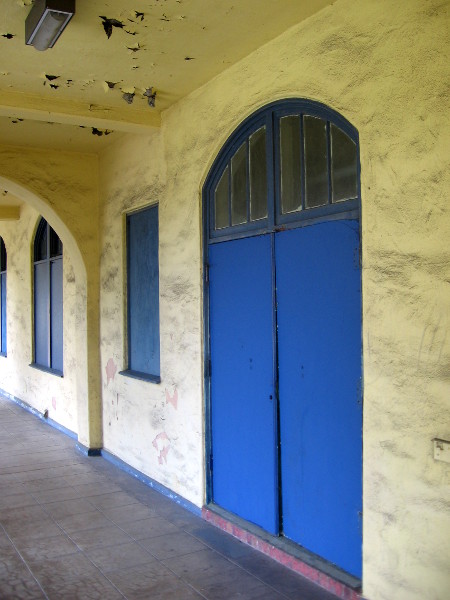
Looking along the length of long-abandoned Barracks 5 at NTC Liberty Station.Some old military base signs still can be seen at the historic Naval Training Center San Diego.Buildings 18 and 25 remain empty. Most structures in the complex are renovated and have commercial or nonprofit tenants.Simple geometry of functional architecture influenced by the Spanish Colonial Revival style.Peeling yellow paint on buildings where new United States Navy recruits used to train.There’s something strangely picturesque in this image of lonely decay.With a bit of imagination, one can picture newly recruited sailors moving and marching through the Naval Training Center years ago.This boldly painted blue door really catches the eye!Walking around NTC Liberty Station is like taking a small voyage back into history.
…
To enjoy future posts, you can “like” Cool San Diego Sights on Facebook or follow me on Twitter.
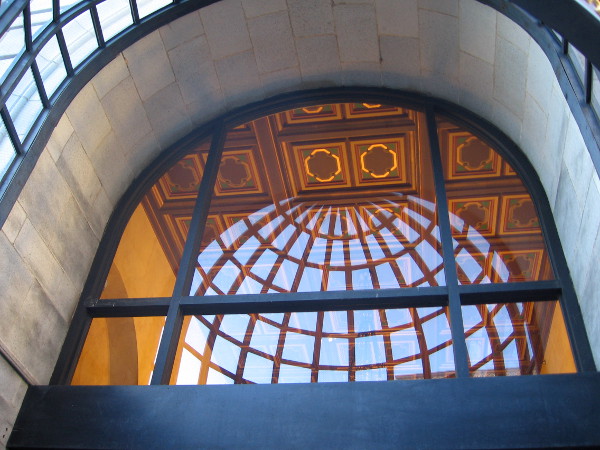
Looking up through the elegant building entrance at the lobby’s ceiling.
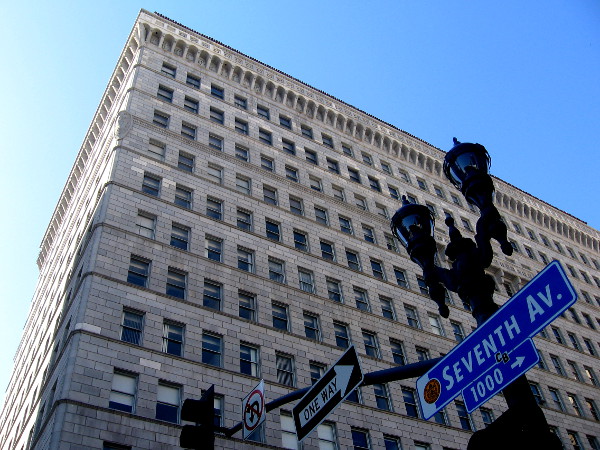
The John D. Spreckels Building (not to be confused with the Spreckels Theater Building also located on Broadway) is a cool sight that is definitely worth a few photographs. When it was completed in 1924, the stately 14-story building was the tallest in San Diego. Today, according to an article I read, there are plans to convert it into apartments.
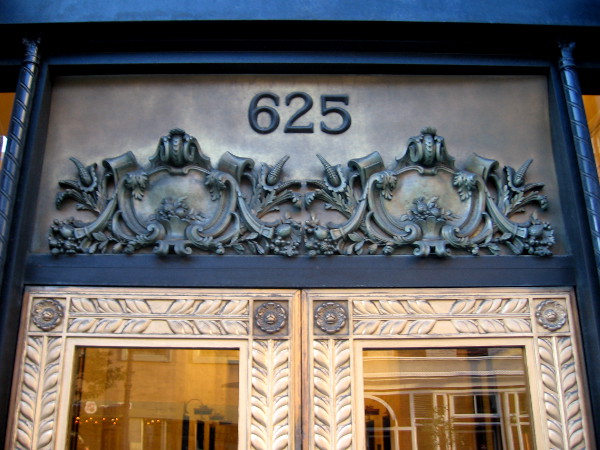
Built by sugar heir, entrepreneur and philanthropist John D. Spreckels, the historic building is one of only a few old high-rises that grace San Diego. The building isn’t terribly distinctive or flashy, but it certainly is monumental. Simple lines give it a feeling of grandeur and permanence. The small entrance, to my eye, is uncommonly elegant.
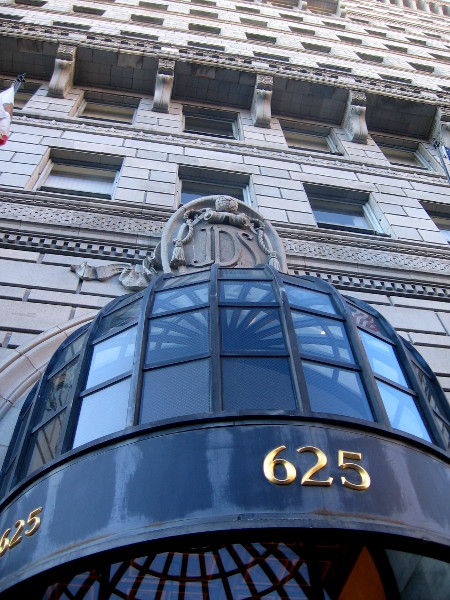
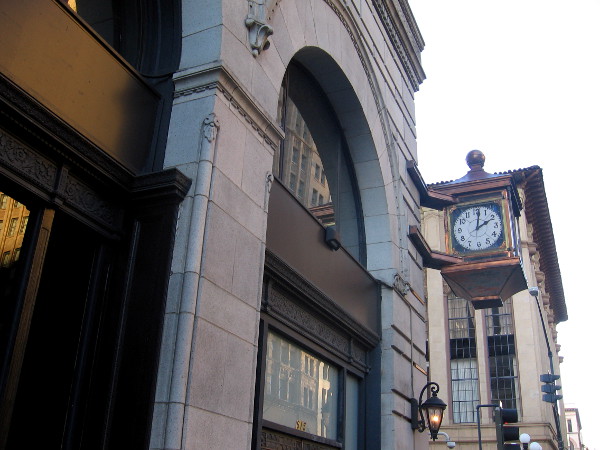
Front of the John D. Spreckels Building as seen from across Broadway.Pointing my camera upward for a cool photo.Beautiful ornamental artwork at the door of 625 Broadway in San Diego.Elegant old clock mounted on corner of the John D. Spreckels Building.This classy historic high-rise adds unique flavor to a shiny modern city.
…
To enjoy future posts, you can “like” Cool San Diego Sights on Facebook or follow me on Twitter.
Celebrating the 100th Anniversary of San Diego’s Santa Fe train depot!
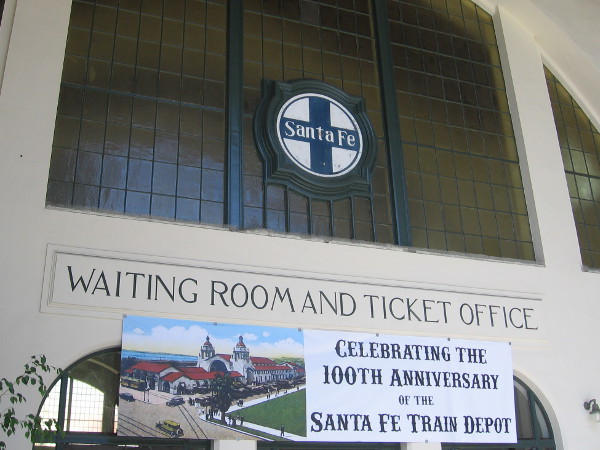
I was walking around today when I noticed a large banner hanging above the entrance of downtown’s Santa Fe Depot. This year the historic train station and San Diego landmark turns one hundred years old!
A friendly gentleman inside the waiting room at the information booth gave me a flyer about a special event tomorrow. The public is invited to attend a celebration of the historic depot’s centennial! The festivities take place between 11 am and 1 pm. The address of the Santa Fe Depot Union Station is 1050 Kettner Boulevard, just north of Broadway in downtown San Diego. I will be working, so I’ll probably miss it.
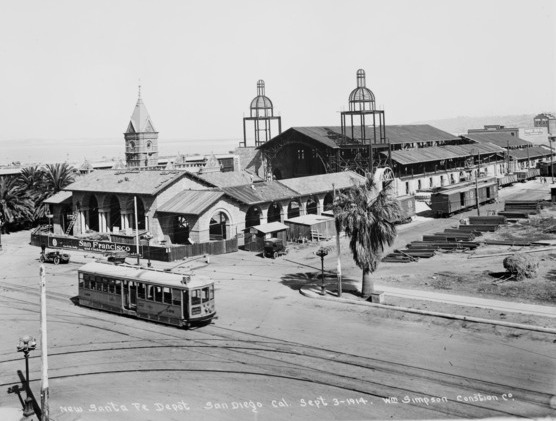
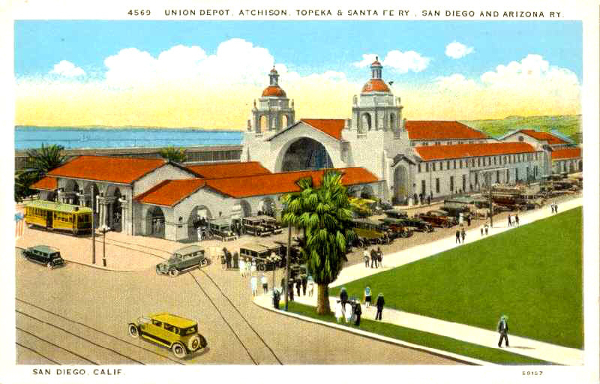
In the past I’d thought about posting cool old photos of the depot, but now seems the appropriate time! Check out the following photographs that I found on Wikimedia Commons.
First, a little background on the depot, with a few details taken from an informative handout…
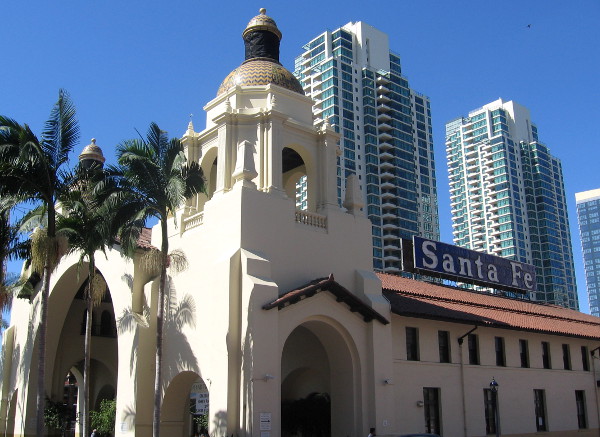
A fine example of the classic Spanish Mission-Colonial Revival style of architecture, including Moorish influences, the Santa Fe Depot is on the National Register of Historic Places. Today it lies at the southern terminus of the nation’s second-busiest Amtrak rail corridor. In addition to the Pacific Surfliner trains, it also serves as an important station for Coaster commuter trains and the San Diego Trolley.
Built by the Atchison, Topeka and Santa Fe Railway, it opened on March 7, 1915. It replaced the California Southern Railway’s smaller 1887 Victorian depot. The beautiful new depot was designed to welcome rail travelers visiting the 1915 Panama-California International Exposition, which was staged in expansive Balboa Park, just northeast of downtown. You can see dozens of fantastic photos of Balboa Park from a century ago here.
The huge Santa Fe Depot waiting room is 170 feet long and 55 feet wide. The varnished oak benches are lit by 16 bronze and glass chandeliers. You can see pics of today’s interior here.
Old photo on today’s information booth shows large waiting room as it was once configured, with ticket counters, checkroom and shops in wooden structures on the west side.Historical photograph of Santa Fe Depot’s steel construction, dated August 17, 1914.Santa Fe Railroad Station under construction beside the old 1887 Victorian depot, which stood on the other side of the tracks. Photo dated September 3, 1914.Photo of the Victorian depot tower being demolished in 1915. A locomotive pulled the old tower over to great public fanfare.Color postcard circa 1920 features inviting image of San Diego Union Depot.The handsome Santa Fe Depot as it appears today, with modern high-rise buildings nearby.
…
To enjoy future posts, you can “like” Cool San Diego Sights on Facebook, or follow me on Twitter.
At the Little Italy trolley station, a very strange shadow climbs up the wall.
Early this morning, shortly after sunrise, as I waited for the San Diego Trolley at the Little Italy station, I was confronted by a momentary mystery. A very odd spidery shadow was climbing up the wall on the other side of the tracks.
I walked toward the shadow and turned about. A few photos show the mystery solved!
Construction crew is building a new parking garage next to busy trolley station.
The rising parking garage, at the corner of Cedar Street and Kettner Boulevard, will provide 645 spaces for those who work at the nearby County Administration Center, in addition to paid public parking for visitors to Little Italy. The project is supposed to be finished this summer.
The ten-level parking structure will serve county employees who work nearby.Silhouette of worker as morning sun lights the downtown San Diego sky.
…
To enjoy future posts, you can “like” Cool San Diego Sights on Facebook or follow me on Twitter.
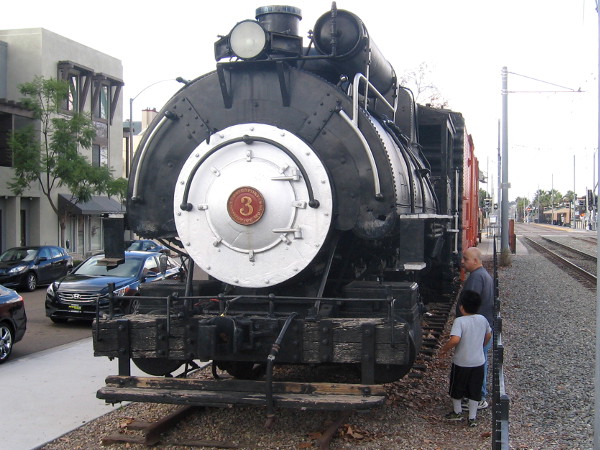
Dad and son check out old steam locomotive on display at La Mesa Depot Museum.
I’ve driven past the La Mesa Depot Museum many times over the years, but have never stopped to check it out. Today I remedied that very unfortunate situation!
Here’s a ton of cool pics. The small display train and historic railroad depot are found along Spring Street near the center of La Mesa, in San Diego’s sunny East County. I walked from south to north with my camera.
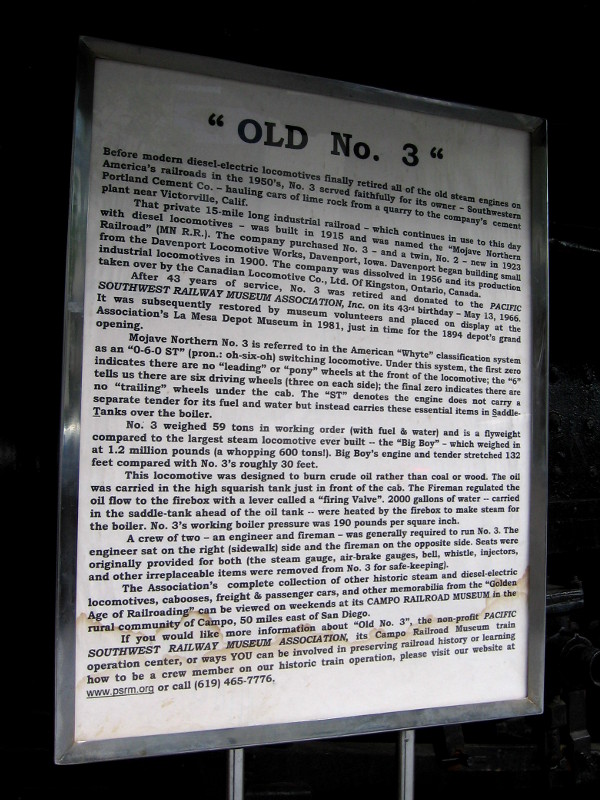
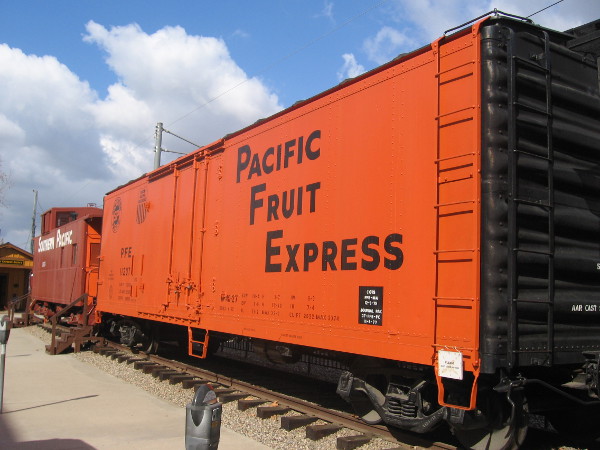
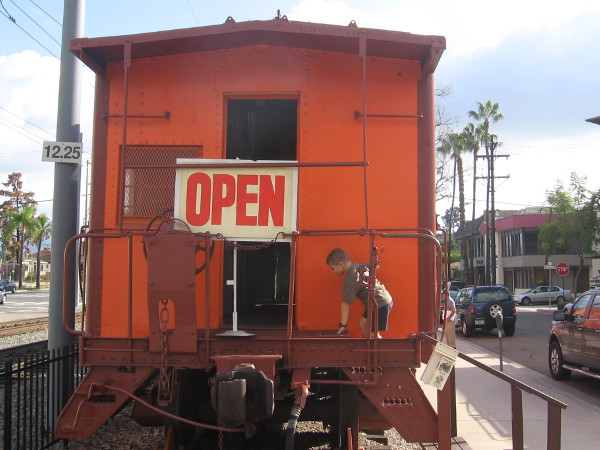
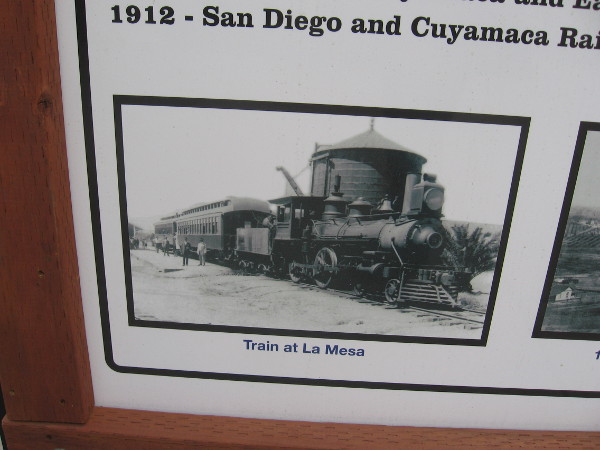
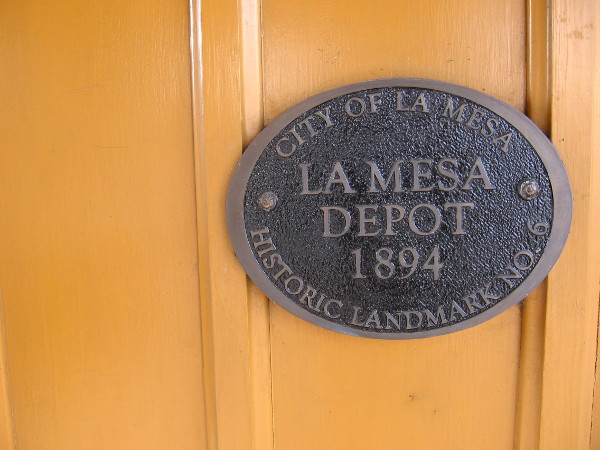
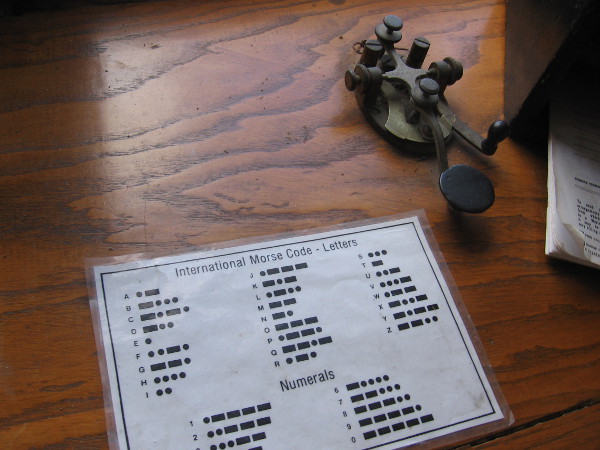
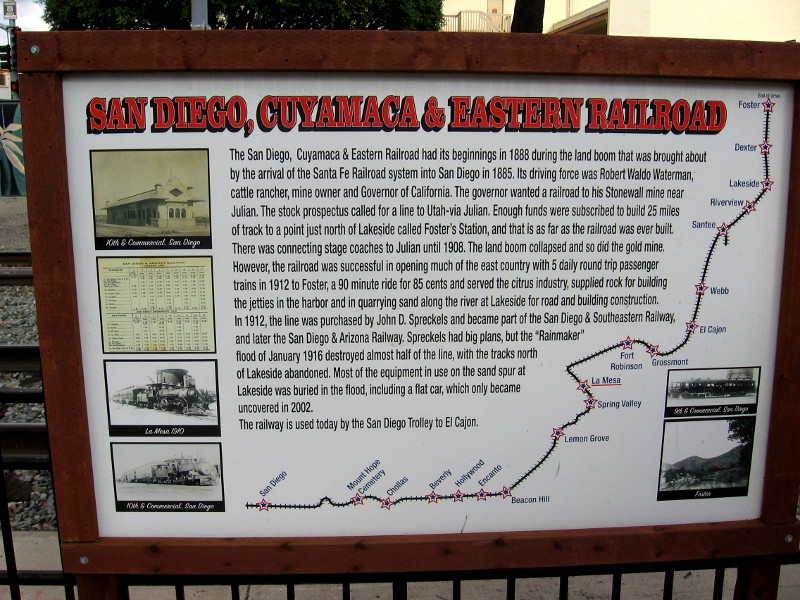
A friendly volunteer told me a little bit about the locomotive, reefer (refrigerator) car and caboose on exhibit, plus facts about the old La Mesa depot and San Diego and Cuyamaca Eastern Railway line. The depot is La Mesa’s oldest building and the only surviving San Diego and Cuyamaca Railway Station. Over the years it has experienced a colorful history, serving as an antique store and a worm farm! Please refer to the interesting signs, and my captions. Hopefully you get an idea of how awesome this place is!
The La Mesa Depot Museum is operated by the Pacific Southwest Railway Museum, which displays many old trains in Campo, an hour’s drive east of San Diego near Mexico. I went there with my family when I was very young and took a fun train ride. I plan on going again one day!
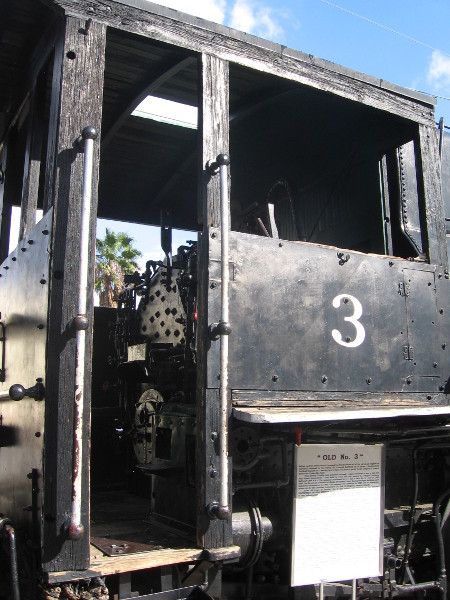
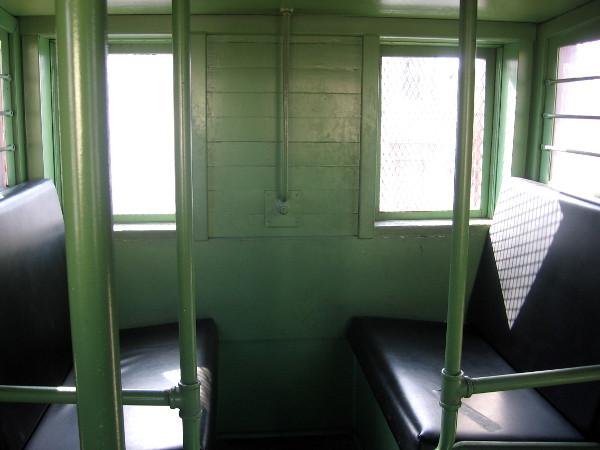
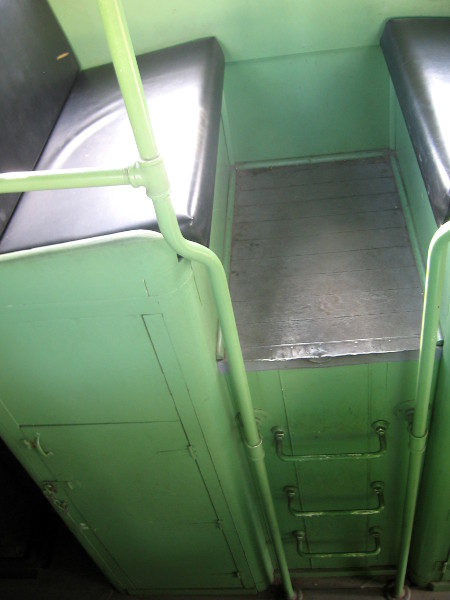
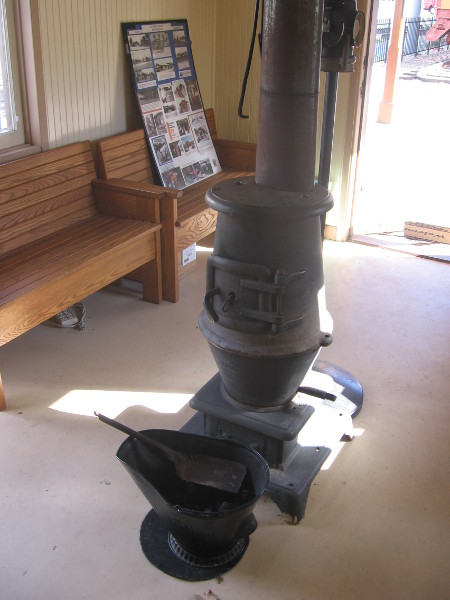
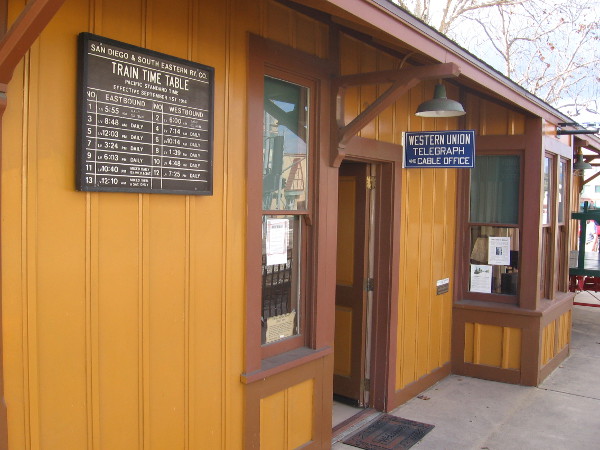
Locomotive was donated after 43 years of service to the Pacific Southwest Railway Museum Association.Looking up into door of steam locomotive Mojave Northern Railroad #3.Old No. 3 originally hauled lime from a quarry near Victorville, California.Part of the complex machinery and controls in the steam locomotive’s cab.Pacific Fruit Express reefer car on display at old train depot in La Mesa, California.Southern Pacific Railroad caboose can be boarded free by visitors on Saturdays, 1-4 pm.I saw a bunch of people during my short visit. There were many excited kids!Entering the caboose, to check out what life was like working on the railroad.The conductor had high windows to see around the train during operation.A freight train’s conductor or crew could sit up here to see in every direction.That’s quite a climb, even for a tall guy like me!The small La Mesa depot sits near tracks now used by the San Diego Trolley Orange Line.The depot opened in 1894, and this 44-star flag would’ve flown above it.Information sign outlines the early history of La Mesa’s train depot.Historical photograph of a train stopping at La Mesa.In the early 20th century the depot was sold and moved on various occasions.McKeen Car at the La Mesa Depot.This very small building contains lots of cool stuff!City of La Mesa Historic Landmark No. 6 on side of 1894 train depot.Ticket office in depot contains various old telephones and a telegraph.The telegraph key still works!Telegraphic messages were received here!Looking out through ticket window at the tiny train depot waiting room.In one corner of the office is an old-fashioned manual typewriter.This old wood stove still works and provides a lot of heat!Signs bring to life the old train time table and Western Union office.An old railway hand cart for hauling freight or luggage.Sign tells complex story of the San Diego, Cuyamaca and Eastern Railroad.Here comes the San Diego Trolley, approaching the nearby La Mesa Boulevard station.The La Mesa Depot Museum is a fun place to visit on a Saturday afternoon!
…
To enjoy future posts, you can “like” Cool San Diego Sights on Facebook or follow me on Twitter.
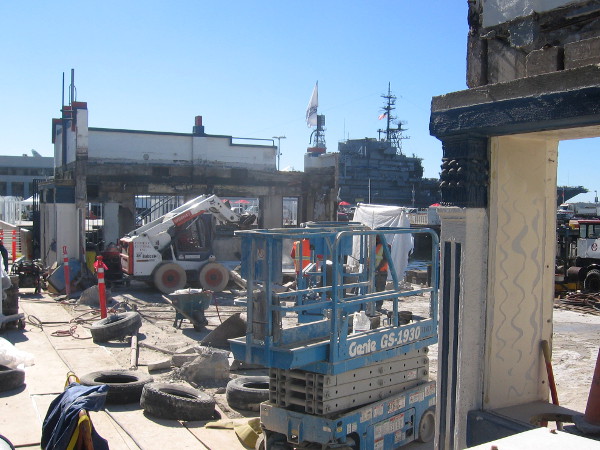
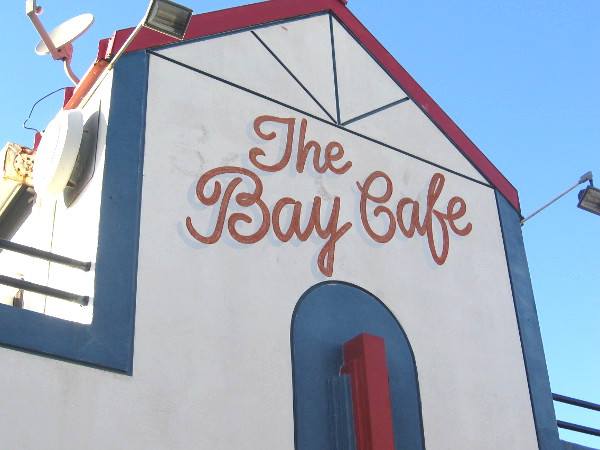
The Bay Cafe is making way for an observation platform on San Diego Bay.
The Bay Cafe is almost gone.
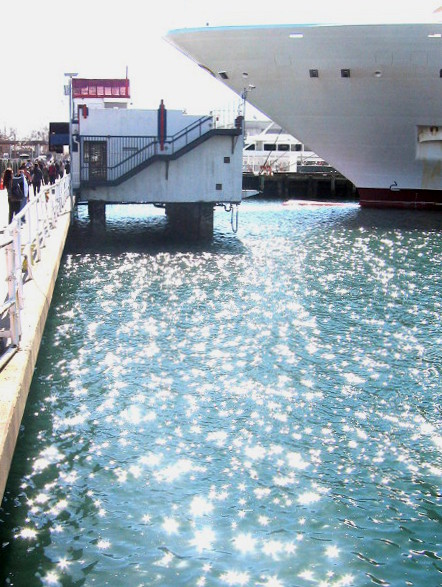
Many years ago, I loved to grab some food in the small waterfront cafe and bring it up onto the rooftop. From a table beneath an umbrella, I’d gaze out at the sparkling water. I’d observe passing sailboats, people on the Broadway Pier, and cruise ships docked at the nearby terminal. When two or more huge cruise ships were in port, I’d watch with interest as the departing Coronado ferry and harbor tour boats navigated the narrow space between them. In those days, the Bay Cafe also served as an embarkation hub for San Diego Harbor Excursion, now called Flagship. A ramp from inside the deli plunged down to a floating dock, where a gift shop was housed in a special boat. On this small dock a harbor cruise photographer asked guests to pose by a life preserver.
Up on the roof, if I wanted a change of view, I’d grab another table where I could gaze back toward downtown and watch tourists flow along Harbor Drive. There were almost always several empty tables. Few people seemed to realize the rooftop was open.
The Bay Cafe’s roof was also used for many years by broadcasters covering parades down Harbor Drive. From up there you could see everything.
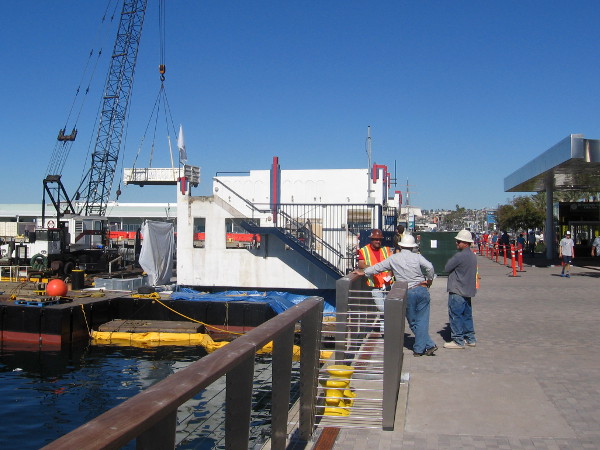
My walk this morning brought back those memories. And a bit of sadness. The Bay Cafe is being demolished as I type these very words. The structure will be removed, but the concrete pad and pilings will remain, as part of an observation platform jutting over the water. It’s just one small part of the Embarcadero’s recent renovation. I’m sure the change will be great. I believe there are supposed to be benches where folks can just sit and enjoy the views. If there are, I’ll surely enjoy them. But time and progress march on. The Bay Cafe is almost just a memory.
Demolition of the old waterfront cafe and harbor tour embarkation hub is underway.Many years ago dining could be enjoyed on the sunny roof, with views of the water, sailboats and downtown skyscrapers.Improvements on the Embarcadero consign this wonderful place to memory.
…
To enjoy future posts, you can “like” Cool San Diego Sights on Facebook or follow me on Twitter.
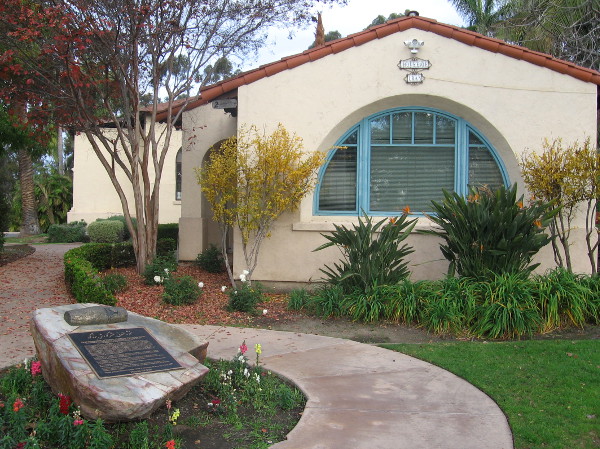
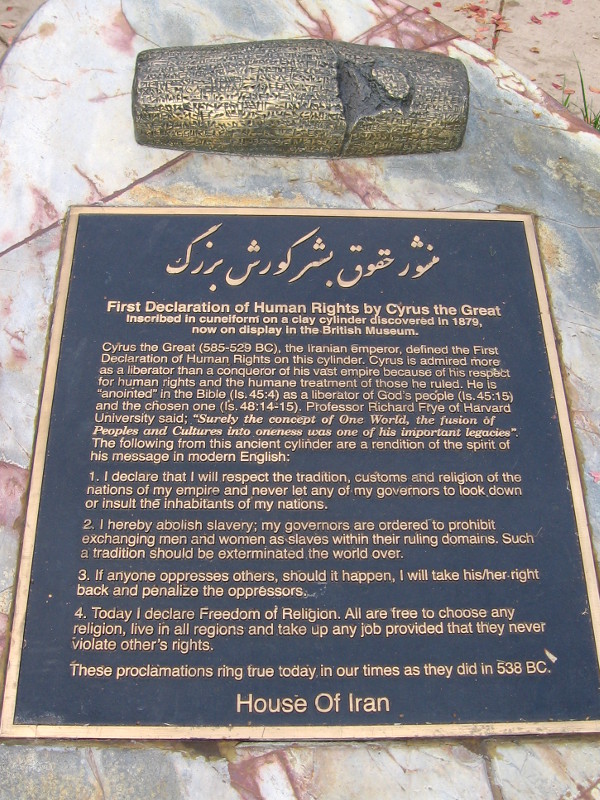
House of Iran at Balboa Park’s International Cottages and a proclamation supporting human liberty.
When I go for a pleasant stroll I’m often lazy. I’ll note interesting things from afar, but fail to walk up for a closer look.
Recently I took a good close look at a large plaque located conspicuously near the House of Iran in Balboa Park. The House of Iran is one of the couple dozen cottages built for the 1935 California Pacific International Exposition. The furnishings in the colorful little buildings exemplify life in their respective countries. Many members of each “house” trace their ancestry to the old country.
The shining plaque lies in a bed of flowers. I approached it and paused to read. It’s dedicated to the First Declaration of Human Rights by Cyrus the Great.
According to the plaque Cyrus the Great (585-529 BC) was an enlightened Iranian emperor. Unlike many rulers of old, he upheld human dignity throughout his vast empire and treated his subjects humanely. He opposed slavery and supported the freedom of religion.
This ancient declaration of human rights was inscribed in cuneiform on a clay cylinder, which is now on display in the British Museum.
Plaque with translation of the First Declaration of Human Rights by Cyrus the Great.
…
To enjoy future posts, you can “like” Cool San Diego Sights on Facebook or follow me on Twitter.
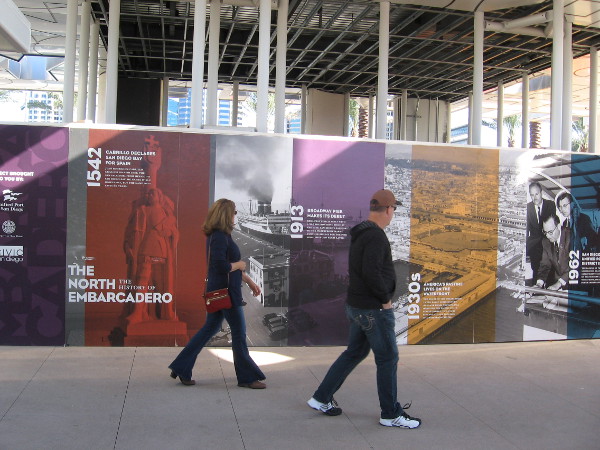
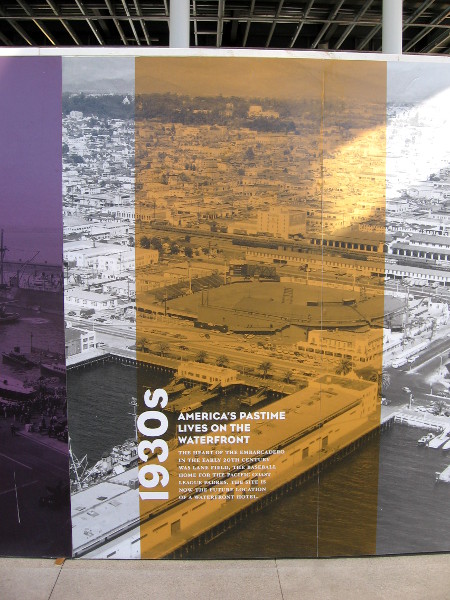
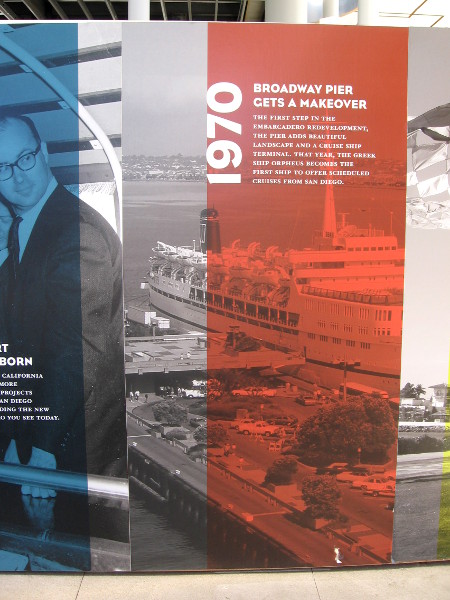
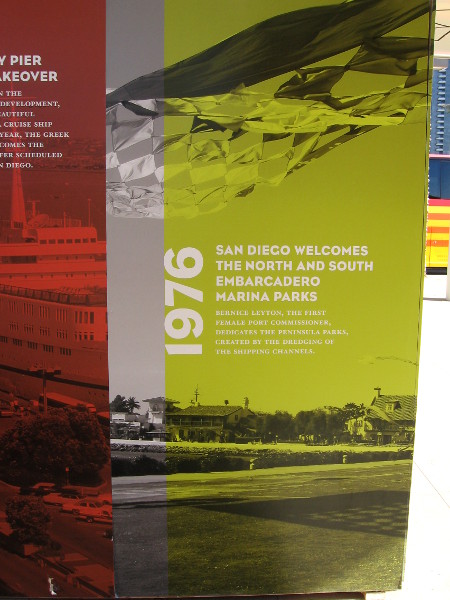
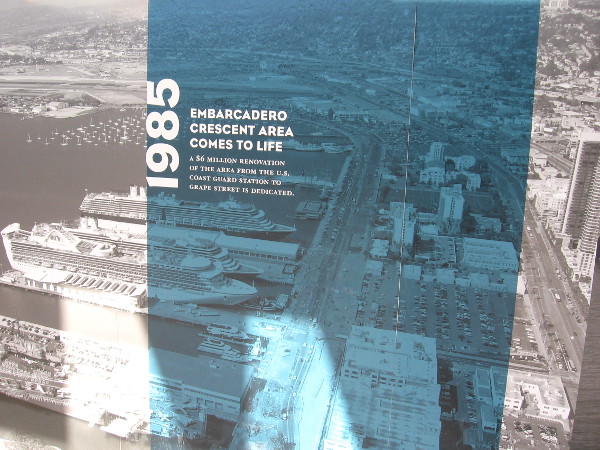
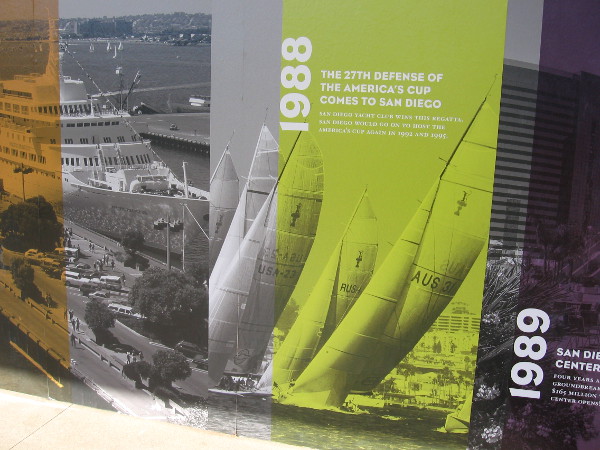
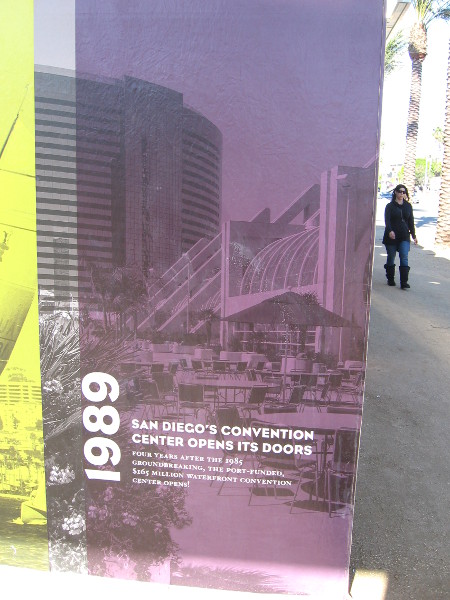
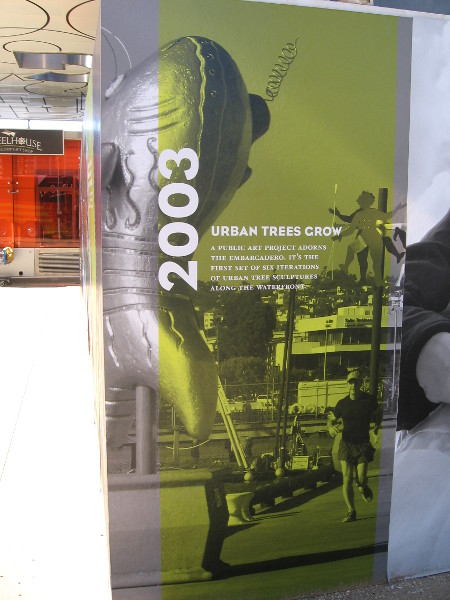
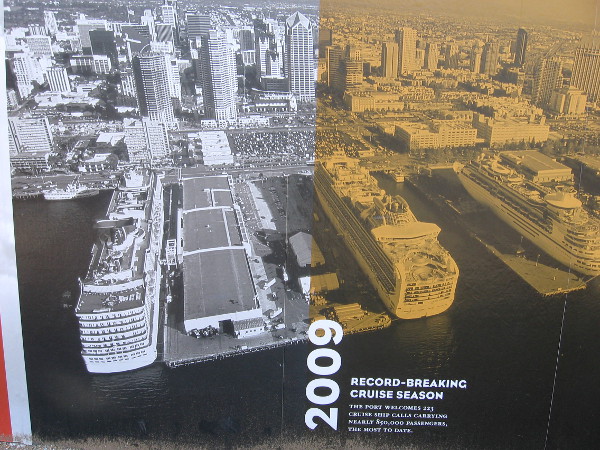
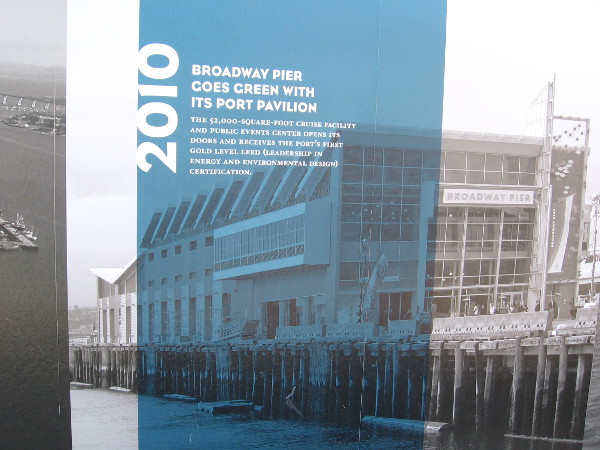
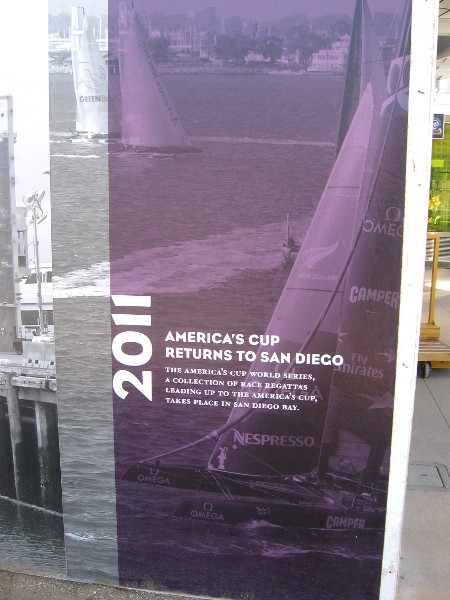
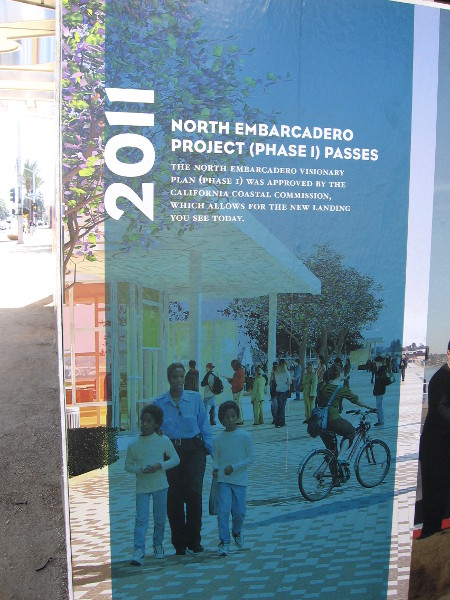
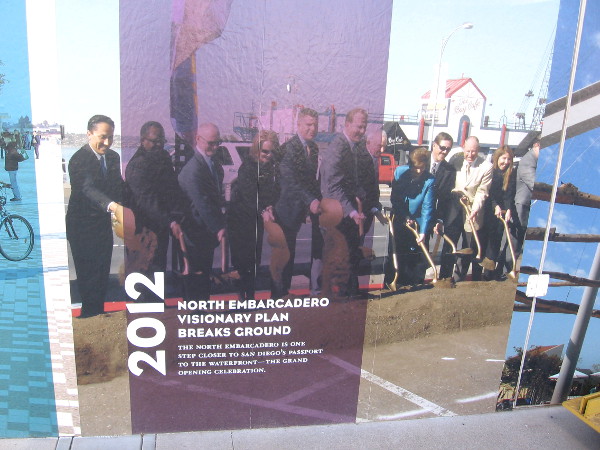
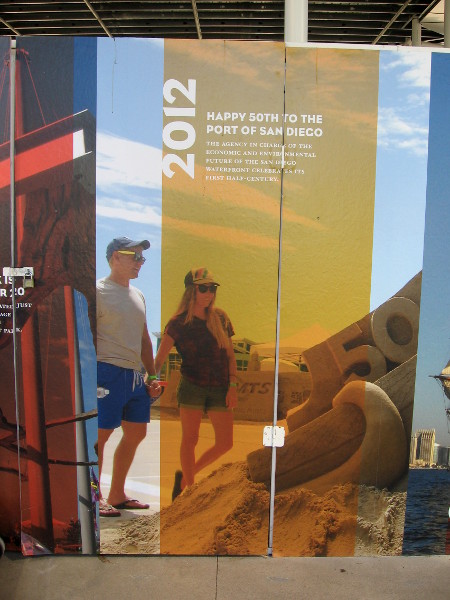
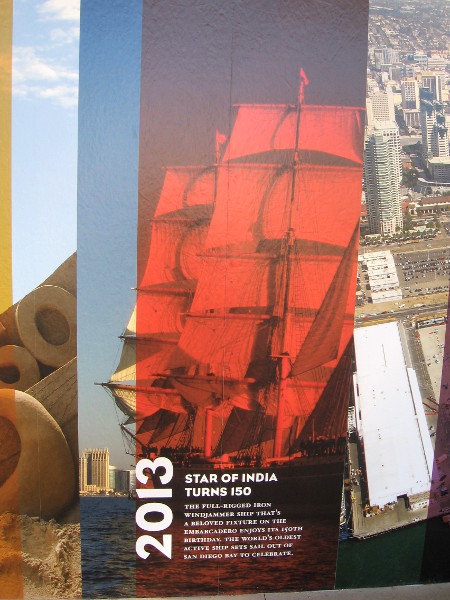
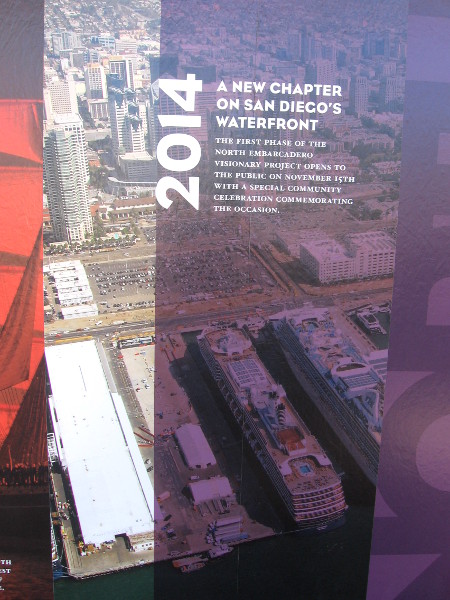
Images around a new pavilion near Broadway Pier show history of the Embarcadero.
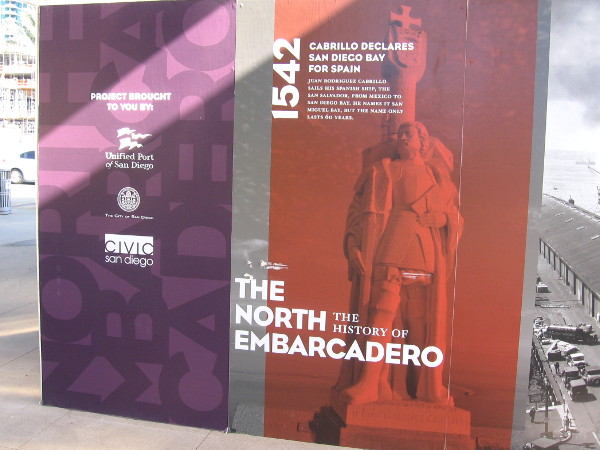
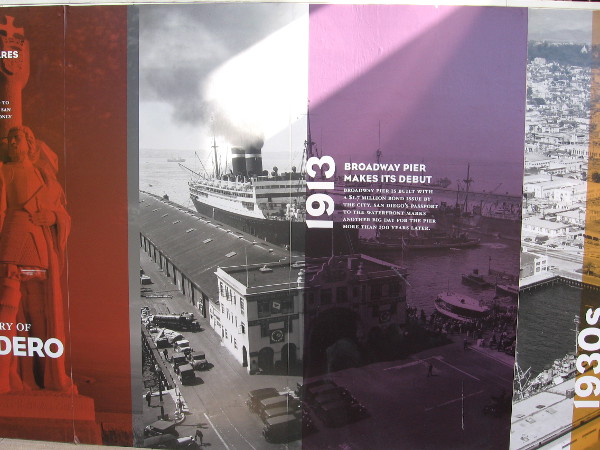
San Diego’s Embarcadero has undergone some major renovations. One of the new pavilions still under construction near the Broadway Pier features a large display that provides a timeline of the area’s history. Notable developments along the waterfront through the passing years are documented with historical photographs.
While many of these images concern more recent events, it still makes a fascinating visual time capsule. Here are some pics that I took!
1542: Juan Rodriguez Cabrillo claims San Diego Bay for Spain. He named it San Miguel Bay.1913: San Diego’s Broadway Pier makes its debut. It certainly looks different today!1930s: Baseball played across street. Lane Field was home of Pacific Coast League Padres.1962: San Diego Unified Port District is established.1970: Broadway Pier gets a makeover. A cruise ship terminal is added.1976: North and South Embarcadero Marina Parks are dedicated.1980: Seaport Village becomes the newest San Diego attraction.1985: North Embarcadero’s Crescent area renovated.1985: Princess Cruises bases its “Love Boat” in San Diego.1988: San Diego Yacht Club successfully defends America’s Cup.1989: San Diego Convention Center opens.2003: First of six Urban Trees art exhibits along the Embarcadero.2007: Seward Johnson’s Unconditional Surrender statue goes on display near USS Midway.2009: A record-breaking cruise ship season!2010: Port Pavilion opens on Broadway Pier. It’s been over four years already? Time flies!2011: America’s Cup World Series regatta takes place on San Diego Bay.2011: North Embarcadero Project (Phase 1) passes.2012: North Embarcadero Visionary Plan breaks ground nearby.2012: Ruocco Park immediately north of Seaport Village is dedicated.2012: Port of San Diego is 50 years old.2013: San Diego’s historic Star of India tall ship turns 150 years old.2014: Lots of cool waterfront improvements opened, including this pavilion!
…
To enjoy future posts, you can “like” Cool San Diego Sights on Facebook, or follow me on Twitter.




































 Cool San Diego Sights!