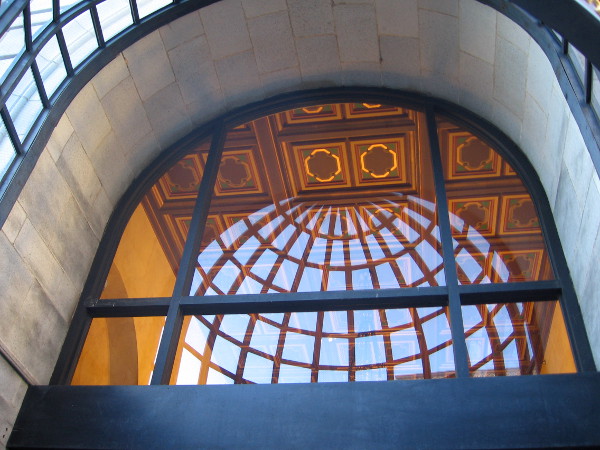
Looking up through the elegant building entrance at the lobby’s ceiling.
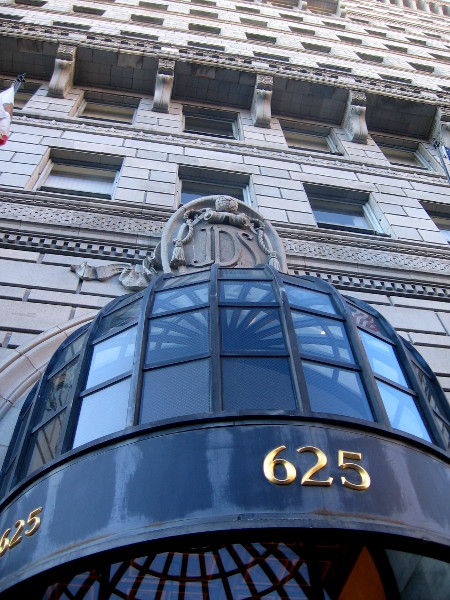
The John D. Spreckels Building (not to be confused with the Spreckels Theater Building also located on Broadway) is a cool sight that is definitely worth a few photographs. When it was completed in 1924, the stately 14-story building was the tallest in San Diego. Today, according to an article I read, there are plans to convert it into apartments.
Built by sugar heir, entrepreneur and philanthropist John D. Spreckels, the historic building is one of only a few old high-rises that grace San Diego. The building isn’t terribly distinctive or flashy, but it certainly is monumental. Simple lines give it a feeling of grandeur and permanence. The small entrance, to my eye, is uncommonly elegant.
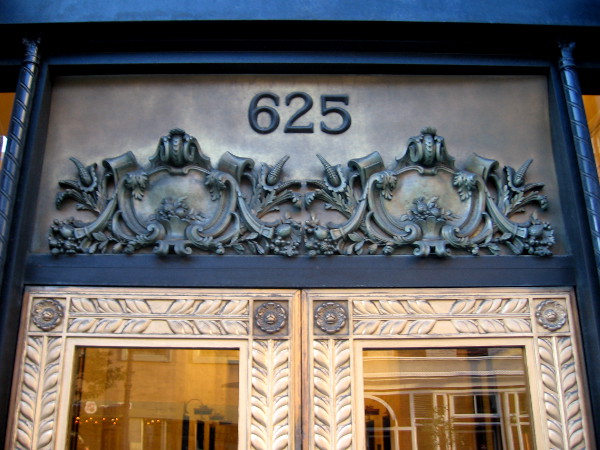
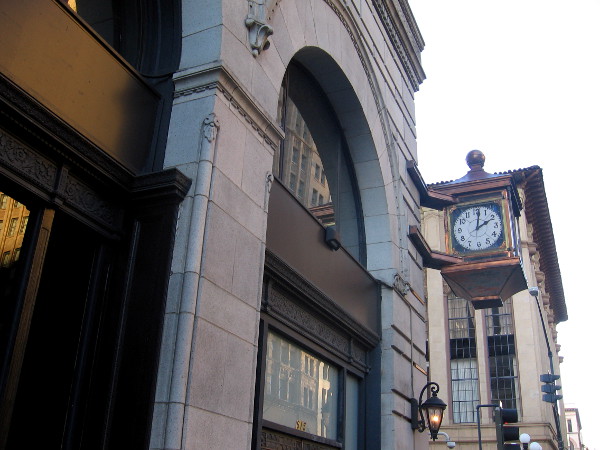
Front of the John D. Spreckels Building as seen from across Broadway.Pointing my camera upward for a cool photo.Beautiful ornamental artwork at the door of 625 Broadway in San Diego.Elegant old clock mounted on corner of the John D. Spreckels Building.This classy historic high-rise adds unique flavor to a shiny modern city.
…
To enjoy future posts, you can “like” Cool San Diego Sights on Facebook or follow me on Twitter.
A tiny barn and rabbits in a narrow garden, located between the sidewalk and a local acupuncture and wellness center.
I recently walked through Bankers Hill, a historic neighborhood just north of downtown San Diego. During my small adventure I got a few interesting photos on and around Olive Street. Like the sights in any city, they form a mixture. Here’s a flavor of Olive in the San Diego cocktail!
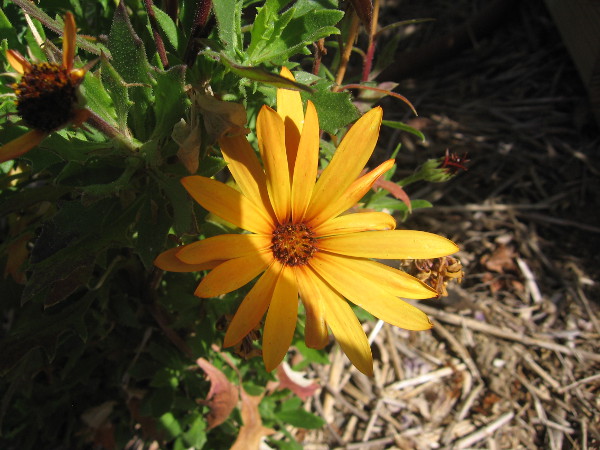
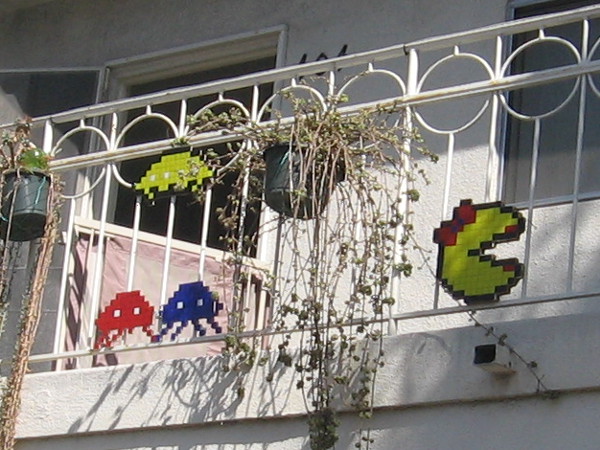
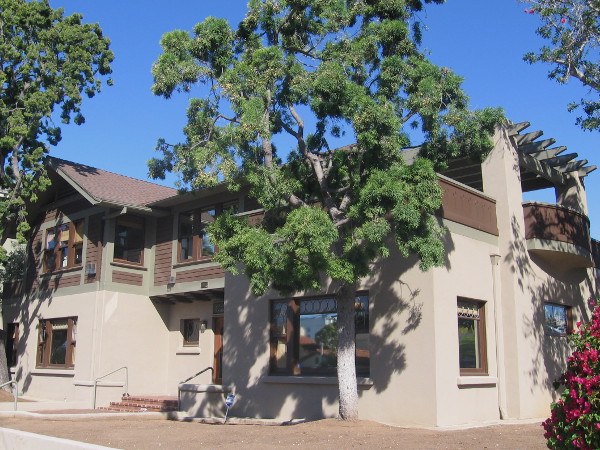
Flower at the HERBIN Community Garden Project, among plots where many herbs are grown.Ms. Pacman, Space Invaders and other video game legends hang out on a porch railing.The Amy Strong House, built in 1906 on Olive Street by an enterprising San Diego dressmaker, or couturier.Amy Strong lived here until 1912. The house is in the early 20th century Craftsman architectural style.A few unusual features anticipated the highly eccentric Amy Strong Castle at Mt. Woodson, which she built years later.Future site of Olive Street Park. This small plot of land for years has been the object of contention, as you might have seen on KUSI News’ Turko Files.Huge medical office building between Fifth and Sixth Avenue just north of Olive being demolished.Cool art hangs on residential building at corner of Fourth and Olive.
…
To enjoy future posts, you can “like” Cool San Diego Sights on Facebook or follow me on Twitter.
The Casa del Rey Moro garden is a small gem in Balboa Park.
In the 1920s, prominent San Diego architect Richard Requa visited Europe. During his extensive tour, he carefully observed a Moorish king’s garden in Ronda, Spain. A book that he later authored stated: “In my travels about the world, I had found three gardens of outstanding interest and beauty… The finest of these is in a small town in southern Spain called Ronda. Viewing it for the first time, there came instantly to mind the spontaneous exclamation, ‘I hope to die before I see anything more lovely.'”
Inspired by what he’d seen, Requa designed the Casa del Rey Moro garden (House of the Moorish King) for the 1935 California Pacific International Exposition in San Diego’s Balboa Park. In 1997 the garden and adjacent House of Hospitality were rededicated after a major renovation. The garden, today a popular wedding spot, includes a replica of the wishing well in the Guadalajara Museum of Gardens.
Balboa Park is an enormous place full of competing attractions. It’s strange how I always feel compelled to walk through the Casa del Rey Moro garden!
View from a House of Hospitality balcony of The Prado restaurant’s outdoor seating near the garden.A wishing well frames two elegant, classic fountains.Beautiful elements are reproduced from a Moorish garden in Ronda, Spain.A close up photo of one picturesque fountain.Visitors read about the interesting history of the Casa del Rey Moro garden.“In my travels about the world, I have found three gardens of outstanding interest and beauty…”One can see why this venue is extremely popular for weddings.
…
To enjoy future posts, you can “like” Cool San Diego Sights on Facebook or follow me on Twitter.
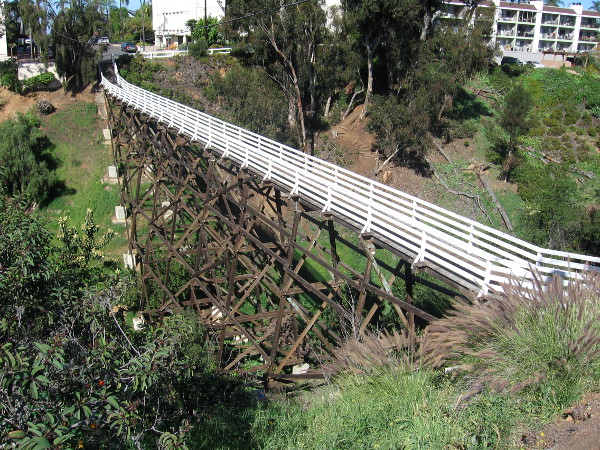
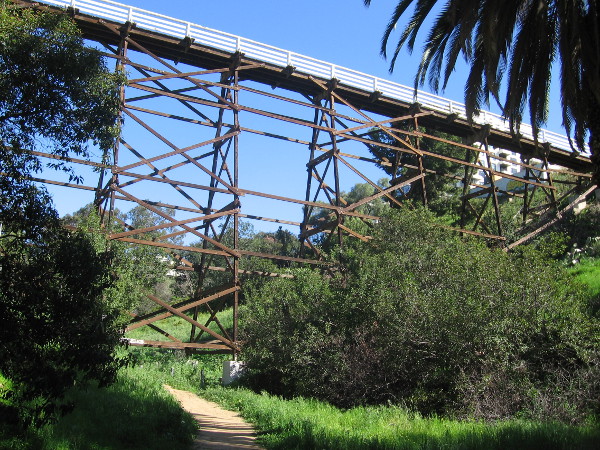
View of the Quince Street Trestle from a spot on Fourth Avenue.
Many nature hikes can be enjoyed in Balboa Park. But there’s another beautiful, quiet hike through date palms and eucalyptus trees and bright spring flowers that anyone can enjoy just a few blocks north of downtown San Diego.
The Maple Canyon Trail stretches from a trailhead near Quince Street and Third Avenue on Bankers Hill to a second trailhead at Maple Street and Dove Street in Middletown. It often seems that the only people who use the trail are dog walkers and joggers who live nearby. Those who haven’t hiked this easy trail are missing out on a unique experience. The Maple Canyon Trail passes under two cool historic bridges!
The Quince Street Trestle is a visually interesting wooden footbridge that was built in 1905. Back then streetcars ran up Fourth Avenue, and the trestle allowed pedestrians to cross the steep canyon from the west. A quarter century ago the bridge, weakened by termites and rot, was closed and almost demolished. Local residents took up the cause of saving the bridge, which was finally declared a historic site.
The Maple Canyon Trail also passes beneath the impressive First Avenue Bridge. The arched steel bridge was built in 1931 and was originally known as the Peoples Bridge. Its astonishing height above the trail is a reminder of San Diego’s unique geology. Southern California’s coastal region is crisscrossed in many places by deep, narrow canyons, which often serve as undeveloped habitat for native species of plant and animal life.
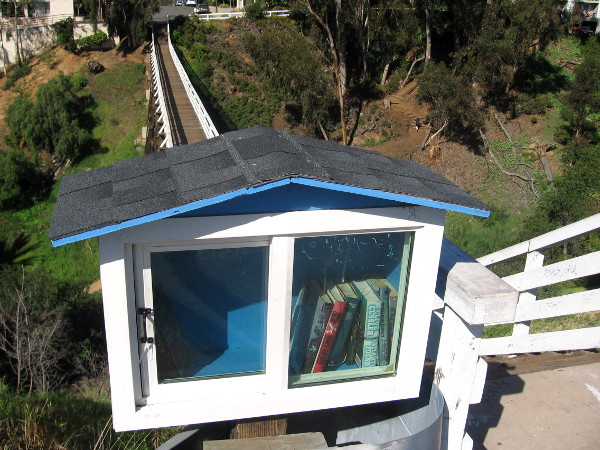
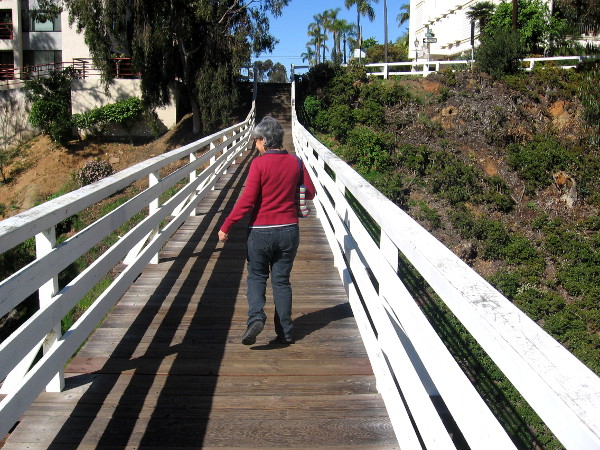
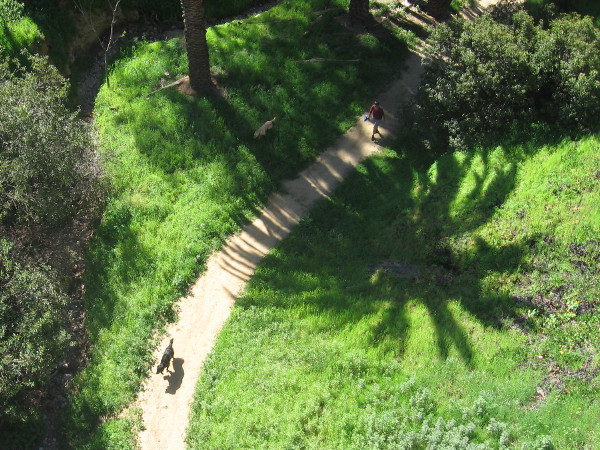
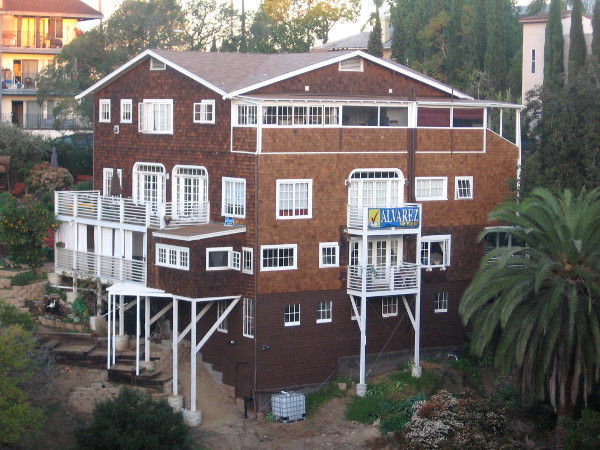
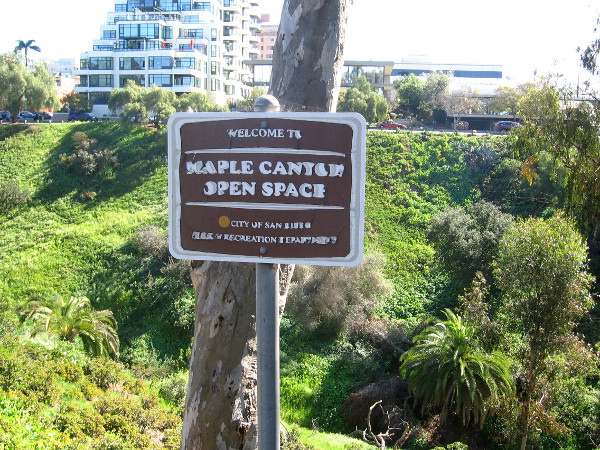
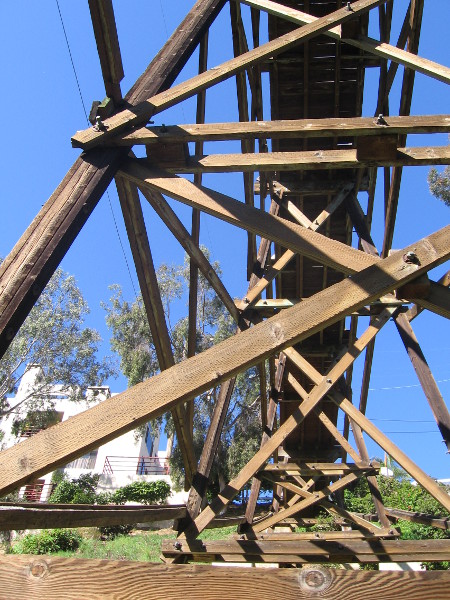
Small cabinet at end of footbridge contains books that people can freely borrow!Walking across the very cool historic trestle on Bankers Hill.Looking down from trestle at dogs and walker passing through the canyon below.This super cool condo is located near the Third Avenue trailhead.Maple Canyon Open Space sign near trailhead on Bankers Hill.Looking up at the wooden footbridge from the quiet footpath on a sunny day.Wood beams compose the high trestle.Grass and spring flowers line the Maple Canyon Trail.Some interesting houses can be seen up on the hillsides.Here comes the First Avenue Bridge beyond a eucalyptus tree.This elegant old steel bridge has very limited motor traffic.
…
To enjoy future posts, you can “like” Cool San Diego Sights on Facebook or follow me on Twitter.
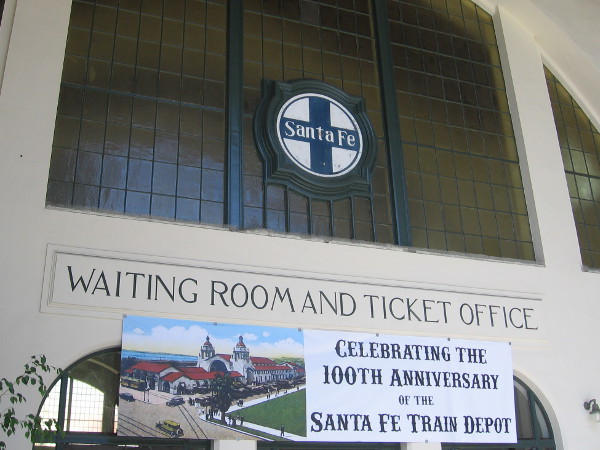
Celebrating the 100th Anniversary of San Diego’s Santa Fe train depot!
I was walking around today when I noticed a large banner hanging above the entrance of downtown’s Santa Fe Depot. This year the historic train station and San Diego landmark turns one hundred years old!
A friendly gentleman inside the waiting room at the information booth gave me a flyer about a special event tomorrow. The public is invited to attend a celebration of the historic depot’s centennial! The festivities take place between 11 am and 1 pm. The address of the Santa Fe Depot Union Station is 1050 Kettner Boulevard, just north of Broadway in downtown San Diego. I will be working, so I’ll probably miss it.
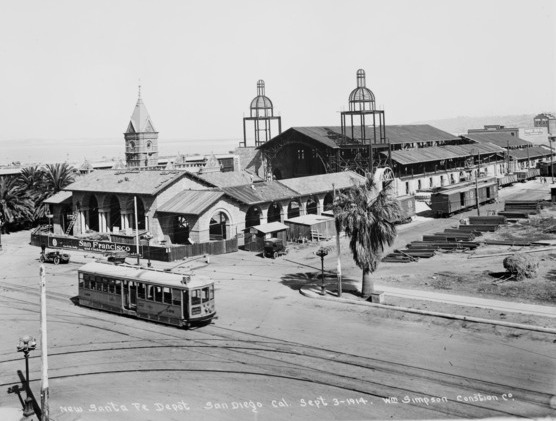
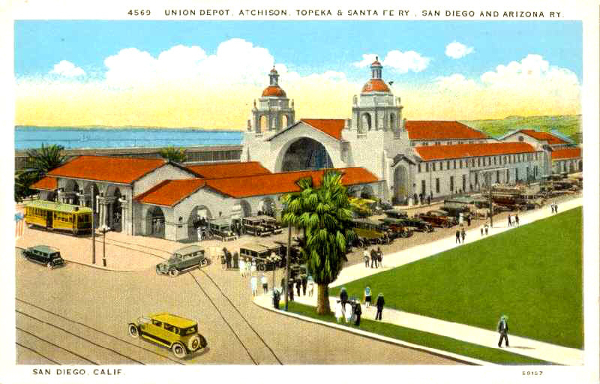
In the past I’d thought about posting cool old photos of the depot, but now seems the appropriate time! Check out the following photographs that I found on Wikimedia Commons.
First, a little background on the depot, with a few details taken from an informative handout…
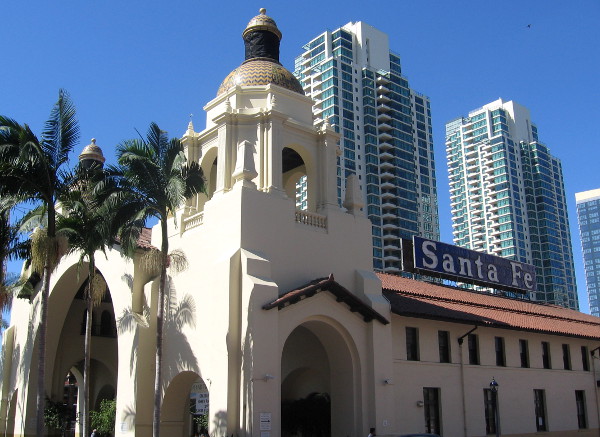
A fine example of the classic Spanish Mission-Colonial Revival style of architecture, including Moorish influences, the Santa Fe Depot is on the National Register of Historic Places. Today it lies at the southern terminus of the nation’s second-busiest Amtrak rail corridor. In addition to the Pacific Surfliner trains, it also serves as an important station for Coaster commuter trains and the San Diego Trolley.
Built by the Atchison, Topeka and Santa Fe Railway, it opened on March 7, 1915. It replaced the California Southern Railway’s smaller 1887 Victorian depot. The beautiful new depot was designed to welcome rail travelers visiting the 1915 Panama-California International Exposition, which was staged in expansive Balboa Park, just northeast of downtown. You can see dozens of fantastic photos of Balboa Park from a century ago here.
The huge Santa Fe Depot waiting room is 170 feet long and 55 feet wide. The varnished oak benches are lit by 16 bronze and glass chandeliers. You can see pics of today’s interior here.
Old photo on today’s information booth shows large waiting room as it was once configured, with ticket counters, checkroom and shops in wooden structures on the west side.Historical photograph of Santa Fe Depot’s steel construction, dated August 17, 1914.Santa Fe Railroad Station under construction beside the old 1887 Victorian depot, which stood on the other side of the tracks. Photo dated September 3, 1914.Photo of the Victorian depot tower being demolished in 1915. A locomotive pulled the old tower over to great public fanfare.Color postcard circa 1920 features inviting image of San Diego Union Depot.The handsome Santa Fe Depot as it appears today, with modern high-rise buildings nearby.
…
To enjoy future posts, you can “like” Cool San Diego Sights on Facebook, or follow me on Twitter.
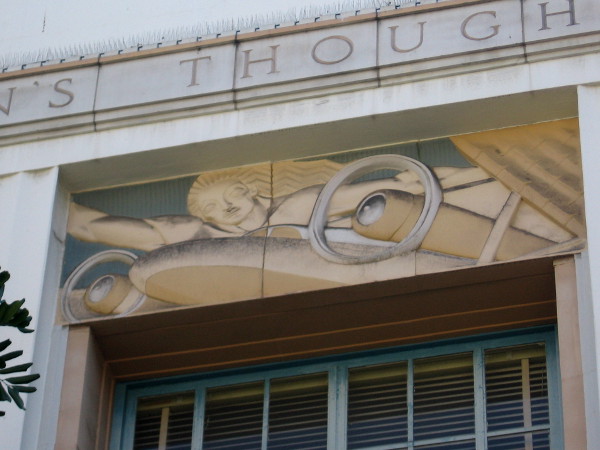
Art Deco relief work shows female flying above propellers of airplane.
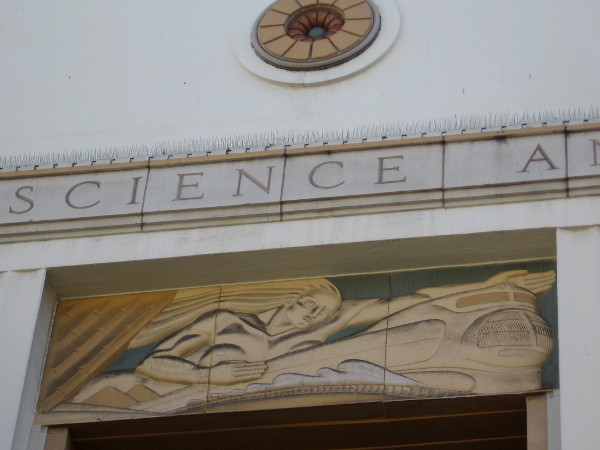
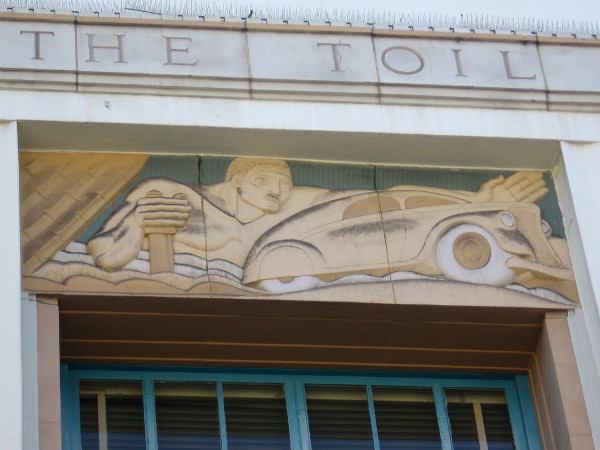
“Through science and the toil of patient men, the nation’s thought traverses land and air and sea.” Those are the words inscribed along the top of downtown San Diego’s Post Office, on E Street between 8th and 9th Avenue. Beneath the words are nine terra-cotta panels created by Archibald Garner in 1937. The Art Deco images include a car, train, ship and airplane, the means by which mail has been delivered over many decades, transmitting the written word across the nation and around the world.
Titled “Transportation of the Mail,” Garner’s handsome panels were the result of a Department of Treasury competition. Like most Post Office public art created during the New Deal, the work was funded through the Treasury Department’s Section of Painting and Sculpture, also known as The Section of Fine Arts. The post office itself was built by the Works Progress Administration (WPA) and stands across the street from the now closed old Central Library. You can see a few interesting photos of the library here.
View of San Diego’s downtown Post Office from Ninth Avenue.Steamship cuts through ocean waves on its way to deliver the mail.Distinctive Art Deco train can be seen near roof of San Diego’s old Post Office.Historically interesting panels, which appear at the top of high windows.Classic automobile in Art Deco public artwork in downtown San Diego.
…
To enjoy future posts, you can “like” Cool San Diego Sights on Facebook. or follow me on Twitter.
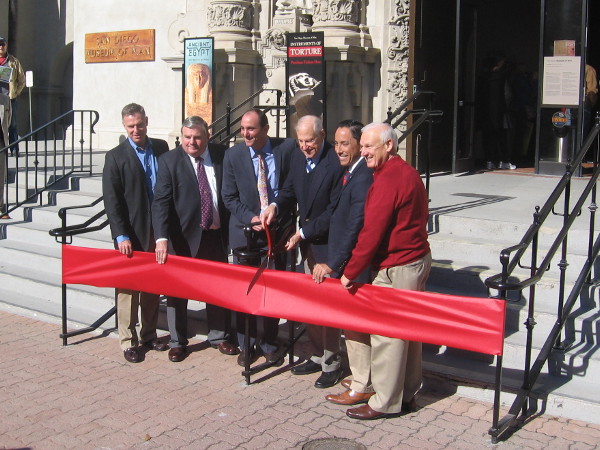
Dignitaries cut symbolic ribbon officially opening California Tower on New Year’s Day.
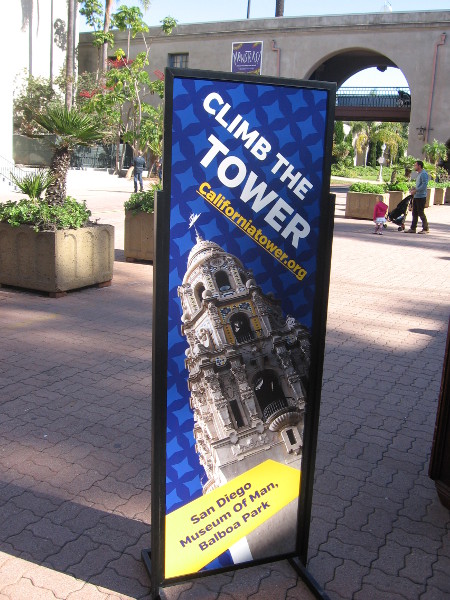
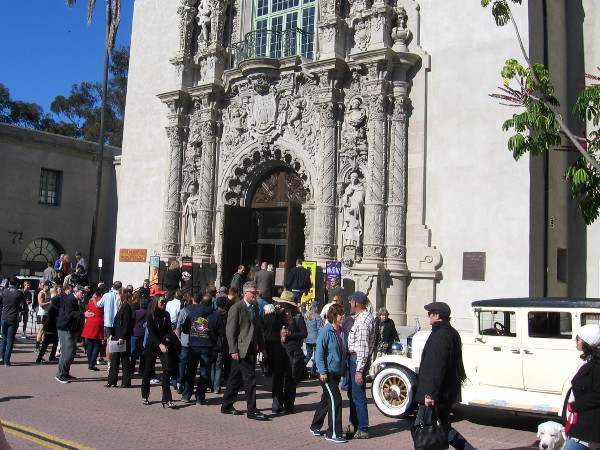
New Year’s Day in San Diego’s beautiful Balboa Park was marked by a historic event. Today, after 80 years, the California Tower reopened to the general public!
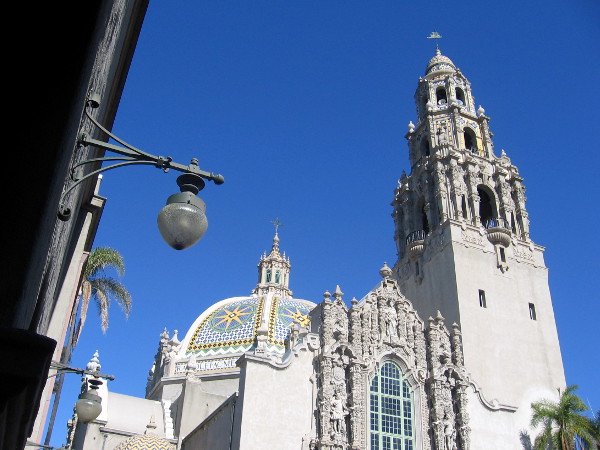
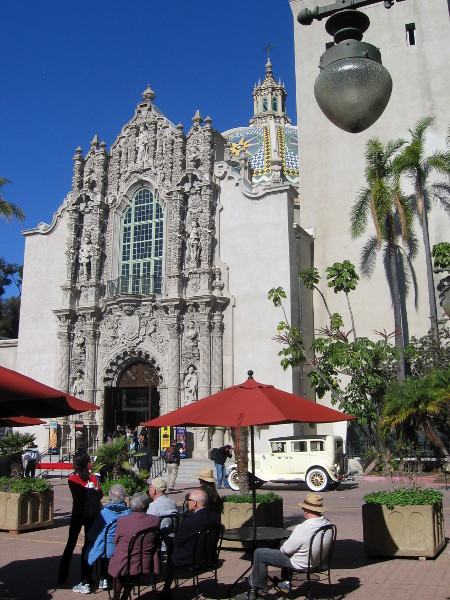
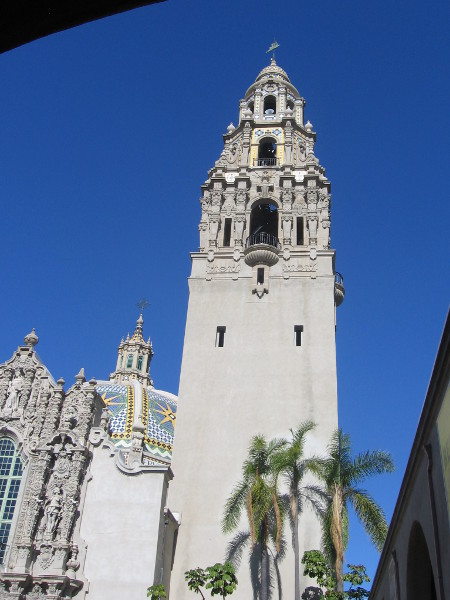
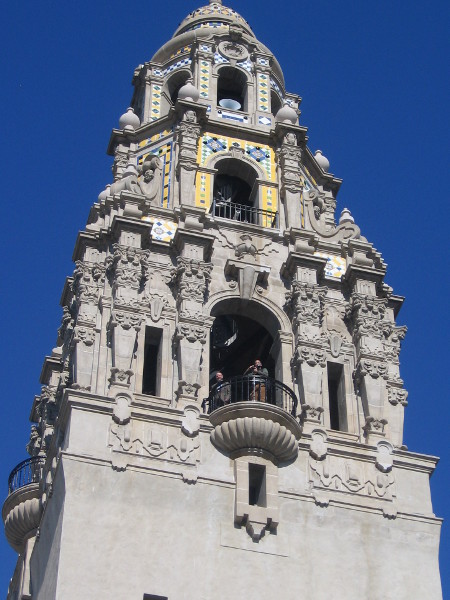
The California Tower is one of the most iconic sights in San Diego. Like many of the ornate Spanish Colonial Revival-style buildings in today’s Balboa Park, it was built for the 1915 Panama-California Exposition, which celebrated the opening of the Panama Canal. The tower was originally accessible to visitors, but in 1935 that changed. One of the most important developments during the Balboa Park Centennial Celebration this year is the long-awaited reopening of the amazing tower!
With the purchase of a special ticket, anyone can now join a small tour that climbs up 125 steps to an observation deck high above the park. Views are said to be breathtaking in all four directions. One day (when it’s not sold out) I’ll check the tour out and post some pics!
Dignitaries at the noon ribbon-cutting ceremony included U.S. Congressman Scott Peters, San Diego County Supervisor Ron Roberts, and San Diego City Councilman Todd Gloria.
You might recognize the California Tower and other portions of the California Building, which now houses the San Diego Museum of Man, from the movie Citizen Kane. Shots of Balboa Park’s architectural wonder were said to be Charles Foster Kane’s Xanadu Mansion in Orson Welles’ classic film.
The tower, reopened today to the general public, rises above tiled dome of California Building.Museum visitors can now climb the California Tower for amazing panoramic views.Audience gathers for ceremony on the tower’s 100 year anniversary.Several cool bicyclists happened to ride down El Prado in front of the Museum of Man.News cameras wait for speeches, and so do the assembled dignitaries nearby.Micah D. Parzen of the San Diego Museum of Man begins by thanking many people.California Tower first opened in 1915 for Panama-California Exposition in Balboa Park.Photographers up on the observation deck, where the public can now go!Local politicians, museum head and donor, poised ready to cut the big red ribbon!Feeling great about historic event, taking place during Balboa Park’s Centennial Celebration.Crowd disperses from ribbon cutting ceremony on another beautiful San Diego day!
…
To enjoy future posts, you can “like” Cool San Diego Sights on Facebook or follow me on Twitter.
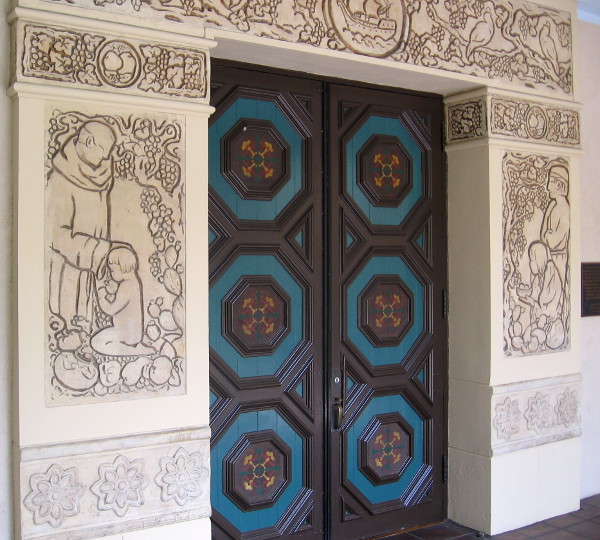
Decorative doors to La Granada Ballroom at the House of Hospitality in Balboa Park.
How many doors are waiting to be opened in one ordinary city? In San Diego, with a population that exceeds one million, there must be many millions of doors.
We take doors for granted, pushing through them like nothing, and yet there is something magical and transformational about each one. Doors represent movement through space and time, from this amazing present to a future, amazing present. As we’re propelled forward in life we pass through many doors, and like the choices we face they are found on every side. Where do we turn our feet? Which doors do we try? Every chosen door leads our restless feet into a beckoning and wonderful unknown.
So, anyway, I just love looking at endless doors. And each unique invitation they present to the eye, while concealing unseen places beyond.
Here’s a variety of doors that I’ve photographed during many walks…
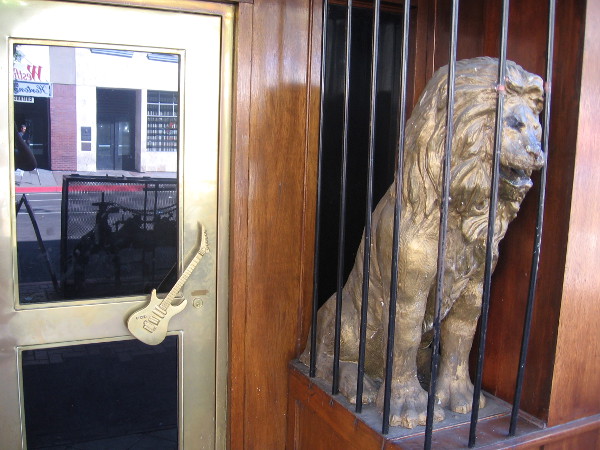
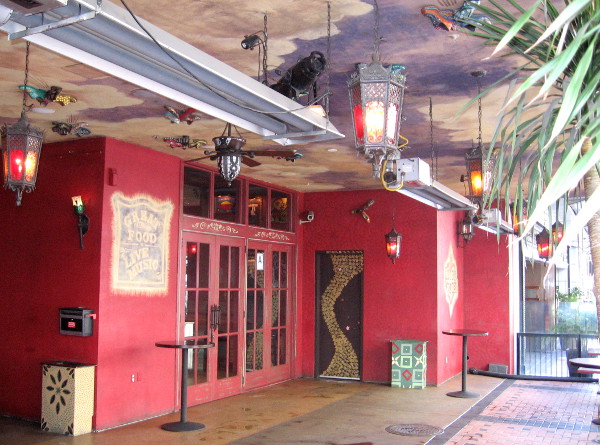
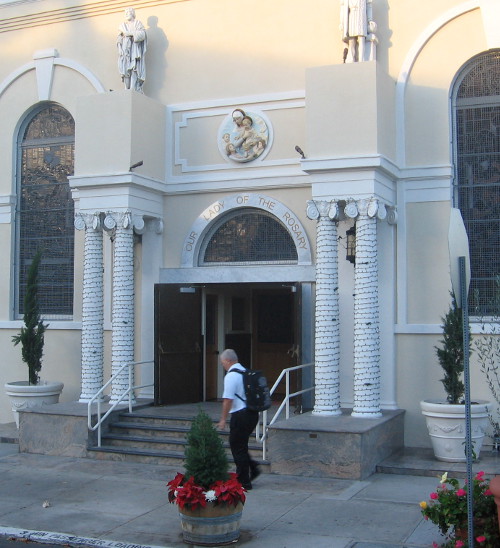
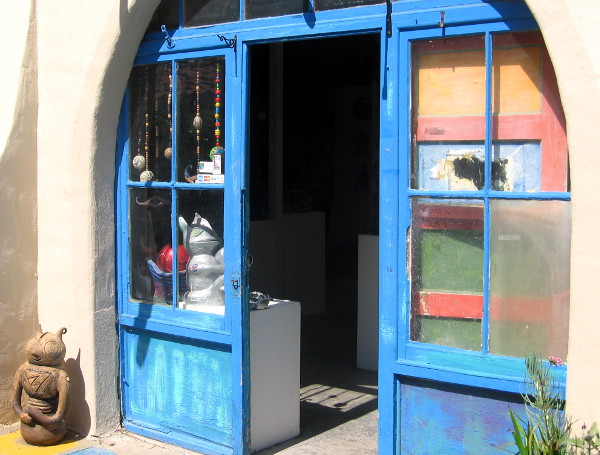
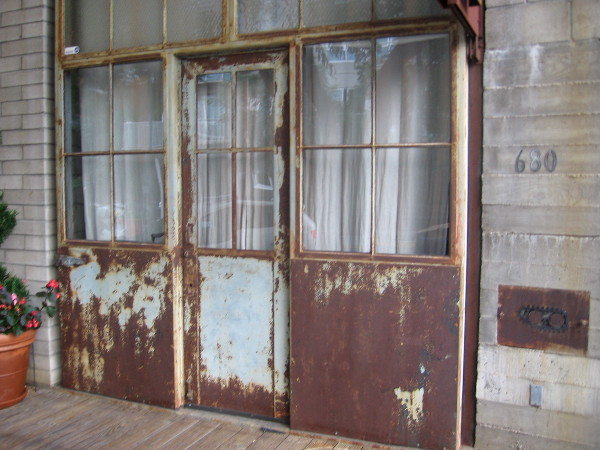
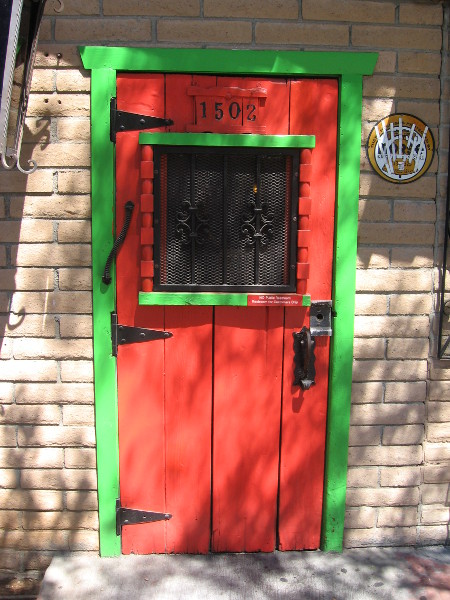
Colorful front door to a small residence in San Diego’s Little Italy.Colors of the Italian flag frame this unusual door on India Street.Imperial Beach surf shop has a door plastered with beach-themed decals and signs.Caged lion in the Gaslamp guards the Hard Rock Cafe, and a door with electric guitar handle.Funky west entrance to the House of Blues in downtown San Diego.Walking past distinctive front of Our Lady of the Rosary church in Little Italy.St. Paul’s Cathedral in Bankers Hill and an elegant red door behind rows of columns.A little shop in Sherman Heights has a plain door invitingly open beside fun pinatas.Artist studio door is wide open and welcoming in Balboa Park’s colorful Spanish Village.International Travelers House has a door that welcomes one and all.Is that a swinging saloon door in Old Town, or a painted version on an ordinary door?This rusted door makes a fashionable statement in downtown San Diego.Just a cheerful orange and bright green door in East Village!
…
To enjoy future posts, you can “like” Cool San Diego Sights on Facebook or follow me on Twitter.
Photograph of the Panama-California Exposition’s La Puerta del Oeste (west entrance) taken from Cabrillo Bridge. The dome and bell tower of the California State Building rise into the San Diego sky.
Balboa Park’s big Centennial celebration is approaching fast! The year-long event kicks off with the opening of December Nights on Friday, December 5th. Later this month, the celebration will continue with a grand New Year’s Eve procession and concert at the Spreckels Organ Pavilion!
The Balboa Park Centennial marks the hundred years that have passed since the opening of the Panama-California Exposition in 1915. While a large open space park near downtown San Diego (originally named City Park) was established in 1872, Balboa Park didn’t really take shape until many years later. Many of the buildings along El Prado which visitors enjoy today owe their existence to the development of the Panama-California Exposition, which covered 640 acres and promoted San Diego as the first United States port of call after a passage through the newly opened Panama Canal. Other parts of Balboa Park were created twenty years later for the California Pacific International Exposition–but that’s a different story.
In honor of the Centennial–now just two days away–I figured I’d post a bunch of historical photographs of Balboa Park as it appeared a century ago. The following black-and-white photos are from Wikimedia Commons, and provide different views of the amazing Panama-California Exposition. I had to do a little detective work with some of the images. Since I’m by no means an expert, please leave a comment if I’ve written captions that require correction.
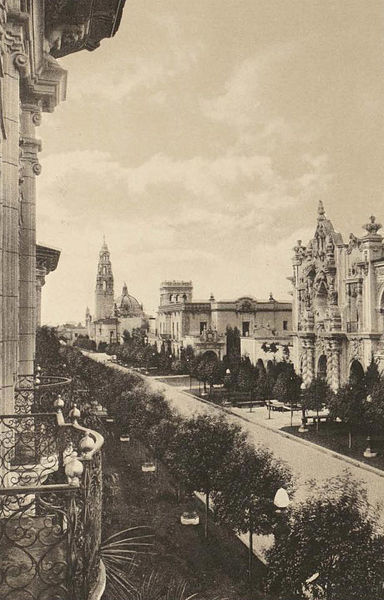
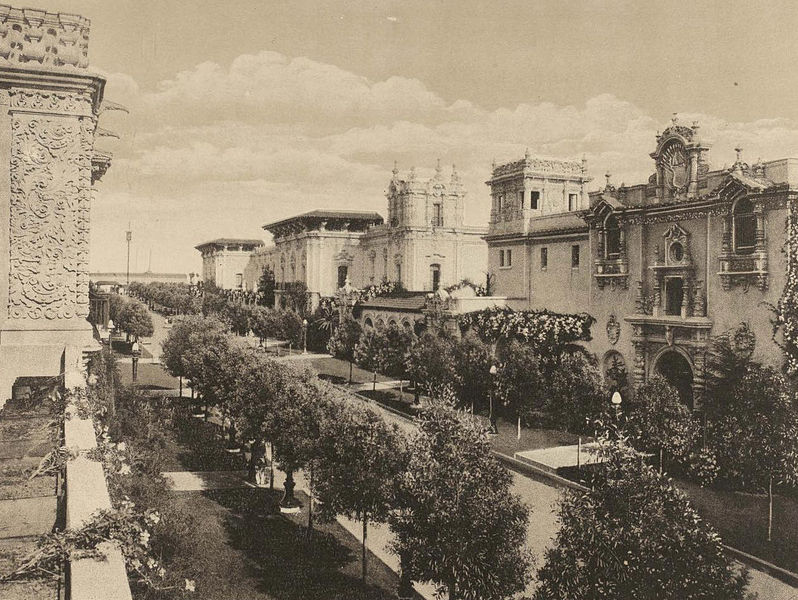
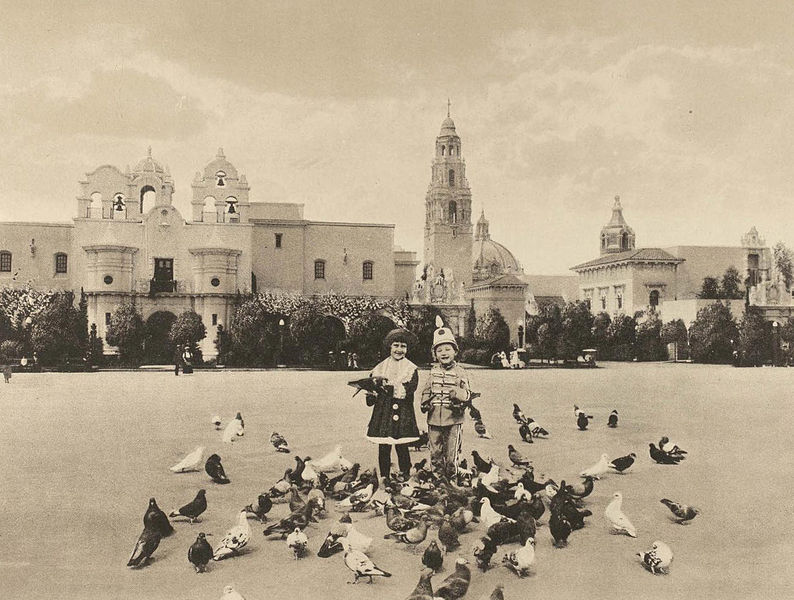
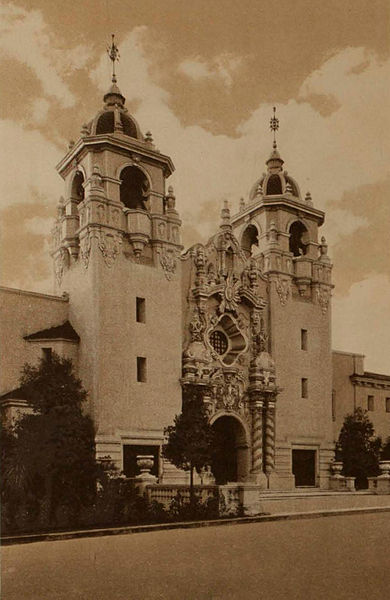
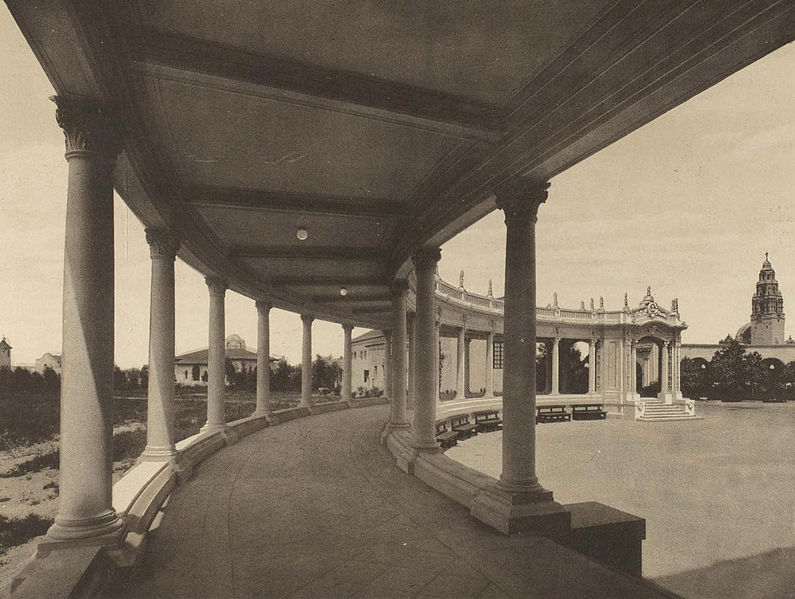
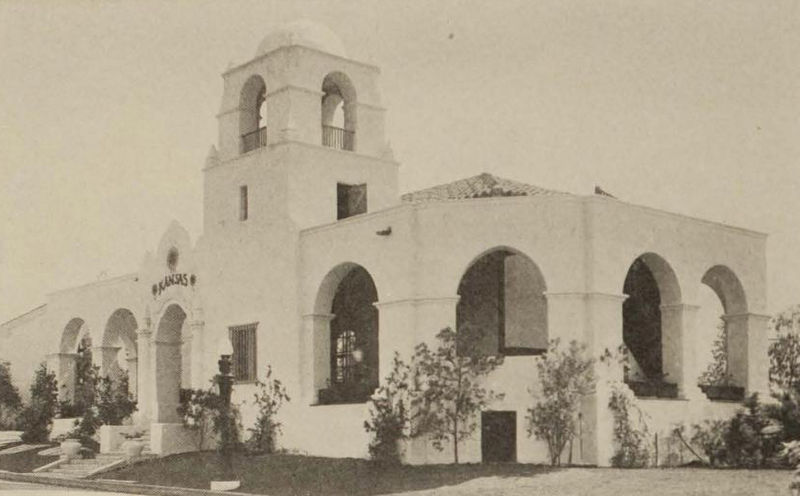
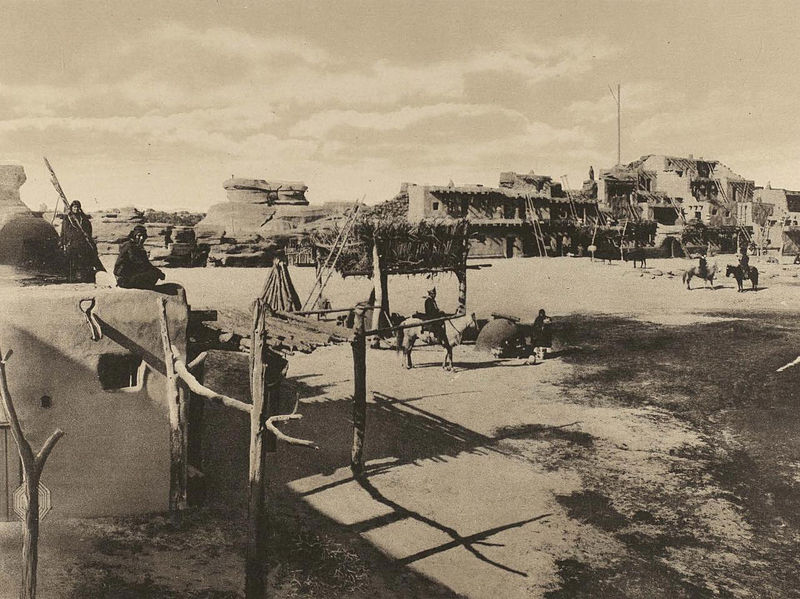
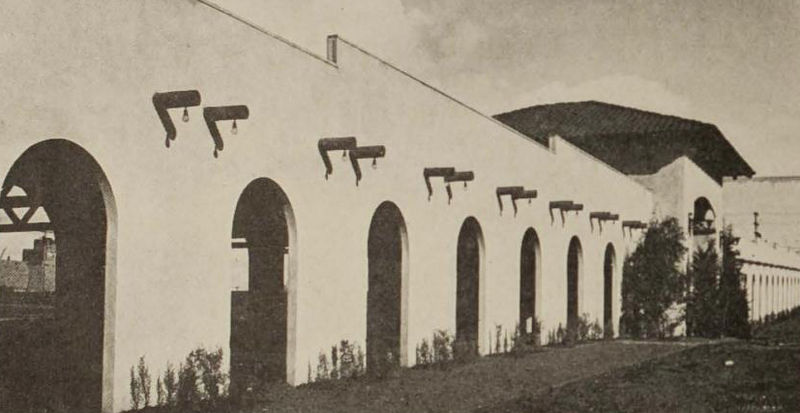
Cover of the 1915 Official Guide Book to San Diego’s Panama-California Exposition. The event celebrated the opening of the Panama Canal, and lasted through 1916.Aerial view from downtown San Diego of Balboa Park’s 1915 Panama-California Exposition. In 1910 San Diego had a small population of only 39,578.La Laguna Cabrillo lake and Camino Cabrillo road beneath Cabrillo Bridge. California State Route 163, a designated scenic highway, runs beneath the historic bridge today.Detailed 1915 map shows Panama-California Exposition ground plan in Balboa Park (originally named City Park).Photo taken of Balboa Park in 1915 from the California Tower provides panoramic view of many exposition buildings designed in the Spanish Colonial Revival architectural style.Looking west along El Prado through the heart of Balboa Park in 1915. At the exposition’s opening ceremony, President Woodrow Wilson activated the electric street lamps with a telegraphic signal.Commerce and Industries Building and Foreign Arts Building stand side-by-side on the south side of tree-lined El Prado. Today, the rebuilt structures are called the Casa de Balboa and House of Hospitality.Commerce and Industries Building. Rebuilt as Casa de Balboa, it’s now home of Museum of Photographic Arts, San Diego History Center, and San Diego Model Railroad Museum.View of shady pergola and the iconic 208 feet tall California Tower from Los Jardines de Montezuma (Montezuma Gardens) in 1915.Los Jardines de Montezuma (today named Alcazar Garden) at Balboa Park’s Panama-California Exposition.Spacious gardens near California State Building’s landmark dome and bell tower during the Panama-California Exposition.U.S. Navy ambulance parked near entrance of the California State Building, today the Museum of Man.Kids feed pigeons on the central Plaza de Panama. The Indian Arts Building with mission bells on left was renamed House of Charm and reconstructed in 1996. It now contains the Mingei Museum.Expansive gardens near the Food Products Building. Today’s enormous Moreton Fig Tree was planted in 1914 near this location.Elegant facade of Food Products Building, which was eventually reconstructed in 1971 as part of the Casa del Prado. It’s now the entrance to the San Diego Junior Theatre.View of La Laguna de las Flores, the reflecting pool (or lagoon) at the Panama-California Exposition. This area was called the Botanical Court.The Botanical Building, then and now one of the largest lath structures in the world. In 1915 its popular name was Lath Palace.Fountain by Botanical Building at the Panama-California Expositon in Balboa Park. The Botanical Court a hundred years later remains largely unchanged.Gazing over reflecting pool at Commerce and Industries Building and Foreign Arts Building. A favorite photographic spot for a century in San Diego.Food Products Building is reflected in tranquil lily pond directly in front of the large lath Botanical Building.View of tree-lined El Prado from second floor of Varied Industries Building, which is now part of the Casa del Prado.Varied Industries Building seen from the west a short distance. Rebuilt as a part of Casa del Prado, today it houses various art and botanical organizations.Home Economy Building (left of Foreign Arts Building), site of today’s Timken Museum of Art. A wicker Electriquette motor cart is visible among people in the Plaza de Panama.Fine photo across Esplanade of the Indian Arts Building, rebuilt in later years and renamed the House of Charm.One of many popular recitals in the Organ Pavilion at the Panama-California Exposition. (This venue is now called the Spreckels Organ Pavilion.)Organ Pavilion colonnade with California Bell Tower in distance. Trees and a large parking lot exist today on the left, behind the classic structure.View of Spreckels Organ in 1915, from a shady spot in the colonnade. Those wooden benches were replaced many years ago with benches made of steel.The distant Organ Pavilion appears in this photo between the San Joaquin Valley Building and the Kern and Tulare Counties Building.Kansas State Building at Panama-California Exposition. Most of these old state buildings no longer exist today, a hundred years later.Montana State Building, near the site of today’s International Cottages.People take a stroll past a handful of state buildings at the Panama-California Exposition in Balboa Park.Utah State Building at the Panama-California Exposition.Washington State Building at the Panama-California Exposition.Artillery practice at the exposition’s U.S. Marine Camp, which was located near the site of today’s Air and Space Museum.Southern California Counties Building, which stood a century ago in Balboa Park at the site of today’s Natural History Museum.Visitors back in 1915 enjoy the Southern California Counties Building’s elegant patio.Large area called the Painted Desert at the Panama-California Exposition. This unique attraction was near the site of today’s Veteran’s Memorial.The elaborate Taos pueblo in the Painted Desert was a fantastic sight at San Diego’s Panama-California Exposition.Realistic exhibit shows Zuni native life at the Panama-California Exposition in San Diego’s Balboa Park.The Pala gem mine was one of the amusements along the Isthmus north of El Prado, near today’s San Diego Zoo parking lot. It featured a 300 foot long tunnel filled with simulated gems.The Cawston Ostrich Farm was an Egyptian pyramid-shaped amusement on the Isthmus, a section of the expo popularly called the fun street.The Japanese Tea Pavilion, northeast of the Botanical Building in 1915. Today, the Tea Pavilion at the Japanese Friendship Garden is located elsewhere and appears entirely different.Citrus and other gardens in a wide north section of the Panama-California Exposition. This is near the entrance of today’s San Diego Zoo.The long Tractor Building was located near a tractor demonstration field, just west of the Painted Desert.California bungalow, surrounded by model farm at the 1915 exposition. Agricultural exhibits and demonstrations were an important part of the event.The Lipton Tea Gardens at the Panama-California Exposition, one more interesting image from San Diego’s rich history.
…
To enjoy future posts, you can “like” Cool San Diego Sights on Facebook, or follow me on Twitter.
New Cisterra building rises behind Tony Gwynn statue at Petco Park in East Village.
As the local economy has improved, I’ve noticed a spate of new construction underway in downtown San Diego. Several skyscrapers are on the rise!
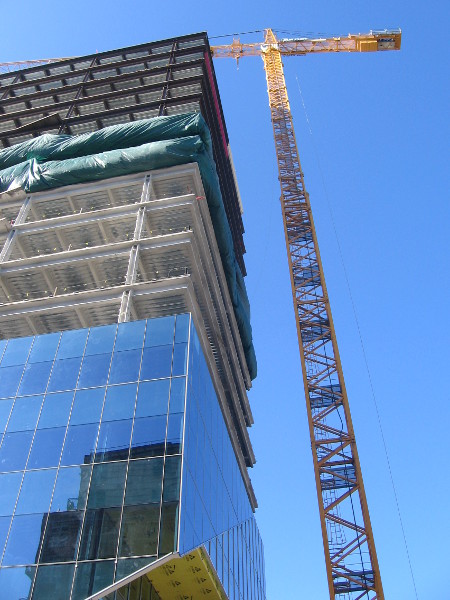
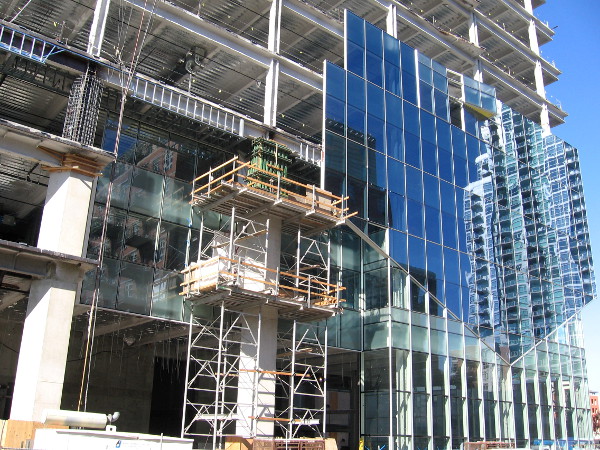
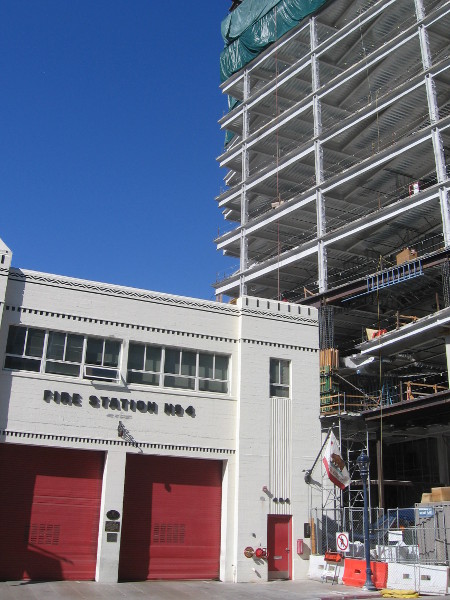
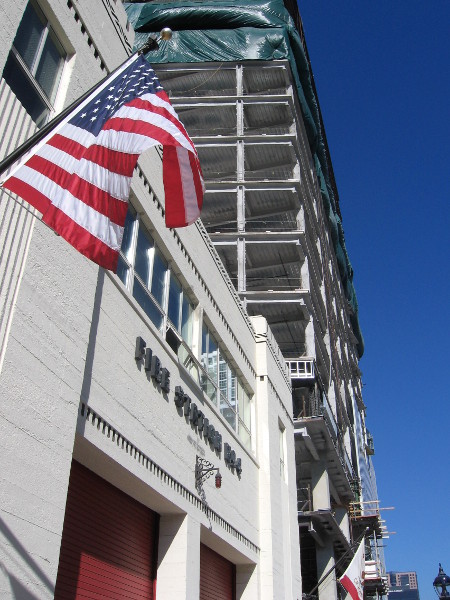
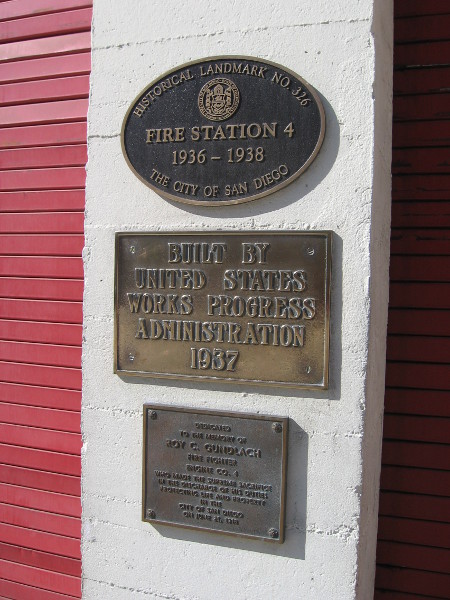
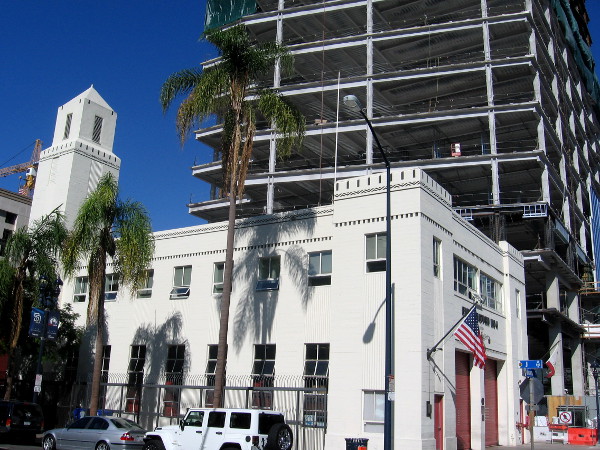
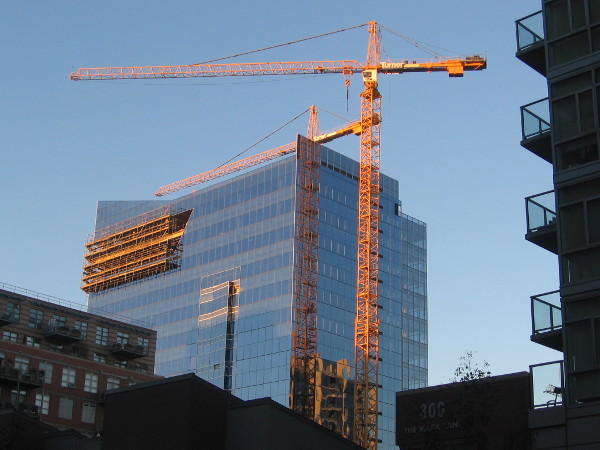
Last weekend I walked past the rapidly progressing Cisterra building which will overlook East Village. It stands just a block north of Petco’s Park at the Park. The future home of gigantic Sempra Energy, the high-rise is being built directly next to one of San Diego’s most interesting old buildings: Fire Station 4. The beautiful little firehouse is San Diego’s oldest, dating from the 1930’s. Once the shiny new skyscraper is completed, the two buildings side-by-side will create quite a contrast!
New skyscraper in San Diego to be headquarters of Sempra Energy.Steel lattice, glass grid and odd reflections make for an interesting photo.Construction of this gleaming high-rise can be observed in downtown San Diego.Stately little Fire Station No. 4 beside new modern skyscraper.This is the oldest firehouse in San Diego, in service since 1938.Fire Station 4, built as a New Deal WPA project, is a designated historical landmark.Beautiful old San Diego firehouse at the foot of what will be a shiny new skyscraper.
Here’s a bonus pic which I took on a morning in early February…
A rising skyscraper shines brightly in the early morning.
…and another I took in March…
Fire Station Number 4 at base of silvery, shiny new skyscraper.
…
To enjoy future posts, you can “like” Cool San Diego Sights on Facebook or follow me on Twitter.









































 Cool San Diego Sights!