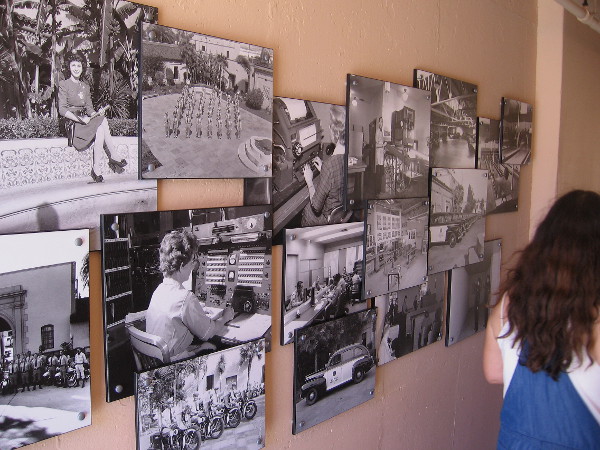
People view photos and memorabilia in corridor of the old San Diego Police Headquarters located near Seaport Village.
In downtown San Diego, one can enter a highly secure jail cell, then turn around and easily walk right out! How? Simply visit the old police headquarters!
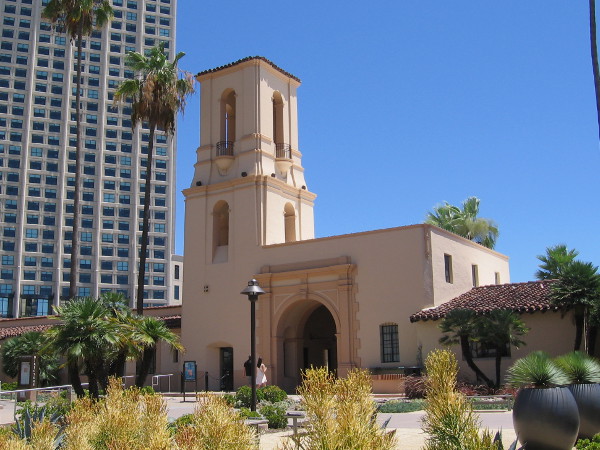
The Headquarters at Seaport is the official name of a relatively new shopping center on Harbor Drive, located right next to Seaport Village. The unique complex features several fine restaurants and specialty shops, housed in a restored building that was originally built in 1939. For almost half a century–until its closure in 1987–the fortress-like building with its large courtyard was home to San Diego’s police headquarters.
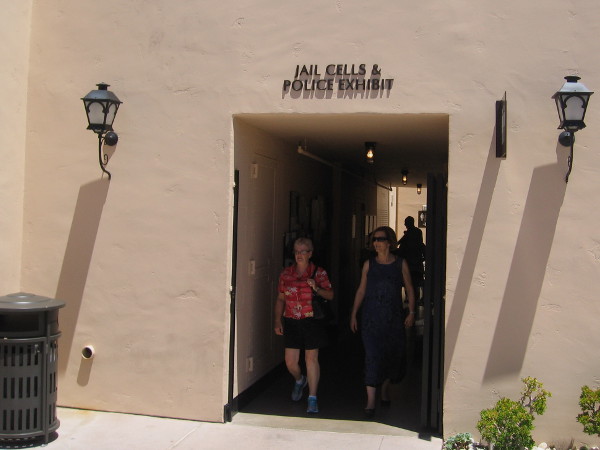
Anyone visiting The Headquarters can enjoy a free glimpse of San Diego history by checking out a modest exhibit in a corridor that leads to the old cell block and some restrooms. I took photographs during one walk that you might find interesting.
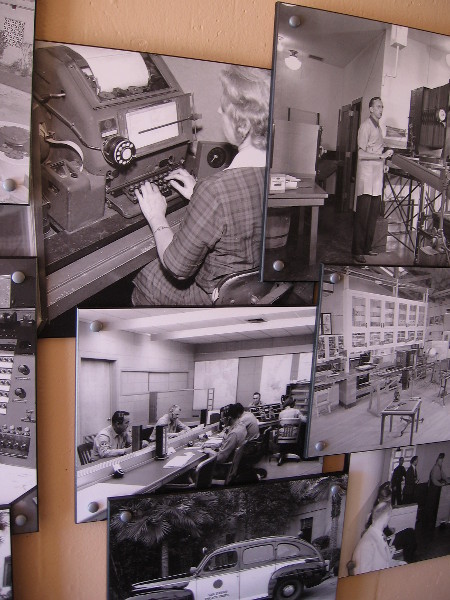
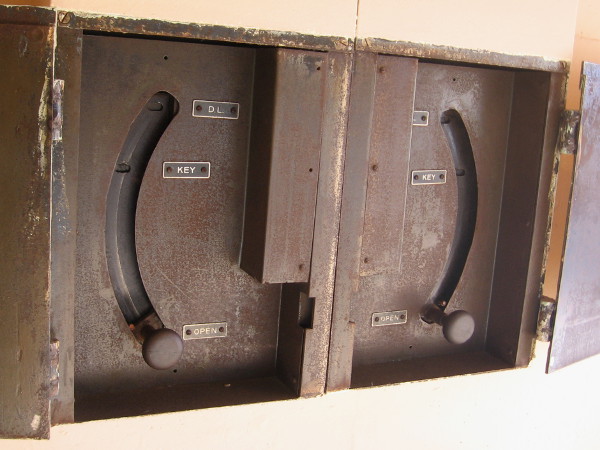
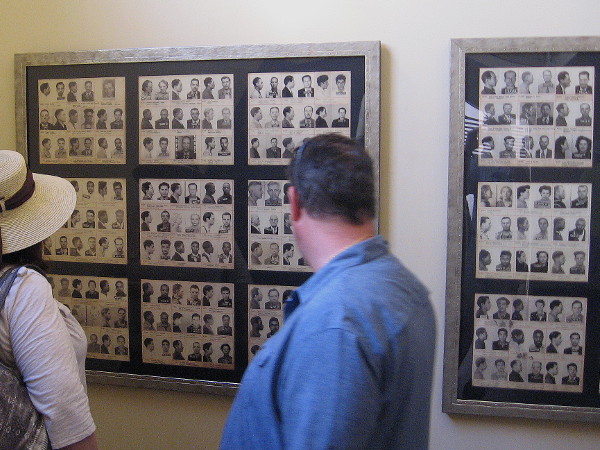
This beautifully restored building now contains shops and restaurants on San Diego’s waterfront. Built in 1939, it served for half a century as the city’s central police station.People amble past a doorway which leads into the past. A bit of San Diego history beckons the curious.Old jail cells and an interesting police department exhibit are inside!Fascinating photographs on one corridor wall show scenes from the old police headquarters.Many operations were under one roof, including administrative offices, jails, a law library, crime lab, pistol range, and even a police car maintenance facility.This photo shows officers posing in front of the iconic tower. The historic building is a mixture of architectural styles often seen in San Diego and Southern California.Display cases in this preserved hallway contain artifacts from local law enforcement decades ago.Vintage police shields and badges are among the interesting items in this museum-like display.Handcuffs, documents and law enforcement equipment educate visitors about police history in San Diego.Some patches that were worn proudly.Image shows original construction of the police headquarters in 1939.I believe someone who was arrested is being photographed. I see a clock, calendar, lights and identifying placard.The door of a holding cell in the old police headquarters corridor.Cells for prisoners and suspects were securely locked and unlocked using this mechanism.A look inside the eight cell, two level jail block. If you want to see what life was like behind bars, that last door is wide open!These jail cells are very simple and primitive. Comfort is not a priority.A few bare essentials and a pretty face.Visitors to The Headquarters old cell block look at mug shots on one wall.Prisoner Information. Personal property is surrendered, necessities are provided, hours for lights out and visitors, and two telephone calls are granted at the time of booking.Kids are photographed at the lineup wall. They look slightly suspicious!
…
Follow this blog for more photos of interesting stuff! Join me on Facebook or Twitter.
Sign outside the Spanish Village history exhibit, which is open to the public in Gallery 21.
Anyone in San Diego who loves art must visit Spanish Village Art Center in Balboa Park. Some of the region’s finest local artists occupy its 38 working studios. By strolling around the large, colorful courtyard and poking a nose here and there, the public can see (and purchase) finished artwork of every kind, watch the creative process, and talk to the friendly artists themselves.
While at Spanish Village–if you’re the curious sort–you might also check out a small but fascinating history exhibit. Just step into Gallery 21.
Earlier this summer I was graciously given a tour of the exhibit by one of the resident artists. Here are a few photos and captions describing what I saw. Of course, it’s much better to experience Spanish Village and these memories of its history firsthand. So I encourage everyone to head on over.
The exhibit reviews how, a century ago, Balboa Park (originally called City Park) was developed and transformed into a dreamlike landscape for the 1915 Panama-California Exposition. Many fantastic buildings were created, using a variety of influences from Spanish, Mexican, European Renaissance and Moorish origins. This unique mixture became what is known as Spanish Colonial Revival architecture.
Later, the successful California Pacific International Exposition of 1935 was promoted to boost San Diego during the Great Depression. It used existing buildings from the Panama-California Exposition and exhibits from the recent Chicago Century of Progress Expo. New construction designed by master architect Richard Smith Requa added a variety of buildings to Balboa Park, including those of Spanish Village. Spanish Village, as its name implied, originally recreated life in Spain, with “shops that sold art, curios, flowers, music and wine. It had a children’s theater, a Chinese Bazaar, a cocktail lounge called Cafe Granada and other restaurants. The Village was at the entrance to the Fun Zone which contained a Midway, a midget zoo, and an Indian Village.”
Today, this exhibit’s historical photographs, newspaper articles and ephemera relating to Spanish Village help visitors understand and appreciate the cultural contributions over many decades of hundreds of participating artists.
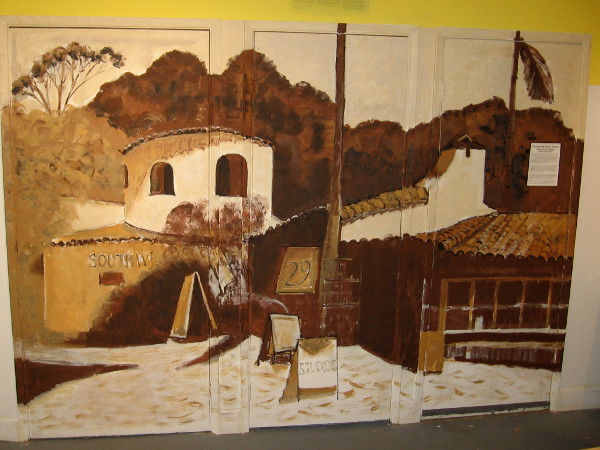
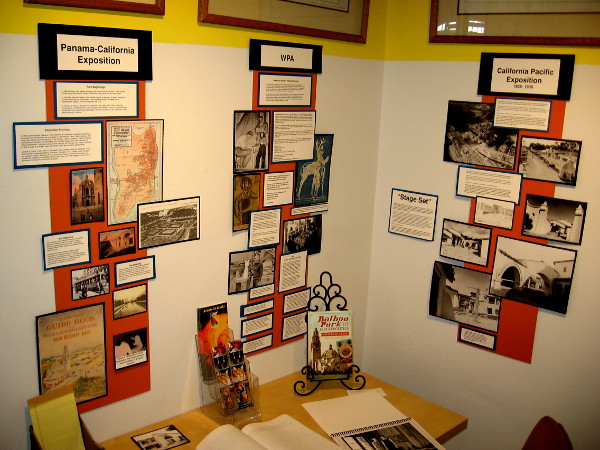
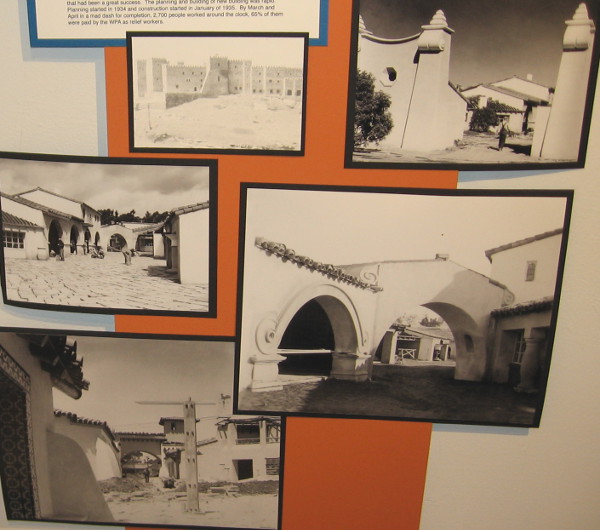
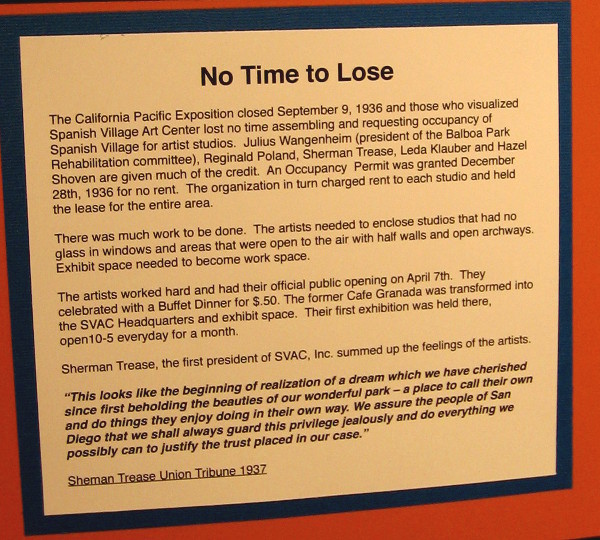
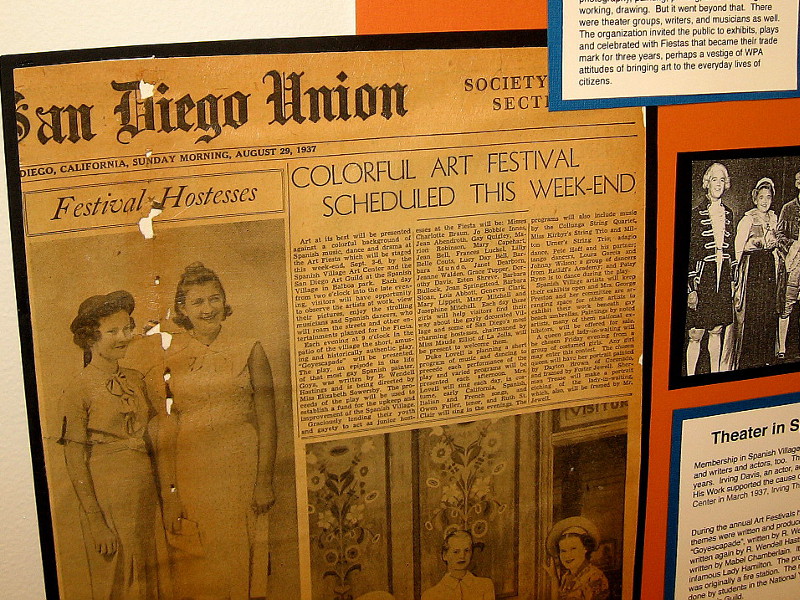
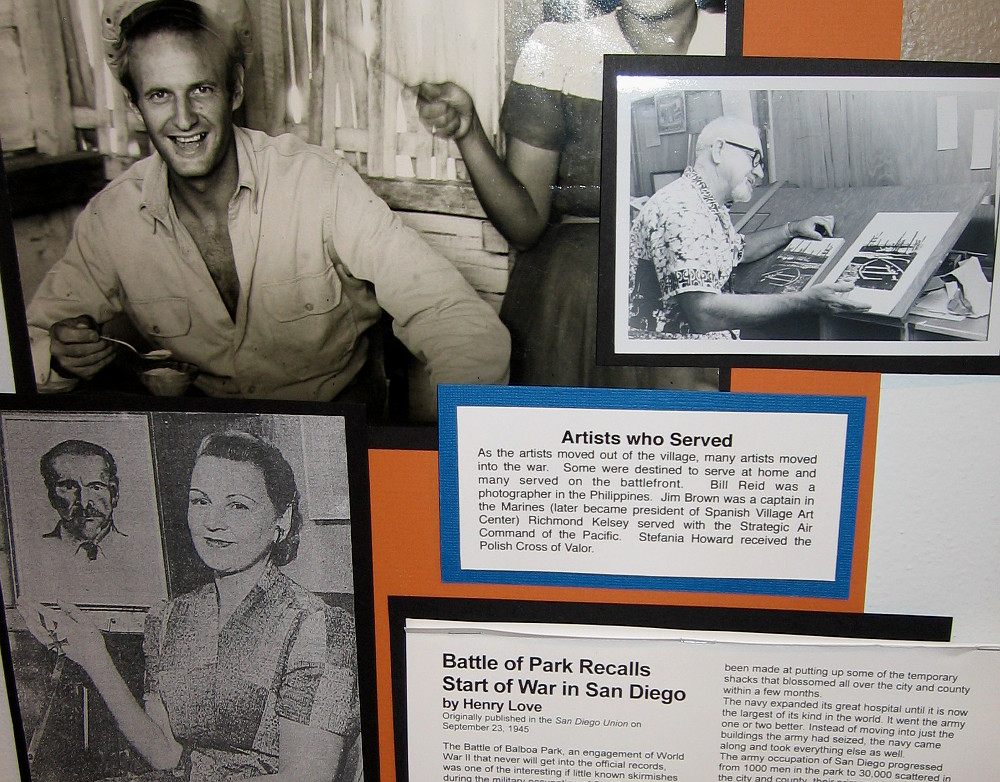
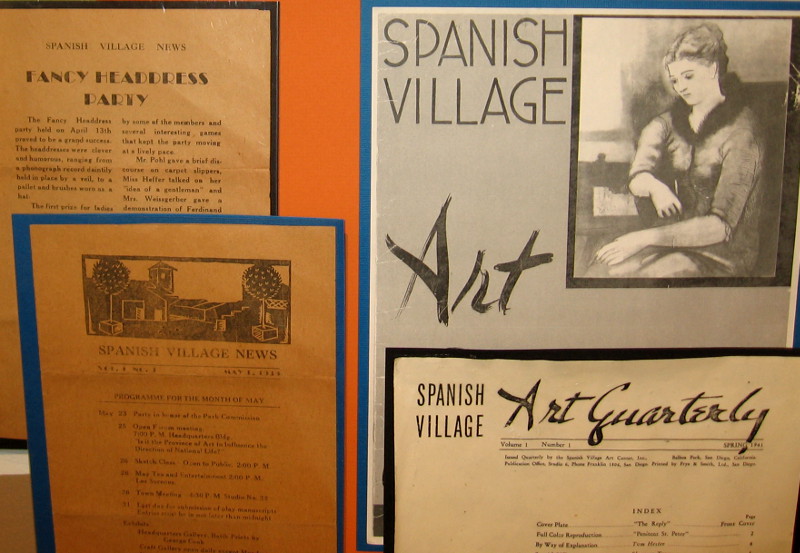
Doorway inside Gallery 21 leads to an unexpected treasure trove of Balboa Park and San Diego history.Beautifully painted mural in the small museum pleases the eyes of art-loving visitors.The walls, like a scrapbook, feature a mosaic of images and articles chronicling the history of Spanish Village.Old photographs show Spanish Village buildings, which were erected for the 1935 California Pacific Exposition in Balboa Park. They housed shops and restaurants during the expo.The California Pacific Exposition closed September 9, 1936, and the idea for Spanish Village Art Center was soon realized. Artists completed their studios and had a public opening on April 7th.Display lists Spanish Village’s artist founders. Newspaper clipping’s “Officers of Culture Project” included Sherman Trease, Mina Schultz Pulsifer, and Henry Long.Old San Diego Union newspaper announces first Art Fiesta, a festival held September 3-6, 1937. Spanish Village hosted all forms of visual art, plus theater groups, writers and musicians.Visitor to the Spanish Village history exhibit learns about the rich heritage of this very unique and wonderful place.Another display tells of the coming of World War II, and how the Army took over Spanish Village. Many departing artists would serve in the military. Some later returned to renew their art.After the Army left, a financial dispute with the City of San Diego was resolved. Artists would pay affordable rent for each studio. A jury would decide on qualified renters.Samples of past Spanish Village publications, including a quarterly. Today the artists promote their work online using websites, e-newsletters and social media.Do you have a memory or story about Spanish Village Art Center? Experiences are being collected and added to this show. Thanks for the community spirit!Spanish Village is located in amazing, historic Balboa Park. Art grows here.
…
Follow this blog for more photos of cool stuff! Join me on Facebook or Twitter.
The Sheldon House is a very cool sight at the corner of 13th and Island in San Diego’s East Village.
Like most cities, San Diego has its share of cool old houses. Here’s an example of one that’s located in downtown’s East Village neighborhood.
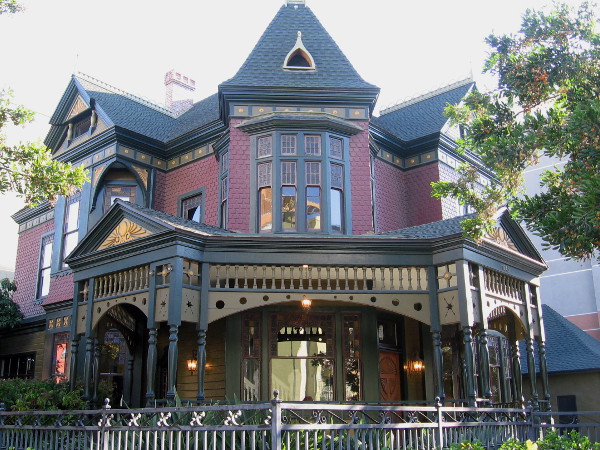
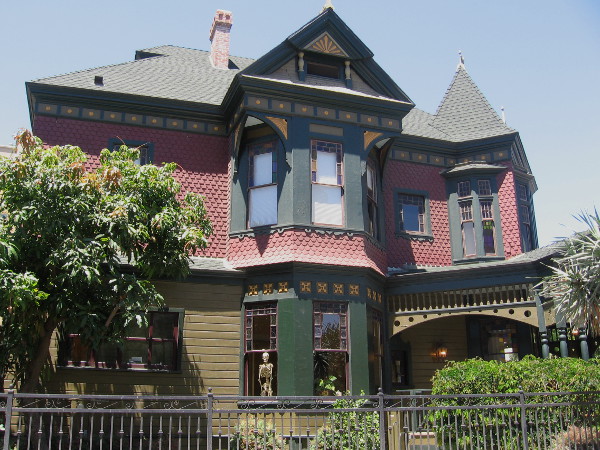
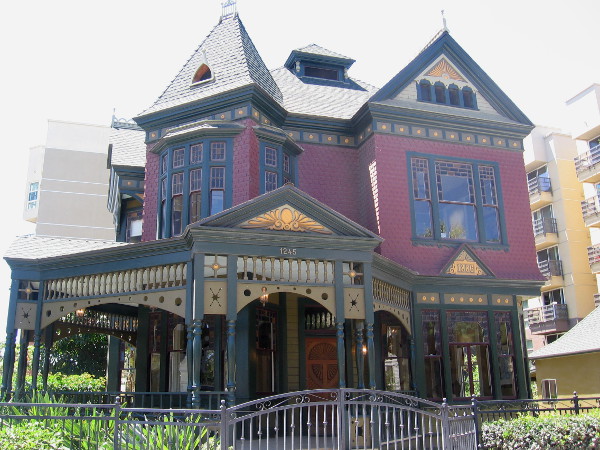
Standing at the corner of 13th Street and Island, the 1886 Sheldon House was designed by the famous architects Comstock and Trotsche, and is an amazing example of the flamboyant Queen Anne style. The grand, extravagant Victorian mansion was built for Dr. F. C. Sheldon and his family, and included a multiple-gabled roof, a large, elegant front porch, and stained glass features in every window. Unfortunately, the doctor died soon after the mansion’s construction. To support the large surviving family, his wife converted the home into a successful boarding house.
Lots of decorative details include an elaborate porch and stained glass crowning every window.View of the sunlit Sheldon House from the east. A skeleton stands in one window!The 19th century Victorian mansion seen from the north, with modern residential buildings behind.
UPDATE!
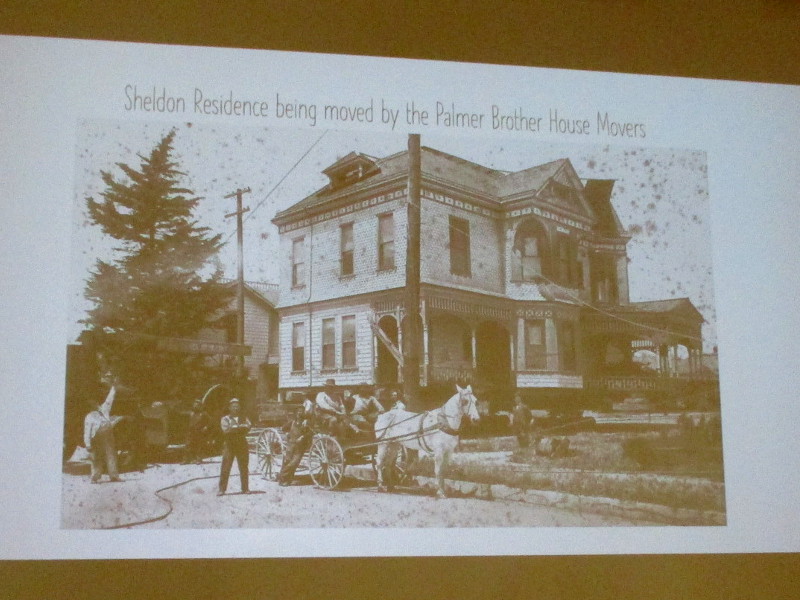
Years later, I noticed this old photograph projected on a wall at the San Diego History Center. It is of the Sheldon Residence being moved by the Palmer Brother House Movers from 11th and D Streets to Island Street in 1913…
…
Follow for photos of random cool stuff! Join me on Facebook or Twitter.
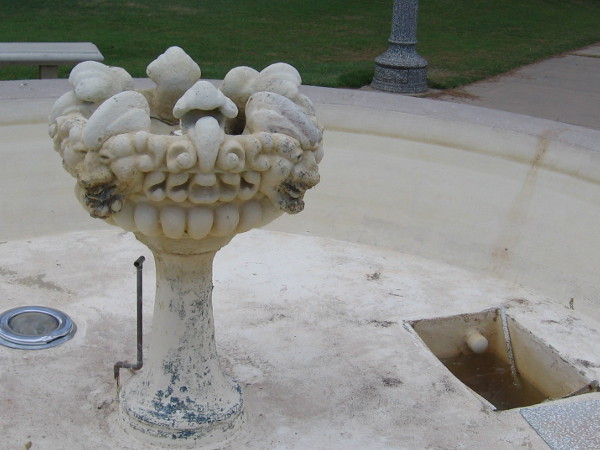
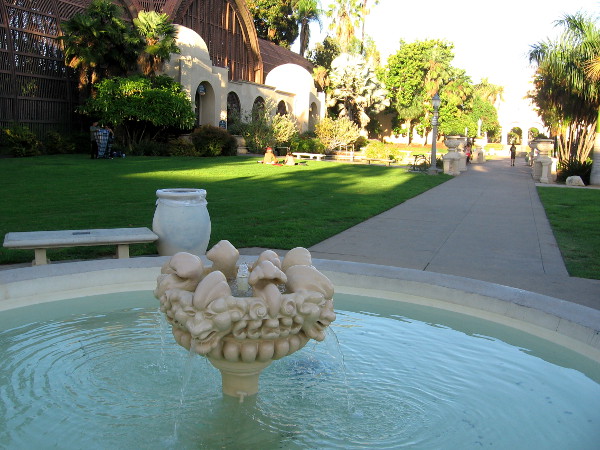
Two fountains near the reflecting pool, at either end of the Botanical Building, have fallen into disrepair.
This year Balboa Park is celebrating its centennial. A hundred years ago, for the 1915 Panama-California Exposition, many event structures were created out of plaster, with the idea that they would be temporary. But San Diego fell in love with the park as it was and changed its mind. It would be a shame to lose so much beauty. Today much of Balboa Park, after many years of maintenance and restoration, is like a glowing vision preserved from San Diego’s past. But time marches on. And more work always needs to be done.
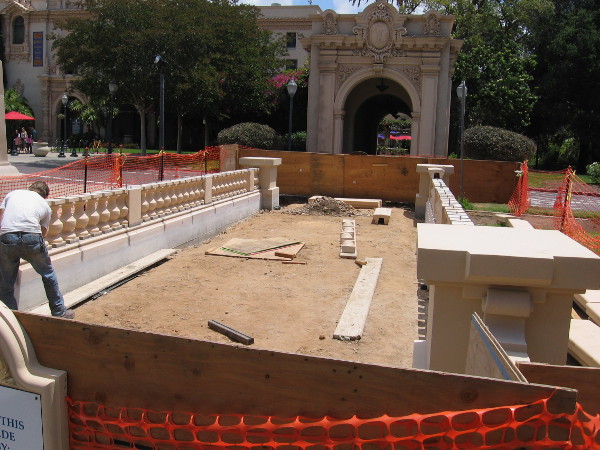
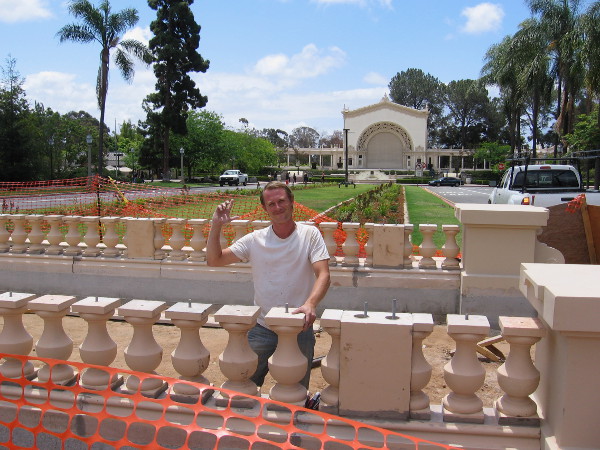
During a quick walk this afternoon through Balboa Park, I paused to look at some construction that is underway near the monumental El Cid statue, at the south edge of the Plaza de Panama. A friendly guy who was working there told me a little bit about three current restoration projects.
Here are my pics! Please read the captions, where I provide some more information.
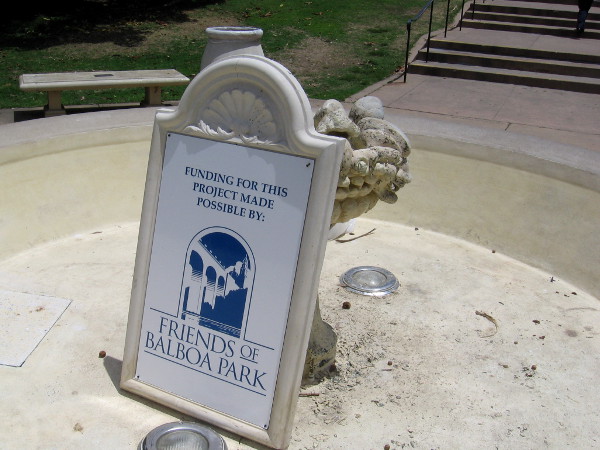
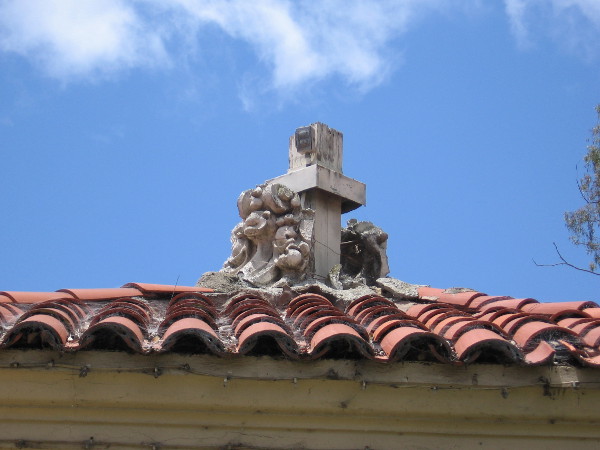
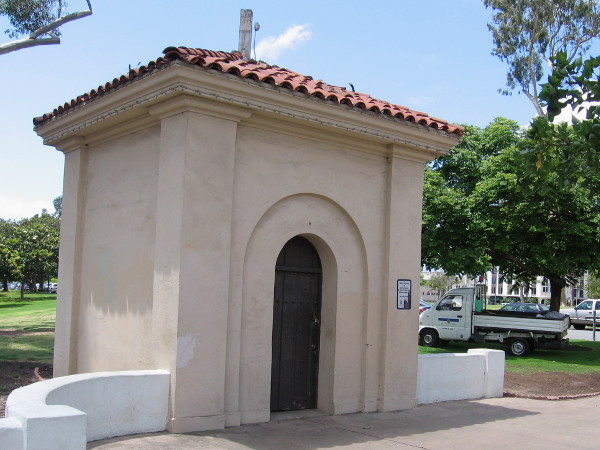
Funds for many Centennial restorations and improvements have been provided by the Friends of Balboa Park.Plaque recalls how a second identical fountain (next to the Timken Museum of Art) was restored back in 1965 by The Thursday Club.The passage of time has been unkind to the impish faces on two fun Balboa Park fountains.One of two guardhouses on either side of El Prado, at the west end of the Cabrillo Bridge.The stately guardhouses are being repaired this summer. The plaster ornamentation on top is in bad shape.A close up photo of the plaster finial at the apex of one tile roof. The hundred year old material has crumbled.The decorative finial has already been removed from the second guardhouse, and is being reconstructed.Guy working on restoring the balustrade next to the El Cid statue. The walkway will soon be ADA accessible.The old wooden balustrade is being replaced with modern material that should last much longer. Hopefully another hundred years!This hard-working guy at the balustrade construction site was nice enough to talk to me and smile for the camera!
UPDATE!
During a walk in mid-September, I noted the balustrade is completely finished, and so are the two fountains! They look awesome–like new!
Both fountains–on either side of the Botanical Building–have been beautifully restored!
…
To enjoy future posts, you can “like” Cool San Diego Sights on Facebook. or follow me on Twitter.
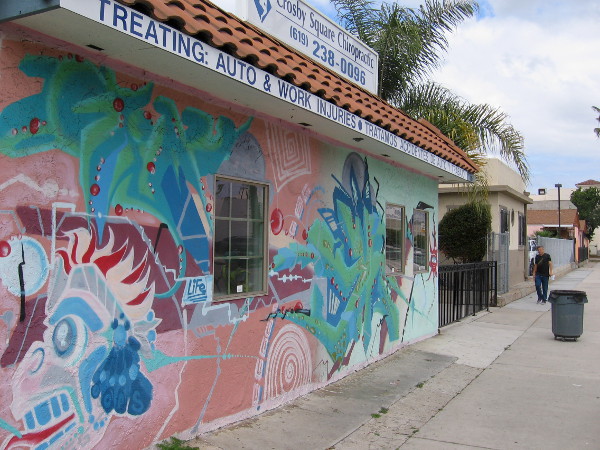
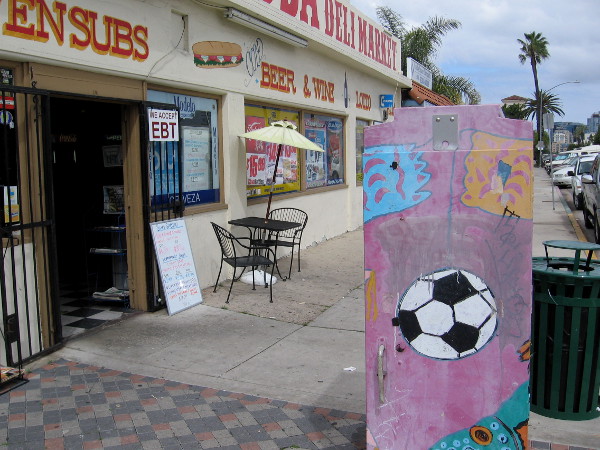
Awesome street art on a chiropractic office near Cesar Chavez Pkwy in Barrio Logan.
I have some time off from work, so I’m able to do a little more weekday walking than usual. Yesterday I wandered through a gritty but fascinating neighborhood near downtown that’s a bit off the beaten track. A stretch of National Avenue runs through a narrow section of the city between Logan Heights and downtown San Diego, directly east of the rail and trolley yards; I walked from Imperial Avenue to Cesar E. Chavez Parkway, then back.
The area contains many car repair shops, welding shops, warehouses, and other small businesses which occupy modest, often decayed buildings. In a few places, groups of homeless had gathered. Small, neglected shanty-like houses are interspersed with elegant historic old homes and newer apartment buildings. Yet vibrant life was active everywhere. And everyone I met gave me a friendly greeting!
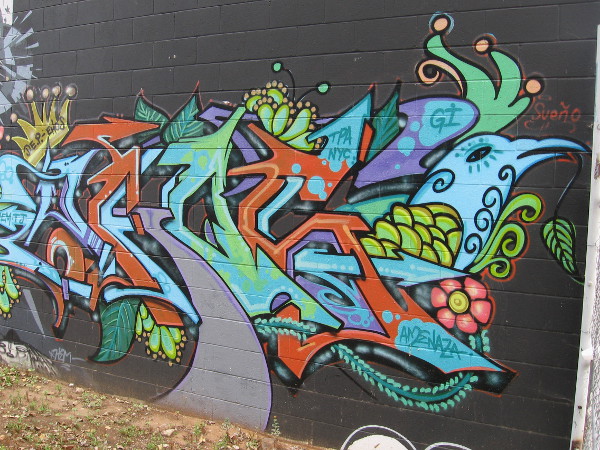
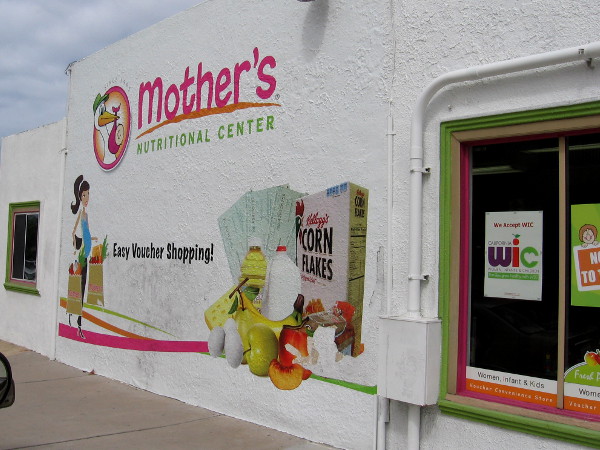
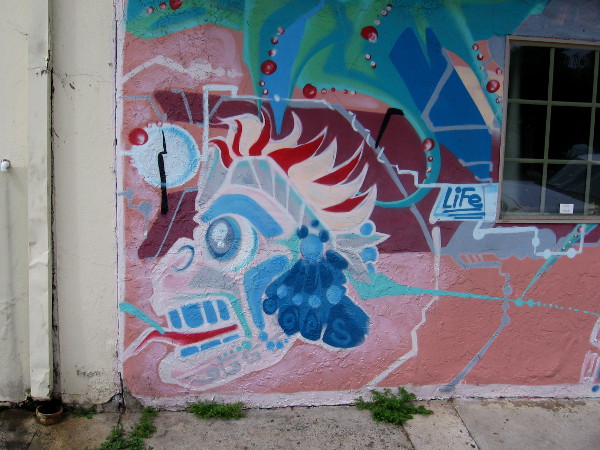
Cool mural on residential building features an eagle, cacti, palm trees.Quaint narrow house on National Avenue near downtown San Diego.Portion of colorful graffiti in a weedy space between buildings.This very cool mural caught my eye as I walked down the street. It’s on Logan Avenue, a couple blocks from National Avenue.Plaque on La Entrada project explains reconstructed Mission Revival facade.The Mission Revival facade on La Entrada apartments is an homage to the region’s history.Local vendor is selling tamales under a canopy by the sidewalk.Mother’s Nutritional Center helps local low-income women with young children.A soccer ball on utility box by a small local market known for their sub sandwiches.One word on this fantastic old wall says it all: Life.
…
To enjoy future posts, you can “like” Cool San Diego Sights on Facebook or follow me on Twitter.
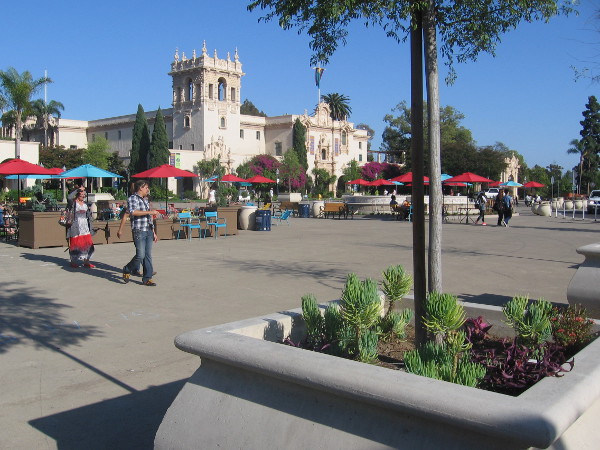
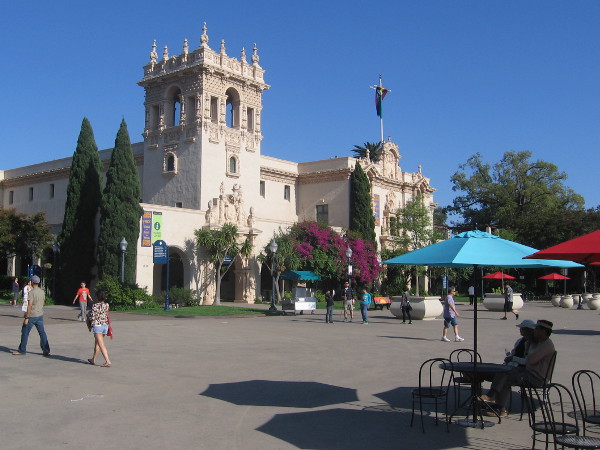
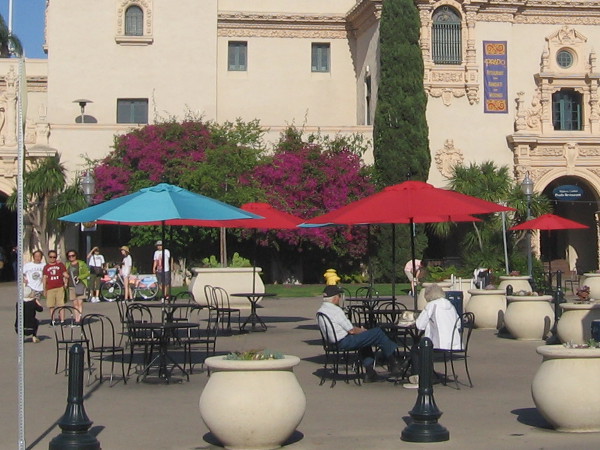
Colorful umbrellas, chairs, tables, planters and even a patch of green have been added to the Plaza de Panama.
Improvements were recently unveiled in the heart of Balboa Park, San Diego’s crown jewel and cultural center. The historic Plaza de Panama is now a gathering place containing many tables with colorful chairs and umbrellas, planters brimming with green, and art-splashed benches. A once semi-barren public square has become a truly comfortable gathering place for both locals and visitors to America’s Finest City!
In June 2013, the first wave of improvements set in motion by Mayor Filner removed unsightly parking from the Plaza de Panama. Some tables and chairs were added, but a large area between the beautiful fountain and the San Diego Museum of Art remained empty. Three weeks ago, under Mayor Faulconer, additional amenities appeared. Personally, I love the scattered reds and blues of the umbrellas, a color scheme which I find very tasteful. Plaza de Panama is now a suitably dynamic and welcoming outdoor public space.
A few days ago I got some pics!
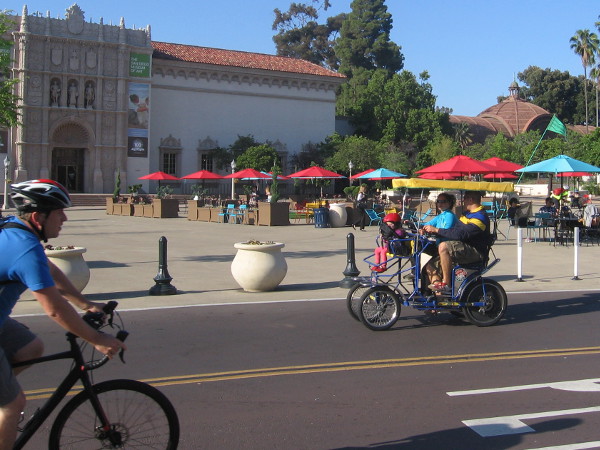
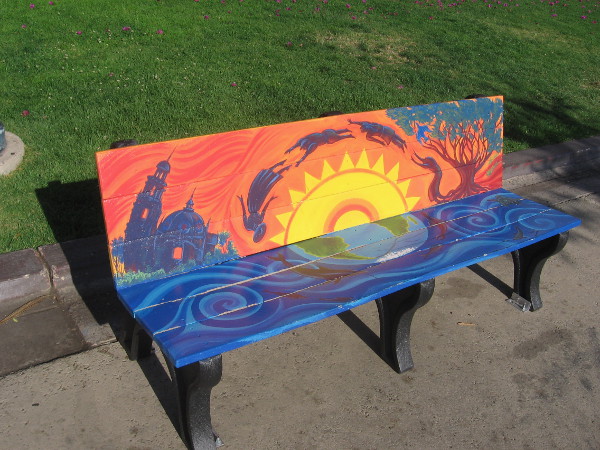
Someone walks between red and blue umbrellas that have sprouted in front of the San Diego Museum of Art.A bicyclist and tourists on a rented quadracycle head through the beautified Plaza de Panama.This cool new art bench on the east side of the plaza includes an image from Balboa Park.You can now sit on sunshine!Many trees, shrubs and succulents have been added to the once semi-barren area.Photo of House of Hospitality rising behind colorful umbrellas. I love it!Just walking along with the dog.The Plaza de Panama in Balboa Park is a place to talk, read, enjoy, eat, relax.
…
To enjoy future posts, you can “like” Cool San Diego Sights on Facebook. or follow me on Twitter.
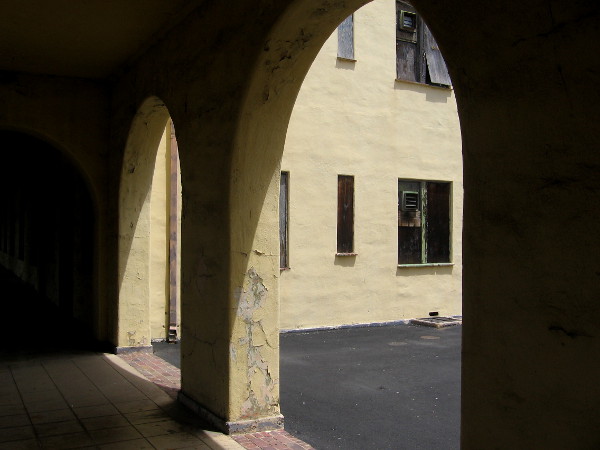
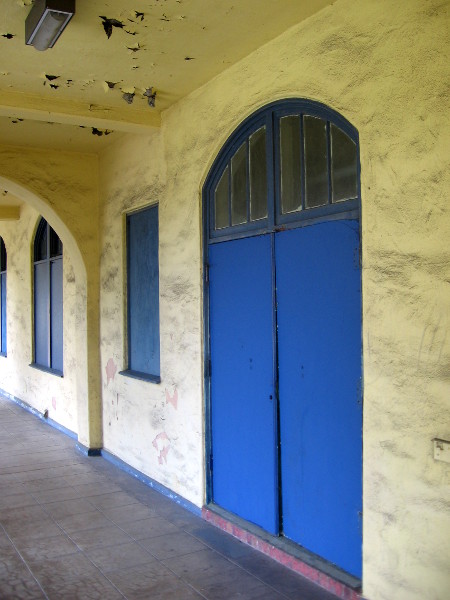
Photo of old, shuttered windows taken through dark, weathered archway.
During my recent ramble around NTC Liberty Station, I did some nosing around. I took a few interesting photos of a lonely portion of the old Naval Training Center San Diego that has yet to be renovated. A row of old, weathered barracks along the North Promenade are vacant and locked shut. But if you listen closely, and use a little imagination, it might be possible to hear the echoing footsteps of naval recruits from decades ago.
The old Naval Training Center in Point Loma is a fascinating place with a significant place in United States history. The idea of training sailors in San Diego was first explored in 1915 by Assistant Secretary of the Navy, Franklin D. Roosevelt. When the complex was finally built in 1921, it was a modest affair, with several barracks, a mess hall, dispensary, and a few other buildings. It expanded over the years, and during World War II accommodated as many as 25,000 naval recruits. The center remained a vital resource of the United States Navy until 1997, when it was finally closed. Today around 50 original buildings along the beautiful promenade (which also includes the old base’s command center and parade ground) have been restored. Liberty Station has become a popular destination for shopping, recreation and a variety of cultural attractions.
In the following photos, you might note the architecture is mostly based on the Spanish Colonial Revival style, particularly the long arcades. The design of the Naval Training Center was directly influenced by buildings constructed for the 1915 Panama-California Exposition in San Diego’s Balboa Park.
Looking along the length of long-abandoned Barracks 5 at NTC Liberty Station.Some old military base signs still can be seen at the historic Naval Training Center San Diego.Buildings 18 and 25 remain empty. Most structures in the complex are renovated and have commercial or nonprofit tenants.Simple geometry of functional architecture influenced by the Spanish Colonial Revival style.Peeling yellow paint on buildings where new United States Navy recruits used to train.There’s something strangely picturesque in this image of lonely decay.With a bit of imagination, one can picture newly recruited sailors moving and marching through the Naval Training Center years ago.This boldly painted blue door really catches the eye!Walking around NTC Liberty Station is like taking a small voyage back into history.
…
To enjoy future posts, you can “like” Cool San Diego Sights on Facebook or follow me on Twitter.
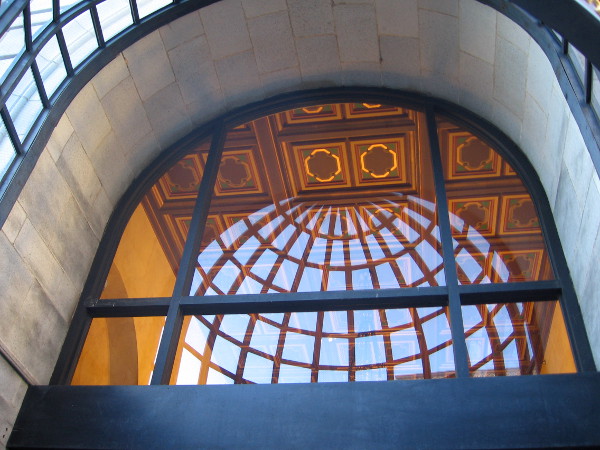
Looking up through the elegant building entrance at the lobby’s ceiling.
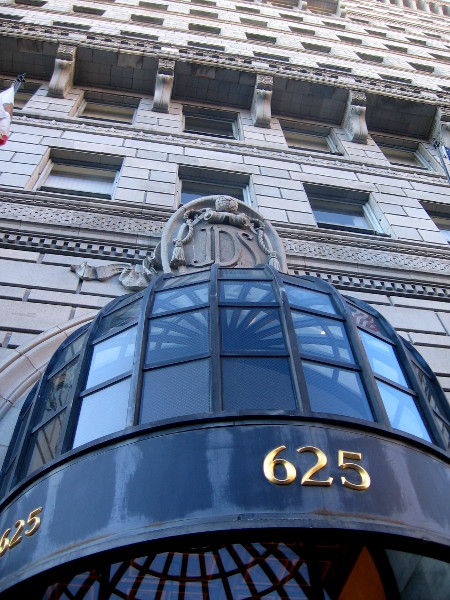
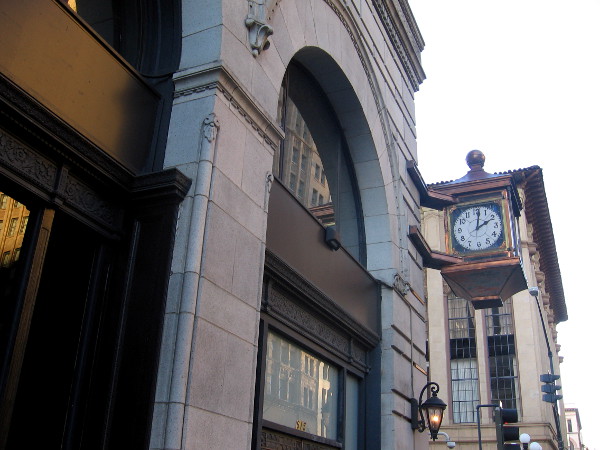
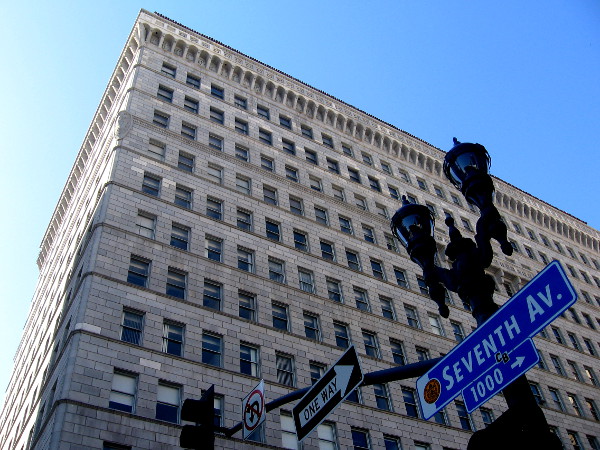
The John D. Spreckels Building (not to be confused with the Spreckels Theater Building also located on Broadway) is a cool sight that is definitely worth a few photographs. When it was completed in 1924, the stately 14-story building was the tallest in San Diego. Today, according to an article I read, there are plans to convert it into apartments.
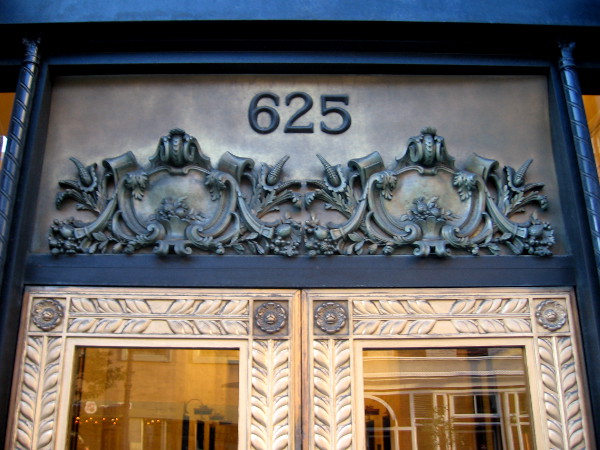
Built by sugar heir, entrepreneur and philanthropist John D. Spreckels, the historic building is one of only a few old high-rises that grace San Diego. The building isn’t terribly distinctive or flashy, but it certainly is monumental. Simple lines give it a feeling of grandeur and permanence. The small entrance, to my eye, is uncommonly elegant.
Front of the John D. Spreckels Building as seen from across Broadway.Pointing my camera upward for a cool photo.Beautiful ornamental artwork at the door of 625 Broadway in San Diego.Elegant old clock mounted on corner of the John D. Spreckels Building.This classy historic high-rise adds unique flavor to a shiny modern city.
…
To enjoy future posts, you can “like” Cool San Diego Sights on Facebook or follow me on Twitter.
A tiny barn and rabbits in a narrow garden, located between the sidewalk and a local acupuncture and wellness center.
I recently walked through Bankers Hill, a historic neighborhood just north of downtown San Diego. During my small adventure I got a few interesting photos on and around Olive Street. Like the sights in any city, they form a mixture. Here’s a flavor of Olive in the San Diego cocktail!
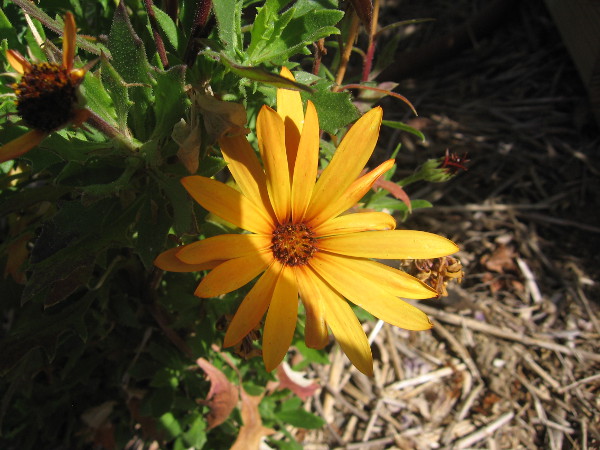
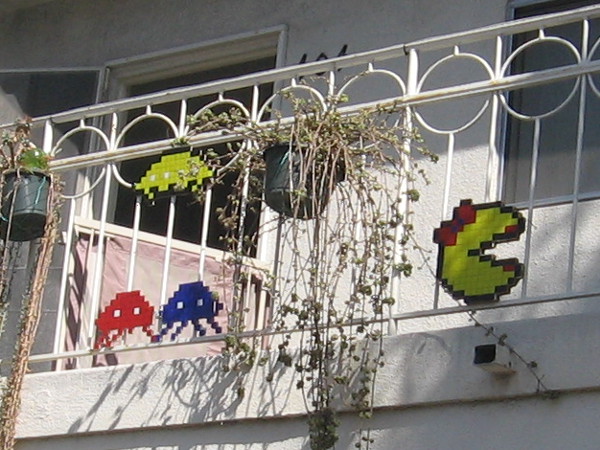
Flower at the HERBIN Community Garden Project, among plots where many herbs are grown.Ms. Pacman, Space Invaders and other video game legends hang out on a porch railing.The Amy Strong House, built in 1906 on Olive Street by an enterprising San Diego dressmaker, or couturier.Amy Strong lived here until 1912. The house is in the early 20th century Craftsman architectural style.A few unusual features anticipated the highly eccentric Amy Strong Castle at Mt. Woodson, which she built years later.Future site of Olive Street Park. This small plot of land for years has been the object of contention, as you might have seen on KUSI News’ Turko Files.Huge medical office building between Fifth and Sixth Avenue just north of Olive being demolished.Cool art hangs on residential building at corner of Fourth and Olive.
…
To enjoy future posts, you can “like” Cool San Diego Sights on Facebook or follow me on Twitter.
The Casa del Rey Moro garden is a small gem in Balboa Park.
In the 1920s, prominent San Diego architect Richard Requa visited Europe. During his extensive tour, he carefully observed a Moorish king’s garden in Ronda, Spain. A book that he later authored stated: “In my travels about the world, I had found three gardens of outstanding interest and beauty… The finest of these is in a small town in southern Spain called Ronda. Viewing it for the first time, there came instantly to mind the spontaneous exclamation, ‘I hope to die before I see anything more lovely.'”
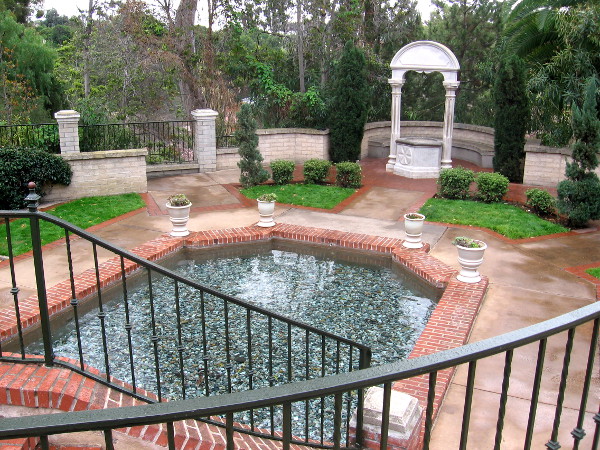
Inspired by what he’d seen, Requa designed the Casa del Rey Moro garden (House of the Moorish King) for the 1935 California Pacific International Exposition in San Diego’s Balboa Park. In 1997 the garden and adjacent House of Hospitality were rededicated after a major renovation. The garden, today a popular wedding spot, includes a replica of the wishing well in the Guadalajara Museum of Gardens.
Balboa Park is an enormous place full of competing attractions. It’s strange how I always feel compelled to walk through the Casa del Rey Moro garden!
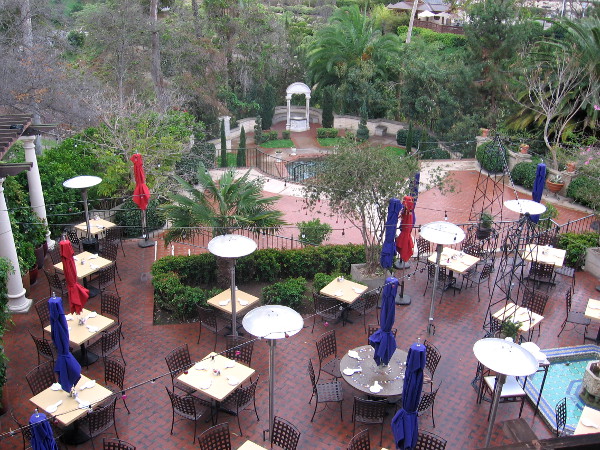
View from a House of Hospitality balcony of The Prado restaurant’s outdoor seating near the garden.A wishing well frames two elegant, classic fountains.Beautiful elements are reproduced from a Moorish garden in Ronda, Spain.A close up photo of one picturesque fountain.Visitors read about the interesting history of the Casa del Rey Moro garden.“In my travels about the world, I have found three gardens of outstanding interest and beauty…”One can see why this venue is extremely popular for weddings.
…
To enjoy future posts, you can “like” Cool San Diego Sights on Facebook or follow me on Twitter.






































 Cool San Diego Sights!