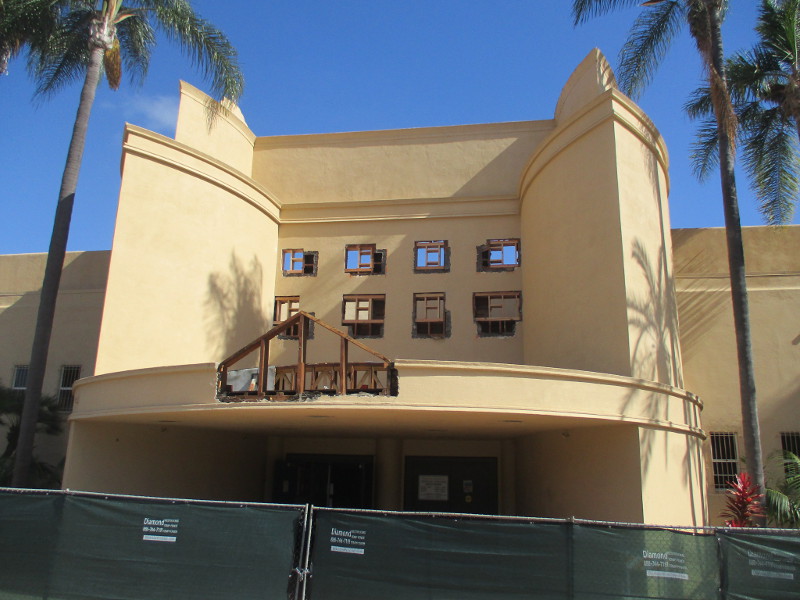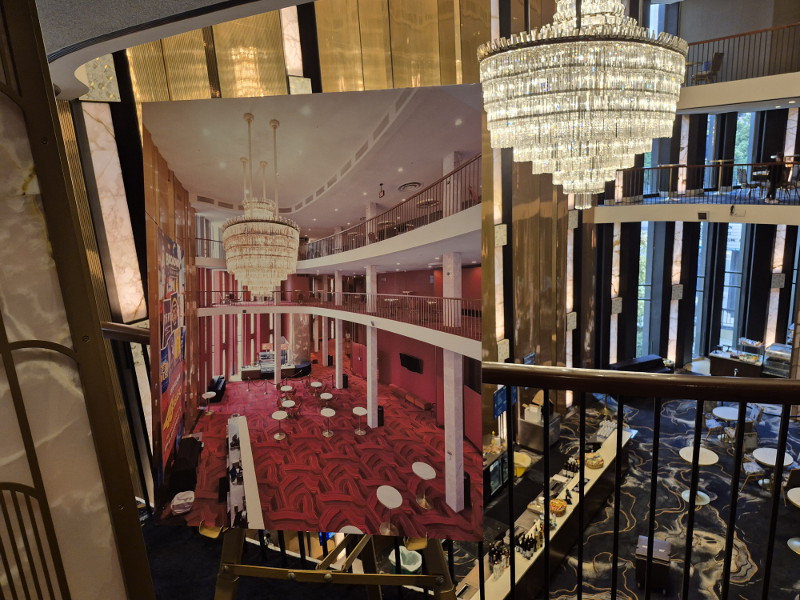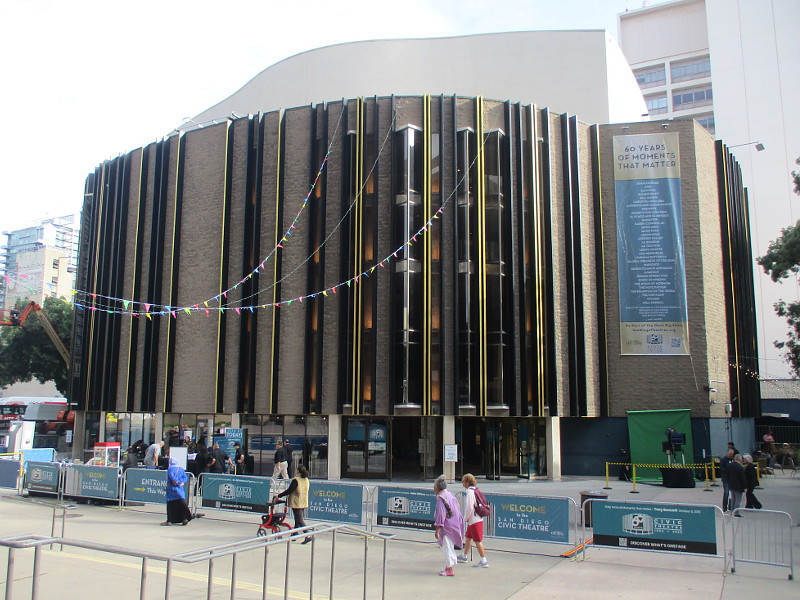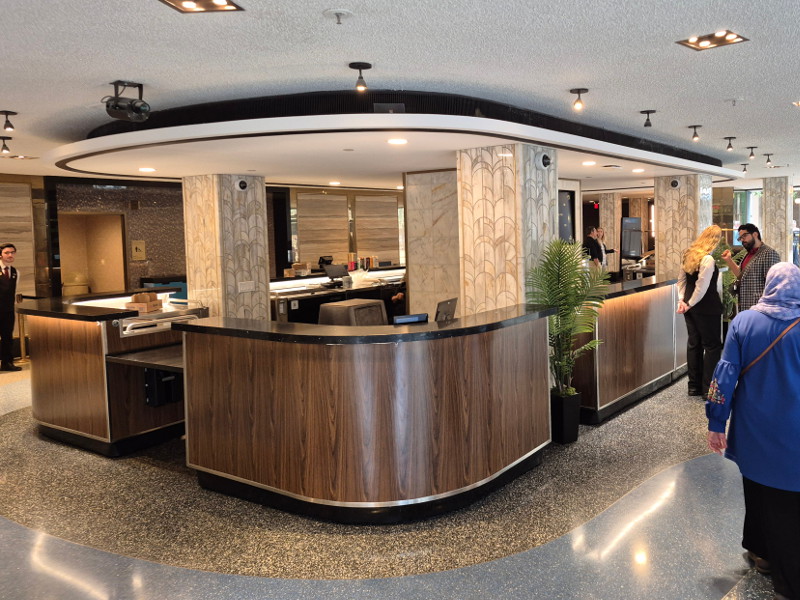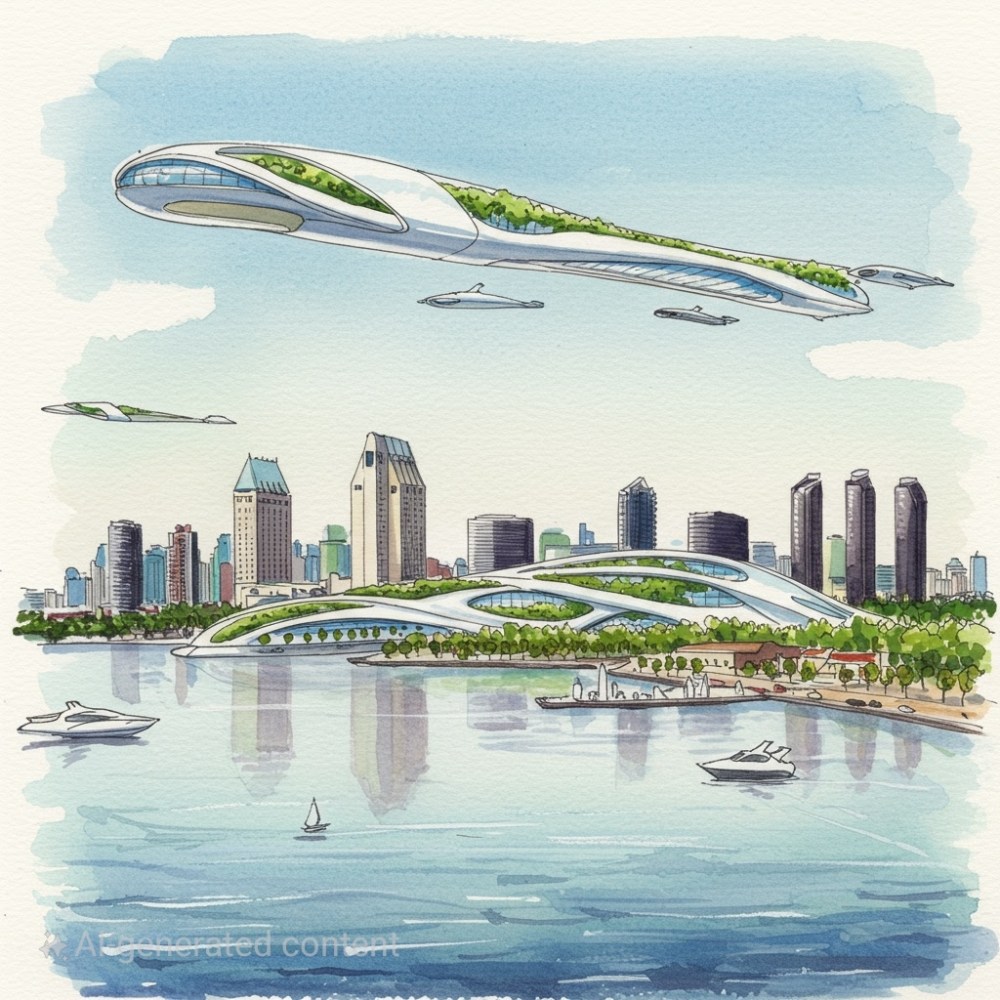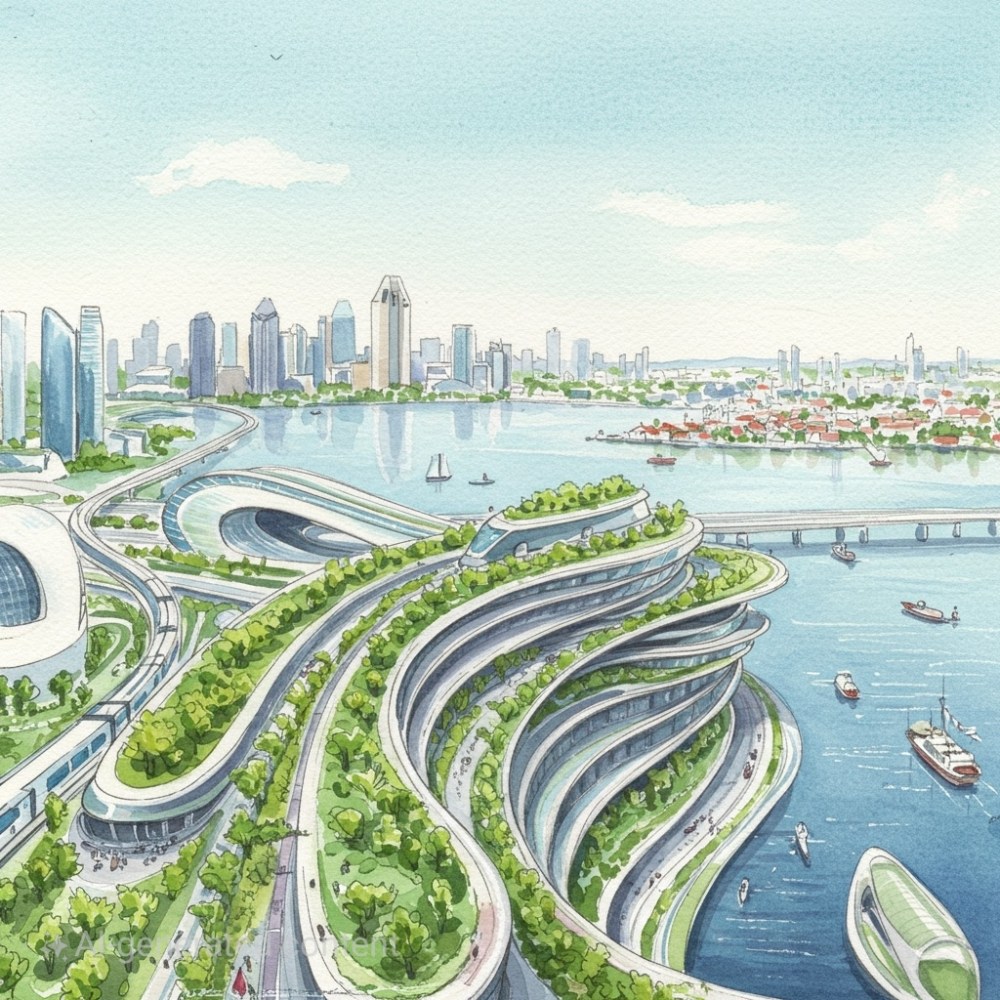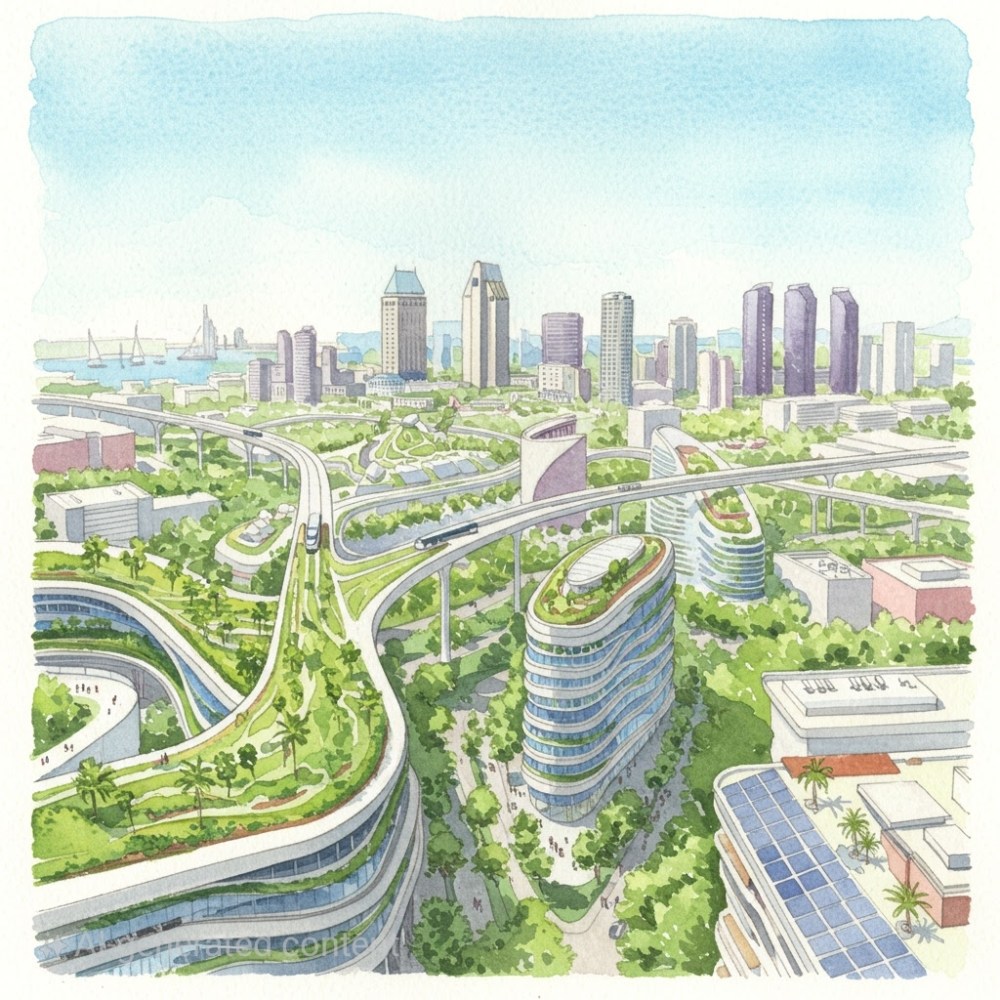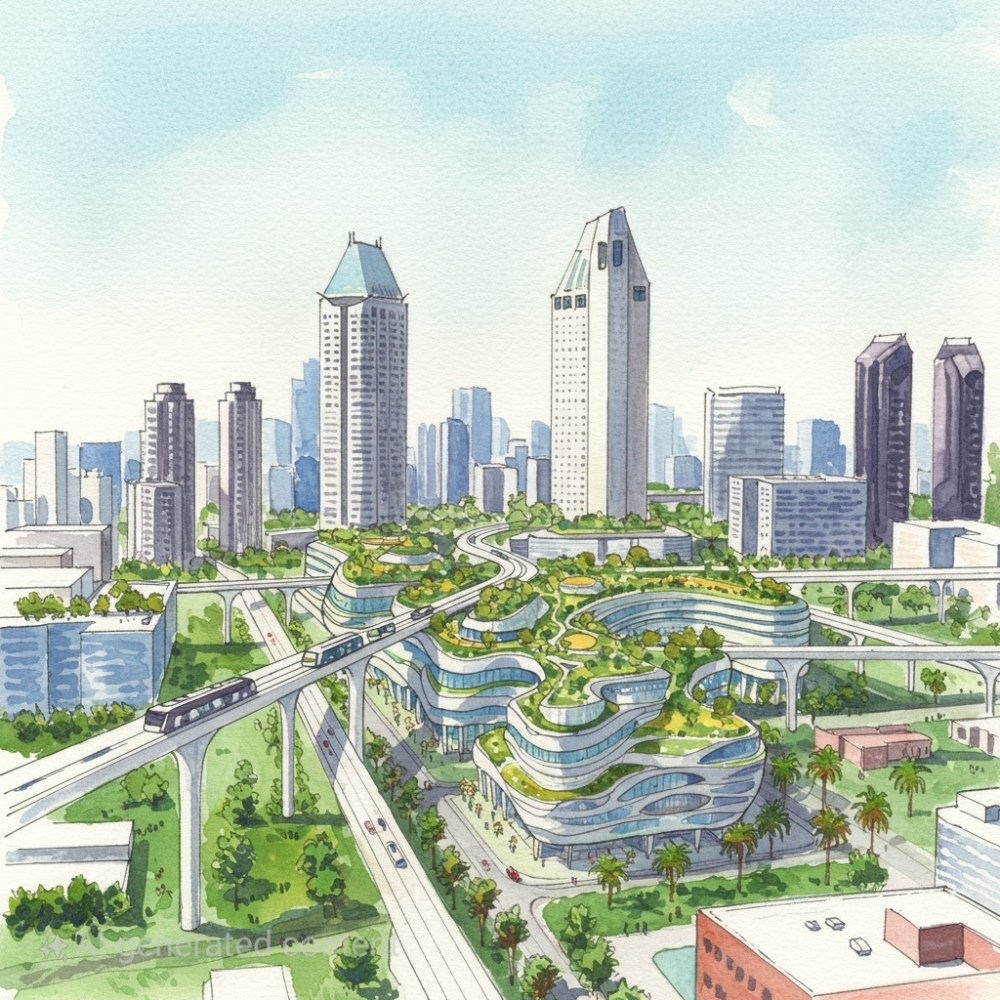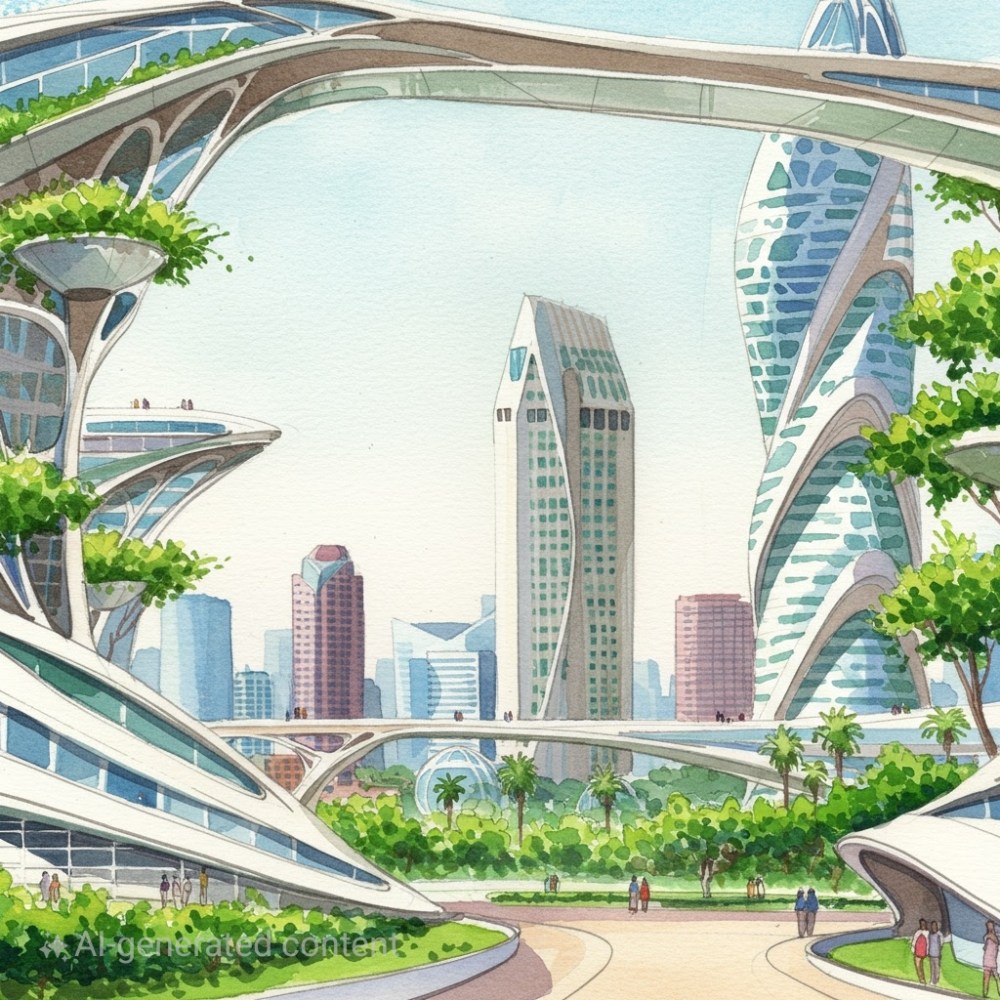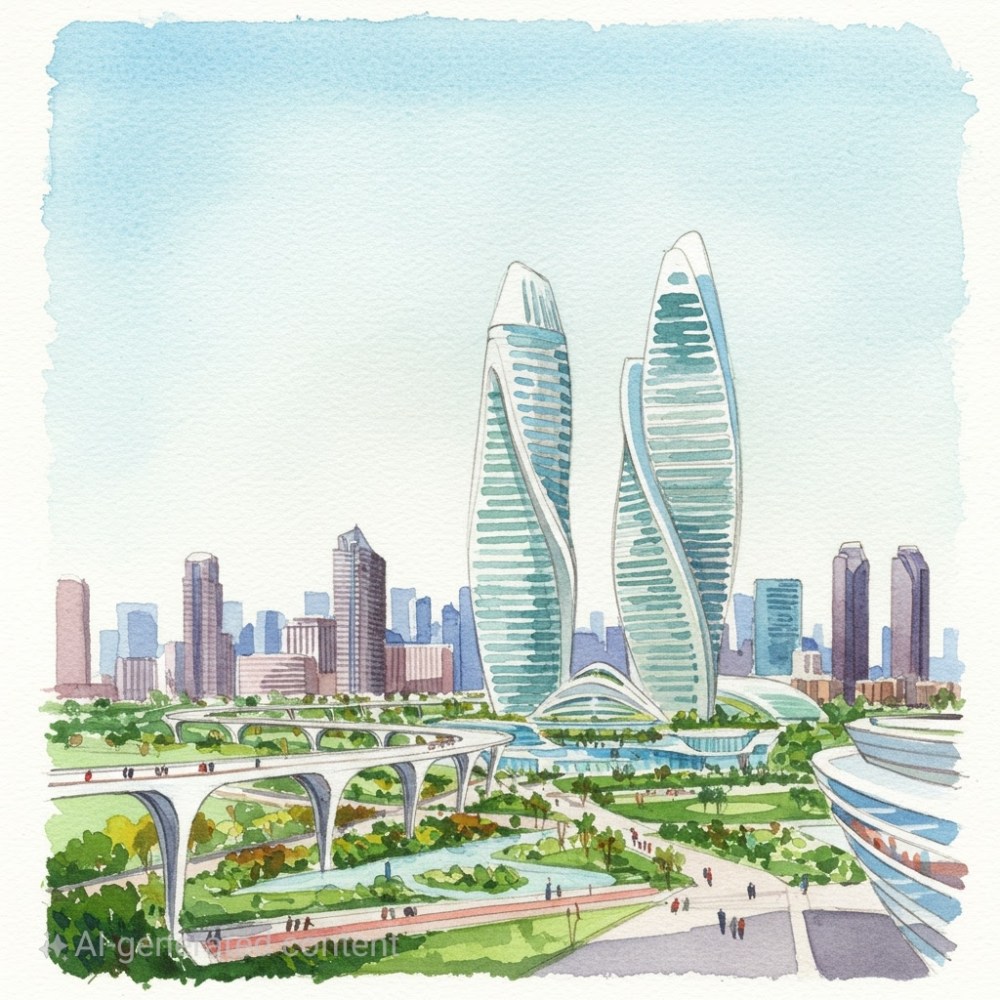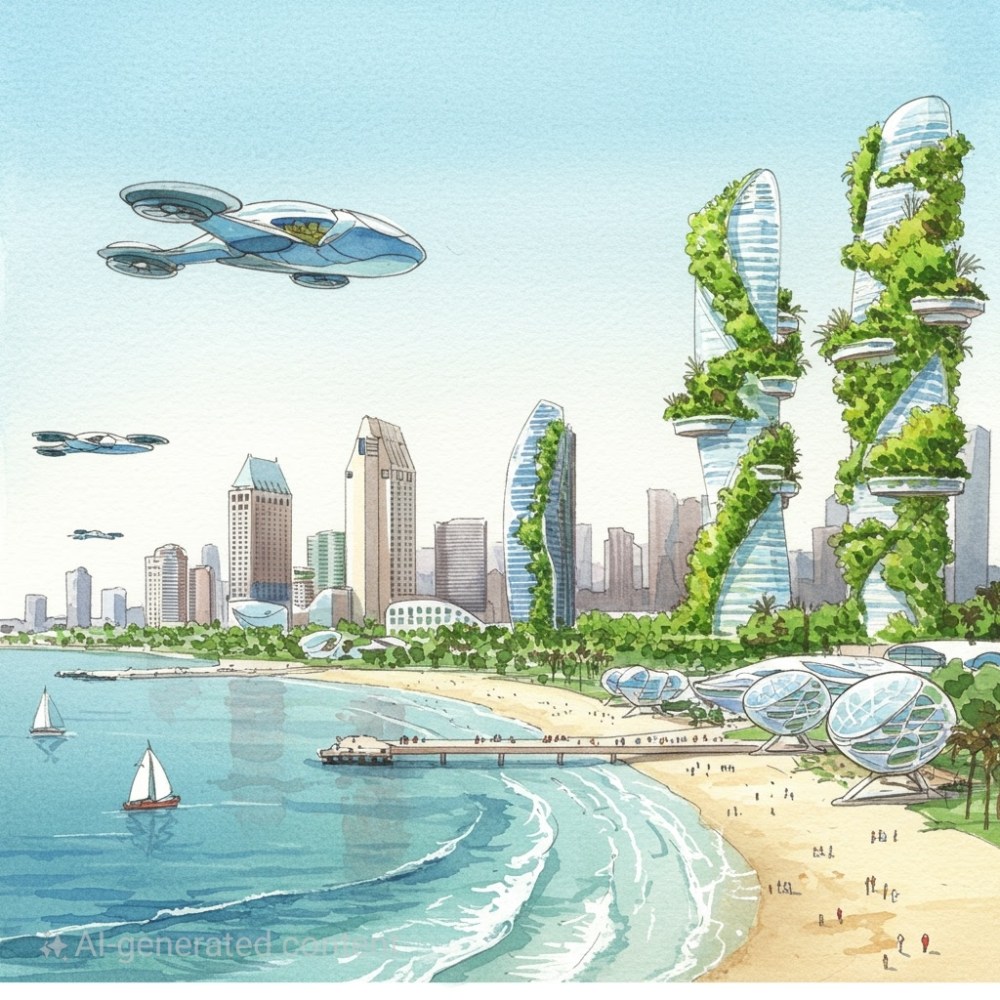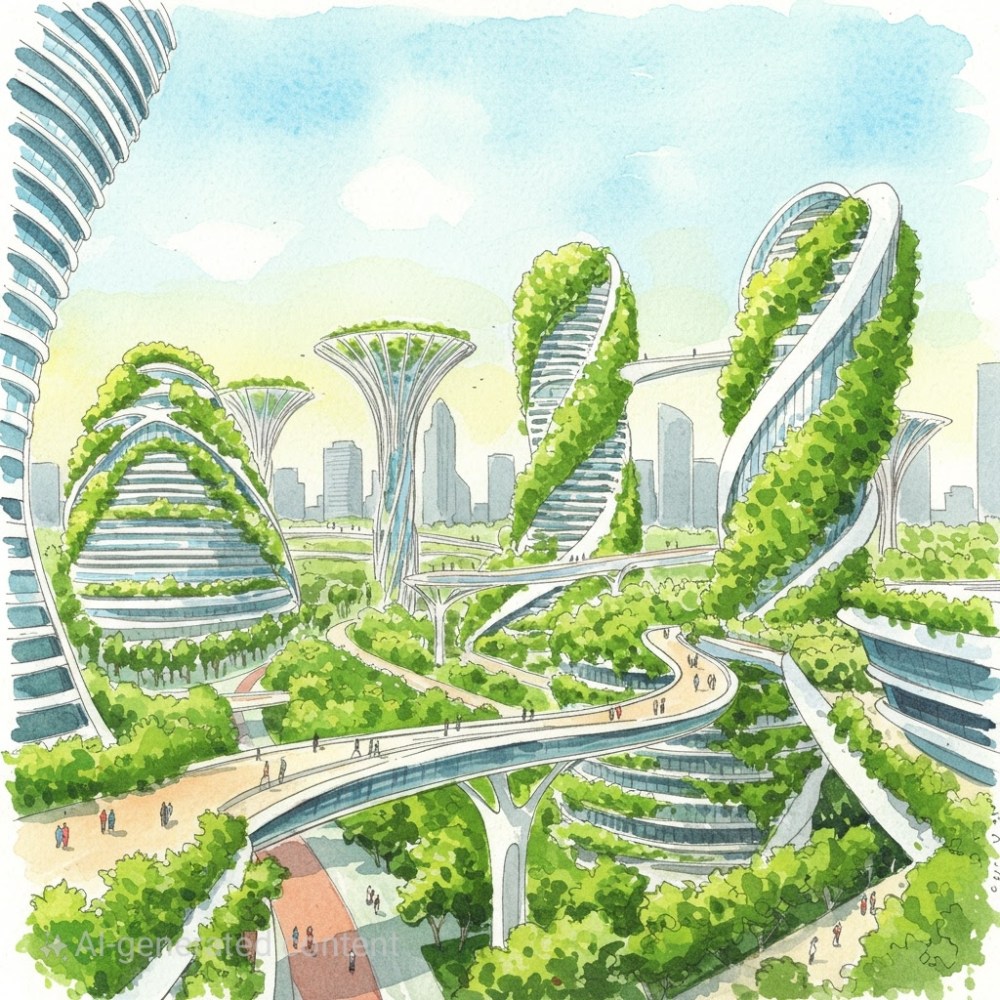
What will the city of San Diego look like 100 years in the future? I was curious how today’s generative AI might picture it.
I used the prompt “San Diego 100 years in the future” with the AI Drawing Assist on a Samsung Galaxy phone. The images that were produced were rather startling!

Futuristic buildings, exotic elevated walkways and new modes of transportation…but how realistic is it to believe such radical transformations could be made in only one hundred years? (Um…anti-gravity?)
Nevertheless, this is pretty cool!
I see identifiable aspects of the present city skyline are incorporated into images, as well as San Diego Bay. Notice how certain recognizable buildings are arbitrarily positioned or weirdly altered by the artificial intelligence?
I love how lush green vegetation sprouts everywhere including the roofs and sides of many buildings. I love how curvy and absurdly complicated some of the conjectured architecture is!
(Earlier this year, I performed a similar experiment. I used the term “Balboa Park at sunset” to produce generative AI images in the same way. The results were bizarre. This is what I got!)
Okay–now for today’s experiment. AI draws the future of San Diego…
…
I post new blogs pretty often. If you like discovering new things, bookmark coolsandiegosights.com and swing on by occasionally!
I live in downtown San Diego and love to walk around with my camera! You can follow Cool San Diego Sights via Facebook or X.
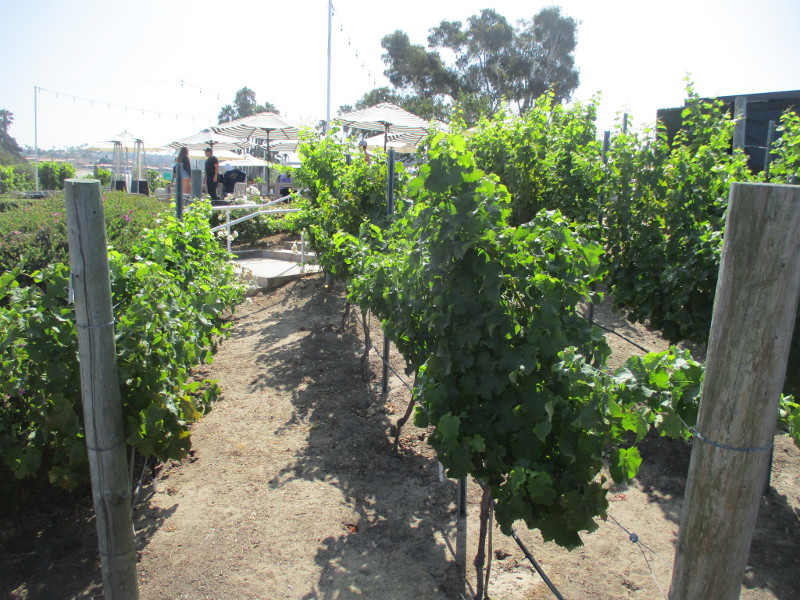
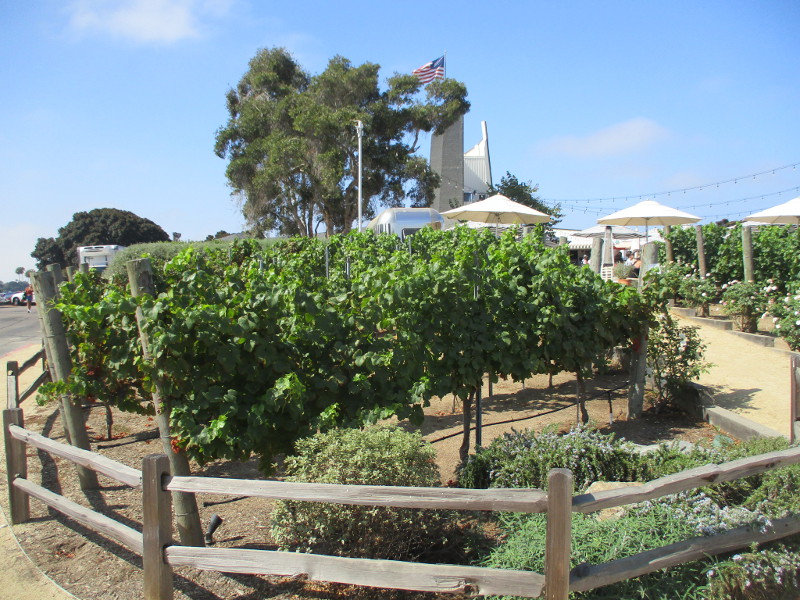
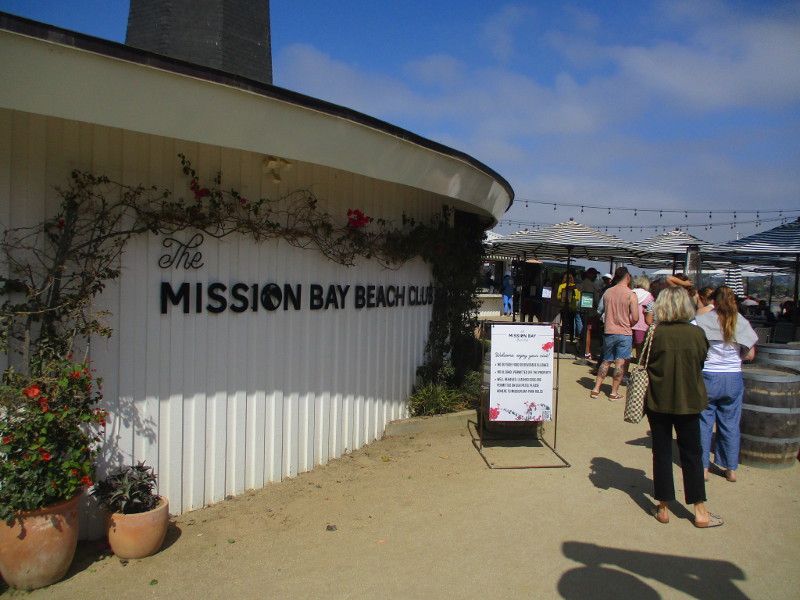
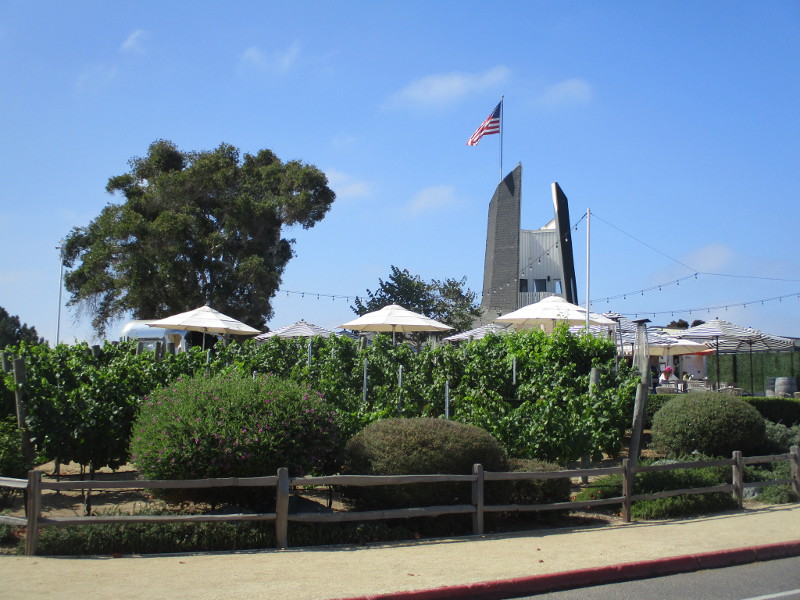
One might expect beach blankets on the sand and picnics on the grass around San Diego’s sunny Mission Bay. But a vineyard?
Well, yes!
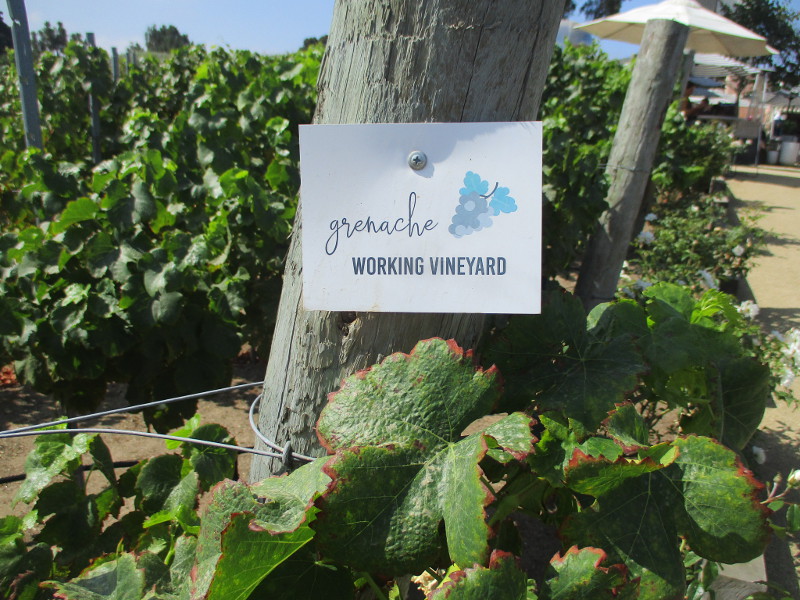
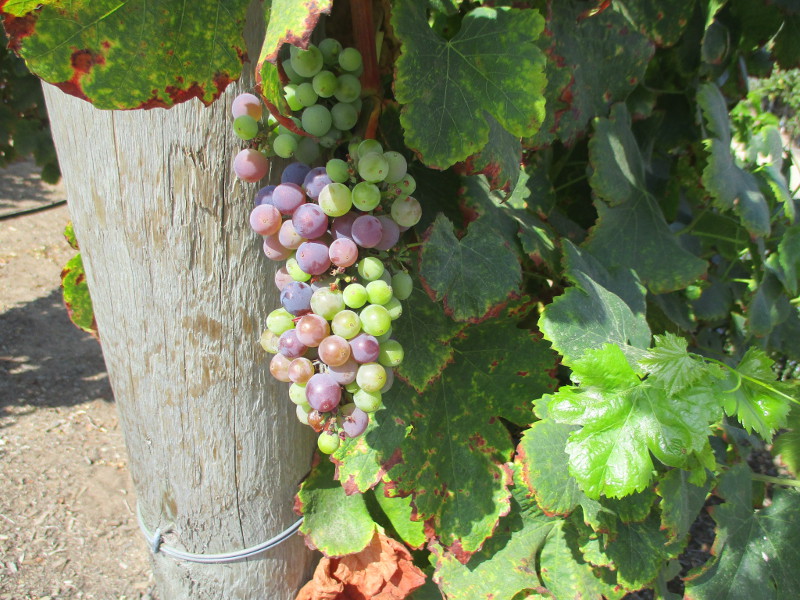
A small working vineyard can be found below the patio of the Mission Bay Beach Club. With its Superbloom vegan coffee shop, yoga classes, artisan market, wine tastings and view of the nearby water, the unique gathering place is a hipster’s paradise.
The other day I walked past the distinctive building that is now home of the Mission Bay Beach Club.
As I walked past the landmark structure, which was built in 1969 by architect Richard Lareau, I recalled how decades ago it housed the Mission Bay Visitors Information Center. Travelers arriving in San Diego on Interstate 5 could exit at Clairemont Drive and learn all about our city’s attractions.
Before it eventually became the Mission Bay Beach Club, the building sat vacant for years.
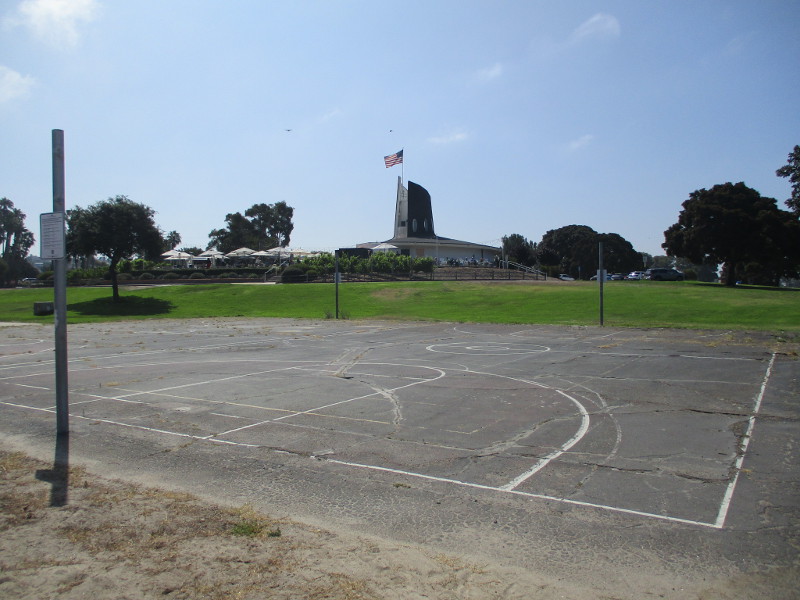
In the 1980s, I used to shoot hoops at the nearby basketball courts with ordinary guys from the neighborhood. Those courts have been neglected, dismantled.
…
I post new blogs pretty often. If you like discovering new things, bookmark coolsandiegosights.com and swing on by occasionally!
I live in downtown San Diego and love to walk around with my camera! You can follow Cool San Diego Sights via Facebook or X.
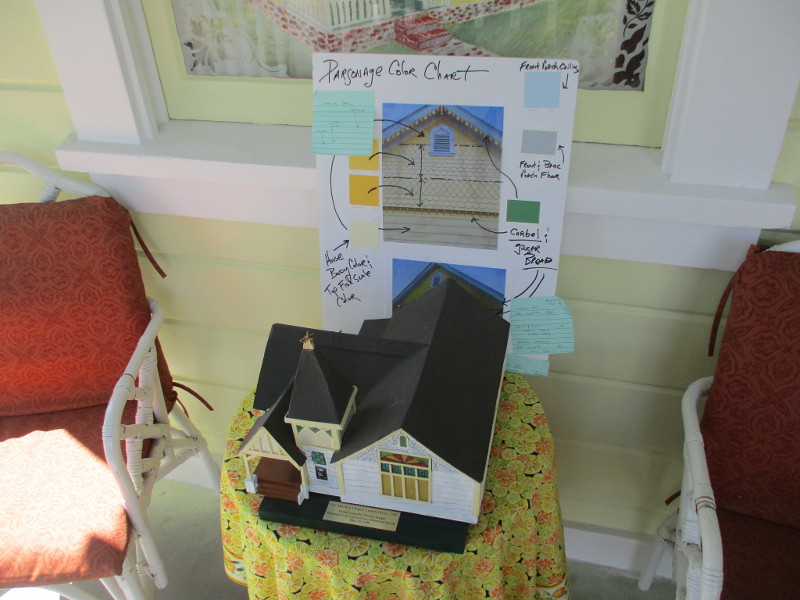
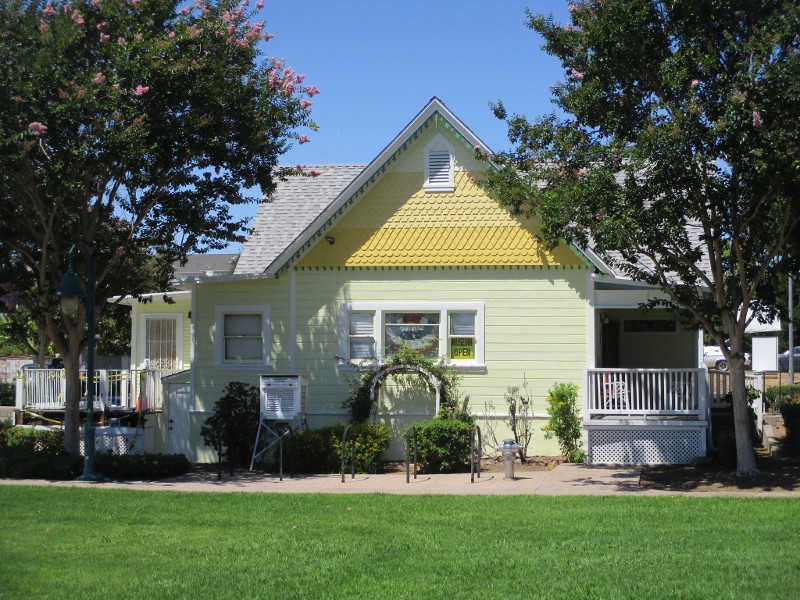
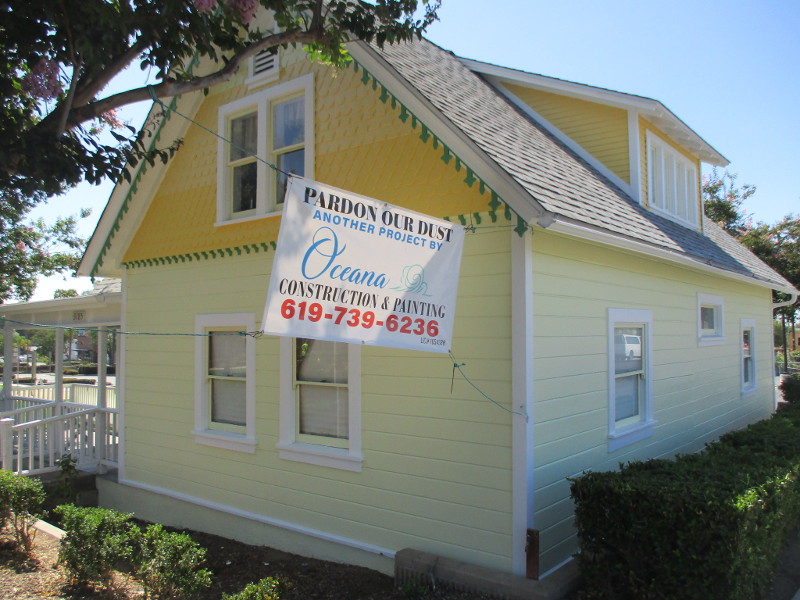
A major project to modernize and beautify Lemon Grove’s Parsonage Museum was recently completed. The home of the Lemon Grove Historical Society has a brand new paint job! And new interior lighting!
You might recall how the exterior of the historic structure used to be almost entirely the same yellow. The new paint job tastefully adds a bit of texture and Victorian personality, with the addition of different yellows (including one that seemed to me slightly lime green), and small green highlights. (Appropriately for historically agricultural Lemon Grove, the colors of citrus fruit!) You can see for yourself in my photographs, which were taken today.
LED lighting has also been installed in the ceiling of both floors of the museum, providing much more light (particularly upstairs) with, importantly, no damaging ultraviolet output.
If you’ve never visited the Parsonage Museum, you really should. The old house’s history in Lemon Grove (it began in 1897 as the community’s first church) is on display, as well as exhibits concerning notable people, places and events in Lemon Grove.
Soon, I was told, a new exhibit will be installed concerning the 2012 Lemon Grove Little League Senior Division’s amazing run all the way to the Senior League World Series, where they won the West Region Tournament!
…
I post new blogs pretty often. If you like discovering new things, bookmark coolsandiegosights.com and swing on by occasionally!
I live in downtown San Diego and love to walk around with my camera! You can follow Cool San Diego Sights via Facebook or X.
The newly opened Sweetwater Park on Chula Vista’s bayfront has a very unique architectural feature.
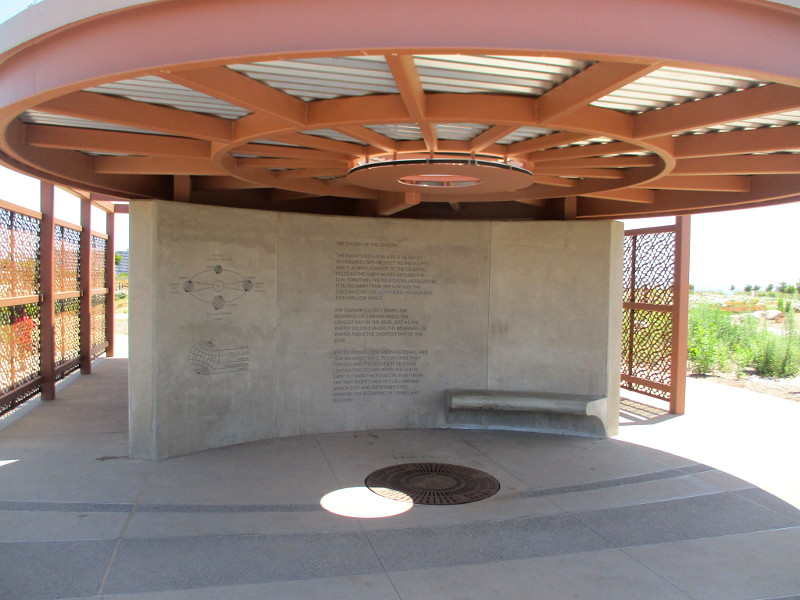
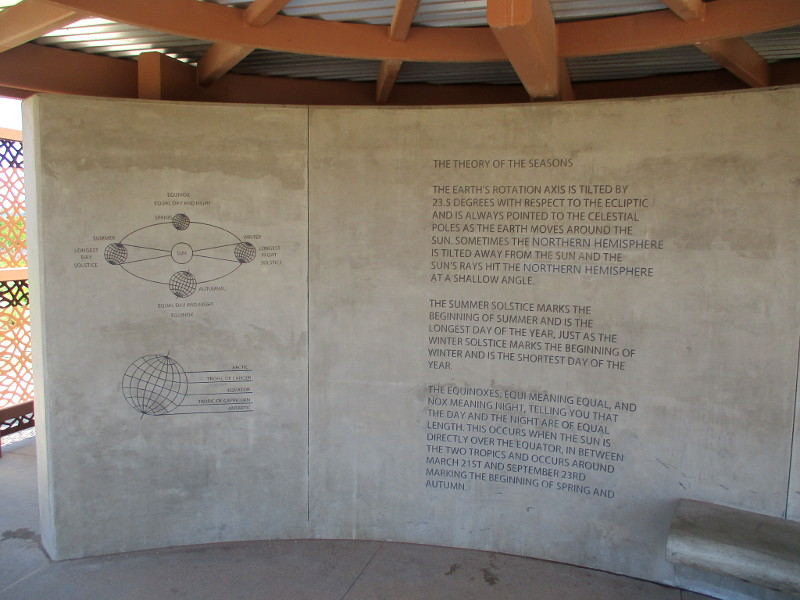
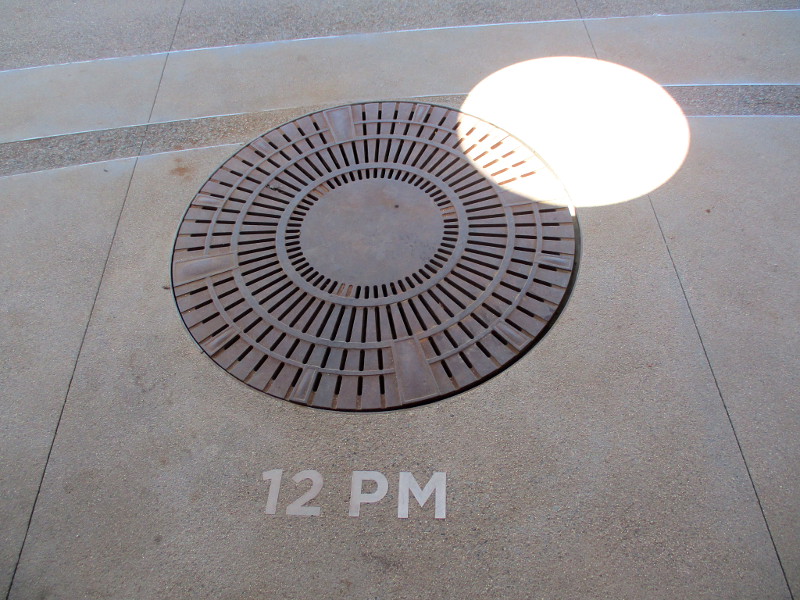
At one end of the public restrooms a sheltering roof contains an oculus. What’s an oculus? It’s a circular opening that allows natural sunlight to shine through.
During the day, the oculus casts a circle of light on bands in the concrete underfoot. You can see those curving bands in the above photograph.
By observing the light’s movement along the bands, Earth’s rotation can be tracked, as the sun “rises” in the east and “sets” in the west. Depending on the season of year, and the angle of the sun’s path through the sky, the projected light will follow a particular band.
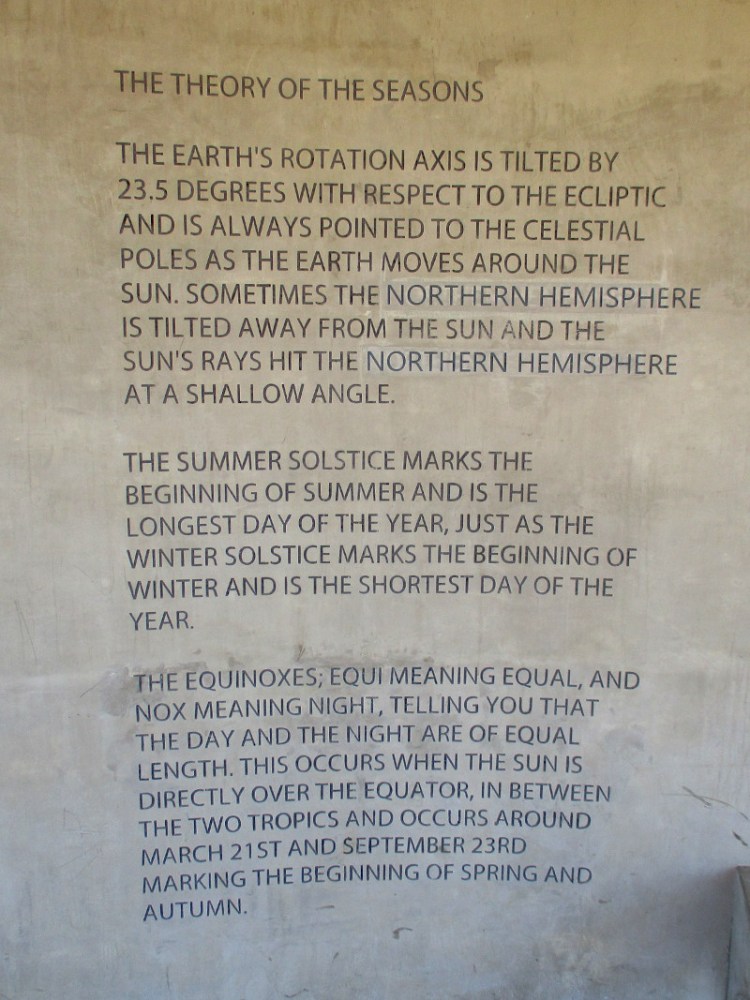
On the wall is an explanation…
The Theory of the Seasons.
The Earth’s rotation axis is tilted by 23.5 degrees with respect to the ecliptic and is always pointed to the celestial poles as the Earth moves around the Sun. Sometimes the Northern Hemisphere is tilted away from the Sun and the Sun’s rays hit the Northern Hemisphere at a shallow angle.
The Summer Solstice marks the beginning of Summer and is the longest day of the year, just as the Winter Solstice marks the beginning of Winter and is the shortest day of the year.
The Equinoxes; Equi meaning Equal, and Nox meaning Night, telling you that the day and the night are of equal length. This occurs when the Sun is directly over the Equator, in between the two Tropics and occurs around March 21st and September 23rd marking the beginning of Spring and Autumn.
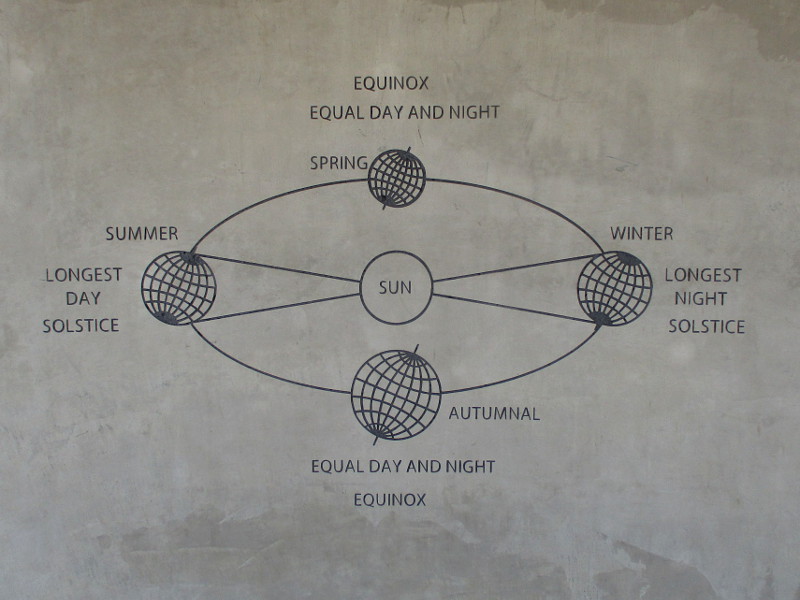
If this sounds like a whole bunch of mumbo-jumbo, fortunately there’s an illustration to help one visualize the concept…
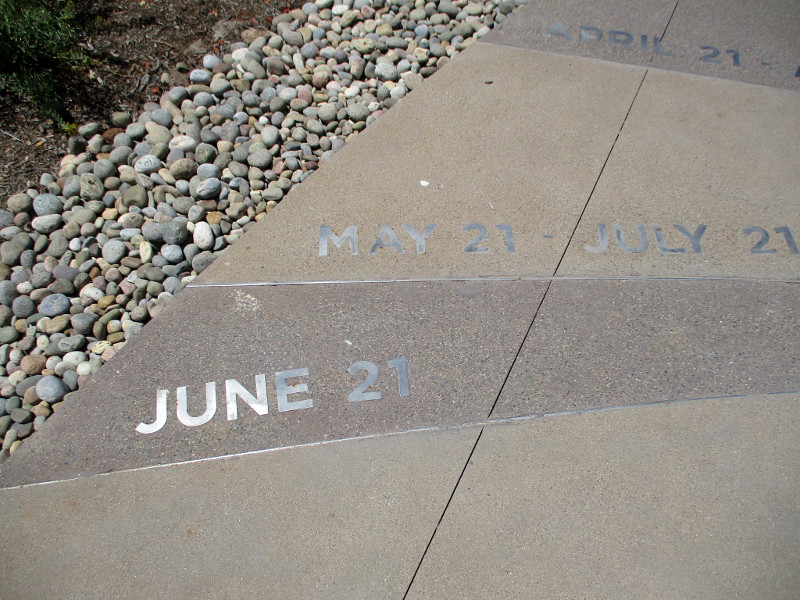
Now consider my next photograph.
On June 21, as the summer begins, the sun will be at its highest in San Diego, here in the Northern Hemisphere.
Because of this, the sun’s light projected through the oculus will come from a high angle, and follow the lower band as Earth turns and the day progresses.
It just so happened that I visited Sweetwater Park on June 18. I arrived at the oculus a little after noon.
You can see the circle of light is almost atop the June 21 band, and is now to the right of the central drain, past the 12 PM mark.
The light would continue to move right along the same band as the sun descends in the sky toward the horizon.
…
I post new blogs pretty often. If you like discovering new things, bookmark coolsandiegosights.com and swing on by occasionally!
I live in downtown San Diego and love to walk around with my camera! You can follow Cool San Diego Sights via Facebook or X.
Major improvements are coming later this year to Balboa Park, San Diego’s beautiful crown jewel!
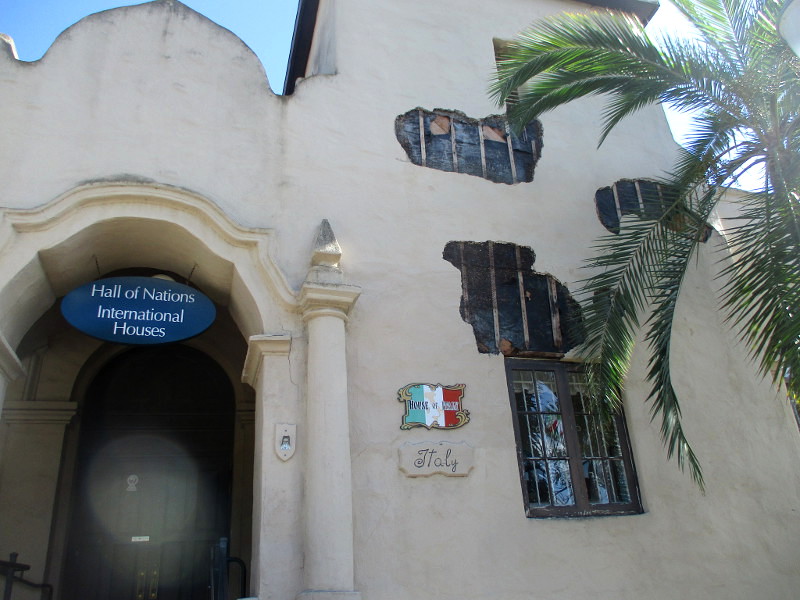
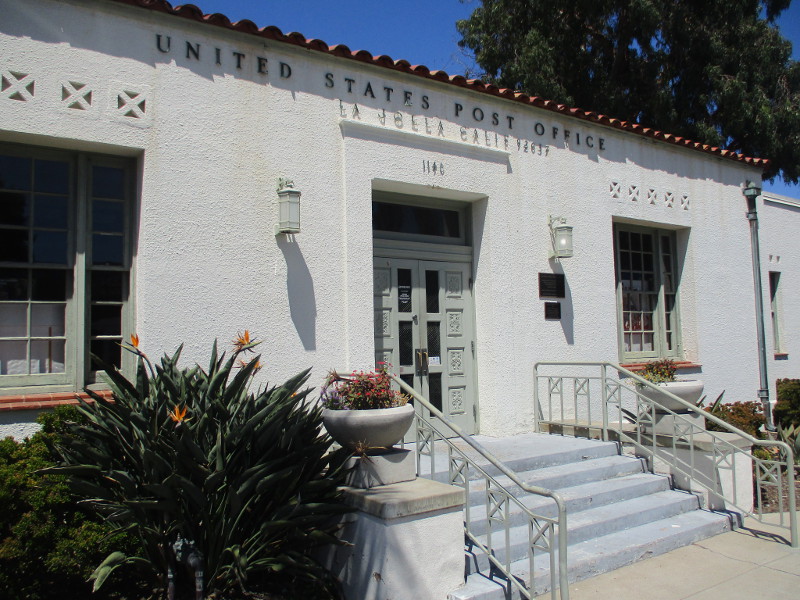
In the park’s Palisades area, new historical markers are on the way. They’ll be placed near the entrances of the San Diego Automotive Museum, Municipal Gymnasium, and the Comic-Con Museum.
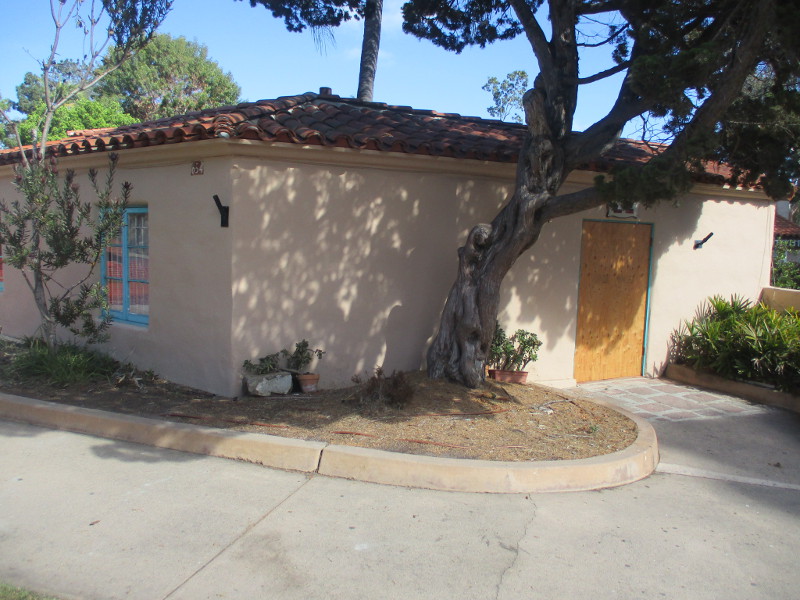
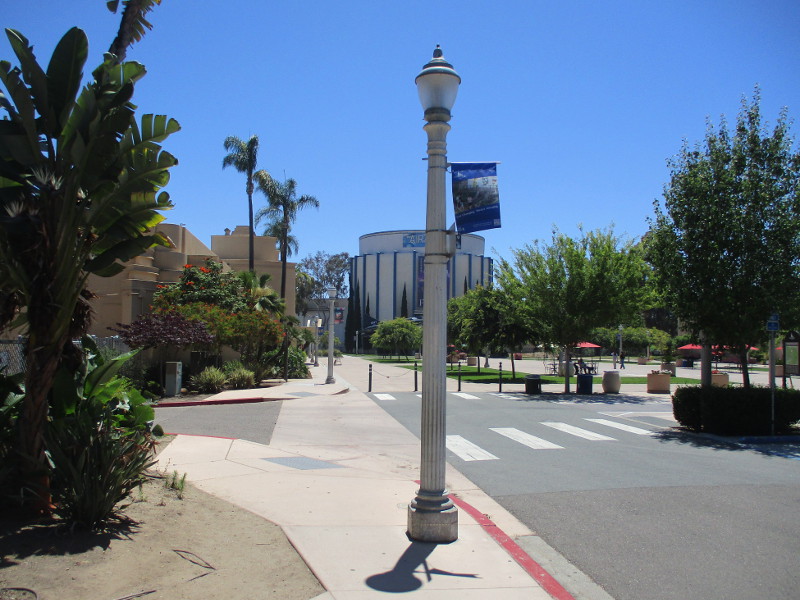
In addition, nearby lamp posts that date from the 1935 California Pacific International Exposition are to be sandblasted and restored to look like new!
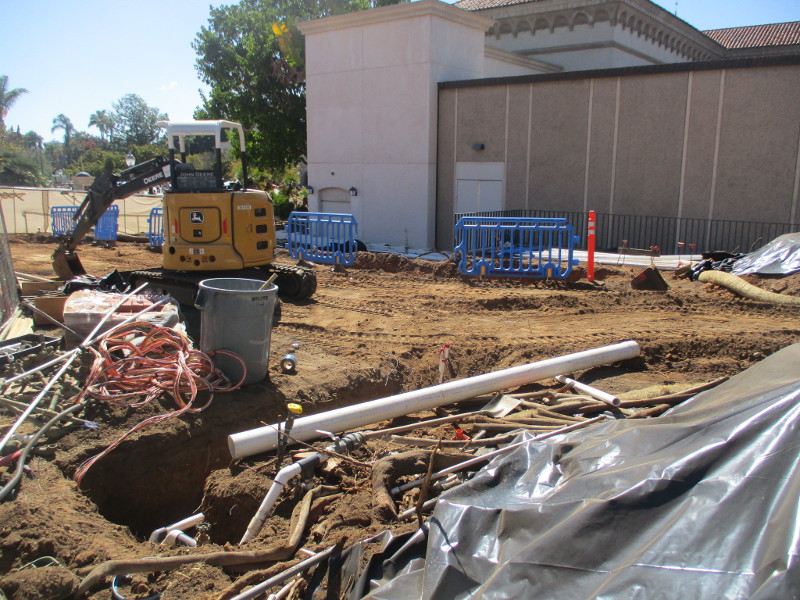
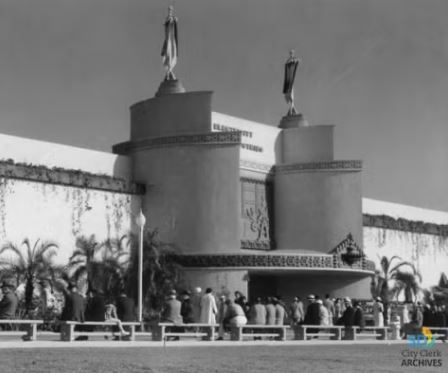
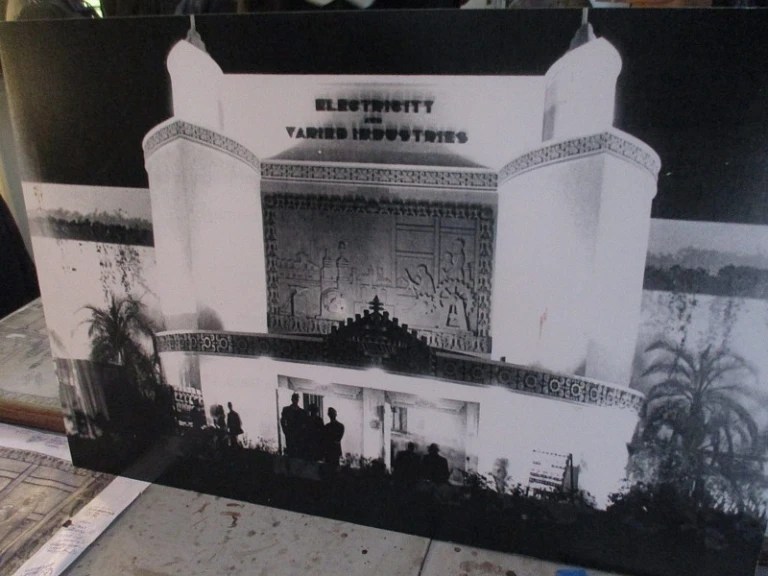
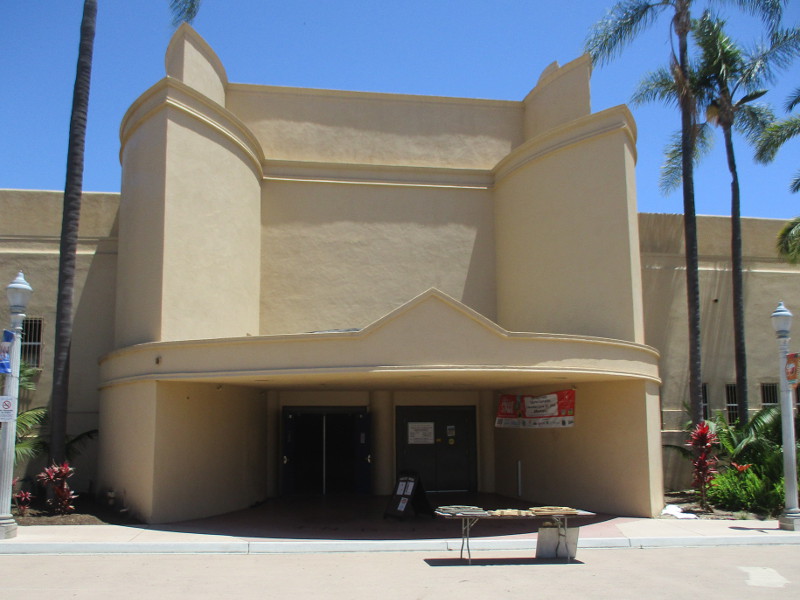
Most importantly, the Municipal Gymnasium’s exterior is going to change substantially, to more closely match the building’s appearance in 1935, when during the exposition it was called the Palace of Electricity and Varied Industries. You can learn more about the changes that are coming by clicking here.
These fantastic improvements are being made through a partnership between the Balboa Park Committee of 100 and the City of San Diego.
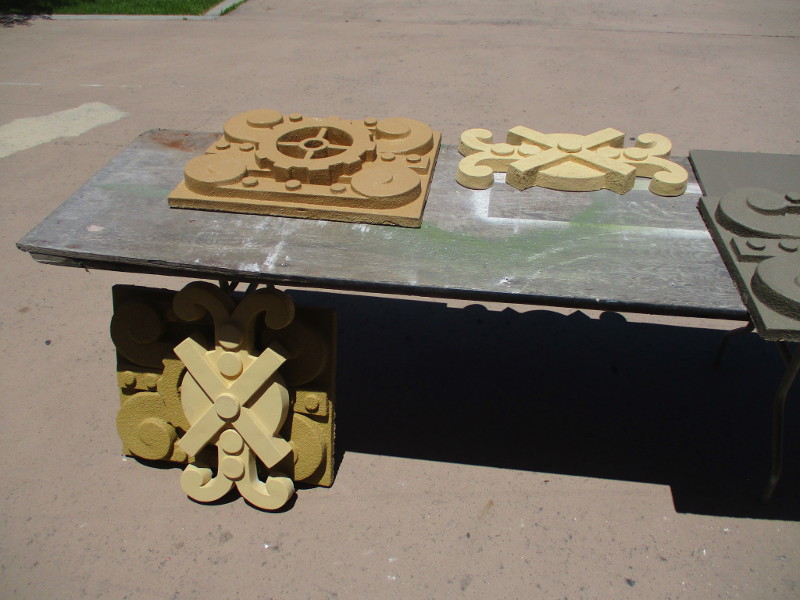
Today some folks were meeting in the park making decisions concerning the project, including the placement of the historical signs, and the exact color of the sculptural ornamentation that will added to the front of the Municipal Gymnasium.
I stumbled upon today’s activity, learned a little about the project, and took a few photos.
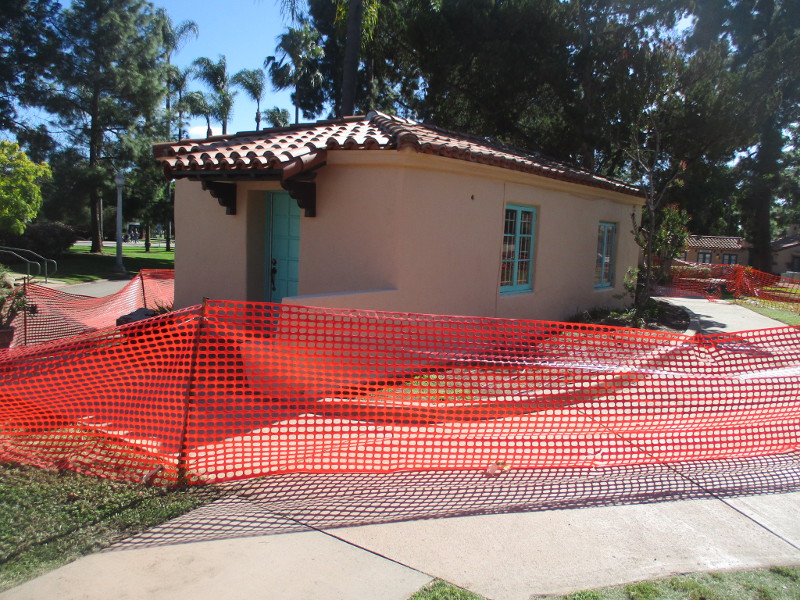
At the start of September, construction fencing will appear in the Palisades and work will begin! I was told all should be completed by Thanksgiving.
The next photo is how today’s Municipal Gymnasium appeared in 1935, when it was the Palace of Electricity and Varied Industries…
Photo courtesy of San Diego City Clerk Archives.
This is how it might appear when all is said and done…
And this was observed today…
Sample ornamental panels, or sculptural blocks, were on a table and being considered today. They will be made of glass-fiber reinforced concrete.
I learned the band of ornamentation above the coming 14 feet by 22 feet cold-cast bronze relief mural will be slightly darker than the building’s current color. The ornamentation on the marquee will be more of a bronze color.
Some of the original 1935 lamp posts that will be restored!
…
I post new blogs pretty often. If you like discovering new things, bookmark coolsandiegosights.com and swing on by occasionally!
I live in downtown San Diego and love to walk around with my camera! You can follow Cool San Diego Sights via Facebook or X.
A few weeks ago, during another walk through National City’s historic Heritage Square, I noticed a plaque in front of the Elizur Steele House. Years ago I blogged about the house, which according to information I’d found was then commonly called the Steele-Blossom House. My blog post concerning the handsome old Victorian house and other nearby structures can be found by clicking here.
I don’t know when this plaque appeared, but it contains additional information and historical photos. I’ll share it…
The Elizur Steele, Crandall-Ennis House (1879) is a Queen Anne style home and was one of the first three homes to be build in National City by Elizur Steele. Elizur and his brother John built 12 homes in the city as well as the once popular and glamorous Royal Hotel, which sat at the corner of 8th St. and National City Blvd.
According to information I once found, the house was moved to its present location in Heritage Square in 1976.
Elizur Steele was the real estate agent of Frank Kimball, who built nearby Brick Row in 1887. To learn more about Heritage Square, visit my old blog post here.
Does the Elizur Steele House appear familiar? It is used in National City’s official logo!
If you’re knowledgeable about the history of National City and have memories or more details concerning this house (or Heritage Square), please leave a comment below!
My most recent photographs, from early 2025…
…
I post new blogs pretty often. If you like discovering new things, bookmark coolsandiegosights.com and swing on by occasionally!
I live in downtown San Diego and love to walk around with my camera! You can follow Cool San Diego Sights via Facebook or X.
The bright yellow building at 510 North Coast Highway 101 in Encinitas is hard to miss. It was the original train station in Encinitas, as its appearance suggests. Today it’s home of Pannikin Coffee & Tea, a popular community gathering place.
I found few other indications of the building’s interesting railroad history: a marker near the front door (seen above) and an old Encinitas station sign.
I walked inside Pannikin Coffee & Tea and was disappointed there was so little on display specifically concerning the railroad station’s history. I asked two employees about it, who told me about the salvaged Encinitas station sign up near the ceiling.
According to this article, the original Encinitas train station was built in 1887. The building moved from trackside to its present location in the early 1970s and in 1980 became a coffeehouse.
It’s a uniquely attractive building, with its bright color and old Victorian charm.
…
I post new blogs pretty often. If you like discovering new things, bookmark coolsandiegosights.com and swing on by occasionally!
I live in downtown San Diego and love to walk around with my camera! You can follow Cool San Diego Sights via Facebook or X.
The San Diego Museum of Art in Balboa Park has plans to substantially expand. The proposed renovation of the West Wing celebrates the centennial of the museum in 2026.
A physical model of an early design concept for this new West Wing extension can be viewed today inside the museum. The design was conceived by the prestigious international architectural firm Foster + Partners, and the model is part of an exhibition that shows their other work around the world.
I got a look at the model yesterday and took some photos so you might visualize how Balboa Park might appear in the future. Obviously, this is important to everyone in San Diego.
Like other Foster + Partners projects, the design will create an experience that is spacious and full of natural light. The proposed expansion will add 37,000 square feet of gallery space, including an immersive digital space. There will also be a community engagement pavilion that will provide interactive space for artists and visitors alike.
As you can see, this large expansion will replace today’s sculpture court and garden.
Personally, I’m not really sure what to think of it.
I like the general idea, but how will this new structure fit in with the surrounding, entirely different Spanish Colonial Revival architecture? It will stand across Plaza de Panama from the much smaller Timken Museum, which also has a more sleek, modern appearance, perhaps creating a visual counter-balance.
The very first thing that struck me is how small the historic San Diego Museum of Art appears beside their wide, taller expansion. No other buildings are shown in the model such as the nearby House of Charm, but I imagine it, too, will appear small in comparison.
My main concern is how this fairly tall new structure might obscure or partially obscure views of Balboa Park’s iconic California Tower, which is arguably the most beloved sight in all of San Diego. The expansion will almost certainly hide the California Tower from people who are in the north part of the Plaza de Panama.
It also appears the design work at the sculpture court and garden by renowned modernist Malcolm Leland will disappear. You can see photographs of that in one of my past blog posts by clicking here.
Well, what do you think?
If you visit the model in the museum, there’s a nearby video that helps you better visualize how this expansion will appear, and an opportunity to leave your own comment.
Here’s a photo I took a few years ago from a short distance up El Prado. You can see the present-day sculpture court with its columns and banners to the right of the California Building’s dome.
The proposed expansion, to my eye, appears to be about three times the height of the sculpture court. So imagine that. The California Tower should remain visible down El Prado, fortunately.
…
I post new blogs pretty often. If you like discovering new things, bookmark coolsandiegosights.com and swing on by occasionally!
I live in downtown San Diego and love to walk around with my camera! You can follow Cool San Diego Sights via Facebook or X.
Should you ever visit the museum in La Jolla, step into this space and look up. Move about as your eyes are lifted. See how the light and form changes as if by magic. (Come to think of it, doesn’t the entire world operate this way?)
The Axline Court was designed by famed postmodern architect Robert Venturi. It was part of a 1996 expansion of the historic building, which originally was home to newspaper journalist and philanthropist Ellen Browning Scripps.
The star-shaped Axline Court, a spacious atrium with simple white columns, bright high angled windows, and curvaceous neon fringed fins descending from the ceiling, was retained in the building’s latest redesign and expansion. Today it can be used as a gallery, or for weddings or special events.
I wandered about the space and took these photos. You have to experience the magical effect yourself. I personally wonder how, with the neon, it appears at night.
(My next blog post will concern an exhibition of art by Hoover High School students along one wall. You can glimpse a bit of it on a table in the next photo.)
…
I post new blogs pretty often. If you like discovering new things, bookmark coolsandiegosights.com and swing on by occasionally!
I live in downtown San Diego and love to walk around with my camera! You can follow Cool San Diego Sights via Facebook or X.
Large display cases contain old photographs, newspaper articles, documents and preserved artifacts representing the bridge’s complex history–from initial proposals to its construction to its grand opening and beyond.
Peering into the displays, reading descriptions, I learned interesting facts about the Coronado Bridge, including:
In 1926, the Spreckels Companies announced bold plans to construct a steel bridge linking Coronado to San Diego, envisioning an engineering marvel with arched spans and a lift section for maritime traffic. This news thrilled many residents eager for a fast connection to the mainland. Advocating for a tunnel instead, the Navy raised concerns about navigation and national defense. Despite initial optimism and plans for completion by 1928, the project became embroiled in decades of debate, delays, and revisions.
Mosher’s design was initially rejected by the state’s civil engineers for being too expensive. They proposed a more traditional trestle bridge, suggesting it be painted rust red or pink. Ultimately, Mosher’s design was accepted.
Water-tight caissons were placed on the bay bottom and pumped dry, while prestressed concrete pilings were driven over 100 feet into the bay floor. To complete the 30 towers, 100,000 tons of concrete were transported by barge for the construction of the piers.
The superstructure contractor Murphy Pacific fabricated the steel box girders in San Francisco before dismantling them and loading them onto a barge called “Marine Boss,” whose deck was the size of a football field. The barge was towed to San Diego Bay, where the girders were reassembled. The “Marine Boss” boom was extended to 290 feet to lift the massive box girder sections–up to 96 feet long and weighing as much as 215 tons–into place.
The final span, one of 27 girders, was placed on May 28, 1969. Coronado Mayor Paul Vetter participating in the informal ceremony, signing his name on the metal plate at the edge of the girder.
Mosher’s original design included lights on the low side of the railing, but they were cut to reduce costs… Coronado resident Carol Cahill…flew to Sacramento, successfully petitioned officials, and secured their installation. The lights were added in April 1970.
In 1970, the bridge received the National Award of Merit for Most Beautiful Bridge from the American Institute of Steel Construction.
The bridge’s 90-degree curve allows it to reach a height of 200 feet, tall enough for an empty aircraft carrier to pass underneath, while also providing the necessary length to ramp down to the Coronado side, which is significantly lower than the San Diego side that connects to Interstate 5.
I was told by a library employee that this fascinating exhibit will be on view through early May, 2025. Go check it out!
…
I post new blogs pretty often. If you like discovering new things, bookmark coolsandiegosights.com and swing on by occasionally!
I live in downtown San Diego and love to walk around with my camera! You can follow Cool San Diego Sights via Facebook or X.