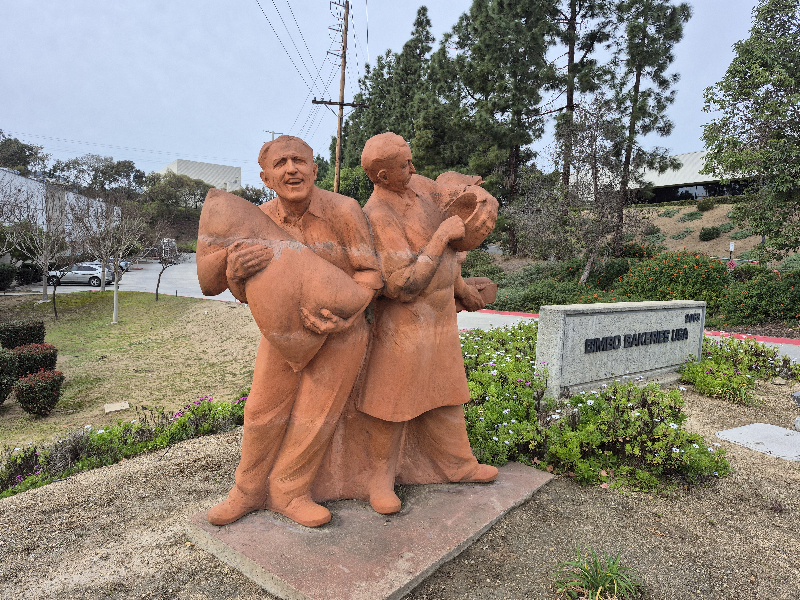
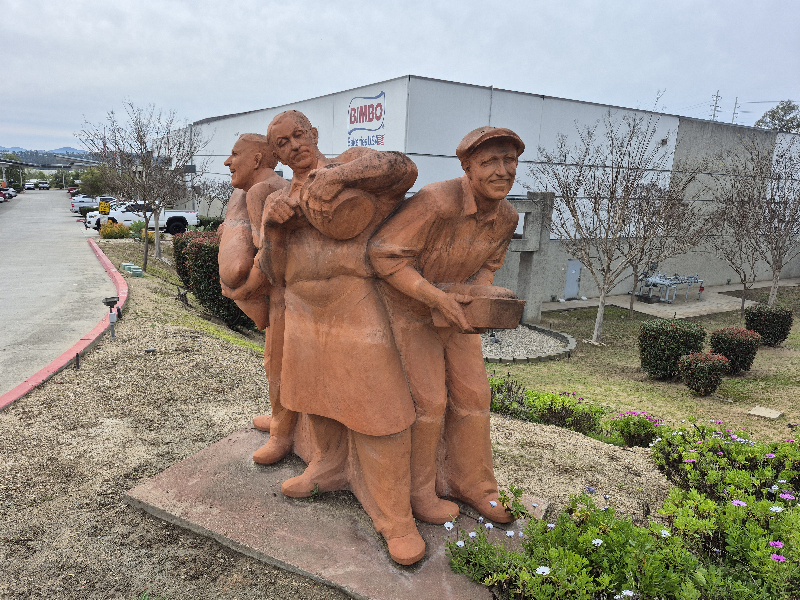
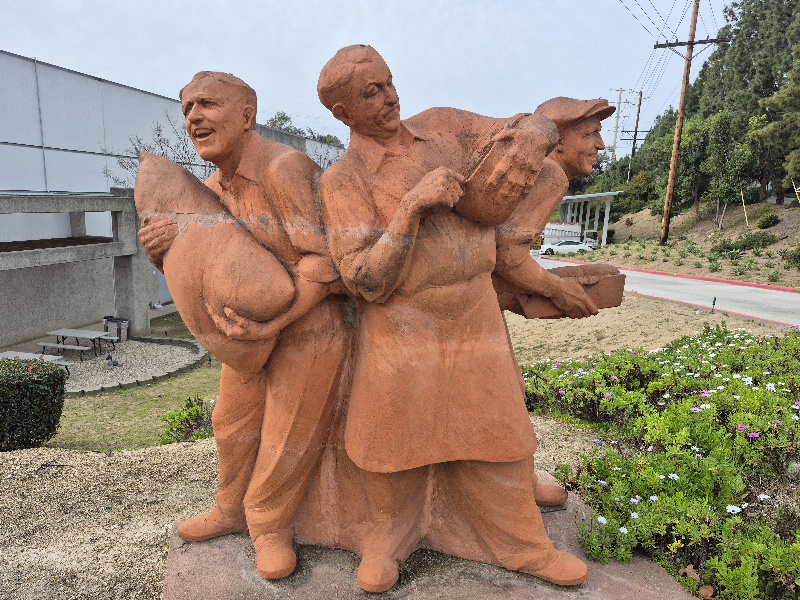
The Bakers is the title of this really great, expressive public art in Escondido. Because the sculpture stands at the end of a seldom visited street, very few people see it or know that it exists!
Created by the amazing San Diego artists T.J. Dixon and James Nelson in 1993, The Bakers consists of three 7-feet-tall terracotta male figures that represent the process of baking bread. The lively art was commissioned by and for the Fornaca Family Bakery.
Today it stands by the driveway leading to Bimbo Bakeries USA, at 2069 Aldergrove Avenue.
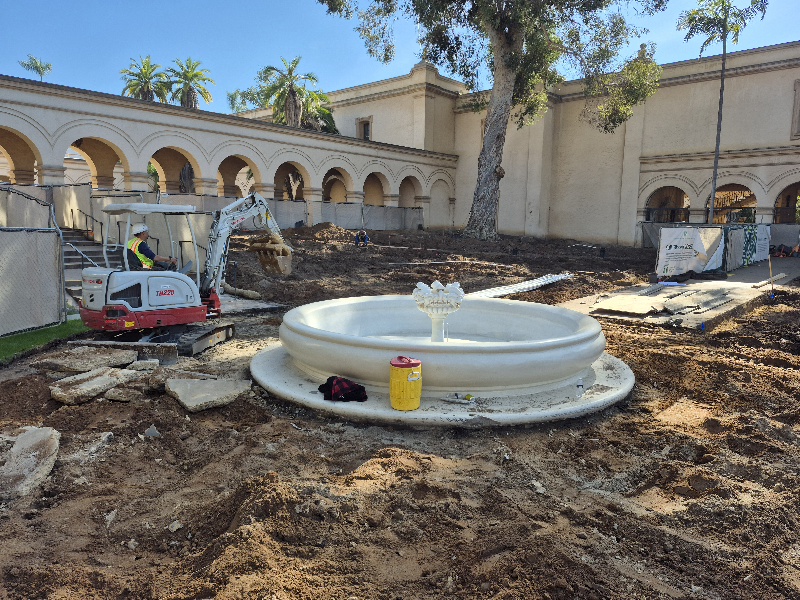
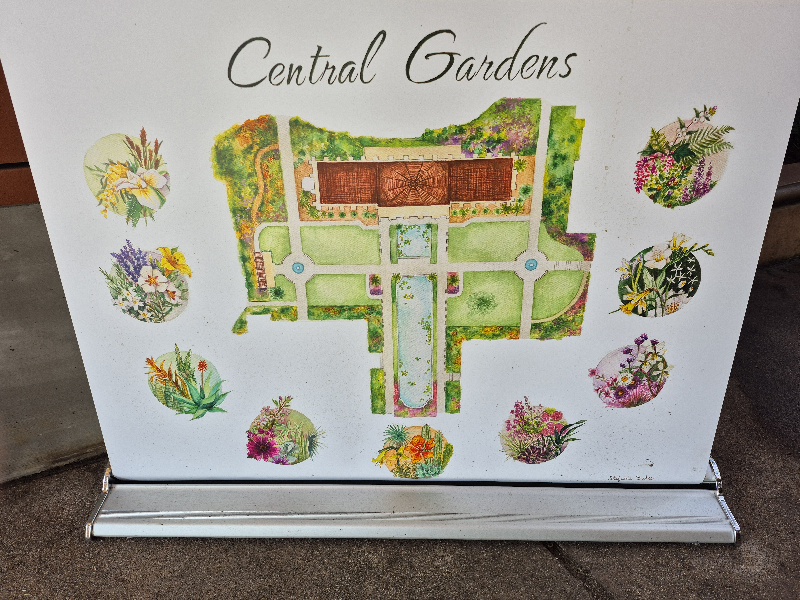
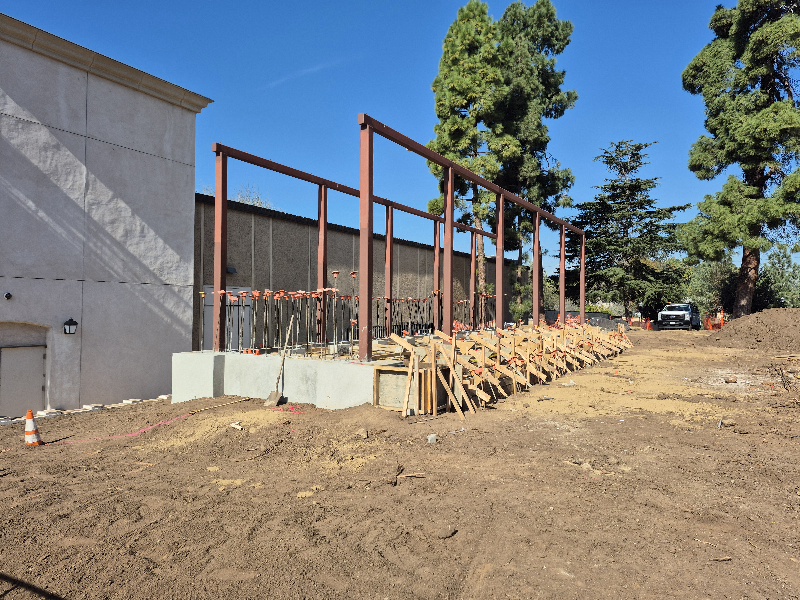
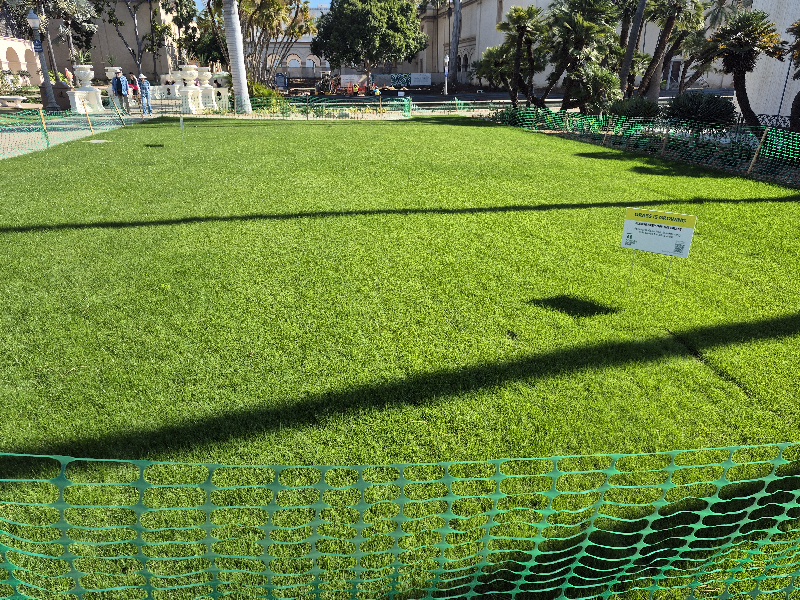
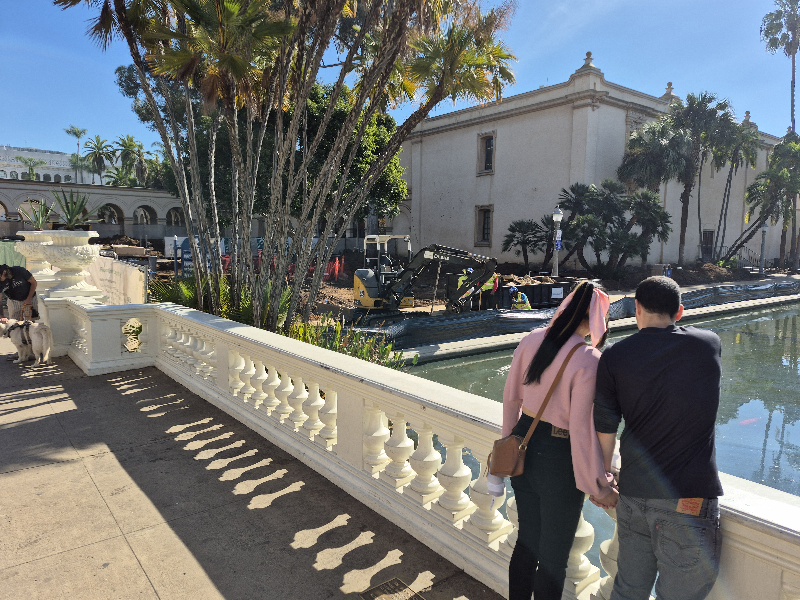
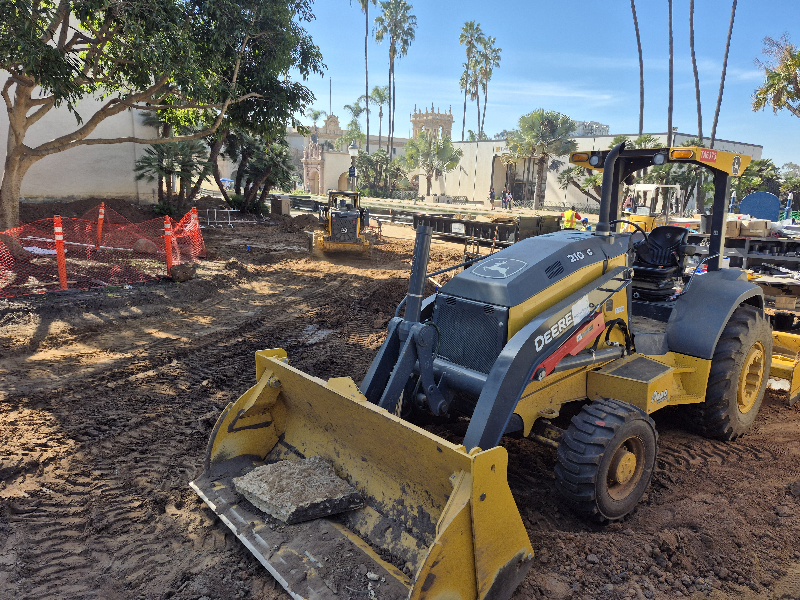
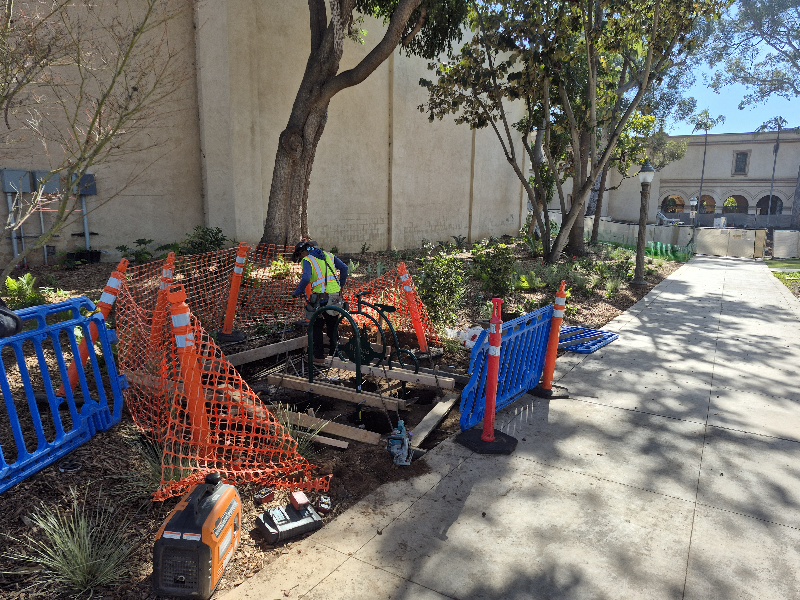
Today I noted that progress is being made in creating Balboa Park’s Central Gardens. Work continues to be done around the Botanical Building and along one side of the Lily Pond!
The new pergola west of the Botanical Building is taking shape, the grassy area around the fountain to the east is all dug up (as you can see in the above photograph), and new grass and garden plants can be enjoyed by park visitors in various other places!
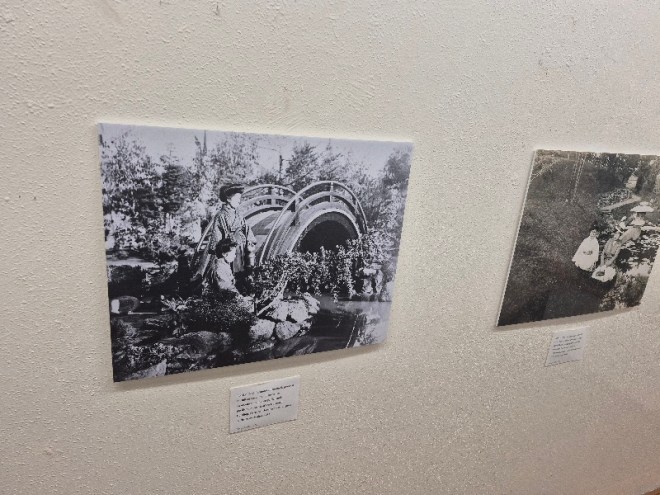
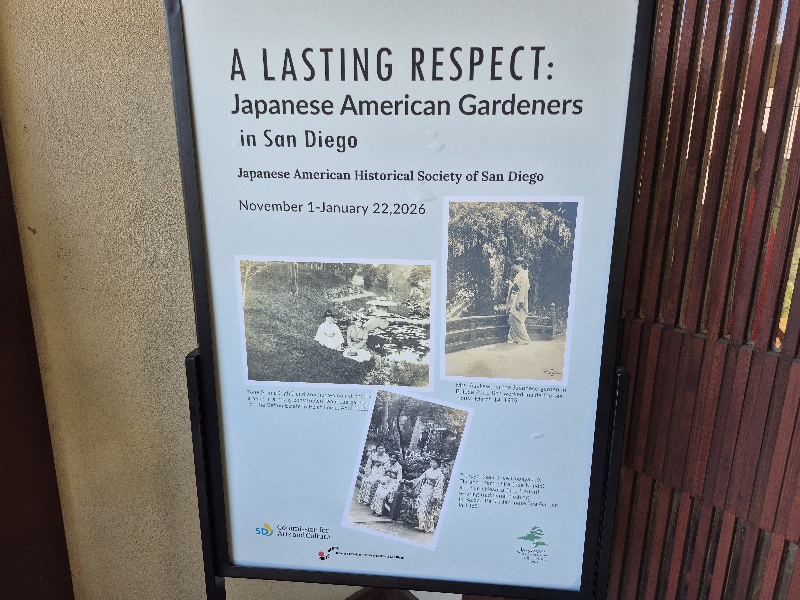
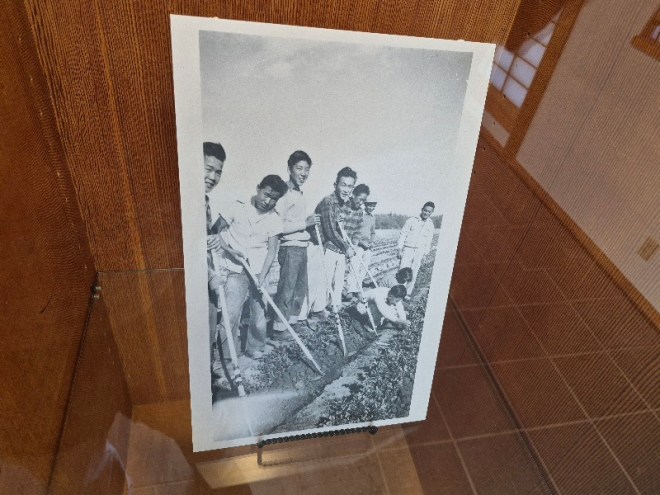
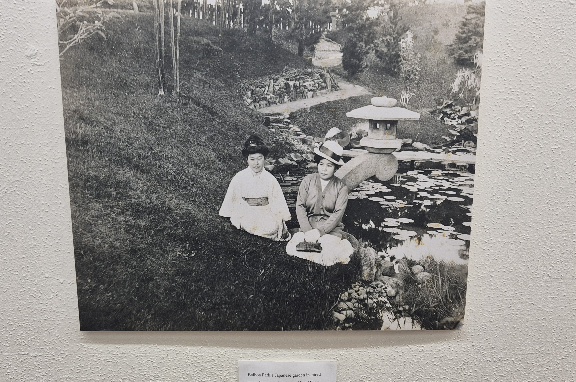
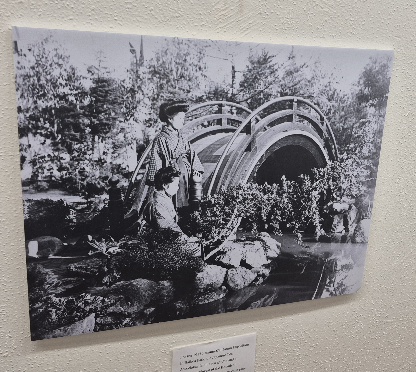
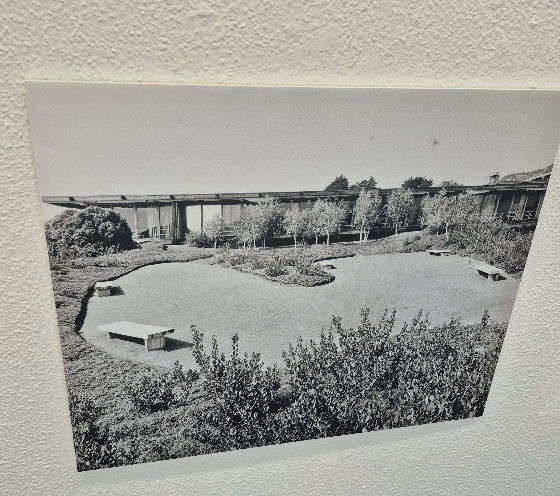
A fascinating exhibit at Balboa Park’s Japanese Friendship Garden will soon be ending. It concerns the history of Japanese American gardeners in San Diego. You can view the exhibit through Thursday, January 22, 2026.
Composed primarily of historical photographs from the early 20th century through World War II and beyond, the exhibit shows how first generation Japanese immigrants, with limited opportunities, brought beauty to San Diego through gardening.
It includes a look at Japanese Americans held as prisoners in Poston, Arizona during the war and their efforts to bring beauty into an ugly situation.
Photographs take the viewer into the present with amazing gardens in Balboa Park and Japanese inspired landscapes in San Diego.
The exhibit is made possible by the Japanese American Historical Society of San Diego.
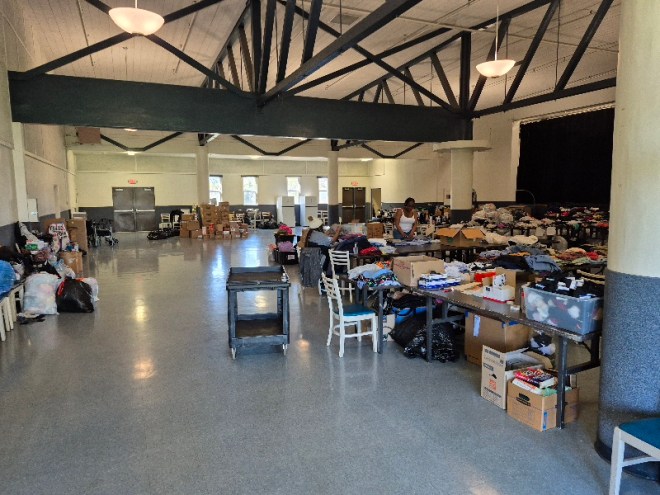
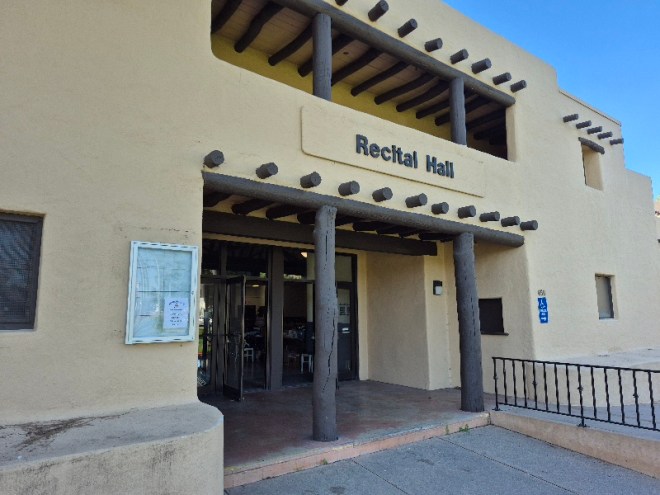
Alpha Project is collecting donations right now in Balboa Park’s Recital Hall. The urgently needed donations can be dropped off from 10 am to 6 pm.
Their shelter was flooded by the recent storms and had to be evacuated. Your donations of clothing, undergarments and hygiene items will benefit the homeless people who were affected.
You can email info@alphaproject.org if you have any questions.
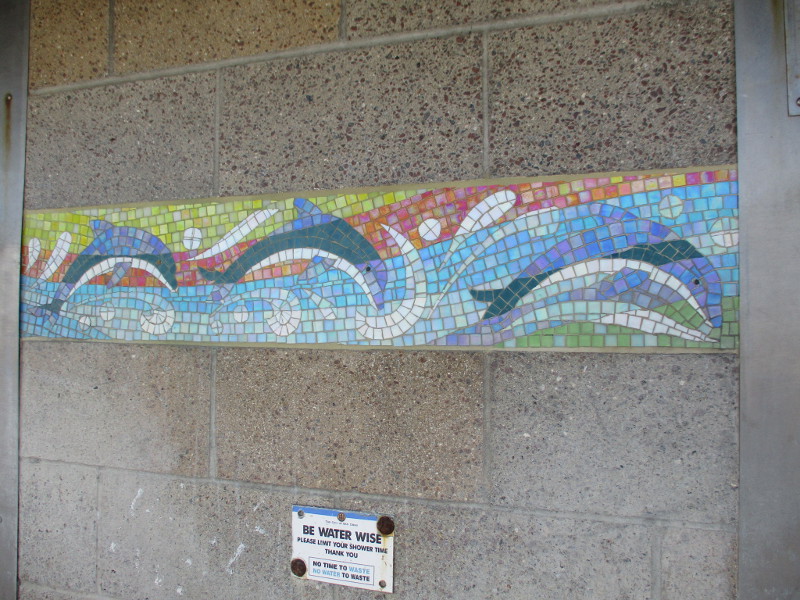
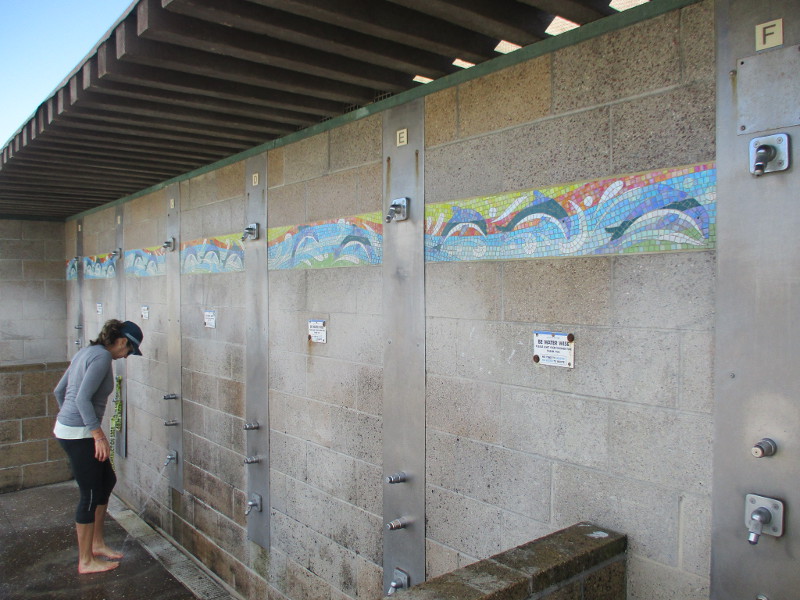
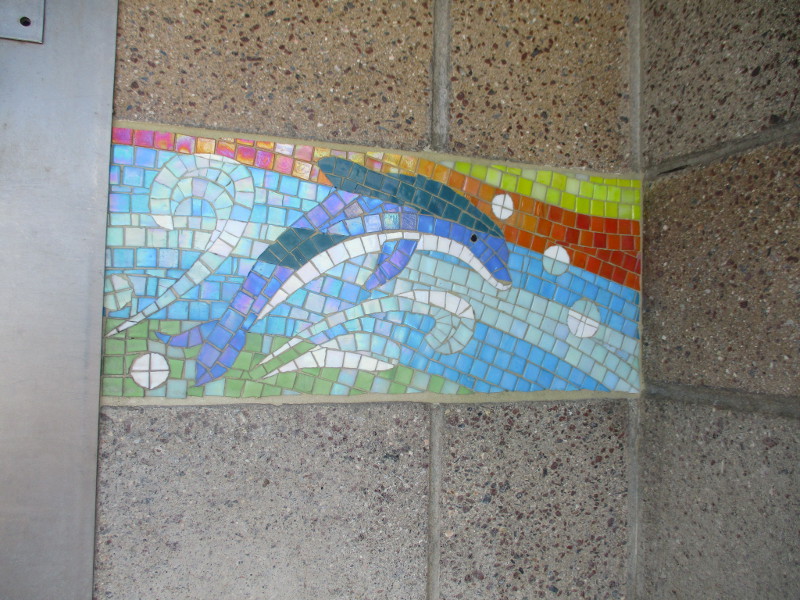
I really love these dolphin mosaics at the Kellogg Park North Comfort Station in La Jolla Shores. They’re so lively and colorful!
I had to take some photos during my latest walk along the beach there.
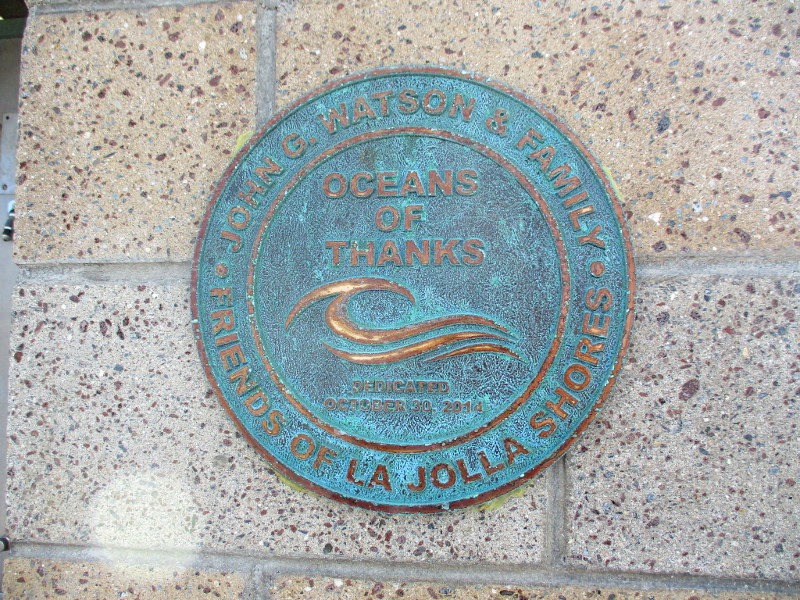
A circular plaque in the structure, to the right of the showers, recalls how construction of the comfort station and its restrooms was primarily funded by the John G. Watson Foundation and supported by Friends of La Jolla Shores.
“Oceans of Thanks” is a phrase used by the Walter Munk Foundation for the Oceans to express gratitude to supporters, donors, and the community, particularly during annual celebrations like Walter Munk Day.
Walter Munk was a world-renowned oceanographer at Scripps Institution of Oceanography. He was often called the Einstein of the Oceans. The efforts of his wife Mary Coakley Munk were instrumental in creating the new comfort station.
The Kellogg Park North Comfort Station and its mosaics were dedicated on October 30, 2014.
…
To follow my blog, find the “Follow” box in this website’s sidebar. Or bookmark coolsandiegosights.com and swing on by occasionally!
(If you’re viewing this on a phone, open my website’s sidebar by tapping those three parallel lines at the top of the page.)
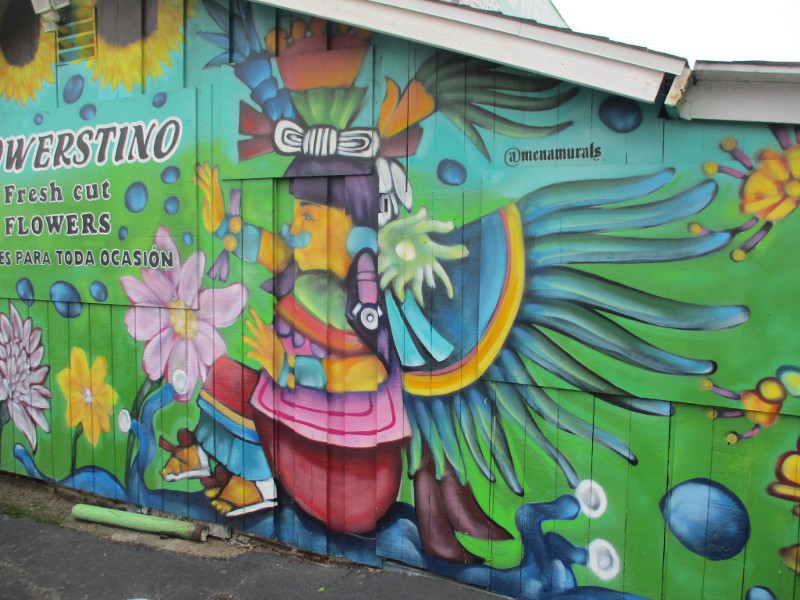
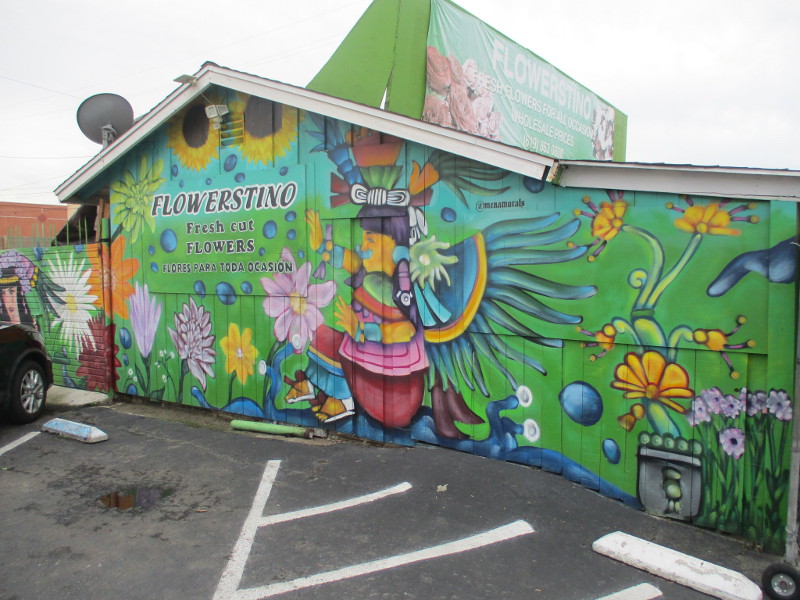
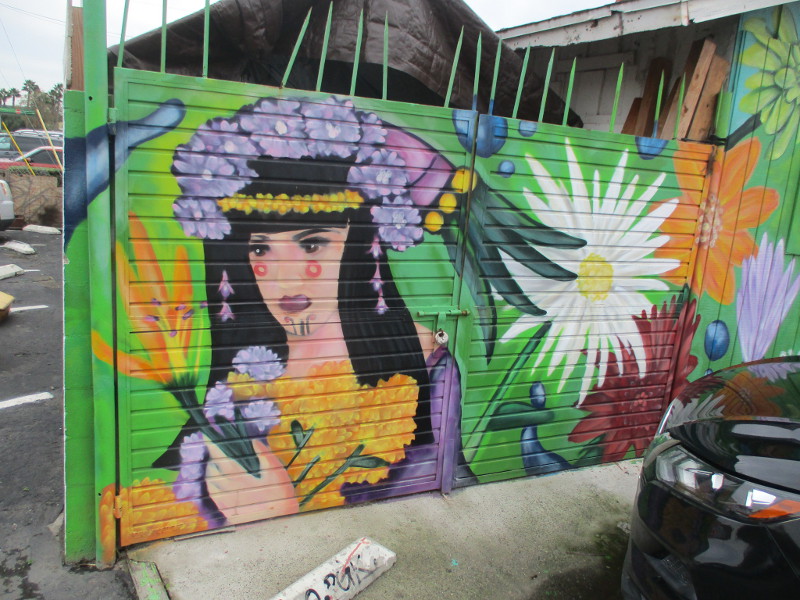
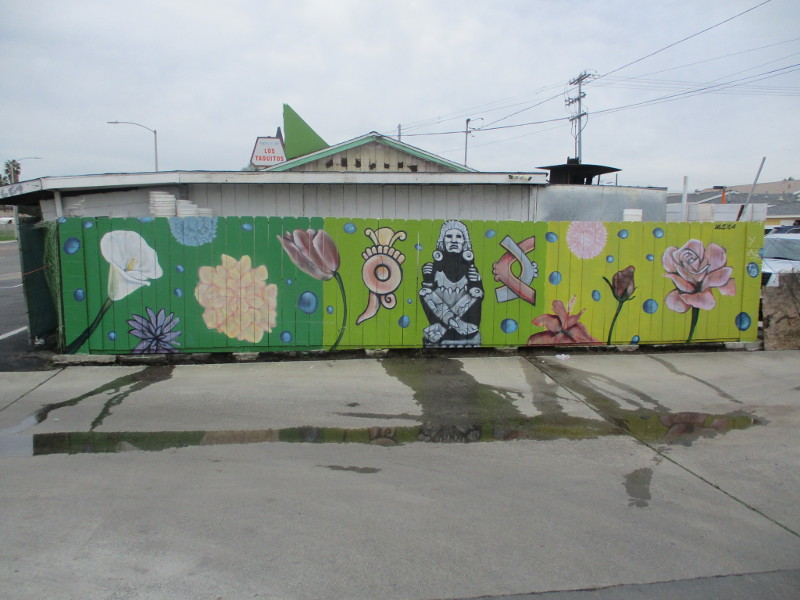
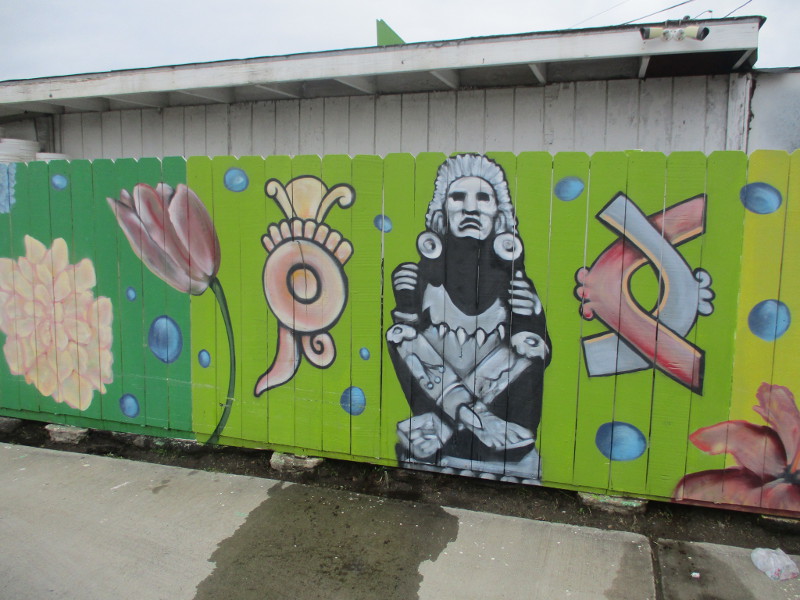
Without a doubt, these two murals delight the eyes of people driving down Third Avenue in south Chula Vista. Very beautiful artwork is painted on two sides of the Flowers Tino flower shop!
Both murals were created years ago by San Diego artist David Mena (@menamurals).
The bright, colorful images are bursting with many different types of flowers. It’s like a vertical garden with a bit of added Toltec imagery!
Here’s the amazing mural on the north side:
And here’s the south side:
…
To follow my blog, find the “Follow” box in this website’s sidebar. Or bookmark coolsandiegosights.com and swing on by occasionally!
(If you’re viewing this on a phone, open my website’s sidebar by tapping those three parallel lines at the top of the page.)
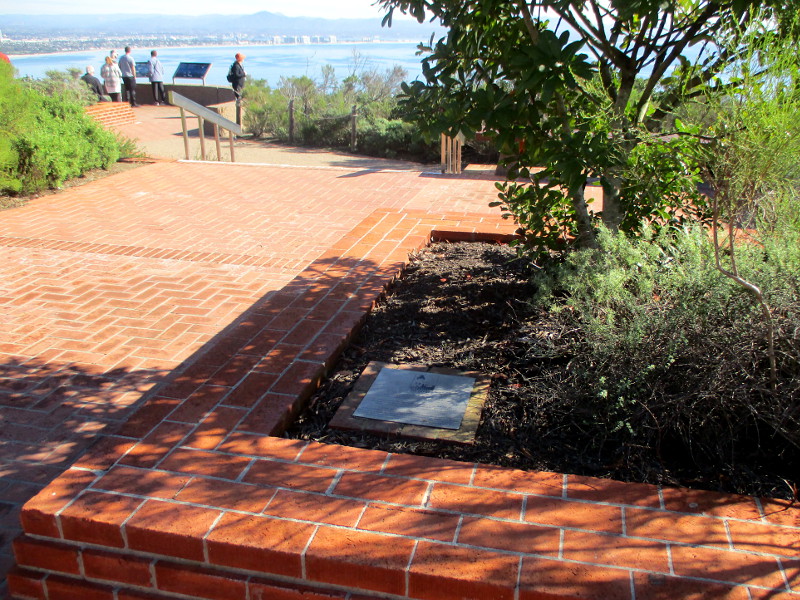
A time capsule was created during the Cabrillo National Monument centennial in Point Loma. It’s buried beneath a plaque in a brick planter near the entrance to the Visitor Center.
The plaque reads:
Beneath this sign lies a time capsule preserved in commemoration and celebration of the Cabrillo National Monument centennial, October 14, 1913-2013.
The contents inside this capsule are a collection of our first 100 years as San Diego’s only National Park unit. Its contents shall remain sealed for the next 100 years, not to be opened before October 14, 2113.
A message from the 2013 centennial employees: All that stand here before this plaque reading the words like so many who came before you; you are the future stewards of the National Park Service and we hope you continue to honor the tradition of protecting and preserving our most precious national treasures during this 2nd century of stewardship in our National Parks.
If you’d like to view an online “time capsule” of sorts, you can see photographs I took during the Cabrillo National Park centennial celebration back in 2013.
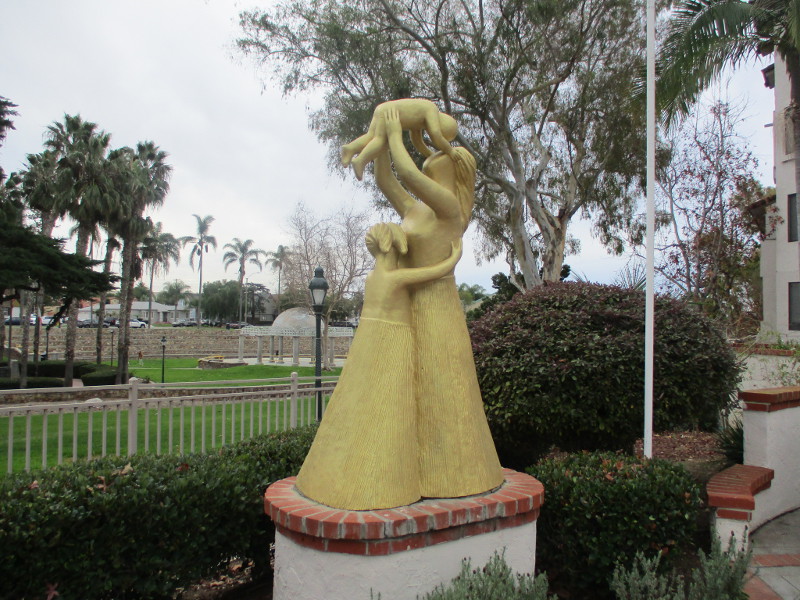
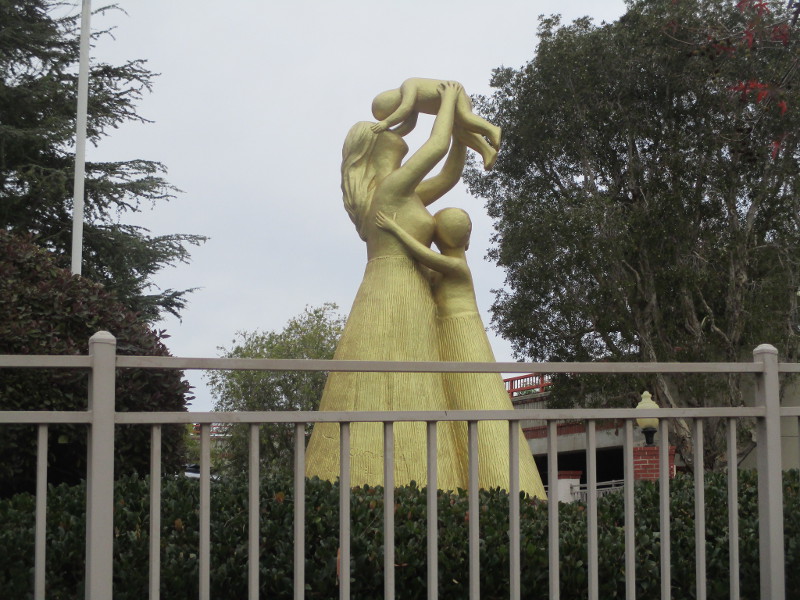
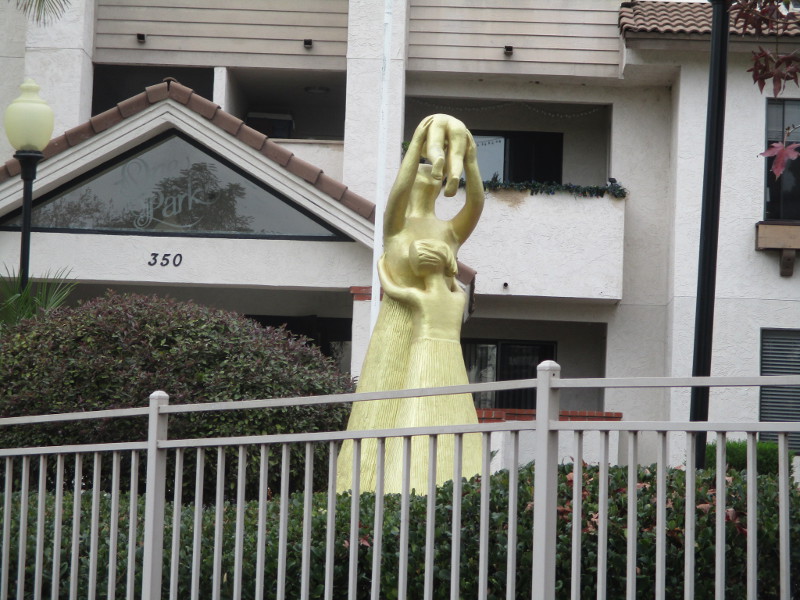
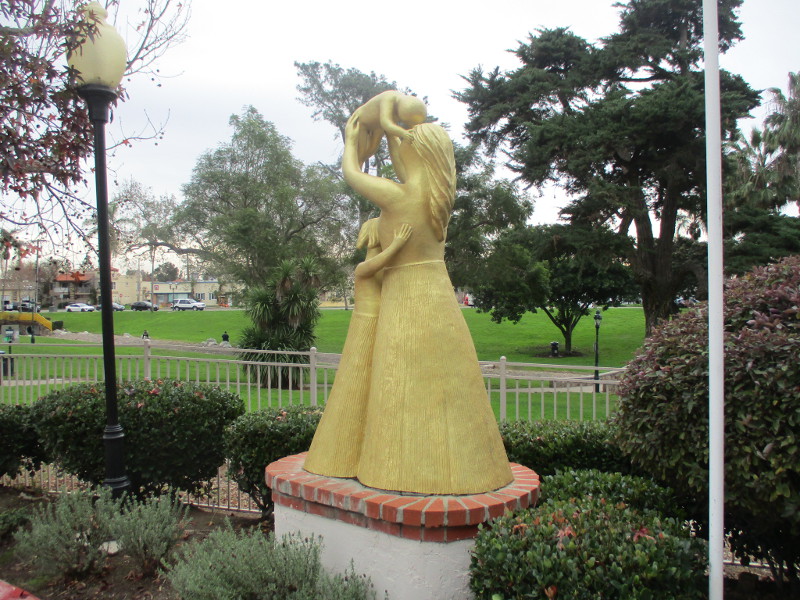
People walking around Memorial Park in Chula Vista could easily miss this wonderful public art. It’s located on the other side of a fence at the north end of the park. The bronze sculpture depicting a loving mother and two children stands in front of the One Park Apartments.
Jugando is the name of the sculpture. That’s Spanish for the word “playing.” Jugando was created in 1986 by artist Miriam Newman. The graceful figures are very plain, almost featureless. Diverse people who regard these figures might personally relate.
The Smithsonian Institution Art Inventories Catalog describes the work: A woman stands holding a nude baby above her head with both hands. A young girl embraces the woman from the front. Both the woman and the young girl are wearing long, pleated skirts. All three figures are faceless.
I took these photos a couple weeks ago…
…
To follow my blog, find the “Follow” box in this website’s sidebar. Or bookmark coolsandiegosights.com and swing on by occasionally!
(If you’re viewing this on a phone, open my website’s sidebar by tapping those three parallel lines at the top of the page.)
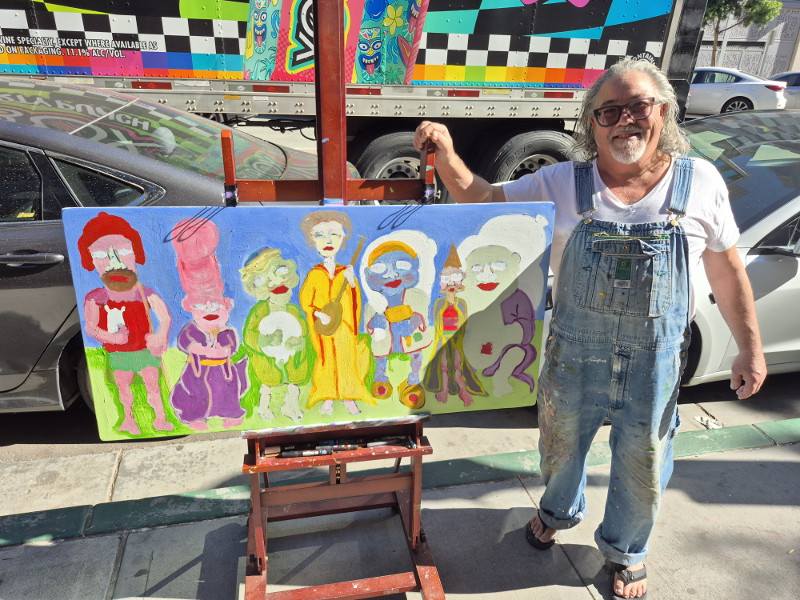
That’s San Diego artist James Watts (@jewattso) in the above photo. He was painting an image of Japan’s Seven Lucky Gods (or Shichifukujin) on the downtown sidewalk outside his studio yesterday. It’s number 93 of the 100 paintings he’s presently working on.
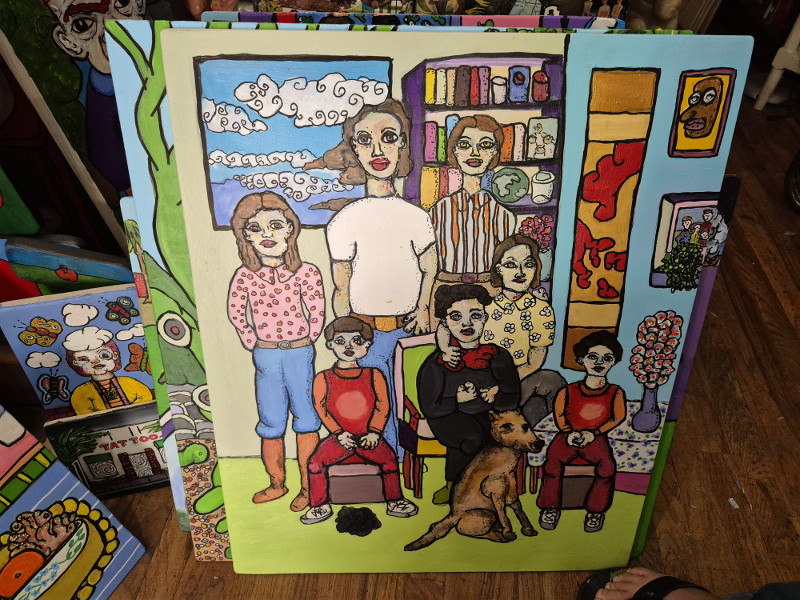
I had to look up those lucky gods to understand what he was painting. He also showed me a painting of his own family, which got me to thinking.
Mythology, literature, and every creative work uses symbolism. We use symbols in order to better understand and engage with an infinitely larger reality.
Now, what do we understand best? Our own lives.
So it isn’t surprising the symbols we create reflect our human experience. The deities of mythology explain the mysteries of this world, but tend to be very human. The illuminating words of great literature rely upon human experience and interaction. In a strange way, created symbols and reality combine in our own minds. Symbols inform our living.
James Watts loves mythology, literature and life, and his symbolic art connects it all. Or so it seems to me.
His next painting is of the characters in Voltaire’s novel Candide…
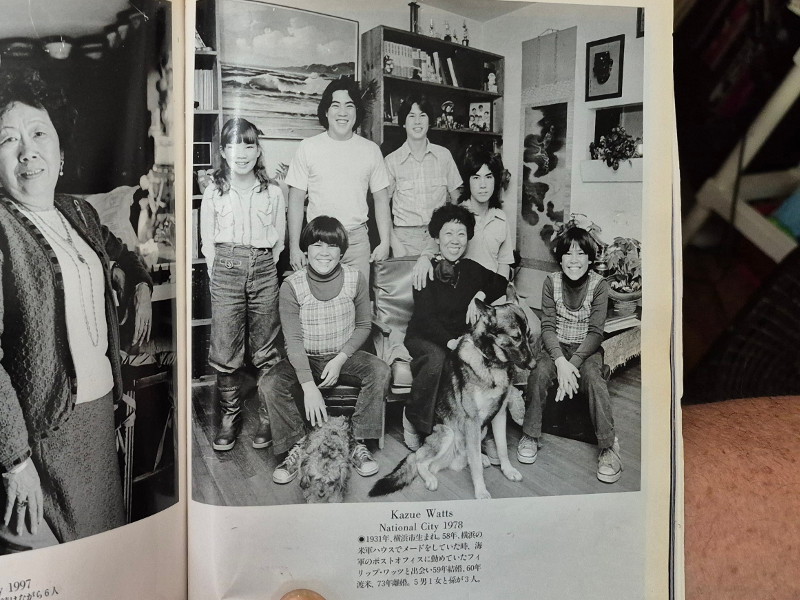
The next photograph shows James Watts’ family years ago, when he was a youth. That’s him in a white t-shirt…
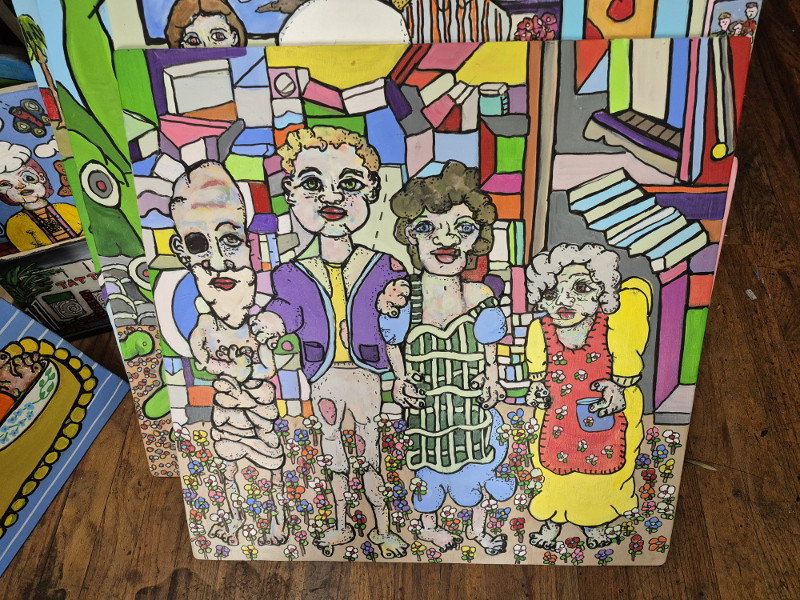
And here’s a painting he recently created, based on the old photo…
Symbols we create can be extremely powerful.
Might we all strive to understand, remember, live fully.
…
To follow my blog, find the “Follow” box in this website’s sidebar. Or bookmark coolsandiegosights.com and swing on by occasionally!
(If you’re viewing this on a phone, open my website’s sidebar by tapping those three parallel lines at the top of the page.)

 Cool San Diego Sights!