This super nice lady posed while blowing some bubbles! And I got photobombed! What fun!
Lots of photos today!
Let’s start out with the fun San Diego Multicultural Festival, which was held in sunny Ruocco Park, downtown near Tuna Harbor. I always enjoy walking through the annual event, taking in the cool, happy vibe and listening to some great live music. Here are a few pics!
Remember–tomorrow is the big MLK parade which goes down Harbor Drive along the Embarcadero! It begins at 2 o’clock!
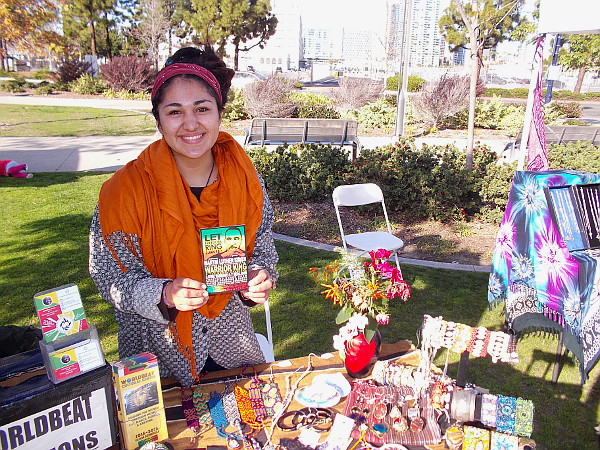
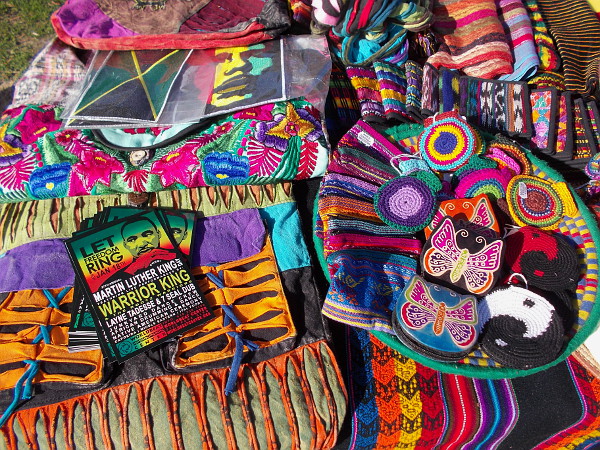
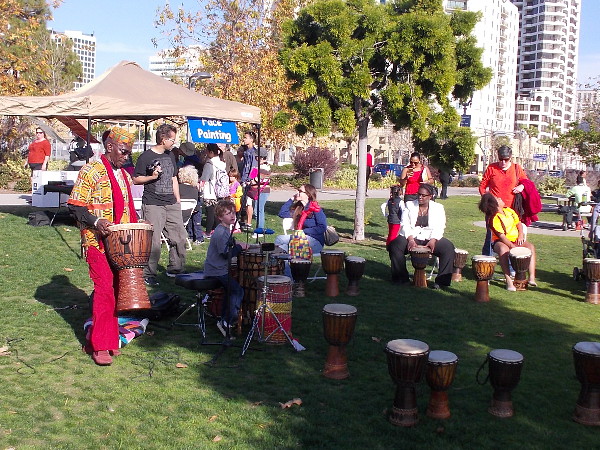
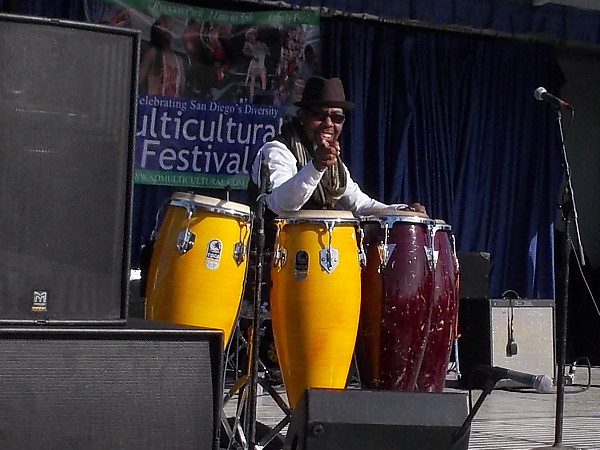
Folks were at the San Diego Multicultural Festival in Ruocco Park listening to lots of great live music.This smiling lady representing the WorldBeat Cultural Center in Balboa Park had a table full of beautiful crafts. They’ll be having a Let Freedom Ring event on MLK Day.Super colorful art and wares at the WorldBeat table. Celebrating life, diversity and Martin Luther King Jr. Day in San Diego!People were enjoying drumming on the grass in Ruocco Park, near Seaport Village.This cool musician on the stage saw me taking a photo! Hello!
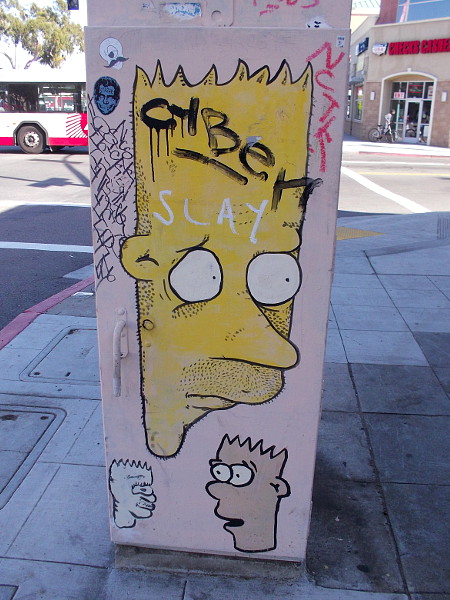
Is it Bartman? No? Then it must be another funny Bart Simpson superhero identity. This cool utility box is located in North Park!
Here come photos of another Bart Club utility box! This fun street art can be found in North Park at the intersection of El Cajon Boulevard and 30th Street.
This is the fourth instance of zany Bart Simpson artwork I’ve documented on the Cool San Diego Sights blog. You might recall there’s another Bart Club utility box in North Park, not very far from this one.
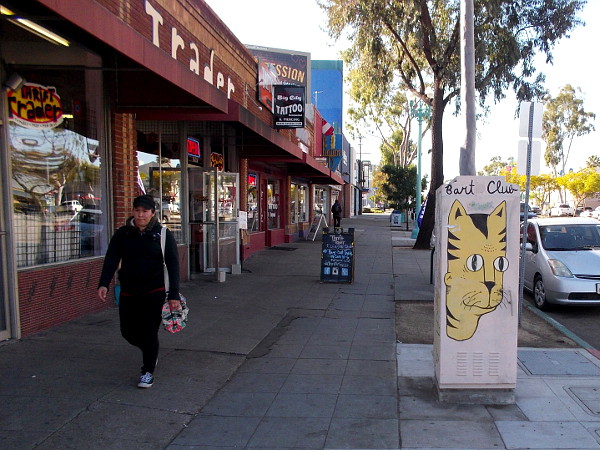
Looking down El Cajon Boulevard in San Diego past some imaginative Bart Club street art.Bart Simpson is a cat!Bart’s face takes on different forms and expressions.A cyclops eye or three eyes . . . Bart is one versatile cartoon character! A very creative artist has had some fun with The Simpsons, the longest-running animated show in television history.
Let’s be friends. Two cool faces on a utility box in North Park.
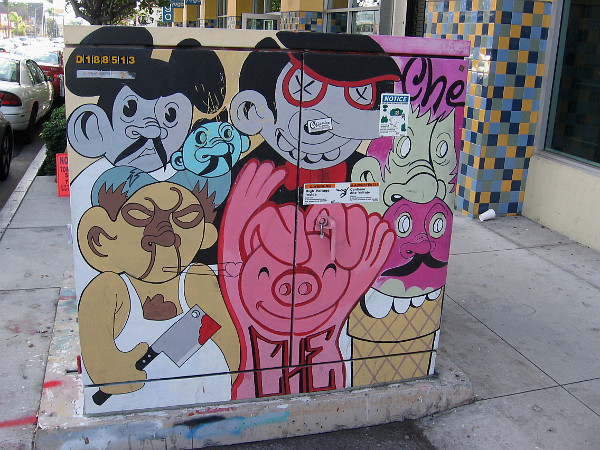
I’ve got so many fun pics from a walk around North Park that I need to break them up into separate blog posts. Here’s a collection of cool street art faces! I took these photos as I strolled along University Avenue and 30th Street.
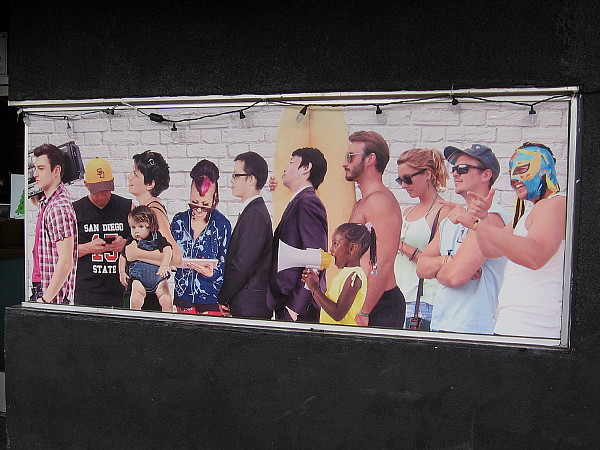
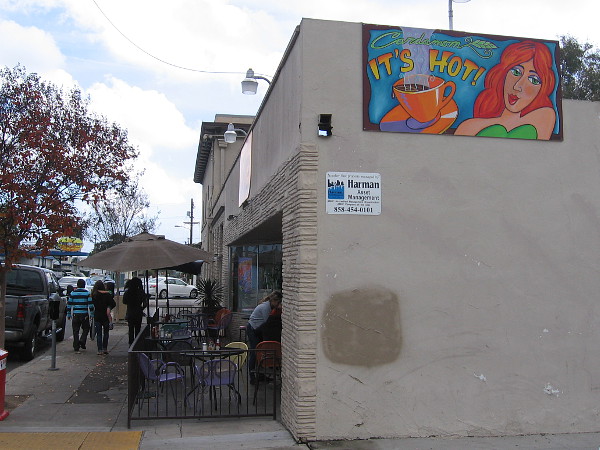
Hey dude, don’t trip! More fun artwork on two other sides of the box.A happy sun shines on a sidewalk in San Diego’s hip North Park neighborhood.Two faces rise from one neck in this unusual utility box street art.Cool people wait in line. This graphic can be found outside Lucha Libre, a popular gourmet taco shop.More colorful urban art featuring several unique characters.Abstract faces look at each other.It’s hot! A warm welcome on a sign at North Park’s Cardamom Cafe and Bakery.Lurking in a North Park alley–it’s a graffiti SpongeBob SquarePants! He seems to be blowing a jellyfish bubble!
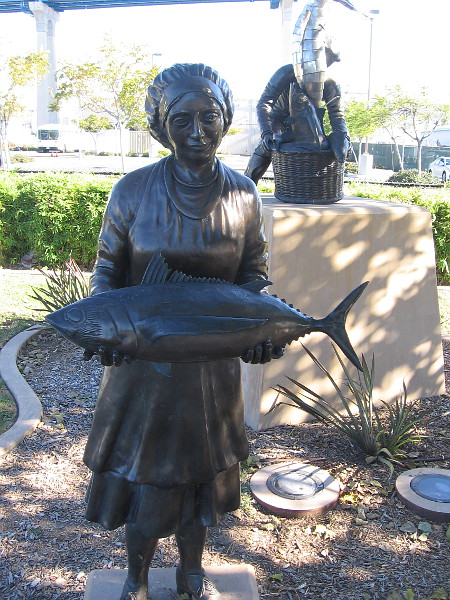
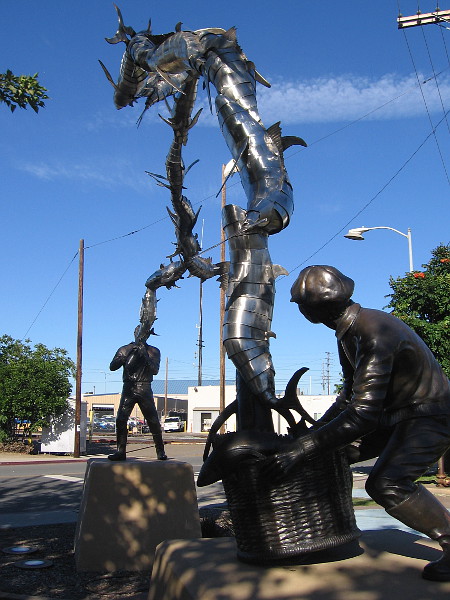
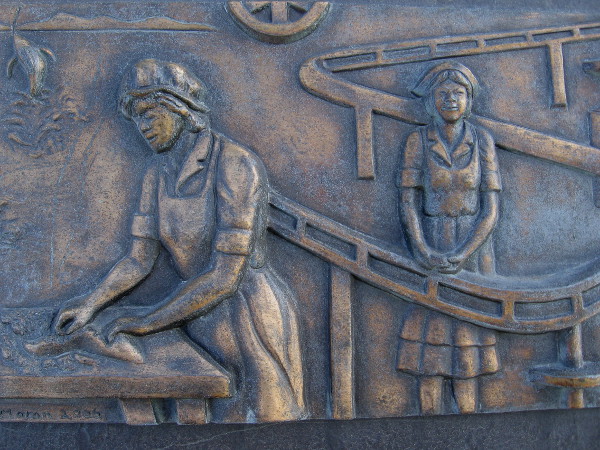
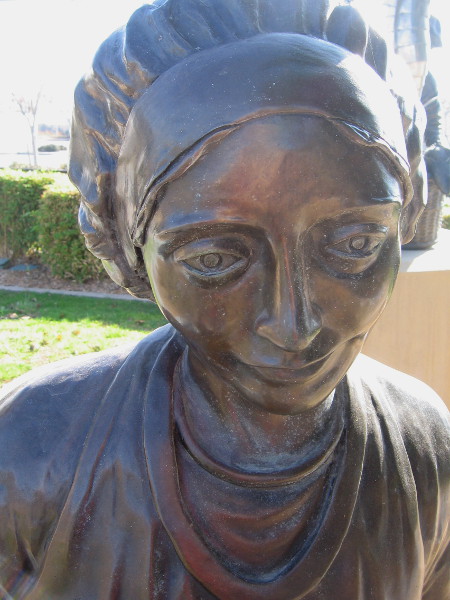
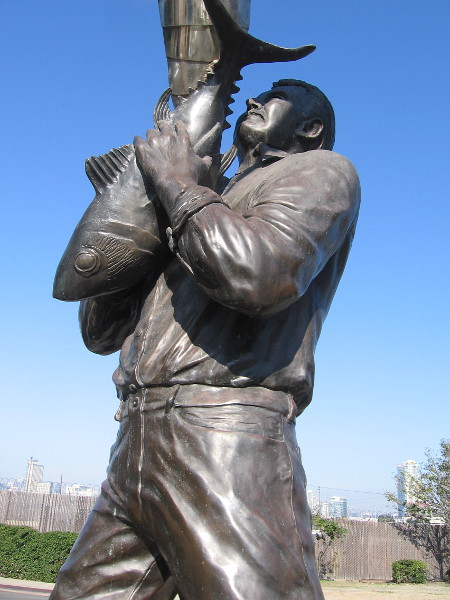
Sculpture of woman fish processor holding a large tuna. This area south of downtown was once the home of many San Diego canneries.
A month or two ago, during a leisurely walk from downtown to the pier at Cesar Chavez Park, I was thrilled to discover some truly amazing public artwork!
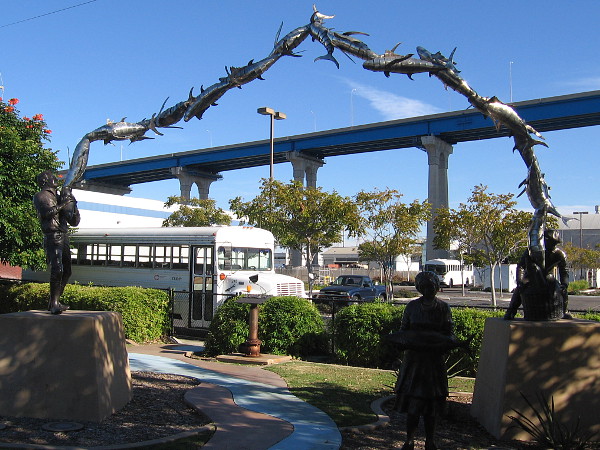
The Cannery Workers Tribute at Parque del Sol is tucked away in a place where very few people go. You’ll find it just a bit north of the Coronado Bay Bridge (which you can see in some of my photographs), near the entrance to Cesar Chavez Park.
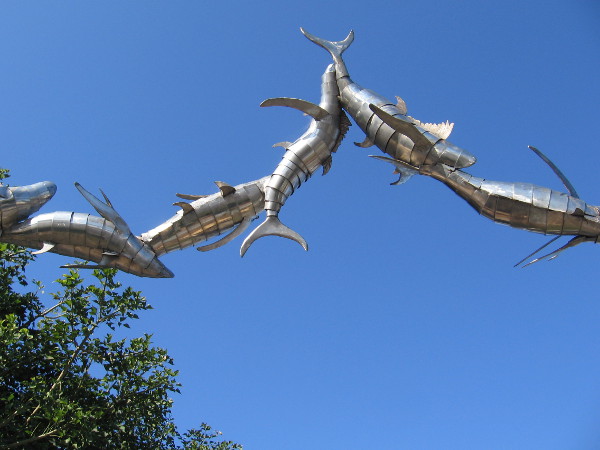
The large gleaming sculpture honors thousands of hard-working people who were employed by San Diego’s tuna canneries decades ago. I’ve blogged about our city’s once-thriving tuna industry on several occasions. Not only was San Diego home to the world’s largest tuna fishing fleet during much of the 20th century, but numerous canneries dotted our bayside. In the 1950s, the tuna industry provided more than 17,000 local workers with a living. Many of the jobs involved cleaning and packing fish that would be shipped around the world.
According to the Port of San Diego website, this public artwork is situated in a spot where workers at a nearby cannery would take their break. “During the 1970s, former cannery maintenance worker Roberto Carrero and co-workers dug a hole and planted a small tree. This, now large, coral tree was incorporated into the artwork.”
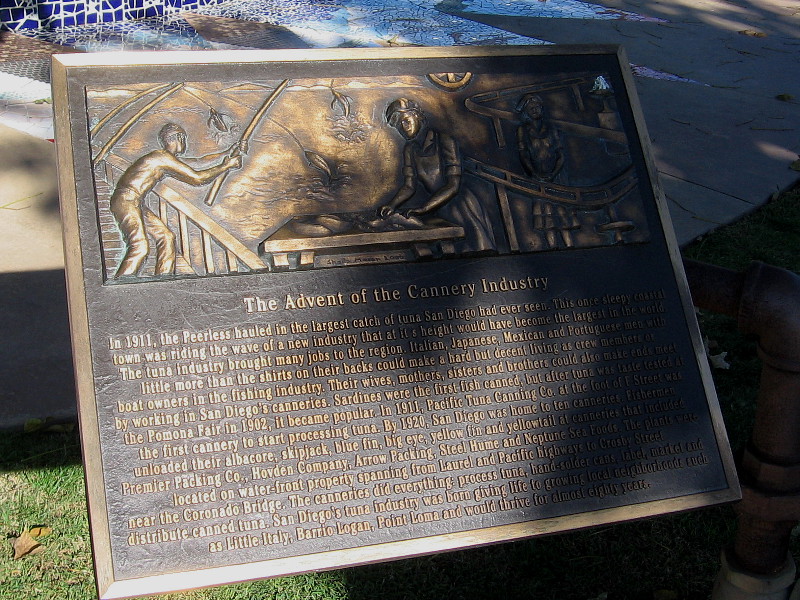
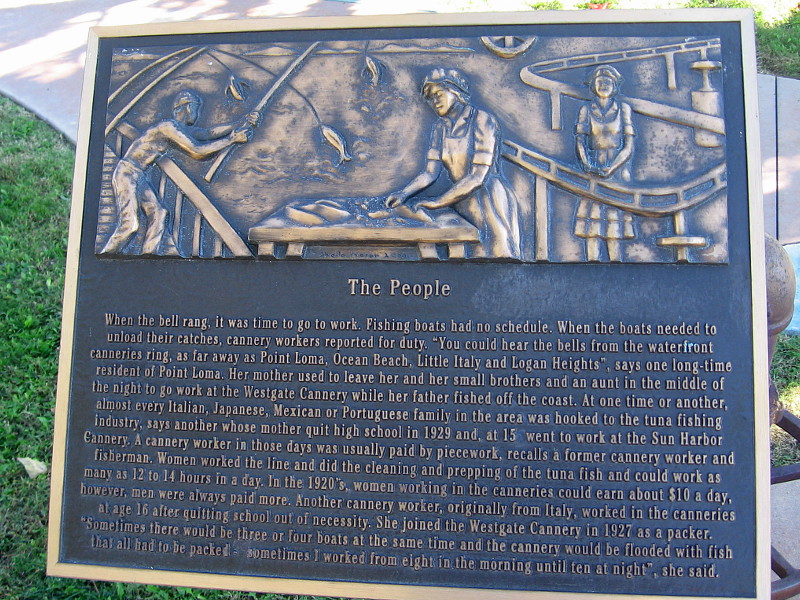
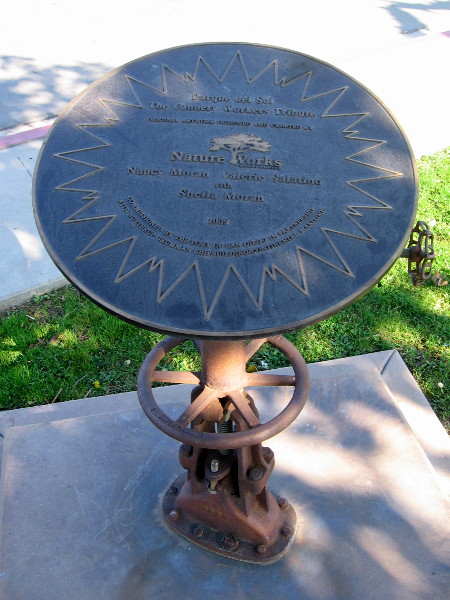
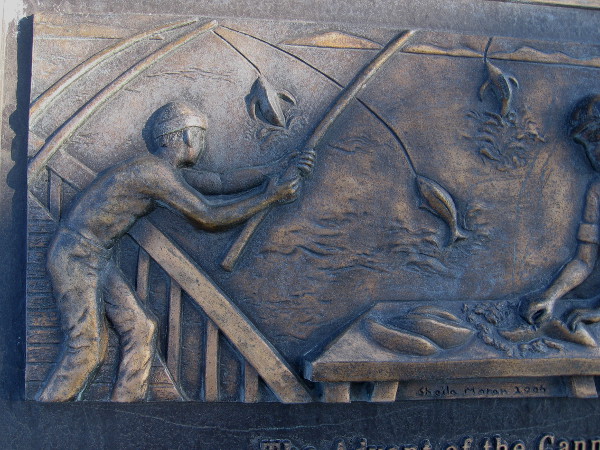
Four bronze plaques mounted on bits of old machinery recall the history of this area and the once-thriving tuna industry. Click the plaque photos to read them.
The Cannery Workers Tribute sculpture was created in 2009 by Valerie Salatino and Nancy Moran, with assistance from Sheila Moran. It is indeed a very cool sight!
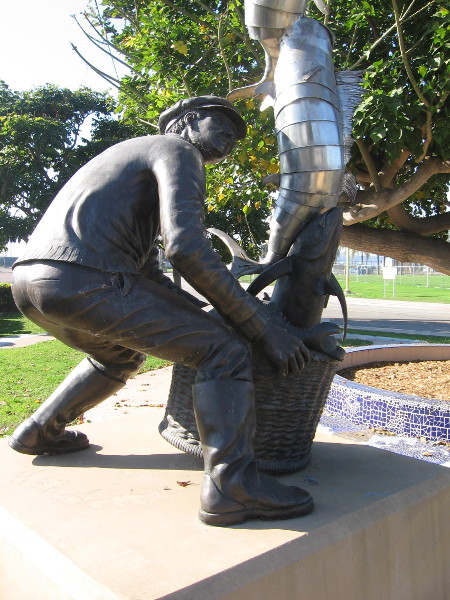
Coral tree planted by a cannery maintenance man decades ago is an important feature of the Cannery Workers Tribute at Parque del Sol.A high arch of gleaming fish seems to rise above the nearby Coronado Bay Bridge. This public art is located in Barrio Logan, near the entrance to Cesar Chavez Park.Few people pass this way. This public art is definitely a hidden San Diego gem.A large catch of ocean tuna seems to burst from a basket!The advent of the cannery industry in the early 1900s. For most of the 20th century, San Diego was the tuna fishing capital of the world.The people included Italian, Japanese, Mexican and Portuguese fishermen, and many cannery workers. Fishing boats have no schedule. When the cannery bell rang, it was time to go to work.The process was smelly and messy! For tuna to go into a sandwich or salad bowl, it often traveled up to 7000 miles!The end of the San Diego tuna fishing era came in the 1980s, due to foreign competition, high expenses and other factors.Another photograph that you might enjoy.An arch of abundant fish above tuna cannery workers. Public artwork that honors an important chapter in San Diego’s history.
UPDATE!
I took additional photos on a later walk past the park…
…
Join me for more cool San Diego discoveries on Facebook and Twitter!
Do you like to read original, thought-provoking fiction? Visit my Short Stories by Richard writing blog!
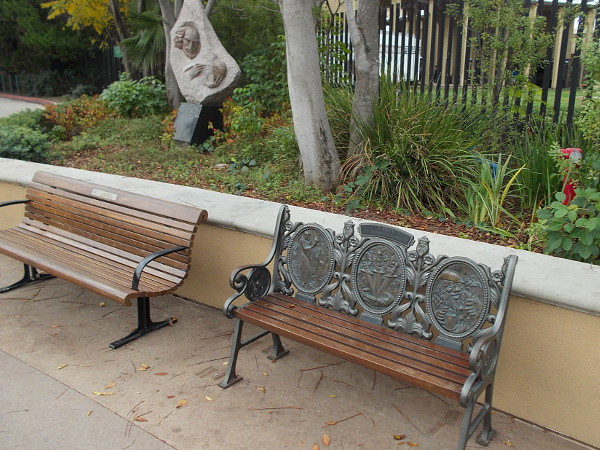
Three magic benches are visible in this photo. Can you spot them?
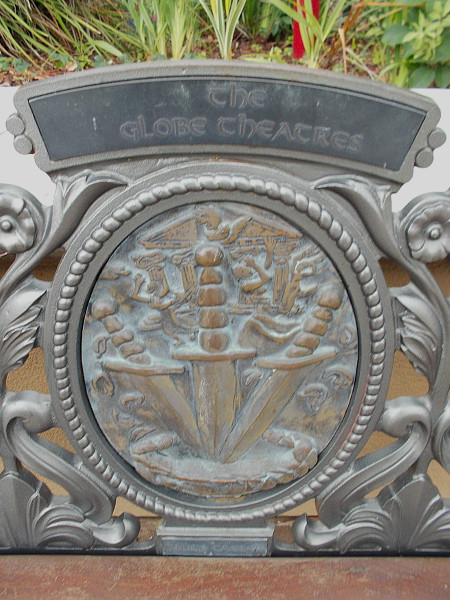
I discovered three magic benches during my walk through Balboa Park this afternoon! All three are situated in front of the Old Globe Theatre, one of San Diego’s great cultural treasures.
How do I know these benches are magic? It’s very easy to see! Just examine the following photos, and read the captions!
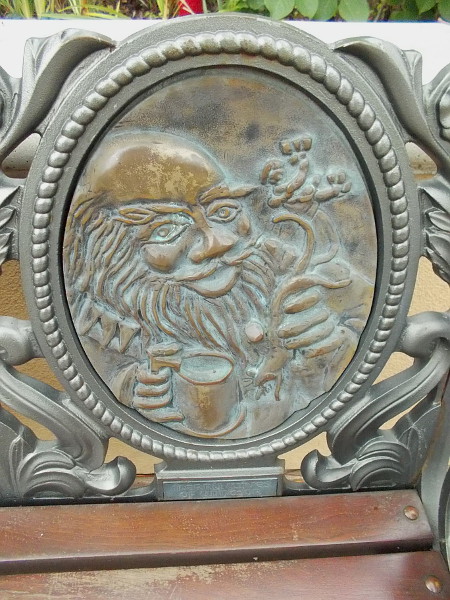
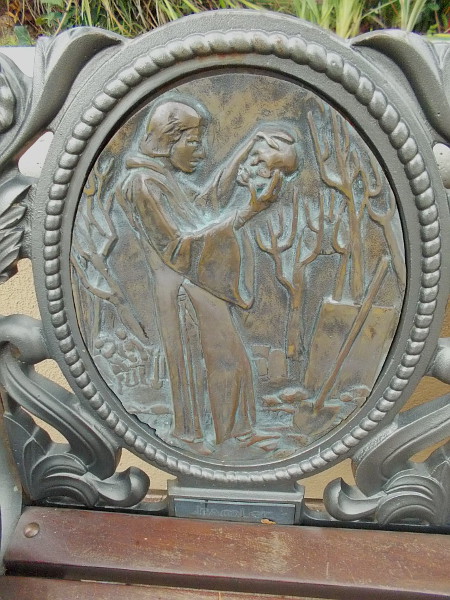
The first bench is dedicated to that magical playwright Shakespeare! As you might recall, the Bard is associated with the original Globe Theatre, which was in London.The iconic face of William Shakespeare on the side of a fantastic public bench in Balboa Park’s Old Globe Courtyard. Sit here and be inspired!A jolly character from the Shakespeare comedy The Merry Wives of Windsor.A famous scene from Hamlet. Alas, poor Yorick! I knew him, Horatio; a fellow of infinite jest, of most excellent fancy…The Old Globe Theatre in San Diego is where you want to see Shakespeare’s famous plays, including the tragedy Julius Caesar.Here’s the second magic bench. Looks ordinary? Don’t be deceived! Sit or lie here, and you might mysteriously be transported far away!And finally, the magic piano bench. Anybody can sit here and play music through January, courtesy of the San Diego Symphony’s PLAY ME: Pianos In Public Spaces event!
To learn more about the ten public pianos that have been placed around San Diego, check out my previous blog post!
To experience magic in wonderful Balboa Park, head over to the courtyard in front of the world famous Old Globe Theatre!The Old Globe has another great lineup for 2016. World-class entertainment in amazing Balboa Park!
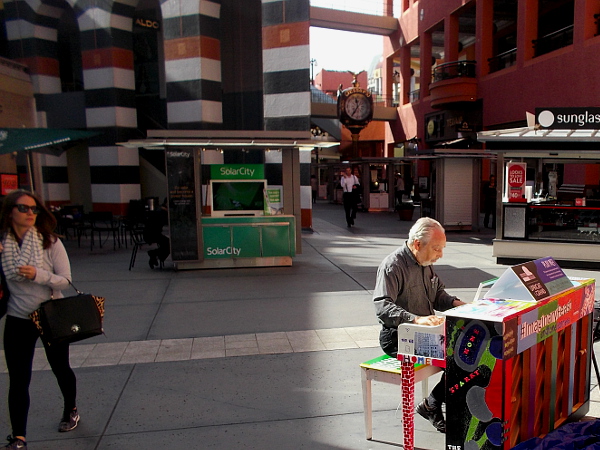
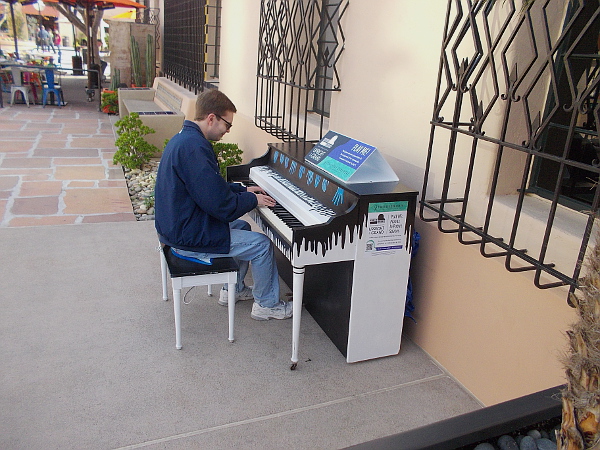
Gentleman who saw this fun piano in the middle of Horton Plaza sat down and started playing. The San Diego Symphony is spreading music around the city!
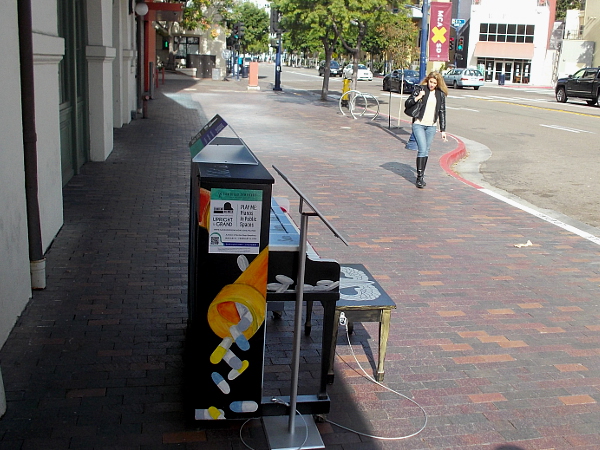
Ten pianos have been placed around San Diego for the public to play! Any ordinary person passing by can just sit down and perform music to their heart’s content!
This very cool and unique “event” is being put on by the San Diego Symphony. Their PLAY ME: Pianos In Public Spaces installation is part of this month’s Upright and Grand Piano Festival, and will continue through February 8.
Feeling inspired? Feeling musical? Feeling like a maestro? Would you like to play some wonderful piano selections for your admiring fans? Then head on over to one of the ten public locations! They are: the Symphony Towers lobby, the Quartyard, the downtown Central Library, Horton Plaza, The Headquarters, the Coronado Ferry Landing, the Museum of Contemporary Art San Diego (downtown location), Liberty Station, Balboa Park (by the Old Globe Theatre) and the California Center for the Arts Escondido!
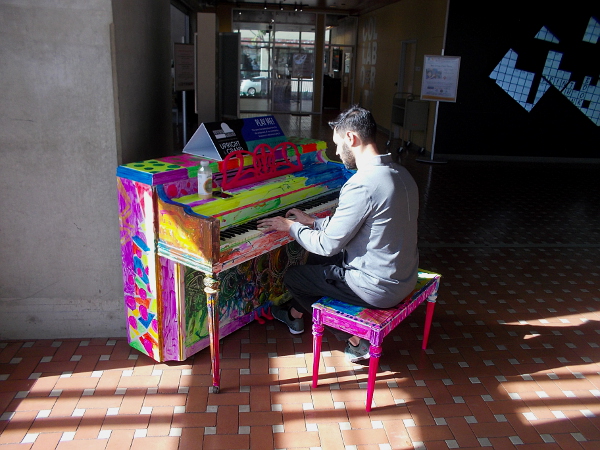
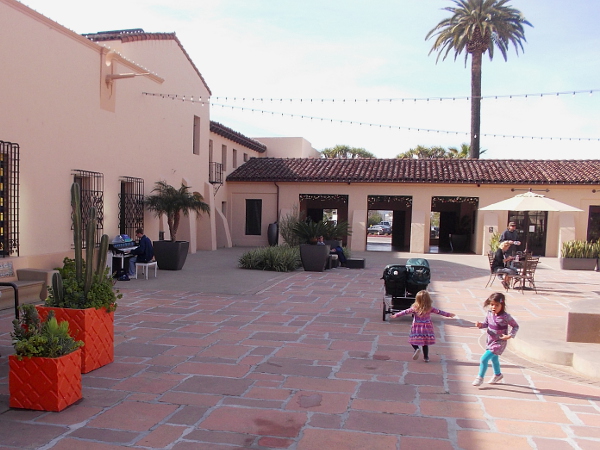
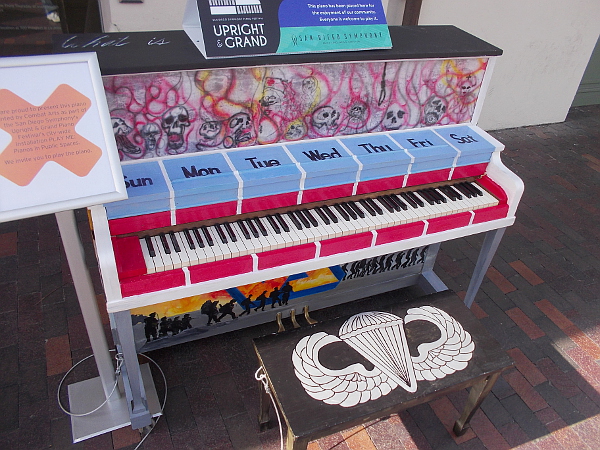
The San Diego Symphony’s PLAY ME: Pianos In Public Spaces program has placed ten pianos around the city for ordinary people to enjoy!A colorfully painted piano in the lobby of Symphony Towers in downtown San Diego. I swung by here in the very early morning when few people were around.A cool guy plays this public piano at the Central Public Library in downtown San Diego. He heard about this very unique event and came on down to tickle the ivories.One of ten pianos placed around San Diego for the public to enjoy. Many library patrons coming through the front door were treated to unexpected music!This piano has a big cyclops eye. It sits outside in the Quartyard in San Diego’s East Village.Few people were about the Quartyard on Saturday morning. It’s a cool eating and event venue that’s fairly new in this hip neighborhood.Amazing talent takes a seat in Horton Plaza. This gentleman was walking through the shopping mall and saw the piano. He sounded like a professional musician!This fellow enjoyed playing another public piano, which has been placed at The Headquarters, near Seaport Village.All ten pianos have unique artwork, painted by various local organizations. The instruments were tuned by experts at the San Diego Symphony–and they sound amazing!Kids twirl to piano music in the wide courtyard of The Headquarters, which is located in San Diego’s old police headquarters.Finally, I saw this piano in front of the Museum of Contemporary Art San Diego’s downtown location, which is next to the Santa Fe Depot.Sign says that we are proud to present this piano painted by Combat Arts as part of the San Diego Symphony’s Upright and Grand Piano Festival’s city-wide installation. We invite you to play!Piano in public for any random passerby to enjoy. Veterans who painted this instrument are part of an art-based museum program to help combat troops recover from PTSD.
…
Please join me for more cool sights on Facebook and Twitter!
Do you like to read original, thought-provoking fiction? Visit my Short Stories by Richard writing blog!
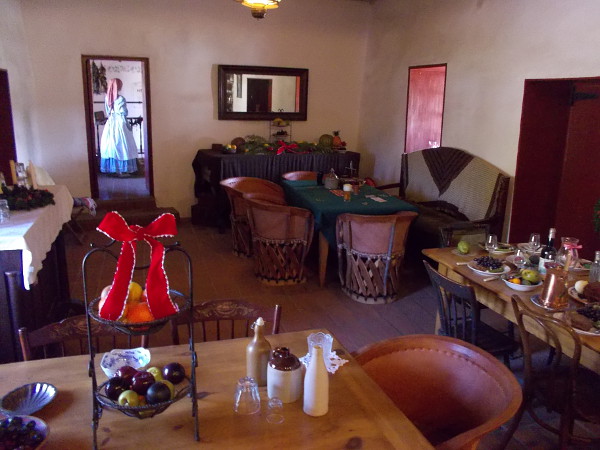
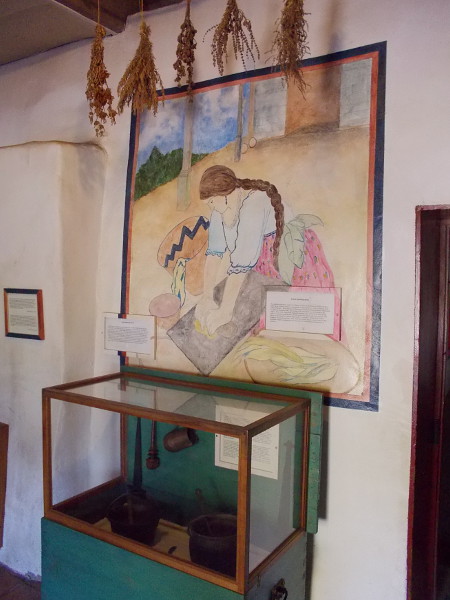
A variety of dried food hangs from the ceiling. The kitchen of the Commercial Restaurant museum in Old Town is a place where visitors are transported back in time.
There are dozens of cool things to see in Old Town San Diego State Historic Park. I’ve barely scratched the surface so far with my blog.
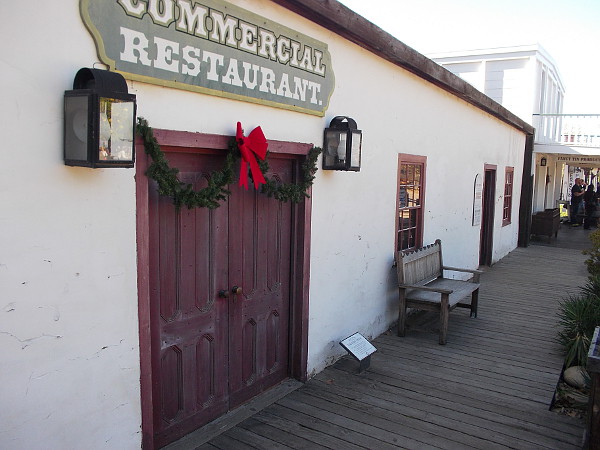
For example, there’s a small free museum right next to the central Plaza de Las Armas called Commercial Restaurant. A rather dull name, but a very interesting place jam-packed with history!
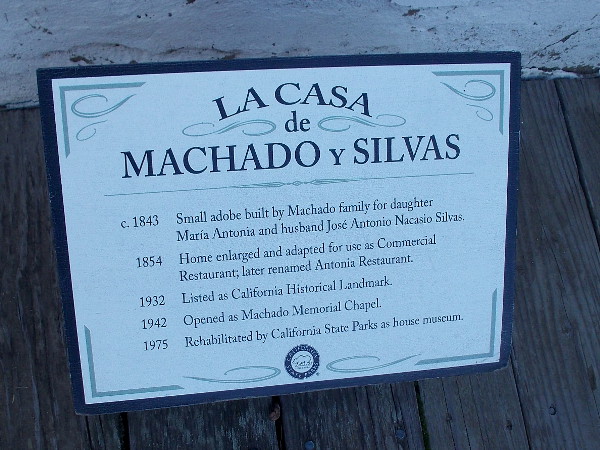
The small recreated restaurant shows what life was like in the mid 1800s, back when San Diego was downright tiny. The Commercial Restaurant is comprised of two rooms: one contains the dining area, the other, the kitchen. Originally called the Casa de Machado y Silvas, the house was built by José Manuel Machado and given as a wedding gift to his daughter María Antonia, and her husband, José Antonio Nicasio Silvas. The simple adobe building was converted into a modest restaurant by its owners in the early 1850s. Today it stands as one of the five historic adobes in Old Town San Diego.
I’ve provided a bit more info in the photo captions!
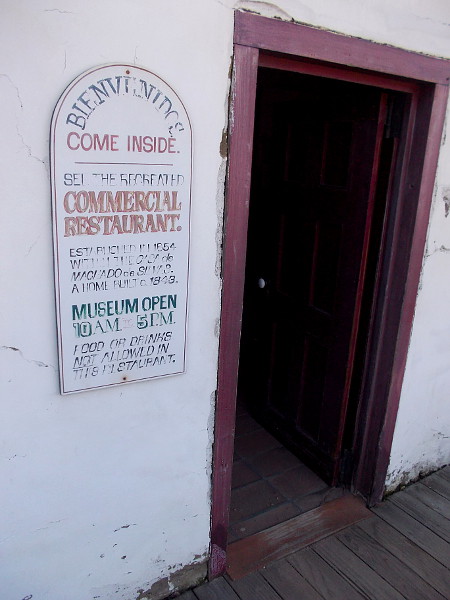
Photo shows the Commercial Restaurant museum, which is free and open to the public in Old Town San Diego State Historic Park.La Casa de Machado y Silvas in Old Town San Diego was turned into Commercial Restaurant, then later renamed Antonia Restaurant.Bienvenidos. Come inside. See the recreated Commercial Restaurant. Established in 1854 within the Casa de Machado y Silvas, a home built in 1843. Museum open 10-5.The dining area of the Commercial Restaurant. This is was what it was like to eat in style in the mid 1800s. Many exhibits along the walls recall the history of old San Diego.Art on one wall depicts the grinding of corn. Other nearby maps and graphics show how food is related to our city’s history.
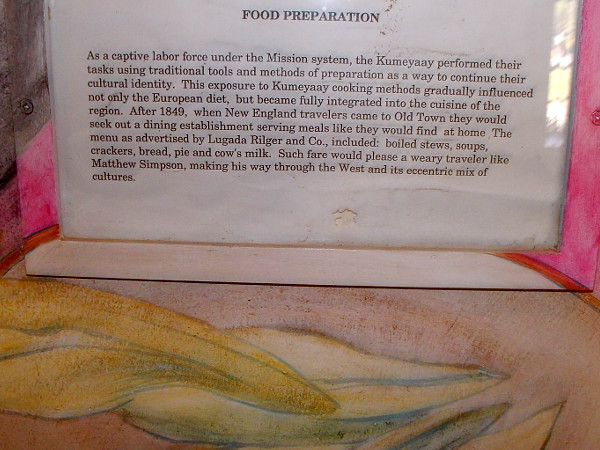
In the mid 1800’s, when New England travelers arrived by ship to Old Town, they sought out a dining establishment serving meals like they would find at home, including stews, soups, crackers, bread and cow’s milk. Over the years, exposure to native Kumeyaay cooking influenced the European diet and became integrated into the region’s cuisine.
As a captive labor force under the Mission system, the Kumeyaay performed their tasks using traditional tools and methods of preparation as a way to continue their cultural identity.Display case contains artifacts used in the daily life of San Diego residents almost two centuries ago.Shelves in the Commercial Restaurant contain old jars, goblets, bowls, bottles, plates and more.It was 1948 when a secret hiding place was discovered in one of the adobe’s window wells. Within the niche were two documents relating to life of an early Old Town San Diego resident.
Historical documents discovered by archeologists hidden in the Casa de Machado y Silvas shed light on the life of San Diego resident Allen B. Light. He was also know as the “Black Steward”. Allen arrived in California during the 1830s, aboard the sailing ship Pilgrim, the same vessel that brought Richard Henry Dana Jr. who would later write Two Years Before the Mast.
One document was “a sailor’s protection”, which proclaimed Light was a “coloured man, a free man, and a citizen of the United States of America”. The second document was his commission from the Mexican Governor of Alta California to investigate illegal sea otter hunting along the coast.
A peek into the recreated kitchen next to the dining room. Cooking was rather primitive in early San Diego.A table full of peppers and vegetables. What life was like many generations ago, in the kitchen of Old Town’s Commercial Restaurant museum.
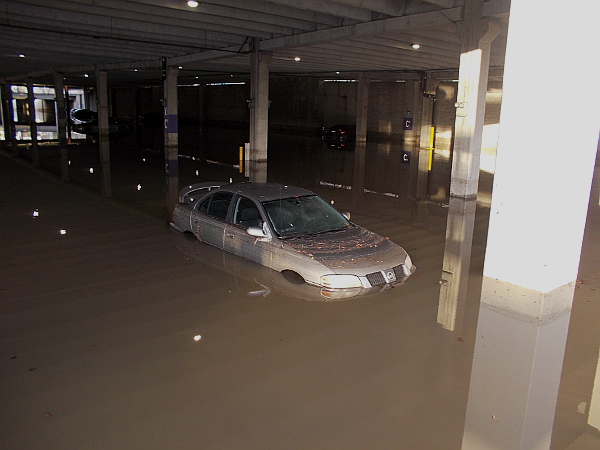
Car deep in the water. The flooded lower level of a Fashion Valley mall parking garage in San Diego’s Mission Valley.
Occasionally I post not-so-cool photos on my blog. Here are some that are noteworthy. I took these this morning while walking through a section of Mission Valley on my way to work. Because it lies right next to the San Diego River, the area is notorious for catastrophic flooding.
Yesterday we had a storm that brought intense rain to our region. It was the second winter storm of this El Nino year. Today we’re having our third storm, and it looks to be fairly rainy for many days to come.
Of course, after California’s long drought, we need the water. Unfortunately, the rain that falls in Mission Valley and many other parts of San Diego isn’t captured–it simply runs off into the ocean. I hope there isn’t too much damage caused this winter by El Nino. To my blog’s followers who are affected, take care!
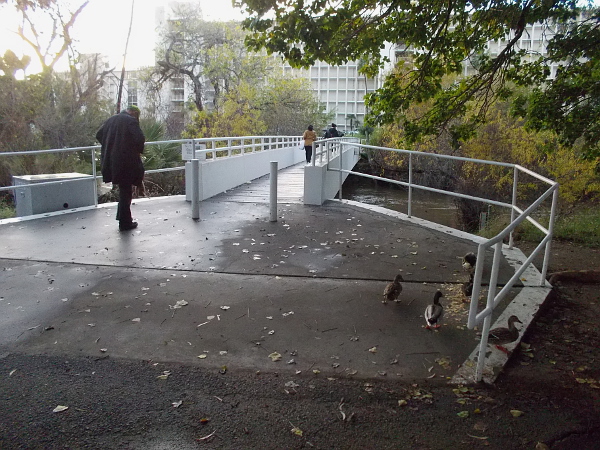
The morning after an early winter storm during an El Nino year. The sun is out as people cross the San Diego River near the Fashion Valley Transit Center.Areas along the San Diego River are notorious for flooding. Yesterday a long deluge raised the water to an unusually high level.A couple dozen cars were spotted flooded at the Fashion Valley shopping mall. This one was stranded not far from Macy’s, which also suffered some flooding inside the store.More cars abandoned in the flood. Many storms are in line to strike San Diego in the coming days during this El Nino year.The bike and pedestrian pathway beneath Highway 163 flooded and was impassable. The nearby river was swollen with the recent rain.A beautiful morning photo of the San Diego River taken from Mission Center Road. This spot floods during severe storms and traffic must be diverted.A barrier stands ready for the next storm. It looks to be a long, watery winter!
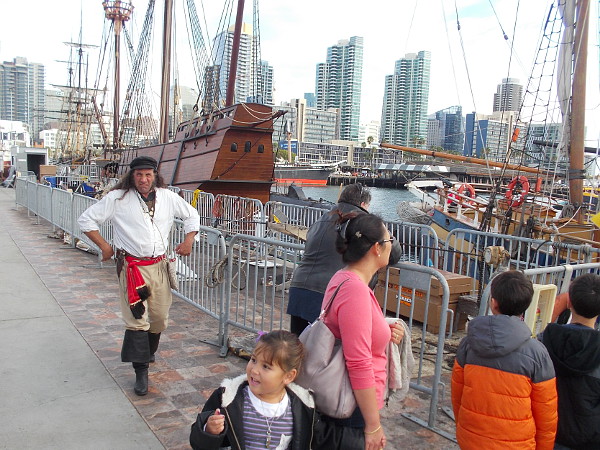
A smiling, innocent-looking pirate just walks along. People suspect nothing.
Did I actually see what I thought I saw?
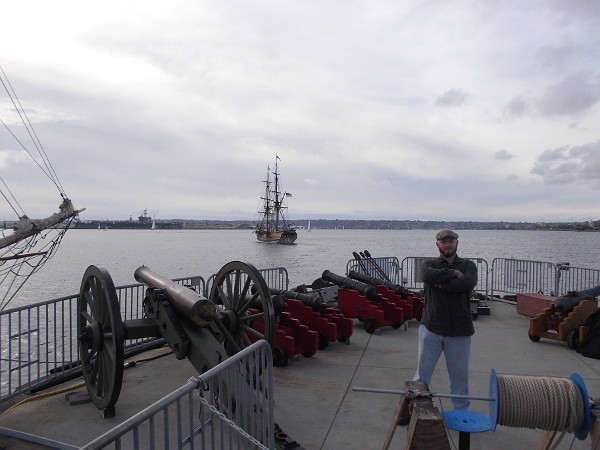
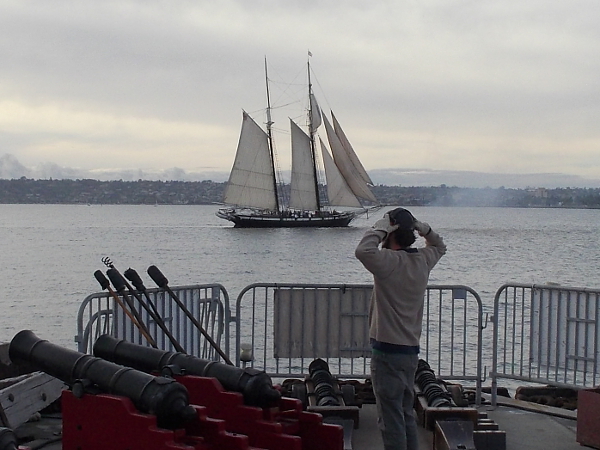
Two tall ships were scheduled to have a mock cannon battle today on San Diego Bay. The reenactment was to be between the Maritime Museum of San Diego’s replica Revenue Cutter Californian (the official tall ship of the State of California) and the Lady Washington, a tall ship visiting from the Grays Harbor Historical Seaport Authority.
What happened?
Pirates!
Two very rascally pirates!
Read the photo captions and tell me where I am wrong!
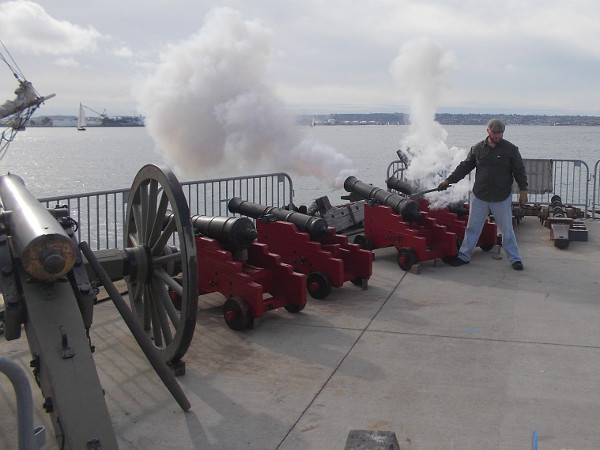
Visitors to the Maritime Museum of San Diego have boarded the tall ship Californian, to engage in a mock cannon battle with visiting tall ship Lady Washington.In case you want to learn a bit more about Californian’s sails and rigging, click this photo. Unfortunately, pirates know all about this stuff.Notorious Captain Swordfish, that pirate who makes Blackbeard look perfectly civilized, comes striding along. He must have another evil scheme in mind.Captain Swordfish makes a crazy scene, distracting those who are boarding the Lady Washington. Nobody notices what that first innocent-looking pirate is up to.That first pirate has taken control of Californian! It’s heading out into San Diego Bay while a museum employee’s back is turned!Turn around! Turn around! That rascal is stealing your ship!The Californian comes about and launches an attack on the Maritime Museum! The insolence! Deadly cannons thunder and echo throughout downtown San Diego!Oh, dear! Oh, dear!The Maritime Museum employee quickly loads one of the land battery cannons, and gets ready to fire! That pirate won’t get away so easily!An epic battle begins!
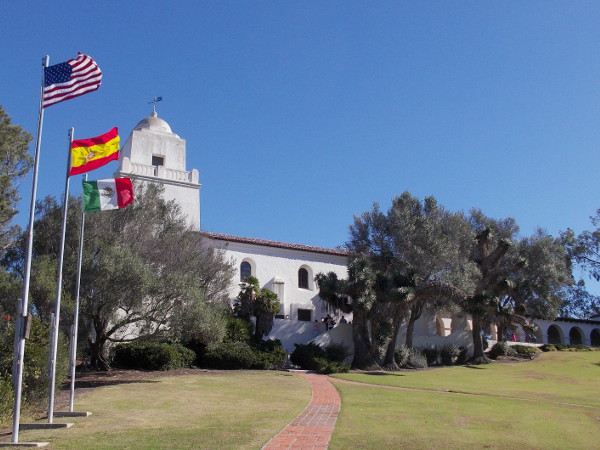
The Junipero Serra Museum of the San Diego History Center was built in 1928 on Presidio Hill, where European civilization was established in Alta California.
I recently visited one of San Diego’s most fascinating museums. The Junipero Serra Museum is located atop Presidio Hill, in a distinctive Mission Revival architectural style building overlooking San Diego Bay and the San Diego River, just east of Old Town. It stands near the site of San Diego’s historic Spanish presidio, built in 1769. The presidio was the birthplace of European civilization in Alta California.
The Serra Museum is operated by the San Diego History Center, which is headquartered today in Balboa Park. Back in 1929, when the building was dedicated, it became home of what was then called the San Diego Historical Society. The important San Diego institution was established by civic leader George W. Marston.
Can you believe it? I’ve lived in San Diego for 15 years . . . and this was the very first time I ventured into the Serra Museum. (I can thank my blog for that!)
What I discovered was an absolutely amazing place that both residents and visitors to San Diego should definitely not miss.
Here’s a sample of what you’ll see…
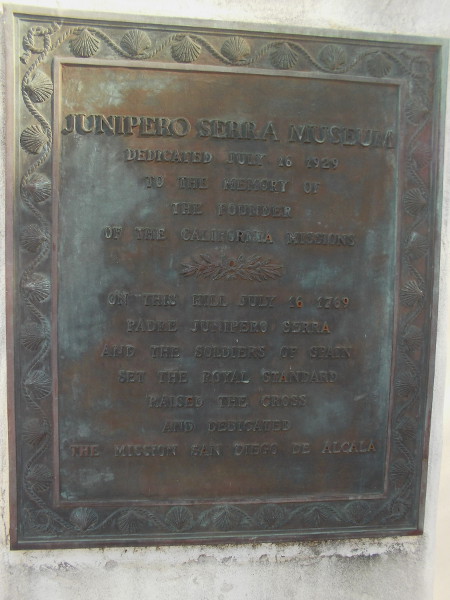
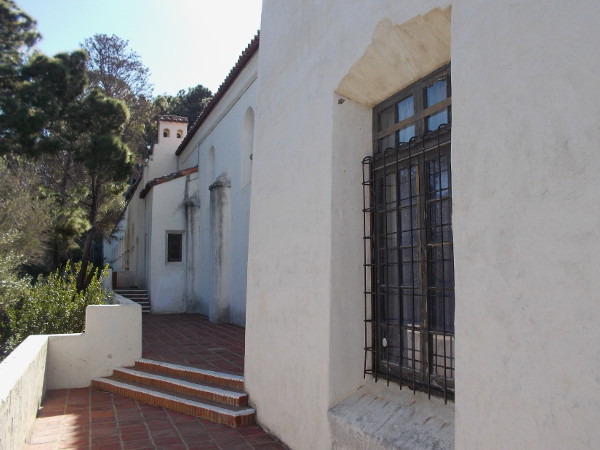
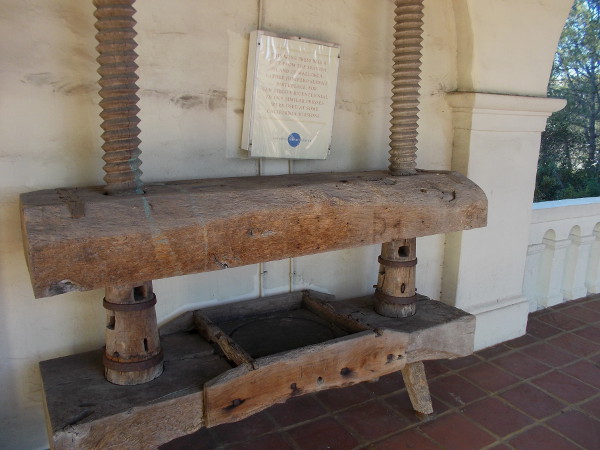
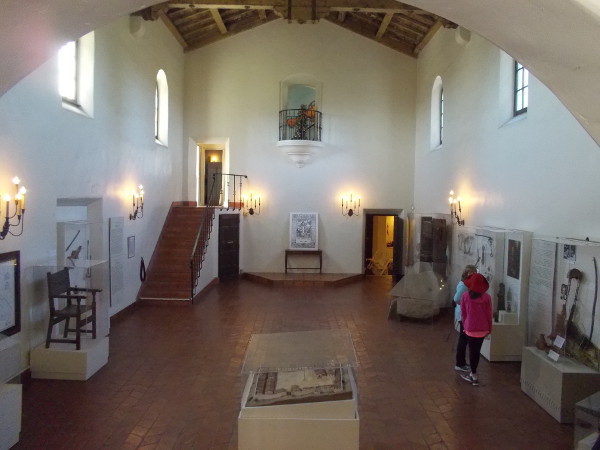
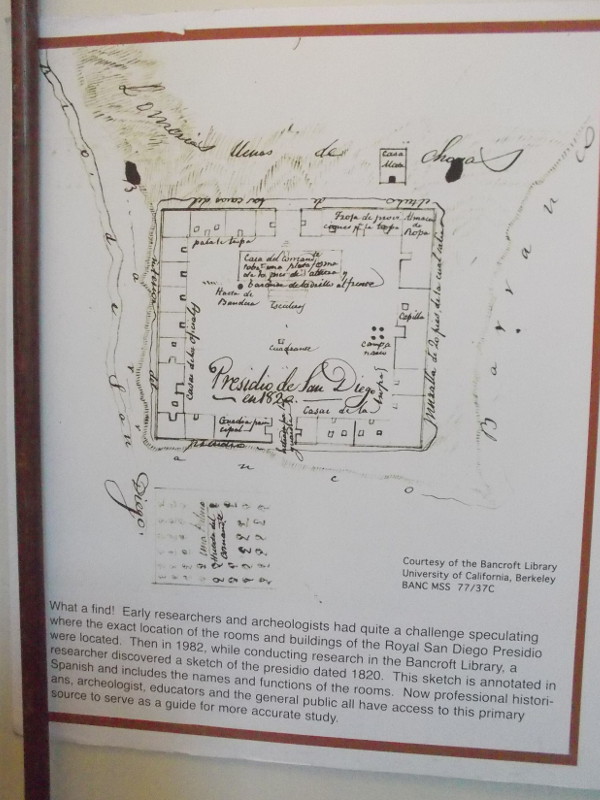
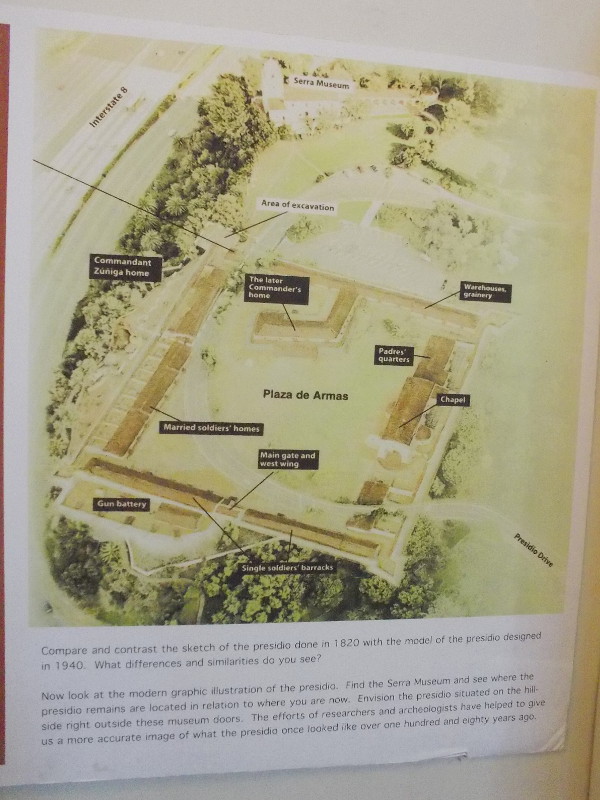
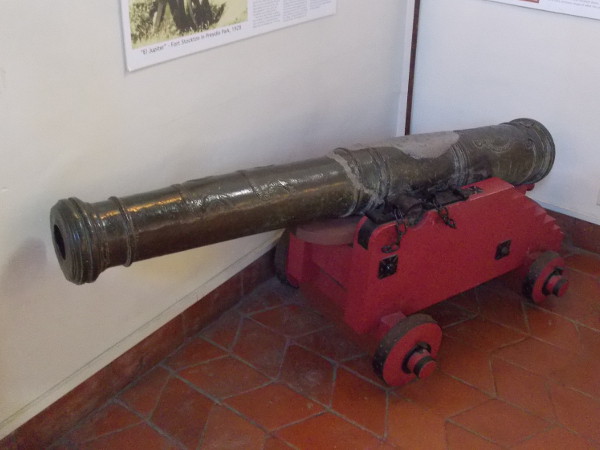
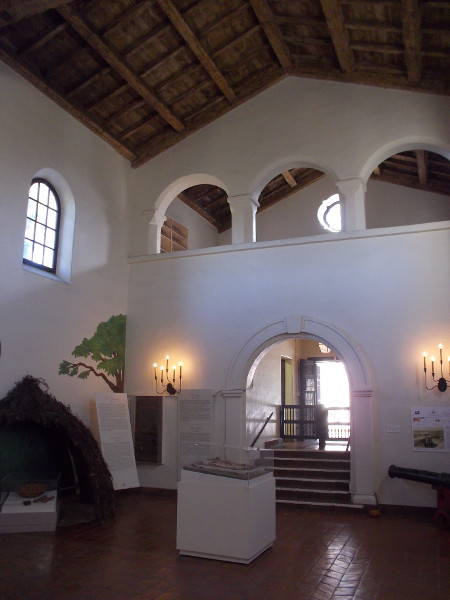
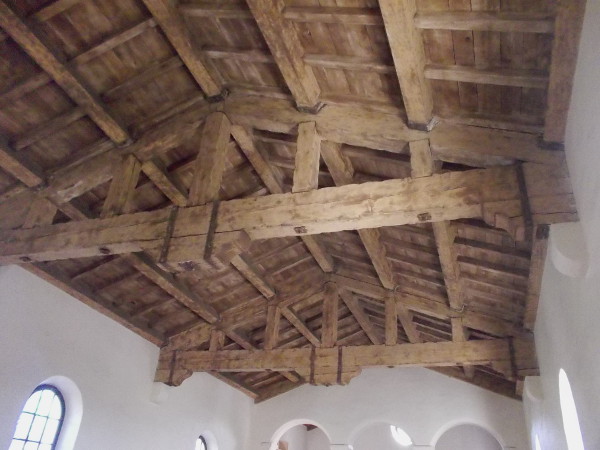
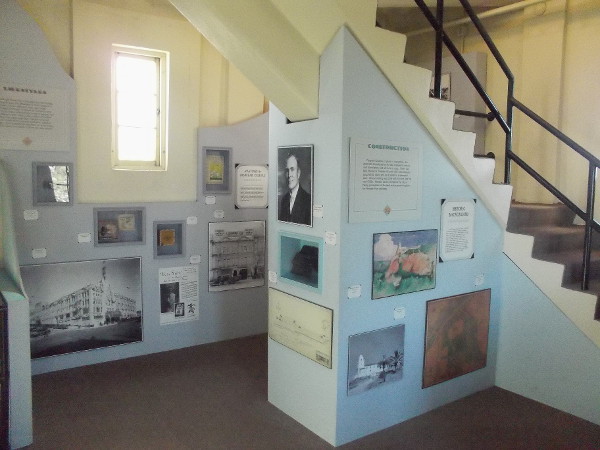
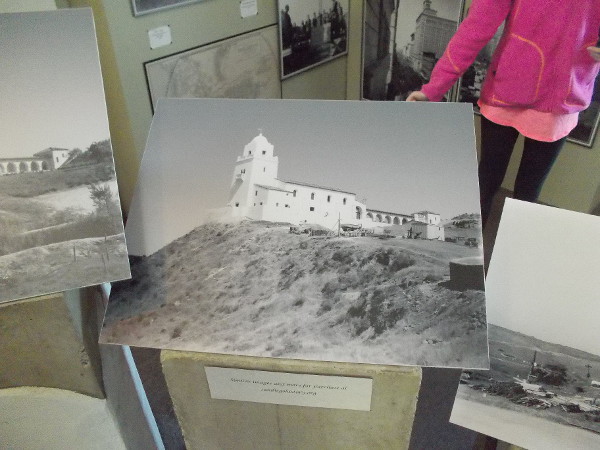
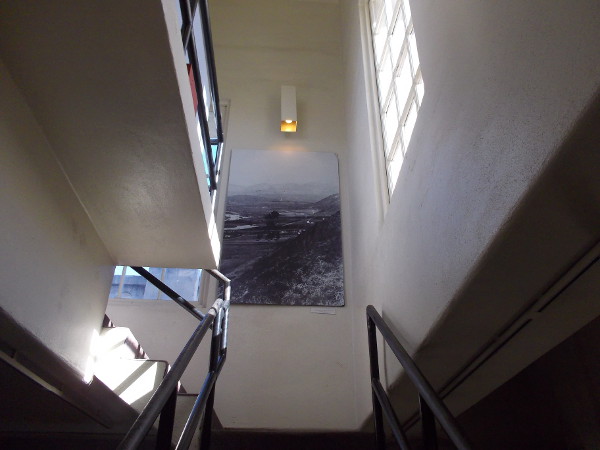
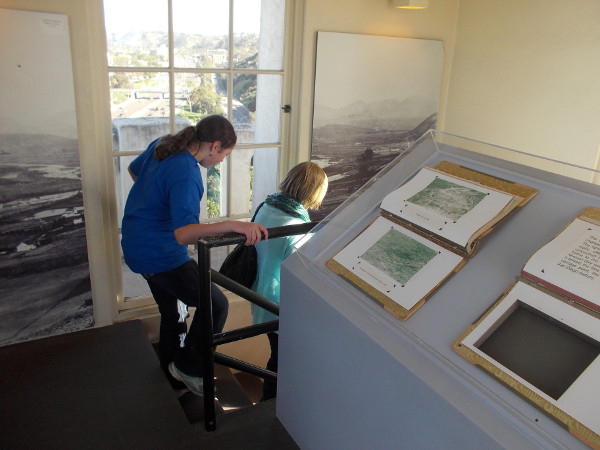
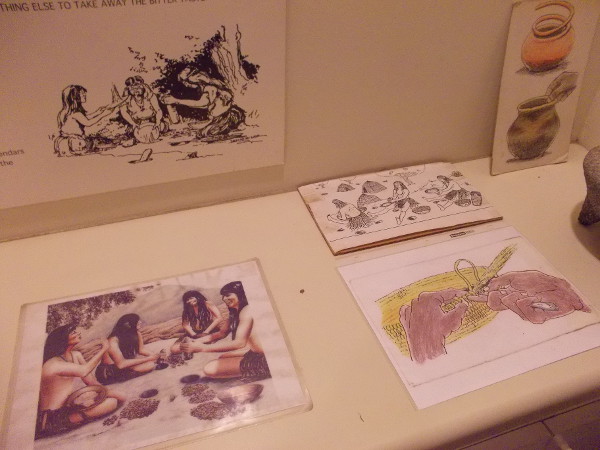
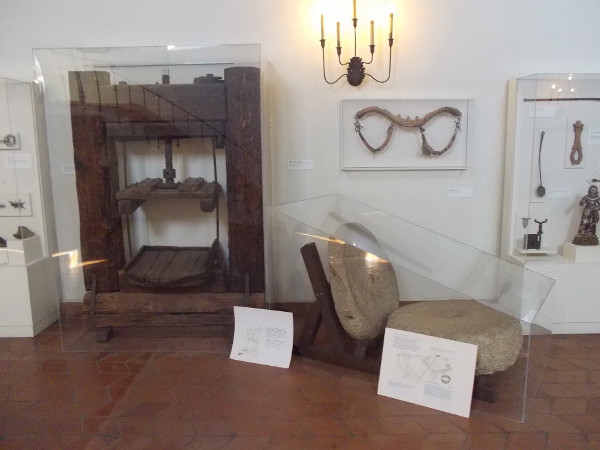
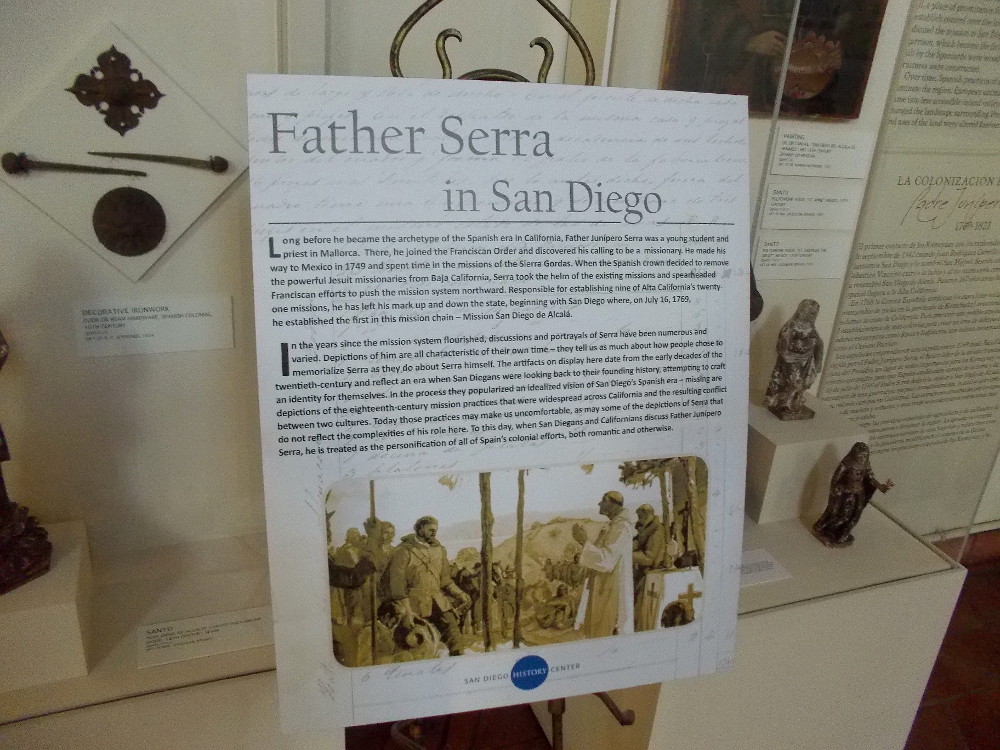
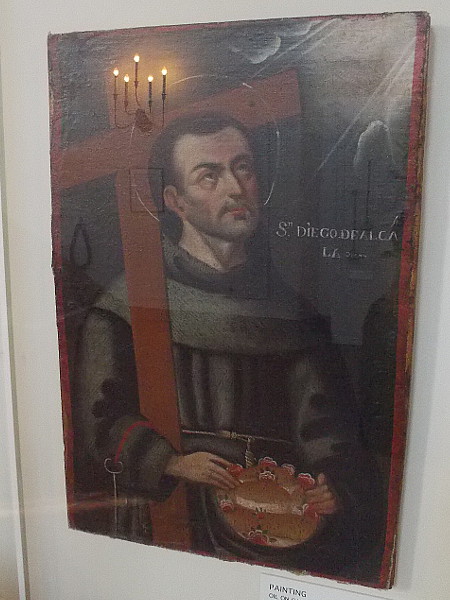
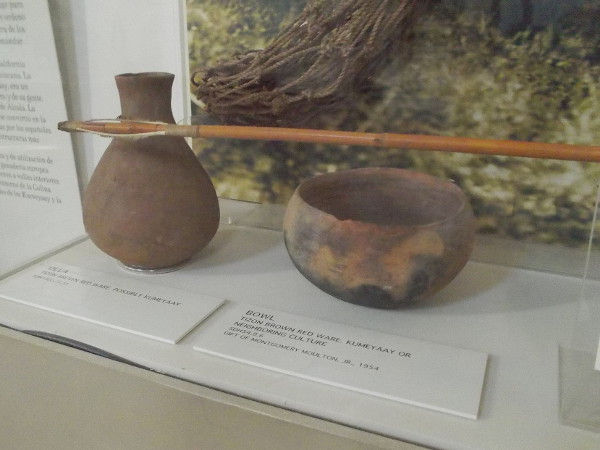
People arrive at the Serra Museum, where San Diego’s early Spanish history comes alive.Junipero Serra Museum dedicated July 16, 1929 to the memory of the founder of the California missions. The original Mission San Diego de Alcalá was established nearby in 1769.A quick look at the rear of the museum.The Serra Museum building was designed by noted architect William Templeton Johnson. It reflects Mission Revival style architecture.Large wine press in front of the museum was a gift from the Spanish island of Mallorca, Father Junipero Serra’s birthplace.Plaque near entrance reads George White Marston 1850-1946. FRIEND OF HIS FELLOW MEN – LOVER OF ALL GROWING THINGS. Piece by piece through many years he acquired these acres…Elegant interior of the Serra Museum contains many exhibits pertaining to San Diego’s early Spanish history.Researchers discovered this sketch of the Royal San Diego Presidio dated 1820. It shows the layout of the old buildings which no longer exist.Modern graphic illustration of the fortified presidio, which was located a short distance below the Serra Museum’s front entrance.Old Spanish cannon named El Jupiter, cast in Manila in the 18th century. El Jupiter stood in Fort Guijarros at Ballast Point, the first defensive fortifications for San Diego Bay.Leather armchair made in Catalan, Spain in the 17th century. This “friar’s chair” was part of the original Serra Museum’s furnishings.Old violin with bow, a branding iron used by rancheros to identify cattle, and iron spurs are among the many historical objects on display.Another look at the beautiful interior of the Serra Museum in San Diego.Large wooden beams in a truly amazing ceiling.Stairs lead up to the Serra Museum’s tower. Painted on the wall is a map showing the sea journey of the Spanish expedition which founded San Diego in 1769.March 9-20, 1769. Desperate to replace drinking water which leaked from the ship’s casks, Captain Vicente Vila commands the tacking Spanish galleon San Carlos near Isla de Cedros.A room halfway up the tower. Numerous displays recall San Diego’s history, most notably around the time when the Serra Museum was dedicated in 1929.Old photo of the crowd attending the Serra Museum’s dedication ceremony on July 16, 1929.A fascinating look at Presidio Hill almost a century ago.A lovely watercolor sketch of the Junipero Serra Museum atop Presidio Hill.On the wall are many historical photos and artifacts, including an image from around 1930 of a cigar factory on 4th Street in San Diego.A reproduction of the west elevation drawing of the Serra Museum by architect William Templeton Johnson.Now we’re heading up to the very top of the tower.Looking west from the Serra Museum tower along Interstate 8. Point Loma is on the left and Mission Bay is to the right.Looking east into Mission Valley.Visitors at the Serra Museum head back down from the tower, after looking at old photos which show a much less-developed surrounding landscape.A small theater in the Serra Museum contains additional exhibits about life in and around the old Presidio.Examples of what life was like for the Native American Kumeyaay, who occupied this region long before it was discovered by the Spanish.Stories of two people who lived on a local Rancho. Click the image to enlarge, if you’d like to read it.Map of the old Presidio’s archaeological site. You can see where the fort was located in relation to the Serra Museum.Explanation of the excavation process utilized by researchers. Some artifacts that were unearthed are on display in the museum.Artistic rendition of a Mexican presidio soldier circa 1830, and a horse bit.An olive press, granite mill stones, and an ox yoke.Small artifacts include this carved polychrome wood San Diego de Alcala Santo from 18th century Spain.Sign describes the life of Franciscan missionary Father Junipero Serra, and his work to establish the California Missions under the flag of Spain. He was recently made a Catholic Saint.Painting. Oil on canvas. San Diego del Alcala de Henares. Mid 18th century, Spanish or Mexican.Olla and bowl. Kumeyaay or neighboring culture.The Junipero Serra Museum in San Diego provides a fascinating look at our culturally diverse city’s very early history.























































 Cool San Diego Sights!