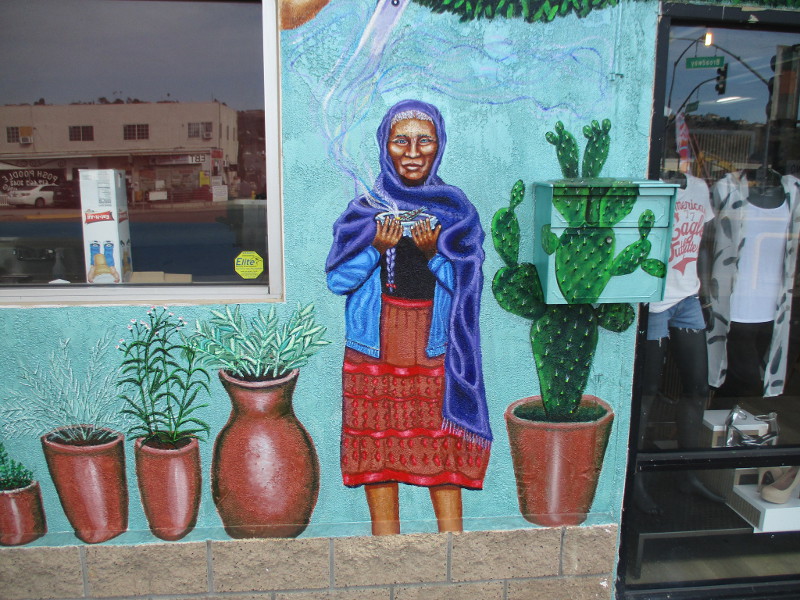
There’s a beautiful new mural on the front of the Welcome Home Boutique & Art Space in Lemon Grove. I spotted it yesterday during a walk down Broadway near Grove Street.
The art is by muralist and social justice activist Mario Chacón. It was painted this year.
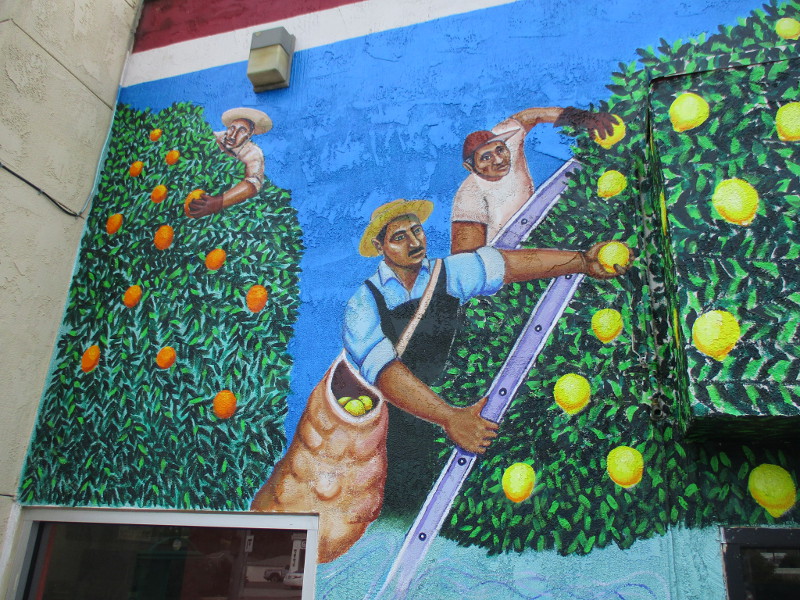
Included in the artwork is the image of migrant workers collecting fruit from citrus trees.
Lemon Grove used to be largely agricultural. It’s sunny climate is perfect for growing citrus. The San Diego Union newspaper in 1894 referred to Lemon Grove as “a sea of lemon trees.”
My adventure yesterday included a visit to the Lemon Grove Parsonage Museum, which is operated by the Lemon Grove Historical Society. I’ll be sharing those fascinating photos in the next few days!
…
I live in downtown San Diego and love to walk around with my camera! You can follow Cool San Diego Sights via Facebook or Twitter!
You can easily explore Cool San Diego Sights by using the search box on my blog’s sidebar. Or click a tag! There are thousands upon thousands of photos for you to enjoy!
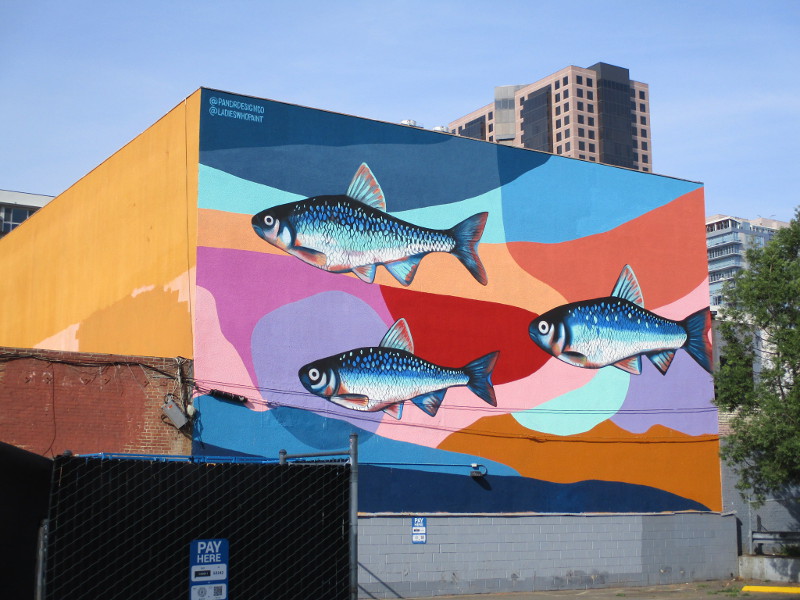
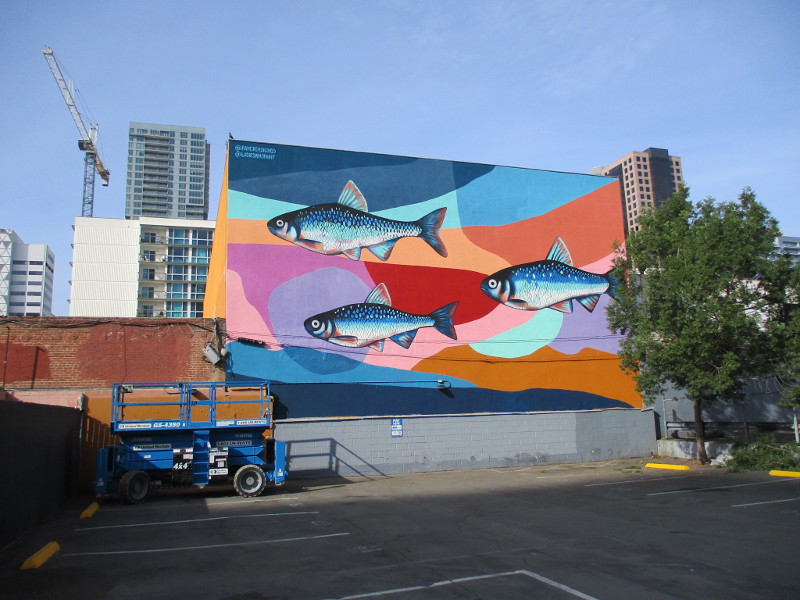
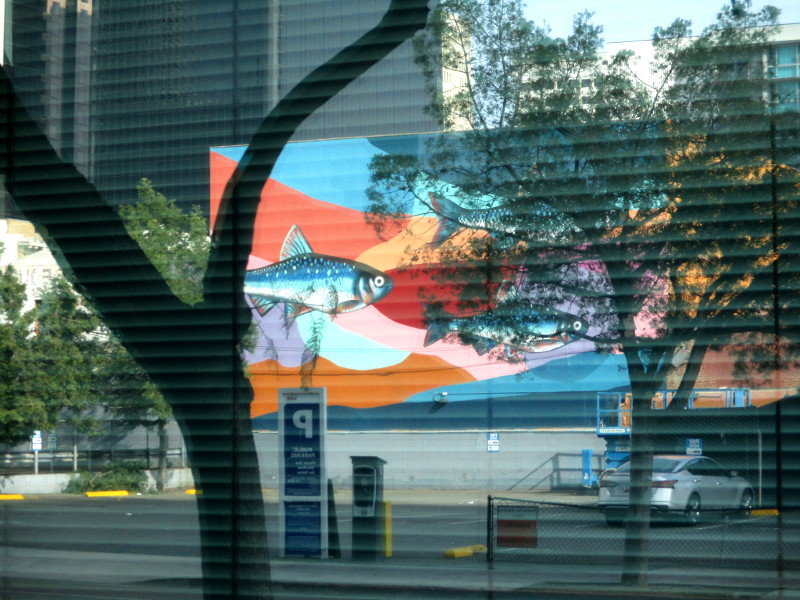
Those who sit waiting for a bus on the west side of the City College Transit Center might see three very large fish out of water. They’ve been painted on a wall facing 11th Avenue, a short distance north of Broadway!
I believe this mural was just finished. I see it was created by the prolific local artists of @ladieswhopaint and @pandrdesignco!
Downtown San Diego becomes more colorful every day!
…
I live in downtown San Diego and love to walk around with my camera! You can follow Cool San Diego Sights via Facebook or Twitter!
You can easily explore Cool San Diego Sights by using the search box on my blog’s sidebar. Or click a tag! There are thousands upon thousands of photos for you to enjoy!
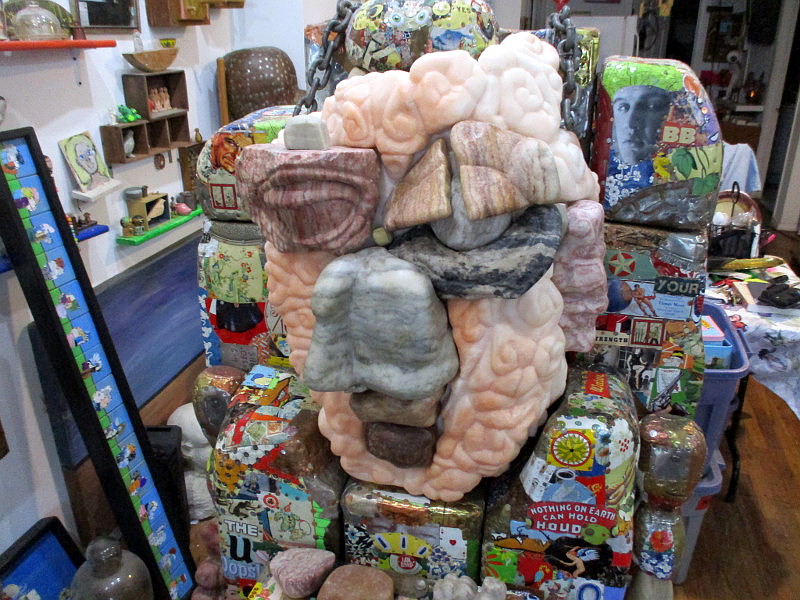
A few months ago Frankenstein’s monster came to life in downtown San Diego. I saw the awesome monster this afternoon when I stepped through the door of artist James Watts’ studio!
The creature, years in the making, now lives among other imaginative sculptures and works of art. I blogged about some of that artwork a short while ago here.
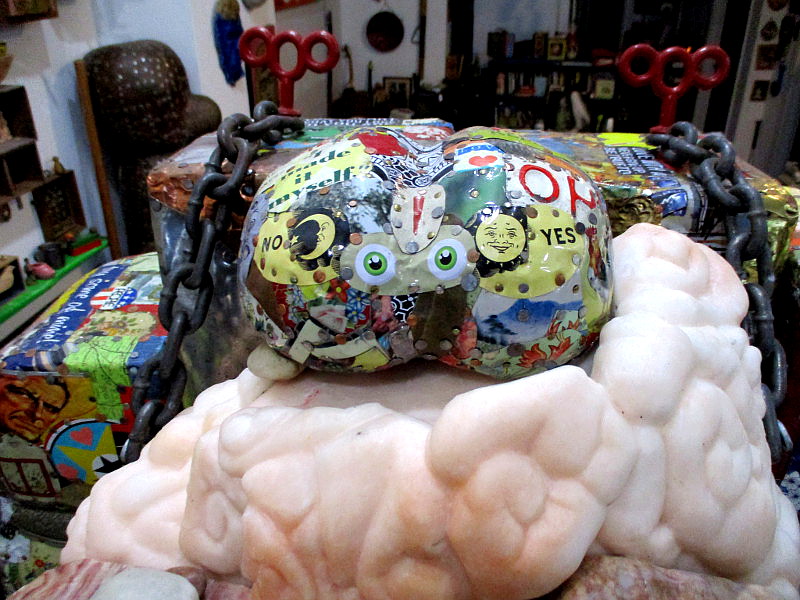
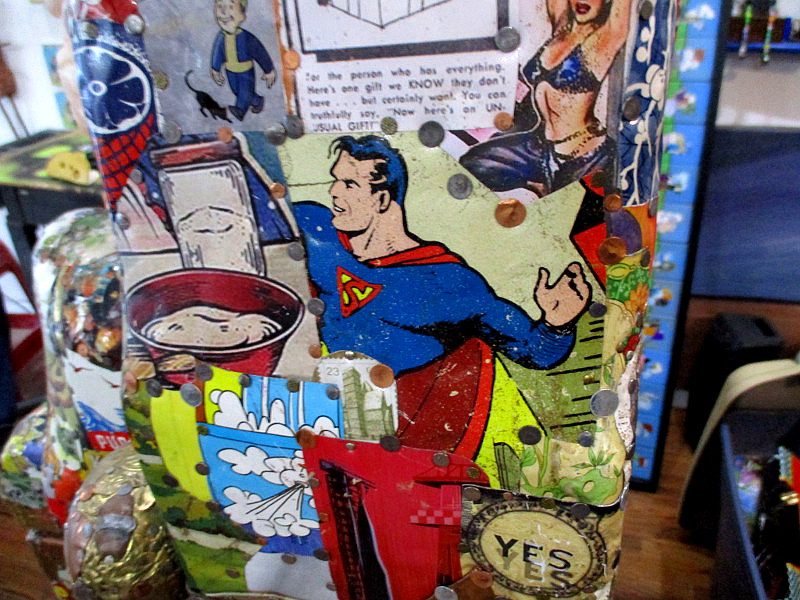
Frankenstein’s monster has a skin made of hammered aluminum. He’s covered with images cut from old lunchboxes, advertisements, and other odd things. When the innocent monster was assembled and jolted into life, it appears his skin rapidly absorbed impressions from the world he was born into.
James Watts wants viewers of his art to make their own discoveries. Each block that composes the monster’s body is numbered. The two hemispheres of the brain include the word NO or YES. One includes the moon, the other the sun. He showed me several other cleverly arranged images. I saw fun word play.
The sculpture is like a giant jigsaw puzzle or visual poem. All is open to interpretation.
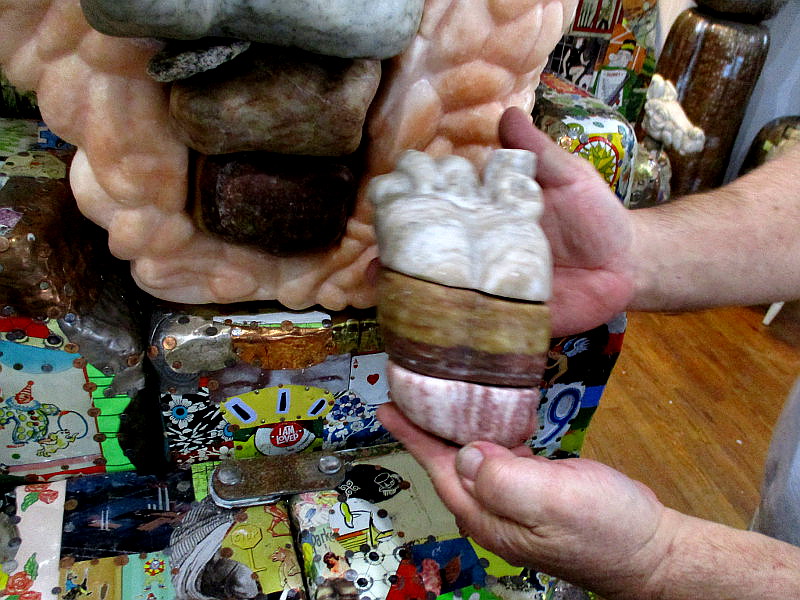
The heart of the Frankenstein monster is made of three pieces that fit together. One piece represents love, another lust, another the mind.
I saw several superheroes and cartoon characters on the monster’s skin, parts of old advertisements, and multiple instances of the Three Stooges.
What do you see?
…
I live in downtown San Diego and love to walk around with my camera! You can follow Cool San Diego Sights via Facebook or Twitter!
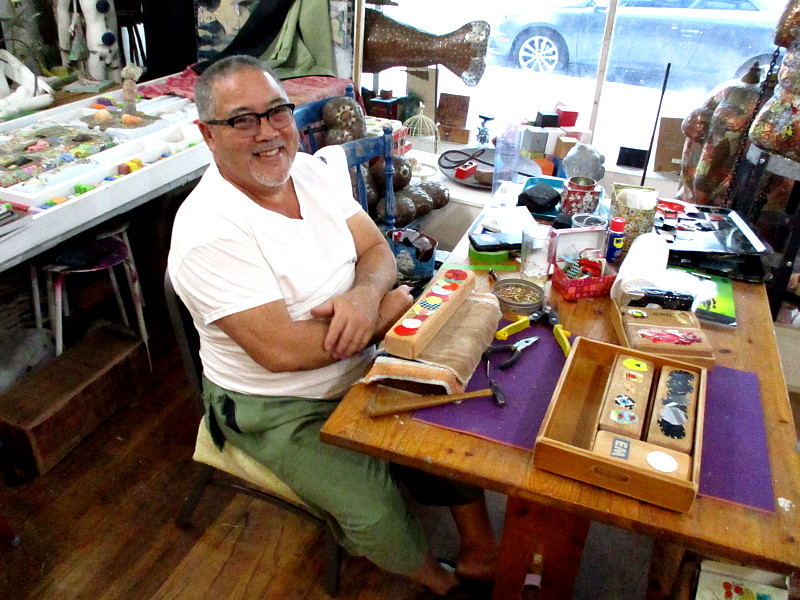
One of the most wonderfully creative artists in San Diego has a little-known studio downtown. His name is James Watts.
I blogged about my first visit to his amazing studio several years ago here.
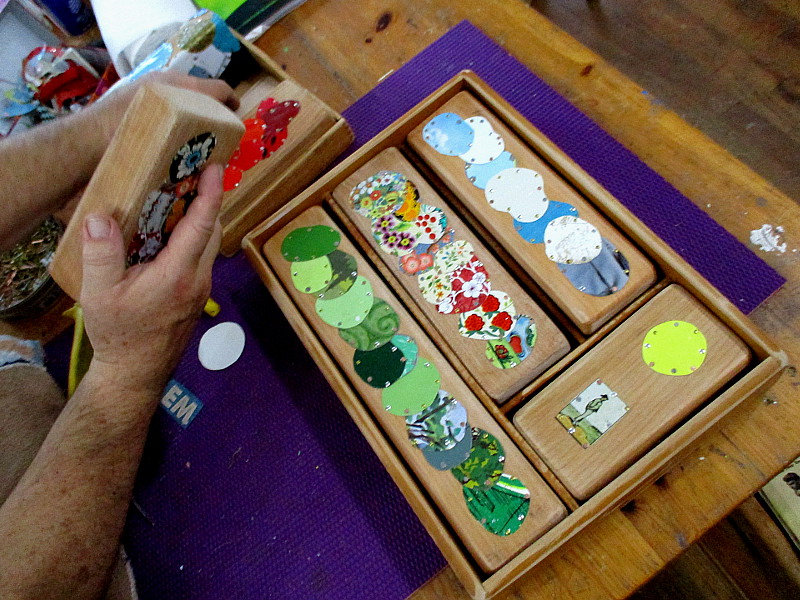
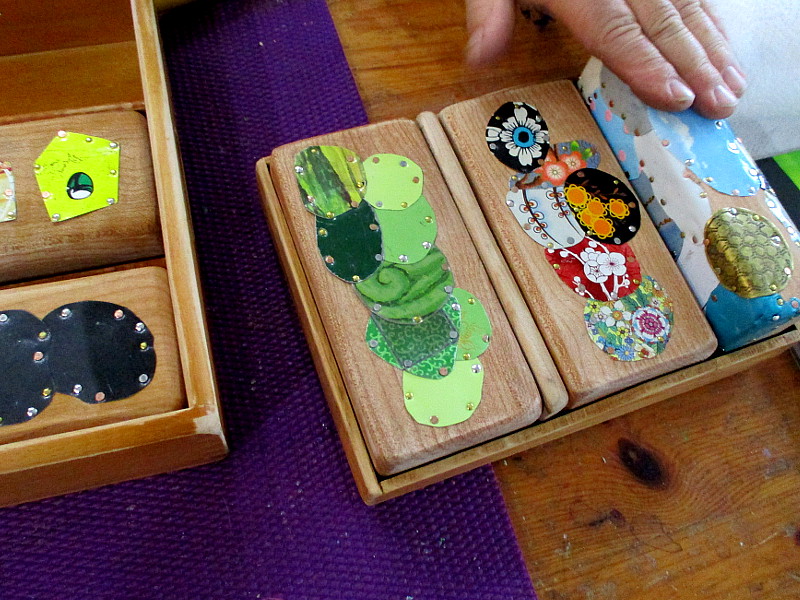
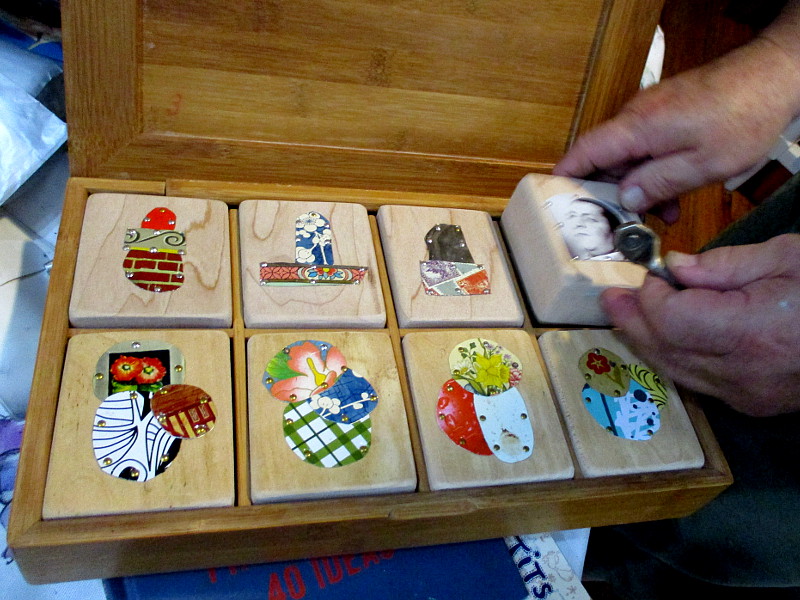
Today I was walking home after a long adventure (many blogs coming up) when I saw his studio door was open. And there he was working away! Hammering at flat pieces of printed aluminum, making colorful storytelling blocks!
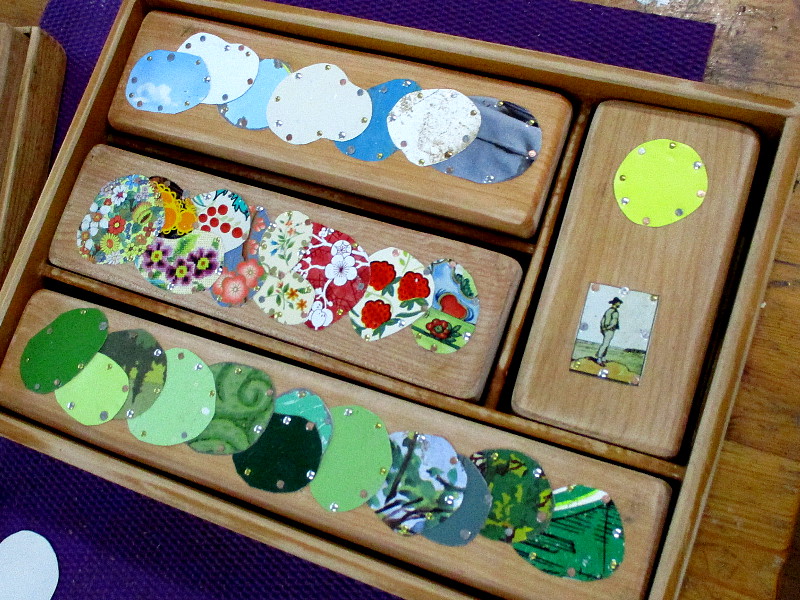
What are storytelling blocks? They feature images from human experience on different sides–such as night on one side and day on the other. You can flip them any which way, then insert them into a wooden box with fixed compartments! These visual stories are like small treasures or keepsakes. Dreamlike, they are open to interpretation.
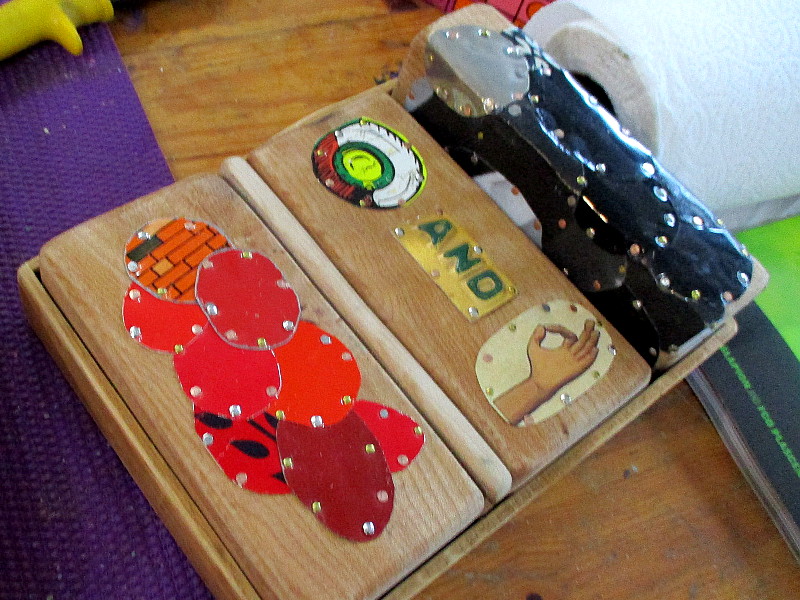
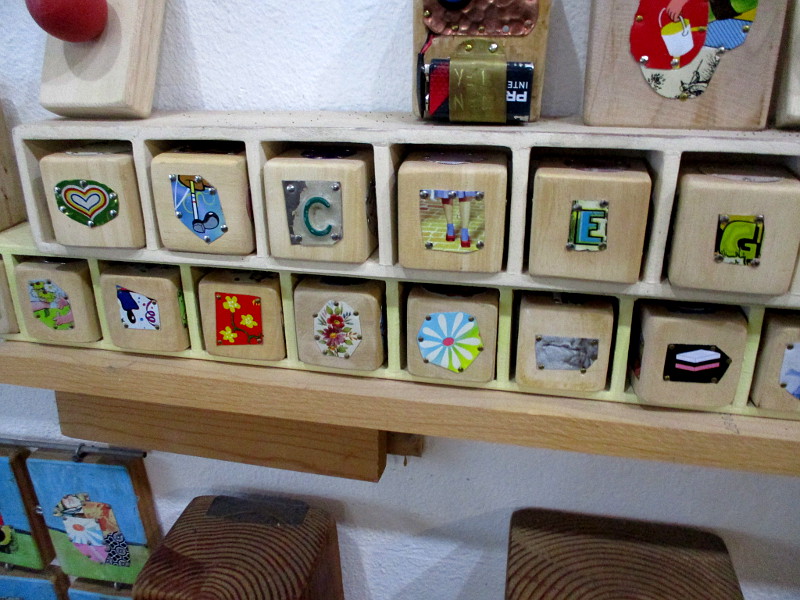
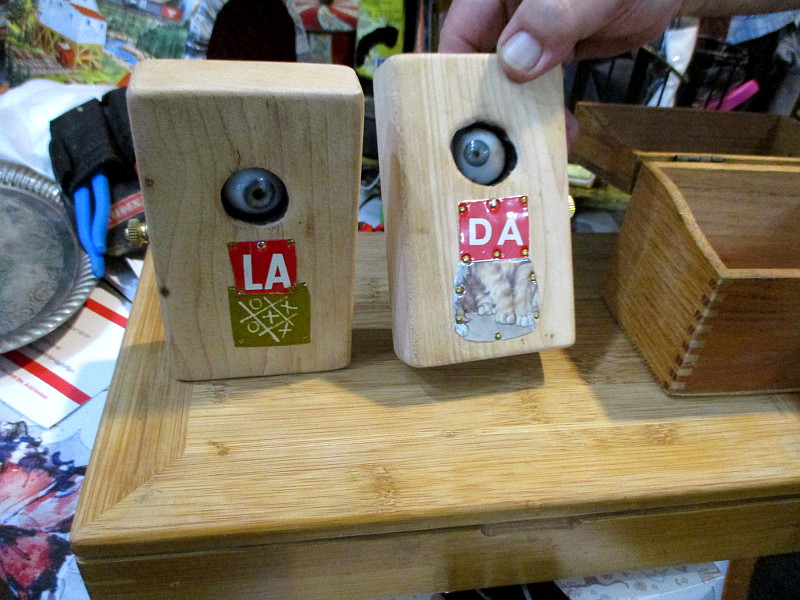
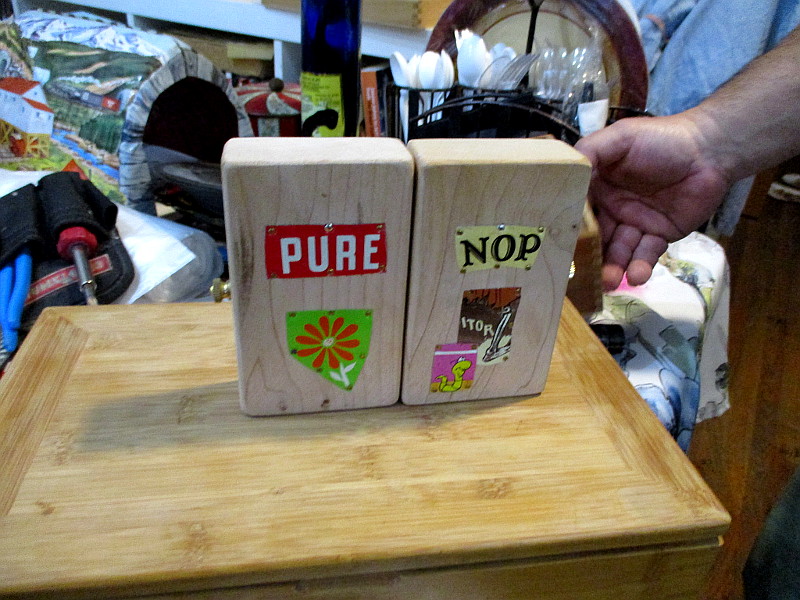
He also showed me his Box of Yes and No (that uses words from different languages and a couple of eyeballs) and a shelf full of storytelling cubes. Plus lots of other cool artwork!
His fantastic Frankenstein monster that debuted earlier this year is so cool it’s coming up separately on my next blog post!
I love the unlimited energy and joy of life that flows from James Watts’ hands. His art is primarily about storytelling. His studio is also filled with large sculptures based on Japanese kokeshi. The sculptures creatively depict Don Quixote, Prometheus, Jonah, Pandora, Joan of Arc, and a whole host of diverse characters from literature.
He told me some of his storytelling pieces will be in a future exhibition at the Oceanside Museum of Art. So you might be getting a little bit of a preview here!
…
I live in downtown San Diego and love to walk around with my camera! You can follow Cool San Diego Sights via Facebook or Twitter!
Fault Line Park in downtown San Diego’s East Village neighborhood made its debut a little over six years ago.
Has the Earth moved since then?
More specifically, has the Earth on either side of the Rose Canyon Fault System rupture just under the park moved since then?
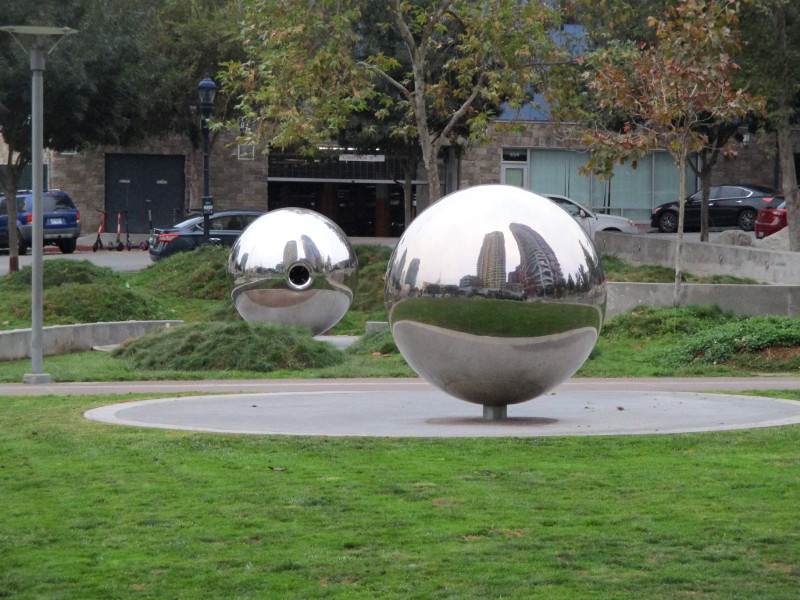
Very unique public art in this city park helps casual observers determine whether any such movement has occurred. I first blogged about Fault Line Park and its two giant spheres in September, 2015. Revisit that old post by clicking here.
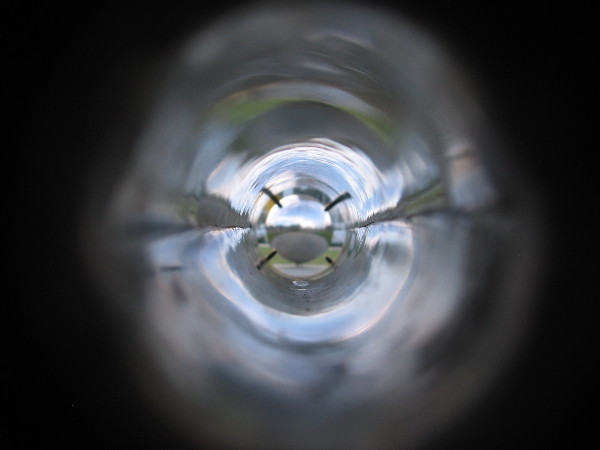
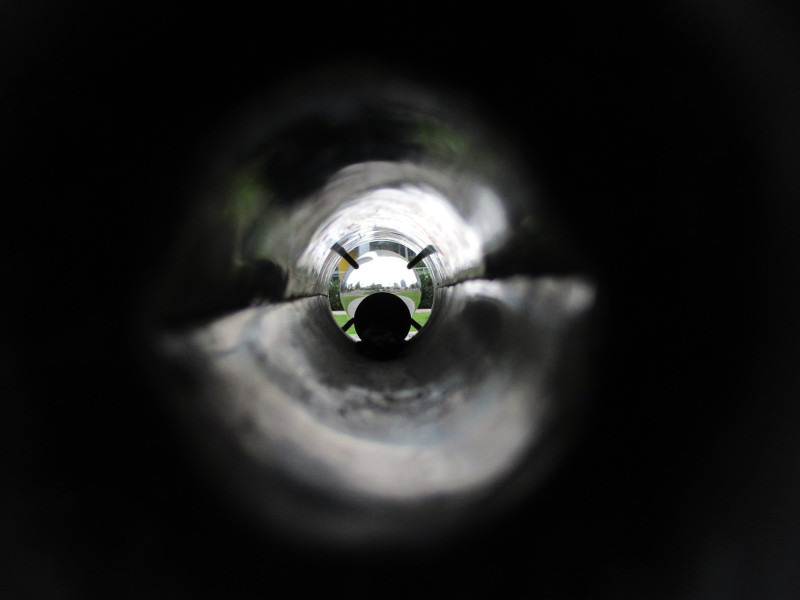
Back then I took a photograph through one of the spheres. The twin stainless steel spheres stand on opposite sides of the shallow underground rupture. Should the ground on either side move over time, the targeting crosshairs inside the one sphere will shift in relation to the other sphere.
Here’s a photo I took over six years ago…
Compare it to the next photo that I took early this morning.
Something is now stuck inside the sphere’s hollow tube, but you can see how the crosshairs still roughly center on the opposite sphere:
I know this isn’t scientific, but if there has been any movement of the ground on either side of the fault line, it appears to be very slight!
I’ll have to take another photo a few years from now!
…
I live in downtown San Diego and love to walk around with my camera! You can follow Cool San Diego Sights via Facebook or Twitter!
You can easily explore Cool San Diego Sights by using the search box on my blog’s sidebar. Or click a tag! There are thousands upon thousands of photos for you to enjoy!
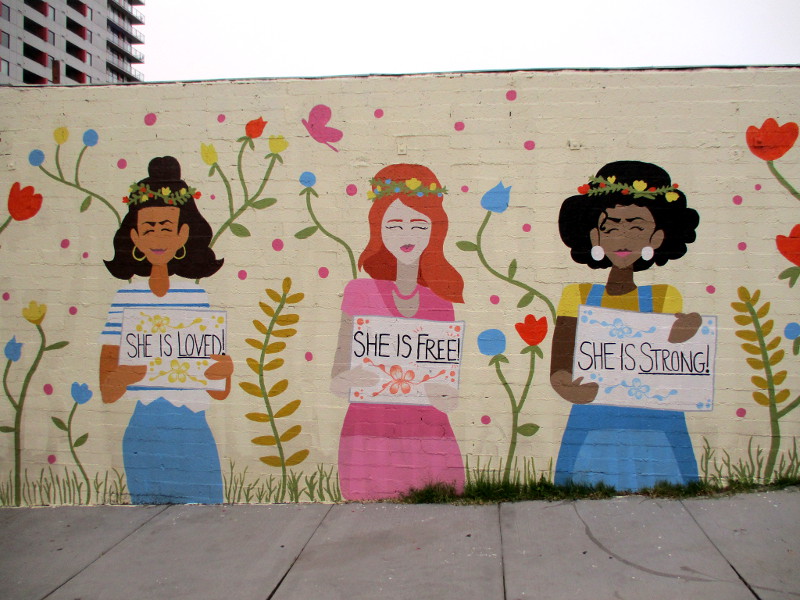
I spotted this uplifting, encouraging mural early this morning as I walked down J Street in San Diego’s East Village. The artwork is located on a wall between 16th Street and 17th Street.
I believe the mural was painted about a year ago. I don’t know by whom.
The three positive messages are: She is loved! She is free! She is strong!
…
I live in downtown San Diego and love to walk around with my camera! You can follow Cool San Diego Sights via Facebook or Twitter!
You can easily explore Cool San Diego Sights by using the search box on my blog’s sidebar. Or click a tag! There are thousands upon thousands of photos for you to enjoy!
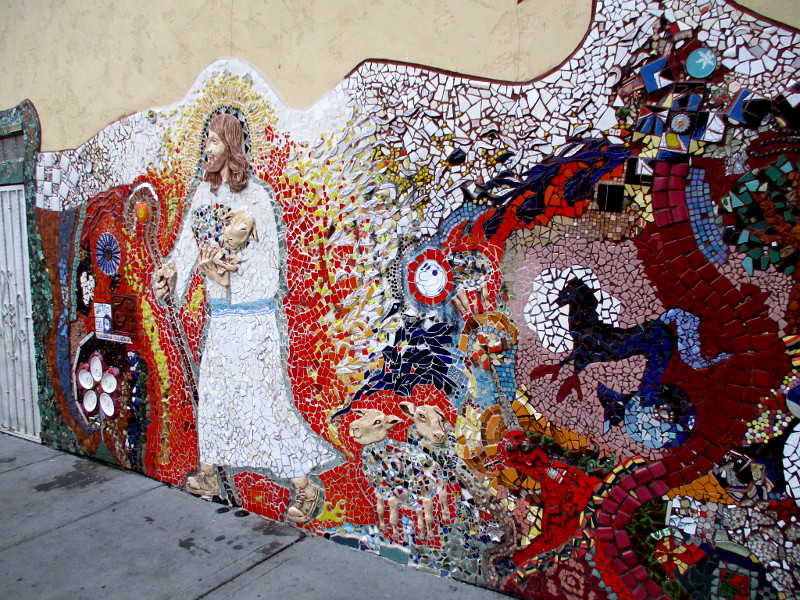
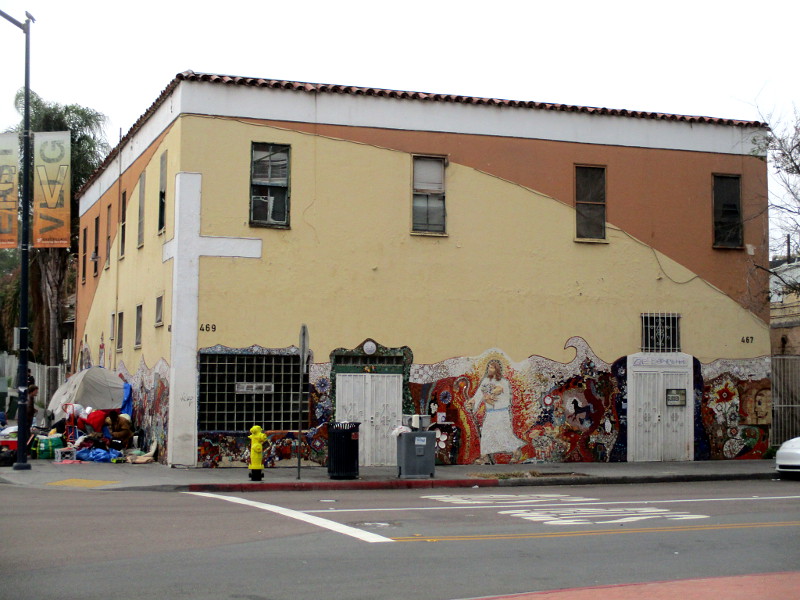
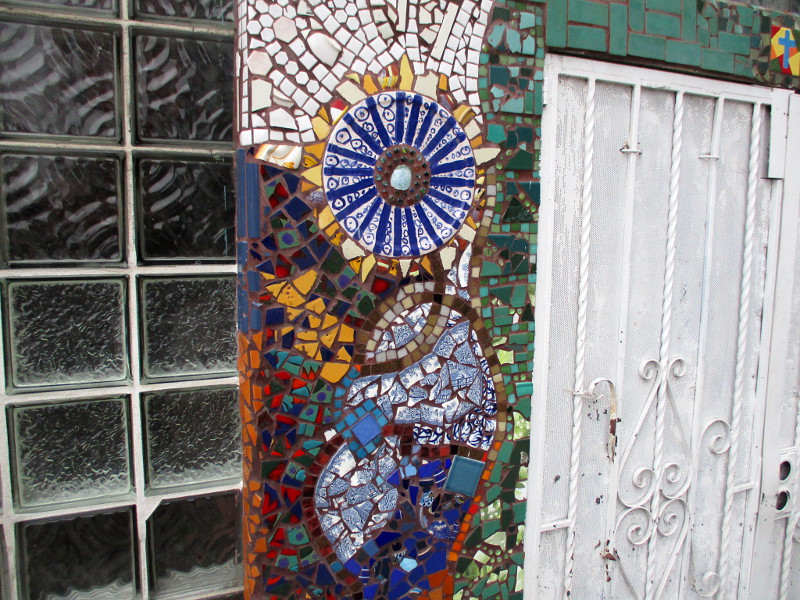
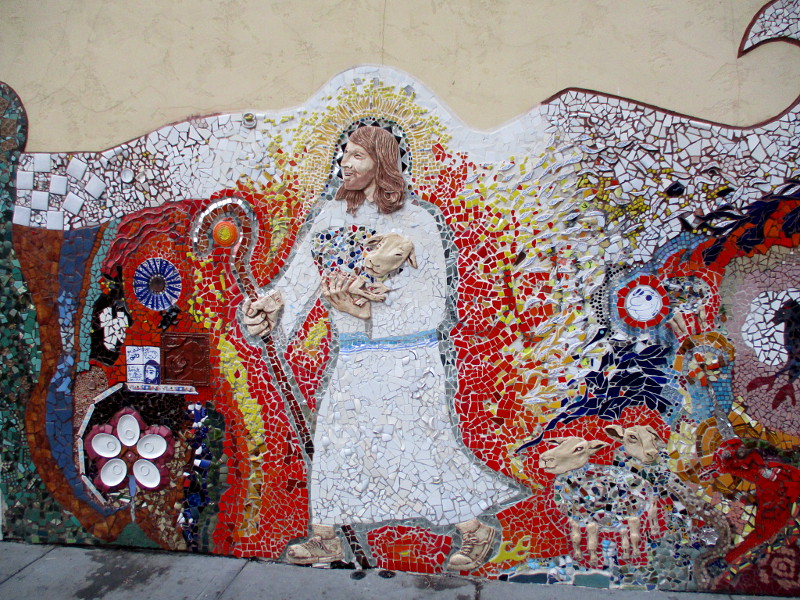
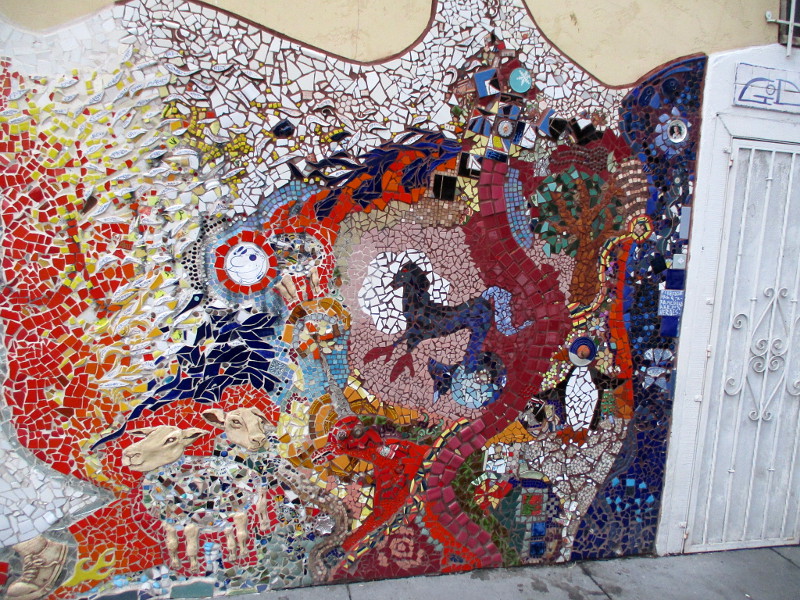
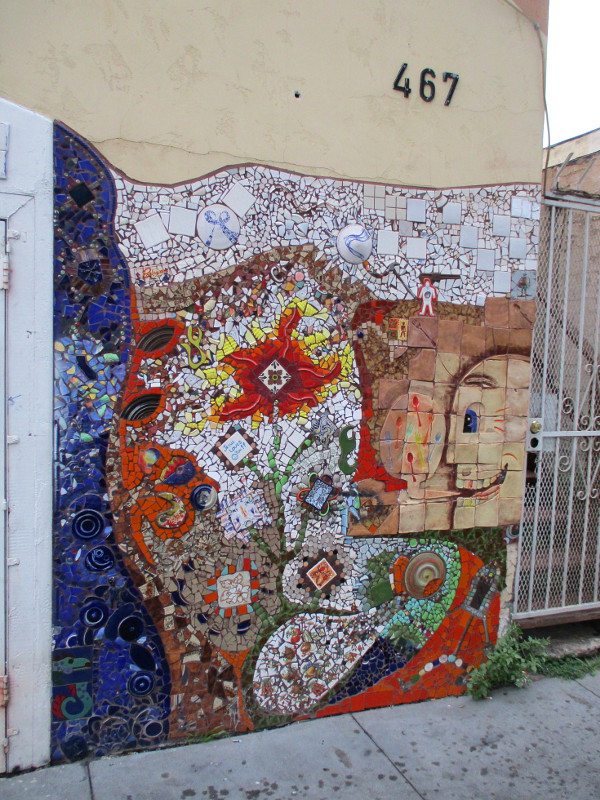
There’s an elaborate, quite beautiful tile mosaic mural outside the old God’s Extended Hand building in San Diego’s East Village. You can see it at the corner of 16th Street and Island Avenue.
The colorful mural is overflowing with compassionate messages and religious imagery, including Christ as a shepherd carrying a lamb.
The God’s Extended Hand ministry endured for 96 years, feeding the homeless and hungry, until it closed down a few months ago. Father Joe’s Villages will be redeveloping the site, creating more affordable housing and support for the homeless downtown. I don’t know whether these mosaics will be preserved.
I walked past part of the artwork this morning and took these photos. I only photographed the wall along 16th Street. Some people camped on the sidewalk were by the other wall on Island Avenue.
…
I live in downtown San Diego and love to walk around with my camera! You can follow Cool San Diego Sights via Facebook or Twitter!
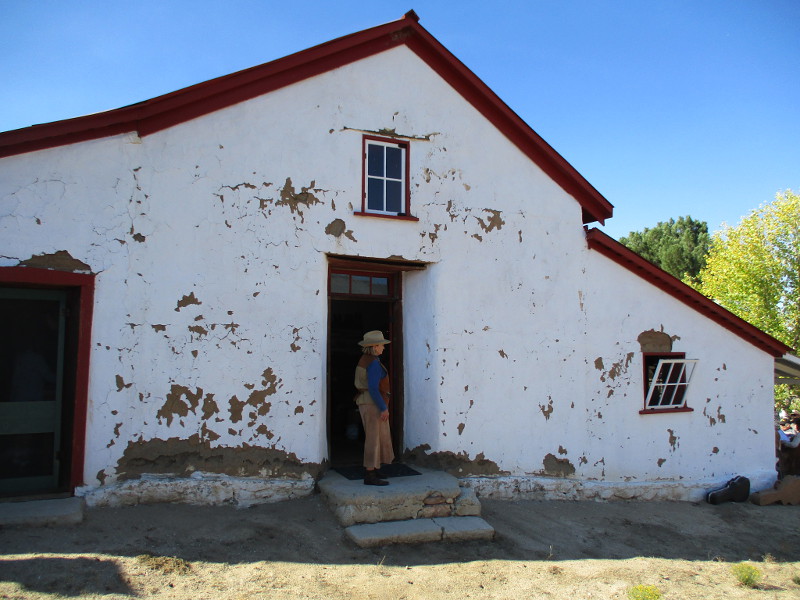
One of San Diego County’s most important historical sites can be visited in Warner Springs. The Warner-Carrillo Ranch House, built in 1857, is a National Historic Landmark maintained by SOHO, the San Diego-based Save Our Heritage Organisation.
The “Ranch House at Warner’s” preserves centuries of history. You can read a bit about the site and see some old photographs at this SOHO web page.
The adobe ranch house “represents Mexican and American culture contact during the Mexican Republic; the Frontier period of the westward migration; and the Gold Rush and the cattle ranching industry from 19th century Californio to 20th century to today.” Built beside the emigrant trail, many early settlers wrote about their experiences here.
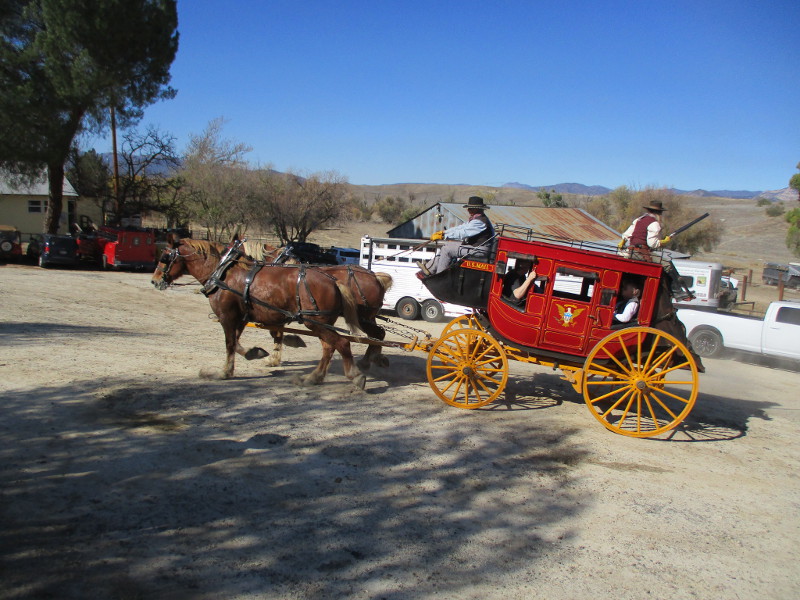
Last weekend I visited the restored adobe. I went for a special reason. One day every year at Warner’s Ranch, visitors can ride an authentic Concord stagecoach down a short stretch of the old Overland Trail. For several years, from 1858 to 1861, the ranch house served as a Butterfield Overland Stage Station. Thousands of passengers stopped for a few minutes at this swing station as they travelled through the region. If you’d like to see photos from my fun stagecoach ride, click here!
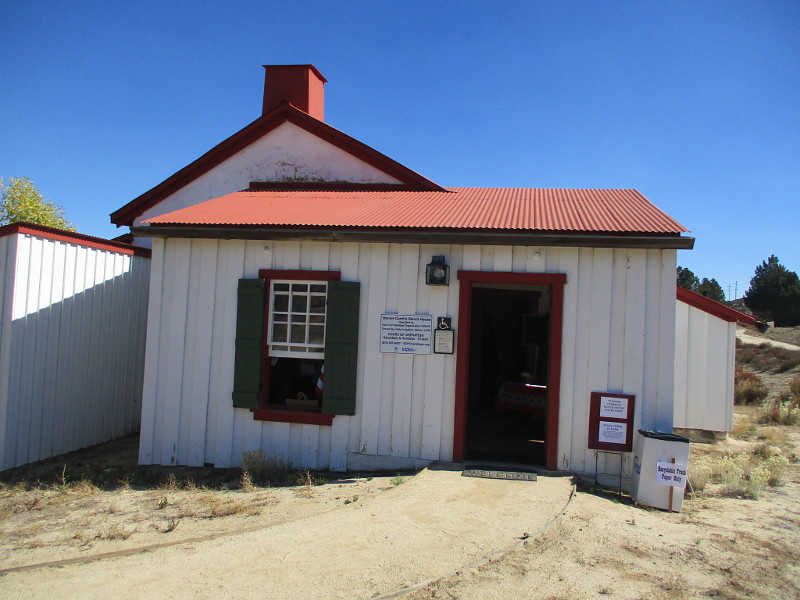
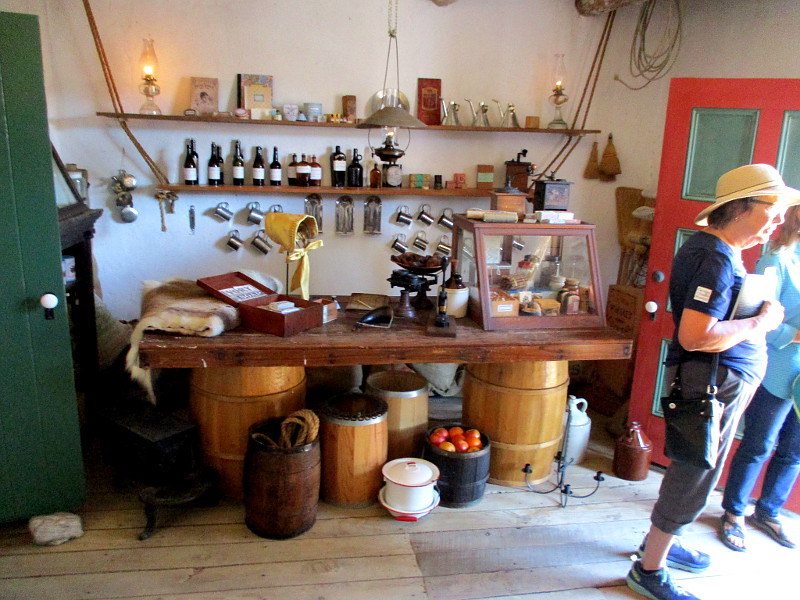
The present structure, maintained today as a museum, was built by Doña Vicenta Sepúlveda de Carrillo, an early Californio woman rancher. It consists of two main rooms and several adjacent smaller rooms that were added in later years. One of the main rooms was the sala, or living room. The other served as a trading post–a small store where travelers could purchase necessities during their brief stopover.
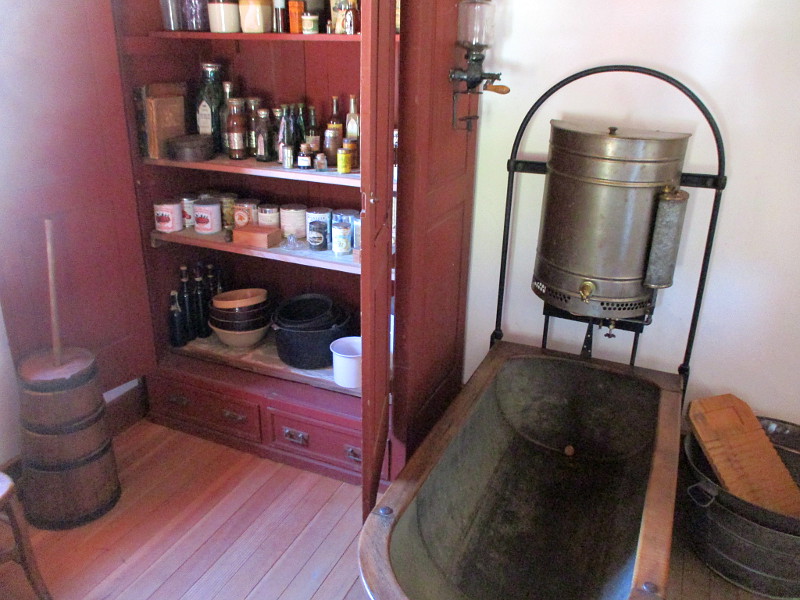
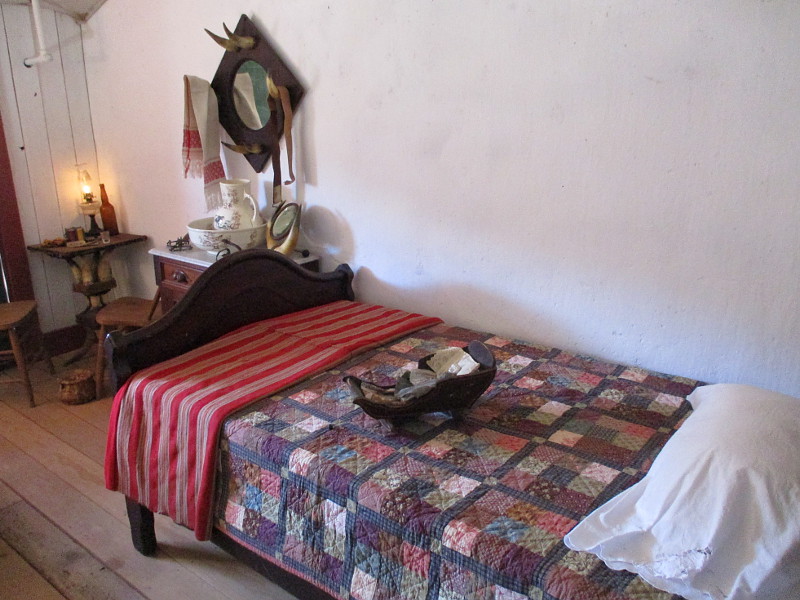
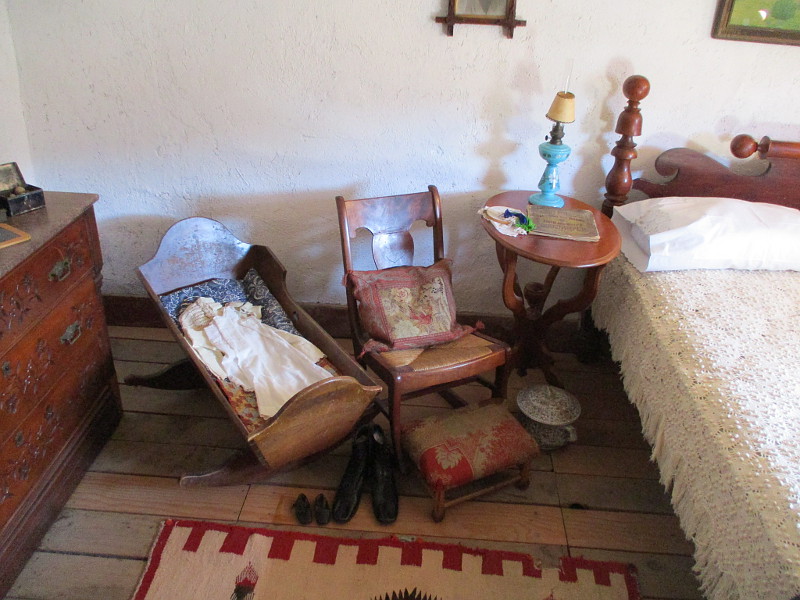
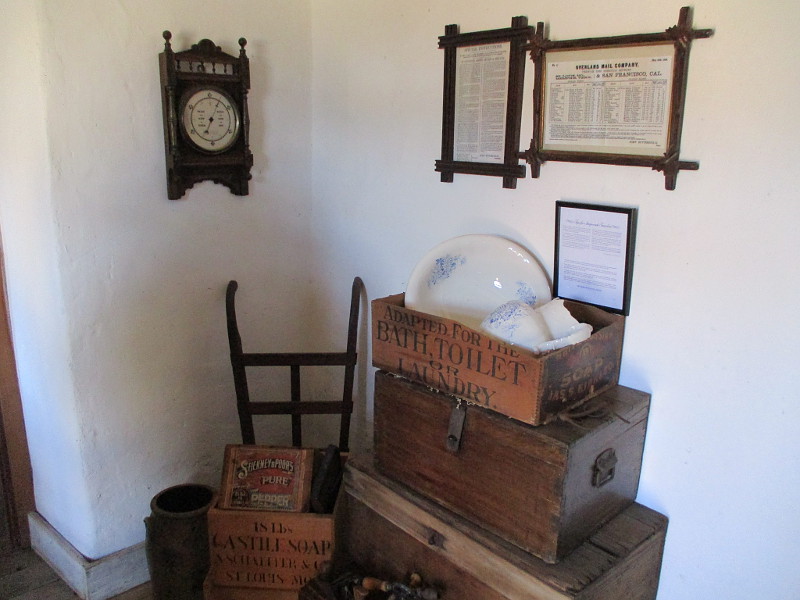
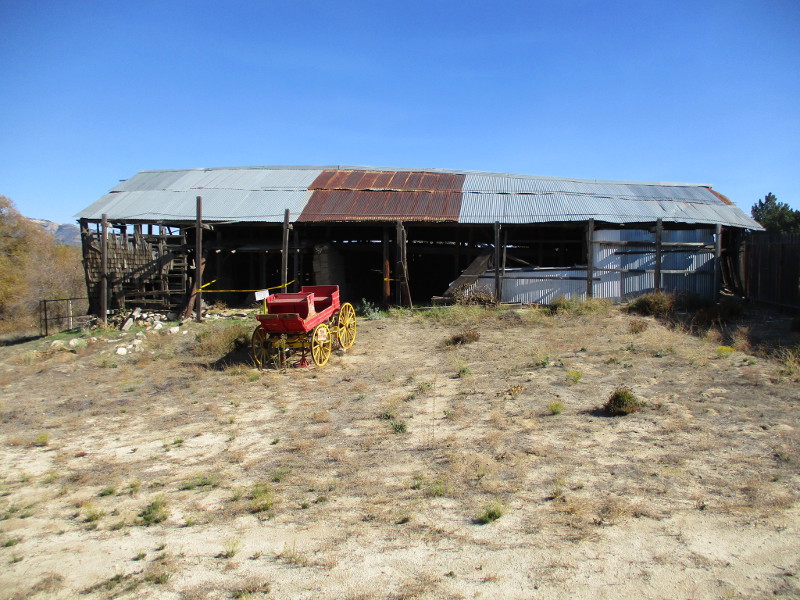
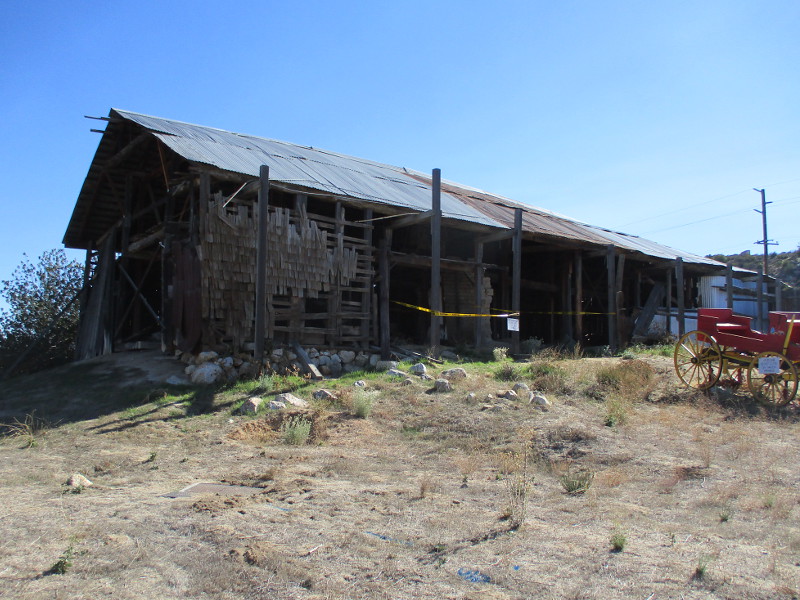
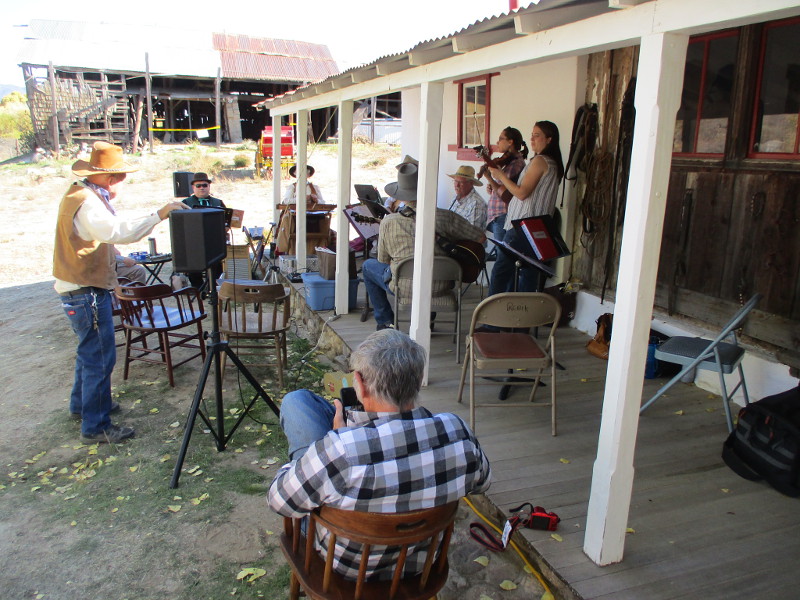
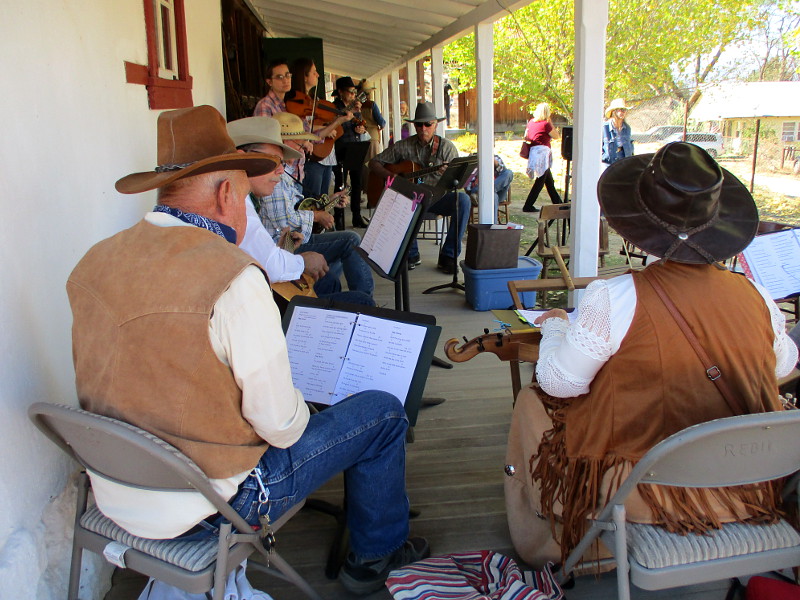
Some of the smaller rooms include bedrooms and a kitchen, which featured a family bathtub, as you’ll see in my photos! The adobe walls are 18 inches thick, providing a cool inside temperature on a hot day. There’s also a pleasant veranda, where musicians were playing the day I visited. The veranda was built at the front of the ranch house, which faced the old stage route. As I understand it, the nearby barn, which SOHO also plans to restore, was for ranch horses and carriages.
Please enjoy these photos. I took few notes, and I’m no expert, so please don’t rely on anything I’ve written here as absolute fact. Do your own research. The history of the ranch is complex. Over the years it had many different owners.
So why is the ranch house named Warner-Carrillo? The original Warner’s Ranch, whose buildings no longer exist, was established here on a Mexican land grant given to Jonathan Trumbull Warner, an American-Mexican citizen and former California State Senator who changed his name to Juan José Warner. His ranch, a camping stop on the Gila Overland Trail to California, was attacked during the Garra Uprising of 1851 and burned down. I photographed the burial site of Antonio Garra in Old Town San Diego and provided a brief description of the Native American Cupeño revolt due to unfair taxation here.
The Warner-Carrillo Ranch House is open year-round on Saturday and Sundays from 12 to 4 pm. If you’re ever in the area, make sure to stop by. Not only will you learn much, but you’ll feel the rich history!
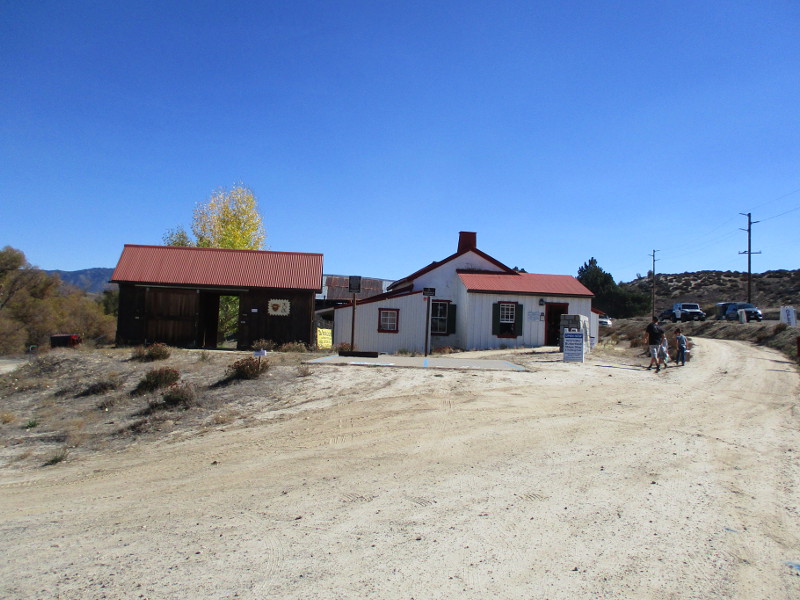
Approaching the restored Warner-Carrillo Ranch House. (Interesting note: that brown modern structure to the left of the old ranch house contains visitor restrooms. I learned from Christopher Pro of SOHO that the restroom building design was copied from the historic Stein Family Farm in National City!)
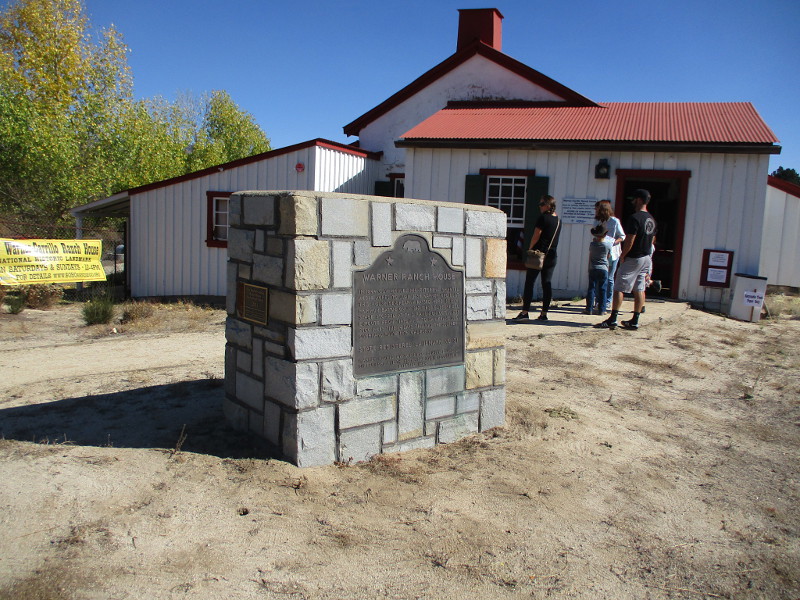
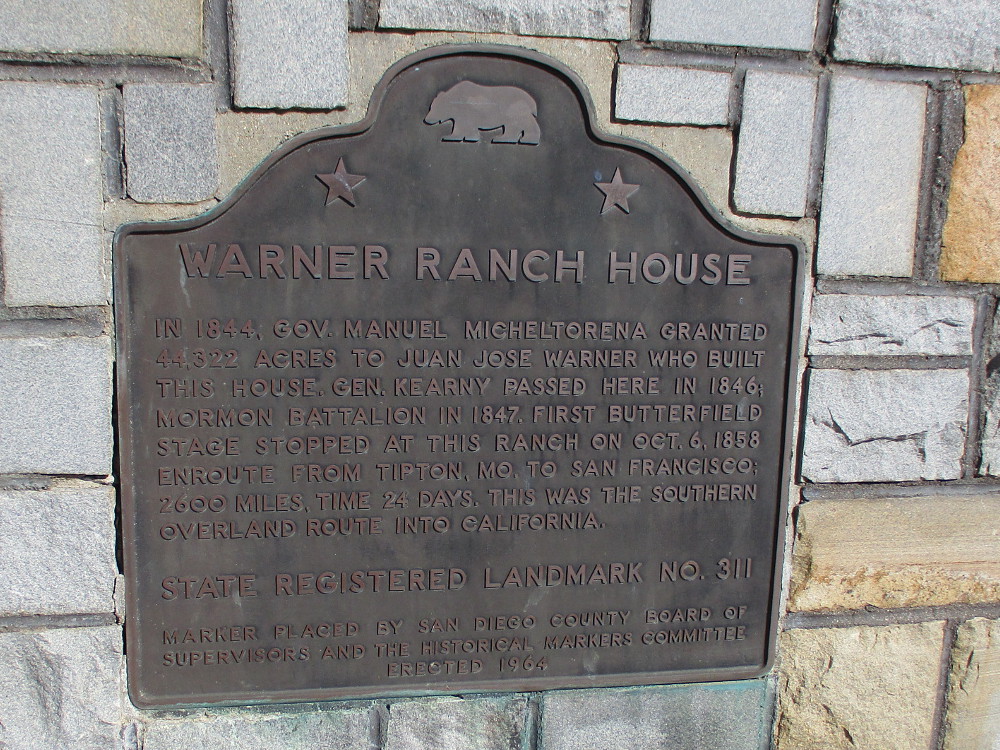
The historical plaque near the museum entrance reads:
WARNER RANCH HOUSE
IN 1844, GOV. MANUEL MICHELTORENA GRANTED 44,322 ACRES TO JUAN JOSE WARNER WHO BUILT THIS HOUSE. GEN. KEARNY PASSED HERE IN 1846; MORMON BATTALION IN 1847. FIRST BUTTERFIELD STAGE STOPPED AT THIS RANCH ON OCT. 6, 1858 ENROUTE FROM TIPTON, MO. TO SAN FRANCISCO; 2600 MILES, TIME 24 DAYS. THIS WAS THE SOUTHERN OVERLAND ROUTE INTO CALIFORNIA.
STATE REGISTERED LANDMARK NO. 311
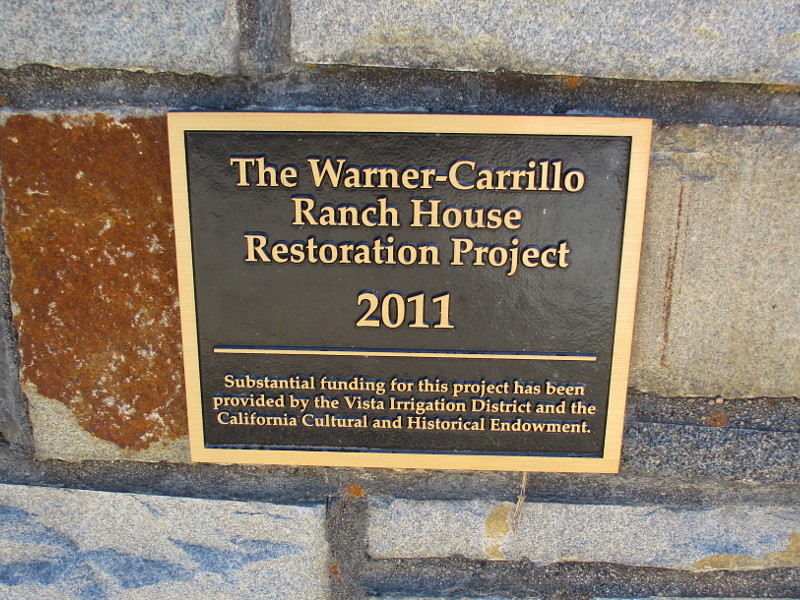
A major restoration of the Warner-Carrillo Ranch House was completed in 2011. The ranch stands on land owned by the Vista Irrigation District.
The Vista Irrigation District has a really good web page concerning the ranch house and its history here.
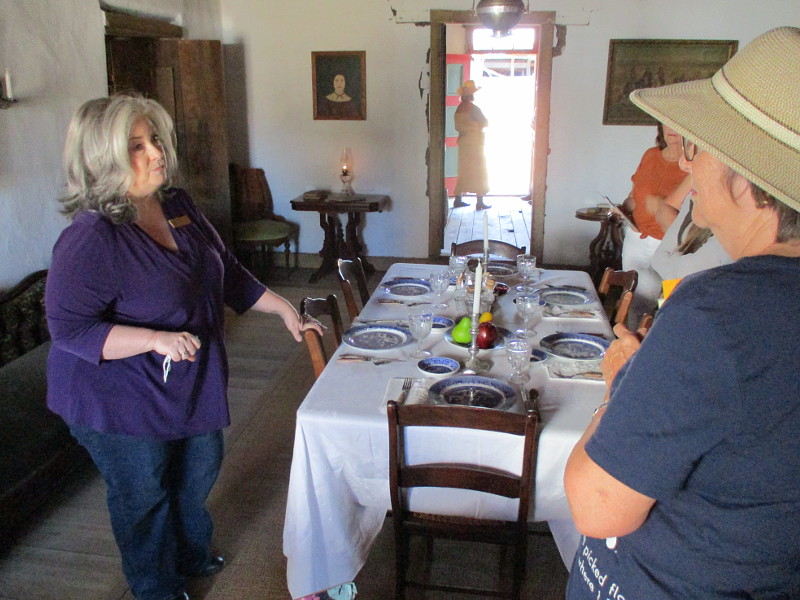
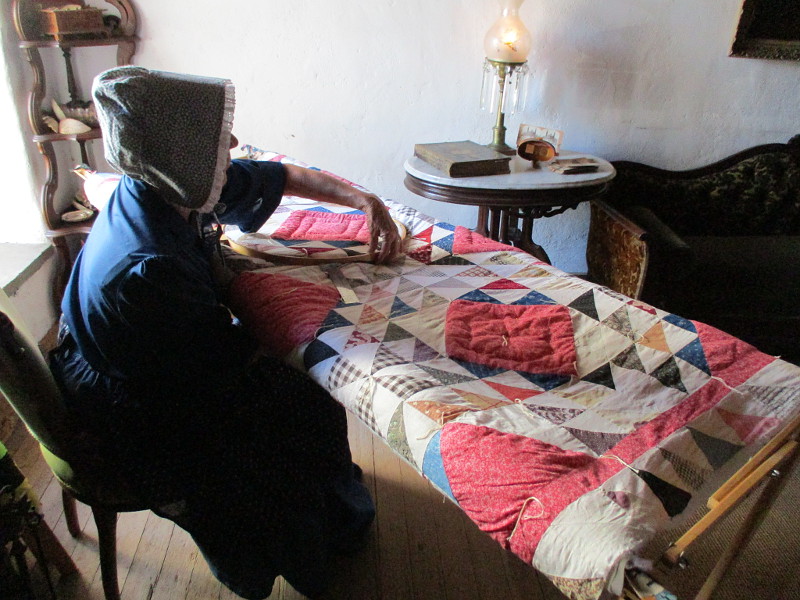
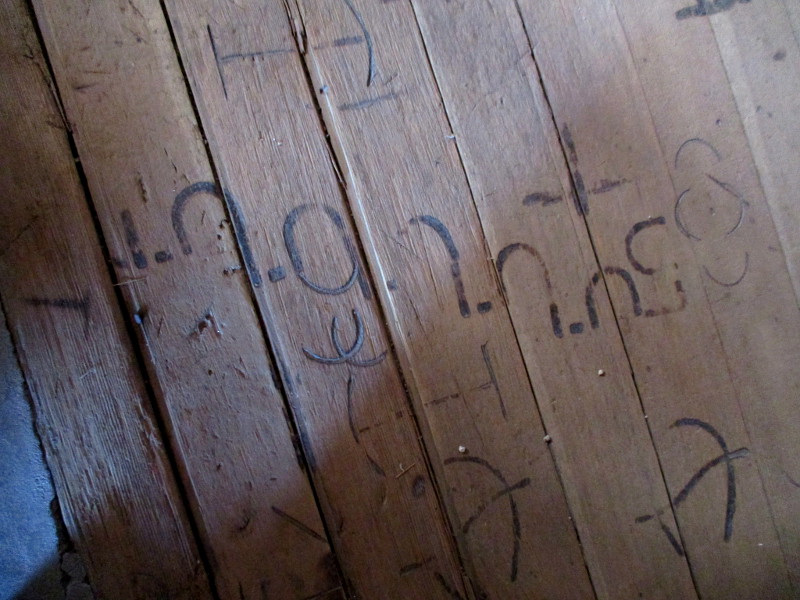
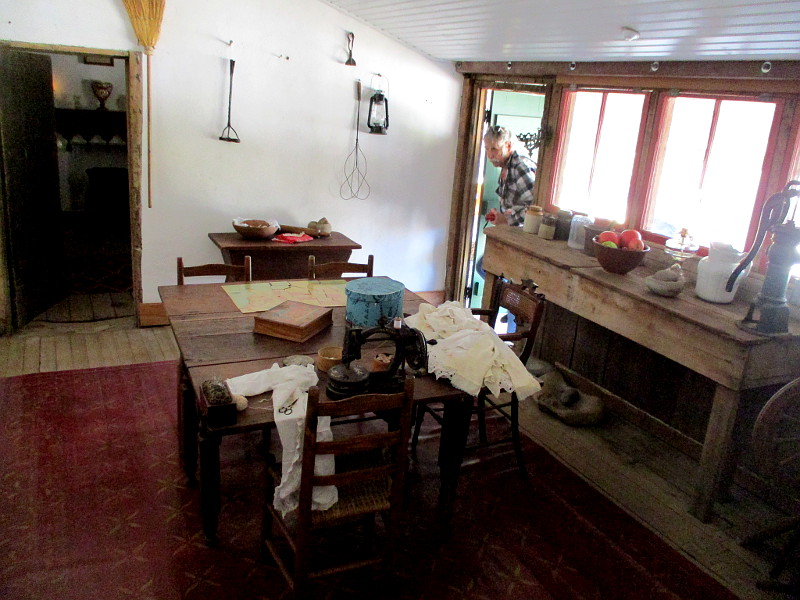
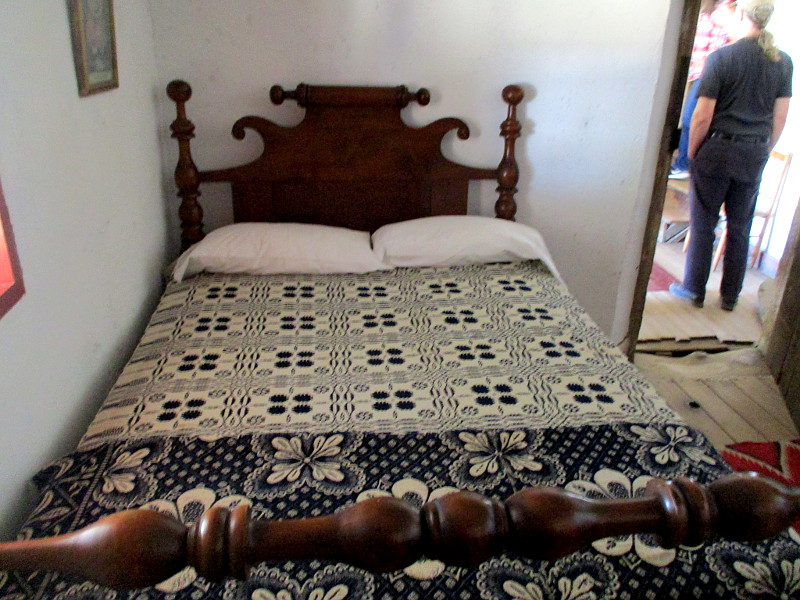
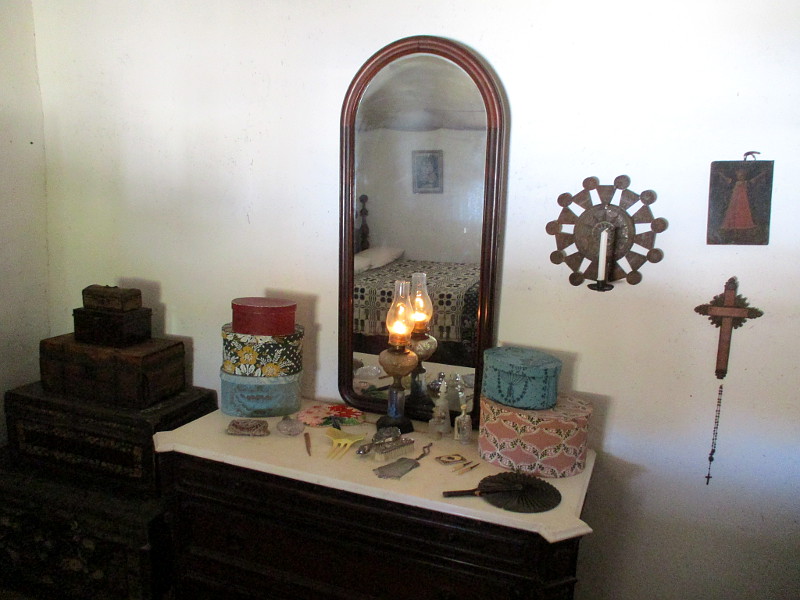
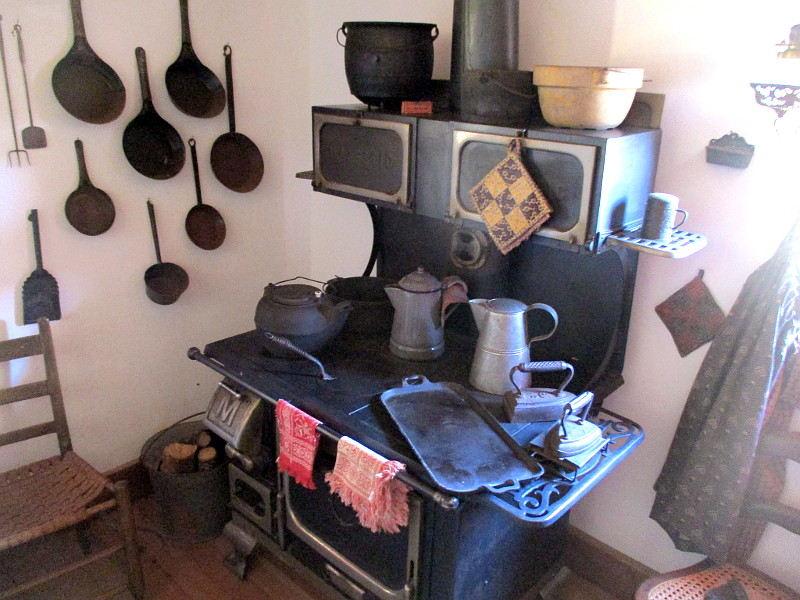
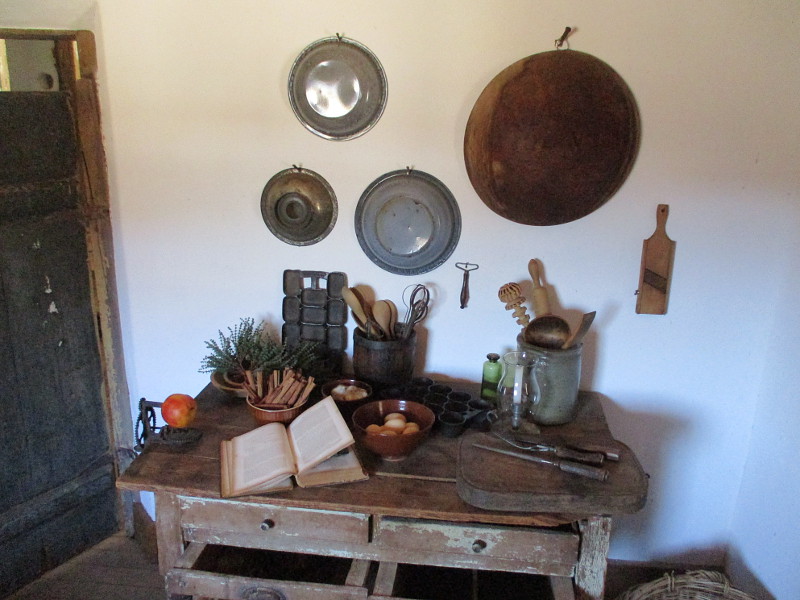
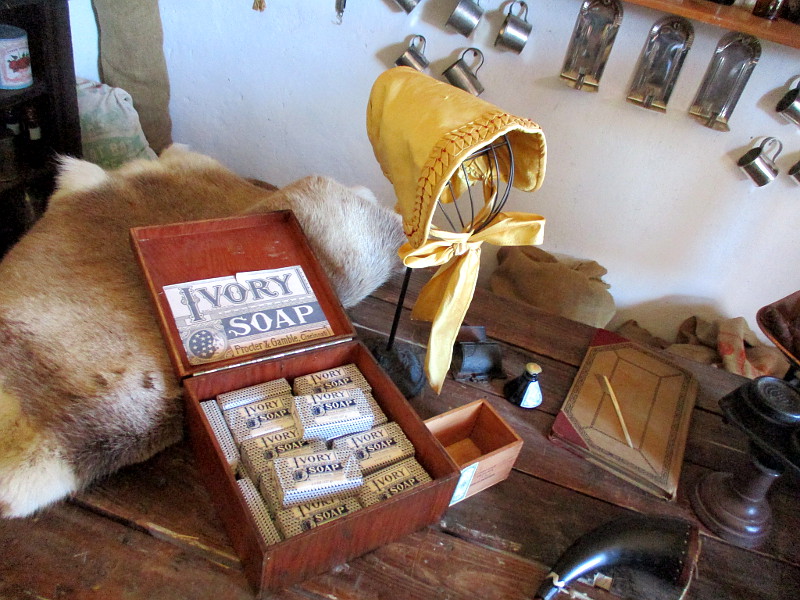
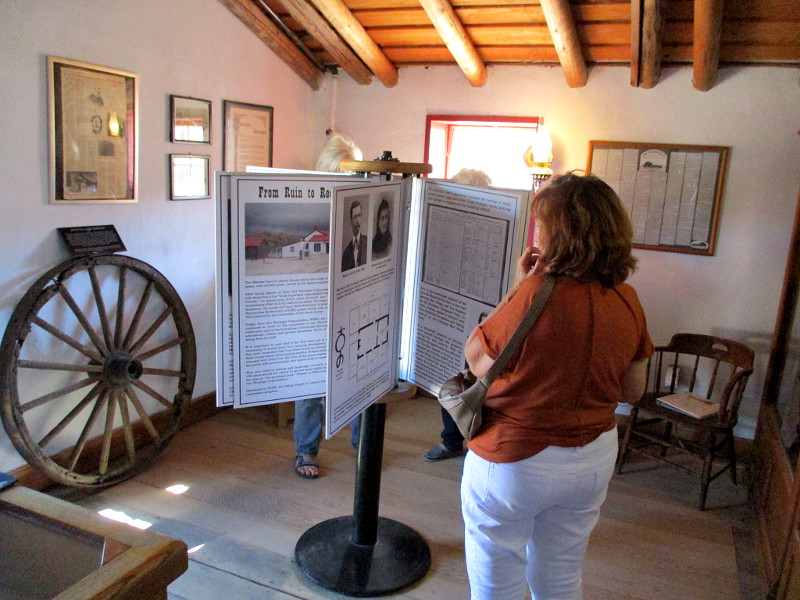
Inside the sala, or living room, with its dining table. Some of the elegant furniture was obtained from William Heath Davis, who helped to establish “New Town” (present day downtown) San Diego.A quilt being made in one corner of the sala.The sala in later years became a ranch bunkhouse, which explains why the wood floor is branded!A work room between the sala and veranda.A bedroom.A look inside the kitchen.How’d you like to take a bath here?!A look inside the children’s bedroom.The trading post offered goods to stagecoach travelers, who’d enter from a side door, which is located opposite the old barn.Soap, a bonnet, and other useful items.One small room contains information displays and archaeological artifacts from the ranch.A look at the old barn, which is presently in a state of arrested decay.On this special once-a-year stagecoach riding day, musicians were out on the veranda playing popular tunes from the Old West. The group is called Jugless Jug Band.Some visitors enjoying a short ride on the authentic Concord stage.
…
I live in downtown San Diego and love to walk around with my camera! You can follow Cool San Diego Sights via Facebook or Twitter!
You can easily explore Cool San Diego Sights by using the search box on my blog’s sidebar. Or click a tag! There are thousands upon thousands of photos for you to enjoy!
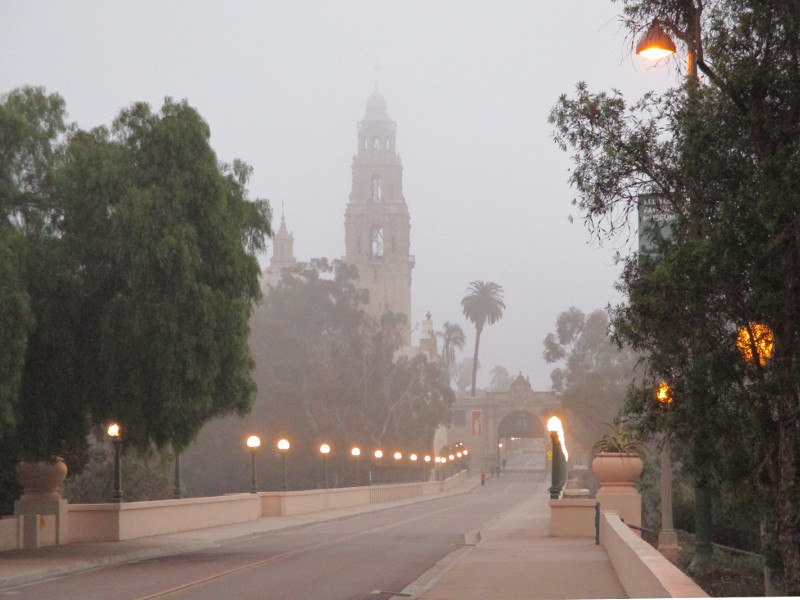
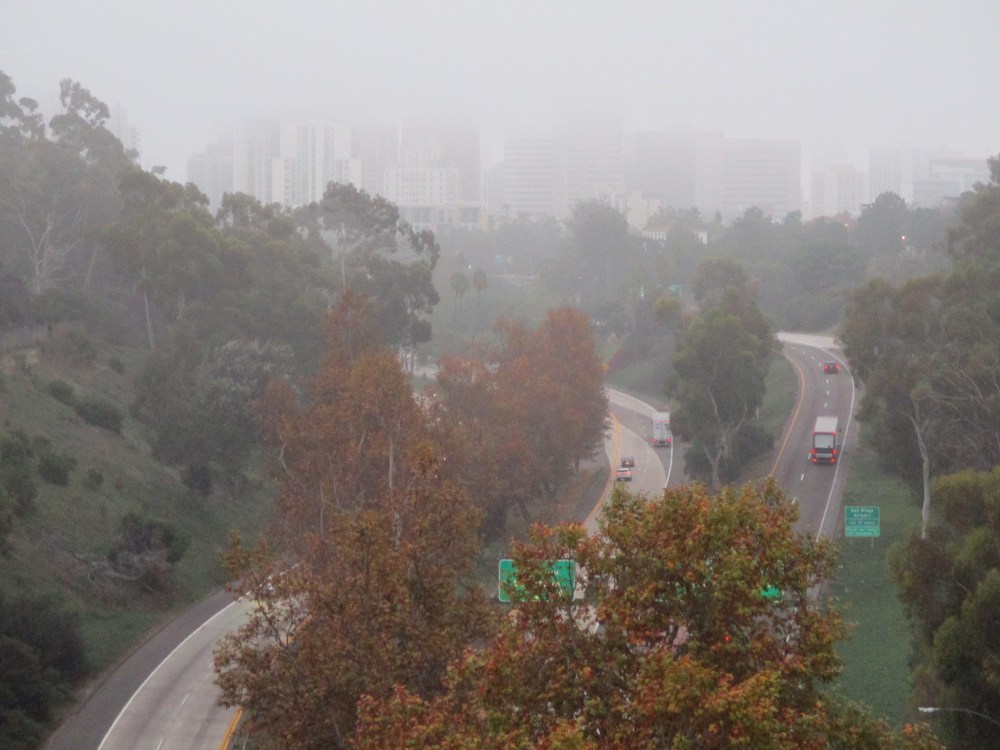
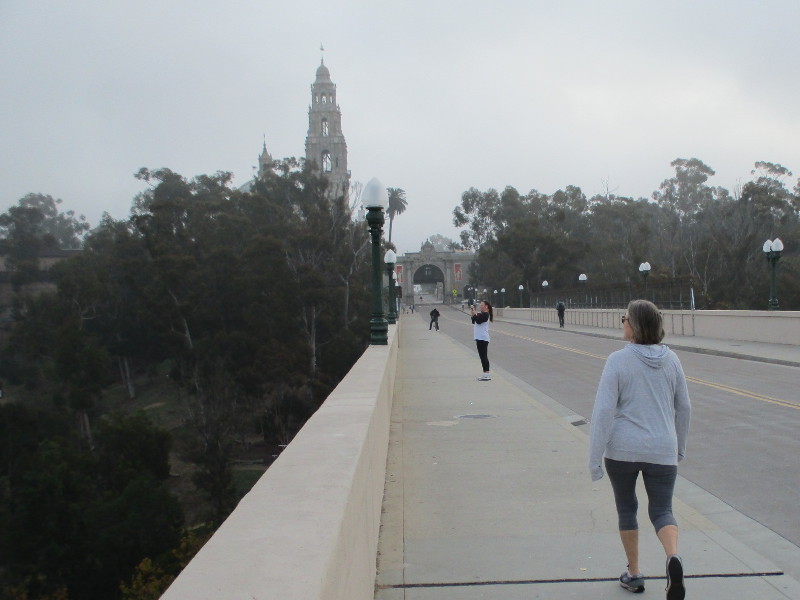
This morning I walked from downtown San Diego to Balboa Park, hoping to capture some interesting fog photographs.
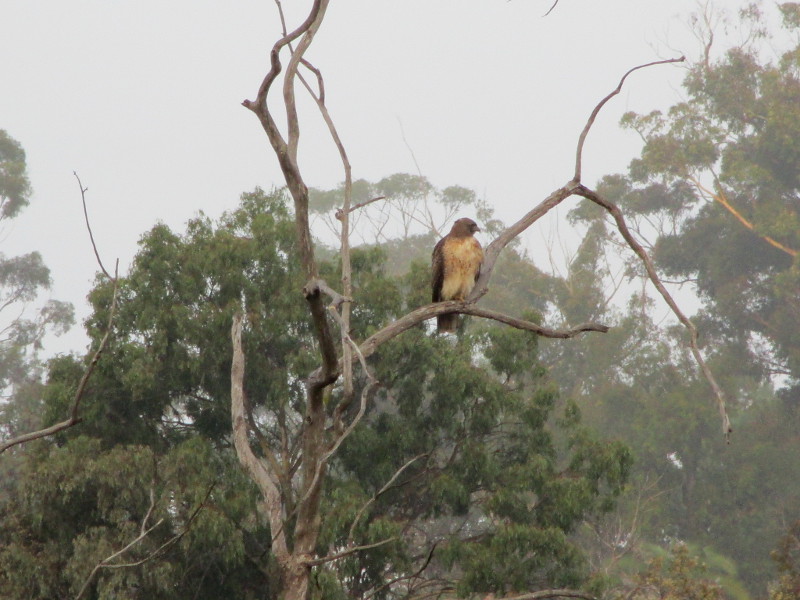
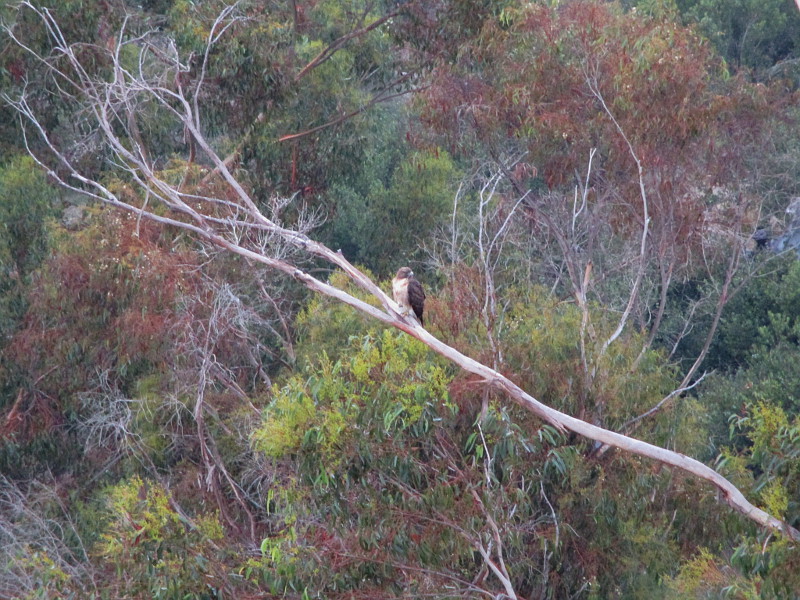
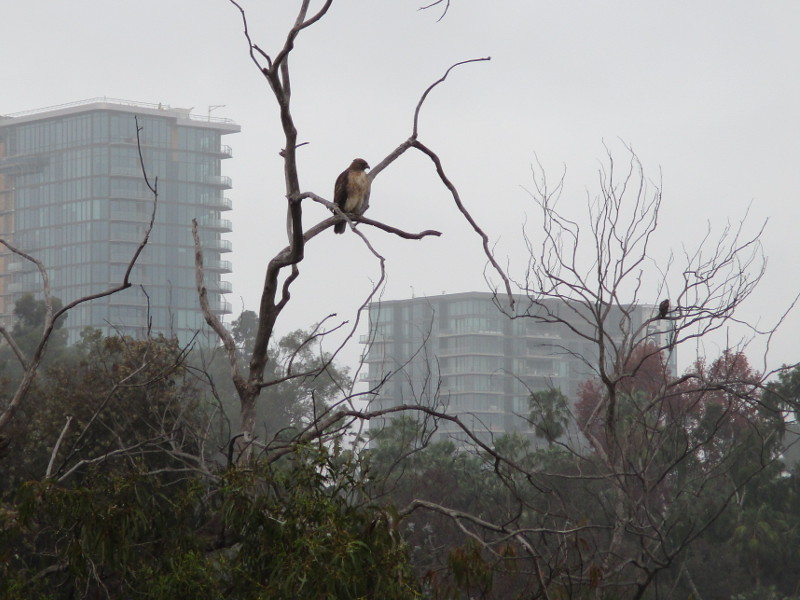
As it turned out, most of my photos were of red-tailed hawks!
I observed three of them from the Cabrillo Bridge.
Anyone who walks into Balboa Park from the west side should keep their eyes peeled for hawks. They like to perch in the trees above the archery range or the slope of the West Mesa overlooking State Route 163.
I often hear the distinctive cry of red-tailed hawks near the eucalyptus trees west of the California Tower. Once or twice in the past I’ve seen them perched on the tower!
I managed to get a few decent photos with my little camera. You can see two hawks in the final image!
From the Cabrillo Bridge I also took a photograph of foggy downtown San Diego in the distance.
…
I live in downtown San Diego and love to walk around with my camera! You can follow Cool San Diego Sights via Facebook or Twitter!
Today I had the opportunity to experience something amazing in Warner Springs.
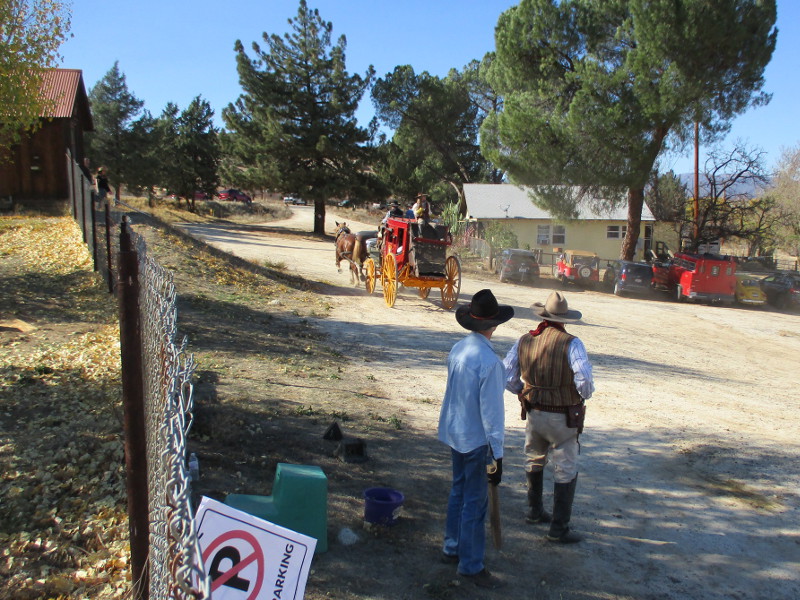
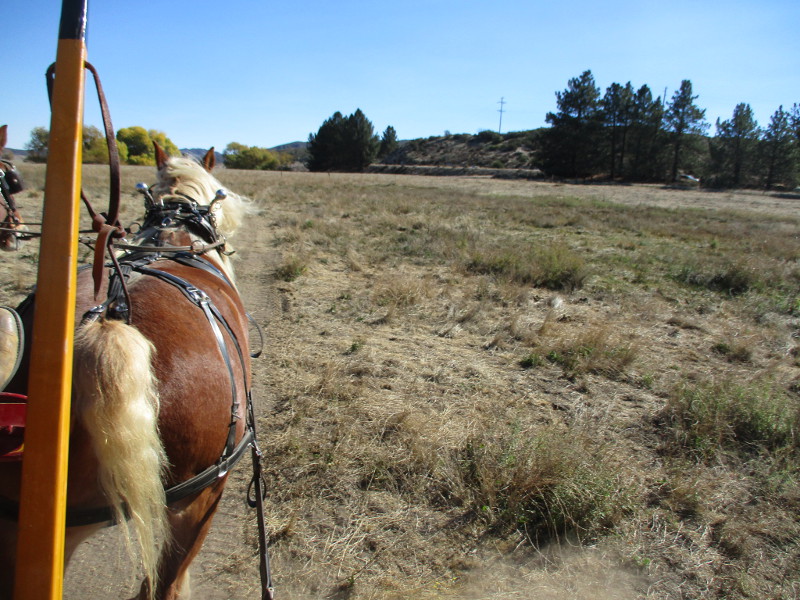
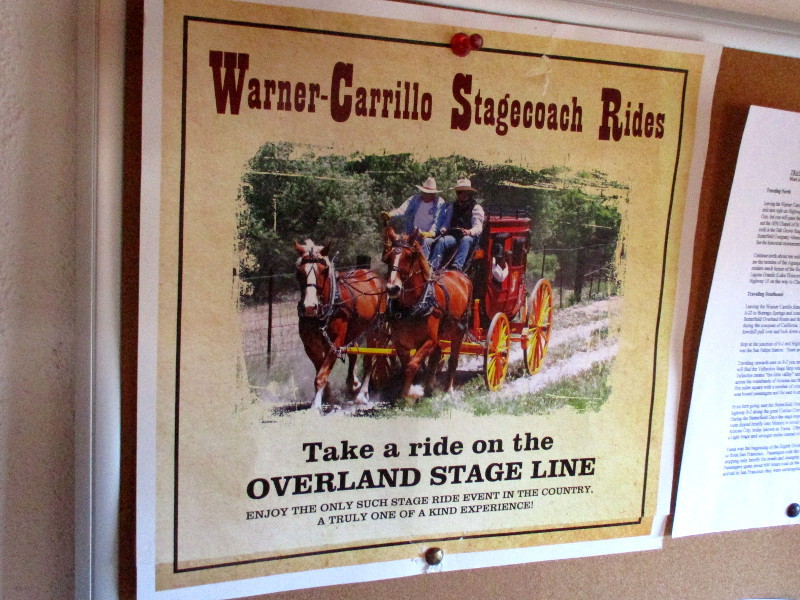
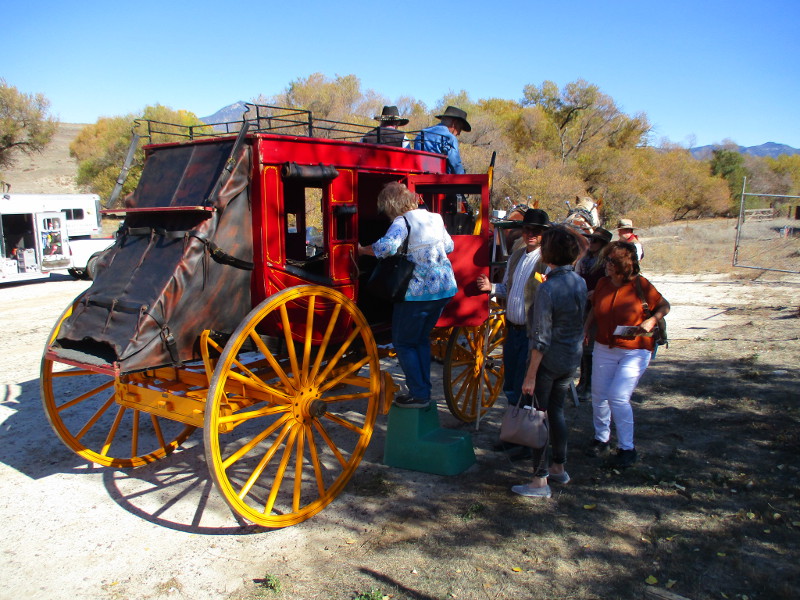
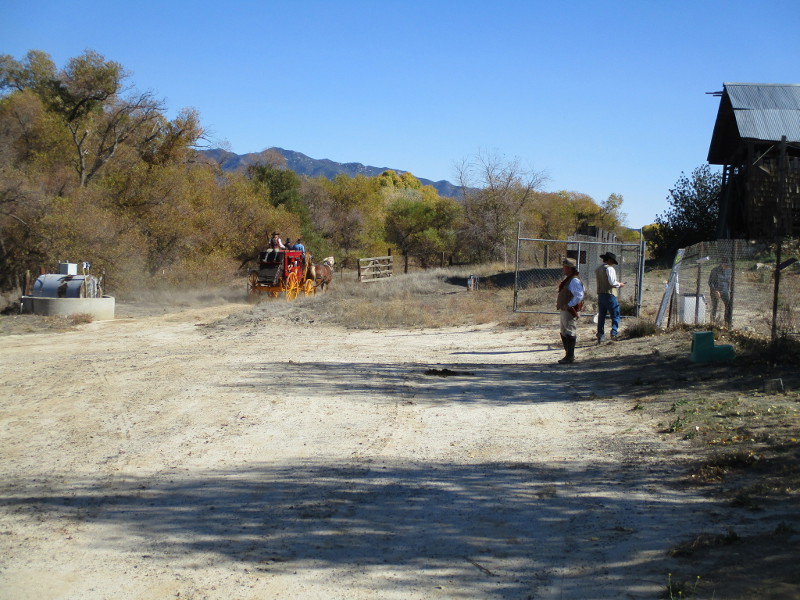
Once a year, at the Warner-Carrillo Ranch House, people can ride an authentic stagecoach a short distance down an actual, historic stage line route!
Such a ride can be experienced nowhere else in the entire country!
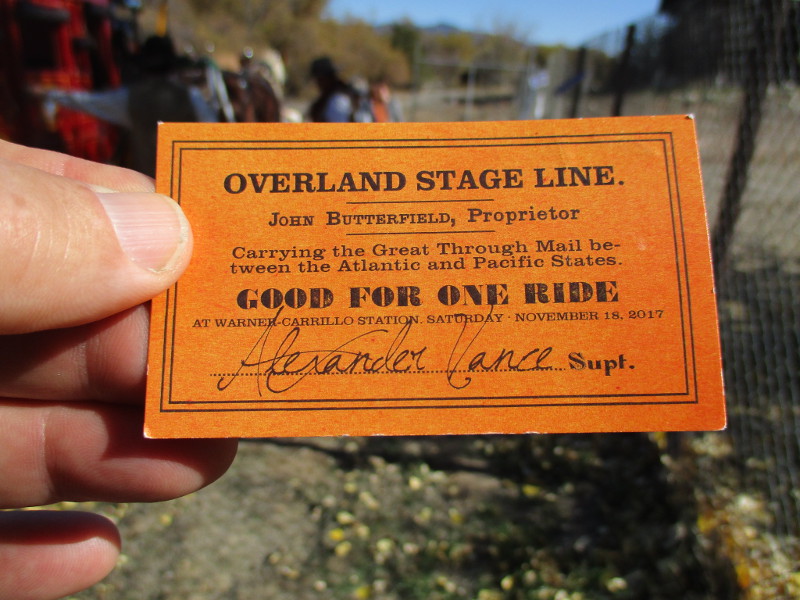
I purchased a ticket for a stagecoach ride a couple weeks ago before it sold out, then drove up to the Warner-Carrillo Ranch House in Warner Springs this morning to enjoy the short but memorable adventure!
Warner’s Ranch back in the 19th century was a swing stop for the Butterfield Overland Mail stage line. According to the event website, “The Butterfield Overland stage transported thousands of passengers across the United States years prior to the Civil War as California’s first regular overland stage connection with St. Louis.“
Travelers, packed elbow to elbow in solidly-built, relatively “elegant” Concord Coaches, would stop at the ranch house to rest and stretch their legs and sore bodies for a few minutes while new horses were brought up from the nearby barn. Passengers could buy useful items in the ranch’s one-room trading post before resuming their dusty, bumpy journey.
This afternoon I and other excited passengers got to actually experience a few minutes of that dusty, very bumpy overland journey!
If you live in Southern California, or plan to visit, I highly recommend going on this once-every-year stagecoach ride. You’ll also enjoy an in-depth tour of the Warner-Carrillo Ranch House, which is operated by the Save Our Heritage Organisation. SOHO’s mission in San Diego County is the “preservation of architecturally and historically significant structures, sites, and cultural landscapes.”
Okay! You want to see what the ride is like? Here we go!
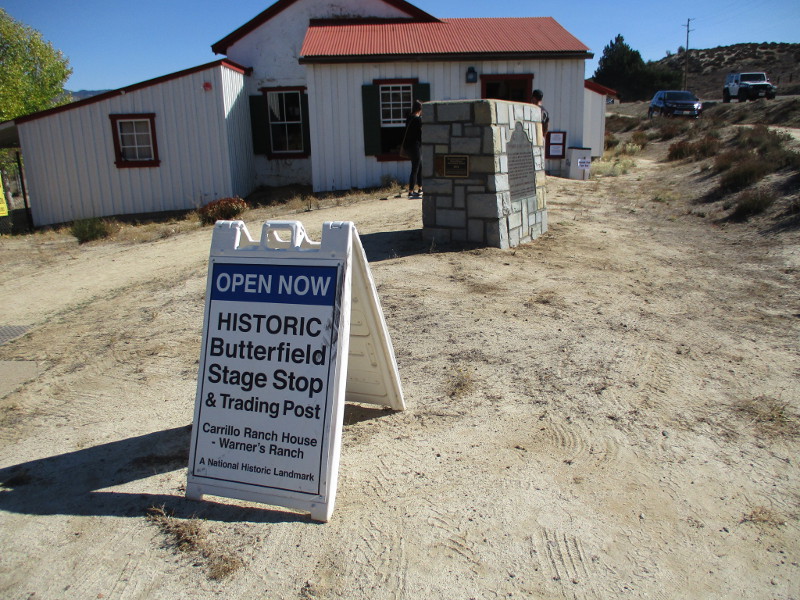
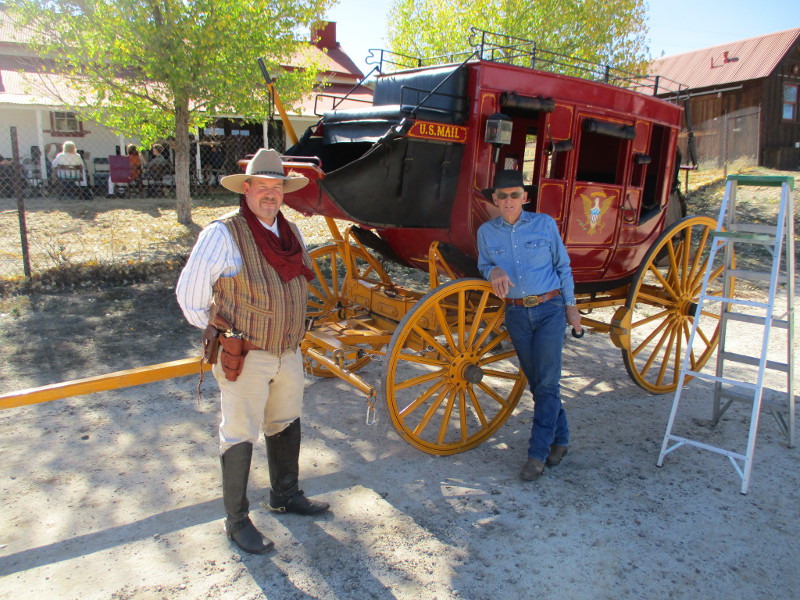
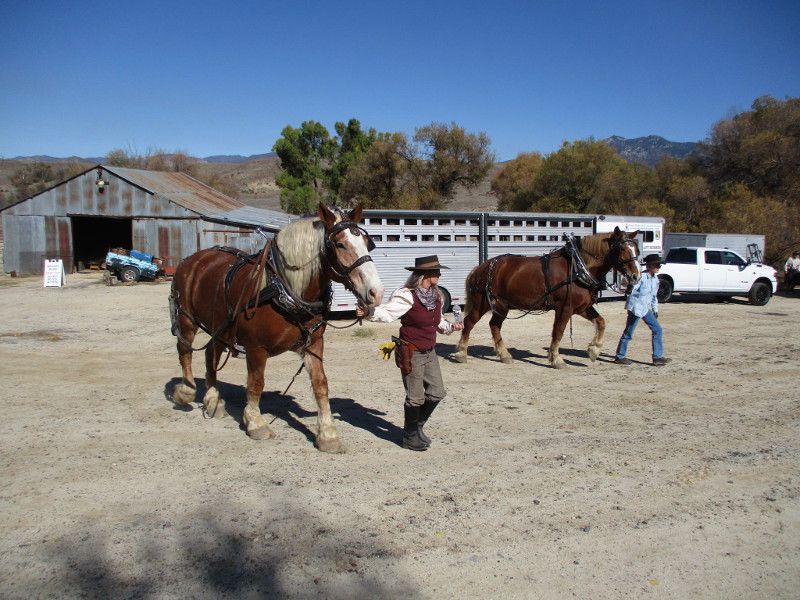
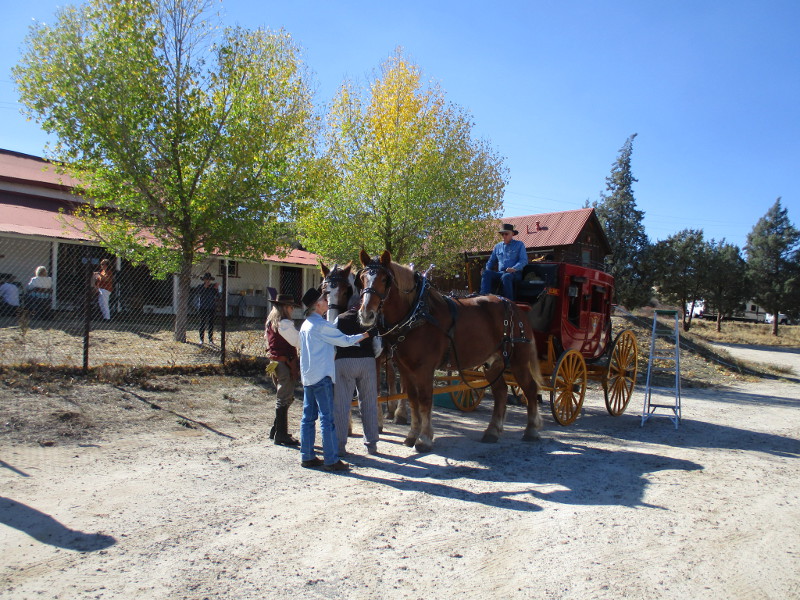
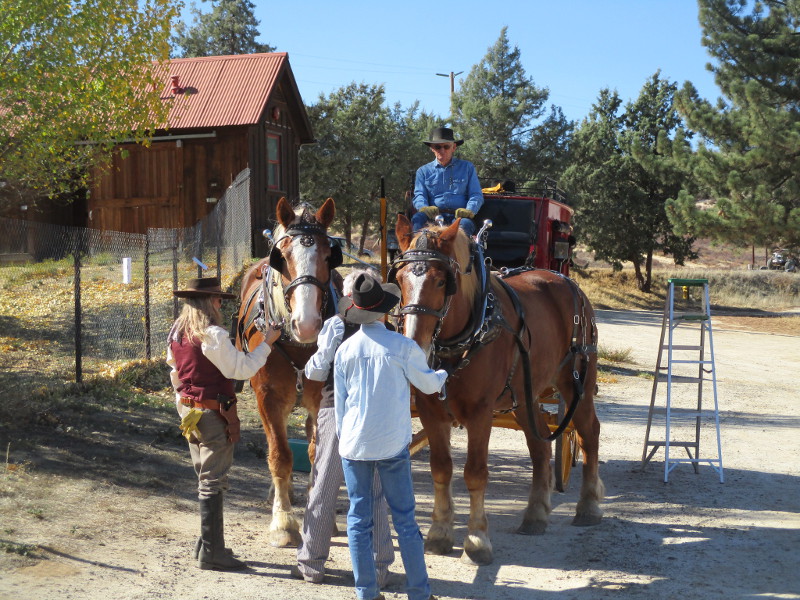
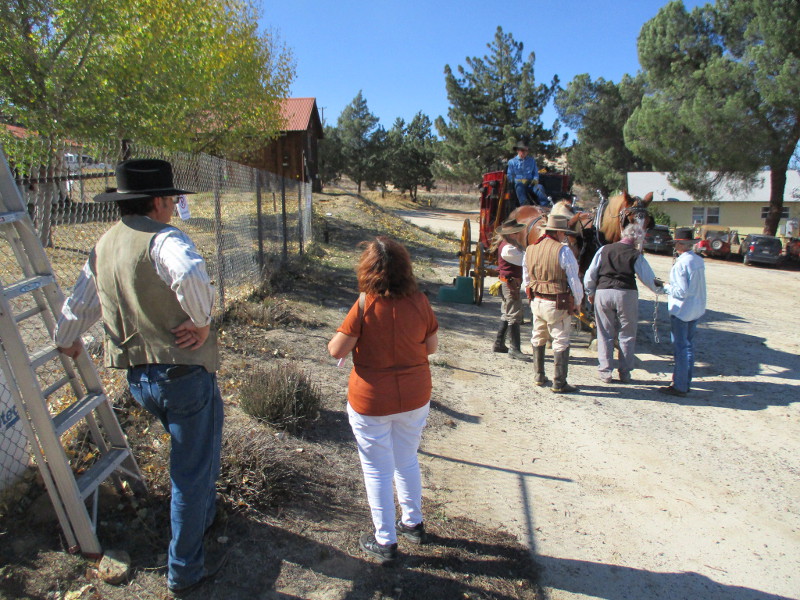
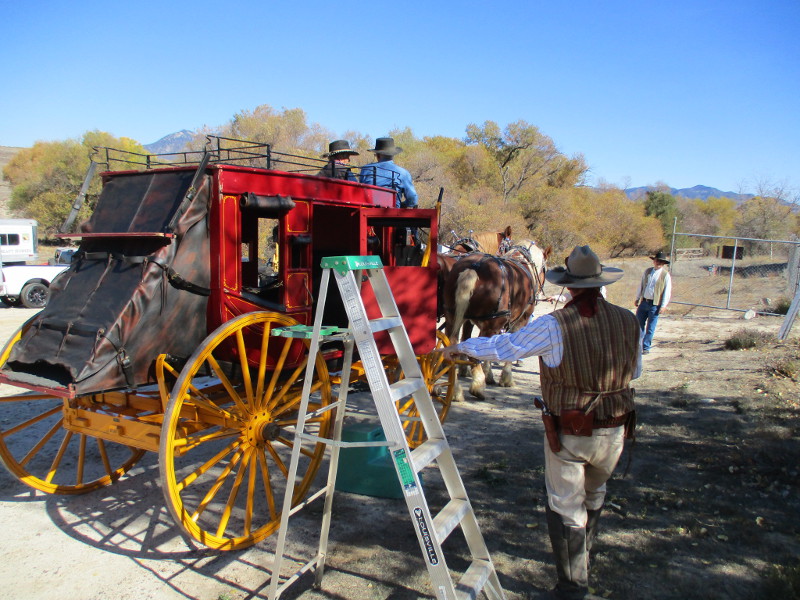
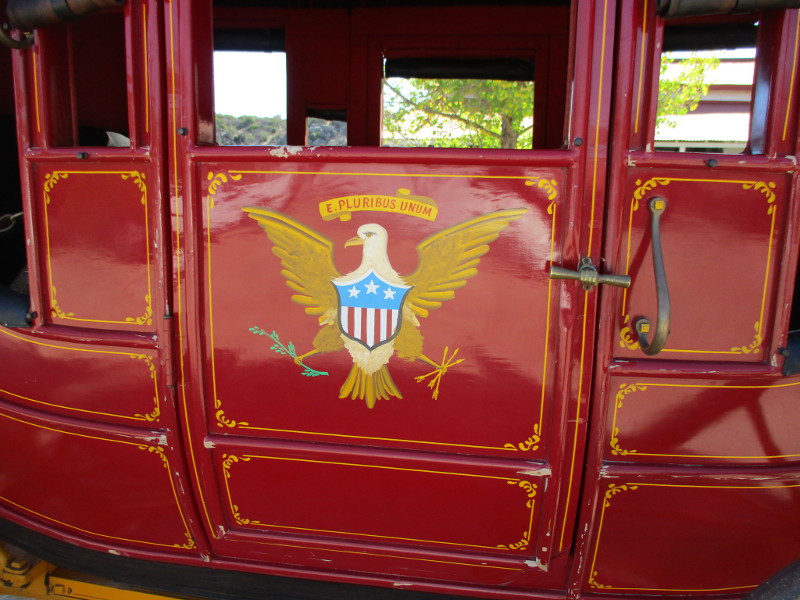
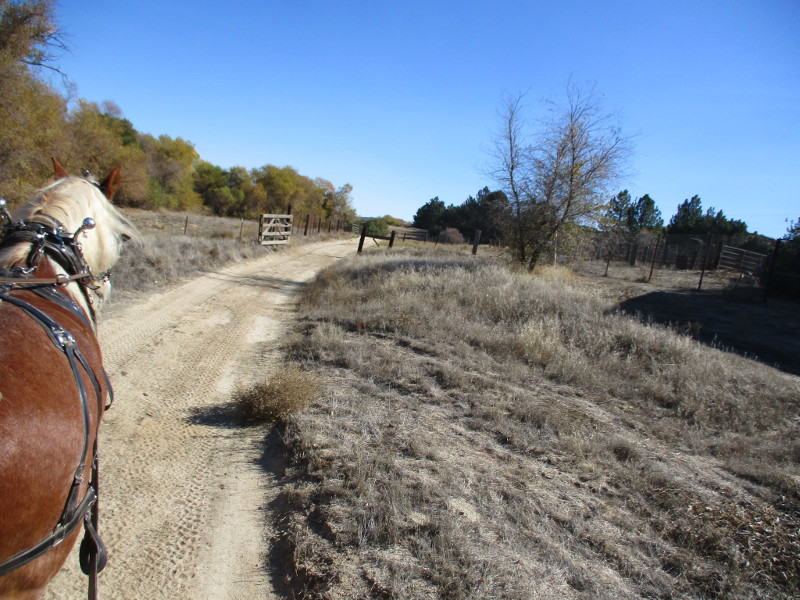
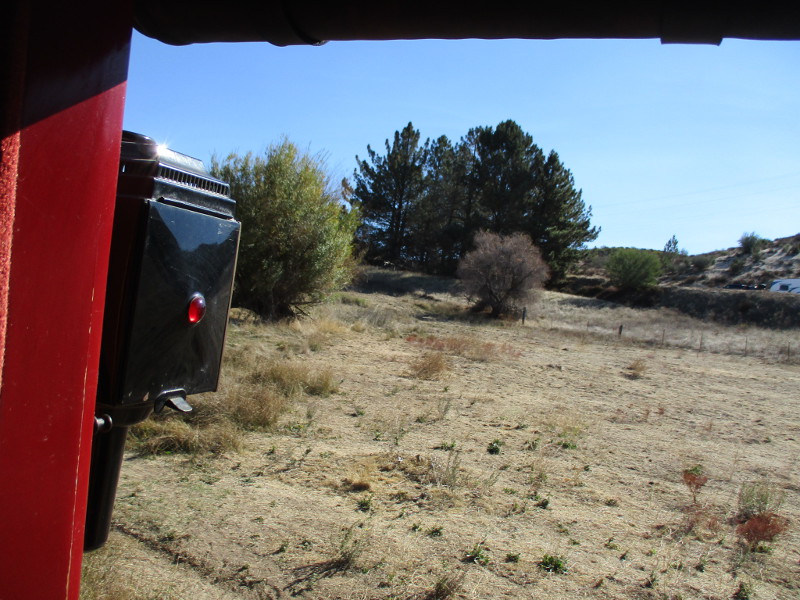
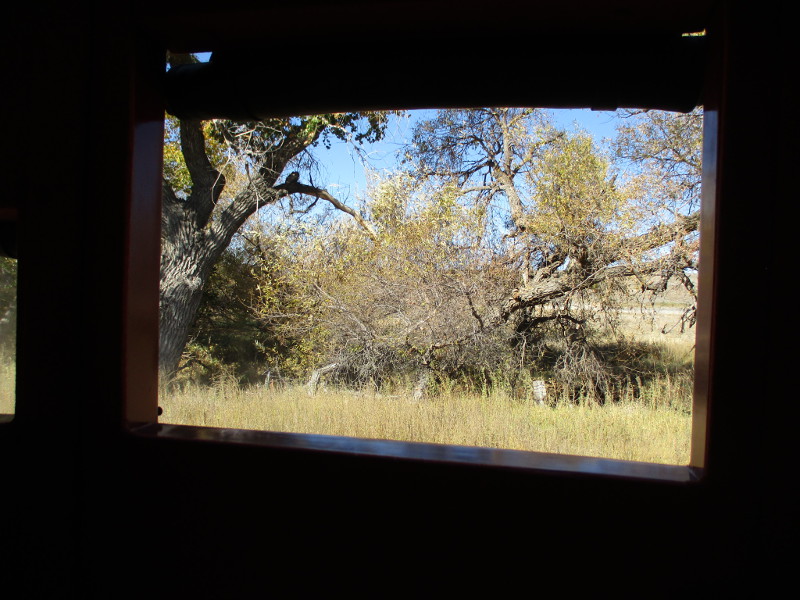
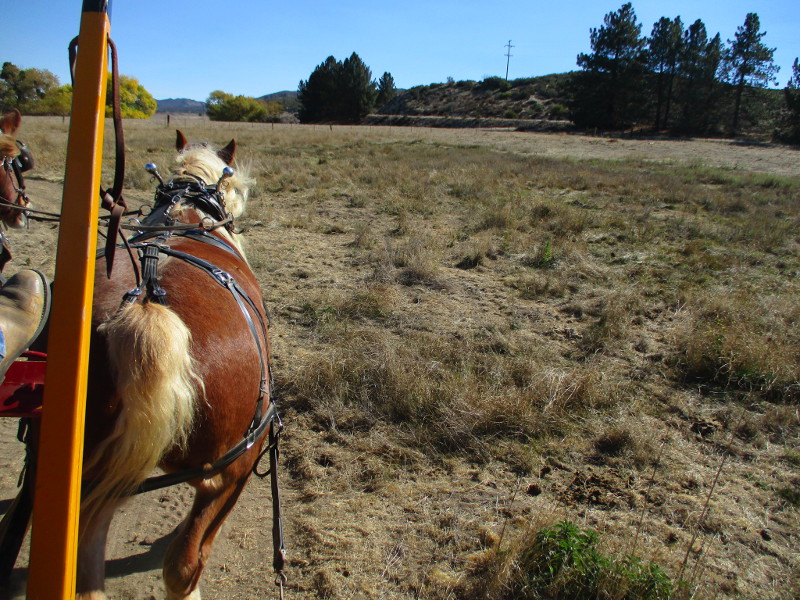
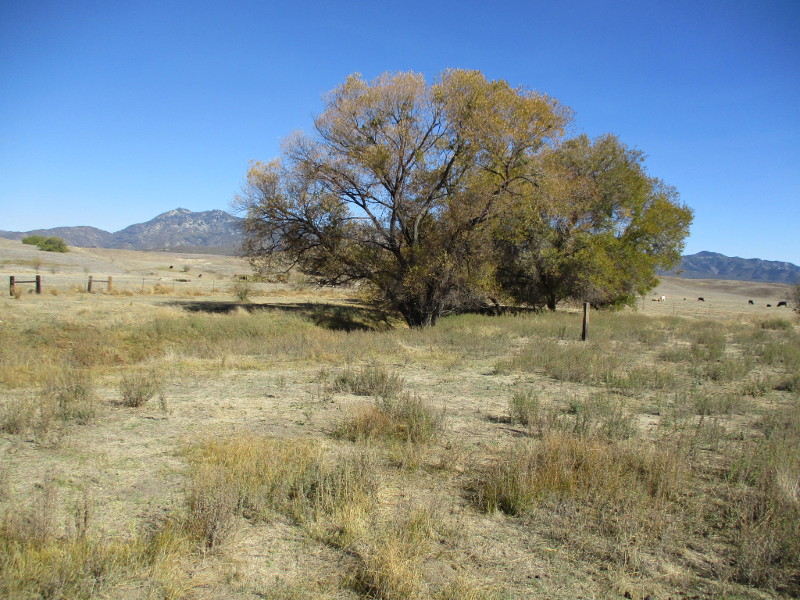
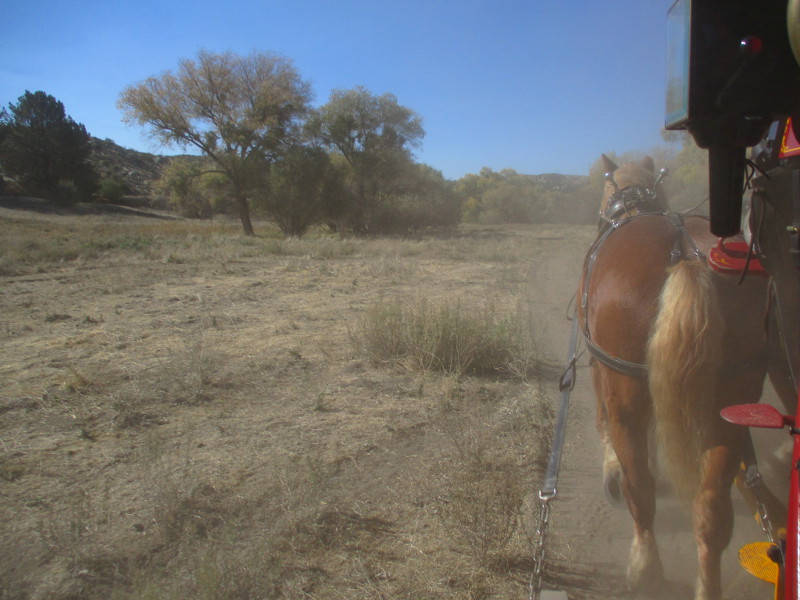
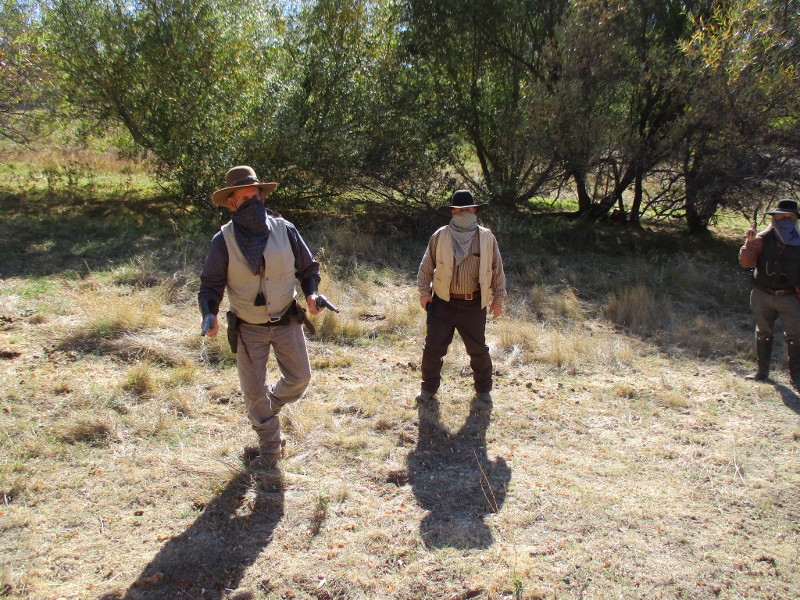
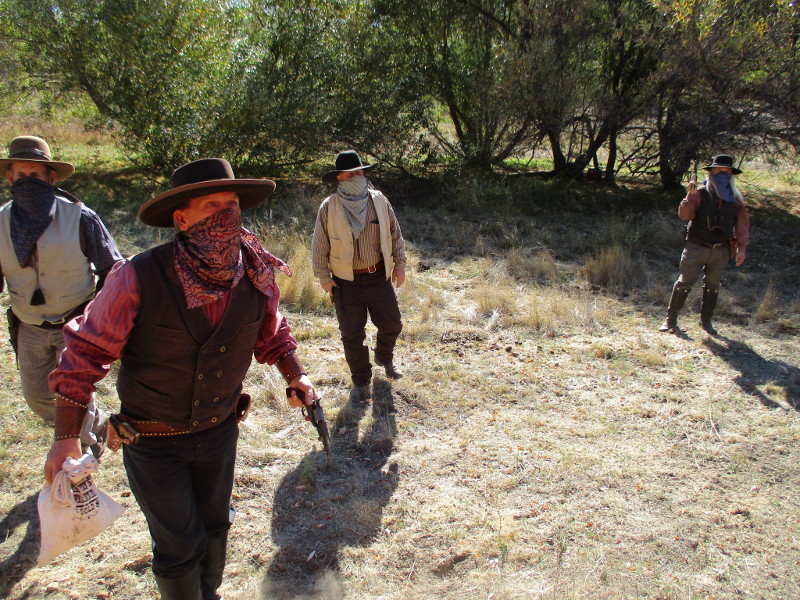
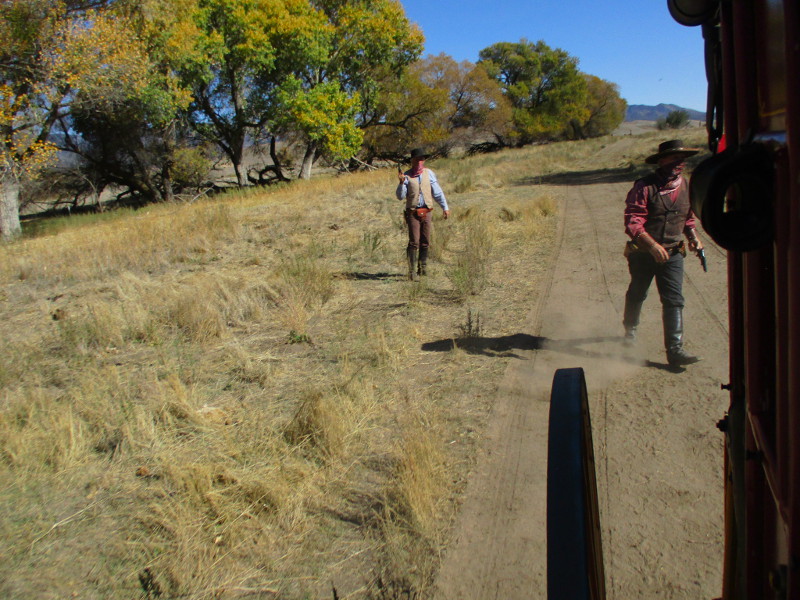
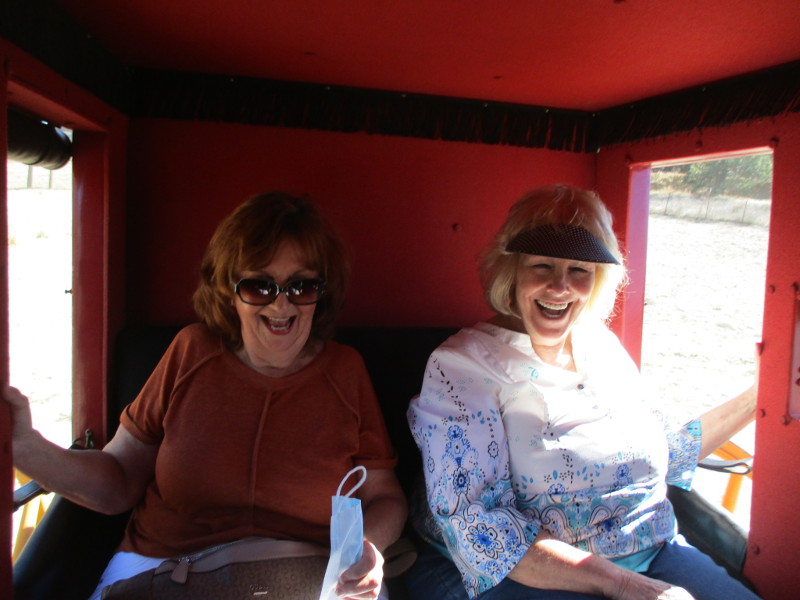
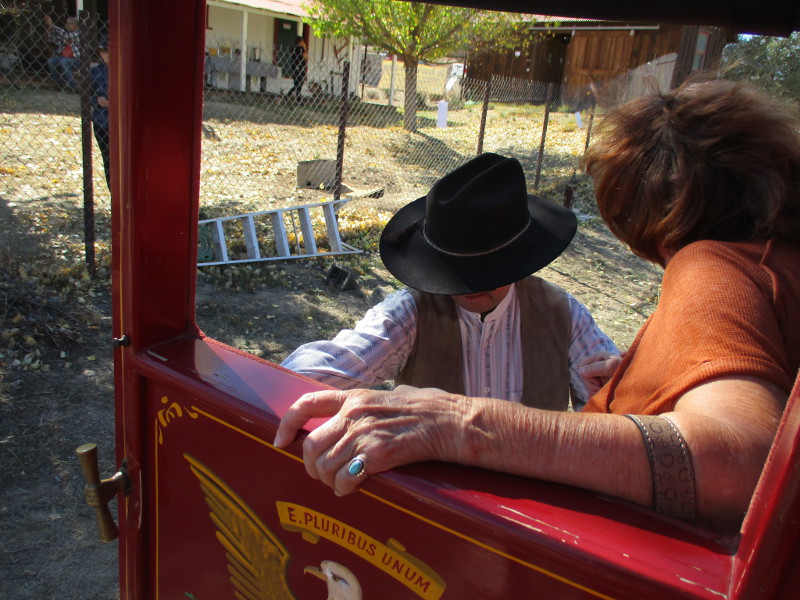
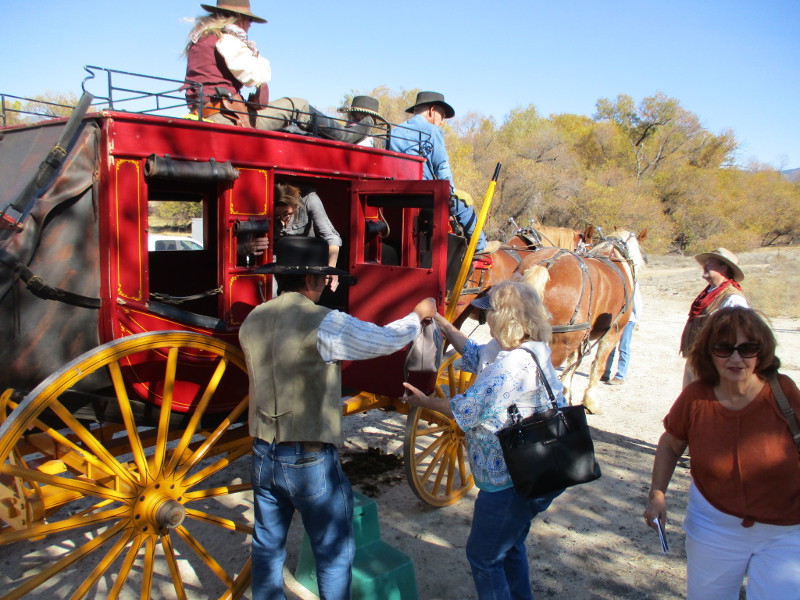
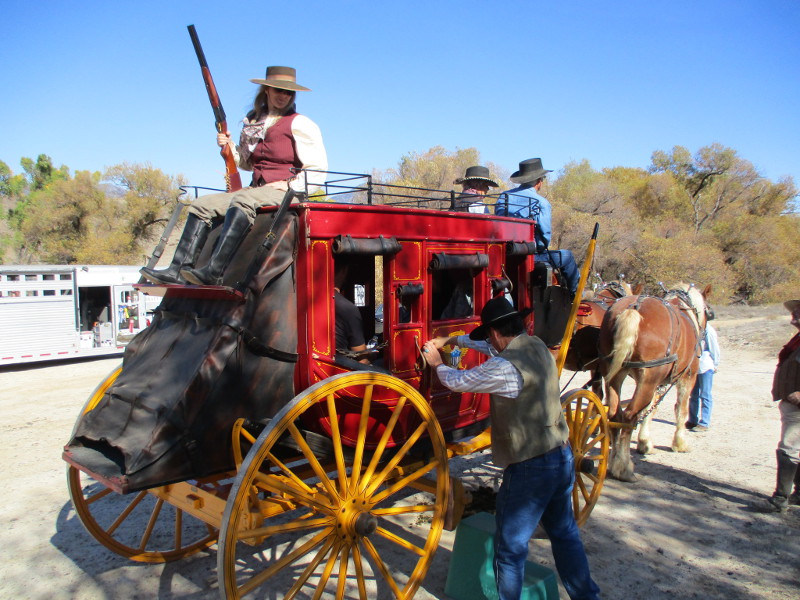
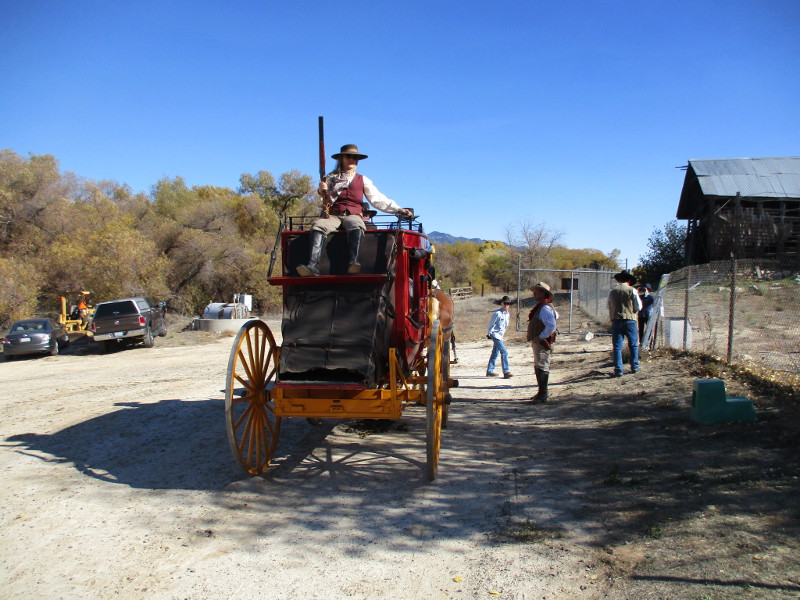
Approaching the entrance of the historic Carrillo Ranch House at Warner’s Ranch, a National Historic Landmark.I arrived early and will be on the first ride of the day. But no horses yet.Here they come!Two beautiful horses will pull the genuine Concord Coach, which is owned by the Save Our Heritage Organisation. I believe I heard the horses are Clydesdales. (UPDATE! I see on the SOHO website these were Belgian Draft horses.)Another passenger waits as the horses are hooked up.I’m pretty sure they didn’t have aluminum ladders like this a century and a half ago!American eagle on side of the historic red Concord Coach, with E. Pluribus Unum.Four passengers will sit inside the coach for this short journey.Here’s my ticket!We managed to squeeze into the small coach and here we go!Looking at the countryside beyond an outside stagecoach lantern.Looking out the other window at oak trees.Were going down the actual historic stage route. It’s dusty and bumpy! A few sudden lurches took me by surprise–like some sort of amusement park ride!Mountains and cattle in the distance.I did say dusty!What’s this? Armed robbers!The stagecoach driver threw down the Army payroll. The passengers got off easy.We are allowed to continue back to our stage stop.Yes, the experience is fun!It’s over far too soon.Another group of passengers is ready to go!There they go!
…
I live in downtown San Diego and love to walk around with my camera! You can follow Cool San Diego Sights via Facebook or Twitter!
You can easily explore Cool San Diego Sights by using the search box on my blog’s sidebar. Or click a tag! There are thousands upon thousands of photos for you to enjoy!









 Cool San Diego Sights!