
Perhaps you read my blog post about the violent microburst that tore through San Diego’s Mission Valley on September 16, 2014. Along with photos of the aftermath, I described the tornado-like winds of the freak weather phenomenon.
A microburst is a localized downdraft of wind that can occur under unstable weather conditions. Several areas around San Diego were struck by a microburst that day, and the resulting damage was stunning. Small airplanes at an airport were tossed through the air. Along the banks of the San Diego River, hundreds of trees were torn to shreds and uprooted.
This morning, 7 months later, I walked along the river path where I had scrambled over thickly fallen trees right after the natural disaster.
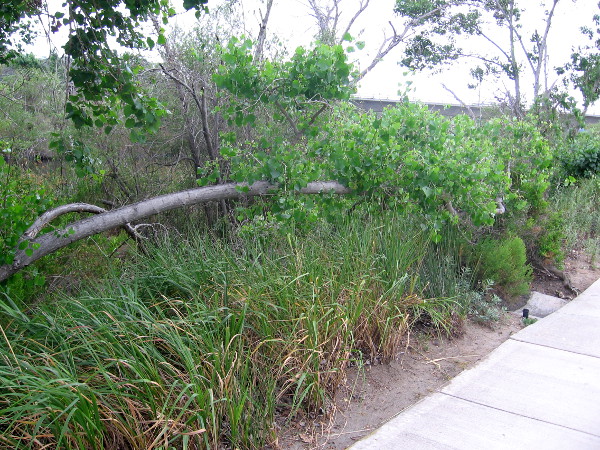
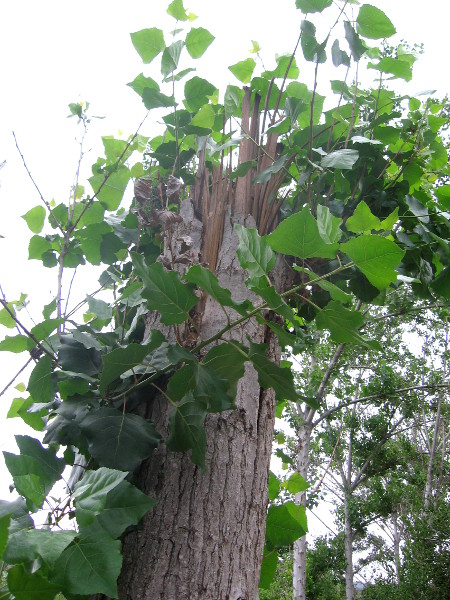
Many of the uprooted trees were removed by crews with chainsaws in the days that followed the microburst. But some were not. Check out a few pics from my walk this spring morning! Like the famous quote from the movie Jurassic Park, life finds a way!

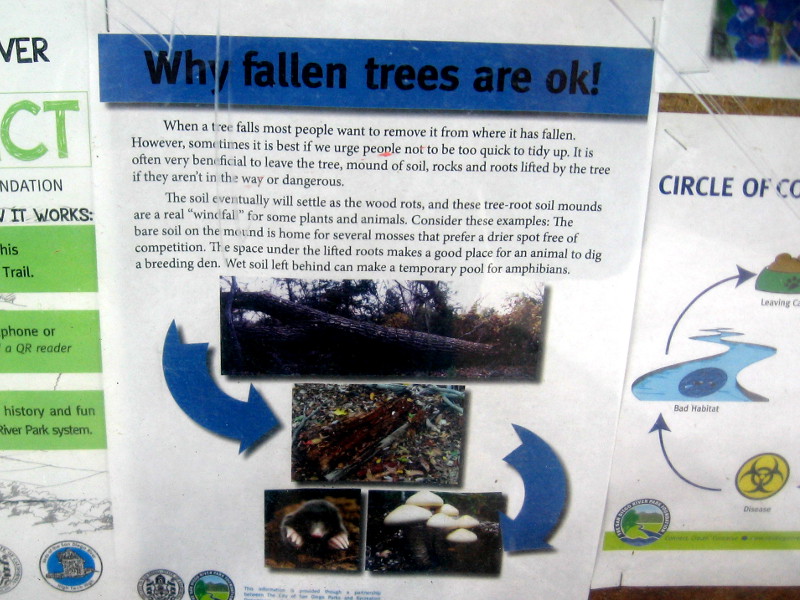
The sign reads:
When a tree falls most people want to remove it from where it has fallen. However, sometimes it is best if we urge people not to be too quick to tidy up. It is often very beneficial to leave the tree, mound of soil, rocks and roots lifted by the tree if they aren’t in the way or dangerous.
The soil eventually will settle as the wood rots, and these tree-root soil mounds are the real “windfall” for some plants and animals. Consider these examples: The bare soil on the mound is home for several mosses that prefer a drier spot free of competition. The space under the lifted roots makes a good place for an animal to dig a breeding den. Wet soil left behind can make a temporary pool for amphibians.

…
To enjoy future posts, you can “like” Cool San Diego Sights on Facebook or follow me on Twitter.

 Cool San Diego Sights!
Cool post!
LikeLiked by 1 person