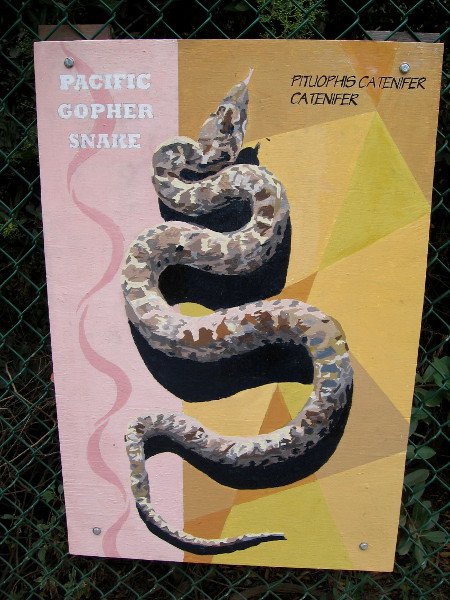
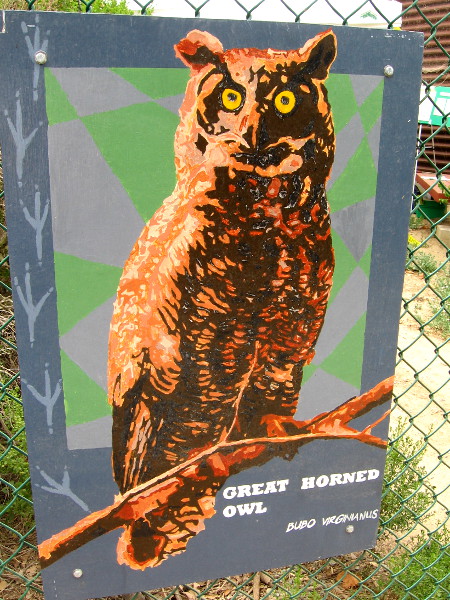
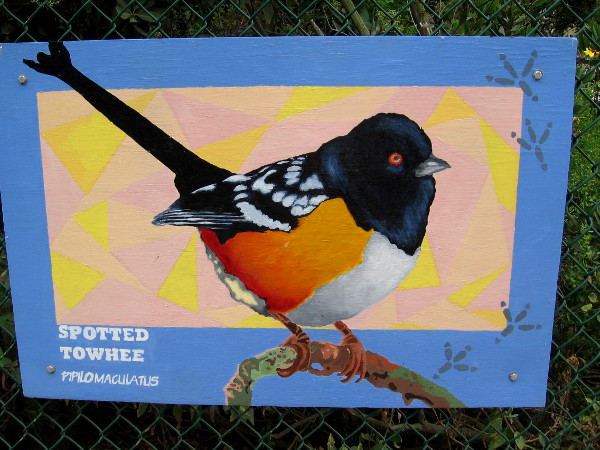
On a fence behind the Nature Center at Tecolote Canyon Natural Park one can find many colorful paintings of native wildlife. The fence follows a dirt road that leads to a hiking trail through Tecolote Canyon.
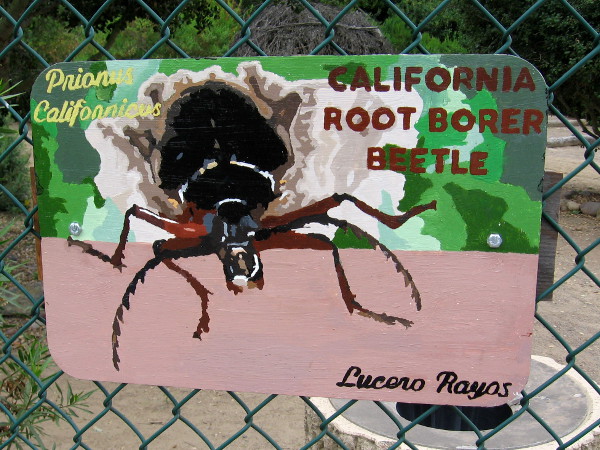
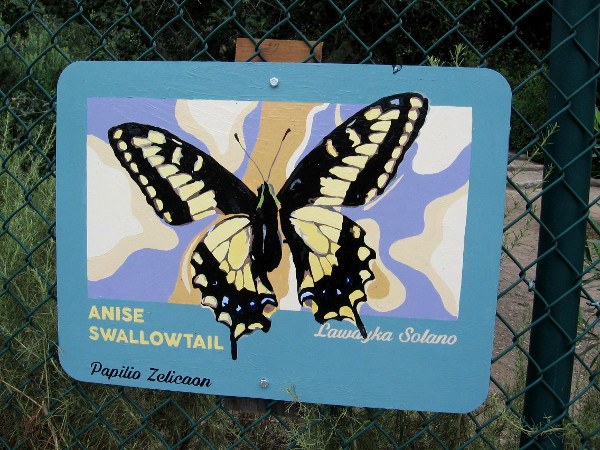
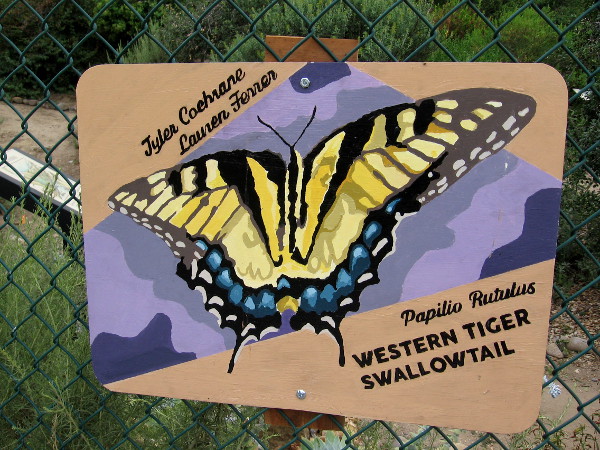
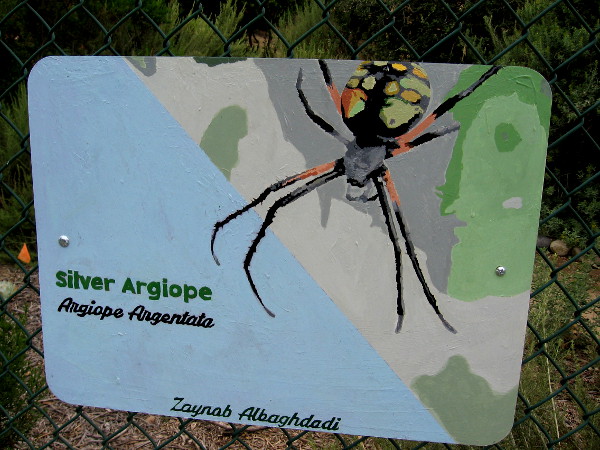
The paintings of spiders, butterflies, beetles and other insects were recently completed by students at University City High School. I believe the paintings of mammals, reptiles and birds have been on the fence for some time.
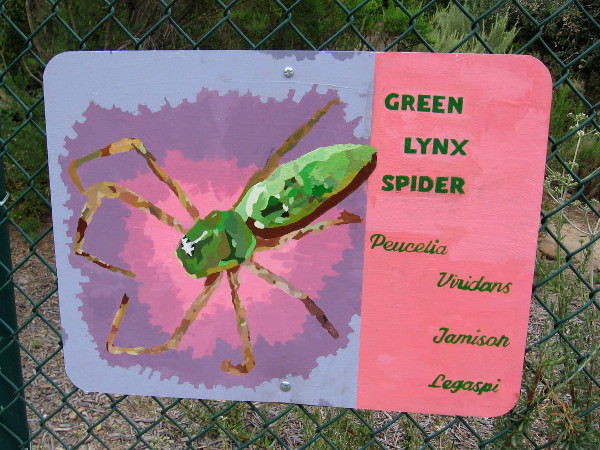
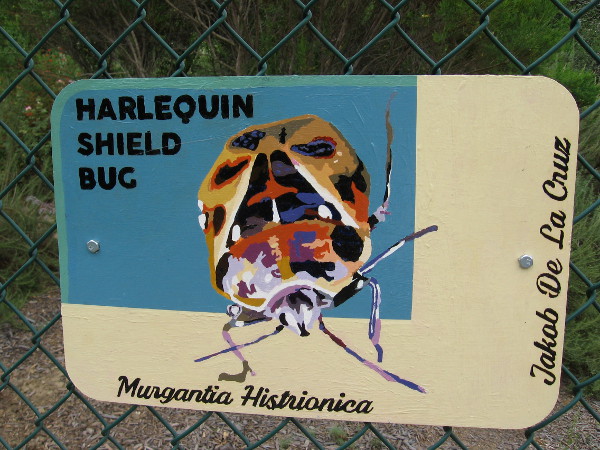
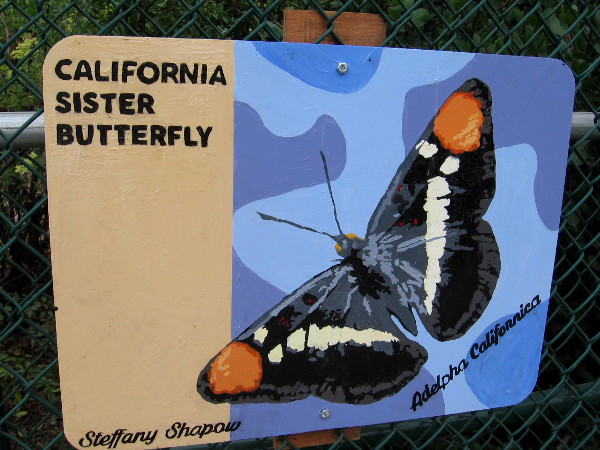
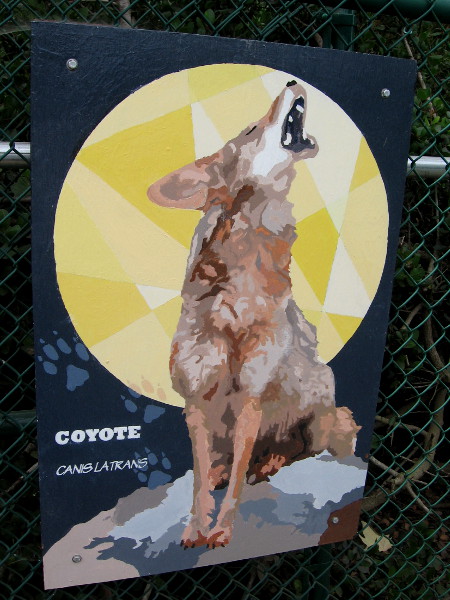
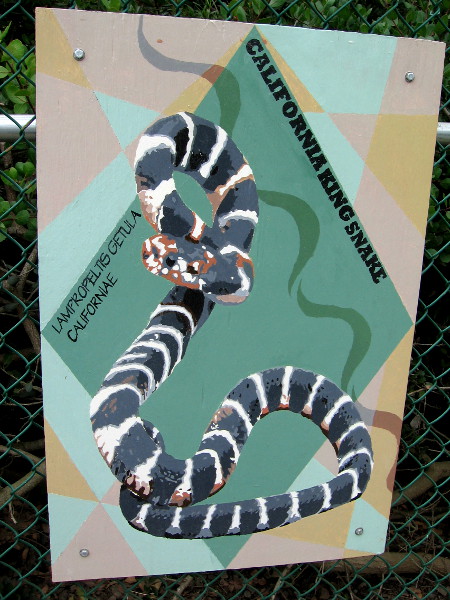
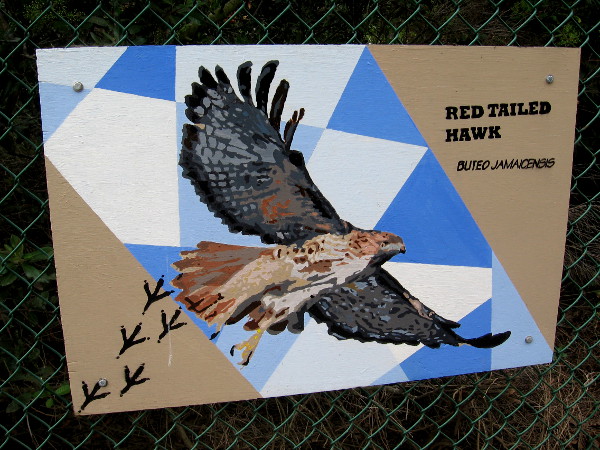
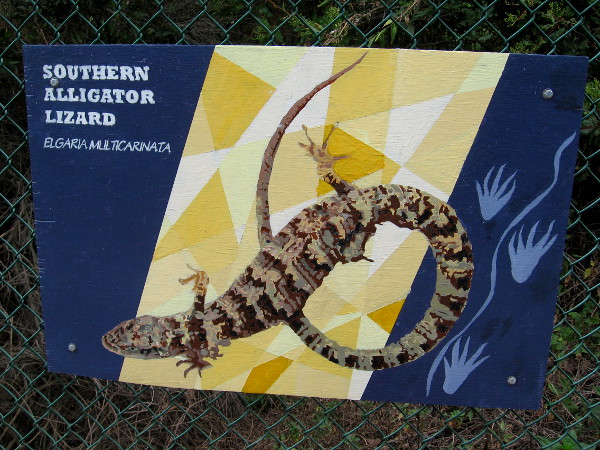
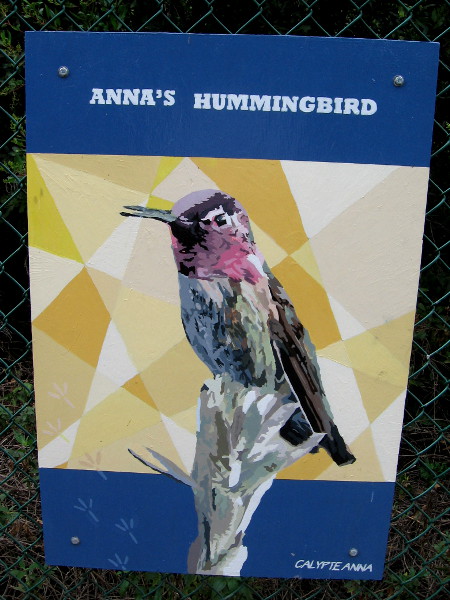
Colorful paintings of insects and other wildlife on a fence behind the Nature Center at Tecolote Canyon Natural Park.California Root Borer Beetle. Lucero Rayos.Black and Yellow Garden Spider. Nour Barbakh.Anise Swallowtail. Lawdyka Solano.Spotted Cucumber Beetle. Kayla Kenney.Tarantula Hawk. Andrea Angeles and Christian Covarrubias.Western Tiger Swallowtail. Tyler Coehrane and Lauren Ferrer.Darkling Stink Beetle. Morgan Boland.Roseate Skimmer. Issac Felcher.Silver Argiope. Zaynab Albaghdadi.American Lady. Aurora Godinez Quevedo.Green Lynx Spider. Jamison Legaspi.Harlequin Shield Bug. Jakob De La Cruz.Datura Weevil. Jacob Stoermer.Green Fruit Beetle. Makayla Srioudom.Vivid Dancer Damselfly. Miyoko Seldon and Andrew Bayot.Pruinose Squash Bee. Quincy Stone.California Sister Butterfly. Steffany Shapow.Coyote.California King Snake.Great Blue Heron.Striped Skunk.Southern Pacific Rattlesnake.Western Scrub Jay.Raccoon.Red Tailed Hawk.Southern Alligator Lizard.Anna’s Hummingbird.Bobcat.Pacific Gopher Snake.Gray Fox.Western Fence Lizard.Great Horned Owl.Spotted Towhee.
…
I live in downtown San Diego and love to walk around with my camera! You can follow Cool San Diego Sights via Facebook or Twitter!
You can easily explore Cool San Diego Sights by using the search box on my blog’s sidebar. Or click a tag! There are thousands upon thousands of fun photos for you to share and enjoy!
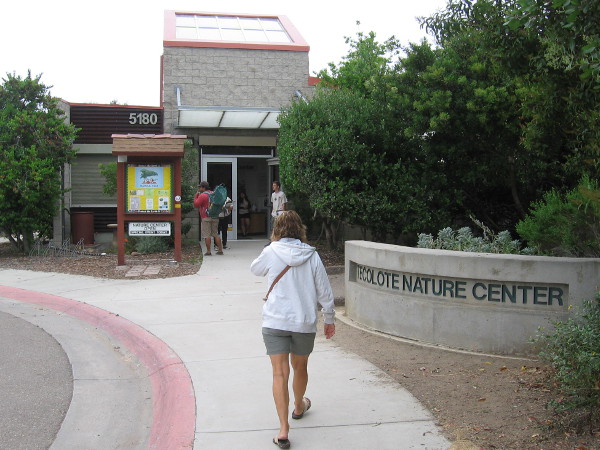
Someone walks toward the Nature Center on Tecolote Family Day.
Today I headed over to Tecolote Canyon Natural Park. While I frequently drive around this narrow San Diego city park, which serves as a nature preserve inside Tecolote Canyon east of Mission Bay, I’ve never taken a single step inside. When I saw that an event called Family Day would be happening today, I decided to pay a visit!
What did I discover? Read the photo captions to find out!
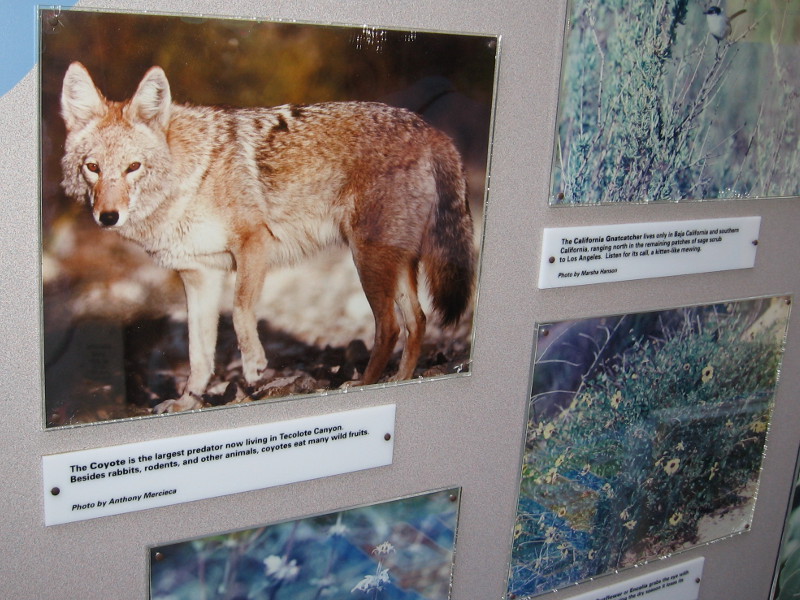
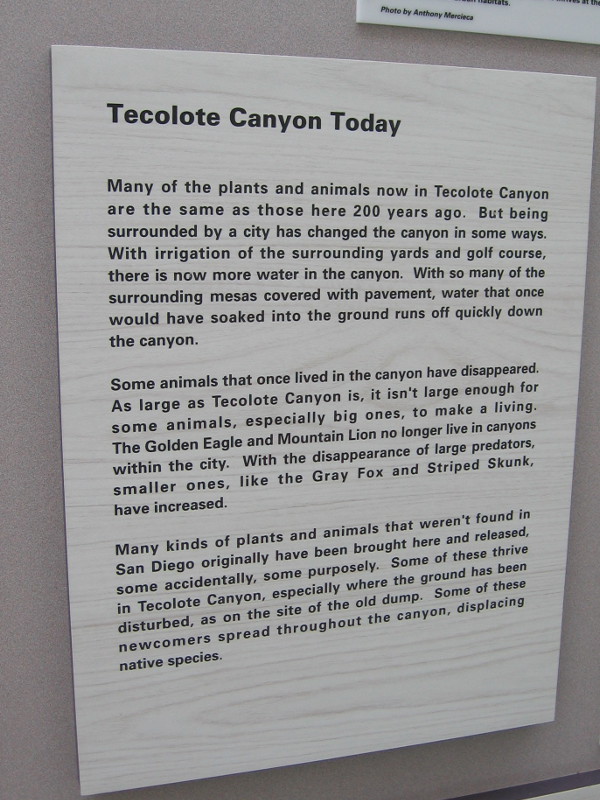
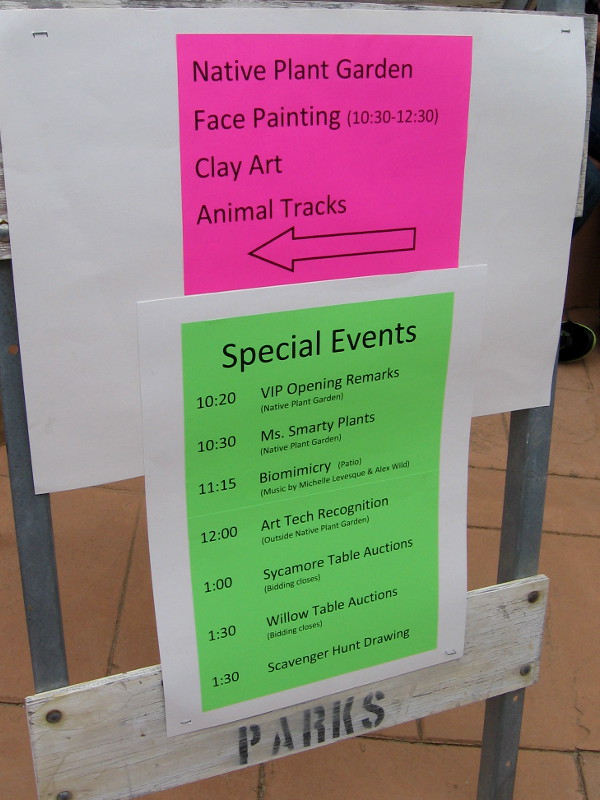
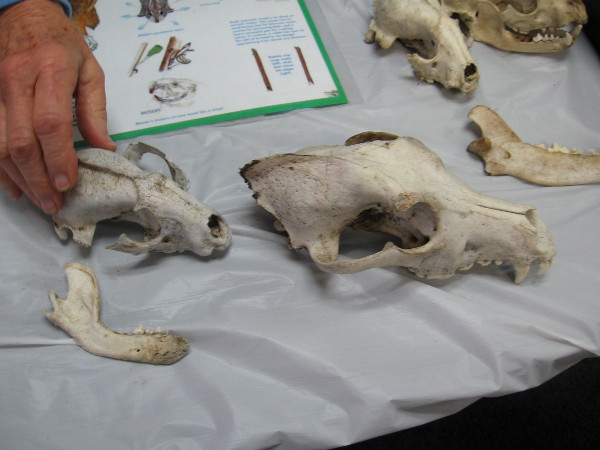
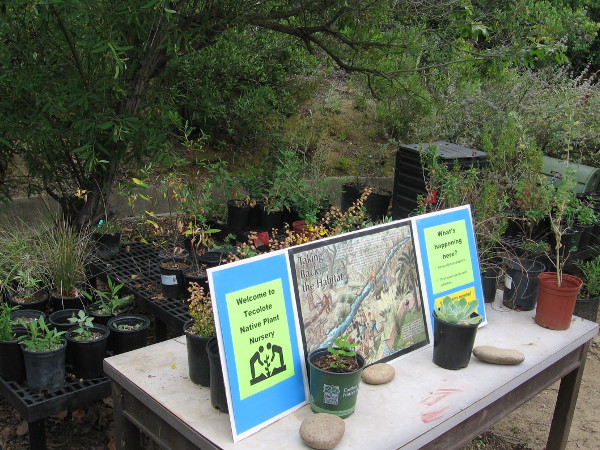
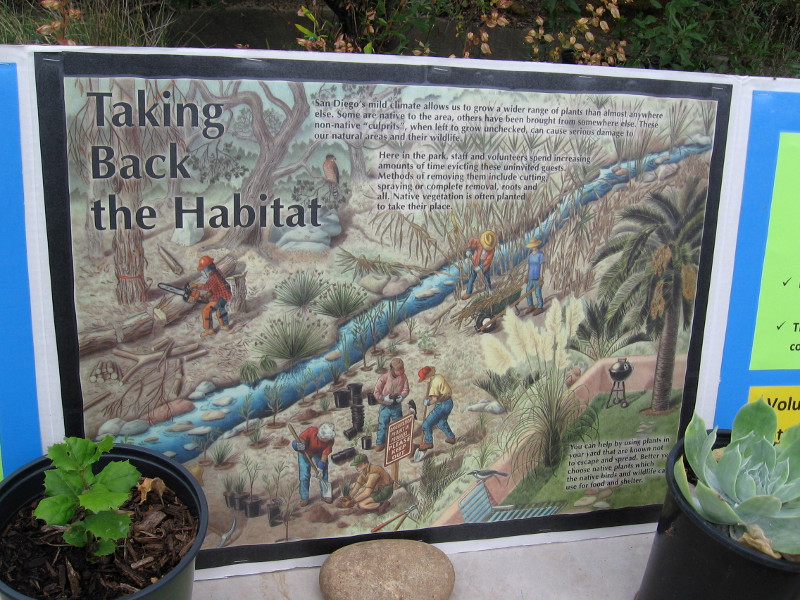
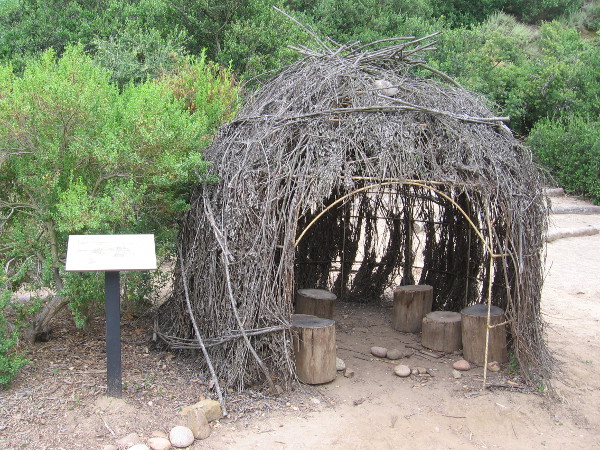
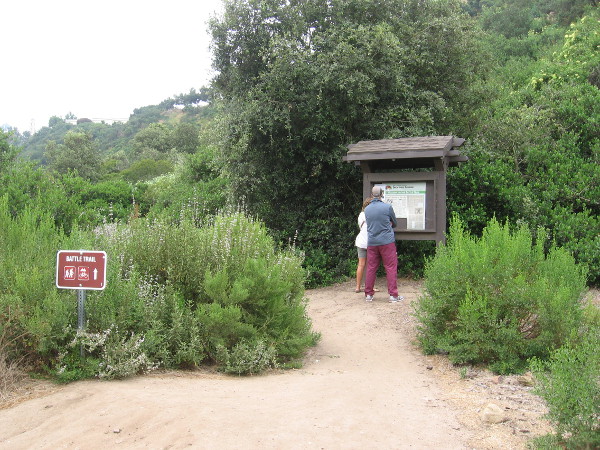
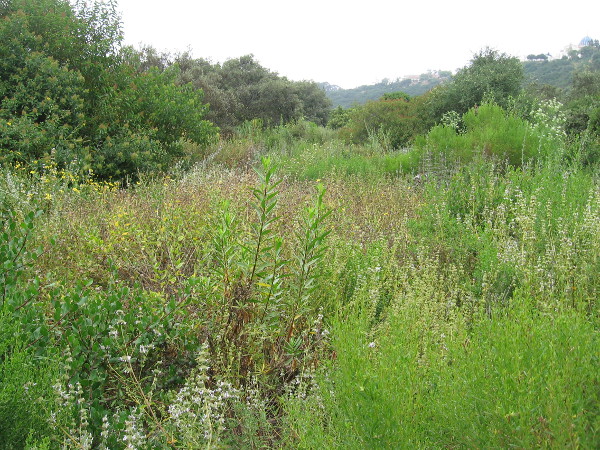
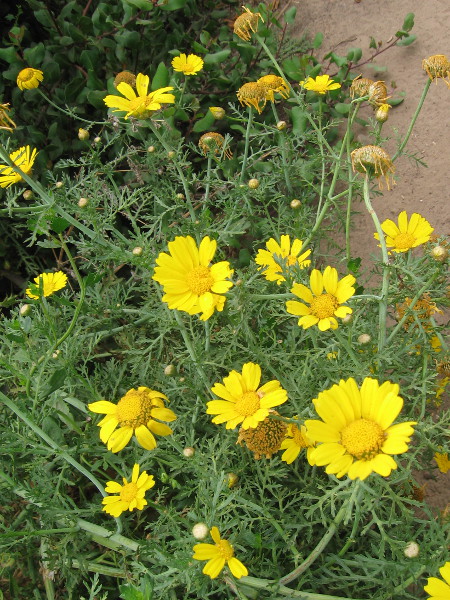
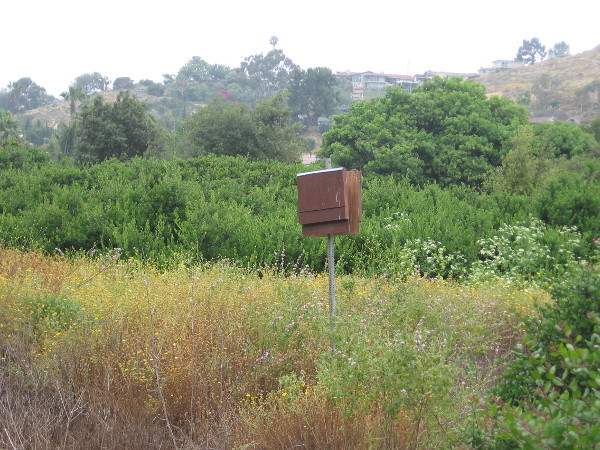
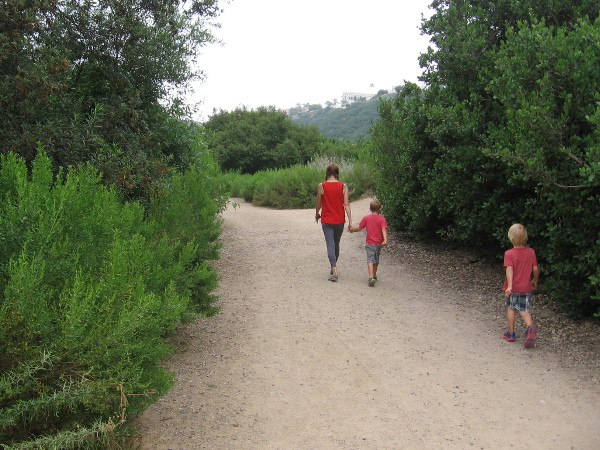
A sign near entrance to the Nature Center provides information about Tecolote Canyon Natural Park.A narrow strip of natural habitat preserved in San Diego. Tecolote Canyon features hiking trails and a refuge for wildlife.Sign inside the Tecolote Nature Center. The park was originally dedicated in 1977. Houses, yards and streets surround this area where the native environment still survives.Many interpretive displays can be found in the Nature Center. The coyote is Tecolote Canyon’s largest predator.One sign describes San Diego’s Coastal Sage Scrub habitat, which is found in a small part of the world, along the coast of Southern California into Mexico.The Brown Towhee is one of many birds one might spot in the canyon.Along Tecolote Creek lies the Riparian Woodland habitat. Water attracts animals from the dry hills, and native trees like willows, cottonwoods and sycamores grow near the creek’s banks.One of the displays shows Lemonadeberry (a common chaparral shrub in San Diego), Fuchsia Flowered Gooseberry, and a California Thrasher.A topographical representation of curving Tecolote Canyon, which you can see directly below Mission Bay. Up is west, right is north.Many of the plants and animals now in Tecolote Canyon are the same as those here 200 years ago. Golden eagles and mountain lions, however, have vanished because this natural space is too limited in size.Families enjoy a special day and learn about the canyon’s environment. It’s Tecolote Family Day! There were lots of educational displays and activities at the Nature Center.Activities at Tecolote Family Day included a scavenger hunt for kids, art, music, dance and a silent auction.Inside the Nature Center, one table had lots of displays concerning insects! Another one had snakes.At another table I was shown a coyote skull.I believe these beautiful poppy paintings were part of the silent auction.A friendly parrot was at a booth promoting Zovargo, a local business that offers animal summer camps for kids.These kids were dancing to a fun song about pollination!Nearby I discovered the Tecolote Native Plant Nursery.Work is ongoing to take back the native habitat from invading plant species.I saw some signs about the importance of composting. It enhances soil and protects watersheds.Behind the Nature Center, near an amphitheater and native garden, I saw this example of an e’waa, a simple willow branch structure built by the Native American Kumeyaay.A sign depicts the Tecolote Watershed. Pollutants can flow down the creek and enter the soil, Mission Bay and eventually the Pacific Ocean.Several signs can be found around the small native garden. This one, Aromas of the Canyon, depicts Black Sage, White Sage and California Sagebrush.On the way to the hiking trail that leads into Tecolote Canyon, one might spot this owl!Hikers read the sign at the Battle Trail trailhead.Welcome to the Battle Trail – Nature’s haven in the city.I start up the easy trail. The vegetation in Tecolote Canyon is still green in late spring, after a very rainy winter.This lush greenery will soon dry out in the Southern California summer and turn mostly brown.I am greeted by cheerful yellow flowers.I believe this house on a post is for bats. I’ve seen similar boxes in other open space parks around San Diego.A family heads into Tecolote Canyon to explore nature.
…
I live in downtown San Diego and love to walk around with my camera! You can follow Cool San Diego Sights via Facebook or Twitter!
You can easily explore Cool San Diego Sights by using the search box on my blog’s sidebar. Or click a tag! There are thousands upon thousands of fun photos for you to share and enjoy!
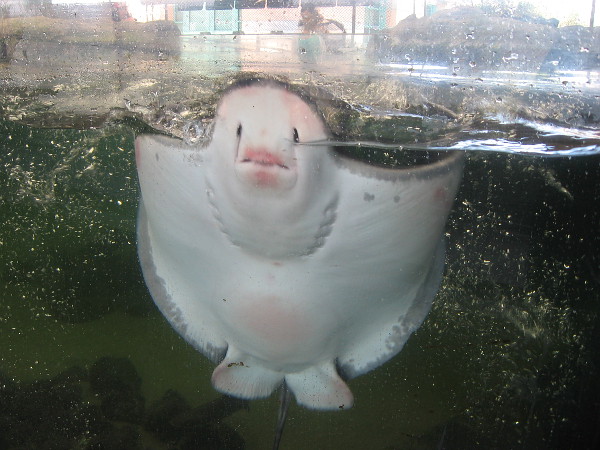
Bat ray rises against glass of an outdoor tank at the Living Coast Discovery Center in Chula Vista.
Before my hike through Sweetwater Marsh, I enjoyed a visit to the Living Coast Discovery Center, which is located inside the San Diego Bay National Wildlife Refuge. Exhibits inside the center and clusters of wildlife tanks and enclosures outside allow visitors to see and learn about the animals that make this refuge their home. The place is just right for families, with kid-size educational displays, short, easy paths, and even some picnic tables. If I were a young kid, having a birthday party here would be really cool!
After checking out the exhibits at the Living Coast Discovery Center, I ventured over to an adjacent building that is the San Diego National Wildlife Refuge Complex headquarters. Some great displays outside provide more information about the unique and beautiful wetland that stretches in all directions. Not far from this building, one can easily find a hiking trail that leads across the marsh to San Diego Bay.
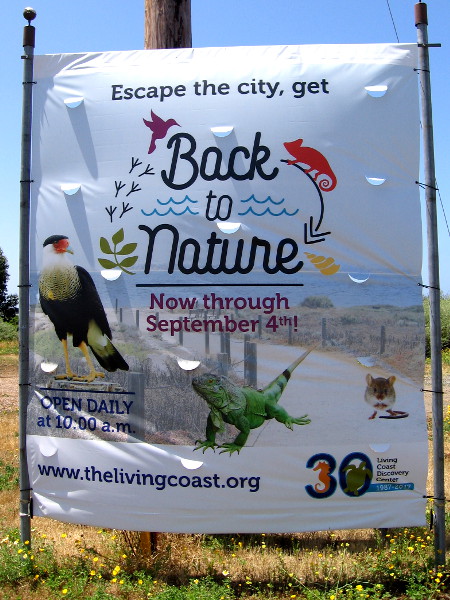
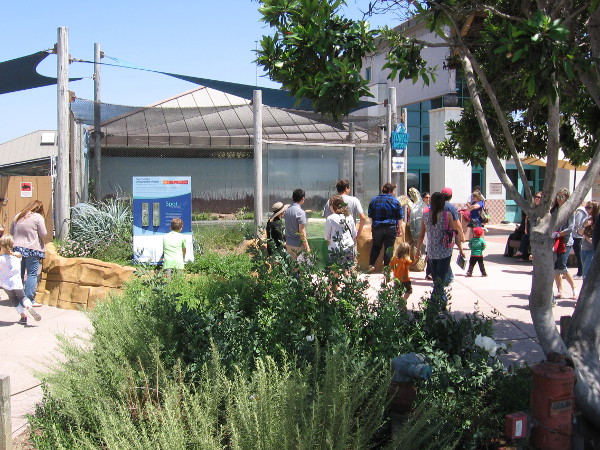
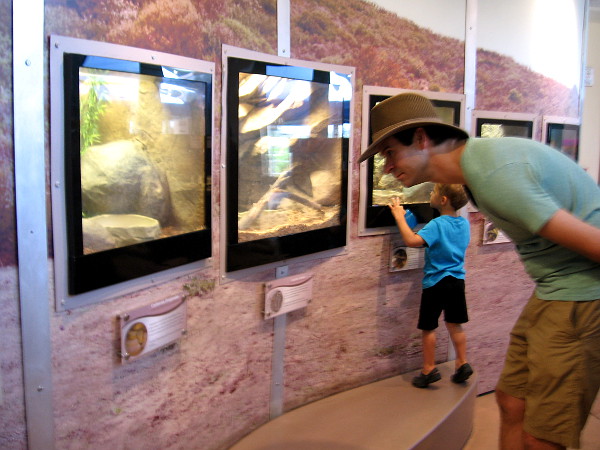
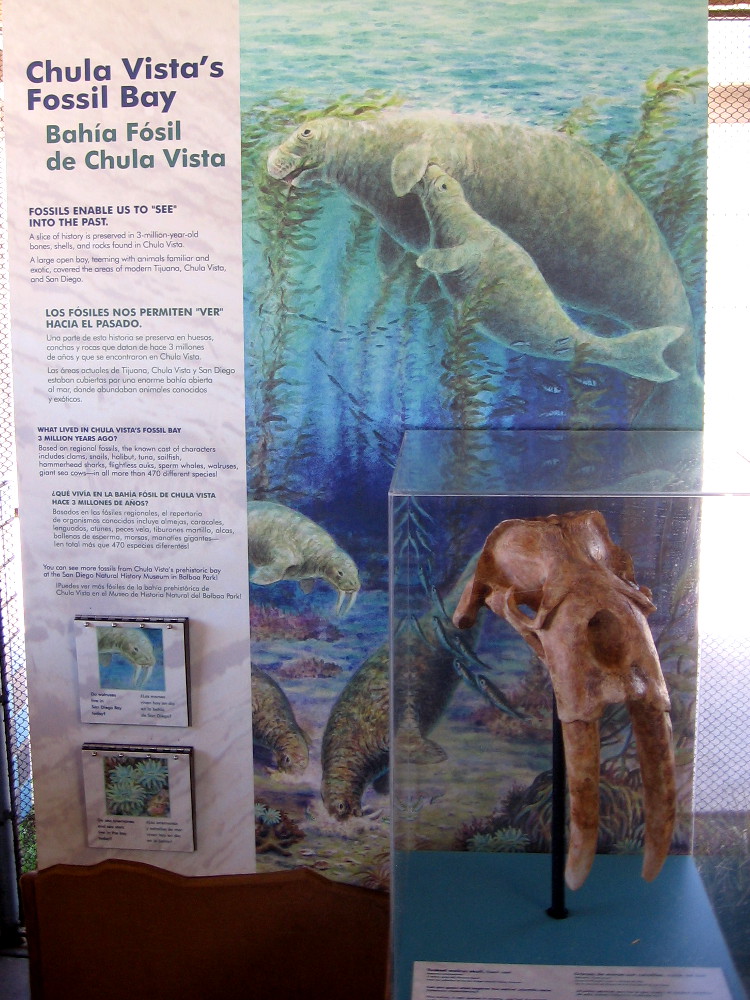
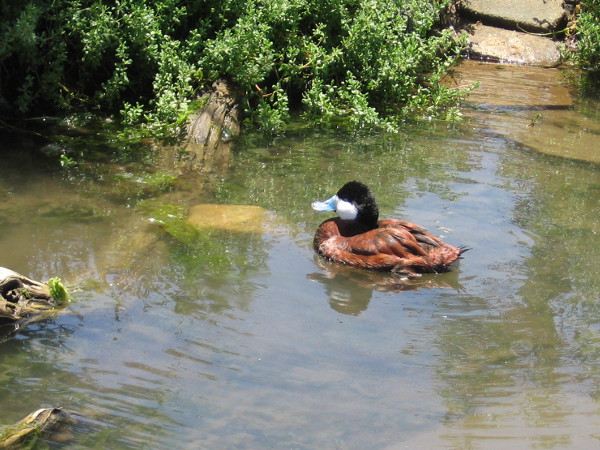
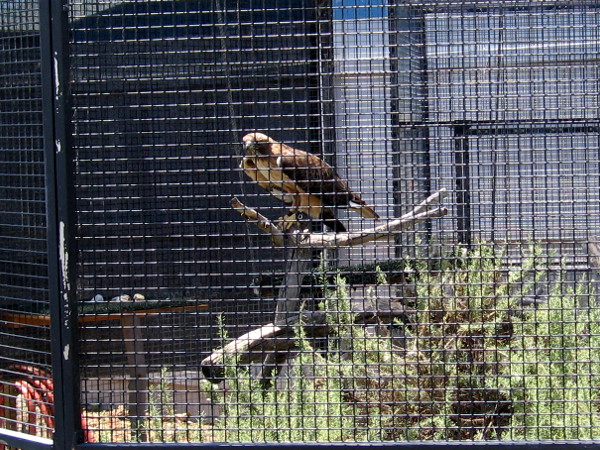
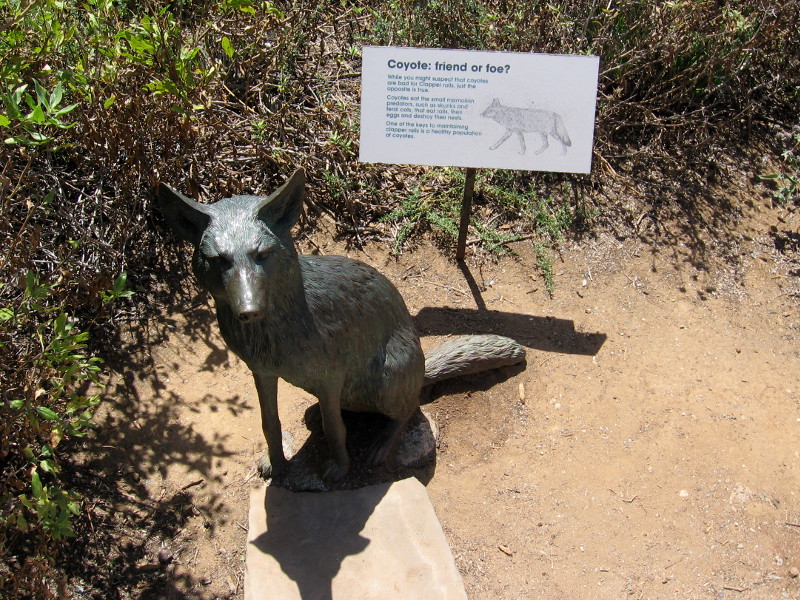
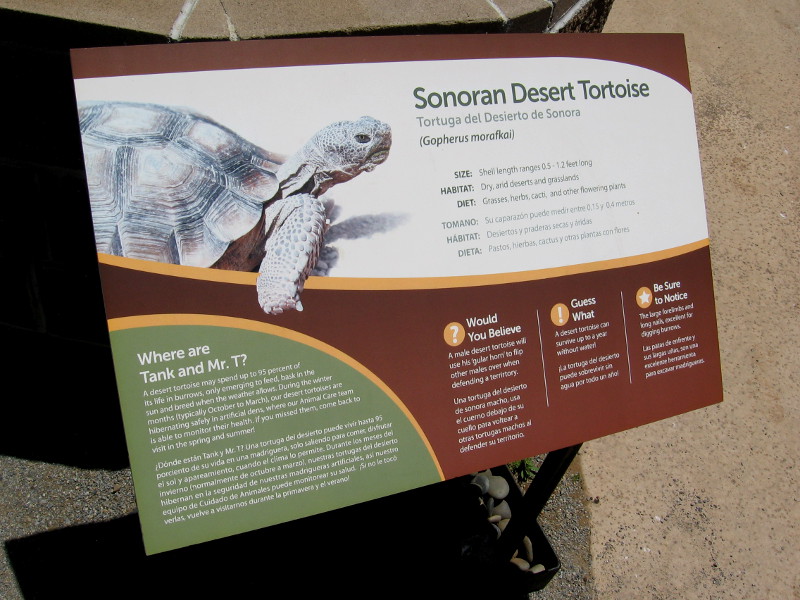
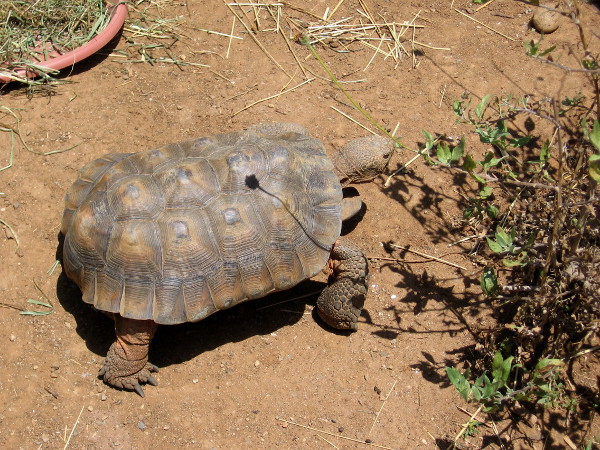
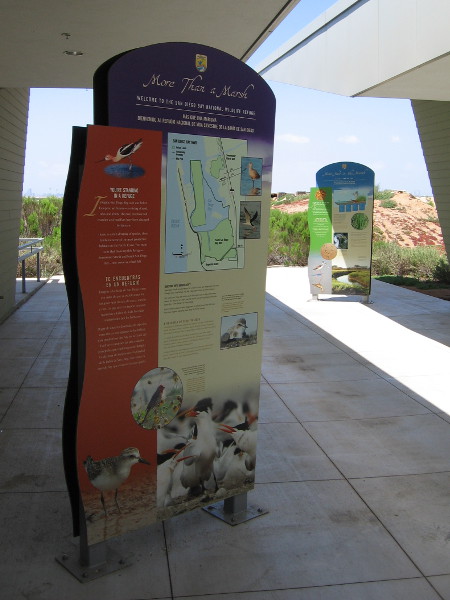
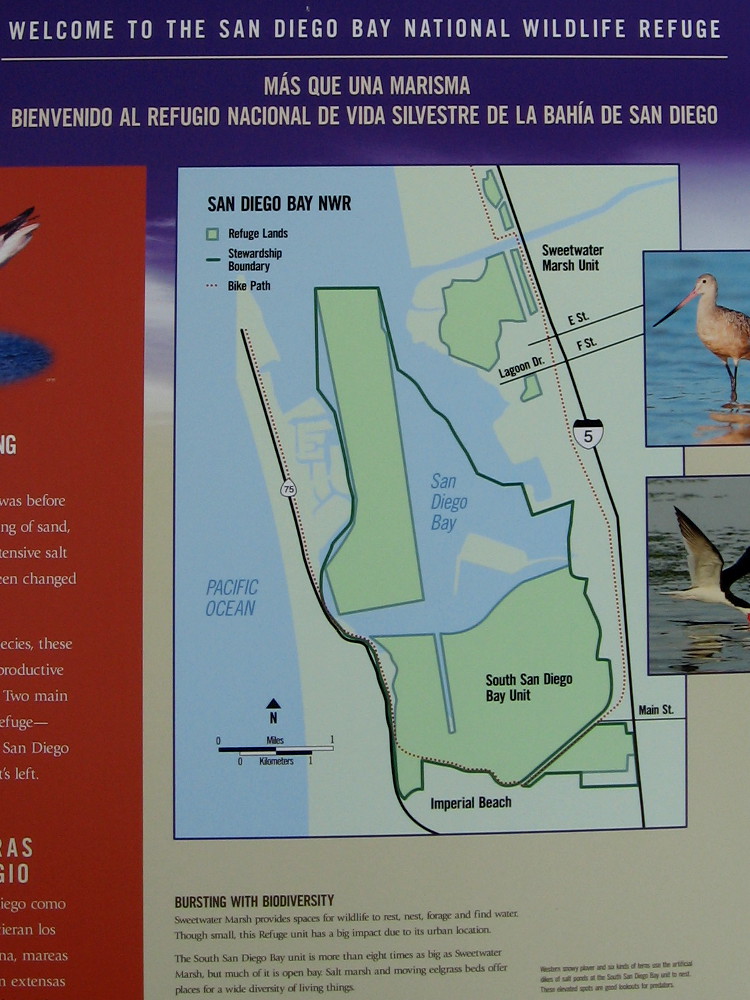
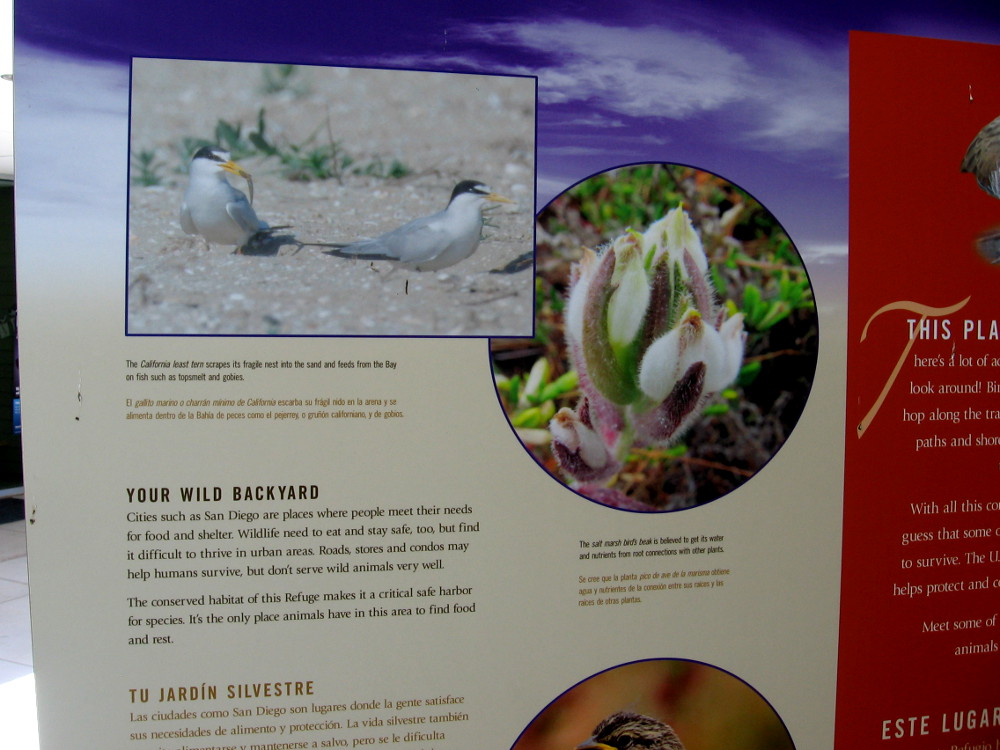
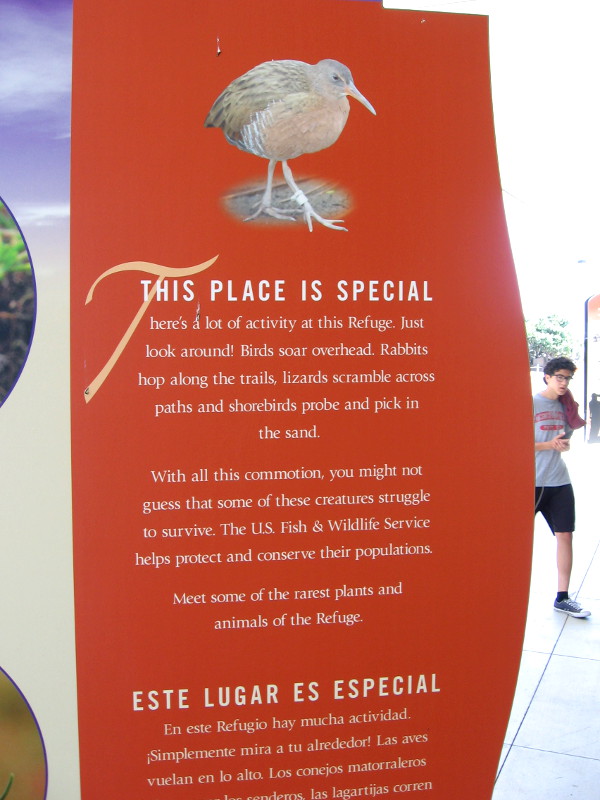
The Living Coast Discovery Center, located in the Sweetwater Marsh Unit of the San Diego National Wildlife Refuge, is where to get Back to Nature.A short bus ride takes one from the parking lot near Interstate 5 through the protected Sweetwater Marsh to the kid-friendly education center.People near the green sea turtle exhibit at the front of the Living Coast Discovery Center.Many species of reptiles, amphibians, invertebrates and fish are on display inside the small center. There’s even a mouse house popular with kids.Outside, visitors can explore exhibits featuring sharks, rays, birds and tortoises. One can also look across the surrounding Sweetwater Marsh.Actions on land affect San Diego Bay. Pollution runoff flows via creeks, rivers and storm drains into the marsh then out to the ocean.A leopard shark. They are plentiful in the waters off San Diego.This 3-million-year-old fossilized tusked walrus skull was found in the area. 470 different species have been found as fossils here, including sperm whales and now extinct flightless auks!Enclosures in the aviary area contain clapper rails, shorebirds and ducks.A blue-billed ruddy duck swims in a pool of water at the Living Coast Discovery Center.In other parts of the aviary area one can see vultures, hawks, eagles and owls.A red-tailed hawk.Beautiful artwork on one building’s side shows a beach and birds in flight. Swallows have built nests above it near the roof.Bronze sculpture of a coyote. Many other works of wildlife art can be viewed around the center.Sign near an enclosure describes the Sonoran desert tortoise.A tortoise take a slow stroll outside the Living Coast Discovery Center.This amazing art depicting marshland birds is just outside the entrance to the San Diego National Wildlife Refuge Complex headquarters.Large signs explain the role of a wildlife refuge.National Wildlife Refuges are safe havens for species. The first one, at Pelican Island in Florida, was created in 1903 by Theodore Roosevelt.Map of the extensive San Diego Bay National Wildlife Refuge.The wildlife refuge contains great biodiversity. The animals and plants are all parts of a complex and sensitive ecosystem.Different forms of life can be found in subtidal channels, mudflats, the low marsh and high marsh. The changing tide allows birds to feed and variously adapted species to thrive.Wildlife can find it hard to thrive in urban areas. The conserved habitat of this refuge is a critical safe harbor for many native species.This place is special. The U.S. Fish and Wildlife Service helps to protect its wild residents.A green sea turtle, one of those residents of San Diego Bay!
…
I live in downtown San Diego and love to walk around with my camera! You can follow Cool San Diego Sights via Facebook or Twitter!
You can easily explore Cool San Diego Sights by using the search box on my blog’s sidebar. Or click a tag! There are thousands upon thousands of fun photos for you to share and enjoy!
A group begins an easy nature hike down a trail at San Diego Bay National Wildlife Refuge.
On Saturday I visited Gunpowder Point, just south of where the Sweetwater River empties into San Diego Bay. The marshy area is a wildlife refuge. It’s part of the San Diego Bay National Wildlife Refuge, to be exact, and home of the popular Living Coast Discovery Center.
After visiting the Living Coast Discovery Center, I enjoyed a guided nature hike down a short trail through the Sweetwater Marsh.
I was pleasantly surprised by the bare natural beauty. I didn’t see a whole lot of wildlife during this visit, but I know our region’s marshes and estuaries are often teeming with birds. San Diego is part of the Pacific Flyway, a major route of migratory birds that stretches from Alaska to South America.
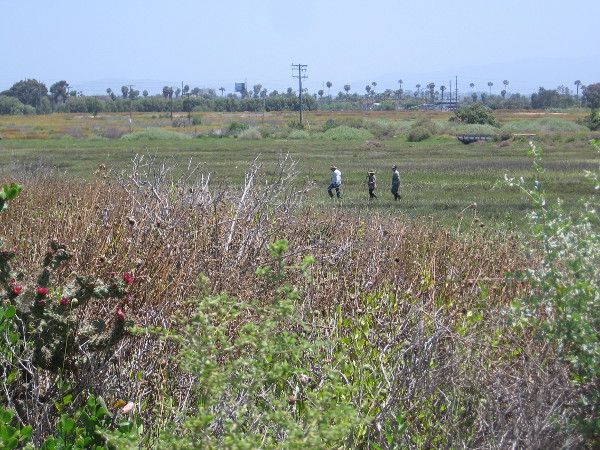
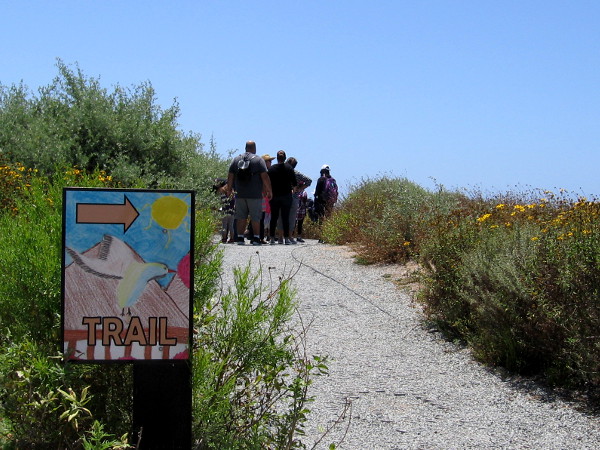
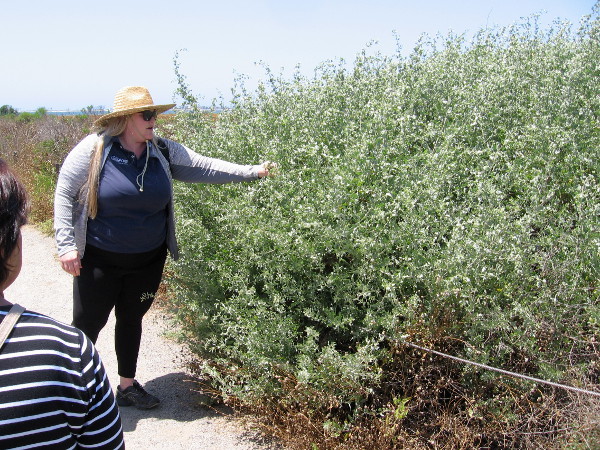
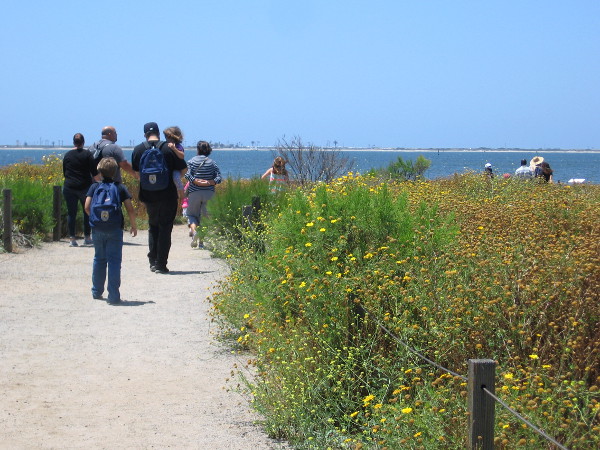
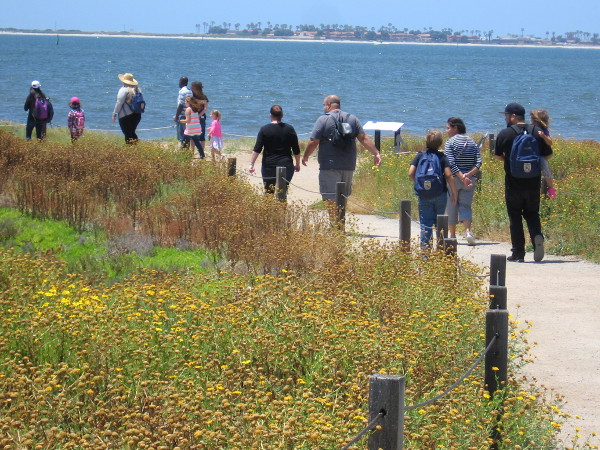
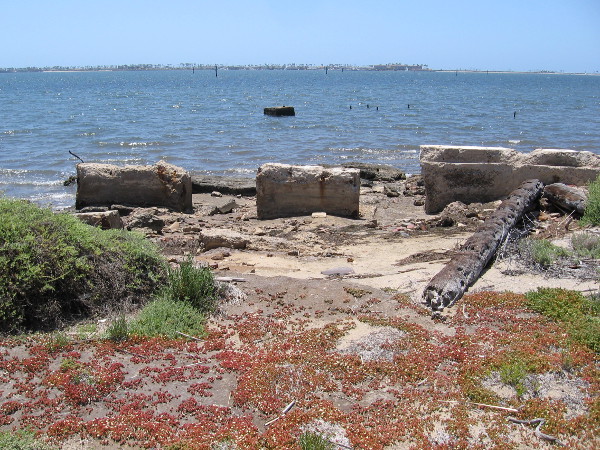
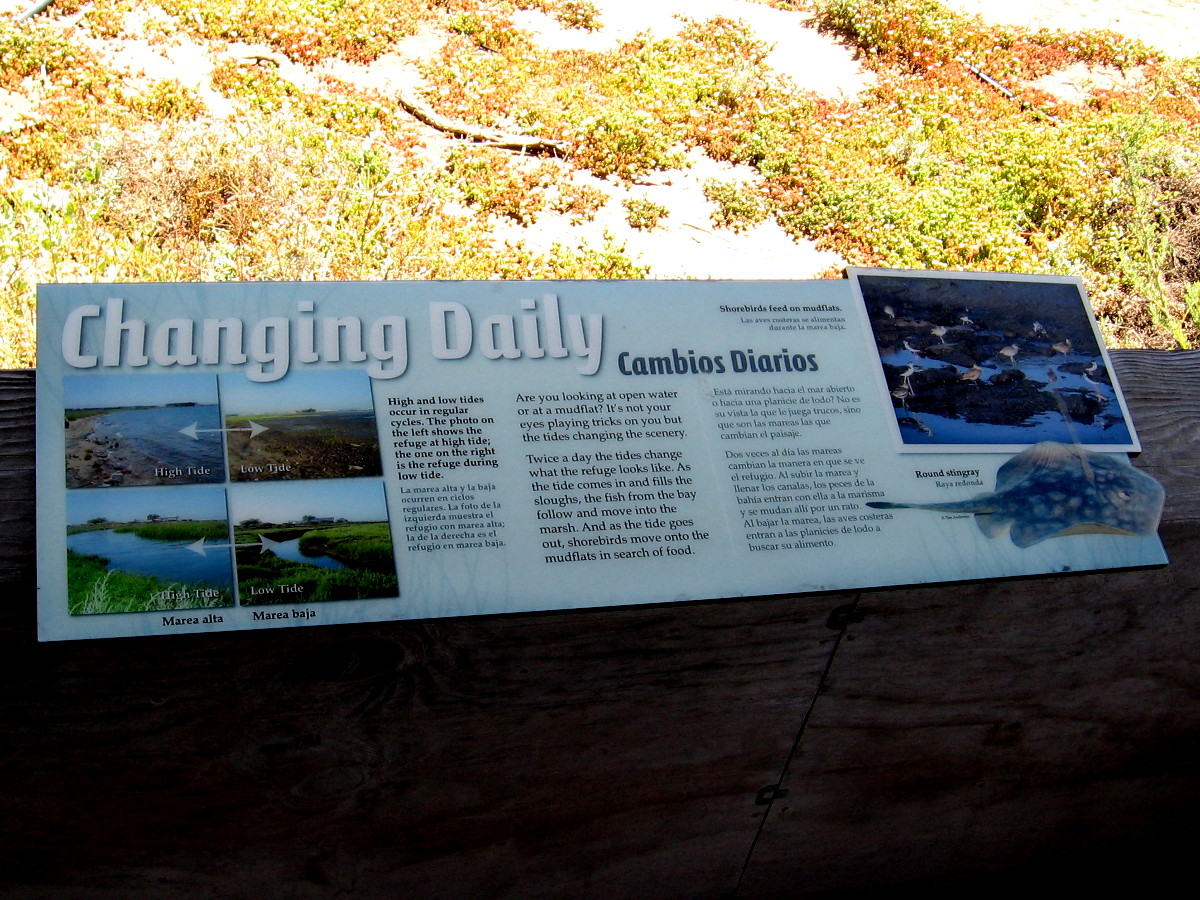
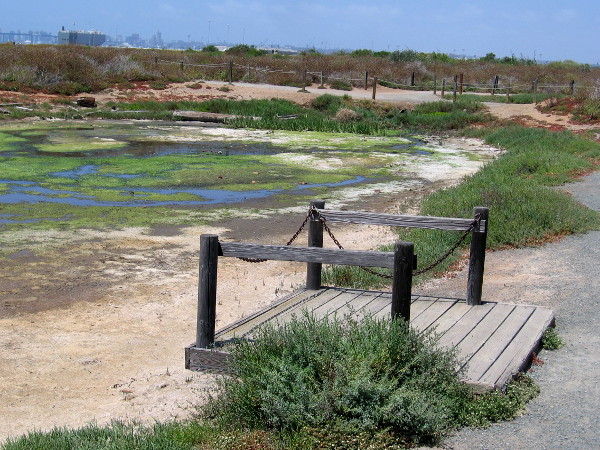
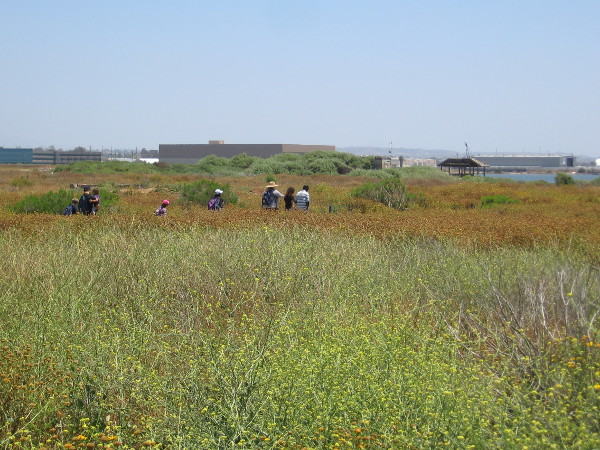
A map inside the nearby Living Coast Discovery Center shows the location of the Sweetwater River and the marsh where it enters San Diego Bay.Hiking through Chula Vista’s protected Sweetwater Marsh on a sunny day. It’s mid-May and the once green and flowering plants have begun to dry out. In this photo I see some prickly pear cactus. During the hike I also recognized black sage and coastal sagebrush.Our guide shows us saltbush. It is adapted to the type of salty soil in this coastal marsh. Its leaves taste salty!Sign by the trail. This area is called Gunpowder Point. During World War I, Hercules Powder Co. extracted potash and acetone here from kelp harvested offshore in the Pacific Ocean. These were used to make cordite, also called smokeless gunpowder, for the British.A sail on the bay beyond a drying field of San Diego Sunflowers.The short, easy hike is ideal for families.Some sunflowers are still yellow.The San Diego Sunflower, or Bahiopsis laciniata, is often found in a coastal sage scrub environment.The Silver Strand and Coronado Cays can be seen across San Diego Bay.We’ve arrived at the wildlife refuge’s narrow sandy shore. Birds could be seen here and there in the distance.As the group continues on, I linger to take in the sunshine and wide views. I notice what appears to be remnants of the potash manufacturing operation from years ago. Some benches allow rest and meditation.Stones and debris on a beach in the wildlife refuge.Some mysterious (to me) concrete ruins on Gunpowder Point.I arrived at a bird observation structure. All was very quiet. I saw a California least tern hunting small fish along the water’s edge. Few people seem to come out here.Depending on the tide, the area near the shore can be open water or a mudflat that supports shorebirds searching for food.Bird’s beaks are specially designed for feeding. Some beaks filter plants from the water, some grab flies out of the air, and some probe the mud.The tide must have been out, because this platform stood above a drying mudflat. I believe that might be bright green eelgrass in the shallow pool of water.Mesembryanthemum crystallinum, or crystalline ice plant, is salt tolerant. My hike through the marsh produced some beautiful surprises.Hiking through an expanse of green in San Diego’s South Bay.
…
I live in downtown San Diego and love to walk around with my camera! You can follow Cool San Diego Sights via Facebook or Twitter!
You can easily explore Cool San Diego Sights by using the search box on my blog’s sidebar. Or click a tag! There are thousands upon thousands of fun photos for you to share and enjoy!
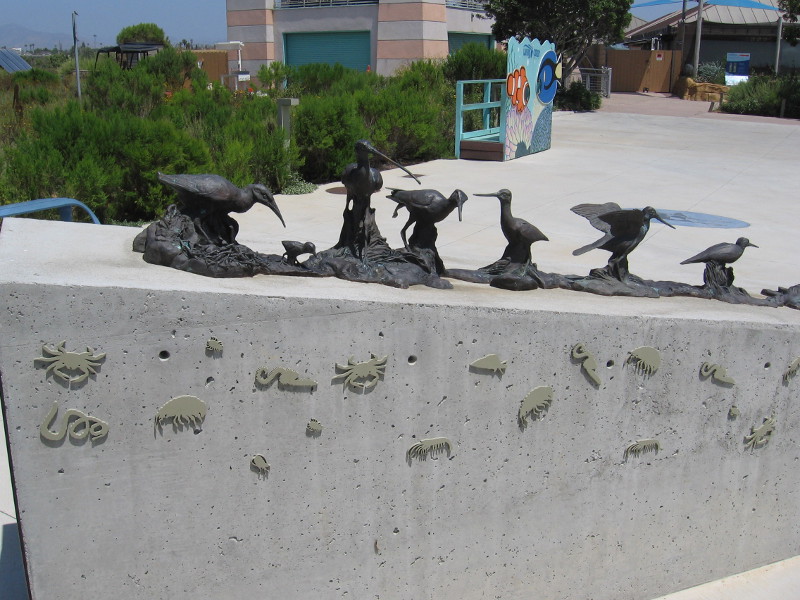
Bronze birds near entrance of the San Diego Bay National Wildlife Refuge and regional complex headquarters in Chula Vista.
Having some fun!
Today I visited the Sweetwater Marsh National Wildlife Refuge and Living Coast Discovery Center in Chula Vista. I should have a couple blog posts coming up with lots of photos.
First, here’s a fearless caterpillar that I spotted walking on a crab under some birds. The crab and bronze shorebirds are artwork in front of the wildlife refuge headquarters! The visiting caterpillar is a resident of the surrounding marsh. Perhaps it’s an art lover!
I searched the internet for a few minutes, trying to identify this particular fuzzy caterpillar. No success. Leave a comment if you know!
An inanimate crab beneath the bronze shorebirds is being visited by a living creature.A fuzzy caterpillar makes its way over the crab.Wildlife living in the Sweetwater Marsh meets art.
…
I live in downtown San Diego and love to walk around with my camera! You can follow Cool San Diego Sights via Facebook or Twitter!
There was no need to alter this photo in the slightest way. Nature’s colors appeared astonishingly rich this morning in the sunlit mountains and hills east of San Diego.
My 9:00 hike this morning turned out to be shorter than expected. That’s because I was the only one to show up for a scheduled nature hike in a beautiful section of the San Diego National Wildlife Refuge. Following directions, I parked a few minutes early at the Par 4 trailhead in Jamul, near the Cottonwood Golf Course. I kept checking my watch, hoping the US Fish & Wildlife Service ranger would arrive. I was looking forward to identifying the spring wildflowers and flowering plants along the trail. But it wasn’t to be. I suppose the event was cancelled due to yesterday’s rain.
I didn’t walk far because I didn’t want to adversely impact the still wet trail. Near the trailhead the footing was packed and firm, and my shoes barely made an impression, but perhaps a quarter mile into my hike there was just too much mud to continue.
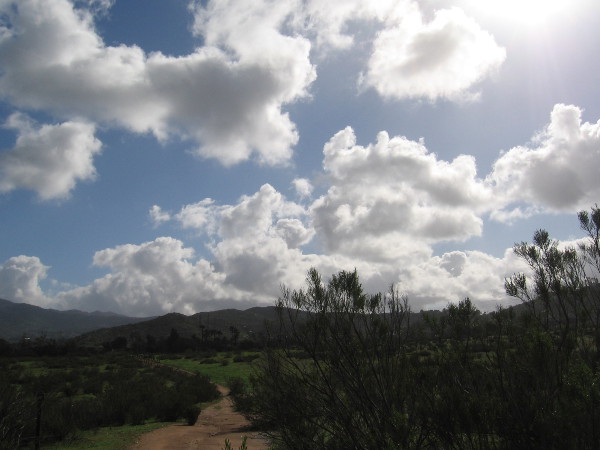
As you can see, the hills of San Diego are bright green! This winter has been very rainy. During the summer the green in these photos will vanish as the native grasses, sagebrush and scrubby chaparral dry out in the relentless Southern California sun.
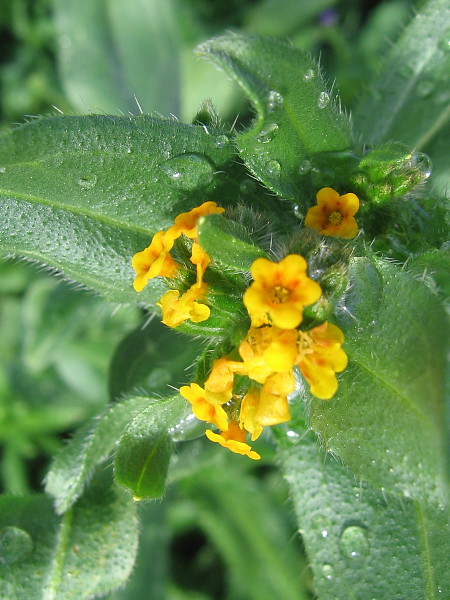
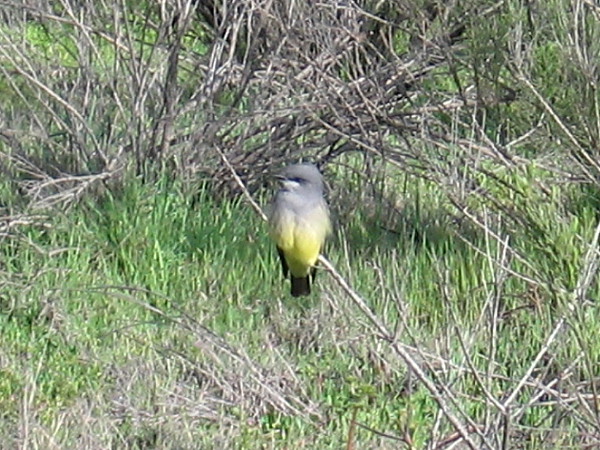
During my short hike, I did capture a few photos of tiny flowers and a bird! I’m sorry to report that I can’t properly identify them. Perhaps you can!
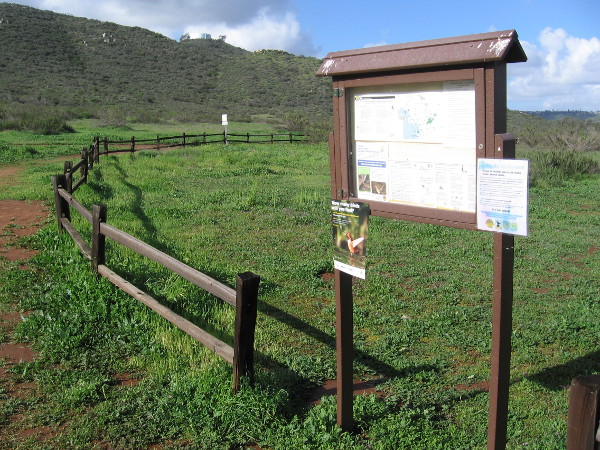
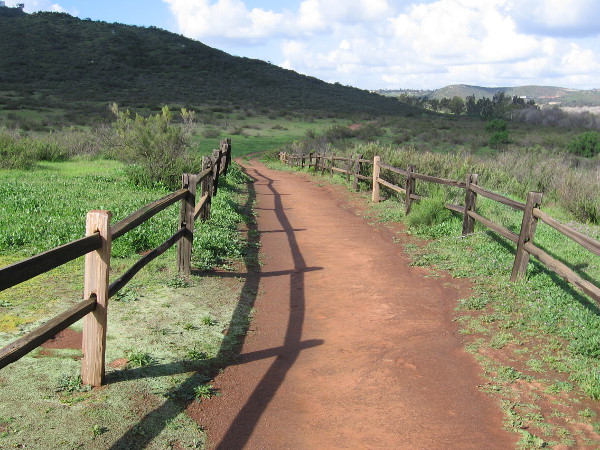
Sign at the Par 4 trailhead includes information for hikers and those on horseback. The trail follows the Sweetwater River in Jamul.The San Diego National Wildlife Refuge Complex includes four areas designed to protect wildlife in Southern California. (Click image to enlarge.)There are various wildlife refuges in San Diego County’s undeveloped areas. This map shows where several managed by the United States Fish and Wildlife Service are located. The Par 4 trailhead is near the top of the bigger green blob.A damp trail leads west over a green landscape. Many birds were seen flying across this open space. The morning’s short hike was made pleasurable by a fresh cool breeze and warm sunlight.Beautiful tiny yellow flowers and lingering raindrops on green leaves. What this plant is, I don’t know. Leave a comment if you do!I spotted this little bird perched on a twig near the hiking trail.I tried to identify this small bird using my California Birds pocket guide, but I couldn’t decide. If you know, leave a comment!I’m no expert, but I did find these tiny jewel-like lavender flowers to be beautiful.Dramatic white clouds in a blue sky. Natural beauty in San Diego’s East County the day after a big storm.
After this very small hike, I drove along Highway 94 to Campo, winding my way through bright green rocky mountains. Then I headed back toward San Diego via Buckman Springs and Pine Valley, without any particular notion of where to stop. Then it occurred to me: Why not hike Cowles Mountain today? So I did, as you’ll see in the next blog post!
…
I live in downtown San Diego and love to walk around with my camera! You can follow Cool San Diego Sights via Facebook or Twitter!
Street art on Mission Center Road north of Friars Road depicts wildlife along the nearby San Diego River.
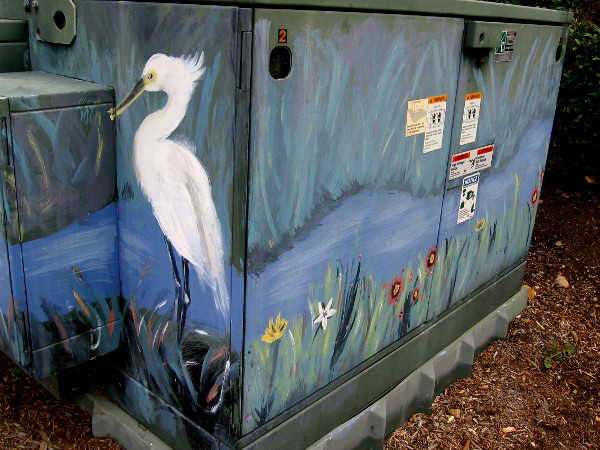
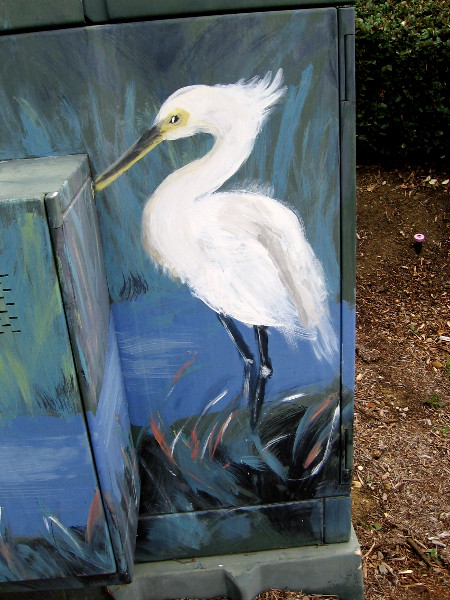
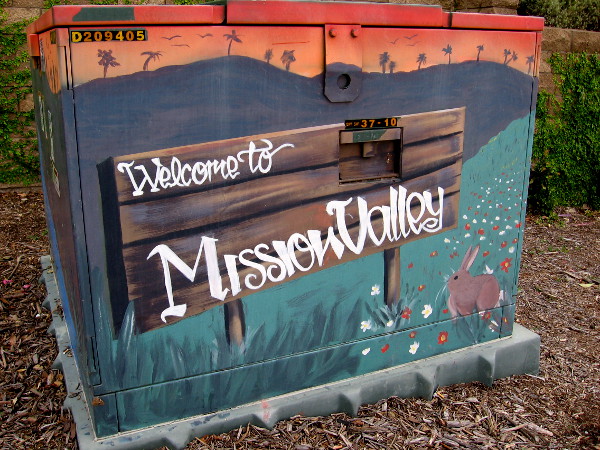
Several electrical boxes on Mission Center Road just north of Friars Road have been painted with fun street art. This morning I took a small detour while walking to work to snap a few photos.
A snowy egret beautifully painted on a Mission Valley transformer.A mallard and three ducklings in some grass near the San Diego River.A funny sketch on an electrical box. A gull is carrying away a bag of chips!Welcome to Mission Valley. A rabbit greets drivers heading along Mission Center Road.This historic old building is located a few miles to the east. Mission Basilica San Diego de Alcala, founded in 1769, first Spanish mission in Alta California.
…
I live in downtown San Diego and love to walk around with my camera! You can follow Cool San Diego Sights via Facebook or Twitter!
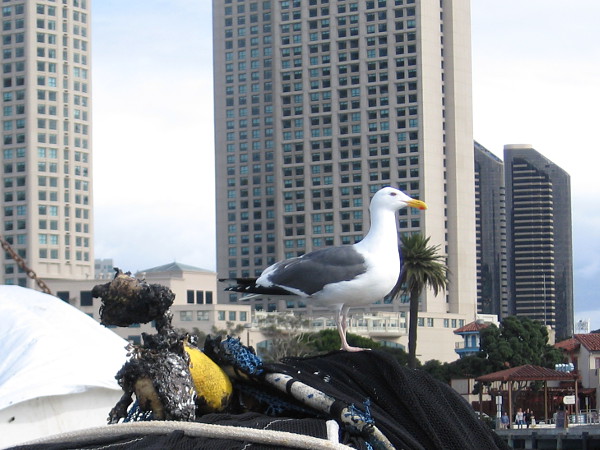
A seagull stands atop a pile of nets and floats on San Diego’s picturesque G Street Pier.
You won’t believe all the birds I identified today during my walk along the Embarcadero. You really will not believe it!
Check out these fun flighty photos taken beside beautiful San Diego Bay!
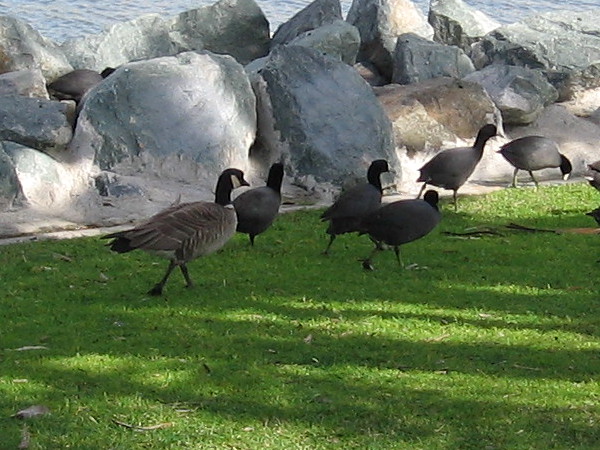
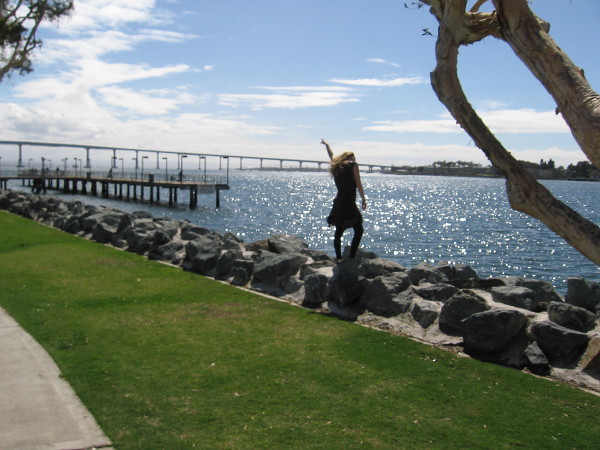
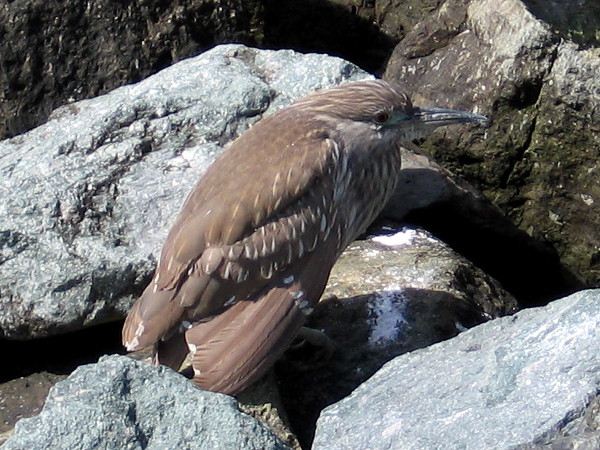
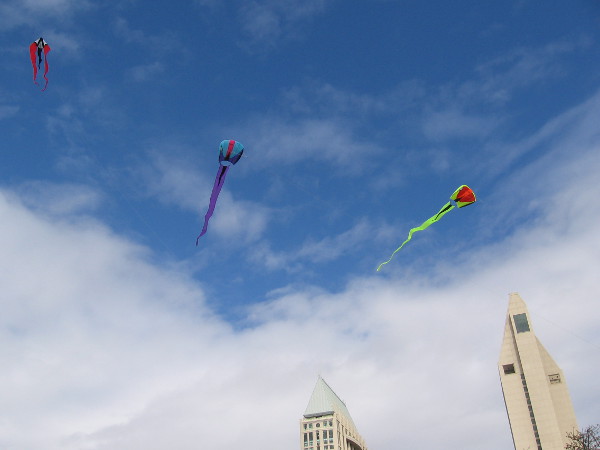
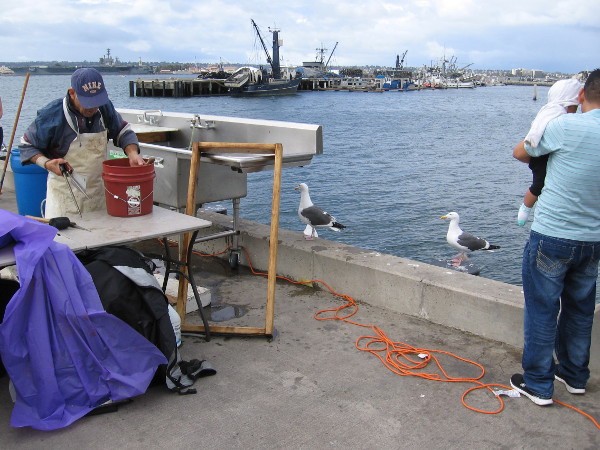
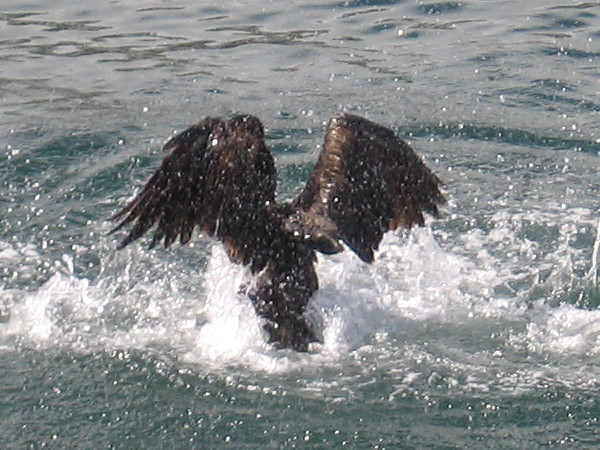
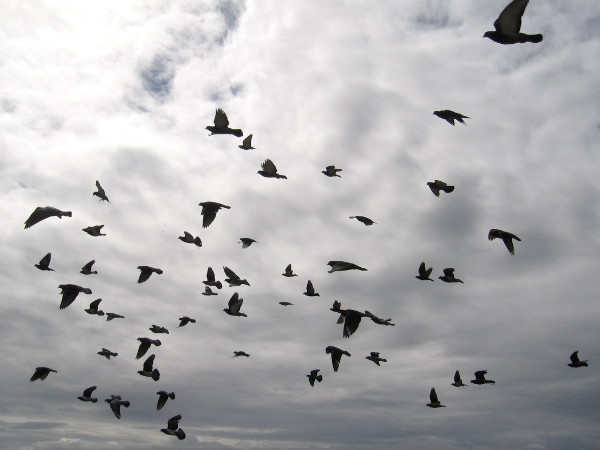
American coots (also called mud hens) stand on rocks near the Marriott Marina.A Canada goose on San Diego’s Embarcadero! Now that’s a very unusual sight! This bird seems to have joined a local flock of American coots. Maybe it was blown off course during the recent windy storm.Another strange bird near the sparkling water about to take flight! Oops. My mistake.A female black-crowned night heron among rocks near the Embarcadero Marina Park South pier.A gathering of pigeons on the grass at Embarcadero Marina Park North.Rare exotic birds photographed in flight! Oops. Those are actually colorful kites. Fooled me again!I’ve arrived at Seaport Village. Okay, I’m certain these are real birds–maybe. Looks like a parrot, flamingo and some egrets.Gulls, pelicans and sea lions await handouts of leftover fish parts. Early Saturday afternoon, and the Tuna Harbor Dockside Market is wrapping up.Two sneaky gulls with hungry, watchful eyes.There’s gotta be some yummy fish scraps here somewhere!Commercial fishermen unload on the small dock behind this gate at Tuna Harbor. Birds wait eternally here, too!A bird in the sky above broad-winged sailboats flying across San Diego Bay.Seabirds love hanging out around the fishing vessels at Tuna Harbor.A snowy egret near the net of a live bait catching seiner.A double-crested cormorant flaps its wings in the water of San Diego Bay near the USS Midway.Birds above an ocean wave, painted on a ceramic tile by a young person. Many fun tile benches along the Embarcadero were created for a project called Celebrating the Big Bay in 2004.Many birds in flight.
…
This blog now features thousands of photos around San Diego! Are you curious? There’s lots of fun stuff to check out!
Here’s the Cool San Diego Sights main page, where you can read the most current blog posts. If you’re using a small mobile device, click those three parallel lines up at the top–that opens up my website’s sidebar, where you’ll see the most popular posts, a search box, and more!
To enjoy future posts, you can also “like” Cool San Diego Sights on Facebook or follow me on Twitter.
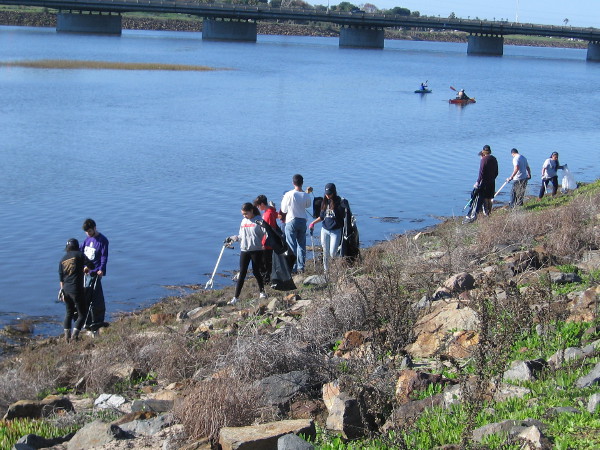
Many ordinary people came out today to help clean up the San Diego River Estuary.
Lots of good people volunteered to clean up the San Diego River Estuary today. Some took to kayaks, others walked along the shoreline, filling bags with nasty litter and debris. The river estuary, emptying into the Pacific Ocean between Mission Bay and Ocean Beach, is a very important wetland in this region, and millions of birds rely on it during their migrations. Small bits of trash ingested by birds and other wildlife can be fatal.
The estuary cleanup was organized by The San Diego River Park Foundation. Kayakers are permitted to enter the San Diego River Estuary only one time every year–during this special event. I walked along the river and saw what ordinary people can achieve when working unselfishly for the good of our world.
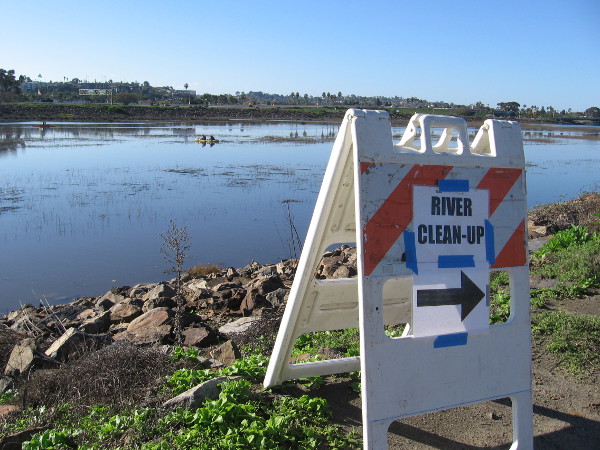
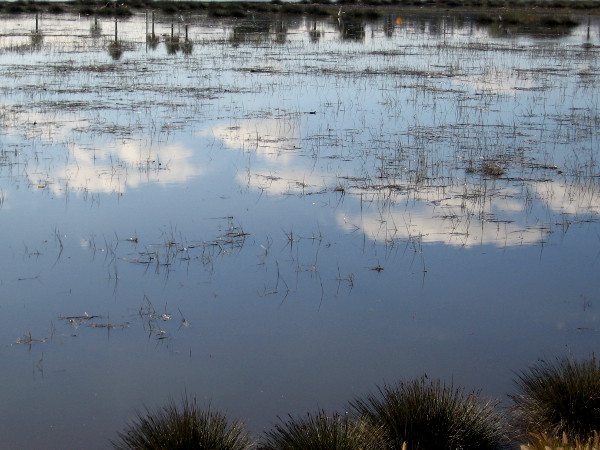
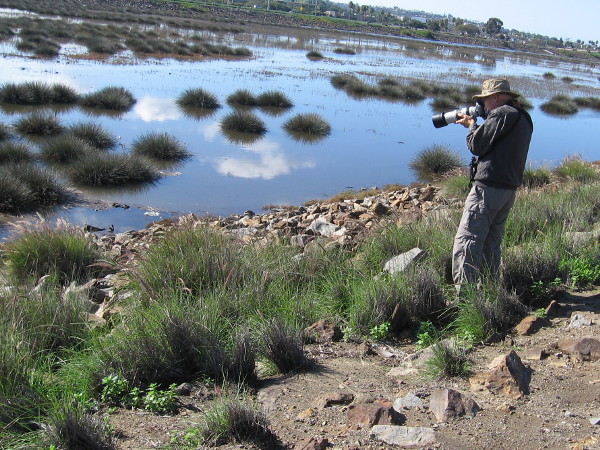
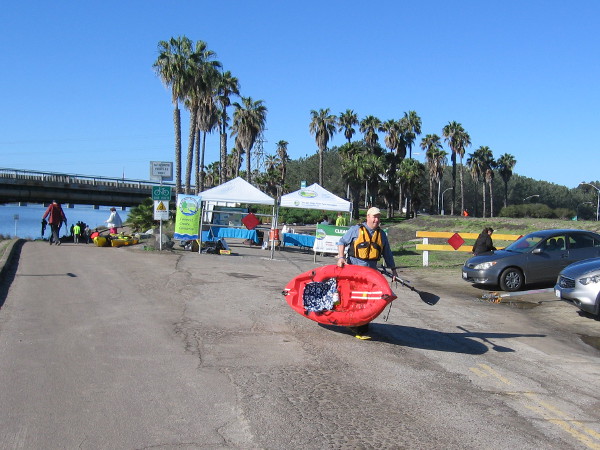
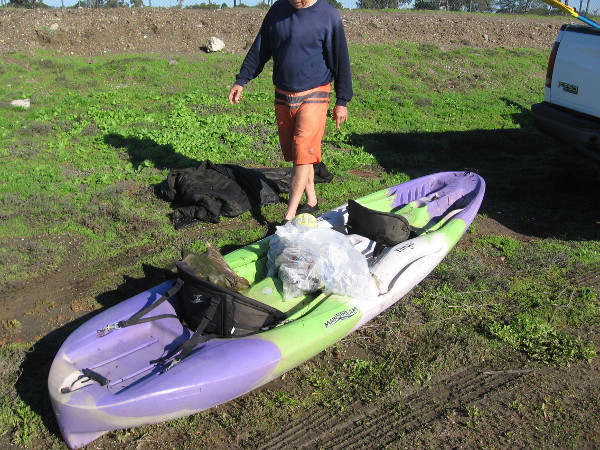
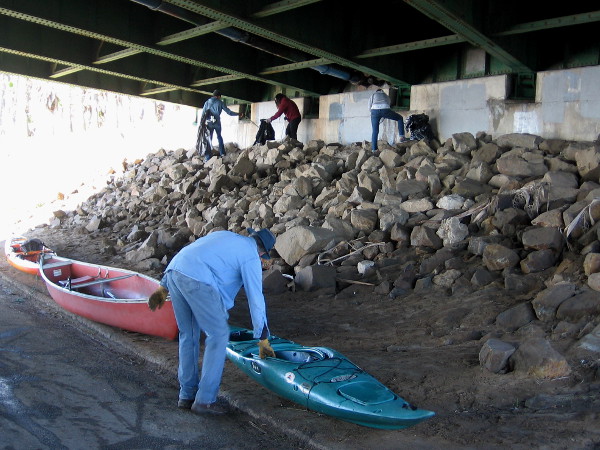
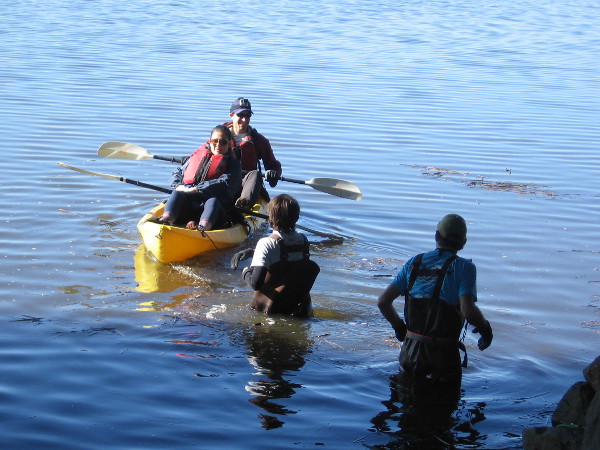
A sign directs people to the river cleanup.Beautiful white clouds are reflected in the calm water of the San Diego River as it approaches the ocean.Many birds make the river and its mud flats their home, including ducks, herons and egrets.A photographer captures images of waterfowl swimming through grass down the river.My camera isn’t quite so fancy, but I did get an okay photo of this snowy egret!As I walked west along the San Diego River, I noticed a number of kayaks out on the water.A sign by the river describes the problem of stormwater pollution. During rains, a good deal of runoff enters the estuary, carrying all sorts of pollutants and trash. (I had to really alter this photograph so we could make out what the old sign says. Click the image to enlarge it.)A cleanup volunteer with a kayak is arriving!Plastic bags in these kayaks have been filled with garbage found in the river. I learned much of it was snagged in the grass.Dozens of caring people were on the rocky river shore, looking for trash.San Diego is fortunate to have many thoughtful people, concerned about our environment.Volunteering is often a family affair, teaching the next generation about generosity and responsibility.This guy was carrying his kayak back to his car.Another guy showed me the trash he collected. He said he found a variety of garbage. Some flows downstream. Some of it is windblown. Some comes from Interstate 5 and other bridges which cross the river nearby.A tent where people can sign up to volunteer and learn more about The San Diego River Park Foundation.From the mountains to the ocean, we care for the San Diego River!Sadly, the river isn’t healthy. A grade is assigned each year based upon trash, water quality and the extent of invasive plants.Sign shows volunteering possibilities. (Click these sign images to read–they will enlarge.)Picking up garbage and readying kayaks underneath the West Mission Bay Bridge.Collected trash was placed in a nearby dumpster.Smiles in the San Diego sunlight. A perfect day to make our world cleaner, healthier and more beautiful.Kayakers launch into the San Diego River during a special event to clean the estuary.
…
I live in downtown San Diego and love to walk around with my camera! You can follow Cool San Diego Sights via Facebook or Twitter!
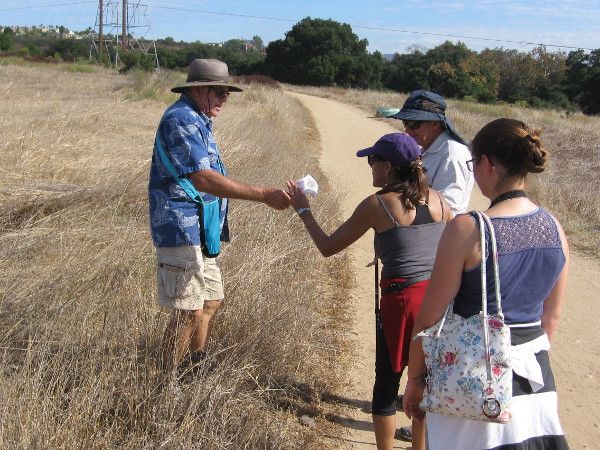
Naturalist Mike Kelly leads a small group of hikers into Los Peñasquitos Canyon Preserve from the Del Mar Mesa trailhead.
Free guided nature walks in the Los Peñasquitos Canyon Preserve introduce the public to unexpected wild beauty in the heart of San Diego. Yesterday I went on one of these easy walks.
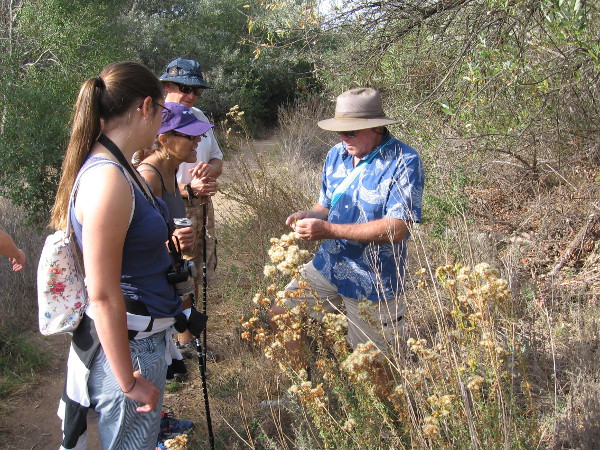
Our guide, naturalist Mike Kelly, longtime member of the Friends of Los Peñasquitos Canyon Preserve, has been an advocate working to safeguard this beautiful and historic San Diego canyon for over three decades. He’s a friendly fellow whose knowledge of the canyon’s flora, fauna and fascinating history made for an extremely enjoyable hike.
Years ago, Mike and others fought to save Los Peñasquitos Canyon from development. Their efforts resulted in about half of the canyon being protected. Fortunately, the preserve is connected to other similar natural areas in San Diego through various corridors, allowing wildlife to move about and thrive. Owls, woodpeckers, hawks, raccoons, bobcats, coyotes, mule deer, even an occasional mountain lion make the canyon their home. Native trees, chaparral, grass and spring flowers are abundant and the source of endless enjoyment.
I learned there are also wildlife tracking hikes, plus night walks, when deer are frequently seen. There are also free guided tours of San Diego’s second oldest residence, which stands near the east end of the preserve, the Rancho Santa Maria de Los Peñasquitos adobe. To learn about all these wonderful adventures, which are ideal for families, click here.
To learn more about the Friends of Los Peñasquitos Canyon Preserve, click here! Perhaps you’d like to become a member!
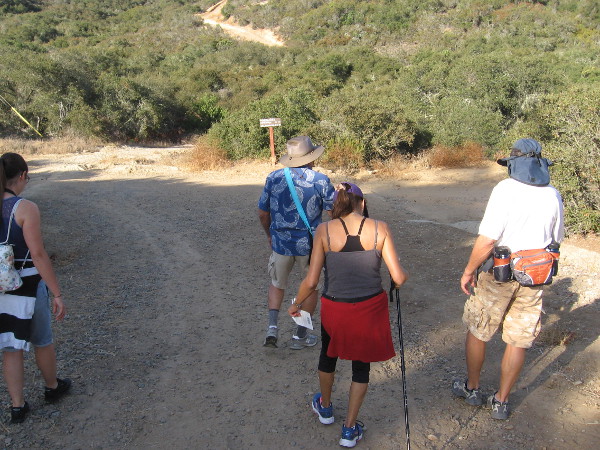
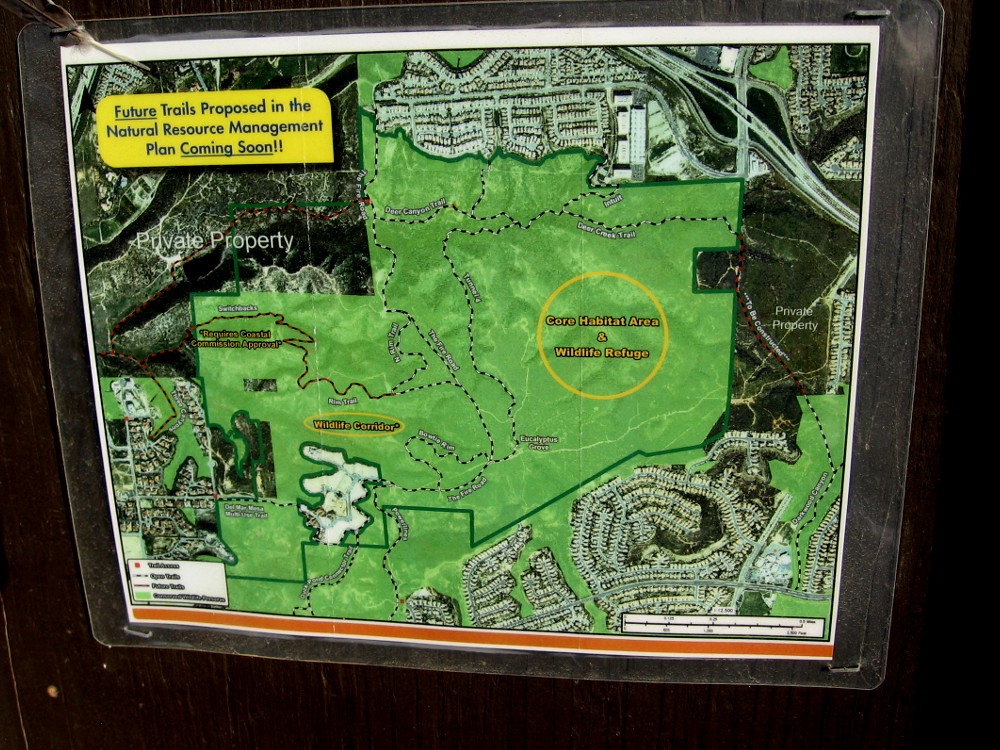
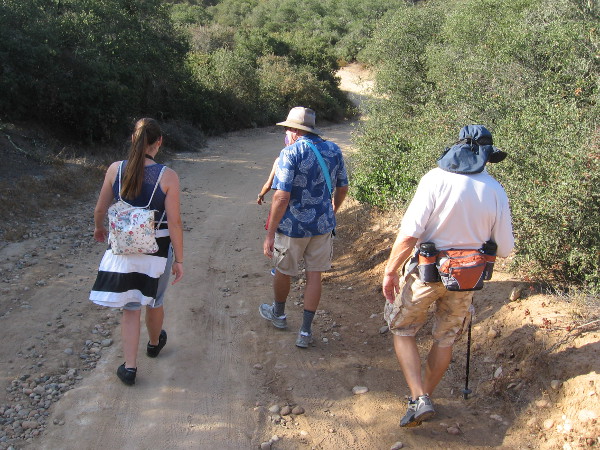
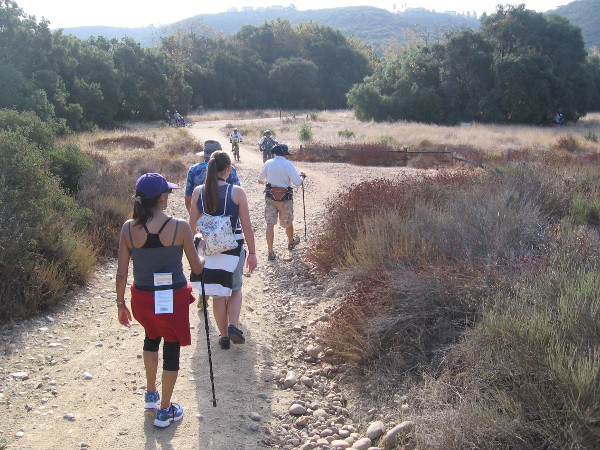
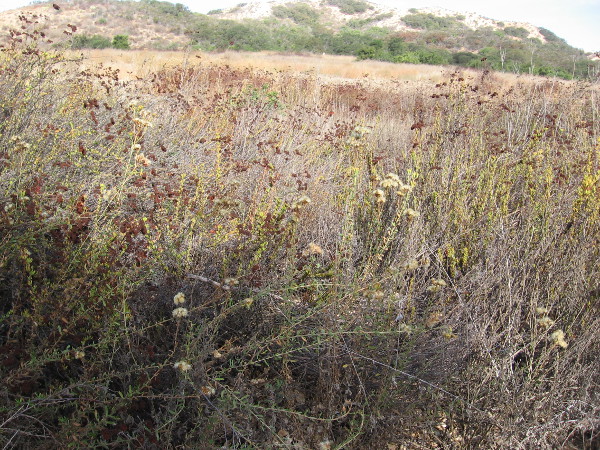
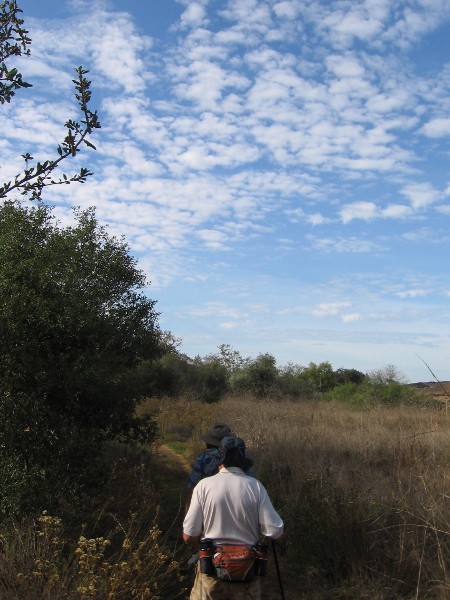
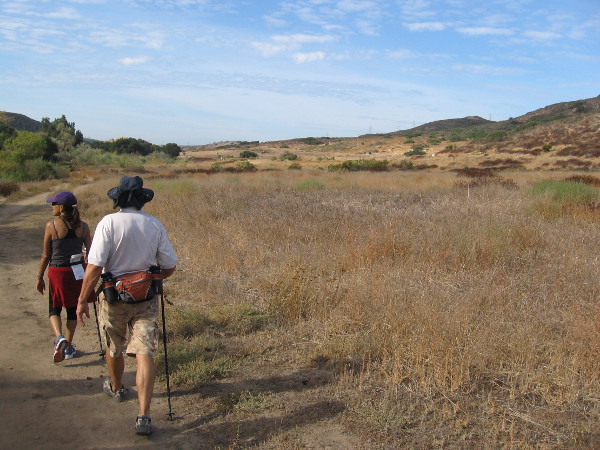
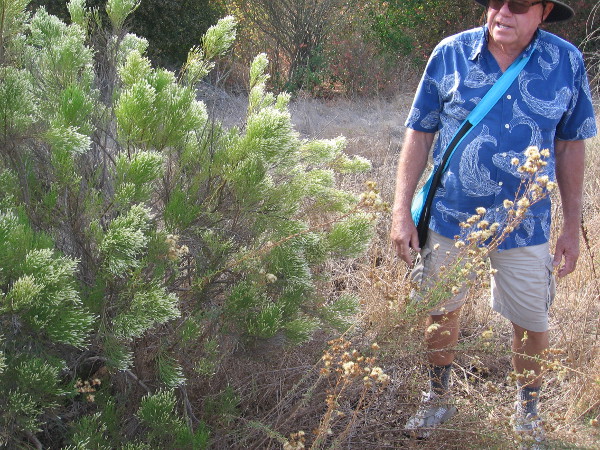
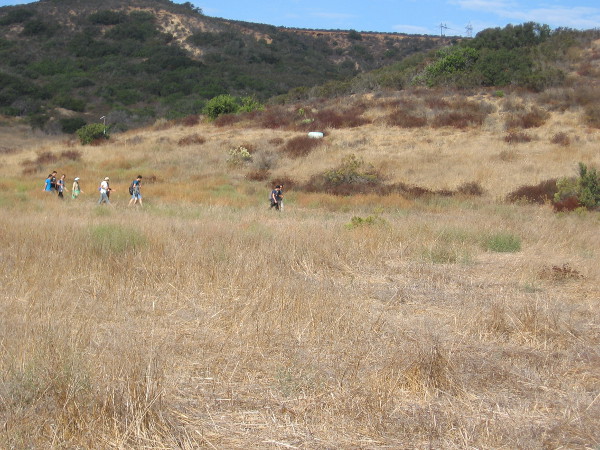
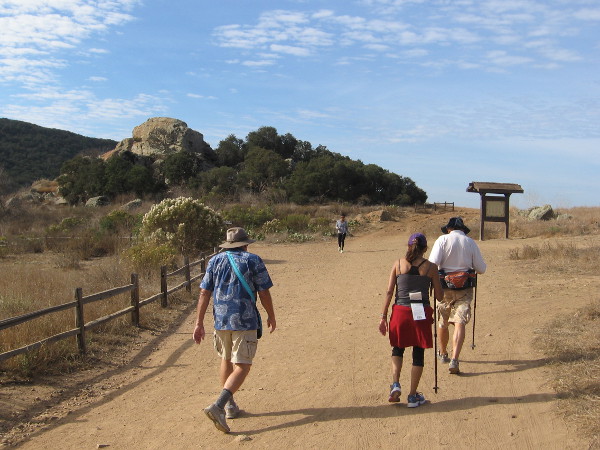
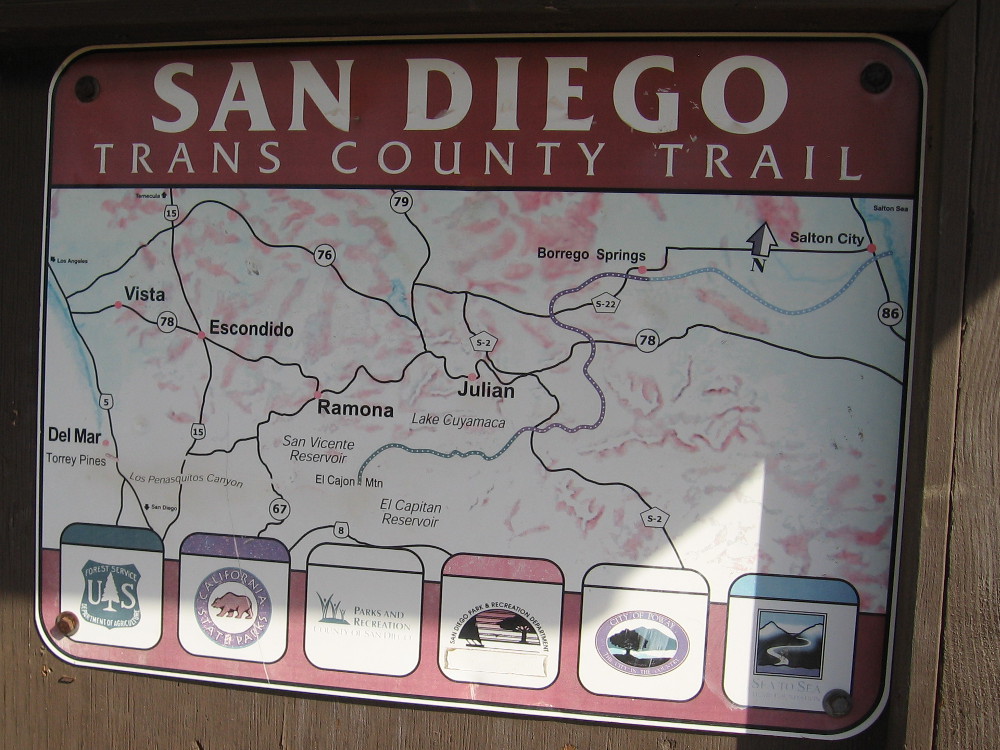
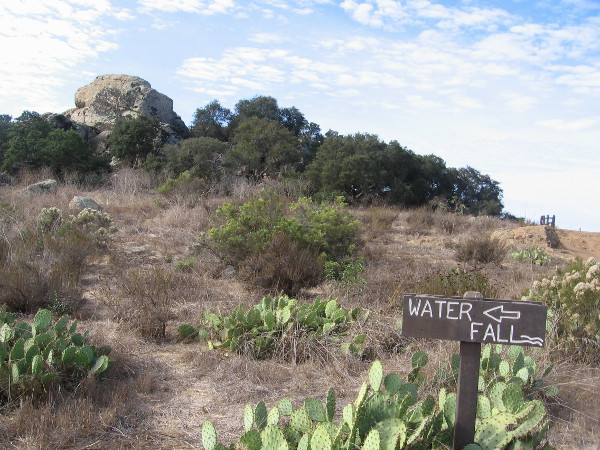
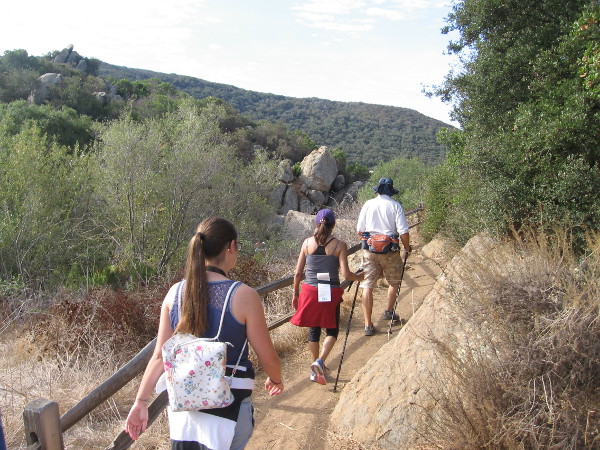
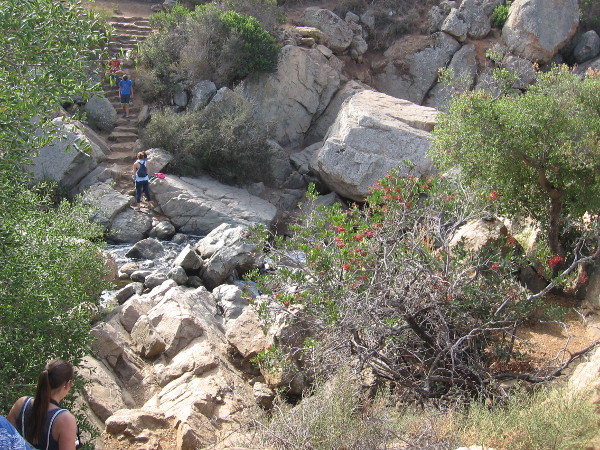
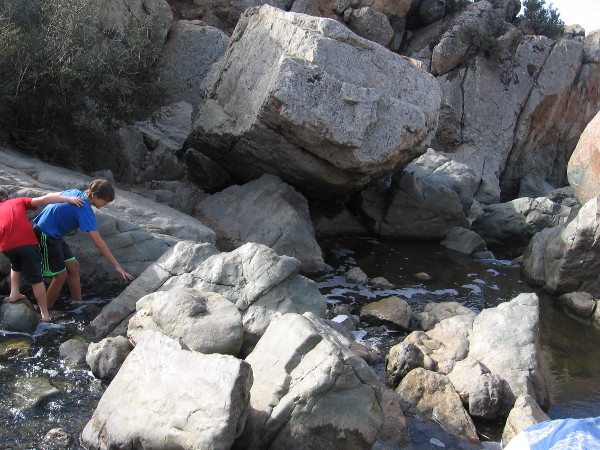
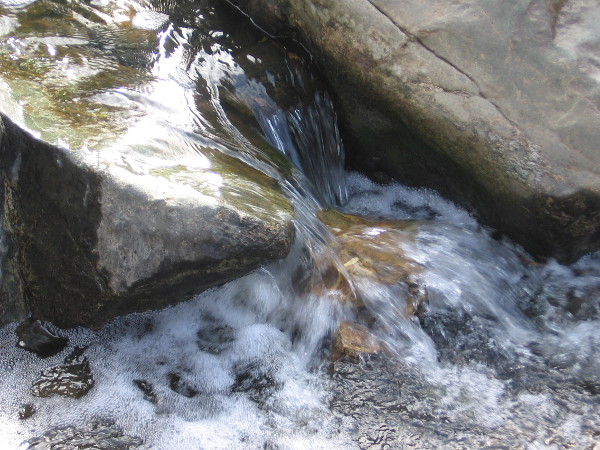
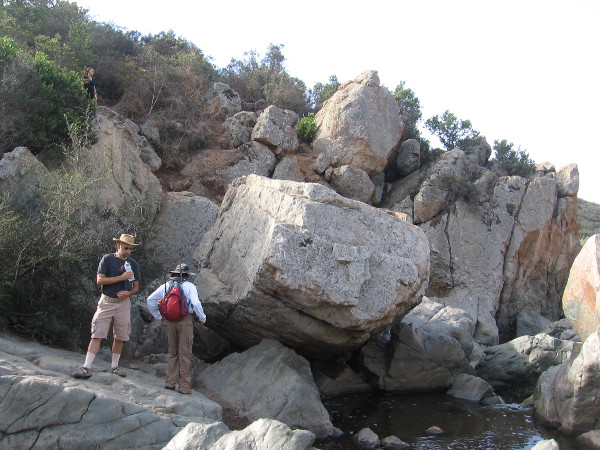
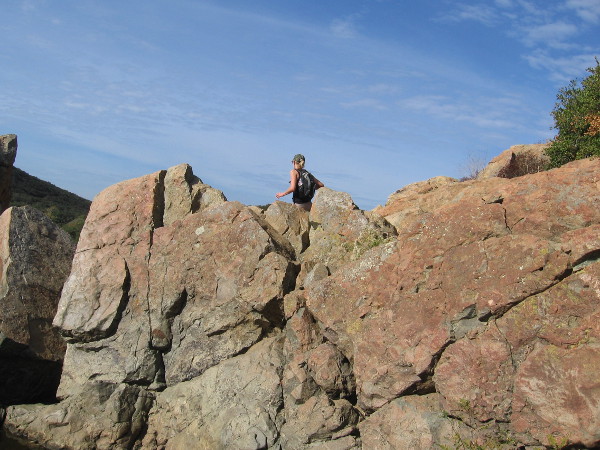
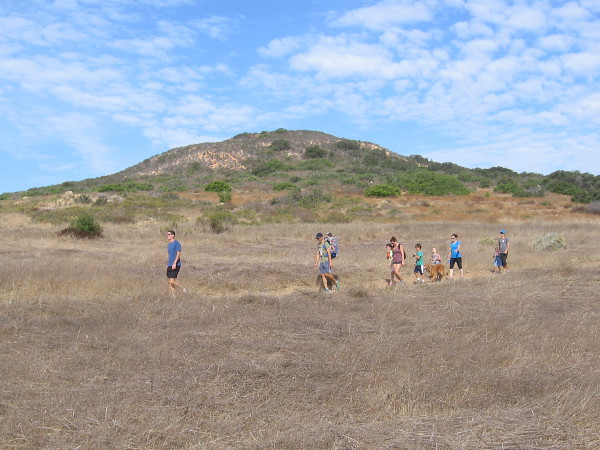
The Del Mar Mesa trailhead is located near suburban homes at the north edge of Los Peñasquitos Canyon.A sign posted at the trailhead shows future trails proposed in the Natural Resources Management Plan.Our small group of hikers heads down into the canyon through Coastal Sage Scrub habitat. We are passing California scrub oaks.We headed to Carson’s Crossing before checking out the popular waterfall.Approaching the central part of the long, narrow canyon, which runs from Poway west to Del Mar and the Pacific Ocean. Peñasquitos Creek lies beyond those coast live oaks in the distance.Carson’s Crossing is an historically important spot in Peñasquitos Canyon. Kit Carson crossed the creek here during the Mexican-American War. General Kearny’s US Army of the West was faced with formidable Californio lancers in San Pasqual, and the legendary frontiersman Kit Carson snuck away in the middle of the night to summon reinforcements from San Diego. He knew to come this way. The later 1857 Jackass Mail stagecoach line also ran through the canyon here enroute to San Diego.Heading west through the beautiful canyon in the shade of oaks, sycamores and willows. It’s an easy, pleasant hike.Looking north across a field in Los Peñasquitos Canyon Preserve in late October. Summers are very dry. Many leaves and flowers are now brown, awaiting winter rains.Walking slowly, senses alert. I smell the nearby sagebrush. I hear acorn woodpeckers and quail. I see beautiful clouds.Mike Kelly is a guide and activist whose knowledge of Peñasquitos is deep. Here he shows us some poison oak which is growing a short distance off the trail.A peaceful walk through nature. Over several decades, activists like Mike have worked hard to preserve the canyon and protect it from development. Today it is maintained by volunteers and both the City and County of San Diego.Mike Kelly shows us some California broom. Native American Kumeyaay and pioneers used the plant like a broom for sweeping.Los Peñasquitos Canyon Preserve is a very popular place for jogging, hiking and mountain biking. Even marathoners use it for training.Now we’re approaching a trail sign and a large rock outcropping, which I learned is volcanic.Sign shows proposed San Diego Trans County Trail, which when completed would run from the Pacific Ocean over the mountains east of San Diego and out to the Salton Sea in the desert.I see lots of prickly pear cacti. Now we are getting close to the popular waterfall!Approaching the Peñasquitos Creek waterfall from the east.Descending rough stone steps to the waterfall. I learned the steps were a project of an Eagle Boy Scout.The small waterfall and its rocky pools are located near the center of Los Peñasquitos Canyon. It is the destination of many hikes. A great place to relax, cool off, and listen to the soothing water.Water spills over rocks. It isn’t Niagara Falls, but it’s wonderful nonetheless.Hikers pause above a pool of water which is captured by large blocks of volcanic rock. When the creek crests, it can rise many feet and submerge this area.A hiker up above seems to walk in the sky.Families wander down a pleasant trail in Los Peñasquitos Canyon Preserve. There is much here to see and appreciate. So much to learn.Naturalist Mike Kelly shows us a poisonous flower of Datura. In nature, beauty and danger are often found together. One should be thoughtful when hiking, and be careful to wear sturdy footwear and bring water. We didn’t see any rattlesnakes or mountain lions!
…
This blog now features thousands of photos around San Diego! Are you curious? There’s lots of cool stuff to check out!
Here’s the Cool San Diego Sights main page, where you can read the most current blog posts. If you’re using a small mobile device, click those three parallel lines up at the top–that opens up my website’s sidebar, where you’ll see the most popular posts, a search box, and more!
To enjoy future posts, you can also “like” Cool San Diego Sights on Facebook or follow me on Twitter.













































































 Cool San Diego Sights!