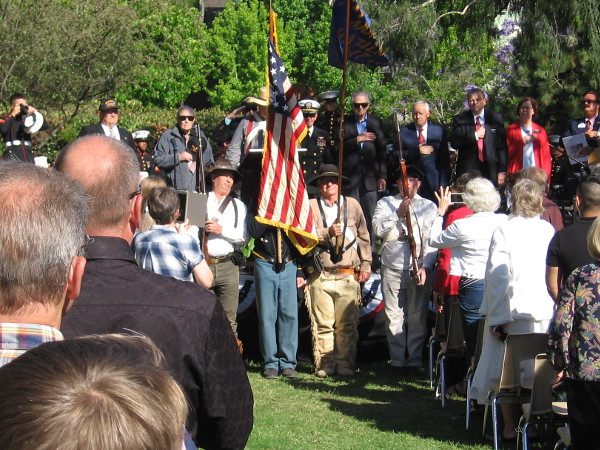
Mormon Battalion flag flies during a special event in Old Town San Diego.
I was invited to a unique event that took place yesterday. A special Flag Day Ceremony was held at the Mormon Battalion Historic Site in San Diego’s Old Town. The event remembered World War I and saluted all American veterans.
During the ceremony five veterans from different military services were made honorary members of the Mormon Battalion. A cake was cut with a military saber and an American flag that has been flown over the U.S. Capital and over Fort Leavenworth (where the historic Mormon Battalion originated) was raised.
The patriotic ceremony was organized by The Church of Jesus Christ of Latter-day Saints, whose members composed the Mormon Battalion, the only religiously based unit in United States military history. Commanded by regular U.S. Army officers, members of the battalion marched almost 2,000 miles from Council Bluffs, Iowa, to San Diego, California to help secure the region during the Mexican–American War. Much of the difficult march was over mountains and through desert. They saw no fighting.
I have noticed that Mormons treasure liberty–religious freedom in particular. I’m not a Mormon–very far from it–but I do happen to be a strong believer in personal liberty. That’s because I’m a writer. Also, as a child I traveled with my family behind the Iron Curtain twice. I have briefly seen how dark life is without liberty.
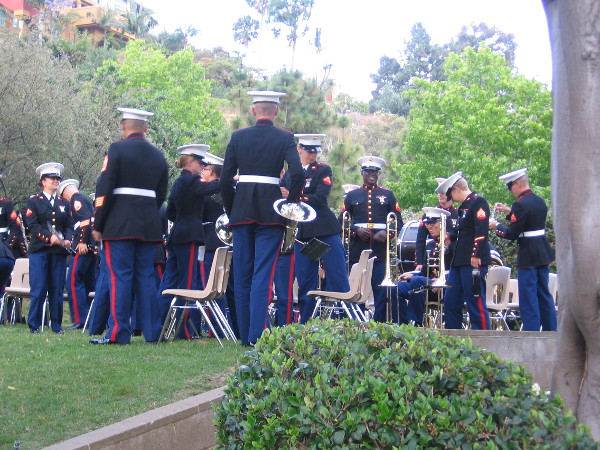
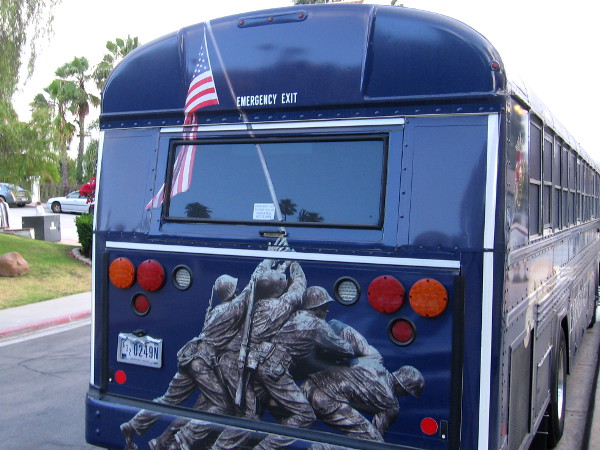
A friendly Mormon lady in pioneer dress welcomes guests to the Flag Day Celebration.This 2017 celebration of Flag Day honored veterans who served with distinction.Guests are welcomed by Director of the San Diego Mormon Battalion Historic Site, Elder Michael Hemingway.The United States flag is posted after the National Anthem.Folding of the flag. Each of the thirteen folds is invested with a special meaning.Four American veterans on stage are applauded and made honorary members of the Mormon Battalion.Keynote speaker General Bruce Carlson, USAF, Ret. talks about liberty. He is also made an honorary member of the Mormon Battalion.Many voices sing God Bless America.Young members of Marine Band San Diego after the ceremony.The United States Marine Corps bus contains an image of the flag being raised during the Battle of Iwo Jima.Pageantry and remembrance at a Flag Day Ceremony in Old Town San Diego.
…
I live in downtown San Diego and love to walk around with my camera! You can follow Cool San Diego Sights via Facebook or Twitter!
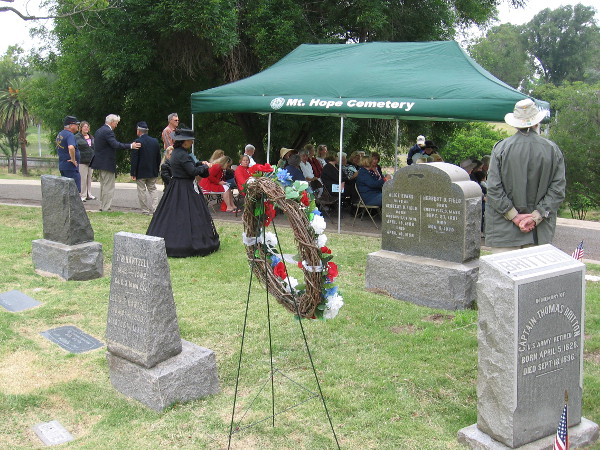
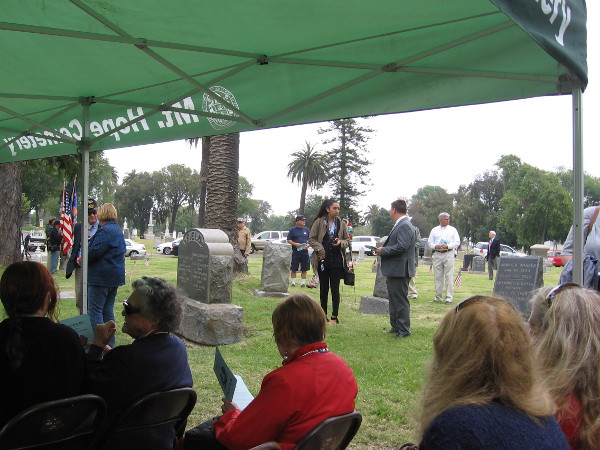
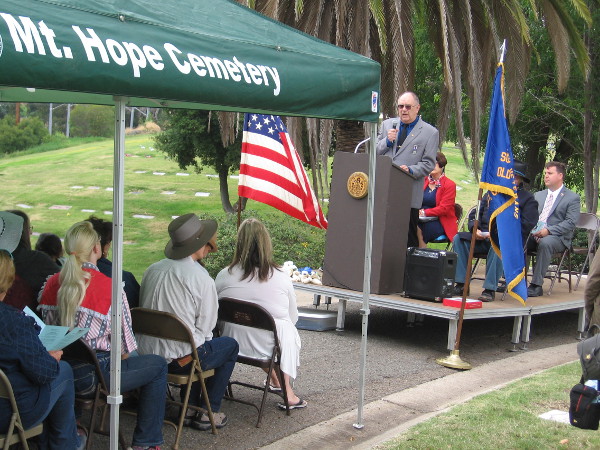
San Diegans gather for a Memorial Day ceremony at Mount Hope Cemetery.
The second Memorial Day event that I attended yesterday took place at Mount Hope Cemetery. I had never before visited this history-filled municipal cemetery.
Mount Hope is where many of San Diego’s early residents are buried. It’s hilly and sprawling, with thousands of scattered headstones and monuments. Thousands of names are eternally engraved.
The dignified Memorial Day ceremony was held atop GAR Hill. I learned that G.A.R. stands for Grand Army of the Republic. The fraternal organization is composed of veterans who fought on the Union side during the American Civil War. On grassy GAR Hill rest many Union soldiers who fought bravely.
The annual event, I also learned, is organized by both the Sons and Daughters of Union Veterans, and Sons and Daughters of the Confederacy. Over a thousand Civil War veterans are buried at Mount Hope Cemetery.
Yesterday afternoon I stood and watched a moving tribute to those who had fought in the war that ended slavery. Some of the participants wore Civil War uniforms and period dress. History came to life with eloquent words of remembrance, and the singing of The Battle Hymn of the Republic and Amazing Grace. Several speakers recalled the men who fought, their sacrifices, and the triumph of liberty. Our current times were also addressed. It is necessary to stay firm in the defense of freedom.
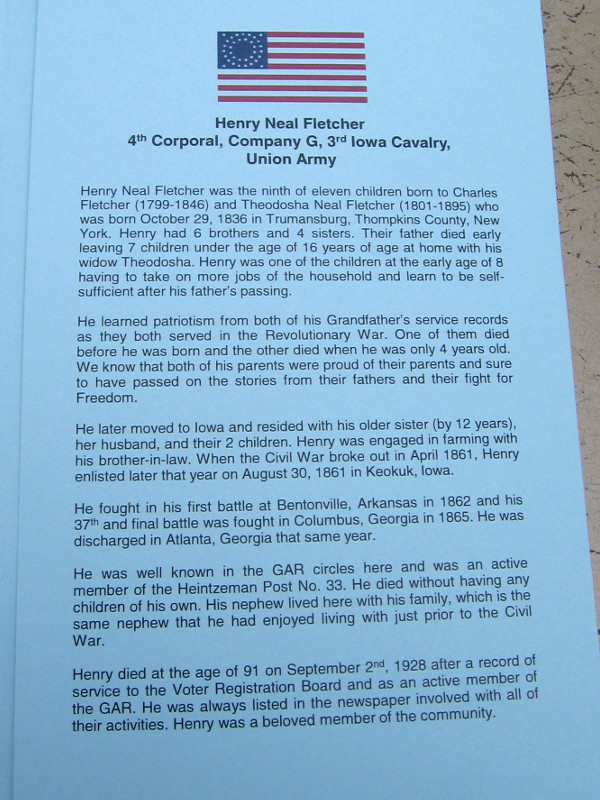
This year the ceremony honored one Civil War soldier in particular: Henry Neal Fletcher, 4th Corporal, Company G, 3rd Iowa Cavalry. He fought for the Union. Both of his grandfathers fought in the Revolutionary War. From them he learned how freedom was won. He died a beloved member of the San Diego community.
The idea for Memorial Day is thought to have come from the tradition of decorating soldier’s graves in late spring with flowers, a custom that predated the Civil War. During the war, with so many dead, the practice became very common. The tradition finally became formalized, and known as Decoration Day.
On this Memorial Day, atop a quiet hill, I saw many flags decorating the graves of soldiers.
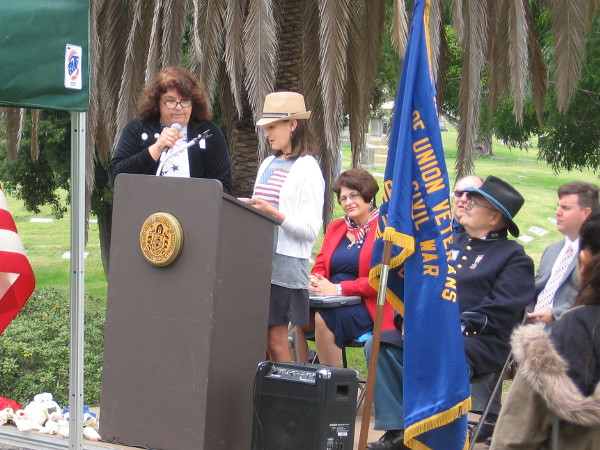
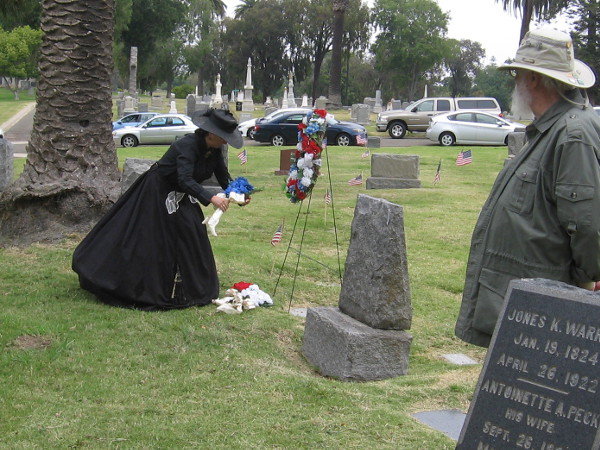
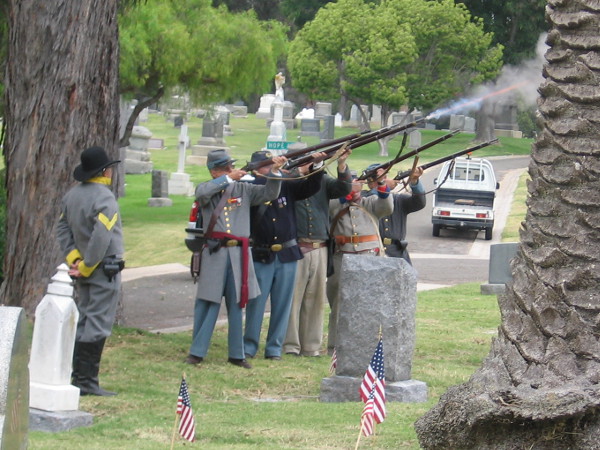
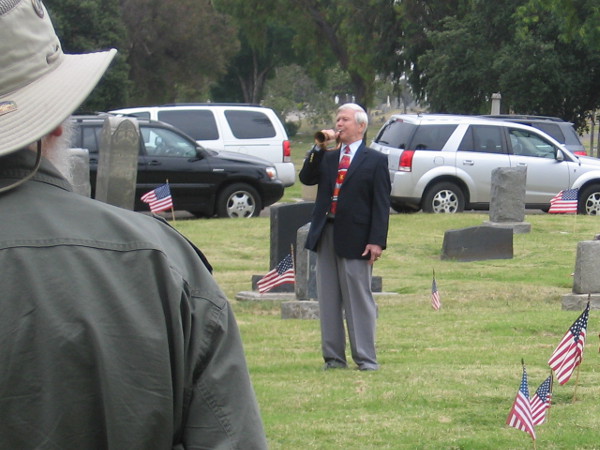
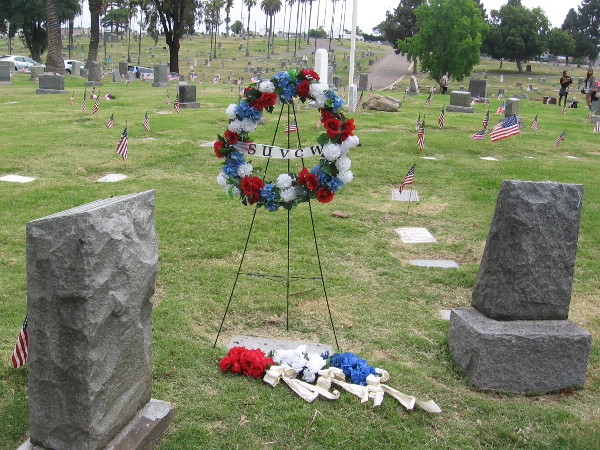
While some prepare for the ceremony, others read the nearby gravestones and wonder at the sacrifices made long ago.American flags decorate the graves of fallen soldiers.This grave marker design was established by the Grand Army of the Republic. Here lies a Union soldier. Sergeant Francis E. Webster, 10th U.S. Infantry.Some participants wore Civil War uniforms–both blue and gray. They posted the flags and provided a musket salute.This restored mortar dates from the American Civil War. It stands on GAR Hill at Mount Hope Cemetery.One of many old gravestones. Here lies P.W. Bradbury, a scout under General Fremont.Honor guards perform March On The Colors.Thoughtful speeches follow an Invocation and Pledge of Allegiance.Holly Kirkman of John Muir School reads her inspirational, award-winning essay “What Memorial Day Means to Me.”Dedication Of Flowers. Red, then white, then blue flowers are placed by the grave marker of Henry Neal Fletcher.The program included a short biography of Henry Neal Fletcher, who fought in the Union Army. (Click image to read.)Musket Salute.Taps.Remembering the fallen on Memorial Day, at Mount Hope Cemetery in San Diego.
…
I live in downtown San Diego and love to walk around with my camera! You can follow Cool San Diego Sights via Facebook or Twitter!
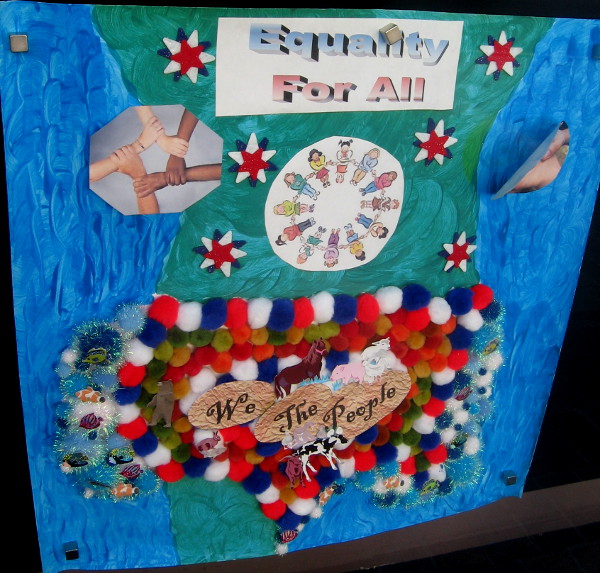
A young student’s colorful poster celebrates equal rights and protections. These are established by the United States Constitution. Equality for all. We the people.
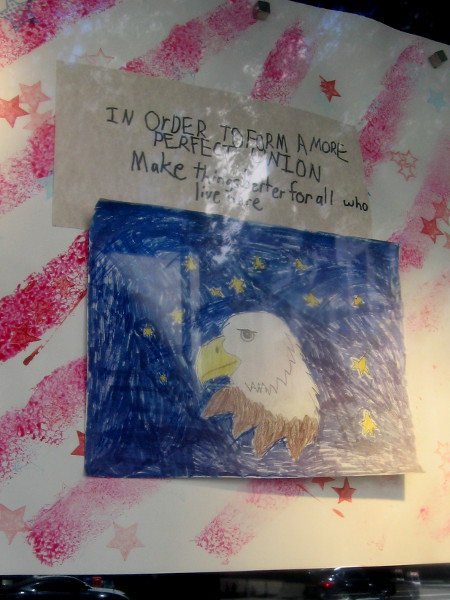
Please enjoy a few photos that I took yesterday as I walked down Broadway past the Edward J. Schwartz United States Courthouse. My eye was attracted by happy, colorful artwork created by children on display in some windows.
These posters were designed by young students last year for 2016 Law Week. They celebrate principles that are enshrined in the United States Constitution.
(I have many blog posts coming up pertaining to this weekend’s San Diego Architectural Foundation OPEN HOUSE 2017 event. A couple of the locations will probably be featured on my Beautiful Balboa Park blog. And it might take me some time to prepare everything. Stay tuned!)
2016 Law Week Poster Contest winners in a window of San Diego’s downtown Edward J. Schwartz United States Courthouse. Students from a variety of local schools participated.…insure domestic Tranquility… We get along with each other.…in Order to form a more perfect Union… Make things better for all who live here.…Secure the Blessings of Liberty… We have freedom.We the People of the United States…
…
I live in downtown San Diego and love to walk around with my camera! You can follow Cool San Diego Sights via Facebook or Twitter!
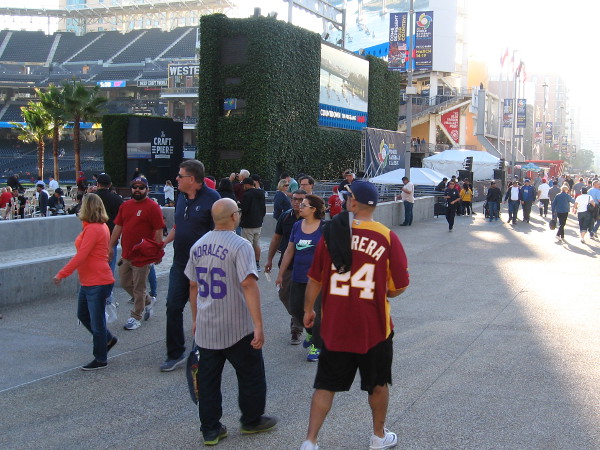
Team USA fans in line to buy merchandise at Petco Park during the World Baseball Classic in San Diego.
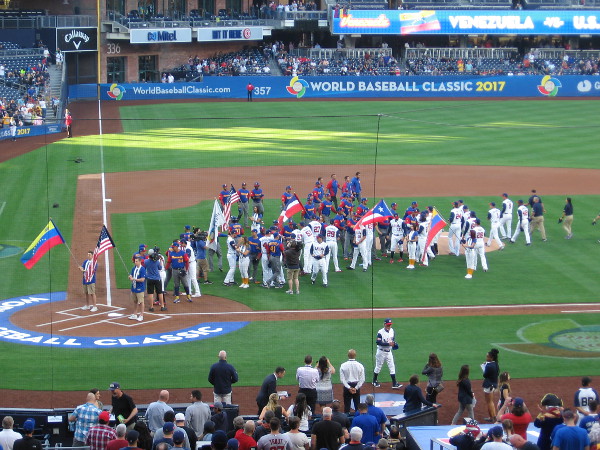
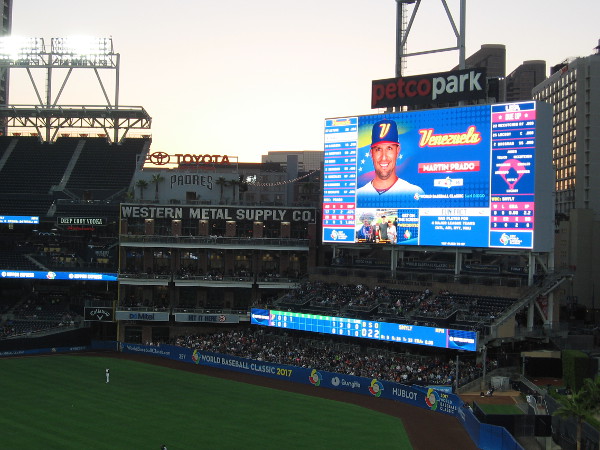
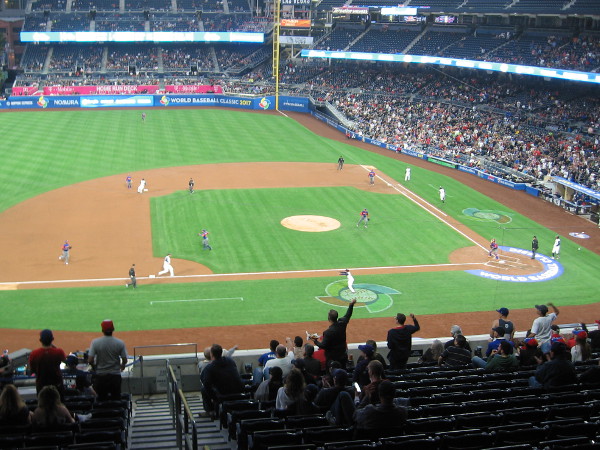
Team USA beat Venezuela tonight in an exciting World Baseball Classic game in San Diego! The United States won 4-2 with an amazing come-from-behind victory! Today’s baseball game was the second in a round robin between four international teams– the Second Round’s Pool F.
I’ve got an assortment of fun photos! It was a perfect San Diego evening to take in the sights, sounds, pageantry and great play of what turned out to be classic baseball game!
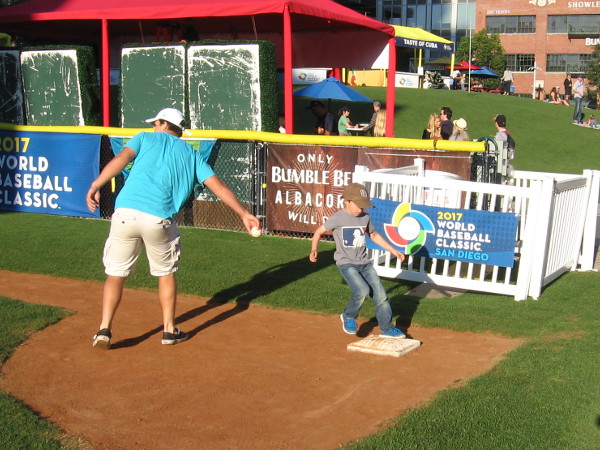
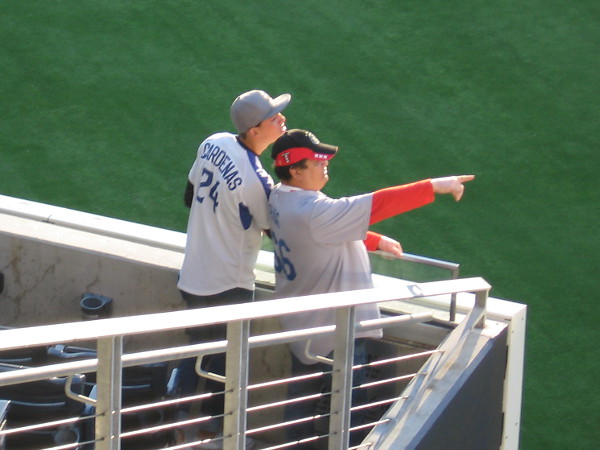
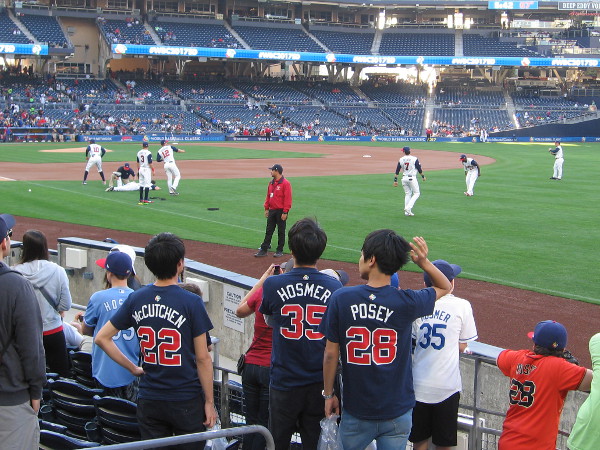
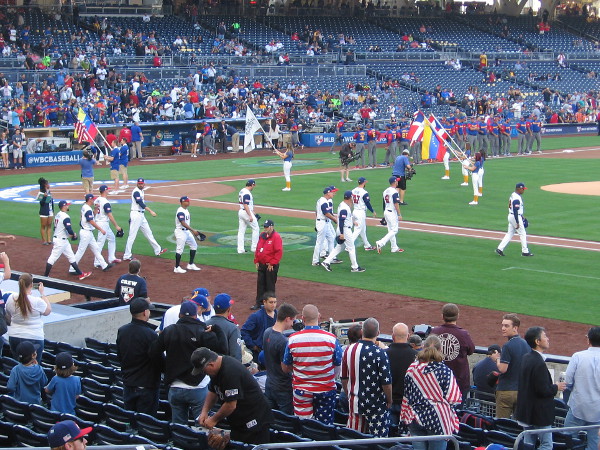
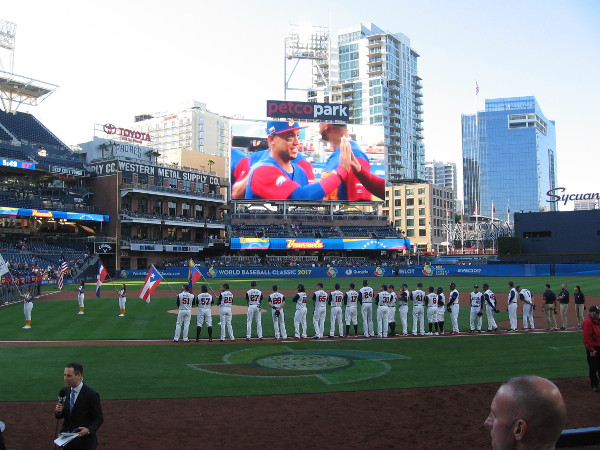
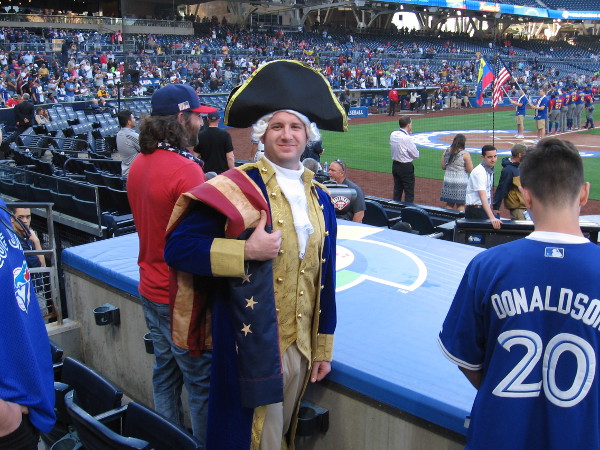
Fans of the four different teams in the World Baseball Classic’s Second Round Pool F could be seen all around San Diego’s Petco Park.Baseball lovers of all ages were having fun before the game began in the Park at the Park.Some outrageous costumes and lots of patriotic clothing could be seen all about the baseball stadium. And many Padres fans, too!It’s approaching game time. Families walk up a ramp to the upper level.Fans at the World Baseball Classic in San Diego point to the outfield.Young supporters of Team USA watch their baseball heroes warm up on the field before the game.Players for Team USA come out of the dugout for the opening ceremony.Players for both Venezuela and the United States were given a rousing introduction.Team USA fans watching the opening ceremony hold up an American flag.The players for the United States and Venezuela shake hands at the end of the opening ceremony.The game has begun! It’s a beautiful evening for baseball in San Diego, of course! Even some Dodgers fans have come to Petco Park for the fun.Venezuela is at bat as the sun sets and Petco’s lights come on. Venezuela has a great team and was first to score.As I walked about Petco Park, which USA Today rated the finest stadium in Major League Baseball, I took a photo of the Chair of Honor. The empty chair represents Prisoners of War and those Missing in Action.Team USA loaded the bases in the early innings, but unfortunately failed to score.These fans of Team USA scored, however, on the Kiss Cam!George Washington was in attendance, rooting on Team USA during the World Baseball Classic in San Diego! And his team won!
…
I live in downtown San Diego and love to walk around with my camera! You can follow Cool San Diego Sights via Facebook or Twitter!
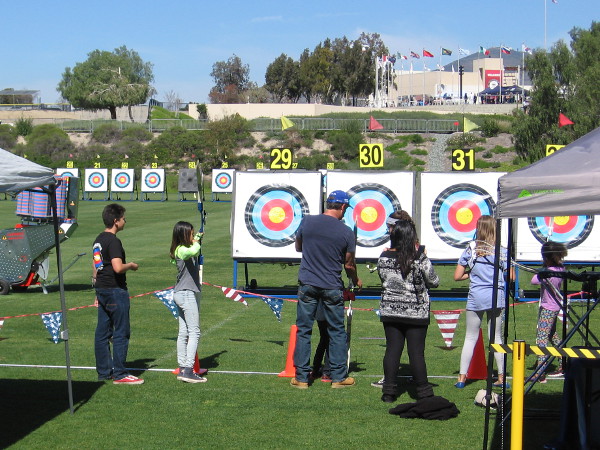
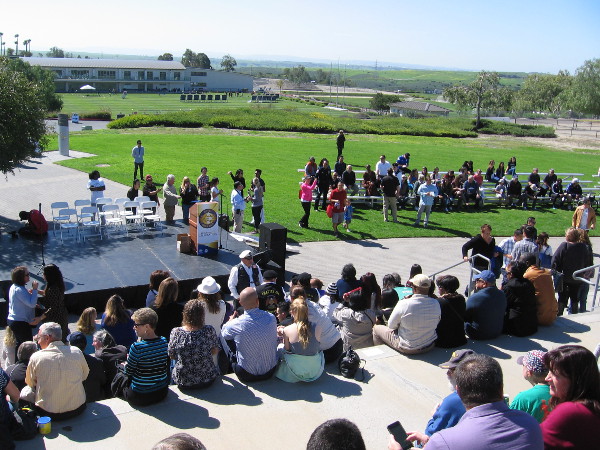
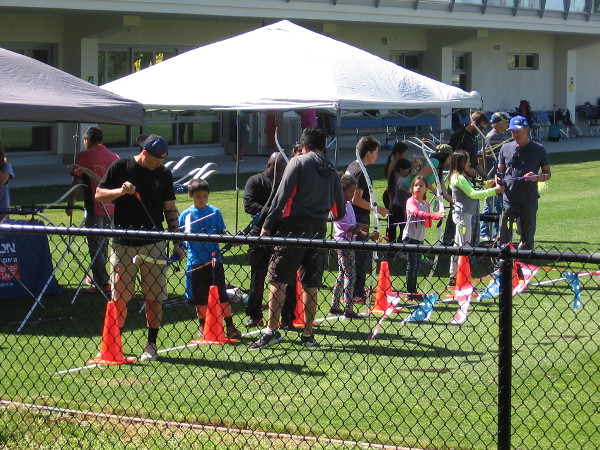
Kids get a chance to practice archery at an outdoor range where Olympians train! A special activity during the Celebration of Champions event at the Chula Vista Elite Athlete Training Center!
For 23 years the Olympic Training Center in Chula Vista has been utilized by hundreds of Team USA athletes. It has now transfered ownership from the United States Olympic Committee to the City of Chula Vista. Although the large 155-acre facility is now called the Chula Vista Elite Athlete Training Center, it remains one of the most important U.S. Olympic and Paralympic training sites. And now non-Olympic athletes, including people who live in the community, will have a chance to develop their sporting skills here, too!
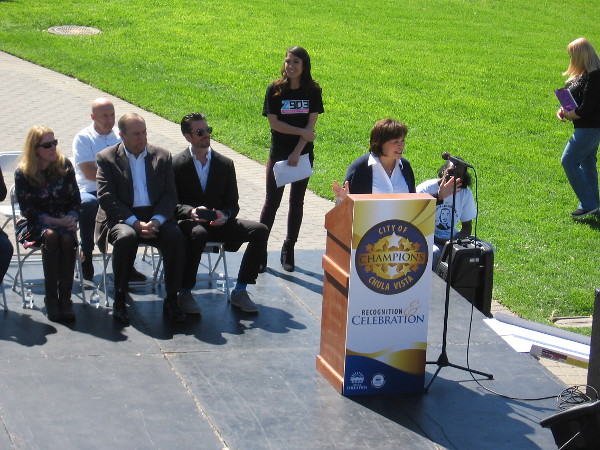
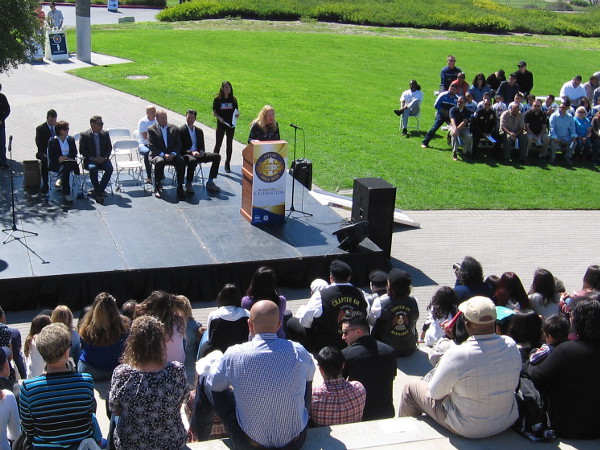
Today, a fun Celebration of Champions event was held to showcase this state-of-the-art facility to the public, and to honor local achievers. I’d never visited the place, so of course I had to go check it out!
And I took some photos! As usual, read the captions!
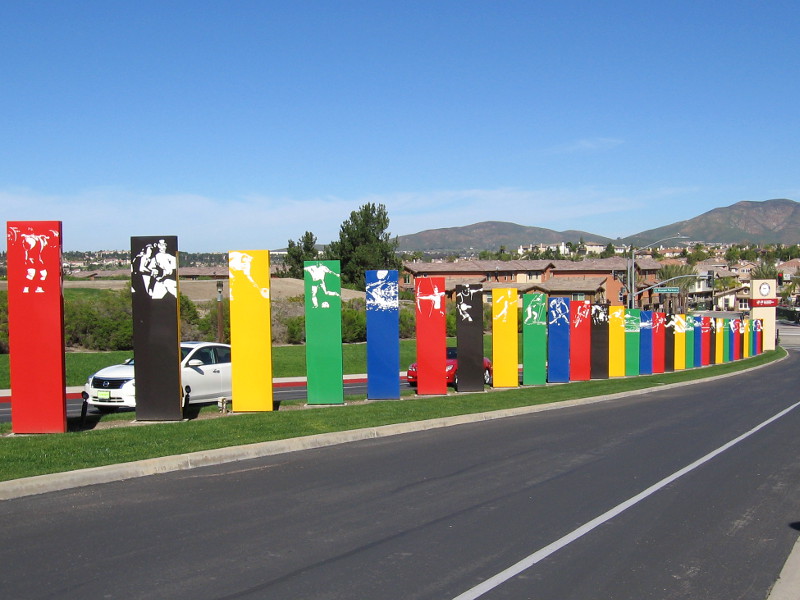
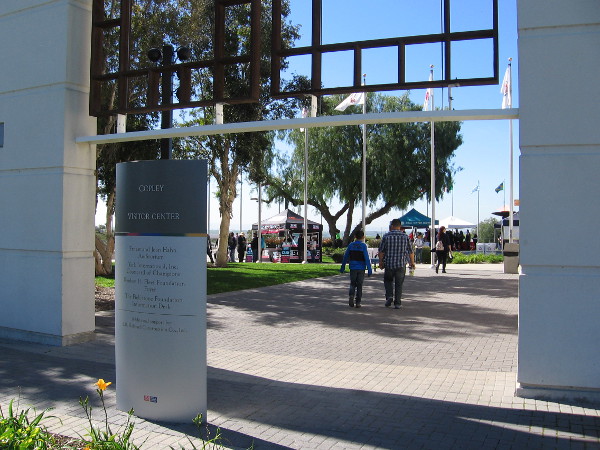
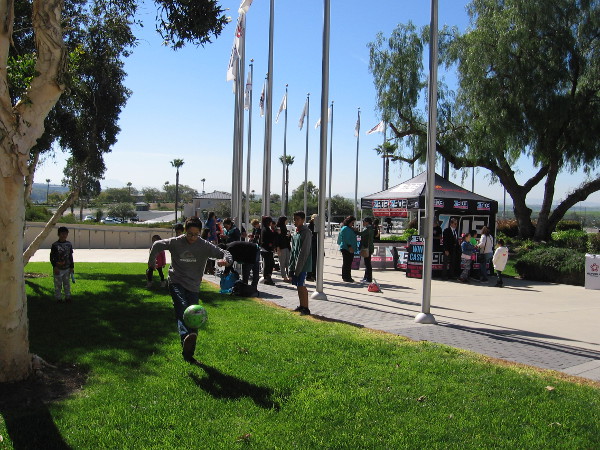
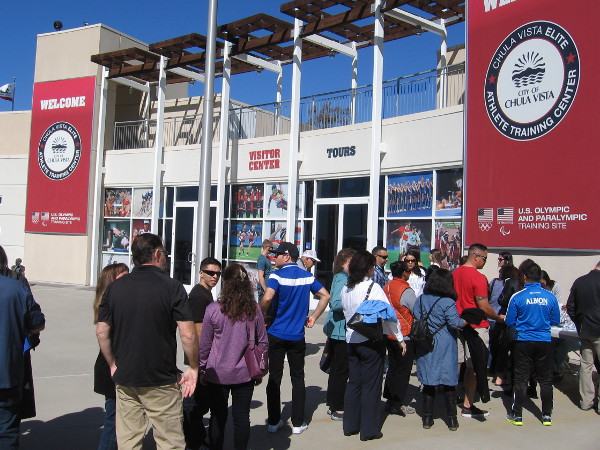
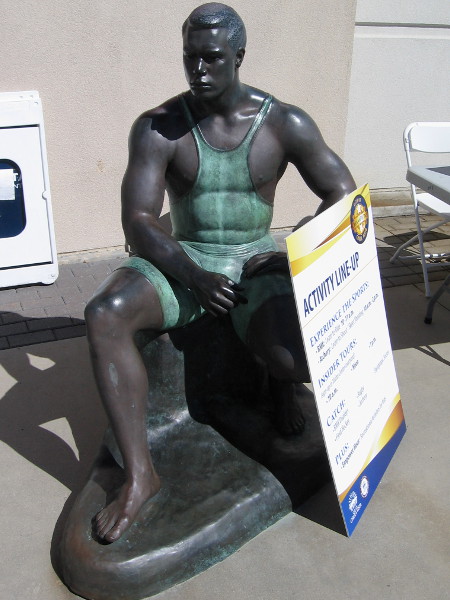
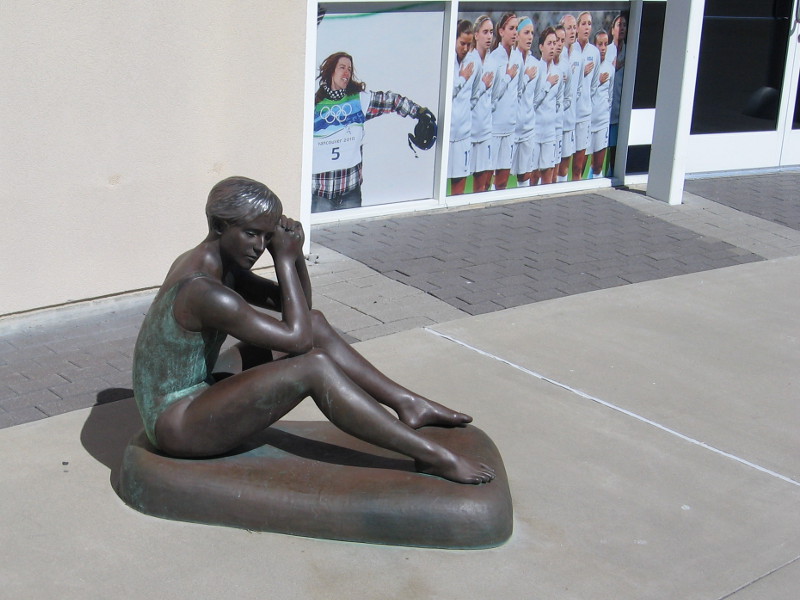
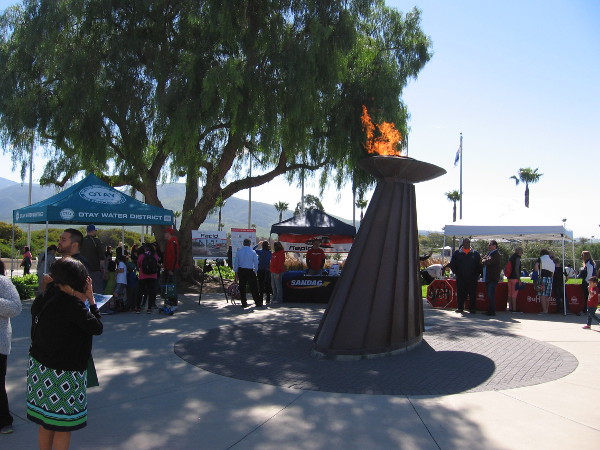
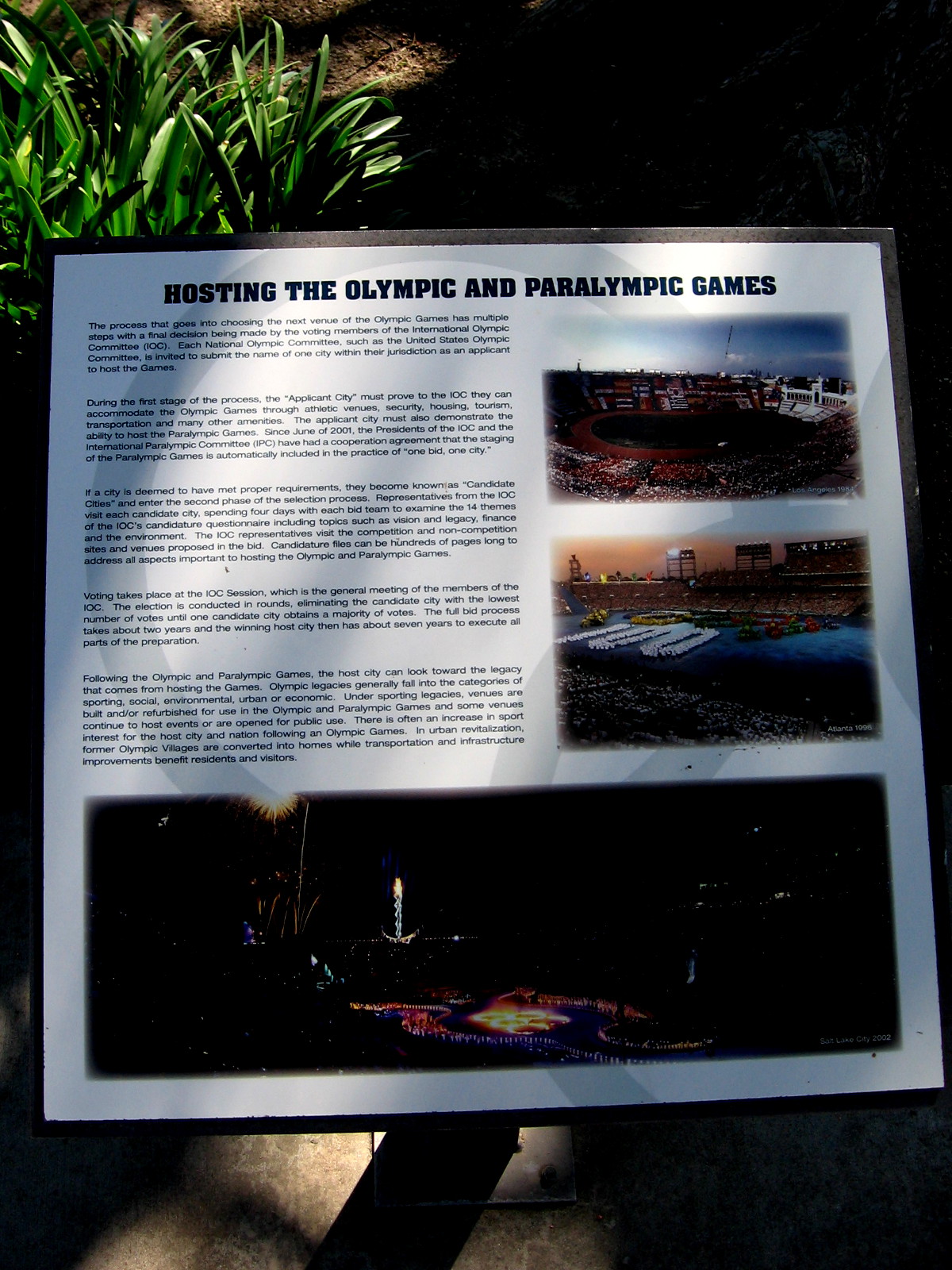
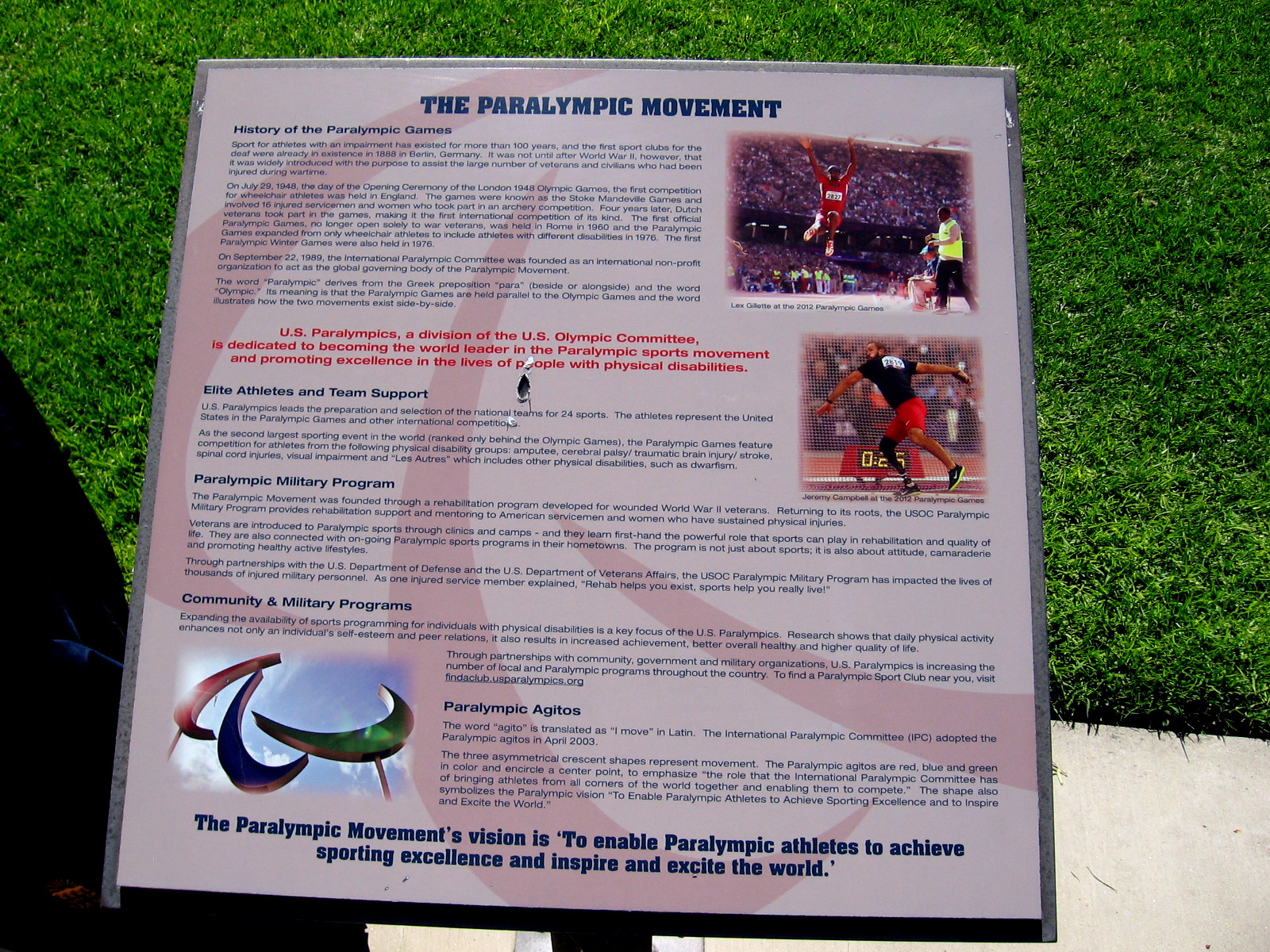
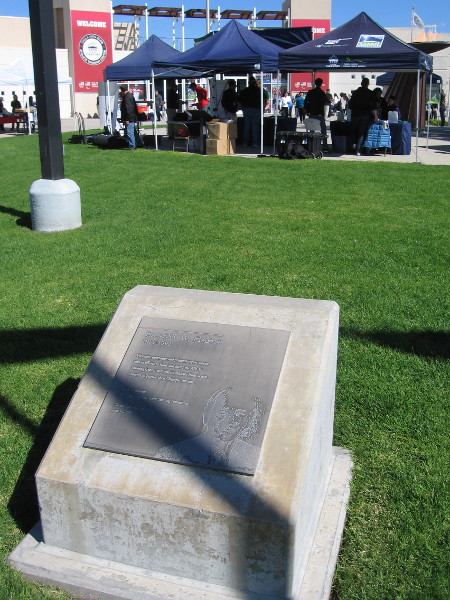
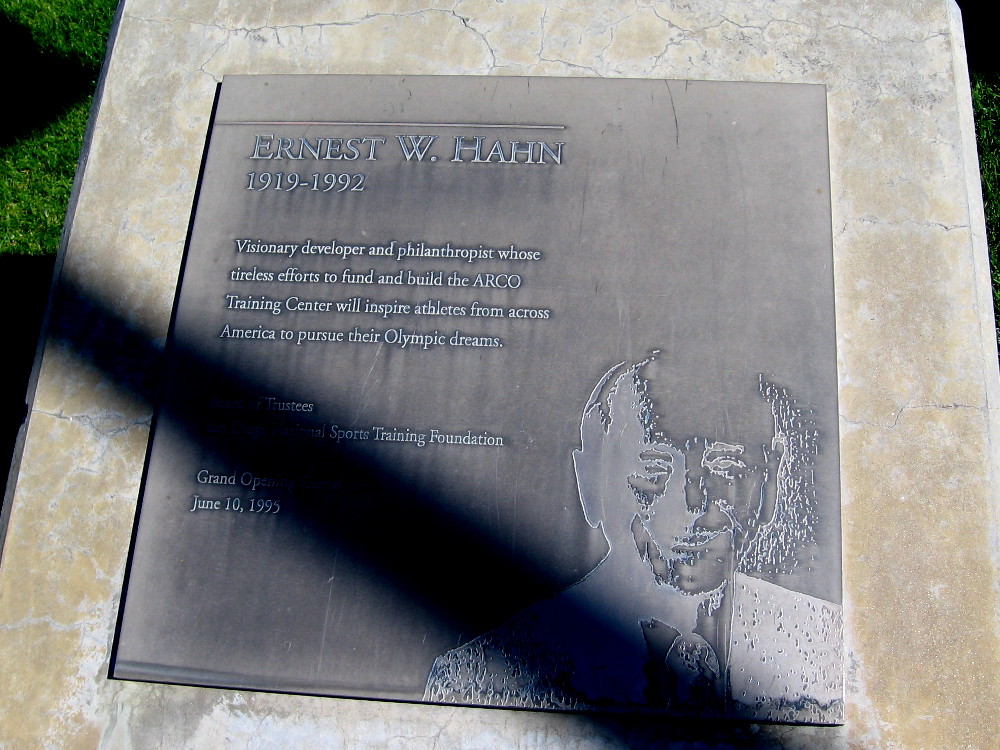
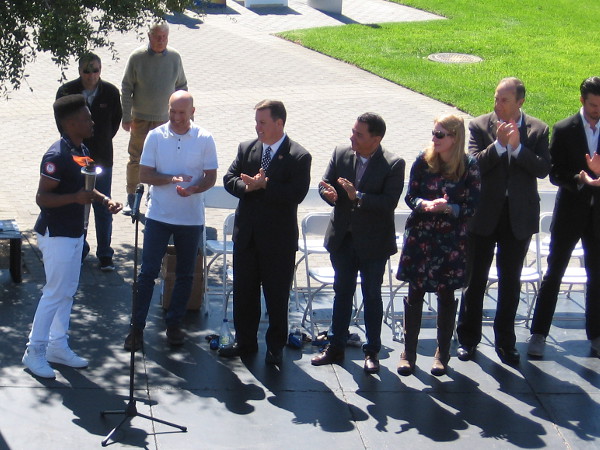
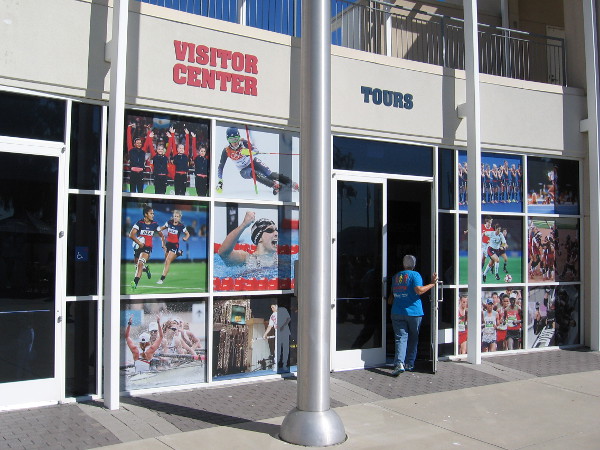
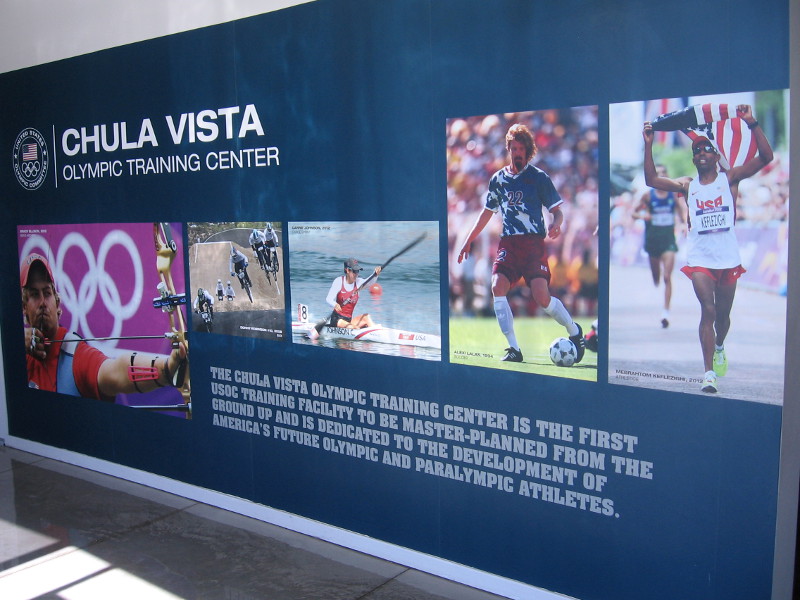
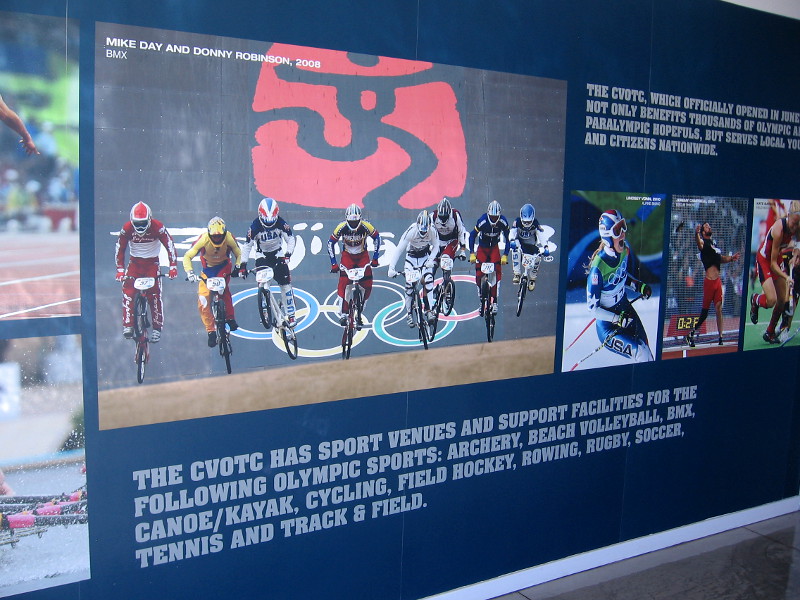
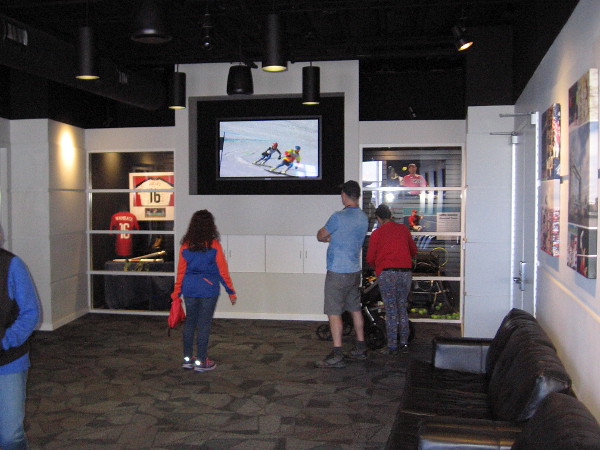
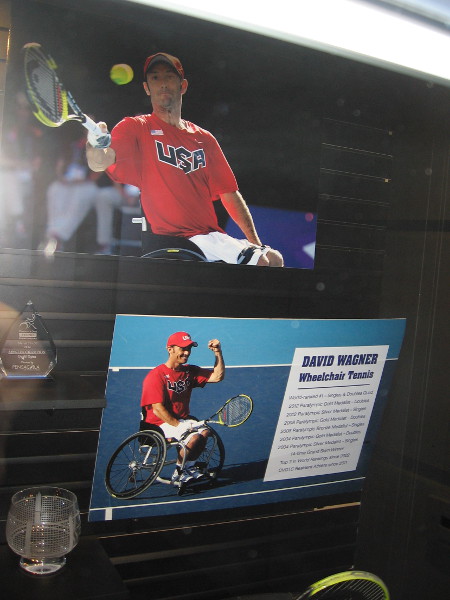
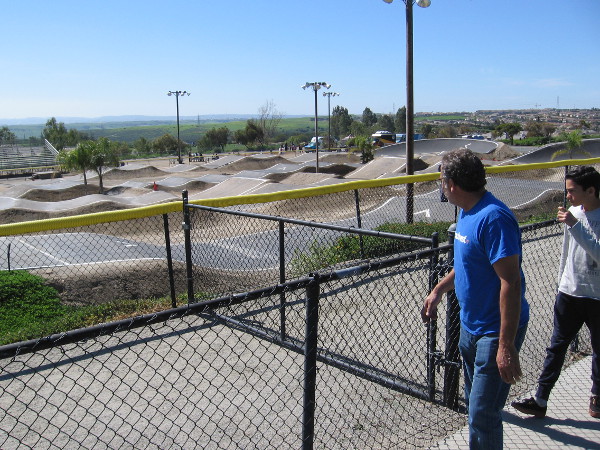
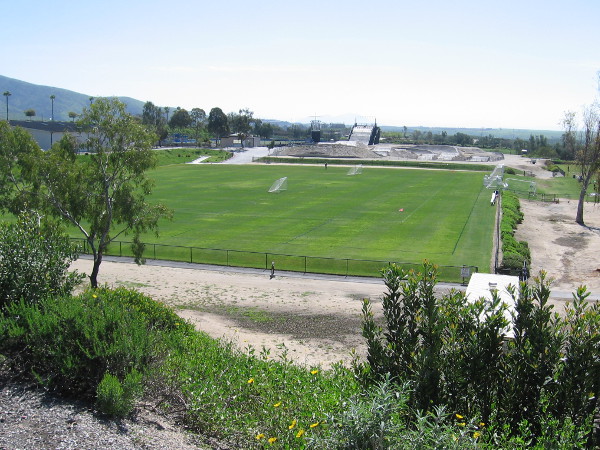
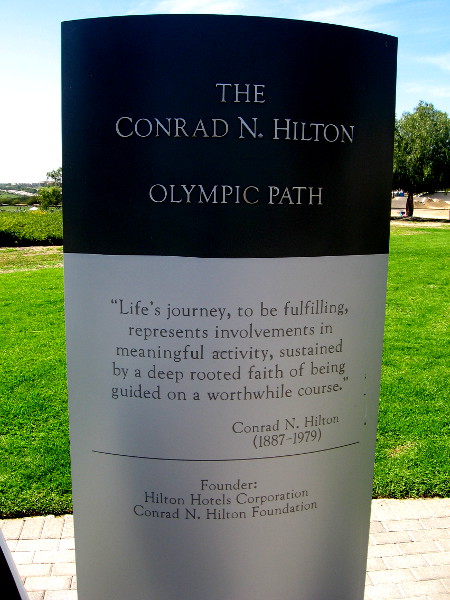
The colorful driveway into the 155-acre Elite Athlete Training Center complex includes graphics depicting many different Olympic sports.The state-of-the-art facilities at the Chula Vista Elite Athlete Training Center are located in the Eastlake community.Folks enter the Copley Visitor Center courtyard to enjoy a special celebration. The 23 year old Olympic Training Center today officially becomes the Chula Vista Elite Athlete Training Center!While the adults checked out event tents, kids were playing with soccer balls on the nearby grass. Perhaps some of these youth will one day be Olympic medal winners!People sign up for a special tour of the elite athlete training complex, which includes grass fields, an indoor and outdoor archery range, a BMX track, and more. Future plans include a gymnasium and pool.One of two cool bronze sculptures near the main door to the Visitor Center. This male Olympic athlete appears to be a wrestler.The other bronze sculpture appears to be a female Olympic swimmer or diver.A large Olympic flame is blazing in the circular courtyard in front of the Visitor Center. Many outdoor booths were set up by various community organizations for the special event.Perhaps a future athlete will wear this baby clothing. Team USA had lots of cool stuff for sale.Several plaques are arranged around the courtyard. This one lists all the host cities of the Olympic Games–both Summer and Winter.Sign describes in detail how host cities are chosen for the Olympic and Paralympic Games. (Click image to enlarge.)The history of the Paralympic movement is described on this sign. Sport for athletes with an impairment has existed for more than 100 years.People slowly converge on an outdoor stage where a ceremony will celebrate the transfer of ownership of this training complex from the United States Olympic Committee to the City of Chula Vista.I spotted this plaque while heading over to join the audience.Ernest W. Hahn, 1919-1992. Visionary developer and philanthropist whose tireless efforts to fund and build the ARCO Training Center will inspire athletes from across America to pursue their Olympic dreams.While I had a chance, I should have headed over to take pics of the kids trying out the super awesome Olympic-level BMX track. You can see them with their bikes in the distance.Everyone prepares for the big ceremony, which will also honor local champions! Those are the champions assembled to the right!Chula Vista mayor Mary Salas kicks off speeches by gathered dignitaries.Nearby on the grass, these kids were more interested in sports. Talk is cheap–action is what matters!Representative from the United States Olympic Committee in Colorado Springs speaks a few words. This training center in San Diego is used by a very large number of Team USA Olympians.To symbolize the transfer of the complex to the city of Chula Vista, a Paralympic track and field athlete who has won numerous medals carries a torch onto the stage!These walkers in the audience were recognized as champions during the ceremony!Many champions from San Diego’s South Bay head up onto the stage to be honored and given a medal by the mayor. Some excel in sports; others are teachers, coaches, community leaders, law enforcement officers, artists…About halfway through the ceremony, I sneaked off to check out the Visitor Center while few people were inside.Huge graphics greet visitors inside the front door. The Chula Vista Olympic Training Center is dedicated to the development of America’s future elite athletes.Today’s training center has sport venues and facilities for archery, beach volleyball, BMX, canoe and kayak, cycling, field hockey, rowing, rugby, soccer, tennis, plus track and field!Several displays inside the Visitor Center include a video of great Olympic athletic performances.A cool exhibit devoted to David Wagner, who plays Wheelchair Tennis. He is a champion at his sport!After the ceremony I walked around. I regret now that I didn’t sign up to take a tour. Here’s the BMX track. Looks like a bumpy ride!Here’s one of the grass fields. It appears to be used for rugby, field hockey or soccer.I was drawn toward the archery range, which was so cool I’m going to blog about it next! Here’s some outdoor action during the event.Walking toward the archery complex, I saw this inspirational quote concerning the Olympic Path by Conrad Hilton. Life’s journey is worthwhile. Choose a meaningful path.Kids try their hand at archery at the Celebration of Champions event at the Elite Athlete Training Center in Chula Vista!
…
I live in downtown San Diego and love to walk around with my camera! You can follow Cool San Diego Sights via Facebook or Twitter!
You can easily explore Cool San Diego Sights by using the search box on my blog’s sidebar. Or click a tag! There are thousands upon thousands of fun photos for you to share and enjoy!
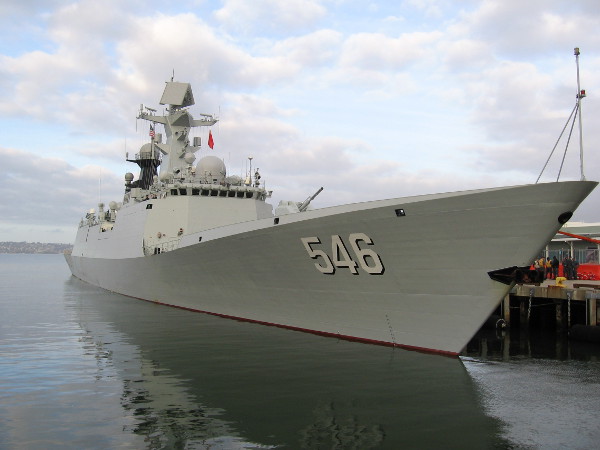
The Chinese frigate Yancheng, docked in San Diego at the Cruise Ship Terminal. It is part of a four day visit by ships of the People’s Liberation Army Navy.
This morning I got a few photos of a Chinese Navy warship that will be visiting San Diego for four days. The ship I saw docked at the Cruise Ship Terminal is the frigate Yancheng, which is part of the People’s Liberation Army Navy Surface Force. Two additional Chinese Navy ships arrived during the day. I saw them in the darkness after work during an evening walk along the Embarcadero. Those two other ships are the frigate Daqing and the oiler Tai Hu.
The intent of the visit is to foster trust and mutual understanding between two military powers–the United States and China. In addition to cultural exchanges, visiting Chinese and local American sailors will enjoy playing games of table tennis and basketball together. In a small, sometimes turbulent world, perhaps it is good to make friendships.
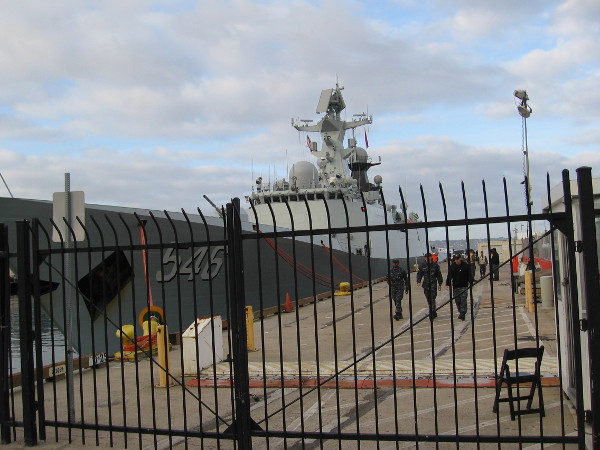
United States military personnel walk along the B Street Pier during a visit of the Chinese Navy to San Diego.Another photo of the Chinese frigate Yancheng, docked in San Diego Bay on December 6, 2016.
…
The once-mysterious origin of a U. S. Navy bronze plaque on display in San Diego has come to light. Learn more about this fascinating bit of San Diego and Navy history by checking out my blog post Creating a plaque: Navy history in San Diego revealed!
American flags lead a Fourth of July parade in Old Town San Diego State Historic Park.
Here come oodles of fun photos! I took them during the first two hours of Old Town San Diego’s Fourth of July celebration! (Sorry, but I missed the pie eating contest!)
I’ve captioned the photos with descriptions. If you’ve never enjoyed Independence Day at Old Town San Diego State Historic Park, you’re missing out on a very colorful and patriotic event! And there’s a lot of fascinating history that you can absorb, as well!
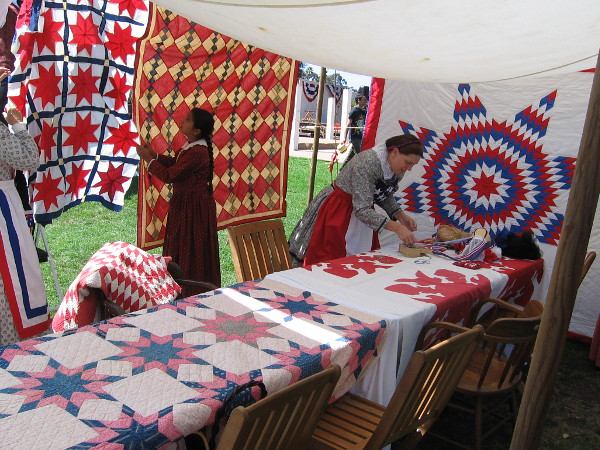
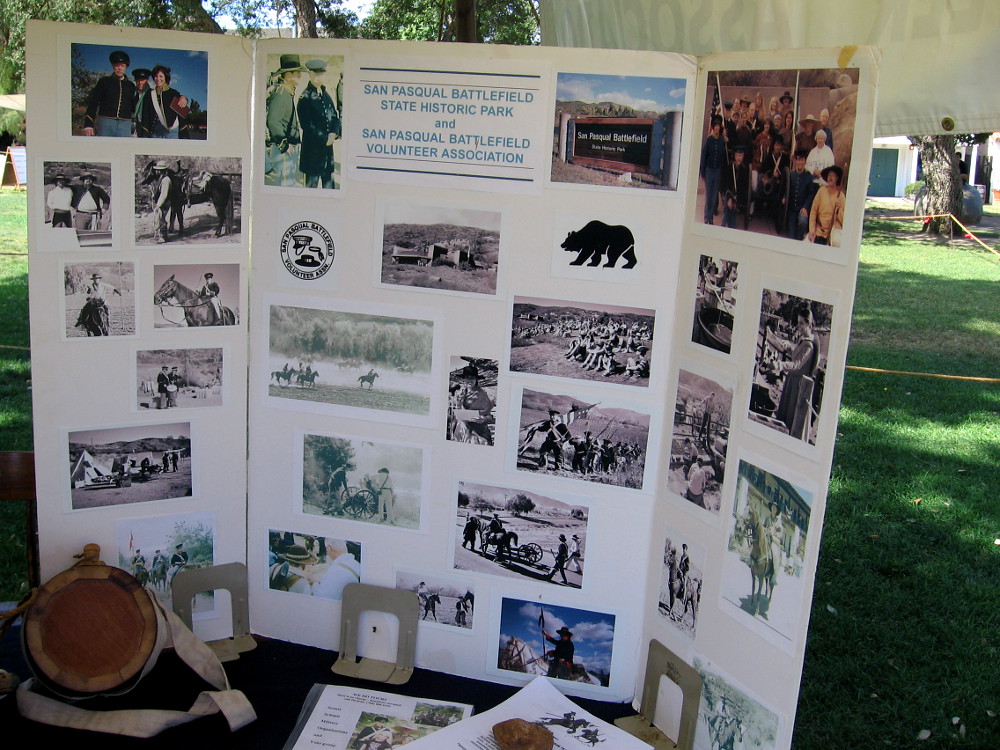
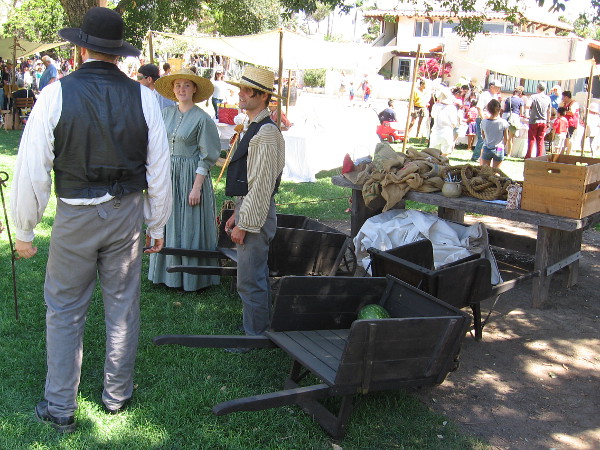
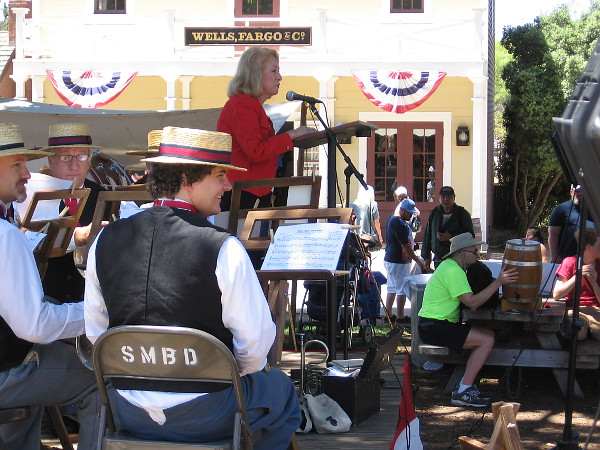
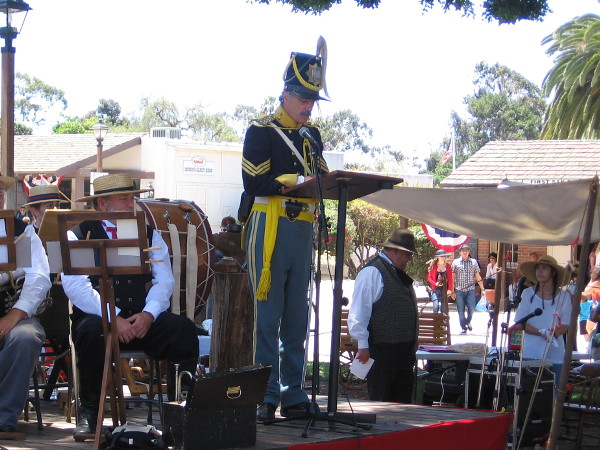
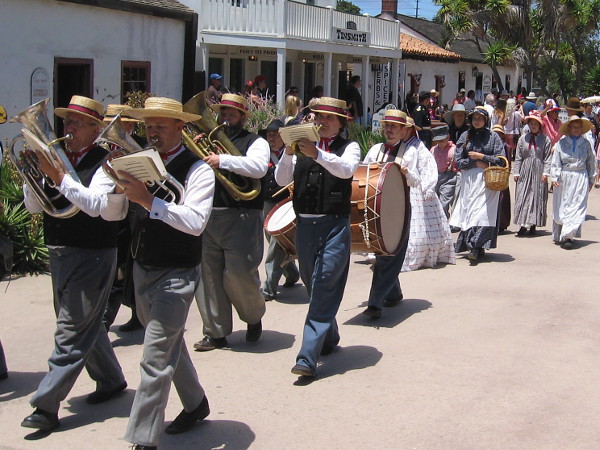
During the Independence Day celebration in Old Town San Diego, there were all sorts of fun and educational activities. Musical entertainment could be heard at the main stage.The Armory Band played music popular in America long ago–patriotic tunes that citizens in San Diego would have enjoyed during the mid 1800s.Los Bailadores, performers in period costume, sing vintage patriotic songs like The Battle Hymn of the Republic inside Old Town’s historic La Casa de Estudillo.Los Bailadores then lived up to their name and began a few social dances that folks would have enjoyed in the 1850s and 1860s. Their first dance was the Virginia reel.During the Fourth of July, there were many historical demonstrations in Old Town’s central square, which was originally called La Plaza de Las Armas.A lady in a bonnet at a spinning wheel was making wool yarn.Quilters were getting their tent displays ready as Old Town San Diego’s Fourth of July events got underway.These guys were playing the old Victorian Game of Graces. A small hoop is shot into the air by pushing apart two rods. The hoop is then caught by one’s partner. Winner catches the hoop ten times first.The San Pasqual Battlefield Volunteer Association had an interesting display, including ammunition that was used in old cannons.A poster has photos of reenactments of the Battle of San Pasqual, which took place northeast of San Diego during the Mexican-American War.Of course, you need some tasty watermelon during a traditional Fourth of July!The middle of the plaza became a center of attention as various tug of wars were contested by young and old alike.These ladies vied for tug of war glory!Later games would include wheelbarrow races.A cakewalk. Stop on the winning number and you receive a cake! This simple game was common in mid 19th century San Diego.Several speeches included one by Connie Gunther, a descendant of early San Diego. The legacy of those early Californios, townspeople, settlers and immigrants live on.
Are you a descendant of early San Diego? Do you think you might be? There’s a website I learned about that you ought to visit. Here it is. Those with family trees that reach back into early San Diego history can relate their knowledge for posterity and the benefit of others; those who think they might be related to an early resident of San Diego can perform searches and do extensive research. Check it out!
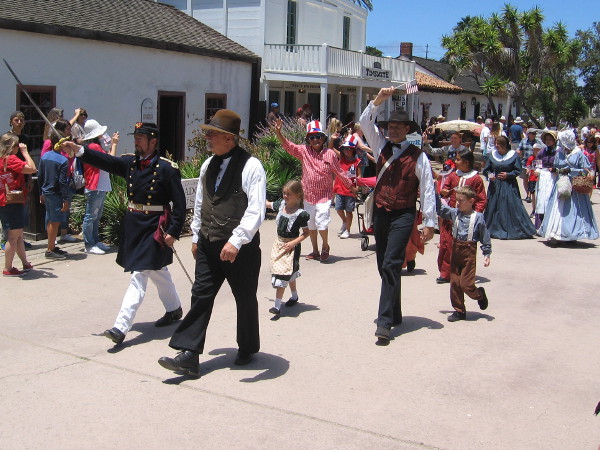
Kids listening to the speeches wave American flags.The keynote speech was by Tom Vilicich, portraying a first sergeant, Company K, 1st U.S. Dragoons, who fought in the Battle of San Pasqual.After the speeches, there was a Flag Raising Ceremony. People removed their hats as Old Glory was hoisted up Old Town’s high flagpole.Salutes as the Star and Stripes ascends into the San Diego sky.A billowing American flag rises on Independence Day!The musicians left the stage to make way for a special public reading of the Declaration of Independence.Diverse folk representing San Diego in the mid 19th century take turns reading the Declaration of Independence. Ordinary citizens in the crowd also took part!An ordinary American young person reads a few lines from the Declaration of Independence, on the Fourth of July in Old Town San Diego State Historic Park.And then the parade began! It wound around the plaza twice. Ordinary Americans were invited to join in!Represented in the small patriotic parade were Old Town volunteers, boosters, and descendants of early San Diego.Here comes the old-fashioned marching band!People in the parade wore every sort of period costume–even red, white and blue attire from our own modern period!That’s because ordinary American citizens joined in the fun!This photo shows the good crowd that converged on Old Town San Diego for the Fourth of July!A scene from the colorful American Independence Day parade in Old Town San Diego State Historic Park.
…
This blog now features thousands of photos around San Diego! Are you curious? There’s lots of cool stuff to check out!
Here’s the Cool San Diego Sights main page, where you can read the most current blog posts. If you’re using a small mobile device, click those three parallel lines up at the top–that opens up my website’s sidebar, where you’ll see the most popular posts, a search box, and more!
To enjoy future posts, you can also “like” Cool San Diego Sights on Facebook or follow me on Twitter.
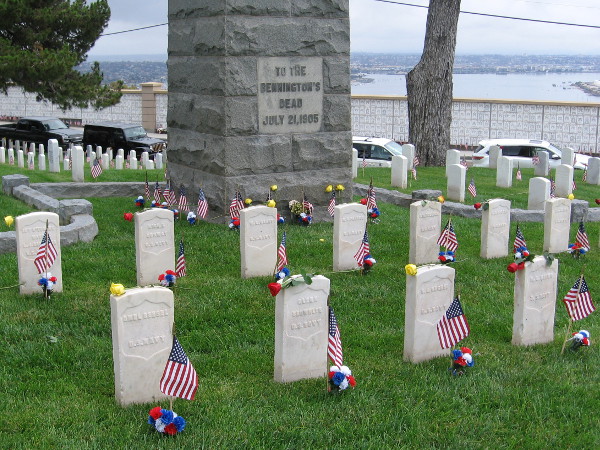
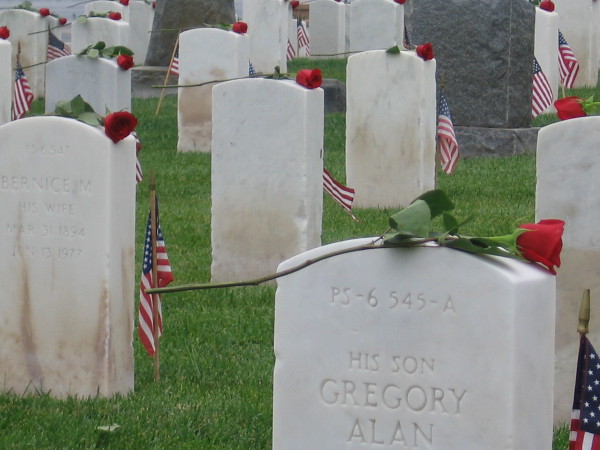
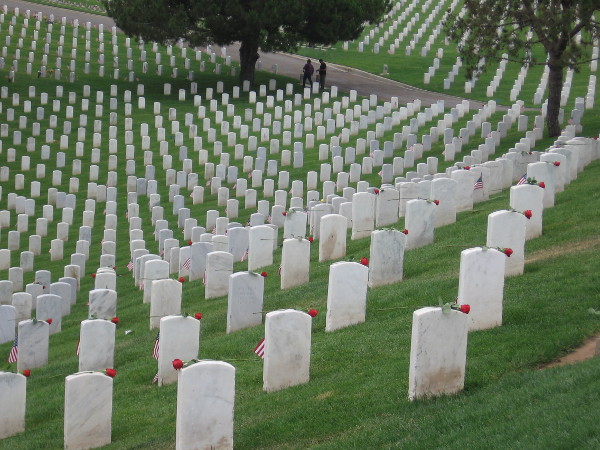
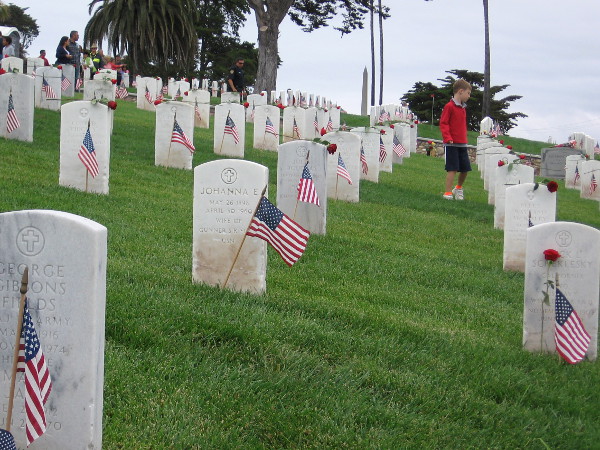
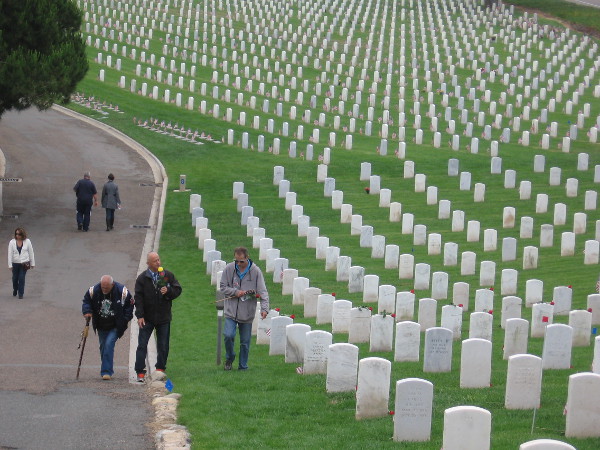
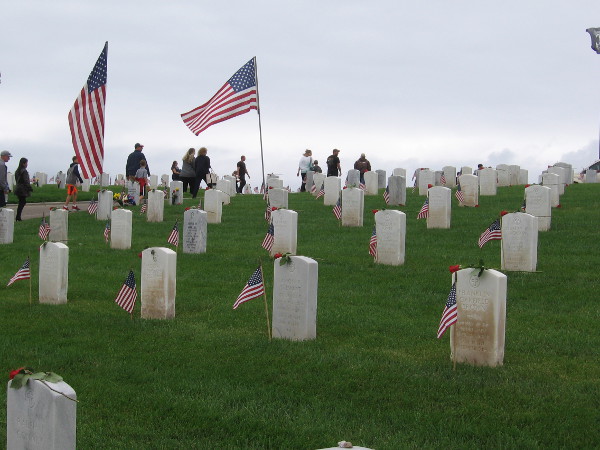
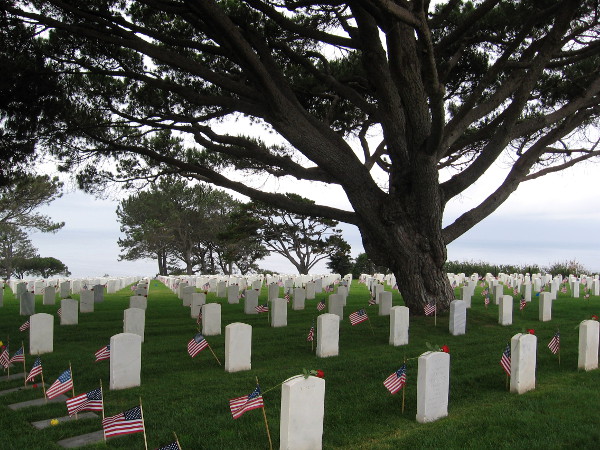
Flags and flowers are placed where the fallen now rest.
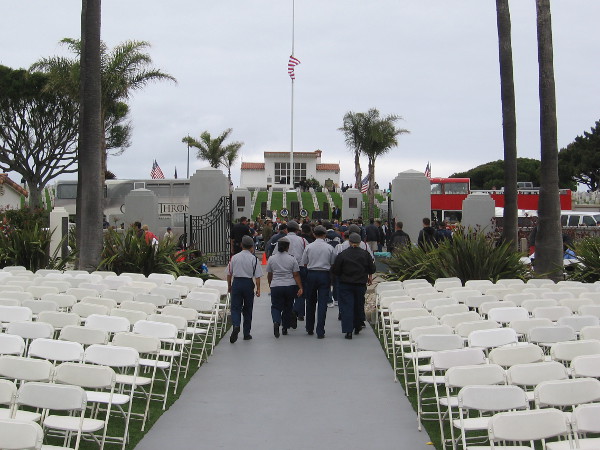
Today there was a moving Memorial Day ceremony at Fort Rosecrans National Cemetery. I attended.
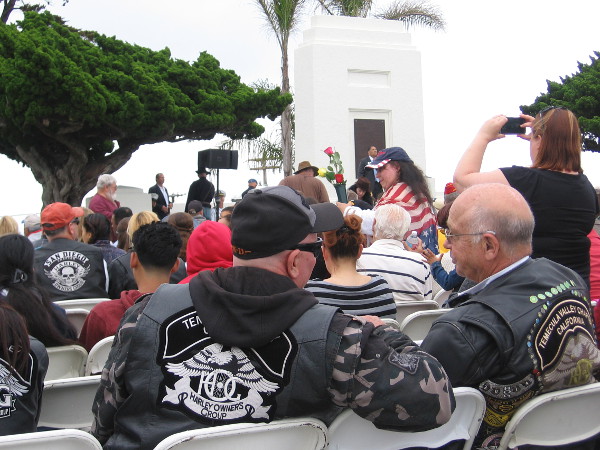
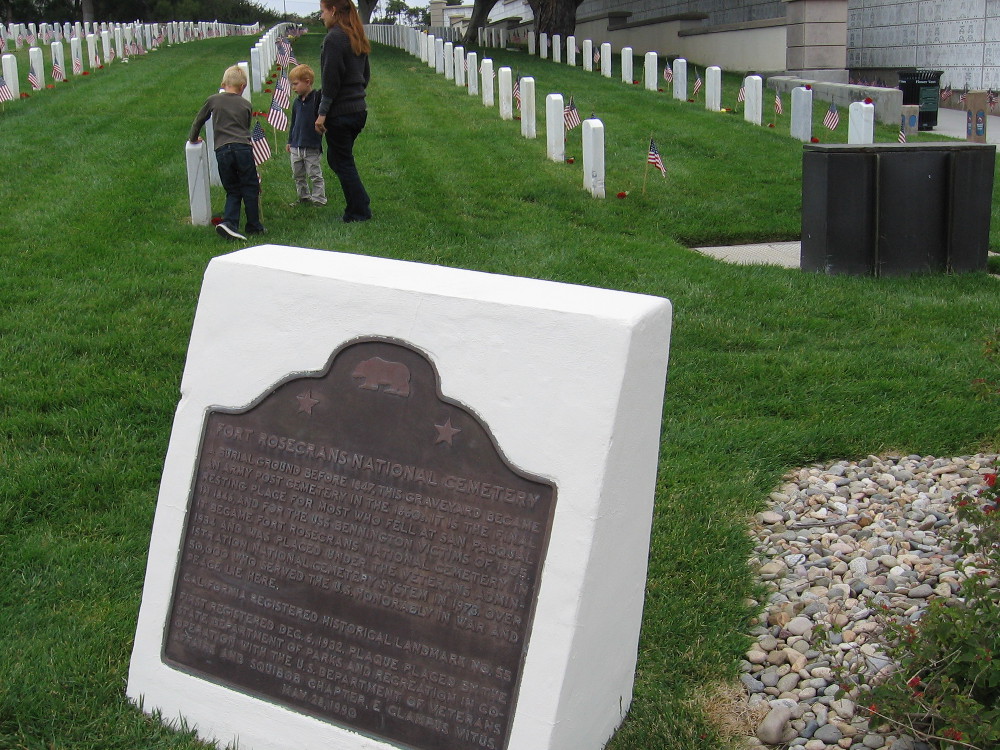
Here are some photos. Fort Rosecrans National Cemetery, located on Point Loma high above the Pacific Ocean and San Diego Bay, is the final resting place of thousands of American soldiers, sailors, airmen and Marines, and their families, who served their country with courage and honor. Many who are buried in this hallowed place fought in different conflicts spanning our nation’s history, right up to the present-day War on Terrorism. Because of its amazing natural setting, many say Fort Rosecrans is more beautiful than even Arlington or Normandy. As you can see, it’s a special place.
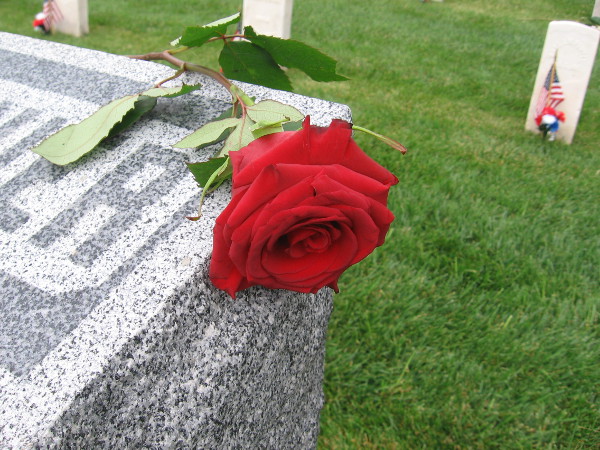
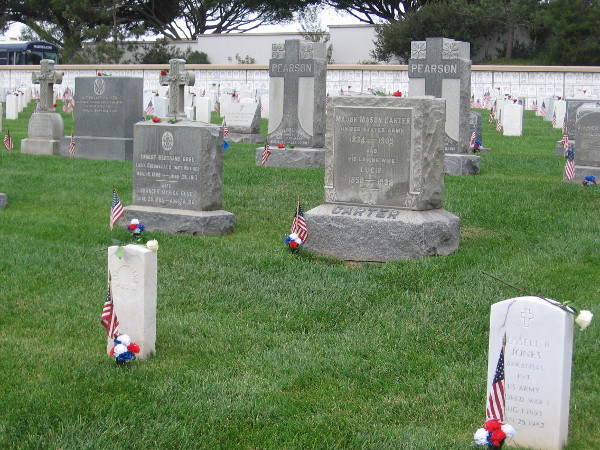
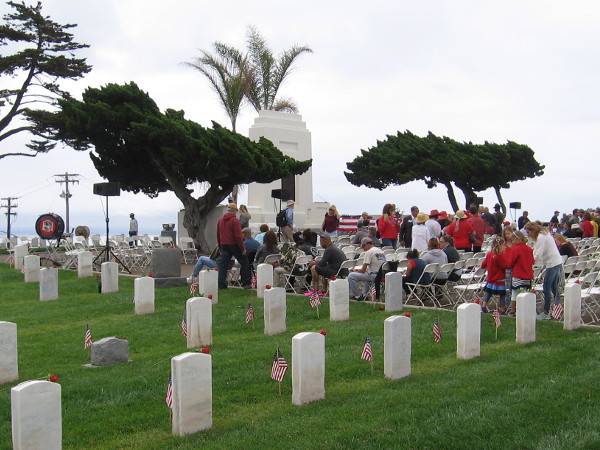
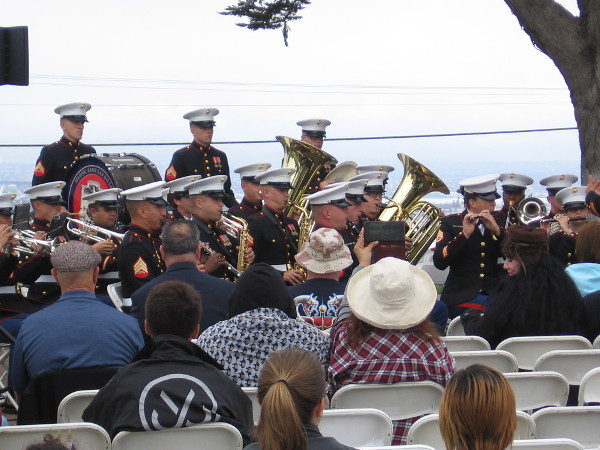
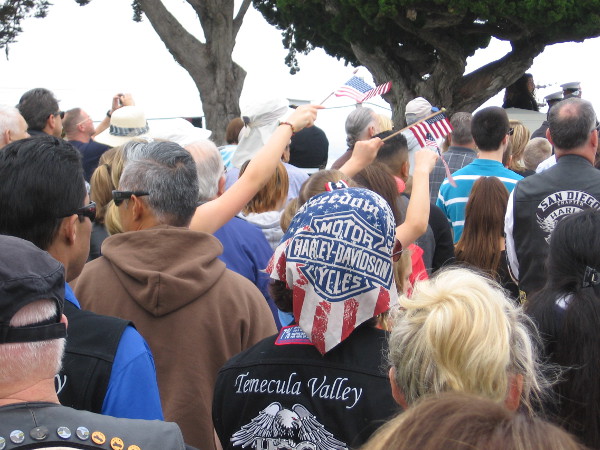
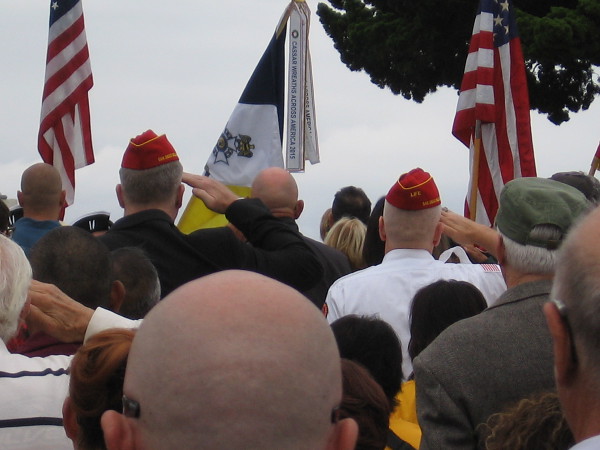
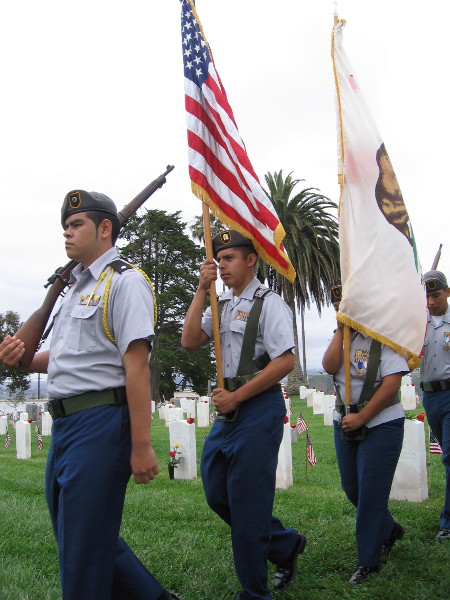
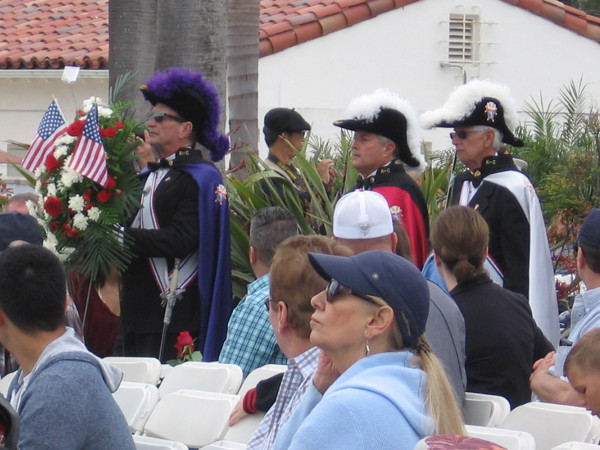
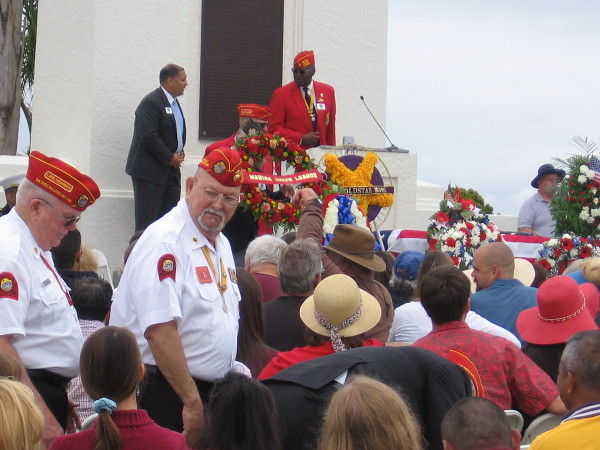
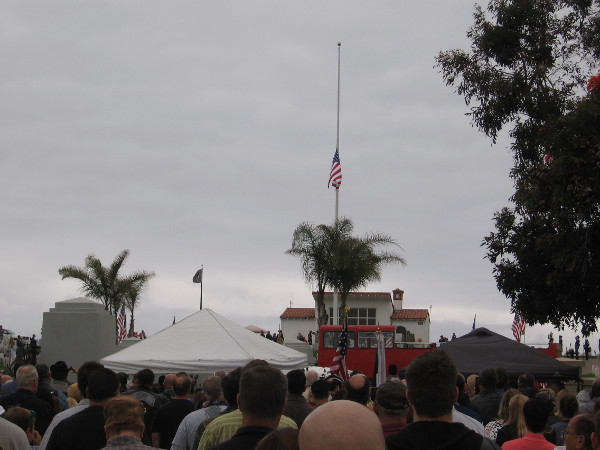
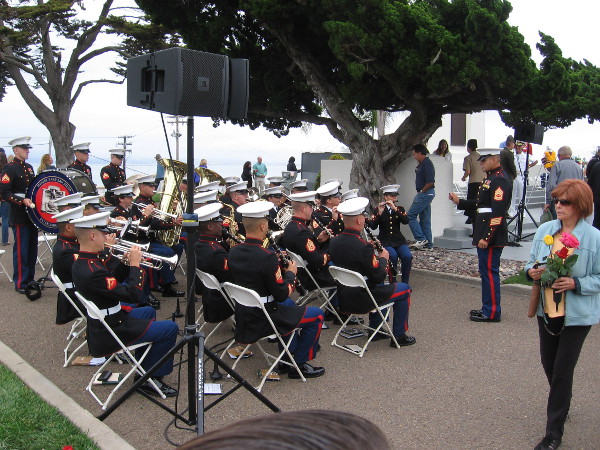
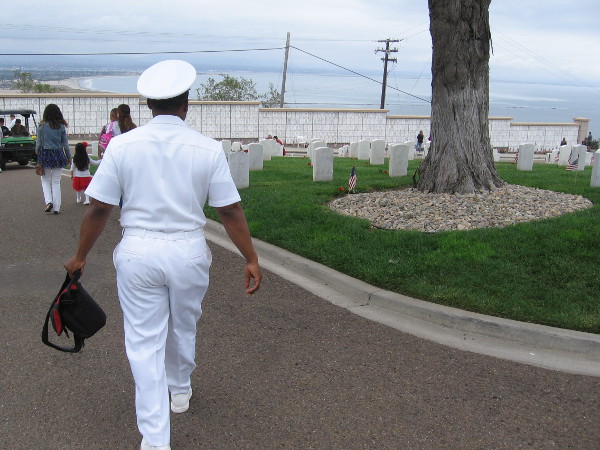
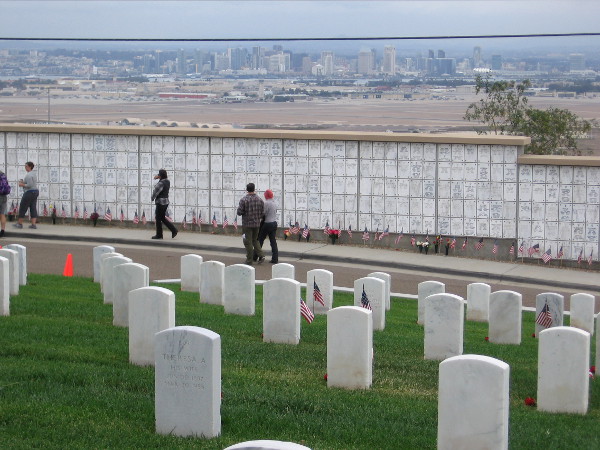
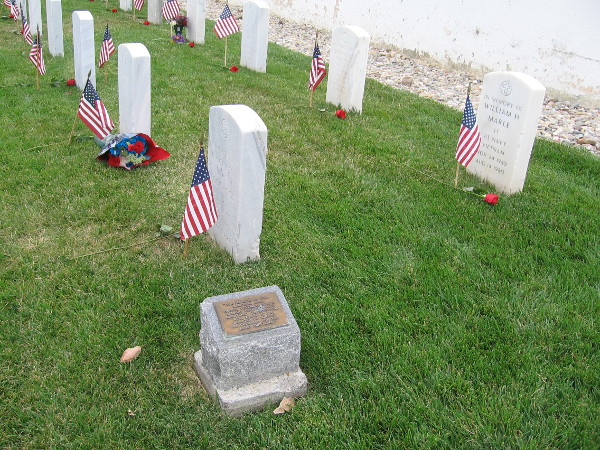
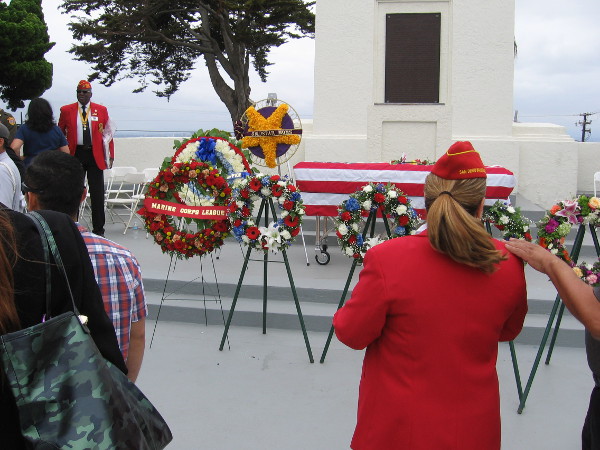
A Memorial Day rose adorns a solemn grave marker at Fort Rosecrans National Cemetery.American flags at the grave markers around the USS Bennington Monument. The granite obelisk remembers those sailors who lost their lives when the warship’s boiler exploded in San Diego Bay in 1905.Love and respect are shown for those in the military who pledged to protect their countrymen, and defend freedom. They are honored on Memorial Day.Walking among silent rows of white. Many gave the ultimate sacrifice for their nation.Many old granite markers at Fort Rosecrans National Cemetery recall decades and centuries of history.A marker reads: “Lydia Hunter died from complications resulting from the birth of her only child, a son named Diego Hunter, the first American born in San Diego. Diego was born 20 April 1847, Lydia died 6 days later. May we honor her and each of those women who served with the Mormon Battalion.” Members of the Mormon Battalion made the longest military march in U.S. history. They marched over 2000 miles from Iowa to San Diego in 1847.People assemble in front of the rostrum where the Memorial Day service will be conducted at Fort Rosecrans National Cemetery.People from all walks of life have gathered together to honor those who died while serving in the United States Armed Forces.While people take their seats before the opening and introduction, Marine Band San Diego provides music.The color guard comes forward. Those attending the ceremony sing the Star Spangled Banner and recite the Pledge of Allegiance.Some patriots in the crowd wave small flags.Veterans salute. Respect is shown for the flag.The color guard exited along the side where I sat, allowing me to take a couple of good photographs.Members of a high school ROTC program carry the United States and California flags.Folded flags are presented to families of fallen heroes. Everyone watching was very attentive and quiet.An address about different forms of love during Memorial Day. The moving speech was given by Major General O’Donohue of the 1st Marine Division in Camp Pendleton.Ceremonial wreaths approach the rostrum. Many organizations presented wreaths, including the Knights of Columbus shown here.Various ceremonial wreaths are displayed in front of the assembled people. Tokens of love, gratitude and respect.Finally, taps is played while the cemetery flag is lowered to half staff. Salutes included three rifle volleys, a musket volley, and a cannon.A bagpiper, after playing Lament for a Soldier, exits across the green grass, where the fallen lie eternally.The ceremony is over, and those visiting the cemetery fan out to pay their respects. The Marine Band remained seated for a bit of concluding music.A Navy officer walks down a cemetery driveway, which overlooks the channel entrance to San Diego Bay.Walls around the cemetery contain columbarium niches for cremated remains. Naval Air Station North Island and downtown San Diego are visible in the background.Walking along the columbarium. Its plaques identify loved ones.These two guys had bouquets in their backpacks. They are gazing along the Point Loma peninsula in the direction of Cabrillo National Monument.A deeply moving sight. Solemn rows of white on rolling green hills. Volunteers have provided every grave with an American flag and rose.Member of the next generation among those who came before.The living walk thoughtfully through Fort Rosecrans National Cemetery in San Diego.More grave markers and a small plaque nearby.The markers in this memorial area honor veterans whose remains have not been recovered or identified, were buried at sea, donated to science, or cremated and the ashes scattered.After the Memorial Day ceremony, some people linger to view the floral tributes and the flag-draped Casket of the Unknown Soldier. The plaque behind the rostrum contains President Lincoln’s famed Gettysburg Address.And now almost everyone has departed.Plaque near Fort Rosecrans National Cemetery entrance has lines from The Bivouac of the Dead, a poem by Theodore O’Hara.The main entrance plaque at Fort Rosecrans National Cemetery. The flag flies at half staff.Fort Rosecrans National Cemetery is also a California Registered Historical Landmark.Several monuments near the cemetery entrance memorialize tragic events in U.S. military history, including ships lost in action.Flags in the breeze. A cloudy day. People atop the hill gaze down at the eternal ocean.Looking beyond grave markers toward a hazy blue horizon.A beautiful old tree rises from the Earth. Life persists.A slow, thoughtful walk.Youth replaces a red rose that was blown by the wind to the ground. He doesn’t realize that someone is watching.
…
I live in downtown San Diego and love to walk! You can follow Cool San Diego Sights via Facebook or Twitter!
Do you like to read short pieces of thought-provoking fiction? You might enjoy checking out Short Stories by Richard.
Getting ready for the Veteran’s Day Memorial Program at the House of USA Cottage in Balboa Park.
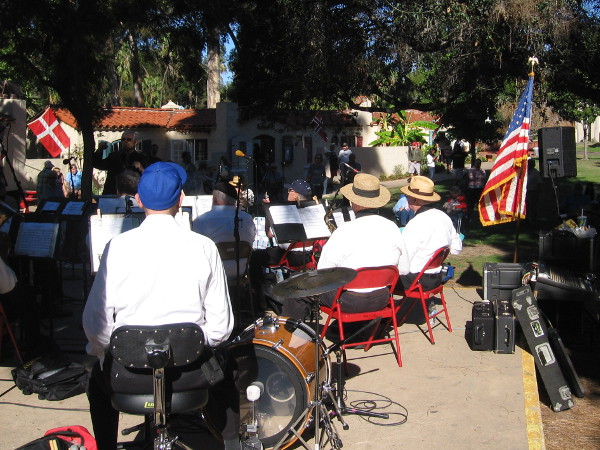
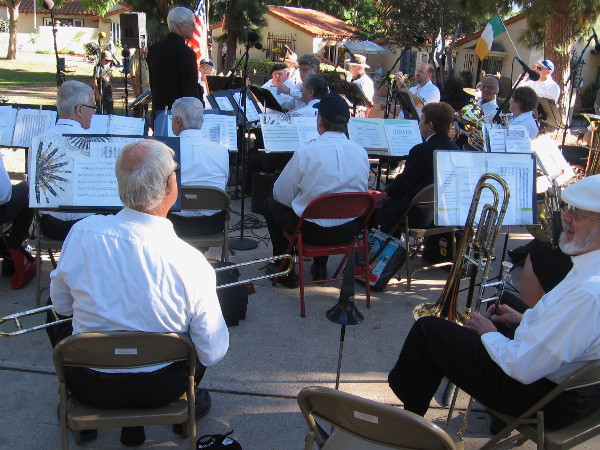
Today I enjoyed a special Veteran’s Day program in Balboa Park. It was held on the lawn at the House of Pacific Relations International Cottages. The City Guard Band of San Diego played some great music, including a composition titled San Diego Exposition March, written by Gunner Tolbert for the 1915 Panama-California Exposition held in Balboa Park. Some other pieces I heard were selections from South Pacific, Victory at Sea, and, of course, the Star Spangled Banner.
I took a number of photos, and ventured into the House of USA Cottage to absorb some of the atmosphere. I thought you’d might like to have a look. Please read the captions for some more interesting information.
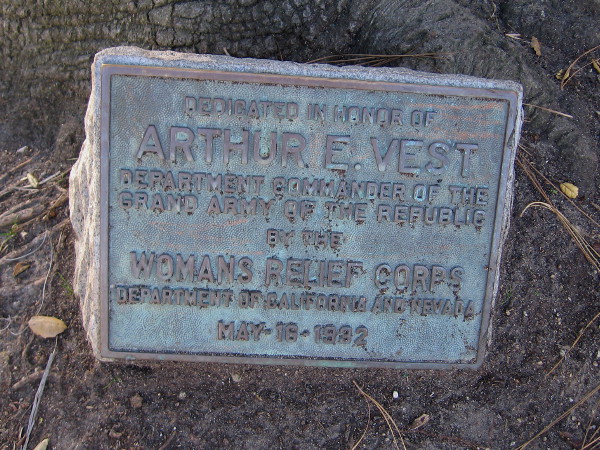
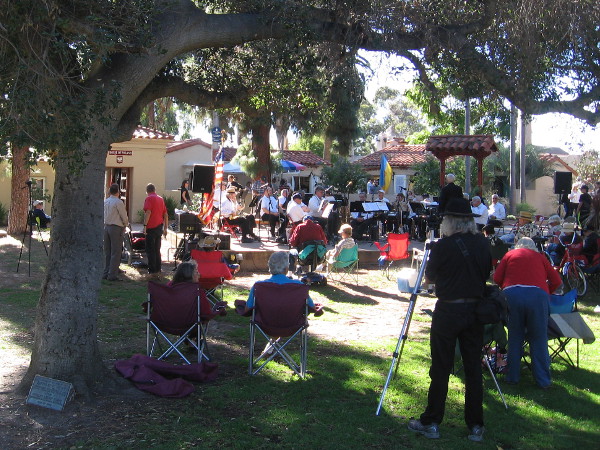
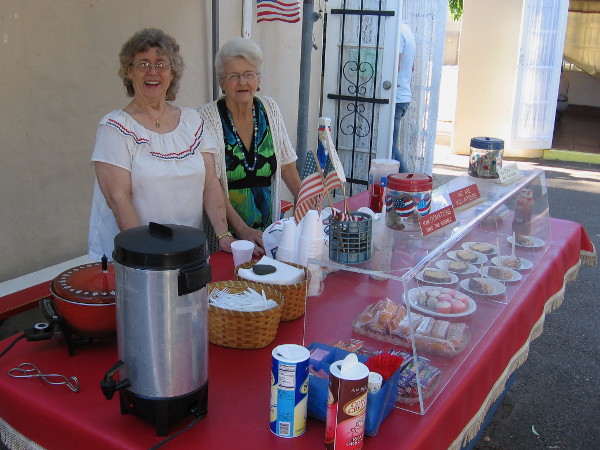
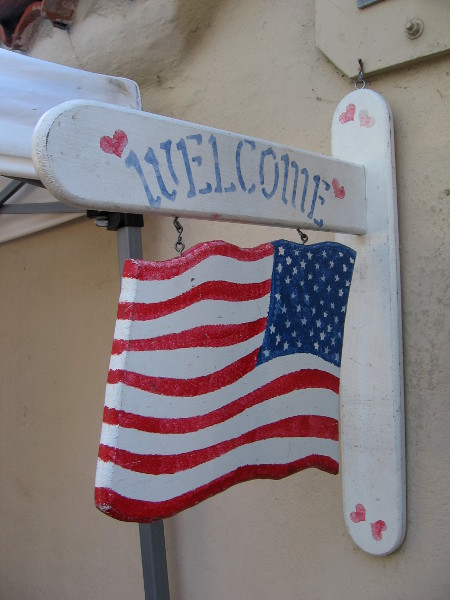
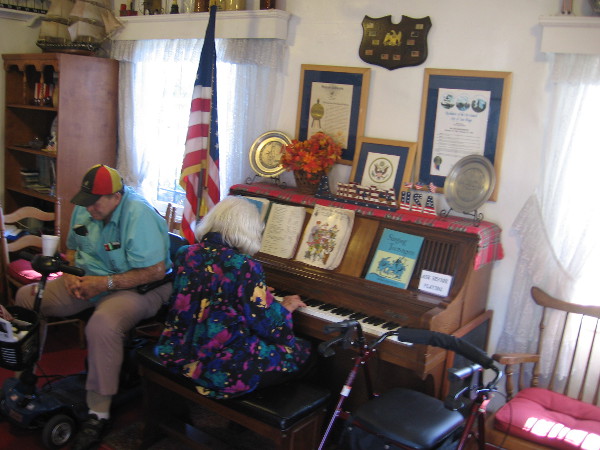
The band is ready to play as people gather around the stage in the lawn area of the International Cottages. It’s a Sunday afternoon in San Diego’s beautiful Balboa Park.City Guard Band of San Diego plays during a special Veteran’s Day program. The band originated in 1880, when members were part of a local volunteer militia.Old plaque at base of large tree near the center of the surrounding cottages. Dedicated in honor of Arthur E. Vest, Department Commander of the Grand Army of the Republic.A relaxed Veteran’s Day gathering at Balboa Park’s peaceful House of Pacific Relations International Cottages.Folks at a table in front of the House of USA Cottage listen to the band play patriotic and other popular tunes.These fine ladies smiled for my camera! Those treats on the table are well known to this blogger!American flag and a Welcome at the front door of the USA cottage in Balboa Park.Inside the USA cottage. Welcome home all the brave men and women of the United States Armed Forces.Famous portraits and memorabilia from American history cover walls and fill shelves in the House of USA Cottage.Playing the piano for anyone who wanders in on another perfect sunny San Diego day. Someone was whistling nearby.The Stars and Stripes and various books celebrating Americana.Playing sparkling music, from marches to musicals, celebrating those who’ve served to protect our freedom.
…
Follow this blog for more photos of unique events! Join me on Facebook or Twitter.
Molten bronze is poured in the foundry of the USS Ajax. Historical photograph of the Navy Bicentennial Commemorative Plaque being created. Photo credit: United States Navy.
A few days ago I received new information about an important bronze plaque, which was created in 1975 to commemorate the United States Navy’s 200 year anniversary. The historic Navy Bicentennial Commemorative Plaque stands today on San Diego’s Embarcadero, on the Greatest Generation Walk next to the USS Midway Museum. Thousands of people breeze past it every day.
People pass the Navy Bicentennial Commemorative Plaque, displayed on the Greatest Generation Walk near the USS Midway Museum. Photo taken October 17, 2015.Photo of Navy 200 year commemoration plaque courtesy the Port of San Diego.
When I first saw the old plaque, I could find absolutely nothing about it on the internet. So I originally posted this blog. As new information trickled in–sometimes out of the blue–I posted this and this.
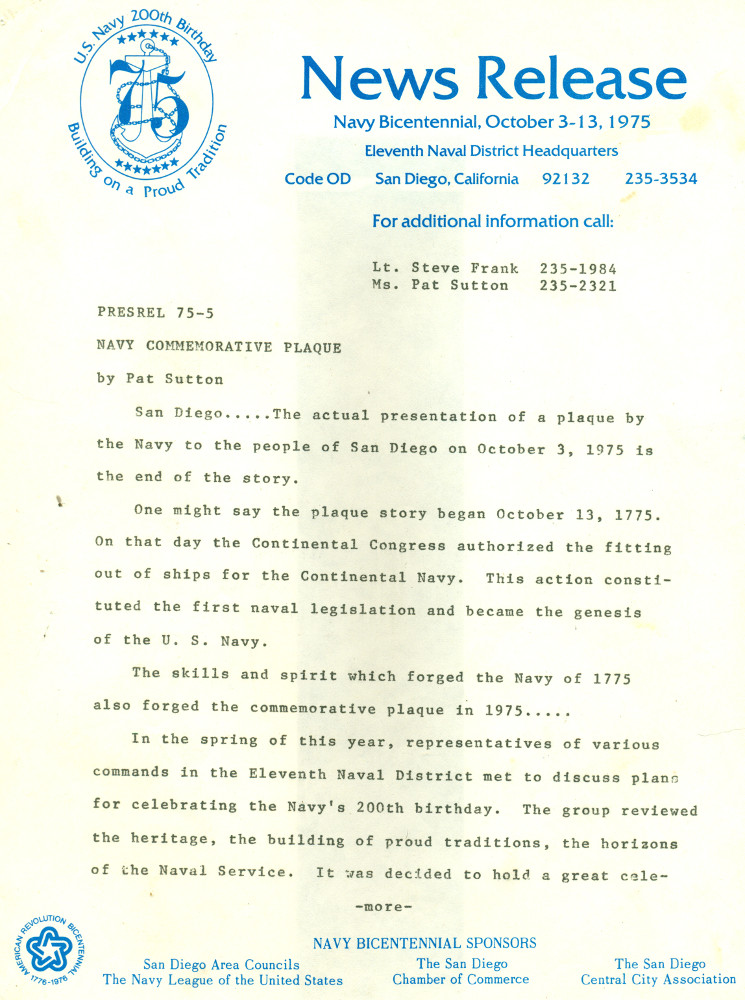
I was recently contacted by one of the plaque’s creators. He has provided detailed information about its history, including three amazing photographs and nine scans of a typed News Release from 40 years ago. The text of the News Release does not appear online, so I carefully transcribed the words. That way a very important bit of San Diego and Navy history won’t be lost.
(I tried to transcribe exactly, including possible misspellings. I’m not certain about the spelling of some names in the photo captions.)
If you know more about this plaque and would like to add some information, please leave a comment below. If you’d like to contact me, but don’t want to have your comment published, then please tell me that and I’ll email you.
Navy Commemorative Plaque News Release. Navy Bicentennial, October 3-13, 1975. Page 1.
NAVY COMMEMORATIVE PLAQUE
by Pat Sutton
San Diego . . . . . The actual presentation of a plaque by the Navy to the people of San Diego on October 3, 1975 is the end of the story.
One might say the plaque story began October 13, 1775. On that day the Continental Congress authorized the fitting out of ships for the Continental Navy. This action constituted the first naval legislation and became the genesis of the U. S. Navy.
The skills and spirit which forged the Navy of 1775 also forged the commemorative plaque in 1975 . . . . .
In the spring of this year, representatives of various commands in the Eleventh Naval District met to discuss plans for celebrating the Navy’s 200th birthday. The group reviewed the heritage, the building of proud traditions, the horizons of the Naval Service. It was decided to hold a great celebration
Navy Commemorative Plaque News Release. Navy Bicentennial, October 3-13, 1975. Page 2.
to honor the Navy, its members past and present, the nation and San Diego – so long a part of the life, the heritage and tradition of the Navy.
The plaque story developed in an uniquely traditional Navy way. The Navy’s microcosmic capabilities began to surface and swing into action.
Civilian Mrs. Jo Palm is the Visual Information Specialist for the Commander Naval Surface Force, Pacific. She also chaired the Navy Bicentennial exhibits committee. Jo conceived the idea that there should be some lasting remembrance of the occasion for the people of San Diego – perhaps a commemorative plaque would be appropriate.
Civilian Francisco (Cisco) Lopez is a designer with the General Atomic Company of San Diego. He is also a First Class Draftsman in the Navy Reserve. Tall, 28-years-old, Cisco is a 12-year Navyman, combining four years active duty with eight years in the Reserve. Last June he served his annual two weeks active duty in the Naval Surface Force Public Affairs graphics shop, reporting from his Reserve Unit with the Fleet Intelligence Center, Pacific.
“Jo told me her idea and we decided I should design something depicting 200 years of Navy history – along the lines of a plaque, but not like the usual plaque.”
Navy Commemorative Plaque News Release. Navy Bicentennial, October 3-13, 1975. Page 3.
Cisco was raised in San Francisco and has lived in San Diego the past five years. He graduated from San Francisco State and hopes eventually to be a research historian or teacher.
“I have almost a passion for history. I’m taking a month off work in June ’76, I’ll be in Philadelphia on the Fourth of July. As an armchair military historian I really relished the opportunity to be a part of today’s history by designing a representation of our Navy over a span of 200 years”.
At the suggestion of her student husband, Mel, Jo Palm went aboard Mel’s former ship, USS Ajax (AR-6), with Cisco’s drawing and the question, “Can you make it a reality?”
For a fleet repair ship like Ajax, “can” is a reality because she is designed for heavy duty hull repair; to provide a full range of repair services to Navy units in remote areas.
On her way to see the Repair Officer, Lieutenant Commander Harley M. Oien, Jo Palm passed through the Patternmaker/Carpenter Shop, remarkably clean despite the several huge saws rasping, whining and spewing sawdust. She was escorted through the Heavy Machine and Shipfitter’s shops where expert Navy operators can literally rebuild a whole ship.
Navy Commemorative Plaque News Release. Navy Bicentennial, October 3-13, 1975. Page 4.
Twelve-year Navy veteran, Chief Molder Marvin E. (Tex) Feasell of Baytown, TX, is in charge of the Ajax foundry. He recounts the meeting below decks in Mr. Oien’s office where he and a few key men, including Patternmaker First Class Ronald Gray, held a conference with Jo.
“We hashed, squabbled, explained our methods, discussed time frames, costs to the Bicentennial Birthday Fund, and most of all, the making of the pattern. That’s the critical area. That’s the make or break of the job”.
Tex Feazell learned his profession when he was sent to the Moulder “A” school right out of Boot Camp in 1963. He reported aboard Ajax in May 1974. He has a keen appreciation of the expertise of the Ajax crew, and a keen pride in its performance.
“We have one of the most hard charging crews in the fleet. The people are hard charging – hit it! Hit it! We wanted to show our skills. We wanted to make that plaque for the Navy and for San Diego. We didn’t know for over a week if we would get the job. It made us feel proud when we heard we were going to do it”.
And so the “make or break” responsibility of the Navy’s bicentennial birthday memento to San Diego was enthusiastically assumed by Patternmaker Ronald Gray, who applied his
Navy Commemorative Plaque News Release. Navy Bicentennial, October 3-13, 1975. Page 5.
Navy-learned skills to transform from drawing to working pattern the impression of 200 years of the United States Navy.
Ron has not always served in the time honored rate of Patternmaker. He joined the Navy shortly after he graduated from high school in Olympia, WA, and served his first hitch as a Commissaryman. A friend, appreciative of his carving hobby, suggested Ron reenlist under the Navy’s SCORE (Selective Conversion) program and be schooled as a Patternmaker.
Now, after 7 1/2 years in the Navy, 2 1/2 aboard Ajax, this craftsman laid the historical design out, carved his first figures in bas relief, glued them on board, then build up the other details. The pattern for the 30″ x 24″, 150 pound metal plaque would end up basically wood and plaster, however, the rope detail was real rope!
The Spirit of ’75, the hallmark of the Navy, nowhere better manifested itself than aboard the USS Ajax as the work progressed.
Patternmaker Third Class Roger Richie of Denver, CO, was a millman in civilian life and when he joined the Navy he wanted to be a carpenter. But at the time, there was no billet open at the carpenter school.
Navy Commemorative Plaque News Release. Navy Bicentennial, October 3-13, 1975. Page 6.
“Now I think I got lucky, because I was sent to Patternmaker’s School. There’s not too many of us in the Navy, or in the country, for that matter. So by what you might call a ‘freak accident’ I was here to help Ron on the plaque. There’s pride in this job”.
The Ajax Dental Department loaned Ron Gray tools for working on the intricate wax carvings, and a dental drill for final sanding. The ship’s Dental Officer, Commander Roger E. Bisson of Helena, MT, enjoys woodworking and asked to carve the plaque’s Navy aircraft with his precision instruments.
“We all want to contribute. Gray is so willing to share the glory with the team, even though he has done most of the work”, Bisson said.
Below the gleaming metal decks, at the very keel of Ajax on the concrete deck of the foundry, Molder First Class William McCoy of Coshocton, OH, and his men were ready. McCoy spent his first four years in the Navy as a destroyer torpedoman. Then for ten years he was a civilian molder. Unable to wash the salt from his veins, he returned to the Navy a year and a half ago.
McCoy described his work, “The molding art is fairly unchanged since the middle ages. We use primitive tools, primitive casting methods. A person with an understanding of the primitive makes an excellent molder”.
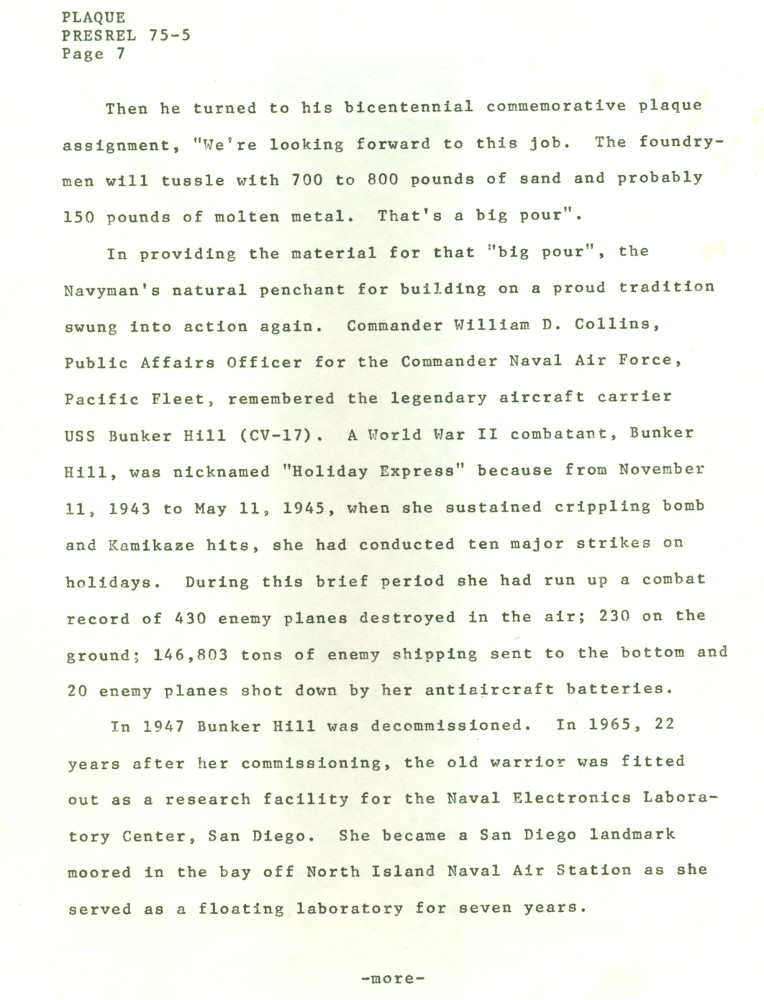
Navy Commemorative Plaque News Release. Navy Bicentennial, October 3-13, 1975. Page 7.
Then he turned to his bicentennial commemorative plaque assignment, “We’re looking forward to this job. The foundrymen will tussle with 700 to 800 pounds of sand and probably 150 pounds of molten metal. That’s a big pour”.
In providing the material for that “big pour”, the Navyman’s natural penchant for building on a proud tradition swung into action again. Commander William D. Collins, Public Affairs Officer for the Commander Naval Air Force, Pacific Fleet, remembered the legendary aircraft carrier USS Bunker Hill (CV-17). A World War II combatant, Bunker Hill, was nicknamed “Holiday Express” because from November 11, 1943 to May 11, 1945, when she sustained crippling bomb and Kamikaze hits, she had conducted ten major strikes on holidays. During this brief period she had run up a combat record of 430 enemy planes destroyed in the air; 230 on the ground; 146,803 tons of enemy shipping sent to the bottom and 20 enemy planes shot down by her antiaircraft batteries.
In 1947 Bunker Hill was decommissioned. In 1965, 22 years after her commissioning, the old warrior was fitted out as a research facility for the Naval Electronics Laboratory Center, San Diego. She became a San Diego landmark moored in the bay off North Island Naval Air Station as she served as a floating laboratory for seven years.
Navy Commemorative Plaque News Release. Navy Bicentennial, October 3-13, 1975. Page 8.
“The Bunker Hill was stripped of her brass and bronze fittings prior to her scraping in late 1972”, Commander Collins reported at a Bicentennial Committee meeting, “this was molded into ingots. Some of the ingots still remain and are stored at the Naval Station in Honolulu. We would be honored to have Bunker Hill permanently a part of San Diego. The Pacific Naval Air Force will provide her brass and bronze for the plaque”.
And so it was done.
In August Jo Palm called Cisco Lopez with the news that the plaque was to become a reality. Cisco told Jo of an uniquely Navy coincidence. “For my 1975 active duty tour I was stationed on Ajax! I designed ducting for ventilation of a spray booth. Great crew! I never expected to work with them again”.
On September tenth, after the sand had been rammed around the pattern and the pattern removed, leaving its historic impression (the negative), the excitement of expectancy on the Ajax foundry deck rose even as the metal of old Bunker Hill rose toward the proper temperature to pour.
Participants, both active and anticipating, ranged from Jo Palm and Cisco Lopez; Navy combat cameramen and photographers; to the molders, firemen, and as from the beginning,
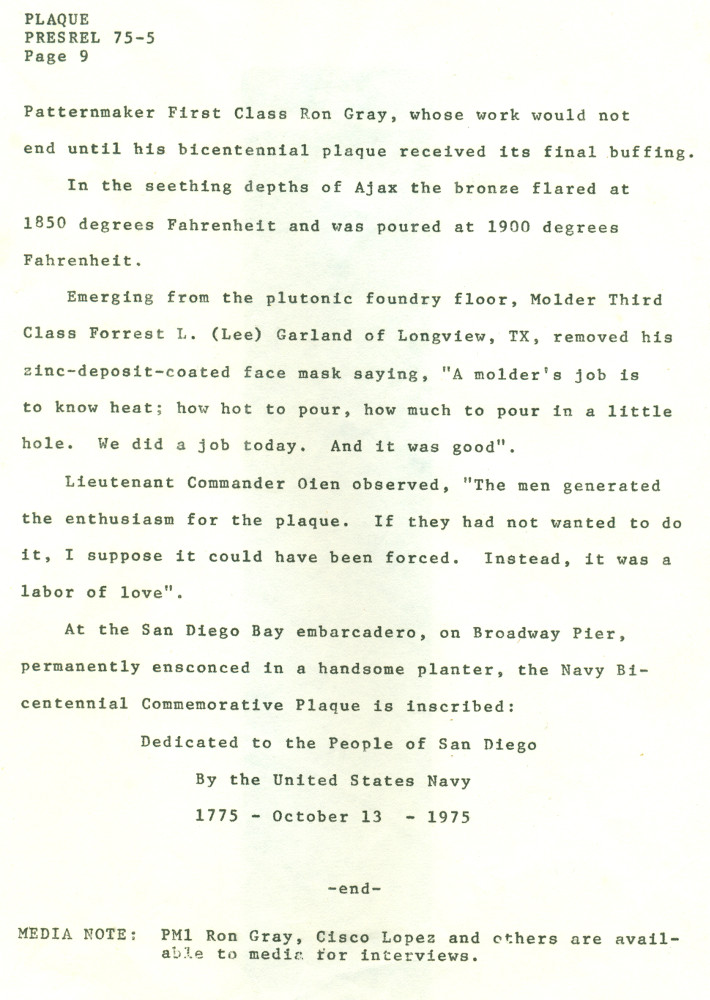
Navy Commemorative Plaque News Release. Navy Bicentennial, October 3-13, 1975. Page 9.
Patternmaker First Class Ron Gray, whose work would not end until his bicentennial plaque received its final buffing.
In the seething depths of Ajax the bronze flared at 1850 degrees Fahrenheit and was poured at 1900 degrees Fahrenheit.
Emerging from the plutonic foundry floor, Molder Third Class Forrest L. (Lee) Garland of Longview, TX, removed his zinc-deposit-coated face mask saying, “A molder’s job is to know hear; how hot to pour, how much to pour in a little hole. We did a job today. And it was good.”
Lieutenant Commander Oien observed, “The men generated the enthusiasm for the plaque. If they had not wanted to do it, I suppose it could have been forced. Instead, it was a labor of love”.
At the San Diego Bay embarcadero, on Broadway Pier, permanently ensconced in a handsome planter, the Navy Bicentennial Commemorative Plaque is inscribed:
Dedicated to the People of San Diego
By the United States Navy
1775 – October 13 – 1975
Tex Feazell and Ron Gray with the first wood carving and the original drawing. Photo credit: United States Navy.Patternmaker Kevin O’Connor, Molder Jessie Lopez, Molder Lee Garland, Patternmaker Roger Richie, two unidentified Molders, Bill McCoy and Ron Gray. Photo credit: United States Navy.
…
Follow this blog for more amazing, unexpected discoveries! Join me on Facebook or Twitter.
































































 Cool San Diego Sights!