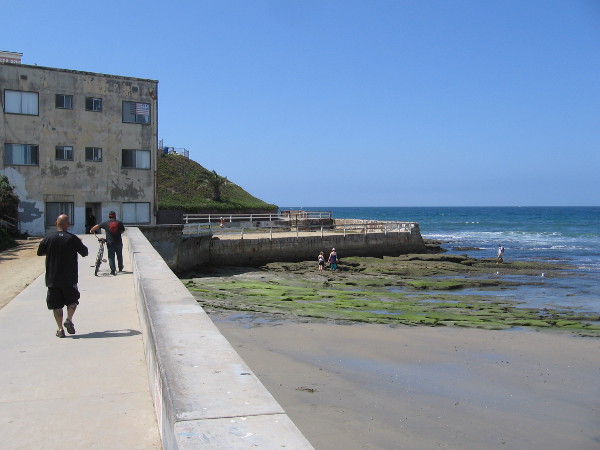
Walking south along the Ocean Beach boardwalk near the foot of the OB Pier, toward the old Silver Spray Apartments and Plunge.
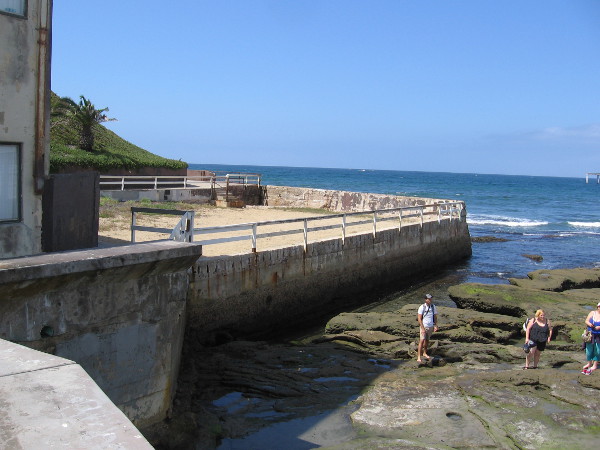
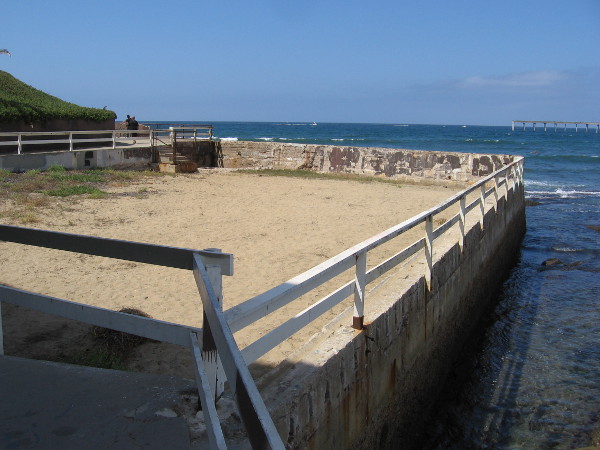
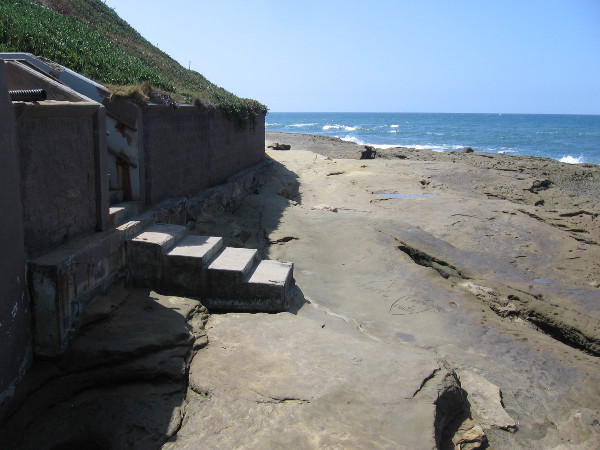
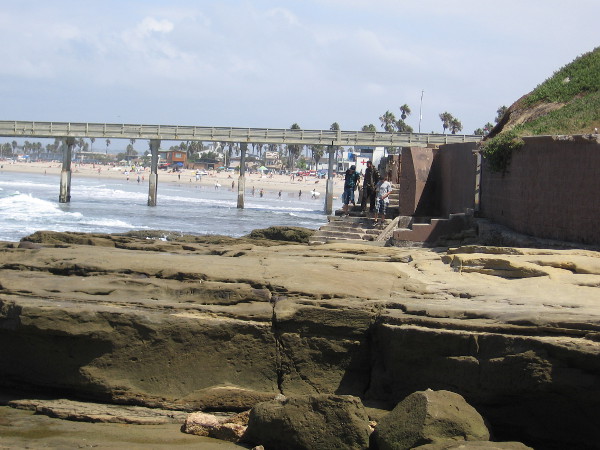
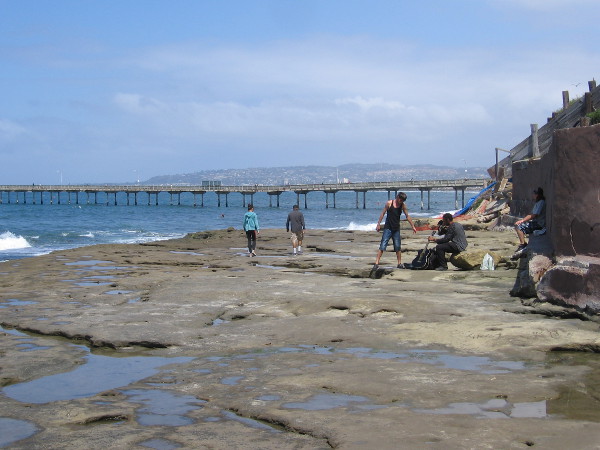
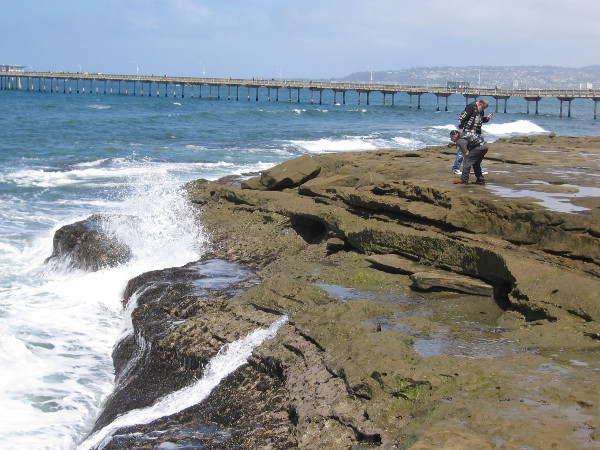
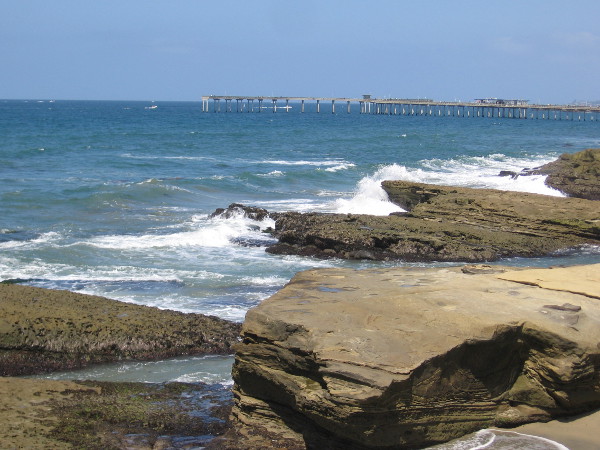
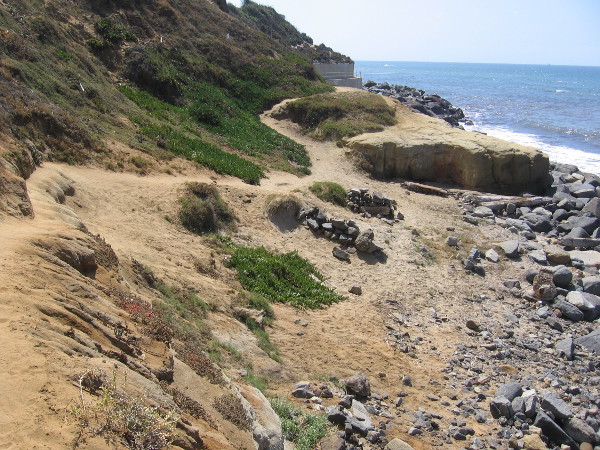
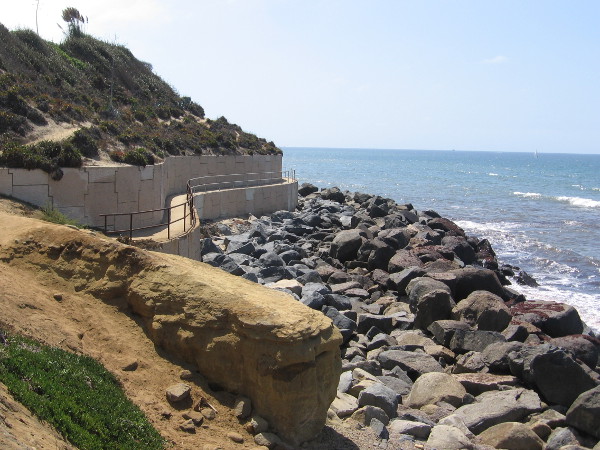
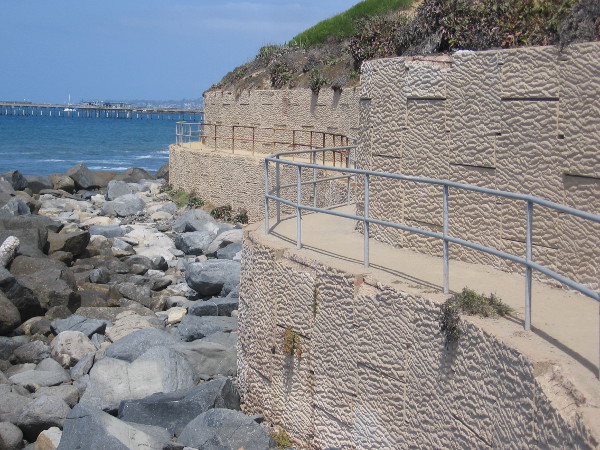
Let’s take a walk along the shore! We’re going to start at the boardwalk near the foot of the Ocean Beach Municipal Pier, pass quickly around the historic, ruin-like Plunge, then head along a rocky trail between cliffs and the crashing ocean.
We’ll see tide pools, tiny pocket beaches and amazing scenery. Many refer to this stretch as a part of San Diego’s Sunset Cliffs, even though the official Sunset Cliffs neighborhood lies farther south down the Point Loma peninsula.
Ready to go exploring? Let’s start!
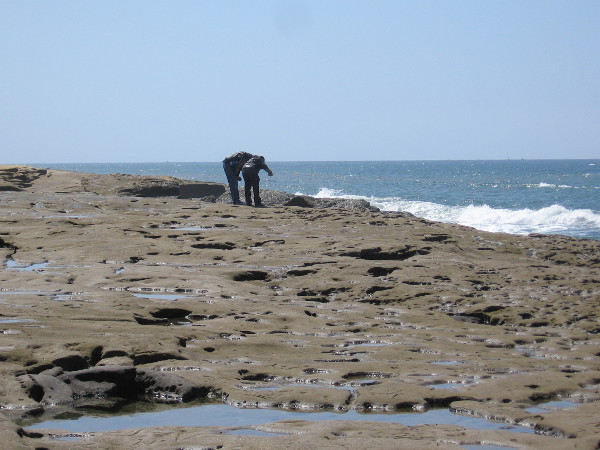
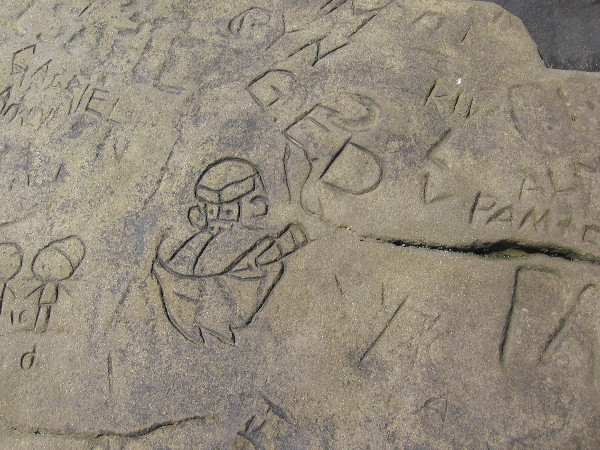
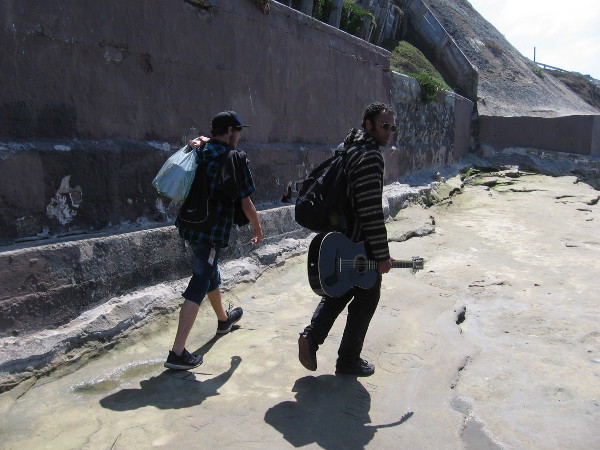
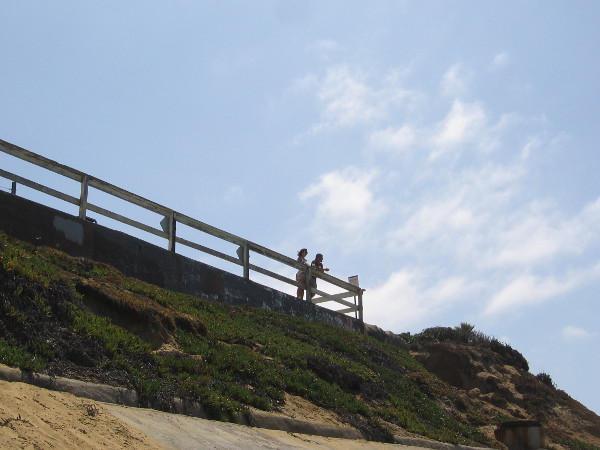
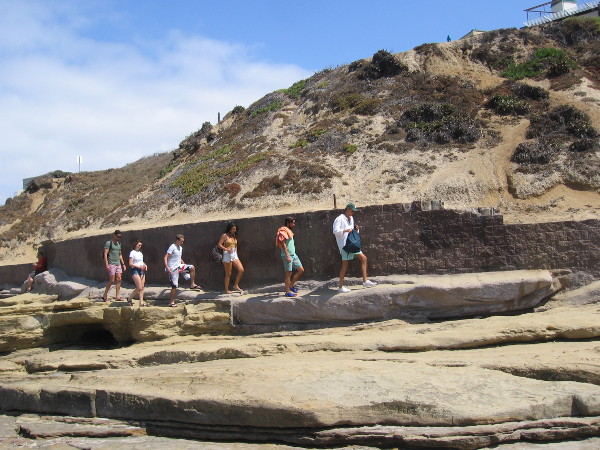
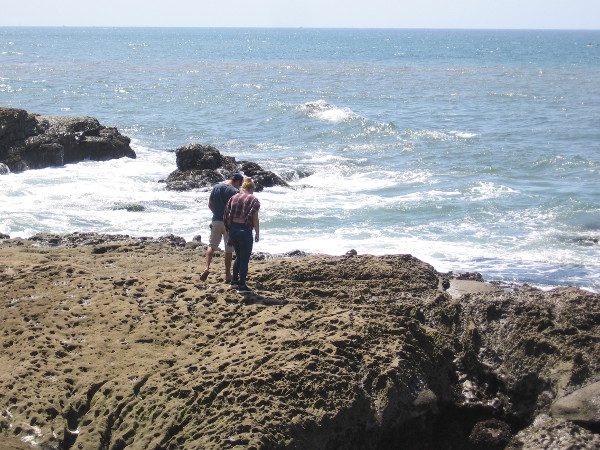
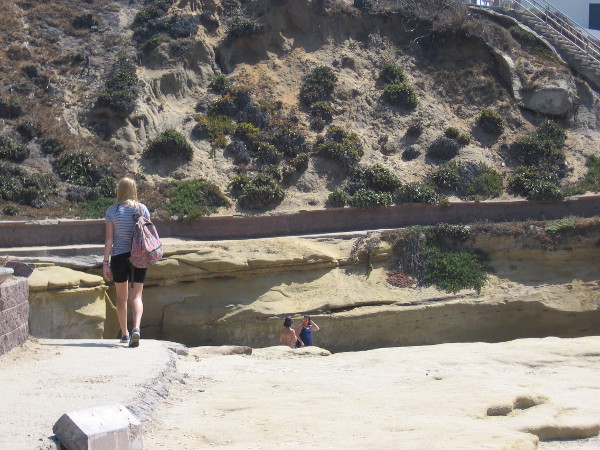
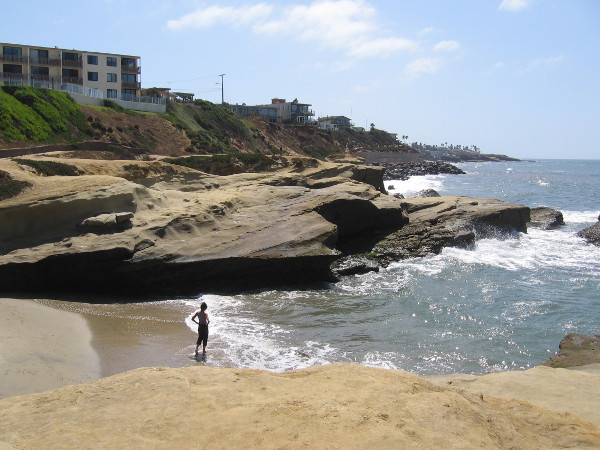
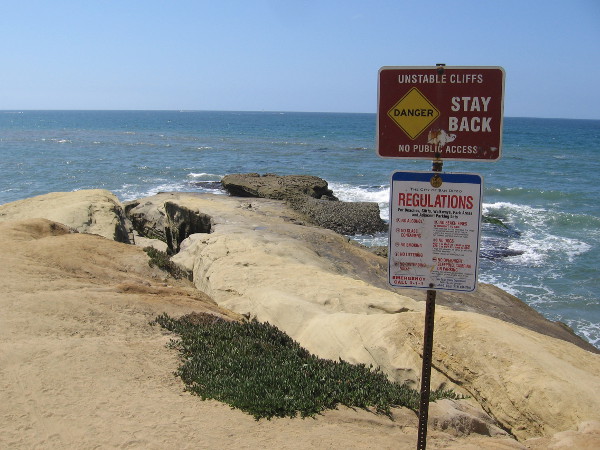
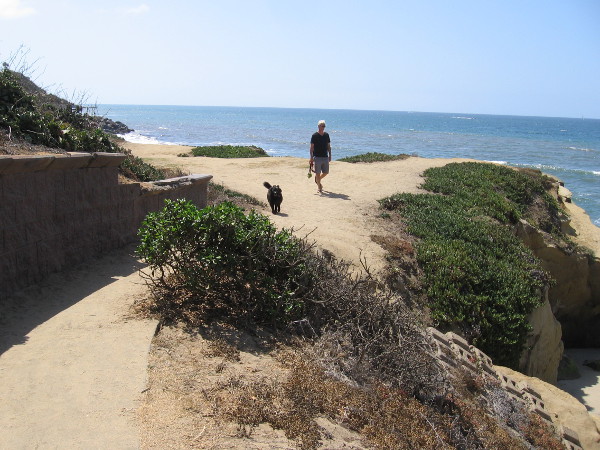
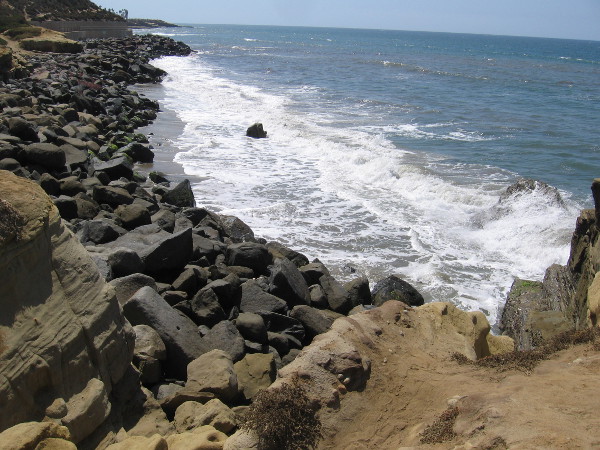
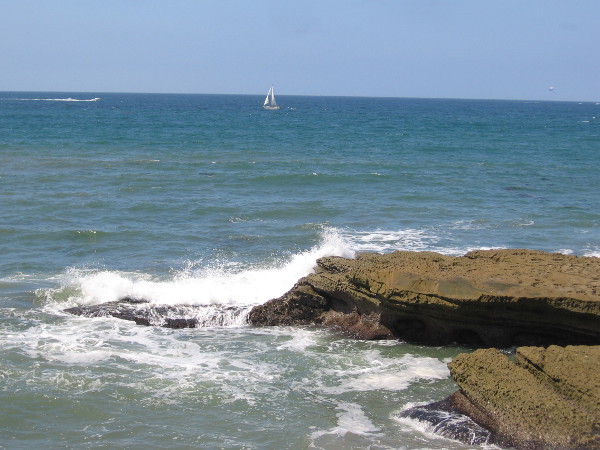
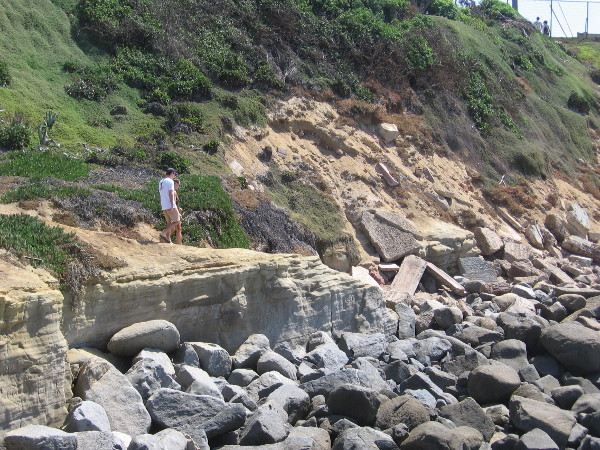
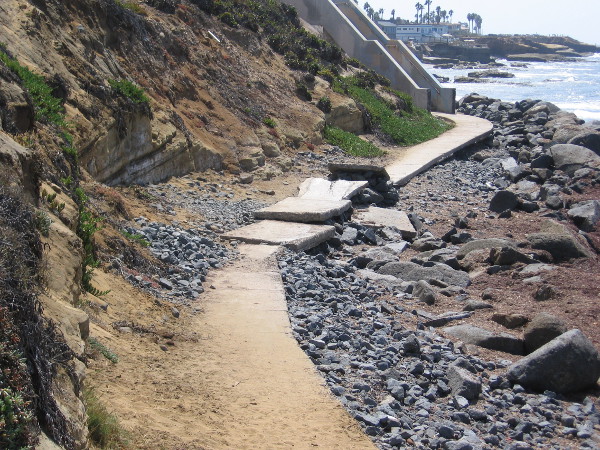
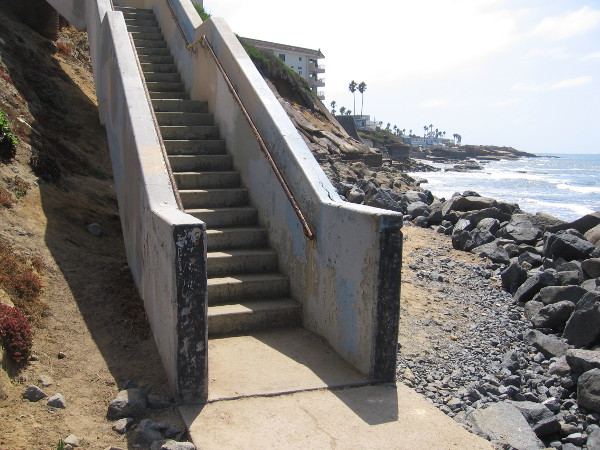
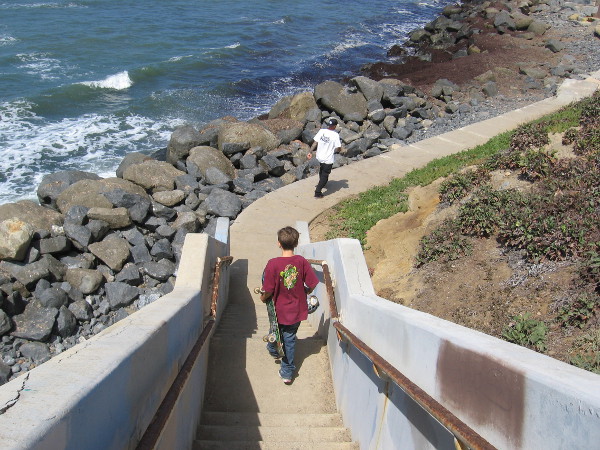
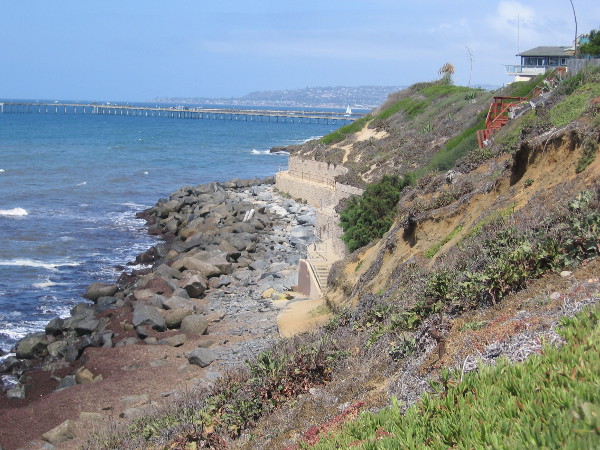
People explore tide pools between the sand-filled, long-defunct Plunge and the OB Pier.The saltwater Plunge, now often called the Sandbox, was built in 1917. Famous English Channel swimmer Florence Chadwick, who grew up in San Diego, trained in this historic pool.We’ve passed the Plunge, which is officially part of the beach, and are now carefully traversing sandstone rocks along the base of cliffs. It can be very slippery.Looking back north we see the Ocean Beach Municipal Pier and beach.People enjoy looking into small tide pools in the eroded sandstone. I occasionally saw some small crabs.The easily carved sandstone is like a book containing years of names and often humorous images.OB is a place for free spirits, and the rocks along the water attract many.Looking north again. I see Pacific Beach and La Jolla in the distance.Splashing water and curious eyes.People peer down at us from the street level above.A small group walks along the crude trail.A perfect day to explore nature’s many wonders beside the ocean.Someone heads toward one of the small pocket beaches tucked between rocky outcrops.Standing on a tiny beach at the water’s edge.The sandstone cliffs are unstable and sometimes you hear of people accidentally falling and needing rescue.Here comes a guy and his dog.As we continue to walk south, we can see the coast vanishing into the distance. The actual Sunset Cliffs neighborhood is farther down the Point Loma peninsula.A white sailboat out on the wide blue Pacific Ocean.In places the rocky and slippery sand footing is a bit difficult to navigate, even on the trail. Wear good shoes!Looking north. Spectacular scenery.More natural beauty.The rough trail continues south. Fewer people seem to be in this section.Now we’re approaching an interesting part of the walk, with a short, undulating path along a sea wall.Looking back.We’ve almost reached the end of our walk. The concrete pathway ahead has either been undermined by water, or intentionally made into a ramp for thrill seekers.At the foot of old stairs that climb up to Orchard Avenue.As we head up, someone begins down.Two people begin their own adventure along the rocks.Looking back north at the short stretch we just finished.Someone gets exercise on the steps. At the top there is some fun artwork.Relaxing on a unique surfboard bench, gazing across the magical blue ocean.
…
I live in downtown San Diego and love to walk around with my camera! You can follow Cool San Diego Sights via Facebook or Twitter!
You can easily explore Cool San Diego Sights by using the search box on my blog’s sidebar. Or click a tag! There are thousands upon thousands of fun photos for you to share and enjoy!
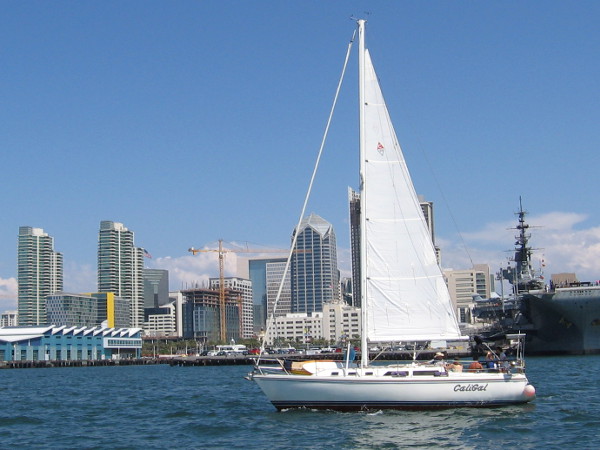
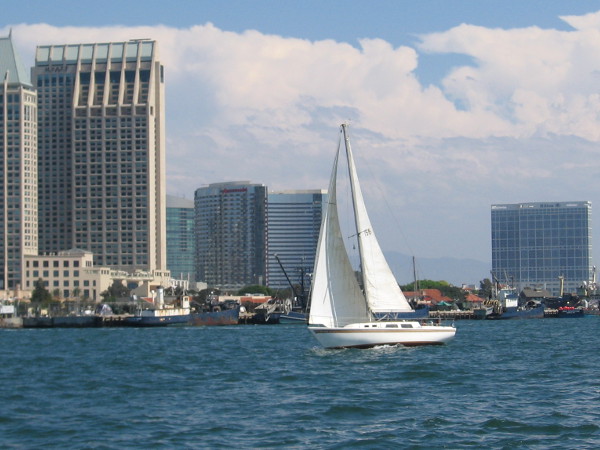
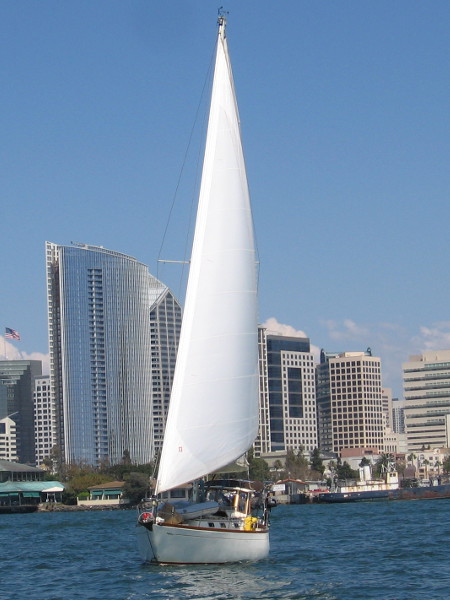
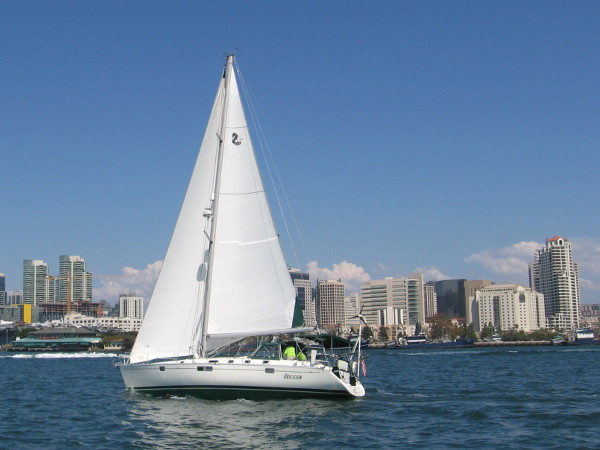
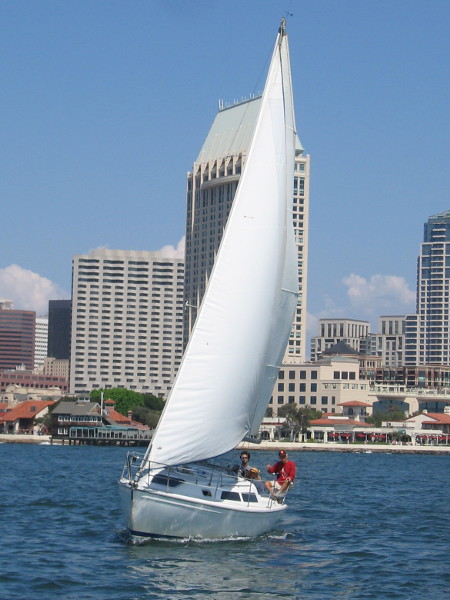
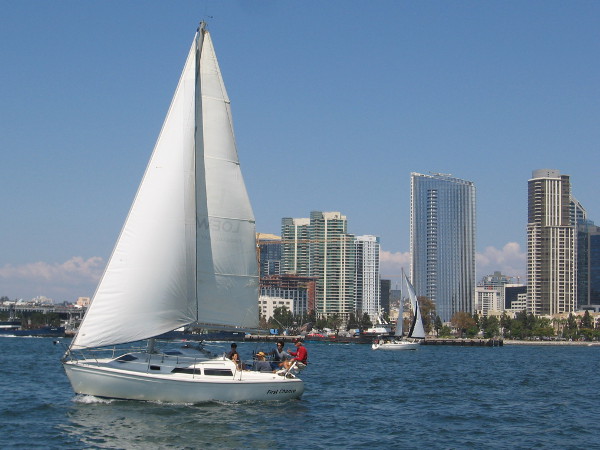
Please enjoy these photos of beautiful sails out on San Diego Bay.
During my busy weekend I went on a harbor cruise aboard the Maritime Museum of San Diego’s historic Pilot boat. (Become a member of the museum and you get all sorts of complimentary tickets!)
I saw dozens of white-winged sailboats soaring across blue water.
It seemed like a dream.
…
I live in downtown San Diego and love to walk around with my camera! You can follow Cool San Diego Sights via Facebook or Twitter!
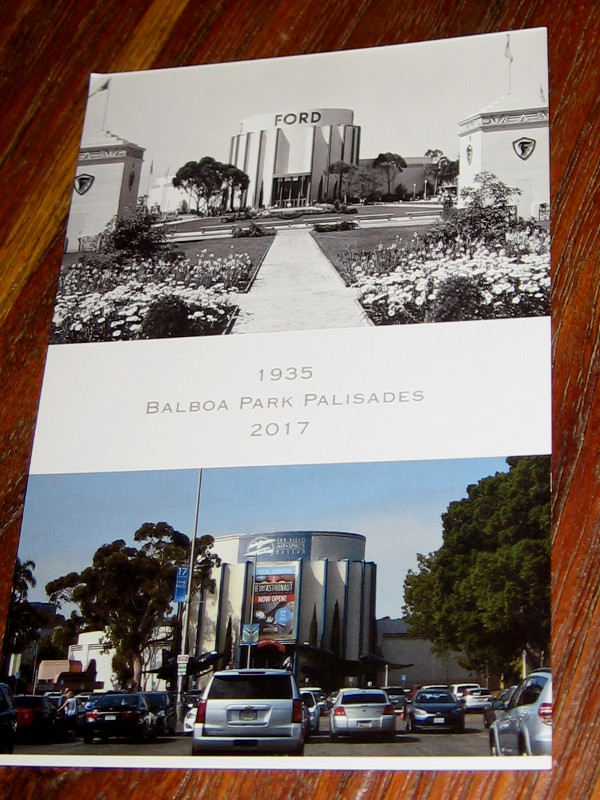
Some supporters of Balboa Park, including The Committee of One Hundred, would like to restore the Palisades area of the park to its former glory. I learned about this visionary effort on Labor Day while grabbing some napkins at the cafe inside the Casa de Balboa. A stack of postcards had been placed nearby. I picked one up. Here’s a photo:
A postcard created by The Committee of One Hundred shows Balboa Park’s Palisades area in 1935 and 2017.
As you can see, in 1935, during the California Pacific International Exposition, the Palisades contained spacious lawns, flowers and benches where today you’ll find a large ugly parking lot.
Sounds familiar? For decades the Plaza de Panama on El Prado contained a similarly ugly parking lot. But after that parking lot’s removal and replacement with tables, umbrellas, potted greenery and public art, the Plaza de Panama has become a bustling hub of activity full of people enjoying the sunny San Diego outdoors, as was originally intended.
Now back to the Palisades area. After a little more research, I’ve learned The Committee of One Hundred is already working to replace the four long-lost murals that used to be above the entrance of the 1935 California State Building, which is home to the San Diego Automotive Museum. To see more about that project, check out The Committee of One Hundred’s 2017 newsletter.
Given what I’ve read and know, I must say I’m in full agreement with the idea of restoring the Palisades. The parking lot is an absolute eyesore and many of the surrounding buildings appear bare and decayed. Most people who park here don’t linger. They immediately head in the direction of El Prado.
The Palisades parking lot seems completely unnecessary. Today, without spending a penny in construction, it appears to me there’s already plenty of parking across Park Boulevard south of the Veterans Museum–that huge lower lot is usually mostly empty. Simply add signage and one or two more stops for the parking shuttle.
When San Diego Comic-Con eventually opens their new museum in the Federal Building, I imagine many more visitors will be drawn into the Palisades area. It seems to me the energetic people at Comic-Con International and other museums who would greatly benefit from a revitalization of the Palisades–the San Diego Air and Space Museum in particular–could use their considerable combined influence to help speed a beautiful restoration.
And why must it be an exact restoration? Why not add more flowers, some new outdoor art, and even a lively, splashing fountain? Why not both restore history and make history? Balboa Park should be forward-looking, optimistic, alive! San Diego’s world-renowned gem could shine even more brightly! Just imagine!
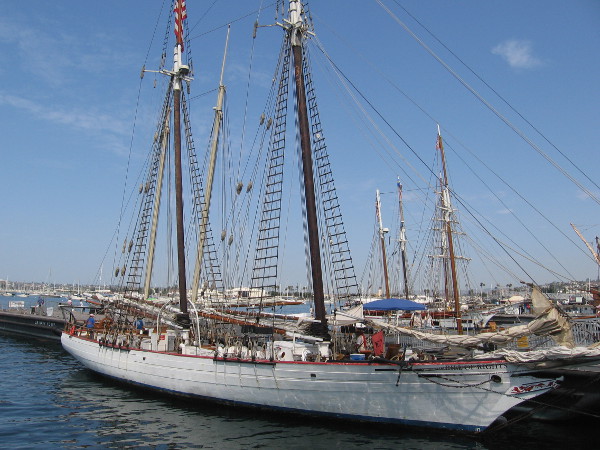
The beautiful tall ship Bill of Rights is participating in the 2017 Festival of Sail in San Diego.
Yesterday I stepped aboard the beautiful Bill of Rights. The tall ship, based in San Diego’s South Bay city of Chula Vista, is participating this Labor Day weekend in the Festival of Sail.
The crew of the Bill of Rights were all very nice to some silly blogger guy asking a few questions. I did learn that Bill of Rights, a two-masted gaff rigged schooner, was built in 1971 based on drawings of Wanderer, an 1856 ship that transported cargo from New Orleans to New York.
I learned Bill of Rights can be chartered for a variety of unique adventures on San Diego Bay or the Pacific Ocean. How exciting would it be to sail on her? The ship will also be used this year for Sea Cadet sailing voyages to Catalina.
Finally, I learned that Bill of Rights is about to have its mandatory every-ten-year Coast Guard inspection, which involves removing the rigging and unstepping the masts. It’s an operation that is quite expensive for a non-profit, requiring hiring a crane, etc. I was told any donations would be really appreciated! Visit their webpage here.
Come aboard and let’s look around just a little bit…
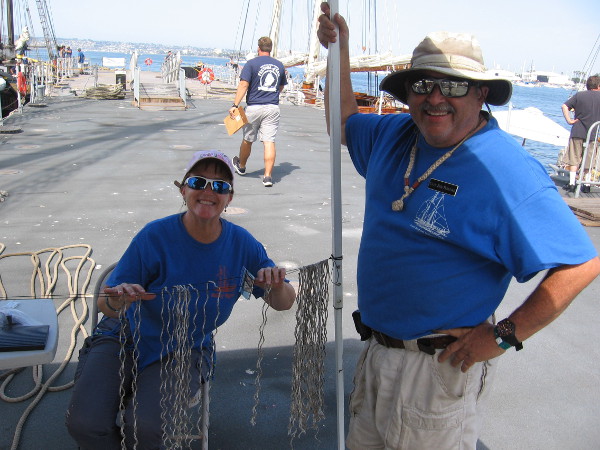
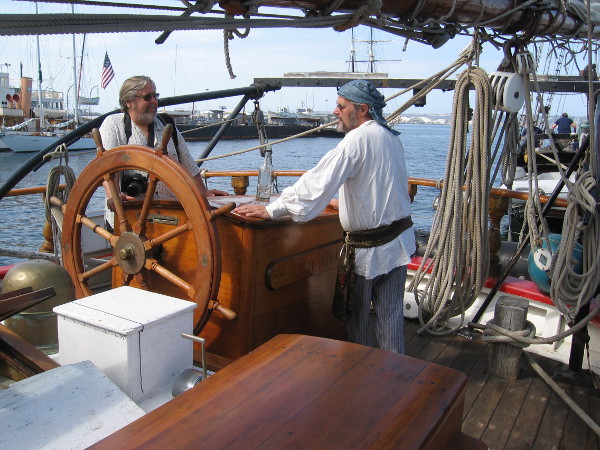
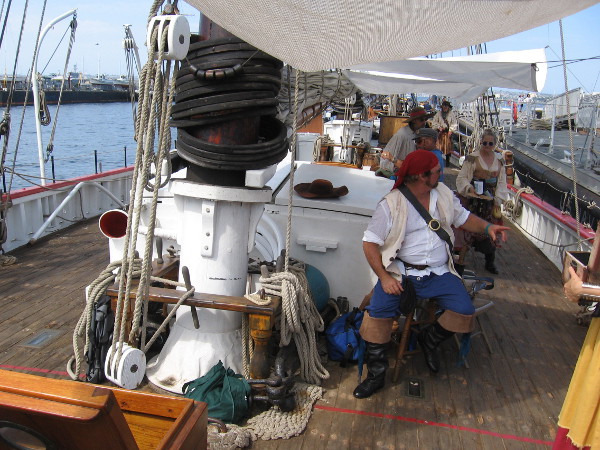
Bill of Rights is a schooner whose design is based on an 1856 ship, Wanderer.A crew member was at work in some shade near the ship.She and the captain give me a friendly greeting.Some Festival of Sail visitors were already onboard, walking about the deck.Interesting people, a fantastic ship, good times.More friendly crewmembers in seafaring costumes chatting by the wheel.Once the sails are raised, Bill of Rights can take to the sea like those tall ships of old.Looking along the wooden deck.Looking down at the main deck of Bill of Rights, a very cool tall ship based in Chula Vista.Smiles and good times at the Festival of Sail!
…
I live in downtown San Diego and love to walk around with my camera! You can follow Cool San Diego Sights via Facebook or Twitter!
You can easily explore Cool San Diego Sights by using the search box on my blog’s sidebar. Or click a tag! There are thousands upon thousands of fun photos for you to share and enjoy!
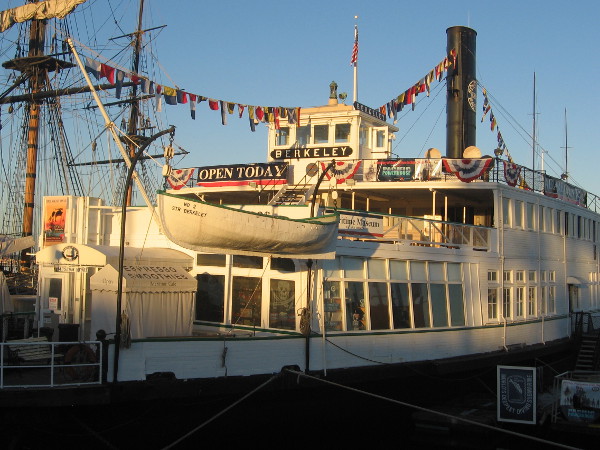
Golden light on the steam ferryboat Berkeley, hub of the Maritime Museum of San Diego. I believe I took this photo a year or two ago.
Over the years, I’ve taken many photos around and aboard the historic steam ferryboat Berkeley. The beautiful old ship is the hub of the Maritime Museum of San Diego. I thought you might enjoy seeing some of these photographs. Read the captions to learn a little about the Berkeley’s fascinating history.
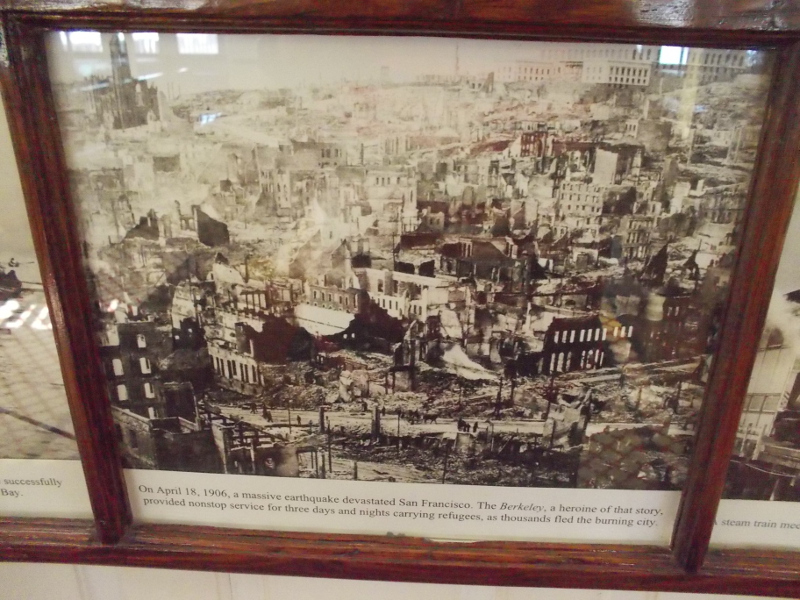
Berkeley, built in 1898, was originally operated by the Southern Pacific Railroad on San Francisco Bay. It was used to ferry up to 1700 passengers per trip between the transcontinental train terminus at the Oakland Pier and the San Francisco Ferry Building across the bay. The Berkeley was also used after the 1906 San Francisco earthquake to rescue thousand of refugees, which were brought out of the fire-devastated city safely over to Oakland.
Berkeley was acquired by the Maritime Museum of San Diego in 1973, and today she houses a large number of fascinating historical exhibits on her lower deck. She is both a National Historic Landmark and California State Historical Landmark, and a cool sight that many like to visit on San Diego’s Embarcadero.
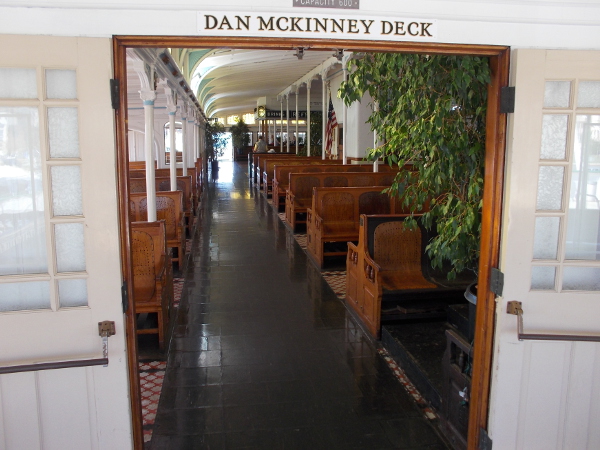
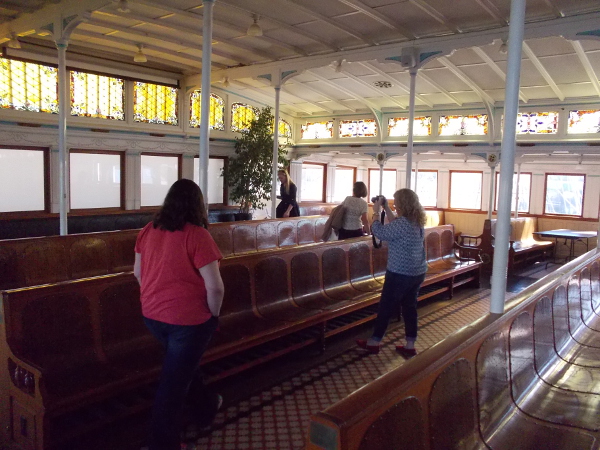
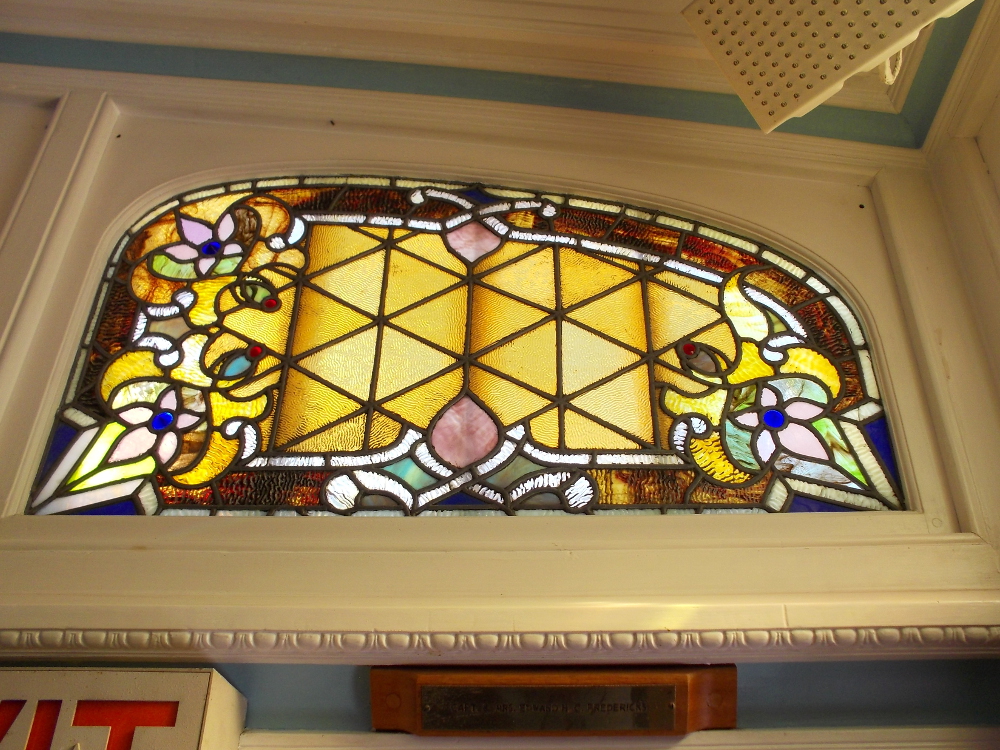
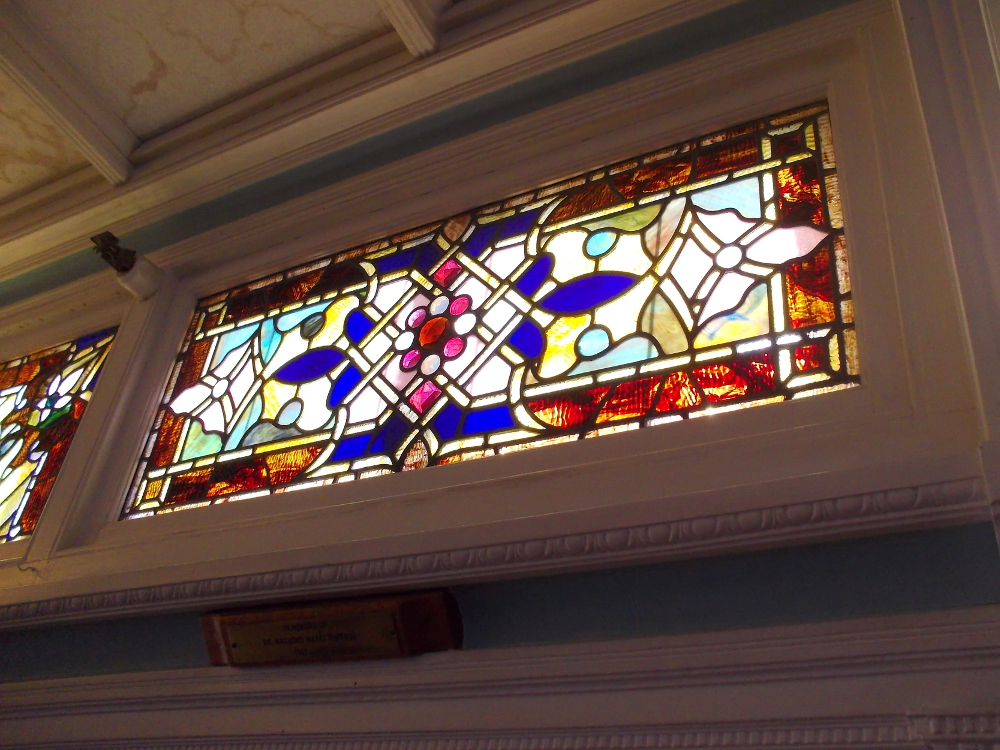
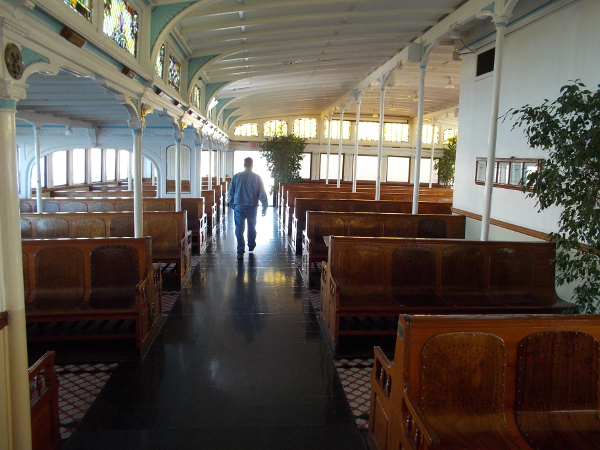
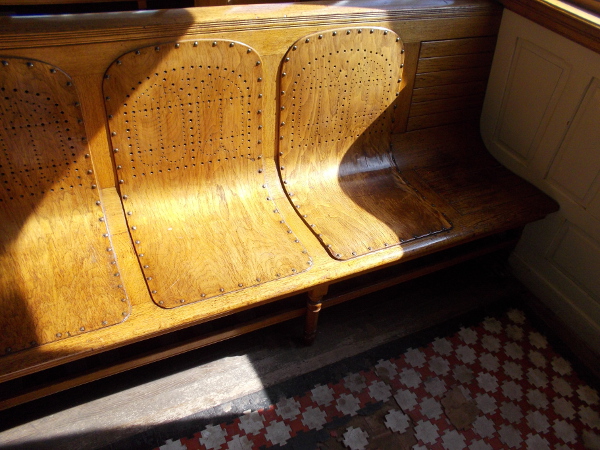
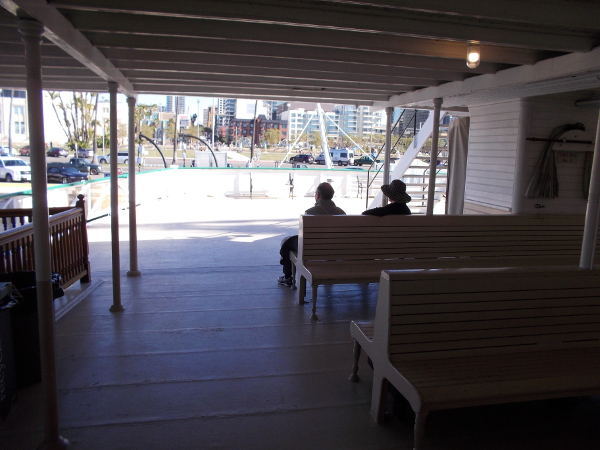
Personally, I love to head up the stairs to the McKinney Deck, where passengers used to cross the water in elegance. I have often seen ferry visitors and members of the Maritime Museum of San Diego sitting on the beautiful wooden benches simply reading or enjoying a relaxing moment. It’s like being transported back into another era. The atmosphere is quite amazing, as you will see…
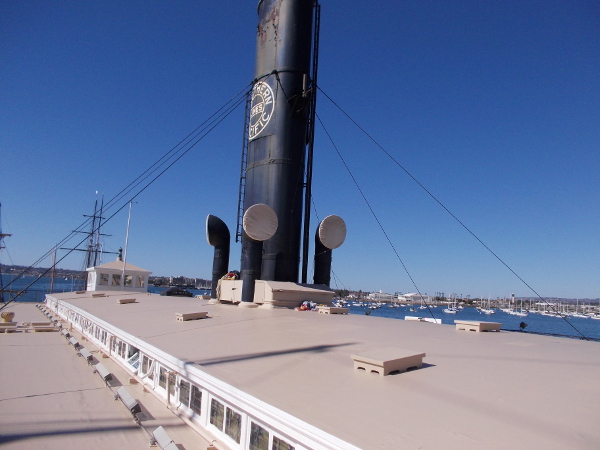
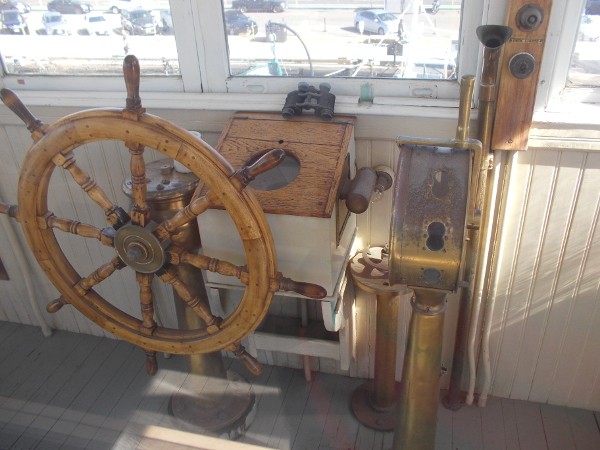
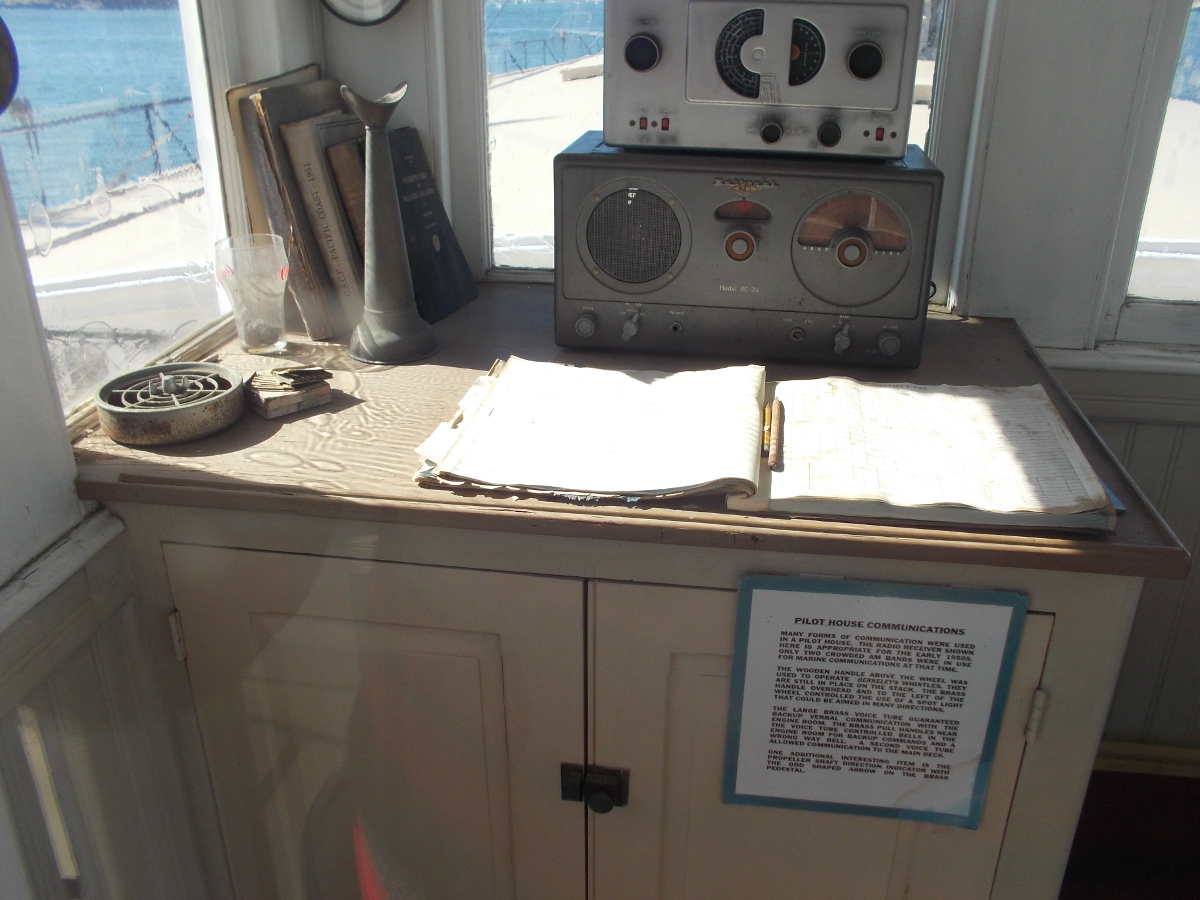
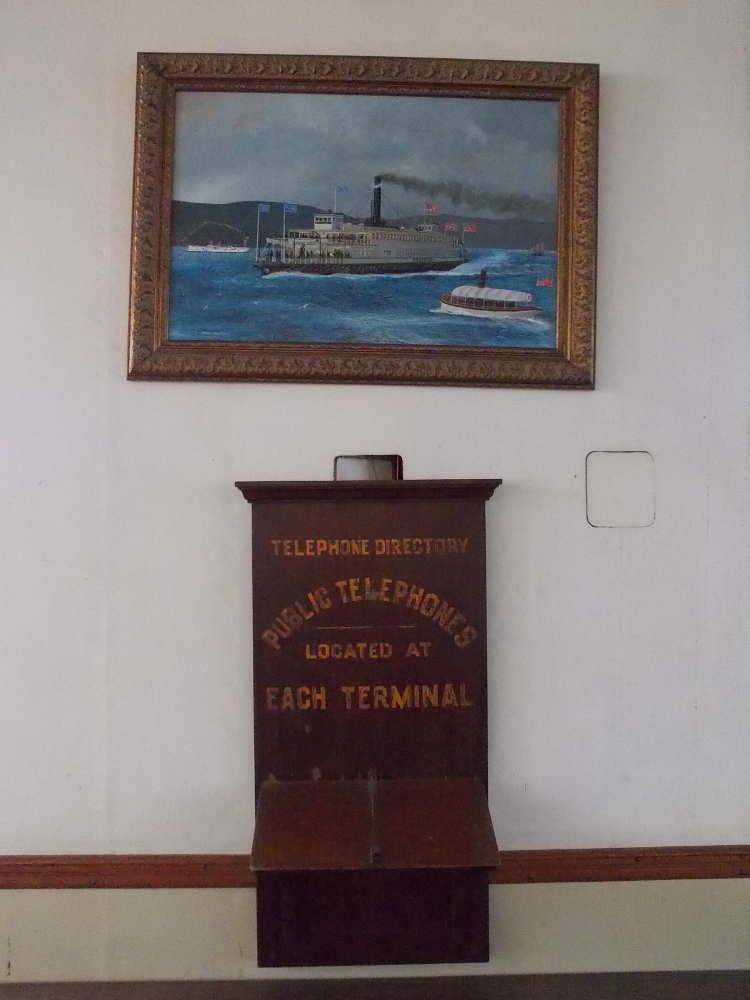
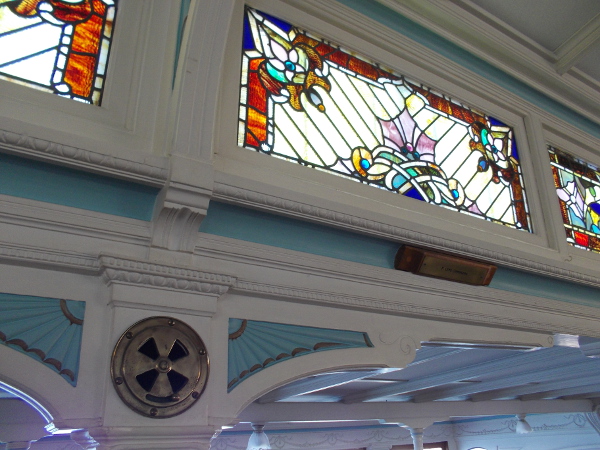
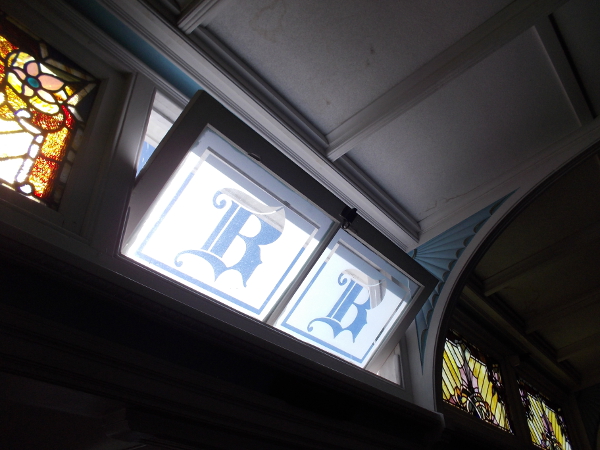
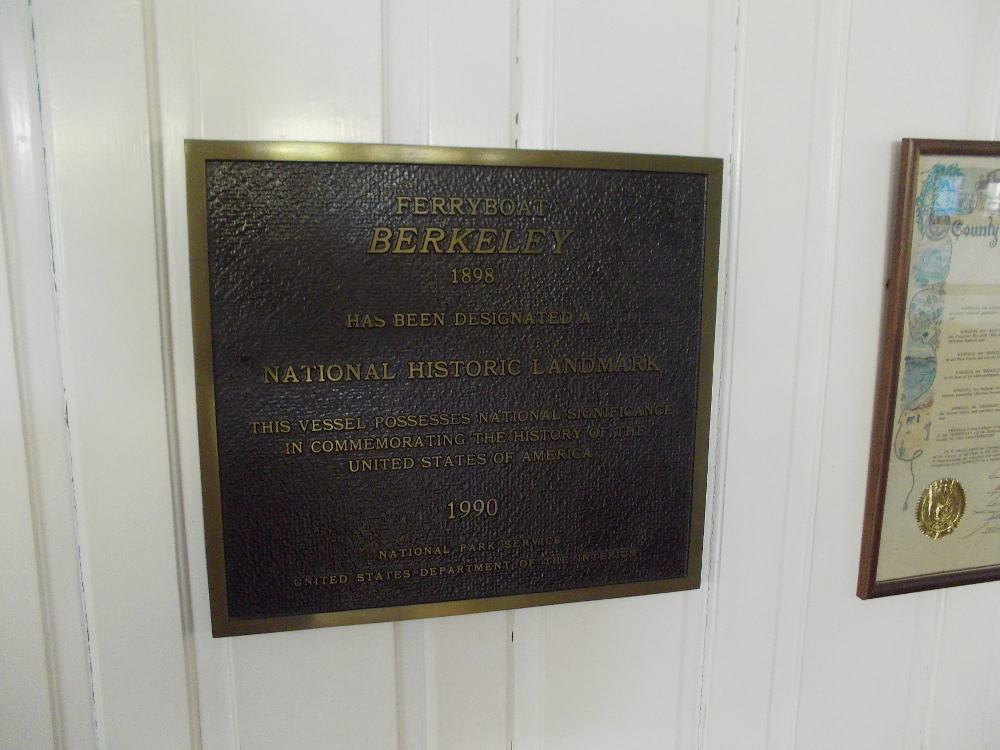
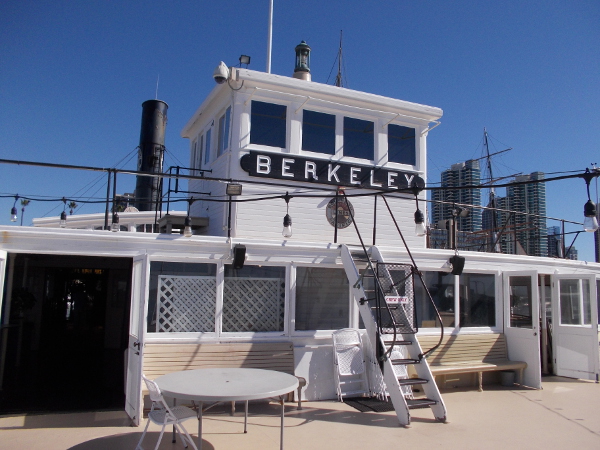
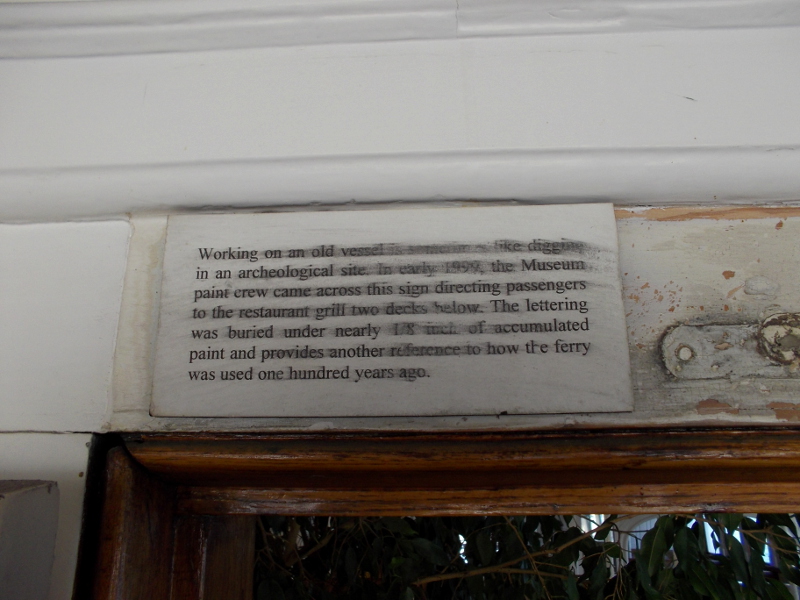
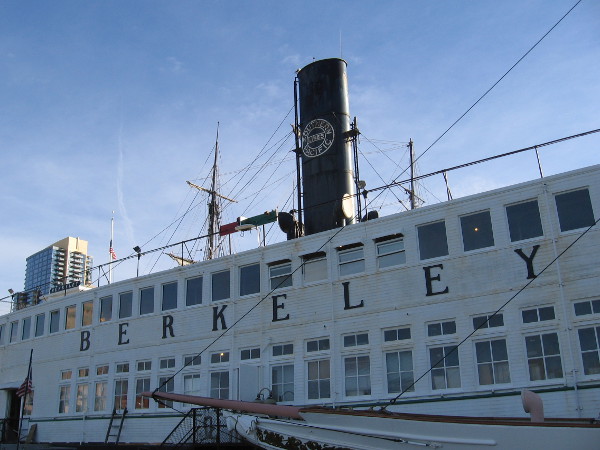
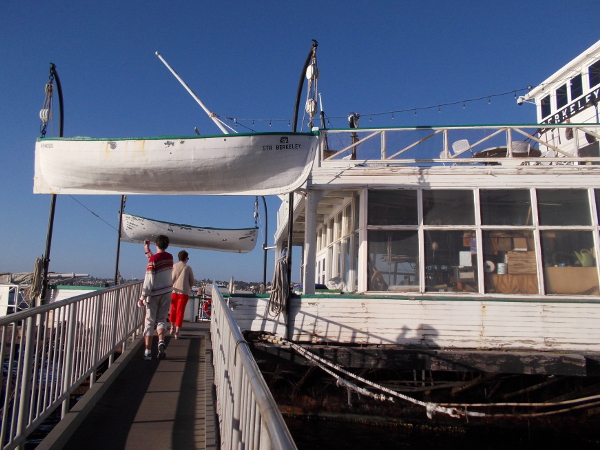
Plaque in front of the ferryboat Berkeley, which was the first successful West Coast-built ferry to be driven by a screw propeller as opposed to side wheels.Downtown San Diego skyscrapers and masts of museum ships HMS Surprise and Star of India can be seen in this photo of the Berkeley’s upper passenger deck and one of two pilot houses.Southern Pacific Lines logo on one pilot house.Photo over the roof of the ferryboat, with a black funnel projecting into the blue San Diego sky.I’m getting ready to look inside the pilot house on the east end of the Berkeley. I see the County Administration Building.The wooden wheel, binoculars and other instruments used to pilot the ferry.Many forms of communication were used during ferry operation. The Berkeley’s pilot houses contained radio receivers, the ship’s whistle, and two voice tubes.Standing outside, peering into the elegant Dan McKinney Deck of the Berkeley.Visitors aboard the Berkeley look at the beautiful long wooden benches and art glass windows of the upper passenger deck.Different art glass windows on the ship fill the passenger deck with many-colored light.More exquisite art glass. Passengers would cross San Francisco Bay in style.Walking through the passenger deck.Sunlight on one comfortable, warm wood bench. Wouldn’t you like to sit here?A painting of the ferry Berkeley and a relic from its history.More beauty aboard the old ship, which is now docked in San Diego Bay.I assume the fancy B is for Berkeley, but I’m not sure.Refreshments used to be purchased here during bay crossings. Today the Berkeley is often used for special events and drinks are still served.Over the years, countless thousands of passengers were served.Ferryboat Berkeley,1898, has been designated a National Historic Landmark. This vessel possesses national significance in commemorating the history of the United States of America.One of four old photos on the passenger deck. Berkeley was launched on San Francisco Bay on October 18, 1898.Berkeley was never a car ferry. The open deck below carried luggage carts for passengers transiting between the end of the railroad at Oakland and San Francisco across the bay.The Berkeley was heroine of the 1906 San Francisco earthquake story. She carried refugees to safety nonstop for three days and nights.In 1973, Berkeley was towed down the coast to San Diego to begin a second life as floating museum.And what a beautiful museum she is! I haven’t included them in this particular blog post, but many cool exhibits can be seen on the lower deck, where ferry passengers used to park their luggage carts.Gazing down some steps at a museum workshop aboard the Berkeley.Gazing from the passenger deck outside toward San Diego Bay. Other museum ships, including Californian and San Salvador, are docked along a float west of the Berkeley.One of the ferry’s old lifeboats.Looking up at the pilot house on the steam ferry’s bay-facing end.Some folks on the other end looking out at downtown San Diego and the Waterfront Park.An old sign above one doorway says Lunch and Grill Room on Lower Deck.That old sign was uncovered beneath accumulated paint. Working on an old vessel is a bit like an archaeological dig.Looking from the Embarcadero at the Berkeley, over the Maritime Museum of San Diego’s deep diving submarine USS Dolphin.The handsome steam ferryboat Berkeley now greets visitors on San Diego Bay.People walk through history aboard a beautiful old vessel.
…
I live in downtown San Diego and love to walk around with my camera! You can follow Cool San Diego Sights via Facebook or Twitter!
You can easily explore Cool San Diego Sights by using the search box on my blog’s sidebar. Or click a tag! There are thousands upon thousands of fun photos for you to share and enjoy!
The top section of a historically important lighthouse now stands on a sidewalk in Old Town San Diego!
A lighthouse that once guided ships into San Diego Bay now stands on an Old Town sidewalk? How strange is that?
Well, not an entire lighthouse–just the lantern room of the 1890 Ballast Point Light Station!
The other day while walking down Congress Street, a few steps southeast of Harney Street, I paused to more carefully examine this mystery. (I’ve driven past the kiosk-like structure often, without really giving it a second thought.)
First, you should note Ballast Point is about 6 miles southwest of Old Town. The spit of land juts down into San Diego Bay from Point Loma; it’s where tall ships used to load ballast stones for their return trip around Cape Horn to the East Coast. Today it is part of Naval Base Point Loma.
So how did this top section of Ballast Point’s historic lighthouse end up on an Old Town sidewalk?
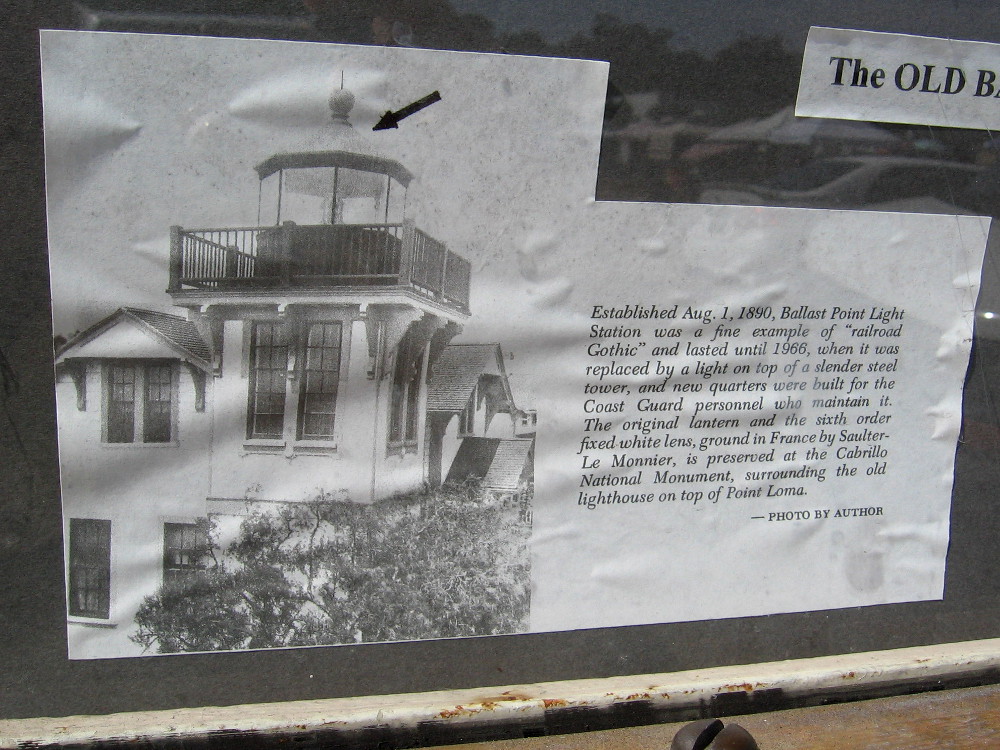
Some interesting photos behind a glass pane provided me with a few clues. The Ballast Point Light Station was built in 1890 and eventually dismantled in 1960. (Click the images and they will expand so you can read much more.)
After doing a little research, I learned the lantern room was found in 1998 by the owner of an Old Town nautical antiques store–West Sea Company–in a classified ad. At the time the Ballast Point lantern room was located at someone’s Bonita residence! Purchased and transported by flatbed truck to Old Town, it was placed on a cement pad near West Sea Company–and here it “mysteriously” remains today!
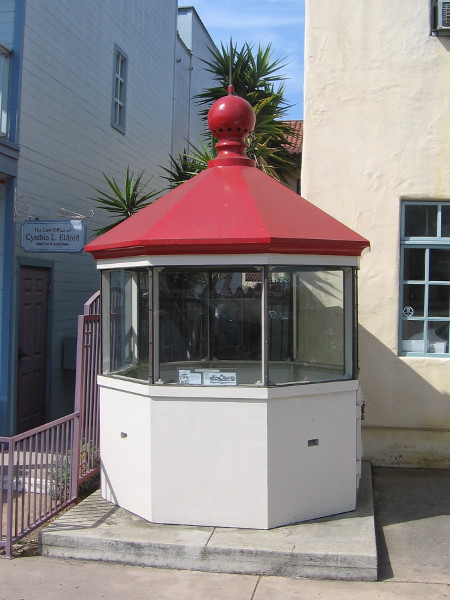
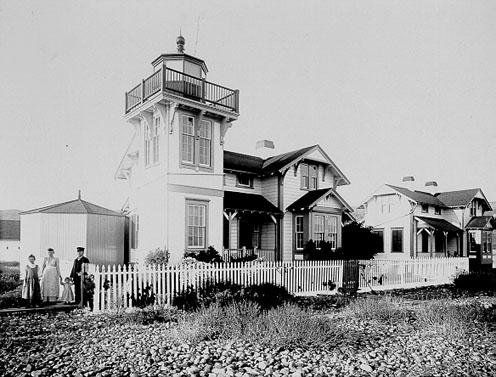
The 1890 Ballast Point Light Station was an example of Railroad Gothic. Its sixth order lens can be seen today at Cabrillo National Monument, in a museum beside the Old Point Loma Lighthouse.Historical photo and some words explain the light at Ballast Point. It guided sailors past Middle Ground Shoal and into San Diego’s harbor.A public domain photo of the Ballast Point Light Station, courtesy Wikimedia Commons.This lantern room housed a light that guided ships into San Diego Bay. It can now be seen on Congress Street in Old Town!
…
I live in downtown San Diego and love to walk around with my camera! You can follow Cool San Diego Sights via Facebook or Twitter!
You can easily explore Cool San Diego Sights by using the search box on my blog’s sidebar. Or click a tag! There are thousands upon thousands of fun photos for you to share and enjoy!
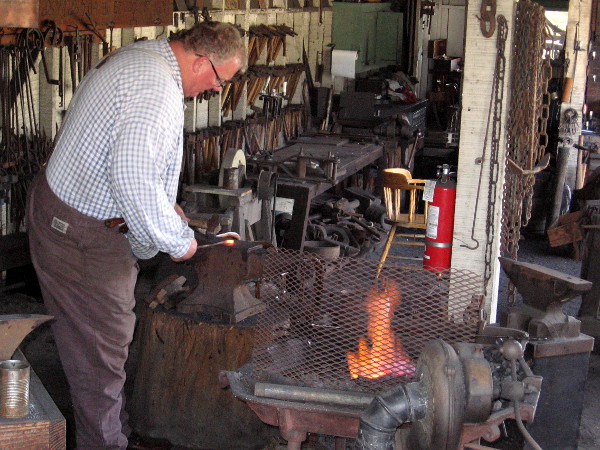
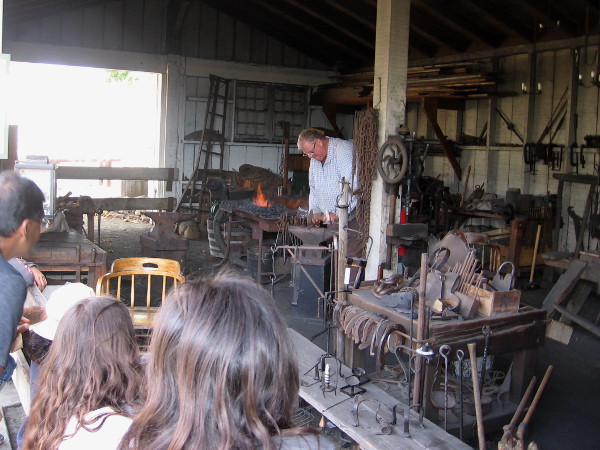
A blacksmith shapes red hot iron at a forge in San Diego’s historic Old Town.
Yesterday I lingered for a few minutes at the Blacksmith Shop in Old Town San Diego State Historic Park. Two forges were operating. I watched as hammers swung, making sparks fly. It was fascinating to learn about blacksmithing and its vital role in San Diego’s history.
I chatted for a bit with one of the friendly gentlemen working in the Blacksmith Shop. These days the shop is used by a handful of skilled smiths to make all sorts of ornamental and useful metal items. They’ve made objects used for display elsewhere in the State Park. They make everything but horseshoes–and that’s because none of them know how to shoe a horse!
I was told that in 19th century San Diego there were several blacksmiths; this shop now in Old Town was probably located a bit to the east, on the outskirts of town (near today’s Presidio Hills Golf Course) because of the fire danger it presented to other buildings. No blacksmith shop back then would have been as large as the one visitors see today. A blacksmith would most likely do their work in the corner of a livery stable, using one modest forge.
Please read the photo captions to learn more!
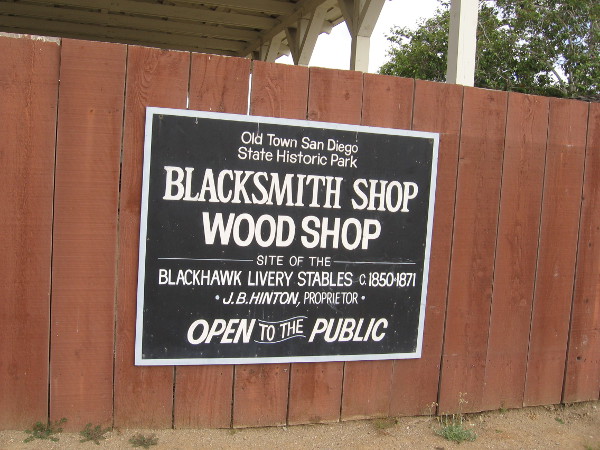
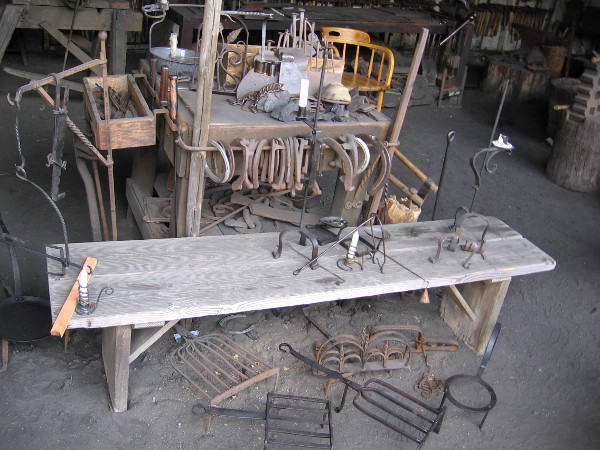
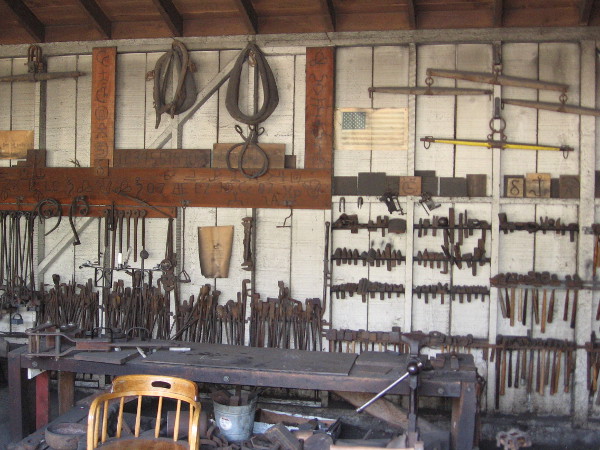
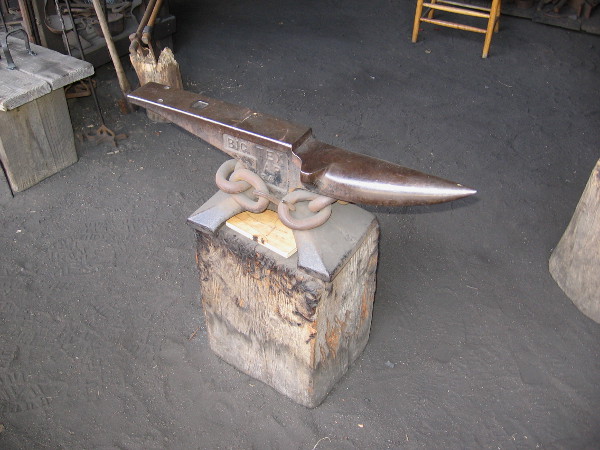
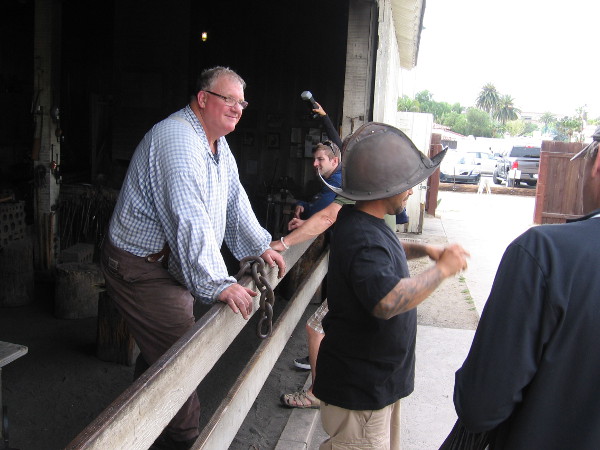
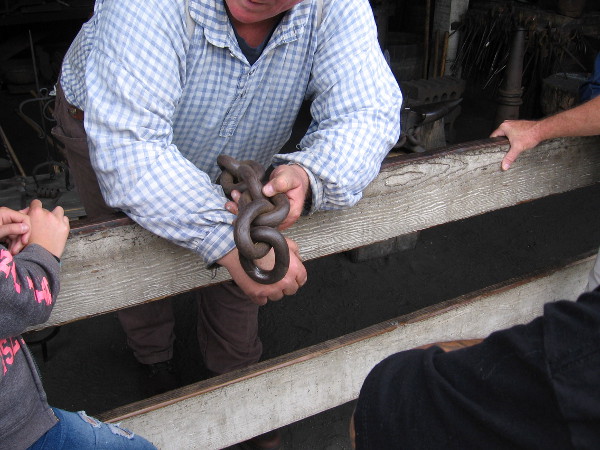
Old Town San Diego State Historic Park’s Blacksmith Shop and Wood Shop at the site of the Blackhawk Livery Stables, circa 1850-1871.Visitors to Old Town learn a little about life in San Diego during the mid 1800s. Blacksmiths created assorted metal objects, made repairs and shoed horses.This friendly blacksmith provided lots of fascinating information. Visitors watch with interest as he works to create a pot holder.I learned that in early San Diego blacksmiths typically burned charcoal in their forge, as coal was usually of poor quality and difficult to obtain in Southern California.A huge bellows provides oxygen for this brick furnace. A good working temperature is about 1800 degrees Fahrenheit.Products that were fashioned include iron grills, traps, candle holders, fish roasters, knives, shovels, chains, hinges, nails, cooking ladles and horseshoes.Hammers, bars, wrenches and various blacksmithing tools hang from the rear wall, in addition to harnesses and other items one might find in a livery stable.The gentleman showed me some devices used to suspend pots over a fire. Everything on this wall was made by local smiths in this shop.A shiny anvil.This wide grassy area behind nearby Seeley Stable was once used for anvil shoots. Gunpowder was placed in a hollow indentation between two anvils and ignited, sending one anvil high into the air with a loud bang! Anvils that did not shatter were considered sound.Old Town visitor tries on a Spanish conquistador helmet made in the Blacksmith Shop.A heavy anchor chain is shown. The welds must be as strong as the iron links themselves.A photo of living history. Skilled artisans used muscle, fire, metal and sweat to make everyday life easier for the early residents of San Diego.
…
I live in downtown San Diego and love to walk around with my camera! You can follow Cool San Diego Sights via Facebook or Twitter!
You can easily explore Cool San Diego Sights by using the search box on my blog’s sidebar. Or click a tag! There are thousands upon thousands of fun photos for you to share and enjoy!
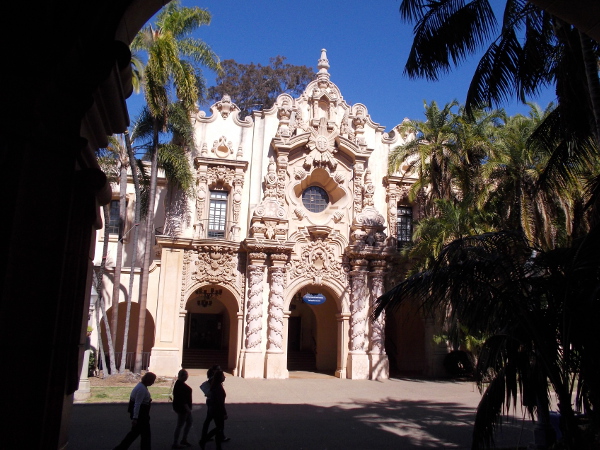
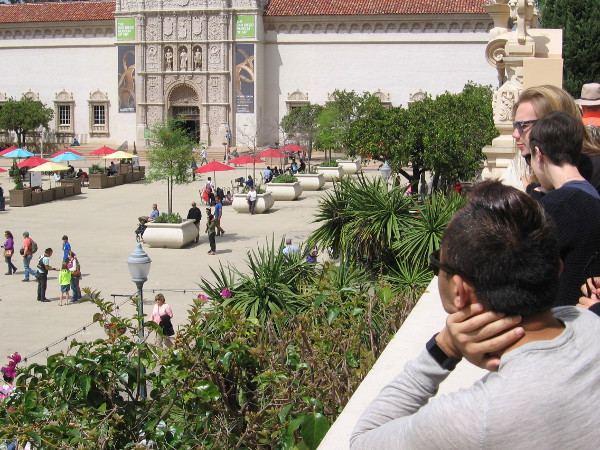
The facade of the Casa del Prado is just one of many wonders in Balboa Park.
Balboa Park is one of the most magical places in the world. Spells are cast, revealing life and wonder.
Please enjoy a few photos.
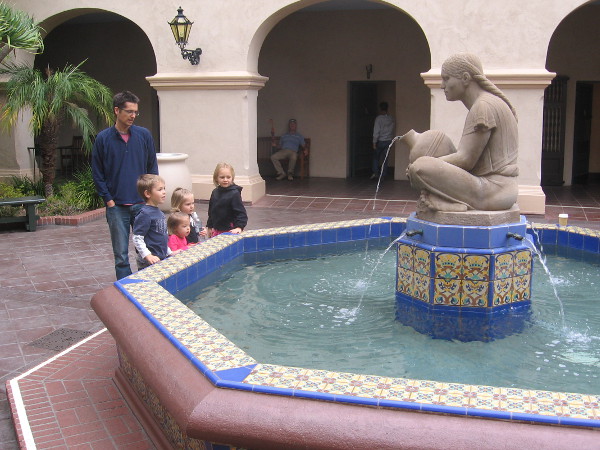
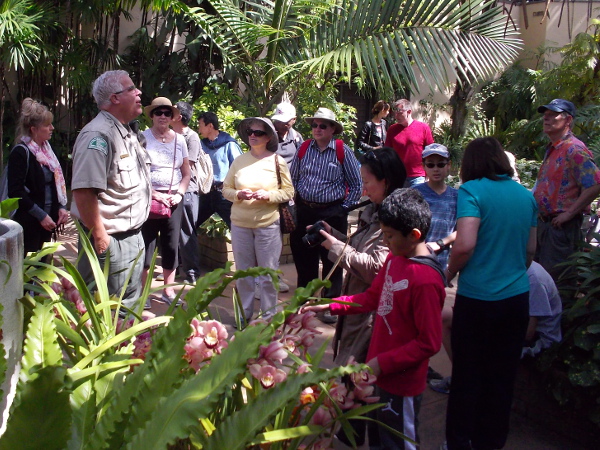
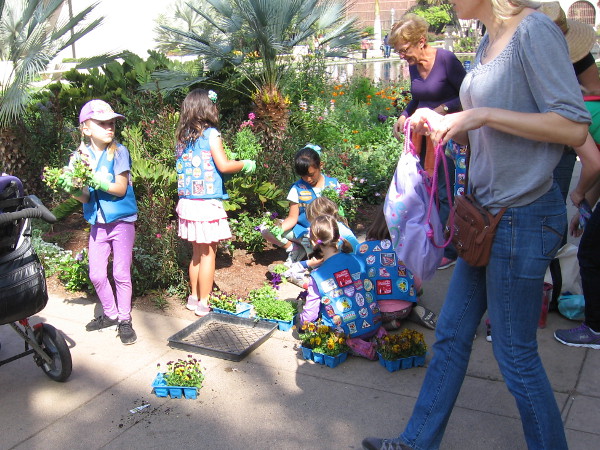
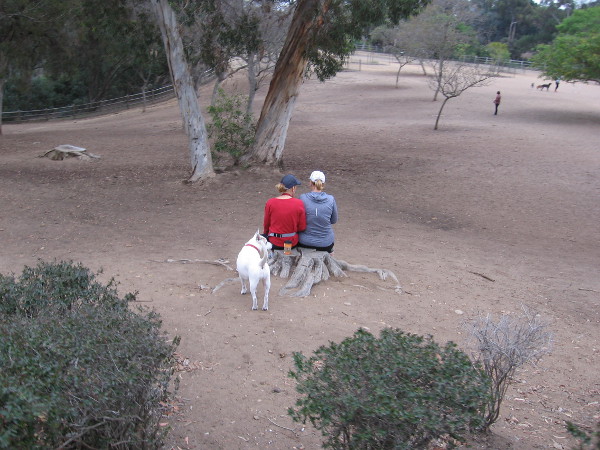
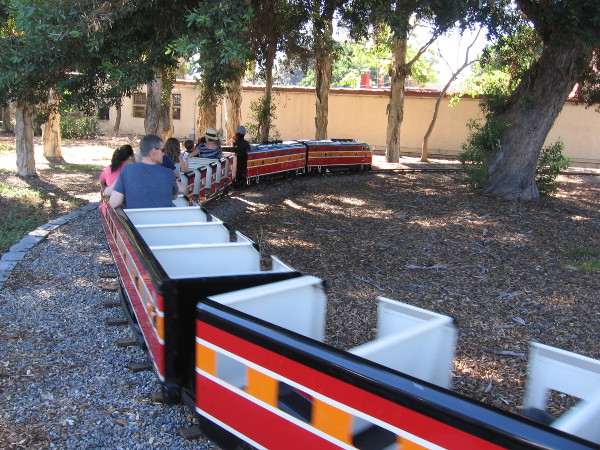
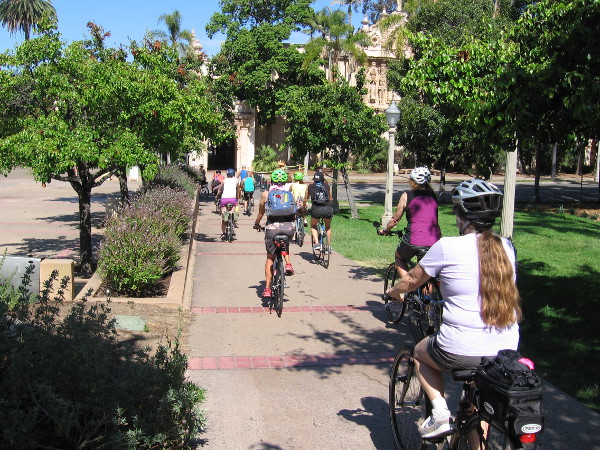
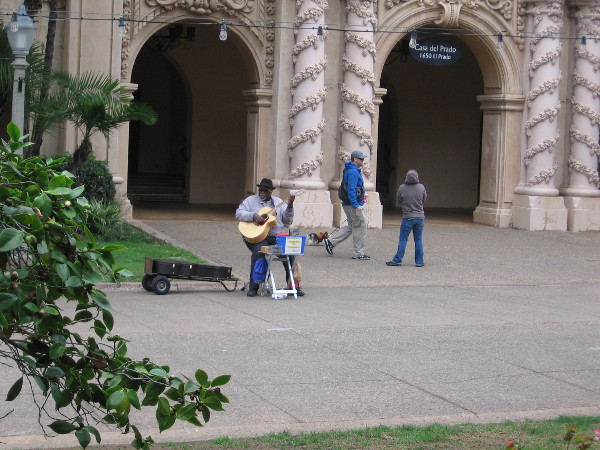
Another magical day in the park. The California Tower rises in the distance.Spirits are lifted by the Woman of Tehuantepec in the courtyard of the House of Hospitality.Ranger Kim relates the history of Balboa Park to a tour group. They stand by the original Administration Building, which was the first building erected for the 1915 Panama-California Exposition.Ranger Kim talks about the historic Botanical Building and its rich collection of beautiful flowers and plants.A wicker Electriquette slowly moves through the wonderful park.Daisy Girl Scouts plant living flowers by the reflecting pool.Photo from the Alcazar Garden of the House of Charm’s tower.Learning to tap dance at the Spreckels Organ Pavilion.Three life friends together at Nate’s Point Dog Park.A short but magical excursion on the Balboa Park Miniature Railroad.A view across El Prado of the San Diego Natural History Museum.The splashing Bea Evenson Fountain in the Plaza de Balboa attracts young and old.Gazing from a balcony of the House of Hospitality down at the life-filled Plaza de Panama and the San Diego Museum of Art.Bicycles and sunshine along El Prado.Big Slim plays guitar by the Casa del Prado.A musician strums in Spanish Village.A magic trick produces many smiles.
…
I live in downtown San Diego and love to walk around with my camera! You can follow Cool San Diego Sights via Facebook or Twitter!
I learned a past visitor to the Whaley House photographed these old dolls and was surprised to see the eyes–which are painted–closed!
Did I see any ghosts inside the Whaley House?
During my recent visit to Old Town San Diego, I ventured into the unknown. I took my very first look inside the Whaley House, widely considered to be the most haunted house in America. I also took lots of photographs, which you are about to see!
The Whaley House has been the subject of many serious paranormal investigations, and has appeared on many television programs. It was featured on Syfy Channel’s Fact or Faked: Paranormal Files, the Travel Channel’s episode America’s Most Haunted on Ghost Adventures, and the Biography Channel’s show The Haunting of Regis Philbin. The house’s reputation for supernatural activity has been discussed widely in the media and adopted by the popular culture.
LIFE magazine, a serious publication, has stated that the Whaley House is “the most haunted house in America.” The Travel Channel has agreed with that conclusion.
So, did I see any ghosts, spirits or apparitions–any spooky or weird stuff?
As I took the self-guided tour and peered into the various rooms, my eyes were primarily searching for ideal shots for my camera. But in the back of my mind, I also anticipated perhaps glimpsing something unusual.
Perhaps I’d see the ghost of Yankee Jim, who was hanged in a particularly gruesome way in 1852, on the same plot of land where the Whaley House was built in 1857. The Whaley’s youngest daughter Lillian was absolutely convinced that he haunted their home.
Or I might see the ghosts of Thomas or Anna Whaley who built the house when they came to San Diego from San Francisco. Thomas is said to appear in the parlor or on the upper landing; Anna in the downstairs rooms or outside garden.
Or perhaps I might get a ghostly glimpse of someone or something else…
Three of the docents I spoke to during my recent visit related their own bizarre experiences. Two docents once saw a gilded cup in a display case begin to vibrate for no apparent reason. Nothing had shaken the house or case. No other artifacts near the cup moved. The cup’s peculiar motion continued for 30 to 45 seconds, they attested. Another docent told me that she twice smelled lavender perfume inexplicably while sitting near a window in the upstairs theater. Nobody was nearby.
Several years ago, when I passed the Whaley House and spoke to a docent standing outside the front door, they told me they’d heard inexplicable footsteps in the theater and had seen a strange shadow moving on an upstairs wall. The cashier in the gift shop next door had seen the same weird shadow. I blogged about that here.
Okay. So what exactly did I see? Look at the photographs! And read the captions for more history concerning this fascinating and historically important house.
If I experienced anything unusual inside the Whaley House, it was that I felt a bit like a time traveler. A tour through this historic house is like stepping back into another time, when day-to-day life was both simpler and in many ways more dangerous, unpredictable and difficult. In my mind’s eye I could almost see the people of that era moving about the house–performing ordinary tasks–people who really weren’t that different than you or me. I could almost put myself in their shoes. In my imagination.
Take a look at these photographs and what do you see? If a few images seem to contain glare or strange effects of light, it was probably caused by my camera’s flash and the necessity of taking some photos through glass. The photo of the children’s bedroom, for example, was taken through a glass pane.
The only adjustments I made to these photos were cropping, brightness, contrast and the GIMP filter for sharpness. And the photos I altered were changed just slightly to make them appear a little bit nicer on your screen!
Leave a comment if you see something ghostly!
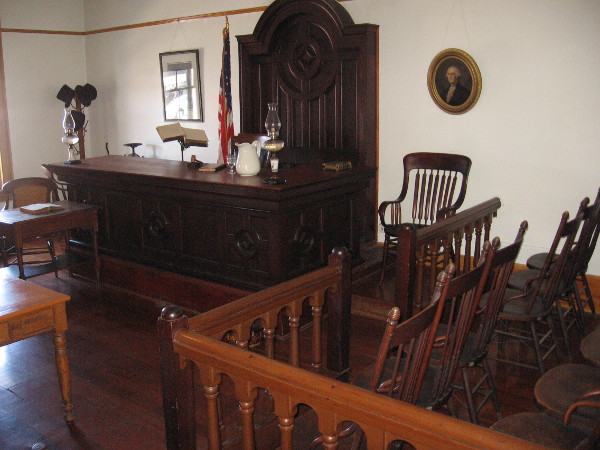
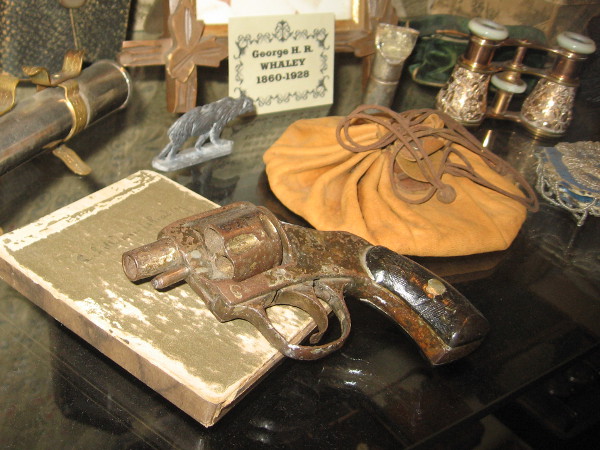
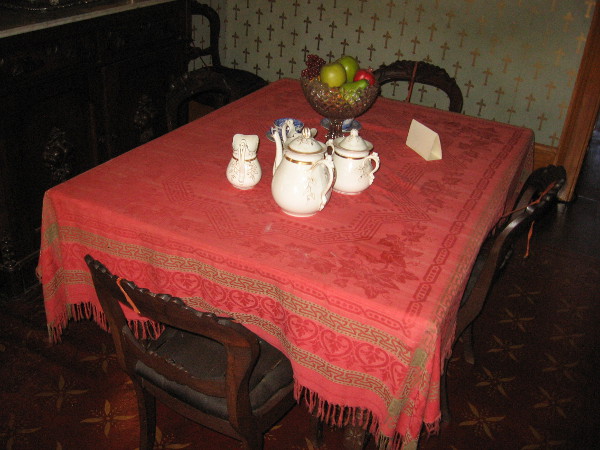
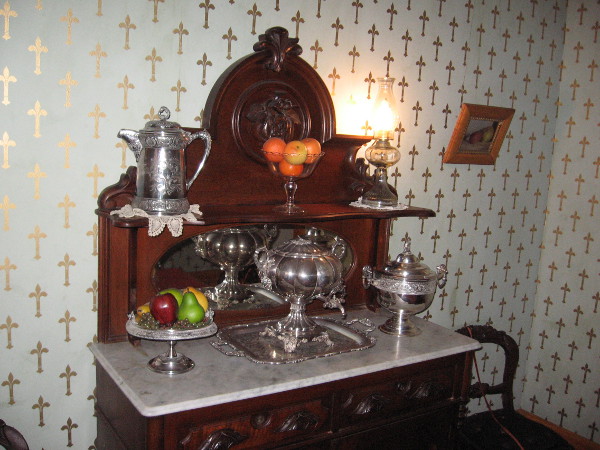
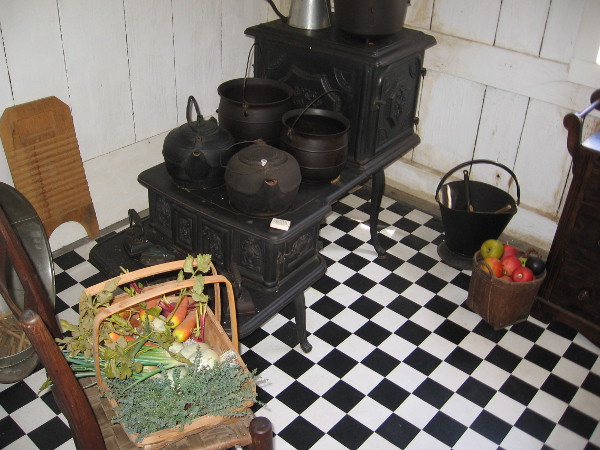
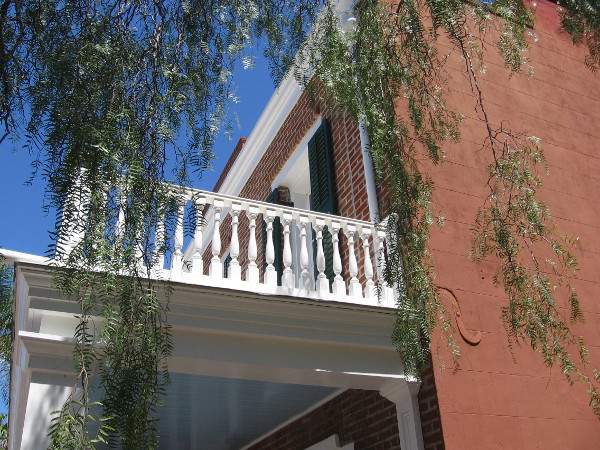
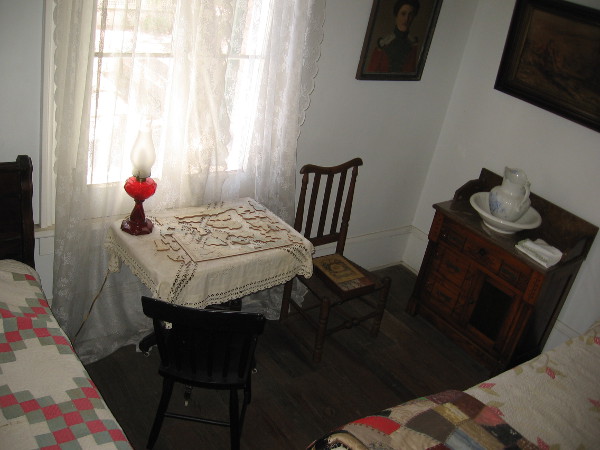
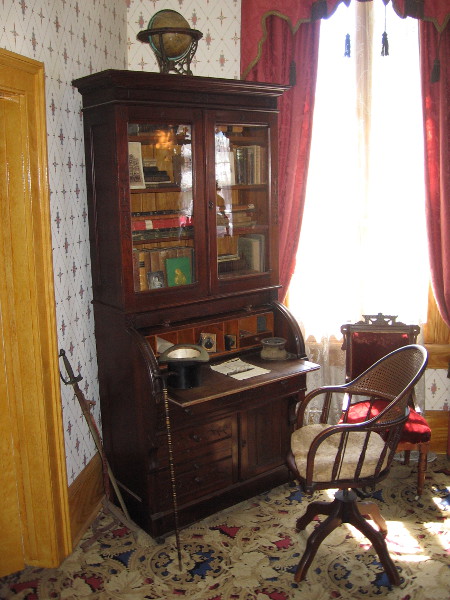
Sign in front of America’s most haunted Whaley House. Like various other historic structures in San Diego, the house is preserved by SOHO–the Save Our Heritage Organisation.Photo of the 1857 Greek Revival-style Whaley House from across San Diego Avenue. The famous house is located in Old Town, the birthplace of San Diego.The Whaley House, once designated an official haunted house by the United States Commerce Department, has appeared on many television programs, including the Travel Channel’s show America’s Most Haunted.The Whaley house is the oldest brick building in Southern California. It served as home, granary, store, courthouse, school and theater. It was the most luxurious residence in early San Diego.Visitors to Old Town San Diego peer into the Whaley House window just left of the front door. That is where the Whaley and Crosthwaite General Store was located.The self-guided tour begins in the courtroom, which is located directly behind the store. Originally a granary whose brick walls failed to stop rats, at different times the room served as school, church, ballroom and billiard hall.Photograph on the courtroom’s back wall shows the Whaley House on the outskirts of tiny San Diego. It stands alone in a barren place. It was built on a hanging ground not far from old El Campo Santo Cemetery.Another photo inside the courtroom. This served as the second County Courthouse in San Diego, in operation from 1869 to 1871.Inside the courtroom you’ll find the Centennial Cannon. It was cast in 1876 and was used for various ceremonies before being moved to Horton Plaza.Another photo in the courtroom shows San Diego’s old stone jail in a crumbling state. It stands next to the chapel cabin and the old graveyard.The Whaley and Crosthwaite General Store. Many items available for purchase included whiskey, wine, buckwheat, macaroni, codfish, pickles, catsup, tin ware, hardware, stationery, clothing and shoes.Shelves behind the store’s counter contain products one might buy in the mid to late 1800’s in San Diego. Goods that arrived by ship around Cape Horn were later obtained via transcontinental railroad.A nearby display case contains items belonging to various members of the Whaley family, including engraved silverware and china.Inside the display case one can see an old photograph of George H. R. Whaley, one of the six children of Thomas and Anna Whaley.Two docents told me how they were both present when the gilded cup began to vibrate without explanation. It did so for about 30 to 45 seconds. No other objects moved.More historical objects that belonged to the Whaley family, including a small snubnosed revolver.Next on the self-guided tour is the circa 1860s dining room. The chairs are upholstered with woven horse hair. They’ve survived a century and a half in pretty good condition.The wallpaper with fleur-de-lis patterns reflects light like a sky full of shining, golden stars. The furnishings and silver are original.The tour proceeds to the reconstructed kitchen, which seeks to replicate the original board and batten structure. The checked floor is typical of the era.Many of the dishes and utensils are original. Prepared food would be passed through a window (that we are looking through) to the adjacent dining room.Photo of rear of Whaley House. The white detached room is the kitchen. In case of fire, the burning walls of the kitchen would be pulled away from the main building by horse. This type of construction was common in those days.These stairs lead up to the second floor of the Whaley House museum, where there is a theater and three bedrooms.A docent explains the history of this first commercial theater in San Diego. The Tanner Troupe performed here from October 1868 to January 1869. The first performance reportedly attracted an audience of 150. The docent thought this number was improbable–for just one performance in this rather small room!The painted backdrop of the stage, an original family trunk, and a raven, recalling the famous poem of Victorian-era American horror writer Edgar Allan Poe.Another photo showing painted curtains. On two occasions, a docent was sitting to the left of this stage by one of the second floor windows when she smelled sudden, mysterious lavender perfume. Nobody was nearby, she told me.Advertisement framed on theater wall. Admission to see the Tanner Troupe perform was 50 cents. Audiences saw moral, chaste and versatile entertainments–drama, farce, comedy, singing and dancing.Print in a gilded frame in the upstairs theater. It’s from a painting depicting Shakespeare’s Romeo and Juliet. On the opposite wall hangs similar artwork depicting Othello.Outdoor stairs back then ascended to this outside balcony. Audiences entered the theater that way, without disturbing the Whaley House living quarters.Photo of Thomas and Anna Whaley’s master bedroom. According to the self-guided tour info, the walnut bedroom set is in the Renaissance Revival style. The writing desk was Anna’s.A visitor gazing into the children’s bedroom said the dolls seemed very creepy. The crib just visible was used by four generations. An 18-month old Thomas Whaley Jr. died here from scarlet fever.Visitors look for ghosts in the children’s bedroom. The theater is straight ahead.The rear bedroom could be used by up to four children and multiple visitors. The washbowl and pitcher were used for bathing.Now we are back downstairs. This is part of the elegant guest chamber in the southeast corner of the Whaley House. Important people stayed here, including General Thomas Sedgewick.The study with desk and bookcase. During his time in San Diego, Thomas Whaley held many positions, including merchant, city clerk, notary public, realtor and railroad secretary. That sword was actually a prop used by the Tanner Troupe during their performances in the theater upstairs.Looking from the study into the Rococo Revival Style parlor. The Whaleys were much wealthier than most San Diego residents at the time. The room is full of art, paintings and splendid decorative objects.There’s no guarantee you will see a ghost at the Whaley House. But you will definitely observe a good deal of history and learn about San Diego’s fascinating past.
…
I live in downtown San Diego and love to walk around with my camera! You can follow Cool San Diego Sights via Facebook or Twitter!
You can easily explore Cool San Diego Sights by using the search box on my blog’s sidebar. Or click a tag! There are thousands upon thousands of fun photos for you to share and enjoy!
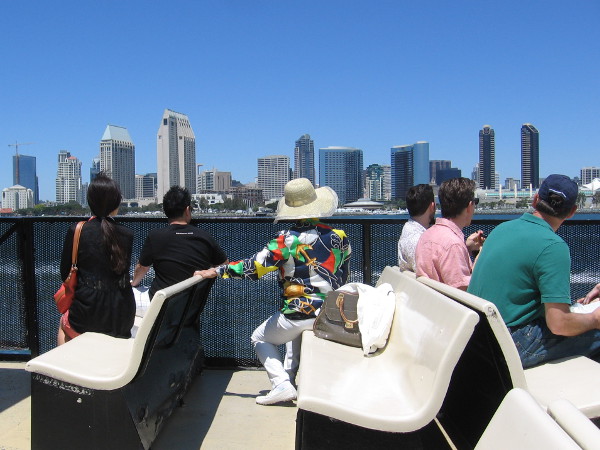
Curious tourists take the Coronado ferry across the bay to downtown San Diego. What will they see?
Yesterday I bumped into a few unexpected sights. No different than any other day. A walk through the world with open eyes can tickle both one’s funny bone and heart.
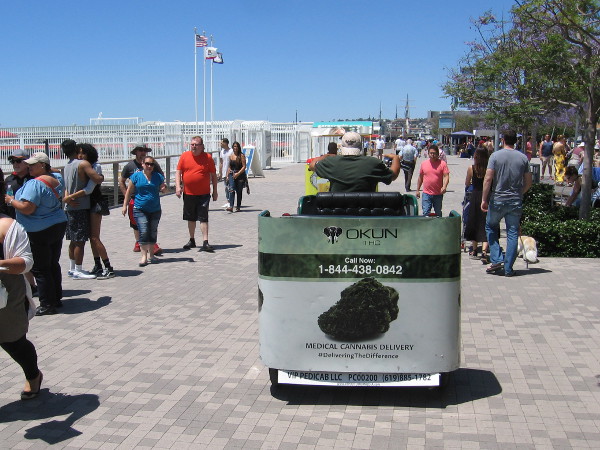
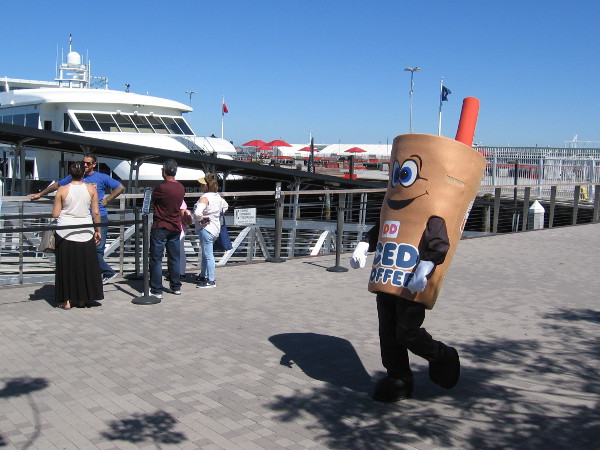
A pedicab advertising marijuana delivery!A walking, smiling iced coffee!Upside down visitor information!A heartfelt welcome on the bow of the USS Midway. Welcome home to the troops.
…
I live in downtown San Diego and love to walk around with my camera! You can follow Cool San Diego Sights via Facebook or Twitter!




















































 Cool San Diego Sights!