Kids free at San Diego museums in October!

It’s October! You know what that means? It means kids get free admission to many museums and other family friendly attractions all around San Diego!

The month-long event is called Kids Free San Diego!

Want to learn more? Click here!

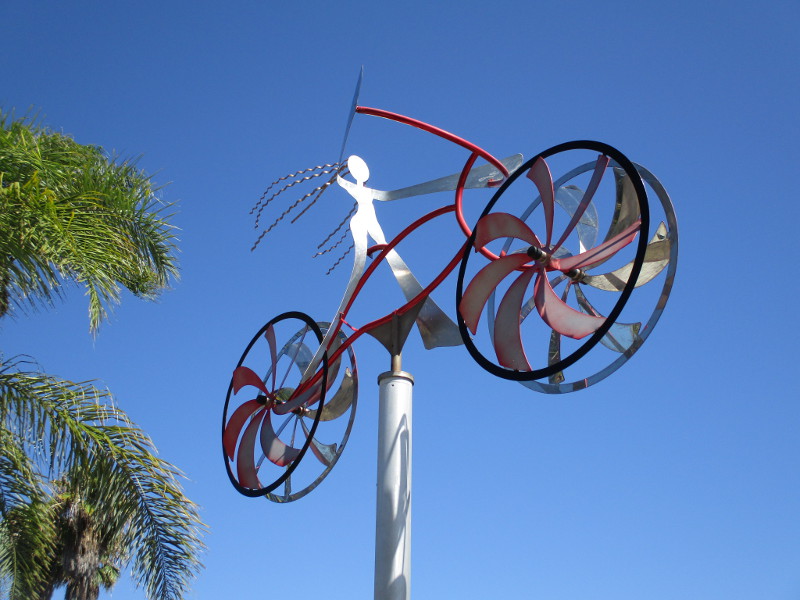
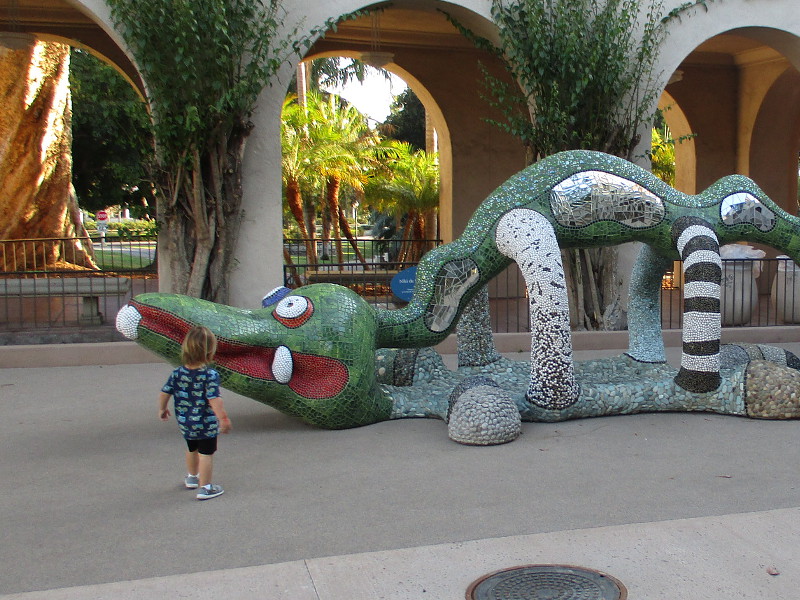
Oh, and by the way, see my photograph above? Yes! Nikigator has made its long-awaited return!

Nikigator stands once again outside the front entrance of the recently reopened, beautifully renovated Mingei International Museum in Balboa Park. Wouldn’t it be fun to sit on that!

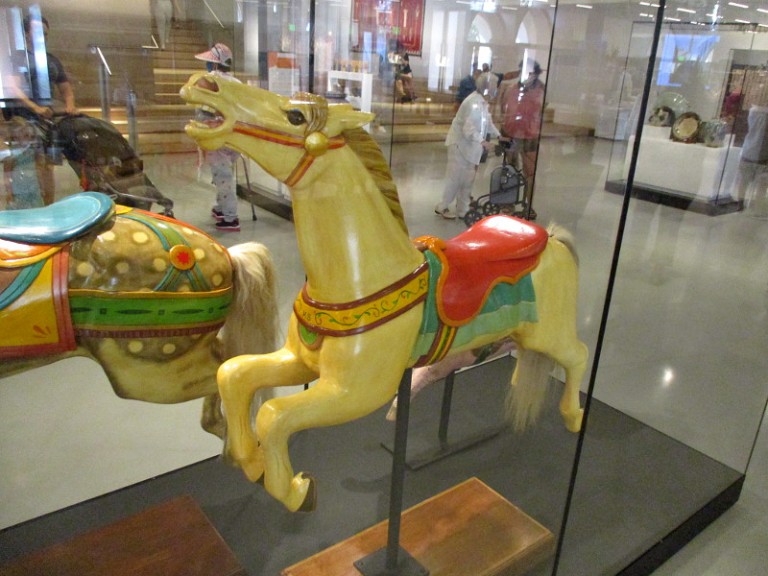
While I’m mentioning the Mingei, families should definitely head inside. The ground floor is now free to everyone, whatever your age. And one big display case holds all sorts of craft toys from around the world! Another contains carousel horses!

And one more thing. If your kids haven’t been to the San Diego Model Railroad Museum in Balboa Park, they are missing out on some of the most incredible, spectacular toy train layouts anywhere in the world! And it’s free in October for kids, too!

Click here for all the museums and attractions that are participating this month in Kids Free San Diego!
I live in downtown San Diego and love to walk around with my camera! You can follow Cool San Diego Sights via Facebook or Twitter!

Imperial Beach plaques remember slough surfers.

Bronze plaques near the foot of the Imperial Beach Pier recall the legendary slough surfers who once trekked from far and wide to the Tijuana Sloughs, where the Tijuana River meets the Pacific Ocean, just north of the Mexican border.

During much of the 20th century, the Tijuana Sloughs was considered the preeminent big surf break in California. There’s a great article concerning the history and geology of the Sloughs here.

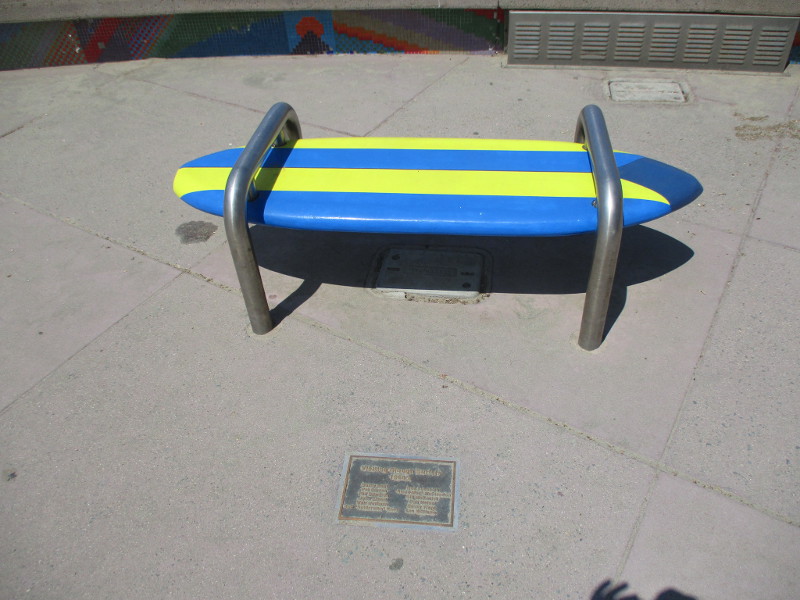
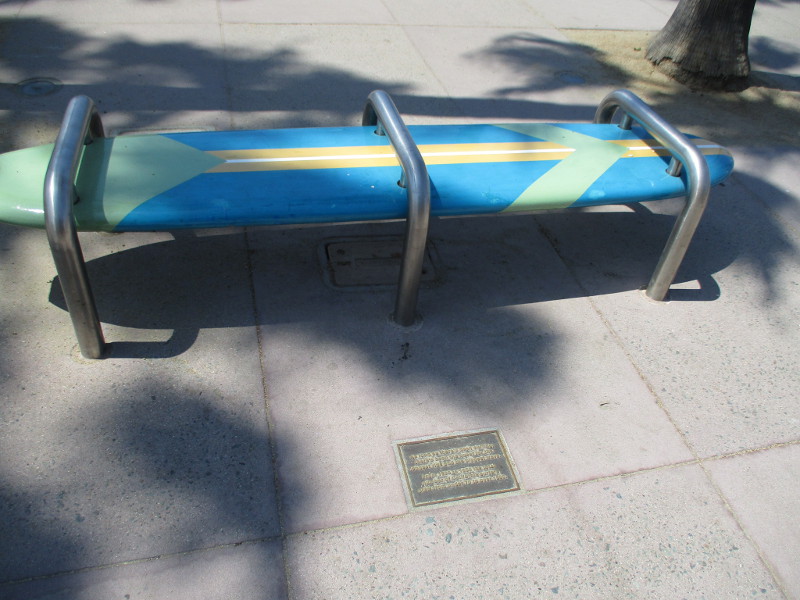
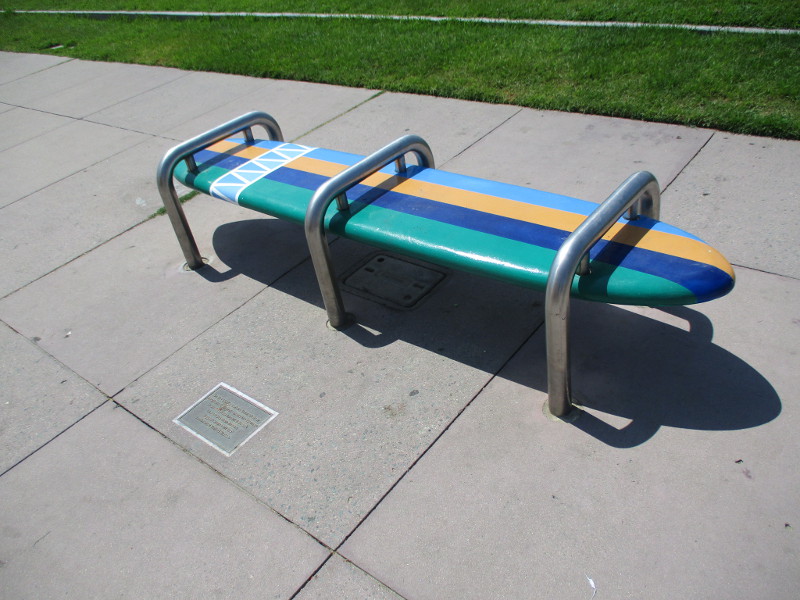
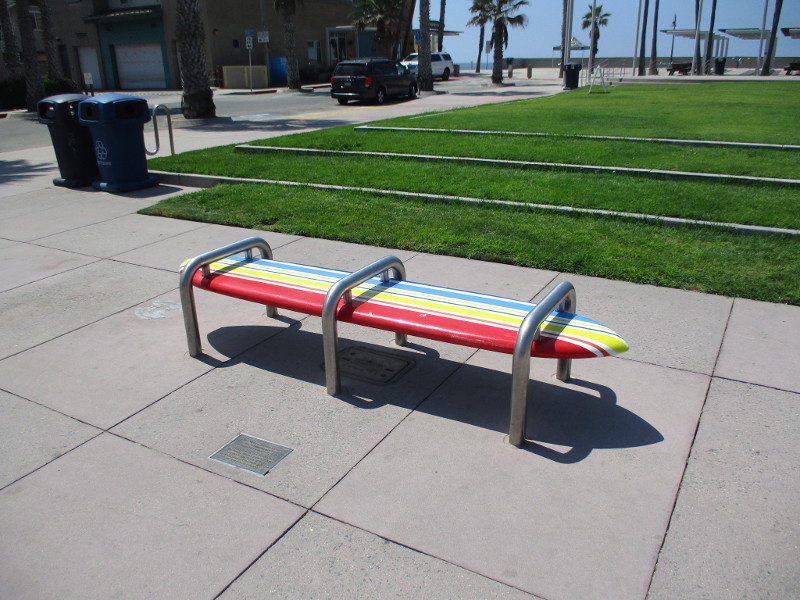
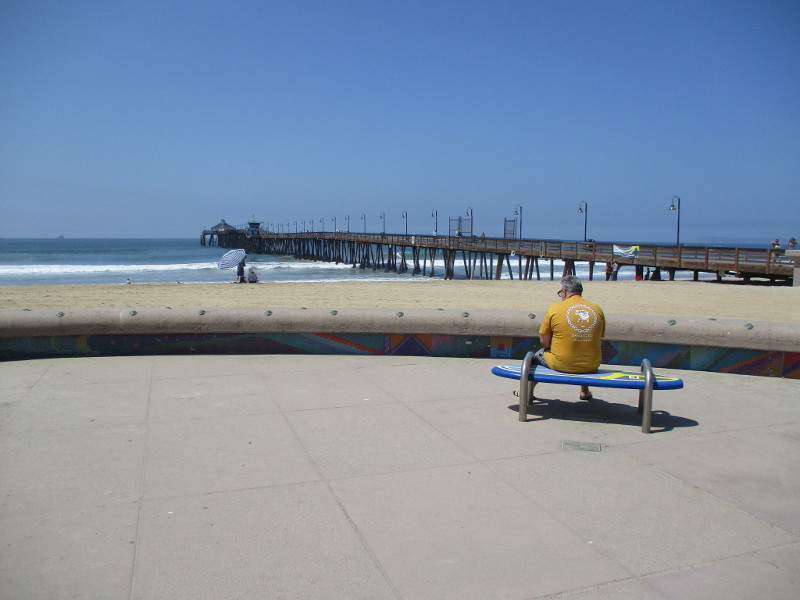
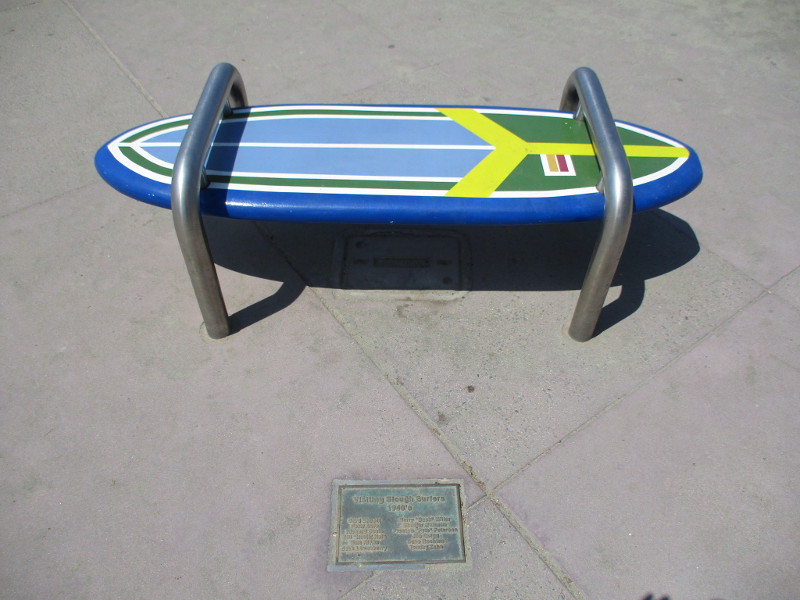
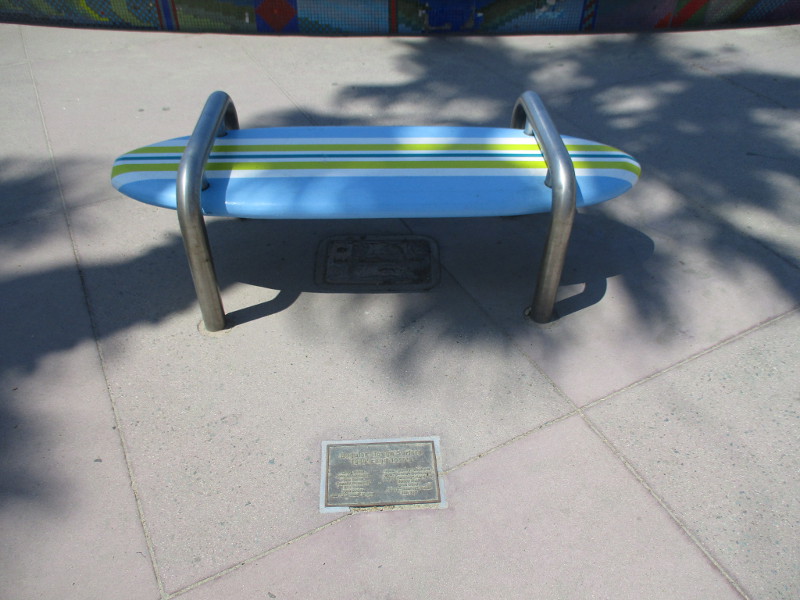
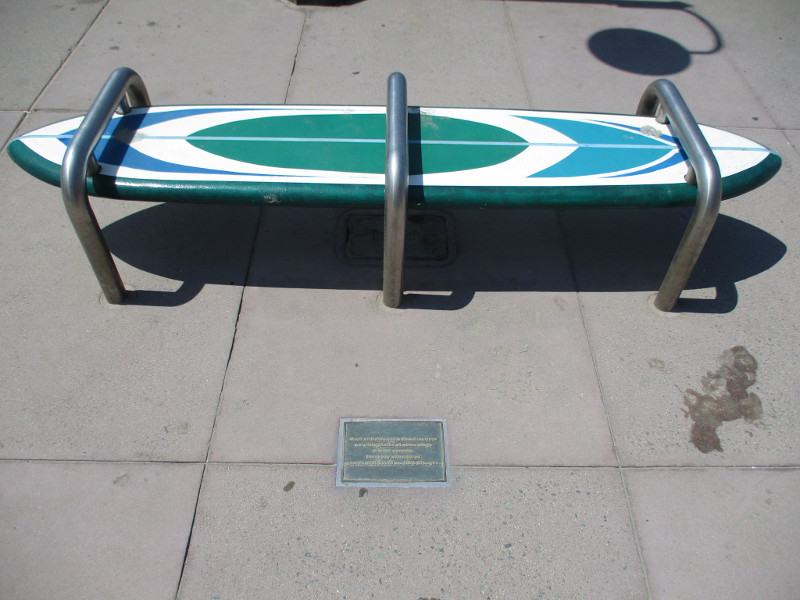
If you walk around Portwood Pier Plaza at the foot of the IB Pier, you’ll see a bunch of colorful surfboard benches where you can rest and gaze out across the beach. Look down and you’ll discover plaques next to each bench.

The plaques recall those who rode the big waves at the Tijuana Sloughs and honor bits of Imperial Beach surfing history.

Surfhenge public art welcomes people to the Imperial Beach Pier and Portwood Pier Plaza. The plaza is located next to the beach between Surfhenge and the lifeguard tower to the south.
Visiting slough surfers 1940’s.
Regular slough surfers 1940’s and 1950’s.
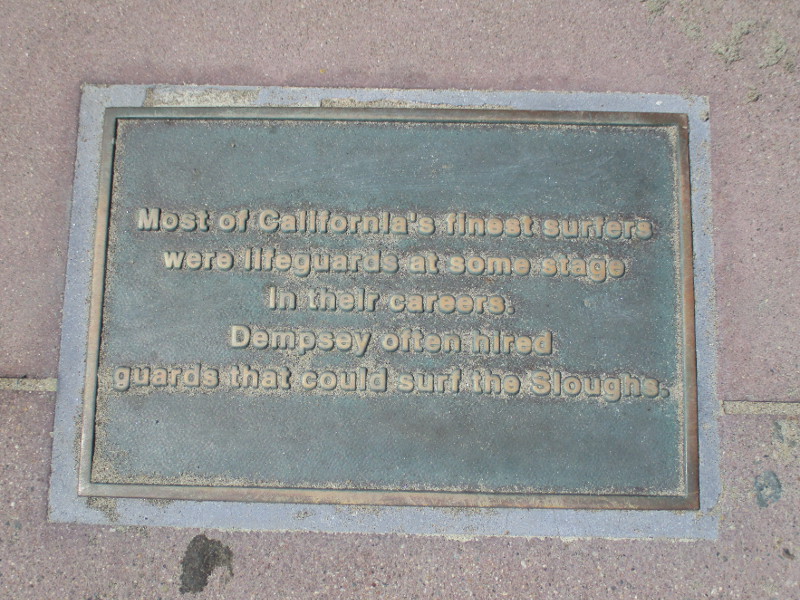
Most of California’s finest surfers were lifeguards at some stage in their careers…
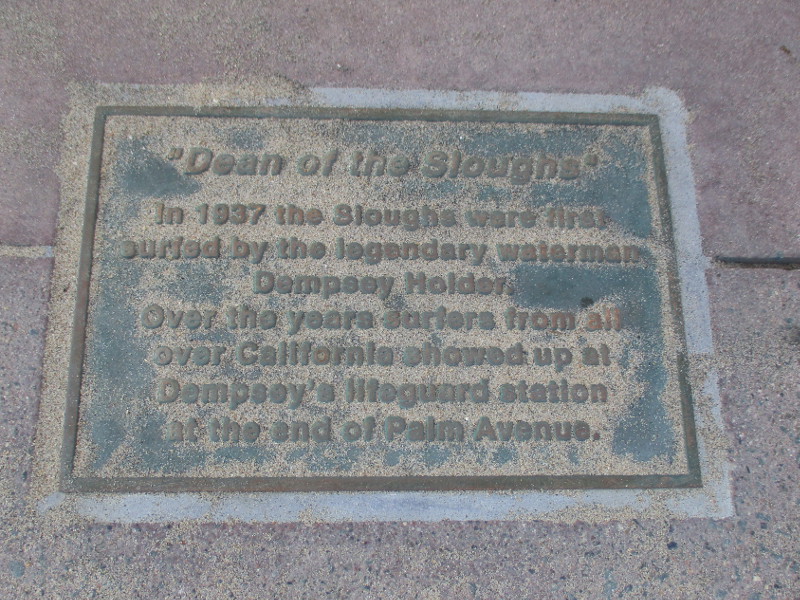
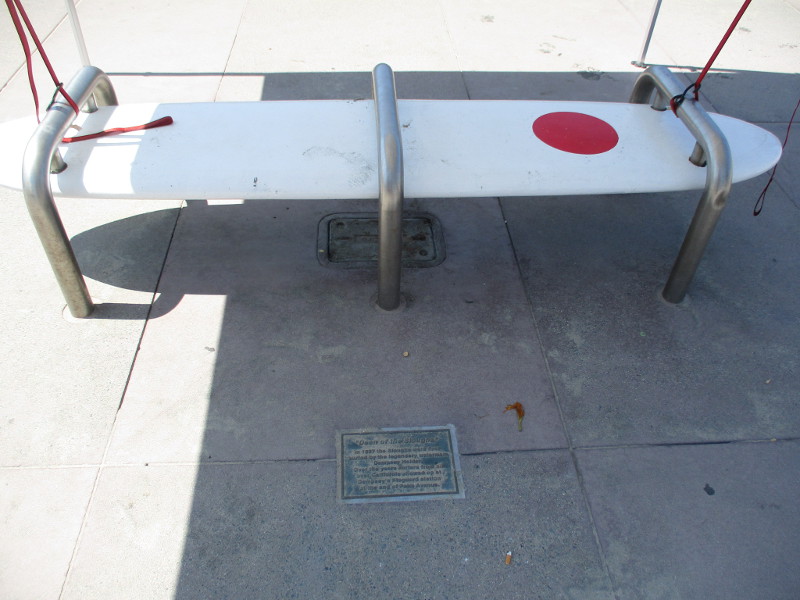
Dean of the Sloughs. In 1937 the Sloughs were first surfed by the legendary waterman Dempsey Holder. Over the years surfers from all over California showed up at Dempsey’s lifeguard station at the end of Palm Avenue.
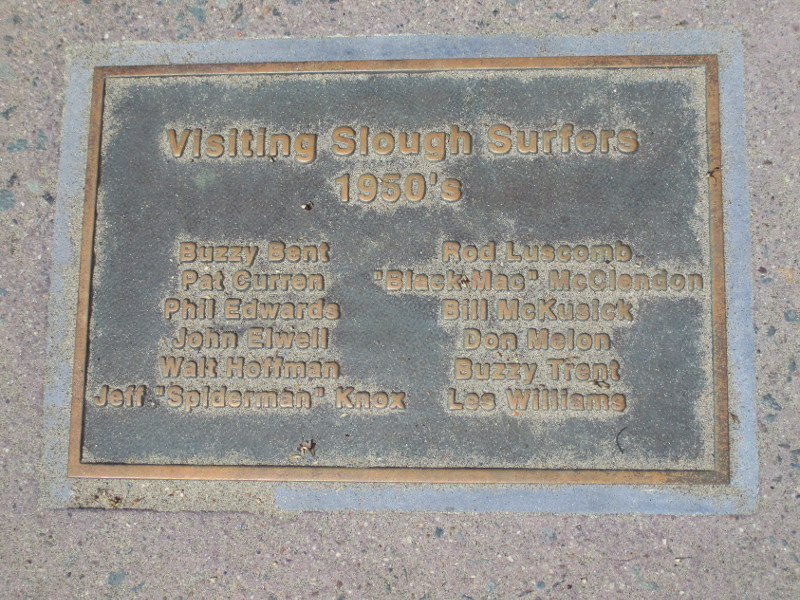
Visiting slough surfers 1950’s.
Father of the Modern Surfboard. In the 1940’s Bob Simmons applied the principles of hydrodynamics to surfboard design and forever changed the sport of surfing. In 1950 he moved to Imperial Beach.
…From 1930 to 1950 the total number of California surfers grew from under 70 to over 1500.
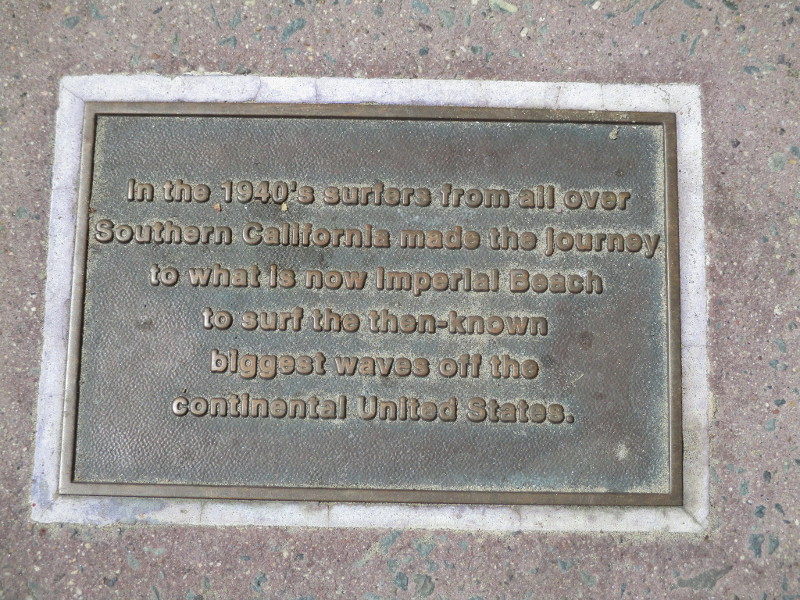
In the 1940’s surfers from all over Southern California made the journey to what is now Imperial Beach to surf the then-known biggest waves off the continental United States.
The Tijuana Sloughs became the testing ground for mainlanders going to Hawai’i. Before Malibu, San Onofre and Windansea groups surfed Makaha and the North Shore of O’ahu, they experienced the thrill and fear of big waves at the Sloughs.

I live in downtown San Diego and love to walk around with my camera! You can follow Cool San Diego Sights via Facebook or Twitter!
You can easily explore Cool San Diego Sights by using the search box on my blog’s sidebar. Or click a tag! There are thousands upon thousands of photos for you to enjoy!

Rose Creek Bikeway near Mission Bay.

Have you ever wondered what the Rose Creek Bikeway is like just north of Mission Bay?

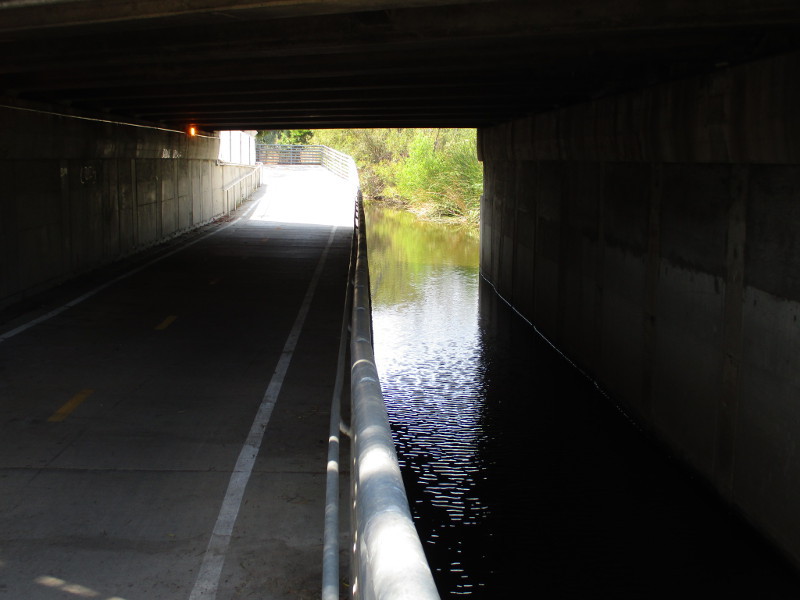
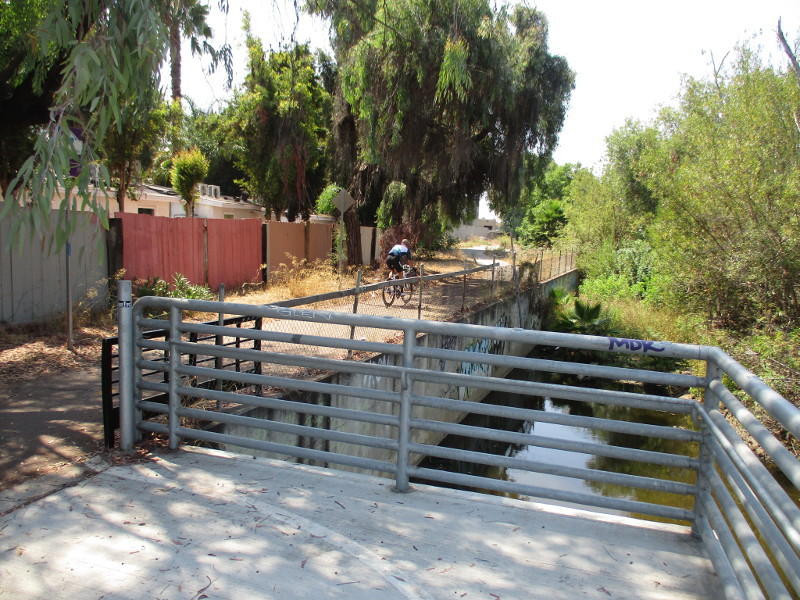
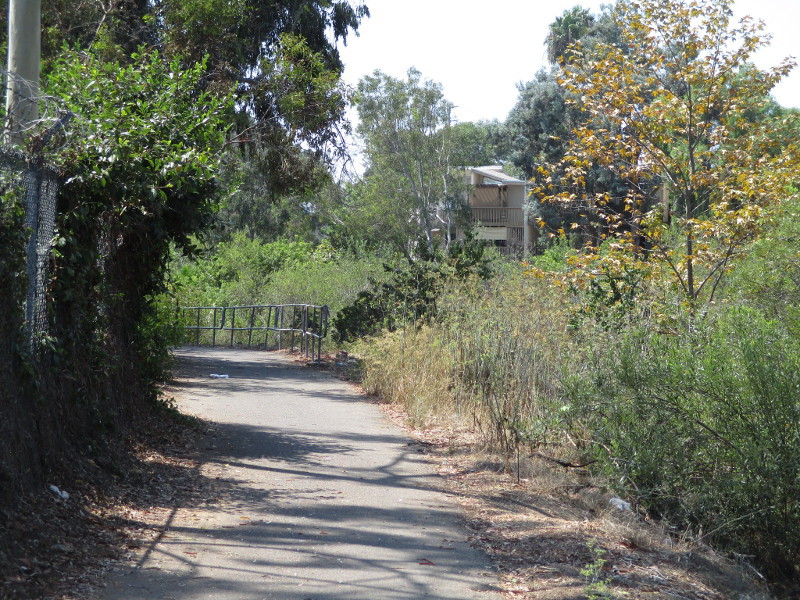
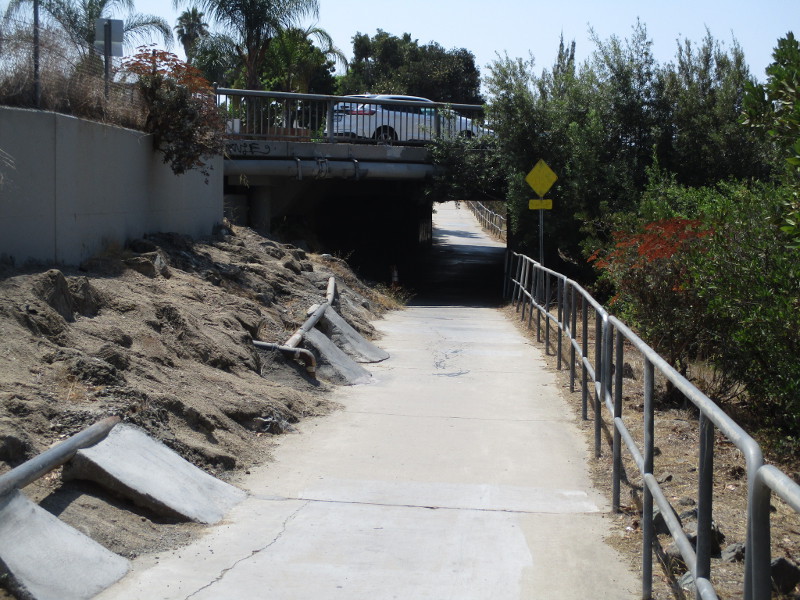
I did, so I walked along the bike and pedestrian path a few weekends ago. I started at a point near the In-N-Out Burger at Damon Avenue (just east of Mission Bay Drive) and headed south under Garnet and Grand Avenue to North Mission Bay Drive. I then walked west over the Mike Gotch Memorial Bridge spanning the Rose Creek Inlet to the entrance of Campland on the Bay.

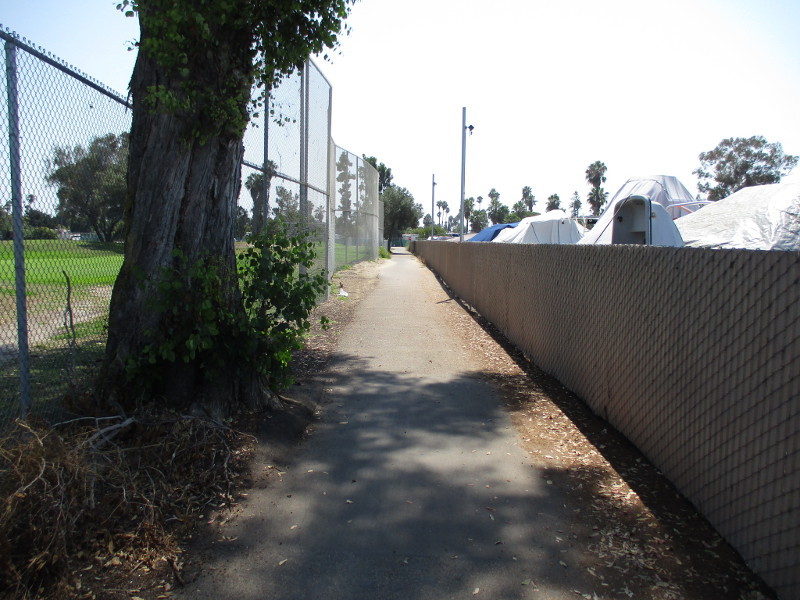
As you’ll see in the upcoming photographs, the path along Rose Creek features natural beauty but can be trashy in places. It cuts behind businesses, passes the ends of residential streets, and winds along the edge of several sporting facilities. I also saw evidence that homeless people use the path and camp near it.

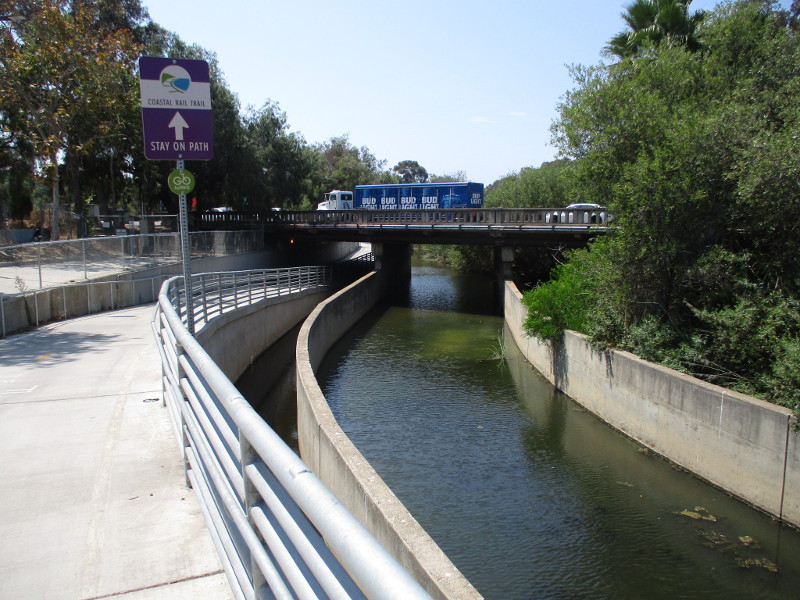
The Rose Creek Bikeway is part of the much longer 44 mile Coastal Rail Trail which, when completed, will connect downtown San Diego with Oceanside, California. (Had I walked north up the path instead, I would have followed Interstate 5 toward La Jolla and Sorrento Valley, next to the tracks of the soon-to-open Mid-Coast Trolley extension.)

Looking north for a moment as I get started south.
About to pass under Mission Bay Drive.
Approaching Garnet Avenue.
Approaching Grand Avenue.
A couple walks dog under Grand Avenue.
It appears someone lives under the bridge.
Passing a basketball court.
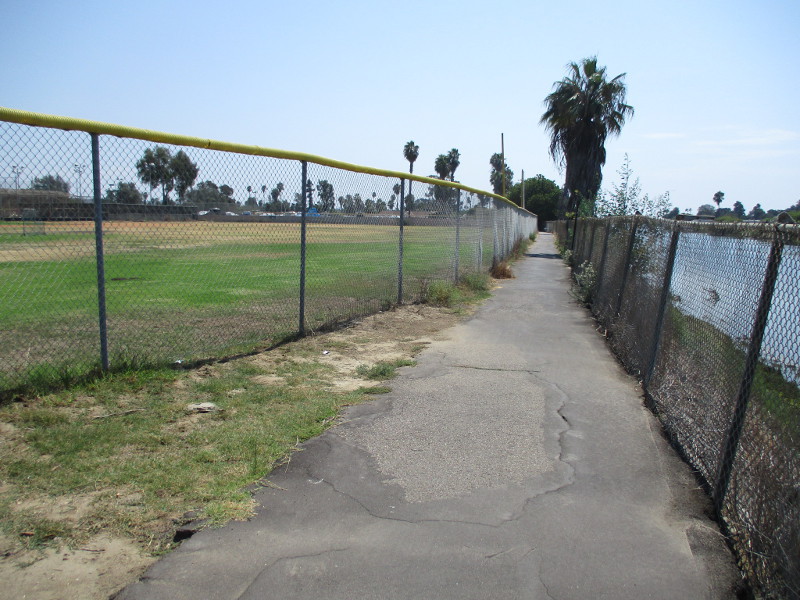
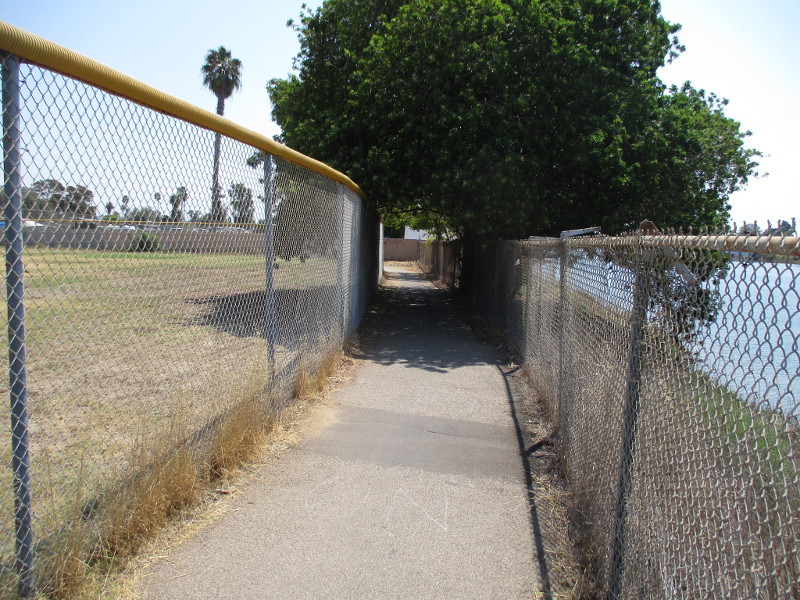
Walking between Rose Creek and the Mission Bay Youth Baseball field.
Someone practices pitching.
To the right beyond the fence is the San Diego Mission Bay Boat and Ski Club.
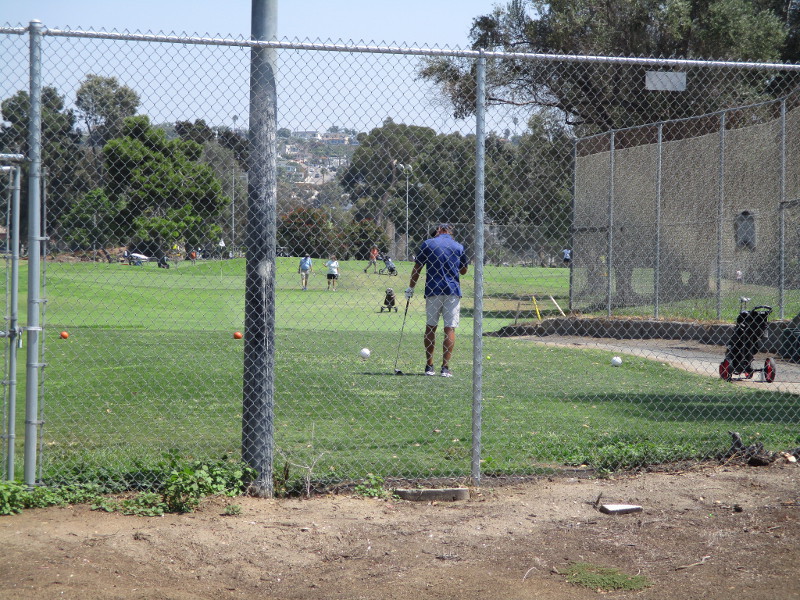
Passing the Mission Bay Golf Course and Practice Center.
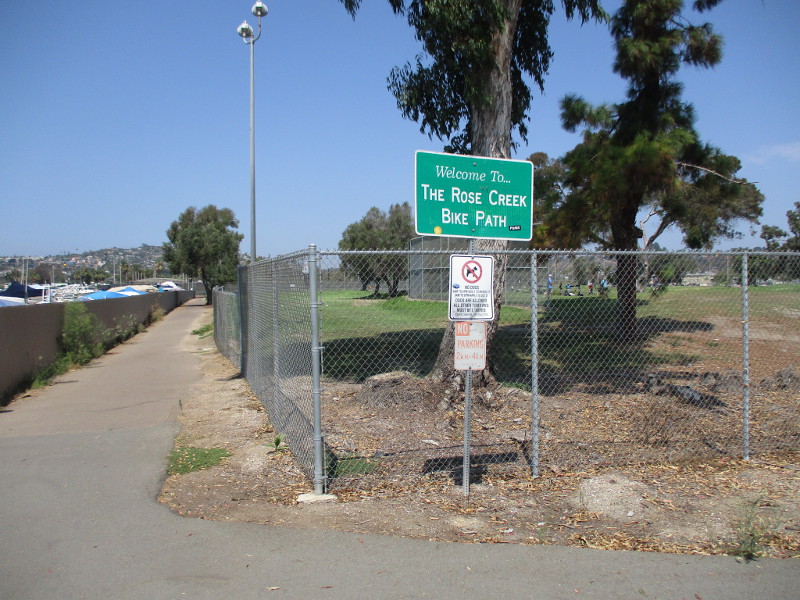
Turning for a moment to look back north. Sign at North Mission Bay Drive, just east of the Mike Gotch Memorial Bridge, reads: Welcome To… The Rose Creek Bike Path.
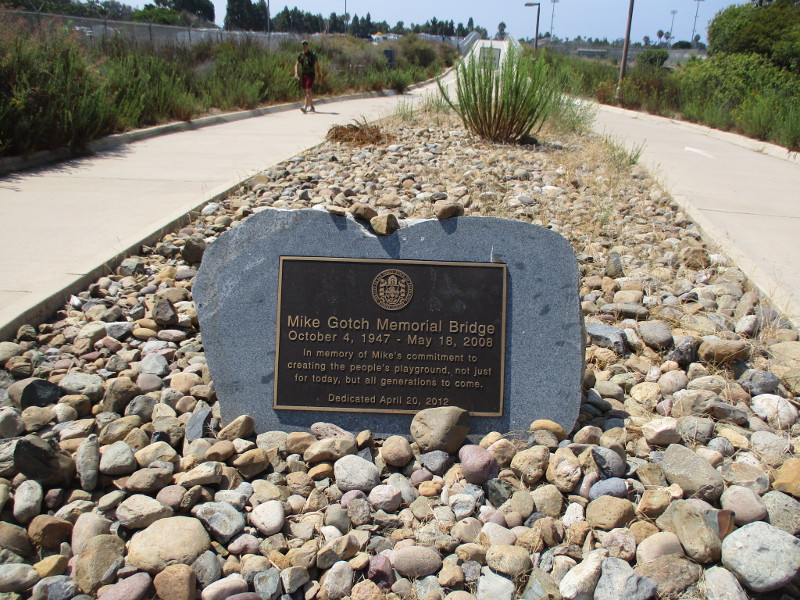
Now walking west, near a plaque at the east end of the Mike Gotch Memorial Bridge.
Mike Gotch Memorial Bridge. October 4, 1947 – May 18, 2008. In memory of Mike’s commitment to creating the people’s playground, not just for today, but all generations to come. Dedicated April 20, 2012.
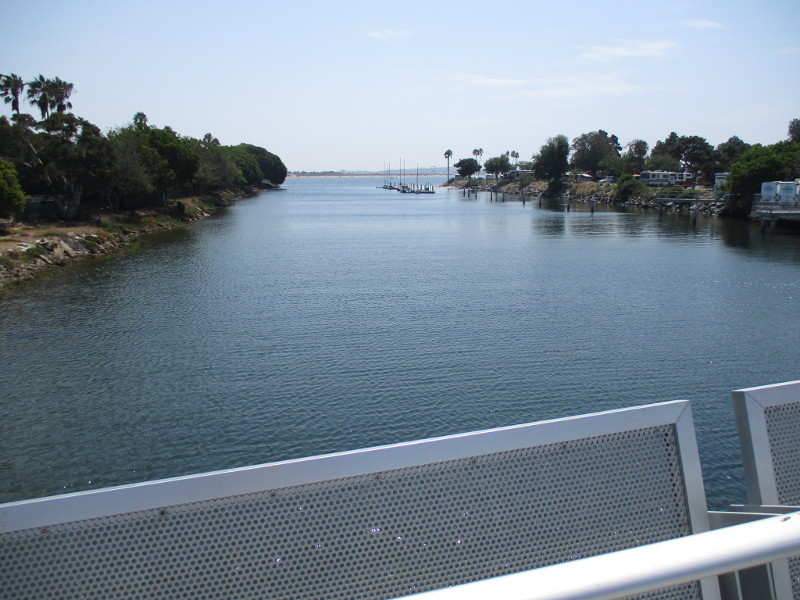
Looking south toward Mission Bay. I see Fiesta Island in the distance.
Passing behind Mission Bay High School’s sports fields.
Approaching Pacific Beach Drive, where the dedicated bike and pedestrian path ends.
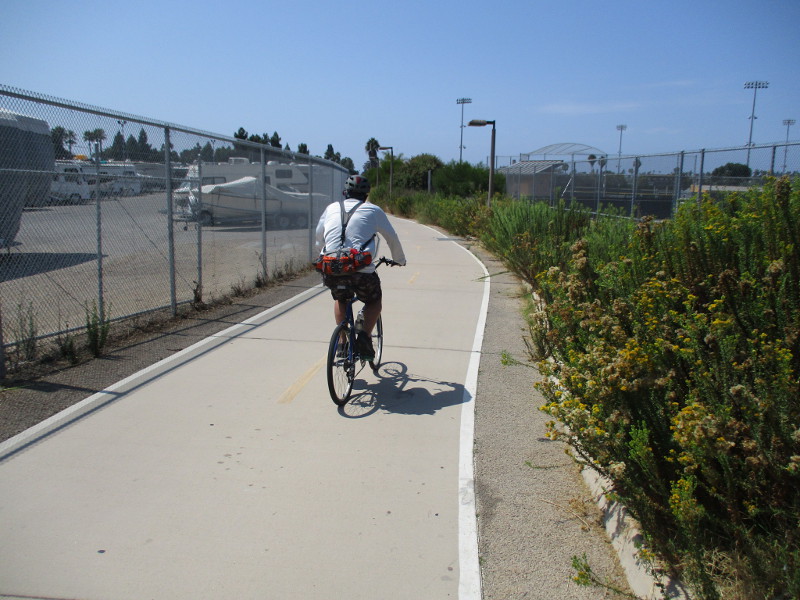
Bicyclists start east along the path, near the entrance to Campland on the Bay.

I live in downtown San Diego and love to walk around with my camera! You can follow Cool San Diego Sights via Facebook or Twitter!
You can easily explore Cool San Diego Sights by using the search box on my blog’s sidebar. Or click a tag! There are thousands upon thousands of photos for you to enjoy!

Another wonderful walk in Balboa Park!

Several walks today. Many photographs taken.

I started in Balboa Park!

And, you know what? Balboa Park on a Saturday morning in late September was just as wonderful as ever…

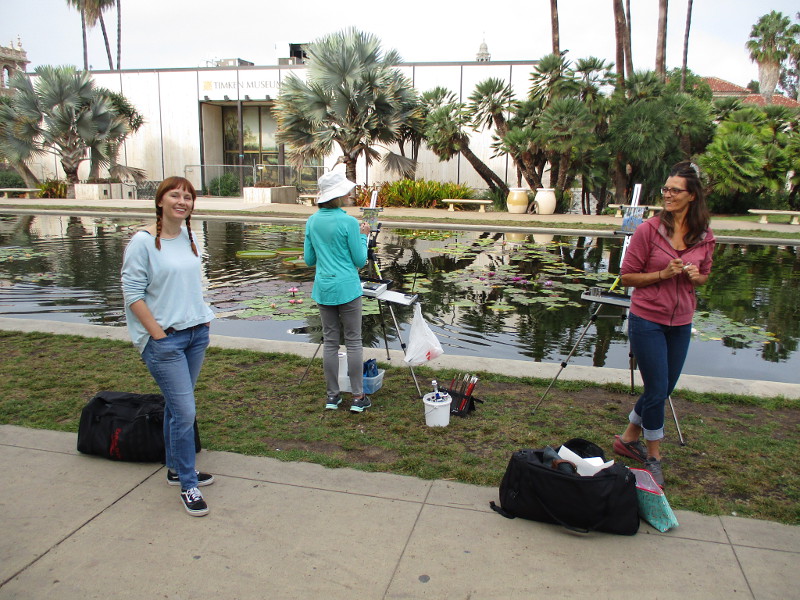
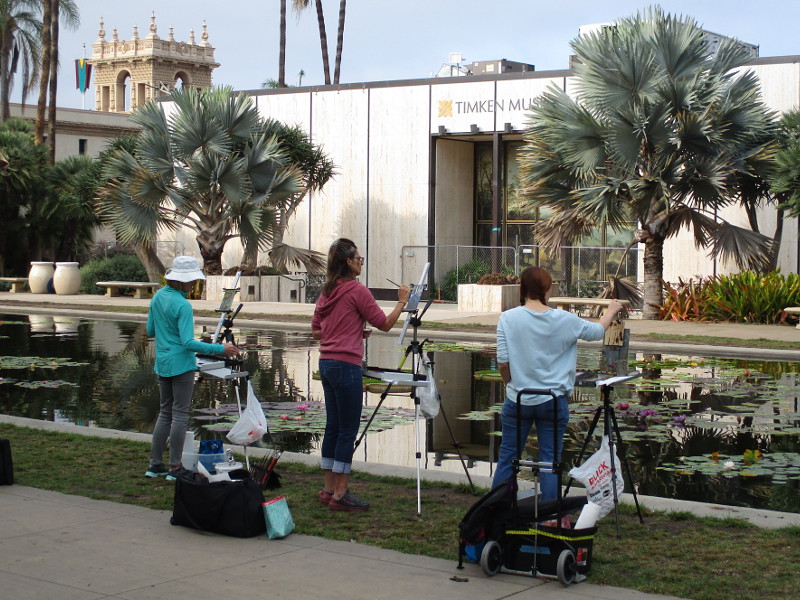
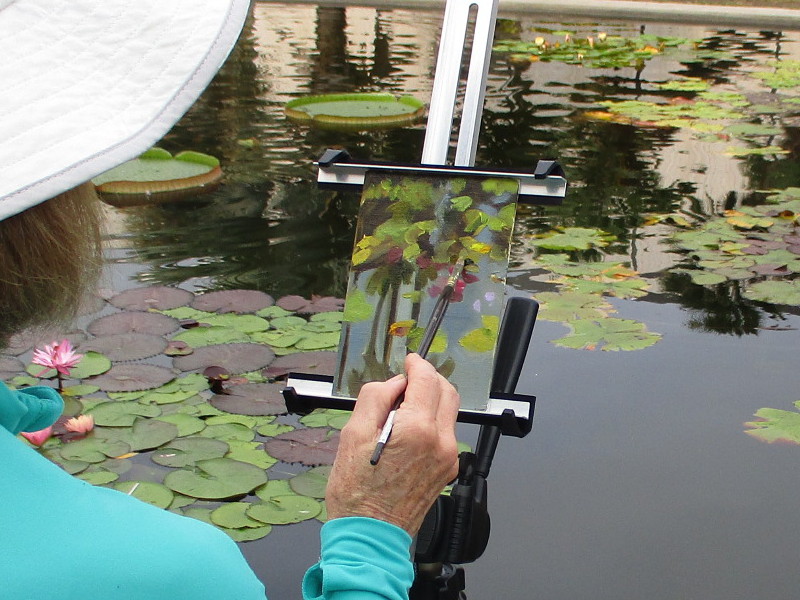
Friendly painters interpret beauty at the Lily Pond.
Brushstrokes reveal wonder.
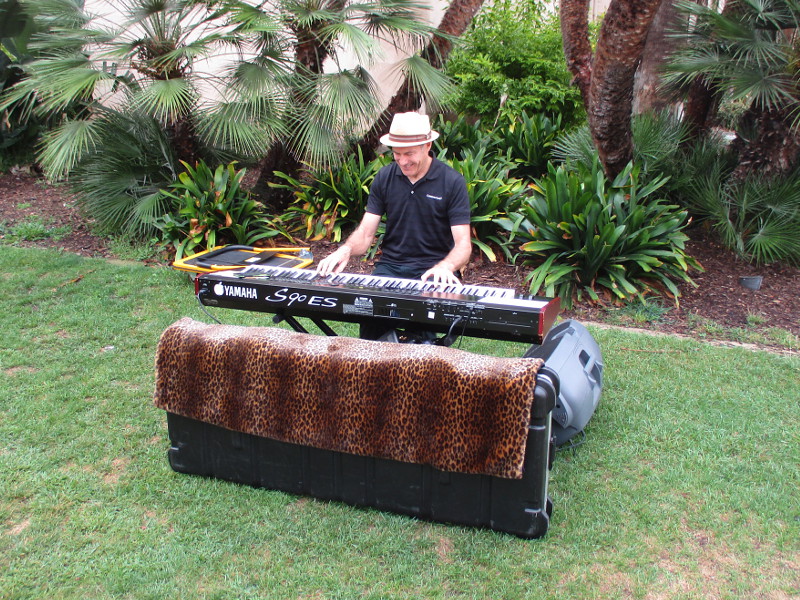
This cool guy was playing music for the painters!
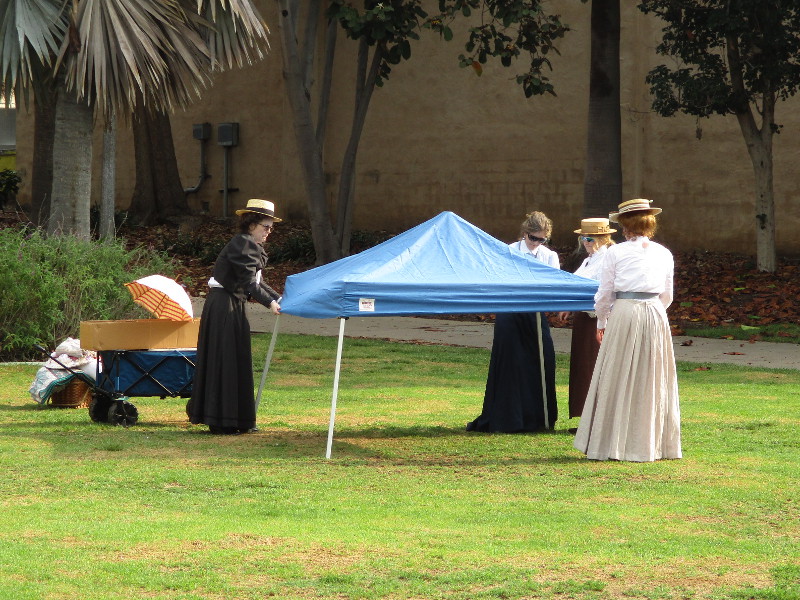
Ladies in old-fashioned garb ready a canopy by the Botanical Building.
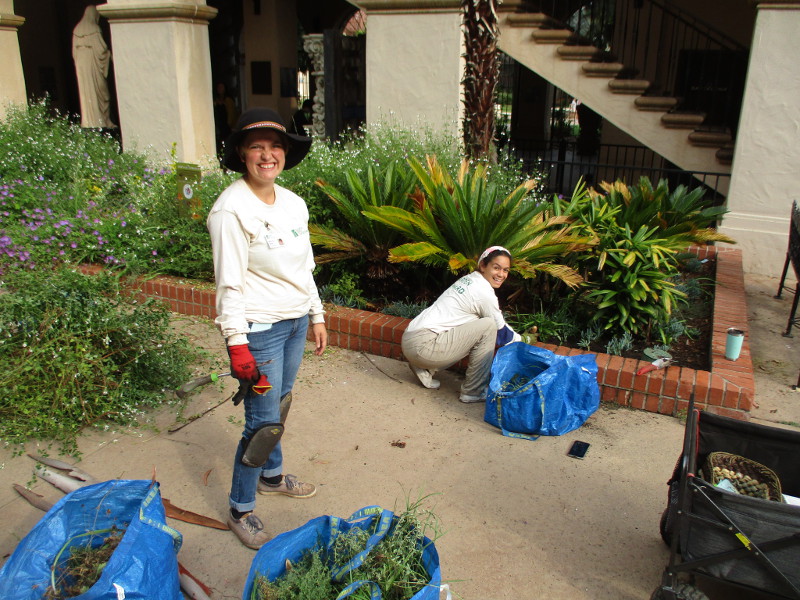
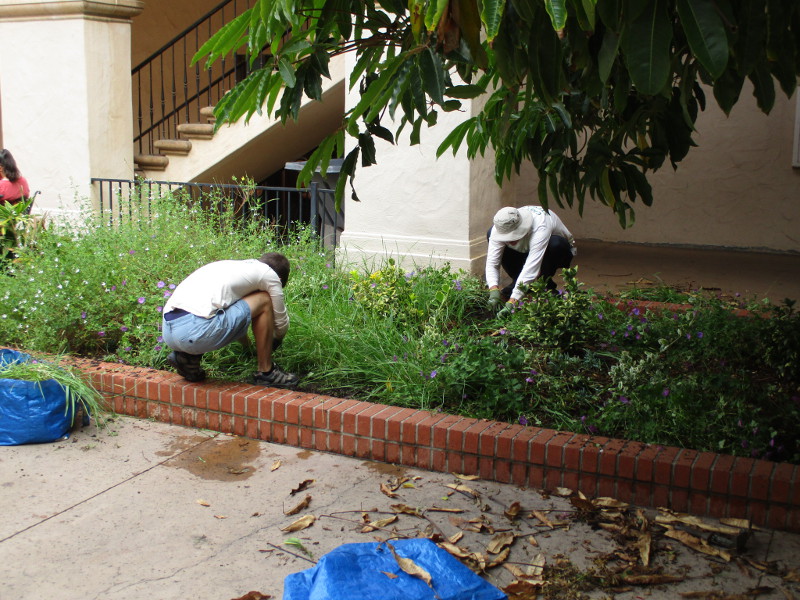
Garden Stewards do some gardening (and smiling) in the Casa del Prado courtyard!
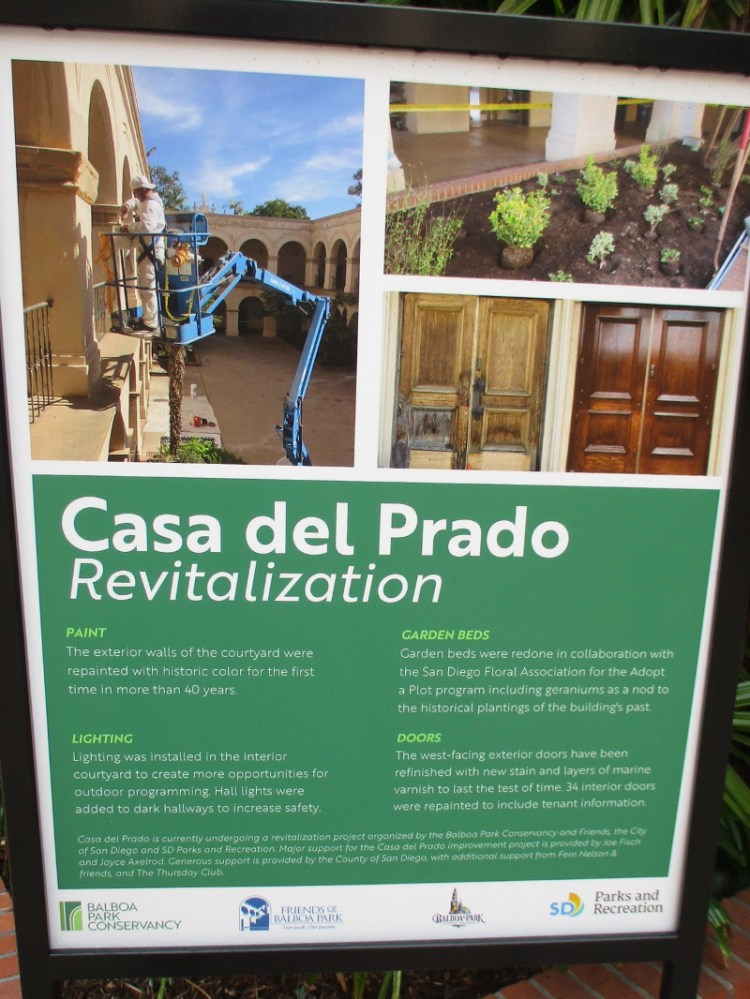
The Casa del Prado revitalization not only includes garden beds redone with the help of the San Diego Floral Association, but painting the building with historic color and new lighting.
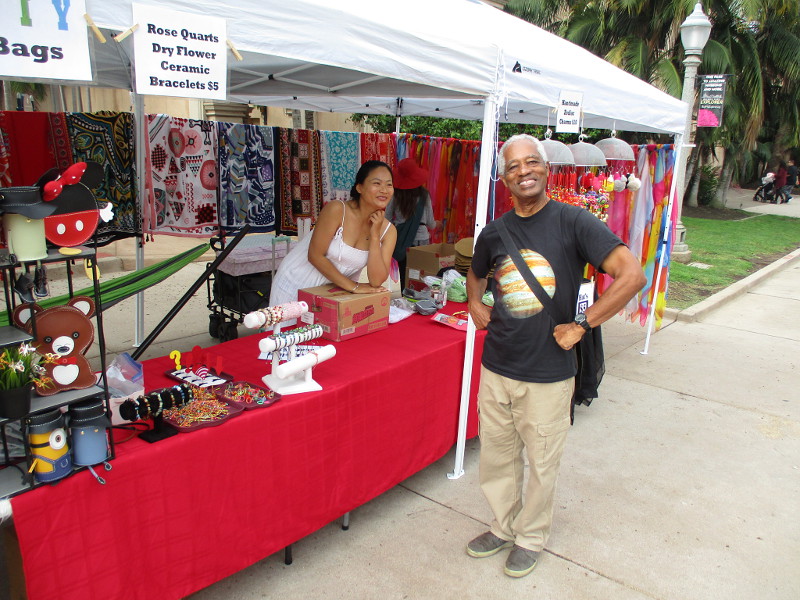
Mitchell, Balboa Park’s cool didgeridoo dude, was hanging out on El Prado. He was wearing Jupiter today! He told me he’s going to be picking up his awesome new sculpted Draco (dragon) didgeridoo soon. He said he’ll send me pics of it which I hope to share!
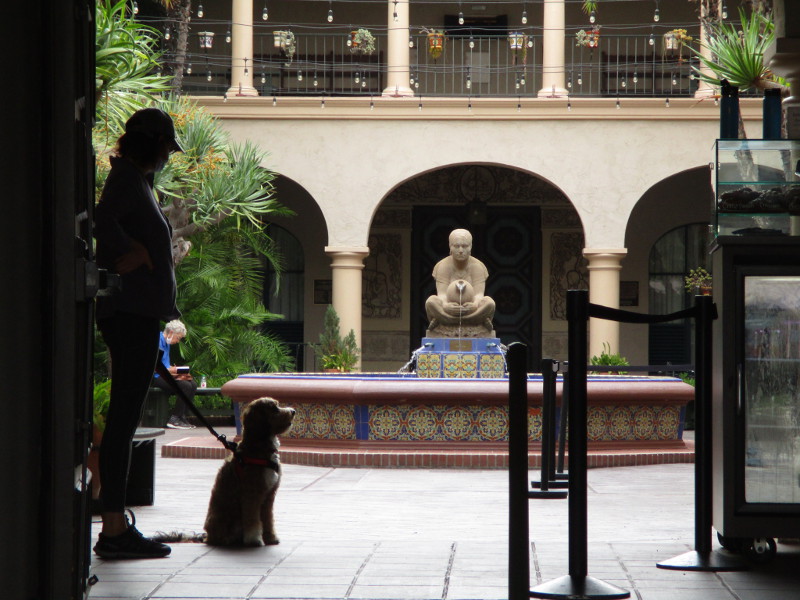
Peeking into the House of Hospitality courtyard.
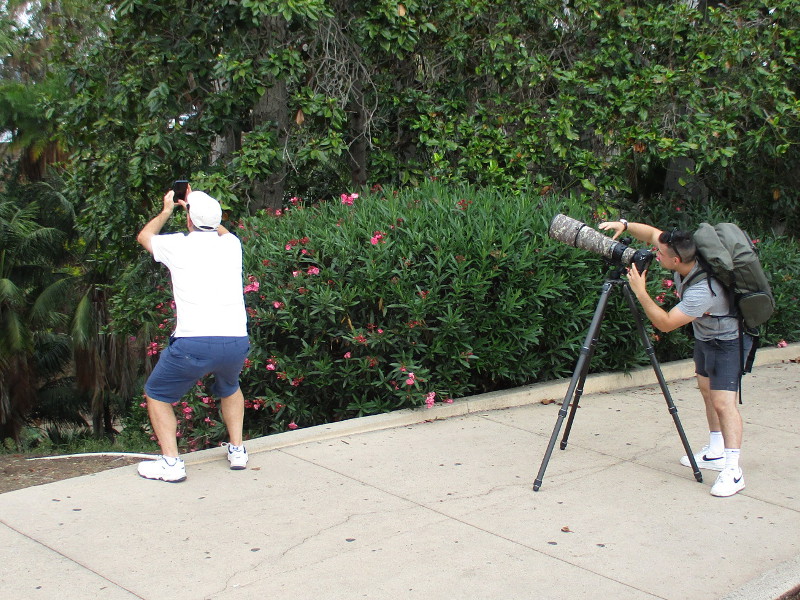
The fellow with the enormous camera is a freelance photographer. He saw a big spider building a long web between a Palm Canyon tree and the nearby restrooms. We marveled at how a mere spider could accomplish such a feat.
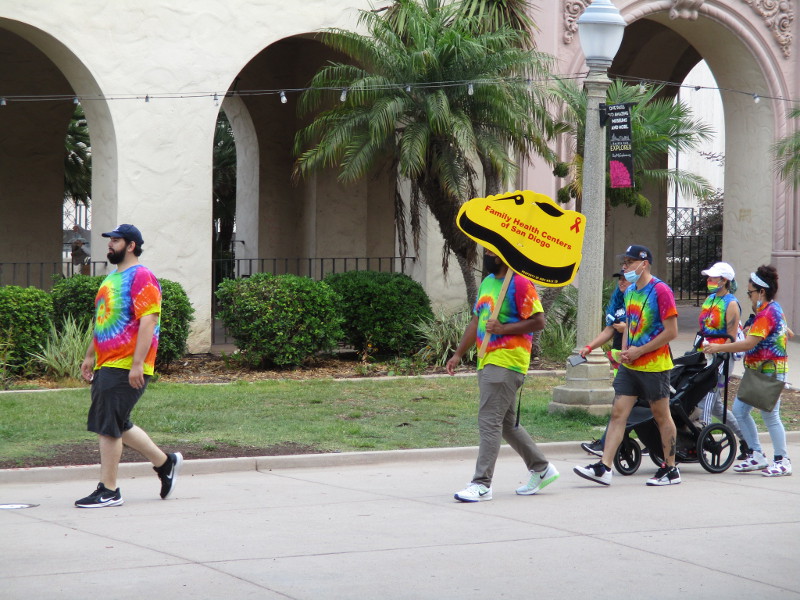
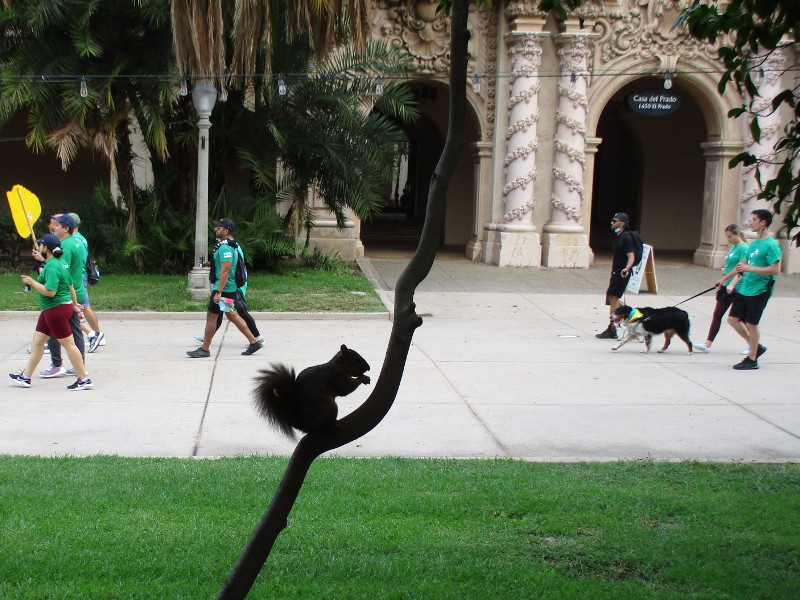
A bunch of walkers were streaming down El Prado. I believe they were raising funds for the Family Health Centers of San Diego.
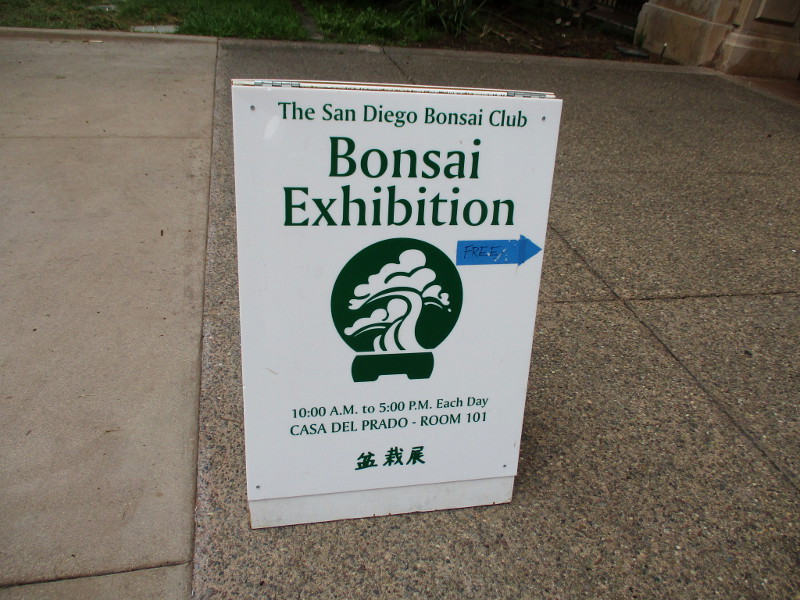
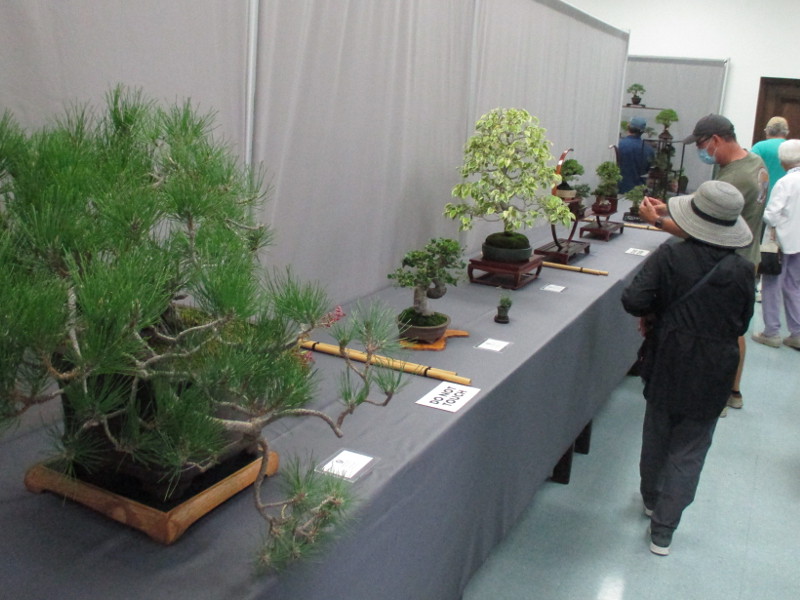
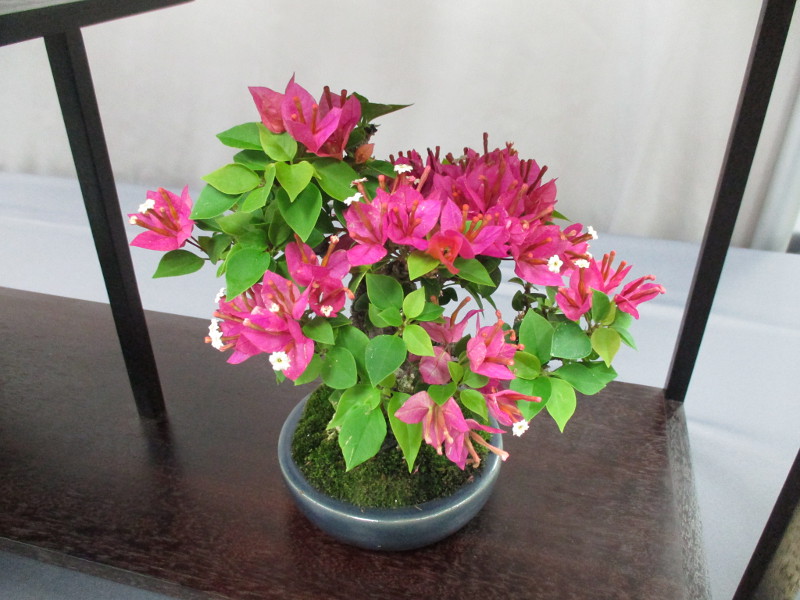
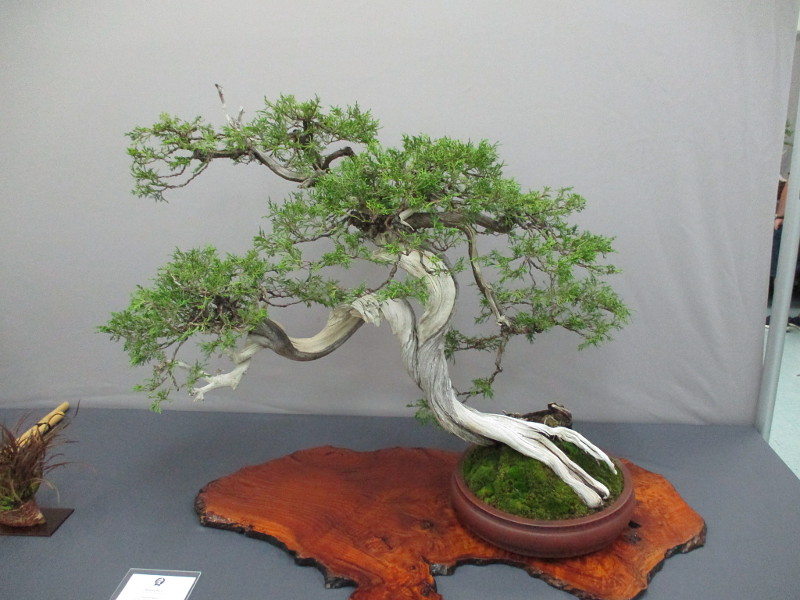
I had to circle back to the Casa del Prado because the San Diego Bonsai Club’s exhibition opened at 10 am.
Another wonderful day walking in Balboa Park.

I live in downtown San Diego and love to walk around with my camera! You can follow Cool San Diego Sights via Facebook or Twitter!

You can easily explore Cool San Diego Sights by using the search box on my blog’s sidebar. Or click a tag! There are thousands upon thousands of photos for you to enjoy!

Plaque at Cabrillo honors National Parks hero.

A beautiful bronze plaque near the entrance of the Cabrillo National Monument Visitor Center honors Stephen Tyng Mather.

It reads:

STEPHEN TYNG MATHER

JULY.4.1867. JAN:22.1930.

HE LAID THE FOUNDATION OF THE NATIONAL PARK SERVICE, DEFINING AND ESTABLISHING THE POLICIES UNDER WHICH ITS AREAS SHALL BE DEVELOPED AND CONSERVED UNIMPAIRED FOR FUTURE GENERATIONS. THERE WILL NEVER COME AN END TO THE GOOD THAT HE HAS DONE.

You can learn more about Stephen Mather and how he promoted the creation of the National Park Service and became its first director here.

The Wikipedia page states: “In 1932, his family and friends established the Stephen Mather Memorial Fund, which commissioned numerous bronze plaques honoring Mather’s accomplishments and installed them in national park units.

I live in downtown San Diego and love to walk around with my camera! You can follow Cool San Diego Sights via Facebook or Twitter!
Art found in the Cedros Avenue Design District!

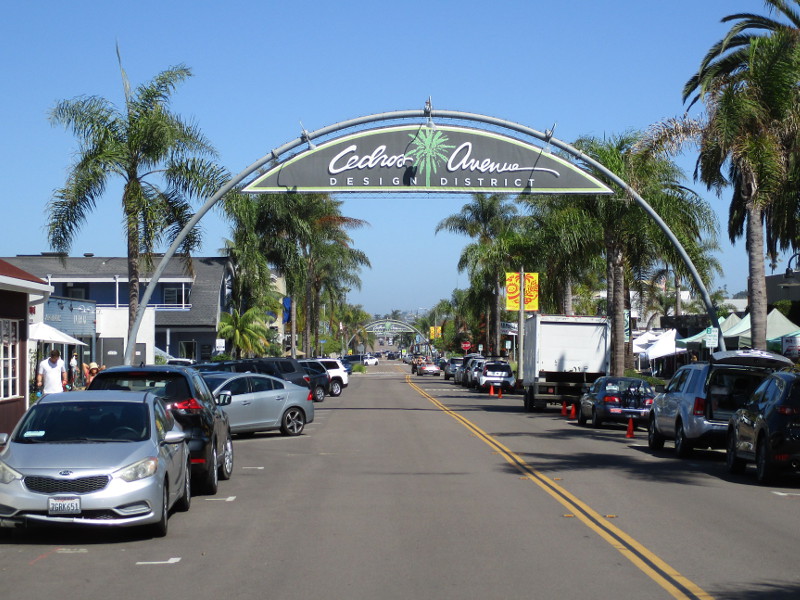
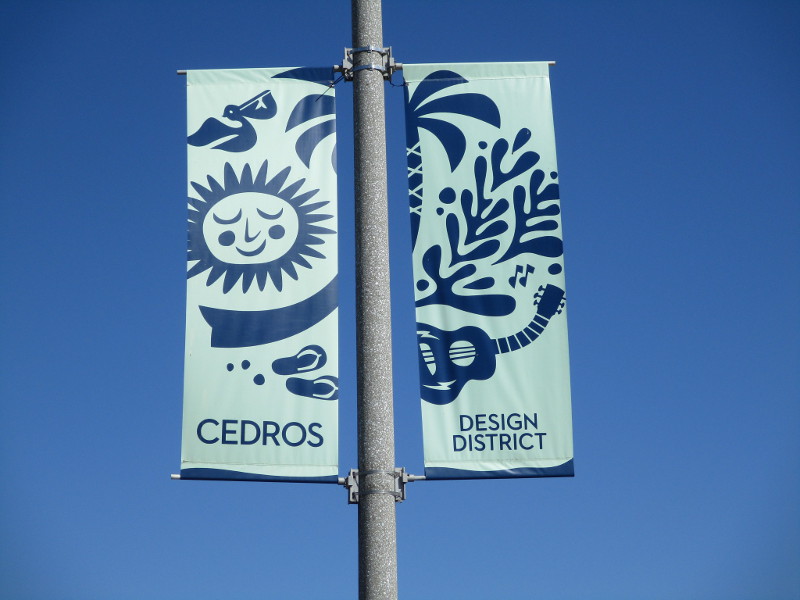
The Cedros Avenue Design District in Solana Beach is home to many galleries, design studios, boutiques, specialty shops and outdoor cafes. Walk along Cedros Avenue and your eyes will discover art everywhere they turn!

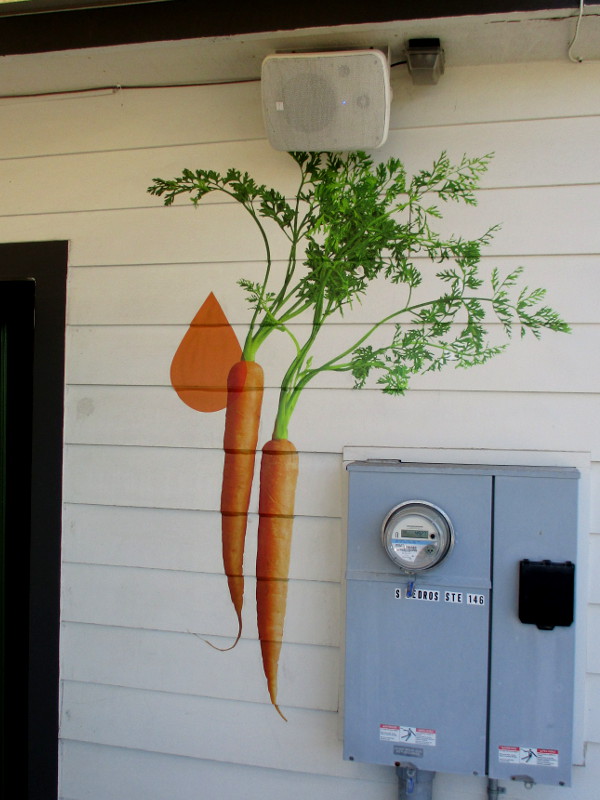
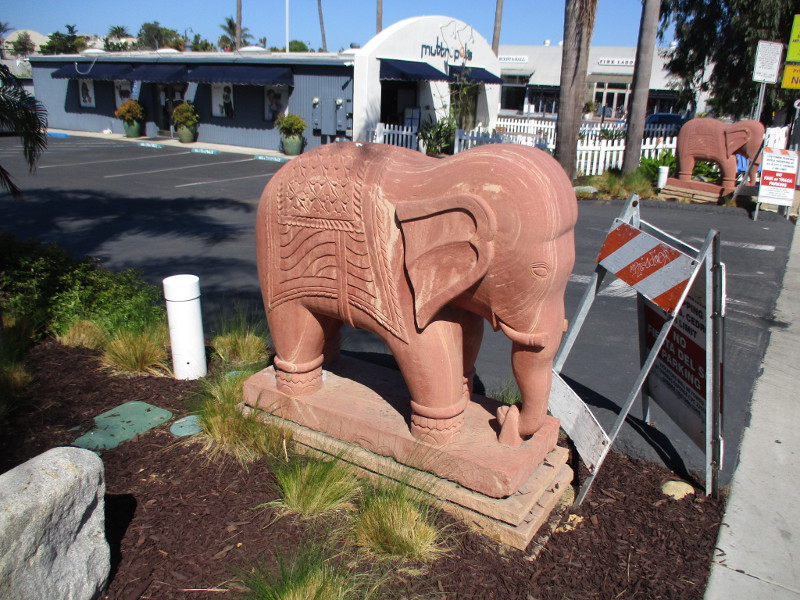
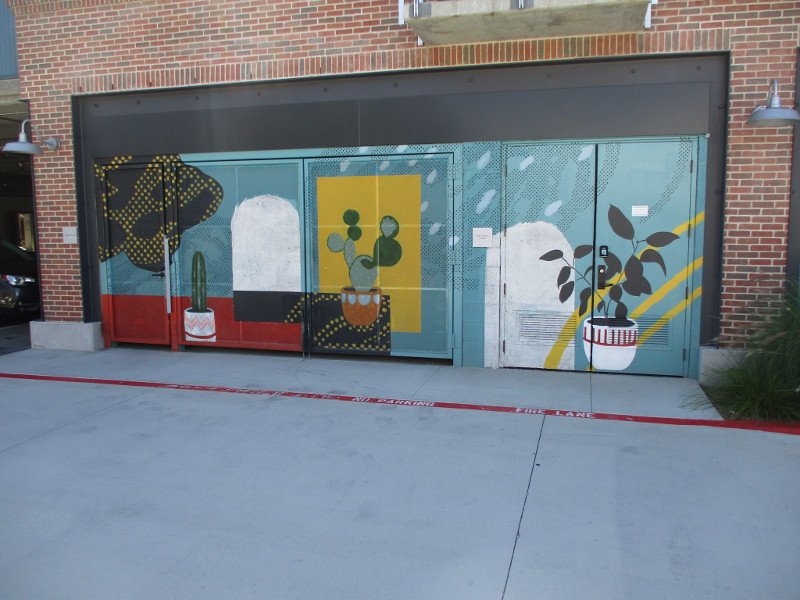
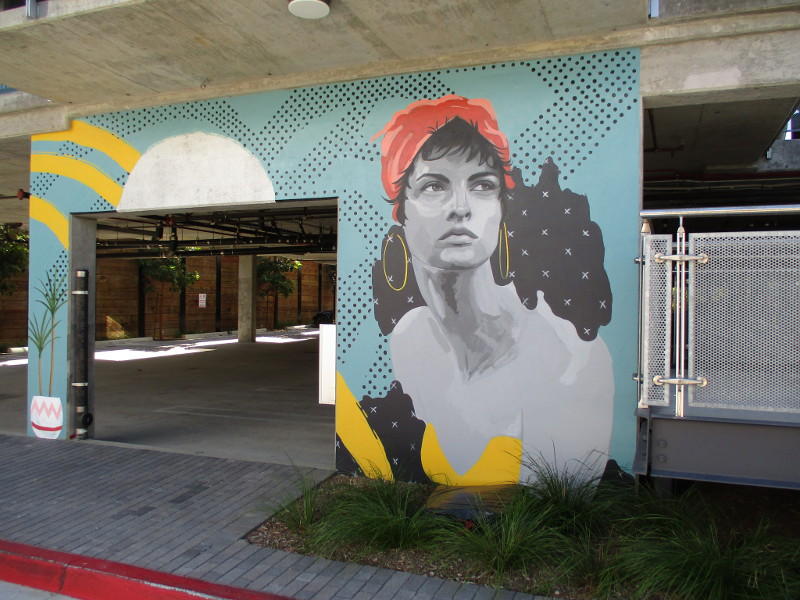
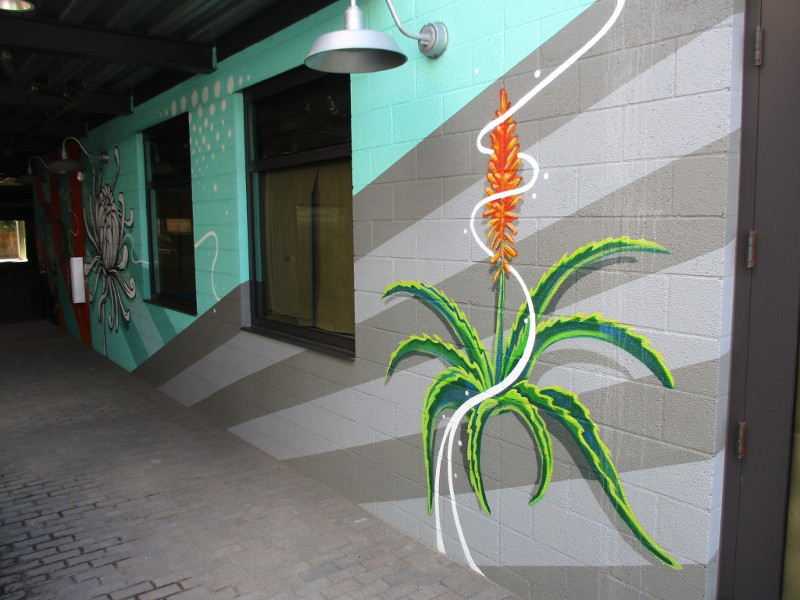
During my recent walk along Cedros Avenue I took the following photographs of street art, murals and fun sculptures.

I haven’t included photos of the numerous crazy wind sculptures outside the Exclusive Collections Gallery. I posted those pics separately here.

The Wonder Woman sculpture you’ll see coming up stands by the entrance to the Art Alley on Cedros, which I explored in my last blog post here.

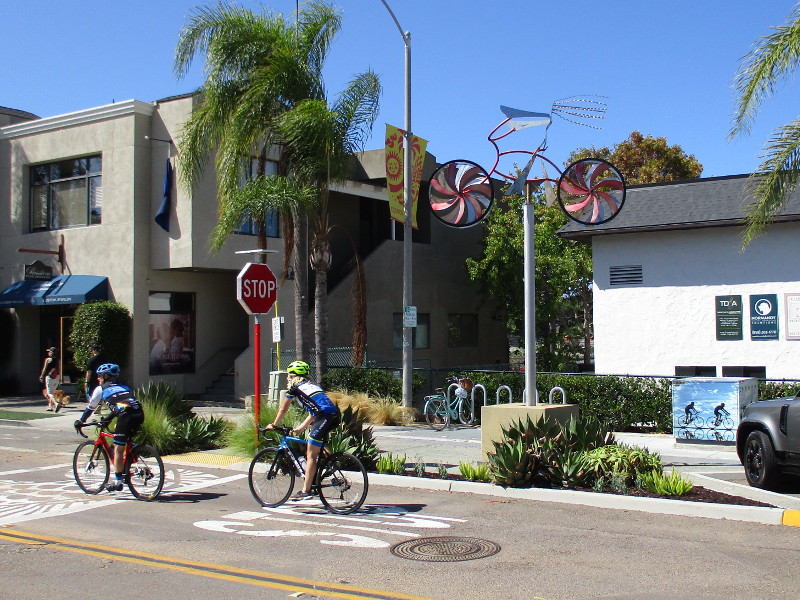
Much of the art I found has a bicycle theme. Bicycling is popular in the coastal part of Solana Beach. Cedros Avenue is just a block from scenic Highway 101.

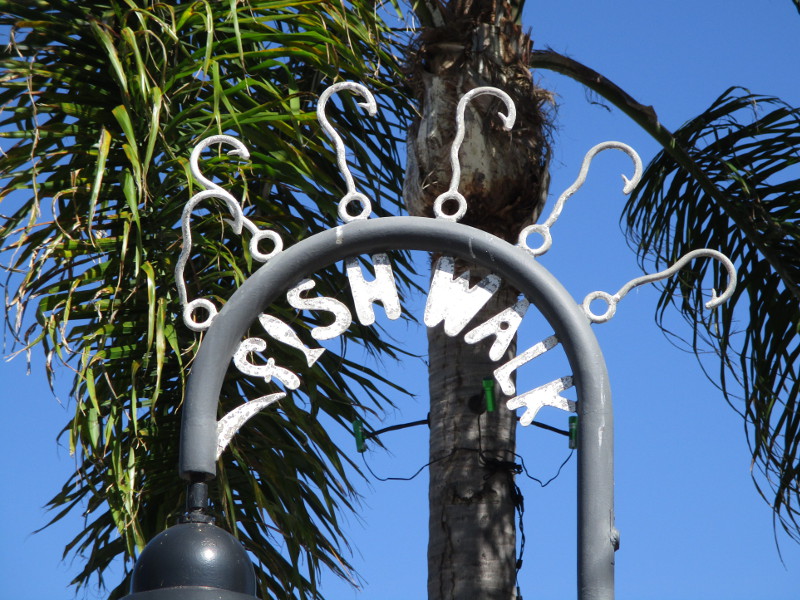
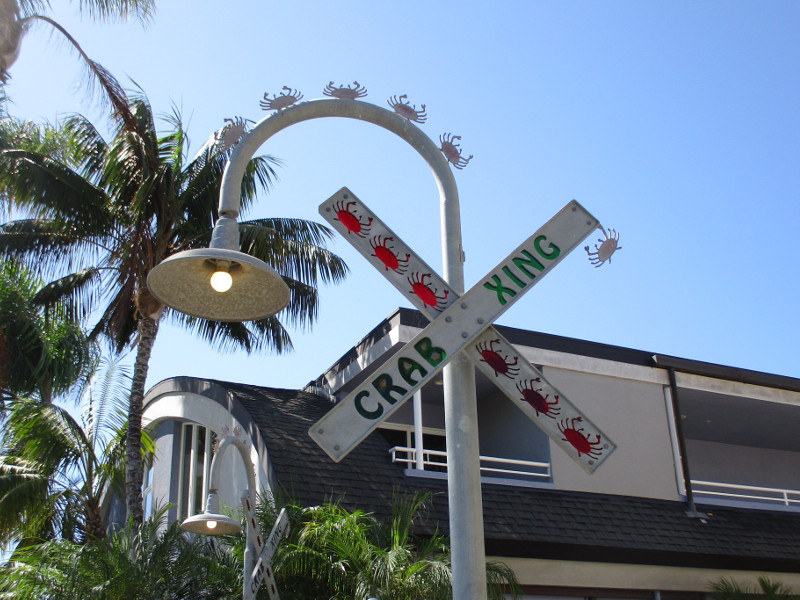
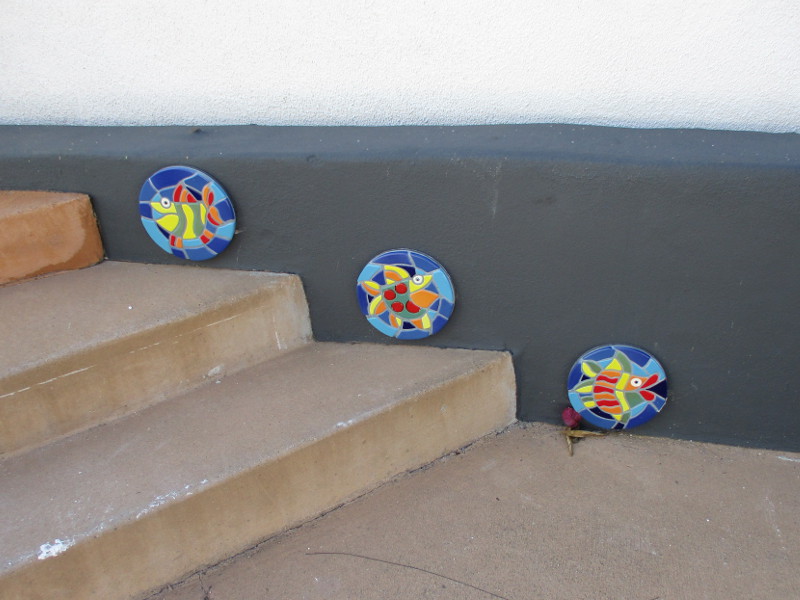
Ready to see some cool stuff? And cross a couple of “fishy” crosswalks?

Let’s go for our walk!

I live in downtown San Diego and love to walk around with my camera! You can follow Cool San Diego Sights via Facebook or Twitter!

You can easily explore Cool San Diego Sights by using the search box on my blog’s sidebar. Or click a tag! There are thousands upon thousands of photos for you to enjoy!

Stepping into the Art Alley on Cedros!

In Solana Beach, at 320 Cedros Avenue, there’s a surprising art museum . . . outdoors! I just happened to discover the Art Alley on Cedros during my recent walk through the very hip Cedros Avenue Design District.

Anybody can freely wander off the street and into the alley to experience a motley collection of colorful (and groovy) artwork!

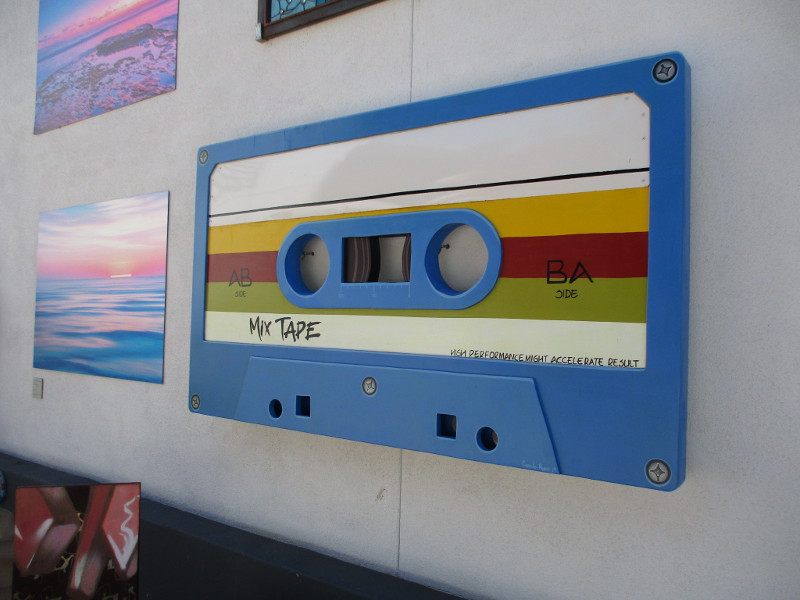
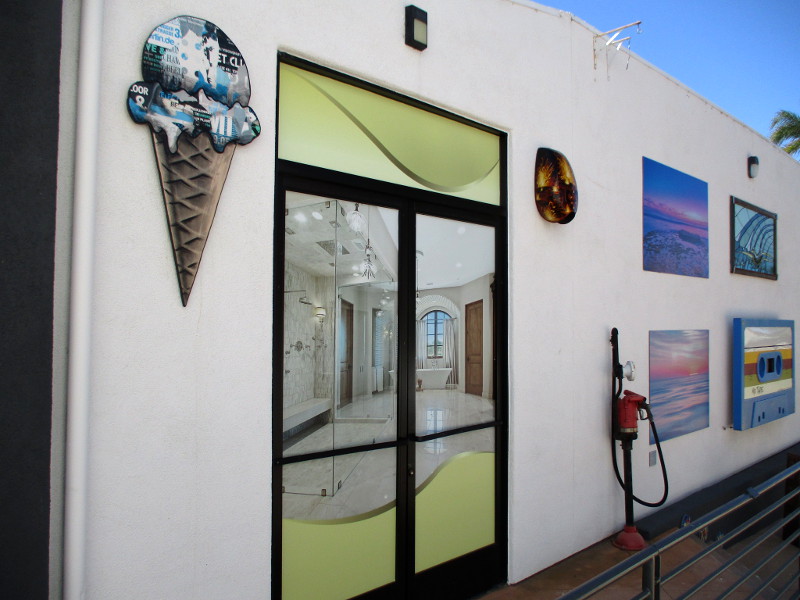
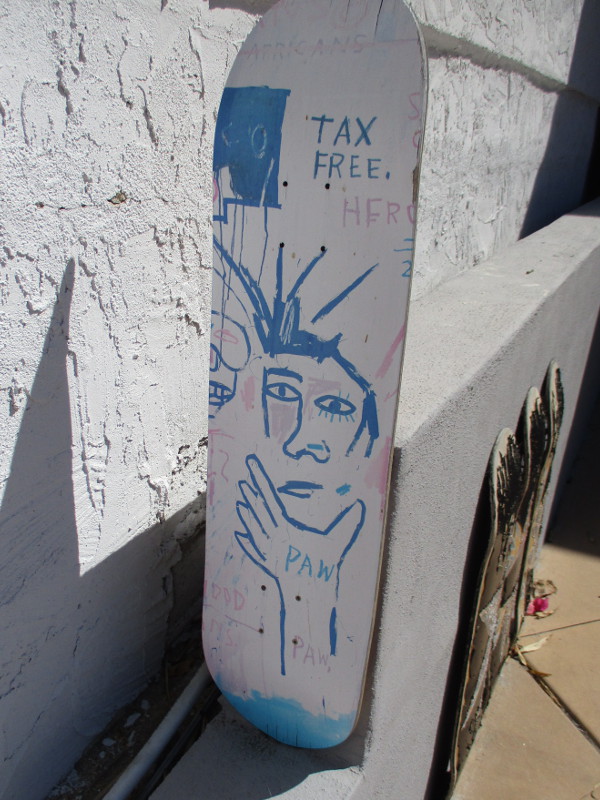
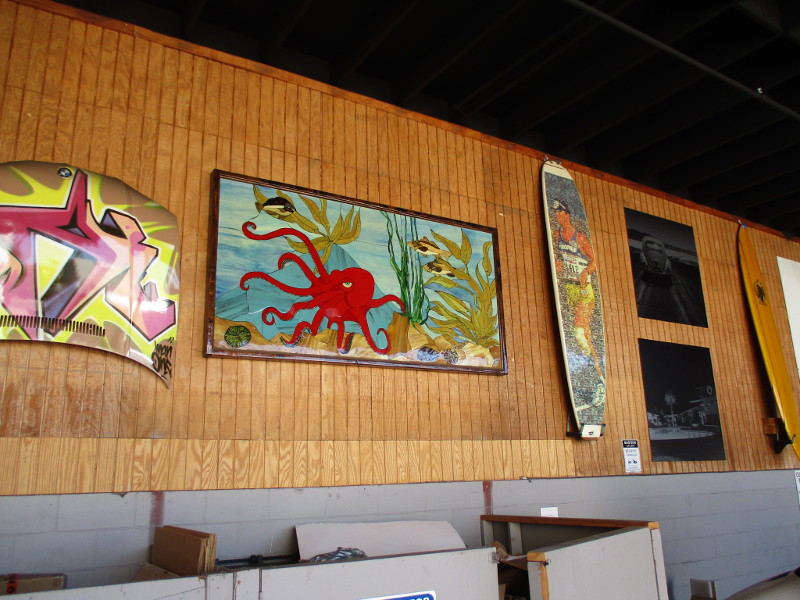
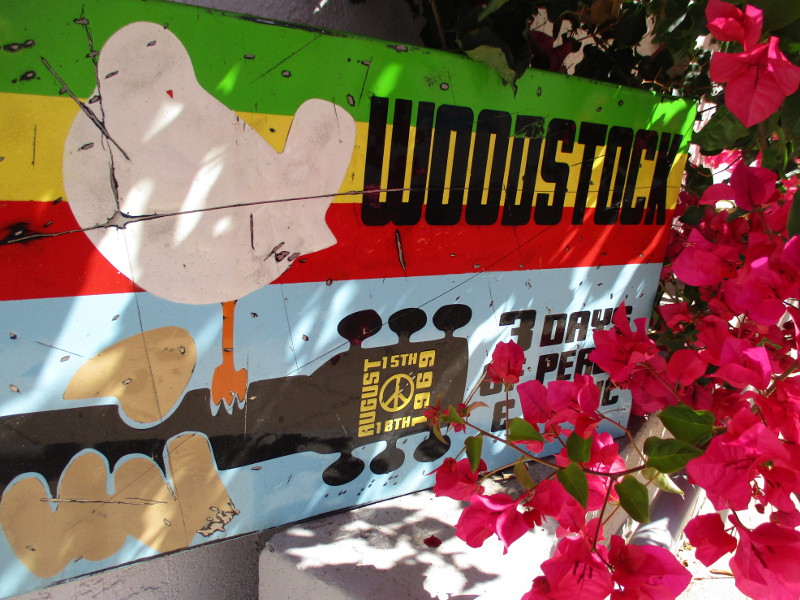
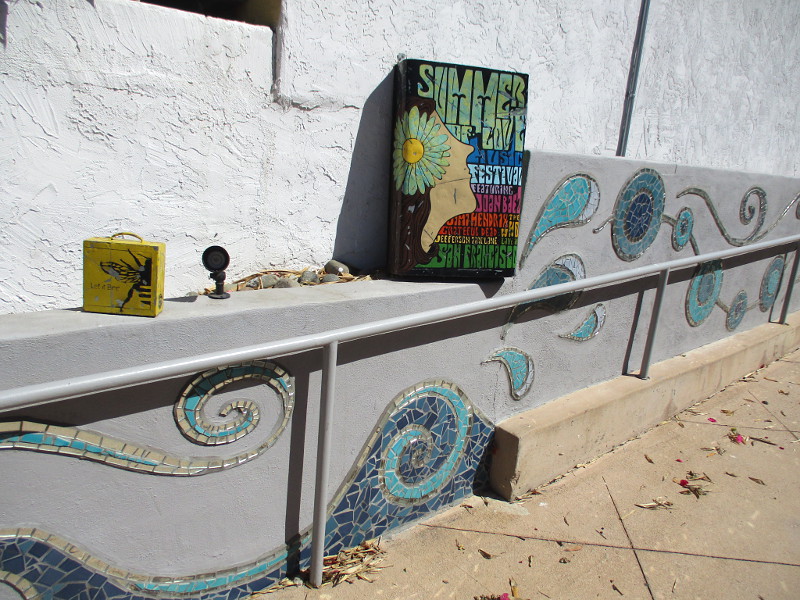
I walked the length of the alley and discovered a variety of painted “canvases” including car hoods, skateboards and surfboards, beautiful photographs, unique objects and sculptures, a watery blue mosaic along one alley wall, and many fun, nostalgic pieces that celebrate popular music from the past.

It looks like the Art Alley on Cedros has a Facebook page.

This is some of what I observed…

I live in downtown San Diego and love to walk around with my camera! You can follow Cool San Diego Sights via Facebook or Twitter!
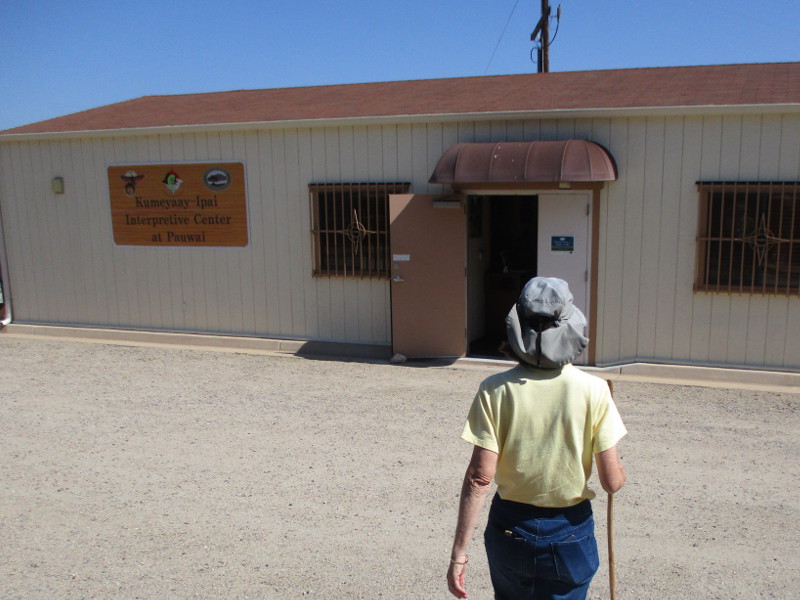
Visiting the Kumeyaay-Ipai Interpretive Center in Poway.

Once a month, every third Saturday, the Kumeyaay-Ipai Interpretive Center in Poway opens to the public.

Today I enjoyed a tour of the archaeological site and its educational visitor center. I was surprised to find so much history preserved in this small island of natural beauty just off Poway Road.

Poway is derived from the Native American Kumeyaay word Pauwai, which means the shape of an arrowhead or the merging of two creeks. A short distance to the south is Poway Creek.

As you will see in the following photographs, a small Kumeyaay village of approximately 20 families once lived on the hill that I and my docent tour guide, Heidi, explored.

The Kumeyaay people have lived in this region for at least 10,000 years. These first people had their lives severely disrupted with the arrival of Europeans in 1769. Today, descendants of those who lived in Pauwai are members of the San Pasqual Band of Mission Indians.

Please enjoy the following photos to get a taste of what you might discover when you visit. Read the captions for a few of the things I learned.

Are you a local history or anthropology enthusiast? Or a community-minded person who loves the outdoors? The Kumeyaay-Ipai Interpretive Center is always looking for volunteers!

Check out their Facebook page and learn about the special days and hours when you can visit here.

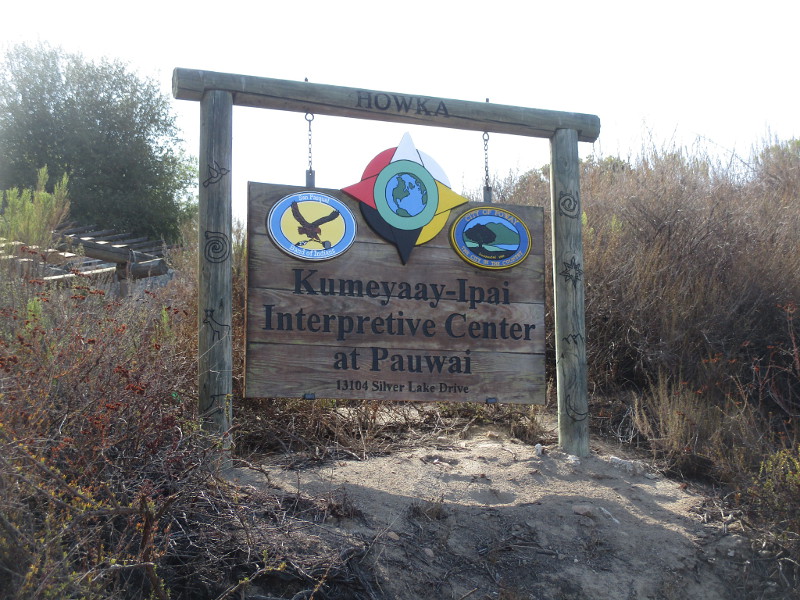
Sign at the end of Ipai Waaypuk Trail, south of Poway Road, where there is parking.
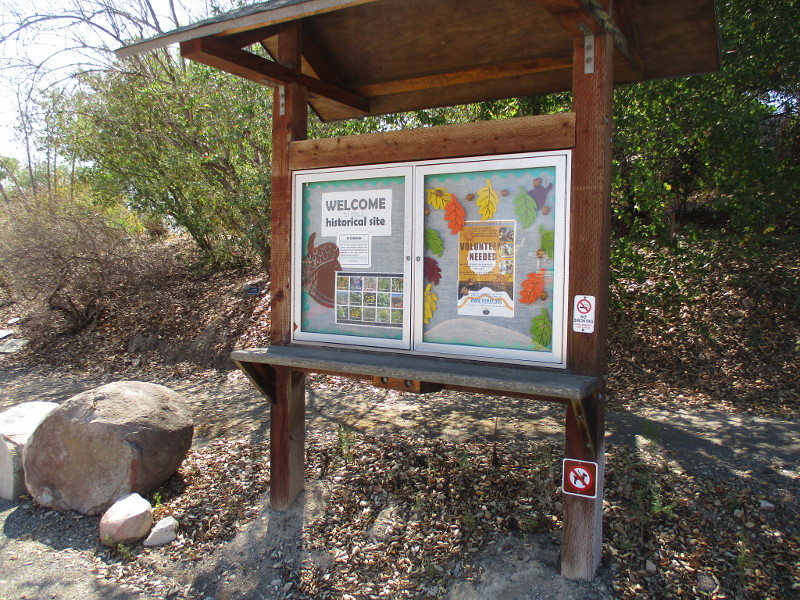
Kiosk welcomes visitors to an important historical site.
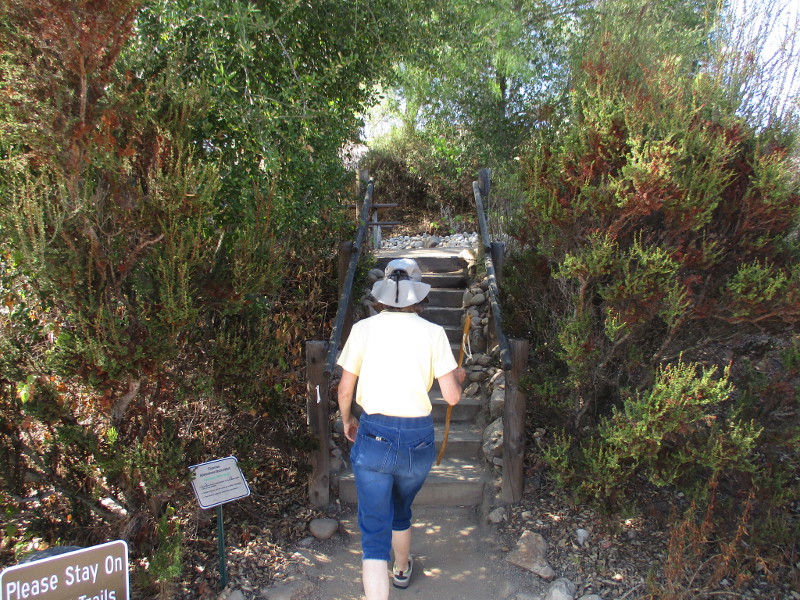
My tour guide Heidi starts up stairs that lead to short looping trails.
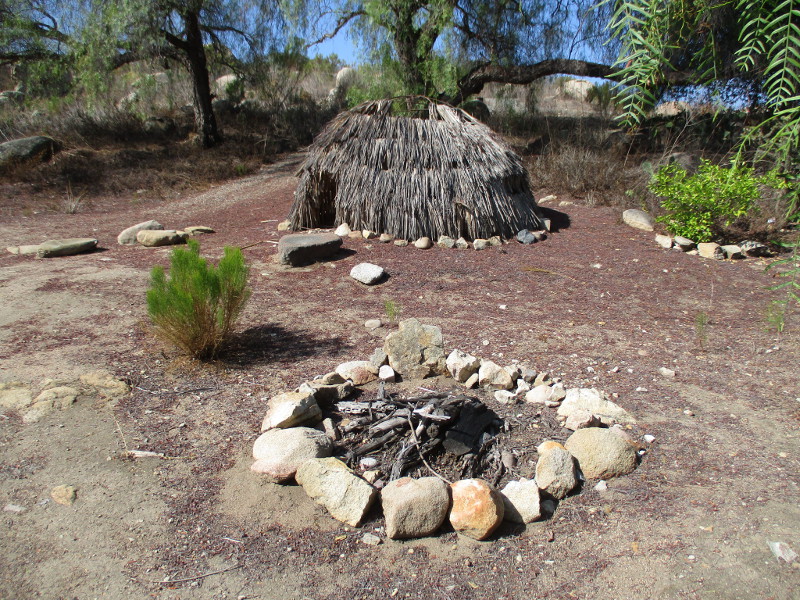
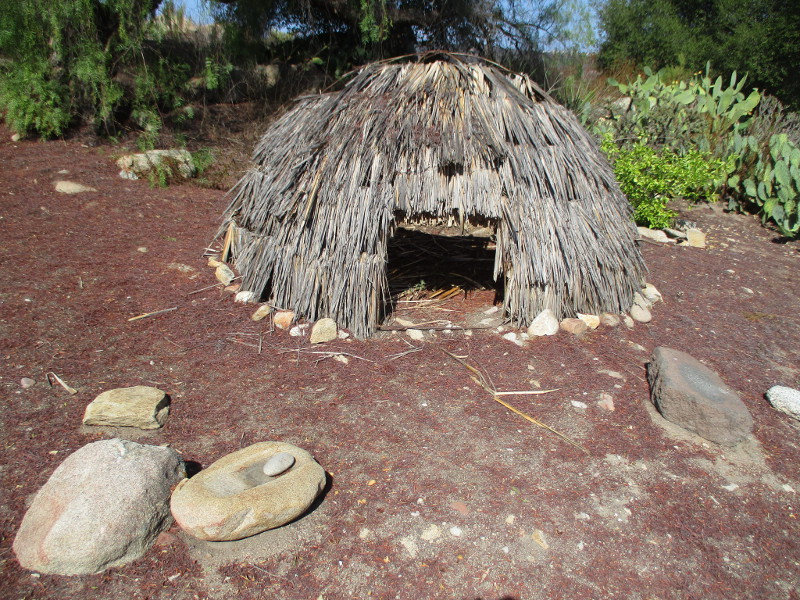
At the Replica Village in a clearing stand several recreated Kumeyaay ewaas. These are shelters made of sycamore or willow tree branches, covered with cattails or baccharis, and tied with yucca or agave fiber string. These replica ewaas are old and need to be refurbished. The Kumeyaay would refresh their watertight ewaas regularly. A grinding stone, or metate, lies nearby.
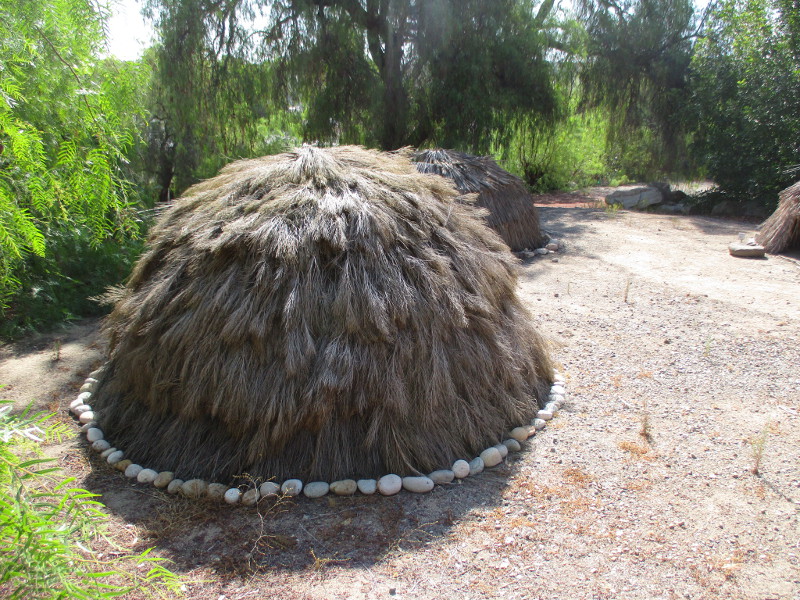
This nearest ewaa was recently reconstructed. Volunteers who’d like to maintain this special place are welcome!
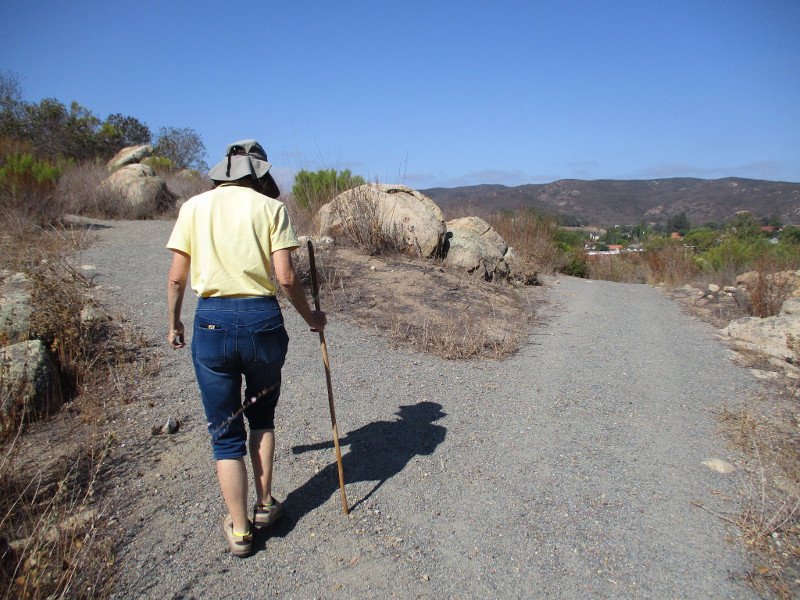
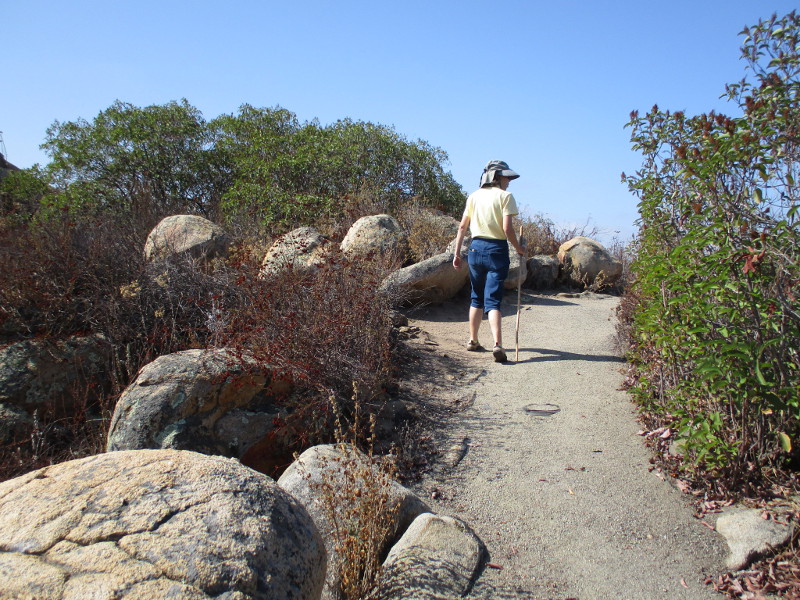
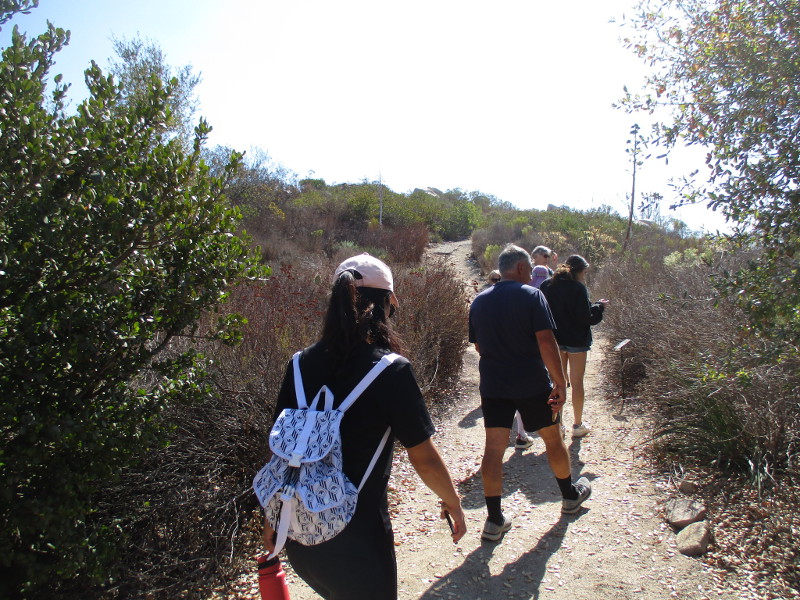
Heading up to the top of the hill along a very short, moderately steep section of trail.
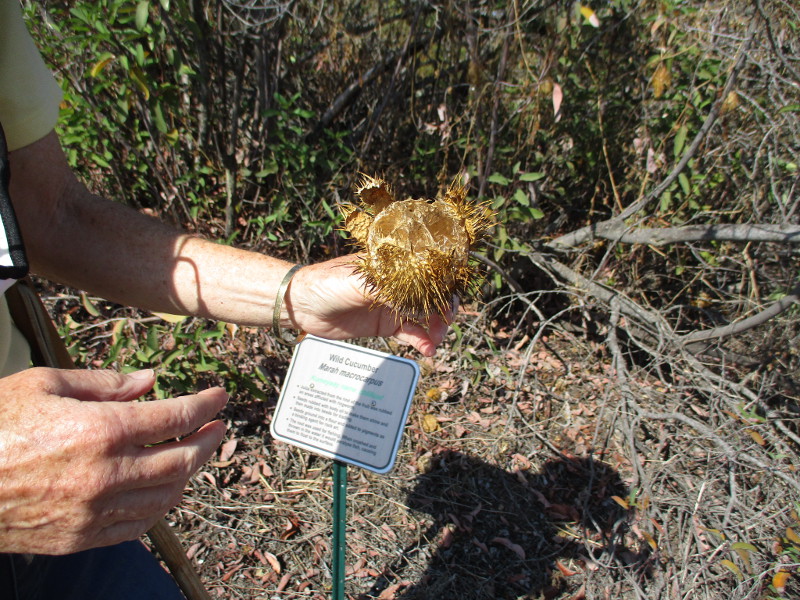
I’m shown Wild Cucumber. Like many native plants, it had various practical uses. Seeds ground into a powder by the Kumeyaay were added to pigments to create rock art. The crushed roots, when tossed into water, would paralyze fish!
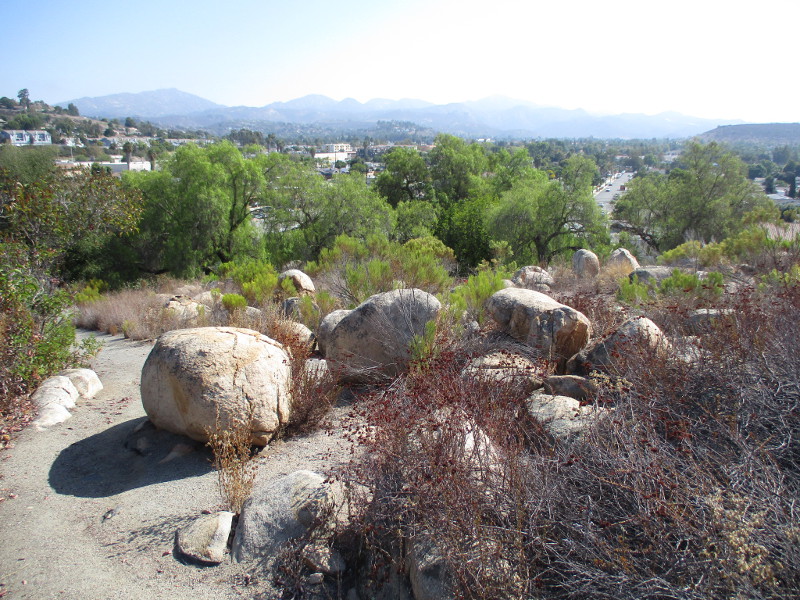
In the distance we could see Mt. Woodson, Iron Mountain, and Cuyamaca Peak. Depending on the season, the Kumeyaay would migrate east to the mountains or west to the Pacific Ocean coast.
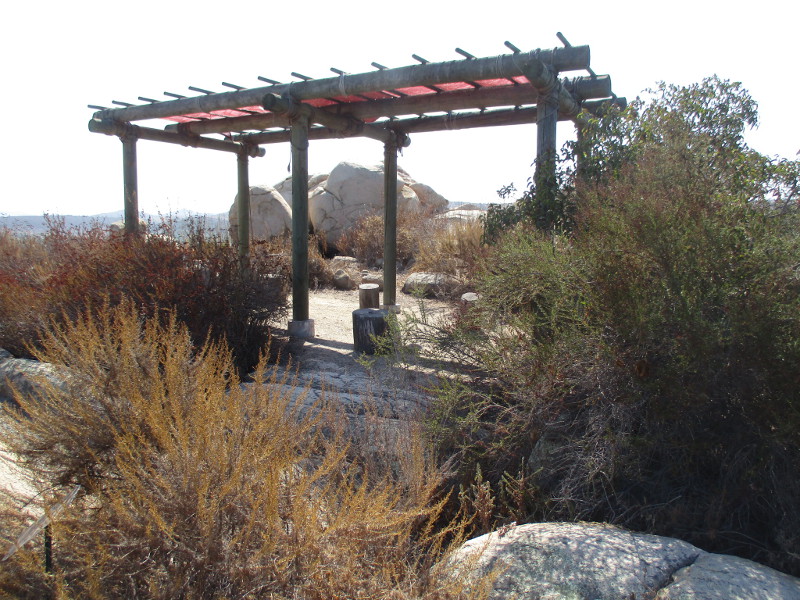
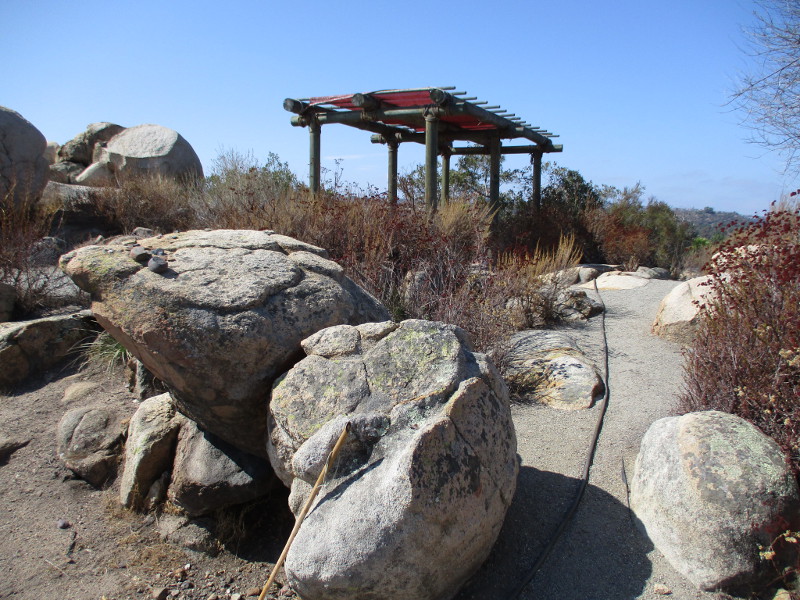
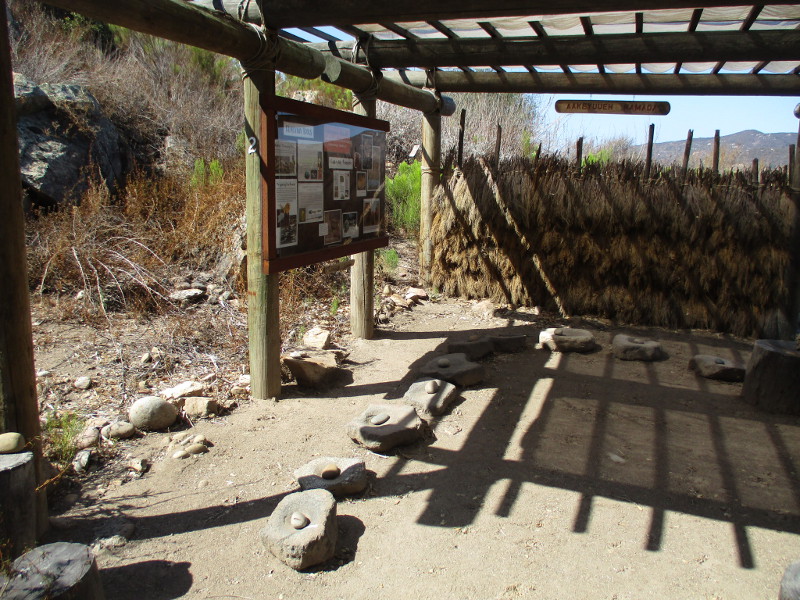
One of several outdoor ramadas built for visitors to the Interpretive Center. Historical ramadas erected by the Kumeyaay were shady places for village activities and ceremonies.
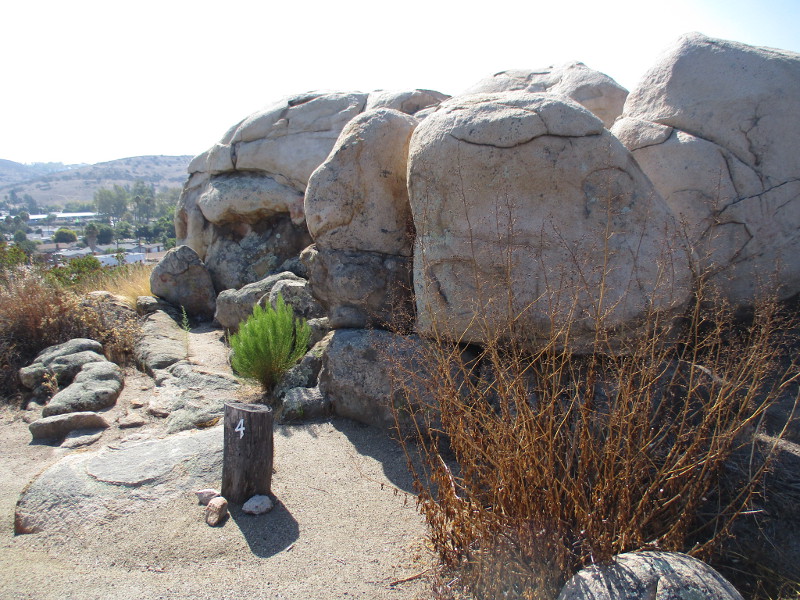
It was thought that rock art might be found on these monumental boulders crowning the hilltop, but a thorough study using modern technology detected no traces.
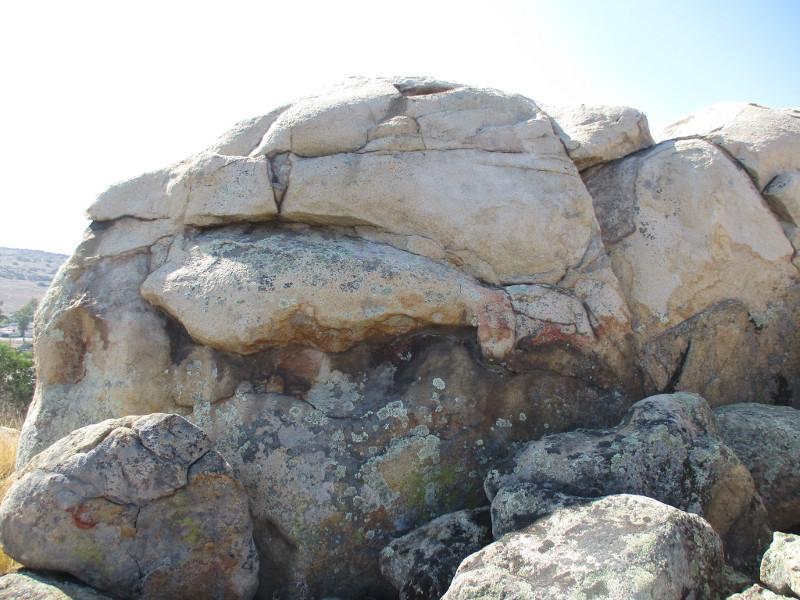
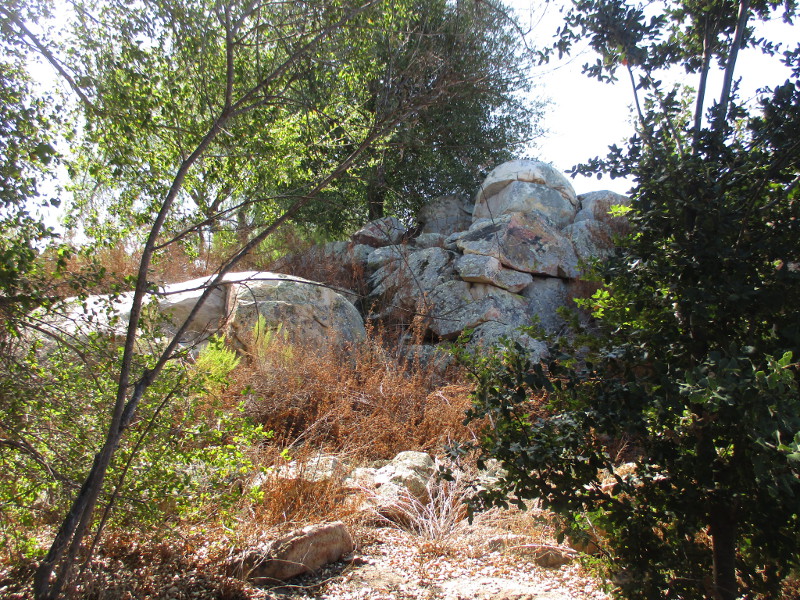
A wise Kumeyaay observer found in this rock formation a whale, a turtle, and the head of a dolphin. Do you see them?
A nearby fire pit once used by the Kumeyaay villagers.
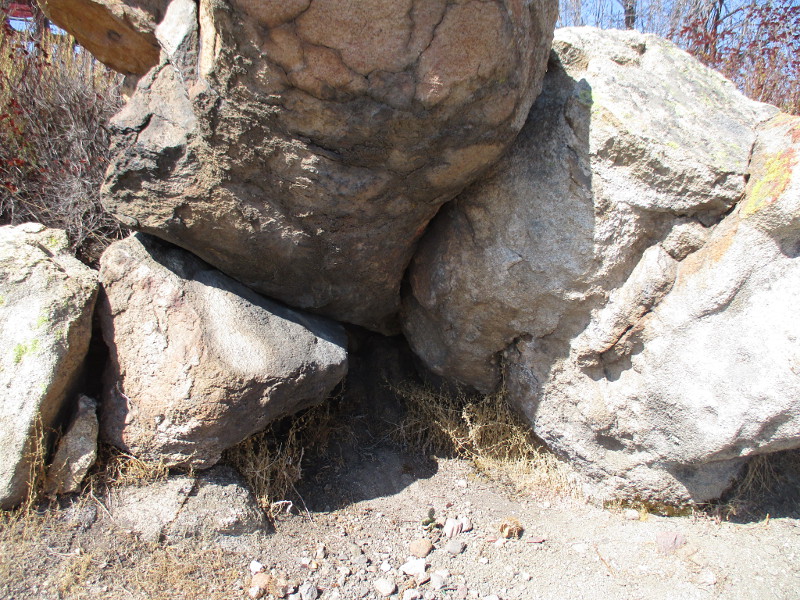
Soot remains in this natural rocky oven. A crack in the rear conveniently served as a flue for smoke.
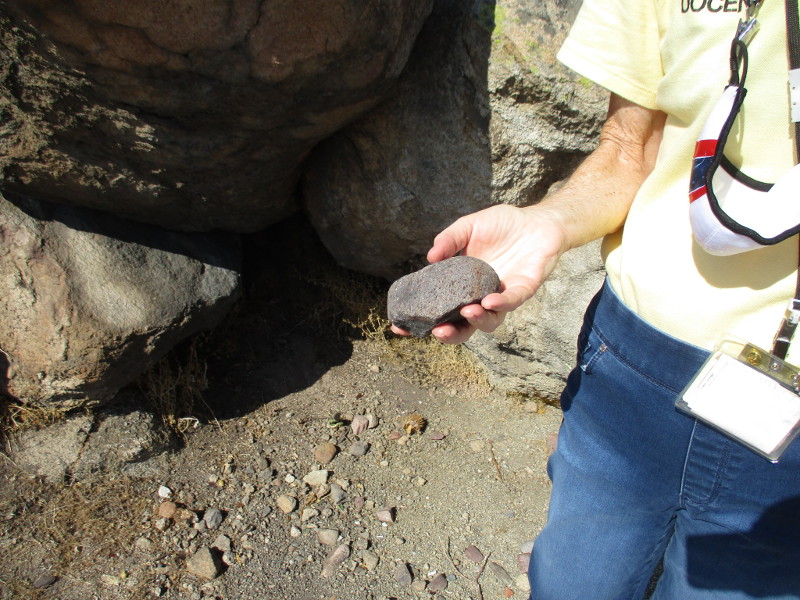
Cooking stones would be heated in the fire, then placed in baskets to prepare food.
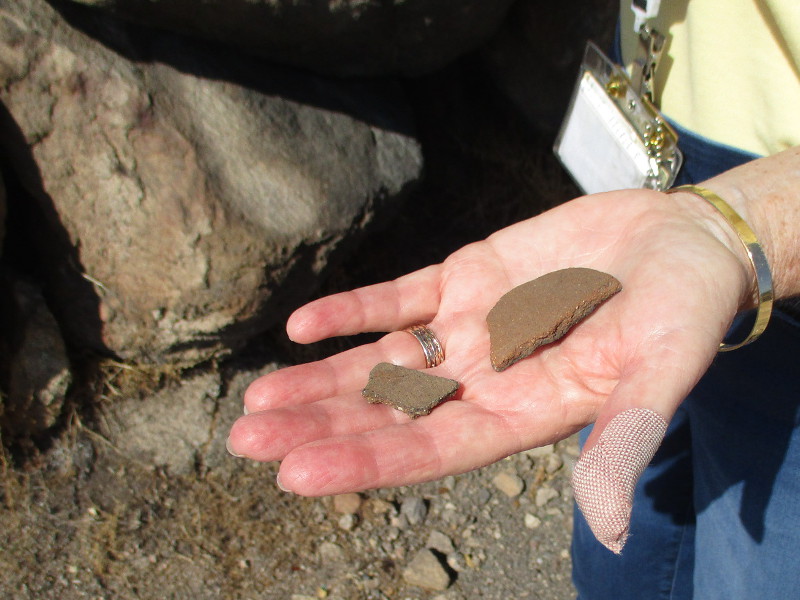
Many small broken pottery sherds have been found near this primitive kitchen.
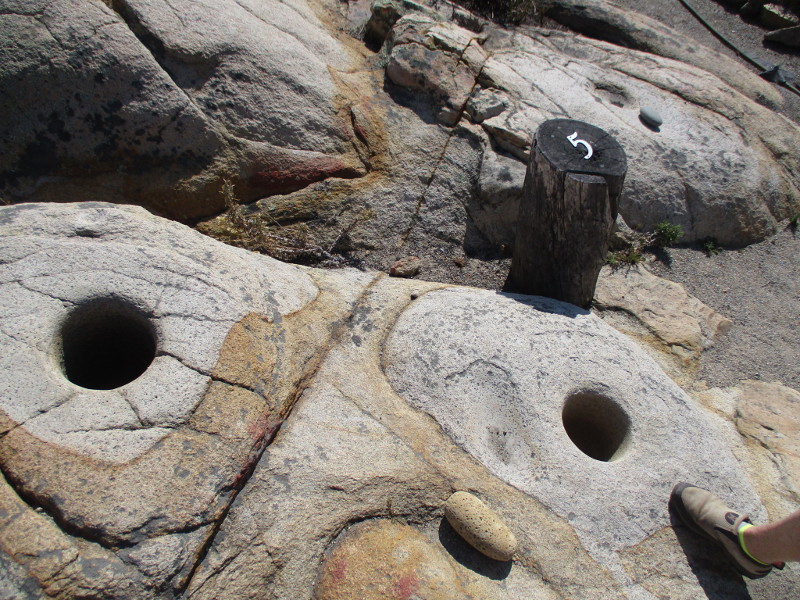
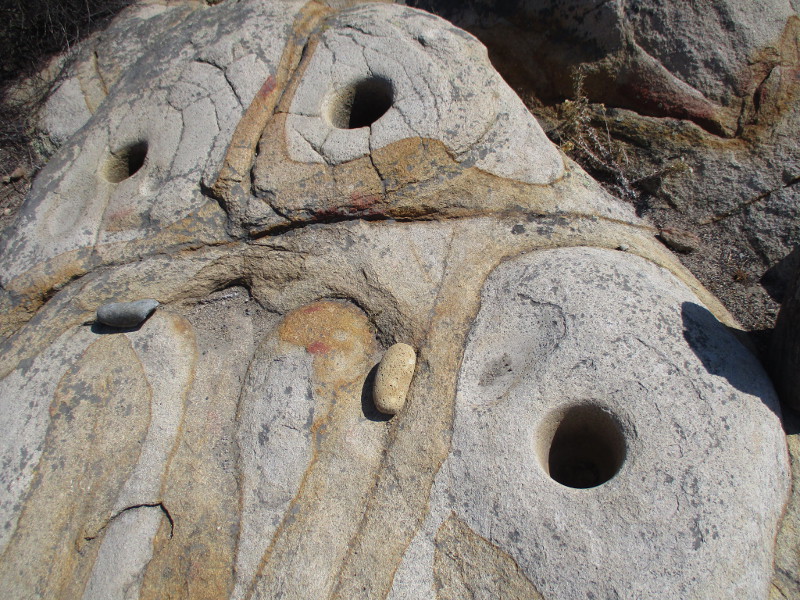
At the top of the hill are very deep grinding holes, or morteros, where acorns were ground for thousands of years. After being reduced to powder, the acorns would be leached of tannic acid and cooked into a mush called shawii.
A important cultural site representing thousands of years of indigenous history in Poway.
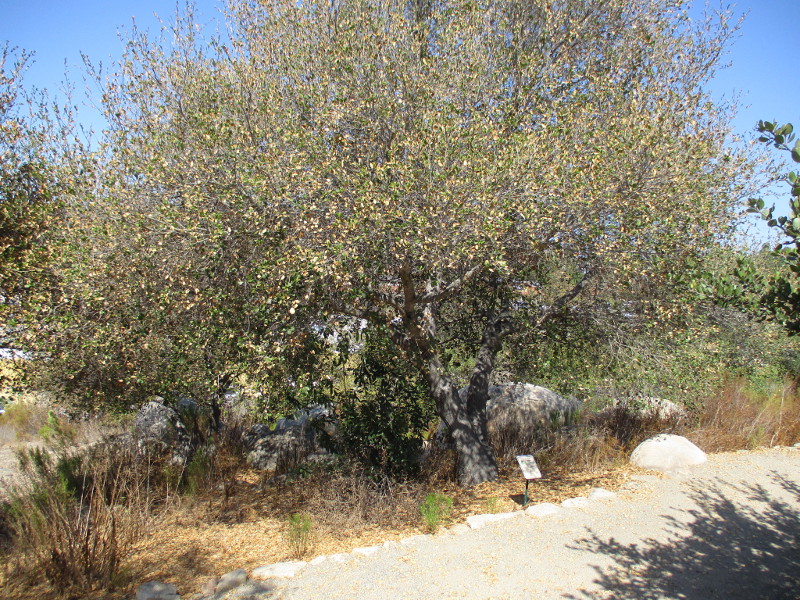
A Coast Live Oak beside the trail. One of several types of oak trees in the San Diego region. Acorns were a staple of the Kumeyaay diet.
As I and my tour guide walk back down the trail, another group heads up toward the hilltop.
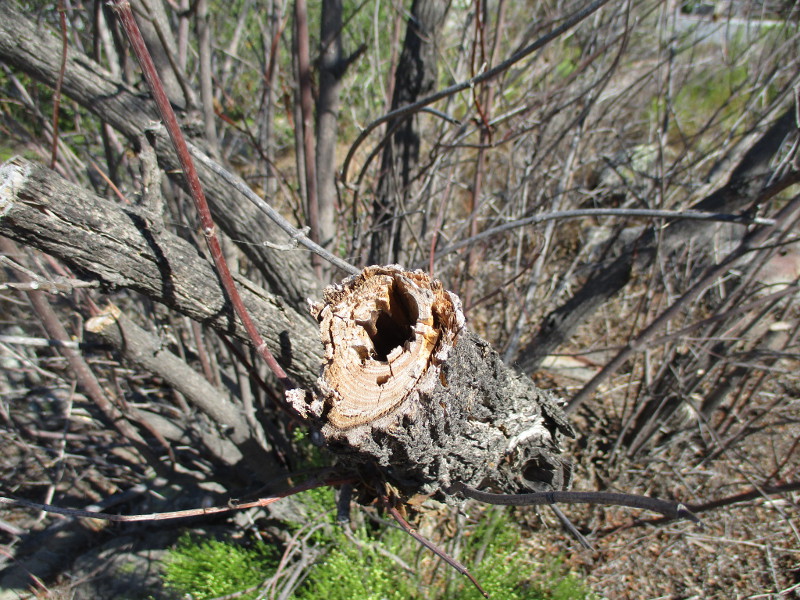
A hollow Elderberry branch. Not surprisingly, these were used to make musical instruments such as flutes.
Some of the rugged natural beauty that we enjoyed.
At another ramada replica, we saw a series of genuine metates that Third Grade students can use during educational field trips! These metates were rescued during road construction many years ago and were donated to the Interpretive Center.
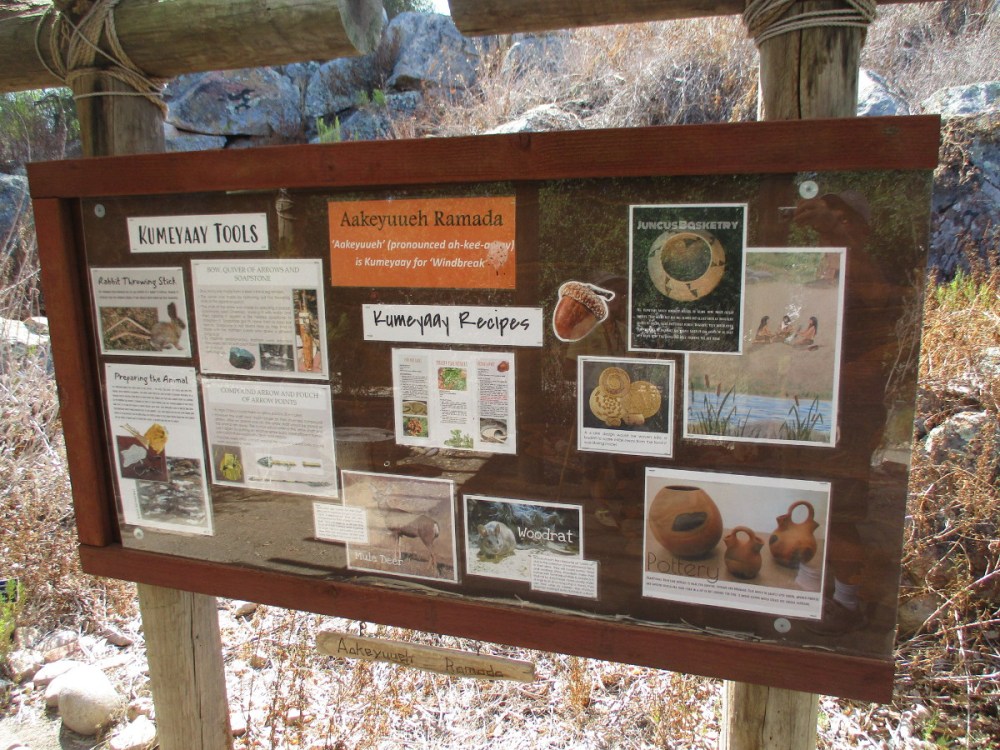
There is much to learn about Kumeyaay tools, food, basket weaving, pottery and more!
Third Grade students use these small stones to paint their own rock art!
We head into the building at the Kumeyaay-Ipai Interpretive Center to learn even more!
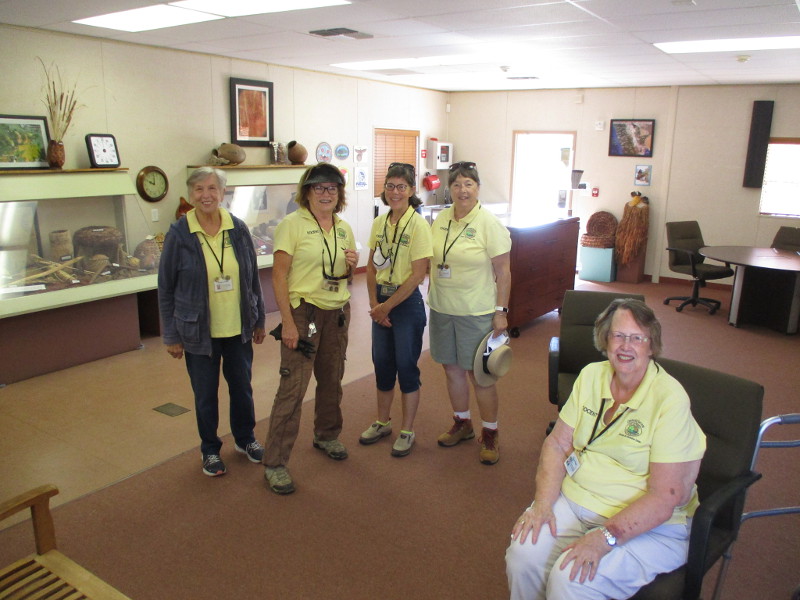
Look at all the smiling docents!
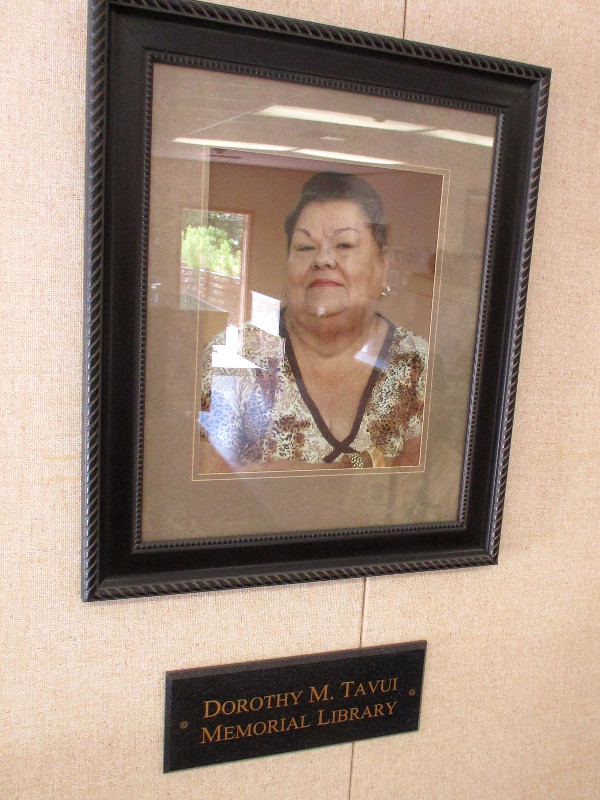
Dorothy M. Tavui was a Kumeyaay friend who helped to establish the Interpretive Center in Poway.
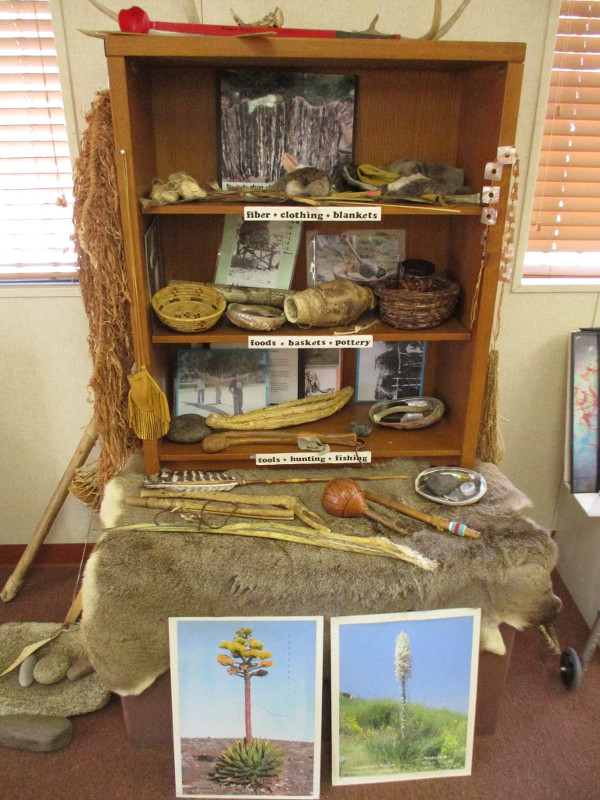
Shelves full of artifacts that kids can explore and handle to learn about Kumeyaay life.
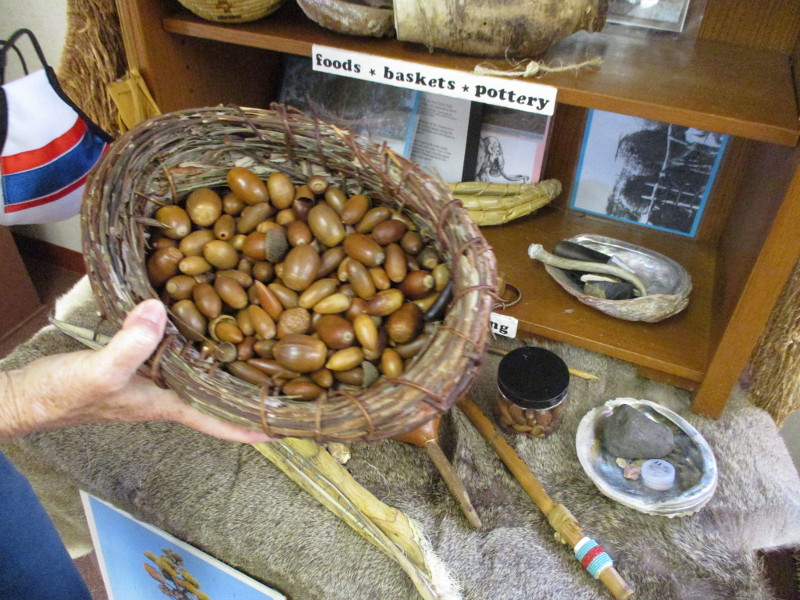
A willow basket full of acorns. The long conical acorns are from Coast Live Oaks. The big acorns are from Black Oaks in the Cuyamaca Mountains. They were the largest and tastiest! The abalone shells you also see were obtained from the coast and often used as trade items.
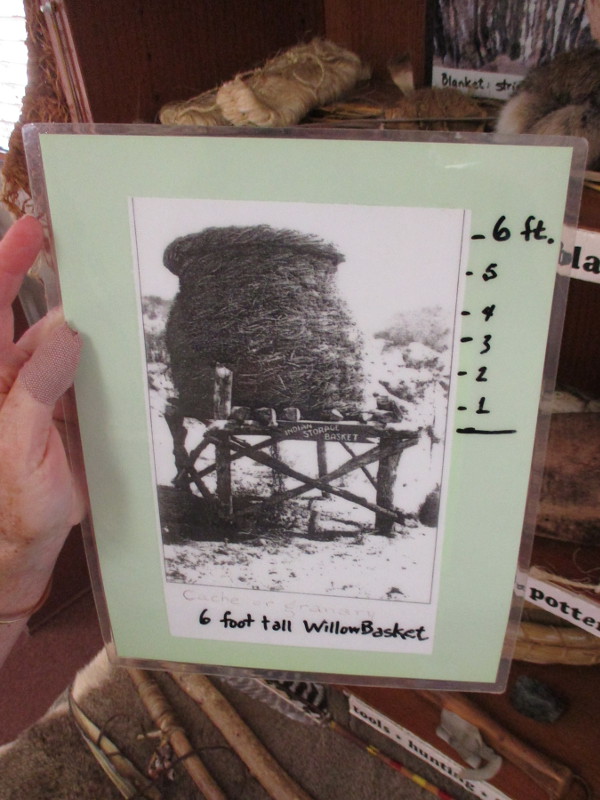
Old photo of a 6 foot tall willow basket! Acorns would be gathered in season to last the entire year.
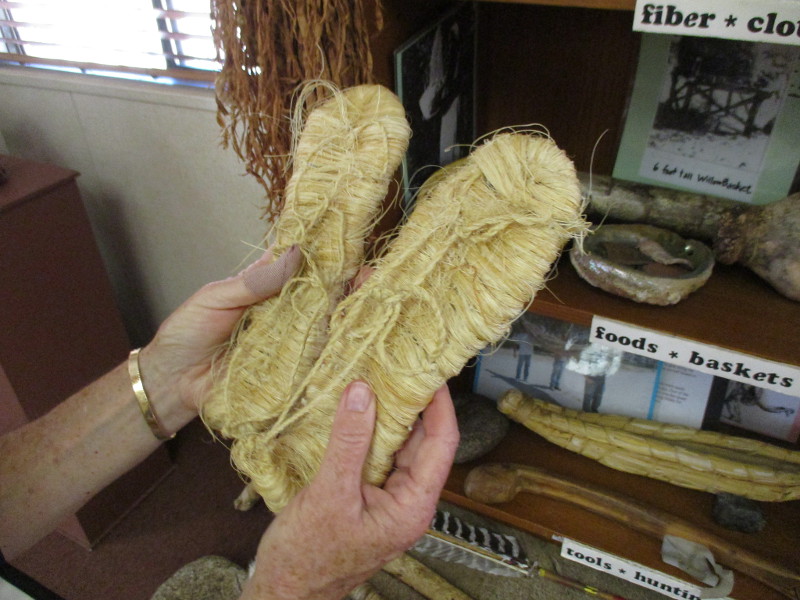
Sandals made of natural plant fibers.
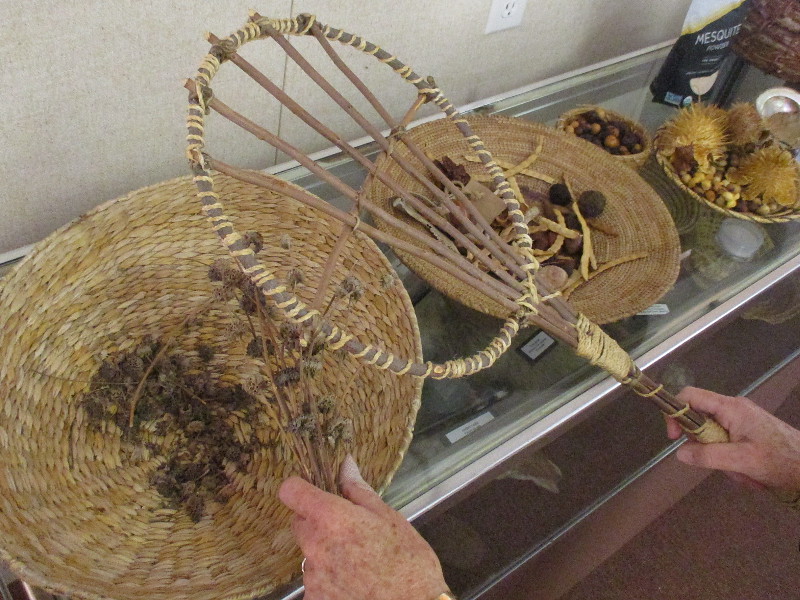
I learned this is a seed beater! It’s being demonstrated on dried blooms of sage.
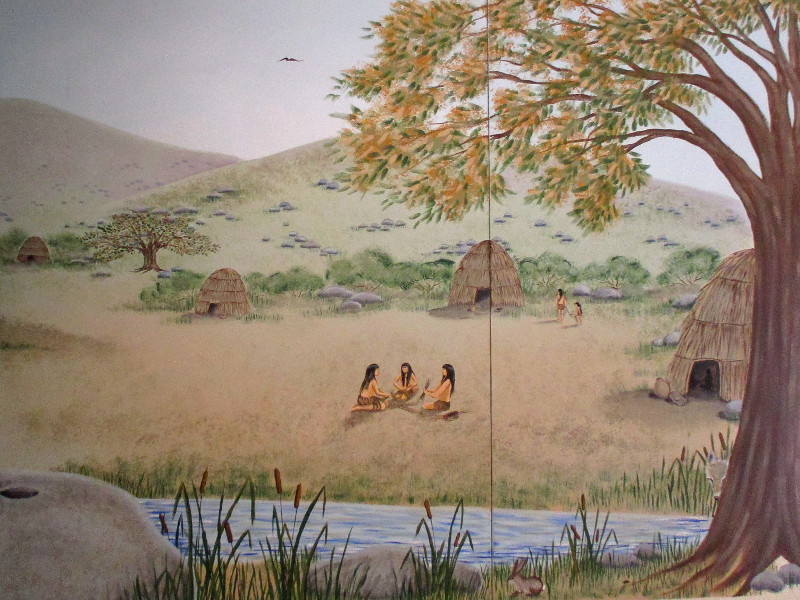
A beautiful mural inside the Kumeyaay-Ipai Interpretive Center in Poway shows what village life was like here for many thousands of years. By artist Brigitte Lopez, 2012.

I live in downtown San Diego and love to walk around with my camera! You can follow Cool San Diego Sights via Facebook or Twitter!
Life and history at the Oceanside Pier.

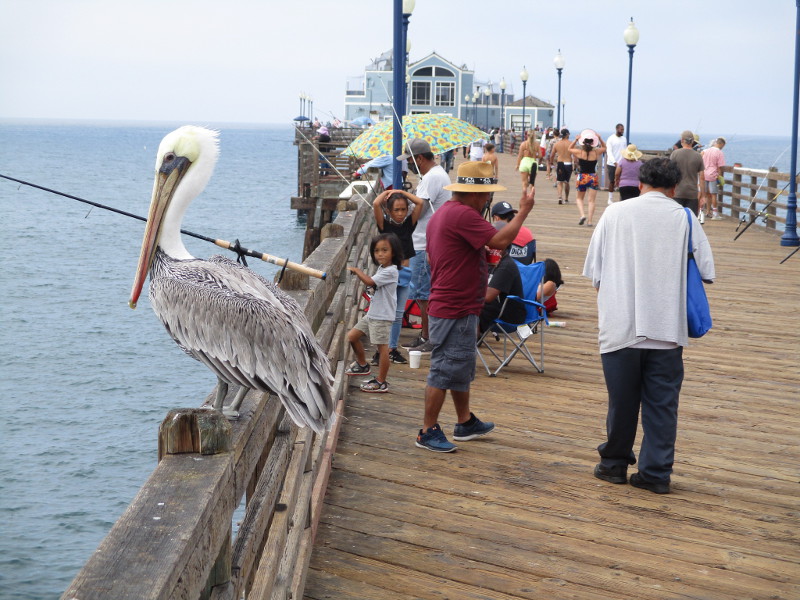
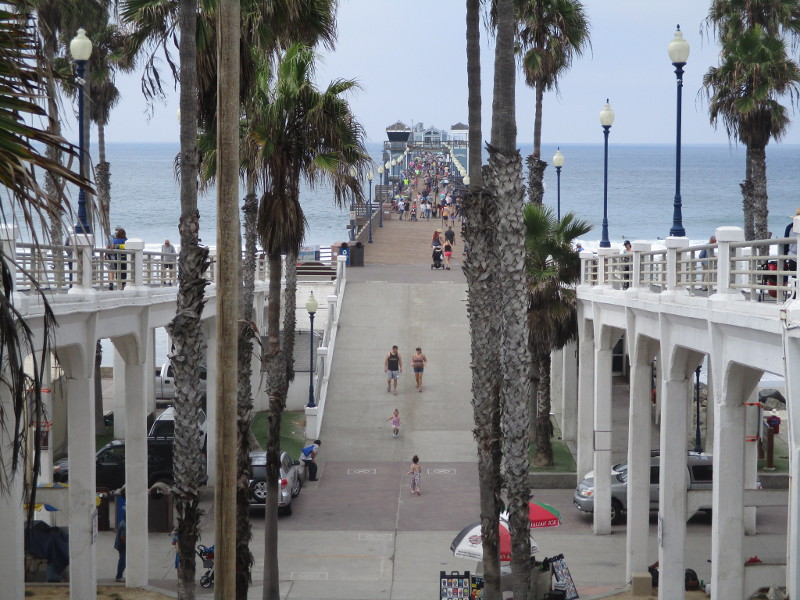
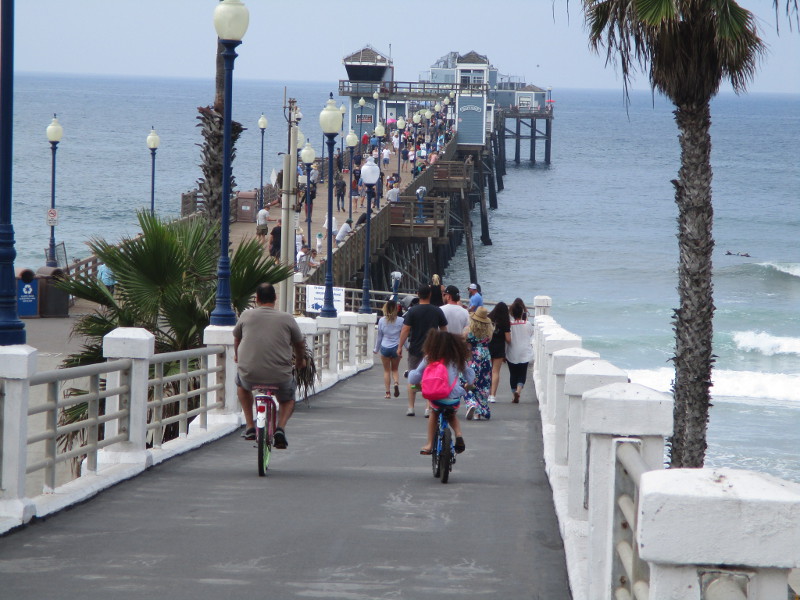
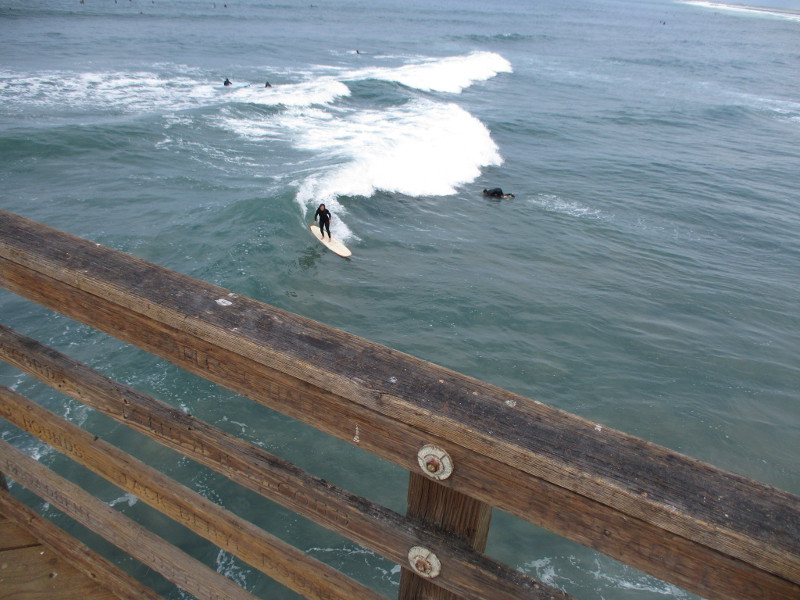
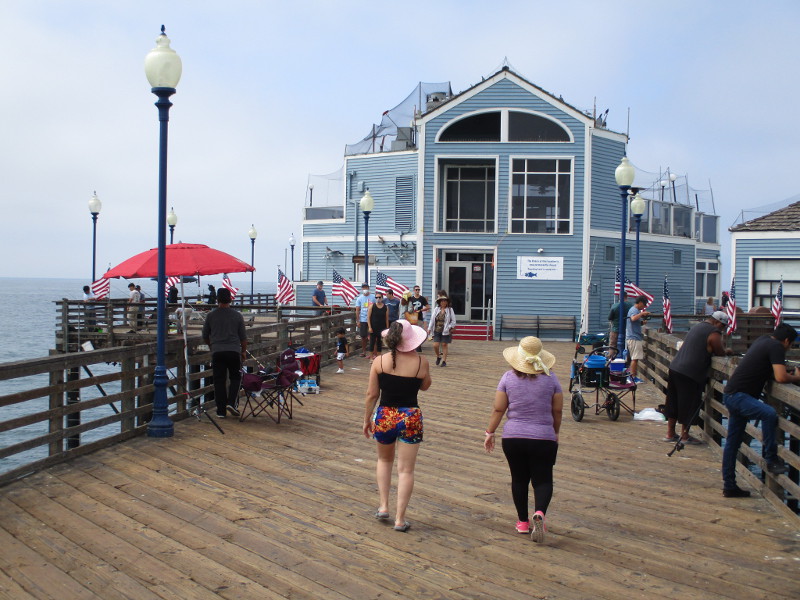
Walk along the Oceanside Pier and you’ll encounter life. You’ll see walkers, bicyclists, people gazing across the water, talking, fishing, and beachgoers and surfers down below. If you have a curious mind and observant eyes, you’ll also discover history.

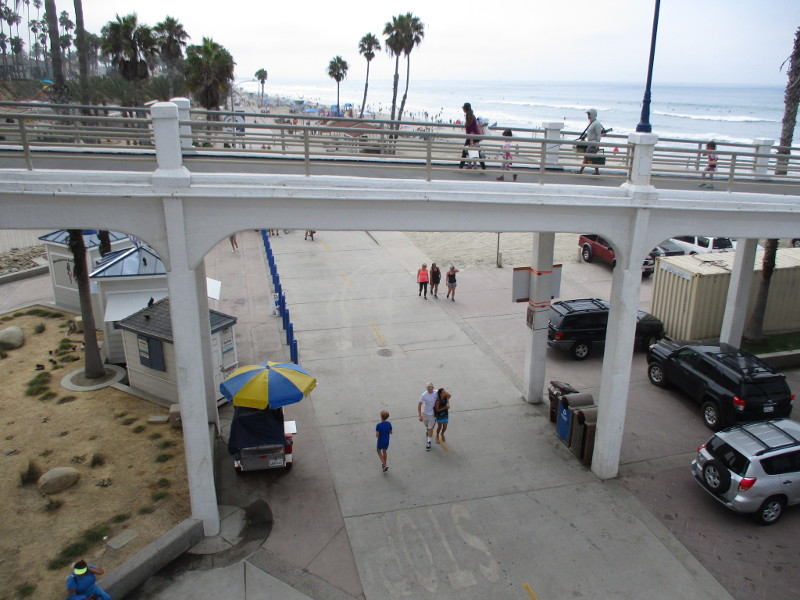
I walked along the popular pier on Labor Day and took these photos.

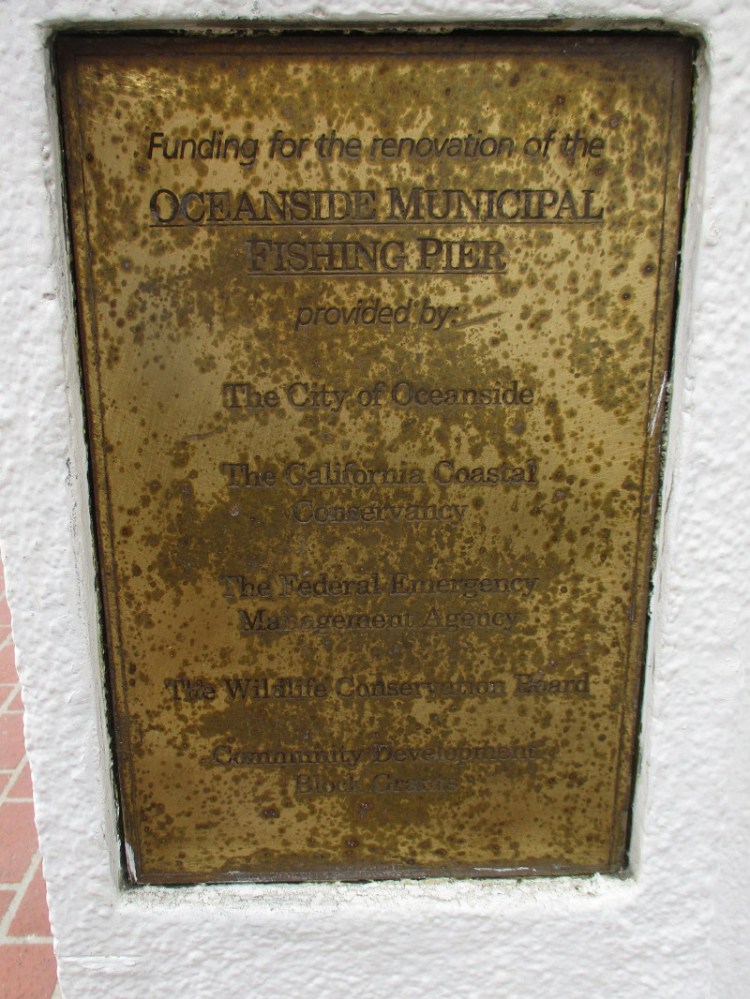
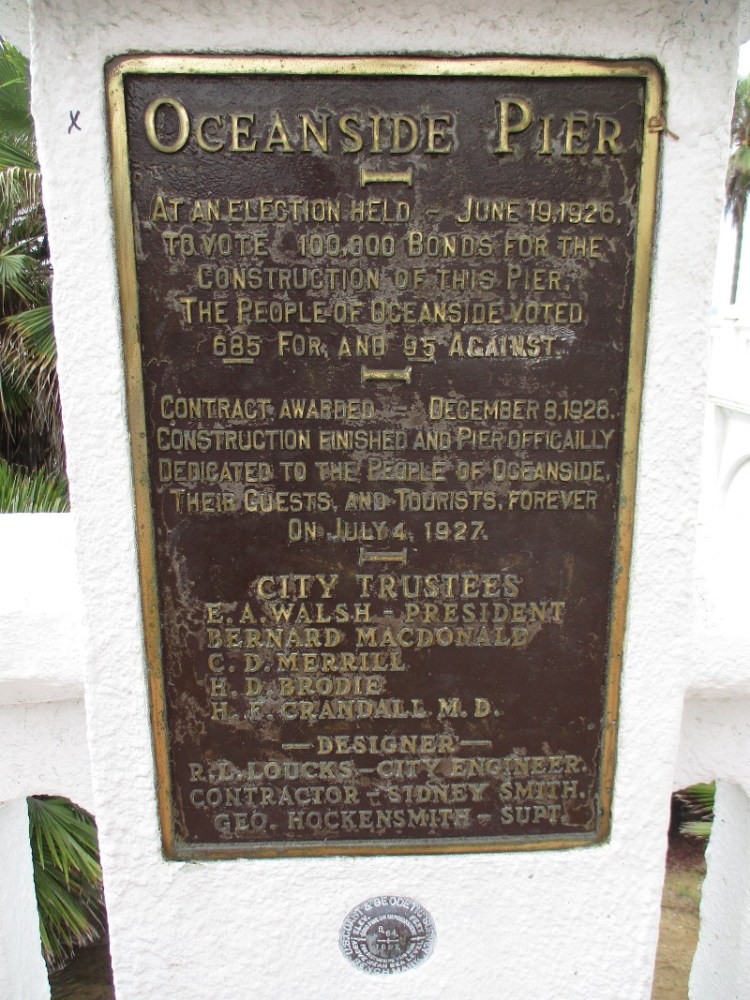
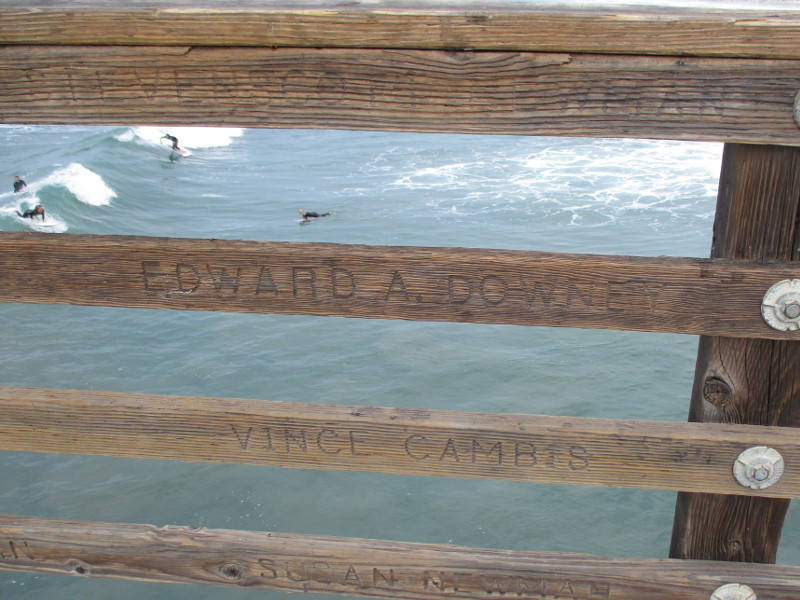
You can read the following historical plaques, if you’d like. Those many names carved into the wood railing were from a community fundraiser, whose proceeds were used to rebuild the pier in 1988, the year of its centennial.

The Oceanside Pier was originally built in 1888 and destroyed two years later by winter storms. Over the years, there have been six different incarnations. Today the pier is 1,942 feet long. You can learn more about its history here.

Oceanside Municipal Fishing Pier. Reconstruction 1987.
Oceanside Pier. 1925. Historic Resource 4-204.

Check out this very cool fish-shaped bike rack! I saw it down by the beachside boardwalk.

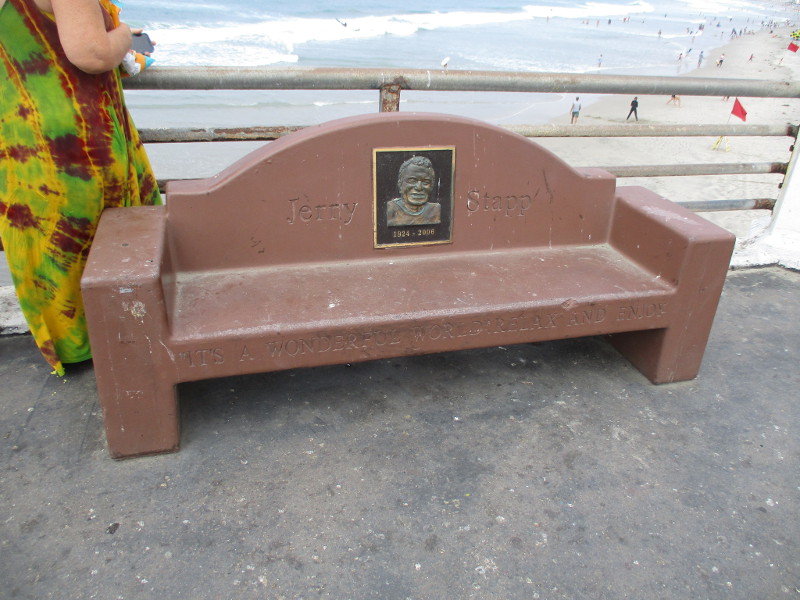
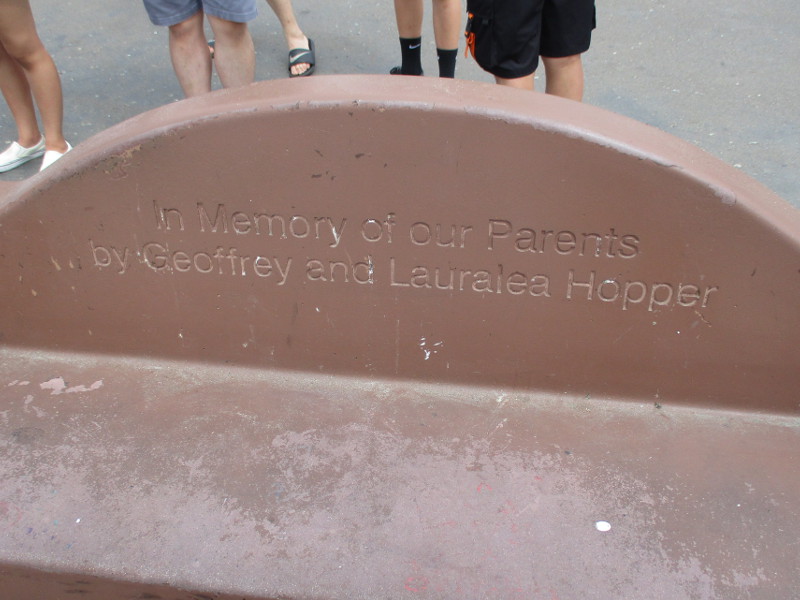
Some benches near the foot of the pier memorialize loved ones…

Just a few of the many names on the weathered wood rails along the length of the pier…

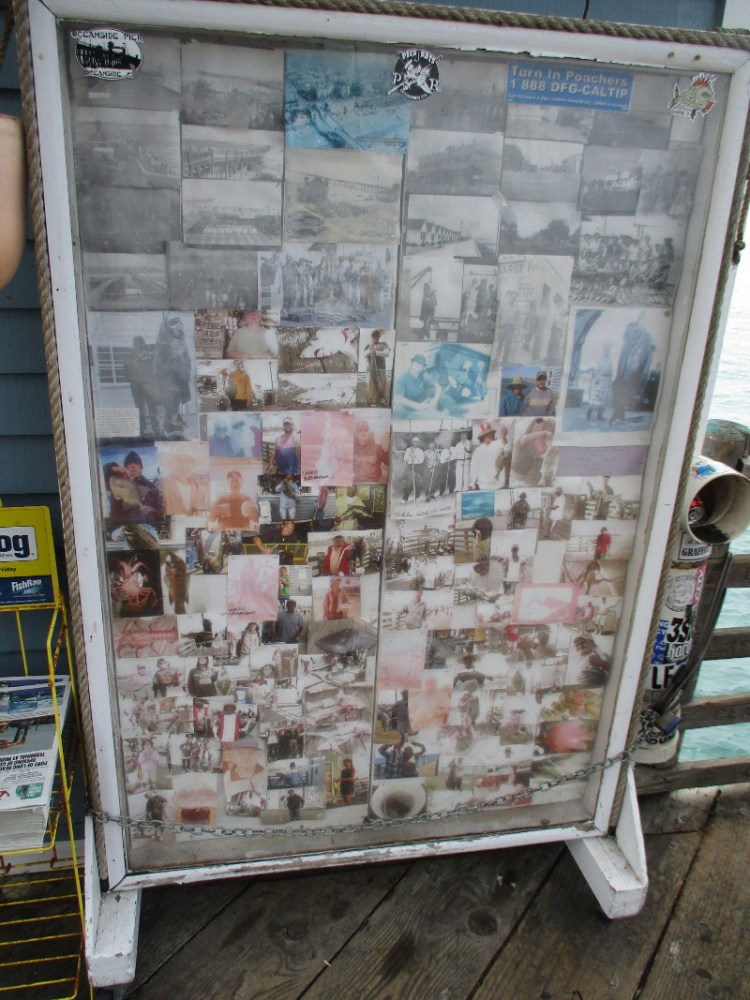
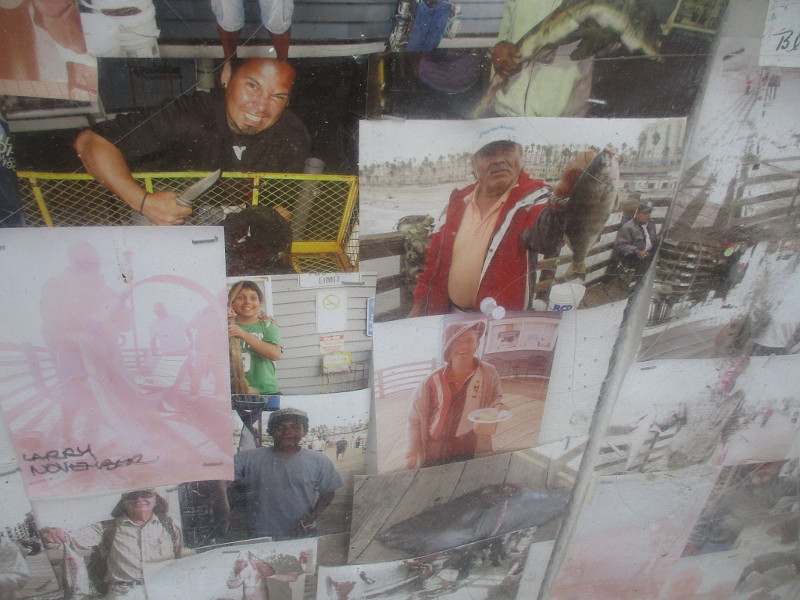
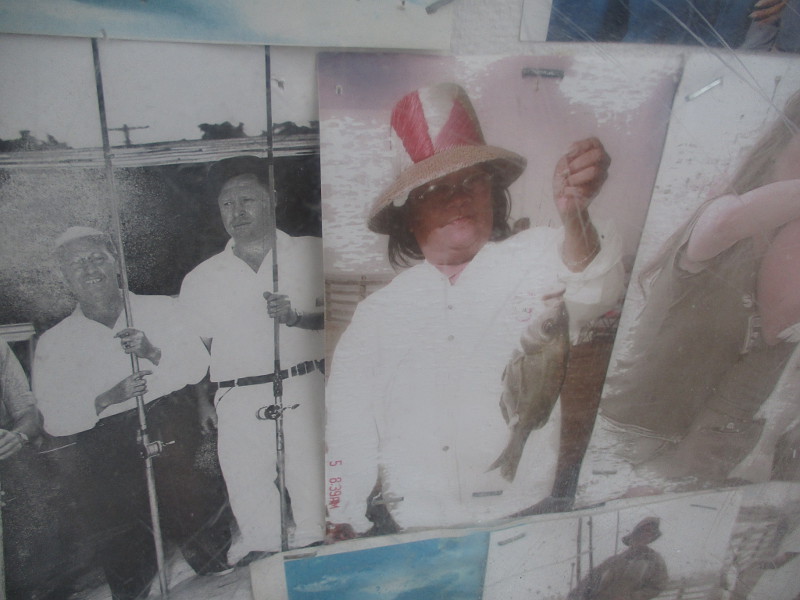
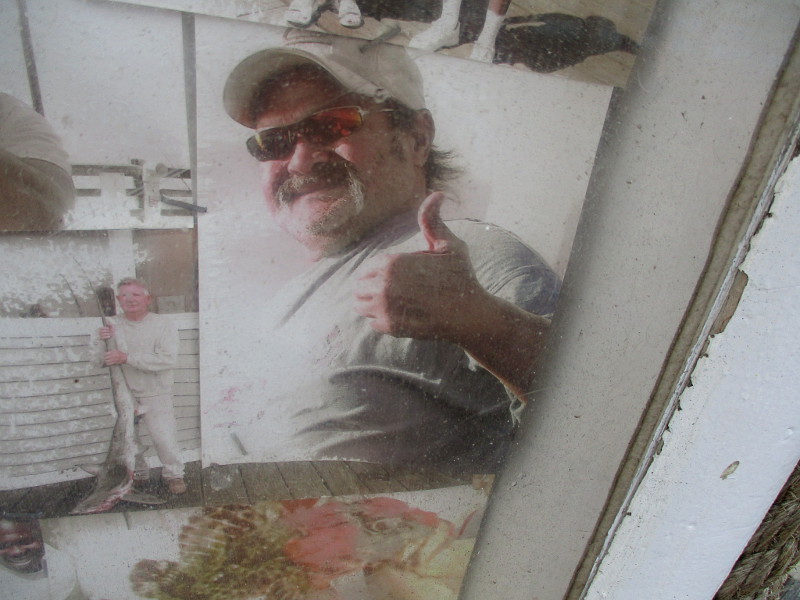
Across from the concession shack, with its souvenirs, snacks and bait, you’ll find a collage of faded photographs.

Cherished memories over the years. Happy days fishing…

Ruby’s Diner at the end of the pier permanently closed early this year after three decades of operation. A sign indicated the building will return to life in the future.

History goes on.

Why the many flags nearby? It’s Labor Day, 2021.

Another fine day passes by. Time to head back…

I live in downtown San Diego and love to walk around with my camera! You can follow Cool San Diego Sights via Facebook or Twitter!
Amazing wave and surfing art in Balboa Park!
Whenever I walk through Balboa Park, I almost always spend some time at the Japanese Friendship Garden, even if it’s only for a few minutes.

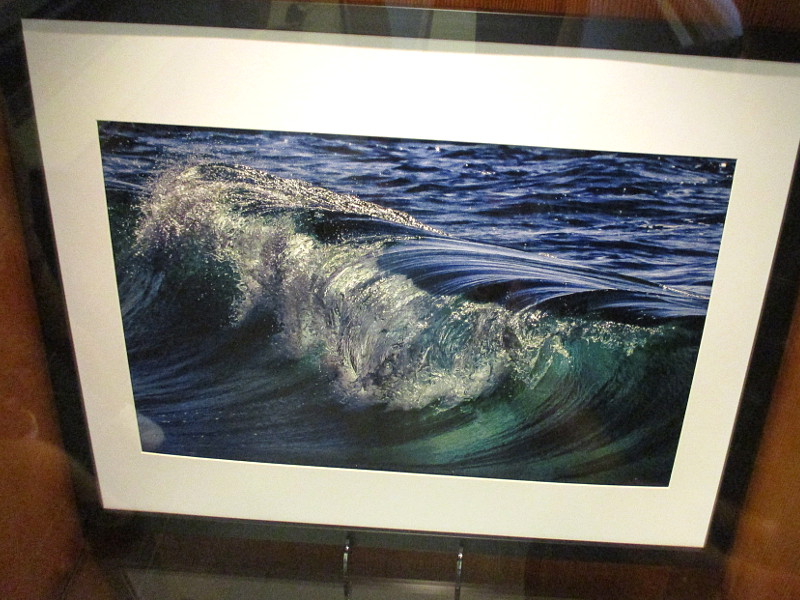
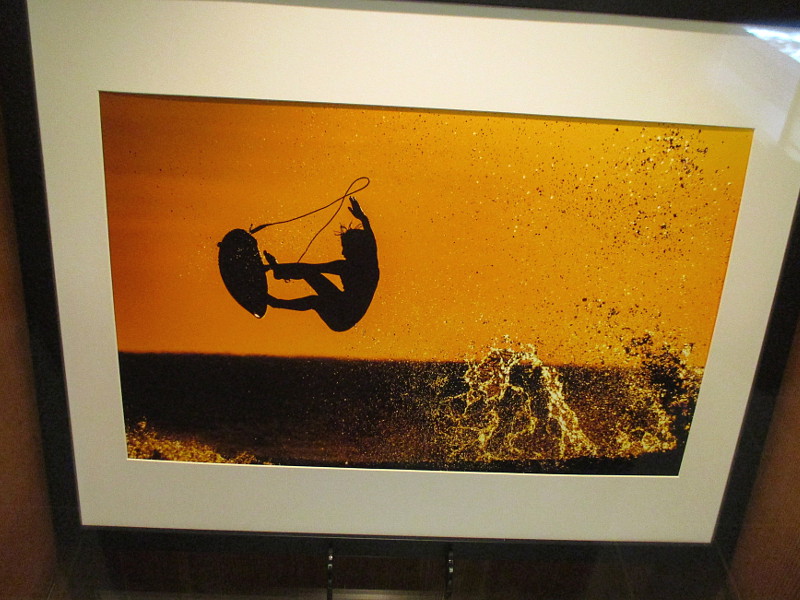
Today I noticed there’s new artwork on display in the Exhibit Hall. It concerns breaking ocean waves, and includes many images of surfers on surfboards. The art is so vivid and unique, it’s hard to describe.

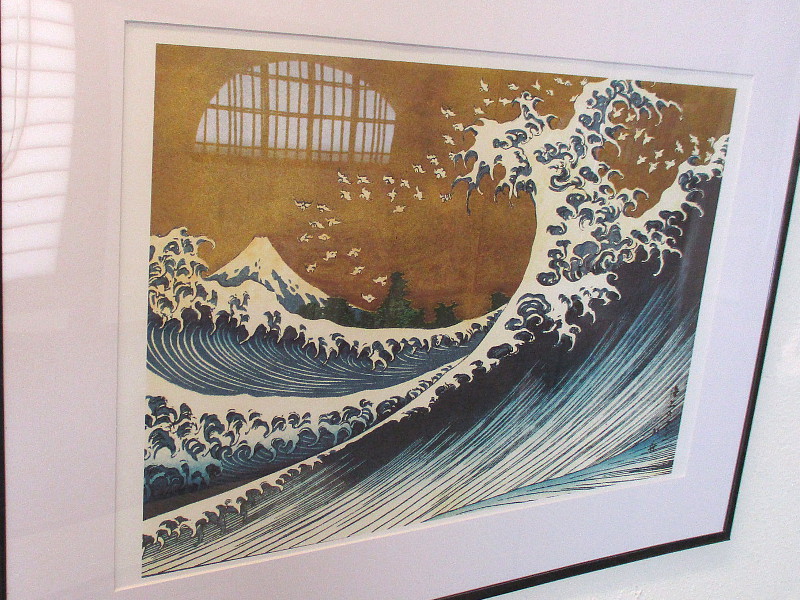
The exhibition is titled Hokusai Waves. It showcases the work of San Diego photographer Kotaro Moromura, whose images are inspired by Japanese Ukiyo-e painter and printmaker Katsushika Hokusai.

Powerfully curling water and flying droplets, captured with a high camera shutter speed, seem to leap right out of the display cases. The images are not unlike the impressively crashing waves created by artist Katsushika Hokusai.

As you can see from a couple of my photos, the wave images that include surfers are dynamic and definitely very cool!

Anyone visiting San Diego for the next several days for the international World Surf League Championship event up at Trestles might enjoy a peek at these!

Learn more about Hokusai Waves here!

I live in downtown San Diego and love to walk around with my camera! You can follow Cool San Diego Sights via Facebook or Twitter!