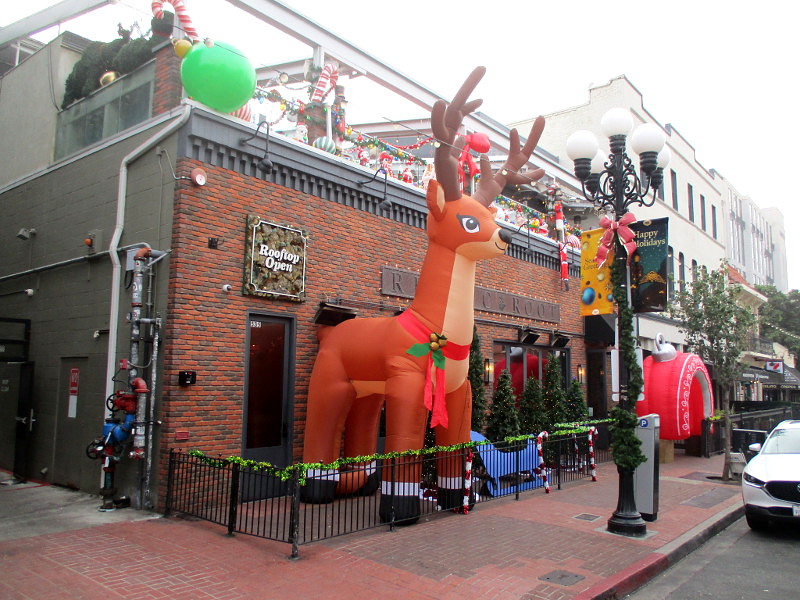
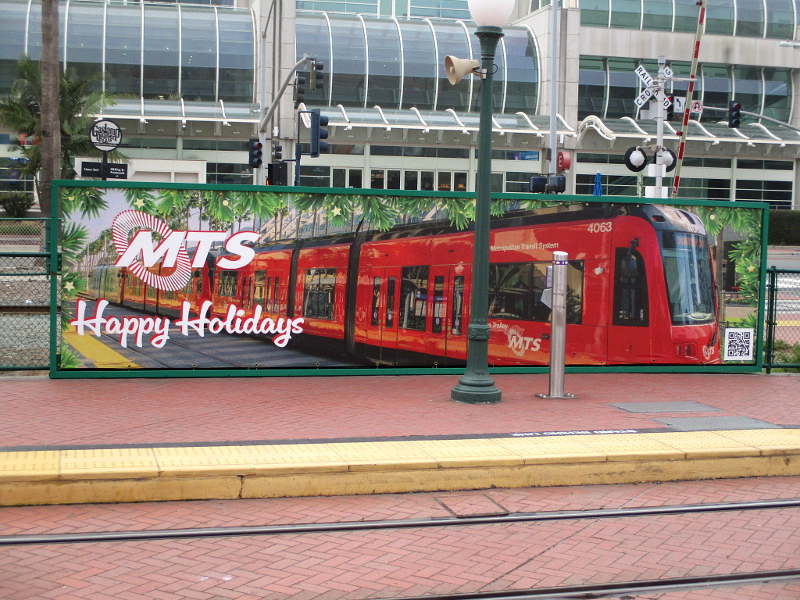
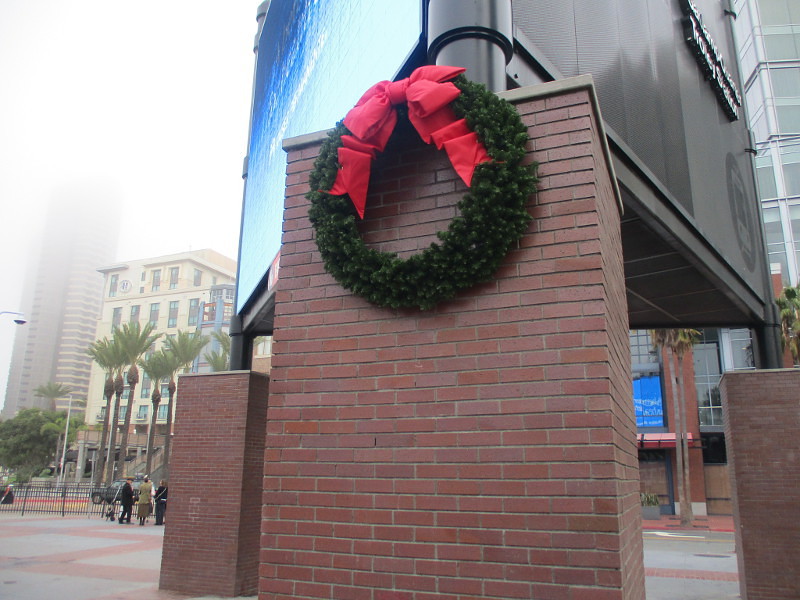
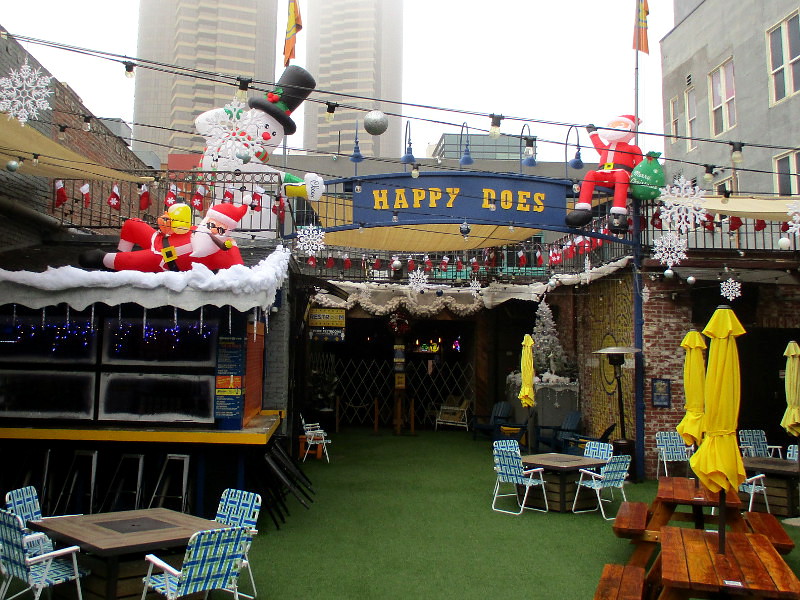
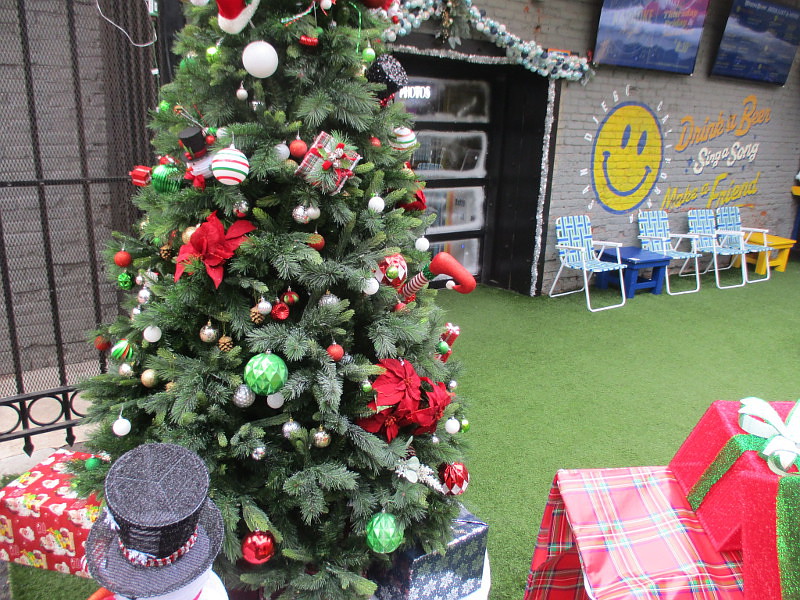
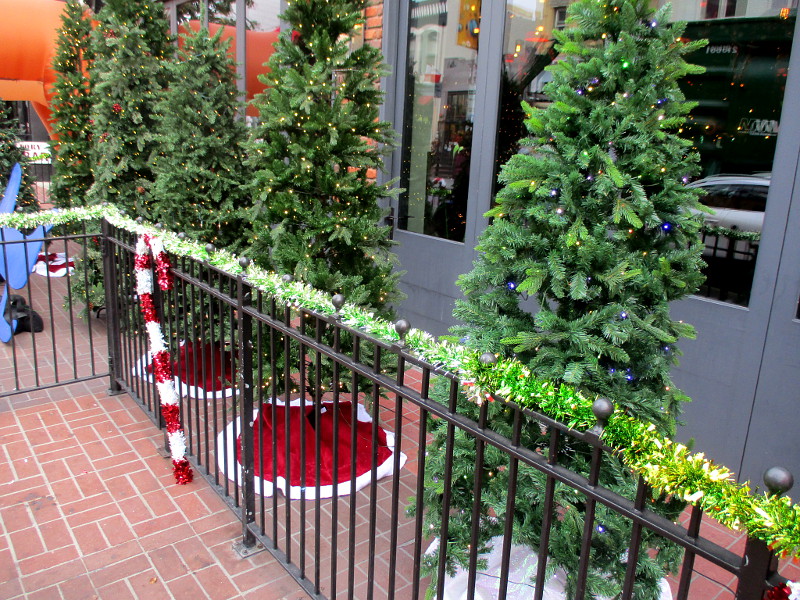
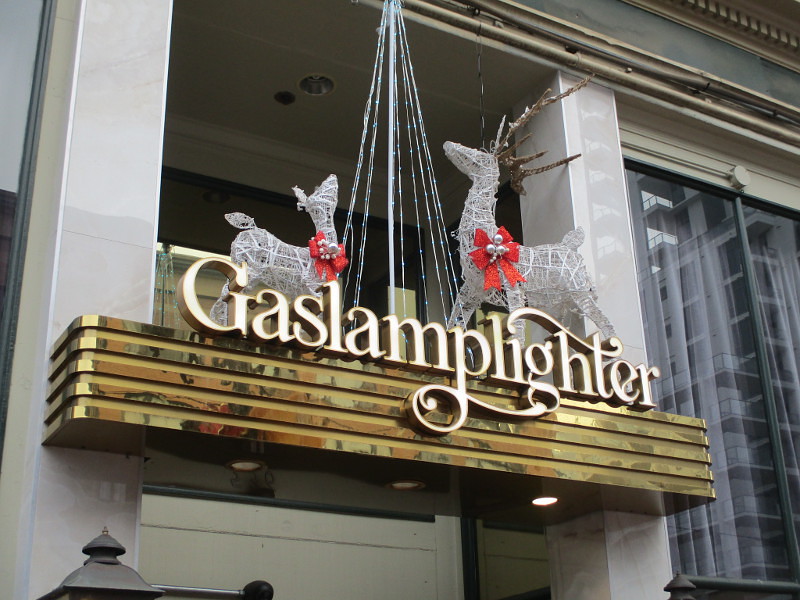
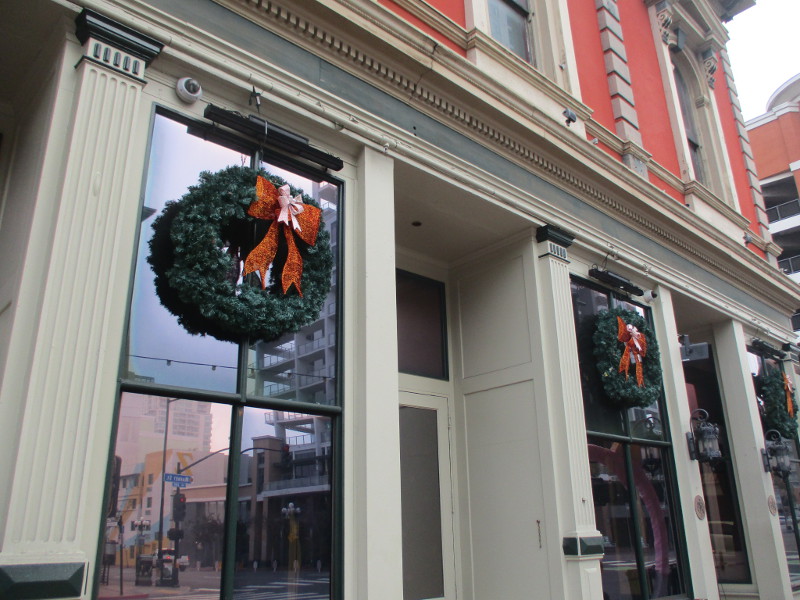
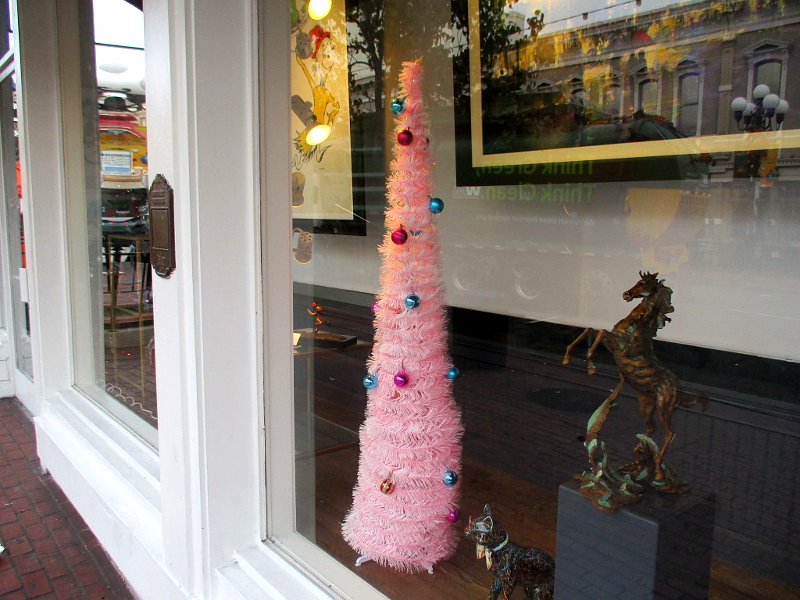
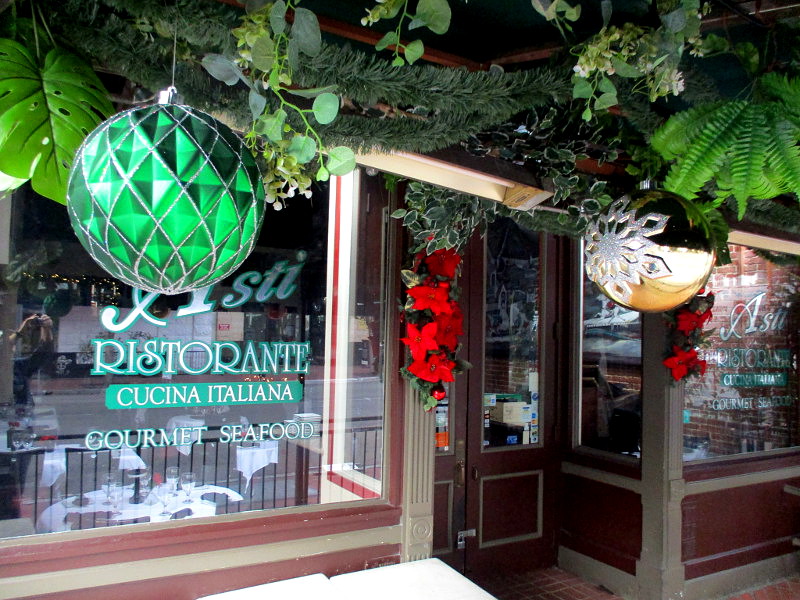
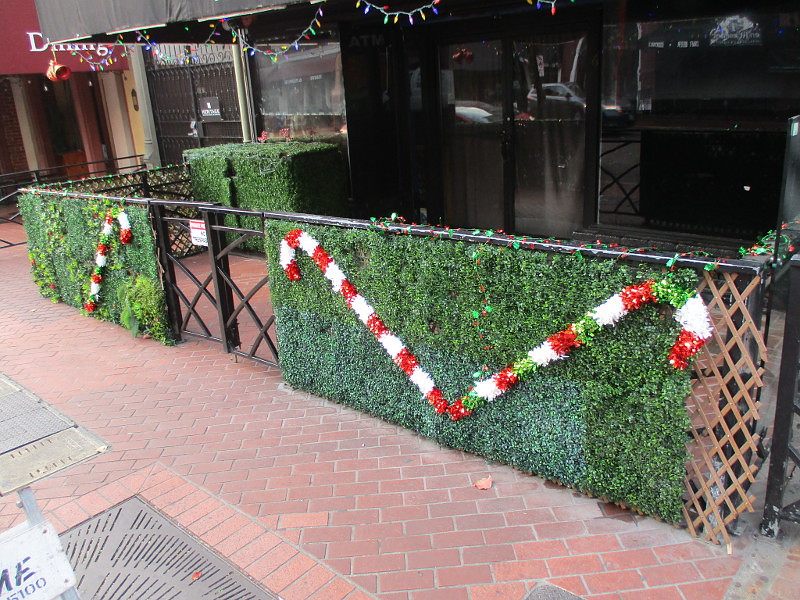
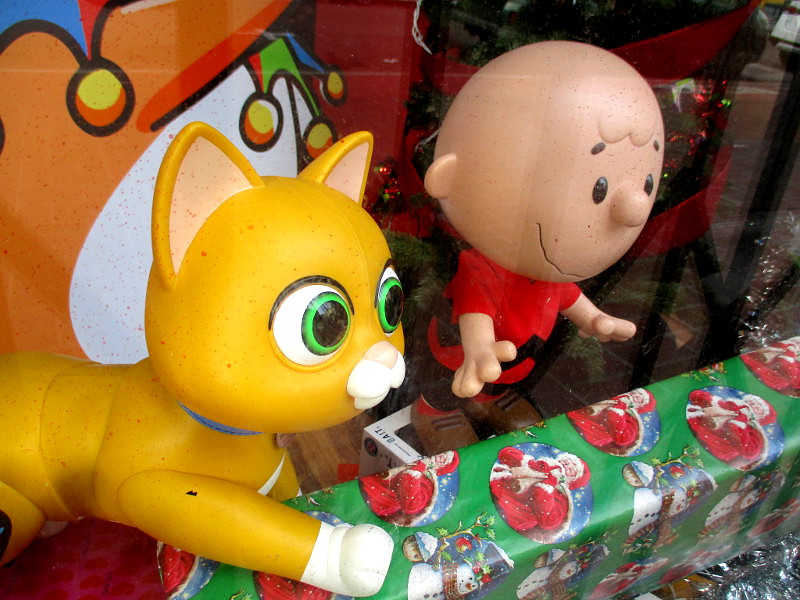
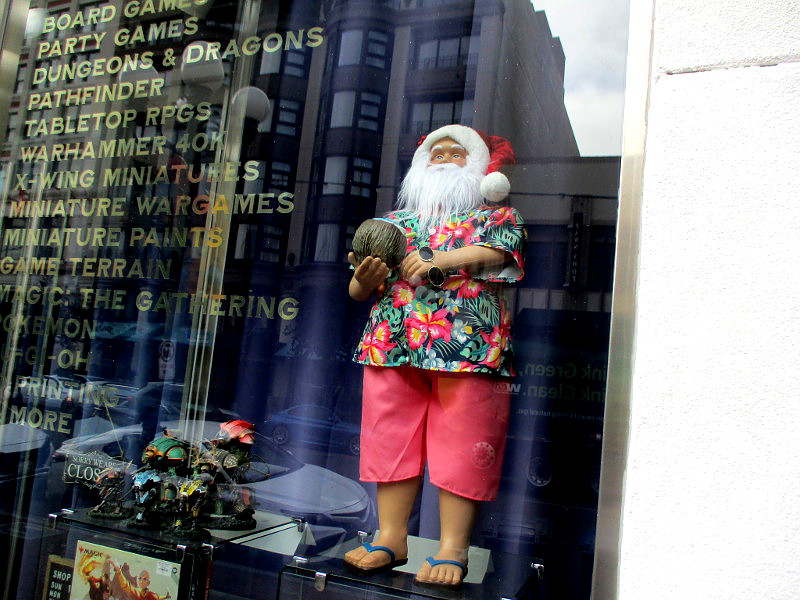
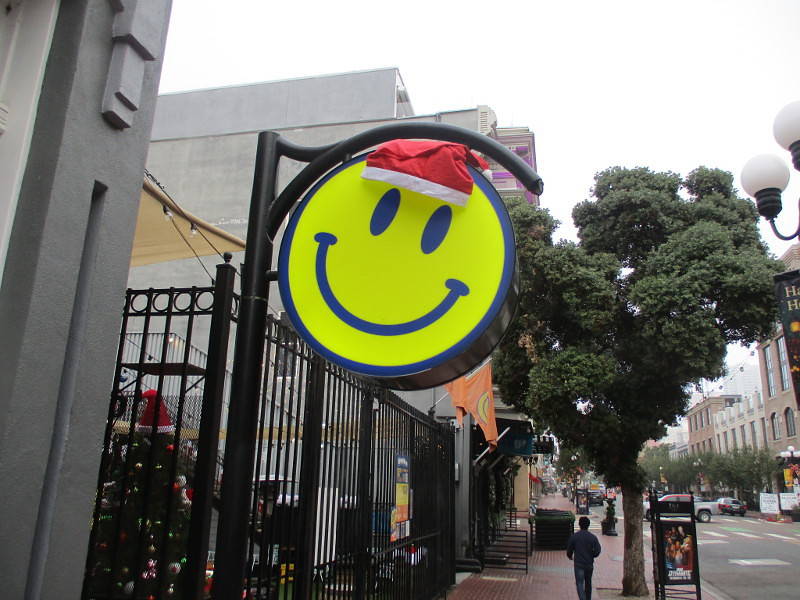
I took these this morning during a walk through the Gaslamp Quarter–mostly up Fifth Avenue. The Gaslamp trolley station was decorated, as were many restaurants, bars, hotels and store windows.
This year there are even inflatables and Christmas trees on patios and sidewalks. Some businesses are going all out!
…
If you’d like to see San Diego through my lens, find the “Follow” box in the sidebar to receive new posts in your email, or bookmark coolsandiegosights.com and swing on by occasionally!
(If you’re viewing Cool San Diego Sights on a phone, you can open my website’s sidebar by tapping those three parallel lines at the top of the page.)
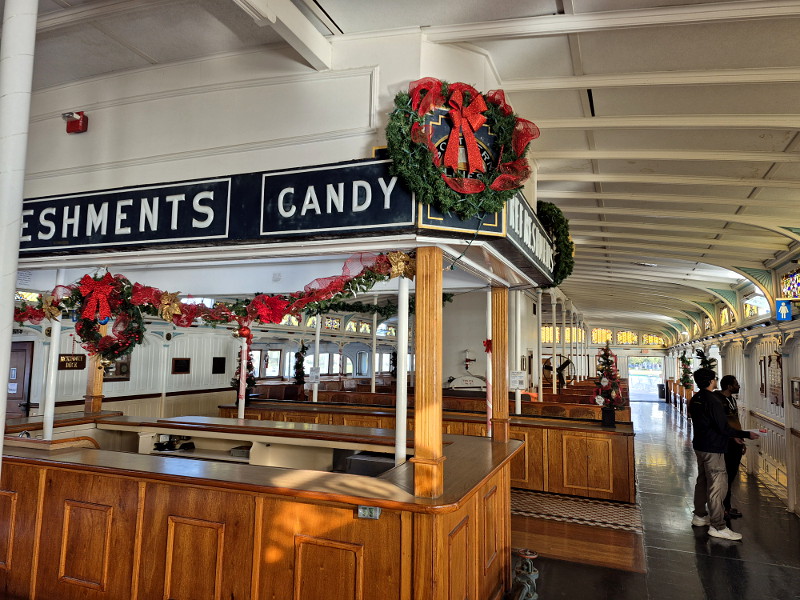
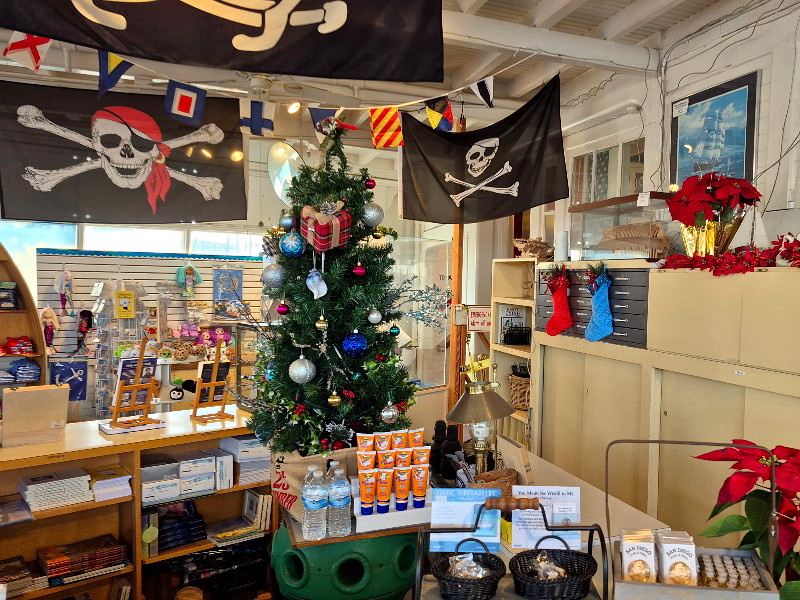
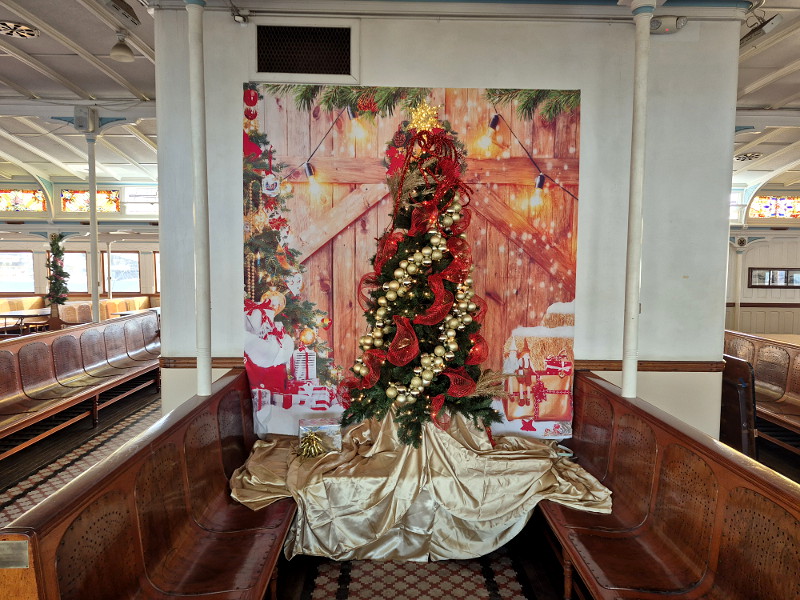
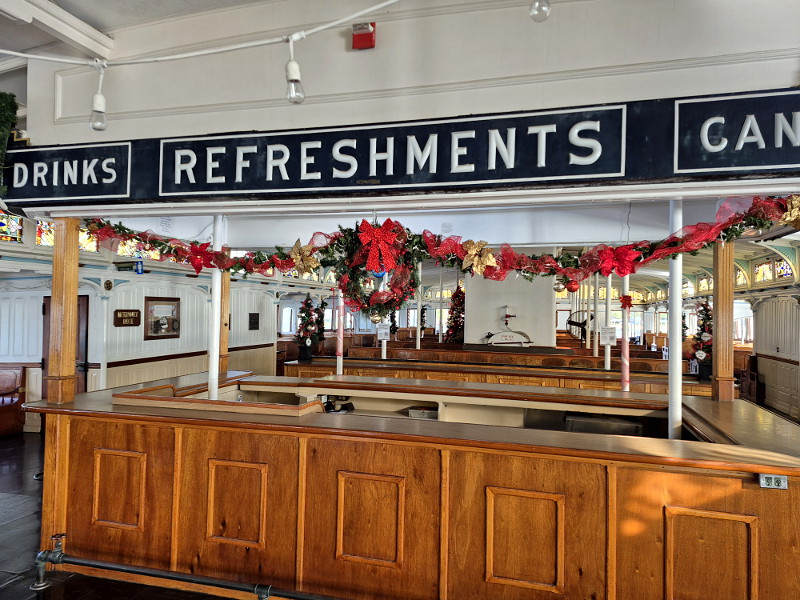
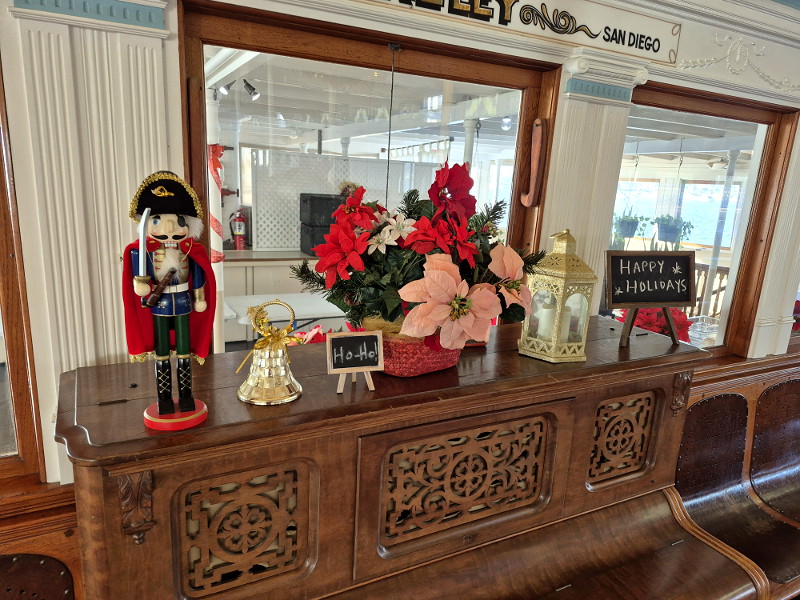
A beautiful Christmas tree sparkles in their gift shop, and the elegant passenger deck of historic steam ferry Berkeley appears even more amazing than usual. The handsome wooden benches bathed with the light from art glass windows now look upon green wreaths, red ribbons, and Christmas trees large and small!
And I’m told much more holiday decoration is coming!
I know the museum’s Pilot boat is being strung with lights for the 55th annual San Diego Bay Parade of Lights, and a small Christmas tree will soon be hoisted to the top of Star of India’s mainmast!
…
If you’d like to see San Diego through my lens, find the “Follow” box in the sidebar to receive new posts in your email, or bookmark coolsandiegosights.com and swing on by occasionally!
(If you’re viewing Cool San Diego Sights on a phone, you can open my website’s sidebar by tapping those three parallel lines at the top of the page.)
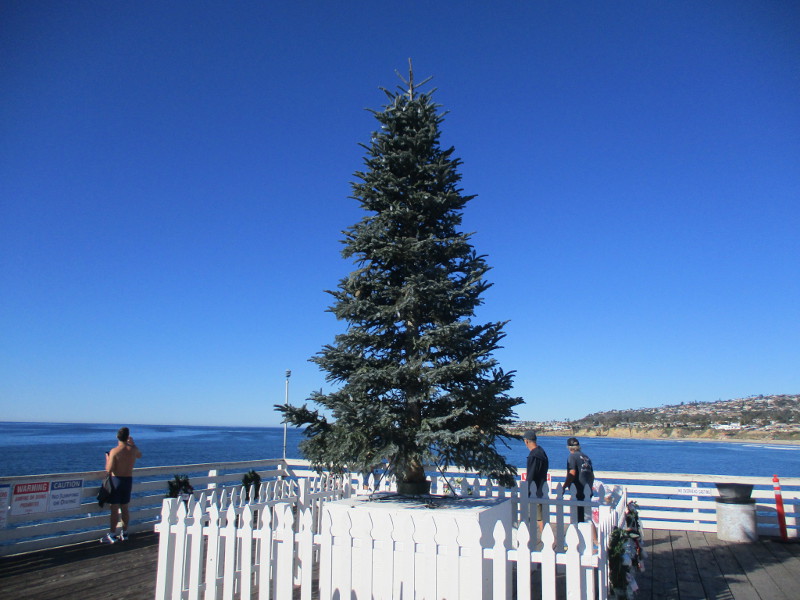
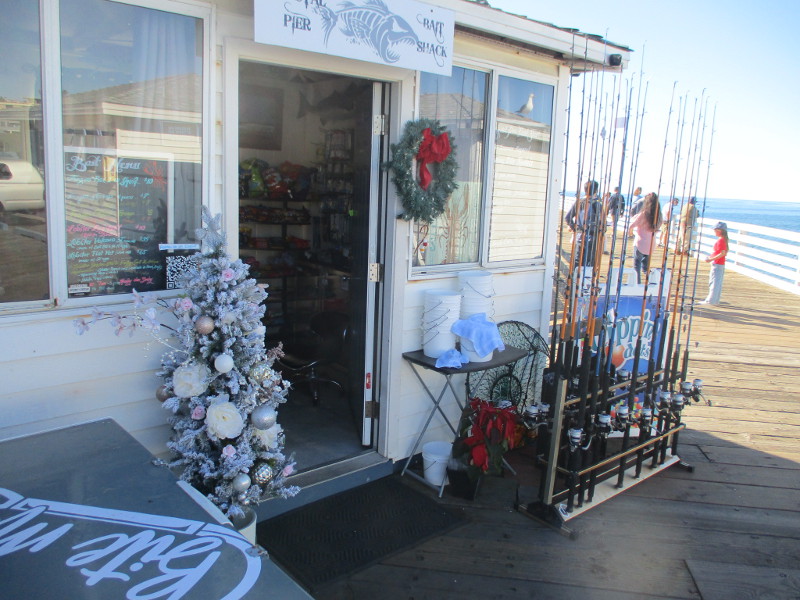
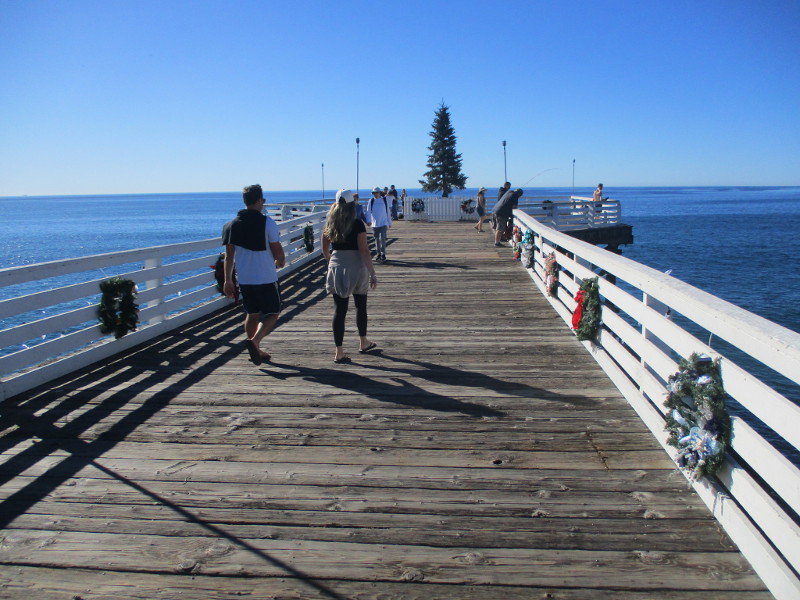
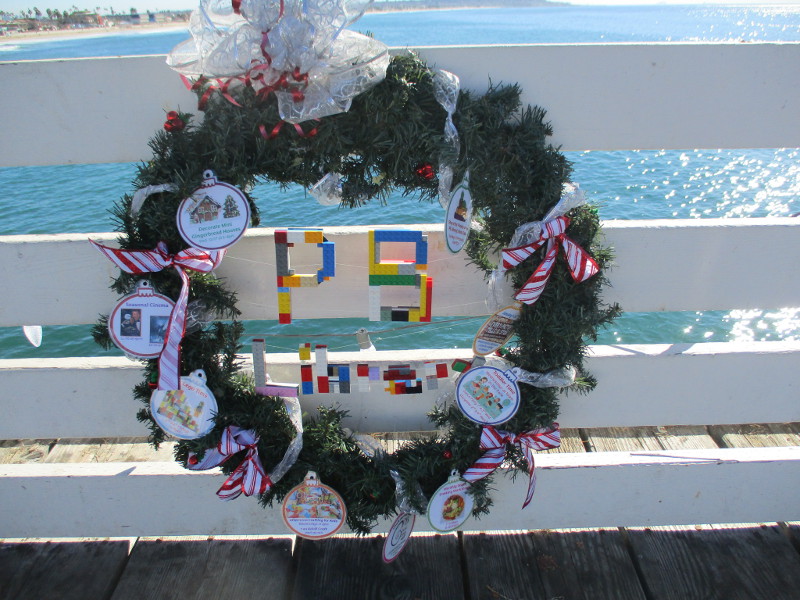
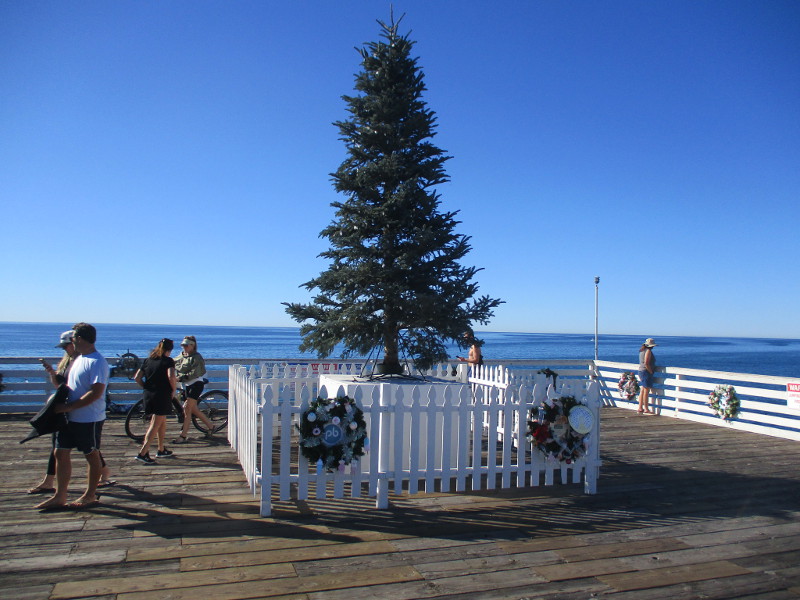
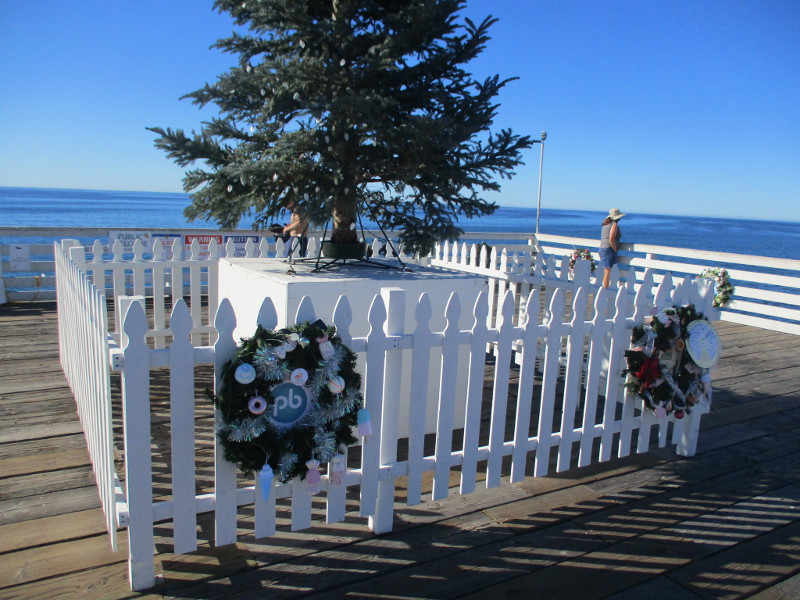
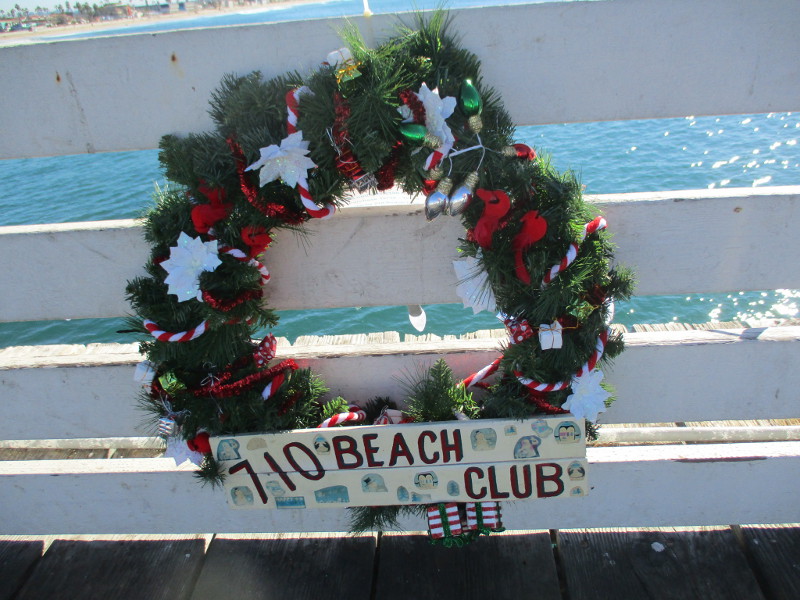
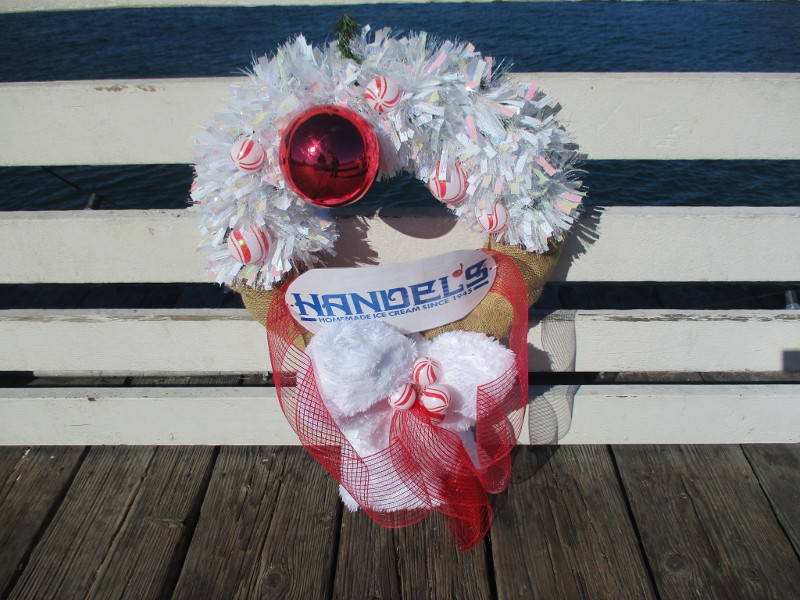
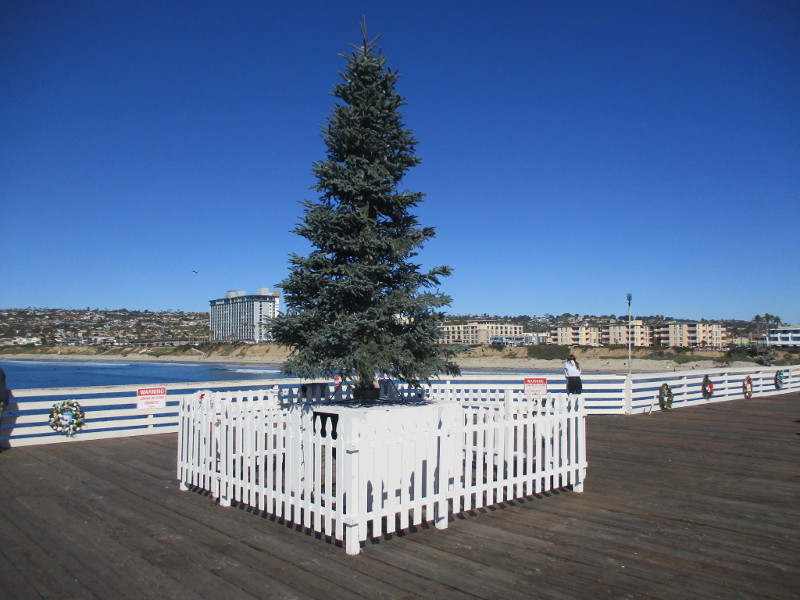
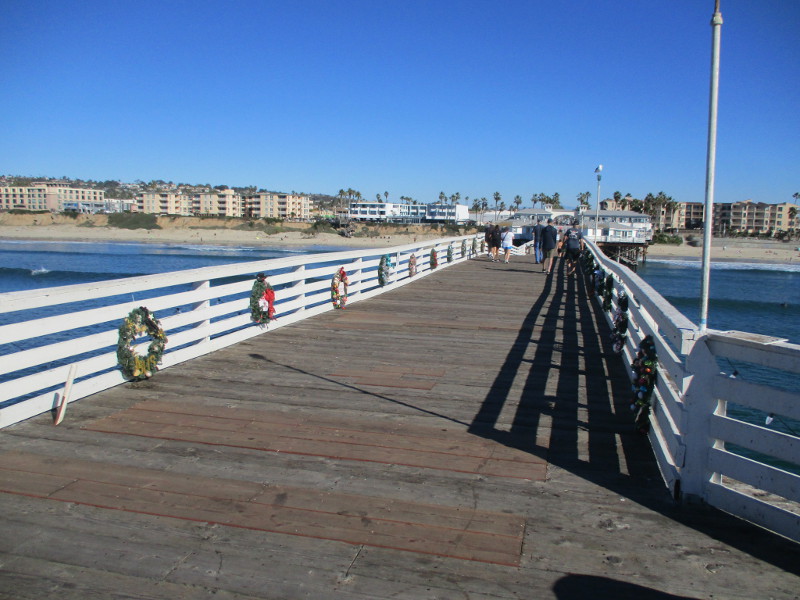
There’s a very cool holiday tradition at the Crystal Pier in Pacific Beach. Every year, a Christmas tree and wreaths appear at the pier’s end!
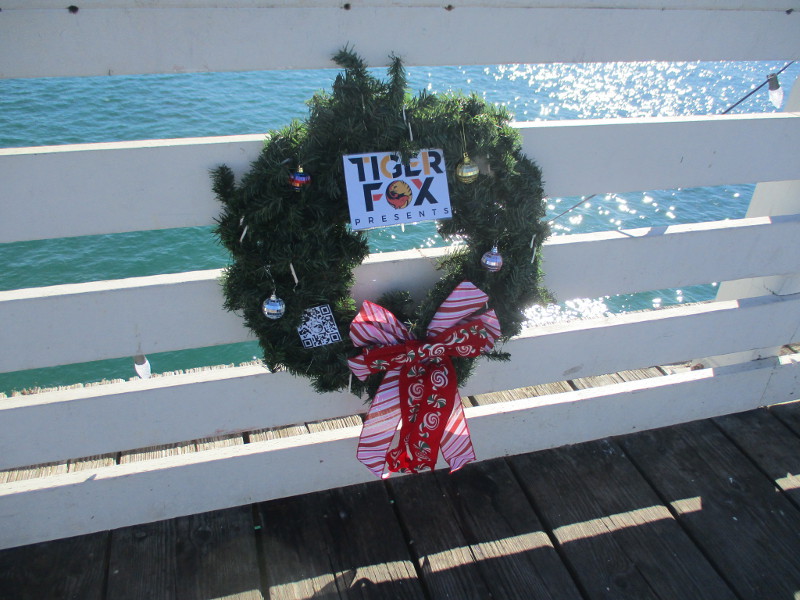
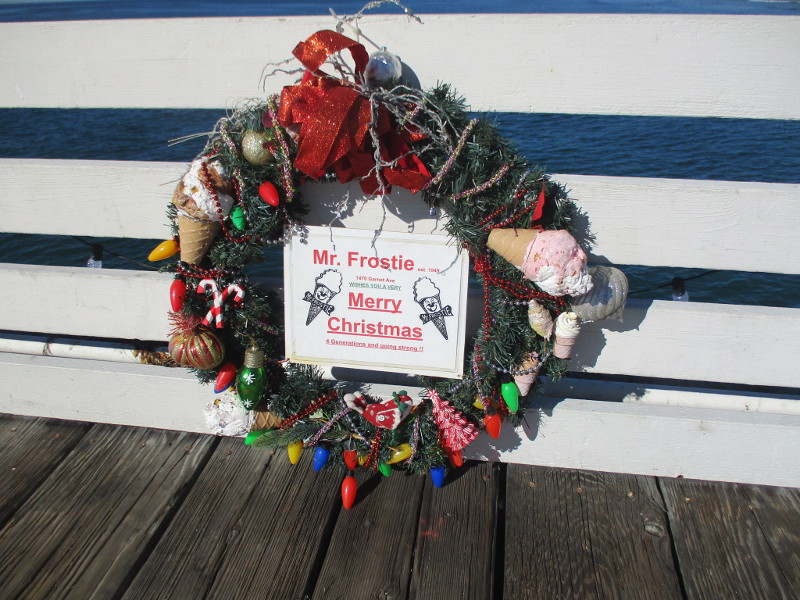
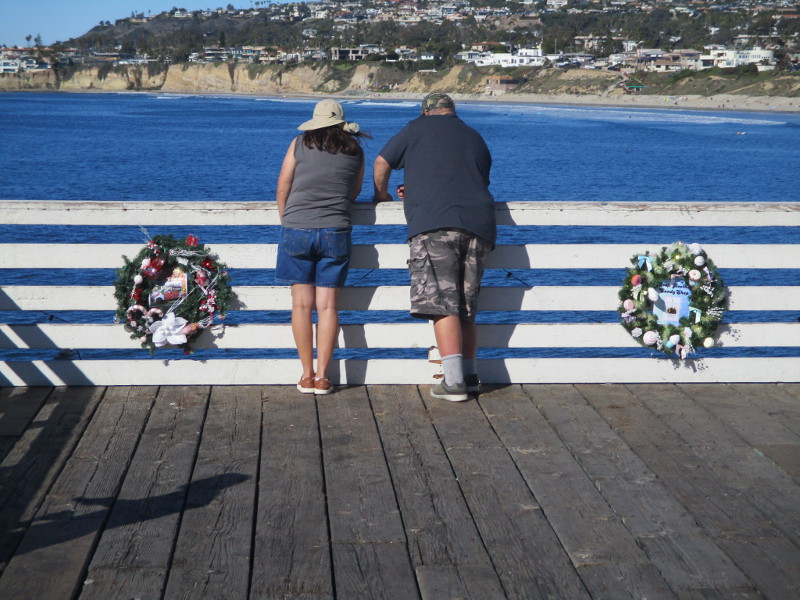
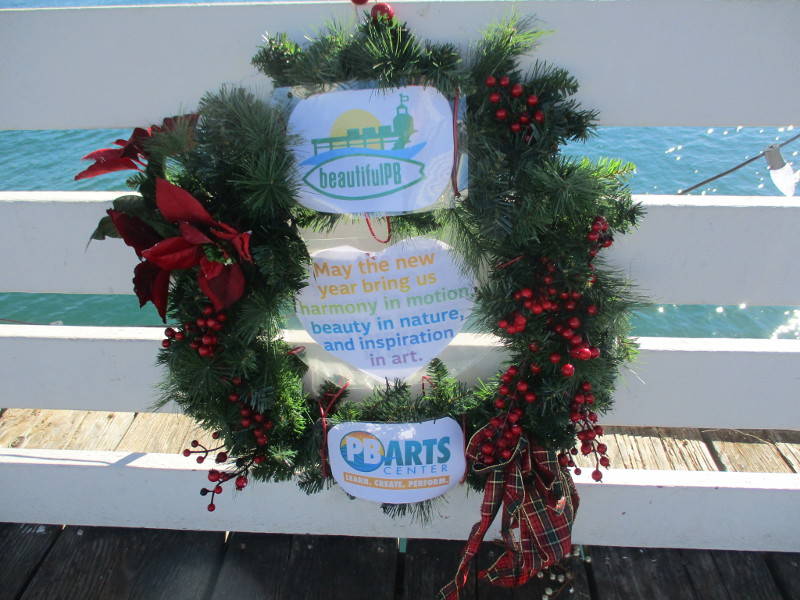
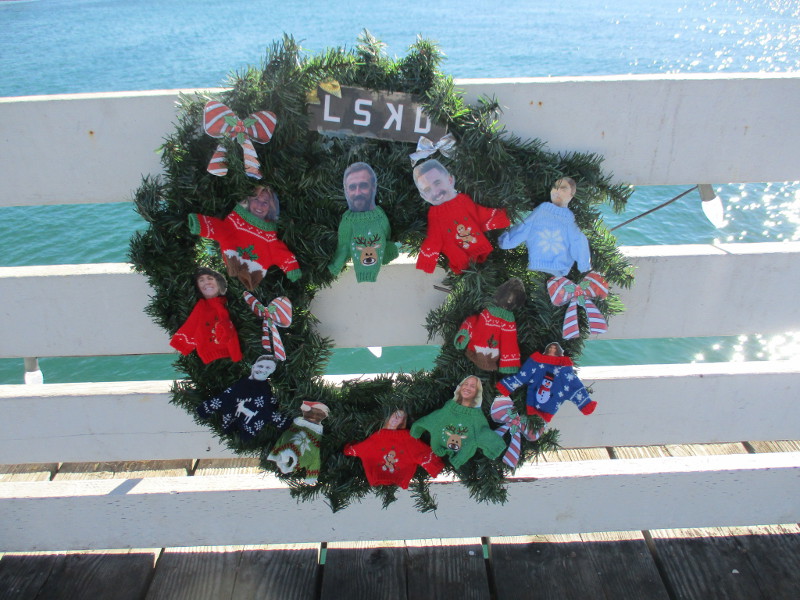
This year the festive scene, hovering magically over the blue Pacific Ocean, is just as wonderful as ever. The big Christmas tree lights up at night, and creatively made wreaths hanging along the pier’s white wooden railing celebrate the season, courtesy of Pacific Beach businesses and community organizations.
I walked down Garnet Avenue today and couldn’t resist a stroll out over the water. Starting from the Crystal Pier Bait Shack, this is what I found…
…
If you’d like to see San Diego through my lens, find the “Follow” box in the sidebar to receive new posts in your email, or bookmark coolsandiegosights.com and swing on by occasionally!
(If you’re viewing Cool San Diego Sights on a phone, you can open my website’s sidebar by tapping those three parallel lines at the top of the page.)
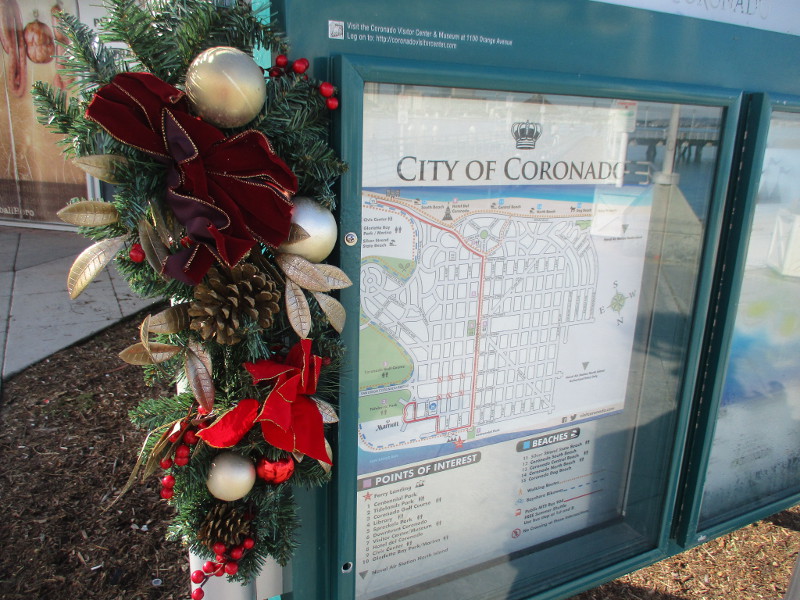
People are already getting ready for the Holiday Season in Coronado! And it’s still over a week until Thanksgiving!
Today I enjoyed a long leisurely walk from the Ferry Landing down Orange Avenue to the Hotel del Coronado and beyond.
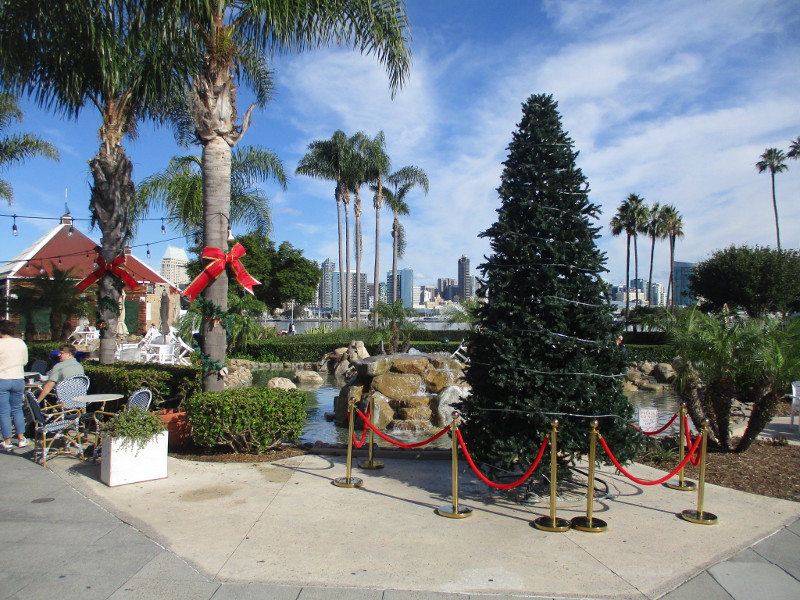
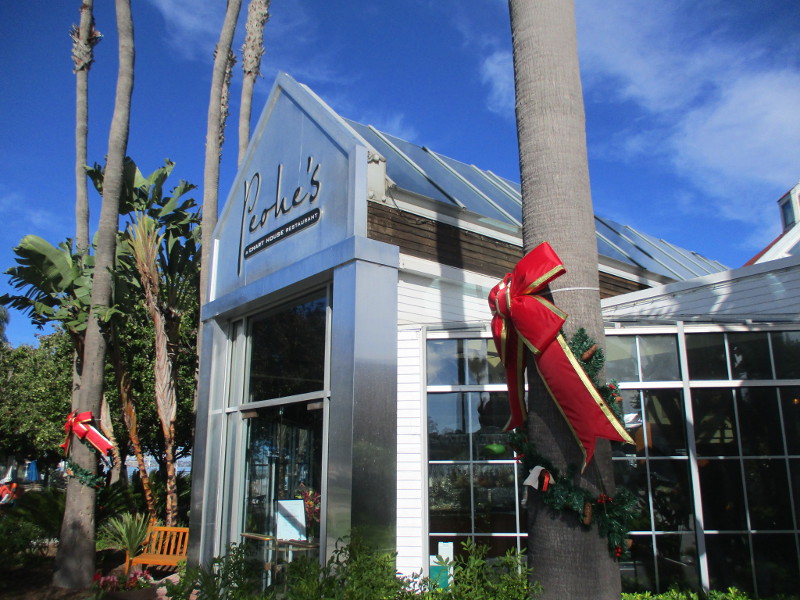
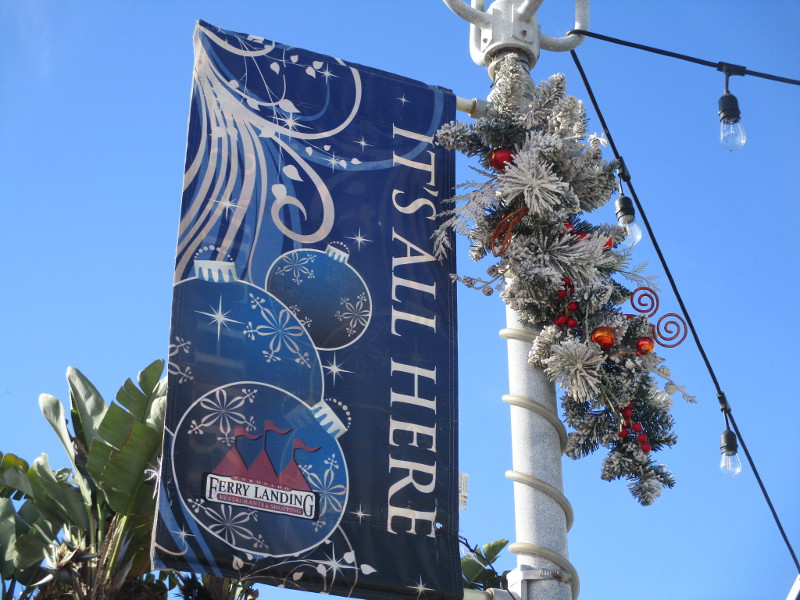
What’s the first thing I saw? Red bows, wreaths, candy cane signs, festive banners, and a Christmas tree at the Coronado Ferry Landing!
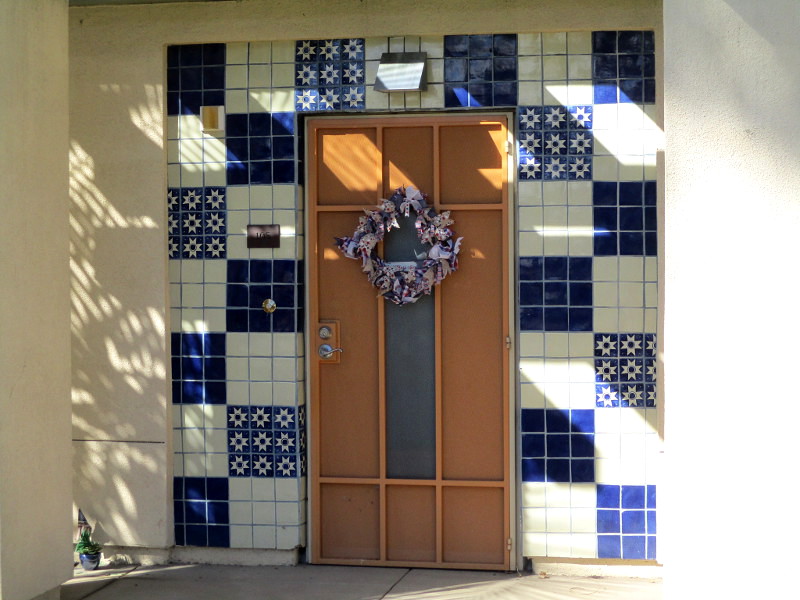
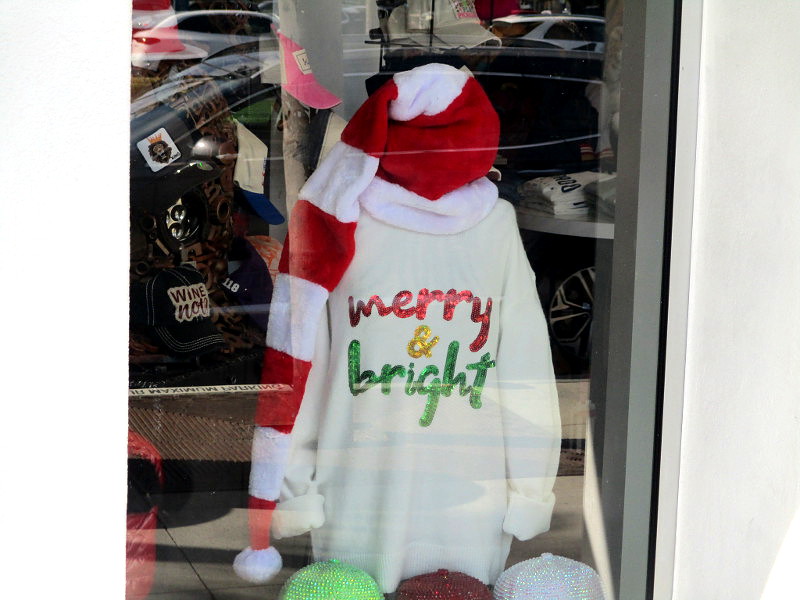
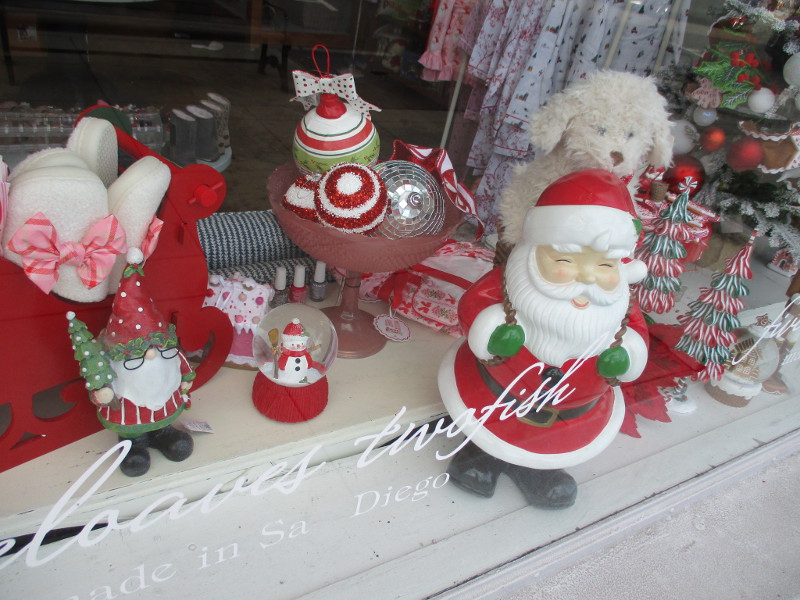
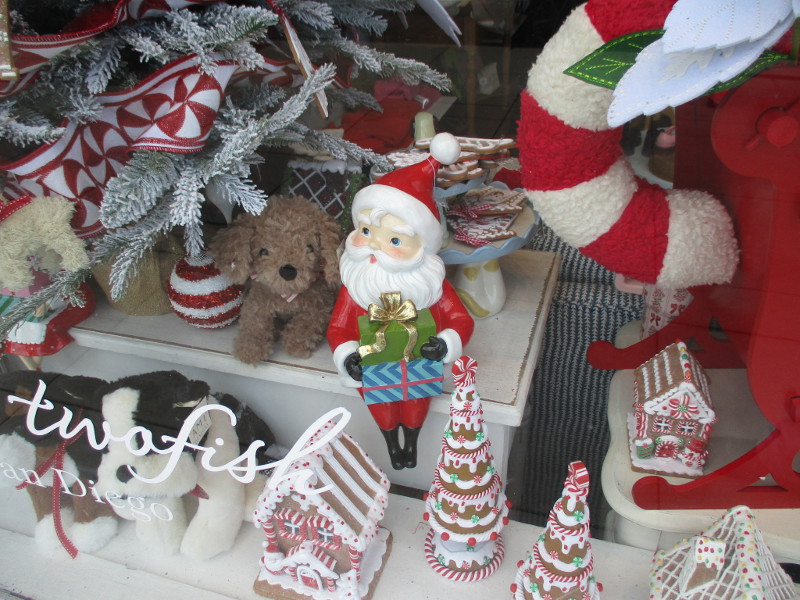
Proceeding down Orange Avenue, I spied more holiday things (often in shop windows)…
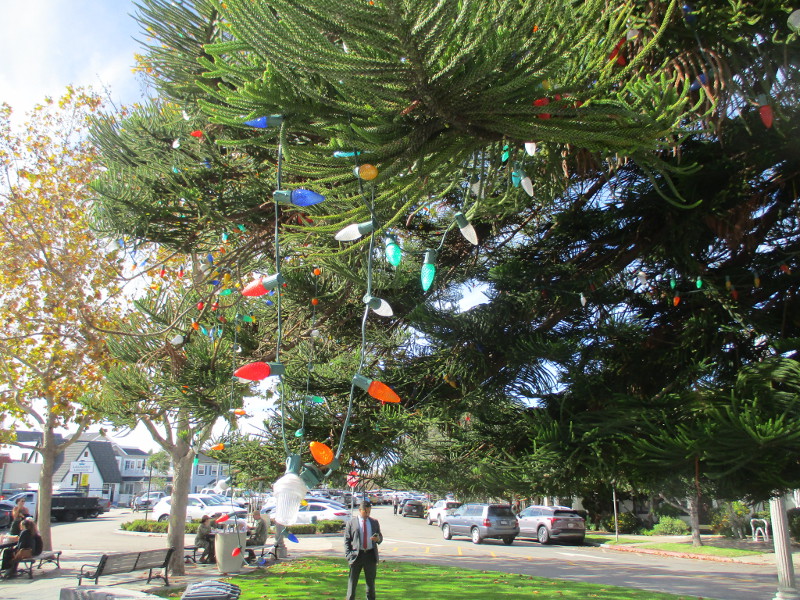
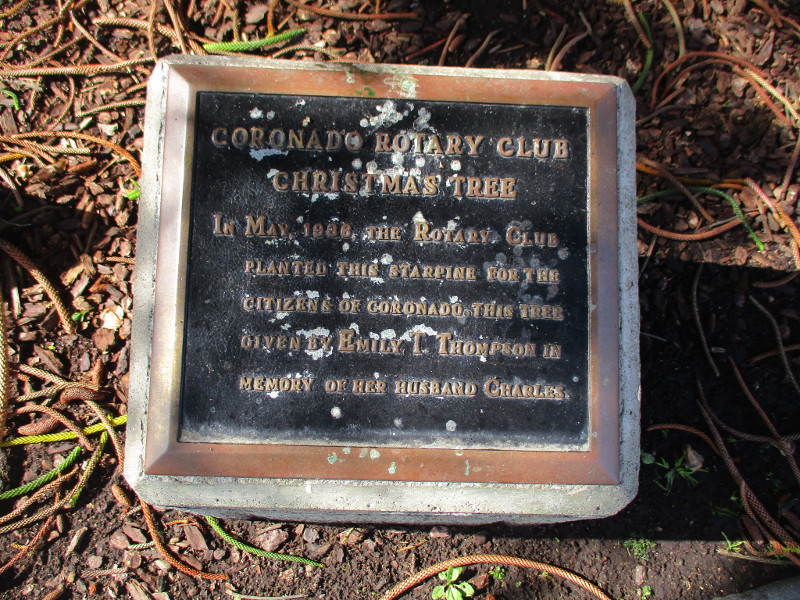
The big landmark Coronado Rotary Club Christmas Tree is already strung with colorful lights!
Continuing my walk…
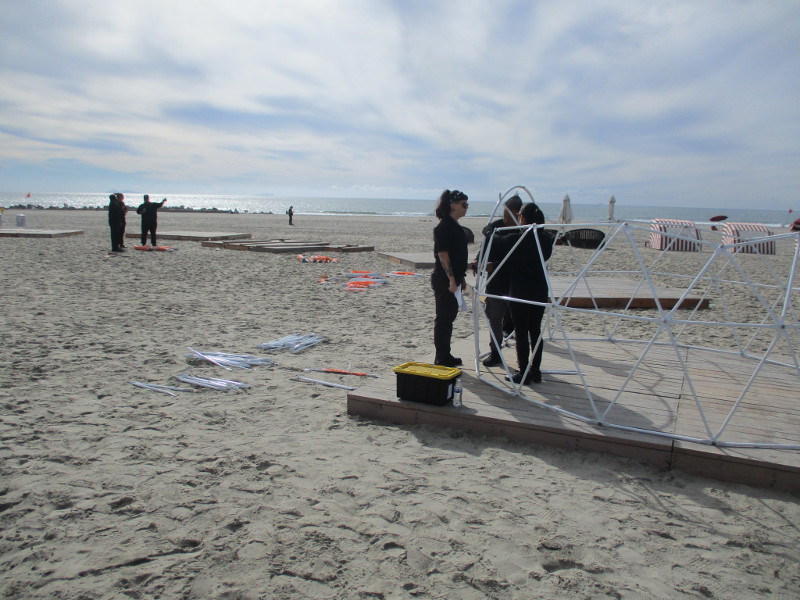
When I arrived at the beach near the Hotel del Coronado, I found workers setting up The Del’s holiday Beachside Igloos!
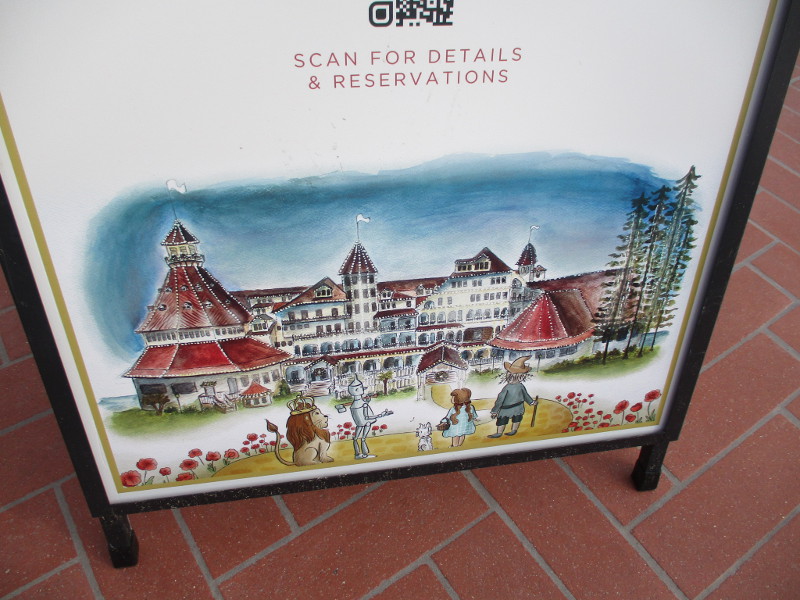
The magic of Oz is coming to The Del from November 21, 2025 to January 4, 2026!
(As you might know, The Wonderful Wizard of Oz author L. Frank Baum has deep ties to the Hotel del Coronado. The beach resort’s grand Victorian architecture is said to be his inspiration for the Emerald City.)
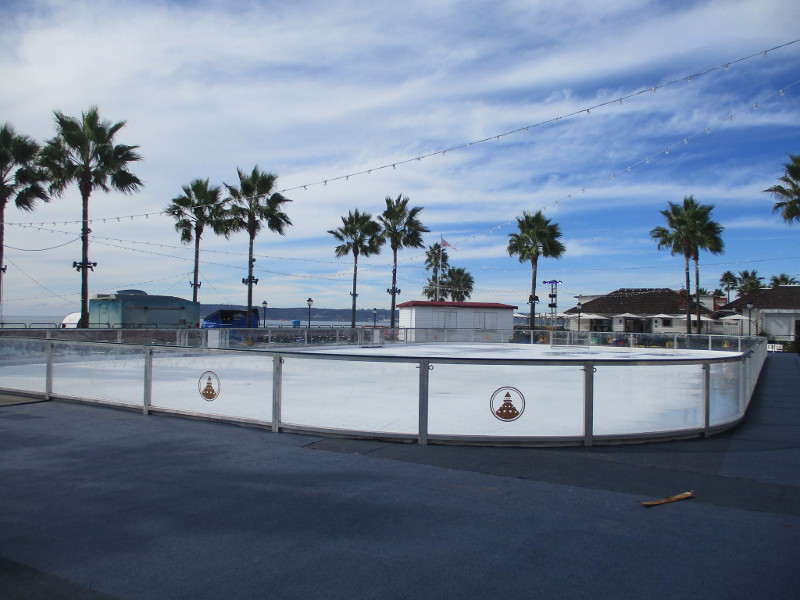
That magic will include ice skating!
The holidays are nearly here in Coronado!
…
I post new blogs pretty often. If you like discovering new things, bookmark coolsandiegosights.com and swing on by occasionally!
I live in downtown San Diego and love to walk around with my camera! You can follow Cool San Diego Sights via Facebook or X.
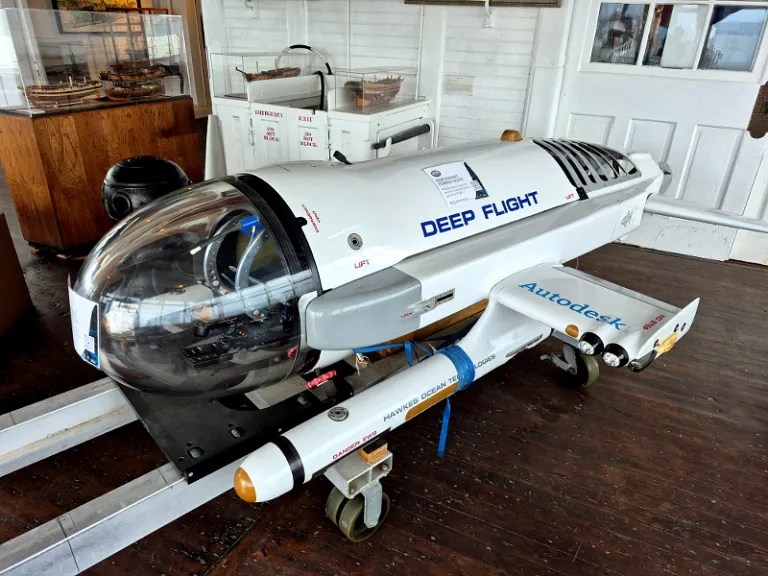
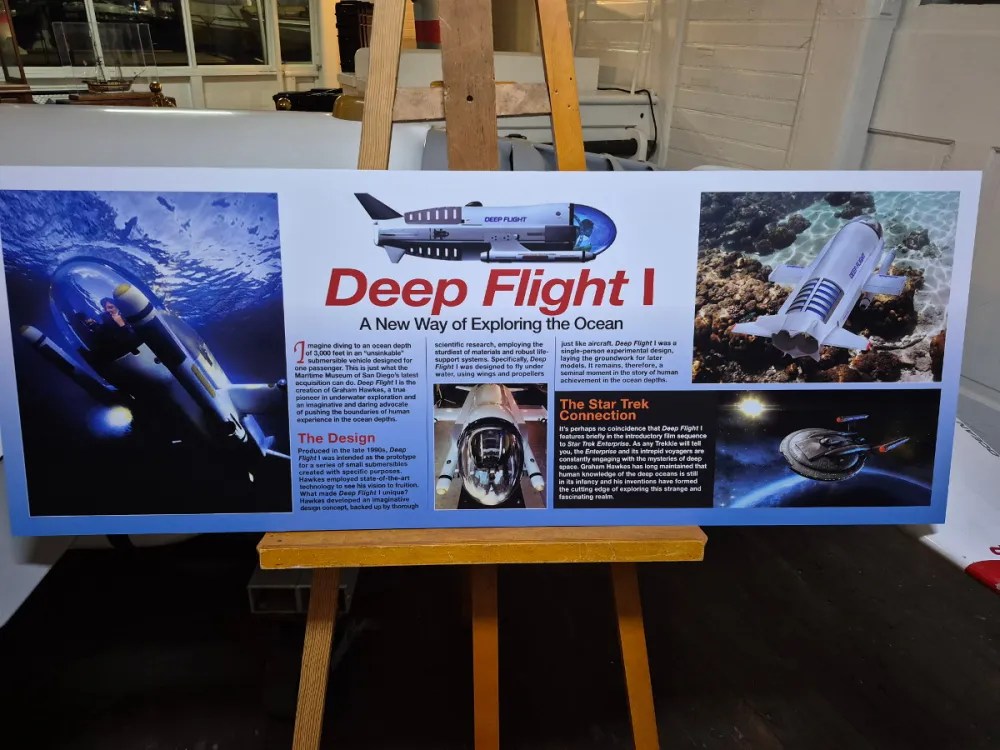
The Maritime Museum of San Diego recently acquired DeepFlight I, a unique “flying” underwater submersible developed in the late 1990s. You can read more about this amazing, advanced submersible here.
Visitors to the San Diego museum might be astonished to learn that this one-of-a-kind prototype appears in every episode of Star Trek: Enterprise!
DeepFlight I can be seen momentarily in the Star Trek: Enterprise introductory sequence, which begins every episode. The sequence depicts the evolution of human technology and exploration. DeepFlight I appears at the 34 second mark here!
Super cool!
…
I post new blogs pretty often. If you like discovering new things, bookmark coolsandiegosights.com and swing on by occasionally!
I live in downtown San Diego and love to walk around with my camera! You can follow Cool San Diego Sights via Facebook or X.
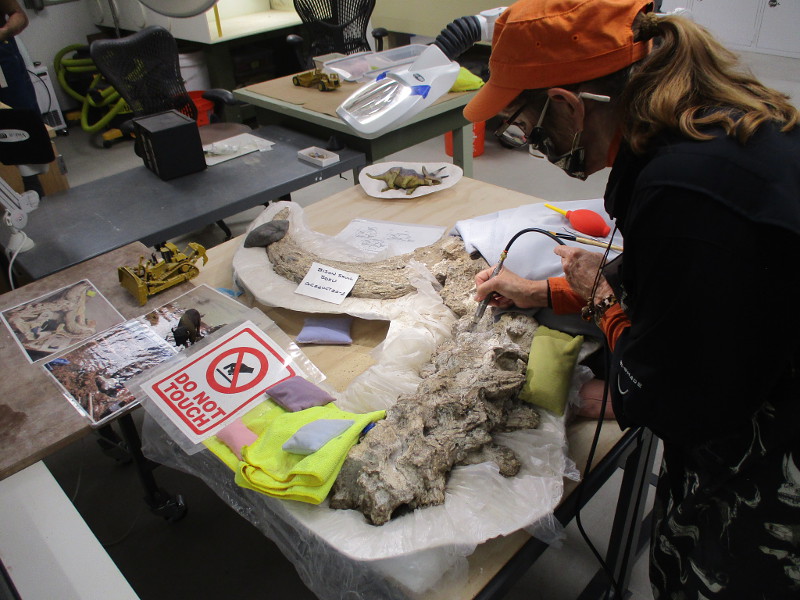
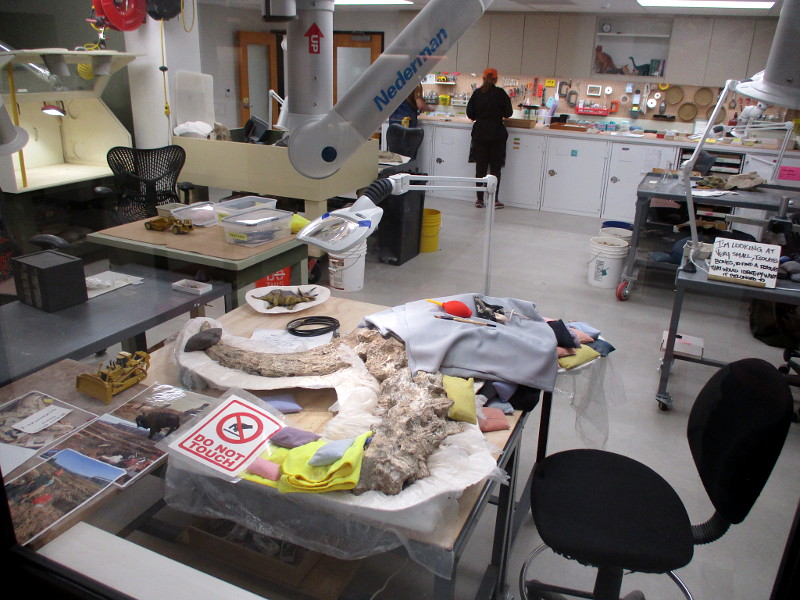
Today, down in the San Diego Natural History Museum’s basement Paleo Center, Mary was working on a fossil found in Mission Valley.
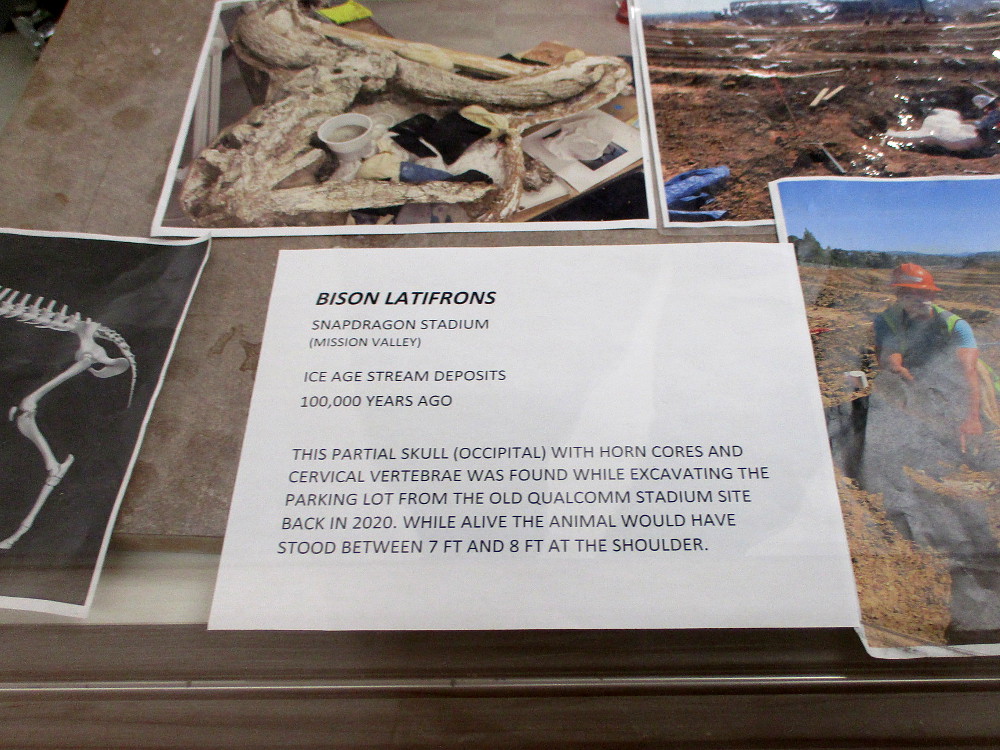
Visitors peering through the Paleo Center window could watch her as she removed tiny bits of sandstone from the partial skull (with horn cores and cervical vertebrae) of a Bison Latifrons, found in Ice Age stream deposits, and dating from 100,000 years ago.
She was using a small pneumatic chisel-like instrument to “clean” the fossil. It reminded me of my last dental appointment!
The ancient bison fossil was unearthed in 2020 while workers were excavating the parking lot of the old Qualcomm Stadium, getting ready for San Diego’s new Snapdragon Stadium! The ancient bison would have stood between seven and eight feet at the shoulder! Imagine it roaming eons ago in Mission Valley!
I learned The NAT has numerous unearthed fossils in line waiting to be expertly prepared. Fossils are frequently discovered at different construction sites around the city.
Right now the San Diego Natural History Museum is half open as it undergoes a monumental roof renovation. Fortunately the paleontology center on the lower level of the museum remains open. Follow various signs and you’ll find this Amazement in the Basement!
…
I post new blogs pretty often. If you like discovering new things, bookmark coolsandiegosights.com and swing on by occasionally!
I live in downtown San Diego and love to walk around with my camera! You can follow Cool San Diego Sights via Facebook or X.
It’s late October. Early mornings and late evenings in San Diego have become chilly.
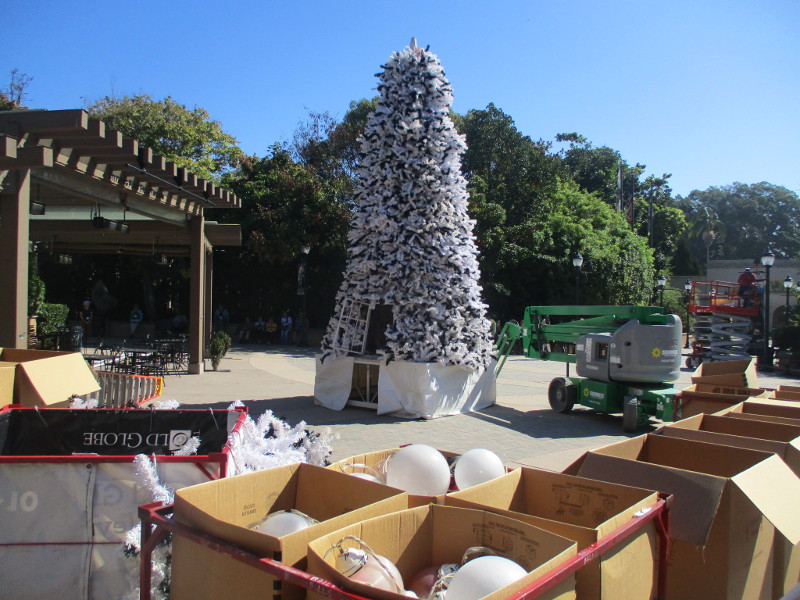
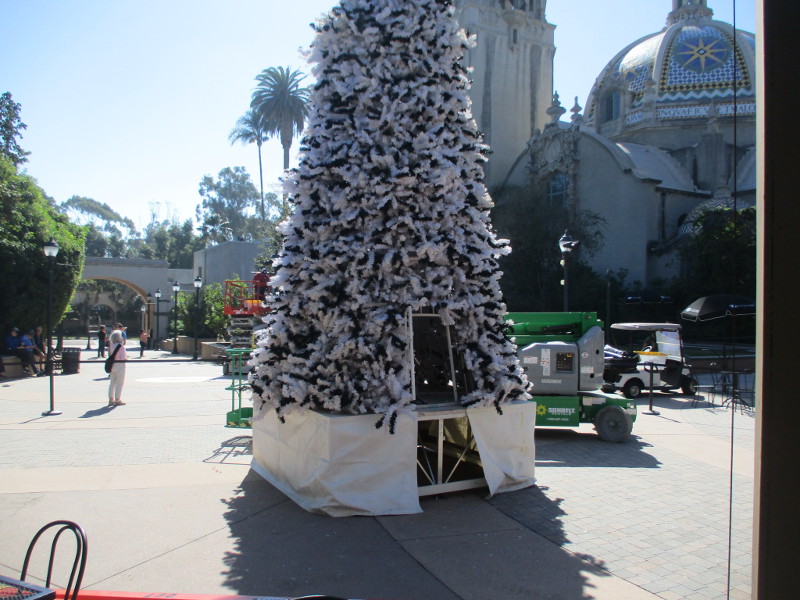
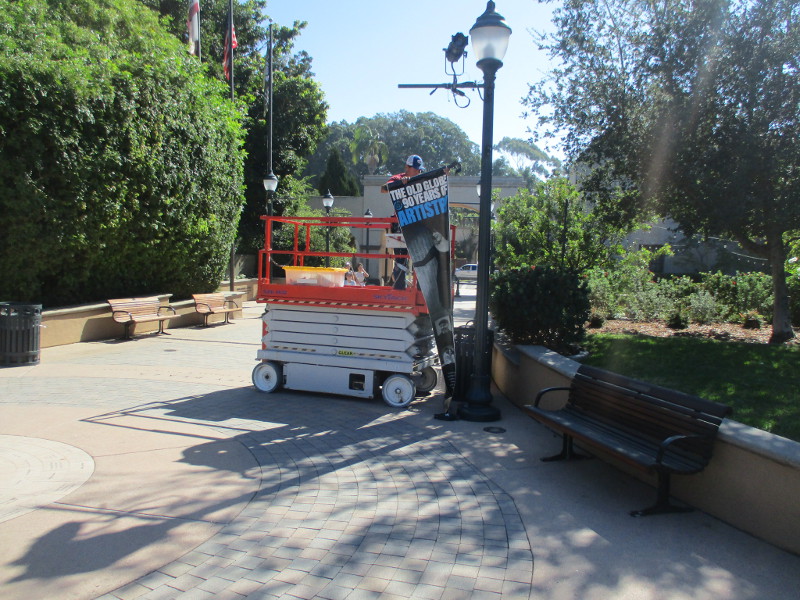
Walking through Balboa Park this afternoon, I noticed certain preparations are already underway for the Holiday Season!
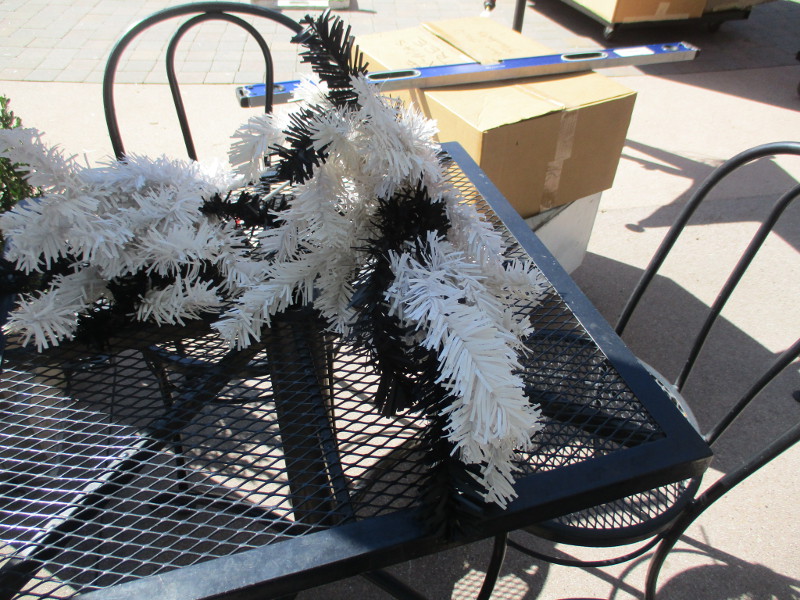
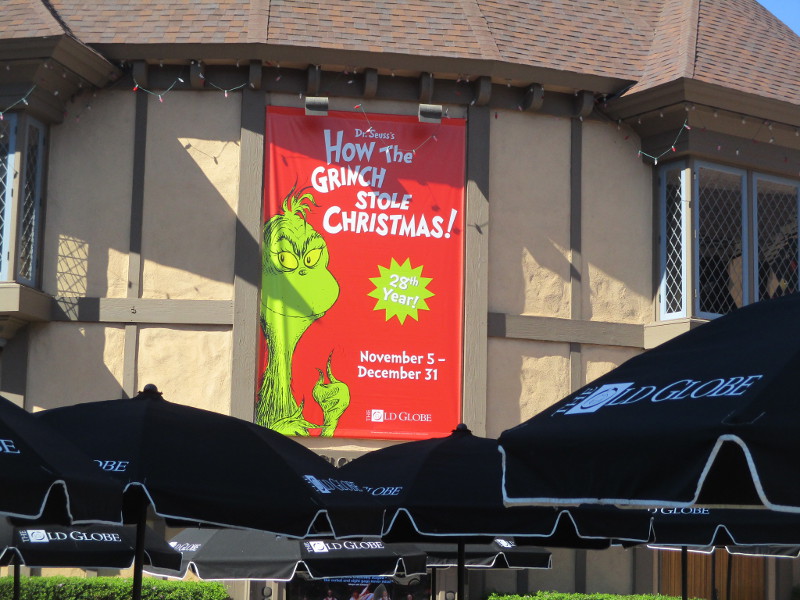
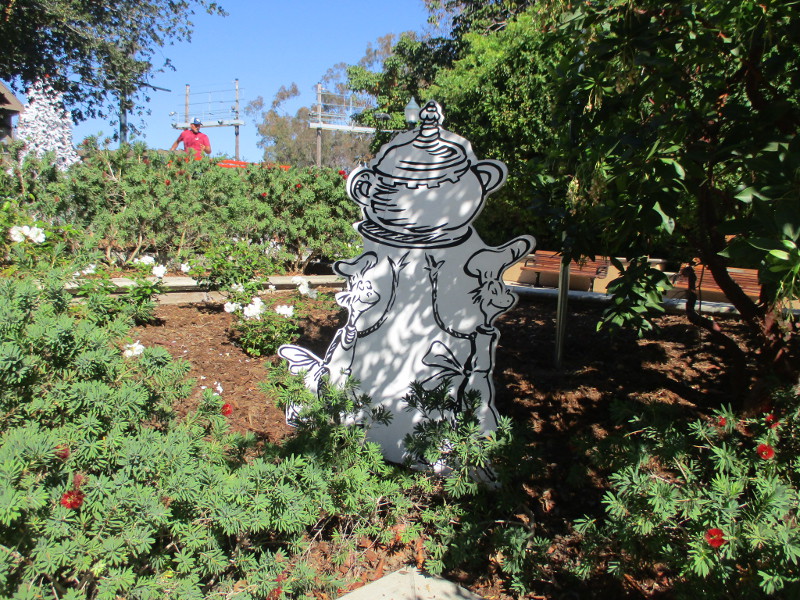
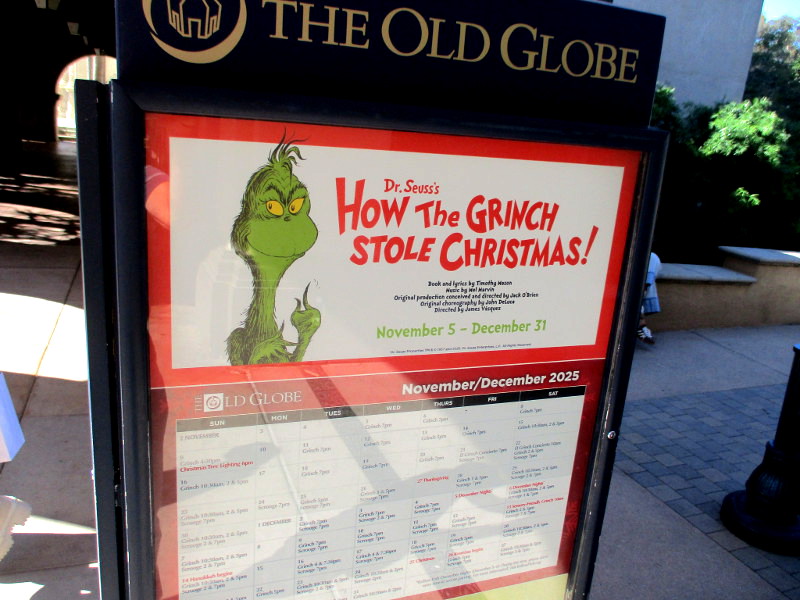
The Old Globe’s annual “How the Grinch Stole Christmas” Tree is going up in their outdoor Copley Plaza. I’m told the tree’s assembly began yesterday. In addition, nearby banners are being replaced and holiday lights are being strung.
The 20th annual Globe Christmas Tree Lighting Ceremony will take place on Sunday, November 9 at 6:00 p.m.
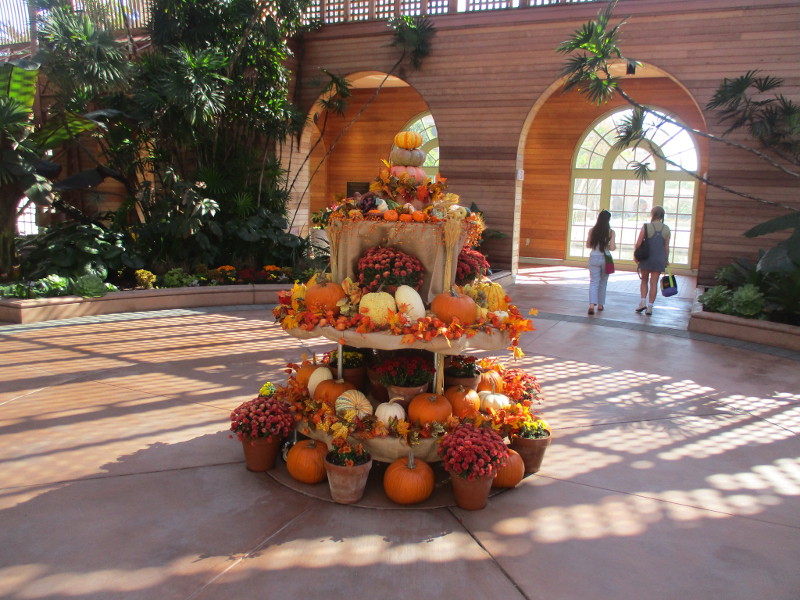
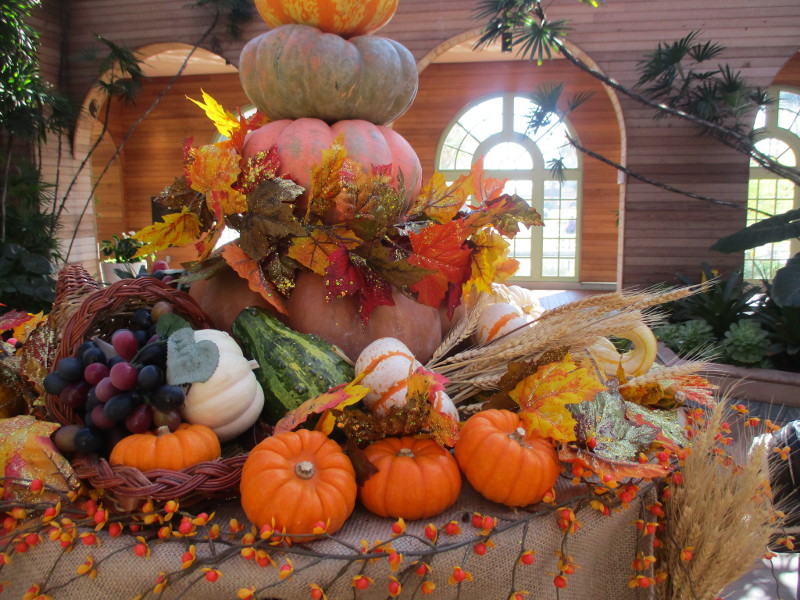
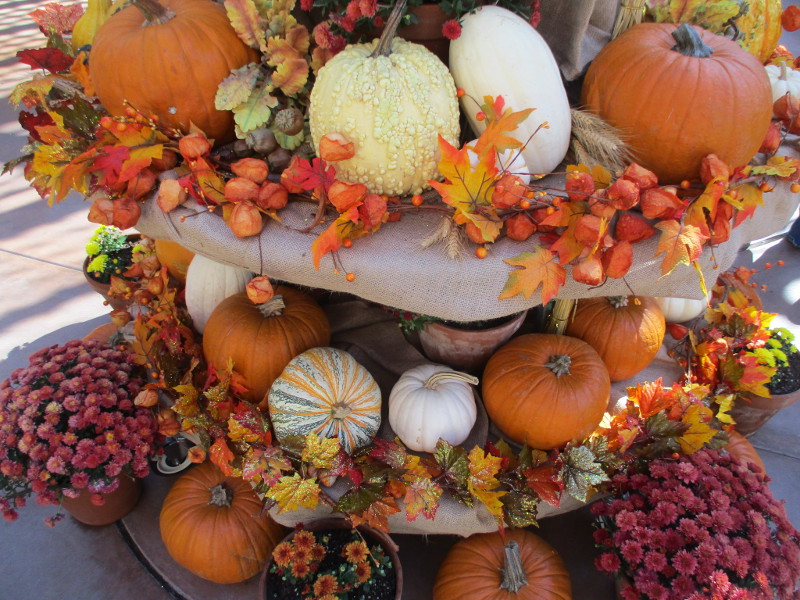
Meanwhile, in the center of the Botanical Building, a very beautiful harvest display full of Autumn color and pumpkins has been erected by the City of San Diego Parks and Recreation Department.
Thanksgiving will be here before we know it!
…
I post new blogs pretty often. If you like discovering new things, bookmark coolsandiegosights.com and swing on by occasionally!
I live in downtown San Diego and love to walk around with my camera! You can follow Cool San Diego Sights via Facebook or X.
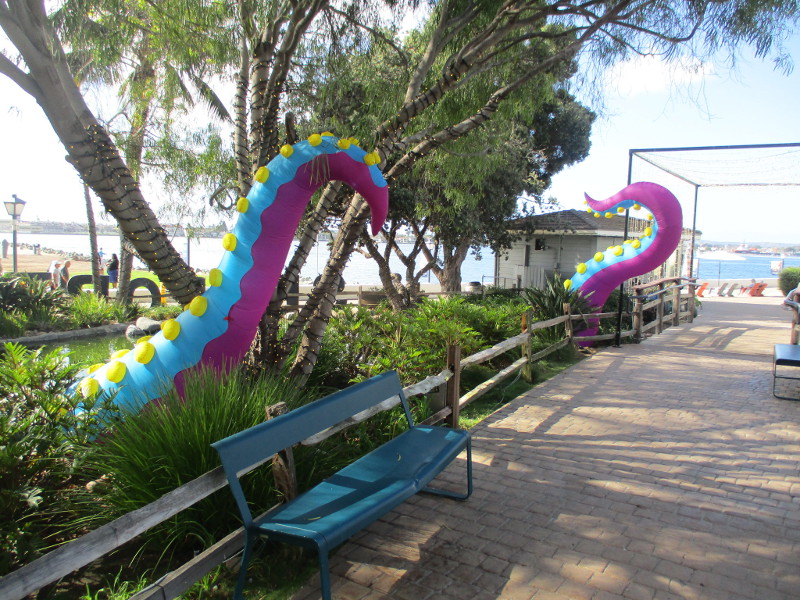
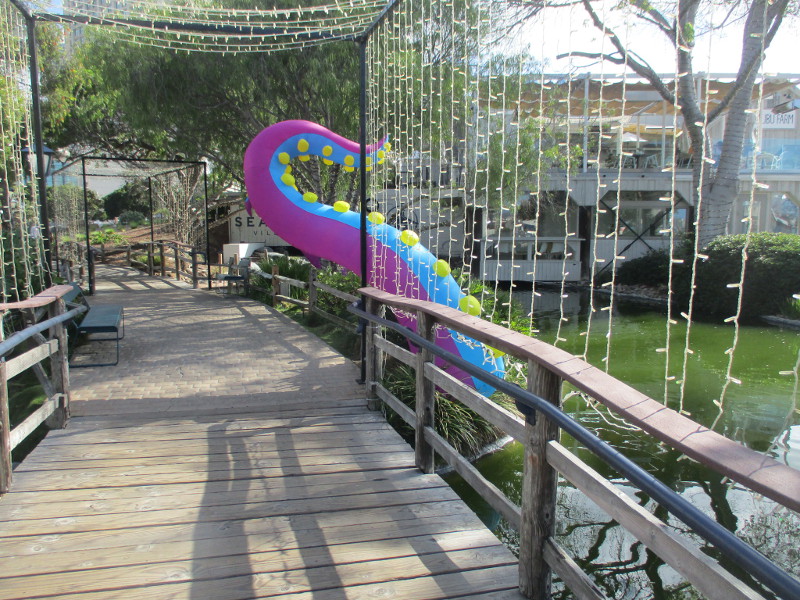
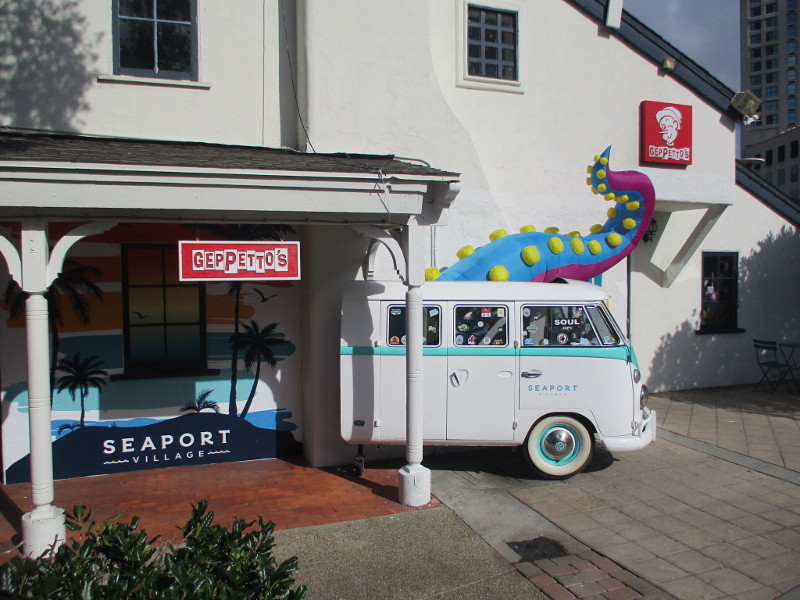
Tourists, shoppers and those wandering through Seaport Village need to keep their head on a swivel! The tentacles of a monster octopus might suddenly grab you!
Why is this gigantic octopus assailing unsuspecting people?
Perhaps because it anticipates Halloween!
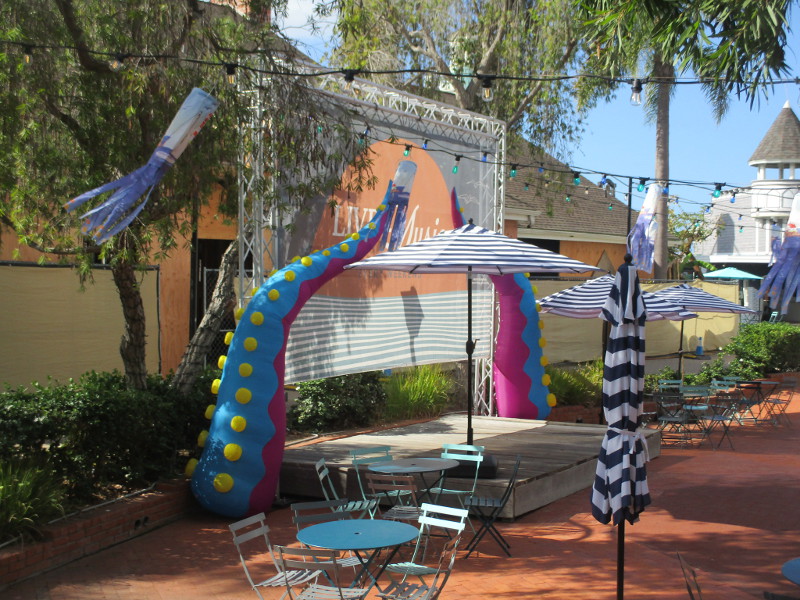
Inflatable octopi were recently placed all around Seaport Village. The tentacled terror is a central element of the upcoming Halloween celebration Bayside Boo: Spirited Night by the Bay.
The event website explains: Presented by Seaport Fudge Factory, Bayside Boo will feature spooky beats, sweet treats, and plenty of festive fun. Dance under the moonlight, enjoy the vibes by the bay, and let the ghoul times roll.
Would you like to experience Bayside Boo? Come by Seaport Village on Friday, October 31, 2025, from 6:30 pm to 9:30 pm, and watch out for slimy tentacles!
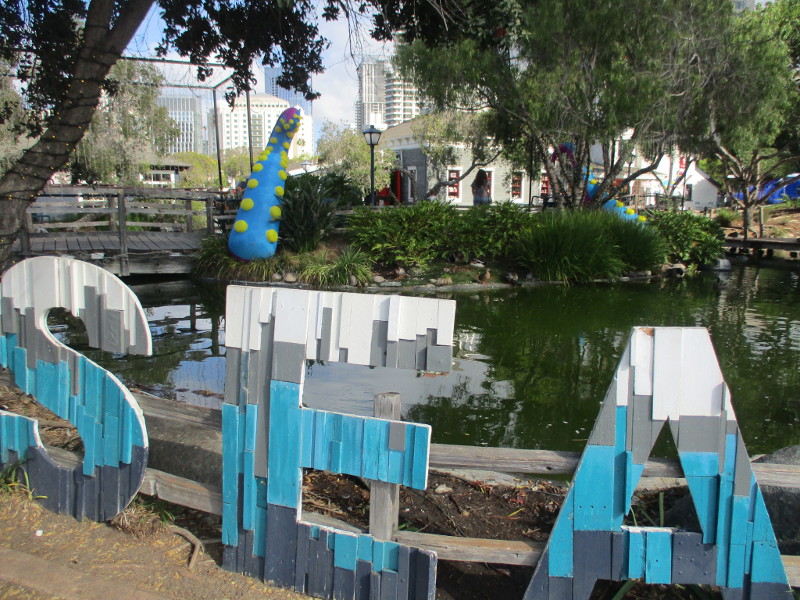
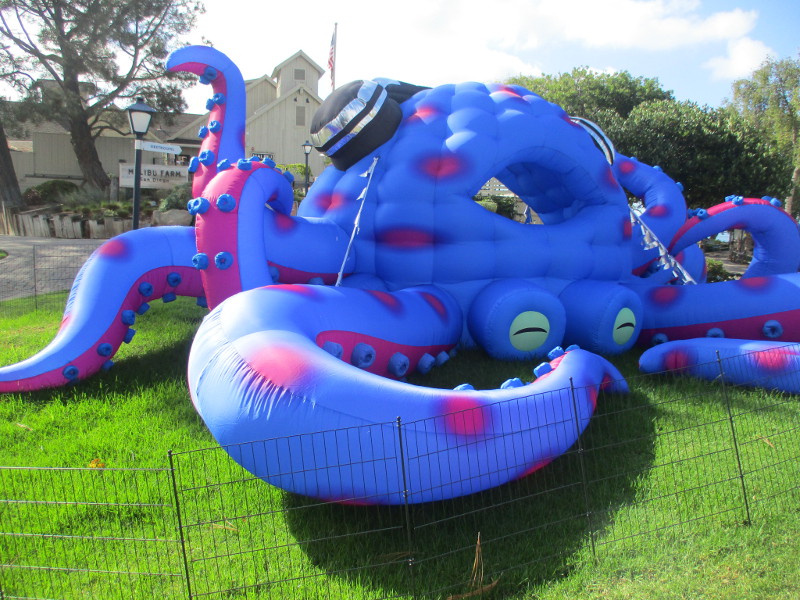
Oh, dear! The overgrown octopus has emerged from San Diego Bay!
Is that flimsy fence enough to hold the rampaging sea monster?
…
I post new blogs pretty often. If you like discovering new things, bookmark coolsandiegosights.com and swing on by occasionally!
I live in downtown San Diego and love to walk around with my camera! You can follow Cool San Diego Sights via Facebook or X.
Several historic buildings can be visited at the Escondido History Center in Grape Day Park. One of these buildings was the very first library that opened in Escondido, back in 1895.
The little building was the second public library in San Diego County. In 1971 it was saved from demolition by the Escondido Historical Society and moved to Grape Day Park.
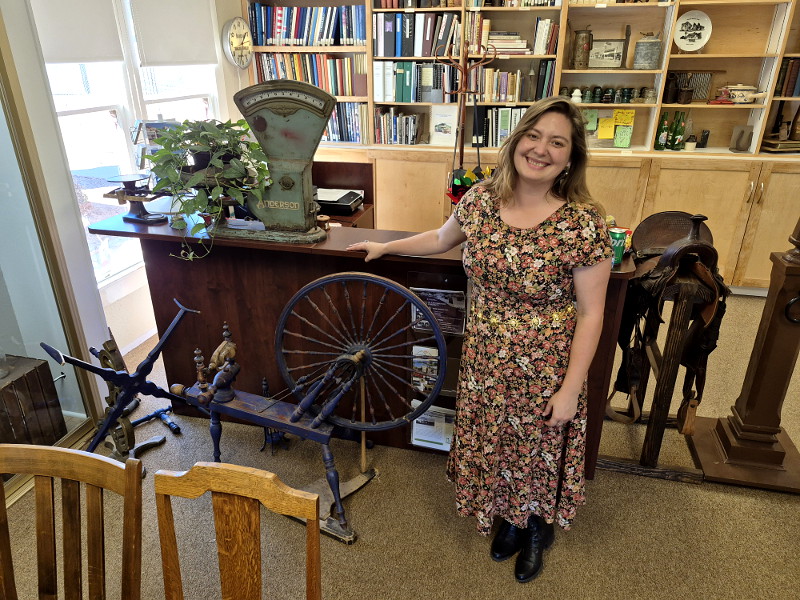
Today visitors step into the little old library (headquarters of the Escondido History Center) on Thursday through Saturday, between 10 am and 4 pm. Inside one can look at historical photographs, conduct research, or view fascinating exhibits. There are also several antique artifacts like an old scale, spinning wheel, and gas pump.
Last Saturday I also found a smile!
I learned the old library and been remodeled and expanded over the years. To me, its present-day use as a museum is the thing of greatest interest.
The exhibits can change a bit over time. During my visit I enjoyed looking at Pioneer Family: Cassou Family, and Planes, Trains and Automobiles.
Here’s an old photo of the Escondido Public Library as it originally appeared. Notice there’s not much else around it!
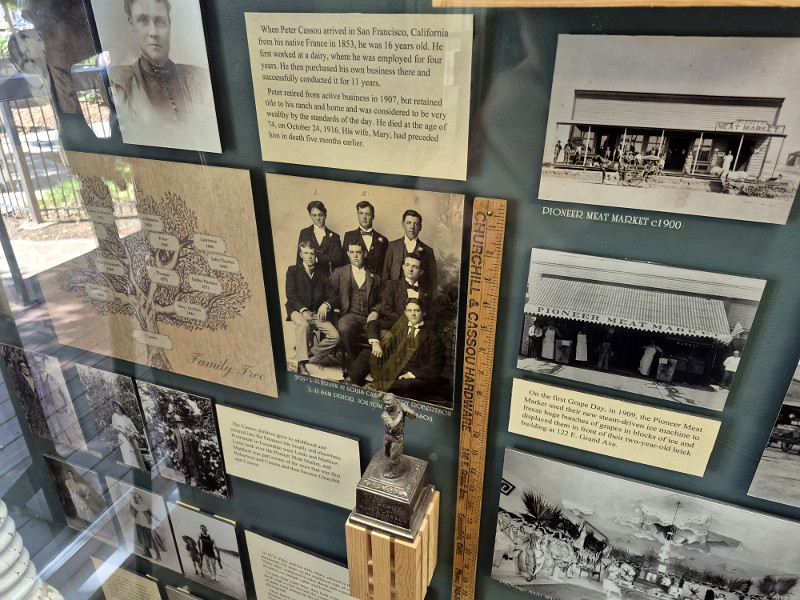
A big glass display case against one wall is packed full of history.
One exhibit traces the history of Escondido’s influential Cassou family, whose mid-19th century roots were in France.
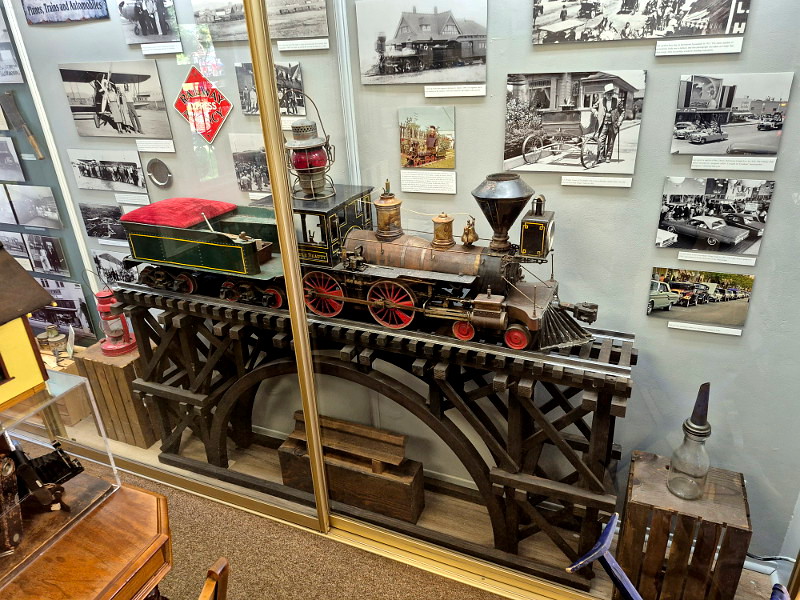
Transportation in Escondido over the years is highlighted in the second exhibit.
Cruisin’ Grand photographs show how the beloved summer event has previously appeared.
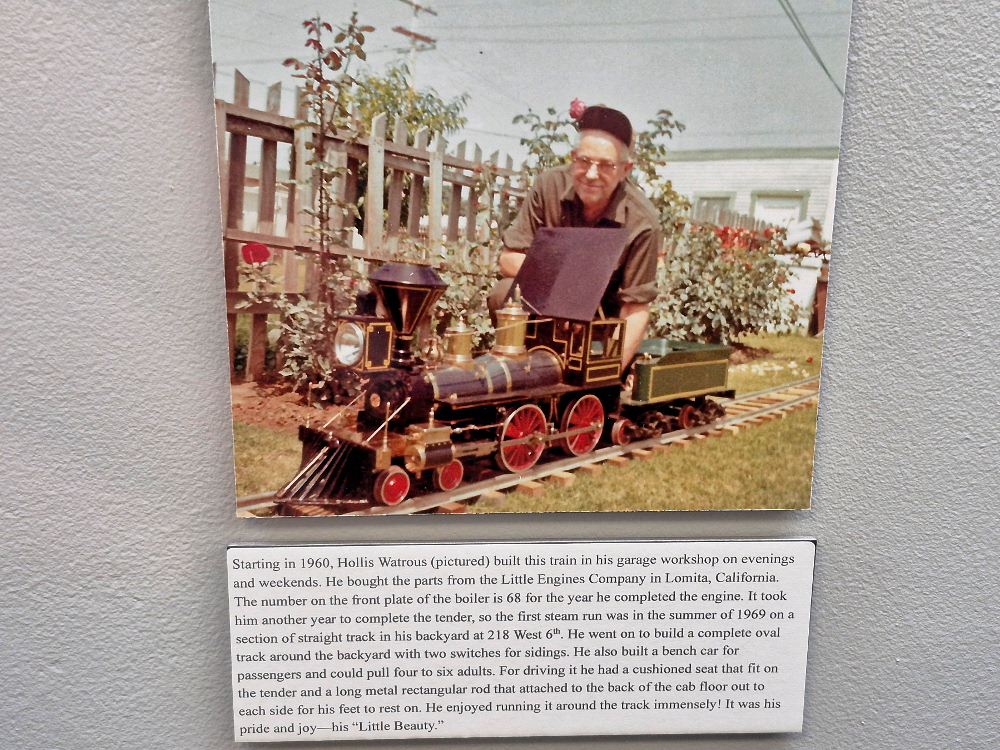
I love that big model train! It was created by Hollis Watrous in his garage workshop starting in 1960. He ran it on tracks in his backyard!
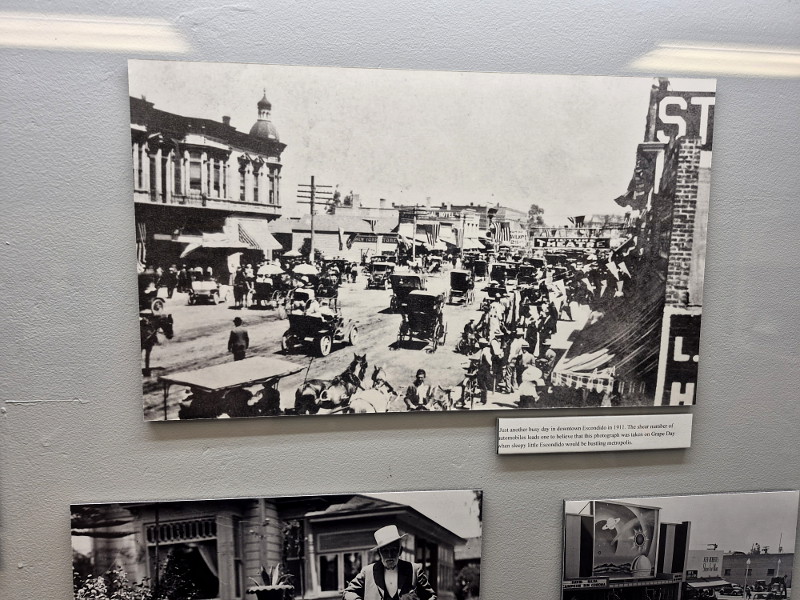
Here’s a cool old photograph of downtown Escondido in 1911.
It is believed, by the large number of automobiles, that the photo was taken on bustling Grape Day.
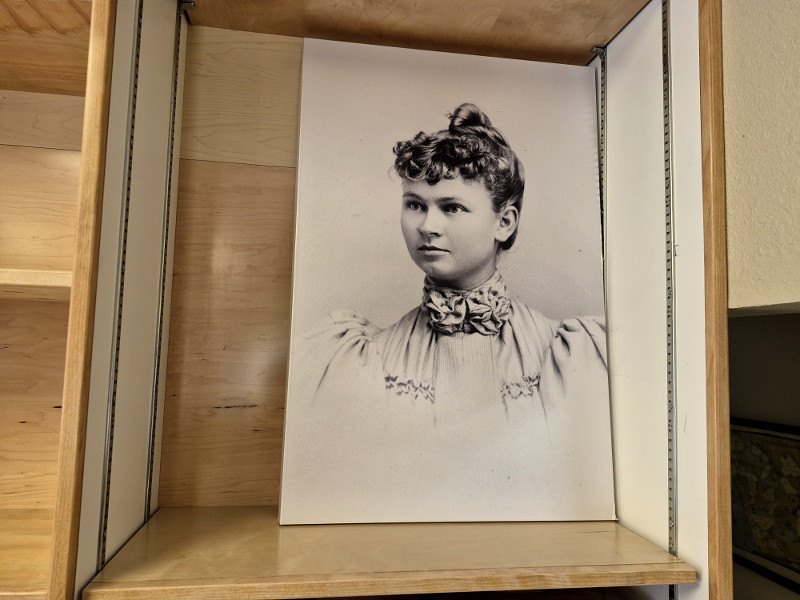
Among the shelves behind the front counter I spied this old image of Escondido’s first librarian, Mina Ward.
…
I post new blogs pretty often. If you like discovering new things, bookmark coolsandiegosights.com and swing on by occasionally!
I live in downtown San Diego and love to walk around with my camera! You can follow Cool San Diego Sights via Facebook or X.
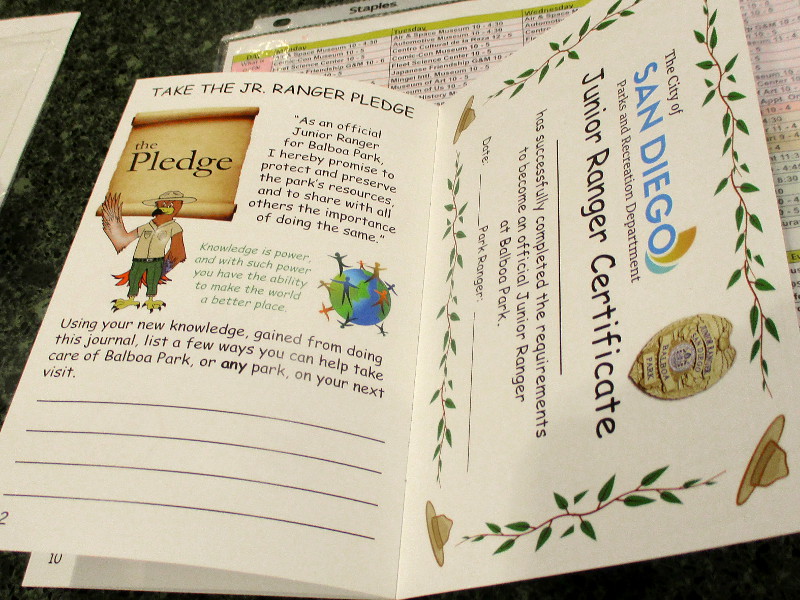
Kids visiting Balboa Park are invited to become Junior Rangers! It’s fun and it’s free!
Simply head over to the Balboa Park Visitors Center and ask one of the friendly volunteers at the front counter about the program!
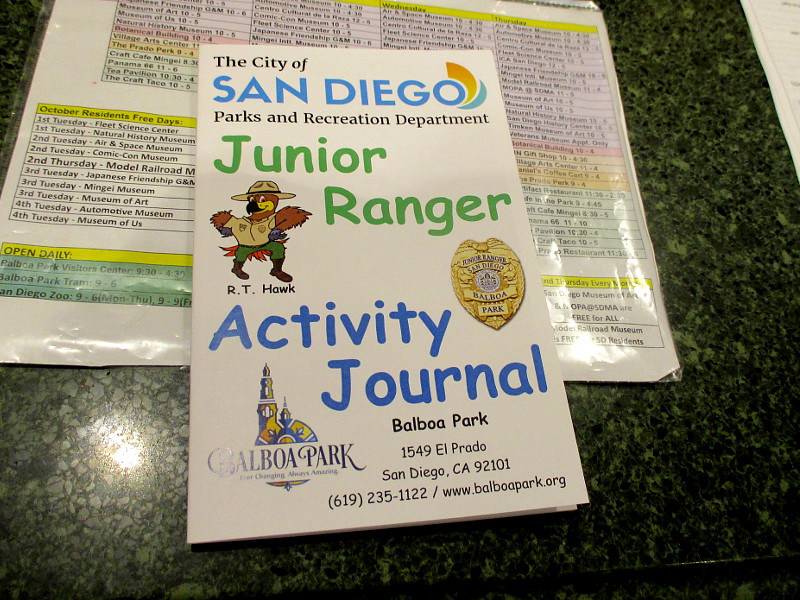
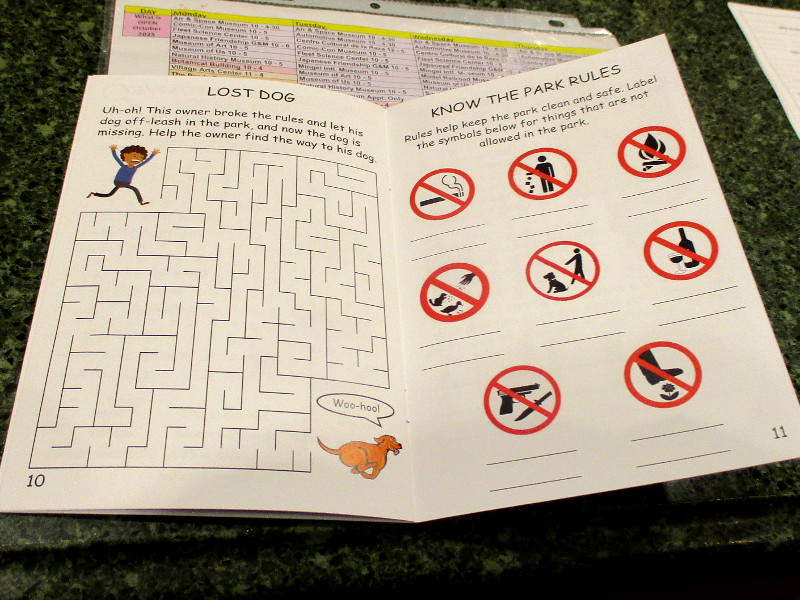
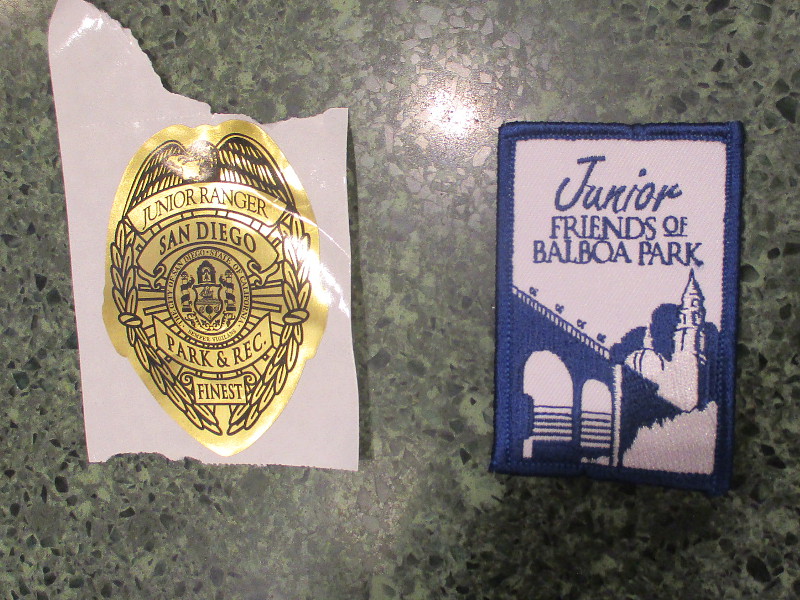
Becoming a Junior Ranger is super cool! You get an Activity Journal which has fun puzzles, helpful information, and a Junior Ranger Certificate inside. You also get an awesome Junior Ranger badge sticker! I was surprised to learn you might get a Junior Friends of Balboa Park patch, too!
The program was created by the City of San Diego Parks and Recreation Department. It encourages young people to respect and care for our beautiful Balboa Park, San Diego’s crown jewel.
Is your family visiting Balboa Park? Swing by the Visitors Center first thing, learn what special things are going on in the park, perhaps grab a souvenir or snack, and excite the kids with this cool opportunity!
…
I post new blogs pretty often. If you like discovering new things, bookmark coolsandiegosights.com and swing on by occasionally!
I live in downtown San Diego and love to walk around with my camera! You can follow Cool San Diego Sights via Facebook or X.





 Cool San Diego Sights!