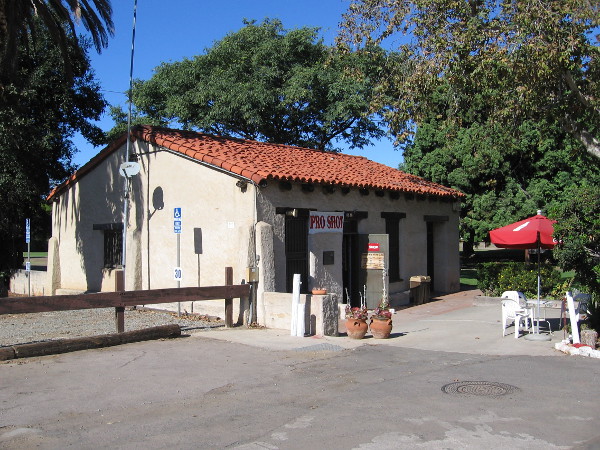
The Presidio Hills Golf Course Pro Shop can be found inside San Diego’s oldest building, La Casa de Carrillo.
Believe it or not, the oldest structure that still exists in San Diego (outside of the walls of the Mission Basilica San Diego de Alcalá) contains a golf Pro Shop!
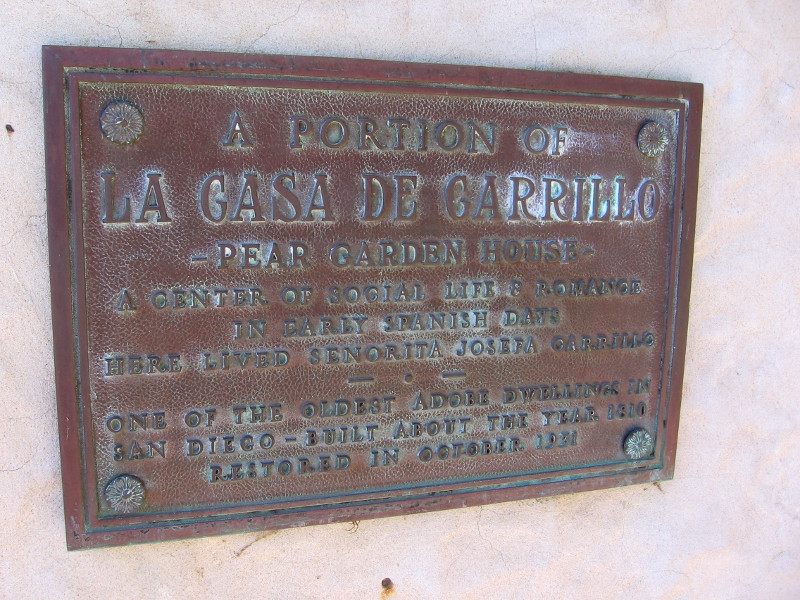
The two-century-old Casa de Carrillo, located near the base of historic Presidio Hill, was built in 1817, according to the Save Our Heritage Organisation. (Plaques at the location provide two different years.) It was built by the Spanish presidio’s commander, Francisco Maria Ruiz, for Joaquin Carrillo, a relative and fellow soldier stationed in San Diego. The adobe house stood beside the Comandante’s pear garden. Today the rather simple building, which was restored in 1931, is the home of the Presidio Hills Golf Course Pro Shop!
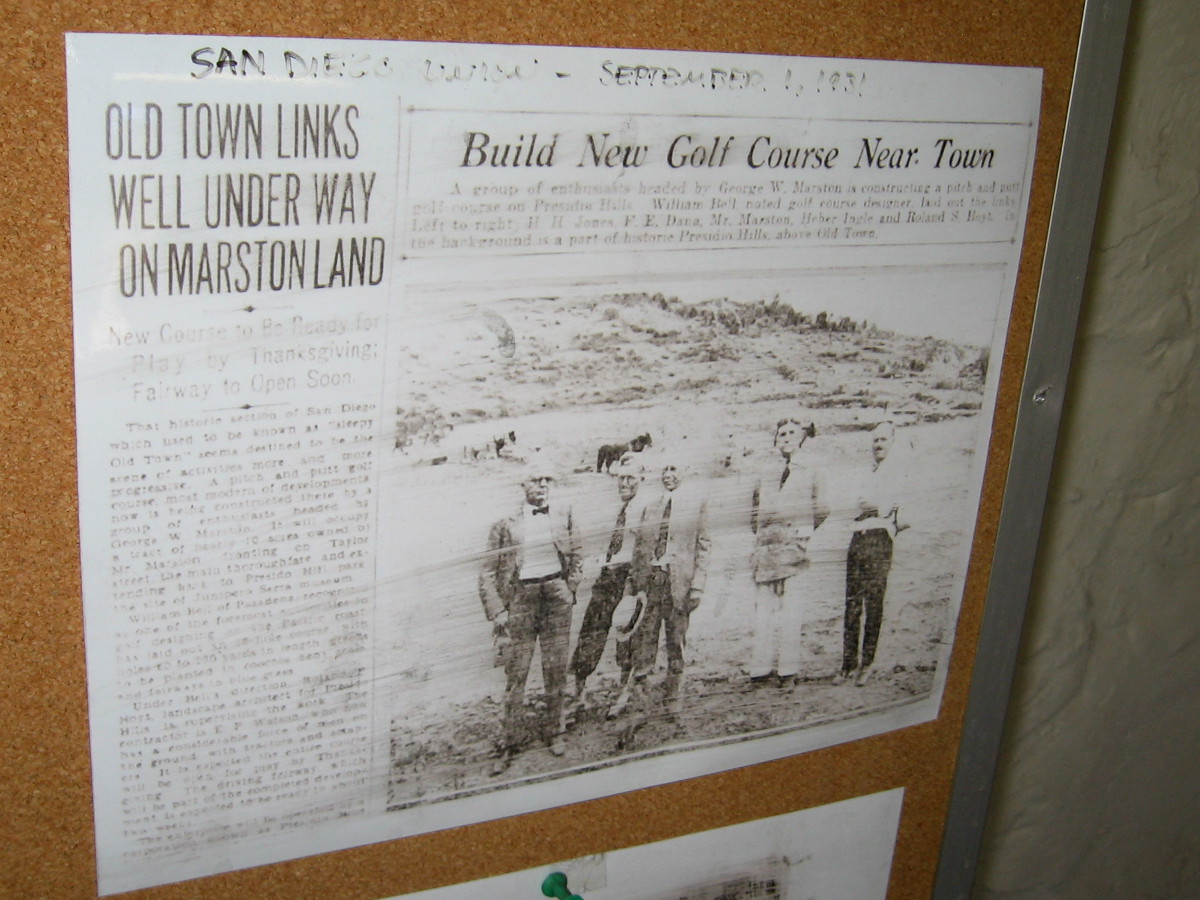
The small Presidio Hills Golf Course has its own unique history. Occupying what was once a scrubby plot of land at the foot of Presidio Hill, just east of Old Town, the pitch-and-putt golf course was developed in the early 1930s by George Marston, a visionary San Diego businessman and philanthropist who also worked to develop Balboa Park, the San Diego Public Library, and the San Diego Historical Society. Marston created the Junipero Serra Museum which rises today just above the site of the original 1769 Spanish presidio, so-called birthplace of California.
Over the years, the Presidio Hills Golf Course has hosted several world famous golfers, most notably Phil Mickelson, a resident of San Diego. When they were kids, Phil and his sister Tina would play all day at the small golf course. I was told by the super friendly young gentleman working in the pro shop that Phil Mickelson returns to visit every few years, just for old time’s sake.
A young Tiger Woods also won two Junior World trophies at Presidio Hills Golf Course!
Read the photo captions for a bit more information . . .
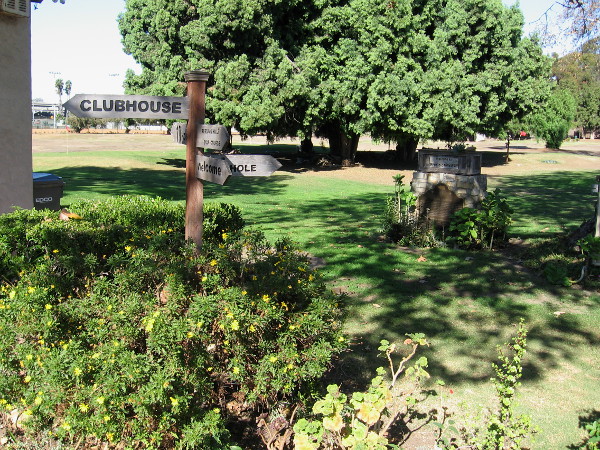
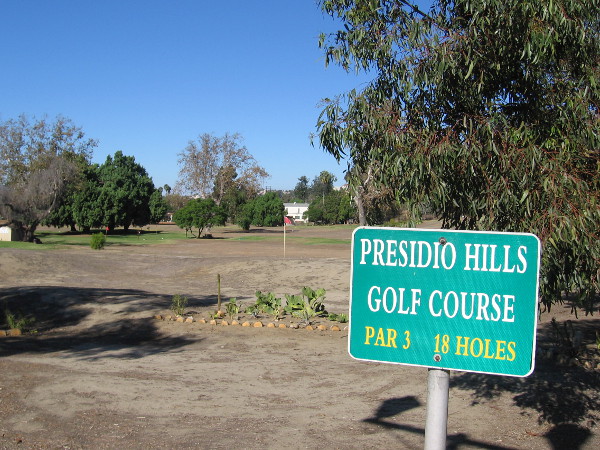
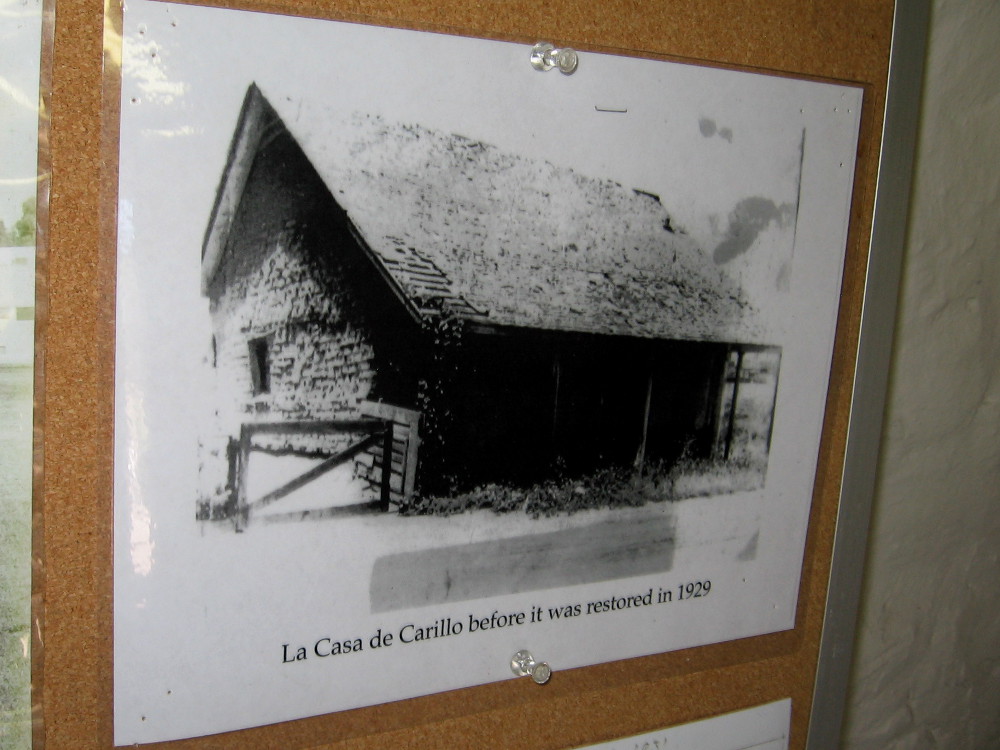
A photo of the small, historic adobe taken from the parking lot of the Presidio Hills Golf Course. Casa de Carrillo is the oldest structure that is still standing in San Diego.Bronze plaque near the front door reads: A portion of La Casa De Carrillo – Pear Garden House. A center of social life and romance in early Spanish days. Here lived Senorita Josefa Carrillo. One of the oldest adobe dwellings in San Diego. Built about the year 1810. Restored in October 1931.Photo of La Casa de Carrillo taken from a golf green just east of the structure.Sign near historical marker for Casa de Carrillo points to the golf course clubhouse and first hole.Presidio Comandante Francisco Maria Ruiz built this house next to his 1808 pear garden late in 1821 for his close relative and fellow soldier, Joaquin Carrillo, and his large family.Enter the old adobe and you will find the Pro Shop. The easy Presidio Hills Golf Course is a great place to learn golf–ideal for families and kids. And one gets a history lesson, too!Another look inside the restored adobe. I’m not sure which parts of the historically important building are original.An old newspaper article displayed in the pro shop includes a photo of 8-year-old Tiger Woods. He is showing off a Junior World trophy captured at Presidio Hills, where he won two titles.San Diego Union September 1, 1931. Old Town Links Well Under Way On Marston Land.Various photos of Presidio Hills Golf Course history inside the Pro Shop. Phil Mickelson and Craig Stadler are two notable golfers from San Diego.Another photo shows Don and Al Abrego Presidio Hills Tiny Tots Golf School. The defunct school has faded into history.The modest Presidio Hills Golf Course is Par 3, 18 Holes. It’s located at the east edge of San Diego’s Old Town.Another look across the small, easy golf course. It appears to be a bit neglected. Regrettably, I saw no players out on a Sunday afternoon.Old black-and-white photograph inside the Presidio Hills Golf Course Pro Shop shows La Casa de Carillo (note the different spelling) before it was restored in 1929.
…
I live in downtown San Diego and love to walk! I also love history! You can follow Cool San Diego Sights via Facebook or Twitter!
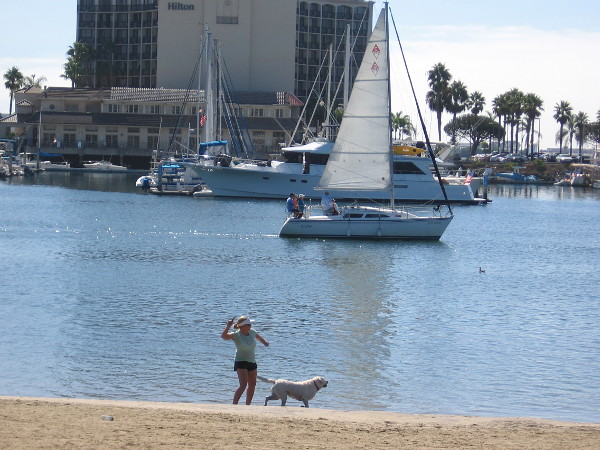
Playing catch with a dog on the small beach at Spanish Landing Park. A sailboat moves through Harbor Island’s West Basin, heading out to San Diego Bay.
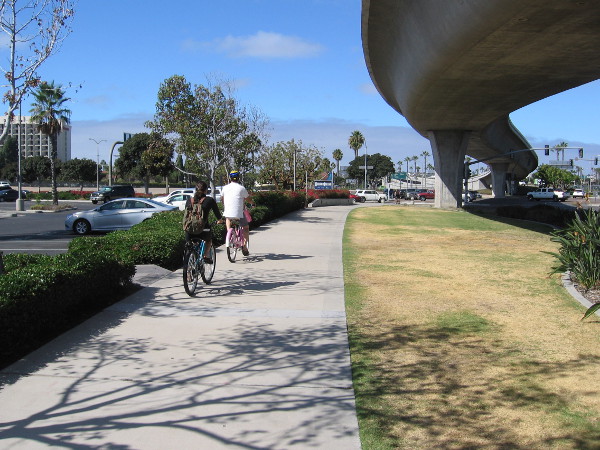
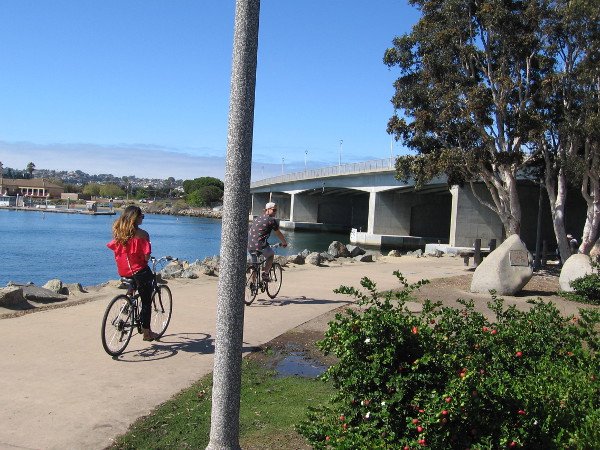
A wide path for walkers and bicyclists runs from San Diego’s Embarcadero to Spanish Landing. While the portion between the Coast Guard station and Harbor Island Drive isn’t terribly scenic (it’s located right next to Harbor Drive and a lot of airport traffic), the section that meanders through Spanish Landing Park provides a peaceful, pleasant stroll. And a chance to learn a bit about San Diego’s history!
Today I took a long walk up the sunny path. Here are some photos. I pulled out my camera near Lindbergh Field and kept snapping pics all the way to the west end of Spanish Landing Park. (And beyond, as you’ll see in coming blog posts!)
As usual, please refer to the captions. You might note that Spanish Landing received its name because the 1769 expedition by Spanish explorer Gaspar de Portolá anchored in San Diego Bay near this place. The bay was much different back then–in modern times it has been extensively dredged and expanded. Indeed, Harbor Island, which you see in some photos, was originally a sandbank! Harbor Island today is composed of dredge spoils.
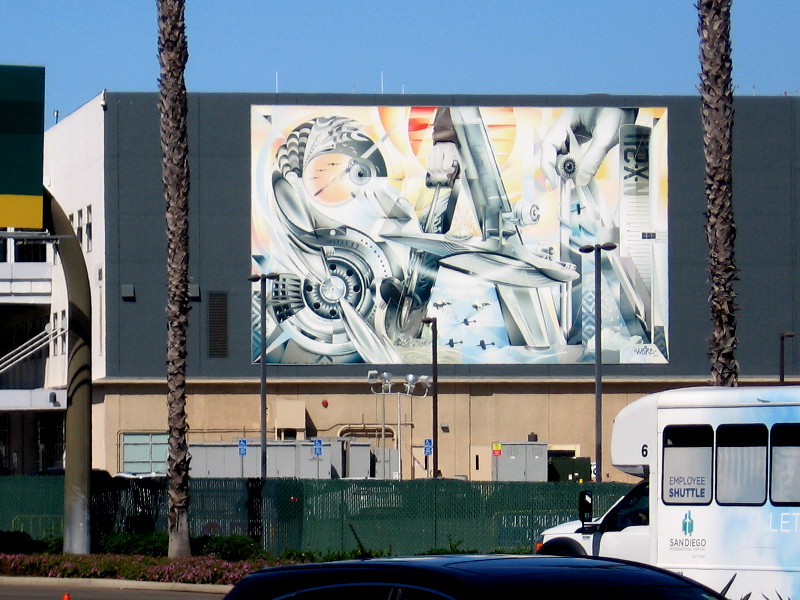
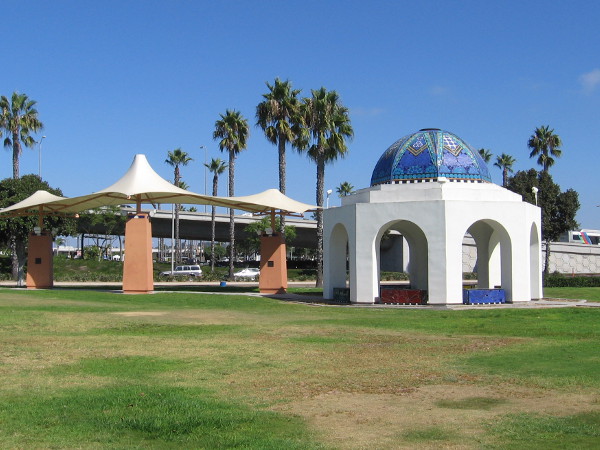
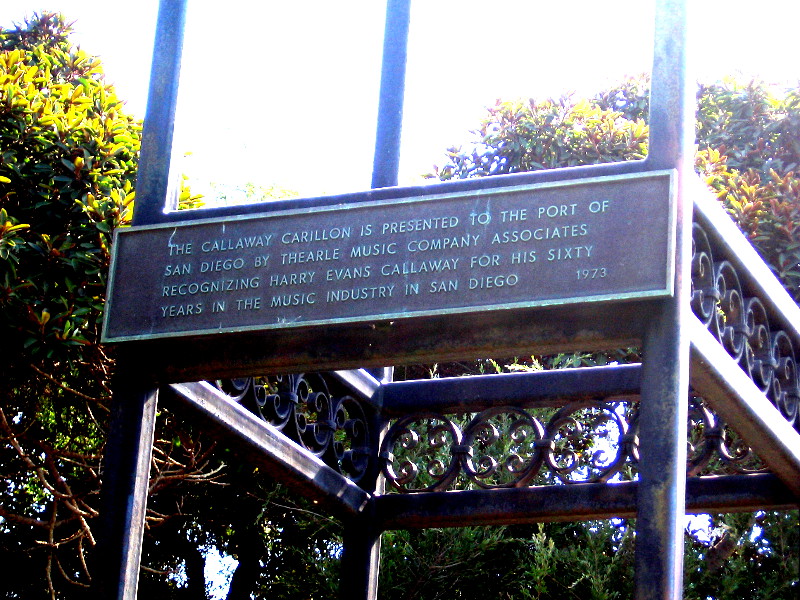
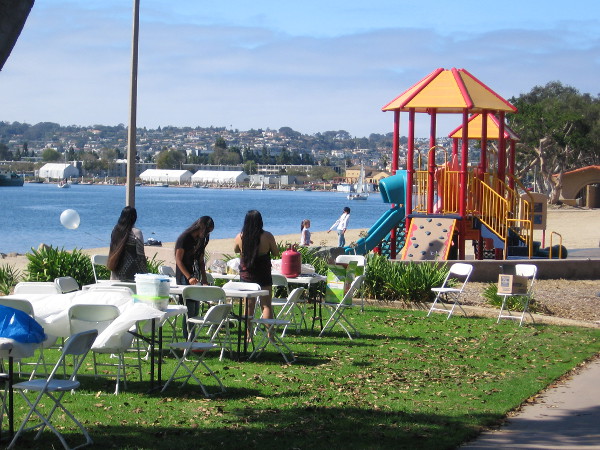
A long path along Harbor Drive runs from the Embarcadero in downtown San Diego to Spanish Landing. Bicyclists head up the path on a sunny weekend.This mural can be spotted across Harbor Drive as one approaches Lindbergh Field. Painted on the commuter terminal by Jari “Werc” Alvarez, it spells SAN, the code for San Diego International Airport.The path, near the edge of San Diego Bay, is part of the California Coastal Trail. It’s ideal for walking or biking from downtown to Spanish Landing Park, and beyond.A photo with my camera lifted toward the sky on a fine Saturday in mid-October.A quick photo of Cancer Survivors Park, on the east end of Spanish Landing Park. I’ve blogged about this special place a couple of times.Kayak heads across the water toward boats docked at a Harbor Island marina. Hotels on Harbor Island are resting on soil dredged up from the bay.I remember hearing the Callaway Carillon bell tower near the center of Spanish Landing Park when I was a child. I believe it no longer works. I hope I’m wrong.Plaque near base of the electronic bell tower. The Callaway Carillon is presented to the Port of San Diego by Thearle Music Company Associates . . . 1973Walkers pause on the path through Spanish Landing to read a California Historical Landmark plaque near the water.Spanish Landing. Near this point, sea and land parties of the Portola-Serra Expedition met. Two ships, the San Antonio and San Carlos, anchored on May 4-5, 1769.A bit further up the path is a playground and a popular spot for parties and celebrations on the nearby grass.Bronze artwork near the path through Spanish Landing honors those who lost their lives, during the sea journey by Gaspar de Portolá up the coast, two and a half centuries ago.Dedicated to the heroic Spaniards who gave their lives and were buried near this site in 1769-70, after accompanying Gaspar de Portolá, the first Governor of California, in the exploration of California from San Diego to San Francisco.Many benches along Spanish Landing Park provide views of the peaceful water and nearby Harbor Island.Bicyclists near the west end of Spanish Landing Park. By crossing the North Harbor Drive Bridge, one can enter Point Loma.The North Harbor Drive Bridge was dedicated in June 1980.Paddleboarders float down the boat channel, between North Harbor Drive Bridge and the adjacent Nimitz Bridge, which is now used by pedestrians. The grass in the distance is part of the Liberty Station Esplanade.People rest on a bench at the west end of Spanish Landing Park, gazing out at a beautiful scene.Sailboats, paddleboards and boats of every type out on blue San Diego Bay. The Pacific Ocean lies just beyond the peninsula of Point Loma, in the distance.
…
I live in downtown San Diego and love to walk! You can follow Cool San Diego Sights via Facebook or Twitter!
You can easily explore Cool San Diego Sights by using the search box on my blog’s sidebar. Or click a tag! There are thousands upon thousands of fun photos for you to enjoy!
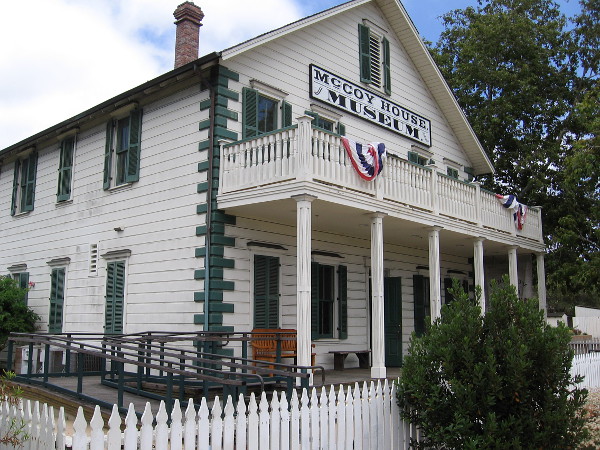
The McCoy House Museum, in Old Town San Diego State Historic Park, is a reconstruction of a home built in 1869 for Sheriff James McCoy.
While there are many small museums and historical attractions that visitors can enjoy in Old Town San Diego State Historic Park, the McCoy House Museum is the best place to see an extensive series of interpretive displays that describe the complete history of early San Diego.
The McCoy House, standing on the north end of Old Town, is a reconstruction of a home built in 1869 for Sheriff James McCoy and his family. James McCoy, who lived from 1821 to 1895, like many early San Diego residents was an ambitious man, working diverse jobs, filling many roles. At the age of 21 he sailed from Ireland to America seeking opportunity. He became a soldier, then a stagehand, then San Diego county assessor, then county sheriff in 1861. He acquired substantial real estate holdings and finally won election to the state senate in 1871.
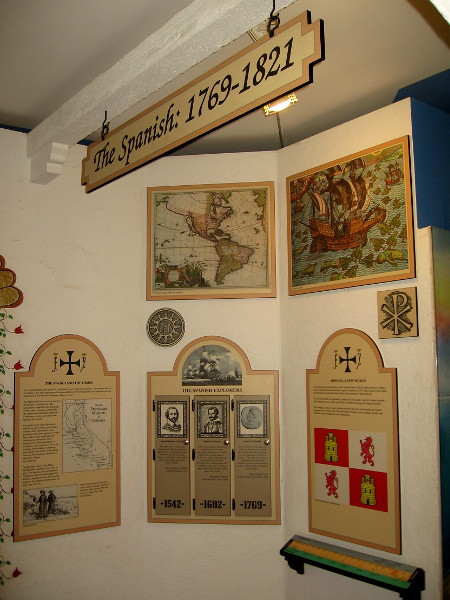
The interpretive displays in the McCoy House Museum provide a good look back at San Diego’s formative years. They detail the life of the Native American Kumeyaay who’ve lived in the region for thousands of years, the first Spanish explorers, the establishment of the Spanish mission, the Mexican period and the subsequent American period.
If you’d like to read the displays, click my photographs to enlarge them.
This blog post covers the first floor of the museum. I’ll cover the second floor exhibits in a later post. After heading up some stairs, one can find information about the more prominent residents of Old Town, plus the town’s later history as it competed with New Town, which eventually rose to become downtown San Diego as we know it today.
Anyone who is a history buff must visit the McCoy House Museum. You’ll be transported back in time and see how life was exciting, difficult, and altogether different many, many years ago in San Diego.
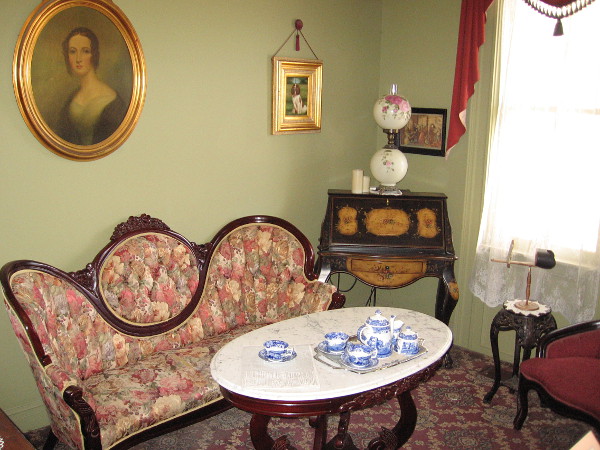
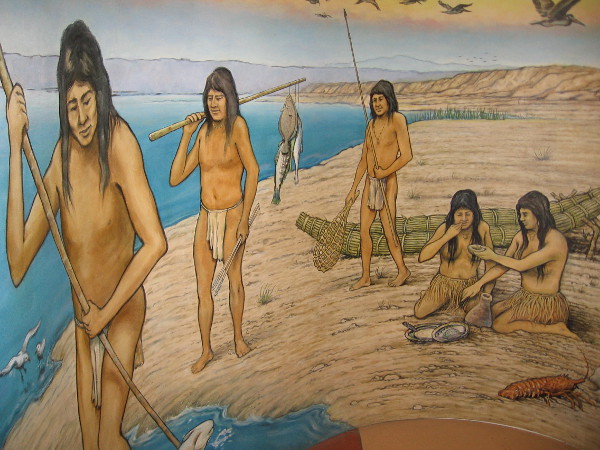
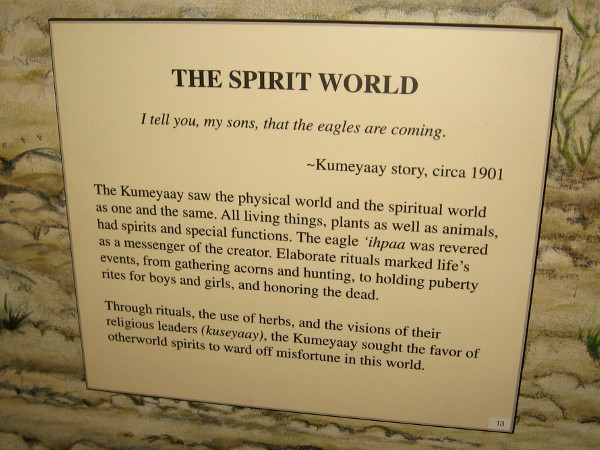
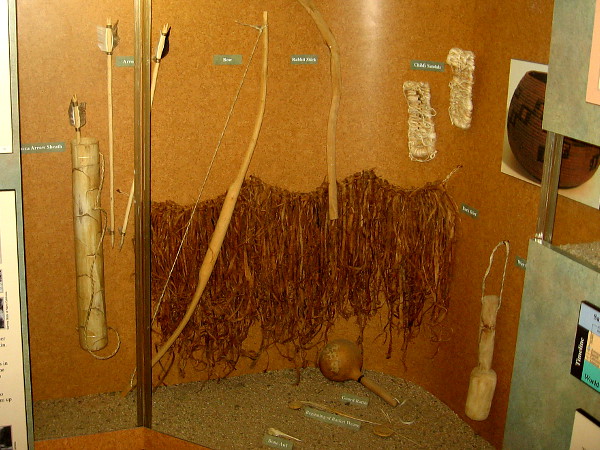
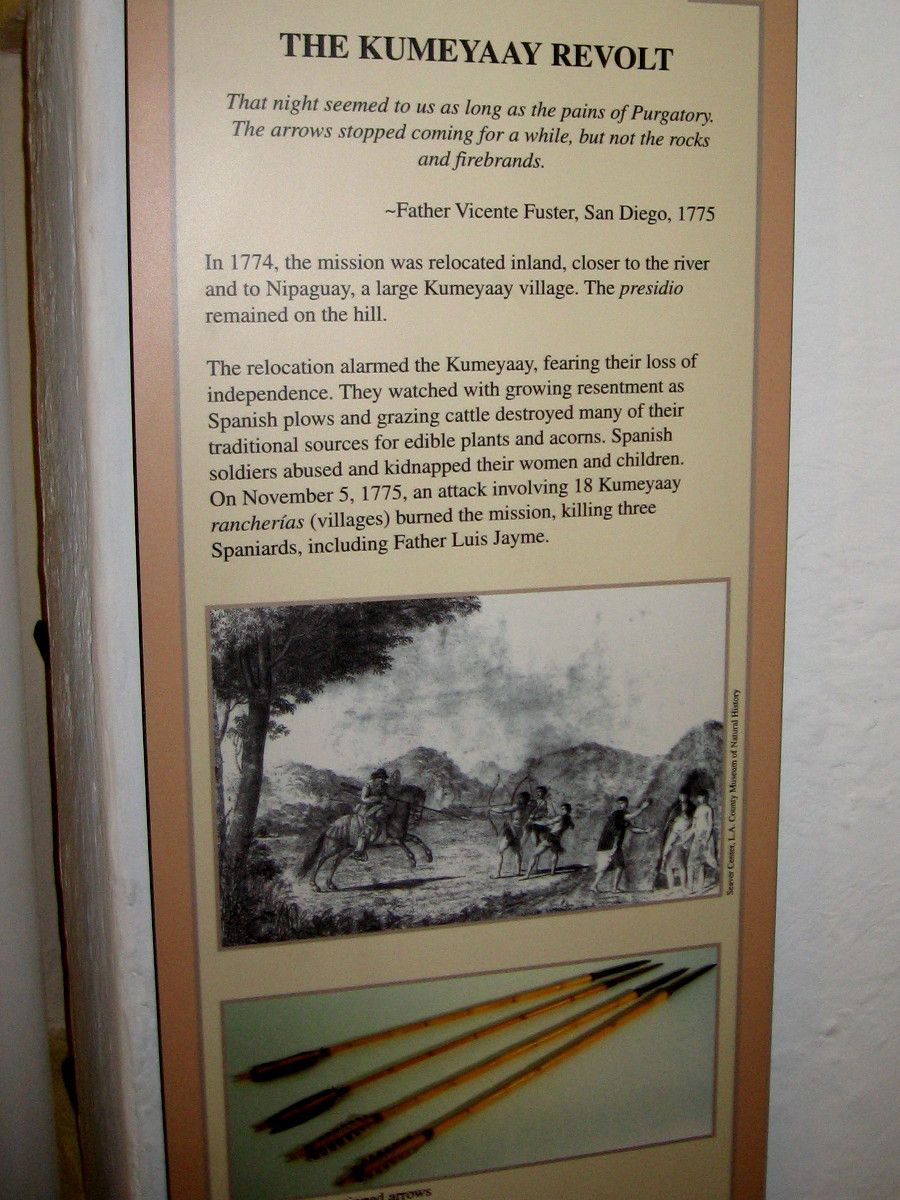
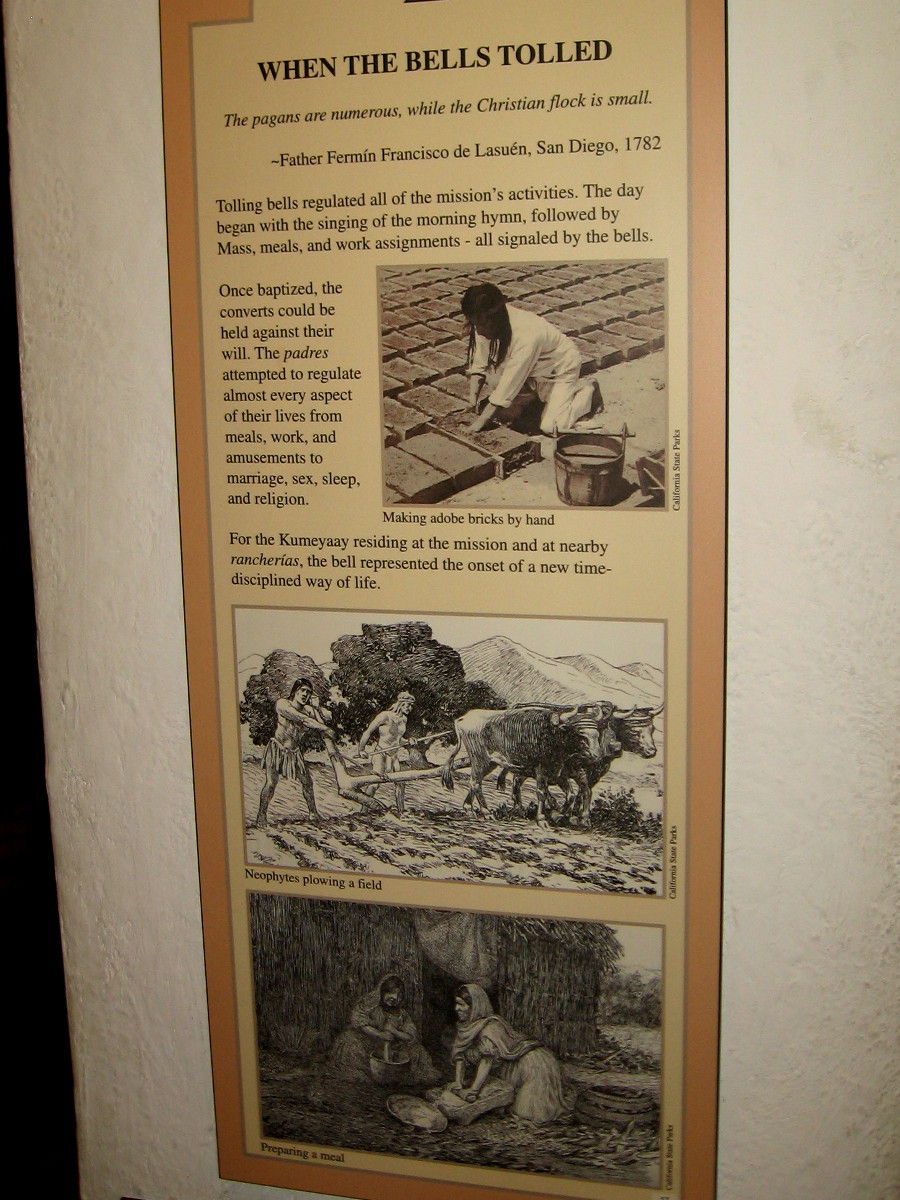
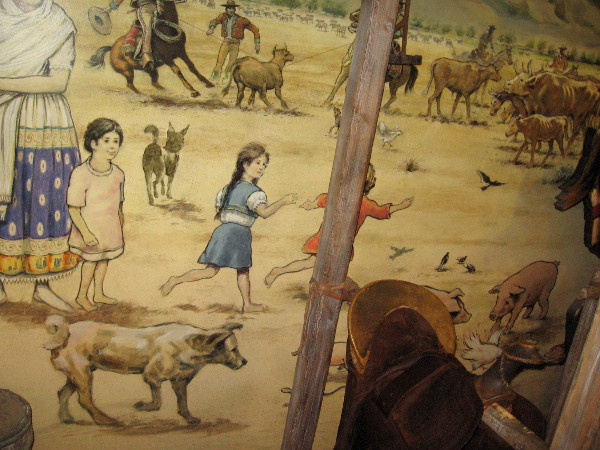
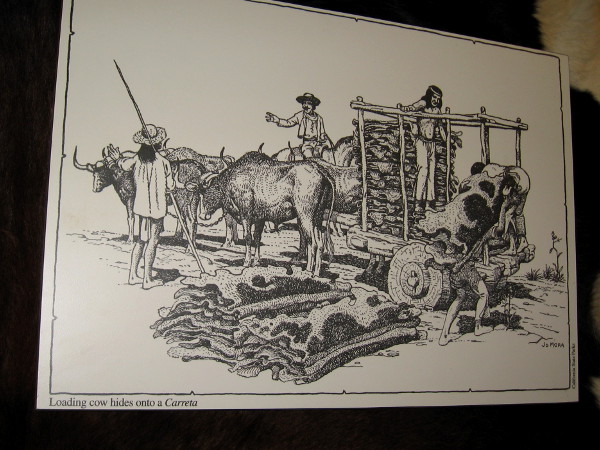
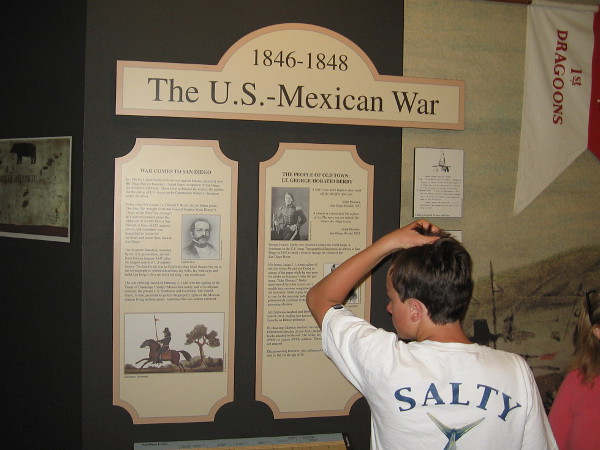
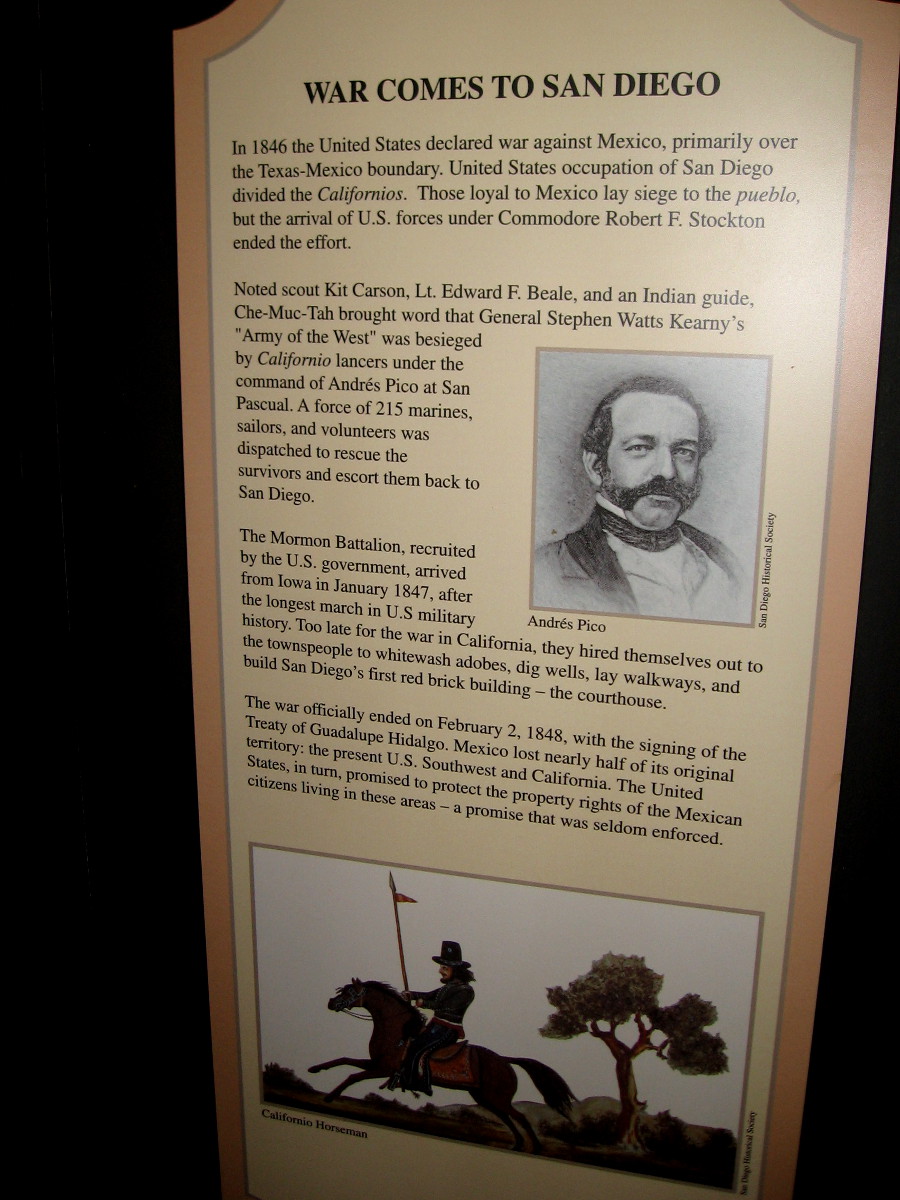
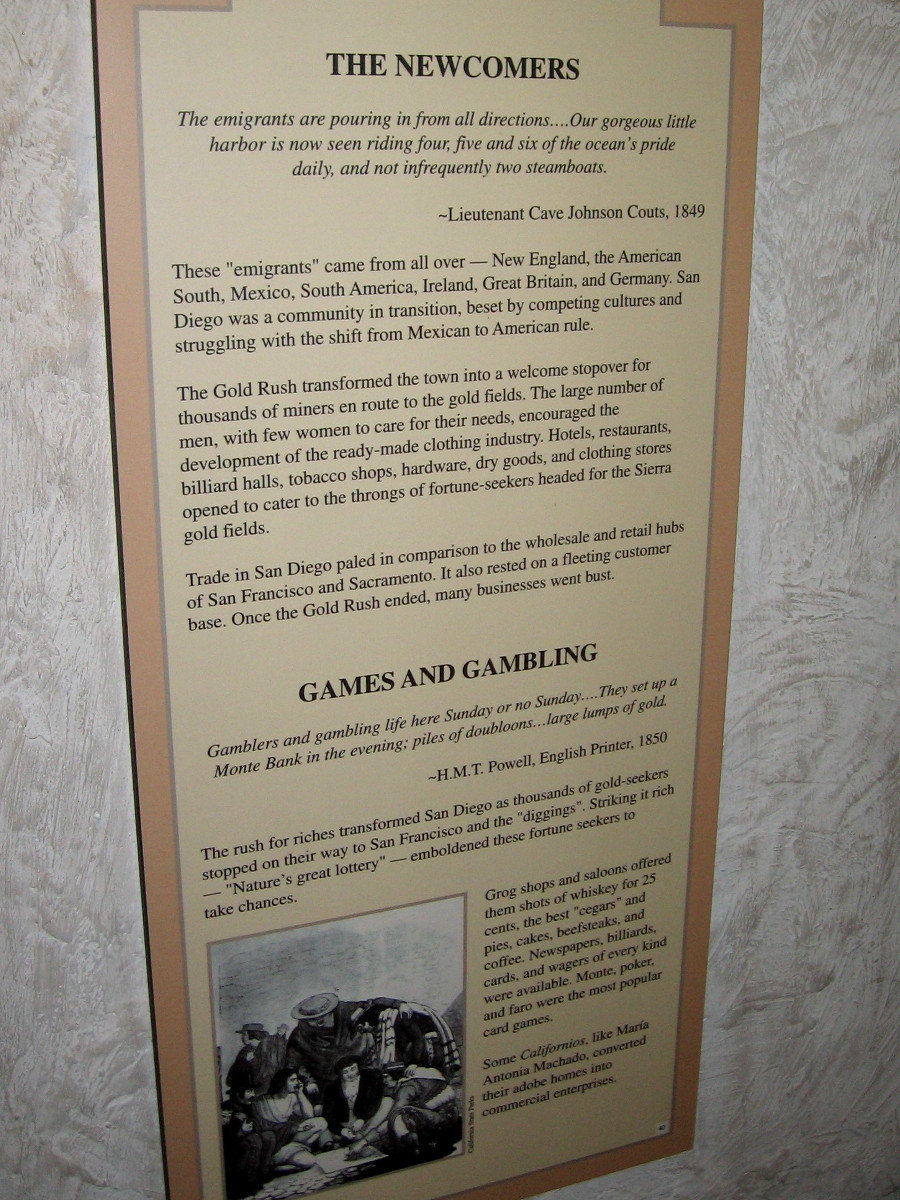
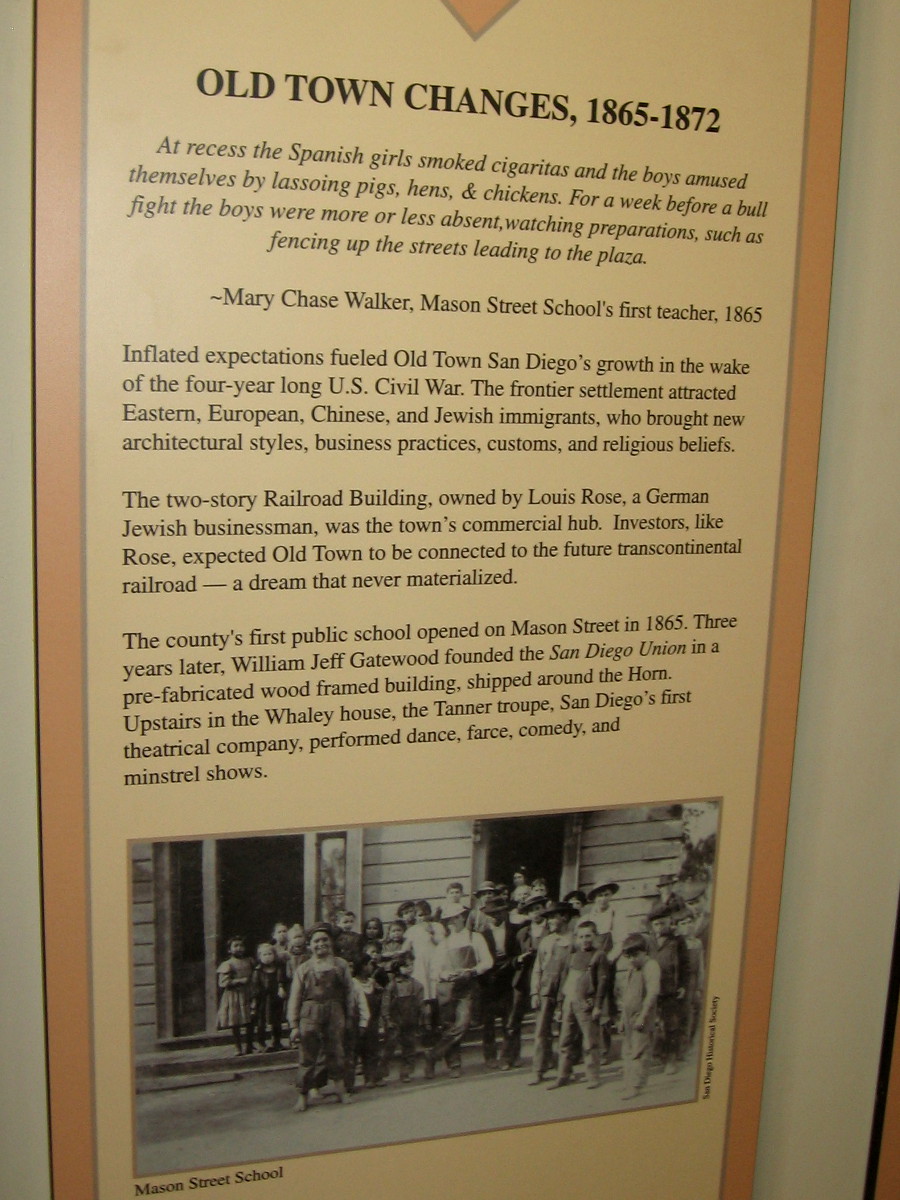
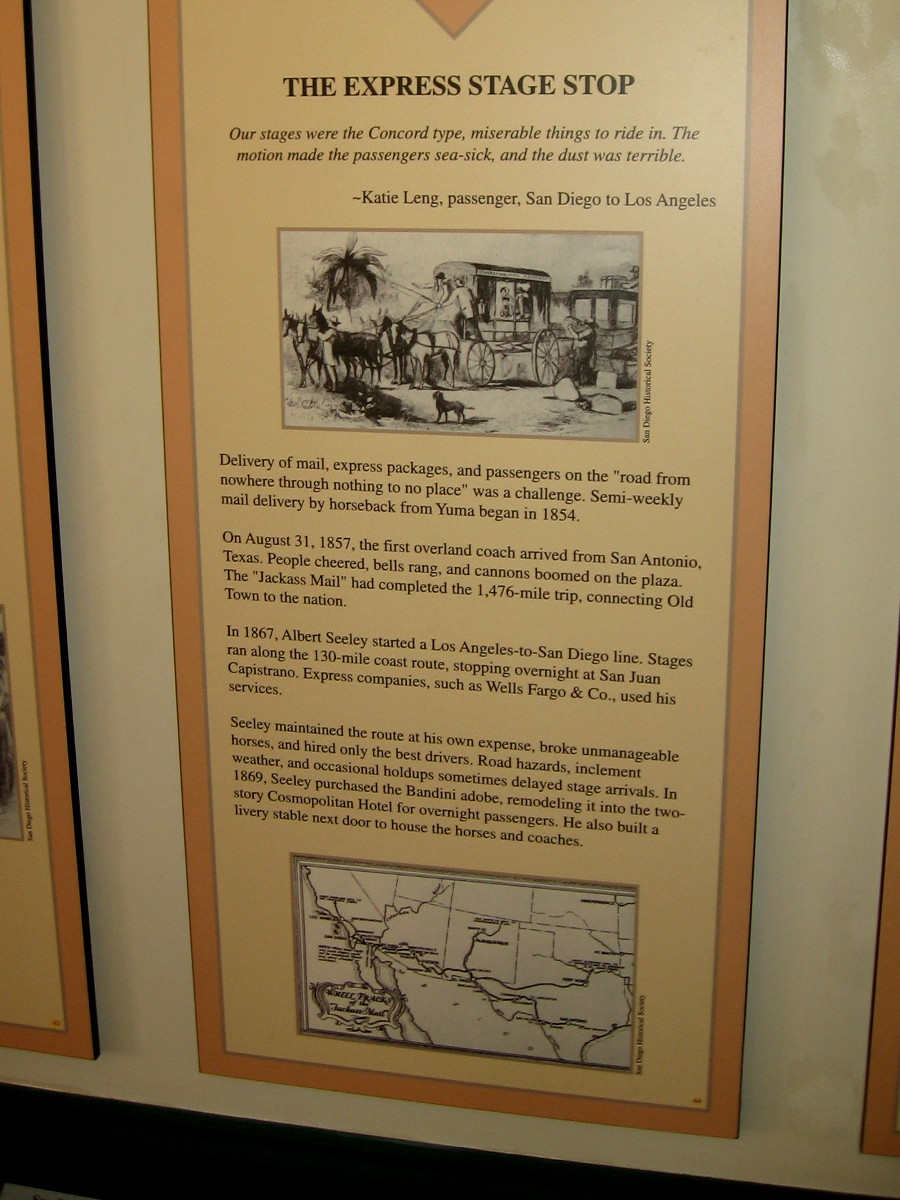
Sign lists important dates concerning the McCoy House. Today it’s a museum containing exhibits that explain the fascinating history of Old Town San Diego.Just inside the front door, this might have resembled the parlor of the original McCoy House, occupied by an upper middle class family in San Diego’s Old Town.Framed photo on one wall from the San Diego Historical Society shows the original McCoy House.Interpretive exhibits inside the McCoy House Museum begin with the Spanish period of San Diego, from 1769 to 1821.Quotes from the journeys of Juan Rodriguez Cabrillo, Sebastian Vizcaino and Gaspar de Portola.A string of missions was created by Spain in California to secure its claim to new territory. The first mission, in San Diego, was originally established on Presidio Hill near the native Kumeyaay village of Cosoy.An artistic representation of life among the Kumeyaay people. They often visited the nearby coast to hunt and gather food.For thousands of years, the Kumeyaay lived along the coast and interior valleys of what is now San Diego County. They moved with the seasons to take advantage of available resources.The Kumeyaay built dome-shaped houses from oak, willow or sycamore branches. The simple structures were called ee-wahs.The Kumeyaay saw the physical and spiritual world as one and the same.Exhibit in the McCoy House Museum shows artifacts associated with the Kumeyaay, including a bark skirt, arrows, rabbit stick, child’s sandals, gourd rattle and war club.The Kumeyaay revolted against the Spanish missionaries in 1775, a year after the San Diego mission was relocated inland very close to a large Kumeyaay village.Once baptized, converted Kumeyaay followed a strict life. Mission bells signaled the day’s activities, including the singing of hymns, Mass, meals and work assignments.Mexico gained its independence from Spain in 1821 after a decade of bloodshed. Changes included a decline in support for the presidio and freedom from Spain’s trade regulations.After the breakup of the Spanish missions, the era of the great ranchos began. Californios were often racially mixed descendants of soldier-settler families.Vaqueros were the original cowboys. They worked on the extensive ranches and handled the large herds of stock.A fanciful picture of life on a rancho, with vaqueros at work and children at play.The Californios loved to celebrate feast days, weddings and religious festivals.Cattle by the thousands roamed San Diego’s hills. Their dried hides were used in trade and were sometimes referred to as California banknotes.Illustration of loading cow hides onto a carreta. Hides were gathered by ships along the coast to be transported around Cape Horn to the eastern United States.Exhibit inside the McCoy House Museum recreates the small shop of a Boston trader. The brig Pilgrim of Two Years Before the Mast brought people aboard to buy wares and finished goods that weren’t available in San Diego.Illustrations of cow hides being cured. This activity took place at La Playa, a point on San Diego Bay near Ballast Point in Point Loma.Diagram of the brig Pilgrim, made famous in Richard Henry Dana Jr.’s classic Two Years Before the Mast. As an ordinary seaman, Dana collected cattle hides up and down the California coast.Exhibit in the McCoy House Museum details local history during the Mexican–American War from 1846 to 1848.During the war, U.S. occupation of San Diego divided the loyalty of the Californios. The two sides fought briefly at the Battle of San Pasqual.Around the time of the Gold Rush, San Diego saw an influx of emigrants from all over, including New England, the American South, Mexico, South America, Ireland, Great Britain and Germany.Old Town tales include the construction of the first jail in 1850. The walls were so poorly made, the first prisoner, Roy Bean, easily dug himself out, then celebrated at a nearby saloon!Grog shops became popular gathering places. They were a social hub of San Diego life, providing customers with news and provisions.A recreated Old Town grog shop can be found inside the McCoy House Museum.After the California Gold Rush of 1849, San Diego became more developed. A courthouse and newspaper were established. Transportation included clipper ships, stage lines and steamships.Poster advertises a new clipper ship route. A very quick trip may be relied upon!Between 1865 and 1872, Old Town San Diego continued to grow. The first public school opened, and the town welcomed its first theatrical company in the Whaley house.The first overland coach to San Diego began service in 1854. Additional stage lines came into existence, allowing for the delivery of mail, express packages and passengers.Visitors to the McCoy House Museum can step into a replica stage stop and see what life was like in Old Town during San Diego’s rugged early history.
…
I live in downtown San Diego and love to walk! You can follow Cool San Diego Sights via Facebook or Twitter!
You can easily explore Cool San Diego Sights by using the search box on my blog’s sidebar. Or click a tag! There are thousands upon thousands of interesting photos for you to enjoy!
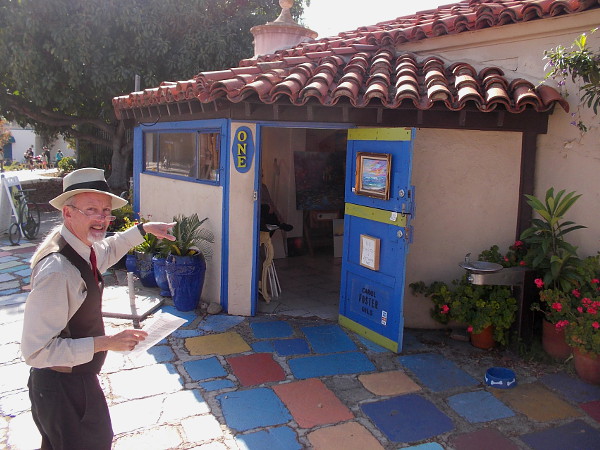
Tour guide Jeff explains that today’s Studio 36 Sculptors Guild was an outdoor theatre in the early years of Spanish Village. The front was a lobby and ticket booth. Writers, actors and set designers would act out plays on the inner patio.
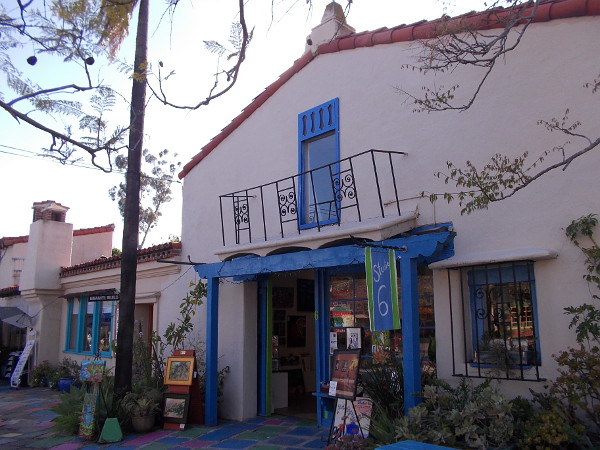
Spanish Village Art Center, in beautiful Balboa Park, is where you’ll find the colorful studios of many fine San Diego artists. Last year I blogged about the history of this fascinating place. A small exhibit in Gallery 21 recounted how Spanish Village was created for the 1935 California Pacific International Exposition, and traced the village’s evolution over subsequent decades. Unfortunately, that exhibit no longer exists. But I did record much of it. To enjoy an overview of the history, you can revisit my old blog post by clicking here.
Last Saturday I was given a terrific tour of Spanish Village by a super friendly guy named Jeff. During the tour, Jeff showed me some unusual, unexpected features of Spanish Village and delved into its often surprising history.
(Fortunately, Jeff gave me some notes that I will reference in this blog. Should you enjoy a tour yourself, you can probably obtain your own copy!)
Please read the photo captions where I provide descriptions and very short explanations. As you’ll see, many interesting changes in Spanish Village have taken place over the years. And I’ve barely begun to scratch the surface!
If something I’ve written is inaccurate, or needs some elaboration, leave a comment! What memories do you have?
Click here to check out the Spanish Village Art Center blog! Support these great artists!
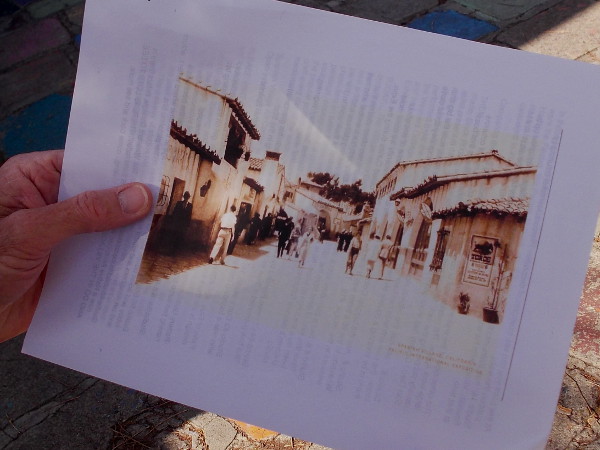
An old photograph of how Spanish Village appeared around the time of the California Pacific International Exposition of 1935.
In 1935, when Spanish Village opened, visitors strolled down simulated Old World streets, which featured restaurants and shops in picturesque, open-arched buildings. The architecture was inspired by the Andalusian region of southern Spain. In addition to wine shops, a cocktail lounge and a Chinese Bazaar, one could buy flowers and enjoy music, art . . . and even a high wire trapeze act!
You can see in the above old photograph a no-longer-existing building at the center of today’s large patio. It separated Spanish Village into two “streets” that visitors could enjoy.
Over the years, resident artists have built out the small open air shops to create practical but unique enclosed spaces. Some of the open arches have been filled in, or can now be seen inside certain studios.
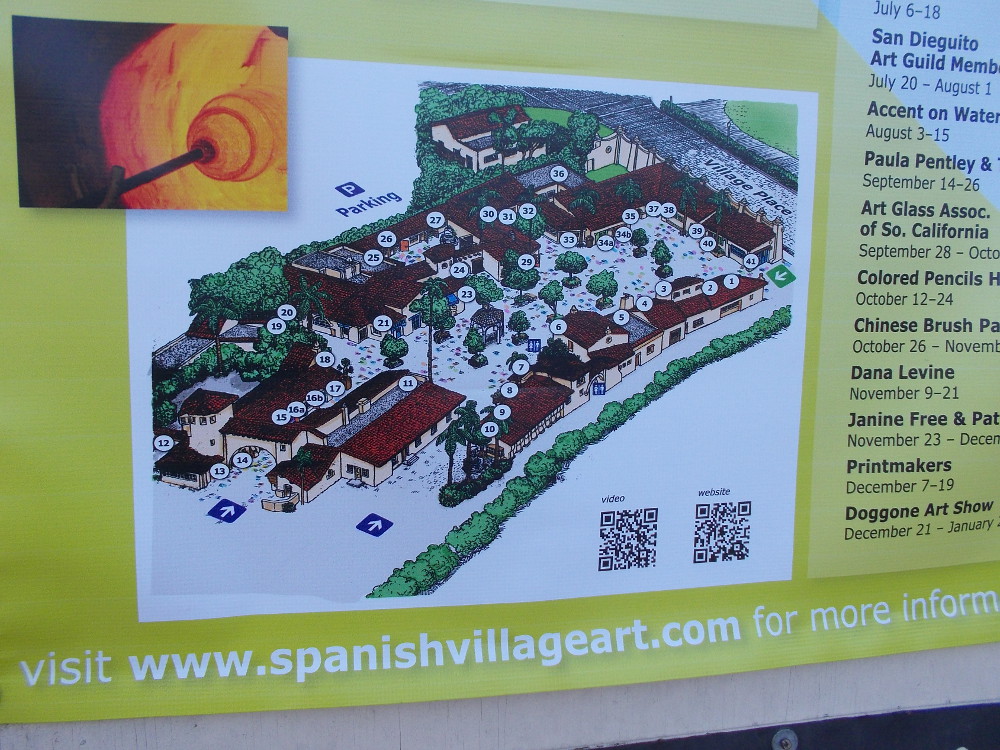
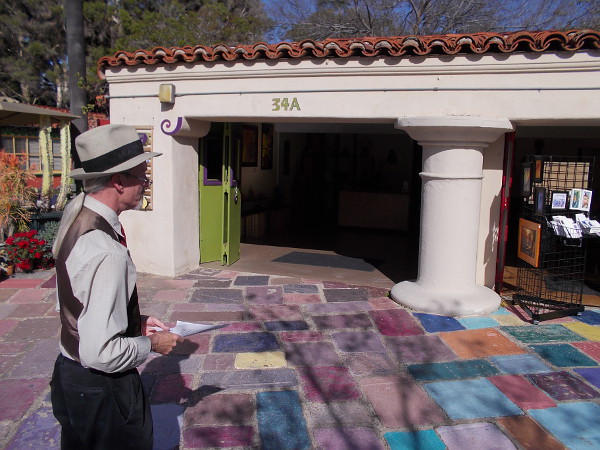
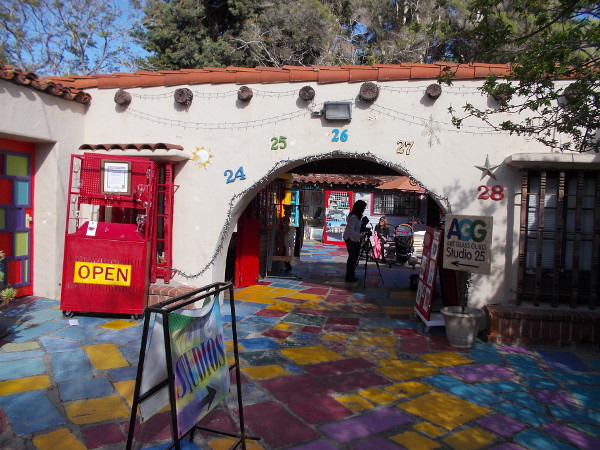
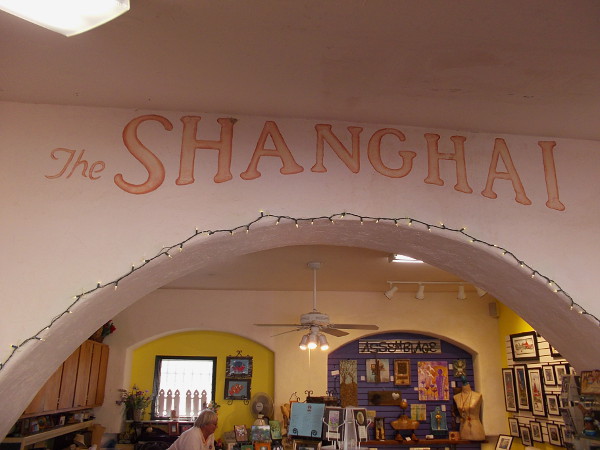
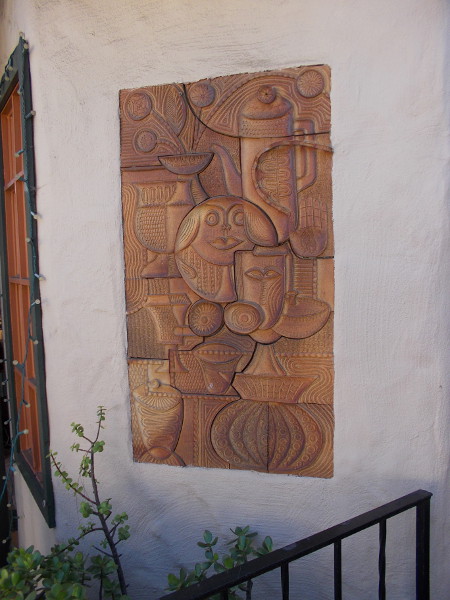
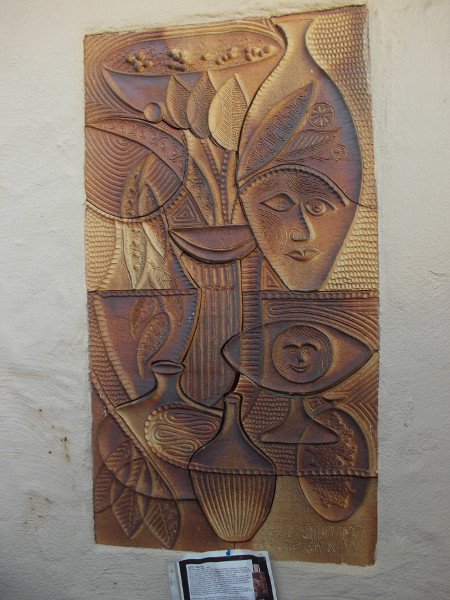
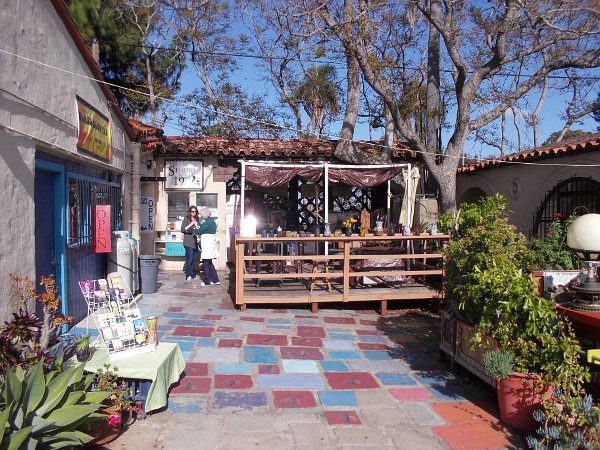
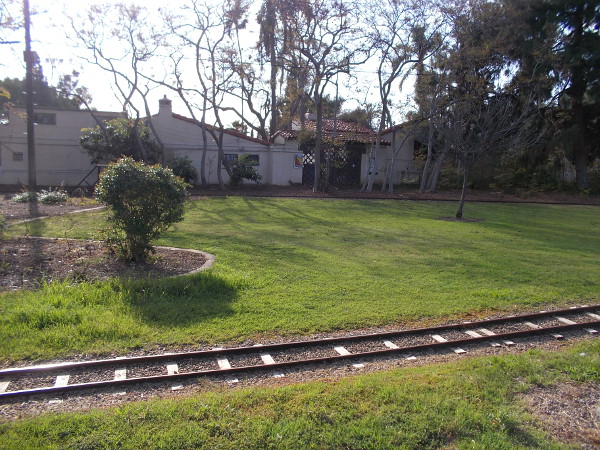
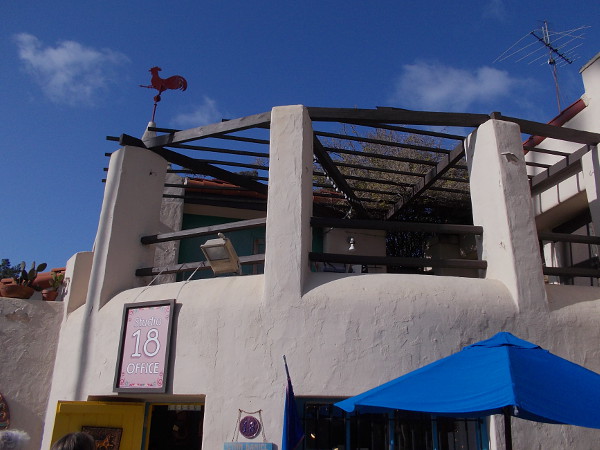
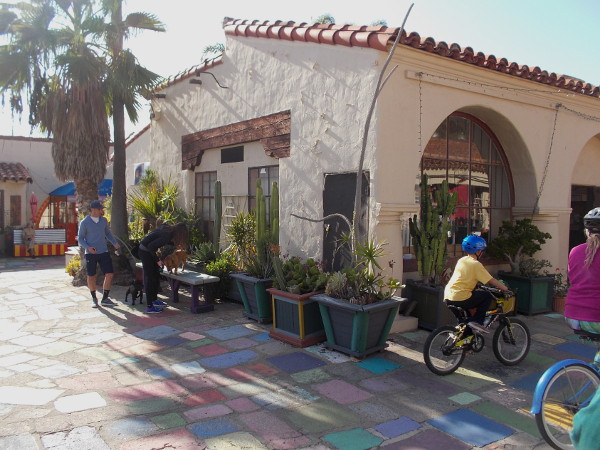
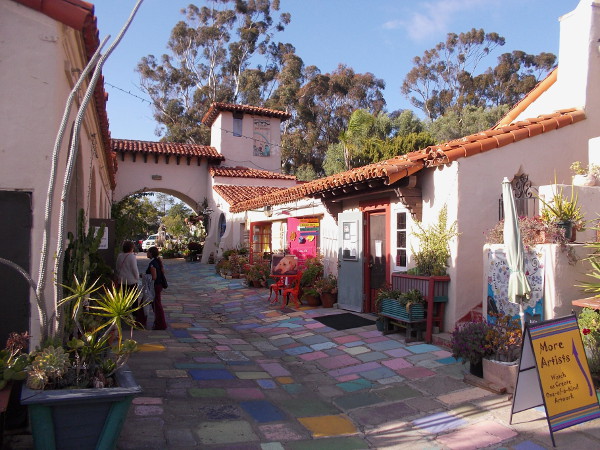
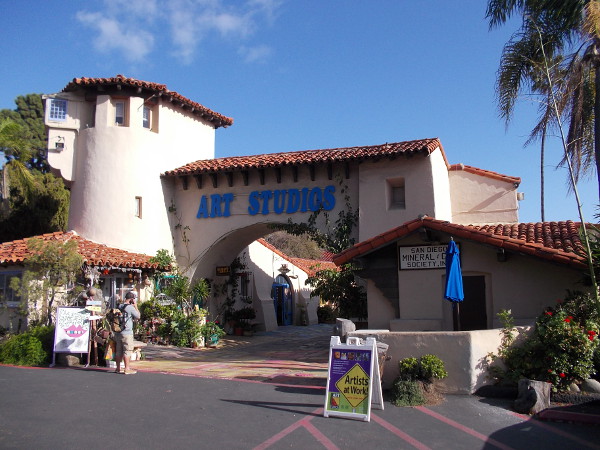
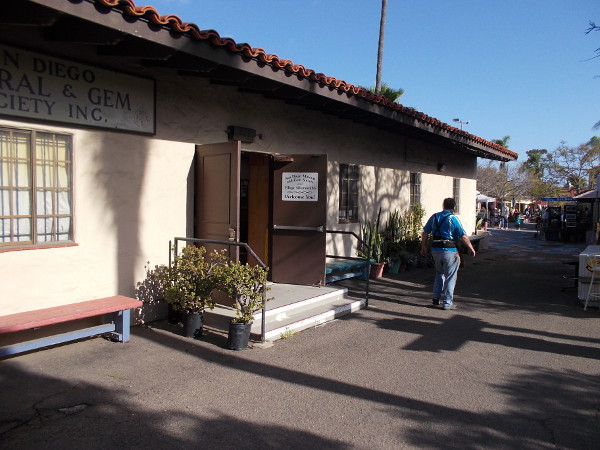
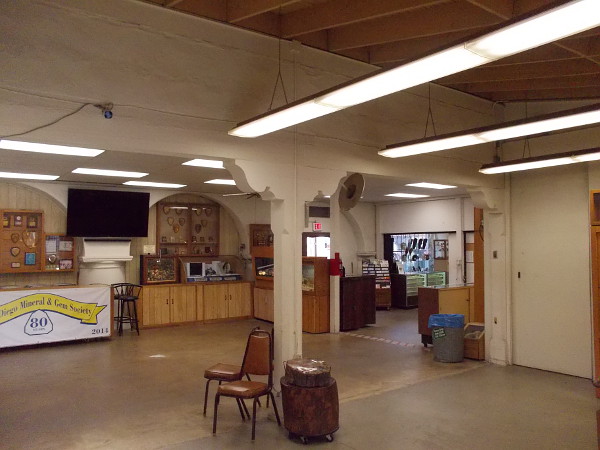
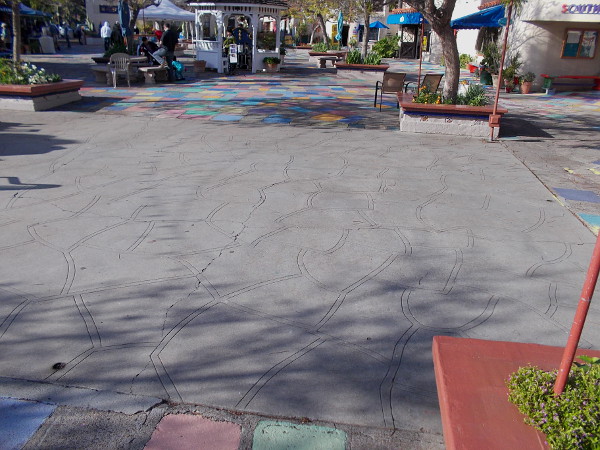
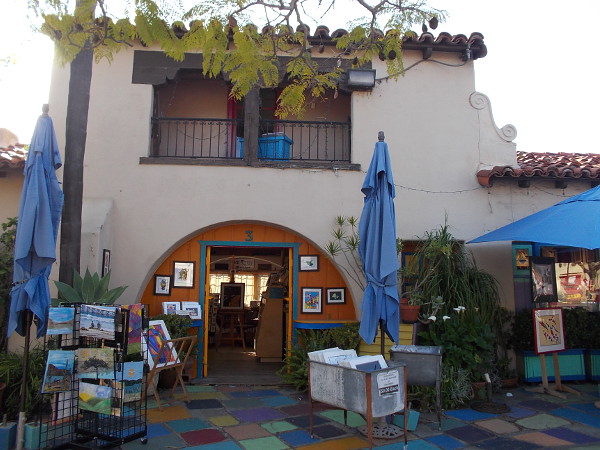
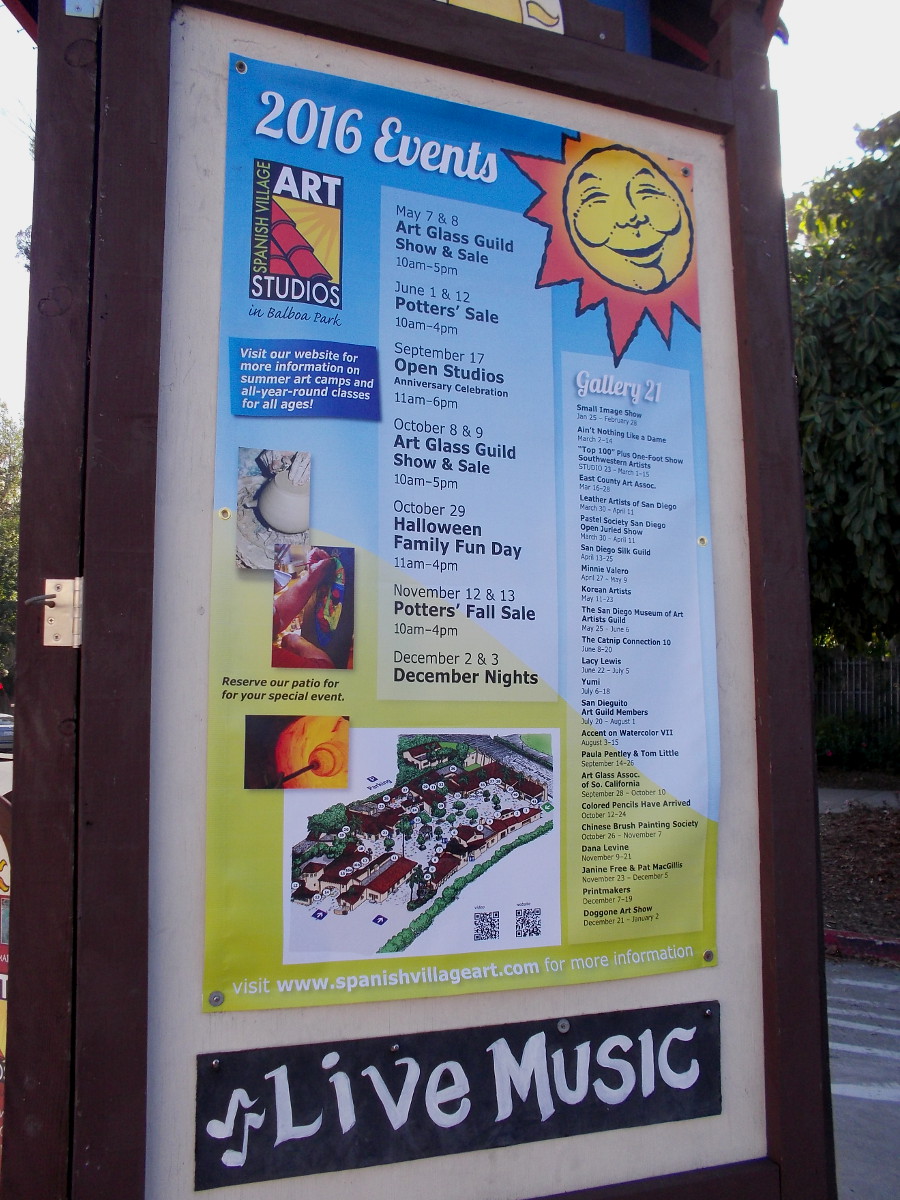
A current map of Spanish Village shows how it appears today. You can find this wonderful part of Balboa Park between the Natural History Museum and the San Diego Zoo.Jeff shows me Studios 34 A and 34 B, which were originally one space featuring a puppet show.Studios 24 through 28 surround a small inner courtyard. This area in Spanish Village originally contained a wishing well and actual horse stalls!Studio 6 has a sliding barn door! Two other studios dating from the 1935 California Pacific International Exposition have similar doors.Studio 8, like many others in Spanish Village, was built out from the original open archway to provide more space for the artists. The words The SHANGHAI are from 1935. It evidently used to be a bar.Near Studio 8’s entrance are two amazing works of art. Here’s one. It was created by John Novy, a potter who was a member of Spanish Village from 1969 to 1977.Second installation of ceramic tiles on exterior of Studio 8 in Spanish Village. This art was created by professional potter John Novy.This used to be the east entrance into Spanish Village. Today you’ll find outdoor glassblowers creating amazing glass pieces while visitors gather around to watch.The old east entrance (under the tiles) is now blocked off. Much of the grassy area occupied by today’s Balboa Park Miniature Railroad used to be a parking lot.Studio 18 is now the office of Spanish Village Art Center. In the early years a caretaker lived here. That rooster weather vane can be seen in many old photographs.The south end of the San Diego Mineral and Gem Society building used to extend a bit into today’s large patio area. You can see an old wooden beam on the present-day exterior.This quaint little street, during the 1935 California Pacific International Exposition, led into the Fun Zone! Now it leads to a small parking lot.Gazing back south from the parking lot at today’s Spanish Village artist co-op in Balboa Park.The extended west side of the San Diego Mineral and Gem Society building was built sometime after the 1935 Expo.Originally, the building terminated where you see the column.Walking along the west edge of Spanish Village. Many decorative columns and arches provide this artist’s co-op with unique character.Looking through the west archway toward a shrub elephant, which stands on a nearby, newly improved walkway that heads north to the San Diego Zoo.This large dance floor (and the area where I’m standing) at the center of the colorful Spanish Village patio was once occupied by a large building. It seems there is some debate as to what that building was, exactly.Studio 3 is occupied by artist Don Knapp. He arrived at Spanish Village as a child! His grandmother was a founding member in the 1930s.Loads of fun, creative stuff is going on in Spanish Village Art Center in 2016. Please click the image to enlarge it, and then mark your calendar!Jeff provides a really interesting tour. Look for his friendly smile if you happen to find yourself in wonderful, historic Spanish Village!
…
I live in downtown San Diego and walk like crazy! You can follow Cool San Diego Sights via Facebook or Twitter!
Do you like to read short pieces of thought-provoking fiction? You might enjoy checking out Short Stories by Richard.
Is Balboa Park one of your favorite places? Follow my special new blog, which I call Beautiful Balboa Park!
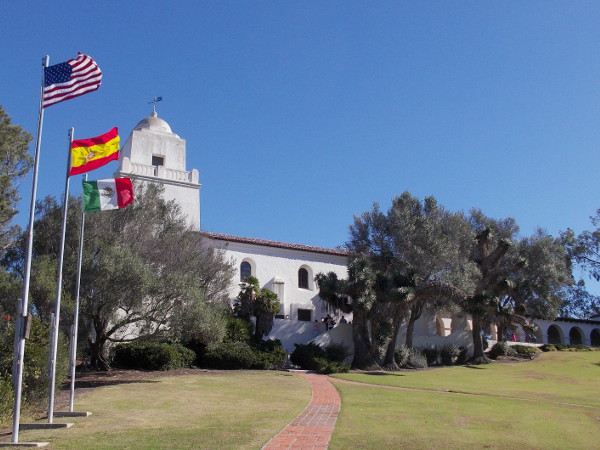
The Junipero Serra Museum of the San Diego History Center was built in 1928 on Presidio Hill, where European civilization was established in Alta California.
I recently visited one of San Diego’s most fascinating museums. The Junipero Serra Museum is located atop Presidio Hill, in a distinctive Mission Revival architectural style building overlooking San Diego Bay and the San Diego River, just east of Old Town. It stands near the site of San Diego’s historic Spanish presidio, built in 1769. The presidio was the birthplace of European civilization in Alta California.
The Serra Museum is operated by the San Diego History Center, which is headquartered today in Balboa Park. Back in 1929, when the building was dedicated, it became home of what was then called the San Diego Historical Society. The important San Diego institution was established by civic leader George W. Marston.
Can you believe it? I’ve lived in San Diego for 15 years . . . and this was the very first time I ventured into the Serra Museum. (I can thank my blog for that!)
What I discovered was an absolutely amazing place that both residents and visitors to San Diego should definitely not miss.
Here’s a sample of what you’ll see…
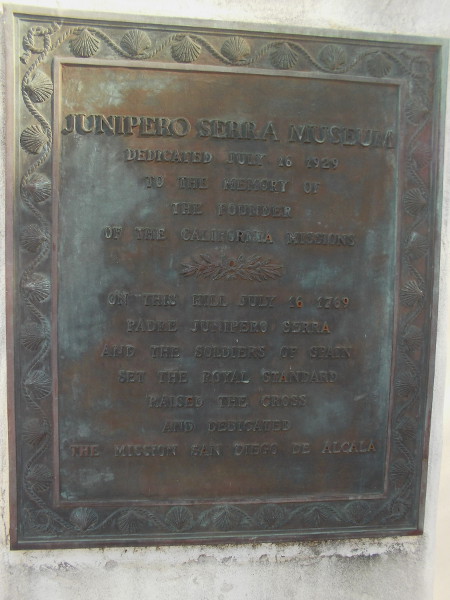
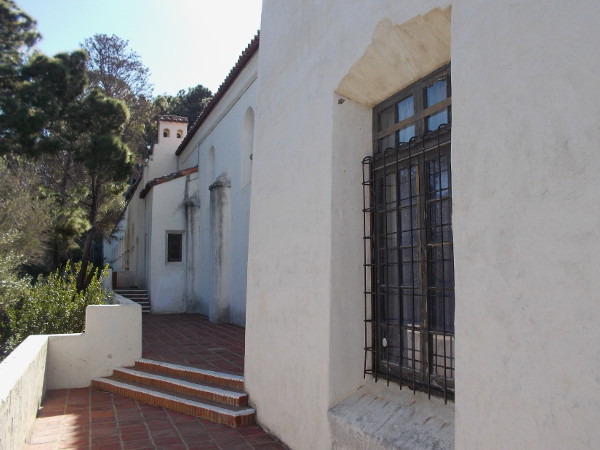
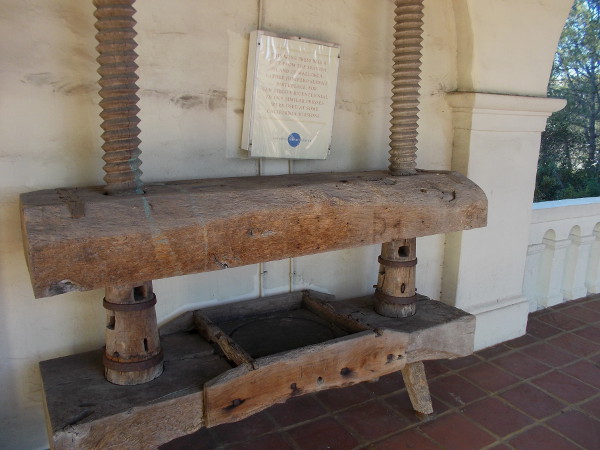
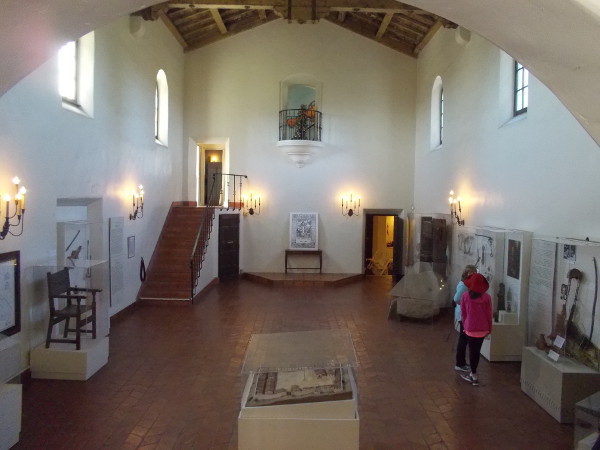
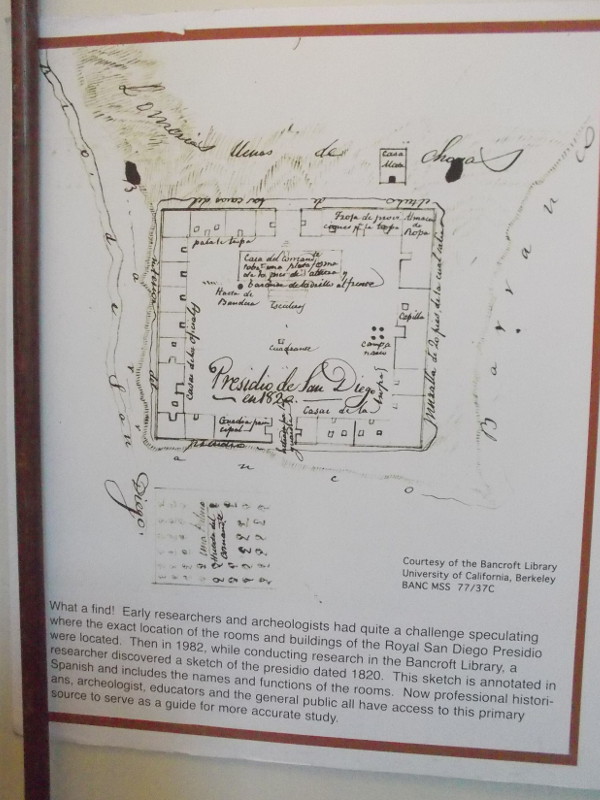
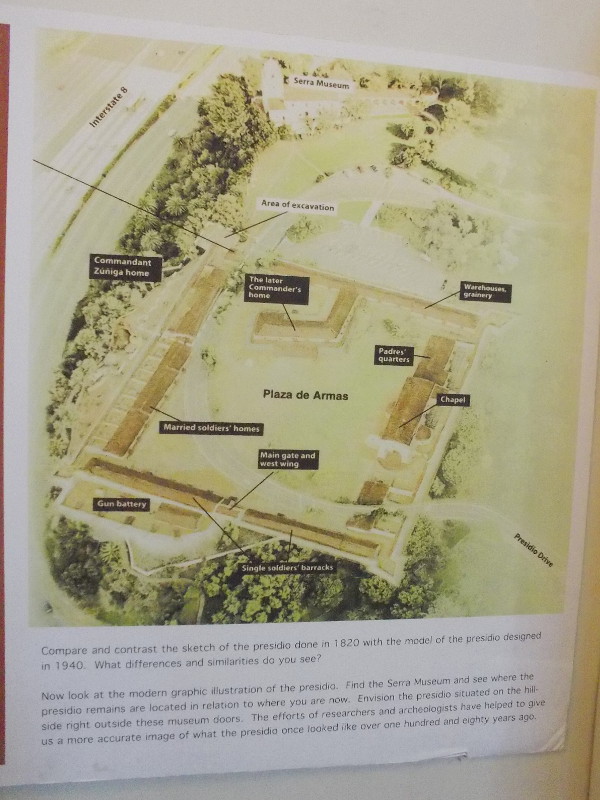
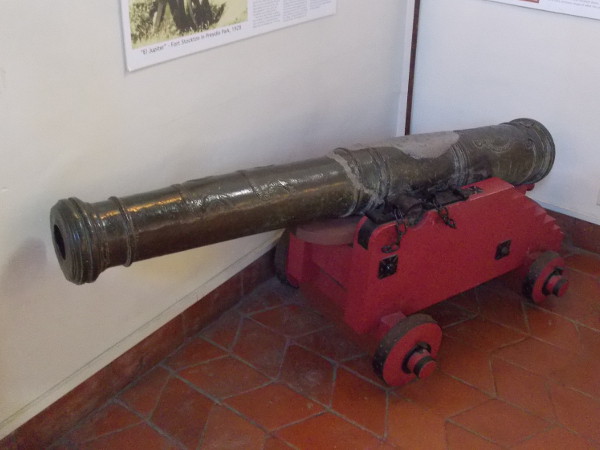
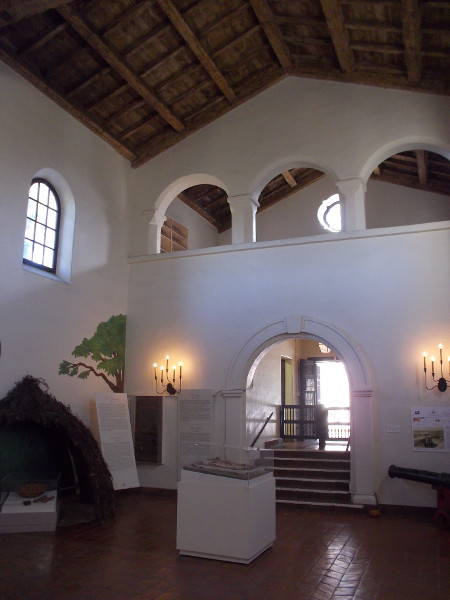
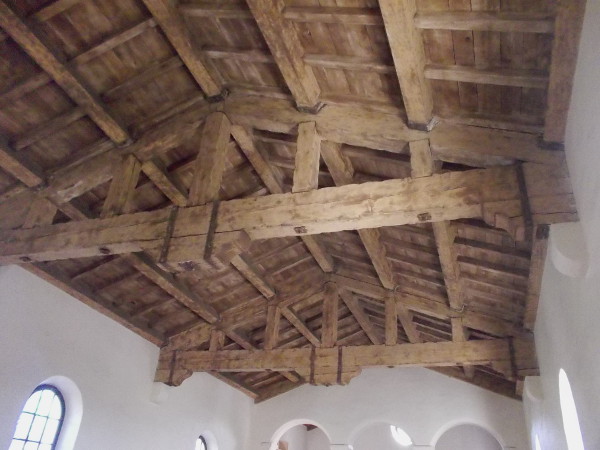
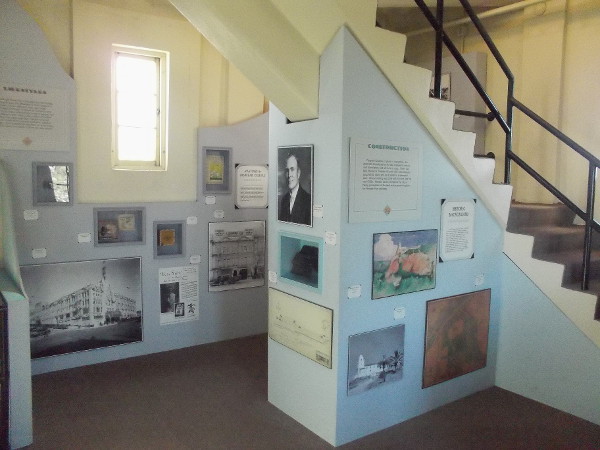
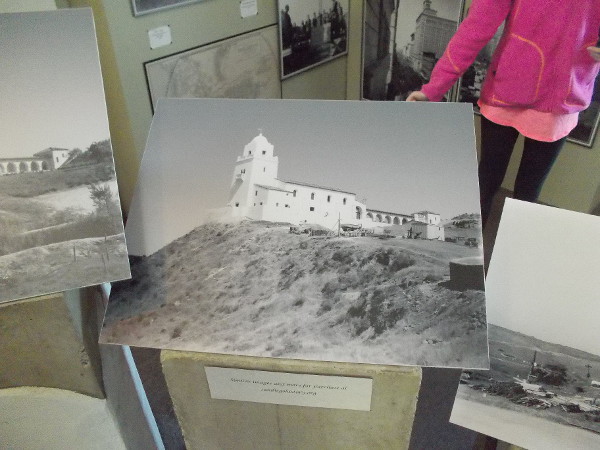
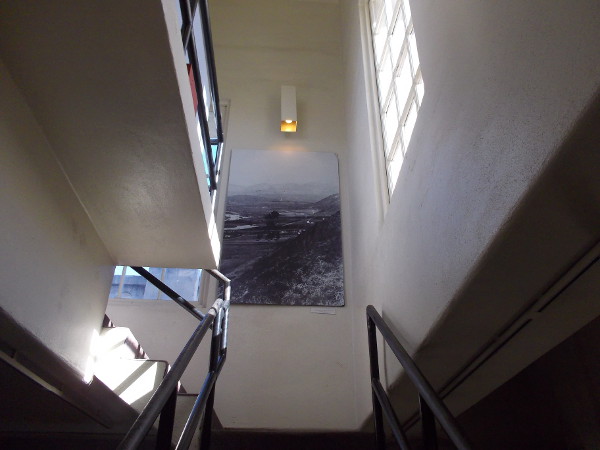
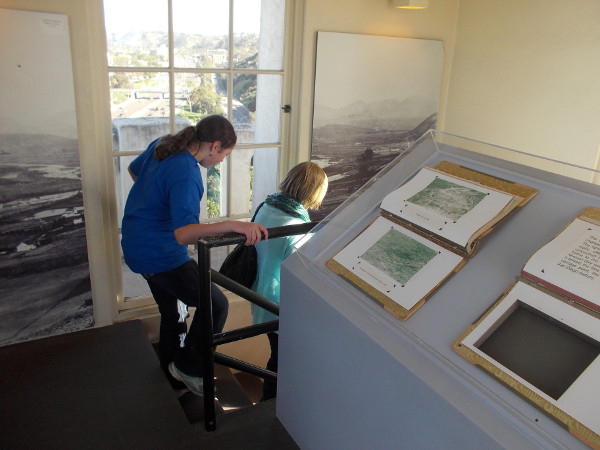
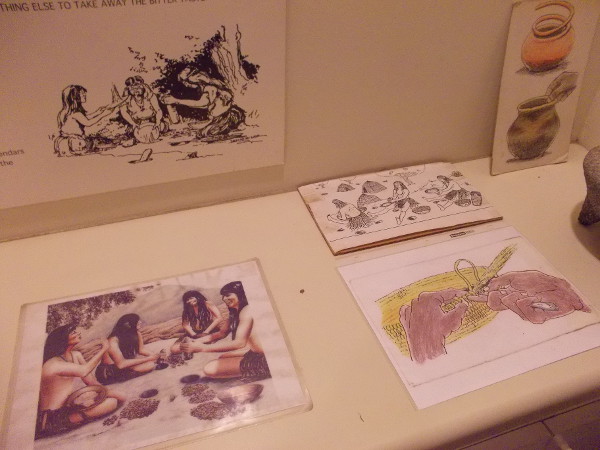
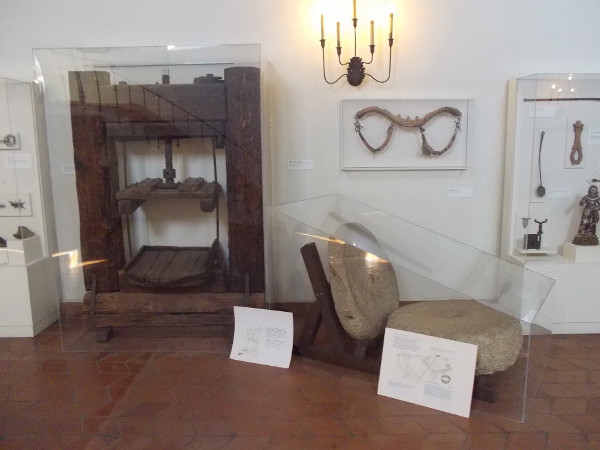
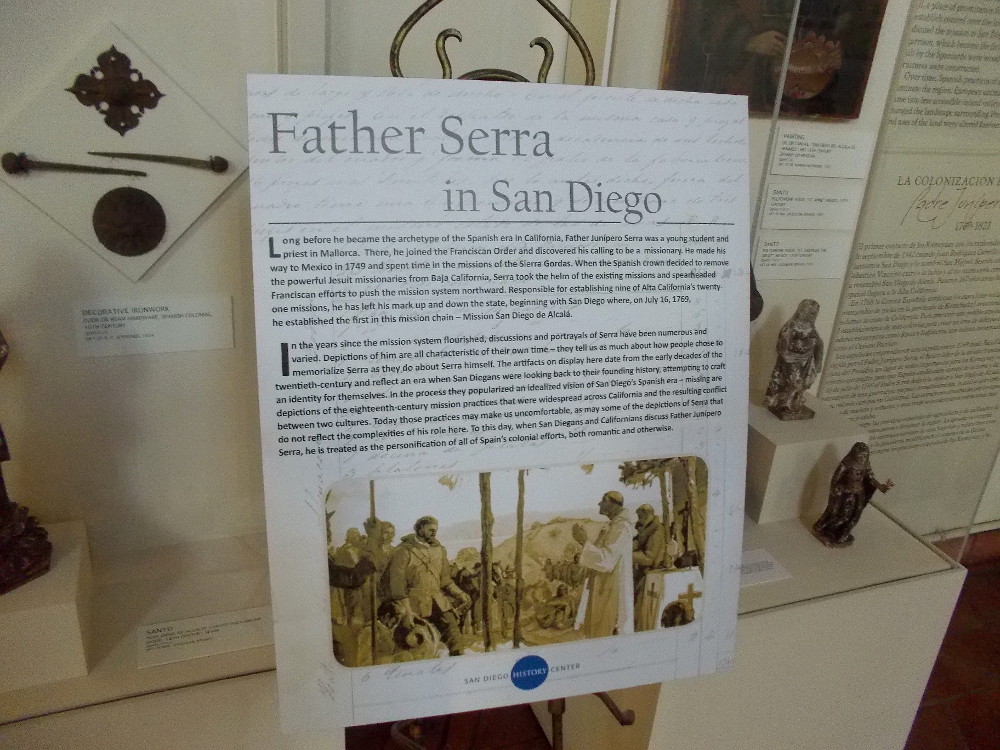
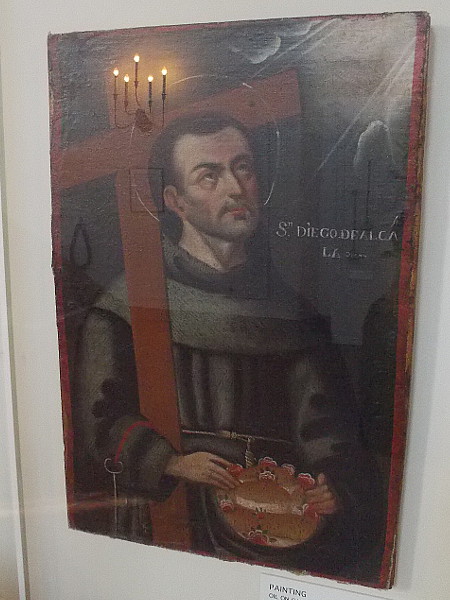
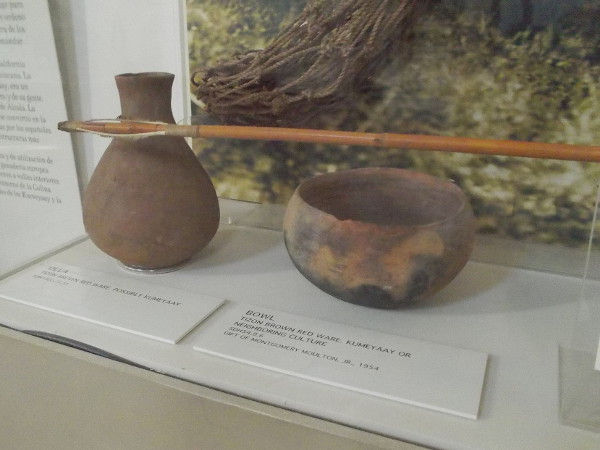
People arrive at the Serra Museum, where San Diego’s early Spanish history comes alive.Junipero Serra Museum dedicated July 16, 1929 to the memory of the founder of the California missions. The original Mission San Diego de Alcalá was established nearby in 1769.A quick look at the rear of the museum.The Serra Museum building was designed by noted architect William Templeton Johnson. It reflects Mission Revival style architecture.Large wine press in front of the museum was a gift from the Spanish island of Mallorca, Father Junipero Serra’s birthplace.Plaque near entrance reads George White Marston 1850-1946. FRIEND OF HIS FELLOW MEN – LOVER OF ALL GROWING THINGS. Piece by piece through many years he acquired these acres…Elegant interior of the Serra Museum contains many exhibits pertaining to San Diego’s early Spanish history.Researchers discovered this sketch of the Royal San Diego Presidio dated 1820. It shows the layout of the old buildings which no longer exist.Modern graphic illustration of the fortified presidio, which was located a short distance below the Serra Museum’s front entrance.Old Spanish cannon named El Jupiter, cast in Manila in the 18th century. El Jupiter stood in Fort Guijarros at Ballast Point, the first defensive fortifications for San Diego Bay.Leather armchair made in Catalan, Spain in the 17th century. This “friar’s chair” was part of the original Serra Museum’s furnishings.Old violin with bow, a branding iron used by rancheros to identify cattle, and iron spurs are among the many historical objects on display.Another look at the beautiful interior of the Serra Museum in San Diego.Large wooden beams in a truly amazing ceiling.Stairs lead up to the Serra Museum’s tower. Painted on the wall is a map showing the sea journey of the Spanish expedition which founded San Diego in 1769.March 9-20, 1769. Desperate to replace drinking water which leaked from the ship’s casks, Captain Vicente Vila commands the tacking Spanish galleon San Carlos near Isla de Cedros.A room halfway up the tower. Numerous displays recall San Diego’s history, most notably around the time when the Serra Museum was dedicated in 1929.Old photo of the crowd attending the Serra Museum’s dedication ceremony on July 16, 1929.A fascinating look at Presidio Hill almost a century ago.A lovely watercolor sketch of the Junipero Serra Museum atop Presidio Hill.On the wall are many historical photos and artifacts, including an image from around 1930 of a cigar factory on 4th Street in San Diego.A reproduction of the west elevation drawing of the Serra Museum by architect William Templeton Johnson.Now we’re heading up to the very top of the tower.Looking west from the Serra Museum tower along Interstate 8. Point Loma is on the left and Mission Bay is to the right.Looking east into Mission Valley.Visitors at the Serra Museum head back down from the tower, after looking at old photos which show a much less-developed surrounding landscape.A small theater in the Serra Museum contains additional exhibits about life in and around the old Presidio.Examples of what life was like for the Native American Kumeyaay, who occupied this region long before it was discovered by the Spanish.Stories of two people who lived on a local Rancho. Click the image to enlarge, if you’d like to read it.Map of the old Presidio’s archaeological site. You can see where the fort was located in relation to the Serra Museum.Explanation of the excavation process utilized by researchers. Some artifacts that were unearthed are on display in the museum.Artistic rendition of a Mexican presidio soldier circa 1830, and a horse bit.An olive press, granite mill stones, and an ox yoke.Small artifacts include this carved polychrome wood San Diego de Alcala Santo from 18th century Spain.Sign describes the life of Franciscan missionary Father Junipero Serra, and his work to establish the California Missions under the flag of Spain. He was recently made a Catholic Saint.Painting. Oil on canvas. San Diego del Alcala de Henares. Mid 18th century, Spanish or Mexican.Olla and bowl. Kumeyaay or neighboring culture.The Junipero Serra Museum in San Diego provides a fascinating look at our culturally diverse city’s very early history.
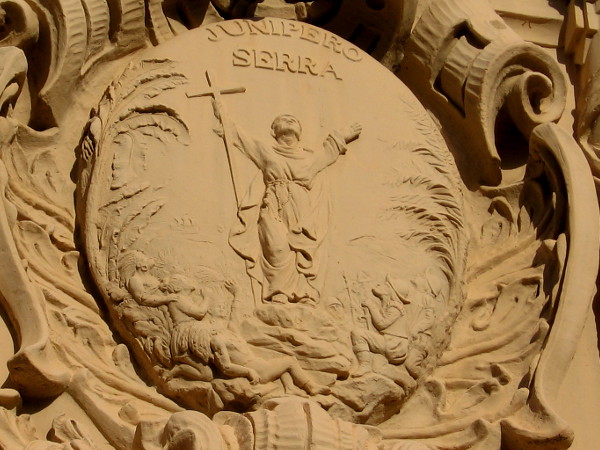
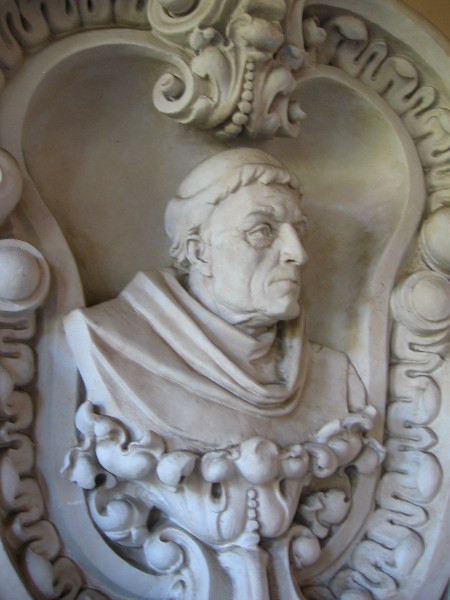
Molded plaster figure of Saint Junipero Serra at top of the California Building’s facade in Balboa Park. The Museum of Man occupies this landmark building. The ornate facade contains many sculpted historical figures and busts created by the Piccirilli brothers, famous marble carvers who immigrated from Italy in 1888.
Today, during Pope Francis’ historic first visit to the United States, Junipero Serra was canonized by the Roman Catholic Church. Father Serra was declared a saint by the Holy See at a ceremony conducted by Pope Francis at the Basilica of the National Shrine of the Immaculate Conception in Washington, D.C.
Saint Junipero Serra played a large role in San Diego’s early history. The Franciscan friar established the first nine of 21 Roman Catholic Spanish missions in what today is California. The very first of those nine, founded on July 16, 1769, was located in San Diego. The primary purpose of the missions was to convert the native peoples to Christianity; another purpose was to solidify a claim over this valuable corner of the New World for Spain.
The Mission Basilica San Diego de Alcalá is located in Mission Valley and remains to this day an active church. It’s popularity as a destination for tourists and the faithful will likely increase with the canonization of Serra.
Because of Saint Junipero Serra’s historical importance in San Diego, many images of him are found throughout our city. Some of the most prominent and well known representations can be seen in Balboa Park. The park’s Spanish Colonial Revival Style buildings created for the 1915 Panama-California Exposition include lavish ornamentation, with many illustrations of people and scenes important to San Diego history.
The following notable bits of art in Balboa Park depict Saint Junipero Serra during his time in San Diego.
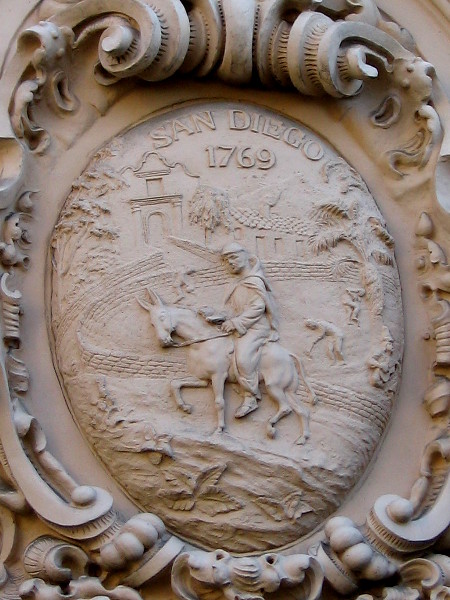
Ornamental art on Balboa Park’s Casa del Prado shows Saint Junipero Serra holding a cross among Spanish soldiers and native peoples in what today is California. In 1769, San Diego was part of Alta California in the Province of Las Californias in New Spain.More artwork seen on Balboa Park’s historic El Prado shows Franciscan friar on a horse near the Mission San Diego de Alcalá, which was built near the San Diego River, several miles inland from San Diego Bay.Junipero Serra Memorial, created in 1914. Staff plaster original ornamentation from the Food Products Building, of the Panama-California Exposition. This elegant work of art was preserved and is now located in the Casa del Prado’s Sculpture Court.
…
Follow this blog to see more photos related to San Diego’s fascinating history! Join me on Facebook or Twitter.
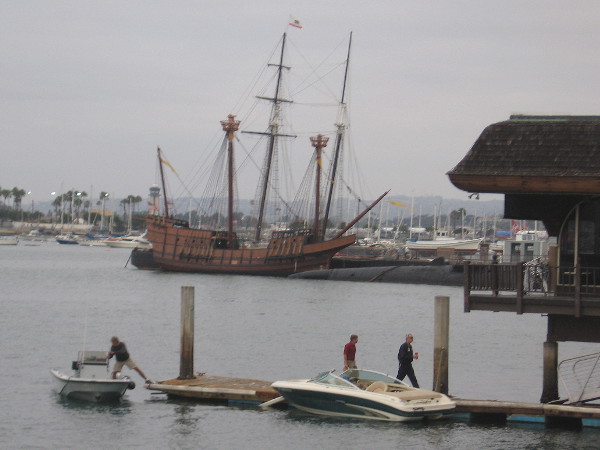
The amazing replica of explorer Juan Rodriguez Cabrillo’s galleon San Salvador is now docked at the Maritime Museum of San Diego, adjacent to their B-39 Soviet submarine.
The San Salvador, a full size replica of the historic Spanish galleon sailed by explorer Juan Rodriguez Cabrillo up the coast of California, is now docked at the Maritime Museum of San Diego! I believe the museum’s newest ship arrived a couple days ago!
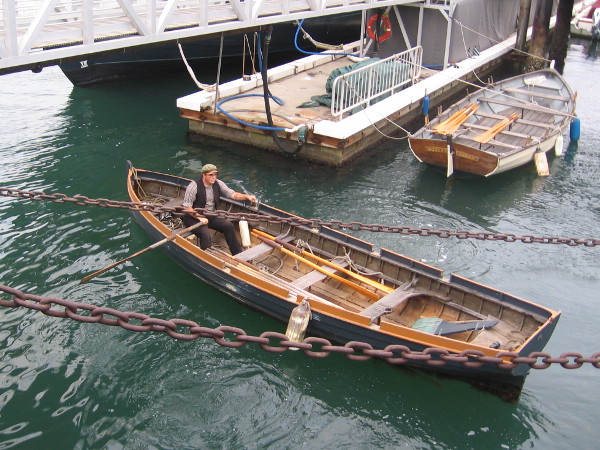
This morning was the very first time I saw the vessel on San Diego’s Embarcadero. Docked next to the museum’s B-39 Soviet-era Russian submarine, the San Salvador appears small compared to the other nearby tall ships. But the gentleman rowing the longboat in the next photograph informed me that she’ll really blossom once fully rigged and under sail. The San Salvador will then appear almost as large and amazing as the Californian, which is docked right across from it!
Looks like the San Salvador is ready in time for this Labor Day weekend’s Festival of Sail. On Friday she will lead a magnificent parade of visiting tall ships across San Diego Bay!
Gentleman from the Maritime Museum rows a longboat under ramp which leads to the HMS Surprise and other historic ships.Full size replica of Spanish galleon San Salvador, seen beyond the dock of Anthony’s Fish Grotto on San Diego’s Embarcadero.
…
Follow this blog for more photos of cool stuff! Join me on Facebook or Twitter.
Sign outside the Spanish Village history exhibit, which is open to the public in Gallery 21.
Anyone in San Diego who loves art must visit Spanish Village Art Center in Balboa Park. Some of the region’s finest local artists occupy its 38 working studios. By strolling around the large, colorful courtyard and poking a nose here and there, the public can see (and purchase) finished artwork of every kind, watch the creative process, and talk to the friendly artists themselves.
While at Spanish Village–if you’re the curious sort–you might also check out a small but fascinating history exhibit. Just step into Gallery 21.
Earlier this summer I was graciously given a tour of the exhibit by one of the resident artists. Here are a few photos and captions describing what I saw. Of course, it’s much better to experience Spanish Village and these memories of its history firsthand. So I encourage everyone to head on over.
The exhibit reviews how, a century ago, Balboa Park (originally called City Park) was developed and transformed into a dreamlike landscape for the 1915 Panama-California Exposition. Many fantastic buildings were created, using a variety of influences from Spanish, Mexican, European Renaissance and Moorish origins. This unique mixture became what is known as Spanish Colonial Revival architecture.
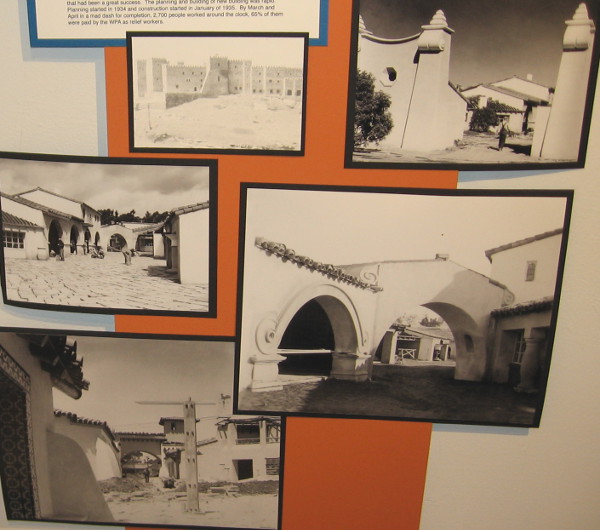
Later, the successful California Pacific International Exposition of 1935 was promoted to boost San Diego during the Great Depression. It used existing buildings from the Panama-California Exposition and exhibits from the recent Chicago Century of Progress Expo. New construction designed by master architect Richard Smith Requa added a variety of buildings to Balboa Park, including those of Spanish Village. Spanish Village, as its name implied, originally recreated life in Spain, with “shops that sold art, curios, flowers, music and wine. It had a children’s theater, a Chinese Bazaar, a cocktail lounge called Cafe Granada and other restaurants. The Village was at the entrance to the Fun Zone which contained a Midway, a midget zoo, and an Indian Village.”
Today, this exhibit’s historical photographs, newspaper articles and ephemera relating to Spanish Village help visitors understand and appreciate the cultural contributions over many decades of hundreds of participating artists.
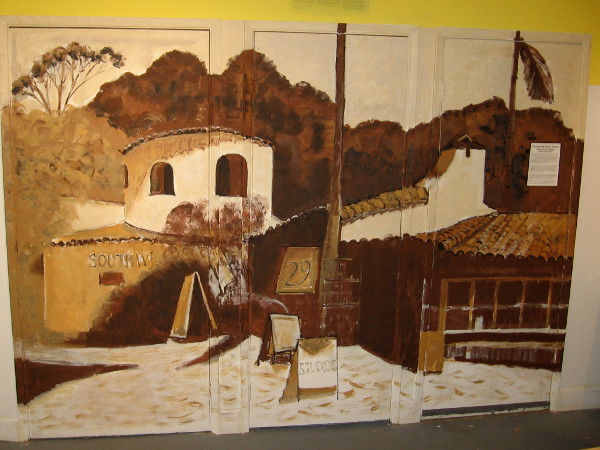
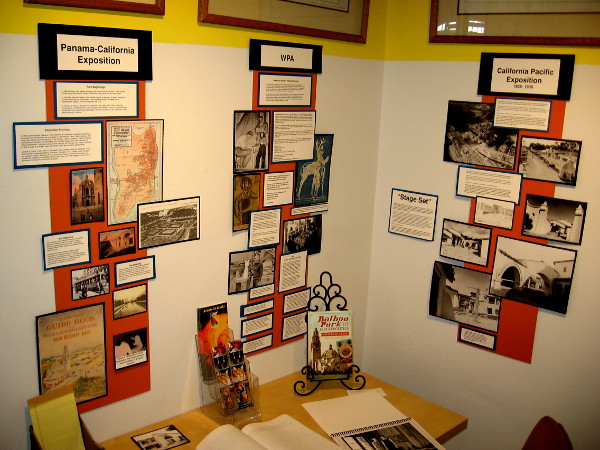
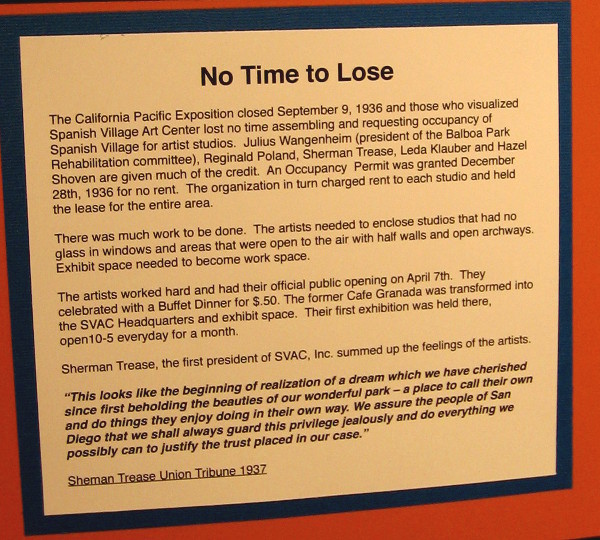
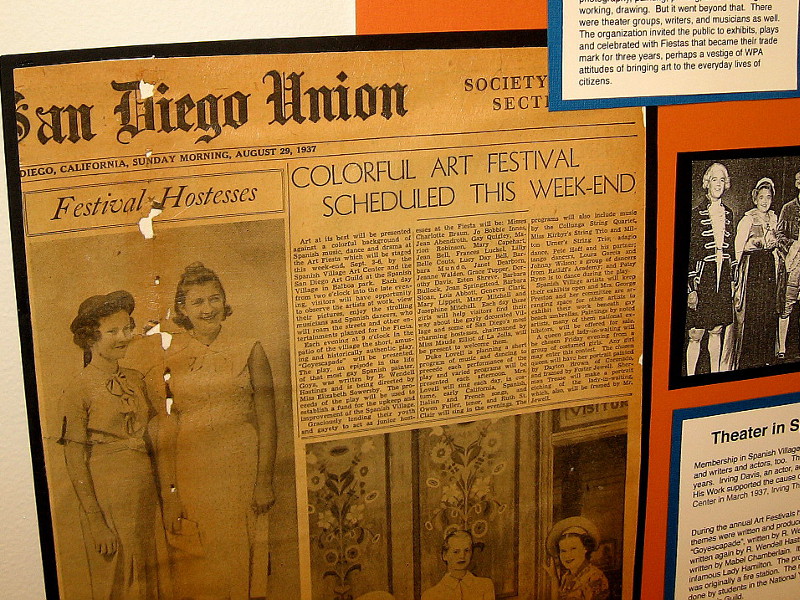
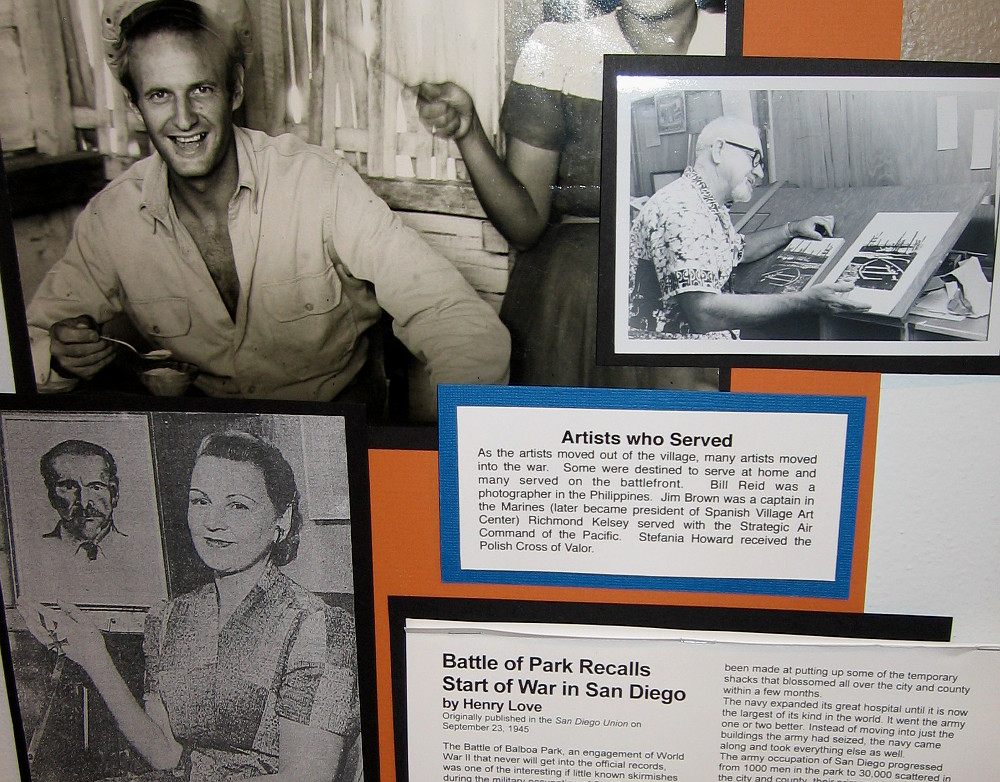
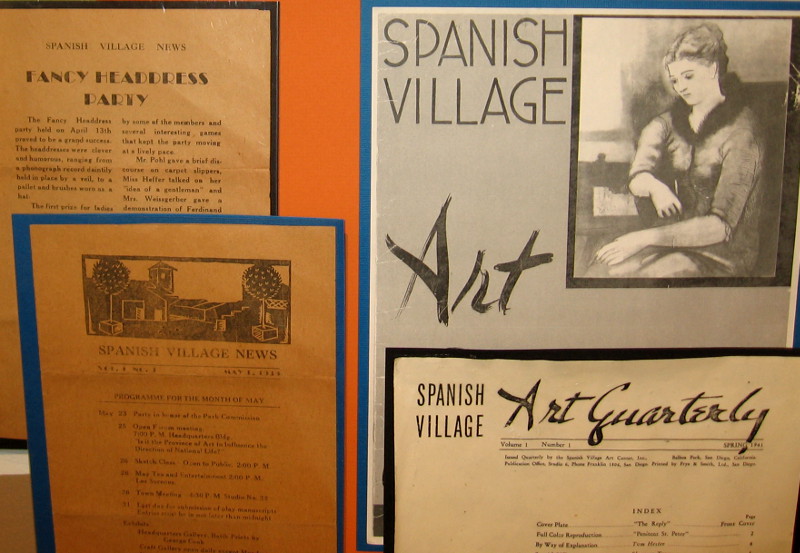
Doorway inside Gallery 21 leads to an unexpected treasure trove of Balboa Park and San Diego history.Beautifully painted mural in the small museum pleases the eyes of art-loving visitors.The walls, like a scrapbook, feature a mosaic of images and articles chronicling the history of Spanish Village.Old photographs show Spanish Village buildings, which were erected for the 1935 California Pacific Exposition in Balboa Park. They housed shops and restaurants during the expo.The California Pacific Exposition closed September 9, 1936, and the idea for Spanish Village Art Center was soon realized. Artists completed their studios and had a public opening on April 7th.Display lists Spanish Village’s artist founders. Newspaper clipping’s “Officers of Culture Project” included Sherman Trease, Mina Schultz Pulsifer, and Henry Long.Old San Diego Union newspaper announces first Art Fiesta, a festival held September 3-6, 1937. Spanish Village hosted all forms of visual art, plus theater groups, writers and musicians.Visitor to the Spanish Village history exhibit learns about the rich heritage of this very unique and wonderful place.Another display tells of the coming of World War II, and how the Army took over Spanish Village. Many departing artists would serve in the military. Some later returned to renew their art.After the Army left, a financial dispute with the City of San Diego was resolved. Artists would pay affordable rent for each studio. A jury would decide on qualified renters.Samples of past Spanish Village publications, including a quarterly. Today the artists promote their work online using websites, e-newsletters and social media.Do you have a memory or story about Spanish Village Art Center? Experiences are being collected and added to this show. Thanks for the community spirit!Spanish Village is located in amazing, historic Balboa Park. Art grows here.
…
Follow this blog for more photos of cool stuff! Join me on Facebook or Twitter.
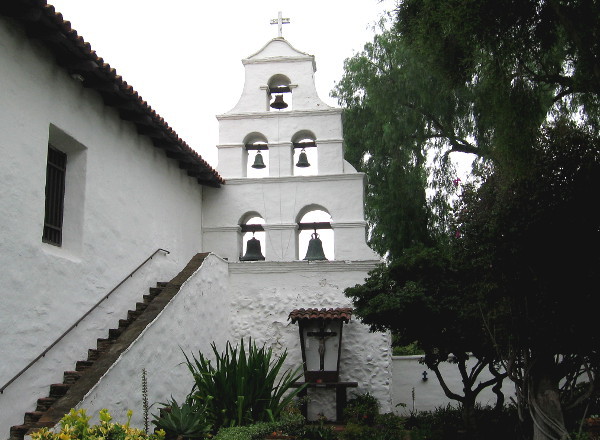
Five church bells hang in the distinctive facade of the historic Mission San Diego de Alcalá, founded by Junipero Serra.
Sometimes it’s easy to forget that our lives will soon become history. And that the lives of people, no matter how imperfect, create a rich, varied tapestry that reaches centuries back in time, and forward into the future.
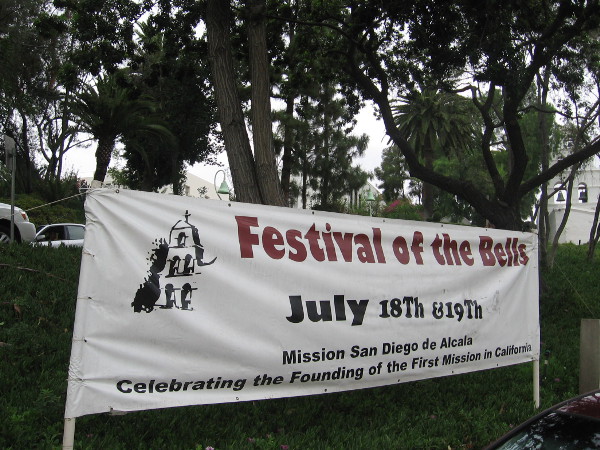
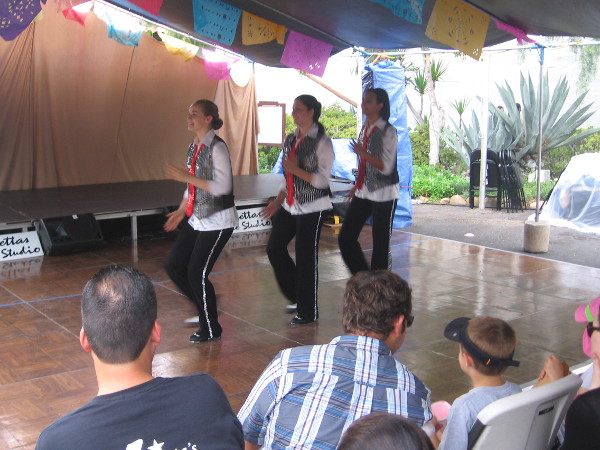
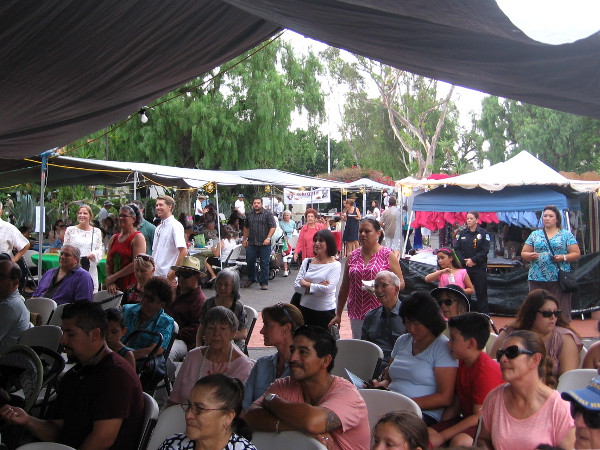
Young and old–representatives from several generations–came together this weekend in San Diego to again celebrate the Festival of the Bells. The annual event is held at Mission San Diego de Alcalá, the first Spanish mission to be built in California. Food, song and dancing accompanied colorful religious rituals such as the Blessing of the Bells and the Blessing of the Animals. Everyone was welcome to enjoy the free festival.
The original San Diego del Alcala was founded in 1769–almost 250 years ago–at the site of the old Spanish presidio, near the edge of San Diego Bay. The current mission building was erected by Father Serra in 1774, a few miles up the San Diego River where the land was more fertile.
The distinctive facade and bells of this historical landmark are often used as a symbol for our city, and the ringing of the bells are like echoes from a complex, often strife-filled, but fascinating past. The youngest generation, seeing this old world with fresh, optimistic eyes, jumping free and loving life in the festival’s bounce house, will remember today decades in the future as just another small moment in the journey of history. Hopefully that memory is good.
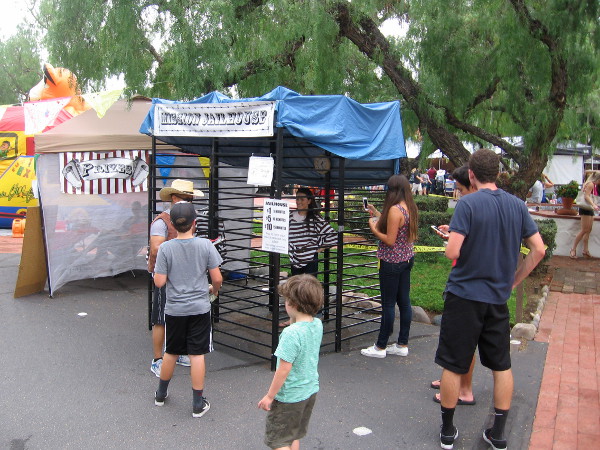
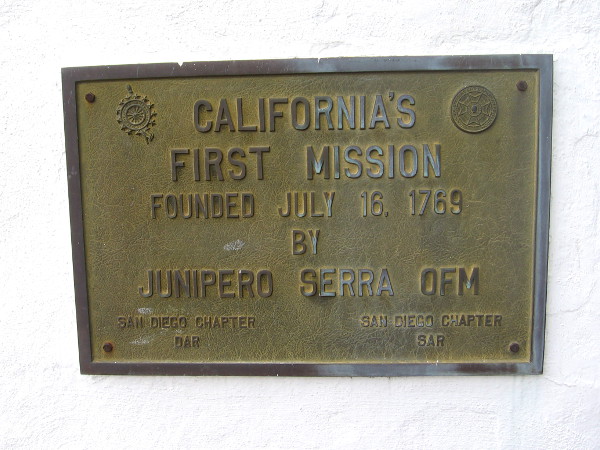
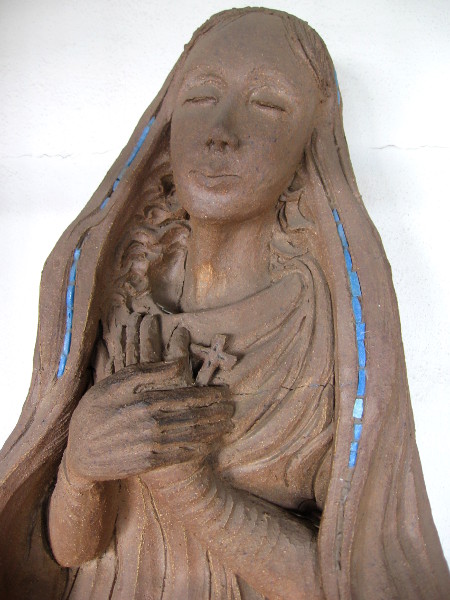
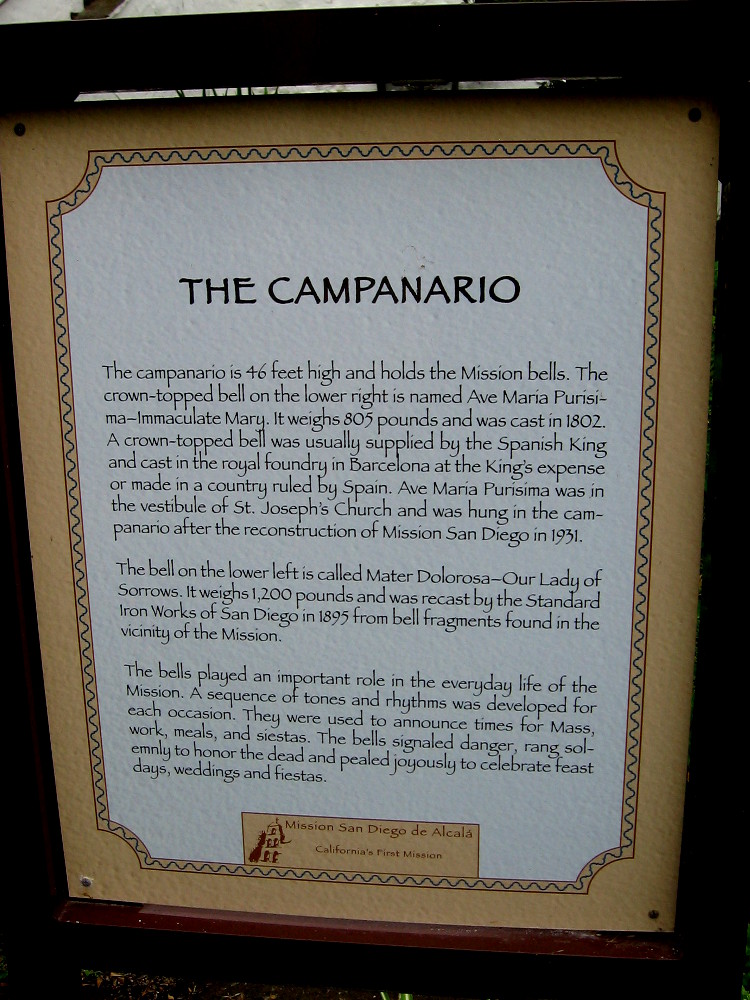
The Festival of the Bells is an annual celebration which memorializes the establishment and long history of California’s first Spanish mission.Young people provide family entertainment free to the public at the 2015 Festival of the Bells.A large audience had gathered in the mission’s spacious courtyard-like quadrangle, even as rain threatened on Sunday afternoon.Folks hang out around the central fountain, eating food and taking in sights, smells and sounds during a lively San Diego tradition.Proceeds from sales of food, crafts and gifts benefited Mission Basilica San Diego de Alcala, which is an active Catholic church.Who can resist root beer floats?Put a friend in the jailhouse to raise some money!San Diego de Alcalá was the first of 21 Spanish missions in California, established by Father Junipero Serra in 1769.Small statues along walkway at front of San Diego de Alcala depict Saints who inspired California mission names. This is for Mission Santa Clara de Asis, founded 1777.Sign in the mission’s garden explains The Campanario. (Click to enlarge.)
The campanario is 46 feet high and holds the Mission bells. The crown-topped bell on the lower right is named Ave Maria Purisima–Immaculate Mary. It weights 805 pounds and was cast in 1802 . . . The bells played an important role in the everyday life of the Mission . . . They were used to announce times for Mass, work, meals and siestas. The bells signaled danger, rang solemnly to honor the dead, and pealed joyously to celebrate feast days, weddings and fiestas.
Of the five church bells, one original bell dates back to 1802.
…
San Diego is an endlessly interesting place! You can enjoy photos from many varied walks by following on Facebook or Twitter.
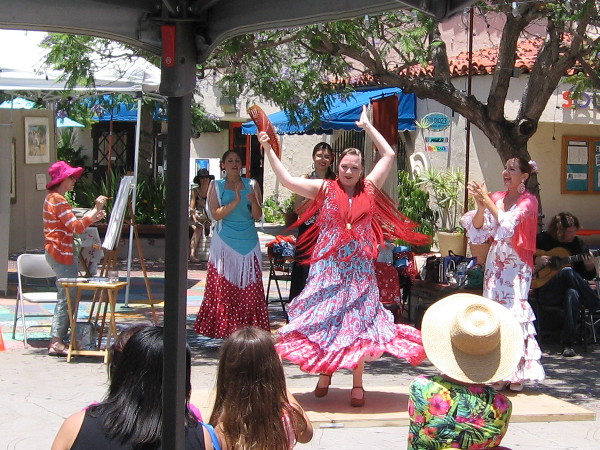
Guitar music propels Flamenco dancers in Balboa Park’s Spanish Village.
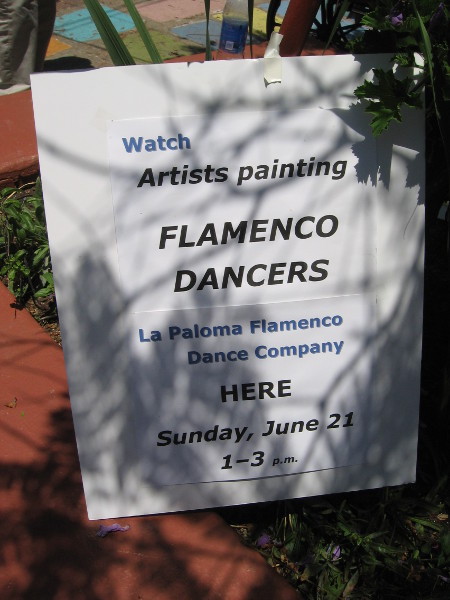
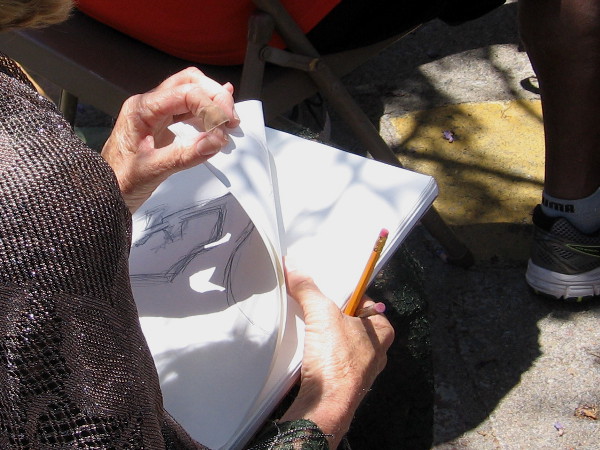
This afternoon I enjoyed watching some amazing Flamenco dancing. Balboa Park’s colorful Spanish Village, the home to many artist studios, hosted the special event. As beautifully dressed lady Flamenco dancers performed for the public, local artists at easels painted away!
Flamenco dancing is fiery, stately and proud. Each dance and dancer glowed with unabashed human emotion. The audience learned a little about the nature of this Spanish folk dance, but I was so mesmerized I failed to jot down many notes. I remember that one dance was said to represent defiant joy, another a representation of pure, carefree womanhood.
The public was invited to watch local San Diego artists painting a performance by the La Paloma Flamenco Dance Company.Crowd shouts and claps as the whirling ladies move their limbs and tap feet with graceful, fluid, joyful abandon.The energetic Spanish folk dancing causes colorful fabric to fly and twirl like a gauzy dream.A range of powerful human emotion is transmitted to the audience during each fantastic Flamenco dance.A carefully watching artist has made a few sketches during the performance in Spanish Village.I don’t know how an artist can begin to capture the dynamism and detail of the colorful, kinetic dance!A local artist from Spanish Village in Balboa Park streaks color across a canvas. A skilled hand and eye produces the same bold living essence expressed by the dance.


































































 Cool San Diego Sights!