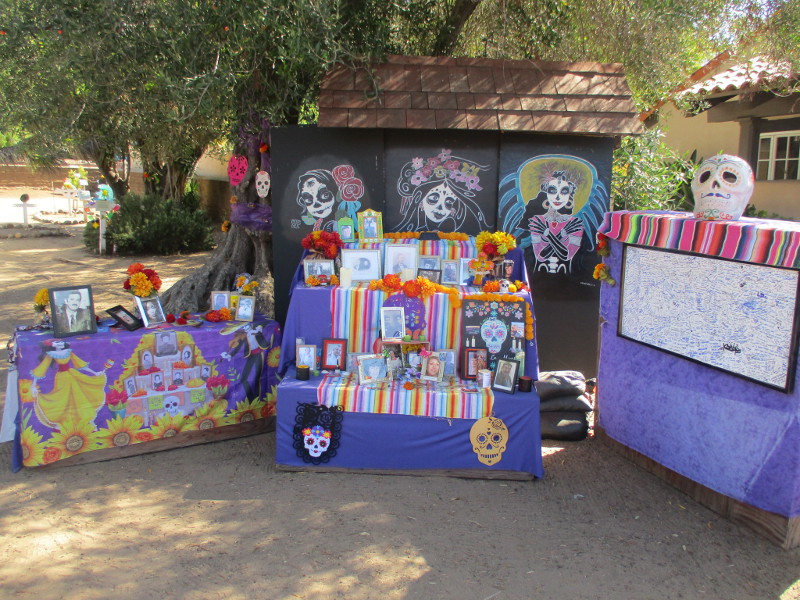
Another year is passing by. In a couple of weeks, Day of the Dead (Día de los Muertos) will be observed. Loved ones who’ve passed on from this life will be remembered.
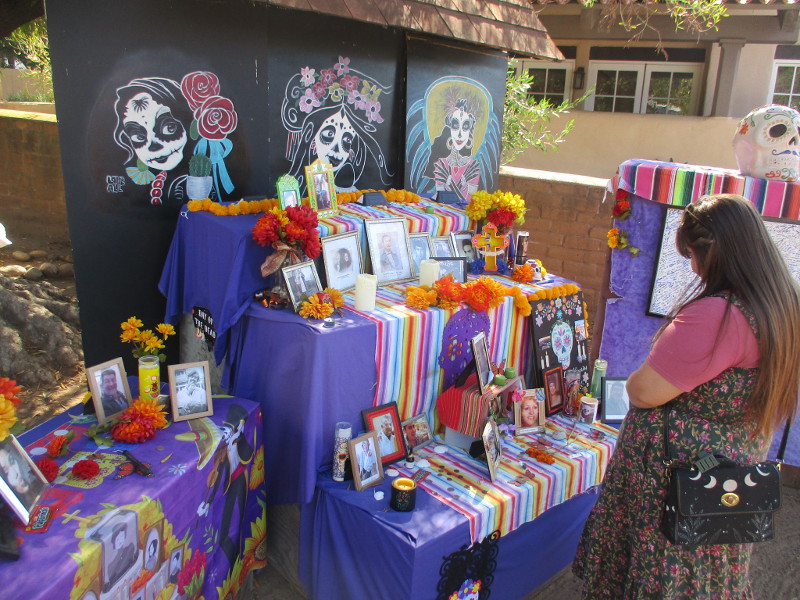
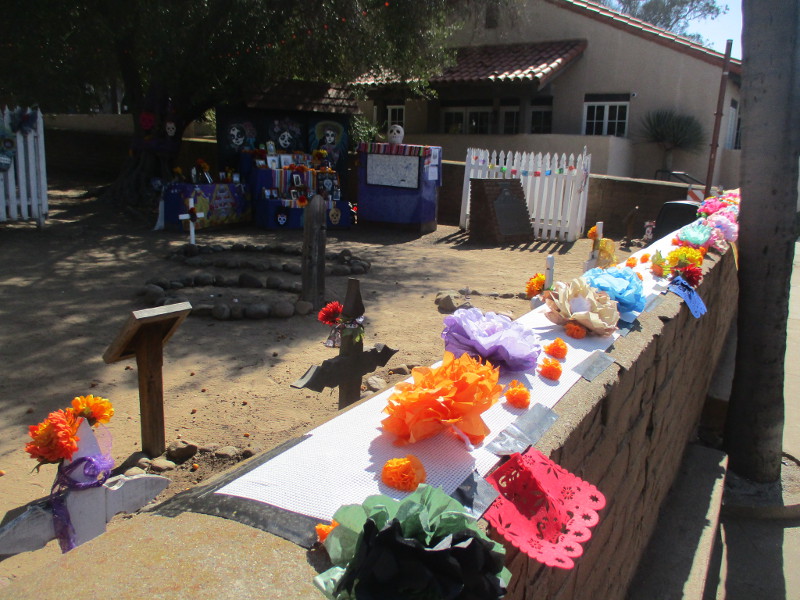
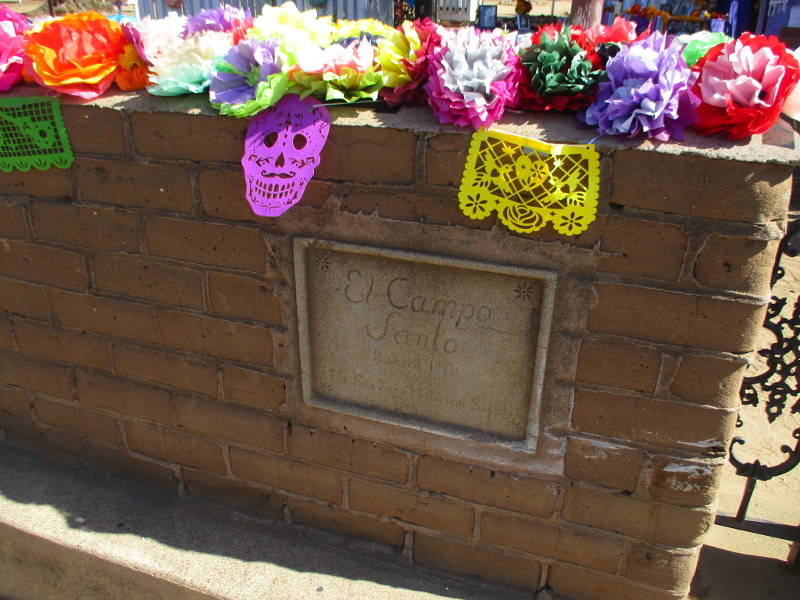
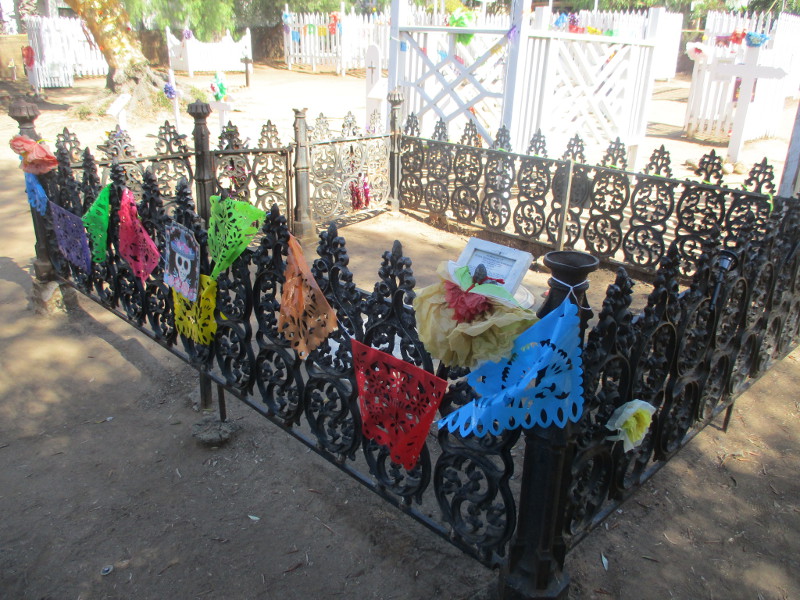
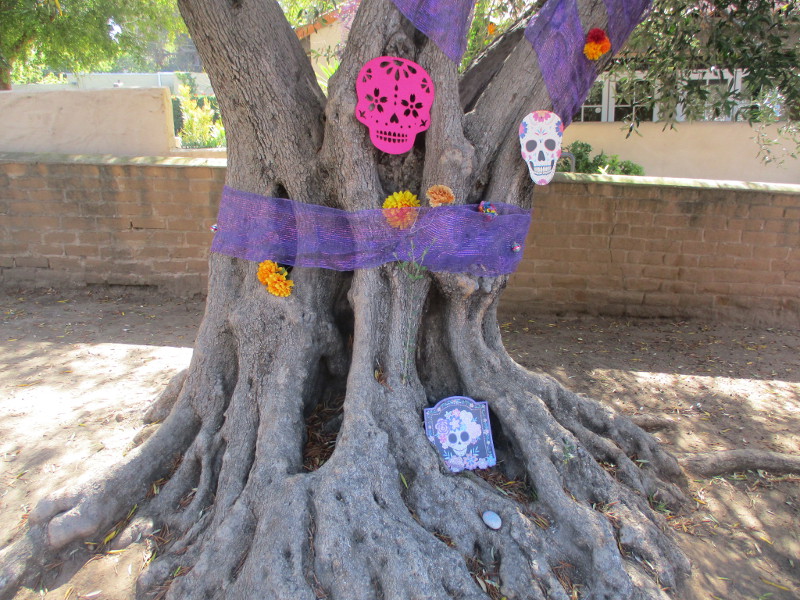
The gravesites at El Campo Santo in Old Town are decorated already. Every early resident of San Diego buried here is remembered with flowers, papel picado, Day of the Dead skulls… Every person here was loved by someone.
This small cemetery is the final resting place of so many different people: the Kumeyaay, Spanish, Mexican, American. Newborn babies, the elderly. The rich, the poor. Public figures, unknown people. The lucky, the unlucky. Victims of old age, disease, accident, violence, injustice.
Mortals all.
Every one was loved by someone.
…
I post new blogs pretty often. If you like discovering new things, bookmark coolsandiegosights.com and swing on by occasionally!
I live in downtown San Diego and love to walk around with my camera! You can follow Cool San Diego Sights via Facebook or X.
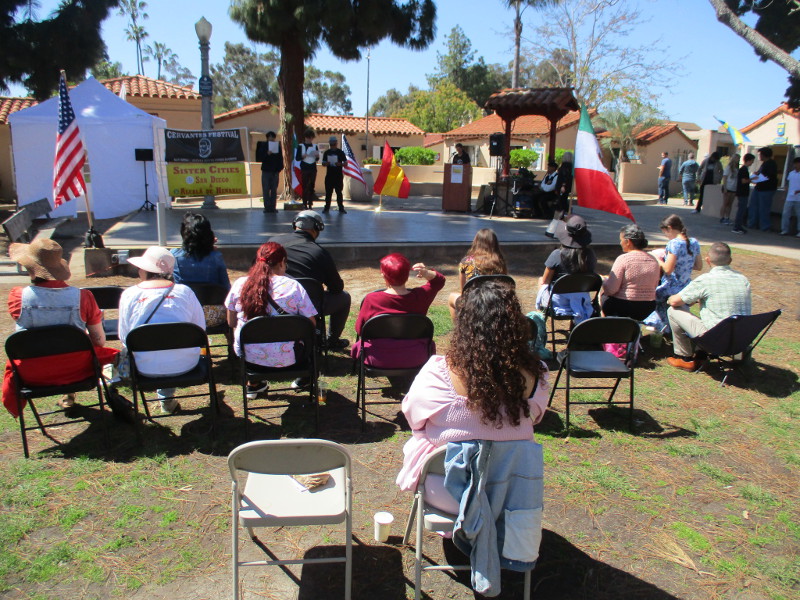
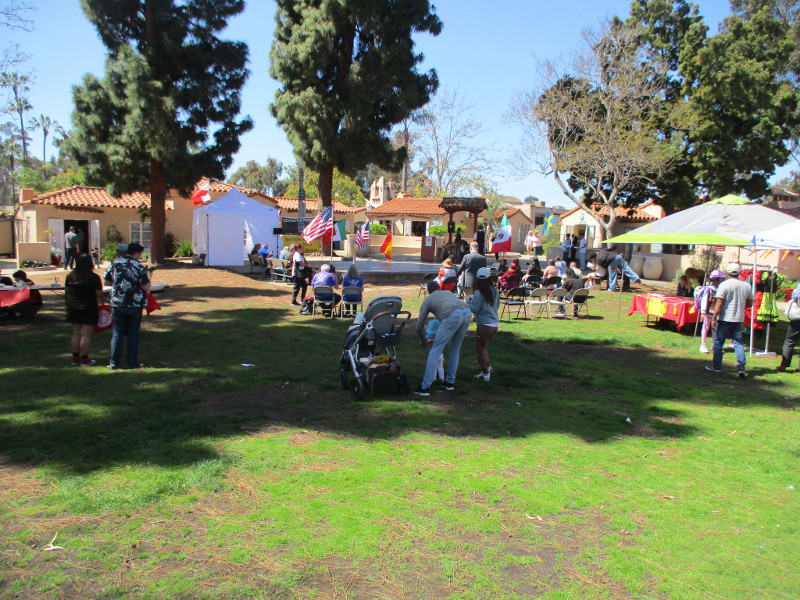
The annual Cervantes Festival was held today in San Diego!
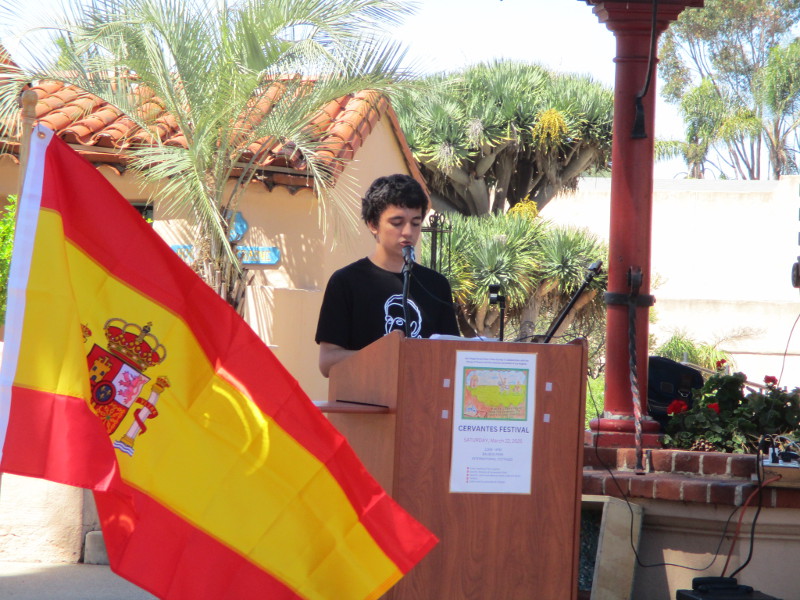
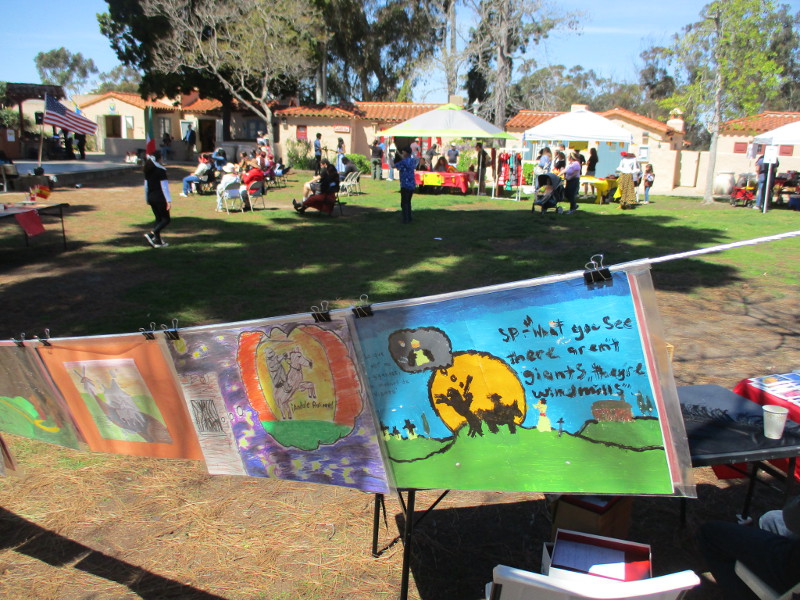
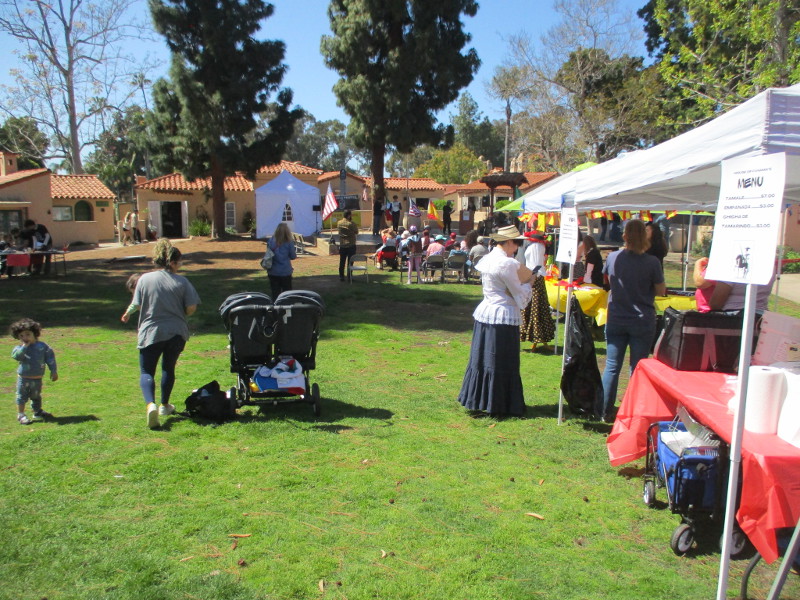
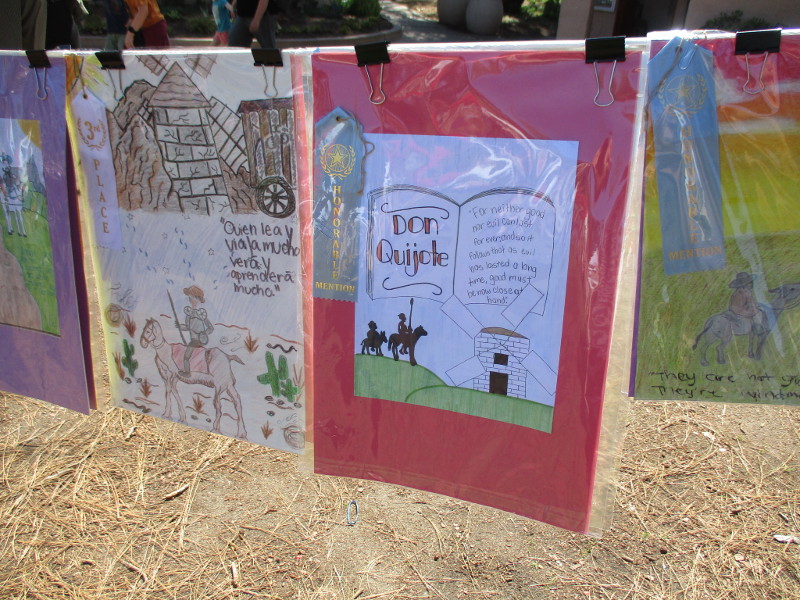
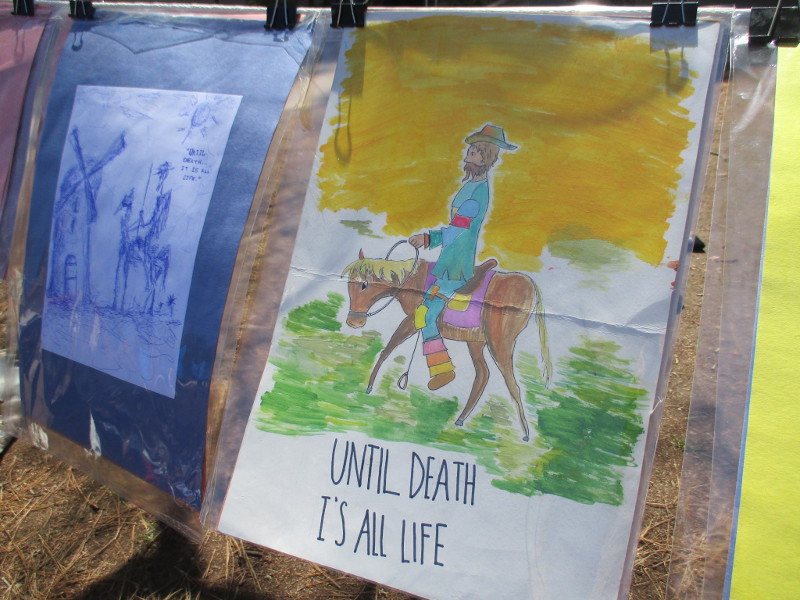
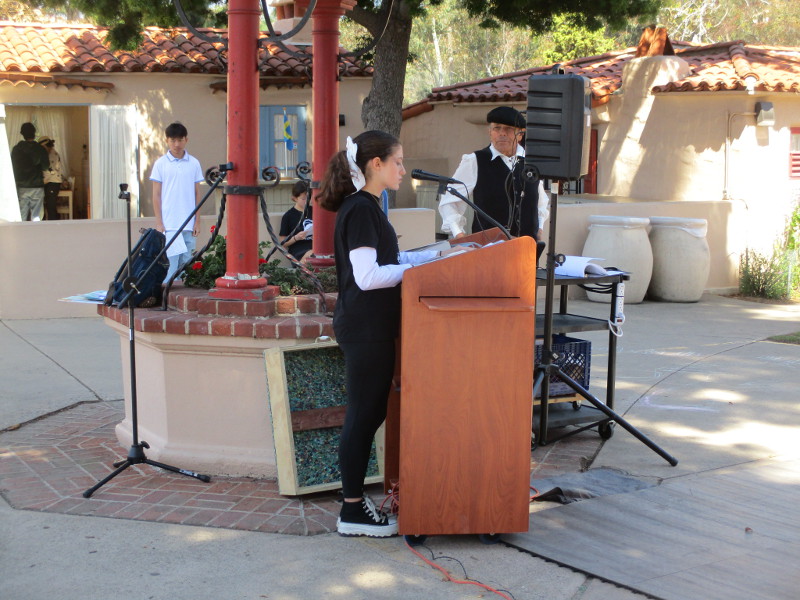
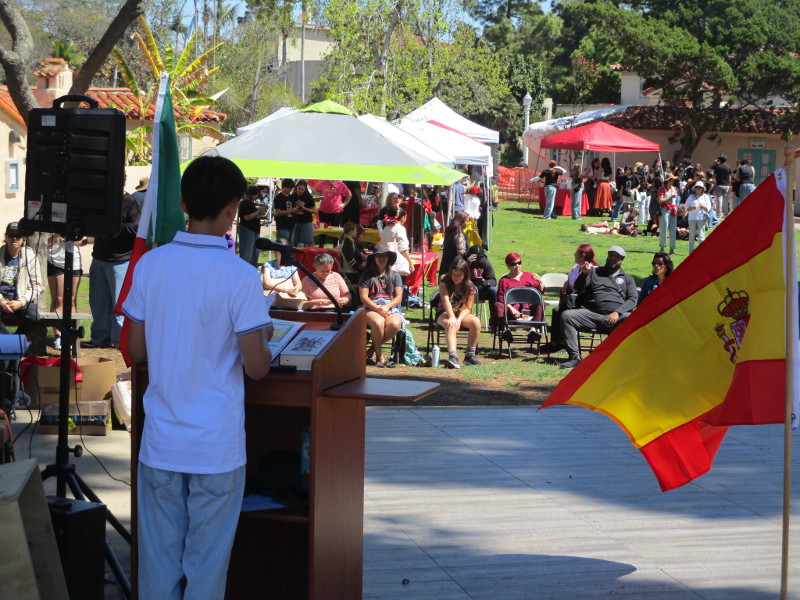
Families, students and lovers of literature came together at the International Cottages in Balboa Park to enjoy food, culture, art, and most importantly, the public reading of author Miguel de Cervantes’ world classic Don Quijote de La Mancha!
When I arrived around noon, foreign language students from El Capitan High School were reading excerpts from the novel in Mandarin Chinese! I noted that students from San Diego High School were also participating in the event, which lasted from 11 am to 4 pm.
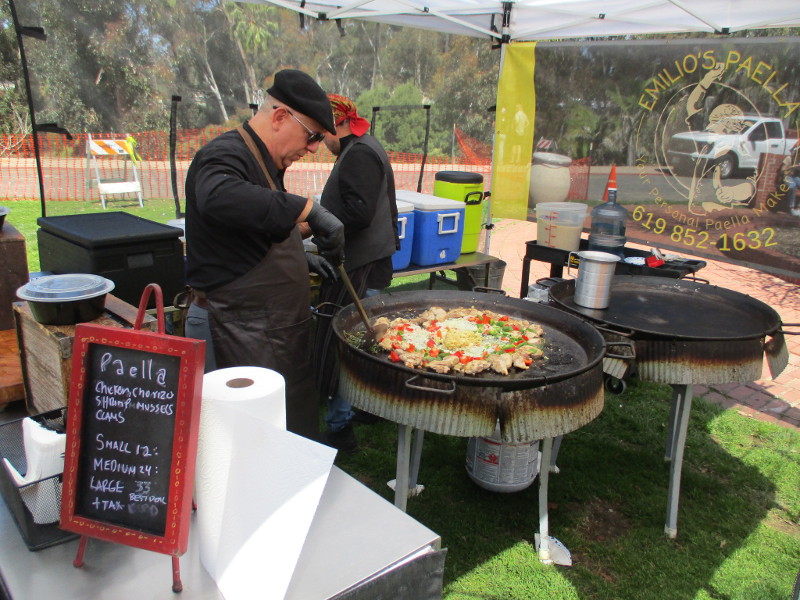
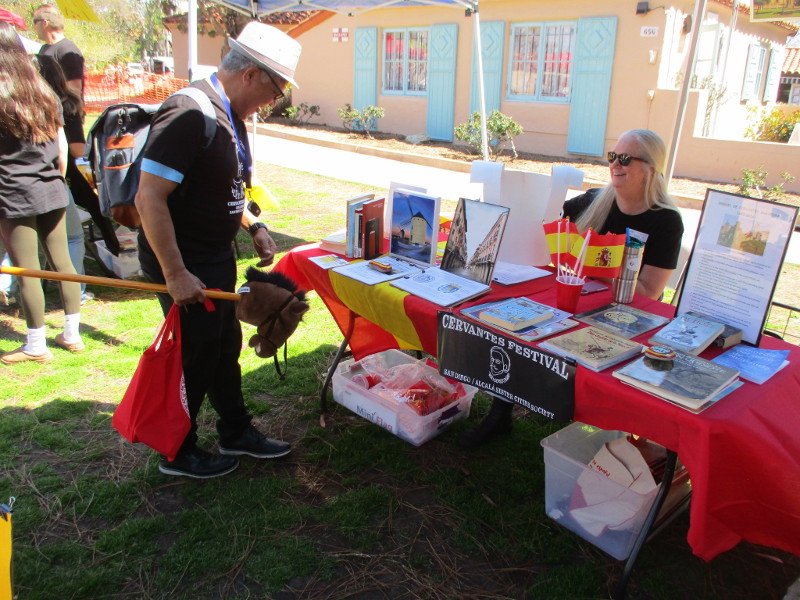
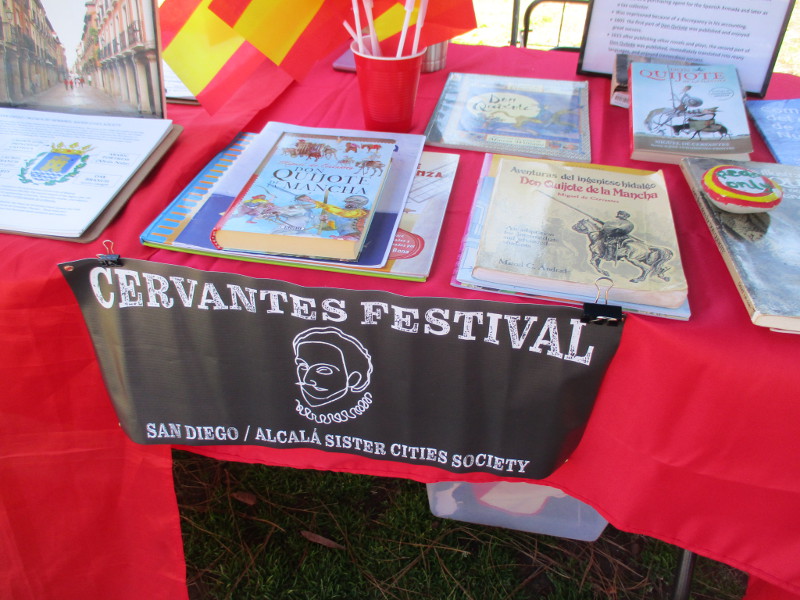
The unique cultural festival, which I was told is in its eleventh year, was organized by the San Diego/Alcalá Sister Cities Society and Balboa Park’s own House of Spain. (Yes, food representing Cervantes’ native Spain included delicious paella.)
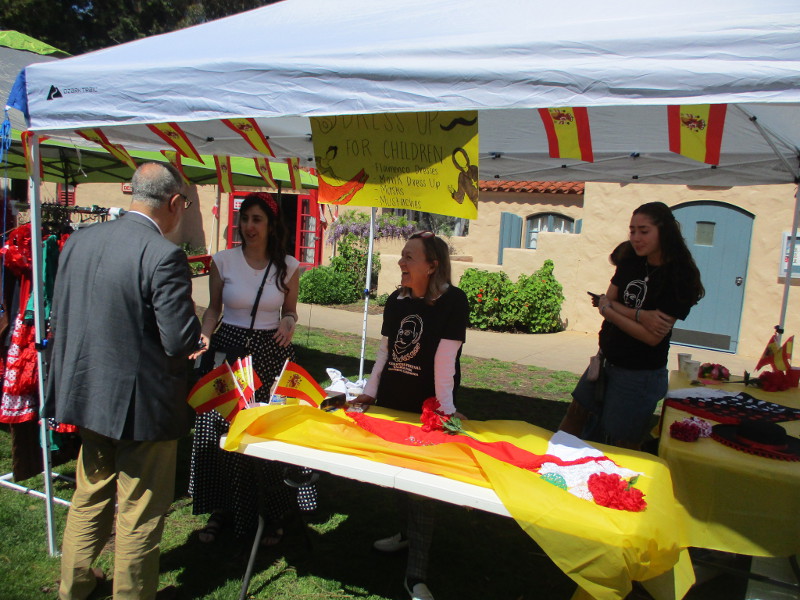
I took some photographs as I wandered about…
…
I post new blogs pretty often. If you like discovering new things, bookmark coolsandiegosights.com and swing on by occasionally!
I live in downtown San Diego and love to walk around with my camera! You can follow Cool San Diego Sights via Facebook or X.
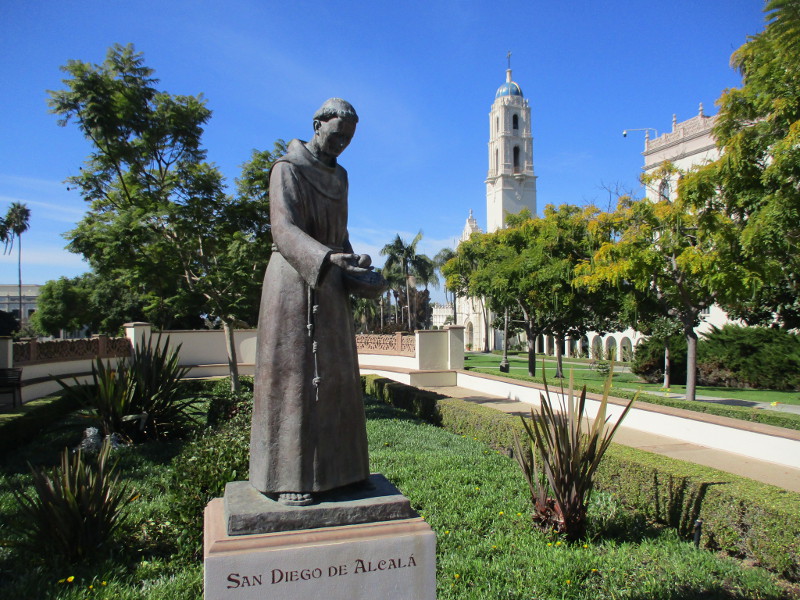
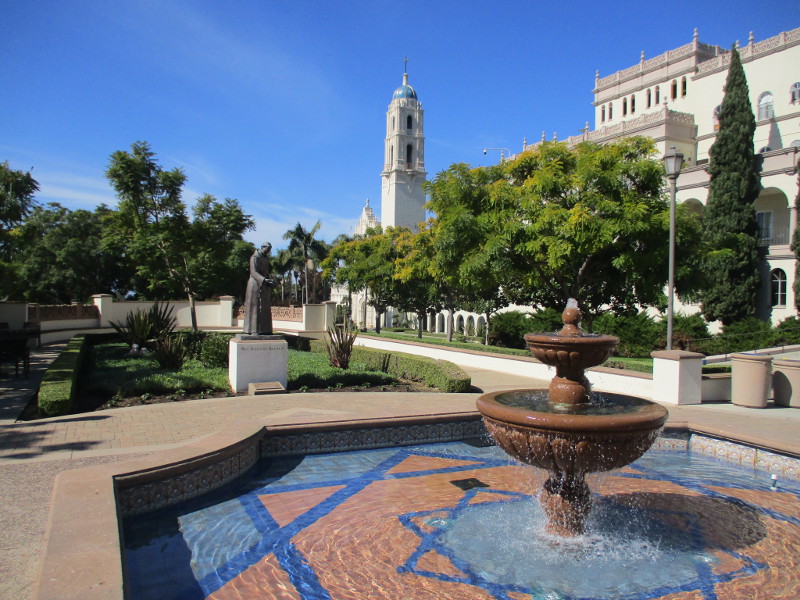
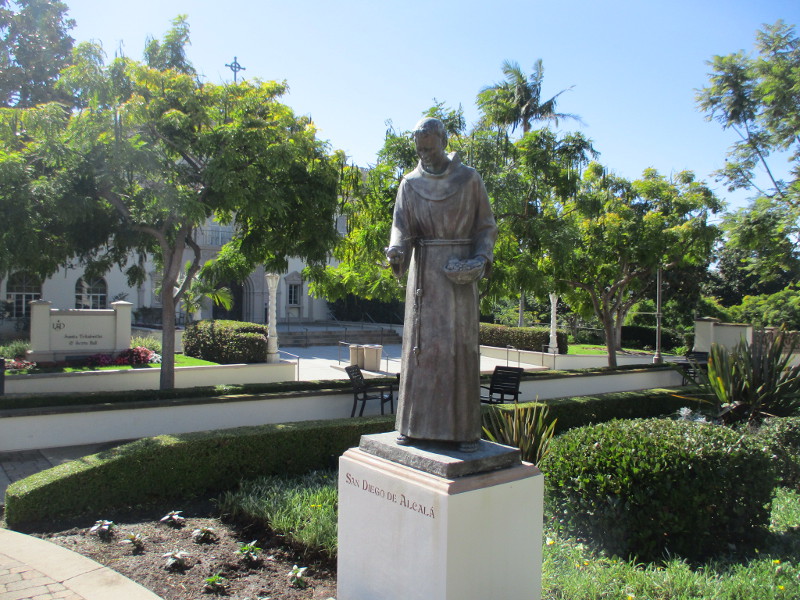
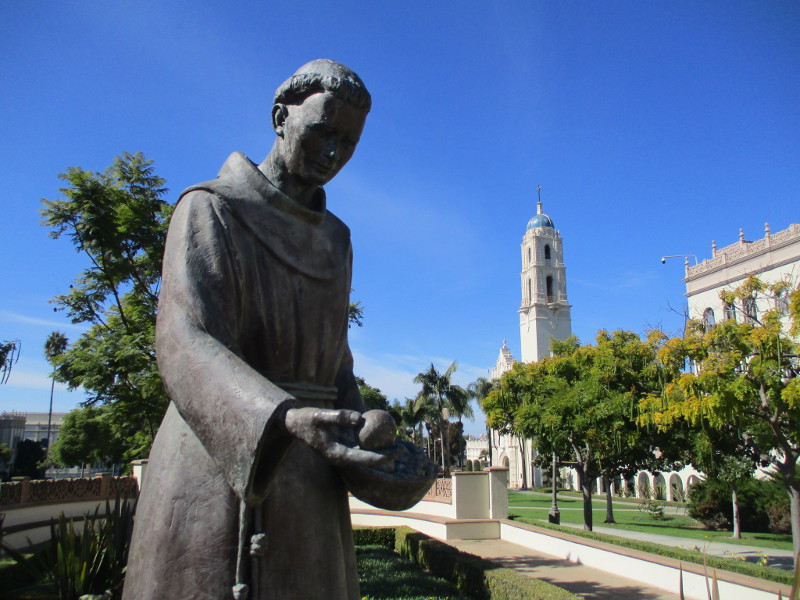
A statue depicting San Diego de Alcalá stands in a beautiful garden near the center of the Catholic University of San Diego.
San Diego de Alcalá (also known as Saint Didacus and Diego de San Nicolás) is the patron saint of USD, not to mention the Franciscan missionary and saint after which San Diego was named.
In 1542 explorer Juan Rodríguez Cabrillo named our city’s bay San Miguel.
Sixty years later, when Spanish explorer Sebastián Vizcaíno sailed into our bay on November 10, 1602, he named it San Diego, which was also the name of his flagship. He put San Diego on his map. That name stuck.
I took photographs of the San Diego de Alcalá statue several months ago, when I visited USD’s Arts and Culture Festival. (Yes, I’m finally posting these photos!)
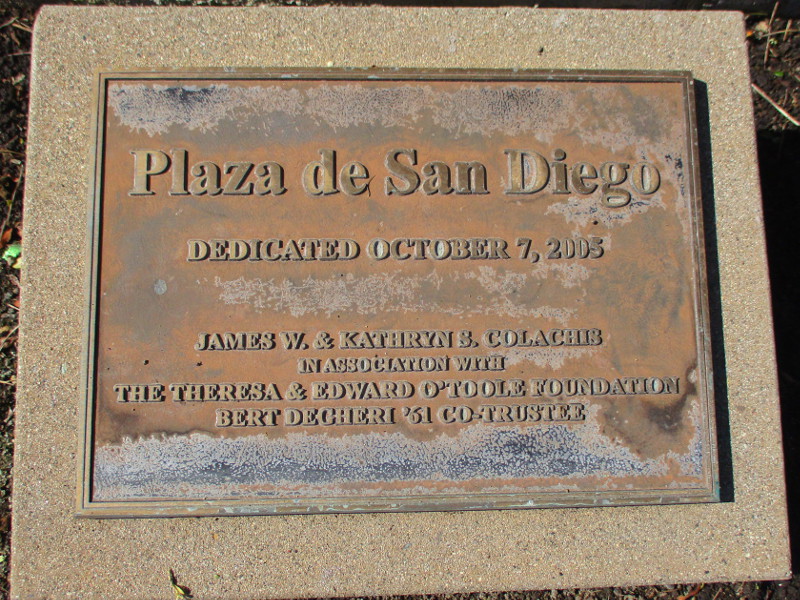
The bronze sculpture stands in Plaza de San Diego next to the Maher fountain. According to this, it was moved there in 2017 from the entrance of Copley Library.
I know nothing more about the statue. When was it created? By whom? If you know anything more about it, your comment would be very welcome!
…
I post new blogs pretty often. If you like discovering new things, bookmark coolsandiegosights.com and swing on by occasionally!
I live in downtown San Diego and love to walk around with my camera! You can follow Cool San Diego Sights via Facebook or X.
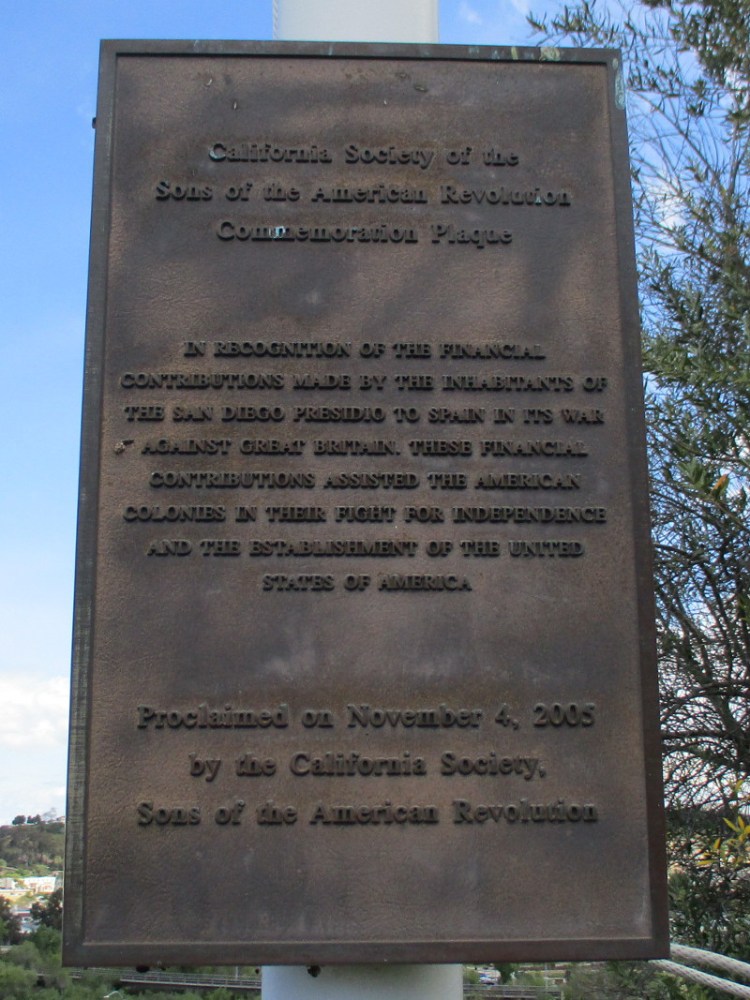
I’m not a historian. If you are, perhaps you might leave a comment concerning a plaque that is mounted to a flagpole on San Diego’s Presidio Hill, near the ruins of the old Spanish Presidio.
The plaque states:
California Society of the Sons of the American Revolution Commemoration Plaque
IN RECOGNITION OF THE FINANCIAL CONTRIBUTIONS MADE BY THE INHABITANTS OF THE SAN DIEGO PRESIDIO TO SPAIN IN ITS WAR AGAINST GREAT BRITAIN. THESE FINANCIAL CONTRIBUTIONS ASSISTED THE AMERICAN COLONIES IN THE FIGHT FOR INDEPENDENCE AND THE ESTABLISHMENT OF THE UNITED STATES OF AMERICA
Proclaimed on November 4, 2005 by the California Society, Sons of the American Revolution
The Presidio of San Diego was established in 1769, seven years before the adoption of the United States Declaration of Independence in 1776. The American Revolution saw its ultimate success in 1783 when the British signed the Treaty of Paris.
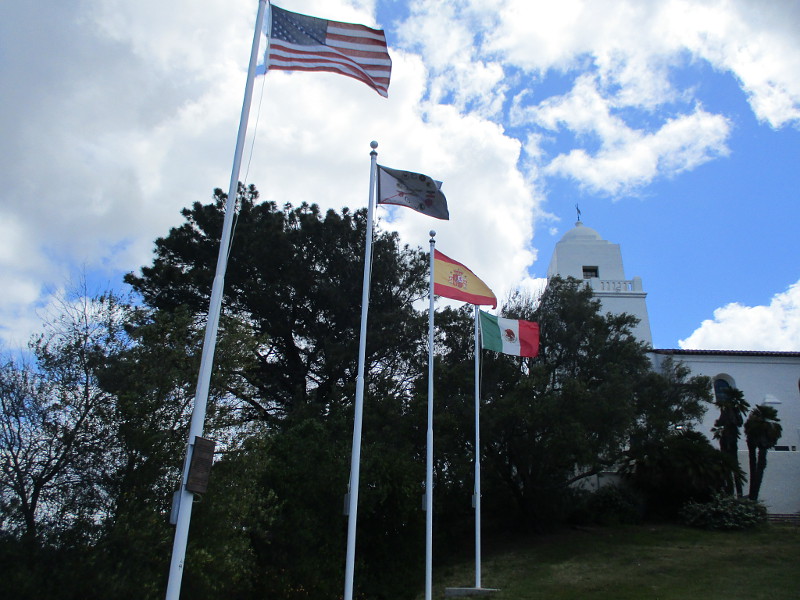
Today four flagpoles stand on Presidio Hill. The four flags represent the United States, the Kumeyaay Nation, Spain and Mexico. They demonstrate that San Diego’s history is both diverse and complex.
How significant were these financial contributions made by inhabitants of the Presidio to Spain? In what form were the contributions? Were they obtained through the labor of indigenous Kumeyaay on the land taken by Spanish missions? San Diego in its very early years was sparsely populated and relatively poor. How, specifically, did these financial contributions help Spain in its war against Great Britain?
Clearly, I’m no historian! If you know more about this, please leave a comment!
UPDATE!
On July 6, 2024 I came across more information concerning this.
During the Independence Day celebration at the International Cottages in Balboa Park, the House of Spain had an elaborate display in front of their cottage, explaining how Spain helped the United States win the Revolutionary War against Great Britain.
An emphasis was placed on the Spanish General Bernardo de Galvez, who provided patriots with money, medicines, arms, and key wartime information. He was a hero at the Battles of Mobile and Pensacola.
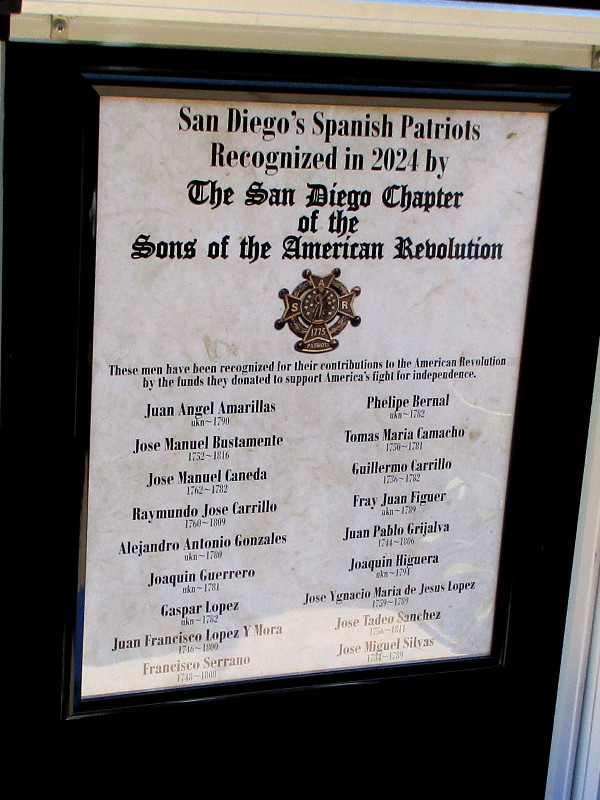
One display explained how the Spanish living in distant San Diego contributed, too. “San Diego’s Spanish Patriots” were soldiers at the old Presidio, who provided funds from their own pockets to support America’s fight for independence.
I was told by a gentleman who sounded knowledgeable that in addition to soldiers and others associated with the newly established Spanish Missions, Native Americans up and down California within the Spanish sphere of influence were also “persuaded” to make monetary contributions, albeit in lesser amounts.
Apparently all of these contributions were provided at the request of Junípero Serra. Collected funds then made their way to the opposite coast of America, where they bolstered the efforts of Galvez.
If my understanding of this history isn’t correct, or you know more about the subject, please leave a comment!
…
Thanks for visiting Cool San Diego Sights!
I post new blogs pretty often. If you like discovering new things, bookmark coolsandiegosights.com and swing on by occasionally!
I live in downtown San Diego and love to walk around with my camera! You can follow Cool San Diego Sights via Facebook or X.
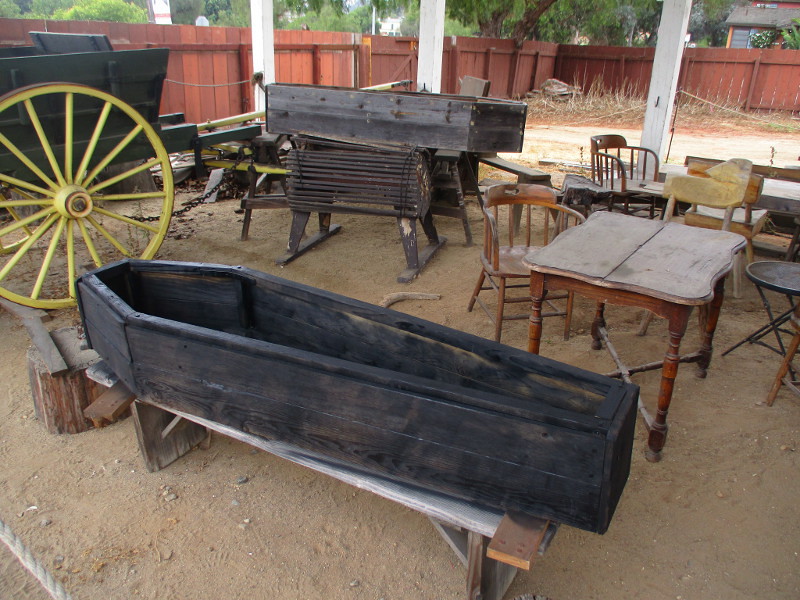
Whenever I visit Old Town San Diego State Historic Park, I like to walk over to the Blacksmith Shop to see what might be new. Then I explore the old wagons, carriages, anvils, a tyre bender, and other remnants from the past that are gathered nearby in a sheltered area.
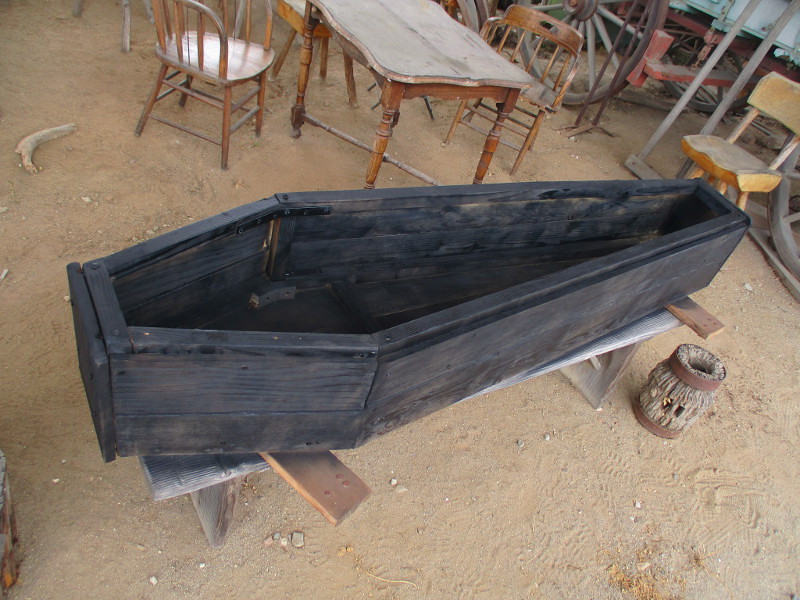
This afternoon the first thing I spotted was two coffins!
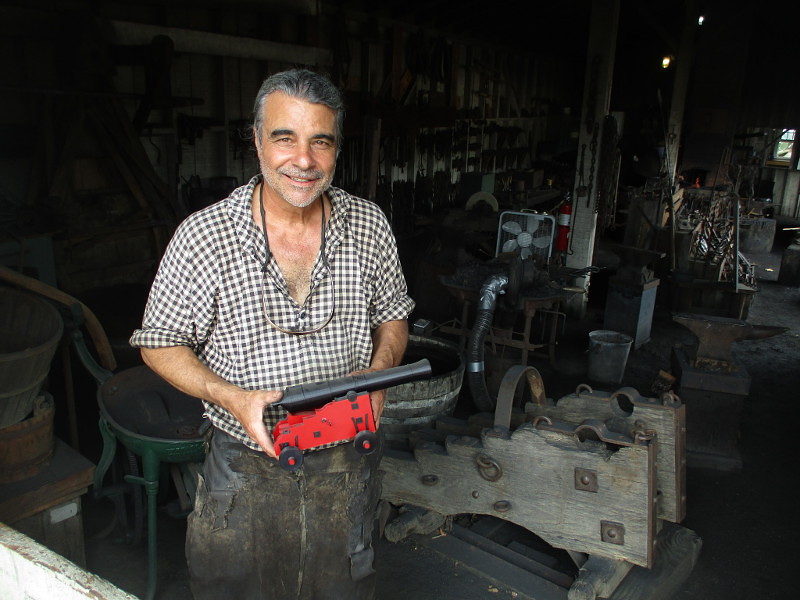
When I asked Todd in the Blacksmith Shop why coffins had strangely appeared, I learned they’re props to be used in the State Park during Día de los Muertos. (The one that appears newly painted had me worried!)
I then learned something new concerning the wooden carriage that will be constructed for El Capitan, the historic Spanish cannon that used to sit in the middle of Old Town’s plaza.
It has been a couple of years, but now the carriage project is definitely underway. A new carriage will be built with the help of the Maritime Museum of San Diego!
Todd held up a small cannon model made with a 3D printer. Once completed, El Capitan’s new carriage should appear somewhat similar. (The current carriage, built in the 1980s, has deteriorated quite a bit because it never was painted.)
To read more about Old Town’s 18th century Spanish cannon and this slowly developing project, check out thesetwo past blog posts!
…
Thanks for visiting Cool San Diego Sights!
I post new blogs pretty often. If you like discovering new things, bookmark coolsandiegosights.com and swing on by occasionally!
I live in downtown San Diego and love to walk around with my camera! You can follow Cool San Diego Sights via Facebook or Twitter!
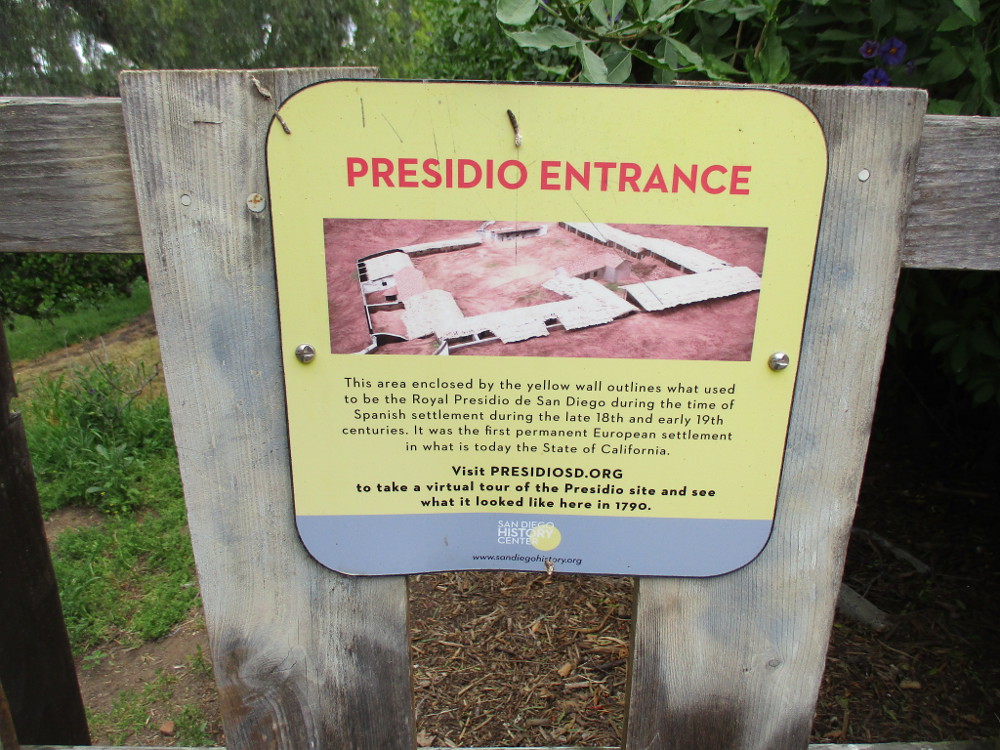
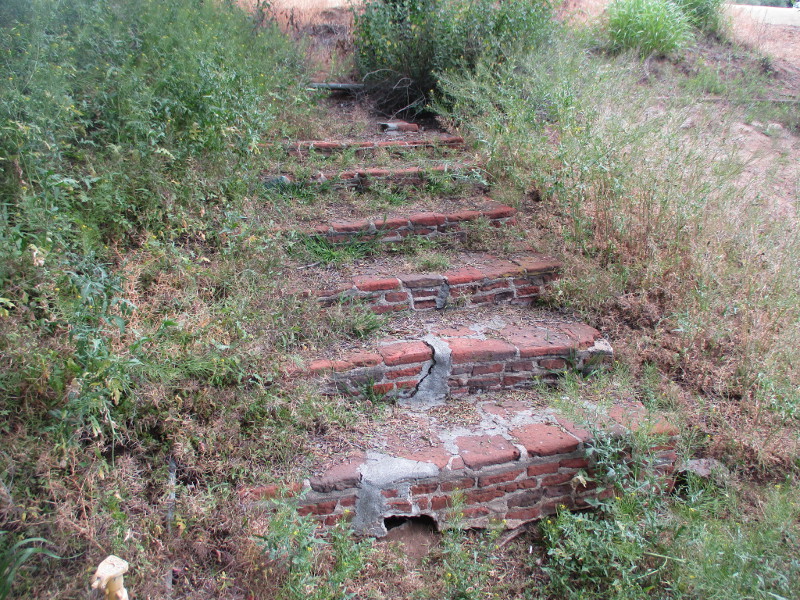
Spain’s first outpost in Southern California, the 1769 Royal Presidio of San Diego, is long gone. Its ruins are buried on Presidio Hill just beneath the Junípero Serra Museum. Grassy mounds and bits of old brick can still be found as one walks about.
This historical site is a place where very diverse stories were lived. It’s a place were many were buried when life finally ended.
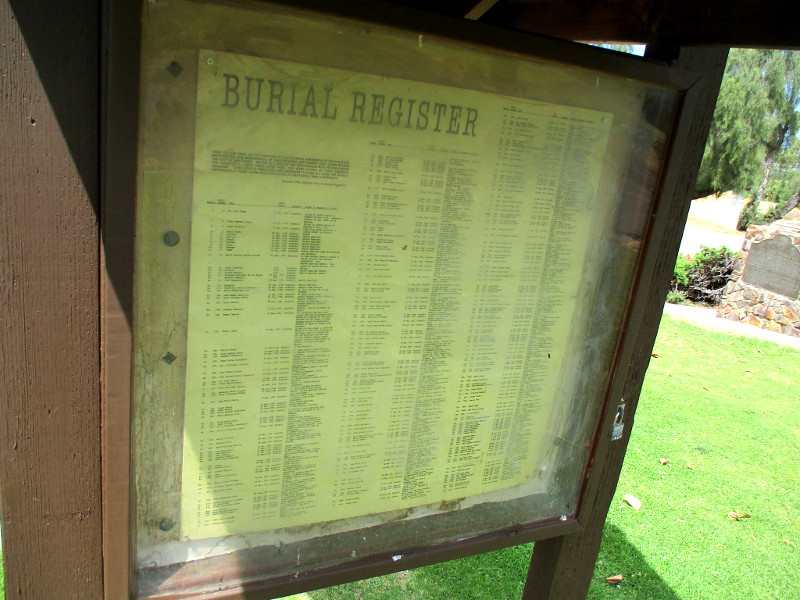
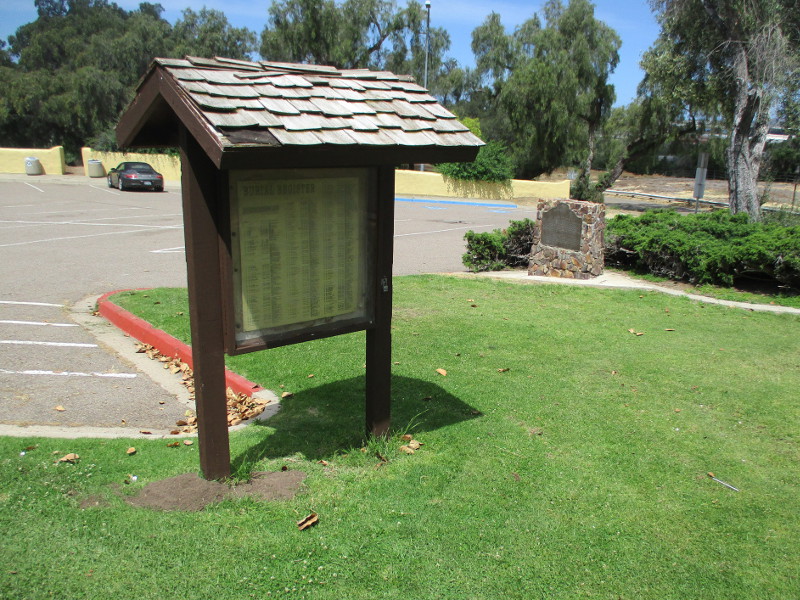
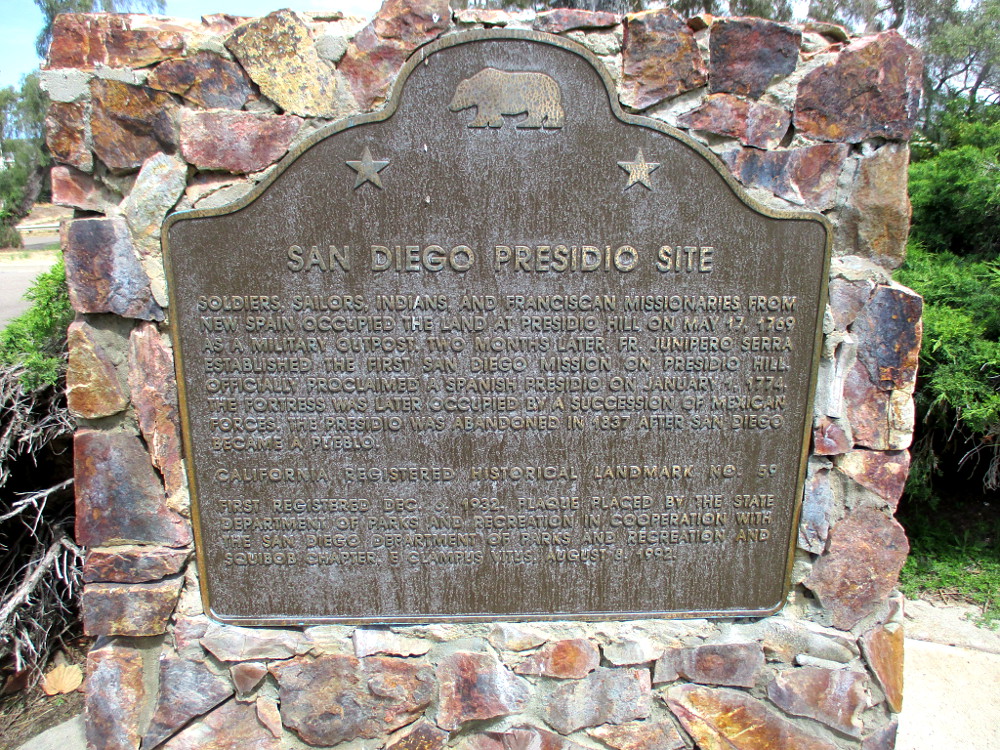
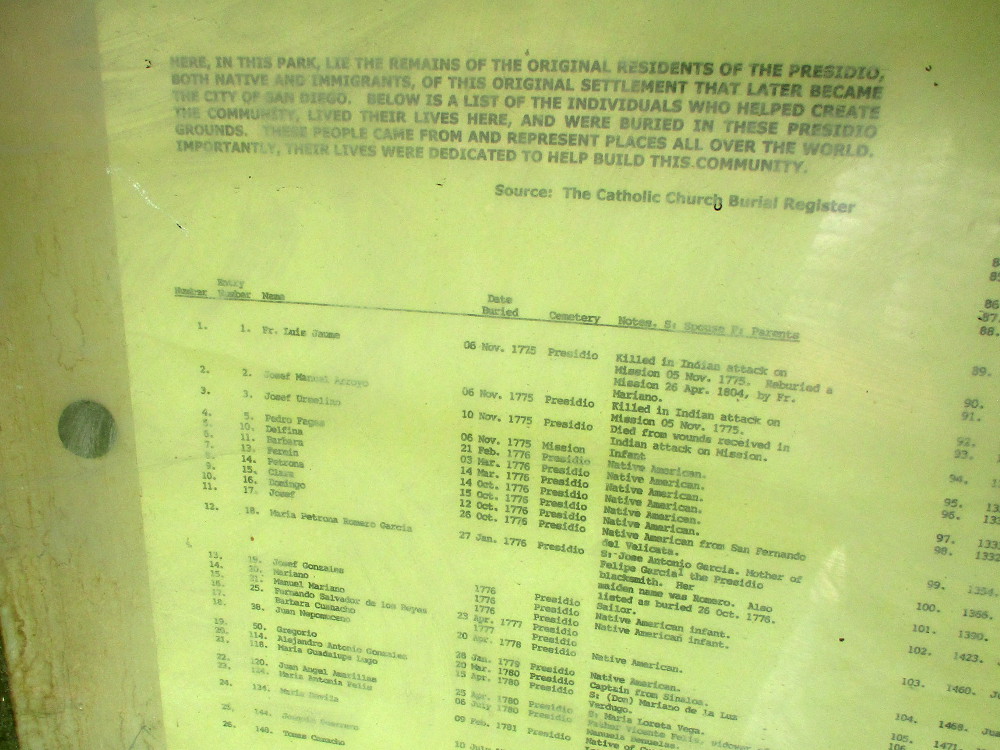
At the corner of the main visitor’s parking lot one can find an historical marker. On the rear of a nearby kiosk is a faded Burial Register.
SAN DIEGO PRESIDIO SITE
SOLDIERS, SAILOR, INDIANS, AND FRANCISCAN MISSIONARIES FROM NEW SPAIN OCCUPIED THE LAND AT PRESIDIO HILL ON MAY 17, 1769 AS A MILITARY OUTPOST. TWO MONTHS LATER FR. JUNIPERO SERRA ESTABLISHED THE FIRST SAN DIEGO MISSION ON PRESIDIO HILL. OFFICIALLY PROCLAIMED A SPANISH PRESIDIO ON JANUARY 1, 1774, THE FORTRESS WAS LATER OCCUPIED BY A SUCCESSION OF MEXICAN FORCES. THE PRESIDIO WAS ABANDONED IN 1837 AFTER SAN DIEGO BECAME A PUEBLO.
CALIFORNIA REGISTERED HISTORICAL LAND MARK NO. 59
HERE, IN THIS PARK, LIE THE REMAINS OF THE ORIGINAL RESIDENTS OF THE PRESIDIO, BOTH NATIVE AND IMMIGRANTS, OF THIS ORIGINAL SETTLEMENT THAT LATER BECAME THE CITY OF SAN DIEGO. BELOW IS A LIST OF THE INDIVIDUALS WHO HELPED CREATE THE COMMUNITY, LIVED THEIR LIVES HERE, AND WERE BURIED IN THESE PRESIDIO GROUNDS. THESE PEOPLE CAME FROM AND REPRESENT PLACES ALL OVER THE WORLD. IMPORTANTLY, THEIR LIVES WERE DEDICATED TO HELP BUILD THIS COMMUNITY.
Source: The Catholic Church Burial Register
During past walks, I’ve photographed other historical plaques and signs on Presidio Hill. See many of them here and here.
…
Thanks for visiting Cool San Diego Sights!
I post new blogs pretty often. If you like discovering new things, bookmark coolsandiegosights.com and swing on by occasionally!
I live in downtown San Diego and love to walk around with my camera! You can follow Cool San Diego Sights via Facebook or Twitter!
The Cervantes Festival was held today in San Diego!
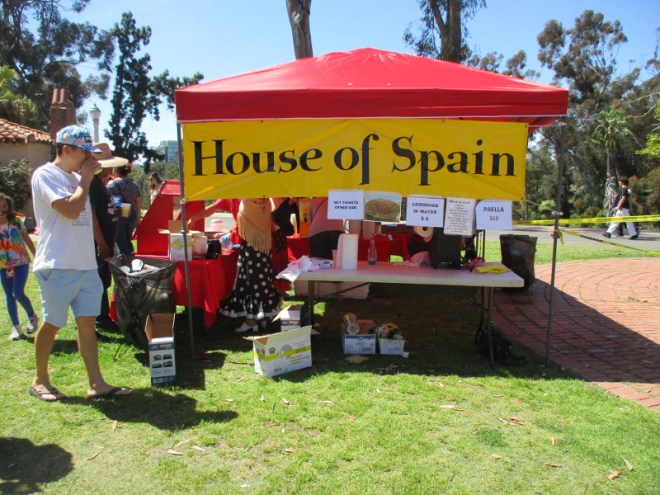
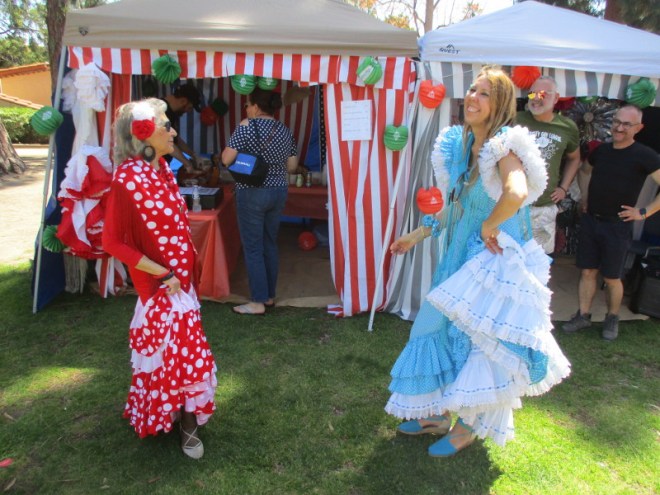
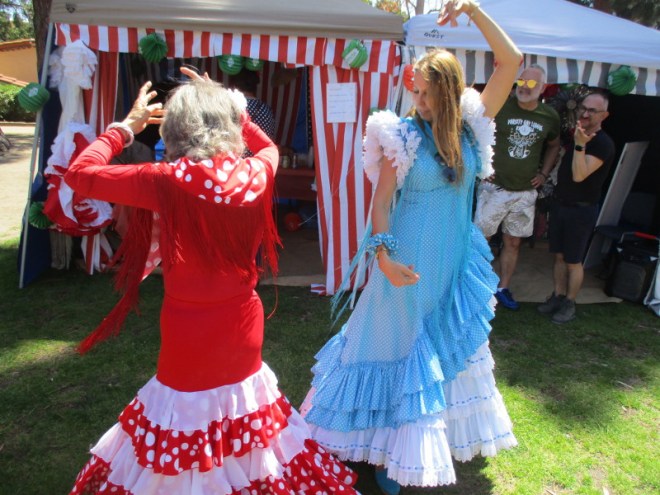
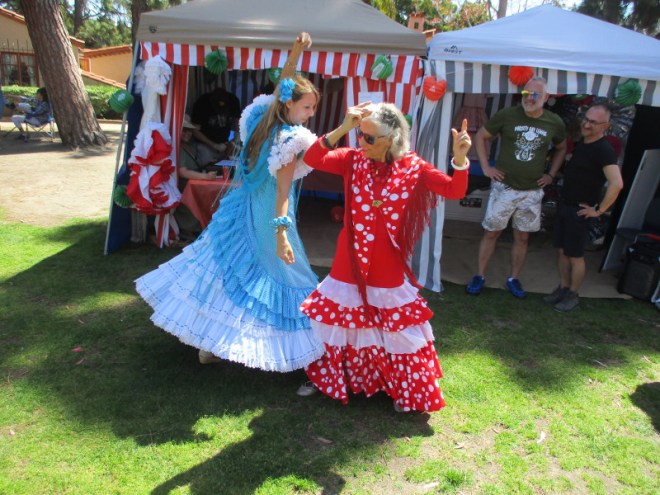
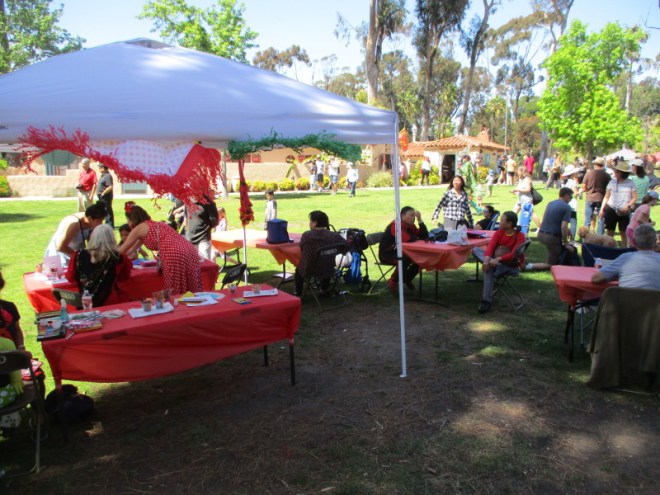
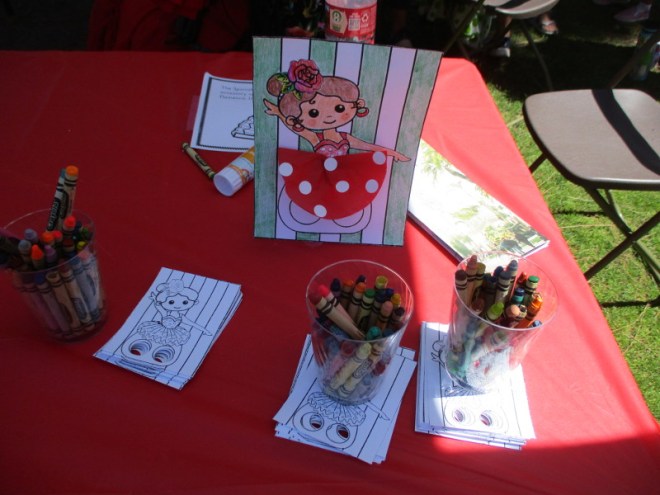
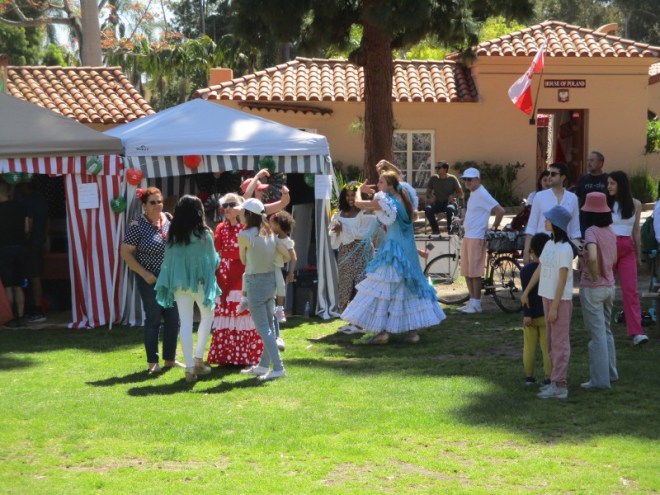
The House of Spain hosted the fun cultural event in Balboa Park, with visitors enjoying entertainment, authentic Spanish food, a kids art table and more. I’m told the festival kicked off in the morning with young people reading from Cervantes’ classic novel Don Quixote.
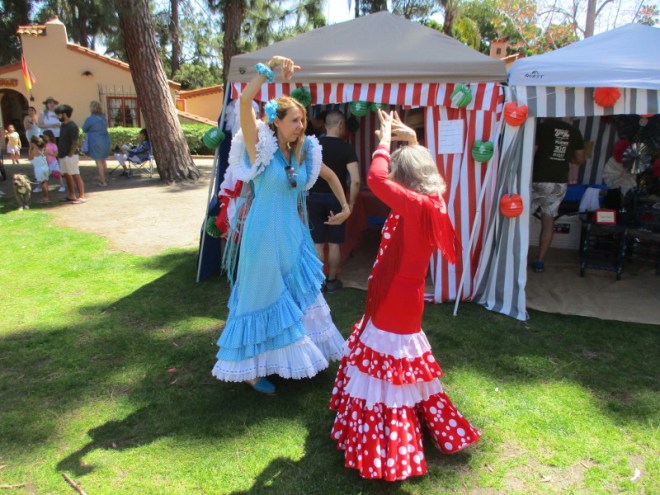
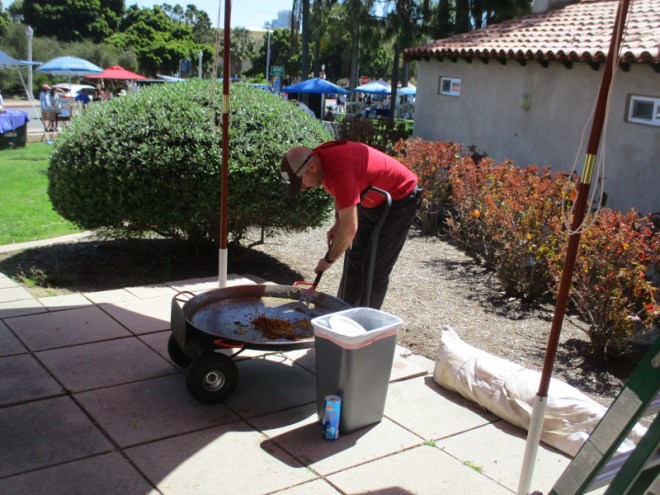
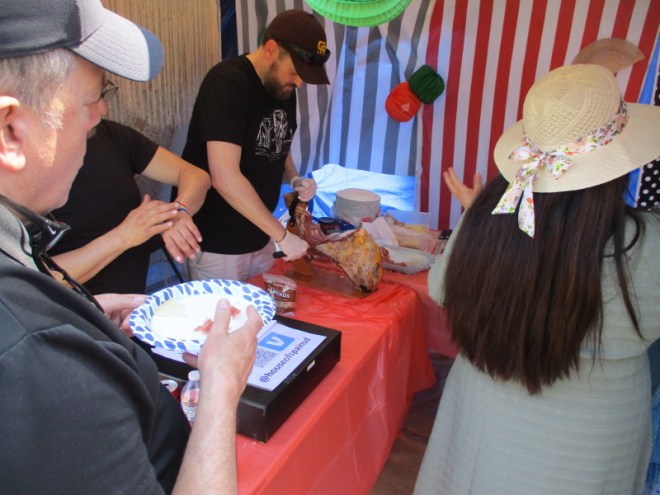
When I arrived, people were watching flamenco dance on the International Cottages lawn and devouring tasty Spanish paella, jamón serrano, Manchego cheese (made in the La Mancha region of Spain) and other gastronomic goodies.
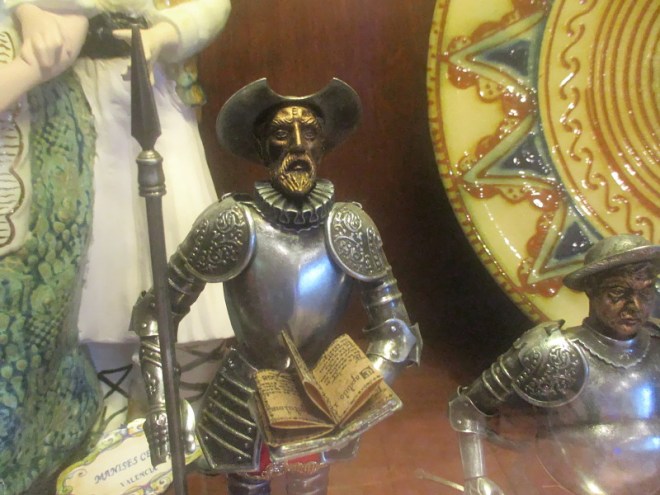
I walked about for a bit, looking for sights related to the great Spanish novelist Miguel de Cervantes Saavedra. I found small sculptures of the timeless character Don Quixote and his sidekick Sancho Panza in a display case inside the House of Spain cottage!
…
Thanks for visiting Cool San Diego Sights!
I post new blogs pretty often. If you like discovering new things, bookmark coolsandiegosights.com and swing on by occasionally!
I live in downtown San Diego and love to walk around with my camera! You can follow Cool San Diego Sights via Facebook or Twitter!
Visitors to Cabrillo National Monument might perceive an apparent contradiction.
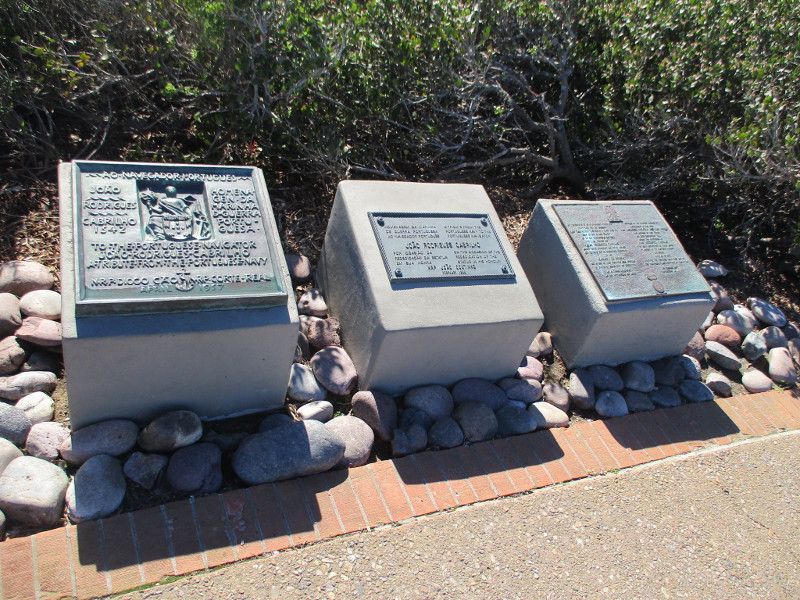
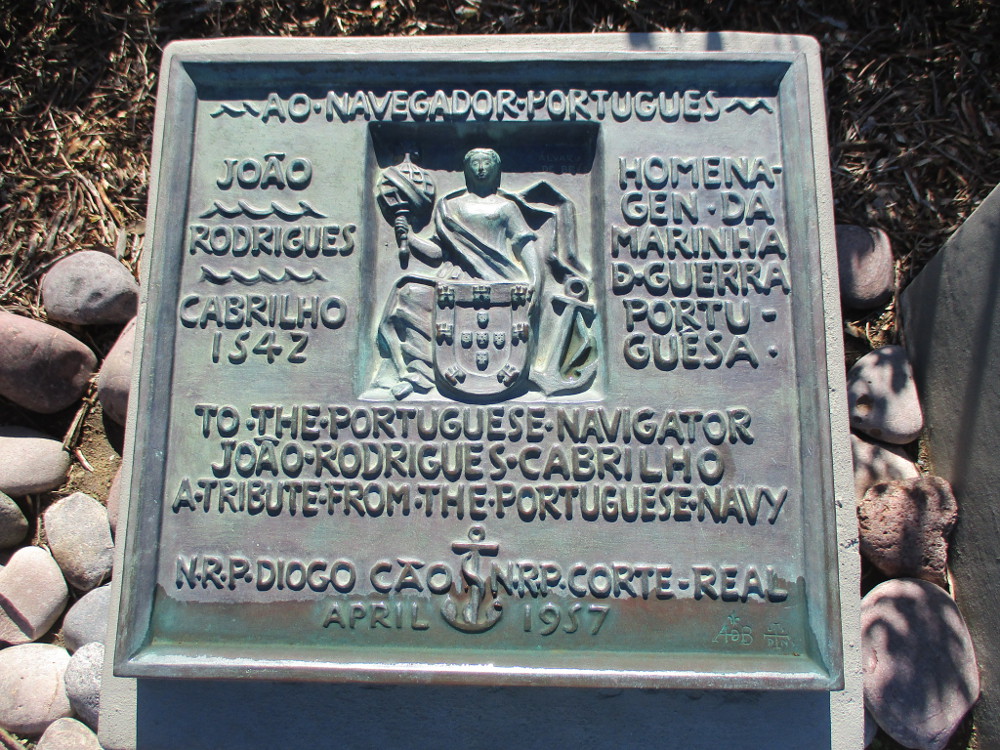
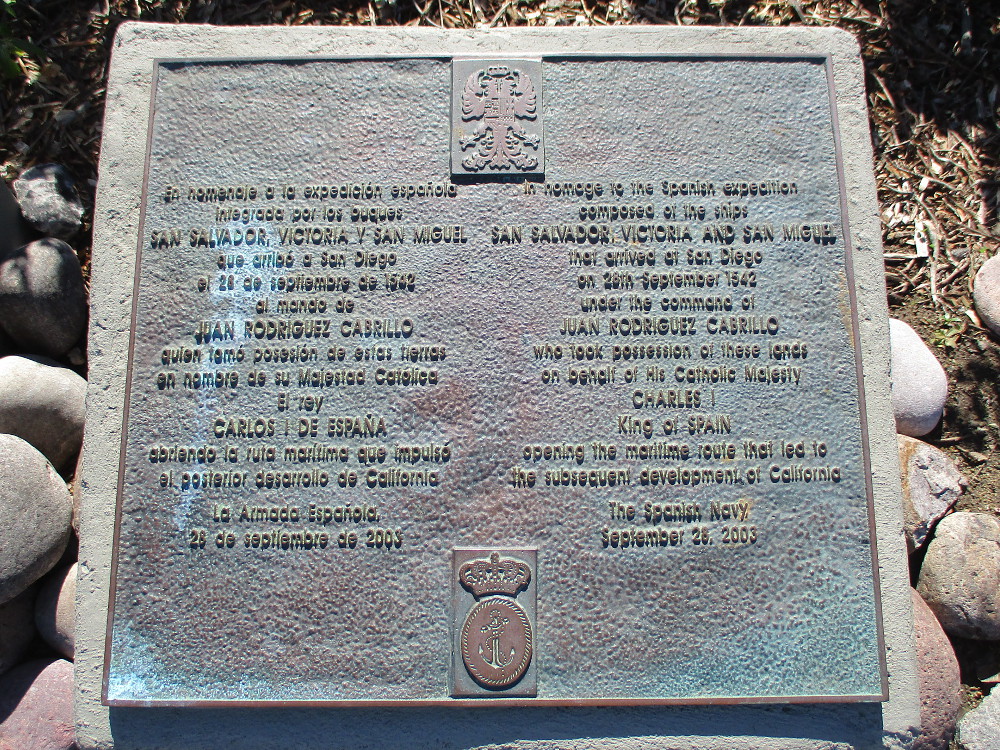
There are three plaques along the walkway that approaches the statue of Cabrillo. They seem to recognize the explorer as being both Portuguese and Spanish!
In 1615, historian Antonio de Herrera listed Cabrillo’s name as Juan Rodriguez Cabrillo Portuguese, giving him a third last name or apellido. This led many people to believe Cabrillo was Portuguese. In 2015 a researcher discovered evidence that Cabrillo said he was a native of Spain…
…(the) historian stumbled across Cabrillo’s name in this legal document dated February 12, 1532. In it, Cabrillo identifies himself as “a native of Palma de Micer Gilio,” now Palma del Rio in Cordoba, Spain.
A Viceroy of New Spain, Antonio de Mendoza, selected Cabrillo to lead an exploration of the Pacific coast. Cabrillo sailed into San Diego harbor under the Spanish flag aboard the San Salvador.
San Diego held the first Cabrillo Festival in 1892. Members of the Portuguese community in San Diego have been supporting Cabrillo National Monument since the 1930s…
TO THE PORTUGUESE NAVIGATOR JOAO RODRIGUES CABRILHO – A TRIBUTE FROM THE PORTUGUESE NAVY – APRIL 1957A TRIBUTE FROM THE PORTUGUESE NAVY TO THE PORTUGUESE NAVIGATOR – JOAO RODRIGUES CABRILHO – ON THE OCCASION OF THE REDEDICATION OF THE STATUE IN HIS HONOUR – FEBRUARY 1988In homage to the Spanish expedition composed of the ships SAN SAVADOR, VICTORIA AND SAN MIGUEL that arrived at San Diego on 28th September 1542 under the command of JUAN RODRIGUEZ CABRILLO who took possession of these lands on behalf of His Catholic Majesty CHARLES I King of SPAIN opening the maritime route that led to the subsequent development of California – The Spanish Navy – September 28, 2003
…
Thanks for visiting Cool San Diego Sights!
I post new blogs pretty often. If you like discovering new things, bookmark coolsandiegosights.com and swing on by occasionally!
I live in downtown San Diego and love to walk around with my camera! You can follow Cool San Diego Sights via Facebook or Twitter!
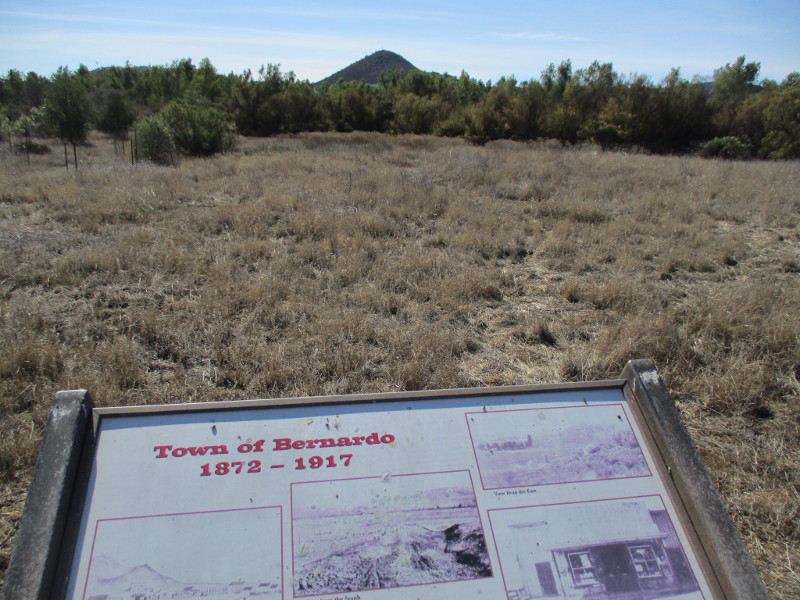
Did you know there used to be a town named Bernardo in what is now San Diego’s North County?
Bernardo was a tiny town between Escondido and Rancho Bernardo, where Lake Hodges is located today.
The creation of Lake Hodges in 1918, accomplished by damming the Bernardo River (now called San Dieguito River), put a definite end to little Bernardo. But today people hiking the Mule Hill Trail can see several information signs that recall the history of the now vanished town.
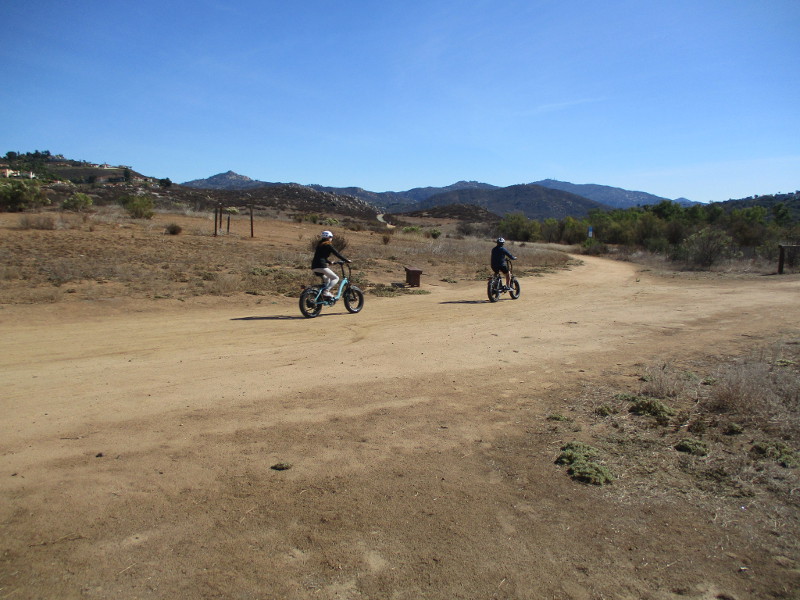
If you’d like to walk down the Mule Hill Trail yourself, take Interstate 15 to Bear Valley Parkway at the south end of Escondido. The wide dirt trail can be found about a quarter mile east of the freeway, leading south. (You’ll see it right before Beethoven Drive.)
Before reaching the site of old Bernardo, this very easy trail passes Mule Hill, where a skirmish took place during the Mexican-American War. I’ll be blogging about that coming up.
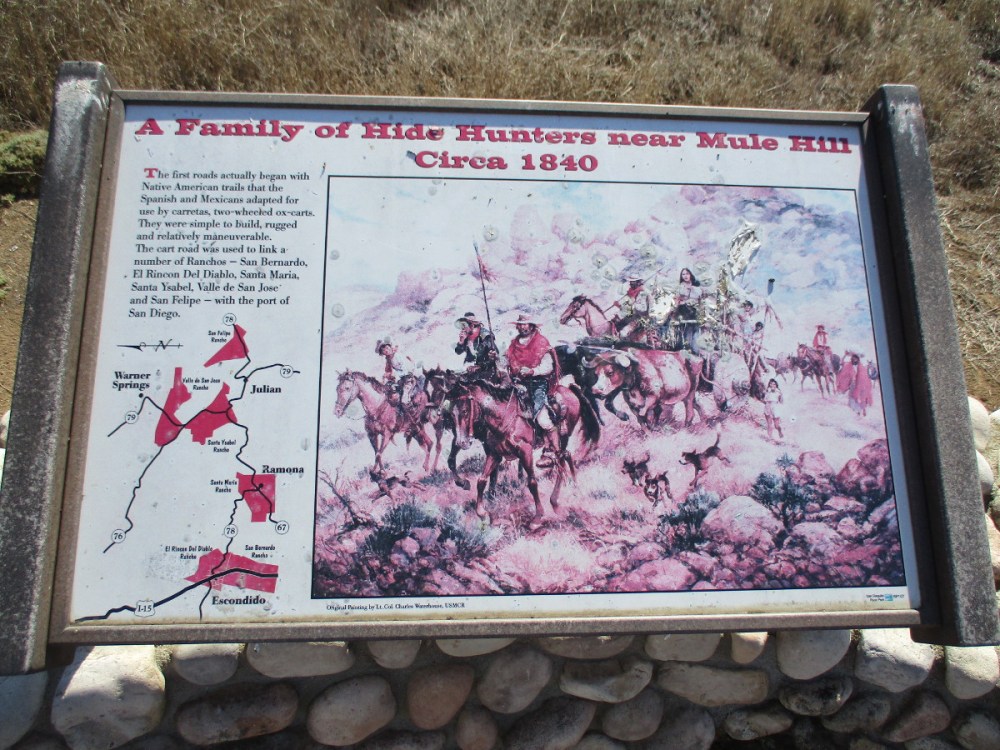
Cart roads used by the Spanish and Mexicans before the appearance of Bernardo linked a number of Ranchos–San Bernardo, El Rincon, Del Diablo, Santa Maria, Santa Ysabel, Valle de San Jose and San Felipe–with the port of San Diego.
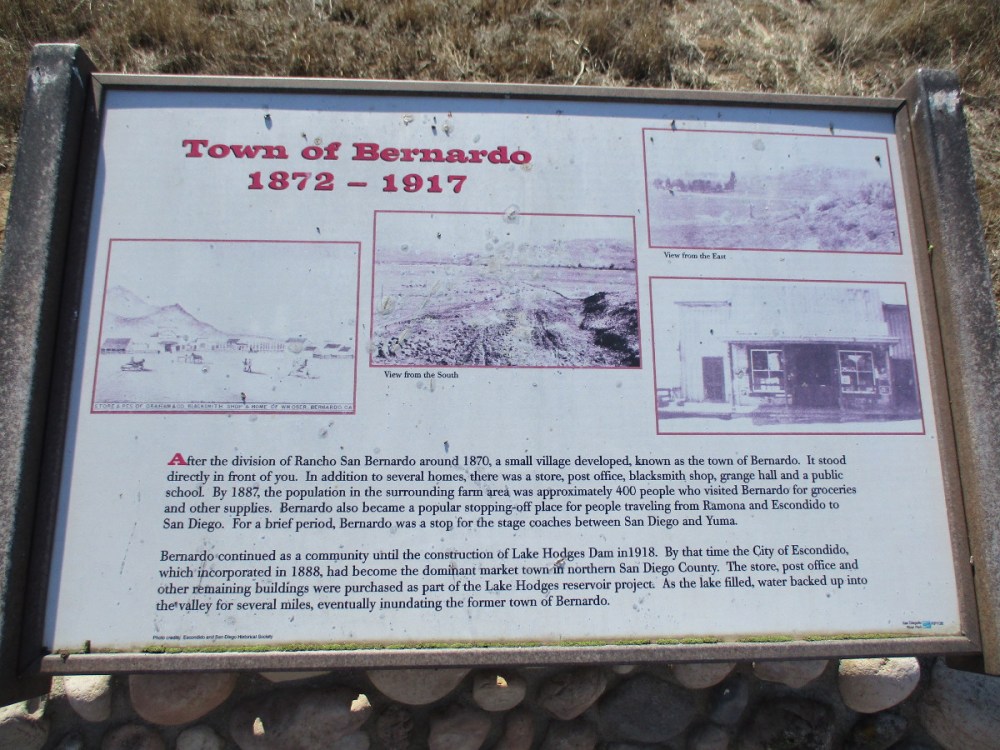
After the division of Rancho San Bernardo around 1870, a small village developed, known as the town of Bernardo. In addition to several houses, there was a store, post office, blacksmith shop, grange hall and public school. By 1887, the population in the surrounding farm area was approximately 400 people…
For a brief period, Bernardo was a stop for the stagecoaches between San Diego and Yuma.
The San Diego to Yuma Road was an overland trail in the mid-1800s. It was used by the Army of the West in 1846 and gold rush immigrants from 1848 through 1851. It passed through tiny Bernardo as it led northeast from Peñasquitos to Ramona, eventually connecting with the Butterfield Stage Route at Warner Springs.
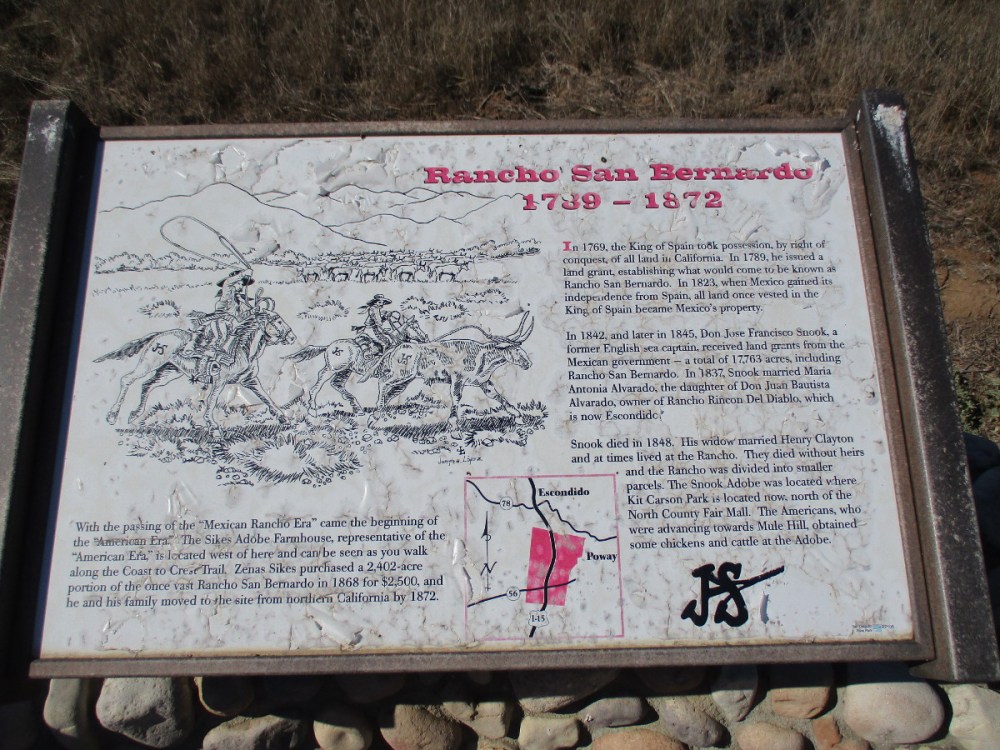
The history of Rancho San Bernardo began in the late 18th century when the King of Spain took possession of all land in California. In 1823, when Mexico gained its independence, the land became Mexico’s property. Don Jose Francisco Snook, a former English sea captain, received land grants from the Mexican government, including Rancho San Bernardo…
With the passing of the Mexican rancho era came the beginning of the American era, which is represented by the nearby Sikes Adobe Farmhouse. The restored farmhouse is a historic site that one can visit a short distance down the Coast to Crest Trail. (The Mule Hill Trail is a segment of the Coast to Crest Trail.)
…
Thanks for visiting Cool San Diego Sights!
I post new blogs pretty often. If you like discovering new things, bookmark coolsandiegosights.com and swing on by occasionally!
I live in downtown San Diego and love to walk around with my camera! You can follow Cool San Diego Sights via Facebook or Twitter!
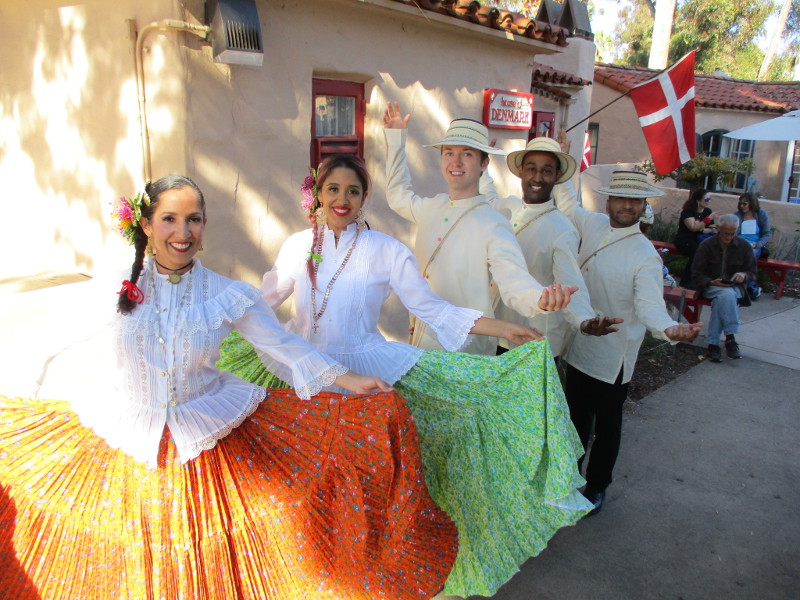
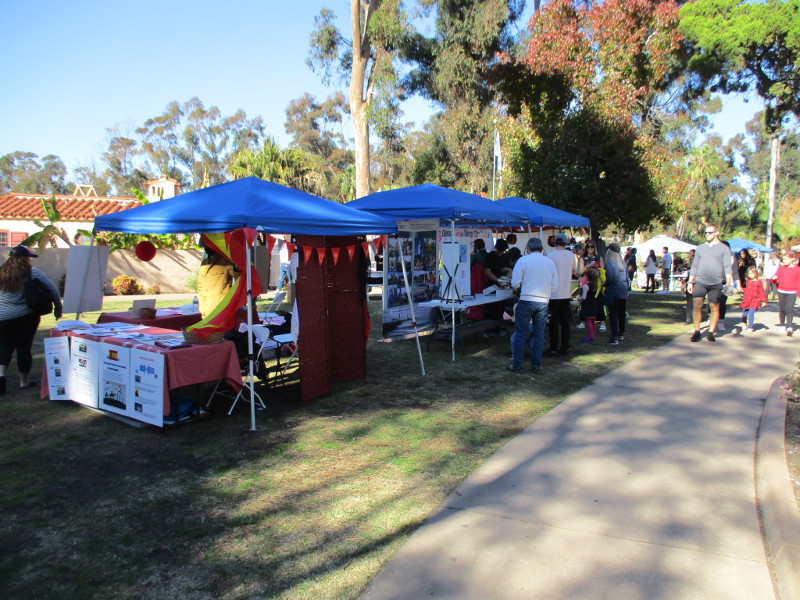
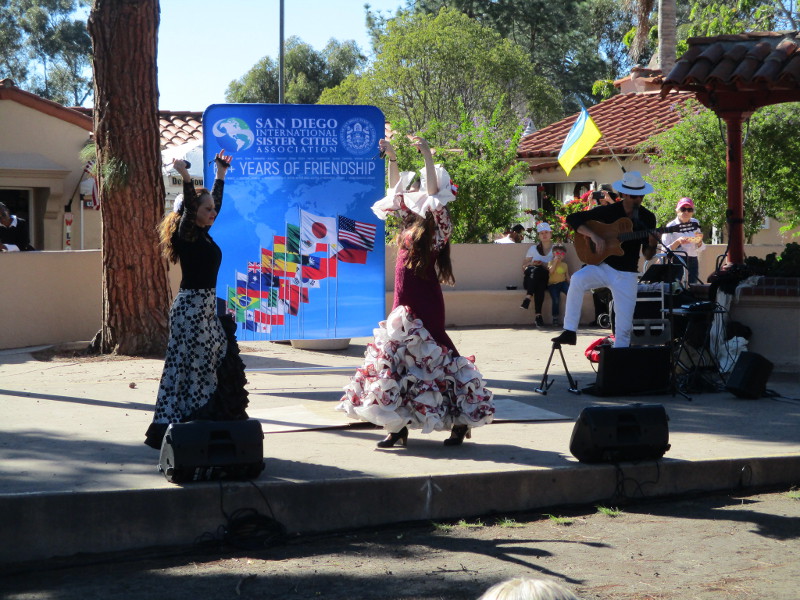
A fun special event was held today at the House of Pacific Relations International Cottages in Balboa Park. It was the San Diego Sister Cities 65 Year Celebration!
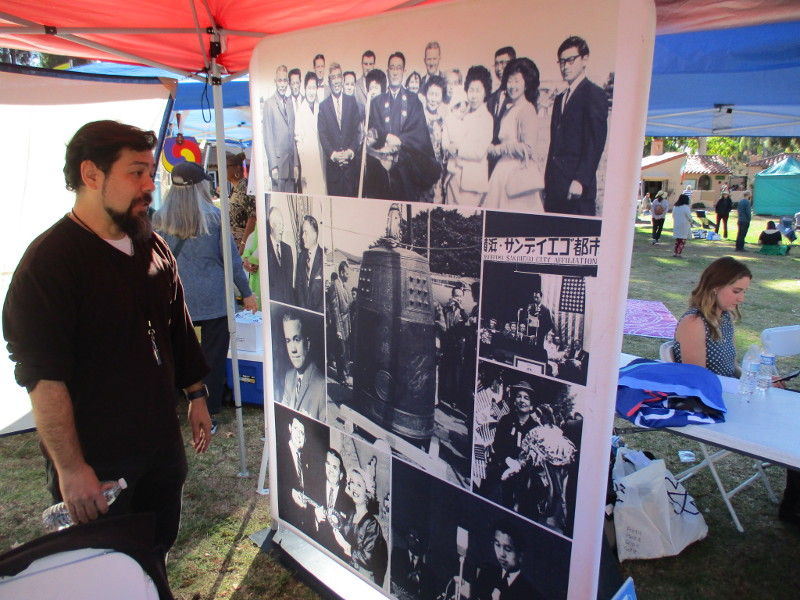
Music, food and dance was provided by various hosts, who represented some of San Diego’s sixteen Sister Cities. San Diego’s oldest Sister City partnership is with Yokohama, Japan. That relationship was established 65 years ago!
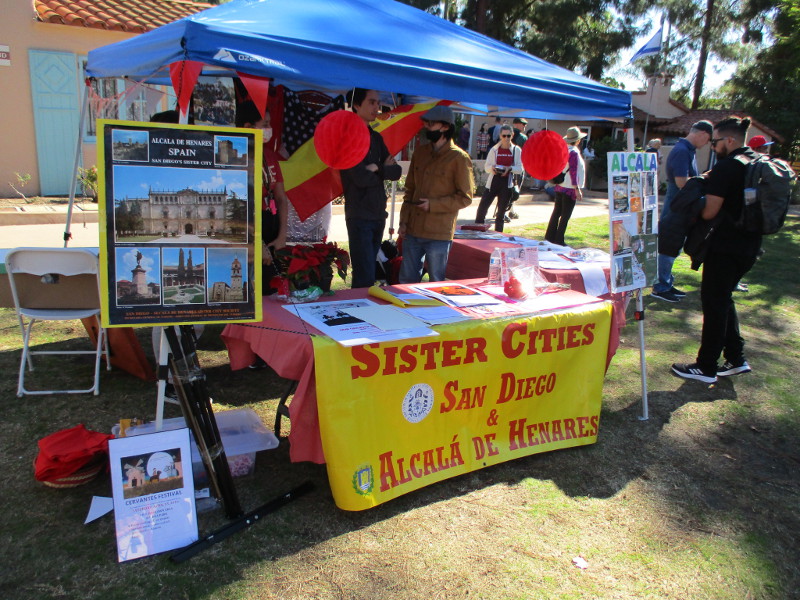
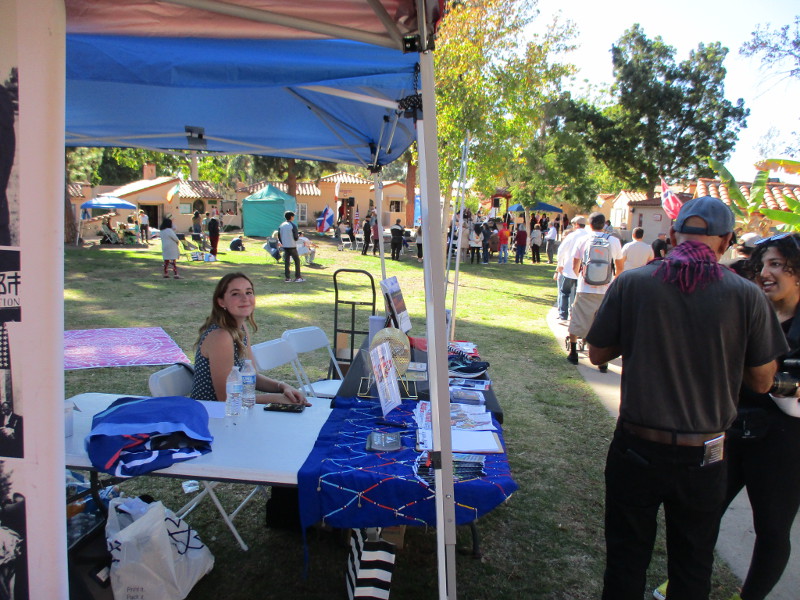
At information tables visitors to the event could learn about the history of different Sister Cities, and see how mutual programs, such as student and cultural exchanges, help create peace and understanding between nations.
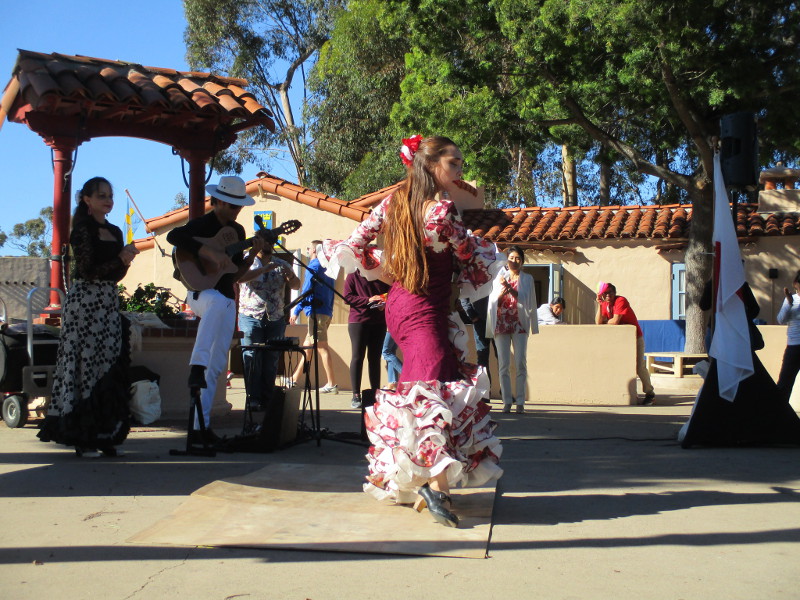
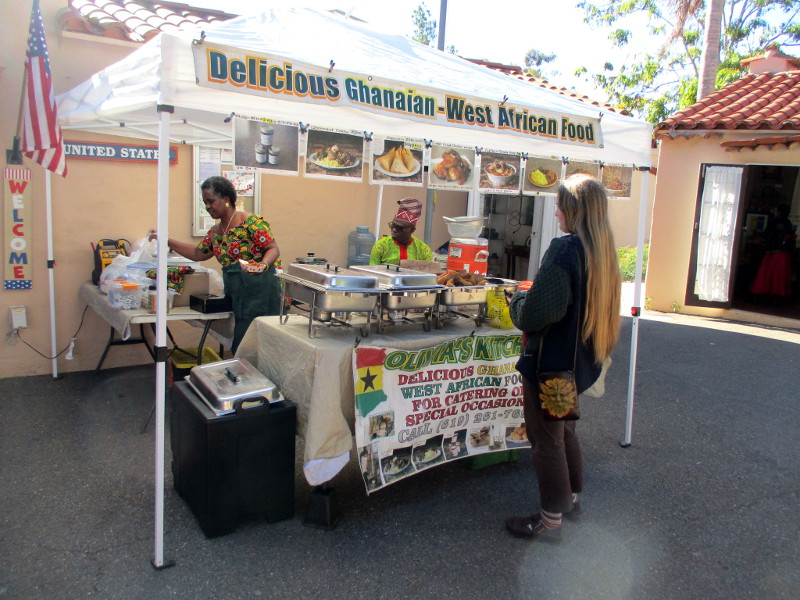
I stayed for a bit and watched several dances while eating very tasty West African Ghana sambusa. I also asked a few questions at the tables, and learned much!
(By the way, there are signs in downtown’s Civic Center Plaza pointing to San Diego’s Sister Cities. I took photos of the signs years ago and posted them here!)
Alcalá de Henares, Spain has been a San Diego Sister City since 1982. It is the birthplace of Cervantes, author of Don Quixote!Tema, Ghana, has been Sister City to San Diego since 1976. The “Peace and Unity Wall” mosaic mural in Tema was made from supplies donated from San Diego.Crafts and cultural artifacts from Ghana.Jeonju, South Korea has been a San Diego Sister City since 1983. The San Diego-Jeonju Society introduces local students to Korean culture.Did you know Carlsbad, California has two Sister Cities? Kalovy Vary (Karlsbad), Czech Republic’s famed mineral springs inspired the naming of Carlsbad, whose artesian mineral water is nearly identical. Futtsu, Japan is the other Sister City.Images from the long history of San Diego and Yokohama, Japan’s deep Sister City ties. In the center is the Japanese Friendship Bell, which now stands on Shelter Island. See more about it here!Where there is friendship, there is much hope.A nice smile!Flamenco dancing to guitar celebrates Spain’s culture.Lunch! Yummy!Dancers representing Panama take the stage!
…
Thank you for visiting Cool San Diego Sights!
I post new blogs pretty often, so you might want to bookmark coolsandiegosights.com and check back from time to time.
You can explore Cool San Diego Sights by using the search box on this website’s sidebar. Or click a tag! There’s a lot of stuff to share and enjoy!
I live in downtown San Diego and love to walk around with my camera! You can follow Cool San Diego Sights via Facebook or Twitter!

















 Cool San Diego Sights!