March of Transportation mural in Balboa Park.

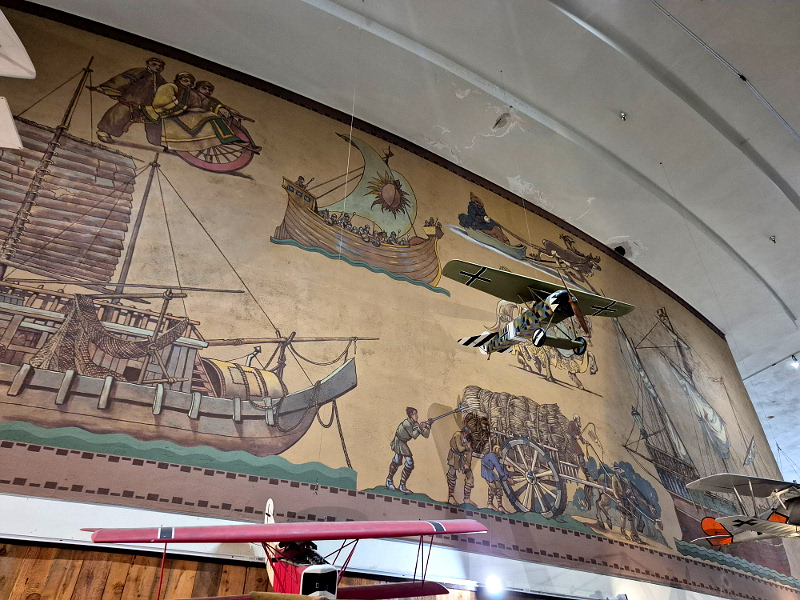
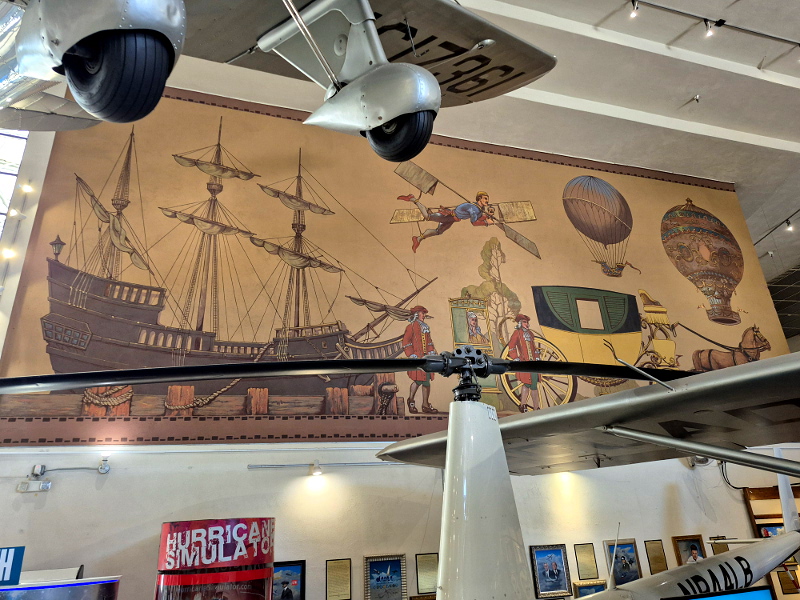
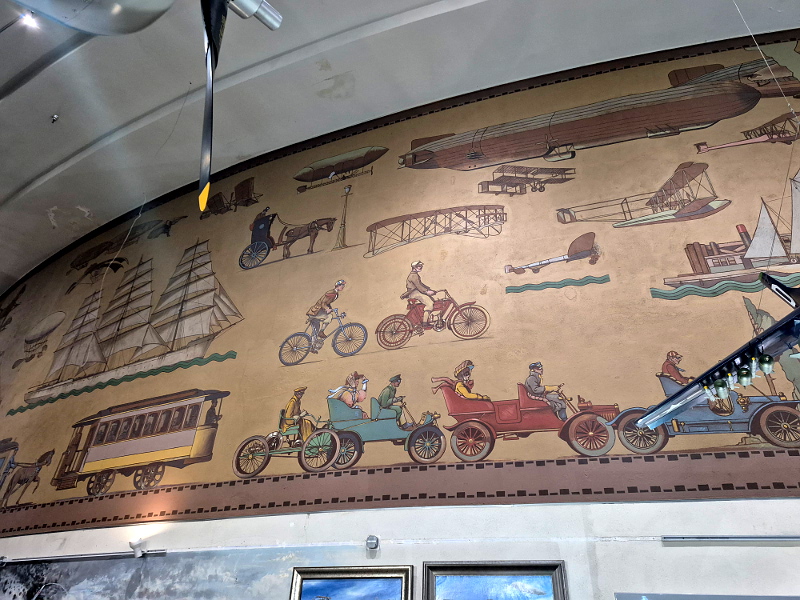
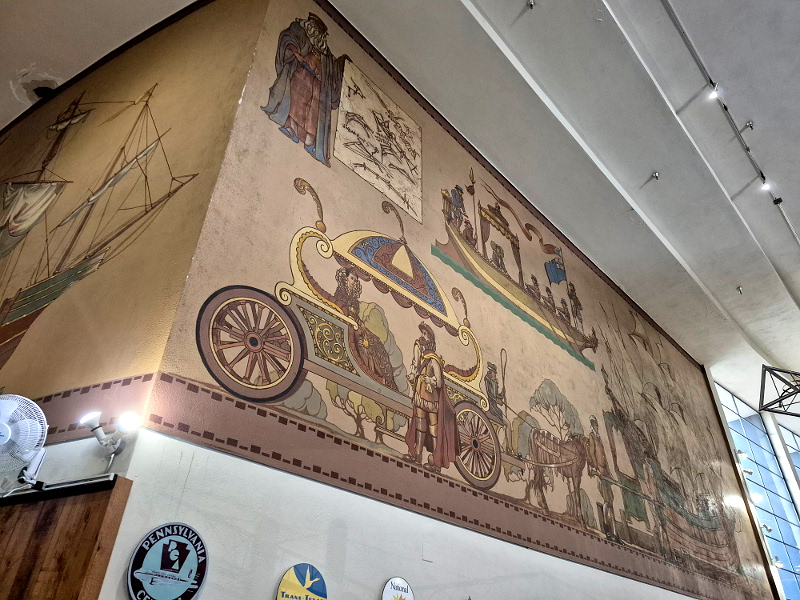
Visitors inside the world-famous San Diego Air & Space Museum in Balboa Park should look up. Not only will they see amazing aircraft exhibits suspended from the ceiling, but they might notice a very long mural painted along the museum’s circular inner wall.

The March of Transportation mural was created in 1936 for the California Pacific International Exposition. At over 9,300 square feet, it’s the largest mural of its kind found in North and South America.

Because so many cool aviation displays are jammed into the museum, I found it difficult to photograph large segments of the mural. But I’ve captured several glimpses, so you can get the idea of how the art appears.

A couple years ago I photographed the very end of the mural, which depicts futuristic forms of transportation (as conceived almost a hundred years ago). You can see those photos here.
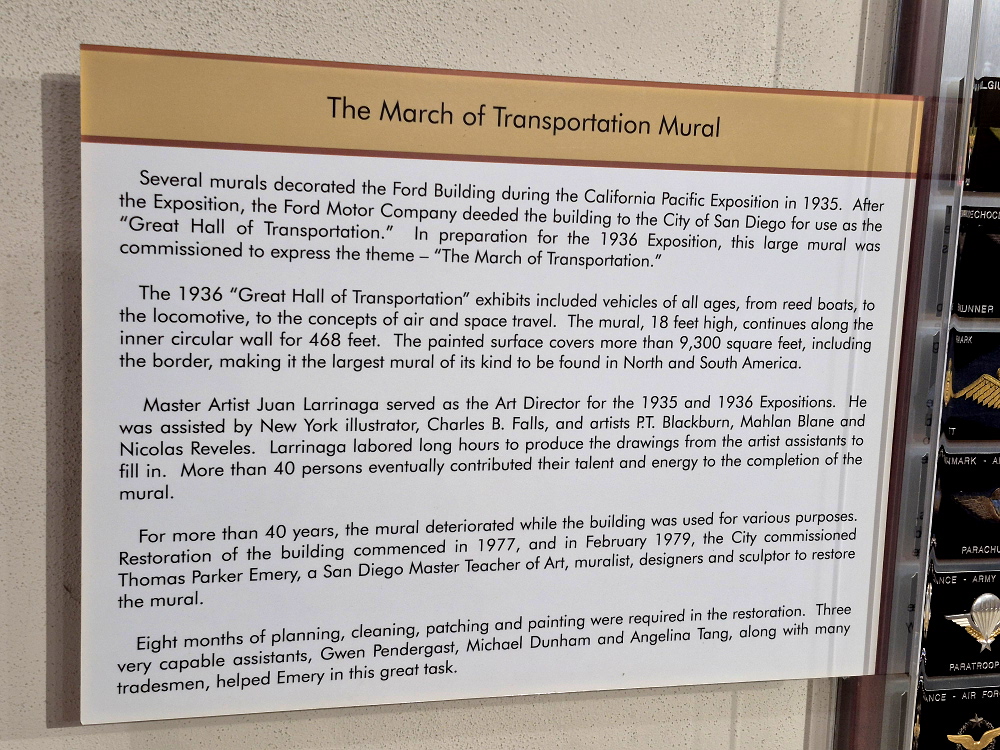
Several murals decorated the Ford Building during the California Pacific Exposition in 1935. After the Exposition, the Ford Motor Company deeded the building to the City of San Diego for use as the “Great Hall of Transportation.” In preparation for the 1936 Exposition, this large mural was commissioned to express the theme–“The March of Transportation.”

The 1936 “Great Hall of Transportation” exhibits included vehicles of all ages, from reed boats, to the locomotive, to the concepts of air and space travel. The mural, 18 feet high, continues along the inner circular wall for 468 feet…

Master Artist Juan Larrinaga served as the Art Director for the 1935 and 1936 Expositions. He was assisted by New York illustrator, Charles B. Falls, and artists P.T. Blackburn, Mahlan Blane and Nicolas Reveles. Larrinaga labored long hours to produced the drawings from the artist assistants to fill in. More than 40 persons eventually contributed their talent and energy to the completion of the mural.

After years of deterioration, the building began a restoration in 1977. In 1979 the mural, too, was restored.

While this artwork depicts world history, it is also an important part of San Diego’s uniquely rich history.

So go visit the San Diego Air & Space Museum . . . and look up!
I post new blogs pretty often. If you like discovering new things, bookmark coolsandiegosights.com and swing on by occasionally!

I live in downtown San Diego and love to walk around with my camera! You can follow Cool San Diego Sights via Facebook or X.

Feel free to share!

Unusual sights on San Diego’s Embarcadero!

Anyone walking the length of San Diego’s Embarcadero might have observed three very unusual sights today!

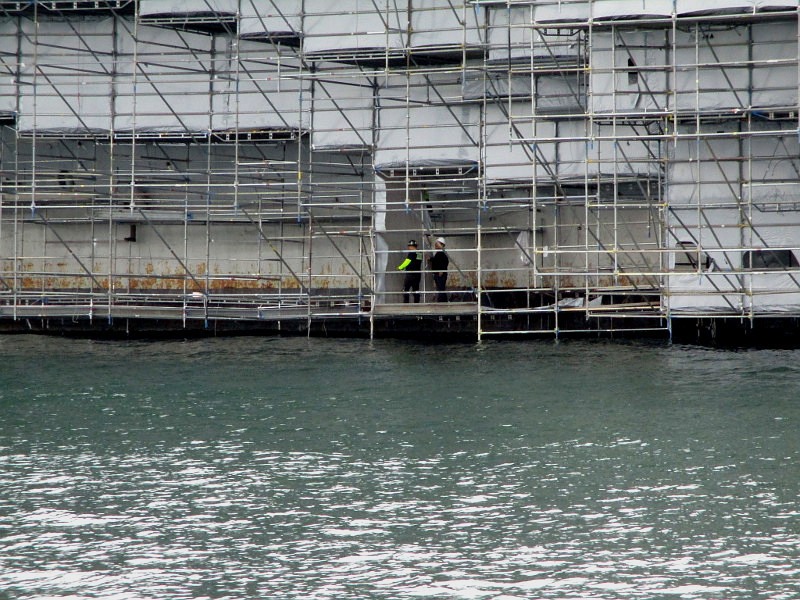
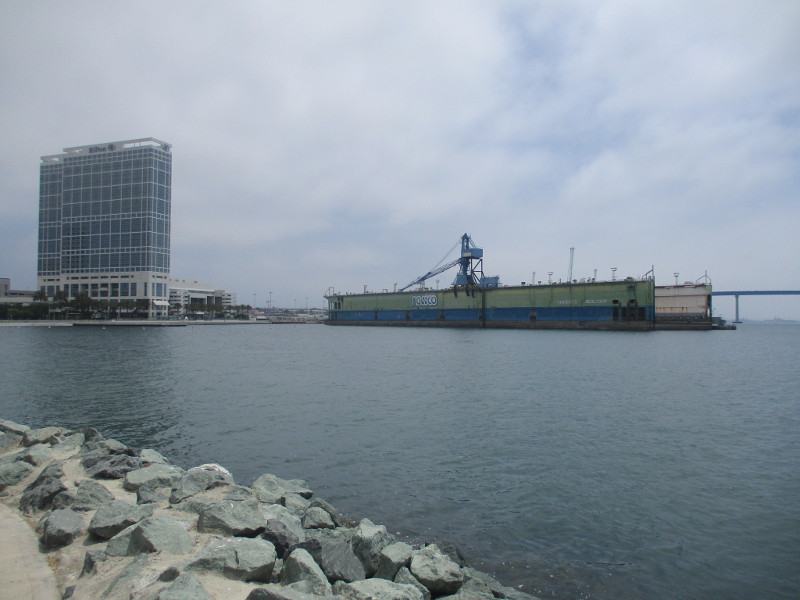
First, starting at the south end of the Embarcadero, very close to the Hilton San Diego Bayfront hotel, an immense NASSCO drydock has appeared!

This floating drydock, the NASSCO Builder, is usually stationed down at the NASSCO shipyard well south of here, in the vicinity of the Coronado Bay Bridge. It’s capable of containing very large ships. The public typically can’t get a close view of its immensity.

Today the NASSCO Builder was docked strangely at the Tenth Avenue Marine Terminal, where the Dole banana boats usually unload! Someone with the Coronado Ferry said the gigantic drydock appeared there yesterday.

The next photo was taken from Embarcadero Marina Park South…

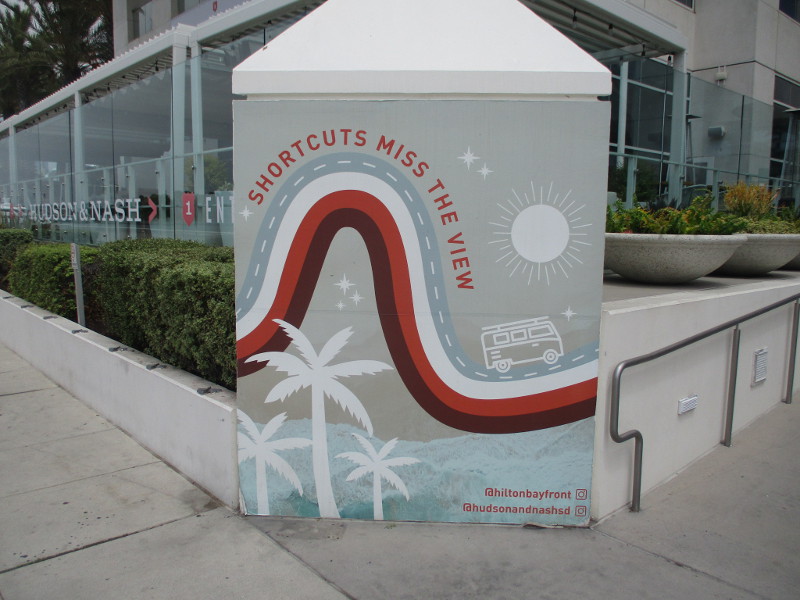
Nearby, at the Hilton, some wise words…

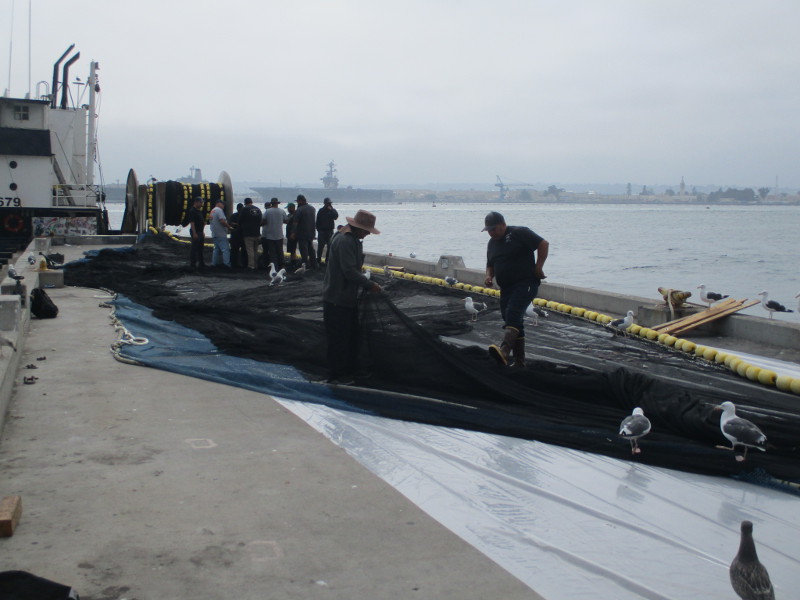
Next, I noticed some guys were repairing a purse seiner net on the pier adjacent to Seaport Village. This is seldom seen. More often, these large nets are repaired across Tuna Harbor at the longer G Street Pier.

These nets are unspooled into the ocean from purse seiners in order to catch bait fish, which are in turn used for sportfishing.

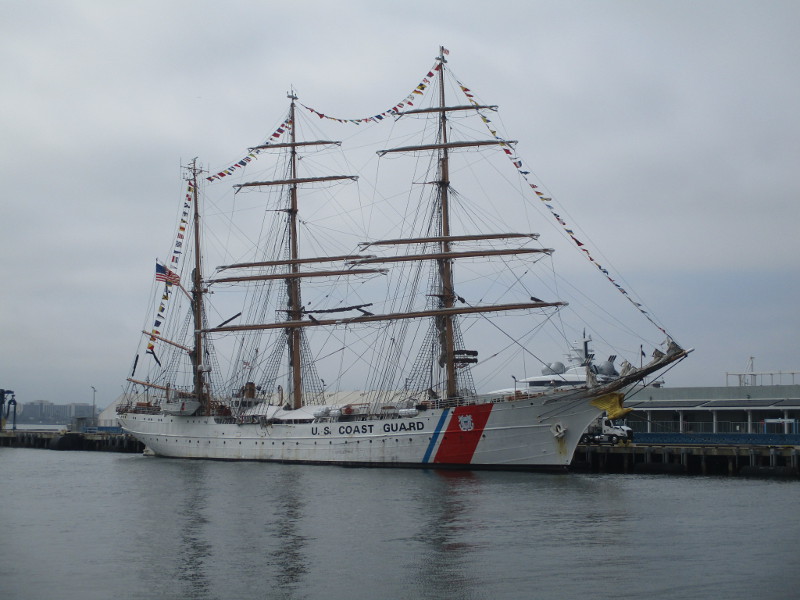
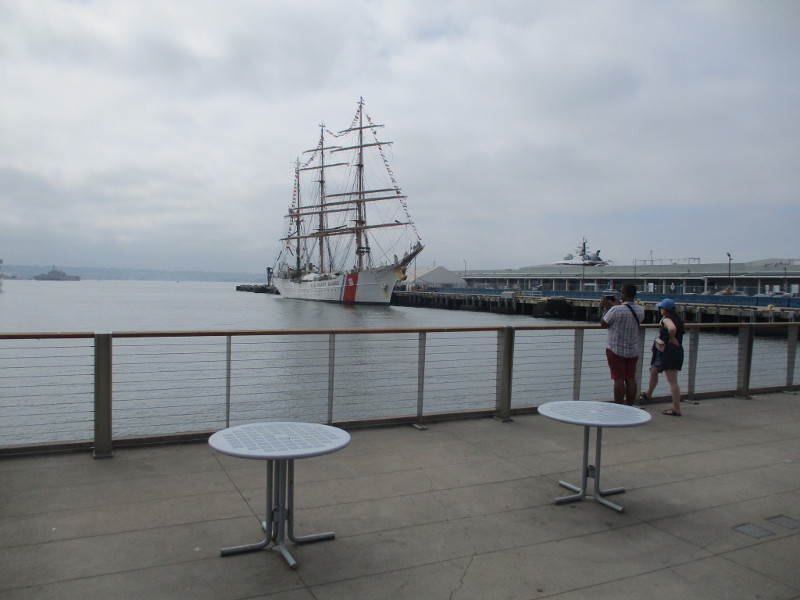
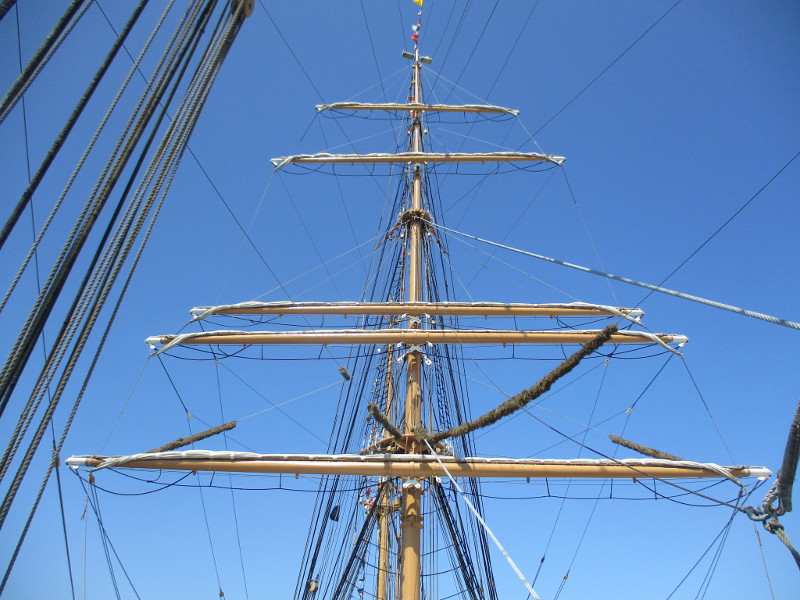
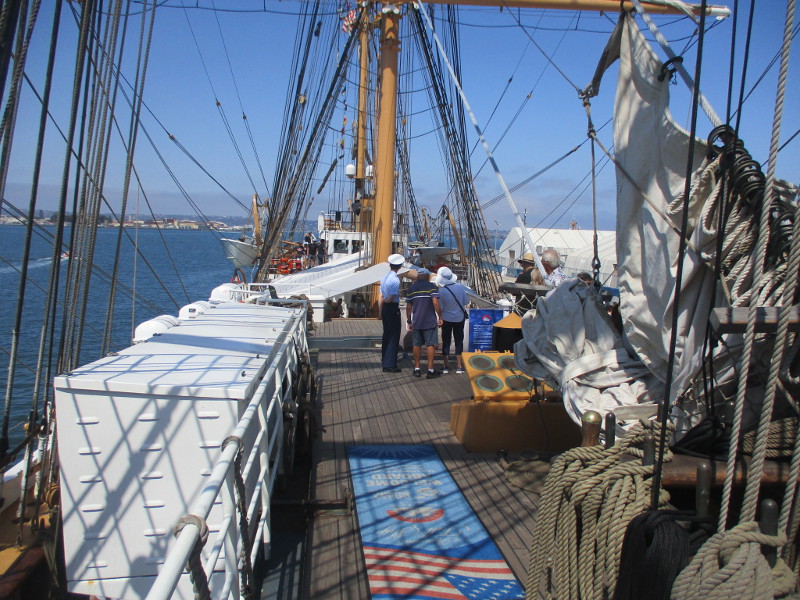
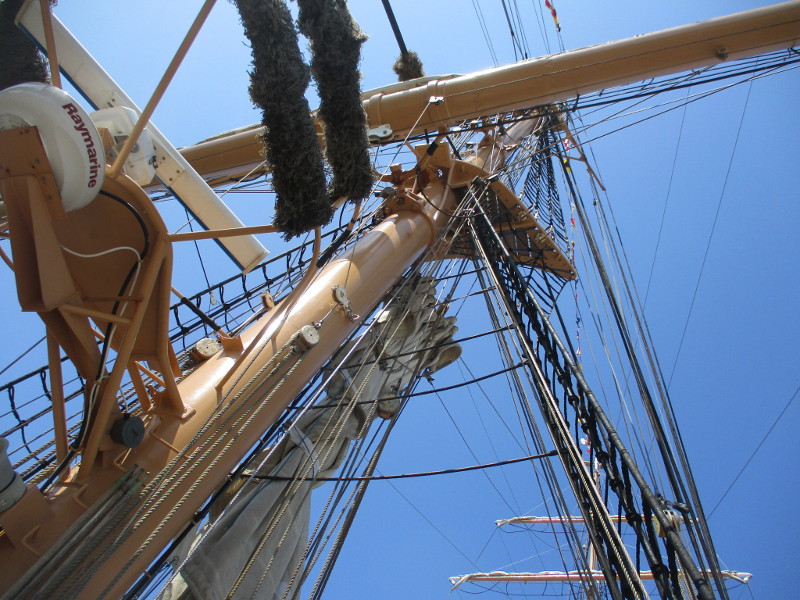
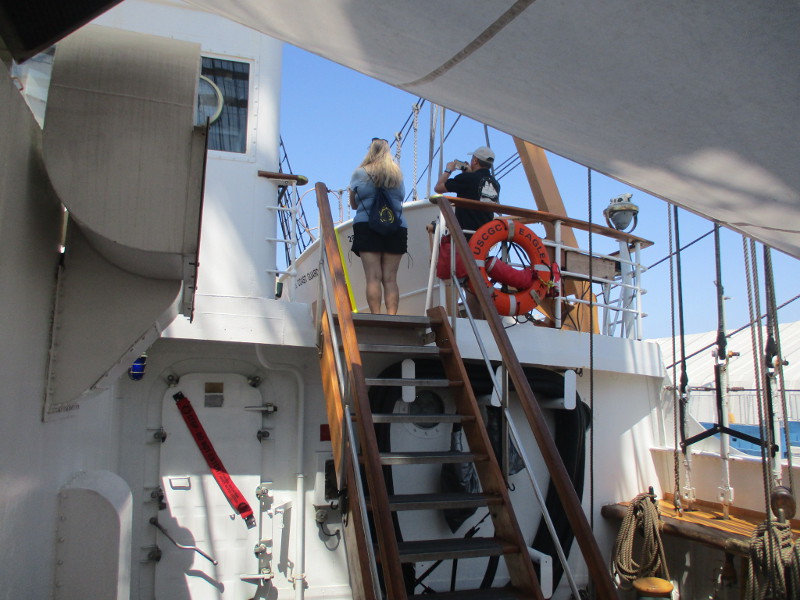
Finally, I noticed that America’s Tall Ship, the United States Coast Guard training ship USCGC Eagle, has returned to San Diego! It was out on the ocean the last few days, with future Coast Guard officers aboard, transforming themselves from young “swabs” to cadets!

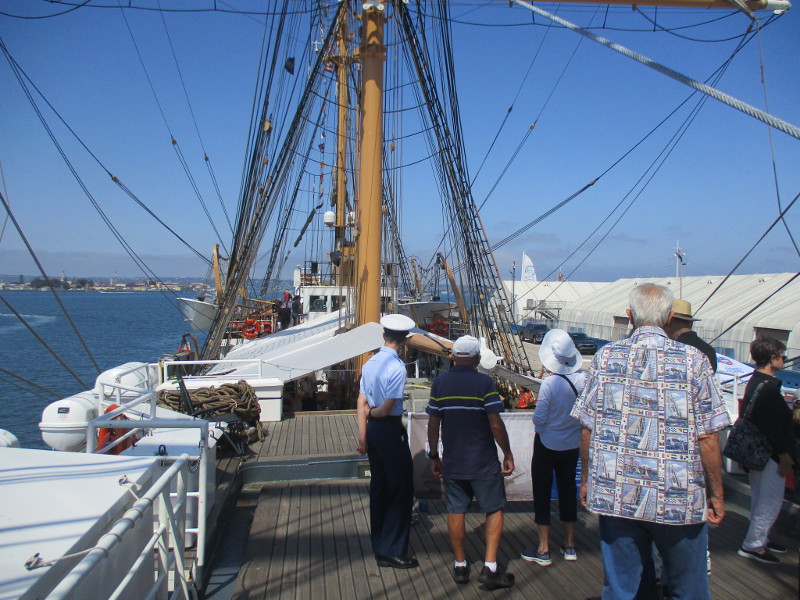
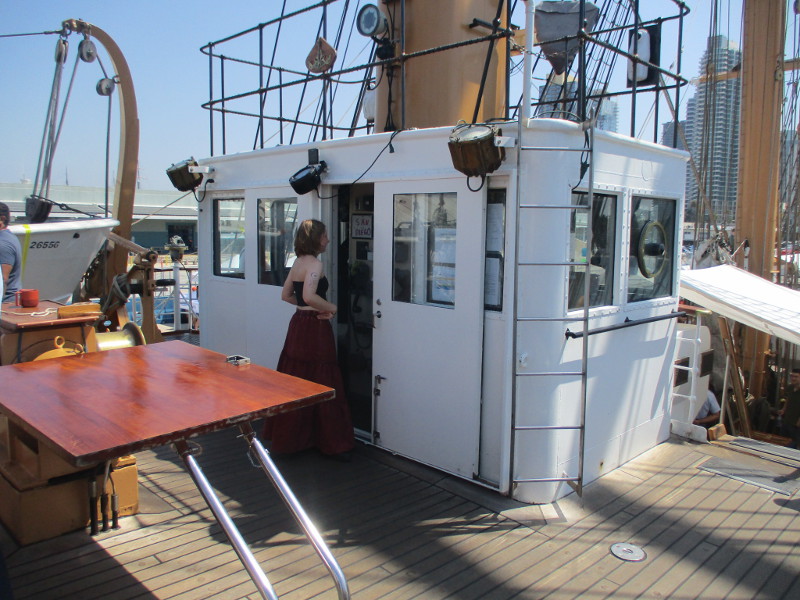
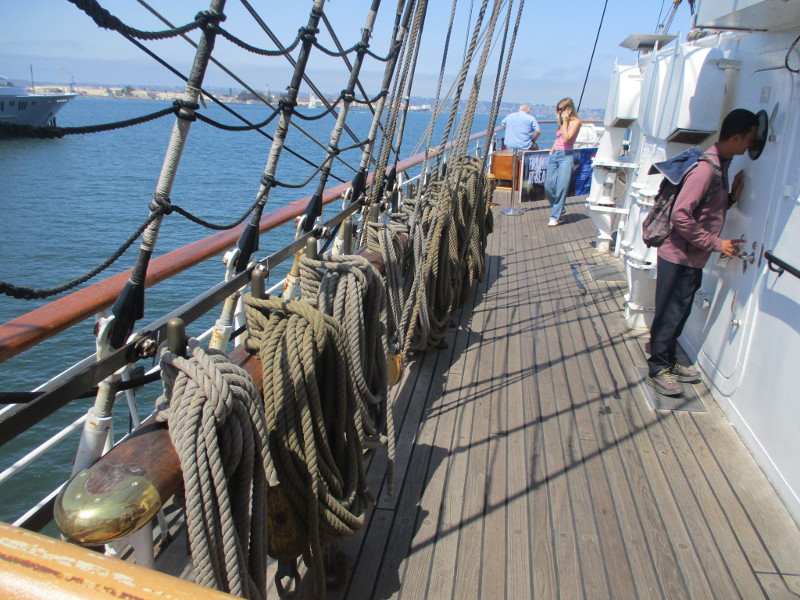
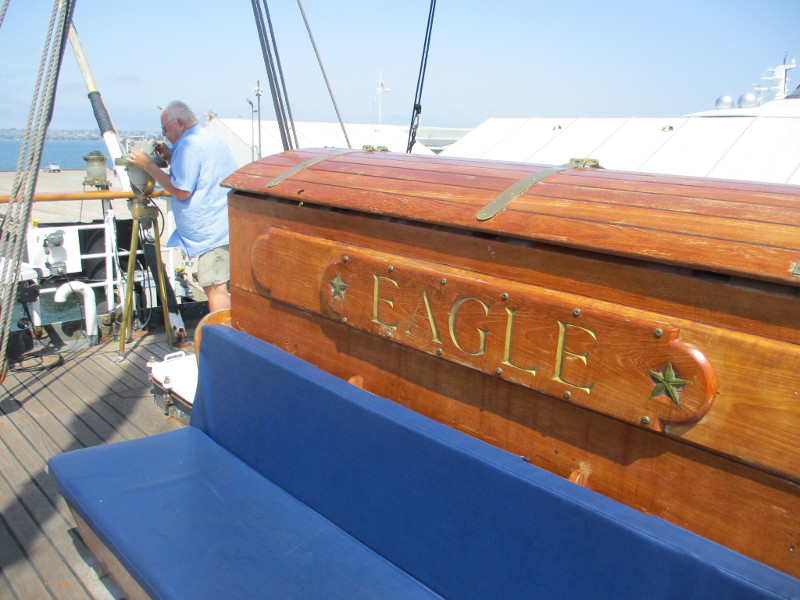
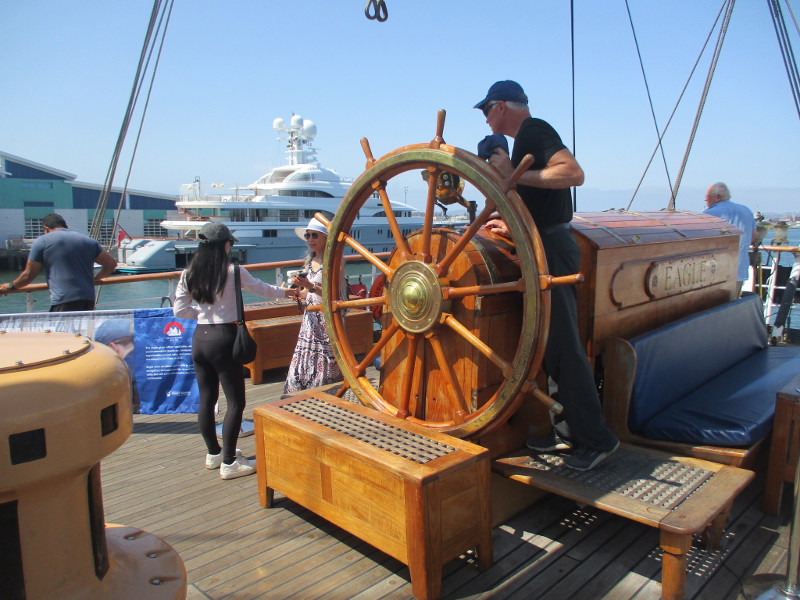
I went aboard the amazing Eagle last weekend and took these photos!

I post new blogs pretty often. If you like discovering new things, bookmark coolsandiegosights.com and swing on by occasionally!

I live in downtown San Diego and love to walk around with my camera! You can follow Cool San Diego Sights via Facebook or X.

Feel free to share!
Photos aboard Coast Guard tall ship Eagle!

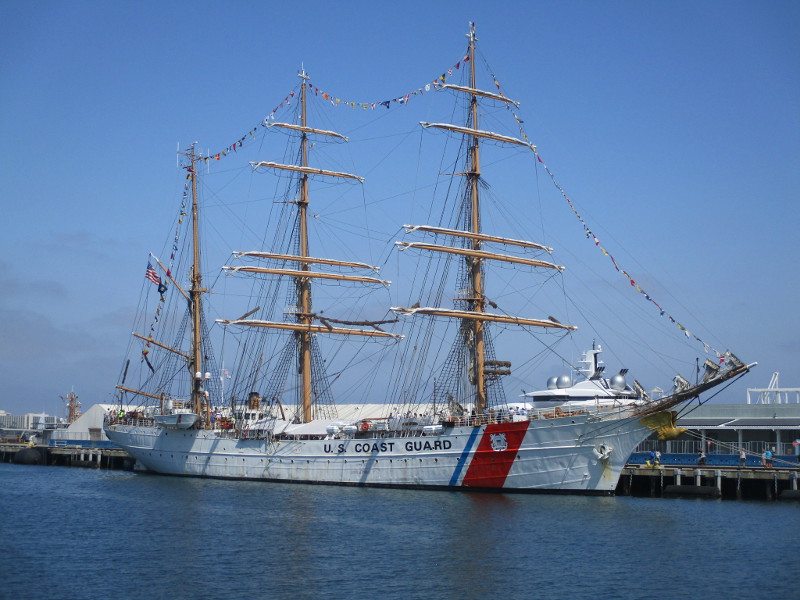
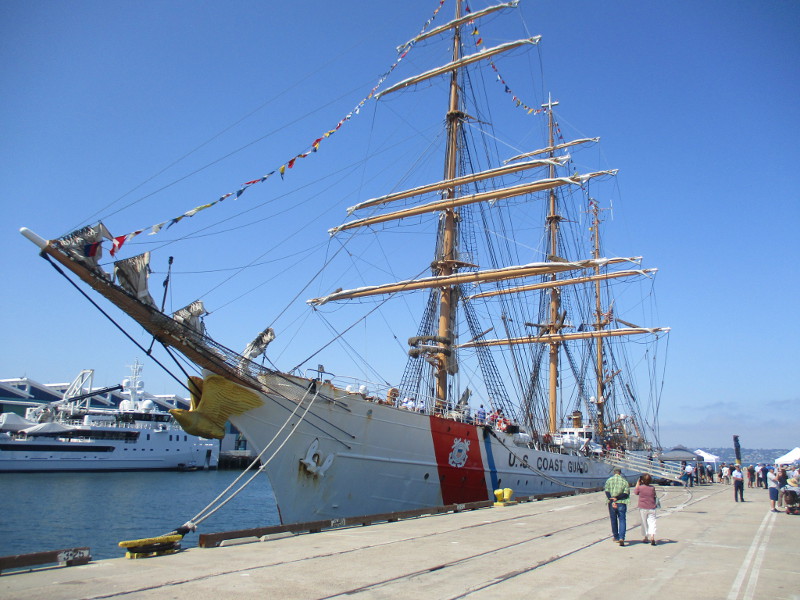
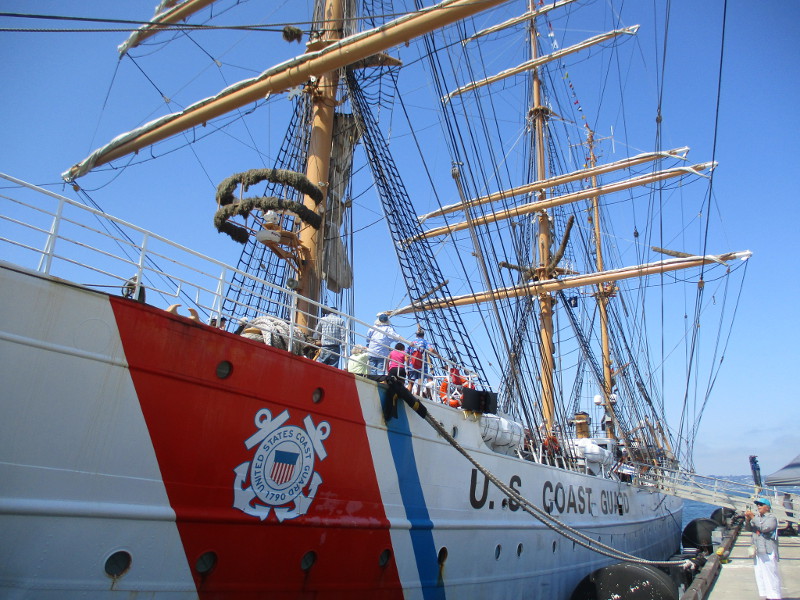
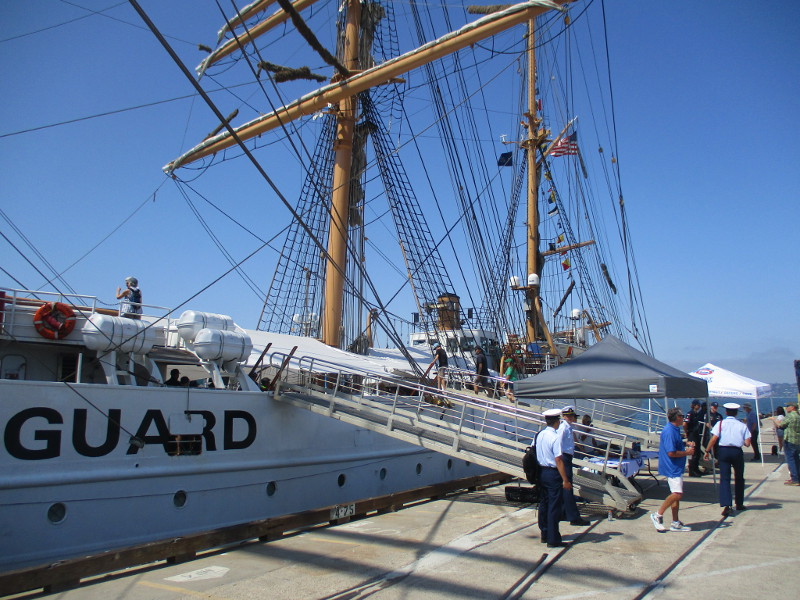
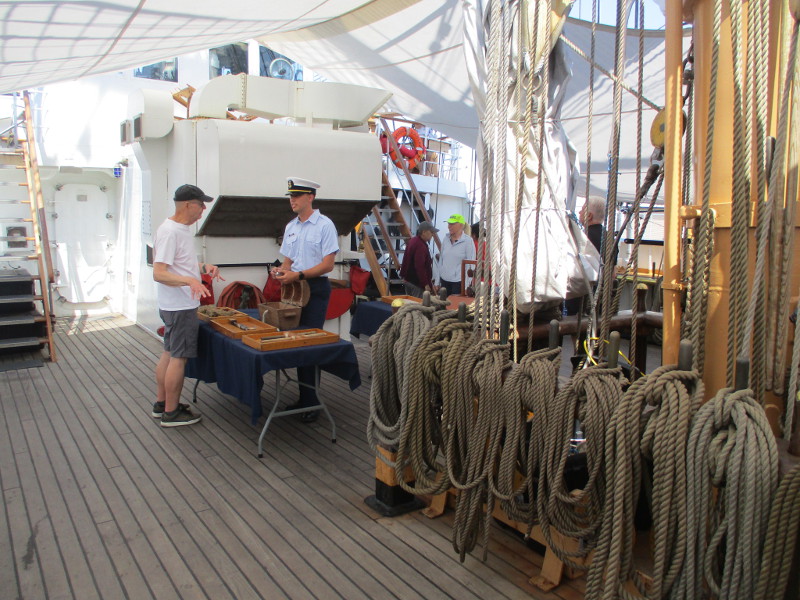
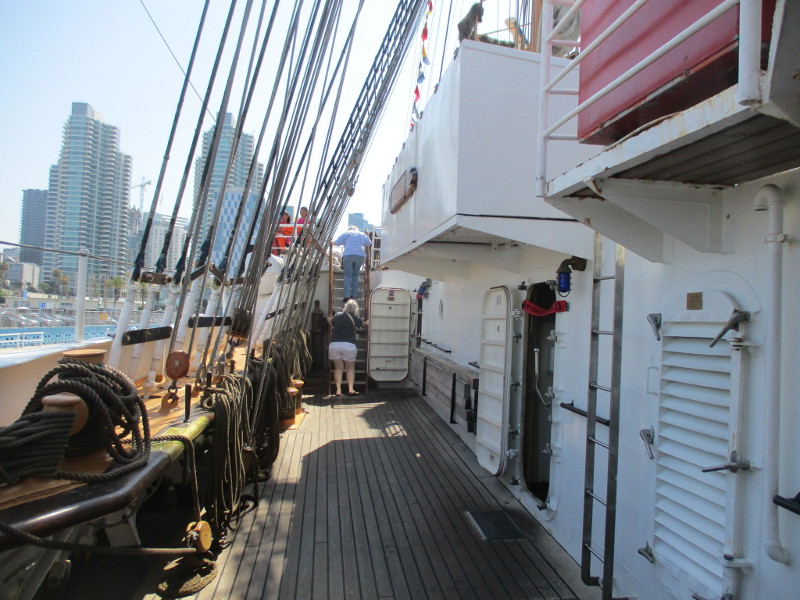
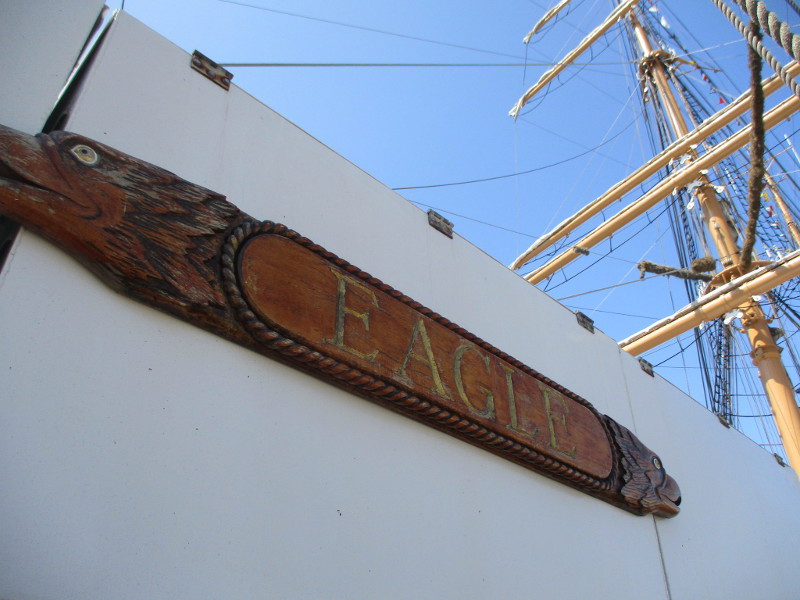
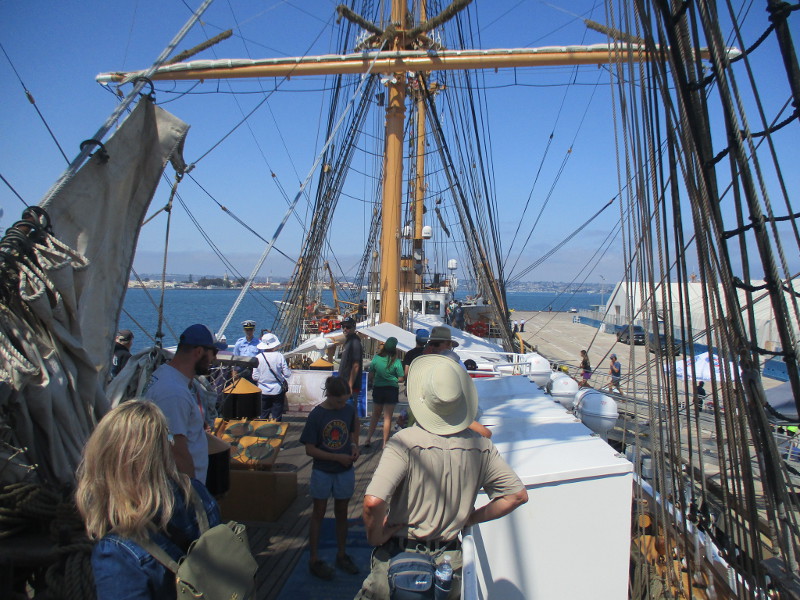
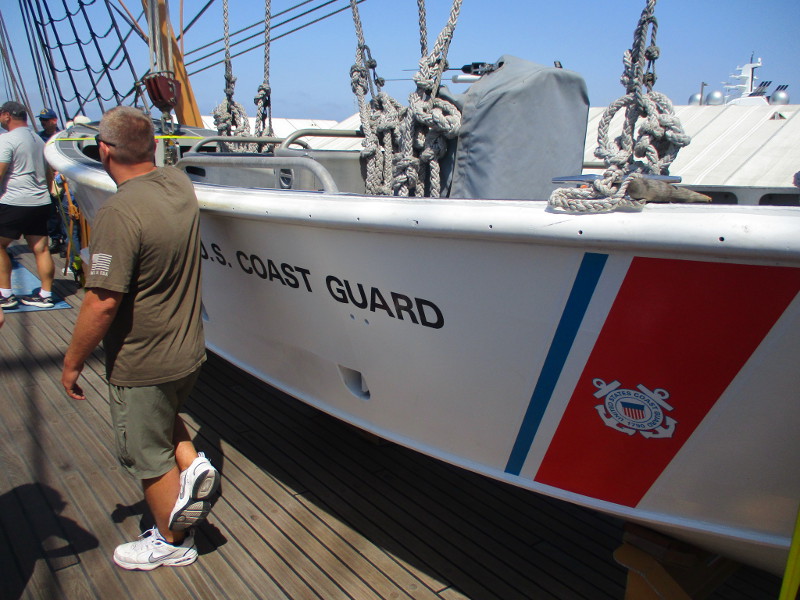
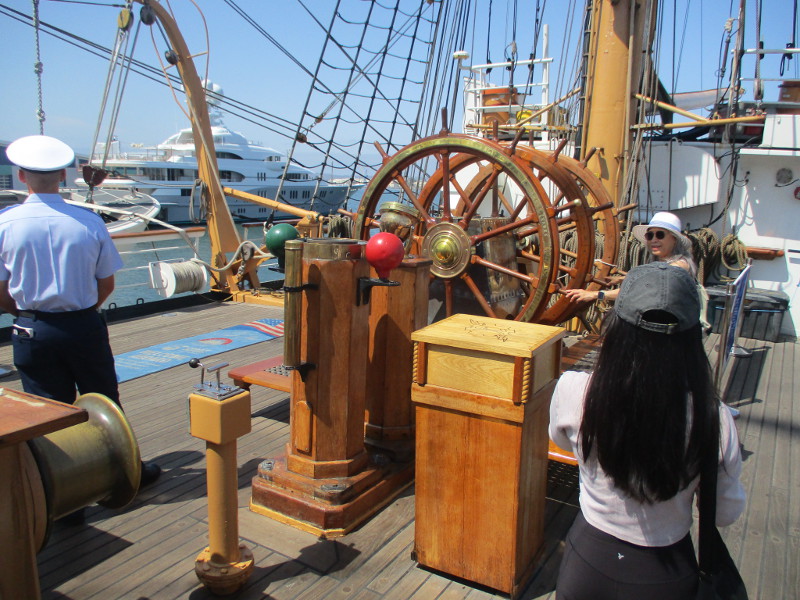
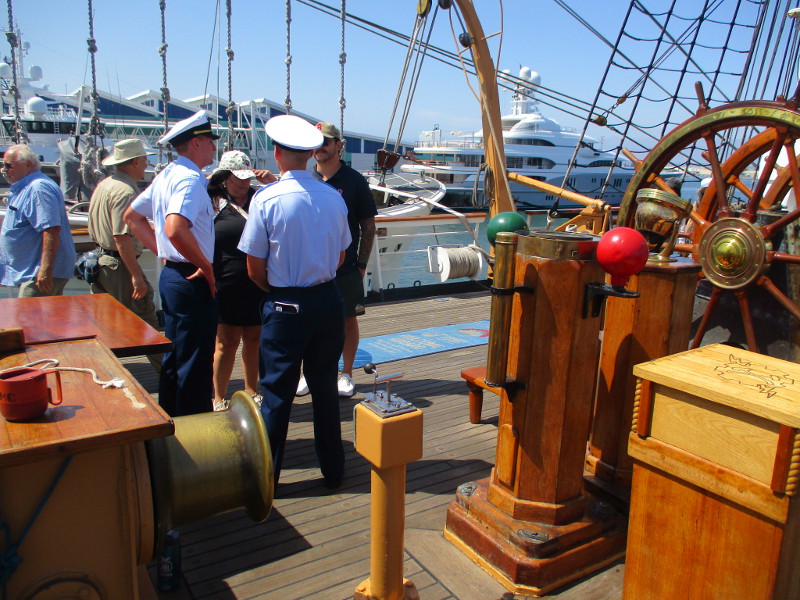
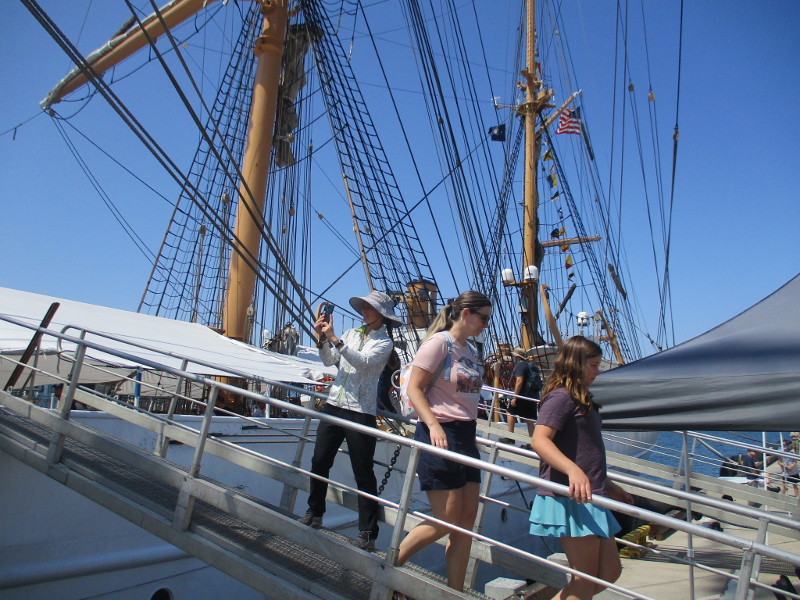
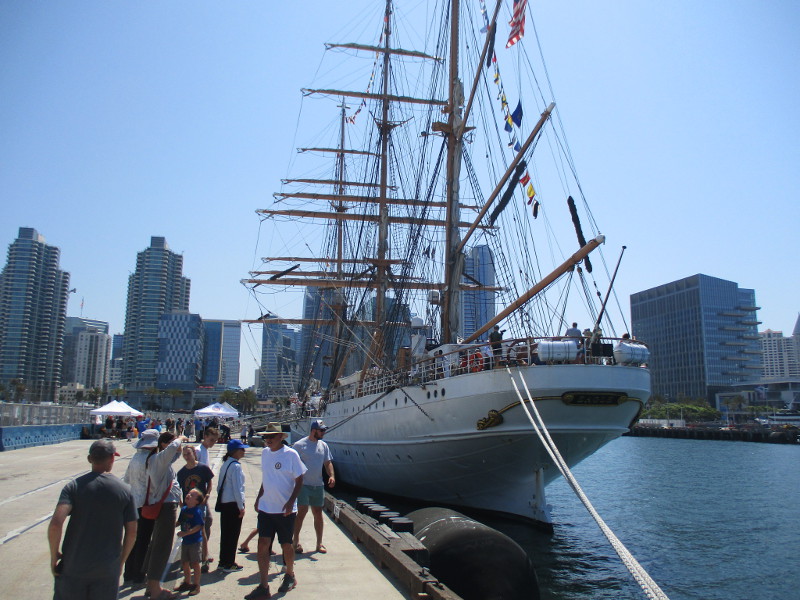
People in San Diego had an incredible opportunity this weekend to step aboard “America’s Tall Ship,” the USCGC Eagle, which has been docked for a few days at the B Street Pier. Visitors were invited to explore the nearly hundred-year-old, 295-foot, three-masted barque, which is used to train future United States Coast Guard officers.

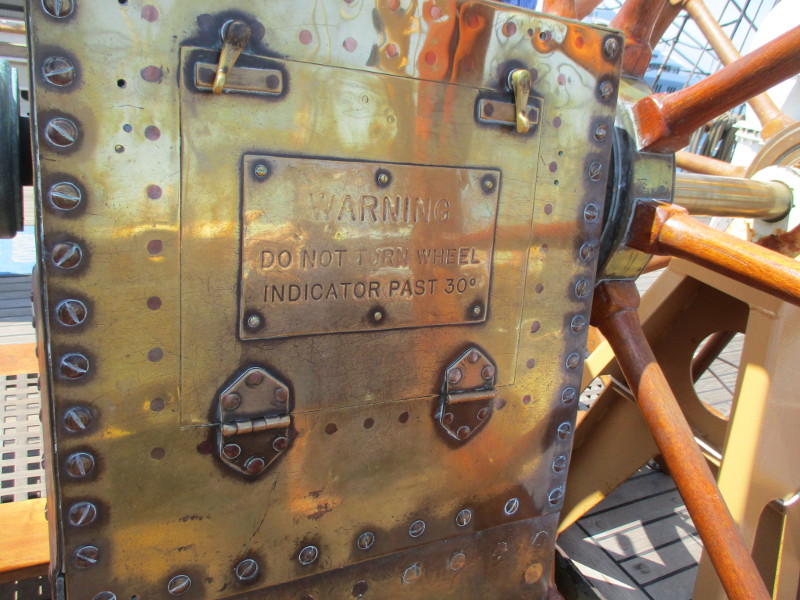
I took the opportunity to come aboard the historic tall ship myself, and I captured photographs of one amazing ship!

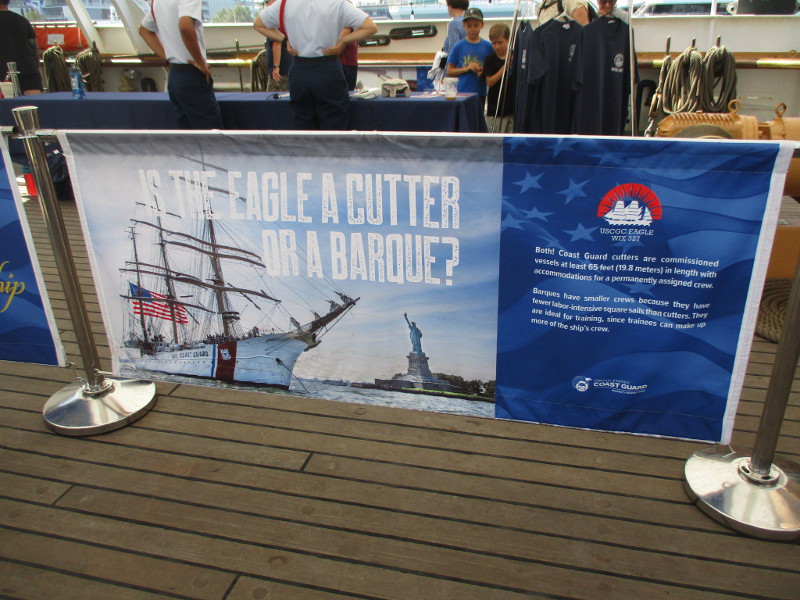
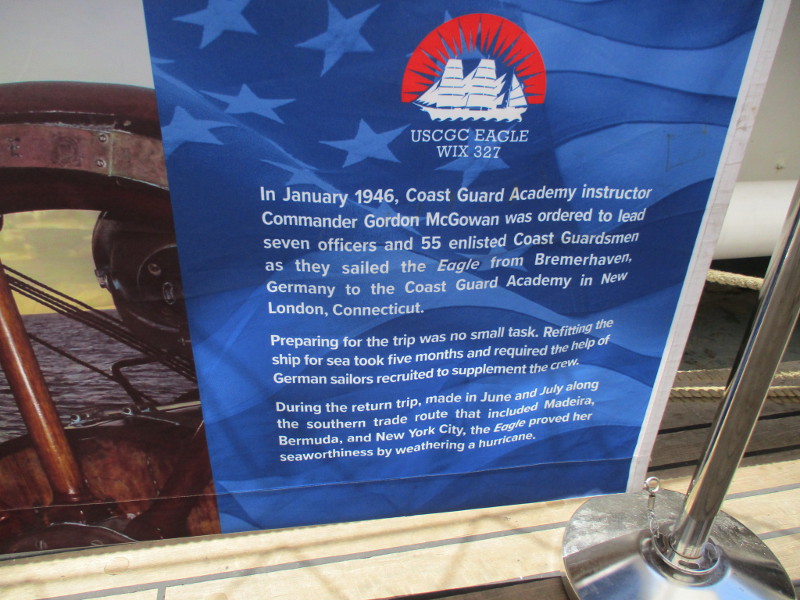
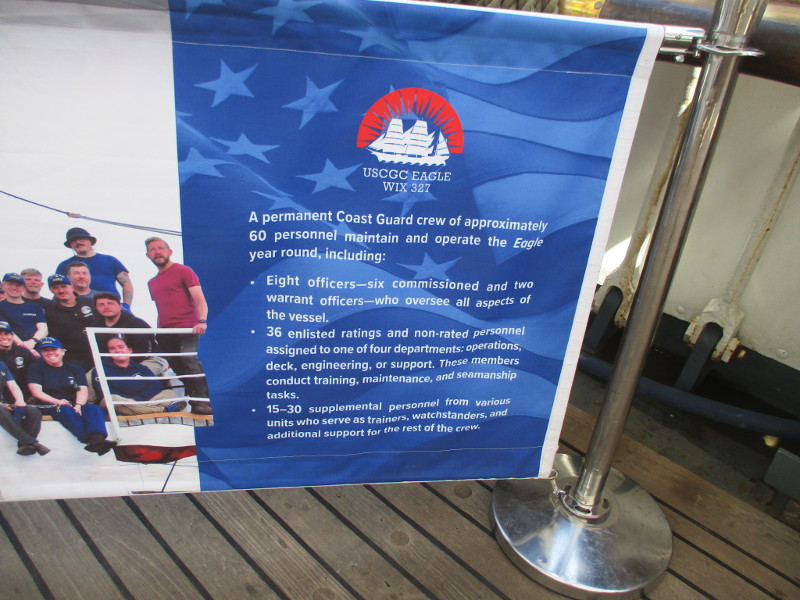
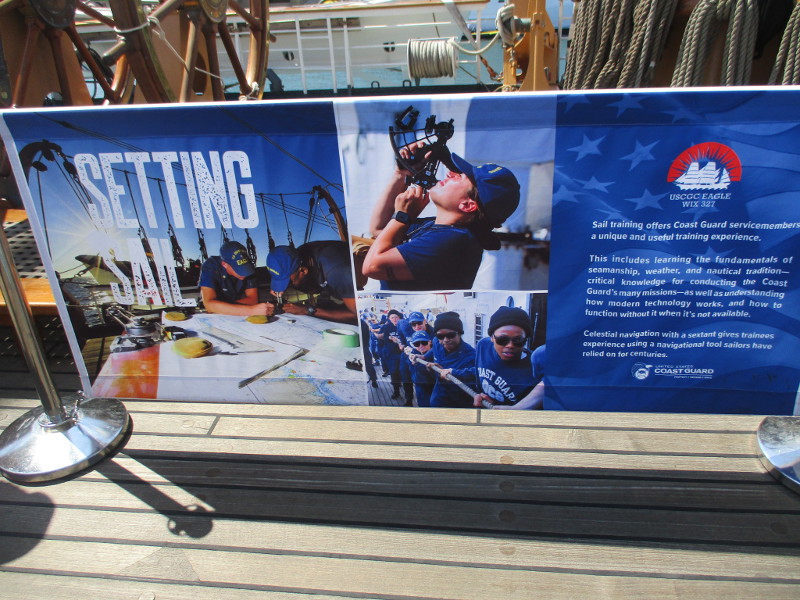
A number of interesting banners hang around the Eagle, explaining its history and current role in training future Coast Guard officers. Eagle is the largest tall ship flying the Stars and Stripes and the only active square-rigger in U.S. government service.

I learned a new batch of prospective officers had themselves come aboard a couple days ago. This week they’ll be sailing in the nearby Pacific Ocean. When the Eagle returns to San Diego, this new group of “swabs” will be considered honest-to-goodness cadets!

I must say all of the young people who are training to become officers were extremely friendly, polite and professional. The Coast Guard’s future appears to be in great hands!

Now enjoy my photos…

Welcome Aboard America’s Tall Ship.
USCGC Eagle is both a Coast Guard cutter and a barque.
The Eagle has over six miles of standing and running rigging, 23 sails, and more than 22,000 square feet of sail area that allow her to sail at 17 knots (19.5 mph).
Eagle was originally German, launched in 1936, and was operated by the pre-World War II German navy. In 1946, after the end of World War II, United States Coast Guardsmen sailed the Eagle to the Coast Guard Academy in New London, Connecticut.
Originally, the Eagle trained German Navy sailors as Horst Wessel. It sailed to the Canary Islands and West Indies, and later, during World War II, on the Baltic Sea. She carried anti-aircraft guns, and her logs indicate that she fired at Allied and German aircraft.
A permanent Coast Guard crew of approximately 60 personnel maintain and operate the Eagle year round.
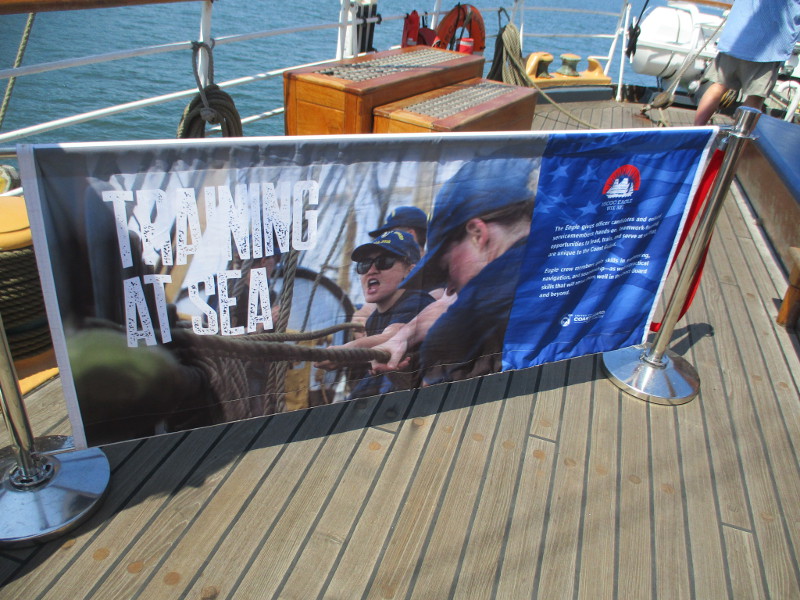
The Eagle gives officer candidates and enlisted servicemembers hands-on, teamwork-focused opportunities to lead, train and serve at sea…
The Coast Guard Academy in New London, Connecticut produces leaders of character… Nearly 300 high school graduates enroll annually…
Sail training offers…a unique and useful training experience. This includes learning the fundamentals of seamanship, weather, and nautical tradition…

I post new blogs pretty often. If you like discovering new things, bookmark coolsandiegosights.com and swing on by occasionally!

I live in downtown San Diego and love to walk around with my camera! You can follow Cool San Diego Sights via Facebook or X.

Feel free to share!

Interesting activity around the USS Midway!

Interesting activity could be observed today around the USS Midway aircraft carrier, which operates as a popular San Diego museum.

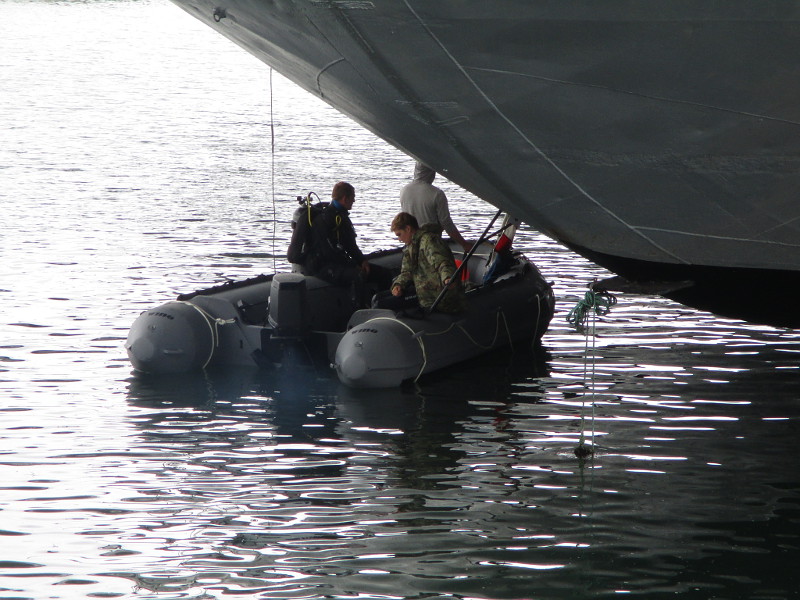
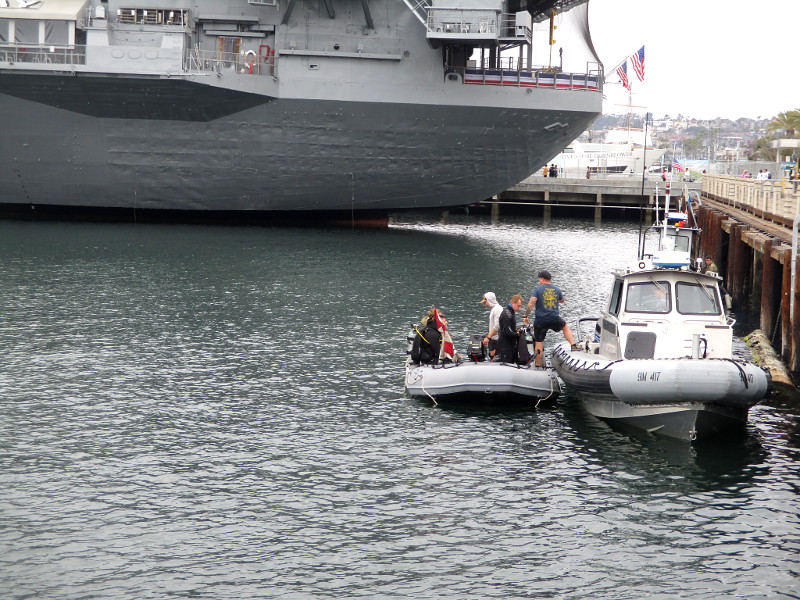
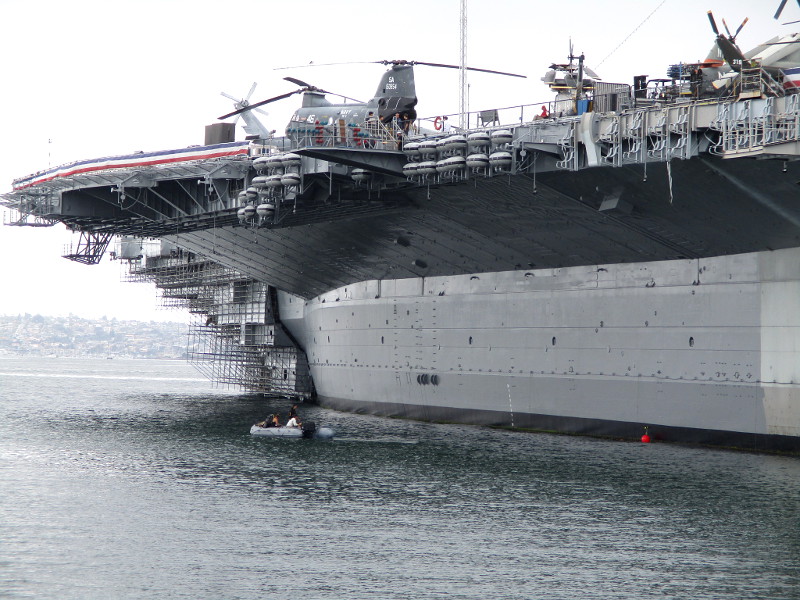
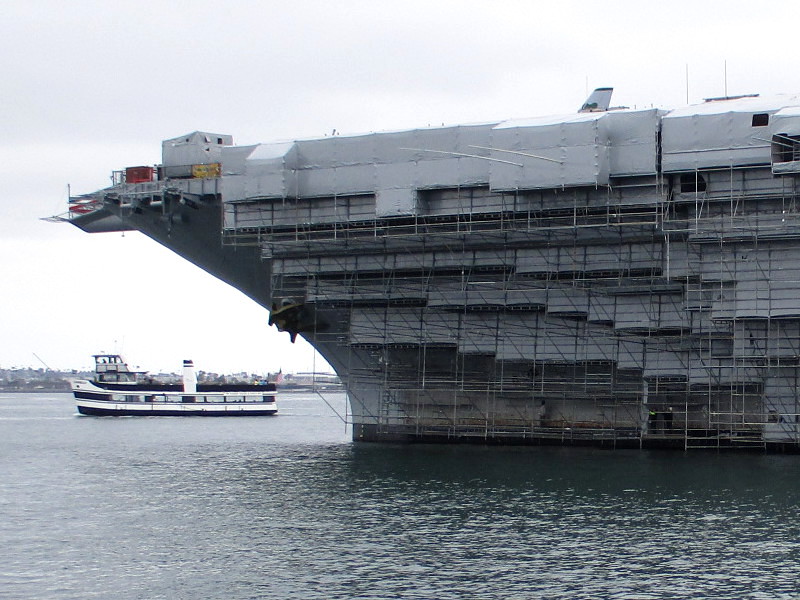
I noticed during my walk along the Embarcadero that divers were in the water near the USS Midway’s hull. In addition, there was a large section of scaffolding erected against the bow on the massive ship’s port side.

My initial assumption was the hull was being cleaned underwater. I was wrong. I was told the scuba divers in the water were Navy personnel training to do security sweeps.

Someone with the USS Midway Museum told me that Navy SEALs often train near the inactive aircraft carrier, learning how to maneuver underwater. (Years ago I saw them operate in the night near the Star of India.)

As for the scaffolding–I learned the hull of the famous old aircraft carrier is being restored. Removing rust, painting and such. It’s a monumental undertaking!

I post new blogs pretty often. If you like discovering new things, bookmark coolsandiegosights.com and swing on by occasionally!

I live in downtown San Diego and love to walk around with my camera! You can follow Cool San Diego Sights via Facebook or X.

Feel free to share!
Unusual sight: two Dole banana ships in port!

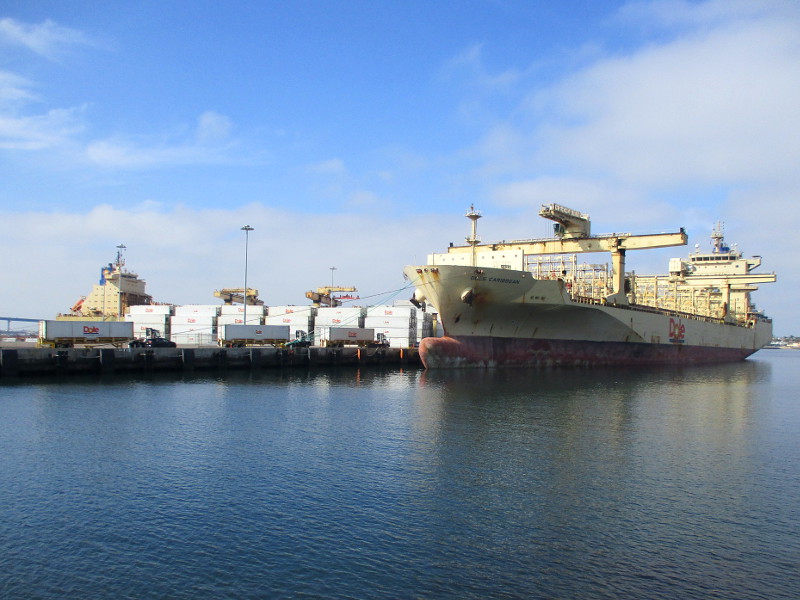
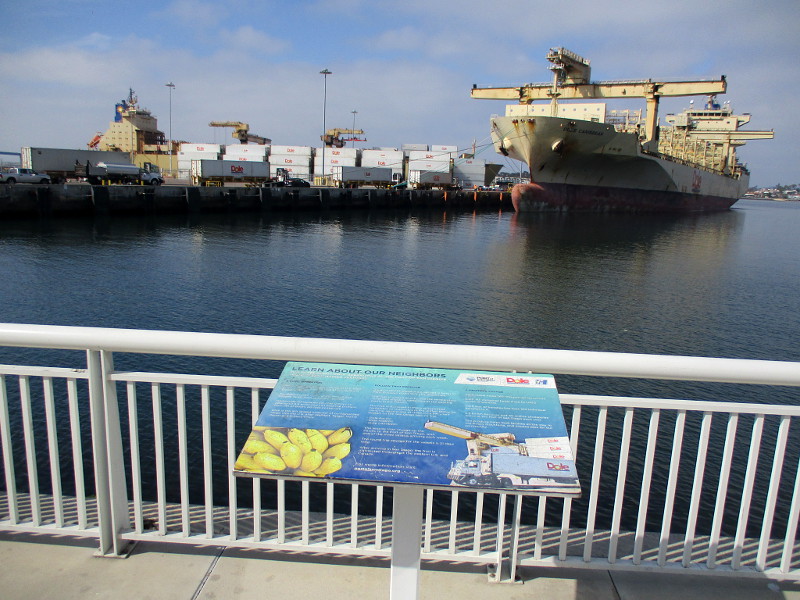
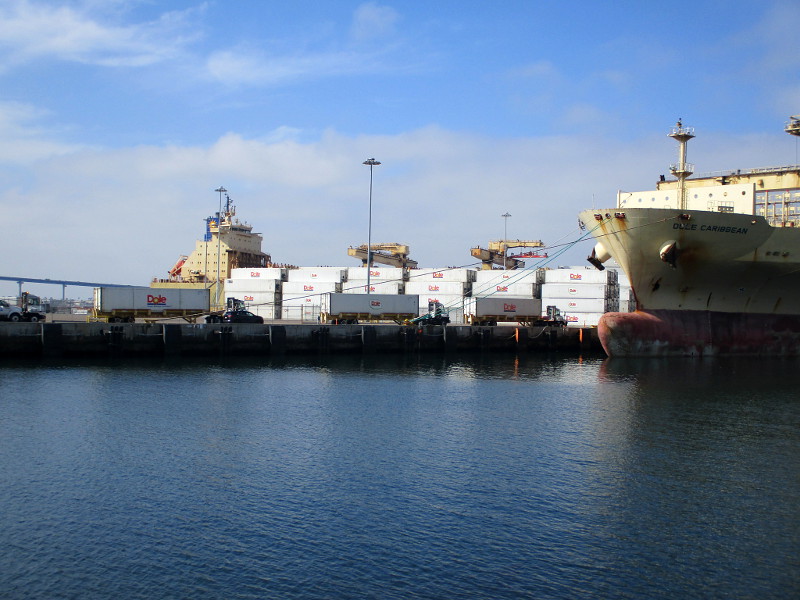
Two enormous Dole container ships are in San Diego today: Dole Caribbean and Dole Chile. I don’t recall ever seeing two of these banana transporting ships in our port at the same time.

The two yellow ships are in my above photograph, plus a bunch of stacked Dole containers at the Tenth Avenue Marine Terminal.

I suspect the Dole Chile came in on Sunday–that’s the usual ship arrival schedule. The Dole Caribbean has been docked in the same spot for many days now without any discernable activity. I’m not sure why. People I’ve spoken to surmise the ship is in disrepair. I can find nothing on the internet.

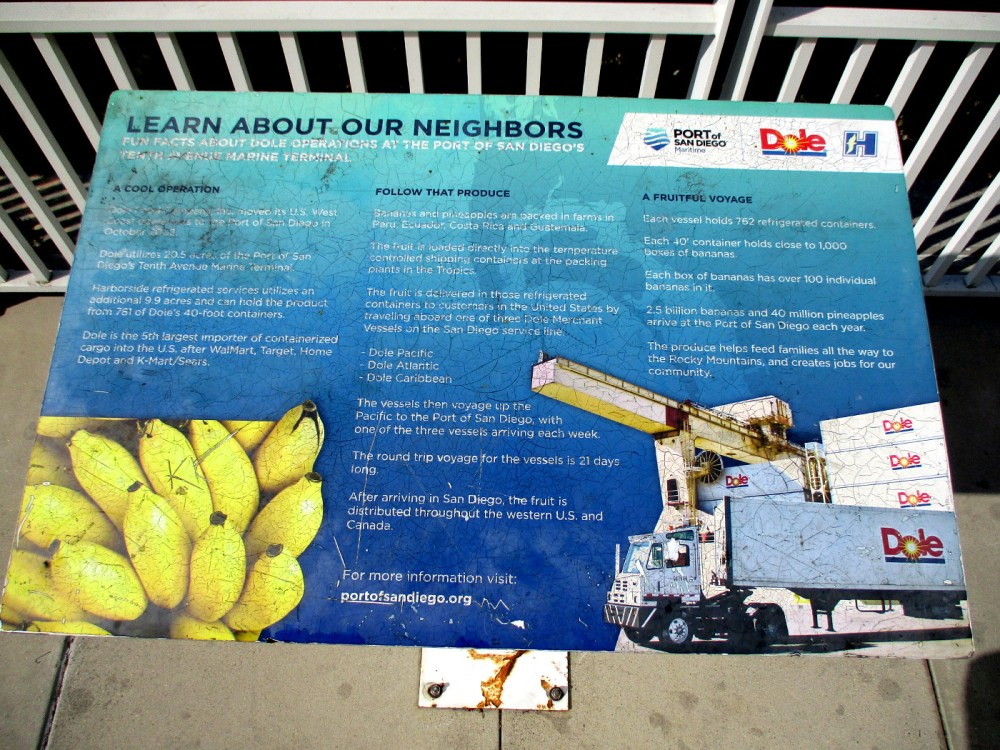
There’s an old Port of San Diego sign on the boardwalk between the Hilton San Diego Bayfront and the water. It describes the typical Dole operations…

Some interesting but possibly dated facts from the weather-beaten sign:

Dole is the 5th largest importer of containerized cargo into the U.S. after WalMart, Target, Home Depot and K-Mart/Sears. (You can see how old this sign is!)

Bananas and pineapples are packed in farms in Peru, Ecuador, Costa Rica and Guatemala... After arriving in San Diego, the fruit is distributed throughout the western U.S. and Canada.

Each vessel holds 762 refrigerated containers… Each 40′ container holds close to 1000 boxes of bananas… 2.5 billion bananas and 40 million pineapples arrive at the Port of San Diego each year.

I post new blogs pretty often. If you like discovering new things, bookmark coolsandiegosights.com and swing on by occasionally!

I live in downtown San Diego and love to walk around with my camera! You can follow Cool San Diego Sights via Facebook or X.

Feel free to share!
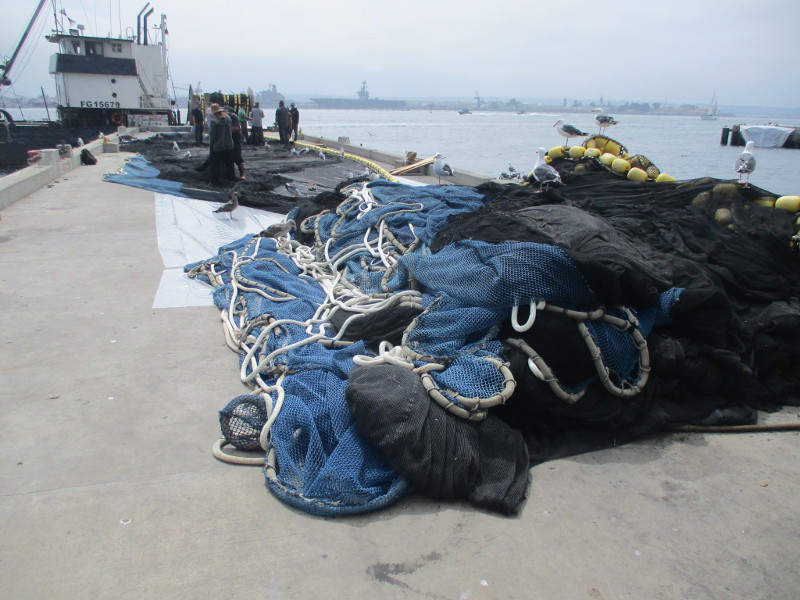
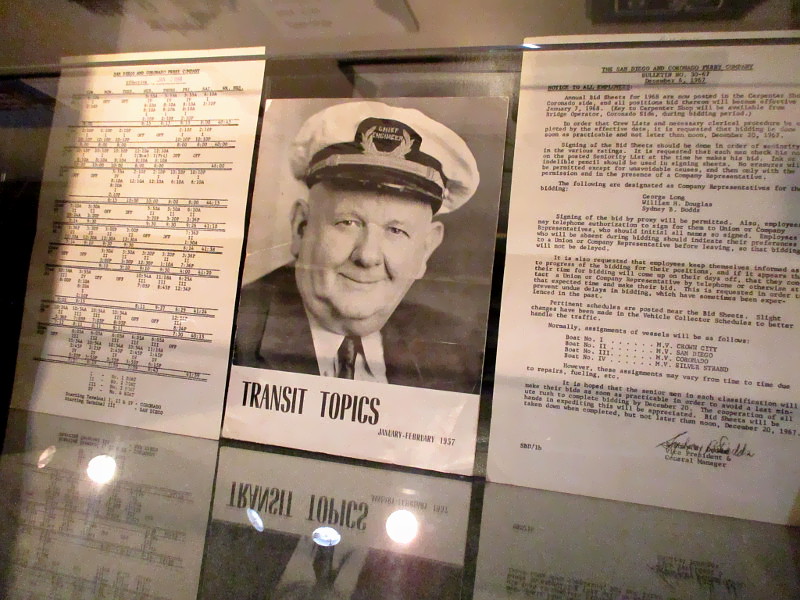
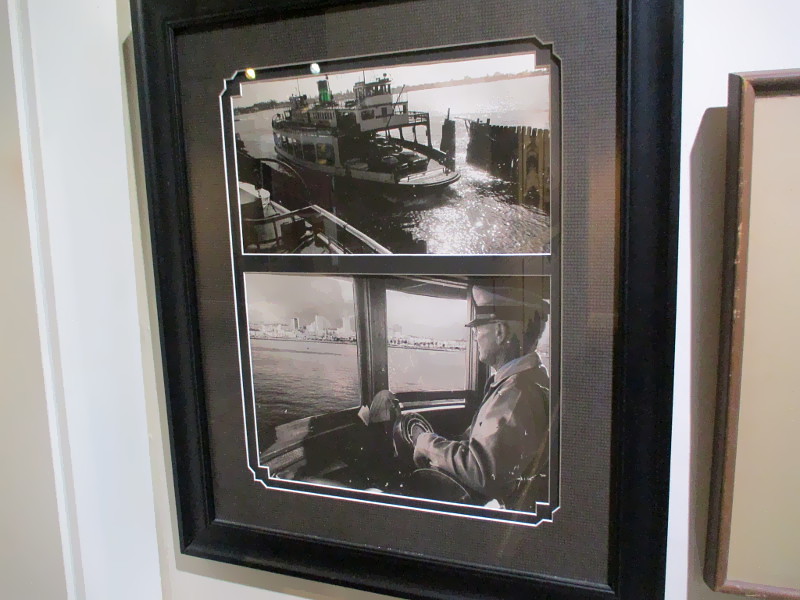
Exhibit details history of the Coronado ferries!
If you are fascinated by local history, love riding the Coronado ferry, or have memories of the old ferries that crossed San Diego Bay many, many years ago, you’ll want to visit the latest exhibit at the Coronado Historical Association‘s museum.

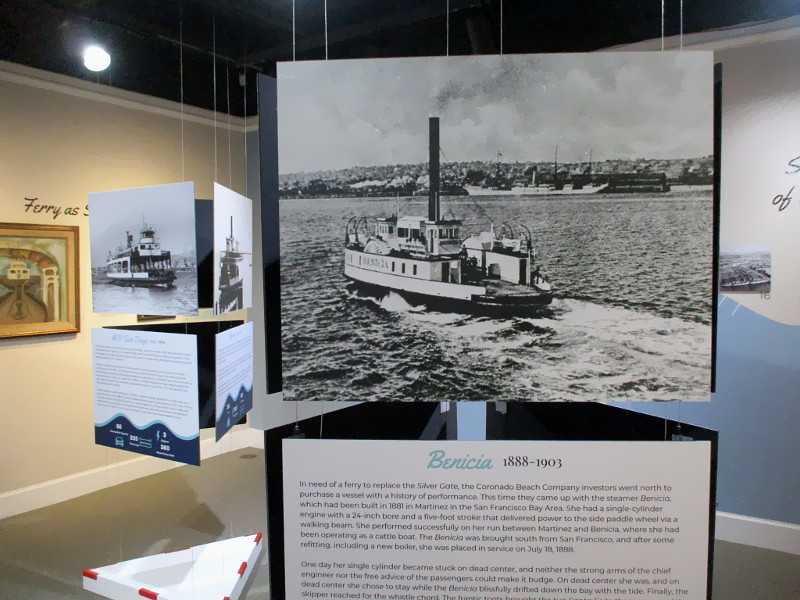
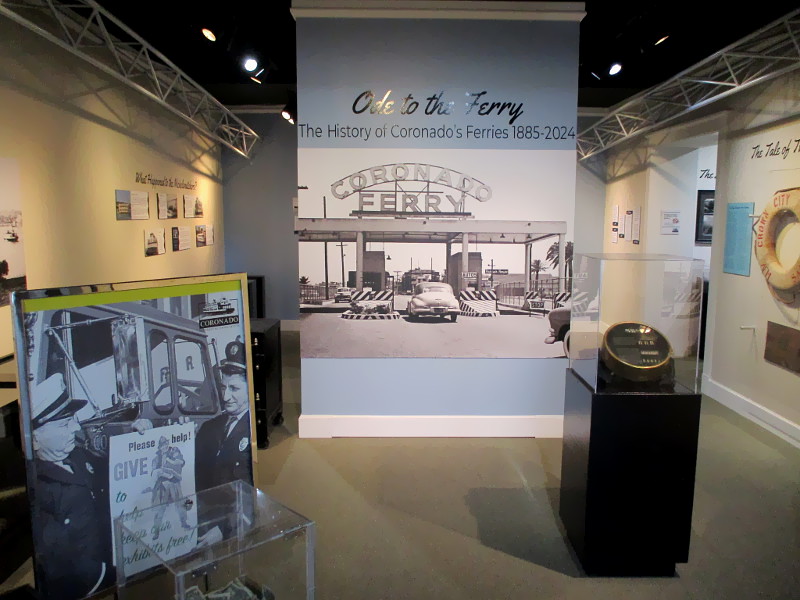
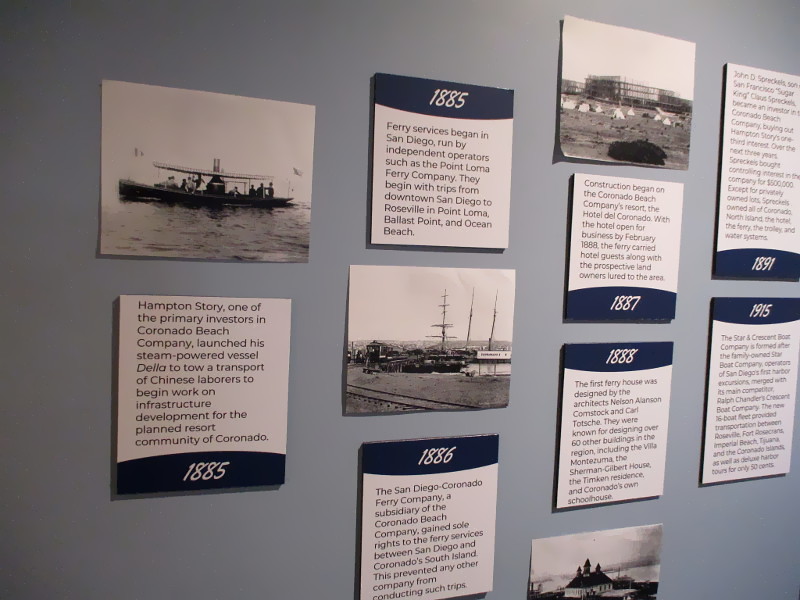
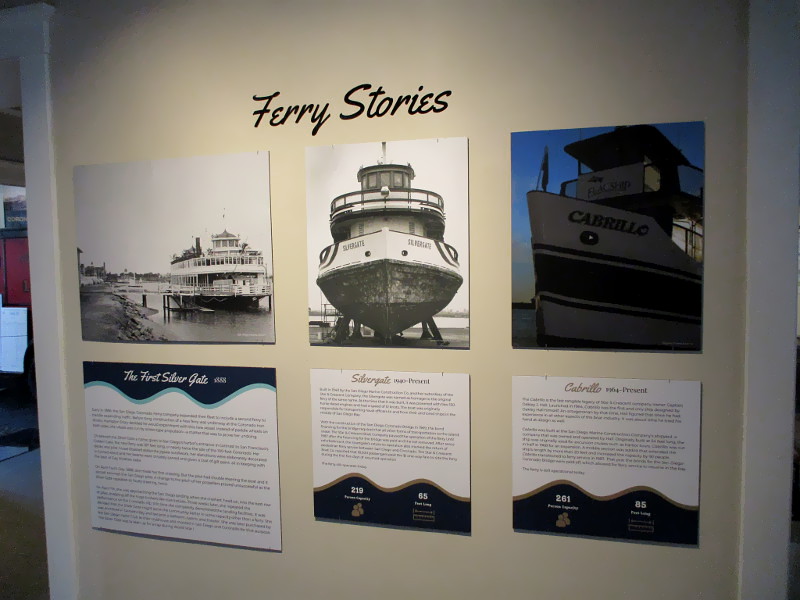
Ode to the Ferry; The History of Coronado’s Ferries 1885-2024 concerns an important aspect of life in San Diego for well over a century.

The exhibit recalls the old-time ferries, which were required to reach the island long before the San Diego-Coronado Bridge opened in 1969. It describes every ship of the Coronado Ferry Company and the Star & Crescent Boat Company, that transported people and vehicles across the bay. Of course, the ferries today serve mostly tourists exploring on foot and recreational bicyclists–and people like me who love a short ride from downtown San Diego across our beautiful bay!

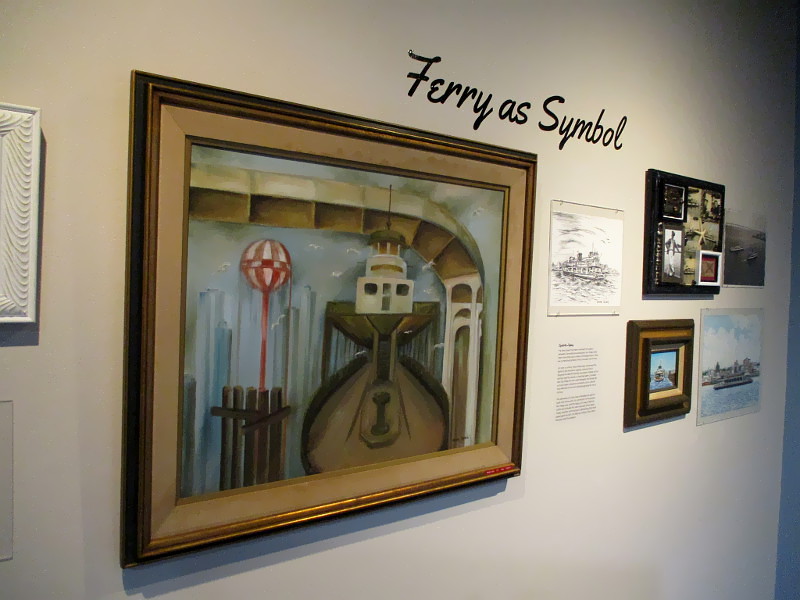
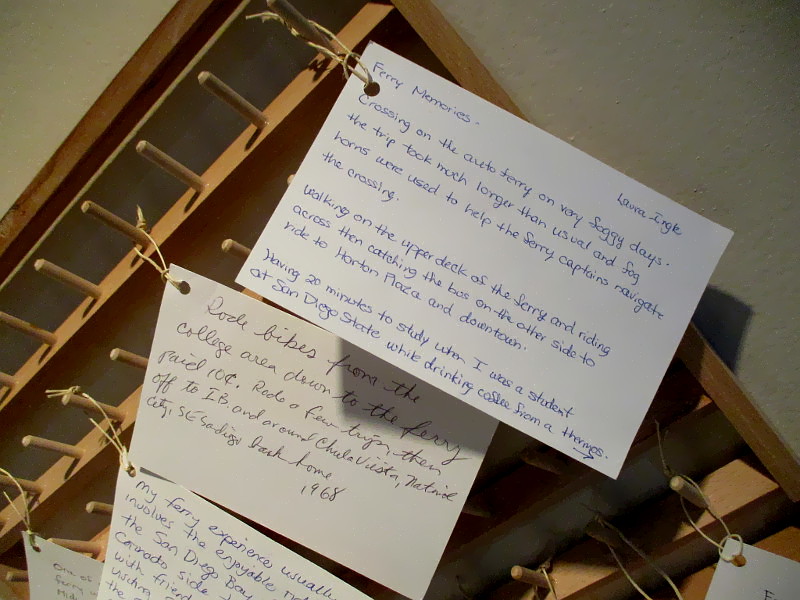
Photographs, historical documents, ferry tickets, memorabilia, related art and stories fill the small but always amazing Coronado Historical Association museum. It’s very cool that visitors are encouraged to write down their personal memories, too!

I post new blogs pretty often. If you like discovering new things, bookmark coolsandiegosights.com and swing on by occasionally!

I live in downtown San Diego and love to walk around with my camera! You can follow Cool San Diego Sights via Facebook or X.

Thank you for sharing!

Spanish galleon versus an aircraft carrier!

It’s almost New Year’s Day. It’s one of those days when we pause to think about the passing of time.

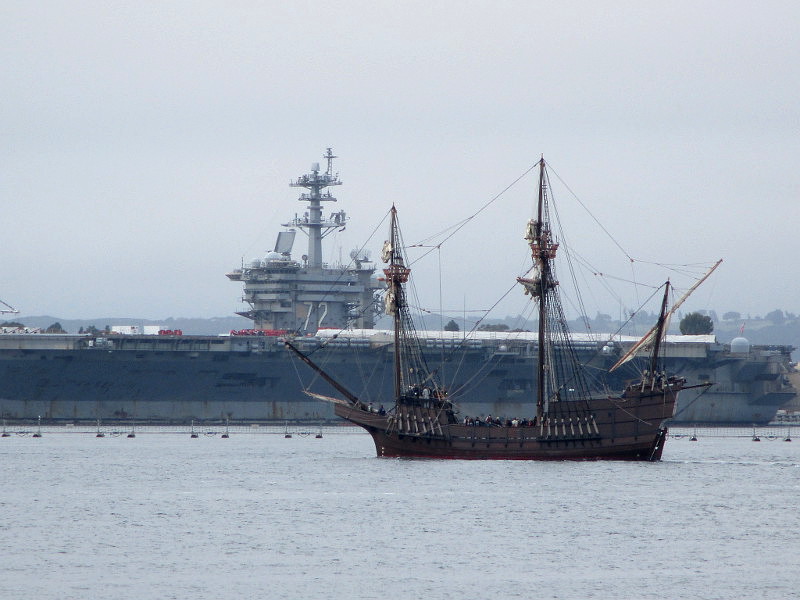
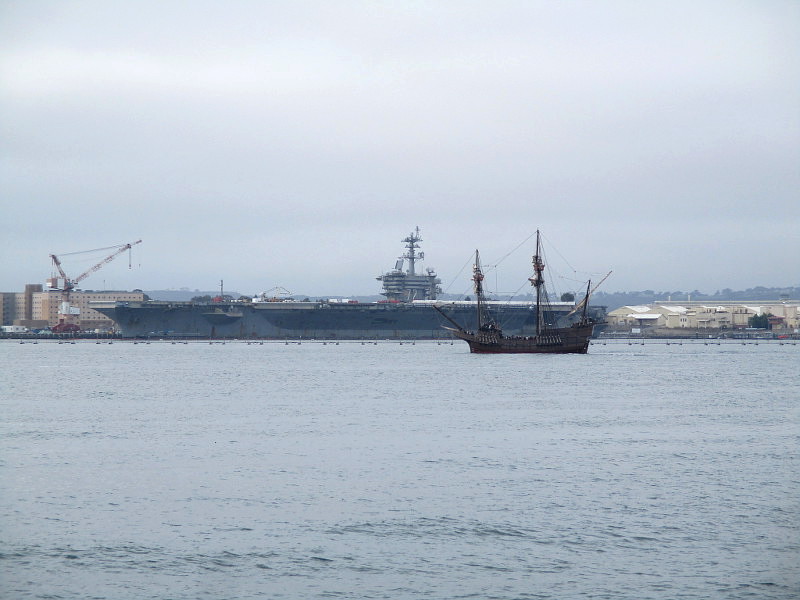
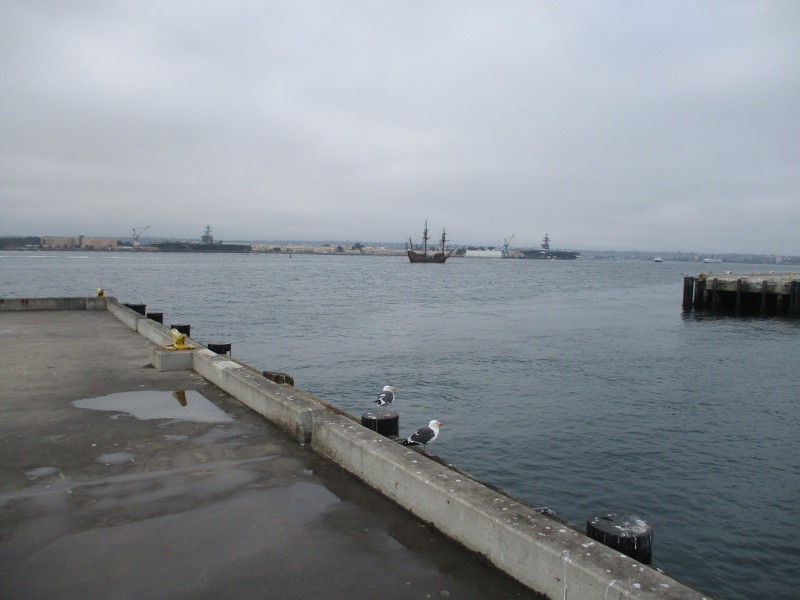
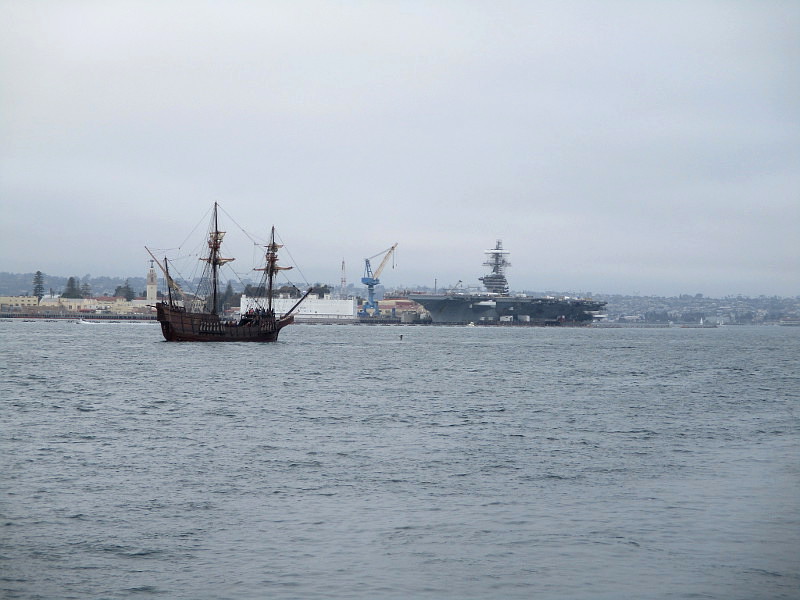
During a walk along San Diego’s Embarcadero this morning, I took these interesting photographs. They demonstrate how human technology has advanced over the course of five hundred years.

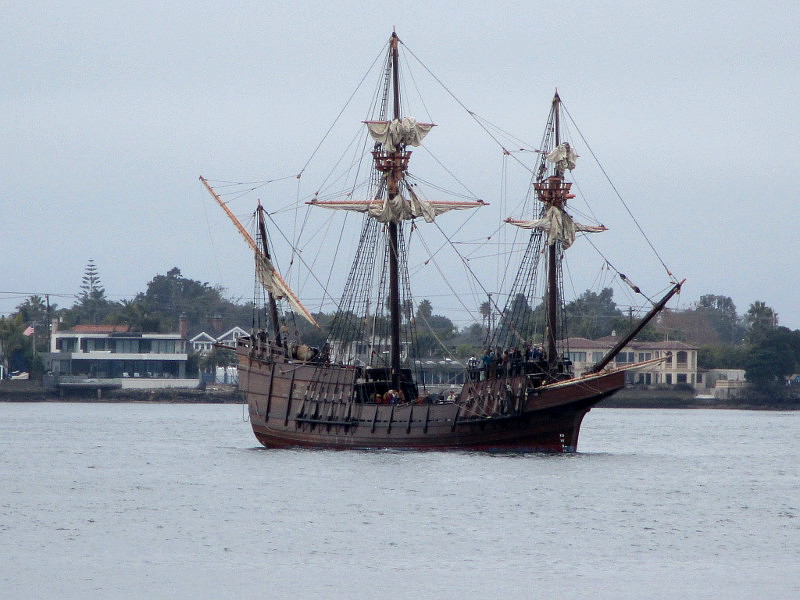
A replica of the 16th century Spanish galleon San Salvador (the ship sailed by explorer Juan Rodríguez Cabrillo when he “discovered” San Diego Bay), built by the Maritime Museum of San Diego, was crossing the water. Just beyond were two active U.S. Navy aircraft carriers docked at NAS North Island: the USS Abraham Lincoln (CVN-72) and USS Theodore Roosevelt (CVN-71).

So how do these very different ships compare?

The historic San Salvador galleon was about 100 feet long. The two Nimitz-class aircraft carriers have a length of 1,092 feet. That’s more than ten times the length of an old Spanish galleon.

A galleon, built primarily of wood, would have a displacement weight of about 200 tons. The gigantic, mostly steel aircraft carriers? Their displacement weight is 116,800 tons–that’s 584 times heavier!

A Spanish galleon could travel at a maximum speed of around 8 knots (under ideal wind conditions). These enormous, nuclear powered aircraft carriers can travel at a speed over 30 knots, no matter the weather, without refueling for 20–25 years!

Today technology is progressing at a mind-boggling rate. Is it possible to imagine the distant future? In another five hundred years, will an advanced civilization still need or have ocean-going ships?

Only time will tell!

Happy New Year!

I post new blogs pretty often. If you like discovering new things, bookmark coolsandiegosights.com and swing on by occasionally!

I live in downtown San Diego and love to walk around with my camera! You can follow Cool San Diego Sights via Facebook or X.

Thank you for sharing!

Inside the Navy’s landlocked USS Recruit training ship!

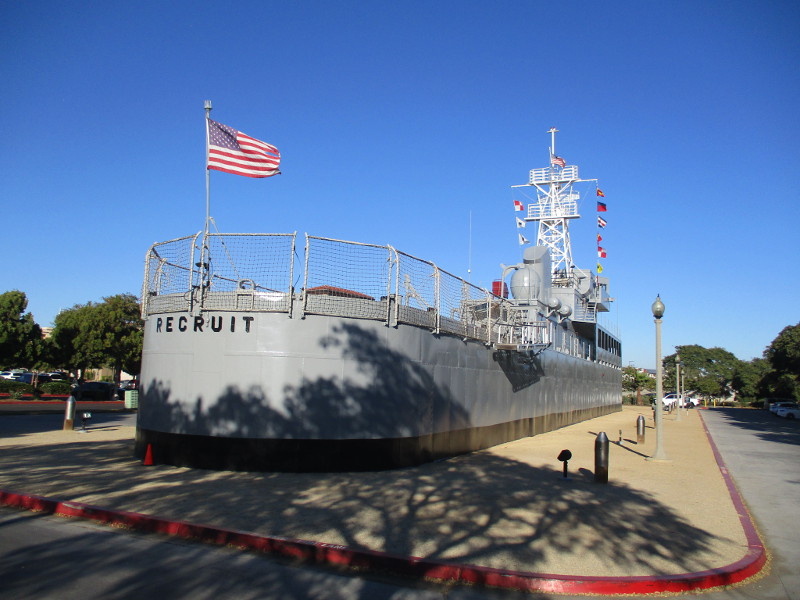
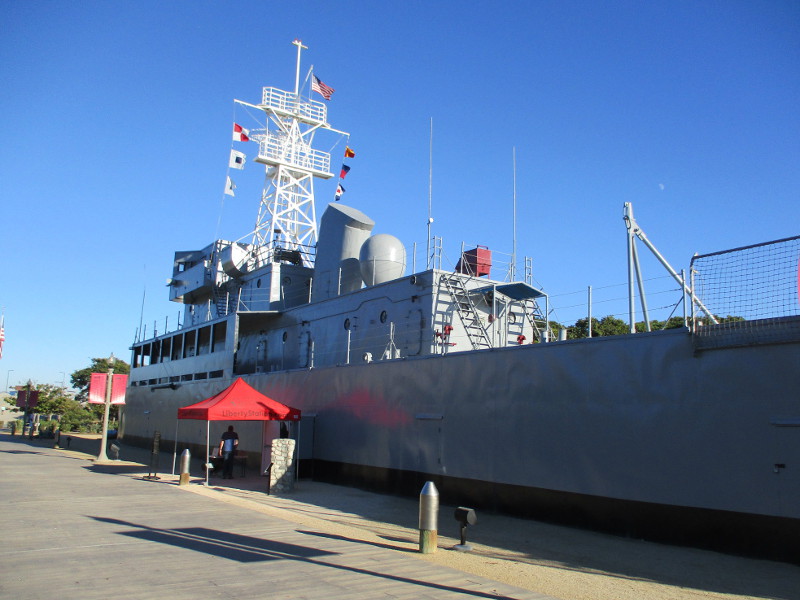
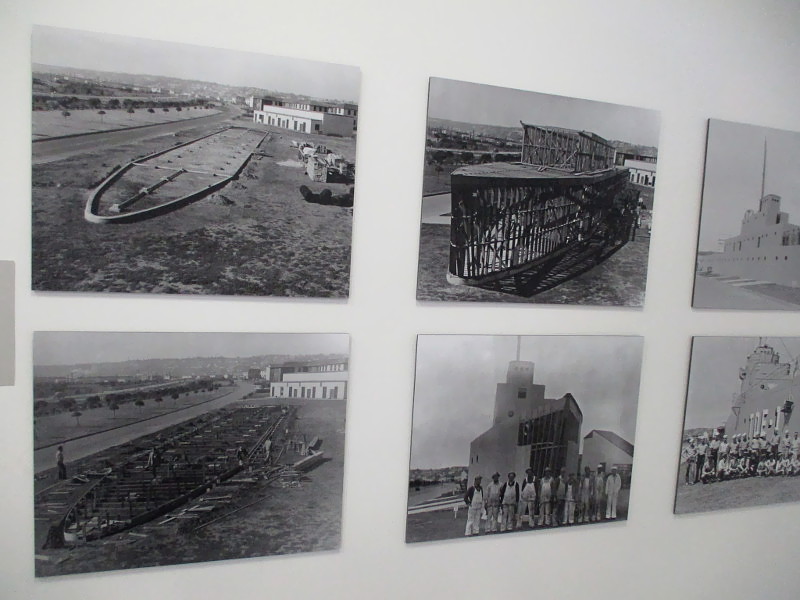
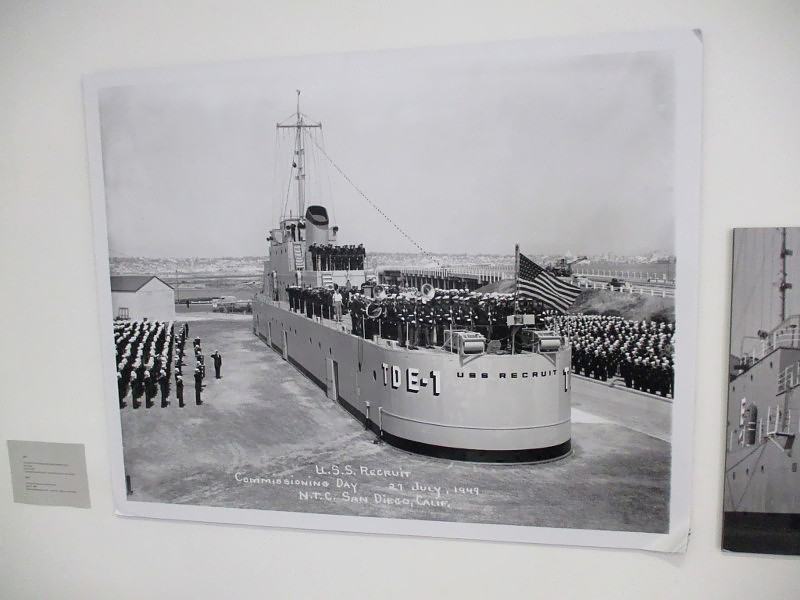
The USS Recruit has been humorously called the USS Neversail. Embedded in concrete at the old Naval Training Center San Diego, the landlocked dummy training ship was an official U.S. Navy vessel commissioned in 1949 (and re-commissioned in 1982) that never set sail!

After Naval Training Center San Diego finally closed in 1997 and Liberty Station was developed on the Navy’s old property, the USS Recruit remained in place, slowly deteriorating. Then about ten years ago, the sheet-metal-over-wood-framing mock destroyer received a new paint job.

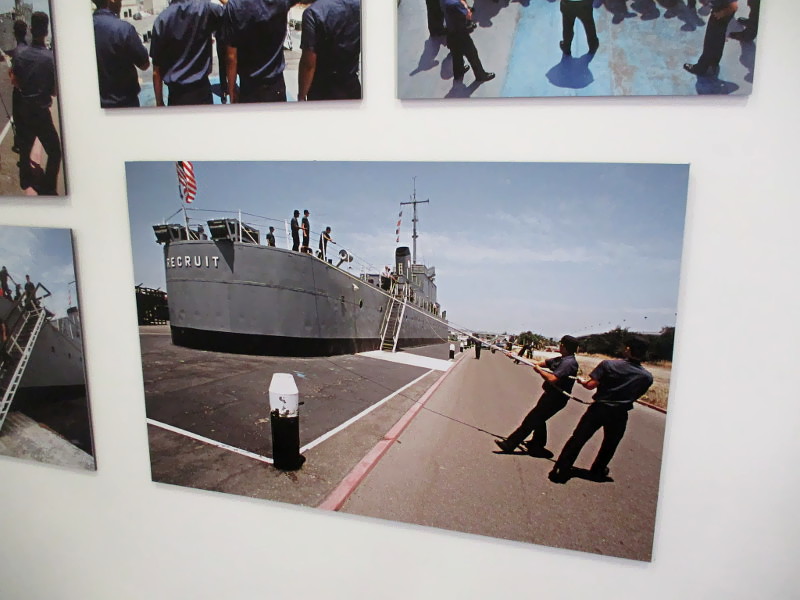
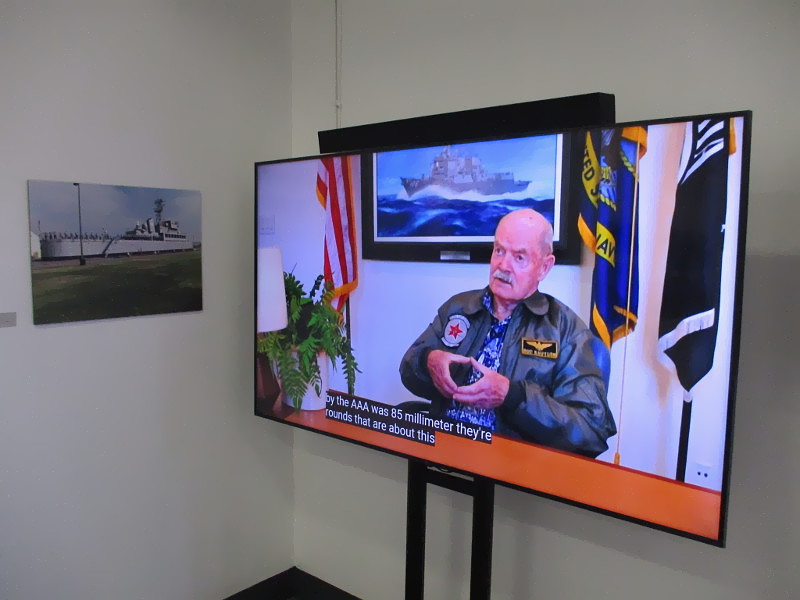
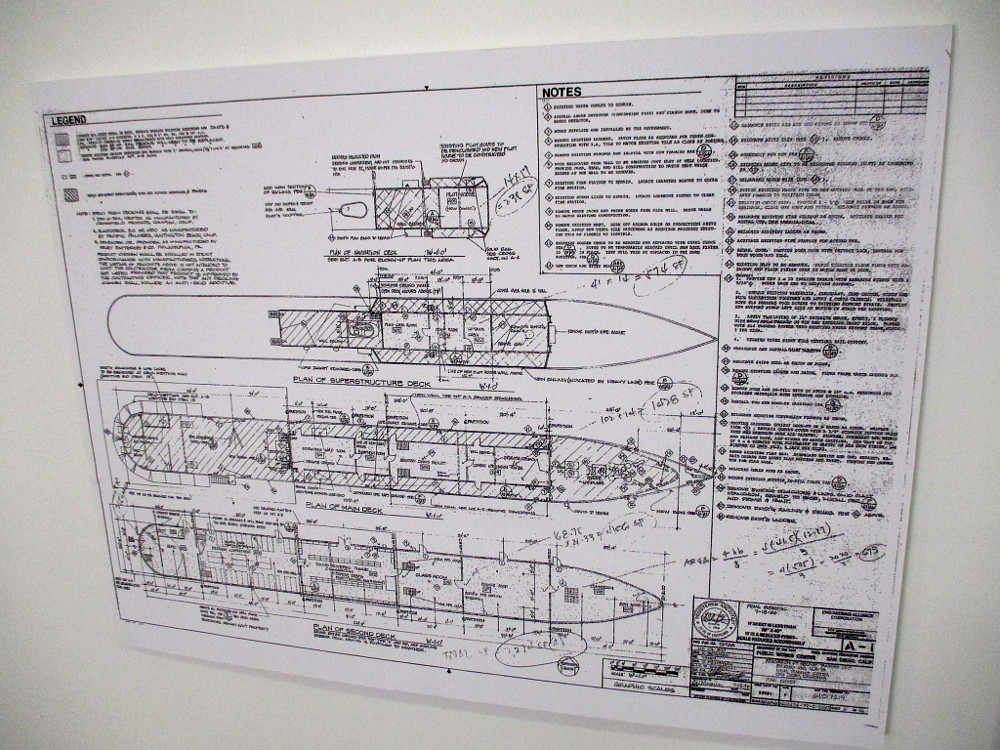
Last year the USS Recruit finally opened as a ship museum, allowing visitors to enter a large ground-level room inside the training ship. The walls of the museum are filled with historical photographs and video of past service members recalling their unique experiences aboard ship.

I ventured into the free ship museum a couple weekends ago for my first time. I was told that the one room open to the public used to be filled with telephones. Young sailors could use the phones to call home.

Here are a few photos…

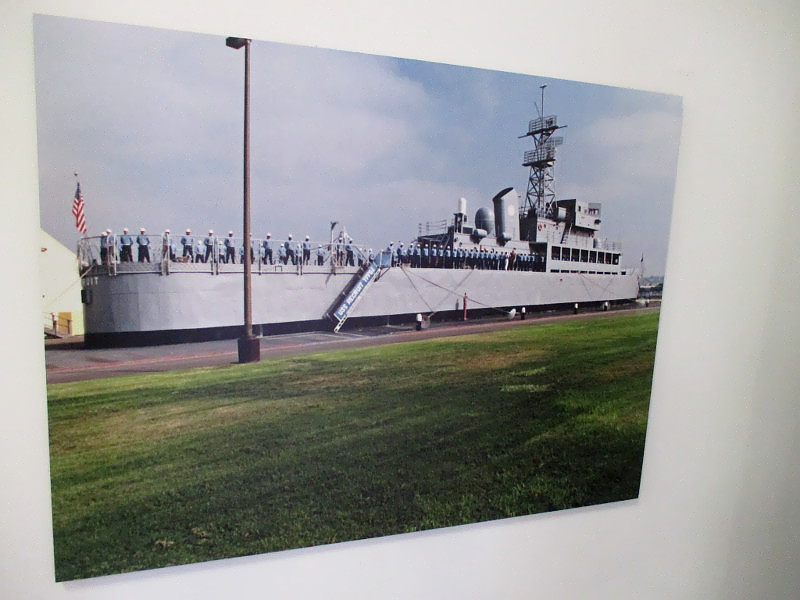
Sailors standing on the deck of the USS Recruit circa 1995.

Old photos show construction of the largely wooden USS Recruit in 1949.

USS Recruit commissioning day, July 27, 1949.

One open door allows visitors to peer into an adjacent room.

I post new blogs pretty often. If you like discovering new things, bookmark coolsandiegosights.com and swing on by occasionally!

I live in downtown San Diego and love to walk around with my camera! You can follow Cool San Diego Sights via Facebook or X.

Thank you for sharing!

Super-dreadnoughts and a rare ship’s wheel!

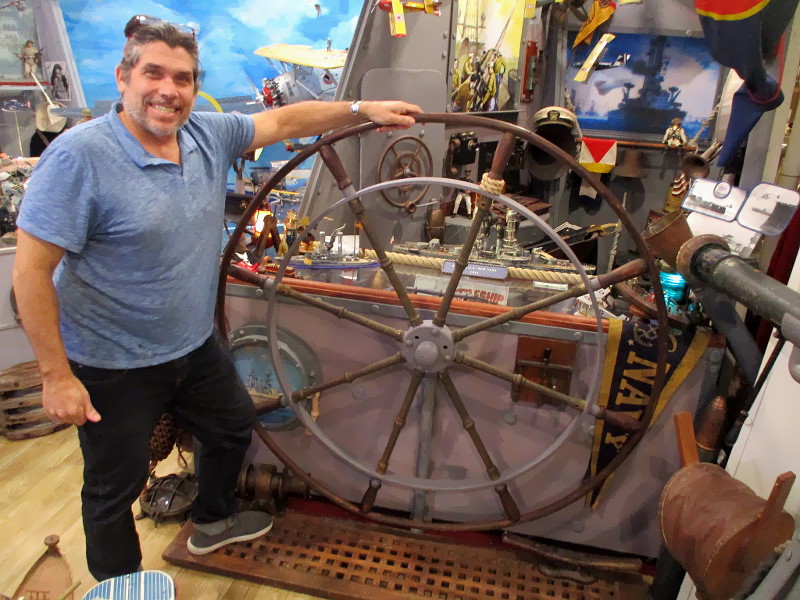
What you see above is very rare. It’s a bronze and wood, 57 inch diameter ship’s wheel. It dates from the Age of Steel Riveted Hull and Steam, 1912 to 1930s. There’s photographic evidence that it might very well have been used in a navy’s super-dreadnought warship!

Joe Frangiosa was super excited to find this rare wheel. His amazing Nautical History Gallery and Museum inside Liberty Station’s Command Center building now features ship’s wheels from five different eras in maritime history. The huge wheel made its first appearance in his museum just a week ago!

Joe confided that this addition has been enormously satisfying. He installed the huge wheel in such a way that people can turn it and pretend to command the high seas. Kids love it!

Joe suggested you all visit his Instagram page here.

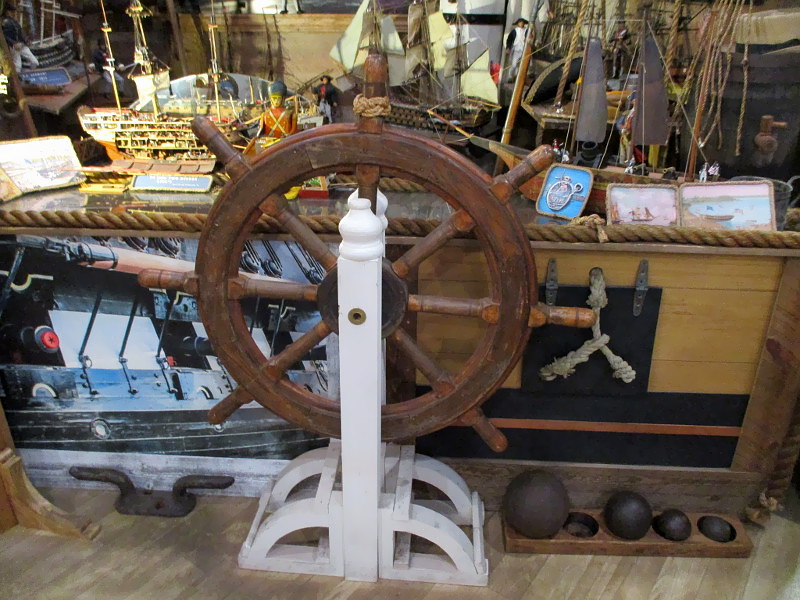
Check out my photos of the other four wheels. You might note that rope is tied around one spoke–the king spoke. When that bit of rope is located at the top of a wheel, that means the rudder of the ship is centered. A sailor can steer by feel in dark, stormy or foggy conditions.

The next wheel is made entirely of wood, with wood peg construction. It dates from the Age of Wooden Hull and Sail, 1775 to 1840.

The next wheel is made of iron. It dates from the Age of Wooden and Iron Hull, Sail and Steam, 1840 to 1887.

This next ship’s wheel is polished bronze and shines brightly! It dates from the Age of Steel Riveted Hull, Sail and Steam, 1887 to 1912.

Finally, this ship’s wheel without spokes is also bronze, but unpolished. It dates from the Age of Steel Welded Plate Hull, 1930s to 1945.

Thanks for visiting Cool San Diego Sights!

I post new blogs pretty often. If you like discovering new things, bookmark coolsandiegosights.com and swing on by occasionally!

I live in downtown San Diego and love to walk around with my camera! You can follow Cool San Diego Sights via Facebook or X.

Art treasures of Maritime Museum: Celebrating the Sea!

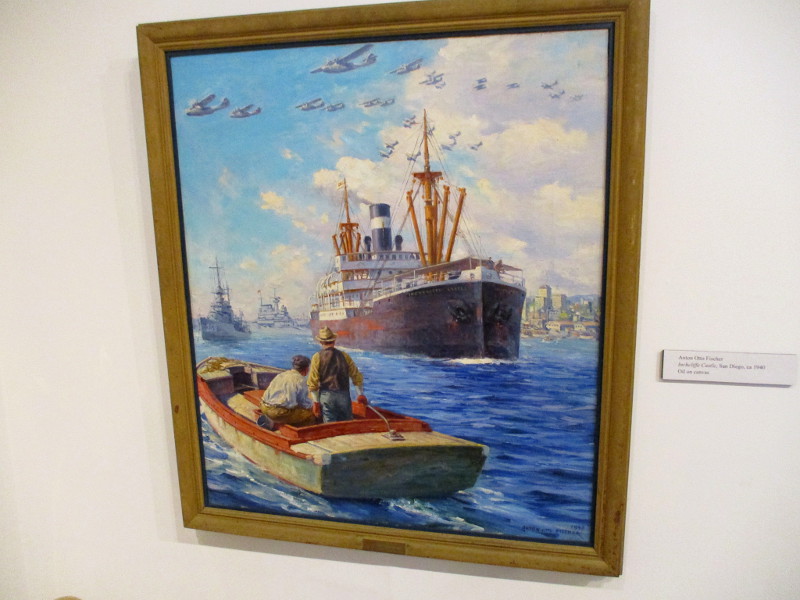
Inchcliffe Castle, San Diego, circa 1940, by artist Anton Otto Fischer.

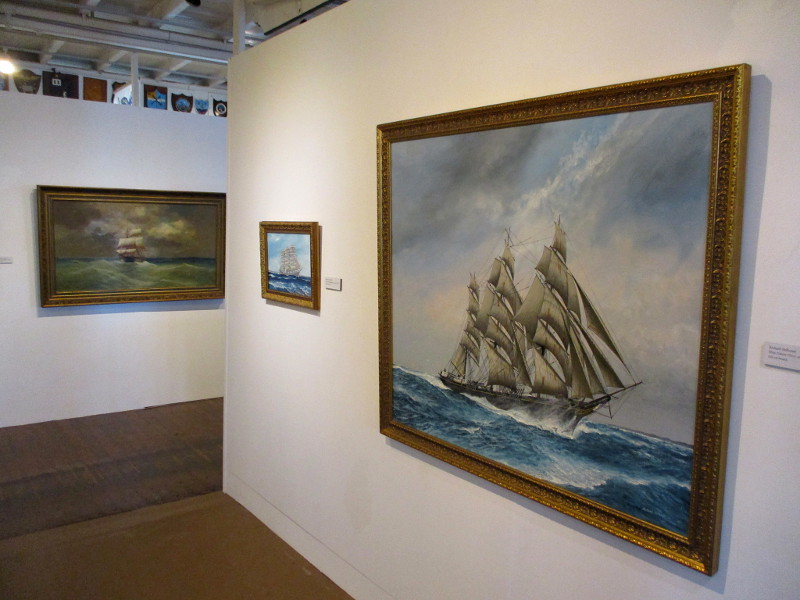
An important new exhibition has opened at the Maritime Museum of San Diego. It’s titled Celebrating the Sea: Exploring the Maritime Museum of San Diego’s Hidden Collection.

Notable works of original art in the museum’s extensive collection have been placed on view. Included are beautiful paintings of ships, local scenes that include San Diego Bay, and coastal vistas. Many of the pieces are by renowned artists, like Maurice Braun and Arthur Beaumont.

Visitors will also marvel at rare artifacts, such as an antique Chinese lacquer cabinet with ivory chess set, circa 1720.

The fine exhibition reinforces the Maritime Museum of San Diego’s reputation as a world-famous destination for lovers of both art and the sea!

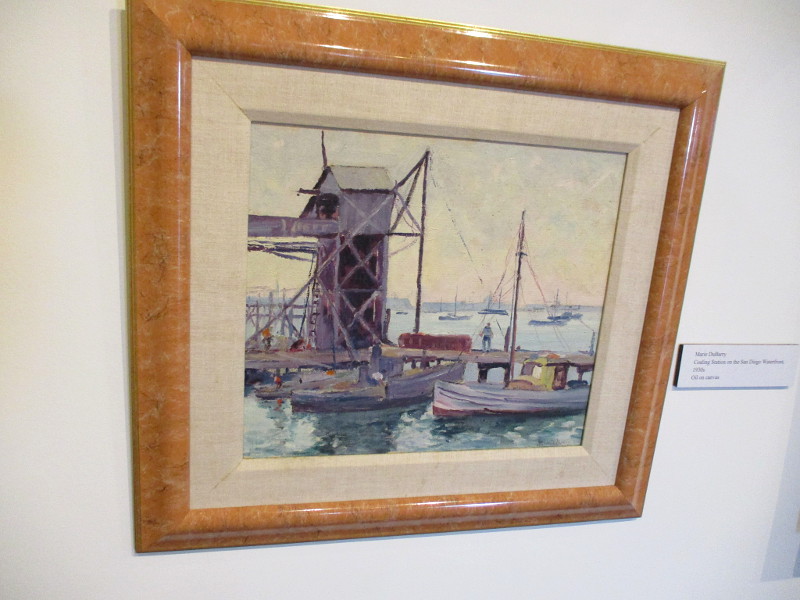
Coaling Station on the San Diego Waterfront, 1930s, by artist Marie DuBarry.

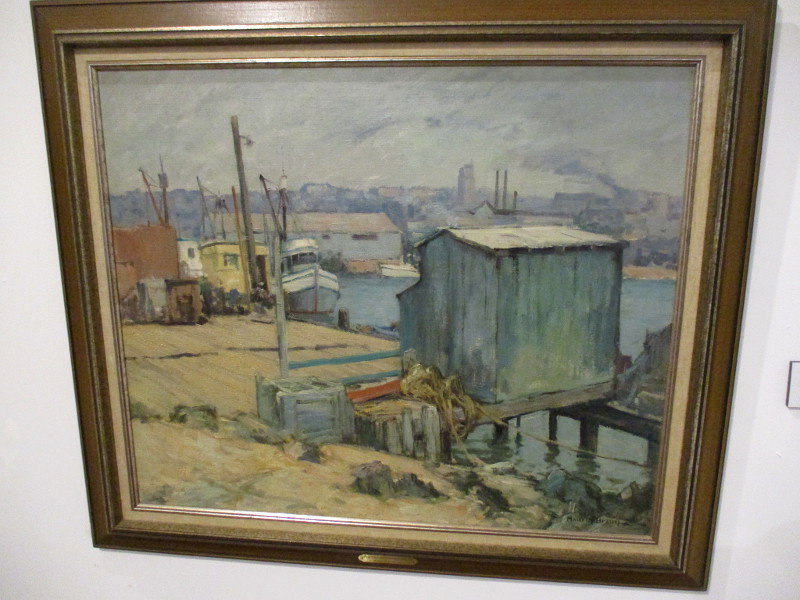
East View of the Coast Guard Station, 1934-1937, by artist Maurice Braun.

Thanks for visiting Cool San Diego Sights!

I post new blogs pretty often. If you like discovering new things, bookmark coolsandiegosights.com and swing on by occasionally!

I live in downtown San Diego and love to walk around with my camera! You can follow Cool San Diego Sights via Facebook or X.