Building a chuck wagon at Escondido history center!

The Escondido History Center is always full of surprises!

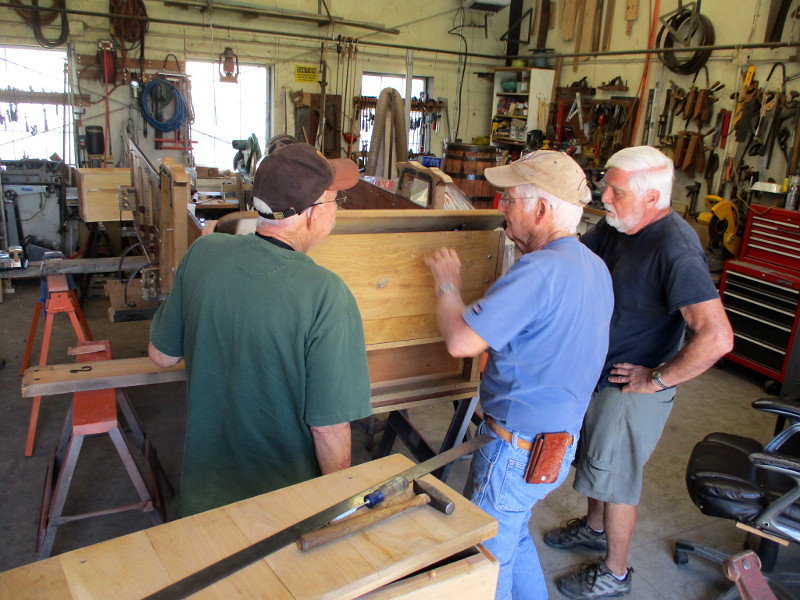
Imagine my own surprise today when I discovered guys building an old-fashioned chuck wagon at the history center’s Bandy Blacksmith & Wheelwright Shop!

The retired volunteers, working on the project, let me step into the wheelwright shop to see exactly what they’re up to.

Check it out! The chuck wagon is being built from scratch and will be faithful to designs used over a century ago in the Old West. They hope to have it ready in time for Escondido’s 2025 Grape Day Festival, which will take place this September in Grape Day Park.

A chuck wagon is a horse-drawn wagon operating as a mobile field kitchen….They were included in wagon trains for settlers and traveling workers such as cowboys or loggers…

As you can see from my photos, this wagon is going to be awesome when finally completed!

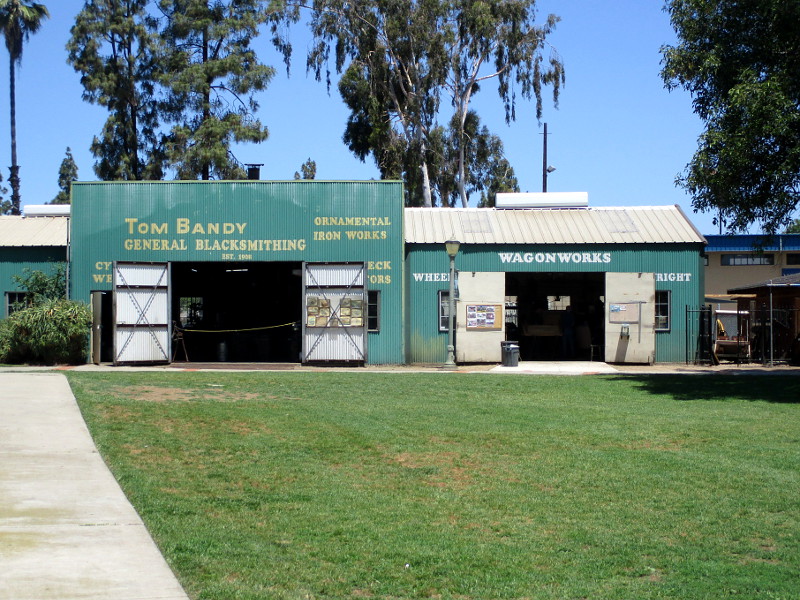
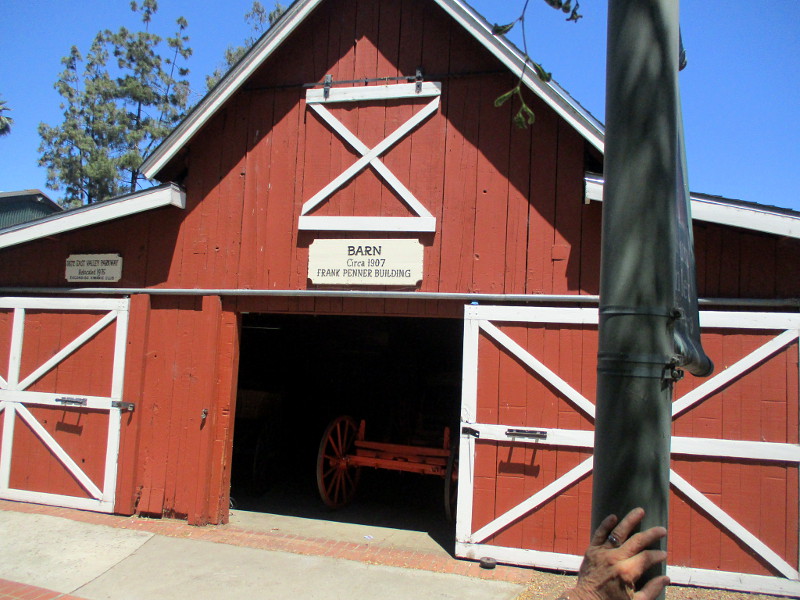
First, here’s the old blacksmith and wagonworks building on the Escondido History Center‘s Heritage Walk, where the chuck wagon is being built…
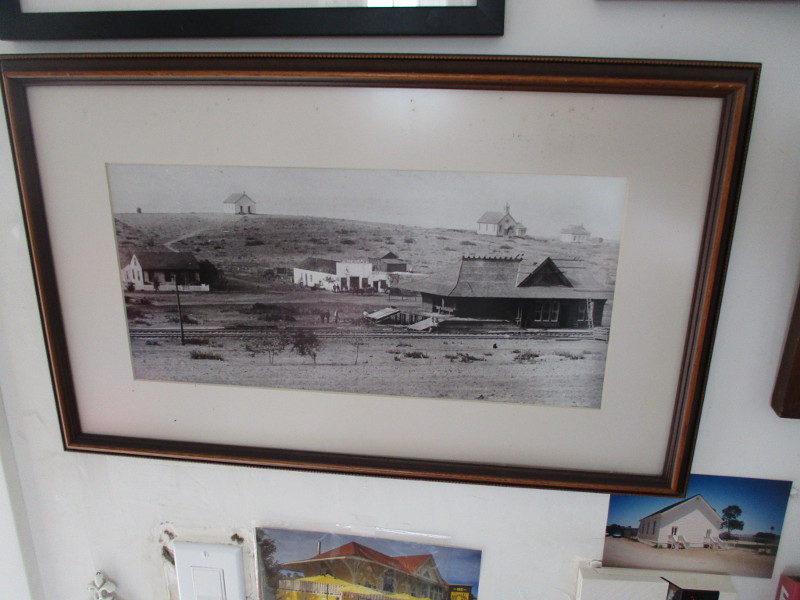
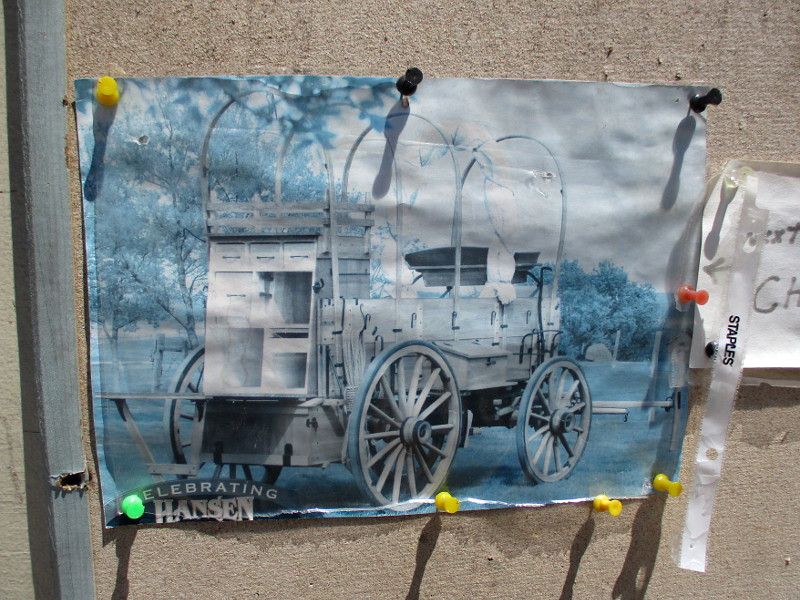
Next is an old photo of a typical chuck wagon (without its cloth covering).

The guys working in Escondido will create a covering for their chuck wagon using duck cloth. You can see how the rear of the old chuck wagon in the photo has compartments used for storing food and cooking materials.
Now, inside the busy wheelwright shop today…

In the next photo, the wooden section that folds down near the front of the wagon is the foot board. The wagon’s seat will be mounted there behind it.
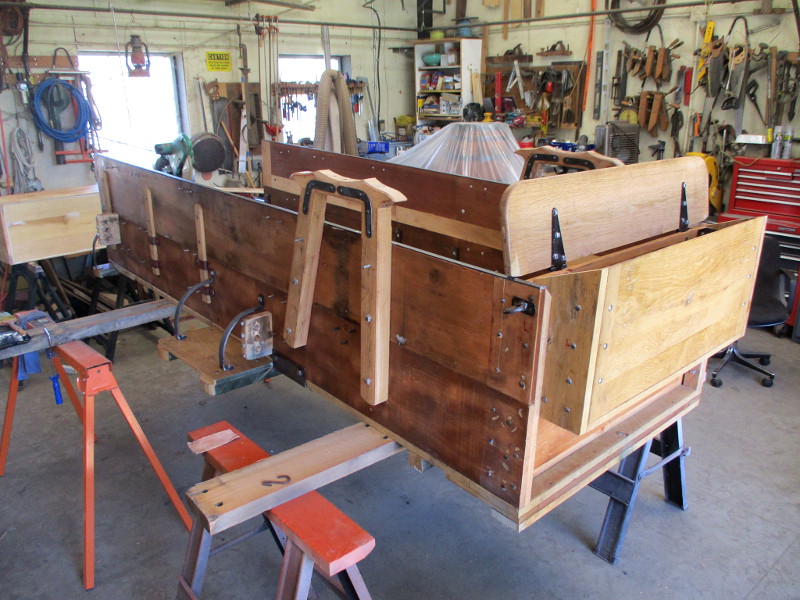
Next is the chuck box, which will be mounted to the rear of the chuck wagon. The combined cupboard and fold-down workspace stores cooking utensils, spices, and essential ingredients for cooking out in the field.

(Think of an old-fashioned tailgate party–featuring baked beans!)
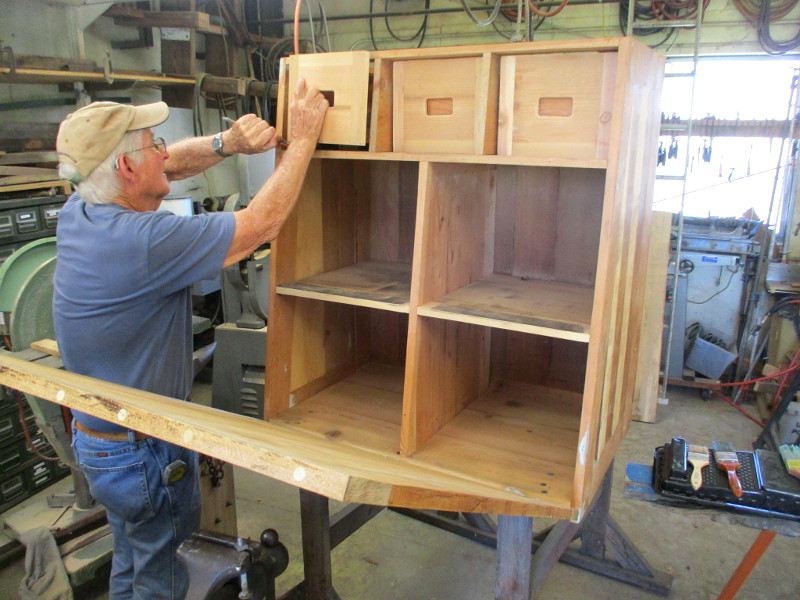
The box-like pan boot is mounted under the chuck box. It typically held pots and pans and other cooking necessities such as a Dutch oven…

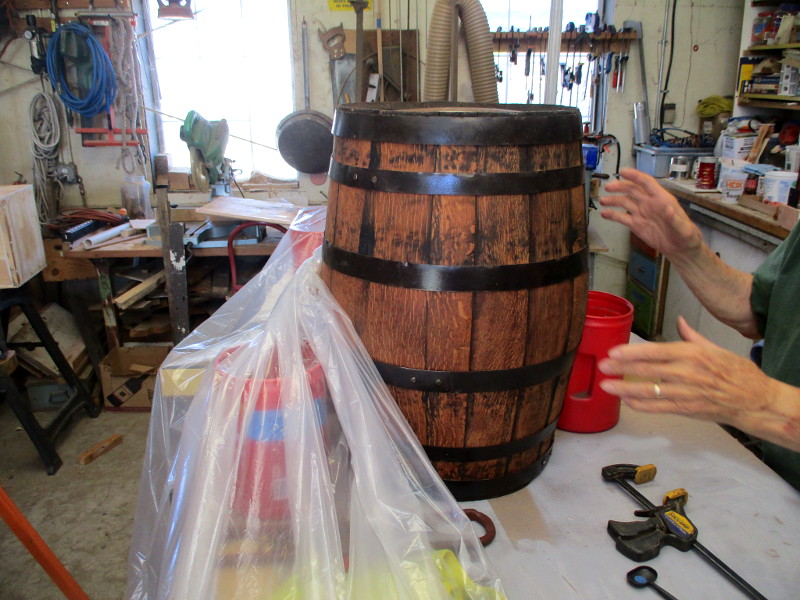
The opposite side of the chuck wagon under construction appears slightly different…

A barrel for water or other “liquid refreshment” will be mounted to this side!
The adjacent Penner Barn had its door opened by one of the friendly guys so I could take a peek inside…
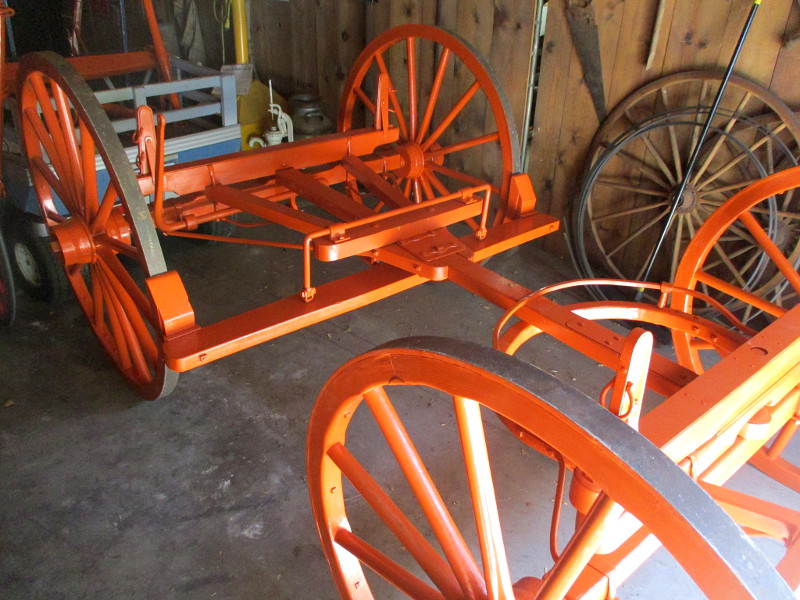
The chuck wagon’s undercarriage is ready to go!
I post new blogs pretty often. If you like discovering new things, bookmark coolsandiegosights.com and swing on by occasionally!

I live in downtown San Diego and love to walk around with my camera! You can follow Cool San Diego Sights via Facebook or X.

Feel free to share!
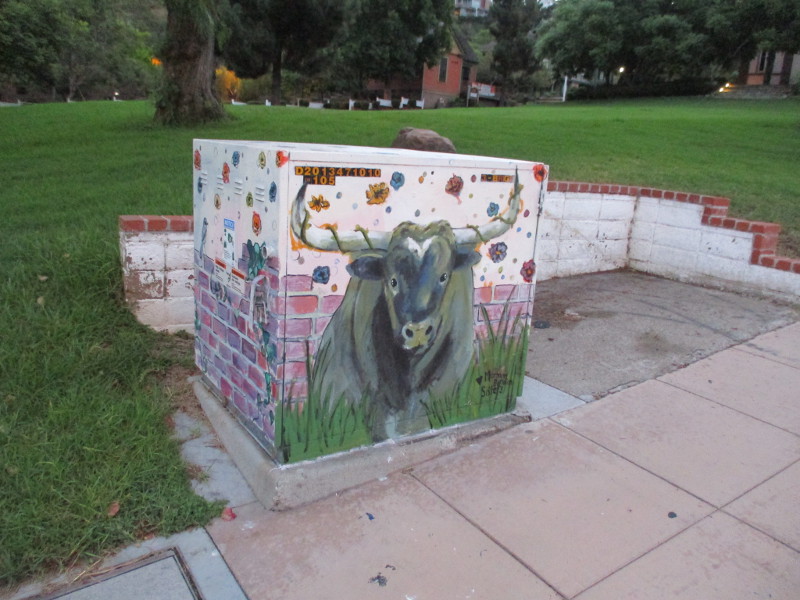
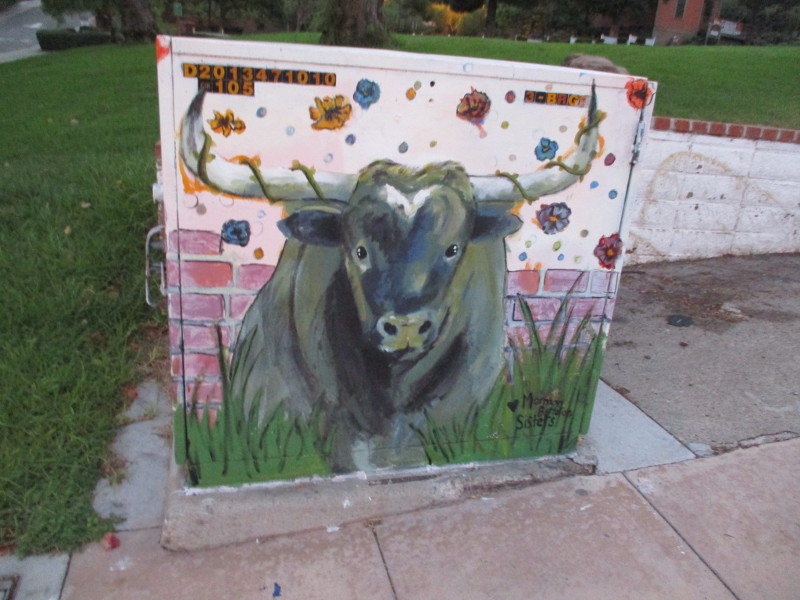
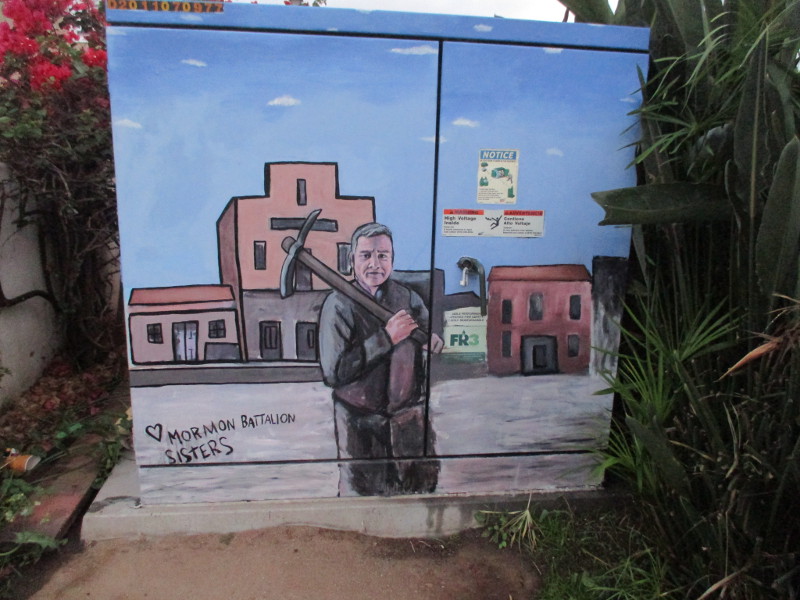
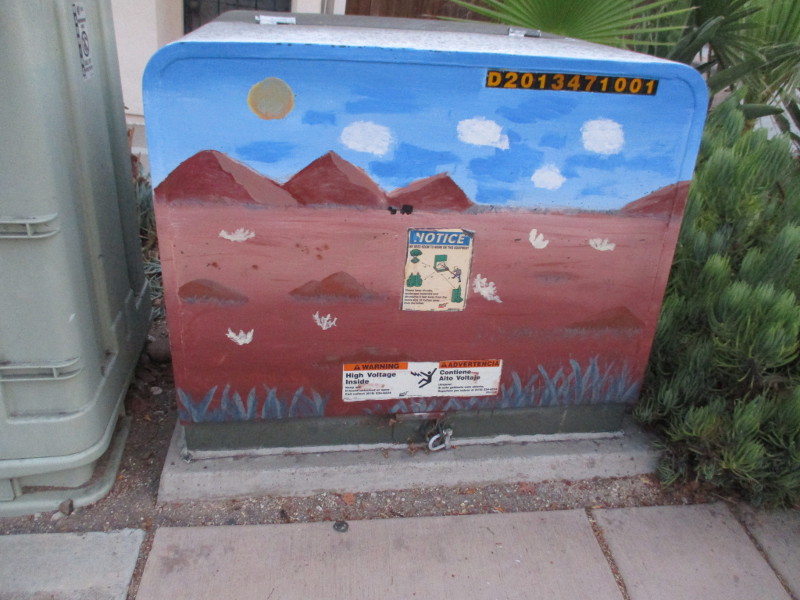
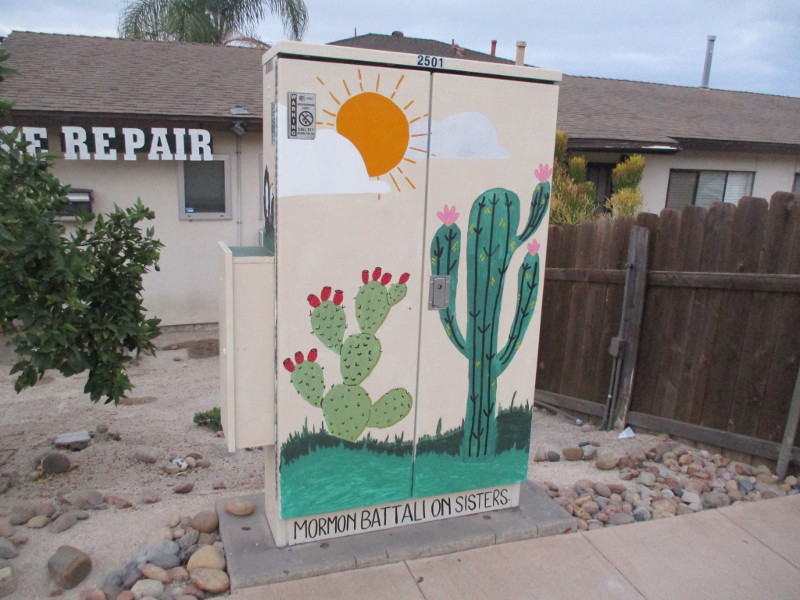
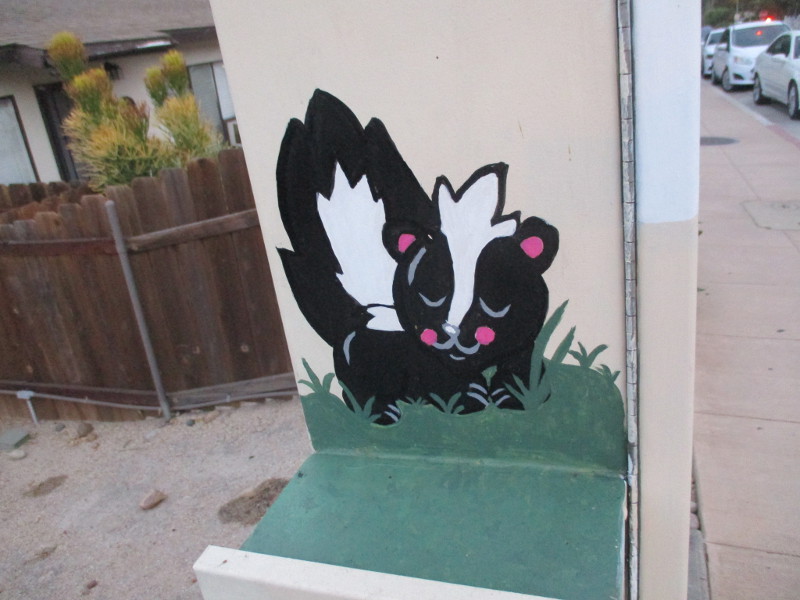
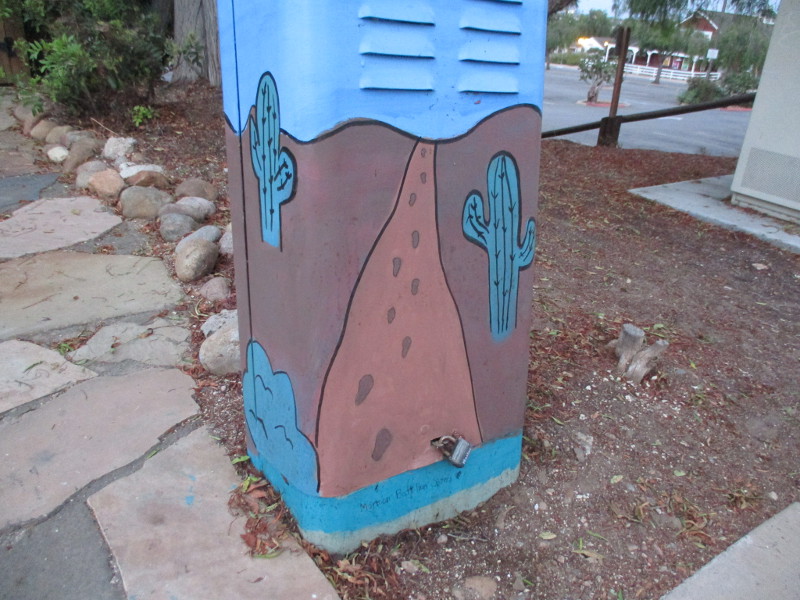
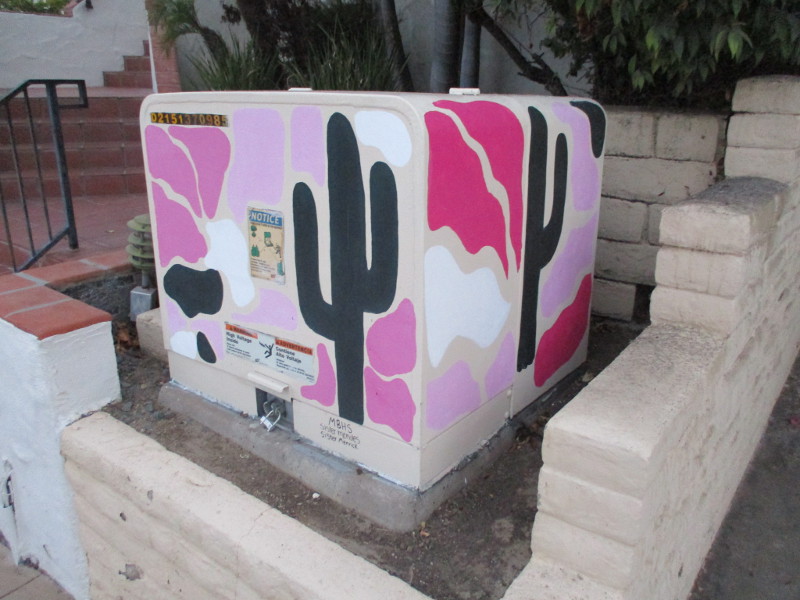
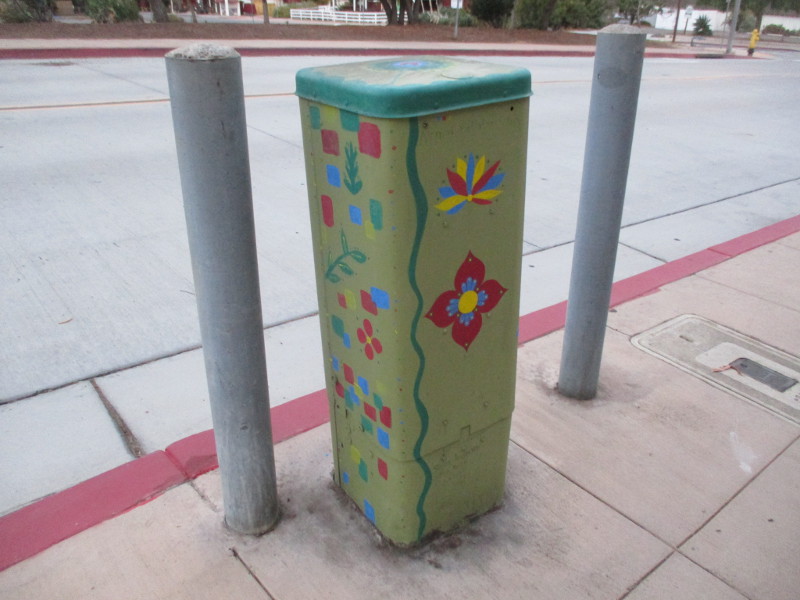
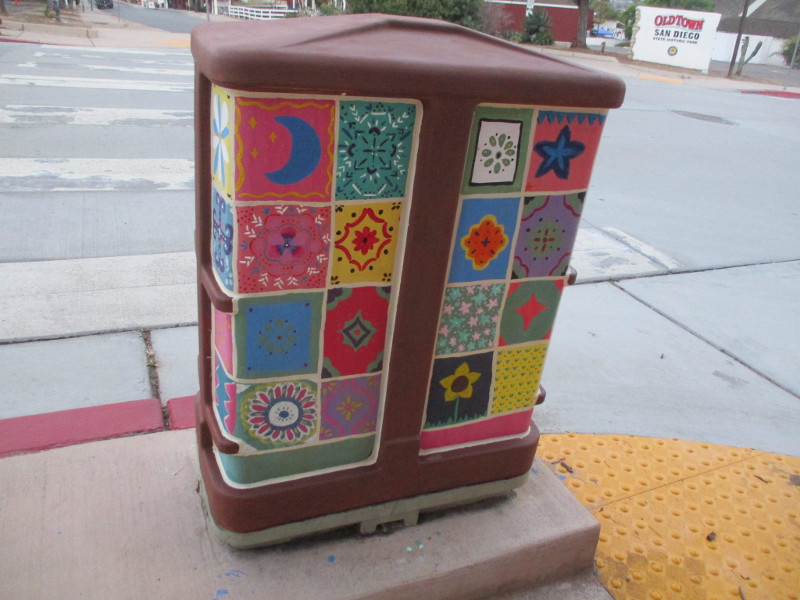
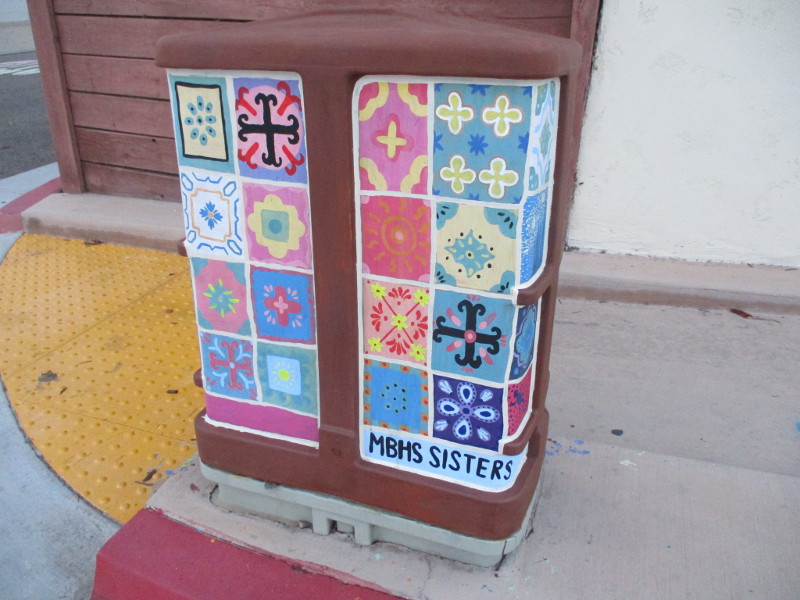
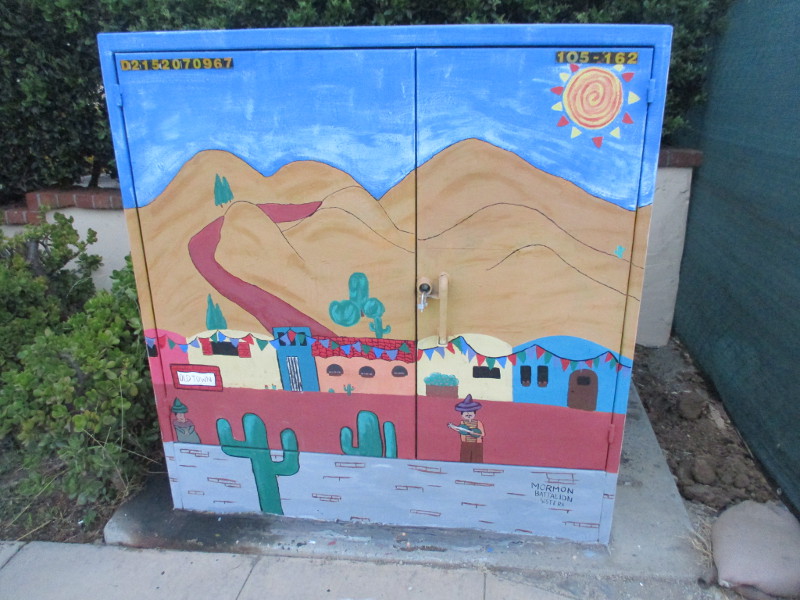
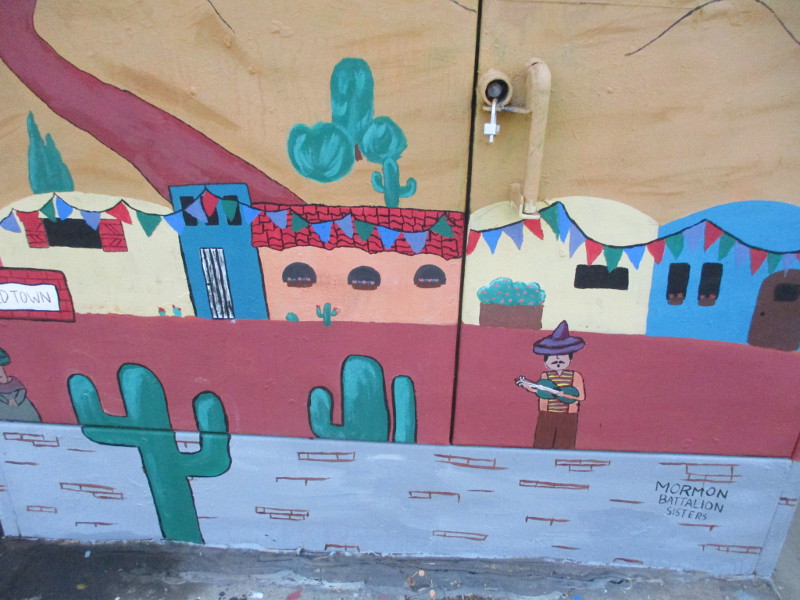
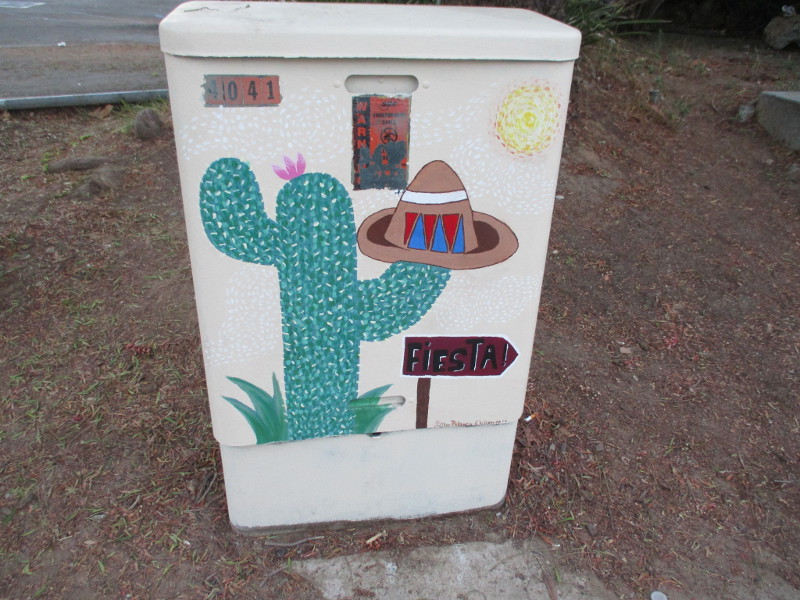
Colorful street art by Mormon Battalion Sisters.

Many electrical boxes near the Mormon Battalion Historic Site in Old Town San Diego have been colorfully painted–I believe recently.

Artist signatures state Mormon Battalion Sisters. Many of the painted images show cactus-filled landscapes, aspects of the Old West, and what might be early San Diego history.

I took these street art photographs yesterday during my sunrise walk through Old Town.

Thanks for visiting Cool San Diego Sights!

I post new blogs pretty often. If you like discovering new things, bookmark coolsandiegosights.com and swing on by occasionally!

I live in downtown San Diego and love to walk around with my camera! You can follow Cool San Diego Sights via Facebook or X.

Step into El Cajon’s fascinating history!

How much do you know about the history of El Cajon?

Step into the Knox House Museum and you’ll be transported back in time. You’ll experience what life was like for El Cajon’s first settlers and its early residents.

You’ll learn how, in 1876, Amaziah Knox built a residence and hotel in the seeming middle of nowhere. Rising two stories tall, boasting seven rooms, it was the first commercial structure in El Cajon.

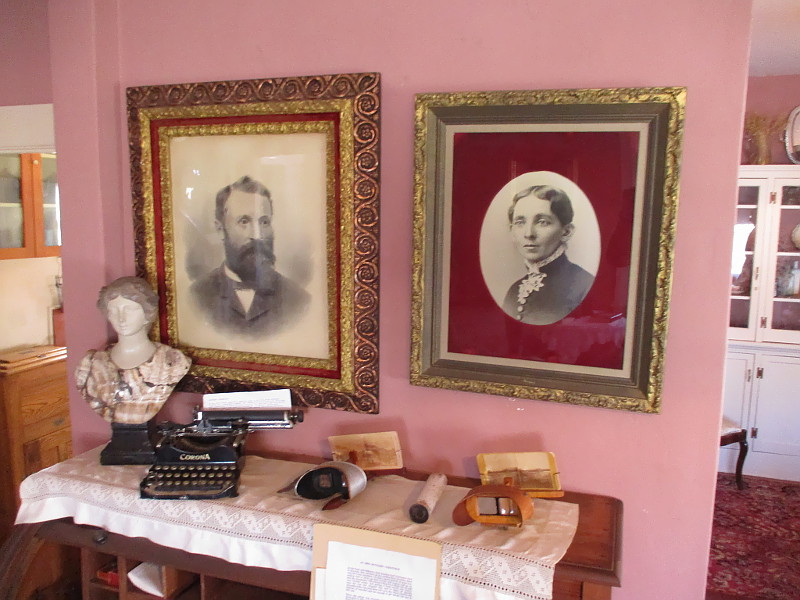
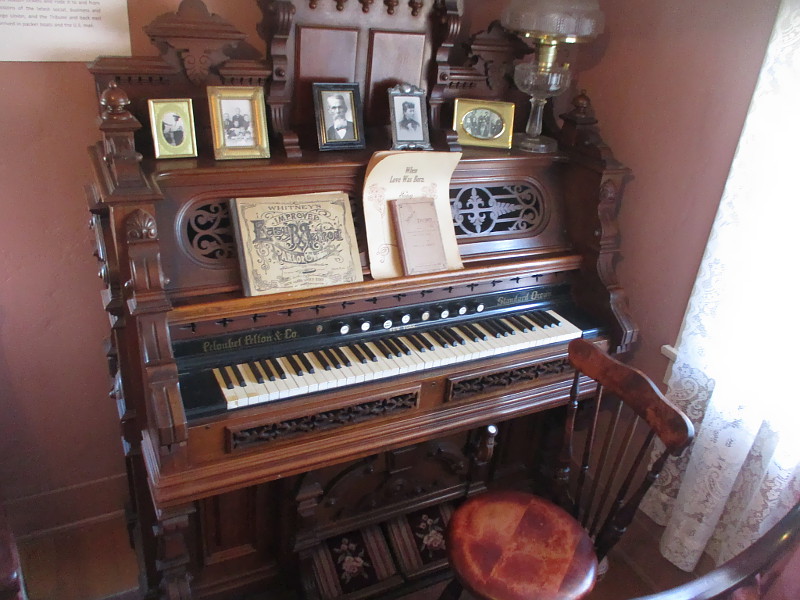
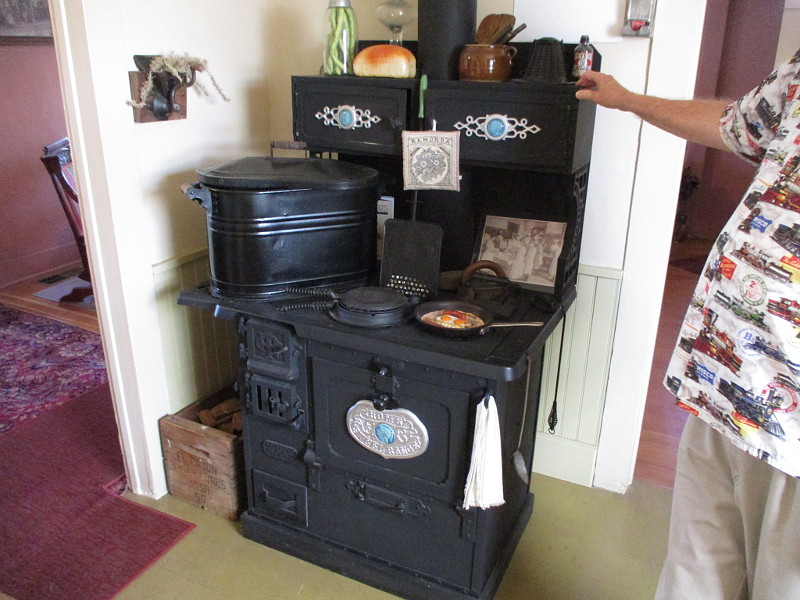
You’ll walk through the parlor, kitchen, living room, sewing room, and bedrooms, furnished as they might have been from 1895 to 1912. You’ll see original objects that were owned by the Knox family, plus many old photographs of El Cajon taken during its early years..

The El Cajon Historical Society operates the free Knox House Museum and welcomes visitors with a great tour of the old house. Check out their website for the location, open days and hours.

My own visit last Saturday was an eye-opener. I peered at photos of a very early El Cajon, with its small handful of structures. I learned that the hotel was cleverly built in a popular camping place for teamsters, miners, and drovers traveling to the Julian gold mines after 1870.

I saw how the hotel and the young city expanded, and how agriculture played an important role in the growing prosperity. Grapes covered many acres in one old photo. They were dried and exported as raisins.

I learned how the home’s parlor served as El Cajon’s very first post office, with Mr. Knox the official Postmaster.

Did you know the United States Cavalry was once stationed in El Cajon, and that El Cajon and Lakeside boasted a stagecoach line?

No? You should visit the museum! Or check out their informative website by clicking here.

My tour guide Rick told me the historical society is looking for new volunteers. Do you live in El Cajon or East County? Would you like to help keep this important history alive? Contact the El Cajon Historical Society here.

Or consider a donation. Worthy organizations like this are struggling, especially after the disruptions caused by COVID.

One last thing. The El Cajon Historical Society is eager to teach young people about the fascinating history of this city they call home. They are offering a slide show for local classrooms! Do you know any teachers? Pass the word!

Thanks for visiting Cool San Diego Sights!

I post new blogs pretty often. If you like discovering new things, bookmark coolsandiegosights.com and swing on by occasionally!

I live in downtown San Diego and love to walk around with my camera! You can follow Cool San Diego Sights via Facebook or X (formerly known as Twitter)!

Why Roseville, Rose Creek and Rose Canyon?

Have you ever wondered why there’s a Roseville in Point Loma, and a Rose Creek and Rose Canyon?

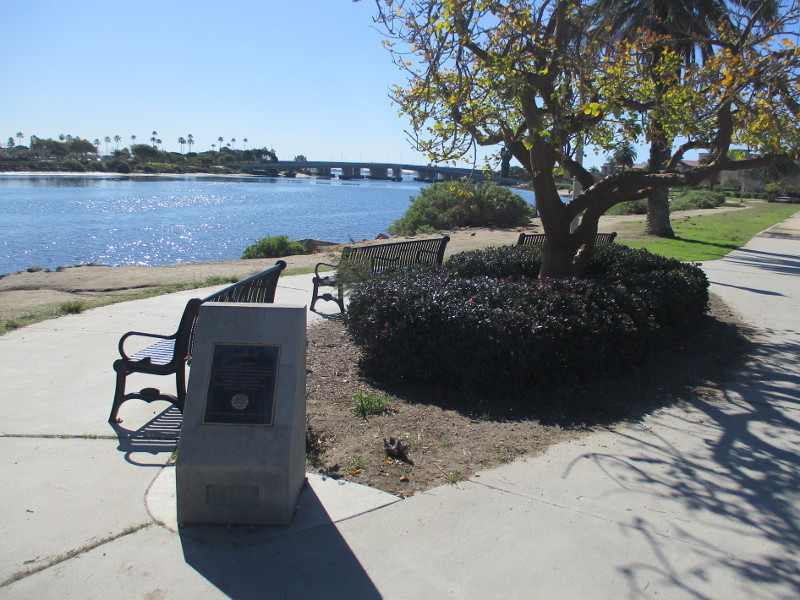
Well, during a recent walk I discovered an old plaque that provides an explanation. It stands at Liberty Station beside the boat channel. That’s it in the above photograph. In the distance is Nimitz Bridge and the North Harbor Drive bridge.

Several San Diego places were named after Louis Rose.

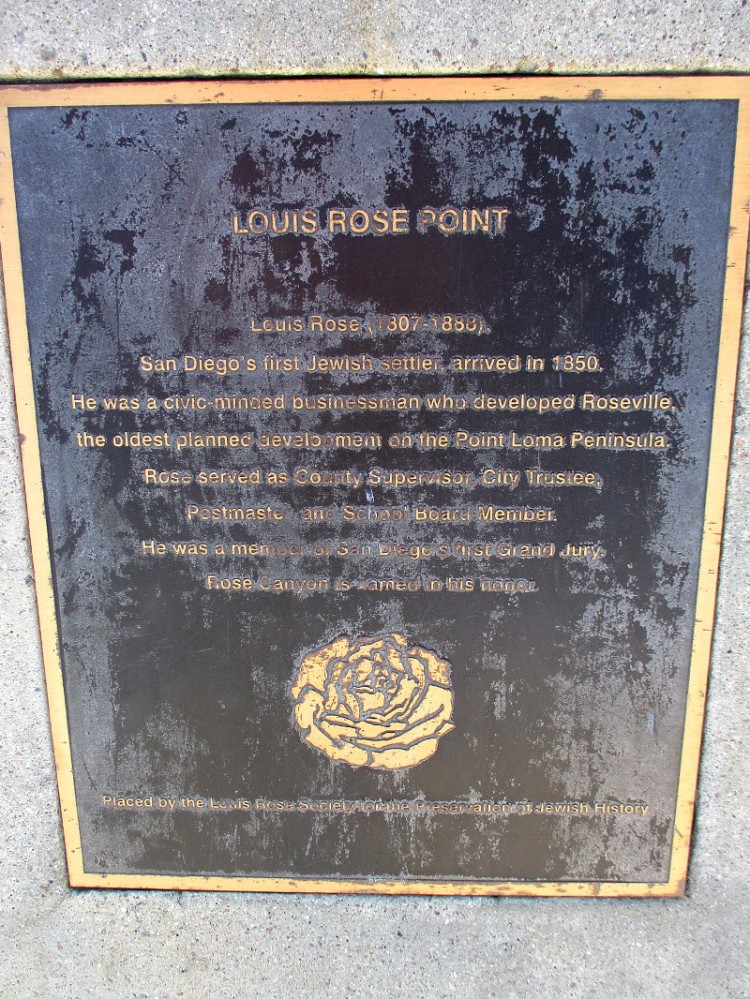
LOUIS ROSE POINT

Louis Rose (1807-1888)

San Diego’s first Jewish settler, arrived in 1850.

He was a civic-minded businessman who developed Roseville, the oldest planned development on the Point Loma Peninsula.

Rose served as County Supervisor, City Trustee, Postmaster and School Board Member.

He was a member of San Diego’s first Grand Jury.

Rose Canyon is named in his honor.

Placed by the Louis Rose Society for the Preservation of Jewish History

Here’s a photo I once posted of an exhibit inside the Robinson-Rose Visitor Center at Old Town San Diego State Historic Park:

Louis Rose was a prominent citizen of Old Town San Diego. He was born near Hanover, Germany in 1807 and became a citizen of the United States in 1846. He moved to San Diego in 1850, becoming the first Jewish person to settle in the city. Rose was an active member of the Jewish community in San Diego. He helped to organize the first Jewish congregation, which became Congregation Beth Israel. He also hosted High Holy Day services in his house and gave 5 acres of land for a sacred burial ground in what is now Point Loma.

Thanks for visiting Cool San Diego Sights!

I post new blogs pretty often. If you like discovering new things, bookmark coolsandiegosights.com and swing on by occasionally!

I live in downtown San Diego and love to walk around with my camera! You can follow Cool San Diego Sights via Facebook or Twitter!

Carlsbad history at St. Michael’s By-the-Sea.

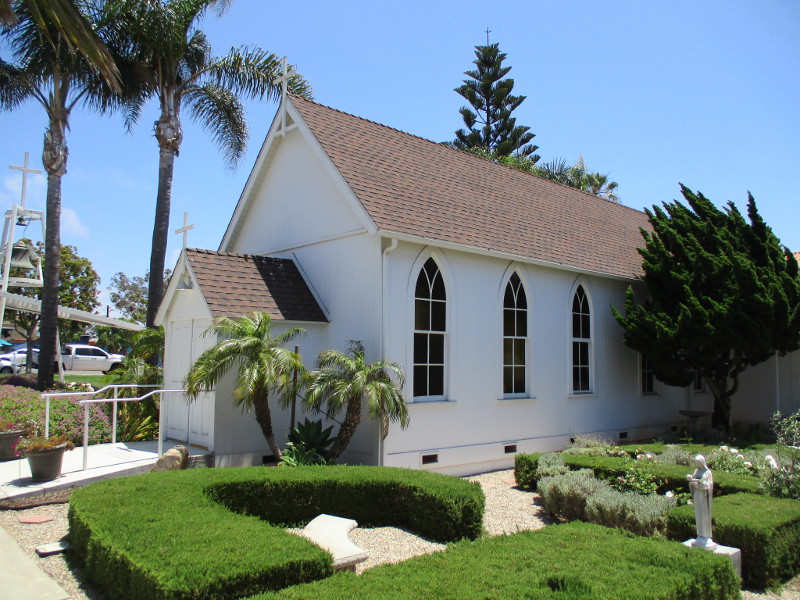
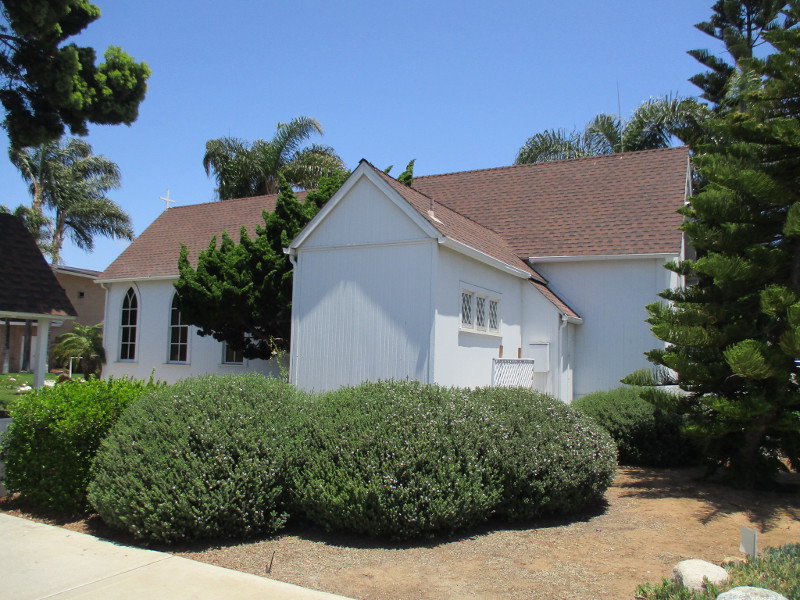
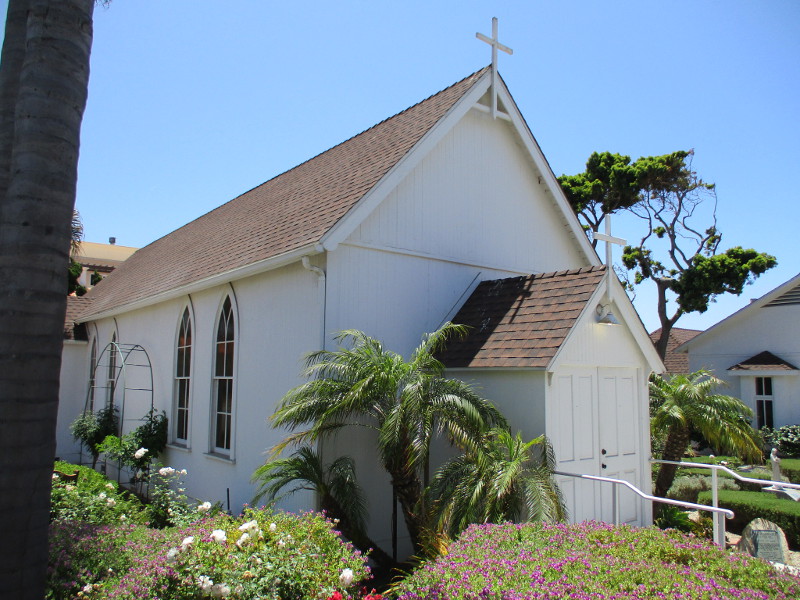
The fascinating history of Carlsbad includes its very first church, St. Michael’s By-the-Sea Episcopal Church, built in 1894.

St. Michael’s By-the-Sea is located on Carlsbad Boulevard at Christiansen Way, a block south of Magee Park.

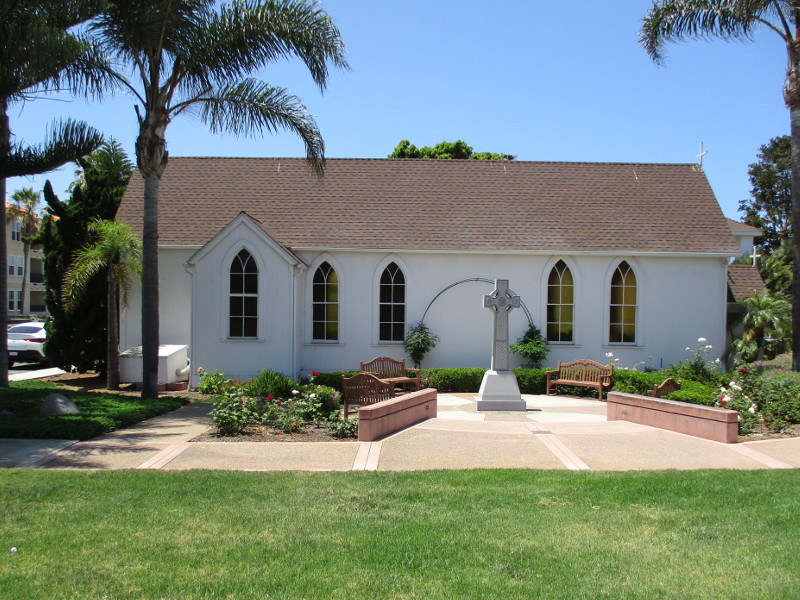
During a recent adventure in San Diego’s North County, I walked around the church’s original structure, which stands by several other later buildings.

I paused to read this plaque…

The first church built in Carlsbad was St. Michael’s By-the-Sea Episcopal Church. Originally erected in 1894 overlooking the ocean on Oak Avenue, the quaint Gothic structure was moved to its current site in 1959 when Florence Shipley Magee donated an adjacent site for a new church.

Original redwood paneling, oak pews, and a Victorian pump organ are all still in good condition. The only alterations are a new entry, replacing one which led directly into the choir area at the front of the chapel, and a new heating and air conditioning system.

Far from being a relic of the past, the chapel is used for regular Sunday and weekday services as well as for weddings and funerals.

PLAQUE COURTESY OF THE CARLSBAD HISTORIC PRESERVATION COMMISSION

I live in downtown San Diego and love to walk around with my camera! You can follow Cool San Diego Sights via Facebook or Twitter!

History inside Carlsbad’s Shipley-Magee House.

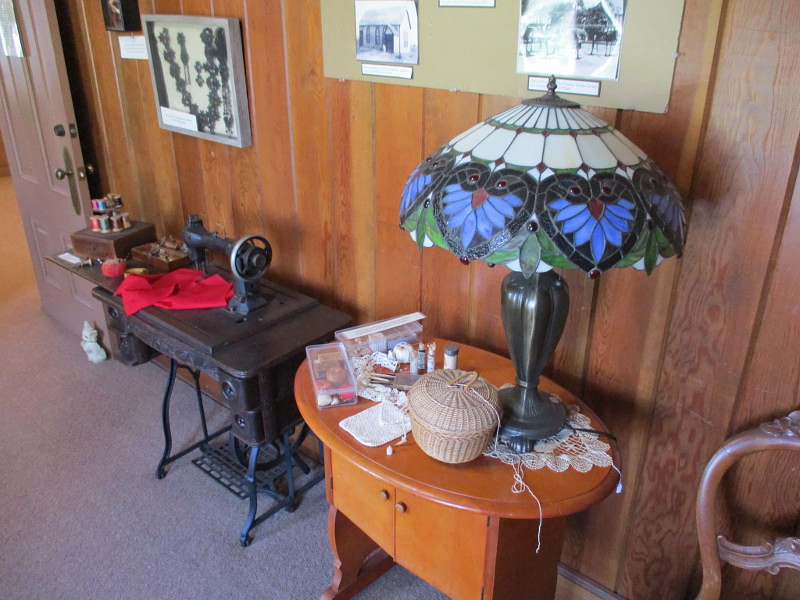
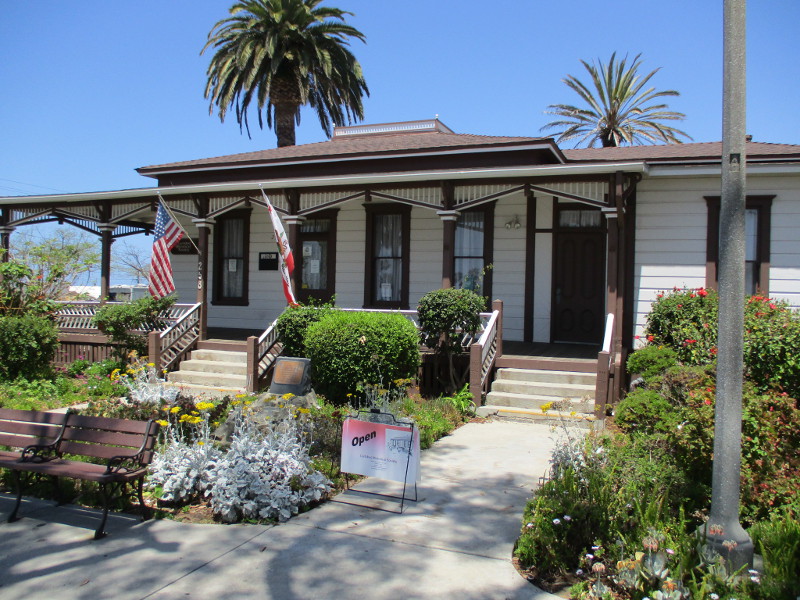
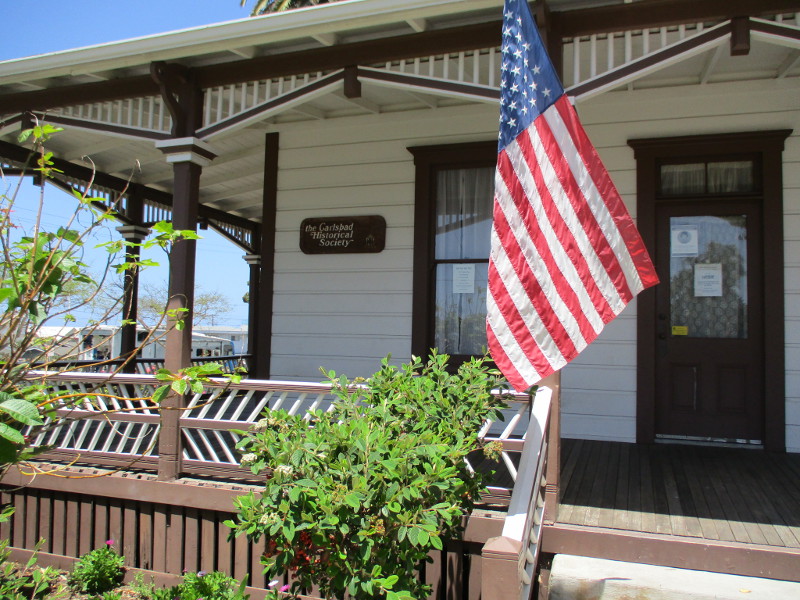
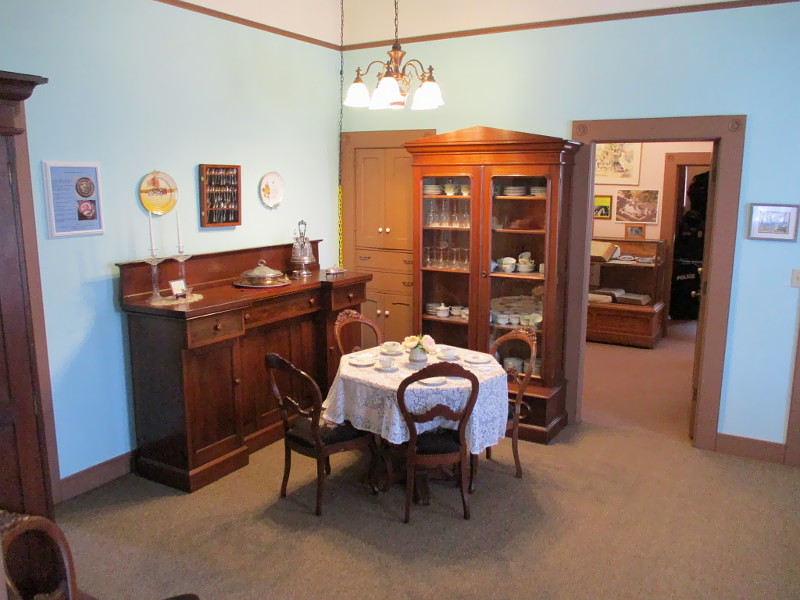
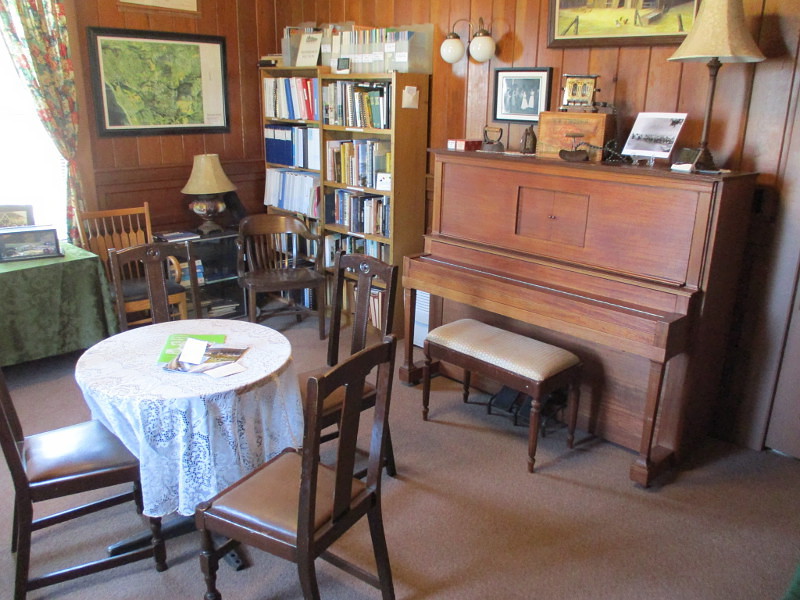
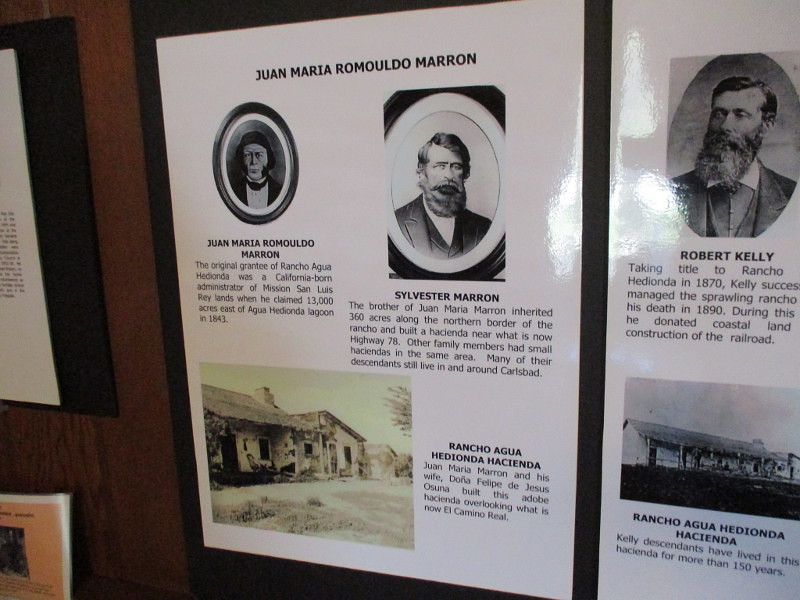
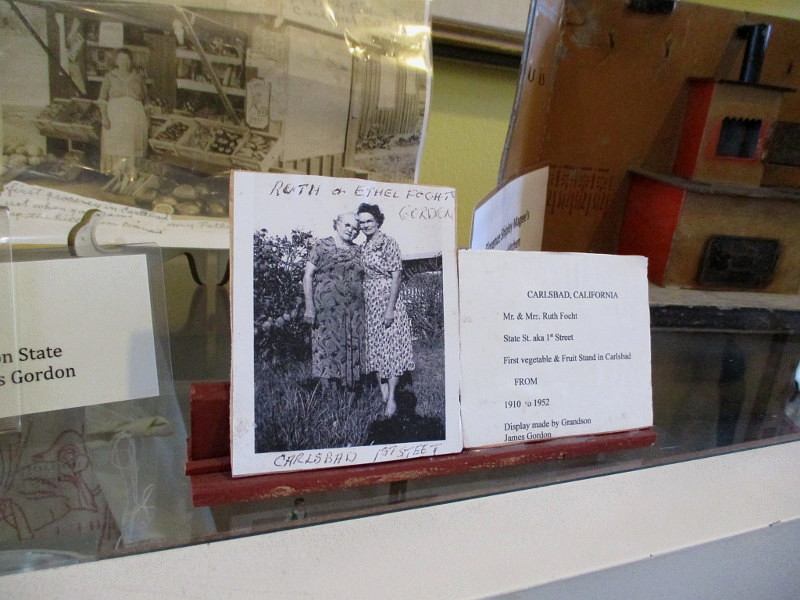
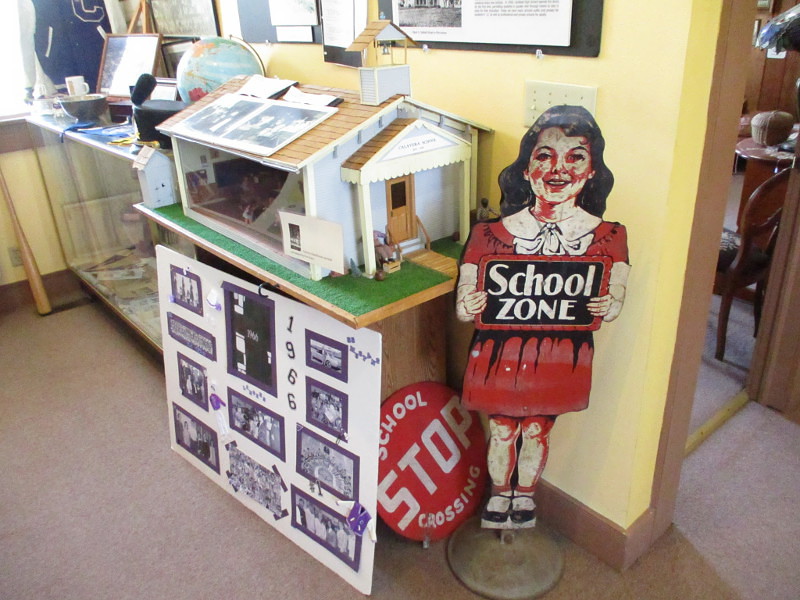
The 1887 Shipley-Magee House, home of the Carlsbad Historical Society, contains a museum that history lovers must visit. I walked through its doors earlier this year to discover a treasure trove of artifacts, documents and old photographs from Carlsbad’s earliest days.

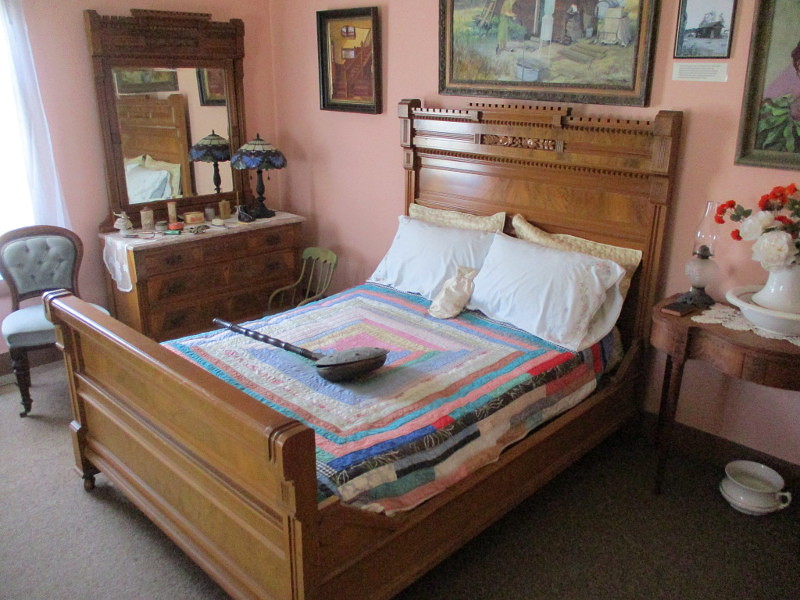
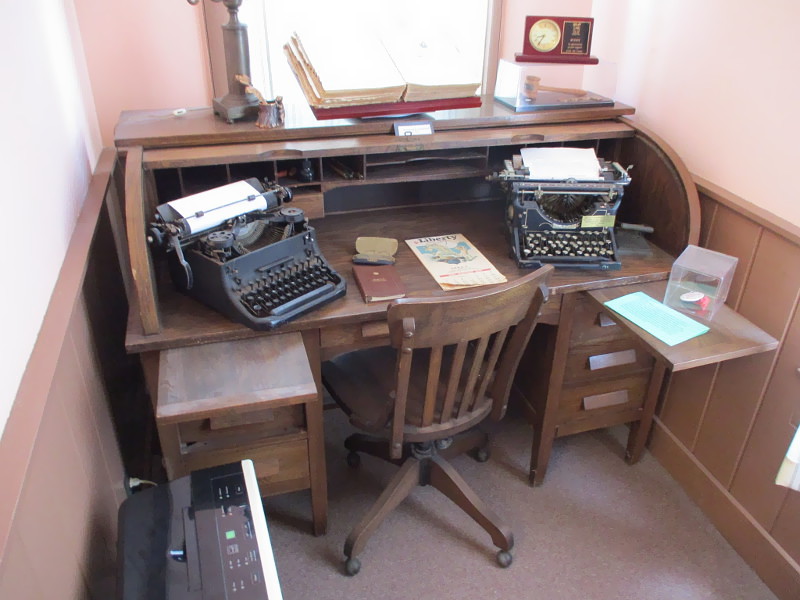
The rooms of this historical Craftsman-style house are not only filled with fascinating exhibits, but with furnishings that represent how life must have been like for many in the late 19th century.

Enjoy the following photographs. Better yet, go visit yourself!

The Carlsbad Historical Society’s website is here, with the hours and location of the Shipley-Magee House and its museum.

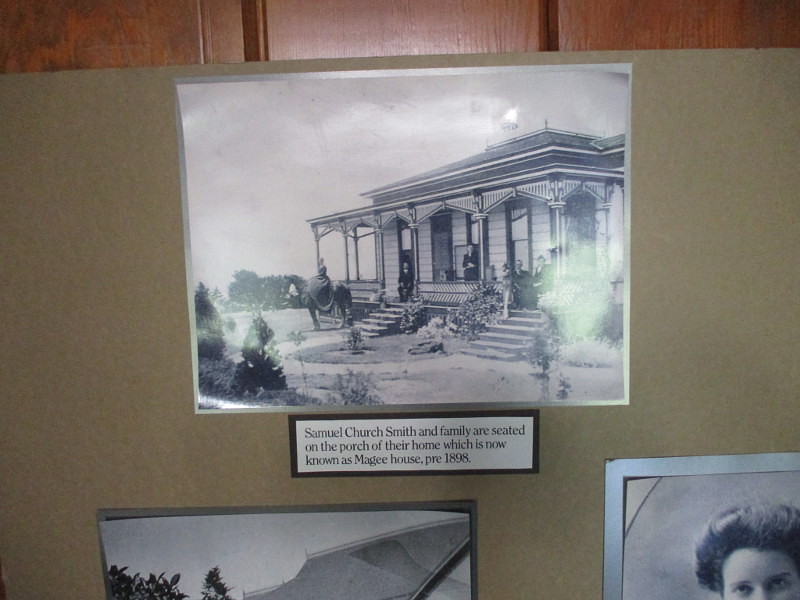
The society’s website contains pages and pages detailing Carlsbad’s history: from the first settlers, to the construction of the Magee House by Samuel Church Smith (one of the founders of the Carlsbad Land and Water Company), to the layout of downtown Carlsbad in 1925.

If you’d like to see photos of Magee Park, where the house is located, along with several other historic structures and a beautiful rose garden, you can check out an old blog post here.

You can also enjoy photographs of several historical buildings in Carlsbad here, and for more on Carlsbad’s famous Twin Inns, click here and here!
I live in downtown San Diego and love to walk around with my camera! You can follow Cool San Diego Sights via Facebook or Twitter!

You can easily explore Cool San Diego Sights by using the search box on my blog’s sidebar. Or click a tag! There are thousands upon thousands of photos for you to enjoy!

A surprising, historical La Mesa building!

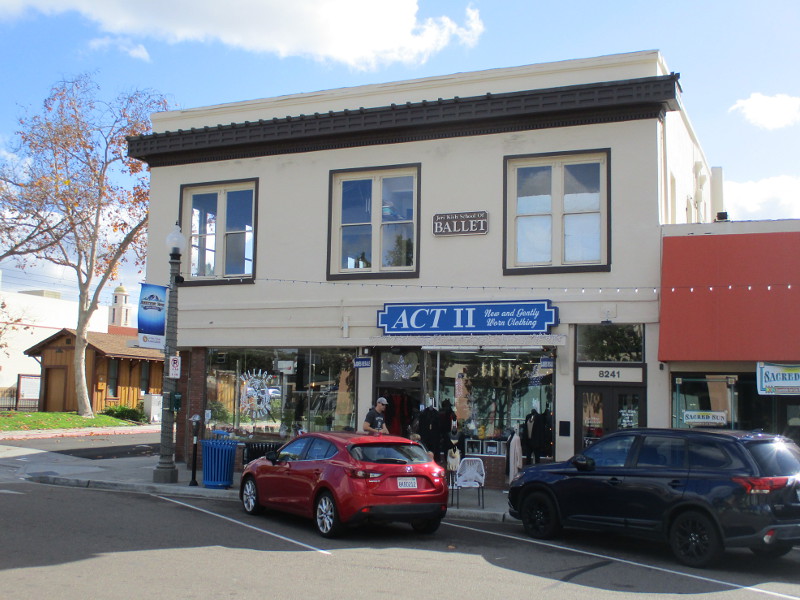
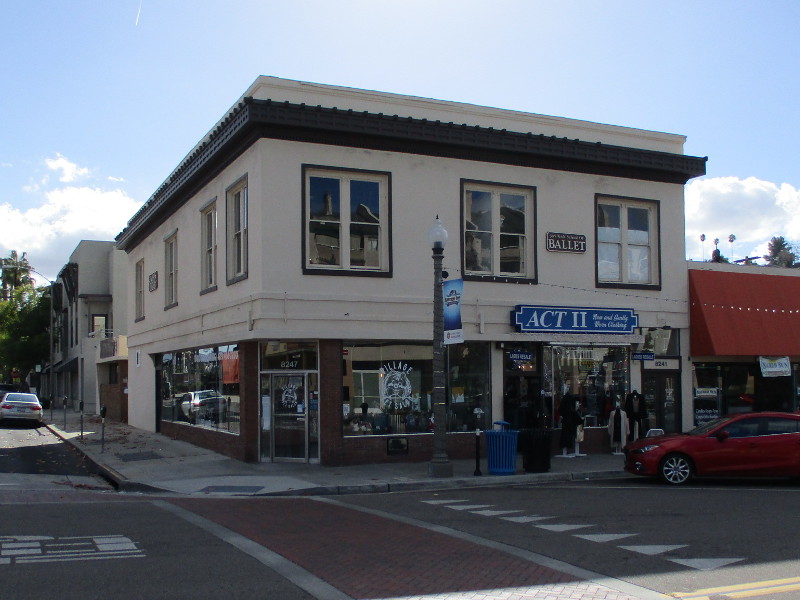
At first glance, you might not believe this building is almost 130 years old. That’s because it appears much different today than it did originally.

During my last walk around La Mesa, I learned this is La Mesa’s oldest standing commercial building!

It’s interesting to compare the old photograph on the La Mesa Historical Society plaque with the building one sees today.

The La Mesa Lemon Company Store building is located at the corner of La Mesa Boulevard and Nebo Drive.

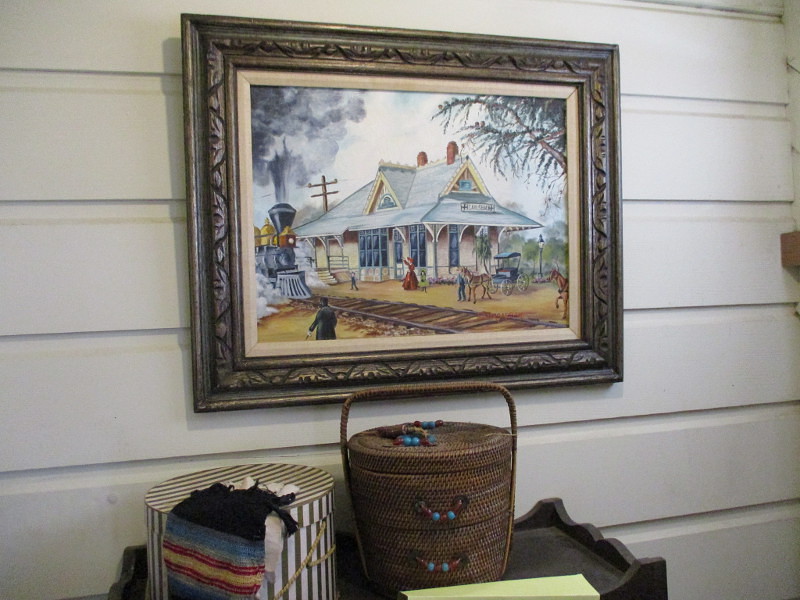
La Mesa Lemon Company Store, circa 1895

Opened adjacent to the La Mesa Springs rail station in 1895, the Lemon Company’s impressive building was the first to supply local settlers and ranchers. La Mesa’s oldest standing commercial building, it was expanded south in 1912. Charter La Mesa Rotary Club member Lawrence Washburn remodeled the building for the city’s first Ford automobile dealership in 1923.

Take a close look at the signs in the photos. “Dealers in everything used on a ranch” is now ballet and clothing!

I live in downtown San Diego and love to walk around with my camera! You can follow Cool San Diego Sights via Facebook or Twitter!

A visit to the Encinitas Historical Society schoolhouse.

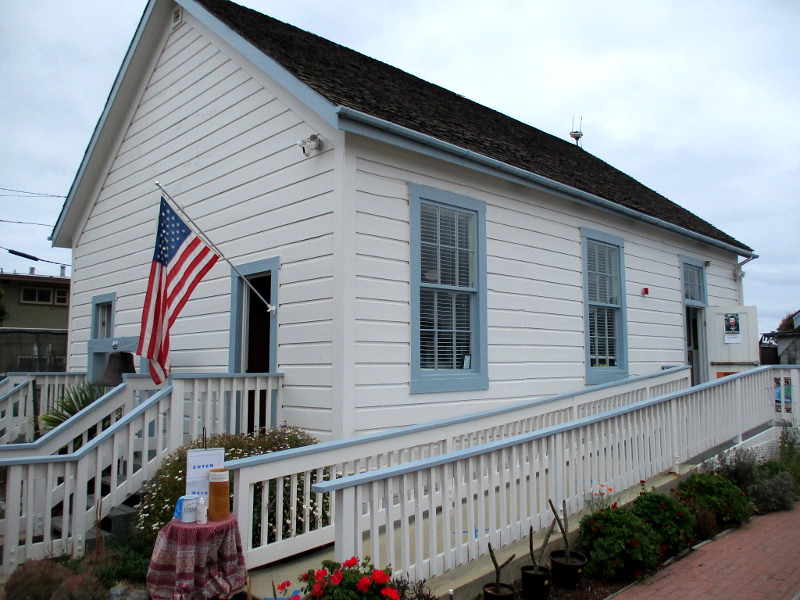
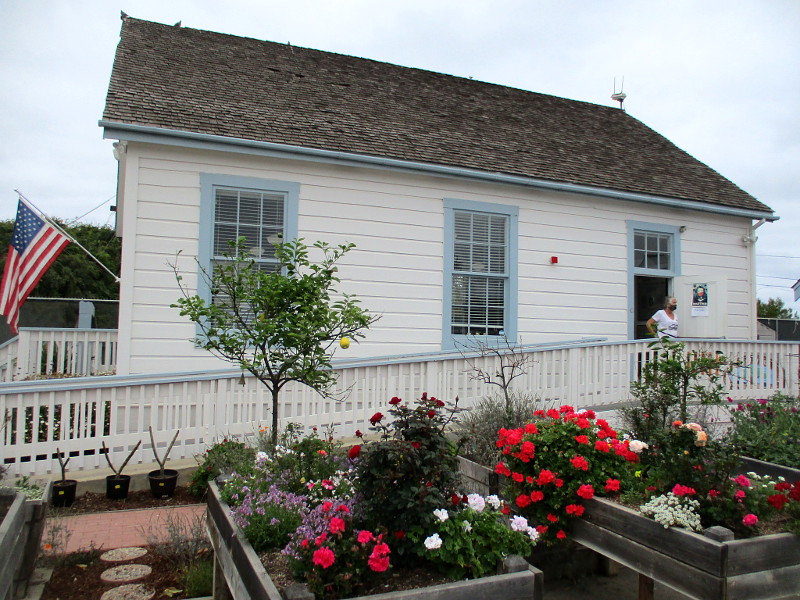
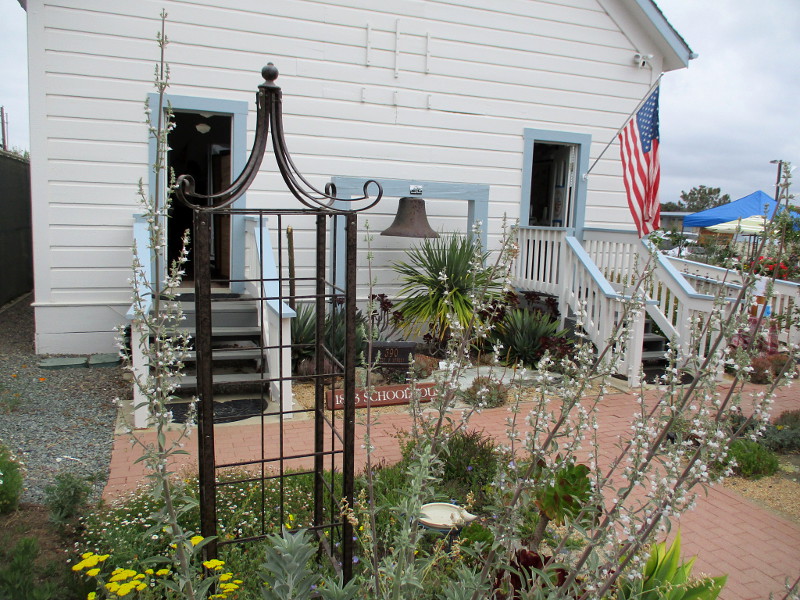
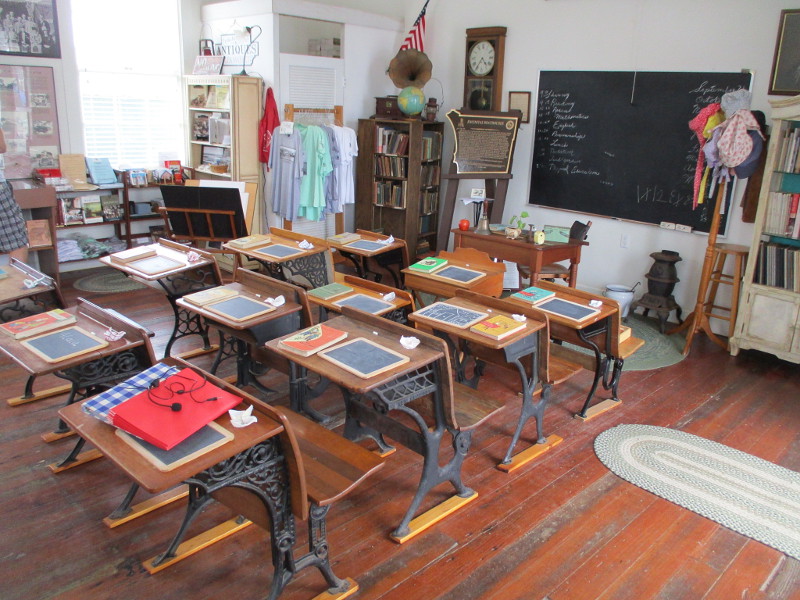
A one-room schoolhouse stands on a hilltop in San Diego’s North County, a very short distance from the beautiful Pacific Ocean. The old schoolhouse is the home of the Encinitas Historical Society, and I paid a visit last Saturday.

The historic schoolhouse, built in 1883, is the oldest building in Encinitas.

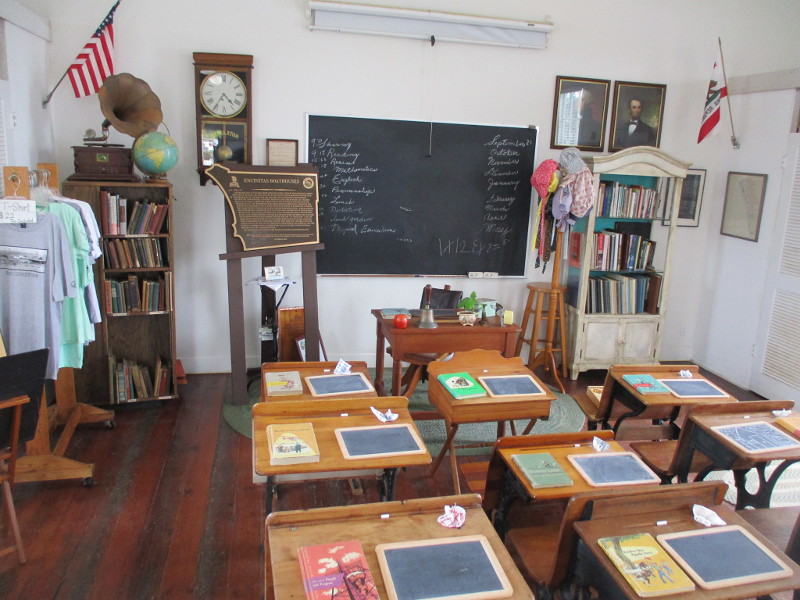
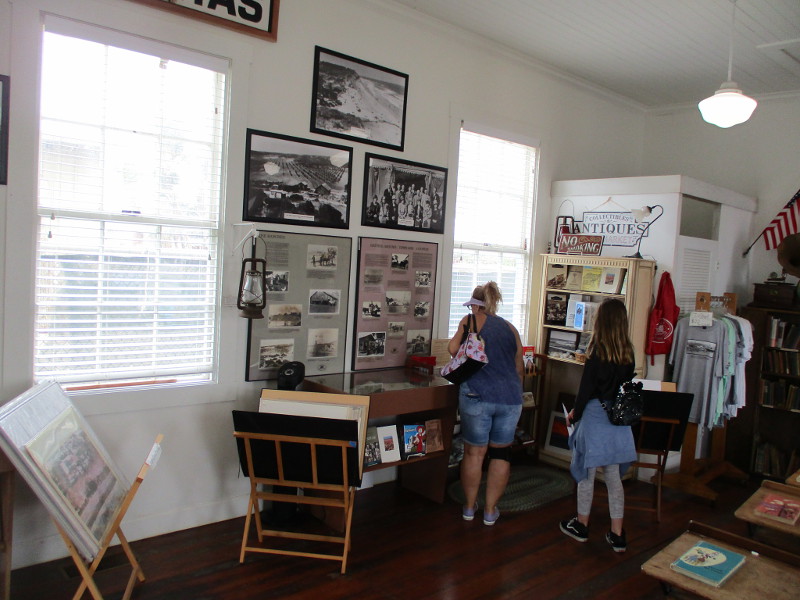
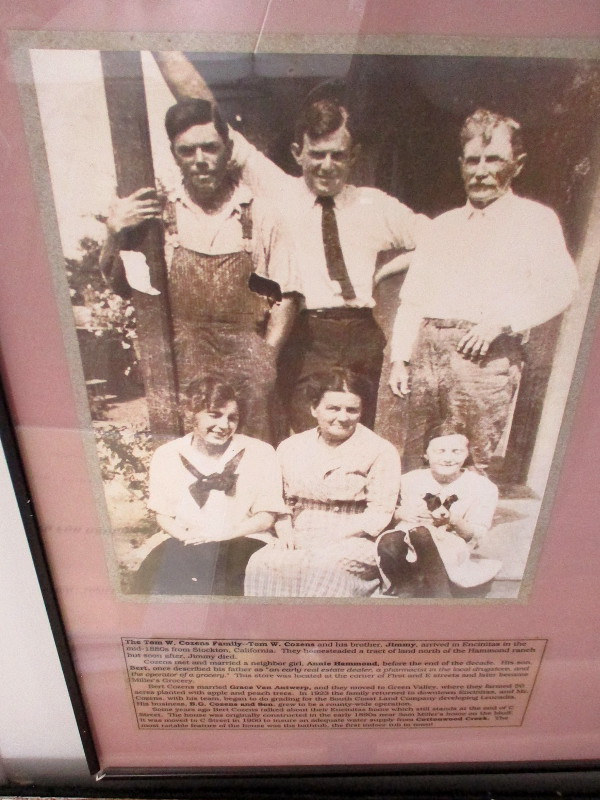
While its outward appearance is modest, step through a door and you’ll find the schoolhouse is roomy and welcoming. The wood floors are original. The bright walls are alive with photographs depicting the history of both the schoolhouse and early Encinitas–the residents, town buildings and few landmarks.

In 1883, with the arrival of a family from England, the population of Encinitas swelled to a whopping twenty two. The newly arrived father (a cabinetmaker) and his seventeen-year-old son built the schoolhouse primarily from redwood.

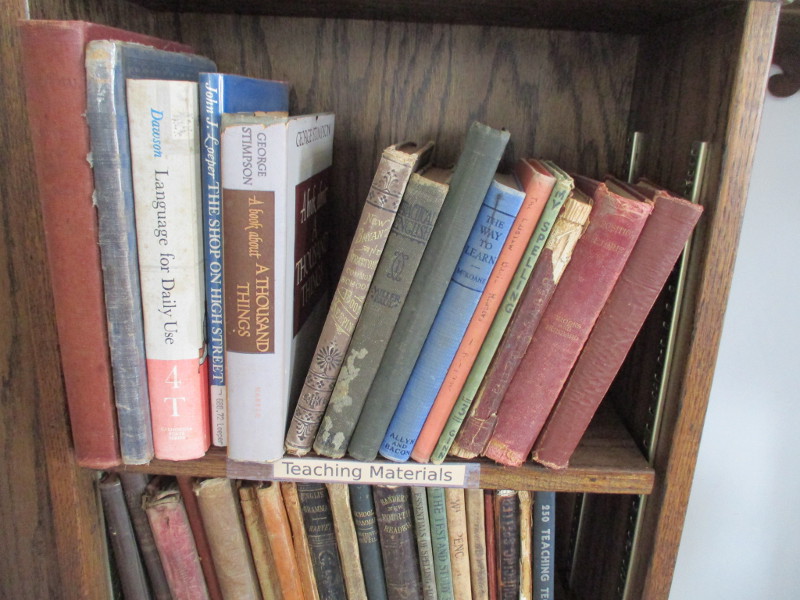
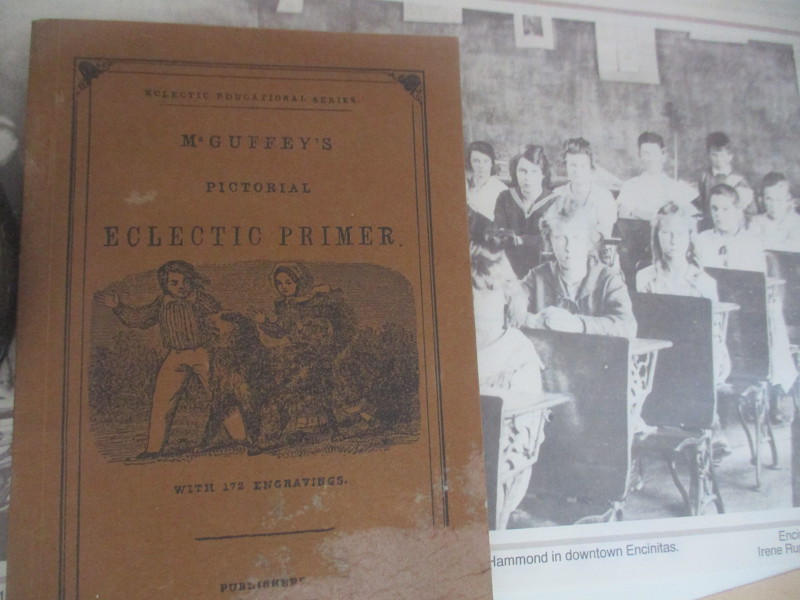
Today, the museum-like schoolhouse contains student desks from the period, but I learned the very first desks, due to lack of funds, were actually irregular things made of cut tree limbs. Slate boards were used for writing and arithmetic. Children who attended the school in those early days of Encinitas came from farms. Some walked as far as two miles.

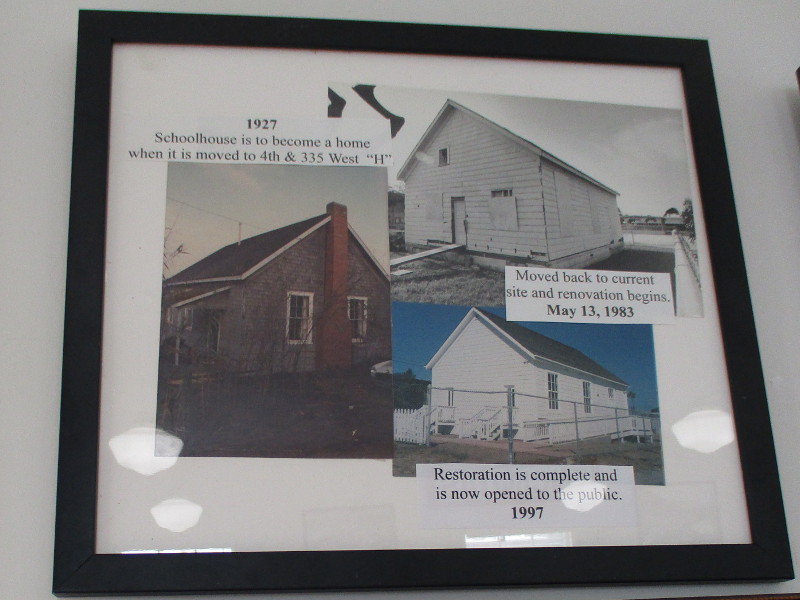
The history of the schoolhouse is a bit complicated. Over the years changes and additions were made to the structure . . . it was moved in 1928 and became a private residence for half a century . . . it was saved in 1983 by the Encinitas Historical Society and moved back to its original location . . . and finally, it was restored and in 1995 opened to the public.

Visitors who peruse the many photographs and descriptions decorating the schoolhouse walls will feel they’ve travelled back in time. And perhaps to another world.

After looking at many of the displays, I joined a small group that had gathered for a once-every-two-month historical walking tour of Encinitas. I will be blogging about that great tour shortly!

The following photographs are a little of what I saw outside and inside the schoolhouse. To learn much more about this special place, and to perhaps plan your own visit, please check out the Encinitas Historical Society website by clicking here!
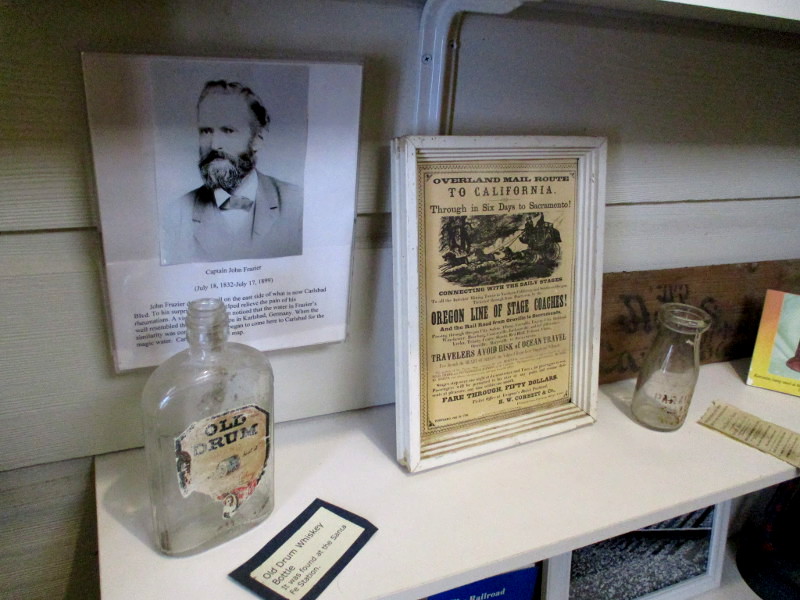
I also learned they’d appreciate any donations!
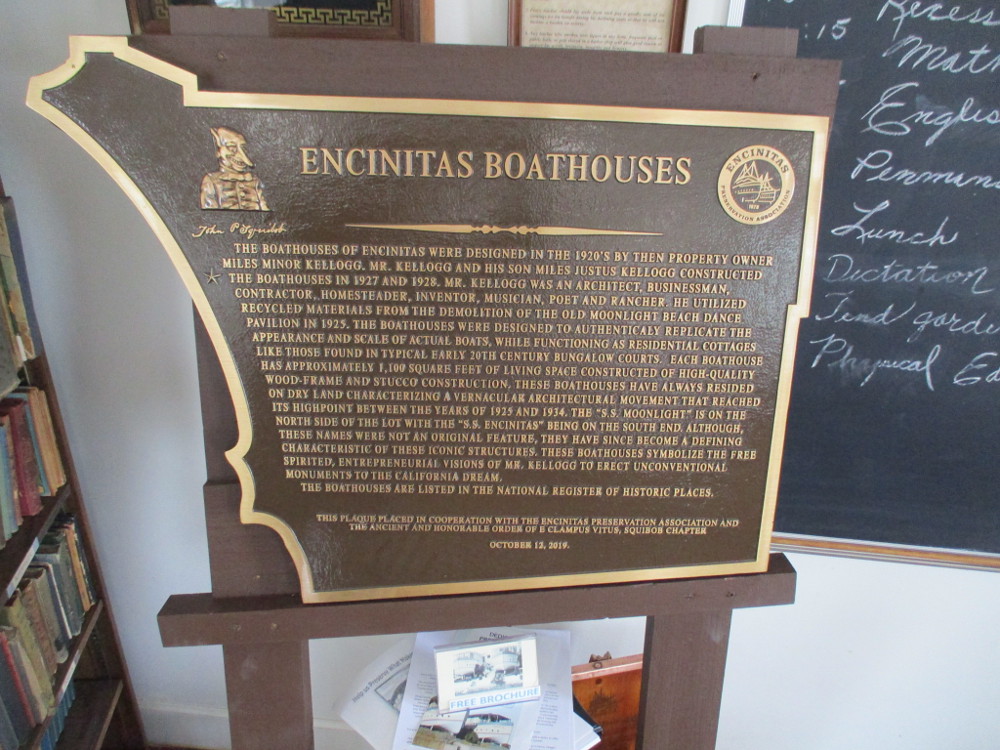
A plaque displayed near the chalkboard is dedicated to the Encinitas Boathouses. One block south of the schoolhouse, two unique cottages that appear like boats can be seen during a walking tour offered by the Encinitas Historical Society.
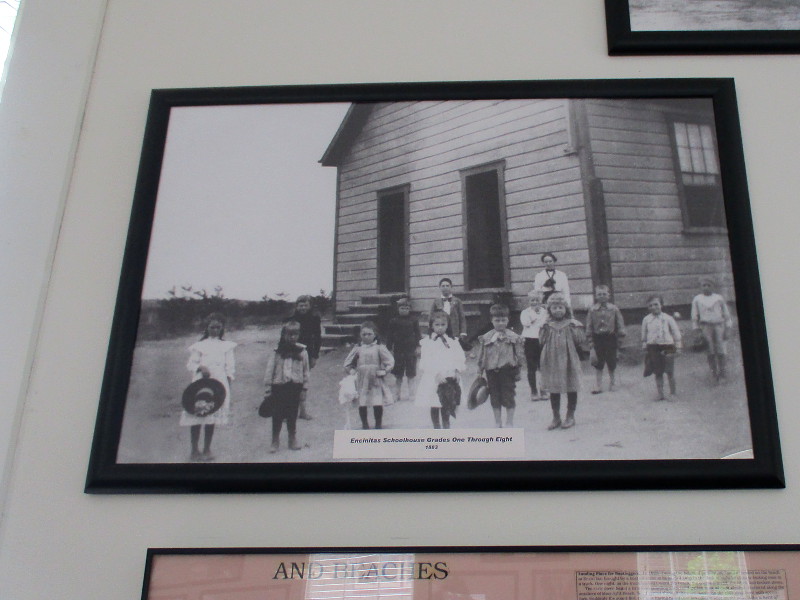
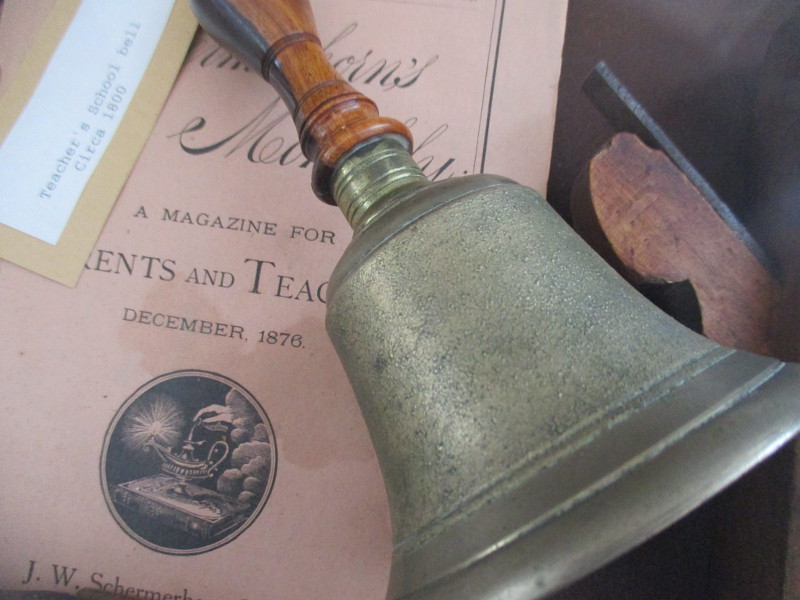
Encinitas Schoolhouse Grades One through Eight. 1883.
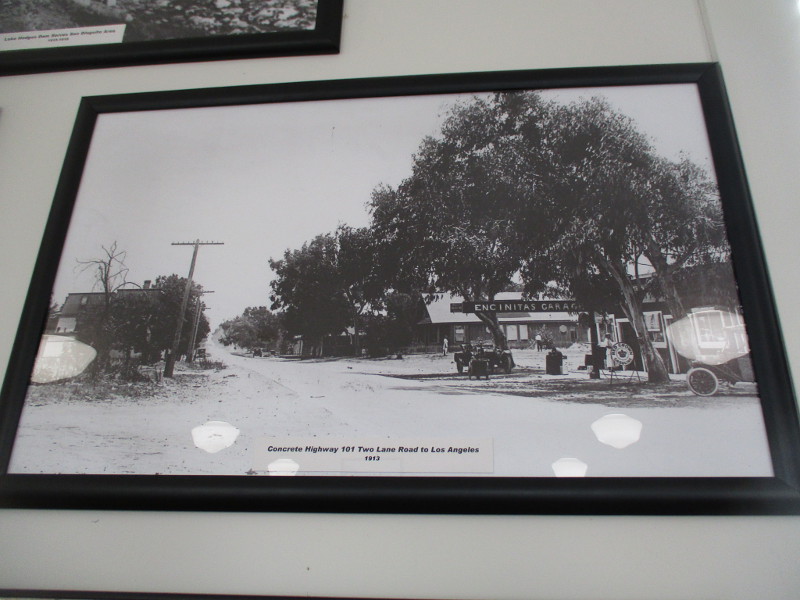
Concrete Highway 101. Two lane road to Los Angeles. 1913.
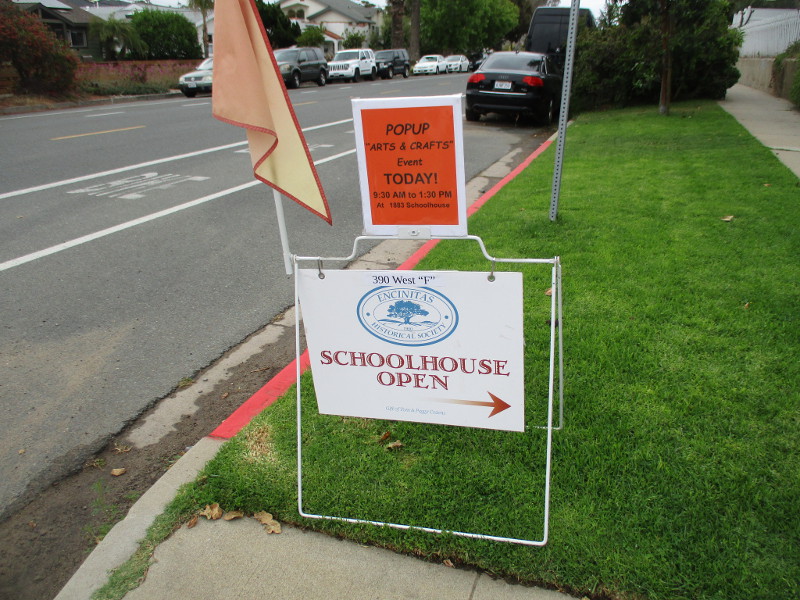
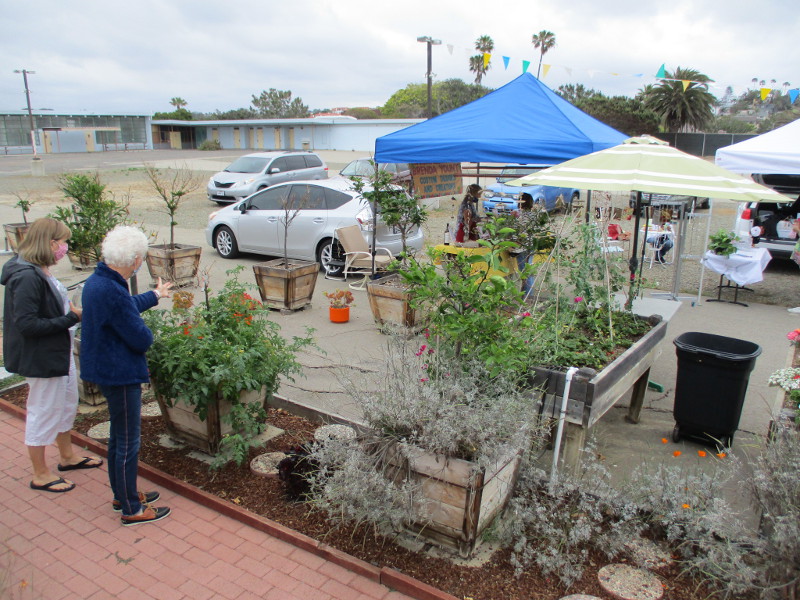
A craft fair was being held outside the old Encinitas schoolhouse the Saturday I visited. Beyond the parked cars you can see nearby Pacific View Elementary, closed since 2003.
Alone, at the very top of the hill stands the small one-room schoolhouse. A little beyond the hill stretches the Pacific Ocean.

I live in downtown San Diego and love to walk around with my camera! You can follow Cool San Diego Sights via Facebook or Twitter!

Making adobe blocks in Old Town.

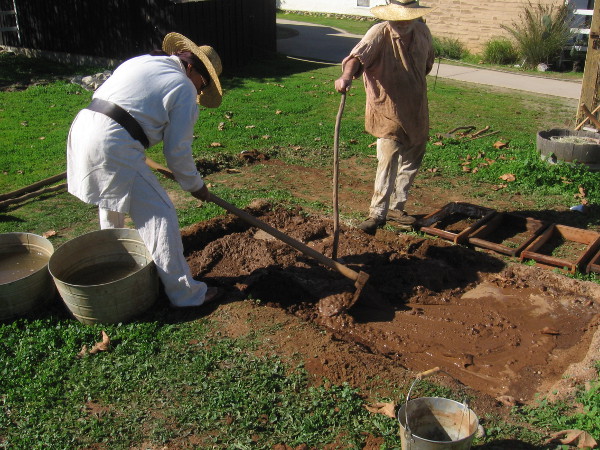
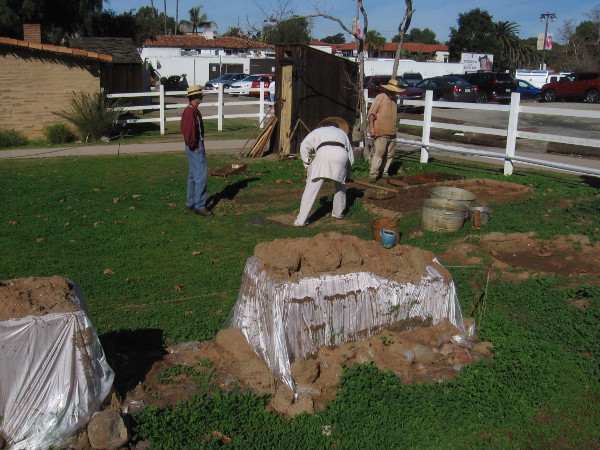
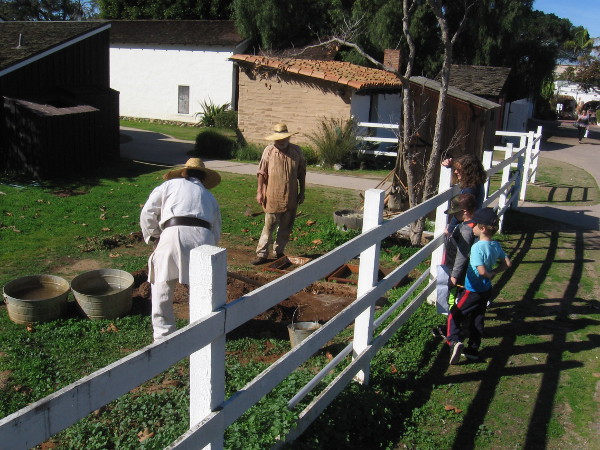
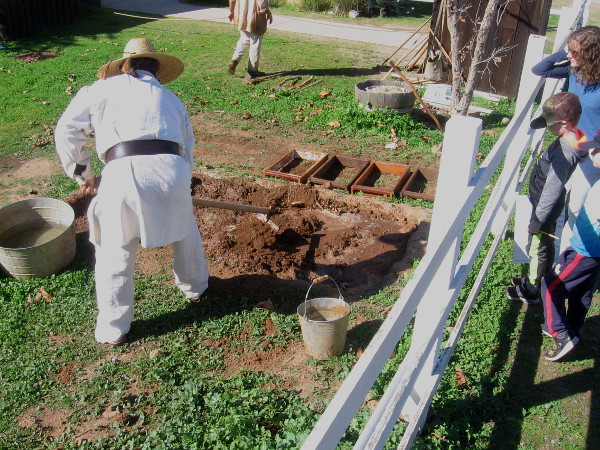
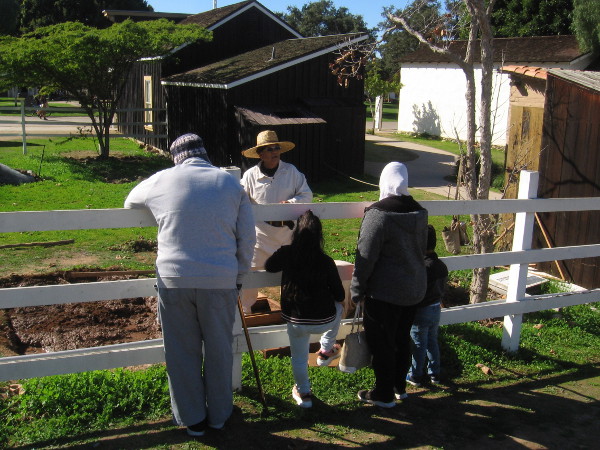
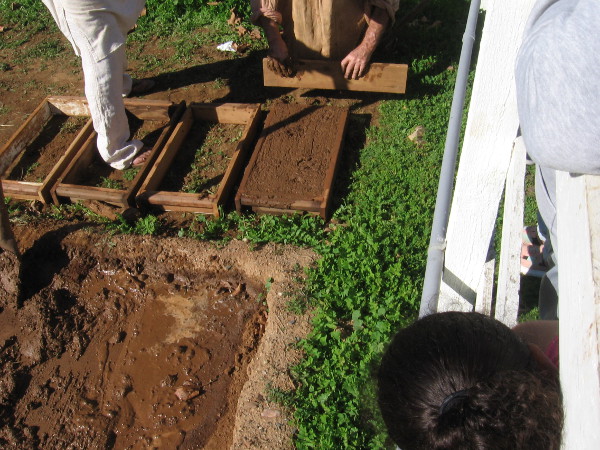
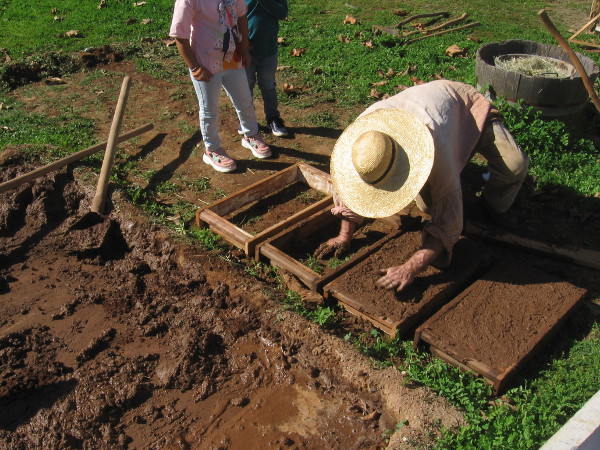
Today I spent a couple of hours exploring Old Town San Diego State Historic Park and a small section of nearby Presidio Park. As I walked through Old Town’s historic plaza near the Cosmopolitan Hotel, I noticed some people in period attire were demonstrating how to create adobe blocks.

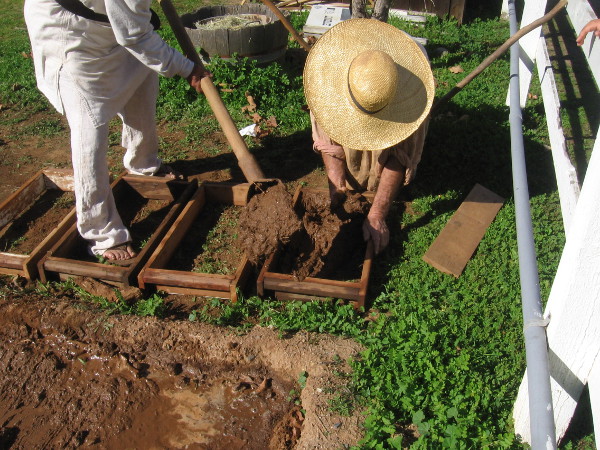
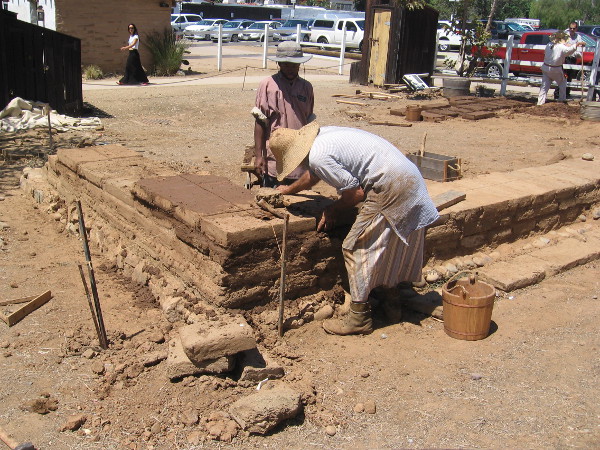
At the very beginning of San Diego, in the early days of Spanish and Mexican settlers, adobe was the small town’s primary building material. Primitive bricks–or blocks–were made by simply mixing mud and straw together. The mixture was then shaped using wooden forms, then left to dry in the sun for a month or so. The resulting adobe blocks were used to build walls that in our arid climate were remarkably sturdy and insulating.

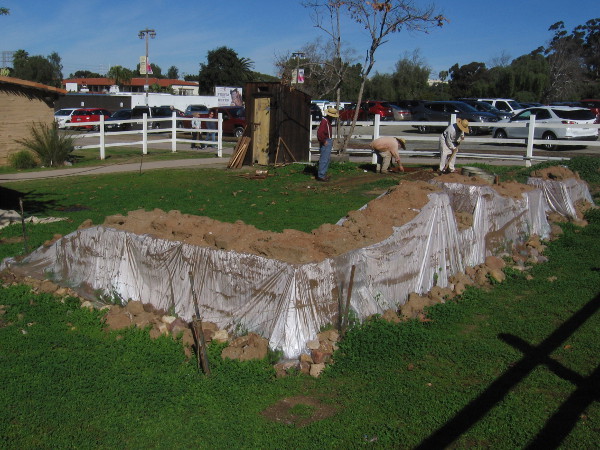
During past visits to Old Town, I’ve seen people working in this same spot demonstrating the making of adobe. Over time, that wall in a couple of my photos has slowly grown.

I was told by one friendly gentleman that eventually this grassy spot will be used for a Native American Kumeyaay exhibit, and a more permanent demonstration adobe structure will be built inside the fenced area near Old Town’s Blacksmith Shop.

Here’s a pic I took a couple months ago which shows how the adobe wall is slowly being built, layer by layer…

IMG_9847z

I live in downtown San Diego and love to walk around with my camera! You can follow Cool San Diego Sights via Facebook or Twitter!

You can easily explore Cool San Diego Sights by using the search box on my blog’s sidebar. Or click a tag! There are thousands upon thousands of photos for you to enjoy!

Time, memory, and the history of Old Town.

Photographs of Old Town's history slowly fade with the passage of time.
Photographs of Old Town’s history slowly fade with the passage of time.

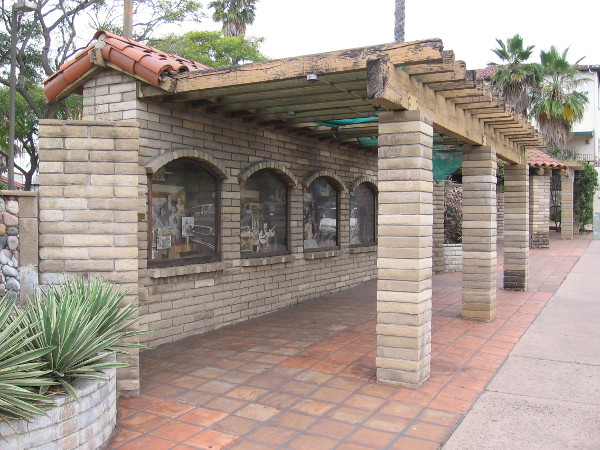
I recently walked down a few streets in Old Town that are seldom visited by tourists. After taking photographs of the Old Adobe Chapel, I noticed that across Conde Street there was some sort of structure containing glass display cases.

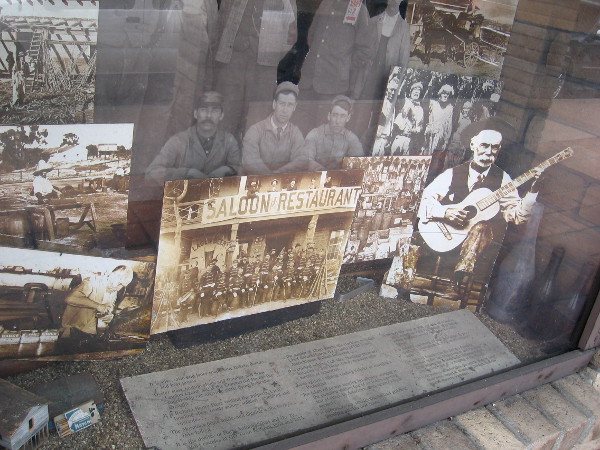
Upon closer inspection, I saw this was an outdoor exhibit concerning San Diego’s early history. And that its contents were in a sad state of decay.

No one seemed to know who’d created this exhibit until I spoke to a cashier in Old Town San Diego State Historic Park’s visitor center, inside the Robinson Rose House. She told me the structure had been built decades ago for the Old Town Mexican Cafe and that the displays had been designed by a woman who loved history. But she had gone blind.

Time moves incessantly forward.

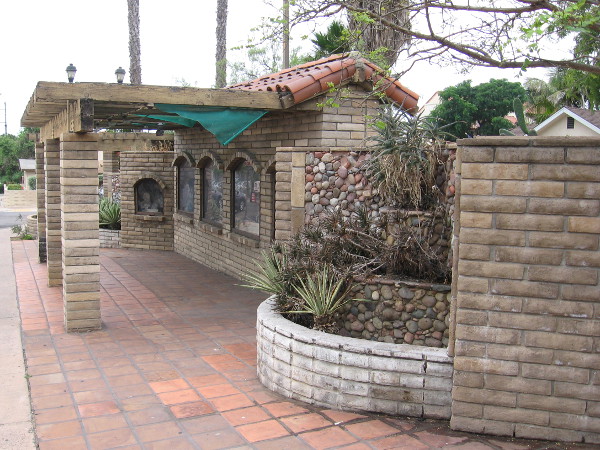
You can find this fascinating but faded exhibit on Conde Street, behind Cafe Coyote.

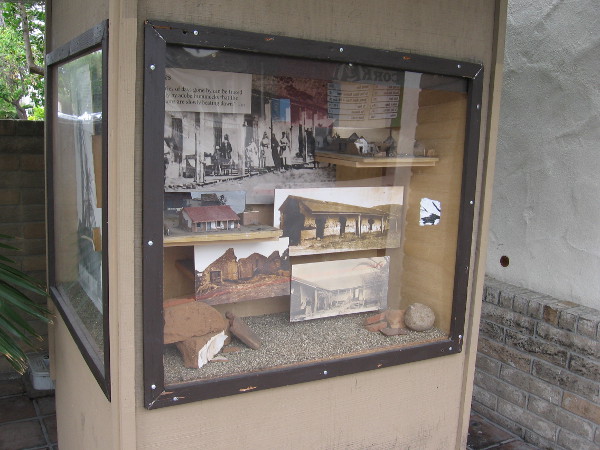
Displays behind glass windows include old photos and historical artifacts. This was created many years ago, I was told, for the nearby Old Town Mexican Cafe.

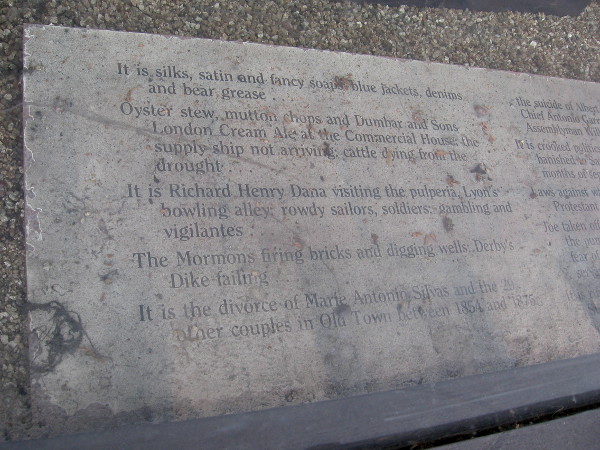
It is silks, satin and fancy soaps, blue jackets, denims and bear grease... It is Richard Henry Dana visiting the pulperia...rowdy sailors, soldiers; gambling and vigilantes...
It is silks, satin and fancy soaps, blue jackets, denims and bear grease… It is Richard Henry Dana visiting the pulperia…rowdy sailors, soldiers; gambling and vigilantes…

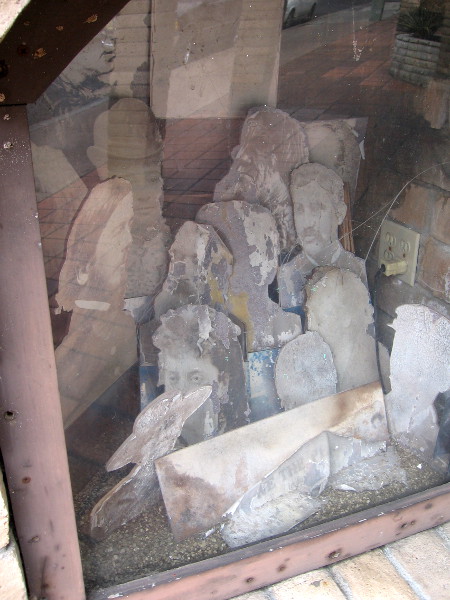
Early residents of Old Town, slowly fading.
Early residents of Old Town, fading away.

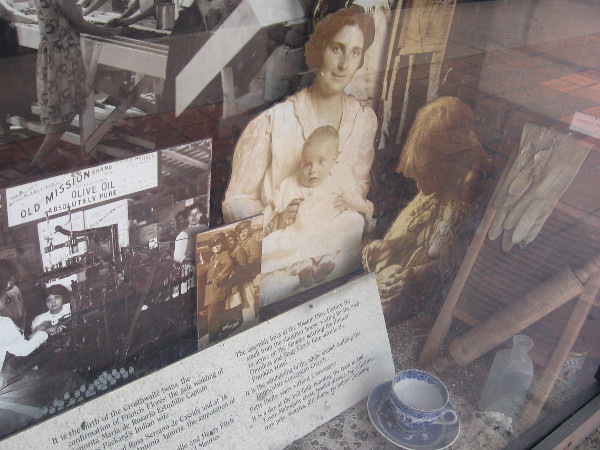
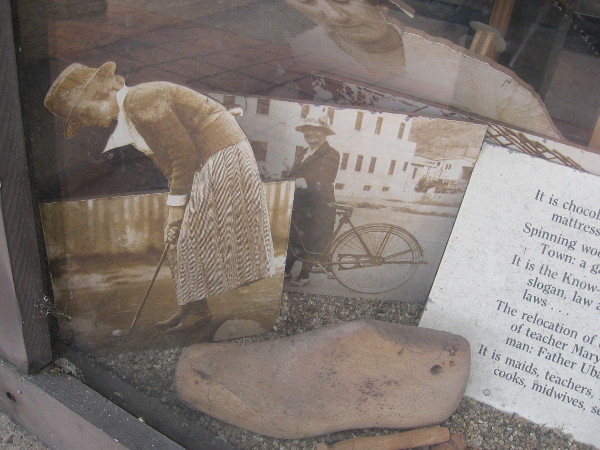
A collection of photos show life as it was in Old Town San Diego.

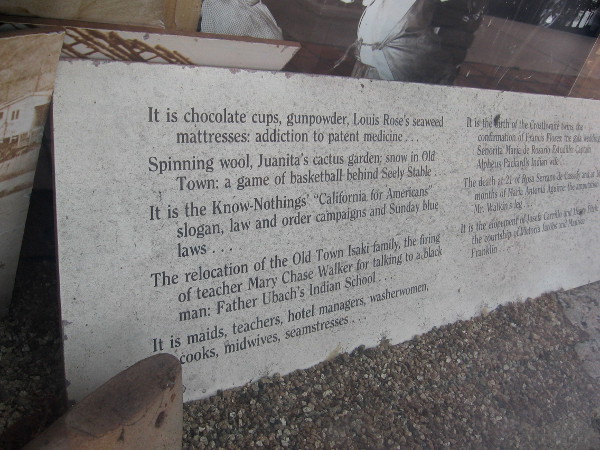
It is chocolate cups, gunpowder, Louis Rose's seaweed mattresses... Spinning wool, Juanita's cactus garden...a game of basketball behind Seeley Stable...
It is chocolate cups, gunpowder, Louis Rose’s seaweed mattresses… Spinning wool, Juanita’s cactus garden…a game of basketball behind Seeley Stable…

More old photos. Life remembered here as it once was...
More old photos. Life remembered here as it once was…

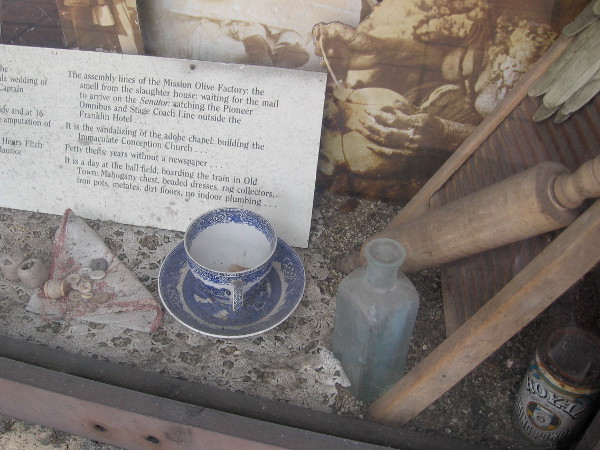
A few household objects in one display case. Perhaps life those many years ago wasn't so very different...
A few household objects in one display case. Perhaps life those many years ago wasn’t so very different…

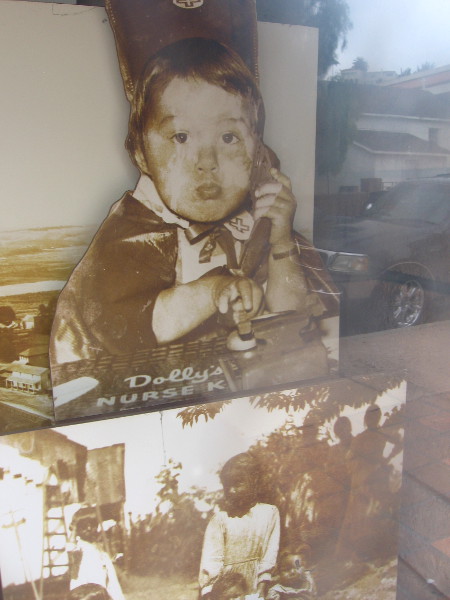
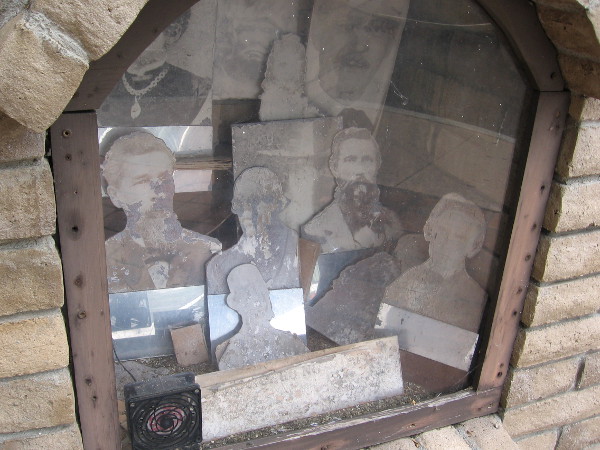
Youthful faces, now fading.
Youthful faces.

Faded by time, now ghostlike.

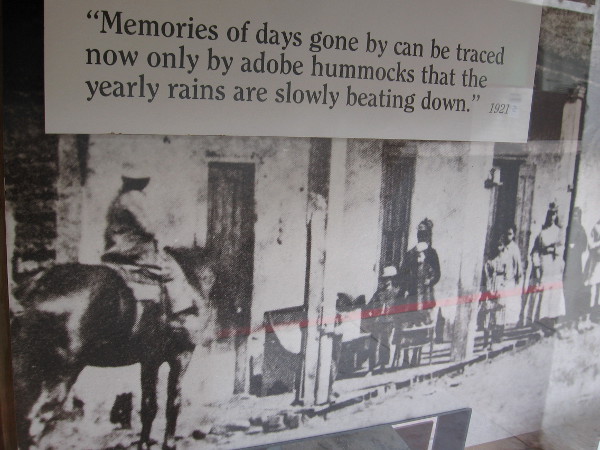
Memories of days gone by can be traced now only by adobe hummocks that the yearly rains are slowly beating down.

History captured, for those who might pass down the sidewalk.

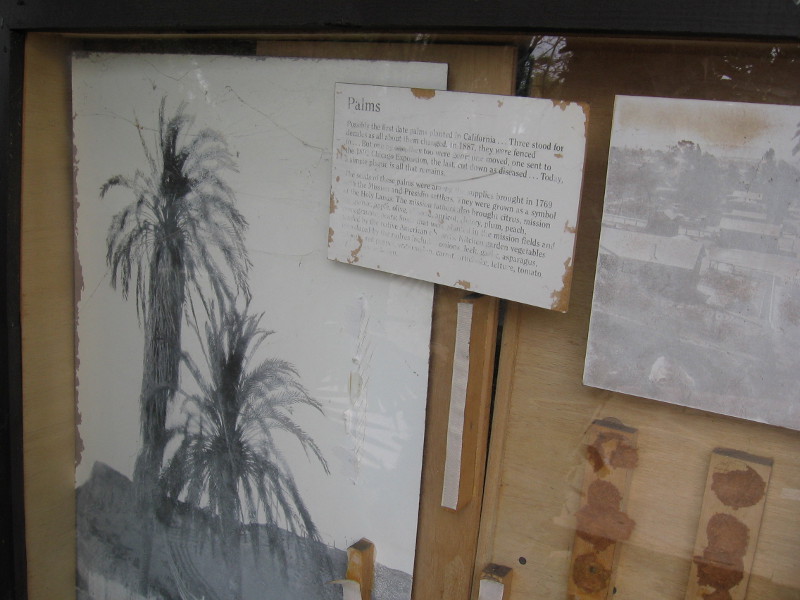
Palms grow. Some words fade.

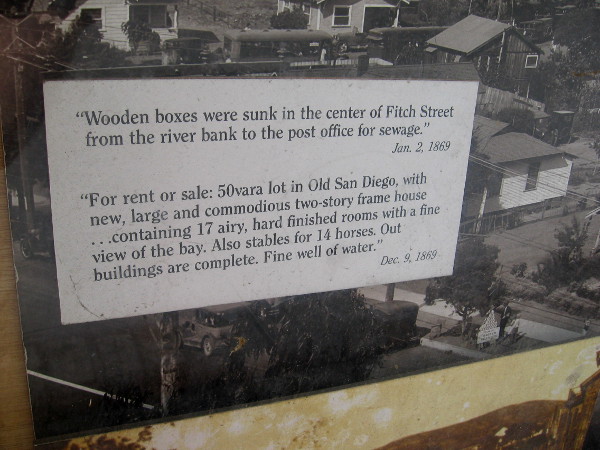
Wooden boxes were sunk in the center of Fitch Street from the river bank to the post office for sewage.

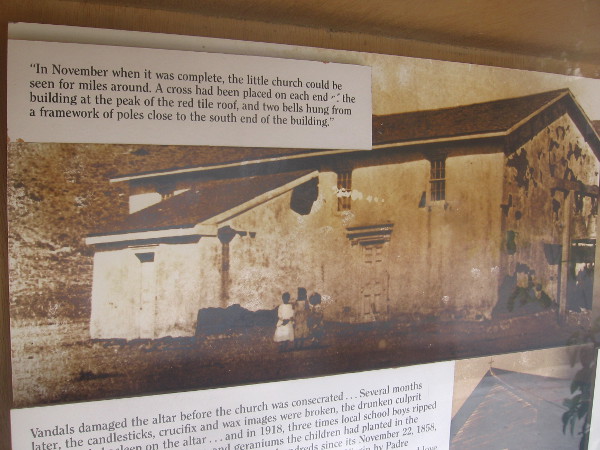
Photo of the Old Adobe Chapel. In November when it was complete, the little church could be seen for miles around...
Photo of the Old Adobe Chapel. In November when it was complete, the little church could be seen for miles around…

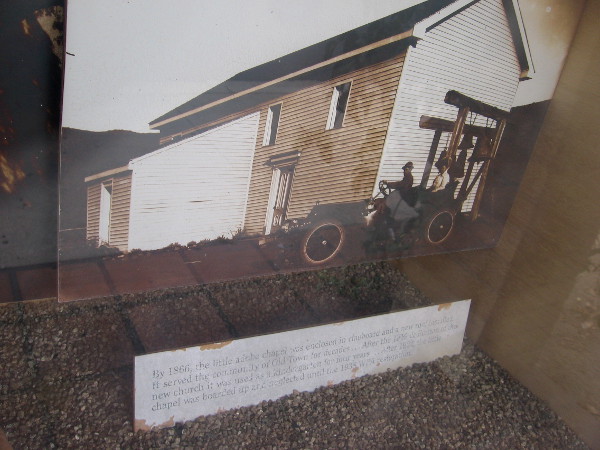
By 1866, the little adobe chapel was enclosed in clapboard and a new roof was installed. It served the community of Old Town for decades...
By 1866, the little adobe chapel was enclosed in clapboard and a new roof was installed. It served the community of Old Town for decades…

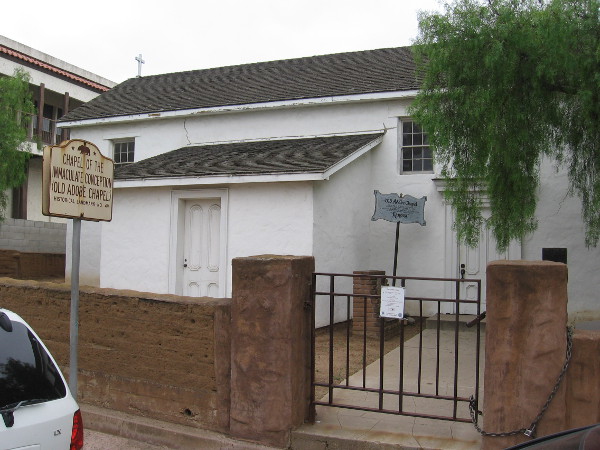
The Old Adobe Chapel has been preserved. Now a historical landmark, it stands across Conde Street.

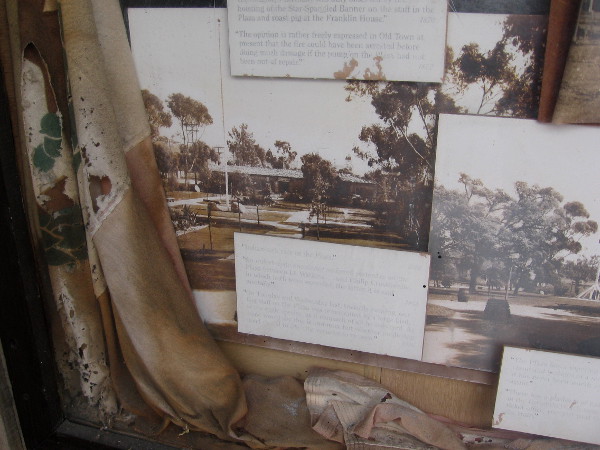
Decayed flag and old photos of tall flagpole at center of La Plaza de Las Armas.
Decayed flag, and old photos of flagpole at center of La Plaza de Las Armas.

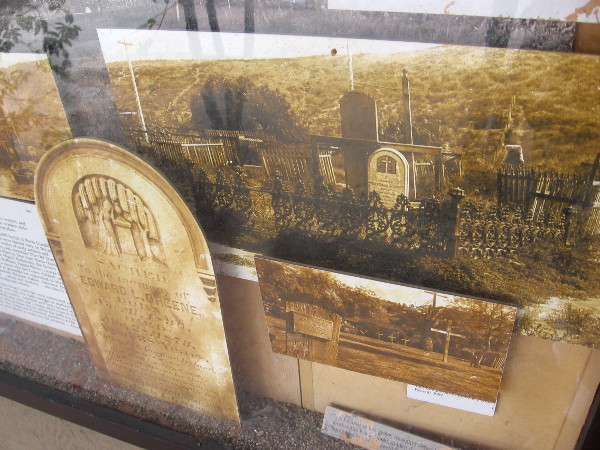
Old photos of the Campo Santo Cemetery. Words describe: A mingling of men, women, and children from places and lives so different...
Old photos of the Campo Santo Cemetery. Words describe: A mingling of men, women, and children from places and lives so different…

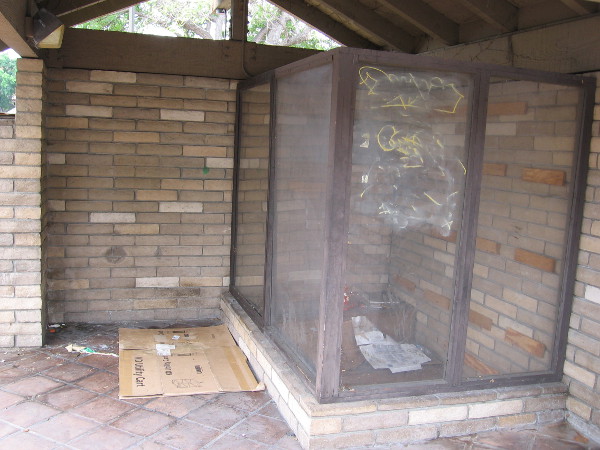
One empty display case, graffiti and a place for the homeless.
One empty display case, graffiti and a hard place for the homeless.

A monument to the human desire to remember.

Many years, many faces.

This blog now features thousands of photos around San Diego! Are you curious? There’s lots of interesting stuff to check out!

Here’s the Cool San Diego Sights main page, where you can read the most current blog posts.  If you’re using a small mobile device, click those three parallel lines up at the top–that opens up my website’s sidebar, where you’ll see the most popular posts, a search box, and more!

To enjoy future posts, you can also “like” Cool San Diego Sights on Facebook or follow me on Twitter.