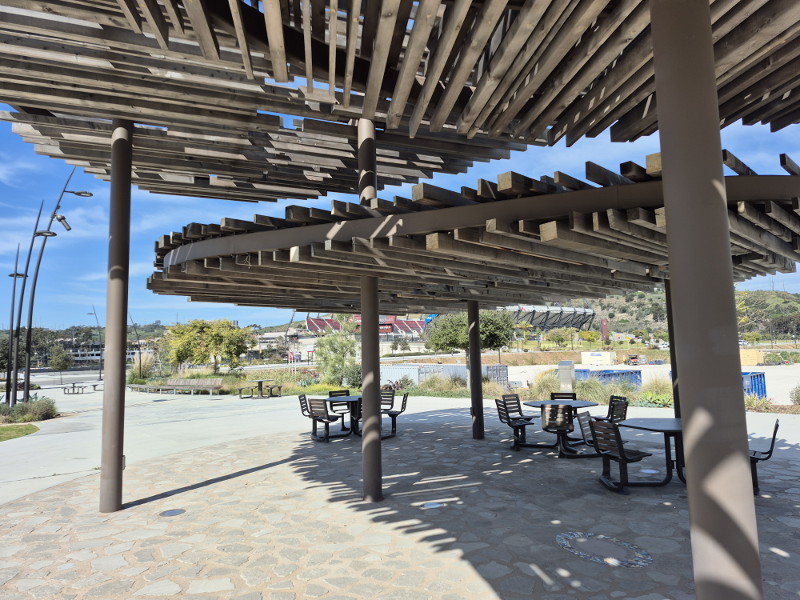
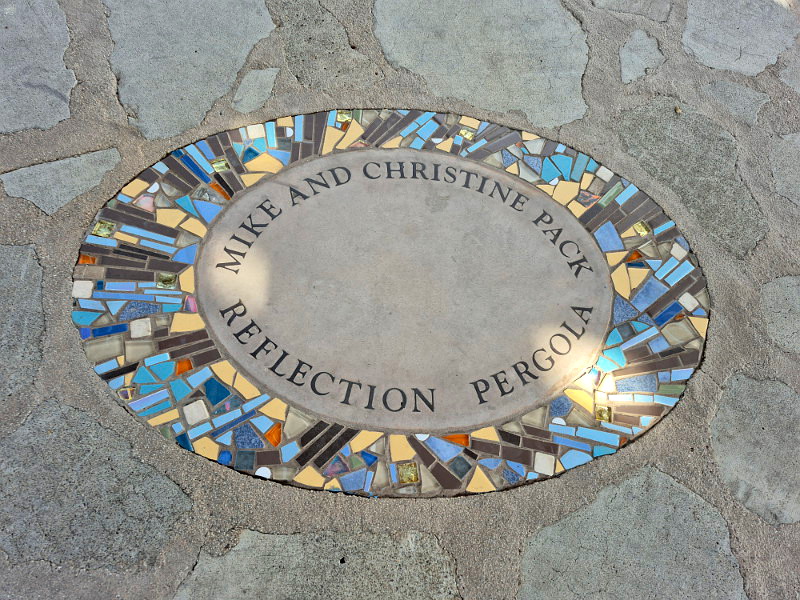
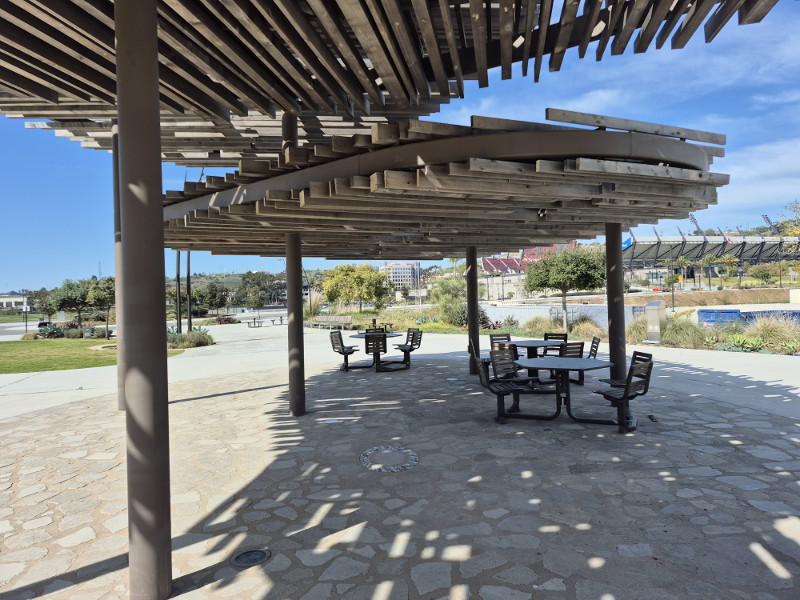
Walking from the Stadium trolley station to Snapdragon Stadium, you might have noticed this distinctive structure. It has a name. The Mike and Christine Pack Reflection Pergola offers several tables and a shady resting place in the wide plaza north of the trolley station.
This article, which concerns the SDSU Mission Valley river park, contains a description of the pergola:
The central focal point of the trolley plaza is the Mike and Christine Pack Reflection Pergola, which draws inspiration from the river and ewaa (dome-shaped shelters) used by the early Kumeyaay. These shelters were built from branches and covered with leaves from willow, tule or other plants.
I was surprised to discover a small but beautiful mosaic near one table!
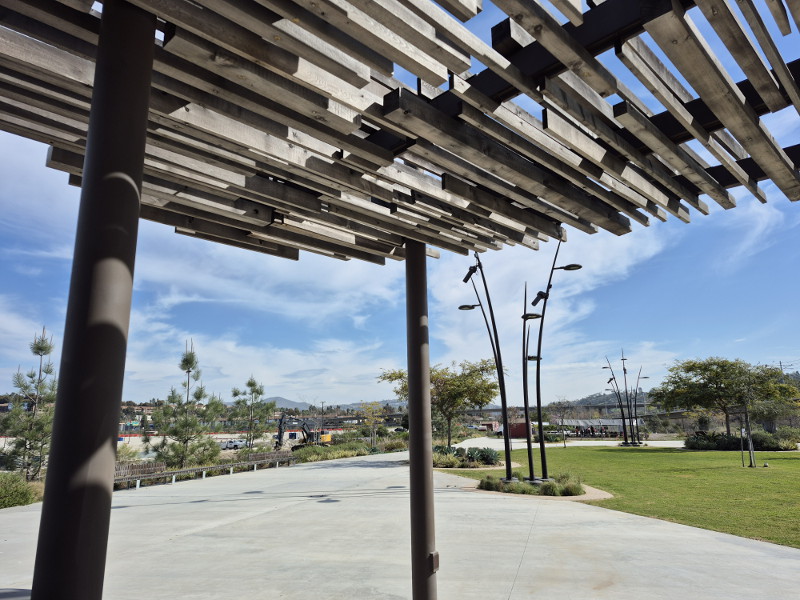
I love how the lighting structures in my next photograph appear organic–like tall grass bending in the wind, or trees with slender stems.
The SDSU Mission Valley river park has become a favorite place to walk on a sunny San Diego day.
…
To follow my blog, find the “Follow” box in this website’s sidebar. Or bookmark coolsandiegosights.com and swing on by occasionally!
(If you’re viewing this on a phone, open my website’s sidebar by tapping those three parallel lines at the top of the page.)
Mysterious symbols and figures can be seen at your feet when you stand on the passenger platform at the SDSU trolley station. Lean over in the dim light and look closely. What are they?
The mystery is solved when you learn these symbols are part of a larger public art installation at the SDSU Transit Center. In 2005, when San Diego’s only underground trolley station first opened, artist Anne Mudge and the Metropolitan Transit System (MTS) debuted the art.
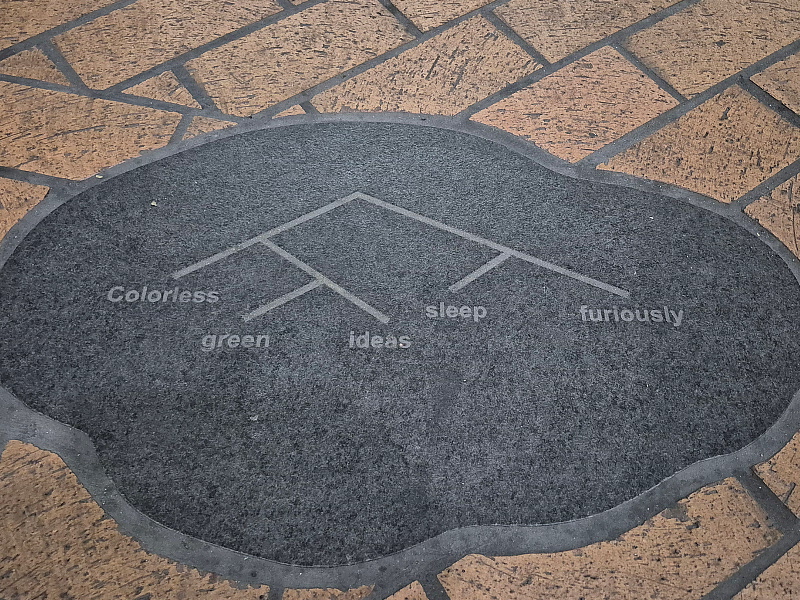
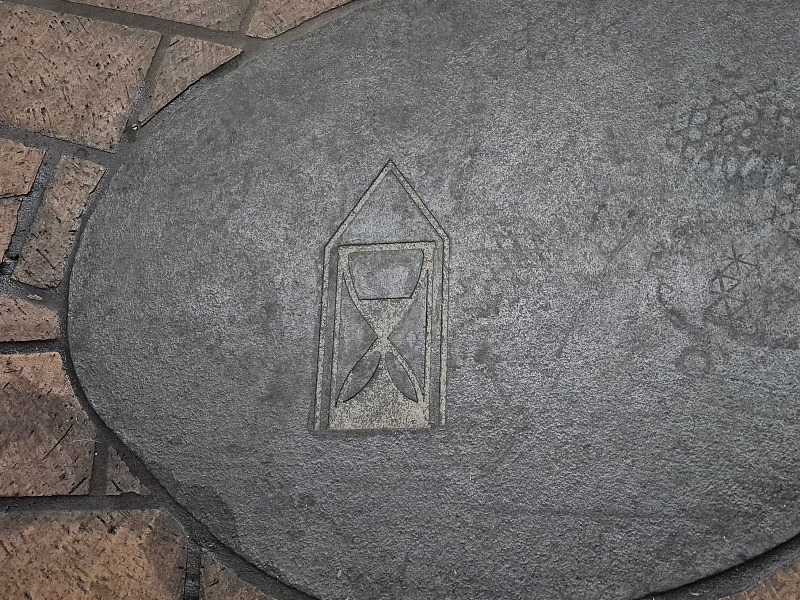
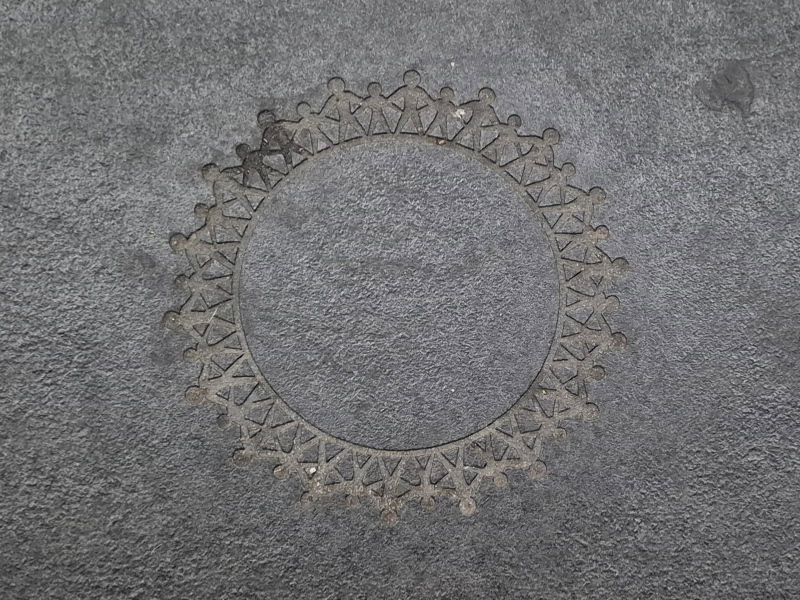
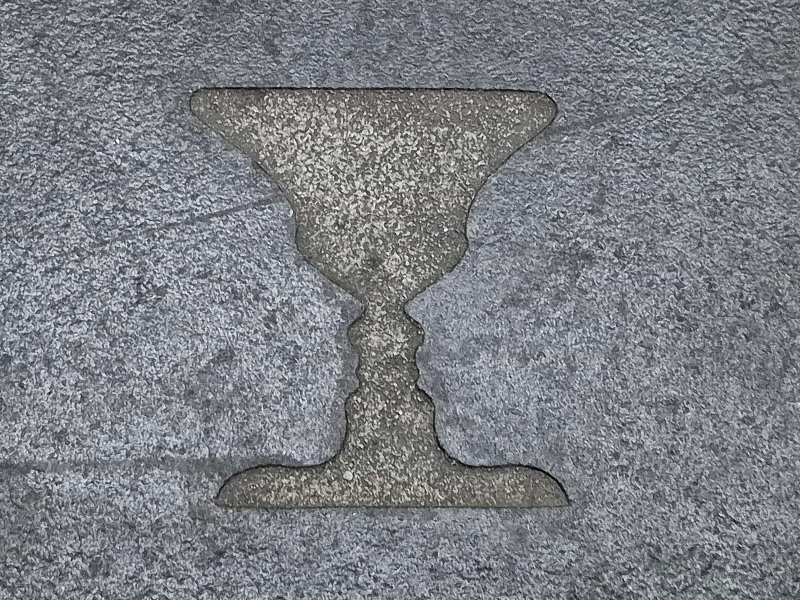
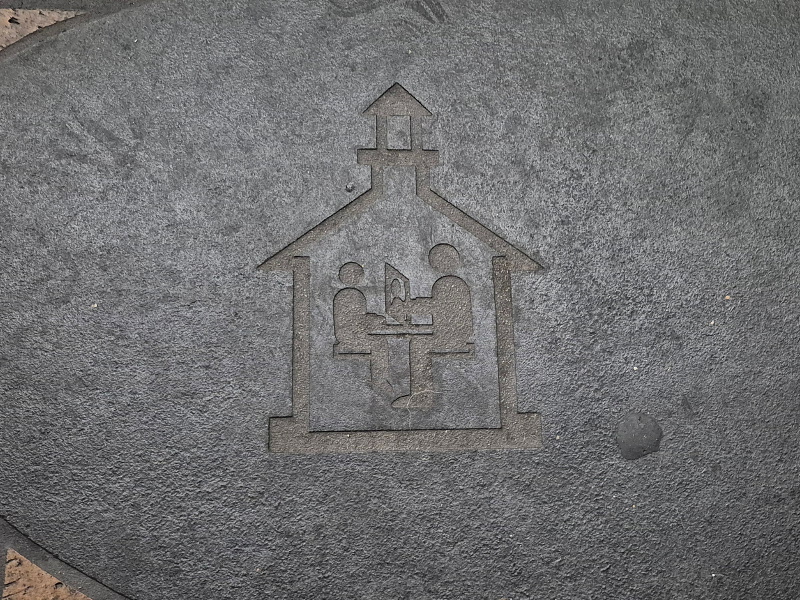
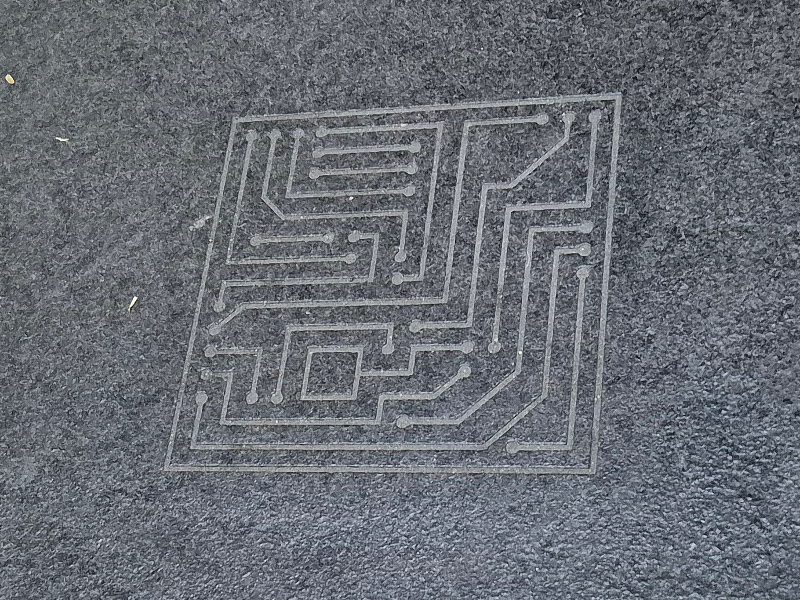
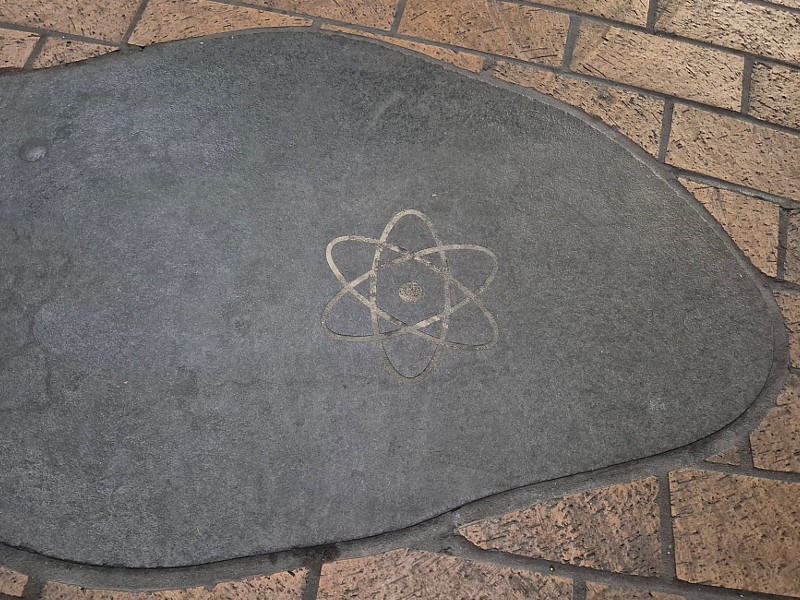
What you’ve discovered at your feet is called Stepping Stones. As this page on Anne Mudge’s website explains: Etched into the surfaces of 60 granite “stepping stones” are symbols of various cultural and academic disciplines found on the SDSU campus. The granite stones interrupt and redirect the linear flow of bricks around them, just as ideas impact the surrounding intellectual and cultural environments.
Visit the above link for descriptions of other works in this art installation, which are visible inside and around the SDSU Transit Center.
Students waiting at the trolley station can step from ideas to microchips to the Earth to people to atoms…
…
To follow my blog, find the “Follow” box in this website’s sidebar. Or bookmark coolsandiegosights.com and swing on by occasionally!
(If you’re viewing this on a phone, open my website’s sidebar by tapping those three parallel lines at the top of the page.)
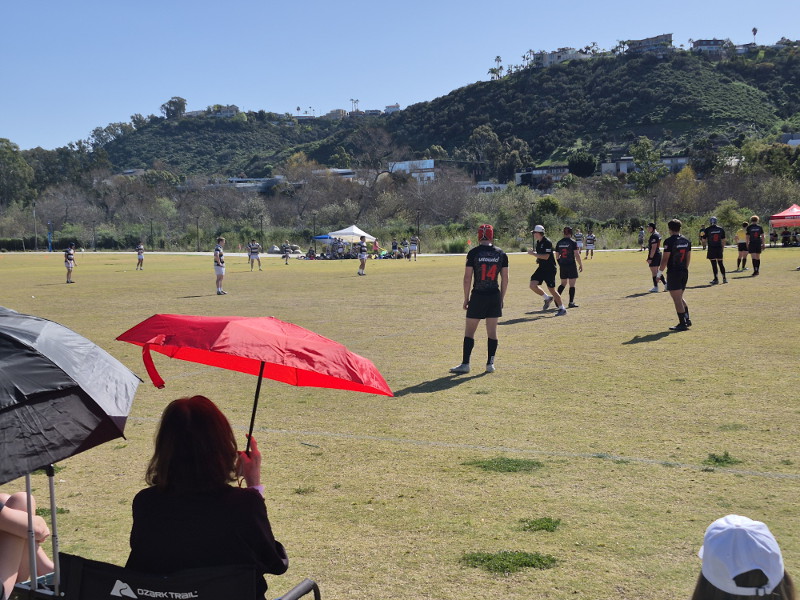
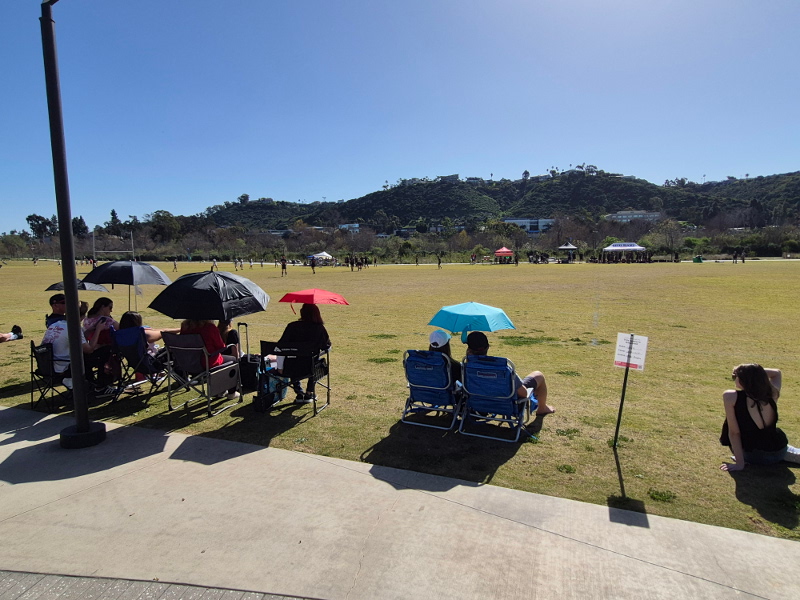
During my walk yesterday through SDSU Mission Valley River Park, I was surprised to see members of San Diego State Aztecs Rugby Club getting ready for a game. They would be playing UC Davis out on a wide swath of the park’s grass. It was the second game of their 2026 season.
I remained at the sidelines for a while to watch the beginning of play. Other fans would gradually gather with their lawn chairs and umbrellas.
SDSU Aztecs Rugby Club competes in Division 1-A in the California Conference. Founded in 1958, the team has a long and proud history. They won the 1987 National Collegiate Rugby Championship.
The action I observed was fast and exciting! I don’t know too much about rugby, but perhaps I’ll have to become a fan! The Aztecs would go on to win 31-38.
If you’d like to watch this victory on YouTube, click here.
To go to a future game, you can follow SDSU Aztec Rugby at this website.
…
To follow my blog, find the “Follow” box in this website’s sidebar. Or bookmark coolsandiegosights.com and swing on by occasionally!
(If you’re viewing this on a phone, open my website’s sidebar by tapping those three parallel lines at the top of the page.)
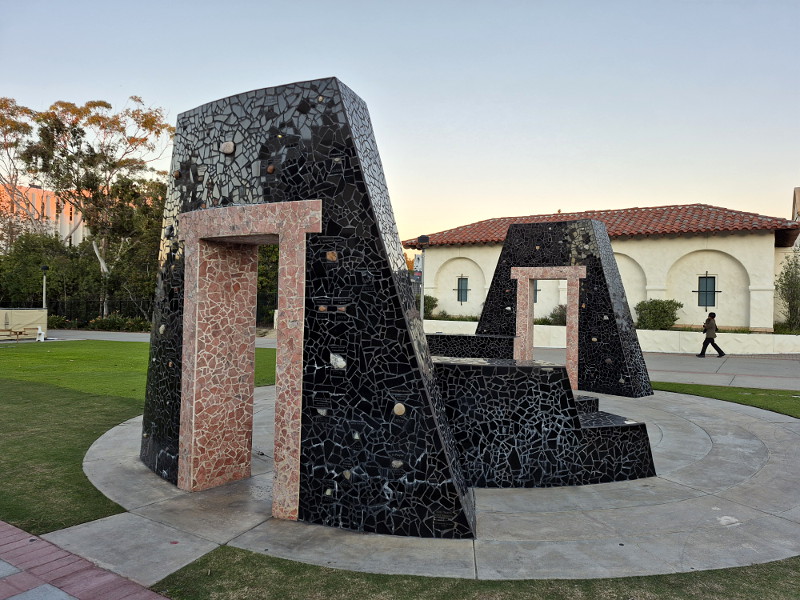
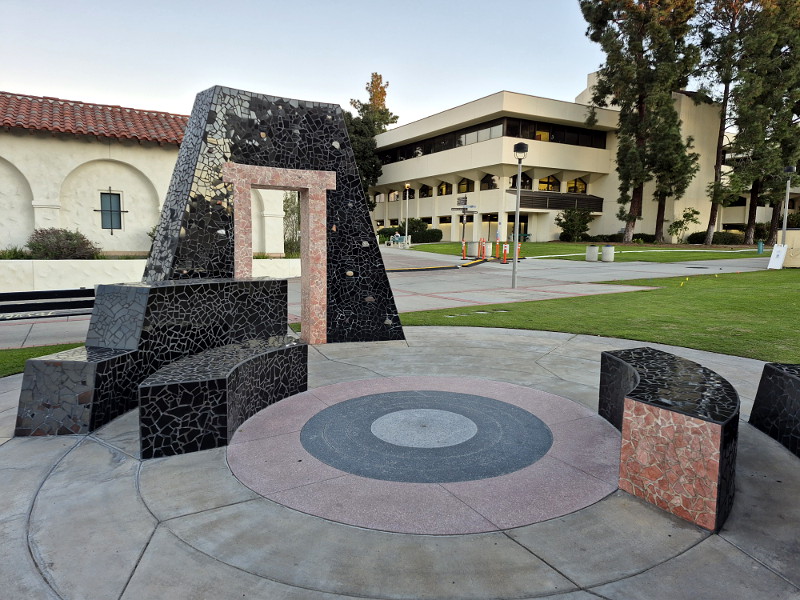
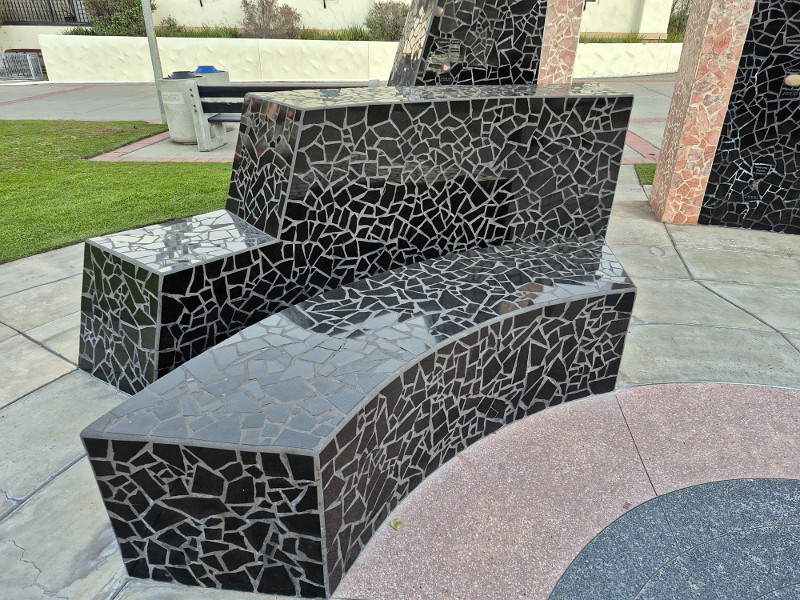
In 1997 the 100 Years, 100 Stones monument debuted at San Diego State University. It was created to celebrate the 100th anniversary of SDSU.
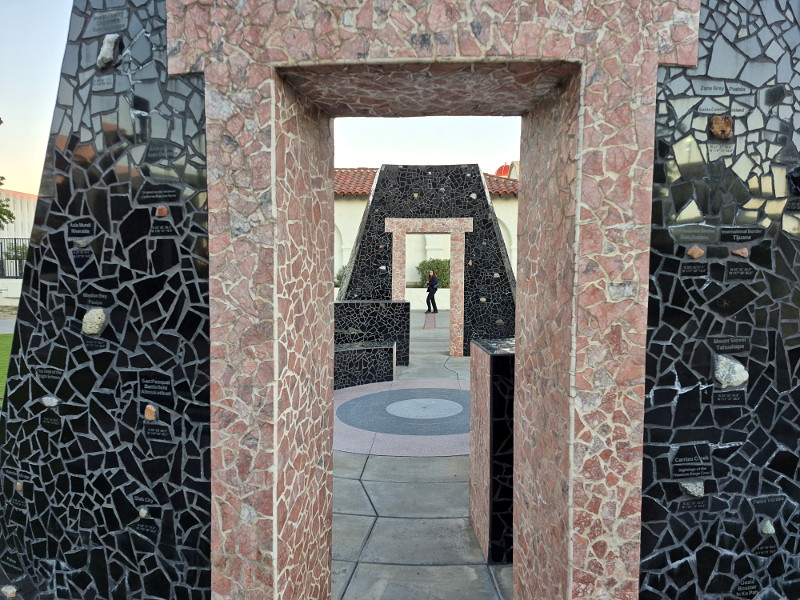
If you’ve ever walked down the campus’ central Campanile Walkway you’ve no doubt seen this unique stone-like sculpture with its two portals. It has an appearance suggestive of ancient temples or ruins.
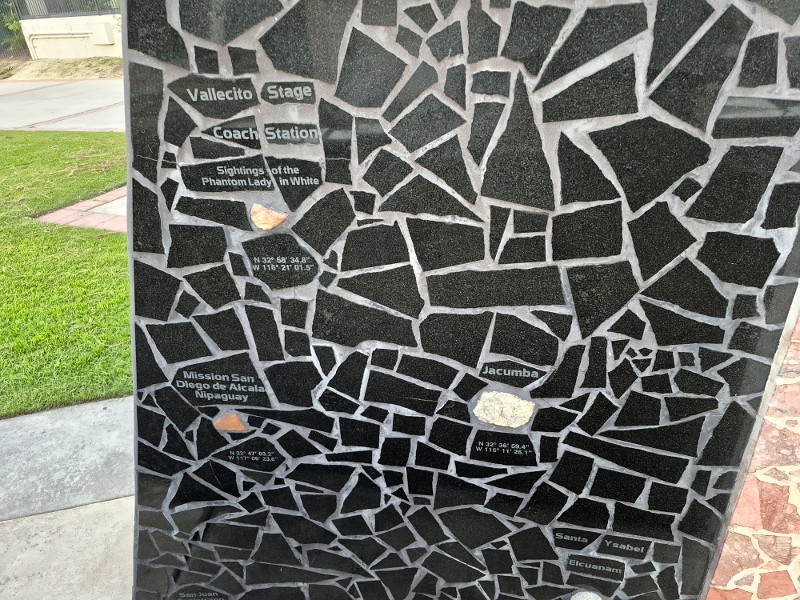
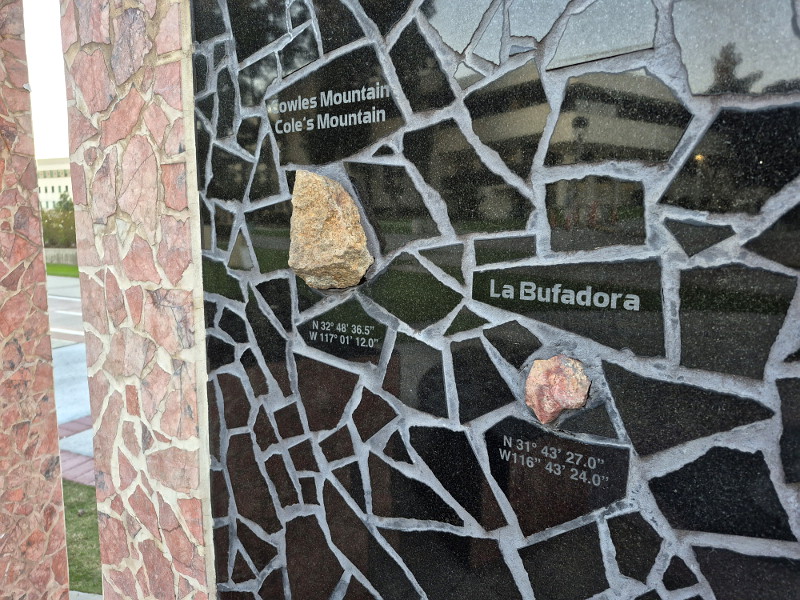
Those who look closely at the monument will see small rock samples embedded in it, with informative labels. The rocks come from locations all around our region, within a hundred miles of SDSU, including places in Mexico. The art blends culture with geology.
Installation artist Eve Andree Laramee designed 100 Years, 100 Stones. There’s no plaque by this public art with any sort of explanation (that I’ve noticed), so I wonder if students walking past it understand its origin and nature. For years I myself didn’t know. Thank you Google!
…
To follow my blog, find the “Follow” box in this website’s sidebar. Or bookmark coolsandiegosights.com and swing on by occasionally!
(If you’re viewing this on a phone, open my website’s sidebar by tapping those three parallel lines at the top of the page.)
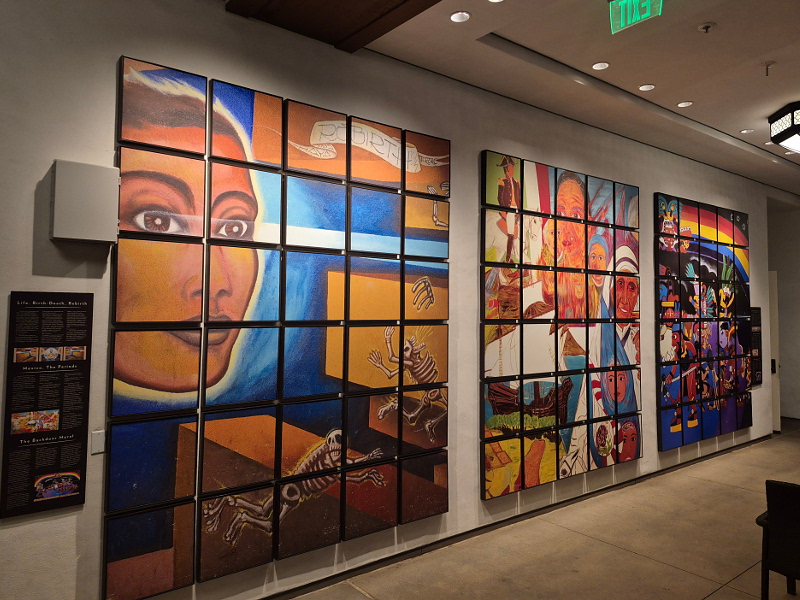
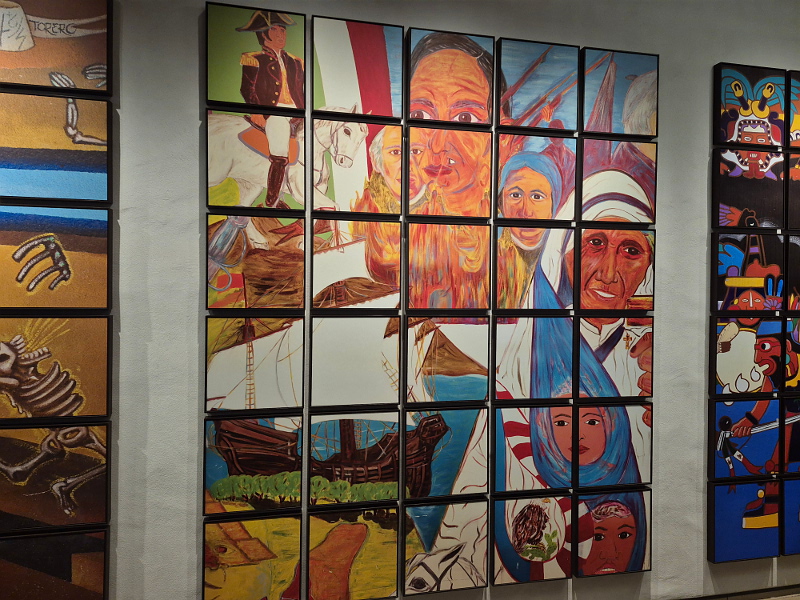
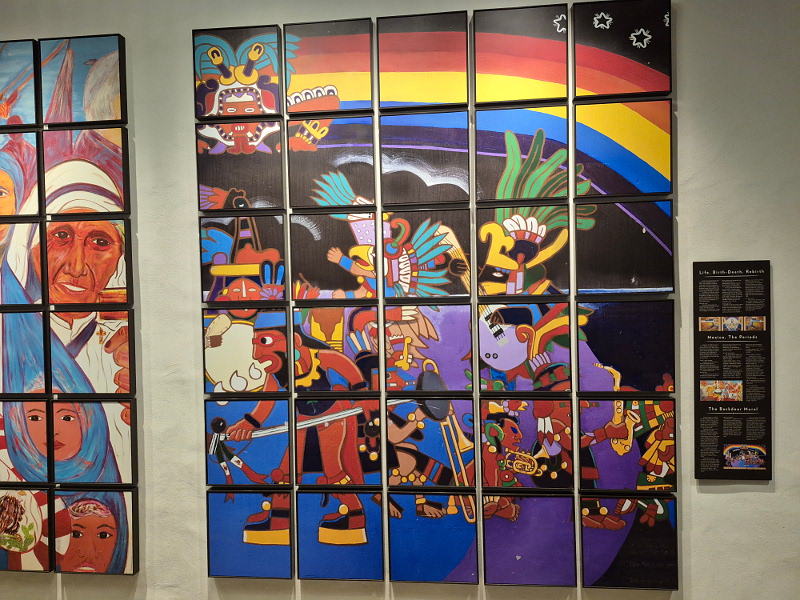
On the second floor of the Conrad Prebys Aztec Student Union at San Diego State University, memories are preserved just outside Montezuma Hall. Three historical murals that were painted on plaster at the old Aztec Center, which was demolished in 2011, live on today as tiled photographs.
Here’s an article that describes the origin of the original three murals, which were painted by students in the late 1970s and early 1980s.
On either side of the tiled photographs are identical plaques that show the complete murals and provide further explanation.
Tiled photographs of Life, Birth-Death, Rebirth. Painted by San Diego-based artist Mario Torero and SDSU students in 1980, “Life, Birth-Death and Rebirth” was located in the lower courtyard of Aztec Center. Torero and students chose the theme because they wanted to focus on the more positive aspects of Chicano culture instead of dwelling on the past…Tiled photographs of Mexico, The Periods. Painted in fall 1980 and spring 1981, “Mexico, The Periods,” was produced as part of an SDSU Chicano mural class. Art instructor Juan Laguna and his students divided the mural into four sections, each celebrating the four periods of Mexican history. The 10-foot by 20-foot mural was located in an inside hallway in the lower level of Aztec Center…Tiled photographs of The Backdoor Mural. Formerly located in a hallway near the backstage entrance to the Backdoor in Aztec Center, the 9-foot by 14-foot mural was completed on Jan. 27, 1976. It was designed and painted by principal artist Arturo Anselmo Roman and students in his Chicano mural art class. Dedicated to the god of music, the design featured various Meso-American gods as musicians…
…
If you’d like to see San Diego through my lens, find the “Follow” box in the sidebar to receive new posts in your email, or bookmark coolsandiegosights.com and swing on by occasionally!
(If you’re viewing Cool San Diego Sights on a phone, you can open my website’s sidebar by tapping those three parallel lines at the top of the page.)
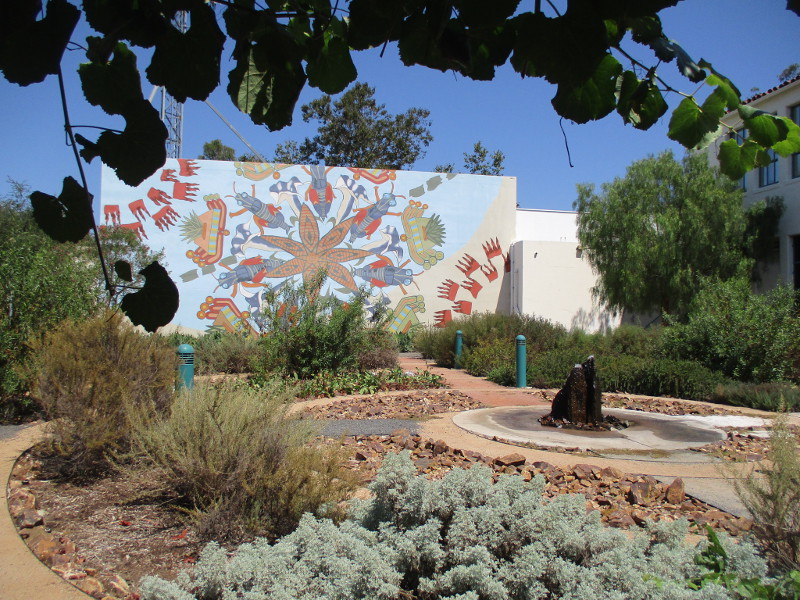
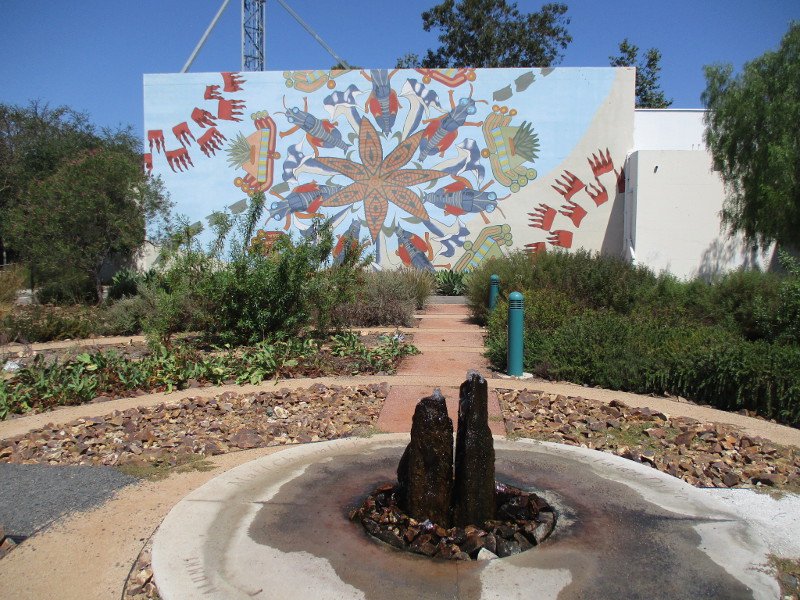
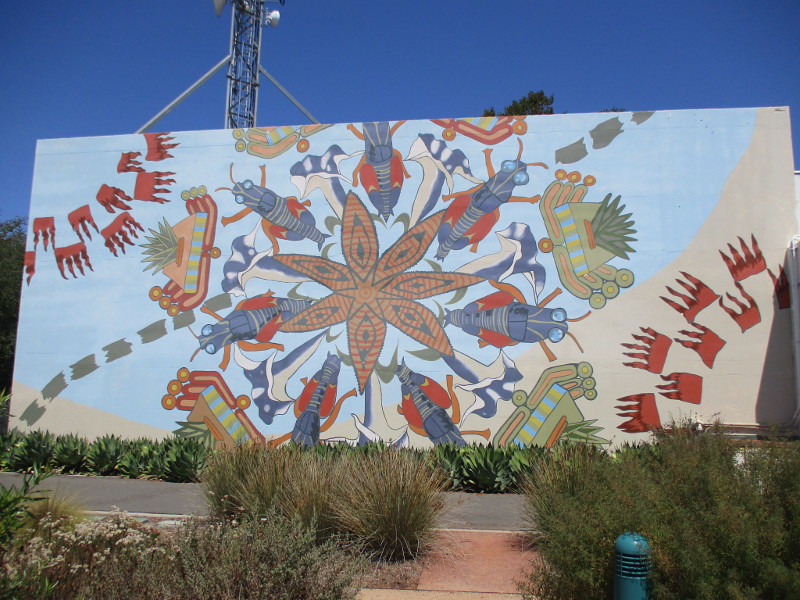
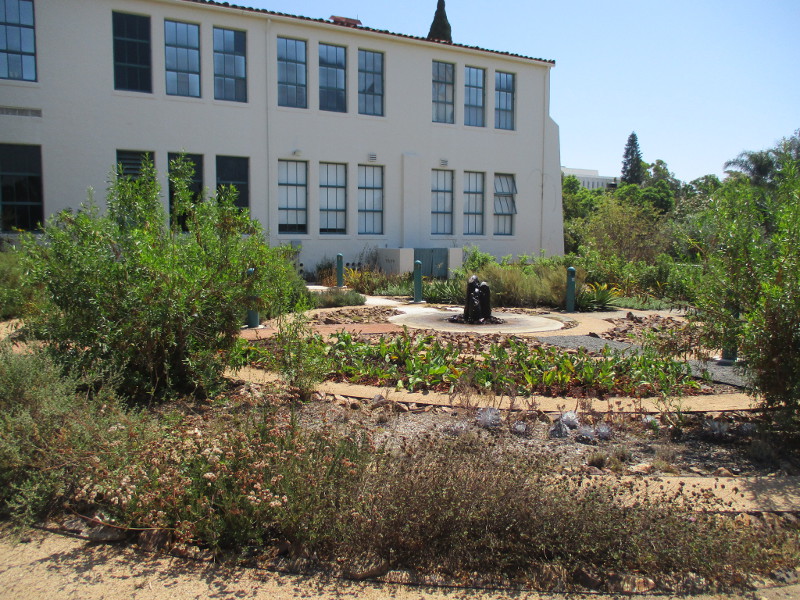
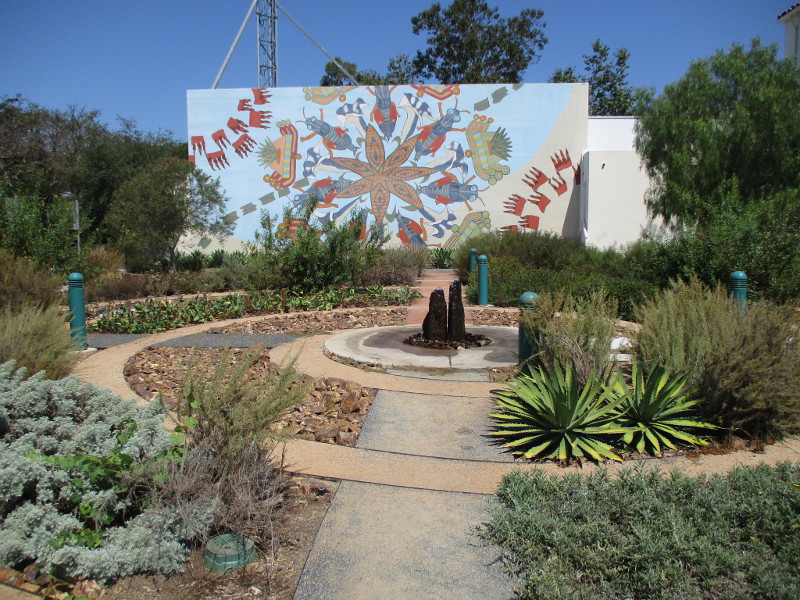
In 2022, the Native and Indigenous Healing Garden debuted at San Diego State University, to one side of the Communication Building. The circular garden, which also serves as an outdoor classroom, is filled with healing herbs that can be freely harvested. Life grows in sunshine around a central stone fountain.
The plants in the garden represent various indigenous cultures: the Kumeyaay, the Aztecs, the Mixtecs and Zapotecs, and other indigenous people in California and Mesoamerica.
Painted beside the garden on one side of the Communication Building, visitors will also find a large, very beautiful mural.
This website provides details about the 30’ x 60’ mural: Designed by students as part of an Arts Alive SDSU project by History Professor Paula DeVos and Art Professor Eva Struble, the artwork includes various plants, animals, and designs with deep ties to Native Indigenous culture throughout California and Mesoamerica.
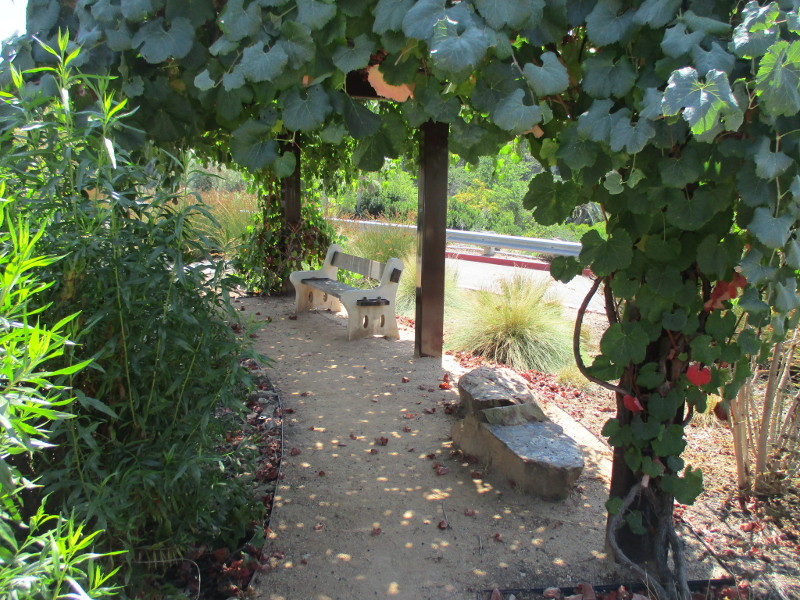
If I lived near SDSU, I know I’d walk by frequently, simply to sit on the shady bench you see in my photographs. One feels drawn to this healing garden, the smell of sage and other life springing from the earth, and the quiet beauty of the place.
…
I post new blogs pretty often. If you like discovering new things, bookmark coolsandiegosights.com and swing on by occasionally!
I live in downtown San Diego and love to walk around with my camera! You can follow Cool San Diego Sights via Facebook or X.
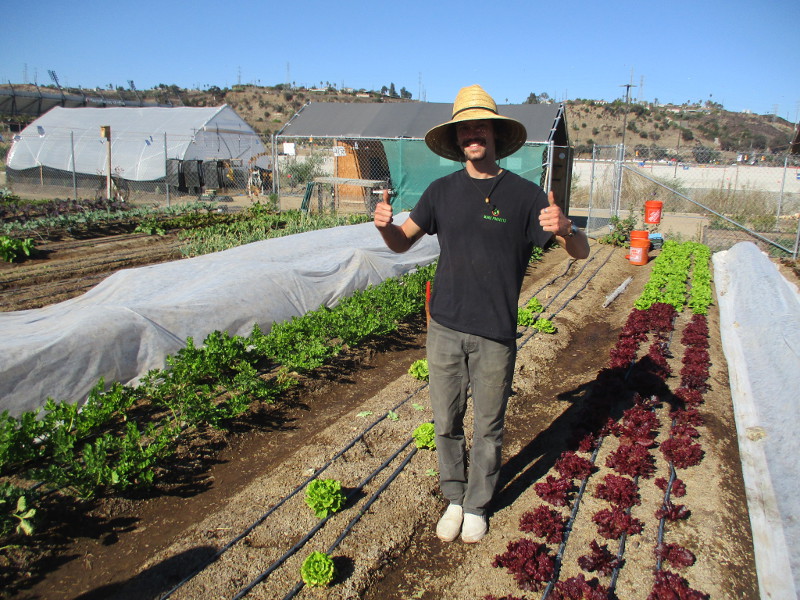
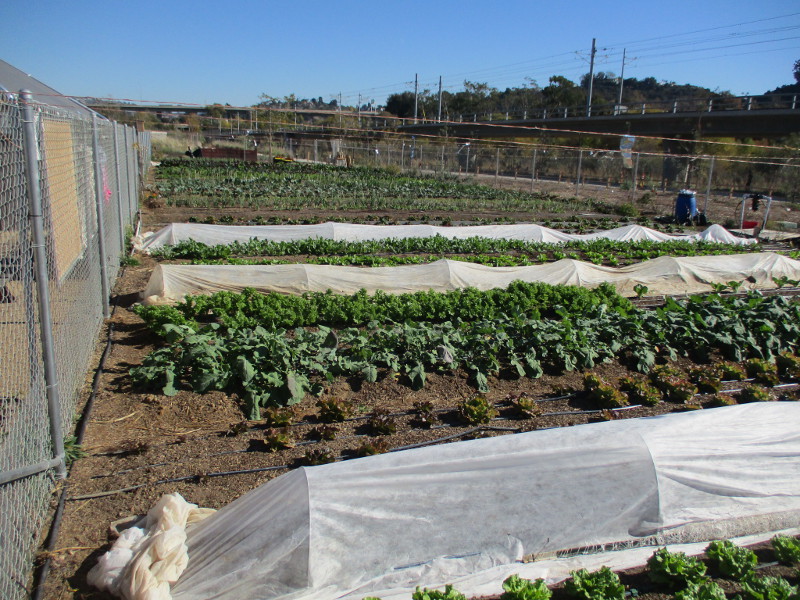
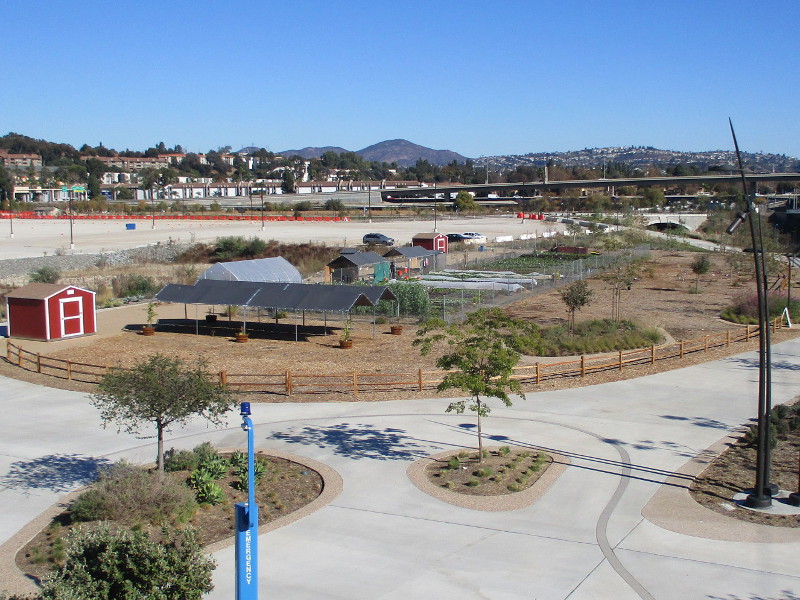
The public is invited to tour a working farm in Mission Valley. I did that today!
MAKE Farm at SDSU Mission Valley is located a short distance from Snapdragon Stadium. Perhaps you’ve seen the farm from the elevated Stadium trolley station, or the parking lot east of the stadium.
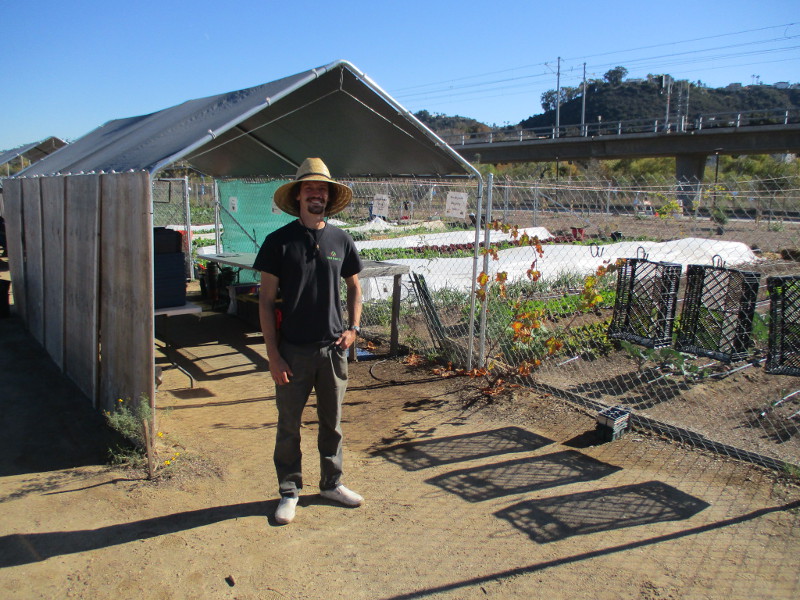
I first noticed the new half-acre urban farm early this year and posted this blog. Today, as I walked through the SDSU Mission Valley river park, I saw a sign indicating there was a tour today. It turned out today was the farm’s very first “trial” tour–the official tours will begin next January on Saturday mornings.
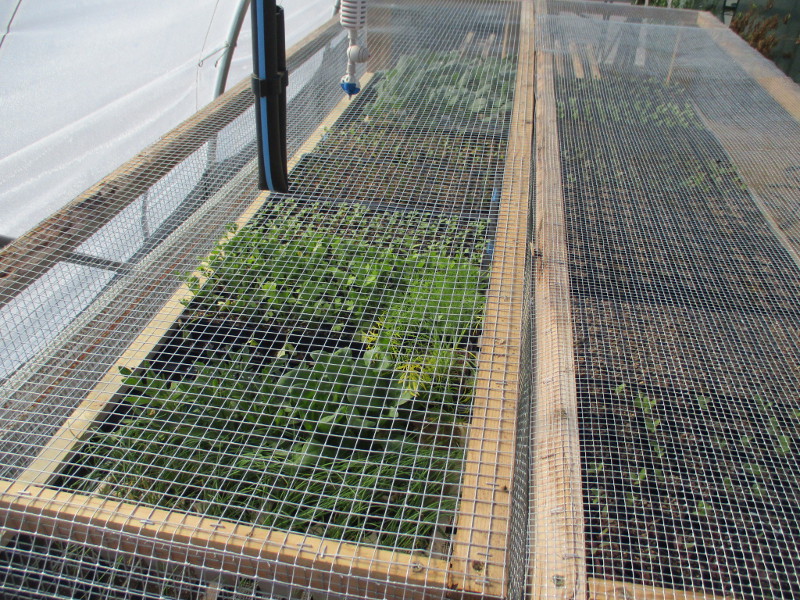
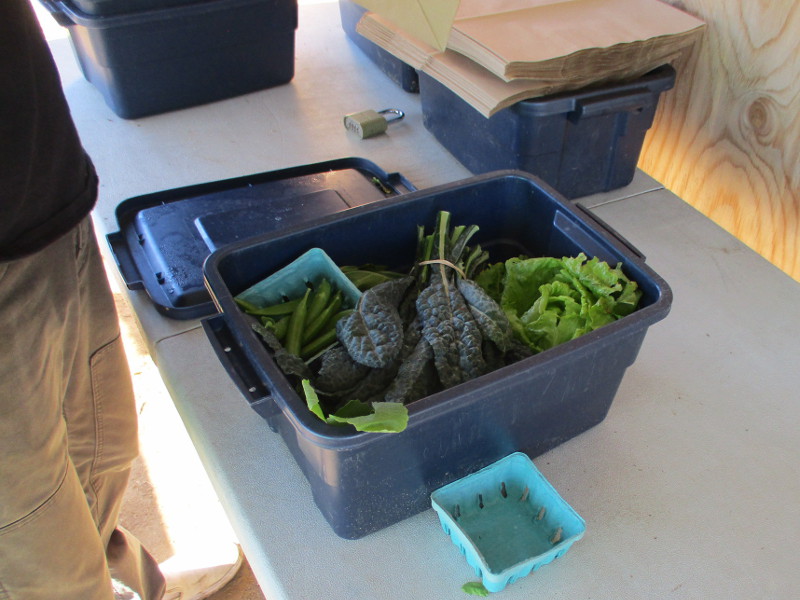
The MAKE farm is flourishing! Adam and a farming trainee (a friendly refugee) showed me rows upon rows of organically grown vegetables. They pointed out beets, radishes, peas, spinach, lettuce, tomatoes, bok choy, kale, parsley, carrots, strawberries, onions . . . and more! During the summer they also grew corn, beans and other warm weather crops.
After taking a look at the growing food, I learned how the farm has a special CSA Program. For a monthly subscription, you can receive a weekly bag full of farm-fresh healthy vegetables! You also receive an invitation to a fun seasonal gathering on the farm! Cool! Learn about the program by clicking here!
Students from San Diego State University are also visiting the farm to learn about sustainability. Once SDSU Mission Valley is fully developed, the farm will be ideally located!
…
I post new blogs pretty often. If you like discovering new things, bookmark coolsandiegosights.com and swing on by occasionally!
I live in downtown San Diego and love to walk around with my camera! You can follow Cool San Diego Sights via Facebook or X.
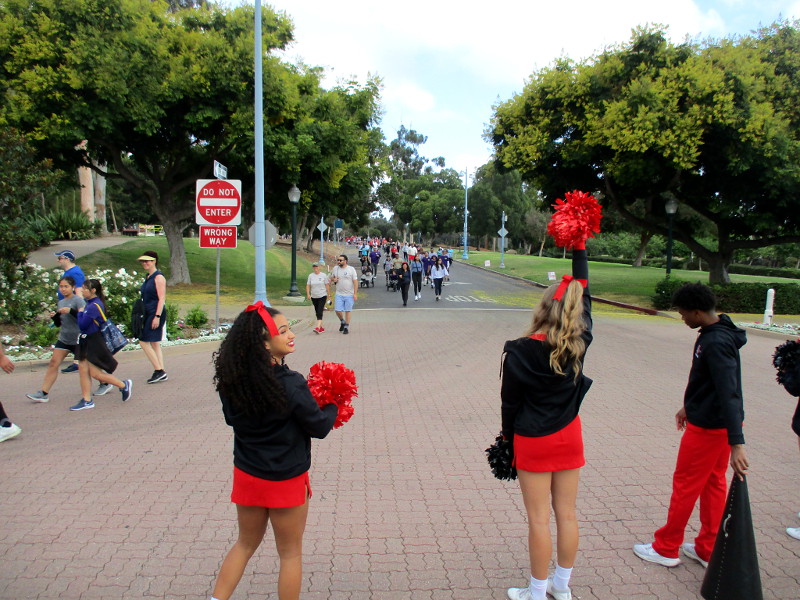
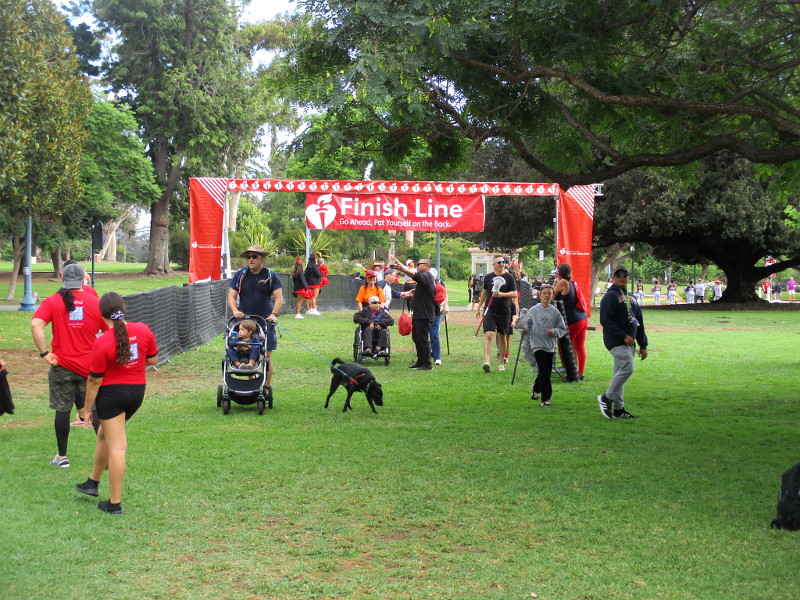
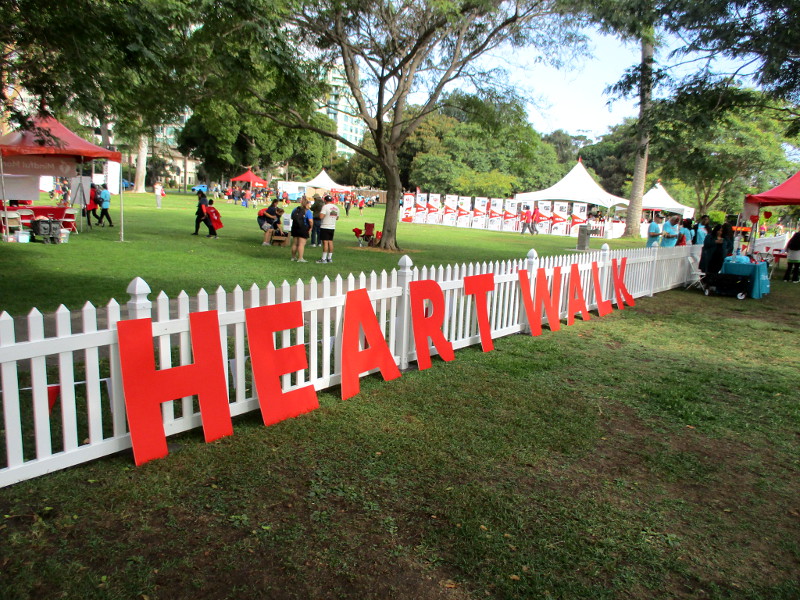
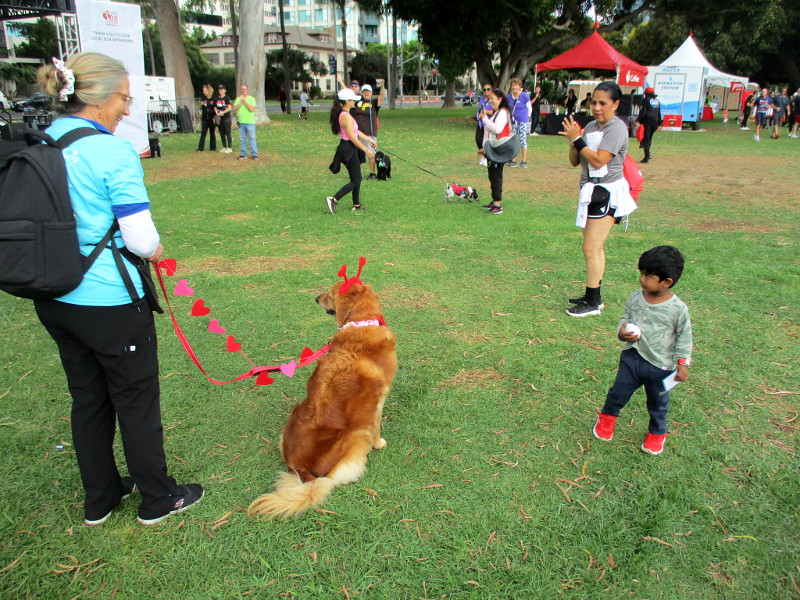
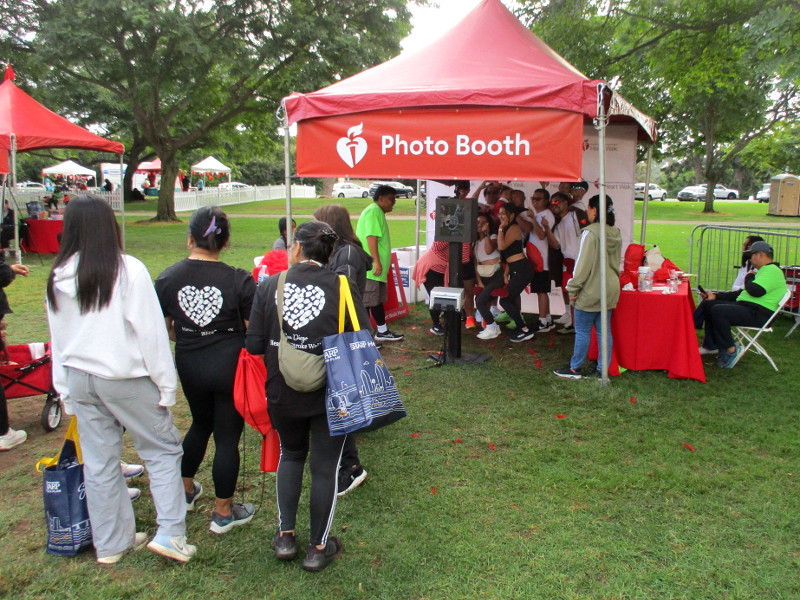
The 2024 San Diego Heart & Stroke Walk was held this morning in Balboa Park. Participants raised over one million dollars this year, supporting the American Heart Association and its many important programs!
I visited the event and took these inspiring photographs. Teams walking through the park and past the finish line were being encouraged by students from San Diego State University. There was a fun dog costume contest, a photo booth, roses for participants, a community board showing who walkers walk for, a small farmers market, and more. Heart disease and stroke survivors could ring a bell to celebrate life!
The American Heart Association supports medical research and educational programs. Projects, according to their website, include:
Up-to-the-minute research into doctors’ hands so they can better prevent and treat heart disease among patients. Groundbreaking pediatric heart and stroke research that is key to saving babies’ lives. Providing life-saving information that can save a life – like how to eat better, how to recognize the warning signs of heart attack, and how to talk to a doctor about critical health choices.
If you’d like to support the American Heart Association with a donation, or if you’d like to participate in a future walk, click here!
…
Thanks for visiting Cool San Diego Sights!
I post new blogs pretty often. If you like discovering new things, bookmark coolsandiegosights.com and swing on by occasionally!
I live in downtown San Diego and love to walk around with my camera! You can follow Cool San Diego Sights via Facebook or X.
Stargazer is the title of a sculpture located in San Diego State University’s Campanile Mall, not far from the Koester Memorial Sundial. Which seems appropriate. Our sun is the nearest star.
The sculpture was created by artist Johnny Bear Contreras, who is a tribal member of the San Pasqual Band of Mission Indians in northeastern San Diego County. Through his award-winning art he is dedicated to keeping the Kumeyaay heritage alive and thriving. The Kumeyaay people have lived throughout the San Diego region for many thousands of years.
On the Stargazer plaque, Johnny Bear Contreras speaks the words: “Come listen with us, there are stories to be heard. Come and gaze at the stars with me, they are always there.” The word Stargazer, in the Kumeyaay language, is Uwiiu kwellyap kurr.
The public art is part of the SDSU Kumeyaay Living Land Acknowledgment project, which seeks to instill a deeper appreciation and celebration of Kumeyaay history, art and culture.
…
Thanks for visiting Cool San Diego Sights!
I post new blogs pretty often. If you like discovering new things, bookmark coolsandiegosights.com and swing on by occasionally!
I live in downtown San Diego and love to walk around with my camera! You can follow Cool San Diego Sights via Facebook or X.
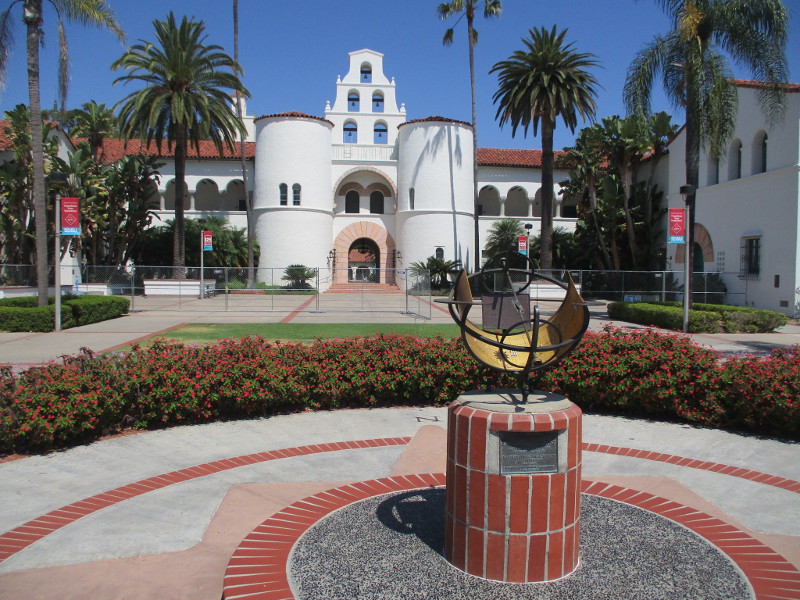
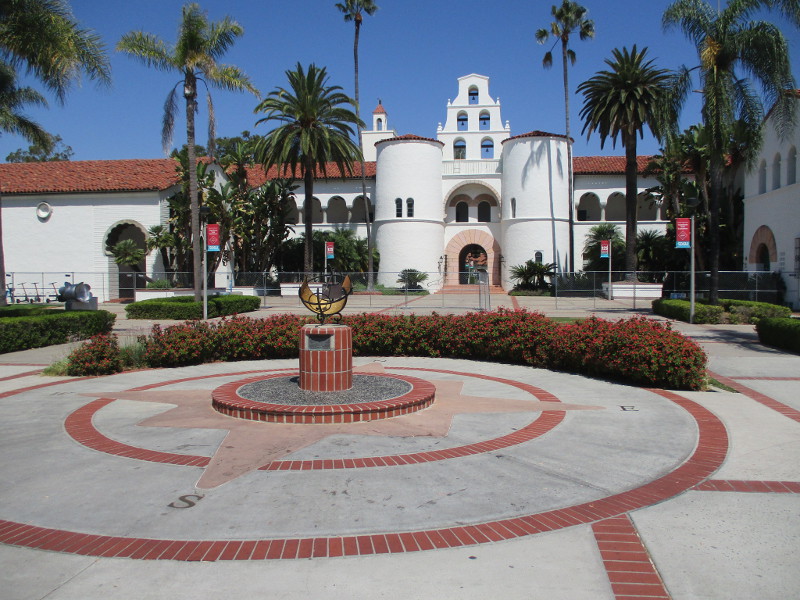
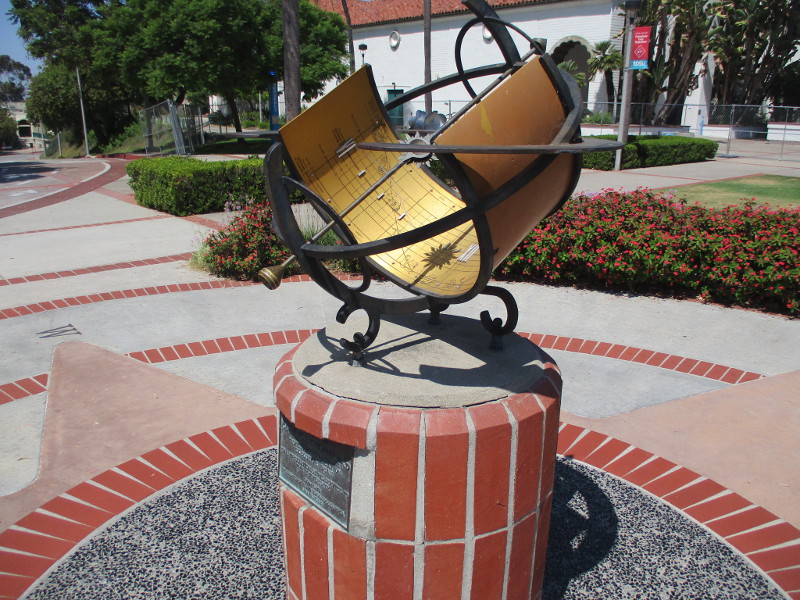
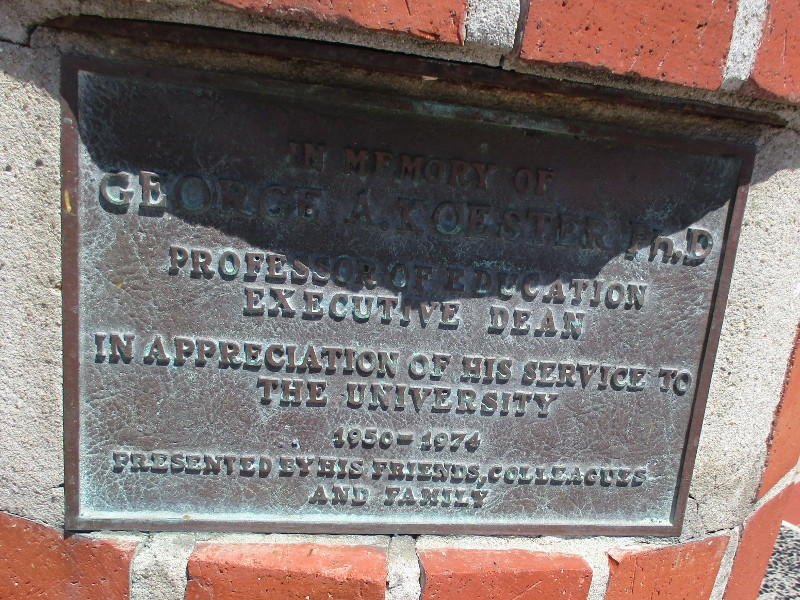
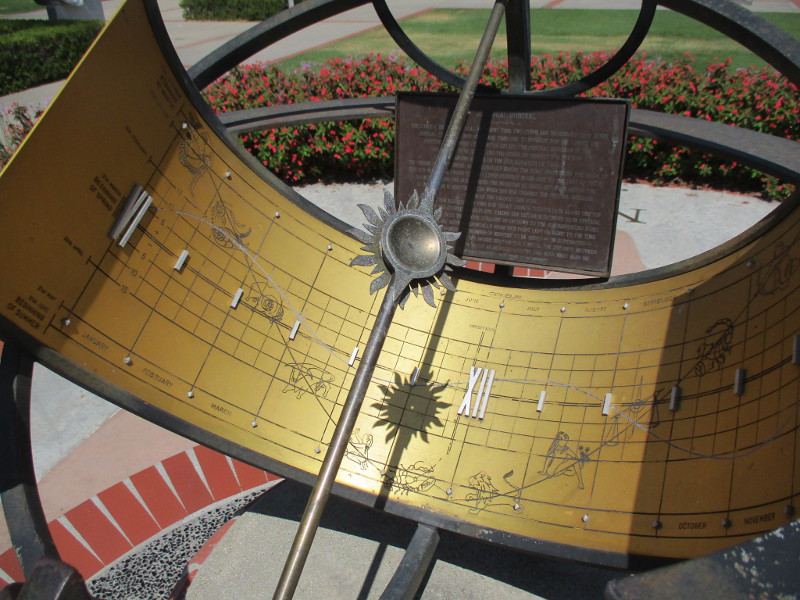
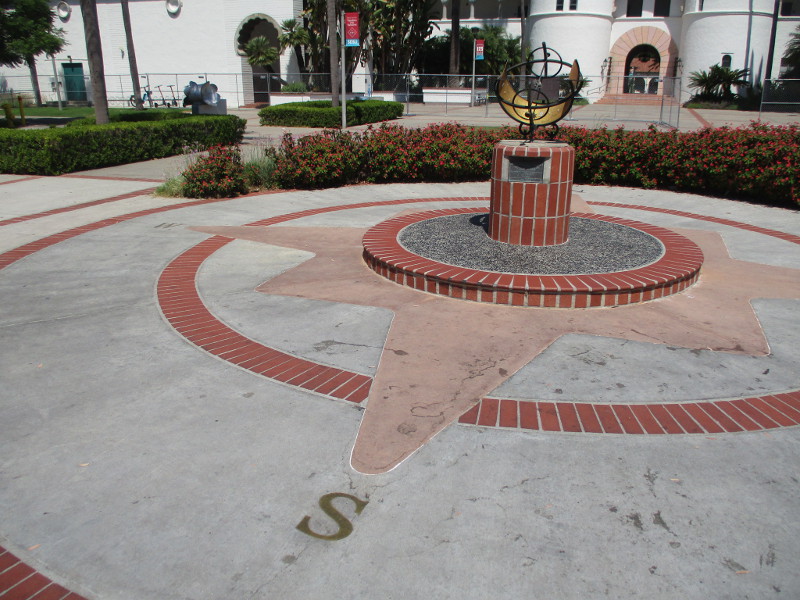
The Koester Memorial Sundial stands prominently in San Diego State University’s Campanile Mall, directly in front of the iconic Hepner Hall. I took photographs of the sundial when I walked through the SDSU campus a few days ago. A couple of corroded plaques invite a closer look.
According to this article, dedicated on November 4, 1978, the Gübelin Equatorial Sundial [is] in memory of the late George A. Koester…
Koester began his career at San Diego State in 1950 and went on to complete 14 years as a professor of education and 10 years as executive dean. During his time on Montezuma Mesa, Koester played a prominent role in building the campus, working on the creation of Love Library, the music and drama buildings, Aztec Center, Zura Hall, student health services, and multiple parking structures…
A plaque embedded in the brick pedestal states:
IN MEMORY OF GEORGE A. KOESTER Ph.D – PROFESSOR OF EDUCATION – EXECUTIVE DEAN – IN APPRECIATION OF HIS SERVICE TO THE UNIVERSITY 1950 – 1974 – PRESENTED BY HIS FRIENDS, COLLEAGUES AND FAMILY
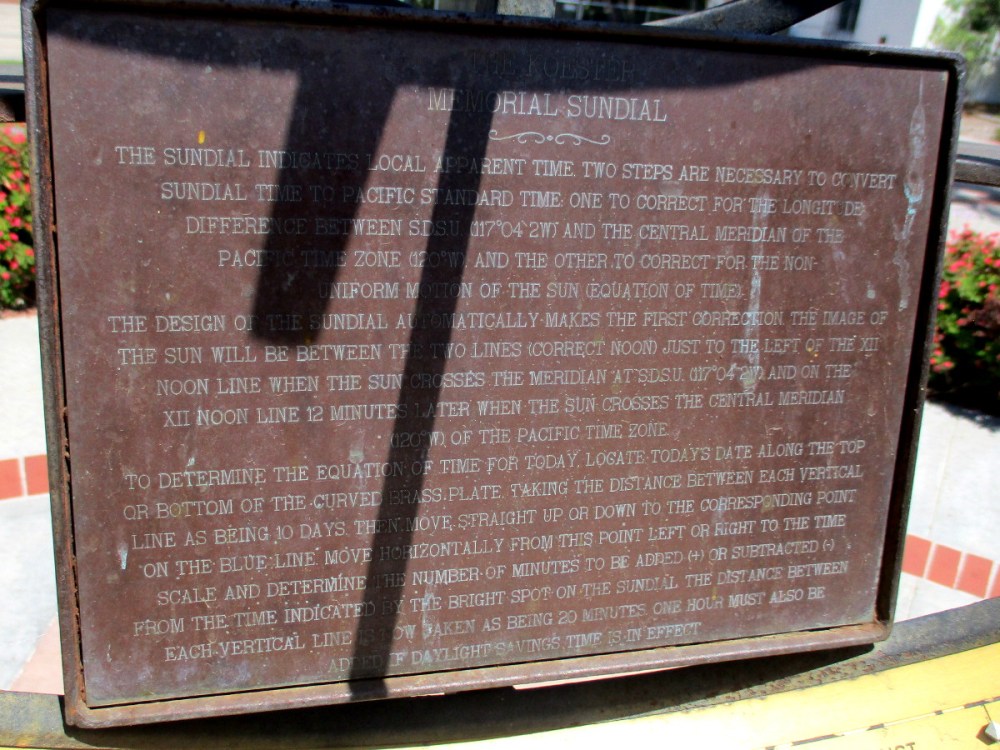
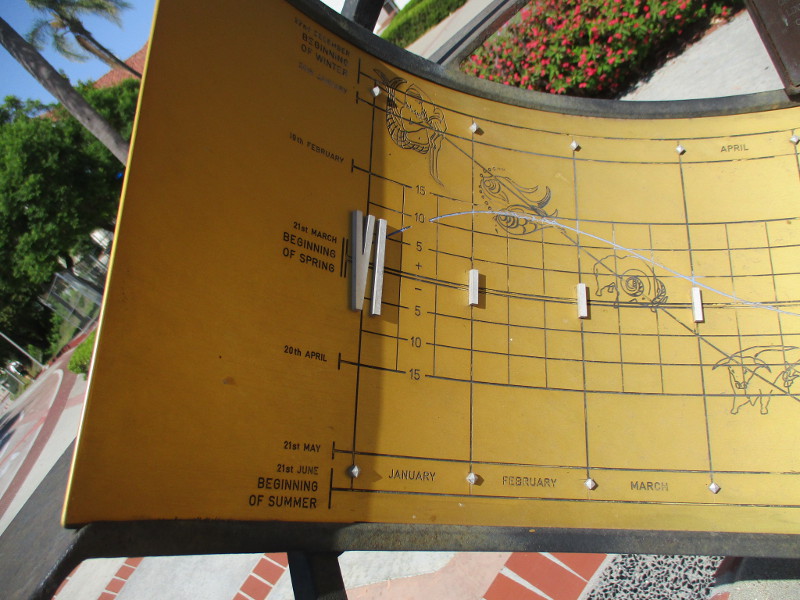
Within the sundial, a faded plaque (I increased the image contrast) describes how the beautiful and fascinating device works. I transcribed as best I could, without every word in caps:
THE KOESTER MEMORIAL SUNDIAL
The sundial indicates local apparent time. Two steps are necessary to convert sundial time to Pacific Standard Time: one to correct for the longitude difference between SDSU (117°04`2W) and the central meridian of the Pacific Time Zone (120°W), and the other to correct for the non-uniform motion of the sun (equation of time).
The design of the sundial automatically makes the first correction. The image of the sun will be between the two lines (correct noon) just to the left of the XII noon line when the sun crosses the meridian at SDSU (117°04`2W) and on the XII noon line 12 minutes later when the sun crosses the central meridian (120°W) of the Pacific Time Zone.
To determine the equation of time for today, locate today’s date along the top or bottom the curved brass plate. Taking the distance between each vertical line as being 10 days, then move straight up or down to the corresponding point on the blue line. Move horizontally from this point left or right to the time scale and determine the number of minutes to be added (+) or subtracted (-) from the time indicated by the bright spot on the sundial. The distance between each vertical line is now taken as being 20 minutes. One hour must also be added if Daylight Savings Time is in effect.
Whew! Got that?
I think I’ll stick to my wristwatch or phone!
…
Thanks for visiting Cool San Diego Sights!
I post new blogs pretty often. If you like discovering new things, bookmark coolsandiegosights.com and swing on by occasionally!
I live in downtown San Diego and love to walk around with my camera! You can follow Cool San Diego Sights via Facebook or X.























 Cool San Diego Sights!