Planting rare trees at Torrey Pines State Reserve.

An important reforestation effort is underway at Torrey Pines State Natural Reserve.

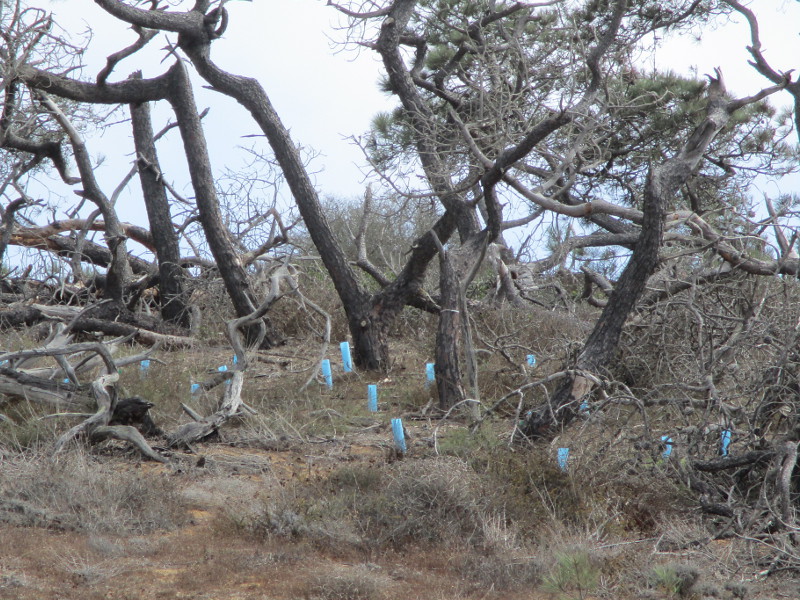
In recent years the critically endangered Torrey pine population has been reduced significantly by bark beetles, particularly in the park’s North Grove. So over 450 Torrey pine seedlings and 581 native shrubs grown in the nursery at the San Diego Safari Park are being planted in different locations around the Reserve.

You can read more about the project, an effort of California State Parks, the San Diego Zoo Wildlife Alliance, and the U.S. Forest Service, by clicking here.

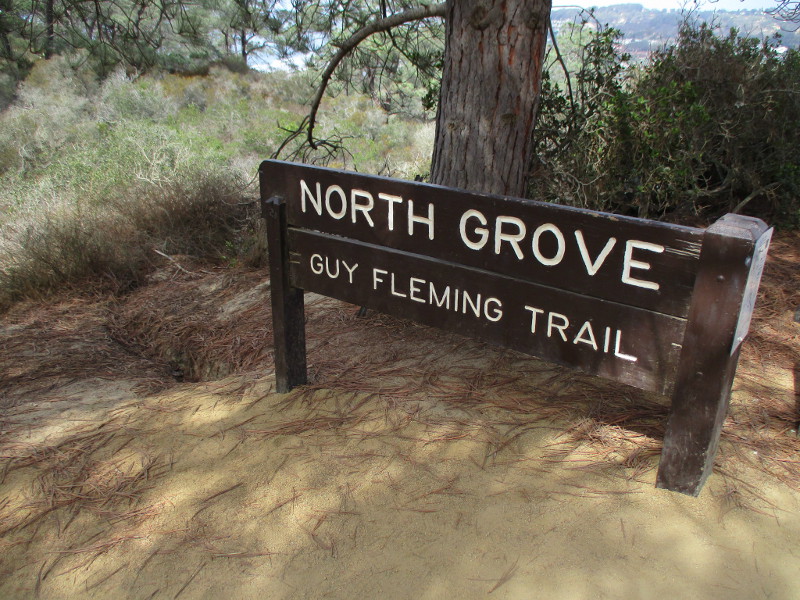
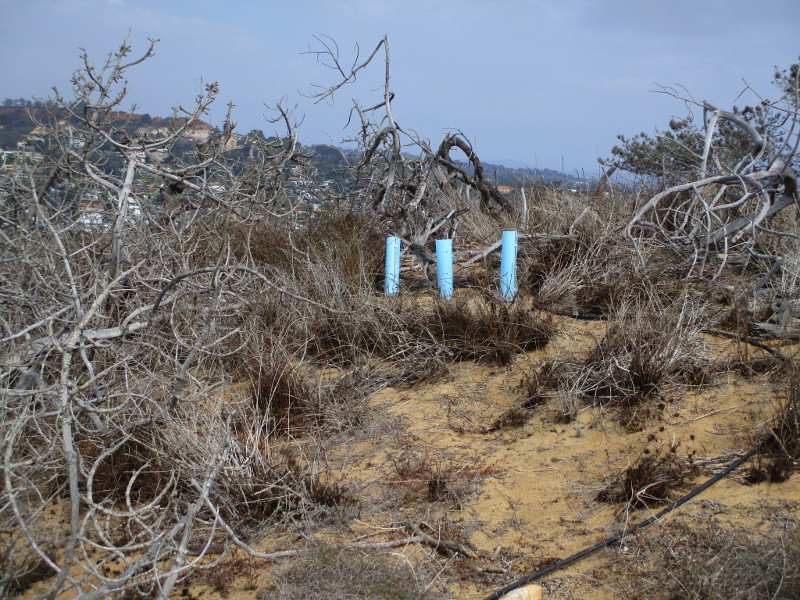
I walked the loop of the Guy Fleming Trail yesterday, where visitors can see many of the dead Torrey pines. Among dead trees, clustered close to the ground, stand strange blue tubes. These plastic protectors shield growing trees and other plants from animals and drying winds.

Native shrubs that have also been planted, mostly above the west-facing bluffs facing the Pacific Ocean, include sea dahlia, jojoba, lanceleaf liveforever, fingertips (San Diego dudleya), lemonade berry, coast lilac, and San Diego mountain mahogany.

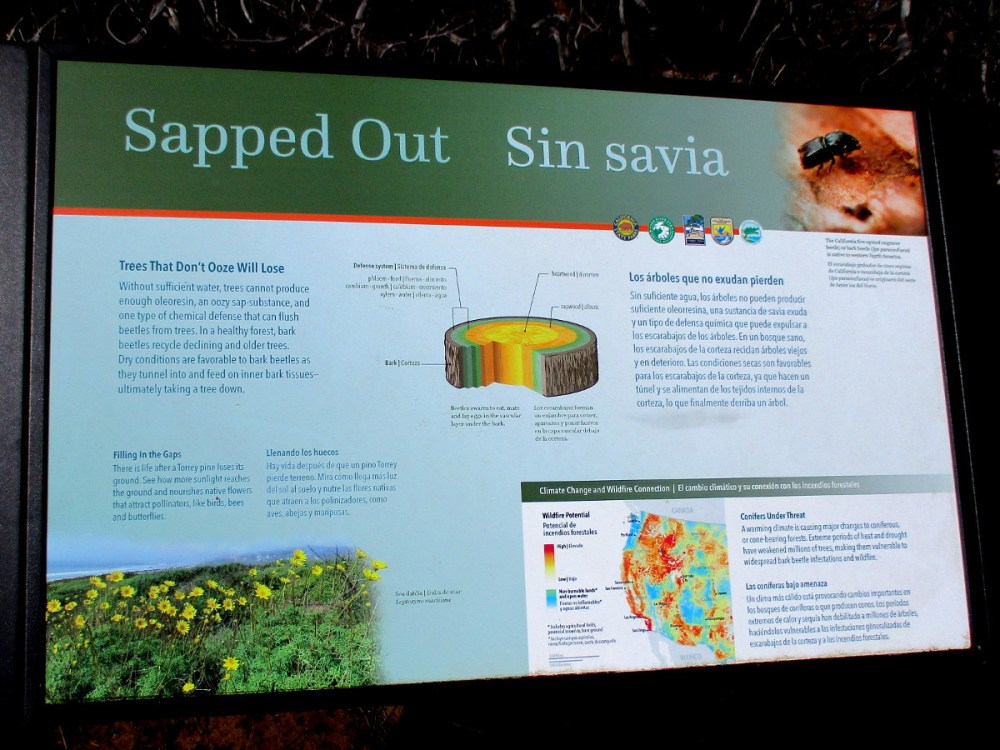
As I walked along, observing all those blue tubes, I paused to read signs that explain how bark beetles kill the rare and beautiful Torrey pine. This tree’s natural protection against beetle infestation is sap. During drought trees produce less sap than usual and become especially vulnerable.
Without sufficient water, trees cannot produce enough oleoresin, an oozy sap-substance, and one type of chemical defense that can flush beetles from trees…
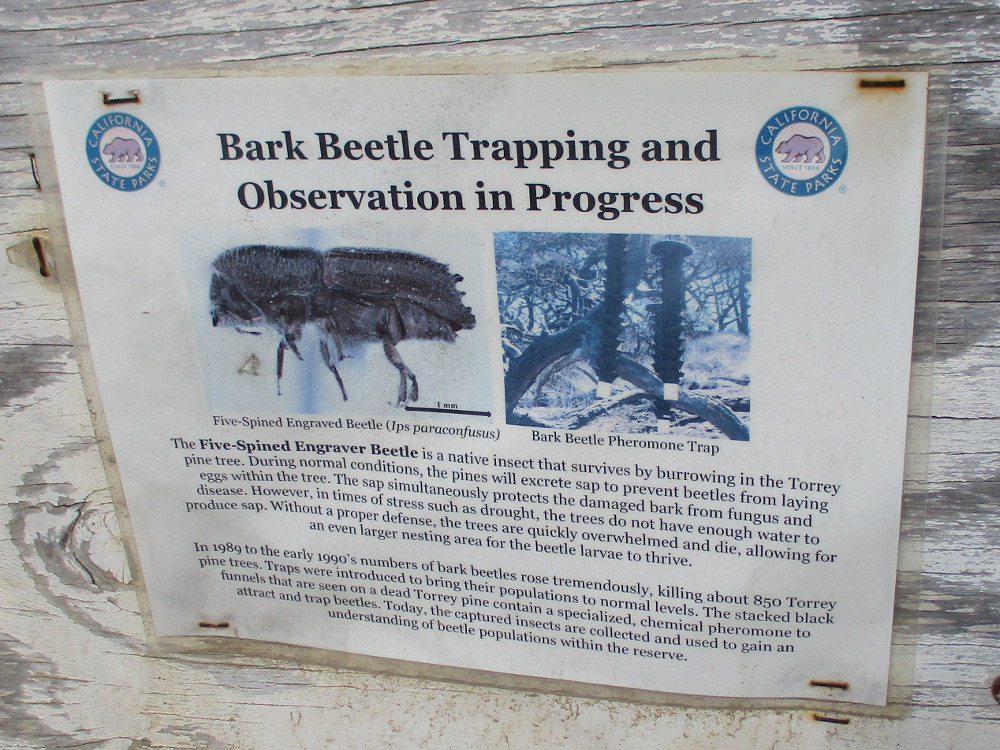
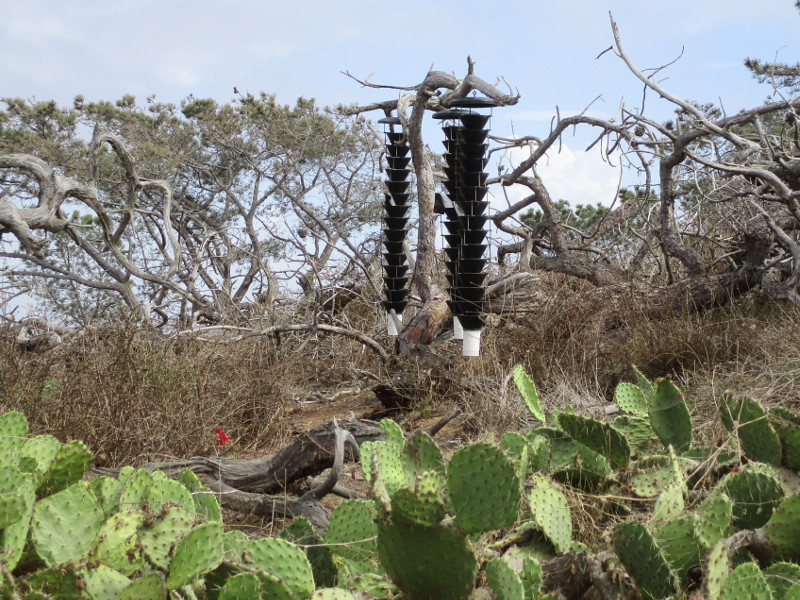
Bark Beetle Trapping and Observation in Progress.

The Five-Spined Engraver Beetle is a native insect that survives by burrowing in the Torrey pine tree. During normal conditions, the pines will excrete sap to prevent beetles from laying eggs within the tree. The sap simultaneously protects the damaged bark from fungus and disease…

…The stacked black funnels that are seen on a dead Torrey pine contain a specialized chemical pheromone to attract and trap beetles…
I live in downtown San Diego and love to walk around with my camera! You can follow Cool San Diego Sights via Facebook or Twitter!
Orchids in the Park returns to San Diego!

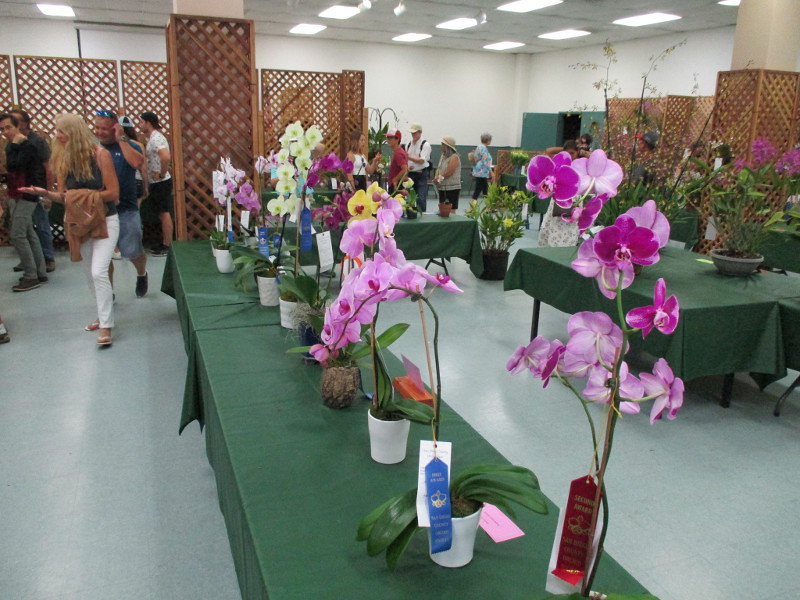
The San Diego County Orchid Society is hosting their summer Orchids in the Park show and sale in Balboa Park this weekend!

I was drawn to Room 101 in the Casa del Prado once I saw a sign pointing to the popular free event.

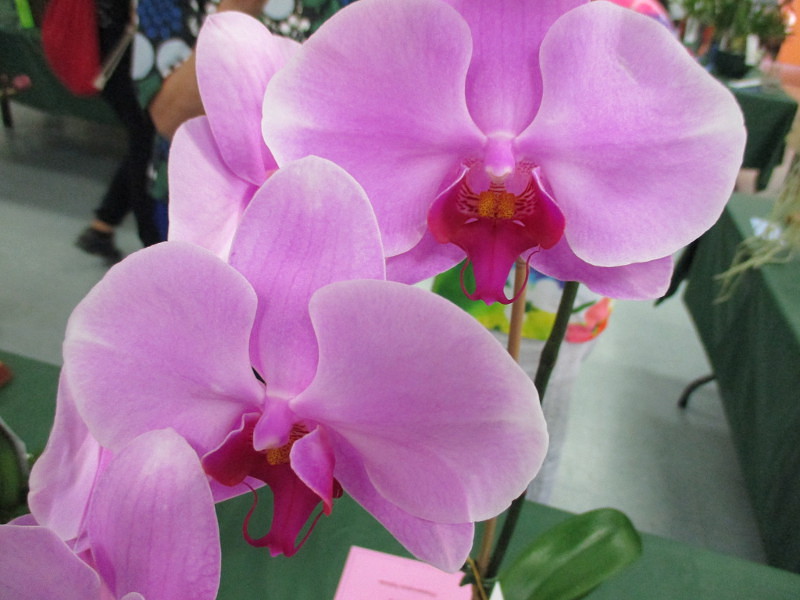
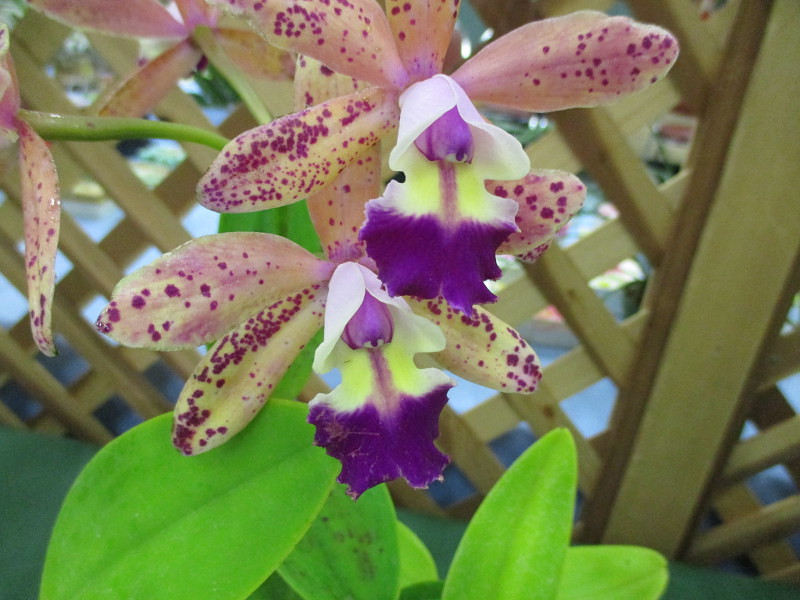
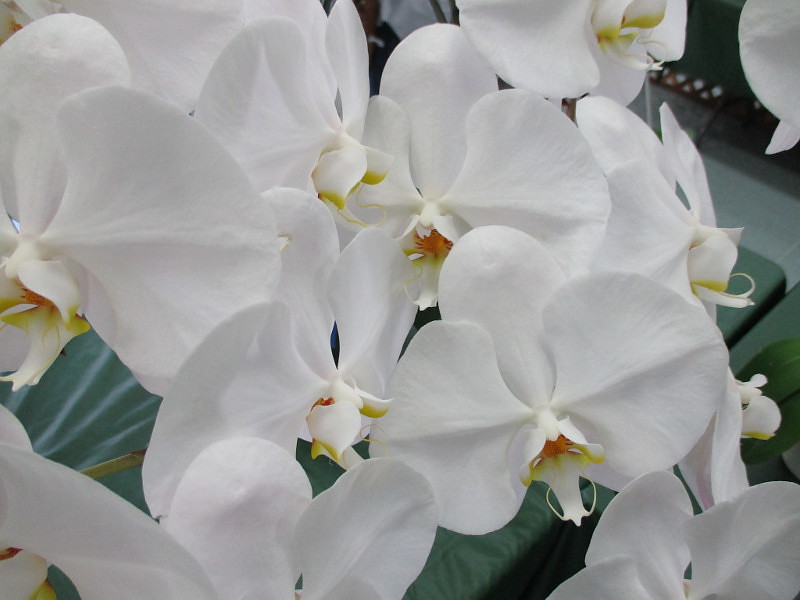
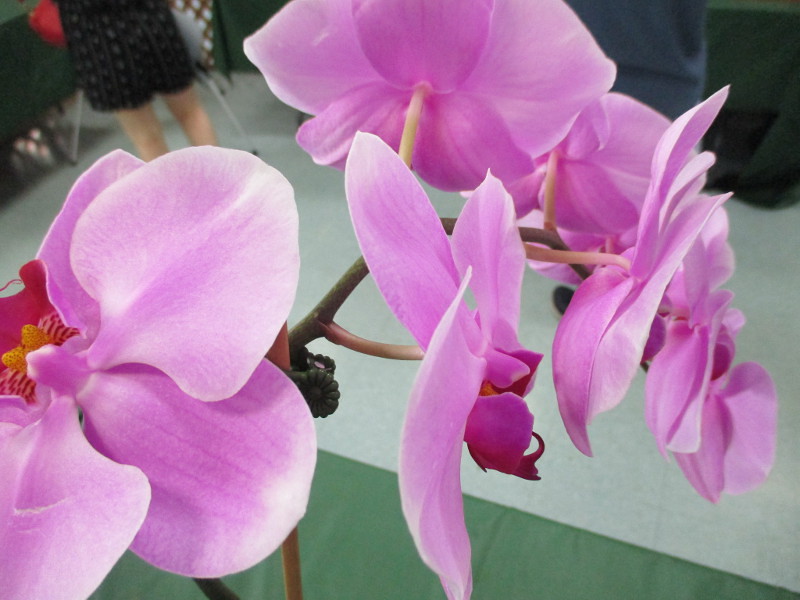
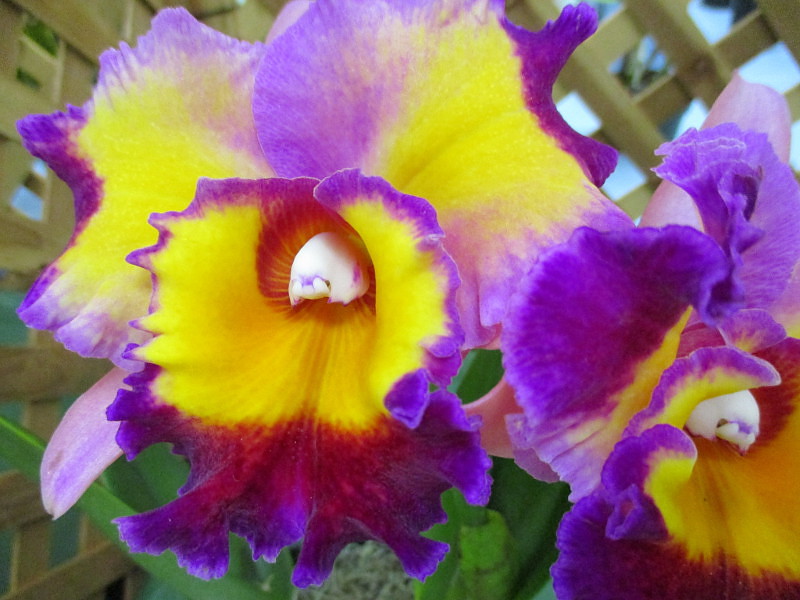
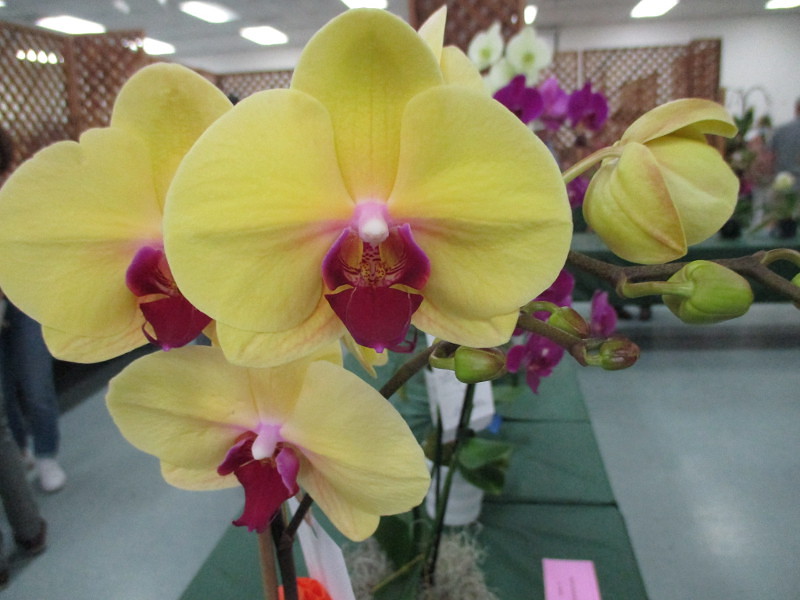
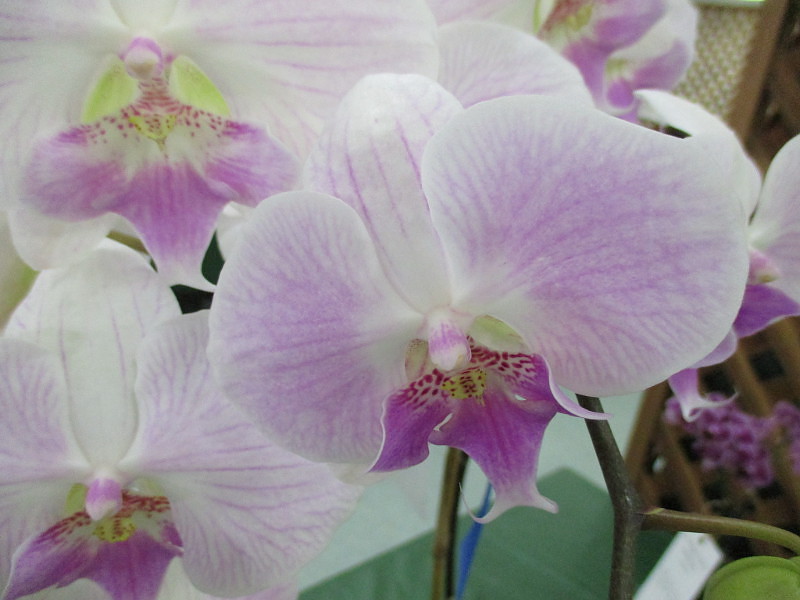
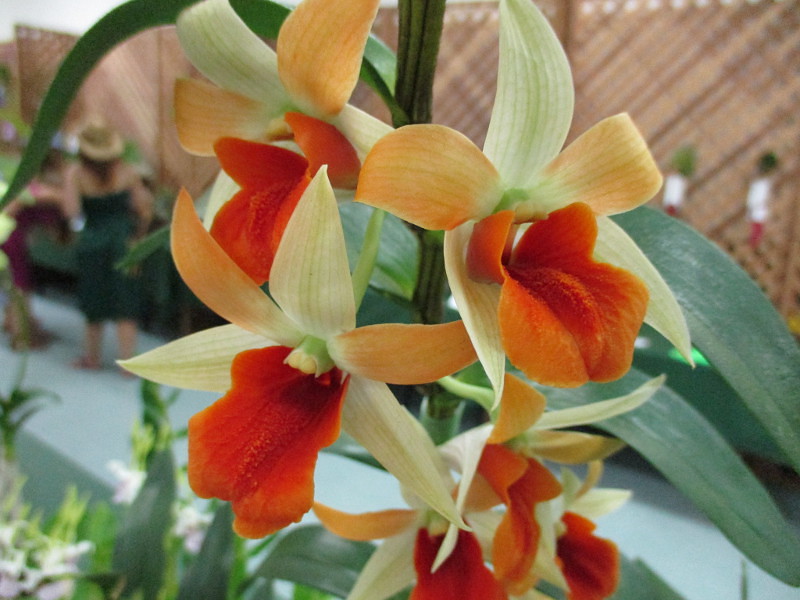
The show’s many tables were overflowing with orchids in many shapes, sizes and colors. Every flower was like a perfect jewel.

I found so many examples of nature’s beauty (tended by the caring hands of society members), that I had to capture a little bit of it with my camera…

I live in downtown San Diego and love to walk around with my camera! You can follow Cool San Diego Sights via Facebook or Twitter!
You can easily explore Cool San Diego Sights by using the search box on my blog’s sidebar. Or click a tag! There are thousands upon thousands of photos for you to enjoy!

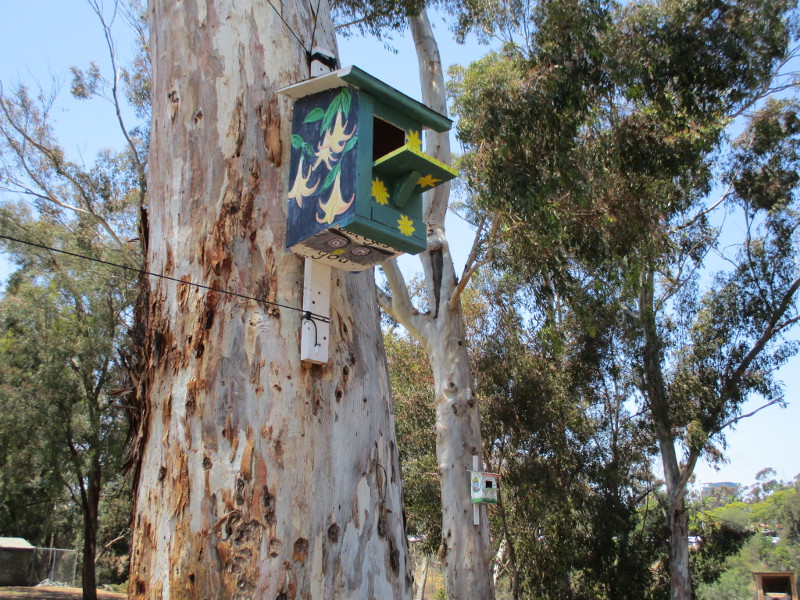
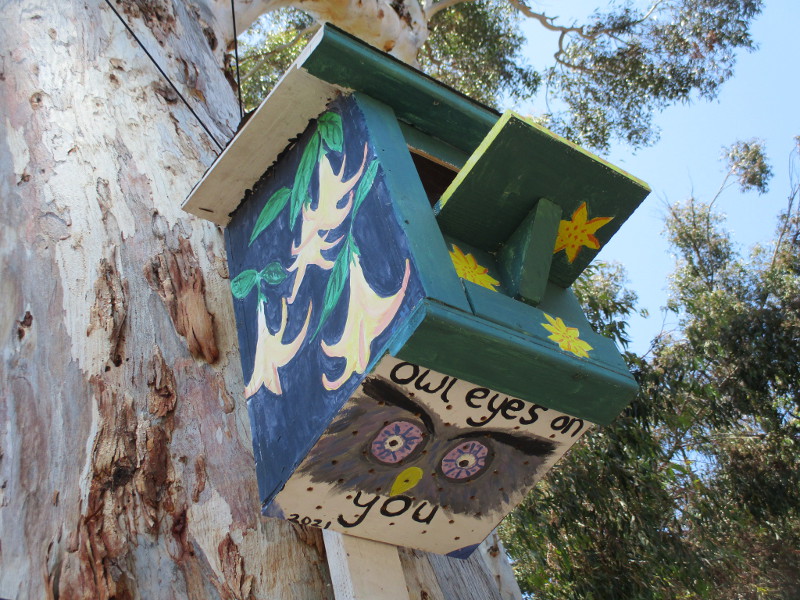
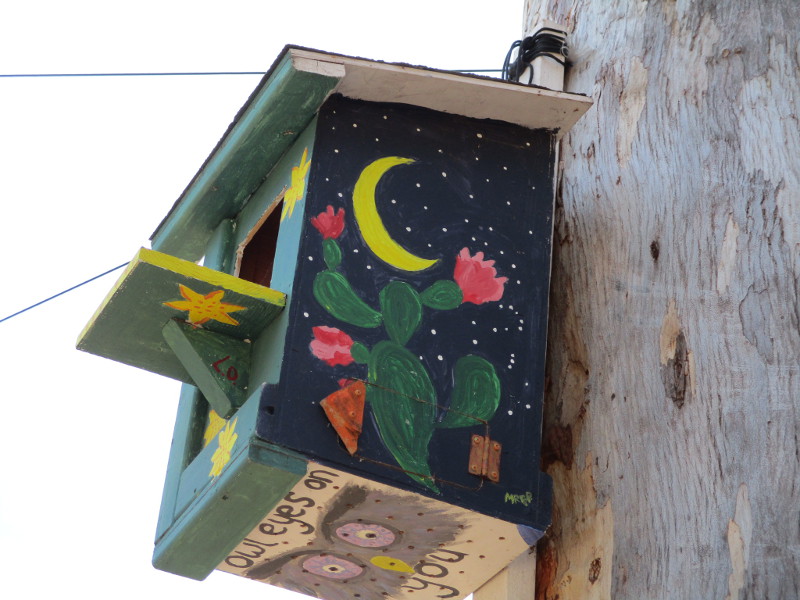
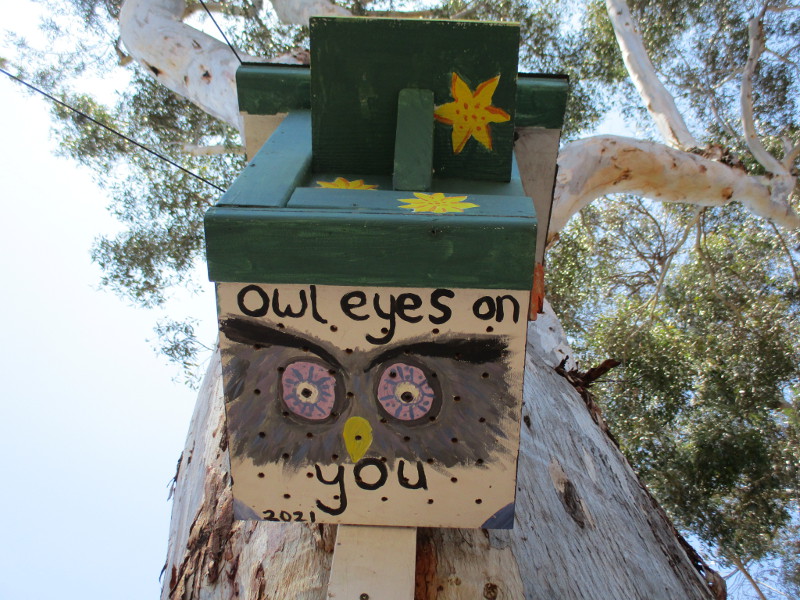
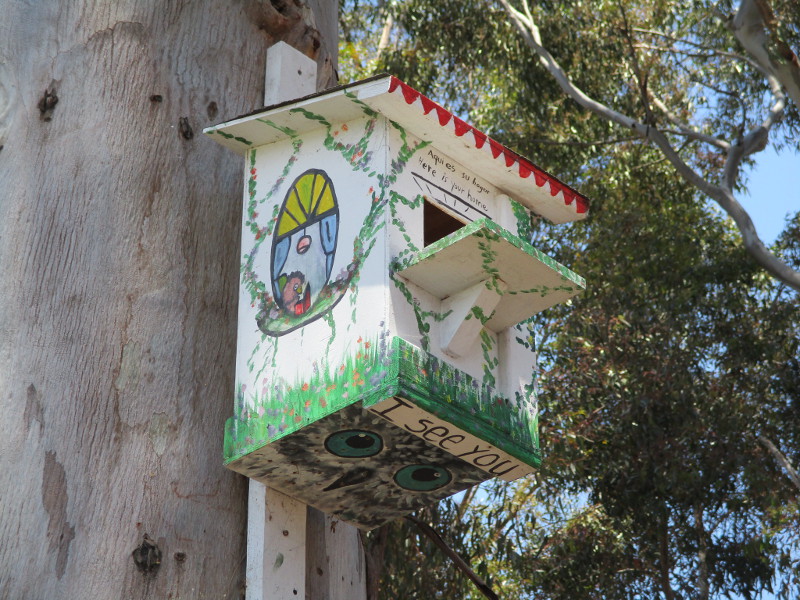
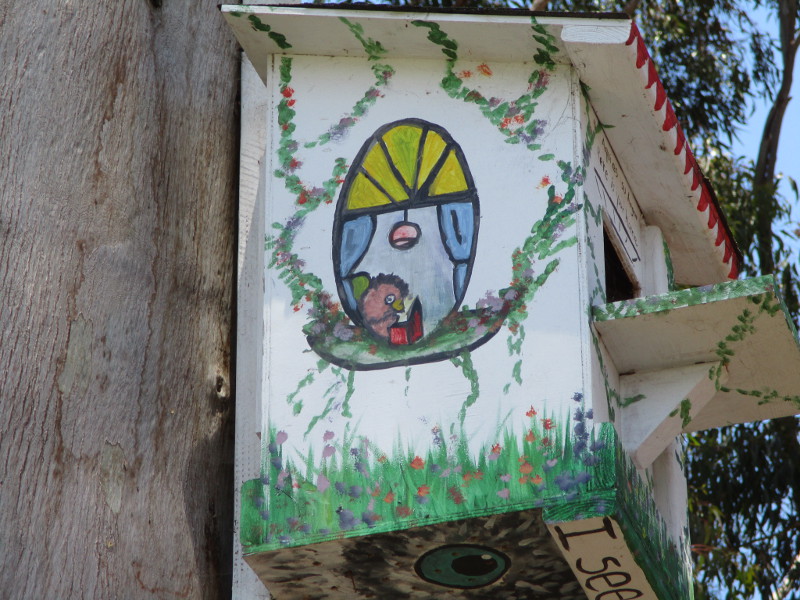
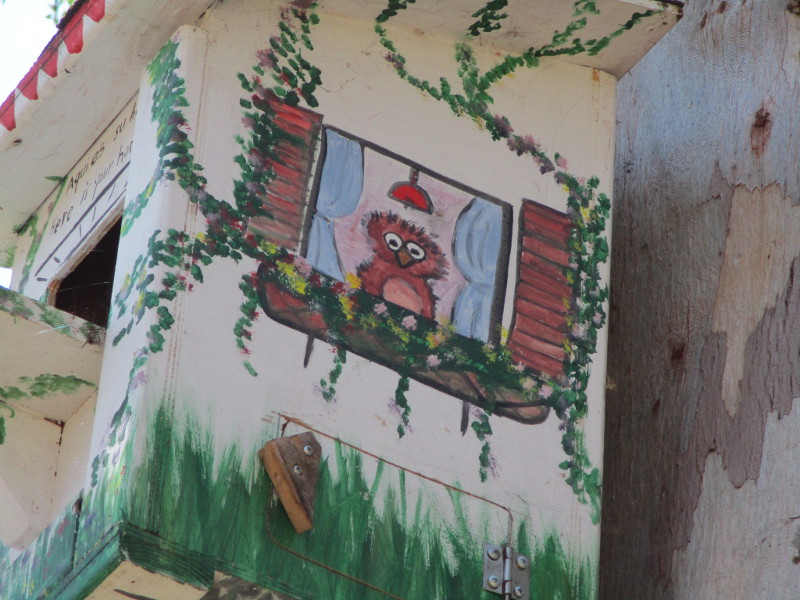
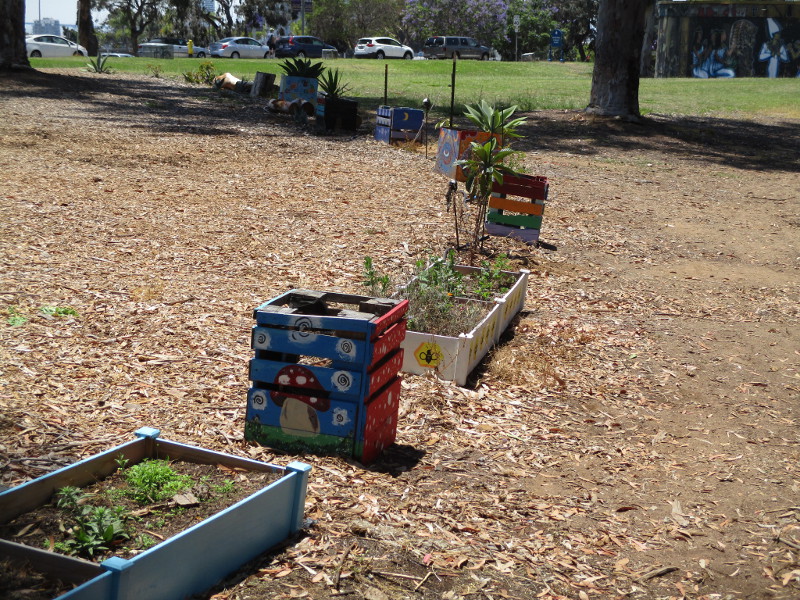
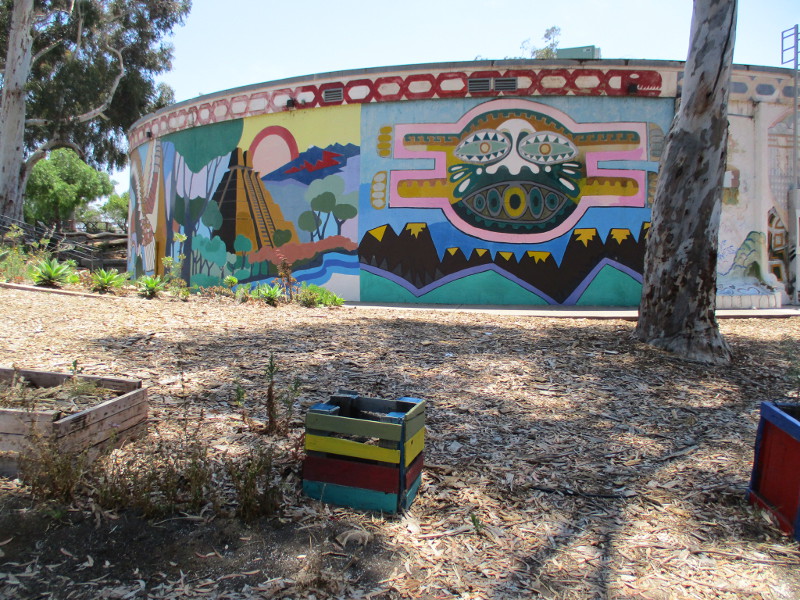
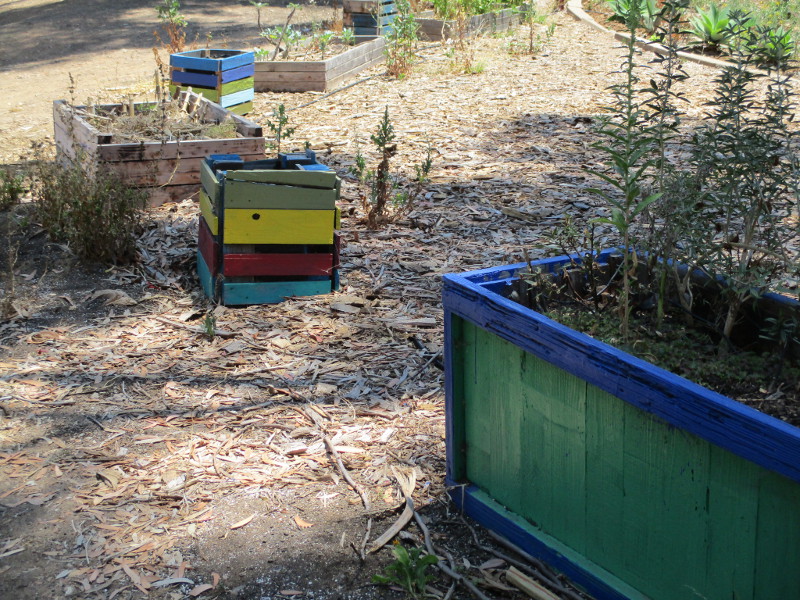
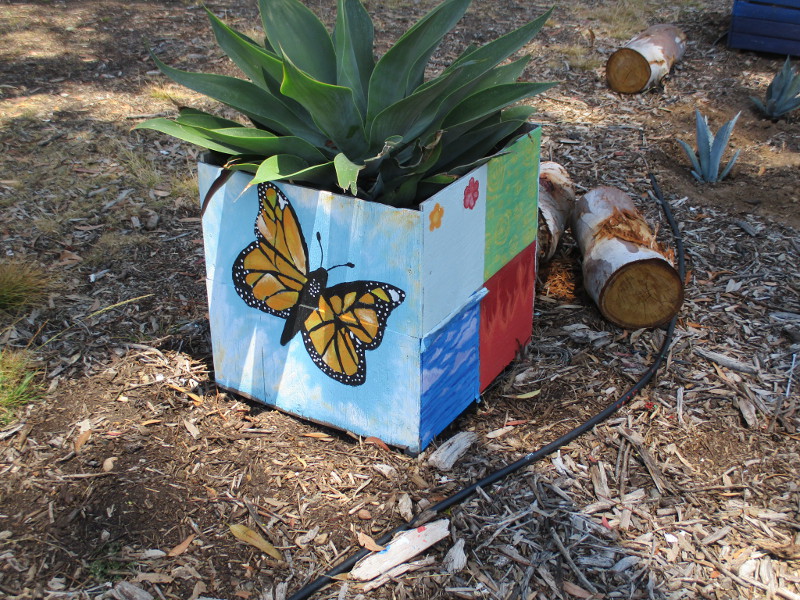
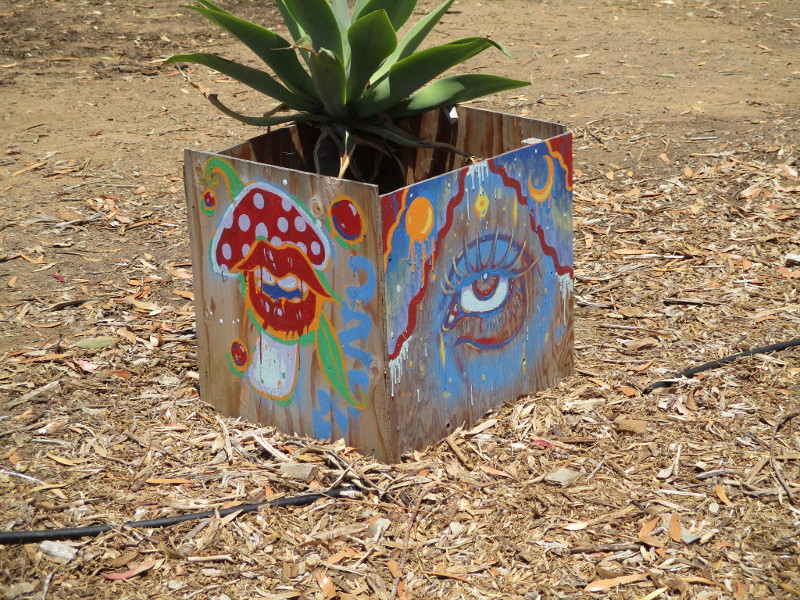
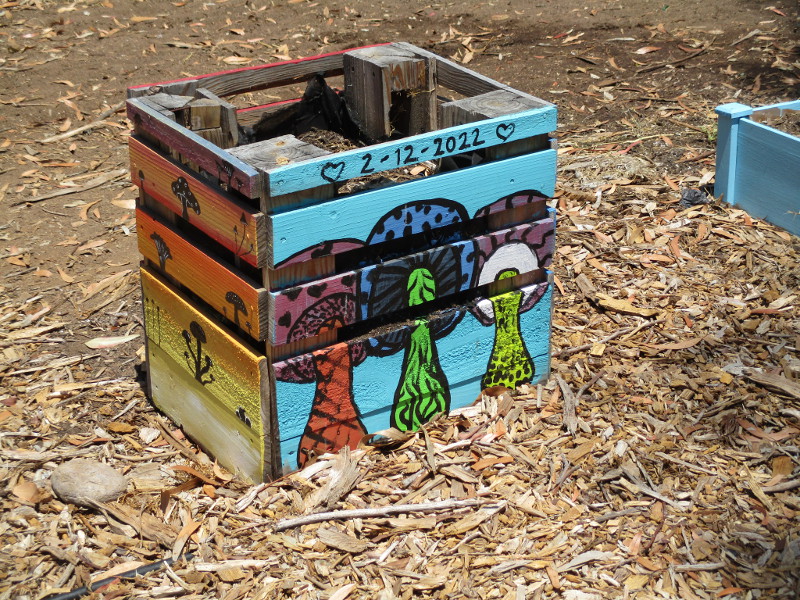
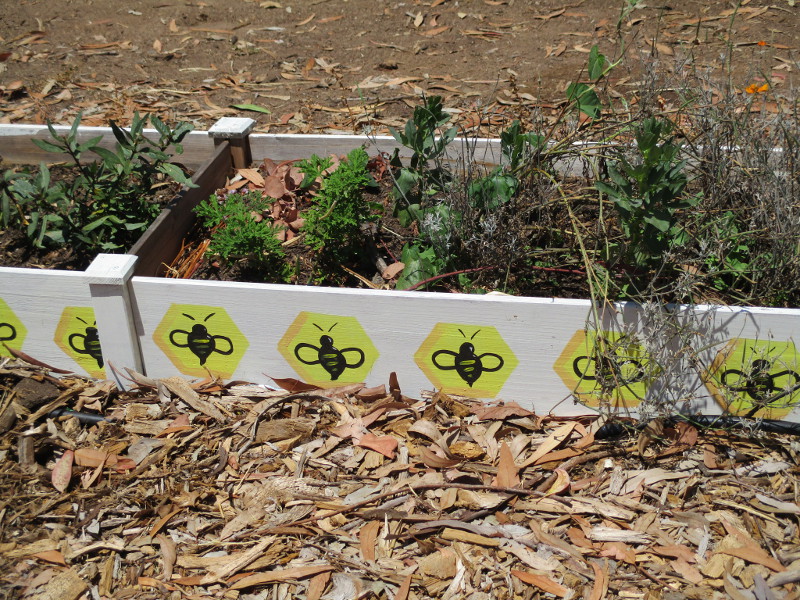
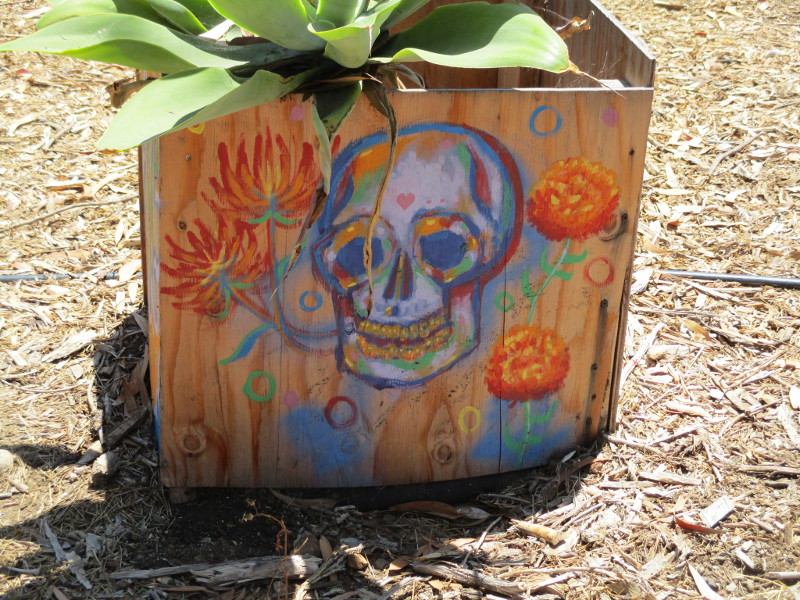
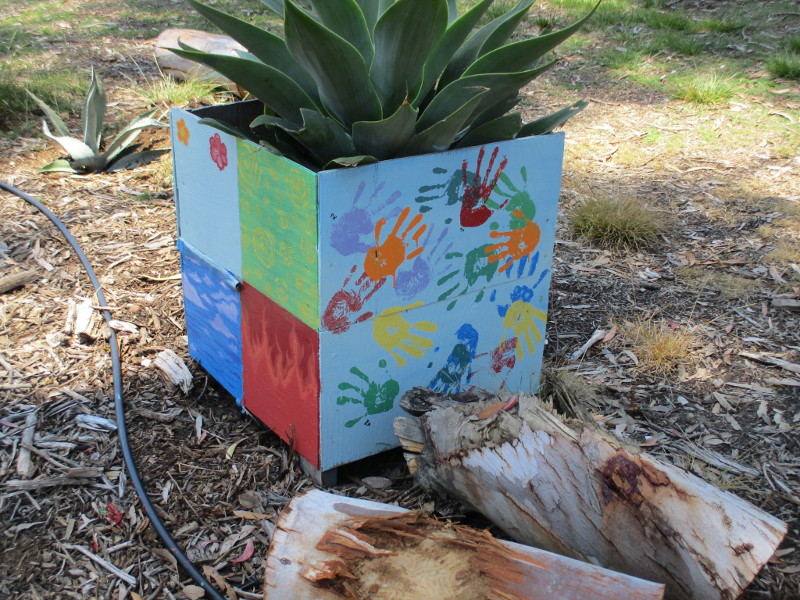
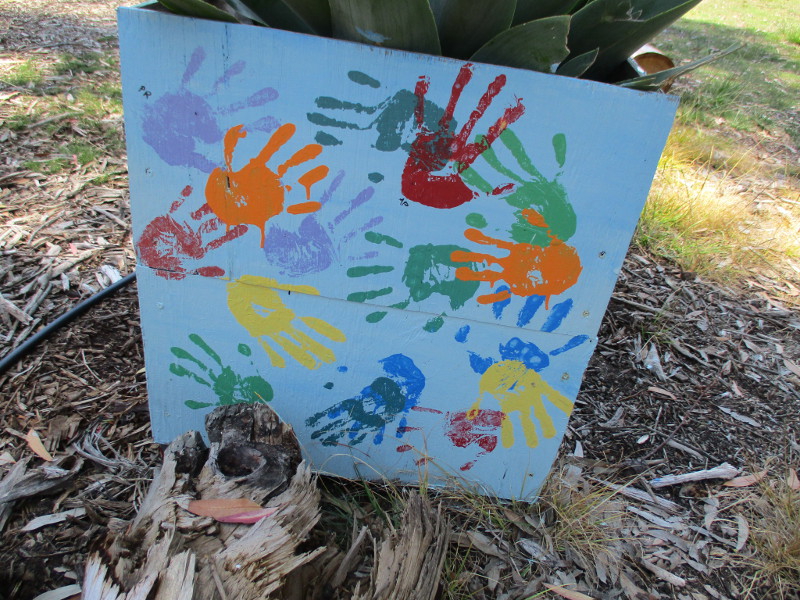
Hidden birdhouses, art planters in Balboa Park!

Very few visitors to Balboa Park will see these fun birdhouses and artistically painted planter boxes. They’re a bit hidden behind the Centro Cultural de la Raza’s home, their repurposed water tank off Park Boulevard.

I believe the birdhouses were created in 2021 and are designed for owls. The way they’re painted certainly suggests that!

It appears at least some of the planter boxes were painted this year.

I took this series of photographs Sunday as I walked randomly around waiting for a San Diego Fringe Festival performance to begin. I thought I’d share them.

Enjoy!

I live in downtown San Diego and love to walk around with my camera! You can follow Cool San Diego Sights via Facebook or Twitter!
You can easily explore Cool San Diego Sights by using the search box on my blog’s sidebar. Or click a tag! There are thousands upon thousands of photos for you to enjoy!

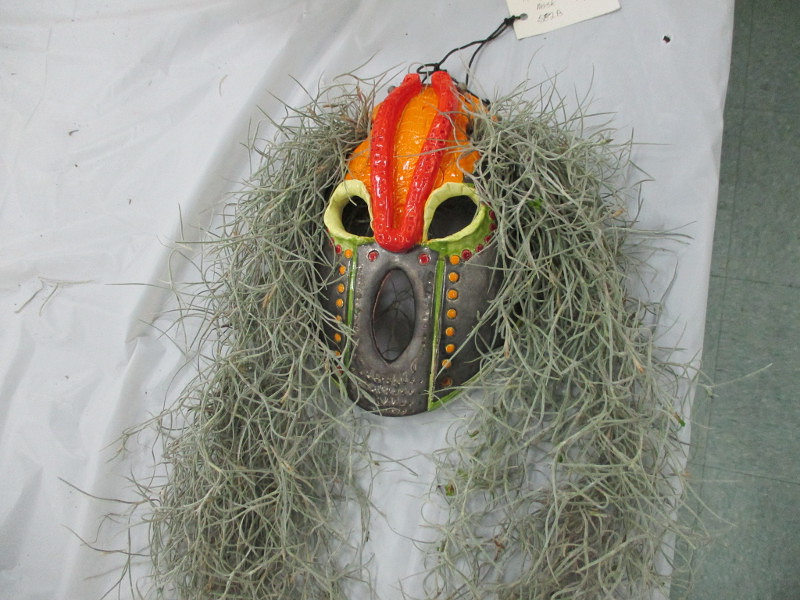
Natural beauty and art at the Bromeliad Show!

Did you know pineapples are bromeliads?

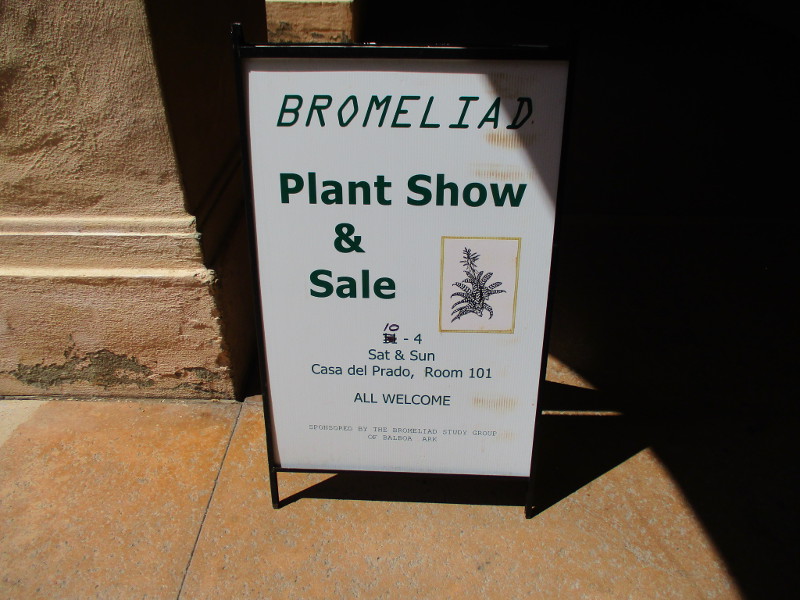
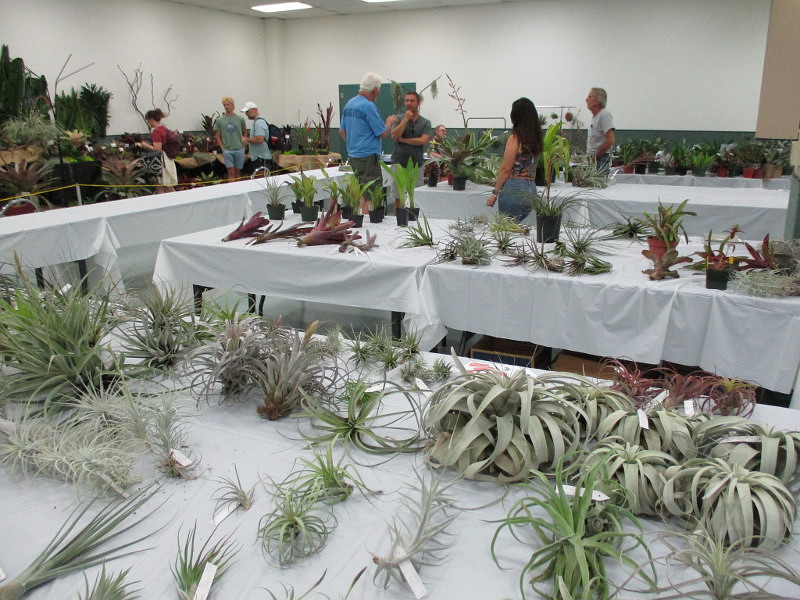
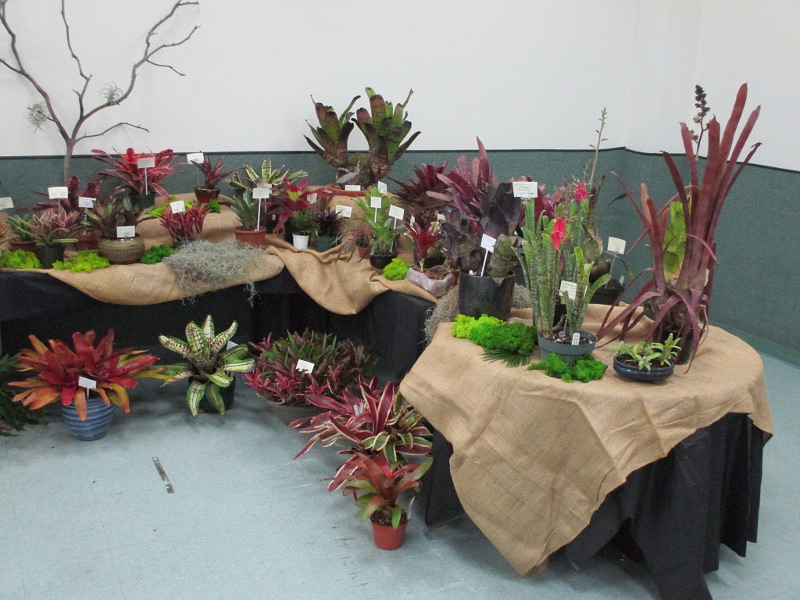
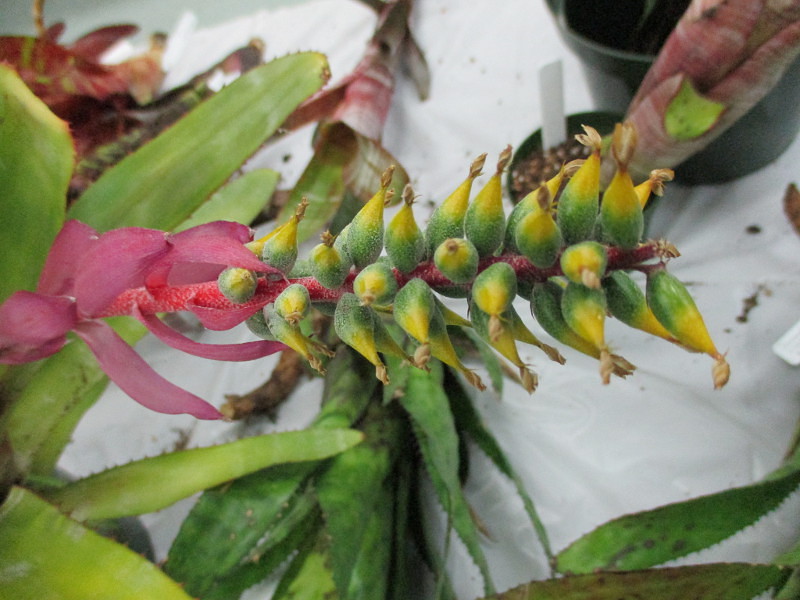
I had no idea until I checked out the Bromeliad Plant Show and Sale in Balboa Park today. It was the second day of a weekend event held at the Casa del Prado.

A friendly gentleman answered all sorts of odd questions that popped into my mind concerning bromeliads. They’re distinguished from other similar-appearing plant types primarily by their flowers. Many bromeliads are found naturally at higher elevations and are pollinated by hummingbirds, that tolerate colder temperatures than bees. And . . . and . . . I already forgot half of what I was told!

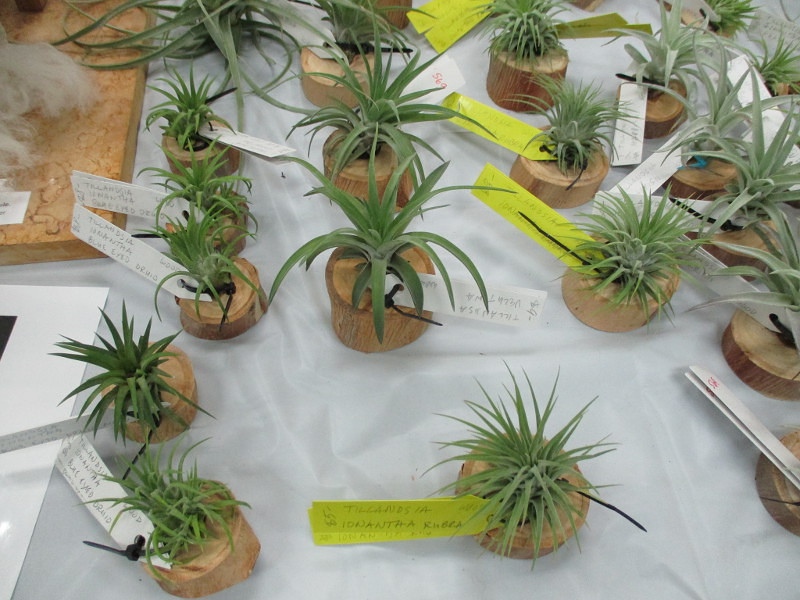
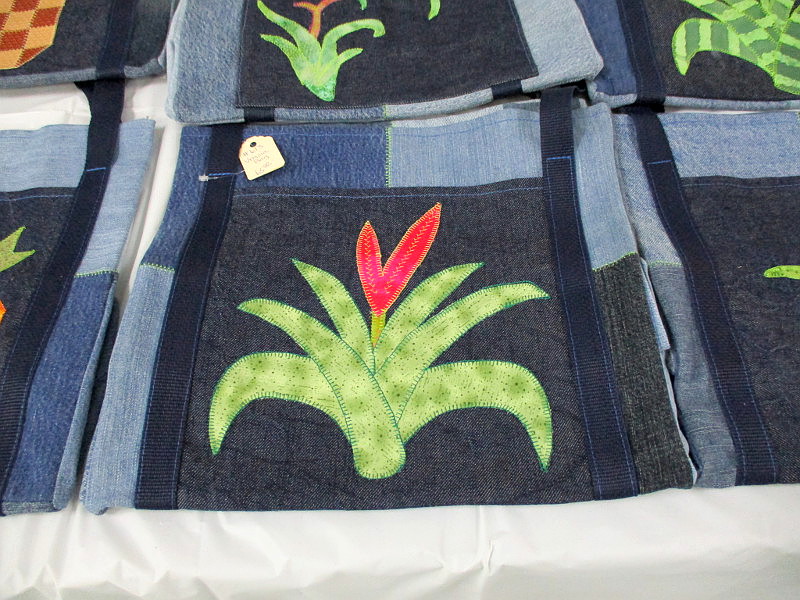
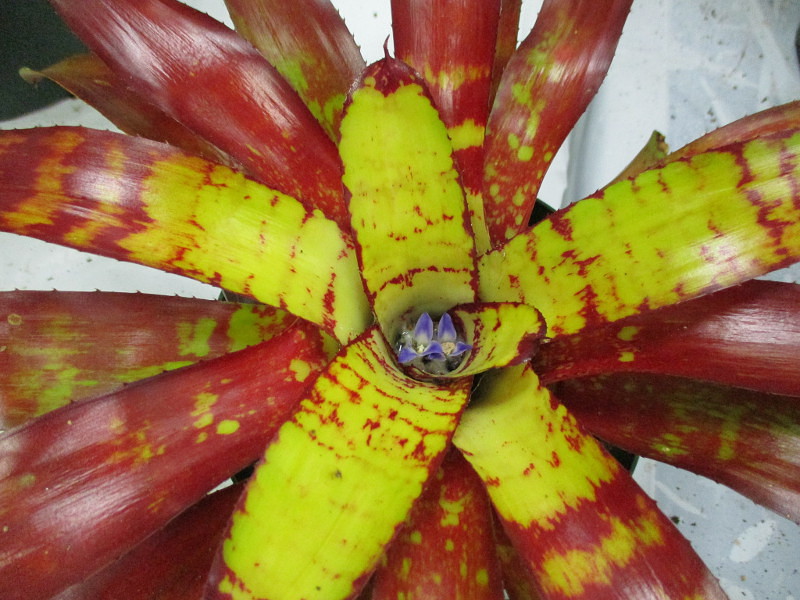
I did notice some tiny, beautiful purplish flowers, and all sorts of fun artwork and crafts at several tables.

The San Diego Bromeliad Society, who hosted the show, has many enthusiastic members. Perhaps you’d like to join!

I live in downtown San Diego and love to walk around with my camera! You can follow Cool San Diego Sights via Facebook or Twitter!
Become a citizen scientist in San Diego!

Would you like to make contributions to science? But you’re not a trained scientist?

You can easily become a citizen scientist!

Opportunities are available for ordinary people who’d like to use their passion or particular talents to help broaden our understanding of the natural world.

I discovered several great ideas while visiting the San Diego Natural History Museum recently. Signs spotted around the exhibition Extraordinary Ideas from Ordinary People: A History of Citizen Science provide details.

Most of the following ideas apply not just to San Diego residents, but to anyone anywhere. Here they are:

Become a member of iNaturalist and post photographs you’ve taken of living things in nature. Scientists will identify what you recorded. Nature lovers around the world can discuss your observations. You’ll contribute to our shared understanding of biodiversity. To learn more click here.

Participate in the Audubon Society’s annual Christmas Bird Count or Great Backyard Bird Count. Critically important data collected during these events is used by scientists to study bird populations across the country. To learn more click here.

Participate in the Celebrate Urban Birds project. Spend ten minutes helping scientists understand how common birds are doing in urban settings. More than a quarter of a million ordinary people have already made observations! To learn more click here. (Balboa Park’s own WorldBeat Center has participated in this project. Read about that here!)

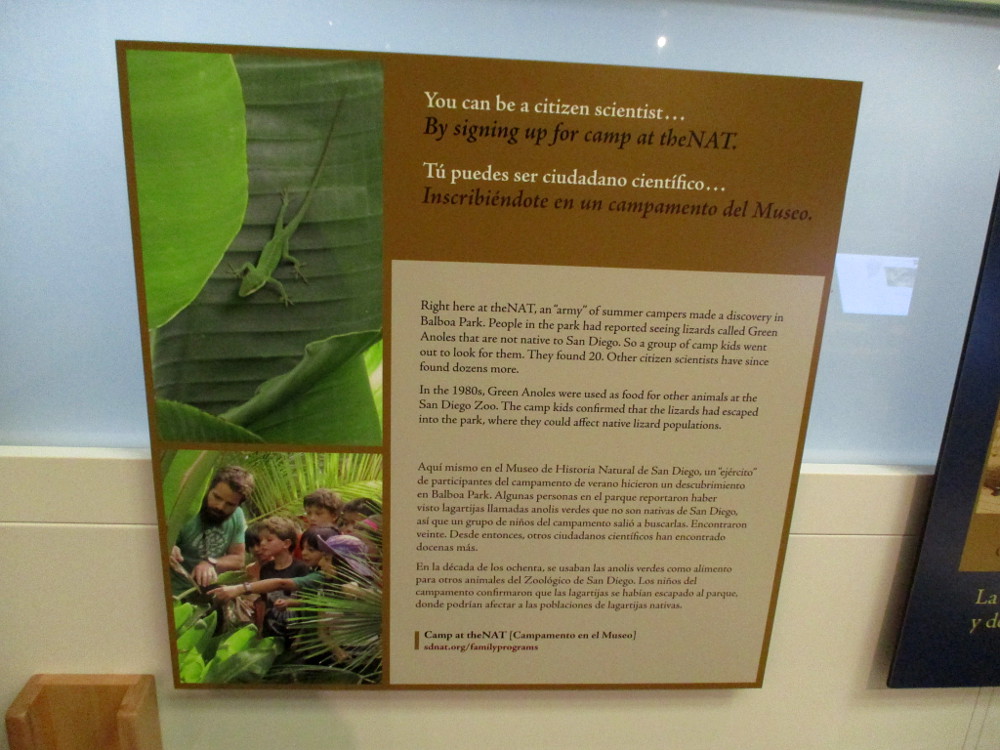
Become a summer camper at the San Diego Natural History Museum in Balboa Park. Over the years, people walking around Balboa Park have observed green anole lizards, which aren’t native to San Diego. It was determined by the museum’s young summer campers that the green anoles were the descendants of escapees. These lizards had once been used as food for other animals at the San Diego Zoo! To learn more about attending summer camp at theNAT, click here. (Scholarships are available!)

I live in downtown San Diego and love to walk around with my camera! You can follow Cool San Diego Sights via Facebook or Twitter!
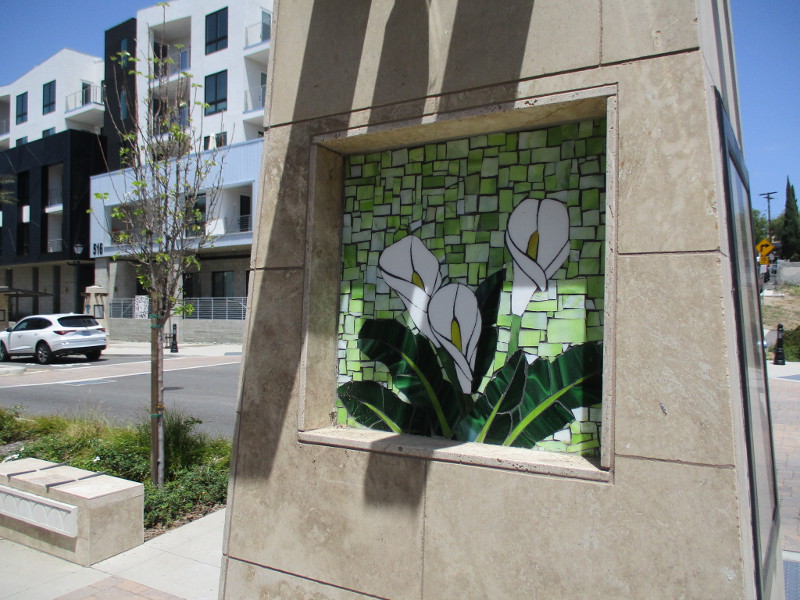
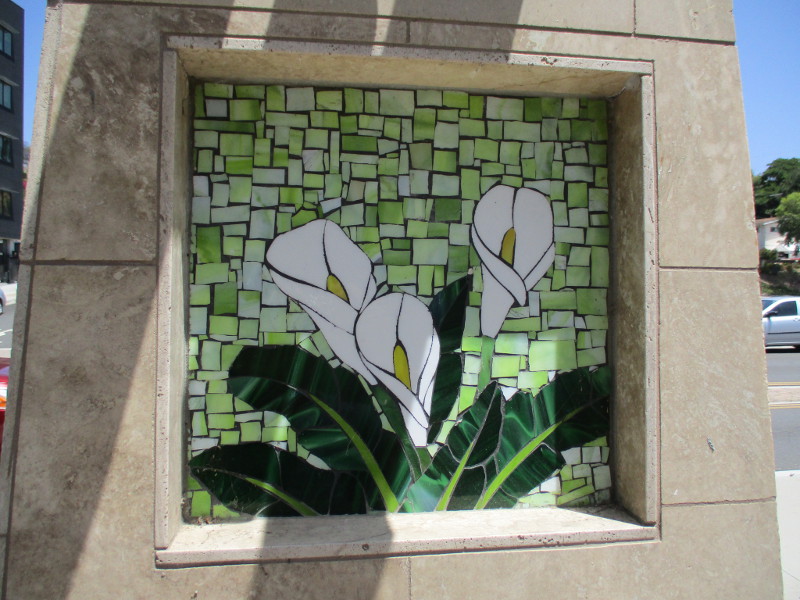
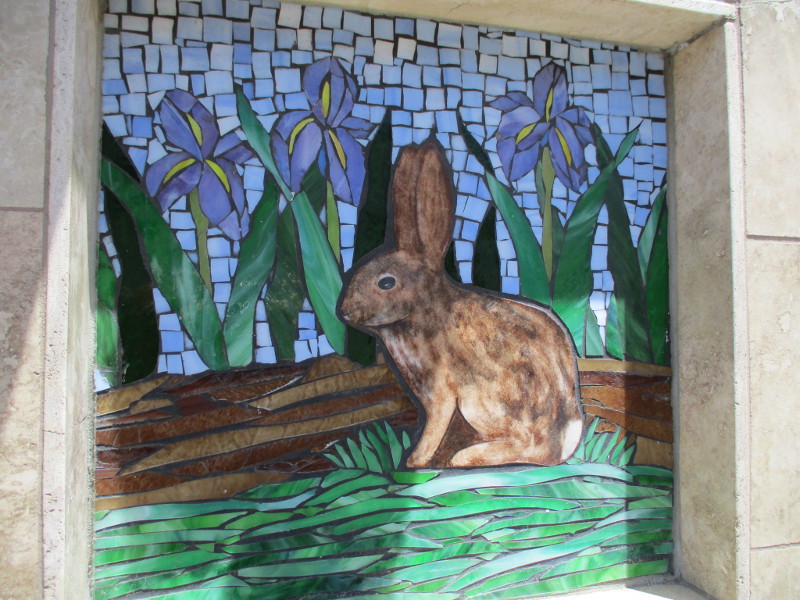
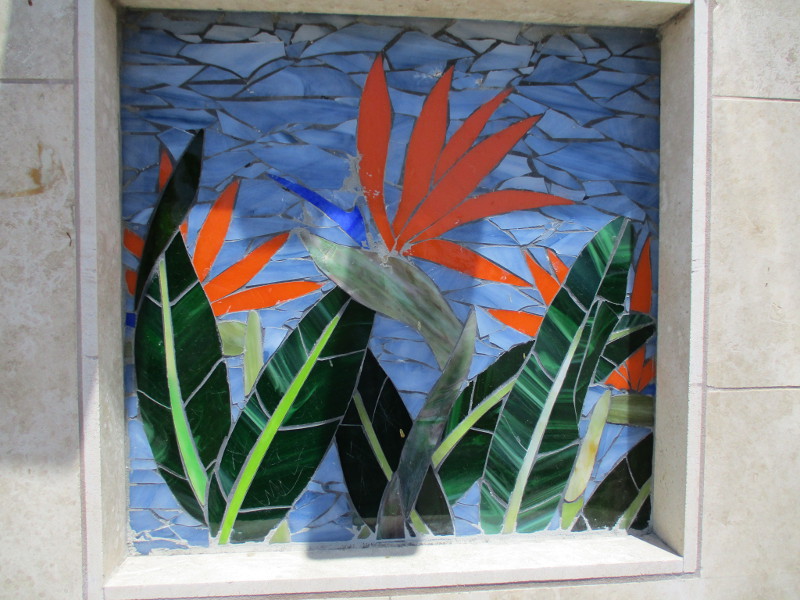
Beautiful new stained glass panels in Vista!

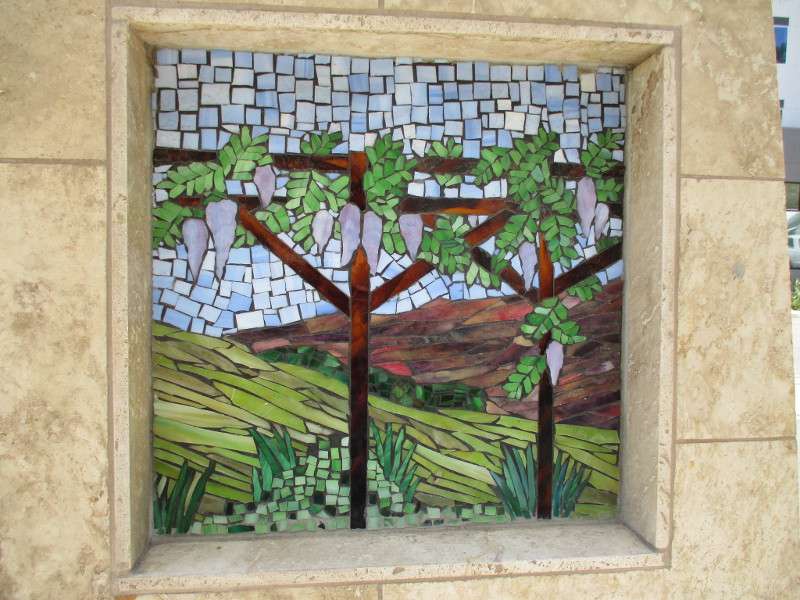
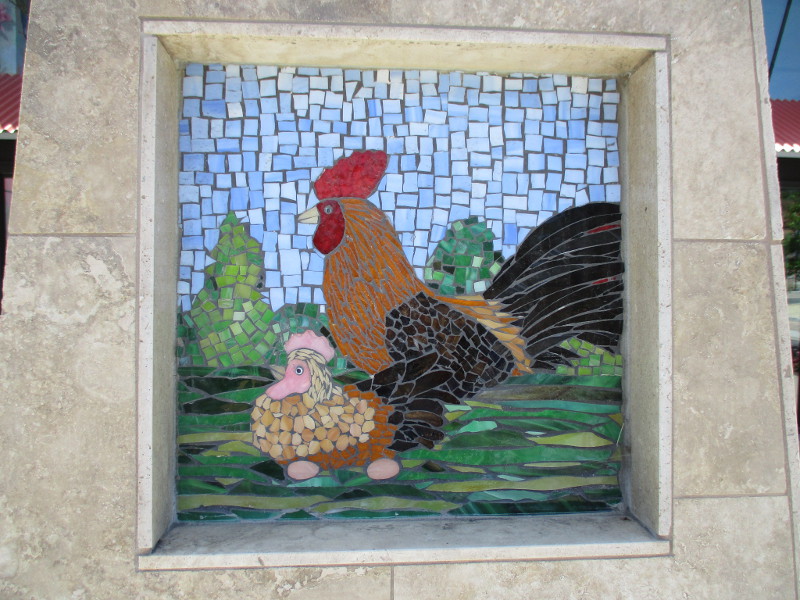
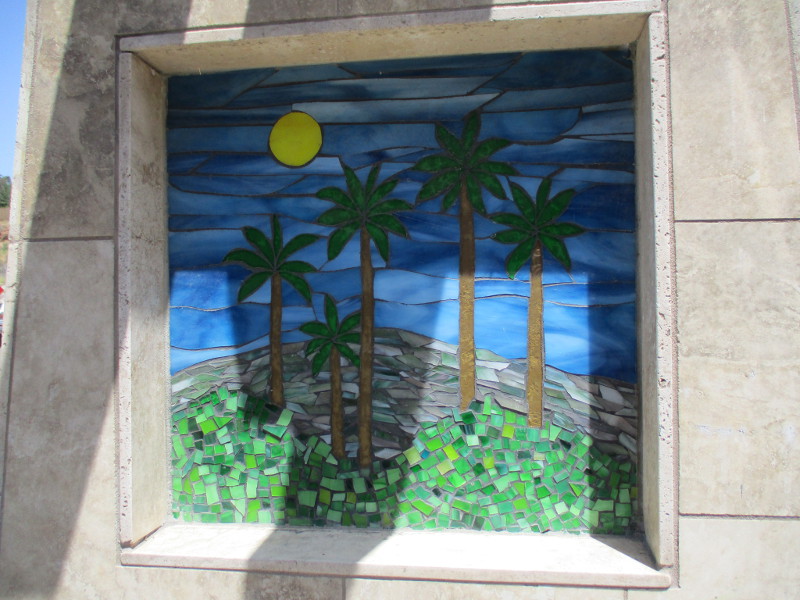
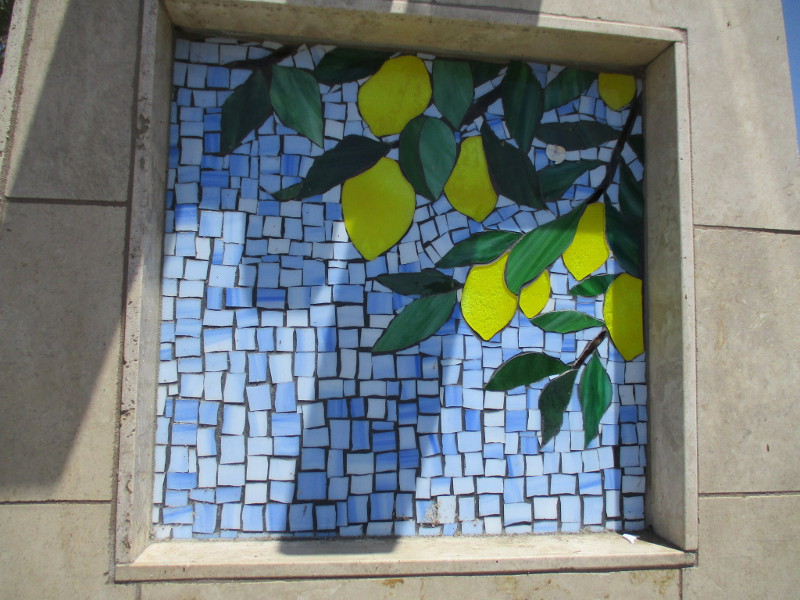
Check out this amazing new public artwork!

Many additional stained glass panels have appeared in Vista along South Santa Fe Avenue in the past couple years.

It was the summer of 2020 when I last explored the Paseo Santa Fe street improvement project and found an early set of panels along the sidewalk. (You can see those photographs and learn a little more about the project here.)

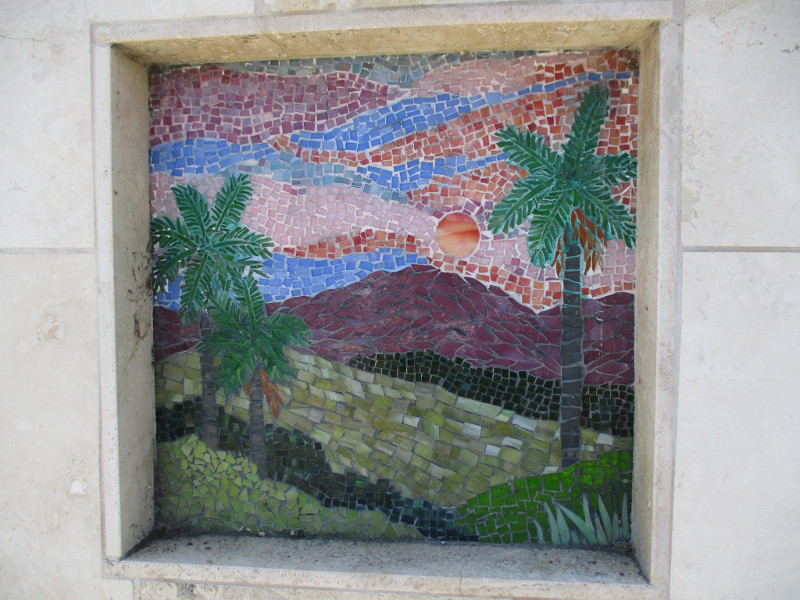
The panels are numerous now. They show various aspects of life in Vista, California. Many of the small scenes depict local plants or agriculture.

To the best of my knowledge, the artist creating all of these beautiful mosaics is still Buddy Smith.

Given the direction of my walk last weekend, I probably didn’t find every finished panel. But I hope you enjoy looking at these…

UPDATE!

I’ve learned from Buddy, the artist, that there are now 28 finished panels! Super cool!

I live in downtown San Diego and love to walk around with my camera! You can follow Cool San Diego Sights via Facebook or Twitter!
You can easily explore Cool San Diego Sights by using the search box on my blog’s sidebar. Or click a tag! There are thousands upon thousands of photos for you to enjoy!

Kumeyaay words for native animals, plants.

The rich culture of our region’s Native American Kumeyaay is honored at Old Town San Diego State Historic Park.

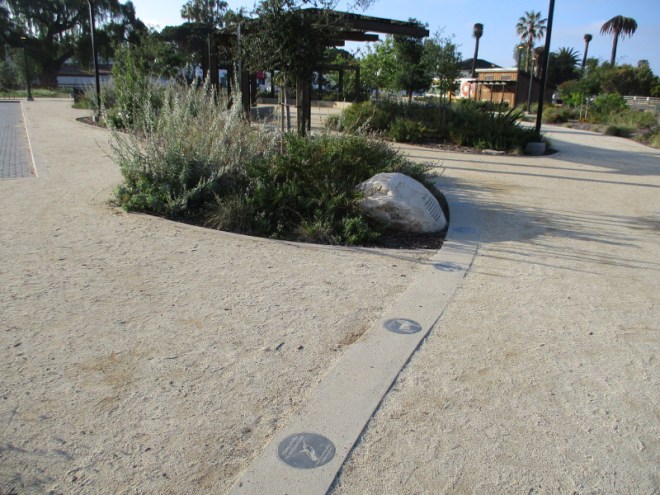
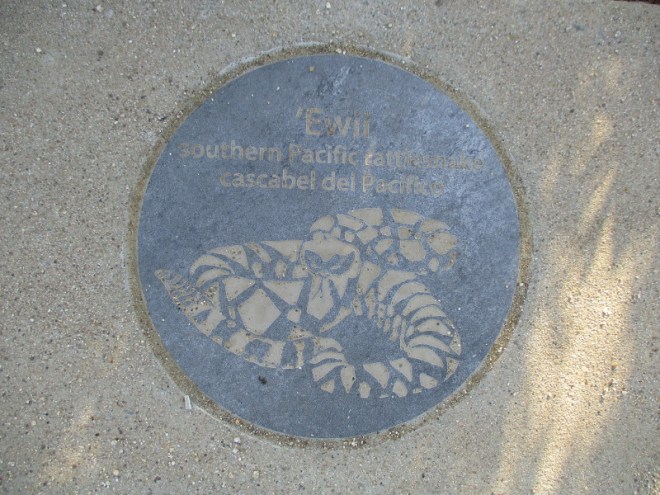
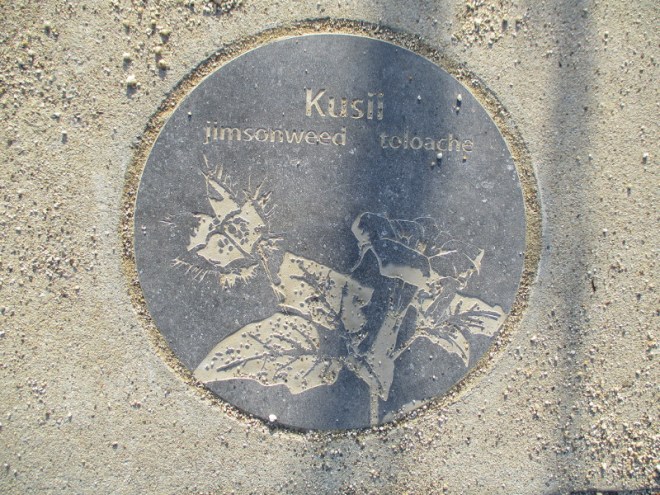
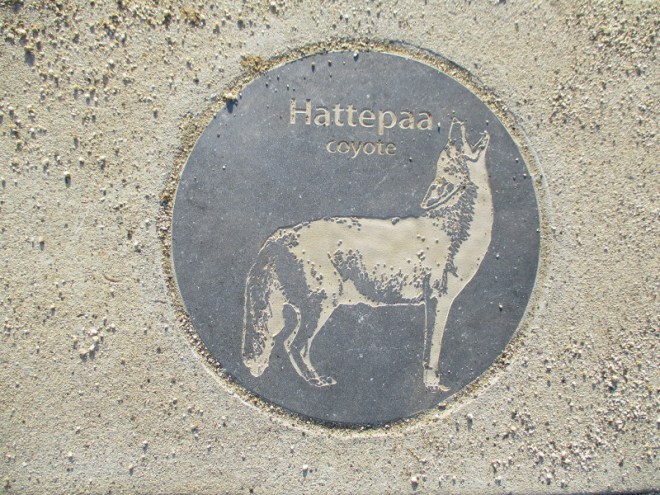
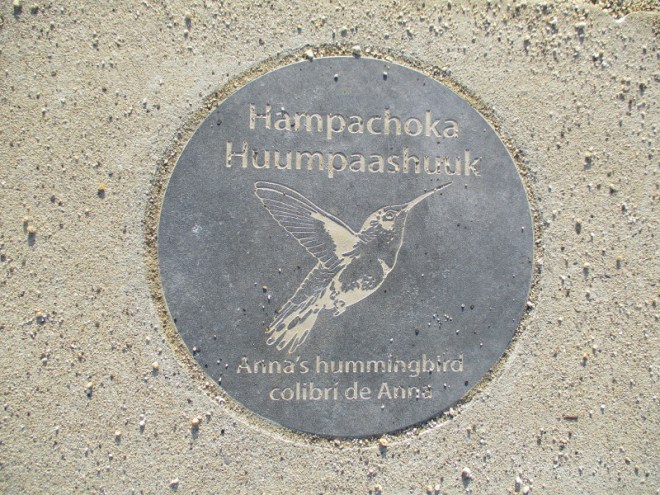
Near the corner of Juan Street and Taylor Street, the beautiful Iipay ~ Tipai Kumeyaay Mut Niihepok Land of the First People outdoor interpretive area teaches interested visitors a little of the Kumeyaay language. Kumeyaay words for many native animals and plants can be read along the edge of walkways.

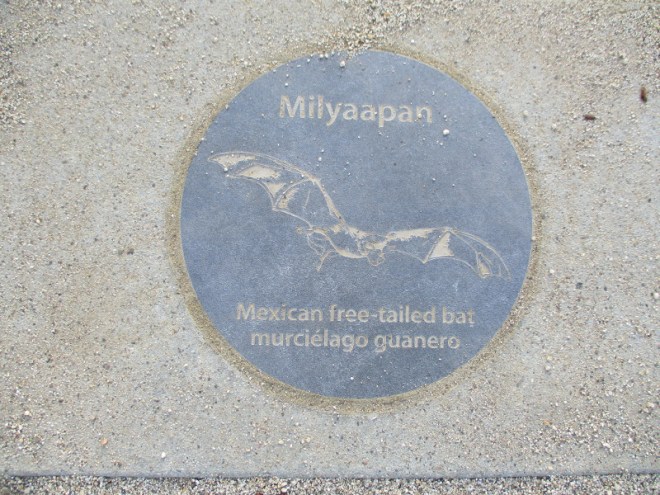
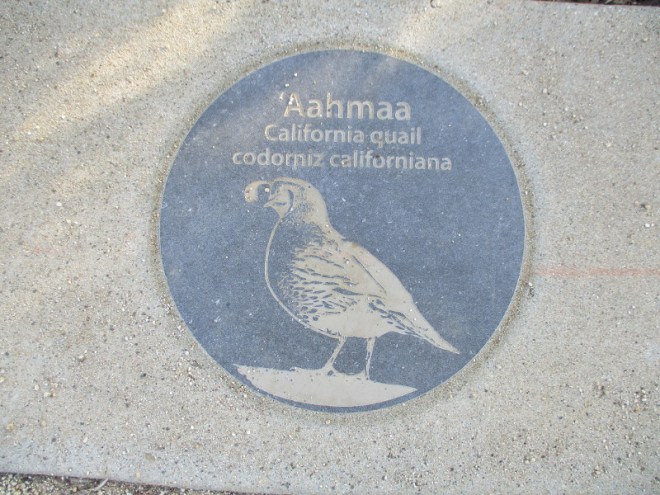
During my last visit, I photographed many of the engraved artworks representing wild mammals, birds, reptiles, insects, cacti and trees, and the corresponding Kumeyaay and Spanish words.

If you want to see more of the surrounding area, the Land of the First People opened last year, and soon thereafter I took these photographs.

Incidentally, today there will be a special event held in this corner of Old Town San Diego State Historic Park. Earth Day will be celebrated! So if you read this in time, and you’re in the area, you might want to come on by!

Milyaapan. Mexican free-tailed bat.
Sha-ii. Turkey vulture.
Meshalyaap. Monarch butterfly.
‘Aahmaa. California quail.
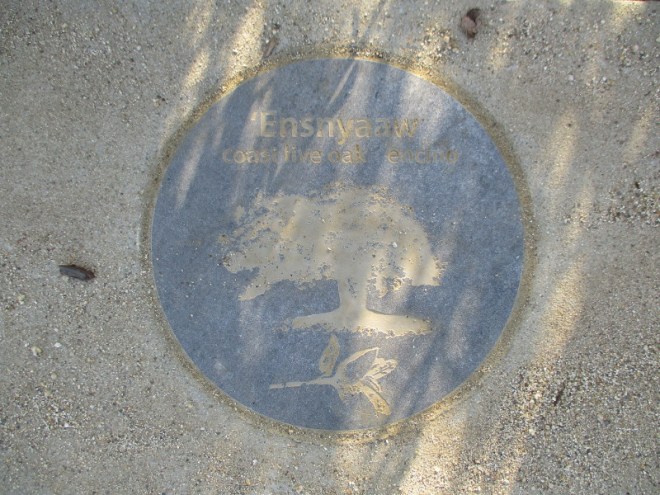
‘Ensnyaaw. Coast live oak.
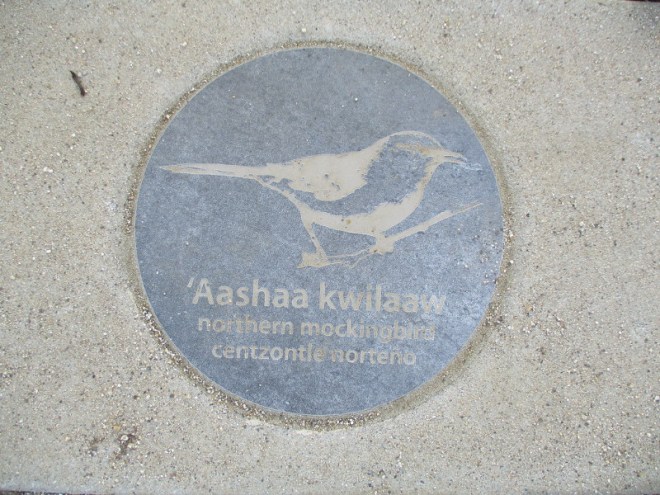
‘Aashaa kwilaaw. Northern mockingbird.
Hatepull. Nuttall’s woodpecker.
Kekhuu. Northern flicker.
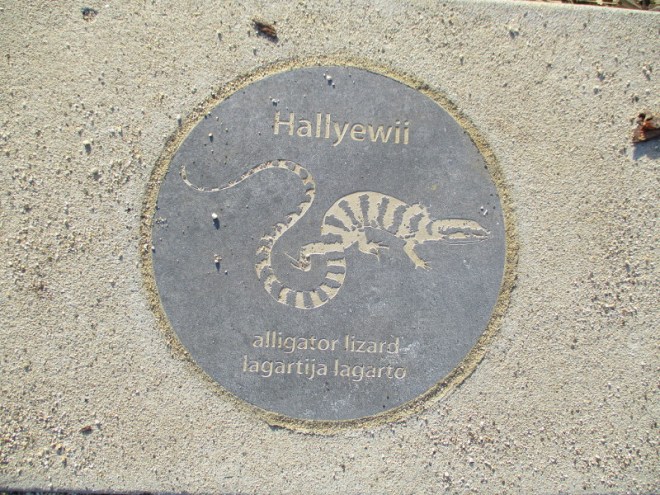
Hallyewii. Alligator lizard.
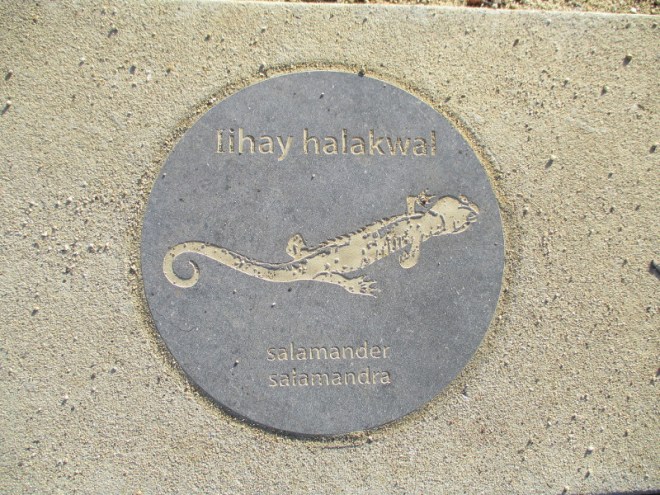
Iihay halakwal. Salamander.
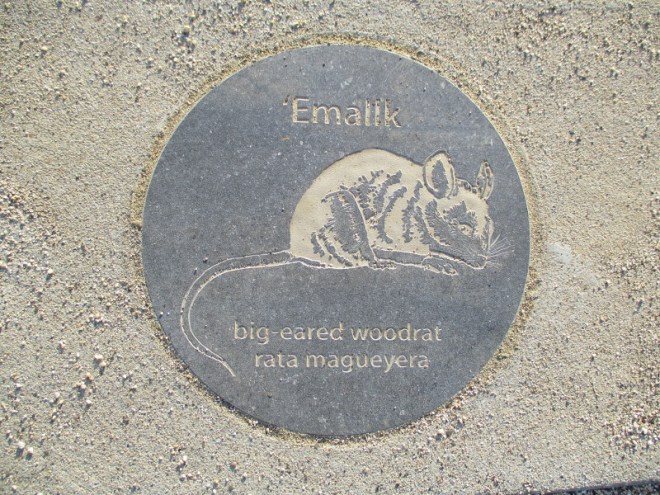
‘Emallk. Big-eared woodrat.
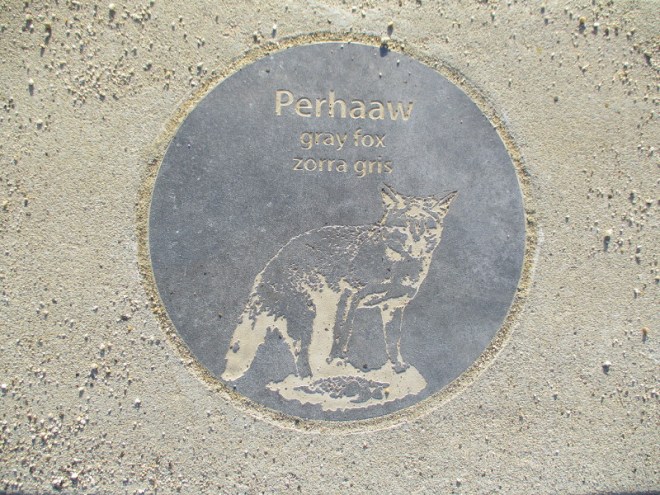
Perhaaw. Gray fox.
Kwak. Mule deer.
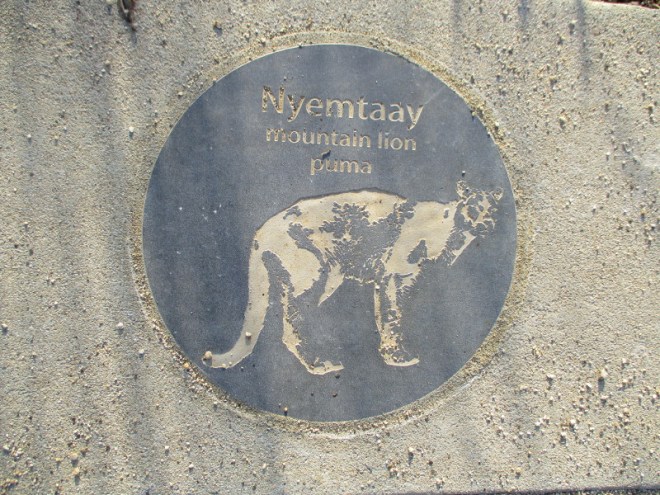
Nyemtaay. Mountain lion.
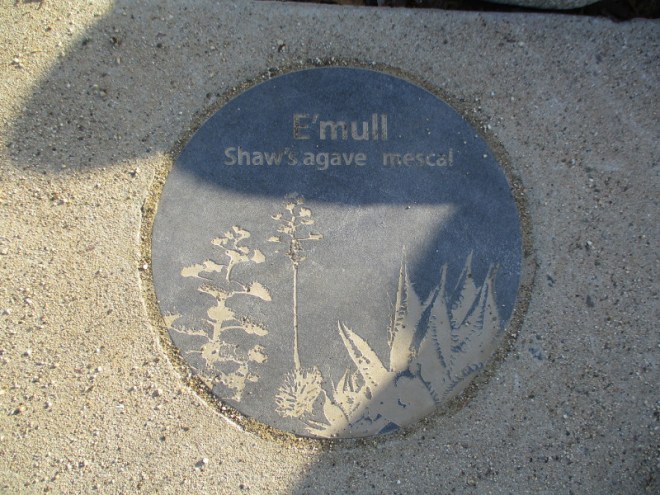
E’mull. Shaw’s agave.
Ehmaall. Ground squirrel.
‘Ewii. Southern Pacific rattlesnake.
Waipuk. California kingsnake.
Kusii. Jimsonweed.
Hattepaa. Coyote.
Hampachoka Huumpaashuuk. Anna’s hummingbird.
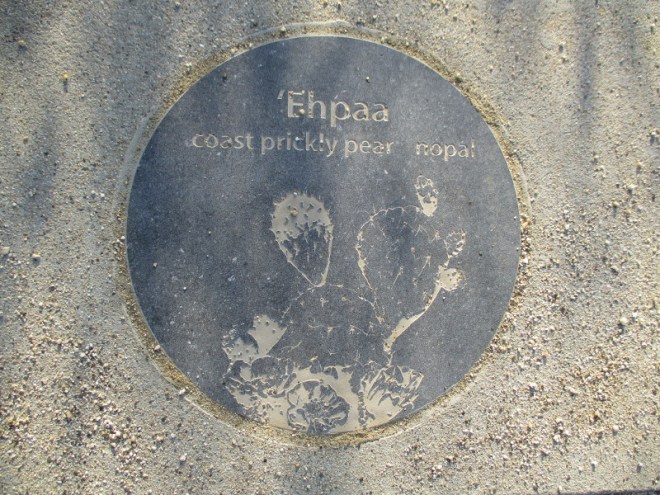
‘Ehpaa. Coast prickly pear.
Ashaa hahpaa. Cactus wren.
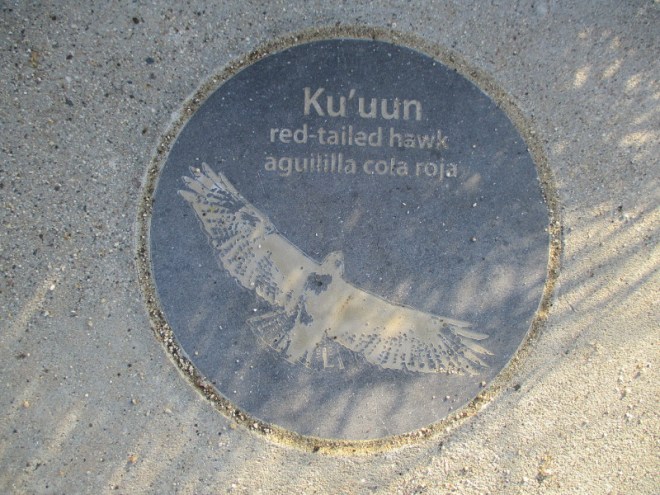
Ku’uun. Red-tailed hawk.
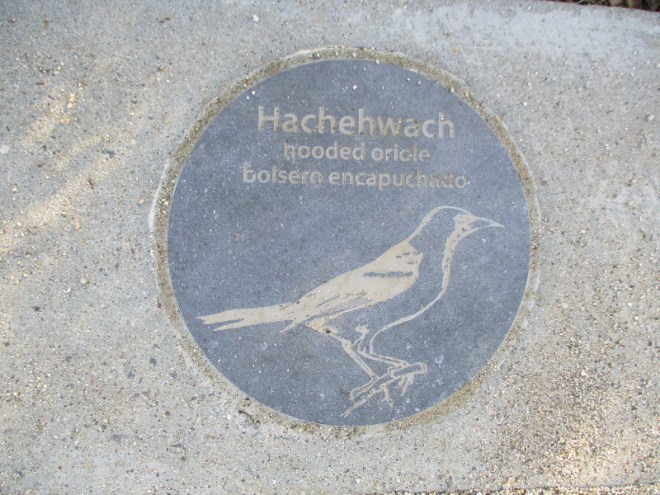
Hachehwach. Hooded oriole.
Kupally. Blue elderberry.
Nyemii. Bobcat.
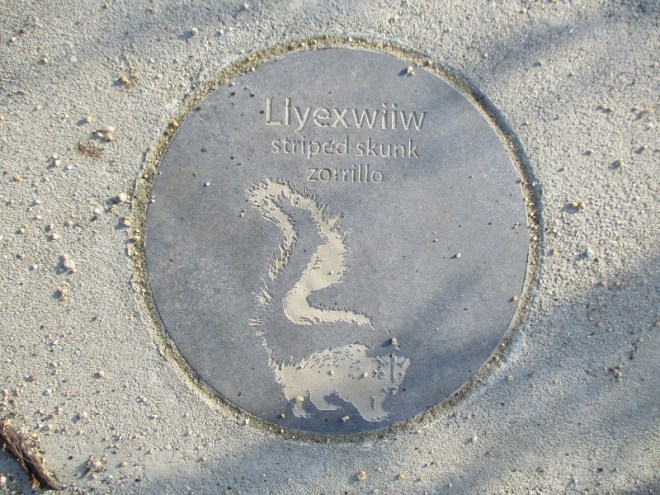
Llyexwiiw. Striped skunk.
Para ak hepeshu. Great blue heron.
Hantak. Treefrog.
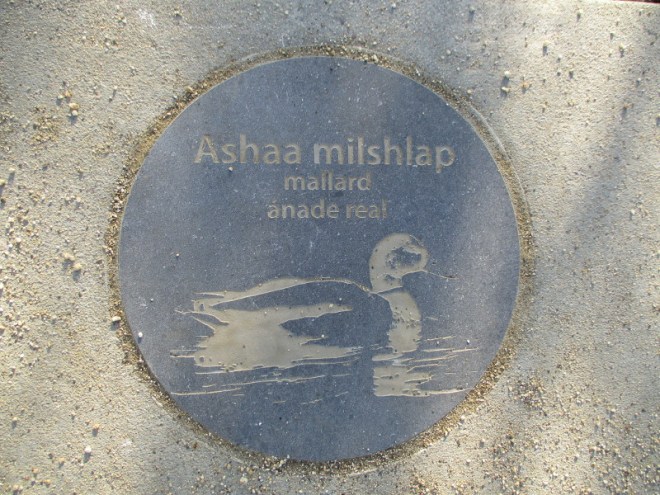
Ashaa milshlap. Mallard.

UPDATE!

I took photographs of more words during a later visit…

Hantak sa-ai. California toad.
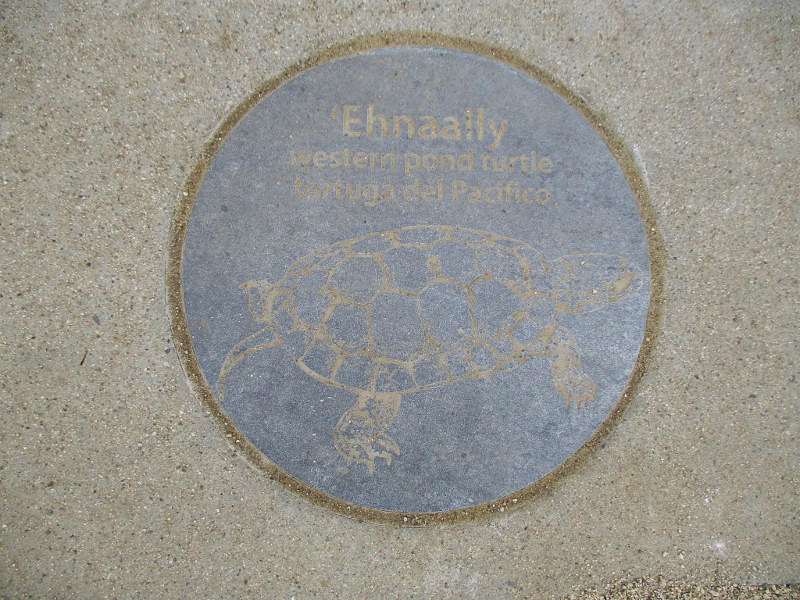
‘Ehnaally. Western pond turtle.
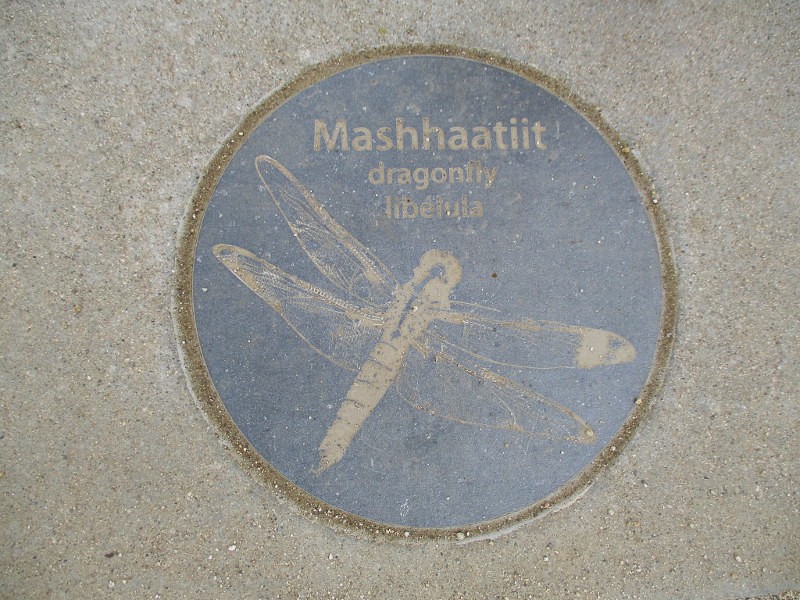
Mashhaatiit. Dragonfly.
E’pilly. Southern cattail.
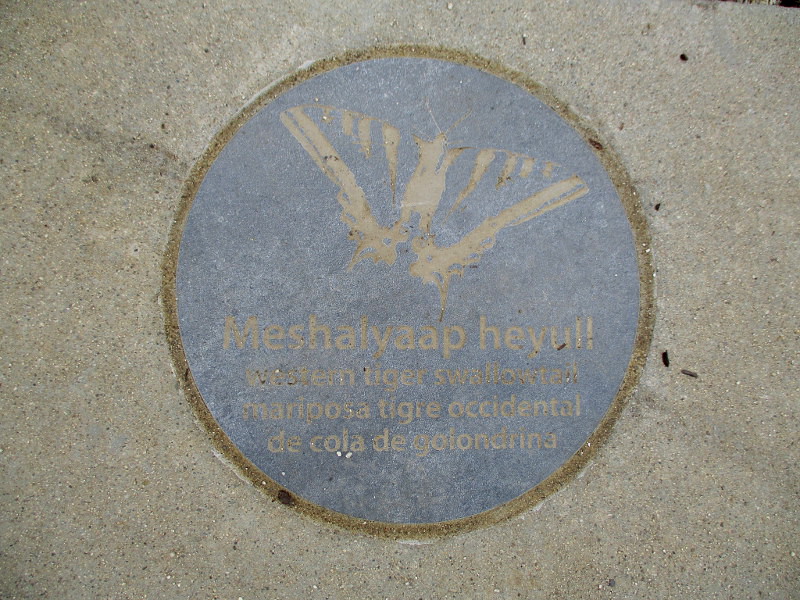
Meshalyaap heyull. Western tiger swallowtail.
Para ak nemeshap. Great egret.
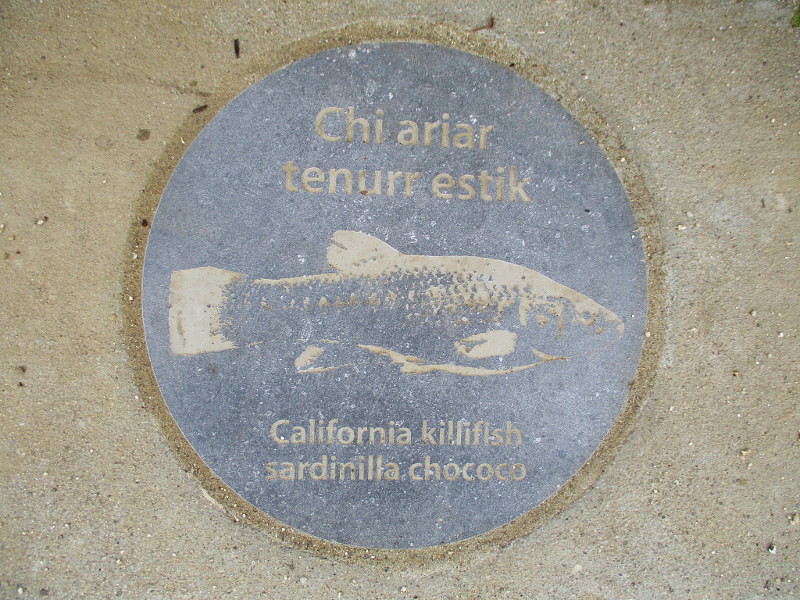
Chi ariar tenurr estik. California killifish.
‘U’uu. Great horned owl.
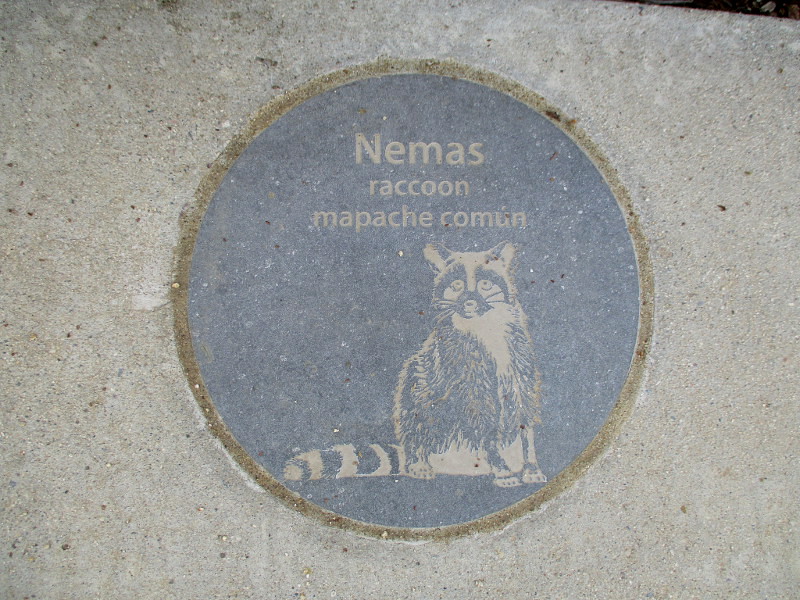
Nemas. Raccoon.
Miskenan. Stink beetle.
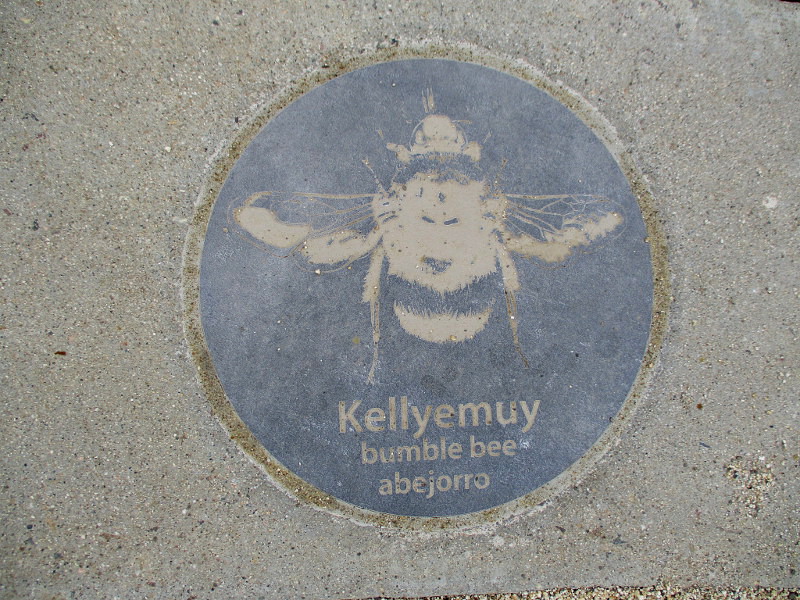
Kellyemuy. Bumble bee.
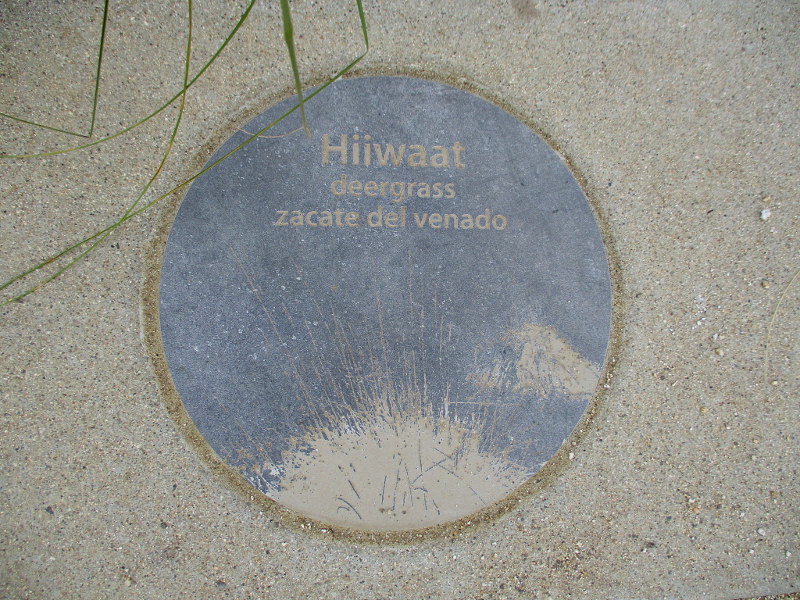
Hiiwaat. Deergrass.
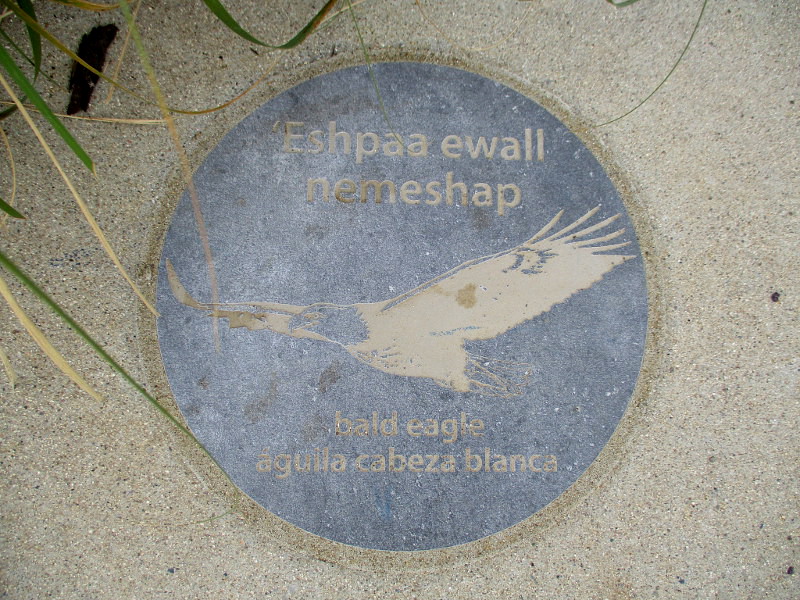
‘Eshpaa ewall nemeshap. Bald eagle.
Kilyaahwii. Mourning dove.
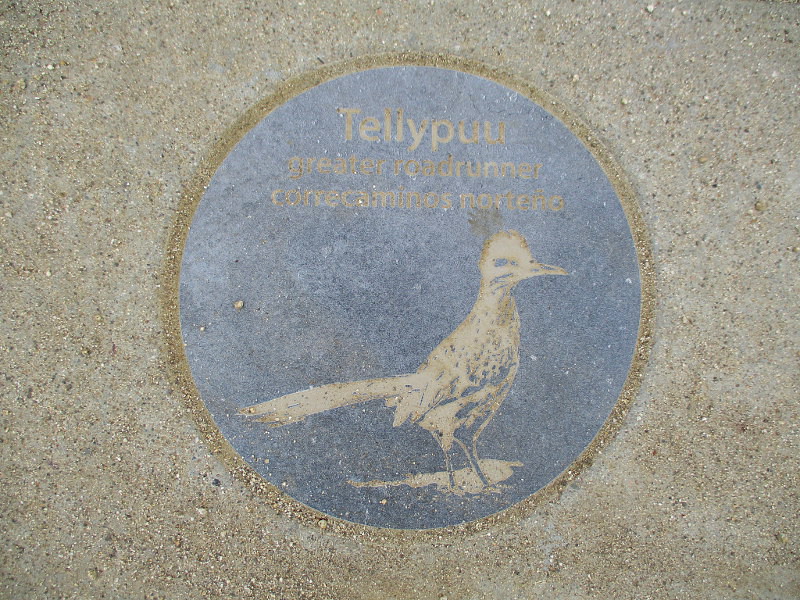
Tellypuu. Greater roadrunner.
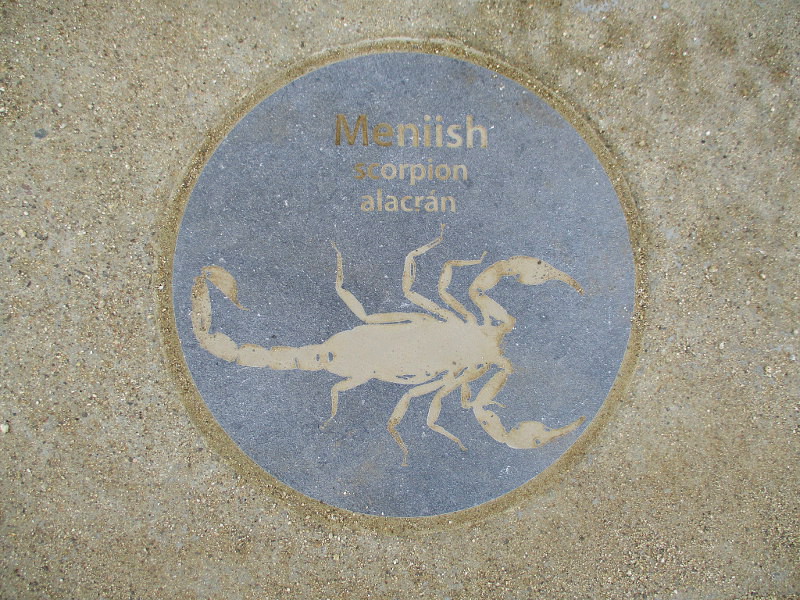
Meniish. Scorpion.
‘Aanall. Honey mesquite.
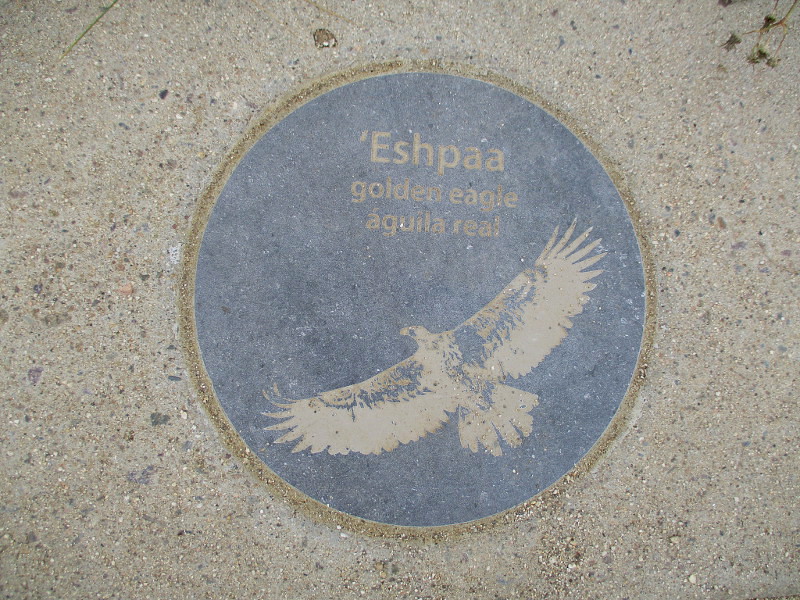
‘Eshpaa. Golden eagle.
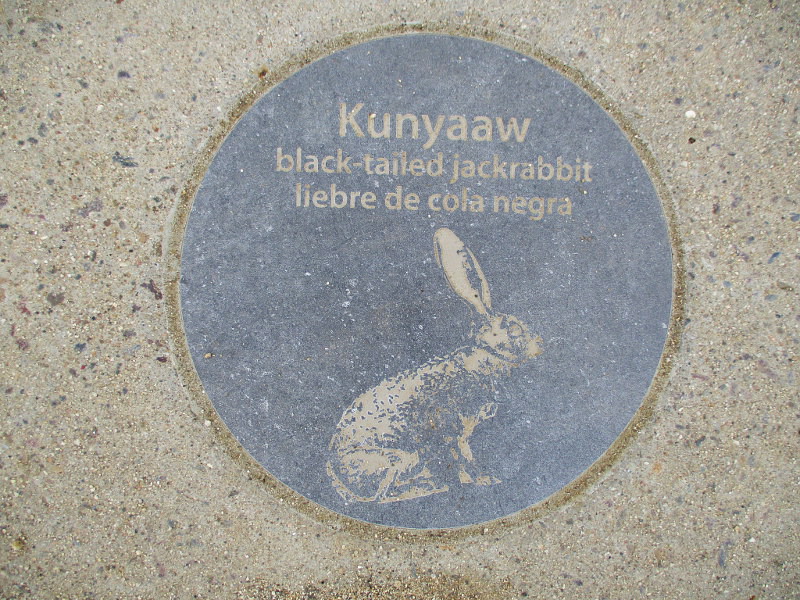
Kunyaaw. Black-tailed jackrabbit.
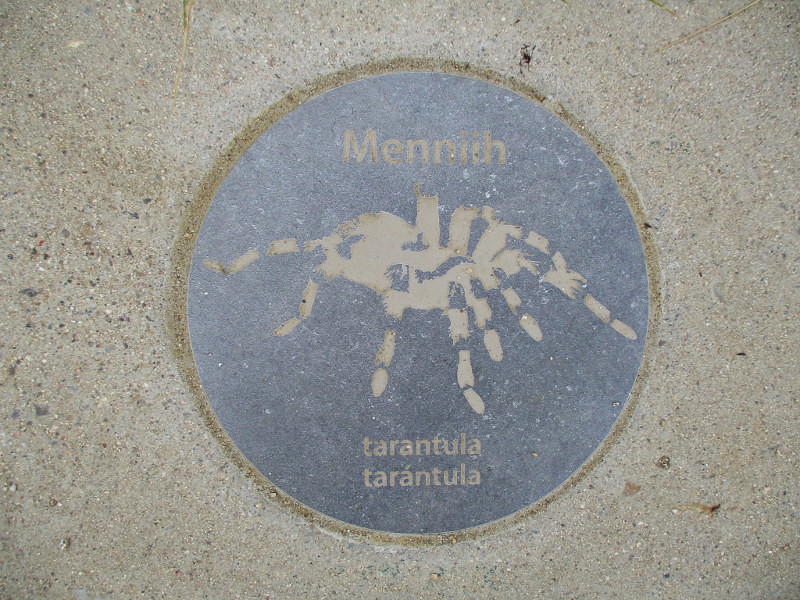
Menniih. Tarantula.
Muu. Bighorn sheep.

The following are animals that are extinct or no longer found in the area around San Diego…

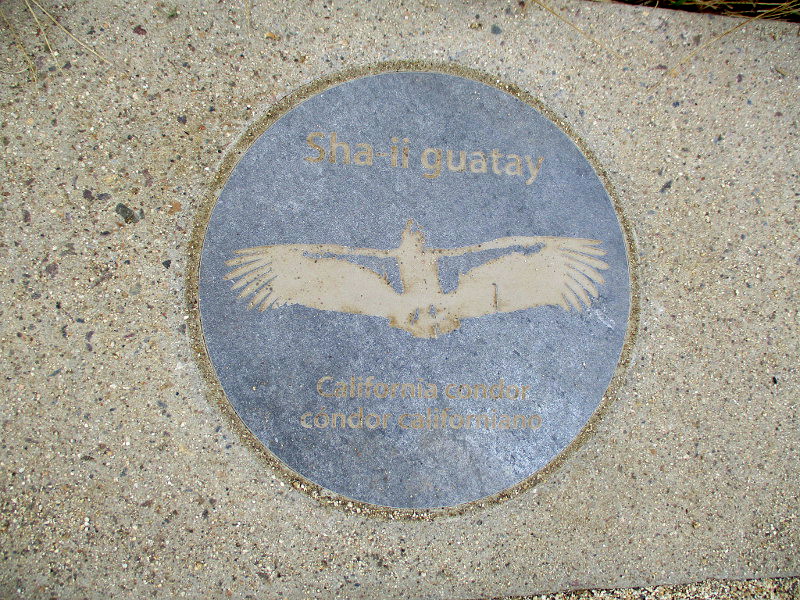
Sha-ii guatay. California condor.
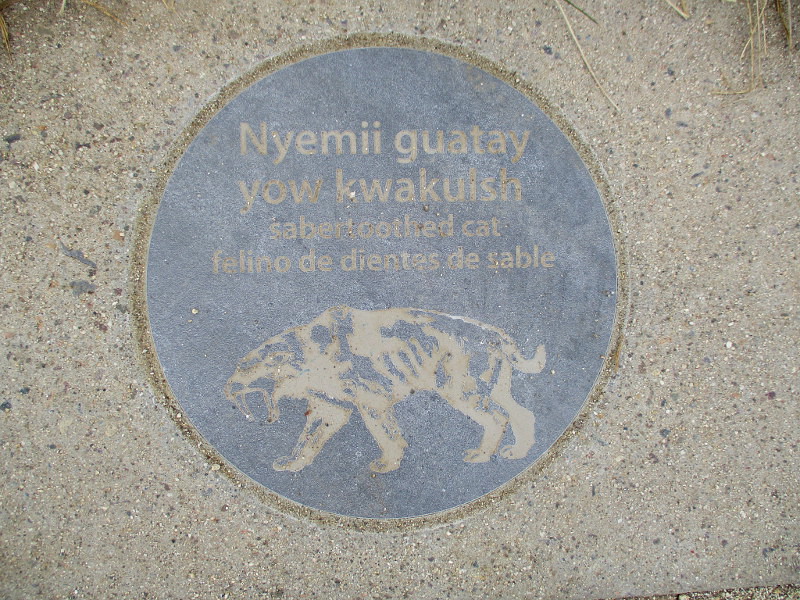
Nyemii guatay yow kwakulsh. Sabertoothed cat.
Nemuuly. Grizzly bear.
Kwa nyilly. Pronghorn.

I live in downtown San Diego and love to walk around with my camera! You can follow Cool San Diego Sights via Facebook or Twitter!
You can easily explore Cool San Diego Sights by using the search box on my blog’s sidebar. Or click a tag! There are thousands upon thousands of photos for you to enjoy!

The surprising Coral Reef Garden at Scripps!

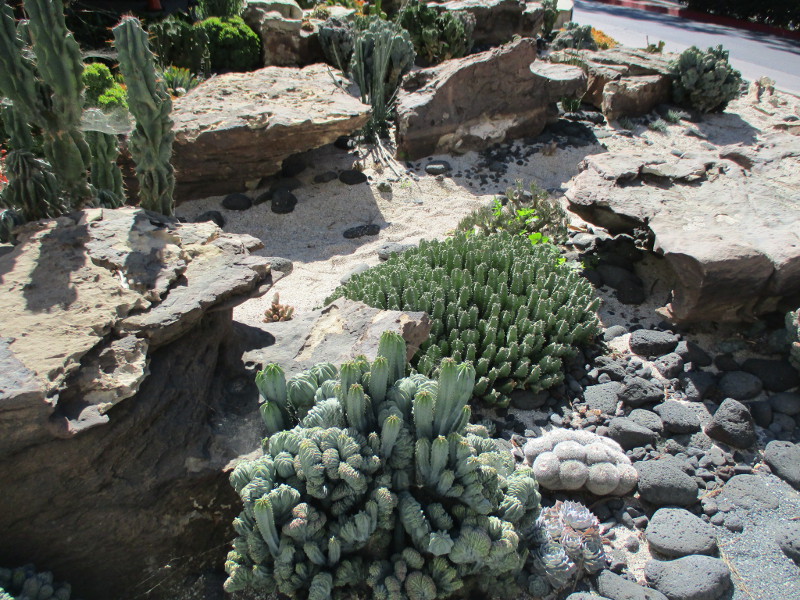
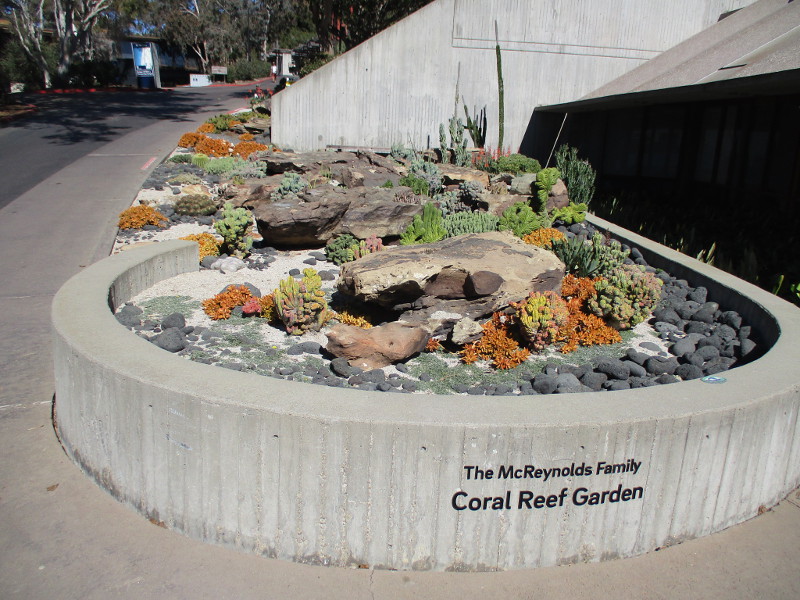
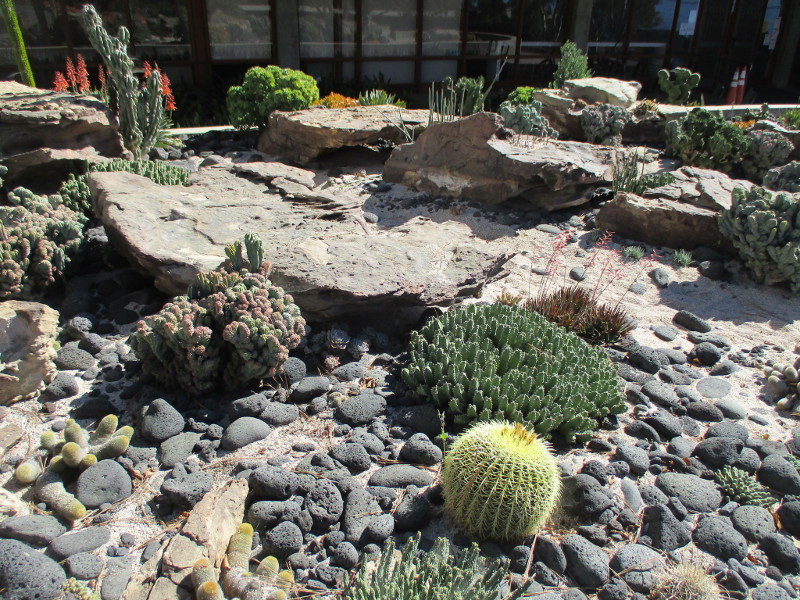
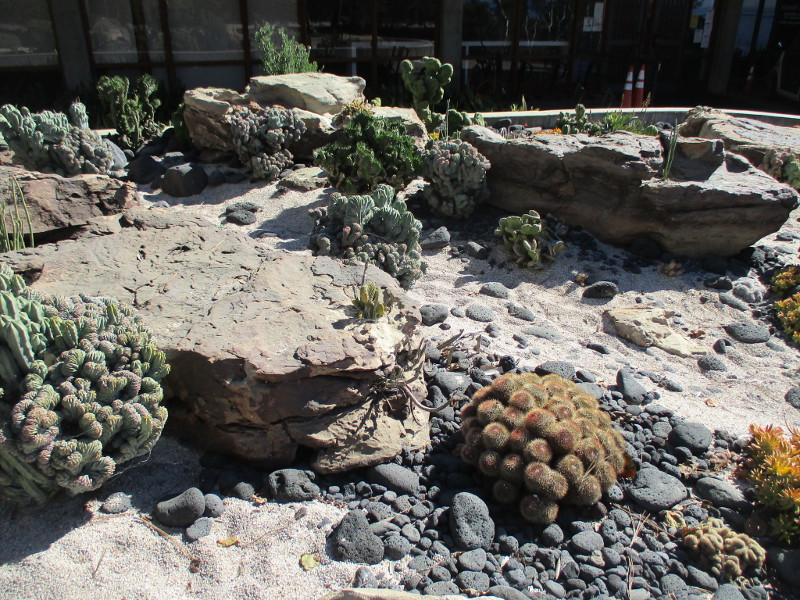
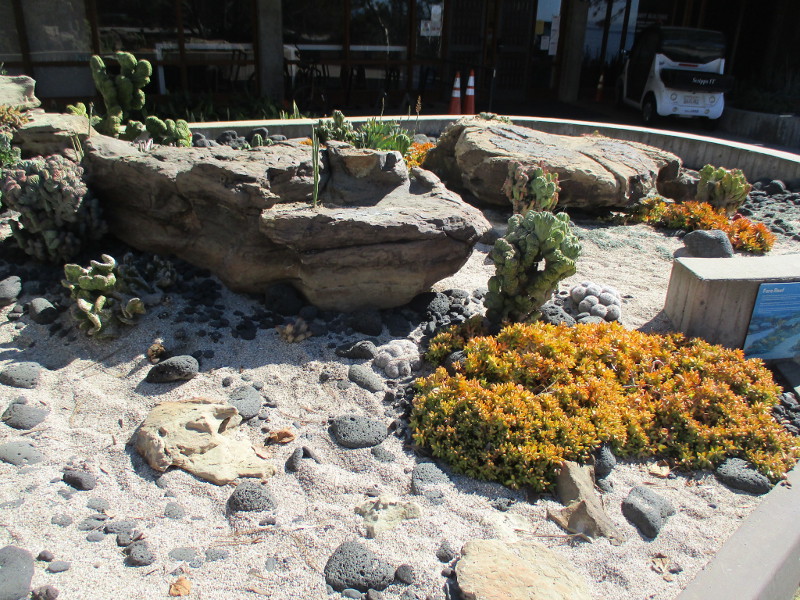
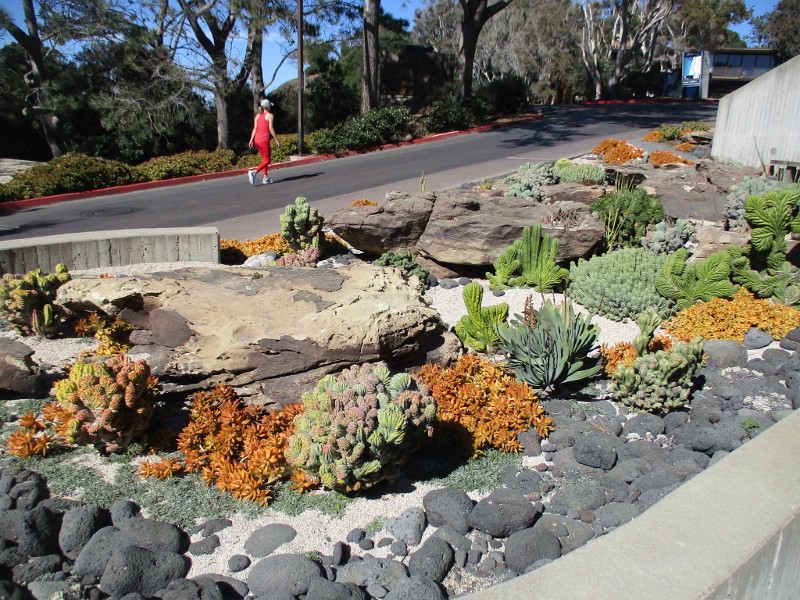
There’s a surprising garden on the campus of Scripps Institution of Oceanography. It’s called The McReynolds Family Coral Reef Garden.

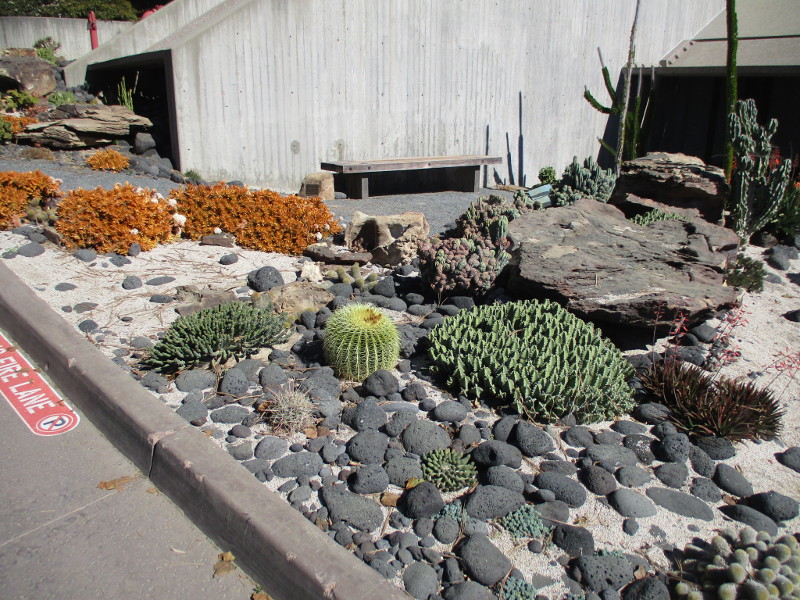
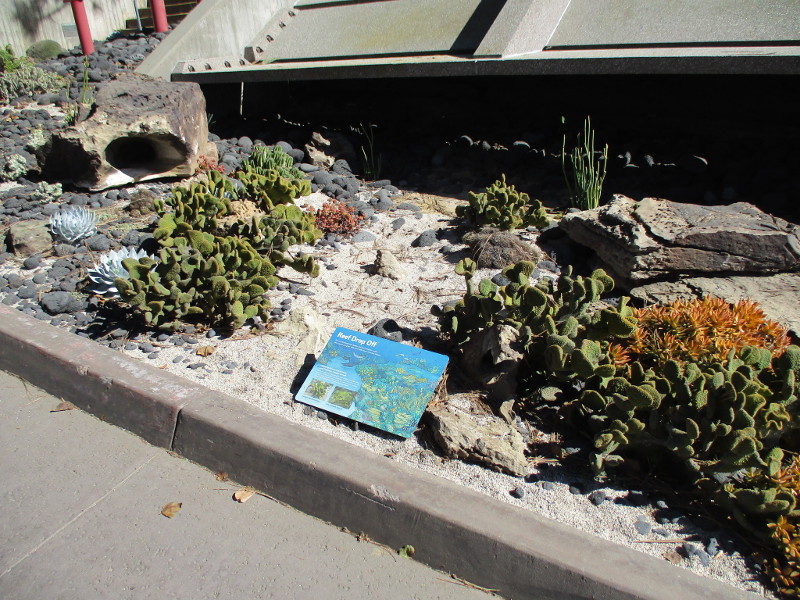
Desert cacti and succulents planted among rocks strongly resemble an ocean’s underwater coral reef!

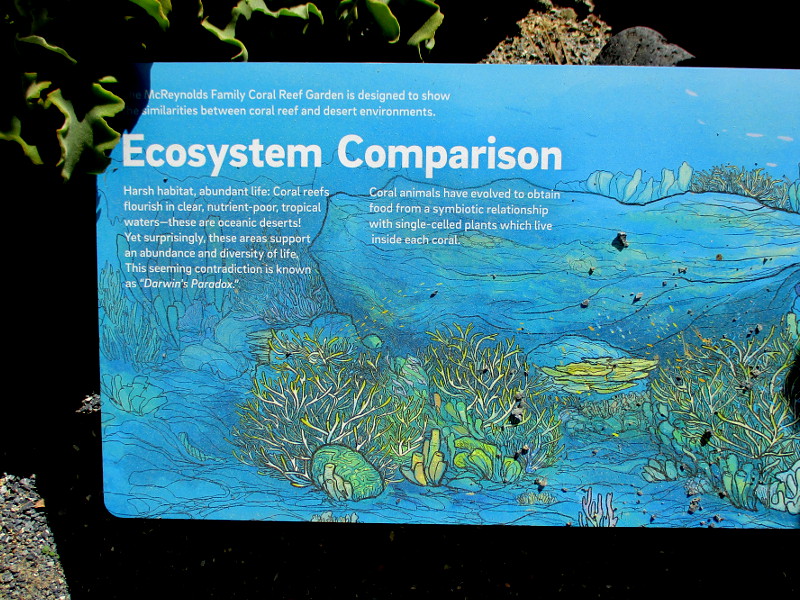
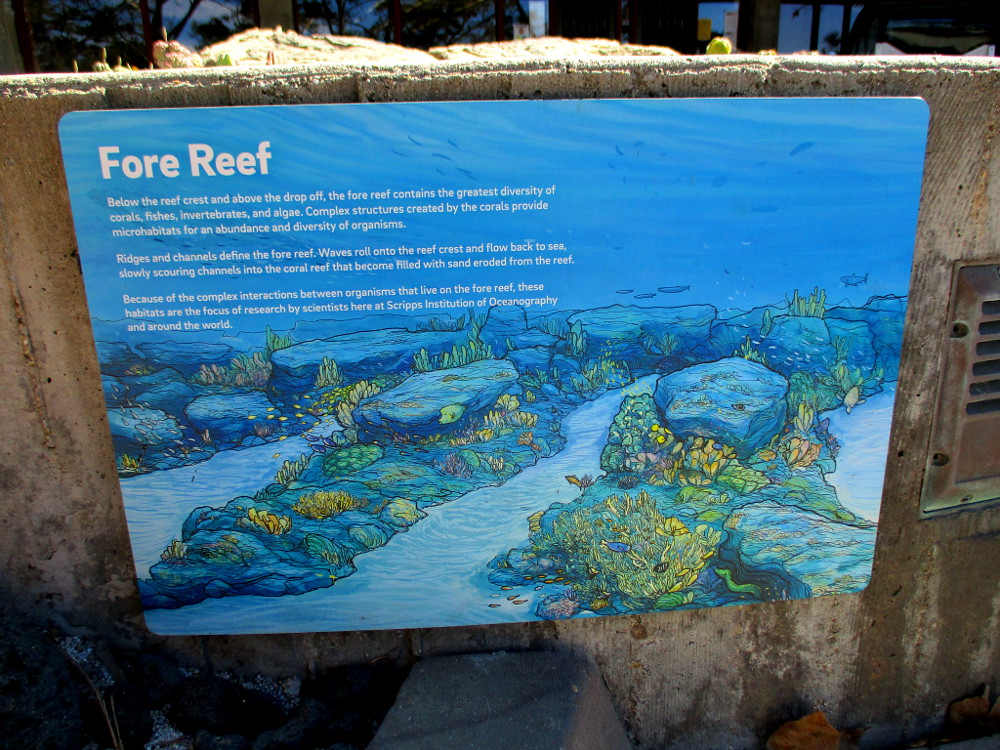
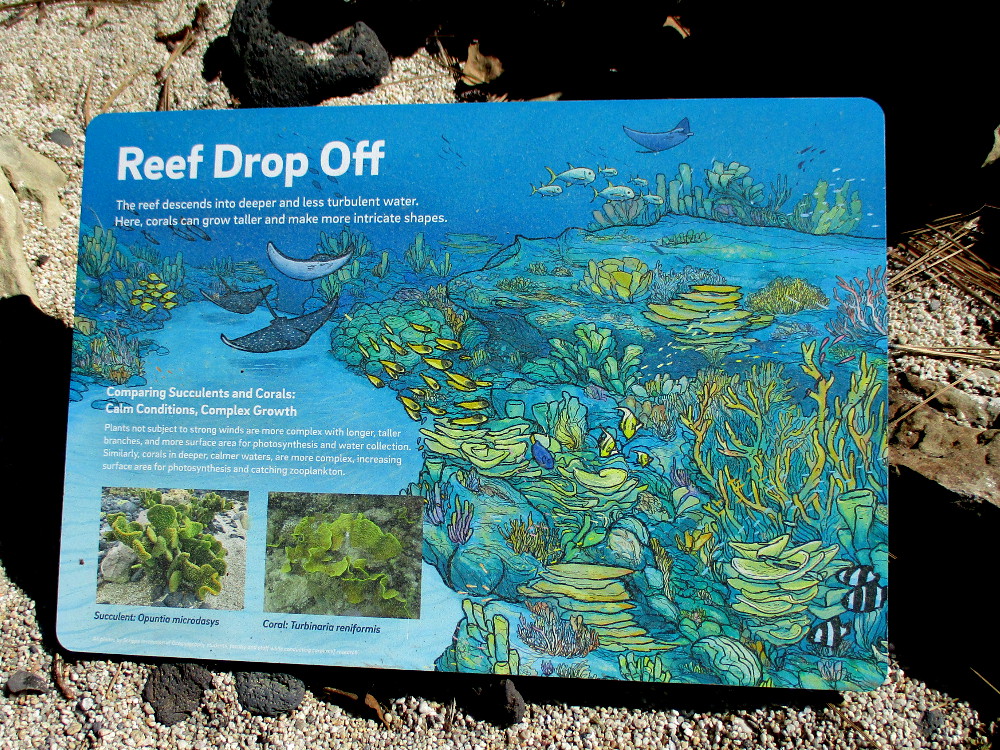
This isn’t coincidental. I read several information signs around the Coral Reef Garden and learned how two very different environments are alike in many respects.

You can view this fantastic garden for yourself by walking along the Scripps Coastal Meander Trail, where it heads down Biological Grade. Look for it by the Eckart Building.

Fascinated? Read more about this very unique coral reef-inspired garden here!

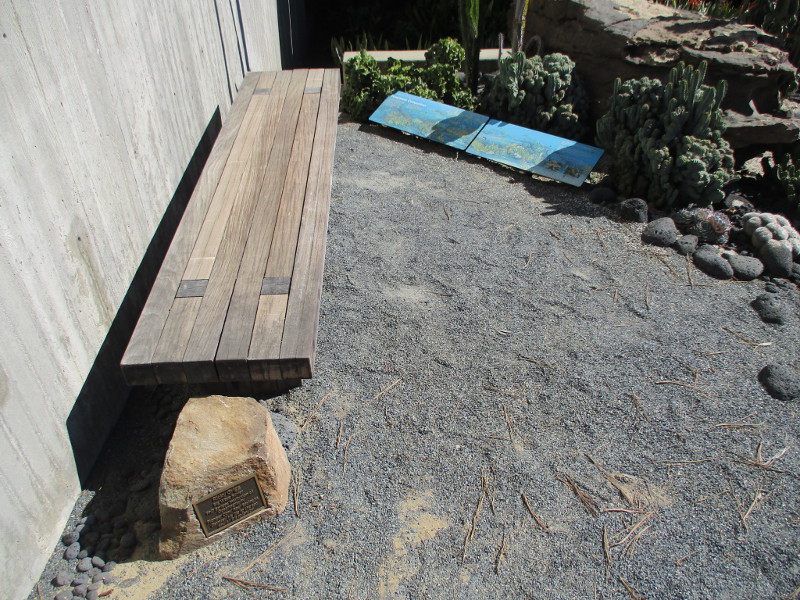
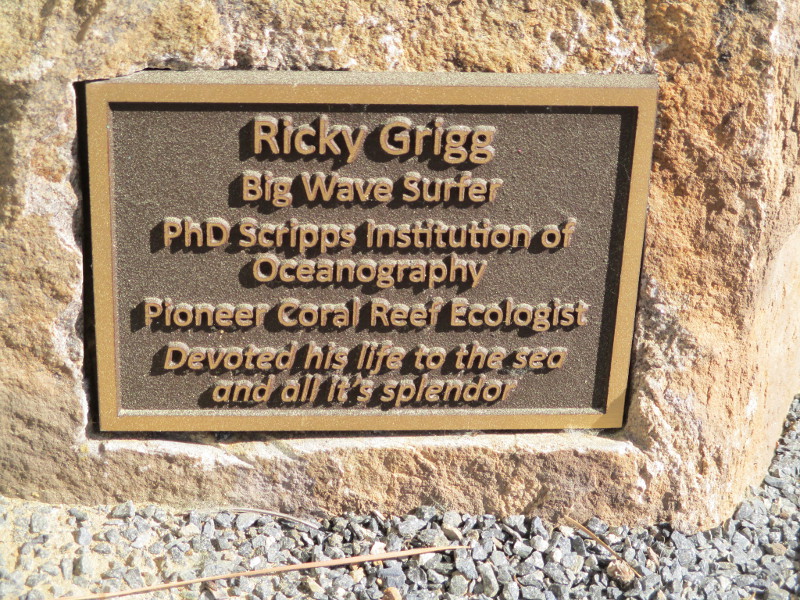
As I explored the garden, I saw this plaque by a bench. It reads:

Ricky Grigg

Big Wave Surfer

PhD Scripps Institution of Oceanography

Pioneer Coral Reef Ecologist

Devoted his life to the sea and all it’s [sic] splendor

Two different ecosystems compared: a coral reef and a desert environment. Harsh habitat and abundant life. A seeming contradiction called Darwin’s Paradox.
The fore reef, with its many ridges and channels, contains the greatest diversity of corals, fishes, invertebrates and algae.
At the reef drop off, deeper, less turbulent water allows corals to grow taller and make more intricate shapes. Much like plants not subject to strong winds!

I live in downtown San Diego and love to walk around with my camera! You can follow Cool San Diego Sights via Facebook or Twitter!
You can easily explore Cool San Diego Sights by using the search box on my blog’s sidebar. Or click a tag! There are thousands upon thousands of photos for you to enjoy!

Beauty at San Diego Cactus and Succulent show!

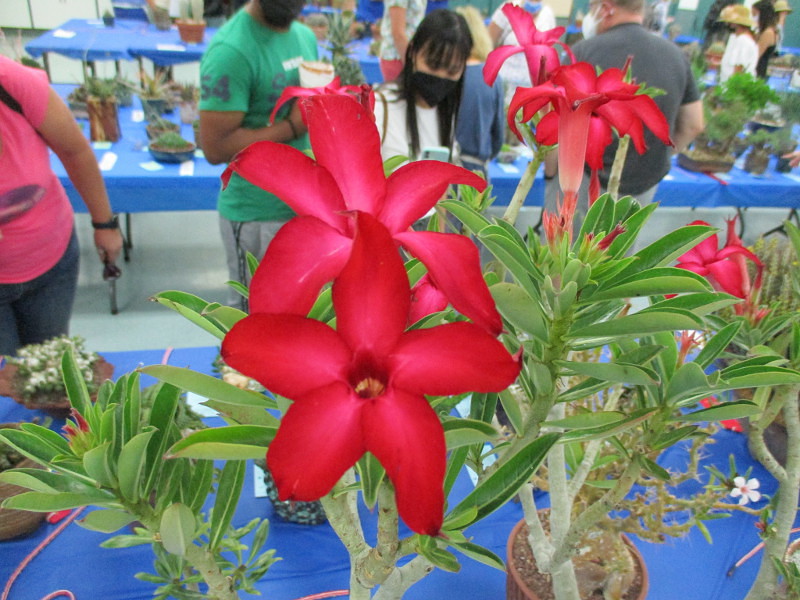
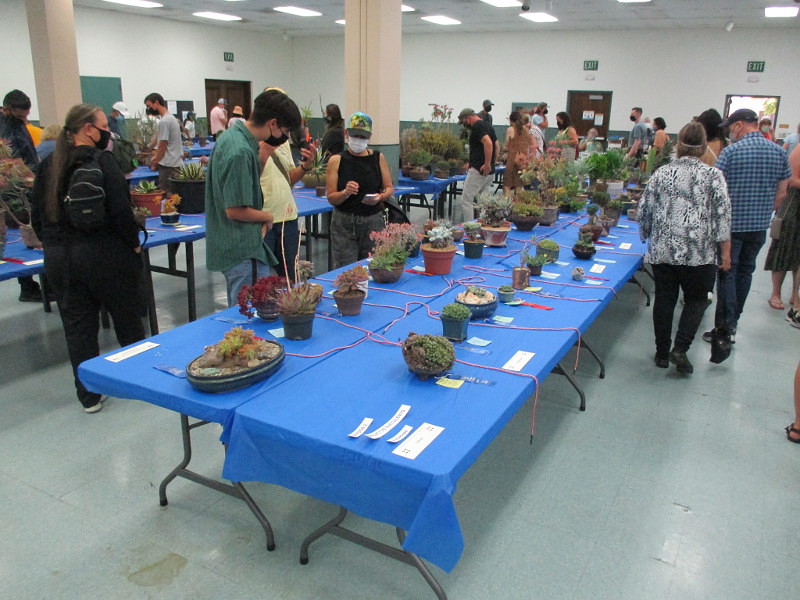
There’s plenty of beauty to enjoy this weekend in Balboa Park, at the San Diego Cactus and Succulent Society’s Winter Show and Sale!

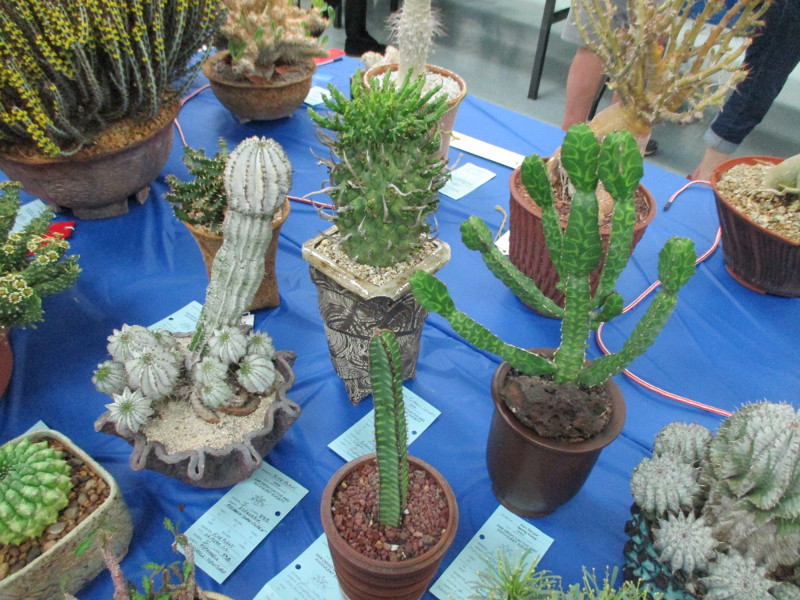
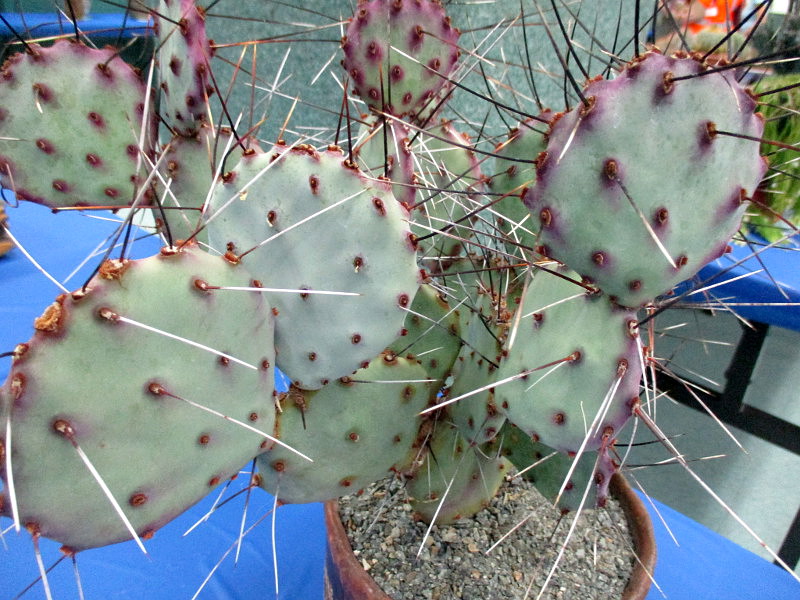
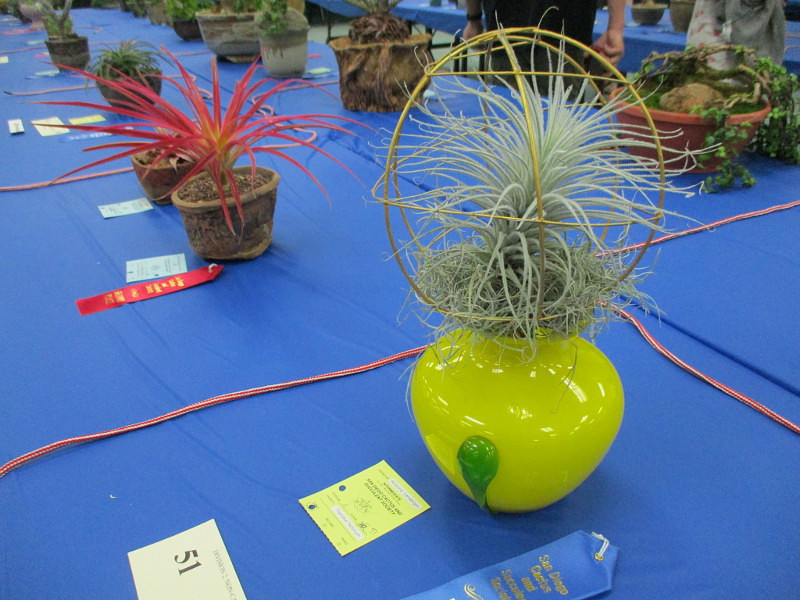
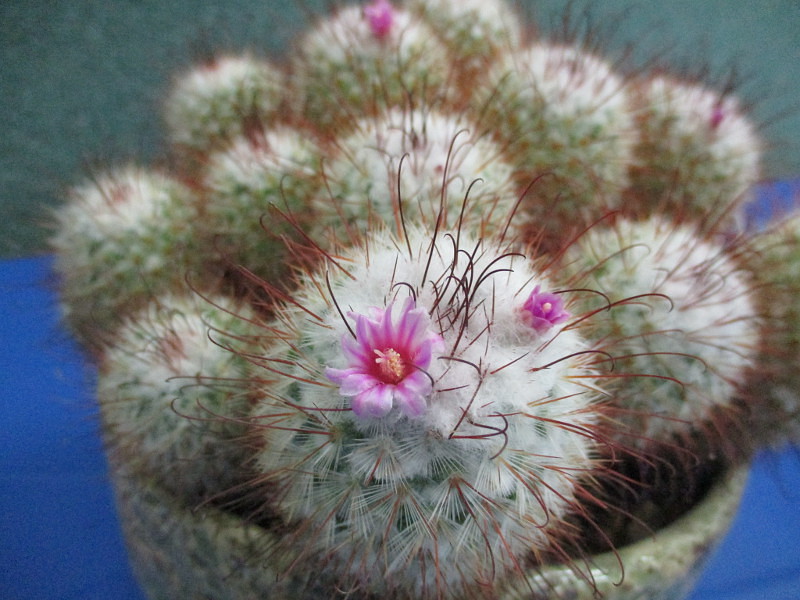
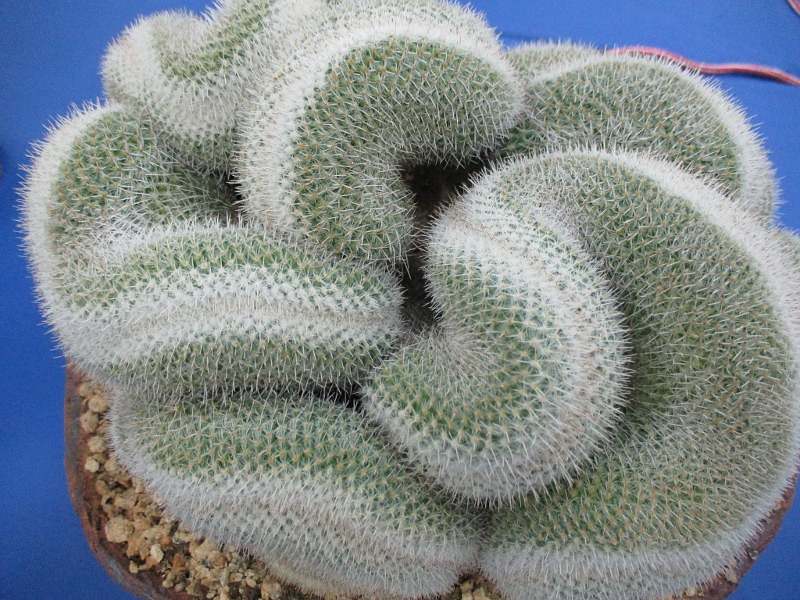
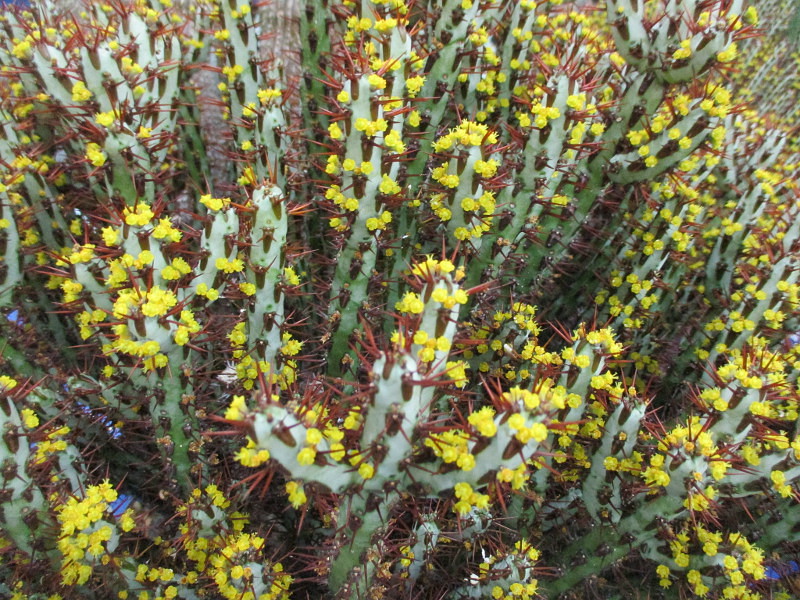
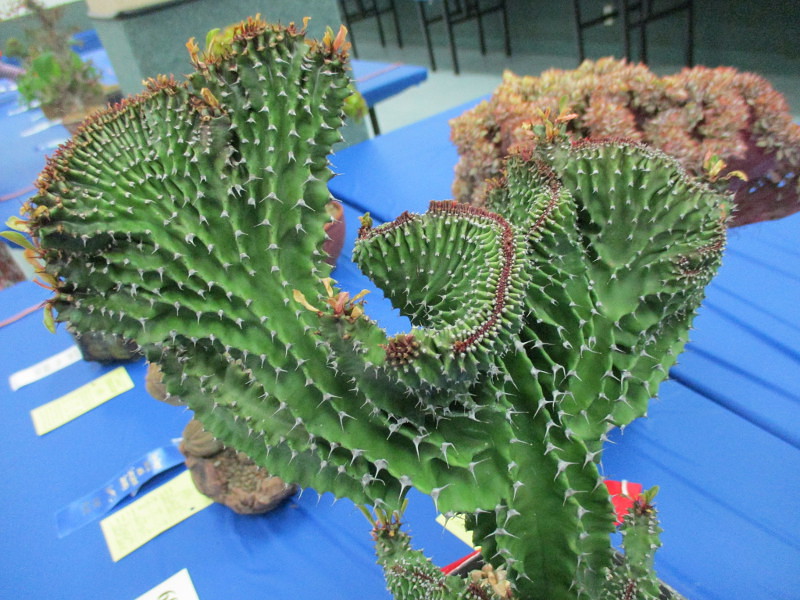
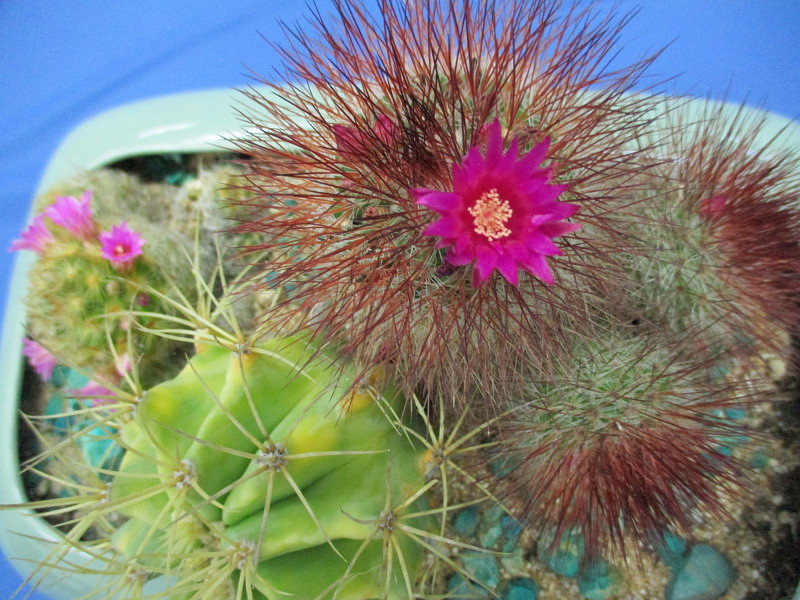
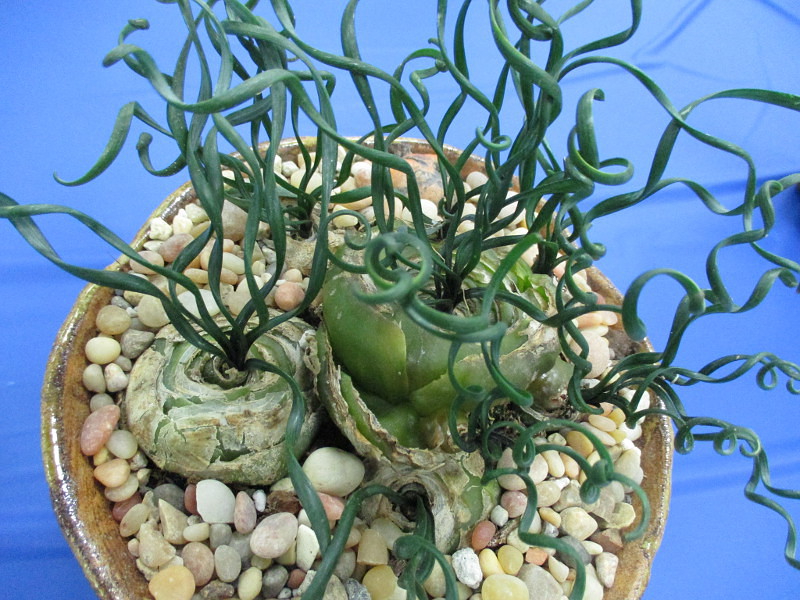
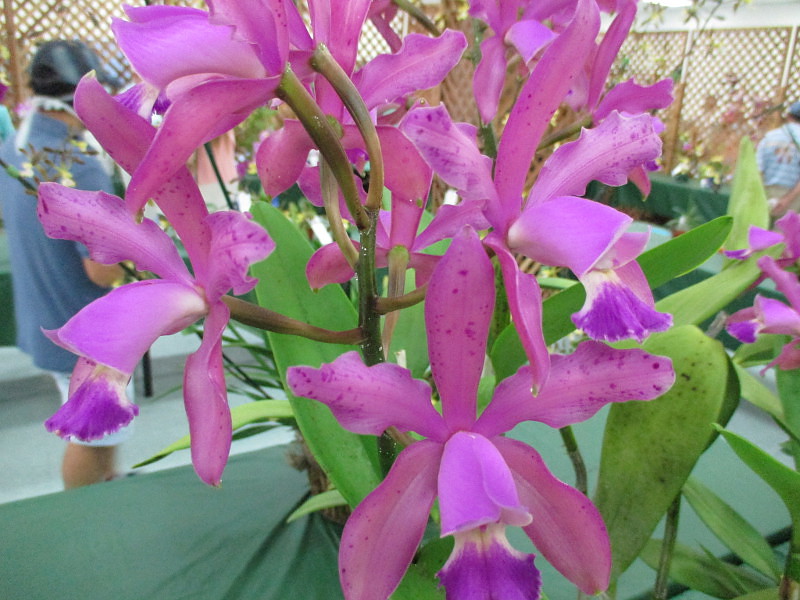
The public is invited to check out tables full of amazing displays inside Room 101 of the Casa del Prado. There are jewel-like flowers, exotic species, and bizarre plant forms will make you look twice!

If you’d like to take a potted cactus or succulent home, there’s also a big sale in the Casa del Prado’s outdoor courtyard.

Learn more here!

This is some of the beauty you’ll see…

I live in downtown San Diego and love to walk around with my camera! You can follow Cool San Diego Sights via Facebook or Twitter!
Free “Hidden History Talks” in Old Town!

During the ups and downs of this long COVID-19 pandemic, Old Town San Diego State Historic Park’s indoor museums have been mostly closed. But I learned today that outdoor “Hidden History Talks” are now being held free to the public on Fridays, Saturdays and Sundays at 2 pm.

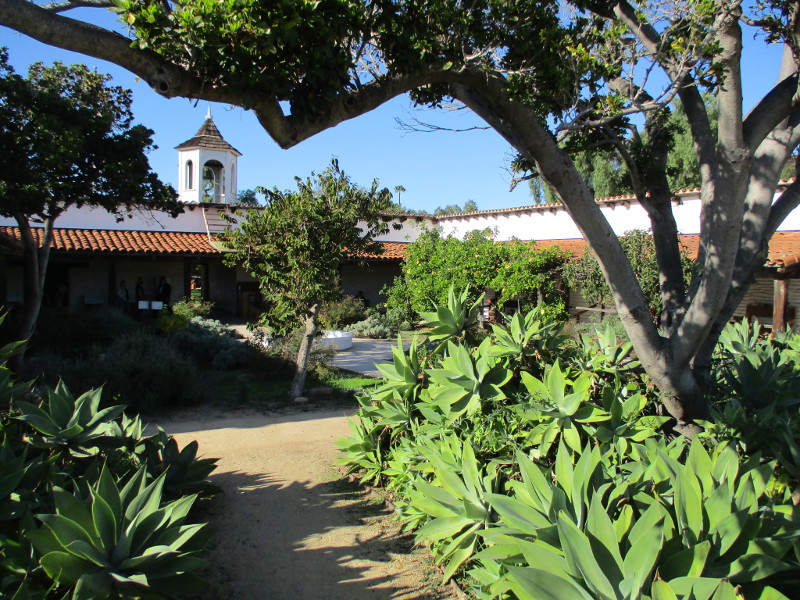
There are several interesting locations in the State Park where the talks might be held, including the courtyard of the Casa de Estudillo and the donkey pen behind Seeley Stable. Visitors to the park should watch for signs indicating where that day’s free history talk will be.

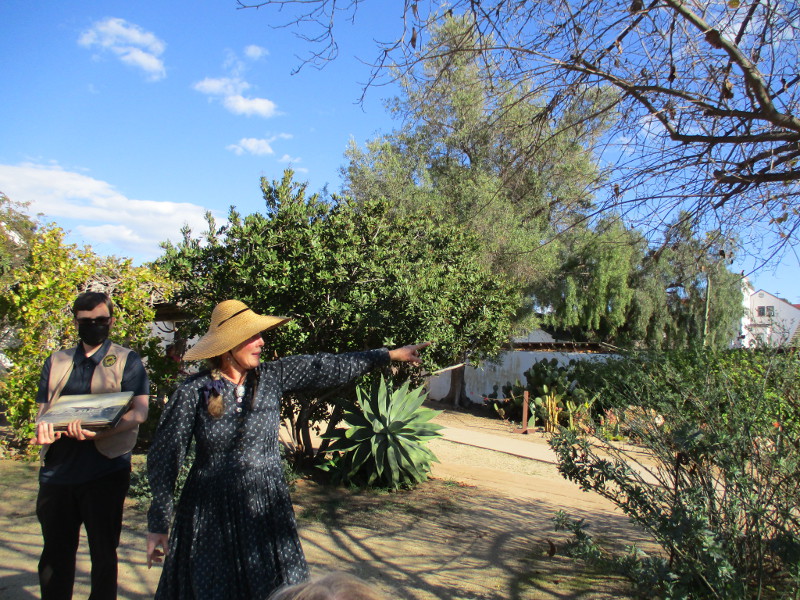
Today I sat on a bench in the beautiful Casa de Estudillo garden and listened to a California State Parks employee talk about the remarkable biodiversity in San Diego, which is partly attributed to the importation of plants and trees by Spanish missionaries, settlers, traders, and early civic visionaries like Kate Sessions.

The garden at the Casa de Estudillo is a sort of microcosm of this biodiversity.

Trees and shrubs were pointed out on all sides, and explanations were made of why they had been planted here–many a century and a half ago. Curious eyes turned this way and that at the mention of pepper and olive trees, pomegranates, and loquat, mulberry, pecan and walnut trees. And many others!

Among the things we learned was that small pepper trees from Spain, newly planted around Old Town’s plaza, had to be protected from roaming cattle. A century and a half later those pepper trees are huge and beautiful!

Everything we learned was fascinating.

I was told that eventually the normal walking tours should return to Old Town San Diego State Historic Park, but it all depends on the COVID-19 pandemic’s trajectory and public health orders.

If you’d like an idea of what the regular one hour walking tours are like, click here!

I live in downtown San Diego and love to walk around with my camera! You can follow Cool San Diego Sights via Facebook or Twitter!