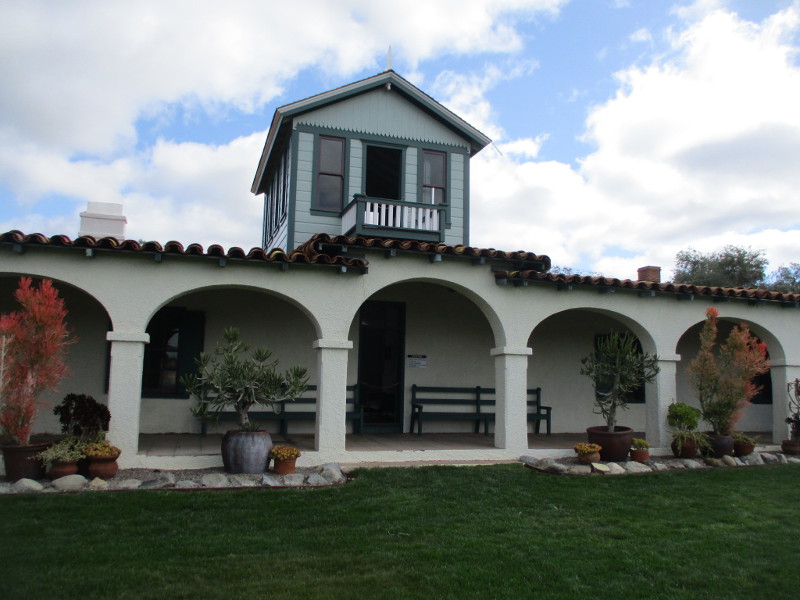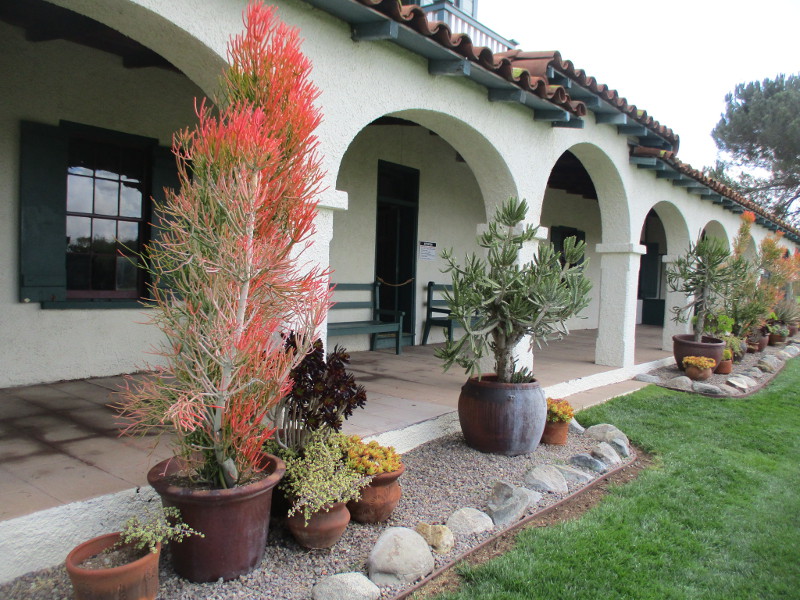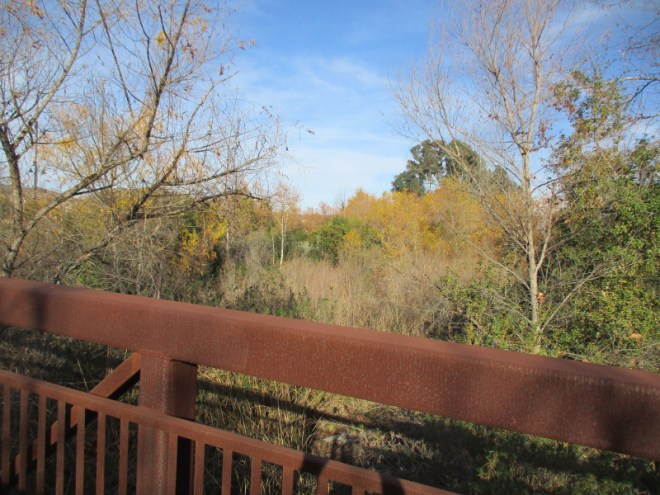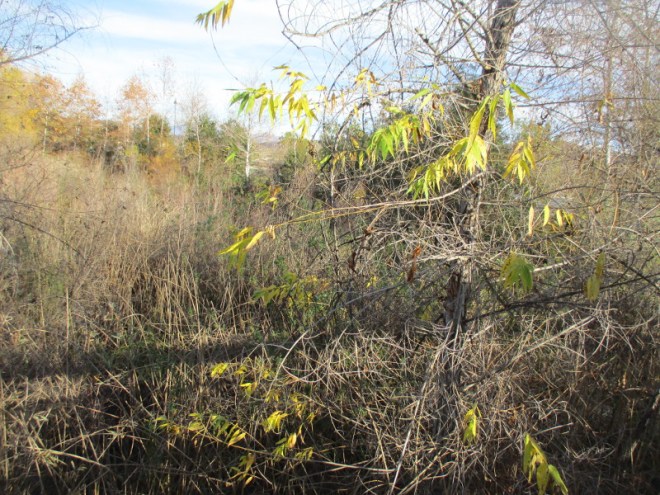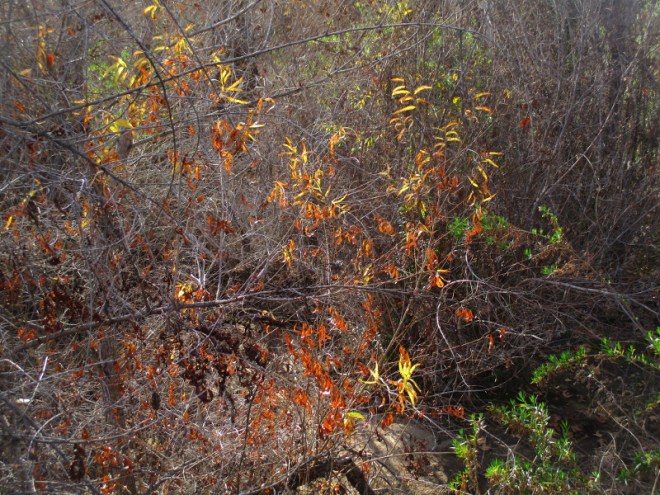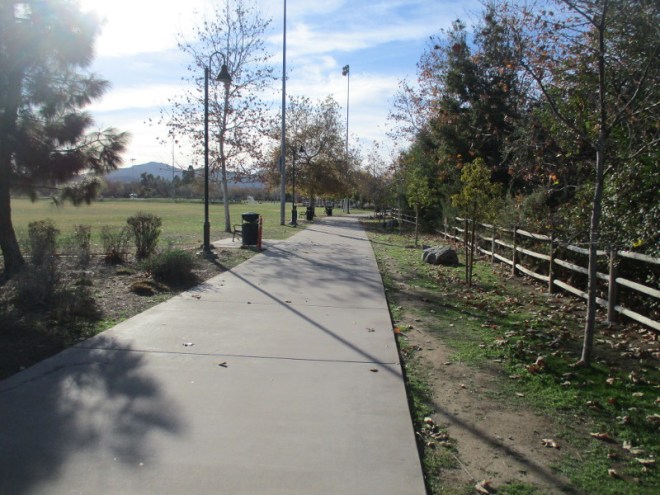
A walk around the Rancho Guajome Adobe in Vista.

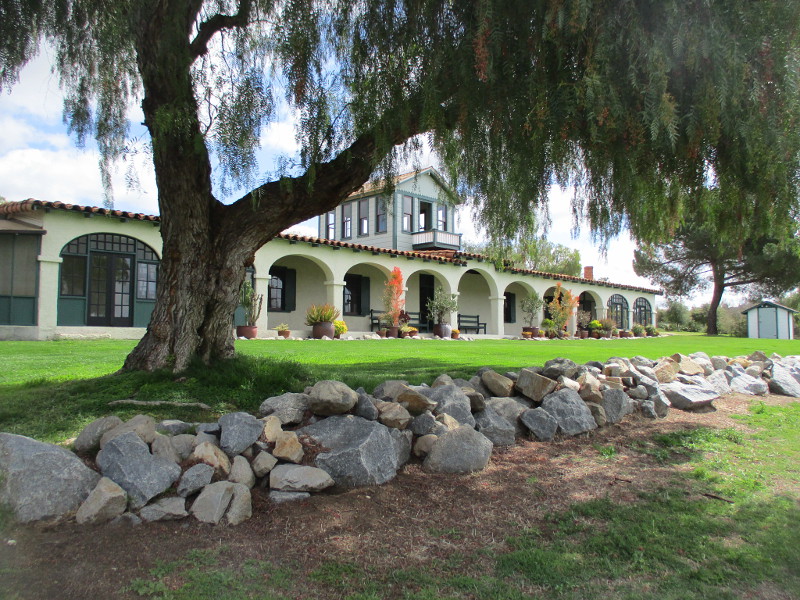
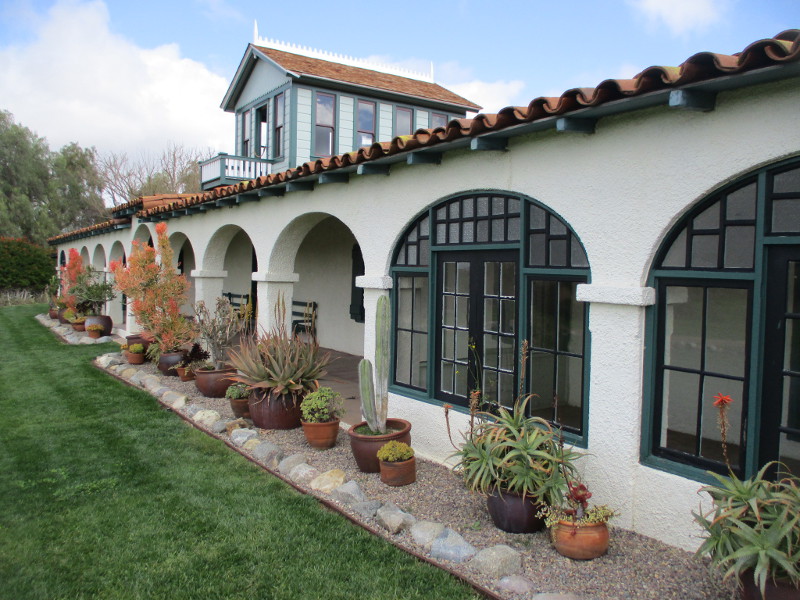
The Rancho Guajome Adobe is an architecturally and historically important 19th century ranch house located in Vista, California. I visited it a little over a week ago and walked around the grounds, learning about the fascinating history of the place while taking a few photographs.

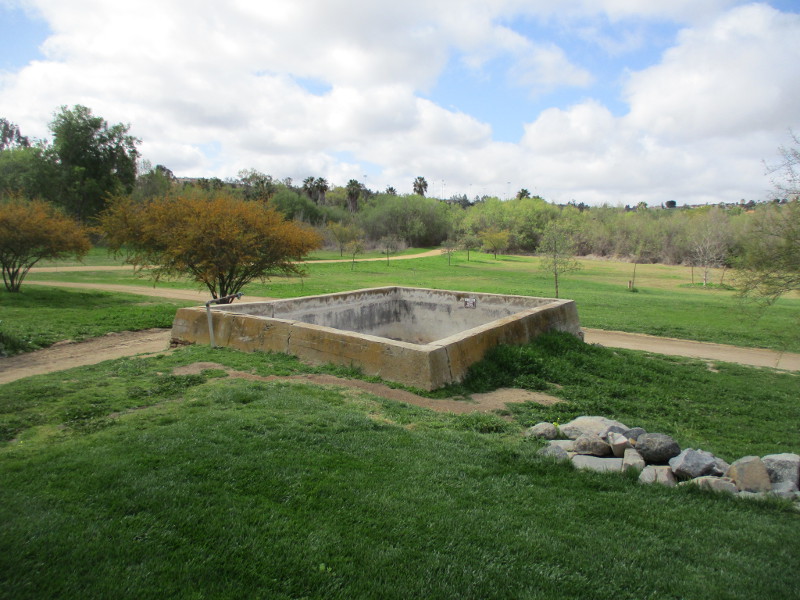
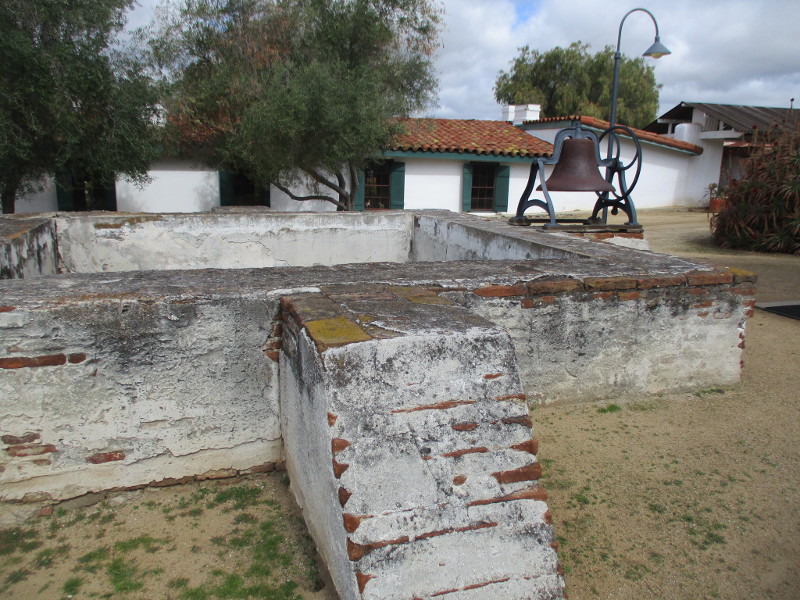
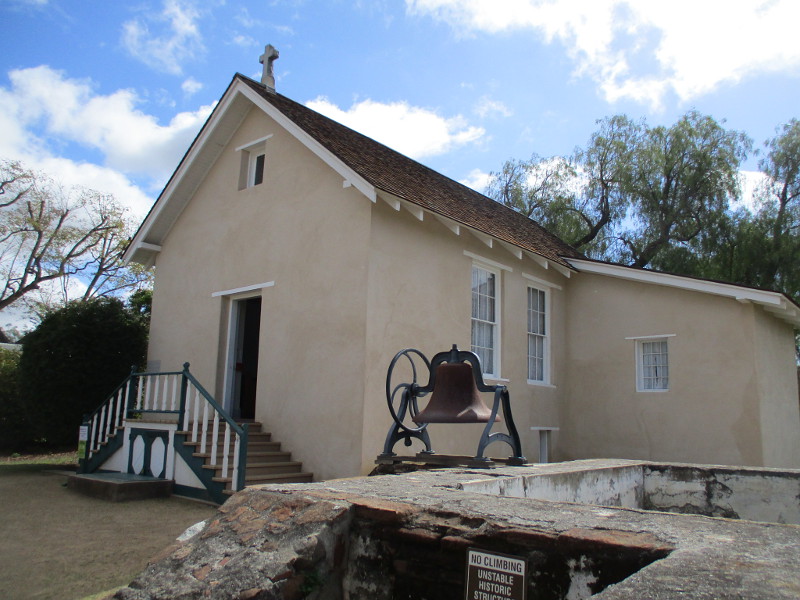
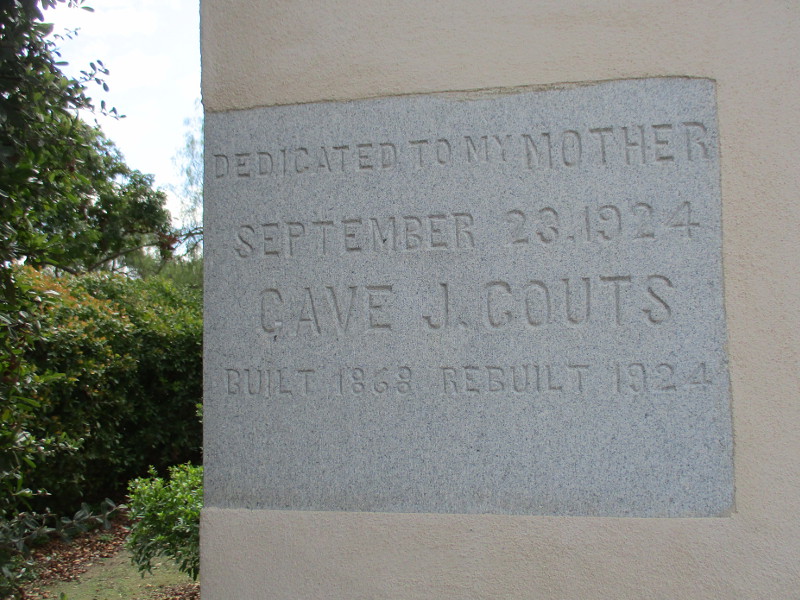
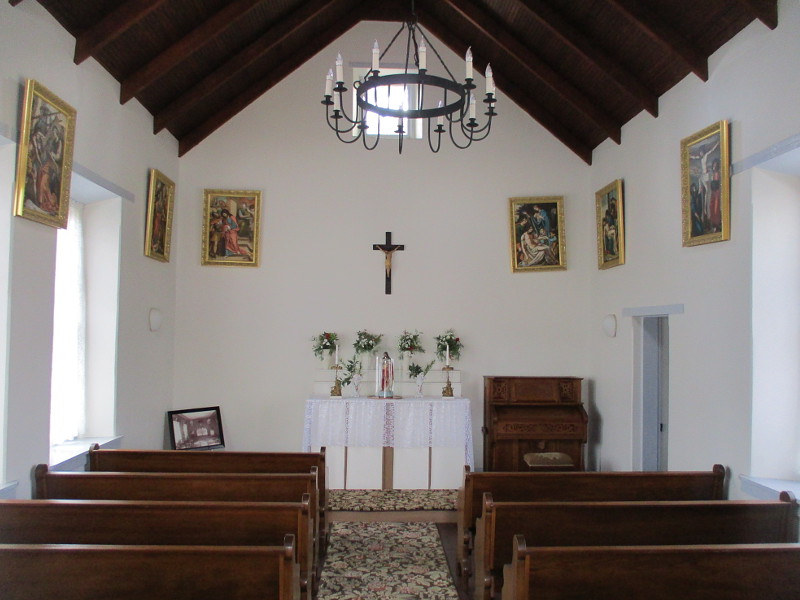
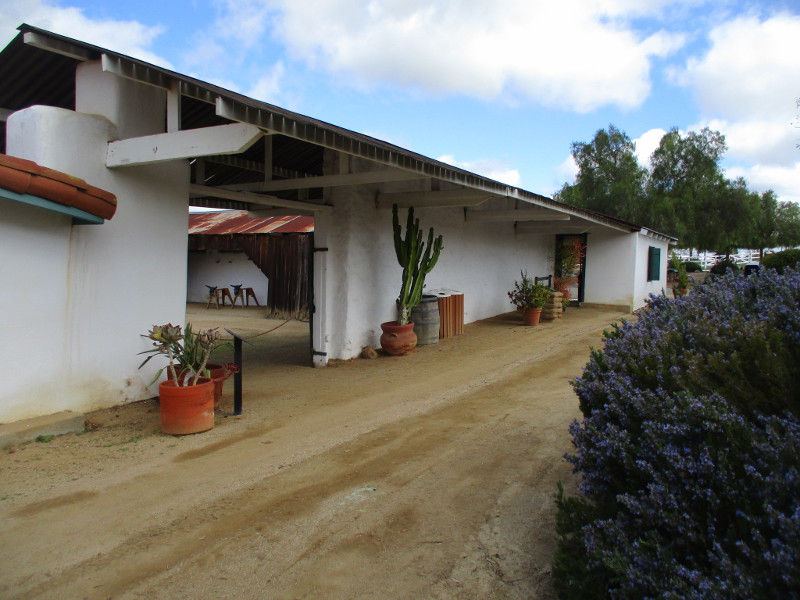
I approached the Guajome Ranch House from the Santa Fe Trail to its south, then circled counterclockwise around the complex, viewing the beautiful arcaded veranda, several cisterns fed by wells, the chapel, and other outbuildings. I spotted various signs and plaques relating the history of the ranch, which was once the home of prominent early San Diego resident Cave Johnson Couts and his wife Maria Ysidora Barbara Bandini.

As you can see, I also stepped into a small museum. That’s where you can purchase tickets to guided and self-guided house tours.

According to Wikipedia: “The adobe was built in 1852 and served as the headquarters of Rancho Guajome, a Mexican land grant. Abel Stearns had given the rancho to Ysidora Bandini (sister of his wife Arcadia Bandini), as a wedding gift when she married Lieutenant Cave Johnson Couts in 1851. It was built with the profits from the cattle boom of the 1850s, when many California ranchos supplied the Gold Rush miners and associated new American immigrants with meat and leather. Couts was appointed sub-agent for the native Luiseño people (San Luis Rey Mission Indians) in 1853. He used their labor to improve his properties in the area, including this one and nearby Rancho Buena Vista and Rancho Vallecitos de San Marcos…”

I didn’t venture inside the 22-room hacienda, but I most likely will at some future time. The old ranch house is located in Rancho Guajome Adobe County Park. Check out the parks website here to learn more.

The following photos provide a taste of what you’ll see should you visit this historic place.

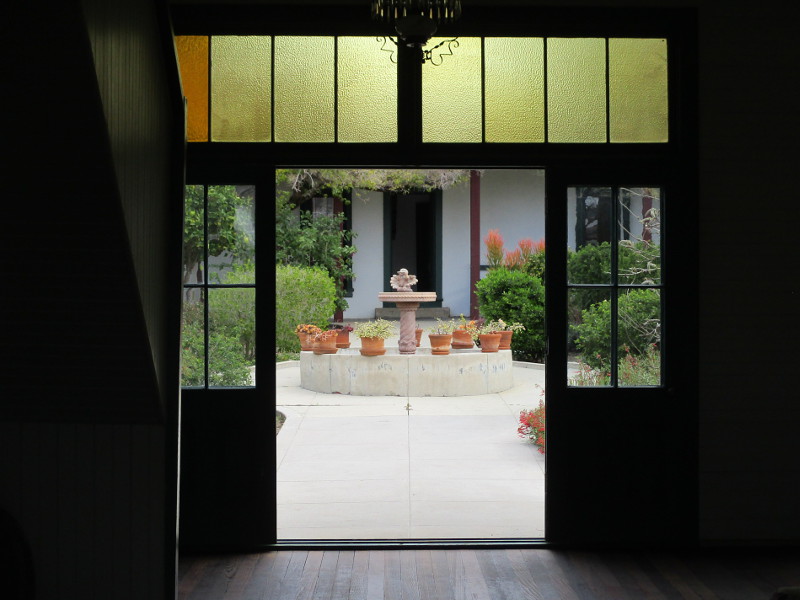
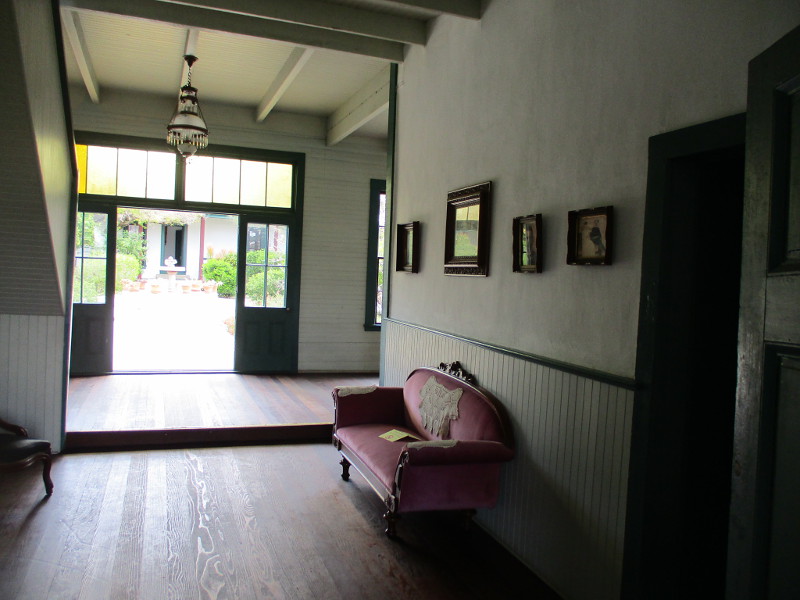
Peering from the veranda through an open door…
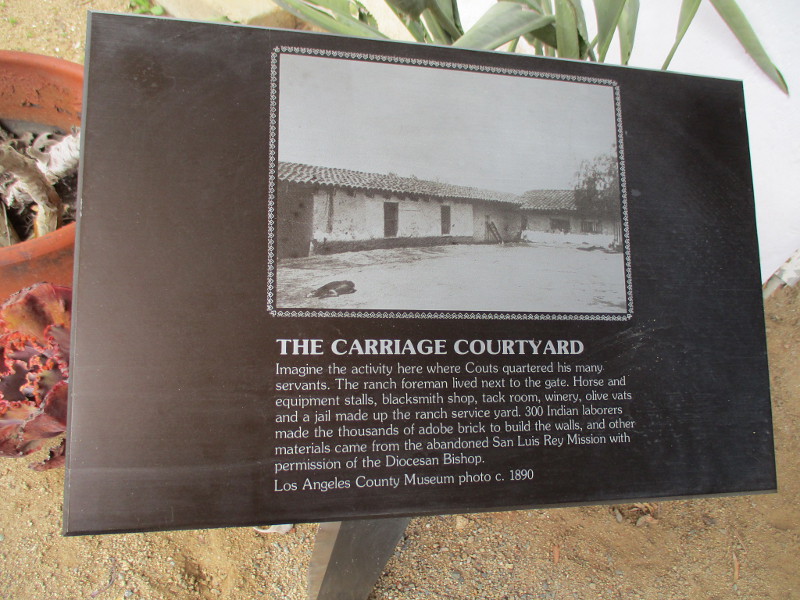
The sign reads:

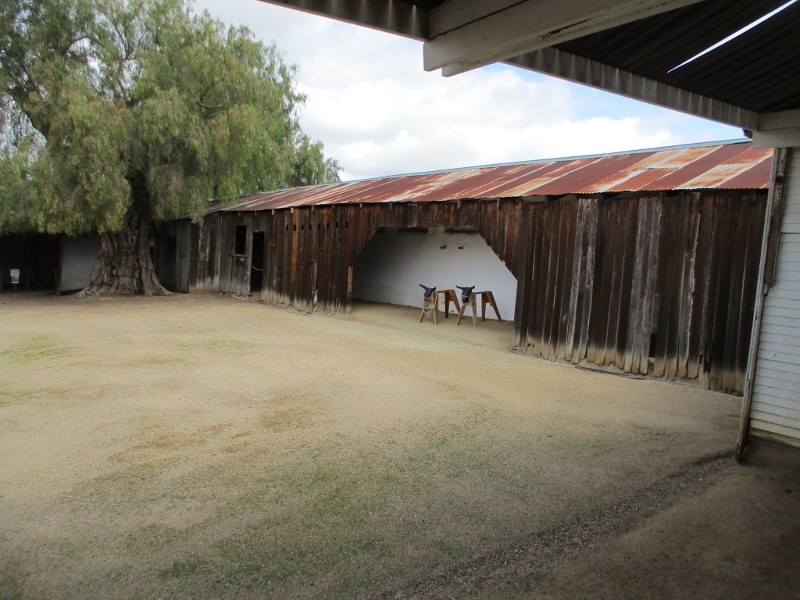
The Carriage Courtyard.

Imagine the activity here where Couts quartered his many servants. The ranch foreman lived next to the gate. Horse and equipment stalls, blacksmith shop, tack room, winery, olive vats and a jail made up the ranch service yard. 300 Indian laborers made the thousands of adobe brick to build the walls, and other materials came from the abandoned San Luis Rey Mission with permission of the Diocesan Bishop.

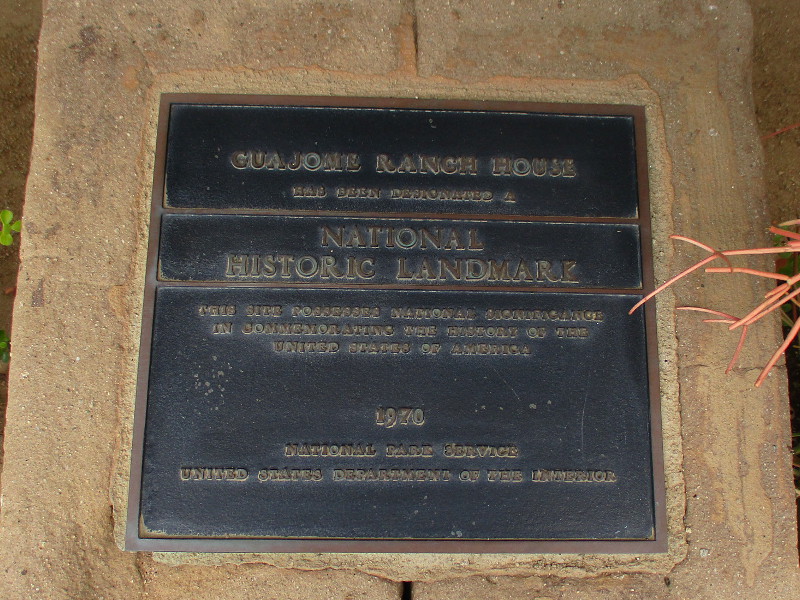
Guajome Ranch House has been designated a National Historic Landmark

This site possesses national significance commemorating the history of the United States of America

1970

National Park Service

United States Department of the Interior

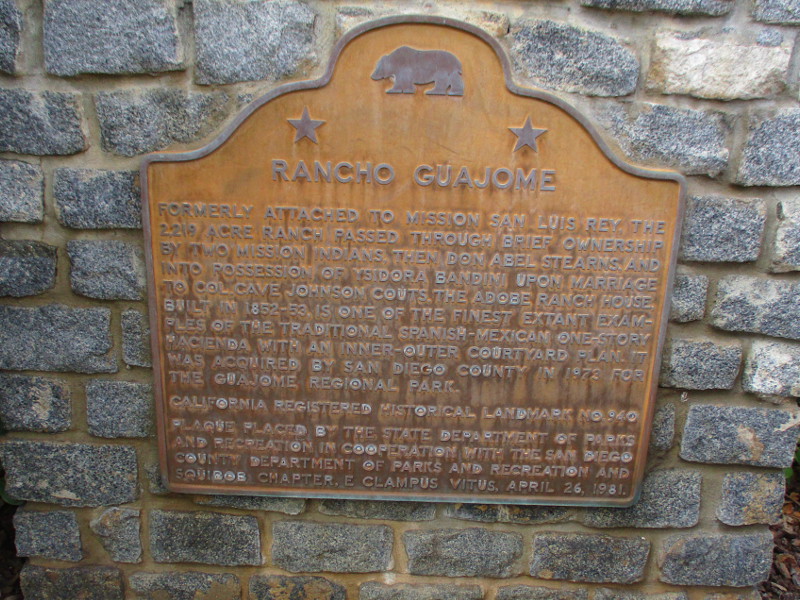
Rancho Guajome

Formerly attached to Mission San Luis Rey, the 2,219 acre ranch passed through brief ownership by two mission Indians, then Don Abel Stearns, and into possession of Ysidora Bandini upon marriage to Col. Cave Johnson Couts. The adobe ranch house built in 1852-53, is one of the finest extant examples of the traditional Spanish-Mexican one-story hacienda with an inner-outer courtyard plan. It was acquired by San Diego County in 1973 for the Guajome Regional Park.

California registered Historical Landmark No. 940

Plaque placed by the State Department of Parks and Recreation in cooperation with the San Diego County Department of Parks and Recreation and Squibob Chapter, E Clampus Vitus, April 26, 1981.

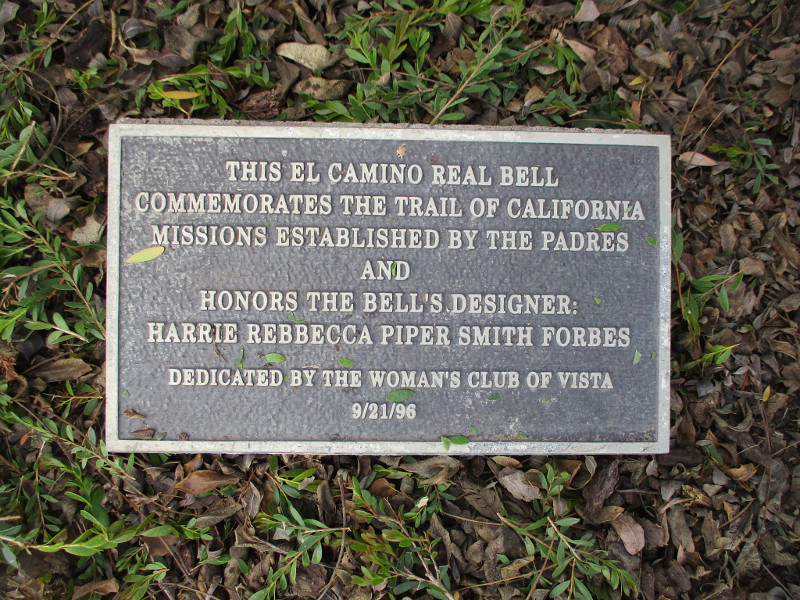
This El Camino Real Bell commemorates the trail of California missions established by the padres and honors the bell’s designer: Harrie Rebbecca Piper Smith Forbes

Dedicated by the Woman’s Club of Vista

9/21/96

At its beginning, Rancho Guajome was a working cattle ranch. Because the West was dry, cattle owners like Cave Couts would turn their cattle out on unfenced pastures. However, during this “open range” period, sometimes cattle from different ranchos intermixed, making it difficult to determine which cattleman owned which cattle. The branding iron was invented as a solution…

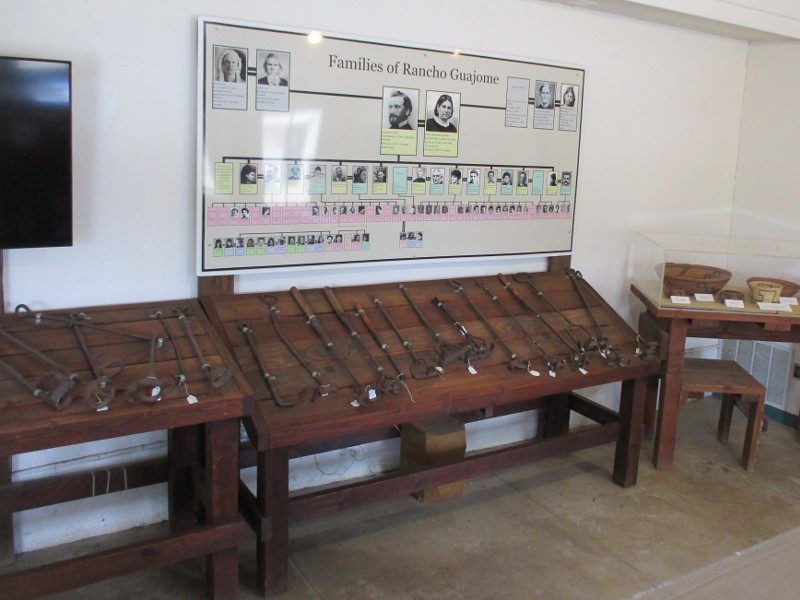
Cave Johnson Couts was born in 1821 in Springfield, Tennessee, and died in 1874 in San Diego at the Horton House. His wife Maria Ysidora Barbara Bandini was born in 1828 in San Diego, was married in 1851 at the Casa de Bandini in Old Town (now the Cosmopolitan Hotel), and died in 1897 in Los Angeles.
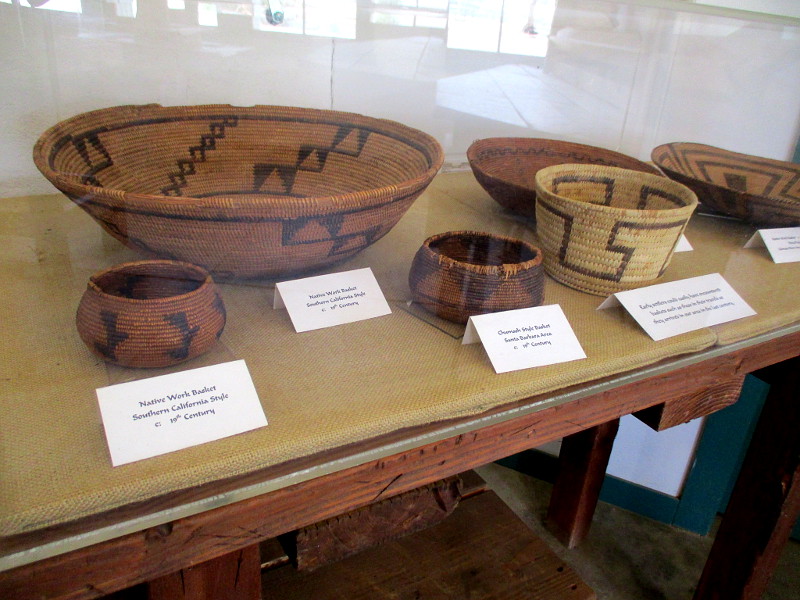
Included in the museum display are Native work baskets, Southern California style, circa 19th century.

Rancho Guajome Adobe farm equipment included a farm wagon, breaking carts for training horses, a broadcast seeder, a sulky used for racing horses, and a four-bottom Stockton plow used to turn soil to prepare fields for planting.

In the past I blogged about the Colorado House, a two-story hotel that was built in Old Town San Diego in 1851 by the very same Cave Couts. Today it serves as the Wells Fargo History Museum. Read that here.

I’ve also blogged about the El Campo Santo cemetery grave of Juan Mendoza, who was shot in the back by Cave Couts. See that here. (During one walk I spotted another mysterious wooden tombstone with the name Juan Mendoza by a parking lot, across the San Diego River from Old Town. Read that here!)

I live in downtown San Diego and love to walk around with my camera! You can follow Cool San Diego Sights via Facebook or Twitter!

You can easily explore Cool San Diego Sights by using the search box on my blog’s sidebar. Or click a tag! There are thousands upon thousands of photos for you to enjoy!

A spring walk through Hillcrest and Mission Hills.

Spring has arrived in the window of Mission Hills Automotive.

Yesterday I went for a long, very pleasant springtime walk. These photographs represent my journey through the west part of Hillcrest, then through an interesting slice of Mission Hills.

I started inside Hillcrest, headed west down Washington Street, took a momentary detour to Fort Stockton Drive, then headed back down Washington Place to historic (and some say haunted) Pioneer Park, which I will blog about in a day or two. I then hiked down sloping Mission Hills Canyon along the green, seemingly little known Robyn’s Egg Trail, which I also plan to blog about. Eventually I came out near San Diego Avenue, southeast of Old Town.

Come along and read the captions to get a taste…

A flying unicorn on a fence by Copper Top Coffee and Donuts in Hillcrest.
Lovers in a window at Urban Fusion Decor.
Springtime in a window at VCA Hillcrest Animal Hospital.
A cool mural on the side of Dame and Dapper Barber Shop.
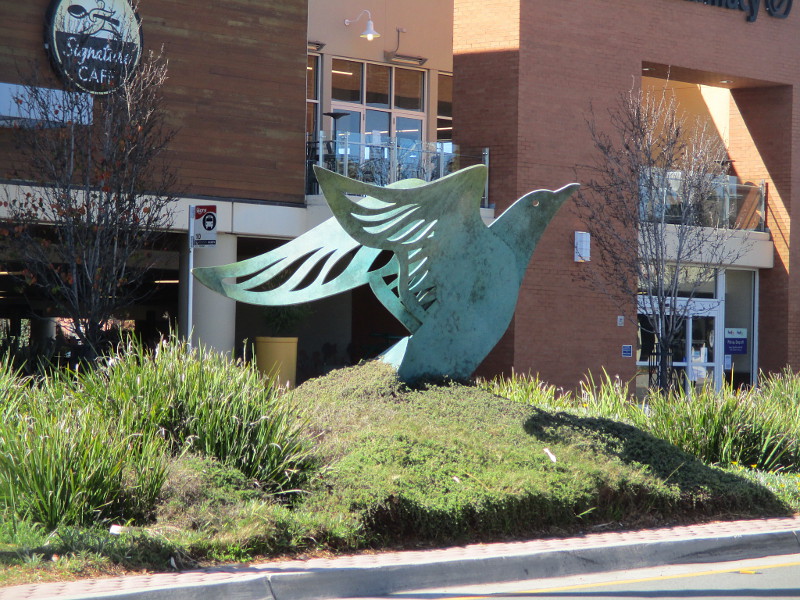
One of the bird sculptures along Washington Avenue’s median. I believe the sculptures were a project of the Mission Hills Garden Club.
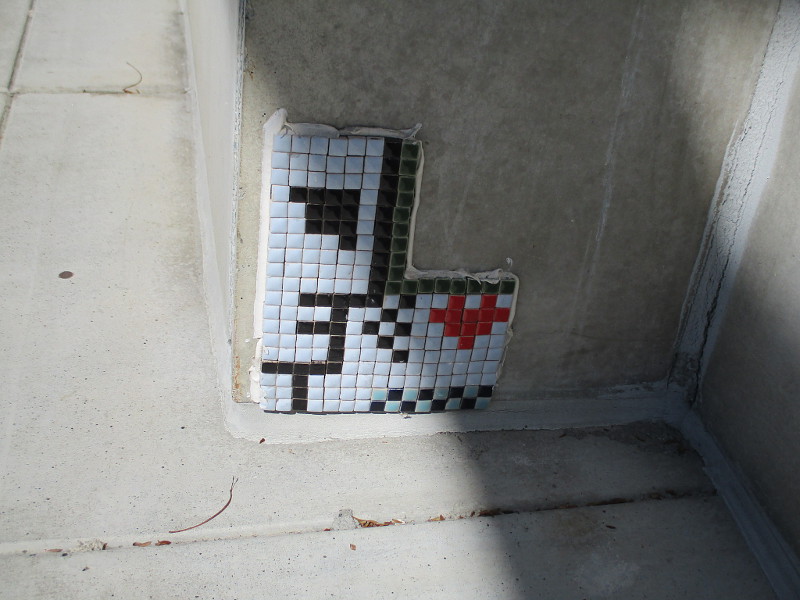
Mysterious tile artwork on the corner of a building.
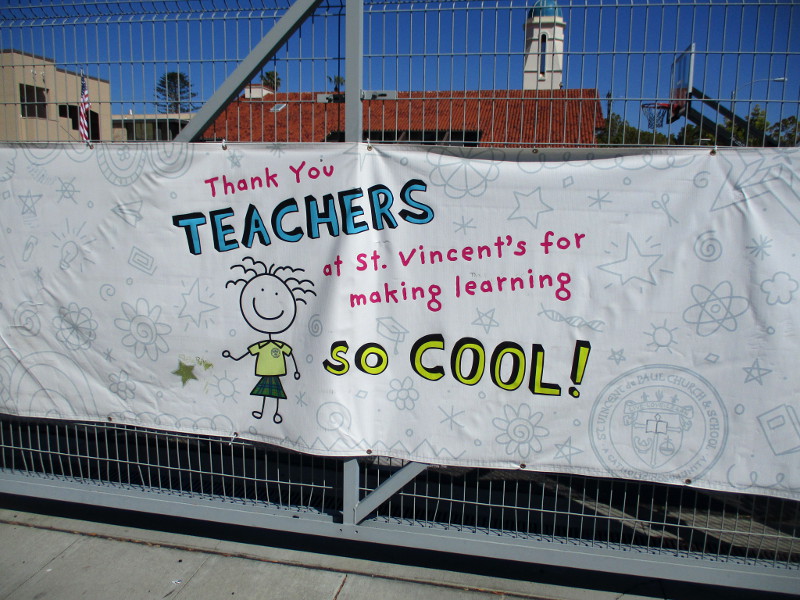
Banner thanks cool teachers at St. Vincent de Paul School.
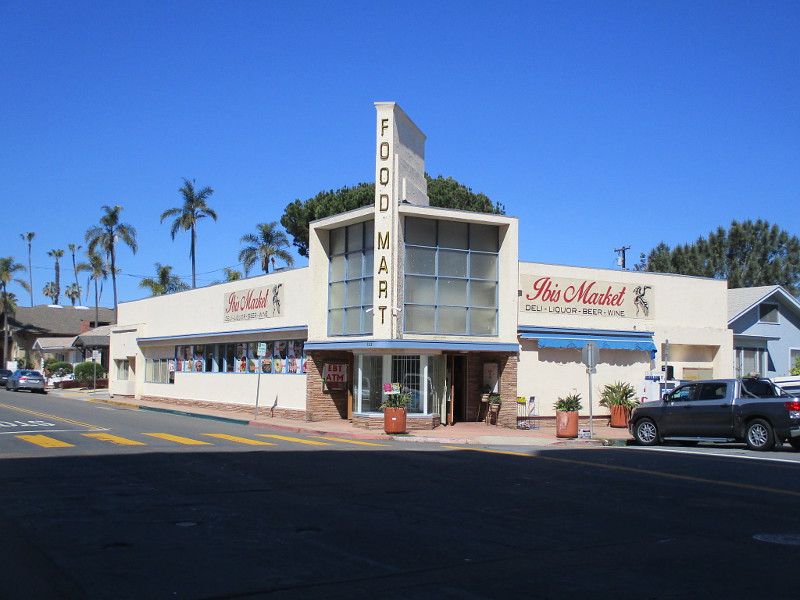
Interesting old building is home of the Ibis Market.
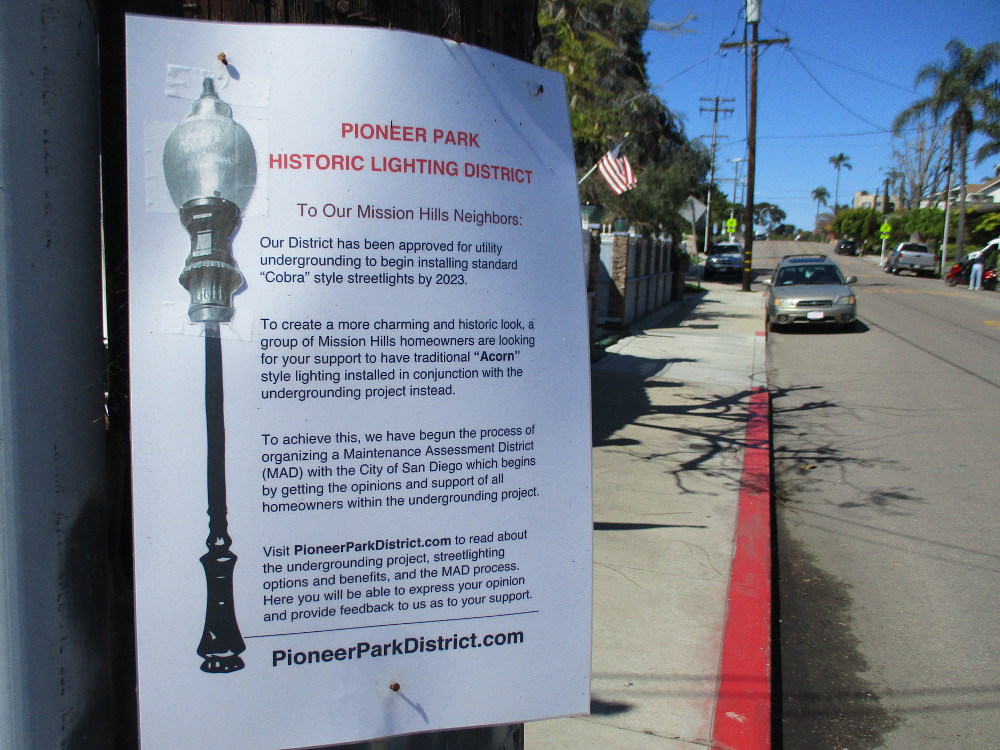
Mission Hills homeowners are hoping to have acorn-style street lamps installed, to create a more charming and historic look.
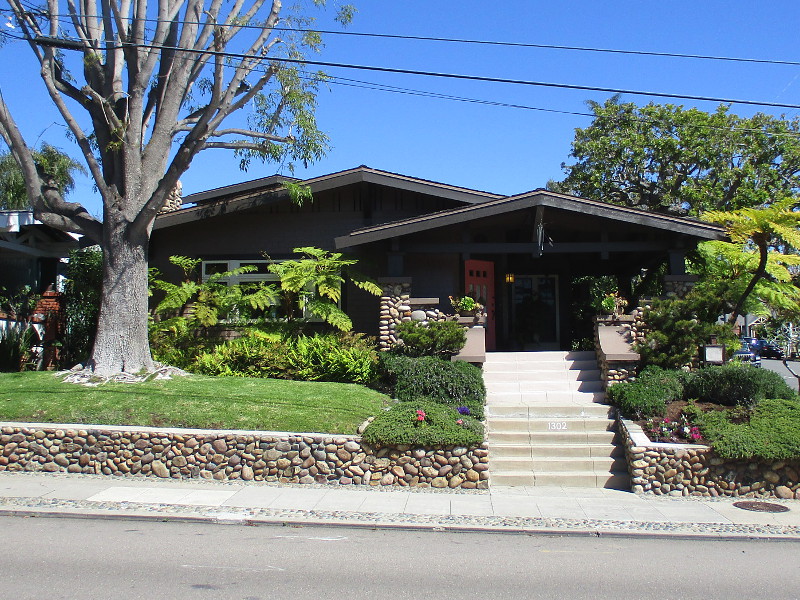
One of many beautiful old houses I passed in Mission Hills. I believe this one is a Craftsman.
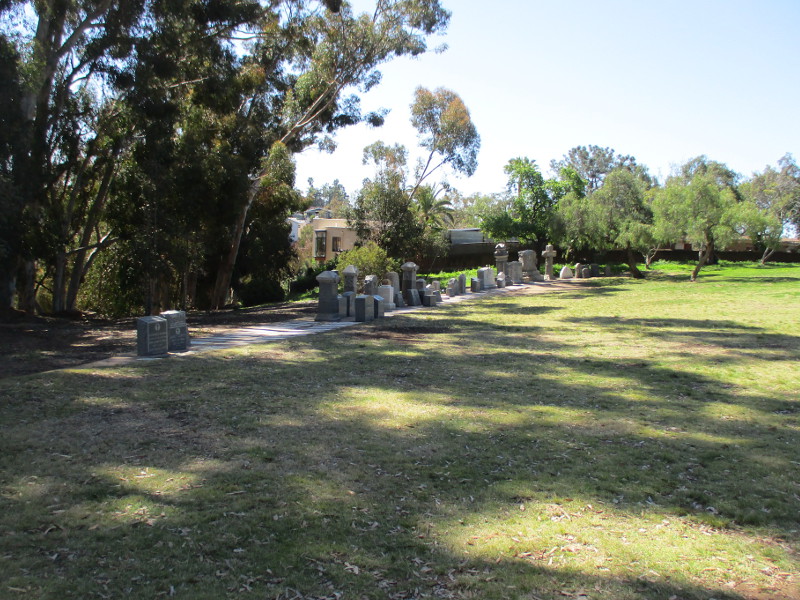
Gravestones line a corner of Pioneer Park, which was built over a cemetery where many early residents of San Diego remain buried.
Heading down green Mission Hills Canyon on a sunny spring day. The Robyn’s Egg Trail is rough and requires careful navigation in spots. Along its approximately half mile length I encountered one walker with a dog and one homeless person.
Bright flowers along the path.
A happy kitty face greets me as I arrive at San Diego Avenue!

I live in downtown San Diego and love to walk around with my camera! You can follow Cool San Diego Sights via Facebook or Twitter!

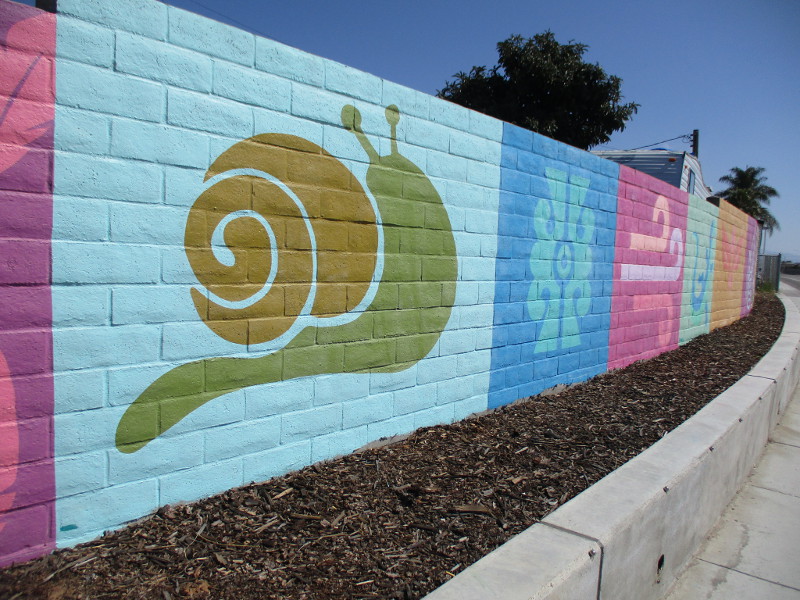
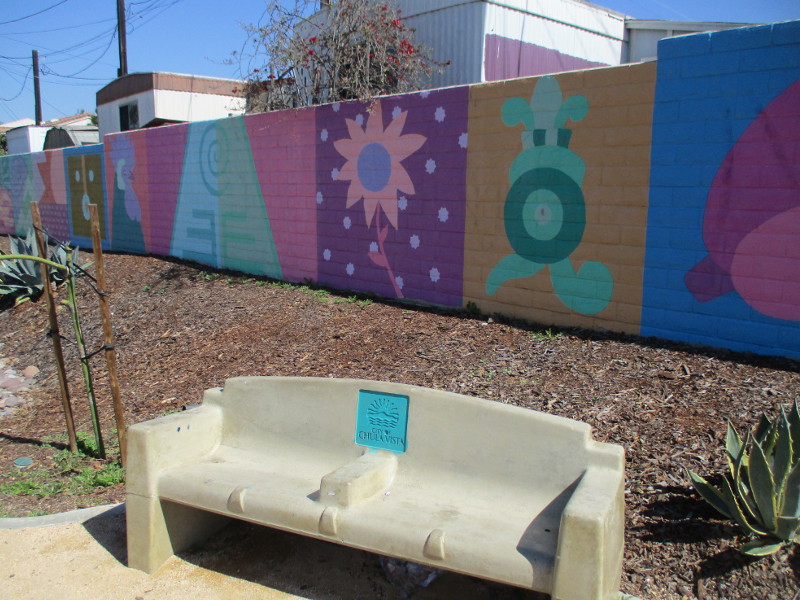
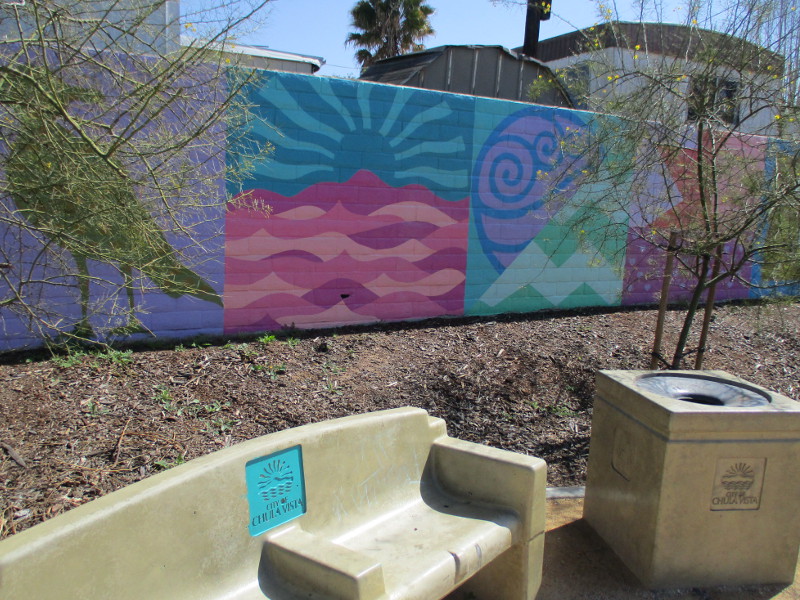
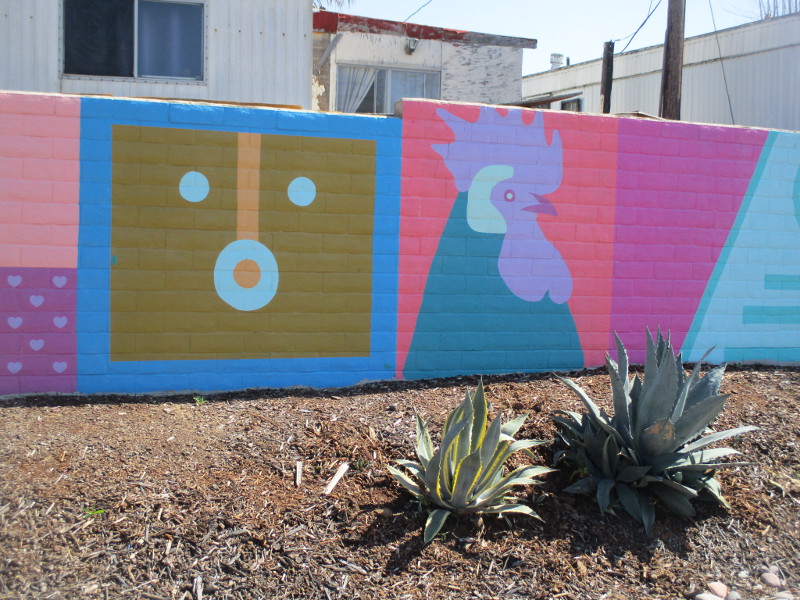
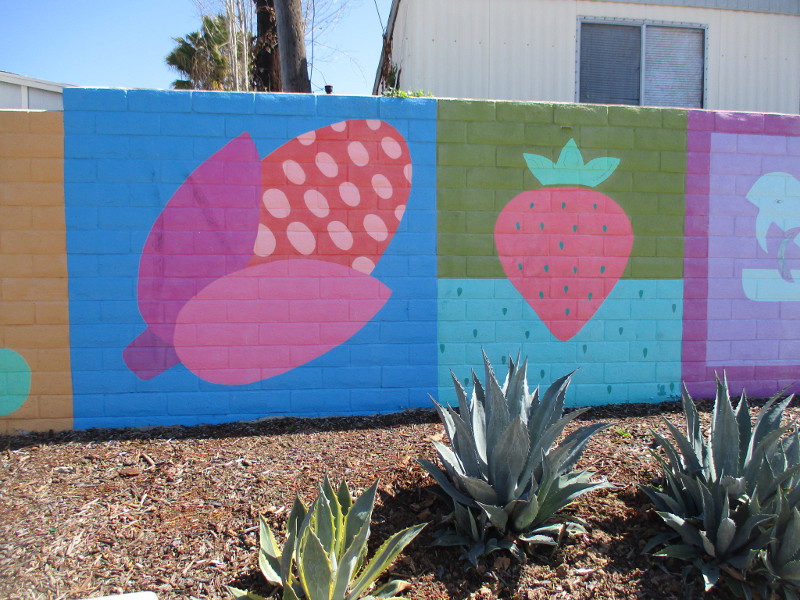
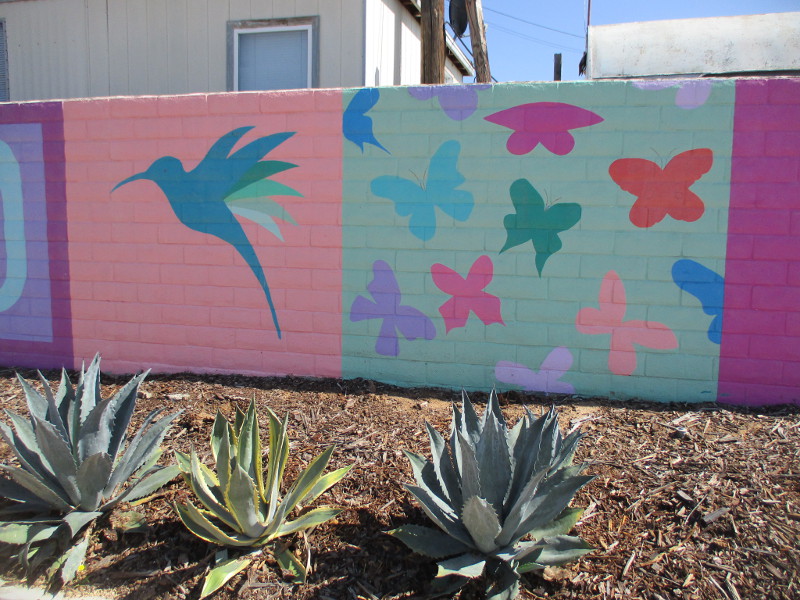
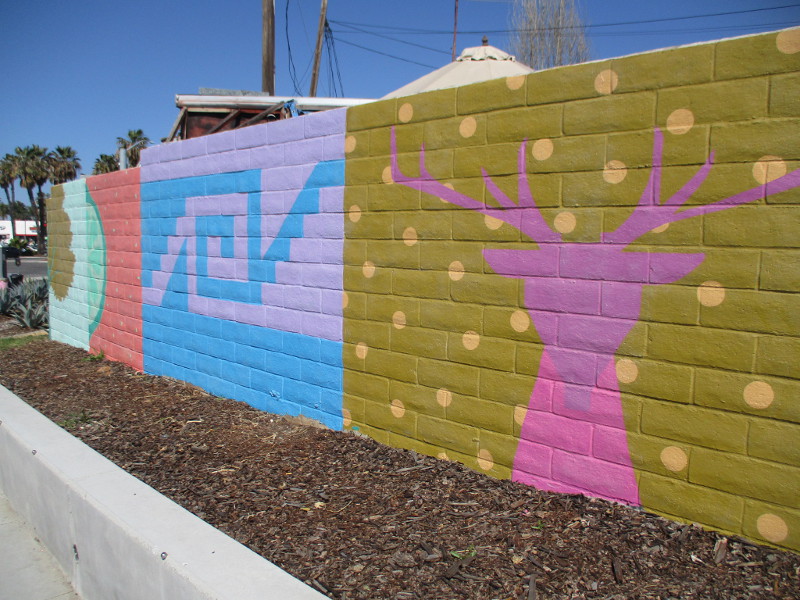
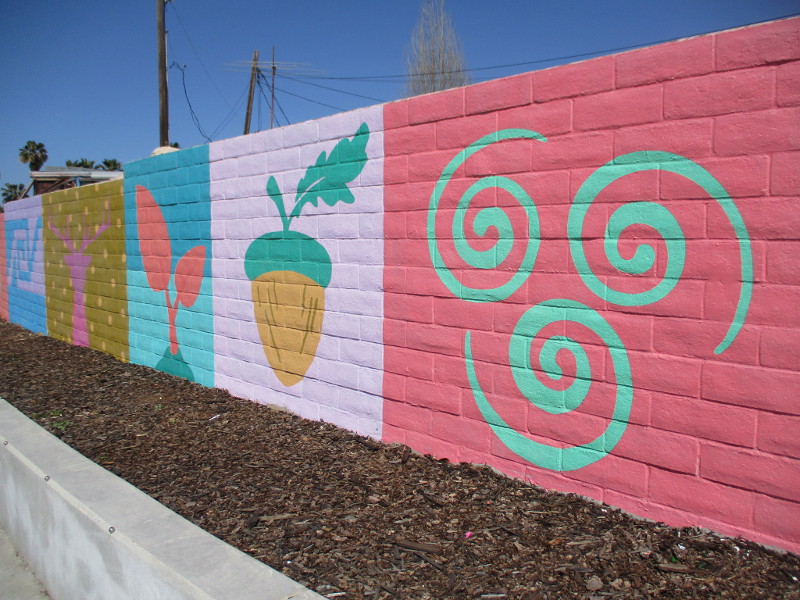
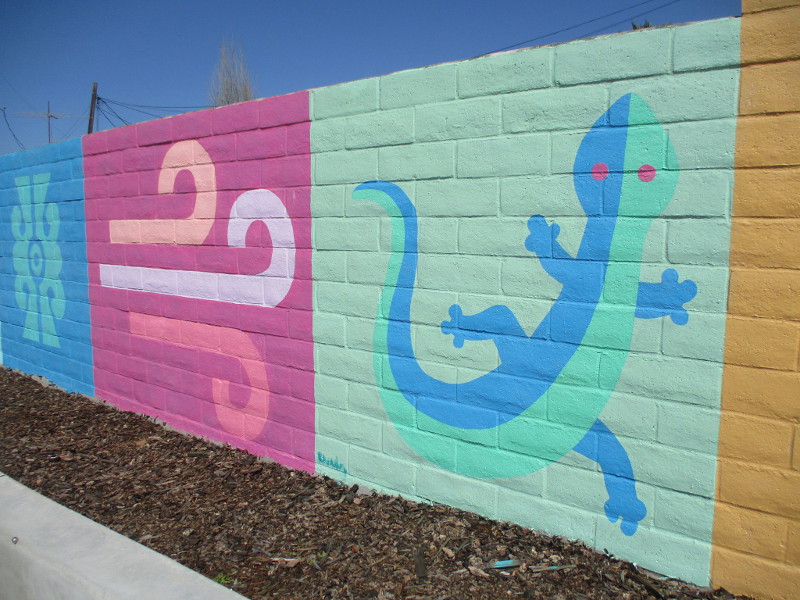
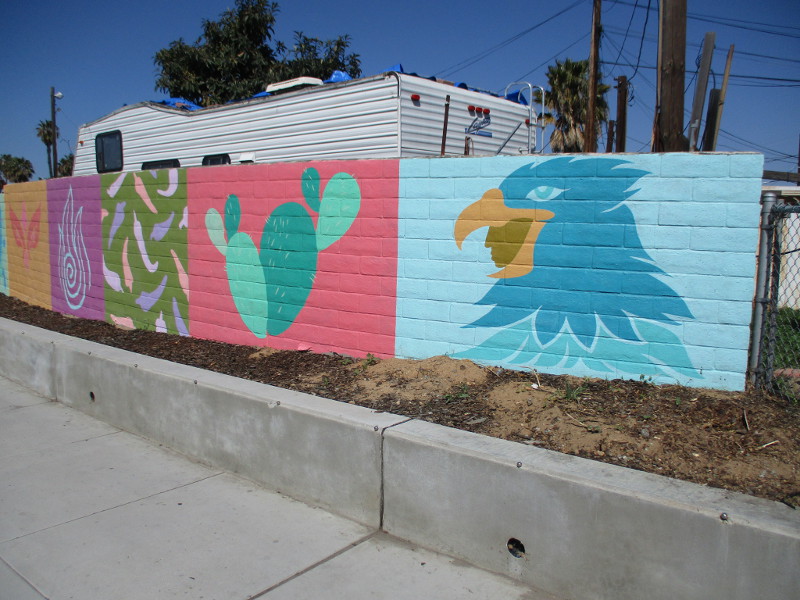
One long, colorful mural in Chula Vista!

If you’ve driven through the intersection of Palomar Street and Broadway in Chula Vista you’ve no doubt seen it. A long, very colorful mural painted on the wall by nearby Orange Avenue, between a small city park and the El Mirador Trailer Court.

I believe the wall was painted fairly recently–that’s what a gentleman who works at Jack in the Box across the street told me.

I love the bright, cheerful designs! It appears that many refer to aspects of our region’s unique cultural and natural heritage.

I live in downtown San Diego and love to walk around with my camera! You can follow Cool San Diego Sights via Facebook or Twitter!

You can easily explore Cool San Diego Sights by using the search box on my blog’s sidebar. Or click a tag! There are thousands upon thousands of photos for you to enjoy!

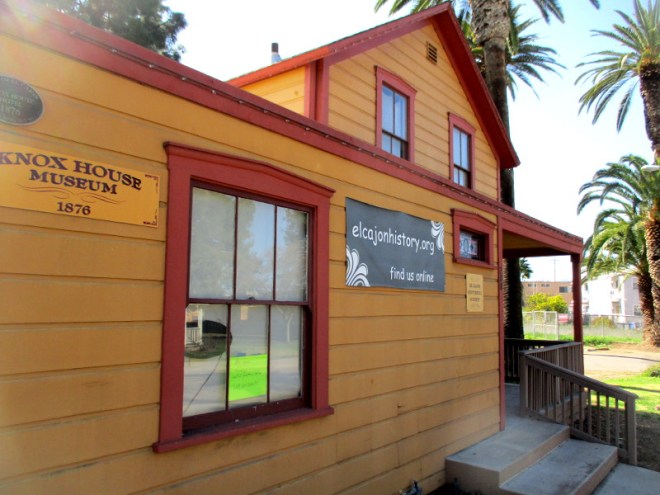
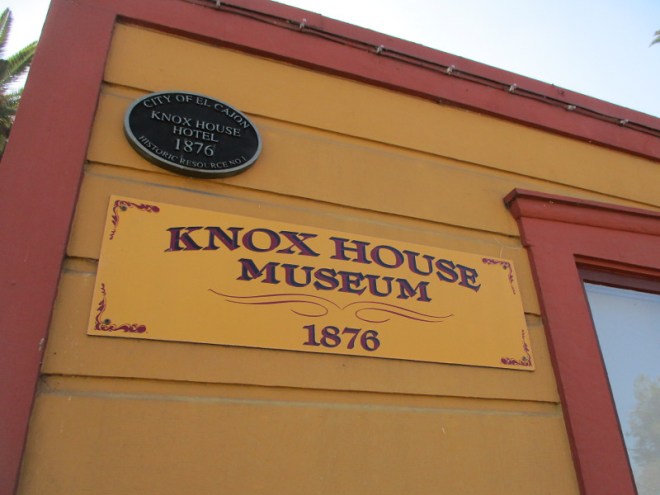
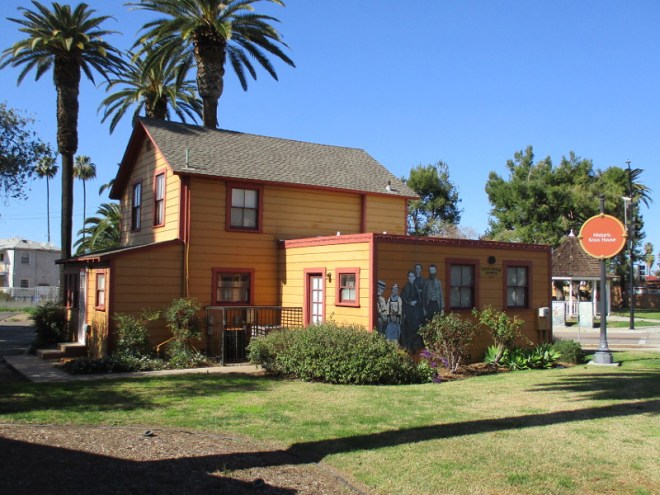
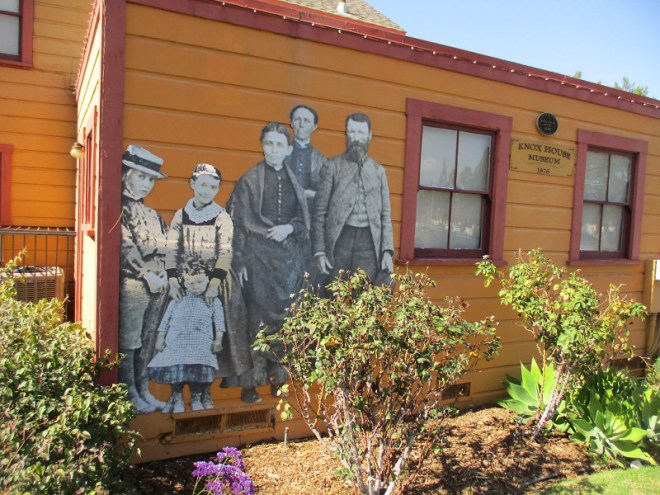
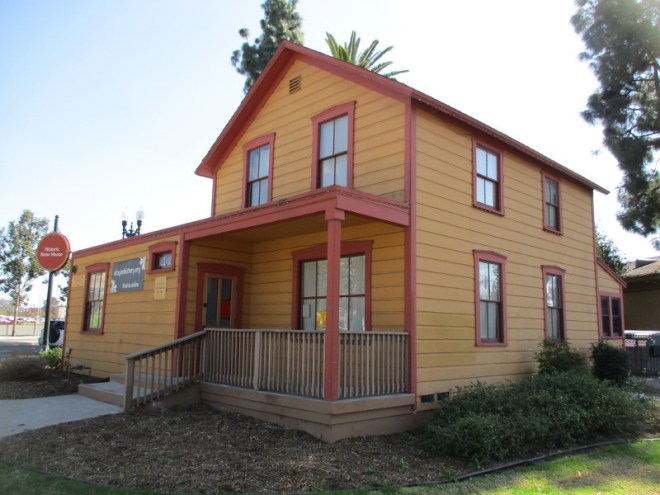
A walk around El Cajon’s Knox House Museum.

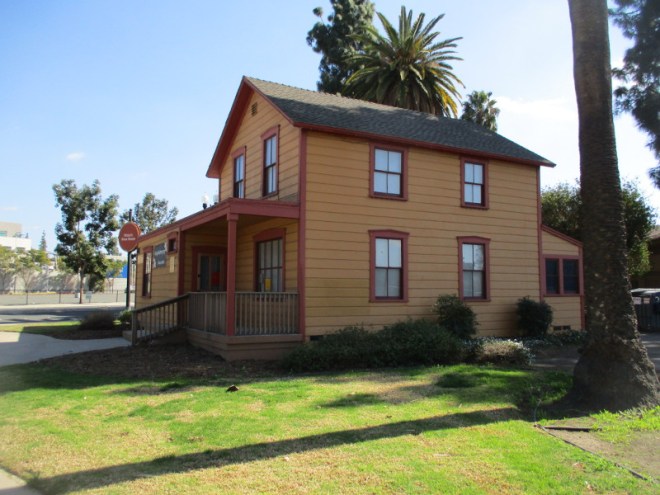
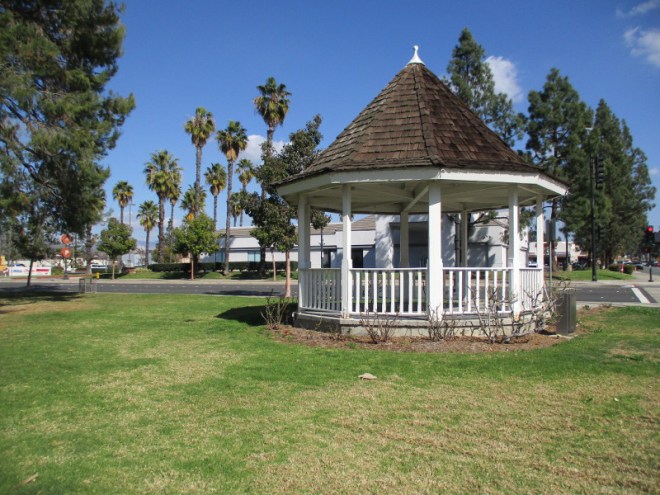
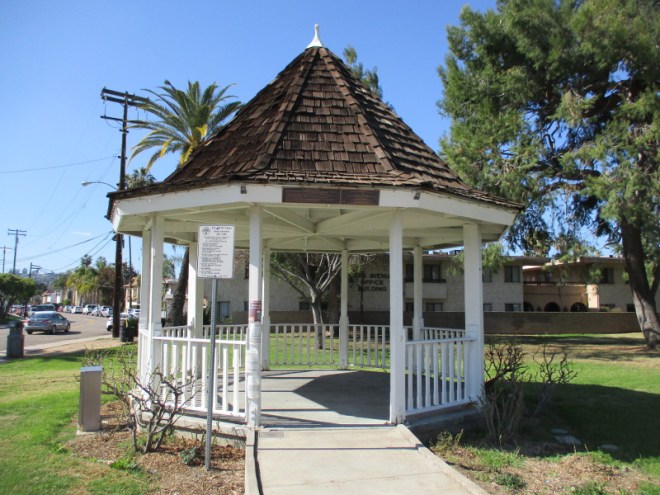
A few weeks ago, during my adventure in El Cajon, I walked around the Knox House Museum, which was closed at the time. I took a number of photographs of the historic structure, and the gazebo in small, grassy Judson Park to the north.

The Knox House Museum is operated by the El Cajon Historical Society. The building is a restoration of Amaziah Lord Knox’s original two-story, seven room El Cajon Hotel, which was built in 1876 near the present day corner of Main Street and Magnolia Avenue. The building also served as the Knox residence. In later years the hotel was altered in various ways and greatly enlarged. In 1972 the City of El Cajon purchased the original building and moved it to its present location, at the corner of Magnolia and Park Avenue.

To learn much, much more about the old hotel, the present day museum, and the history of El Cajon, which began in earnest with the discovery of gold in Julian in 1870, visit the El Cajon Historical Society’s website here! Among other things, you’ll learn why the Knox House Museum is painted in such unusual colors!

I spotted this old gazebo in Judson Park, across Park Avenue…

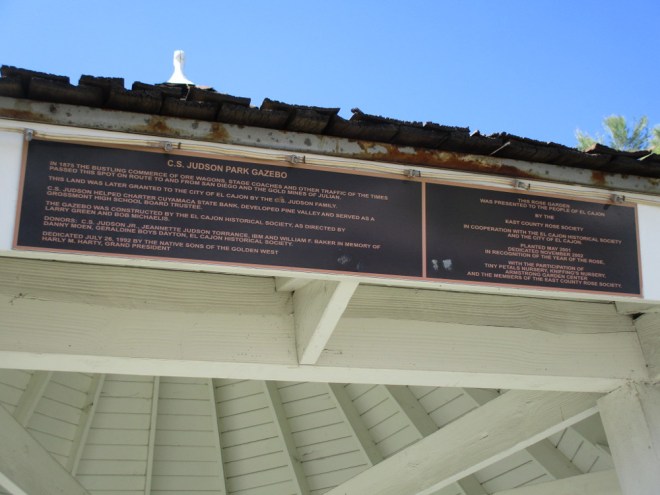
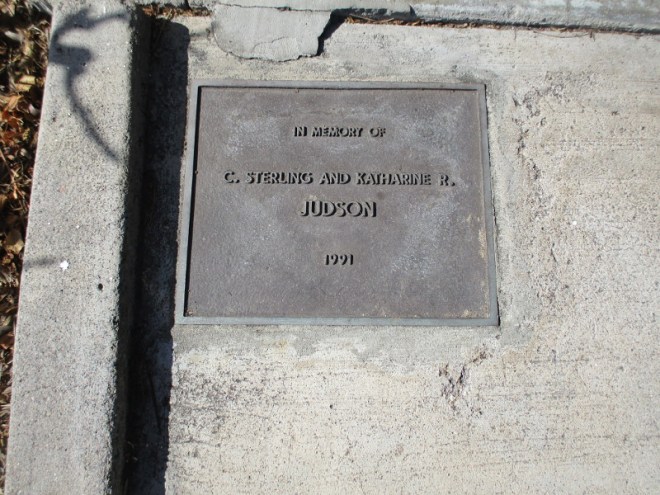
The plaque on the gazebo includes: In 1875 the bustling commerce of ore wagons, stage coaches and other traffic of the times passed this spot on route to and from San Diego and the gold mines of Julian. This land was later granted to the City of El Cajon by the C.S. Judson family…The gazebo was constructed by the El Cajon Historical Society…Dedicated July 26, 1992…This rose garden was presented to the people of El Cajon by the East County Rose Society…Dedicated November 2002…

This blog now features thousands of photos around San Diego! Are you curious? There’s lots of cool stuff to check out!

Here’s the Cool San Diego Sights main page, where you can read the most current blog posts.  If you’re using a phone or small mobile device, click those three parallel lines up at the top–that opens up my website’s sidebar, where you’ll see the most popular posts, a search box, and more!

To enjoy future posts, you can also “like” Cool San Diego Sights on Facebook or follow me on Twitter.

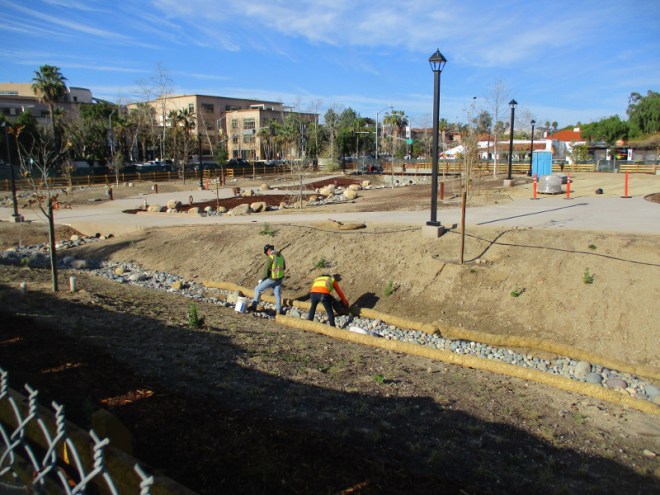
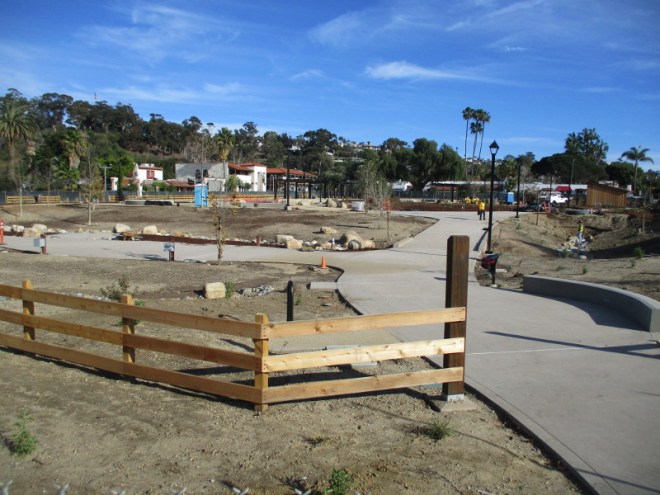
Kumeyaay exhibit area in Old Town takes shape!

I swung by Old Town San Diego State Historic Park this afternoon for a short walk.

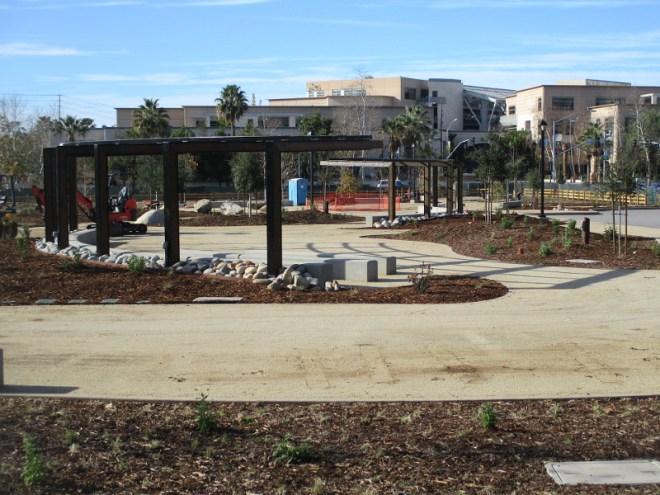
While most of Old Town has been very quiet during the COVID-19 pandemic, the construction of the new outdoor Kumeyaay exhibit space in one corner of the park has been going full speed ahead. And it’s really taking shape!

I last posted photos of the construction in October. See those here. At the time, I was calling it the “new Kumeyaay park.” But I see there’s now an updated California State Parks web page concerning the project, and this outdoor area featuring interpretive exhibits is officially called Iipay ~ Tipai Kumeyaay Mut Niihepok, which translates to Land of the First People.

To see that web page, which includes a rendering and a map, click here.

I live in downtown San Diego and love to walk around with my camera! You can follow Cool San Diego Sights via Facebook or Twitter!

You can easily explore Cool San Diego Sights by using the search box on my blog’s sidebar. Or click a tag! There are thousands upon thousands of photos for you to enjoy!
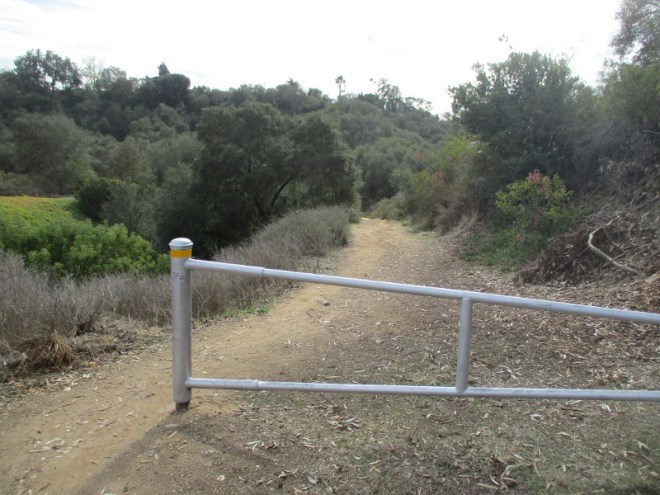
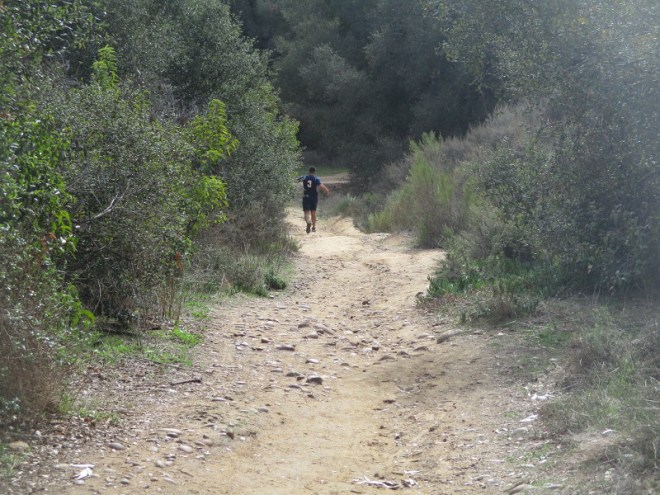
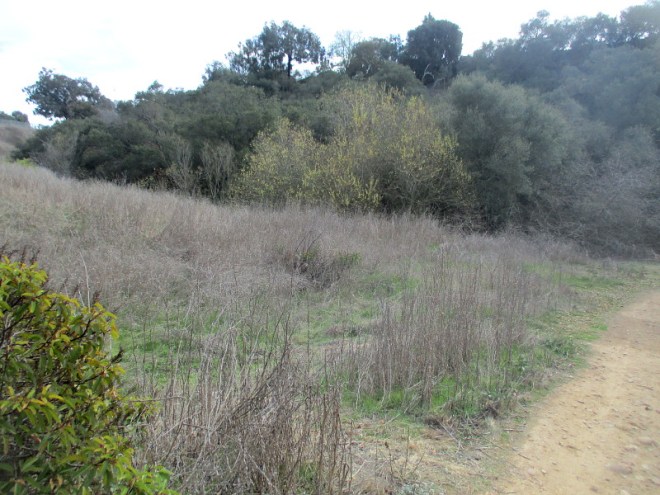
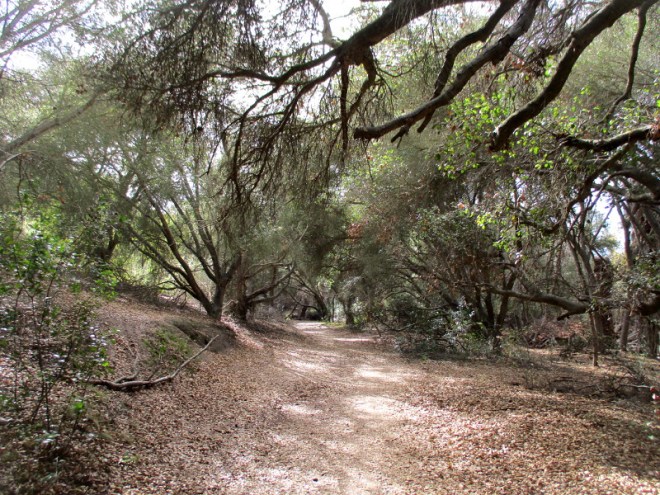
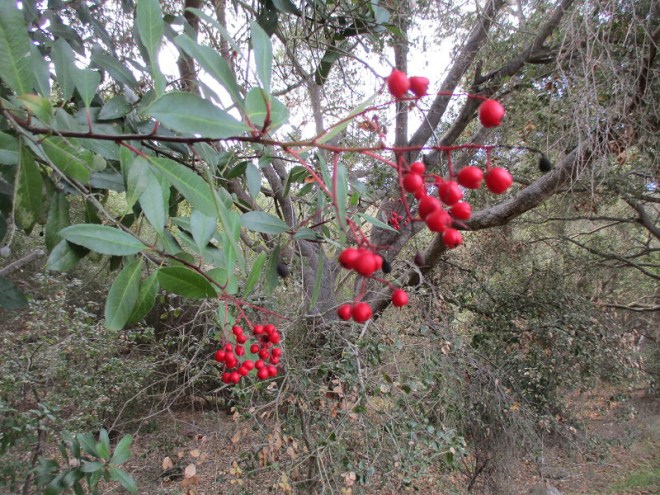
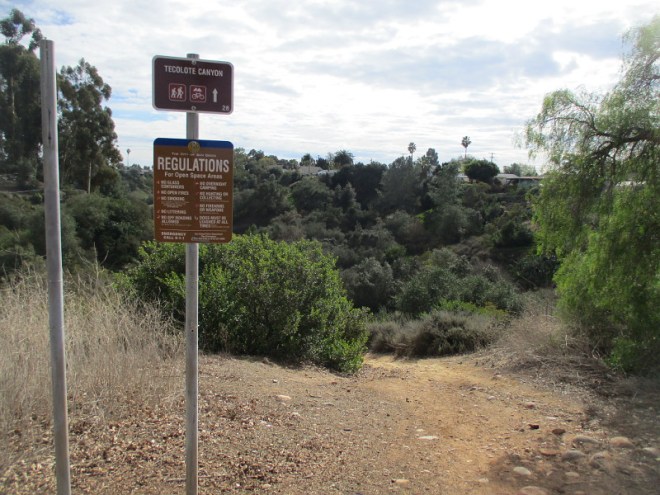
A hike in Tecolote Canyon near Genesee.

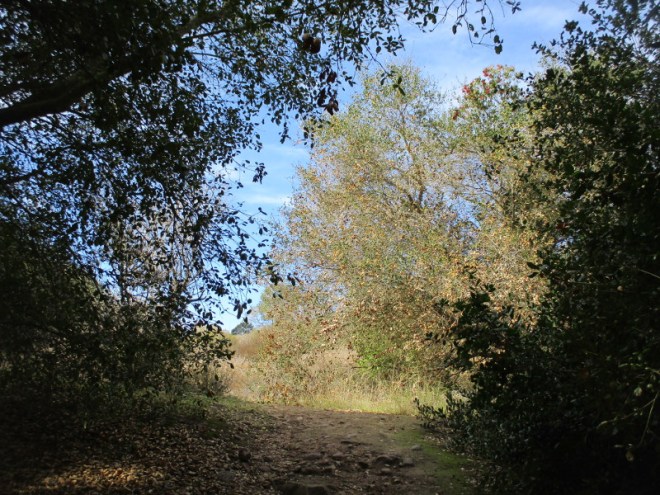
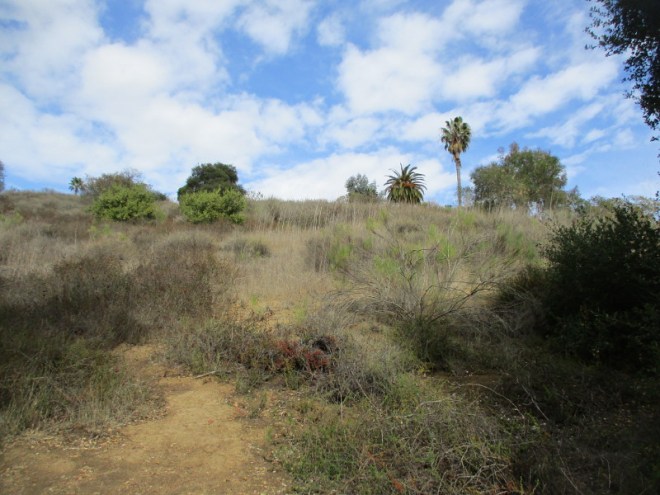
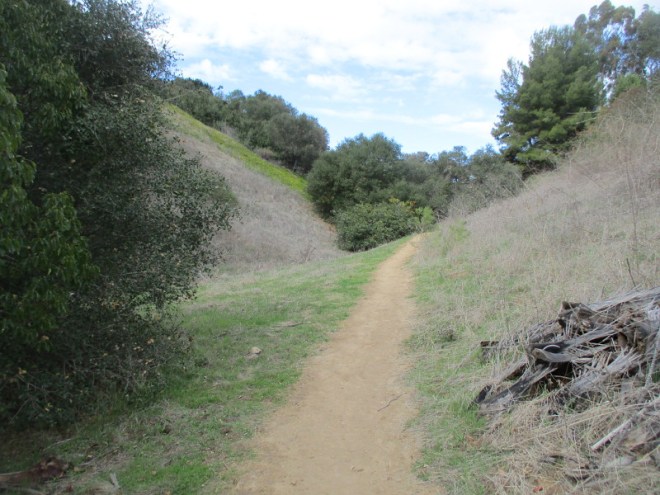
This fine afternoon in early February I enjoyed a short, relatively easy hike at the north end of Tecolote Canyon.

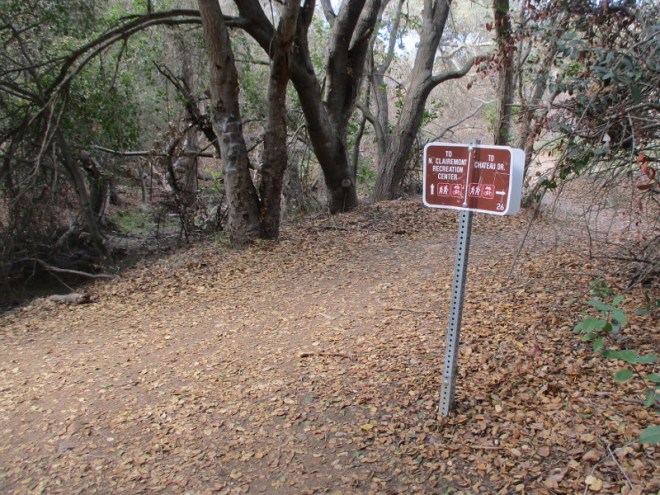
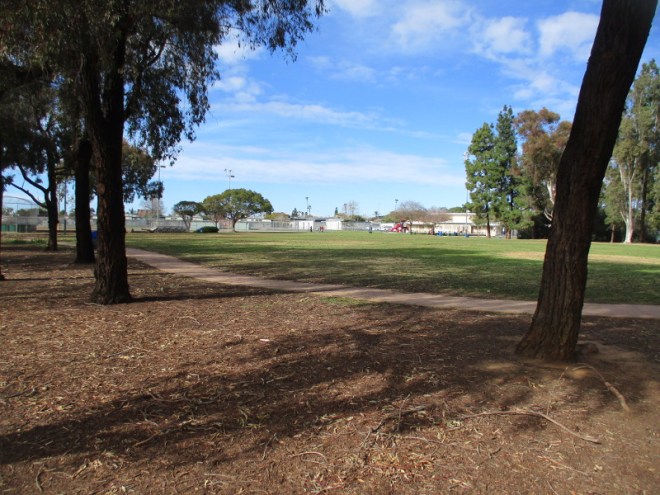
I started at Genesee Avenue and Chateau Drive, beside the prominent Tecolote Canyon Natural Park sign. The short segment I walked ended by a grassy field at the North Clairemont Recreation Center.

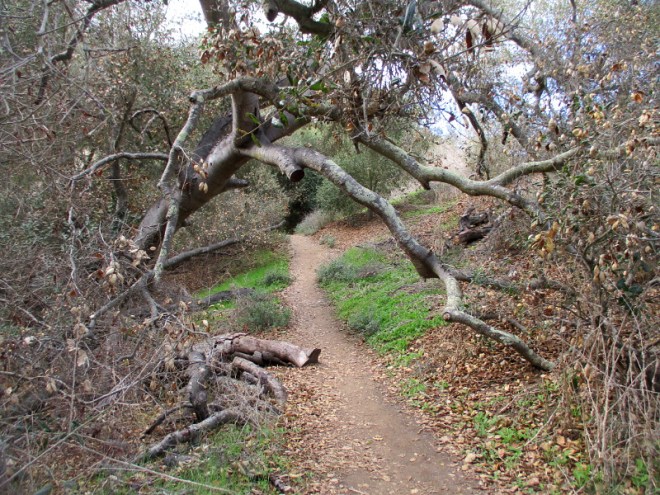
I saw few other people. I frightened a large hawk as I came down the trail. The large oaks around me were still and quiet, and appeared very old.

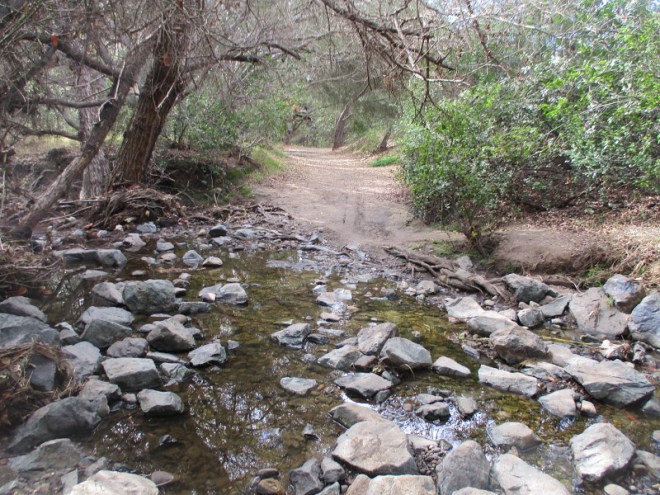
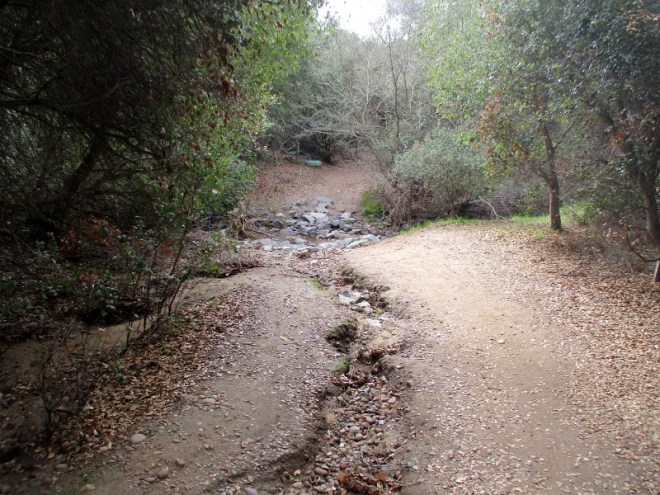
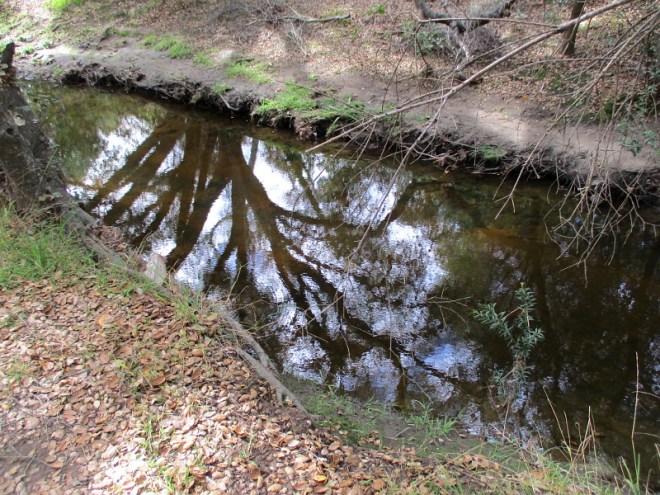
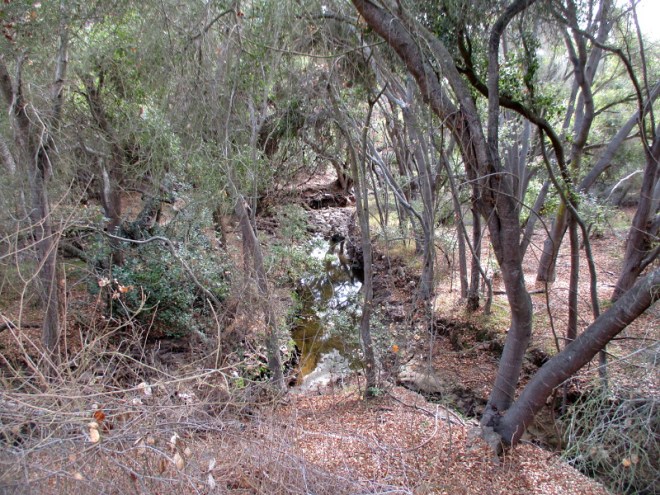
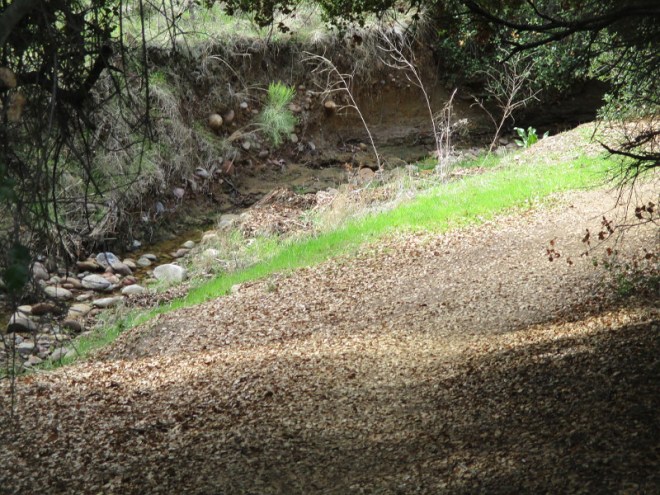
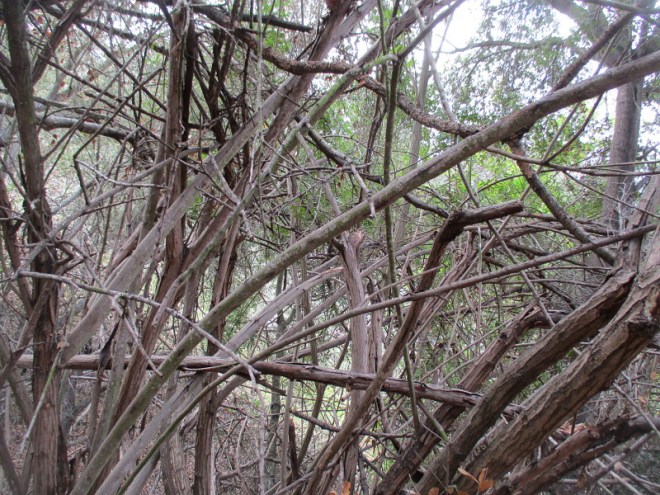
Along the canyon’s bottom, where the oak trees were thick, I carefully stepped on broken stones to cross trickling streams. I almost thought I was walking through an ancient forest of Tolkien’s Middle Earth–dim and gray, full of fantastically bent branches. But it was simply quiet, not eerie. Not with all the sunlit trees at the canyon’s rim and glimpses of a house here and there.

I live in downtown San Diego and love to walk around with my camera! You can follow Cool San Diego Sights via Facebook or Twitter!

You can easily explore Cool San Diego Sights by using the search box on my blog’s sidebar. Or click a tag! There are thousands upon thousands of photos for you to enjoy!

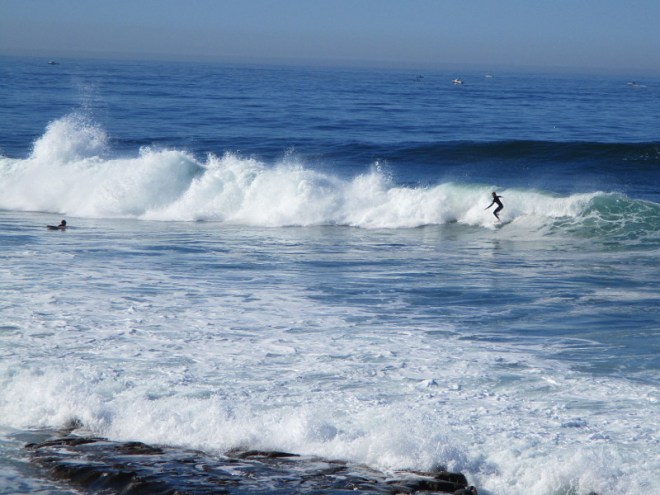
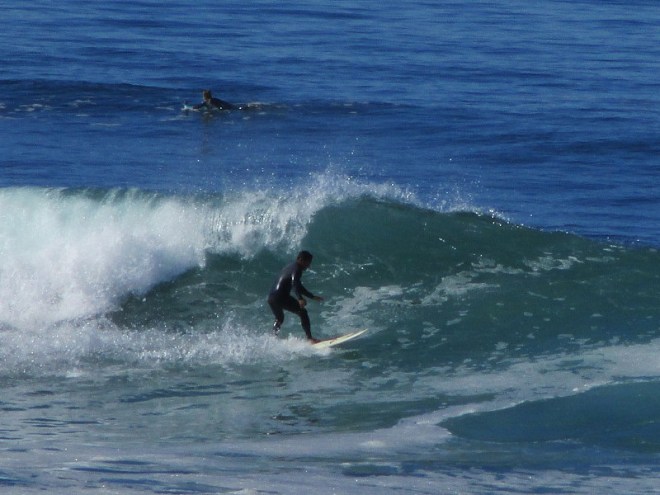
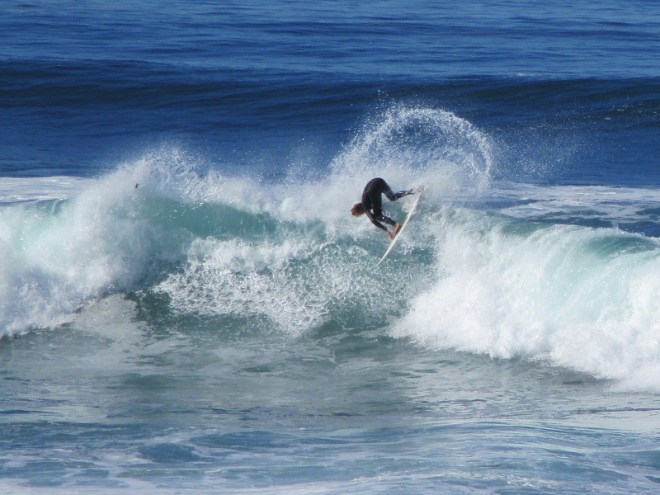
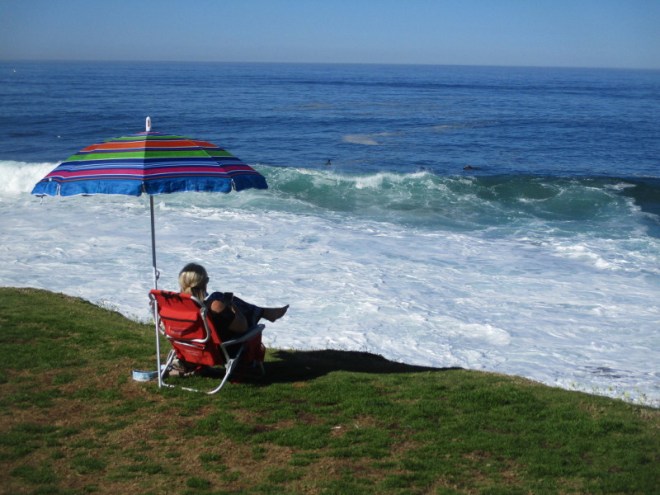
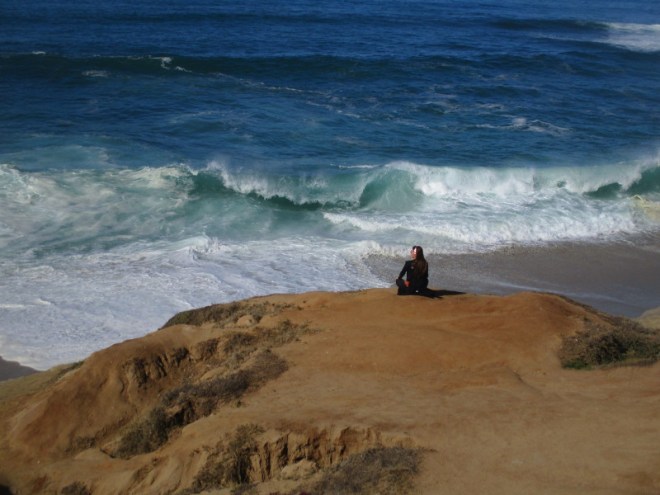
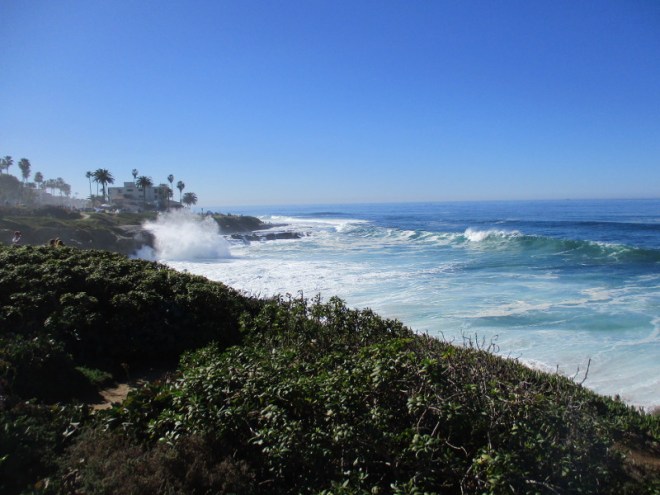
Big surf at the La Jolla Tide Pools!
A sunny, very warm winter Sunday.

Big surf.

High tide.

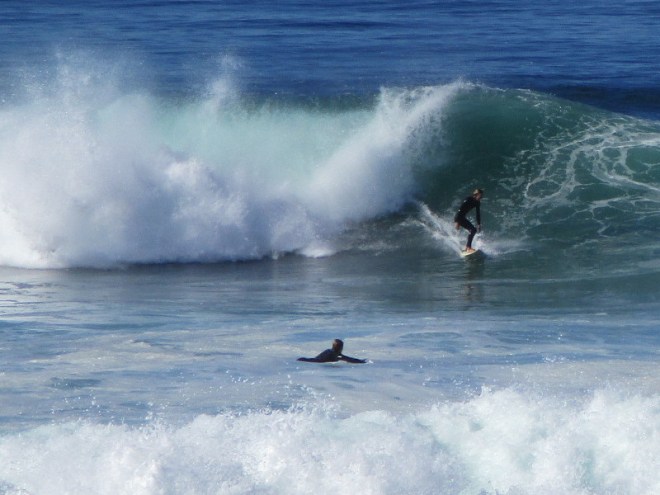
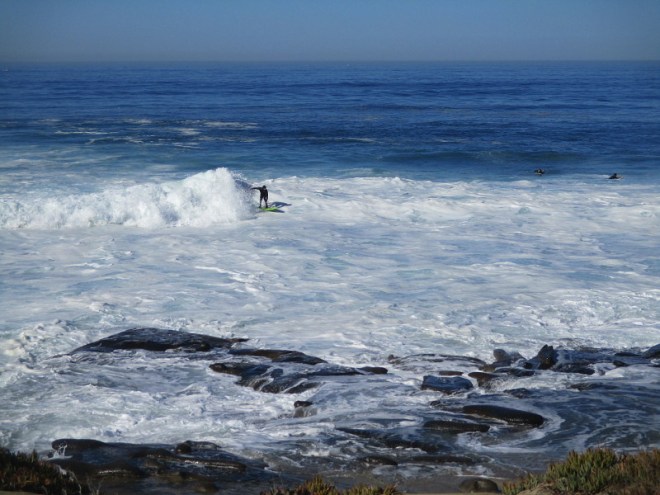
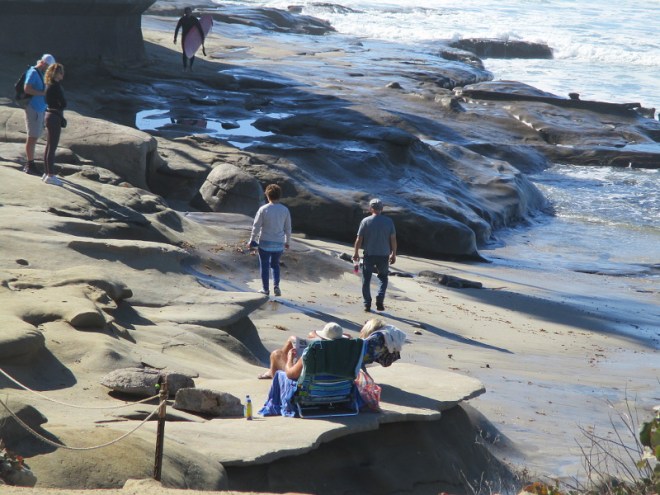
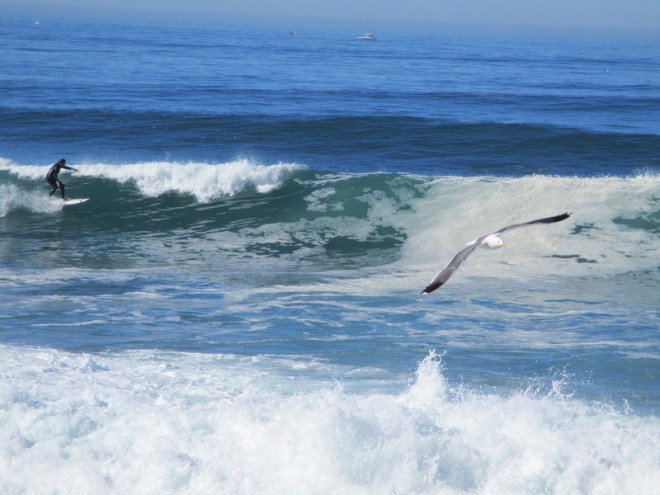
A perfect combination for some dramatic photographs at the La Jolla Tide Pools!

Many others had gathered at viewpoints above the tidepools and at Cuvier Park to watch distant surfers catch some amazing waves, and to gasp as huge geysers of foaming water crashed against the offshore rocks and rugged sandstone cliffs!

La Jolla is indeed one of the most beautiful places anywhere.

I live in downtown San Diego and love to walk around with my camera! You can follow Cool San Diego Sights via Facebook or Twitter!

Early winter and three Santee bridges.

This afternoon I wandered a little around Santee–mostly through Town Center Community Park.

During the walk I crossed three bridges. The first two you’ll see are the pedestrian bridges that pass over Woodglen Vista Creek, providing access to several sports fields. The third bridge I crossed is where Cuyamaca Street passes over the San Diego River.

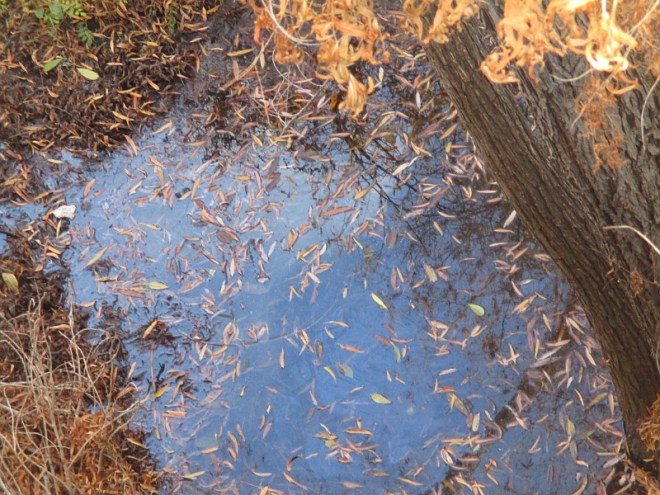
By looking straight down from the bridges I could see stagnant pools of leaf-covered water. It’s still early winter. We’ve only experienced one storm so far–and that was weeks ago.

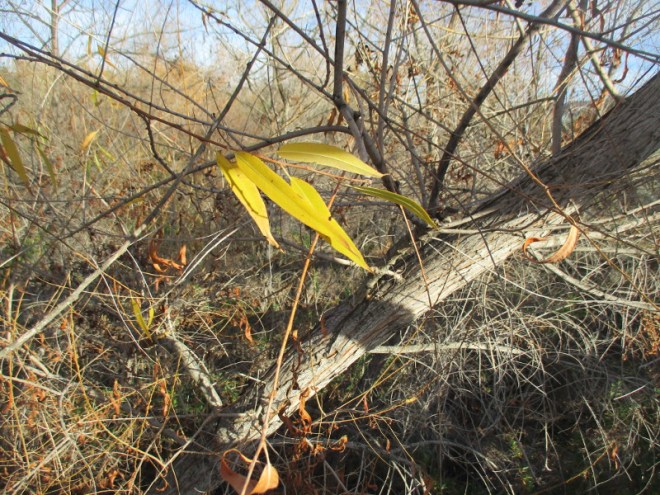
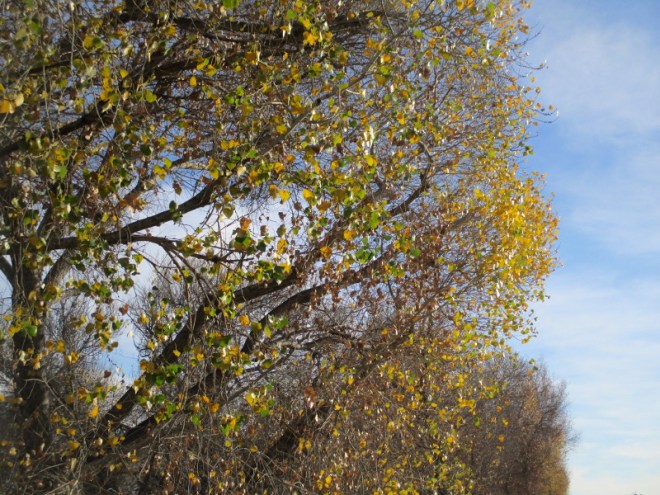
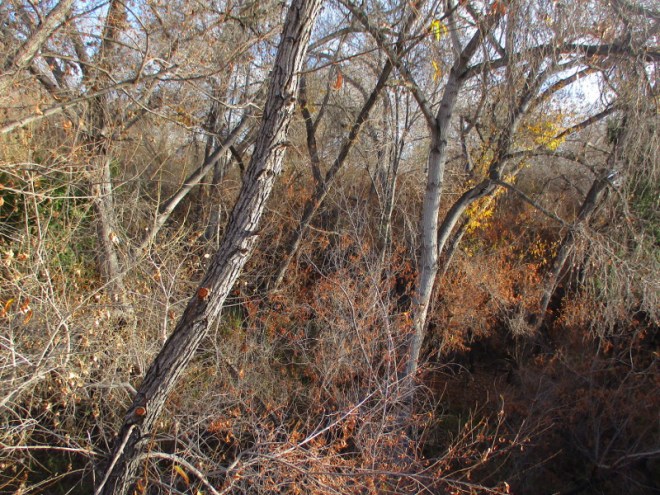
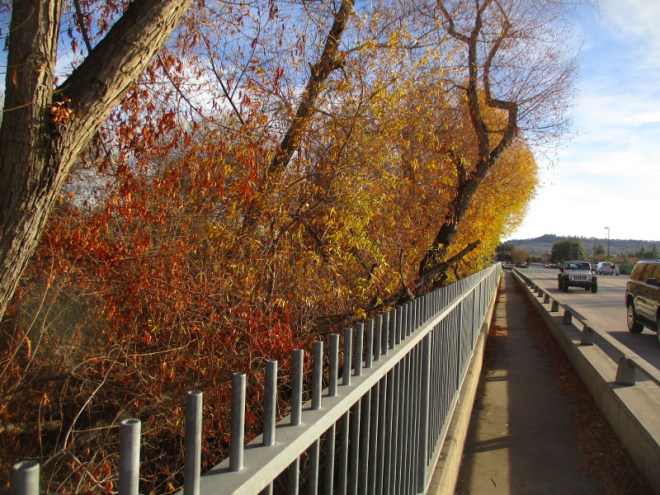
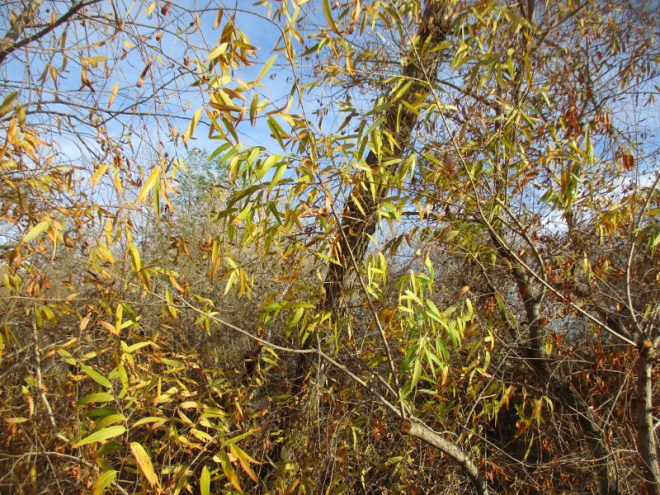
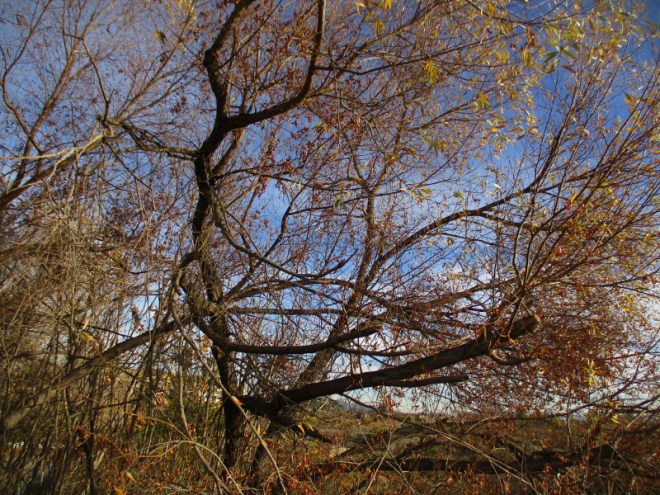
And, yes, leaves are falling. The most prominent river trees here seem to be willows, and they now appear to be mainly yellow, a burnt orange, or brown. I saw many cottonwoods turning yellow and gray, too.

The late bright sunshine passing through the foliage made for beautiful scenery, as you can see.

Here come two more photos from the first bridge…

After crossing the first pedestrian bridge, I read an informative sign showing local insects and birds, plus a map.

You can see where Woodglen Vista Creek joins with the San Diego River…

I headed west down the pathway near those four sports fields to the next pedestrian bridge…

As I came to the second bridge, my eyes were greeted by another sign!

This one explains a little about Woodglen Vista Creek. People who live nearby can be treated to sightings of all sorts of native wildlife, from coyotes to caterpillars, red-tailed hawks to California ground squirrels…

Then I found myself walking west along River Park Drive toward Cuyamaca Street, with lots of baseball fields nearby.

Many families and kids were out playing and practicing!

As I walked, the bright orange of a California poppy caught my attention!

When I reached Cuyamaca Street, I turned back east to see a line of trees following the nearby San Diego River.

Turning south, I crossed over the San Diego River and couldn’t help taking many more photographs…

Having crossed the San Diego River, I turned my gaze back northeast.

There, in the distance, stood prominent El Cajon Mountain!

I live in downtown San Diego and love to walk around with my camera! You can follow Cool San Diego Sights via Facebook or Twitter!

Shelltown public art celebrates community.

In Shelltown, a community southeast of downtown San Diego and north of National City, you’ll find fantastic public art at Southcrest Trails Park.

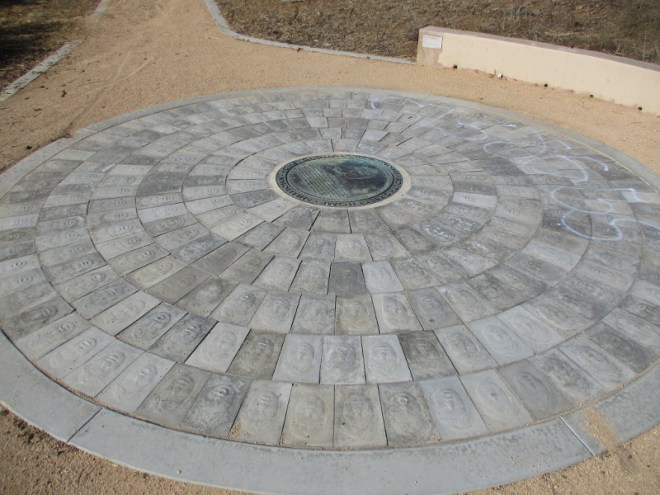
As one walks through the neighborhood park, one comes upon a large mosaic-like disk that contains many expressive faces. The public art, made of concrete pavers and bronze set in a small plaza, is titled A Place to Call Home. It was created in 2018 by San Diego artists Ingram Ober and Marisol Rendón-Ober.

The faces represent residents of the community speaking four names associated with the site: Chollas Creek, Shelltown, Southcrest and Home. As one circles the plaza, many mouths appear to speak.

The plaque at the center includes the words: Home is a place that helps us define who we are, and although we may leave that place, it never leaves us.

This blog now features thousands of photos around San Diego! Are you curious? There’s lots of cool stuff to check out!

Here’s the Cool San Diego Sights main page, where you can read the most current blog posts.  If you’re using a phone or small mobile device, click those three parallel lines up at the top–that opens up my website’s sidebar, where you’ll see the most popular posts, a search box, and more!

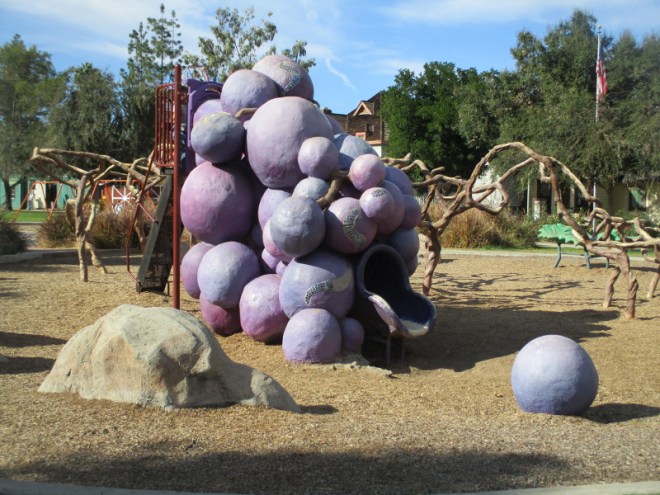
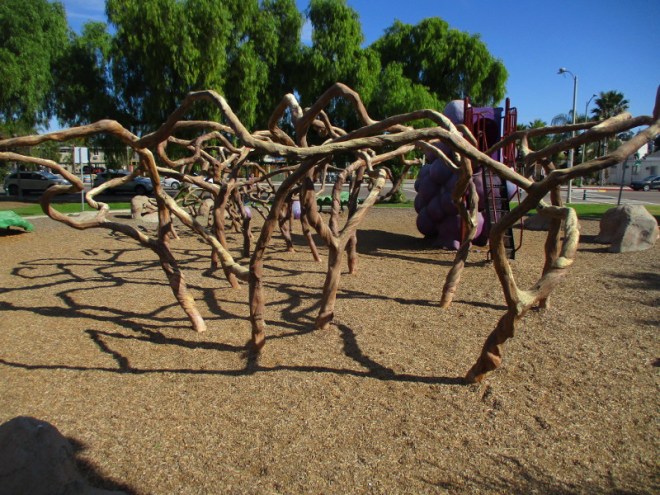
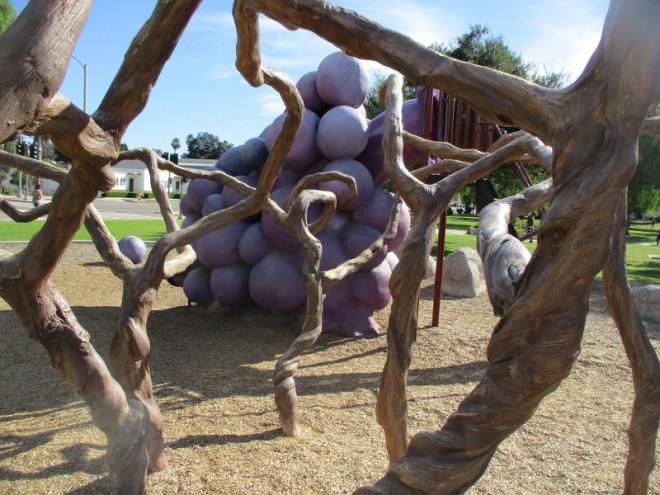
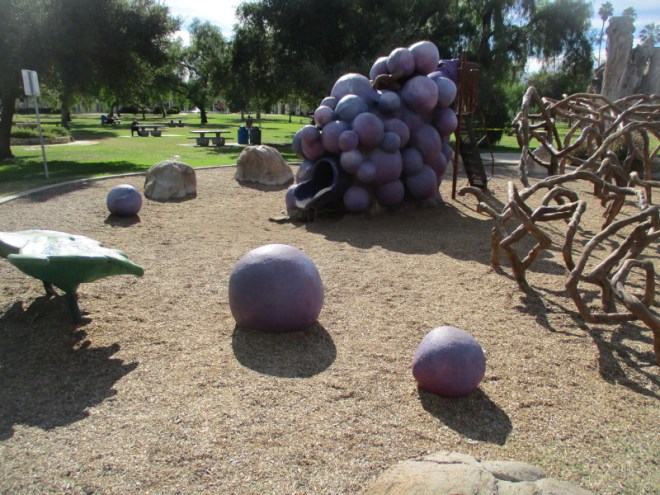
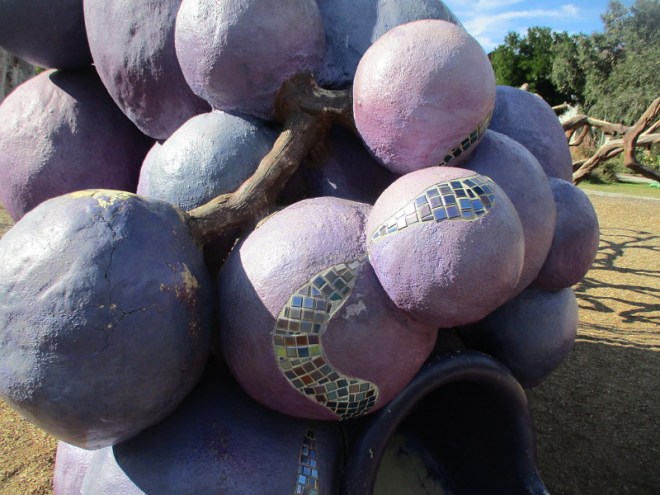
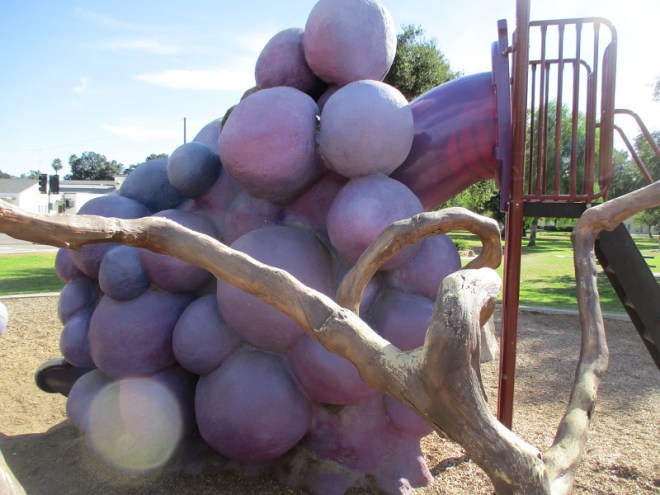
Sliding through an enormous bunch of grapes!

I’ve seen people stomping on grapes. Now I’ve observed people happily sliding through them!

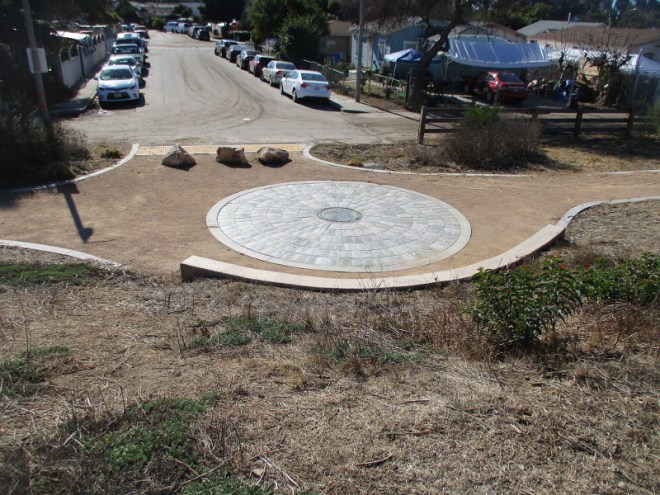
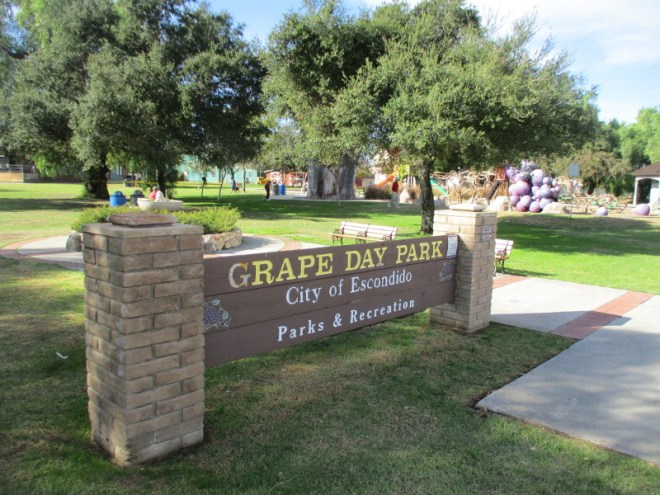
That’s because a while back I found myself near the Grape Day Park playground in Escondido. As I walked around taking photographs, I saw a couple of kids descending the Vinehenge slide!

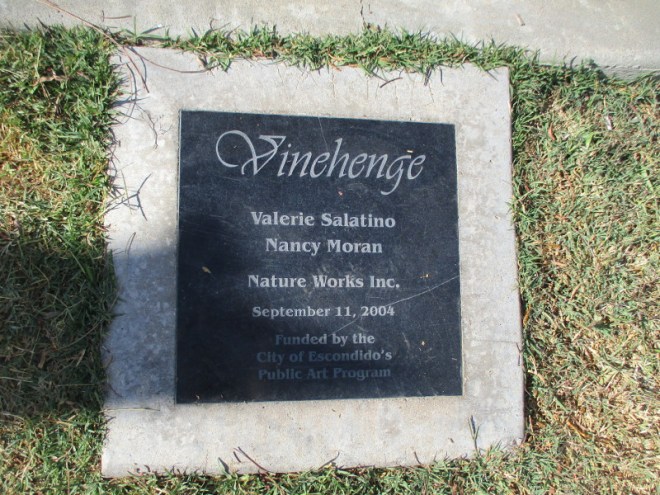
Vinehenge was created by artists Valerie Salatino and Nancy Moran in 2004. It’s a very fun part of the City of Escondido’s public art collection!

According to a nearby information sign, city leaders launched the Grape Day Festival back in 1906. “Thousands of visitors, brought in by the Santa Fe Railroad, enjoyed free grapes, danced, socialized, and engaged in other festivities on these grounds.” Today a very wonderful Grape Day Park features the Escondido History Center Museum Complex, which I blogged about over a year ago here.

Check out these fun pics of Vinehenge and its unique grape slide!

I live in downtown San Diego and love to walk around with my camera! You can follow Cool San Diego Sights via Facebook or Twitter!

You can easily explore Cool San Diego Sights by using the search box on my blog’s sidebar. Or click a tag! There are thousands upon thousands of photos for you to enjoy!