The human world is complex. I suppose that’s due in large part to the contradictory impulses and plasticity of the human mind.
A big city like San Diego is filled with this often disconcerting complexity.
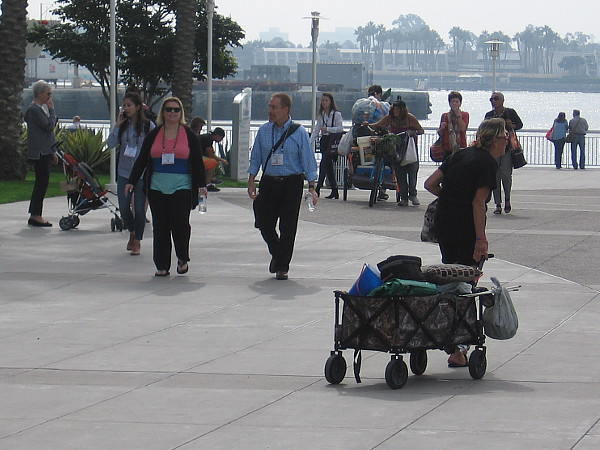
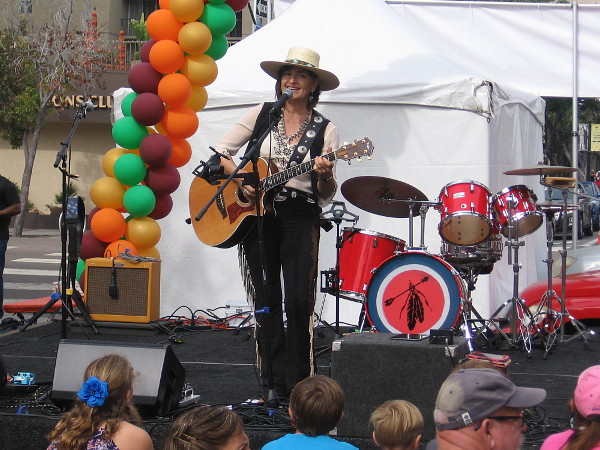
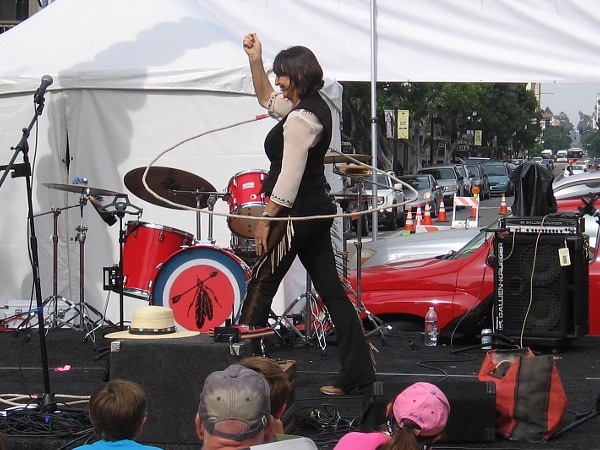
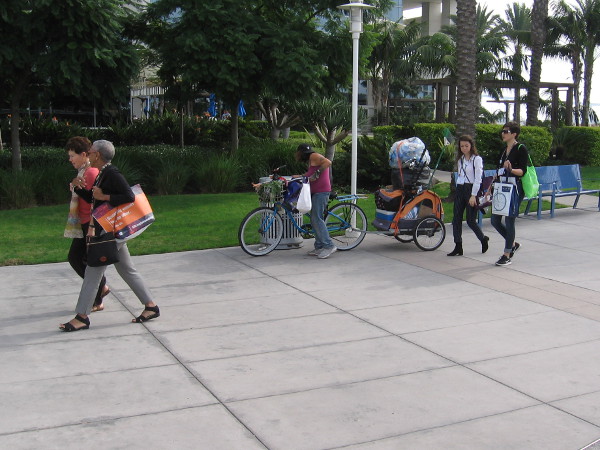
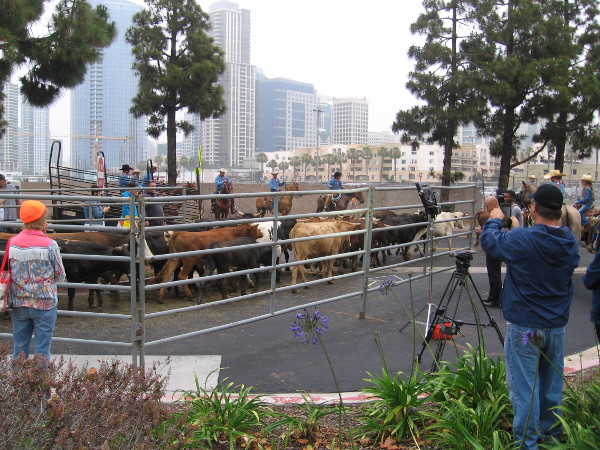
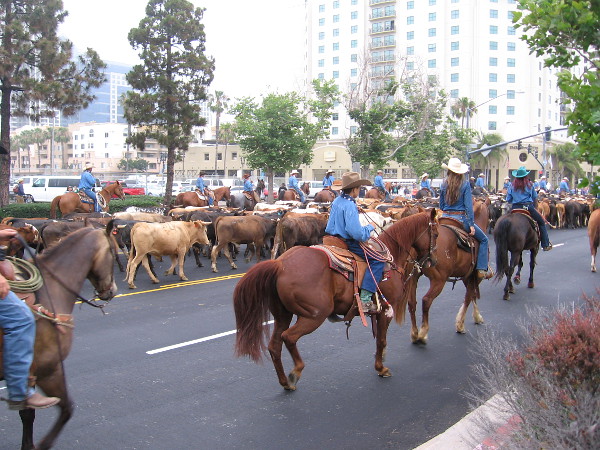
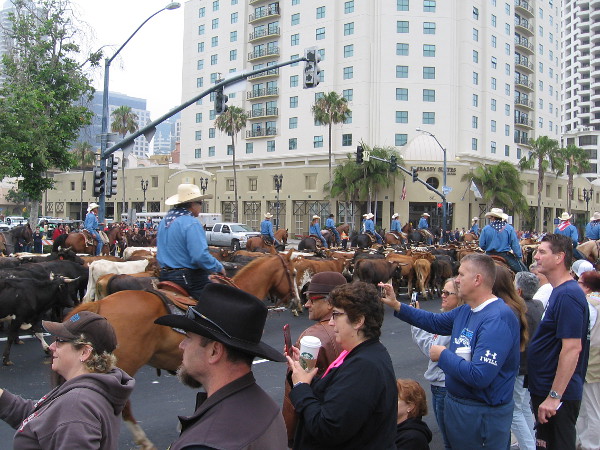
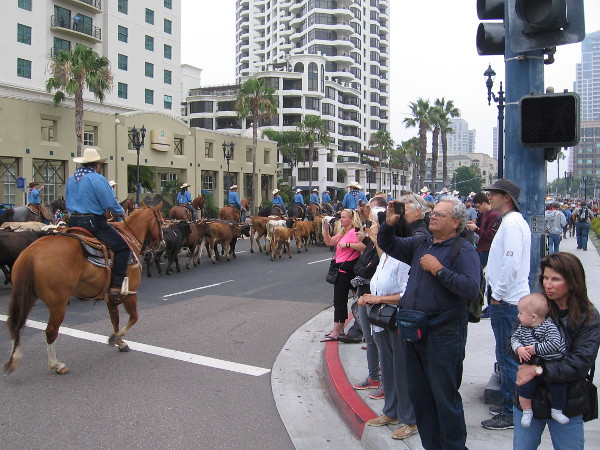
My walk around downtown today was a little more interesting than usual. Cowboys, symbols of rugged individualism and freedom, had gathered in the Gaslamp Quarter for the annual Fall Back Festival, an event that celebrates the Old West and early history of San Diego. Meanwhile, 6000 neuroscientists attending the big Society for Neuroscience conference at the convention center were sharing sidewalks with San Diego’s large homeless population.
Seeing that particular combination all together–cowboys, neuroscientists and homeless people–fired up a few billion neurons in my own mysterious brain. And stirred emotions.
So many human values, often in conflict.
…
Every so often a small work of fiction bubbles out of my brain.
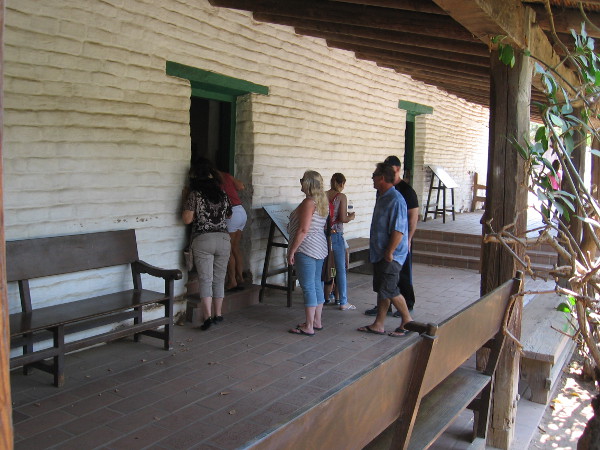
Visitors to Old Town San Diego State Historic Park look into a restored room of La Casa de Estudillo.
Four years ago I posted photos of La Casa de Estudillo, a famous adobe house in Old Town San Diego State Historic Park that was originally built in 1827. That blog was called Ramona saved Casa de Estudillo in Old Town and concerned the fascinating history of this structure.
Over time various parts of the casa have undergone restoration and new rooms have opened up to public view. These rooms now appear furnished as they once might have been, in the very early days of San Diego.
I recently walked through La Casa de Estudillo and peered into a few of the rooms…
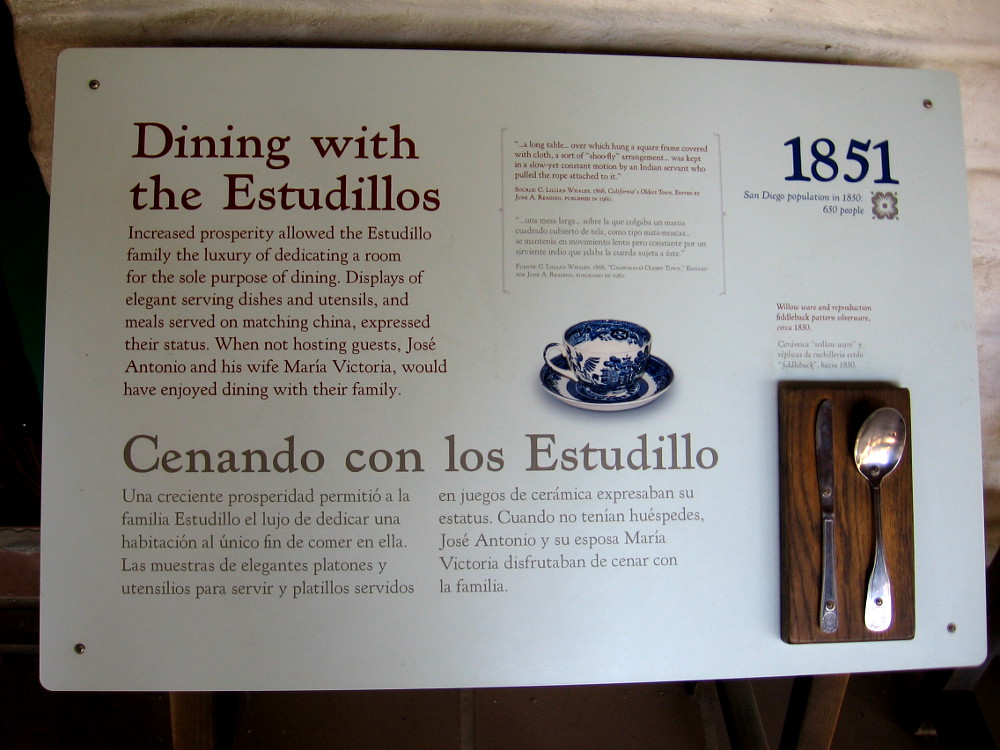
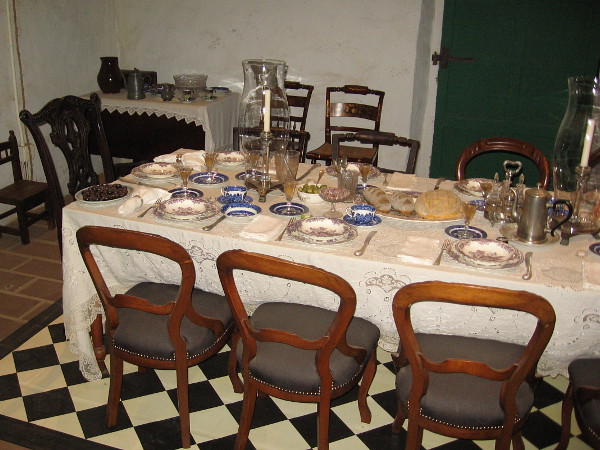
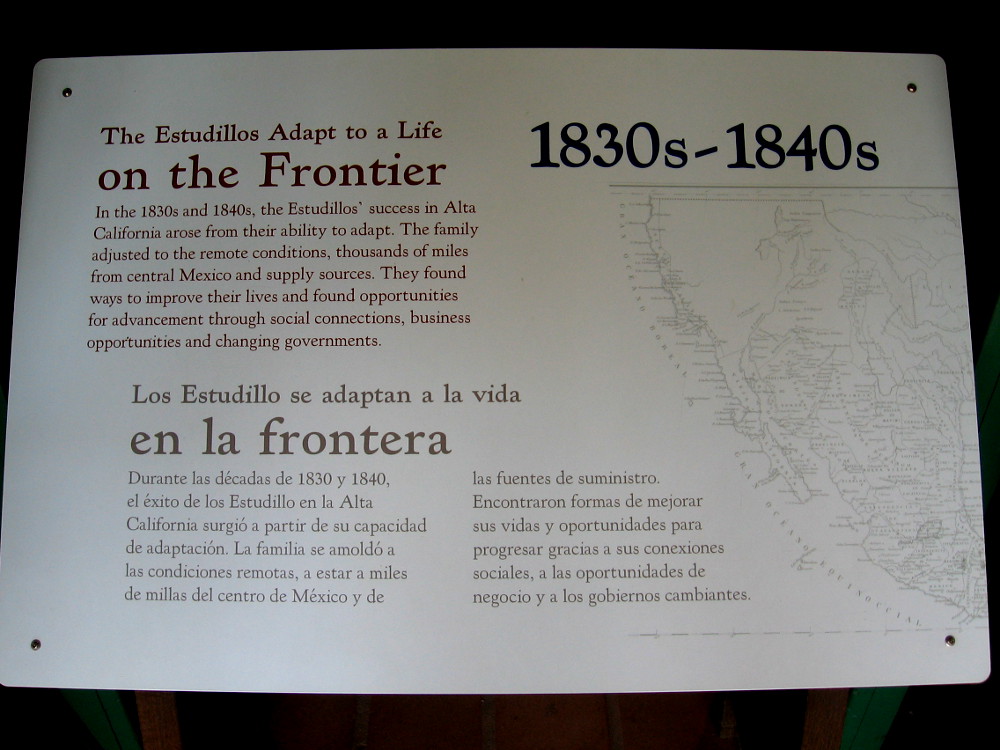
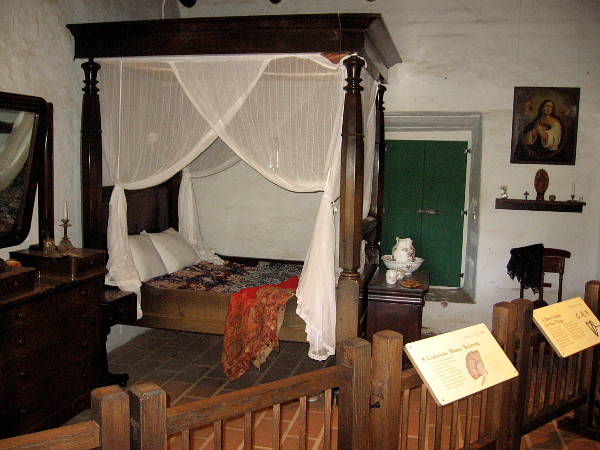
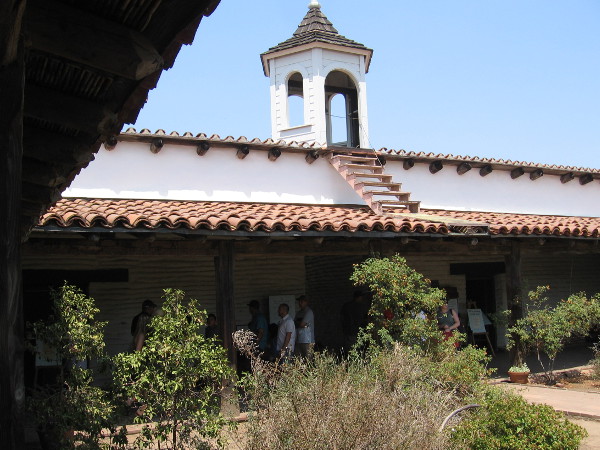
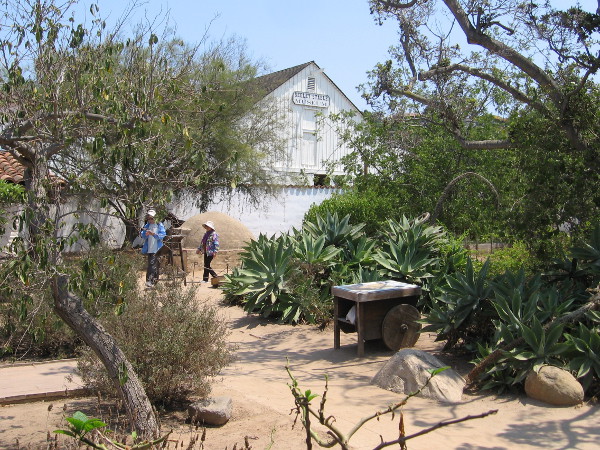
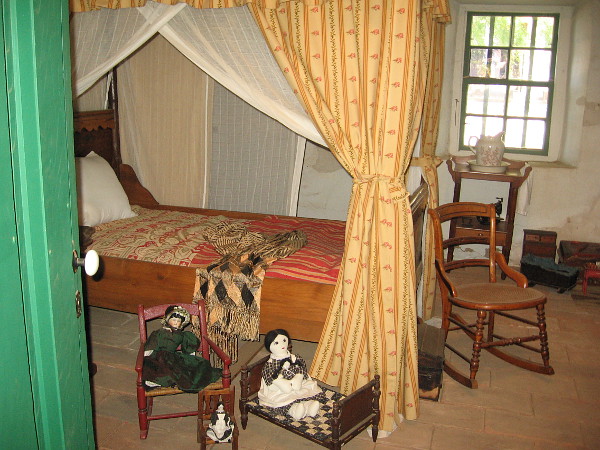
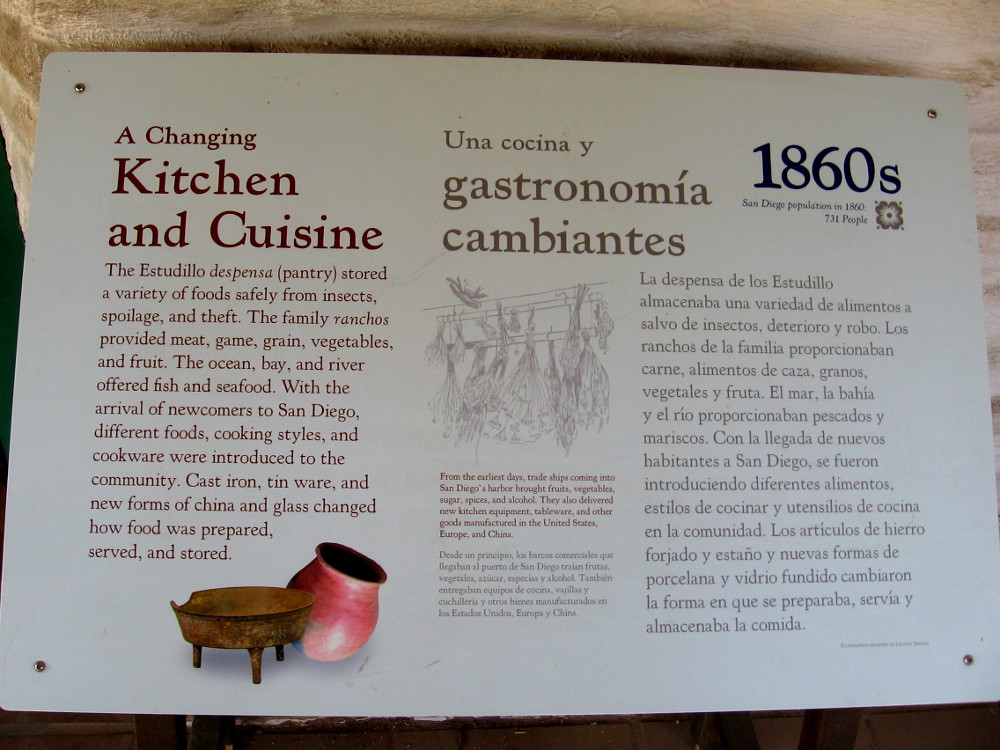
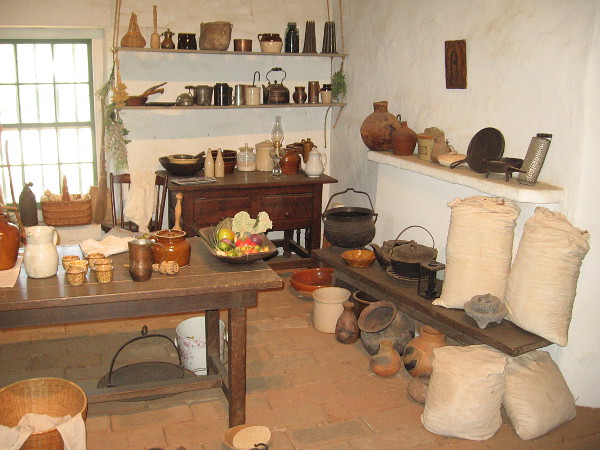
Sign describes the dining room of La Casa de Estudillo.The eventual prosperity of the Estudillo family is reflected in their elegant dining room.Expensive furniture and tableware imported by ship from distant places fill the otherwise simple room.Sign describes commerce in the casa. Francisco de Paul Rodriguez rented space from the Estudillos for a store.The store, or tienda, contained shelves of goods that might be purchased by the residents of Old Town San Diego. Much of the merchandise came by ship from the East Coast around Cape Horn.More shelves against one wall contain iron tools and basic furnishings like candlesticks for sale.Sign describes how the Estudillos adapted to life on the frontier in the 1830’s and 1840’s.A bedroom inside La Casa de Estudillo contains a wealth of comfort, unusual in early San Diego, which was located far away from developed centers of commerce.Several additional rooms at La Casa de Estudillo are undergoing restoration.Sign describes how the casa started as a modest two-room structure and eventually grew into an expansive U-shaped building with a courtyard and outbuildings.Photo of the Casa de Estudillo’s tower from the central garden courtyard.Looking across the south end of the courtyard toward the outdoor oven and Seeley Stable beyond.Sign explains how the Estudillos cared for a growing family including many children.Frozen Charlotte dolls, ca. 1850’s. These china dolls were popular in the Victorian era.A look into the children’s bedroom.Sign describes the Estudillo kitchen and pantry. The family’s ranchos provided meat, game, vegetables and fruit.Jars, pots, sacks of flour and fruit are among the many items seen in the rather primitive kitchen.The kitchen inside La Casa de Estudillo provides an idea of what life might have been like in early San Diego.
UPDATE!
Here are additional photos of information signs that I took in June 2019…
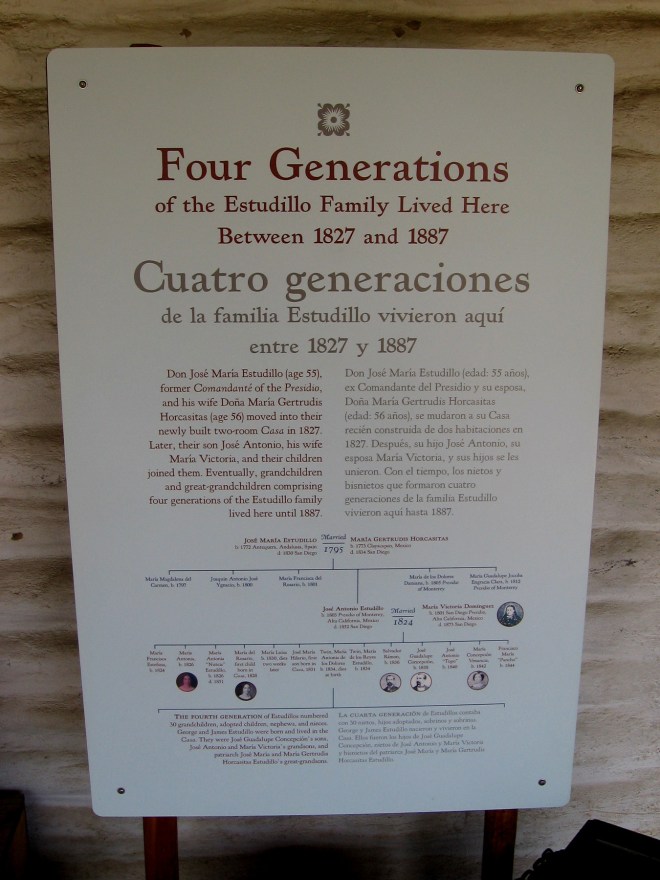
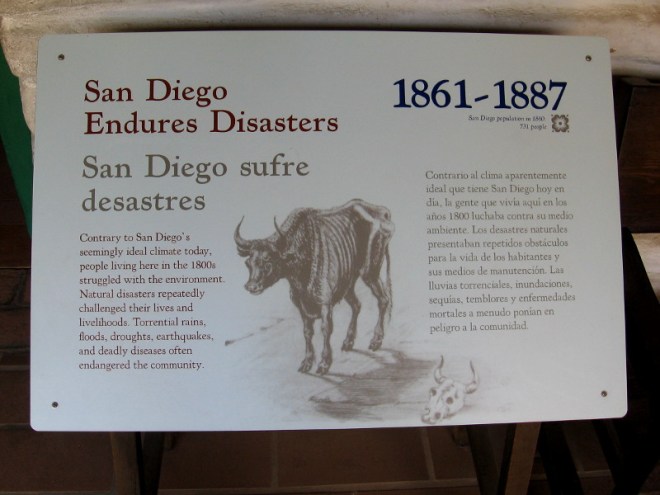
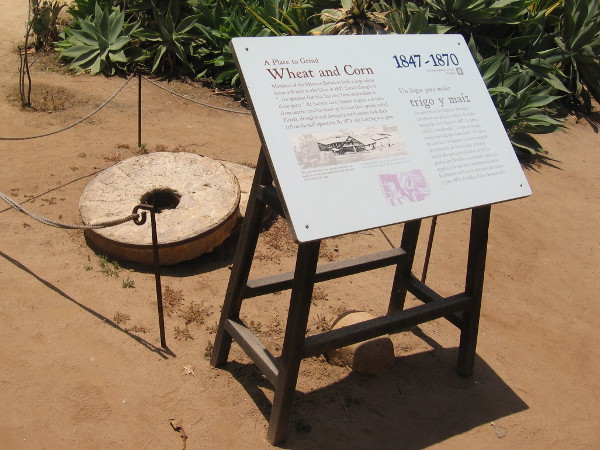
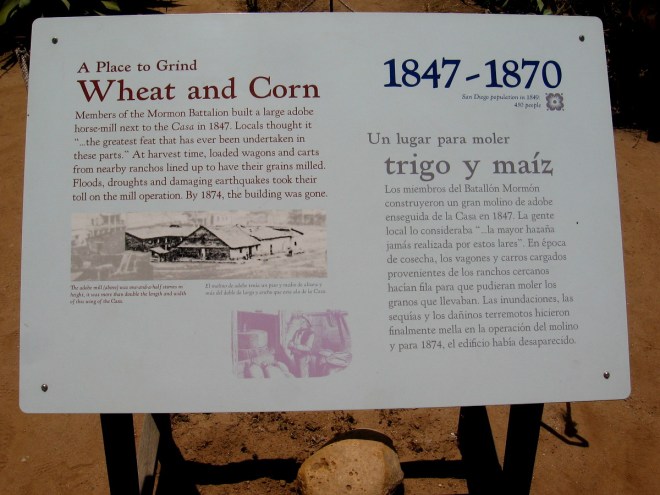
Sign showing architect Hazel Wood Waterman’s design for the Casa de Estudillo includes a photo of the Casa under construction.Four generations of the Estudillo family lived here between 1827 and 1887. Don José Maria Estudillo was former Comandante of the Presidio.An Estudillo tradition of public service.People living in San Diego in the 1800s struggled with natural disasters like torrential rains, floods, droughts, earthquakes and disease.A display in the courtyard of the Casa de Estudillo.A place to grind wheat and corn. Members of the Mormon Battalion built a large adobe horse-mill near the Casa.
…
This blog now features thousands of photos around San Diego! Are you curious? There’s lots of cool stuff to check out!
Here’s the Cool San Diego Sights main page, where you can read the most current blog posts. If you’re using a phone or small mobile device, click those three parallel lines up at the top–that opens up my website’s sidebar, where you’ll see the most popular posts, a search box, and more!
To enjoy future posts, you can also “like” Cool San Diego Sights on Facebook or follow me on Twitter.
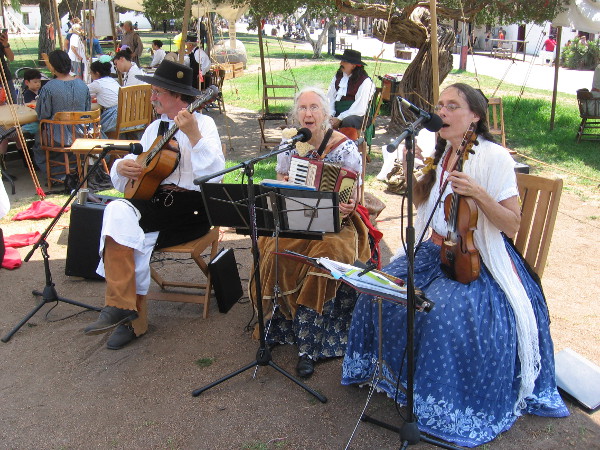
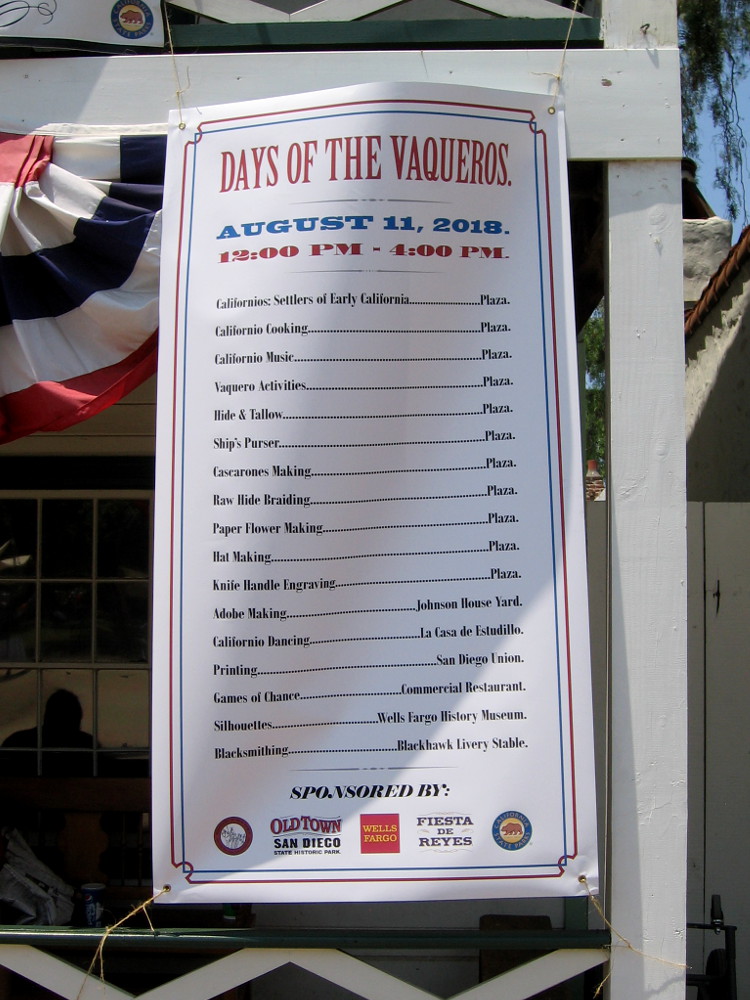
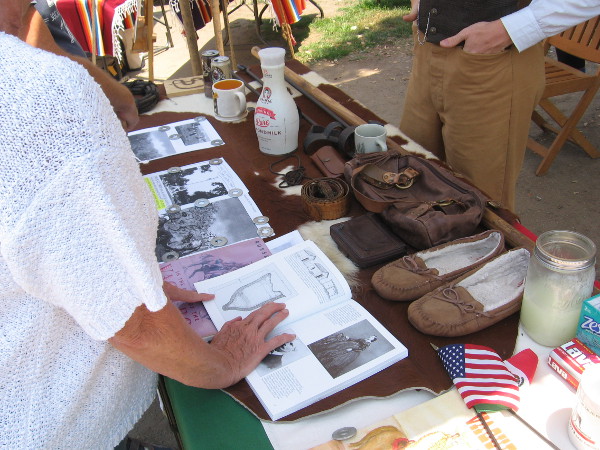
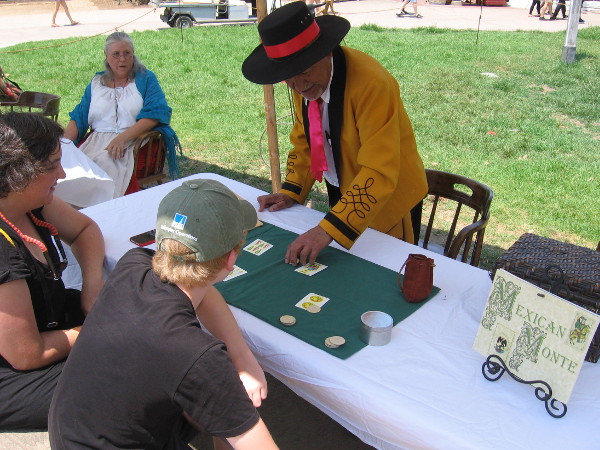
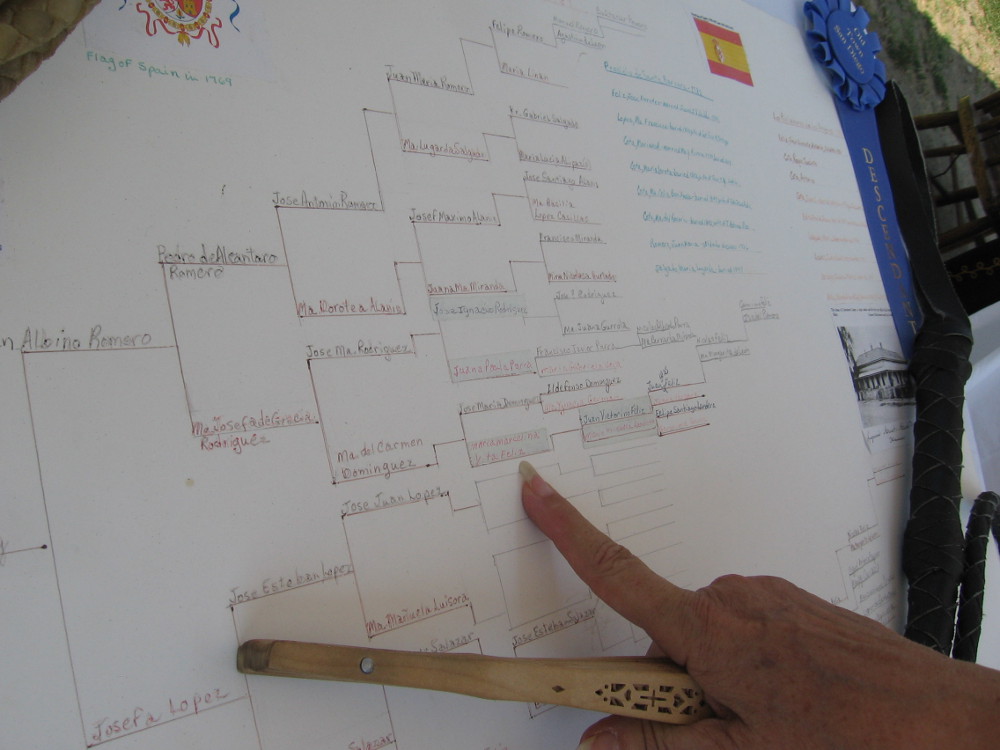
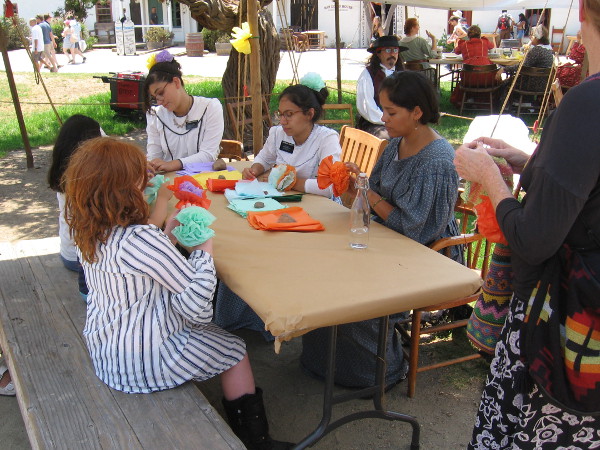
Today, after I checked out the San Diego Cup racing at Mission Bay, I headed to Old Town San Diego State Historic Park to see if anything interesting was going on. Somehow I’d forgotten that Stagecoach Days are celebrated in Old Town on summer Saturdays, and so I was surprised and happy to stumble upon Days of the Vaqueros!
I blogged about this exact same event last year, and took lots of photos and provided a fair amount of description and background. I saw many of the same participants again this year, and debated whether I should take more photos.
I love Old Town so much I couldn’t resist. If you want to learn more about life in San Diego when Southern California was a part of Spain, then Mexico, and large ranches employed the original cowboys, or vaqueros, then visit my blog from last summer’s event here.
You might also enjoy reading my blog post about Old Town’s McCoy House Museum, which includes many displays that concern San Diego’s fascinating early history.
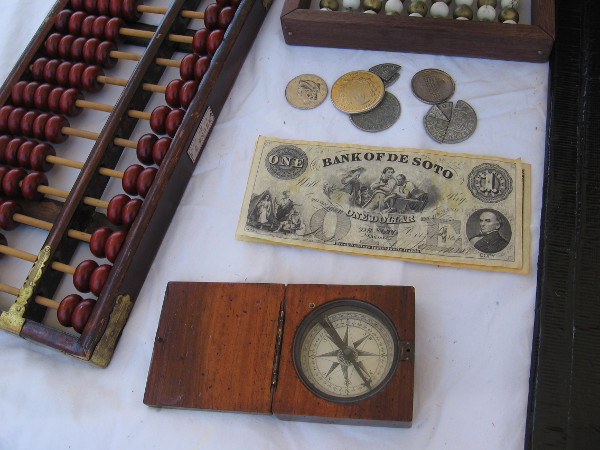
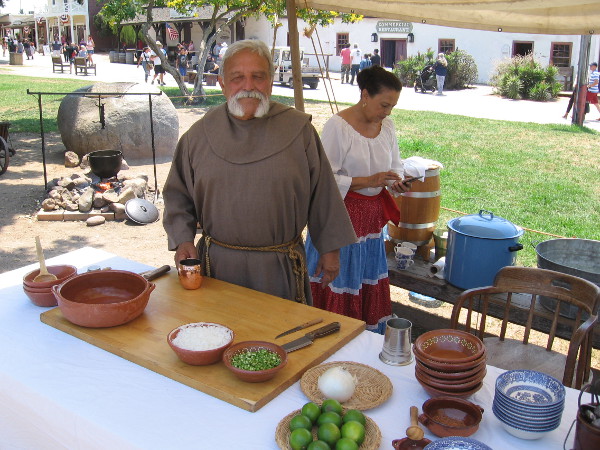
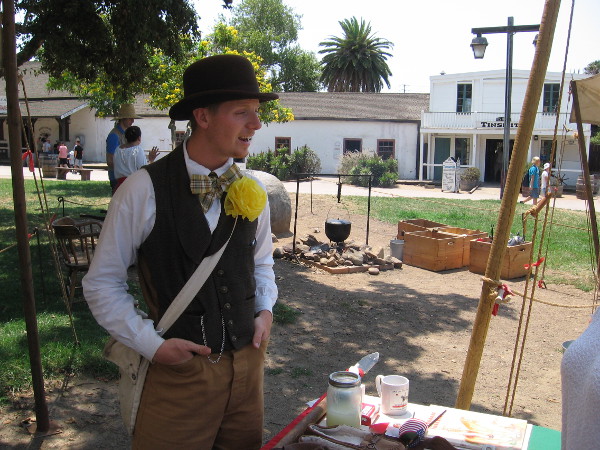
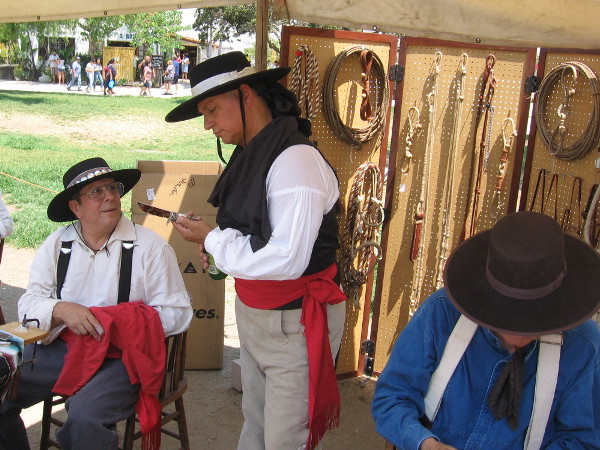
Meanwhile, here are a few uncaptioned photographs of what I experienced today…
…
I live in downtown San Diego and love to walk around with my camera! You can follow Cool San Diego Sights via Facebook or Twitter!
You can easily explore Cool San Diego Sights by using the search box on my blog’s sidebar. Or click a tag! There are thousands upon thousands of photos for you to enjoy!
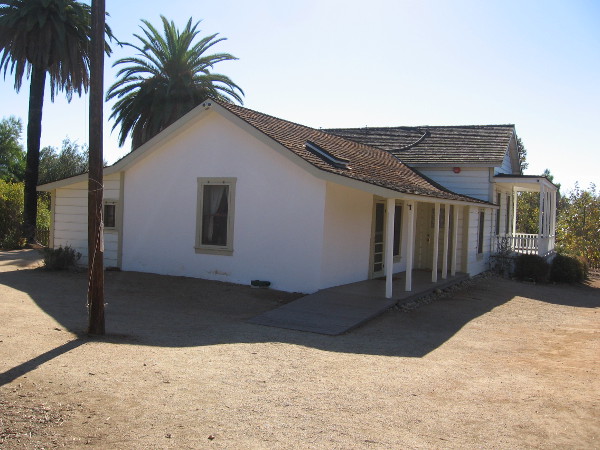
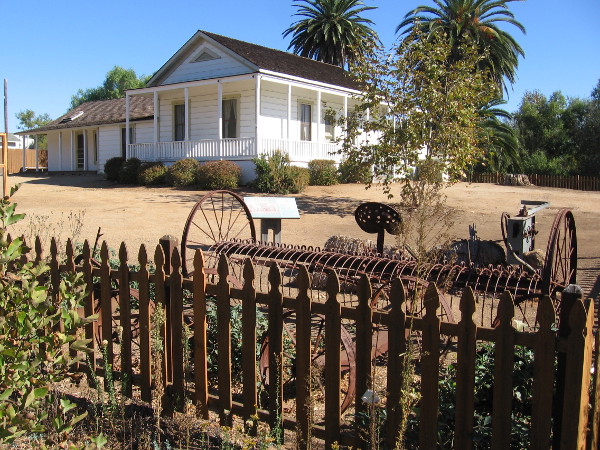
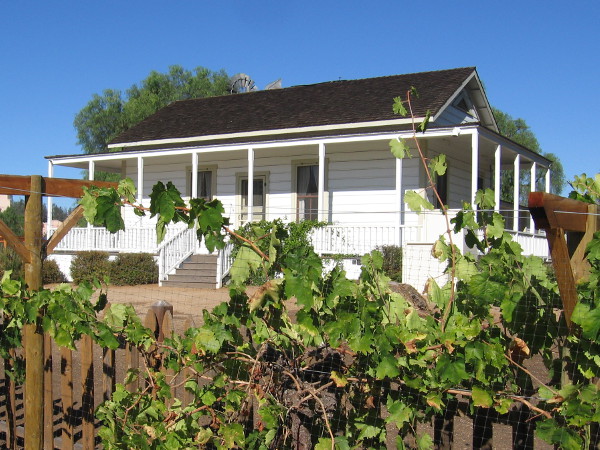
Photo of the rustic Sikes Adobe Farmhouse on a sunny November day.
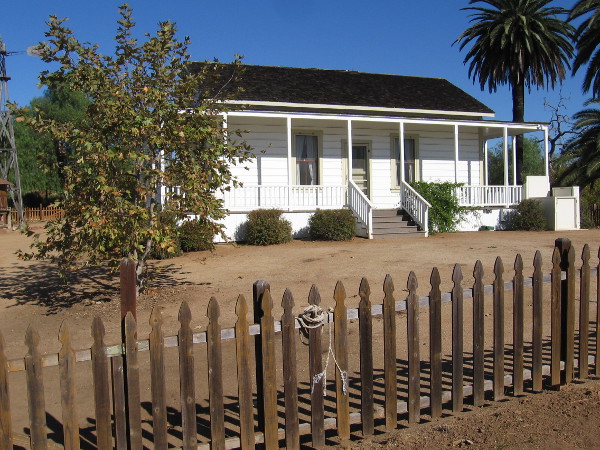
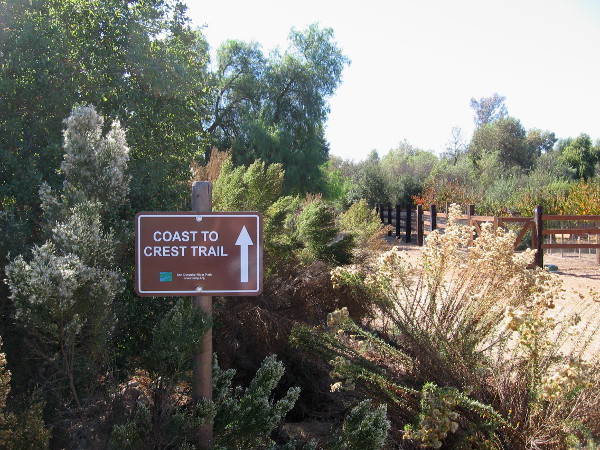
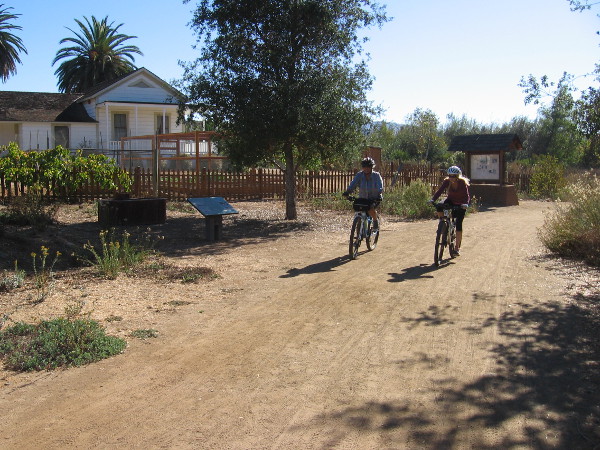
This morning I drove up to Escondido. One highlight of my day was walking around the historic Sikes Adobe Farmhouse, which is located near a popular trailhead of the San Dieguito River Park’s long, not-yet-complete Coast to Crest Trail.
The restored Sikes Adobe (originally built around 1870, and mostly destroyed in 2007 by the Witch Creek Fire) is a City of San Diego historic site. It contains a museum which is open every Sunday. Also on Sundays, the farmstead is where the North San Diego Certified Farmers Market is held.
As I walked around Sikes Adobe, I happened upon some interpretive signs which explain the history of the farmstead. I took photos if you’re interested. Click those sign images and they will expand for easy reading.
People had very different lives long ago in California. Fresh air, hard work, quiet hours, simple pleasures. And wild, untrod paths. I believe I would have loved that life.
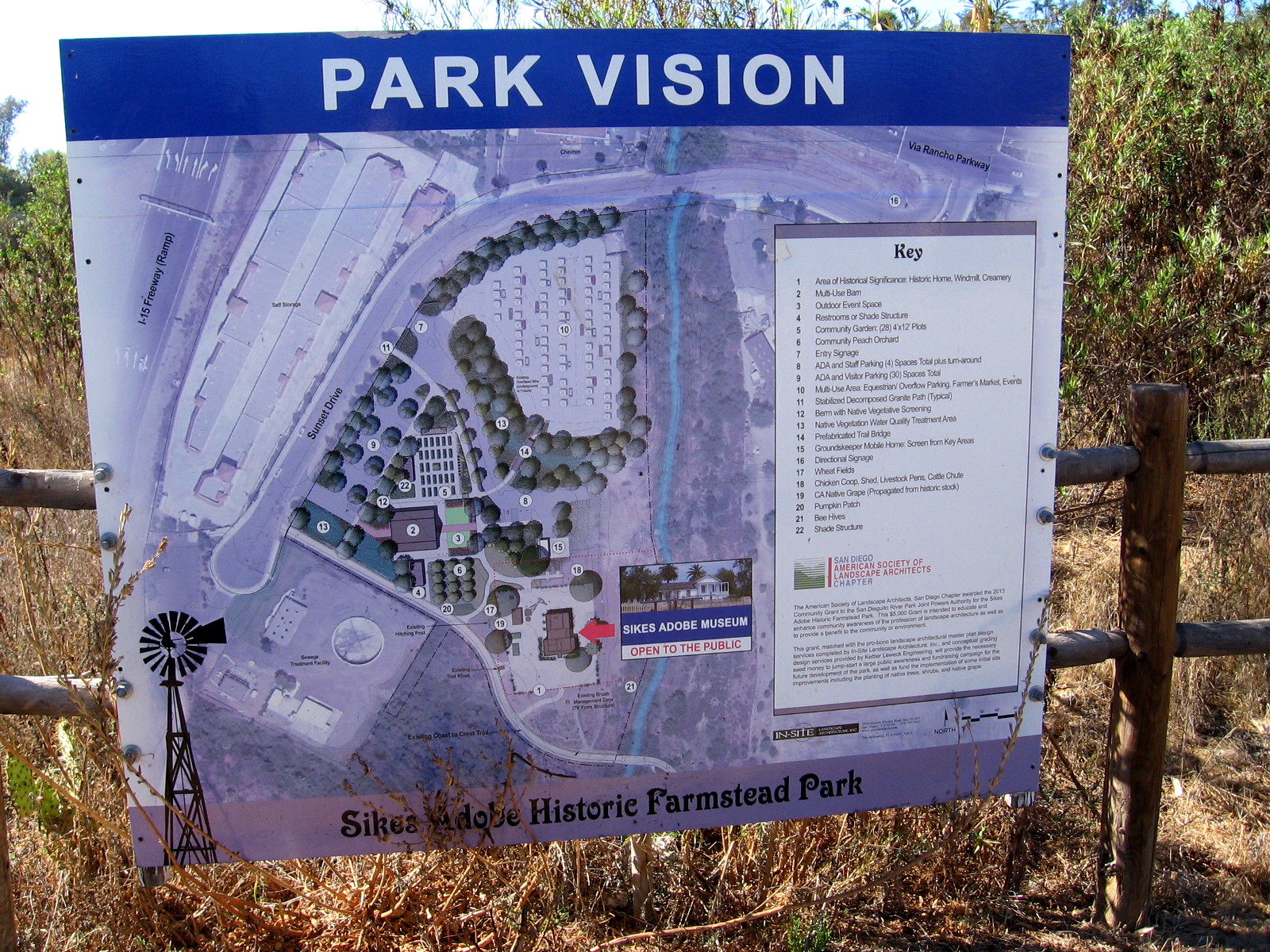
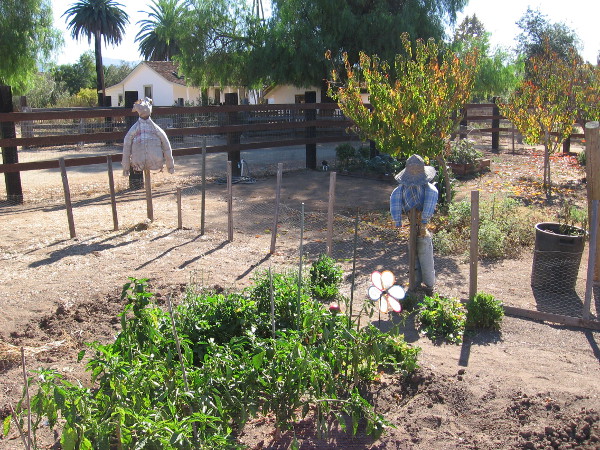
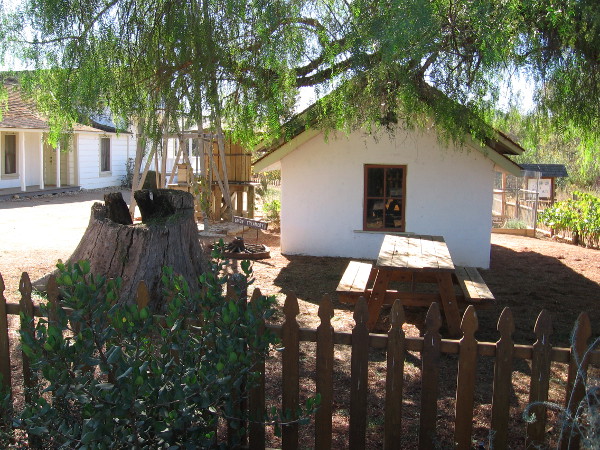
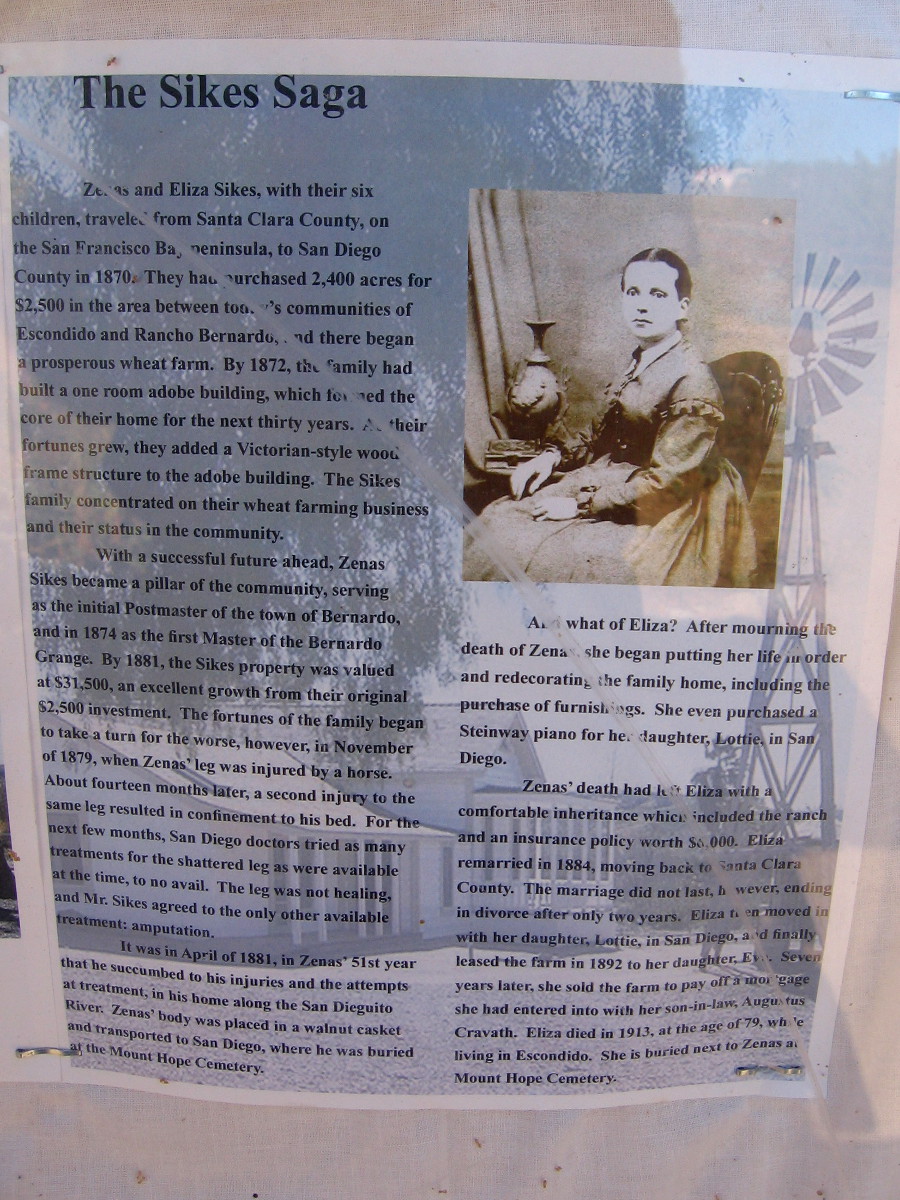
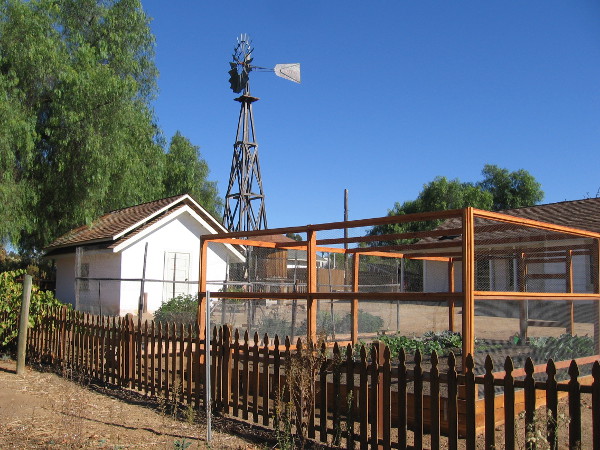
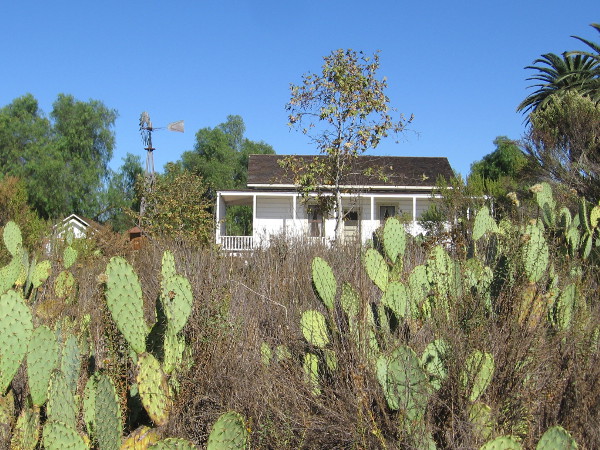
The historic Sikes Adobe Farmhouse is located near a trailhead of the Coast to Crest Trail, just east of Lake Hodges.The trail past the farmstead is popular with hikers, mountain bikers and equestrians.A sign shows proposed improvements to the Sikes Adobe Historic Farmstead Park, including event space and a reconstructed barn.Scarecrows stand guard inside a community garden near the rustic farmhouse.Approaching the Sikes Adobe. One can tour the inside on Sundays, from 10:30 am to 3:30 pm.In this photo you can see the small creamery building and the base of the restored windmill.A simple adobe house, typical of the early American era, shortly after California had achieved statehood.View of the farmstead structures from the nearby trail.Zenas and Eliza Sikes, with six children, arrived in 1870 and began their wheat farm here between the communities of Escondido and Rancho Bernardo.A small vegetable garden near the restored windmill and creamery.Old rusty farm equipment in a corner of the farmstead.Between 1860 and 1893, wheat was California’s first bonanza crop. The creamery at Sikes Farm was built in the 1880s as their farm diversified and became more generalized.A small town called Bernardo used to be located a couple miles southeast of the Sikes Adobe. The construction of the Lake Hodges Dam spelled the end for that town.Looking from the nearby trail past prickly pears at the farmhouse.Some horses have arrived at the trailhead’s dirt parking lot.Sikes Adobe depends on your support. Become a docent or volunteer!The Sikes Adobe Farmhouse rises behind a row of green grape vines.
…
This blog now features thousands of photos around San Diego! Are you curious? There’s lots of cool stuff to check out!
Here’s the Cool San Diego Sights main page, where you can read the most current blog posts. If you’re using a small mobile device, click those three parallel lines up at the top–that opens up my website’s sidebar, where you’ll see the most popular posts, a search box, and more!
To enjoy future posts, you can also “like” Cool San Diego Sights on Facebook or follow me on Twitter.
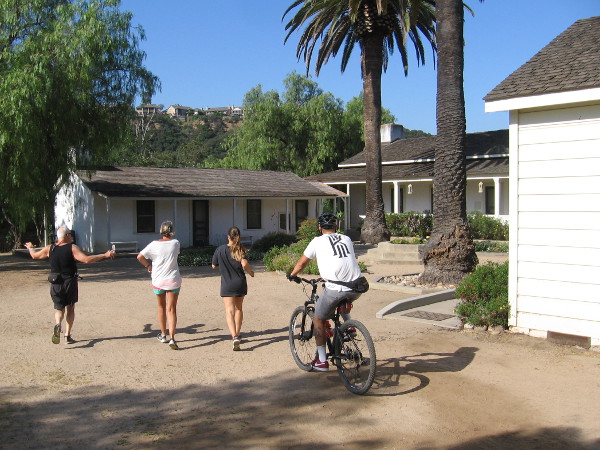
Jogging and biking past the historic adobe ranch house in Los Peñasquitos Canyon Preserve.
The second oldest residence in San Diego County can be found inside Los Peñasquitos Canyon Preserve. The adobe ranch house was built in 1824 by Captain Francisco María Ruiz, who was Commandante of San Diego’s presidio. He built two small adobe buildings on Rancho Santa Maria de Los Peñasquitos, his large 8,486-acre Mexican land grant north of the Presidio and Mission San Diego de Alcalá. It was the first land grant by the Mexican government in this area. The grant was made in 1823, just two years after Mexico became independent from Spain.
The historic adobe ranch house has been modified, enlarged and restored by various owners over the years, and today is a popular destination for visitors to Los Peñasquitos Canyon Preserve. People often bike or hike through the picturesque ranch, and motorists can park in a nearby lot. Picnic tables are plentiful; there are goats and chickens to captivate children; and guided tours are available on weekends.
I toured the ranch recently and took photos of its various features. There are a variety of interpretive exhibits within the adobe house. Please read these informative displays (click to enlarge the images) to learn more about this fascinating place’s long and colorful history.
(What is the oldest structure in San Diego County? You’ll be completely surprised! I blogged about that here.)
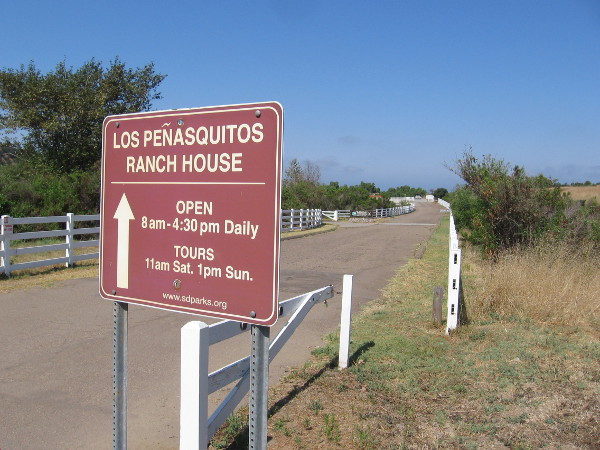
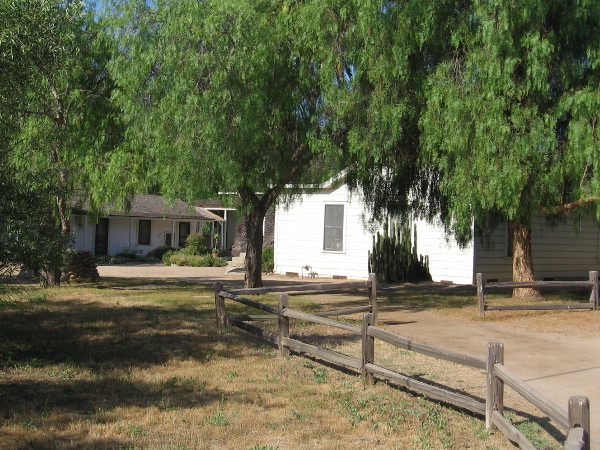
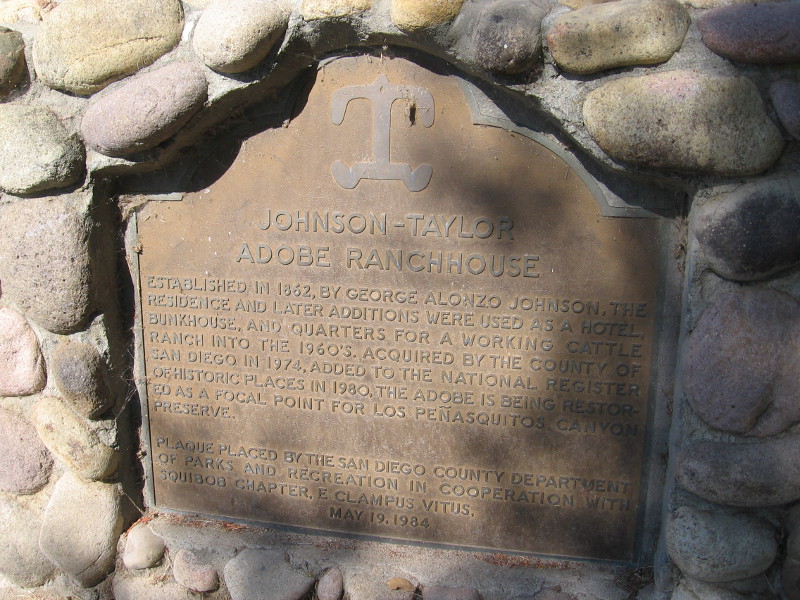
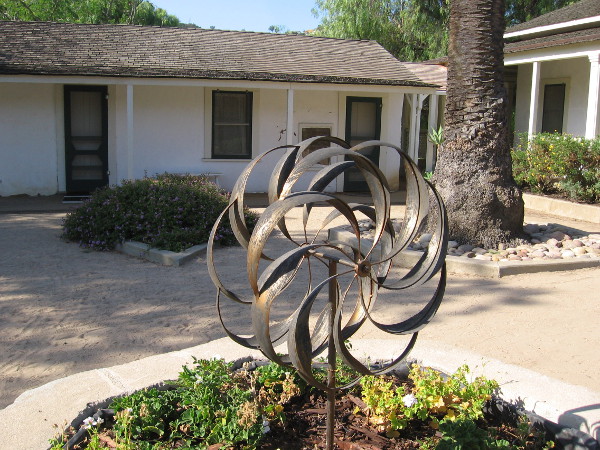
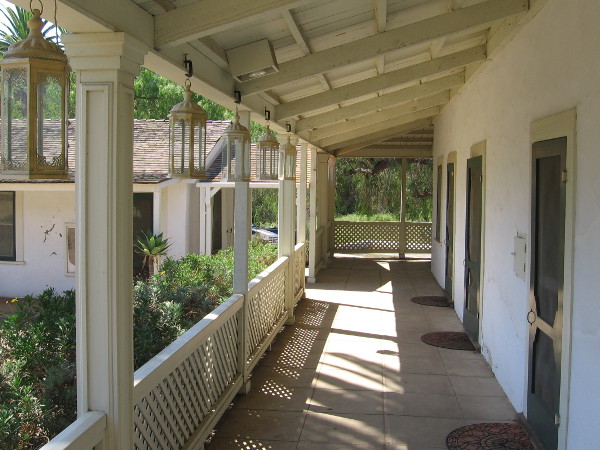
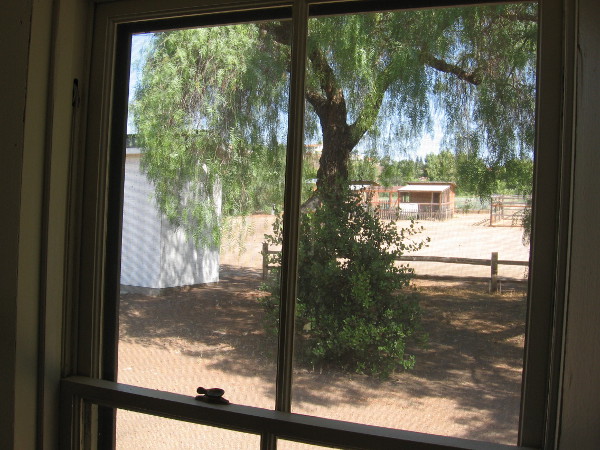
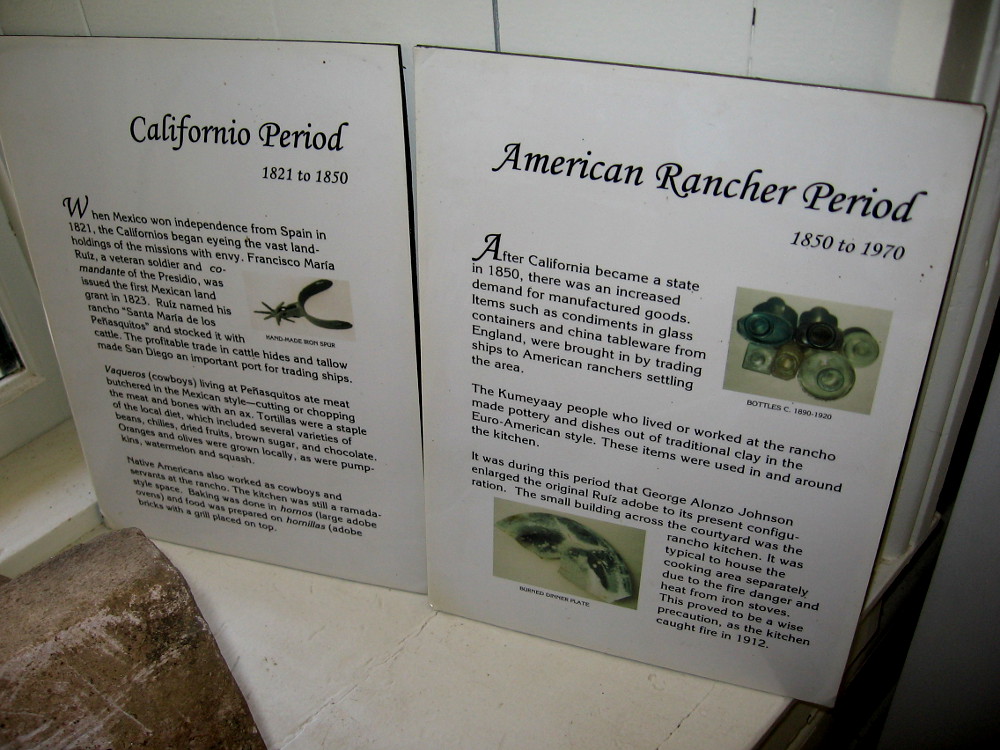
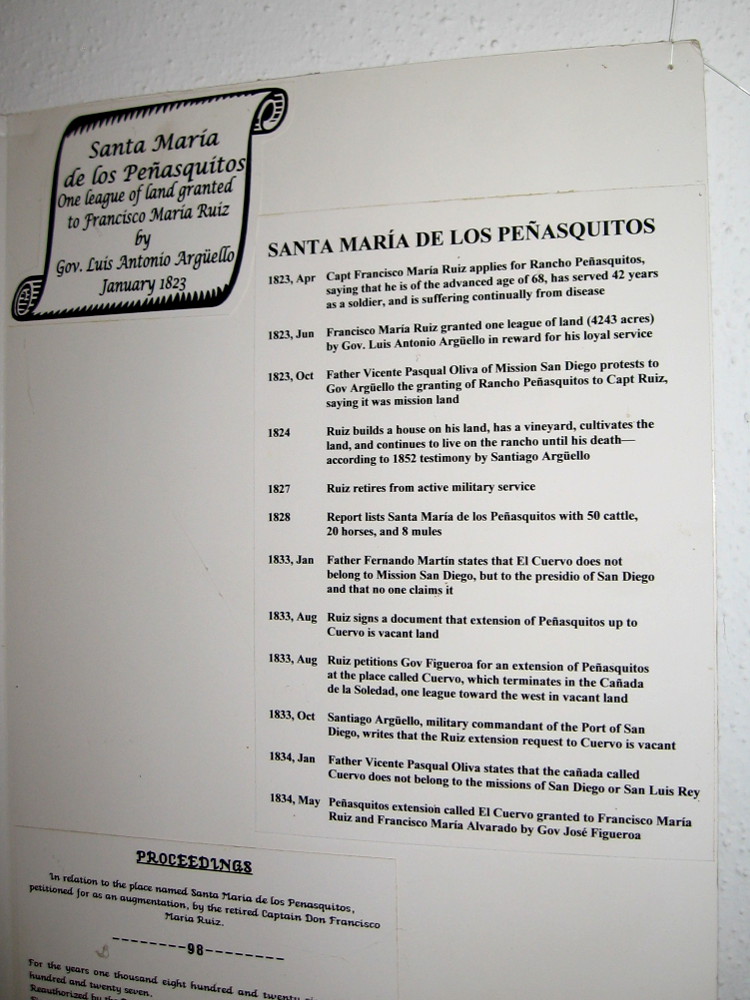
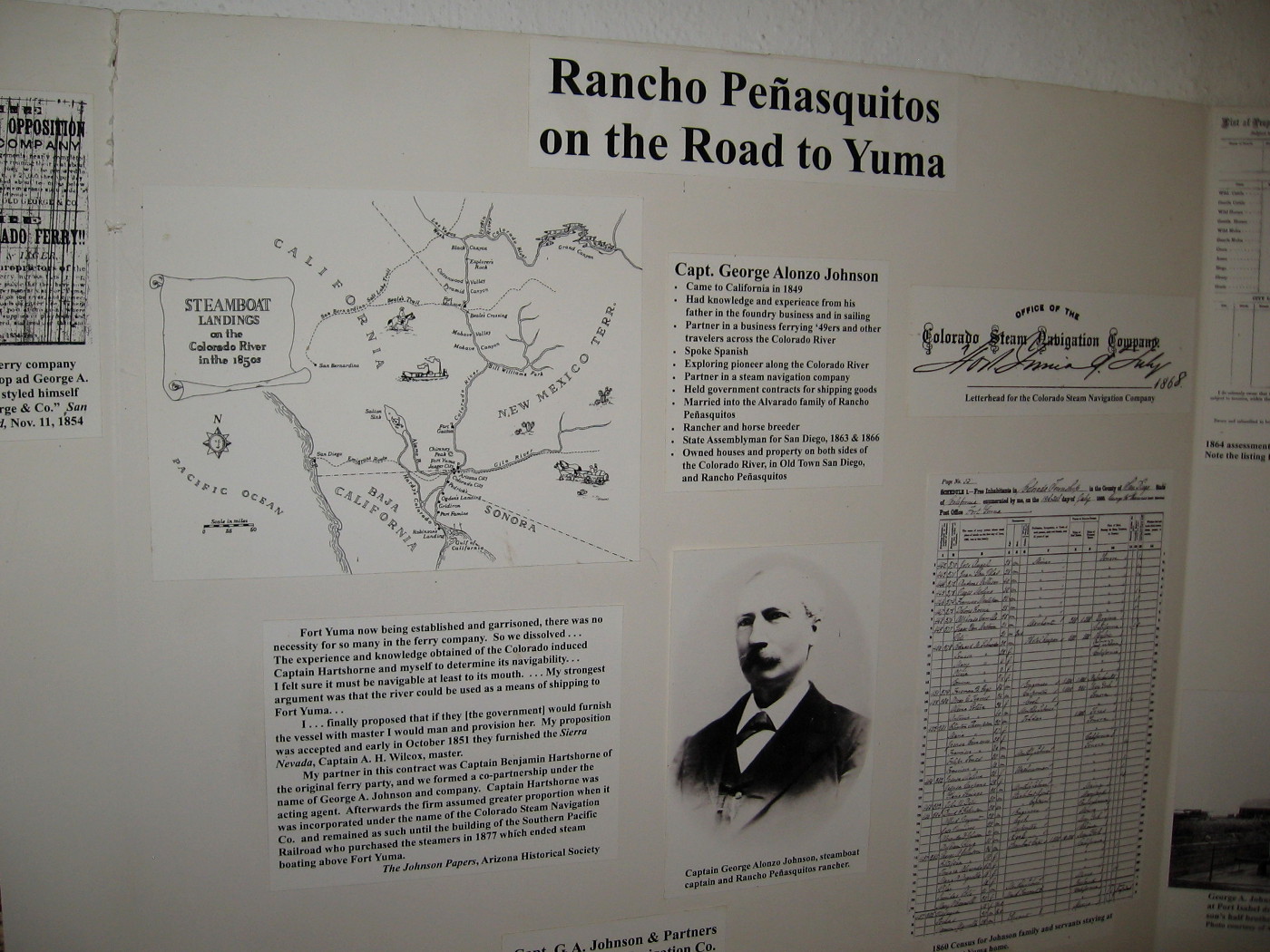
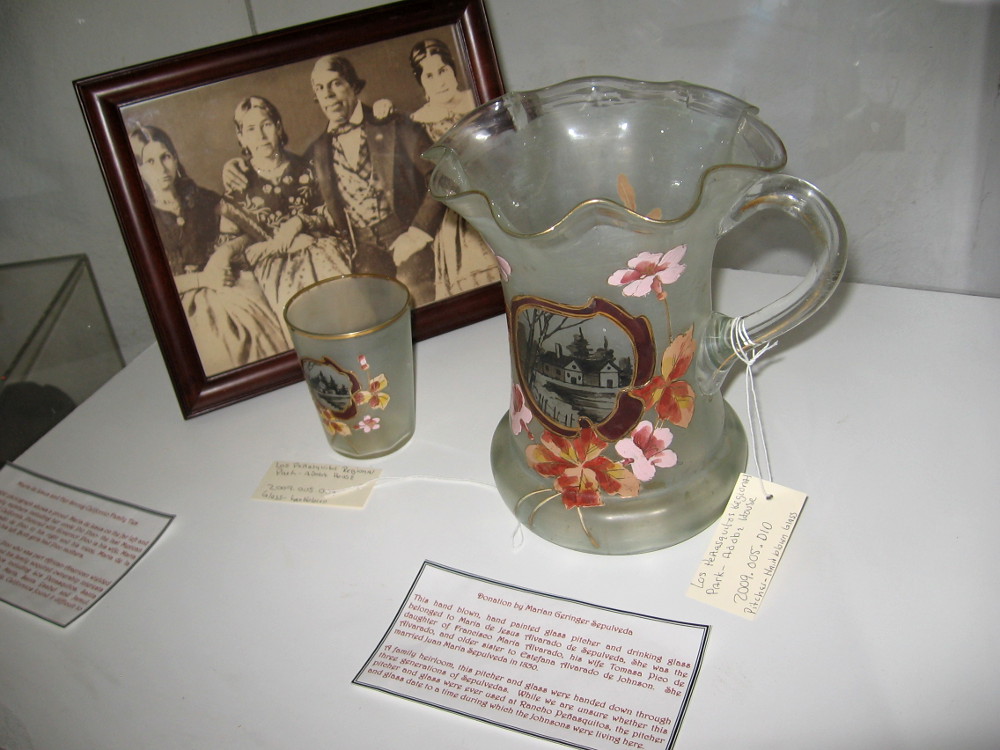
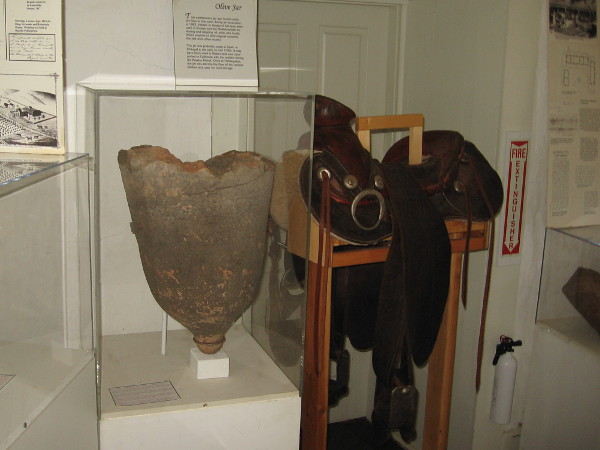
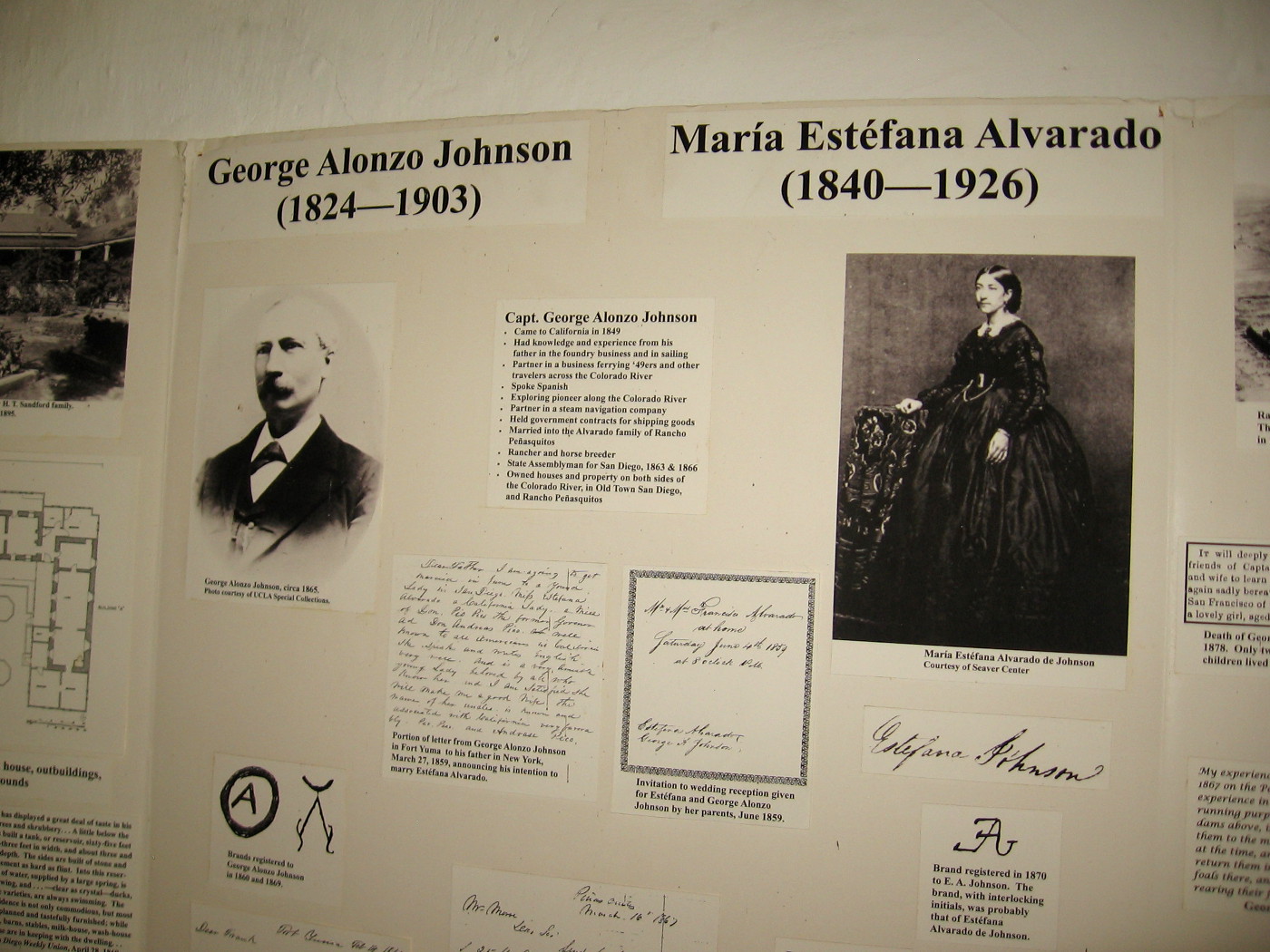
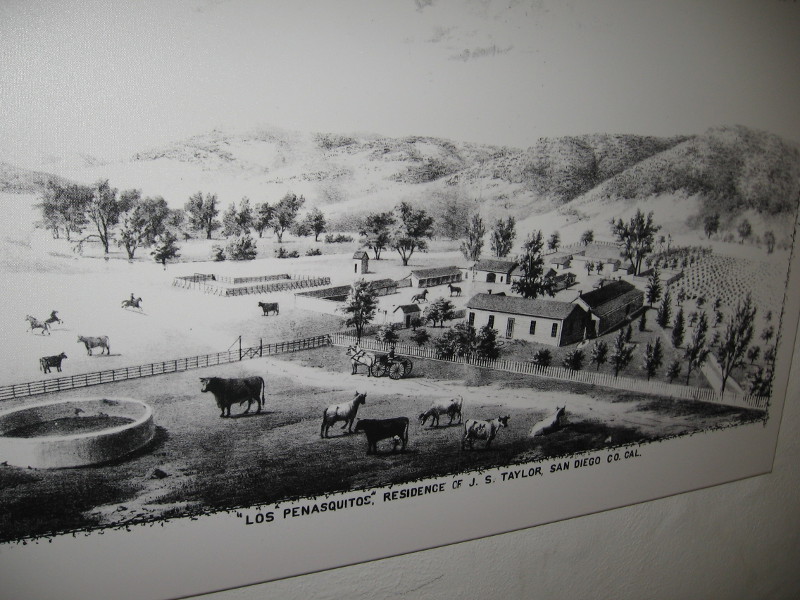
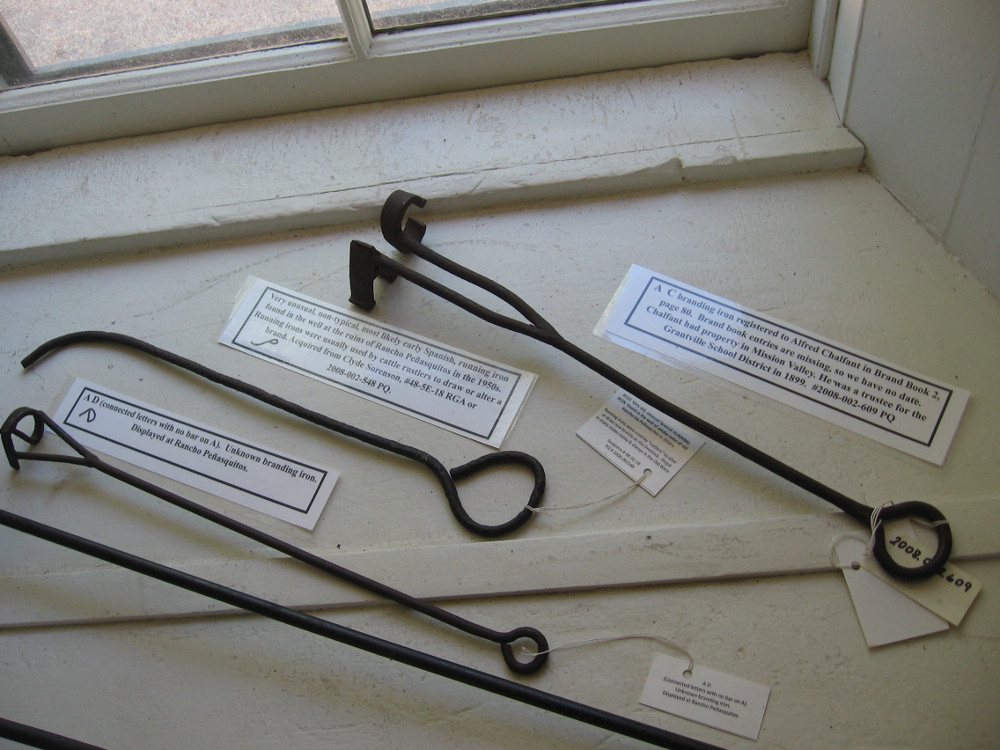
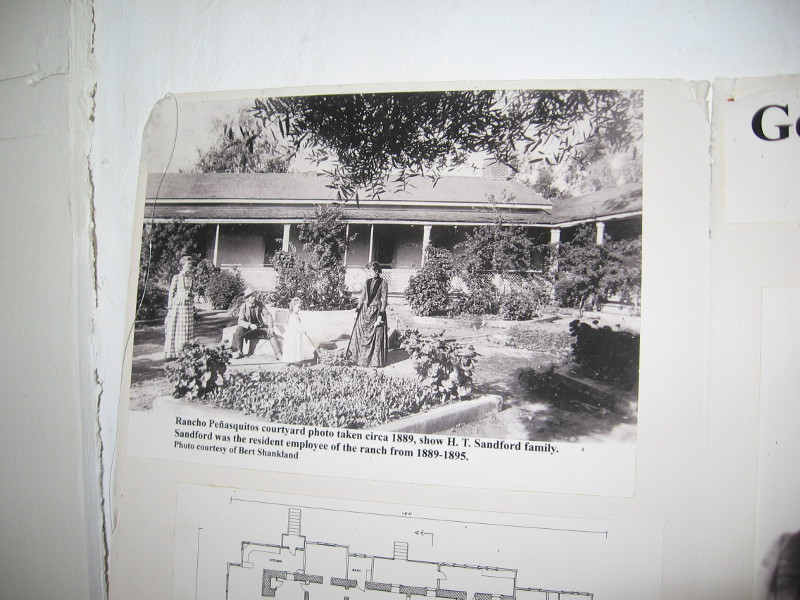
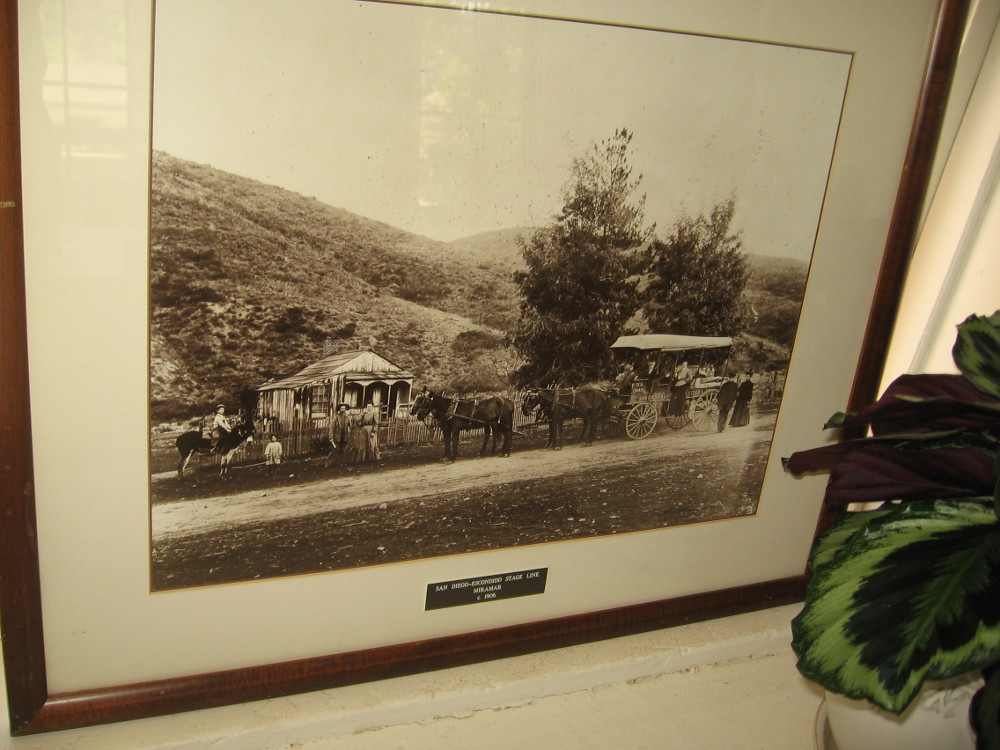
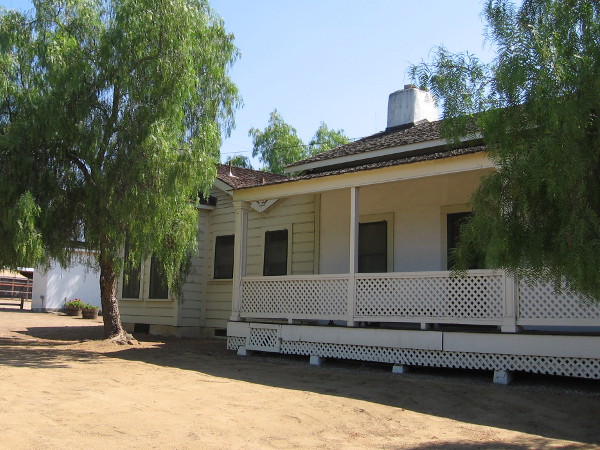
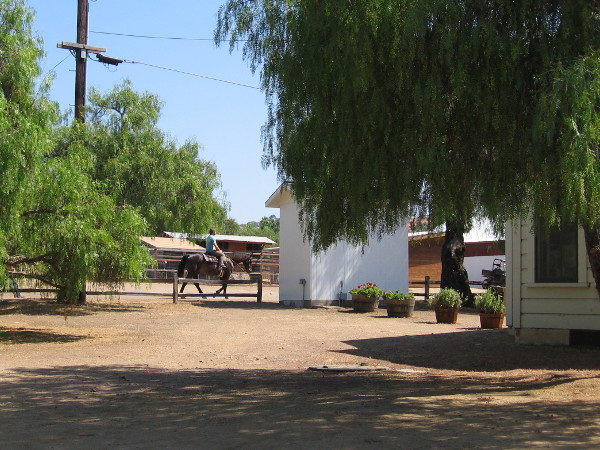
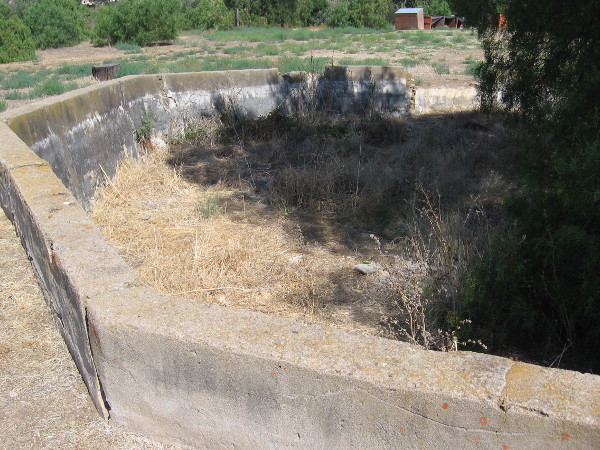
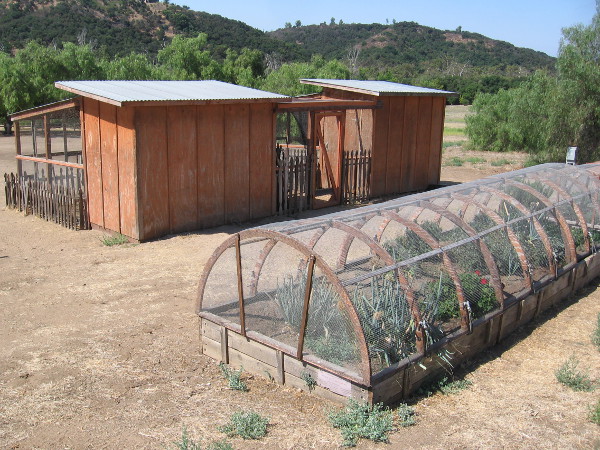
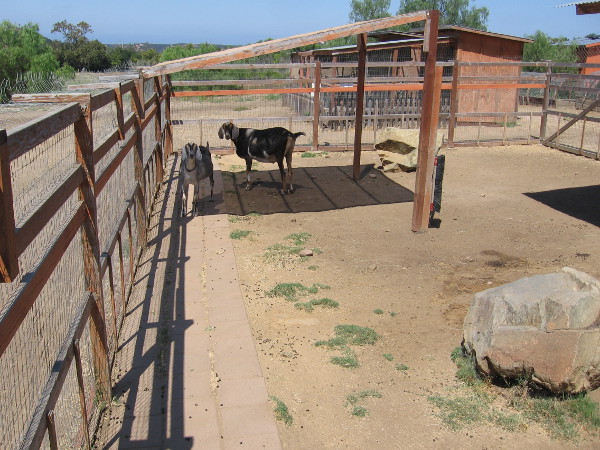
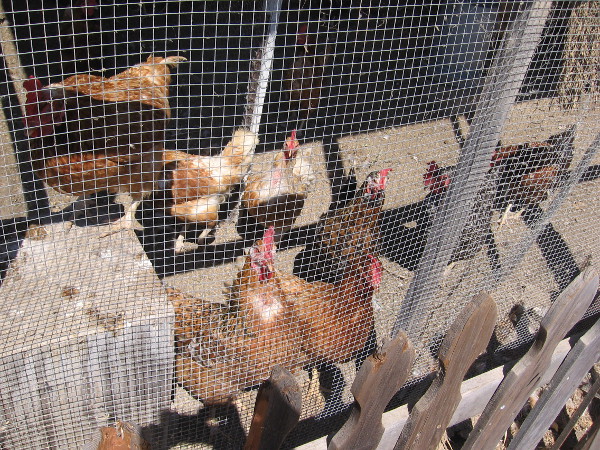
The Los Peñasquitos Ranch House is open daily from 8:00 am to 4:30 pm. Guided tours are at 11:00 am on Saturday and 1:00 pm on Sunday.The ranch house is nestled among some shady trees. Two small adobe buildings were originally built in 1824. The house was enlarged by Captain George Alonzo Johnson in 1862.Plaque describes the establishment of the Johnson-Taylor Adobe Ranchhouse in 1862. The residence and later additions were used as a hotel, bunkhouse, and quarters for a working cattle ranch into the 1960s.A sculpture inside the courtyard, located on the east side (rear) of the ranch house. The planters were probably used by the residents to grow herbs and flowers.Part of the ranch house’s long porch beside the courtyard.Inside a living room that today contains museum-like exhibits, looking north out a window at various small structures on the ranch, including a chicken coop and goat pen.The Californio Period, 1821 to 1850, included vaqueros (cowboys) living at Peñasquitos. The American Rancher Period, 1850-1970, began after California became a state.1823-1834 timeline of the Mexican land grant of Santa Maria de Los Peñasquitos, that was made to Captain Francisco María Ruiz.In 1859 Captain George Alonzo Johnson married Maria Estéfana Alvarado, daughter of Francisco María Alvarado, who bought the ranch from Ruiz in 1837.A hand blown and painted glass pitcher and drinking glass that belonged to Maria de Jesus Alvarado de Sepulveda, daughter of Francisco María Alvarado.The large earthenware olive jar was found under the ranch house floor during an excavation in 1983. Used for food storage, it was probably made in Spain or Portugal in the early to mid 1700s.Captain George Alonzo Johnson, a pioneer and businessman, came to California in 1849 during the Gold Rush. He became a rancher and horse breeder.Historical newspaper articles describe the ranch house, outbuildings and grounds of George Alonzo Johnson’s ranch.Floor plan of Rancho Peñasquitos from 1975 HABS survey.A drawing of the Los Peñasquitos residence of Colonel Jacob Shell Taylor, who purchased the property in 1882. He raised Durham cattle and thoroughbred horses and would found Del Mar.Various branding irons on display in the adobe house that were discovered around the ranch. Included are early Spanish irons used by rustlers.Rancho Peñasquitos courtyard photo taken circa 1889, showing ranch employee H. T. Sandford and his family.Photo of the San Diego-Escondido Stage Line circa 1906. In the mid-1800s, Peñasquitos was a way station on the wagon road between San Diego and Warner’s Ranch.Porch along the front (or west) side of the adobe ranch house, which faced the so-called Road to Yuma.I spotted someone riding a horse past the ranch house. Los Peñasquitos Canyon Preserve is an ideal place for those who love to ride down peaceful trails.Looking west at a meadow north of Peñasquitos Creek. I posted photos of those sycamores in the distance a few weeks ago.An artificial pond south of the ranch house was filled with water from the adjacent spring house for irrigation of a nearby citrus grove.The rock Spring House was constructed around an artesian spring. Water from the spring was used by the Native American Kumeyaay for as many as 12,000 years!The Mohnike Barn was constructed in 1912 of adobe and wood. Charles Mohnike, a rancher who purchased the property in 1910, was the builder.The Mohnike Barn is now listed on the National Register of Historic Places along with other ranch structures.An octagonal concrete reservoir to the north, uphill from the ranch house. Photographic evidence shows water might have been pumped up here by windmill.More ranch structures just west of the barn.These friendly Nubian goats like to greet hikers and those on bicycles.These chickens were wondering what I was up to.The southeast corner of the adobe ranch house.One last photo of the courtyard, a focal point of the ranch house, which has seen many lives, much history.
…
I live in downtown San Diego and love to walk around with my camera! You can follow Cool San Diego Sights via Facebook or Twitter!
You can easily explore Cool San Diego Sights by using the search box on my blog’s sidebar. Or click a tag! There are thousands upon thousands of fun photos for you to share and enjoy!
A Wells Fargo stagecoach takes a turn around La Plaza de Las Armas in San Diego’s historic Old Town.
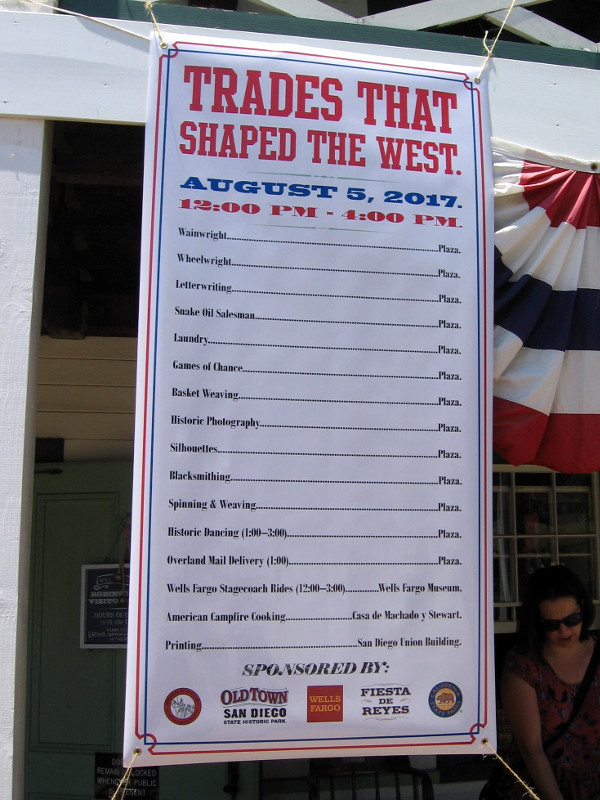
Here come photos from today’s Trades That Shaped the West event, which took place in Old Town San Diego State Historic Park!
A wide variety of demonstrations drew curious visitors to a cluster of tents in the park’s grassy plaza. Early San Diego in the 1800’s was completely different from our modern city of gleaming skyscrapers. In many ways, life back then was both simpler and more difficult. Many household objects that are manufactured today were crafted using raw muscle and sweat. Most ordinary tasks were neither easy nor automated.
One hopes that historical reenactments like this continue for generations, so that people don’t forget the unique and meaningful lives of our ancestors.
You might notice this isn’t the first time I’ve blogged about this annual event. I’m so fascinated by San Diego’s history, I decided to experience Trades That Shaped the West again!
Stagecoach Days is celebrated every Saturday in Old Town during the summer. There’s a different themed event every week!
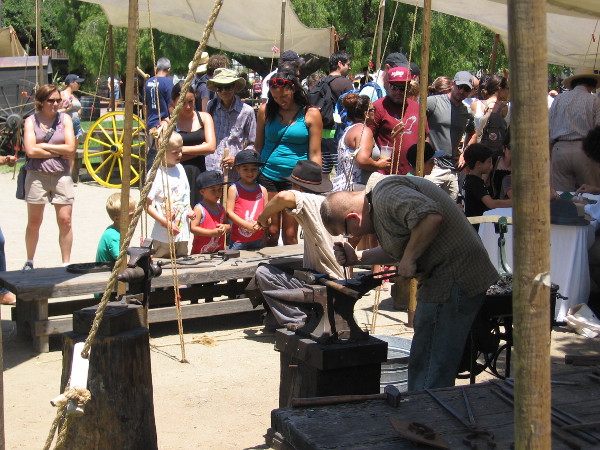
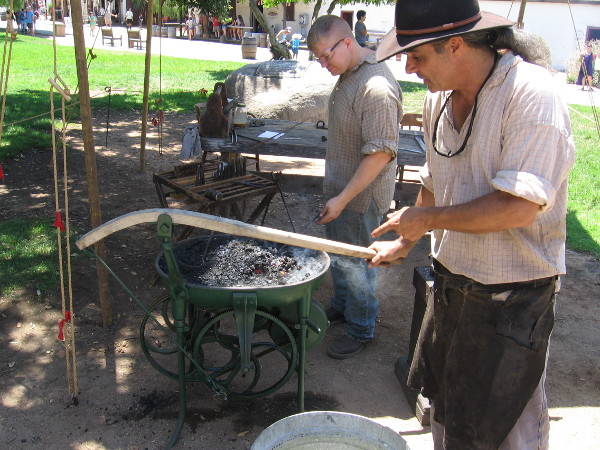
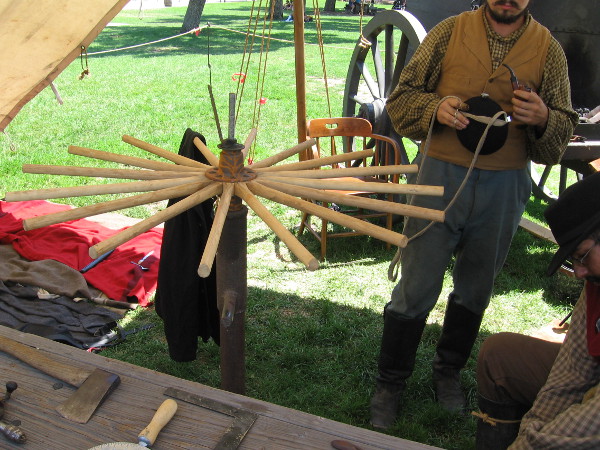
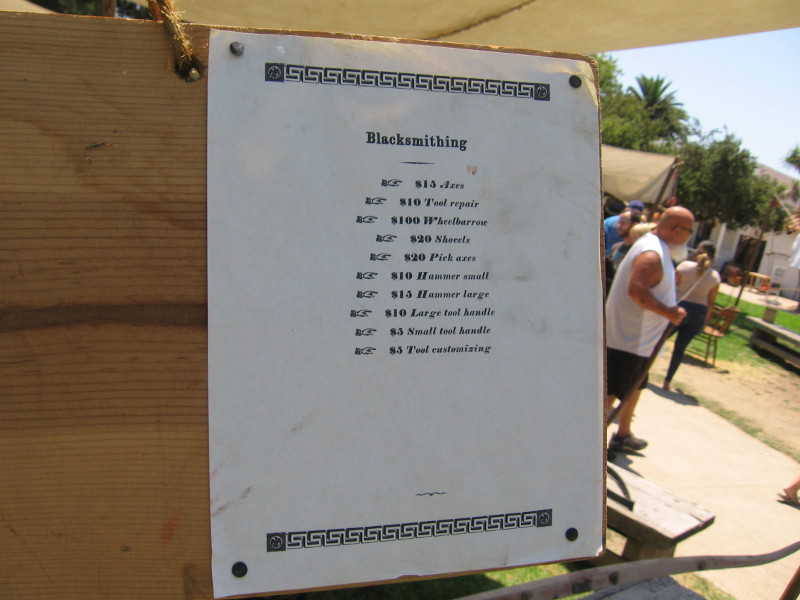
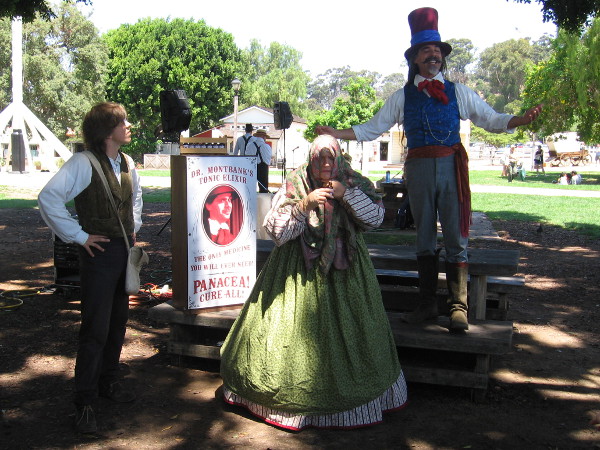
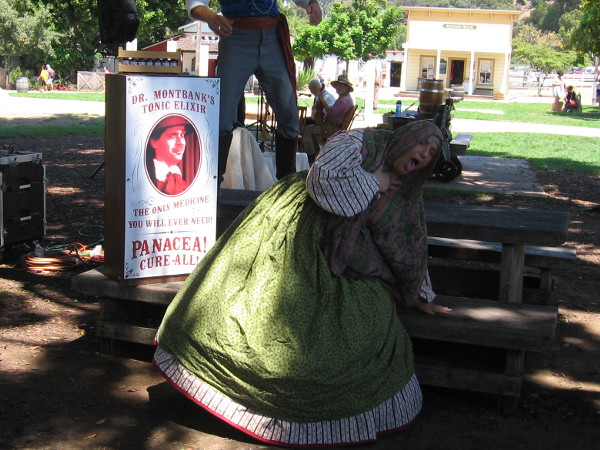
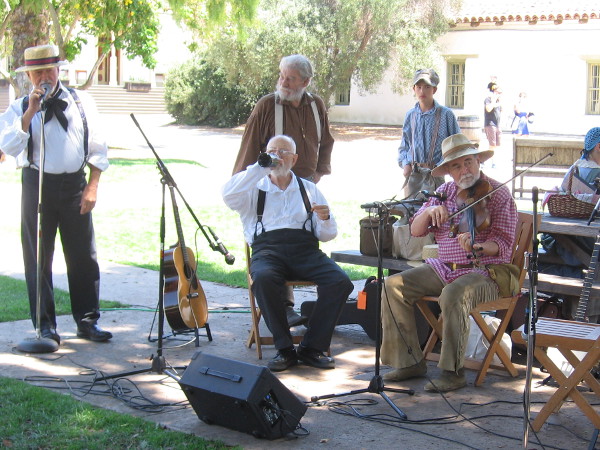
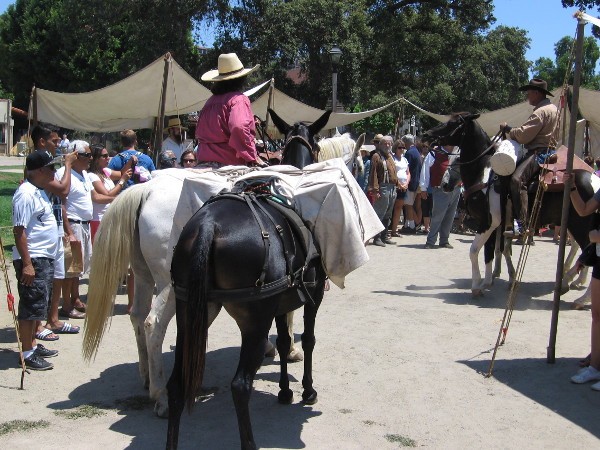
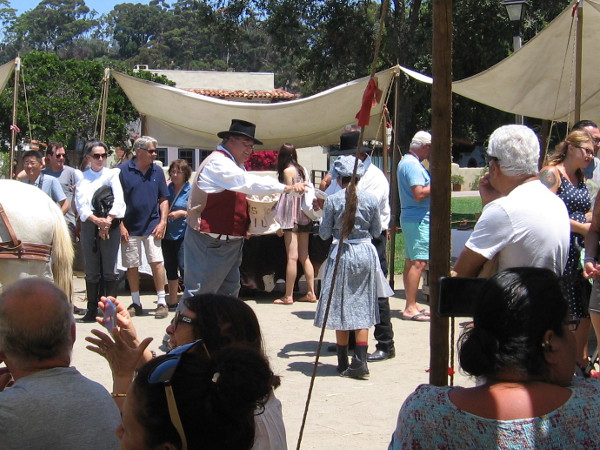
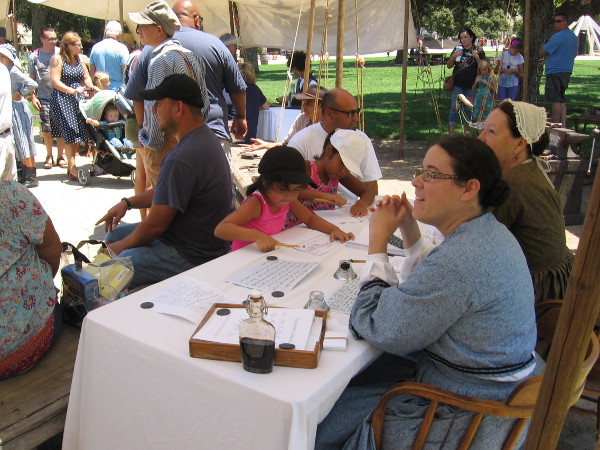
Aspects of frontier life were reenacted today in Old Town San Diego. Visitors watch as a stagecoach passes by!History comes to life during Stagecoach Days in Old Town San Diego State Historic Park. There’s a different theme each Saturday in July and August.Many fascinating demonstrations could be viewed by the public at the Trades That Shaped the West event today.Young and old alike watched two blacksmiths at work with an anvil and small forge.A wheelwright explains his craft. To make wagon wheels required great skill. Like cars today, wagons were an important part of life in the 1800’s.The bent metal band tyre would be expanded with heat, then contracted using cold water once carefully placed around the wooden wheel.We take laundry machines for granted today. Years ago in the Old West, cleaning clothes required a whole lot more work!Irons, washboards and other objects from daily life generations ago were on display.These ladies were weaving baskets. Basket-weaving is said to be the oldest of all human crafts.The local Native American Kumeyaay would use willow baskets to protect their gathered acorns and other food from insects.This portable green forge is being used for the first time. The handle turns a belt which operates an air blower. I recognized this blacksmith from the Fall Back Festival in San Diego’s Gaslamp Quarter.Local blacksmith hobbyists created all the items you see here, including the ornamental snake (which took about an hour and a half to make) and the huge padlock!This crafty gambler tried to entice me into playing a game of chance. Nice try!A gentleman had a table containing old tintype photographs. He also had antique cameras on display that were used for daguerreotype photographs.A new wheel is being produced by several wainwrights, trades people who craft and repair wagons and carts. These guys belong to the California Historical Artillery Society.A variety of useful tools on their table. Many look familiar today.The members of the California Historical Artillery Society were attending the annual Trades That Shaped the West event for the first time.Sign shows average blacksmithing prices in the mid 1800’s. The prices were much higher in Northern California during the Gold Rush.These guys also had a traveling battery forge, used by the Army long ago. Today they are often used in Civil War reenactments.I noticed that a snake oil salesman had drawn a crowd!An old lady with a bad case of lumbago was eager to try Dr. Montbank’s Tonic Elixir.I’m not sure it helped much.A guitar, a fiddle, and a bottle. These frontier musicians were getting themselves ready to provide a bit of Western entertainment.Visitors to Old Town were walking in front of the Colorado House and enjoying a sunny San Diego weekend.Look what’s coming! These pack animals have transported the mail all the way from San Antonio!The Overland Mail Delivery arrived exactly at one o’clock!I guess this would qualify as Ground Mail.The small Old Town encampment excitedly greets the four-legged mail carriers.Mail is handed out to many of the event participants!These creative young folk are too busy writing their own letters to notice.An educational reenactment of history was enjoyed today in Old Town San Diego State Historic Park!
…
I live in downtown San Diego and love to walk around with my camera! You can follow Cool San Diego Sights via Facebook or Twitter!
You can easily explore Cool San Diego Sights by using the search box on my blog’s sidebar. Or click a tag! There are thousands upon thousands of fun photos for you to share and enjoy!
Historical photo of the First and Last Chance Saloon, inside San Diego’s rowdy Stingaree District.
Murder! Gambling halls and brothels! Wyatt Earp! Corrupt police! Scheming businessmen! Secretive gangs! Pirates! A rip-roaring story dripping with suspense and excitement!
Would you like to read the first few chapters of a thrilling novel set in late 19th century San Diego? Jack Tyler, a talented author of adventure and steampunk fiction, is now writing an action-packed novel titled Stingaree, which takes place in San Diego’s old red-light district–an area of town that today is part of the Gaslamp Quarter. He has made many great chapters available to the public–for free! Click here to visit his website, then find the link to Stingaree.
In the late 1800s, the Stingaree was where sailors, ranch hands, and the working class sought their thrills in a depressed and rather desolate city. It was home to dozens of gambling parlors, whorehouses and saloons. Law-abiding citizens stayed away for their own safety. To be seen in the Stingaree might destroy one’s reputation. At night all hell would break loose. Those who prospered running tawdry businesses in the Stingaree had to pay the police bribes and watch their own backs.
In the novel Stingaree, the reader will recognize a variety of historical persons and locations. From the construction of the Hotel del Coronado, to George Marston’s department store, to the Horton House Hotel–the story is an exciting journey back in time. Jack Tyler successfully presents a city full of danger, uncertainty and great promise. From his imagination emerges an assortment of wonderfully inventive characters.
I must say I really enjoyed reading the completed chapters. This is the sort of smart, well-constructed story that would make for a really entertaining movie or television series. Cliffhangers and plot twists abound. Enjoy a fun read by clicking here and look for the link to Stingaree!
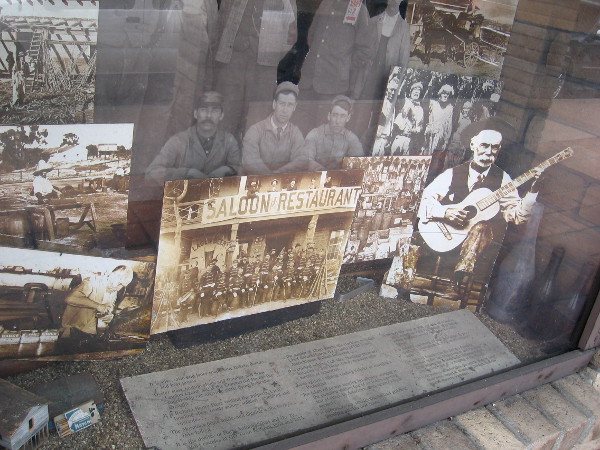
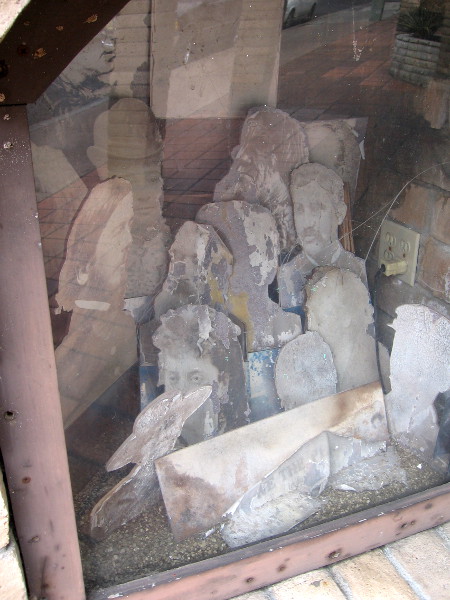
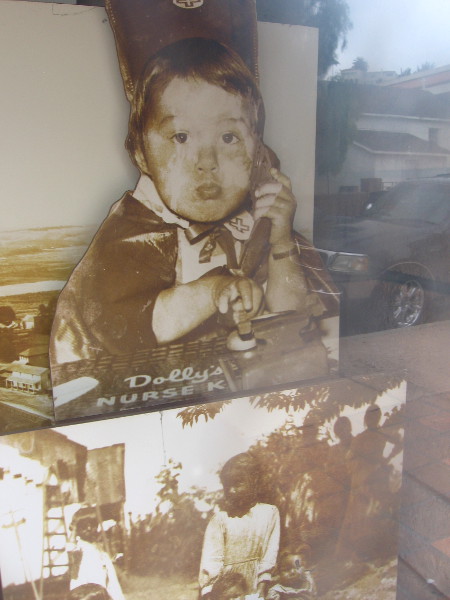
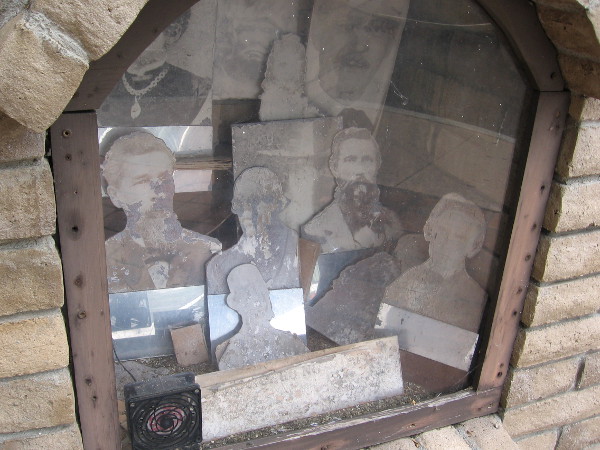
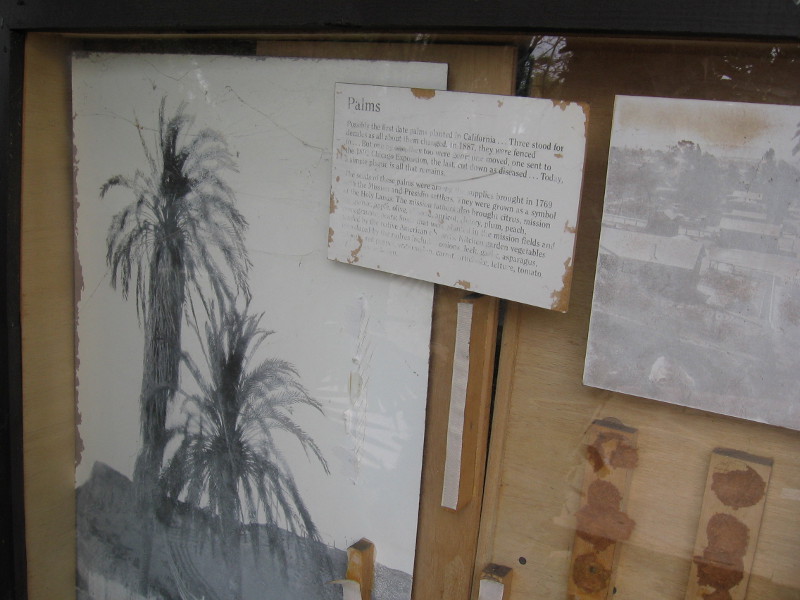
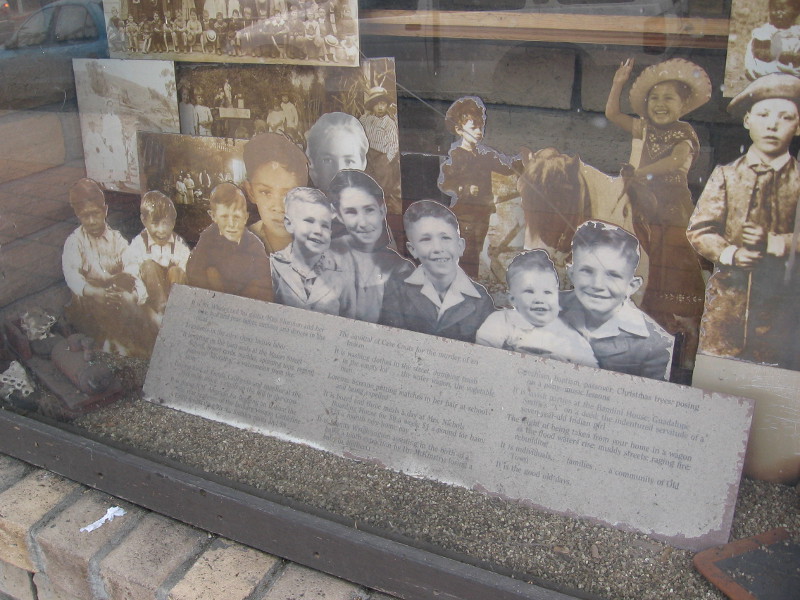
Photographs of Old Town’s history slowly fade with the passage of time.
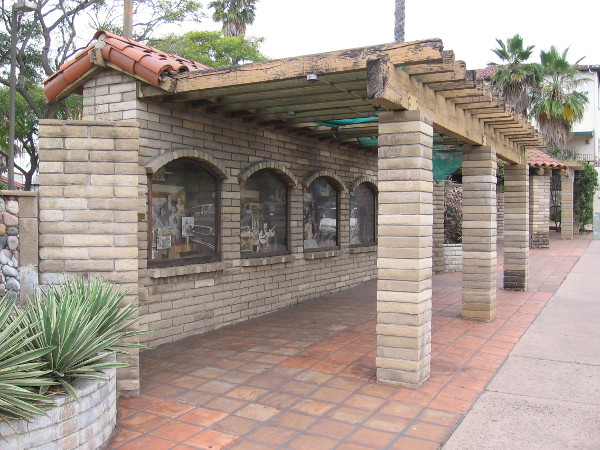
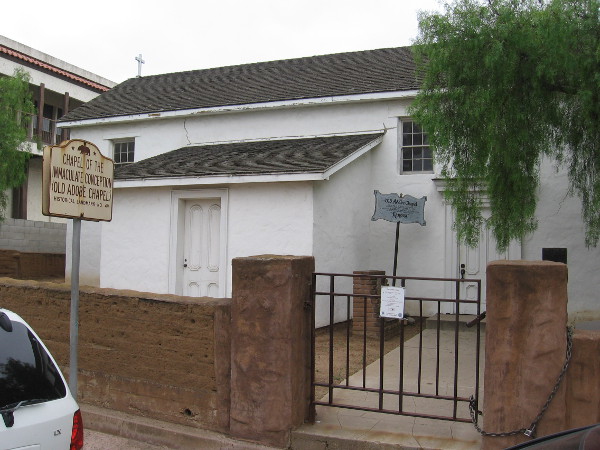
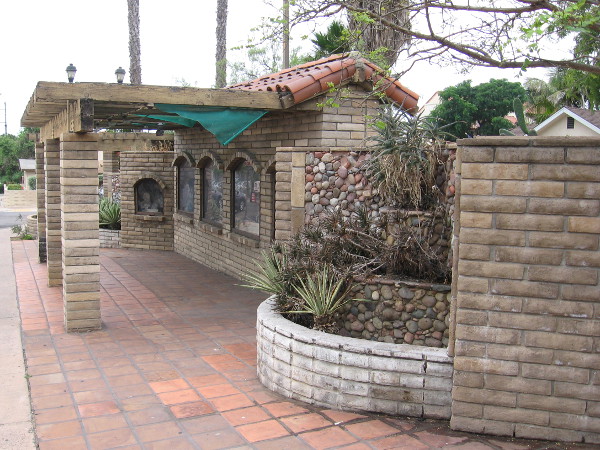
I recently walked down a few streets in Old Town that are seldom visited by tourists. After taking photographs of the Old Adobe Chapel, I noticed that across Conde Street there was some sort of structure containing glass display cases.
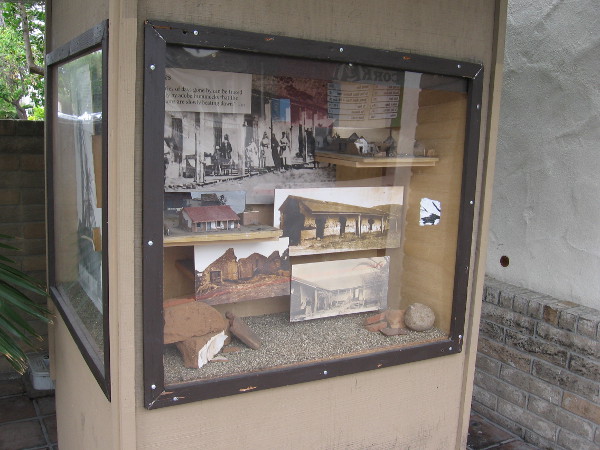
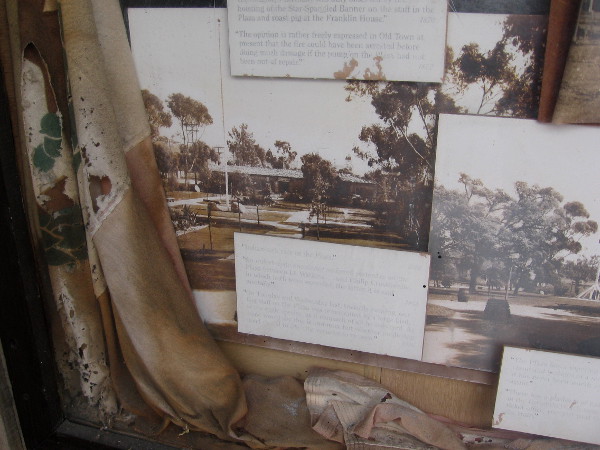
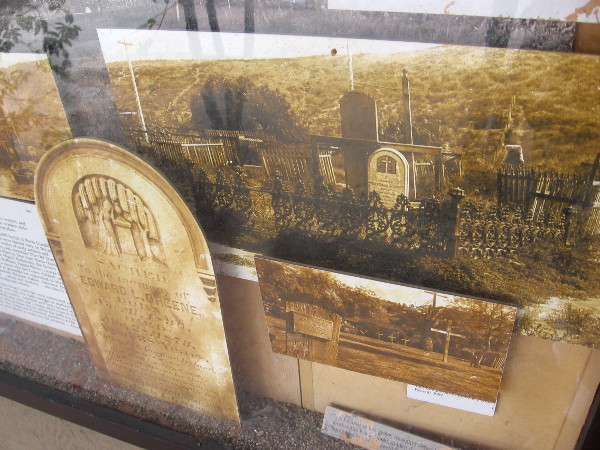
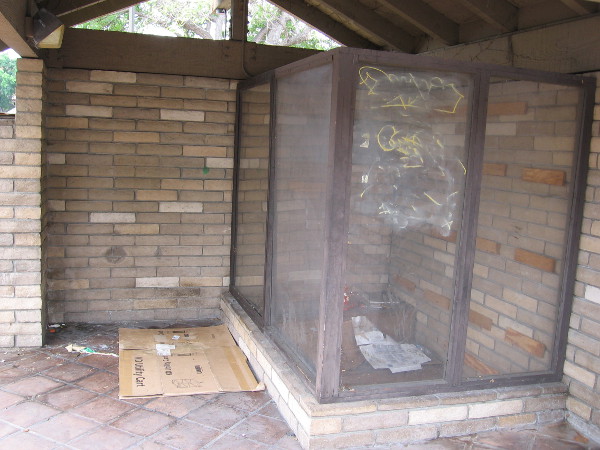
Upon closer inspection, I saw this was an outdoor exhibit concerning San Diego’s early history. And that its contents were in a sad state of decay.
No one seemed to know who’d created this exhibit until I spoke to a cashier in Old Town San Diego State Historic Park’s visitor center, inside the Robinson Rose House. She told me the structure had been built decades ago for the Old Town Mexican Cafe and that the displays had been designed by a woman who loved history. But she had gone blind.
Time moves incessantly forward.
You can find this fascinating but faded exhibit on Conde Street, behind Cafe Coyote.
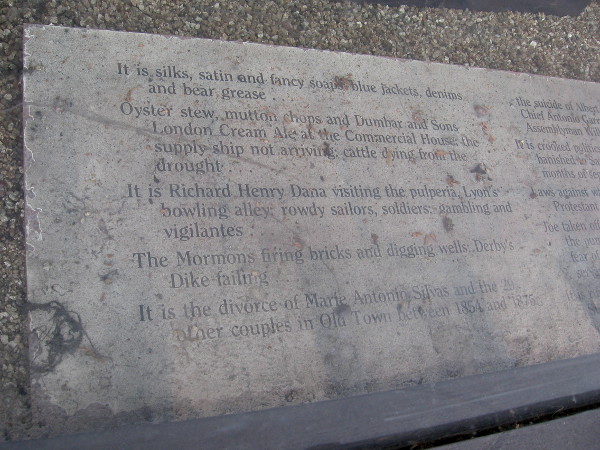
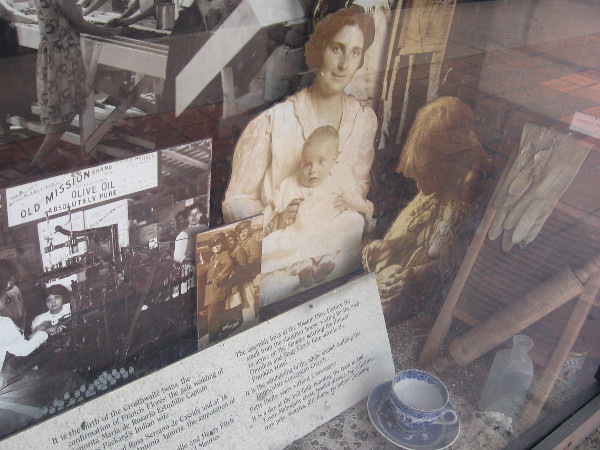
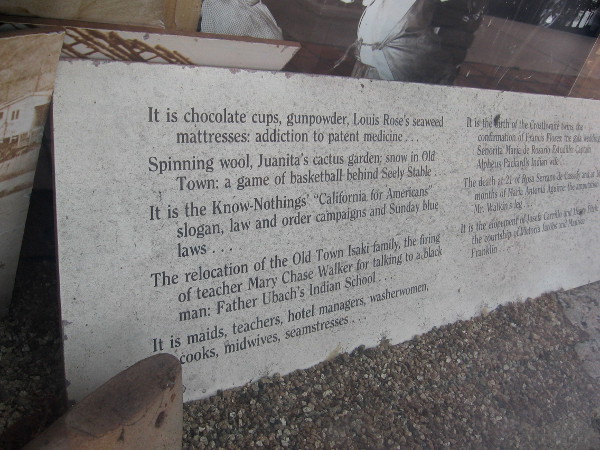
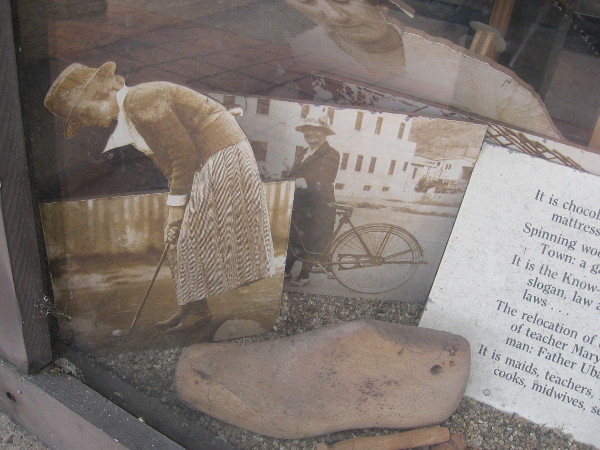
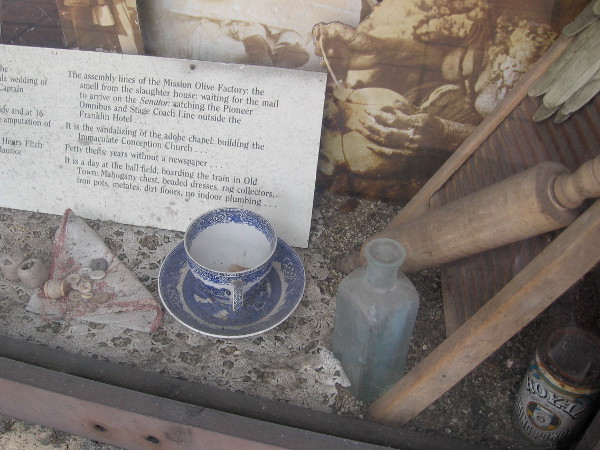
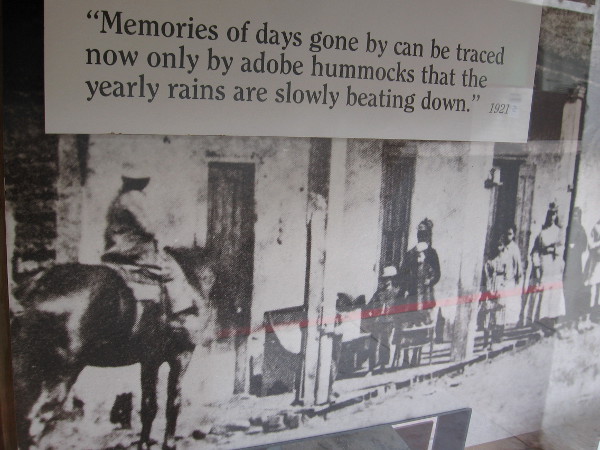
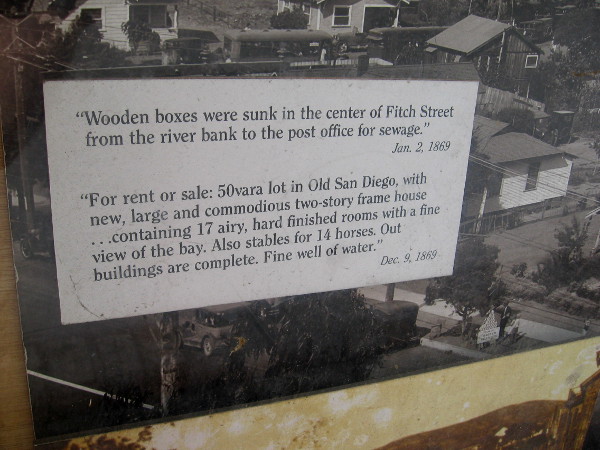
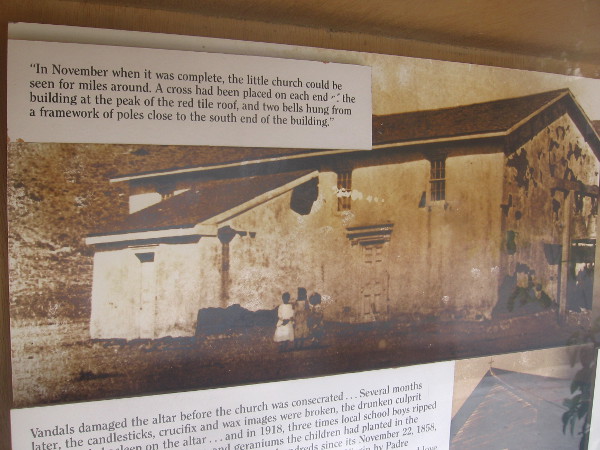
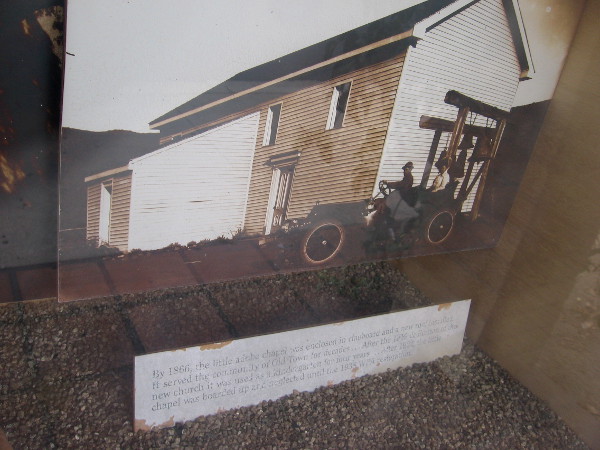
Displays behind glass windows include old photos and historical artifacts. This was created many years ago, I was told, for the nearby Old Town Mexican Cafe.It is silks, satin and fancy soaps, blue jackets, denims and bear grease… It is Richard Henry Dana visiting the pulperia…rowdy sailors, soldiers; gambling and vigilantes…Early residents of Old Town, fading away.A collection of photos show life as it was in Old Town San Diego.It is chocolate cups, gunpowder, Louis Rose’s seaweed mattresses… Spinning wool, Juanita’s cactus garden…a game of basketball behind Seeley Stable…More old photos. Life remembered here as it once was…A few household objects in one display case. Perhaps life those many years ago wasn’t so very different…Youthful faces.Faded by time, now ghostlike.Memories of days gone by can be traced now only by adobe hummocks that the yearly rains are slowly beating down.History captured, for those who might pass down the sidewalk.Palms grow. Some words fade.Wooden boxes were sunk in the center of Fitch Street from the river bank to the post office for sewage.Photo of the Old Adobe Chapel. In November when it was complete, the little church could be seen for miles around…By 1866, the little adobe chapel was enclosed in clapboard and a new roof was installed. It served the community of Old Town for decades…The Old Adobe Chapel has been preserved. Now a historical landmark, it stands across Conde Street.Decayed flag, and old photos of flagpole at center of La Plaza de Las Armas.Old photos of the Campo Santo Cemetery. Words describe: A mingling of men, women, and children from places and lives so different…One empty display case, graffiti and a hard place for the homeless.A monument to the human desire to remember.Many years, many faces.
…
This blog now features thousands of photos around San Diego! Are you curious? There’s lots of interesting stuff to check out!
Here’s the Cool San Diego Sights main page, where you can read the most current blog posts. If you’re using a small mobile device, click those three parallel lines up at the top–that opens up my website’s sidebar, where you’ll see the most popular posts, a search box, and more!
To enjoy future posts, you can also “like” Cool San Diego Sights on Facebook or follow me on Twitter.
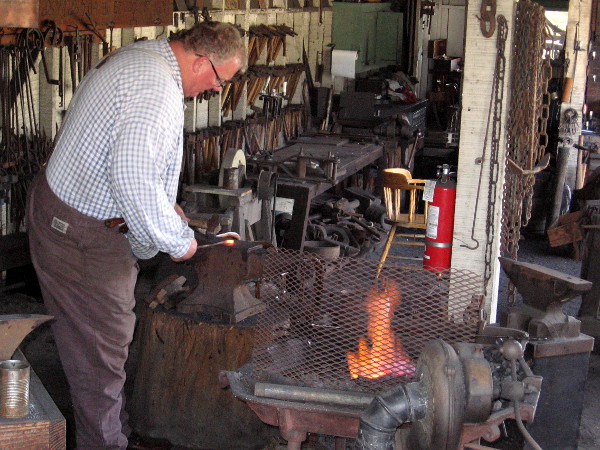
A blacksmith shapes red hot iron at a forge in San Diego’s historic Old Town.
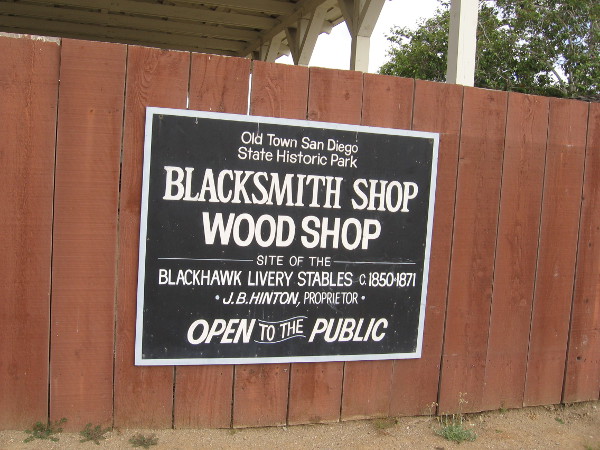
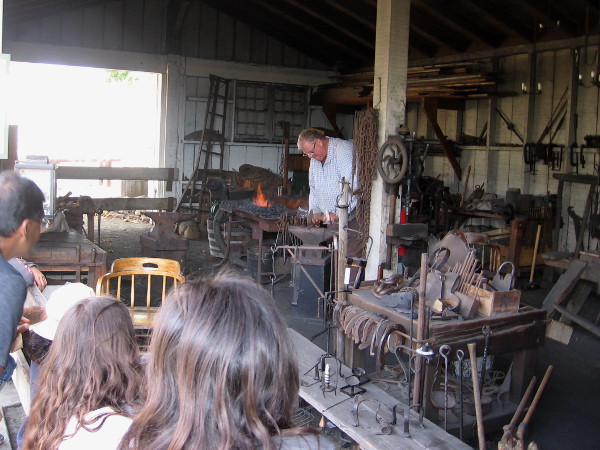
Yesterday I lingered for a few minutes at the Blacksmith Shop in Old Town San Diego State Historic Park. Two forges were operating. I watched as hammers swung, making sparks fly. It was fascinating to learn about blacksmithing and its vital role in San Diego’s history.
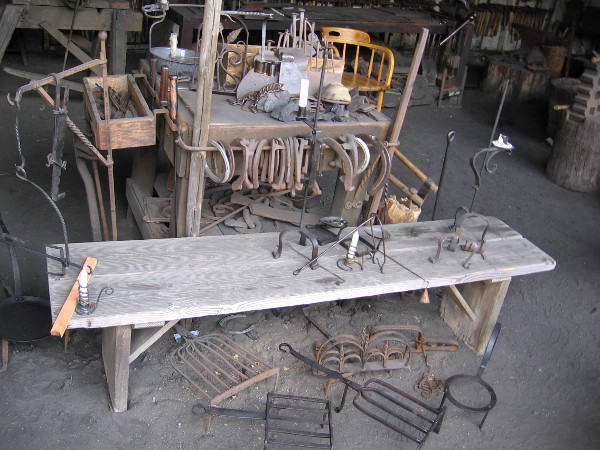
I chatted for a bit with one of the friendly gentlemen working in the Blacksmith Shop. These days the shop is used by a handful of skilled smiths to make all sorts of ornamental and useful metal items. They’ve made objects used for display elsewhere in the State Park. They make everything but horseshoes–and that’s because none of them know how to shoe a horse!
I was told that in 19th century San Diego there were several blacksmiths; this shop now in Old Town was probably located a bit to the east, on the outskirts of town (near today’s Presidio Hills Golf Course) because of the fire danger it presented to other buildings. No blacksmith shop back then would have been as large as the one visitors see today. A blacksmith would most likely do their work in the corner of a livery stable, using one modest forge.
Please read the photo captions to learn more!
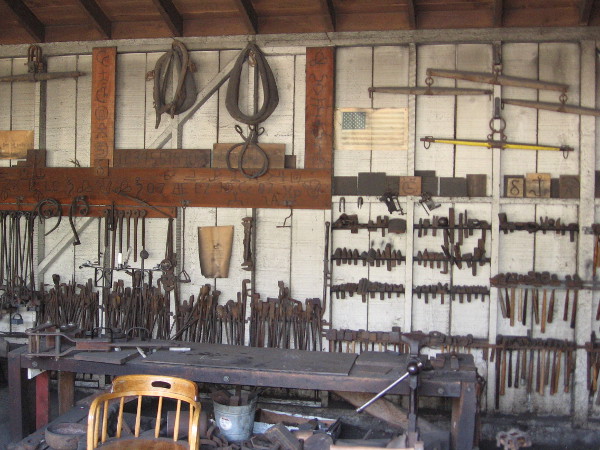
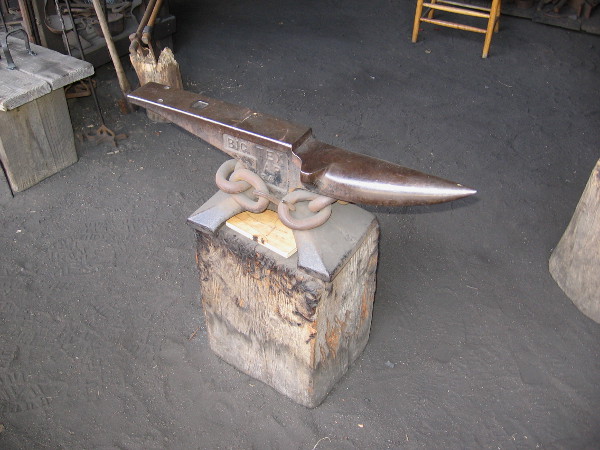
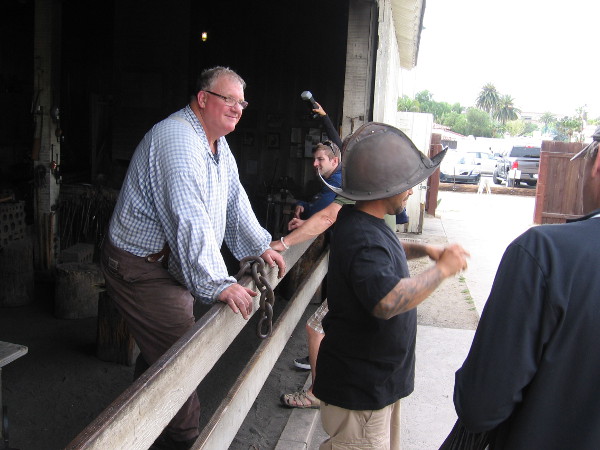
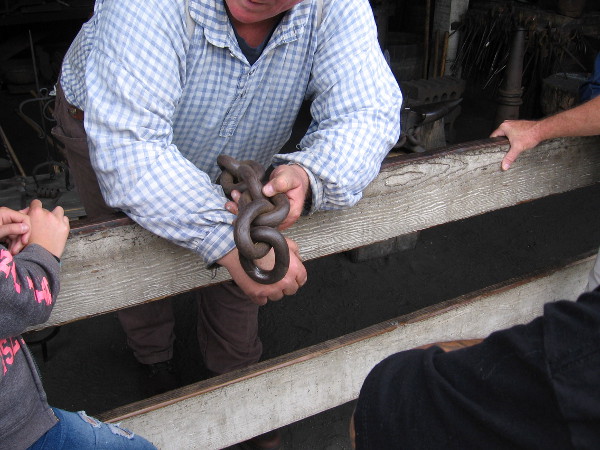
Old Town San Diego State Historic Park’s Blacksmith Shop and Wood Shop at the site of the Blackhawk Livery Stables, circa 1850-1871.Visitors to Old Town learn a little about life in San Diego during the mid 1800s. Blacksmiths created assorted metal objects, made repairs and shoed horses.This friendly blacksmith provided lots of fascinating information. Visitors watch with interest as he works to create a pot holder.I learned that in early San Diego blacksmiths typically burned charcoal in their forge, as coal was usually of poor quality and difficult to obtain in Southern California.A huge bellows provides oxygen for this brick furnace. A good working temperature is about 1800 degrees Fahrenheit.Products that were fashioned include iron grills, traps, candle holders, fish roasters, knives, shovels, chains, hinges, nails, cooking ladles and horseshoes.Hammers, bars, wrenches and various blacksmithing tools hang from the rear wall, in addition to harnesses and other items one might find in a livery stable.The gentleman showed me some devices used to suspend pots over a fire. Everything on this wall was made by local smiths in this shop.A shiny anvil.This wide grassy area behind nearby Seeley Stable was once used for anvil shoots. Gunpowder was placed in a hollow indentation between two anvils and ignited, sending one anvil high into the air with a loud bang! Anvils that did not shatter were considered sound.Old Town visitor tries on a Spanish conquistador helmet made in the Blacksmith Shop.A heavy anchor chain is shown. The welds must be as strong as the iron links themselves.A photo of living history. Skilled artisans used muscle, fire, metal and sweat to make everyday life easier for the early residents of San Diego.
…
I live in downtown San Diego and love to walk around with my camera! You can follow Cool San Diego Sights via Facebook or Twitter!
You can easily explore Cool San Diego Sights by using the search box on my blog’s sidebar. Or click a tag! There are thousands upon thousands of fun photos for you to share and enjoy!
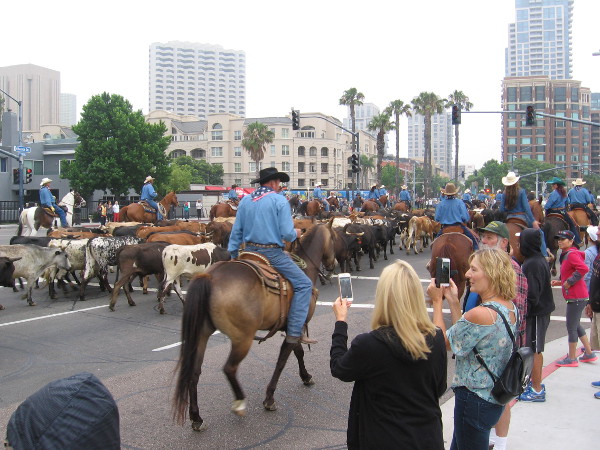
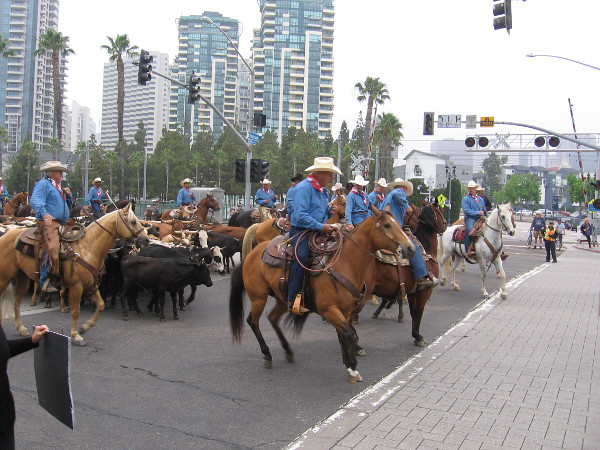
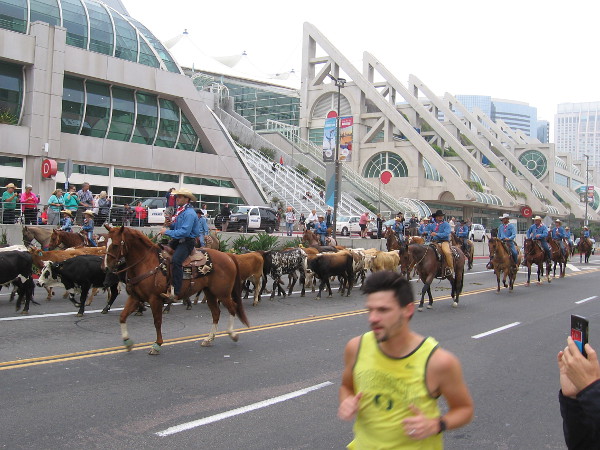
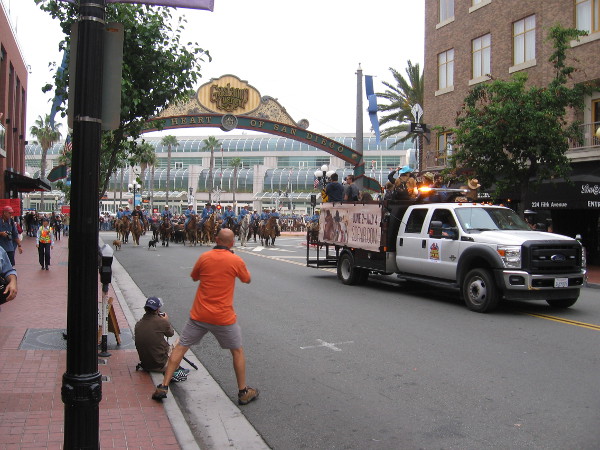
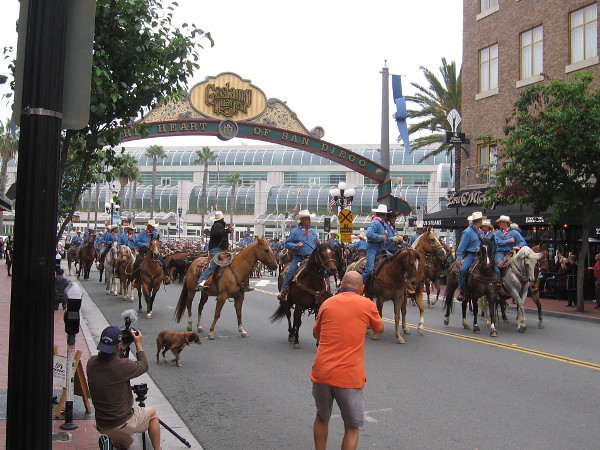
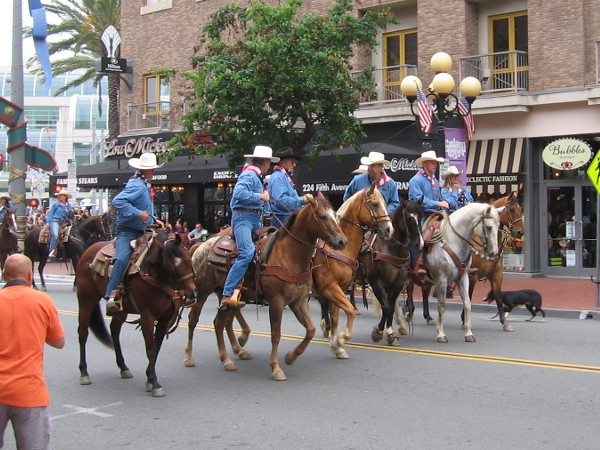
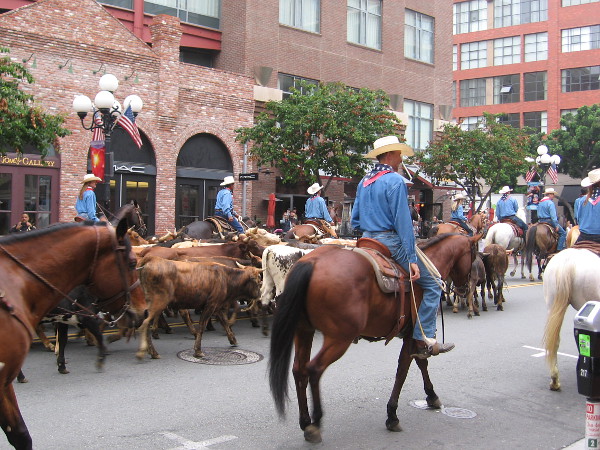
Cowboys on horseback drive cattle down Harbor Drive in downtown San Diego. They are promoting this year’s San Diego County Fair.
This morning there was a big cattle drive through downtown San Diego!
Huh? What?
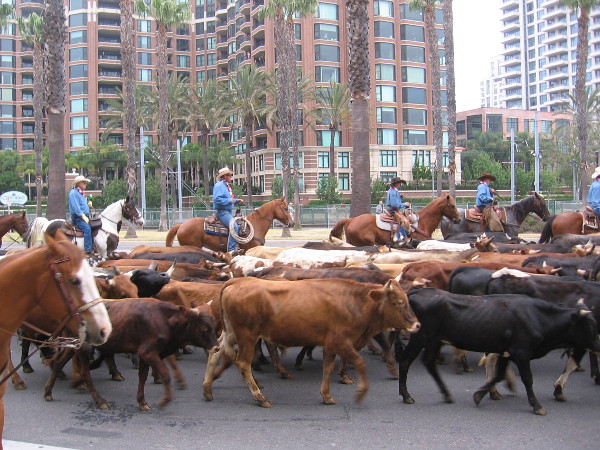
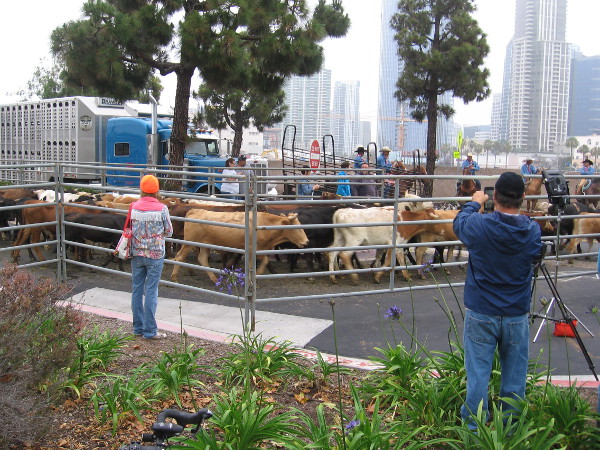
It’s true! About 200 head of cattle were driven by cowboys on horseback and herding dogs down Harbor Drive, then up Fifth Avenue, then back west along Market Street. The intention of this unusual spectacle was to promote the San Diego County Fair, whose theme this year is How the West is Fun!
I followed along much of the way! Here are some photos!
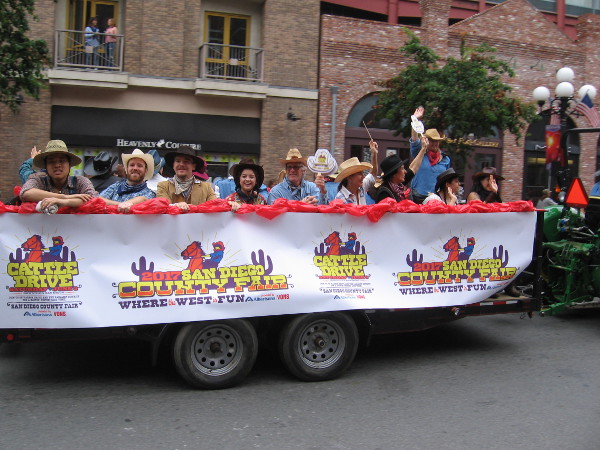
At Harbor Drive and Pacific Highway, police escorts gets ready for the big cattle drive!The 2017 theme for the San Diego County Fair, which opened yesterday at the Del Mar Fairgrounds, is Where the West is Fun.Excitement mounts nearby as the cattle drive is about to get underway.A temporary corral set up by Ruocco Park contained about 200 head of cattle.Here they go, starting down Harbor Drive!Lots of cowboys on horses and some excited herding dogs start the cows along the street.Hundreds of people lined the sidewalk to watch the unusual spectacle. It seemed like the Old West was being relived in San Diego!The downtown cattle drive will head along Harbor Drive, turn north up Fifth Avenue, then head back west along Market Street.You don’t see this every day!Neither does this city dog! What is going on?A guy in a crazy cow costume gets a photograph of the cattle drive.Cowboys keep a close eye on the cattle as they head along San Diego’s waterfront.Not your ordinary Saturday morning in the big city!Skyscrapers in the background. The cows didn’t seem to notice.The cattle drive heads past the San Diego Convention Center. So does a jogger.The downtown cattle drive has turned onto Fifth Avenue. Here they come!Cowboys ride under the famous Gaslamp Quarter landmark sign.The Gaslamp hasn’t seen so many cowboys on horseback in a good century and a half!The cattle are driven up Fifth Avenue into the heart of San Diego.Folks ride in a wagon that promotes the 2017 San Diego County Fair – Where the West is Fun!A rather unusual sight proceeds north up through San Diego’s historic Gaslamp Quarter.The Old West has come back to life in downtown San Diego!
…
This blog now features thousands of photos around San Diego! Are you curious? There’s lots of cool stuff to check out!
Here’s the Cool San Diego Sights main page, where you can read the most current blog posts. If you’re using a small mobile device, click those three parallel lines up at the top–that opens up my website’s sidebar, where you’ll see the most popular posts, a search box, and more!
To enjoy future posts, you can also “like” Cool San Diego Sights on Facebook or follow me on Twitter.




















































 Cool San Diego Sights!