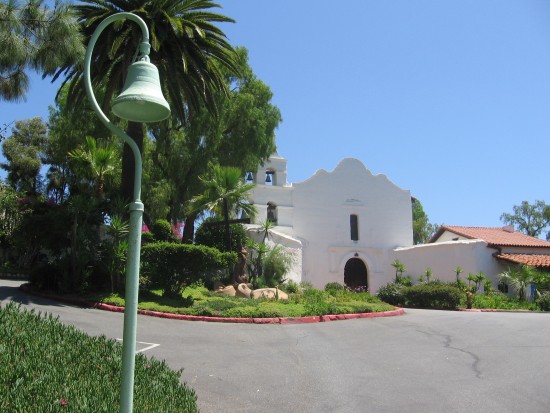
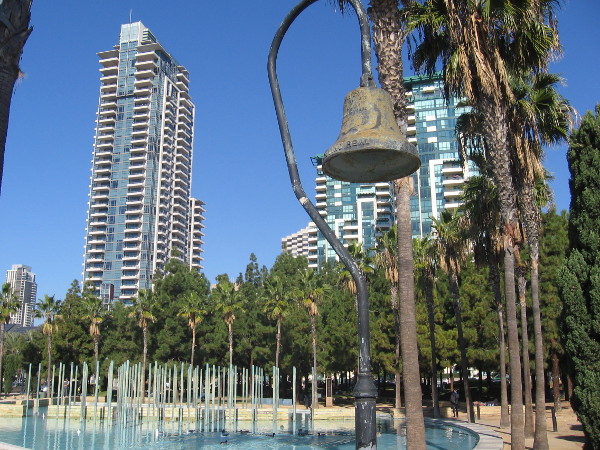
El Camino Real bell in front of California’s first Spanish mission.
Here are just a few random pics of El Camino Real bells around San Diego. During my walks, I’m often surprised to discover a new bell.
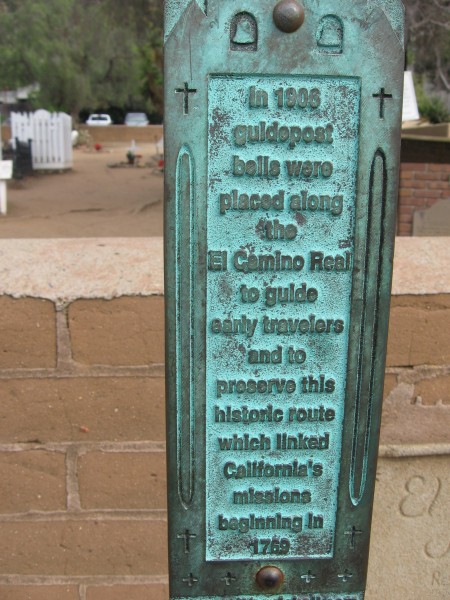
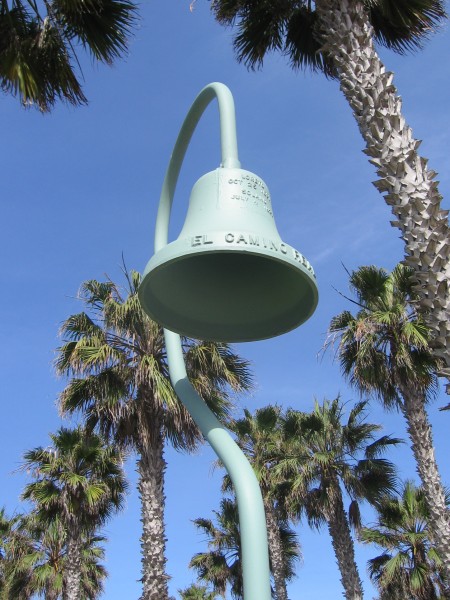
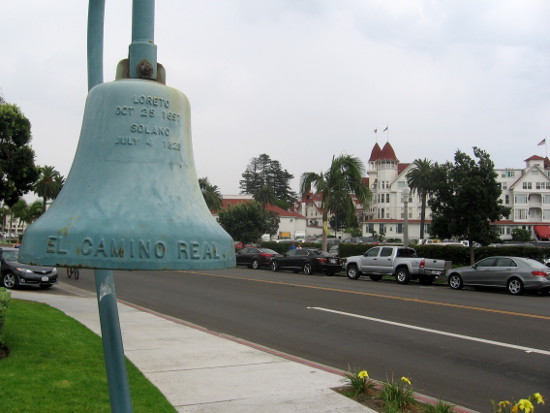
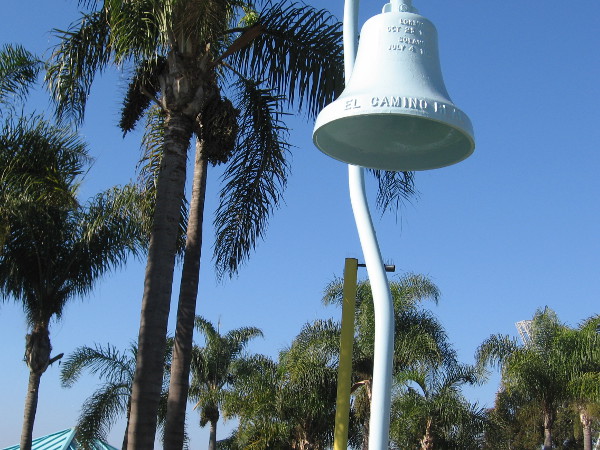
Many of these guidepost bells were placed in 1906 by the California Federation of Women’s Clubs. They marked the primitive roads that connected the old Spanish missions in California. El Camino Real, which means the Royal Road or King’s Highway in Spanish, led to 21 missions in Alta California, plus a variety of sub-missions, presidios and pueblos. The bells stand on tall posts in the shape of a shepherd’s crook. In subsequent years, bells have been removed or added to the California landscape.
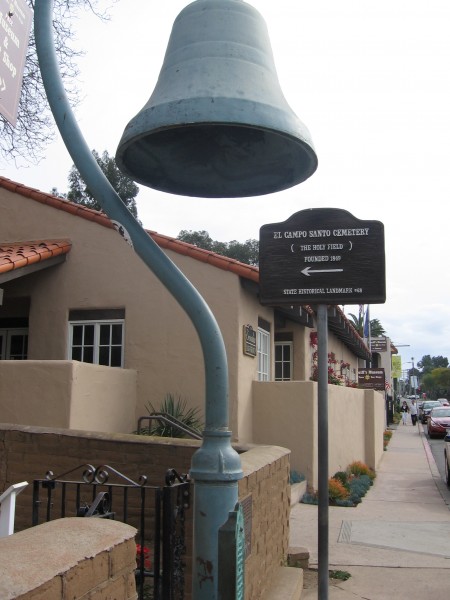
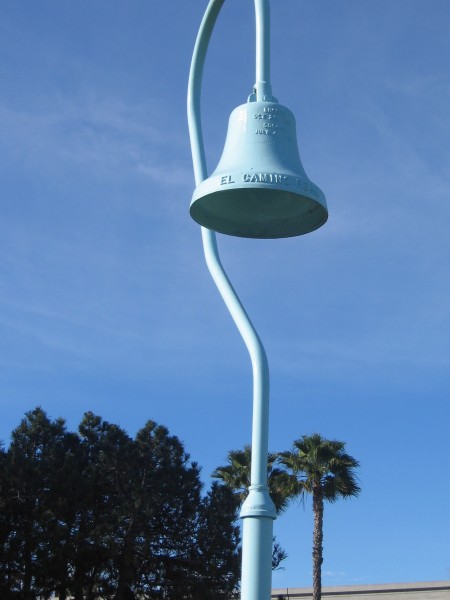
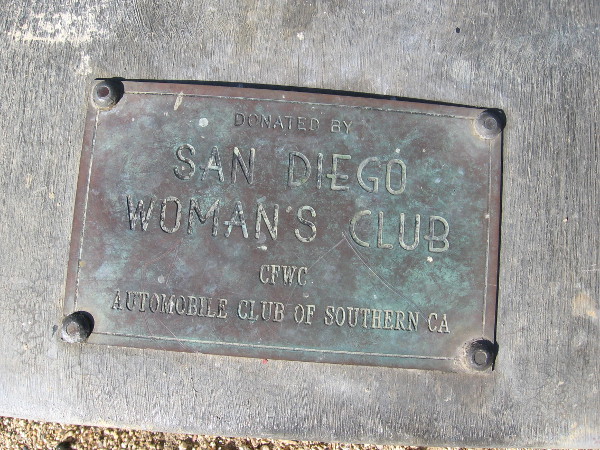
Bell in front of Old Town’s historic El Campo Santo cemetery.Plaque explains history of the guidepost bells.El Camino Real bell spotted on Harbor Island.El Camino Real bell by the downtown County Administration Building.Historic bell and palm trees in Imperial Beach.I found an El Camino Real bell near the Hotel del Coronado!El Camino Real bell in Cesar Chavez Park in Barrio Logan.Plaque on Harbor Drive reveals that a nearby bell was donated by San Diego Woman’s Club.
El Camino Real bell on Martin Luther King Jr. Promenade by Children’s Park.
…
To enjoy future posts, you can “like” Cool San Diego Sights on Facebook, or follow me on Twitter.
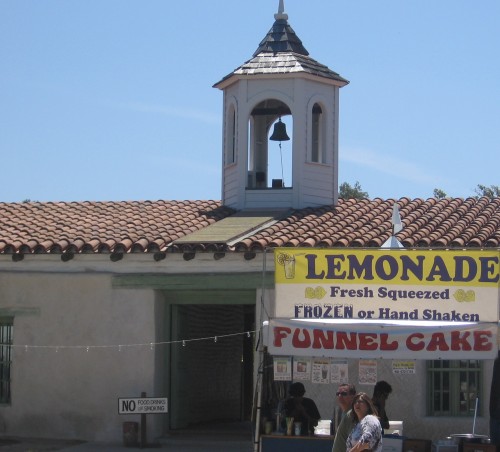
Front of Casa de Estudillo seen during Cinco de Mayo.
Ramona, written by Helen Hunt Jackson in 1884, is one of the most popular American novels in history. The book has had more than 300 printings. It’s been made into a movie four times. Today, few remember it.
Those who walk through La Casa de Estudillo in San Diego’s historic Old Town, however, are seeing with their own eyes a remnant of Ramona’s fame. Without that novel, and past generations’ fondness for its main character, this handsome old building and possibly others around it would have been torn down and utterly obliterated.
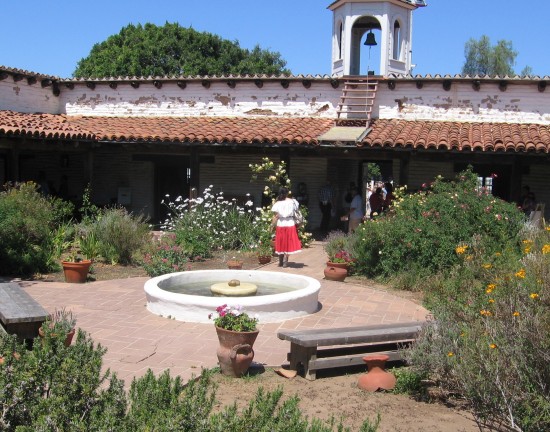
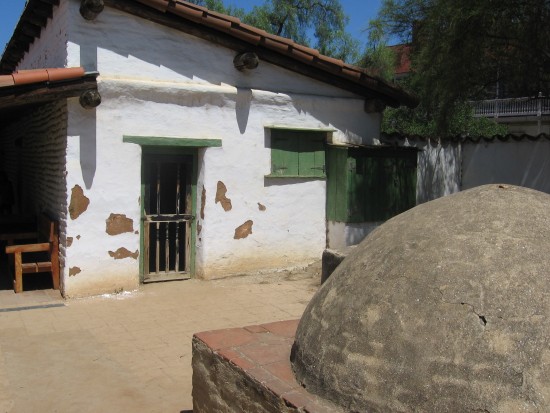
The Casa de Estudillo was built in 1827. It was the property of José María Estudillo, an early settler of San Diego. Captain Estudillo was twice Commandant of the Presidio of San Diego. This large, many-roomed adobe was one of finest houses in all of Mexican California, and remains one of the oldest surviving examples of Spanish Colonial architecture in California.
Shortly after the publication of Ramona, the house, in the hands of a caretaker, enjoyed a burst of popularity with tourists when San Diego’s newspaper, the San Diego Union, declared that the Estudillo house was the title character’s wedding place. Helen Hunt Jackson never stated this was so; the novel described a similar location, but was fictional.
As decades went by the old adobe fell into disrepair and might have been razed. In 1906, John D. Spreckels, owner of the San Diego Electric Railway Company and the Union newspaper, purchased the house and preserved it, transforming it into a true tourist attraction. He altered the building to make it seem more compatible with the description of Ramona’s marriage place, while adding electricity and other conveniences.
The building eventually was given National Historic Landmark status. It’s exaggerated association with the novel caused it to be officially described as “Casa Estudillo/Ramona’s Marriage Place.”
Just inside the courtyard looking up at bell tower.Courtyard fountain of historic Casa de Estudillo.Outdoor oven and one end of old U-shaped adobe house.The house was heavily promoted as the wedding place of Ramona.Walking along the outdoor corridor of old Spanish Colonial home.Camera’s flash illuminates one interior room.Trees and flowers in the beautiful courtyard.Ramona, a famous novel, saved history in Old Town.
…
To enjoy future posts, you can “like” Cool San Diego Sights on Facebook, or follow me on Twitter.
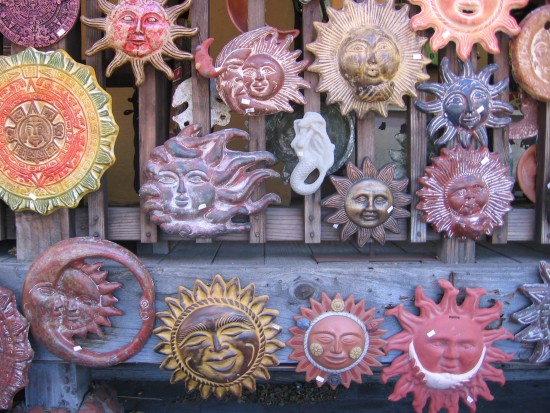
Everywhere you go in San Diego’s Old Town there are touristy shops selling Mexican curios. As I walked along one typical street last Sunday, I was struck by the dazzling array of patio ornaments on display outside a place called Miranda’s Courtyard.
I took several photos from the sidewalk. According to reviews on Yelp, Miranda’s Courtyard sells Mexican religious art, terra cotta suns, Talavera clay pottery, and just a huge bunch of colorful knick knacks.
Photo of suns and moons taken from sidewalk.Lots of colorful trinkets and home decorations.Seems you could spend a whole day at this place!Lady checks out Mexican curios at Miranda’s Courtyard.
…
To enjoy future posts, you can “like” Cool San Diego Sights on Facebook, or follow me on Twitter.
Lots of folks enjoying Cinco de Mayo weekend in Old Town.
Late this morning I took a long leisurely walk through San Diego’s Old Town, just to check out this weekend’s Cinco de Mayo festivities. Thousands of people had arrived already, and the crowd was rapidly growing!
People were excited to watch dancers and musicians performing on several stages. They enjoyed gobs of Mexican food, the Cantina Garden, a fun petting zoo, lots of very cool lowriders, and endless booths selling Mexican crafts and wares.
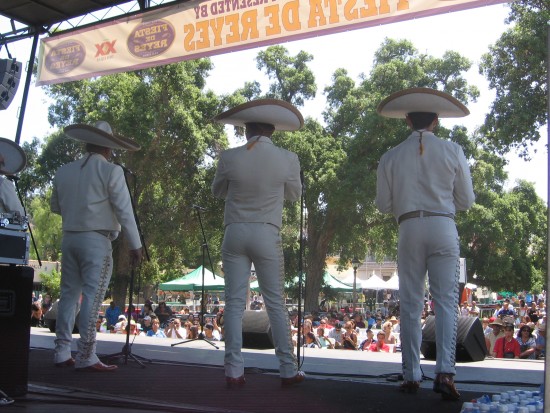
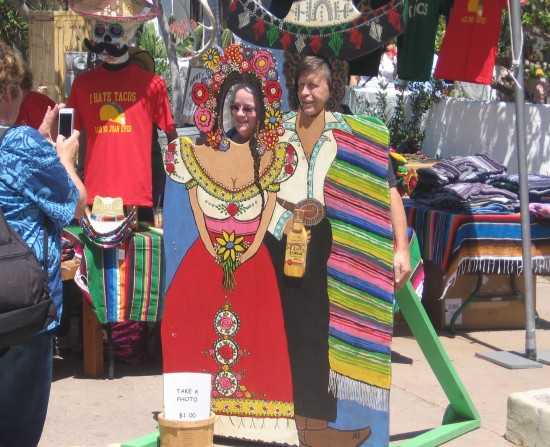
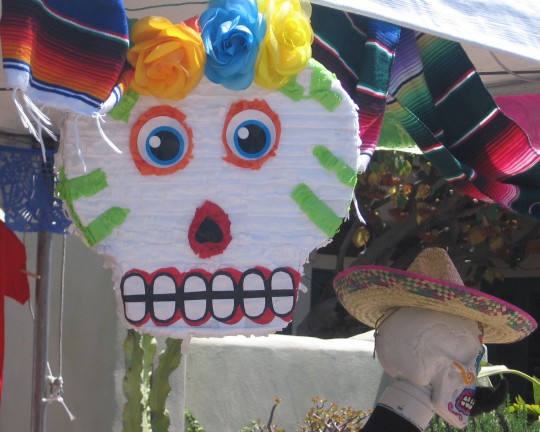
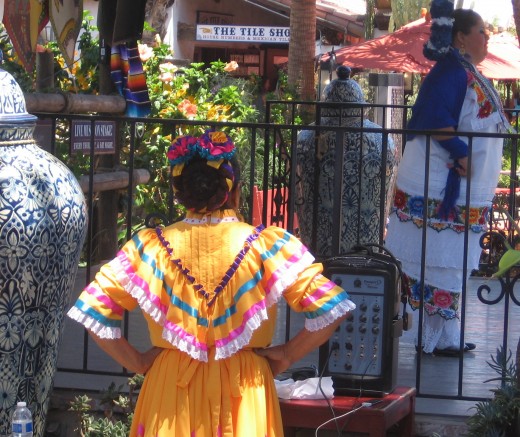
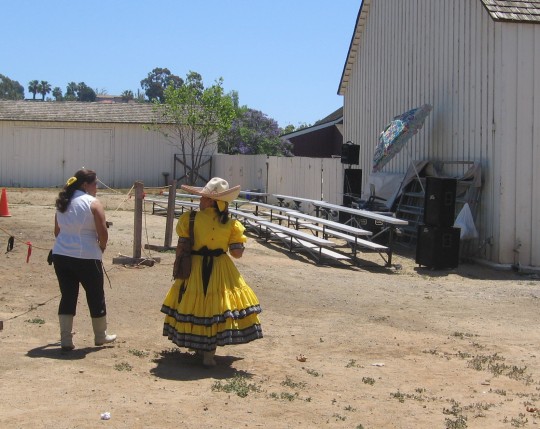
Mariachis play for huge crowd in Old Town’s central plaza.Posing for a fun Cinco de Mayo photo.Colorful Mexican ornaments and gifts seemed to be everywhere.This barbeque smelled really good to the passing crowd.Curled mustache and old-fashioned prickly pear lemonade!Fiesta de Reyes was more festive than usual for Cinco de Mayo.One Mexican folk dancer watches another perform on stage.Bright yellow festival dress worn by lady walking behind Seeley Stable.A petting zoo was set up in Old Town for the kids.There were dozens of amazing hydraulic lowriders.
…
To enjoy future posts, you can “like” Cool San Diego Sights on Facebook, or follow me on Twitter.
Sculpture and cannon at entrance to the Mormon Battalion Historic Site.
Just east of Old Town San Diego State Historic Park one can find the Mormon Battalion Historic Site, an attraction created by The Church of Jesus Christ of Latter-day Saints. The location itself seems a bit arbitrary, as the Mormon Battalion manned Fort Stockton up on the hill by the old, abandoned Presidio when they arrived in San Diego in 1847.
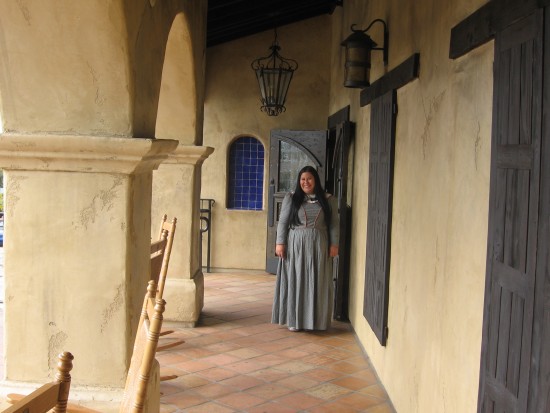
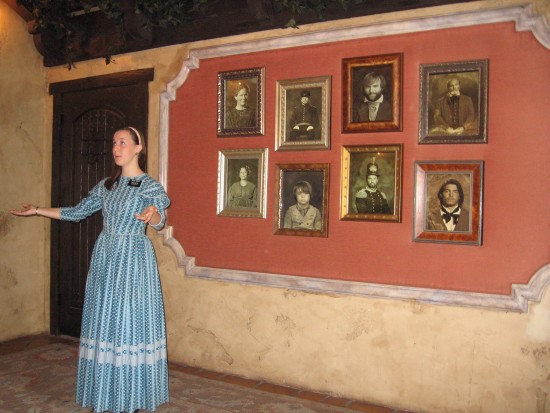
Young lady missionaries guide visitors through a series of rooms and outdoor areas which are designed to tell a sympathetic version of the Mormon Battalion’s difficult 2000 mile march from Iowa. The ulterior motive is to promote their beliefs, and there are frequent religious references, but there is no hard sell and the tour guides are warm and friendly. One can absorb a little bit of history while experiencing a good-humored, Disney-like presentation.
A friendly missionary lady comes outside to welcome a new visitor.Girl in a pioneer dress begins the tour with talking, moving portraits.
Much of the tour is spent watching professionally produced dramatic videos. Several real historical artifacts can be found near the tour’s end.
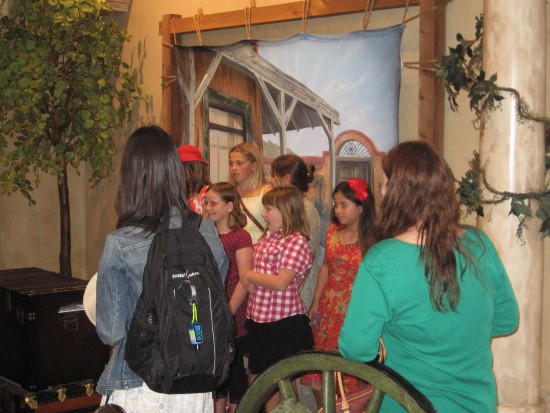
Taking pictures of visitors with a large antique camera.Girls pose for a picture in front of a western scene.
A lot of families and kids were smiling and enjoying the tour. Many appeared to be members of the LDS Church.
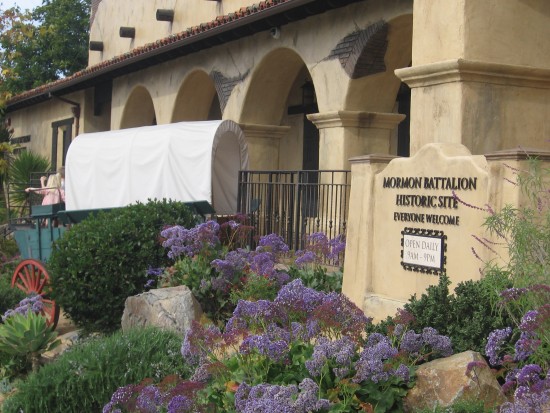
Young visitors near end of the tour pan for glittery iron pyrite.Covered wagon in front of the Mormon Battalion Historic Site.
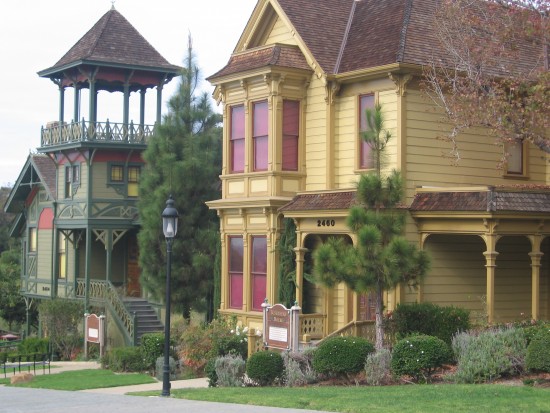
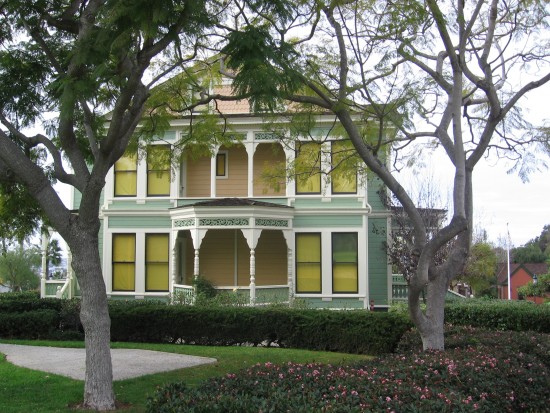
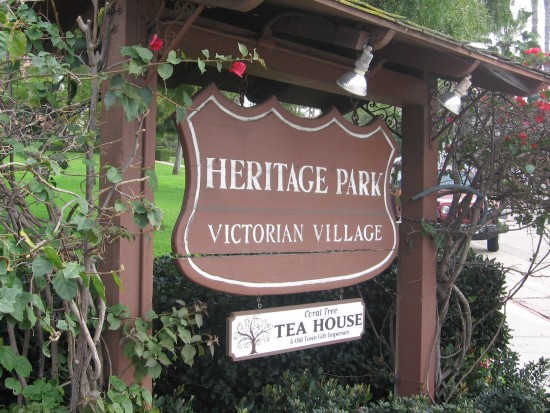
Several colorful Victorian houses were relocated to Heritage Park.
Lovers of architecture, Victorian houses and San Diego history should swing by Heritage Park, a small county park located next to Old Town.
Several historic homes representing Italianate, Stick-Eastlake, Queen Anne and Classic Revival styles were relocated to this eight acre park by the Save Our Heritage Organisation. Only the exteriors of the structures have been restored, with the exception of the Burton House and Senlis Cottage, which are open to the public.
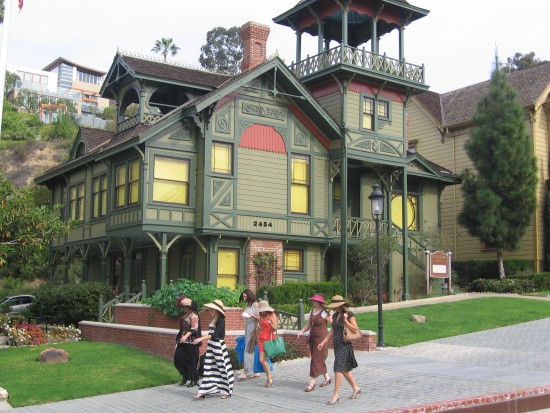
Group of ladies walking past the Sherman-Gilbert House.
John Sherman, cousin of General William Tecumseh Sherman, built the Stick-Eastlake style Sherman-Gilbert House in 1887. Over the years, many world-famous entertainers appeared at receptions in this house, including ballet dancer Anna Pavlova and pianist Artur Rubinstein. This was the first structure moved to Heritage Park, in 1971.
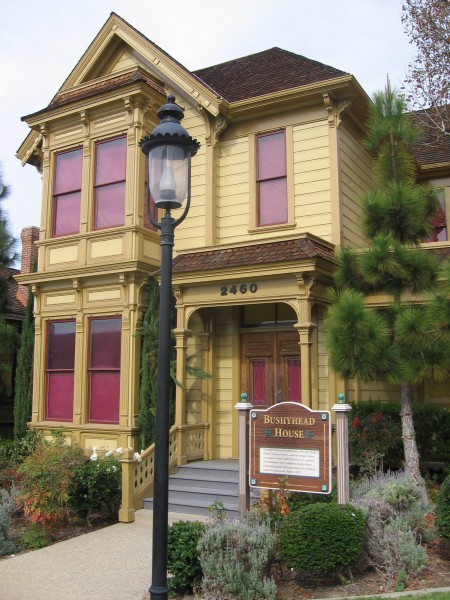
Bushyhead House was an Italianate residence built in 1887.
Edward Wilkerson Bushyhead, a Cherokee Indian with a Scottish ancestor, was an important historical figure in San Diego. He served as Chief of Police years after being publisher of the San Diego Union newspaper. He built the Bushyhead House as a rental in 1887.
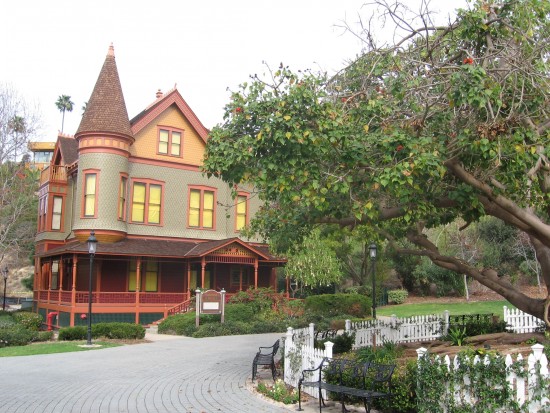
Christian House, built in 1889, seen beyond large tree.
The Christian House is a colorful Queen Anne style house built in 1889.
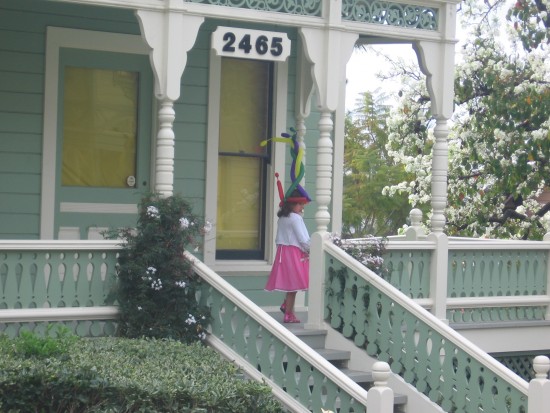
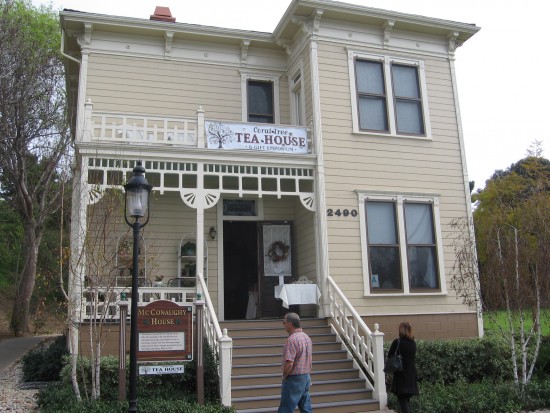
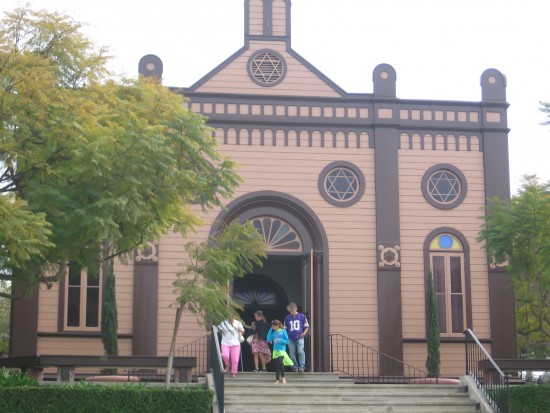
Girl on porch of the Classic Revival Burton House.Side view of the 1893 Burton House in San Diego’s Heritage Park.McConaughy House, a Stick-Eastlake built in 1887.People emerge from San Diego’s first synagogue, Temple Beth Israel.
This 1889 Classic Revival building constructed by the Congregation Beth Israel was also used by several religious sects before it was finally relocated to Heritage Park.
Heritage Park is located adjacent to historic Old Town San Diego.
…
To enjoy future posts, you can “like” Cool San Diego Sights on Facebook, or follow me on Twitter.
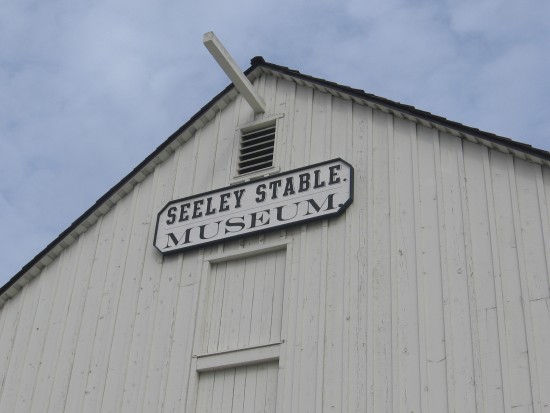
Front of the Seeley Stable Museum in Old Town San Diego.
Perhaps my favorite part of Old Town San Diego State Historic Park is the Seeley Stable Museum.
The huge old barn and surrounding area were once owned by Albert Seeley, who ran the San Diego-Los Angeles Stage Line from 1868 to 1877. His Concord stagecoaches left San Diego at 5 am, stopped overnight at San Juan Capistrano, and arrived in Los Angeles at 4 pm the next day. Eventually competition with the railroad put him out of business.
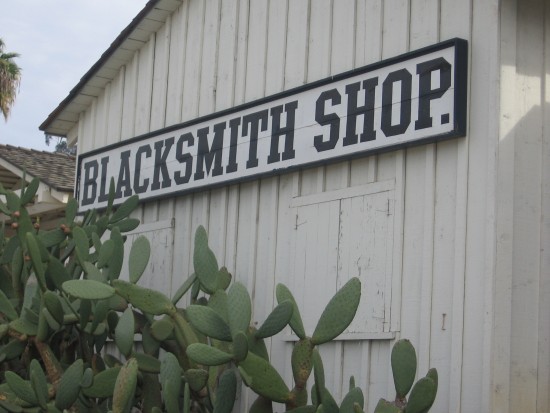
Sign on the Blacksmith Shop behind Seeley Stable.
Behind the Seeley Stable is a cool blacksmith shop, where tourists can watch skilled hobbyists demonstrate the shaping of red hot iron. The hammers ring loudly and the sparks fly! Unfortunately it wasn’t open the day I took these photos.
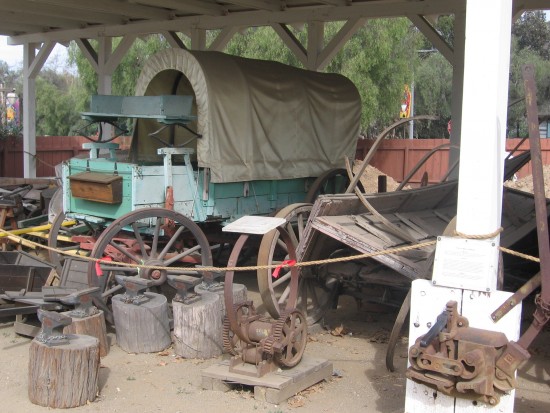
Covered wagon, anvils and relics of the Old West behind Seeley Stable.
Across from the blacksmith you’ll find this. Very cool!
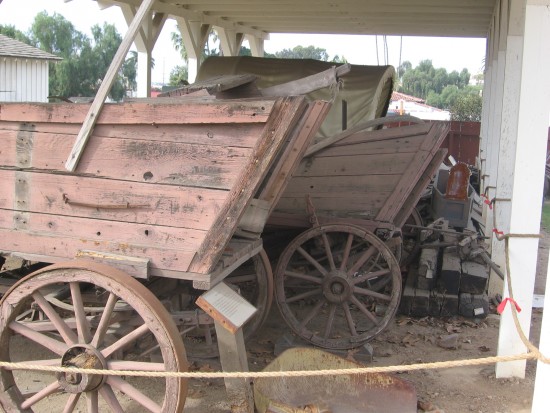
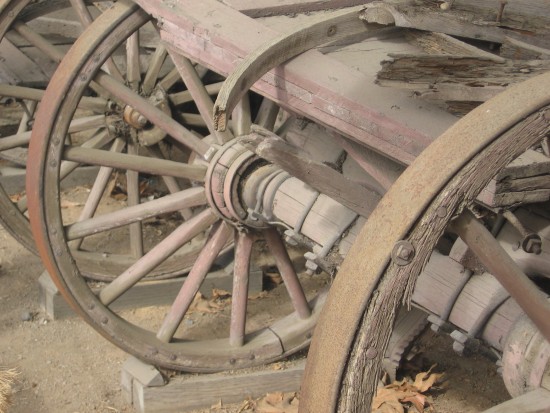
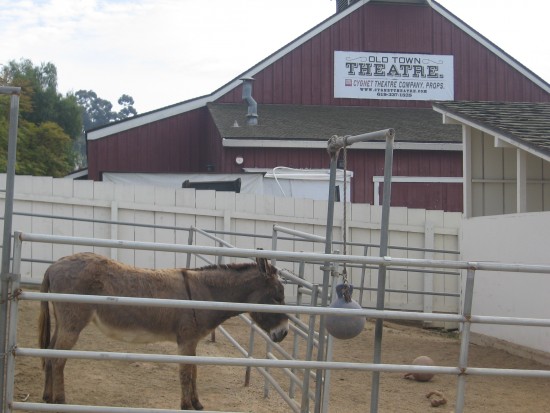
Several unrestored wagons.Peering through old wagon wheels.Donkey awaits young visitors to historic Seeley Stable.
On the south side of the stable you’ll find a couple of donkeys, which are used by park rangers to teach children about life in the Old West.
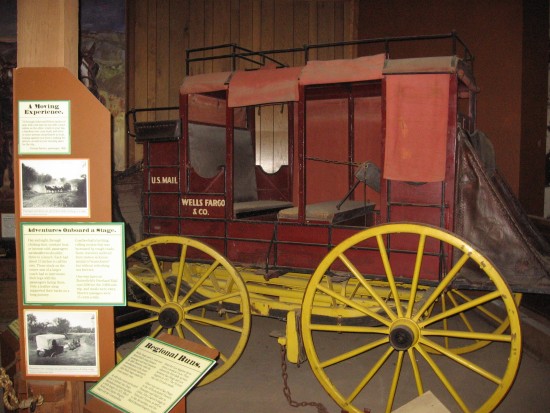
Concord stagecoach from the Los Angeles to San Diego route.
Finally, we’re inside the museum! You can see many different wagons and stagecoaches inside the dark old barn, plus other artifacts from life one and a half centuries ago.
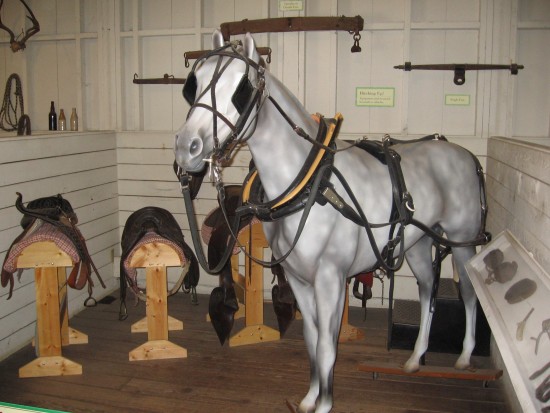
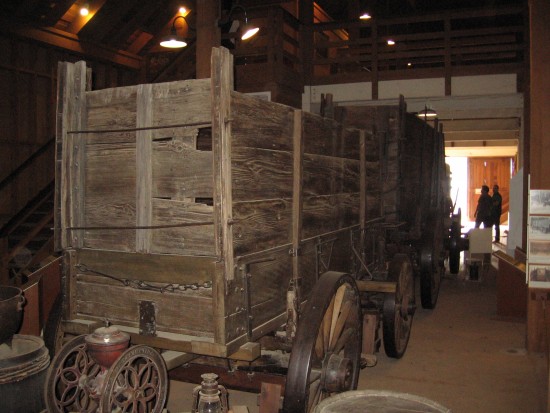
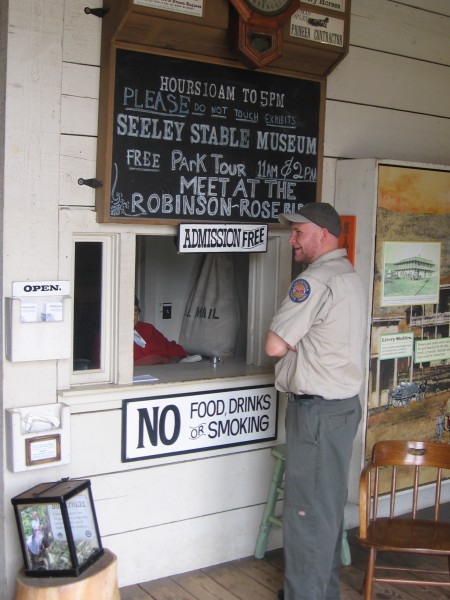
Museum display with horse and saddles recreates the old stable.Huge freight wagon on display at Seeley Stable.Old Wells Fargo wagon once used to transport the mail.Old Town San Diego State Historic Park ranger chats with friendly lady at the ticket window.
The Seeley Stable Museum is free!
UPDATE!
Here are a few more interesting and informative photos that I took inside the museum in August 2017…
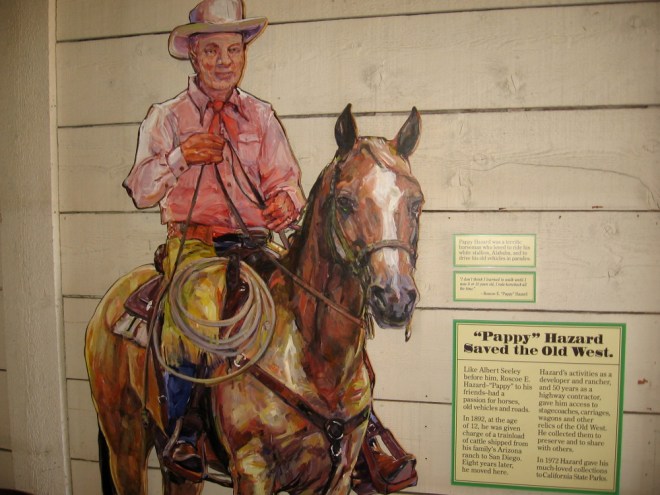
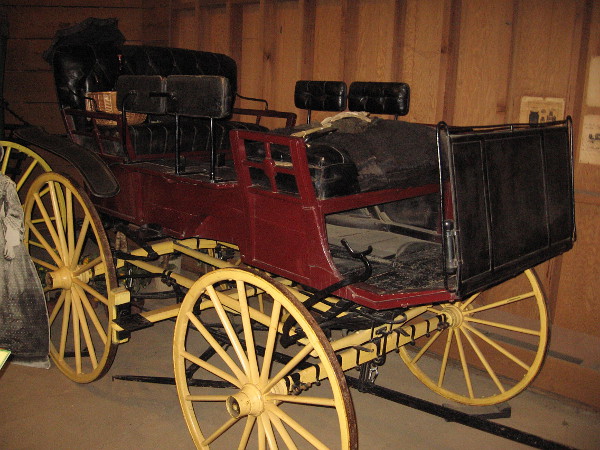
Roscoe E. “Pappy” Hazard was a developer and rancher who collected stagecoaches, carriages and wagons from the Old West. Many are displayed today in Old Town’s Seeley Stable Museum.In 1869, Albert L. Seeley transformed the nearby Bandini adobe into the two-story Cosmopolitan Hotel, which became Old Town’s stage depot and social center.Photo of Seeley Stable’s barn and yard taken from Presidio Hill in 1872. The Cosmopolitan Hotel can be seen on the right.Map shows important stagecoach routes, including the Butterfield Overland, and the Birch’s Line from San Antonio to San Diego.Signs and old photos concerning freight wagons in the Old West, which often employed large teams of mules.Spaniards introduced mules to America along with the horse. Hardy pack mules were used by trappers to haul furs, and by gold miners to move supplies and equipment.This delivery wagon was brought to San Diego by Frank Kimball in 1868. It was used to show passengers land that he had for sale in National City.This old Park Wagon was used by cattle rancher Walter Vail. He owned a land in Arizona, Santa Rosa island off the coast of California, and Warner’s Ranch northeast of San Diego.How a corner of the stable might have once appeared. Stable hands had many chores, including feeding, watering and grooming animals, and cleaning stalls.
…
This blog now features thousands of photos around San Diego! Are you curious? There’s lots of cool stuff to check out!
Here’s the Cool San Diego Sights main page, where you can read the most current blog posts. If you’re using a small mobile device, click those three parallel lines up at the top–that opens up my website’s sidebar, where you’ll see the most popular posts, a search box, and more!
To enjoy future posts, you can also “like” Cool San Diego Sights on Facebook or follow me on Twitter.
A carefree day near the center of San Diego’s Old Town!
Just some random pics taken around the central plaza of Old Town San Diego State Historic Park…
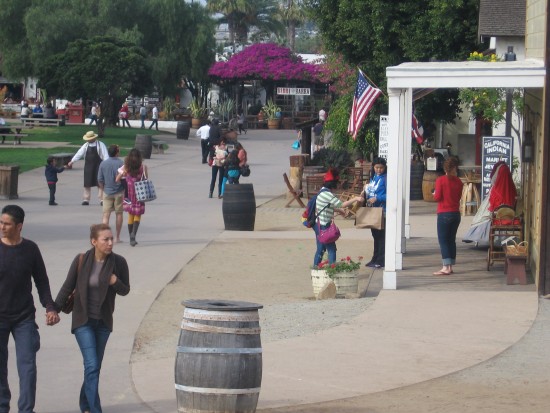
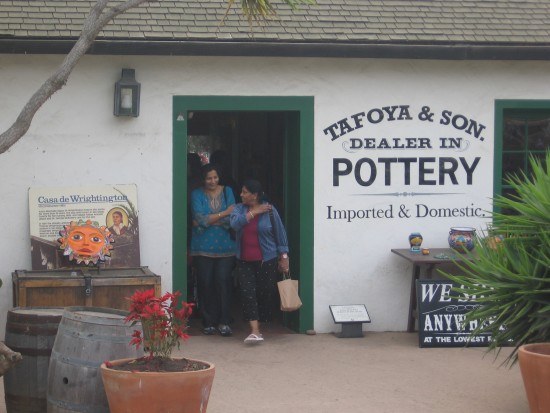
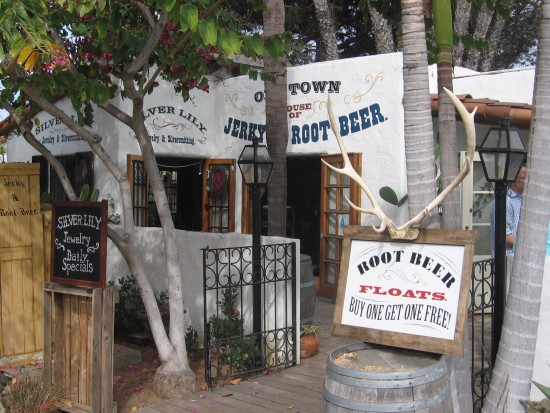
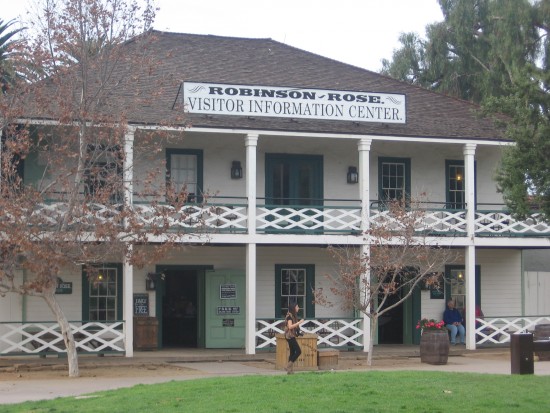
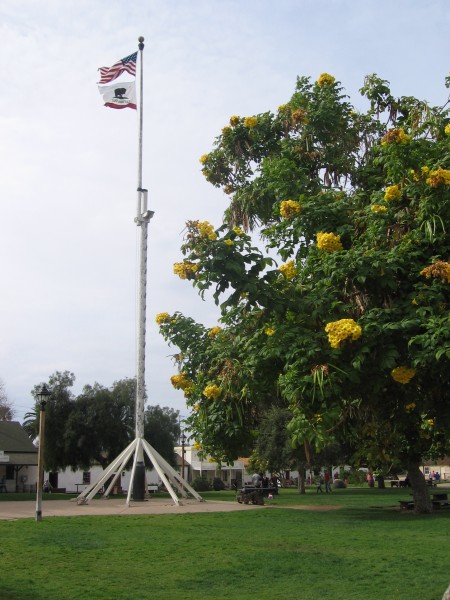
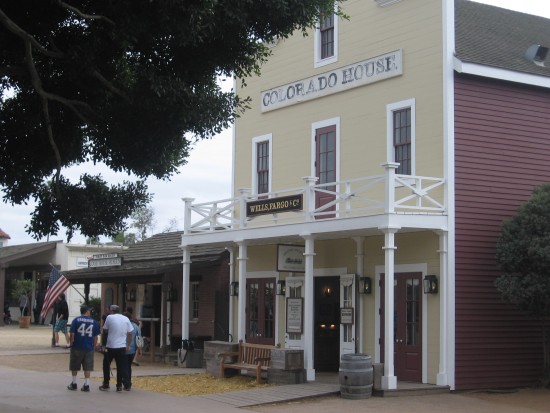
Shoppers emerge from pottery shop in Old Town central plaza.Silver jewelry, beef jerky and root beer!The Robinson-Rose house is the park Visitor Center.Tall flagpole at the center of historic Old Town.The Cosmopolitan Hotel and Restaurant.The Rust General Store with patriotic red, white and blue.Folks walk past historical buildings in Old Town’s plaza.Tourists pose for a picture in an old covered wagon in Old Town.
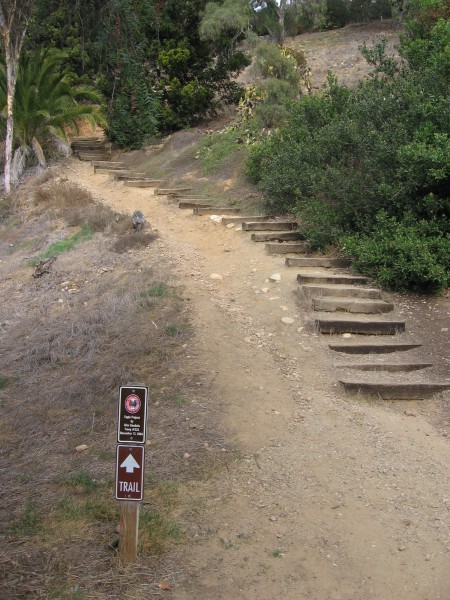
The Old Presidio Trail leads up a steep hill from San Diego’s historic Old Town.
Please join me as I walk from San Diego’s Old Town up a short but very steep trail to Presidio Park. We’ll see all sorts of interesting monuments, views, and of course, the location of the old Spanish presidio, whose ruins are no longer visible. The top of Presidio Hill is now home to the Junipero Serra Museum. Follow me!
We begin near the trailhead, beside the small Presidio Hills Golf Course, on the east edge of historic Old Town.
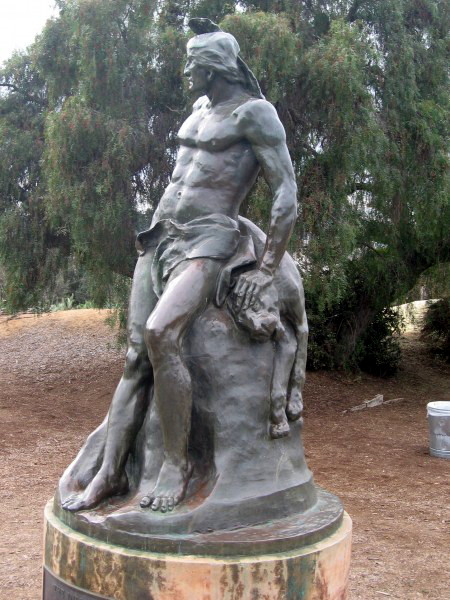
One of several signs along the Old Presidio Historic Trail. This one explains that soldiers and families used to walk down from the Spanish presidio to tend gardens and livestock near the Casa de Carrillo, which is now the pro shop at Presidio Hills Golf Course.The Indian sculpture by Arthur Putnam in Presidio Park.
The first interesting thing we see is this sculpture, titled The Indian. It was created by famous American artist Arthur Putnam in 1905 and placed at the site of an ancient Indian village. The small village was discovered and named San Miguel by the explorer Juan Rodriguez Cabrillo in 1542.
The Padre Cross was erected near the spot where Junipero Serra established California’s first mission.
Up the hill from The Indian stands the Padre Cross. It was raised in 1913 by the Order of Panama and is made up of tiles from the Presidio ruins. The cross marks the strategic location overlooking San Diego Bay where Franciscan friar Junipero Serra chose to establish a Spanish Catholic mission in 1769. (The mission was moved several miles up the San Diego River 5 years later.)
Bronze statue titled The Padre by Arthur Putnam.
Nearby among some trees we find a memorial to the mission’s friars. It’s a bronze statue titled The Padre, completed in 1908 by renowned sculptor Arthur Putnam.
The Serra Museum rises beyond billowing Spanish flag.
Our legs are starting to feel the climb as we reach three flagpoles overlooking Mission Valley.
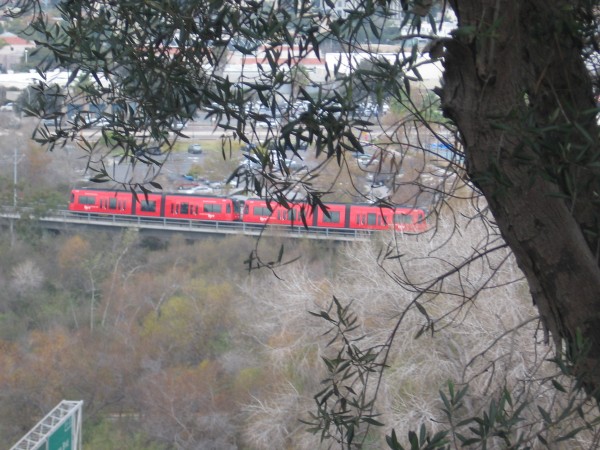
Looking down at a red trolley in Mission Valley.
Turning north for a moment, we see the trolley!
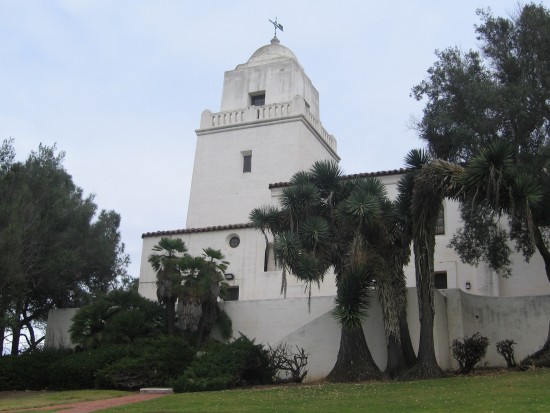
View of the Serra Museum on Presidio Hill in San Diego.
Now we’re getting close to the Serra Museum, which was built in 1928 on this historically very important hill. The museum was built, and the land containing Presidio Park was purchased and preserved for posterity, by philanthropist George Marston.
San Diego was born in 1769 at the old Presidio, a Spanish fort in a desert-like wilderness very far from European civilization. It was located just below the Serra Museum.
Serra Museum employee looks down the grassy hill.
Not many people are about at the moment. Most tourists never venture up this way.
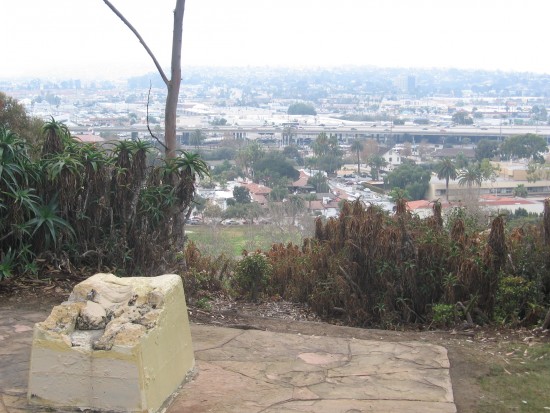
The Serra Museum is packed with numerous historical exhibits. You can climb the tower for views of San Diego Bay, the San Diego River and Mission Valley.
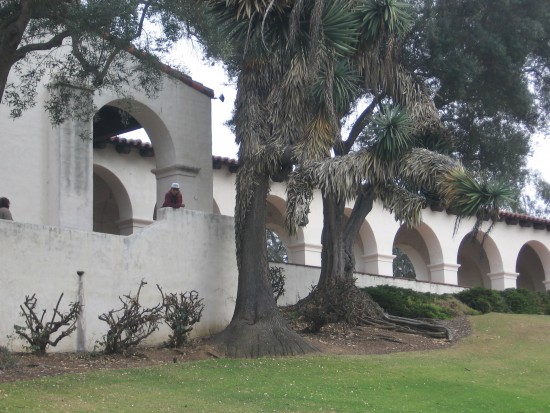
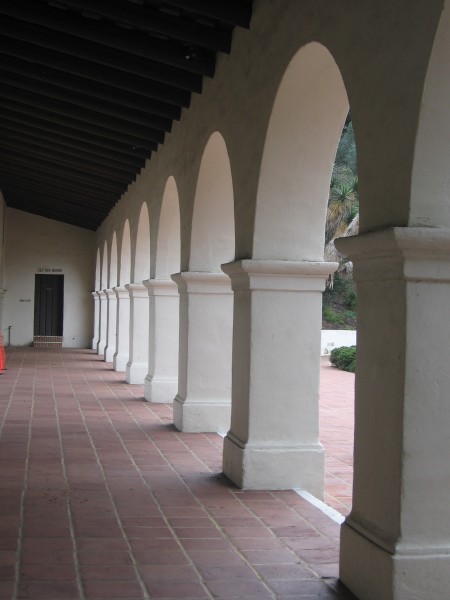
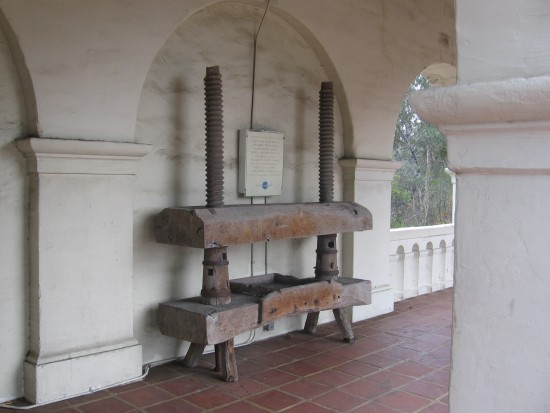
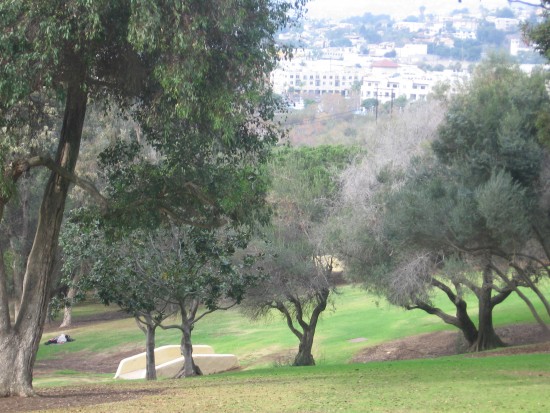
Row of Mission Revival style arches.Large wine press outside San Diego’s fascinating Junipero Serra Museum.Looking downhill from atop grassy Presidio Park.
Now we’ll wander along the hilltop to nearby Fort Stockton, the short-lived camp of the famous Mormon Battalion.
Where a cannon once overlooked Old Town at Fort Stockton.
Decades ago, when I was a young man, I remember seeing a cannon set in this concrete overlooking Old Town. I believe that same cannon is now on display in the nearby Serra Museum. Given the name El Jupiter, it was one of ten cannons that originally protected the old Spanish Fort Guijarros on San Diego Bay at Ballast Point.
(A second surviving cannon from the fort is named El Capitan. Today it can be found near the center of Old Town San Diego’s Plaza de las Armas.)
Mural at Fort Stockton of the Mormon Battalion.
In 1846, President James K. Polk asked Brigham Young of the Mormons to send a few hundred men to San Diego to help in the Mexican-American war effort. On January 29, 1847 five hundred men and about eighty women and children arrived at Fort Stockton after a very difficult 2,000-mile march from Council Bluffs, Iowa.
Mormon Battalion Monument by Edward J. Fraughton.
I hope you enjoyed our walk!
UPDATE!
In 2021 the two sculptures The Indian and The Padre were moved from Presidio Hill to the San Diego History Center in Balboa Park. To see my blog post concerning this, click here.
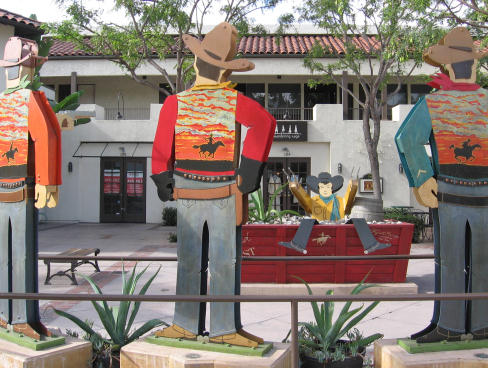
Cowboys have a gun battle in San Diego’s Old Town.
Look at these larger-than-life cowboys! They’re shooting it out in Old Town!
This whimsical art can be found on San Diego Avenue, in a courtyard among shops and restaurants catering largely to tourists. I’m not sure whether it represents the Gunfight at the O.K. Corral or just an Old West scene from a typical Western movie.
Is one of the cowboys Wyatt Earp? After his famous gunfight, Wyatt moved to San Diego to participate in a land boom, running saloons, gambling halls and a brothel!
Like the plant beside him, this guy might soon get planted.



























 Cool San Diego Sights!