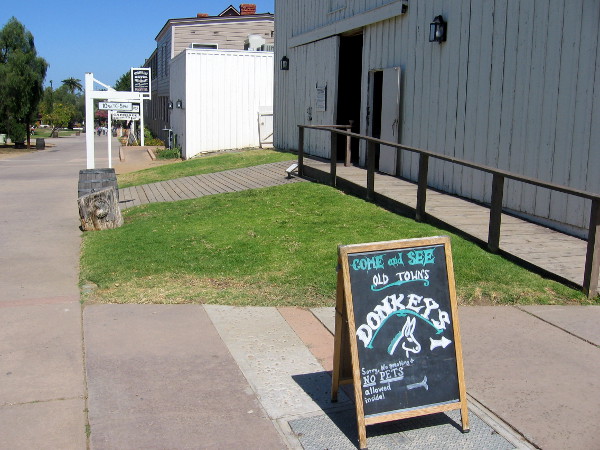
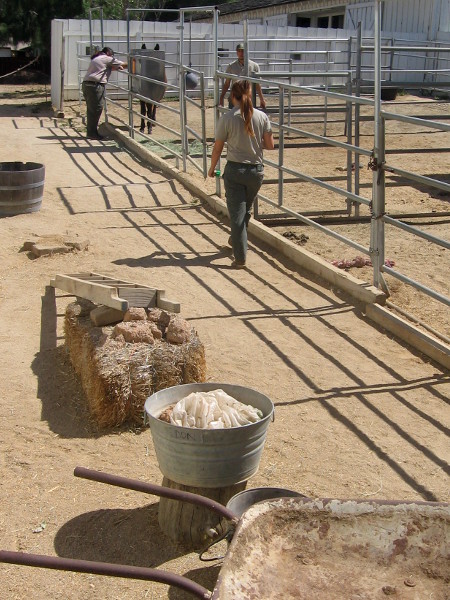
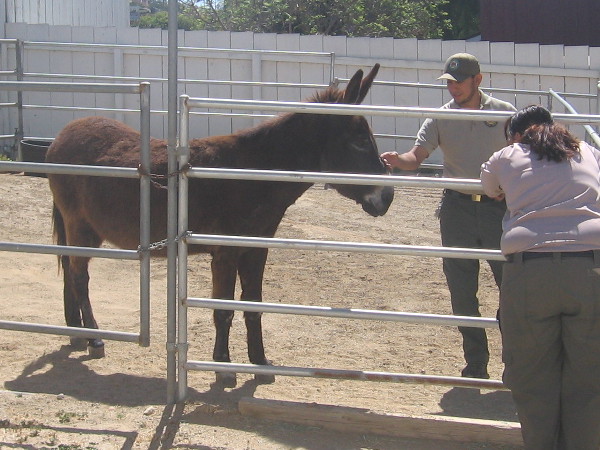
Walking through Old Town San Diego State Historic Park we see a sign beside Seeley Stable Museum. Let’s go see the donkeys!Is this one of the donkeys? Nope. Visitors and kids from local schools can ride this docile wooden critter, because touching the live donkeys is not allowed.Look! We found some horned cattle corralled in a corner! Nope. Wrong again.California State Park Rangers ahead! I think something cool is up this way!It’s 30 year old donkey Don. This guy can be grumpy, I’m told. I saw some evidence of that!Over here we meet 28 year old Dulce, which in Spanish means sweet, or candy. She (I think it’s a she–I didn’t ask) is the friendlier donkey.But the rangers here seem the friendliest of all!
Visiting school kids, with the help of Don and Dulce, can learn what life was like (particularly for a donkey) in the very early days of San Diego.
Four things I learned during my brief visit:
Donkeys were a preferred draft and pack animal because of their spine, which pound for pound is much stronger than a horse. A donkey can pull half its weight.
Donkeys are closely related to the zebra.
Don and Dulce are rescue animals.
Old Town has fun surprises around every corner!
…
To enjoy future posts, you can “like” Cool San Diego Sights on Facebook, or follow me on Twitter.
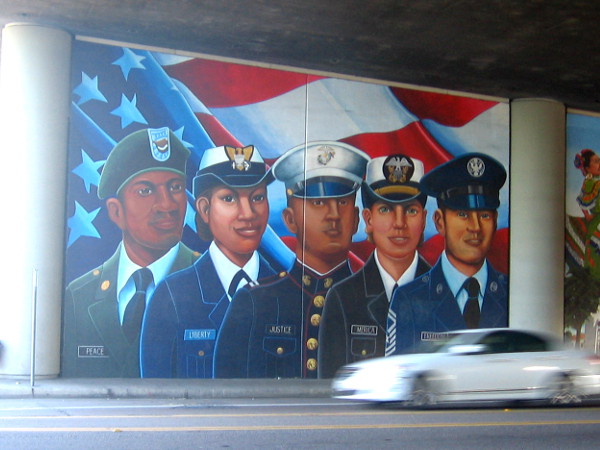
Public art in San Diego honors those who serve in uniform, defending Peace, Liberty, Justice, America , Freedom.
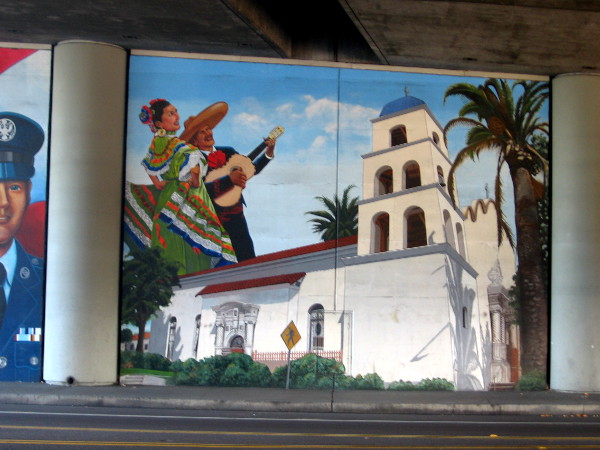
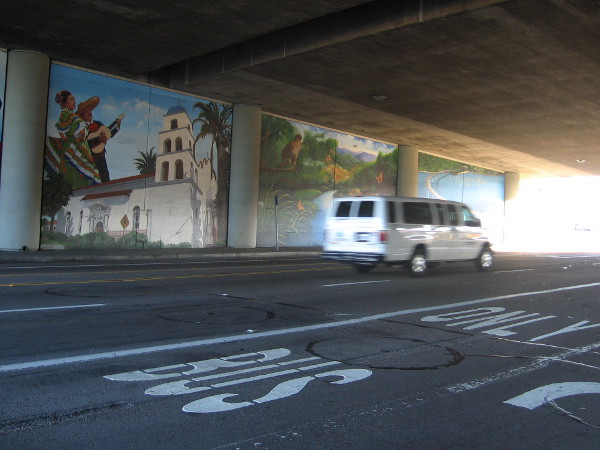
Four large painted murals can be seen under Interstate 5 where the freeway passes over Rosecrans Street, just west of Old Town. The title of my blog post is a bit deceptive, because I only managed to get decent pics of three murals. The fourth, which depicts the Coronado Bay Bridge, was half in sunlight, half in darkness, and is the least interesting (in my opinion) of the four anyway.
Mural includes two colorful scenes from historic Old Town, just a short walk away.Four works of art glimpsed by motorists as they drive under the busy overpass.Pedestrians file past artwork that shows nearby San Diego River and wildlife.
…
To enjoy future posts, you can “like” Cool San Diego Sights on Facebook, or follow me on Twitter.
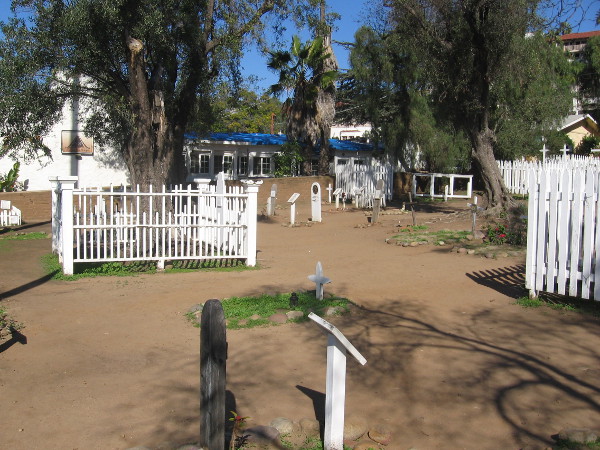
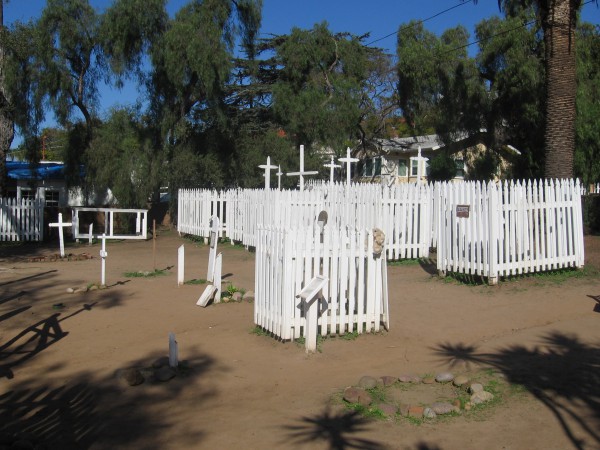
El Campo Santo cemetery in Old Town San Diego contains much history.
El Campo Santo, a cemetery located in Old Town, contains many of San Diego’s earliest residents. By walking respectfully among the gravestones, one can learn much about the city’s interesting history and what life was like for its diverse people. Real-life characters buried here include ranchers, gold miners, sailors, Californios, Native Americans, soldiers, politicians, merchants, actors, children and outlaws.
Established in 1849, the graveyard is the final resting place of nearly five hundred souls. Just a handful are shown in this blog post.
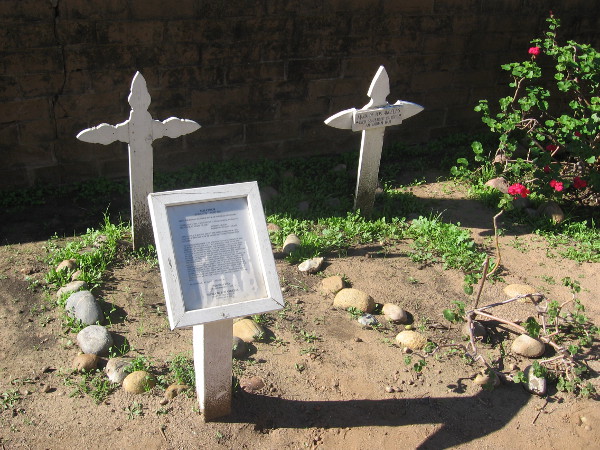
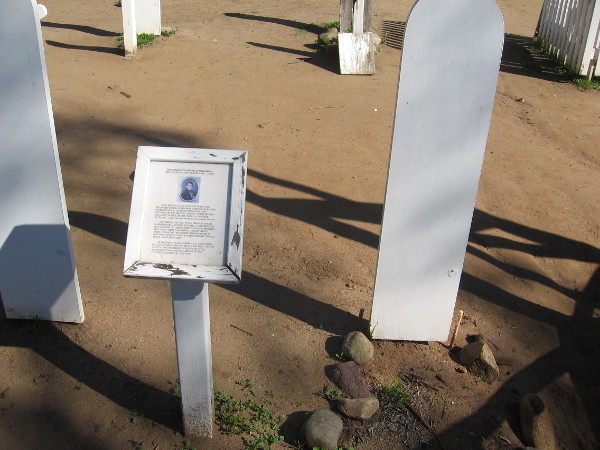
I took photographs of grave sites, headstones and many small signs in the “Holy Field” that describe what is known about the deceased. With a little editing, I’ve provided information here from many of those signs, and from a few other online sources.
Melchior was a Native American who lived to be 97 years old.
Melchior, born 1770, died 1867, age 97 years. Very little is known about the Indian Melchior. He was born a year after the arrival of Junipero Serra in San Diego. He was baptized by the missionaries and became a Roman Catholic Christian. During his long life, he saw San Diego grow from a small pueblo to a city.
Thomas W. Tanner ran an acting troupe that performed at the Whaley House.
Thomas W. Tanner was buried December 22, 1868, age 55 years. He ran an acting troupe that performed on the second floor of the Whaley House in December 1868. Tanner’s troupe offered moral, chaste and versatile entertainment consisting of drama, farce, comedy, singing and dancing. Unfortunately, Tanner died 17 days after his troupe opened. He was married to Policarpia de la Rosa and was a native of Baltimore, Maryland.
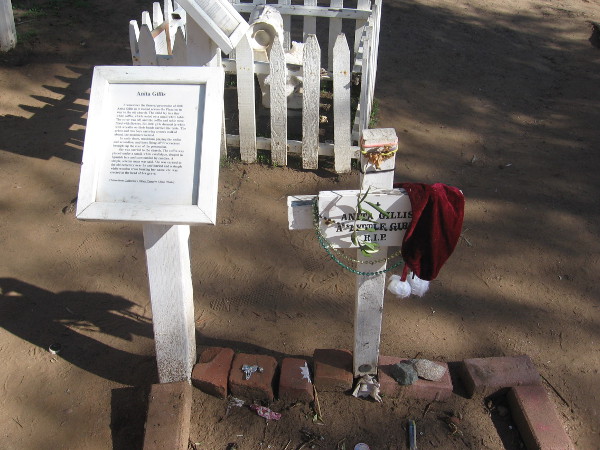
Anita Gillis was a young child.
Anita Gillis was a child when she died. Her funeral is remembered as follows on a plaque by the grave. A funeral procession wound across the Plaza and ended at the old church. The child lay in a tiny white coffin, which rested on a small white table. The cover was off, and the coffin and table were filled with flowers. Six little girls dressed in white with wreaths on their heads carried the table. The priest and two boys carrying crosses walked ahead, the mourners behind. Musicians played the violin and accordion, and boys firing off firecrackers brought up the rear of the procession. She was carried to the church, and the coffin placed under a small white catafalque, draped in Spanish lace and surrounded by candles. A simple, solemn mass was said. She was then carried to the old cemetery and buried with a simple white wooden cross bearing her name erected at the head of her grave.
Juan Mendoza worked on a ranch and was shot in the back.
Juan Mendoza died February 6, 1865. He was the victim of a fatal shotgun blast to the back. The assailant was Cave Johnson Couts, a local landowner and prominent San Diegan born in Tennessee. As the story goes, Mendoza worked as majordomo, or chief steward, on one of Cave Couts’ ranches. Couts claimed that Mendoza had threatened his life and in a hasty act of revenge killed Mendoza in broad daylight. The action violated the legendary “Code of the West” which prohibited “shooting an unarmed man” and “shooting a man in the back”. Couts was tried by jury for his crime and found not guilty. This was received “with much applause” from local citizens since threatening the life of a man, as Mendoza allegedly did, gave Couts the right to stand his ground and kill him.
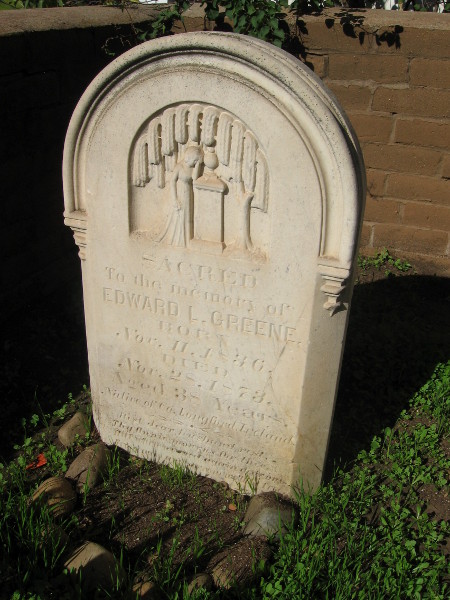
Edward Lynch Greene was a gold miner who became member of the state legislature.
Honorable Edward Lynch Greene died November 28, 1872, age 38 years. He was a native of Ireland who came to California in 1852 and was a miner for gold. He was naturalized in 1861. He became a member of the state legislature when he was elected to the Assembly from Calaveras County in 1869. He was staying in San Diego at the Era House when he died of consumption. He’d been ill for the past eighteen months. He left behind a young wife, Ann Greene.
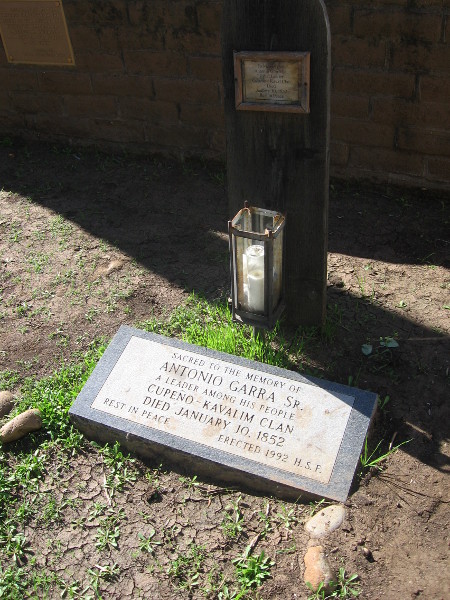
Antonio Garra Sr. was a Native American who rebelled against taxation.
Antonio Garra Sr. died January 10, 1852. He was a leader among his people, the Cupeno-Kavalim Clan. He was educated at Mission San Luis Rey and spoke as many as five Indian dialects, as well as Latin. He was one of the foremost chiefs with great power and influence among his people. The Cupeno were considered mission Indians and were subject to pay taxes in San Diego County. Garra, upset by the taxation of his people, helped to organize a resistance movement, comprised of attacks on Santa Barbara, Los Angeles and San Diego. Against his wishes, a fatal attack was made on Warner’s Ranch. He was soon thereafter captured. On January 10, 1852 Garra was found guilty of murder and theft, but not treason, as he had never taken an oath of allegiance to the United States. Before being executed by firing squad, Garra said in his last words: “Gentlemen, I ask your pardon for all my offenses, and expect yours in return.” Antonio Garra, Sr. is believed to be buried underneath what is now San Diego Avenue.
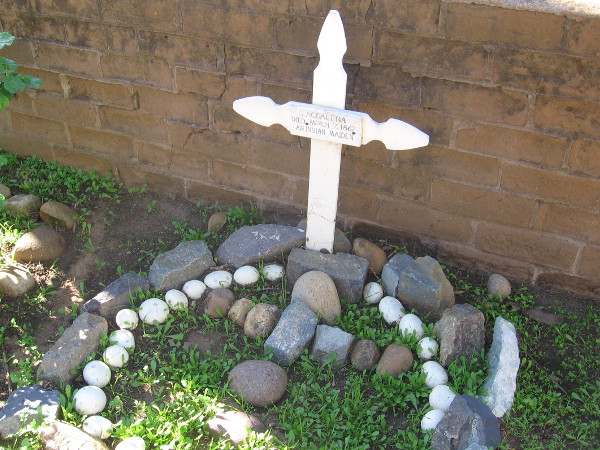
Magdalena was a Native American young lady.
Magdalena was an Indian maiden who died on March 7, 1867 at age 21.
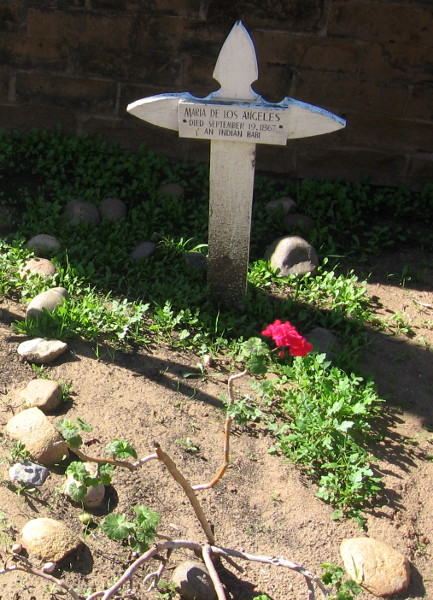
Maria de los Angeles was a Native American infant.
Maria de los Angeles was an Indian infant who died September 19, 1867.
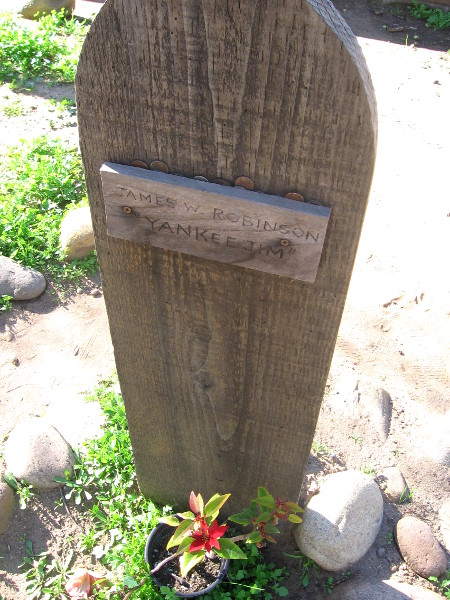
Yankee Jim was hung for stealing the only rowboat in San Diego Bay.
James W. Robinson was known as Yankee Jim. He suffered an extreme penalty for stealing the only rowboat in San Diego Bay. He was sentenced to be hanged. He couldn’t believe that he would be hanged until the very last moment. He appeared to think it was all a grim joke, or at worst, a serious effort to impress him with the enormity of his evil ways. He was still talking when the deputy sheriff gave the signal. Yankee Jim converted to the Roman Catholic Church prior to his death, and so was given the baptismal name of Santiago (Spanish for James). His godfather was Philip Crosthwaite, the deputy sheriff who gave the signal for his execution.
Rosa Serrano de Cassidy and her husband owned a rancho in Pauma.
Rosa Serrano de Cassidy died February 10, 1869, age 21 years. She was the first wife of Andrew Cassidy (a native of County Cavan, Ireland) who helped establish and operate the U.S. tidal gauge in La Playa (in present day Point Loma). Rosa was the daughter of Jose Antonio Serrano who served under Pio Pico in the Mexican War and was in the battle of San Pasqual. Rosa and her husband owned a rancho in Pauma. Her headstone is one of the few remaining originals in the cemetery. After cracking during an earlier restoration, it was placed flat on the ground in order to preserve it.
Don Miguel was a native of Spain, and one of the founding fathers of California.
Don Miguel Telesforo de Pedrorena died March 21, 1850. Don Miguel was a native of Spain, belonging to one of the best families of Madrid. After receiving an education in his own country, he was sent to London, where he was educated in English. In 1845 he settled in San Diego. He married Maria Antonia Estudillo, daughter of Jose Antonio Estudillo, and the two had four children. They built their casa behind the Estudillo home. It was one of the first framed houses in Old Town, and still stands beside the San Diego Union print shop. Don Miguel became a leading merchant and citizen of old San Diego. He served as a delegate to the State’s Constituional Convention at Monterey in 1849 and became one of the founding fathers of California.
Juan Maria Marron was a ship’s captain who became prominent politically.
Juan Maria Marron, born 1808, died at the age of 45. He was a ship’s captain before coming to San Diego in the early 1820’s. He was the owner of 13,311 acres called Rancho Agua Hedionda, which extends from modern day Vista to Carlsbad. He became prominent politically when he married Dona Felipa Osuna in 1834. She was the daughter of Juan Maria Osuna, who was the first alcalde of San Diego and the owner of Rancho San Dieguito. During the Mexican-American War, Marron supported the Americans against many of his Mexican friends. He was captured by Californios who threatened to execute him, but he was released, and his rancho was stripped of horses and cattle.
Jayme Lyons was the son of a carpenter, merchant, blacksmith and sheriff.
Buried November 28, 1859, age 4 years, Jayme was one of probably thirteen children of George and Bernarda Lyons. Jayme’s father was a native of Donegal, Ireland, who came to San Diego in 1847. He had been a carpenter on a ship that came around Cape Horn from New Bedford, Massachusetts. He kept a store in Old Town, owned a blacksmith shop, and was sheriff for two terms. Jayme’s mother was Bernarda de Villar, the daughter of Lieutenant de Villar, who at one time was the Commandant of the San Diego Presidio.
Bill Marshall and Juan Verdugo were hanged nearby.
Bill Marshall and Juan Verdugo were hanged on December 13, 1851. Bill Marshall was an American married to the daughter of a local Indian chieftain. He was a renegade sailor from Providence, Rhode Island, who’d deserted from a whaling ship at San Diego in 1844. After taking up habitation with the Indians, he took an active part in the Garra Indian uprisings in 1851. He and the Indian Juan Verdugo were caught and brought back to San Diego to be promptly tried by court martial. Both were found guilty. The Indian acknowledged his guilt, but Marshall insisted he was innocent. At two o’clock in the afternoon, a scaffold was erected near the old Catholic cemetery, the men placed in a wagon, the ropes adjusted about their necks, and the wagon moved on, leaving them to strangle to death.
Rafael Mamudes worked at chopping wood and digging wells. He dug the graves for the people of Old Town
Rafael Mamudes was a Native American born in Hermosillo, Mexico. He was a baker in Monterey, a miner in Calaveras County, and made a sea voyage to Guaymas. He owned a little plot of land in San Diego where the old jail stands. Legend has it he made a murderous attack upon his wife. To do penance, the priest gave Rafael the task of ringing the church bells when the occasion demanded. Rafael worked at chopping wood and digging wells. He dug the graves for the people of Old Town. He never missed a church service.
Jesus was a Native American who died of a blow to the head while drunk.
Jesus, an Indian, passed away December 15, 1879, age 25 years. He died of a blow to the head without receiving sacraments. According to the priest Juan Pujol, he was said to be drunk, so he was buried near the gate of the cemetery.
Hundreds of varied, rich life stories were concluded here in this early San Diego cemetery.
…
To enjoy future posts, you can “like” Cool San Diego Sights on Facebook or follow me on Twitter.
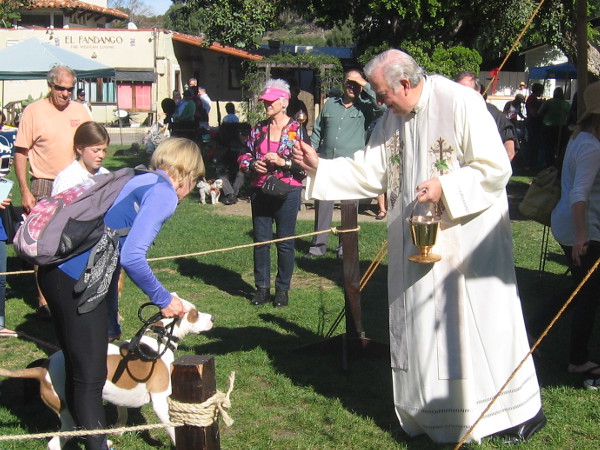
Many animals were blessed today in Old Town San Diego State Historic Park.
The animals were blessed today in Old Town San Diego State Historic Park.
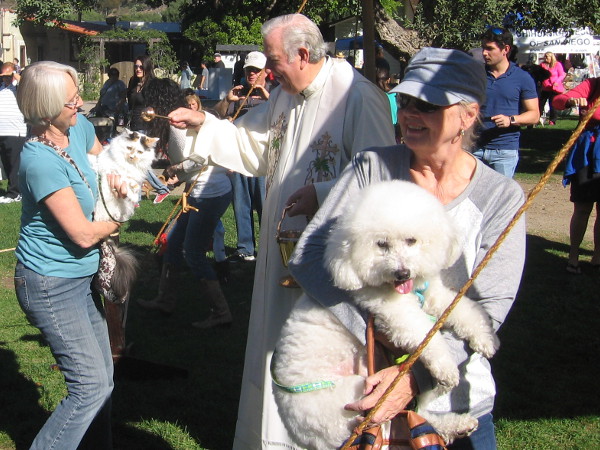
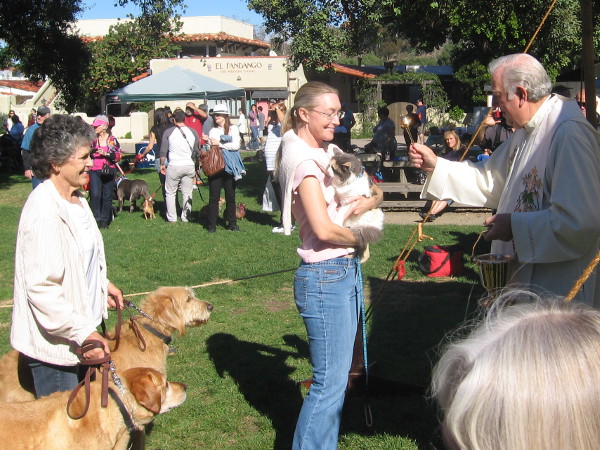
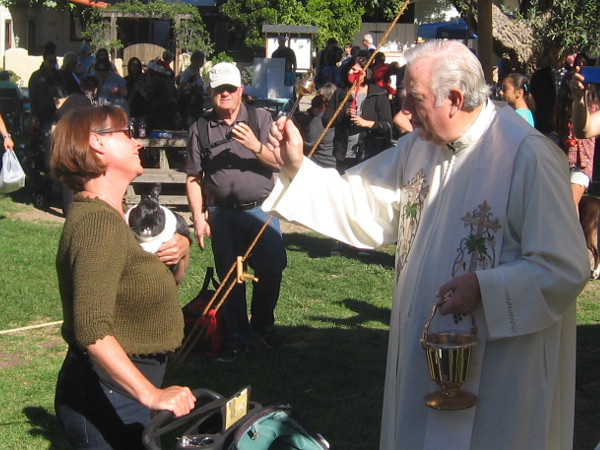
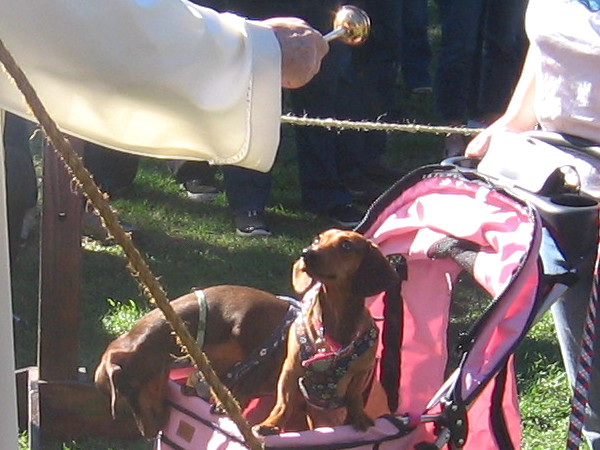
Dozens of beloved pets received a sprinkling of holy water at the annual Benediction of the Beasts, a long-time local tradition.
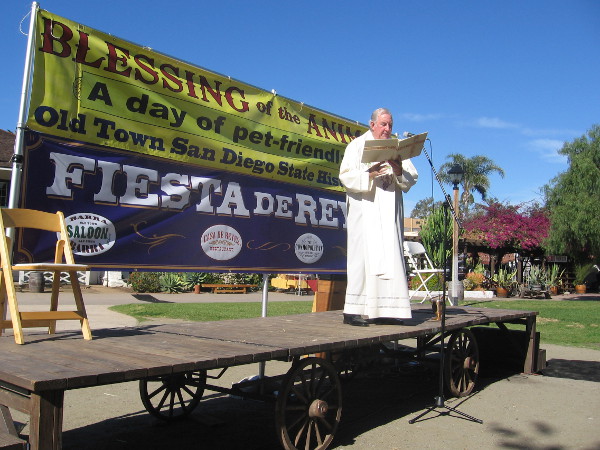
Monsignor Mark Campbell, Catholic priest of Our Mother of Confidence Parish in University City, administered the blessings. The traditional church ritual, which dates back to ancient times, invokes St. Anthony of the Desert, the Patron Saint of Animals. In the very early years of San Diego, livestock were blessed for an abundant harvest.
I watched for livestock but, alas, didn’t see any.
After today’s blessings, the fun event included a mid-afternoon costume and animal trick contest, which I missed. The male human ritual of watching football could not be violated.
Front row dogs wait patiently for the religious ceremony to begin.Monsignor Mark Campbell reads from Genesis and praises faithful pets.Holy water is cast by the Catholic priest upon animals to bestow health and blessings.Animals lined up for blessings included dogs, cats and rabbits.These two guys seemed to enjoy the proceedings.Cute, furry bunny rabbits need blessings as much as any other creature.Here comes Chopper, the motorcycle-riding dog, a big time celebrity.
Chopper, the canine motorcyclist, is quite the sensation in San Diego. I must’ve seen him on local television news a dozen times. He’s even made a cameo appearance on TMZ!
Chopper rides his motorcycle up to the priest for a sprinkling of holy water.This dog was a bit spooked and didn’t know what to make of this craziness.A cat is fascinated by the shiny aspergillum waving about.One dog seems bored while the other appears suspicious!A long line of pet owners waited in Old Town during the Benediction of the Beasts.
…
To enjoy future posts, you can “like” Cool San Diego Sights on Facebook or follow me on Twitter.
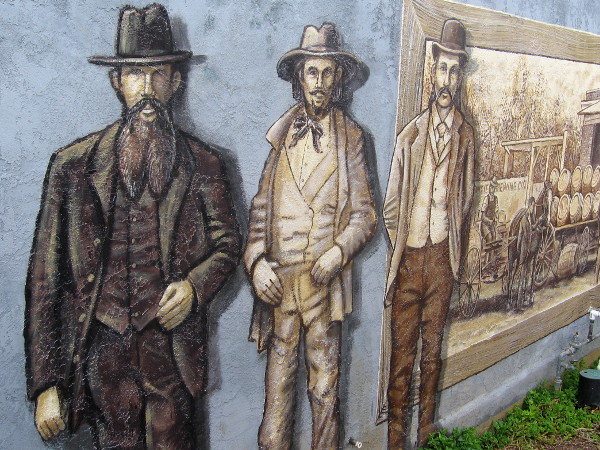
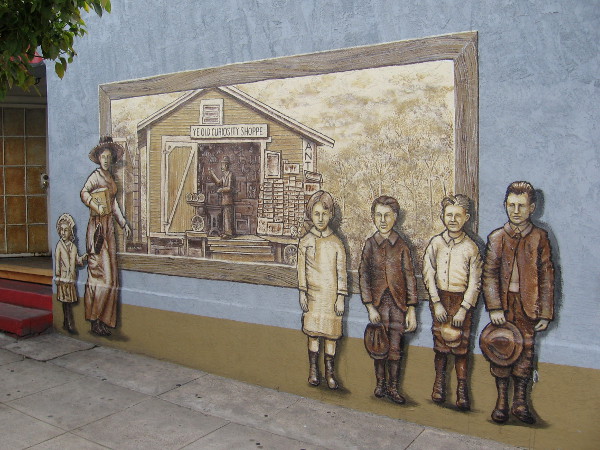
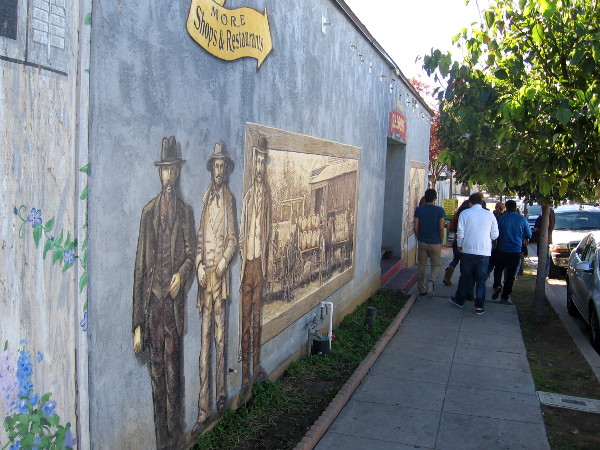
Several whiskered Western characters pose in a mural on Harney Street in Old Town.
There’s a fairly new street mural in Old Town that I really like. Every time I see it, my imagination travels back in time. Back to the first half of the 19th century.
San Diego for many decades was a tiny town seemingly in the middle of nowhere. Whether it belonged to Spain, or Mexico, or the United States, Old Town San Diego was a place of dusty roads and modest, sun-baked adobe houses, horses and wagons, rugged settlers and ranchers. Characters from that era seem to live again in this mural.
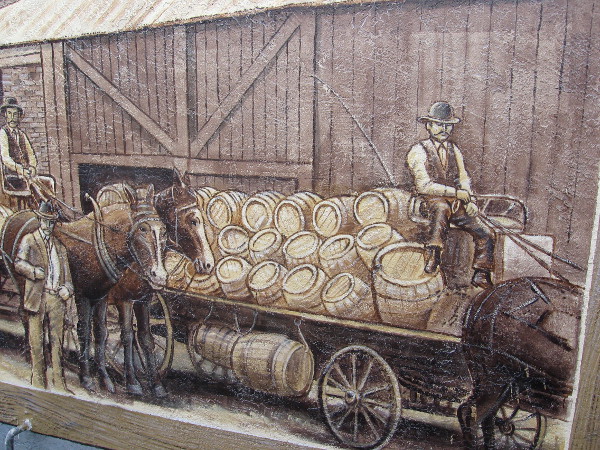
Artist Frank Mando painted this artwork in 2013. I couldn’t capture the entire piece in one shot. Enlivening a building at the corner of San Diego Avenue and Harney Street, the mural is divided in two by a door of the Old Town Saloon. Standing inside that door, as you’ll see, there seems to be a well-known movie star!
Freight wagon hauls a load of barrels in fun art that recalls early San Diego history.John Wayne seems to be coming through a door of the Old Town Saloon.Elegant lady and girl from long ago stroll past Ye Old Curiosity Shoppe.Old Town mural on building wall was painted in 2013 by artist Frank Mando.Kids standing along sidewalk seem to have materialized from San Diego’s past.People walk past nostalgic street mural near side entrance to Old Town Saloon.
…
To enjoy future posts, you can “like” Cool San Diego Sights on Facebook or follow me on Twitter.
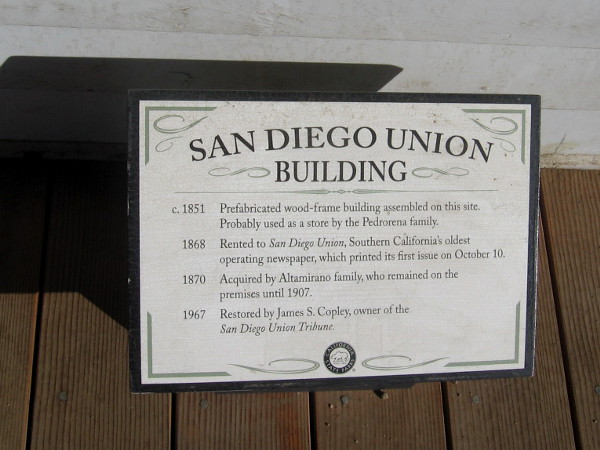
Plaque marks the birthplace of the San Diego Union newspaper in 1868.
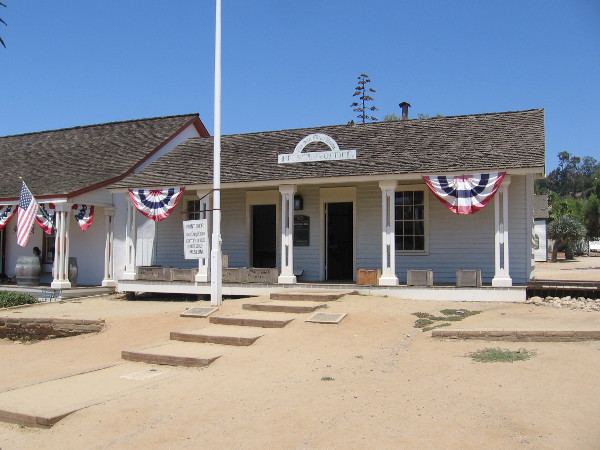
There are many interesting houses and buildings within Old Town San Diego State Historic Park. One of the most fascinating is the San Diego Union Building. Take a step inside and you’ll see the carefully restored birthplace of a present-day major newspaper: the San Diego Union Tribune.
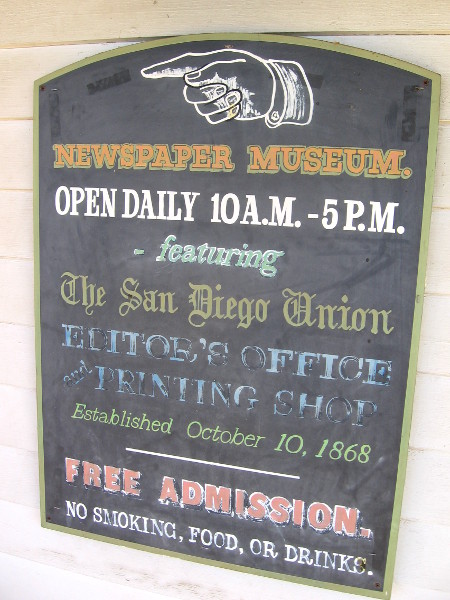
The framework of the building, erected around 1851, is believed to have been originally fabricated in Maine, then shipped to San Diego around Cape Horn. The San Diego Union was first published on October 10, 1868. The newspaper’s editor at that time was Edward “Ned” Wilkerson Bushyhead, a Cherokee Indian with a Scottish ancestor.
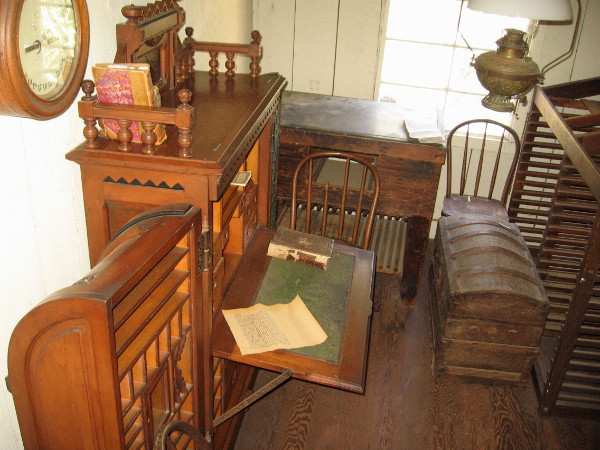
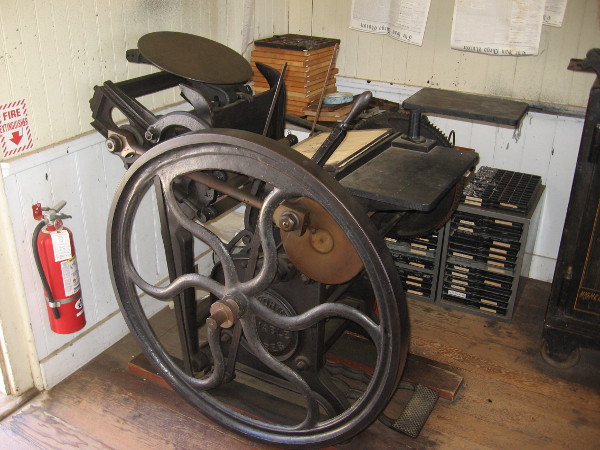
The newspaper began as a modest four page weekly, and was produced on a massive wrought iron Washington hand press. In the museum one can also see an authentic 1860’s recreation of the editor’s room, which contains a desk once owned by the son of Ulysses S. Grant!
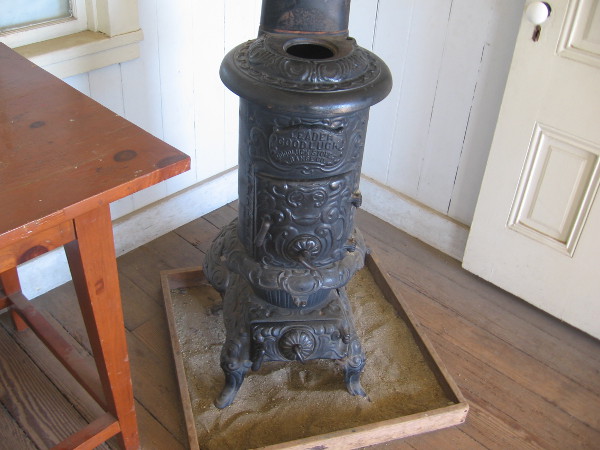
The San Diego Union Building in Old Town San Diego State Historic Park contains a print shop and editor’s office.The prefabricated wood-frame building was erected circa 1851. In 1967 the building was restored by James S. Copley, who at the time was owner of the San Diego Union Tribune.Old wood stove just inside the front entrance of accurately restored newspaper office.Drawers hold hand-set type that used to be assembled in a press for newspaper printing.A massive Washington hand press can be glimpsed to the right in the small printing shop.The small editor’s office contains a desk once owned by the son of President Ulysses S. Grant. In 1910 Ulysses S. Grant, Jr. built a grand hotel in San Diego’s New Town. (I took this photo in August 2017.)The Newspaper Museum is open daily from 10 to 5.
UPDATE!
In August 2017, during Stagecoach Days in Old Town, I was able to actually enter the print shop and take better photos of the presses and other objects inside. (Usually visitors must peer or take photographs from a greater distance.)
Washington hand presses were common on the frontier because of their relative light weight. They required two people for efficient operation.Fresh paper was laid on inked type and an impression made. Setting the type for new articles on just one page could take hours. Fortunately, many advertisements on a page didn’t change.A jobber printing press like this would have been used for small jobs such as stationery and handbills.This safe is the only original object displayed inside the restored San Diego Union Building in Old Town.A type case full of large cast metal sorts. Individual letters were combined into words, sentences and paragraphs. UPDATE! Big mistake by the caption writer: me! The largest letters you see in the above photo are actually made of hard wood. I was corrected by a member of the 919 Gang blog, who’s far more knowledgeable than me. I returned to the museum to confirm this. I learned very large metal sorts would be very heavy!Manual typesetting for old presses, as one might imagine, took lots of patience and a good eye.Gazing from the print shop toward the small building’s entrance area.According to one sign, the San Diego Union Building was erected around 1850 by Miguel Pedrorena. The Washington Press, type and printing supplies arrived by steamship from Northern California.A knowledgeable lady in period attire explains how the San Diego Union newspaper was composed and printed a century and a half ago, long before the digital age.
…
To enjoy future posts, you can “like” Cool San Diego Sights on Facebook or follow me on Twitter.
Día de los Muertos displays at Bazaar del Mundo are filled with life and color.
Día de los Muertos, also called Day of the Dead, is a popular holiday in Mexico and in many other cultures around the world. It’s a celebration that honors the memories and spirits of loved ones who have passed away. It closely follows Halloween, a holiday that is similar but actually quite different. Día de los Muertos, rich with images of skeletons and decorated skulls, is neither scary nor morbid; it is joyous!
This weekend, Old Town hosted its annual Day of the Dead special event. Altars, costumes and other sights that are common during the holiday could be found throughout the park and surrounding area. I took lots of photos!
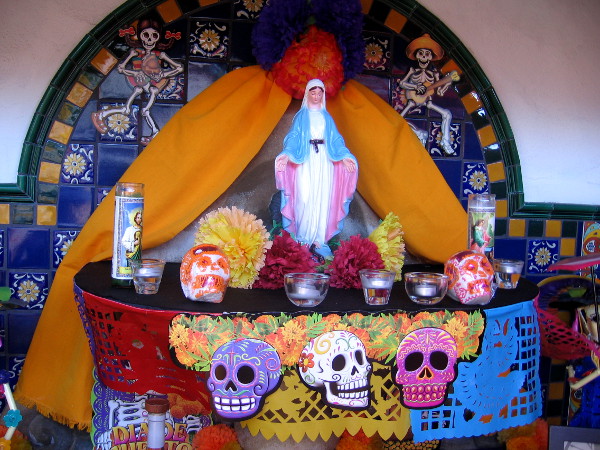
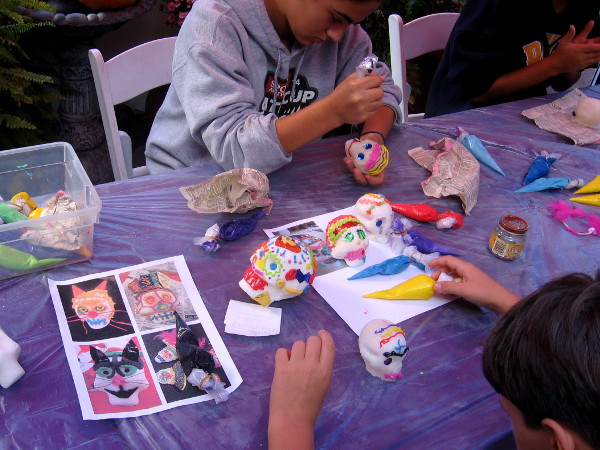
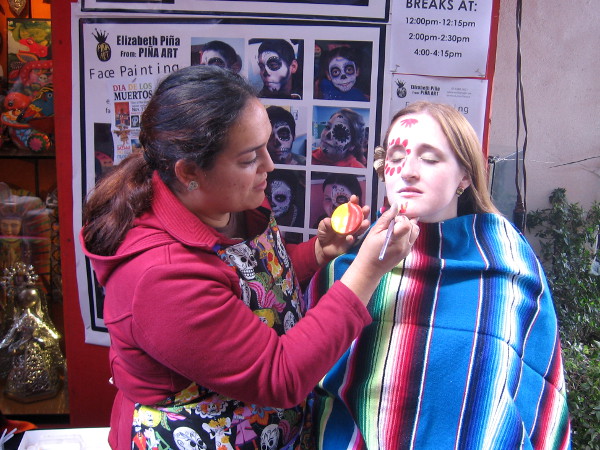
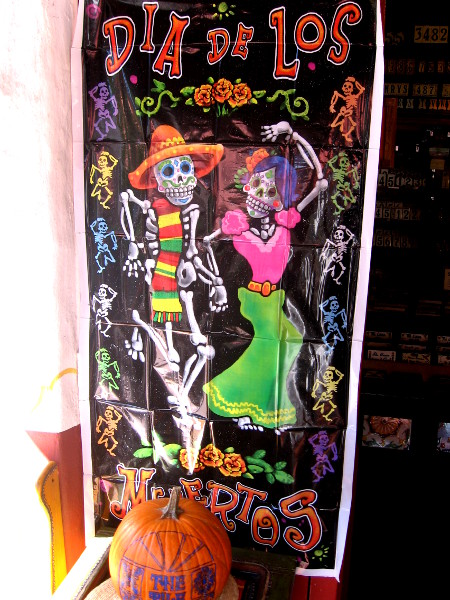
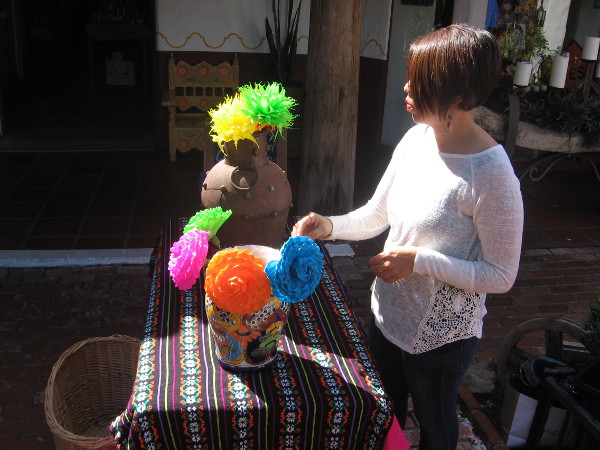
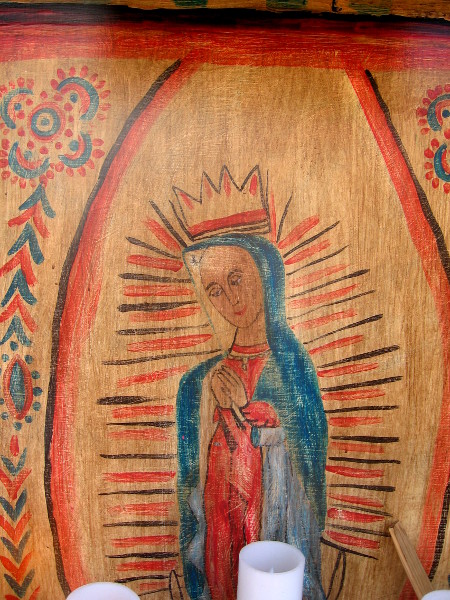
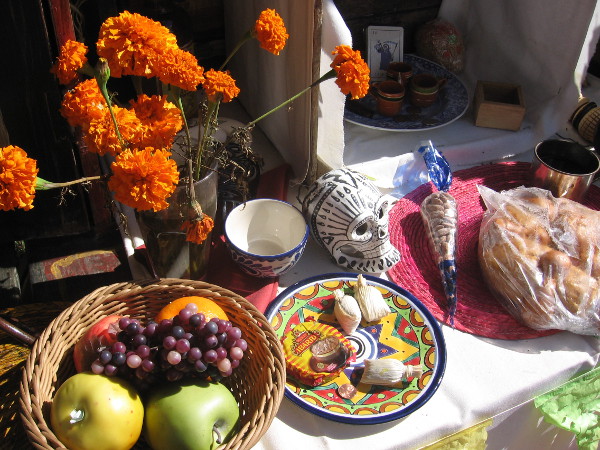
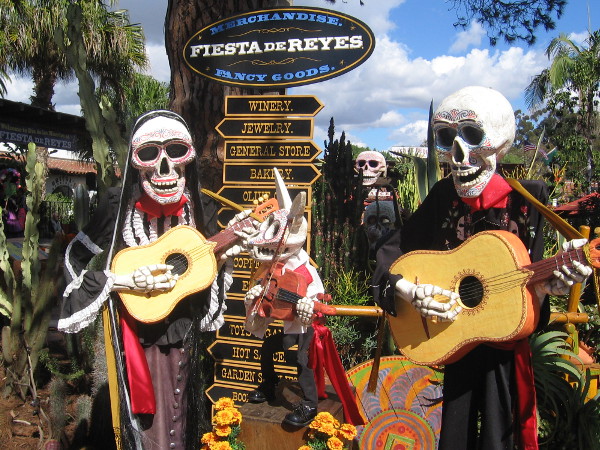
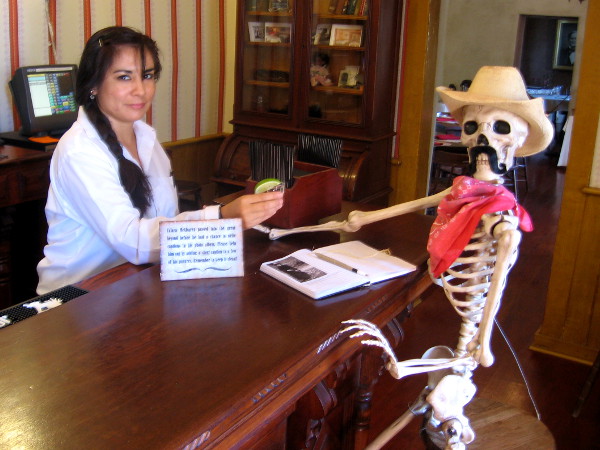
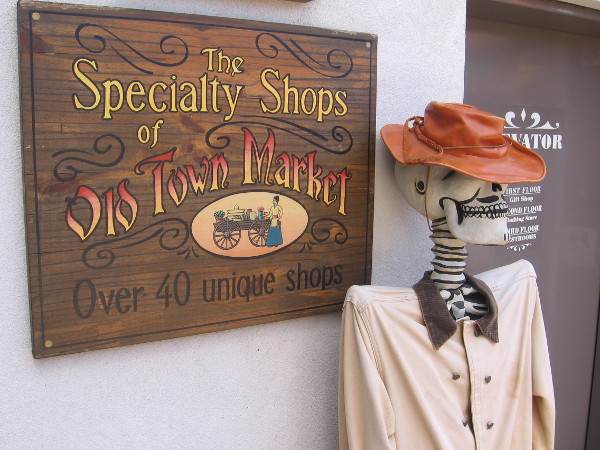
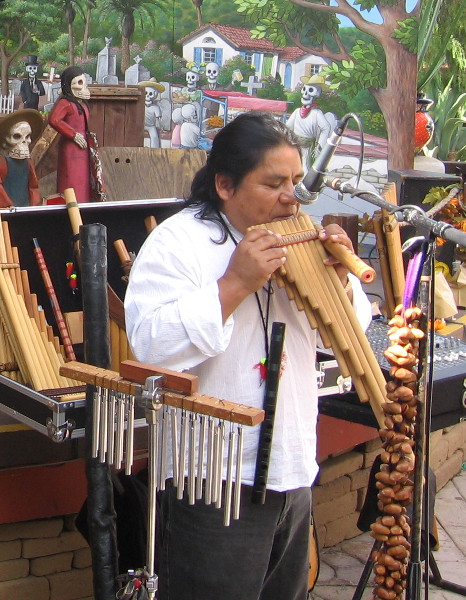
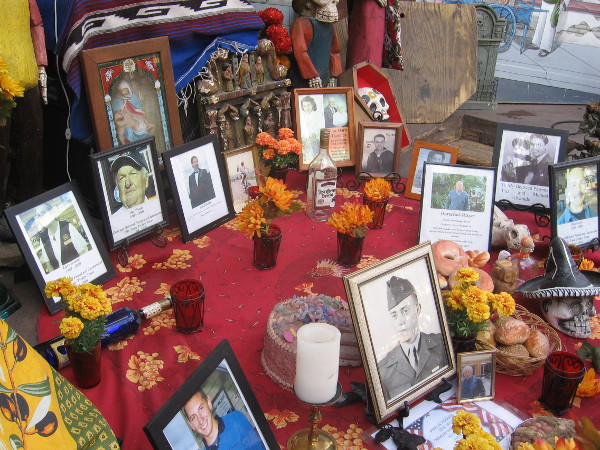
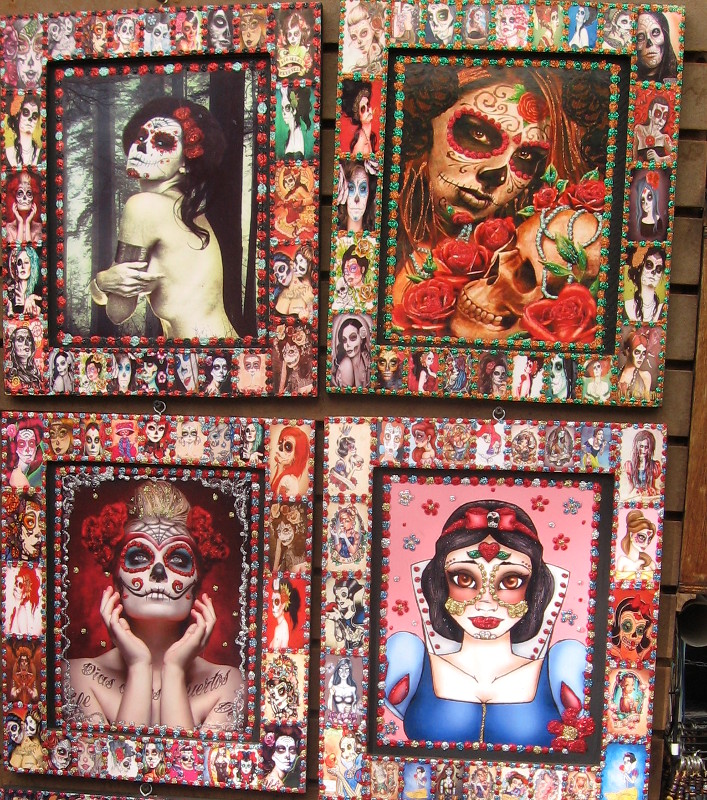
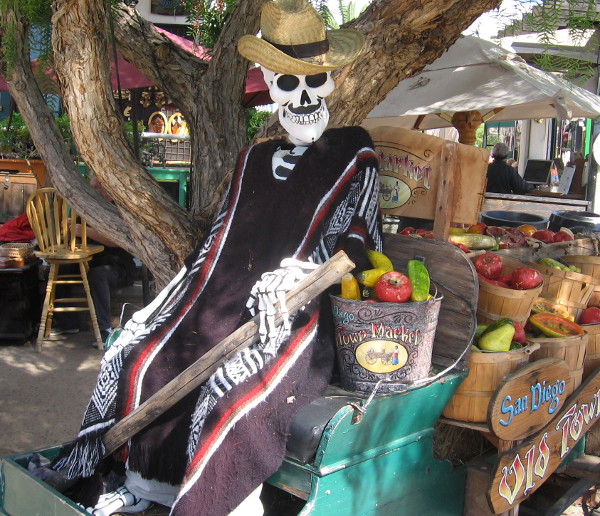
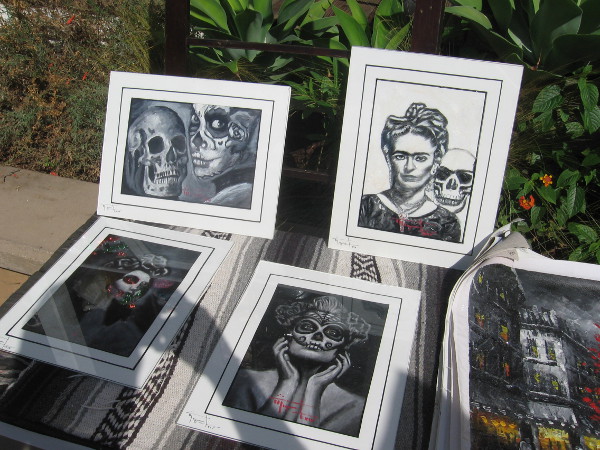
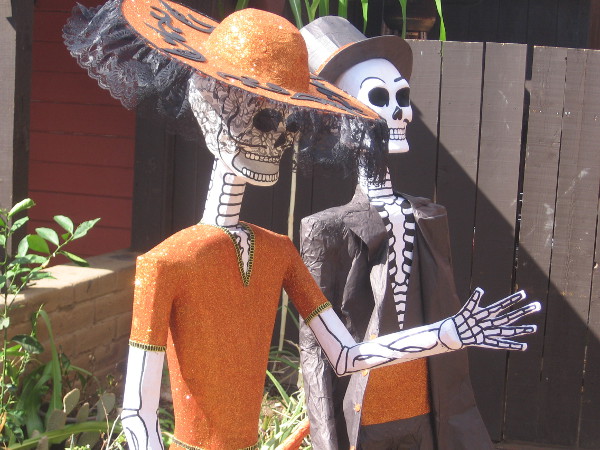
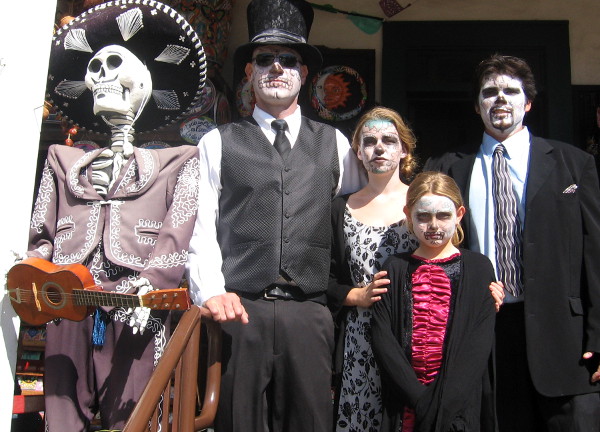
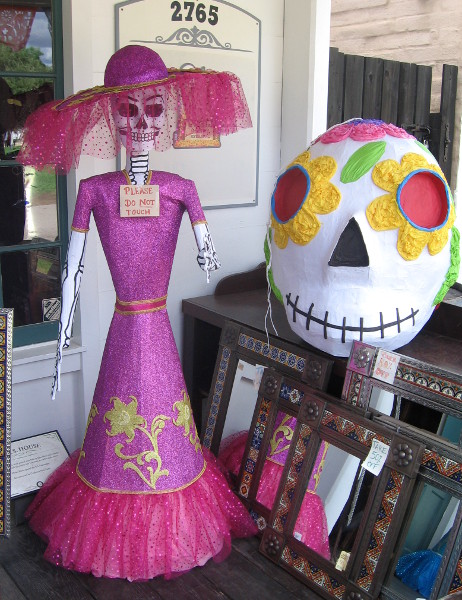
Día de los Muertos altar at Bazaar del Mundo in a corner of Old Town, San Diego.Kids decorate sugar skulls, a fun and tasty tradition of Day of the Dead.Ethnic and folk crafts are abundant at Bazaar del Mundo.Young lady has face painted to celebrate Día de los Muertos.A traditional Catrina. A female skeleton in old-fashioned hat and dress.Altar at Fiesta de Reyes features Virgin Mary and photos of departed loved ones.Fantastic sign above pumpkin shows lively, dancing skeletons.Lady working in San Diego’s Old Town arranges bright frilly flowers in the sun.Folk dancers on and off stage at Fiesta de Reyes during Día de los Muertos.This scarecrow and skeleton seem happy together on this perfect Autumn day!Bench at Fiesta de Reyes painted with sombrero-wearing, flower-bearing skeletons.Small crowned image in crude wooden frame in a larger altar.Prayers are directed toward radiant image of Virgin Mary above altar candles.Altars often contain food liked by the deceased, to entice their spirits back.Mariachi skeletons strum guitars at entrance to Fiesta de Reyes.This big flower and heart-covered calavera faces Old Town’s central square.Larger-than-life Day of the Dead mannequin wears a beautiful red dress.Dead couple sits in lobby of Old Town’s historic Cosmopolitan Hotel.Bartender offers drink to skeleton cowboy at the Cosmopolitan Hotel’s bar!The bony fellow at the bar was called Calaca McAlvarez!Stylish bystander is resting near one of the many Old Town shops.Musician entertains on pipes at Old Town’s Day of the Dead festivities.Día de los Muertos display with a strong Mexican flavor.Photographs remember loved ones who have passed into the spirit world after death.Snow White has been transformed into lavish Day of the Dead artwork.This guy is sitting on a wagon near popular entrance to Old Town State Historic Park.Sculptor recreates face of living tourist posing for a unique souvenir.Prints on display for the big crowds attending Old Town’s Day of the Dead.This elegant couple was spotted among the many historic buildings in Old Town.This well-dressed family all had their faces painted to resemble skulls!Author A. B. Curtiss was signing her acclaimed books at Día de los Muertos.
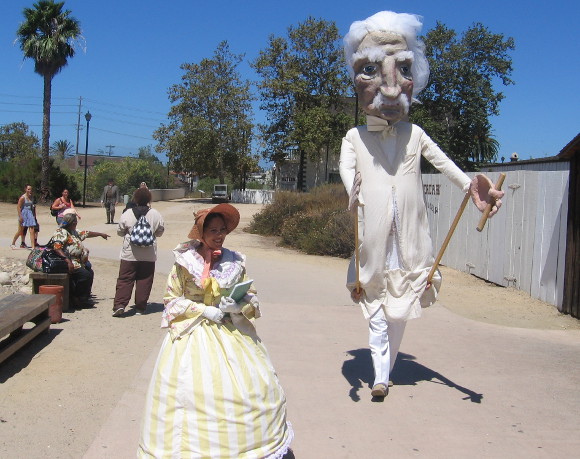
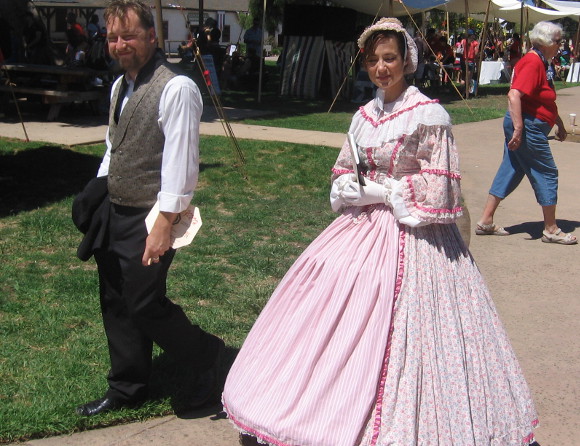
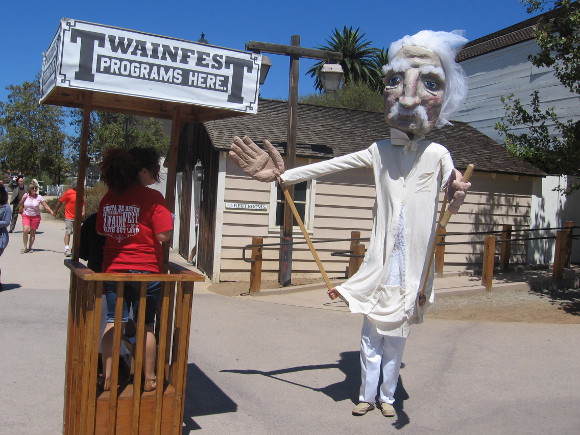
Here comes Mark Twain during Old Town San Diego’s literary TwainFest!
One of my favorite San Diego events of all time took place today in historic Old Town!
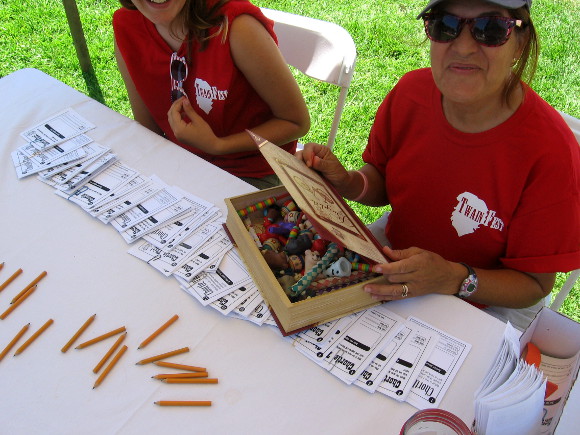
TwainFest is an amazing annual festival celebrating Mark Twain and other famous authors from the 19th century. While there seems to be an emphasis on American and English novelists, I saw homages to writers, poets and storytellers from around the world. Scenes from American and California history also appear in several of the exhibits. Which makes sense, because Old Town is a history-filled park recreating the earliest days of San Diego!
To get an idea of what TwainFest is about, enjoy a quick look at these fun pics! And be sure to attend next year, if you can!
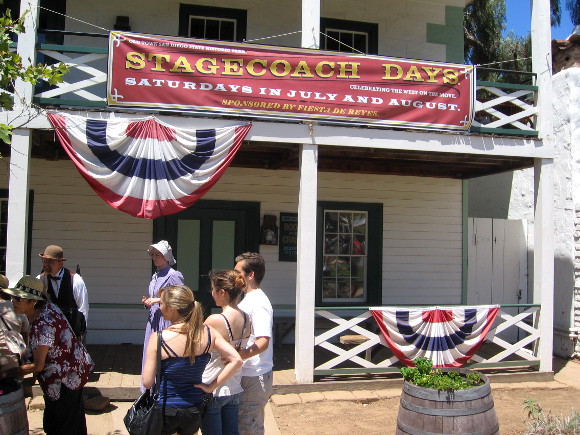
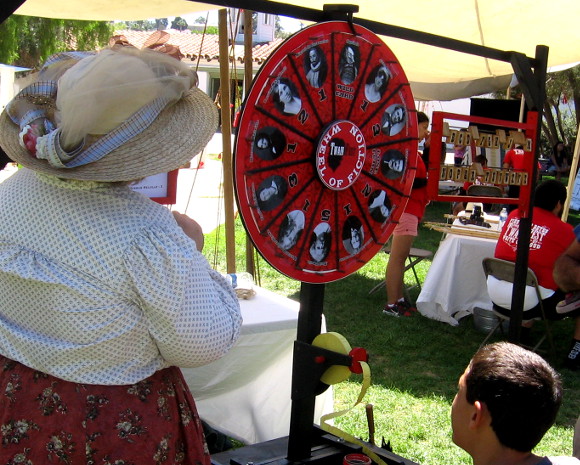
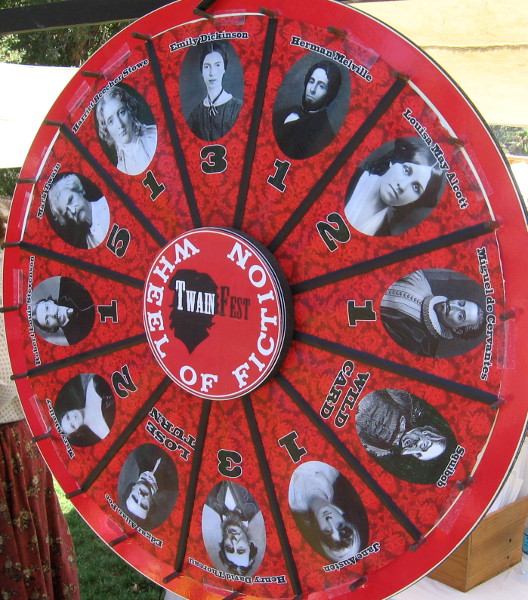
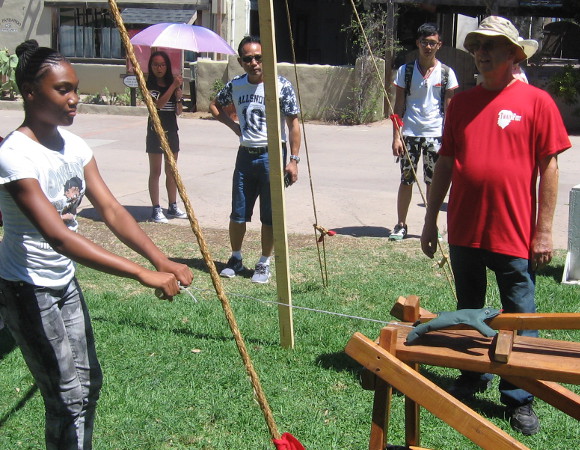
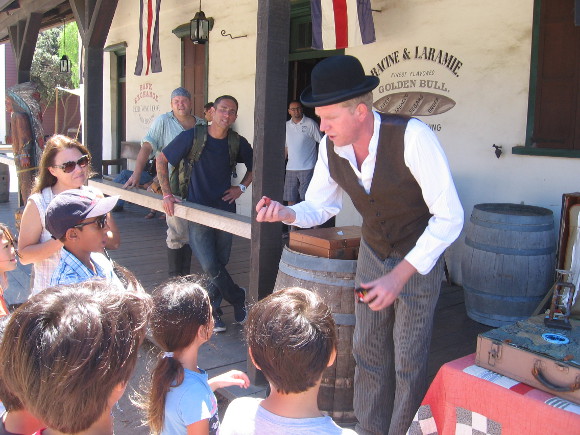
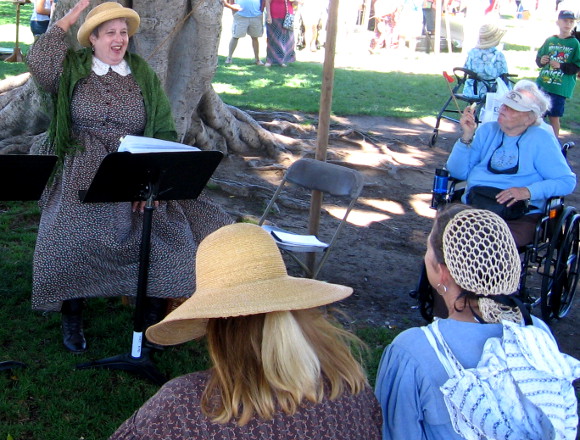
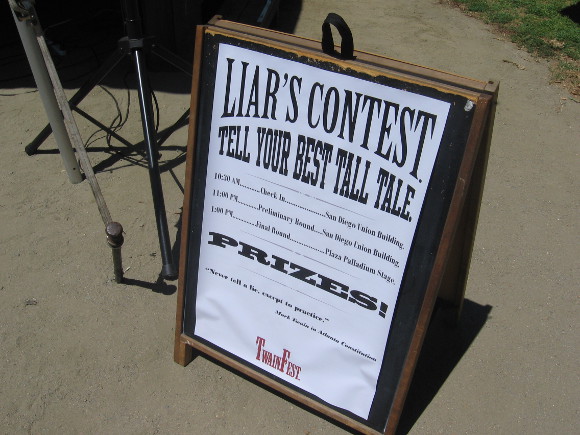
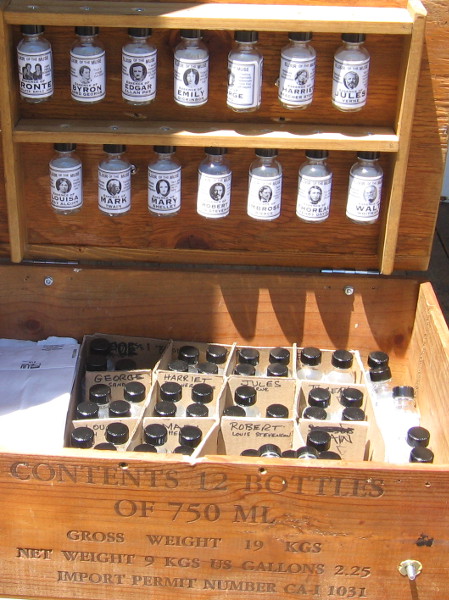
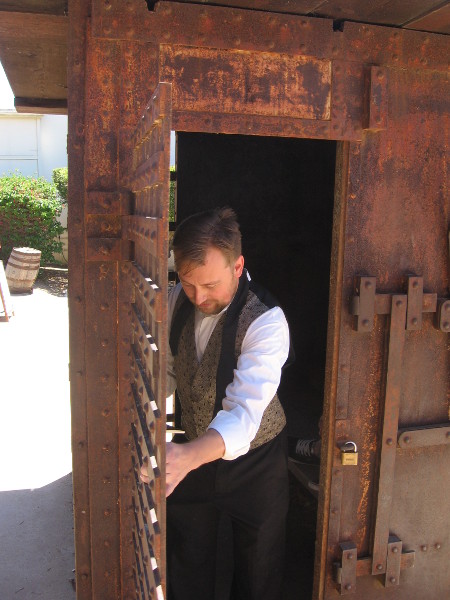
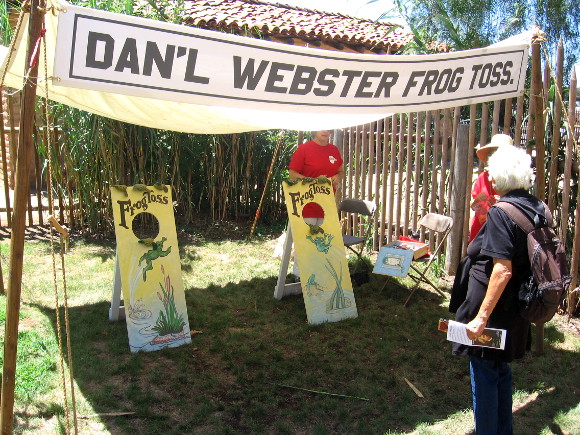
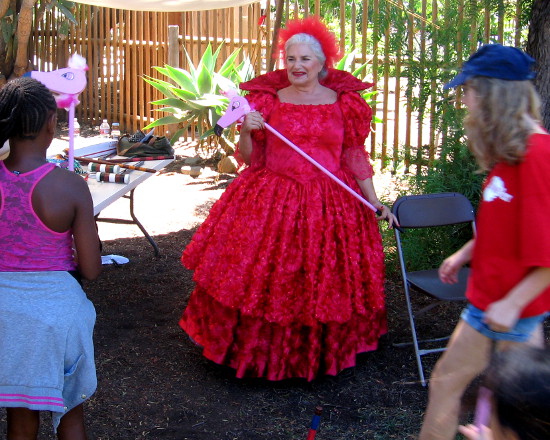
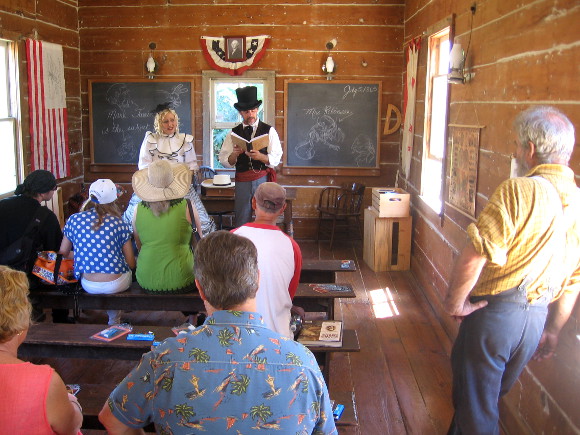
Event is part of Stagecoach Days at Old Town San Diego State Historic Park.And here comes a towering puppet of American author Edgar Allan Poe!Lots of entertainment included a stage with music and various contests.Music included those familiar old folk songs that had everyone clapping.Costumed participants roaming about the central plaza of historic Old Town.Families enjoyed many activities including games.Excited kids blast off across the grass in an old-fashioned sack race!Kids of all ages enjoyed many unique literature-themed games and activities.The TwainFest Wheel of Fiction featured many famous writers.Booth inspired by Lewis Carroll had me making up a silly word!Never-ending stories had visitors adding their imaginative sentences.The Celebrated Jumping Frog of Calaveras County ready to soar from catapult!I wonder if Mark Twain imagined kids would replicate his famous short story!Children really enjoyed this cool guy’s amazing flea circus!A flea performer mounts the trapeze before the incredulous audience.Girl uses magnifying lenses to watch a flea take a swan dive from high platform.The Quotation Machine rumbled before producing a quote.Here come some horses around the Old Town San Diego square!The Marshall informed me that all was well.Small audience in one shady corner enjoyed music and stories.The big Liar’s Contest featured lots of tall tales and jaw-dropping whoppers.This slick salesman is demonstrating the eloquent effects of literary potions.Bottled Verne, Dickinson, Whitman, Bronte, Byron and more!Voters in presidential election of 1872 must pass a literacy test!Of course, TwainFest had a bookstore with many classics of literature!People could trade places with Henry David Thoreau.The obviously guilty author of civil disobedience!Thoreau locks himself in with a brave visitor.It’s the Daniel Webster Frog Toss!Carroll’s Red Queen challenges all comers to flamingo croquet!Old Town event included the historic Mason Street School.Actors read poetry from Alice in Wonderland in one room schoolhouse.Here come participants in the fancy literary costume contest!The spirit of Twain lives at this very wonderful annual festival.
…
To enjoy future posts, you can “like” Cool San Diego Sights on Facebook, or follow me on Twitter.
Approaching the La Casa de Machado y Stewart Museum in Old Town.
It seems most of the tourists who visit Old Town San Diego State Historic Park enjoy the large central grassy plaza and the many interesting buildings immediately around its perimeter. Few, however, go slightly off the beaten track to investigate the several restored old structures that are scattered a few easy steps farther away.
In addition to a very cool one room schoolhouse dating from 1865 (which I remember visiting during a field trip as a child), there is a restored adobe house called Casa de Machado y Stewart which stands as an open museum to any passersby who are curious.
The Casa de Machado y Stewart dates from 1835. It was built by José Manuel Machado, a Spanish (then later Mexican) officer who served at the nearby presidio. Jack Stewart, an American shipmate of famous author Richard Henry Dana Jr., and a pilot on San Diego Bay, married Machado’s youngest daughter Rosa in 1845 and the two moved into the house. Over their many years of residence they made many improvements, including a clay tile roof and wood-paned windows. What today seems a very simple and almost primitive existence was back in those days living in the lap of luxury.
In 1932, the house became an official California Historic Landmark.
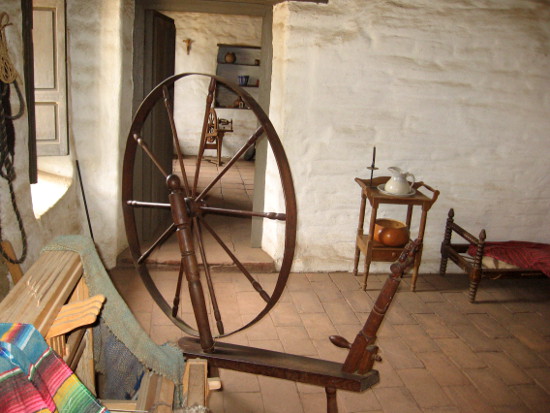
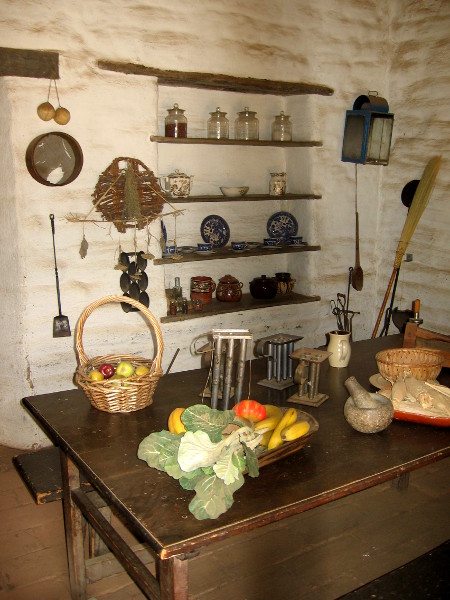
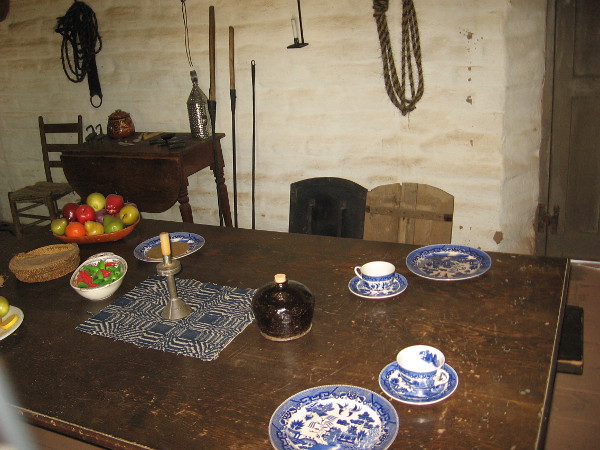
Restored 1835 adobe house in San Diego’s Old Town State Historic Park.Sign details history of La Casa de Machado y Stewart.House was built by a soldier from nearby presidio.A spinning wheel in one of the simple rooms suggests what life was like.A modest dining area as it appeared long ago.
UPDATE!
I visited La Casa de Machado y Stewart again in August, 2018, and noticed the exterior had been painted white. When I looked through the front door into the main living room, I observed that new furnishings and artifacts have been added, and others moved about.
I also peered through a window into what appears to be a bedroom.
Here are photos…
…
To enjoy future posts, you can “like” Cool San Diego Sights on Facebook, or follow me on Twitter.
Mural in Old Town alley depicts explorer Juan Rodriguez Cabrillo.
I was wandering aimlessly around Old Town some time ago, just poking my nose here and there, when I discovered a whole bunch of beautiful murals! I found them in an interesting alley off San Diego Avenue, just south of the State Historic Park. The alley, a narrow walkway containing a variety of touristy wares, is called Avila Court. It’s tucked between the Old Town Surf Co. and Covered Wagon stores.
After looking at the artwork closely and talking to a lady working in the area, I learned most of the murals were painted by students from Grossmont College out in East County. Further research on the internet showed that there were originally ten murals, created in 2008, decorating over 85 feet of stucco wall. It’s apparent some of the murals were redone or altered in 2011.
Most of the murals depict people or places that are important in San Diego’s history. Those of you who follow my blog will probably recognize many!
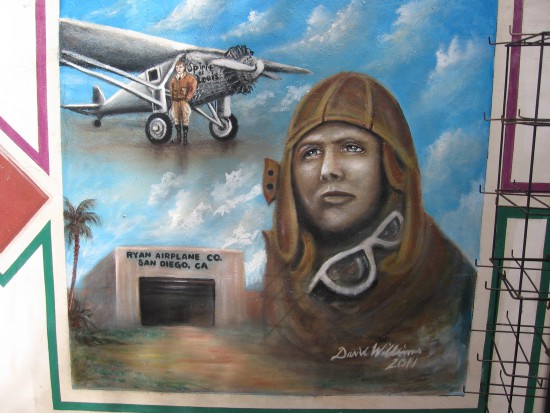
Image of Charles Lindbergh and Spirit of St. Louis.
Lindbergh’s famous airplane that crossed the Atlantic, the Spirit of St. Louis, was custom-built in San Diego by Ryan Airline Company.
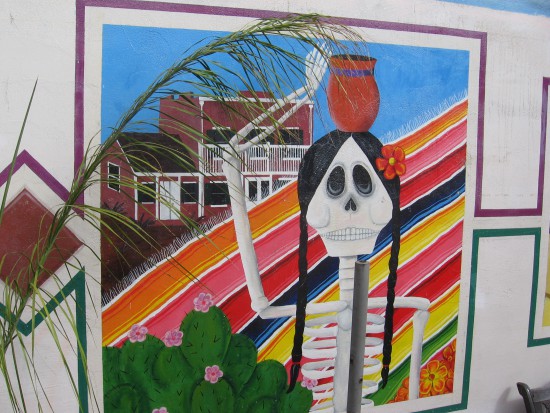
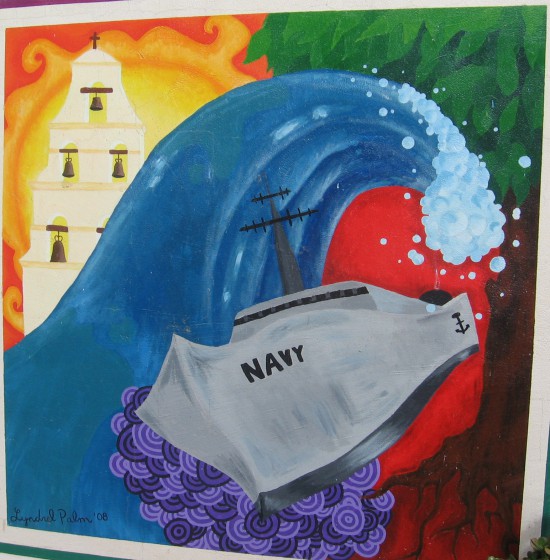
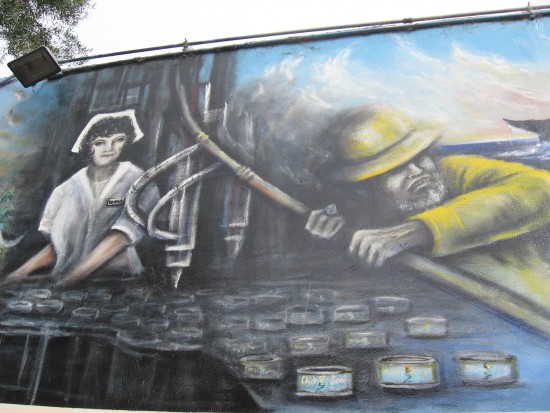
Native American with flower at night painted in rich colors.Hotel del Coronado, buildings and beach scene.Day of the Dead skeleton in front of the Whaley House.Tuna fishermen and whale fluke off Coronado.Navy ship, huge surf and Mission San Diego.Mural shows an American tall ship in San Diego Bay.
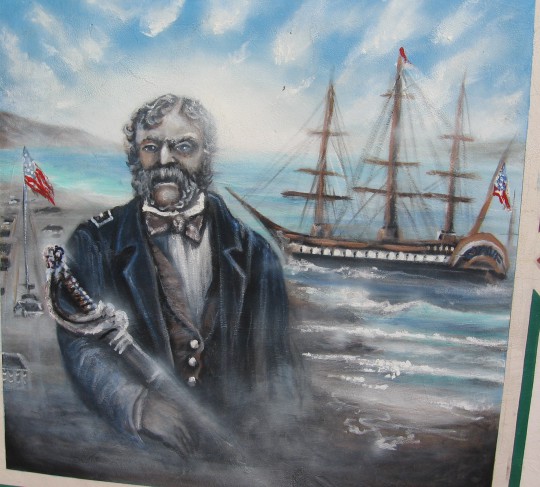
I’m not sure who the whiskered military person is. If anyone out there knows, please tell us!
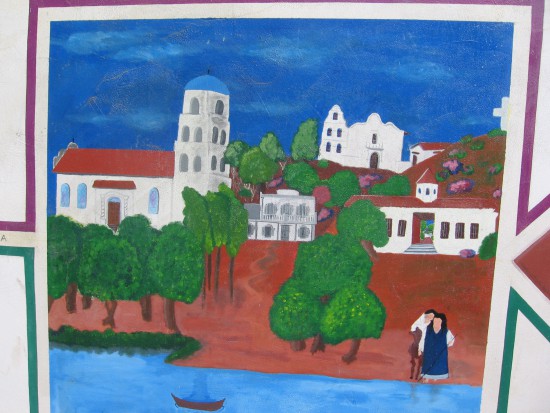
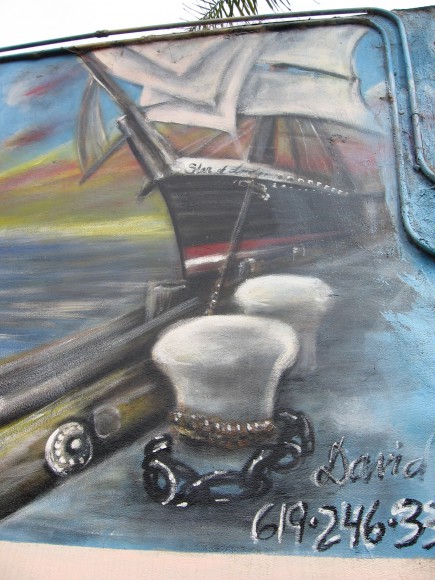
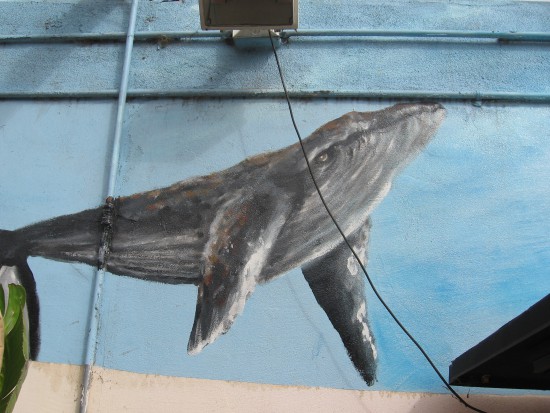
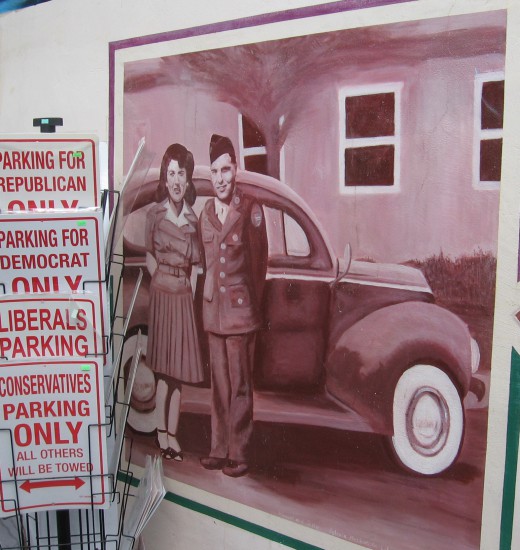
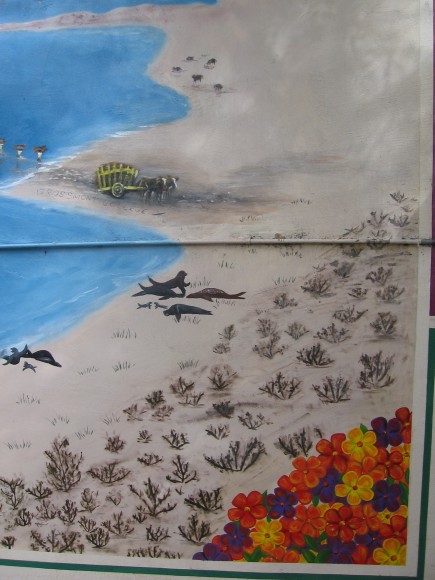
A combination of various old historic buildings.Point Loma lighthouse shines over Pacific Ocean.Tuna cannery worker and a Little Italy fisherman.Star of India tied to dock at Embarcadero.This part of one mural contains a gray whale.Sepia tone World War II era figures stand by old car.Seals, flowers and carrying cattle hides from a beach.Many murals were painted by Grossmont College students.
…
To enjoy future posts, you can “like” Cool San Diego Sights on Facebook, or follow me on Twitter.





























































 Cool San Diego Sights!