Dancing to traditional Kumeyaay Bird Songs in Balboa Park during the American Indian Health Center Pow Wow.
A special event is going on this weekend in Balboa Park. The American Indian Health Center Pow Wow is taking place near the corner of Park Boulevard and Presidents Way.
I enjoyed the first hour of the pow wow, watching and listening to the performance of Bird Songs by members of the Kumeyaay Nation. These very powerful ancient songs live on today, but other similar songs from the past have been lost to time.
Other events at the pow wow include gourd dancing and fancy shawl dancing. Tents around the venue feature all sorts of Native American crafts, food, art and cultural information. If you’re in San Diego, swing on by! The public is welcome!
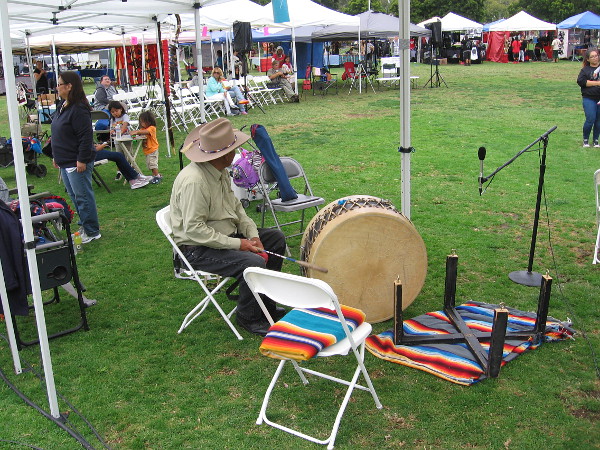
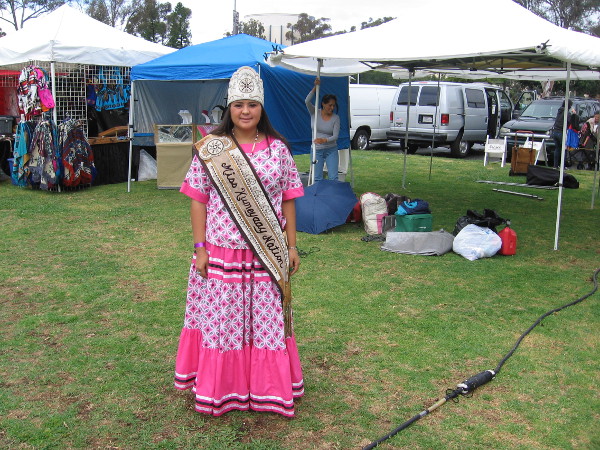
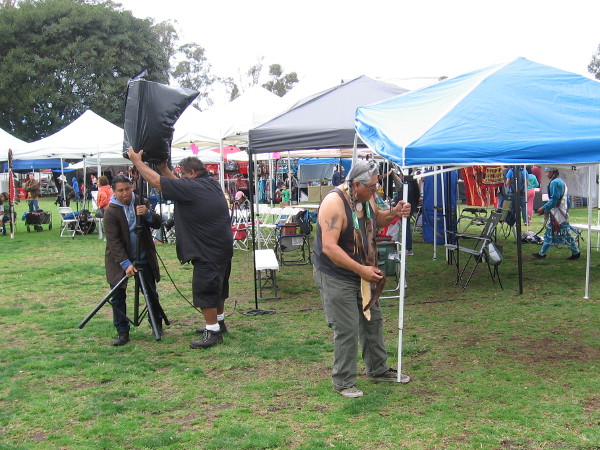
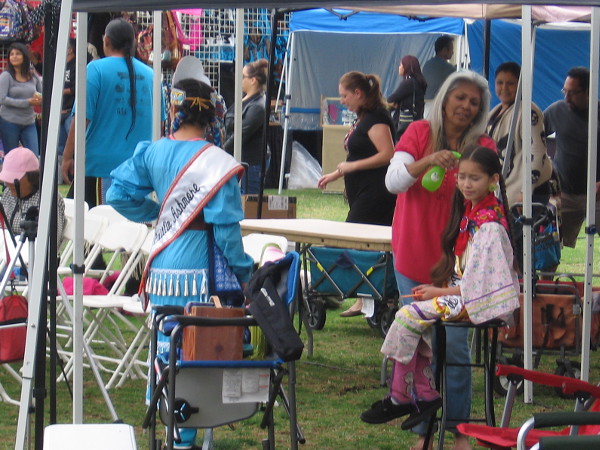
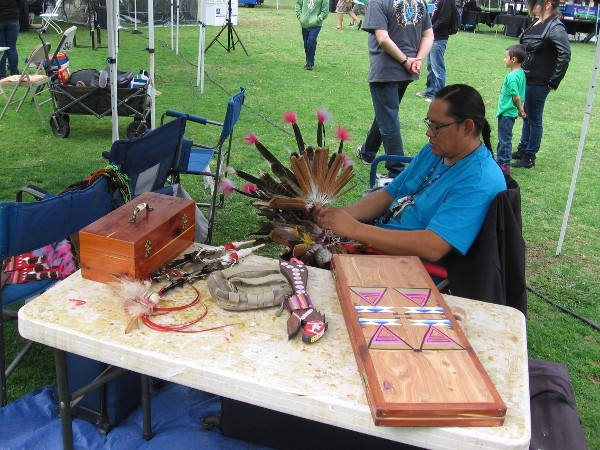
Gourd rattles are an important and powerful part of Kumeyaay Bird Songs. Traditionally, a musical sound has also been produced with a stick rubbed against a rough basket.A large drum awaits on the grass as the Native American Pow Wow in San Diego has just begun.Miss Kumeyaay Nation was very gracious to pose for a photograph.I swung by the pow wow during its first hour. Many additional participants were arriving and setting up.Many who’d arrived for the pow wow were already in colorful ceremonial costumes. The earlier rain had ceased and people were relaxing, enjoying friendship, spirit-filled music and another beautiful day.Someone proudly wears an American Indian Warriors Association emblem.Photo taken as the American Indian Health Center Pow Wow in Balboa Park is just getting started.Getting ready for a busy day of dance, song, spirituality, and honoring local Native American culture and history.Working on beautiful ceremonial objects to be worn or displayed during a life-filled pow wow in San Diego.
…
I live in downtown San Diego and love to walk! You can follow Cool San Diego Sights via Facebook or Twitter!
Do you like to read short pieces of thought-provoking fiction? You might enjoy checking out Short Stories by Richard.
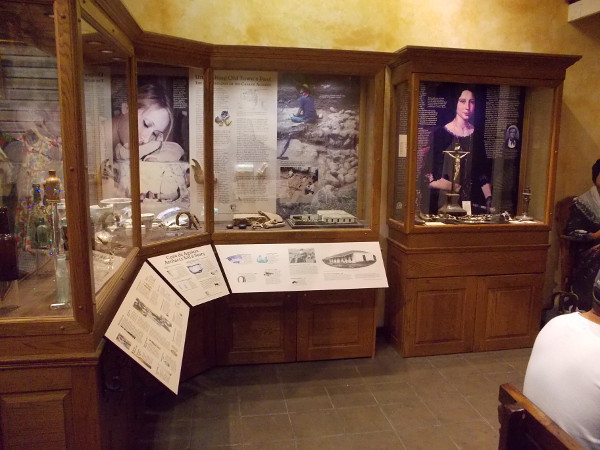
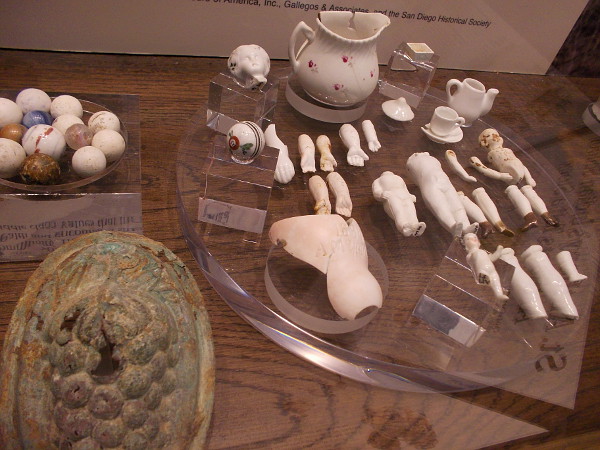
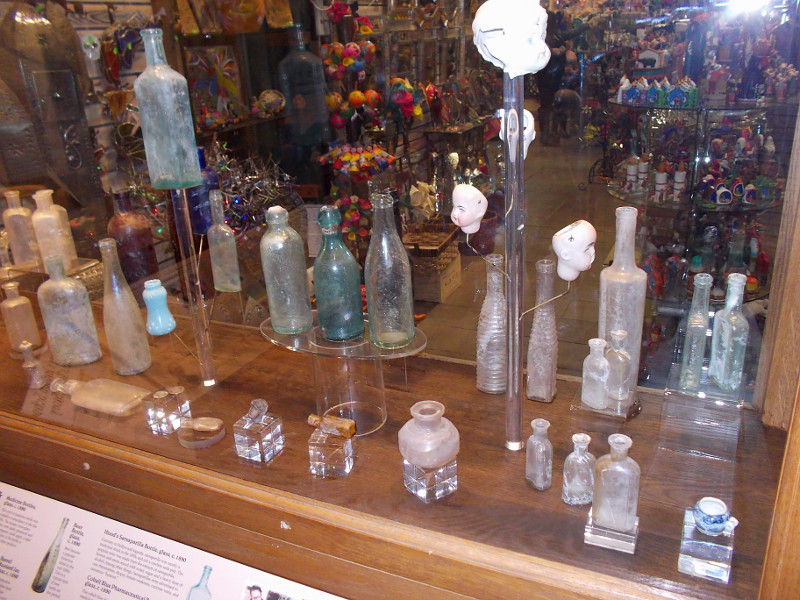
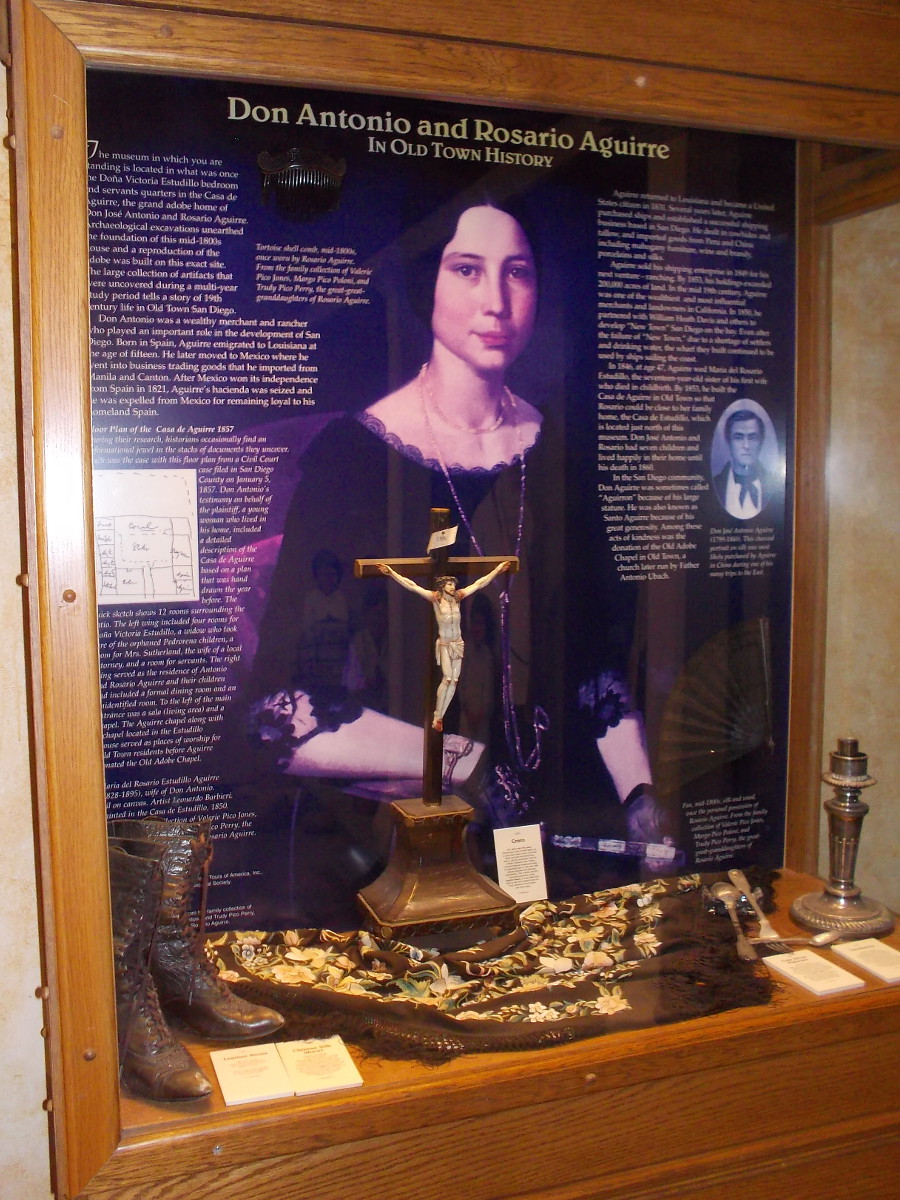
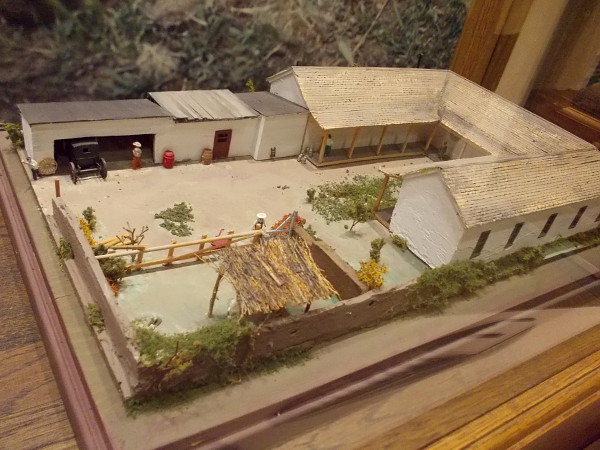
Fascinating exhibits inside the Casa de Aguirre Museum in Old Town San Diego State Historic Park.
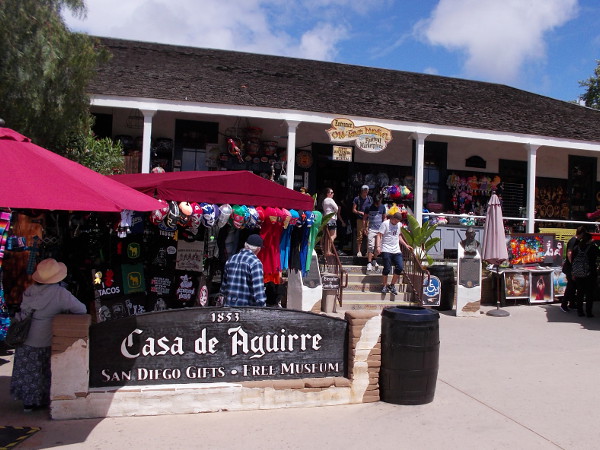
Many visitors to Old Town San Diego State Historic Park might think the Casa de Aguirre is just a shop brimming with colorful crafts and wares. But a closer look reveals that a small museum is located inside.
Here are some photos which provide a glimpse of what you’ll discover should you step into the museum. Read the captions, and you’ll learn how Casa de Aguirre is one of the most important sites in Old Town, and how its occupants shaped San Diego’s early history.
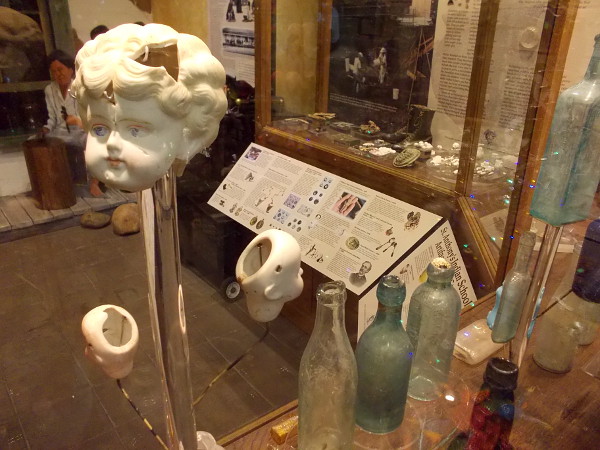
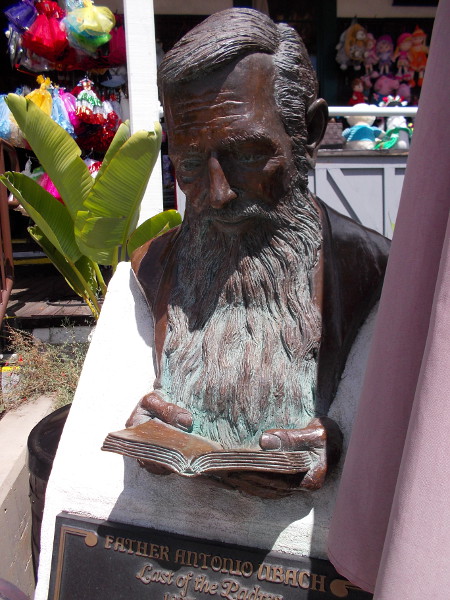
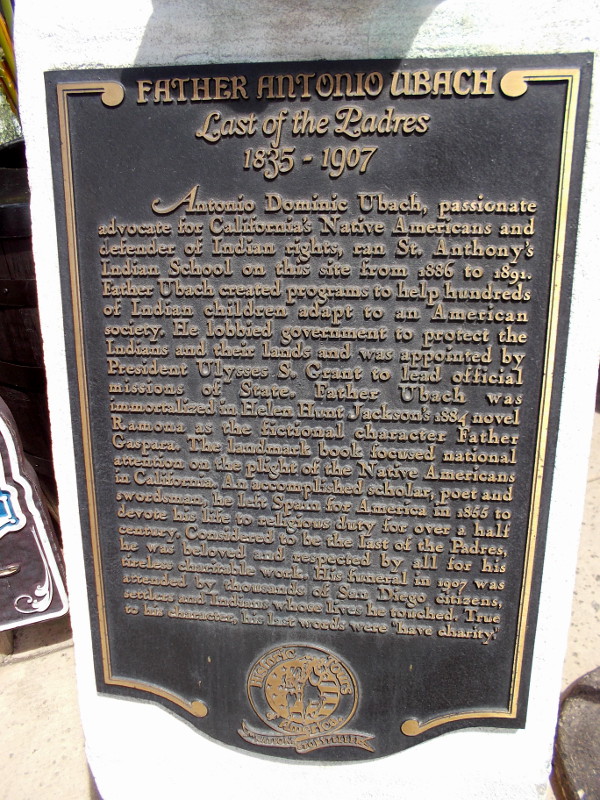
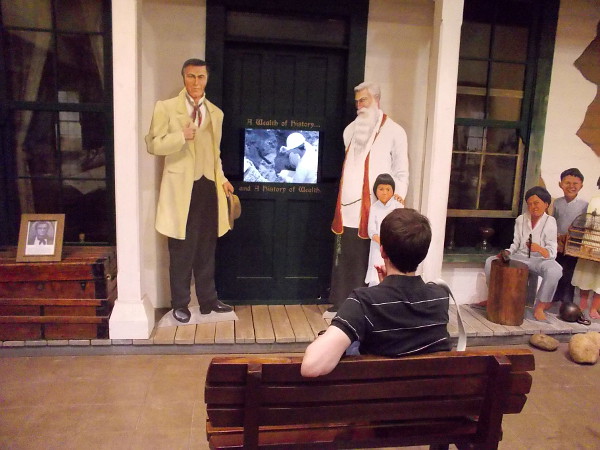
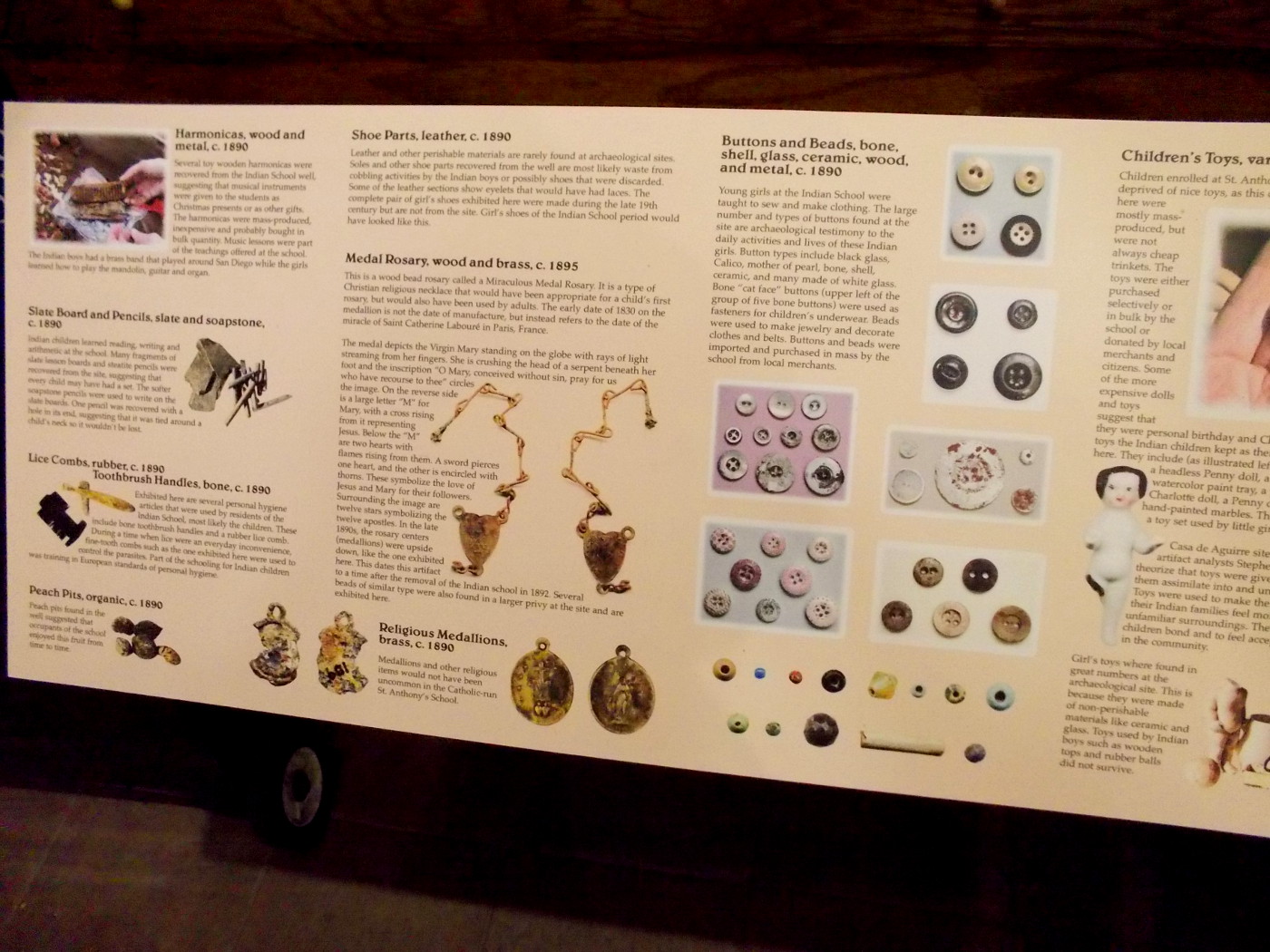
Casa de Aguirre in Old Town was originally built around 1853. The adobe mansion was one of the first houses in San Diego, owned by Don Jose Antonio Aguirre, a prosperous merchant and rancher. The present building is a reproduction.Bronze bust of Don Jose Antonio Aguirre, near entrance to Casa de Aguirre. Born in Spain, he owned several ships and warehouses and imported goods from Peru and China to trade for cowhides and tallow.Don Jose Antonio Aguirre was known for his charity and funded many projects in early San Diego. He, his wife and children are considered to be one of our city’s founding families.Bust of Father Antonio Ubach, Last of the Padres, 1835-1907. Antonio Dominic Ubach ran St. Anthony’s Indian School on this site from 1886 to 1891.Plaque describes how Father Ubach advocated for California’s Native Americans and lobbied government to protect the Indians and their lands. He was loved by many. His last words were: “Have charity.”Casa de Aguirre in Old Town San Diego today contains a shop visited by many tourists and a small museum in back.One side of El Museo Casa de Aguirre. Excavated artifacts are on display, recalling what life was like here in the mid to late 19th century.Visitor to the small museum watches a video which includes information about archaeological discoveries, the history of the casa and the lives of those who were sheltered here.St. Anthony’s Indian School Artifacts Tell a Story. Many objects on display include porcelain cups, goblets, bottles, a saltshaker and beer mug.Sign describes additional historical finds, including buttons, toys, harmonicas, slate board and pencils, lice combs, toothbrush handles, shoe parts, medal rosary and religious medallions.Marbles, doll parts and tiny children’s tea sets, recovered from San Diego’s past.Dozens of buttons on display. They were fastened by living fingers, now long gone.Two old pipes.Numerous bottles and jars are exhibited in the Casa de Aguirre Museum. They were used for medicine, mustard, chemicals, perfume, whiskey, beer, sarsaparilla…People interested in collecting antique bottles would be mesmerized by the large assortment on display.Don Antonio and Rosario Aguirre in Old Town History. The museum is located in what was once the bedroom and servants quarters in the Casa de Aguirre. The present-day adobe is a reproduction.Don Antonio Aguirre, 1799-1860, was one of San Diego’s most important figures back when our burgeoning Southern California city was just a very, very small town.A model of how the Casa de Aguirre appeared a century and a half ago.
…
I live in downtown San Diego and love to walk! You can follow Cool San Diego Sights via Facebook or Twitter!
You can easily explore Cool San Diego Sights by using the search box on my blog’s sidebar. Or click a tag! There are thousands upon thousands of fascinating photos for you to enjoy!
Native American Kumeyaay from the San Diego area work near the foot of an ewaa, a dome-shaped hut made of sycamore and oak tree branches.
Over two years ago, when Cool San Diego Sights was relatively new, I blogged about some amazing public art near the Santa Fe Depot in downtown San Diego. I provided just a brief glimpse, really.
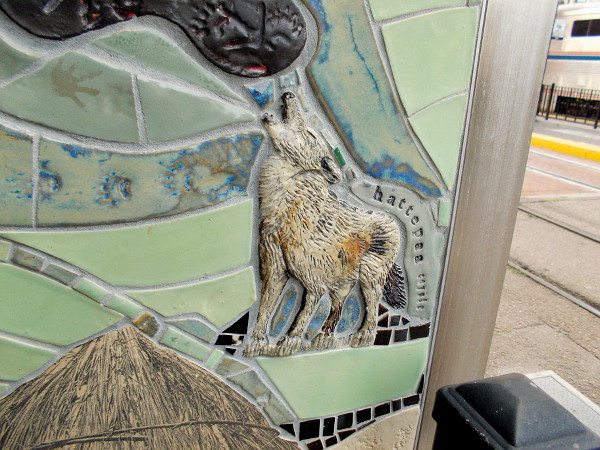
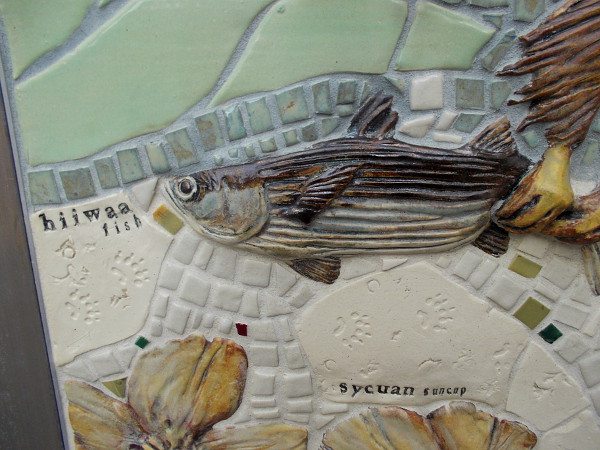
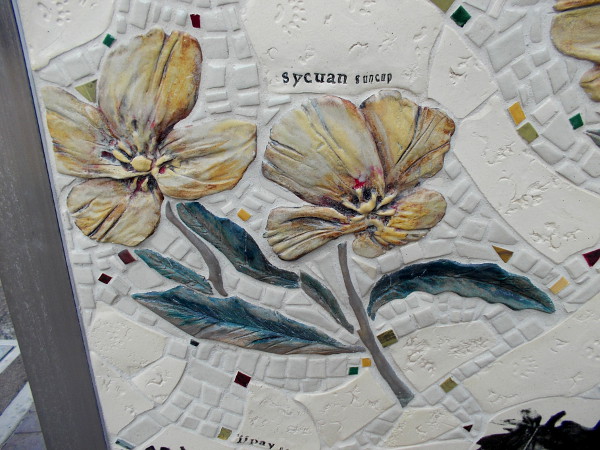
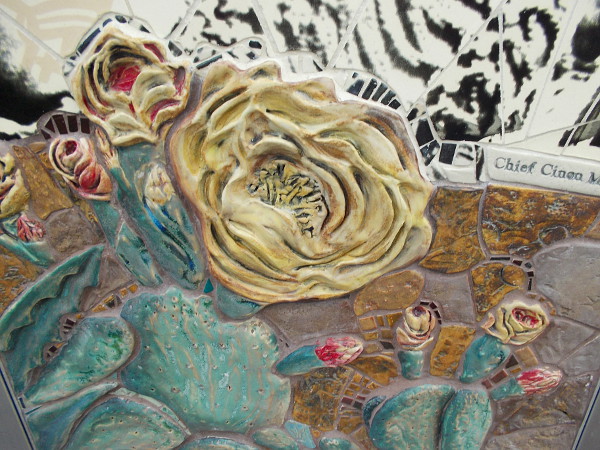
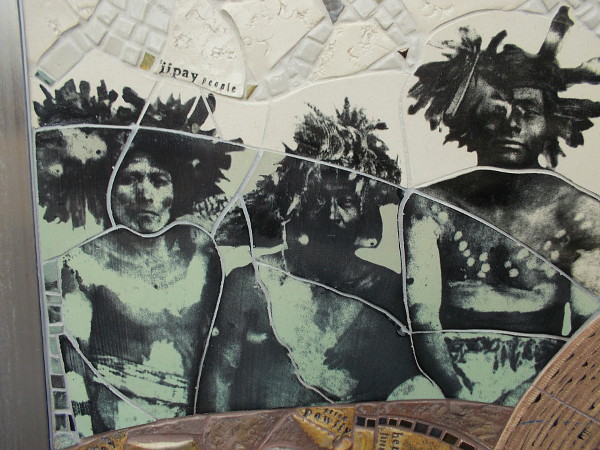
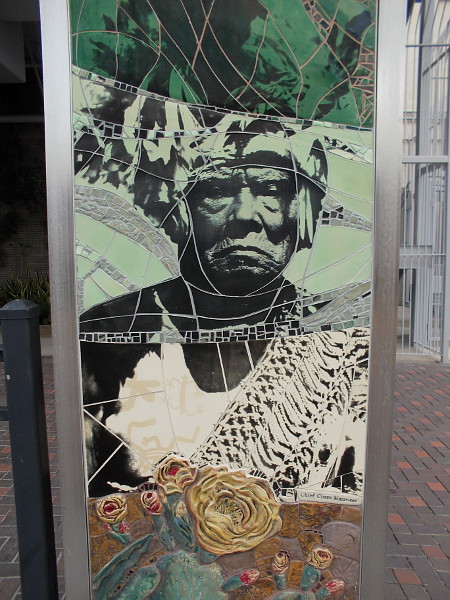
The artwork, titled The Tracks We Leave Behind, created by Betsy K. Schulz in 2008, is so utterly fantastic, so absorbing, I’ve decided to blog about it once again. Whenever I walk past (which is often), I like to pause an extra few seconds beside my favorite column, which features gorgeous mosaics that depict wild nature and the Native American Kumeyaay people, who have lived around San Diego for about 12,000 years.
Living in this place we set fires to open the land and make the seeds grow. We fish all year, both near shore and deep. We walk to the canyons and the mountains–hunting, gathering food and trading . . .Public art titled The Tracks We Leave Behind, by Betsy K. Schulz, 2008, includes the image of a Kumeyaay hattepaa (coyote) howling.Beautiful handmade mosaic tiles form a Kumeyaay ispa (eagle) in flight.The bald eagle has captured a Kumeyaay hiiwaa (fish).Yellow Sycuan Suncups grace this gorgeous, detailed public artwork in downtown San Diego.The yellow bloom of a prickly pear. This sculpted tile mosaic is so phenomenal, you almost can’t remove your eyes from it!The native Kumeyaay people (also called Kumiai, Ipai-Iipay, Tipai-Tipay, Diegueño, Kamia) have lived in the San Diego region for around 12,000 years.Public art in San Diego depicts Cinon Duro Mataweer, spiritual leader (kuseyaay or tribal shaman) of the Ipai (formerly northern Diegueño) Native American Indian tribe.
…
Join me for many more Cool San Diego Sights on Facebook and Twitter!
It’s hard to believe, but this photo blog of San Diego now contains over 800 posts, and features a vast universe of wonderful art–not to mention other random cool stuff! Click some links that look interesting if you’d like to explore! Have fun!
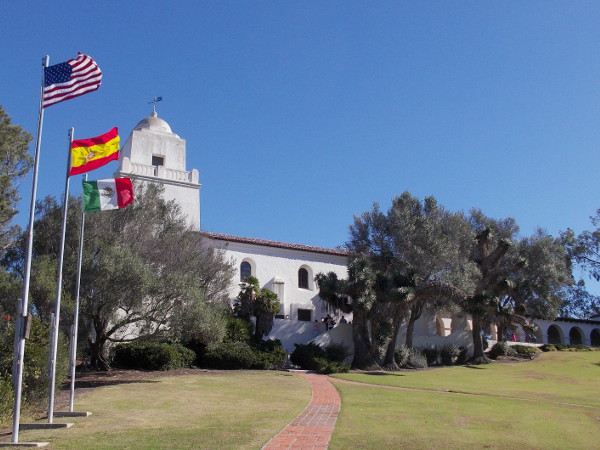
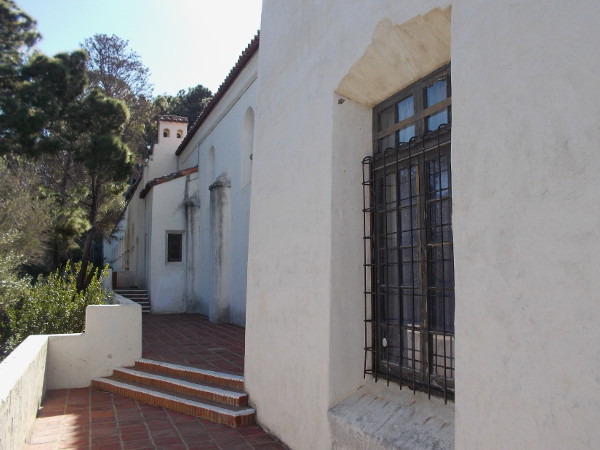
The Junipero Serra Museum of the San Diego History Center was built in 1928 on Presidio Hill, where European civilization was established in Alta California.
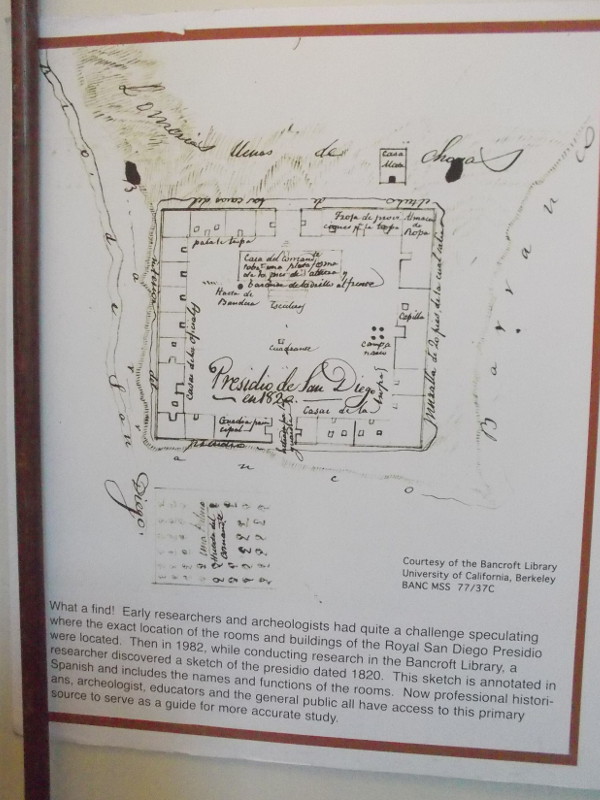
I recently visited one of San Diego’s most fascinating museums. The Junipero Serra Museum is located atop Presidio Hill, in a distinctive Mission Revival architectural style building overlooking San Diego Bay and the San Diego River, just east of Old Town. It stands near the site of San Diego’s historic Spanish presidio, built in 1769. The presidio was the birthplace of European civilization in Alta California.
The Serra Museum is operated by the San Diego History Center, which is headquartered today in Balboa Park. Back in 1929, when the building was dedicated, it became home of what was then called the San Diego Historical Society. The important San Diego institution was established by civic leader George W. Marston.
Can you believe it? I’ve lived in San Diego for 15 years . . . and this was the very first time I ventured into the Serra Museum. (I can thank my blog for that!)
What I discovered was an absolutely amazing place that both residents and visitors to San Diego should definitely not miss.
Here’s a sample of what you’ll see…
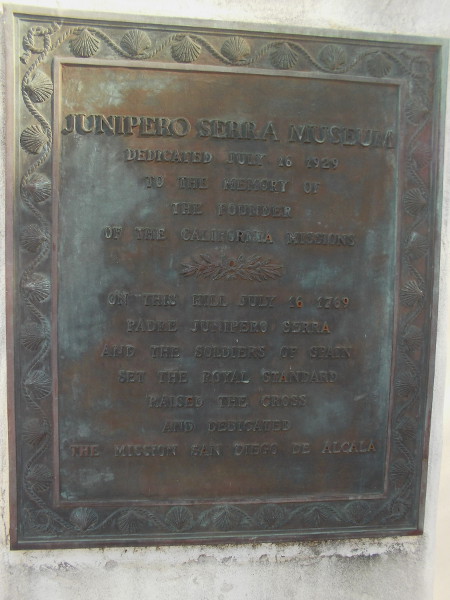
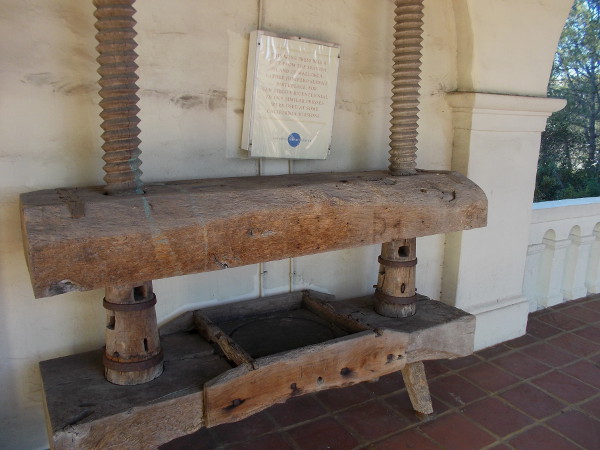
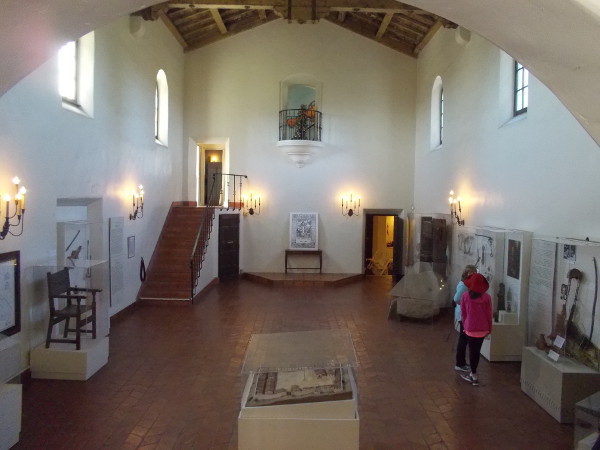
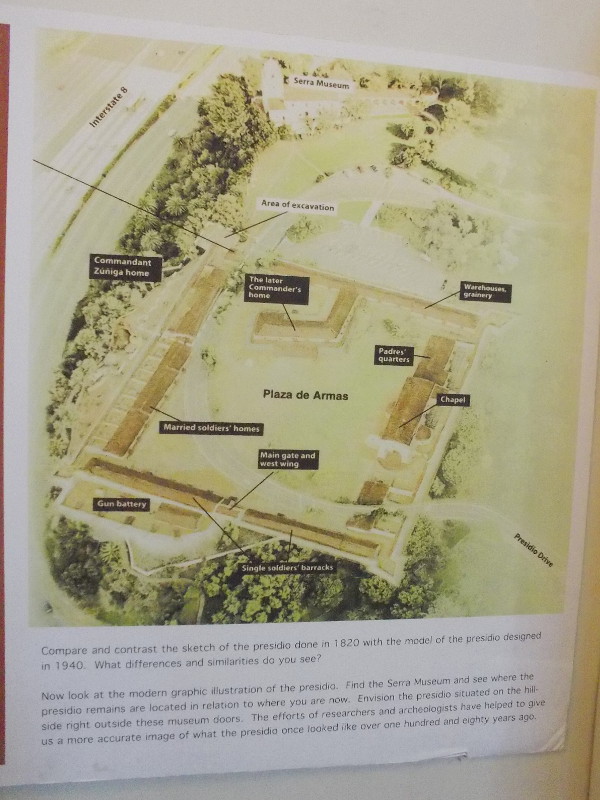
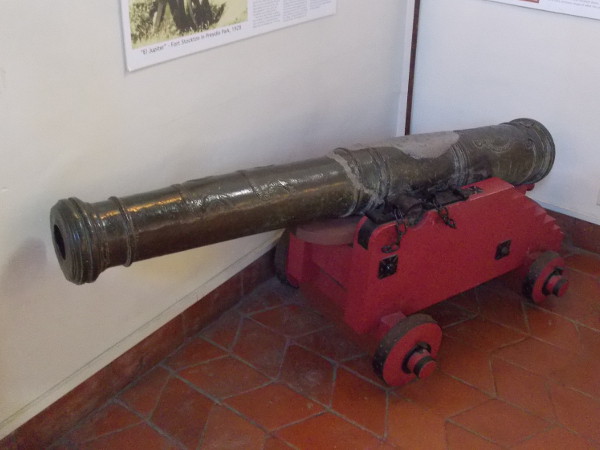
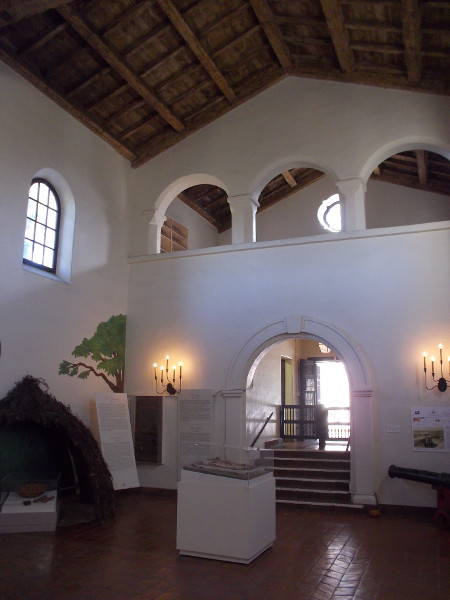
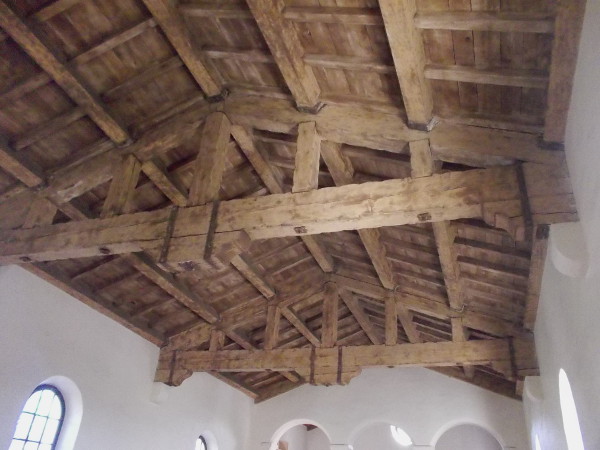
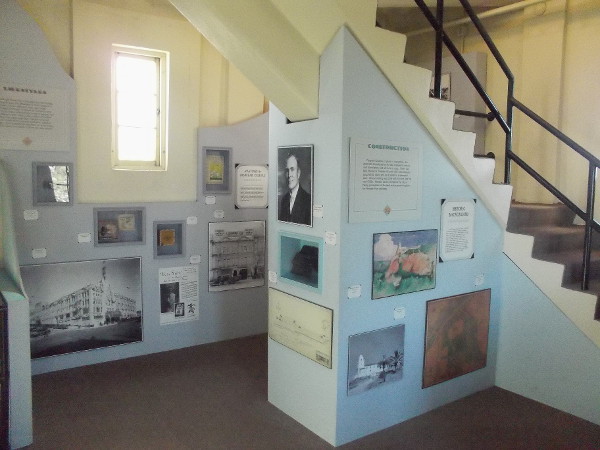
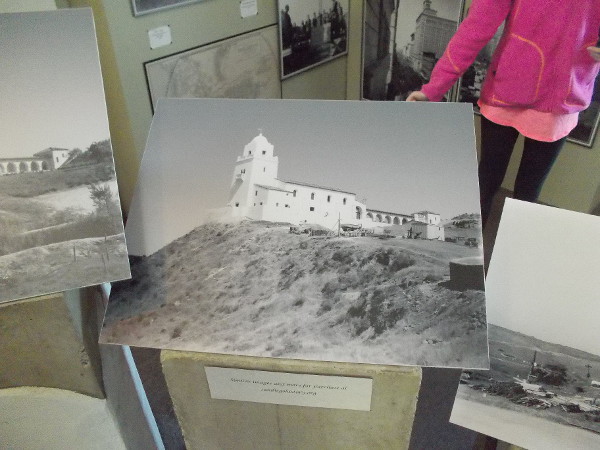
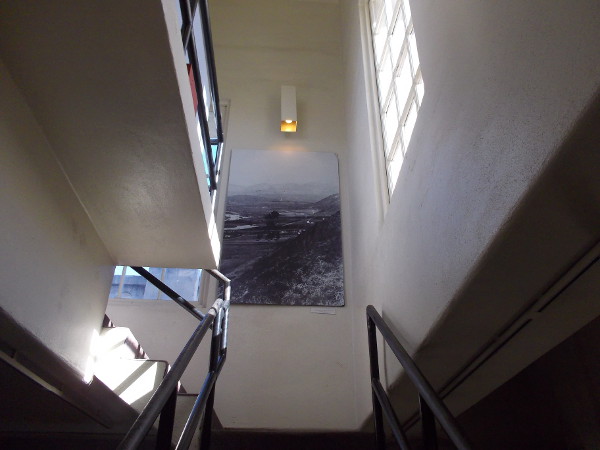
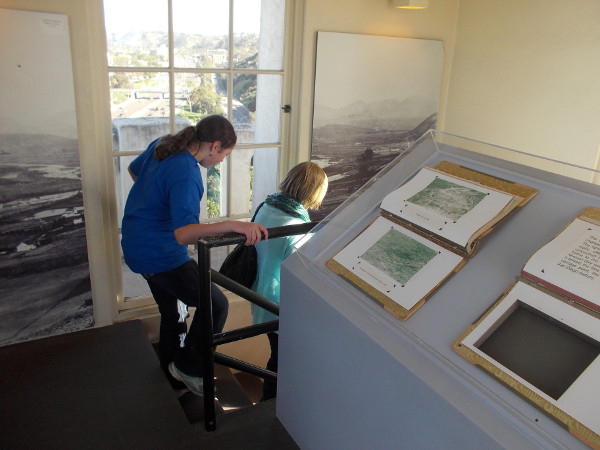
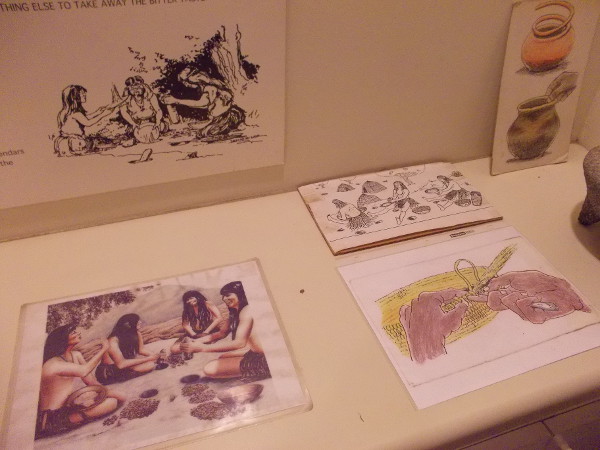
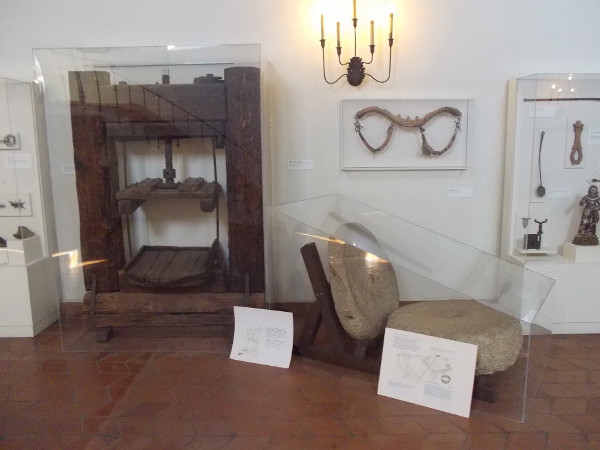
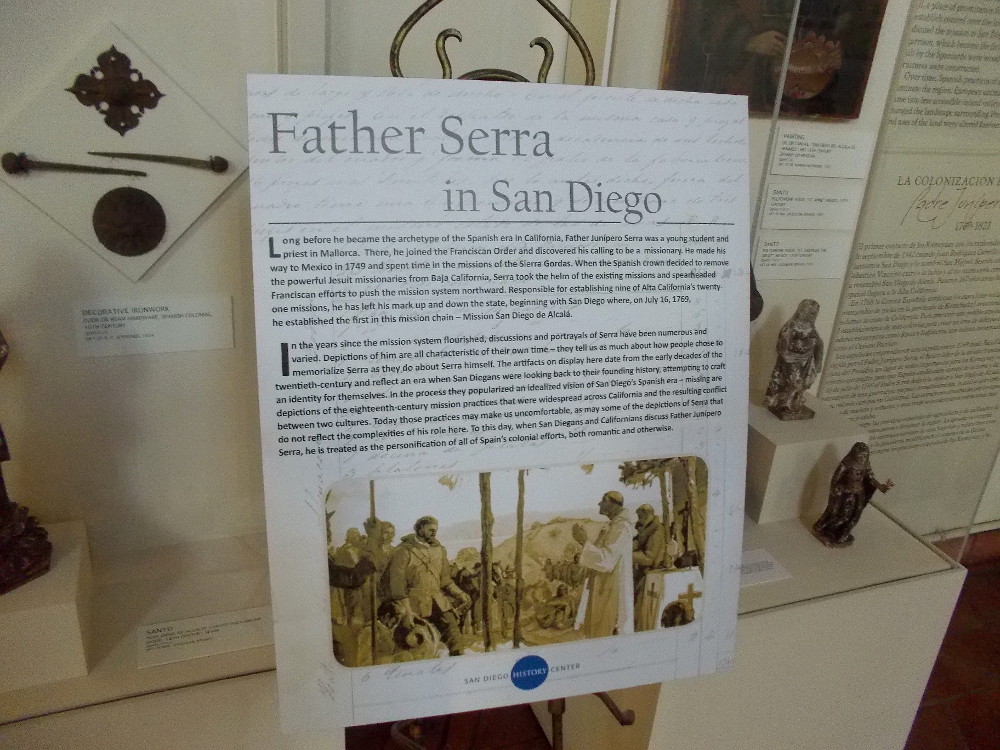
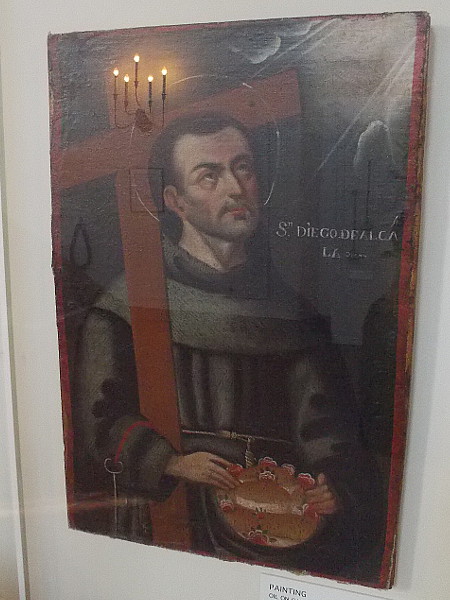
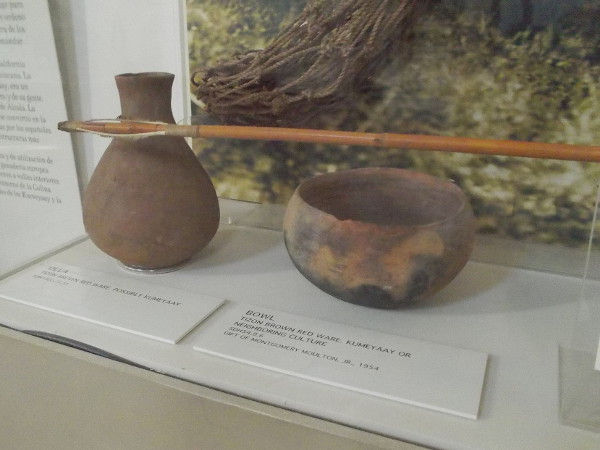
People arrive at the Serra Museum, where San Diego’s early Spanish history comes alive.Junipero Serra Museum dedicated July 16, 1929 to the memory of the founder of the California missions. The original Mission San Diego de Alcalá was established nearby in 1769.A quick look at the rear of the museum.The Serra Museum building was designed by noted architect William Templeton Johnson. It reflects Mission Revival style architecture.Large wine press in front of the museum was a gift from the Spanish island of Mallorca, Father Junipero Serra’s birthplace.Plaque near entrance reads George White Marston 1850-1946. FRIEND OF HIS FELLOW MEN – LOVER OF ALL GROWING THINGS. Piece by piece through many years he acquired these acres…Elegant interior of the Serra Museum contains many exhibits pertaining to San Diego’s early Spanish history.Researchers discovered this sketch of the Royal San Diego Presidio dated 1820. It shows the layout of the old buildings which no longer exist.Modern graphic illustration of the fortified presidio, which was located a short distance below the Serra Museum’s front entrance.Old Spanish cannon named El Jupiter, cast in Manila in the 18th century. El Jupiter stood in Fort Guijarros at Ballast Point, the first defensive fortifications for San Diego Bay.Leather armchair made in Catalan, Spain in the 17th century. This “friar’s chair” was part of the original Serra Museum’s furnishings.Old violin with bow, a branding iron used by rancheros to identify cattle, and iron spurs are among the many historical objects on display.Another look at the beautiful interior of the Serra Museum in San Diego.Large wooden beams in a truly amazing ceiling.Stairs lead up to the Serra Museum’s tower. Painted on the wall is a map showing the sea journey of the Spanish expedition which founded San Diego in 1769.March 9-20, 1769. Desperate to replace drinking water which leaked from the ship’s casks, Captain Vicente Vila commands the tacking Spanish galleon San Carlos near Isla de Cedros.A room halfway up the tower. Numerous displays recall San Diego’s history, most notably around the time when the Serra Museum was dedicated in 1929.Old photo of the crowd attending the Serra Museum’s dedication ceremony on July 16, 1929.A fascinating look at Presidio Hill almost a century ago.A lovely watercolor sketch of the Junipero Serra Museum atop Presidio Hill.On the wall are many historical photos and artifacts, including an image from around 1930 of a cigar factory on 4th Street in San Diego.A reproduction of the west elevation drawing of the Serra Museum by architect William Templeton Johnson.Now we’re heading up to the very top of the tower.Looking west from the Serra Museum tower along Interstate 8. Point Loma is on the left and Mission Bay is to the right.Looking east into Mission Valley.Visitors at the Serra Museum head back down from the tower, after looking at old photos which show a much less-developed surrounding landscape.A small theater in the Serra Museum contains additional exhibits about life in and around the old Presidio.Examples of what life was like for the Native American Kumeyaay, who occupied this region long before it was discovered by the Spanish.Stories of two people who lived on a local Rancho. Click the image to enlarge, if you’d like to read it.Map of the old Presidio’s archaeological site. You can see where the fort was located in relation to the Serra Museum.Explanation of the excavation process utilized by researchers. Some artifacts that were unearthed are on display in the museum.Artistic rendition of a Mexican presidio soldier circa 1830, and a horse bit.An olive press, granite mill stones, and an ox yoke.Small artifacts include this carved polychrome wood San Diego de Alcala Santo from 18th century Spain.Sign describes the life of Franciscan missionary Father Junipero Serra, and his work to establish the California Missions under the flag of Spain. He was recently made a Catholic Saint.Painting. Oil on canvas. San Diego del Alcala de Henares. Mid 18th century, Spanish or Mexican.Olla and bowl. Kumeyaay or neighboring culture.The Junipero Serra Museum in San Diego provides a fascinating look at our culturally diverse city’s very early history.
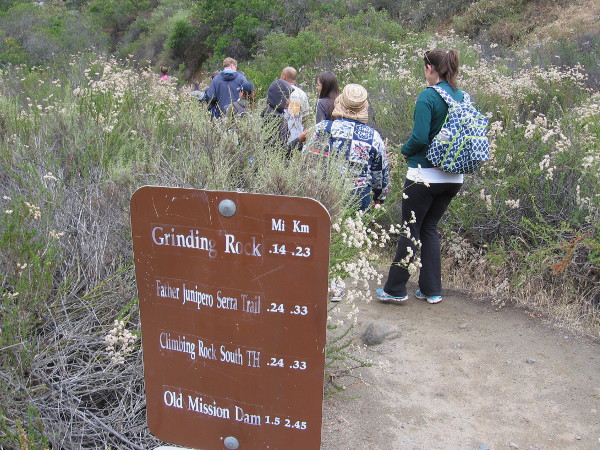
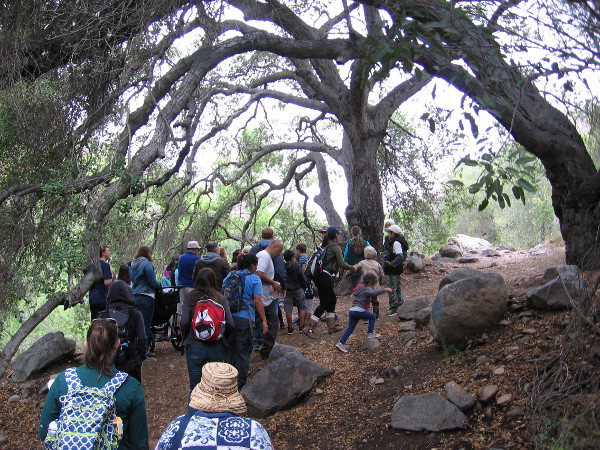
Visitors enjoying Explore Mission Trails Day head down Grinding Rock Trail.
About 60 miles of hiking trails through a wilderness environment can be found just 8 miles from downtown San Diego. Seriously!
This morning I enjoyed a very short walk (about a mile) at Mission Trails Regional Park. I went on the occasion of Explore Mission Trails Day, an annual event that showcases this amazing, enormous urban park.
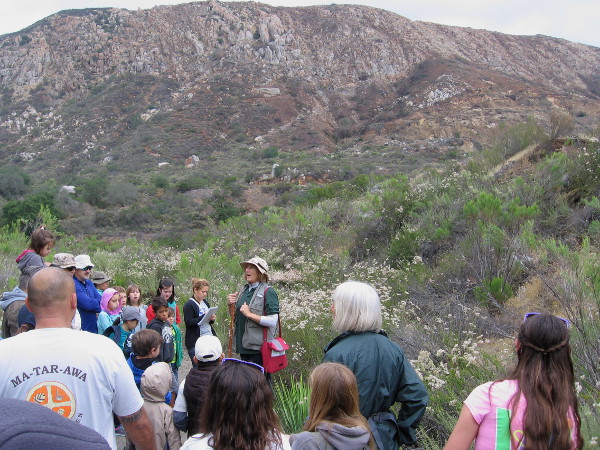
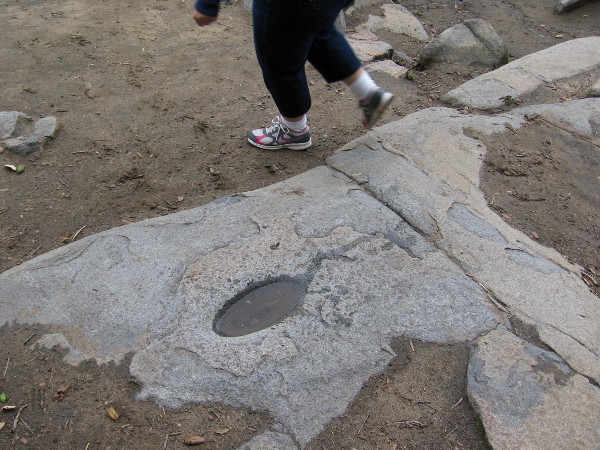
The relatively easy hike was from the Visitor and Interpretive Center to some grinding rocks on the banks of the San Diego River, then back. Led by our guide, Linda, a small group learned what life was like for the ancient Kumeyaay people, who’ve lived in this dry, rugged area of Southern California for thousands of years, long before Europeans arrived. The Kumeyaay lived off the land. The very land where we walked.
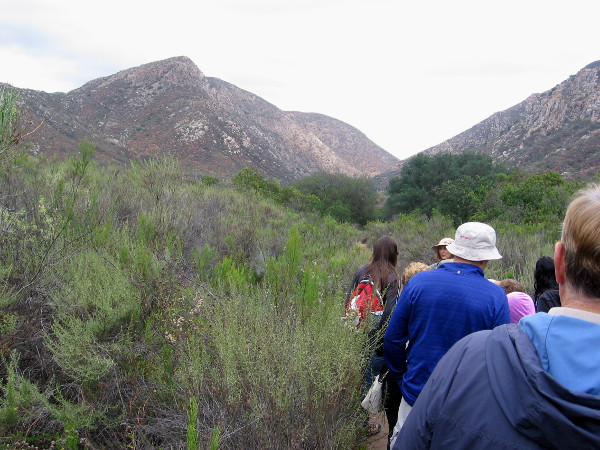
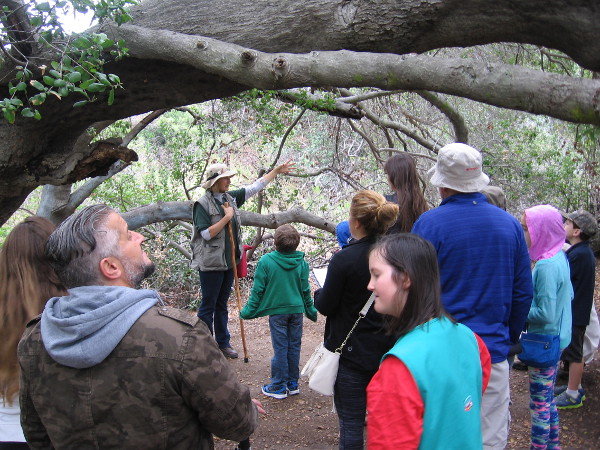
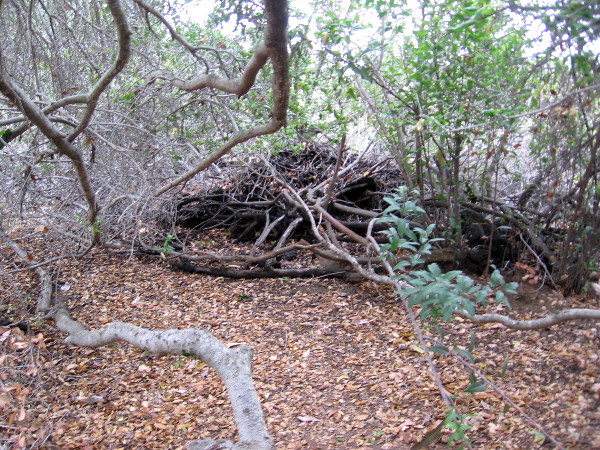
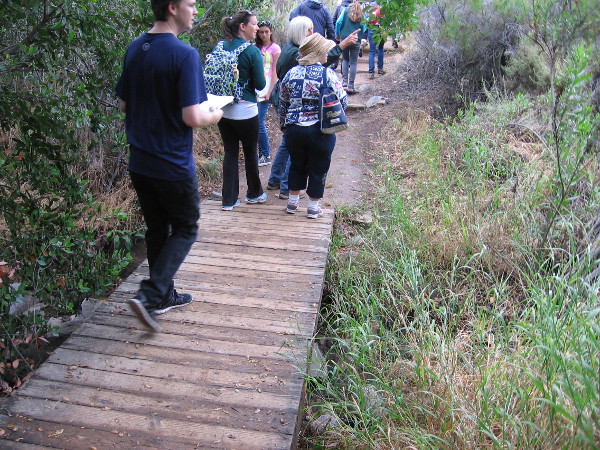
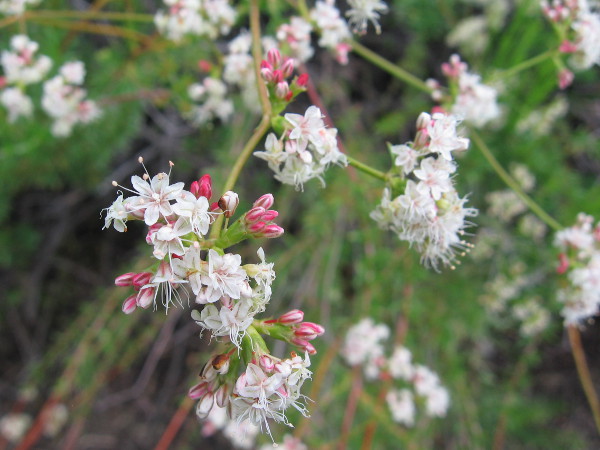
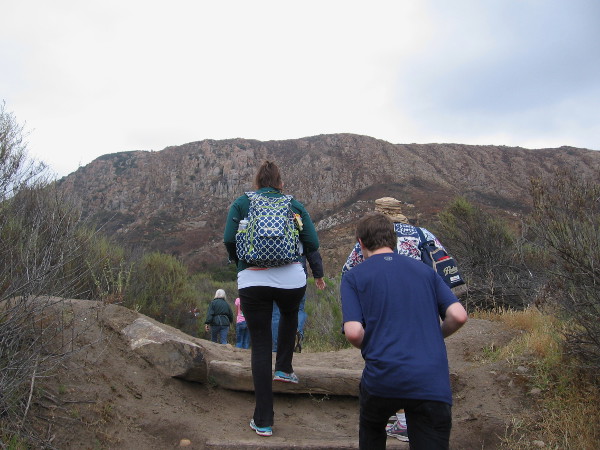
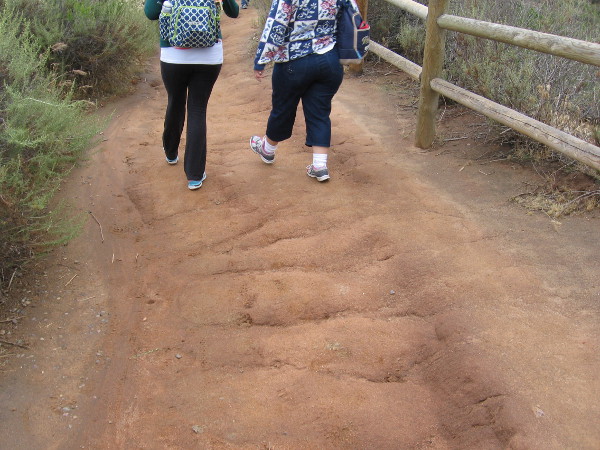
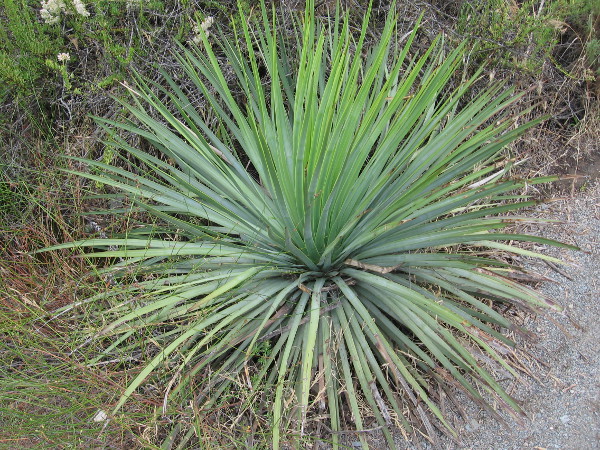
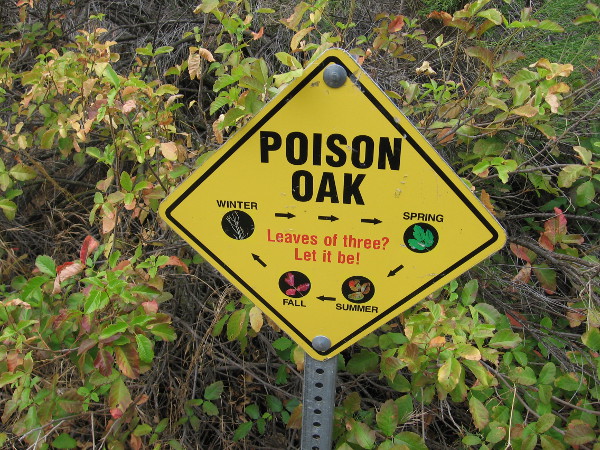
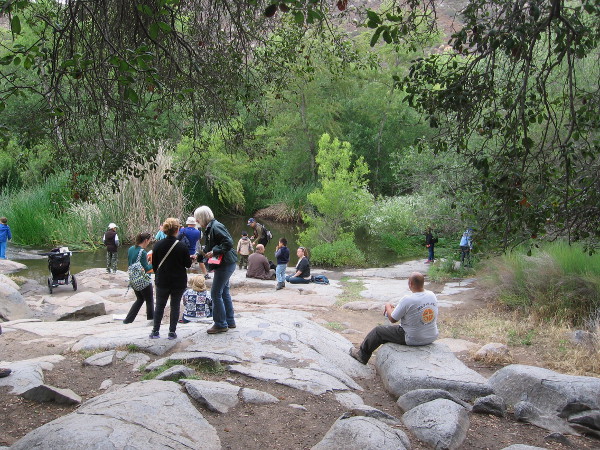
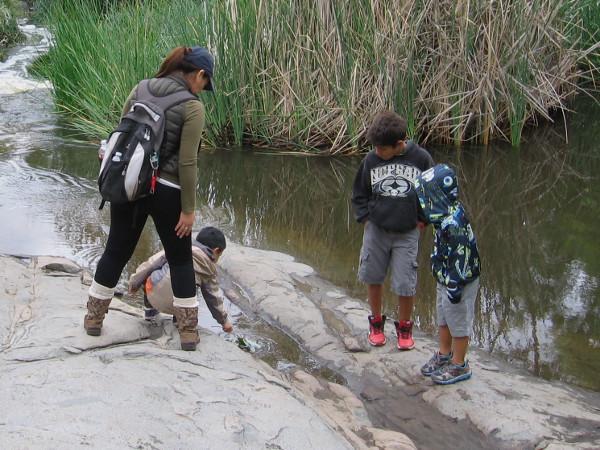
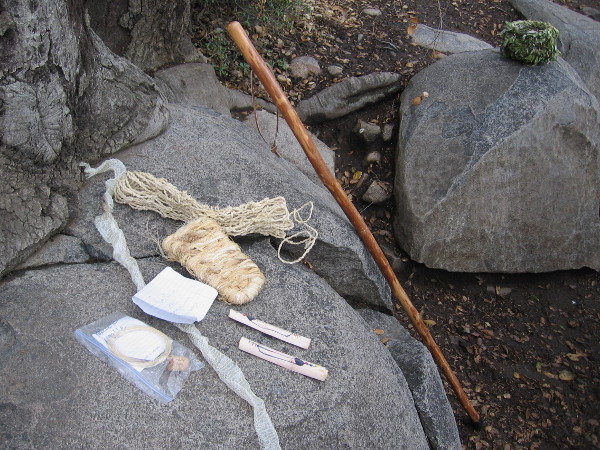
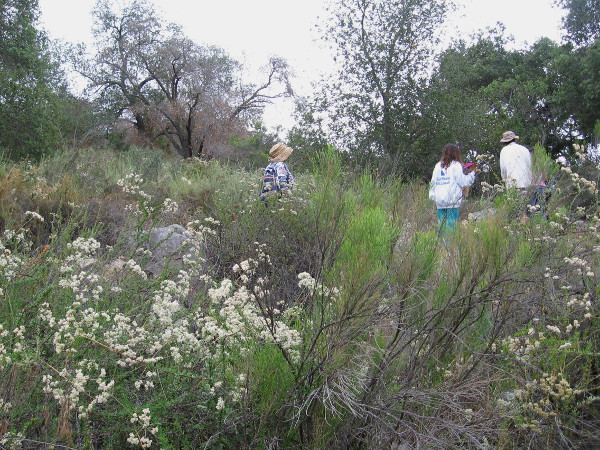
We gathered at the kiosk near the parking lot for an easy morning nature walk.Hiking through common, aromatic Southern California sagebrush toward a distinctive mountain, South Fortuna.We pause under a coast live oak, which produces acorns and shade valued by the native Kumeyaay.Large nest created by a woodrat (also known as pack rat). The Kumeyaay would bang a nest with a stick and hope to capture a snake, to eat.We cross a small wooden footbridge and take in nature’s sights and smells on a beautiful day.These tiny pinkish white flowers are flat-top buckwheat. Their tiny seeds are edible. The blooms attract butterflies.It’s easy to forget you are in the San Diego city limits in this open wilderness.Water erosion visible in the gradually descending dirt trail. As the morning was overcast and cool, no snakes were out sunning.Yucca fibers were used by the Kumeyaay to make nets, sandles, baskets and other useful things.Linda, our tour guide, talks about the ancient history of this region and its indigenous peoples. The Kumeyaay moved about depending on the season and availability of resources.Dodder is an orange colored parasitic plant. According to Kumeyaay legend, a woman who failed to guard a camp against invaders ran away, and some of her hair snagged in the bushes!A patch of poison oak! Leaves of three, let it be!We approach the San Diego River, but first pass beneath a large arching tree. If you see a native tree in San Diego, there’s probably water nearby!Smooth boulders on a bank of the San Diego River in Mission Trails Regional Park.Family investigates the life-giving water. The Kumeyaay at times would follow the river all the way to the coast, where some witnessed the landing of explorer Cabrillo.Many mortar-like holes in the nearby boulders are where Kumeyaay ground acorns, seeds, roots, herbs and other edible resources found in this arid environment.Walking stick leans up near some Yucca fiber creations brought by our guide. The basket on the right was made with willow branches. Natural salicylic acid found in willows kept out insects!Starting back up toward the Visitor Center during a very cool hike in San Diego! If you go for a hike, bring water and sturdy shoes!
…
To enjoy future posts, you can “like” Cool San Diego Sights on Facebook or follow me on Twitter.
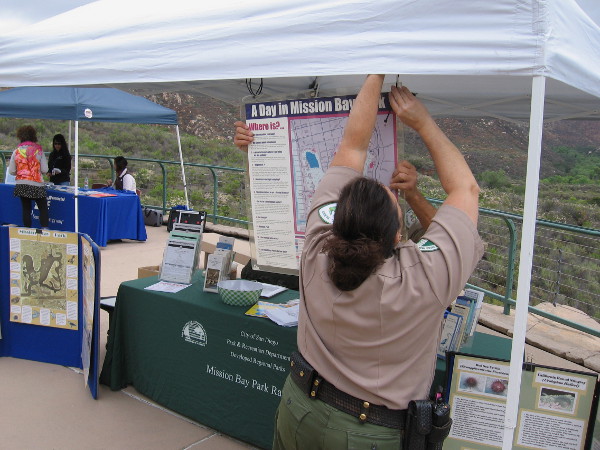
Park rangers and community organizations set up displays on the Visitor Center patio.
This morning I headed up Mission Gorge Road to check out the big annual Explore Mission Trails Day event!
Mission Trails Regional Park is a 6000-acre nature reserve located in San Diego’s East County. It’s one of the largest urban parks in the United States–basically a wide stretch of rugged, rocky wilderness within our large modern city! The San Diego River runs through the very heart of the park as it makes its way from higher inland elevations to the Pacific Ocean. I often drive past and gaze at the low chaparral-covered mountains and hills, and twice I’ve climbed Cowles Mountain, but this was the first time I’ve actually set foot inside the Visitor Center.
What an awesome place! How did I miss it all of these years?
Today I limited myself to the south end of the park, including a short but super cool hike from the Visitor Center to the Grinding Rocks. (That will be my next blog post!) There were additional Explore Mission Trails Day activities up by the Old Mission Dam and Kumeyaay Lake Campground, and by Mast Boulevard and Highway 52. I suppose I’ll have to go again next year!
My photos tell the story of what I saw…
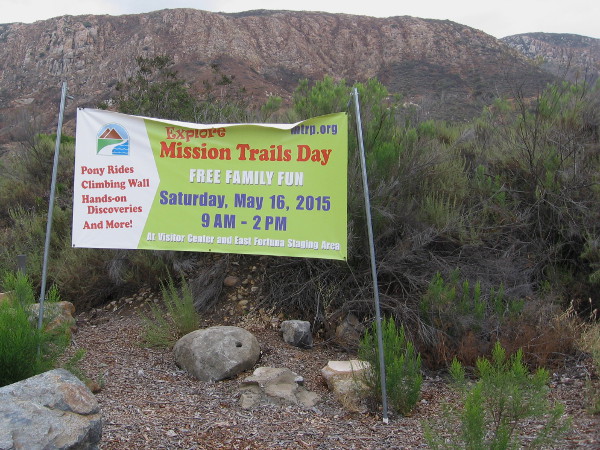
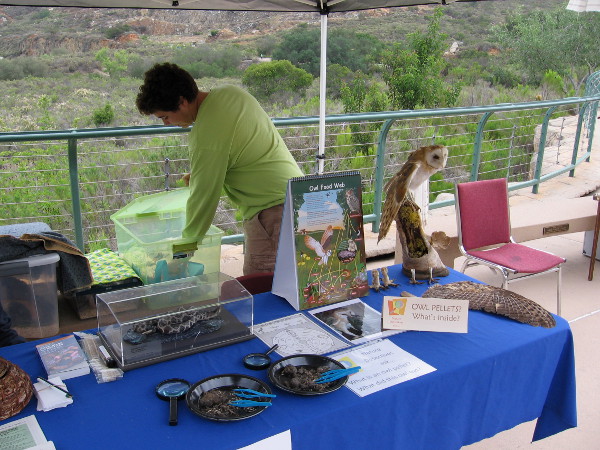
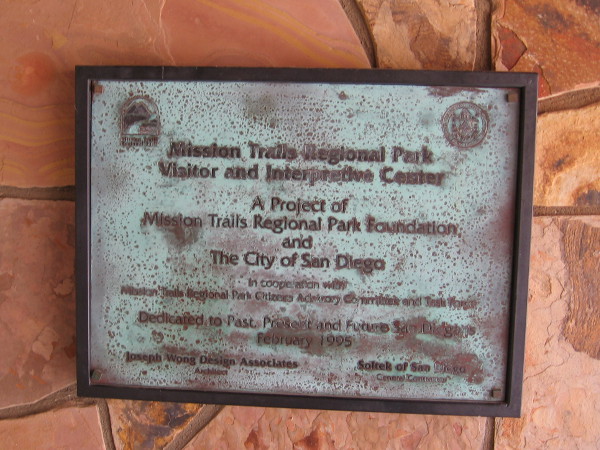
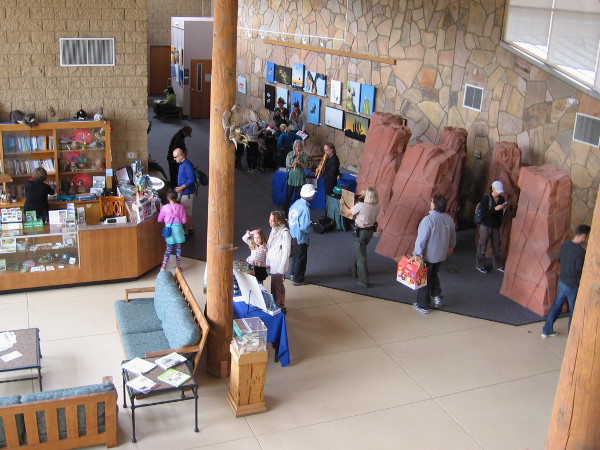
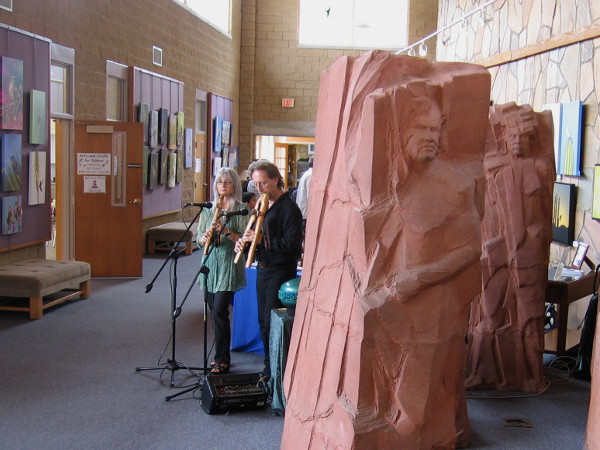
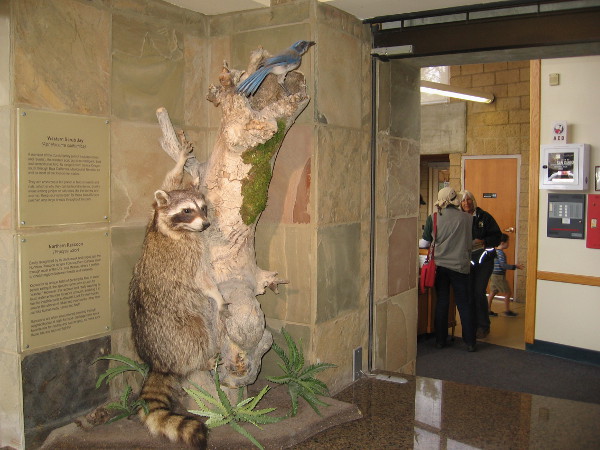
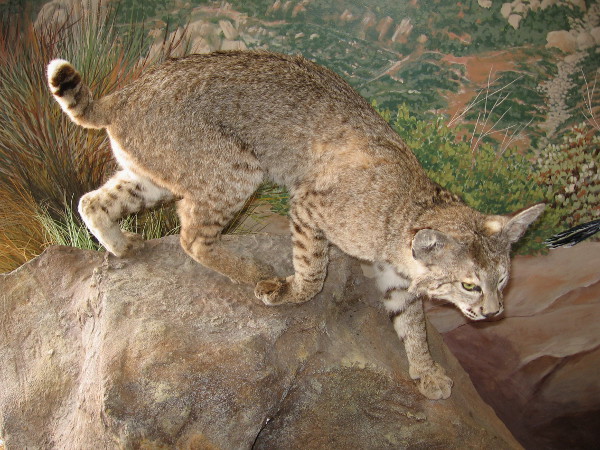
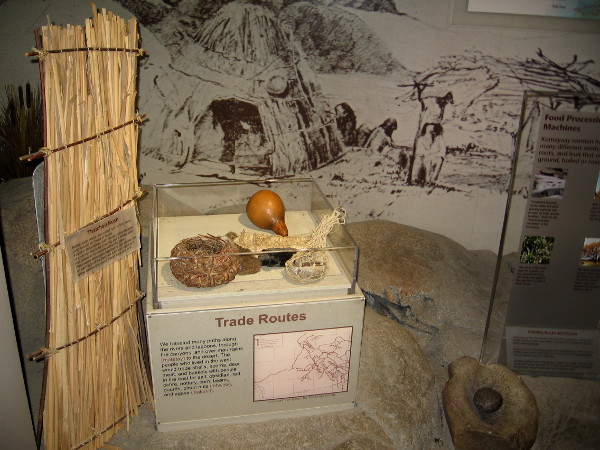
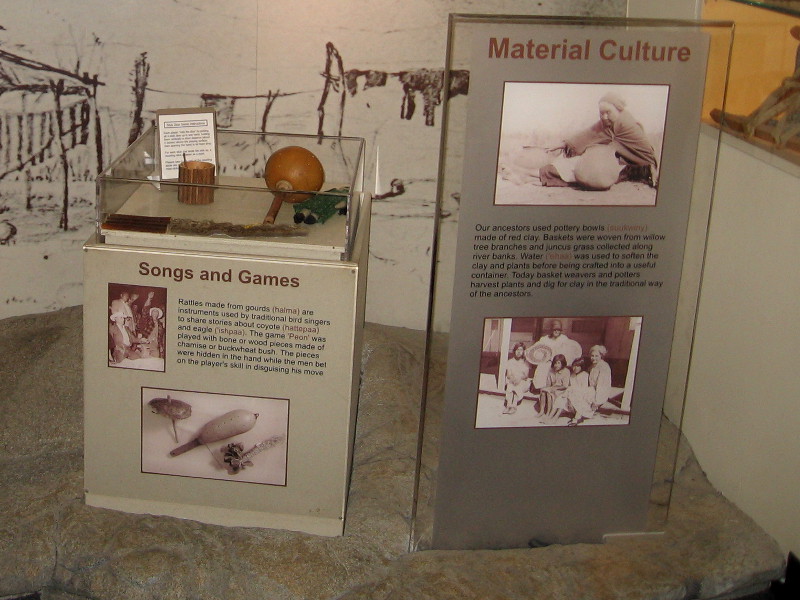
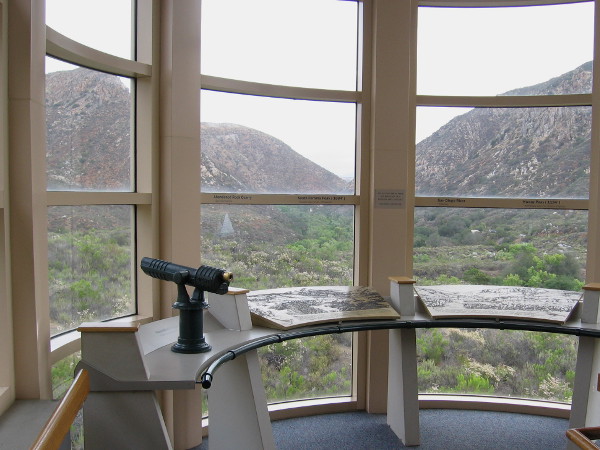
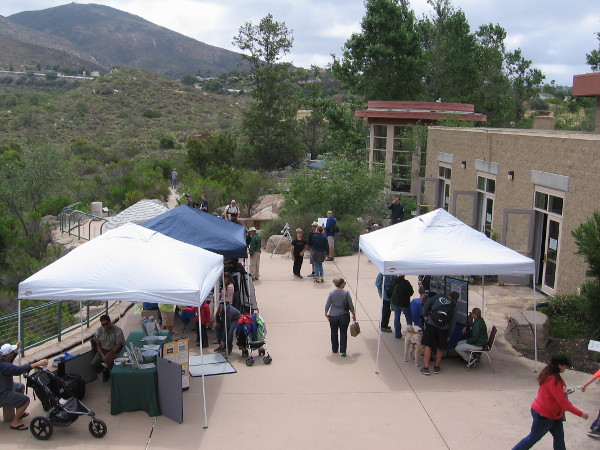
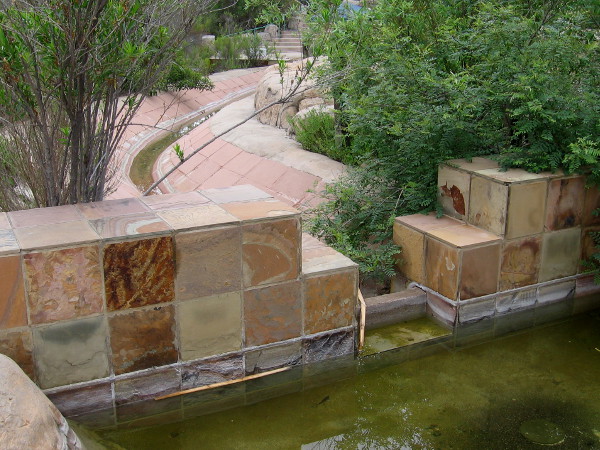
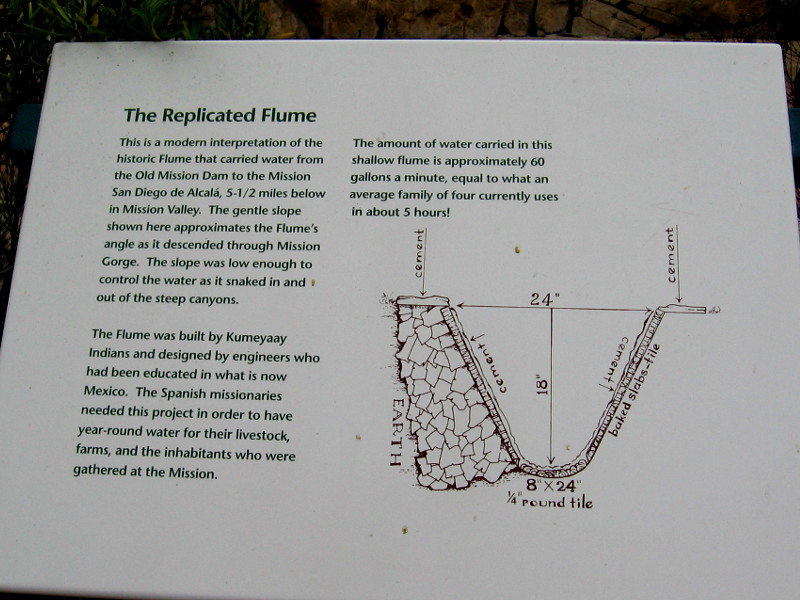
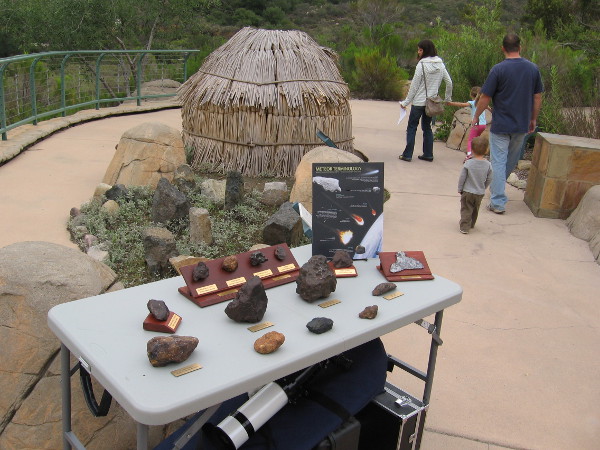
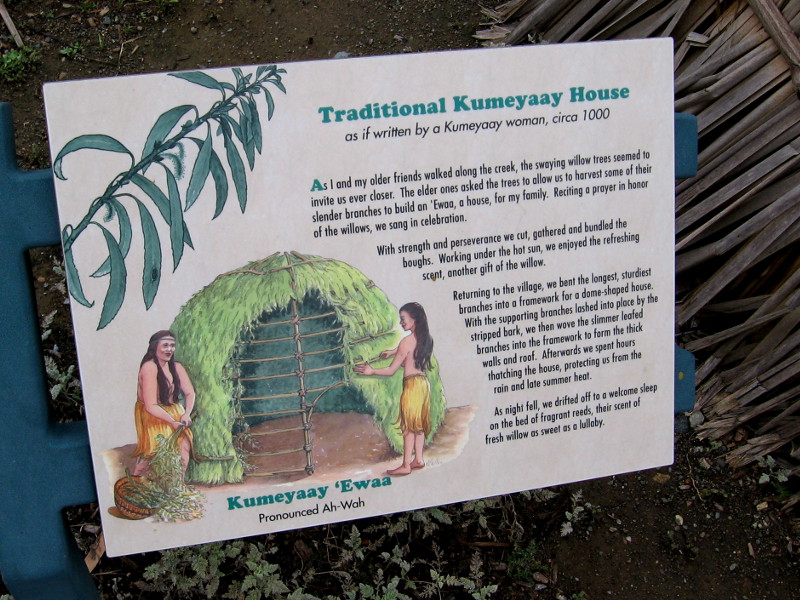
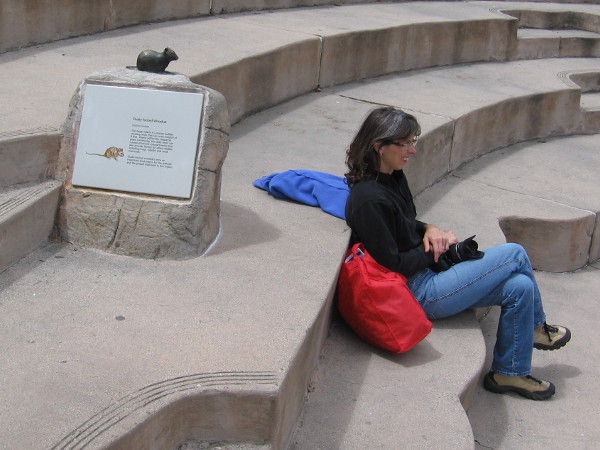
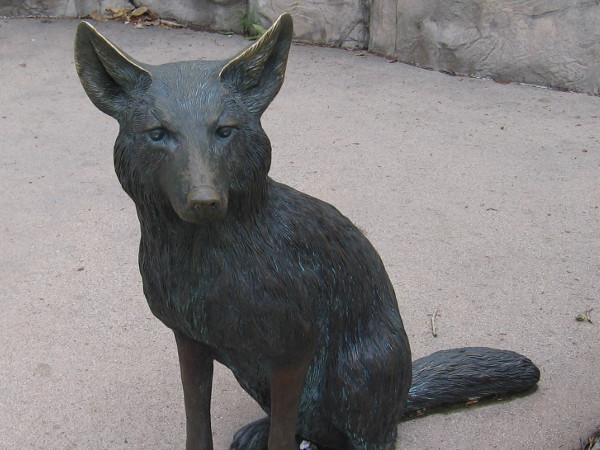
Banner beside Father Junipero Serra Trail announces Explore Mission Trails Day!There were opportunities to learn about nature, wildlife, science, history and the environment.Some folks near the main entrance of the Mission Trails Regional Park Visitor Center.Bronze sculpture of a golden eagle is perched above path near the Visitor Center entrance.Plaque by door dedicates the large open space park to past, present and future San Diegans.View inside the Mission Trails Visitor and Interpretive Center from second floor balcony.Flutists play near “Heritage” sculpture depicting native Kumeyaay elders. Amazing monumental artwork is by T.J. Dixon and James Nelson.The Art of Bird Photography is a special exhibition featuring the work of Blake Shaw.Roberta Labastida is the author of My Ancestors’ Village, which tells about the life of the Kumeyaay people who were here long before the arrival of Europeans.Numerous exhibits and activities could be found inside the Mission Trails Visitor and Interpretive Center.Western Scrub Jay and Northern Racoon are animals one might see in this very large San Diego urban park.Cleaning some chalk off where kids have been identifying animal tracks.The bobcat is often encountered in the hills and mountains of San Diego County. I once saw one while hiking around Mount Laguna!Historically, the Kumeyaay lived in large family groups, and moved about depending on the season and the availability of nature’s bounty.Exhibits in Visitor Center’s museum show different aspects of Kumeyaay culture, including songs, games and crafts.Very cool observation window allows visitors to look out upon South Fortuna and Kwaay Paay Peak.With the majestic chaparral-covered Fortuna Mountains as its backdrop, the coastal sage scrub habitat is highly adapted to our long hot summers.Looking back out at the rear patio. More people have arrived in the past few minutes while I explored inside.Now I’m outside again, coming down some steps. Another cloudy day, following San Diego’s latest storm!Replicated flume near Visitor Center is a modern interpretation of the man-made channel that carried water from the Old Mission Dam (a couple miles upriver) to Mission San Diego de Alcala.Sign by replicated flume details how it was engineered over two centuries ago. Water was used at the old historic Mission for livestock, farms and inhabitants.Cool table full of meteorites next to traditional Kumeyaay house made of willow branches.This sign tells the story of a fictional Kumeyaay woman, circa the year 1000. This primitive house was called an Ewaa.Large boulder moved to Visitor Center due to construction contains a mortar-like hole used by Kumeyaay to grind acorns, seeds, roots, herbs and other natural foods.A replicated solar calendar made of stones, used by Native Americans to mark the Winter Solstice. Only a couple have been found in San Diego County.This pink beauty is a California Wild Rose, found beside the patio. They’re more often found along streams.Lady rests in Visitor Center amphitheater by small bronze sculpture of a Dusky-footed Woodrat. This wild rodent can create a nest up to 8 feet high!Sculpture of a coyote, one the top predators of Mission Trails Regional Park. Even with human encroachment, they remain numerous today.Family checks out a very cool, life-size sculpture of a mountain lion at the amphitheater. This secretive animal is rarely seen around here.Ms. Frizzle was present at Explore Mission Trails Day! The event was an educational treat for both kids and adults!
…
To enjoy future posts, you can “like” Cool San Diego Sights on Facebook or follow me on Twitter.
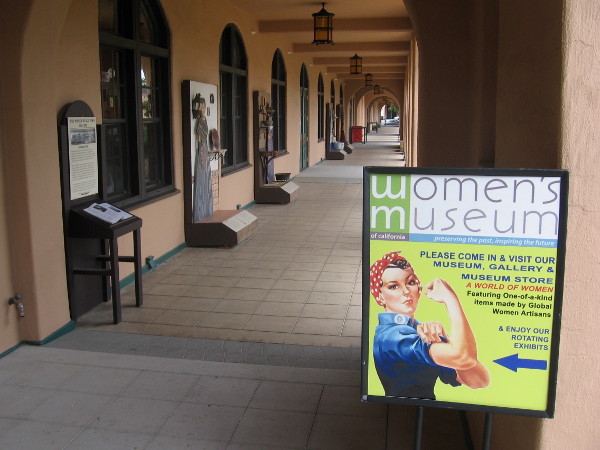
Important stories from local history are preserved at the Women’s Museum of California.
The Women’s Museum of California is one of many cultural attractions that can be enjoyed at Liberty Station in Point Loma. I took some photos of a historical exhibit just outside their front door.
This unique museum was founded by Mary Maschal, a collector of memorabilia and artifacts pertaining to women. The collection has moved to different locations and evolved over the years; today it has grown into an important museum that features art shows, live performances, lectures and other educational events. Its mission is summarized by the slogan: Preserving the past…inspiring the future.
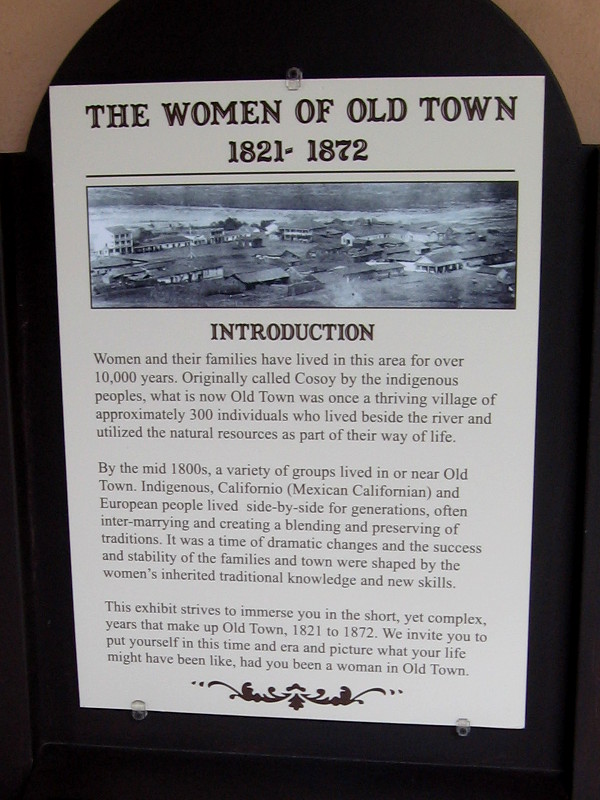
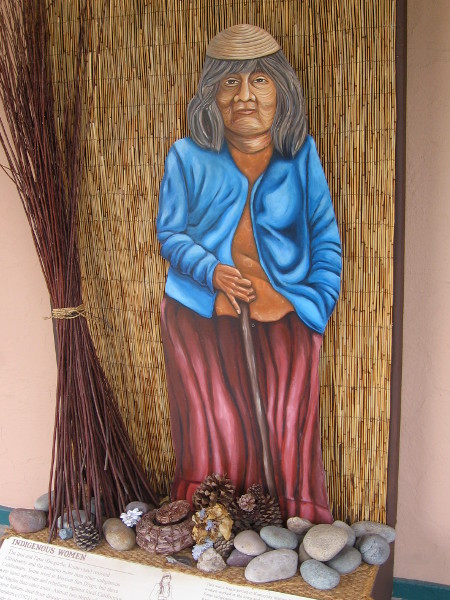
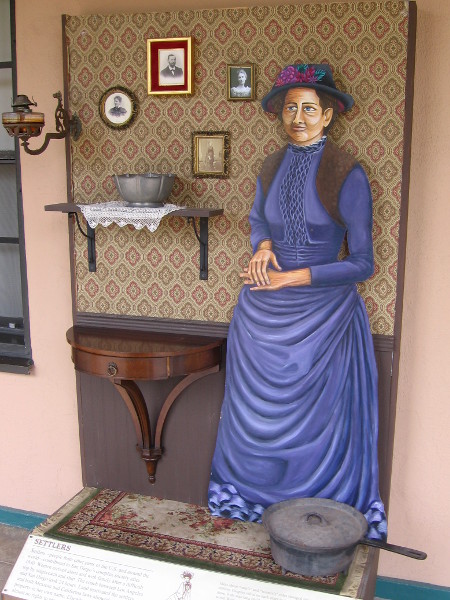
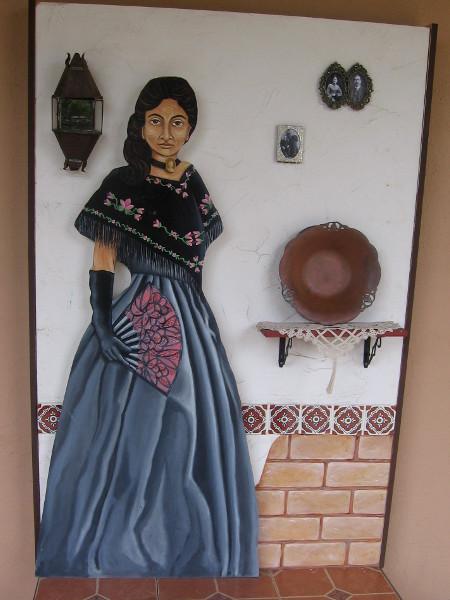
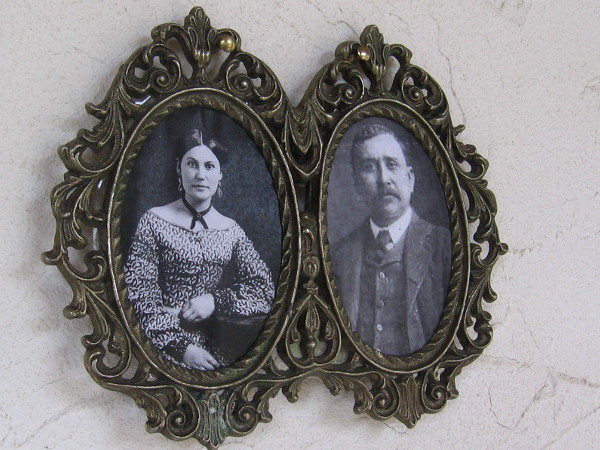
The women of Old Town, 1821-1872. Women and their families have lived in this area, called Cosoy by indigenous people, for over 10,000 years. This exhibit focuses on a short period.The historical experiences and accomplishments of local women are preserved at this unique San Diego museum.The Ipai and Tipai (Diegueño, Kumeyaay) resisted Christianity and the missions more than other indigenous Californians. Moved off their land, the women worked in the town and ranchos.The few women in Old Town had more opportunities to earn money than in the Eastern U.S. They did traditional work: laundry, baking, cooking, sewing, tending to children and livestock.Settlers contributed to San Diego’s complex society after 1830. Women arrived alone and with family after a difficult trip by stagecoach and ship.Californios were a diverse group whose culture created el pueblo San Diego. They were descendants of mixed Spanish and indigenous peoples, often given land grants by Mexico.Old photographs in an artifact help modern San Diegans remember their rugged, fascinating past.
…
To enjoy future posts, you can “like” Cool San Diego Sights on Facebook or follow me on Twitter.
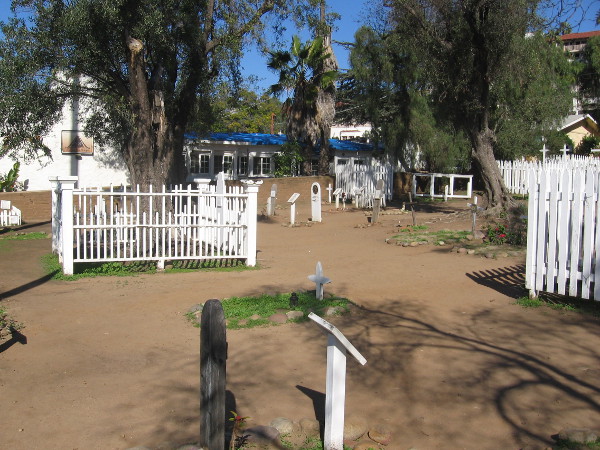
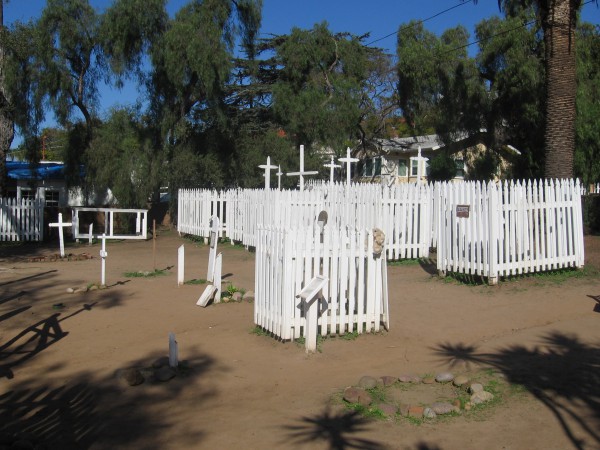
El Campo Santo cemetery in Old Town San Diego contains much history.
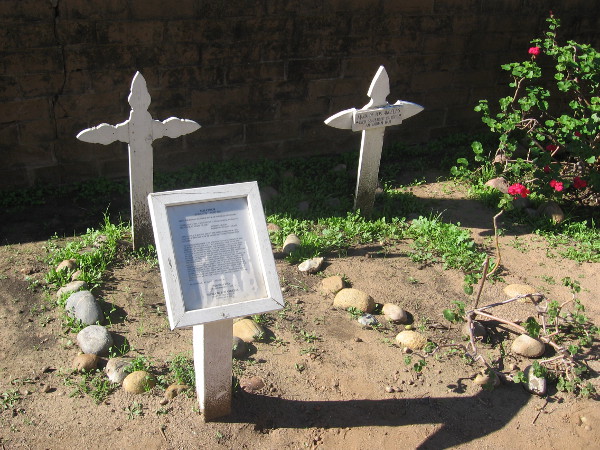
El Campo Santo, a cemetery located in Old Town, contains many of San Diego’s earliest residents. By walking respectfully among the gravestones, one can learn much about the city’s interesting history and what life was like for its diverse people. Real-life characters buried here include ranchers, gold miners, sailors, Californios, Native Americans, soldiers, politicians, merchants, actors, children and outlaws.
Established in 1849, the graveyard is the final resting place of nearly five hundred souls. Just a handful are shown in this blog post.
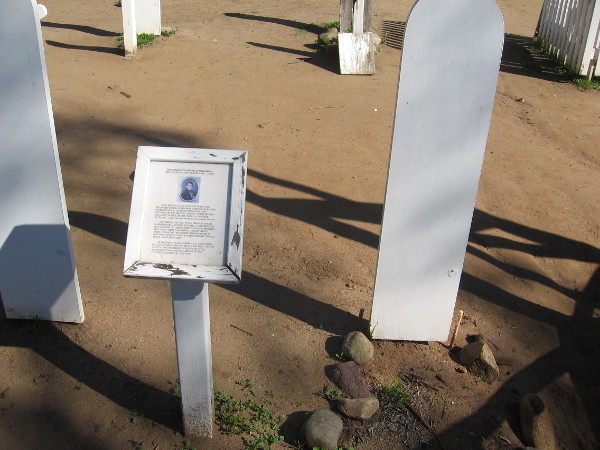
I took photographs of grave sites, headstones and many small signs in the “Holy Field” that describe what is known about the deceased. With a little editing, I’ve provided information here from many of those signs, and from a few other online sources.
Melchior was a Native American who lived to be 97 years old.
Melchior, born 1770, died 1867, age 97 years. Very little is known about the Indian Melchior. He was born a year after the arrival of Junipero Serra in San Diego. He was baptized by the missionaries and became a Roman Catholic Christian. During his long life, he saw San Diego grow from a small pueblo to a city.
Thomas W. Tanner ran an acting troupe that performed at the Whaley House.
Thomas W. Tanner was buried December 22, 1868, age 55 years. He ran an acting troupe that performed on the second floor of the Whaley House in December 1868. Tanner’s troupe offered moral, chaste and versatile entertainment consisting of drama, farce, comedy, singing and dancing. Unfortunately, Tanner died 17 days after his troupe opened. He was married to Policarpia de la Rosa and was a native of Baltimore, Maryland.
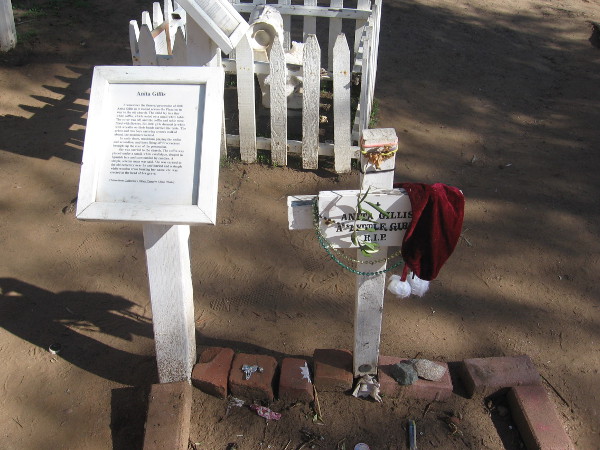
Anita Gillis was a young child.
Anita Gillis was a child when she died. Her funeral is remembered as follows on a plaque by the grave. A funeral procession wound across the Plaza and ended at the old church. The child lay in a tiny white coffin, which rested on a small white table. The cover was off, and the coffin and table were filled with flowers. Six little girls dressed in white with wreaths on their heads carried the table. The priest and two boys carrying crosses walked ahead, the mourners behind. Musicians played the violin and accordion, and boys firing off firecrackers brought up the rear of the procession. She was carried to the church, and the coffin placed under a small white catafalque, draped in Spanish lace and surrounded by candles. A simple, solemn mass was said. She was then carried to the old cemetery and buried with a simple white wooden cross bearing her name erected at the head of her grave.
Juan Mendoza worked on a ranch and was shot in the back.
Juan Mendoza died February 6, 1865. He was the victim of a fatal shotgun blast to the back. The assailant was Cave Johnson Couts, a local landowner and prominent San Diegan born in Tennessee. As the story goes, Mendoza worked as majordomo, or chief steward, on one of Cave Couts’ ranches. Couts claimed that Mendoza had threatened his life and in a hasty act of revenge killed Mendoza in broad daylight. The action violated the legendary “Code of the West” which prohibited “shooting an unarmed man” and “shooting a man in the back”. Couts was tried by jury for his crime and found not guilty. This was received “with much applause” from local citizens since threatening the life of a man, as Mendoza allegedly did, gave Couts the right to stand his ground and kill him.
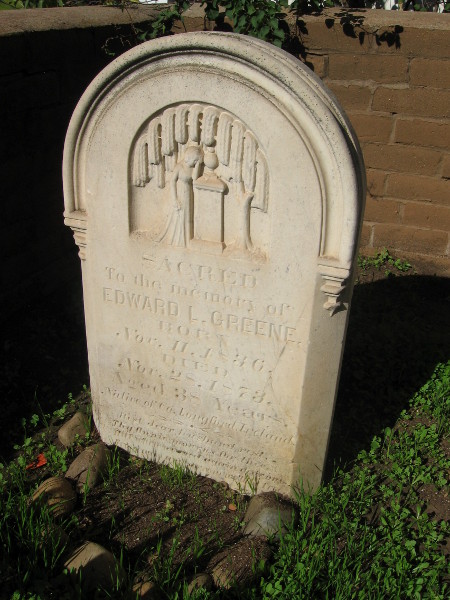
Edward Lynch Greene was a gold miner who became member of the state legislature.
Honorable Edward Lynch Greene died November 28, 1872, age 38 years. He was a native of Ireland who came to California in 1852 and was a miner for gold. He was naturalized in 1861. He became a member of the state legislature when he was elected to the Assembly from Calaveras County in 1869. He was staying in San Diego at the Era House when he died of consumption. He’d been ill for the past eighteen months. He left behind a young wife, Ann Greene.
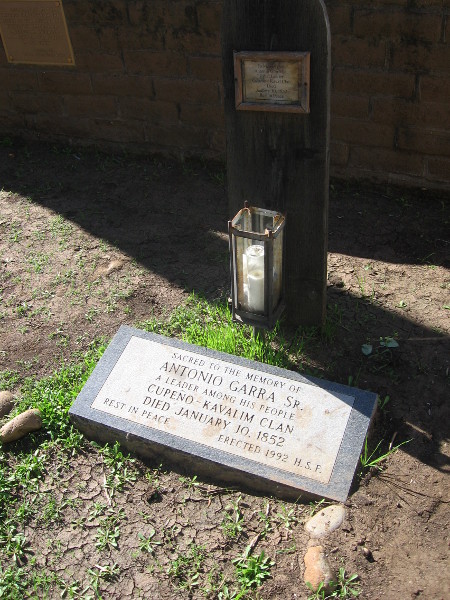
Antonio Garra Sr. was a Native American who rebelled against taxation.
Antonio Garra Sr. died January 10, 1852. He was a leader among his people, the Cupeno-Kavalim Clan. He was educated at Mission San Luis Rey and spoke as many as five Indian dialects, as well as Latin. He was one of the foremost chiefs with great power and influence among his people. The Cupeno were considered mission Indians and were subject to pay taxes in San Diego County. Garra, upset by the taxation of his people, helped to organize a resistance movement, comprised of attacks on Santa Barbara, Los Angeles and San Diego. Against his wishes, a fatal attack was made on Warner’s Ranch. He was soon thereafter captured. On January 10, 1852 Garra was found guilty of murder and theft, but not treason, as he had never taken an oath of allegiance to the United States. Before being executed by firing squad, Garra said in his last words: “Gentlemen, I ask your pardon for all my offenses, and expect yours in return.” Antonio Garra, Sr. is believed to be buried underneath what is now San Diego Avenue.
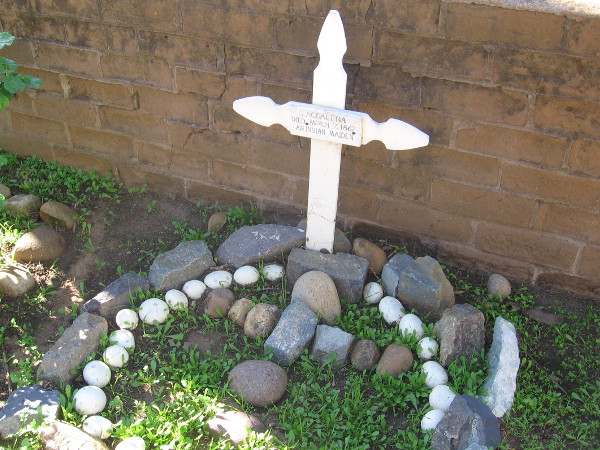
Magdalena was a Native American young lady.
Magdalena was an Indian maiden who died on March 7, 1867 at age 21.
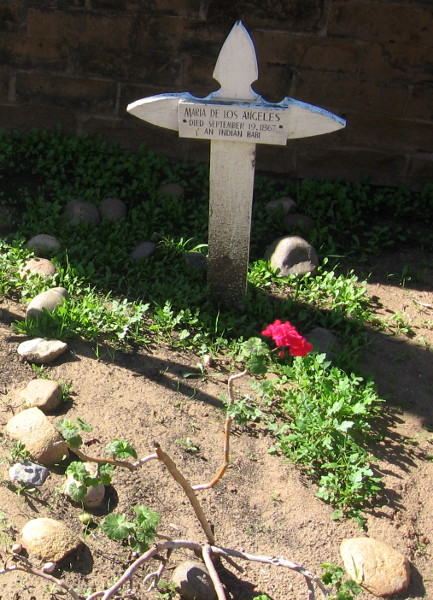
Maria de los Angeles was a Native American infant.
Maria de los Angeles was an Indian infant who died September 19, 1867.
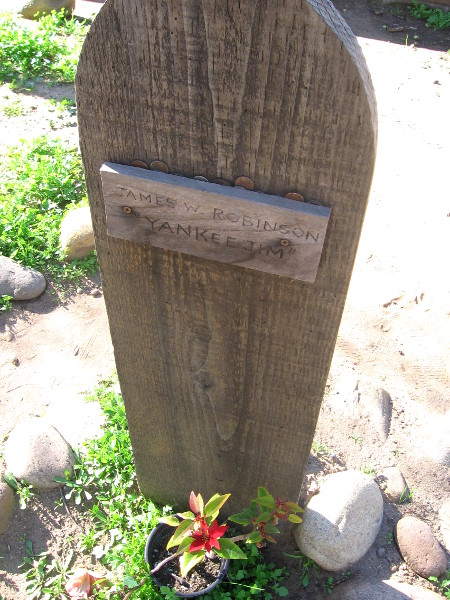
Yankee Jim was hung for stealing the only rowboat in San Diego Bay.
James W. Robinson was known as Yankee Jim. He suffered an extreme penalty for stealing the only rowboat in San Diego Bay. He was sentenced to be hanged. He couldn’t believe that he would be hanged until the very last moment. He appeared to think it was all a grim joke, or at worst, a serious effort to impress him with the enormity of his evil ways. He was still talking when the deputy sheriff gave the signal. Yankee Jim converted to the Roman Catholic Church prior to his death, and so was given the baptismal name of Santiago (Spanish for James). His godfather was Philip Crosthwaite, the deputy sheriff who gave the signal for his execution.
Rosa Serrano de Cassidy and her husband owned a rancho in Pauma.
Rosa Serrano de Cassidy died February 10, 1869, age 21 years. She was the first wife of Andrew Cassidy (a native of County Cavan, Ireland) who helped establish and operate the U.S. tidal gauge in La Playa (in present day Point Loma). Rosa was the daughter of Jose Antonio Serrano who served under Pio Pico in the Mexican War and was in the battle of San Pasqual. Rosa and her husband owned a rancho in Pauma. Her headstone is one of the few remaining originals in the cemetery. After cracking during an earlier restoration, it was placed flat on the ground in order to preserve it.
Don Miguel was a native of Spain, and one of the founding fathers of California.
Don Miguel Telesforo de Pedrorena died March 21, 1850. Don Miguel was a native of Spain, belonging to one of the best families of Madrid. After receiving an education in his own country, he was sent to London, where he was educated in English. In 1845 he settled in San Diego. He married Maria Antonia Estudillo, daughter of Jose Antonio Estudillo, and the two had four children. They built their casa behind the Estudillo home. It was one of the first framed houses in Old Town, and still stands beside the San Diego Union print shop. Don Miguel became a leading merchant and citizen of old San Diego. He served as a delegate to the State’s Constituional Convention at Monterey in 1849 and became one of the founding fathers of California.
Juan Maria Marron was a ship’s captain who became prominent politically.
Juan Maria Marron, born 1808, died at the age of 45. He was a ship’s captain before coming to San Diego in the early 1820’s. He was the owner of 13,311 acres called Rancho Agua Hedionda, which extends from modern day Vista to Carlsbad. He became prominent politically when he married Dona Felipa Osuna in 1834. She was the daughter of Juan Maria Osuna, who was the first alcalde of San Diego and the owner of Rancho San Dieguito. During the Mexican-American War, Marron supported the Americans against many of his Mexican friends. He was captured by Californios who threatened to execute him, but he was released, and his rancho was stripped of horses and cattle.
Jayme Lyons was the son of a carpenter, merchant, blacksmith and sheriff.
Buried November 28, 1859, age 4 years, Jayme was one of probably thirteen children of George and Bernarda Lyons. Jayme’s father was a native of Donegal, Ireland, who came to San Diego in 1847. He had been a carpenter on a ship that came around Cape Horn from New Bedford, Massachusetts. He kept a store in Old Town, owned a blacksmith shop, and was sheriff for two terms. Jayme’s mother was Bernarda de Villar, the daughter of Lieutenant de Villar, who at one time was the Commandant of the San Diego Presidio.
Bill Marshall and Juan Verdugo were hanged nearby.
Bill Marshall and Juan Verdugo were hanged on December 13, 1851. Bill Marshall was an American married to the daughter of a local Indian chieftain. He was a renegade sailor from Providence, Rhode Island, who’d deserted from a whaling ship at San Diego in 1844. After taking up habitation with the Indians, he took an active part in the Garra Indian uprisings in 1851. He and the Indian Juan Verdugo were caught and brought back to San Diego to be promptly tried by court martial. Both were found guilty. The Indian acknowledged his guilt, but Marshall insisted he was innocent. At two o’clock in the afternoon, a scaffold was erected near the old Catholic cemetery, the men placed in a wagon, the ropes adjusted about their necks, and the wagon moved on, leaving them to strangle to death.
Rafael Mamudes worked at chopping wood and digging wells. He dug the graves for the people of Old Town
Rafael Mamudes was a Native American born in Hermosillo, Mexico. He was a baker in Monterey, a miner in Calaveras County, and made a sea voyage to Guaymas. He owned a little plot of land in San Diego where the old jail stands. Legend has it he made a murderous attack upon his wife. To do penance, the priest gave Rafael the task of ringing the church bells when the occasion demanded. Rafael worked at chopping wood and digging wells. He dug the graves for the people of Old Town. He never missed a church service.
Jesus was a Native American who died of a blow to the head while drunk.
Jesus, an Indian, passed away December 15, 1879, age 25 years. He died of a blow to the head without receiving sacraments. According to the priest Juan Pujol, he was said to be drunk, so he was buried near the gate of the cemetery.
Hundreds of varied, rich life stories were concluded here in this early San Diego cemetery.
…
To enjoy future posts, you can “like” Cool San Diego Sights on Facebook or follow me on Twitter.
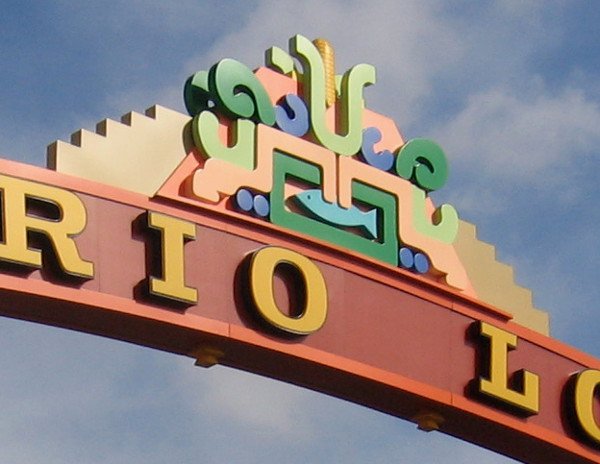
The colorful new Barrio Logan gateway sign arches over Cesar Chavez Parkway.
A little over a week ago, the new Barrio Logan gateway sign had a dedication ceremony. The welcoming sign, arching over Cesar Chavez Parkway between Harbor Drive and Interstate 5, is similar to others that can be spotted in various communities around San Diego. Its design, however, is notably different. The cornice contains a variety of symbolic elements inspired by this neighborhood’s complex history.
The cornice contains a variety of combined symbols that represent the community.One of two displays on either column that explains the design.
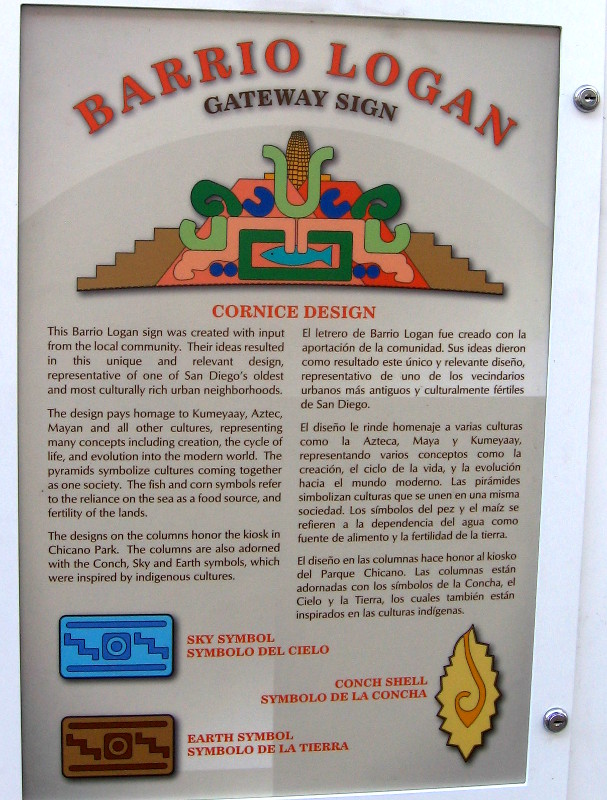
Small displays near the base of each column can be read from either sidewalk. They explain the significance of the cornice design:
“This Barrio Logan sign was created with input from the local community. Their ideas resulted in this unique and relevant design, representative of one of San Diego’s oldest and most culturally rich urban neighborhoods.
The design pays homage to Kumeyaay, Aztec, Mayan and all other cultures, representing many concepts including creation, the cycle of life, and evolution into the modern world. The pyramids symbolize cultures coming together as one society. The fish and corn symbols refer to the reliance on the sea as a food source, and fertility of the lands.
The designs on the columns honor the kiosk in Chicano Park. The columns are also adorned with the Conch, Sky and Earth symbols, which were inspired by indigenous cultures.”
View of the gateway sign as one approaches from the Barrio Logan trolley station.
…
To enjoy future posts, you can “like” Cool San Diego Sights on Facebook, or follow me on Twitter.
Blacksmith at Fall Back Festival in San Diego’s Gaslamp works the bellows.
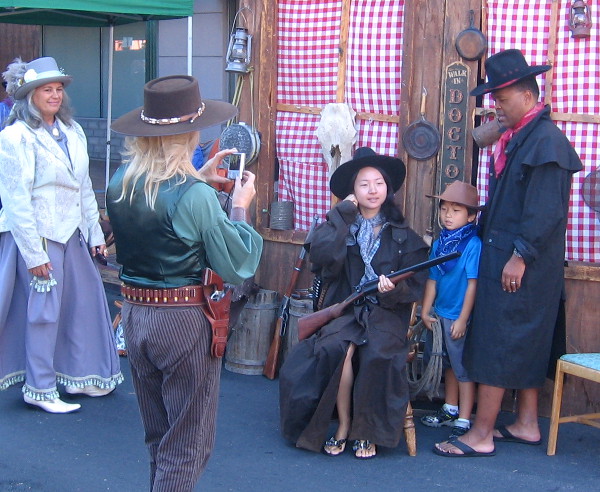
Today I checked out a great event in downtown San Diego’s Gaslamp Quarter. Called the Fall Back Festival: the Children’s Historical and Cultural Street Faire, this historical reenactment places visitors in a magical time machine, transporting them back to the 1880’s.
Three blocks of fun included a blacksmith, old western storefronts, pony rides, candle dipping and other educational activities. Many participants wore costumes and clothing from this early period in San Diego’s history. There was also an exciting High Noon shootout–which I unfortunately missed. But I did capture a few pics…
Lady in old-fashioned dress walks with her umbrella past Horton Grand Hotel.
I snapped the above photo as I headed toward the festival. The lady was just walking along through modern, shiny downtown San Diego like an image from the past.
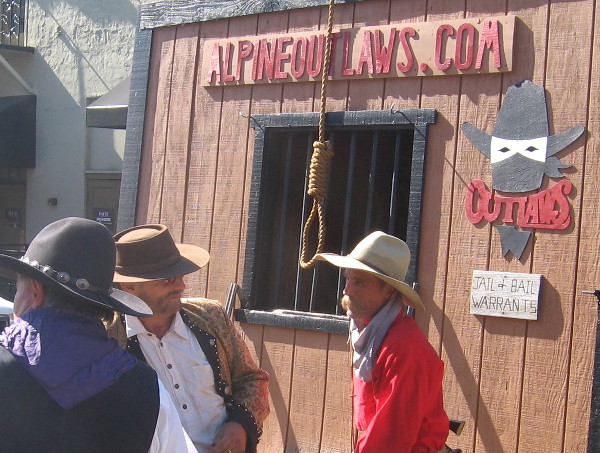
These cowboys, the Alpine Outlaws, have a jailhouse downtown and a hanging noose!
Yikes! The first thing I saw was a bunch of crafty outlaws!
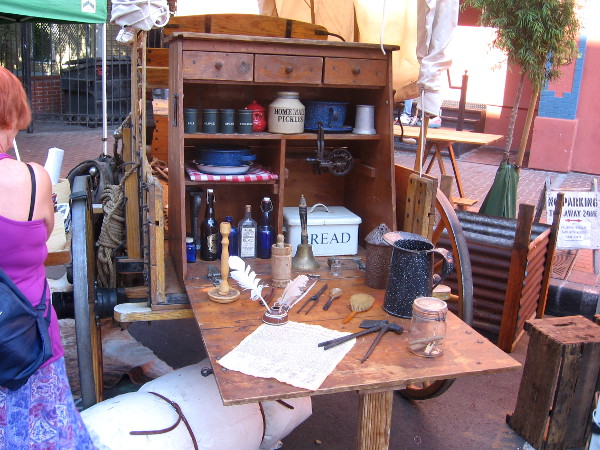
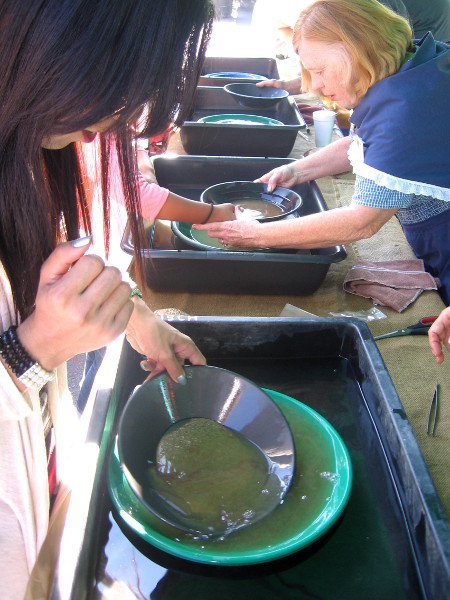
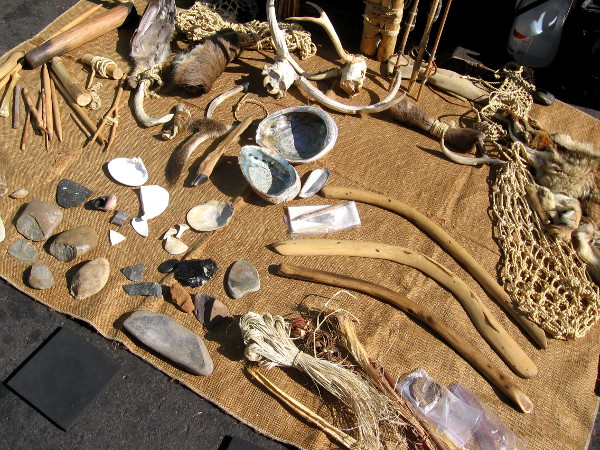
Festival celebrates the diverse and fascinating early history of San Diego.Wood cabinet at rear of wagon is packed with wares typical in 1880’s.A table full of rusty irons from the Old West!Temecula Valley Prospectors had kids panning for real gold.Realistic replicas of Native American tools and weapons were on display.
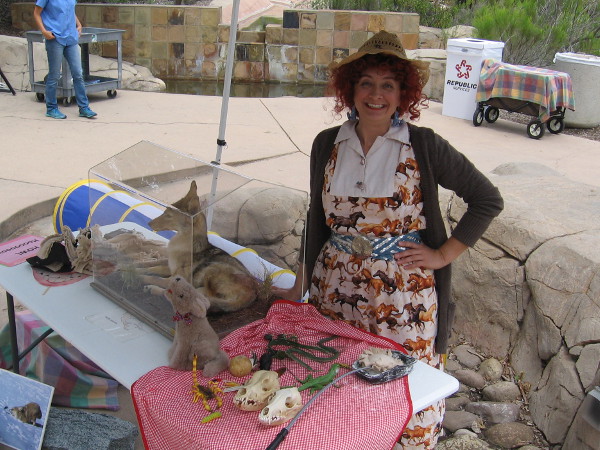
An interesting guy named Dave, of San Diego Survival History and Fitness, showed me a very cool display. He made all of the above implements and weapons by hand, using materials and techniques that were used by the Kumeyaay and earlier native peoples in the San Diego area. The Spaniards who built their first California Mission in San Diego feared the throwing sticks which you can see in the above photo. Shaped like a boomerang, they had the power to easily bring down a deer!
Historical exhibit has photos of Japanese settlers and community in San Diego.San Diego Model A Club had a row of old automobiles at the Fall Back Festival.Of course, there was live country western music for the crowd to enjoy!
…
To enjoy future posts, you can “like” Cool San Diego Sights on Facebook or follow me on Twitter.
























































 Cool San Diego Sights!