Tezcatlipoca, jaguar, god of night, war and destruction, dominates the dark, violent left section of the large mural inside Centro Cultural de la Raza.
Step inside Centro Cultural de la Raza in Balboa Park and you’ll come face to face with a large and very powerful mural. It was created by Guillermo “Yermo” Aranda, completed in 1984 after 13 years of inspired work.
The mural, titled La Dualidad, tells the grand story of the universe, humanity, and America’s indigenous peoples. Elements from Mesoamerican literature are included in the story, including diverse symbols from Aztec, Mayan and Native American cultures.
It’s a story primarily about darkness and light. Two ancient gods are juxtaposed: Tezcatlipoca, god of darkness, against Quetzalcoatl, god of light. War is contrasted with peace. Despair is contrasted with hope. Fear is contrasted with confidence.
Should you visit Centro Cultural de la Raza to admire La Dualidad, be sure to open up the nearby binder. It details the meaning of each ancient symbol inside the mural. They combine to form a timeless wisdom that will touch your mind and heart.
The Tree of Life stands at the center of the powerful symbolic mural La Dualidad–The Duality, 1970-1984, by artist Guillermo “Yermo” Aranda.Quetzalcoatl, feathered serpent, wise creator of humankind, moves through the mural and finally faces the viewer from the center of a pyramid, amid symbols of life and light.
…
I live in downtown San Diego and love to walk around with my camera! You can follow Cool San Diego Sights via Facebook or Twitter!
You can easily explore Cool San Diego Sights by using the search box on my blog’s sidebar. Or click a tag! There are thousands upon thousands of photos for you to enjoy!
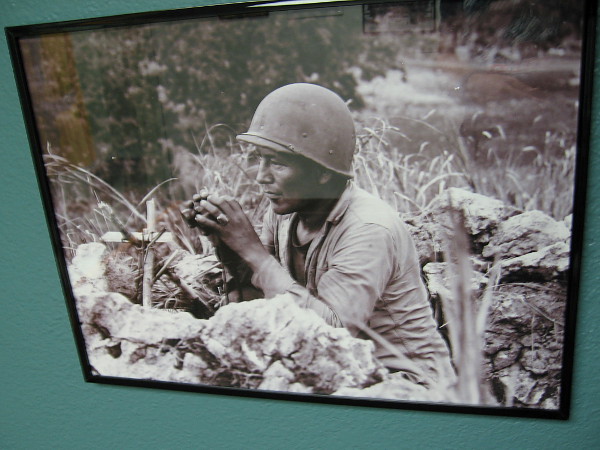
Photo of Samuel Tsosie Sr., Navajo Code Talker during World War II.
A small but fascinating exhibit remembering the Navajo Code Talkers of World War II is currently on display at the Flying Leatherneck Aviation Museum in San Diego. The exhibition, titled CELEBRATING 75 YEARS – CODE TALKERS: THE NAVAJO WEAPON, contains photos, documents, uniforms and historical artifacts that describe how the Navajo language was used to develop a code for secret tactical communication in the Pacific, in places like Iwo Jima and Okinawa. The Navajo code, which was classified until 1968, is the only spoken military code that was never deciphered.
The exhibit explains:
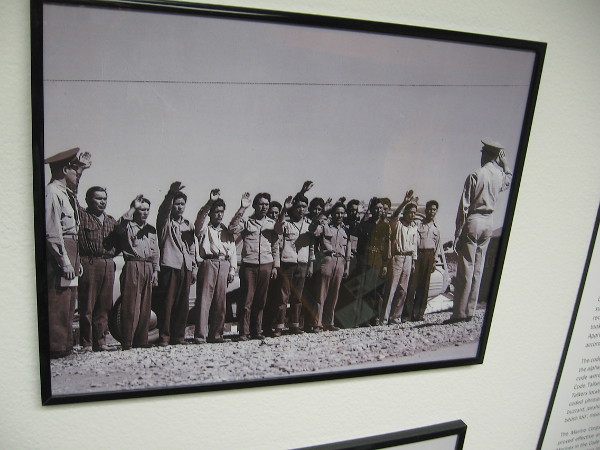
Many scholars credit Philip Johnston with initiating the Code Talker idea. Johnston was a Caucasian who grew up in Leupp, Arizona on the Navajo Reservation. He approached the Marine Corps in 1942 after the attack on Pearl Harbor and proposed using Native American Navajo language for combat communications.
His knowledge of the Navajo culture led him to bring four Navajo volunteers to Camp Elliott in San Diego, California (an area that is now part of MCAS-Miramar) for a demonstration. Impressed with successful and efficient English and Navajo translations, the Marine Corps began recruiting Navajos. The first group of twenty-nine recruits entered boot camp, took courses in military communication procedures and developed the code. Approximately 400 Navajo recruited by the Marines learned the code.
Working around the clock during the first two days of Iwo Jima, six Navajo Code Talkers sent and received over 800 messages, all without error. According to Major Howard Connor, 5th Marine Division Signal Officer, “Were it not for the Navajos, the Marines would never have taken Iwo Jima”.
The Flying Leatherneck Aviation Museum is free and open to the public at Marine Corps Air Station Miramar. The museum grounds contains over two dozen aircraft used during the proud history of Marine Corps aviation. It has the world’s largest and most complete collection of vintage aircraft flown by United States Marine pilots.
The museum is looking to expand and I’m told they would really appreciate your help. For more info, click here.
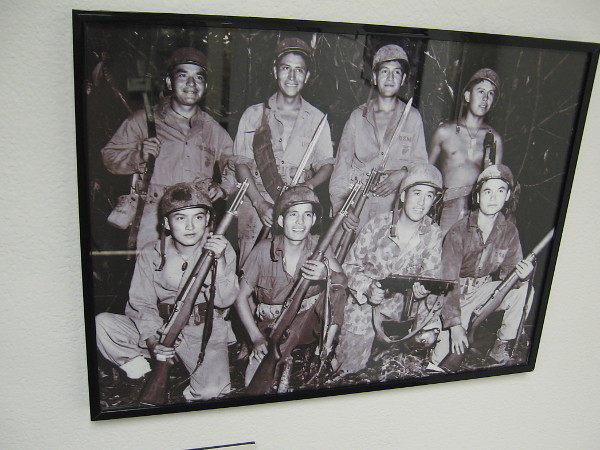
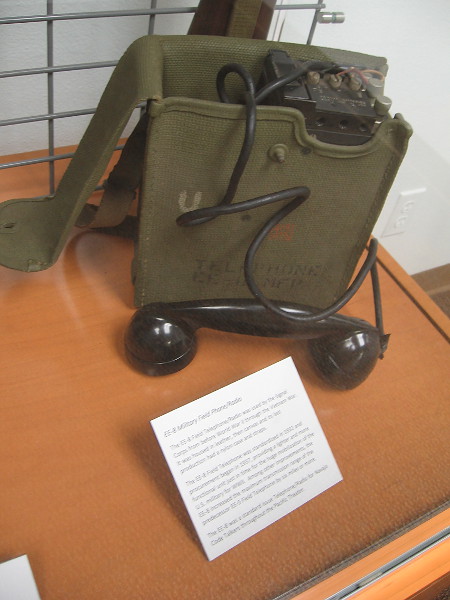
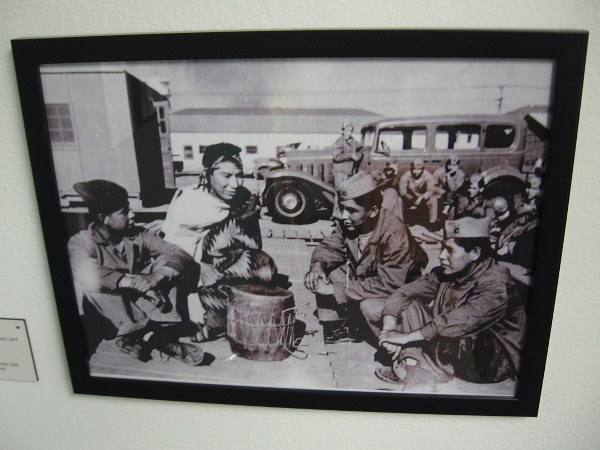
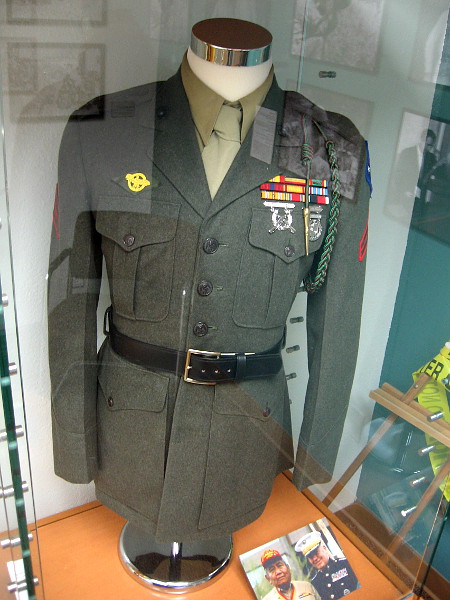
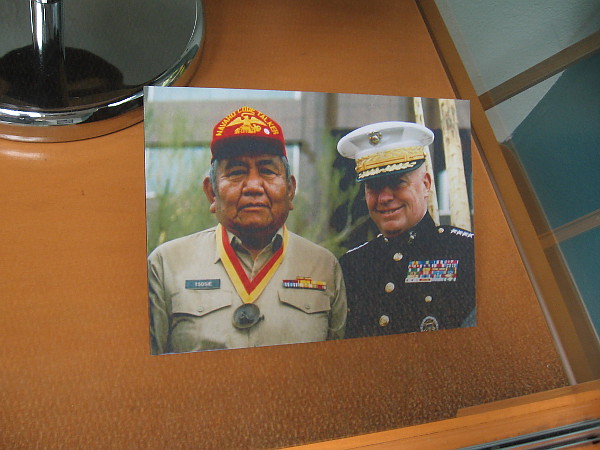
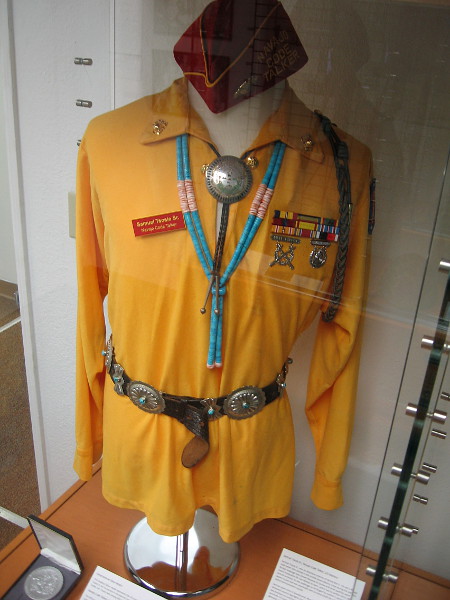
Celebrating 75 Years – Code Talkers: The Navajo Weapon. The Marine Corps deployed the Code Talkers to the Pacific, where the code proved effective and indecipherable. (Click photo to expand for easy reading.)The first 29 Code Talkers enlisting in the United States Marine Corps, 1942.First 29 Code Talkers of 382nd Platoon, 1942.Navajo Code Talkers Henry Bahe and George Kirk working their radio in the jungles of Bougainville.Eight Navajo Code Talkers on Bougainville. Most hold an M1 Garand used in combat.Display case in this special Flying Leatherneck Aviation Museum exhibit includes military field equipment used by the Navajo Code Talkers during World War II.The EE-8 Field Telephone/Radio was used by the Signal Corps from before World War II through the Vietnam War.Navajo Code Talkers share their culture at Camp Elliott, 1943.One of four creators of the code, Navajo Code Talker Chester Nez.Navajo Code Talker PFC Carl Gorman mans his observation post overlooking Garapan Saipan, 1944.This enlisted man’s uniform jacket, shirt and tie belonged to Samuel Tsosie Sr. The Guadalcanal patch was worn on discharge uniforms by all Navajo Code Talkers.Navajo Code Talker Samuel Tsosie Sr., pictured with Alfred M. Gray Jr. during an award assembly in 2009. Gray served as the 29th Commandant of the Marine Corps from 1987-1991.Official uniform of the Navajo Code Talkers includes a red cap, Navajo jewelry, gold shirt, patch on upper arm, light-colored trousers and abalone-colored shoes.
The museum exhibit explains the significance of various items worn by the Navajo Code Talkers.
The red cap indicates the United States Marine Corps. The jewelry represents the Navajo or Diné, which translates “Children of God” or “The People”. The gold shirt represents corn pollen. The light-colored trousers represent Mother Earth. The abalone-colored shoes represents the sacred mountains.
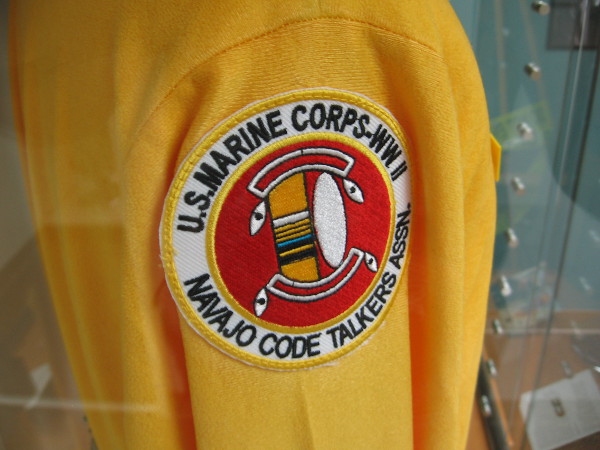
Replica of Congressional Silver Medal represents the medal received by Samuel Tsosie Sr. for his service during World War II. 300 Navajo received the Silver medal.Shoulder patch of U.S. Marine Corps–WWII Navajo Code Talkers Association.
…
I live in downtown San Diego and love to walk around with my camera! You can follow Cool San Diego Sights via Facebook or Twitter!
You can easily explore Cool San Diego Sights by using the search box on my blog’s sidebar. Or click a tag! You’ll find many interesting historical photographs!
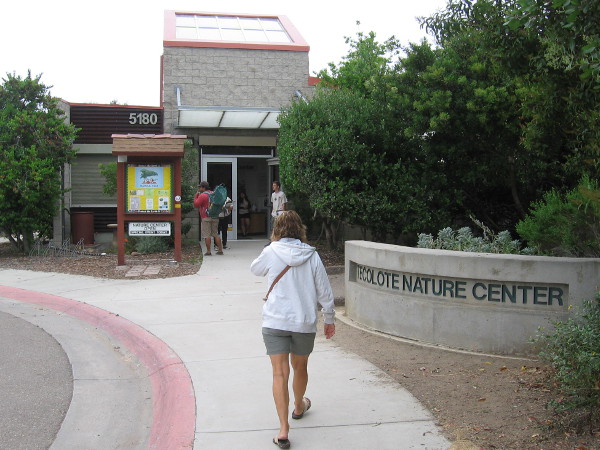
Someone walks toward the Nature Center on Tecolote Family Day.
Today I headed over to Tecolote Canyon Natural Park. While I frequently drive around this narrow San Diego city park, which serves as a nature preserve inside Tecolote Canyon east of Mission Bay, I’ve never taken a single step inside. When I saw that an event called Family Day would be happening today, I decided to pay a visit!
What did I discover? Read the photo captions to find out!
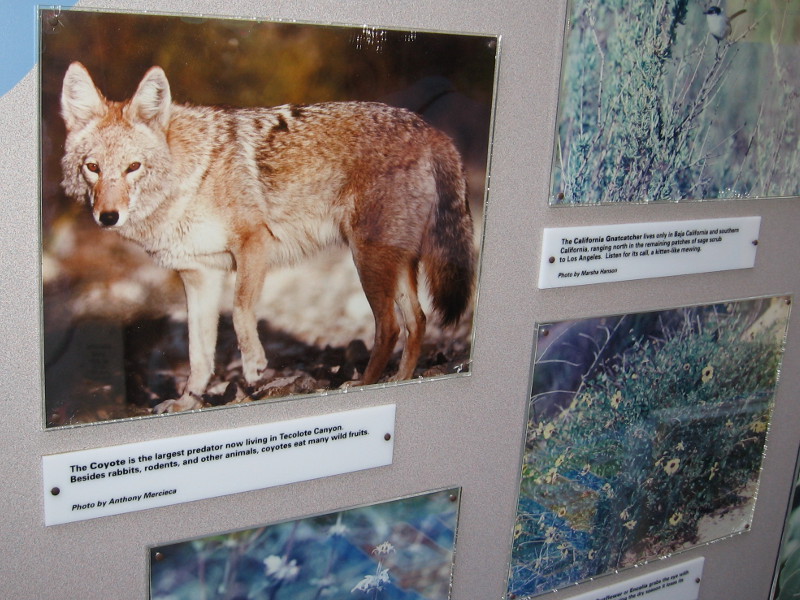
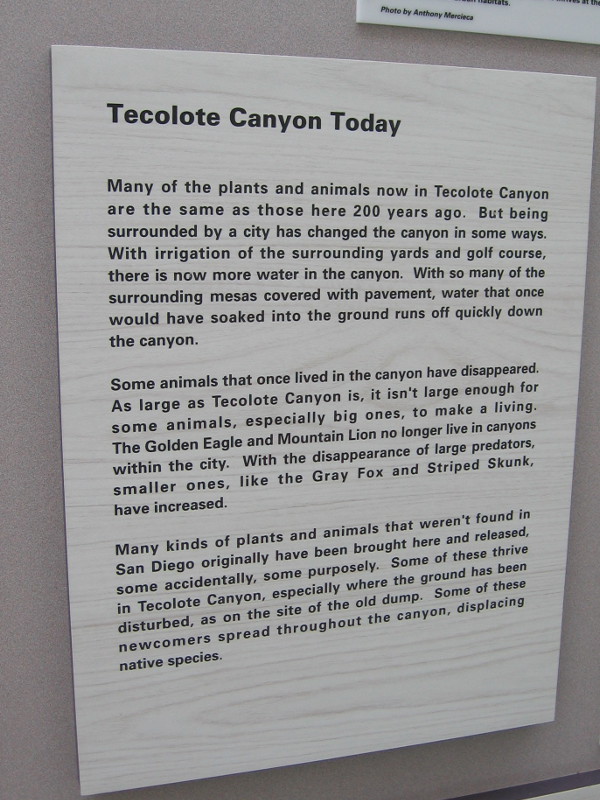
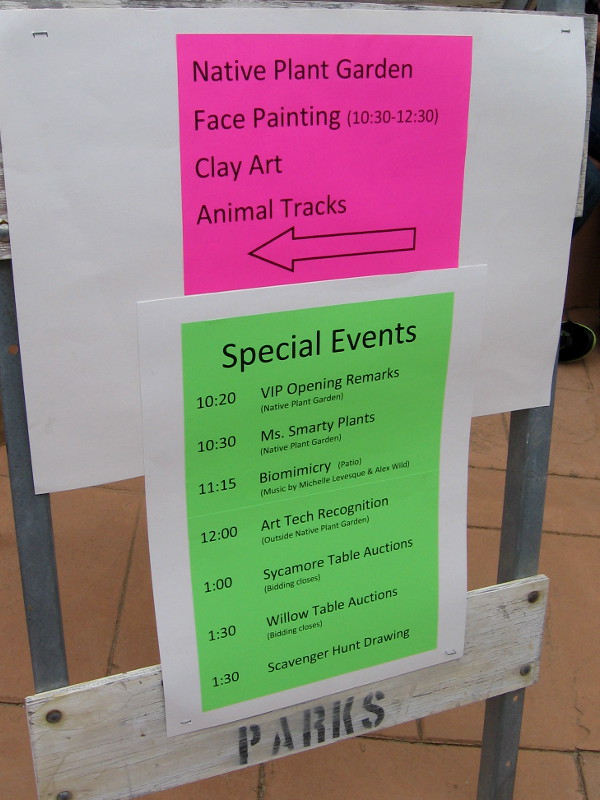
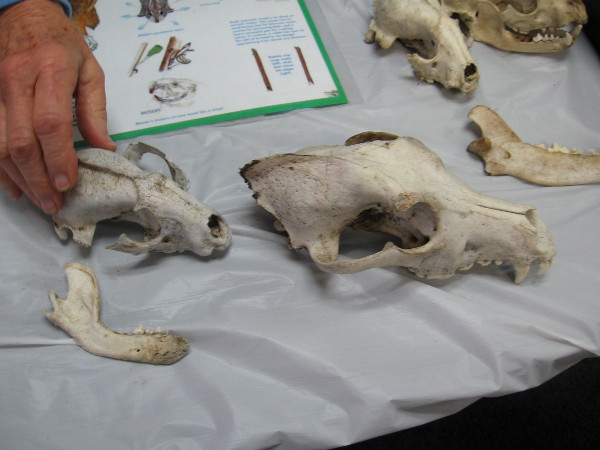
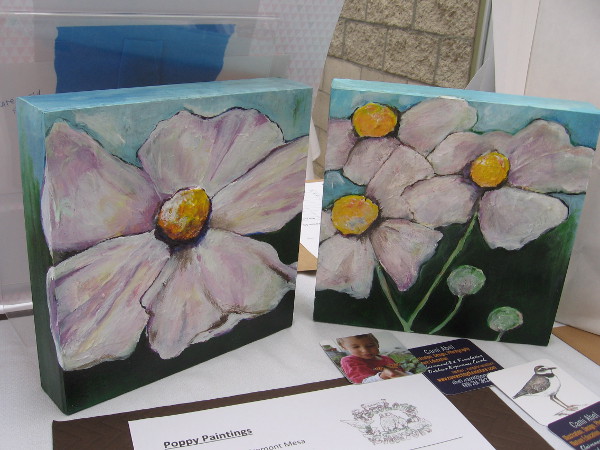
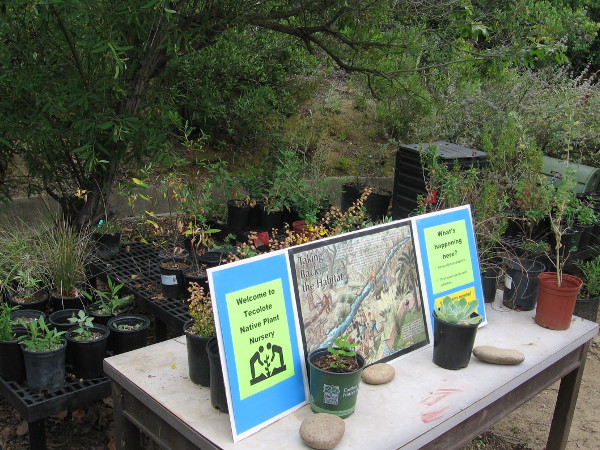
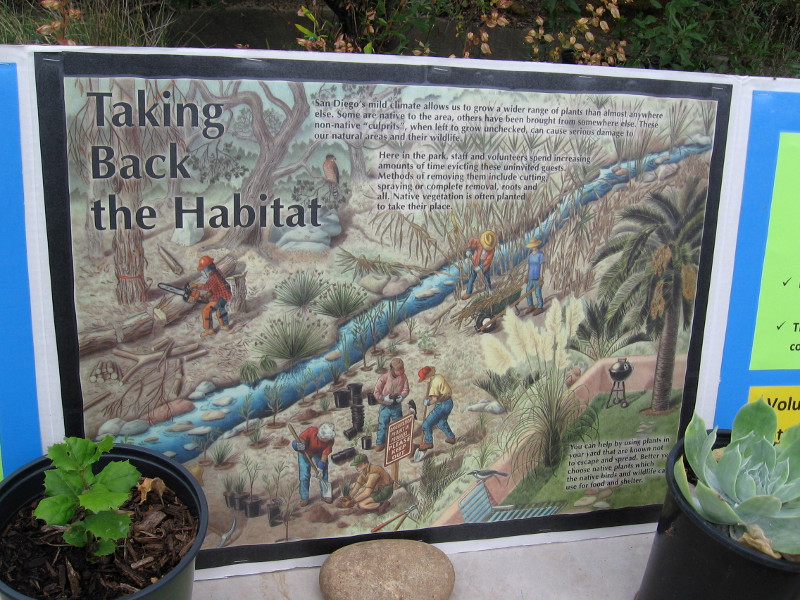
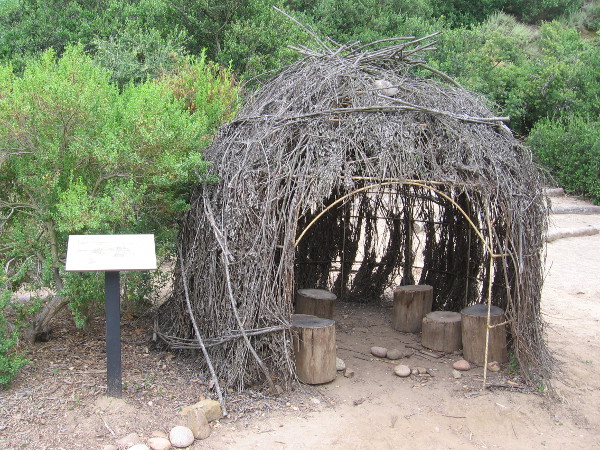
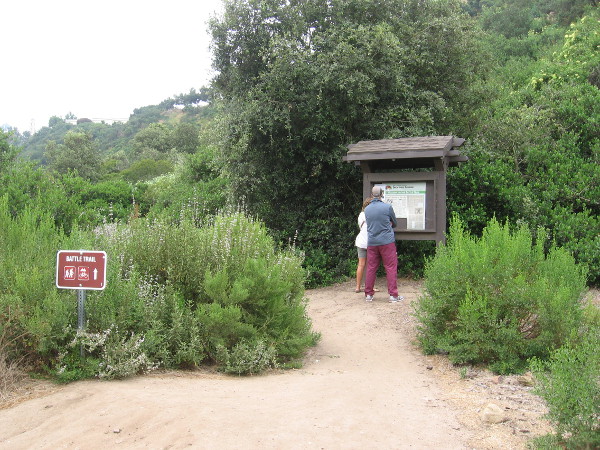
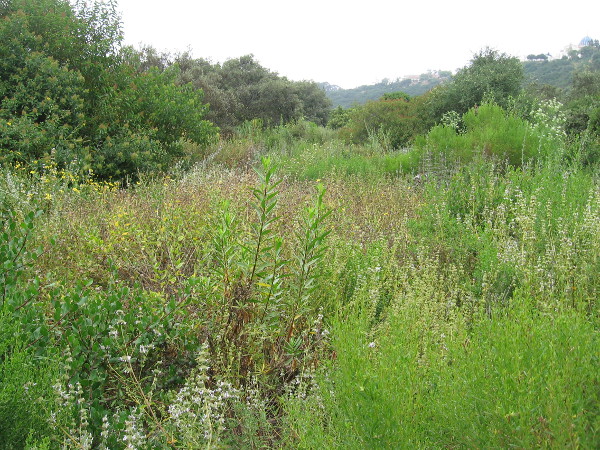
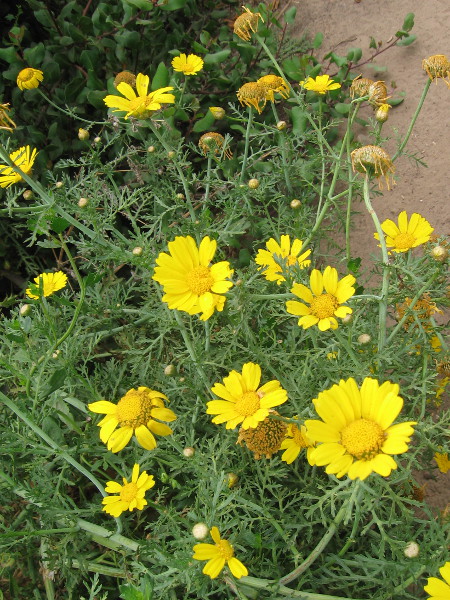
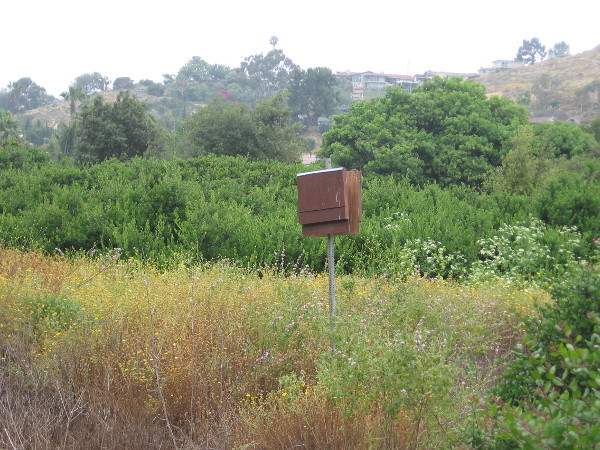
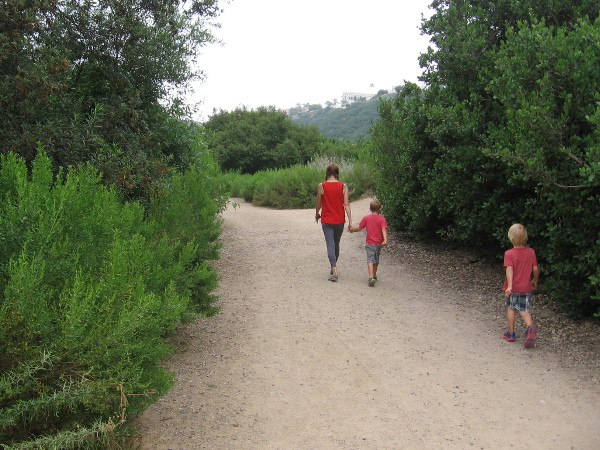
A sign near entrance to the Nature Center provides information about Tecolote Canyon Natural Park.A narrow strip of natural habitat preserved in San Diego. Tecolote Canyon features hiking trails and a refuge for wildlife.Sign inside the Tecolote Nature Center. The park was originally dedicated in 1977. Houses, yards and streets surround this area where the native environment still survives.Many interpretive displays can be found in the Nature Center. The coyote is Tecolote Canyon’s largest predator.One sign describes San Diego’s Coastal Sage Scrub habitat, which is found in a small part of the world, along the coast of Southern California into Mexico.The Brown Towhee is one of many birds one might spot in the canyon.Along Tecolote Creek lies the Riparian Woodland habitat. Water attracts animals from the dry hills, and native trees like willows, cottonwoods and sycamores grow near the creek’s banks.One of the displays shows Lemonadeberry (a common chaparral shrub in San Diego), Fuchsia Flowered Gooseberry, and a California Thrasher.A topographical representation of curving Tecolote Canyon, which you can see directly below Mission Bay. Up is west, right is north.Many of the plants and animals now in Tecolote Canyon are the same as those here 200 years ago. Golden eagles and mountain lions, however, have vanished because this natural space is too limited in size.Families enjoy a special day and learn about the canyon’s environment. It’s Tecolote Family Day! There were lots of educational displays and activities at the Nature Center.Activities at Tecolote Family Day included a scavenger hunt for kids, art, music, dance and a silent auction.Inside the Nature Center, one table had lots of displays concerning insects! Another one had snakes.At another table I was shown a coyote skull.I believe these beautiful poppy paintings were part of the silent auction.A friendly parrot was at a booth promoting Zovargo, a local business that offers animal summer camps for kids.These kids were dancing to a fun song about pollination!Nearby I discovered the Tecolote Native Plant Nursery.Work is ongoing to take back the native habitat from invading plant species.I saw some signs about the importance of composting. It enhances soil and protects watersheds.Behind the Nature Center, near an amphitheater and native garden, I saw this example of an e’waa, a simple willow branch structure built by the Native American Kumeyaay.A sign depicts the Tecolote Watershed. Pollutants can flow down the creek and enter the soil, Mission Bay and eventually the Pacific Ocean.Several signs can be found around the small native garden. This one, Aromas of the Canyon, depicts Black Sage, White Sage and California Sagebrush.On the way to the hiking trail that leads into Tecolote Canyon, one might spot this owl!Hikers read the sign at the Battle Trail trailhead.Welcome to the Battle Trail – Nature’s haven in the city.I start up the easy trail. The vegetation in Tecolote Canyon is still green in late spring, after a very rainy winter.This lush greenery will soon dry out in the Southern California summer and turn mostly brown.I am greeted by cheerful yellow flowers.I believe this house on a post is for bats. I’ve seen similar boxes in other open space parks around San Diego.A family heads into Tecolote Canyon to explore nature.
…
I live in downtown San Diego and love to walk around with my camera! You can follow Cool San Diego Sights via Facebook or Twitter!
You can easily explore Cool San Diego Sights by using the search box on my blog’s sidebar. Or click a tag! There are thousands upon thousands of fun photos for you to share and enjoy!
The south side of the historic U.S. Grant Hotel, as seen from an upper level of Horton Plaza. The 1910 Broadway Fountain is visible in Horton Plaza Park.
During last weekend’s San Diego Architectural Foundation’s OPEN HOUSE 2017, I ventured into one of the event’s featured downtown locations: the historic U.S. Grant Hotel. I was able to get some photos of the hotel’s elegant interior!
The U.S. Grant was built by Ulysses S. Grant, Jr., the son of American President Ulysses S. Grant. The building was designed by architect Harrison Albright and built in the same spot where Alonzo Horton had his 1870 Horton House Hotel, which was demolished.
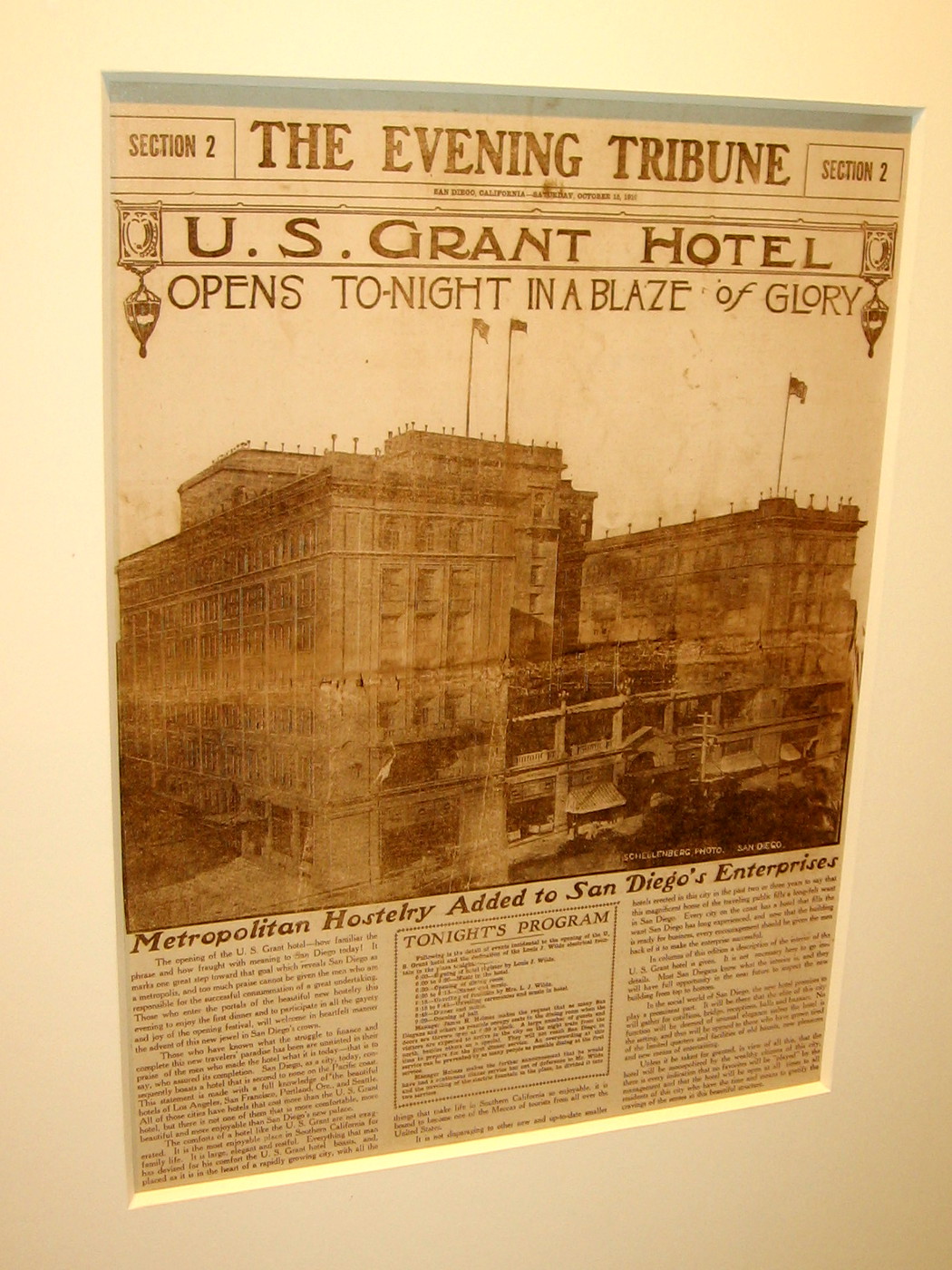
The U.S. Grant Hotel opened in 1910. It featured a steel and reinforced concrete framework to counter the threats of fire and California earthquakes. For over a hundred years the grand old hotel has stood prominently at the center of downtown San Diego. Notable guests have included 15 United States Presidents (there are 3 different presidential suites), Albert Einstein and Charles Lindbergh.
It’s also interesting to note the very first San Diego Comic-Con was held in the U.S. Grant, back in 1970.
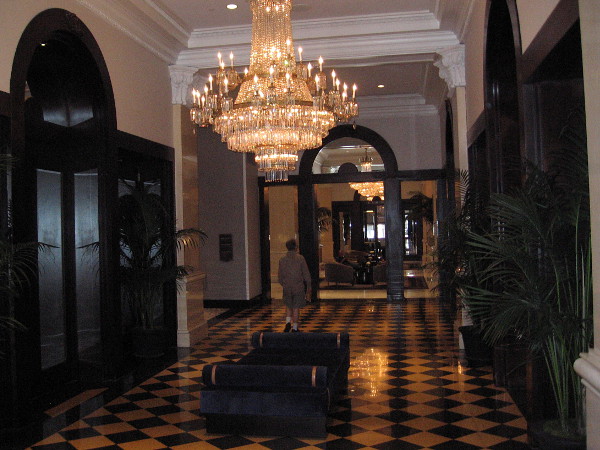
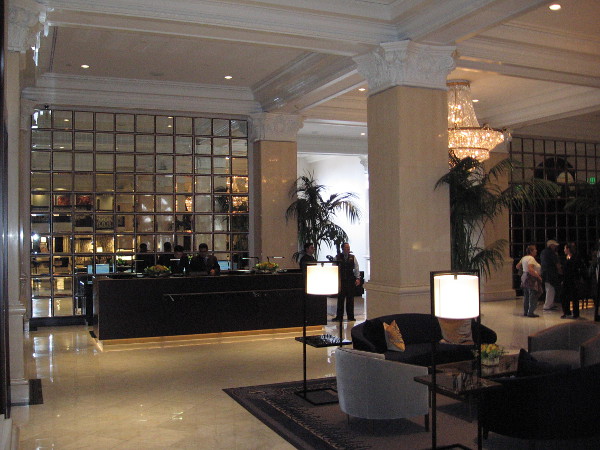
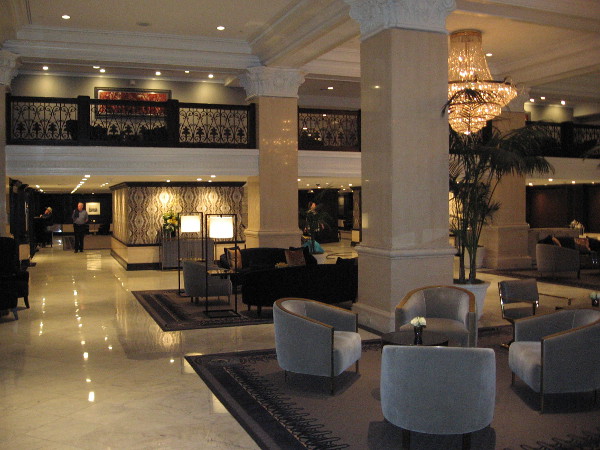
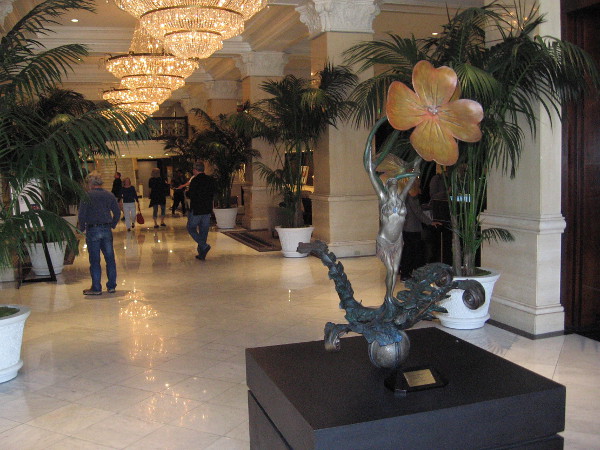
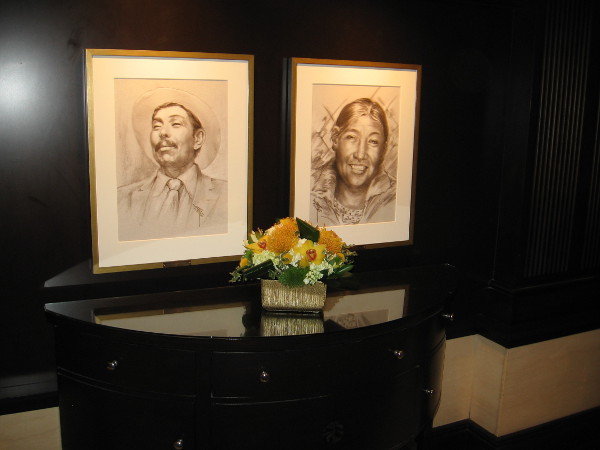
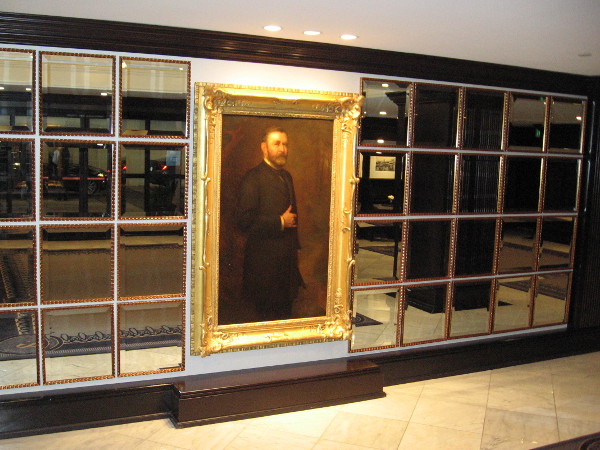
The east side entrance of the elegant U.S. Grant Hotel on Fourth Avenue in downtown San Diego.I entered the hotel from the east entrance, where many guests arrive.The elegant interior just inside the east entrance.Large glittering chandeliers add a glamorous touch throughout the posh hotel.Some beautiful artwork above stairs descending to the Crystal Ballroom.Standing in the grand lobby, looking south toward the U.S. Grant Hotel’s entrance on Broadway.The U.S. Grant Hotel’s front desk.The beautiful lobby, fit for royalty.A small sculpture near the Broadway entrance is titled Sweet Dreams, by artist David A. Montour.Even the hotel elevators are beautiful.A sitting area near the bank of elevators.Portraits along this wall include Native Americans. The U.S. Grant Hotel was bought by the Sycuan Band of the Kumeyaay Nation in 2003. It is operated by Starwood Hotels and Resorts.North of the elevators is this large Presidential Portrait of Ulysses S. Grant.Old photo of the Horton House, which stood at this downtown San Diego location before its demolition.Headline of The Evening Tribune announces the opening of the U.S. Grant Hotel on October 15, 1910.On display is a 1910 US Grant Hotel door knob.A look across the U.S. Grant Hotel lobby from the mezzanine level. Pure elegance.
…
I live in downtown San Diego and love to walk around with my camera! You can follow Cool San Diego Sights via Facebook or Twitter!
You can easily explore Cool San Diego Sights by using the search box on my blog’s sidebar. Or click a tag! There are thousands upon thousands of fun photos for you to share and enjoy!
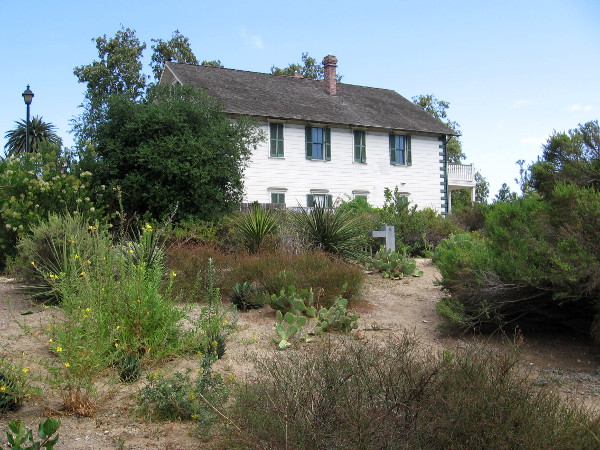
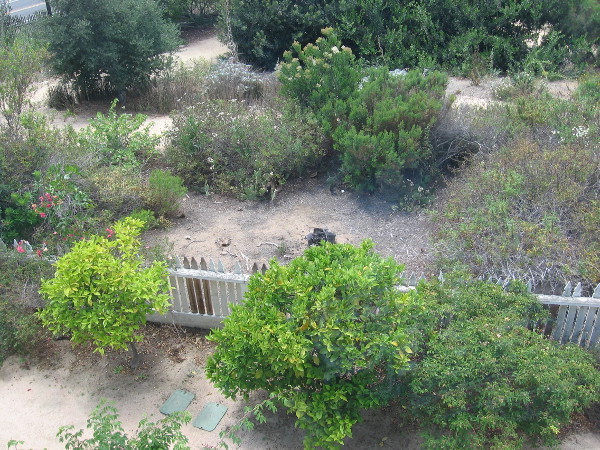
Photo of historic McCoy House in Old Town San Diego from the Native Garden. Today’s garden is located in a spot that was once very close to the San Diego River, before the river was diverted to the north, through Mission Valley.
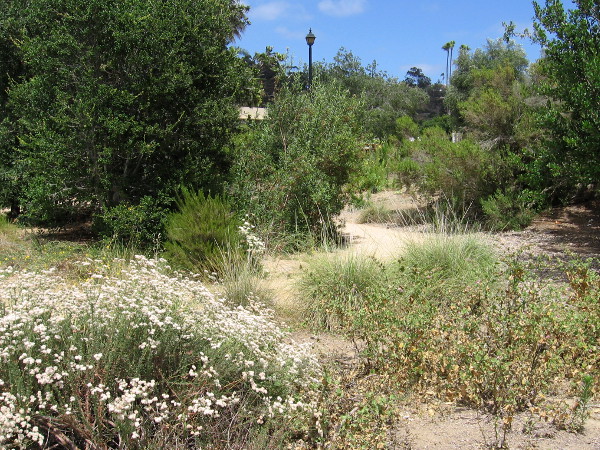
A small, ragged but beautiful native garden can be found in the northwest corner of San Diego’s Old Town, next to the McCoy House Museum. The Native Plant Garden contains vegetation that grows naturally along the rivers of our semi-arid region.
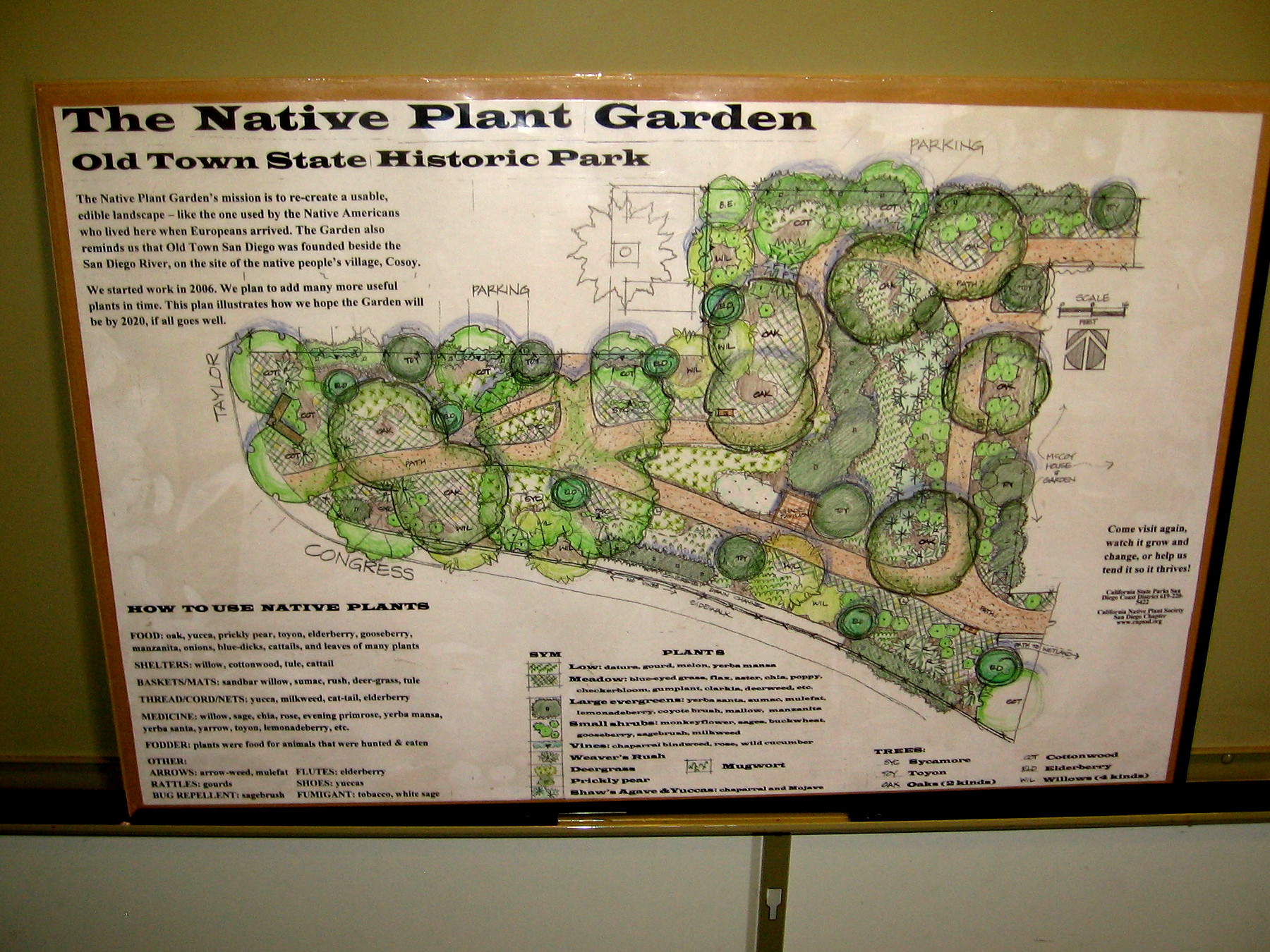
Long before Europeans arrived in Southern California, the Native American Kumeyaay lived where Old Town was eventually established; the Kumeyaay village at the base of Presidio Hill was called KOSA’AAY, or Cosoy. Many of the plants in the garden were used by the Kumeyaay people in everyday life.
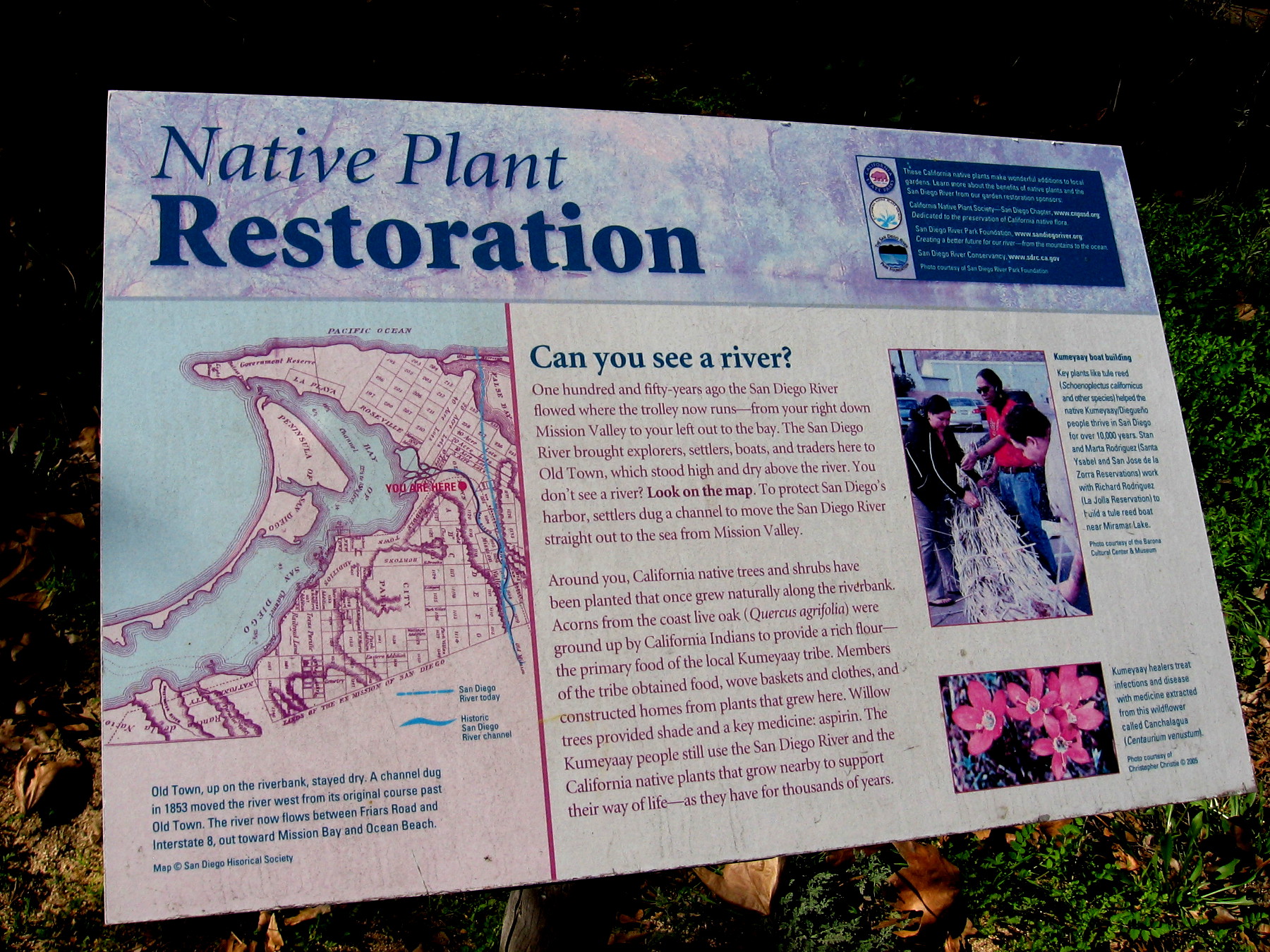
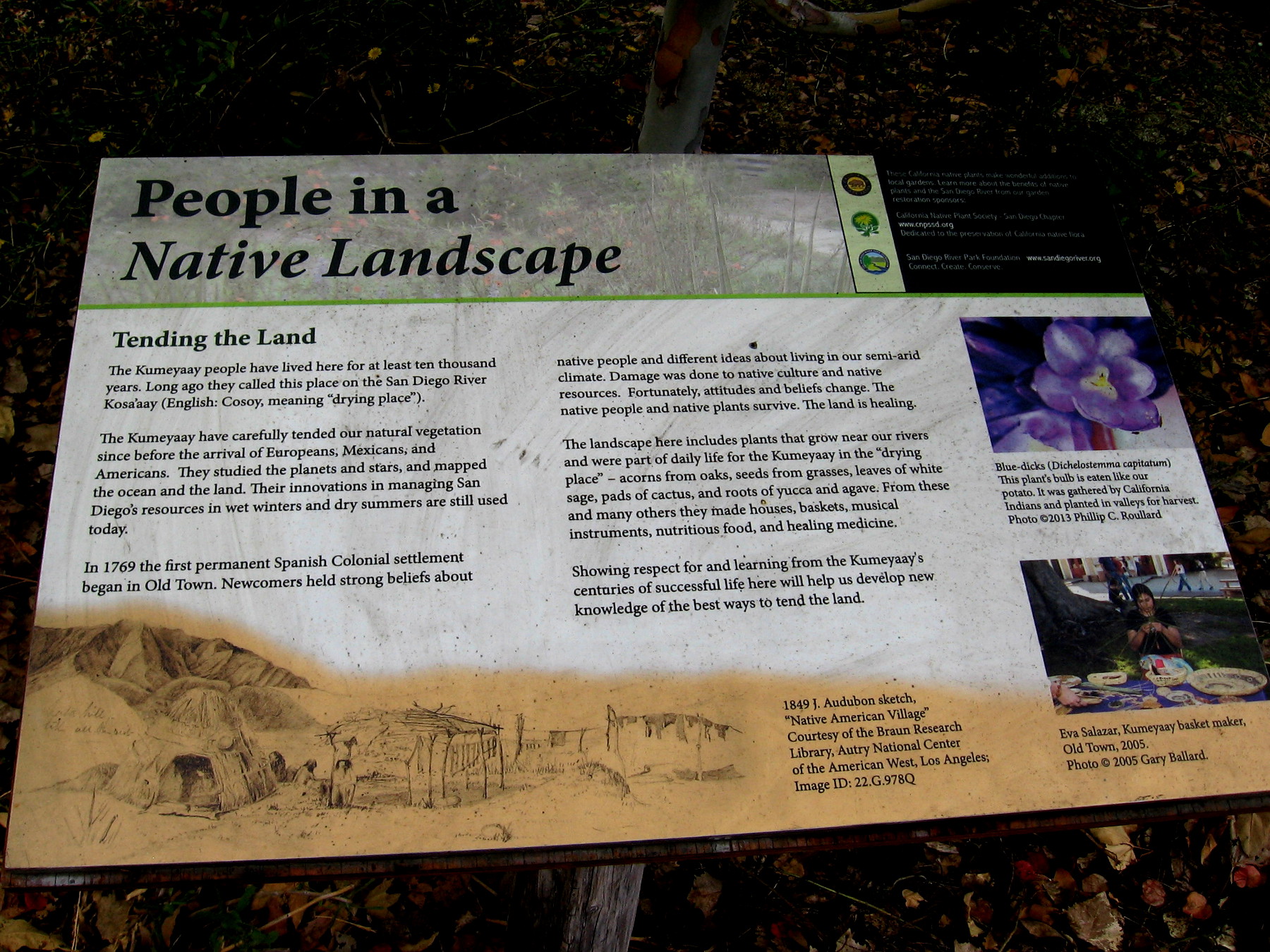
Read the photo captions to learn much more. Click the garden plans and the two signs, and those images will expand providing additional information!
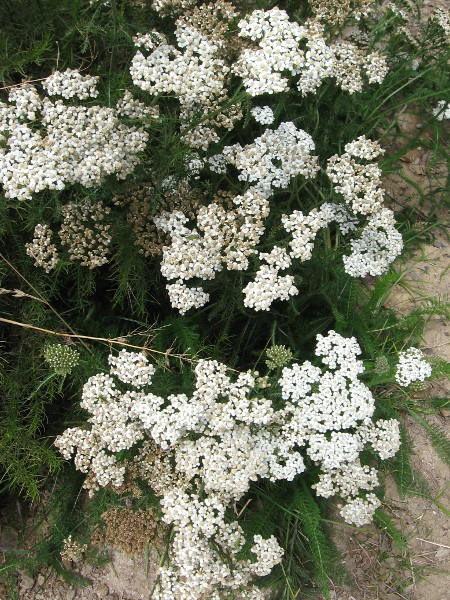
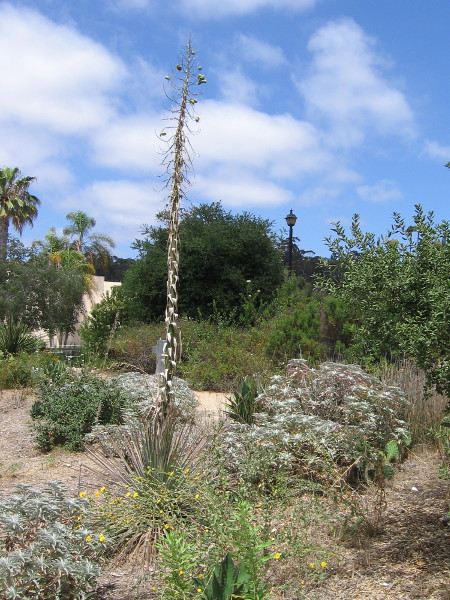
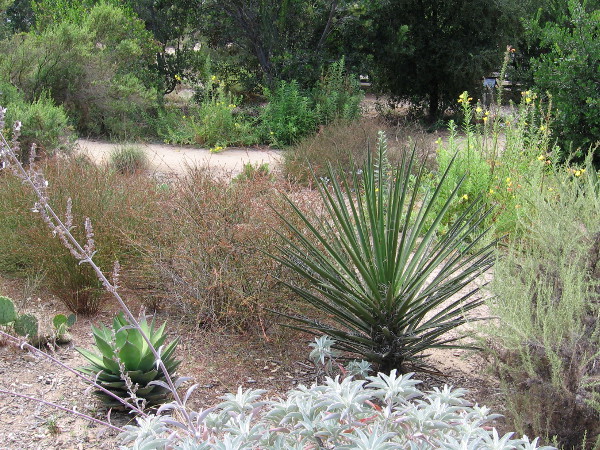
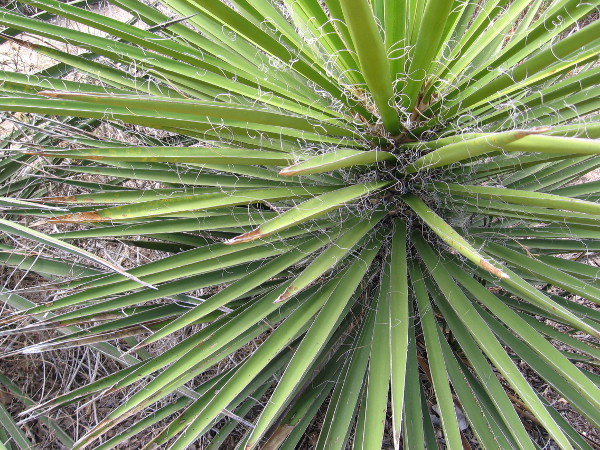
Plans of the Native Plant Garden in Old Town San Diego State Historic Park. Included are species used by the Native American Kumeyaay for food, shelter and medicine. Their village Cosoy was located here.Looking northwest from the second floor of the McCoy House Museum in Old Town San Diego. The Native Garden beyond the fence is a bit dry and scraggly–but that’s how local vegetation naturally appears.150 years ago the San Diego River flowed nearby, bringing explorers, settlers, boats and traders to Old Town. California native trees and shrubs have been planted that once grew along the riverbank.Dirt walking paths meander through the small Native Garden at the northwest corner of Old Town San Diego State Historic Park.Yarrow was used by the Kumeyaay as a treatment for various medical conditions, including burns, inflammation, and pain from toothache, headache and arthritis.Tall stalk of a yucca that already flowered still juts into the sky in Old Town San Diego.The Kumeyaay people have lived here for at least ten thousand years. Their innovations in managing San Diego’s resources in wet winters and dry summers are still used today.A variety of native plants found naturally in coastal San Diego’s semi-arid climate, including sages and prickly pear cactus.Fibers from the yucca were used by the Kumeyaay to produce cords, nets, shoes and other useful items.
…
I live in downtown San Diego and love to walk around with my camera! You can follow Cool San Diego Sights via Facebook or Twitter!
Hikers head from the Kumeyaay Campground at Mission Trails Regional Park toward a shady nature trail that runs beside Kumeyaay Lake.
I enjoyed an amazing walk last weekend at Mission Trails Regional Park. The guided hike met under the flagpoles of the Kumeyaay Campground, and started down a pleasant nature trail at nearby Kumeyaay Lake. The hike then proceeded at a leisurely, easy pace along several trails by the San Diego River, ending up at the Old Mission Dam.
Every month, anyone can go on a variety of free interpretative nature walks at Mission Trails Regional Park. The walks are led by experienced trail guides, who point out the native flora and fauna, and relate the fascinating history of this mountainous wilderness in the city. To learn more check out the park’s website.
Please enjoy my photos and read the descriptive captions to join me on a virtual hike. Not only will you experience natural beauty, but you’ll learn a bit about early San Diego history!
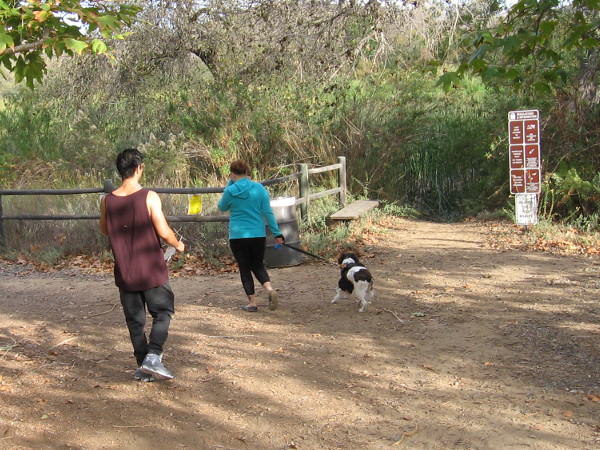
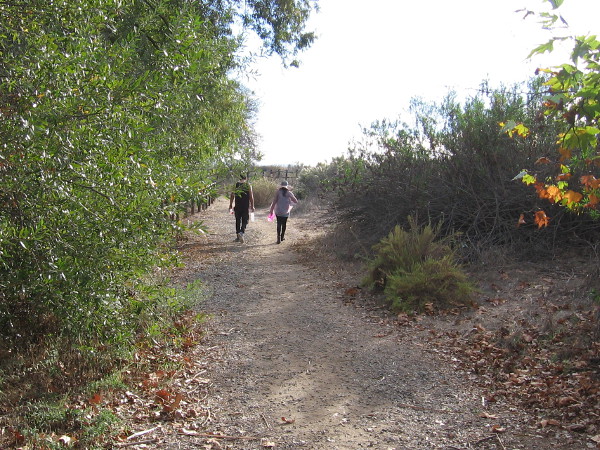
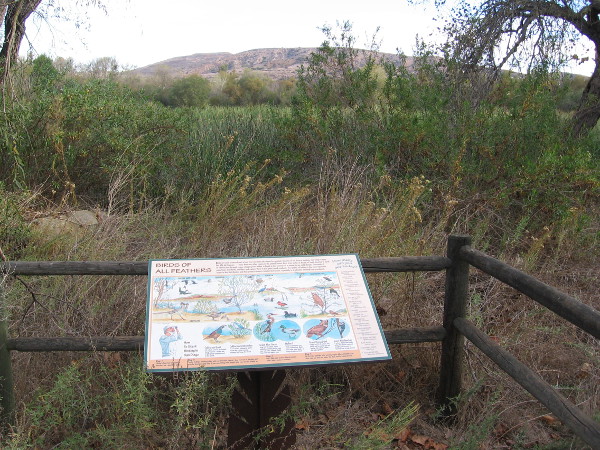
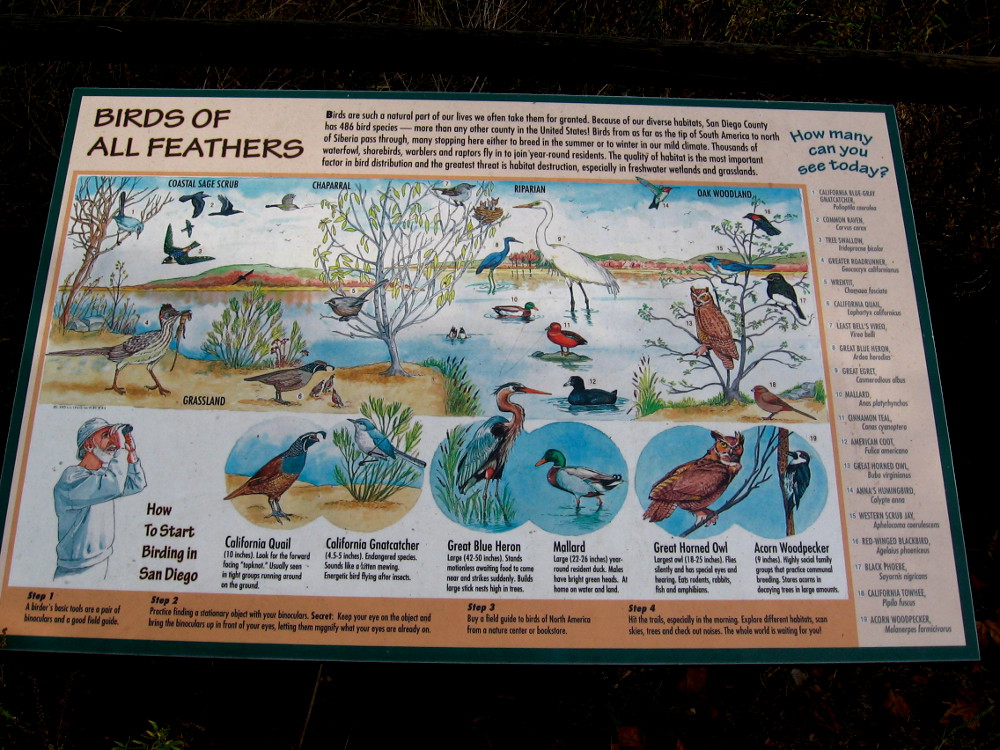
A couple walks slowly along the Kumeyaay Nature Trail, enjoying a beautiful November day.Signs along the nature trail include descriptions of wildlife that can be found around Kumeyaay Lake (once called Hollins Lake). Open water can be glimpsed beyond cattails.At Mission Trails Regional Park, birds of all feathers include quail, gnatcatchers, herons, egrets, ducks, woodpeckers, scrub jays, owls, and the endangered least Bell’s vireo!
The sign includes the following: “Because of our diverse habitats, San Diego County has 486 bird species–more than any other county in the United States! Birds from as far as the tip of South America to north of Siberia pass through, many stopping here either to breed in the summer or to winter in our mild climate.”
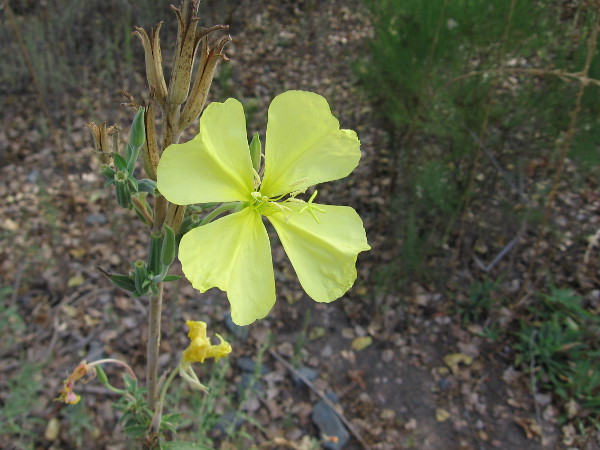
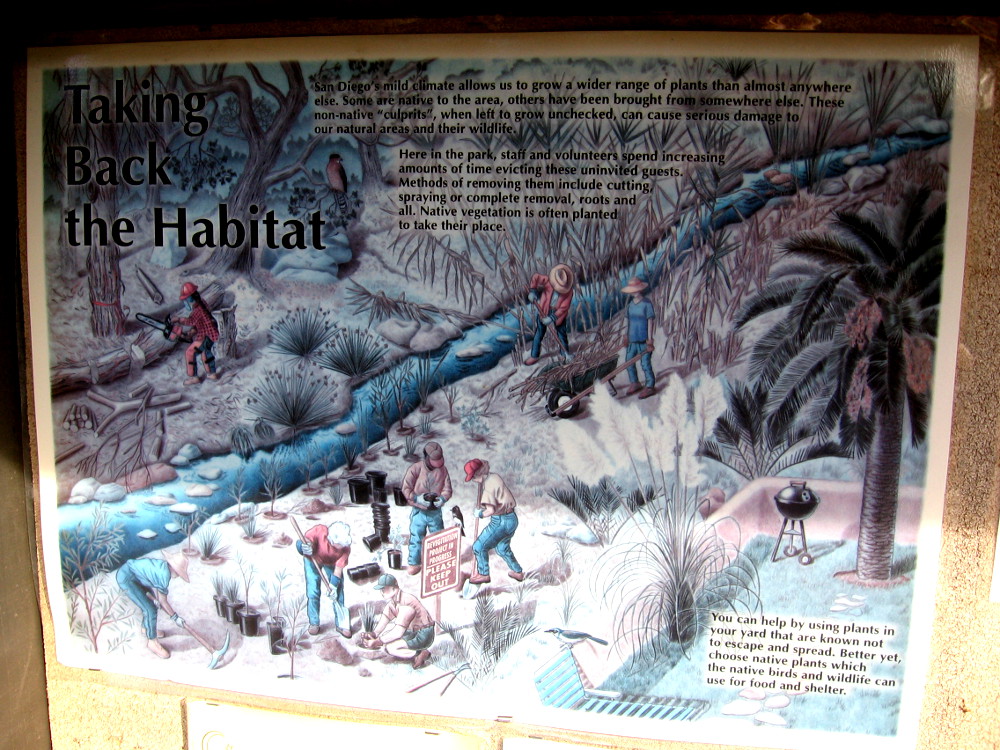
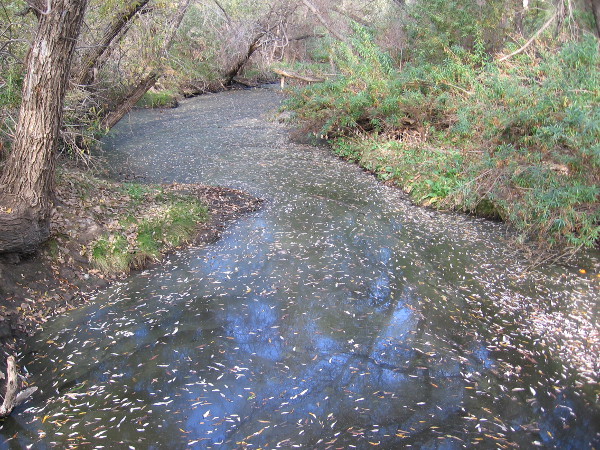
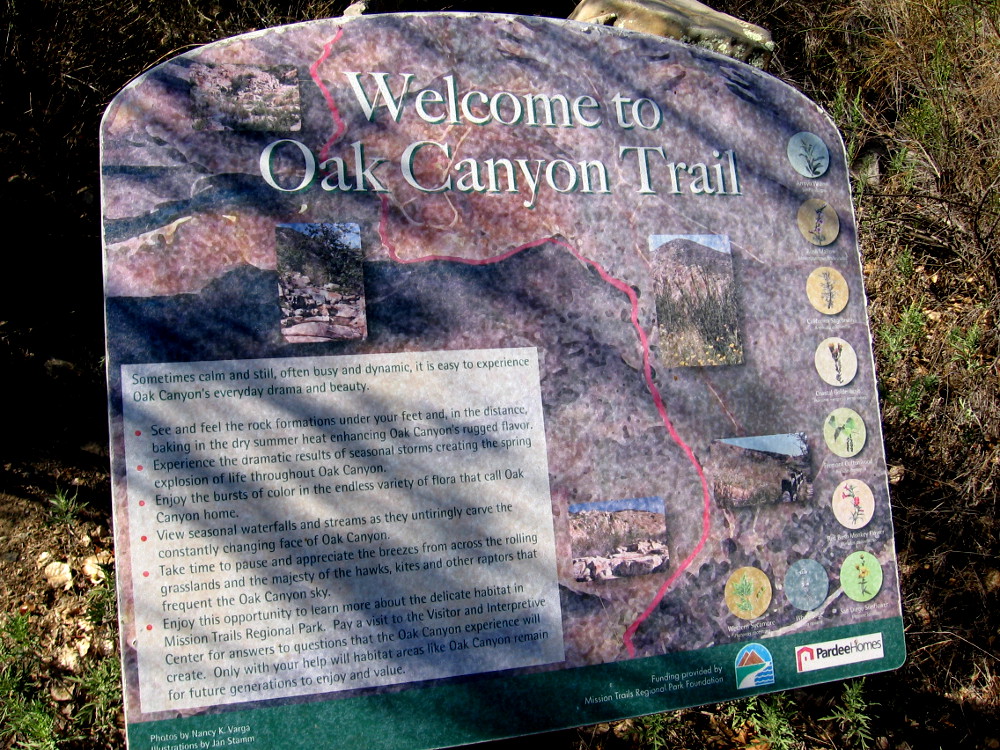
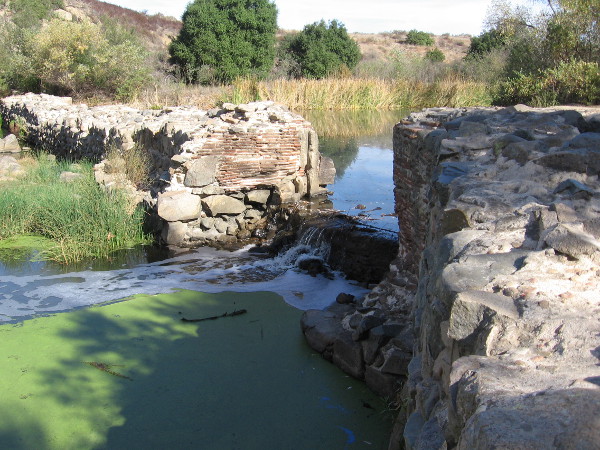
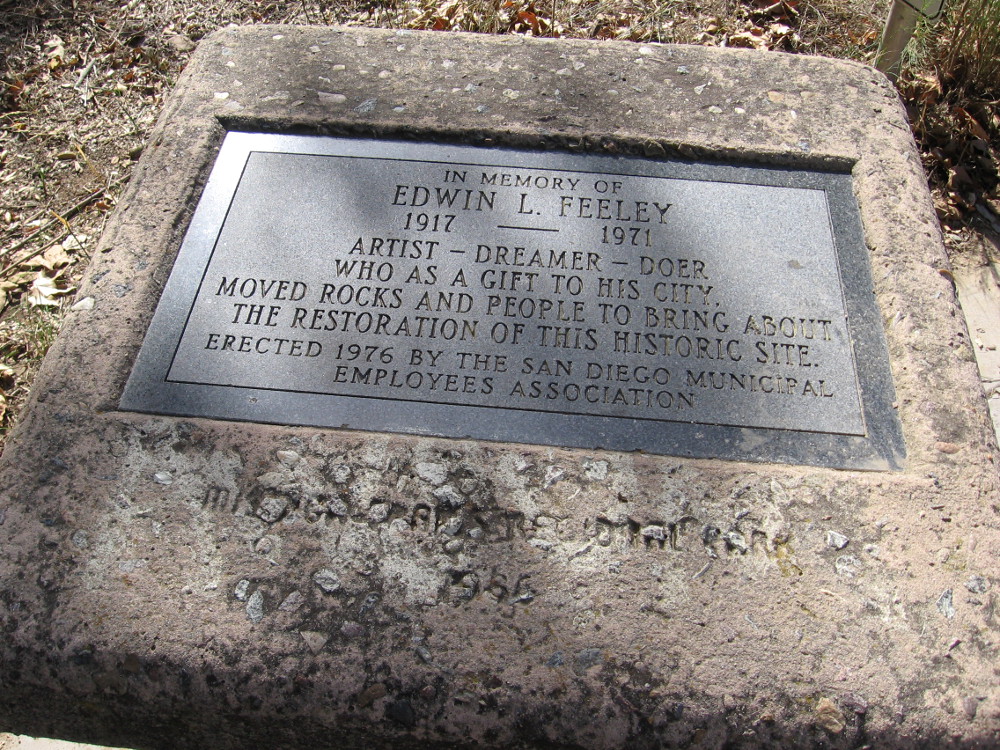
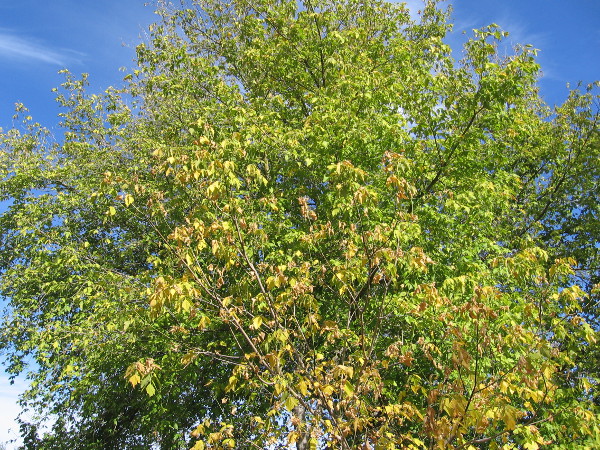
Photo of the San Diego River emerging from Kumeyaay Lake. This is near an outdoor amphitheater and fire pit. The park is a perfect place to learn about nature from rangers, and for stargazing at night!An Autumn wildflower at Mission Trails Regional Park.We head from the lake back toward the campground. Our pleasant hike has just begun.Non-native plants can cause serious damage to natural areas and wildlife. Park staff and volunteers work to protect the natural ecosystems.Hiking down the Grasslands Crossing Trail, my guide and I pass over the San Diego River. It has been a typically dry summer, and the pooled water here is still.Leaves and reflections of trees in the quiet water.We spied a wood rat’s nest of twigs and branches near the hiking trail. I learned these nests contain several rooms with different functions, not unlike a human home.Larry the trail guide showed me a photo of a wood rat.Now we are heading along the easy Grasslands Loop Trail, following the north bank of the San Diego River. Riparian trees such as willows, sycamores and cottonwoods thrive along the river.Mountain bikers enjoy a warm, sunny morning at Mission Trails Regional Park.Approaching an overlook of the Old Mission Dam.Photo of the Old Mission Dam from the north. The dam was built around 1813 and powered a water wheel that drove a grist mill. A tiled flume brought water to Mission San Diego de Alcala, about five miles away.Families play on the rocks near the Old Mission Dam at Mission Trails Regional Park.Lush trees along the San Diego River. Autumn leaves have yellowed a bit.We have descended onto Oak Canyon Trail, and are working our way down to the river and the historic dam.Standing on the north end of the Old Mission Dam. Materials used in constructing the dam include abundant volcanic rock found in this area.A slot in the dam wall where a water wheel was located. The river water, after driving the wheel, flowed along a tile-lined aqueduct south to the mission, where it was used to grow crops.Walking along the Oak Canyon Trail. Mission Trails Regional Park is like a small wilderness inside the city of San Diego. At 5,800 acres, it’s the largest city park in California.Riparian plants recover quickly after a fire because all are vigorous resprouters as long as they have a steady water supply.Granitic rocks seen along the trail.South Fortuna Mountain, elevation 1094 feet, rises to the south. Its sides are covered with native chaparral and sage scrub.Crossing the San Diego River via a steel footbridge.Looking down at the San Diego River. During rains, the river swells. The water runs down into Mission Valley and finally to the Pacific Ocean, sustaining an estuary near Mission Bay.Larry, my knowledgeable trail guide, informed me that the tiny green vegetation is duckweed, an aquatic plant that floats on the water’s surface.Sign at one end of the Oak Canyon Trail, near the Old Mission Dam.A cool 3-D model of the Old Mission Dam beside the trail. The dam was constructed from granite boulders and limestone mortar. At the gap there was a 12-foot wide floodgate.It’s possible to walk out onto the old dam, but one must be careful!A vertical groove in the dam wall shows where the floodgate used to exist. The dam was completed around 1813, and the long flume to Mission San Diego was completed several years later.Inscription in a boulder dated 1941, by the Daughters of the American Revolution. OLD MISSION DAM. Built 1813-1816. A part of the first permanent irrigation project by Padres and Indians in California.A plaque by the old dam. In memory of Edwin L. Feeley. 1917 – 1971. Artist – Dreamer – Doer who as a gift to his city, moved rocks and people to bring about the restoration of this historic site.Bright fluttering leaves of a river tree growing beside the Father Junipero Serra Trail, a road that leads past the Old Mission Dam.Walking to the parking lot by the Old Mission Dam, also called the Padre Dam.The site is a California historical landmark. A dam and flume system was finished between 1813 and 1816 by Indian laborers and Franciscan missionaries. It provided a reliable source of water for crops and livestock for Mission San Diego de Alcala. The system continued until 1831 when it fell into final disrepair.Beautiful hiking trails, and a fascinating look back at early San Diego and California history await at Mission Trails Regional Park.
…
I live in downtown San Diego and love to walk! You can follow Cool San Diego Sights via Facebook or Twitter!
You can easily explore Cool San Diego Sights by using the search box on my blog’s sidebar. Or click a tag! There are thousands upon thousands of fun photos for you to enjoy!
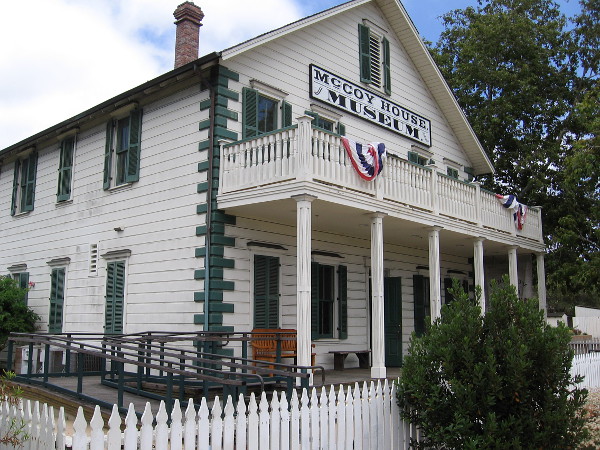
The McCoy House Museum, in Old Town San Diego State Historic Park, is a reconstruction of a home built in 1869 for Sheriff James McCoy.
While there are many small museums and historical attractions that visitors can enjoy in Old Town San Diego State Historic Park, the McCoy House Museum is the best place to see an extensive series of interpretive displays that describe the complete history of early San Diego.
The McCoy House, standing on the north end of Old Town, is a reconstruction of a home built in 1869 for Sheriff James McCoy and his family. James McCoy, who lived from 1821 to 1895, like many early San Diego residents was an ambitious man, working diverse jobs, filling many roles. At the age of 21 he sailed from Ireland to America seeking opportunity. He became a soldier, then a stagehand, then San Diego county assessor, then county sheriff in 1861. He acquired substantial real estate holdings and finally won election to the state senate in 1871.
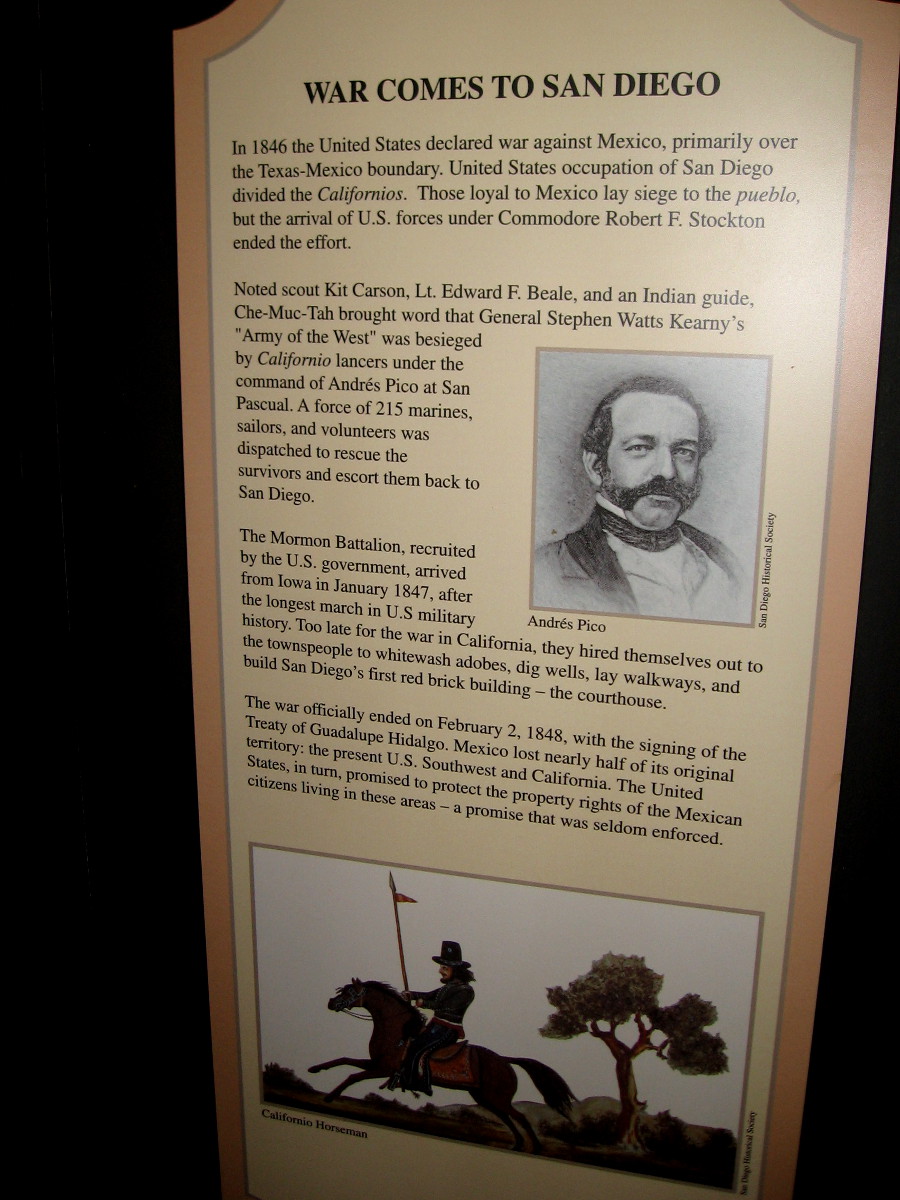
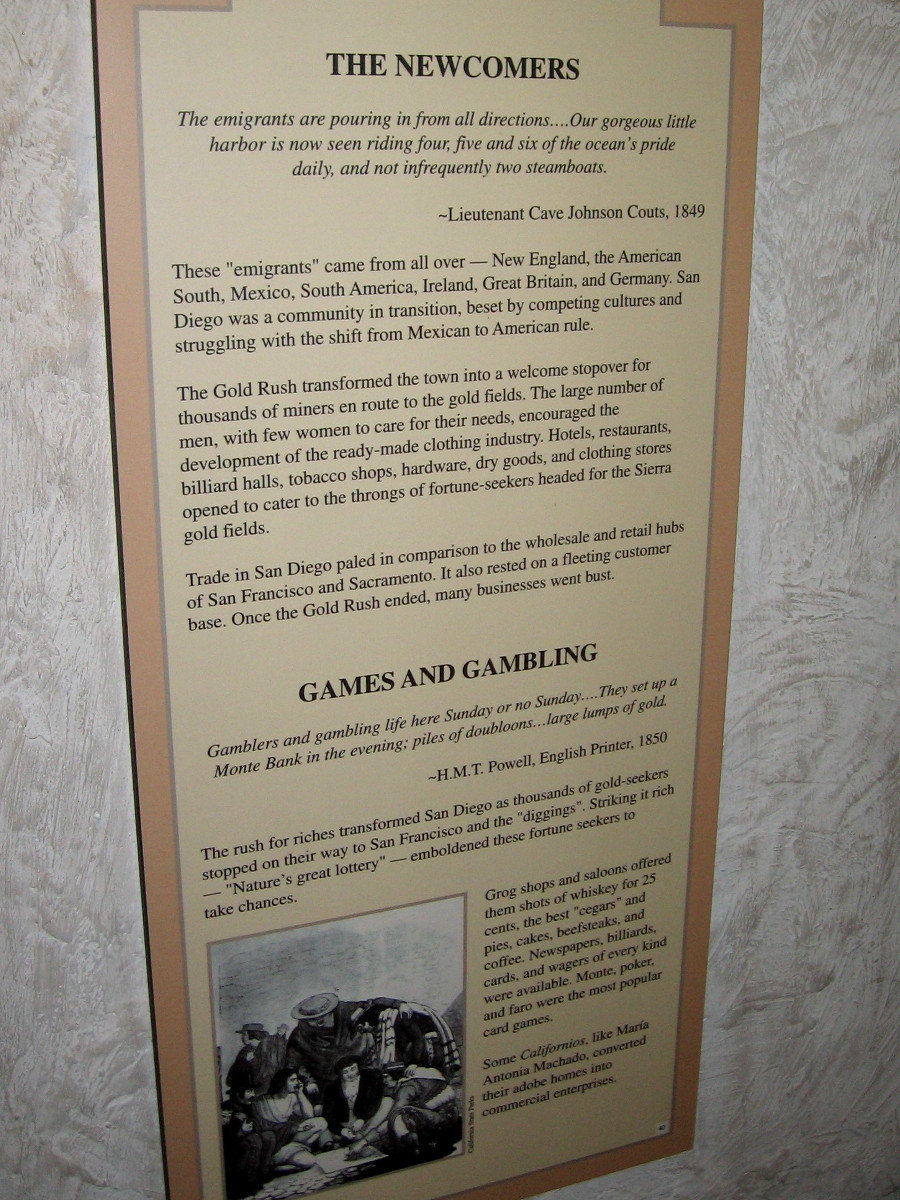
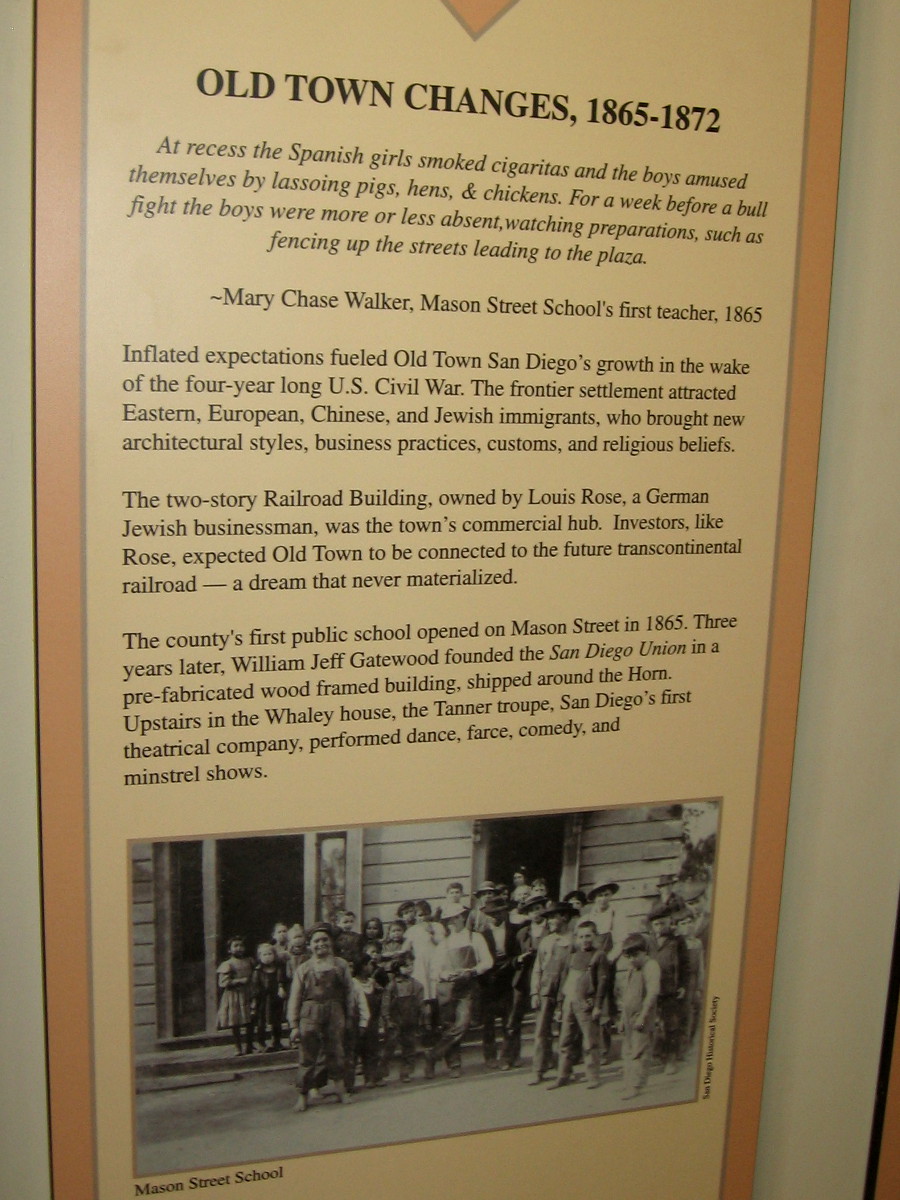
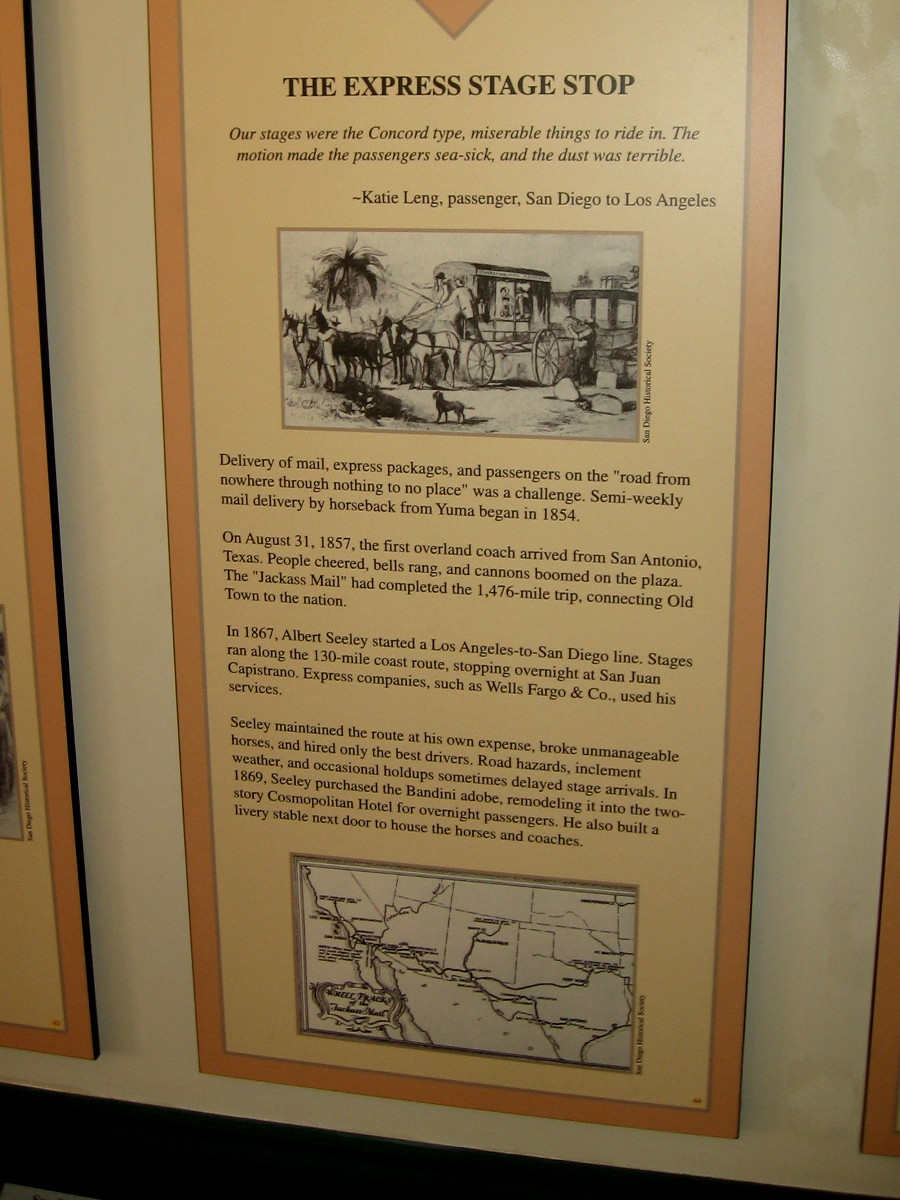
The interpretive displays in the McCoy House Museum provide a good look back at San Diego’s formative years. They detail the life of the Native American Kumeyaay who’ve lived in the region for thousands of years, the first Spanish explorers, the establishment of the Spanish mission, the Mexican period and the subsequent American period.
If you’d like to read the displays, click my photographs to enlarge them.
This blog post covers the first floor of the museum. I’ll cover the second floor exhibits in a later post. After heading up some stairs, one can find information about the more prominent residents of Old Town, plus the town’s later history as it competed with New Town, which eventually rose to become downtown San Diego as we know it today.
Anyone who is a history buff must visit the McCoy House Museum. You’ll be transported back in time and see how life was exciting, difficult, and altogether different many, many years ago in San Diego.
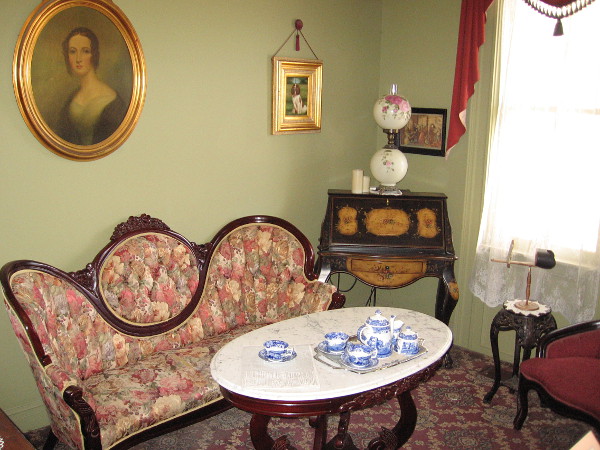
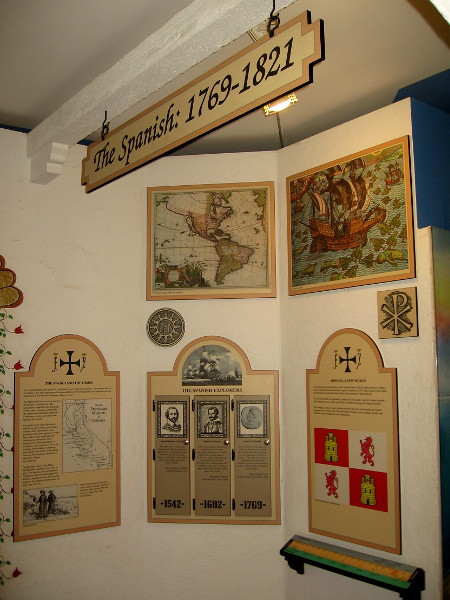
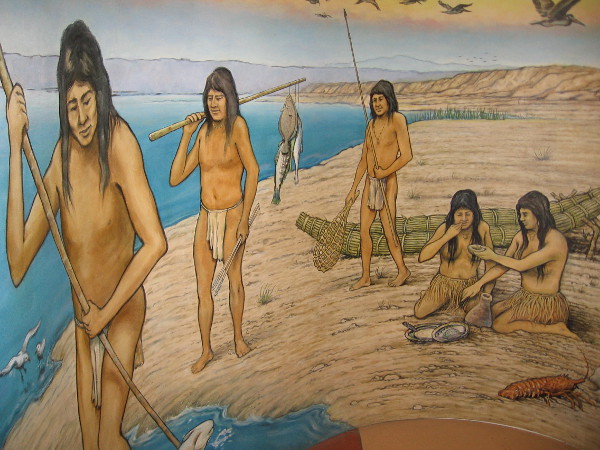
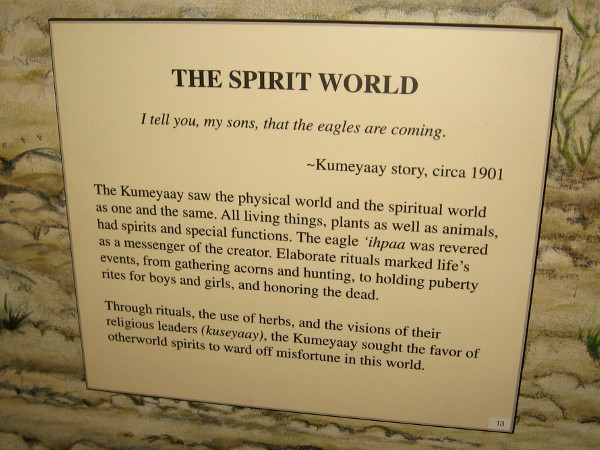
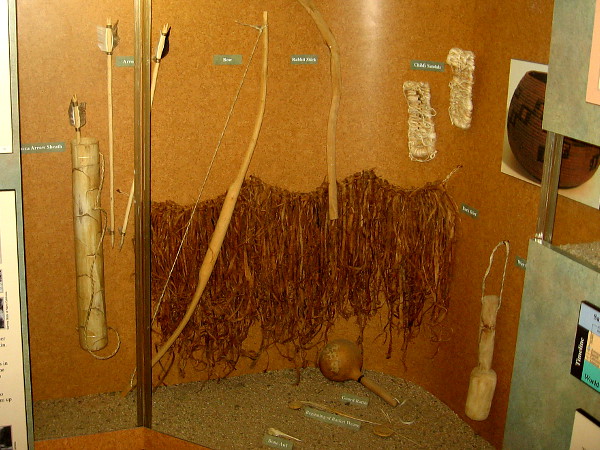
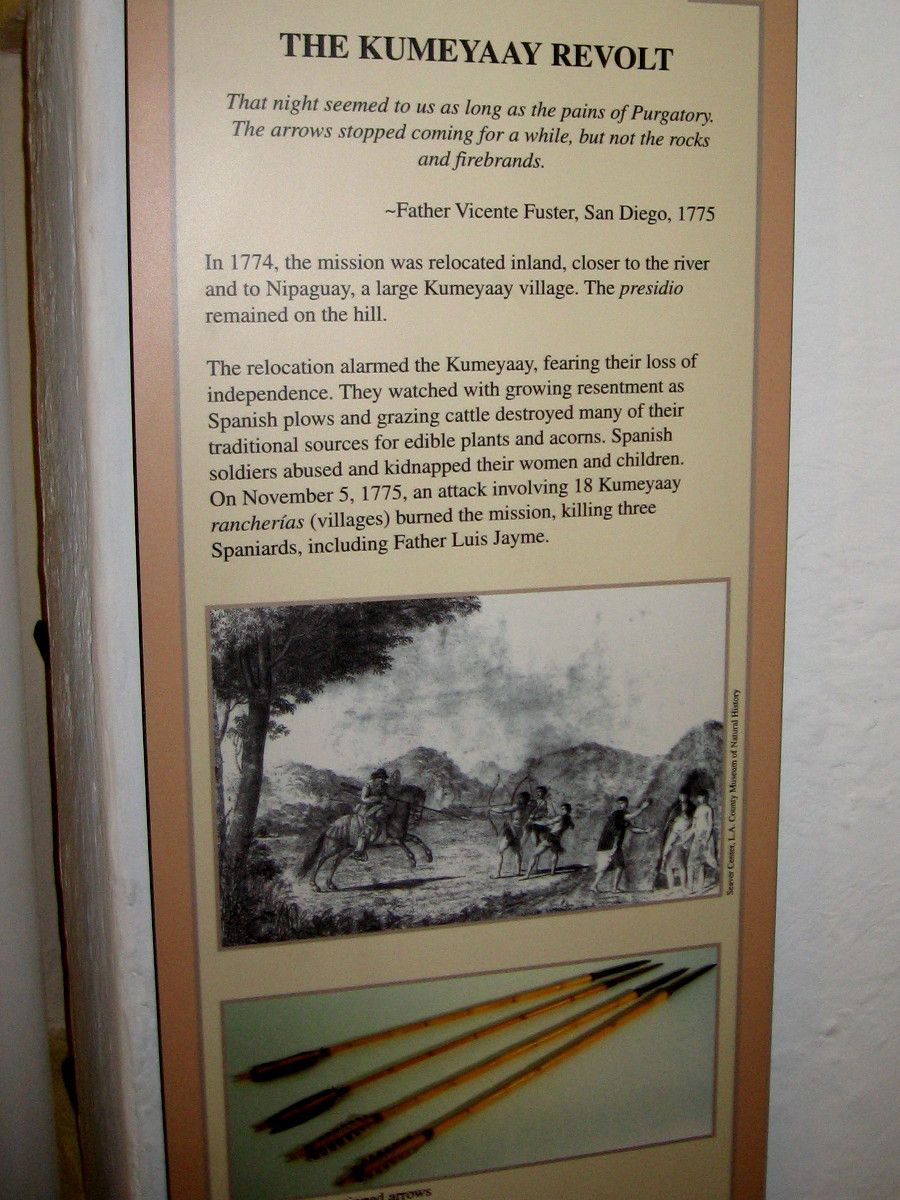
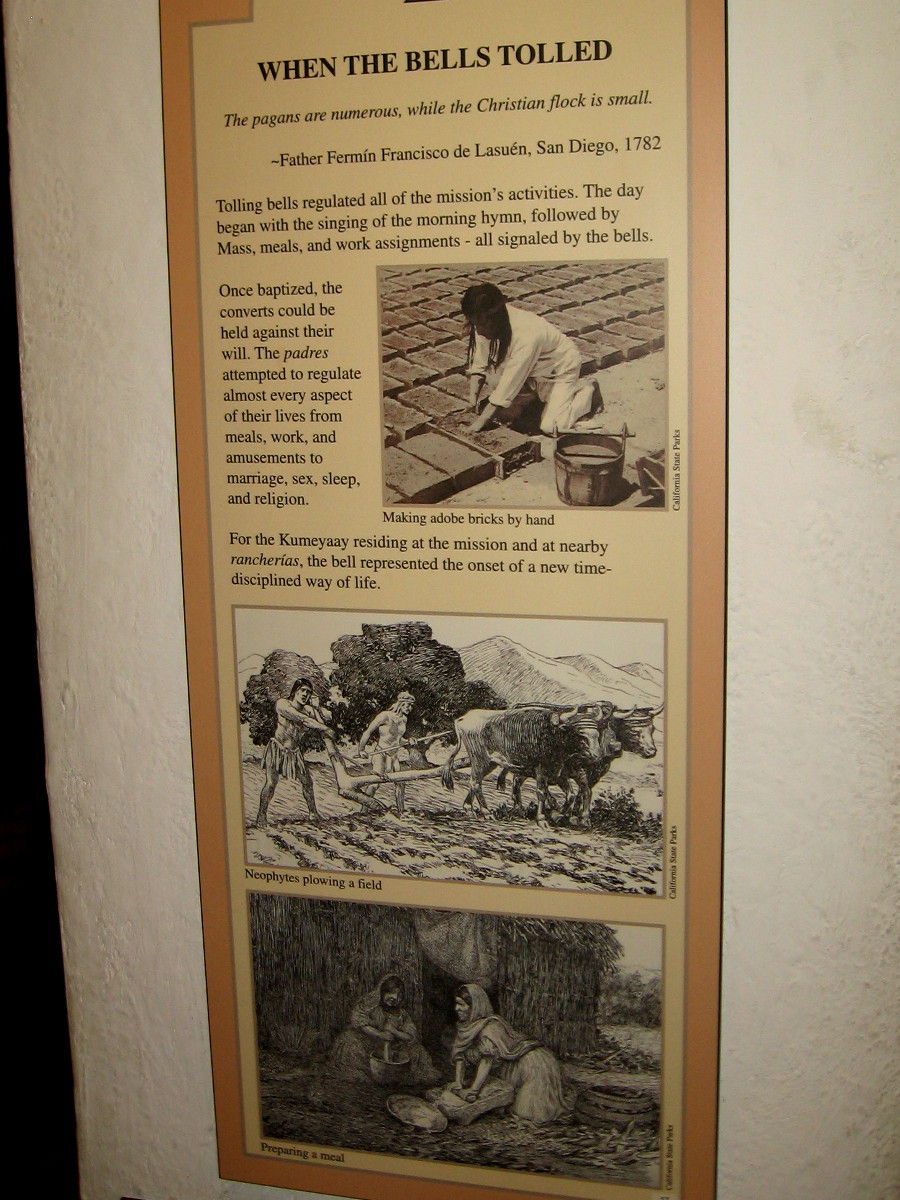
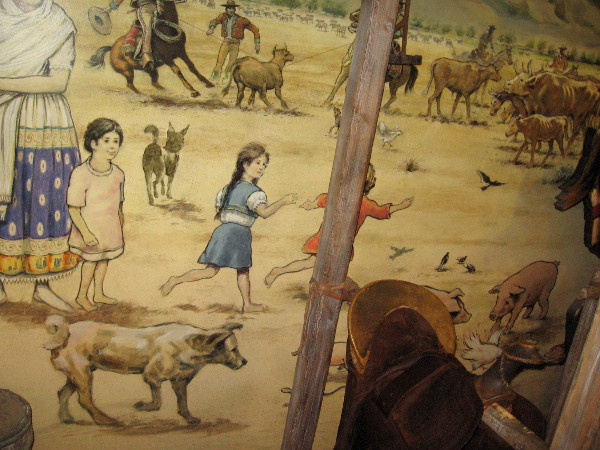
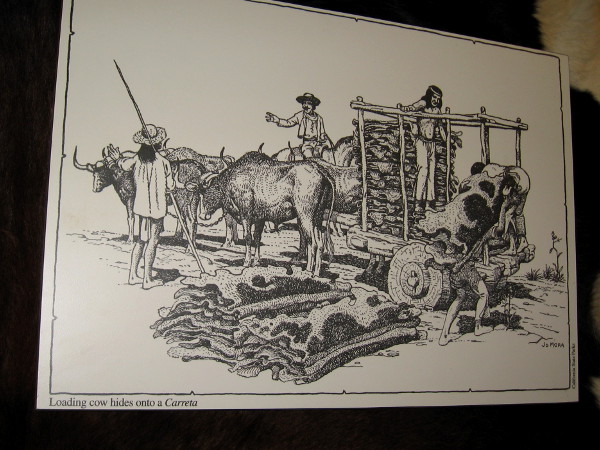
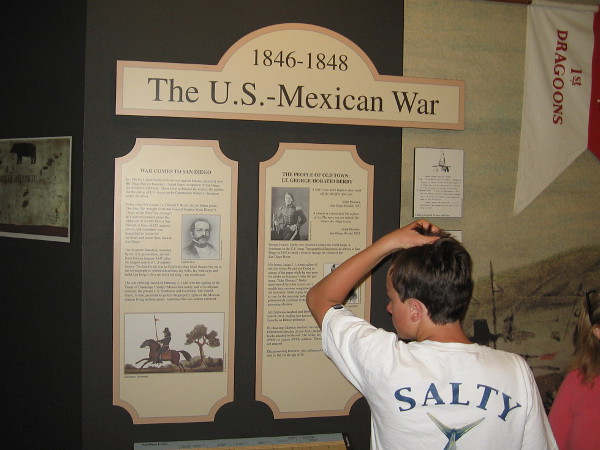
Sign lists important dates concerning the McCoy House. Today it’s a museum containing exhibits that explain the fascinating history of Old Town San Diego.Just inside the front door, this might have resembled the parlor of the original McCoy House, occupied by an upper middle class family in San Diego’s Old Town.Framed photo on one wall from the San Diego Historical Society shows the original McCoy House.Interpretive exhibits inside the McCoy House Museum begin with the Spanish period of San Diego, from 1769 to 1821.Quotes from the journeys of Juan Rodriguez Cabrillo, Sebastian Vizcaino and Gaspar de Portola.A string of missions was created by Spain in California to secure its claim to new territory. The first mission, in San Diego, was originally established on Presidio Hill near the native Kumeyaay village of Cosoy.An artistic representation of life among the Kumeyaay people. They often visited the nearby coast to hunt and gather food.For thousands of years, the Kumeyaay lived along the coast and interior valleys of what is now San Diego County. They moved with the seasons to take advantage of available resources.The Kumeyaay built dome-shaped houses from oak, willow or sycamore branches. The simple structures were called ee-wahs.The Kumeyaay saw the physical and spiritual world as one and the same.Exhibit in the McCoy House Museum shows artifacts associated with the Kumeyaay, including a bark skirt, arrows, rabbit stick, child’s sandals, gourd rattle and war club.The Kumeyaay revolted against the Spanish missionaries in 1775, a year after the San Diego mission was relocated inland very close to a large Kumeyaay village.Once baptized, converted Kumeyaay followed a strict life. Mission bells signaled the day’s activities, including the singing of hymns, Mass, meals and work assignments.Mexico gained its independence from Spain in 1821 after a decade of bloodshed. Changes included a decline in support for the presidio and freedom from Spain’s trade regulations.After the breakup of the Spanish missions, the era of the great ranchos began. Californios were often racially mixed descendants of soldier-settler families.Vaqueros were the original cowboys. They worked on the extensive ranches and handled the large herds of stock.A fanciful picture of life on a rancho, with vaqueros at work and children at play.The Californios loved to celebrate feast days, weddings and religious festivals.Cattle by the thousands roamed San Diego’s hills. Their dried hides were used in trade and were sometimes referred to as California banknotes.Illustration of loading cow hides onto a carreta. Hides were gathered by ships along the coast to be transported around Cape Horn to the eastern United States.Exhibit inside the McCoy House Museum recreates the small shop of a Boston trader. The brig Pilgrim of Two Years Before the Mast brought people aboard to buy wares and finished goods that weren’t available in San Diego.Illustrations of cow hides being cured. This activity took place at La Playa, a point on San Diego Bay near Ballast Point in Point Loma.Diagram of the brig Pilgrim, made famous in Richard Henry Dana Jr.’s classic Two Years Before the Mast. As an ordinary seaman, Dana collected cattle hides up and down the California coast.Exhibit in the McCoy House Museum details local history during the Mexican–American War from 1846 to 1848.During the war, U.S. occupation of San Diego divided the loyalty of the Californios. The two sides fought briefly at the Battle of San Pasqual.Around the time of the Gold Rush, San Diego saw an influx of emigrants from all over, including New England, the American South, Mexico, South America, Ireland, Great Britain and Germany.Old Town tales include the construction of the first jail in 1850. The walls were so poorly made, the first prisoner, Roy Bean, easily dug himself out, then celebrated at a nearby saloon!Grog shops became popular gathering places. They were a social hub of San Diego life, providing customers with news and provisions.A recreated Old Town grog shop can be found inside the McCoy House Museum.After the California Gold Rush of 1849, San Diego became more developed. A courthouse and newspaper were established. Transportation included clipper ships, stage lines and steamships.Poster advertises a new clipper ship route. A very quick trip may be relied upon!Between 1865 and 1872, Old Town San Diego continued to grow. The first public school opened, and the town welcomed its first theatrical company in the Whaley house.The first overland coach to San Diego began service in 1854. Additional stage lines came into existence, allowing for the delivery of mail, express packages and passengers.Visitors to the McCoy House Museum can step into a replica stage stop and see what life was like in Old Town during San Diego’s rugged early history.
…
I live in downtown San Diego and love to walk! You can follow Cool San Diego Sights via Facebook or Twitter!
You can easily explore Cool San Diego Sights by using the search box on my blog’s sidebar. Or click a tag! There are thousands upon thousands of interesting photos for you to enjoy!
Dancing to traditional Kumeyaay Bird Songs in Balboa Park during the American Indian Health Center Pow Wow.
A special event is going on this weekend in Balboa Park. The American Indian Health Center Pow Wow is taking place near the corner of Park Boulevard and Presidents Way.
I enjoyed the first hour of the pow wow, watching and listening to the performance of Bird Songs by members of the Kumeyaay Nation. These very powerful ancient songs live on today, but other similar songs from the past have been lost to time.
Other events at the pow wow include gourd dancing and fancy shawl dancing. Tents around the venue feature all sorts of Native American crafts, food, art and cultural information. If you’re in San Diego, swing on by! The public is welcome!
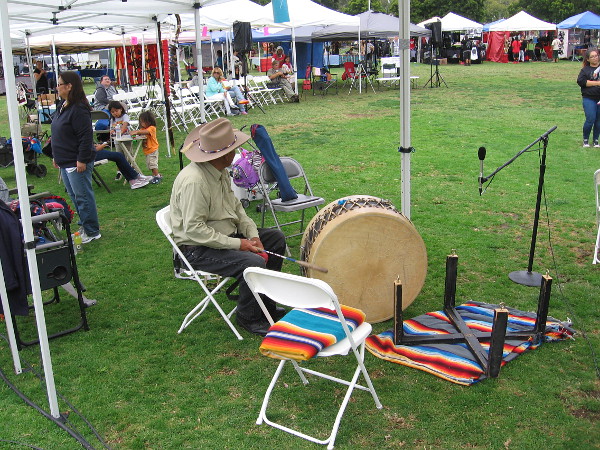
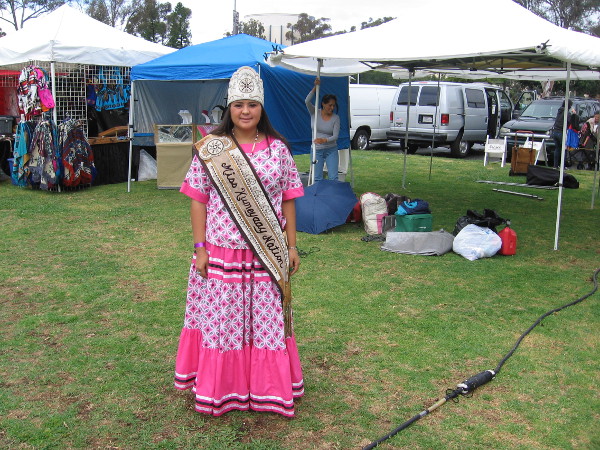
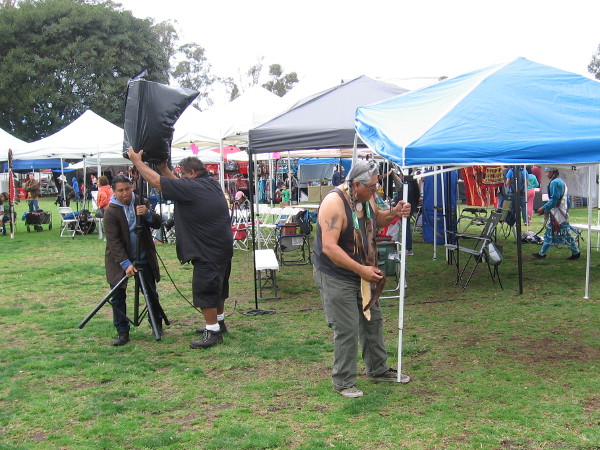
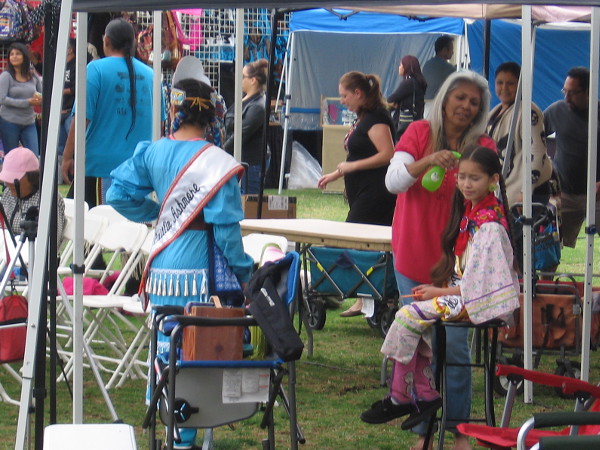
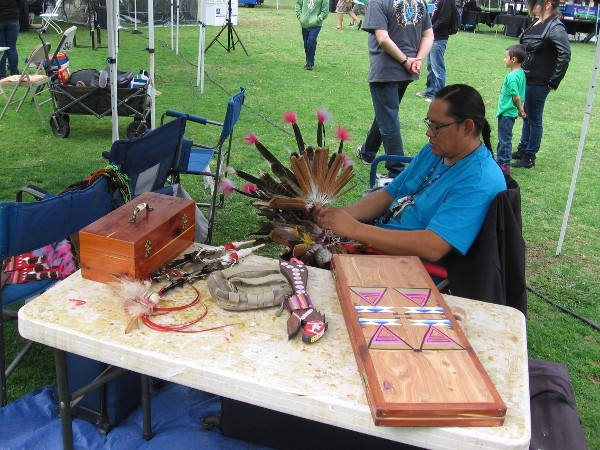
Gourd rattles are an important and powerful part of Kumeyaay Bird Songs. Traditionally, a musical sound has also been produced with a stick rubbed against a rough basket.A large drum awaits on the grass as the Native American Pow Wow in San Diego has just begun.Miss Kumeyaay Nation was very gracious to pose for a photograph.I swung by the pow wow during its first hour. Many additional participants were arriving and setting up.Many who’d arrived for the pow wow were already in colorful ceremonial costumes. The earlier rain had ceased and people were relaxing, enjoying friendship, spirit-filled music and another beautiful day.Someone proudly wears an American Indian Warriors Association emblem.Photo taken as the American Indian Health Center Pow Wow in Balboa Park is just getting started.Getting ready for a busy day of dance, song, spirituality, and honoring local Native American culture and history.Working on beautiful ceremonial objects to be worn or displayed during a life-filled pow wow in San Diego.
…
I live in downtown San Diego and love to walk! You can follow Cool San Diego Sights via Facebook or Twitter!
Do you like to read short pieces of thought-provoking fiction? You might enjoy checking out Short Stories by Richard.
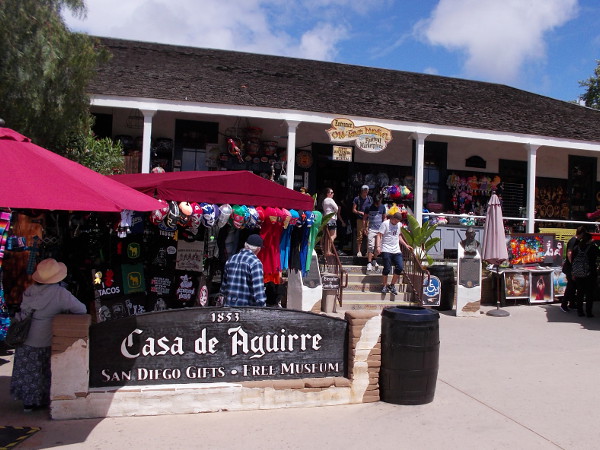
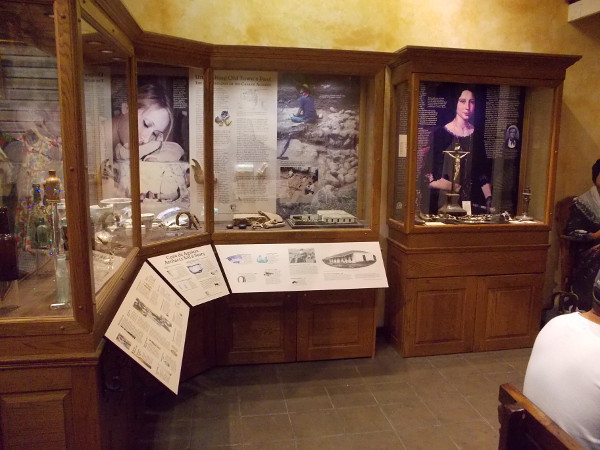
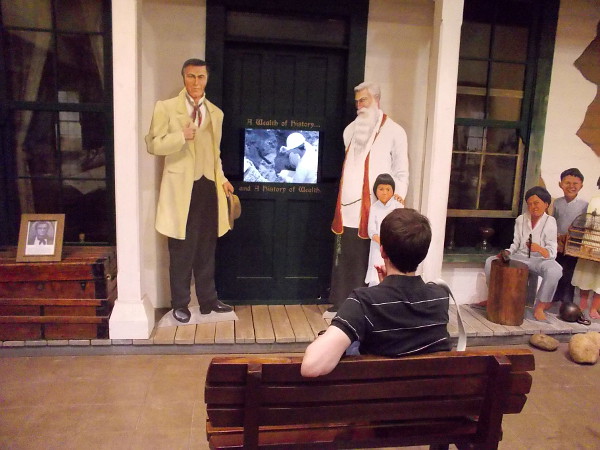
Fascinating exhibits inside the Casa de Aguirre Museum in Old Town San Diego State Historic Park.
Many visitors to Old Town San Diego State Historic Park might think the Casa de Aguirre is just a shop brimming with colorful crafts and wares. But a closer look reveals that a small museum is located inside.
Here are some photos which provide a glimpse of what you’ll discover should you step into the museum. Read the captions, and you’ll learn how Casa de Aguirre is one of the most important sites in Old Town, and how its occupants shaped San Diego’s early history.
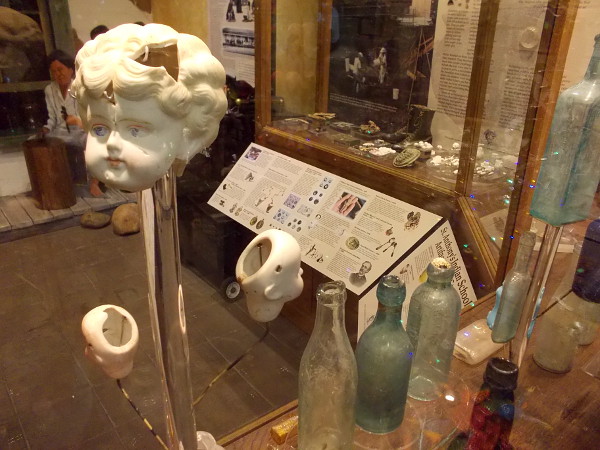
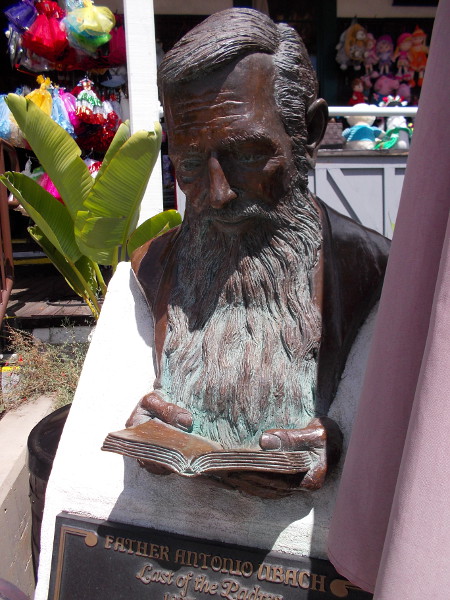
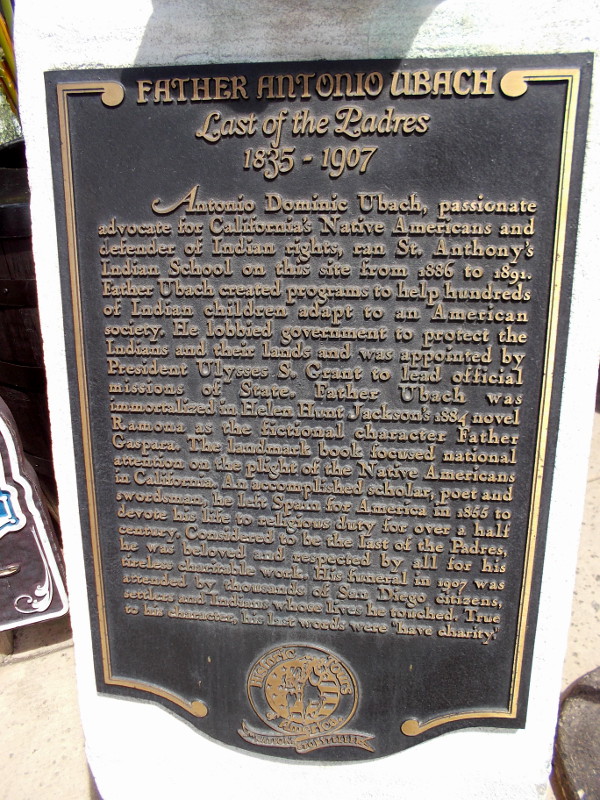
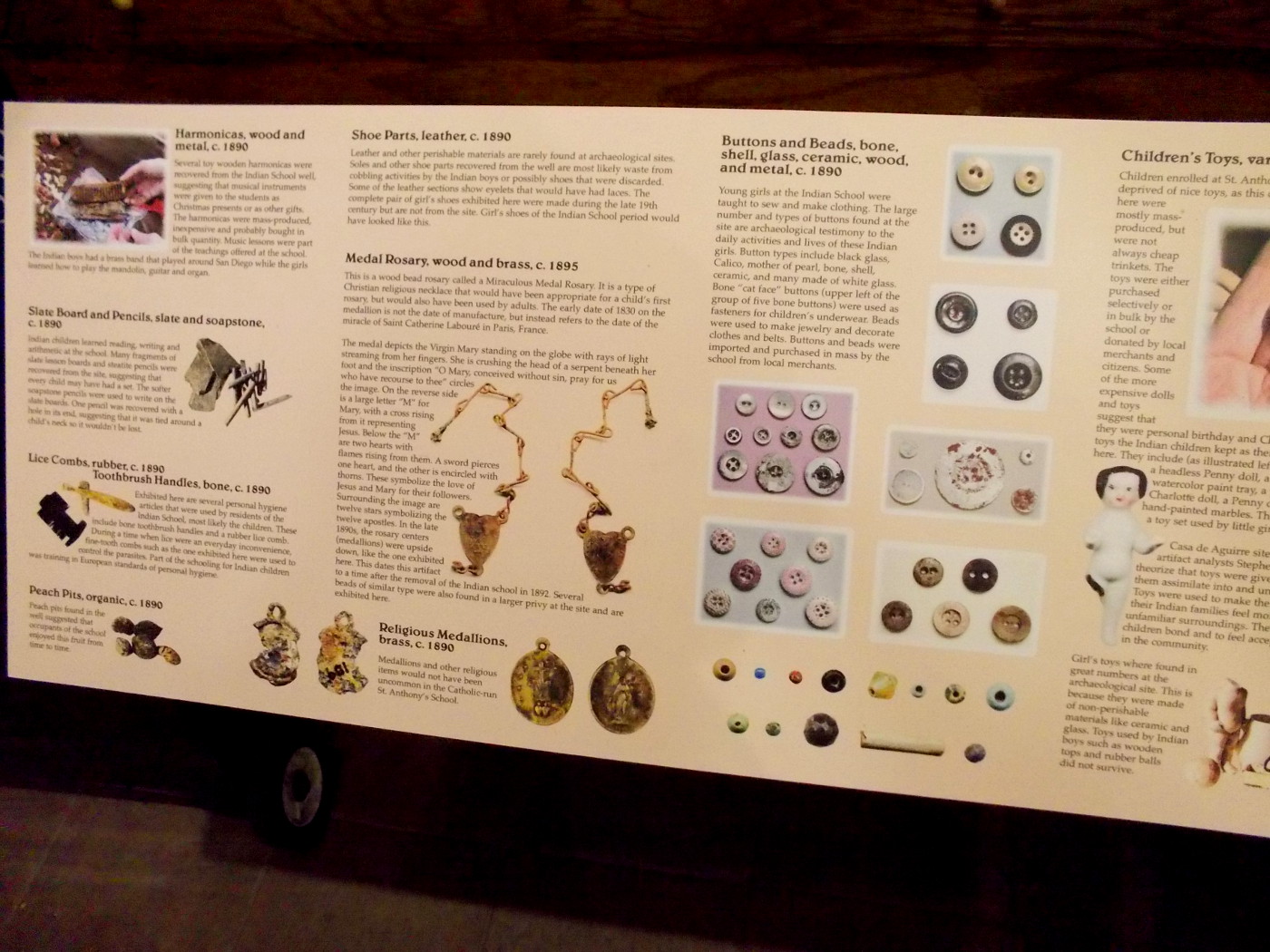
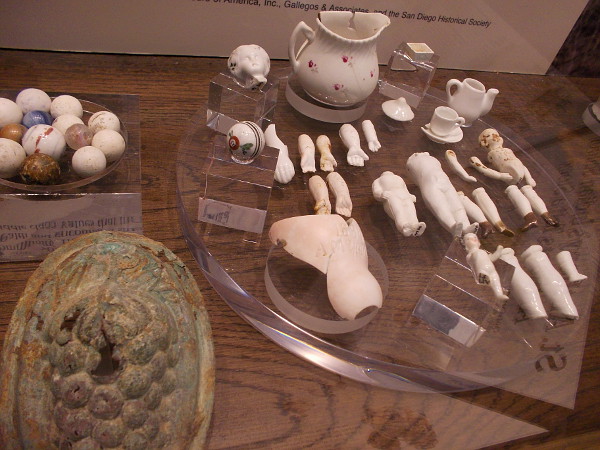
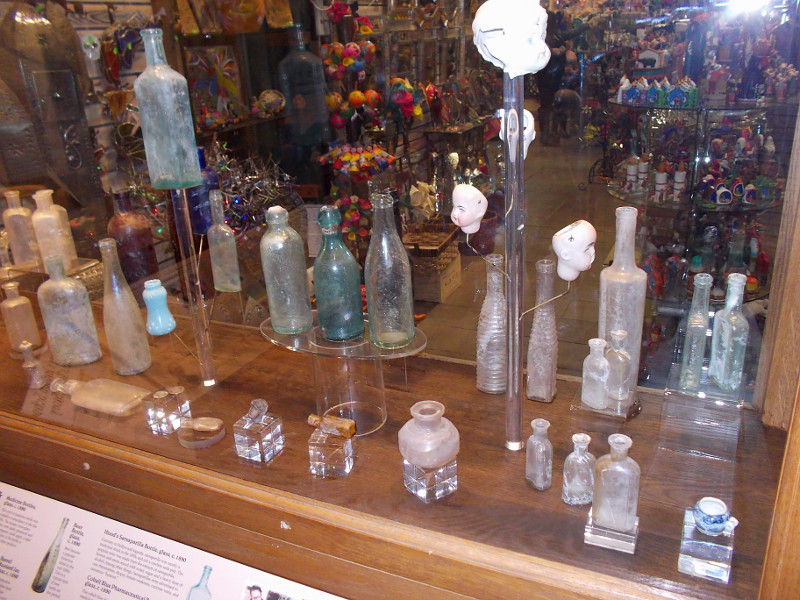
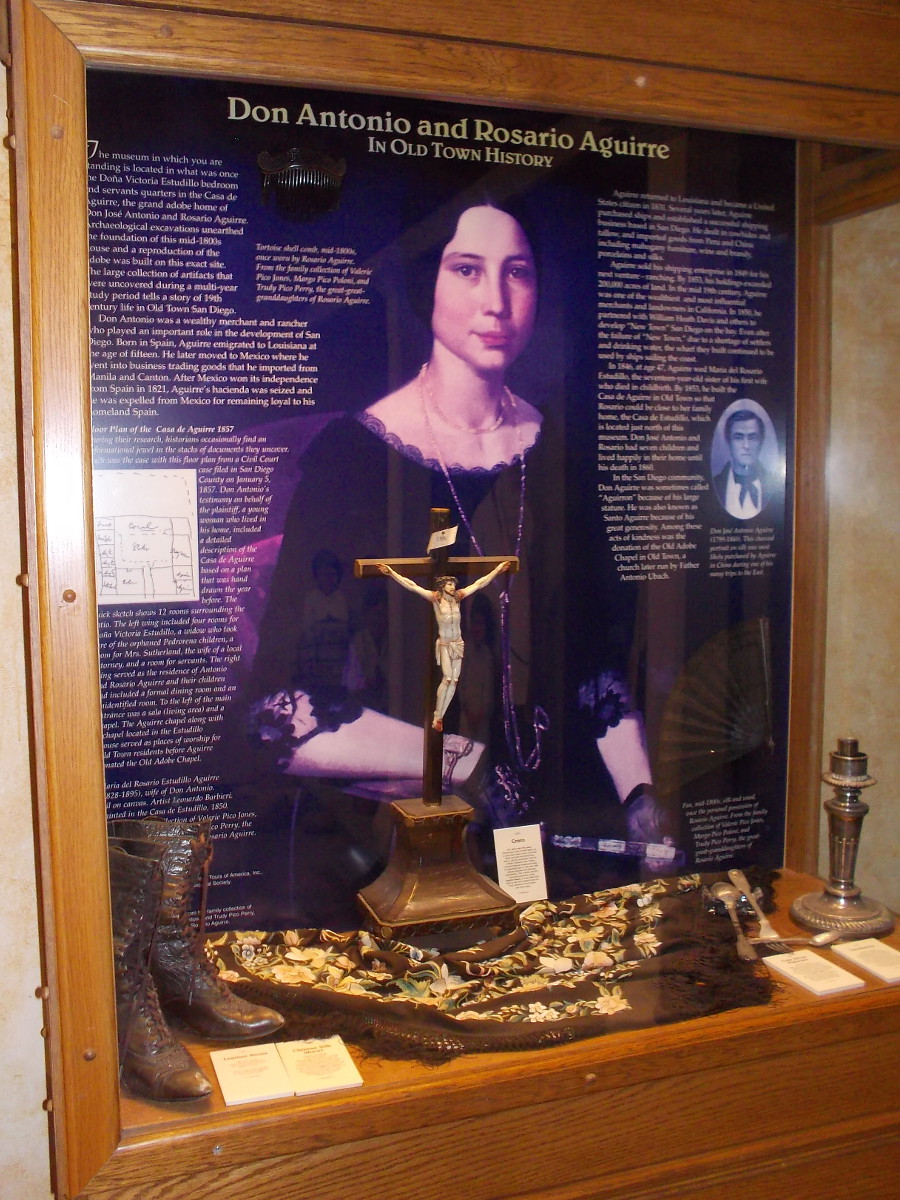
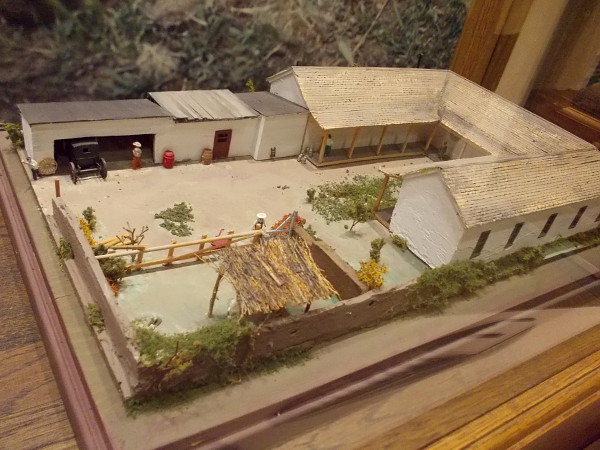
Casa de Aguirre in Old Town was originally built around 1853. The adobe mansion was one of the first houses in San Diego, owned by Don Jose Antonio Aguirre, a prosperous merchant and rancher. The present building is a reproduction.Bronze bust of Don Jose Antonio Aguirre, near entrance to Casa de Aguirre. Born in Spain, he owned several ships and warehouses and imported goods from Peru and China to trade for cowhides and tallow.Don Jose Antonio Aguirre was known for his charity and funded many projects in early San Diego. He, his wife and children are considered to be one of our city’s founding families.Bust of Father Antonio Ubach, Last of the Padres, 1835-1907. Antonio Dominic Ubach ran St. Anthony’s Indian School on this site from 1886 to 1891.Plaque describes how Father Ubach advocated for California’s Native Americans and lobbied government to protect the Indians and their lands. He was loved by many. His last words were: “Have charity.”Casa de Aguirre in Old Town San Diego today contains a shop visited by many tourists and a small museum in back.One side of El Museo Casa de Aguirre. Excavated artifacts are on display, recalling what life was like here in the mid to late 19th century.Visitor to the small museum watches a video which includes information about archaeological discoveries, the history of the casa and the lives of those who were sheltered here.St. Anthony’s Indian School Artifacts Tell a Story. Many objects on display include porcelain cups, goblets, bottles, a saltshaker and beer mug.Sign describes additional historical finds, including buttons, toys, harmonicas, slate board and pencils, lice combs, toothbrush handles, shoe parts, medal rosary and religious medallions.Marbles, doll parts and tiny children’s tea sets, recovered from San Diego’s past.Dozens of buttons on display. They were fastened by living fingers, now long gone.Two old pipes.Numerous bottles and jars are exhibited in the Casa de Aguirre Museum. They were used for medicine, mustard, chemicals, perfume, whiskey, beer, sarsaparilla…People interested in collecting antique bottles would be mesmerized by the large assortment on display.Don Antonio and Rosario Aguirre in Old Town History. The museum is located in what was once the bedroom and servants quarters in the Casa de Aguirre. The present-day adobe is a reproduction.Don Antonio Aguirre, 1799-1860, was one of San Diego’s most important figures back when our burgeoning Southern California city was just a very, very small town.A model of how the Casa de Aguirre appeared a century and a half ago.
…
I live in downtown San Diego and love to walk! You can follow Cool San Diego Sights via Facebook or Twitter!
You can easily explore Cool San Diego Sights by using the search box on my blog’s sidebar. Or click a tag! There are thousands upon thousands of fascinating photos for you to enjoy!
Native American Kumeyaay from the San Diego area work near the foot of an ewaa, a dome-shaped hut made of sycamore and oak tree branches.
Over two years ago, when Cool San Diego Sights was relatively new, I blogged about some amazing public art near the Santa Fe Depot in downtown San Diego. I provided just a brief glimpse, really.
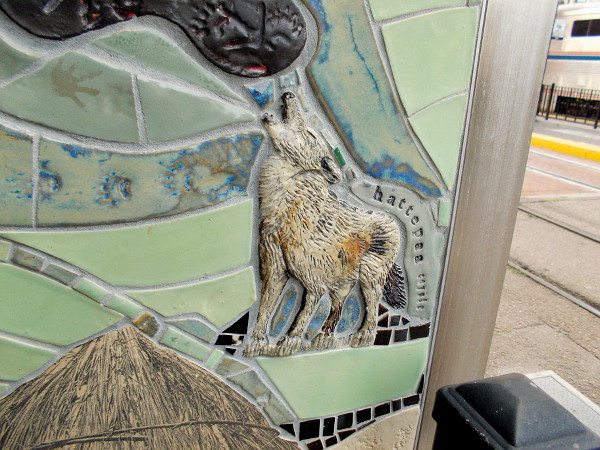
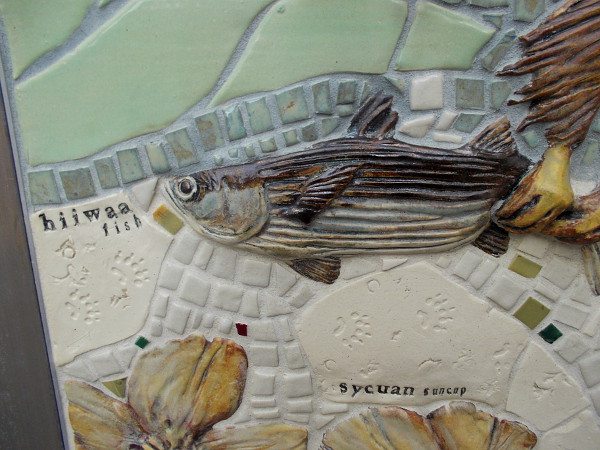
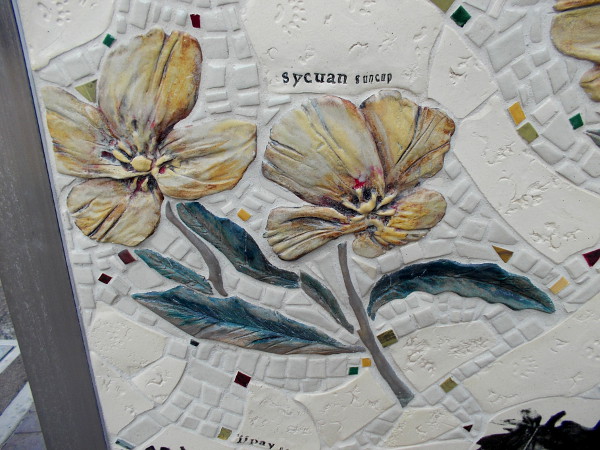
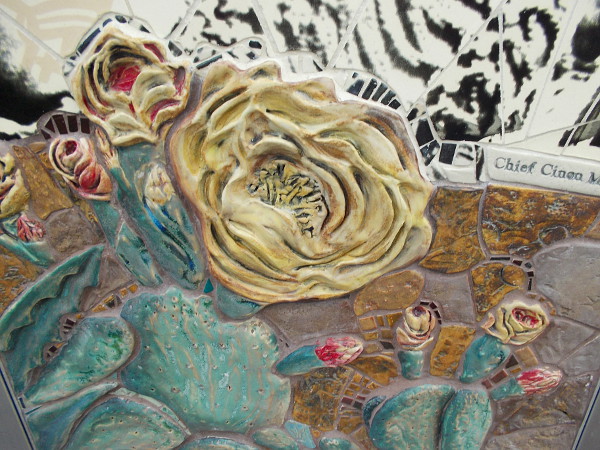
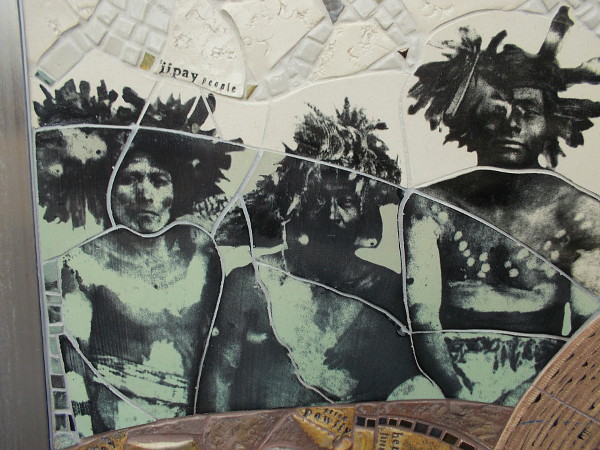
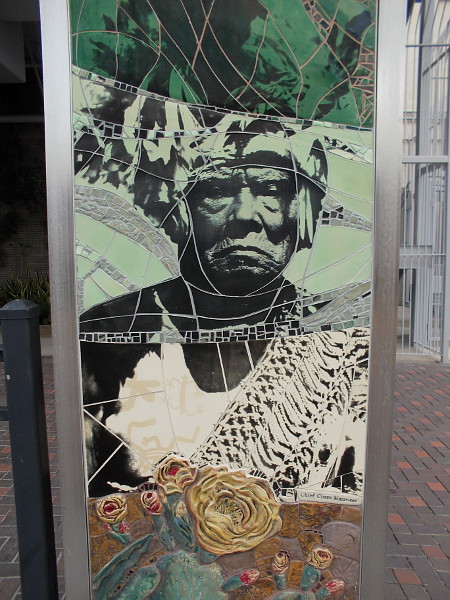
The artwork, titled The Tracks We Leave Behind, created by Betsy K. Schulz in 2008, is so utterly fantastic, so absorbing, I’ve decided to blog about it once again. Whenever I walk past (which is often), I like to pause an extra few seconds beside my favorite column, which features gorgeous mosaics that depict wild nature and the Native American Kumeyaay people, who have lived around San Diego for about 12,000 years.
Living in this place we set fires to open the land and make the seeds grow. We fish all year, both near shore and deep. We walk to the canyons and the mountains–hunting, gathering food and trading . . .Public art titled The Tracks We Leave Behind, by Betsy K. Schulz, 2008, includes the image of a Kumeyaay hattepaa (coyote) howling.Beautiful handmade mosaic tiles form a Kumeyaay ispa (eagle) in flight.The bald eagle has captured a Kumeyaay hiiwaa (fish).Yellow Sycuan Suncups grace this gorgeous, detailed public artwork in downtown San Diego.The yellow bloom of a prickly pear. This sculpted tile mosaic is so phenomenal, you almost can’t remove your eyes from it!The native Kumeyaay people (also called Kumiai, Ipai-Iipay, Tipai-Tipay, Diegueño, Kamia) have lived in the San Diego region for around 12,000 years.Public art in San Diego depicts Cinon Duro Mataweer, spiritual leader (kuseyaay or tribal shaman) of the Ipai (formerly northern Diegueño) Native American Indian tribe.
…
Join me for many more Cool San Diego Sights on Facebook and Twitter!
It’s hard to believe, but this photo blog of San Diego now contains over 800 posts, and features a vast universe of wonderful art–not to mention other random cool stuff! Click some links that look interesting if you’d like to explore! Have fun!





































































 Cool San Diego Sights!