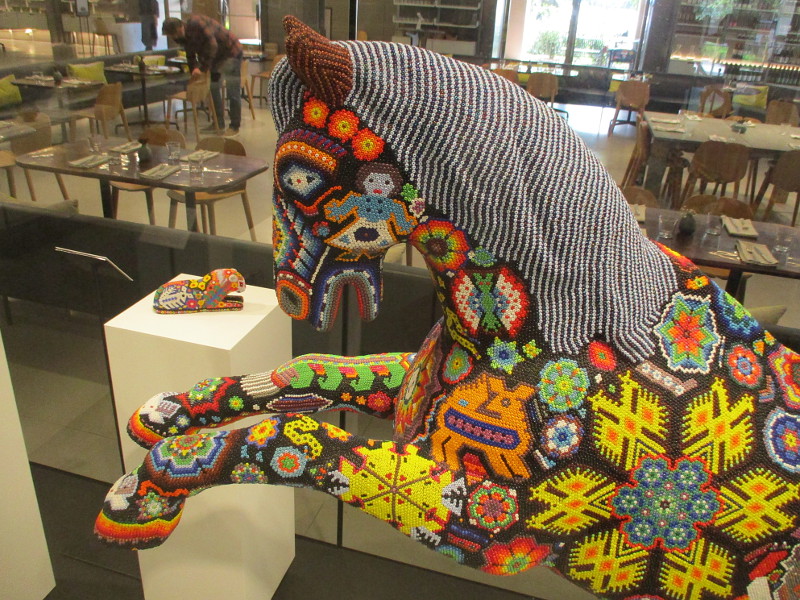
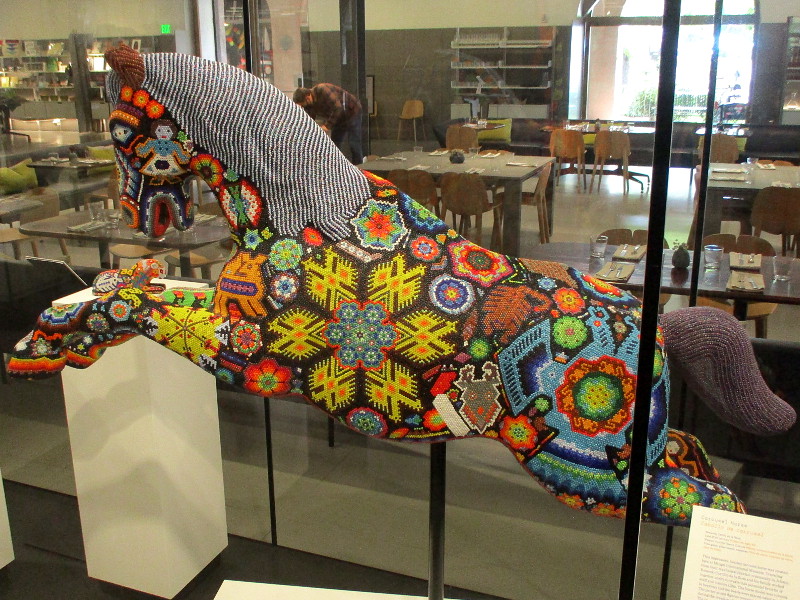
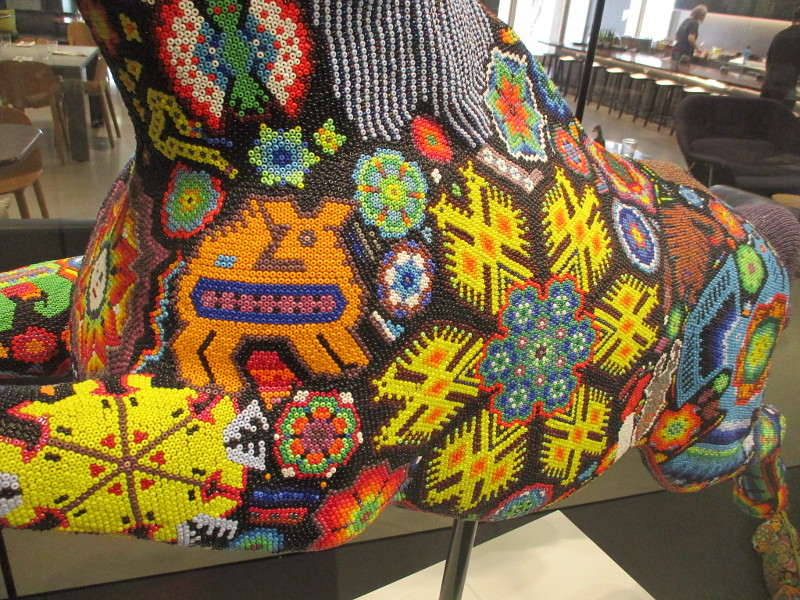
I love this carousel horse! It was created using thousands of glass beads! Visitors to the Mingei International Museum in Balboa Park can’t miss it!
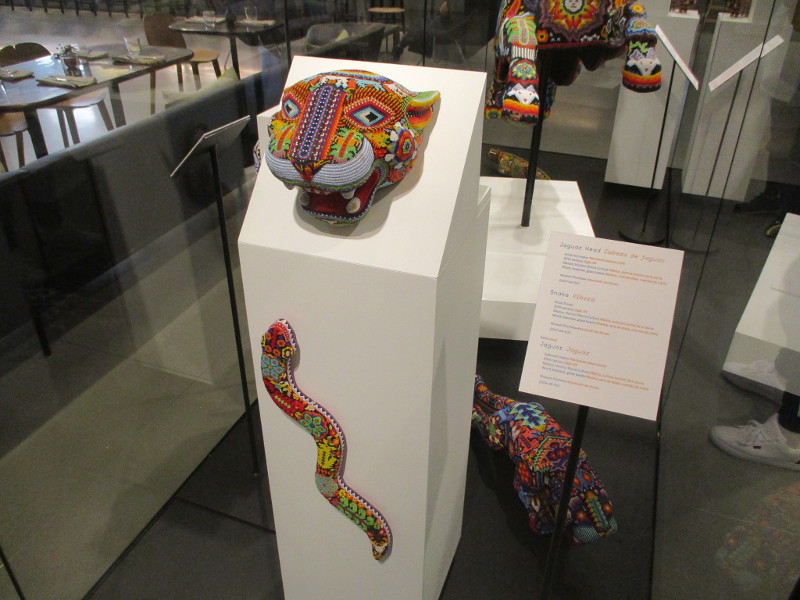
The beaded horse and several smaller animals occupy a large display case on the museum’s ground floor, which is free for visitors to enter.
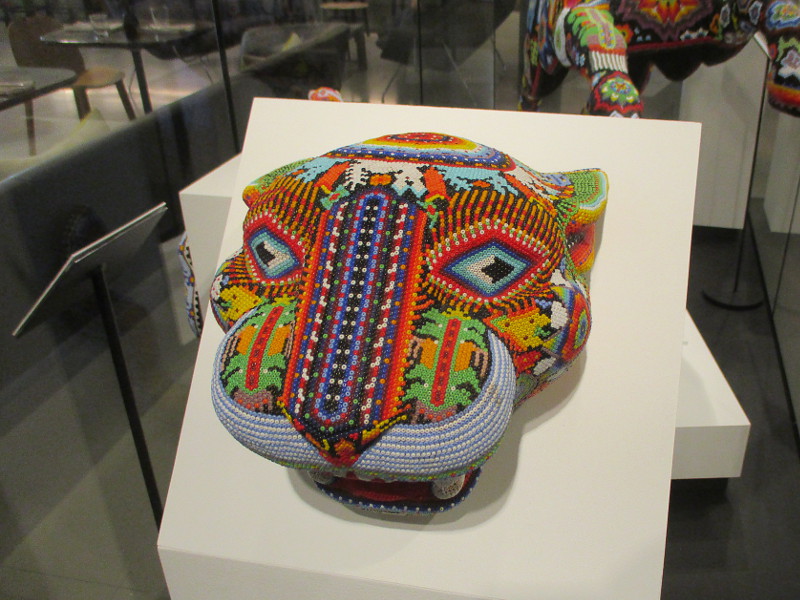
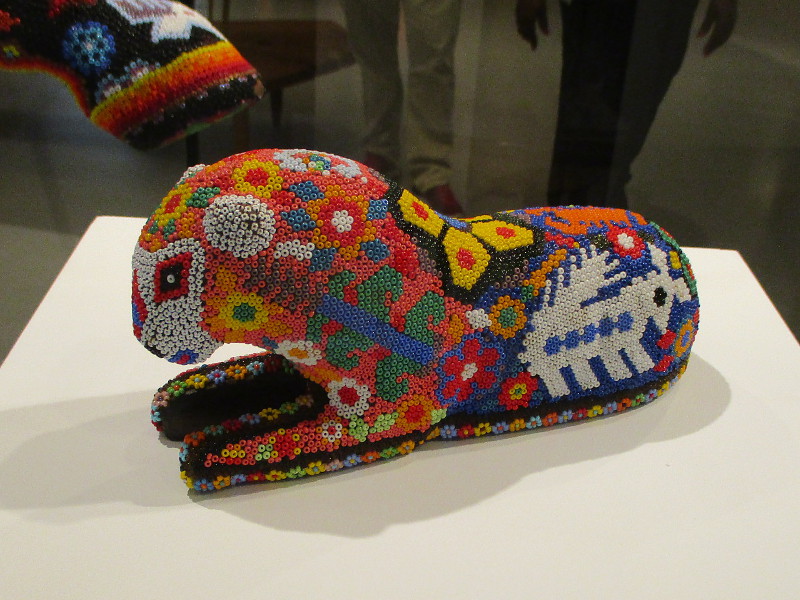
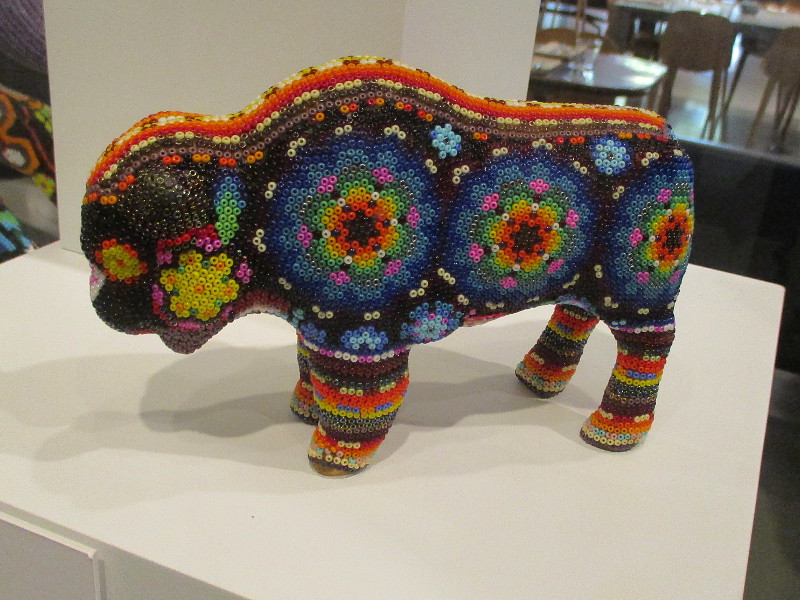
Look at all the colorful designs made with tiny beads. The patterns and figures on these animals are full of cultural symbolism.
The horse itself was created in the mid-1990s inside the museum by Rosendo Carillo de la Rosa and his family, who traveled to San Diego from the Huichol community in Jalisco, Mexico.
The large carousel horse is made of fiberglass, glass beads and beeswax. The smaller animals, like the snake and jaguar, also representing the Huichol Sierra Culture, are formed using wood instead of fiberglass. Several different artists crafted these amazing bead animals.
…
Thanks for visiting Cool San Diego Sights!
I post new blogs pretty often. If you like discovering new things, bookmark coolsandiegosights.com and swing on by occasionally!
I live in downtown San Diego and love to walk around with my camera! You can follow Cool San Diego Sights via Facebook or Twitter!
Look who has been spotted in Chula Vista! San Diego Loyal SC soccer player Alejandro Guido!
Alejandro, who is of Mexican descent, is the pride of Chula Vista, having attended Mater Dei High School.
Walk along Third Avenue in Chula Vista, south of E Street, north of the Vogue movie theater building, and you’ll see Alejandro. The defensive midfielder is running with the ball on a wall opposite Manny Machado of the San Diego Padres!
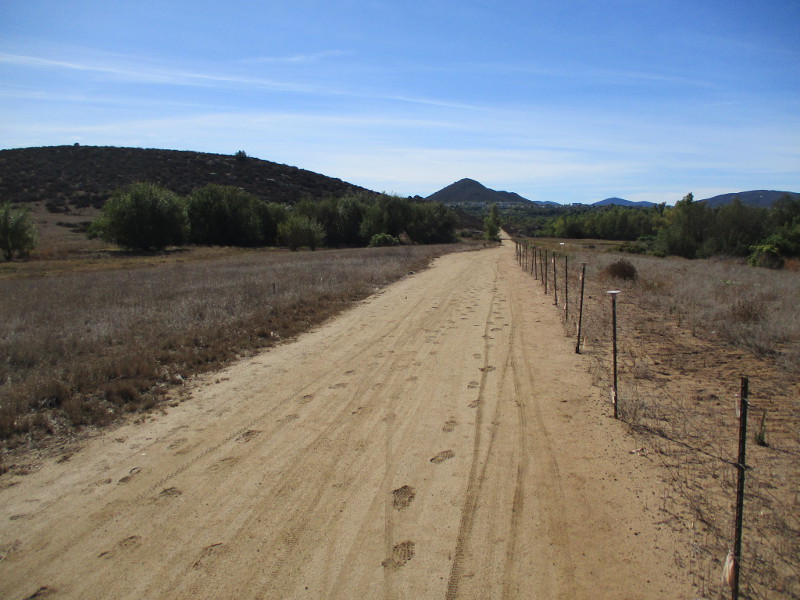
Walk down Mule Hill Trail at the south end of Escondido and you’ll find yourself stepping into history.
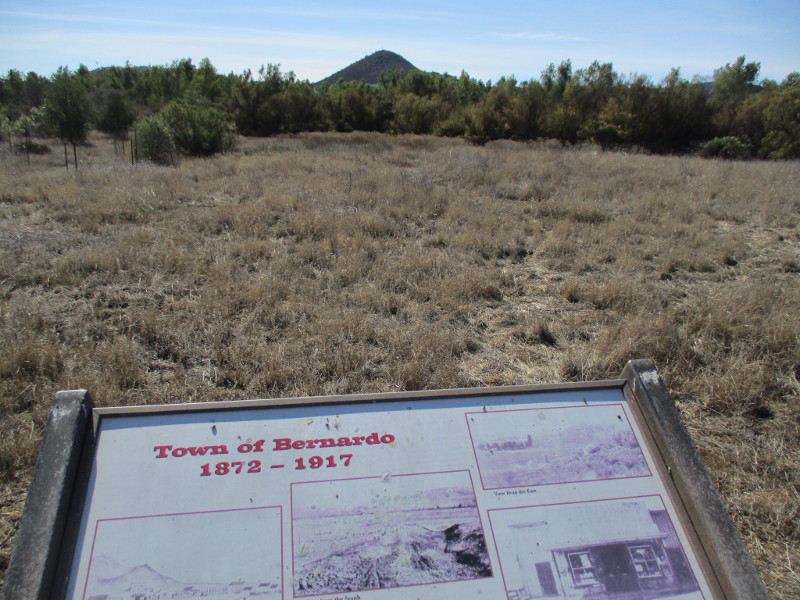
A while back I blogged about the forgotten town of Bernardo. A hundred years ago it was located in farmland near this trail, prior to the creation of Lake Hodges.
Down this same trail information signs mark the location of Mule Hill, where a skirmish took place during the Mexican-American War.
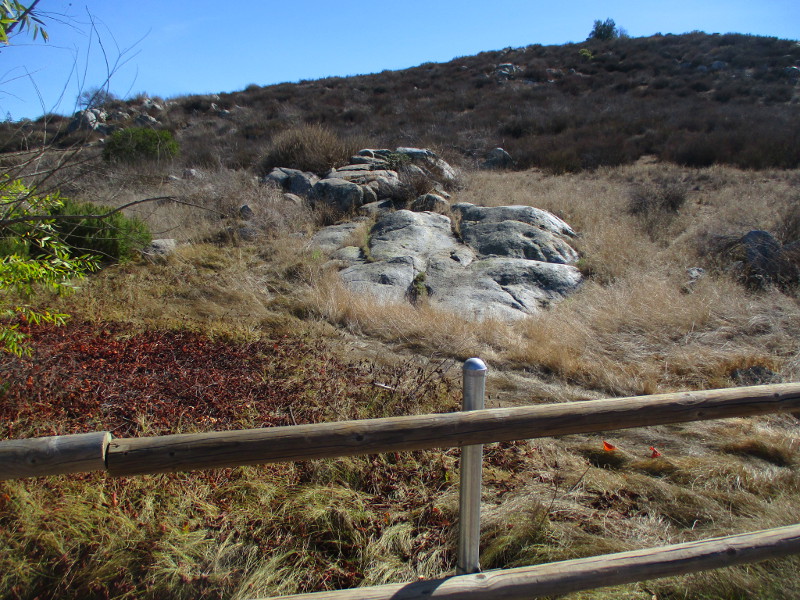
Seeking shelter among rocky outcroppings, General Kearny established a defensive position against pursuing Californios, as his U.S. Dragoons retreated toward San Diego after the Battle of San Pasqual.
The precise location of this skirmish was in debate for many years. Here are some interestingarticles.
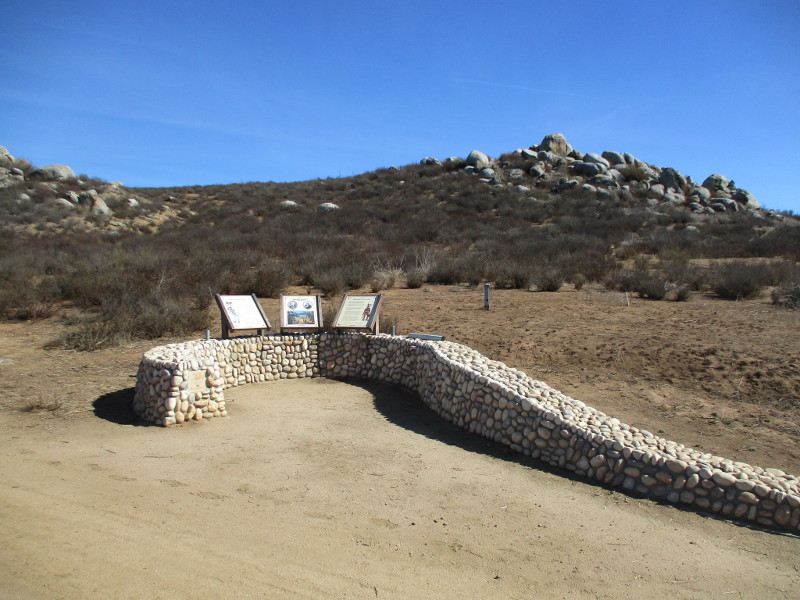
Today, after a short, easy walk south down Mule Hill Trail, you’ll see the outcroppings rising above several signs. You can find the wide dirt trail just east of Interstate 15, off Bear Valley Parkway, before Beethoven Drive.
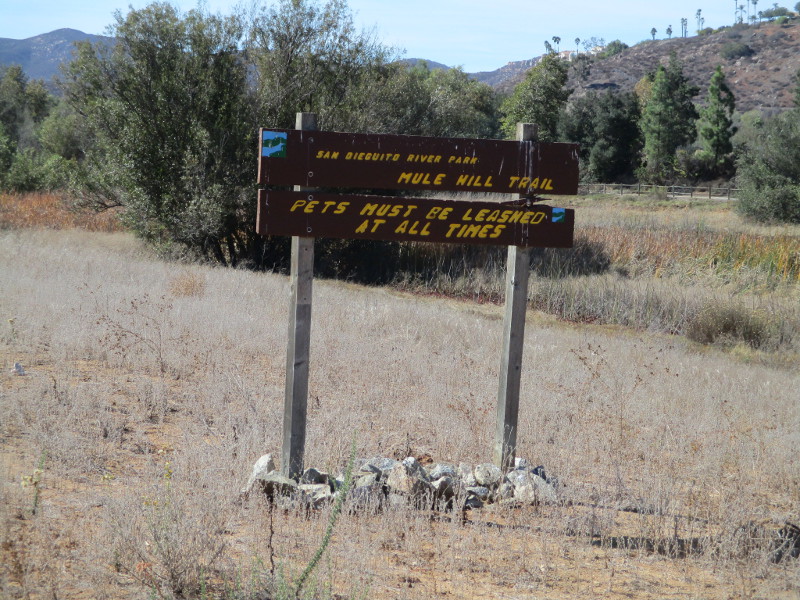
Beginning south down Mule Hill Trail, part of the San Dieguito River Park.
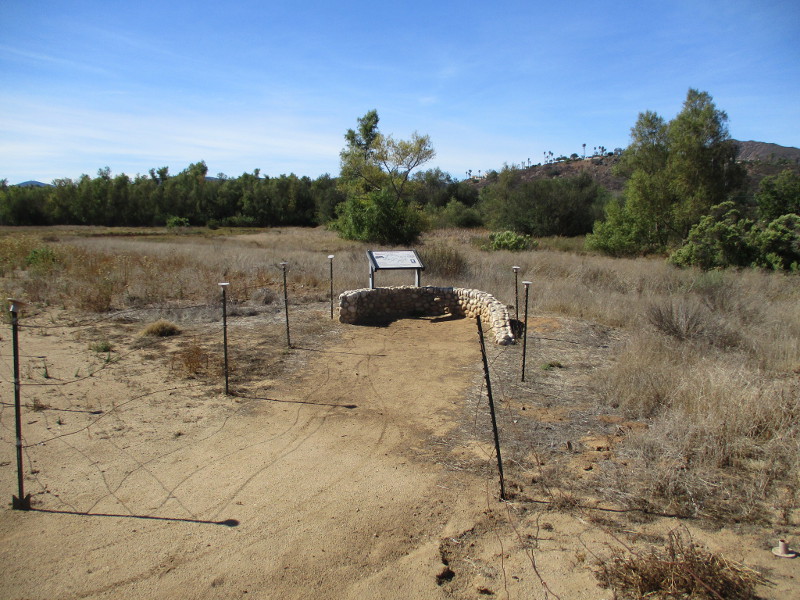
Off to the right near river trees, a solitary sign beckons.
Start of the Engagement, December 7, 1846
“Late in the evening, when we had arrived within about four hundred yards of the water where we intended to camp, they charged us, coming on in two bodies and compelling us to retreat to a pile of rocks about two hundred yards away on our left . . . ” source–Kit Carson’s Autobiography
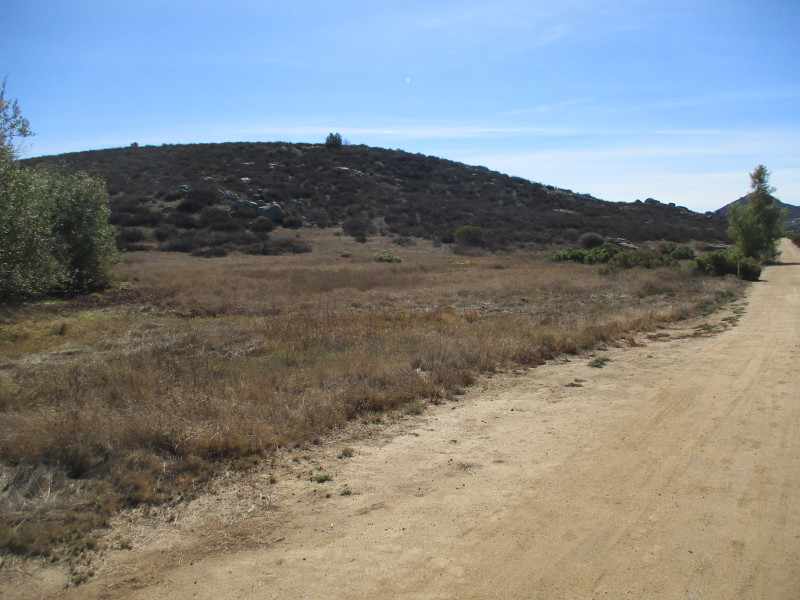
Continuing our walk south. Jumbled boulders can be seen on the hill to our left.
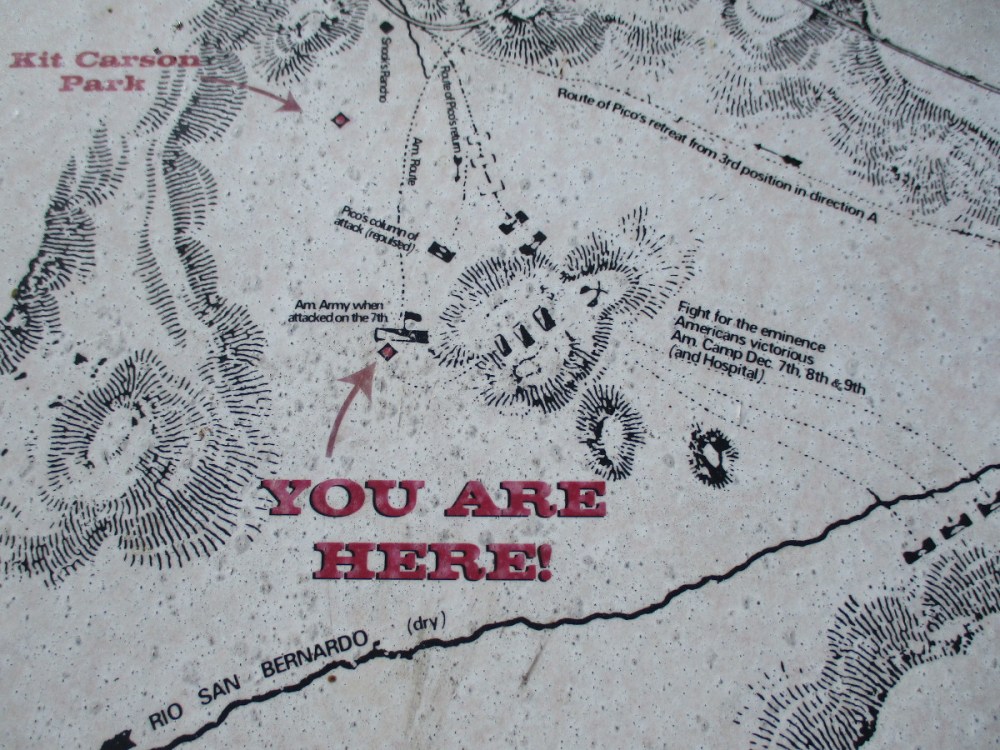
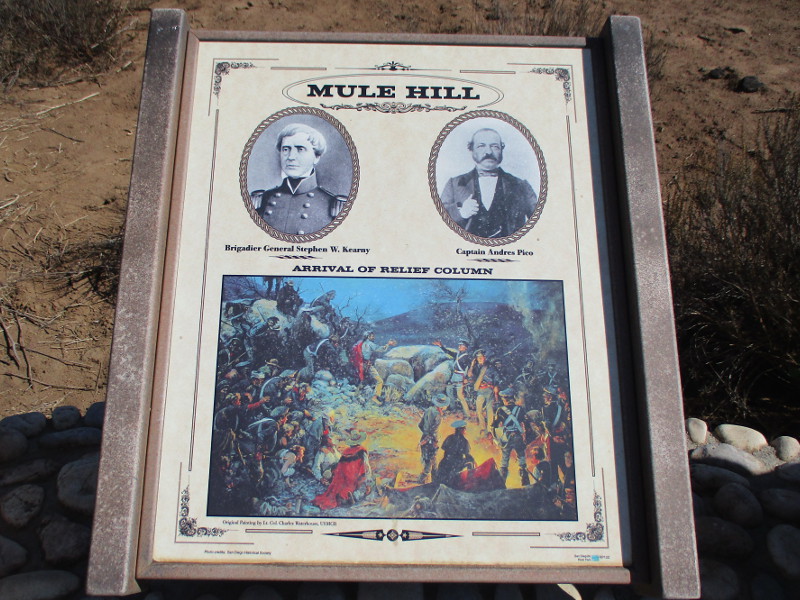
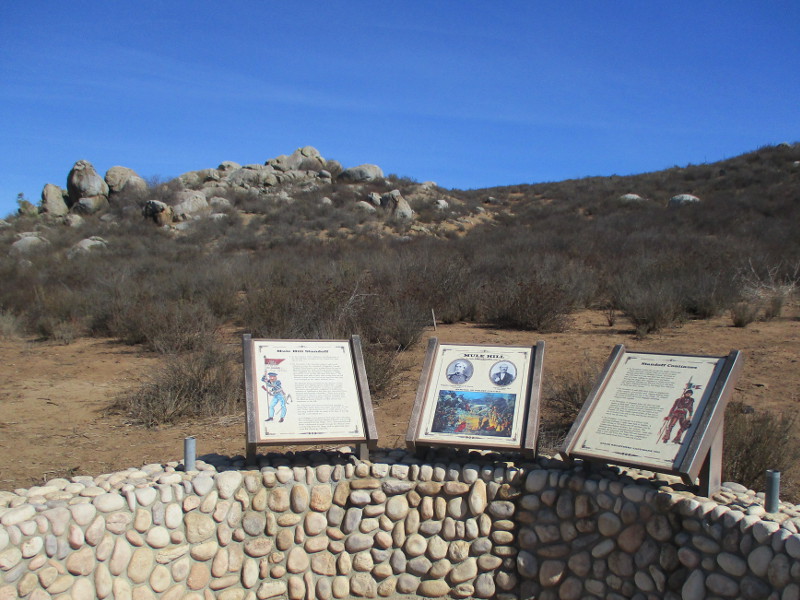
We’ve arrived at three signs near a pair of rock outcroppings that figure in the early history of San Diego. The signs explain what happened here at Mule Hill.
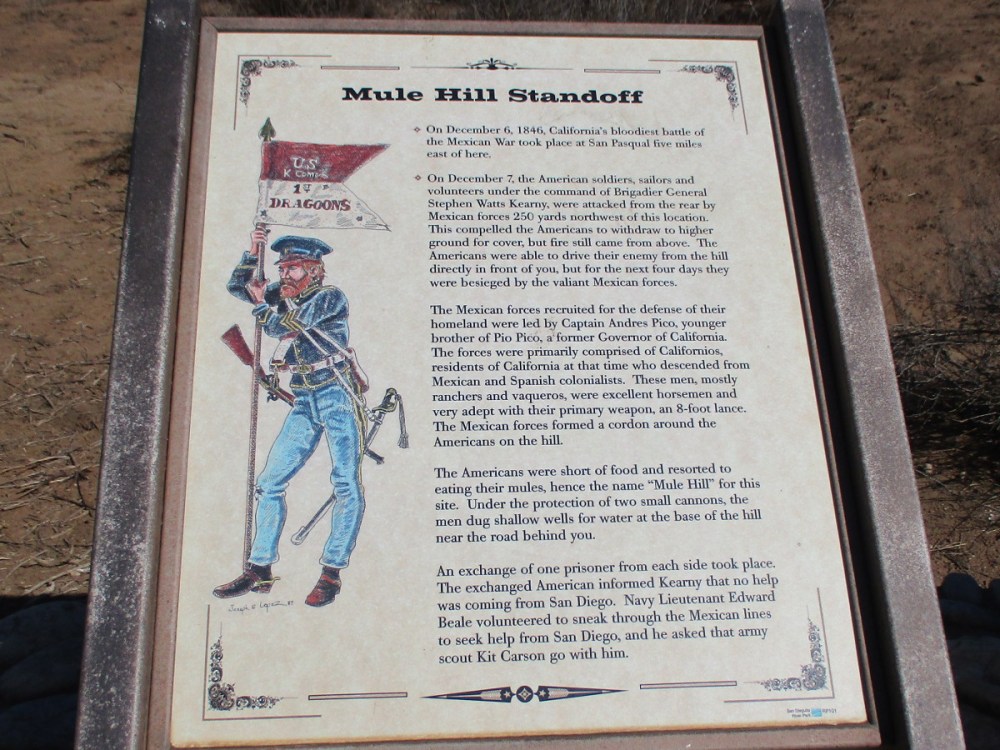
Mule Hill Standoff
On December 7, the American soldiers, sailors and volunteers under command of Brigadier General Stephen Watts Kearny, were attacked from the rear by Mexican forces 250 yards northwest of this location…
The Mexican forces recruited for the defense of their homeland were led by Captain Andres Pico . . . The forces were primarily comprised of Californios, residents of California at that time who descended from Mexican and Spanish colonialists…
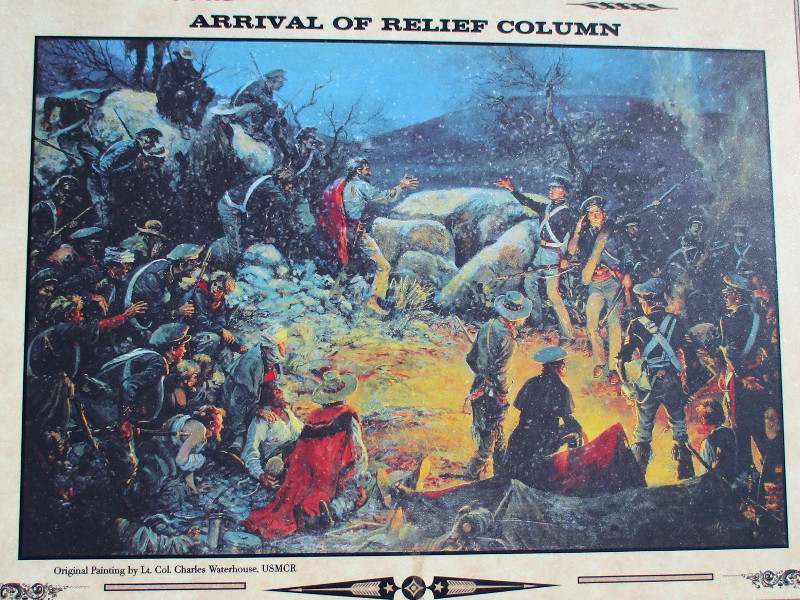
The Americans were short of food and resorted to eating their mules, hence the name “Mule Hill” for this site…
…Navy Lieutenant Edward Beale volunteered to sneak through the Mexican lines to seek help from San Diego, and he asked that army scout Kit Carson go with him.
Standoff Continues
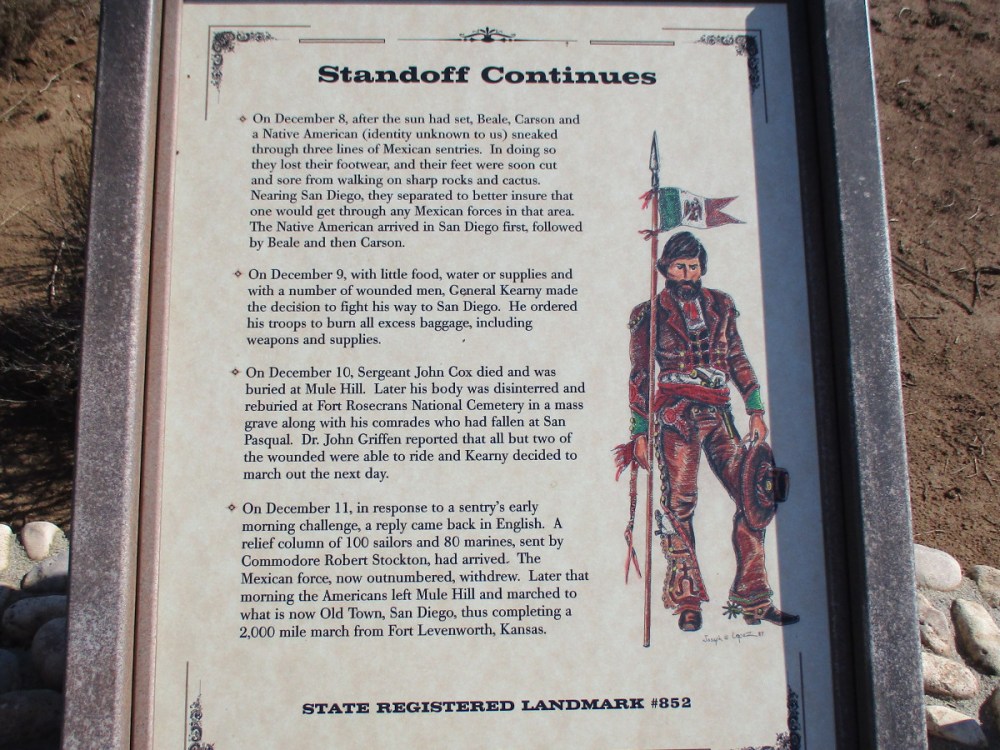
On December 8, after the sun had set, Beale, Carson and a Native American (identity unknown to us) sneaked through three lines of Mexican sentries…Nearing San Diego, they separated…The Native American arrived in San Diego first…
On December 9, with little food, water or supplies and a number of wounded men, General Kearny made the decision to fight his way to San Diego…
On December 10, Sergeant John Cox died and was buried at Mule Hill…
On December 11… A relief column of 100 sailors and 80 marines, sent by Commodore Robert Stockton, had arrived. The Mexican force, now outnumbered, withdrew. Later that morning the Americans left Mule Hill and marched to what is now Old Town, San Diego, thus completing a 2,000 mile march from Fort Leavenworth, Kansas.
…
Thanks for visiting Cool San Diego Sights!
I post new blogs pretty often. If you like discovering new things, bookmark coolsandiegosights.com and swing on by occasionally!
I live in downtown San Diego and love to walk around with my camera! You can follow Cool San Diego Sights via Facebook or Twitter!
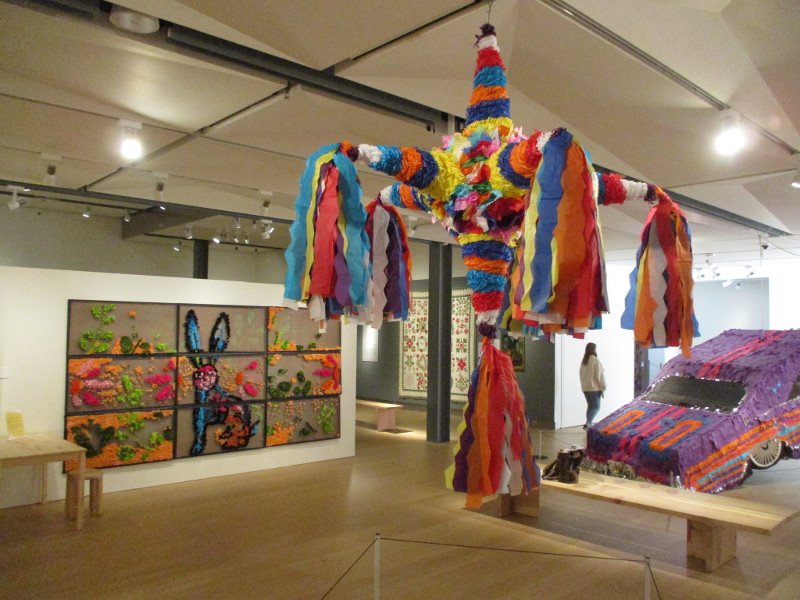
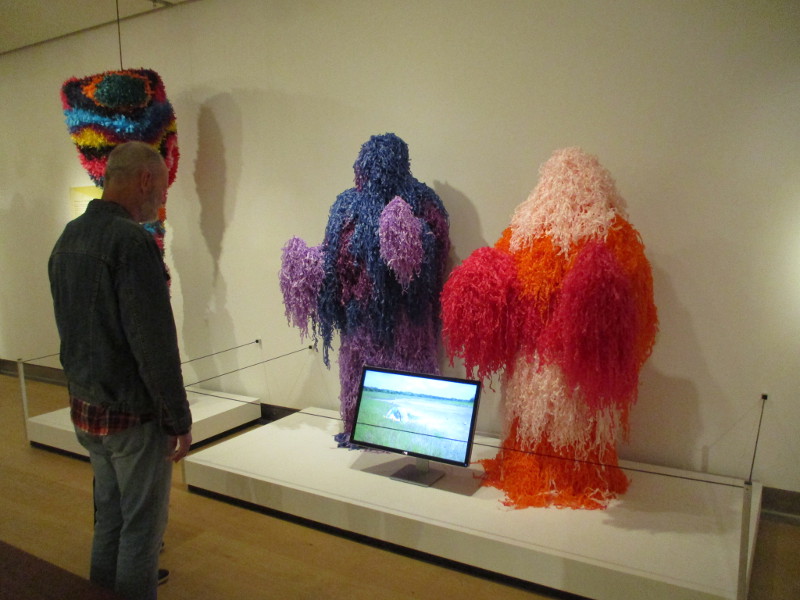
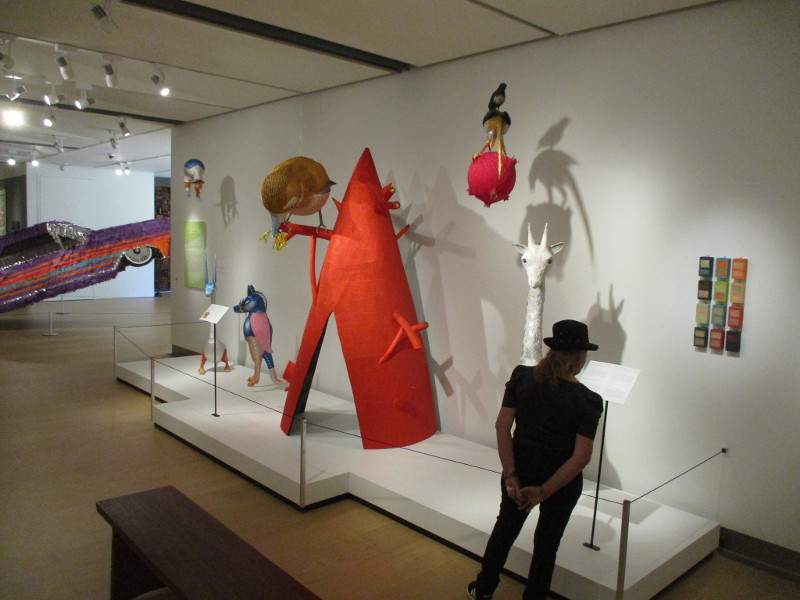
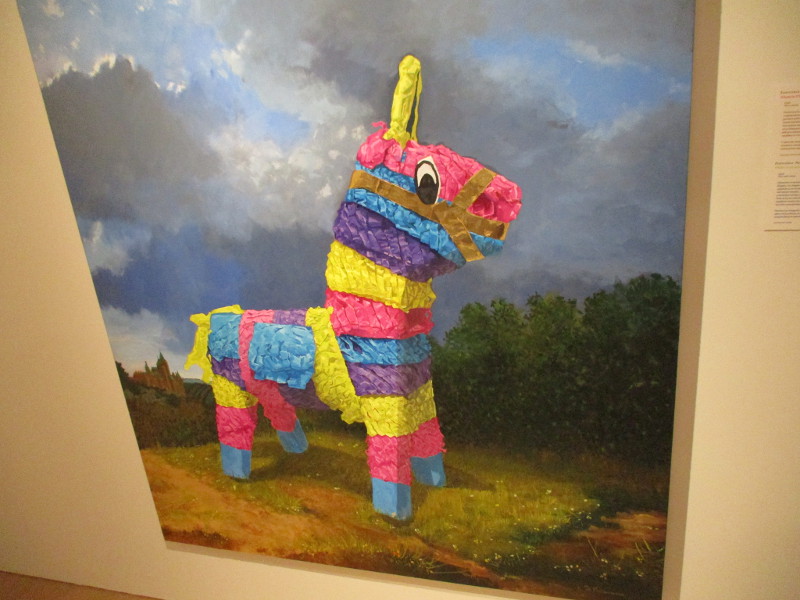
I’ve never seen so many unique piñatas all in one place. And so many unusual ones!
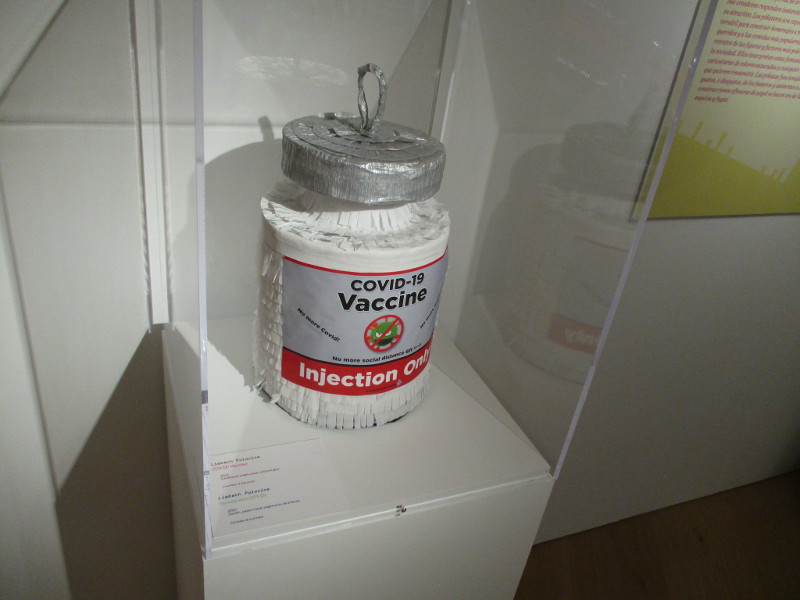
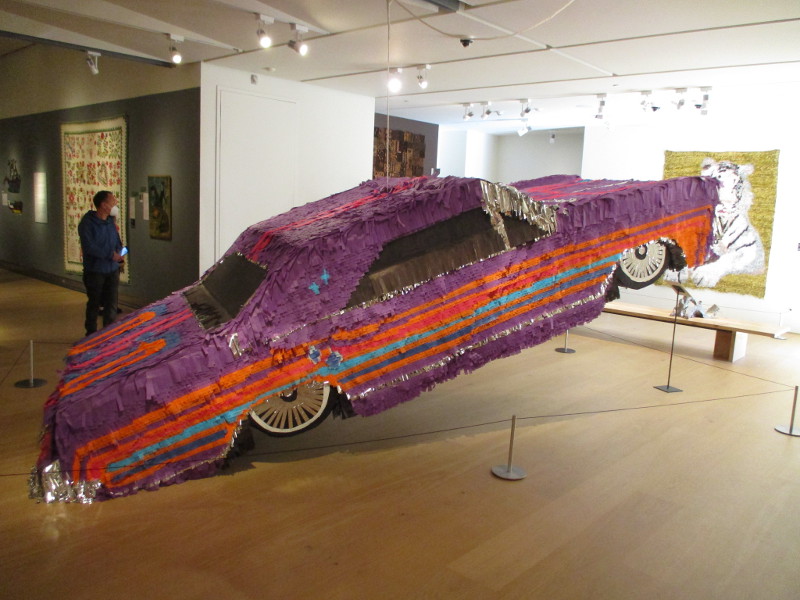
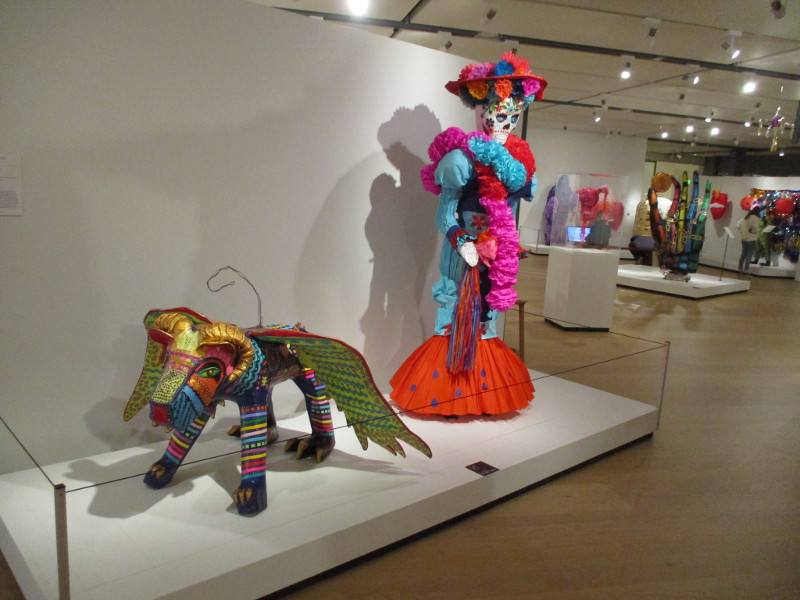
In addition to more familiar traditional piñatas, visitors to the exhibition will see unusual piñata costumes, creative piñata wall art, piñatas with political messages, humorous piñatas, pop culture piñatas . . . even a life-size car piñata! (That car piñata would hold a lot of candy!)
According to the Mingei’s website, this is one of the first-ever exhibitions to spotlight piñatas as a traditional craft and vibrant contemporary art form.
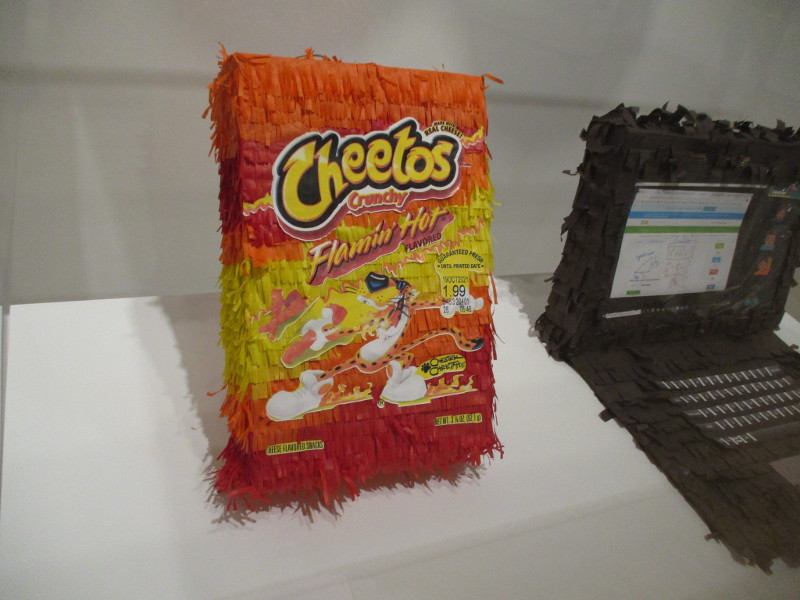
I was excited to see so many unexpected creations. It never occurred to me that piñatas might be crafted as small hummingbirds or butterflies, or a bag of Cheetos, or a bottle of COVID-19 vaccine!
…
Thanks for visiting Cool San Diego Sights!
I post new blogs pretty often. If you like discovering new things, bookmark coolsandiegosights.com and swing on by occasionally!
I live in downtown San Diego and love to walk around with my camera! You can follow Cool San Diego Sights via Facebook or Twitter!
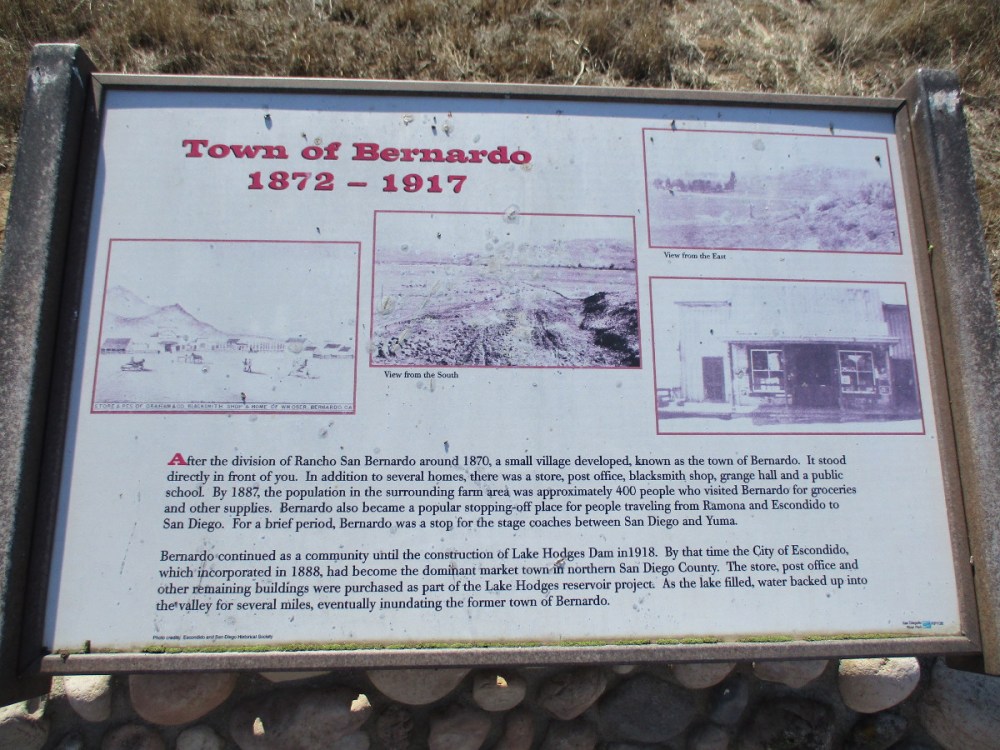
Did you know there used to be a town named Bernardo in what is now San Diego’s North County?
Bernardo was a tiny town between Escondido and Rancho Bernardo, where Lake Hodges is located today.
The creation of Lake Hodges in 1918, accomplished by damming the Bernardo River (now called San Dieguito River), put a definite end to little Bernardo. But today people hiking the Mule Hill Trail can see several information signs that recall the history of the now vanished town.
If you’d like to walk down the Mule Hill Trail yourself, take Interstate 15 to Bear Valley Parkway at the south end of Escondido. The wide dirt trail can be found about a quarter mile east of the freeway, leading south. (You’ll see it right before Beethoven Drive.)
Before reaching the site of old Bernardo, this very easy trail passes Mule Hill, where a skirmish took place during the Mexican-American War. I’ll be blogging about that coming up.
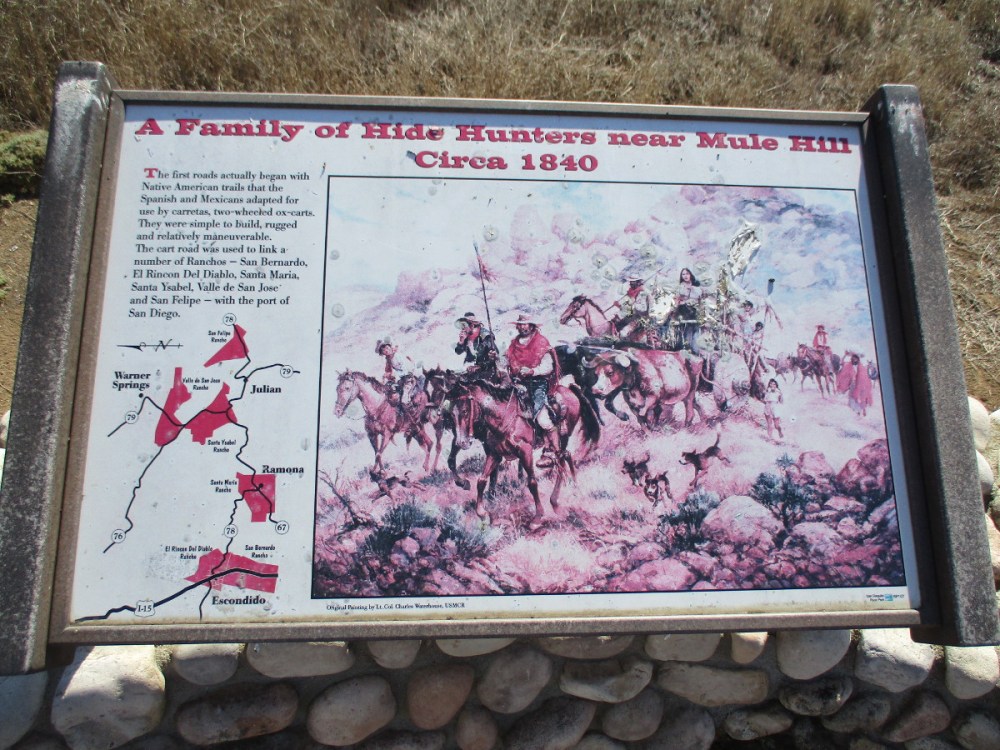
Cart roads used by the Spanish and Mexicans before the appearance of Bernardo linked a number of Ranchos–San Bernardo, El Rincon, Del Diablo, Santa Maria, Santa Ysabel, Valle de San Jose and San Felipe–with the port of San Diego.
After the division of Rancho San Bernardo around 1870, a small village developed, known as the town of Bernardo. In addition to several houses, there was a store, post office, blacksmith shop, grange hall and public school. By 1887, the population in the surrounding farm area was approximately 400 people…
For a brief period, Bernardo was a stop for the stagecoaches between San Diego and Yuma.
The San Diego to Yuma Road was an overland trail in the mid-1800s. It was used by the Army of the West in 1846 and gold rush immigrants from 1848 through 1851. It passed through tiny Bernardo as it led northeast from Peñasquitos to Ramona, eventually connecting with the Butterfield Stage Route at Warner Springs.
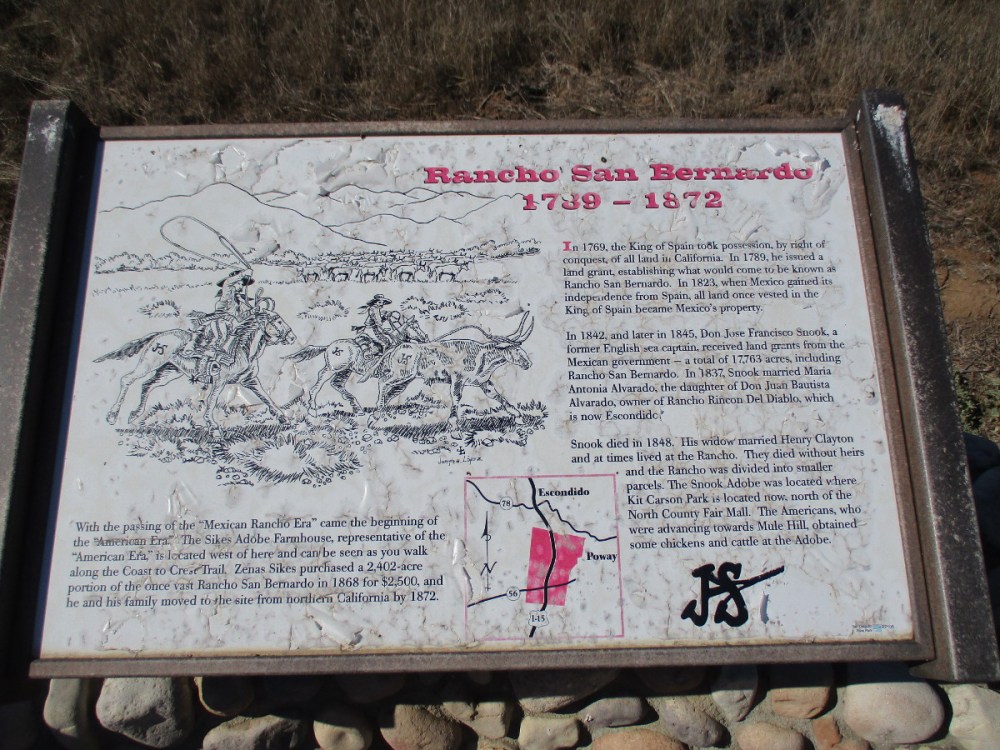
The history of Rancho San Bernardo began in the late 18th century when the King of Spain took possession of all land in California. In 1823, when Mexico gained its independence, the land became Mexico’s property. Don Jose Francisco Snook, a former English sea captain, received land grants from the Mexican government, including Rancho San Bernardo…
With the passing of the Mexican rancho era came the beginning of the American era, which is represented by the nearby Sikes Adobe Farmhouse. The restored farmhouse is a historic site that one can visit a short distance down the Coast to Crest Trail. (The Mule Hill Trail is a segment of the Coast to Crest Trail.)
…
Thanks for visiting Cool San Diego Sights!
I post new blogs pretty often. If you like discovering new things, bookmark coolsandiegosights.com and swing on by occasionally!
I live in downtown San Diego and love to walk around with my camera! You can follow Cool San Diego Sights via Facebook or Twitter!
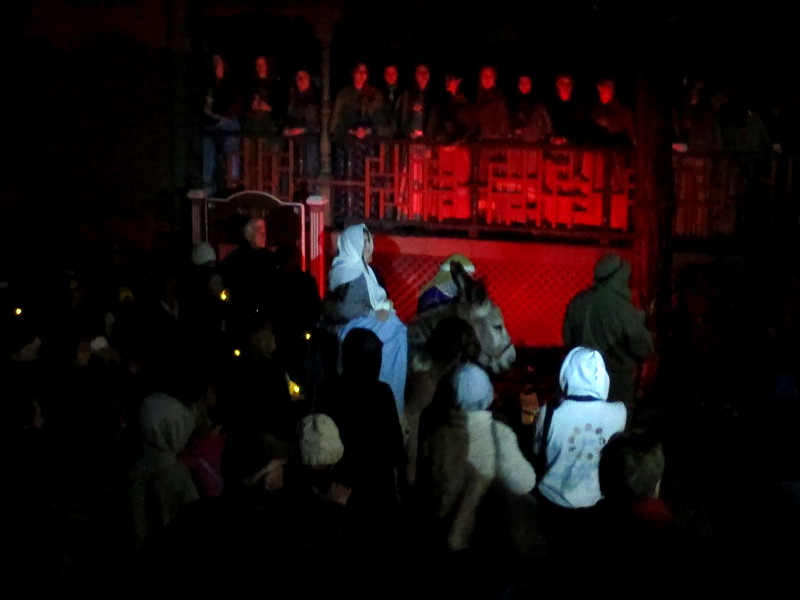
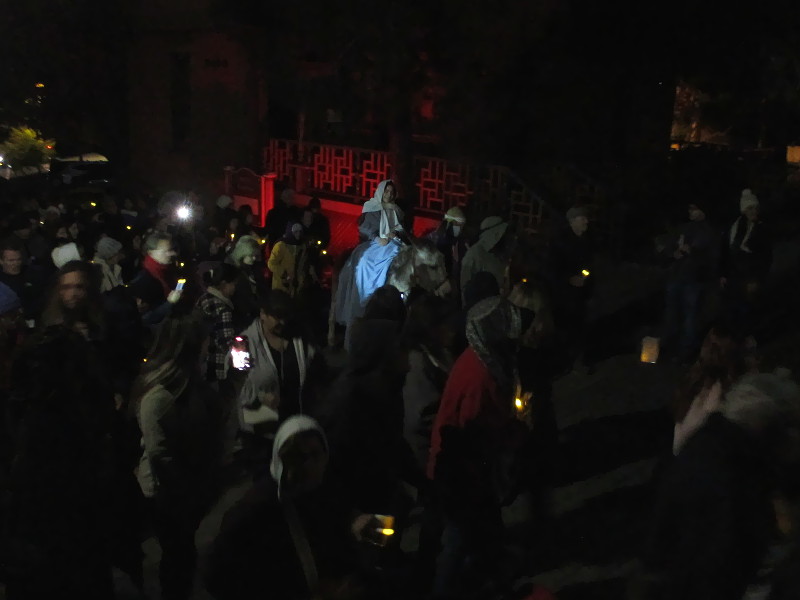
The 64th Annual Las Posadas procession was held this evening at Heritage County Park, in San Diego’s Old Town neighborhood.
At seven o’clock, Mary astride a donkey and Joseph began to slowly move up Heritage Park Row, followed by members of the public who held simulated candles.
It was the traditional Mexican reenactment of Mary and Joseph’s search for lodging in Bethlehem, shortly before the birth of Jesus.
There was a brief narration followed by short call–and–response verses at six stations, representing different inns in Bethlehem. The stations were located in front of the historic houses that stand preserved in Heritage County Park.
I had never experienced a Las Posadas procession before. I was surprised to see so many participants–young and old–on a very chilly December evening.
In the darkness my camera managed to capture these photos.
…
Thanks for visiting Cool San Diego Sights!
I post new blogs pretty often. If you like discovering new things, bookmark coolsandiegosights.com and swing on by occasionally!
I live in downtown San Diego and love to walk around with my camera! You can follow Cool San Diego Sights via Facebook or Twitter!
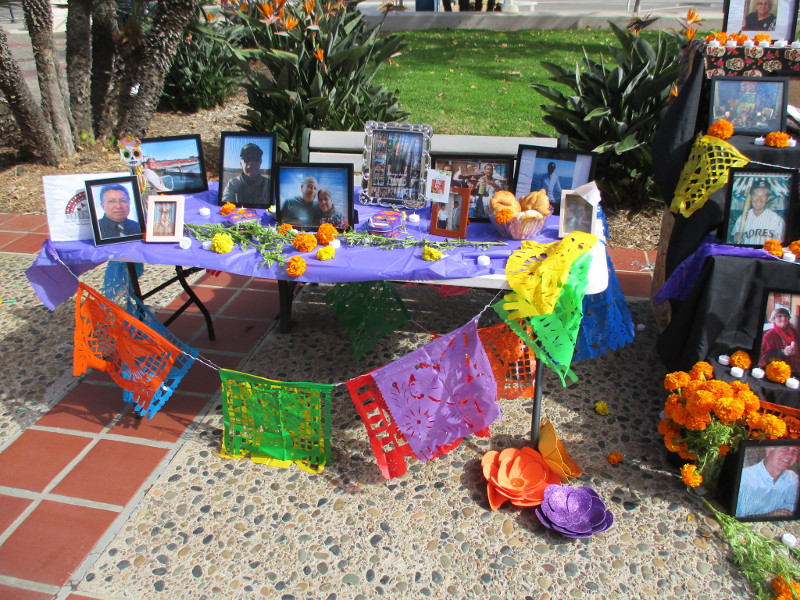
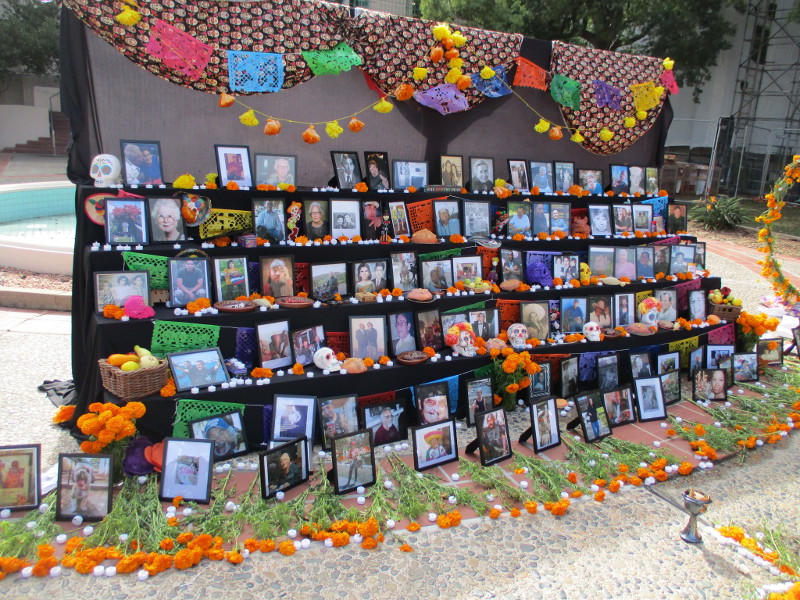
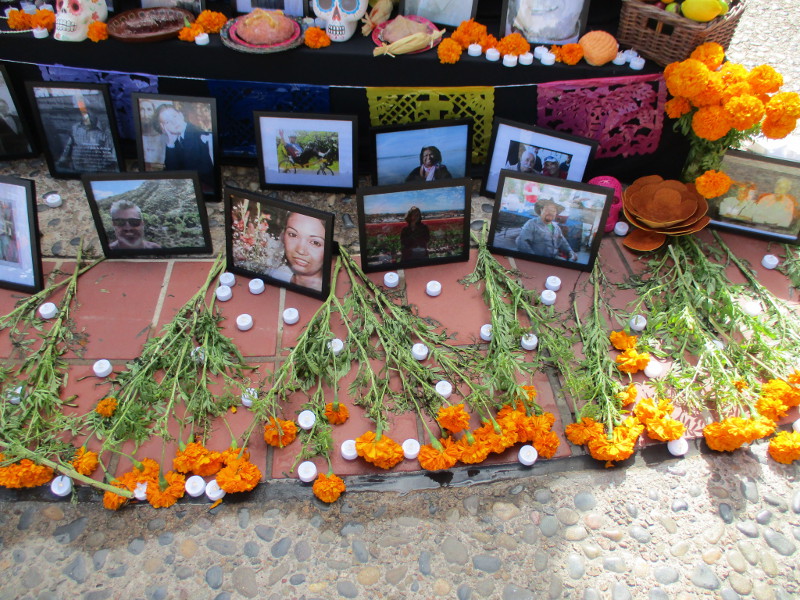
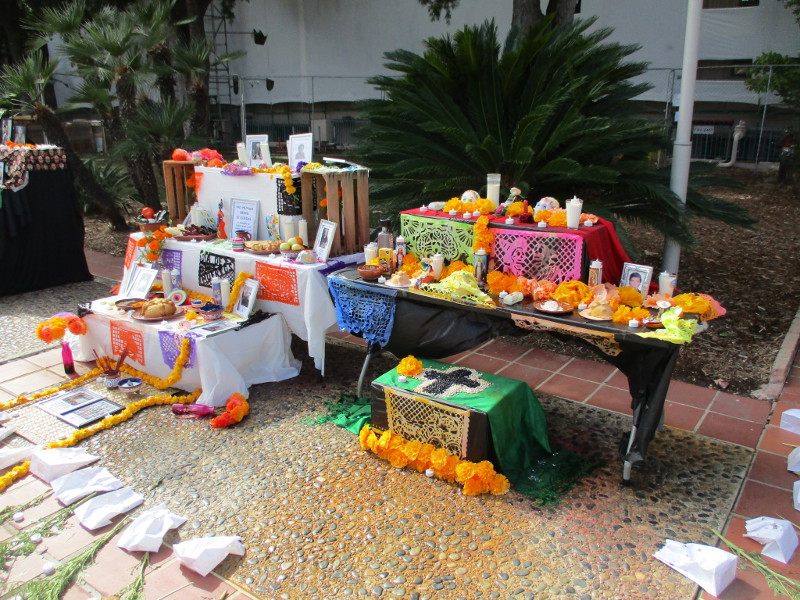
Día de los Muertos is again being celebrated with an altar at the San Diego County Administration Building.
For 2022, the altar has greatly expanded. Composed of many sections, the altar now fills almost half the outdoor plaza on the east side of the building.
Numerous loved ones who’ve passed on are being remembered this year.
I happened to photograph the altars the past two years. Though equally moving, in size they were small compared to the 3rd Annual Altar de Muertos that I observed today.
It appears the Día de los Muertos tradition at the San Diego County Administration Center is strong and growing.
…
Thank you for visiting Cool San Diego Sights!
I post new blogs pretty often, so you might want to bookmark coolsandiegosights.com and check back from time to time.
You can explore Cool San Diego Sights by using the search box on this website’s sidebar. Or click a tag! There’s a lot of stuff to share and enjoy!
I live in downtown San Diego and love to walk around with my camera! You can follow Cool San Diego Sights via Facebook or Twitter!
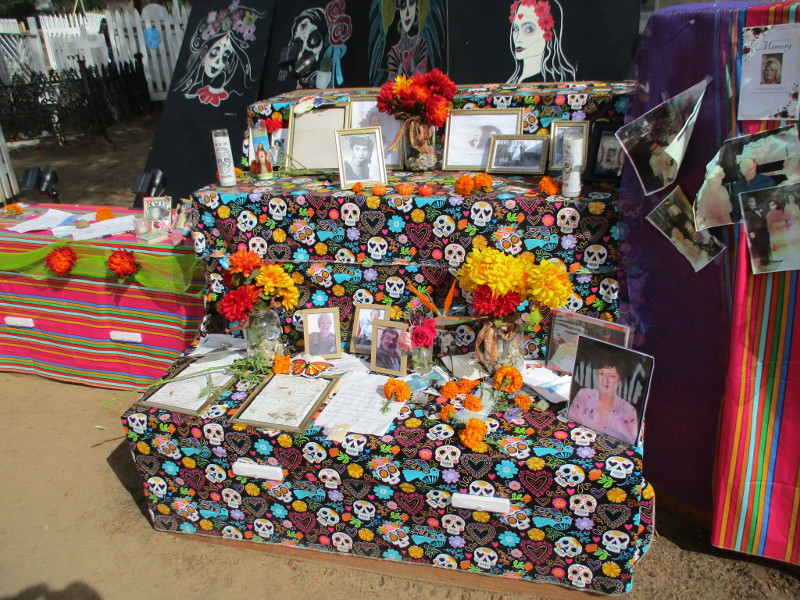
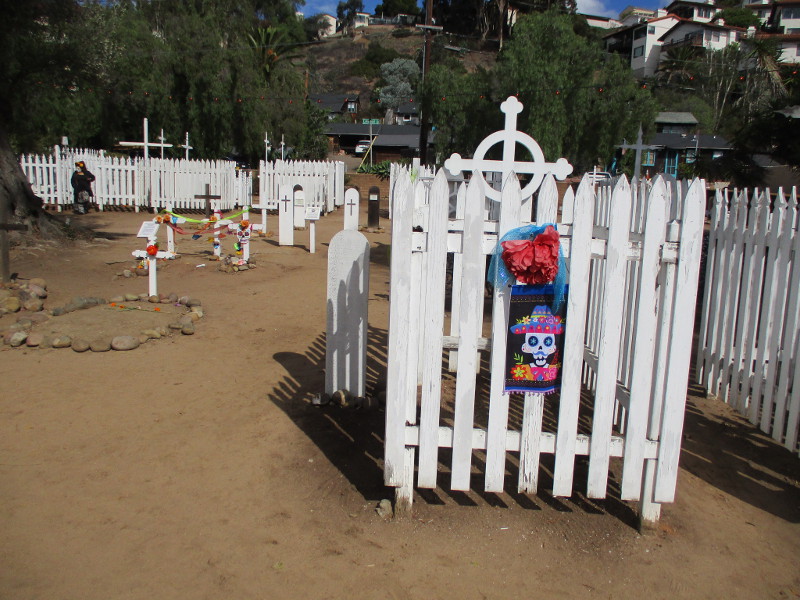
At sundown this evening there will be a Día de los Muertos candlelight procession through Old Town. Those participating will end at San Diego’s old El Campo Santo cemetery, where many of our city’s earliest residents are buried.
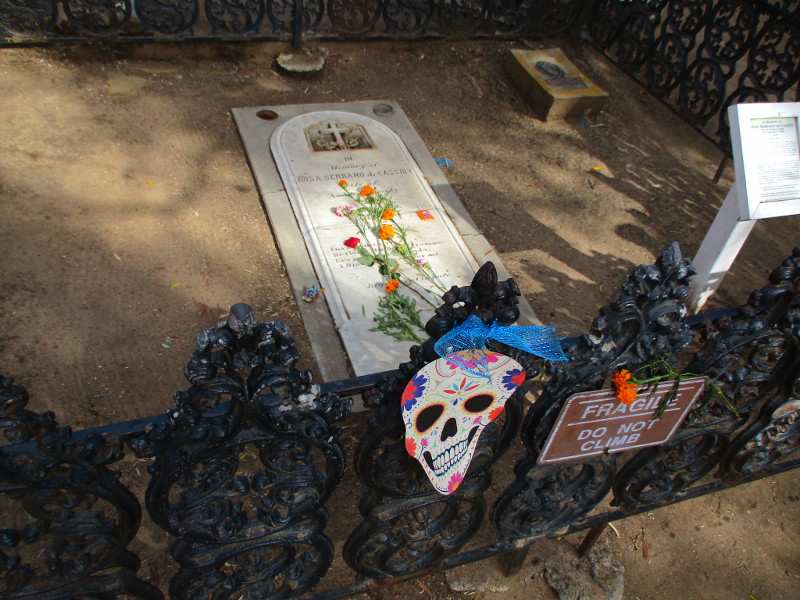
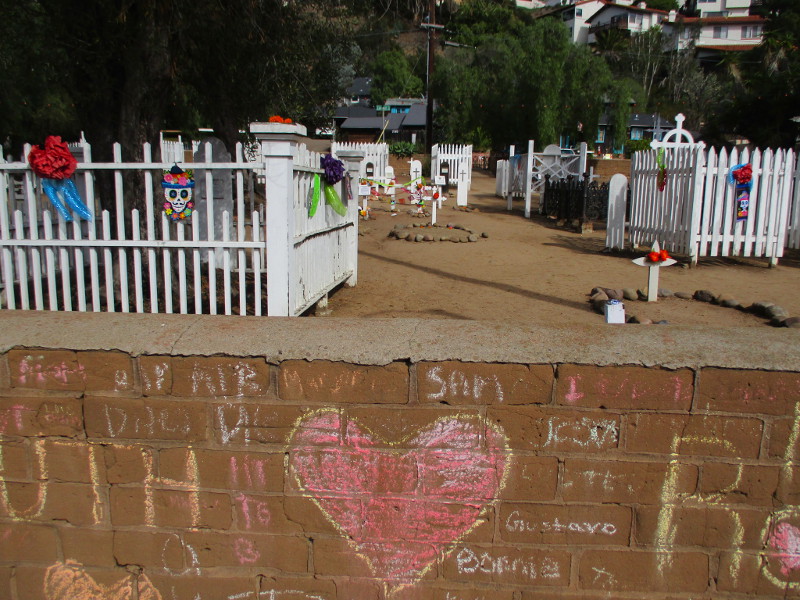
This afternoon the small cemetery had already been decorated for Día de los Muertos.
A colorful altar stands near the entrance, just beyond the El Campo Santo historical marker. According to one sign I noticed, the Community Altar is by the Descendants of Old Town San Diego.
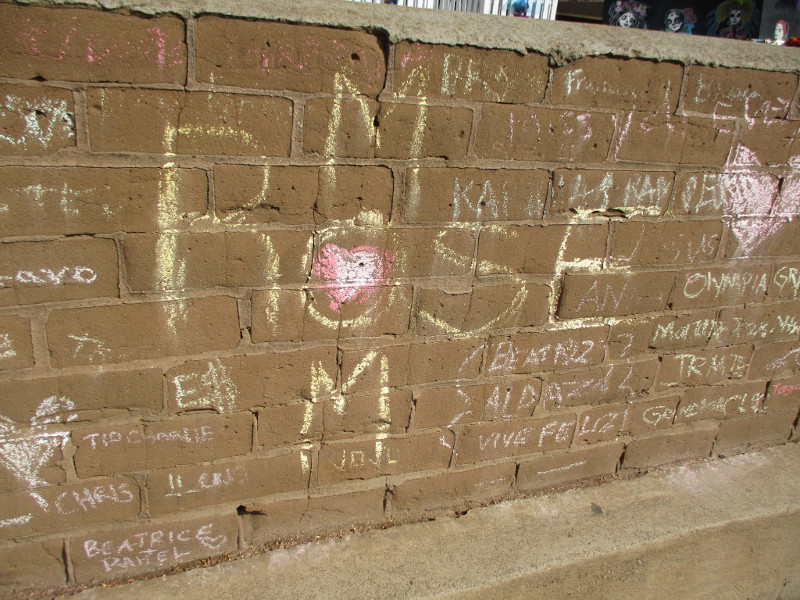
Marigolds and paper sugar skulls decorate gravesites, and the names of deceased loved ones have been scrawled in chalk on the cemetery wall along San Diego Avenue.
…
Thank you for visiting Cool San Diego Sights!
I post new blogs pretty often, so you might want to bookmark coolsandiegosights.com and check back from time to time.
You can explore Cool San Diego Sights by using the search box on this website’s sidebar. Or click a tag! There’s a lot of stuff to share and enjoy!
I live in downtown San Diego and love to walk around with my camera! You can follow Cool San Diego Sights via Facebook or Twitter!
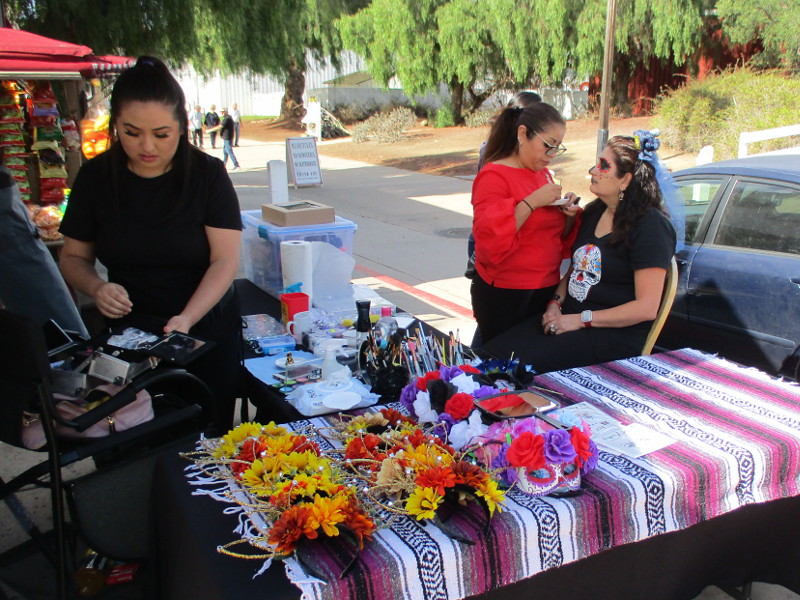
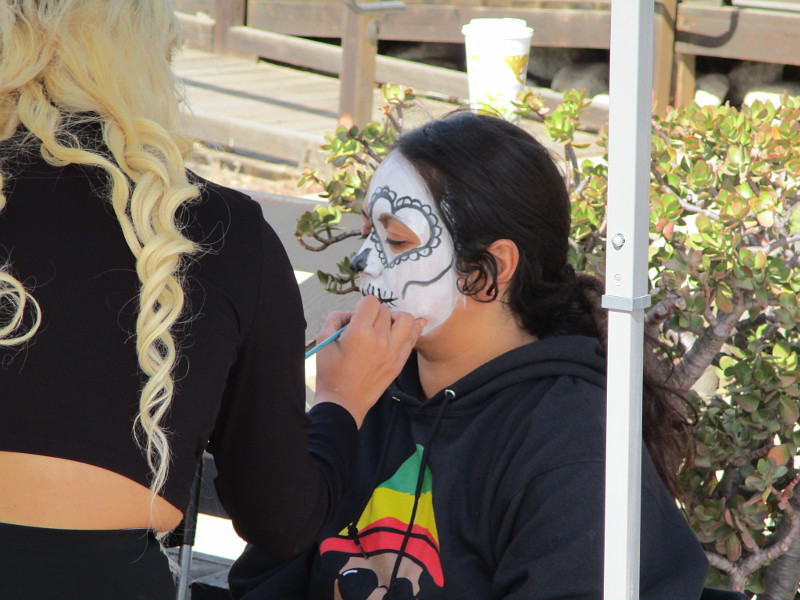
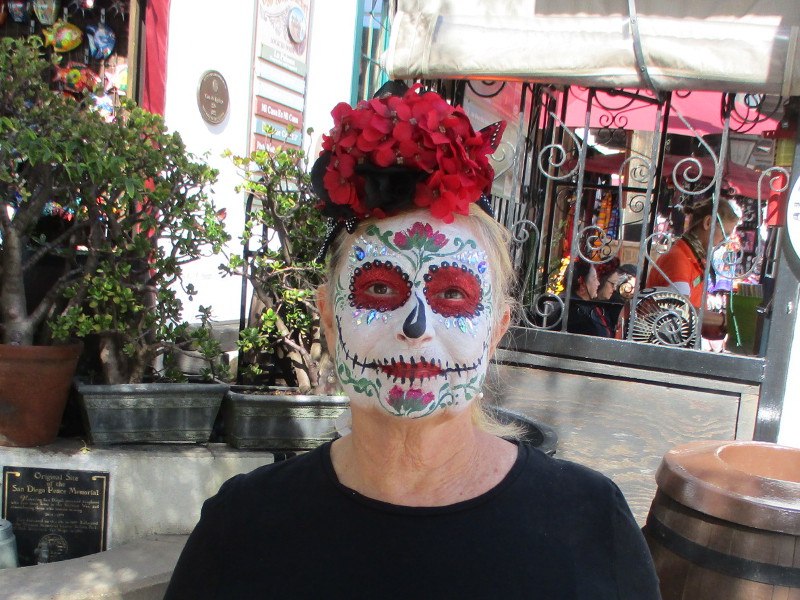
Today San Diego is celebrating Día de los Muertos!
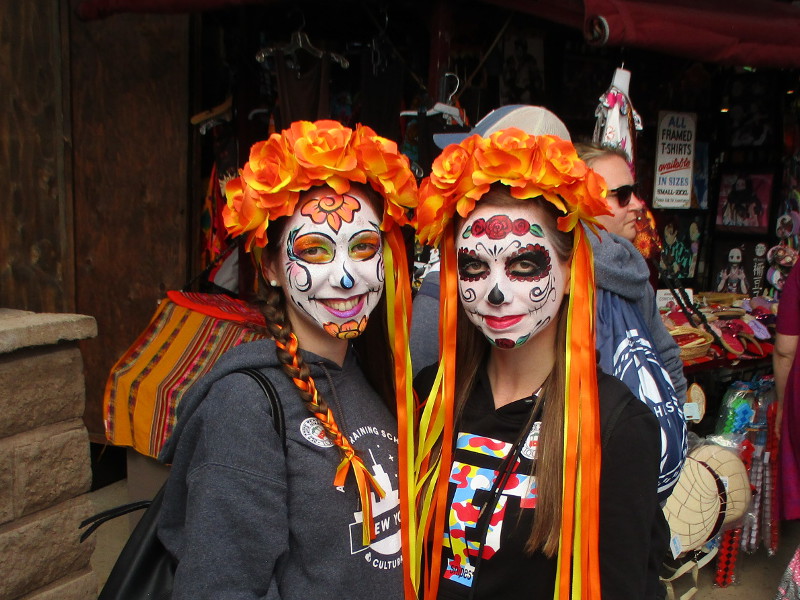
By mid-afternoon, people were streaming into Old Town. Many will participate in this evening’s candlelight procession down San Diego Avenue from the Immaculate Conception Church to El Campo Santo cemetery.
In preparation, some were having their faces traditionally painted as sugar skulls. Face painting artists had tables set up at several points along the sidewalk.
As I passed through Old Town San Diego State Historic Park, then down San Diego Avenue, this is what my camera encountered!
…
Thank you for visiting Cool San Diego Sights!
I post new blogs pretty often, so you might want to bookmark coolsandiegosights.com and check back from time to time.
You can explore Cool San Diego Sights by using the search box on this website’s sidebar. Or click a tag! There’s a lot of stuff to share and enjoy!
I live in downtown San Diego and love to walk around with my camera! You can follow Cool San Diego Sights via Facebook or Twitter!
The symbolic artwork was painted on a wooden fence on Logan Avenue south of Evans Street. I spotted it yesterday.
The local artist is Jessica Petrikowski (@artbypetrikowski). Very colorful Aztec imagery is accompanied by two hummingbirds. I believe that’s Quetzalcoatl on the left and his rival “opposite” Tezcatlipoca. The pair of touching hummingbirds are of the same two colors. Throughout the mural, sprouting green life rises from the earth.
This mural was painted a little over year ago. The spray paint art that previously decorated this same fence was also by Jessica. You can see a photo of that old mural among others in this blog post.
…
Thank you for visiting Cool San Diego Sights!
I post new blogs pretty often, so you might want to bookmark coolsandiegosights.com and check back from time to time.
You can explore Cool San Diego Sights by using the search box on this website’s sidebar. Or click a tag! There’s a lot of stuff to share and enjoy!
I live in downtown San Diego and love to walk around with my camera! You can follow Cool San Diego Sights via Facebook or Twitter!


























 Cool San Diego Sights!