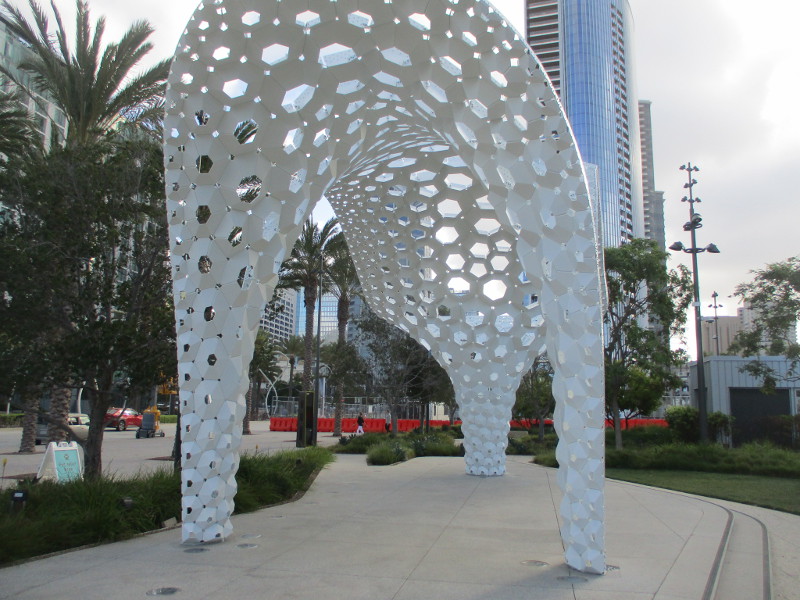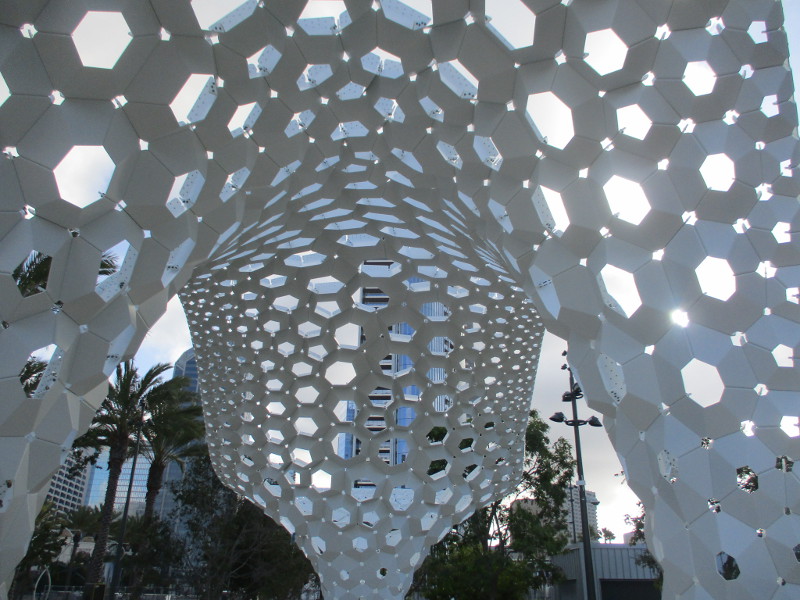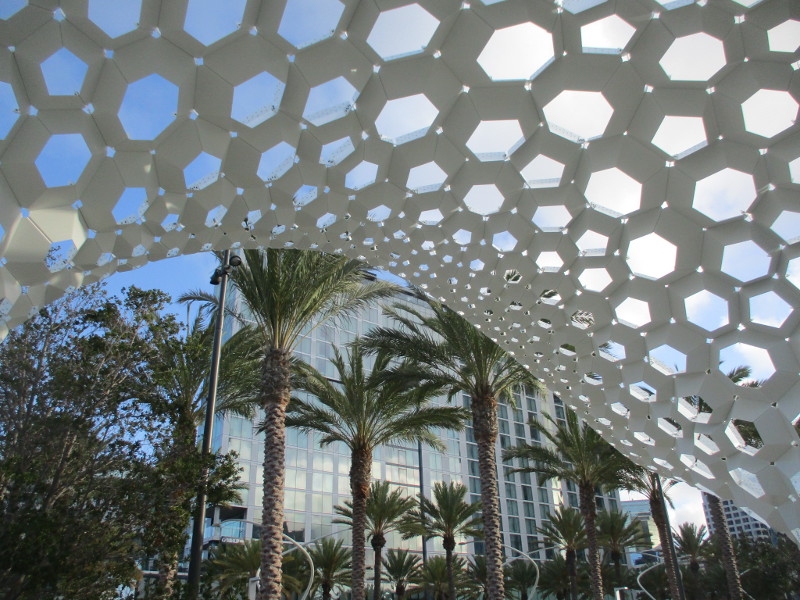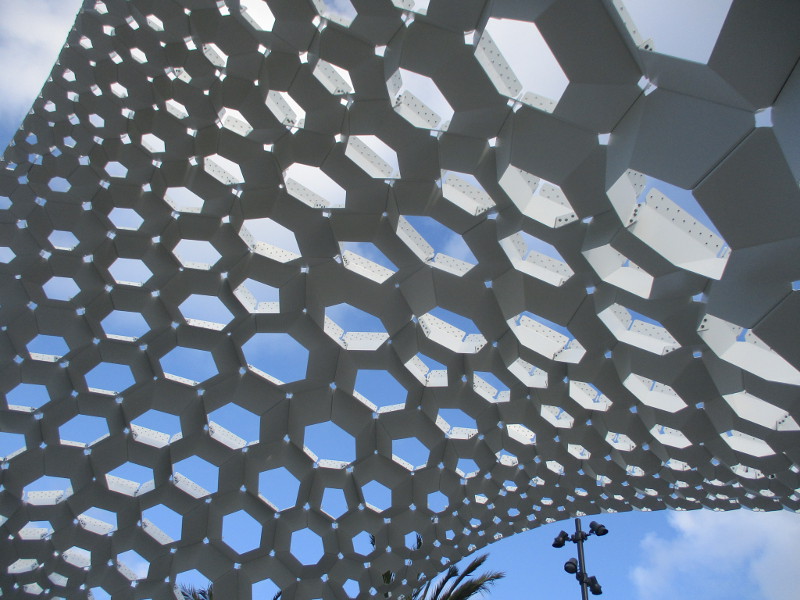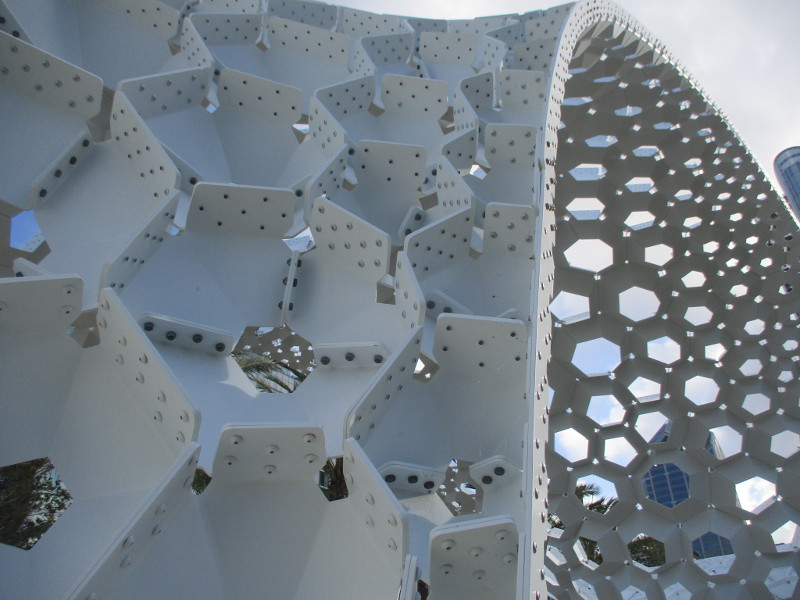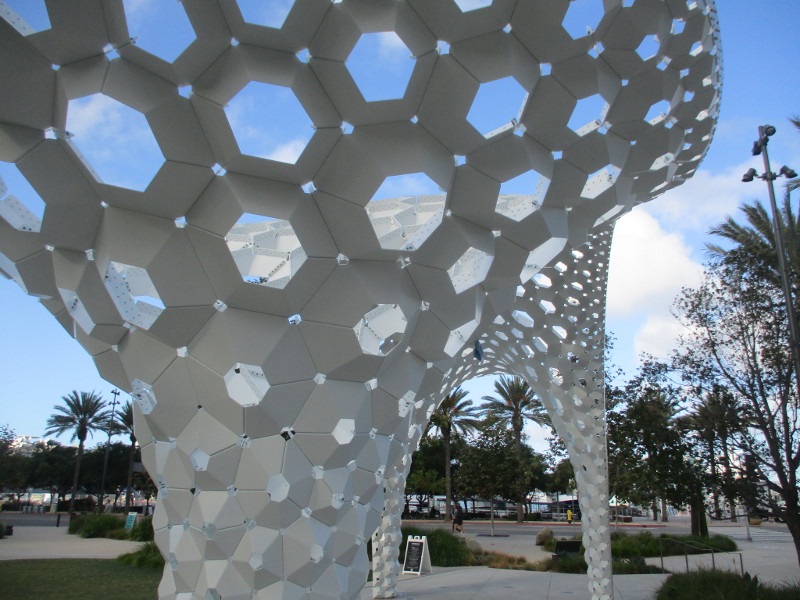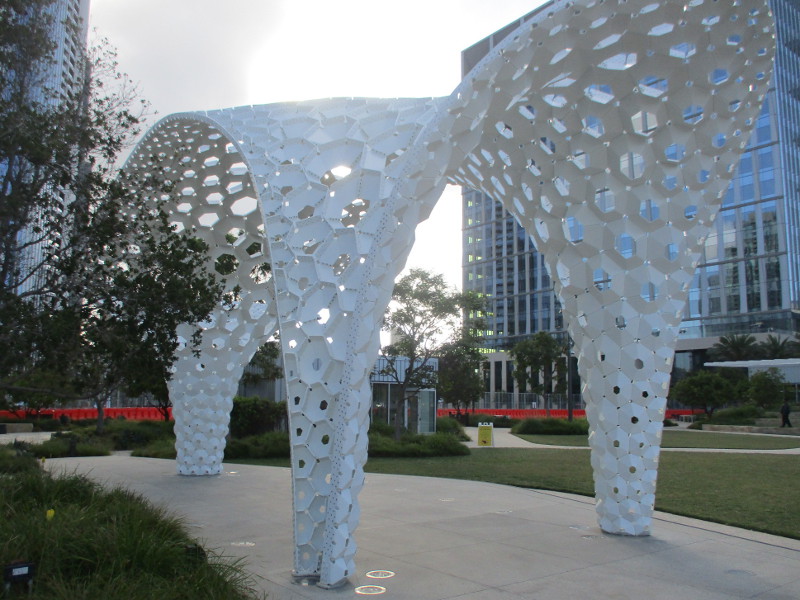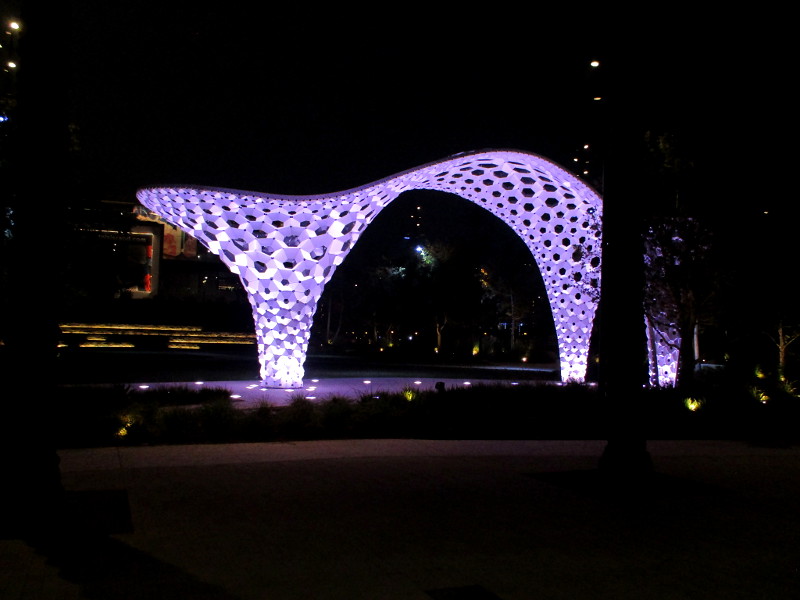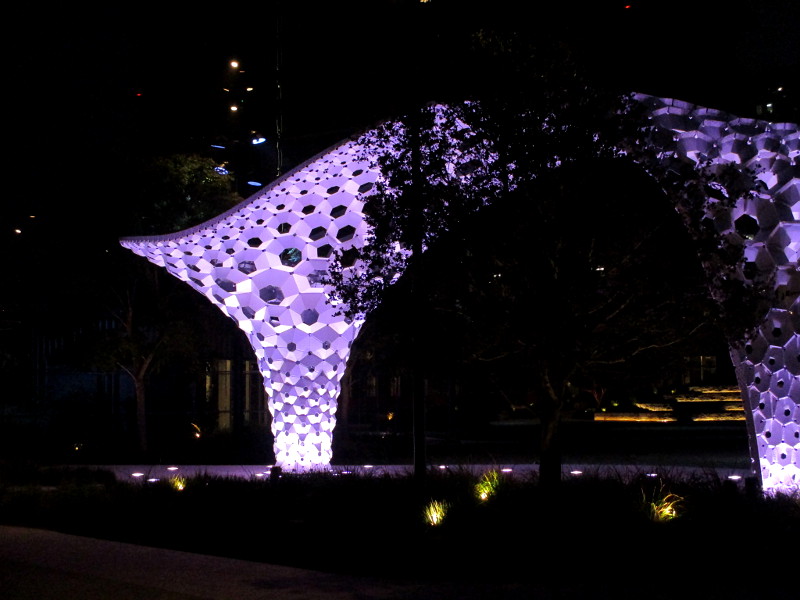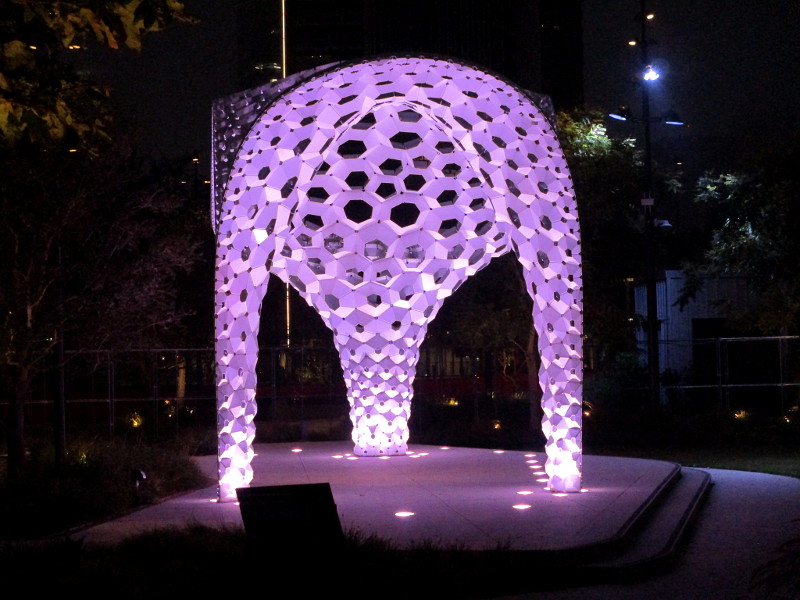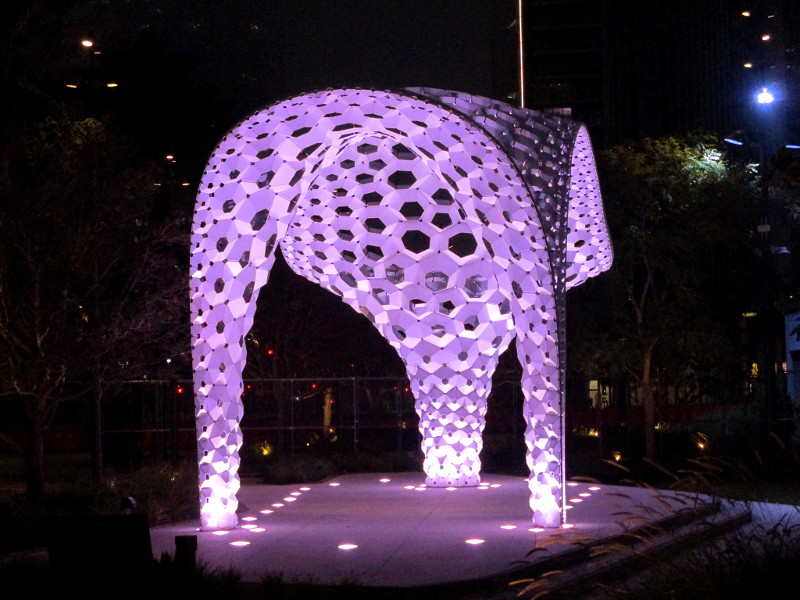
Walking through Shhh Pavilion: The Hopekeeper.

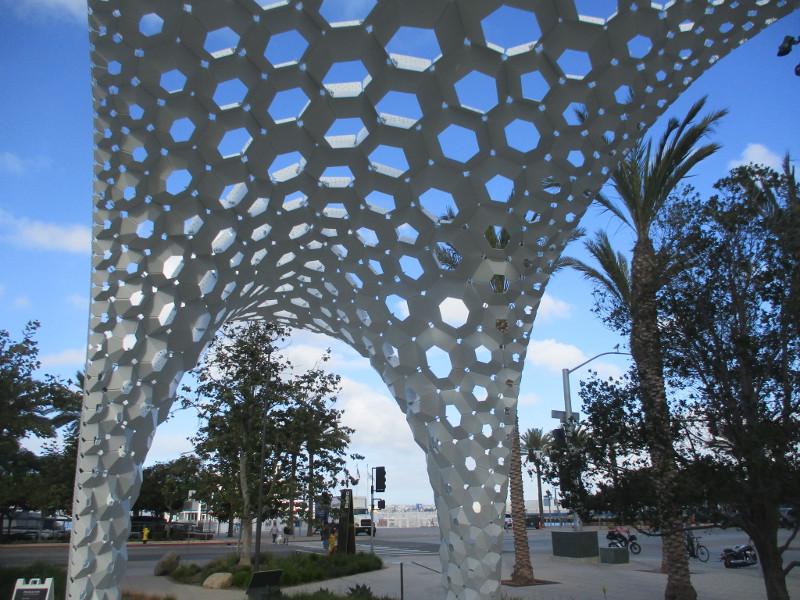
Yesterday I walked through Shhh Pavilion: The Hopekeeper.

What’s that?

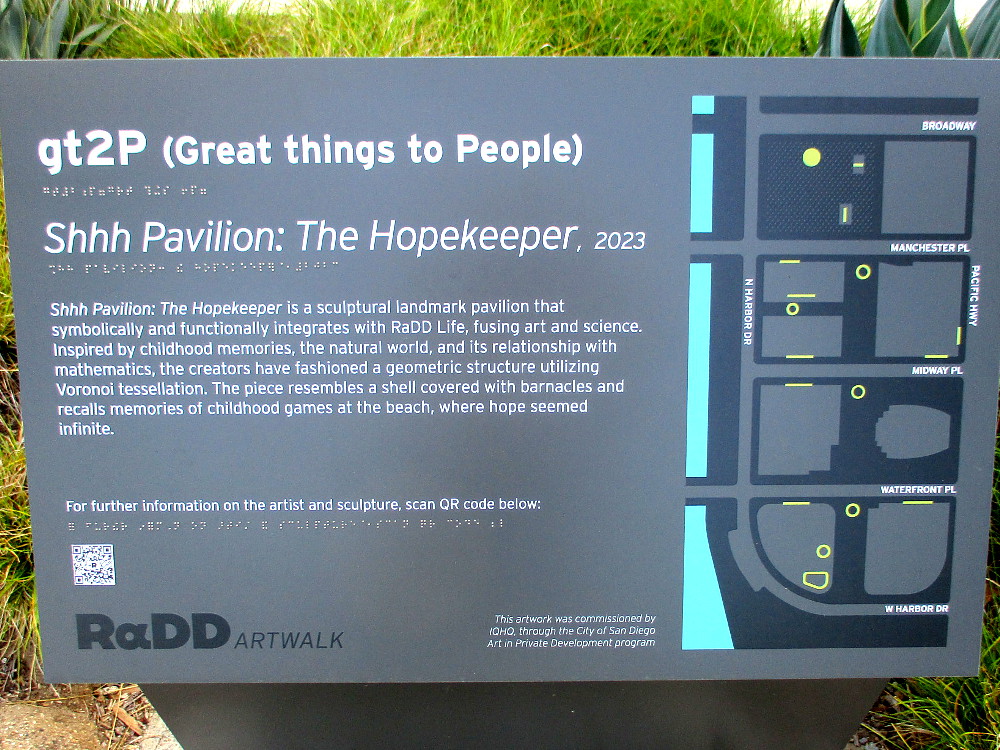
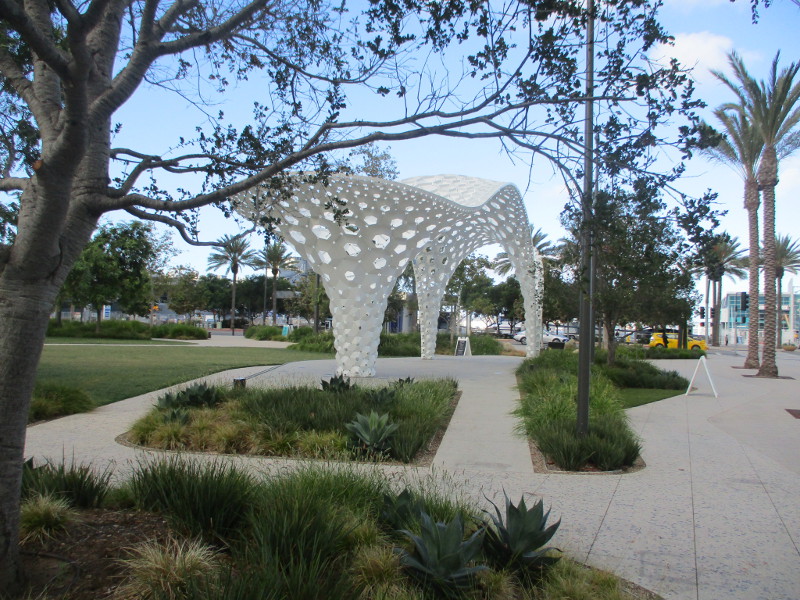
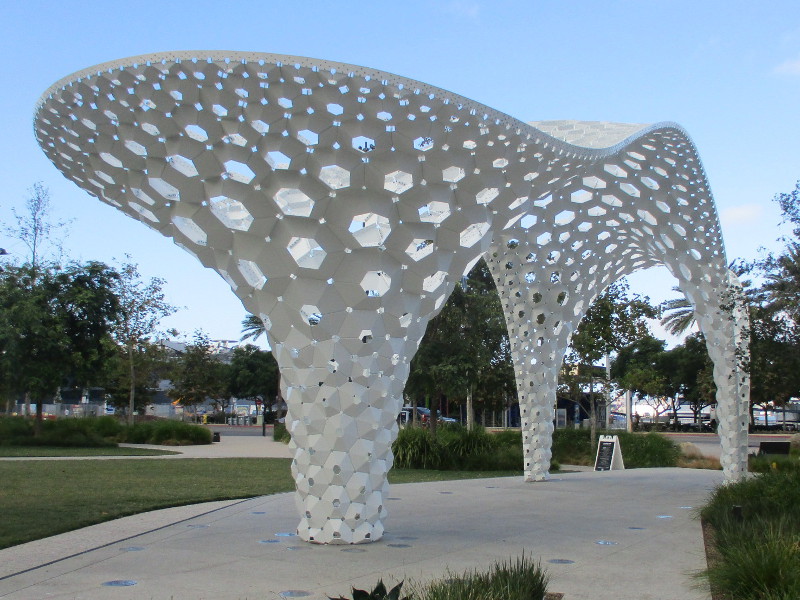
Shhh Pavilion: The Hopekeeper is the unusual name of a very cool sculpture that rises in recently opened Progress Park. Progress Park is located in downtown San Diego near the waterfront, at the corner of Broadway and Harbor Drive.

The beautiful new park is part of the Research and Development District (RaDD) complex. The sculpture is part of the RaDD Artwalk. It was commissioned by IQHQ, through the City of San Diego Art in Private Development program.

The creator of this very unique public art is gt2P (Great things to People), a Santiago de Chile based collaborative studio collective.

This unusual sculpture is a geometric structure that utilizes something called Voronoi tessellation. The mathematical concept is nicely described on this webpage.

Until recently, the new park was surrounded by a construction fence. But yesterday I noticed the fence was down. So I had to walk under and through the sculpture with my camera!
I post new blogs pretty often. If you like discovering new things, bookmark coolsandiegosights.com and swing on by occasionally!

I live in downtown San Diego and love to walk around with my camera! You can follow Cool San Diego Sights via Facebook or X.

Feel free to share!
The oculus at Chula Vista’s Sweetwater Park!

The newly opened Sweetwater Park on Chula Vista’s bayfront has a very unique architectural feature.

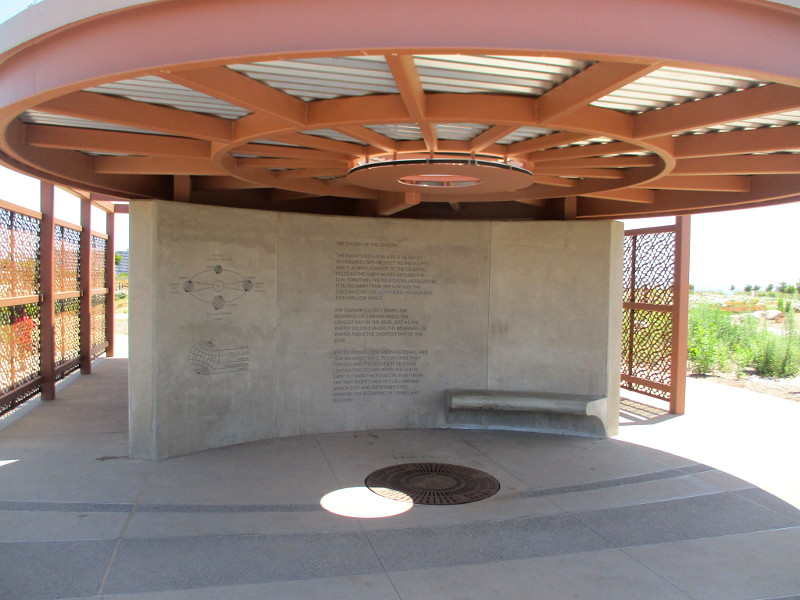
At one end of the public restrooms a sheltering roof contains an oculus. What’s an oculus? It’s a circular opening that allows natural sunlight to shine through.

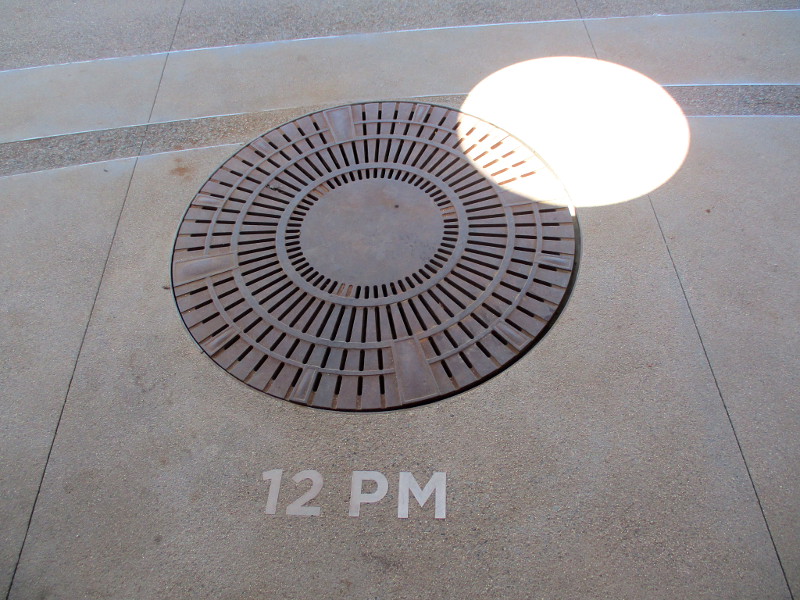
During the day, the oculus casts a circle of light on bands in the concrete underfoot. You can see those curving bands in the above photograph.

By observing the light’s movement along the bands, Earth’s rotation can be tracked, as the sun “rises” in the east and “sets” in the west. Depending on the season of year, and the angle of the sun’s path through the sky, the projected light will follow a particular band.

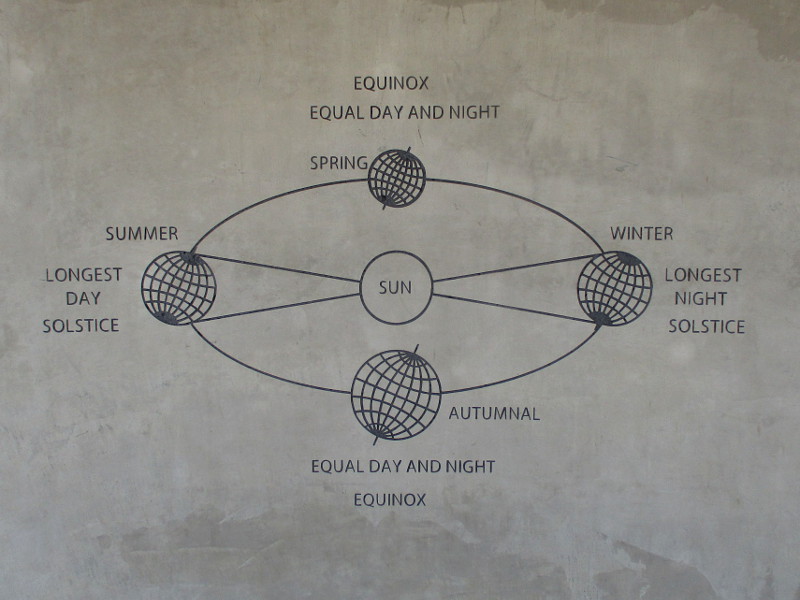
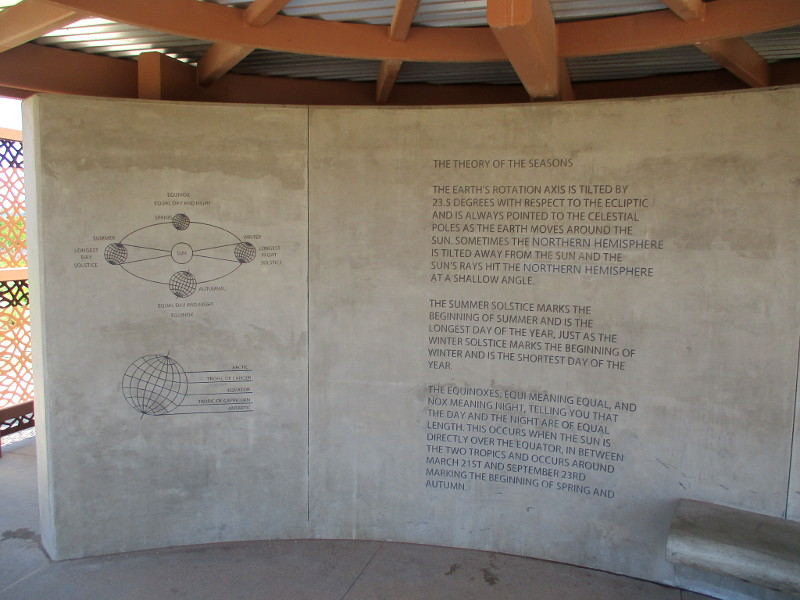
On the wall is an explanation…

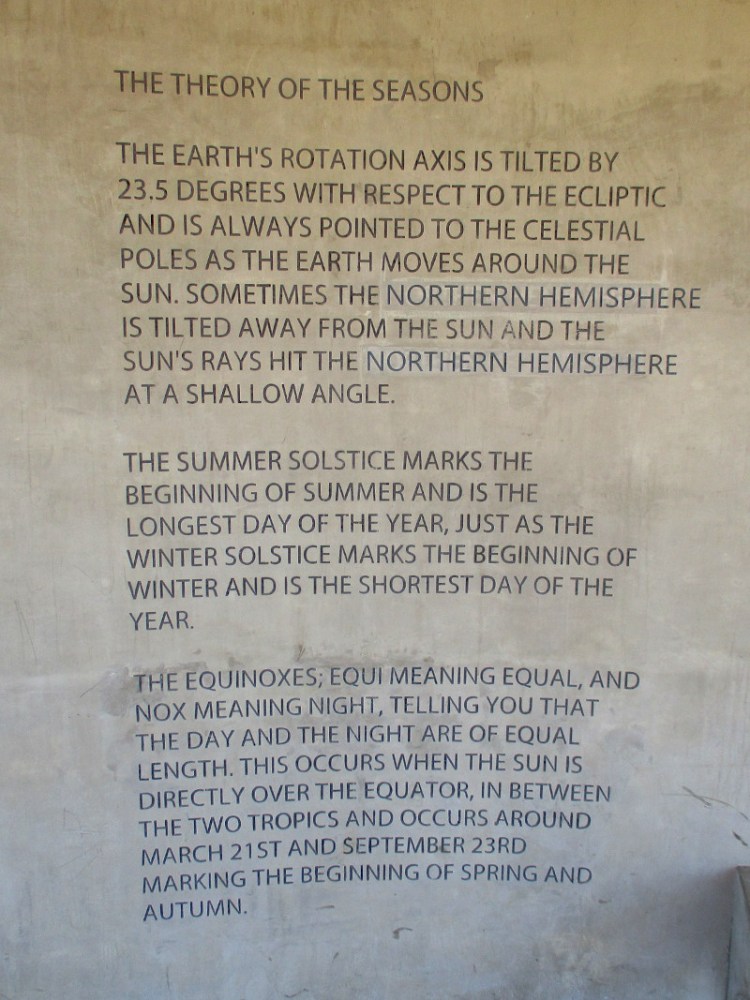
The Theory of the Seasons.

The Earth’s rotation axis is tilted by 23.5 degrees with respect to the ecliptic and is always pointed to the celestial poles as the Earth moves around the Sun. Sometimes the Northern Hemisphere is tilted away from the Sun and the Sun’s rays hit the Northern Hemisphere at a shallow angle.

The Summer Solstice marks the beginning of Summer and is the longest day of the year, just as the Winter Solstice marks the beginning of Winter and is the shortest day of the year.

The Equinoxes; Equi meaning Equal, and Nox meaning Night, telling you that the day and the night are of equal length. This occurs when the Sun is directly over the Equator, in between the two Tropics and occurs around March 21st and September 23rd marking the beginning of Spring and Autumn.

If this sounds like a whole bunch of mumbo-jumbo, fortunately there’s an illustration to help one visualize the concept…

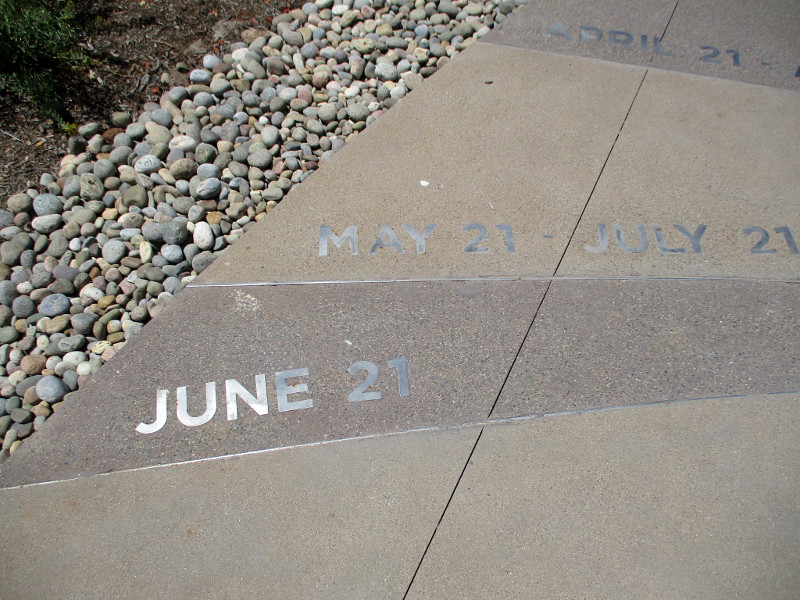
Now consider my next photograph.

On June 21, as the summer begins, the sun will be at its highest in San Diego, here in the Northern Hemisphere.

Because of this, the sun’s light projected through the oculus will come from a high angle, and follow the lower band as Earth turns and the day progresses.

It just so happened that I visited Sweetwater Park on June 18. I arrived at the oculus a little after noon.

You can see the circle of light is almost atop the June 21 band, and is now to the right of the central drain, past the 12 PM mark.

The light would continue to move right along the same band as the sun descends in the sky toward the horizon.

I post new blogs pretty often. If you like discovering new things, bookmark coolsandiegosights.com and swing on by occasionally!

I live in downtown San Diego and love to walk around with my camera! You can follow Cool San Diego Sights via Facebook or X.

Feel free to share!
Exhibition in San Diego celebrates Women in STEM.

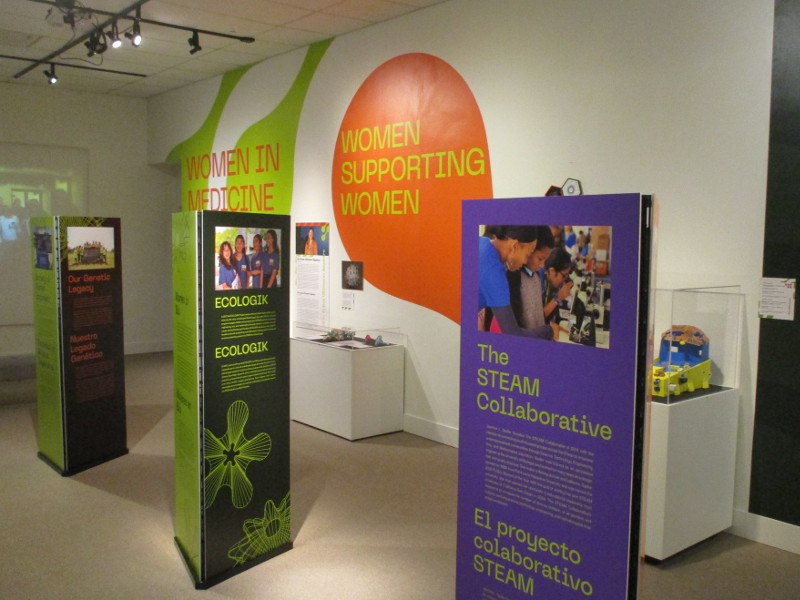
An inspirational exhibition celebrating women in STEM opened a couple days ago in Balboa Park. San Diego STEM Women: Creativity and Curiosity can be experienced in the Women’s Museum of California‘s new, dedicated gallery, which is found inside the San Diego History Center.

The exhibition details how women in San Diego history, from the 19th century to the present, have excelled in Science, Technology, Engineering and Mathematics, leading to important contributions in different fields.

There’s a special emphasis on young women pursuing career paths in STEM today. Various organizations are highlighted that can help those with STEM aspirations.

Young people, upon seeing this exhibition, will understand that pursuits in Science, Technology, Engineering and Mathematics can do more than make a world a better place, but can be personally very rewarding.

Examples of what visitors will find…

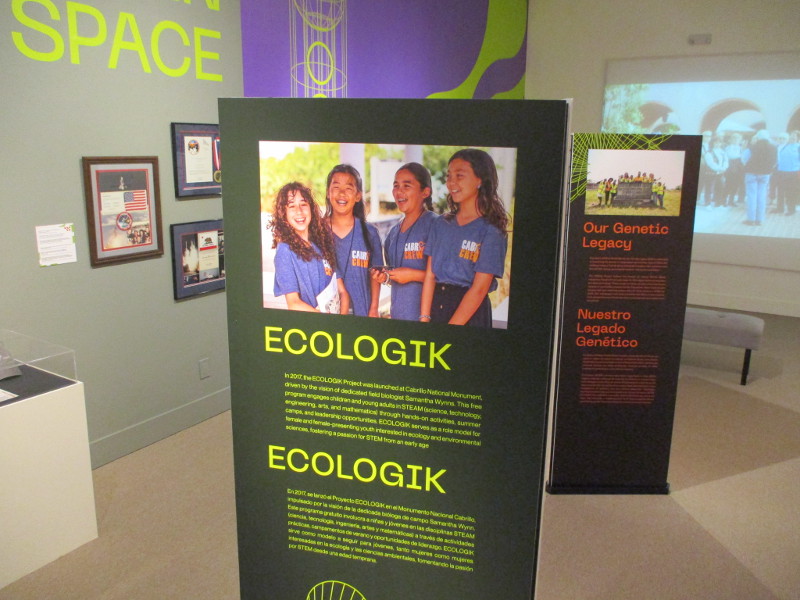
ECOLOGIK was launched at Cabrillo National Monument in 2017. The free program engages children and young adults in Science, Technology, Engineering, Arts and Mathematics. There is an emphasis on ecology and environmental sciences.
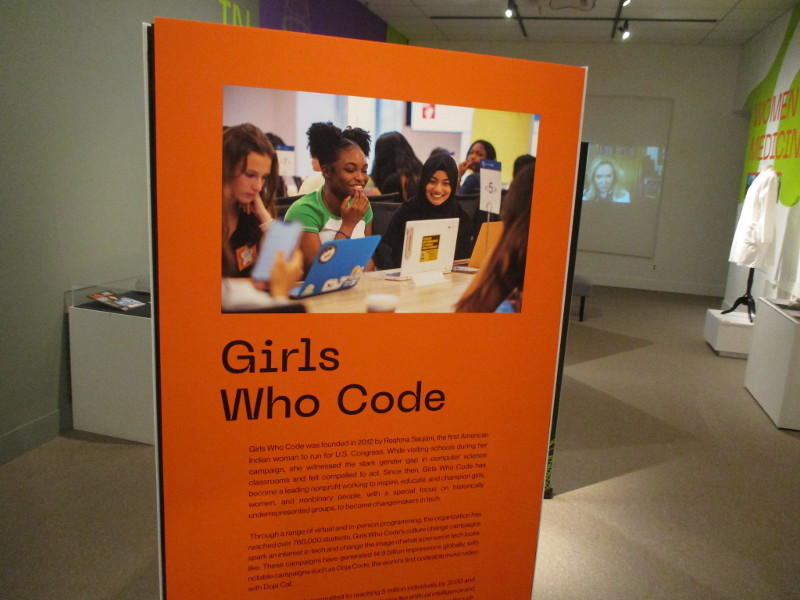
Girls Who Code has reached over 760,000 students through virtual and in-person programming. The organization helps to spark an interest in transformative technology.
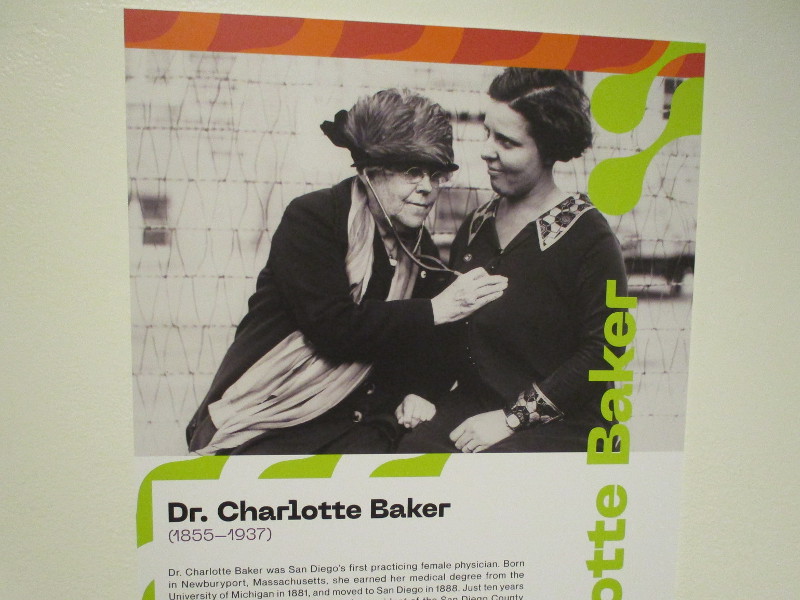
Dr. Charlotte Baker was San Diego’s first practicing female physician. She moved to San Diego in 1888 and ten years later she became the first female president of the San Diego County Medical Society.
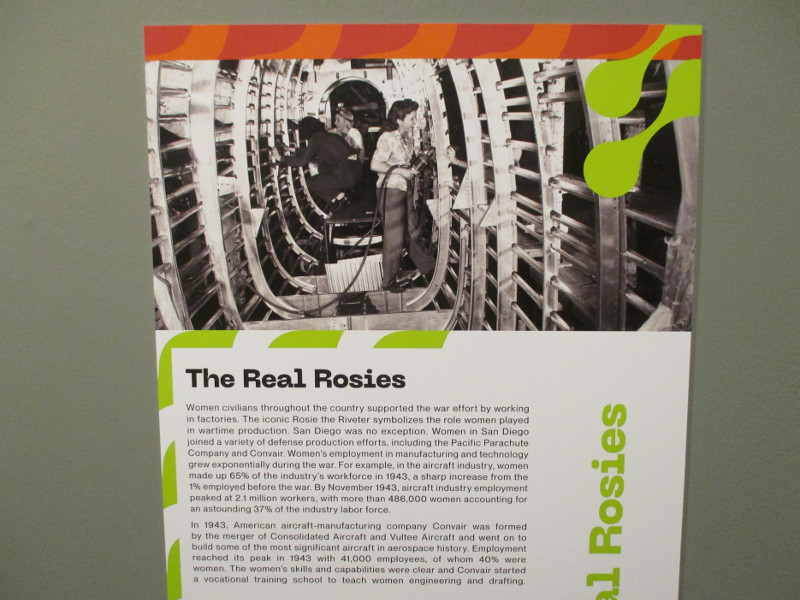
During World War II, many women helped with military manufacturing in San Diego. In the aircraft industry, women made up to 65% of the workforce in 1943.
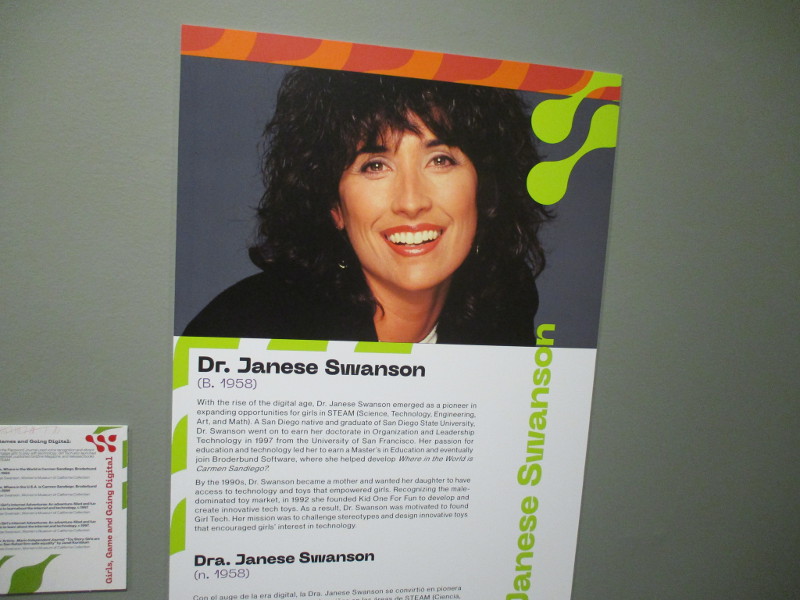
Dr. Janese Swanson, graduate of SDSU, was a pioneer at the dawn of the digital age. At Broderbund Software, she helped develop the popular game Where in the World is Carmen Sandiego?
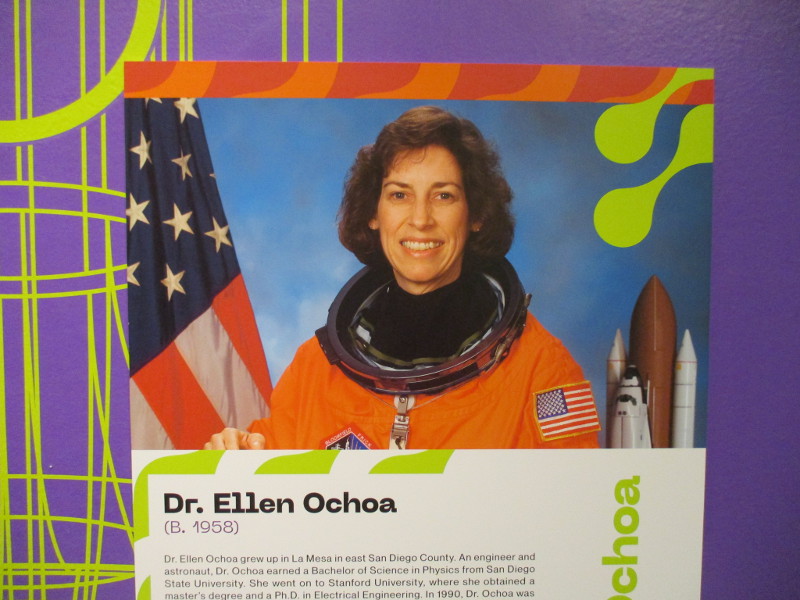
Dr. Ellen Ochoa grew up in La Mesa. An engineer and astronaut, she was the first Latina astronaut in NASA history. She would log nearly 1,000 hours in space!

I post new blogs pretty often. If you like discovering new things, bookmark coolsandiegosights.com and swing on by occasionally!

I live in downtown San Diego and love to walk around with my camera! You can follow Cool San Diego Sights via Facebook or X.

Feel free to share!
Voronoi tessellation in San Diego at night!

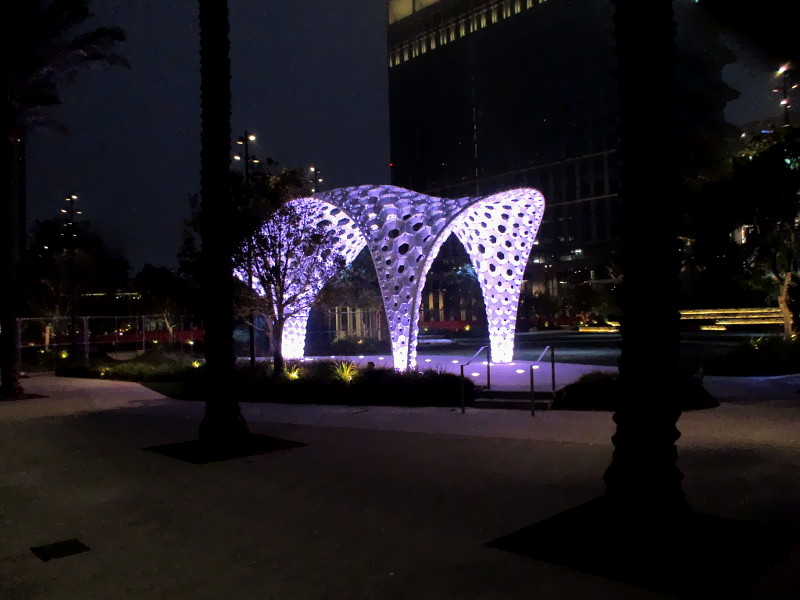
I took these photographs this morning while it was still dark. They show new public artwork in downtown San Diego. My camera was placed up against the construction fence surrounding the not-yet-opened Progress Park (at the corner of Broadway and Harbor Drive) at the new RaDD complex.

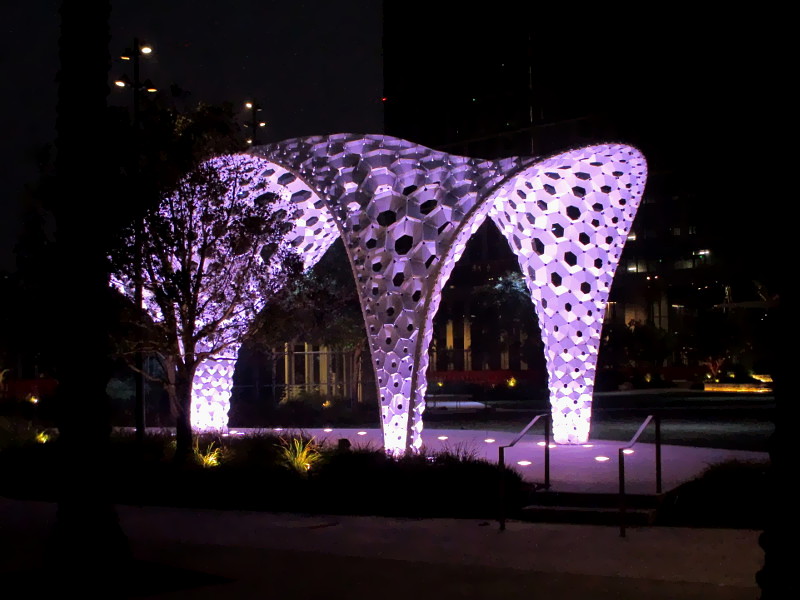
This very cool sculpture, which is illuminated in the night, is titled Shhh Pavilion: The Hopekeeper.

Yes, that’s an interesting name! Even more interesting is the fact that the sculpture’s geometric structure utilizes Voronoi tessellation.

Huh? What?

Learn more about this sculpture, Voronoi tessellation and this new public park coming to San Diego’s waterfront by visiting a past blog post by clicking here!
I post new blogs pretty often. If you like discovering new things, bookmark coolsandiegosights.com and swing on by occasionally!

I live in downtown San Diego and love to walk around with my camera! You can follow Cool San Diego Sights via Facebook or X.

Thank you for sharing!

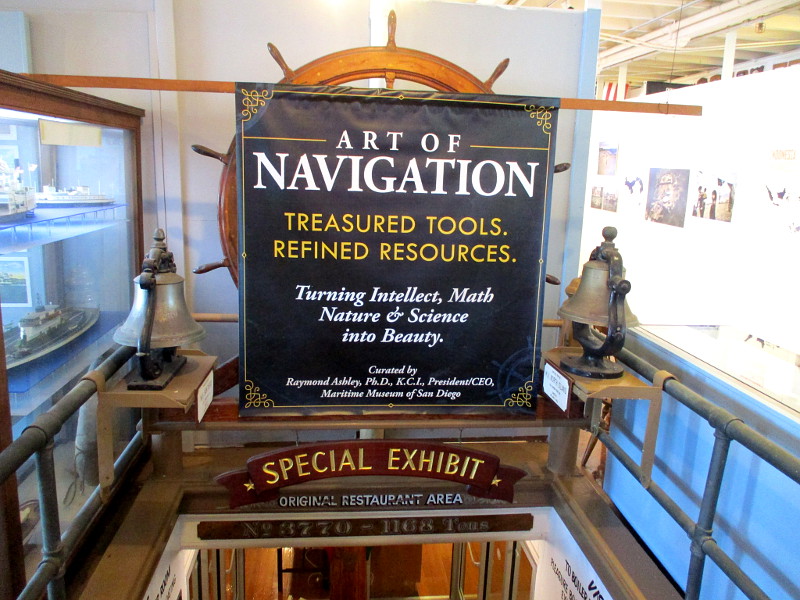
The Art of Navigation at the Maritime Museum.

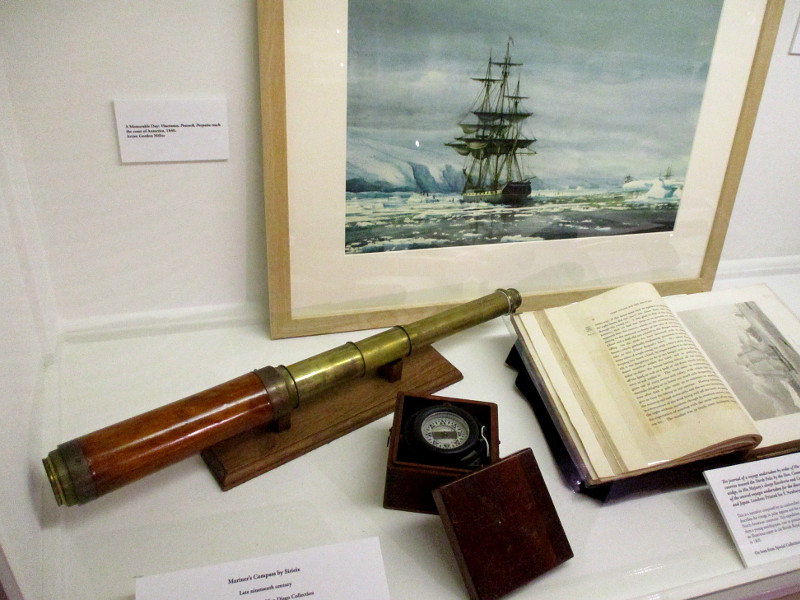
Those who are fascinated by tall ships, exploration and the evolution of technology don’t want to miss a great new exhibit at the Maritime Museum of San Diego. It’s titled the Art of Navigation.

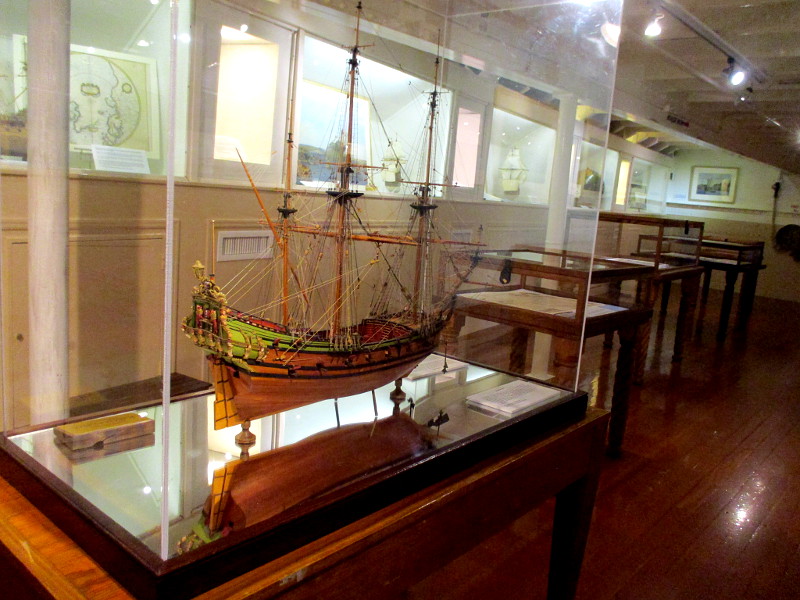
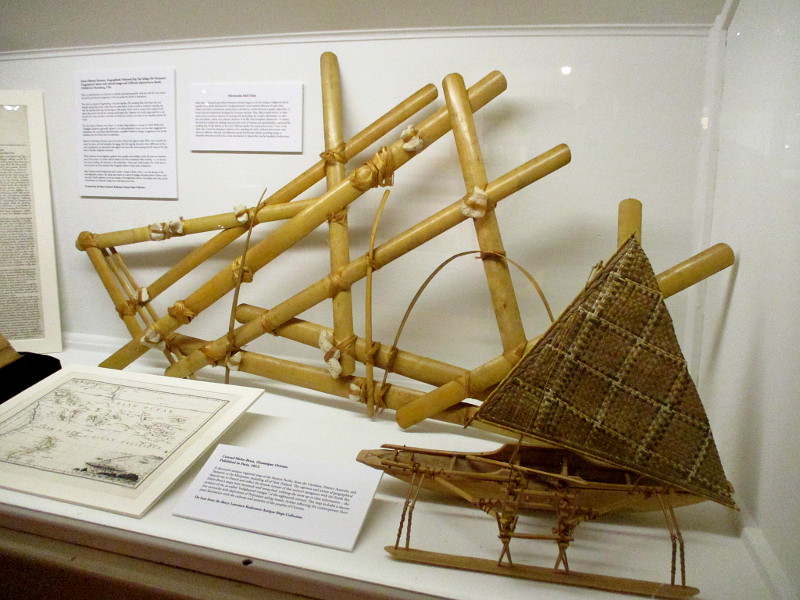
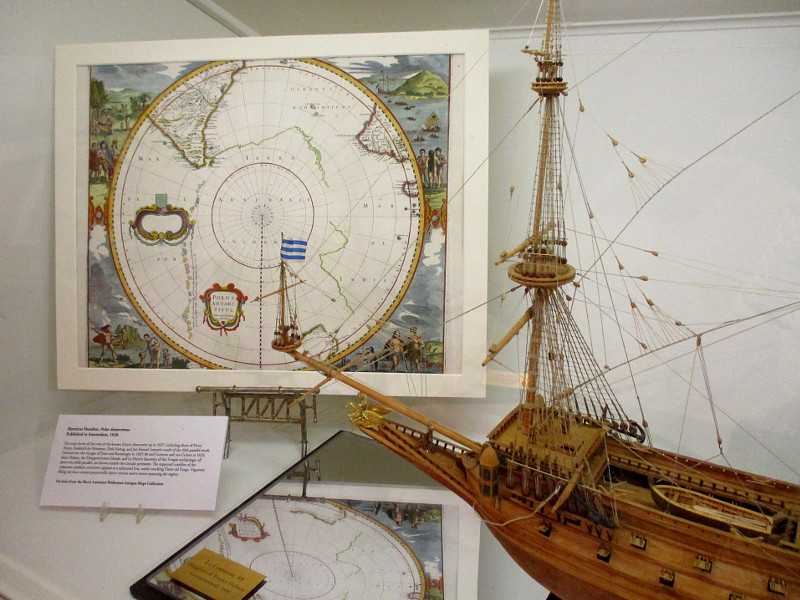
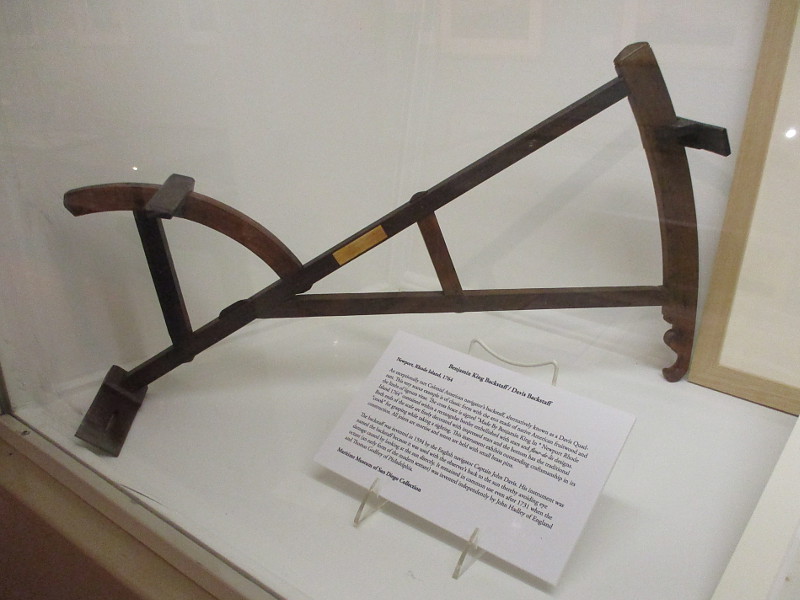
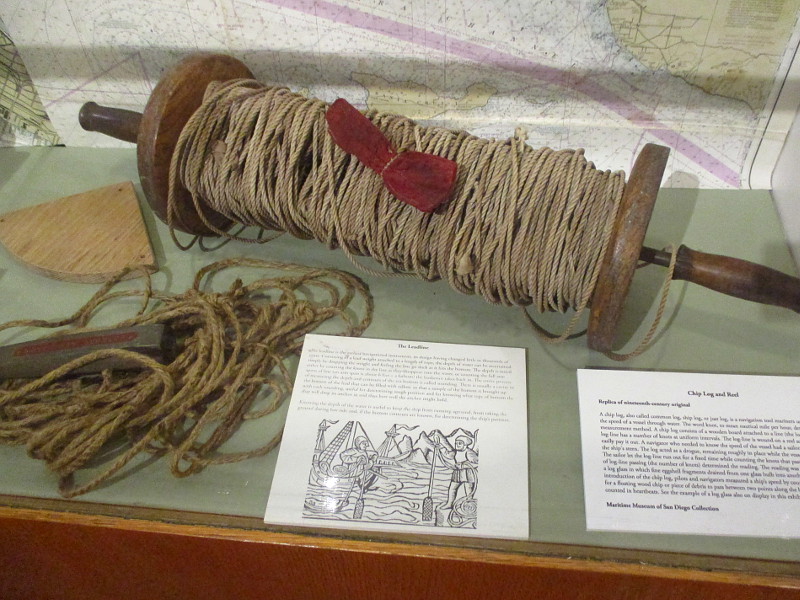
Visitors to the exhibit learn how navigators have used maps, charts and a variety of tools to find their way across the oceans and through dangerous waters. The extensive displays include some exceptionally rare antiques. Old instruments that can be viewed include an astrolabe, backstaff, nocturnal, traverse board, chip log and reel, hand-held telescope, cross-staff, quadrant, taffrail log, navigation slate and more! These instruments might seem primitive when compared with modern technology, but ship’s captains successfully sailed around the planet with the information they provided.
Personally, I like to read nautical stories set during the Age of Sail. As I read I’ll come across the names of these instruments, and at times puzzle over their application. The descriptive Art of Navigation exhibit brings helps to bring those adventurous old stories to life!
The exhibit also includes beautiful paintings and model ships, and even a display directly related to the Maritime Museum’s famous Star of India!

The Art of Navigation is free with museum admission. As advertised, it does indeed turn intellect, math, nature and science into beauty!

Micronesian stick chart, used by the indigenous island peoples of the Pacific to navigate across great distances of open water.

Henricus Hondius. Polus Antarcticus. Map of Dutch discoveries published in Amsterdam, 1638.

Benjamin King Backstaff (also known as Davis Quadrant), Newport, Rhode Island, 1764. Used by Colonial American navigators.

Replica of 19th century chip log and reel. Used to estimate the speed of a ship through water.

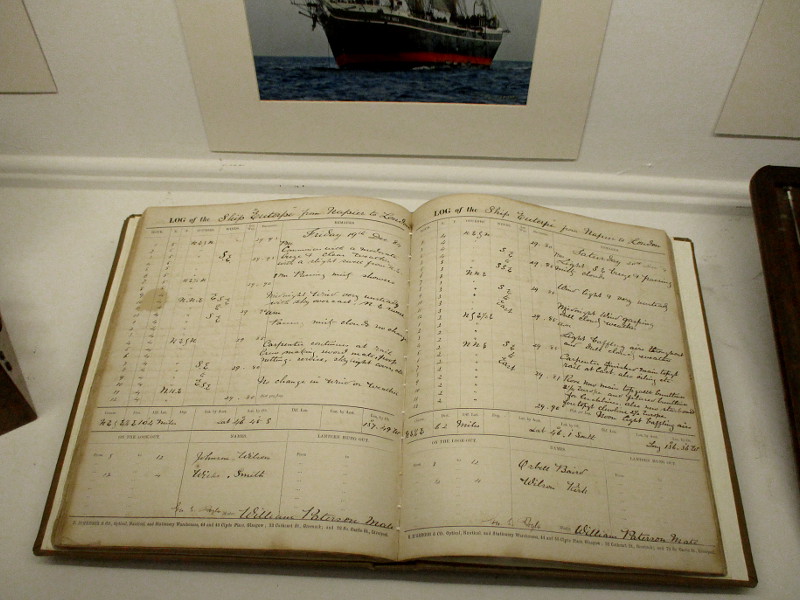
Log of Euterpe, a historic ship later known as Star of India.

Thanks for visiting Cool San Diego Sights!

I post new blogs pretty often. If you like discovering new things, bookmark coolsandiegosights.com and swing on by occasionally!

I live in downtown San Diego and love to walk around with my camera! You can follow Cool San Diego Sights via Facebook or X.

A closer look: Koester Memorial Sundial at SDSU.

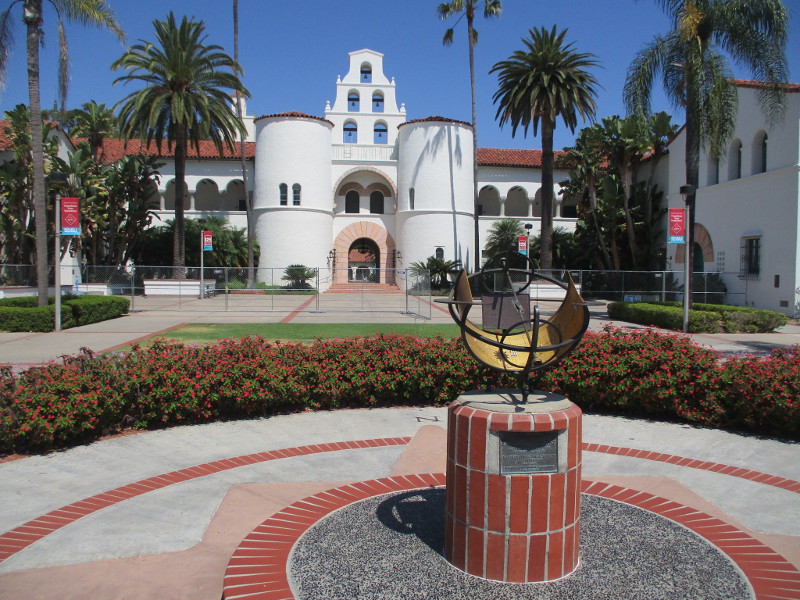
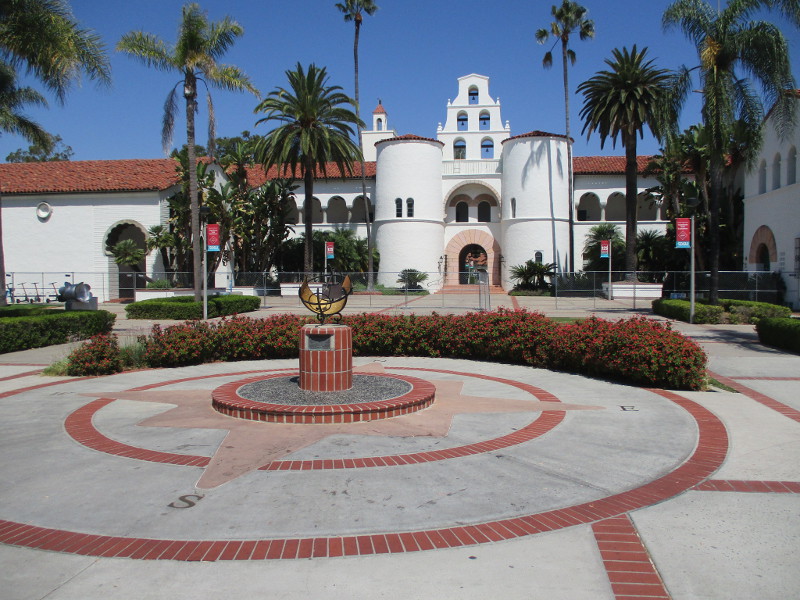
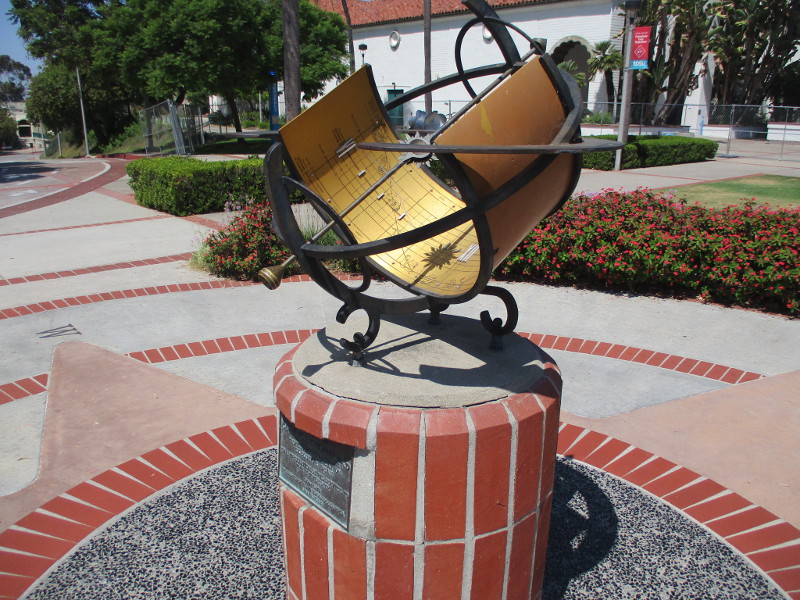
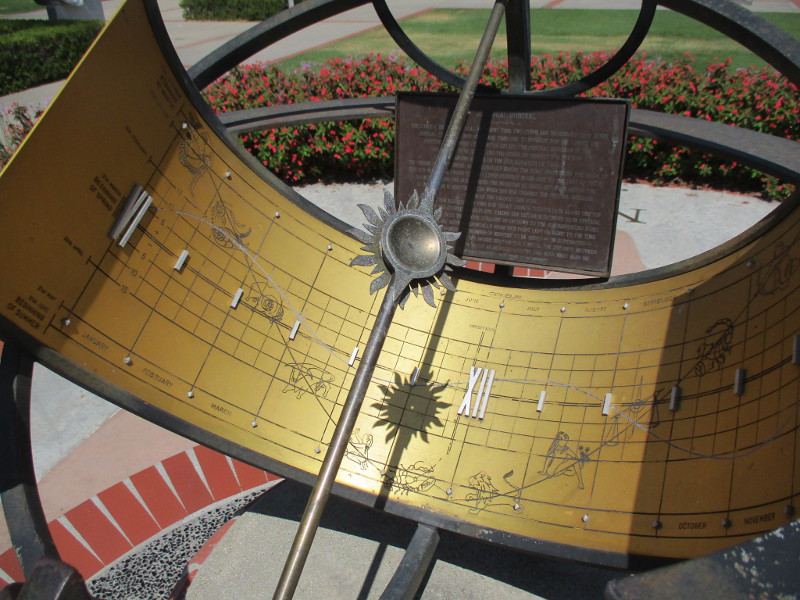
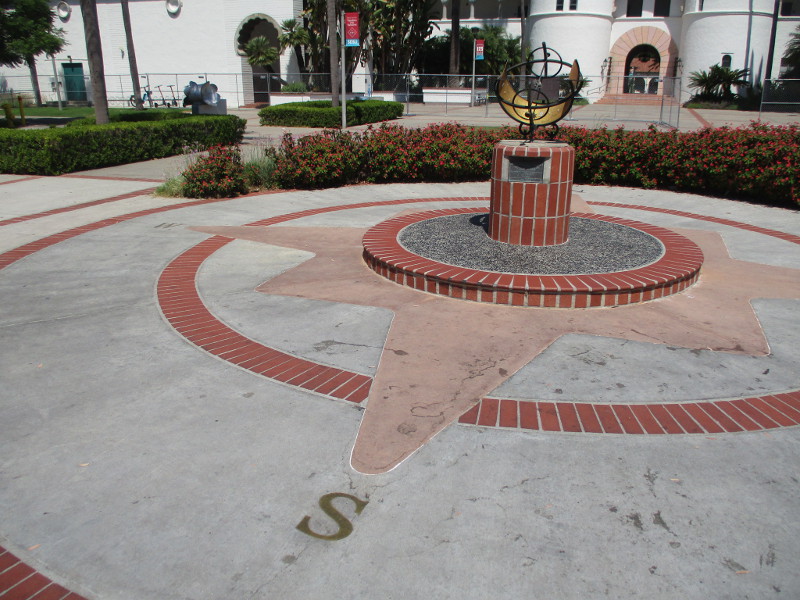
The Koester Memorial Sundial stands prominently in San Diego State University’s Campanile Mall, directly in front of the iconic Hepner Hall. I took photographs of the sundial when I walked through the SDSU campus a few days ago. A couple of corroded plaques invite a closer look.

According to this article, dedicated on November 4, 1978, the Gübelin Equatorial Sundial [is] in memory of the late George A. Koester

Koester began his career at San Diego State in 1950 and went on to complete 14 years as a professor of education and 10 years as executive dean. During his time on Montezuma Mesa, Koester played a prominent role in building the campus, working on the creation of Love Library, the music and drama buildings, Aztec Center, Zura Hall, student health services, and multiple parking structures…

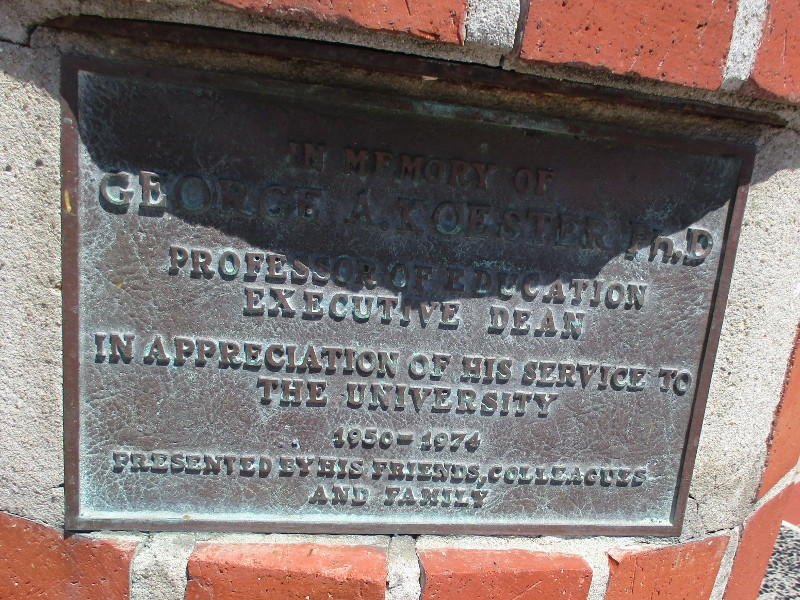
A plaque embedded in the brick pedestal states:

IN MEMORY OF GEORGE A. KOESTER Ph.D – PROFESSOR OF EDUCATION – EXECUTIVE DEAN – IN APPRECIATION OF HIS SERVICE TO THE UNIVERSITY 1950 – 1974 – PRESENTED BY HIS FRIENDS, COLLEAGUES AND FAMILY

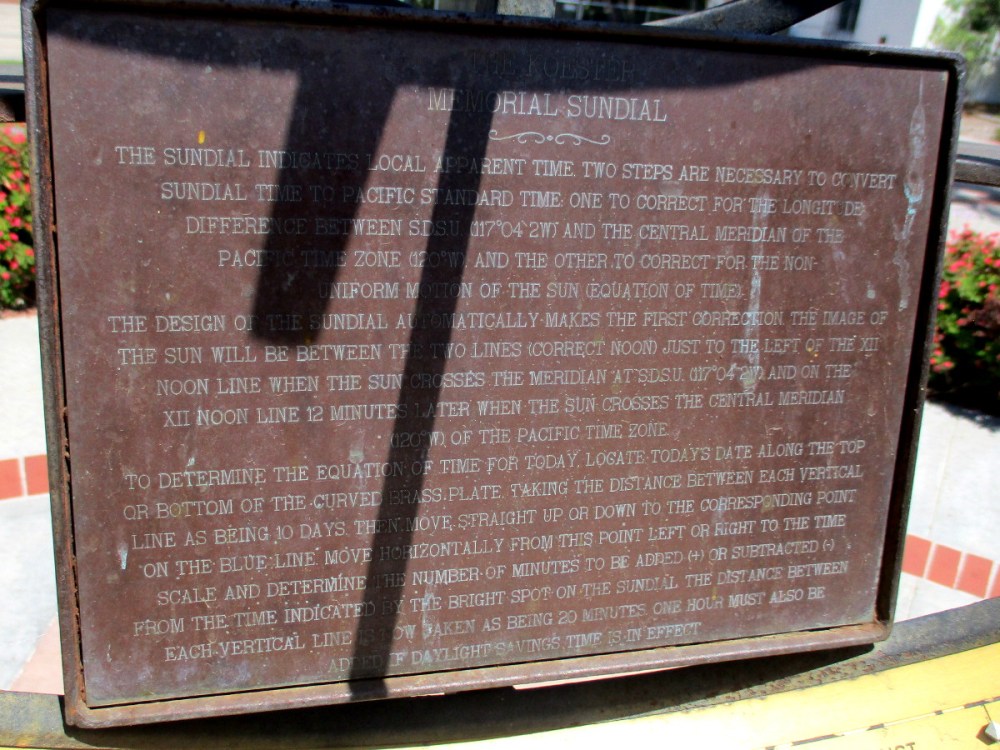
Within the sundial, a faded plaque (I increased the image contrast) describes how the beautiful and fascinating device works. I transcribed as best I could, without every word in caps:

THE KOESTER MEMORIAL SUNDIAL

The sundial indicates local apparent time. Two steps are necessary to convert sundial time to Pacific Standard Time: one to correct for the longitude difference between SDSU (117°04`2W) and the central meridian of the Pacific Time Zone (120°W), and the other to correct for the non-uniform motion of the sun (equation of time).

The design of the sundial automatically makes the first correction. The image of the sun will be between the two lines (correct noon) just to the left of the XII noon line when the sun crosses the meridian at SDSU (117°04`2W) and on the XII noon line 12 minutes later when the sun crosses the central meridian (120°W) of the Pacific Time Zone.

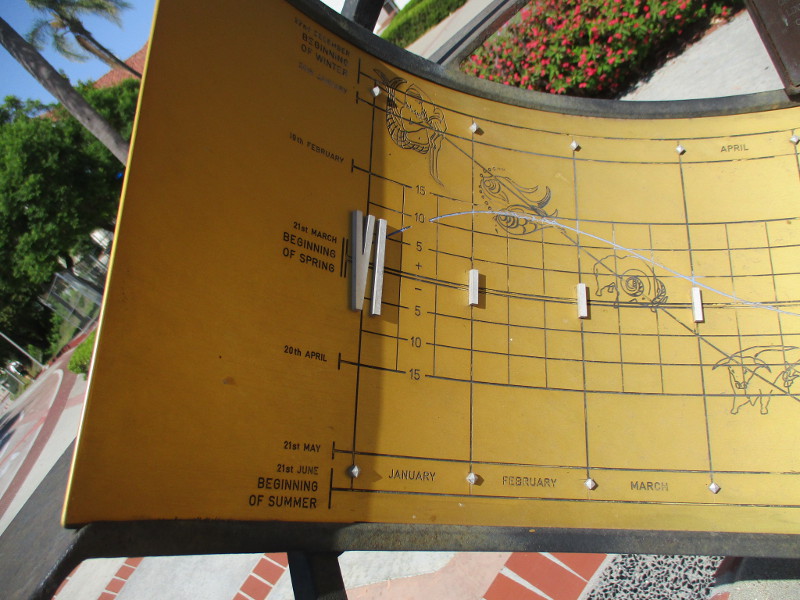
To determine the equation of time for today, locate today’s date along the top or bottom the curved brass plate. Taking the distance between each vertical line as being 10 days, then move straight up or down to the corresponding point on the blue line. Move horizontally from this point left or right to the time scale and determine the number of minutes to be added (+) or subtracted (-) from the time indicated by the bright spot on the sundial. The distance between each vertical line is now taken as being 20 minutes. One hour must also be added if Daylight Savings Time is in effect.

Whew! Got that?

I think I’ll stick to my wristwatch or phone!

Thanks for visiting Cool San Diego Sights!

I post new blogs pretty often. If you like discovering new things, bookmark coolsandiegosights.com and swing on by occasionally!

I live in downtown San Diego and love to walk around with my camera! You can follow Cool San Diego Sights via Facebook or X.

Art at the Festival of Science & Engineering!

Could kids find and create art at the San Diego Festival of Science & Engineering? Yes!

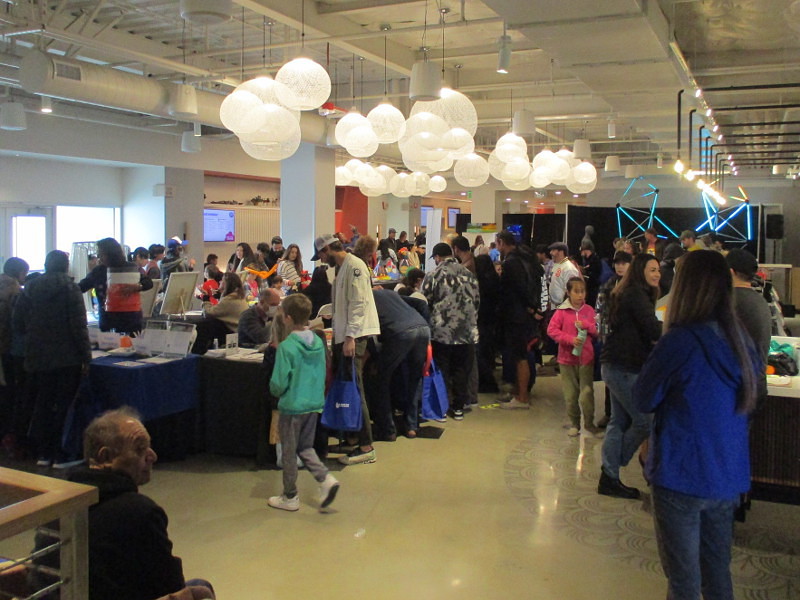
Today was Expo Day, a free event held at Snapdragon Stadium. Thousands of young people wandered through the stadium’s concourses, viewing STEAM (Science, Technology, Engineering, Art and Math) displays, and partaking in experiments and activities provided by about a hundred exhibitors!

The annual event is absolutely gargantuan and impossible to cover in one blog post. I’ve blogged about Expo Day several times in past years, when this educational extravaganza was held at Petco Park.

Winding through the crowd, I discovered the Art Pavilion and, with permission from various exhibitors, my camera got busy.

Enjoy a few photos of artwork created by students, teachers and artists attending the San Diego Festival of Science & Engineering. Read the captions!

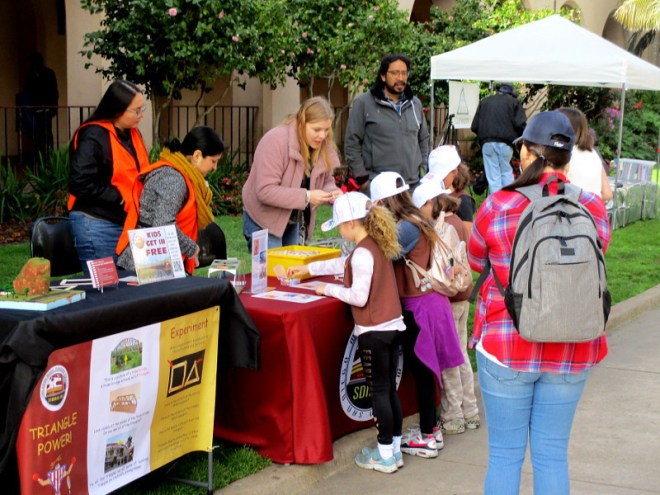
Families explore the Art Pavilion during Expo Day 2024, a San Diego Festival of Science & Engineering event at Snapdragon Stadium.

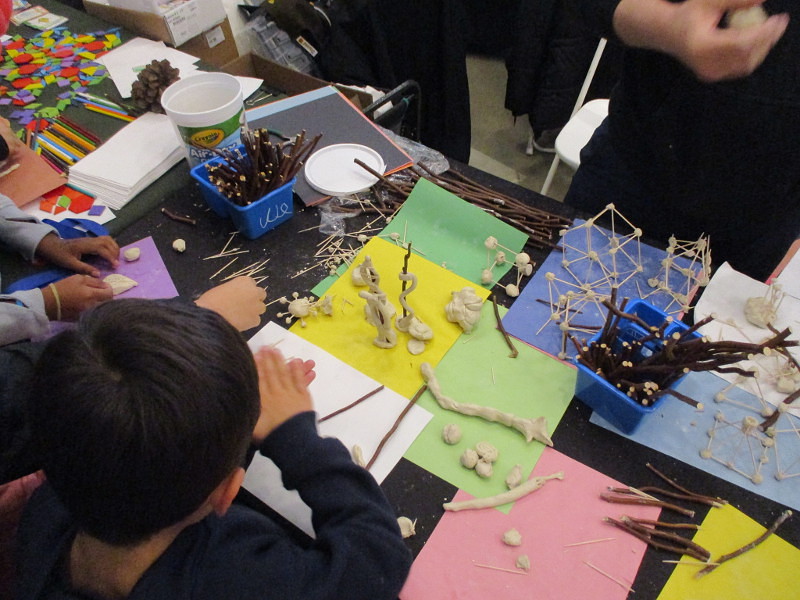
Are those molecules or cool sculptures? Kids get creative with the help of the Museum of Contemporary Art San Diego.

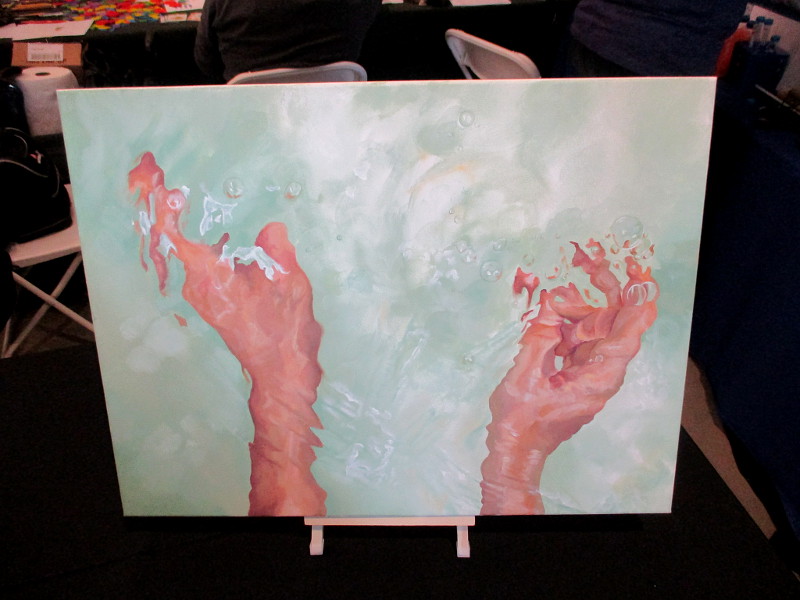
Two hands, liquid and bending light by artist and educator Sheena Rae Dowling.

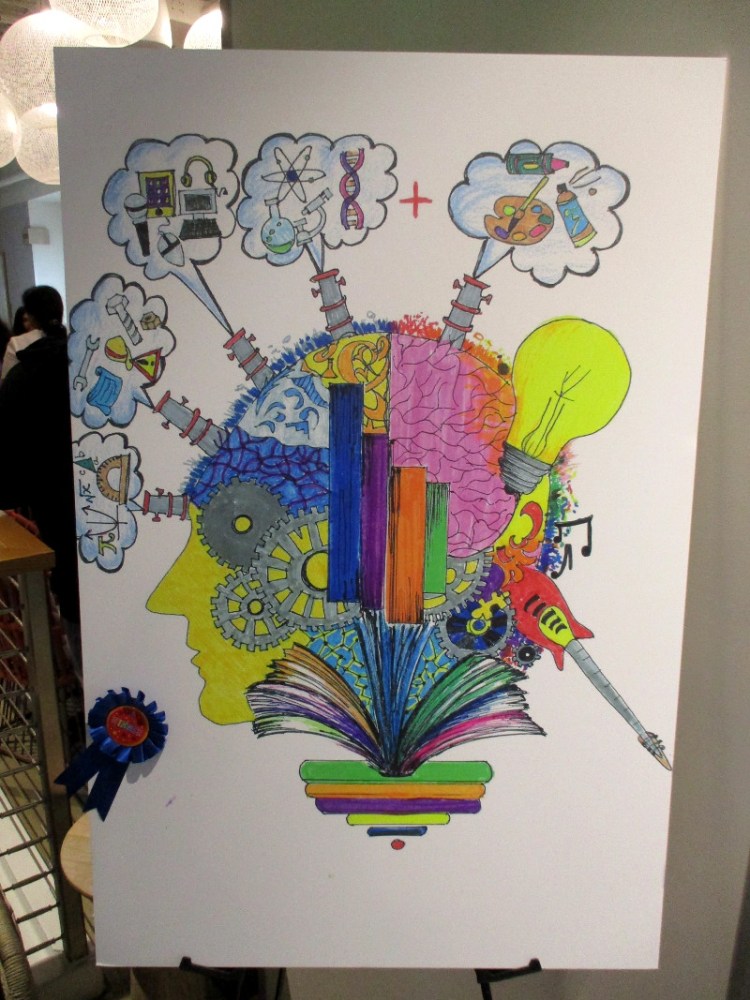
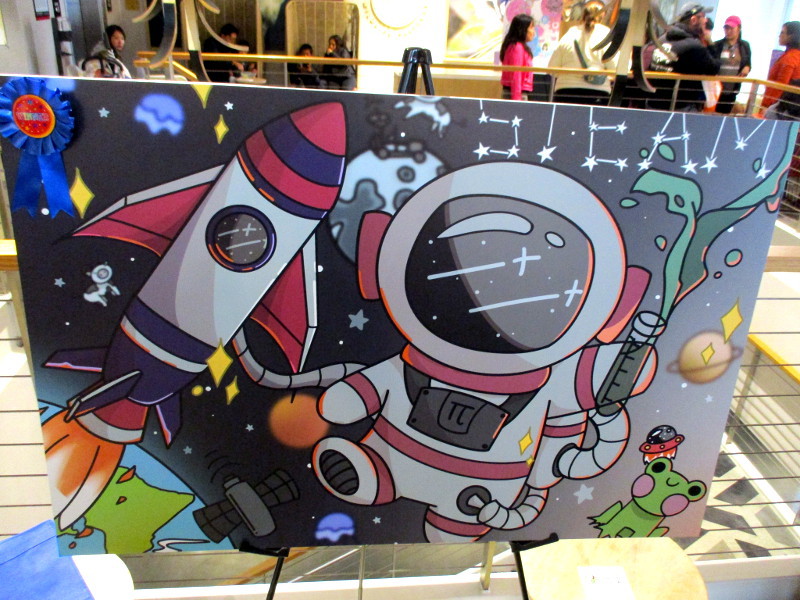
This cool STEAM artwork, full of creative ideas, won a blue ribbon!

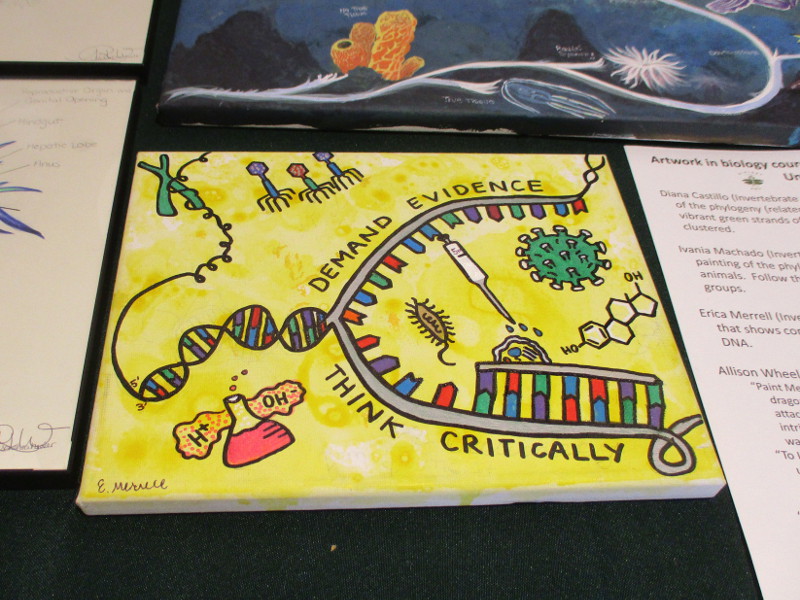
Demand evidence. Think critically. Erica, a biology student at National University, created this scientific artwork!

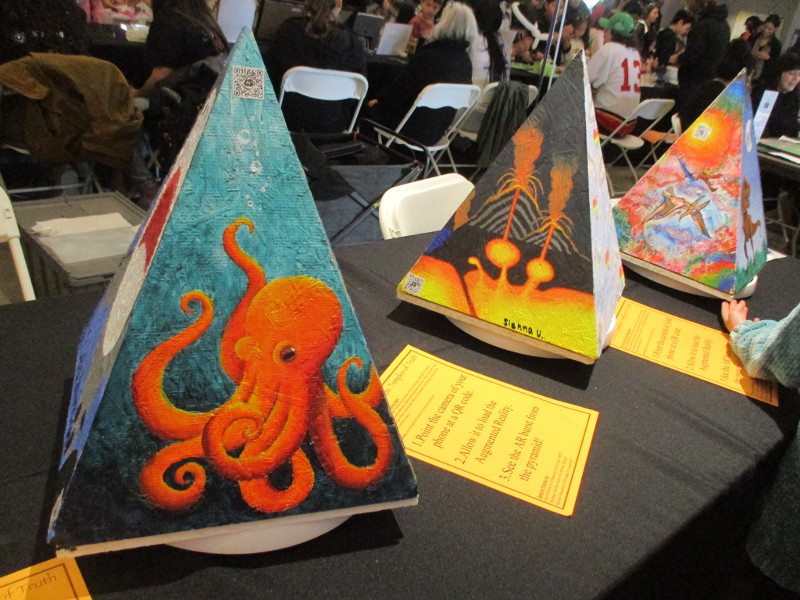
The Art Club of Patrick Henry High School created these colorful Science Pyramids: Temples of Truth. If you point your phone at the artwork, you can experience augmented reality bursting from each pyramid!

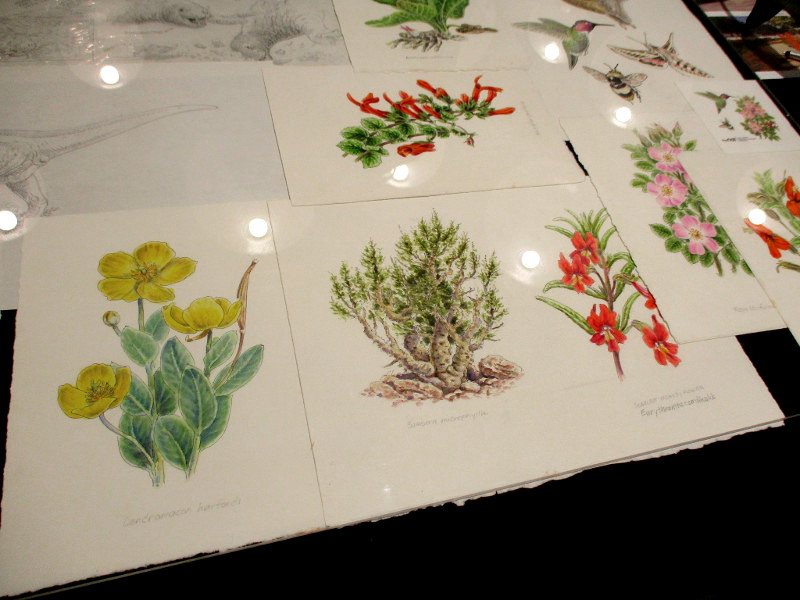
Beautiful art depicting native flora and fauna presented by the San Diego Natural History Museum.

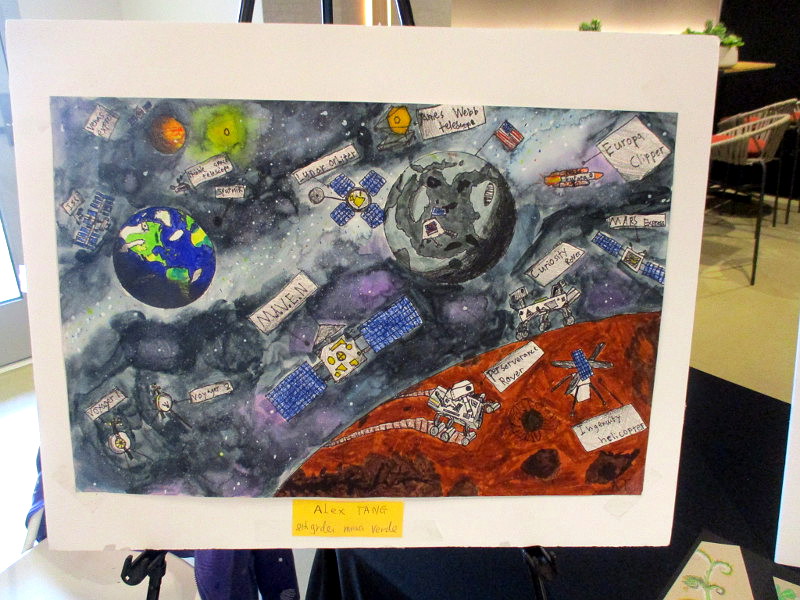
Space exploration art from a C.A.R.T. student.

Lunna, founder of VAINANA, creates art with bananas to fight hunger and promote food sustainability.

The colorful work of EcoArts Kids. Students create environmental art in afterschool programs at several San Diego elementary schools.

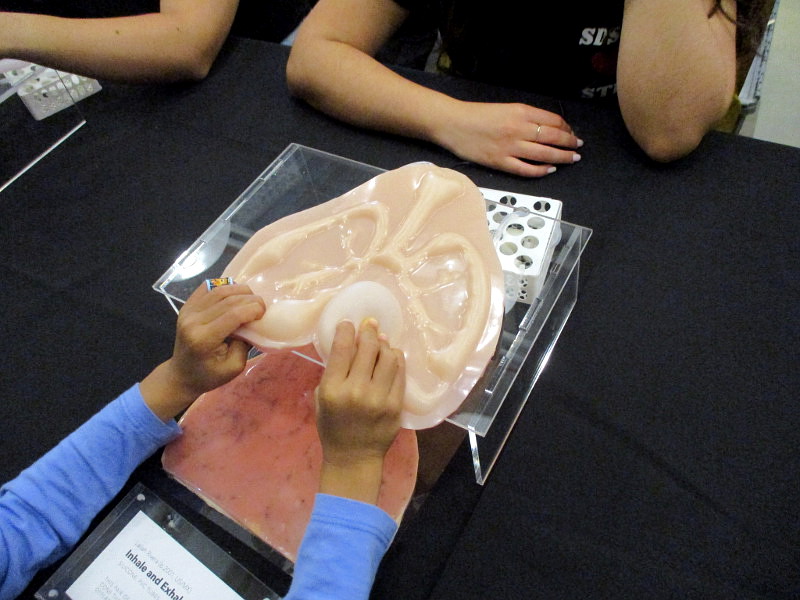
Part of the SoRoART group exhibition of soft robotics by SDSU students. Air periodically inflates these lungs, as if they’re breathing!

Thanks for visiting Cool San Diego Sights!

I post new blogs pretty often. If you like discovering new things, bookmark coolsandiegosights.com and swing on by occasionally!

I live in downtown San Diego and love to walk around with my camera! You can follow Cool San Diego Sights via Facebook or X (formerly known as Twitter)!

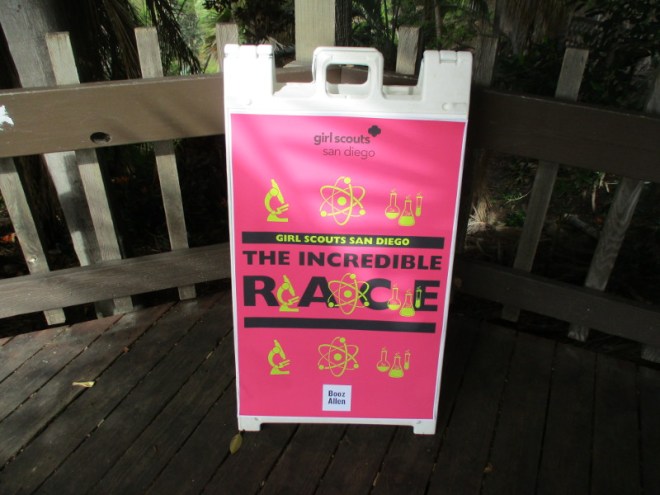
Girl Scouts explore STEM in Balboa Park!

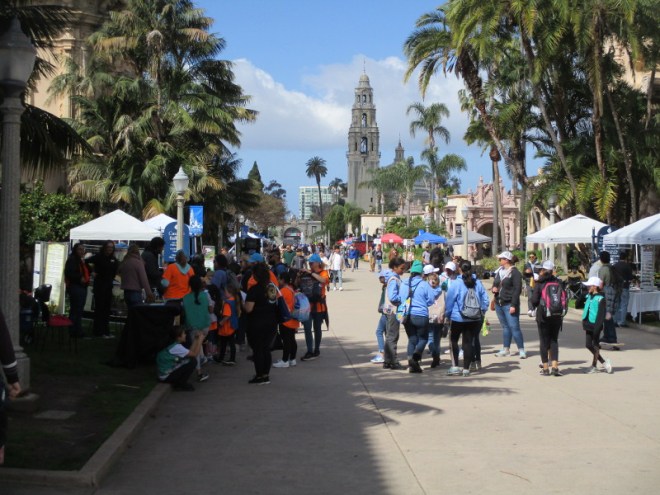
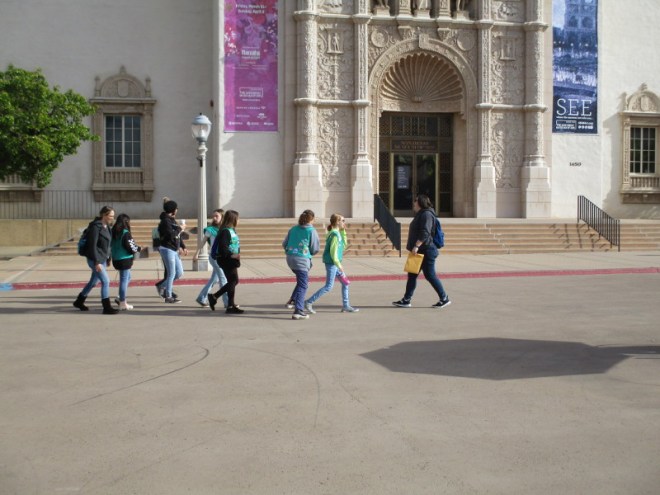
Hundreds of Girl Scouts from around San Diego gathered in Balboa Park this morning to take part in the Incredible Race!

Many stations were set up around the park: along El Prado, in front of museums, even in the parking area behind the San Diego Automotive Museum. Girls were being challenged to explore STEM, which stands for Science, Technology, Engineering and Mathematics.

During the Incredible Race, teams would solve riddles and proceed station to station where fun, educational hands-on activities awaited.

As I walked through the park, I saw a lot of excited young people running energetically about, enjoying San Diego’s beautiful crown jewel and learning lots of cool stuff, too!

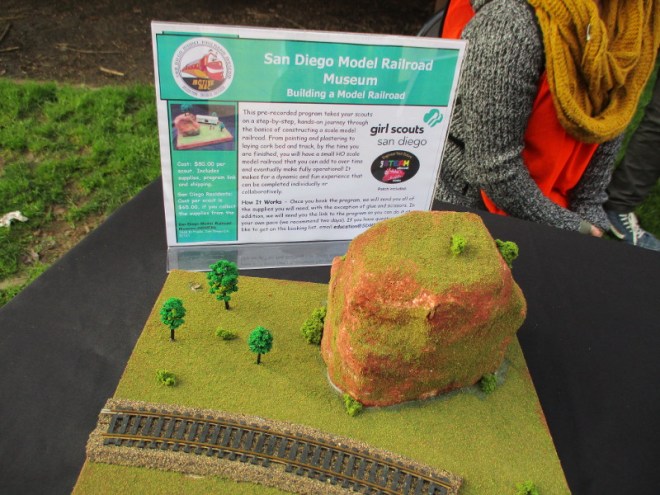
The San Diego Model Railroad Museum demonstrates how to plan and build a model railroad.

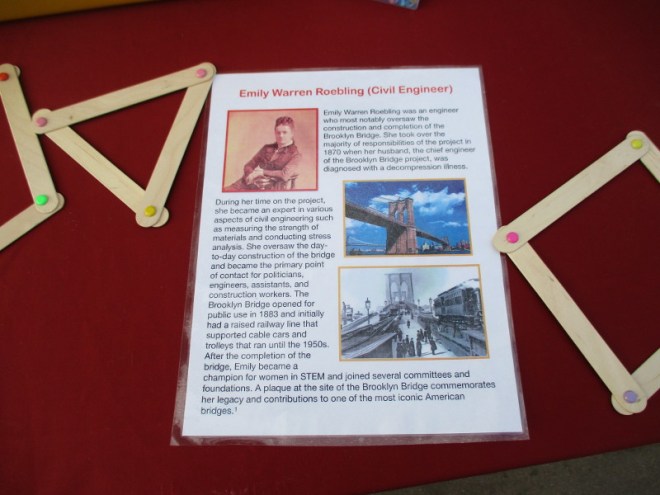
Emily Warren Roebling was an engineer who oversaw the construction and completion of the Brooklyn Bridge.

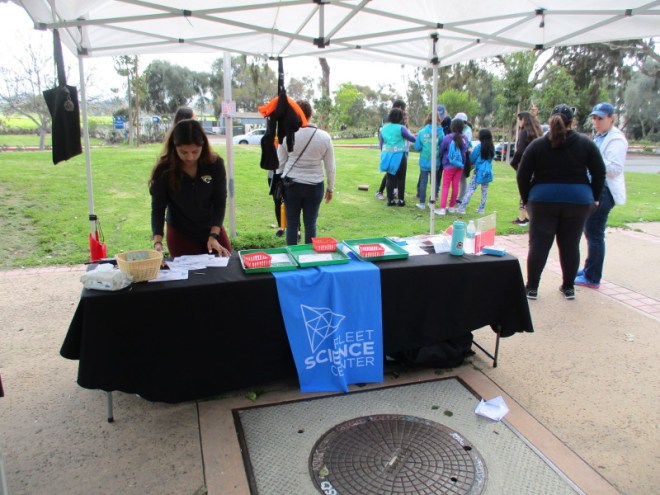
A table with activities near the Fleet Science Center.

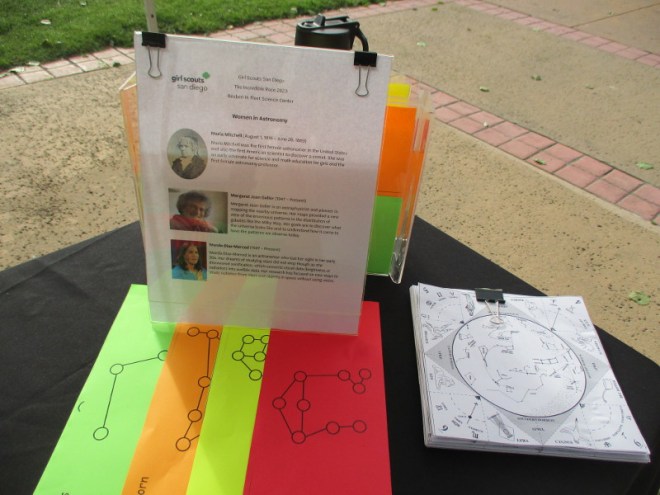
Learning about constellations and Women in Astronomy.

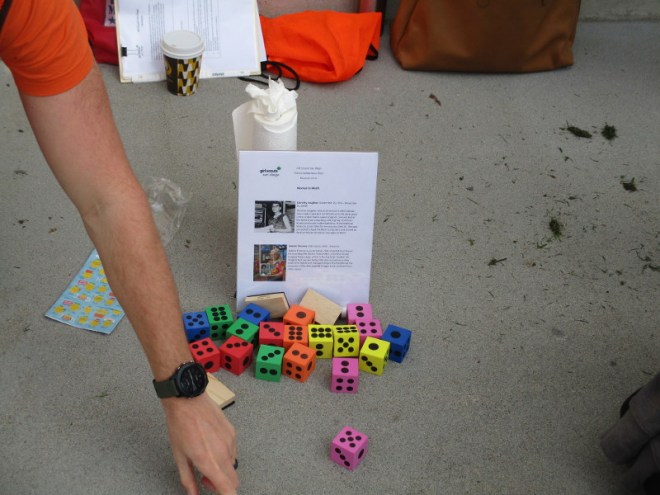
In front of the Museum of Us, Girl Scouts could learn about Women in Math.

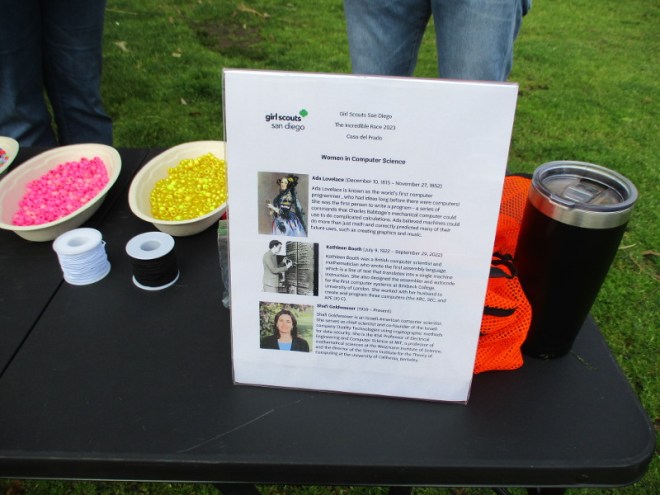
At the Casa del Prado, one could make binary bracelets and learn about Women in Computer Science.

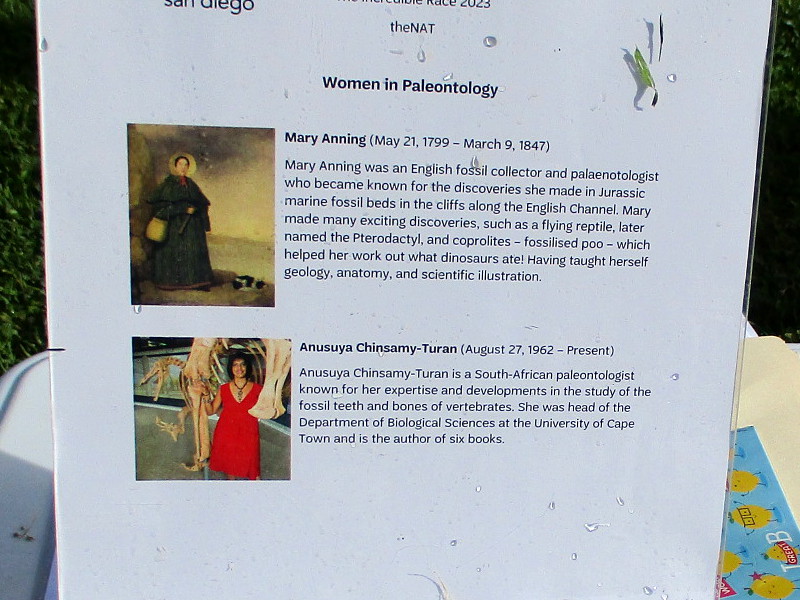
By the San Diego Natural History Museum, there was a fun dinosaur fossil digging activity and information about Women in Paleontology.

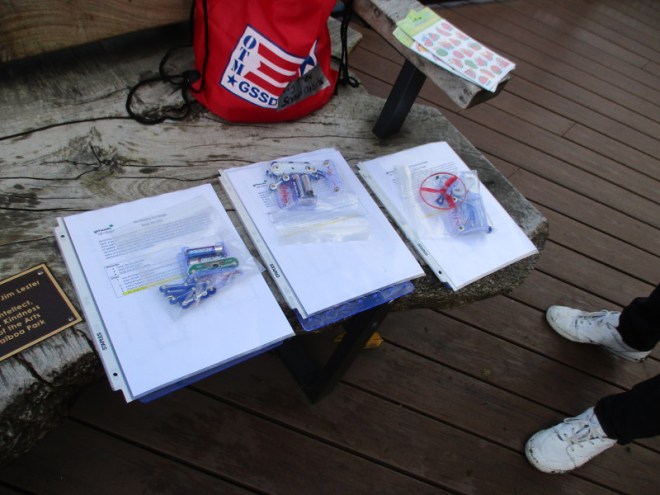
On the platform under the Moreton Bay Fig, curious Girl Scouts learned about electrical circuits and Women in Engineering.

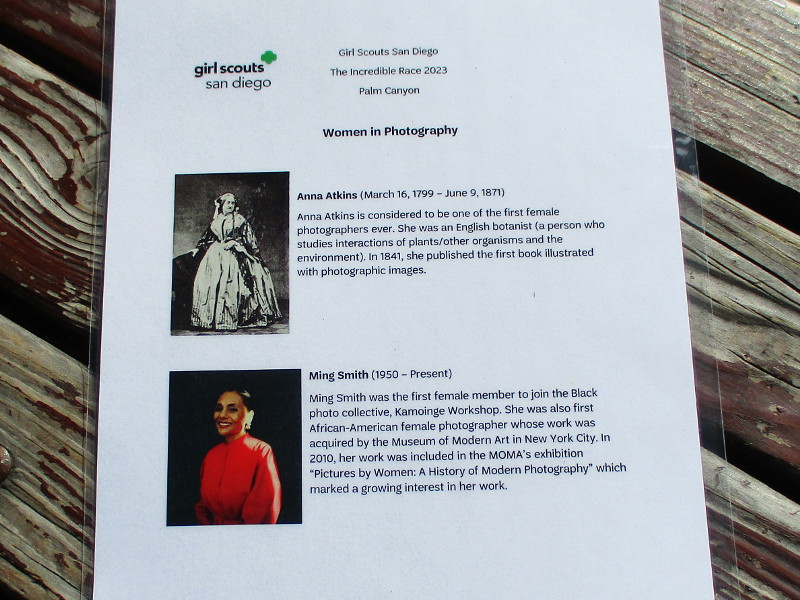
Above beautiful Palm Canyon, a station recognized historically important Women in Photography.

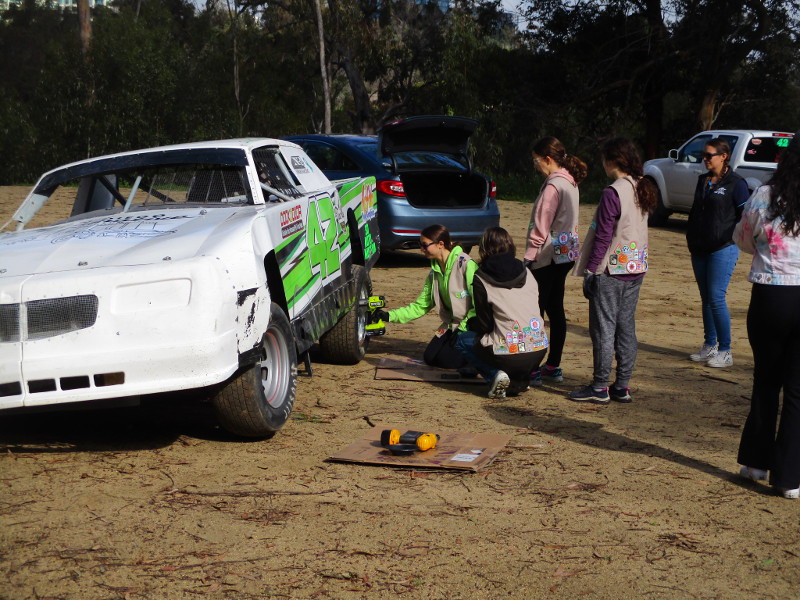
Behind the San Diego Automotive Museum, participants could change a tire on a cool race car!

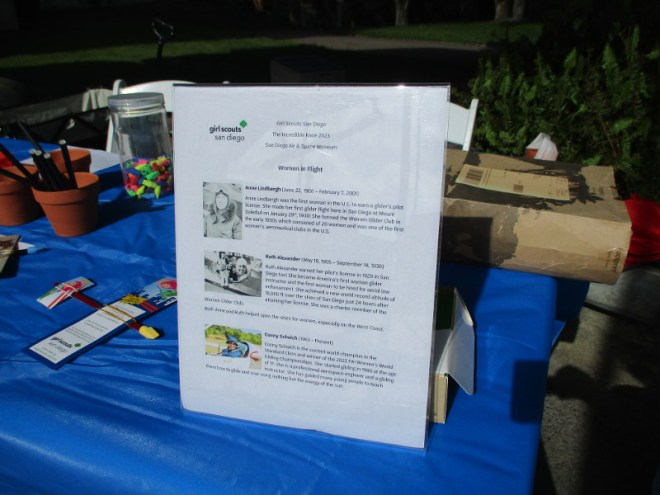
At the San Diego Air and Space Museum, Women in Flight were recognized, including Anne Lindbergh, the first woman in the United States to earn a glider’s pilot license. She made her first flight in San Diego, at Mount Soledad in 1930.

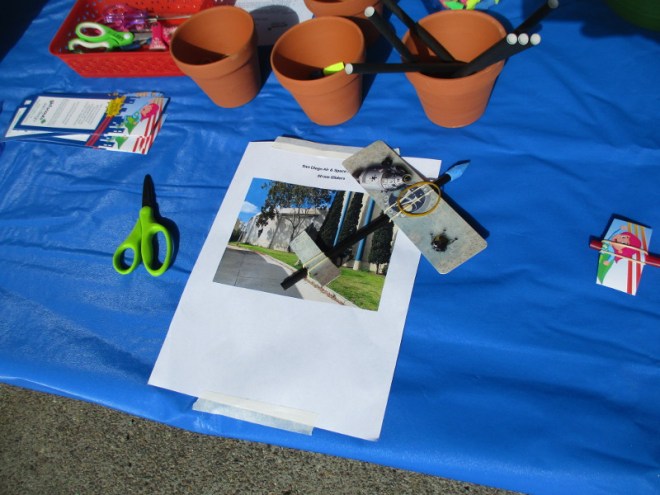
Girl Scouts could make their own gliders!

Thanks for visiting Cool San Diego Sights!

I post new blogs pretty often. If you like discovering new things, bookmark coolsandiegosights.com and swing on by occasionally!

I live in downtown San Diego and love to walk around with my camera! You can follow Cool San Diego Sights via Facebook or Twitter!

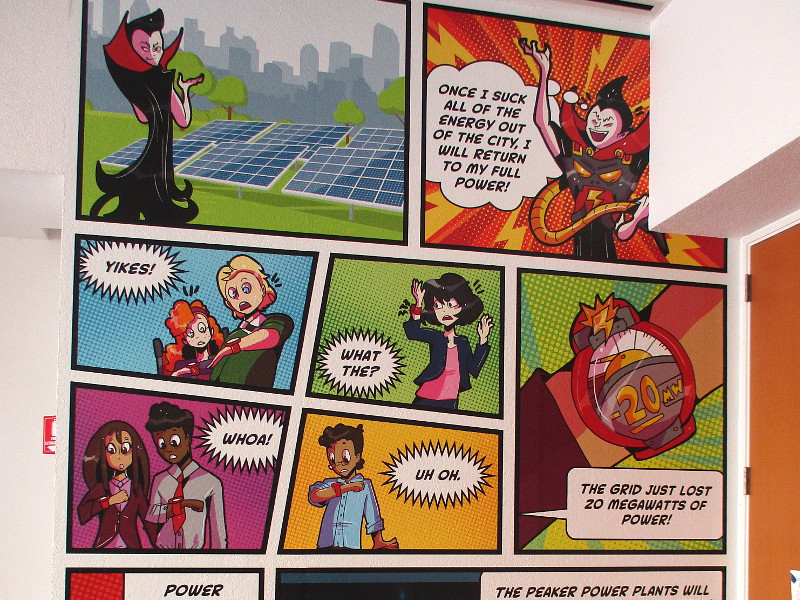
Power Avengers beat Darkula in Chula Vista!

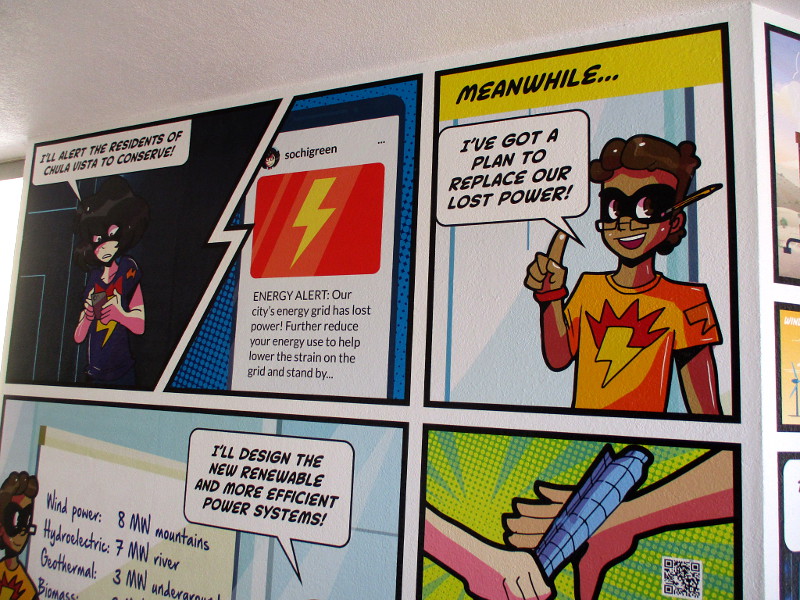
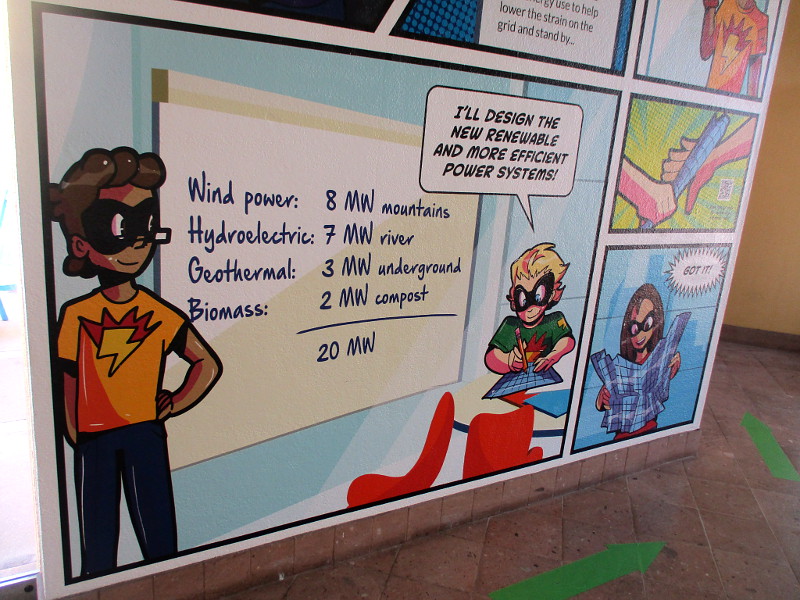
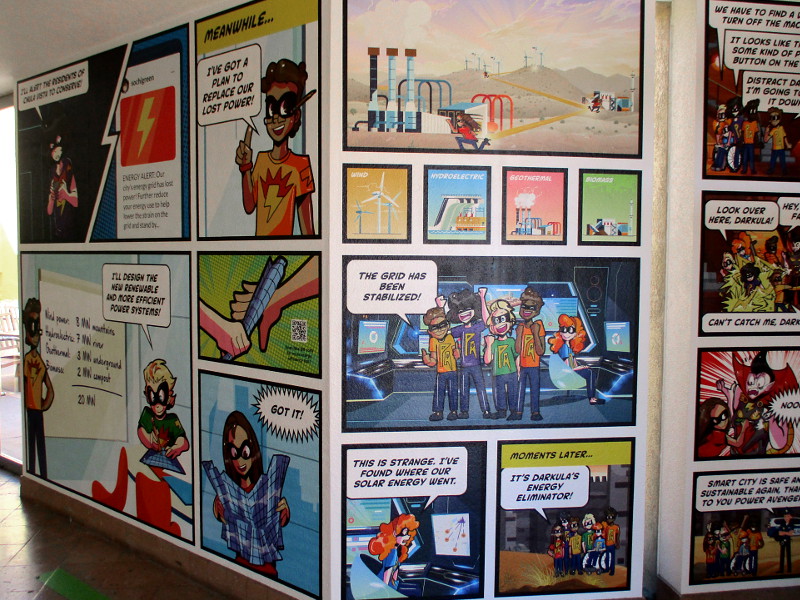
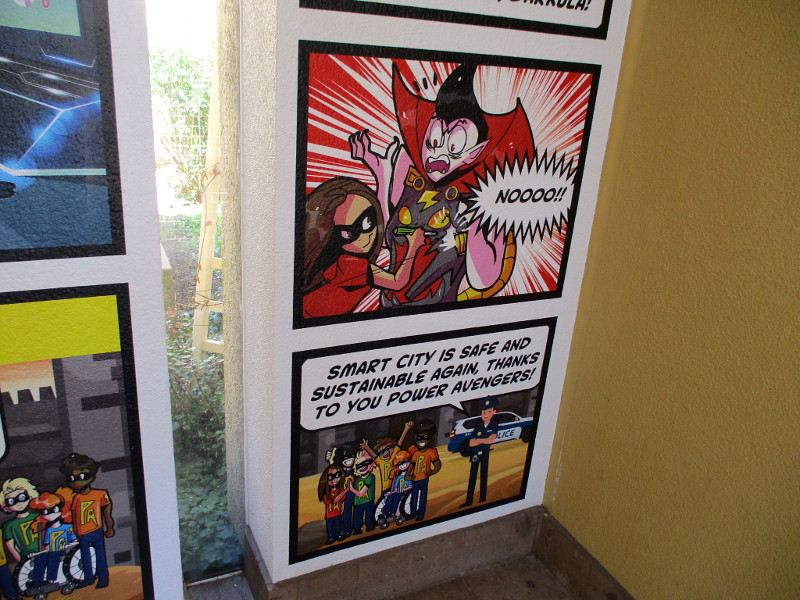
In Chula Vista, the dastardly supervillain Darkula has been defeated, thanks to the superhero Power Avengers!

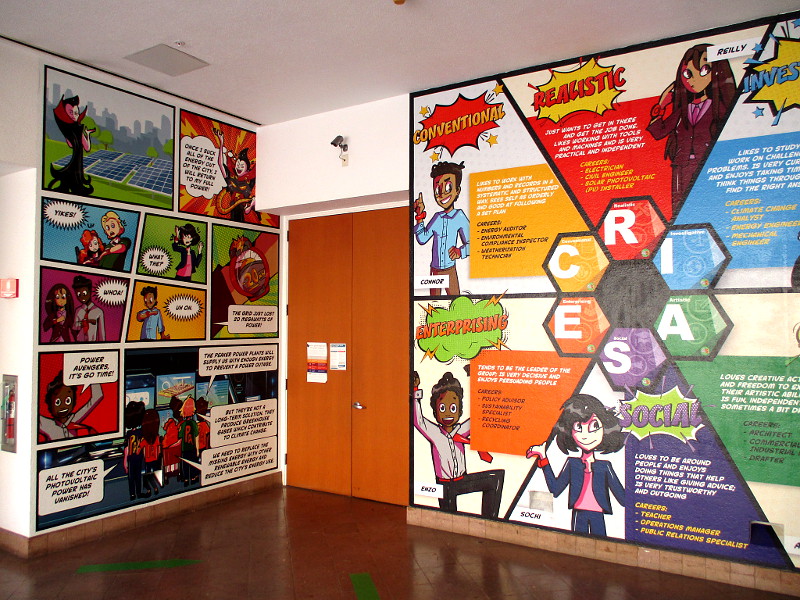
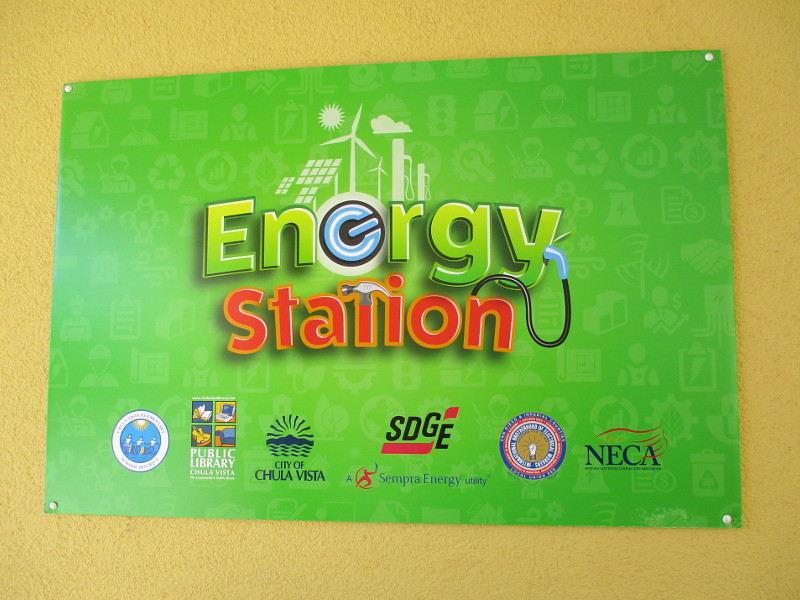
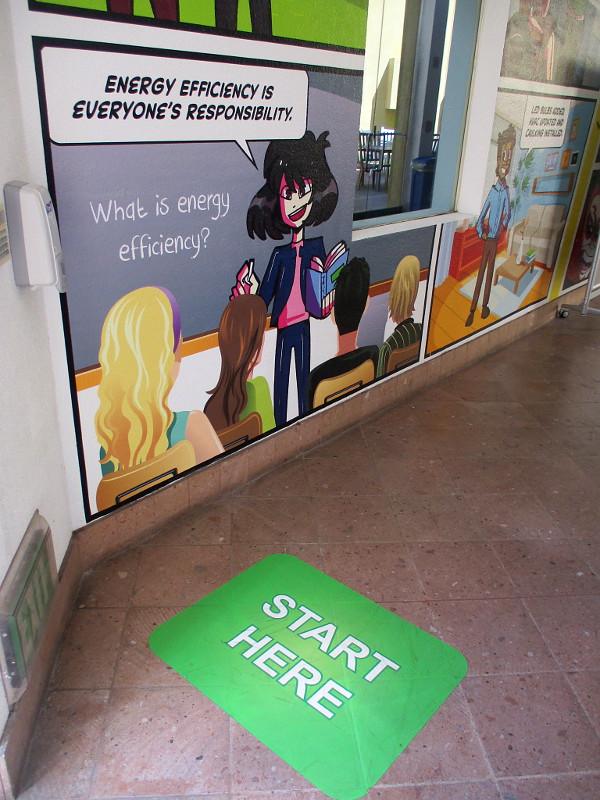
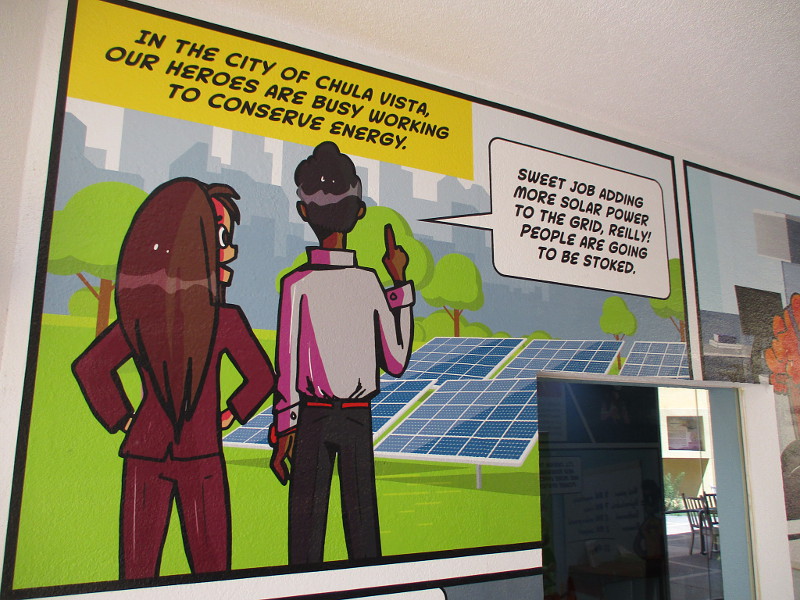
Don’t believe me? The exciting comic book story fills the walls of the Energy Station at the South Chula Vista Library!

When local sixth grade school students enter the Energy Station, with its action-packed walls, they might be inspired to become real life heroes. At the Energy Station makerspace they learn about energy conservation and sources of renewable energy, such as solar or wind power.

This unique City of Chula Vista project, created several years ago in partnership with San Diego Gas and Electric, aims to inspire the next generation to pursue careers in science, technology, engineering and mathematics or STEM. Having a pipeline of future STEM workers is essential to the health and growth of our regional innovation economy, which depends on technical expertise in fields such as electrical engineering, biomedical research, and wireless communications…

No matter what a kid’s talents or interests might be, at the South Chula Vista Library they can learn how to create a brighter future and thwart the menace of Darkula . . . as members of the Power Avengers!

I live in downtown San Diego and love to walk around with my camera! You can follow Cool San Diego Sights via Facebook or Twitter!

Mathematical nonsense and truth at the Bonita Museum.

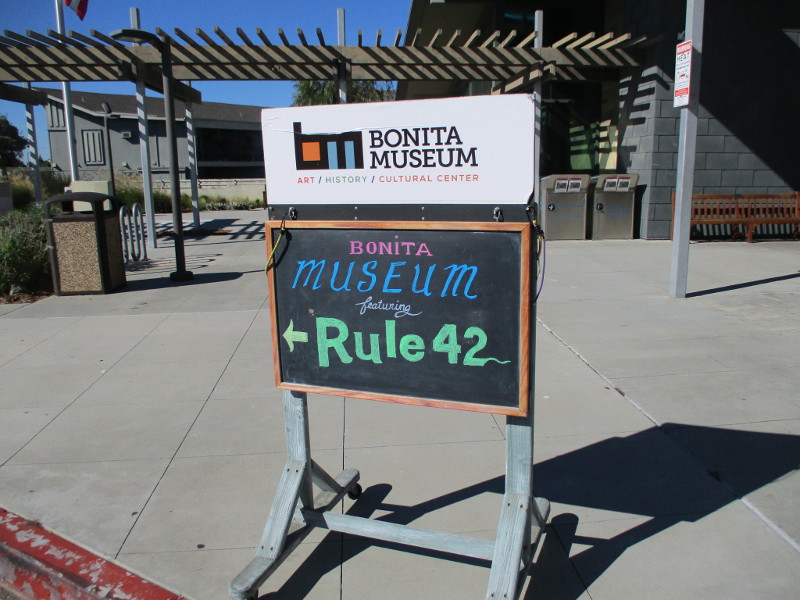
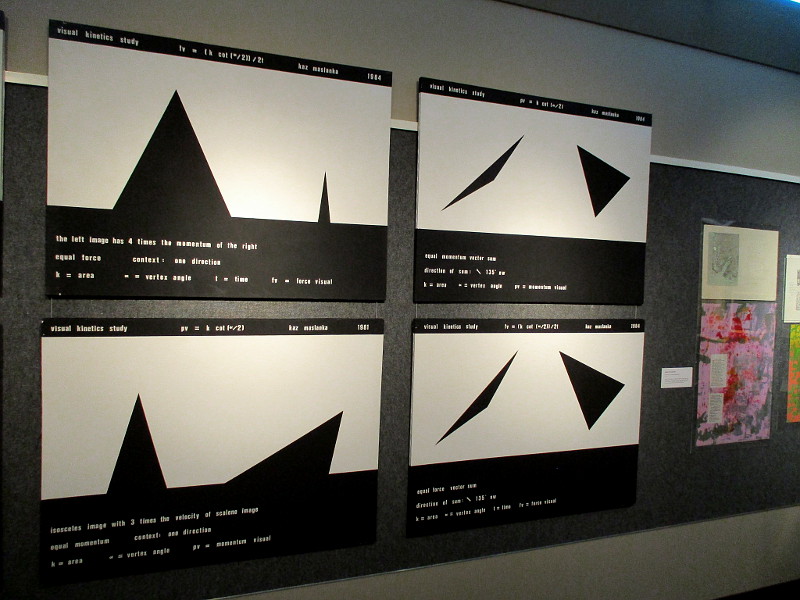
If you are intrigued by human creativity, science or philosophy, you might enjoy the artwork now on display at the The Bonita Museum and Cultural Center. The title of the exhibition is Rule 42, Stretched Language.

Why Rule 42? According to one popular work of fiction, 42 is the answer to the ultimate question of Life, the Universe and Everything. Go ahead, smile!

Why Stretched Language? Perhaps because human language can be stretched in endless ways. Words assembled in infinite combinations can represent one’s personal experience or shine light into dark places. Be made into poetry.

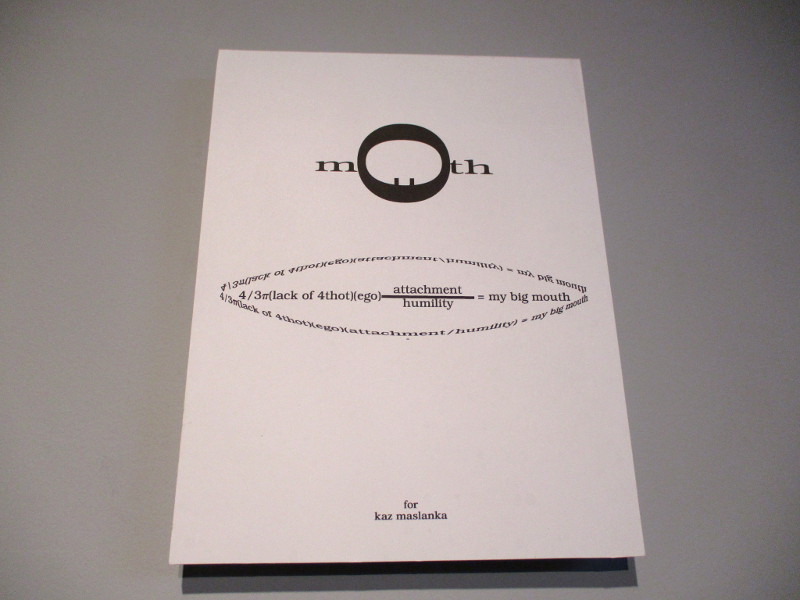
Words are symbolic. Numbers, variables and equations are also symbolic. They, too, can be used in poetic expression. Indeed, the exhibition’s subtitle is “Explorations into visual, concrete and mathematical poetry.”

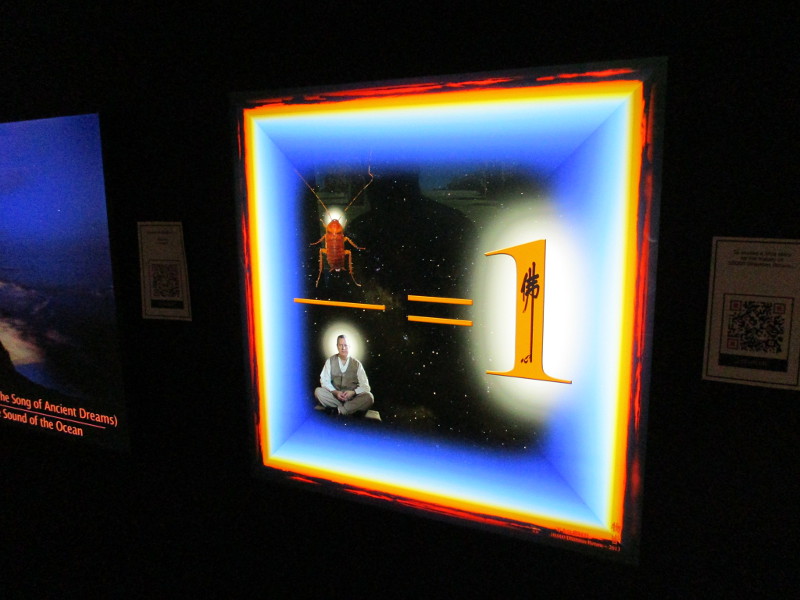
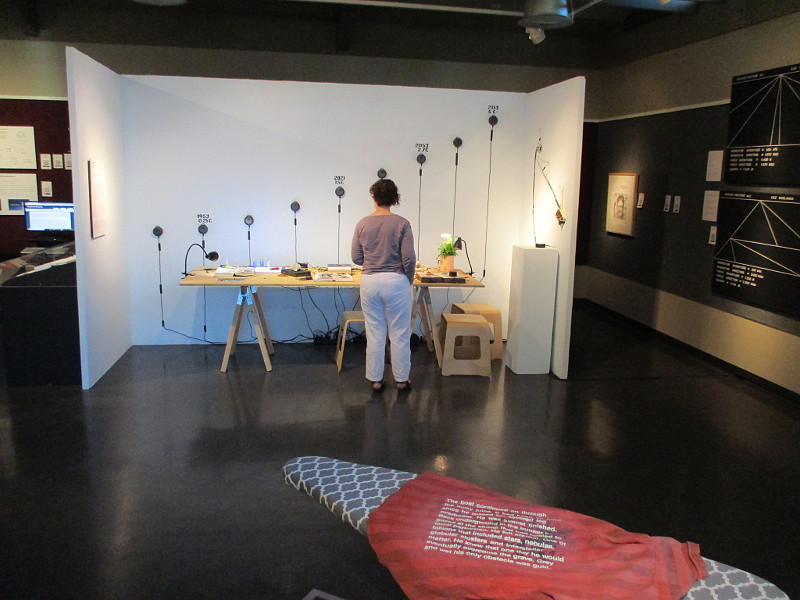
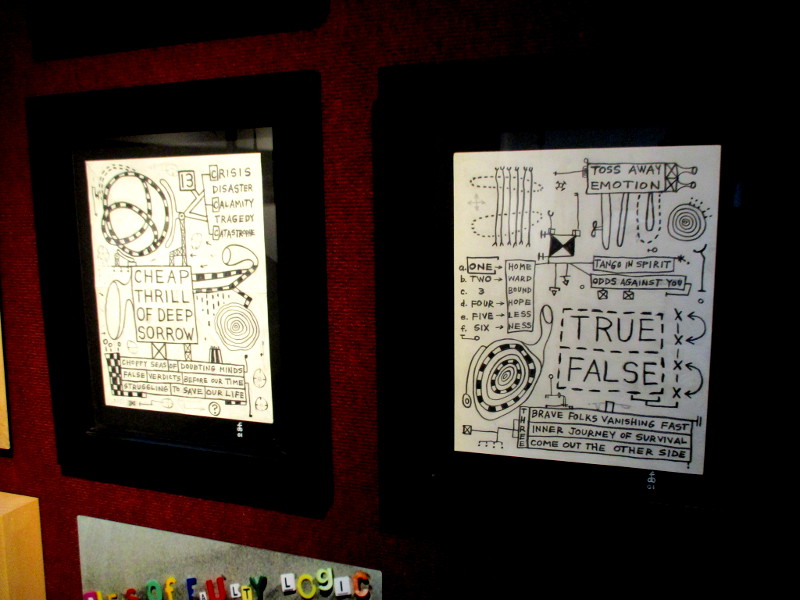
Supposedly, the works in this exhibition each have something to do with mathematics. It seemed to me, however, that they all celebrate something larger: the unique capacity of diverse human minds to imagine, rationalize and create. And even embrace pure nonsense.

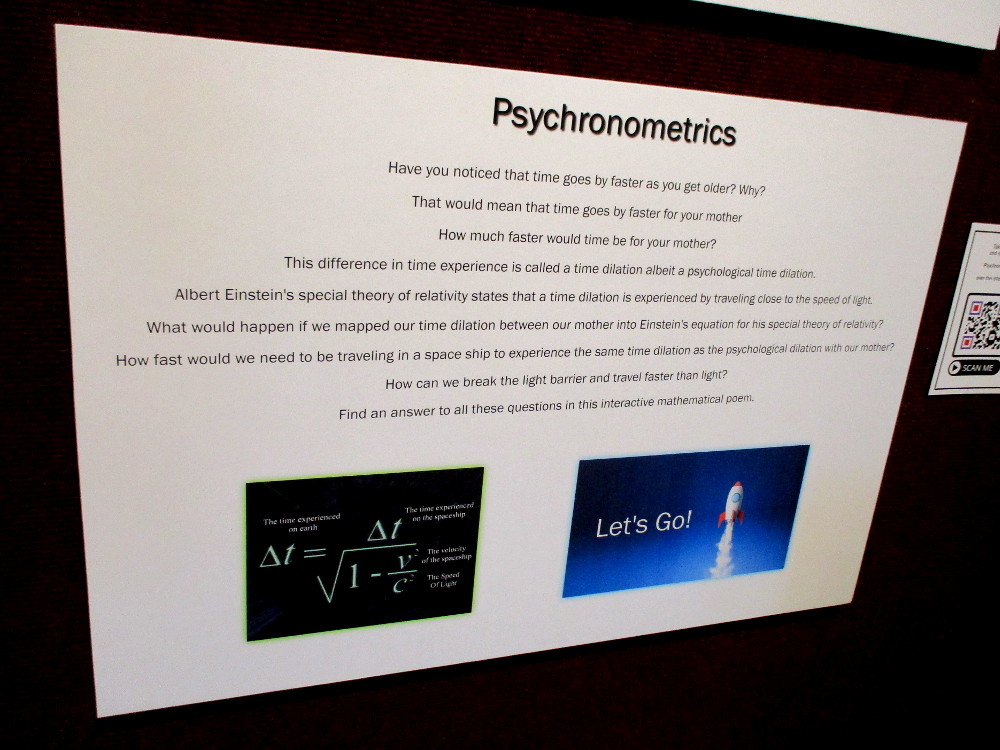
Psychronometrics. Sounds scientific. Sounds profound. The equation and description is impressive. But the assertion is that our psychological experience of time, and how time seems to accelerate as we become older, is related to Einstein’s theory of relativity.

To compare the two is utterly absurd. That equation in the photograph above includes velocity. Neither the young nor the old have managed (yet) to approach the speed of light!

But you know what? The plasticity of the human mind, which can imagine and rationalize absolutely anything and everything, is what is on display. These are the metaphorical works of visionary artists, not “serious” scientists. Infinite artistic truths cannot be defined with a few equations.

More rational visitors to the exhibit might laugh at some of the jumbled assertions and associations. Rule 42, Stretched Language can be a stretch.

My advise? Don’t be too critical. Step outside your own idea of Truth and enjoy!

This rather unusual exhibition ends on December 3, 2021.

I live in downtown San Diego and love to walk around with my camera! You can follow Cool San Diego Sights via Facebook or Twitter!