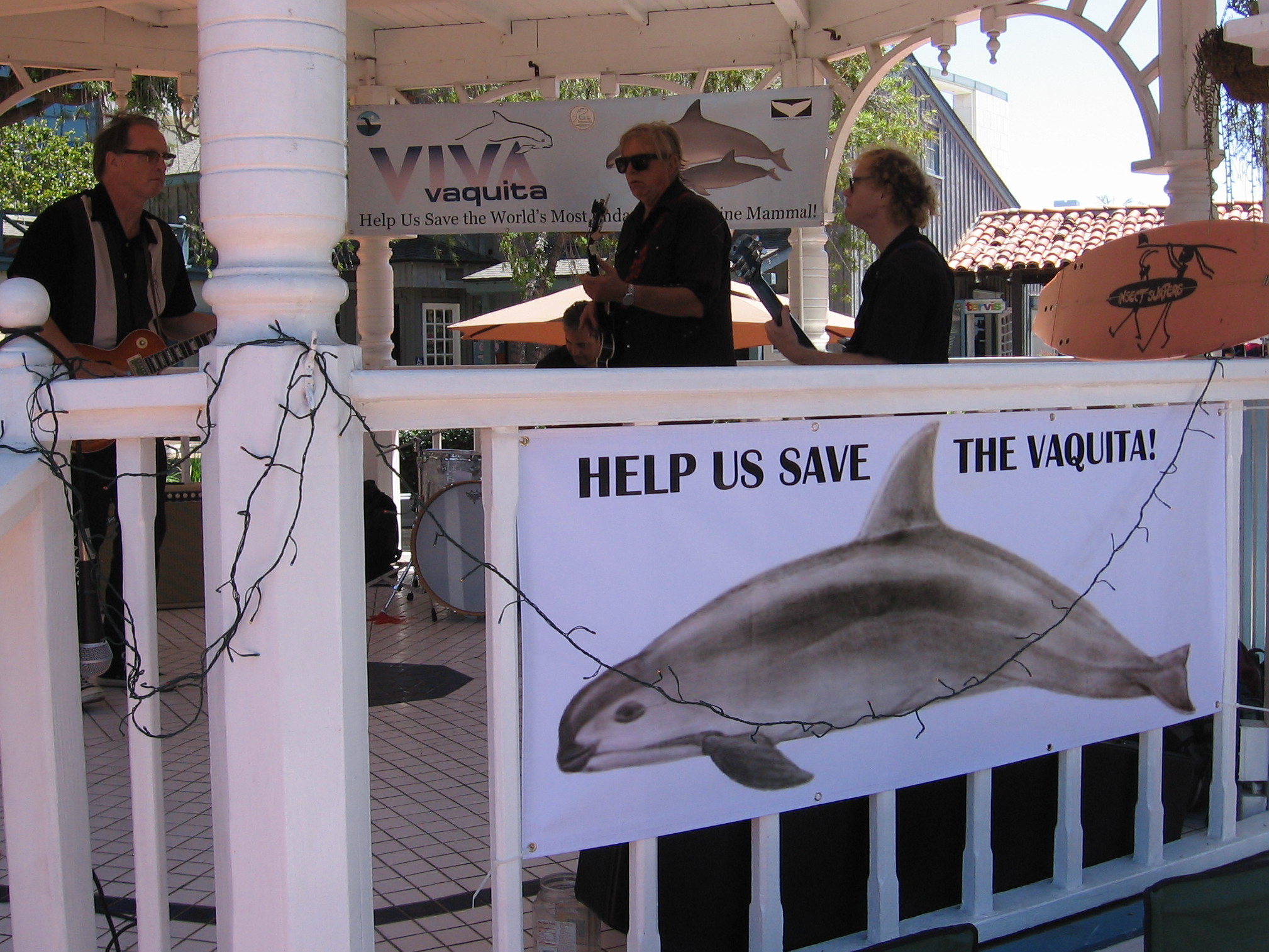
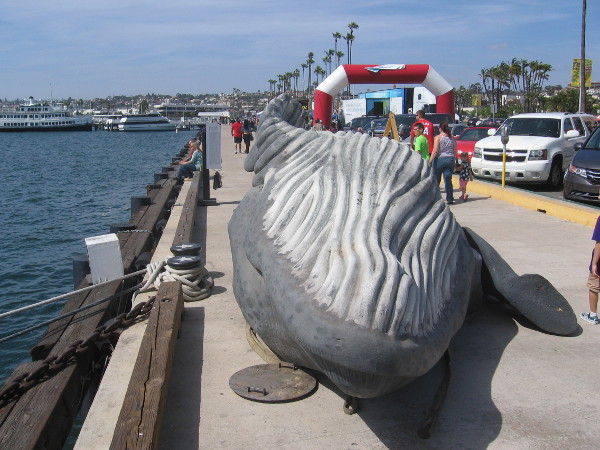
Help us Save the Vaquita display at the east gazebo of Seaport Village in San Diego. The band Insect Surfers was providing some music!
The Vaquita is the world’s most endangered marine mammal. It is thought that about 60 of the animals exist in the ocean today. This small species of porpoise (Phocoena sinus) lives in the warm waters of the eastern Pacific Ocean–specifically in the northern Gulf of California, in a small region east of Baja California not too distant from San Diego. According to the International Union for the Conservation of Nature, the Vaquita is classified as Critically Endangered.
International Save the Vaquita Day was observed today in San Diego and many other cities around the world. I swung by Seaport Village to see what efforts are underway to save Mexico’s “Panda of the Sea” and to learn a little about the Vaquita.
I learned that the Vaquita, thankfully, enjoys clean waters. Their big threat is being entangled in the gillnets of fishermen. A major effort is underway to eliminate these nets from the Vaquita’s natural habitat. But some fishermen, seeking to provide a living for themselves, use them anyway.
I learned there’s also an effort to inform consumers that some shrimp and fish that one finds in the grocery store is caught with gillnets. It is hoped enlightened shoppers will seek out and purchase seafood that isn’t caught with this type of net.
I learned that Vaquitas have never been held in aquariums, and has only been known to science since 1958.
If this species goes extinct, it will be gone forever.
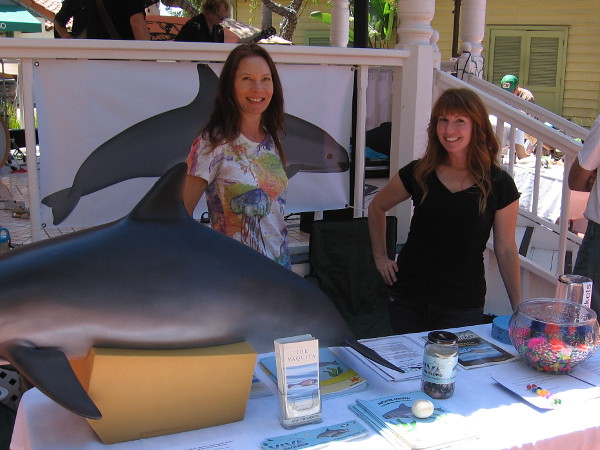
These nice ladies are working hard to save the Vaquita. It is hoped many others will join the effort, in any way possible. Time is very limited–perhaps a year or two–before the species might go extinct.Kids make art and learn about the critically endangered Vaquita, a marine mammal that clings to a tenuous existence not far from San Diego.
…
I live in downtown San Diego and love to walk! You can follow Cool San Diego Sights via Facebook or Twitter!
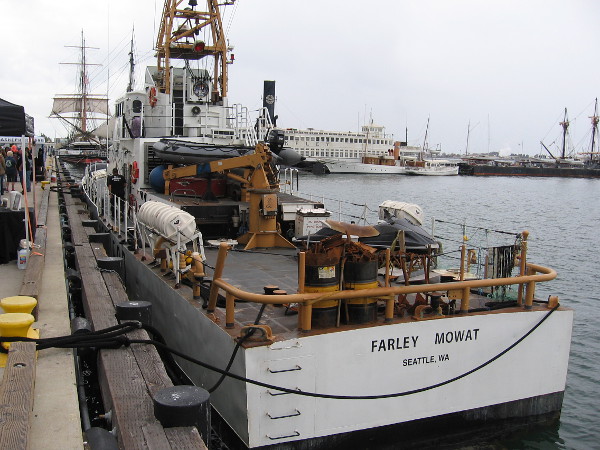
The Sea Shepherd Conservation Society’s old Coast Guard patrol boat, renamed M/V Farley Mowat, is docked this weekend on San Diego’s Embarcadero.
Yesterday after work, I noticed that an unusually decorated old U.S. Coast Guard patrol boat was docked along the Embarcadero, just north of the Maritime Museum of San Diego. Naturally, I had to investigate!
Turns out the renamed boat, M/V Farley Mowat, is now owned and operated by an organization called the Sea Shepherd Conservation Society, whose stated mission is to defend, conserve and protect marine ecosystems and species. They use direct-action tactics to expose and confront the illegal slaughter of marine wildlife at sea. I’d seen their exhibit aboard the steam ferry Berkeley during Earth Day on the Bay, where their representative explained that Sea Shepherd was like Greenpeace on steroids.
I spoke to a friendly crewmember near the Farley Mowat and learned they would be offering the public free tours on Saturday. The vessel has just returned from its second mission in the Sea of Cortez off Baja California–the wildlife defense campaign was titled Operation Milagro II. For a number of months, Sea Shepherd worked with the Mexican government in a marine refuge near San Felipe to identify and intercept illegal gillnet fishing which has reduced the population of the rare Vaquita Porpoise over the decades to just about 100 animals. This is commendable work! Sea Shepherd not only has permission from the Mexican government to patrol for poachers and pull up illegal fishing nets when encountered, but they are making observations concerning this endangered marine species. They are doing similar work to protect another rare fish in the region: the Totoaba Bass.
Working within the law in a positive way to protect these species is commendable and extraordinary! After doing some research at home, however, I learned that the organization is quite controversial. Some say they go too far. Some, including other environmental activists and organizations, have called them eco-terrorists. I don’t know enough to comment, but I do know that sometimes people with enthusiastic agendas and a sense of urgent purpose can lose their sense of humanity. The people I met yesterday and this morning when I walked again along the Embarcadero seemed like very nice people. I will say no more.
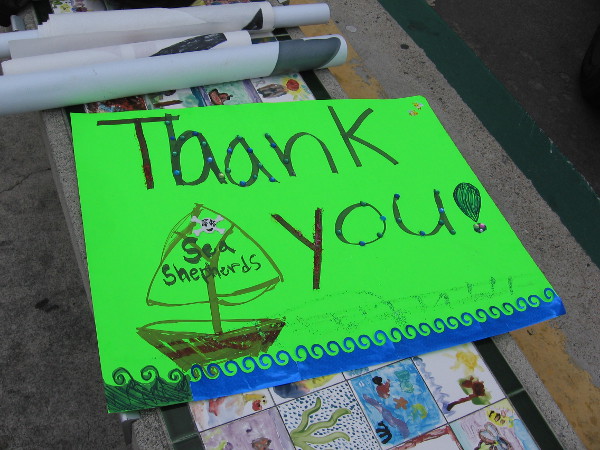
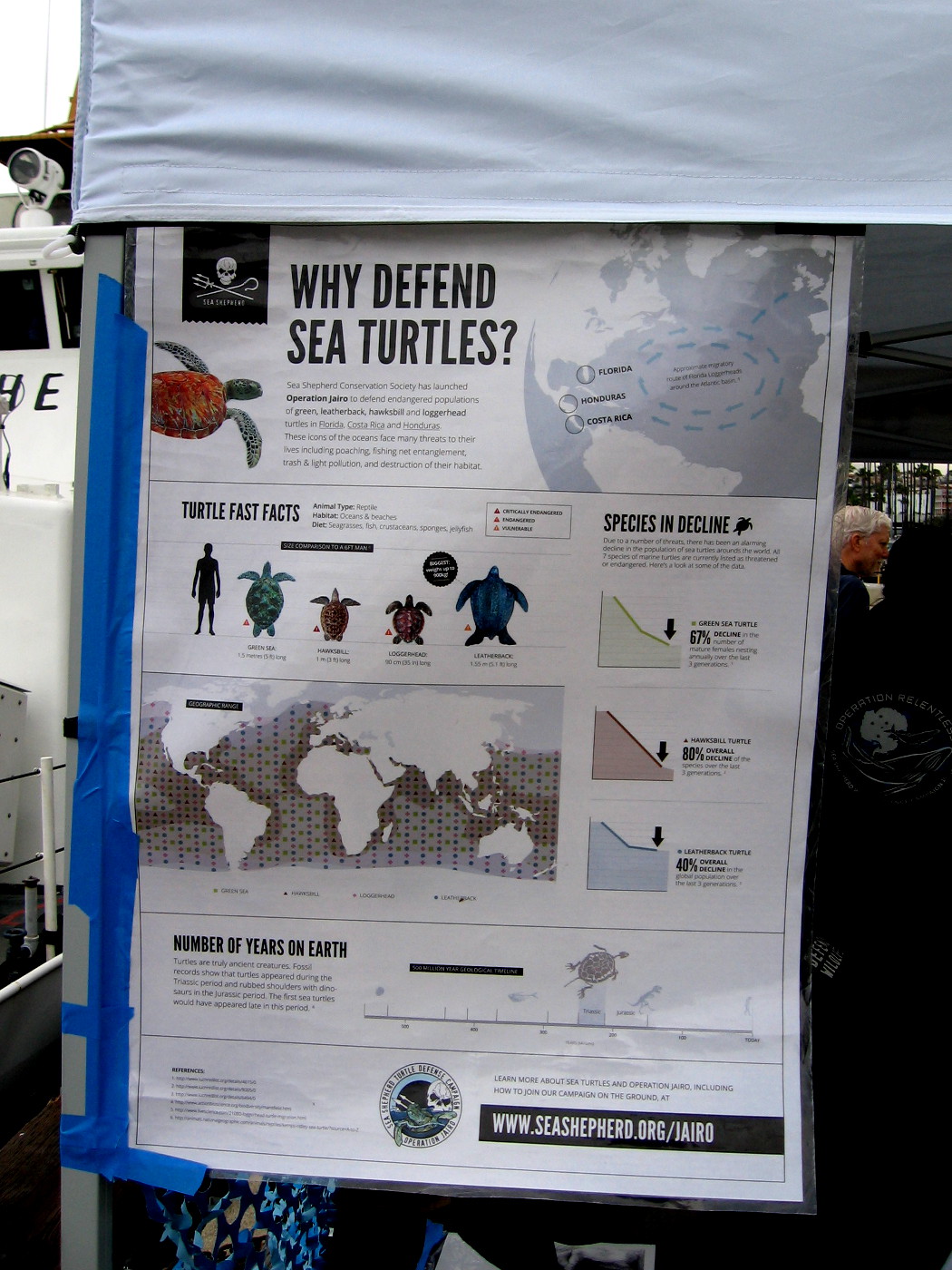
A very friendly, informative crewmember of Farley Mowat explained their recently completed mission, which was to defend the Vaquita Porpoise in Mexico’s Sea of Cortez.Photograph of M/V Farley Mowat the following cloudy morning. Visitors were being given tours aboard the vessel.Interested people and crew mingle before boarding the Sea Shepherd’s cool boat. Public tours of M/V Farley Mowat are being offered this weekend in San Diego.Looks like kids made some Thank You signs for Sea Shepherd!A tent near the boat featured gifts and information in support of Sea Shepherd. Defending Ocean Wildlife Worldwide.A detailed poster explains why sea turtles should be defended. Click to enlarge. San Diego’s South Bay has its own small group of migratory green sea turtles.Sea Shepherd stops in San Diego. They were featured in Animal Planet’s television show Whale Wars. M/V Farley Mowat will soon be on its way to another location on the high seas.
…
I live in downtown San Diego and love to walk! You can follow Cool San Diego Sights via Facebook or Twitter!
Do you like to read short pieces of thought-provoking fiction? You might enjoy checking out Short Stories by Richard.
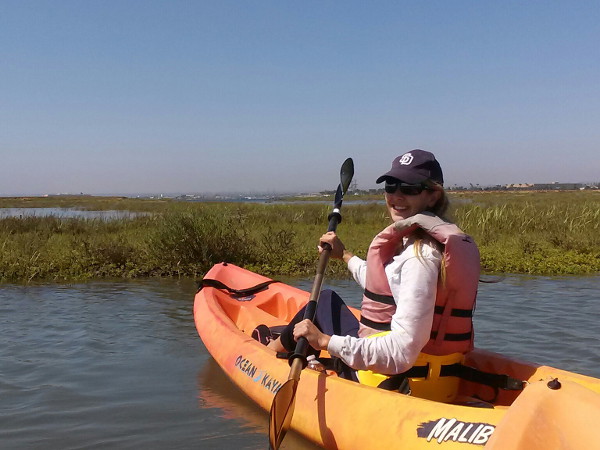
You can go kayaking on a cool Eco Tour and try to spot green sea turtles in San Diego’s South Bay! Image courtesy of Ocean Connectors. Photograph by Harry Orgovan.
At last weekend’s Earth Day on the Bay, I learned about some awesome Eco Tours on San Diego Bay and the Pacific Ocean. Experienced guides take you by kayak around the Sweetwater Marsh National Wildlife Refuge to search for green sea turtles, or by bicycle around San Diego Bay to view all sorts of migratory birds, or by boat off our coast to spot gray whales and other marine life! These tours are provided by Ocean Connectors.
Why am I blogging about this? What makes these tours so amazingly cool? Ocean Connectors uses the money they make from their San Diego Eco Tours to directly benefit local students! Every year, Ocean Connectors introduces hundreds of kids in the National City School District to the beautiful natural world along San Diego’s coast, educating them about migratory wildlife and stewardship of the environment–all at no cost!
That’s right! Thousands of students in Fourth, Fifth and Sixth Grades have had an experience of a lifetime thanks to Ocean Connectors. In their formative years, these young people, many from low-income situations, have ventured out from the city and have experienced profound wonders they otherwise might have missed. They are taken on fun and inspiring educational field trips that are sometimes described as the best day of their lives!
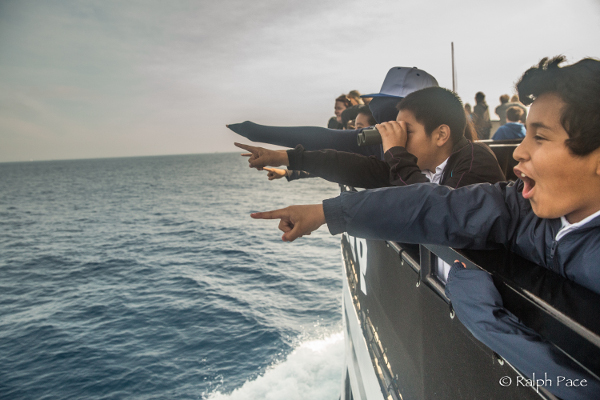
Thanks to Ocean Connectors, local school students can learn about marine wildlife during a whale watching tour off the San Diego coast. Image courtesy of Ocean Connectors. Photograph by Ralph Pace.
Seeing green sea turtles, wild birds taking flight, and majestic gray whales out on the wide blue water deeply affects a young person’s view of the world, teaches one about the web of life, helps one to grow into a thoughtful, responsible adult. I know this is true. Because I had a similar experience when I was growing up.
Back in junior high school, I went on a sea adventure with some classmates along Alaska’s Inland Passage. I saw breaching humpback whales, bald eagles, even an orca. That memory is still vivid in my mind. That unforgettable experience broadened my horizons, made me appreciate the wonders of nature, gave me a sense of belonging to a larger world, a world that should be carefully preserved. I’ve been an avid hiker and lover of the outdoors during my adult life, and I have no doubt my own personal adventure those many years ago is one big reason why.
So . . . have you been considering having your own unforgettable adventure in ecotourism? Would you like to possibly spot one of the 60 green sea turtles that spend part of their lives feeding on eel grass in San Diego’s South Bay? Would you like to bike around the Bayshore Bikeway and see hundreds, even thousands of wild birds? (And some are quite rare!) Would you like to head out onto the ocean with trained, knowledgeable naturalists, and see gray whales, dolphins, and a huge variety of other sea mammals and coastal wildlife?
Ocean Connectors’ mission is to educate, inspire and connect people to the outdoors. And one of those people could be YOU!
Click here to have your own unique Eco Tour in San Diego. Book a tour, and you’ll benefit kids in San Diego’s South Bay! It’s a win-win!
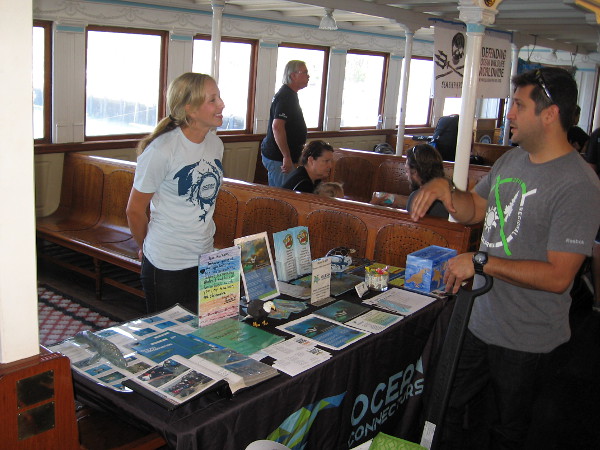
Someone learns about the amazing Eco Tours and the educational programs provided by Ocean Connectors during Earth Bay on the Bay at the Maritime Museum of San Diego.
…
I live in downtown San Diego and love to walk! You can follow Cool San Diego Sights via Facebook or Twitter!
Carefree kids jump while exploring the tide pools just south of the Ocean Beach Pier.
On Sunday I headed to Ocean Beach, for no particular reason. I like to walk out on the pier.
My visit happened to coincide with low tide, so I took advantage of an opportunity to explore the tide pools near the base of the pier. What did I see? Amazing life. Amazing beauty.
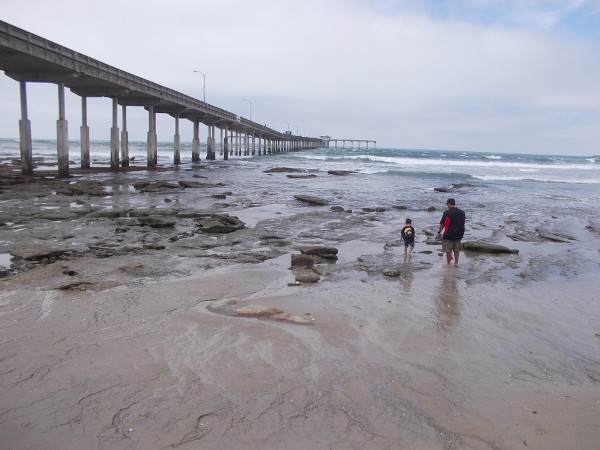
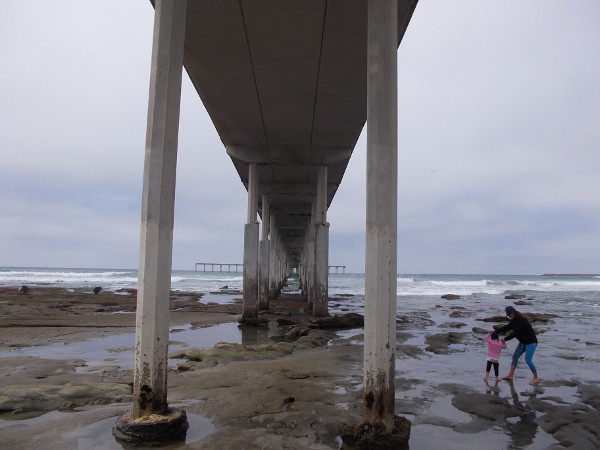
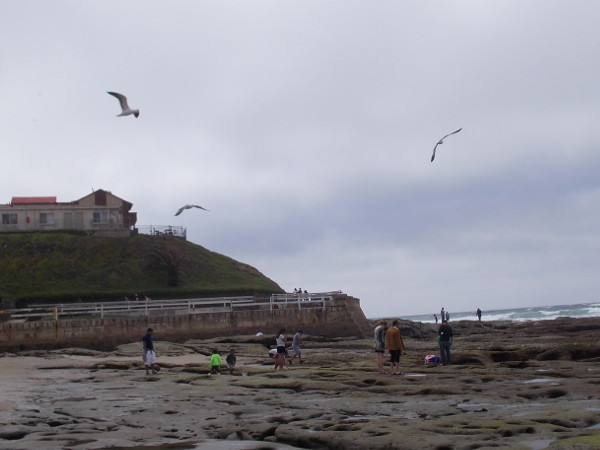
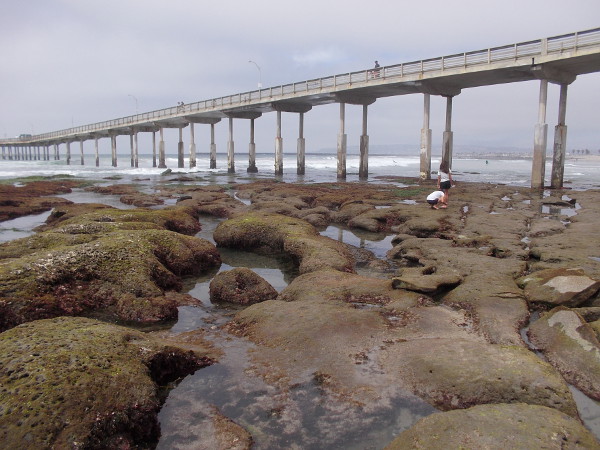
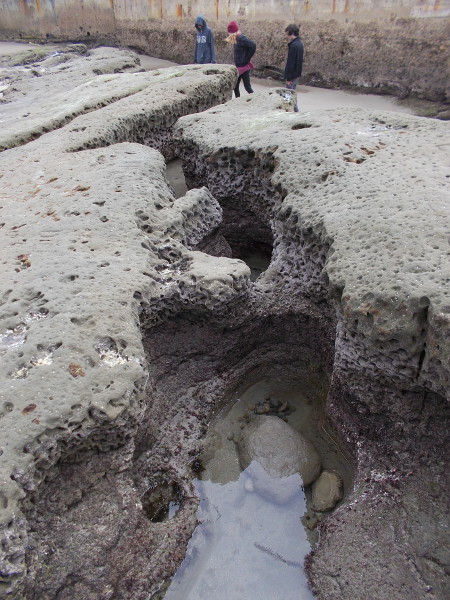
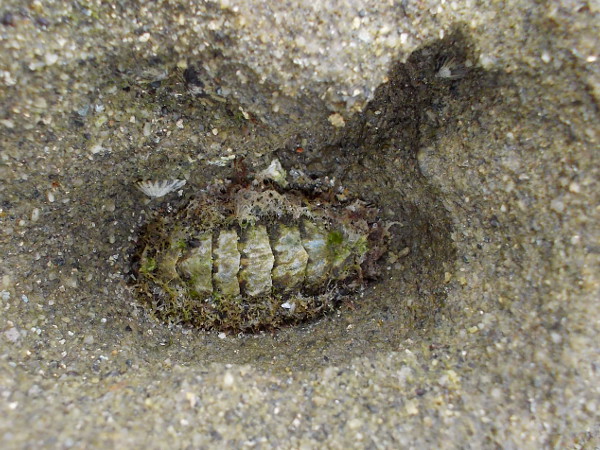
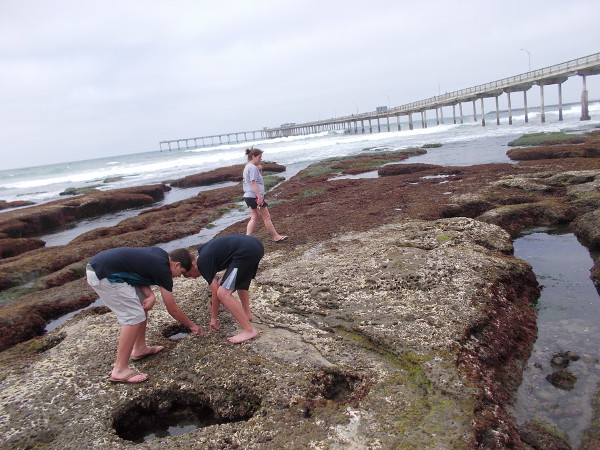
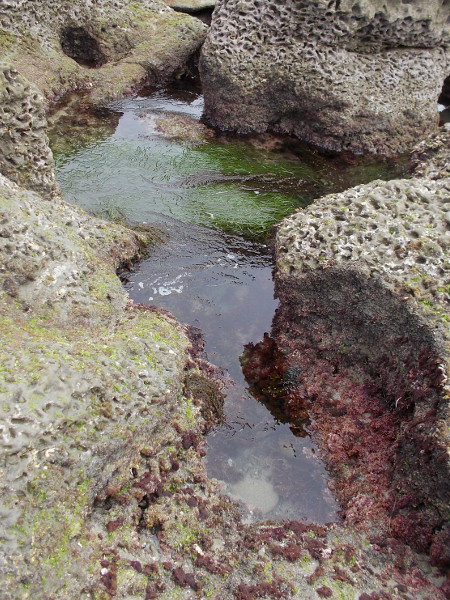
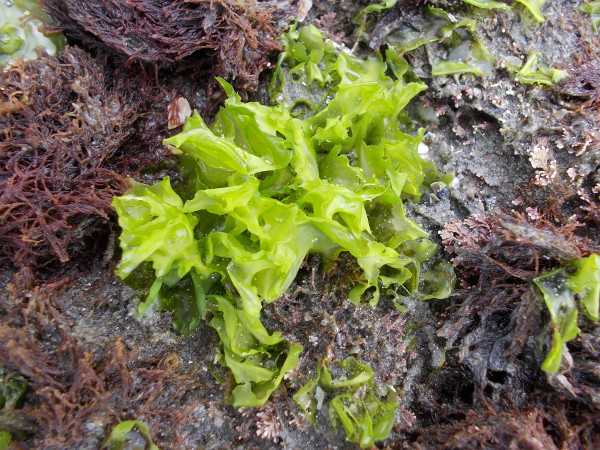
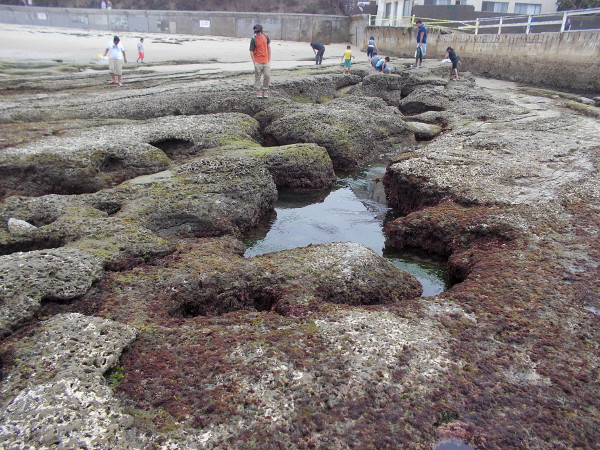
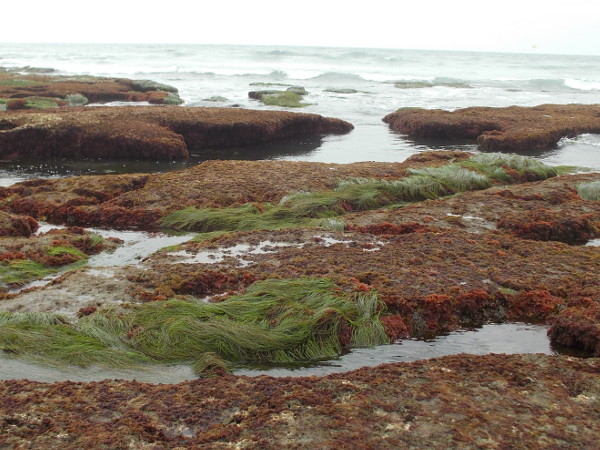
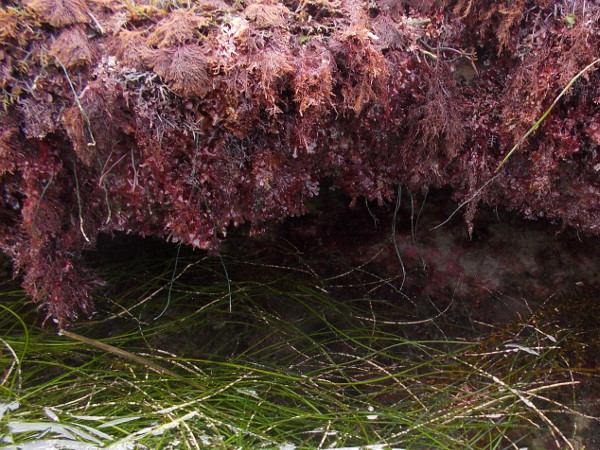
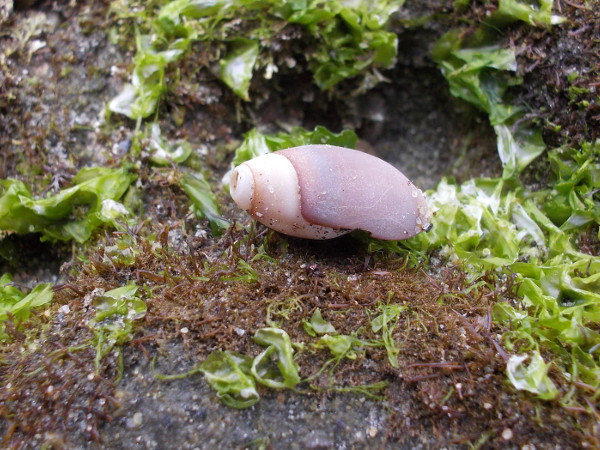
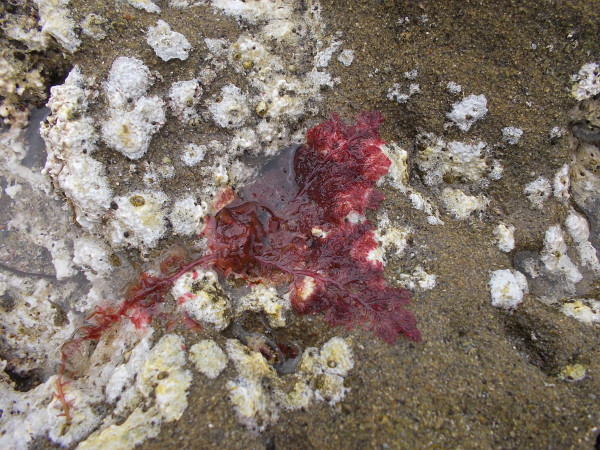
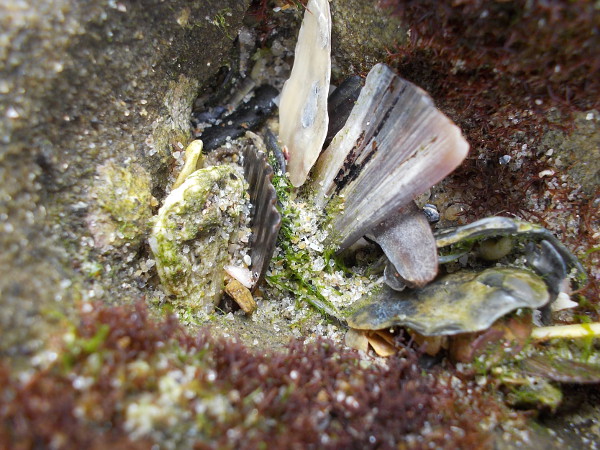
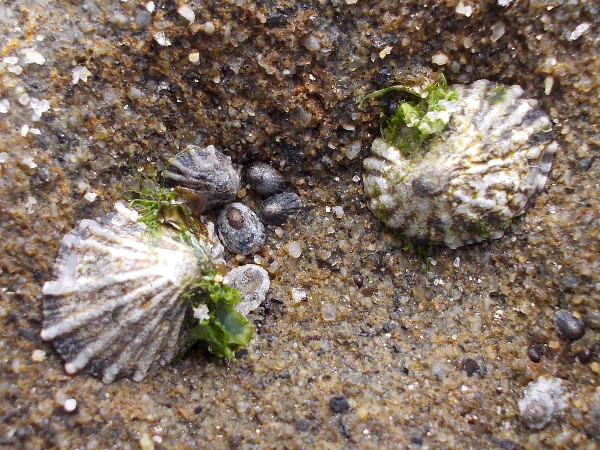
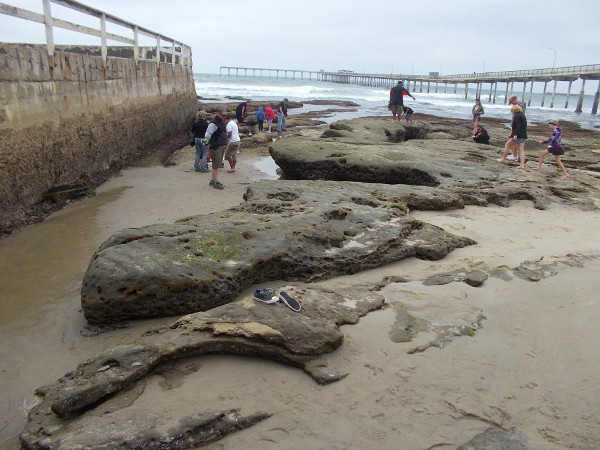
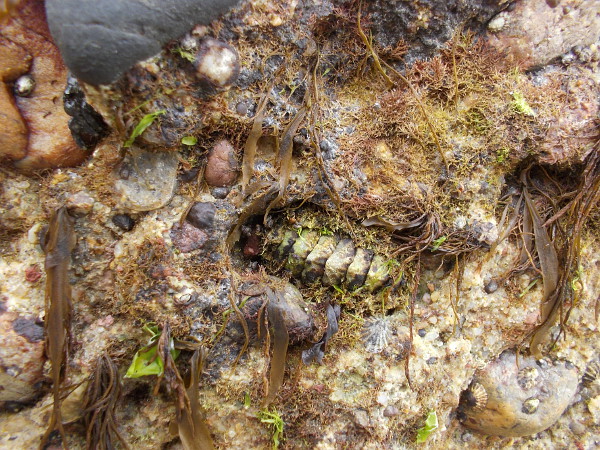
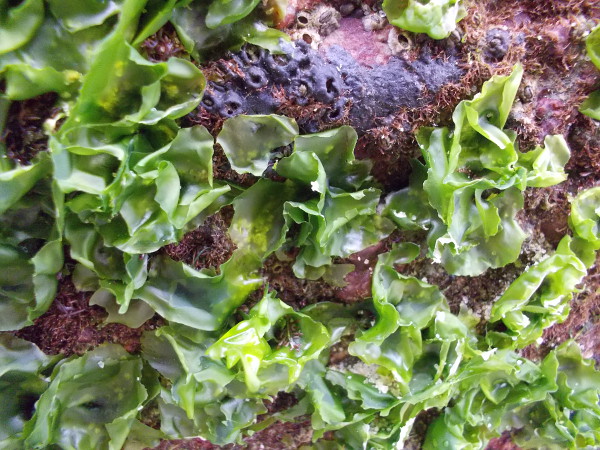
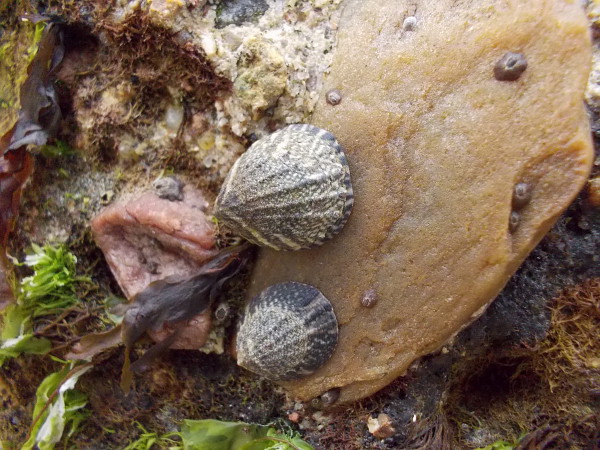
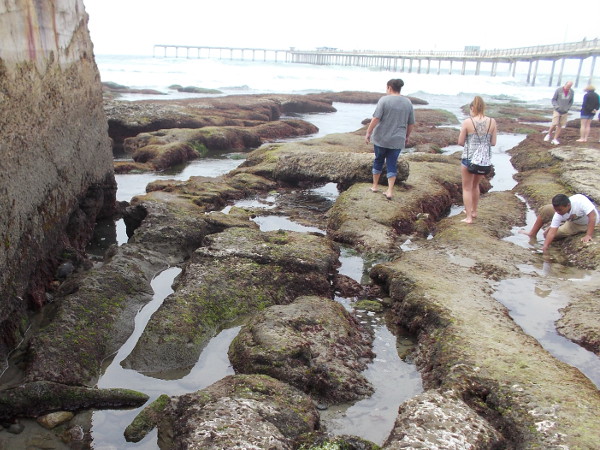
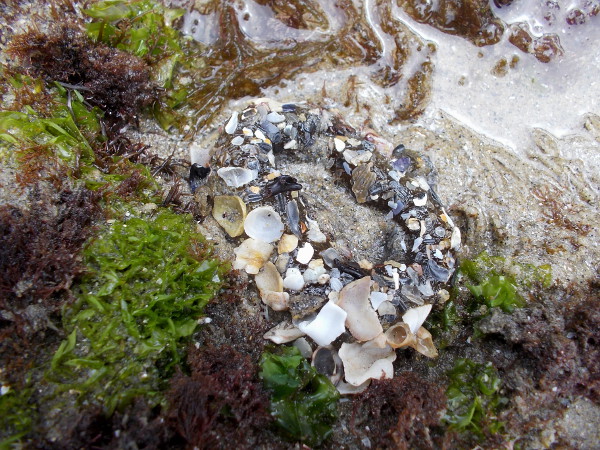
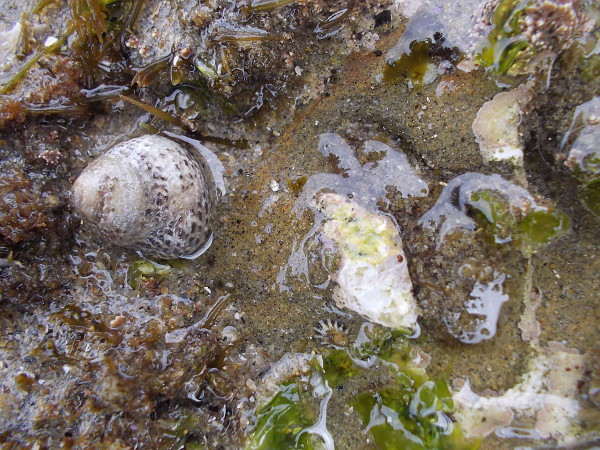
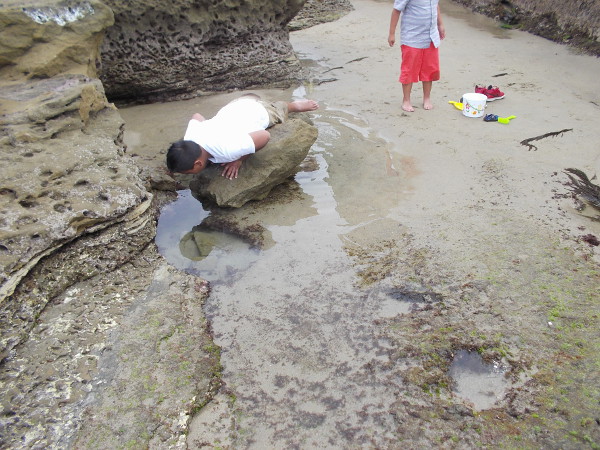
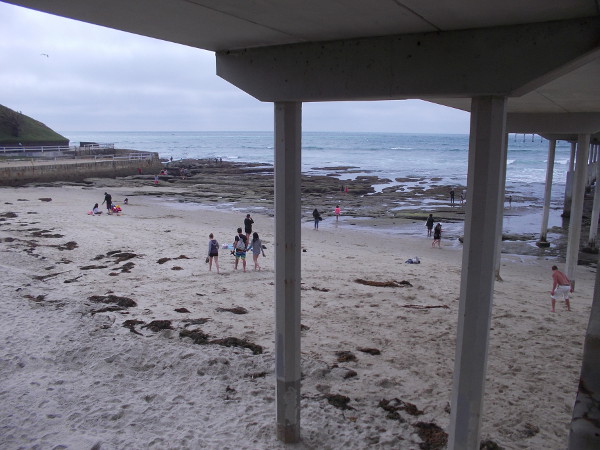
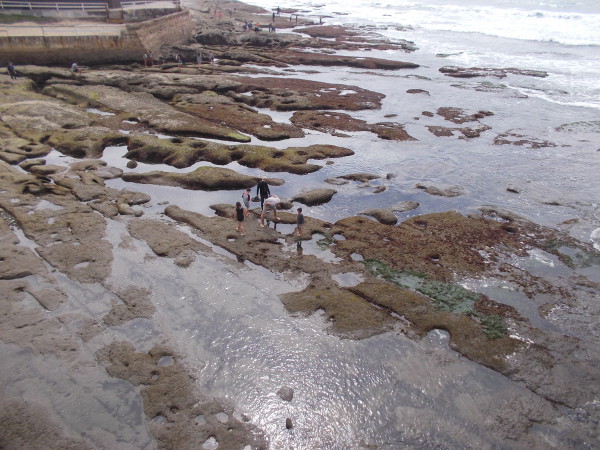
North of the Ocean Beach Pier there is a beautiful, very popular beach. Some rocks are exposed at low tide.Under the Ocean Beach Municipal Pier, which is the second longest pier on the West Coast.Seagulls circle above people who are searching for natural wonders in the intertidal zone.A view of the Ocean Beach Pier and nearby tide pools. An easily accessible place to explore the seashore and make small discoveries.People explore fascinating tide pools near the foot of the OB pier during low tide. The rocks can be very slippery.At low tide, the exposed sandstone rocks south of the pier contain many depressions, the home of algae and small sea creatures.There are many interesting photo opportunities at the tide pools. Down on hands and knees, you’re going to get a little slimy and wet!A complex, natural mosaic in the rock.Hidden channels and eroded surfaces in the irregular, pitted sandstone.Kids stand near the sea wall at the end of one water-sculpted, crevice-like channel.I believe this little guy is a troglodyte chiton. Thousands can be seen in their own tiny sandstone burrows in the intertidal rocks. They can live 20 years in the same spot!Lots of amazing discoveries to be made!One can see pink encrusting coralline algae and surfgrass in this saltwater-filled channel.I can see why this is called sea lettuce! It’s actually a type of green algae.Another view of the tide pools immediately south of the OB pier.Bright green surfgrass, reddish algae and blue ripples of incoming ocean surf make a strangely beautiful photograph.More pink coralline algae and surfgrass at the OB tidepools.A small empty shell among some sea lettuce.An unusual photo at the tide pools. Nature is an infinitely prolific artist.A cool photo composed of accumulated shell pieces.Limpets large and small on one rock form a beautiful pattern.Adventures in progress.Tiny miracles of nature in the soft sandstone.A sample of the surprising beauty you might encounter at these tide pools.A periwinkle, or sea snail.More beautifully patterned limpets, and I think I might see a few barnacles.Right up next to the sea wall. The tide pools continue a good distance to the south.A sea anemone covered with shell fragments, among sand and algae in one tide pool.An aggragating anemone, safely closed up at low tide so that it doesn’t dry out. Many small stones and shell bits have collected upon it.Another watery scene in a life-filled Ocean Beach tide pool.There’s a lot of exploring to do!Looking under the OB pier as I climb up its stairs for an overhead view of the tide pools.Looking down from atop Ocean Beach Pier at the nearby tide pools. People out on the rocks search for wonders in the intertidal zone.
…
I live in San Diego and love to walk all over the place! You can follow Cool San Diego Sights via Facebook or Twitter!
Do you like to read short pieces of thought-provoking fiction? You might enjoy checking out Short Stories by Richard.
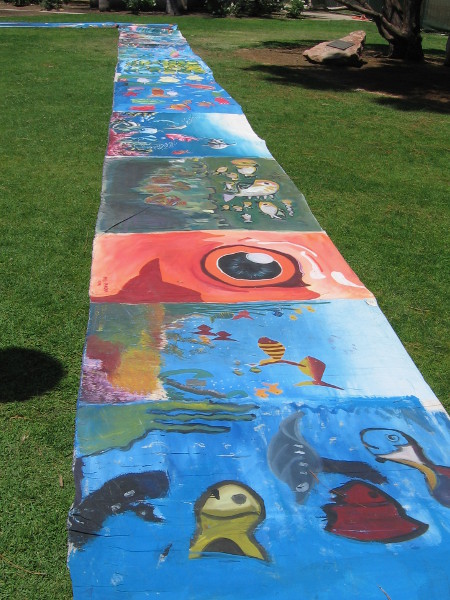
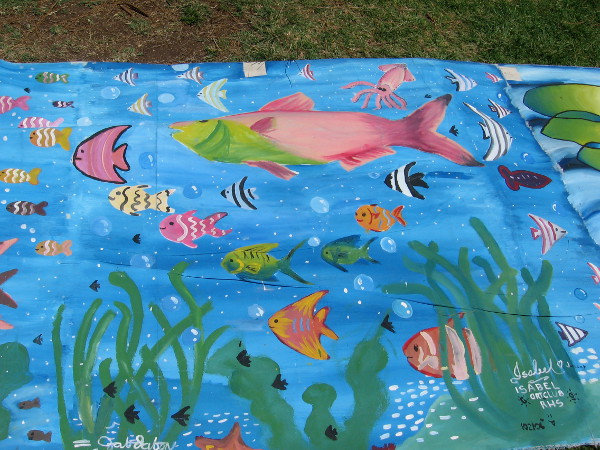
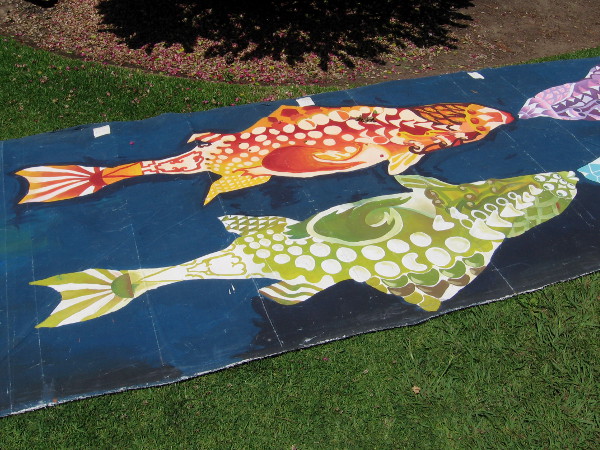
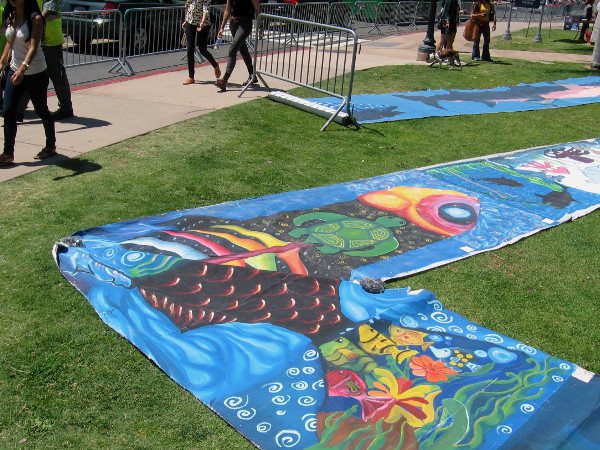
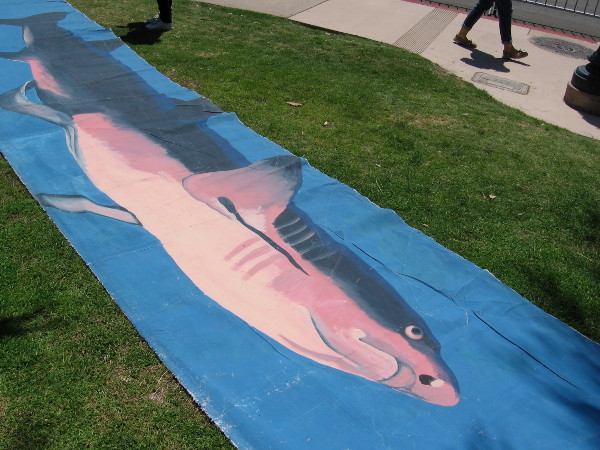
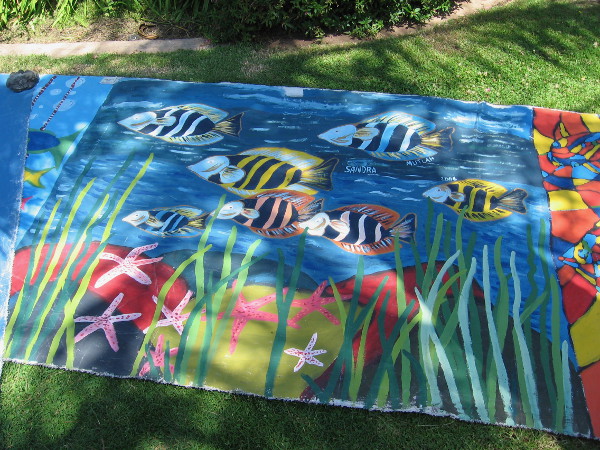
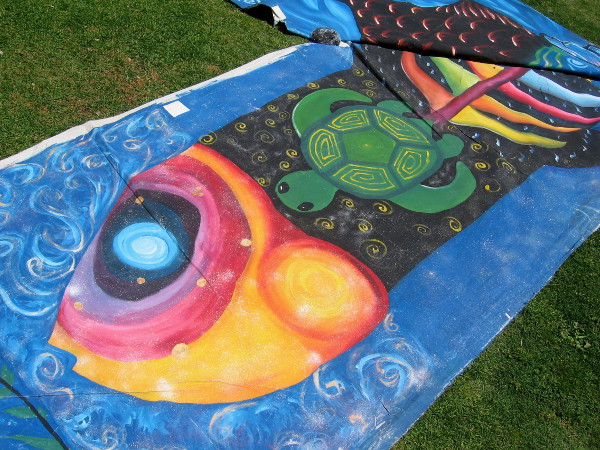
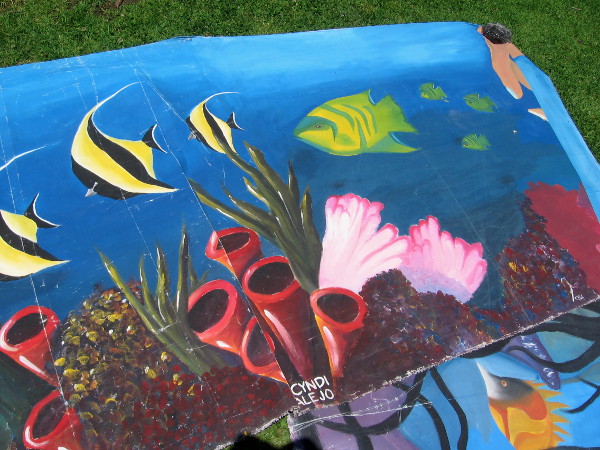
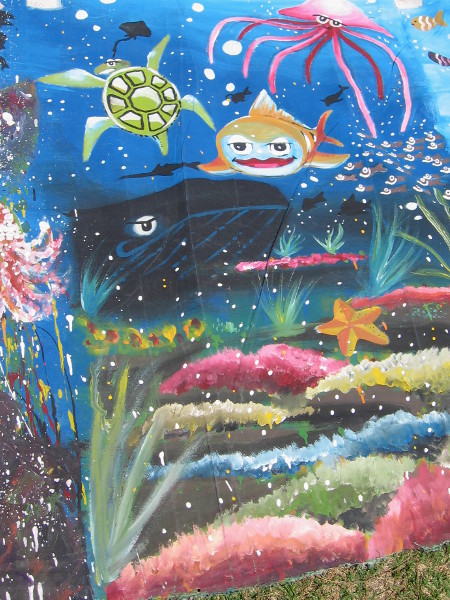
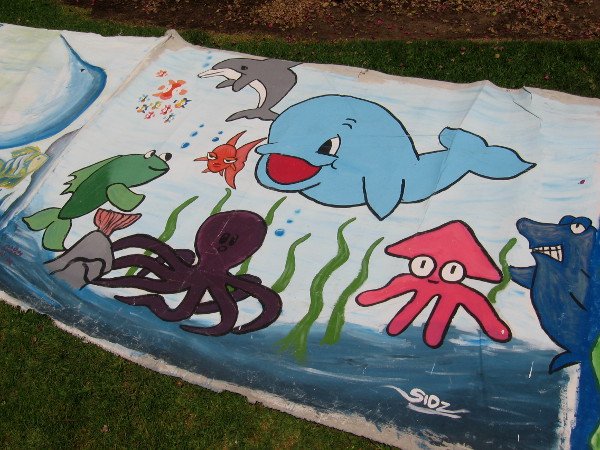
Painted underwater scenes on the grass at the Balboa Park Centennial 2015 Philippine American Celebration.
Astonished eyes were staring down at the ground at the Balboa Park Centennial 2015 Philippine American Celebration. That’s because a very colorful, very long painted canvas had been unrolled on a patch of grass for festival visitors to admire.
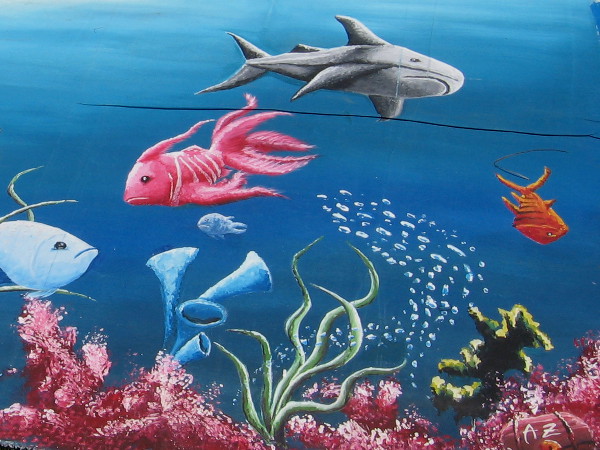
What you see in these photos is a segment of the seven kilometer long “Fishes of the Ocean” painting. The amazing artwork, depicting marine life, was created by thousands of mostly young people in the Philippines from 2006 to 2009. The project was an attempt to break the Guinness World Record for longest painting on a single canvas!
I did some research on the internet, but I’m still not sure whether a record was officially set. If you can provide more info, leave a comment below!
Small segment of the amazing seven kilometer long Fishes of the Ocean painting.Talented young artists, mostly unknown, contributed to this colorful environmental art.Abstract fish forms swim in a school on a very large canvas.All sorts of exotic tropical fish are swimming at the ocean’s bottom.Sea life painted in many vivid colors.Fishes of the Ocean was created in the Philippines in an attempt to break a Guinness World Record.Visitors to Balboa Park in San Diego walk past an unexpected cool sight!A land shark waits motionless in the grass!The long strip of fun art zigzagged across the grass near the International Cottages.Creativity is one of the attractions at the annual Filipino cultural festival.Just a wonderful product of human imagination.This appears to be a scene from a coral reef.A scuba diver among bubbles and rays of colored light.I see a turtle, whale, starfish and octopus.Cartoon ocean creatures prompt smiles in Balboa Park!
…
To enjoy future posts, you can “like” Cool San Diego Sights on Facebook, or follow me on Twitter.
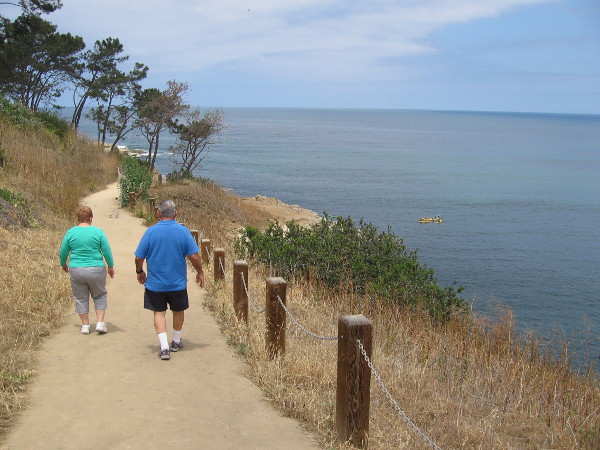
Taking an easy stroll above the wide, blue ocean in beautiful La Jolla.
My day in La Jolla yesterday was so wonderful I had to do it again!
A second walk today has my computer bursting with photos. So I’d better share some!
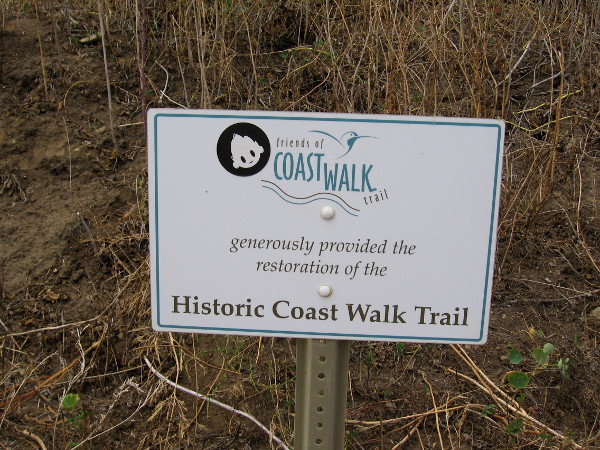
I’m going to create two blog posts. This first one involves a walk down the short but breathtaking Coast Walk Trail, then down Coast Boulevard from the Cave Store to La Jolla Cove Beach. Where the ocean meets land here is one of the most amazing, magical places a person might ever visit. A few photos hardly do the experience justice.
Be forewarned, this post starts with great natural beauty, but ends with sudden ugliness. You’ll see why I became a bit angry during my otherwise glorious adventure.
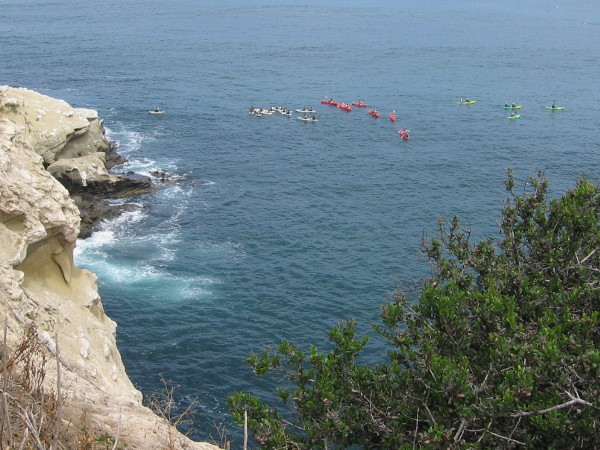
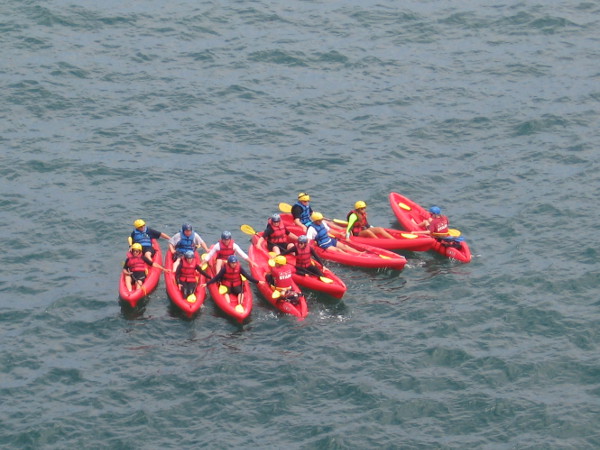
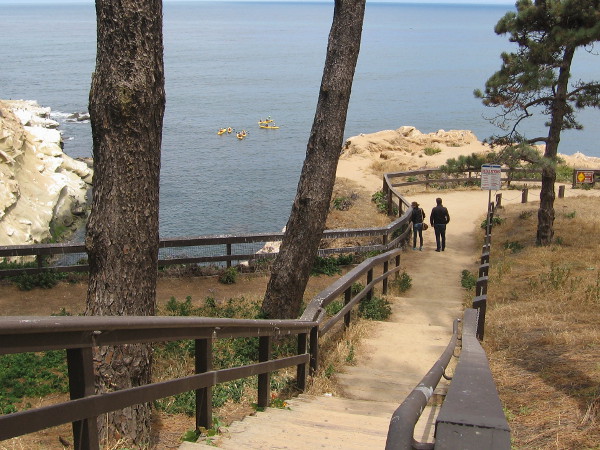
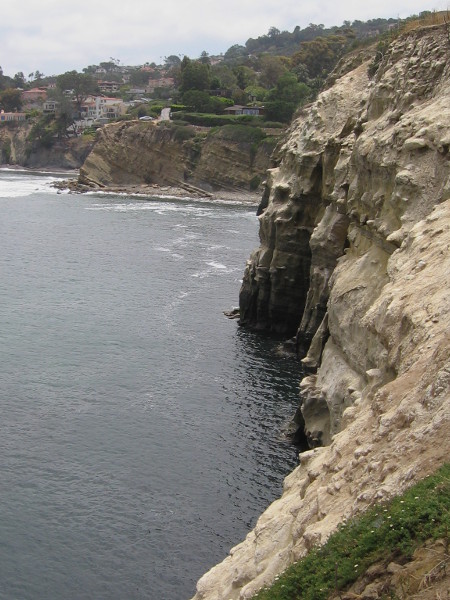
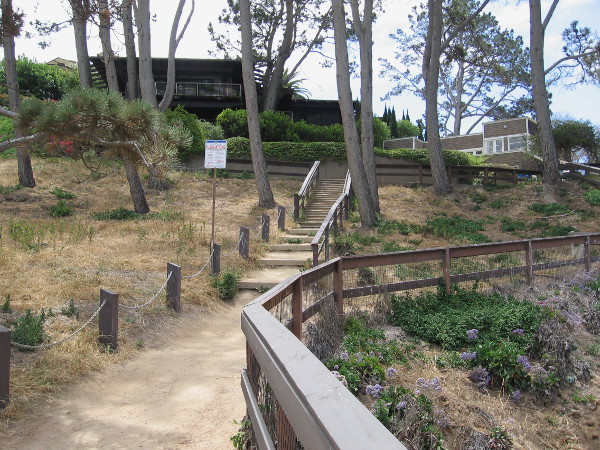
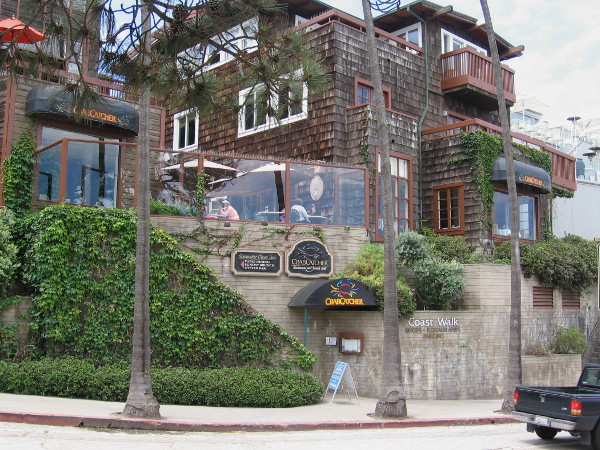
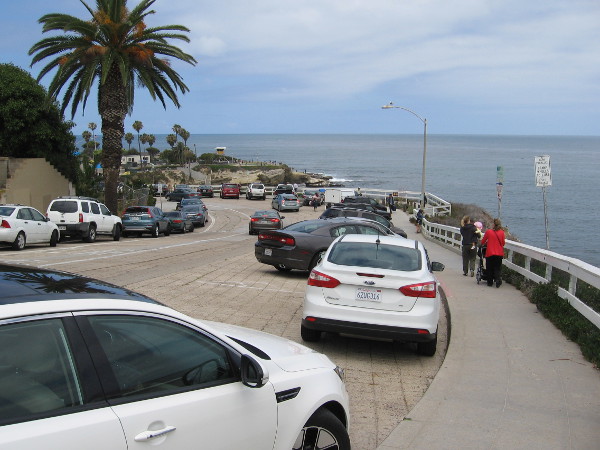
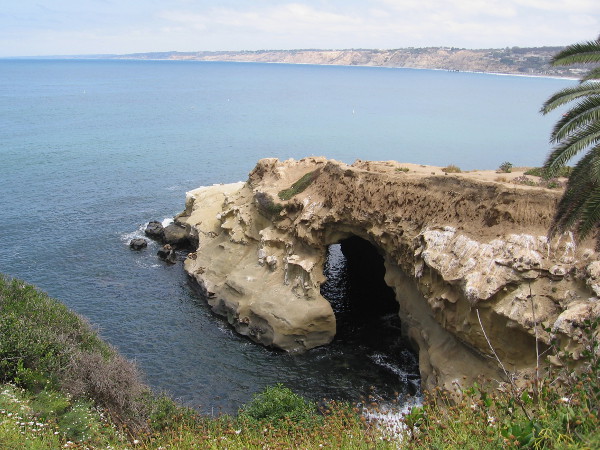
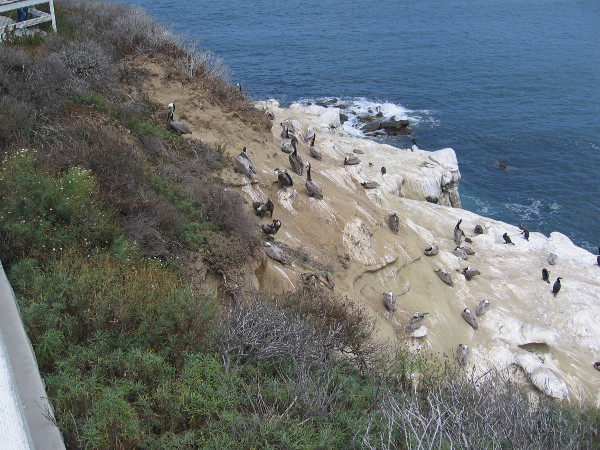
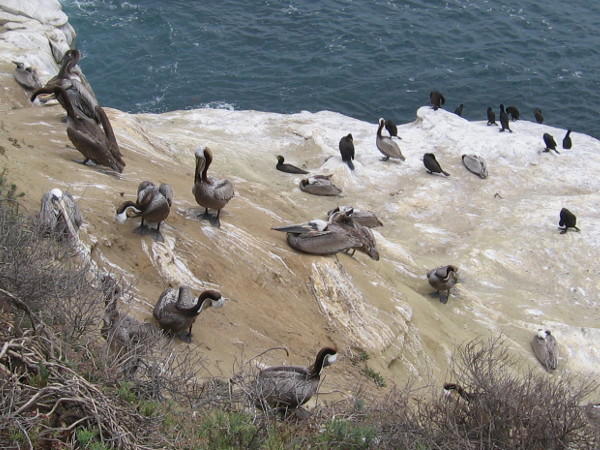
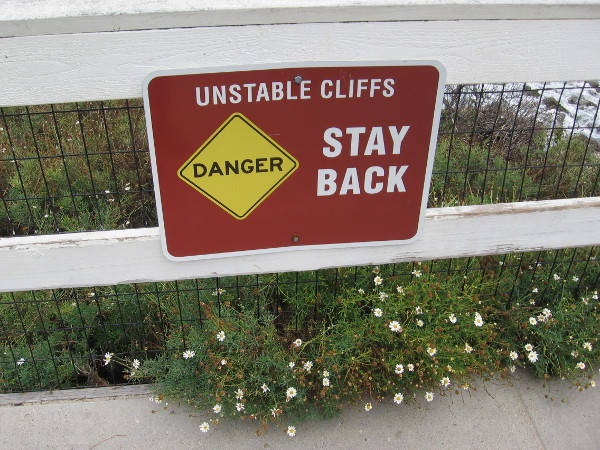
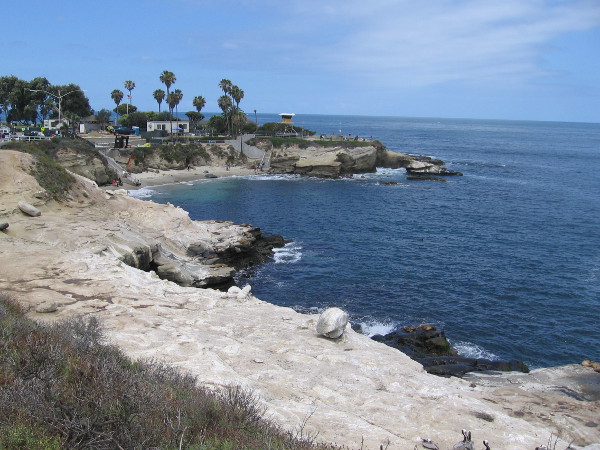
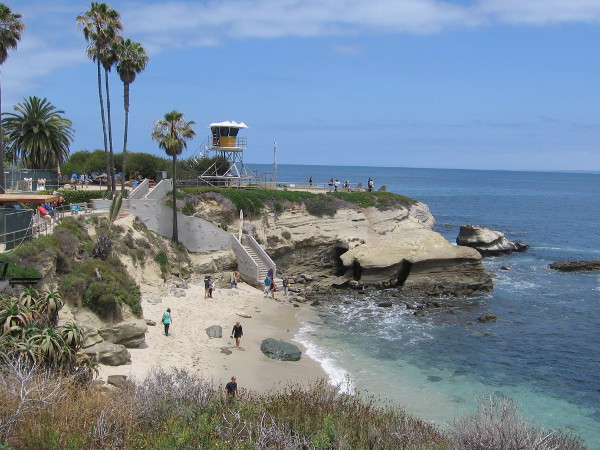
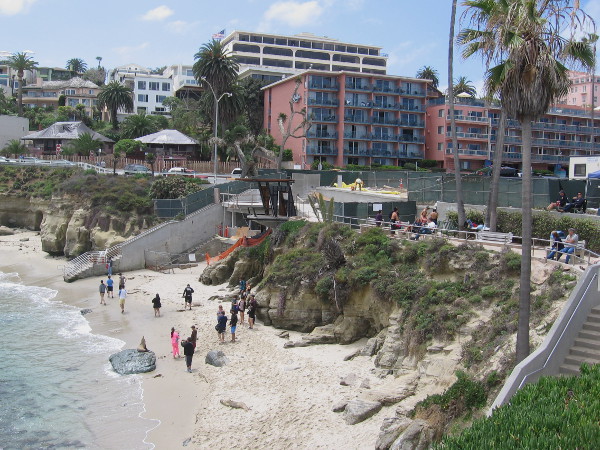
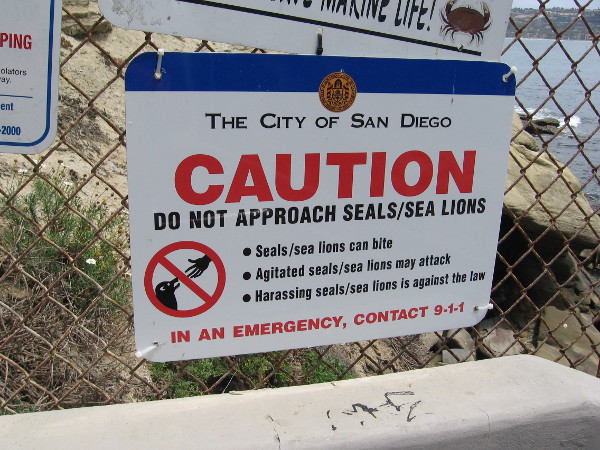
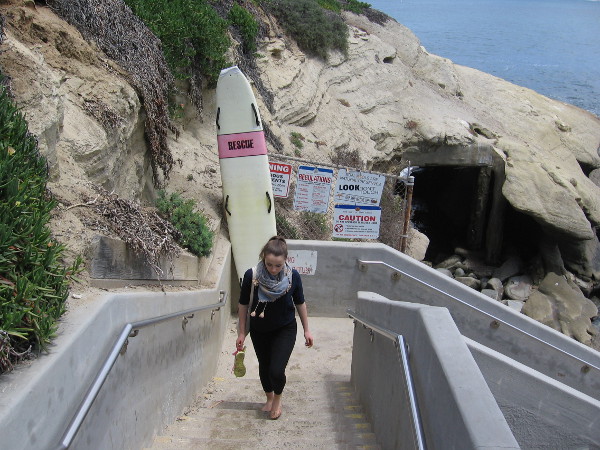
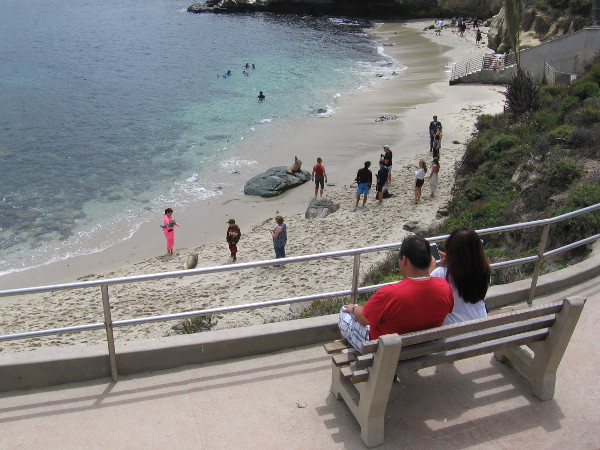
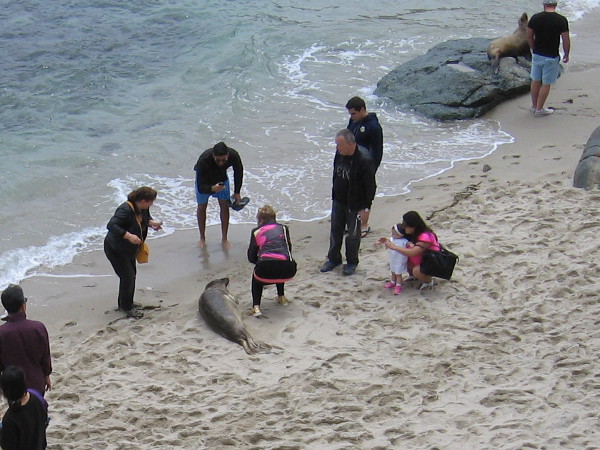
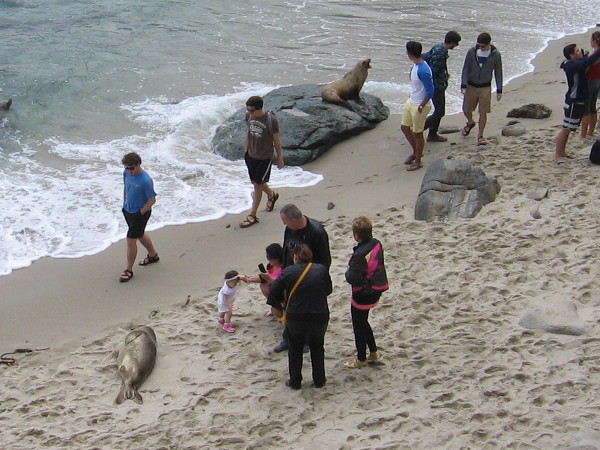
The Historic Coast Walk Trail begins near Torrey Pines Road and ends at the Cave Store on Coast Boulevard.Dozens of kayakers were out on the water as I walked west down the trail enjoying magnificent views.Red kayaks bunched close together below, east of Goldfish Point.Rounding a corner, shops and restaurants on Coast Boulevard come into view.Wooden steps plunge down to a scenic view point atop amazing sandstone cliffs. In the narrow cove on the left is an entrance to a sea cave.Nature’s beauty takes many forms, including a golden flower.From the view point I look east along eroded cliffs toward La Jolla homes.Heading back up to the Coast Walk Trail, which ends nearby at the Cave Store.A man-made tunnel inside the Cave Store leads from the gift shop to the Sunny Jim Sea Cave.About to turn north, beginning down Coast Boulevard, toward La Jolla Cove.The amazing Coast Boulevard passes La Jolla Cove, Scripps Park, Children’s Pool and the La Jolla tide pools!A message on the sidewalk caught my eye. Your troubles will cease and fortune will smile upon you.It’s possible to see into this sea cave.The rocky cliffs along Coast Boulevard are the home of pelicans, sea gulls and cormorants.Long-beaked pelicans and black cormorants have a rest in the warm sun between diving and hunting for fish.The cliffs of La Jolla are made of unstable sandstone, which occasionally crumbles into the Pacific Ocean.A gorgeous view of La Jolla Cove on a perfect spring day.A lifeguard tower rises above La Jolla Cove Beach. To the right of the tower is Point La Jolla.Looking down at La Jolla Cove Beach from the north. Buildings along Coast Boulevard are surmounted by those on Prospect Street.City of San Diego sign provides a warning. Caution, do not approach seals or sea lions! Harassing these marine mammals is against the law.A lady climbs stairs up from the beach, past a lifeguard rescue board.Some benches allow people to enjoy the view. Scuba divers in the cove swim with the sea life.Several thoughtless, self-centered people almost stepped on a seal as they crowded in to get a photograph.Agitated sea lion on a rock angrily confronts pestering people who don’t seem to care.
…
To enjoy future posts, you can “like” Cool San Diego Sights on Facebook or follow me on Twitter.
Our big blue marble Earth dangles in the sky on San Diego’s Embarcadero for an Earth Day event.
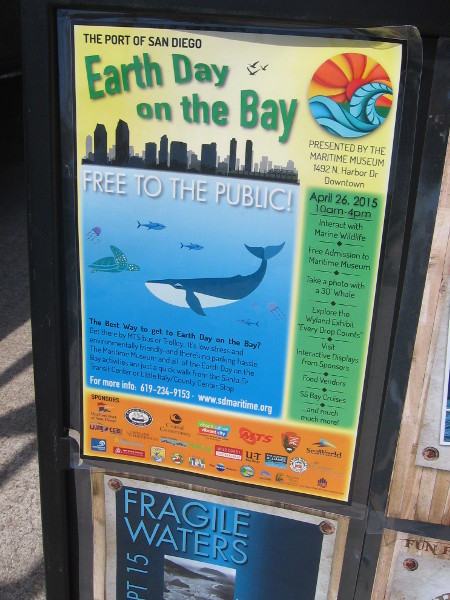
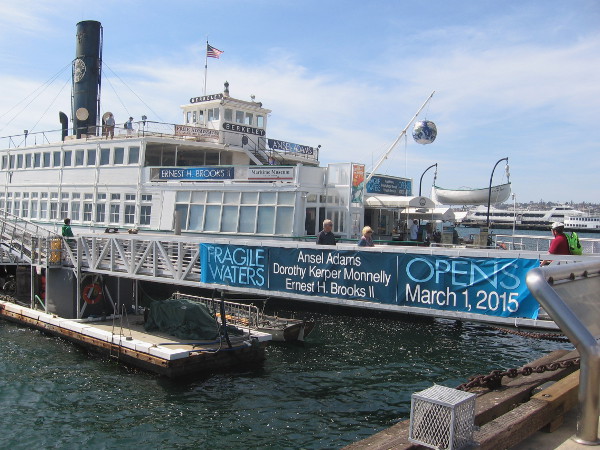
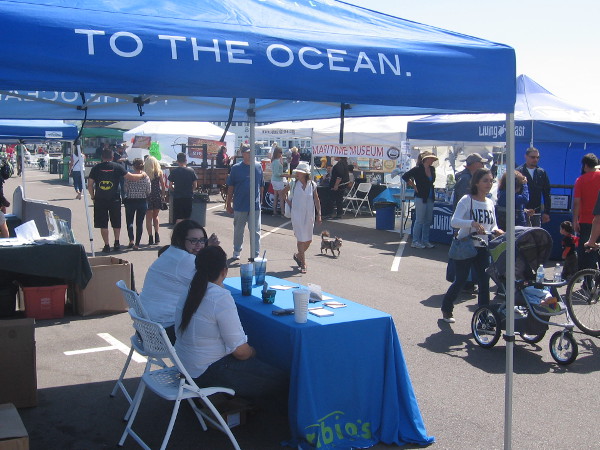
Last weekend Earth Day was observed at the jam-packed EarthFair in Balboa Park. This weekend, the first annual Earth Day on the Bay took place. The event was centered around the Maritime Museum of San Diego, and concentrated on maintaining a healthy coast and ocean. Admission to all the awesome museum ships was free, and being a cheapskate, I decided to walk down to the Embarcadero and enjoy myself!
Earth Day on the Bay featured free admission to the Maritime Museum of San Diego plus many organizations with environment-themed exhibits.The historic 1898 steam ferryboat Berkeley, the museum’s hub, is also featuring nature photography by Ansel Adams and others.The TOPtoTOP Global Climate Expedition ship is visiting San Diego at the moment.
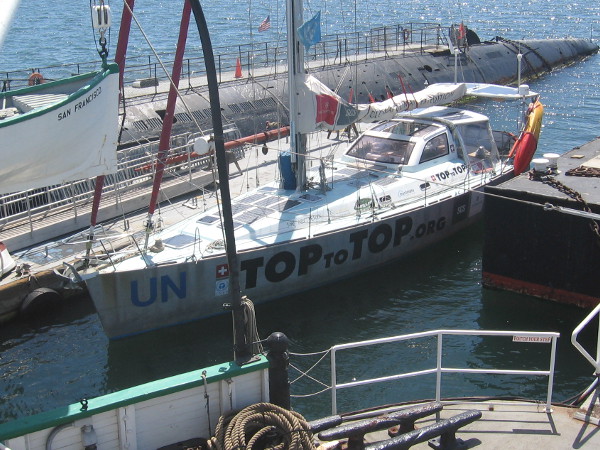
As I walked across the deck of the Berkeley, enjoying views of our beautiful big San Diego Bay, I happened to notice an unusual boat docked among the museum’s ships. The hull included the United Nations Environment Programme logo. Apparently, people participating in the TOPtoTOP Global Climate Expedition are visiting San Diego for a couple days. They gave a talk yesterday at the museum about their mission. According to their website, it is to inspire children in classrooms and share examples of nature’s beauty, and foster innovations for a green planet. They believe that great human goals and progress can be achieved in balance with nature.
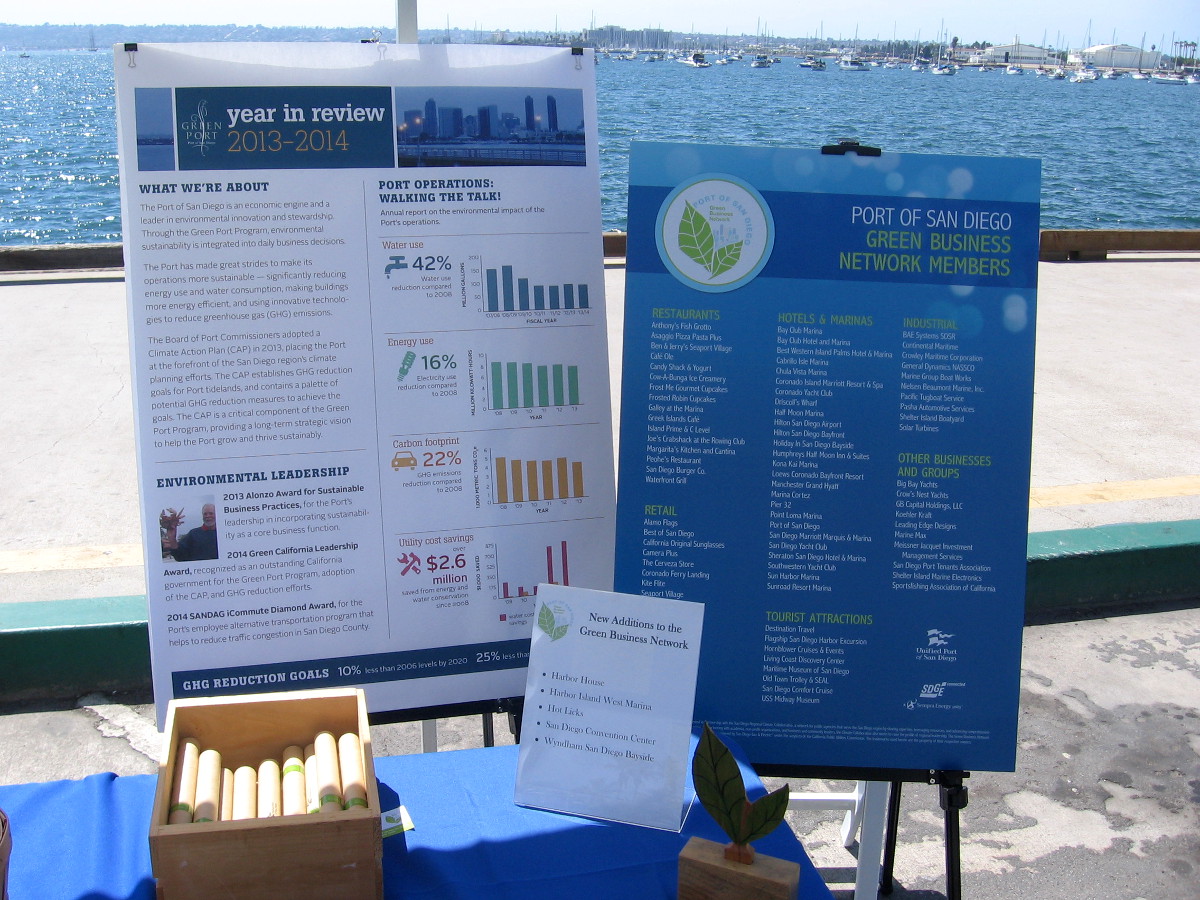
TOPtoTOP, docked among other museum ships, is equipped with many solar panels. It’s sailing around the globe using only human and natural power sources.The various Earth Day exhibitors on the waterfront included the Port of San Diego, with a report on critical conservation and other green projects.The first annual Earth Day on the Bay attracted a modest crowd, but it’s a good start!This big inflatable whale allowed humans to grasp the scale of the marine mammal.I enjoyed a harbor tour on a very unique Maritime Museum boat, which I’ll blog about shortly!
I got two cool blog posts coming up! I had a couple of fun adventures today! Plus I still have lots of photos from my extensive Saturday walk around Liberty Station. I’d better get busy!
…
To enjoy future posts, you can “like” Cool San Diego Sights on Facebook or follow me on Twitter.
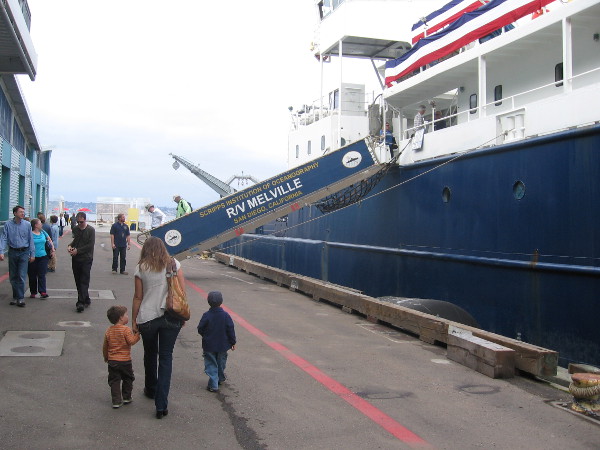
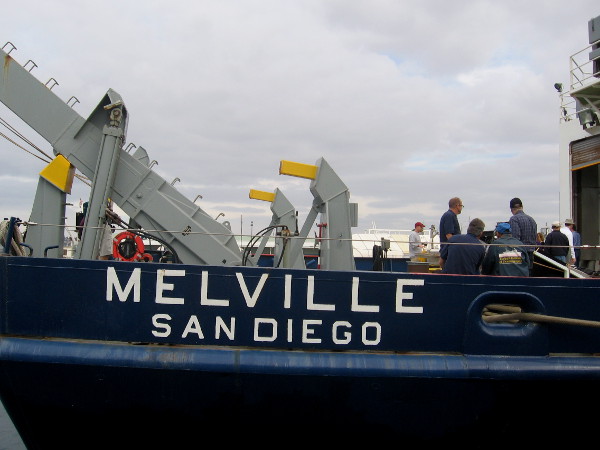
Ready to board R/V Melville from San Diego’s Broadway Pier before the research ship is retired.
The research ship Melville retired today. For five decades scientists aboard the ship helped to expand our understanding of the oceans, marine biology and planet Earth. I headed down to the Broadway Pier on San Diego’s Embarcadero this morning, because for one rare and final time the general public was invited to tour this legendary ship!
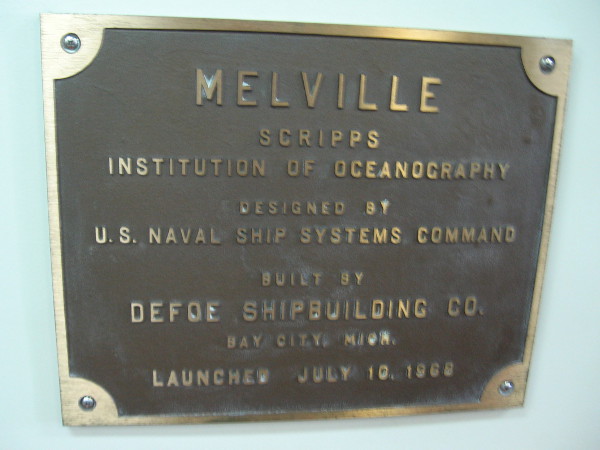
The R/V Melville, the oldest active ship in the University-National Oceanographic Laboratory System fleet of marine research ships, was launched by the Navy in 1969. Operated by the world-famous Scripps Institution of Oceanography in La Jolla, the vessel has undertaken 391 research cruises and steamed a total of 1,547,080 nautical miles. A fact sheet distributed to today’s visitors also notes that the Melville logged over 90 equator crossings and has hosted around 7,116 scientists from 237 institutions. That amounts to a lot of knowledge gained!
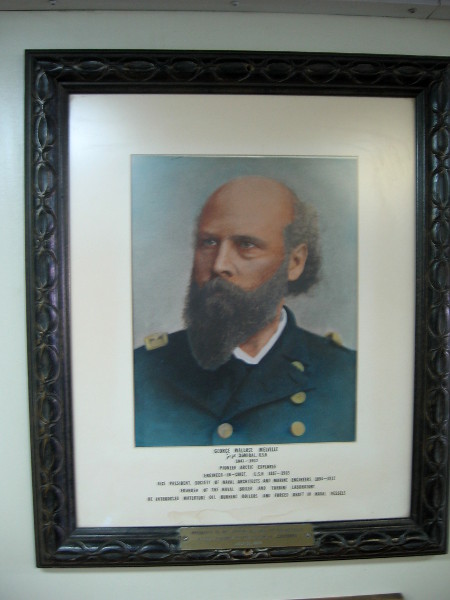
The amazing oceanographic research ship was named after George Melville, an arctic explorer and Rear Admiral in the United States Navy. One interesting fact: the ship was used in the filming of the 1976 movie King Kong!
I took these photos as I enjoyed this fascinating final tour of the ship. I hope my captions accurately describe what I saw. (If they don’t, please leave a comment!) Some of the interior shots are a bit blurry. I apologize.
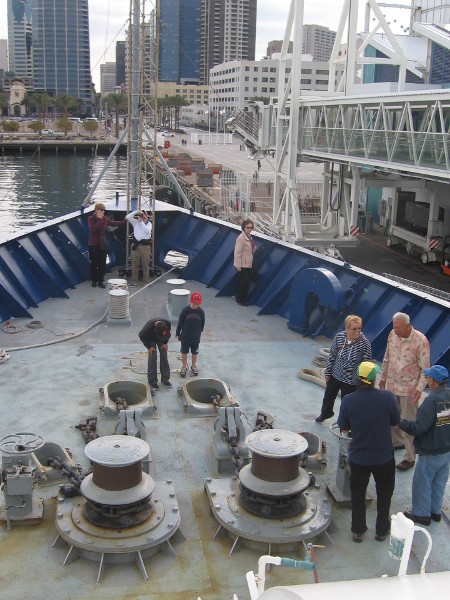
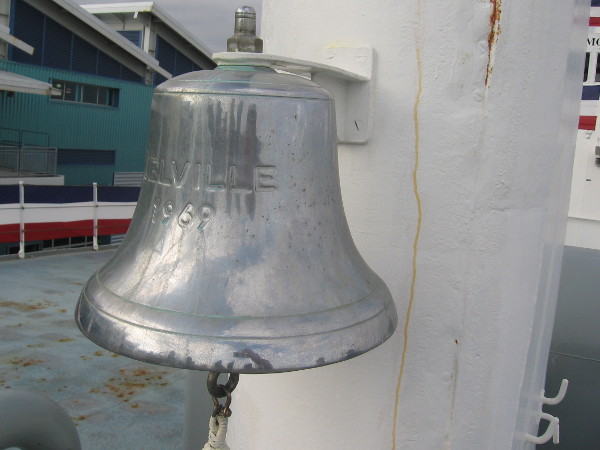
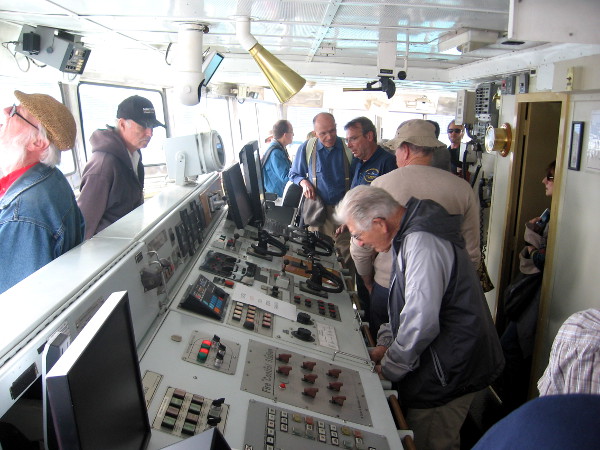
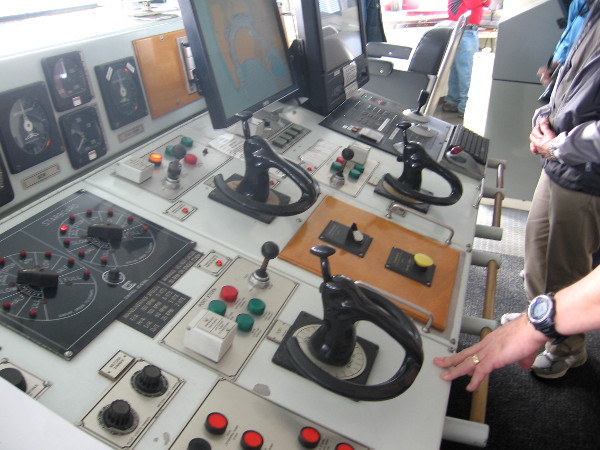
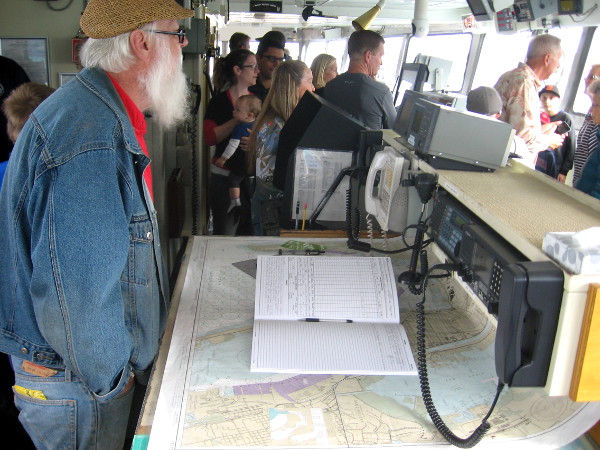
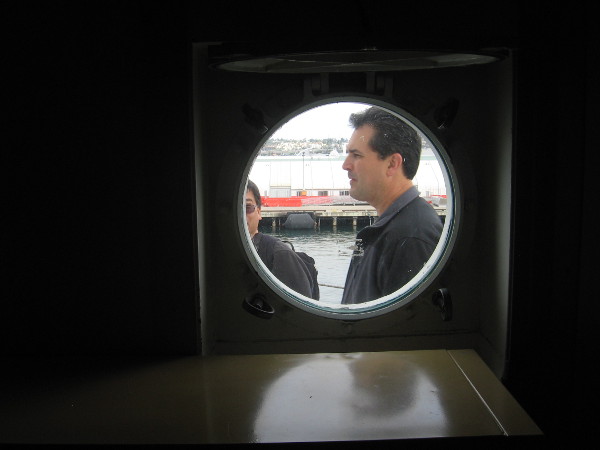
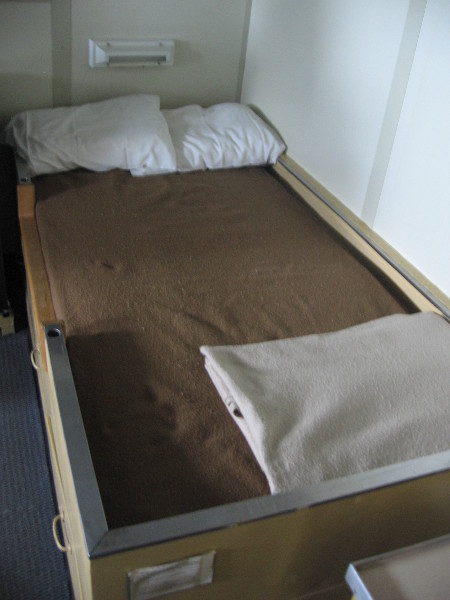
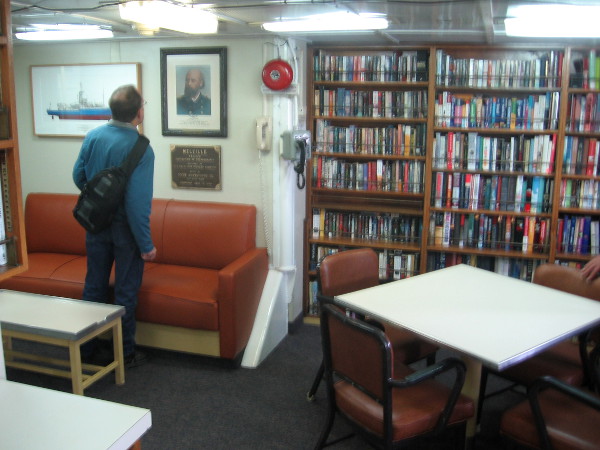
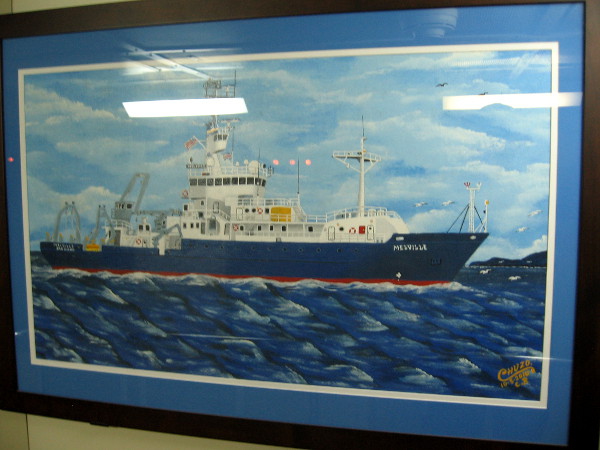
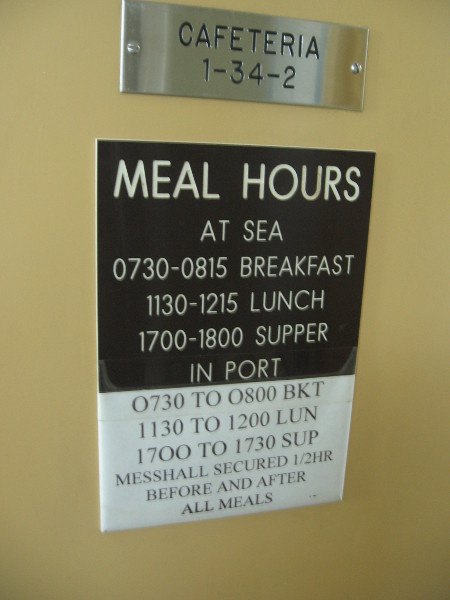
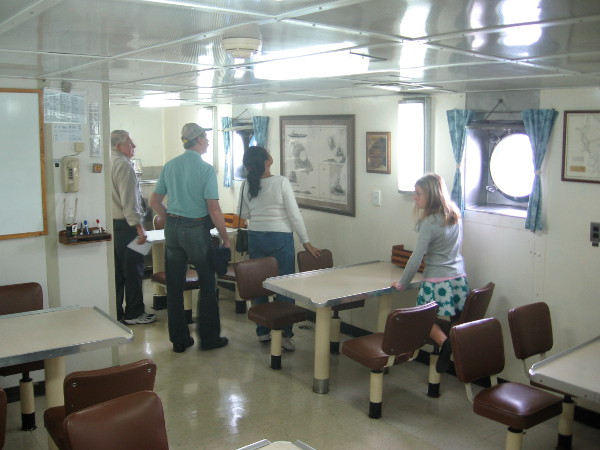
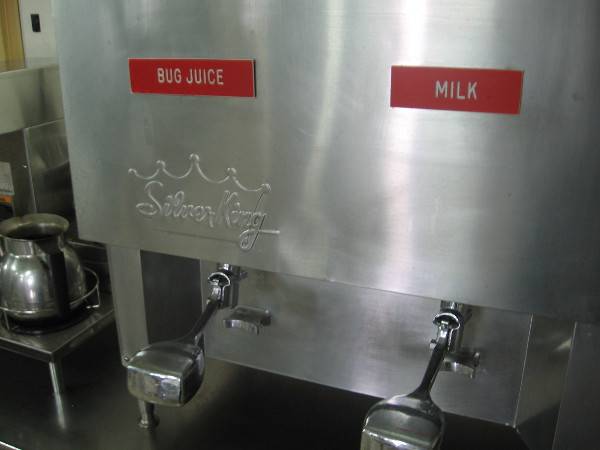
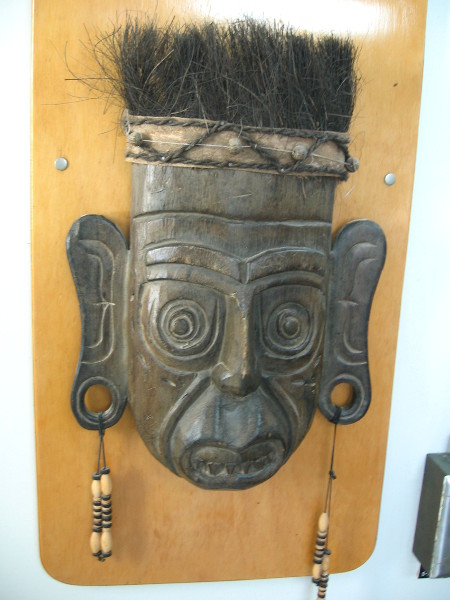
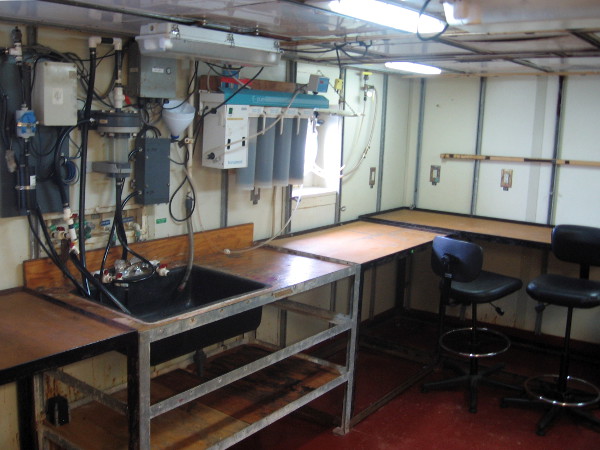
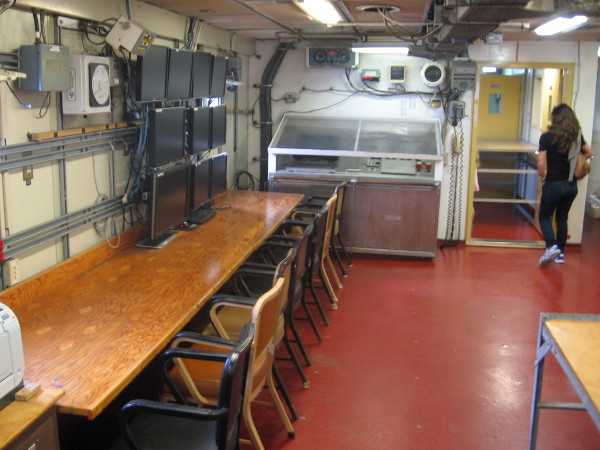
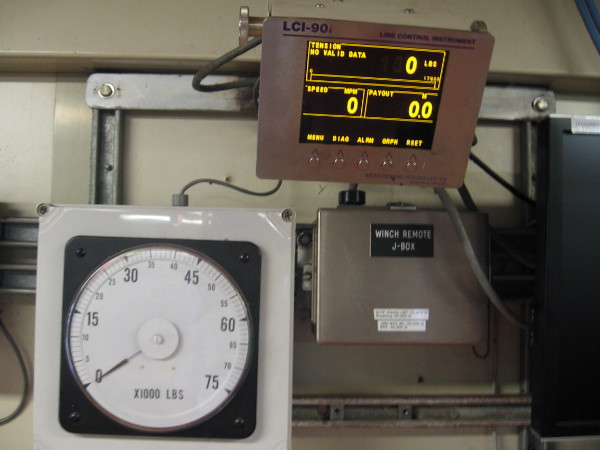
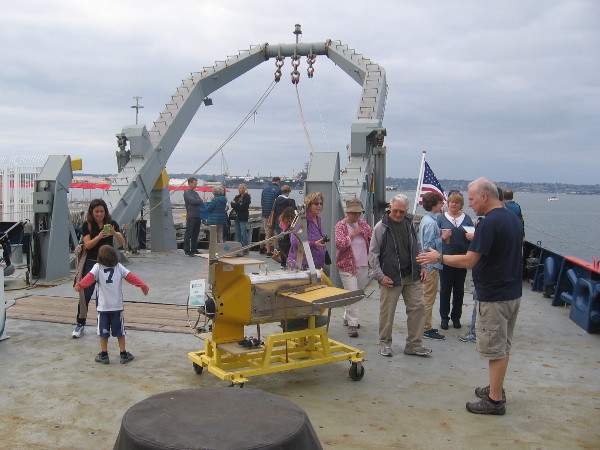
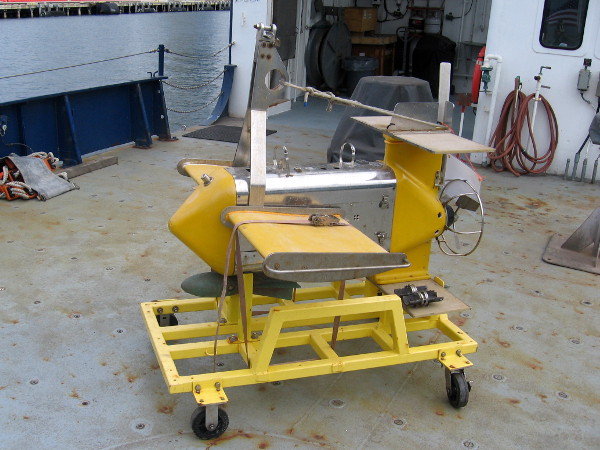
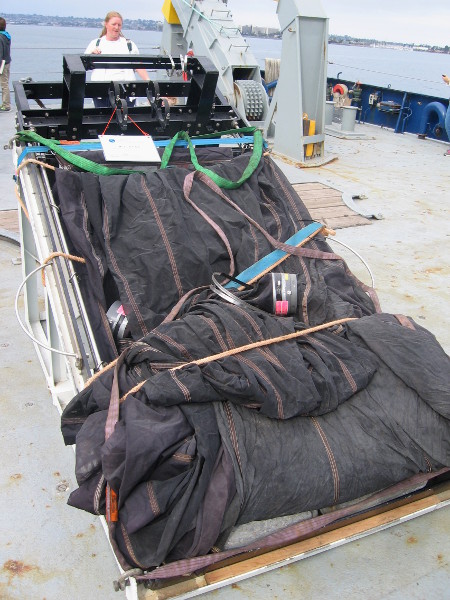
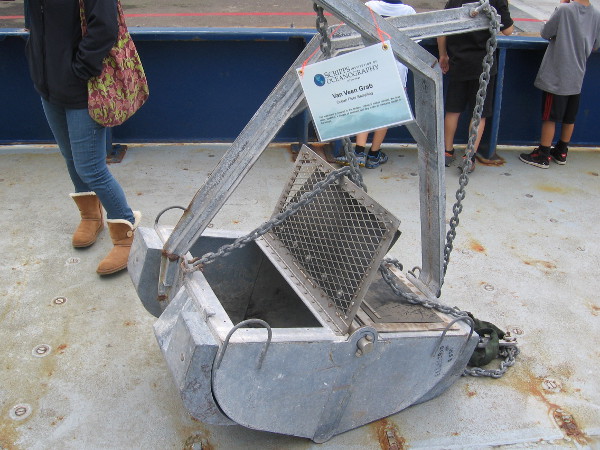
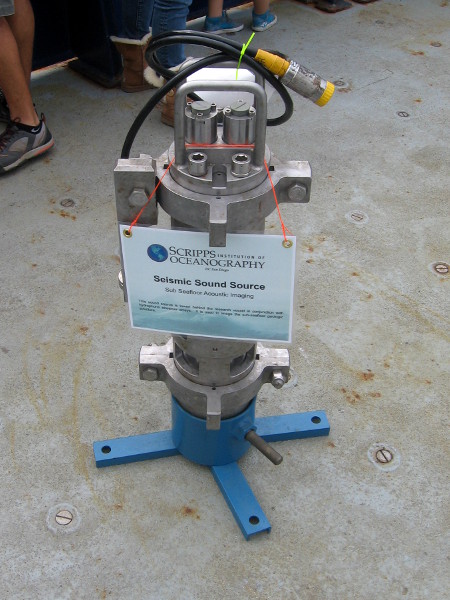
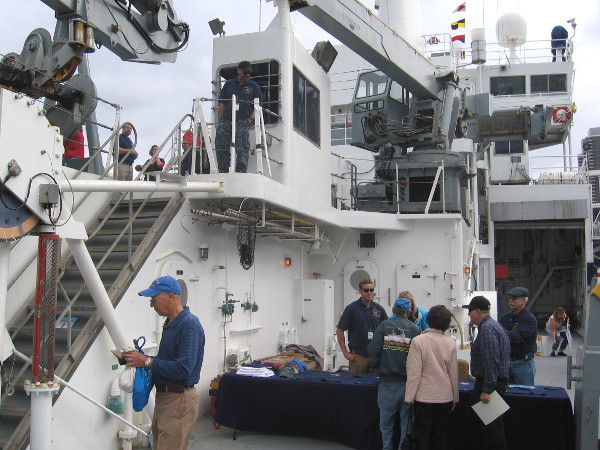
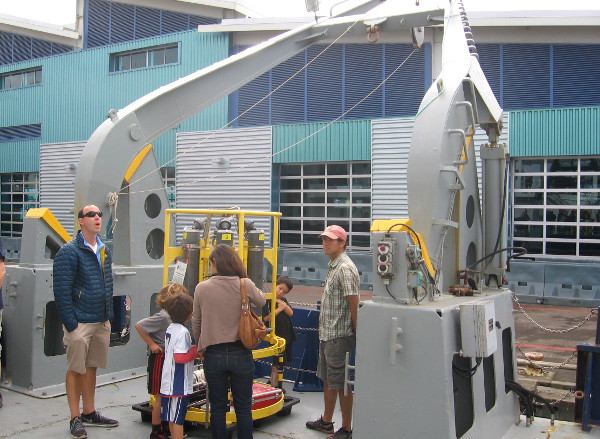
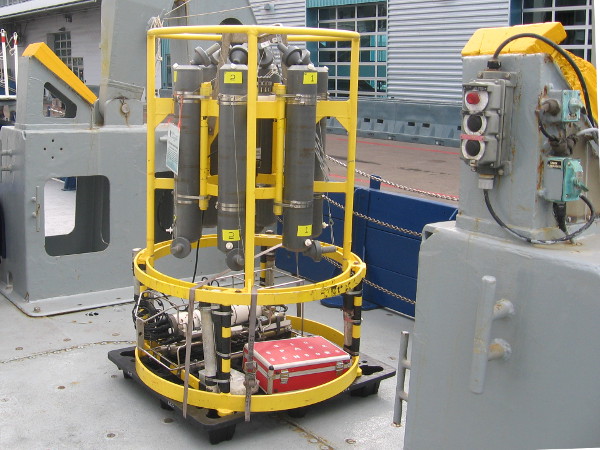
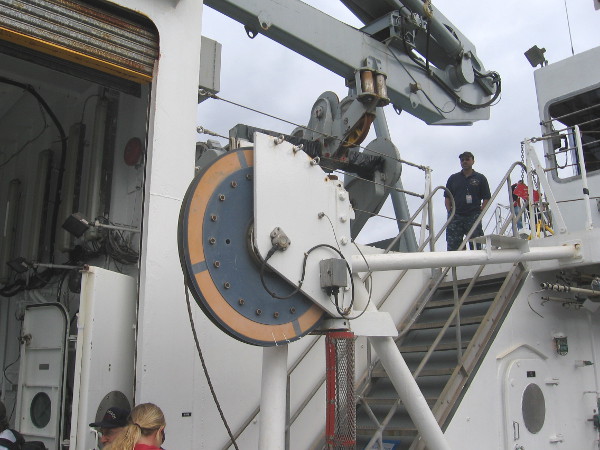
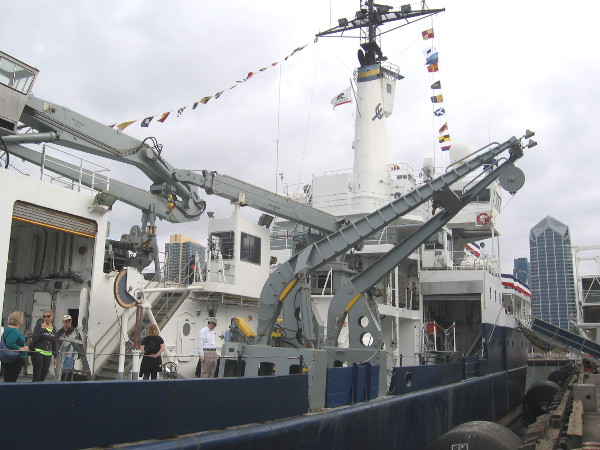
The Melville is operated by the Scripps Institution of Oceanography, part of UCSD in La Jolla.One of many friendly, helpful people who’ve served on the history-making ship.The tour started at the bow. Downtown San Diego skyline rises in the background.Excited people climb up toward the pilot house of Melville.The shiny ship’s bell!Huge number of buttons, knobs, switches and dials in the pilot house of Melville.A second photo of the complicated ship control console.The ship’s log is open on some navigational charts.Looking out porthole from the chief scientist’s quarters below deck.The chief scientist during research cruises slept here.The library, lounge and study contains many shelves of books and several interesting displays.Graphic in library depicts the R/V Melville.Portrait of George Wallace Melville, the ship’s namesake.Bronze plaque commemorates the Melville’s launch date in 1968.Painting by artist Chuzo of the Melville hangs in a corridor near some stairs below deck.Meal hours are posted on door leading to the cafeteria.Visitors check out the mess hall where crew and research scientists enjoyed a break, to eat, talk and share knowledge.Hungry folks can choose bug juice or milk. I’ll take milk, please!Numbered mugs on the mess hall wall. Number 1 belongs to the captain.Several masks, ethnic artifacts and marine objects decorate the walls of the cafeteria.A look at a shipboard laboratory where various materials could be analyzed.At the photo’s center is a winch control. Video monitors help scientists visualize their work underwater.Gauge registers up to 75,000 pounds of tension!Massive A-frame at stern of Melville. The working deck contains exhibits for people to check out.Sea Soar is an undulating towed vehicle used to collect real-time information, from the sea surface to a depth of 400 meters.This outdoor area can be closed off during rough weather so that work can be performed when conditions are poor.M.O.C.N.E.S.S. Multiple Opening/Closing Net and Environmental Sensing System allows oceanographers to catch zooplankton and measure environmental properties like salinity and temperature.Kids examine a rock dredge, used for the recovery of heavy material on the ocean floor.Van Veen Grab for ocean floor sampling. When it hits bottom, the jaws close and grab a sample of sediment, rocks and creatures.Seismic Sound Source for sub seafloor acoustic imaging. Towed behind research vessel in conjunction with hydrophone streamer arrays to image the sub-seafloor geologic structure.Heavy machinery available on the complex ship includes multiple winches, cables, cranes.Ocean probe with multiple sensors near an A-frame at ship’s side, where it might be lowered by cable into the water.CTD and Water Sampling Rosette measures conductivity, temperature and depth with a variety of sensors. Other chemical and biological parameters can also be measured.The super strong cable runs from here to one of two A-frames, where equipment can be towed or lowered.One of many powerful winches on the research vessel Melville.View from Broadway Pier of A-frame jutting from the Melville’s side.Farewell R/V Melville. The human race learned much during your many decades of service!
…
To enjoy future posts, you can “like” Cool San Diego Sights on Facebook or follow me on Twitter.


























 Cool San Diego Sights!