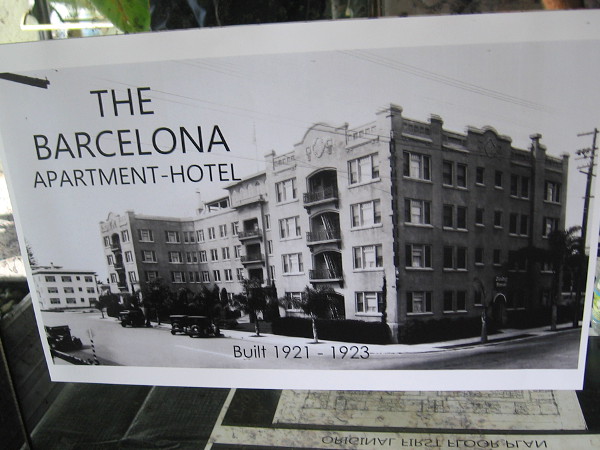
Old photo of The Barcelona Apartment-Hotel in Bankers Hill, built 1921-1923.
I hadn’t planned to visit The Barcelona yesterday during the San Diego Architectural Foundation’s 2018 OPEN HOUSE event. But as I walked up Bankers Hill from one site to another, I spotted the old building and decided to venture inside. I’m so happy I did!
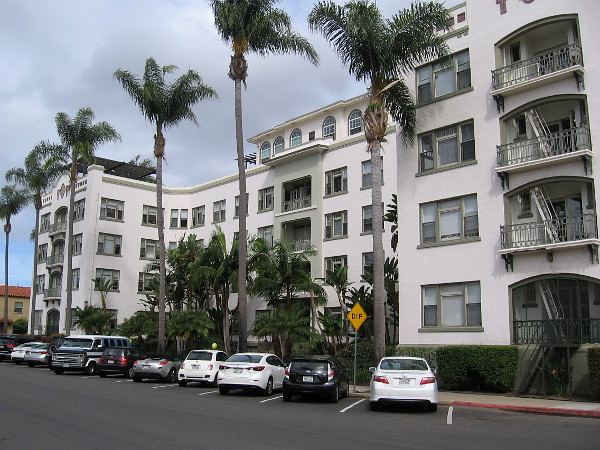
The almost century-old structure originally featured both a hotel and apartments, complete with solarium, ballroom, restaurant and golf course. Today it has been converted into an apartment building with amazing views of nearby downtown San Diego.
My favorite part of the short tour was visiting the sky deck up on the rooftop. Check out my photos and you’ll see why! Make sure to read the captions for more info about this historical building.
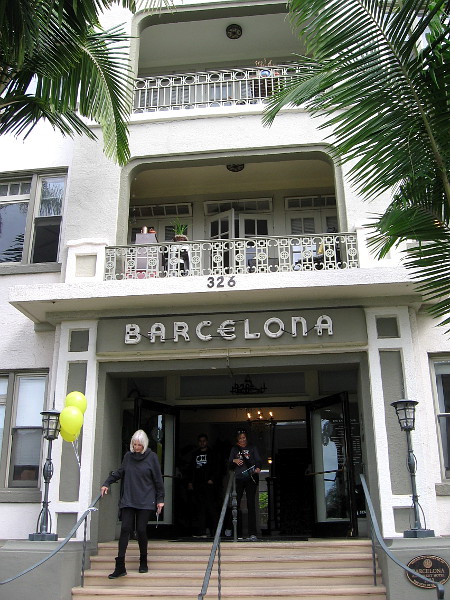
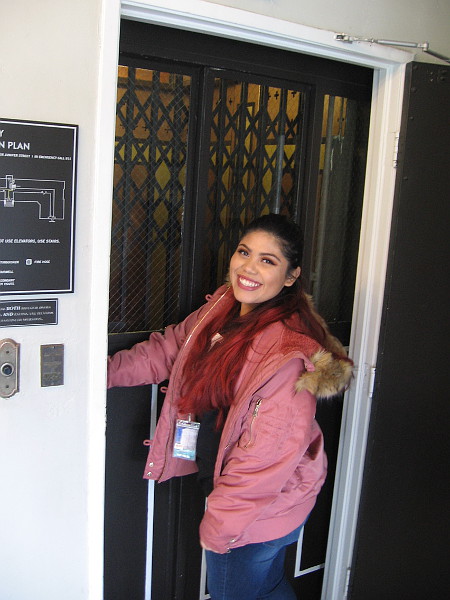
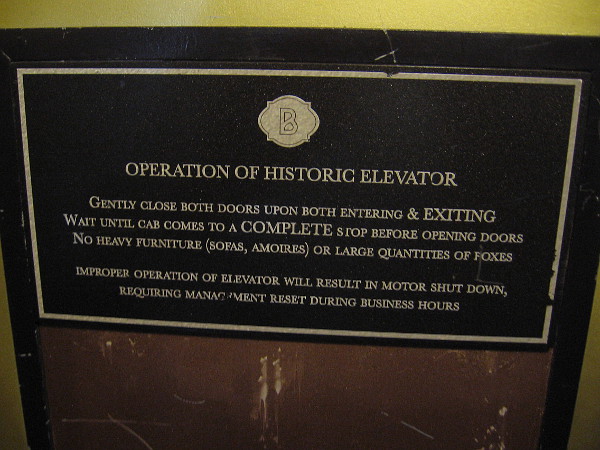
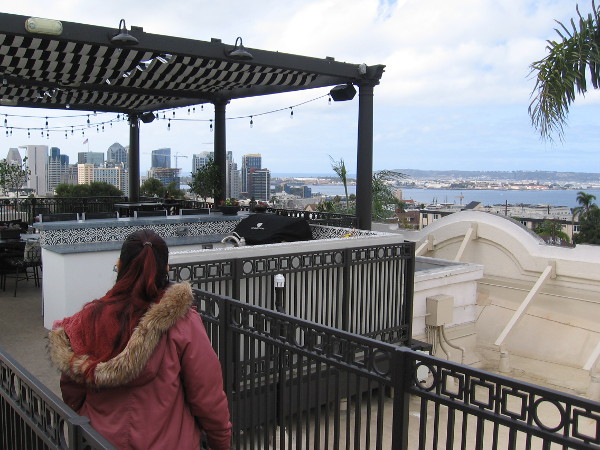
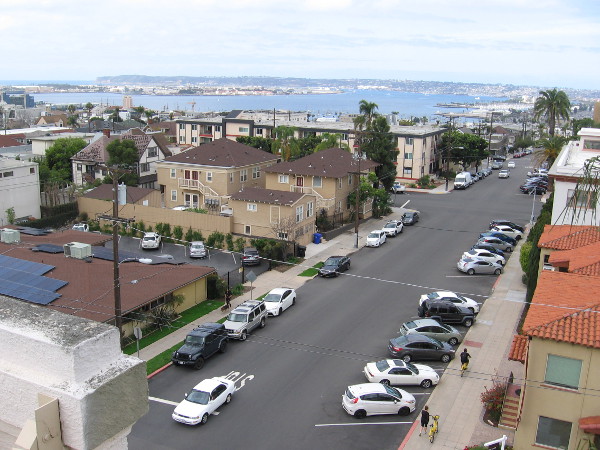
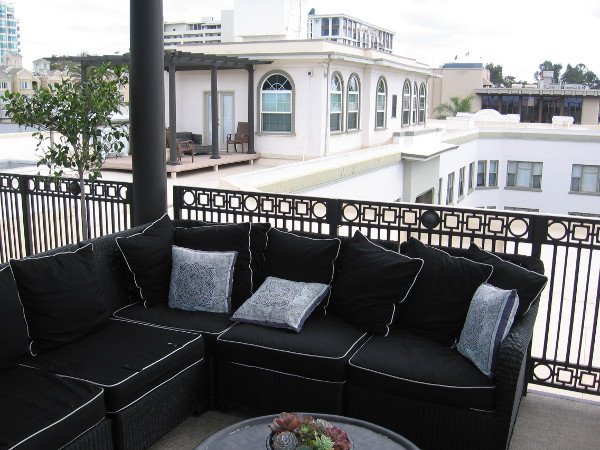
The Barcelona’s apartments today, photographed from Juniper Street.The Barcelona is a featured location during the San Diego Architectural Foundation’s 2018 OPEN HOUSE event.City of San Diego historical landmark plaque near entrance to The Barcelona.The Barcelona was built in the Spanish Colonial/Spanish Eclectic style. It was designed by architect Eugene Hoffman.Excavation of the site took 6 months. The current penthouse units on the 5th floor roof originally formed a solarium.Historic postcards of The Barcelona in San Diego.A volunteer for the OPEN HOUSE architectural event took me up the historic elevator!The cool old elevator reminded me of my childhood, when I dreamed of becoming an elevator operator!The volunteer guide quickly showed me one of the sunlight-filled apartments. The view of downtown is incredible.But the sky deck will take your breath away!Incredible view of Bankers Hill and San Diego Bay from the sky deck of The Barcelona!The building’s penthouse apartments are beyond this comfy outdoor sofa.Looking down on the many colorful rooftops of Bankers Hill!An incredible view of the downtown San Diego skyline from the sky deck of The Barcelona!
…
I live in downtown San Diego and love to walk around with my camera! You can follow Cool San Diego Sights via Facebook or Twitter!
You can easily explore Cool San Diego Sights by using the search box on my blog’s sidebar. Or click a tag! There are thousands upon thousands of photos for you to enjoy!
Today I visited six truly amazing buildings in Bankers Hill and Balboa Park. All six are featured locations in the San Diego Architectural Foundation’s 2018 OPEN HOUSE event.
I enjoyed fascinating looks inside architectural gems–special looks the public seldom experiences. I took lots of photos and intend to tour a few more iconic locations tomorrow. So I have a lot of blogging to do the next week or two!
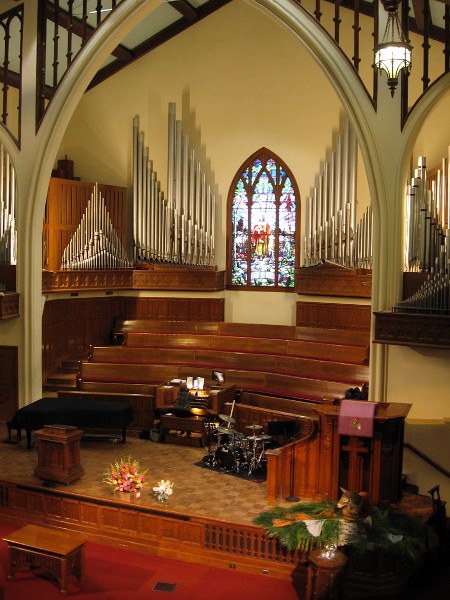
My very first stop this morning was the First Presbyterian Church of San Diego, located in Bankers Hill on Date Street, between Third and Fourth Avenue. The friendly church manager greeted visitors at the front door, and he was very nice to give me a short tour inside the building.
The first thing I learned was that this is actually the First Presbyterian Church’s third structure in San Diego. The initial congregation came together in 1869 in what was then called New Town–now downtown San Diego. The first church structure was built at Eighth and D Streets on land donated by Alonzo Horton. As the membership grew, a second church building was begun in 1887, on property adjacent to the first. Unfortunately the land boom of that time soon came to an end. Somehow that building was completed in spite of financial difficulties.
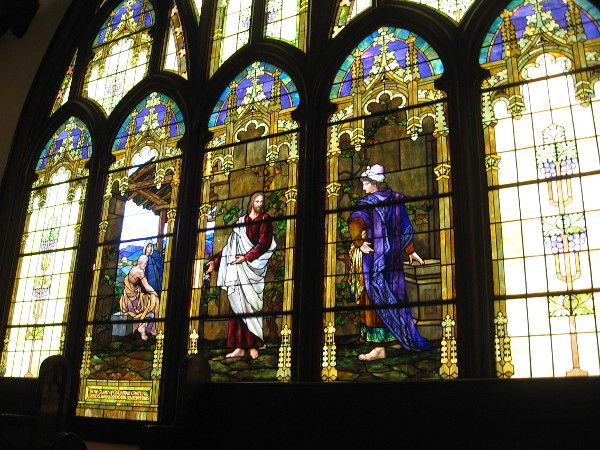
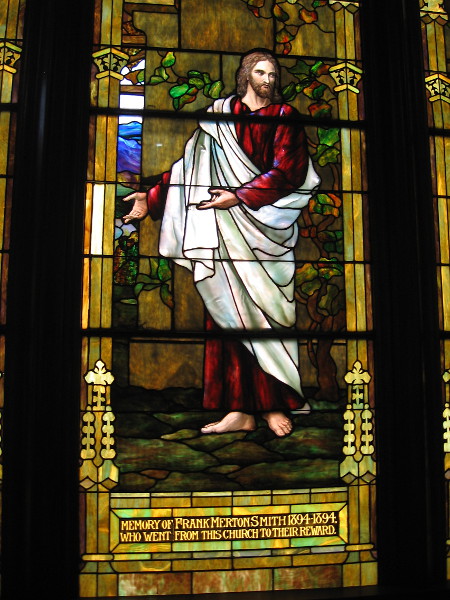
The present building, the focus of this tour, had its first service in 1913 in the Assembly Room, about a year before the amazing sanctuary was finally completed and this third church was dedicated. Located near the base of Bankers Hill overlooking downtown, the imposing cathedral-like structure incorporates huge stained glass windows that were preserved from the previous building, including the exquisite central panels Christ the Sower.
Sowing seeds of compassion in our community, the First Presbyterian Church of San Diego makes it a point to feed many of the homeless downtown–almost 250 souls every Sunday. These good folks practice what they preach.
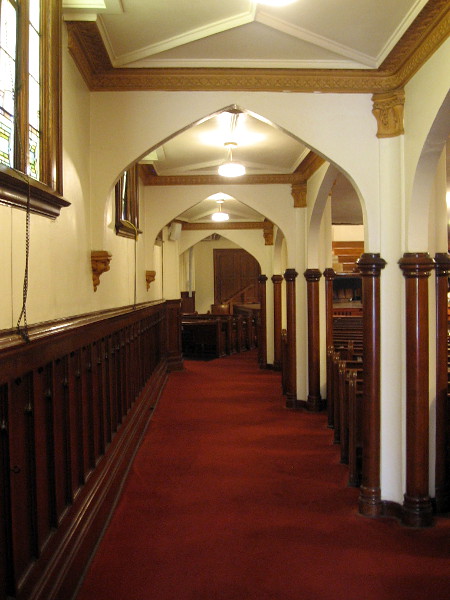
Like many grand old churches, the exterior of the present-day building might appear a bit worn by time and weather, but the interior, with its warm wood and glowing stained glass at every turn, seems like a tiny glimpse of heaven.
I must say I was really impressed by the grace, grandeur and beauty of the sanctuary. And the kind smile of my tour guide.
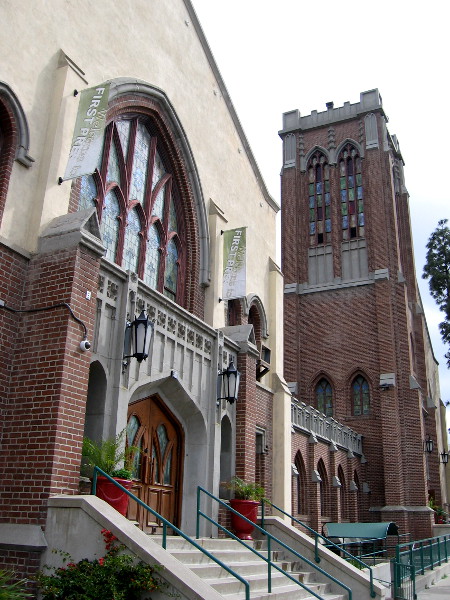
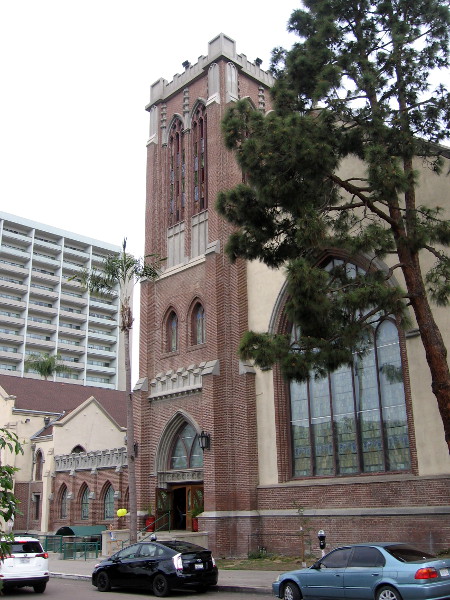
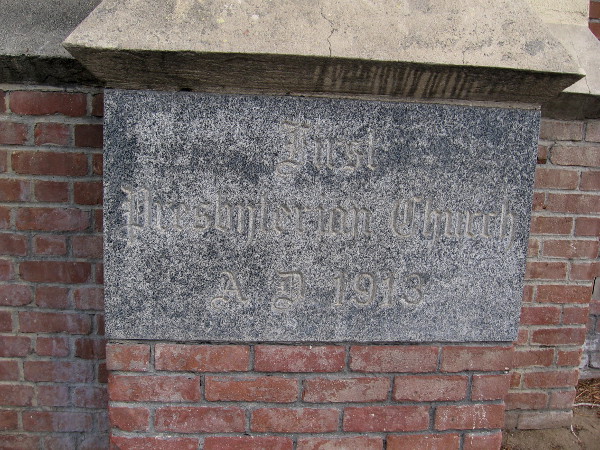
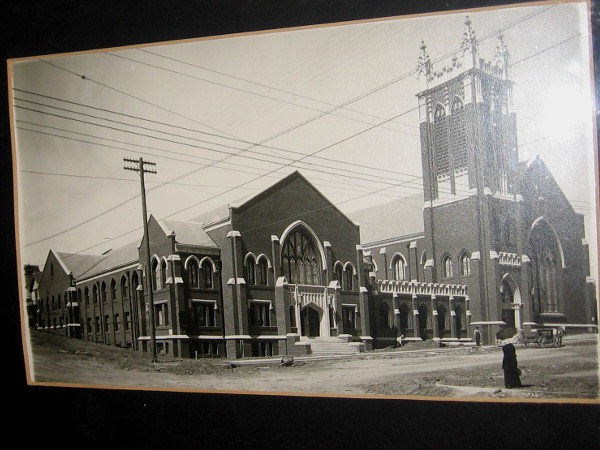
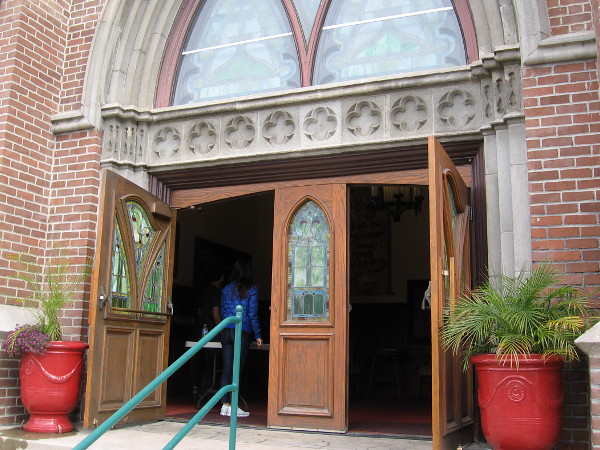
View of the First Presbyterian Church of San Diego from Fourth Avenue. A large, historic stained glass window shines its light into a very beautiful sanctuary.Partial view of the church’s south side along Date Street.Plaque on building indicates the First Presbyterian Church was erected in 1913.Historical photo near the church office shows the First Presbyterian Church of San Diego about a hundred years ago, in what was then considered the outskirts of town.Entering doors that lead to the magnificent sanctuary.
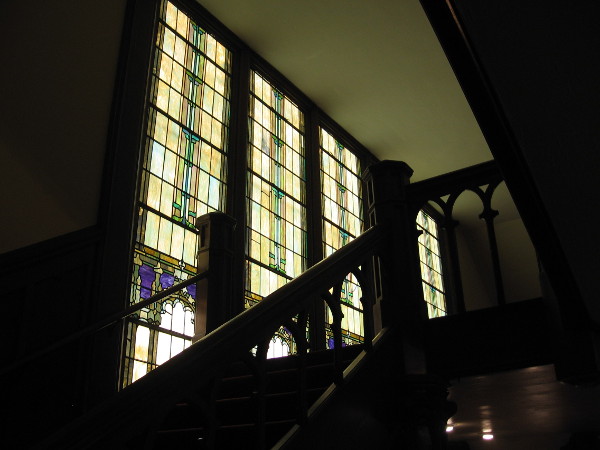
The church’s nearly 6,000 pipe Casavant organ rises like rays of silvery light crowning the chancel.Heading up some stairs near colorful stained glass. We will emerge on the sanctuary’s balcony.
One of the finest examples of stained glass in San Diego shines light into the historic church.A scene from the Bible, to the glory of God.The likeness of Christ, in memory of one of the faithful.A place for religious faith and worship. Amazing beauty inside the First Presbyterian Church of San Diego.
…
I live in downtown San Diego and love to walk around with my camera! You can follow Cool San Diego Sights via Facebook or Twitter!
You can easily explore Cool San Diego Sights by using the search box on my blog’s sidebar. Or click a tag! There are thousands upon thousands of photos for you to enjoy!
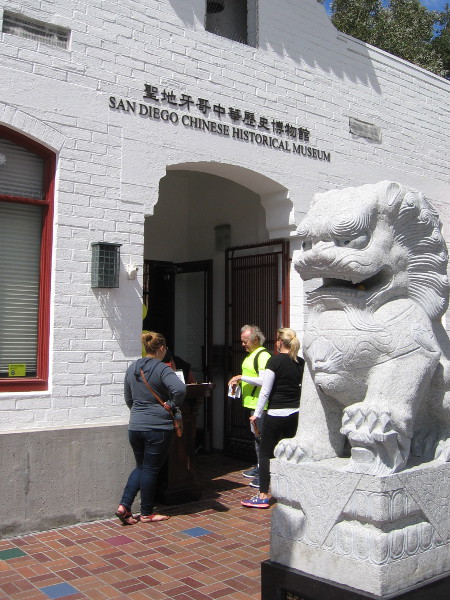
Visitors enter the San Diego Chinese Historical Museum during the San Diego Architectural Foundation’s OPEN HOUSE 2017.
This weekend the San Diego Architectural Foundation is having their big annual Open House event!
For 2018, an amazing 84 locations will participate, each building or urban site recognized for its unique contribution to San Diego’s architectural history. Many different architectural styles will be highlighted, at locations in Balboa Park, Bankers Hill, downtown, the Gaslamp, East Village, Barrio Logan and Point Loma. Some locations will offer guided tours or special talks; at many others the public is invited to take a self-guided tour.
To find out more, including days and times of tours this Saturday and Sunday, check out the SDAF website here.
In 2017 I took full advantage of this event and visited a range of interesting places. The following are links to photographs that I took:
Paintings in Balboa Park Conservancy Board Room. (I took these photos during a 2017 Open House tour of the House of Hospitality. Unfortunately I joined the group midstream and took few useful notes.)
I live in downtown San Diego and love to walk around with my camera! You can follow Cool San Diego Sights via Facebook or Twitter!
You can easily explore Cool San Diego Sights by using the search box on my blog’s sidebar. Or click a tag! There are thousands upon thousands of photos for you to enjoy!
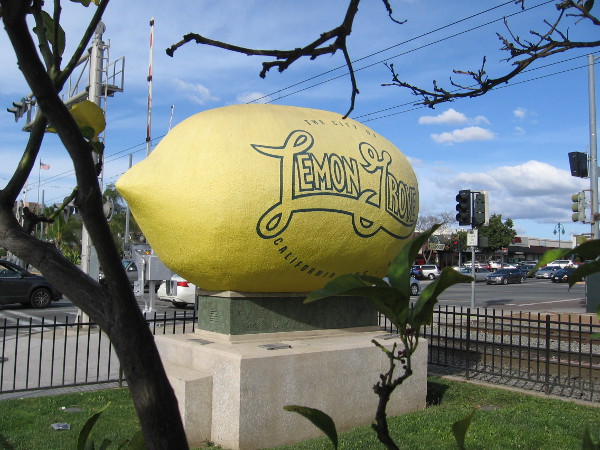
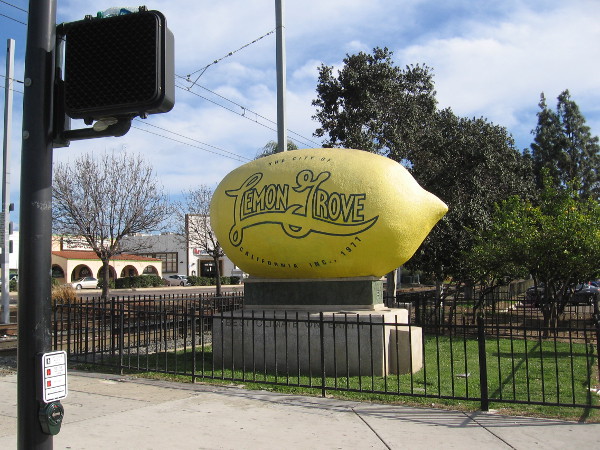
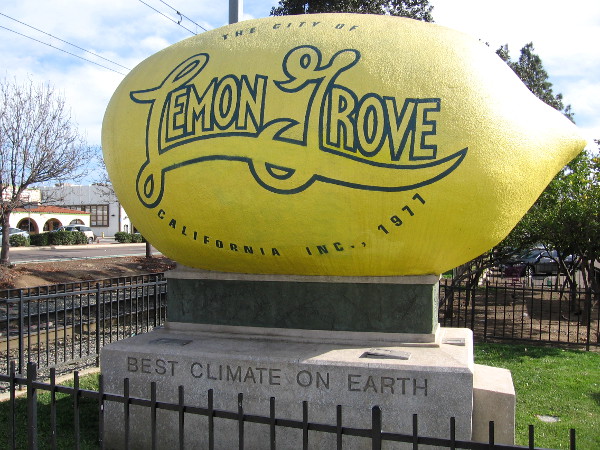
An enormous yellow lemon welcomes travelers passing through the heart of Lemon Grove, a community east of downtown San Diego.
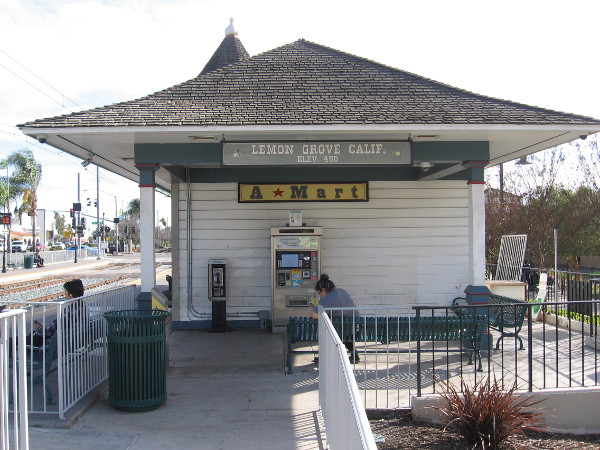
Step off an Orange Line trolley at the Lemon Grove Trolley Depot and you’re in for a surprise! On either side of the trolley station are several fun installations of public art. Signs also describe the unique agricultural history of Lemon Grove, which today is a sunny suburban community east of downtown San Diego.
I cruised into the trolley station last weekend to explore the immediate area. Of course, I had to direct my feet toward the big iconic lemon, which stands directly across the street from the depot, at the intersection of Broadway and Lemon Grove Avenue. The 3000 pound lemon was originally created in 1928 as a proud civic float for San Diego’s big Fourth of July parade. It was afterward turned into a permanent monument with a generous application of plaster!
Read the photo captions to learn a little bit more about fascinating Lemon Grove!
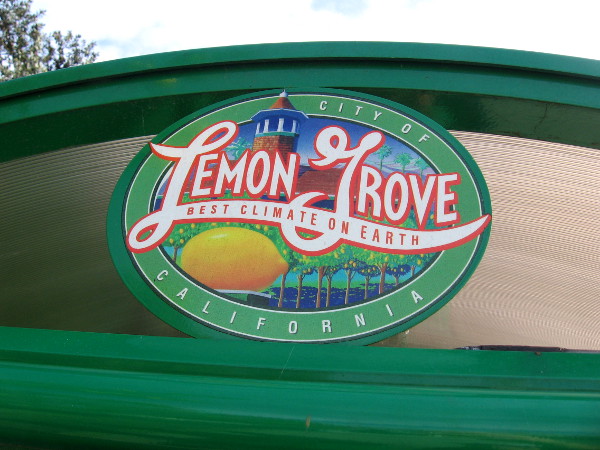
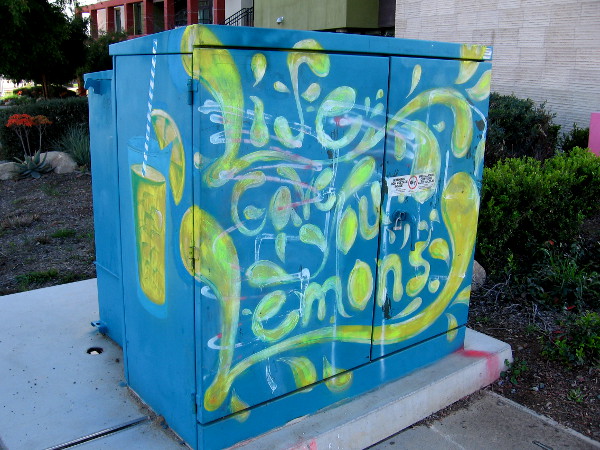
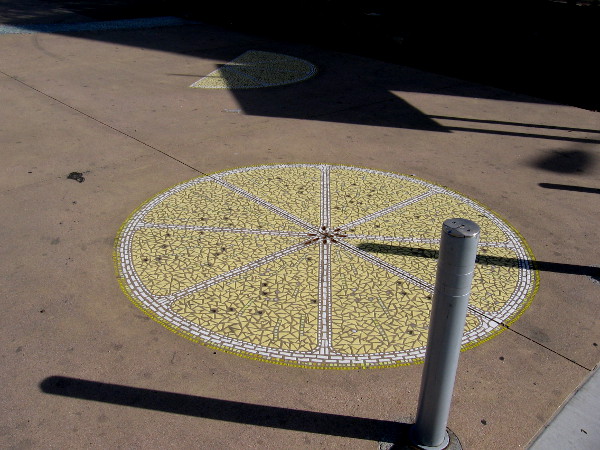
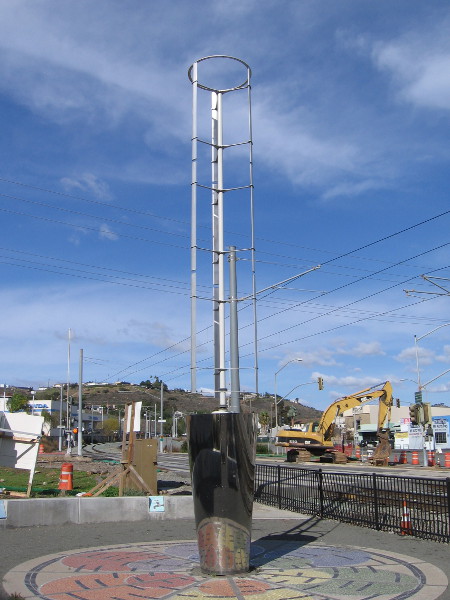
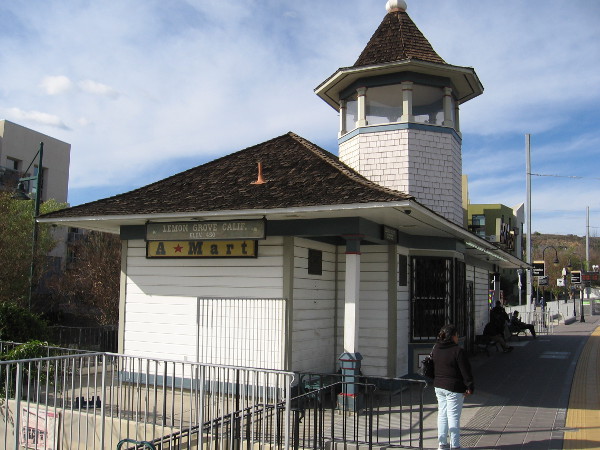
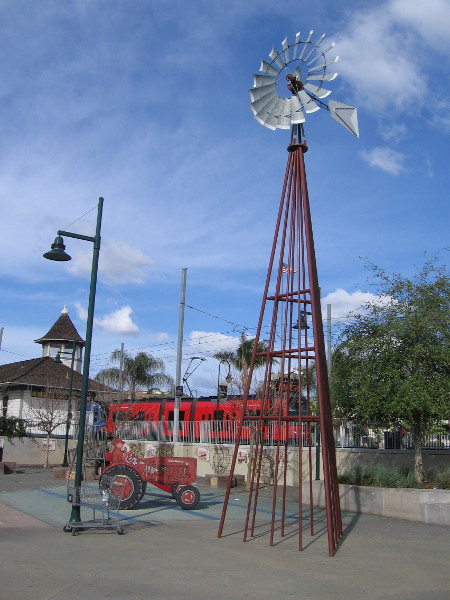
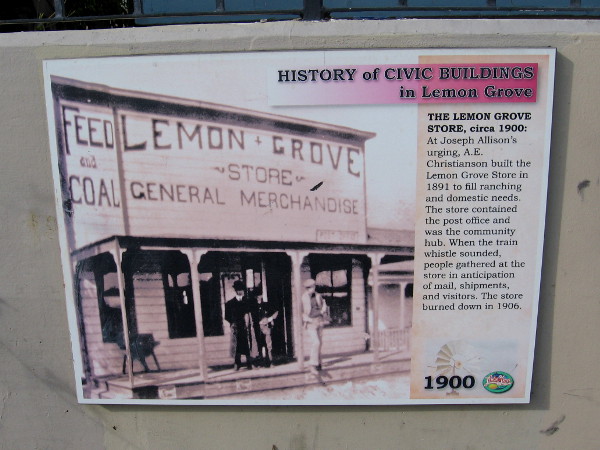
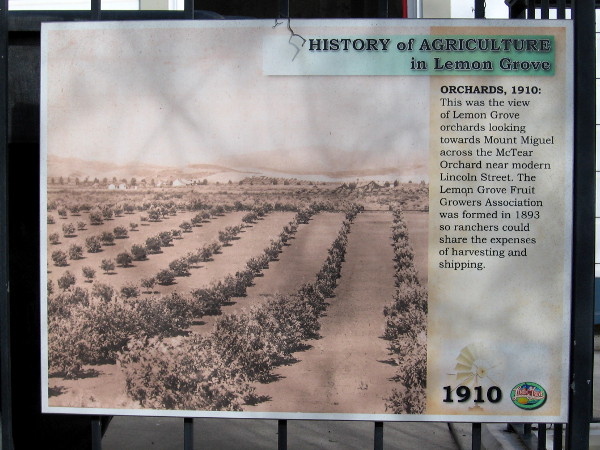
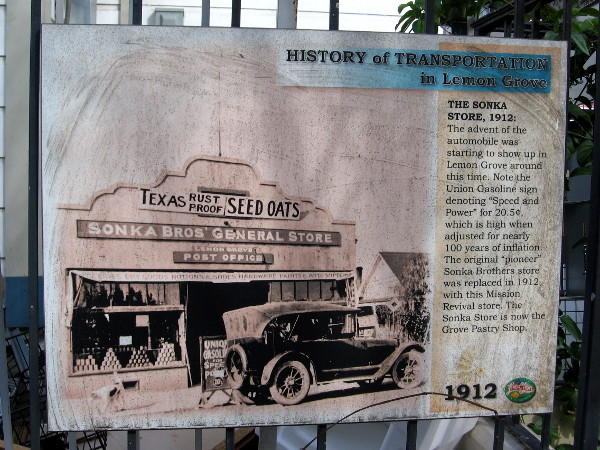
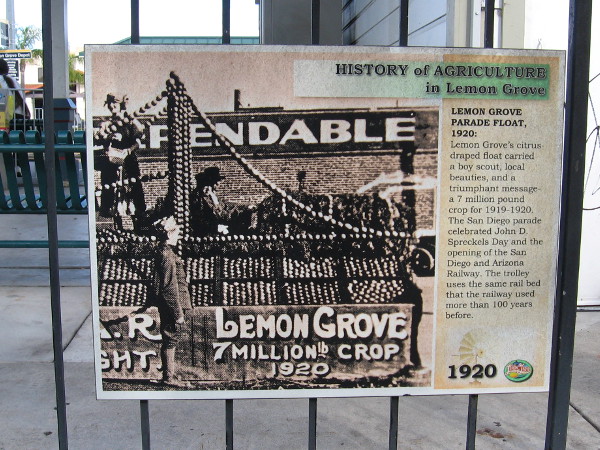
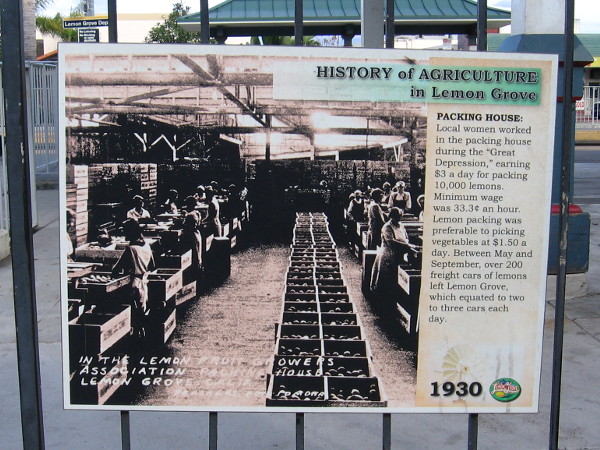
The Lemon Grove Trolley Depot is a 1986 replica of the original 1895 train depot, which stood near the Lemon Grove Store and a fruit-packing shed.The city of Lemon Grove boasts the Best Climate on Earth! I spotted this sign at a nearby bus stop.Fun street art near the Lemon Grove Trolley Depot provides tasty advice for those times when life gives you lemons……make lemonade!Or a lemon cupcake!A walkway between the Celsius residential building and the Lemon Grove Trolley Depot contains tile mosaic lemon slices!What appears to be a tall, shiny sculpture near Celsius and the trolley station rotates in the wind and generates electricity.Colorful tiles radiate at the base of the rotating windmill.People wait for an Orange Line trolley at the Lemon Grove station. The original structure had an open cupola so the depot agent could wave signal flags at oncoming trains.A farm’s windmill and tractor are artistic reminders of an agricultural past. They stand in the promenade beside the Lemon Grove Trolley Depot.Both sides of this fun public art tractor are composed of small tiles.A creative bench in the public promenade. It appears like crates that were used by the Lemon Grove Fruit Growers Association!A sign near the depot shows the old Lemon Grove Store, circa 1900. The store provided supplies for nearby ranches, contained the post office, and was a community gathering place.Another sign contains a view of Lemon Grove orchards looking towards Mount Miguel across the McTear Orchard in 1910.Old photo of the Sonka Store in 1912. The building eventually became the Grove Pastry Shop.Old photo shows the Lemon Grove float during the San Diego parade in 1920. The parade celebrated the opening of John D. Spreckels’ railway, which existed where the trolley runs today.Another sign features a photo of local women working in the packing house during the Great Depression. During peak season, two or three railroad cars would be loaded full of lemons per day.The historical legacy of Lemon Grove is remembered around the site of the old train depot, which is now a stop of the San Diego Trolley.Lemons have a history of thriving in Lemon Grove, a community that claims to have the Best Climate on Earth!
UPDATE!
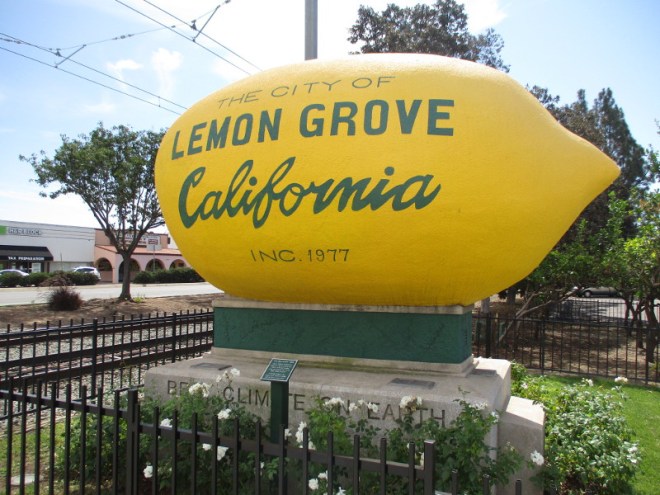
I took the following photos several years later, after the lemon had been repainted and a plaque had been installed in front of it.
The plaque reads: The Big Lemon 1928. Alberto Treganza designed the Lemon as a July 4th parade float. Today it is the City’s symbol of its noble agrarian past and its “Best Climate on Earth.” A Heritage Project of the Lemon Grove Historical Society and the City of Lemon Grove.
…
I live in downtown San Diego and love to walk around with my camera! You can follow Cool San Diego Sights via Facebook or Twitter!
You can easily explore Cool San Diego Sights by using the search box on my blog’s sidebar. Or click a tag! There are thousands upon thousands of photos for you to enjoy!
Fashion evolves from decade to decade. This is often due to economic factors, social movements, the popular culture and changes in materials, manufacturing and commerce.
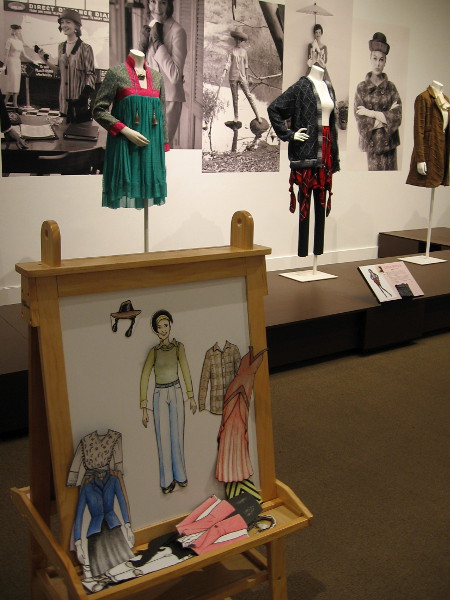
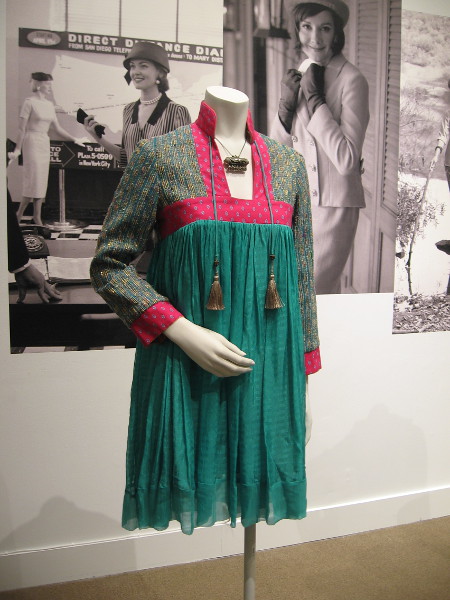
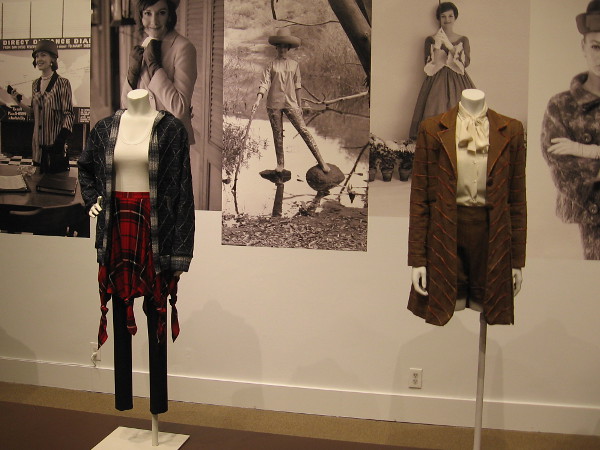
A new exhibition at the San Diego History Center in Balboa Park concerns the fascinating evolution of fashion over the past nine decades. Titled Fashion Redux: 90 Year of Fashion, this exhibition includes a “timeline of garments” from the museum’s collection, plus a number of pieces that were created by fashion students who are studying at Mesa College. The dresses these talented students created are a unique fusion of the past and present.
I confess that I have no fashion sense. I’m content to wear blue jeans every day of the year. When they become a bit too scruffy, I buy a cheap new pair. I really have no right to proclaim anything about fashion.
But I’ve always been deeply fascinated by human creativity. And the origin, formulation and application of an aesthetic sense. And the twists and turns of history, of course.
Anyone who is curious about fashion and its evolution should head over to The San Diego History Center. The museum will be having a Grand Reveal Fashion Show on April 26, where you can meet some of the Mesa College fashion students and instructors. They’re also having a series of different demonstrations. You can find out more here.
Fashion during the past 90 years is presented in a special exhibit at the San Diego History Center. Included is the work of students from Mesa College, who created new designs based on old trends.Photographs on the wall are from the collection of the San Diego History Center. They were taken by Charles Schneider, who during his long career contracted with United Press International, photographing film stars and entertainers.This 1940’s style dress was created by student designer Anna Acosta. In that decade garments were often designed to soften a woman’s shape, and achieve a sense of elegance.An activity station at the exhibition encourages kids to try their own hand and eye at fashion design. A nearby nook is the setting for fashion demonstrations by students and instructors from the San Diego Mesa College Fashion Program.This garment reflects the mid-2000’s, when the boho style reached its pinnacle. This dress was designed by student Zari Wabab.The San Diego History Center should be the destination of anyone interested in the past, including fashion trends.This draped nylon and taffeta gown reflects the Golden Age of Hollywood during the 1930’s and the Great Depression. It seemed like a dream in that difficult era. Created by student designer Stephanie Castro.This garment in the museum’s collection represents the 1990’s, a time when fashion evolved as the internet gained traction, and working from home and globalism began their rise.Dresses from the past nine decades are arranged as a timeline, each representing the evolving culture and various impacts of technology.
…
I live in downtown San Diego and love to walk around with my camera! You can follow Cool San Diego Sights via Facebook or Twitter!
You can easily explore Cool San Diego Sights by using the search box on my blog’s sidebar. Or click a tag! There are thousands upon thousands of photos for you to enjoy!
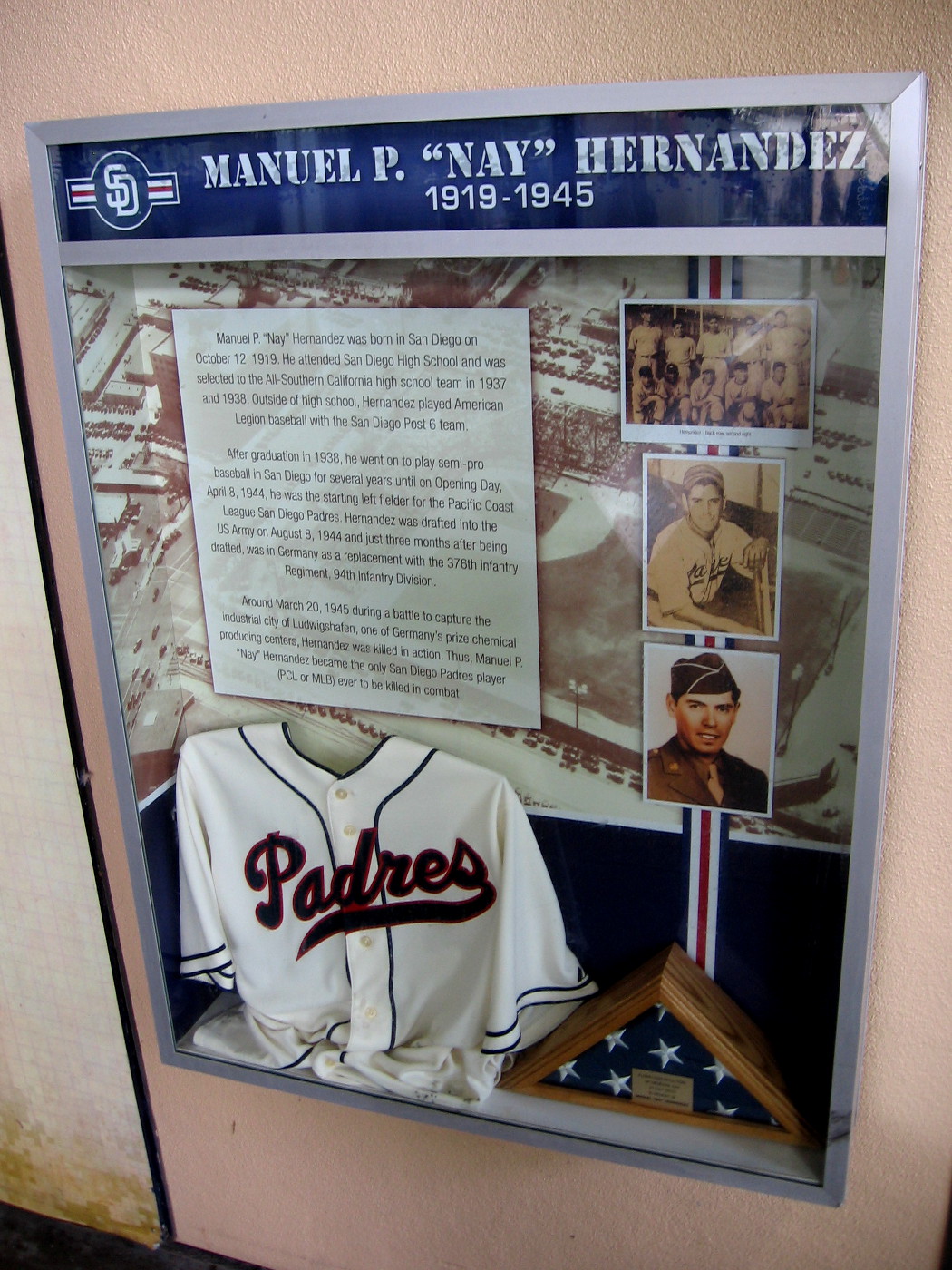
Display inside Petco Park’s Power Alley remembers Manuel P. Hernandez of San Diego. Before the start of World War II he played for the Pacific Coast League Padres. He died in action fighting in Germany.
Exhibits that honor members of the Padres who served in the military can be found at Petco Park. Inside the Power Alley, near the large model of the USS Midway, photographs and words pay tribute to three wartime heroes in particular.
One display memorializes the only Padres player to die in combat, Manuel P. “Nay” Hernandez. Born in San Diego in 1919, he attended San Diego High School and played American Legion baseball with the San Diego Post 6 team. After becoming starting left fielder for the Pacific Coast League Padres, he was drafted into the U.S. Army in 1944, joining the 376th Infantry Regiment, 94th Infantry Division. Less than a year later he was killed in action fighting the Nazis in Germany.
Another display honors two Padres baseball legends: Ted Williams and Jerry Coleman. Both were Marine aviators during the Korean War. Ted Williams, a San Diego native who played for the PCL Padres at Lane Field, became arguably the best hitter in the history of Major League Baseball. Jerry Coleman, after playing with distinction as a New York Yankee (1949 American League Rookie of the Year and 1950 World Series MVP), became a beloved broadcaster for the San Diego Padres.
Should you ever enjoy a game or special event at Petco Park, walk through the Power Alley section behind right field and linger for a moment near this important bit of Padres history.
Manuel P. “Nay” Hernandez was born in San Diego in 1919. He graduated from San Diego High School, played semi-pro baseball, and went on to start in left field for the PCL Padres. He is the only San Diego Padres player to be killed in combat.A nearby wall in the Power Alley lists the many Major League Baseball Players Who Served Their Country.Historical photographs in Petco Park honor The Pride of San Diego. Two legendary Padres, Ted Williams and Jerry Coleman, are shown on the baseball diamond and serving as pilots during the Korean War.Captain Ted Williams, USMC, manning his Marine Corps F9F-2 Panther jet in Korea, circa 1953.Captain Jerry Coleman, USMC, on the wing of his Marine Corps F-4U Corsair in Korea, circa 1952.
…
I live in downtown San Diego and love to walk around with my camera! You can follow Cool San Diego Sights via Facebook or Twitter!
You can easily explore Cool San Diego Sights by using the search box on my blog’s sidebar. Or click a tag! There are thousands upon thousands of photos for you to enjoy!
A barely visible SpaceX rocket Falcon 9 rises above Star of India, the world’s oldest active sailing ship!
My plan this cold, partly cloudy morning was to head down to San Diego’s Embarcadero to hopefully photograph today’s SpaceX Falcon 9 rocket launch.
I did manage to catch an image of the rocket’s flight, but it’s so tiny you can barely make it out! I suppose I should get a fancier, more powerful camera. Can you see the faint white streak in the above photo?
The Falcon 9 launch was from Vandenberg Air Force Base, northwest of Santa Barbara, about 280 miles from San Diego. To my naked eye, for a few seconds, I could see the minuscule rocket soar into the sky, through the rigging of the world’s oldest active sailing ship, Star of India!
Star of India, originally named Euterpe, is an iron-hulled merchant ship that was built in 1863. Driven by capricious winds, the tall ship circumnavigated the globe 21 times during her storied history.
Falcon 9 is a technologically impressive space launch vehicle. During today’s mission a reused Falcon 9 lifted Spain’s advanced radar satellite Paz into a Sun-synchronous orbit of Earth.
As the satellite effortlessly orbits our planet, it will track ships that ply the ocean–ships that trace their own proud history back to the Age of Sail, when brave vessels like Star of India pushed forward to new horizons.
…
I live in downtown San Diego and love to walk around with my camera! You can follow Cool San Diego Sights via Facebook or Twitter!
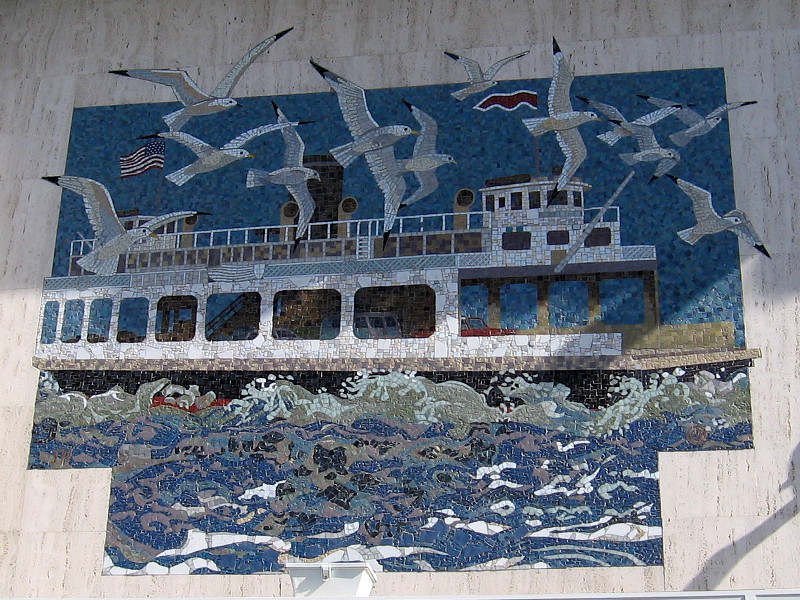
Mosaic on Walgreens building in Coronado depicts an old ferry crossing San Diego Bay.
Last weekend during my walk through Coronado I noticed a really beautiful work of art. A colorful mosaic, set into the travertine exterior of the Walgreens building on Orange Avenue, depicts a ferry crossing San Diego Bay crowned by a flock of seagulls.
According to my limited research, it appears that the mosaic was created in 1985 by Susan Hertel and Denis O’Connor, in collaboration with Millard Owen Sheets, who designed many Home Savings of America bank branches in California. The mosaic represents one of the historic ferryboats that once transported cars between Coronado and San Diego. Ferries for cars operated until 1969, the year the San Diego–Coronado Bridge opened.
When the artwork debuted, the building at 925 Orange Avenue was a Home Savings branch. Subsequently it became a Petco. As building occupants have come and gone, the extraordinary mosaic has been preserved.
…
I live in downtown San Diego and love to walk around with my camera! You can follow Cool San Diego Sights via Facebook or Twitter!
You can easily explore Cool San Diego Sights by using the search box on my blog’s sidebar. Or click a tag! There are thousands upon thousands of photos for you to enjoy!
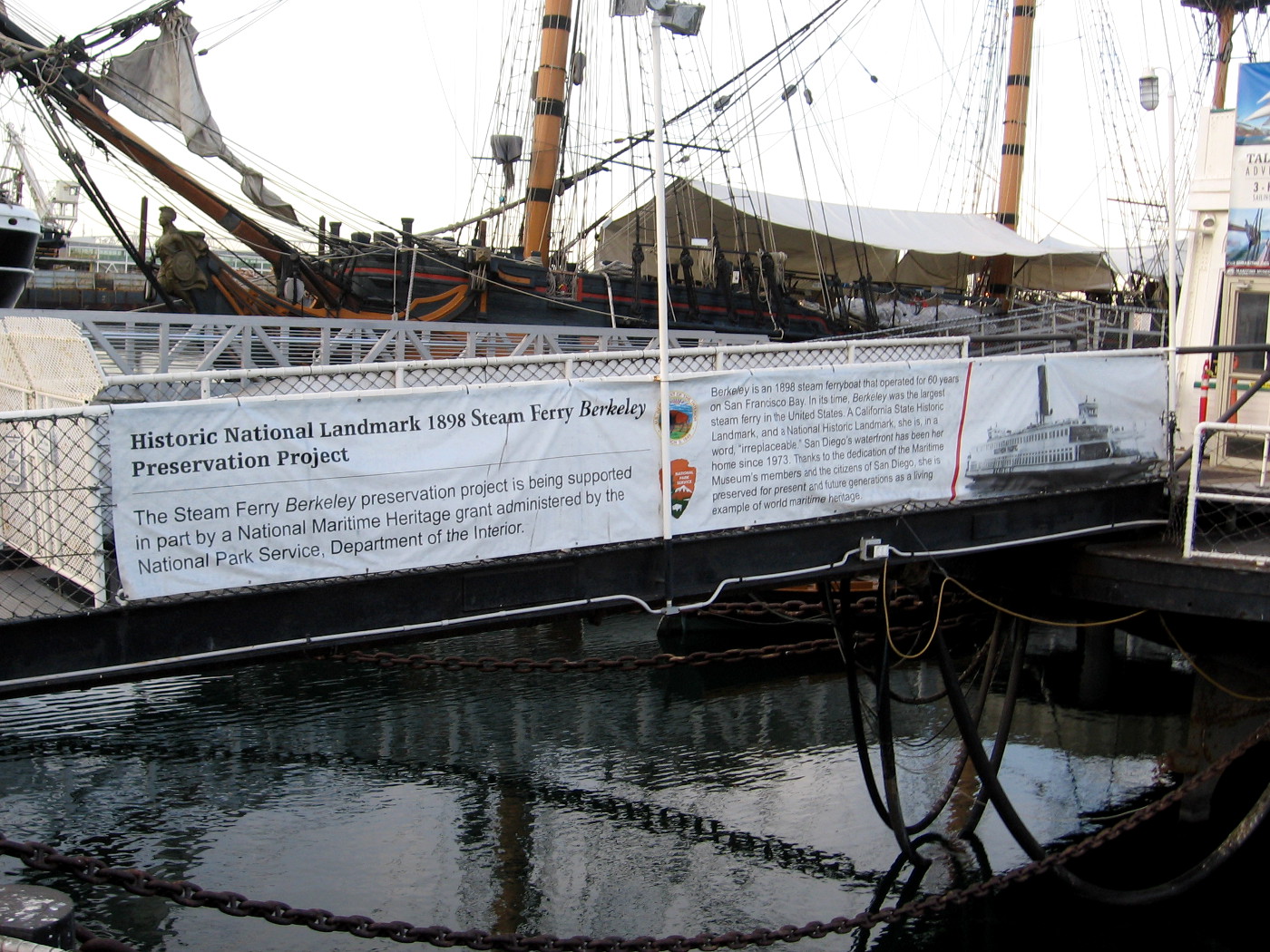
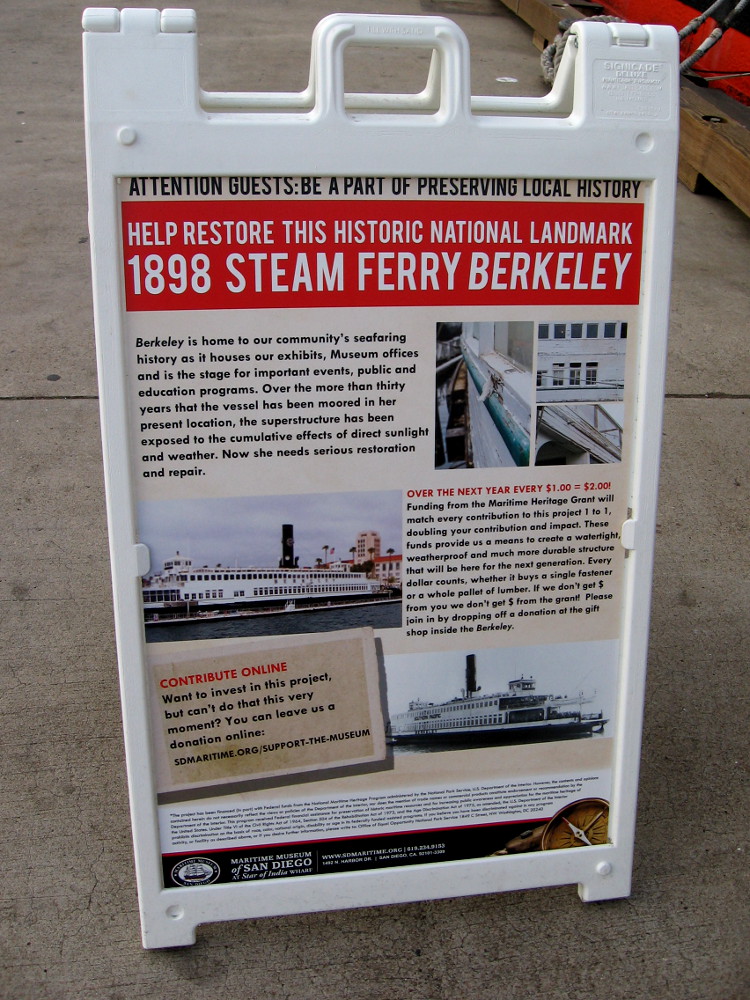
Banner along entrance gangway explains the Historic National Landmark 1898 Steam Ferry Berkeley Preservation Project.
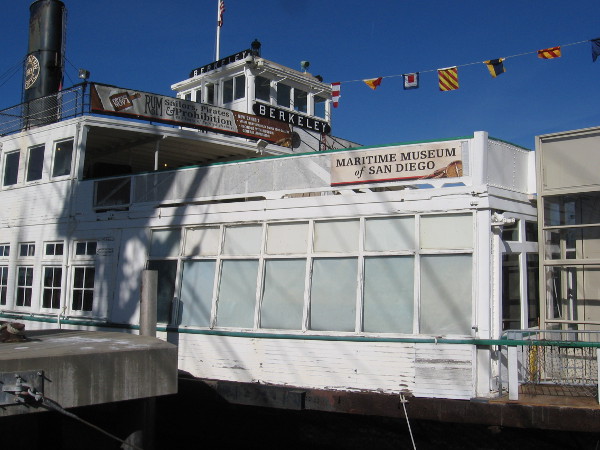
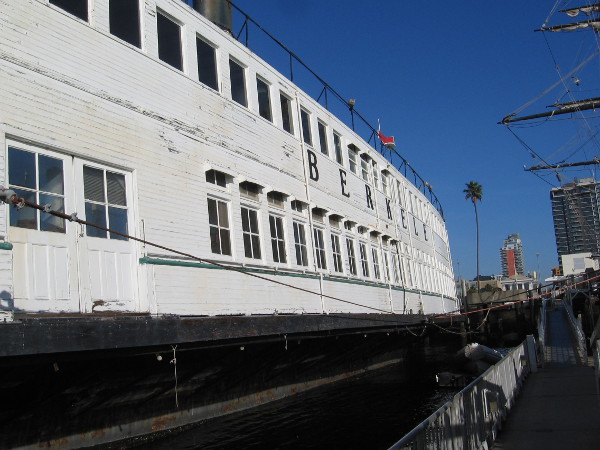
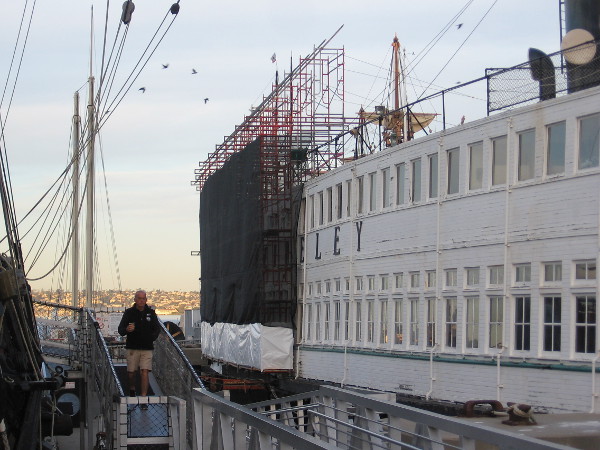
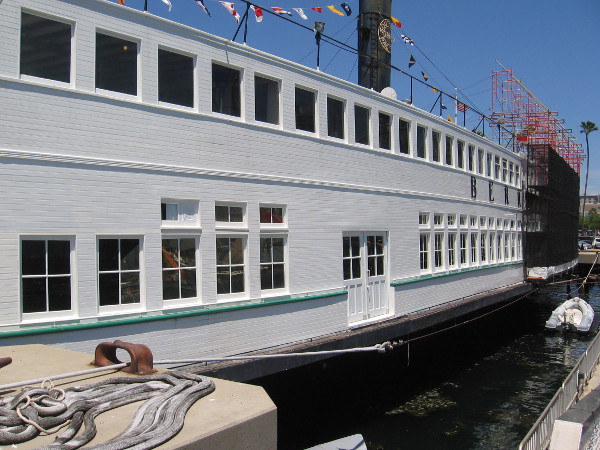
The Maritime Museum of San Diego’s historic 1898 steam ferry Berkeley is undergoing much-needed restoration. The wooden superstructure, exposed for many years to direct sunlight and weather, is in need of repair, as you can see from a couple of my photographs. The south side of the ship, which receives the most sunlight, is in especially poor condition. Work has already begun there.
The museum has received funding for the restoration in the form of a $200,000 grant from the National Maritime Heritage Grant Program. This prestigious grant will match every dollar contributed by the public. Funds are being used to create a watertight, weatherproof, much more durable structure that will last for another generation.
Every contribution you make will be effectively doubled by the matching grant. To make your 100% tax-deductible donation, and learn much more, please visit this page.
To see more photos of this truly amazing vessel and learn about its special place in history, you might want to visit this past blog post. Berkeley was not only the first screw propeller driven steam ferry on the West Coast, but it assisted in the evacuation of a burning San Francisco after the devastating earthquake of 1906. Make sure to scroll down to the bottom of that blog post and read the extensive comment by the former museum librarian, who provides more fascinating information concerning the Berkeley!
The beautiful Berkeley is hub of the Maritime Museum of San Diego. The vessel houses many exhibits, and hosts special events and education programs.Damage from sun, salt, wind and weather is visible in this photo taken shortly before restoration began.Guests to the museum are asked to be part of preserving local history. Contributions can be made online. Every dollar will be matched by a Maritime Heritage Grant.Scaffolding along a section of the steam ferryboat Berkeley’s south-facing side. Restoration has begun.
UPDATE!
Look at the great progress made by early 2019!
…
I live in downtown San Diego and love to walk around with my camera! You can follow Cool San Diego Sights via Facebook or Twitter!
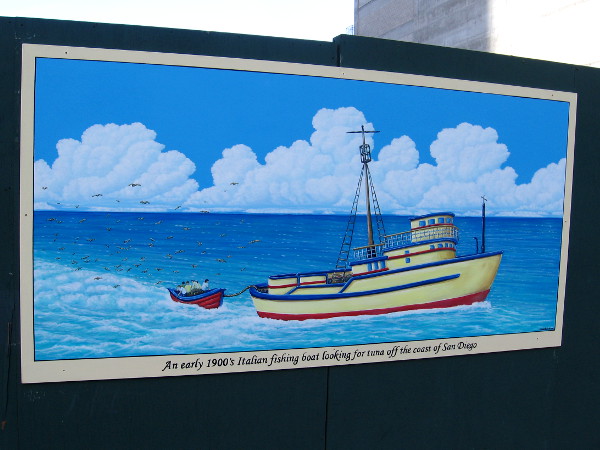
An early 1900’s Italian fishing boat looking for tuna off the coast of San Diego.
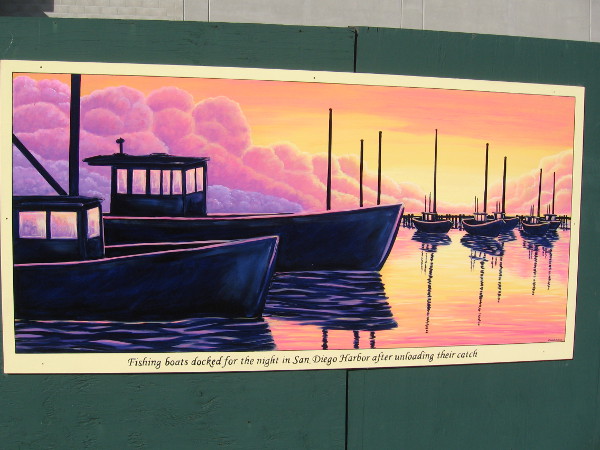
Some new murals have appeared in Little Italy on a construction site fence along Kettner Boulevard, between Beech Street and Cedar Street. The artwork, created by Elisabeth Sullivan, depicts the history of tuna fishing in San Diego.
The series of images tell the story of an industry that once prospered in our city, and that shaped the colorful downtown neighborhood of Little Italy.
Italian and Portuguese fishermen bamboo pole fishing at the peak of the industry in the late 1920’s.After a lengthy fishing expedition these tuna clippers head home with their catch.Fishing boats docked for the night in San Diego Harbor after unloading their catch.Women of Little Italy fishing families work to remove hooks, stretch dry and mend the nets.The tuna is unloaded at the wharf and delivered to San Diego fish markets and canneries.During World War II many tuna clippers were converted to Yacht Patrols by the U.S. Navy.In the late 1950’s the efficient modern purse seiner began replacing most of the bait boats.The history of tuna fishing in San Diego can now be observed on a series of beautiful murals in Little Italy!
…
I live in downtown San Diego and love to walk around with my camera! You can follow Cool San Diego Sights via Facebook or Twitter!

























 Cool San Diego Sights!