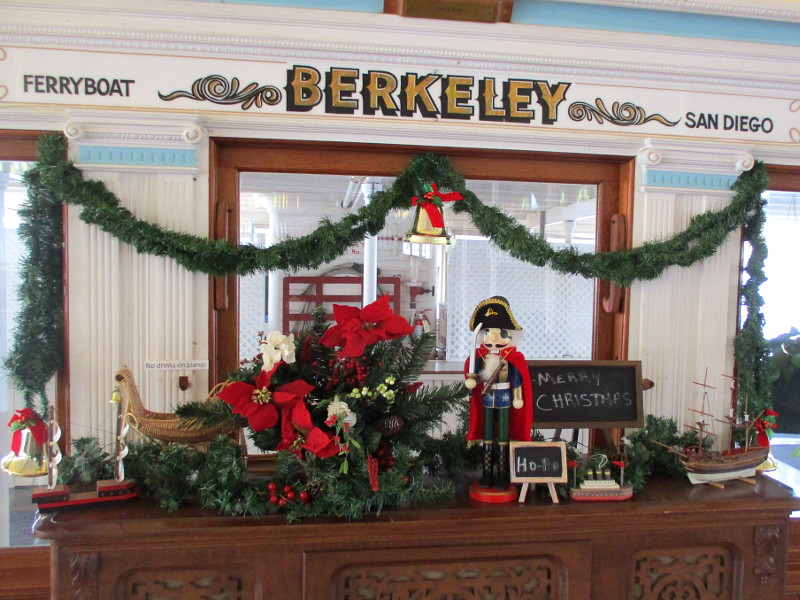
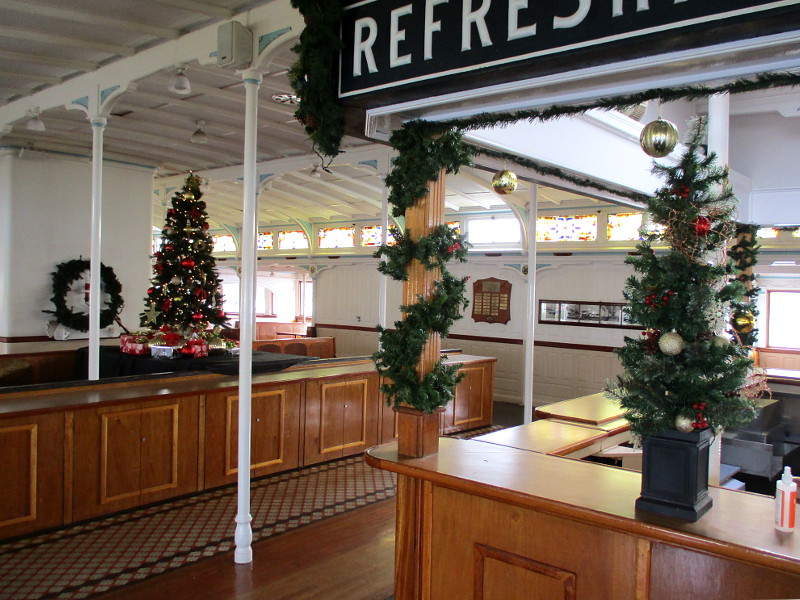
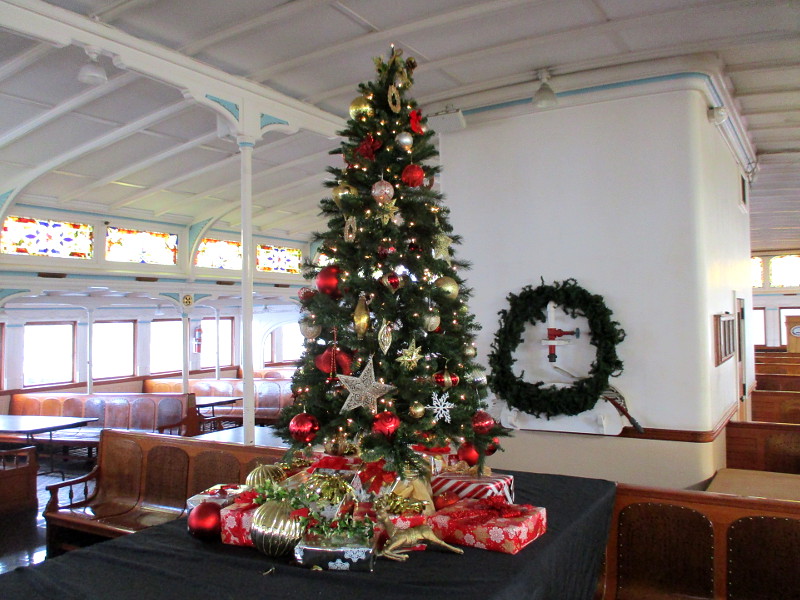
One of our city’s most magical indoor spaces can be found floating above San Diego Bay. Those who’ve stepped onto the passenger deck of the historic ferryboat Berkeley know what I’m talking about.
People once crossed San Francisco Bay in style. That’s where this old steam ferry originated. Now the Berkeley makes its home at the Maritime Museum of San Diego, and those who visit its elegant interior are in for a treat. Especially during the holiday season.
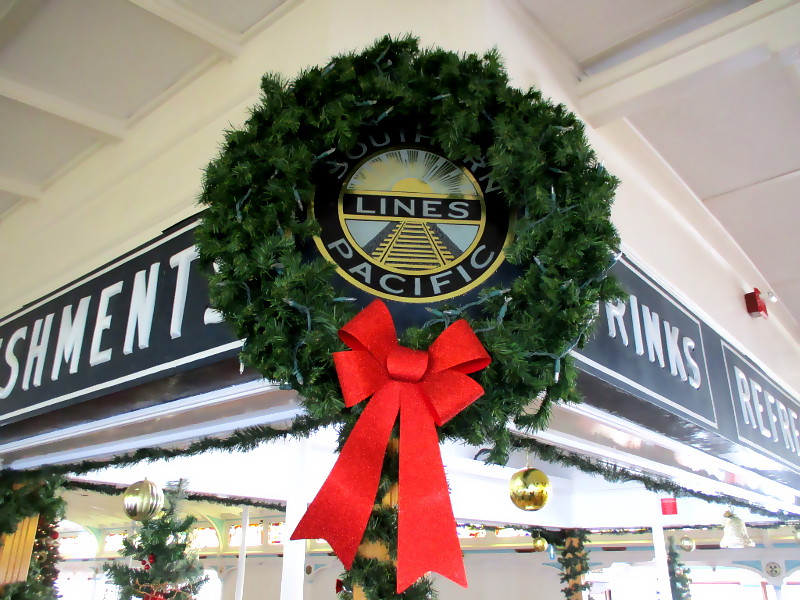
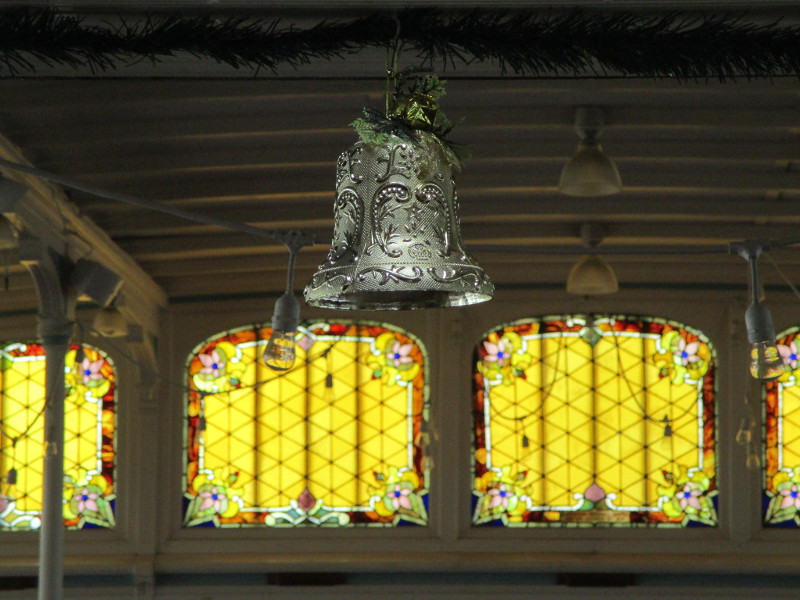
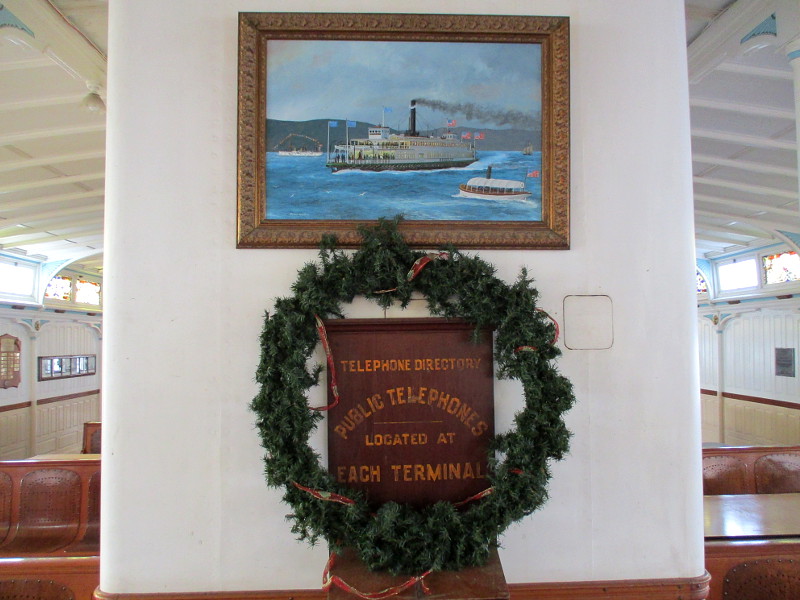
I hadn’t planned on blogging today, but during a short walk between winter showers my feet carried me to the museum. The Christmas decorations inside the Berkeley simply had to be photographed.
Starting tomorrow, we’ll have to wait another year for Christmas, so what better time to post these photos?
Happy Holidays!
…
I live in downtown San Diego and love to walk around with my camera! You can follow Cool San Diego Sights via Facebook or Twitter!
You can easily explore Cool San Diego Sights by using the search box on my blog’s sidebar. Or click a tag! There are thousands upon thousands of photos for you to enjoy!
One of the most fascinating museums in San Diego County is located in the city of Lemon Grove.
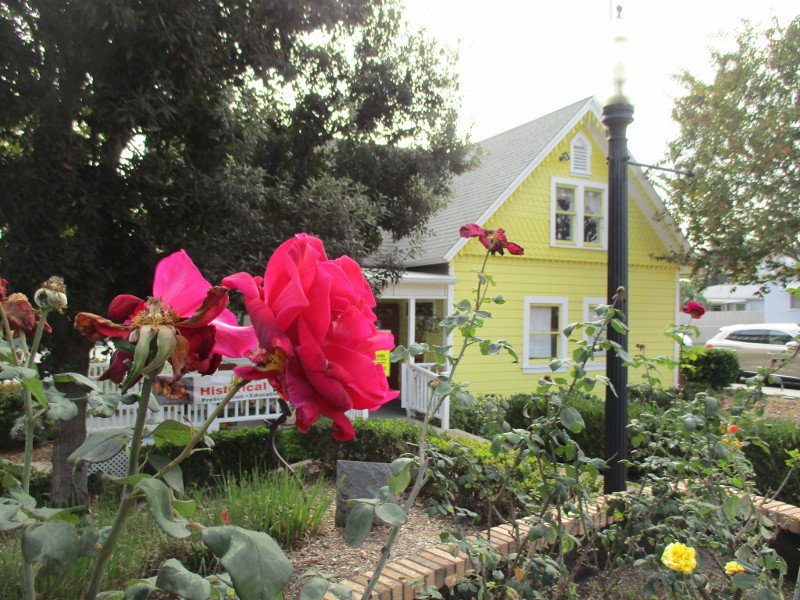
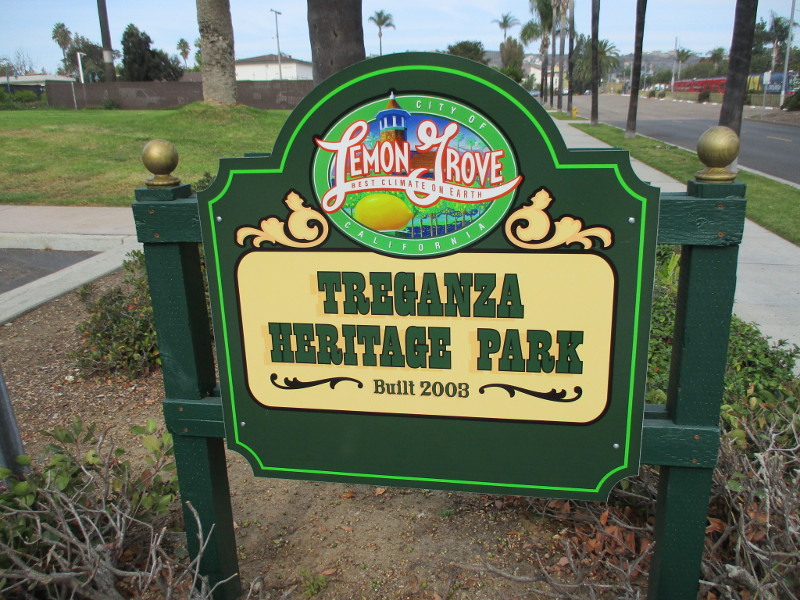
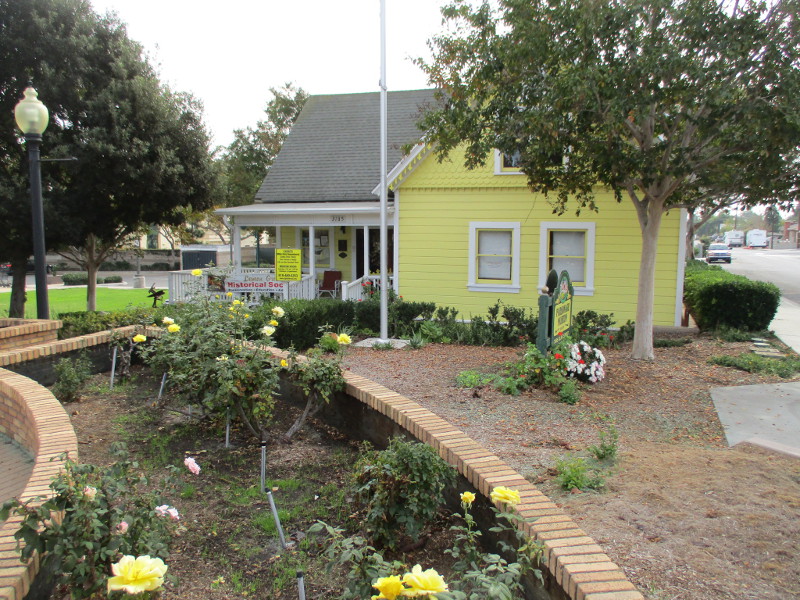
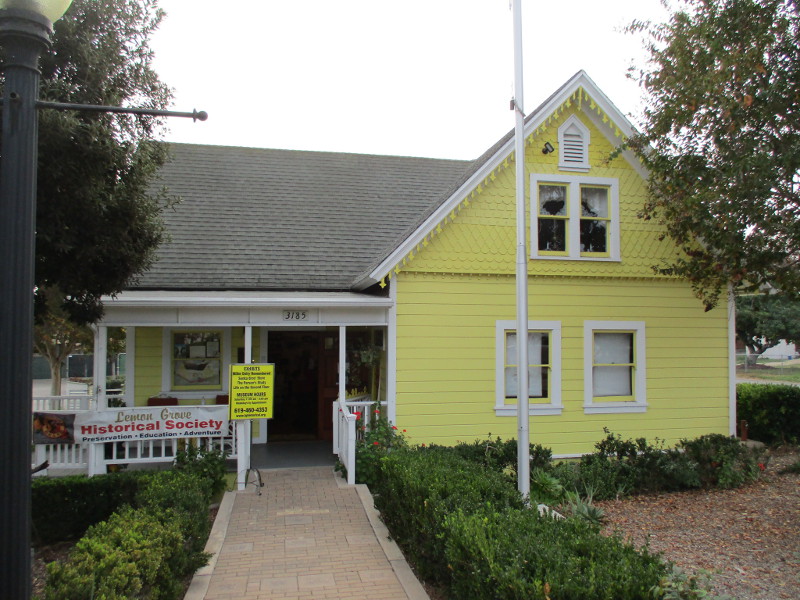
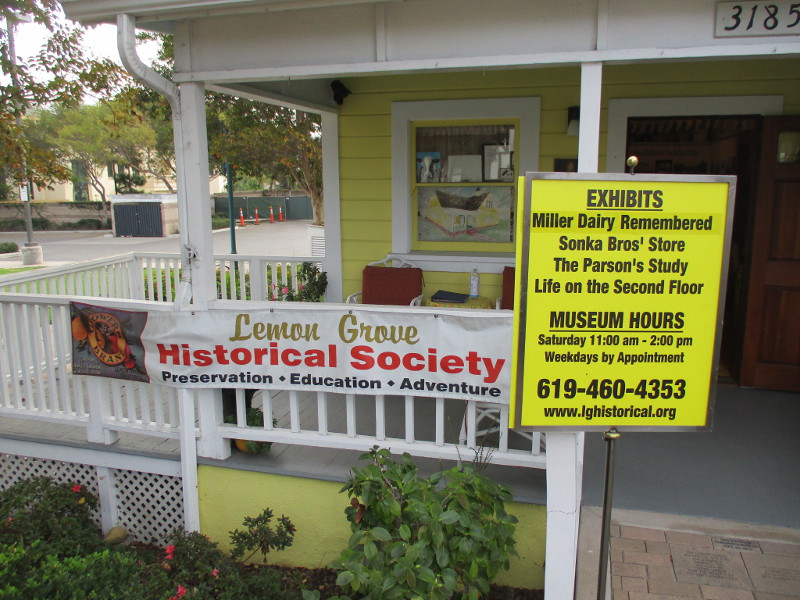
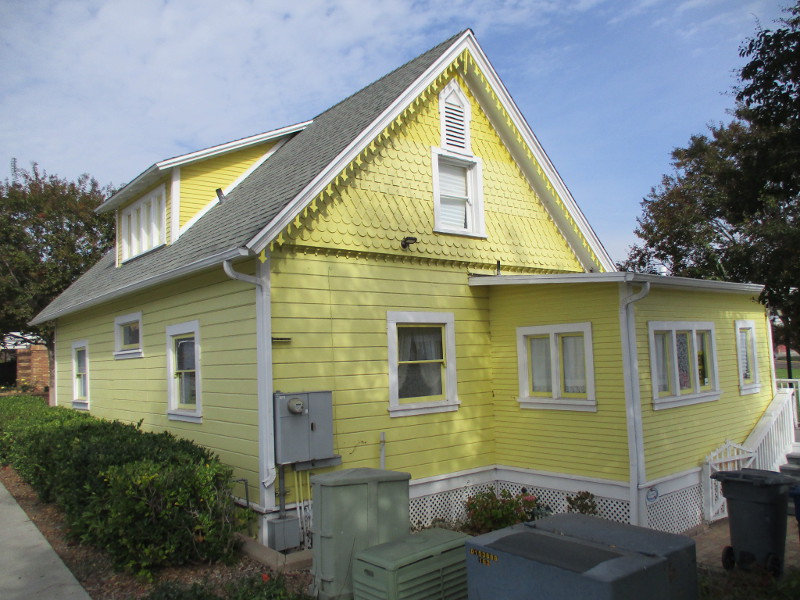
The Parsonage Museum, operated by the Lemon Grove Historical Society, occupies a beautifully restored Victorian building at Treganza Heritage Park. The building began as Lemon Grove’s first church, the 1897 Atherton Chapel.
The old church was eventually moved from its original location, served as a community meeting hall, then became a private residence. Today it houses a museum whose exhibits recall a time when Lemon Grove was a small agricultural town with citrus orchards and packing houses, a general store, and a boast of the Best Climate on Earth!
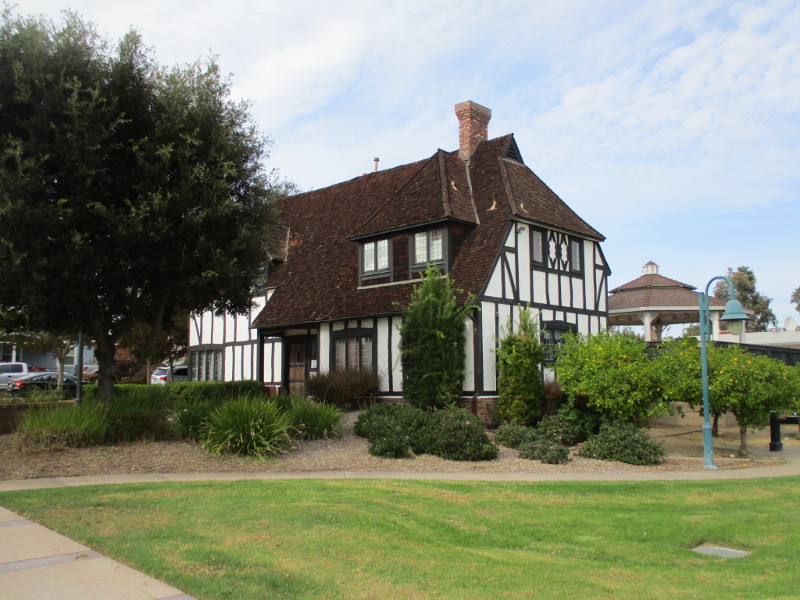
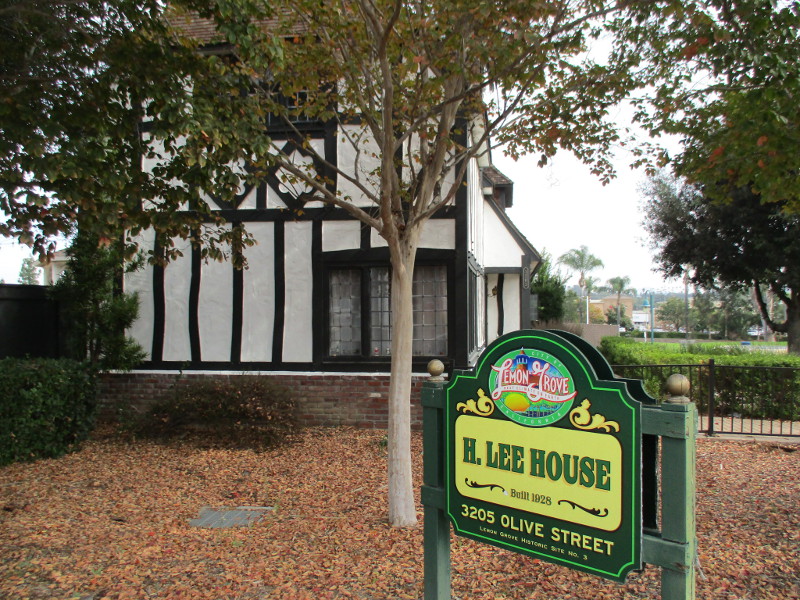
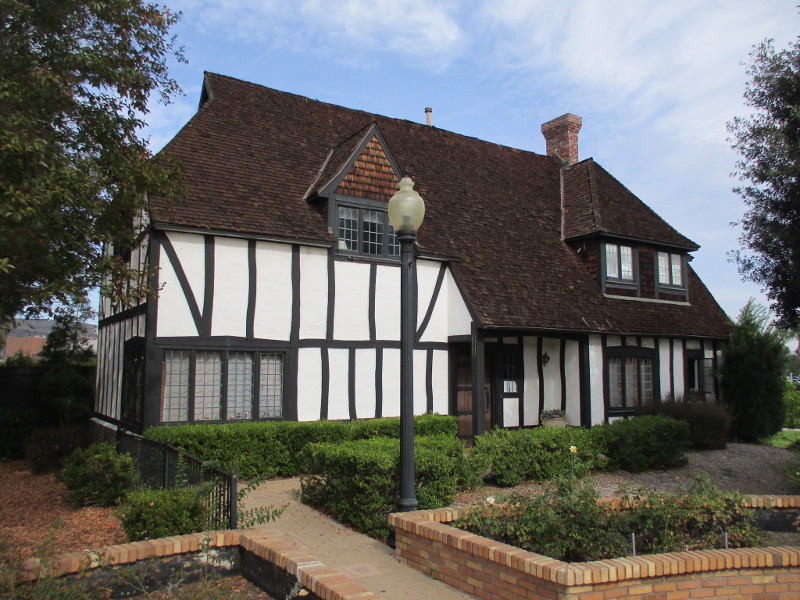
I walked about Treganza Heritage Park and visited the Parsonage Museum last weekend. I also took a quick look at the 1928 H. Lee House, a Tudor Revival structure that stands nearby in the park and serves as a cultural center.
I urge anyone interested in the history of San Diego and Lemon Grove to head to the Parsonage Museum on a day when they are open. See their website for more information here!
To get an idea of what you’ll discover, please read my photo captions!
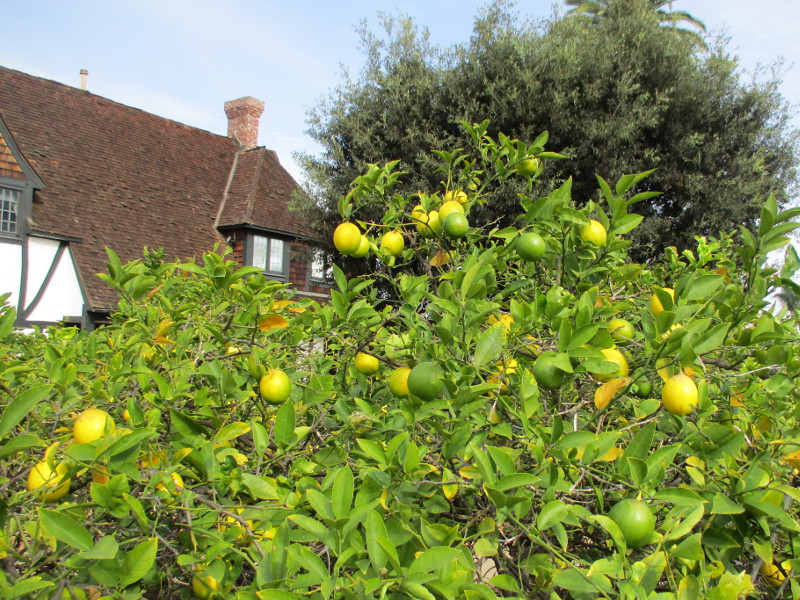
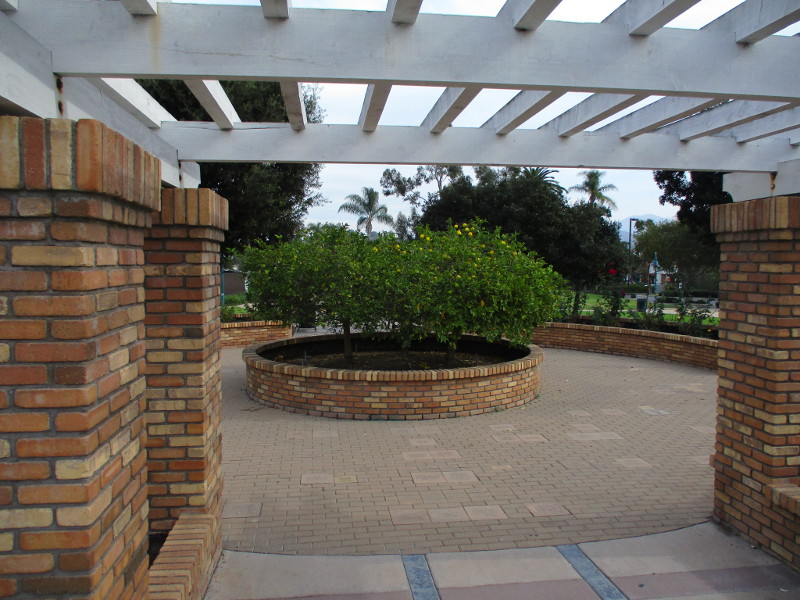
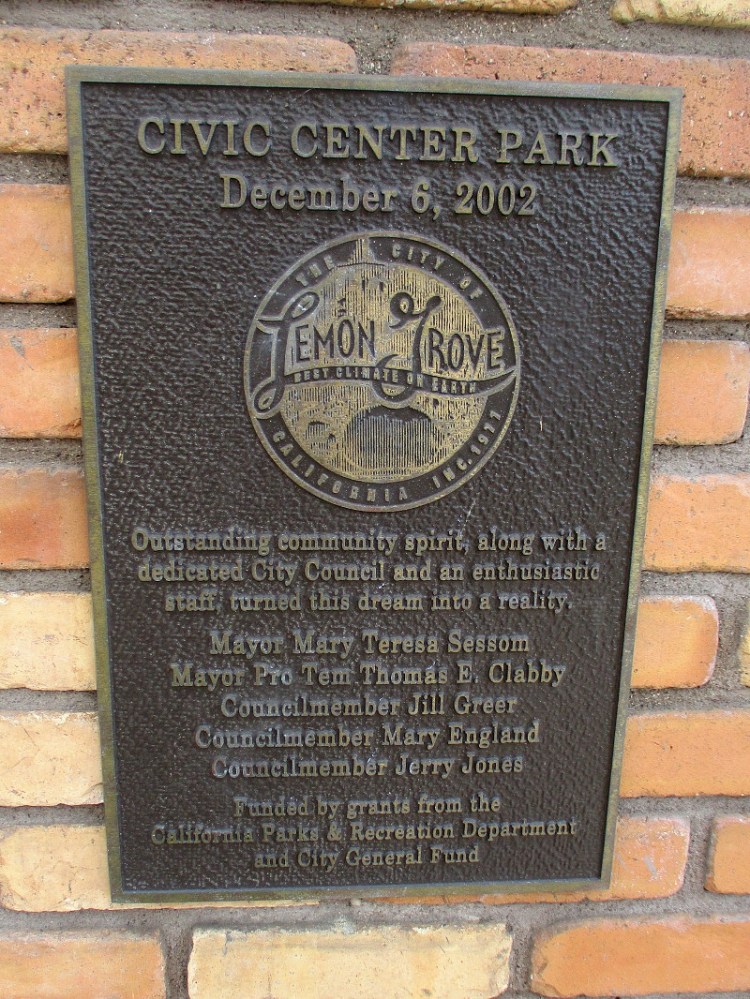
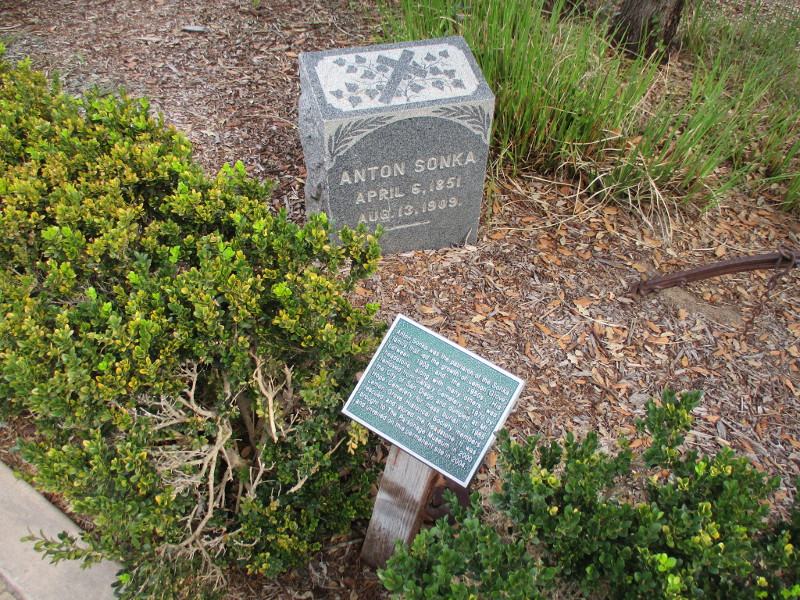
Treganza Heritage Park in Lemon Grove was first called Civic Center Park. It’s name was changed in 2020. The Treganza family was an influential pioneer family in Lemon Grove.A view of the H. Lee House. It was moved to this location to make way for the extension of State Route 125.The H. Lee House was built in 1928. It was designed by British architect Frederick C. Clemesha. Today it serves as a cultural center, where events such as History Alive lectures can be enjoyed. One more photo of the handsome H. Lee House.Lemon trees stand in a plaza between the H. Lee House and the Parsonage Museum.The small plaza welcomes visitors to Treganza Heritage Park.A 2002 dedication plaque from back when it was called Civic Center Park.Now turning to look at the Parsonage Museum. The restored Folk Victorian building, the 1897 Atherton Chapel, served as the only Lemon Grove church until 1912. Recovered grave marker of Anton Sonka just outside the museum entrance.
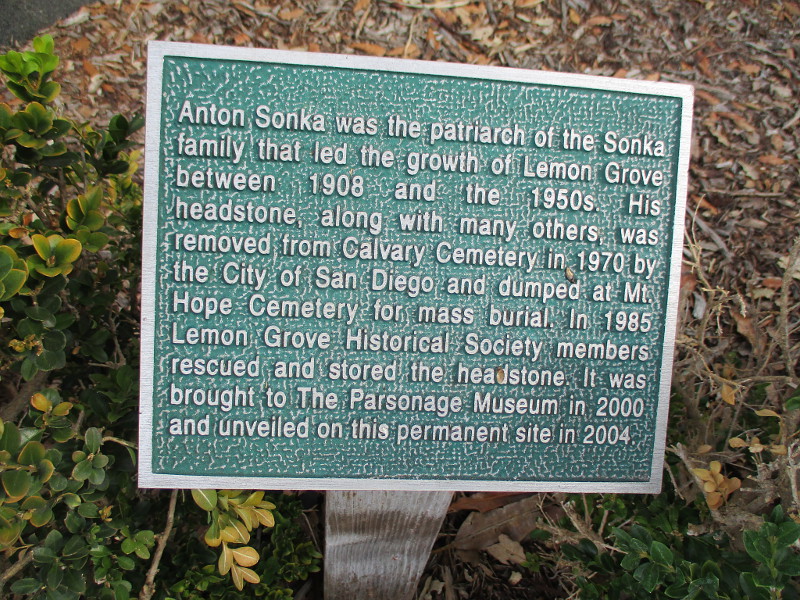
Anton Sonka was the patriarch of the Sonka family that led the growth of Lemon Grove between 1908 and the 1950s. His headstone, along with many others, was removed from Calvary Cemetery in 1970 by the City of San Diego and dumped at Mt. Hope Cemetery for mass burial. In 1985 Lemon Grove Historical Society members rescued and stored the headstone. It was brought to The Parsonage Museum in 2000 and unveiled on this permanent site in 2004.
(If you’d like to learn more about this callous dumping of gravestones, which were discovered in a gully at Mt. Hope Cemetery, I posted a blog concerning it here.)
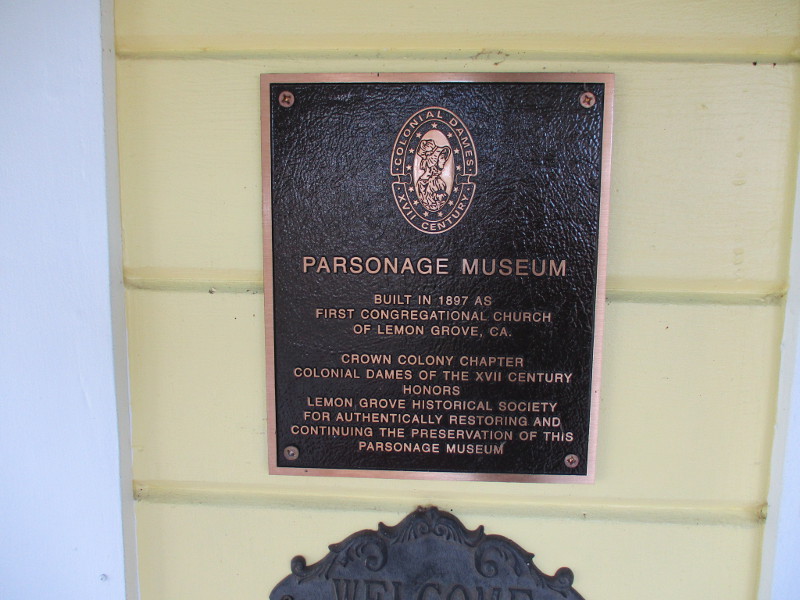
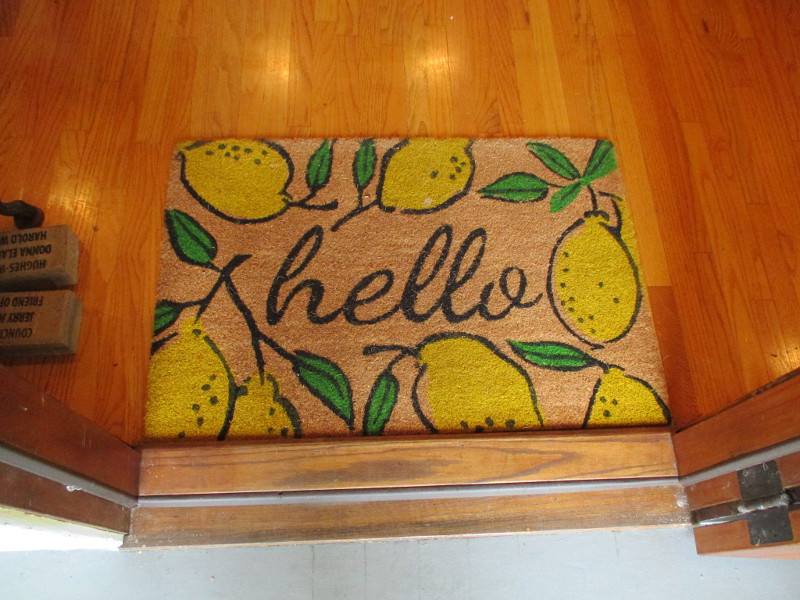
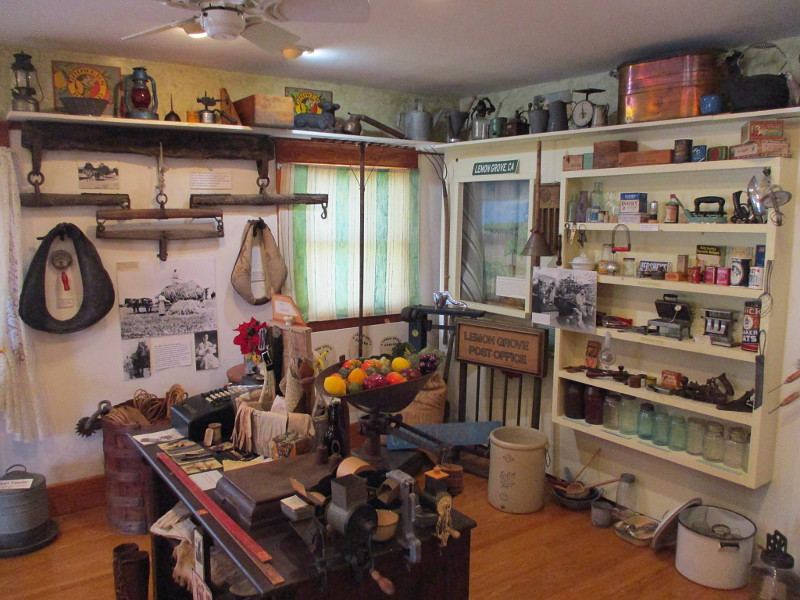
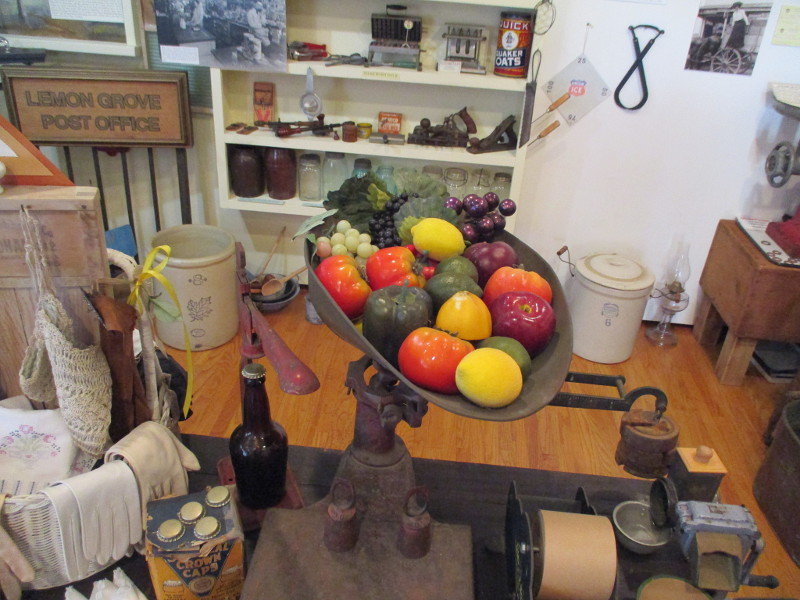
When I visited in November 2021, the Parsonage Museum was featuring several historical exhibits concerning Lemon Grove.The museum building was “Built in 1897 as First Congregational Church of Lemon Grove.”Stepping into the museum, greeted by a lemony, welcoming doormat!Look at what’s in the museum! A recreation of the Sonka Brothers General Store.Items on display recall Lemon Grove’s rural history, which includes general stores where the community would gather.
The Sonka Brothers General Store stood near the center of town for decades. You can see photos of the Lemon Grove History Mural that’s painted on the south side of the historic Sonka Brothers General Store building here!
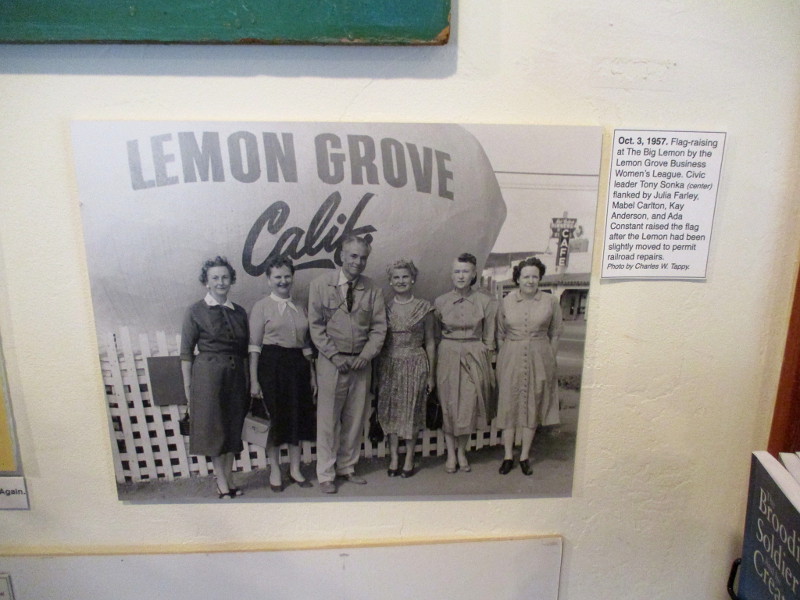
Photo from October 3, 1957 of The Big Lemon during a flag-raising. Civic leader Tony Sonka stands at the center.
If you like to see The Big Lemon today, which still stands on Broadway, check out these photos!
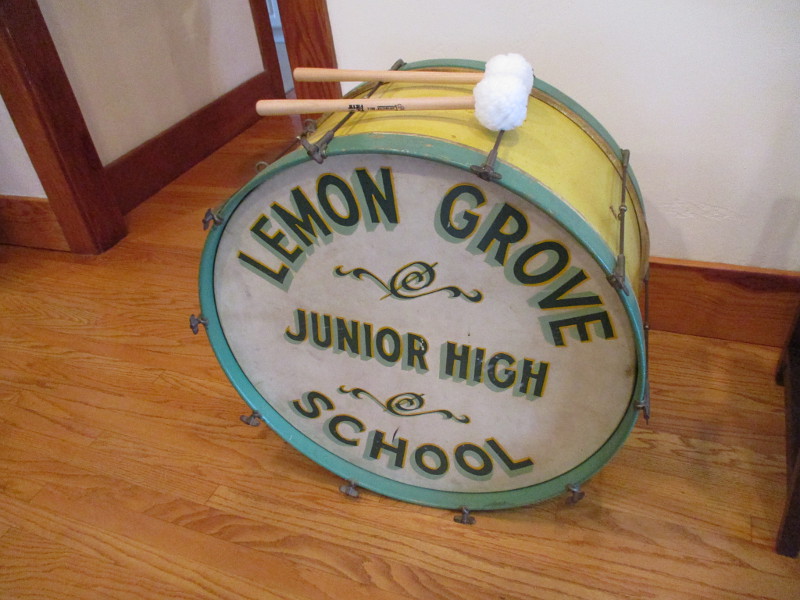
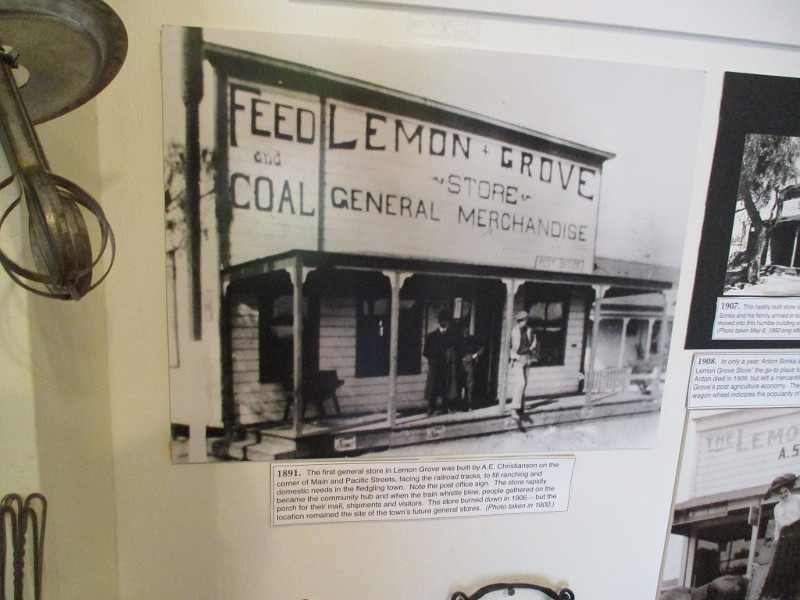
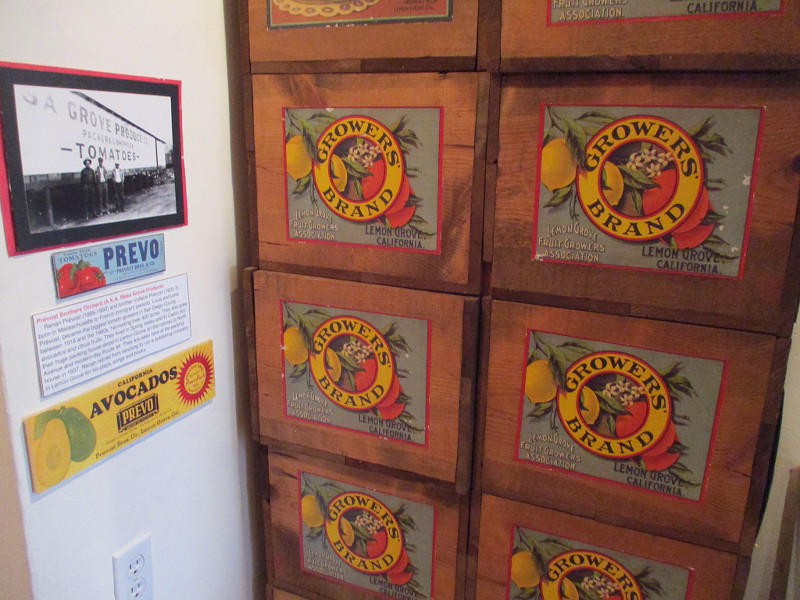
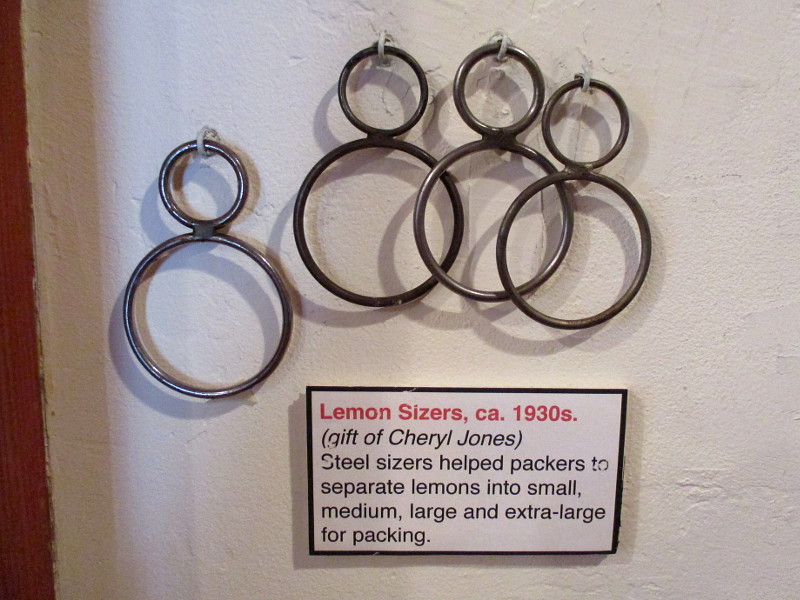
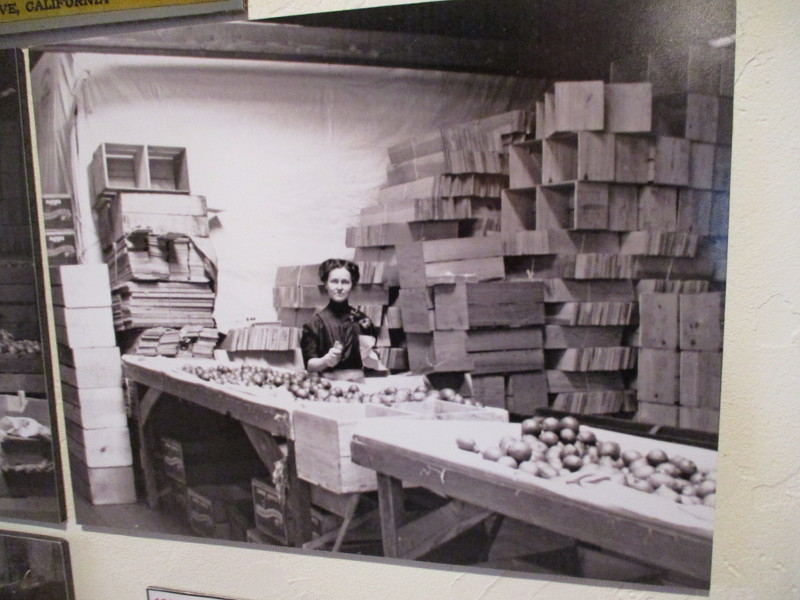
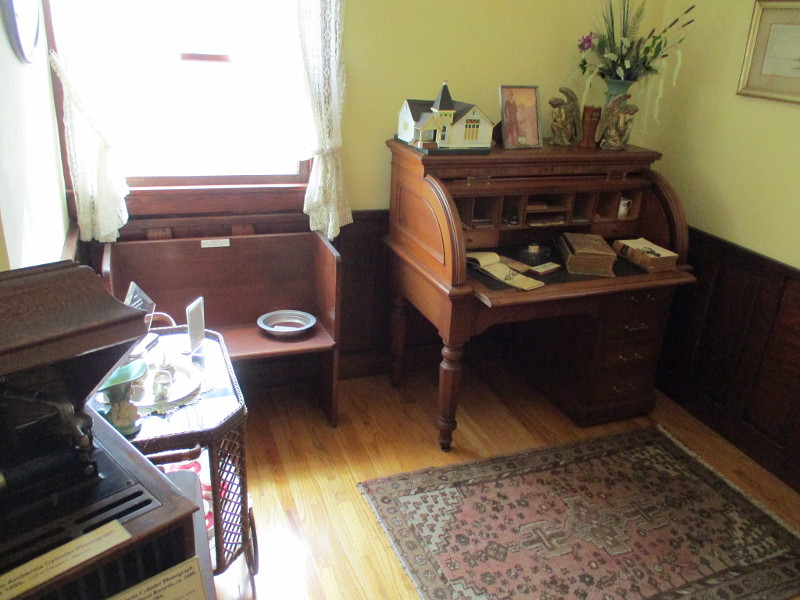
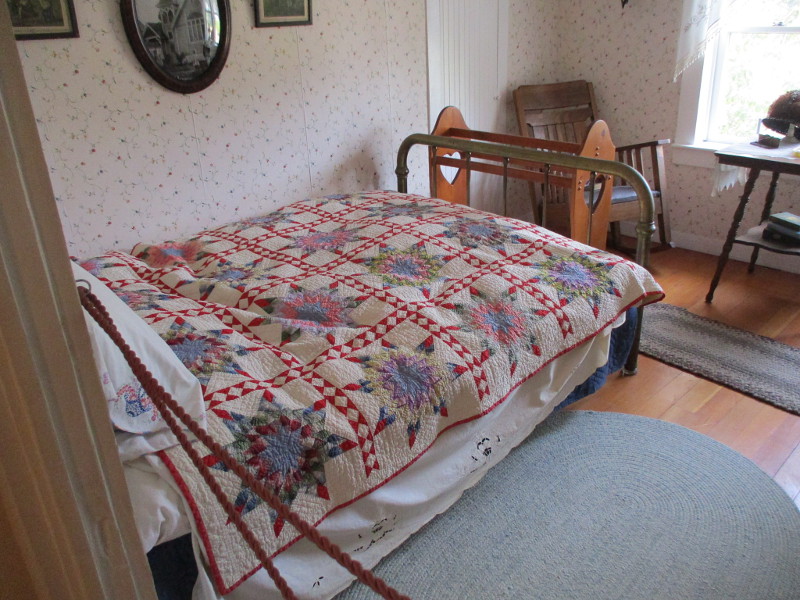
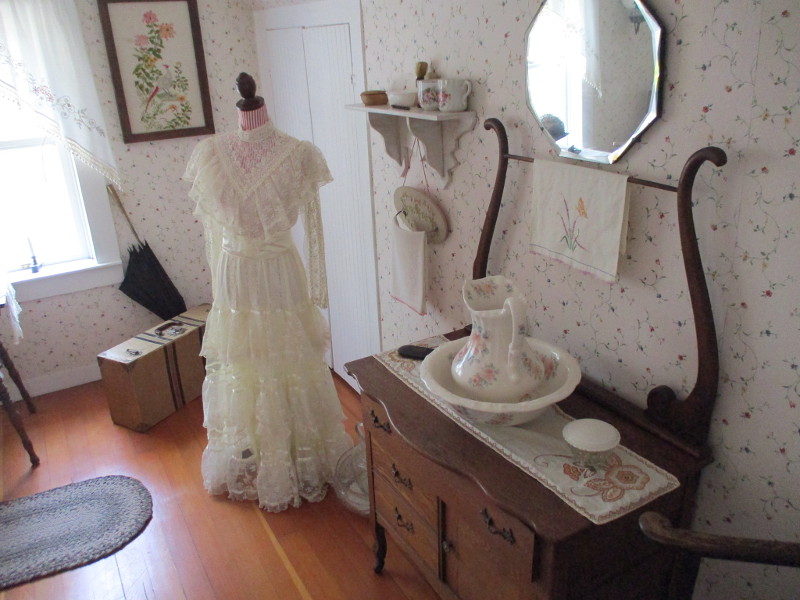
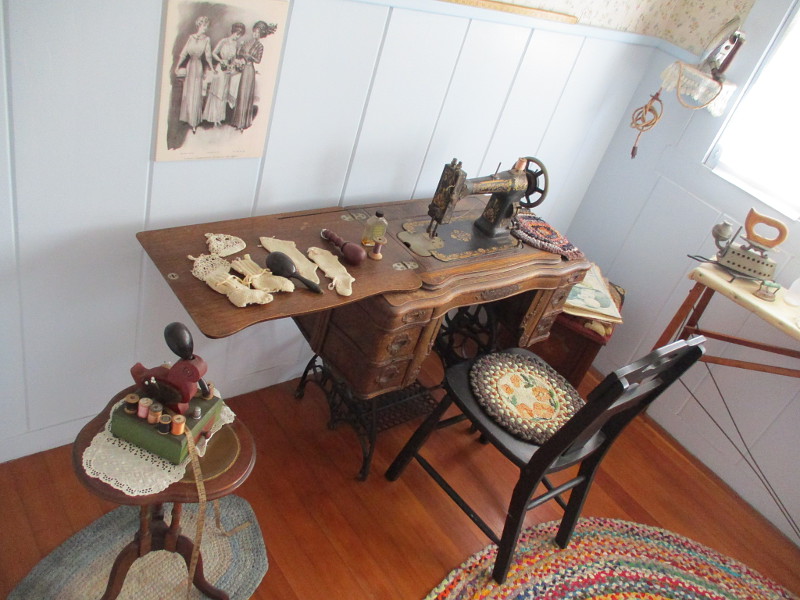
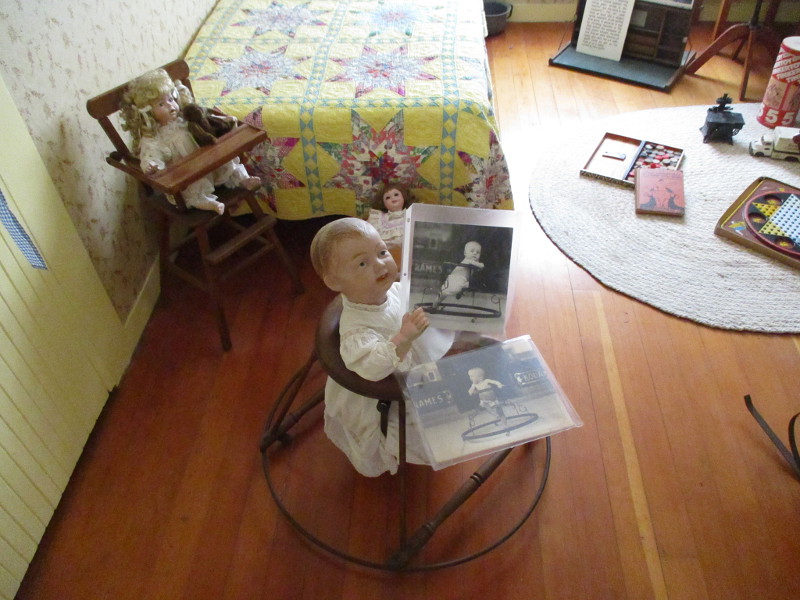
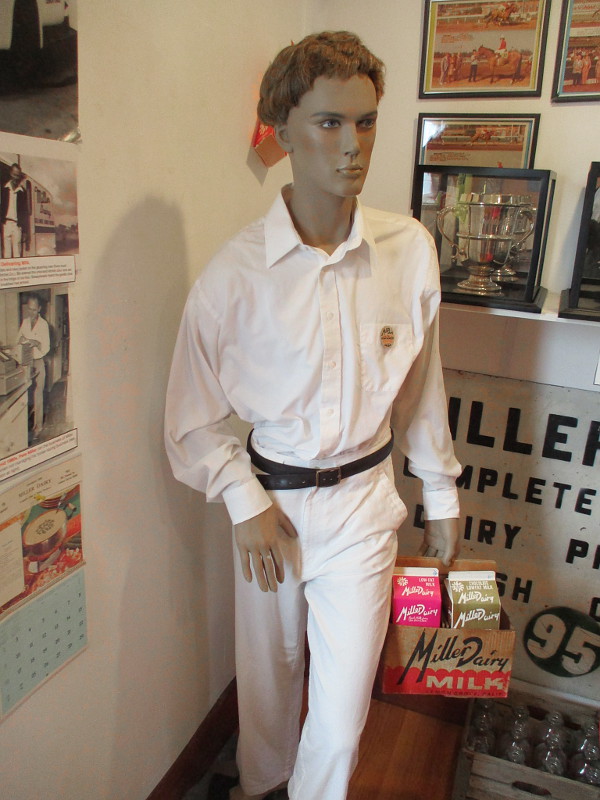
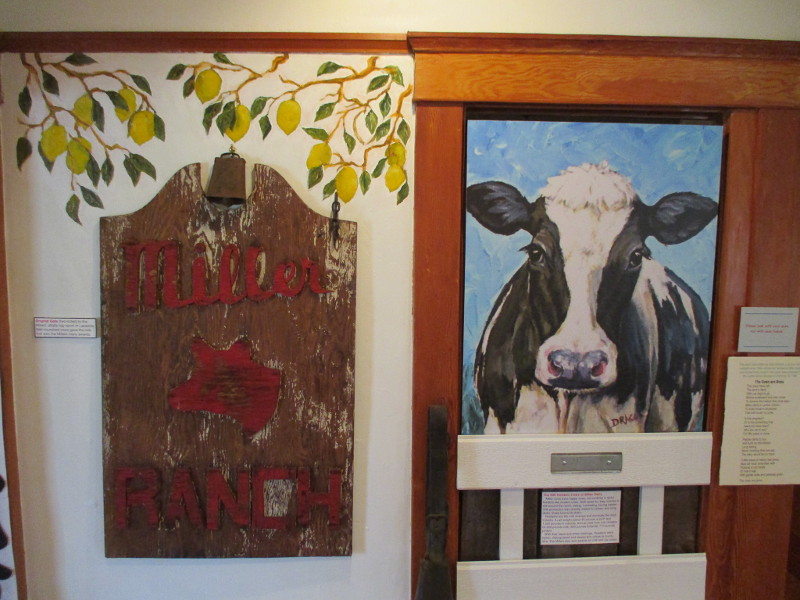
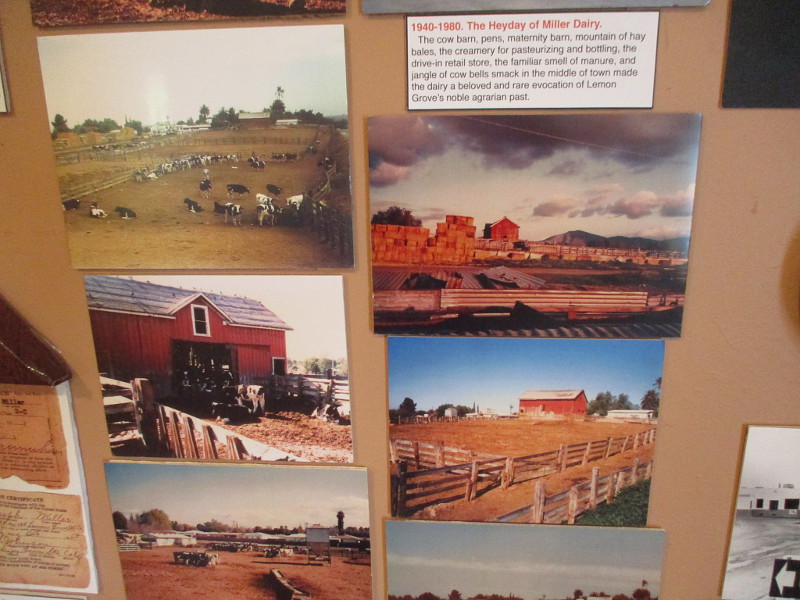
Old drum from the Lemon Grove Junior High School band.1891 photograph of the first general store in Lemon Grove, built by A. E. Christianson at Main and Pacific Streets.The many displays at the Parsonage Museum include these Lemon Grove Fruit Growers Association packing crates.Lemon sizers, circa 1930’s. Packers would separate lemons by size.Woman holding lemon sizer, with stacked ready-to-assemble crates nearby.A room on the ground floor of the Parsonage Museum recreates the Parson’s Study. Reverend Isaac Atherton established the First Congregational Church of Lemon Grove in 1894. The building was constructed in 1897.Several rooms can be viewed on the second floor of the Parsonage Museum, including this Parents’ Room, or bedroom.The Sewing Room.The Children’s Room.Back on the museum’s ground floor, in a corner gallery, the current exhibit is titled Miller Dairy Remembered. This local dairy sold its first milk in 1926. Houses were finally built on the ranch site in the 1980’s. An important chapter of Lemon Grove’s agrarian past is recalled.Lemon Grove’s old Miller Dairy and their 300 freely roaming Holstein cows are fondly remembered at the Parsonage Museum.Historical photos show the Miller Dairy in Lemon Grove, from 1940-1980.One last look at the lemon yellow Parsonage Museum!
…
I live in downtown San Diego and love to walk around with my camera! You can follow Cool San Diego Sights via Facebook or Twitter!
You can easily explore Cool San Diego Sights by using the search box on my blog’s sidebar. Or click a tag! There are thousands upon thousands of photos for you to enjoy!
One of San Diego County’s most important historical sites can be visited in Warner Springs. The Warner-Carrillo Ranch House, built in 1857, is a National Historic Landmark maintained by SOHO, the San Diego-based Save Our Heritage Organisation.
The “Ranch House at Warner’s” preserves centuries of history. You can read a bit about the site and see some old photographs at this SOHO web page.
The adobe ranch house “represents Mexican and American culture contact during the Mexican Republic; the Frontier period of the westward migration; and the Gold Rush and the cattle ranching industry from 19th century Californio to 20th century to today.” Built beside the emigrant trail, many early settlers wrote about their experiences here.
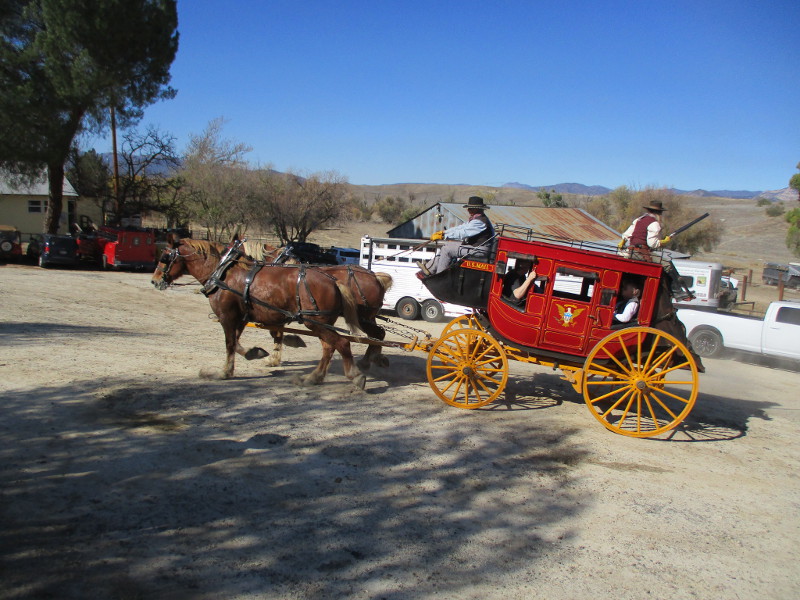
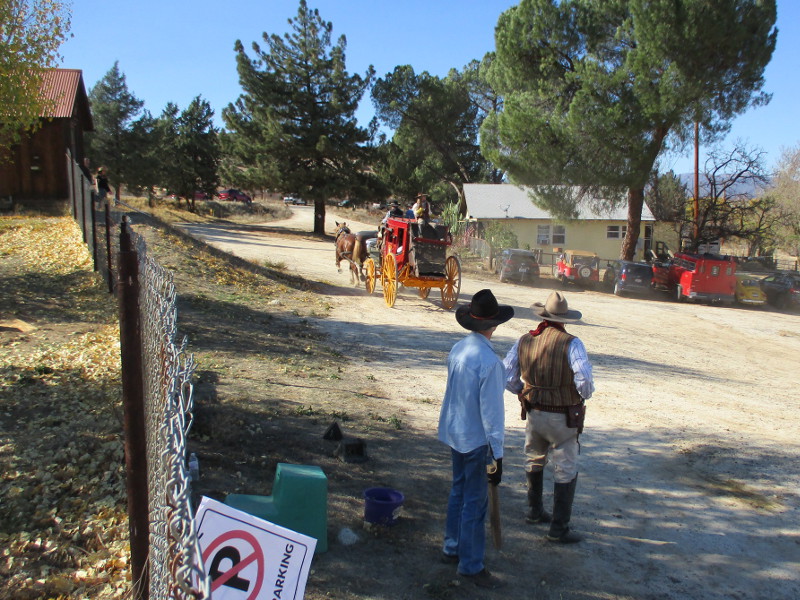
Last weekend I visited the restored adobe. I went for a special reason. One day every year at Warner’s Ranch, visitors can ride an authentic Concord stagecoach down a short stretch of the old Overland Trail. For several years, from 1858 to 1861, the ranch house served as a Butterfield Overland Stage Station. Thousands of passengers stopped for a few minutes at this swing station as they travelled through the region. If you’d like to see photos from my fun stagecoach ride, click here!
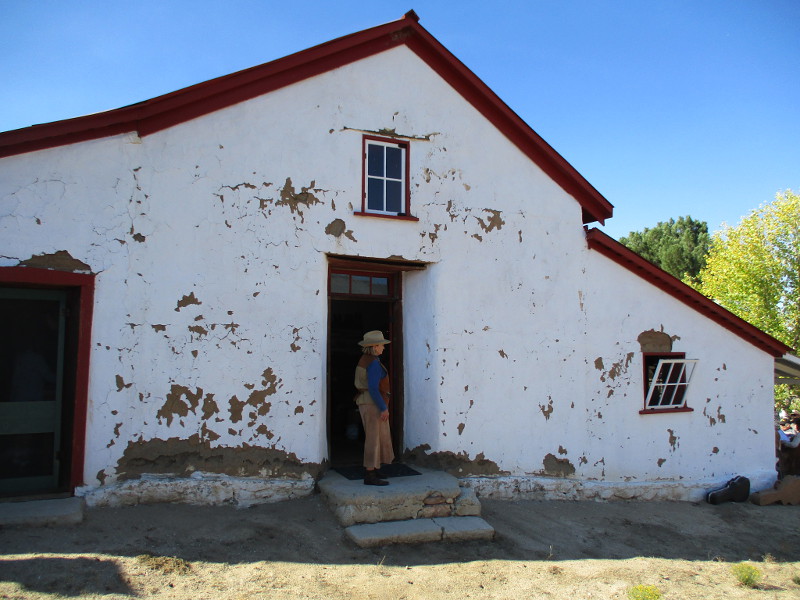
The present structure, maintained today as a museum, was built by Doña Vicenta Sepúlveda de Carrillo, an early Californio woman rancher. It consists of two main rooms and several adjacent smaller rooms that were added in later years. One of the main rooms was the sala, or living room. The other served as a trading post–a small store where travelers could purchase necessities during their brief stopover.
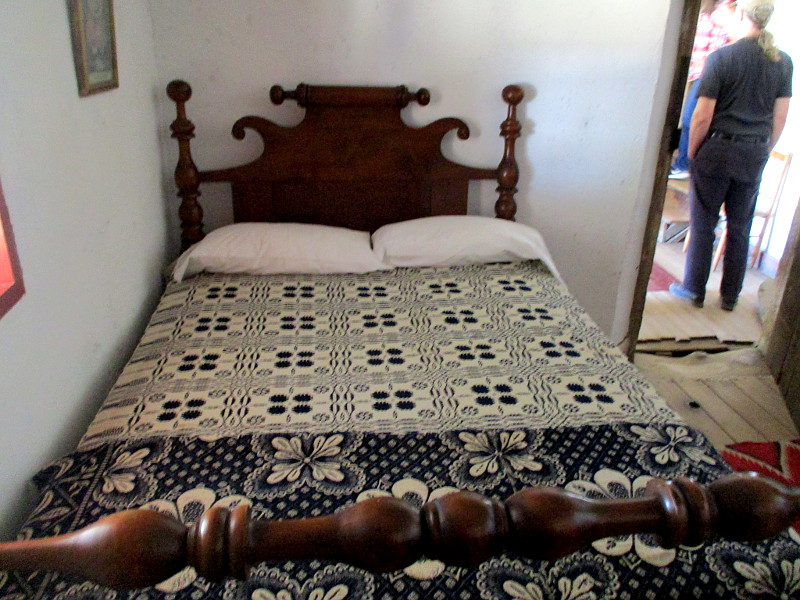
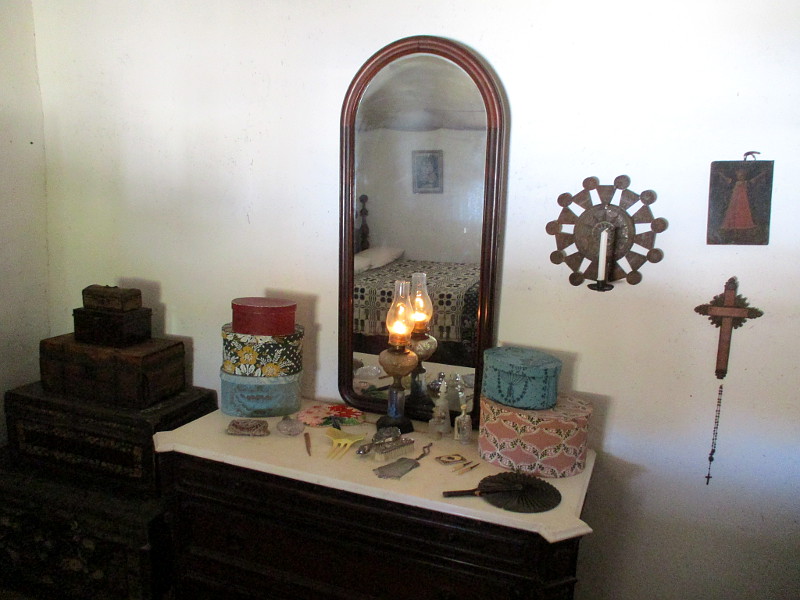
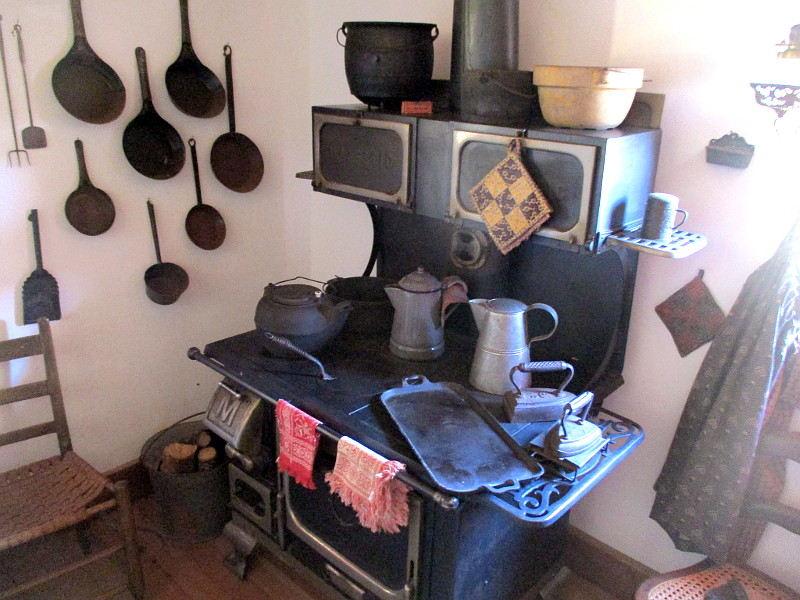
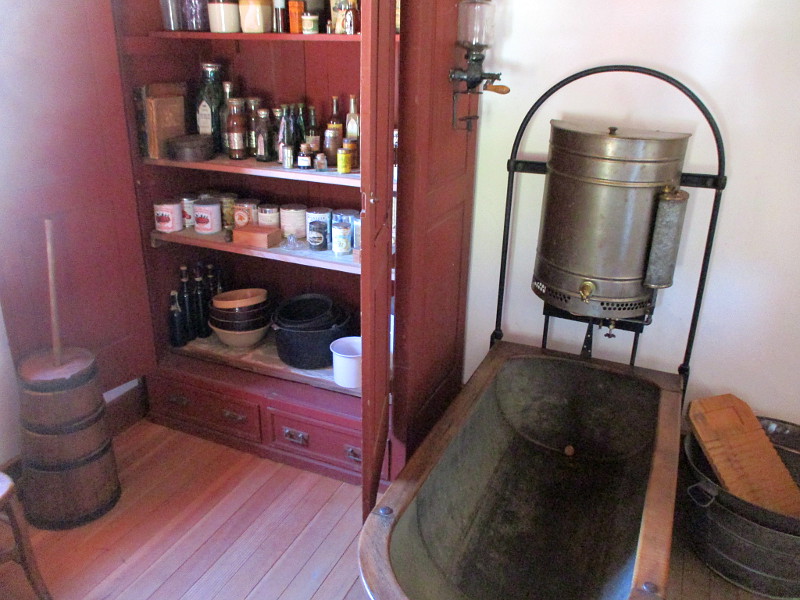
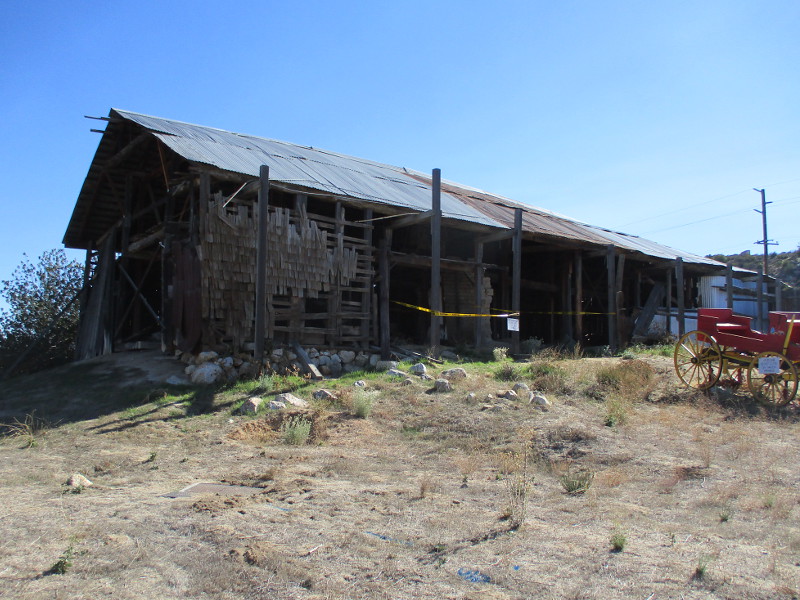
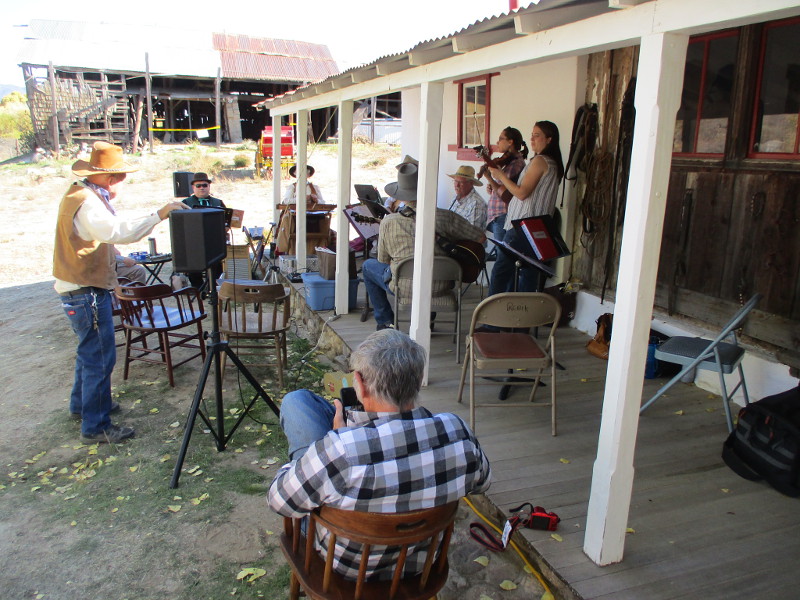
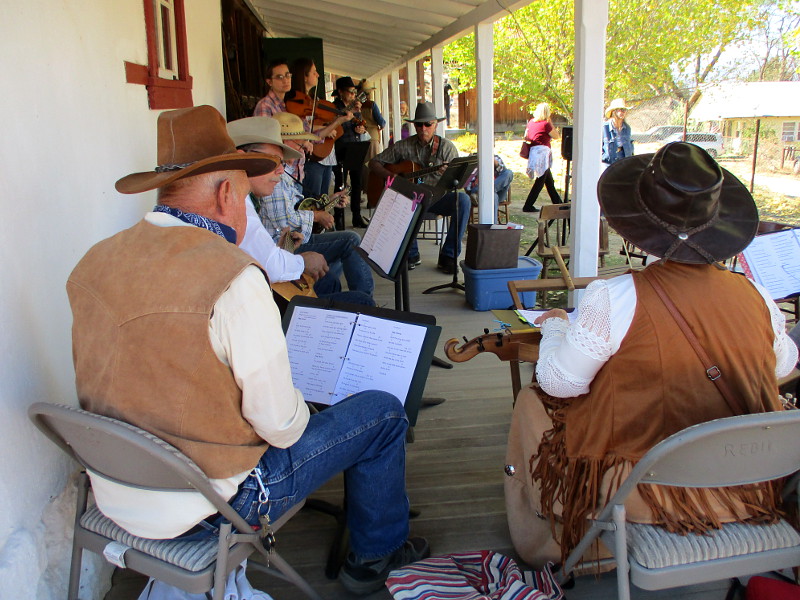
Some of the smaller rooms include bedrooms and a kitchen, which featured a family bathtub, as you’ll see in my photos! The adobe walls are 18 inches thick, providing a cool inside temperature on a hot day. There’s also a pleasant veranda, where musicians were playing the day I visited. The veranda was built at the front of the ranch house, which faced the old stage route. As I understand it, the nearby barn, which SOHO also plans to restore, was for ranch horses and carriages.
Please enjoy these photos. I took few notes, and I’m no expert, so please don’t rely on anything I’ve written here as absolute fact. Do your own research. The history of the ranch is complex. Over the years it had many different owners.
So why is the ranch house named Warner-Carrillo? The original Warner’s Ranch, whose buildings no longer exist, was established here on a Mexican land grant given to Jonathan Trumbull Warner, an American-Mexican citizen and former California State Senator who changed his name to Juan José Warner. His ranch, a camping stop on the Gila Overland Trail to California, was attacked during the Garra Uprising of 1851 and burned down. I photographed the burial site of Antonio Garra in Old Town San Diego and provided a brief description of the Native American Cupeño revolt due to unfair taxation here.
The Warner-Carrillo Ranch House is open year-round on Saturday and Sundays from 12 to 4 pm. If you’re ever in the area, make sure to stop by. Not only will you learn much, but you’ll feel the rich history!
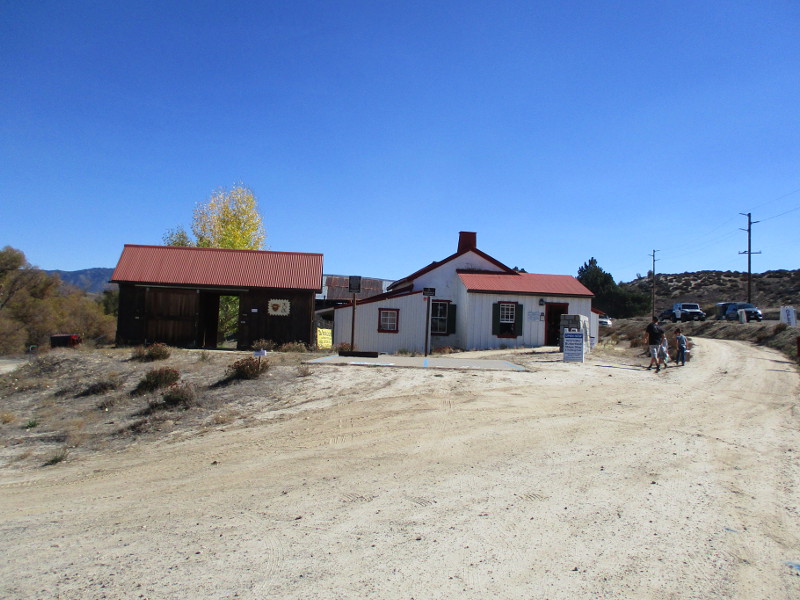
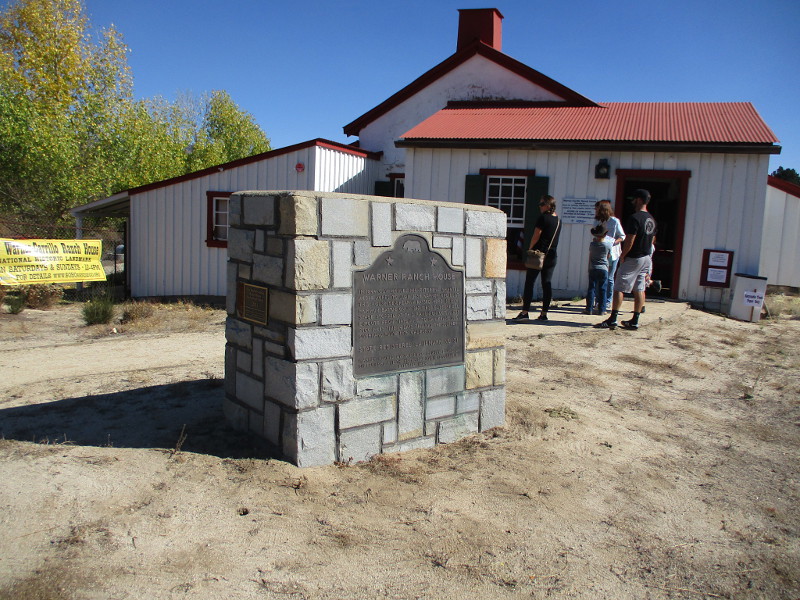
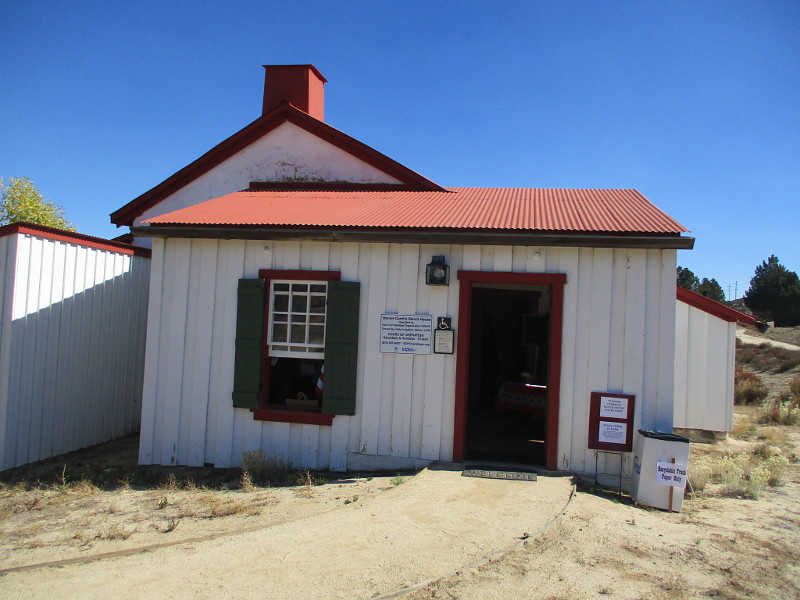
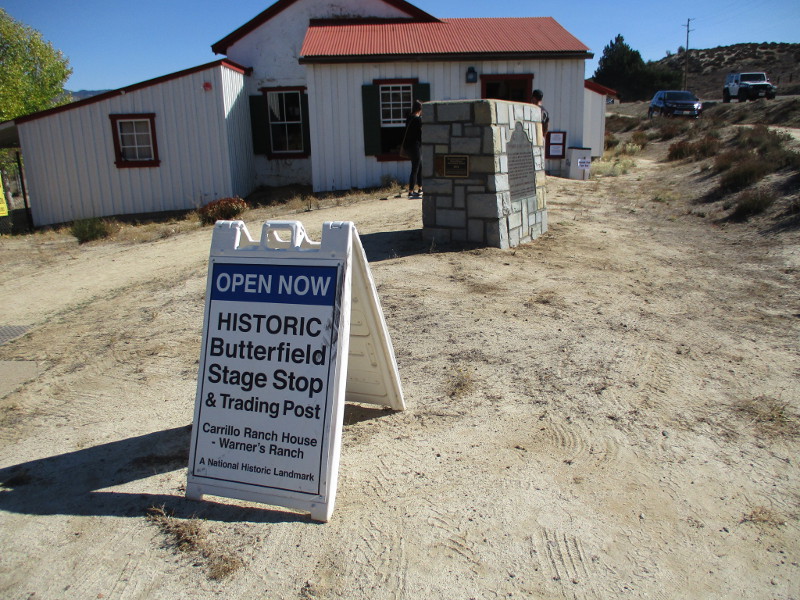
Approaching the restored Warner-Carrillo Ranch House. (Interesting note: that brown modern structure to the left of the old ranch house contains visitor restrooms. I learned from Christopher Pro of SOHO that the restroom building design was copied from the historic Stein Family Farm in National City!)
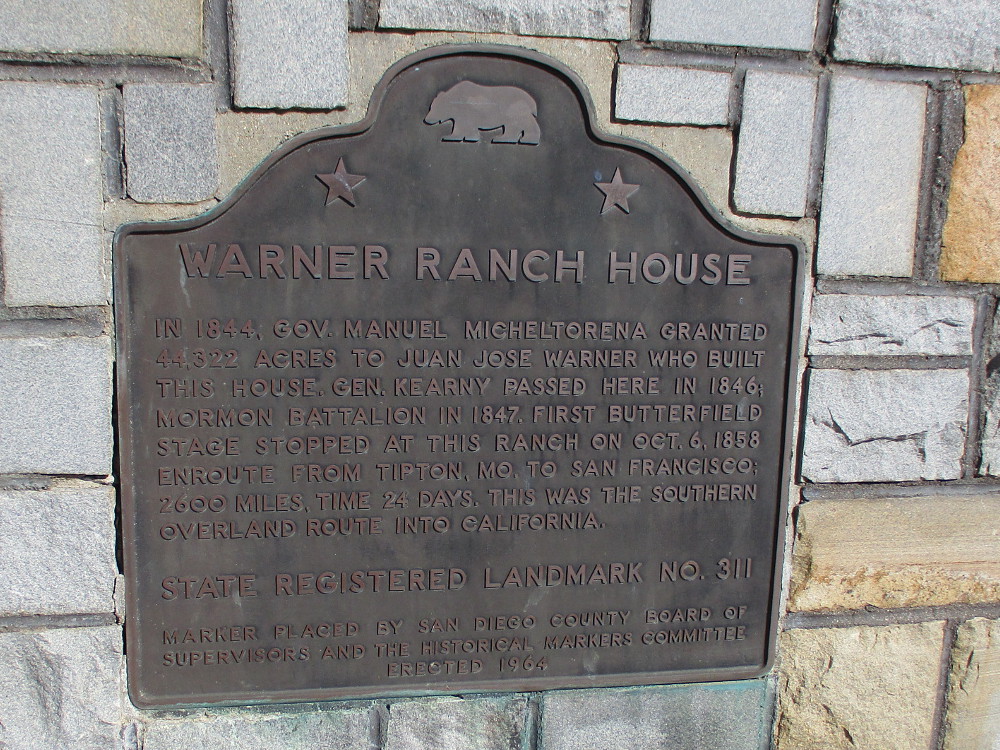
The historical plaque near the museum entrance reads:
WARNER RANCH HOUSE
IN 1844, GOV. MANUEL MICHELTORENA GRANTED 44,322 ACRES TO JUAN JOSE WARNER WHO BUILT THIS HOUSE. GEN. KEARNY PASSED HERE IN 1846; MORMON BATTALION IN 1847. FIRST BUTTERFIELD STAGE STOPPED AT THIS RANCH ON OCT. 6, 1858 ENROUTE FROM TIPTON, MO. TO SAN FRANCISCO; 2600 MILES, TIME 24 DAYS. THIS WAS THE SOUTHERN OVERLAND ROUTE INTO CALIFORNIA.
STATE REGISTERED LANDMARK NO. 311
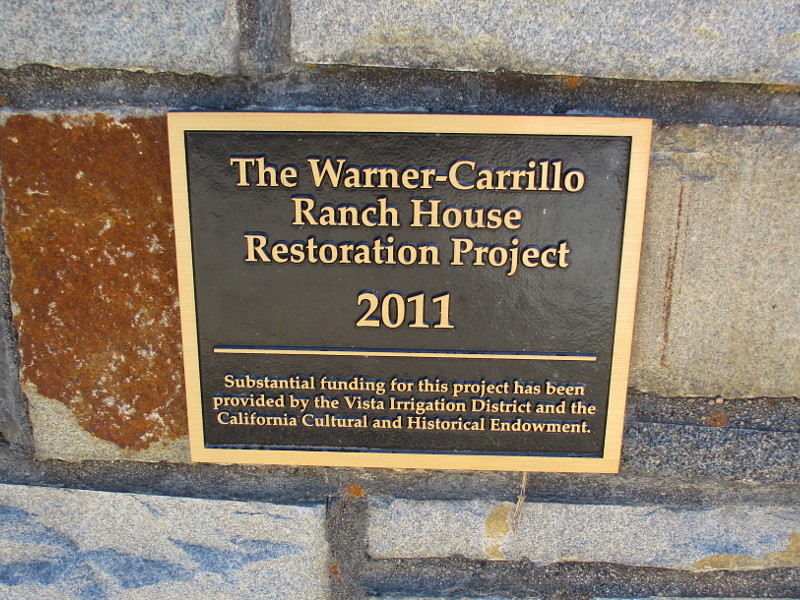
A major restoration of the Warner-Carrillo Ranch House was completed in 2011. The ranch stands on land owned by the Vista Irrigation District.
The Vista Irrigation District has a really good web page concerning the ranch house and its history here.
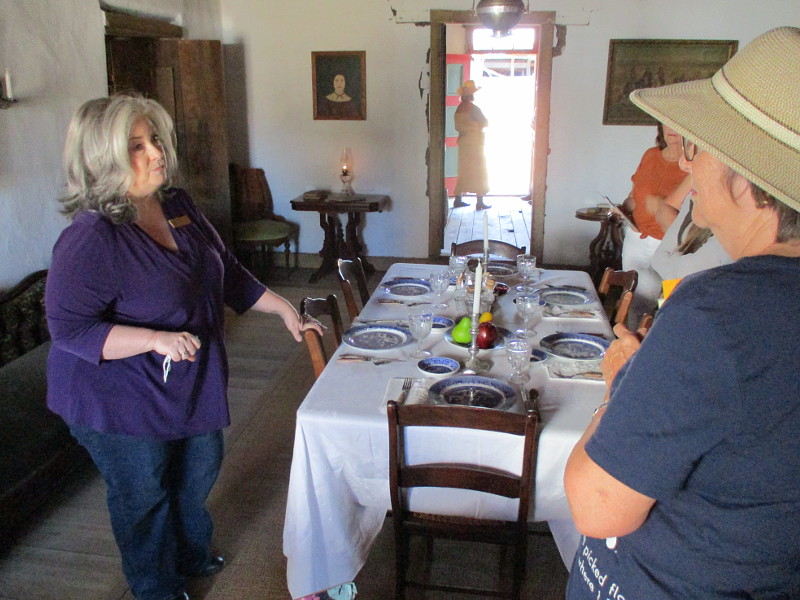
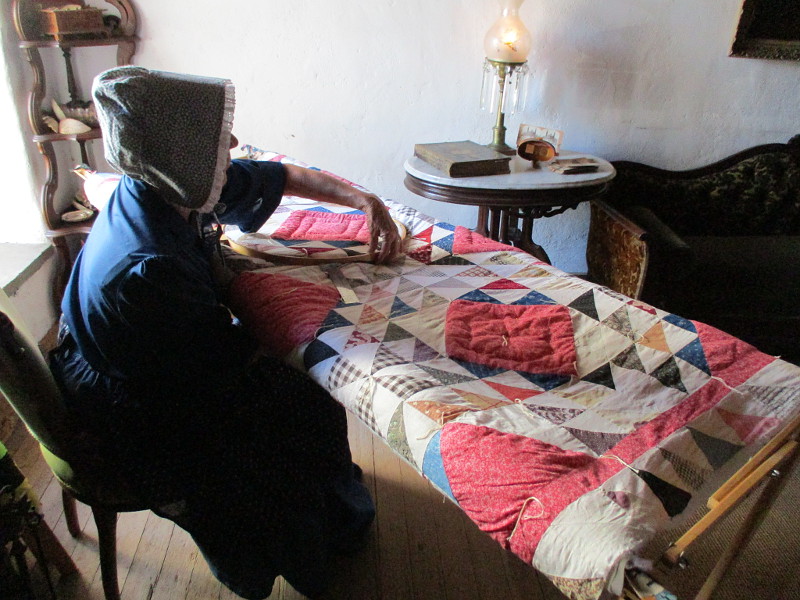
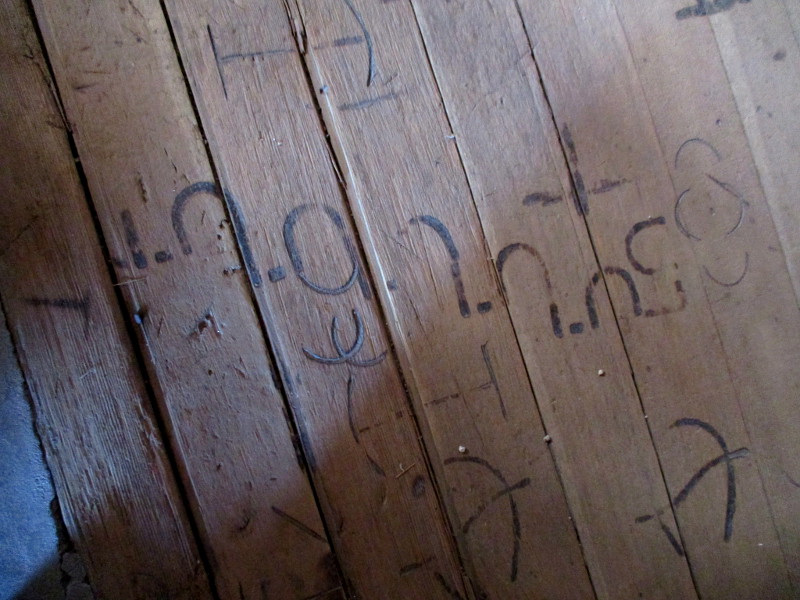
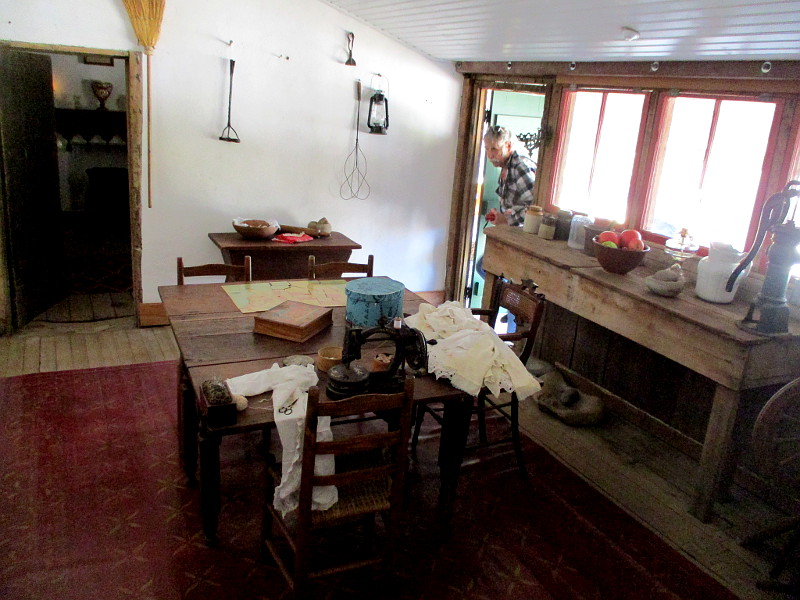
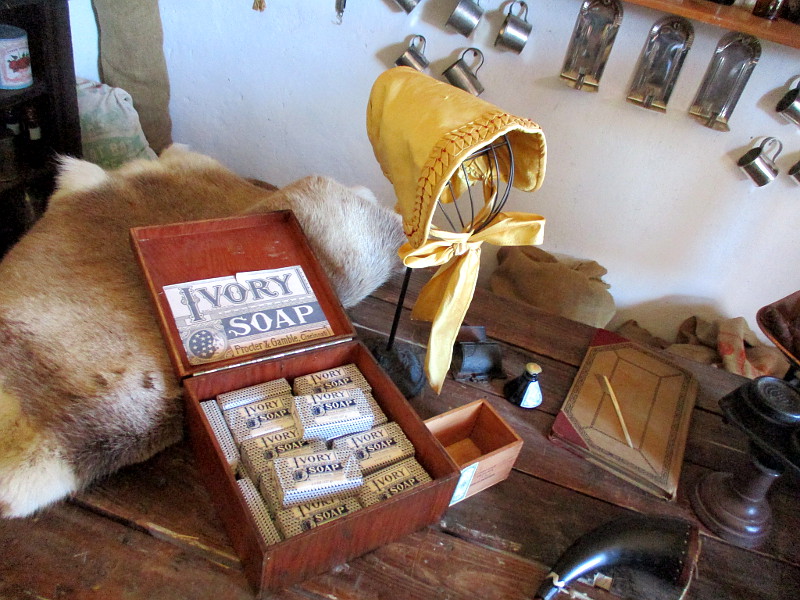
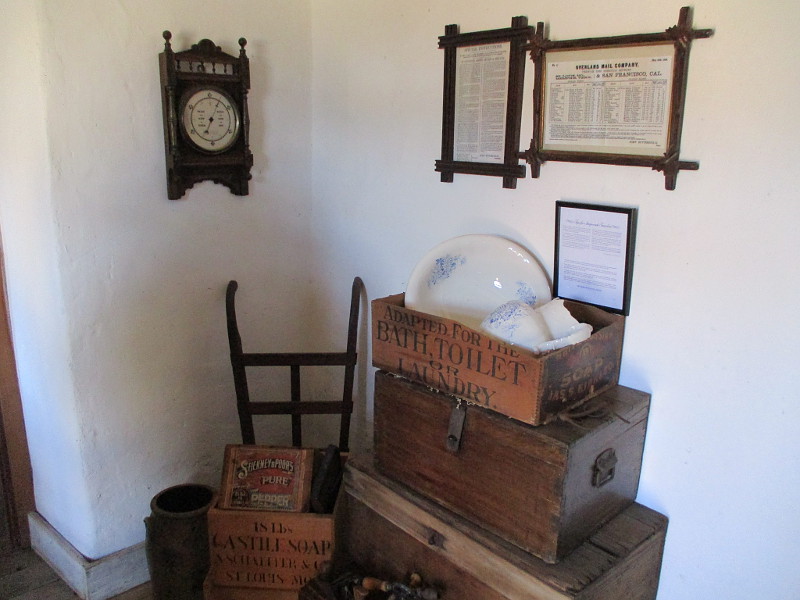
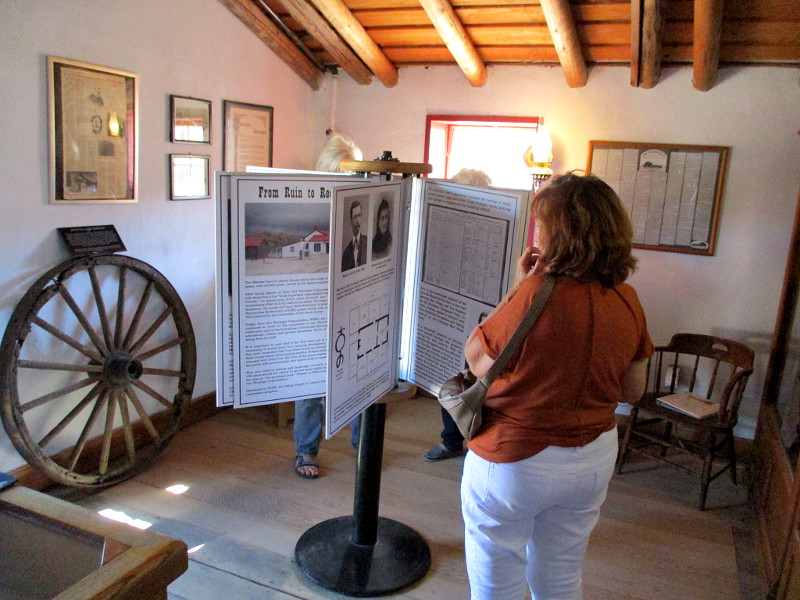
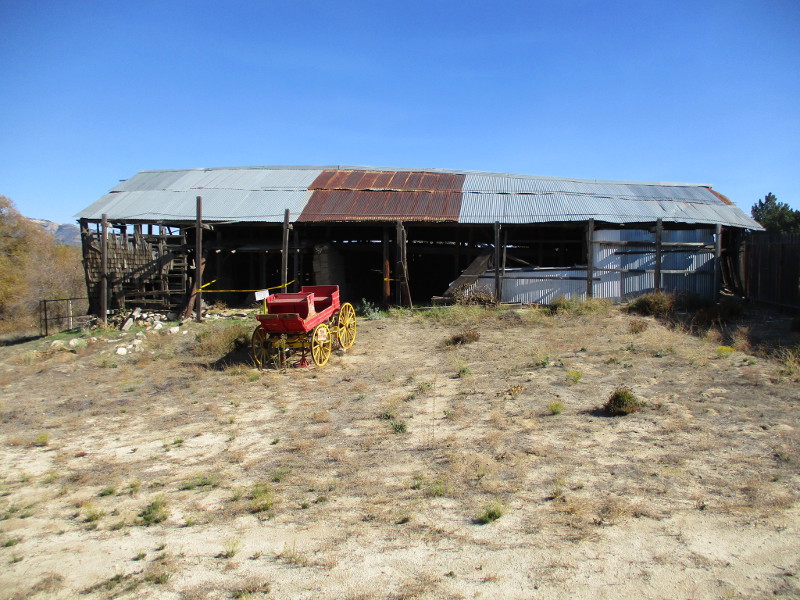
Inside the sala, or living room, with its dining table. Some of the elegant furniture was obtained from William Heath Davis, who helped to establish “New Town” (present day downtown) San Diego.A quilt being made in one corner of the sala.The sala in later years became a ranch bunkhouse, which explains why the wood floor is branded!A work room between the sala and veranda.A bedroom.A look inside the kitchen.How’d you like to take a bath here?!A look inside the children’s bedroom.The trading post offered goods to stagecoach travelers, who’d enter from a side door, which is located opposite the old barn.Soap, a bonnet, and other useful items.One small room contains information displays and archaeological artifacts from the ranch.A look at the old barn, which is presently in a state of arrested decay.On this special once-a-year stagecoach riding day, musicians were out on the veranda playing popular tunes from the Old West. The group is called Jugless Jug Band.Some visitors enjoying a short ride on the authentic Concord stage.
…
I live in downtown San Diego and love to walk around with my camera! You can follow Cool San Diego Sights via Facebook or Twitter!
You can easily explore Cool San Diego Sights by using the search box on my blog’s sidebar. Or click a tag! There are thousands upon thousands of photos for you to enjoy!
Today I had the opportunity to experience something amazing in Warner Springs.
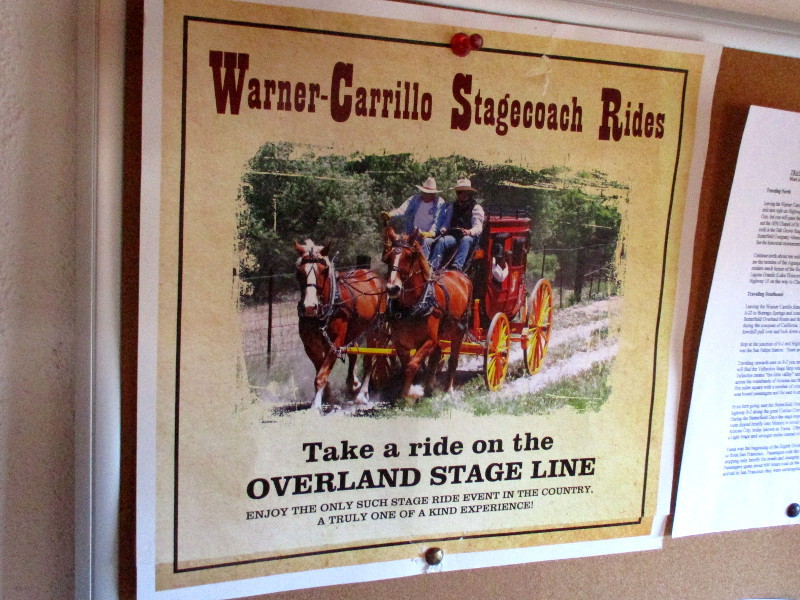
Once a year, at the Warner-Carrillo Ranch House, people can ride an authentic stagecoach a short distance down an actual, historic stage line route!
Such a ride can be experienced nowhere else in the entire country!
I purchased a ticket for a stagecoach ride a couple weeks ago before it sold out, then drove up to the Warner-Carrillo Ranch House in Warner Springs this morning to enjoy the short but memorable adventure!
Warner’s Ranch back in the 19th century was a swing stop for the Butterfield Overland Mail stage line. According to the event website, “The Butterfield Overland stage transported thousands of passengers across the United States years prior to the Civil War as California’s first regular overland stage connection with St. Louis.“
Travelers, packed elbow to elbow in solidly-built, relatively “elegant” Concord Coaches, would stop at the ranch house to rest and stretch their legs and sore bodies for a few minutes while new horses were brought up from the nearby barn. Passengers could buy useful items in the ranch’s one-room trading post before resuming their dusty, bumpy journey.
This afternoon I and other excited passengers got to actually experience a few minutes of that dusty, very bumpy overland journey!
If you live in Southern California, or plan to visit, I highly recommend going on this once-every-year stagecoach ride. You’ll also enjoy an in-depth tour of the Warner-Carrillo Ranch House, which is operated by the Save Our Heritage Organisation. SOHO’s mission in San Diego County is the “preservation of architecturally and historically significant structures, sites, and cultural landscapes.”
Okay! You want to see what the ride is like? Here we go!
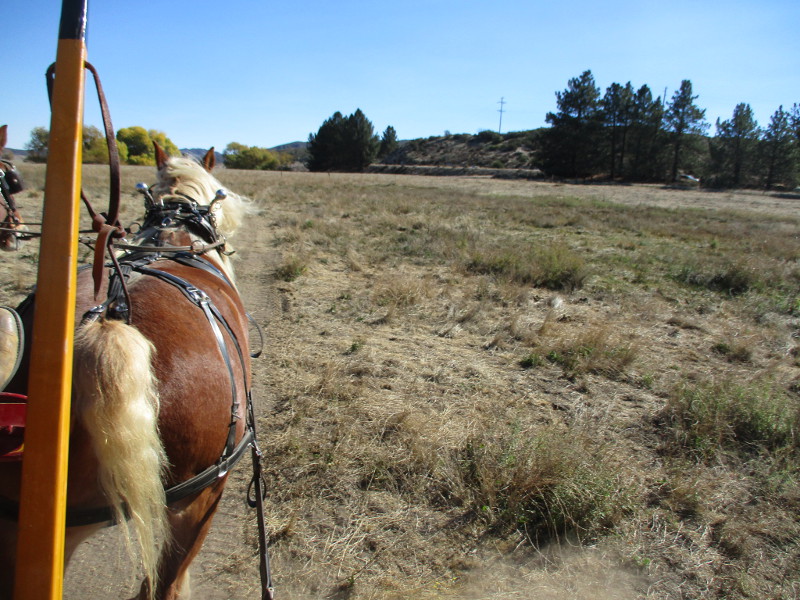
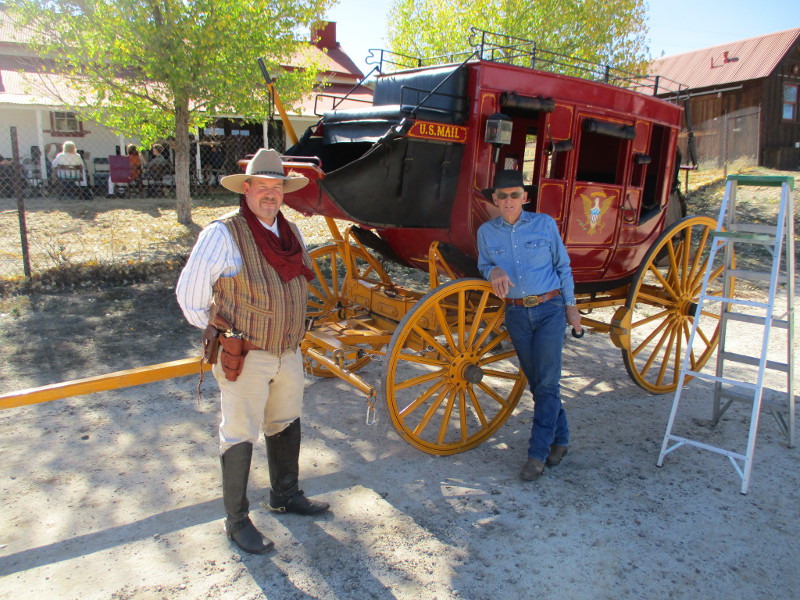
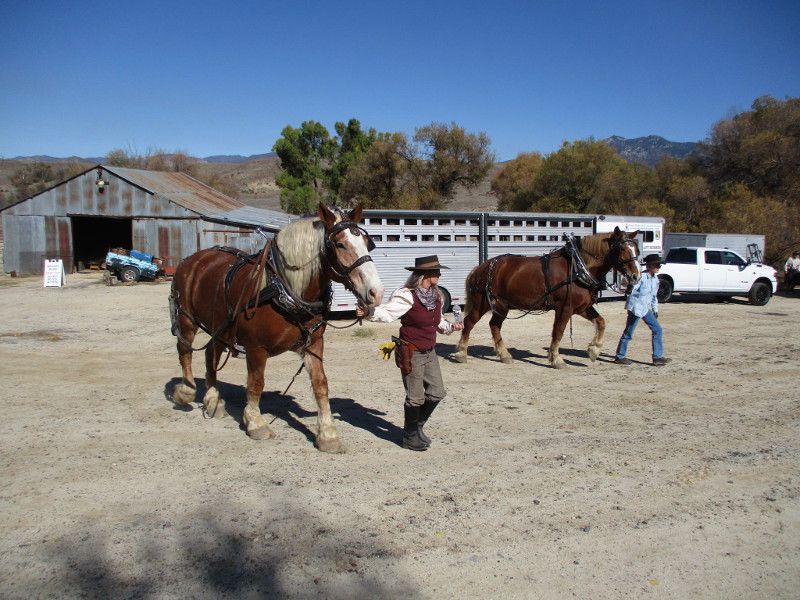
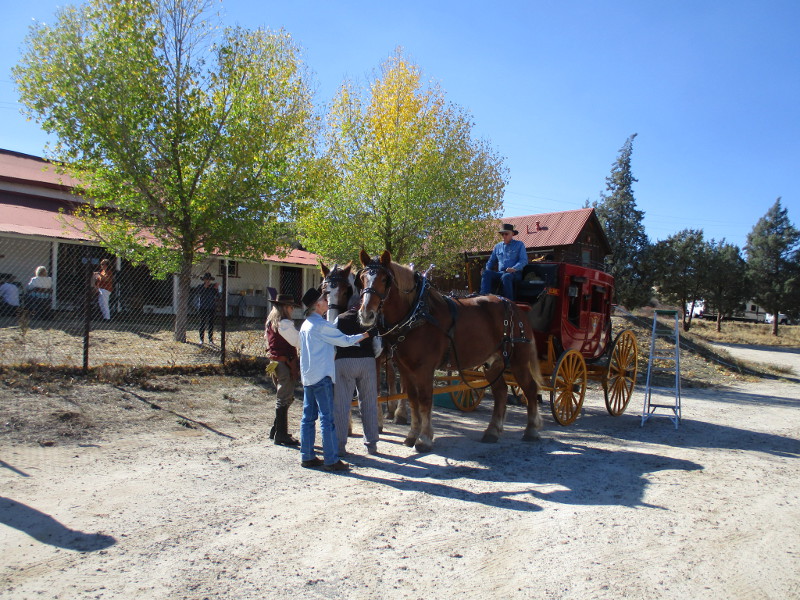
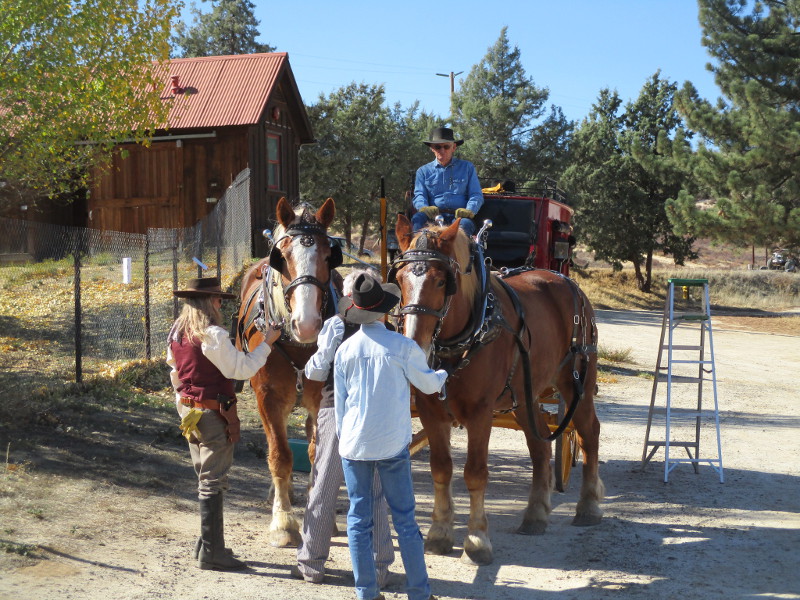
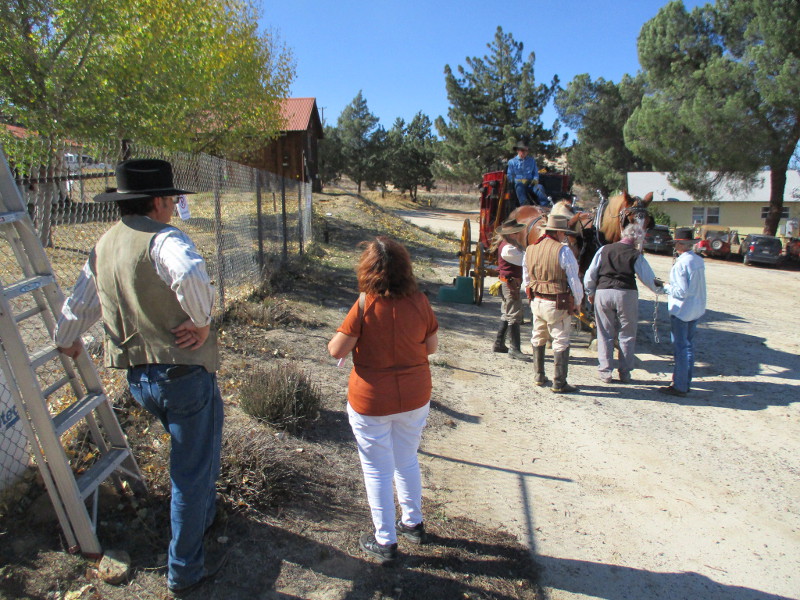
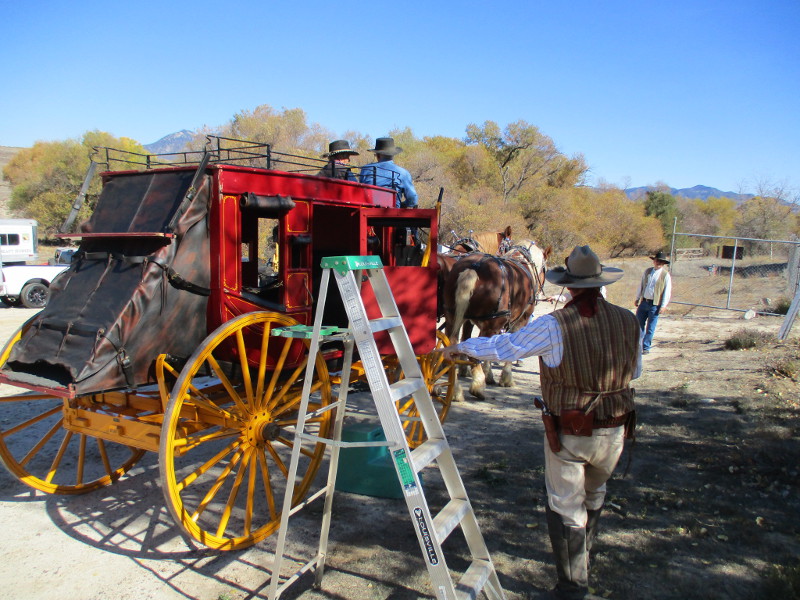
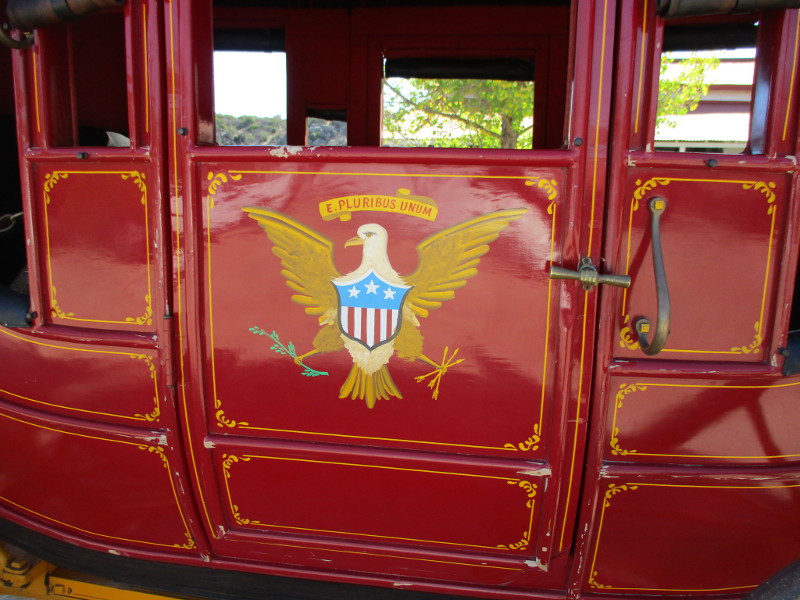
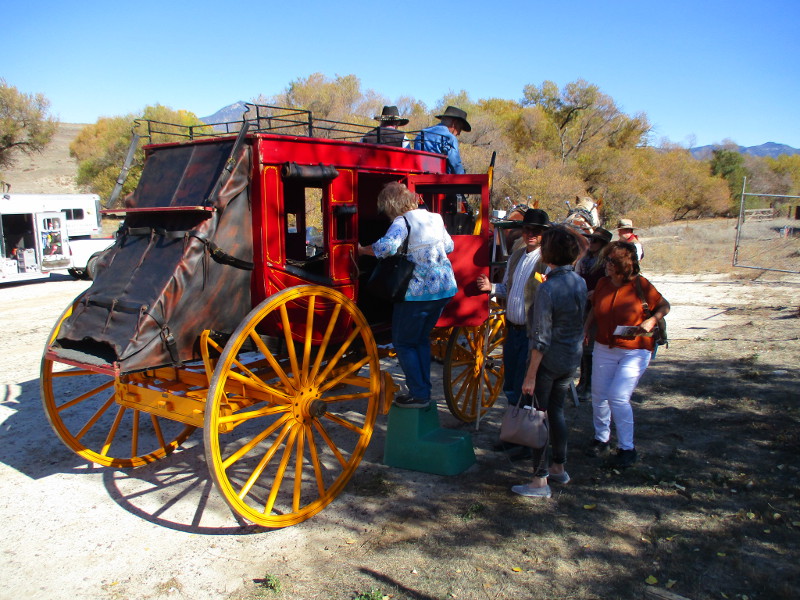
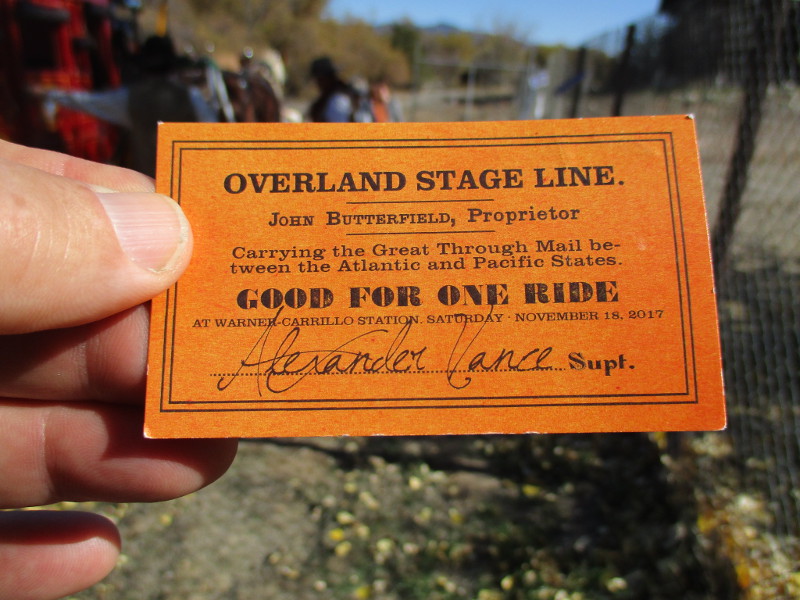
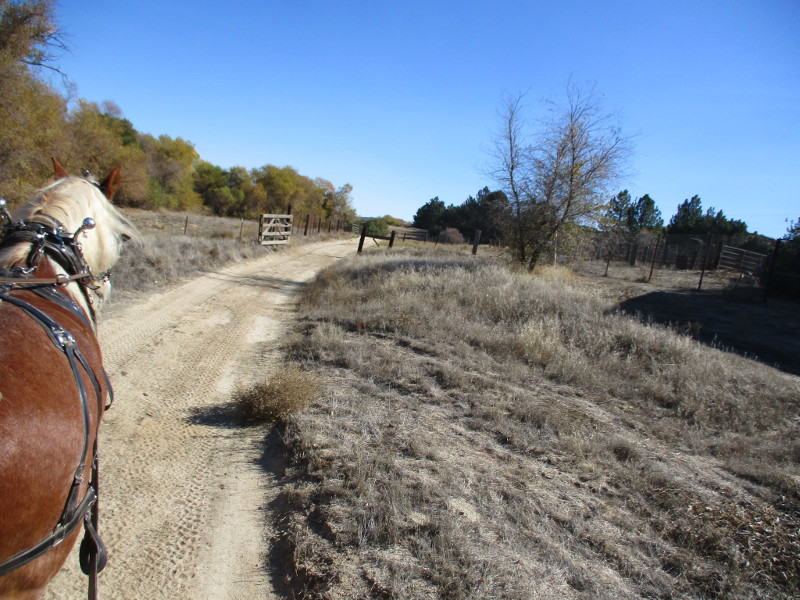
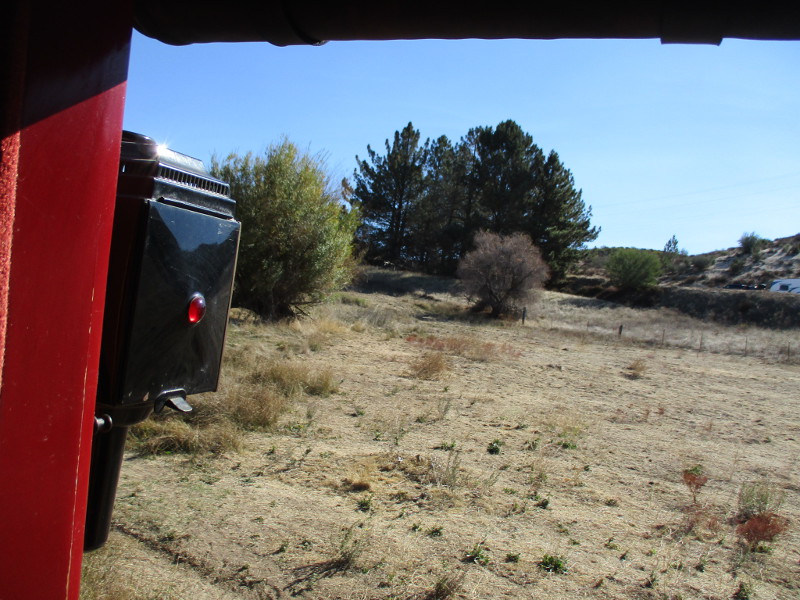
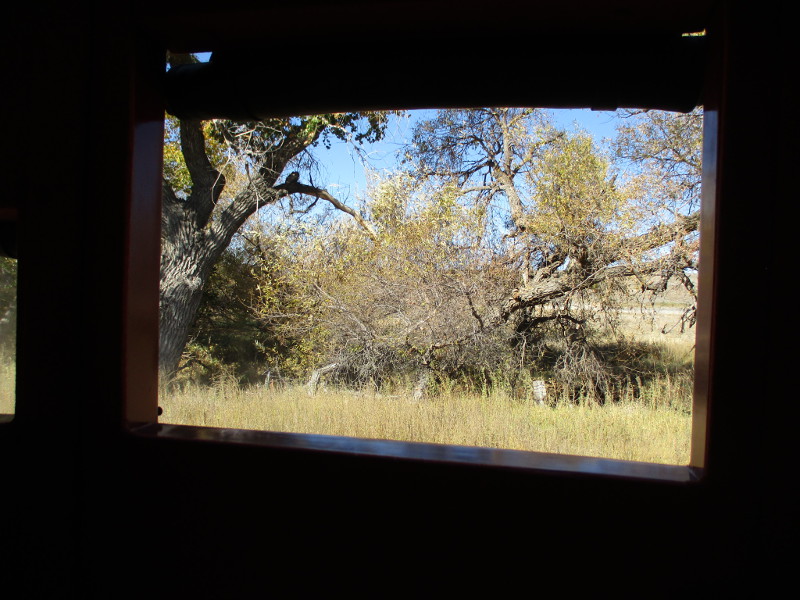
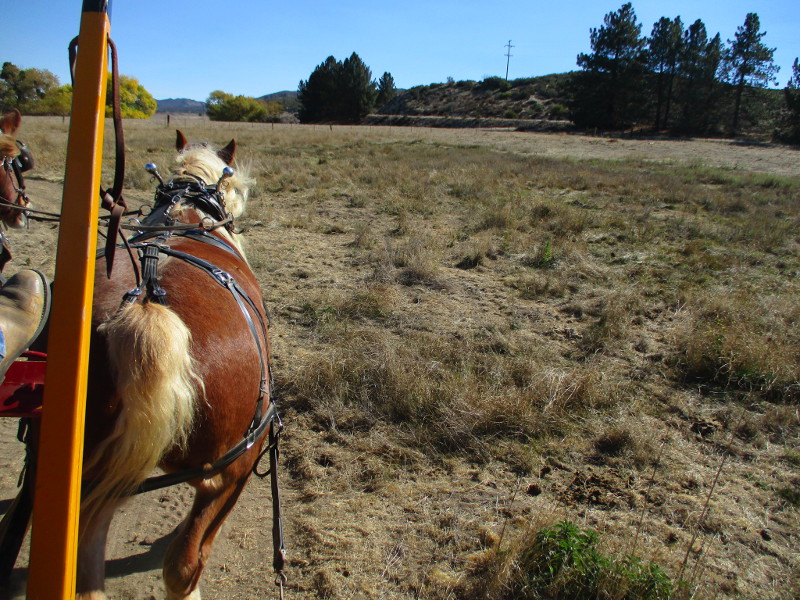
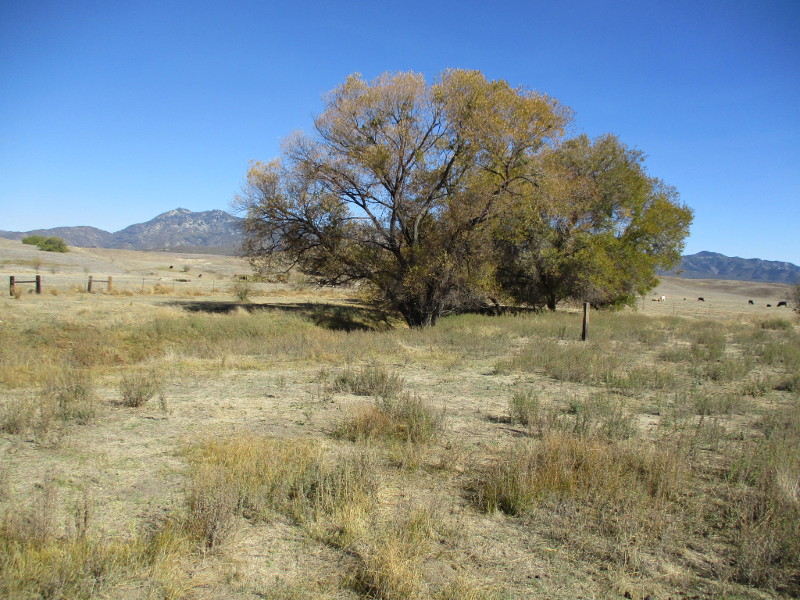
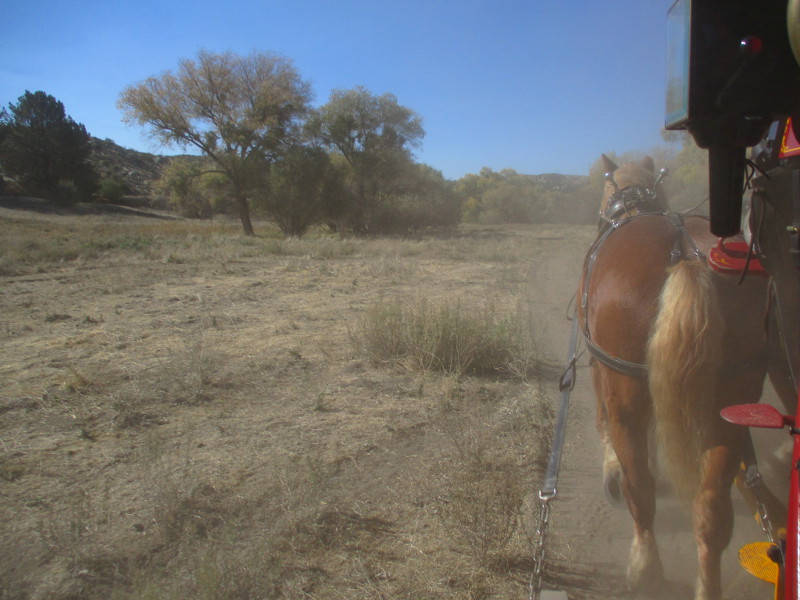
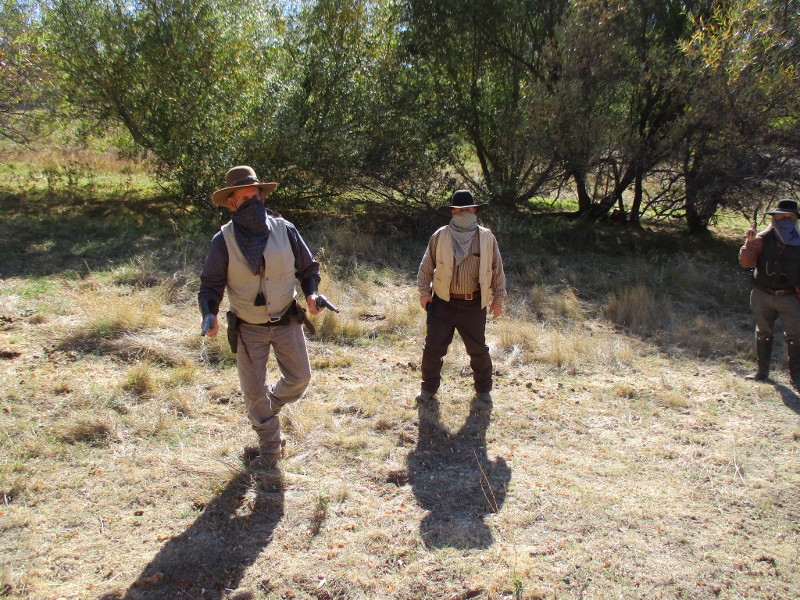
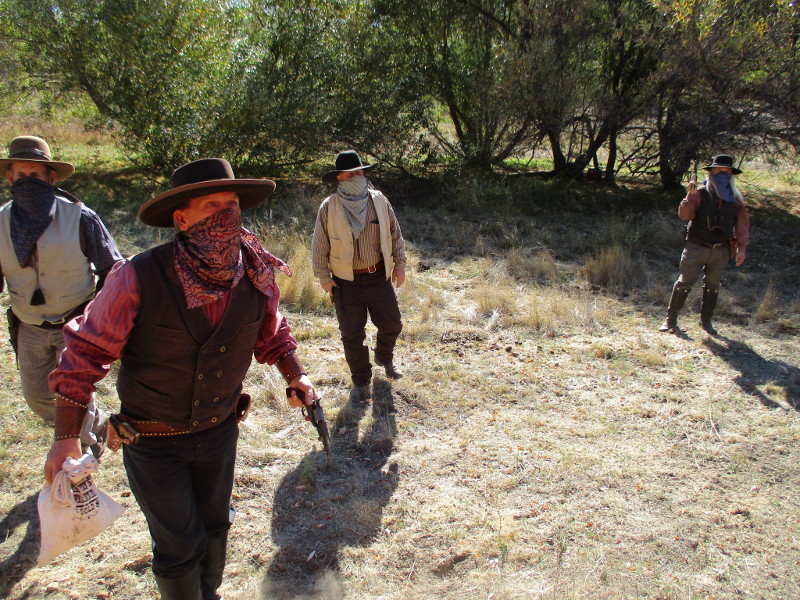
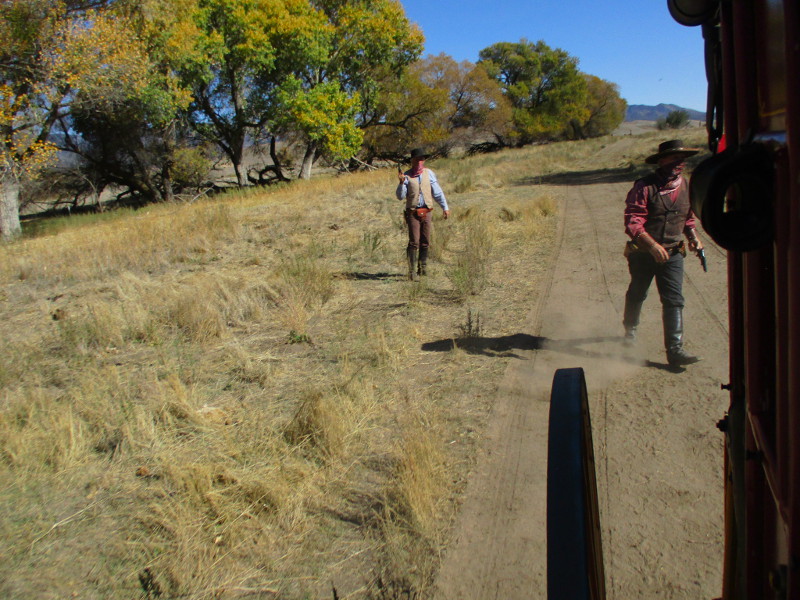
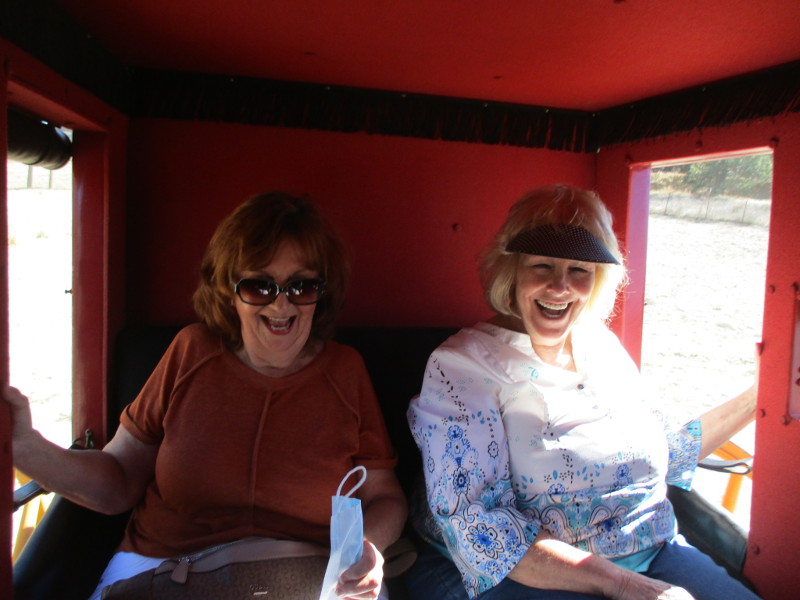
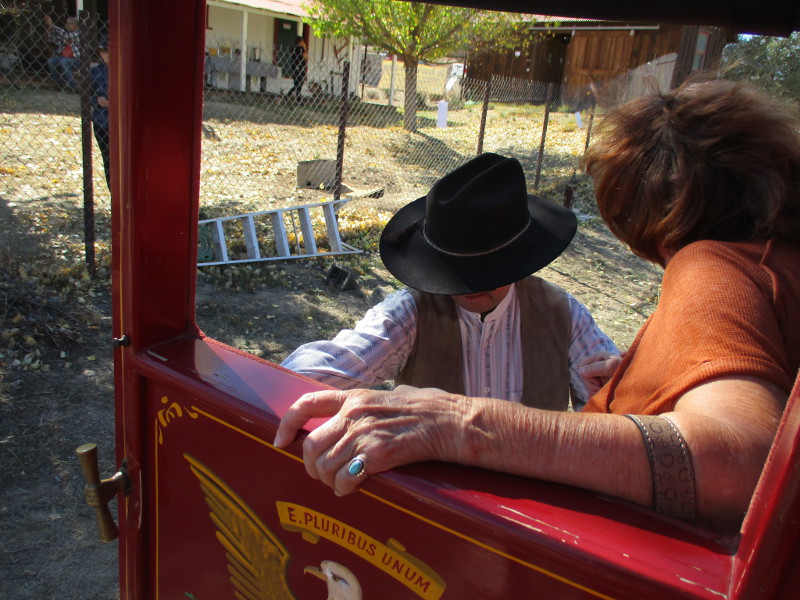
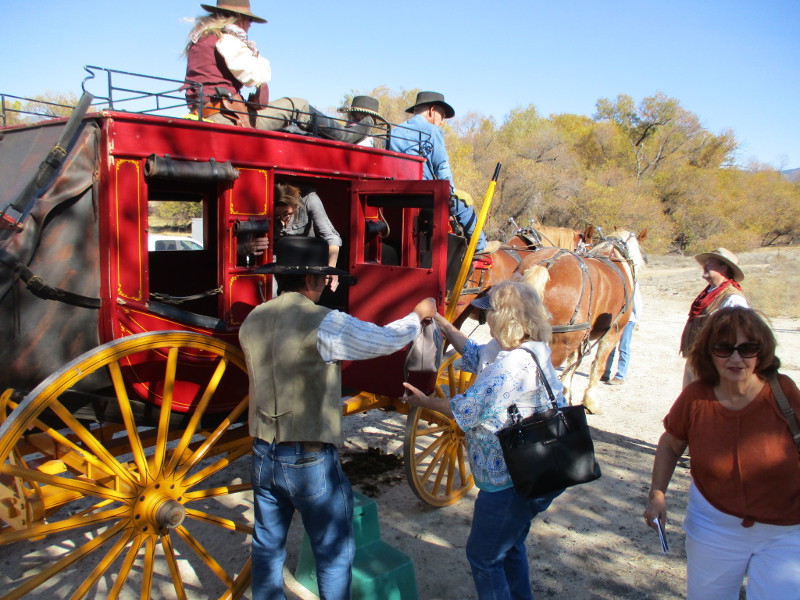
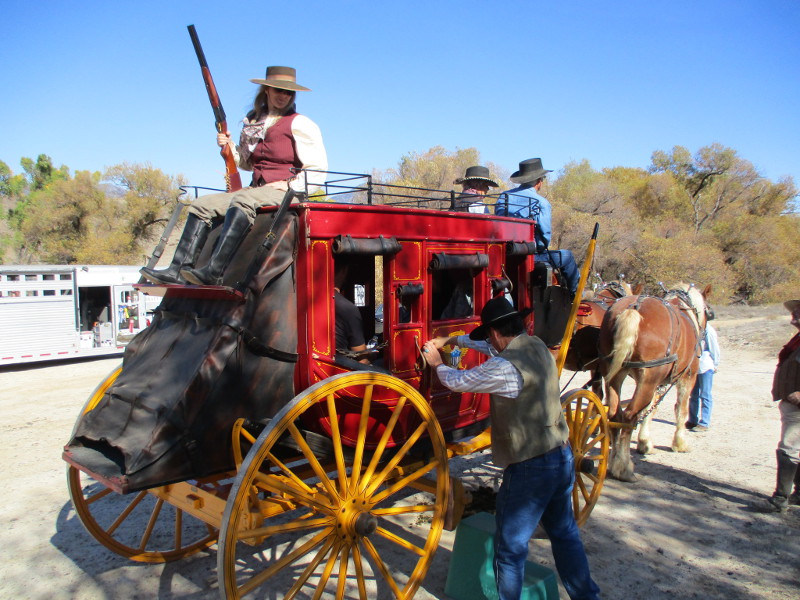
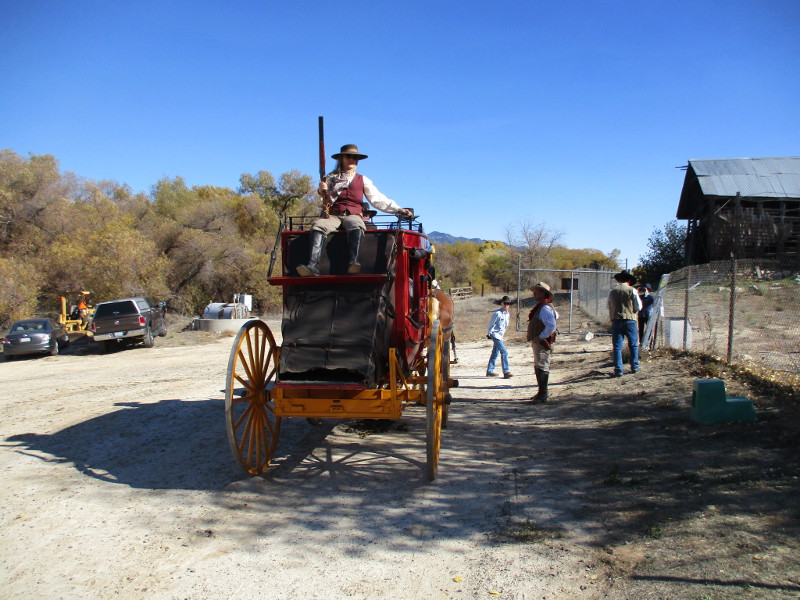
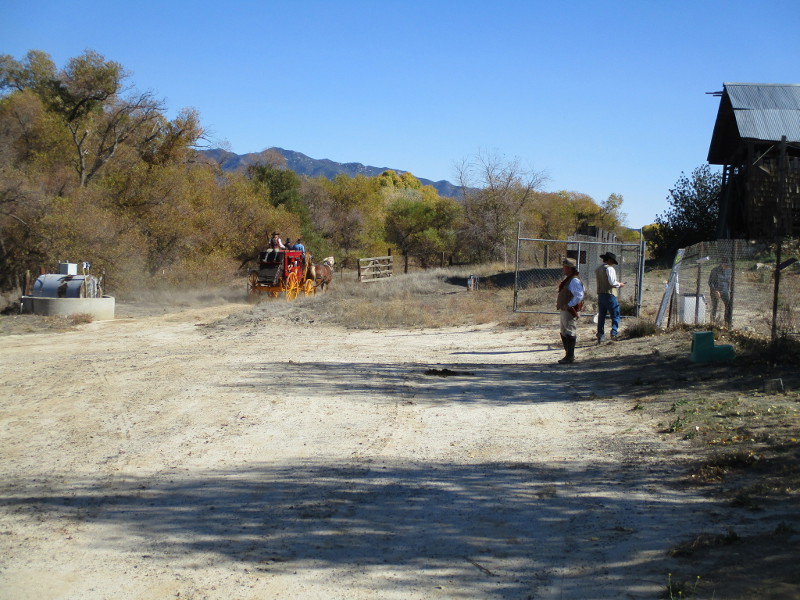
Approaching the entrance of the historic Carrillo Ranch House at Warner’s Ranch, a National Historic Landmark.I arrived early and will be on the first ride of the day. But no horses yet.Here they come!Two beautiful horses will pull the genuine Concord Coach, which is owned by the Save Our Heritage Organisation. I believe I heard the horses are Clydesdales. (UPDATE! I see on the SOHO website these were Belgian Draft horses.)Another passenger waits as the horses are hooked up.I’m pretty sure they didn’t have aluminum ladders like this a century and a half ago!American eagle on side of the historic red Concord Coach, with E. Pluribus Unum.Four passengers will sit inside the coach for this short journey.Here’s my ticket!We managed to squeeze into the small coach and here we go!Looking at the countryside beyond an outside stagecoach lantern.Looking out the other window at oak trees.Were going down the actual historic stage route. It’s dusty and bumpy! A few sudden lurches took me by surprise–like some sort of amusement park ride!Mountains and cattle in the distance.I did say dusty!What’s this? Armed robbers!The stagecoach driver threw down the Army payroll. The passengers got off easy.We are allowed to continue back to our stage stop.Yes, the experience is fun!It’s over far too soon.Another group of passengers is ready to go!There they go!
…
I live in downtown San Diego and love to walk around with my camera! You can follow Cool San Diego Sights via Facebook or Twitter!
You can easily explore Cool San Diego Sights by using the search box on my blog’s sidebar. Or click a tag! There are thousands upon thousands of photos for you to enjoy!
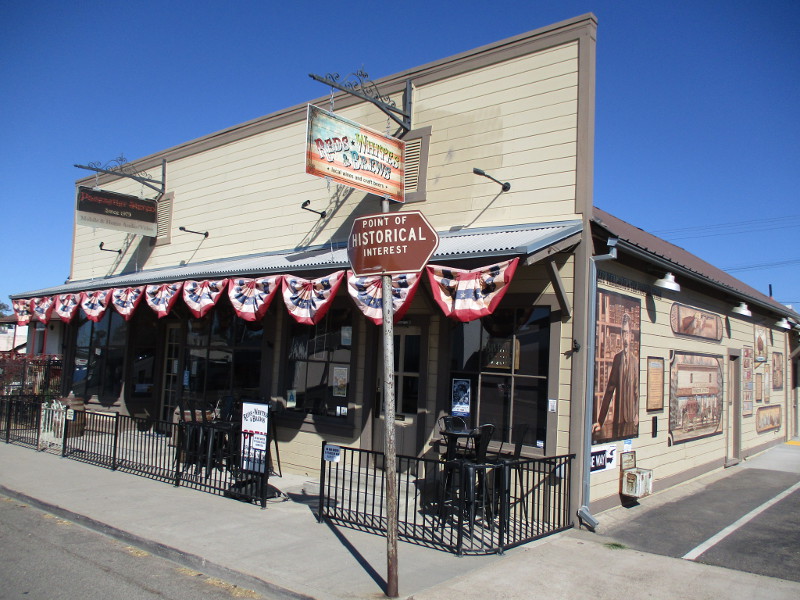
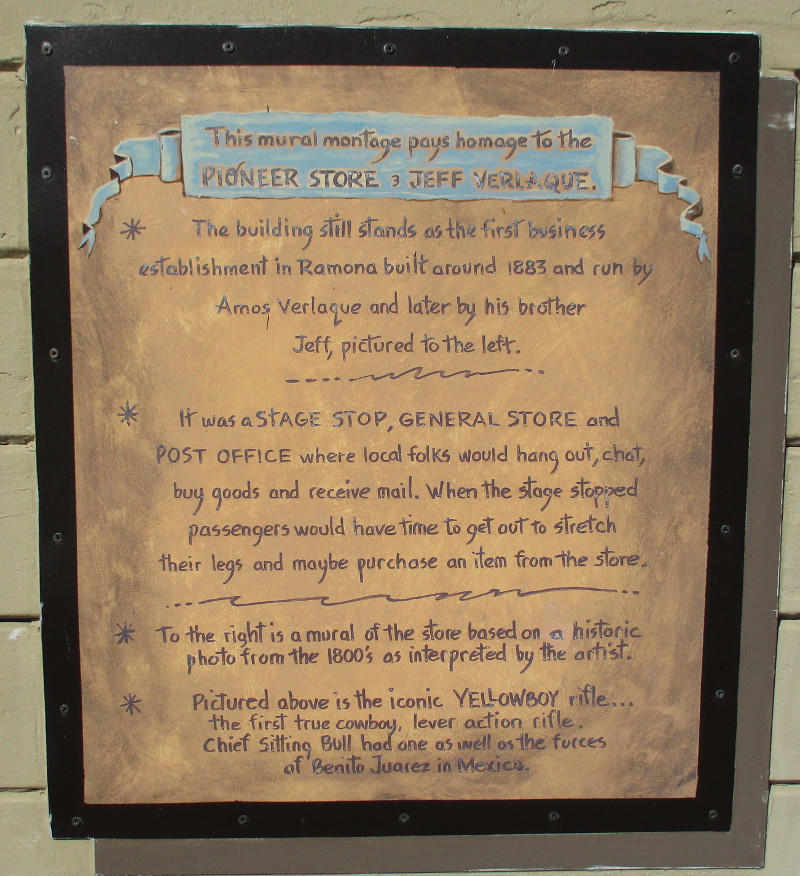
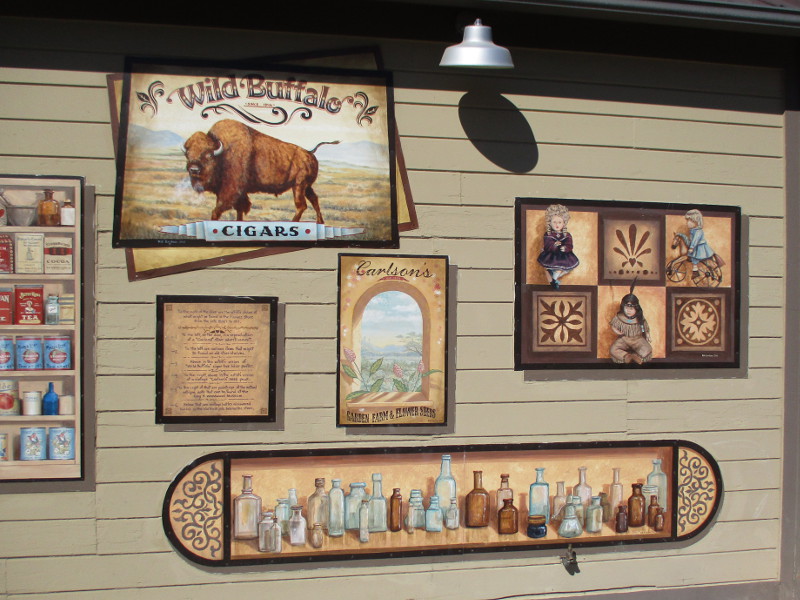
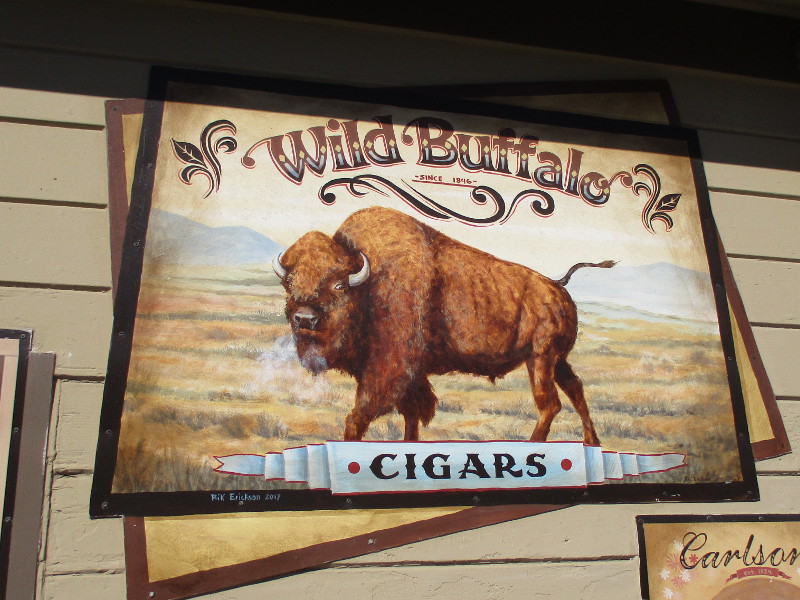
The Verlaque Pioneer Store in Ramona might be long gone, but the building, which is the oldest in Ramona, remains. A mural on the building’s side depicts goods that might have been stocked in the Pioneer Store from the late 1800’s to 1911.
The mural, painted by San Diego artist Rik Erickson in 2017, is part of the Ramona H.E.A.R.T. Murals Project. It’s just one of many colorful murals that can be found up and down Main Street!
The Verlaque Store was built around 1883. This community gathering place in Ramona’s early history also served as a stage stop, general store and post office. It was frequented by gold miners traveling from San Diego to Julian during the short-lived gold rush. Today it’s a point of historical interest.
Eleven panels painted by the artist include an image of Jeff Verlaque, who succeeded his brother Amos as the Pioneer Store operator. Another panel depicts the store as it might have looked based on a photograph from the 1800’s. You can see the similarity to the building today, which at 629 Main Street is occupied by the wine bar Reds, Whites & Brews.
…
This blog now features thousands of photos around San Diego! Are you curious? There’s lots of cool stuff to check out!
Here’s the Cool San Diego Sights main page, where you can read the most current blog posts. If you’re using a phone or small mobile device, click those three parallel lines up at the top–that opens up my website’s sidebar, where you’ll see the most popular posts, a search box, and more!
To enjoy future posts, you can also “like” Cool San Diego Sights on Facebook or follow me on Twitter.
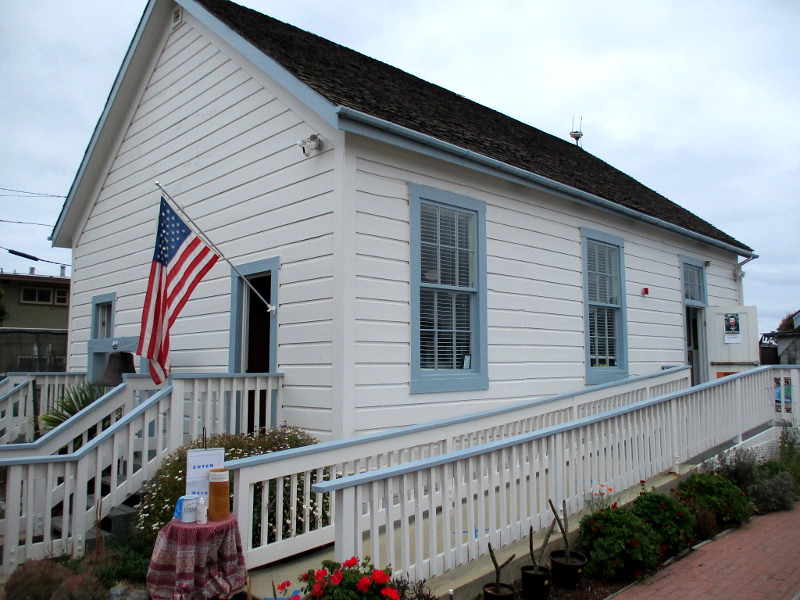
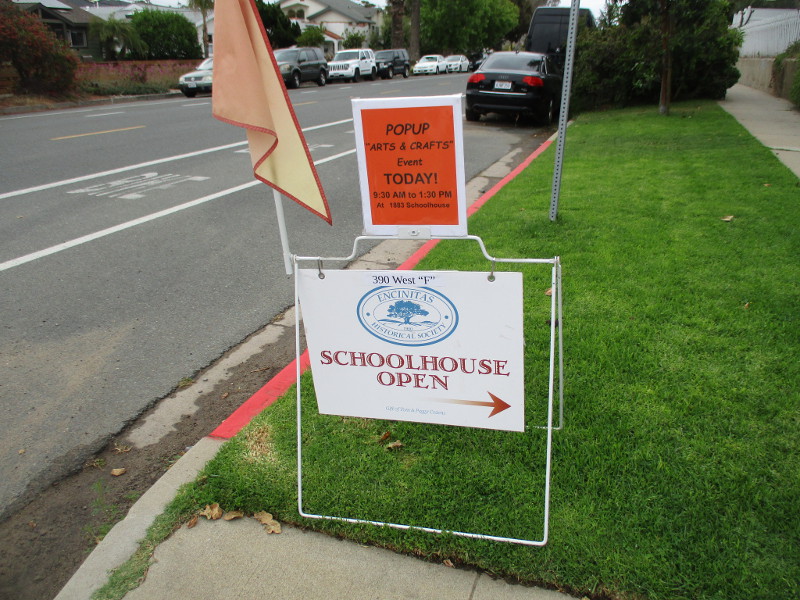
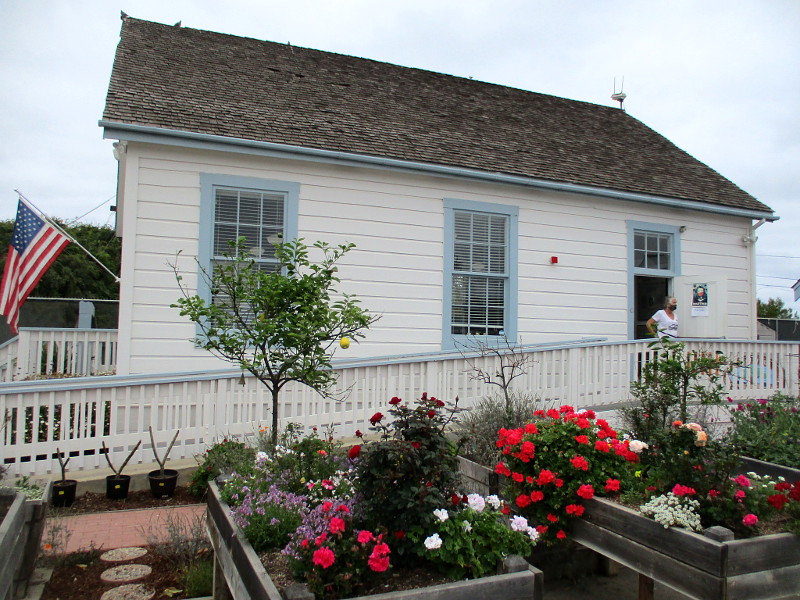
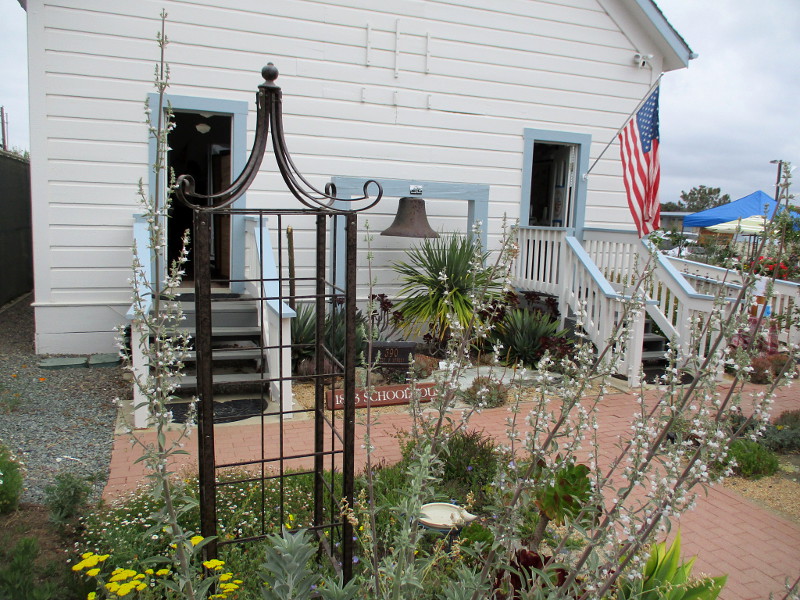
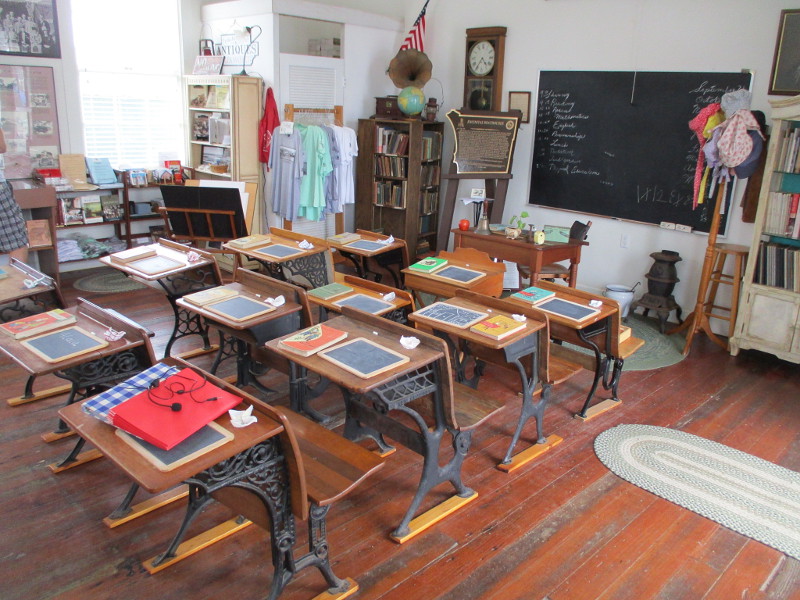
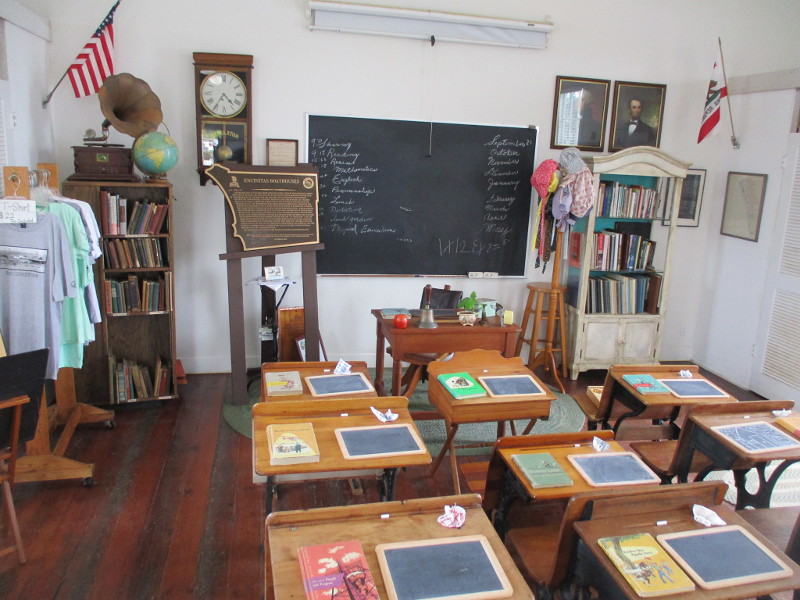
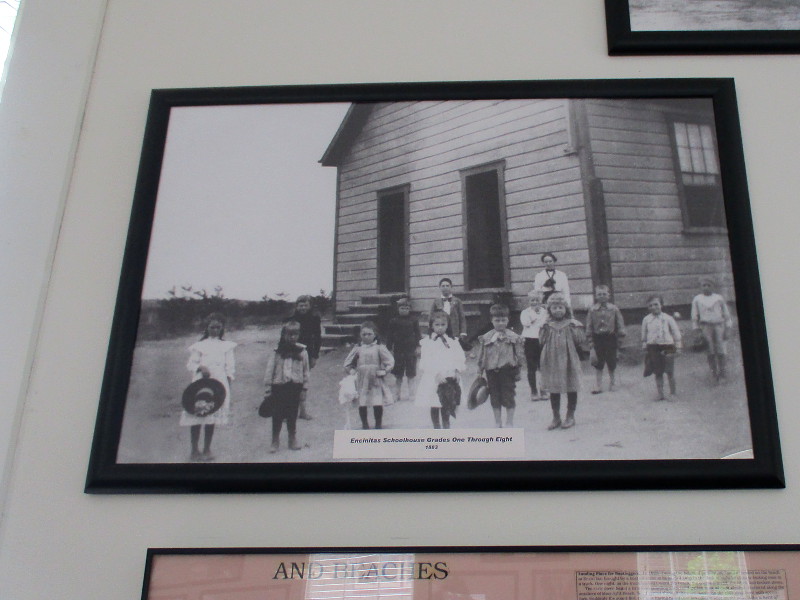
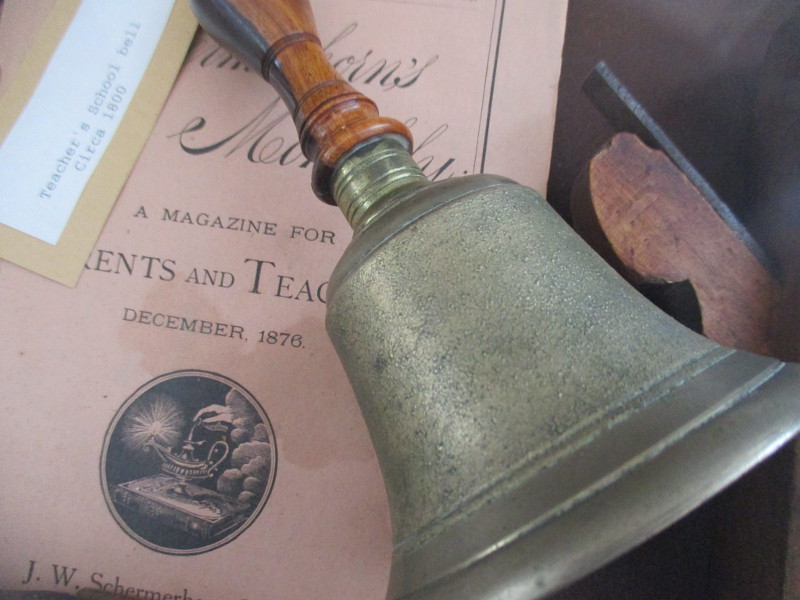
A one-room schoolhouse stands on a hilltop in San Diego’s North County, a very short distance from the beautiful Pacific Ocean. The old schoolhouse is the home of the Encinitas Historical Society, and I paid a visit last Saturday.
The historic schoolhouse, built in 1883, is the oldest building in Encinitas.
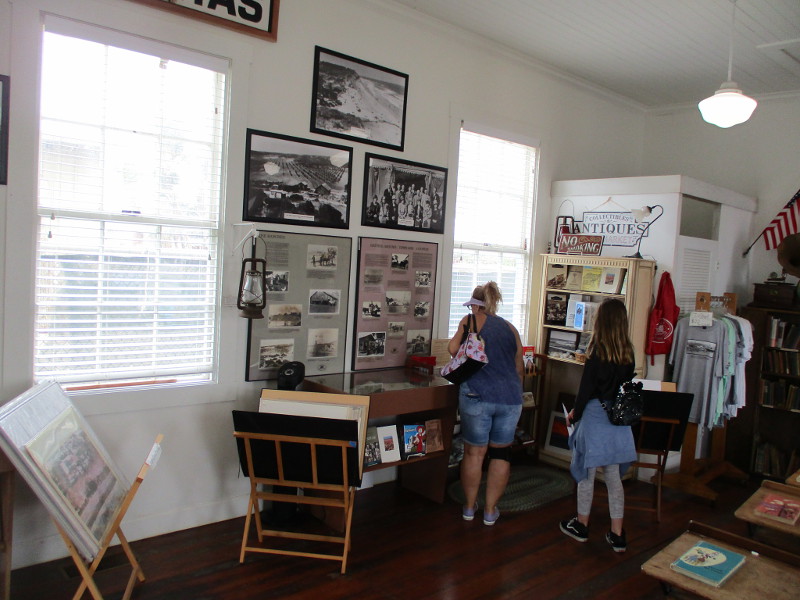
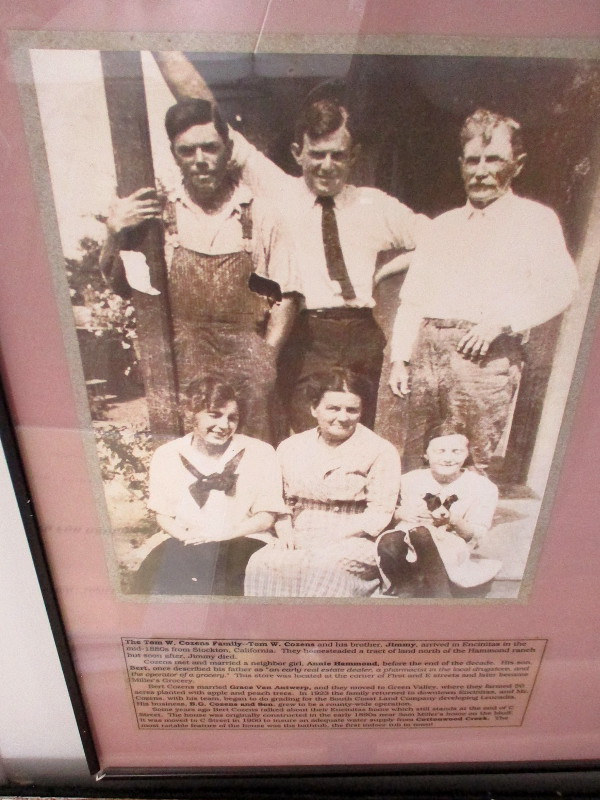
While its outward appearance is modest, step through a door and you’ll find the schoolhouse is roomy and welcoming. The wood floors are original. The bright walls are alive with photographs depicting the history of both the schoolhouse and early Encinitas–the residents, town buildings and few landmarks.
In 1883, with the arrival of a family from England, the population of Encinitas swelled to a whopping twenty two. The newly arrived father (a cabinetmaker) and his seventeen-year-old son built the schoolhouse primarily from redwood.
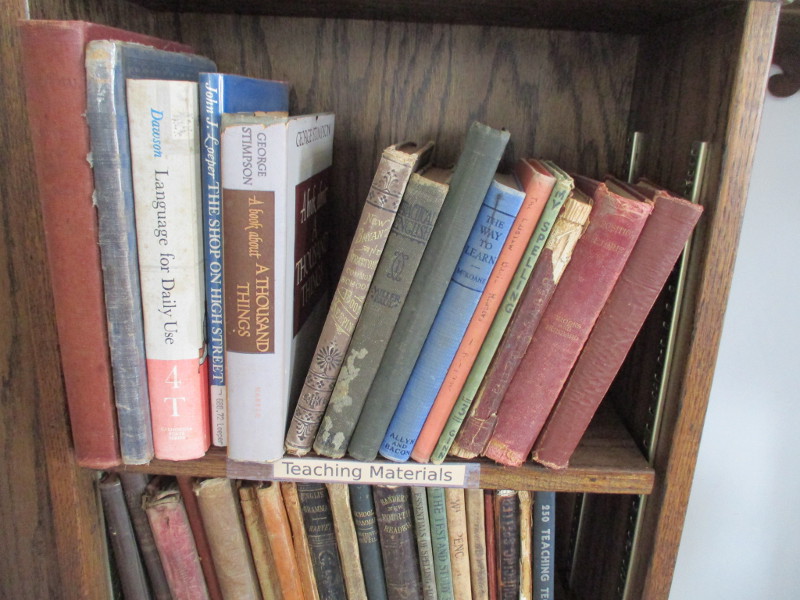
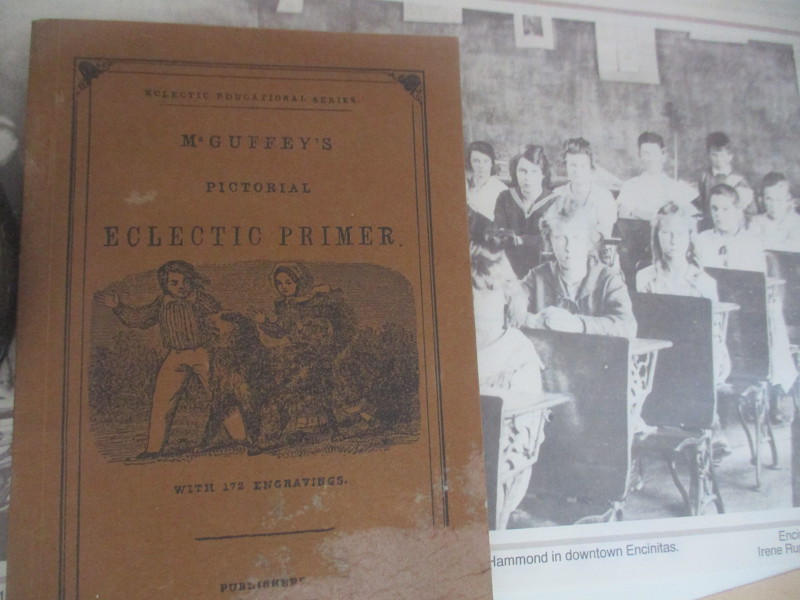
Today, the museum-like schoolhouse contains student desks from the period, but I learned the very first desks, due to lack of funds, were actually irregular things made of cut tree limbs. Slate boards were used for writing and arithmetic. Children who attended the school in those early days of Encinitas came from farms. Some walked as far as two miles.
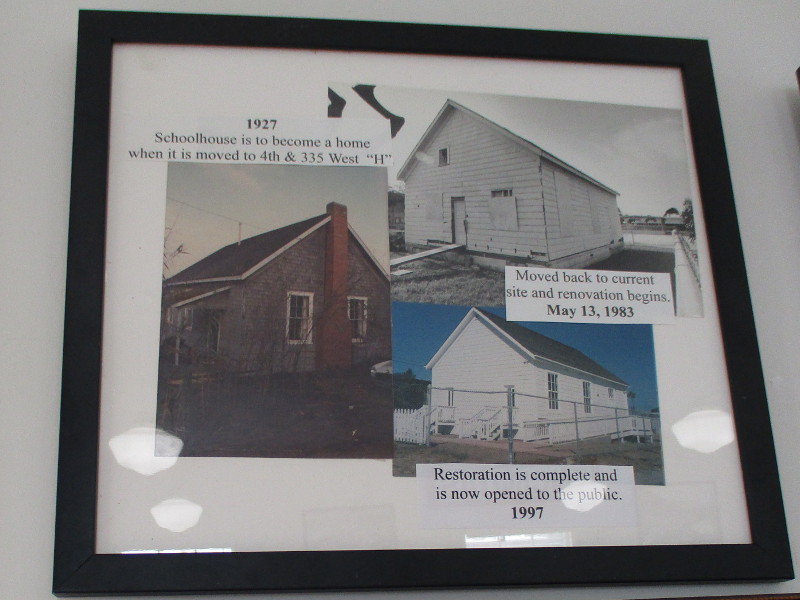
The history of the schoolhouse is a bit complicated. Over the years changes and additions were made to the structure . . . it was moved in 1928 and became a private residence for half a century . . . it was saved in 1983 by the Encinitas Historical Society and moved back to its original location . . . and finally, it was restored and in 1995 opened to the public.
Visitors who peruse the many photographs and descriptions decorating the schoolhouse walls will feel they’ve travelled back in time. And perhaps to another world.
After looking at many of the displays, I joined a small group that had gathered for a once-every-two-month historical walking tour of Encinitas. I will be blogging about that great tour shortly!
The following photographs are a little of what I saw outside and inside the schoolhouse. To learn much more about this special place, and to perhaps plan your own visit, please check out the Encinitas Historical Society website by clicking here!
I also learned they’d appreciate any donations!
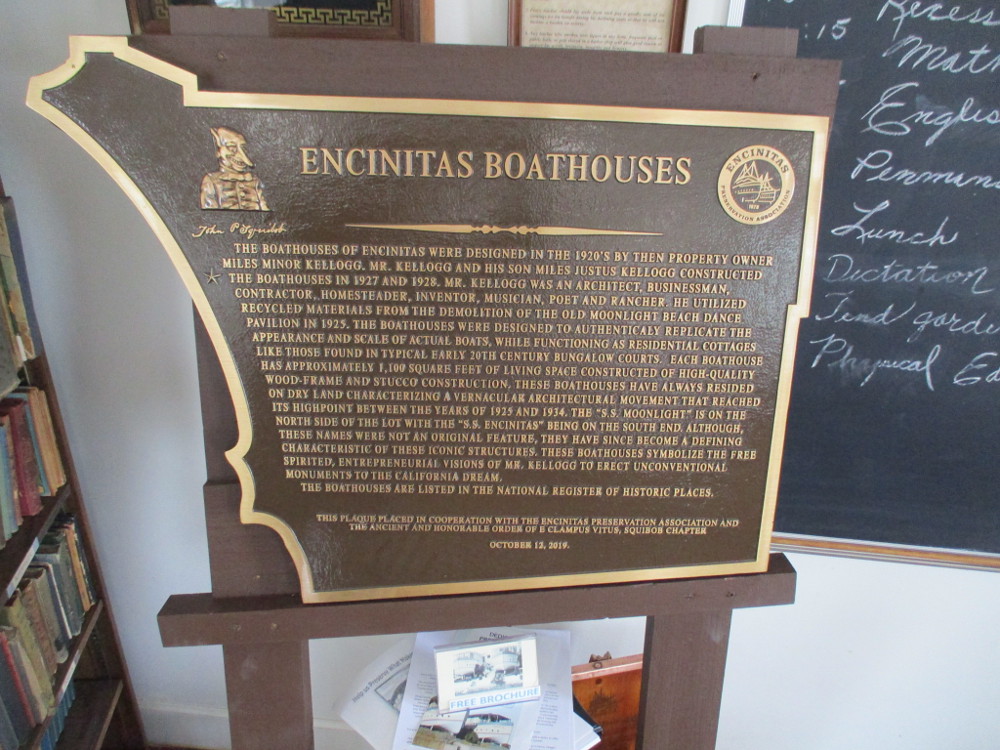
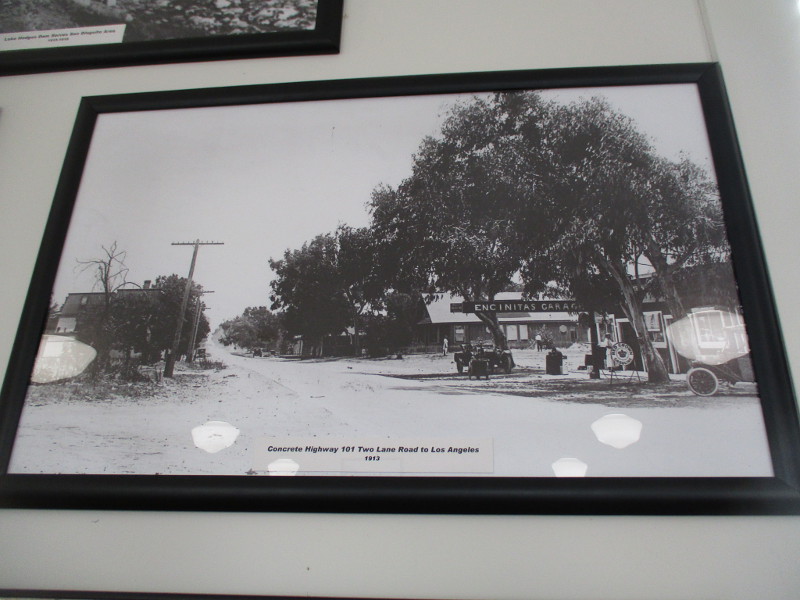
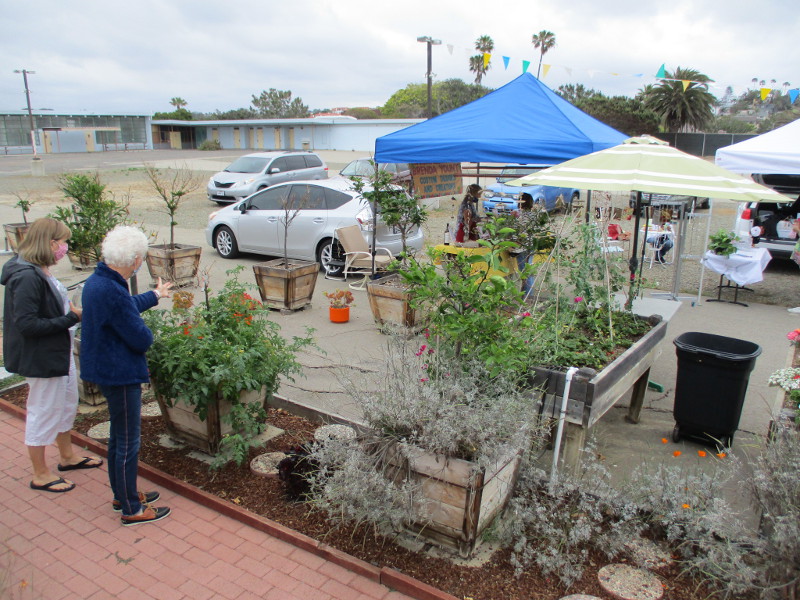
A plaque displayed near the chalkboard is dedicated to the Encinitas Boathouses. One block south of the schoolhouse, two unique cottages that appear like boats can be seen during a walking tour offered by the Encinitas Historical Society.Encinitas Schoolhouse Grades One through Eight. 1883.Concrete Highway 101. Two lane road to Los Angeles. 1913.A craft fair was being held outside the old Encinitas schoolhouse the Saturday I visited. Beyond the parked cars you can see nearby Pacific View Elementary, closed since 2003.Alone, at the very top of the hill stands the small one-room schoolhouse. A little beyond the hill stretches the Pacific Ocean.
…
I live in downtown San Diego and love to walk around with my camera! You can follow Cool San Diego Sights via Facebook or Twitter!
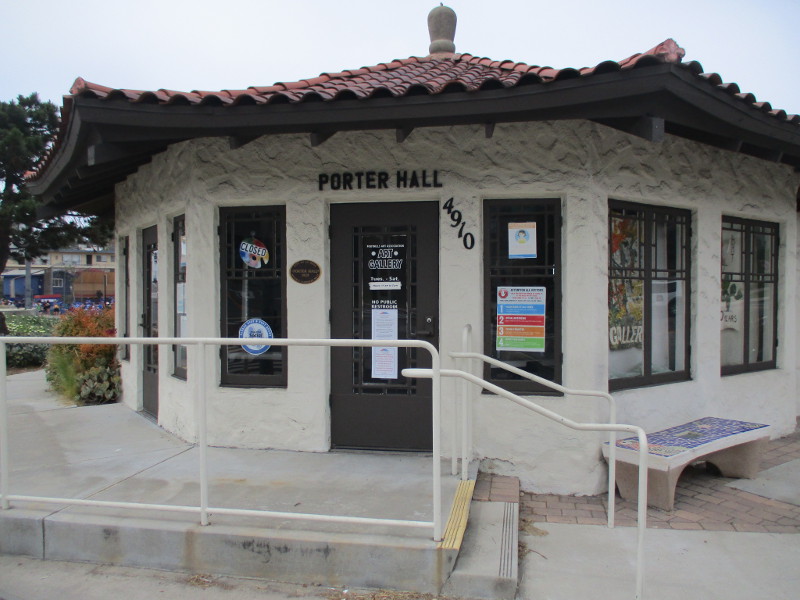
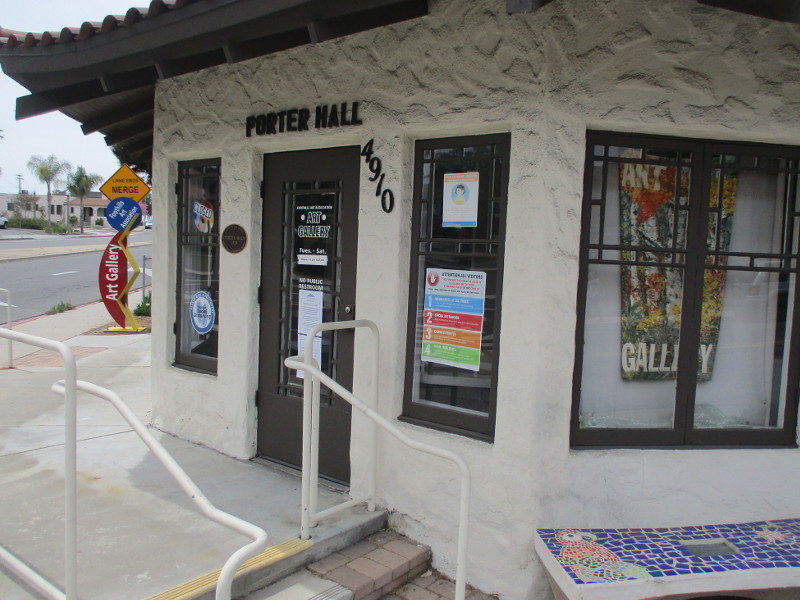
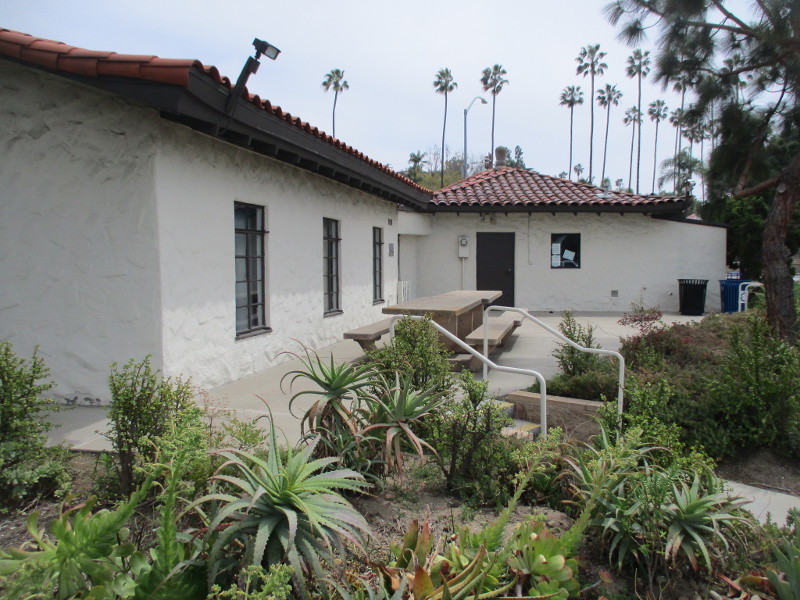
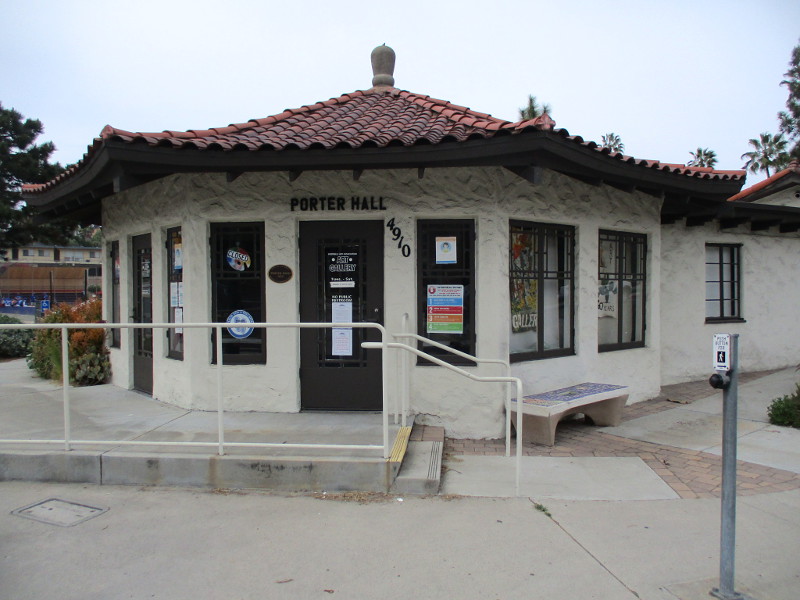
One of the most distinctive buildings in La Mesa can be found in MacArthur Park. The designated historic landmark, located at 4910 Memorial Drive, is called Porter Hall.
This small octagonal building, built by the Porter family in the late 1920’s, has an unusual tile roof that appears a little Chinese and a little Mexican. The roof’s exotic contours are explained by the fact that Henry and Elizabeth Chapin Porter had previously lived in China.
From 1932 to 1957 Porter Hall served as a San Diego County library.
Prior to 1974 the original octagonal structure stood on the other side of University Avenue. It was moved when the street was widened. Today the enlarged building is home of the Foothills Art Association.
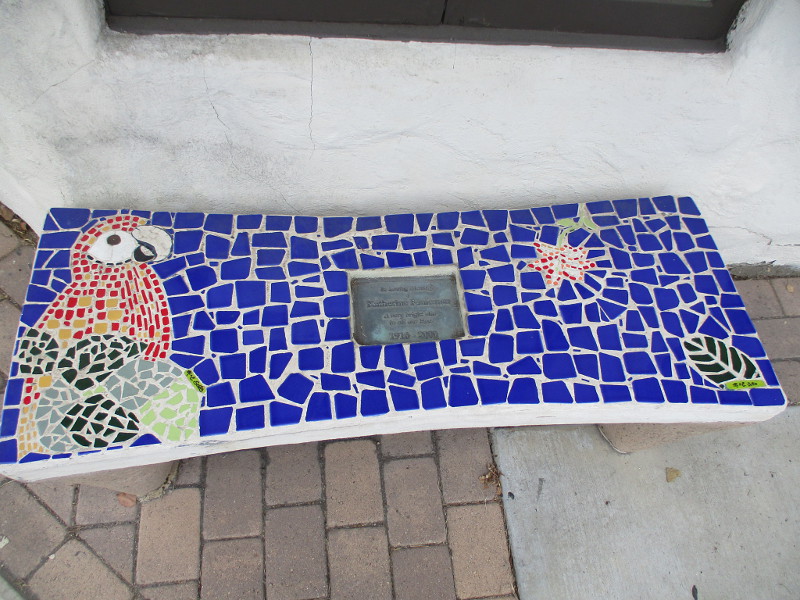
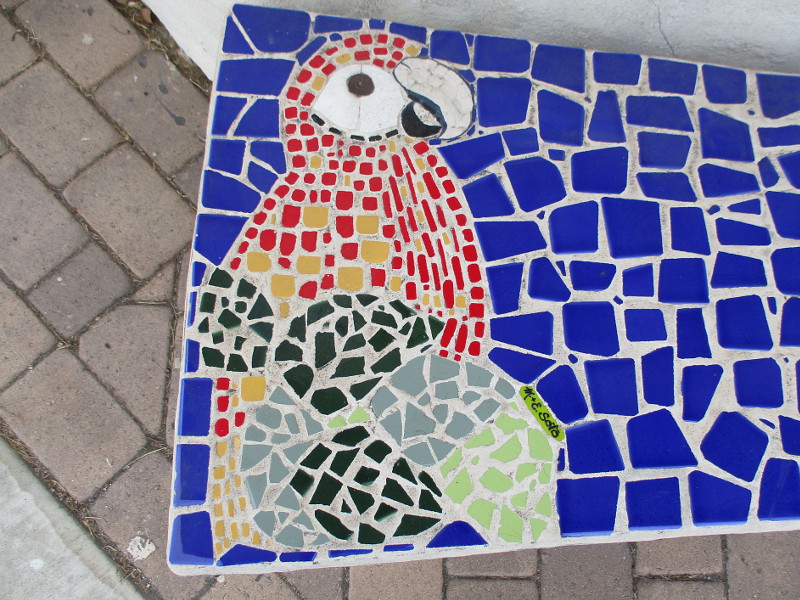
When I walked past Porter Hall a couple weekends ago, I took these photographs. Some artwork could be seen from the sidewalk, including a beautiful mosaic bench with a colorful parrot. A plaque dedicates the bench to Katherine Faulconer.
You can learn more about La Mesa’s influential Porter family by reading page 5 of an old La Mesa Historical Society publication here.
…
I live in downtown San Diego and love to walk around with my camera! You can follow Cool San Diego Sights via Facebook or Twitter!
You can easily explore Cool San Diego Sights by using the search box on my blog’s sidebar. Or click a tag! There are thousands upon thousands of photos for you to enjoy!
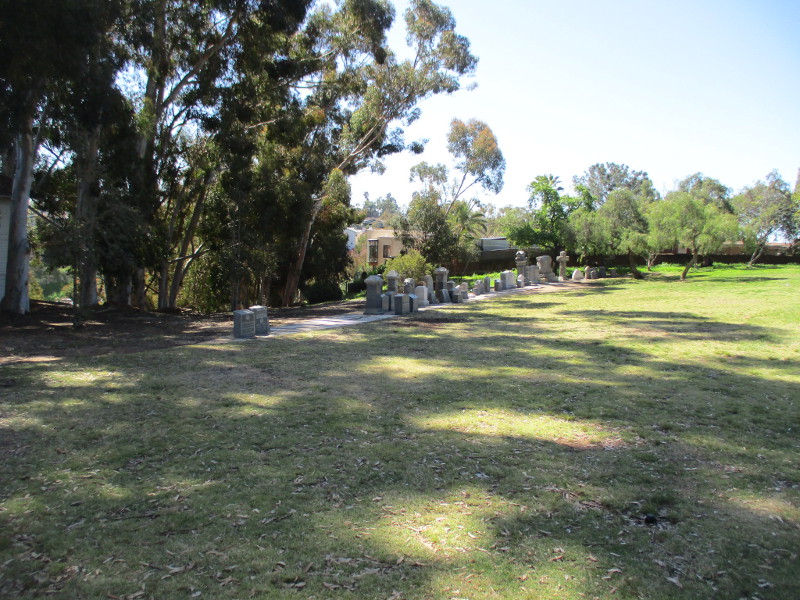
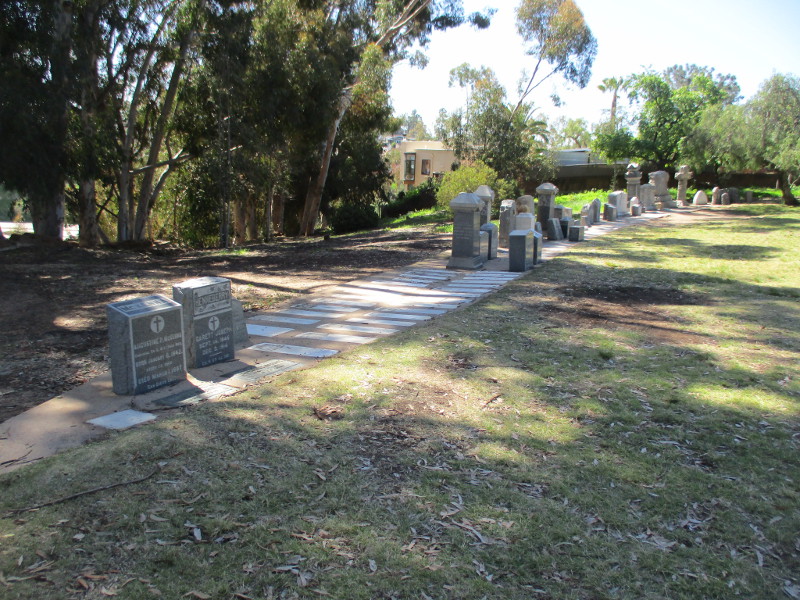
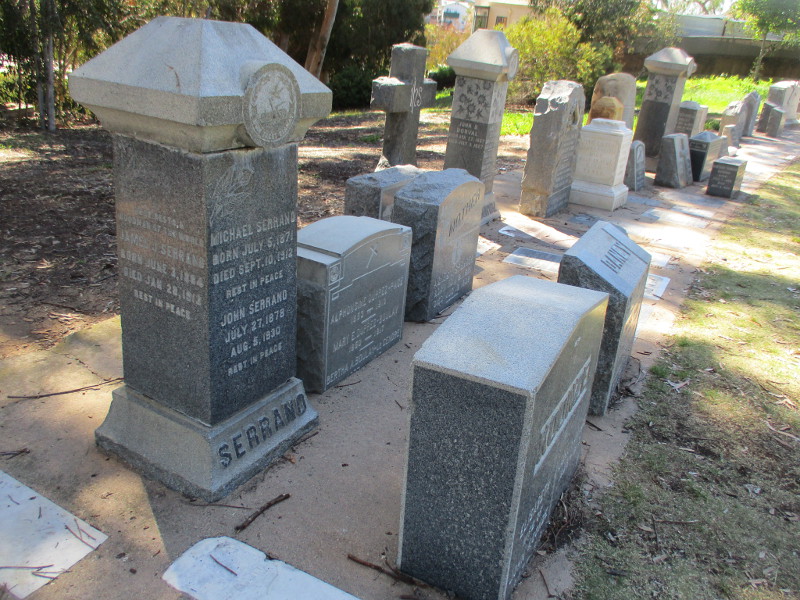
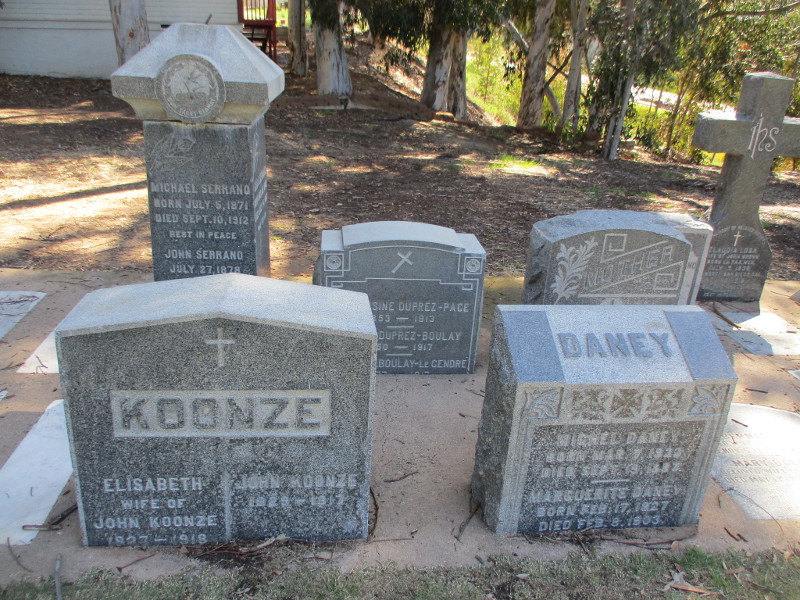
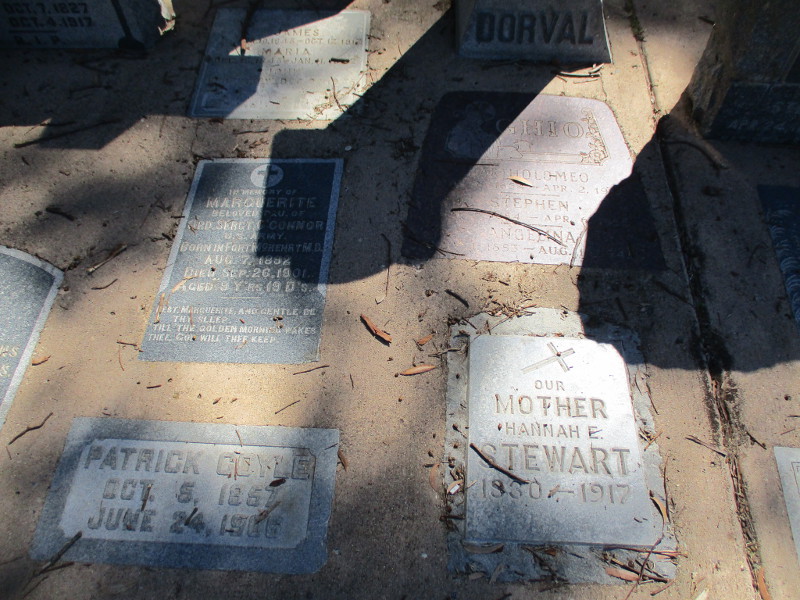
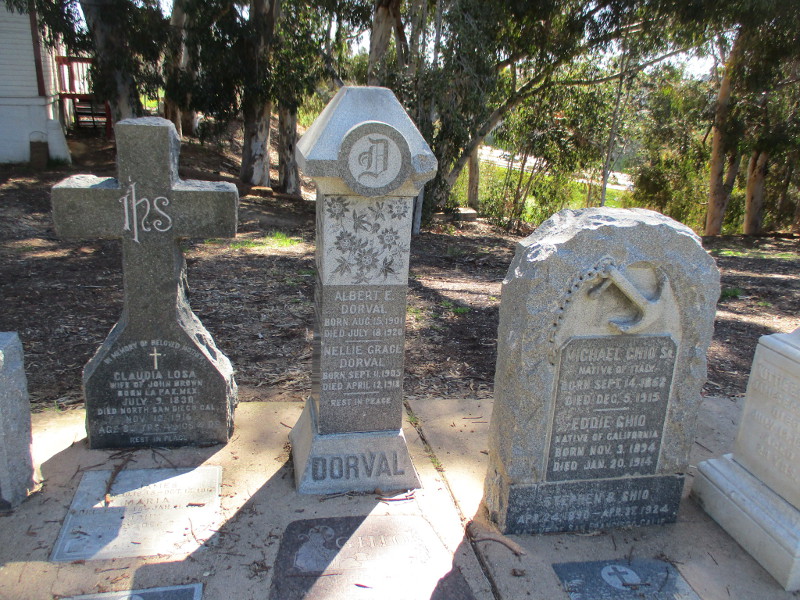
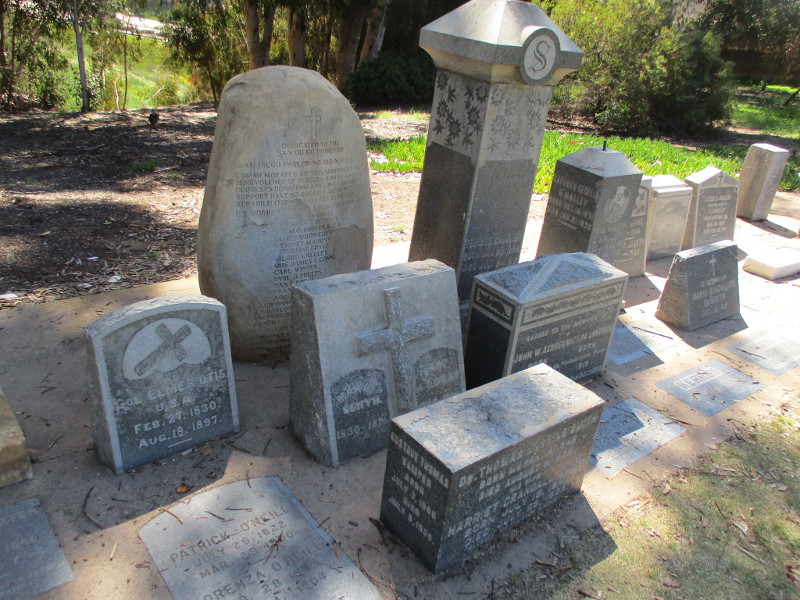
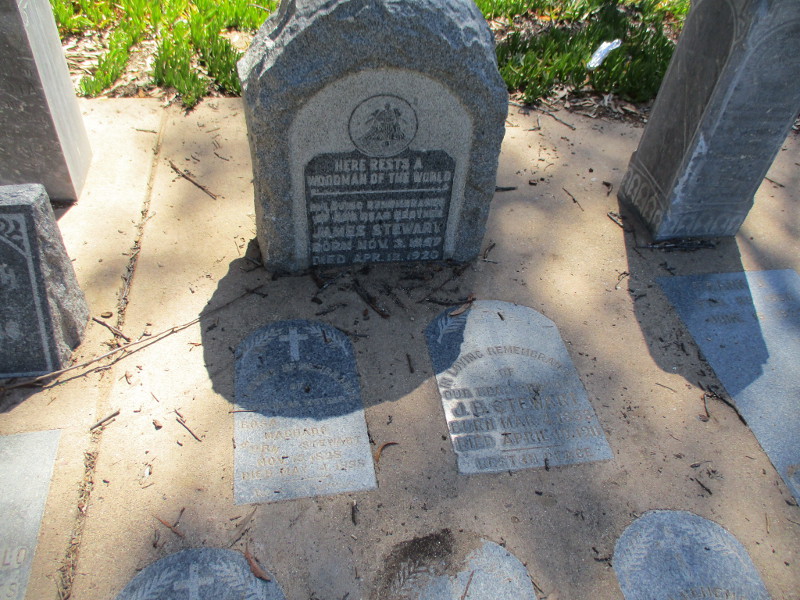
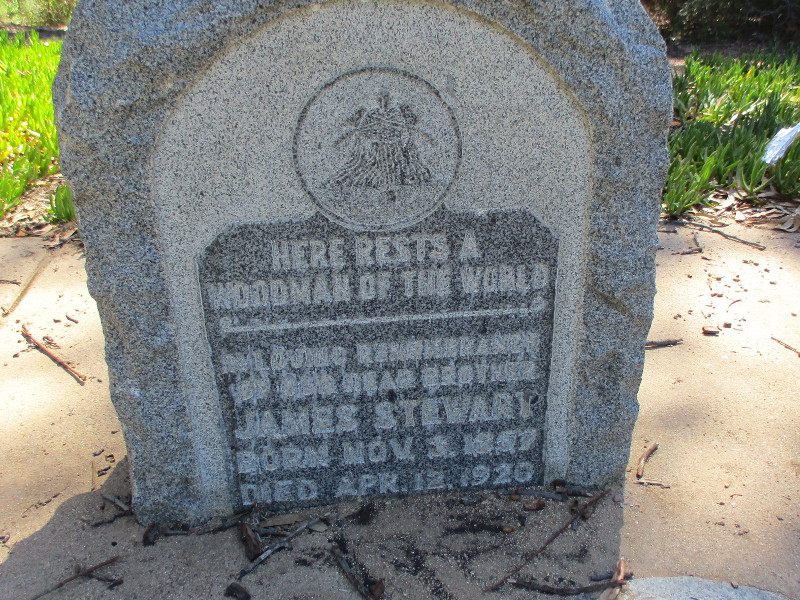
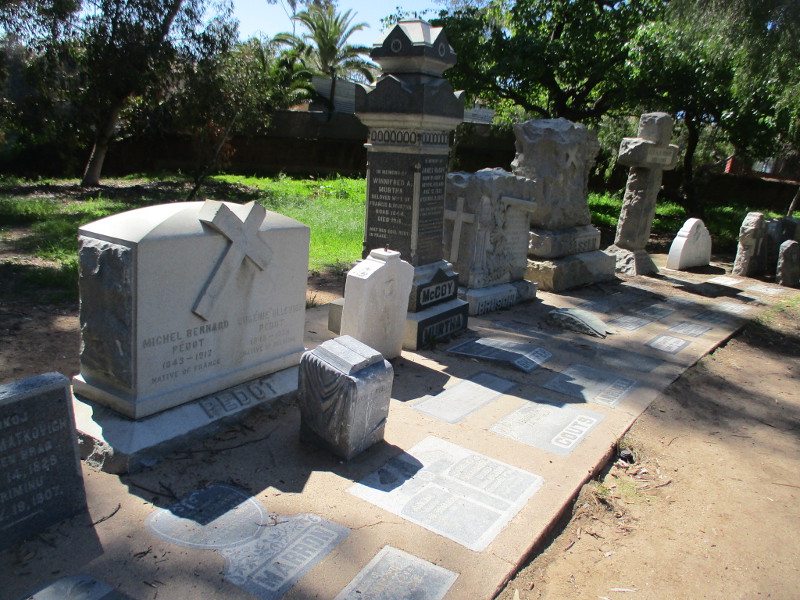
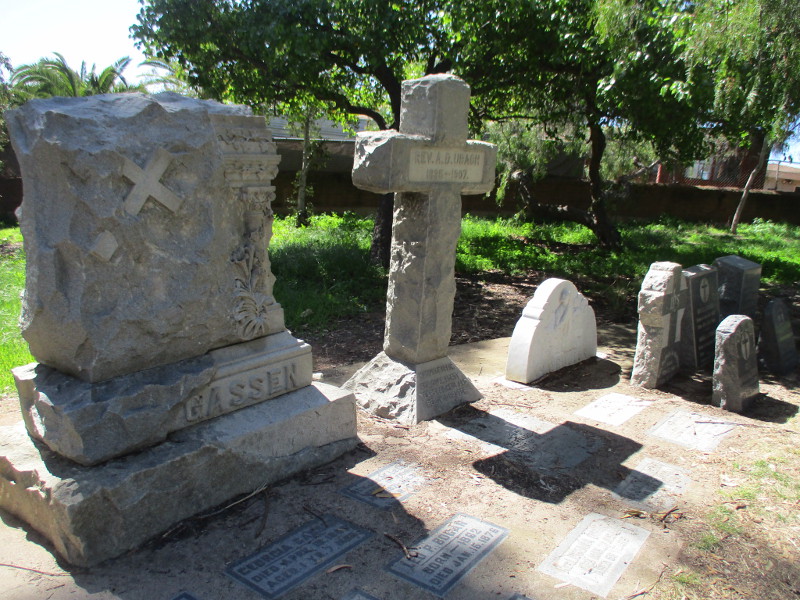
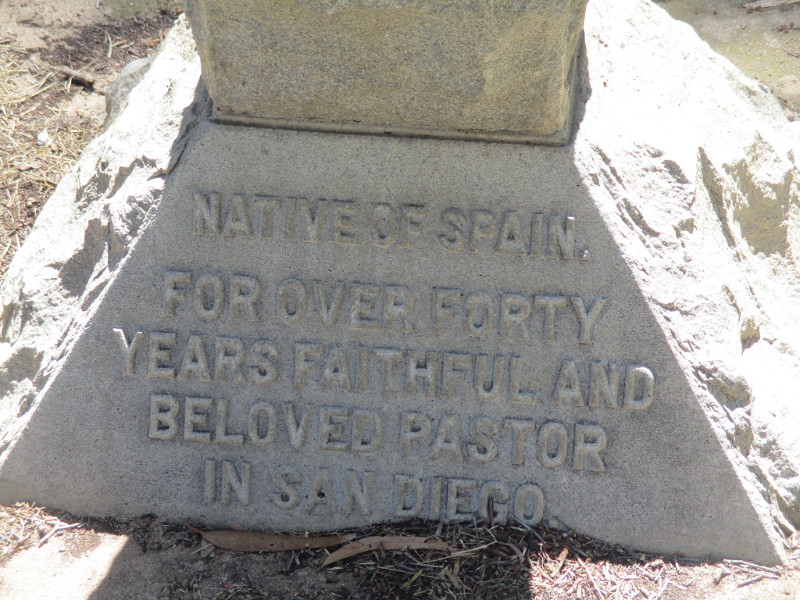
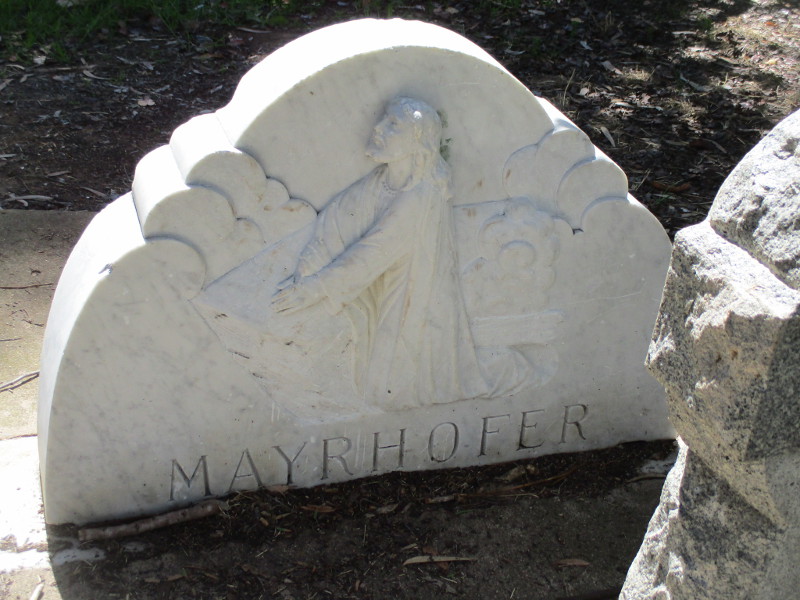
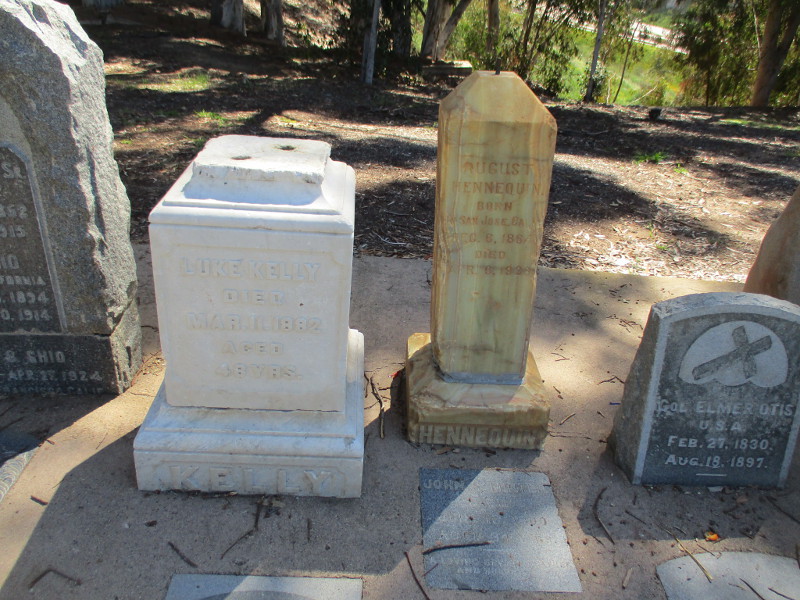
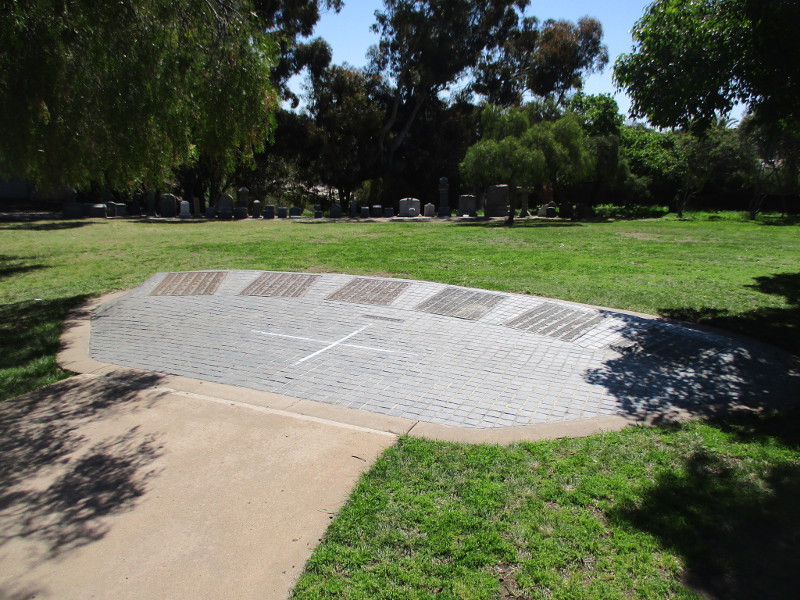
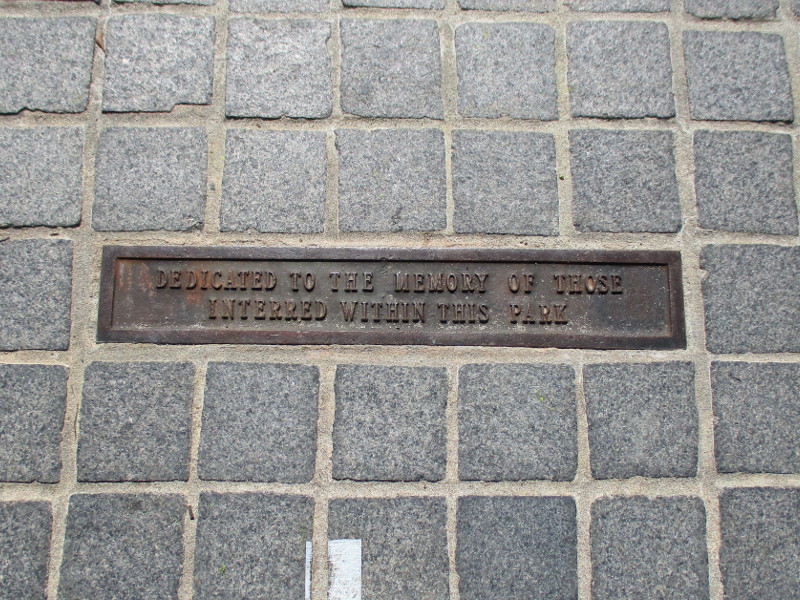
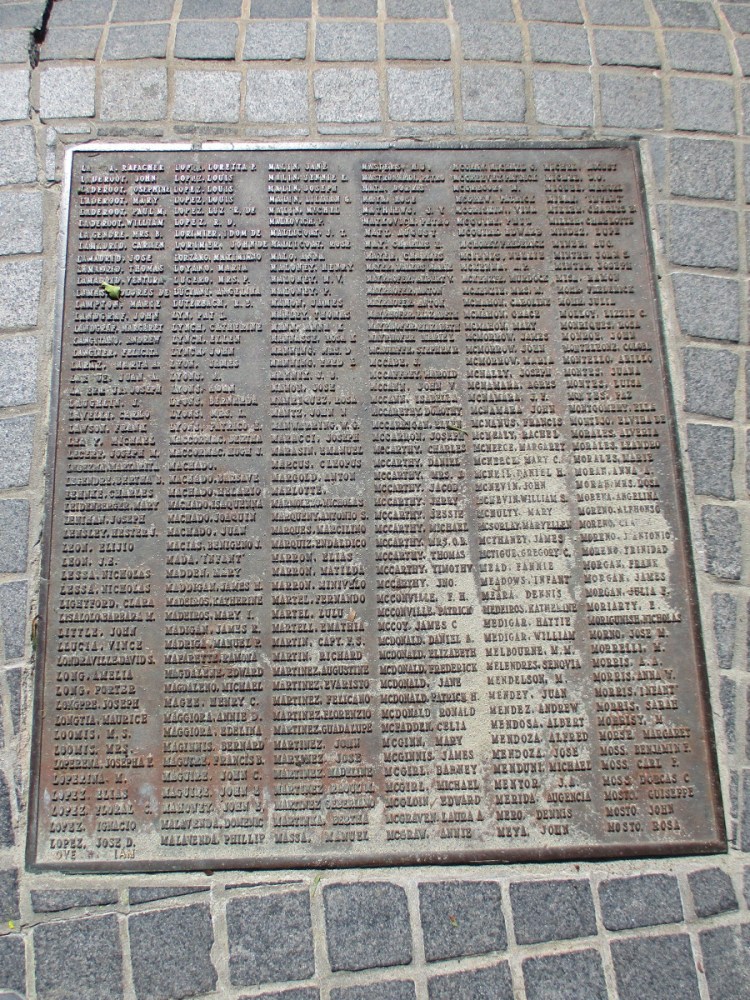
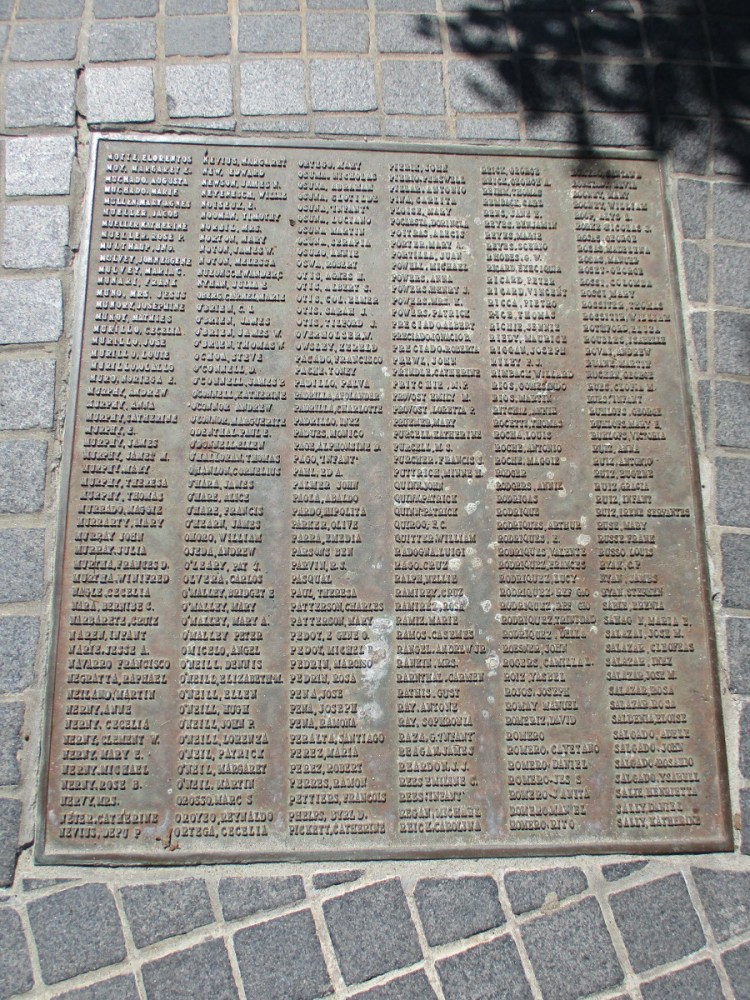
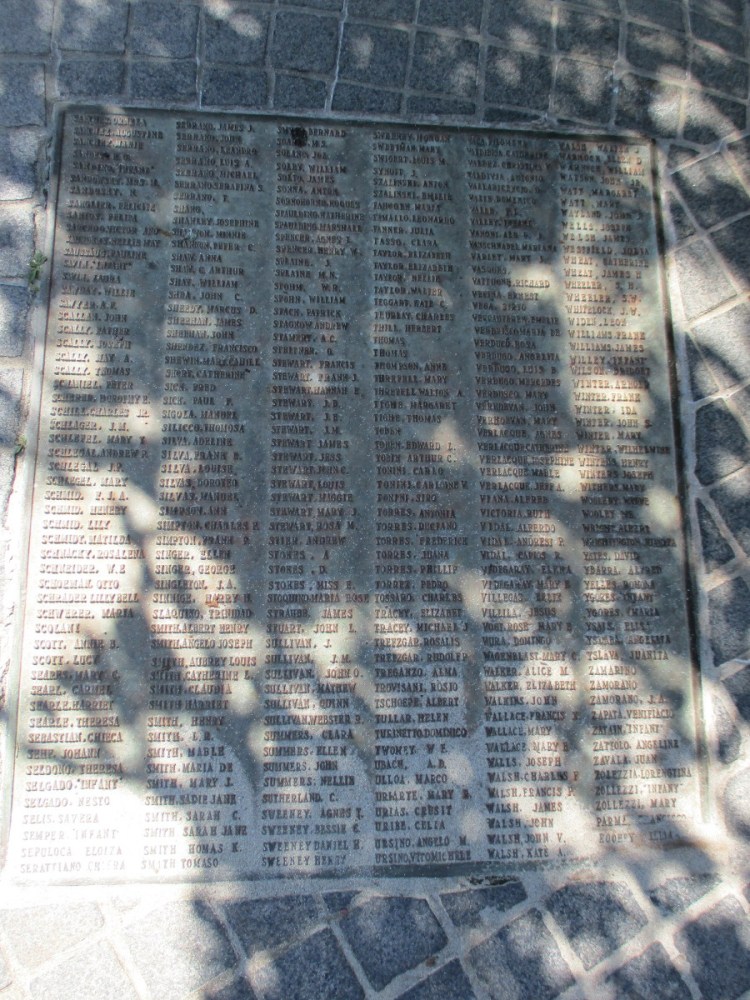
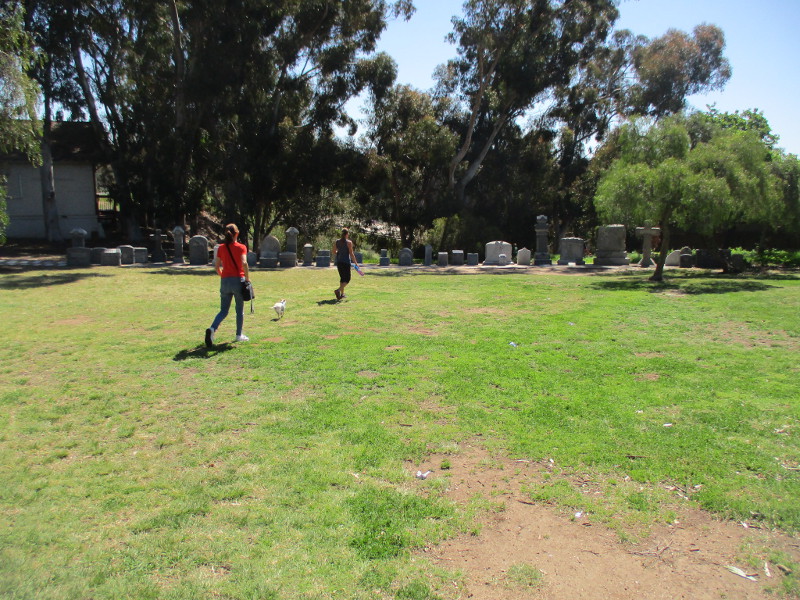
Pioneer Park is a city park in Mission Hills that’s popular with neighborhood families and children. It features a playground, green grass, many shady trees . . . and well over a thousand unseen graves. If you don’t wander into the southeast corner of the park, you might never know it’s also a cemetery.
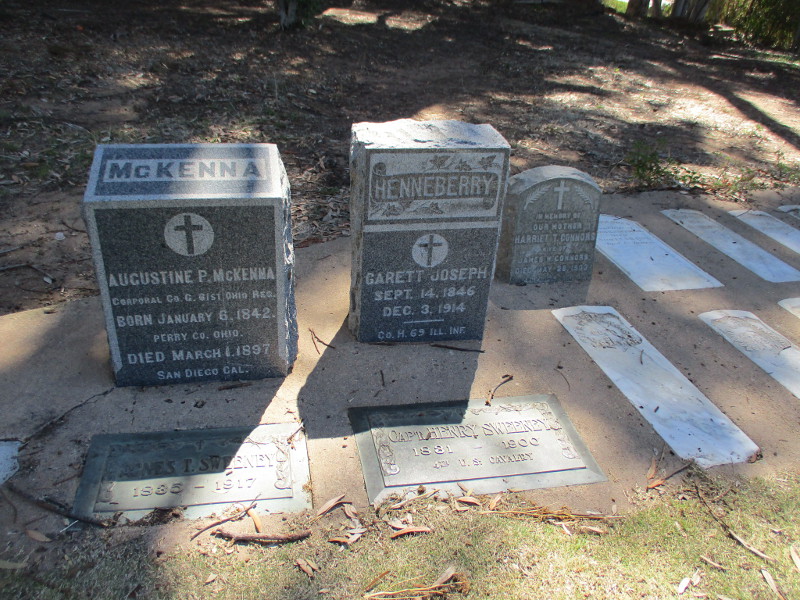
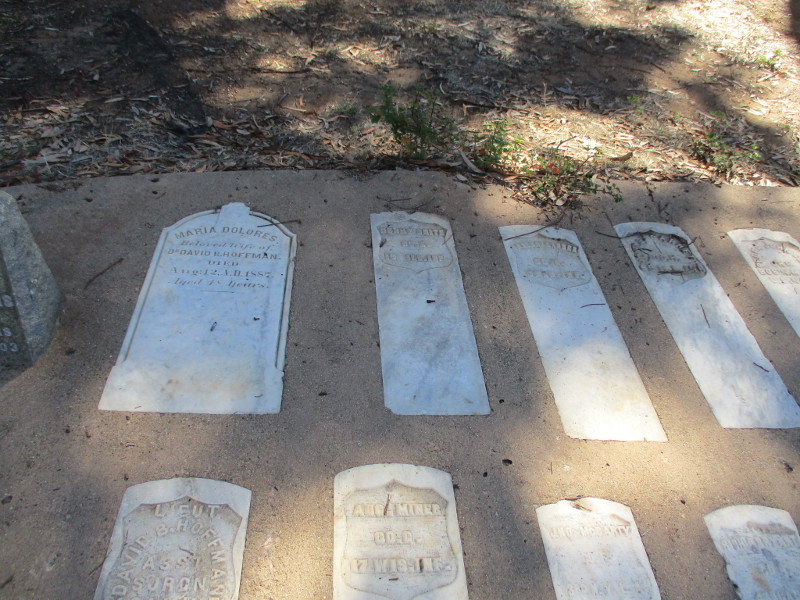
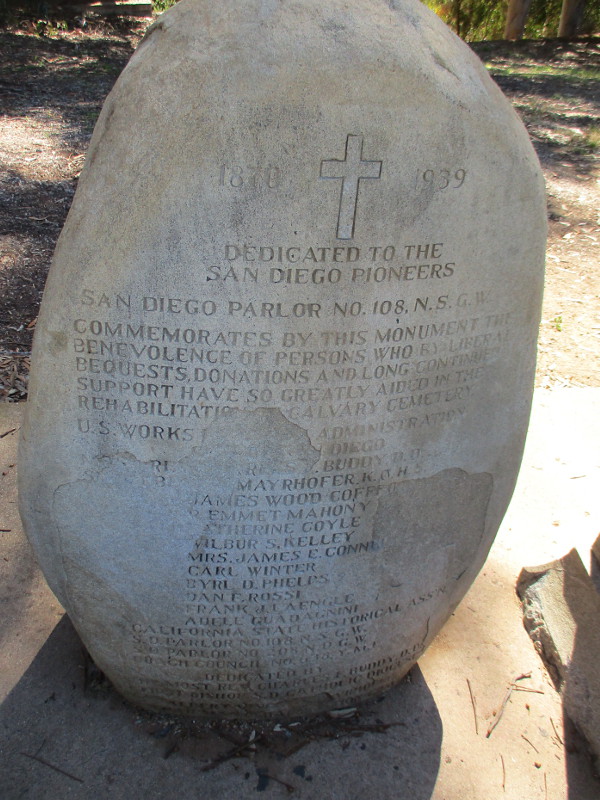
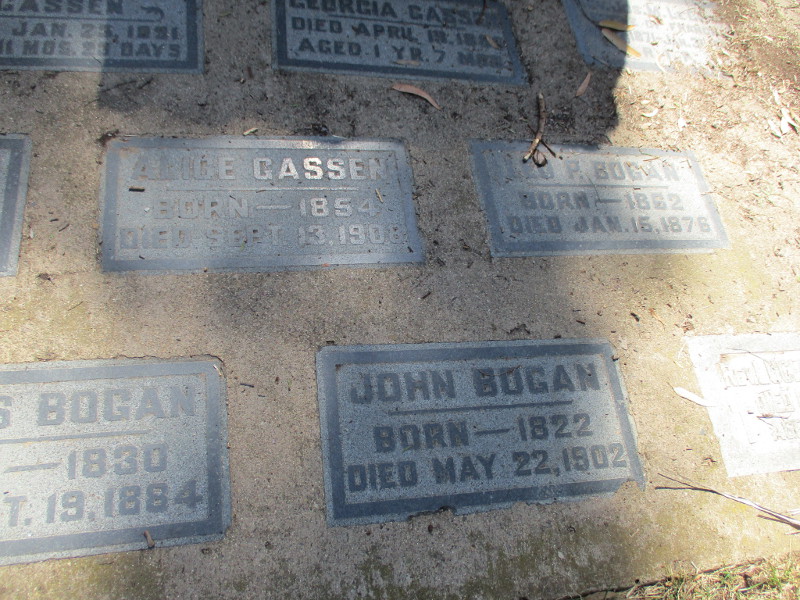
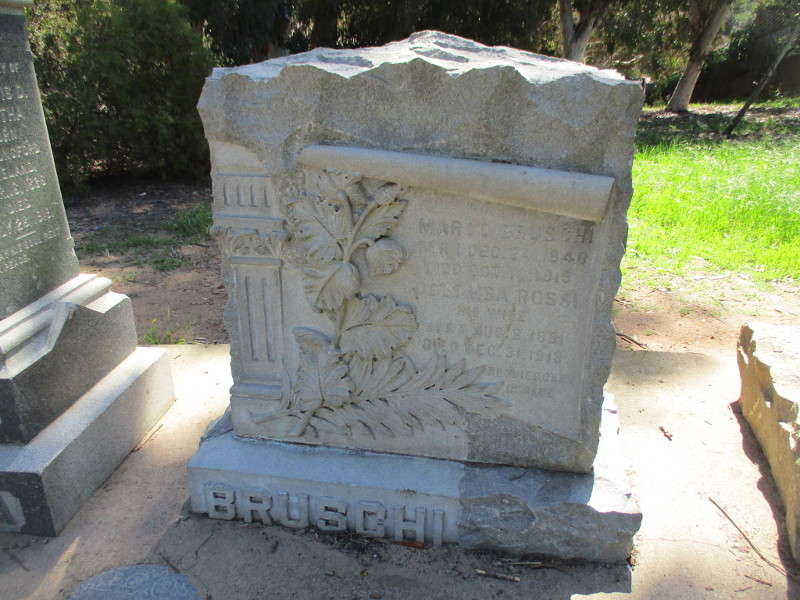
Pioneer Park was originally Calvary Cemetery. The Catholic cemetery was established in the 1870s, then converted a century later into a Mission Hills community park. According to this article: “All the 800-odd memorial markers were taken away in the 1970s except for a line of tombstones left on the park’s edge. Left as a memorial, they’re still there…” Sadly, the gravestones that had been removed were callously dumped by those then living into a ravine at distant Mt. Hope Cemetery.
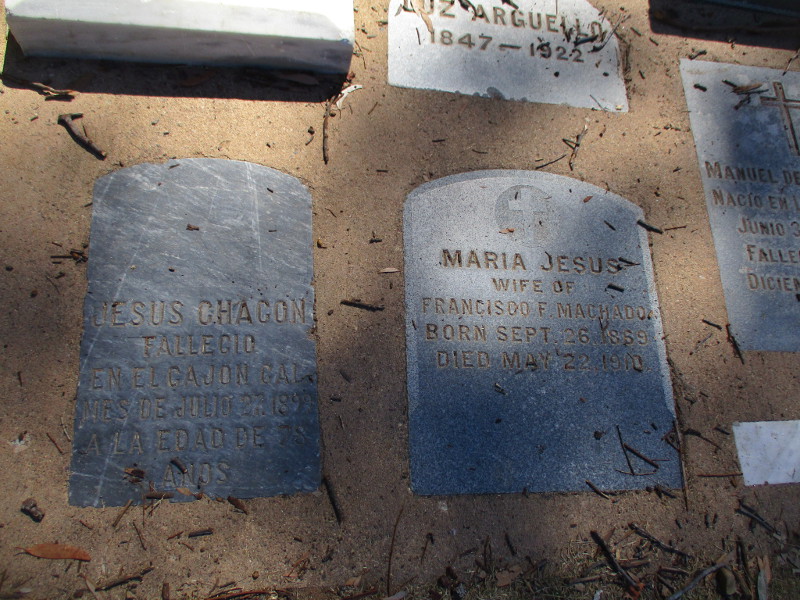
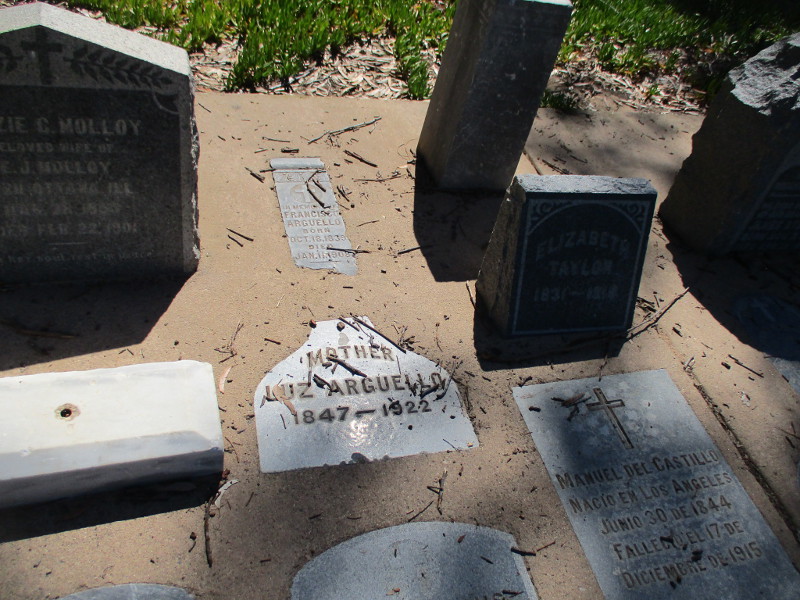
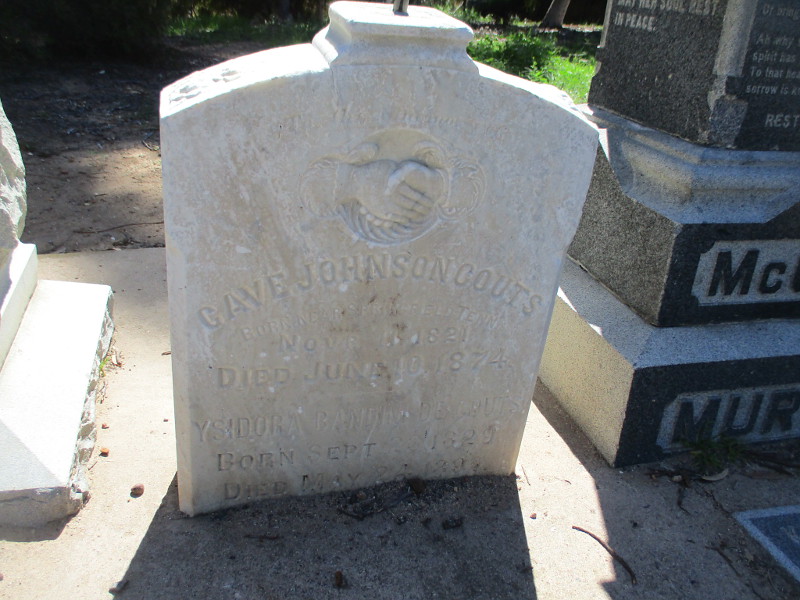
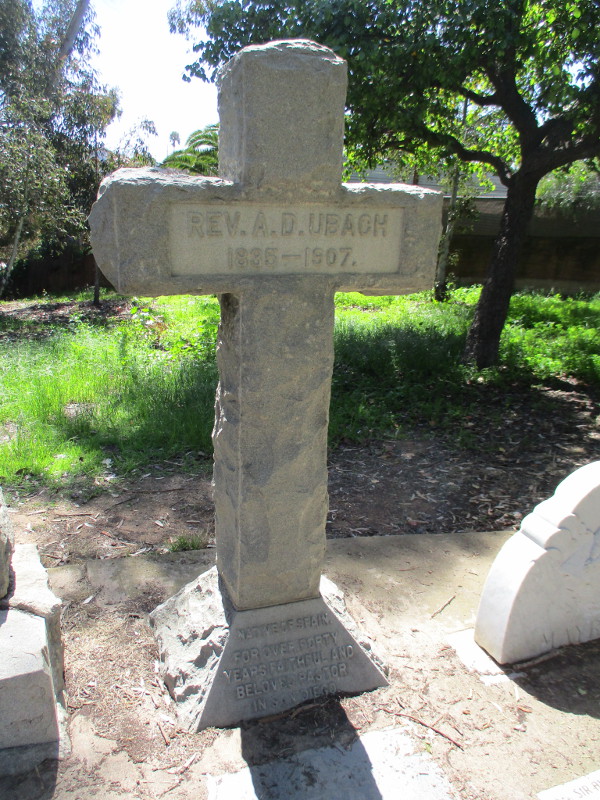
Many of San Diego’s earliest residents remain buried under the grass at Pioneer Park. Even after the passage of many years, surviving gravestones show historically important names like Cave Johnson Couts and Father Antonio Ubach. But all of the names are gradually fading away. Time does that.
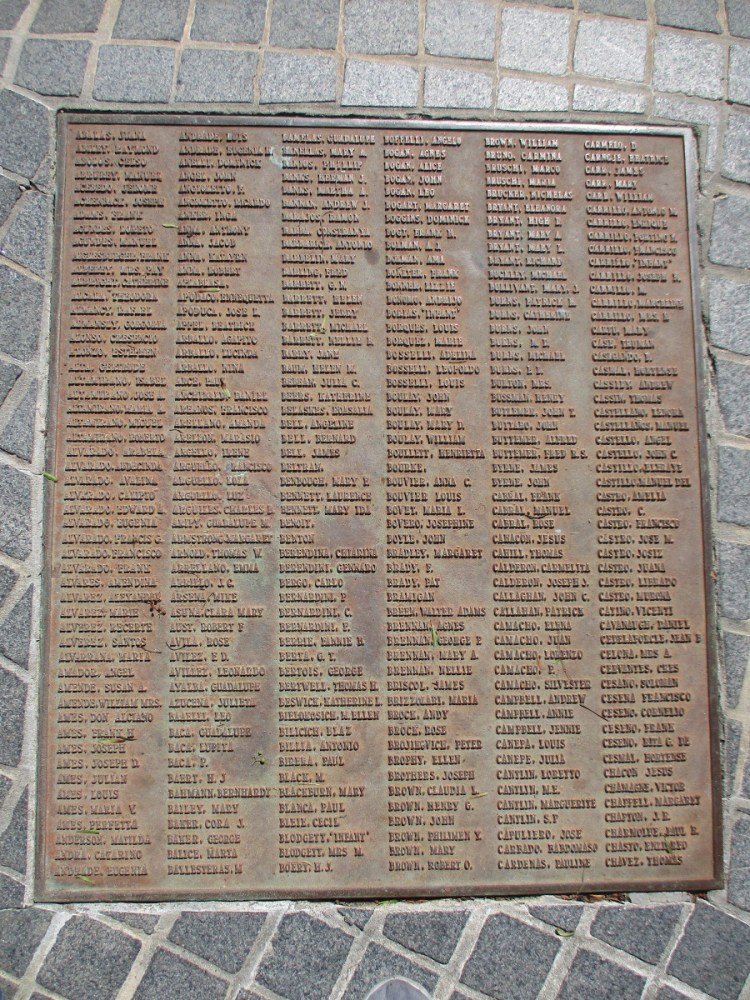
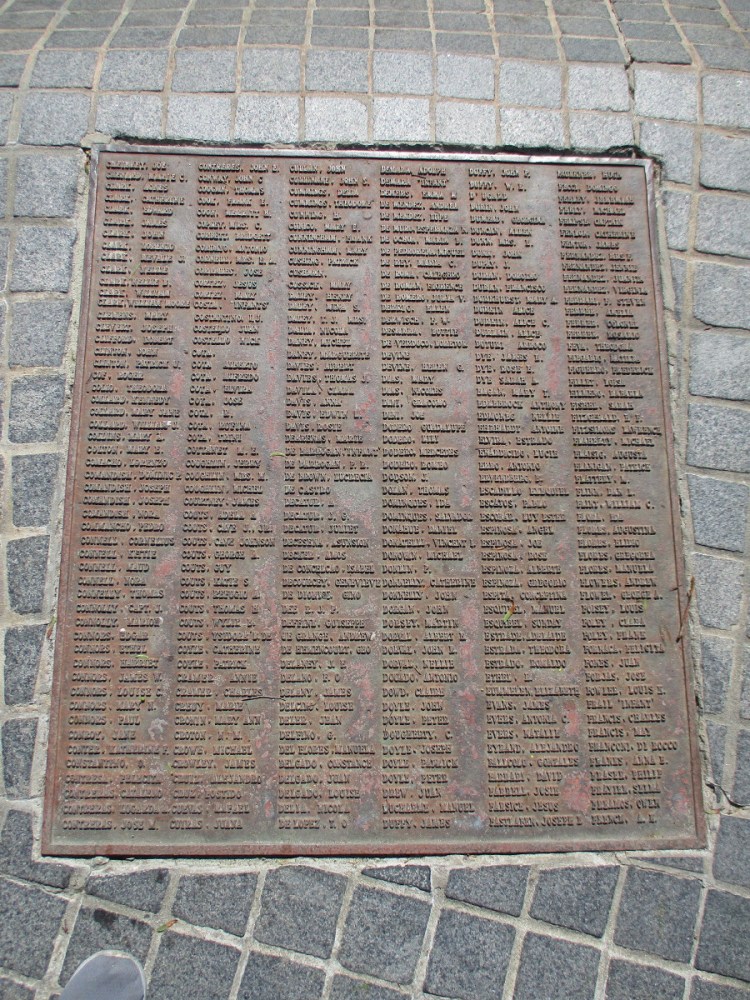
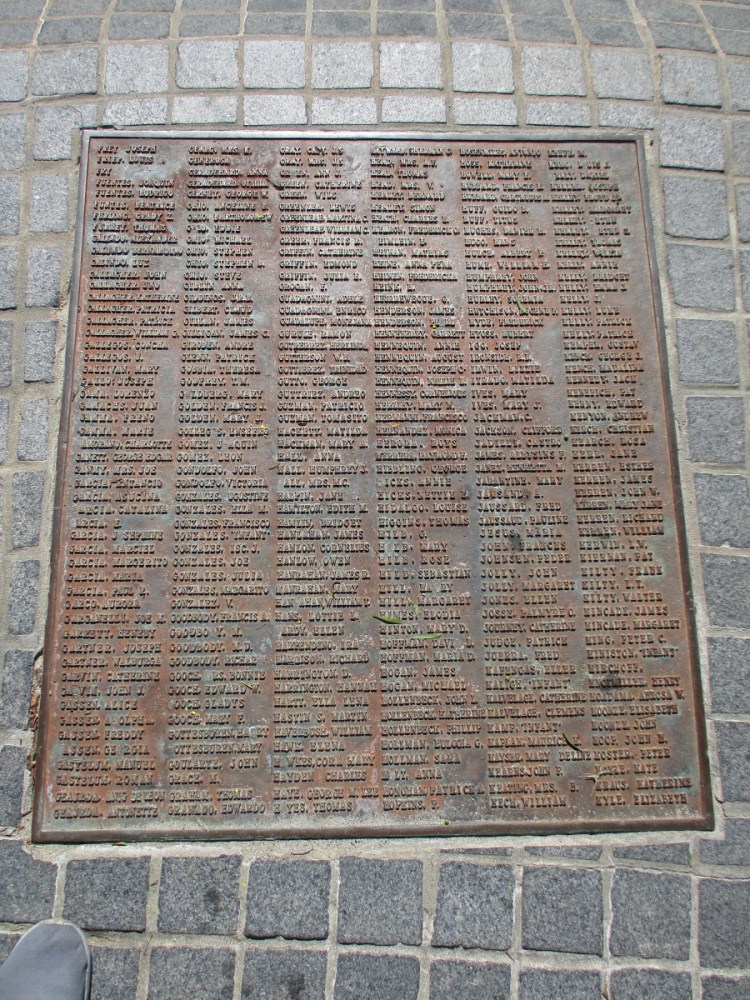
Six nearby plaques list the names of those who are interred in the park, and it is said there might be many more.
On any given day, life goes on cheerfully above the grass. And beneath it lie the remains of those who once lived, dreamed, toiled and loved exactly like you and me.
Here are some photographs, to provoke thought, and to help preserve a little history…
…
I live in downtown San Diego and love to walk around with my camera! You can follow Cool San Diego Sights via Facebook or Twitter!
You can easily explore Cool San Diego Sights by using the search box on my blog’s sidebar. Or click a tag! There are thousands upon thousands of photos for you to enjoy!
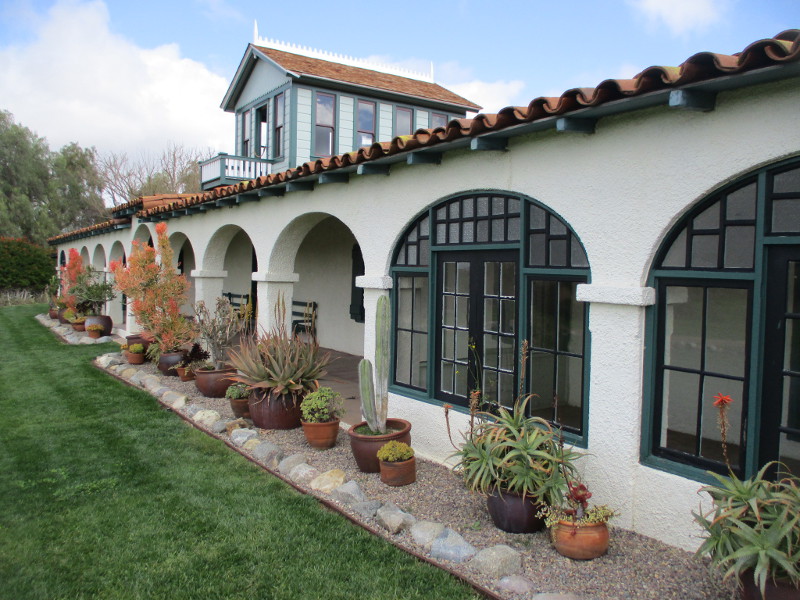
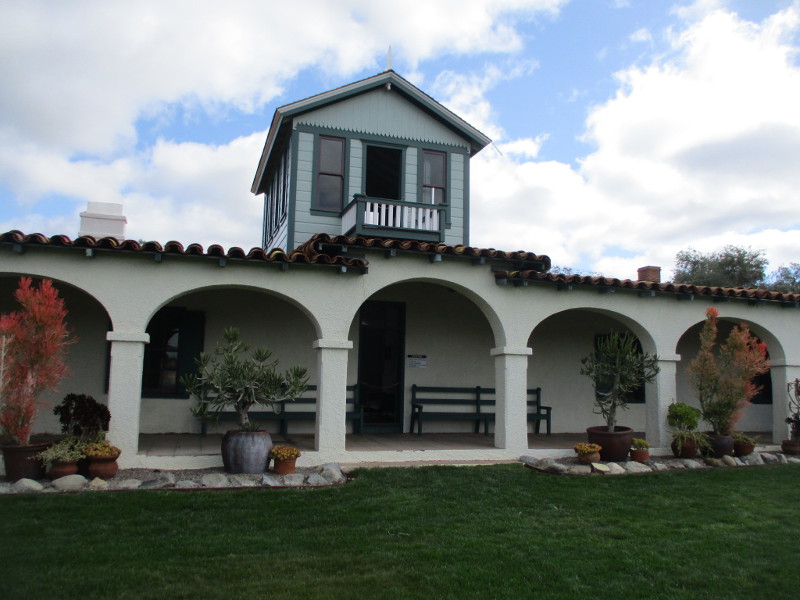
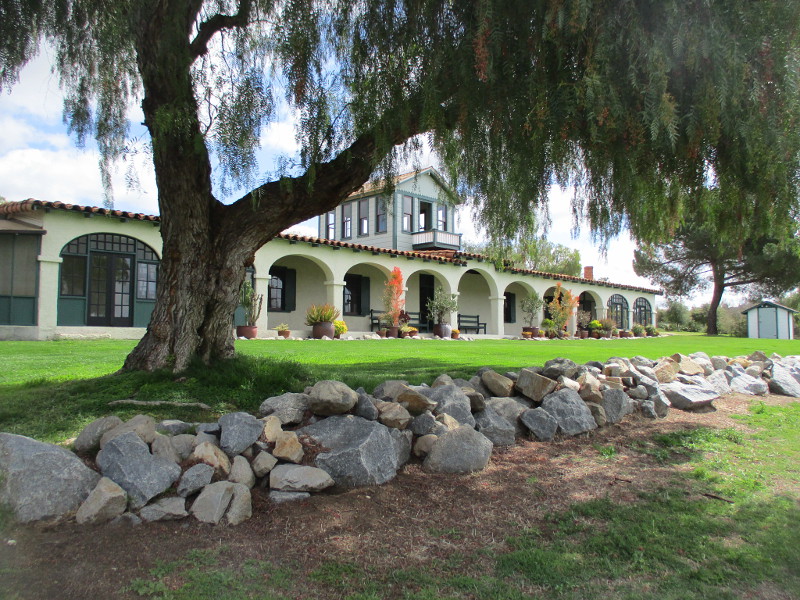
The Rancho Guajome Adobe is an architecturally and historically important 19th century ranch house located in Vista, California. I visited it a little over a week ago and walked around the grounds, learning about the fascinating history of the place while taking a few photographs.
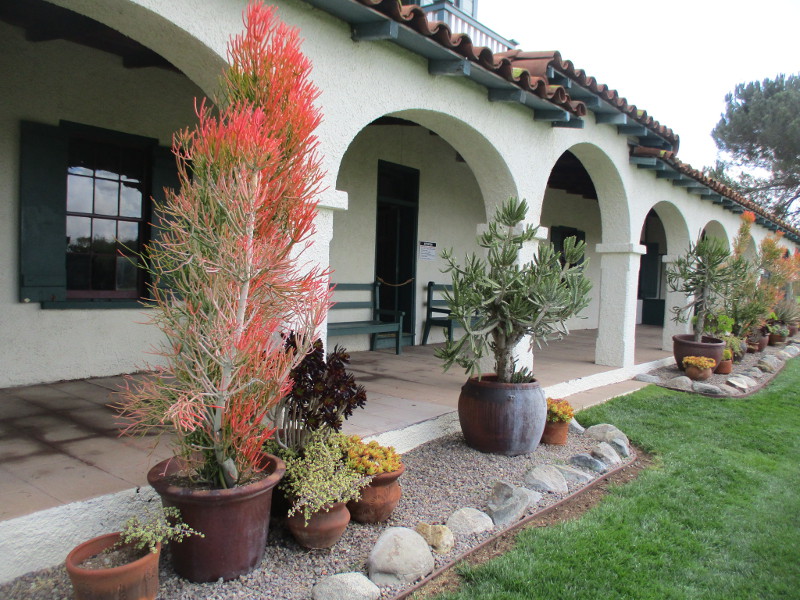
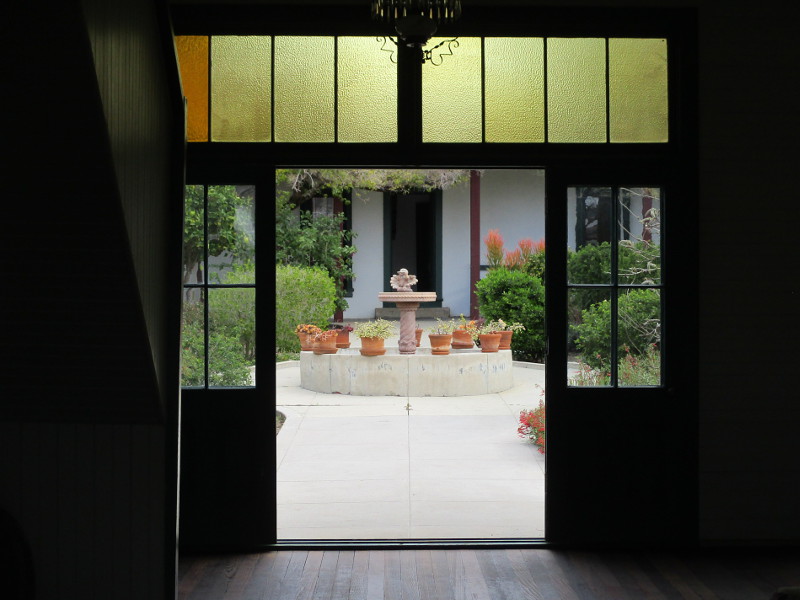
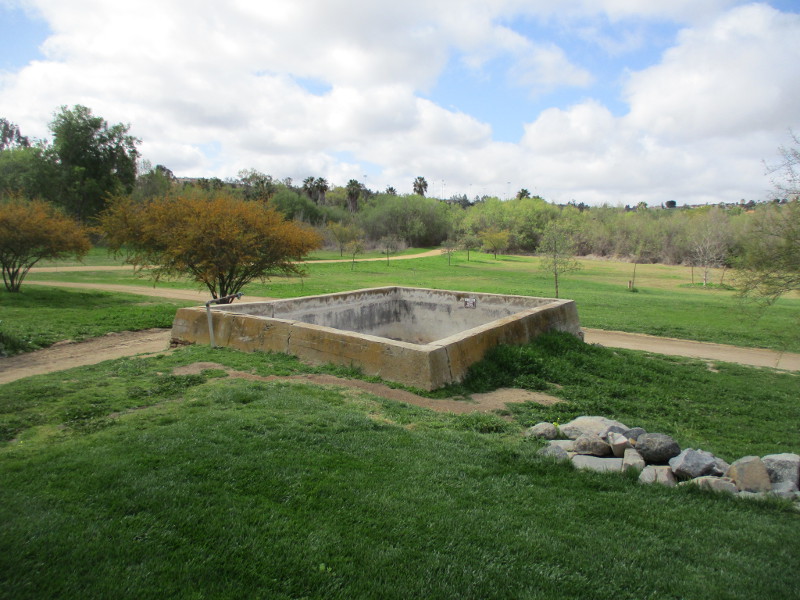
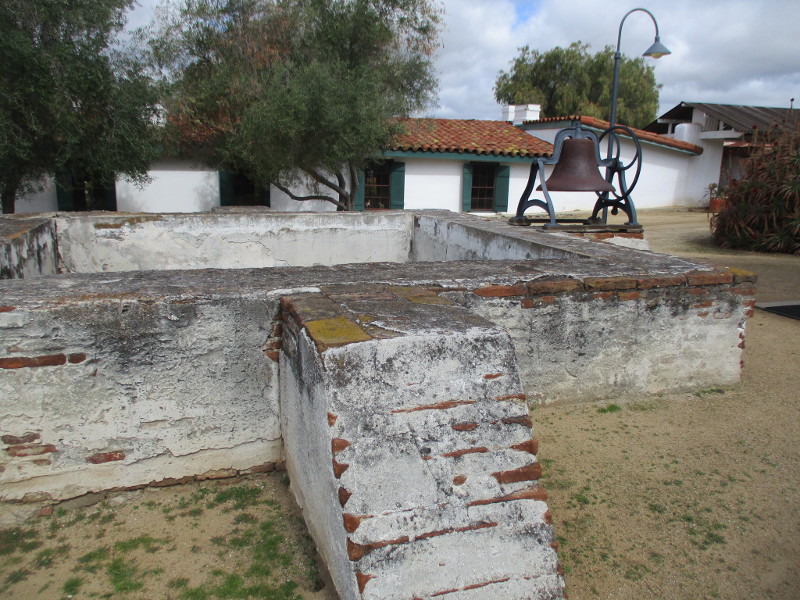
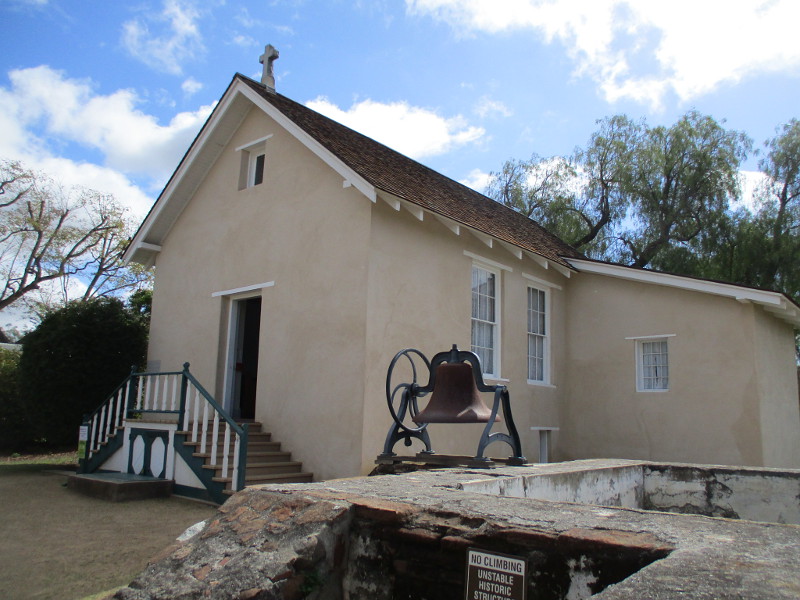
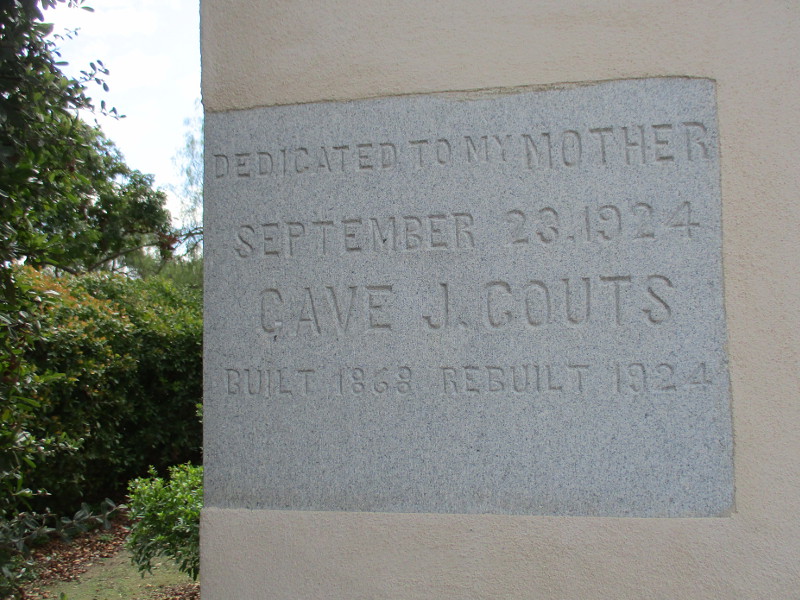
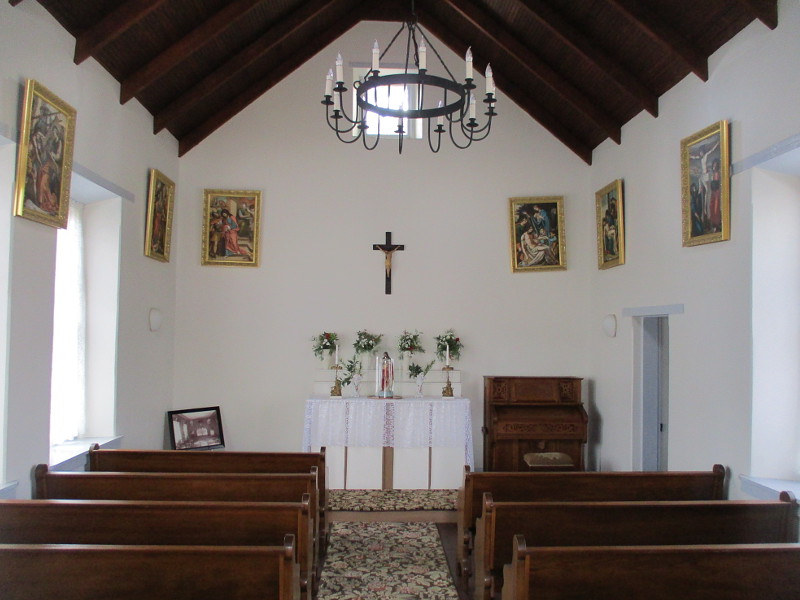
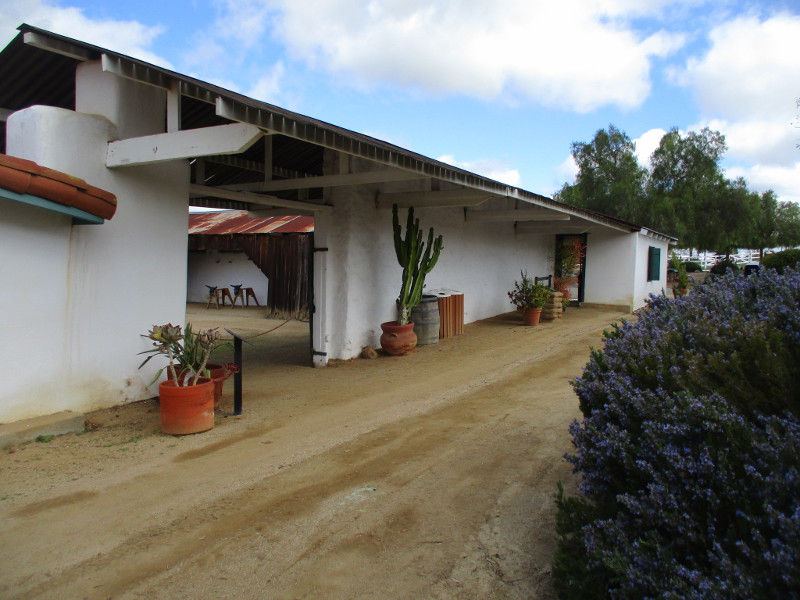
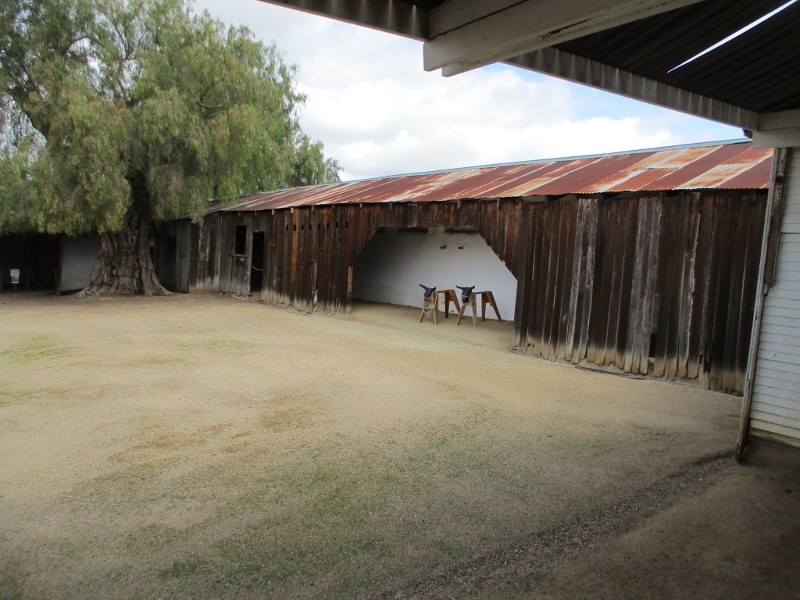
I approached the Guajome Ranch House from the Santa Fe Trail to its south, then circled counterclockwise around the complex, viewing the beautiful arcaded veranda, several cisterns fed by wells, the chapel, and other outbuildings. I spotted various signs and plaques relating the history of the ranch, which was once the home of prominent early San Diego resident Cave Johnson Couts and his wife Maria Ysidora Barbara Bandini.
As you can see, I also stepped into a small museum. That’s where you can purchase tickets to guided and self-guided house tours.
According to Wikipedia: “The adobe was built in 1852 and served as the headquarters of Rancho Guajome, a Mexican land grant. Abel Stearns had given the rancho to Ysidora Bandini (sister of his wife Arcadia Bandini), as a wedding gift when she married Lieutenant Cave Johnson Couts in 1851. It was built with the profits from the cattle boom of the 1850s, when many California ranchos supplied the Gold Rush miners and associated new American immigrants with meat and leather. Couts was appointed sub-agent for the native Luiseño people (San Luis Rey Mission Indians) in 1853. He used their labor to improve his properties in the area, including this one and nearby Rancho Buena Vista and Rancho Vallecitos de San Marcos…”
I didn’t venture inside the 22-room hacienda, but I most likely will at some future time. The old ranch house is located in Rancho Guajome Adobe County Park. Check out the parks website here to learn more.
The following photos provide a taste of what you’ll see should you visit this historic place.
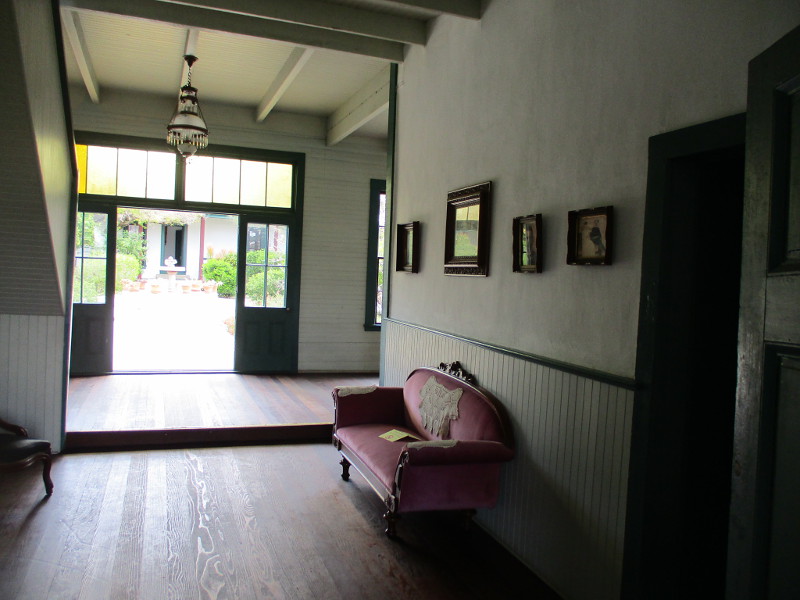
Peering from the veranda through an open door…
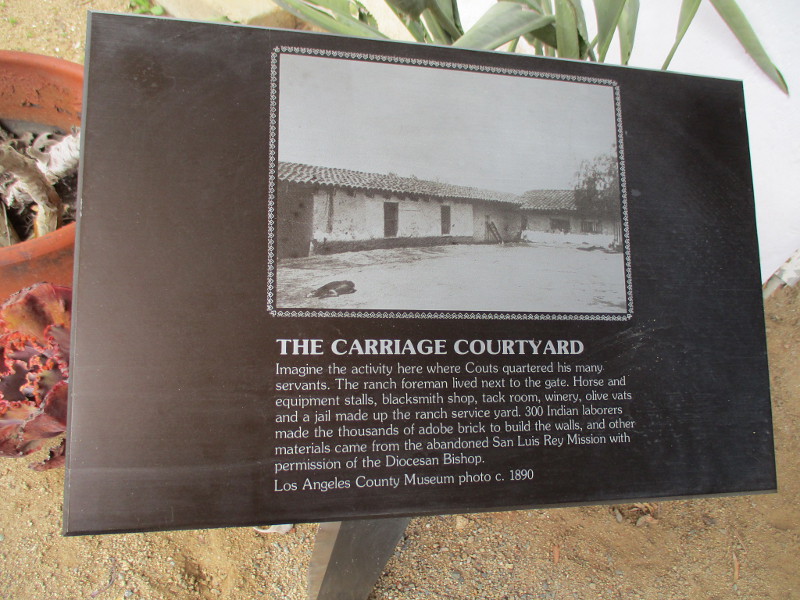
The sign reads:
The Carriage Courtyard.
Imagine the activity here where Couts quartered his many servants. The ranch foreman lived next to the gate. Horse and equipment stalls, blacksmith shop, tack room, winery, olive vats and a jail made up the ranch service yard. 300 Indian laborers made the thousands of adobe brick to build the walls, and other materials came from the abandoned San Luis Rey Mission with permission of the Diocesan Bishop.
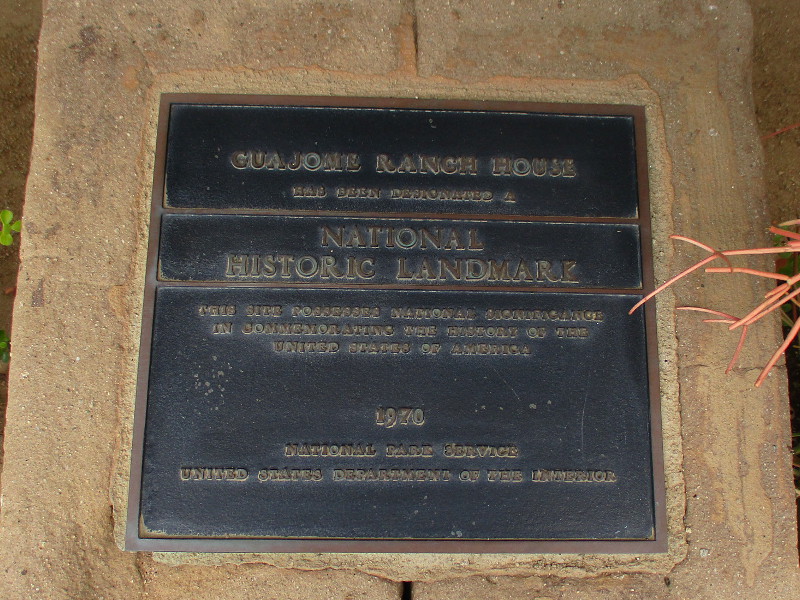
Guajome Ranch House has been designated a National Historic Landmark
This site possesses national significance commemorating the history of the United States of America
1970
National Park Service
United States Department of the Interior
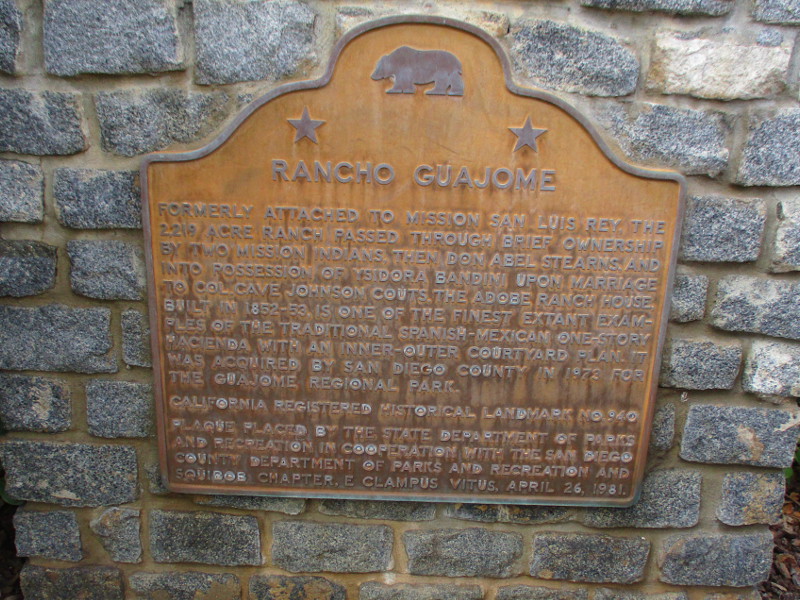
Rancho Guajome
Formerly attached to Mission San Luis Rey, the 2,219 acre ranch passed through brief ownership by two mission Indians, then Don Abel Stearns, and into possession of Ysidora Bandini upon marriage to Col. Cave Johnson Couts. The adobe ranch house built in 1852-53, is one of the finest extant examples of the traditional Spanish-Mexican one-story hacienda with an inner-outer courtyard plan. It was acquired by San Diego County in 1973 for the Guajome Regional Park.
California registered Historical Landmark No. 940
Plaque placed by the State Department of Parks and Recreation in cooperation with the San Diego County Department of Parks and Recreation and Squibob Chapter, E Clampus Vitus, April 26, 1981.
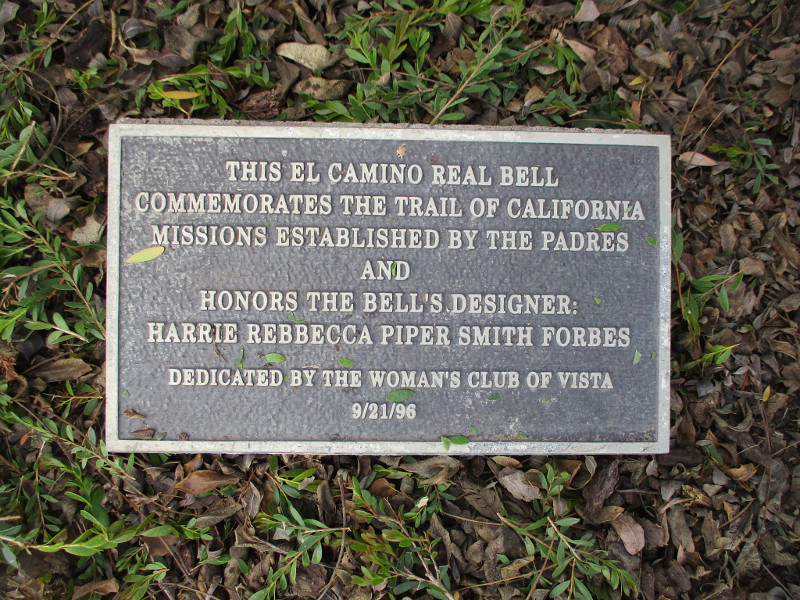
This El Camino Real Bell commemorates the trail of California missions established by the padres and honors the bell’s designer: Harrie Rebbecca Piper Smith Forbes
Dedicated by the Woman’s Club of Vista
9/21/96
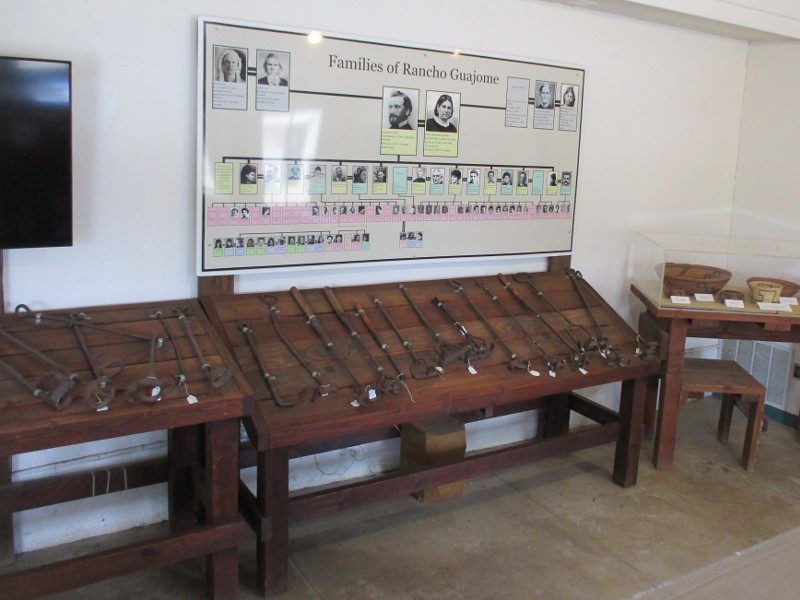
At its beginning, Rancho Guajome was a working cattle ranch. Because the West was dry, cattle owners like Cave Couts would turn their cattle out on unfenced pastures. However, during this “open range” period, sometimes cattle from different ranchos intermixed, making it difficult to determine which cattleman owned which cattle. The branding iron was invented as a solution…
Cave Johnson Couts was born in 1821 in Springfield, Tennessee, and died in 1874 in San Diego at the Horton House. His wife Maria Ysidora Barbara Bandini was born in 1828 in San Diego, was married in 1851 at the Casa de Bandini in Old Town (now the Cosmopolitan Hotel), and died in 1897 in Los Angeles.
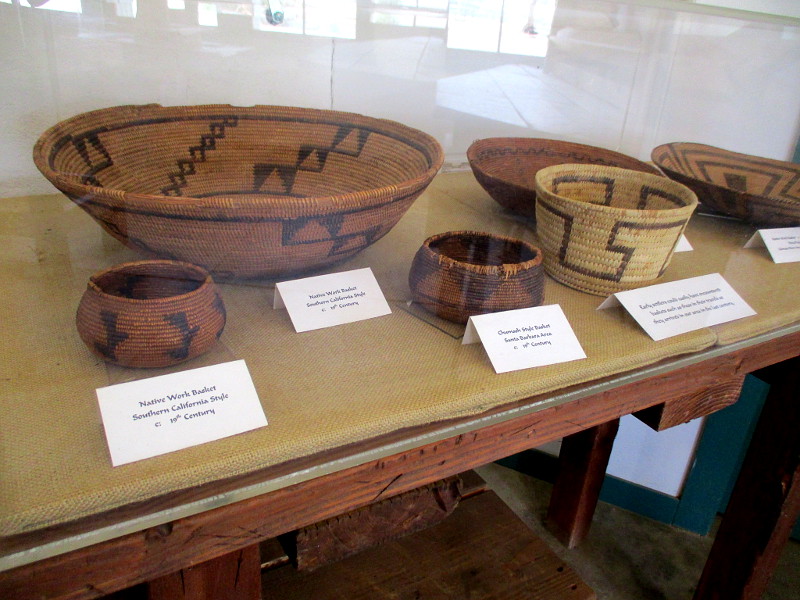
Included in the museum display are Native work baskets, Southern California style, circa 19th century.
Rancho Guajome Adobe farm equipment included a farm wagon, breaking carts for training horses, a broadcast seeder, a sulky used for racing horses, and a four-bottom Stockton plow used to turn soil to prepare fields for planting.
In the past I blogged about the Colorado House, a two-story hotel that was built in Old Town San Diego in 1851 by the very same Cave Couts. Today it serves as the Wells Fargo History Museum. Read that here.
I’ve also blogged about the El Campo Santo cemetery grave of Juan Mendoza, who was shot in the back by Cave Couts. See that here. (During one walk I spotted another mysterious wooden tombstone with the name Juan Mendoza by a parking lot, across the San Diego River from Old Town. Read that here!)
…
I live in downtown San Diego and love to walk around with my camera! You can follow Cool San Diego Sights via Facebook or Twitter!
You can easily explore Cool San Diego Sights by using the search box on my blog’s sidebar. Or click a tag! There are thousands upon thousands of photos for you to enjoy!
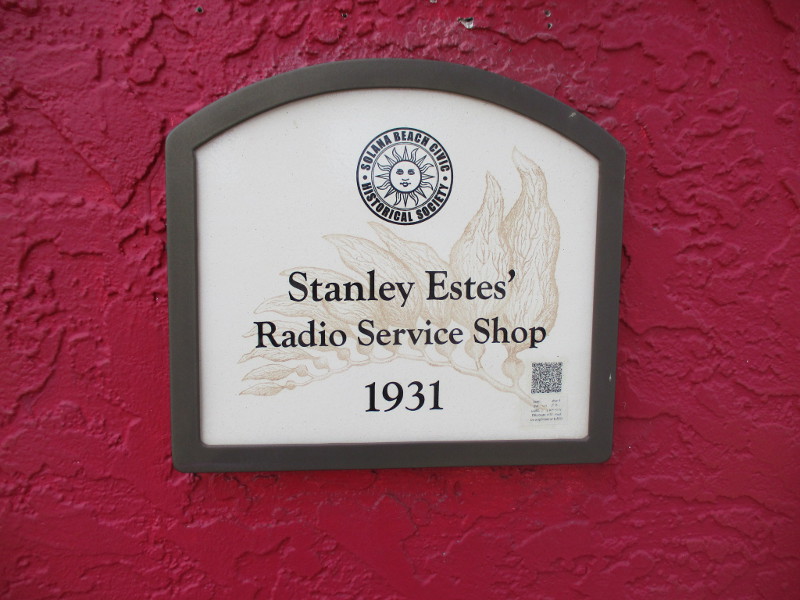
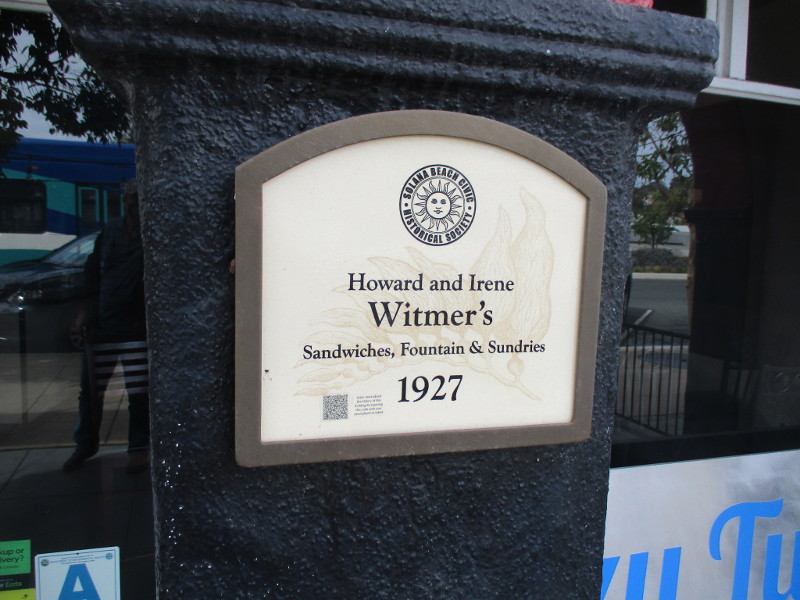
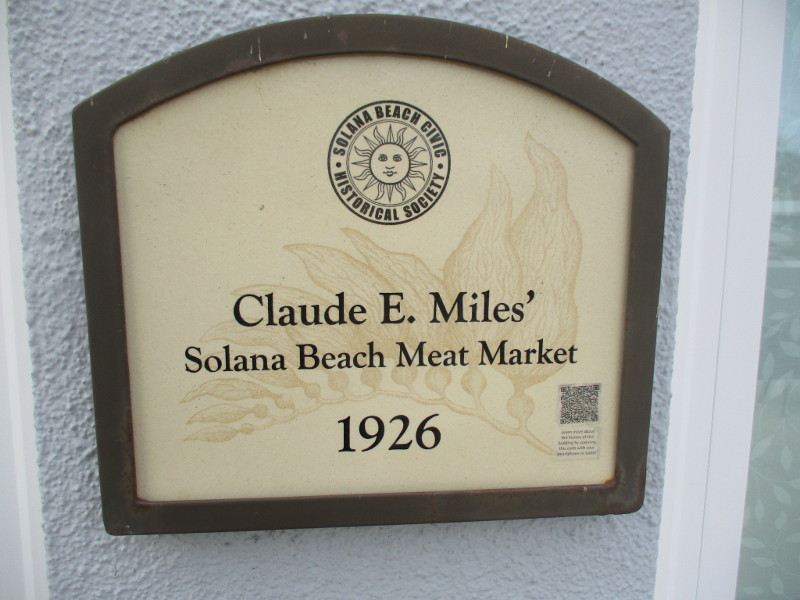
Walk along Highway 101 in Solana Beach and you might notice a series of plaques describing historical buildings.
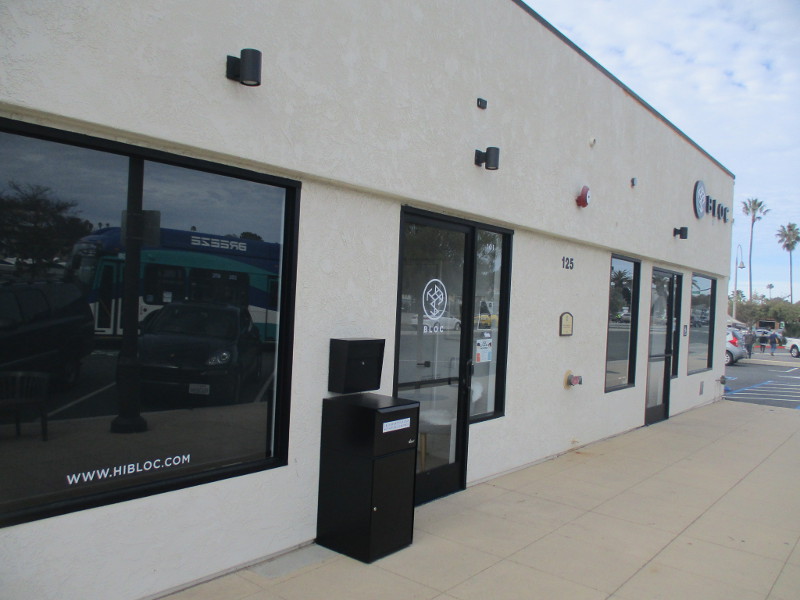
During my most recent adventure in Solana Beach, I took photos of several buildings and plaques immediately south and north of Plaza Street/Lomas Santa Fe Drive. This stretch of highway was the coastal town’s main street a century ago.
To learn more about these and other historical buildings, and to view a variety of interesting old photographs, visit this page of the Solana Beach Civic And Historical Society. They’re the ones who created the plaques.
This first batch of photos is from the 100 south block of Highway 101. All of these small, modest buildings are now home to local businesses, including an eatery and salon.
Stanley Estes’ Radio Service Shop, 1931.Howard and Irene Witmer’s Sandwiches, Fountain and Sundries, 1927.Ira E. Conner’s Meats, Groceries, Hardware and Dry Goods, 1925.Claude E. Miles’ Solana Beach Meat Market, 1926.William and Angie Kurtz’s Solana Beach Drug Store, 1928.
The next three photographs were taken on the 200 north block of Highway 101…
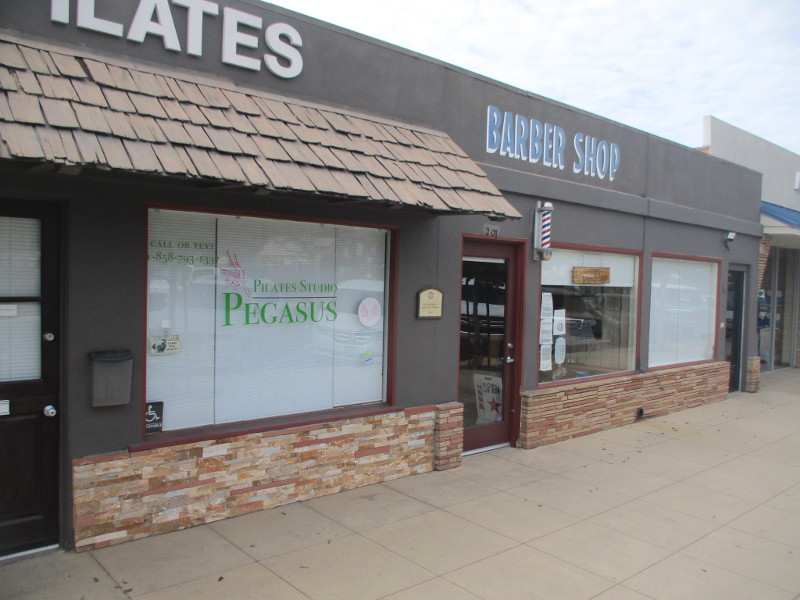
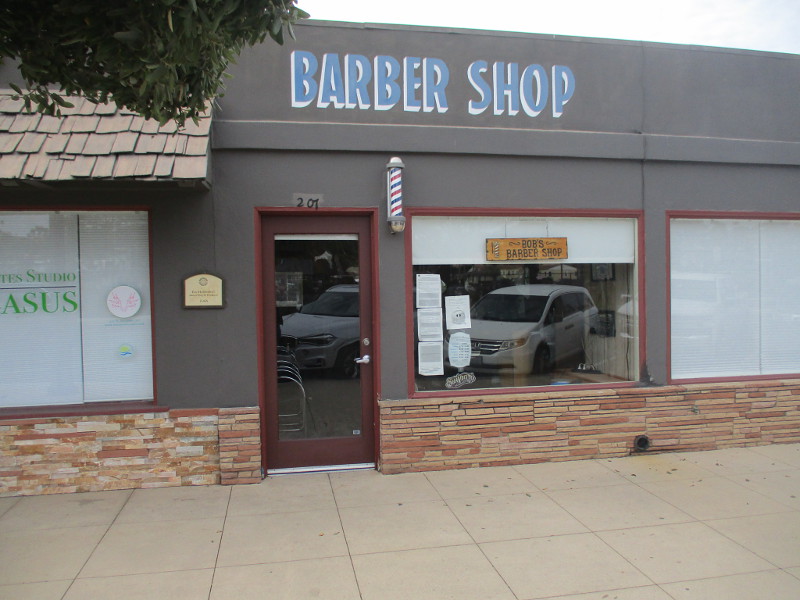
Ray Hobberlin’s Barber Shop and Residence, 1948.
…
I live in downtown San Diego and love to walk around with my camera! You can follow Cool San Diego Sights via Facebook or Twitter!
You can easily explore Cool San Diego Sights by using the search box on my blog’s sidebar. Or click a tag! There are thousands upon thousands of photos for you to enjoy!
































 Cool San Diego Sights!