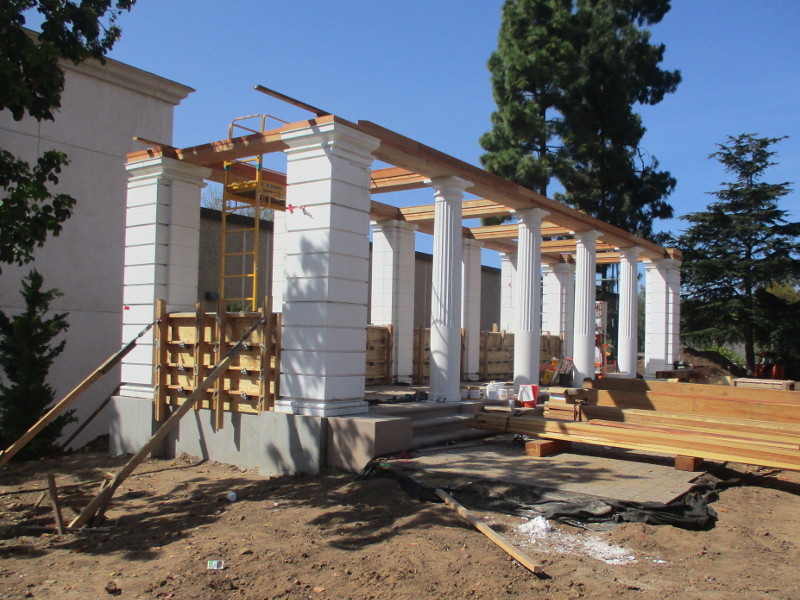
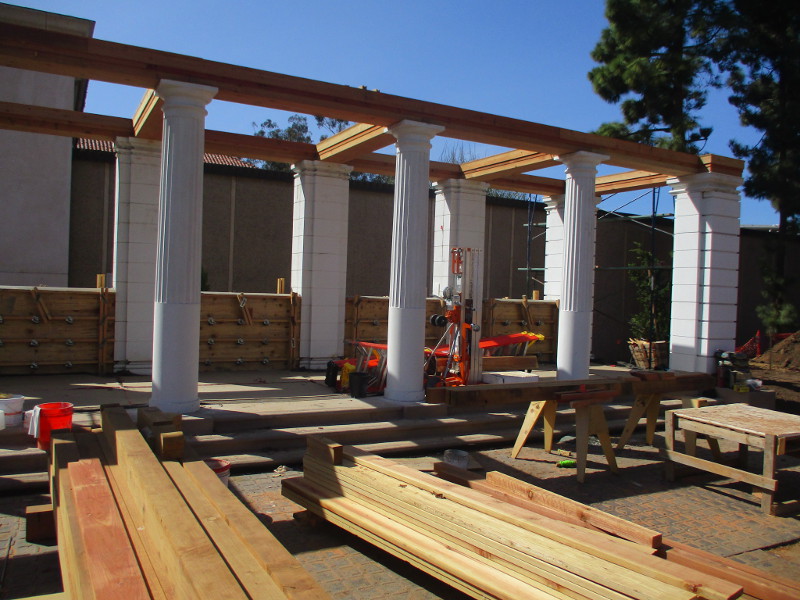
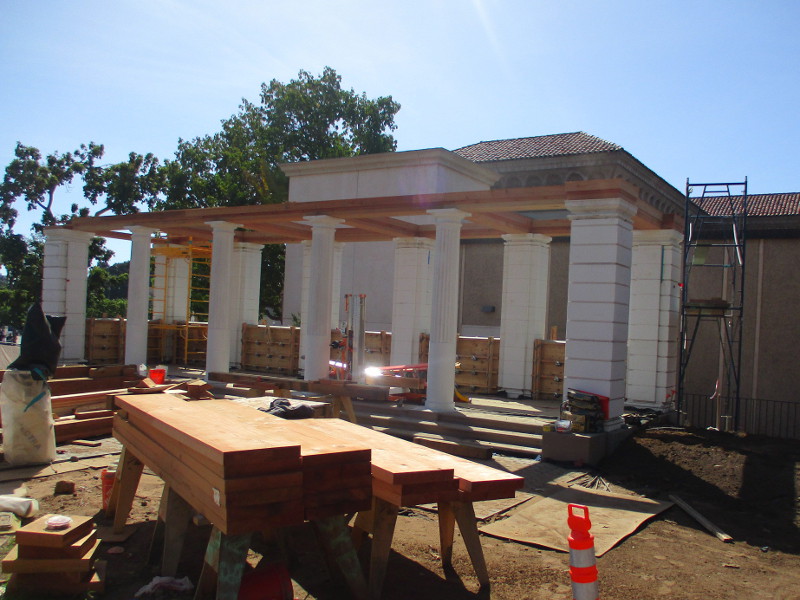
Oh my goodness! What is this impressive new structure being built in Balboa Park? With those elegant columns, is it some sort of ancient Greek temple?
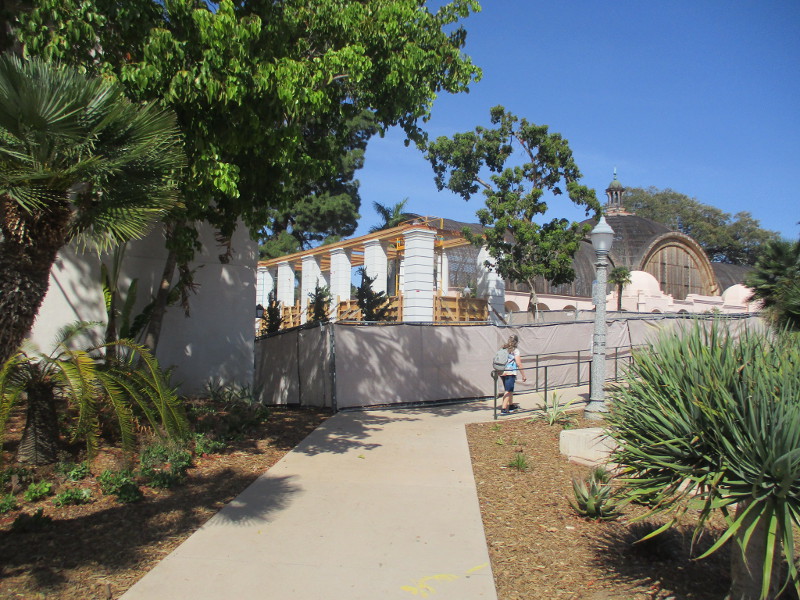
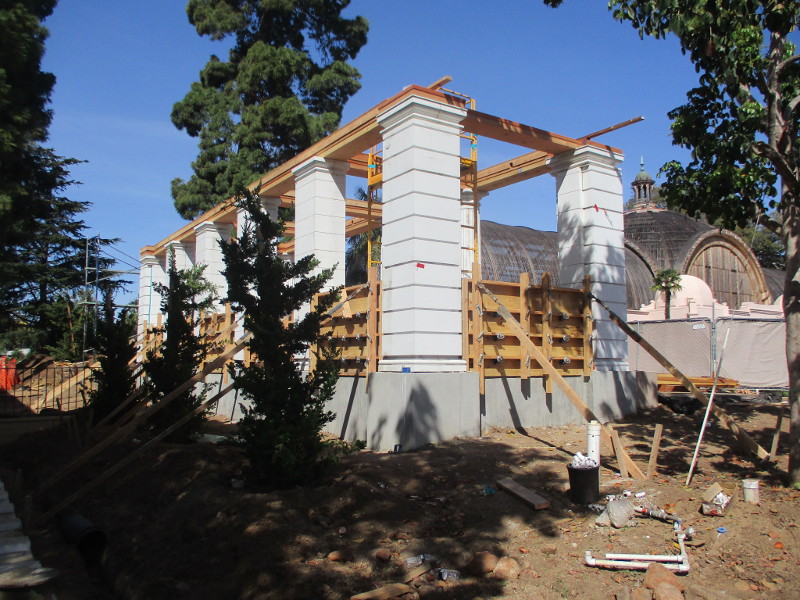
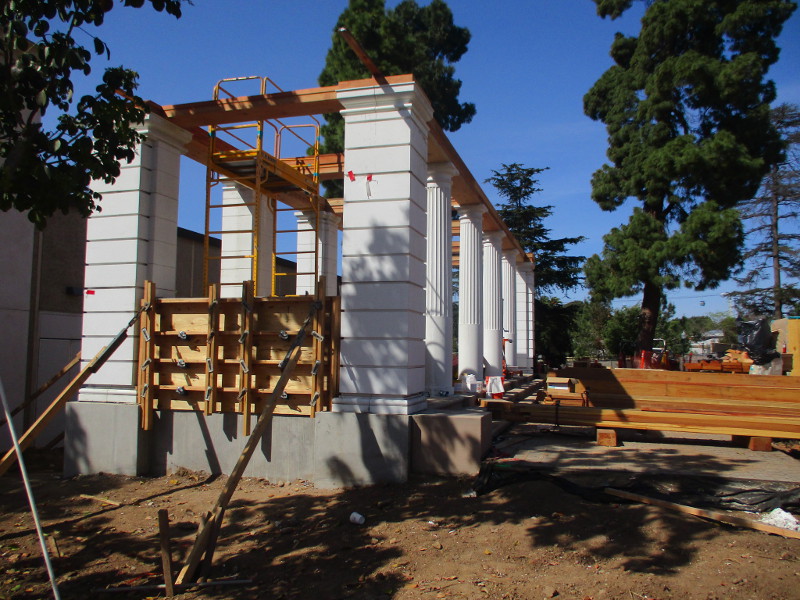
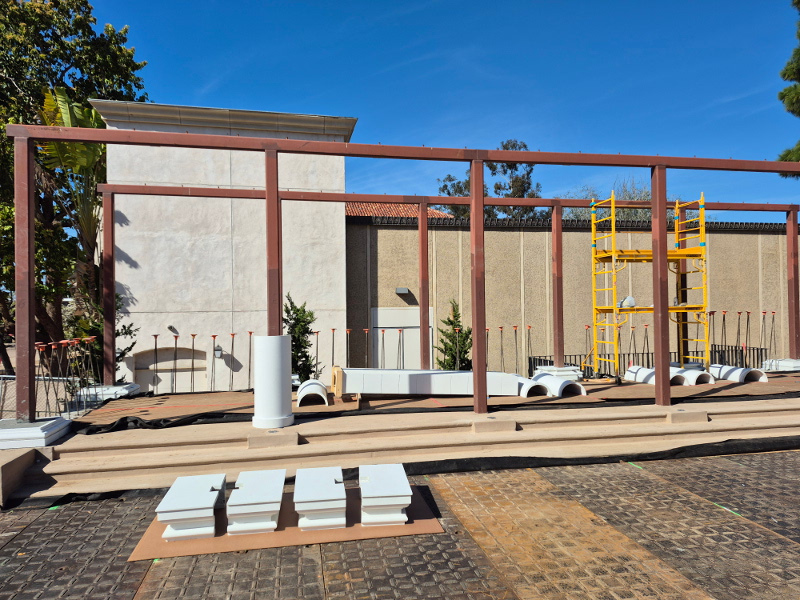
No! It’s the new pergola that will stand west of the Botanical Building!
The Botanical Building Pergola recreates one of twelve pergolas that originally graced Balboa Park during the 1915 Panama-California Exposition. And you can tell already that it’s going to be amazing!
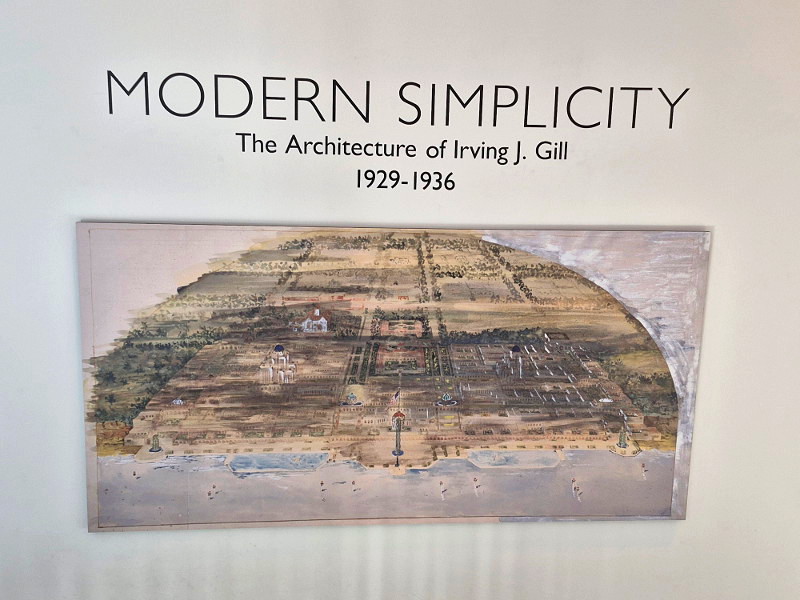
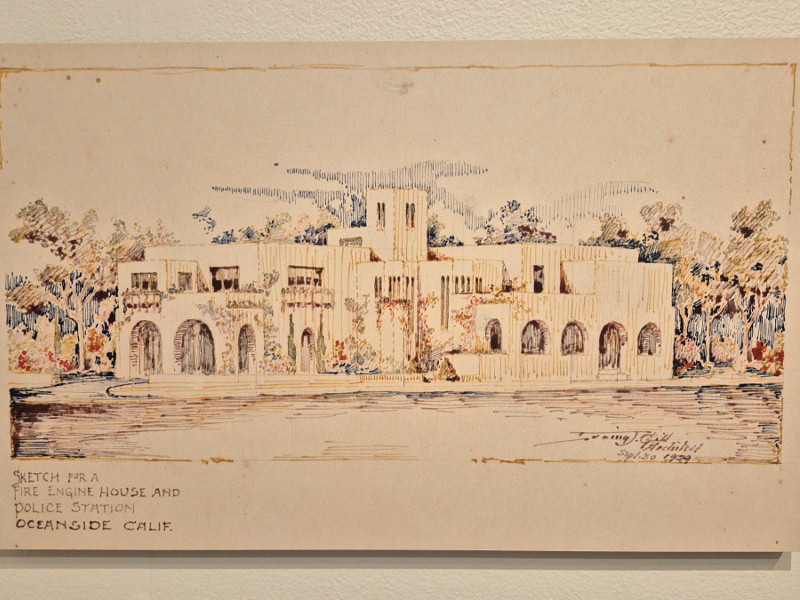
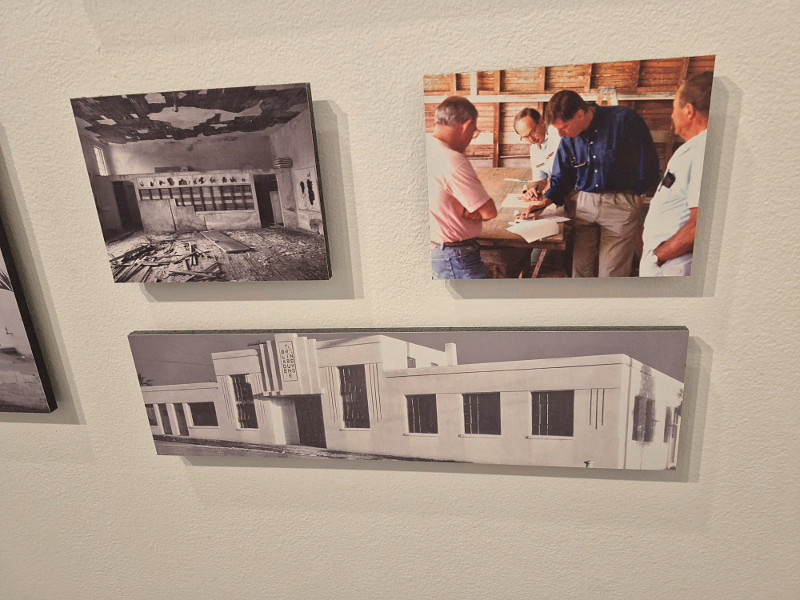
The Oceanside Museum of Art occupies a building that was designed by renowned architect Irving J. Gill. They soon will be expanding into an adjacent building also designed by Gill. So it’s appropriate museum visitors can now enjoy an exhibition titled Modern Simplicity: The Architecture of Irving J. Gill in Oceanside.
Irving Gill is a name you might recognize. His architectural work can be found all around San Diego. He’s considered a pioneer of the modern movement in architecture. Twelve of his buildings throughout Southern California are listed on the National Register of Historic Places. (In nearly thirteen years of blogging, I’ve photographed much of his work. To find those past blog posts, click here.)
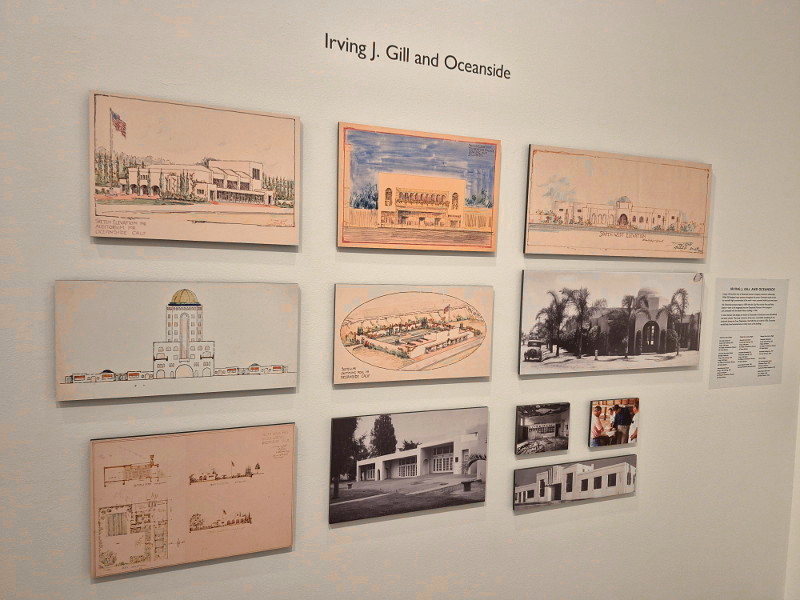
As the exhibition webpage explains: The City of Oceanside is home to several notable examples of Gill’s later work, including two landmark buildings that define the east-west axis of the Oceanside Museum of Art (OMA) campus: the former 1934 City Hall and the original [1929] Fire Station #1 and police station.
In Oceanside he also designed the Americanization School (1931), the Nevada Street Kindergarten (1931), the Blade Tribune building (1936), and several others. The exhibition documents his buildings with fascinating information and historical drawings and photographs.
The exhibition explains how Irving was inspired by Southern California’s climate and stripped architecture of unnecessary ornament and focused on pure geometric form.
People might not realize it, but many buildings and houses around San Diego were greatly influenced by the vision of one man: Irving J. Gill. In Oceanside–and now at the museum exhibition–that inspired vision comes to life.
…
To follow my blog, find the “Follow” box in this website’s sidebar. Or bookmark coolsandiegosights.com and swing on by occasionally!
(If you’re viewing this on a phone, open my website’s sidebar by tapping those three parallel lines at the top of the page.)
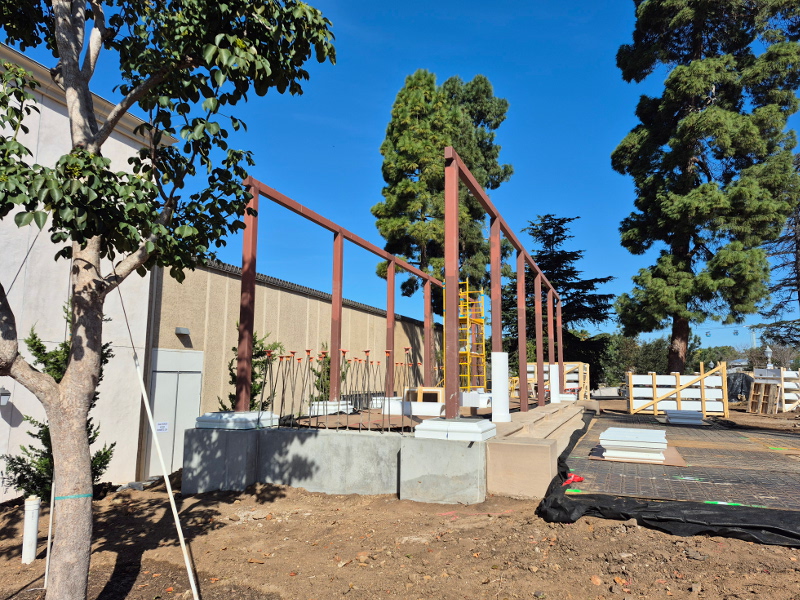
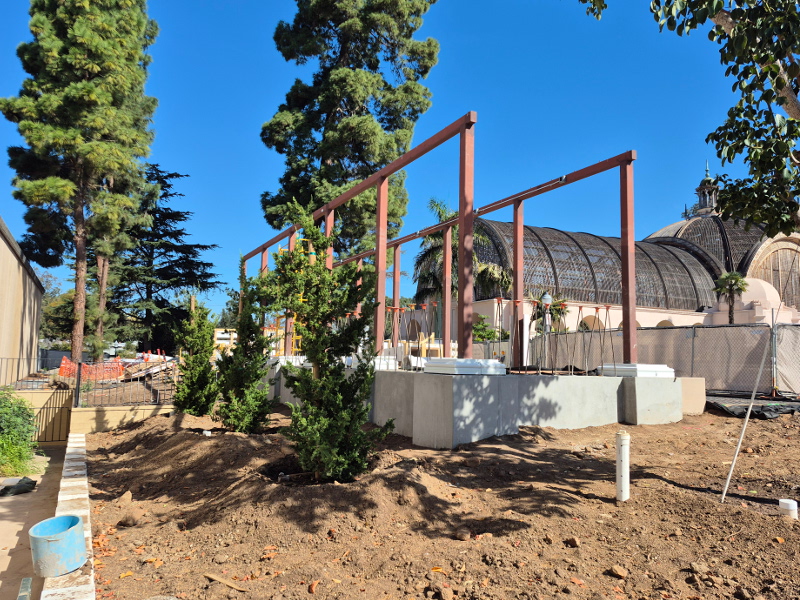
The historical pergola that’s being recreated in Balboa Park is making great progress! Just a quick post to show what I observed yesterday.
Trees have been planted behind the structure. Steps are being installed in front of it. Columns are appearing. Looks like other features are on the way, too!
This pergola recreates one built for the 1915 Panama-California Exposition–but since long gone. The structure is rising near the west end of the Botanical Building, at the perimeter of the new Central Gardens, which are also now being developed.
When all is finished, it’s sure to be beautiful!
…
To follow my blog, find the “Follow” box in this website’s sidebar. Or bookmark coolsandiegosights.com and swing on by occasionally!
(If you’re viewing this on a phone, open my website’s sidebar by tapping those three parallel lines at the top of the page.)
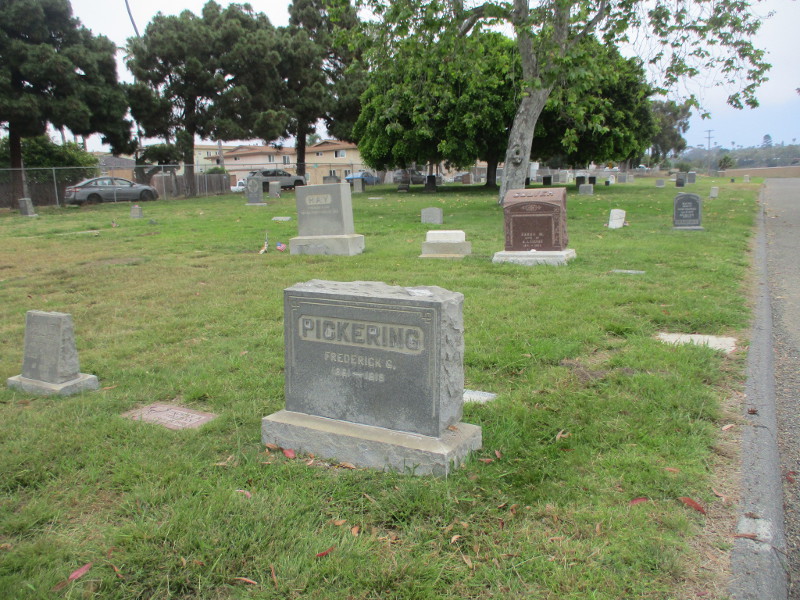
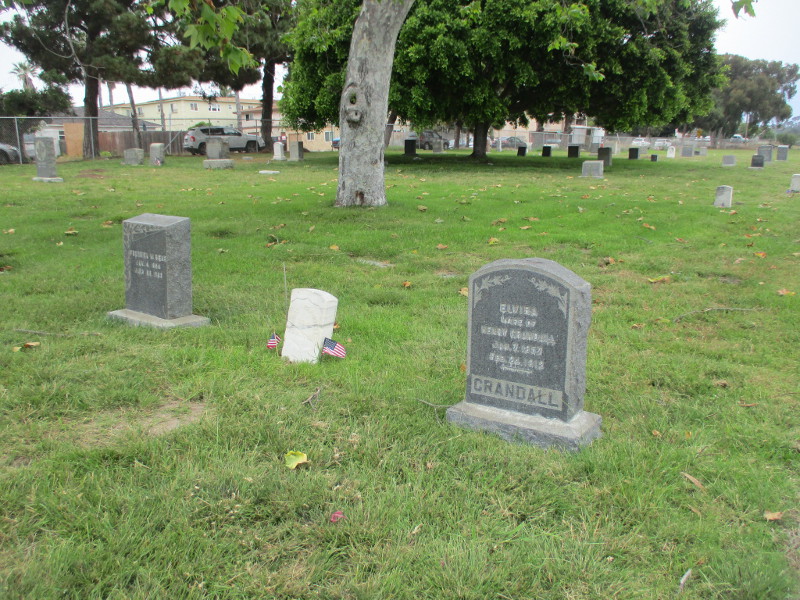
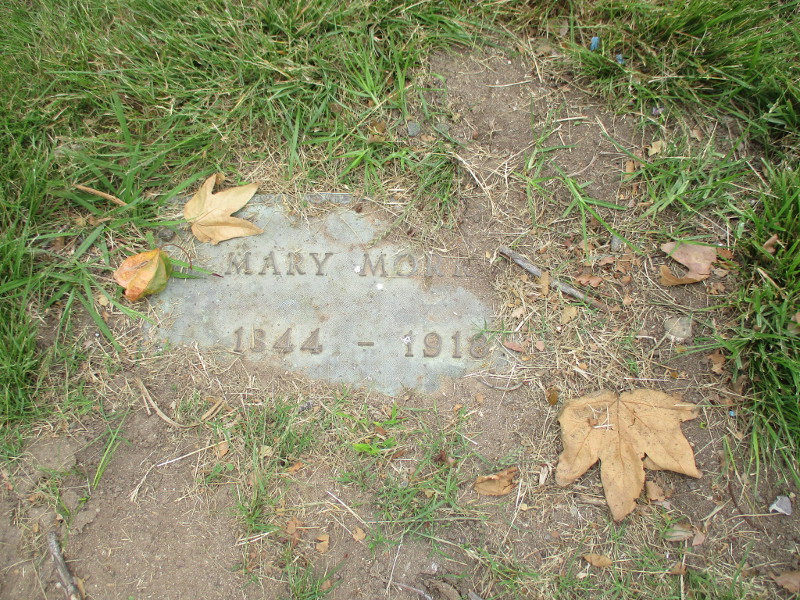
These are a few of the loving inscriptions on stone that linger in Oceanside’s old Oceanview Cemetery.
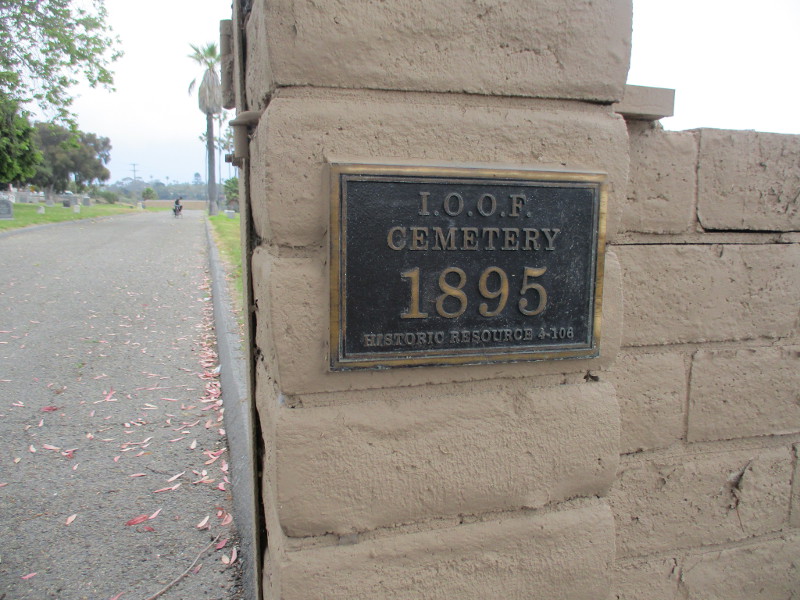
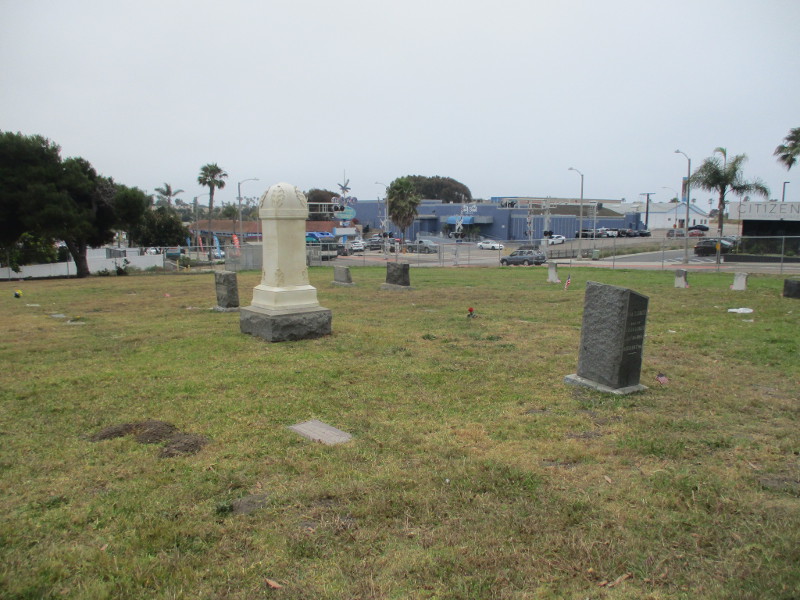
During a recent walk down South Coast Highway, I redirected my feet and wandered through the 3-acre resting place, originally called the I.O.O.F. Cemetery, established in 1895.
As a blogger who’s always searching for interesting sights, I was wondering if some “famous” person might be buried here.
Shame on me for thinking that way. I had missed the central message of a cemetery. It’s that we all might be mortal, but loves lives on.
From its inception in 1895 until about 1950, when Eternal Hills Memorial Park opened in Oceanside, Oceanview was the primary non-denominational cemetery in Oceanside. During its heyday in the 1920s, 30s and 40s there were well over 1000 burials at Oceanview… over 1100 obituaries have been compiled, by the Oceanside Historical Society, of people interred at Oceanview… Oceanview contains the remains of veterans involved in every war or conflict from the Civil War to World War II, inclusive. Those interred at Oceanview range in age from just a few hours old to Agapita Soliz whose family claimed she was 110 years old at the time of her death in 1941. Many of Oceanside’s pioneers and merchants, dating back to the 1880s, are interred at Oceanview.
…
To follow my blog, find the “Follow” box in this website’s sidebar. Or bookmark coolsandiegosights.com and swing on by occasionally!
(If you’re viewing this on a phone, open my website’s sidebar by tapping those three parallel lines at the top of the page.)
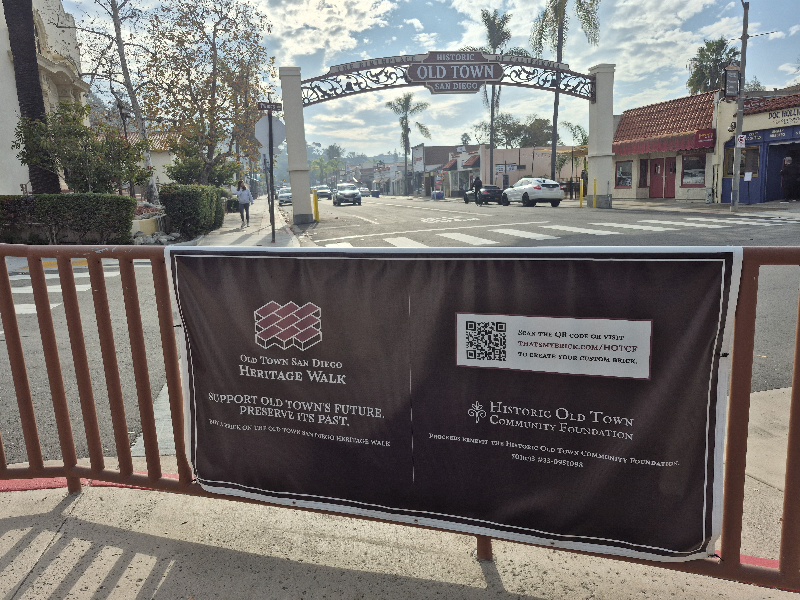
You have the opportunity to become part of history in Old Town San Diego!
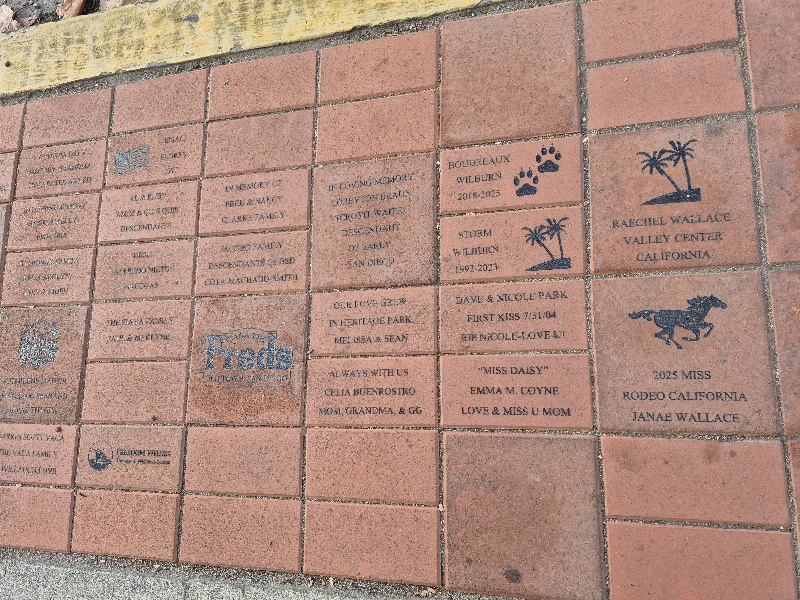
An initiative is underway to support Old Town. Anybody can purchase a customized, engraved brick for the new Old Town San Diego Heritage Walk, which lines the east side of San Diego Avenue. As you can see in my next photo, some bricks are already installed.
Your special brick can honor loved ones, promote a business, or perhaps share an inspiring message.
To learn more about this opportunity, visit this website.
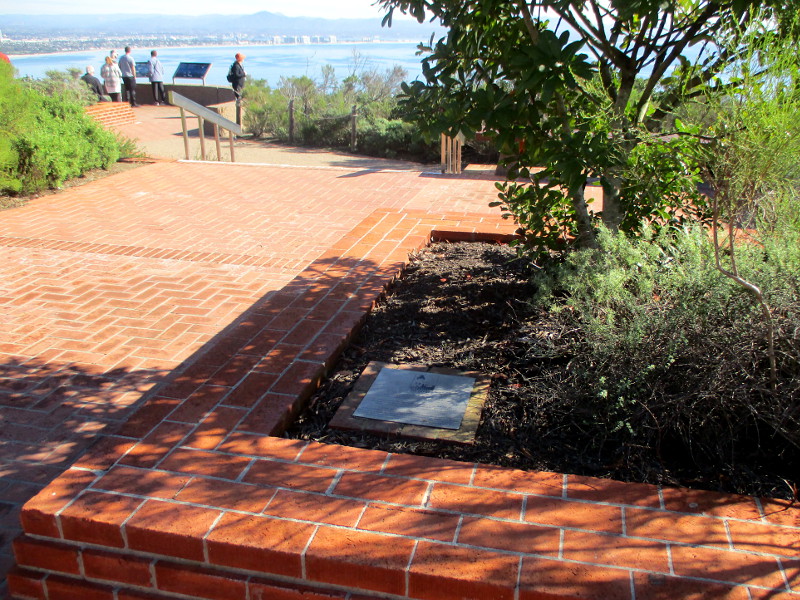
A time capsule was created during the Cabrillo National Monument centennial in Point Loma. It’s buried beneath a plaque in a brick planter near the entrance to the Visitor Center.
The plaque reads:
Beneath this sign lies a time capsule preserved in commemoration and celebration of the Cabrillo National Monument centennial, October 14, 1913-2013.
The contents inside this capsule are a collection of our first 100 years as San Diego’s only National Park unit. Its contents shall remain sealed for the next 100 years, not to be opened before October 14, 2113.
A message from the 2013 centennial employees: All that stand here before this plaque reading the words like so many who came before you; you are the future stewards of the National Park Service and we hope you continue to honor the tradition of protecting and preserving our most precious national treasures during this 2nd century of stewardship in our National Parks.
If you’d like to view an online “time capsule” of sorts, you can see photographs I took during the Cabrillo National Park centennial celebration back in 2013.
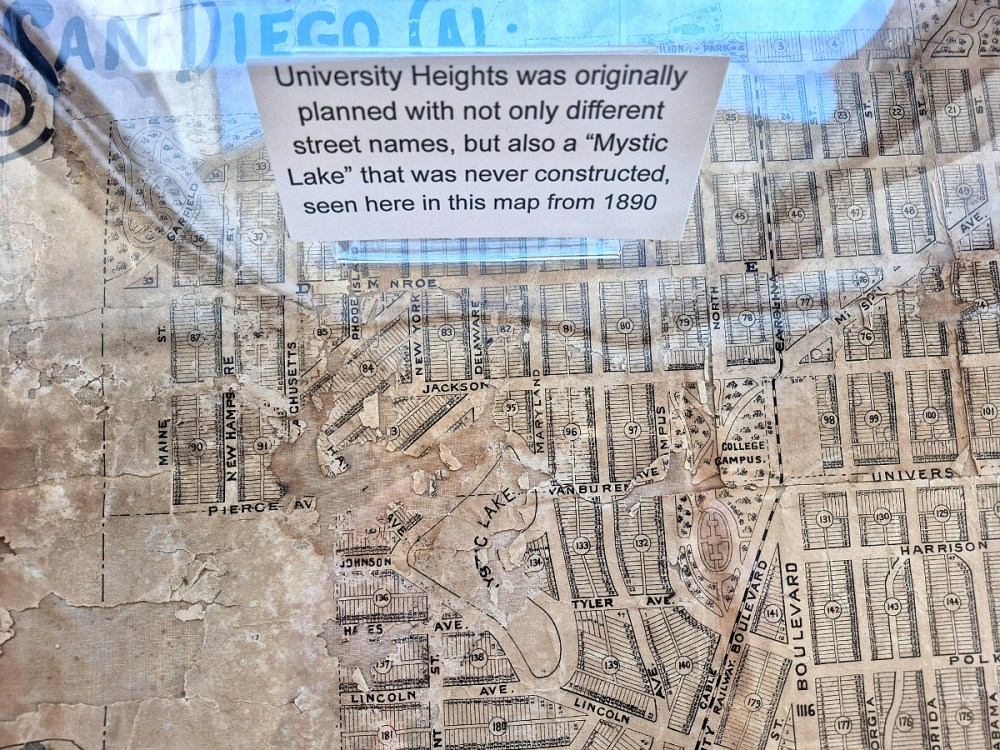
Did you know that a lake was originally planned for one of University Heights’ canyons? You’ll learn this and more should you visit the San Diego Central Library and view one of several small exhibits in the 9th floor Special Collections Center. Mystic Lake is one fascinating aspect of The San Diego That Never Was.
Looking at Google Maps today, and comparing it to the old 1890 map on display at the library, you can see how Mystic Lake would have fit into University Heights as planned in 1888. The lake’s lower extremity would have been cradled by Lincoln Avenue and Maryland Avenue. It was not to be.
As this informative webpage (which explains University Heights street names) explains: By 1906, Arch Street, Proctor Place, and New Jersey Street replaced the area originally planned to be Mystic Lake.
Mystic Lake would have been located a couple blocks directly west of the State Normal School, which was predecessor to San Diego State University. The site today is headquarters of San Diego Unified School District.
It’s interesting to see San Diego’s old cable car route on the 1890 map as a dashed line. The short-lived cable car line operated from June 1890 to October 1892. As this historical webpage explains, the San Diego Cable Railway ran from downtown San Diego north on Fourth to University, then east to present-day Park Blvd., and north to Mission Cliff Gardens.
(Today, one of those old cable cars is preserved at the National City Depot museum. Check out photographs of San Diego Cable Railway car number 54 by clicking here!)
…
To follow my blog, find the “Follow” box in this website’s sidebar. Or bookmark coolsandiegosights.com and swing on by occasionally!
(If you’re viewing this on a phone, open my website’s sidebar by tapping those three parallel lines at the top of the page.)
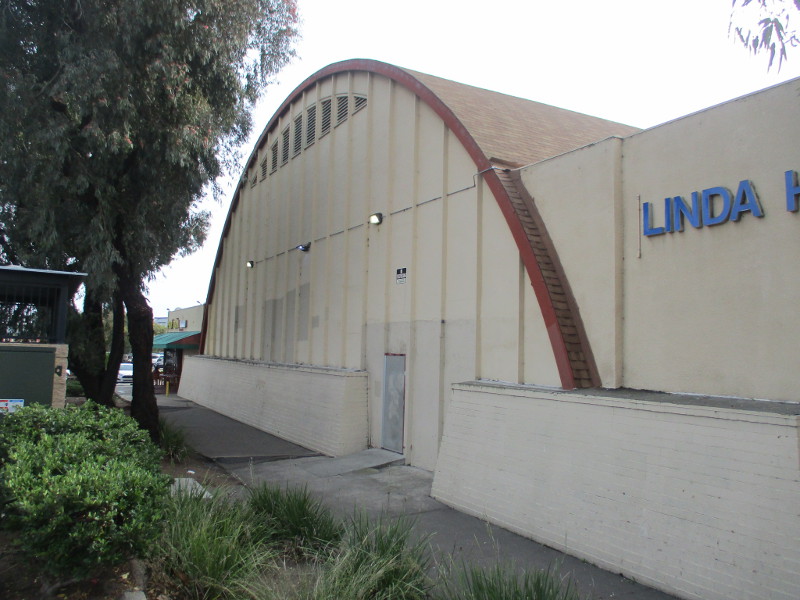
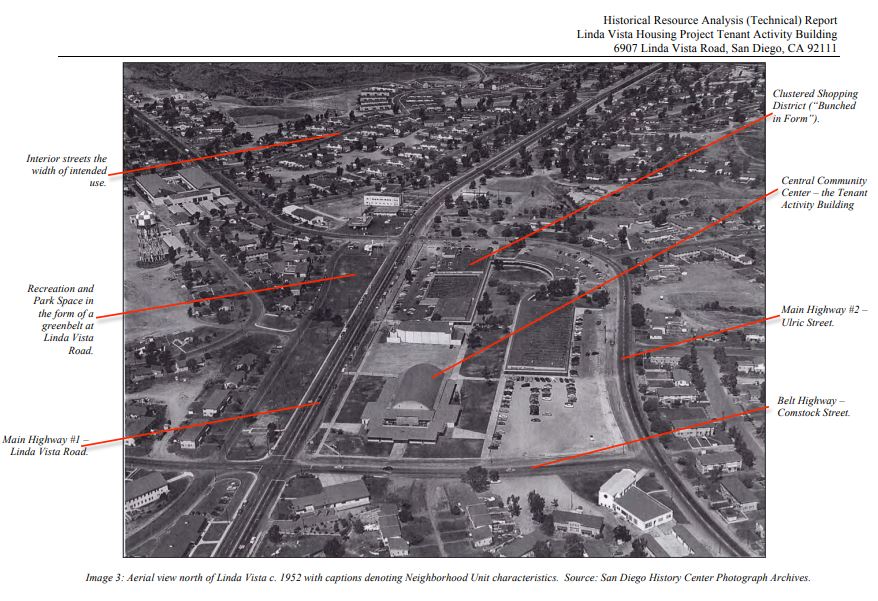
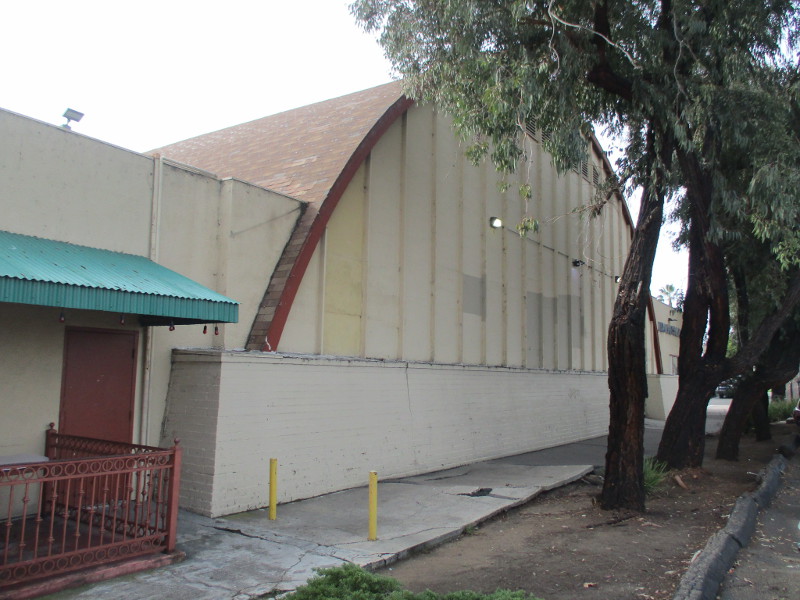
Skateworld, with a few other small businesses in Linda Vista, occupies a historically important building that was designed to be the center of community life during World War II.
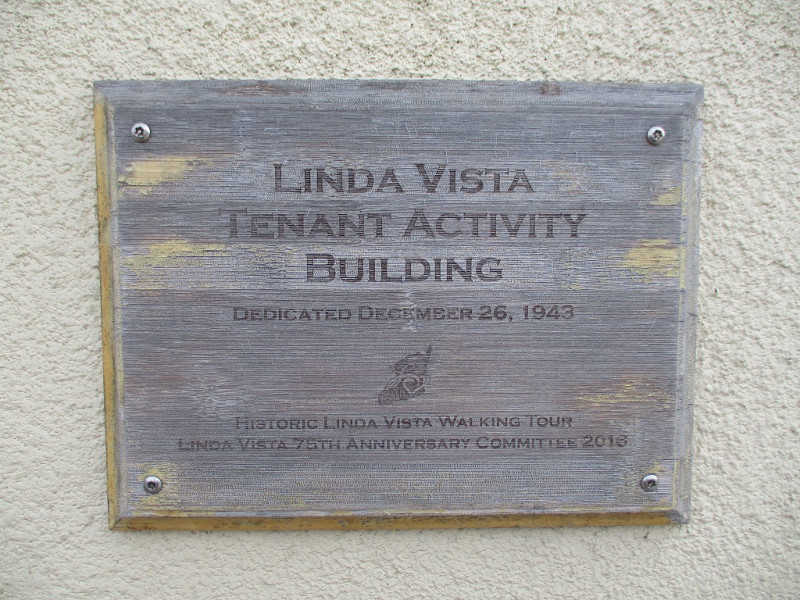
The Linda Vista Tenant Activity Building was dedicated on December 26, 1943 and stood at the center of the federally constructed Linda Vista Housing Project. The project provided 3001 dwelling units for aircraft and shipyard defense workers in San Diego during the war.
A historical plaque a short distance up Linda Vista Road provides more information about the government housing project. See past photographs of that plaque here.
The Tenant Activity Building was designed like a field house or drill hall and served as a hub for social events, clubs, and all-ages activities. It would later be considered for historic designation due to its role in supporting war-effort morale and its unique architecture.
You can read the 2011 Historical Resource Analysis (Technical) Report on the City of San Diego website by clicking here. The report contains a great deal of additional information, including photographs.
Here’s a circa 1952 aerial view of the Linda Vista House Project and its Tenant Activity Building from the report. The center of the building with its high barrel roof today provides a perfect, roomy space for roller skaters at Skateworld.
…
If you’d like to see San Diego through my lens, find the “Follow” box in the sidebar to receive new posts in your email, or bookmark coolsandiegosights.com and swing on by occasionally!
(If you’re viewing Cool San Diego Sights on a phone, you can open my website’s sidebar by tapping those three parallel lines at the top of the page.)
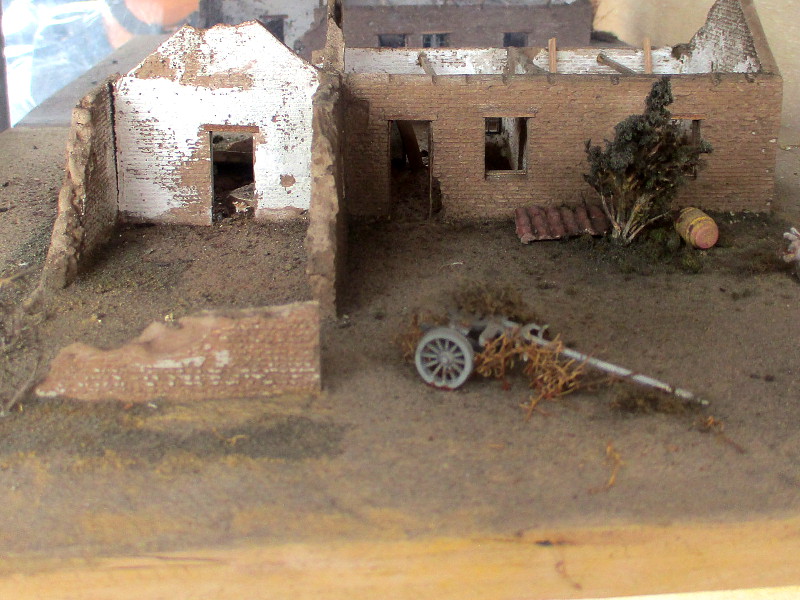
It’s unlikely you’ve seen these amazing models of buildings and life in Old Town San Diego. That’s because they’re well off the beaten track, inside slowly disintegrating displays on Conde Street, behind Cafe Coyote.
Eight years ago I blogged about the neglected display cases along the sidewalk. They contain faded, crumbling photos and other historical material. You can read my past blog post by clicking here.
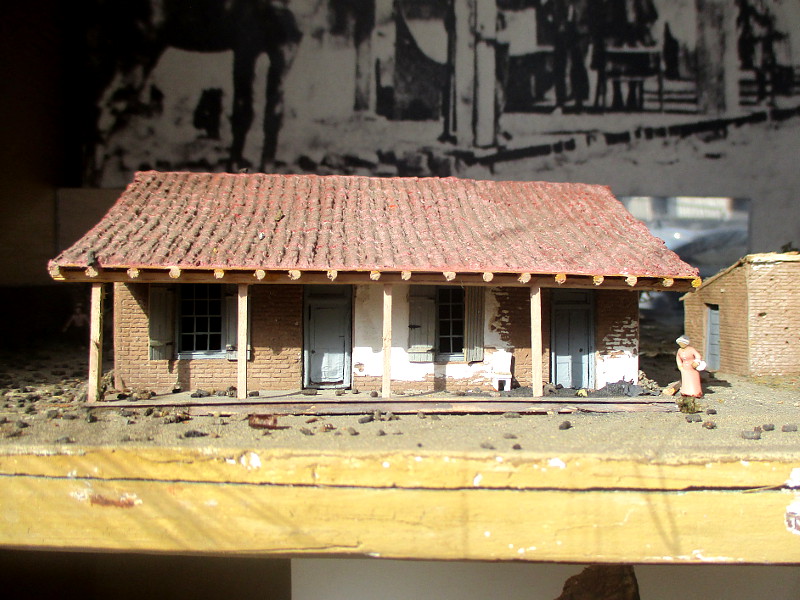
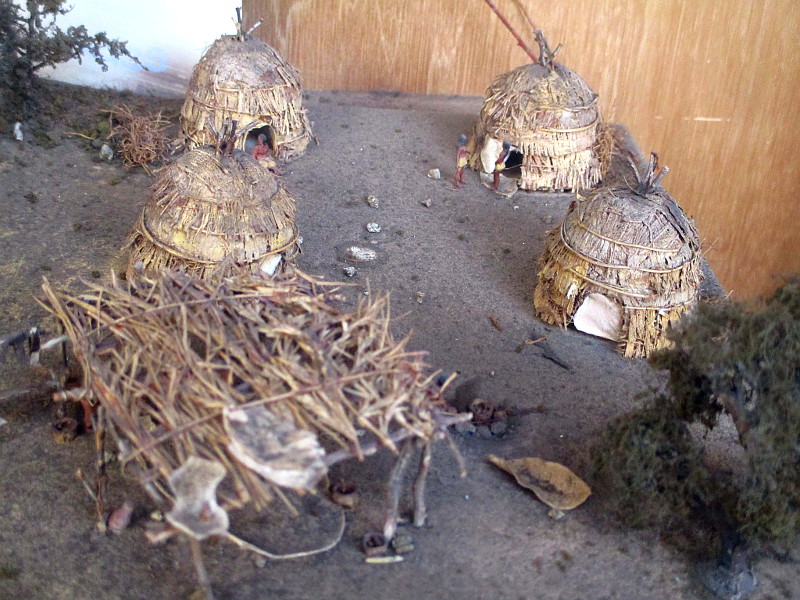
I walked by again today, and when I peered through the scratched, dirty glass I discovered several models of early structures in Old Town. They appear to contain more detail than similar models inside Old Town San Diego State Historic Park’s visitor center!
I pressed my camera right up against the glass and sharpened my blurry photos.
Do you know who created these beautiful models? Leave a comment.
The above photograph shows a model of an early Old Town adobe. I’m not sure which adobe. There are no labels.
Next, here’s a model of a Kumeyaay village–presumably Kosa’aay which was located nearby on the San Diego River. The native Kumeyaay long predated the arrival of Spanish missionaries and the establishment of Old Town…
Peering into the display case, I found another great model. This one appears to depict an adobe in decay. I had to crop the photo because a mirror behind it was showing the shirt of yours truly.
Whoever made these detailed models spent much time and care!
If you happen to walk down San Diego Avenue and come to Conde Street, turn the corner. Look for the outdoor display cases across the street from the Old Adobe Chapel.
…
If you’d like to see San Diego through my lens, find the “Follow” box in the sidebar to receive new posts in your email, or bookmark coolsandiegosights.com and swing on by occasionally!
(If you’re viewing Cool San Diego Sights on a phone, you can open my website’s sidebar by tapping those three parallel lines at the top of the page.)
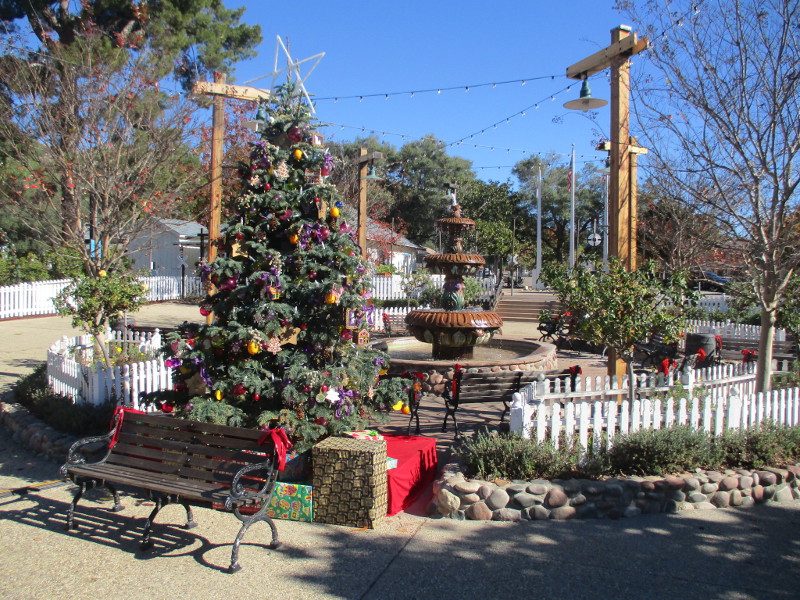
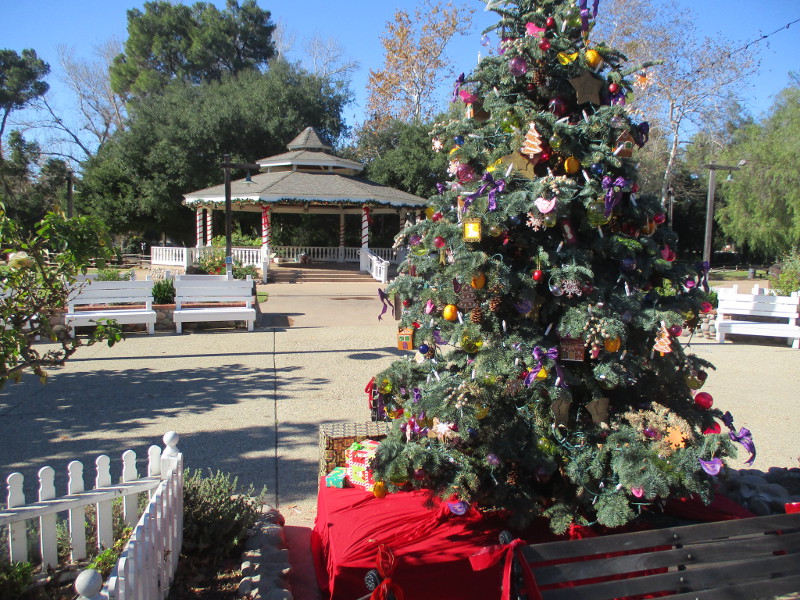
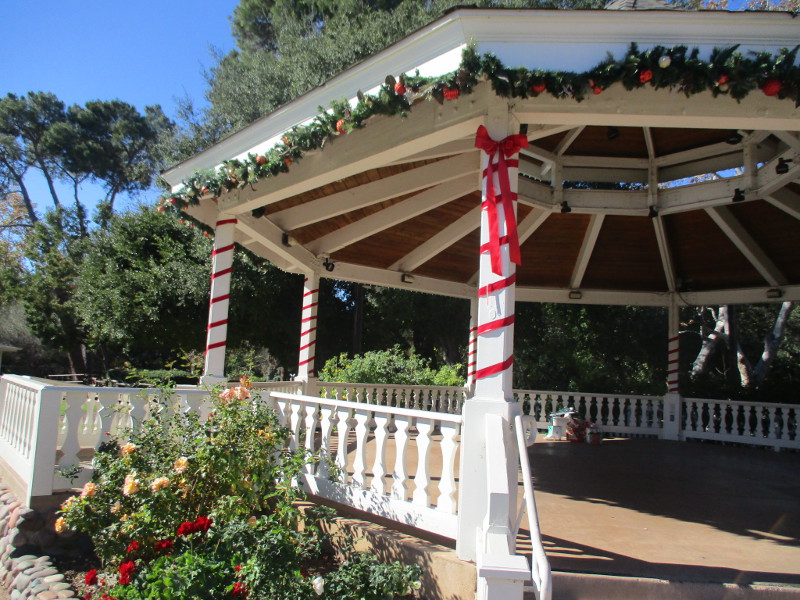
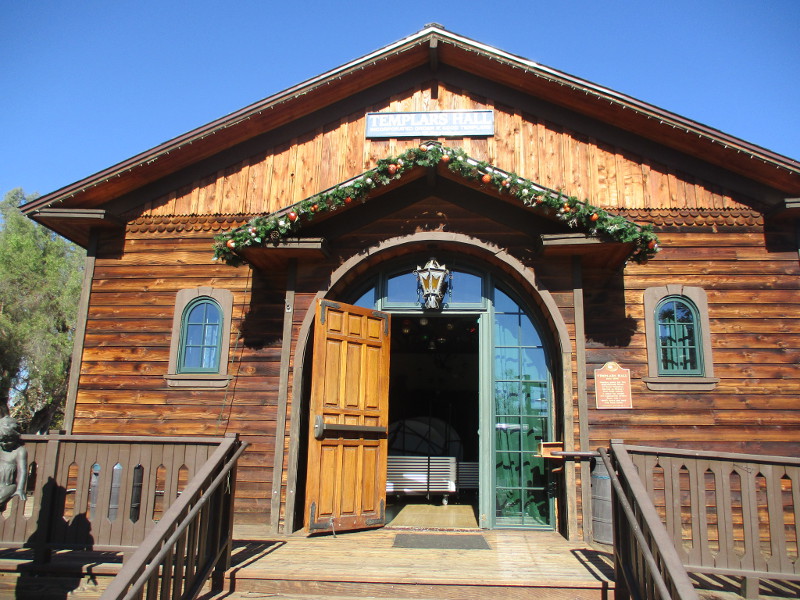
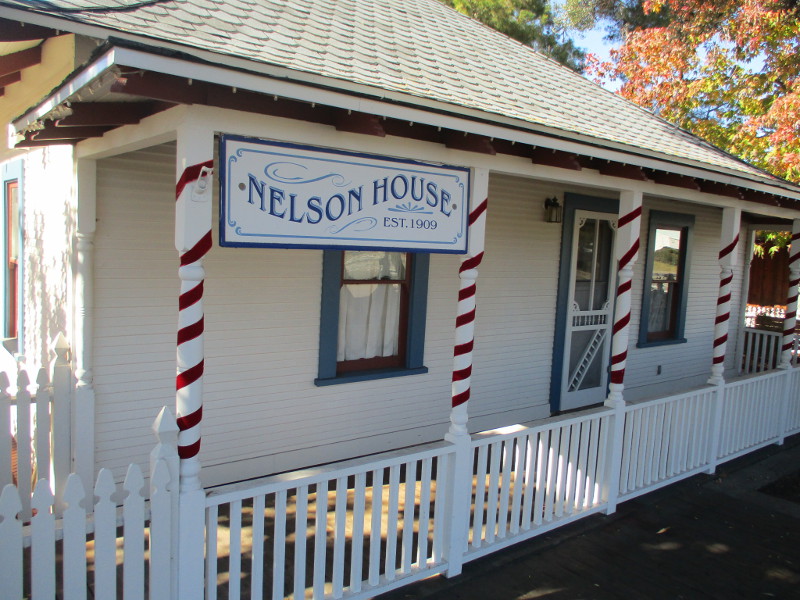
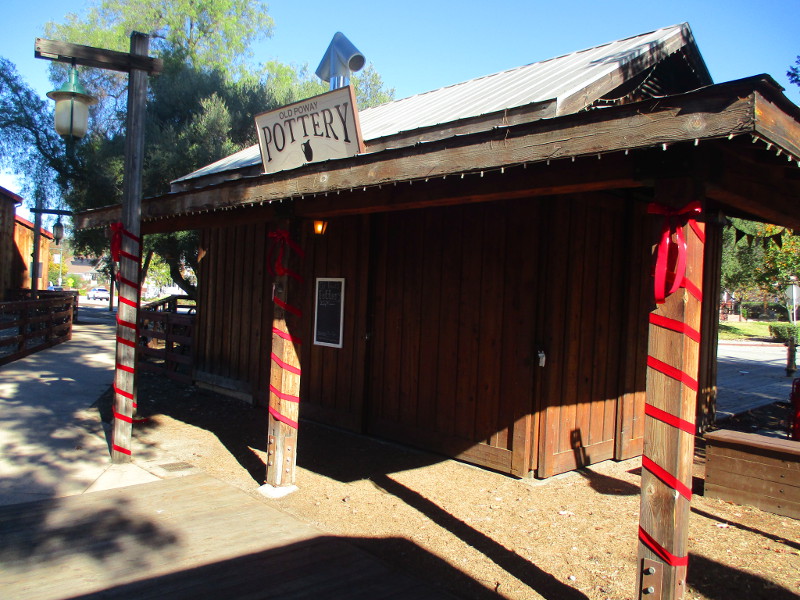
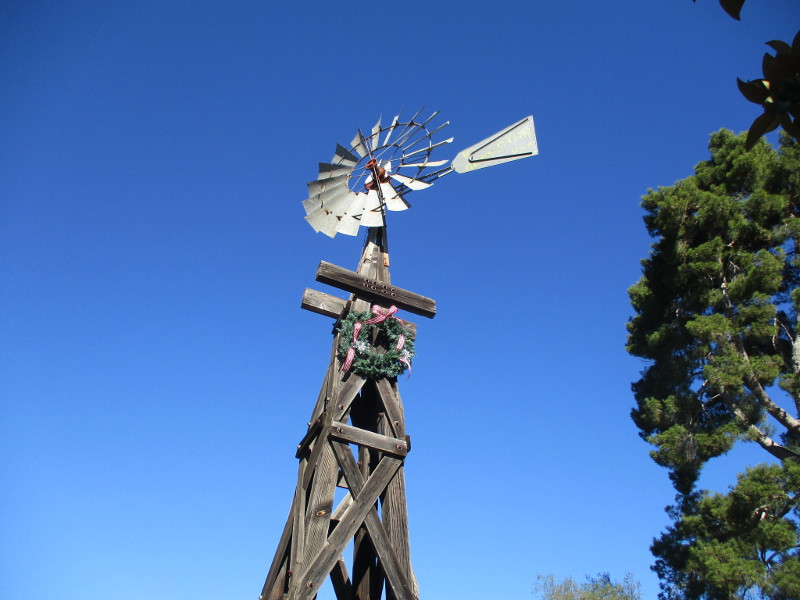
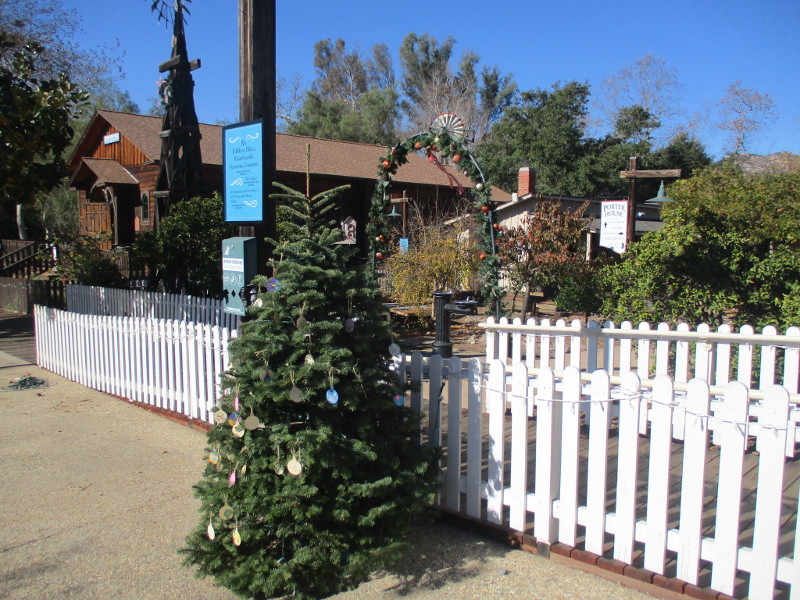
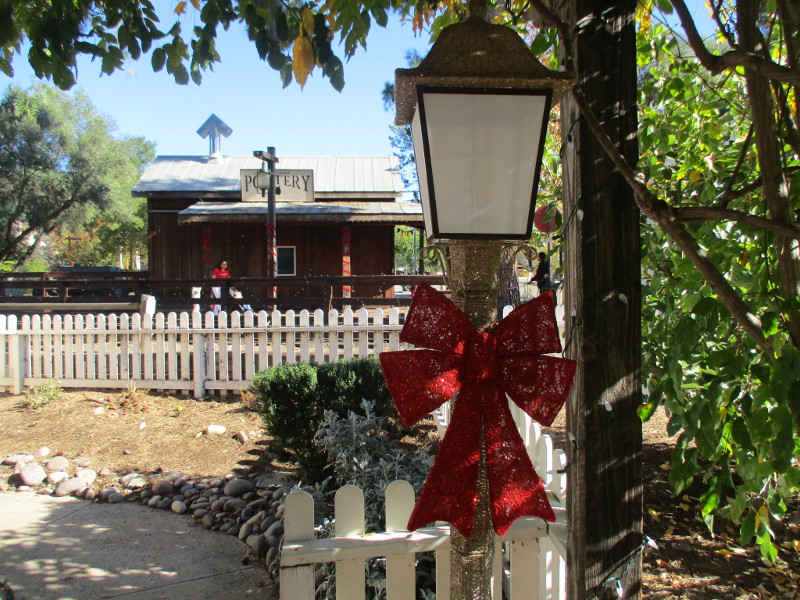
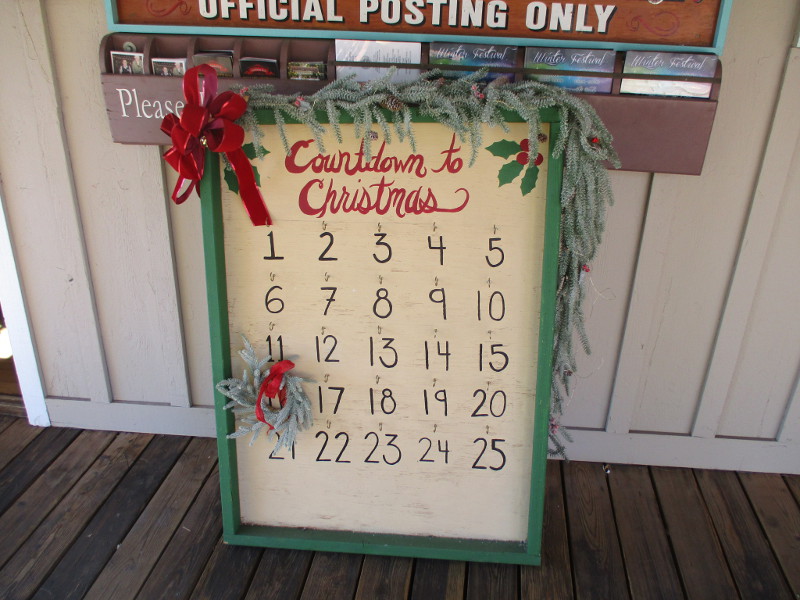
Imagine my surprise! Nine days until Christmas, and most of the holiday decorations at Old Poway Park are now being taken down!
A worker was removing holiday decorations today as I walked through the historic park. My arrival was just in time to photograph ribbons, wreaths and ornaments before they vanish. Yes, a bit sad.
I was told everything except the lights and Christmas trees (stripped of ornaments) will remain. The big annual “Christmas in the Park” event was held several days ago.
Folks in the Old Poway Park office explained the pre-Christmas removal is being done to preserve the decorations from the weather.
I’m glad I took my Poway walk today and got these photos!
…
If you’d like to see San Diego through my lens, find the “Follow” box in the sidebar to receive new posts in your email, or bookmark coolsandiegosights.com and swing on by occasionally!
(If you’re viewing Cool San Diego Sights on a phone, you can open my website’s sidebar by tapping those three parallel lines at the top of the page.)





 Cool San Diego Sights!