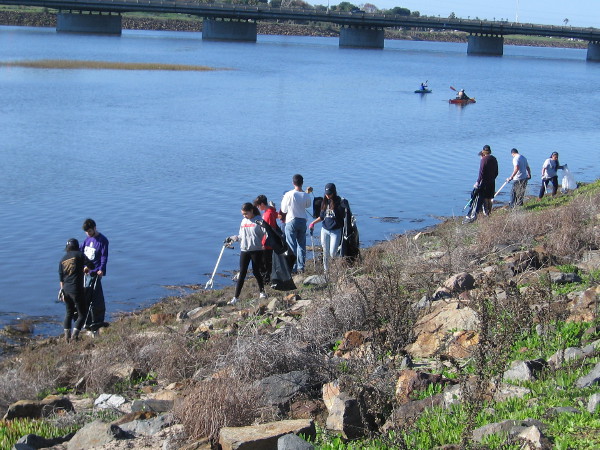
Many ordinary people came out today to help clean up the San Diego River Estuary.
Lots of good people volunteered to clean up the San Diego River Estuary today. Some took to kayaks, others walked along the shoreline, filling bags with nasty litter and debris. The river estuary, emptying into the Pacific Ocean between Mission Bay and Ocean Beach, is a very important wetland in this region, and millions of birds rely on it during their migrations. Small bits of trash ingested by birds and other wildlife can be fatal.
The estuary cleanup was organized by The San Diego River Park Foundation. Kayakers are permitted to enter the San Diego River Estuary only one time every year–during this special event. I walked along the river and saw what ordinary people can achieve when working unselfishly for the good of our world.
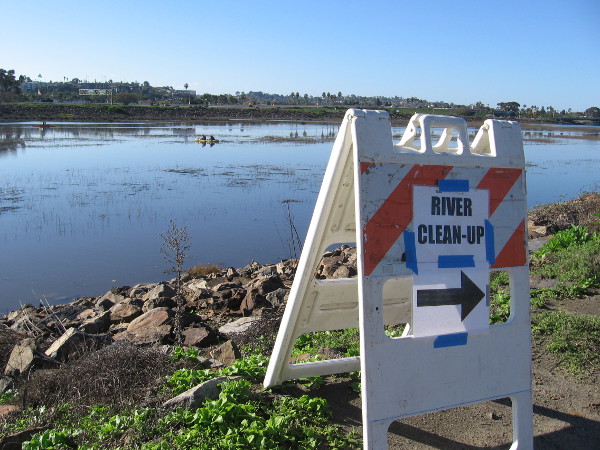
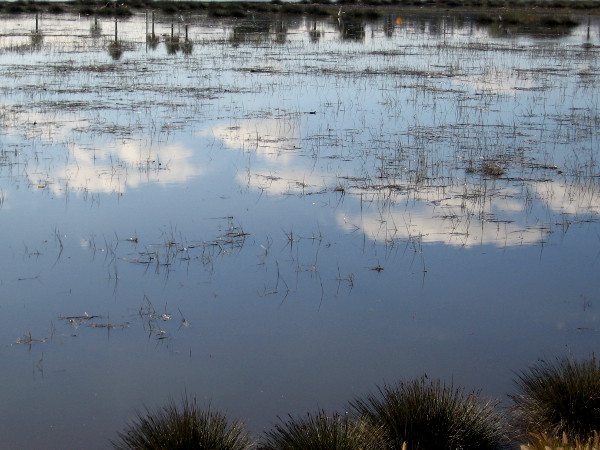
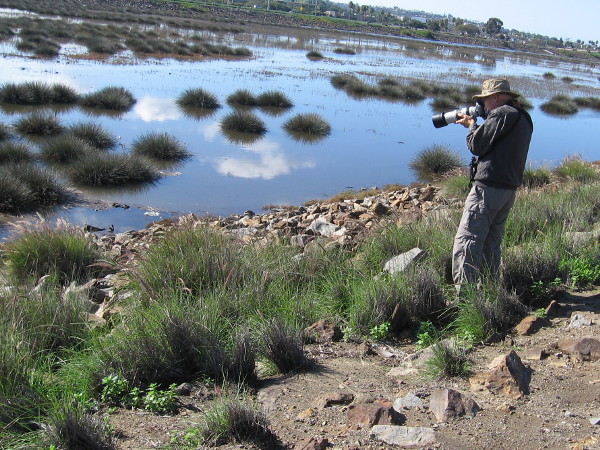
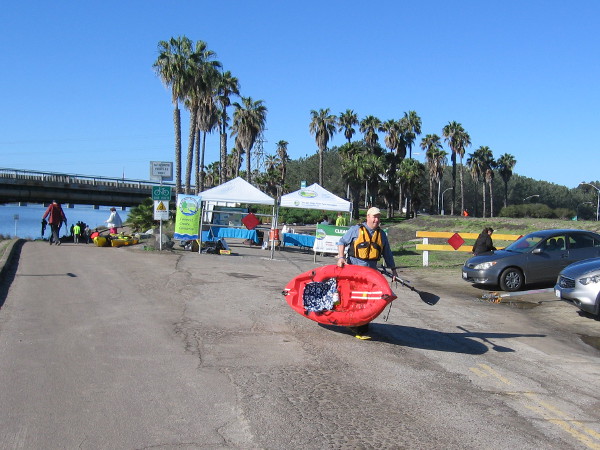
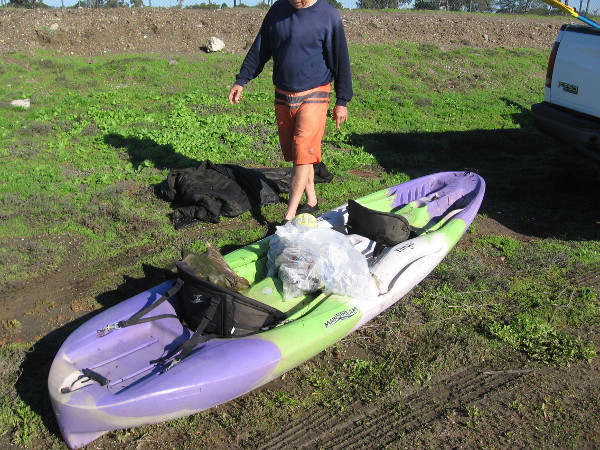
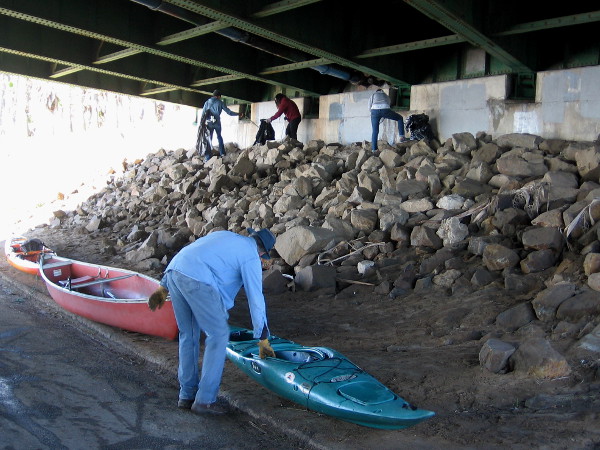
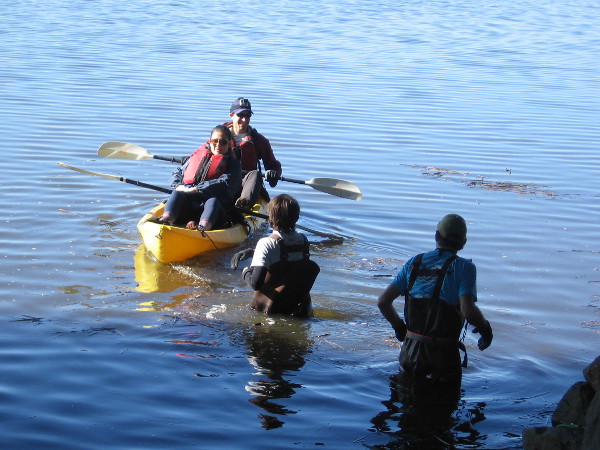
A sign directs people to the river cleanup.Beautiful white clouds are reflected in the calm water of the San Diego River as it approaches the ocean.Many birds make the river and its mud flats their home, including ducks, herons and egrets.A photographer captures images of waterfowl swimming through grass down the river.My camera isn’t quite so fancy, but I did get an okay photo of this snowy egret!As I walked west along the San Diego River, I noticed a number of kayaks out on the water.A sign by the river describes the problem of stormwater pollution. During rains, a good deal of runoff enters the estuary, carrying all sorts of pollutants and trash. (I had to really alter this photograph so we could make out what the old sign says. Click the image to enlarge it.)A cleanup volunteer with a kayak is arriving!Plastic bags in these kayaks have been filled with garbage found in the river. I learned much of it was snagged in the grass.Dozens of caring people were on the rocky river shore, looking for trash.San Diego is fortunate to have many thoughtful people, concerned about our environment.Volunteering is often a family affair, teaching the next generation about generosity and responsibility.This guy was carrying his kayak back to his car.Another guy showed me the trash he collected. He said he found a variety of garbage. Some flows downstream. Some of it is windblown. Some comes from Interstate 5 and other bridges which cross the river nearby.A tent where people can sign up to volunteer and learn more about The San Diego River Park Foundation.From the mountains to the ocean, we care for the San Diego River!Sadly, the river isn’t healthy. A grade is assigned each year based upon trash, water quality and the extent of invasive plants.Sign shows volunteering possibilities. (Click these sign images to read–they will enlarge.)Picking up garbage and readying kayaks underneath the West Mission Bay Bridge.Collected trash was placed in a nearby dumpster.Smiles in the San Diego sunlight. A perfect day to make our world cleaner, healthier and more beautiful.Kayakers launch into the San Diego River during a special event to clean the estuary.
…
I live in downtown San Diego and love to walk around with my camera! You can follow Cool San Diego Sights via Facebook or Twitter!
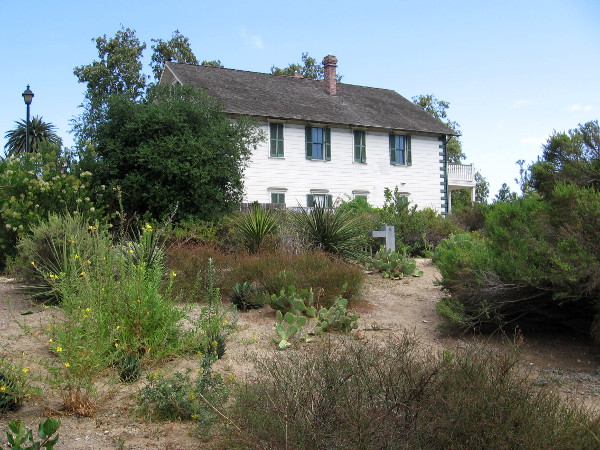
Photo of historic McCoy House in Old Town San Diego from the Native Garden. Today’s garden is located in a spot that was once very close to the San Diego River, before the river was diverted to the north, through Mission Valley.
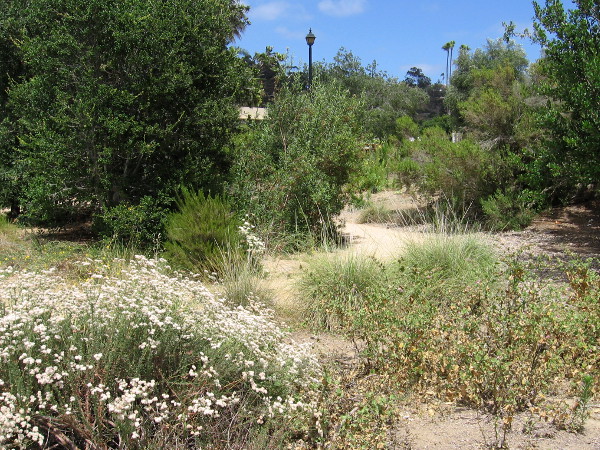
A small, ragged but beautiful native garden can be found in the northwest corner of San Diego’s Old Town, next to the McCoy House Museum. The Native Plant Garden contains vegetation that grows naturally along the rivers of our semi-arid region.
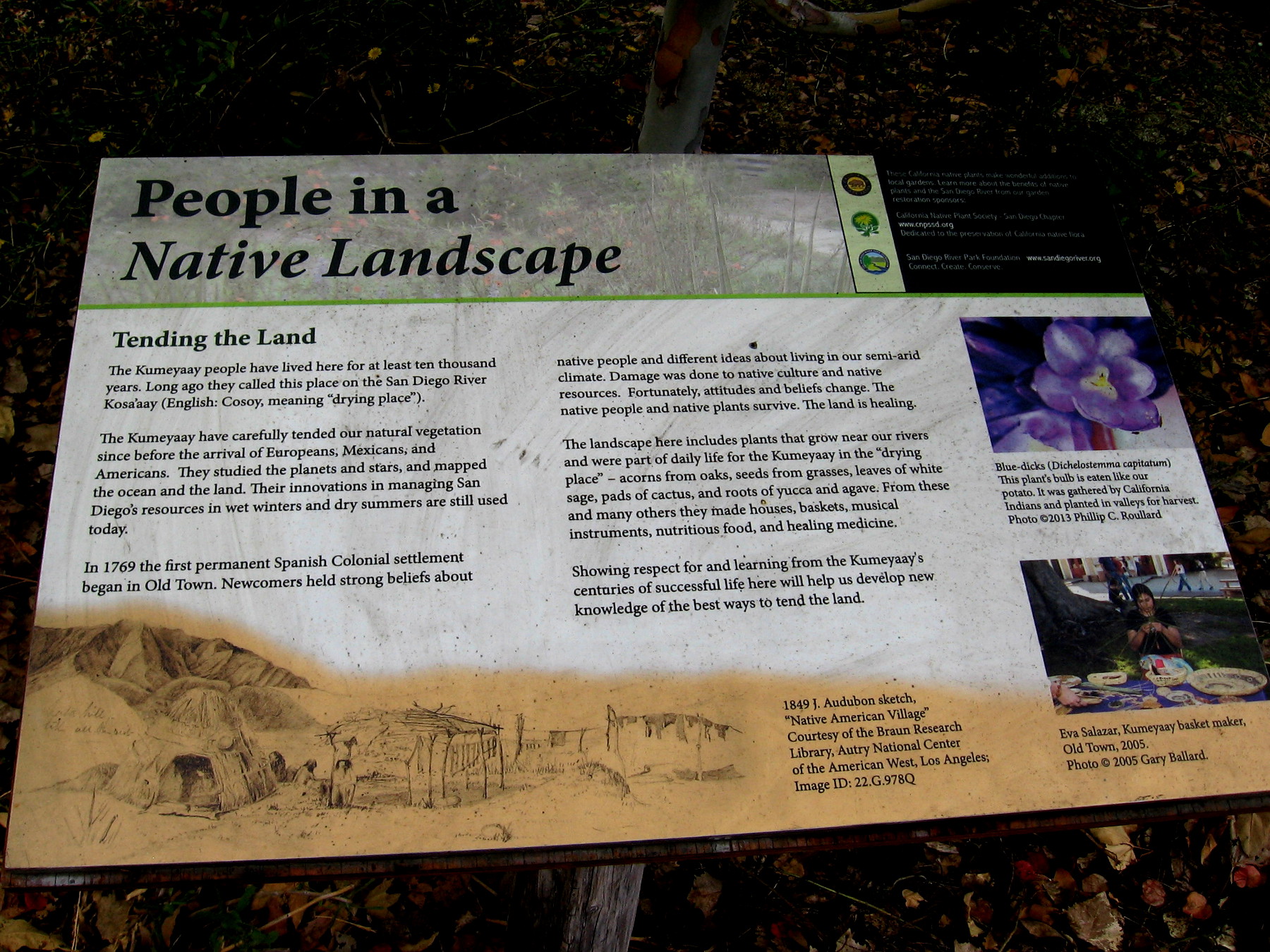
Long before Europeans arrived in Southern California, the Native American Kumeyaay lived where Old Town was eventually established; the Kumeyaay village at the base of Presidio Hill was called KOSA’AAY, or Cosoy. Many of the plants in the garden were used by the Kumeyaay people in everyday life.
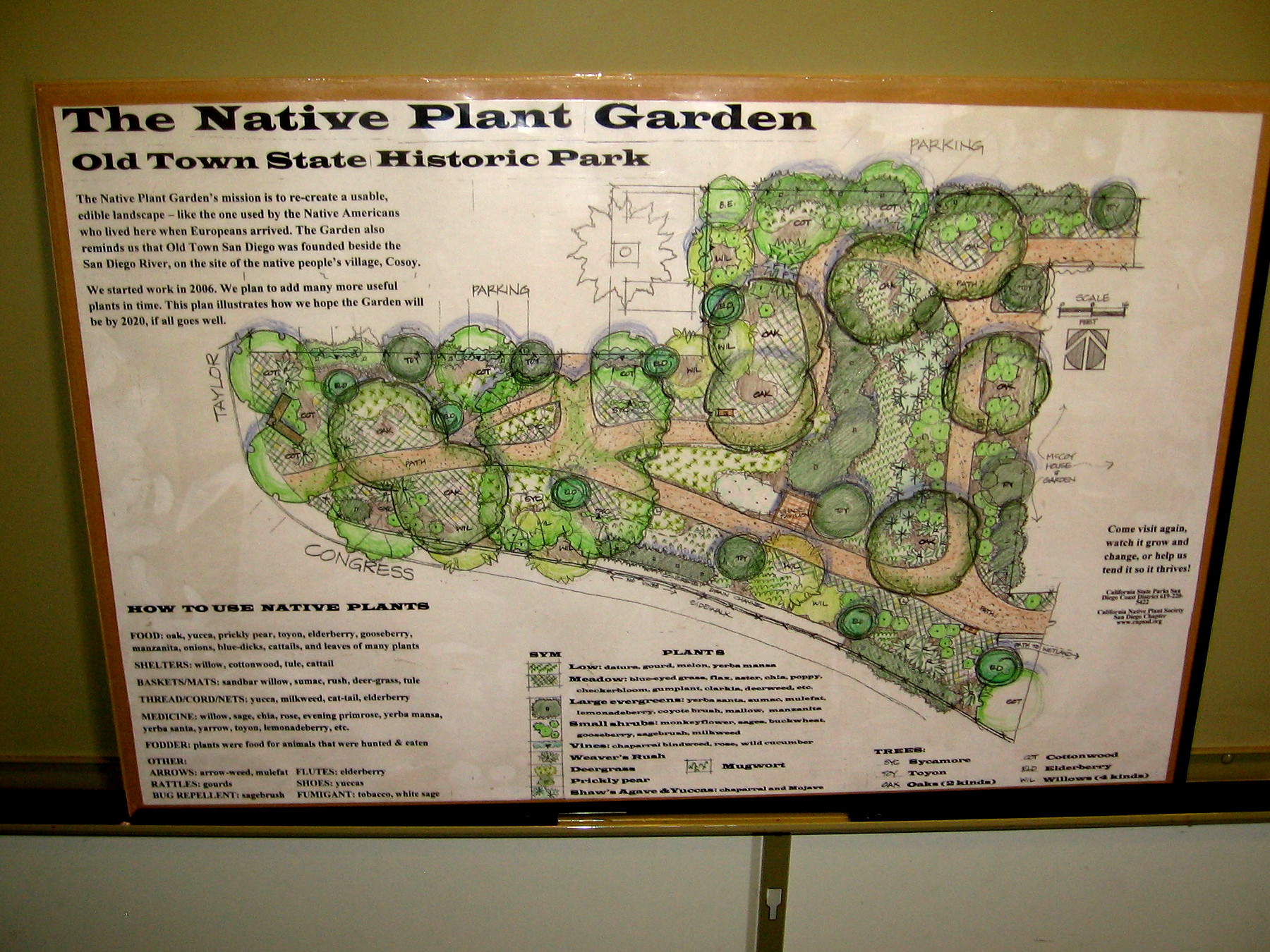
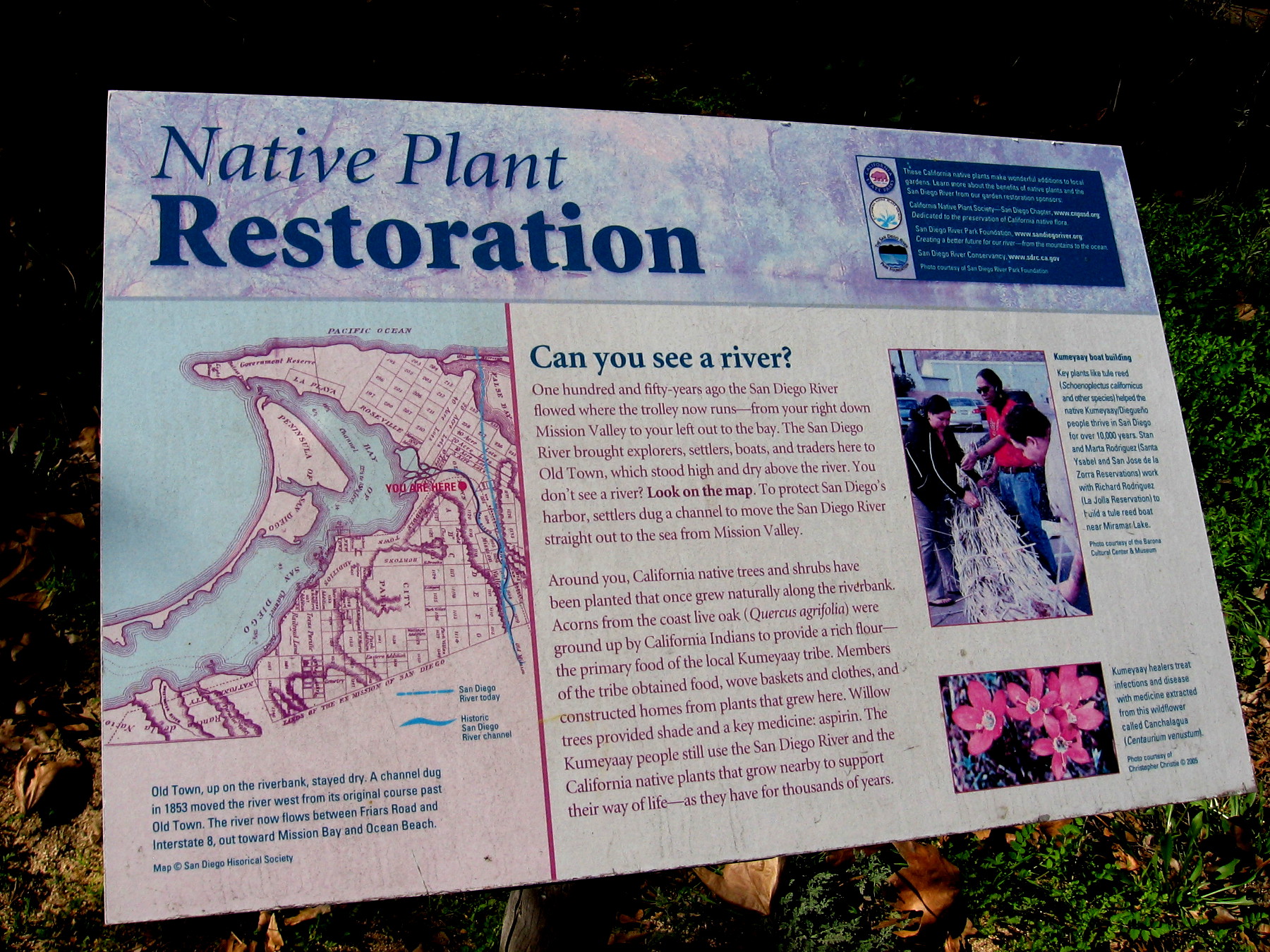
Read the photo captions to learn much more. Click the garden plans and the two signs, and those images will expand providing additional information!
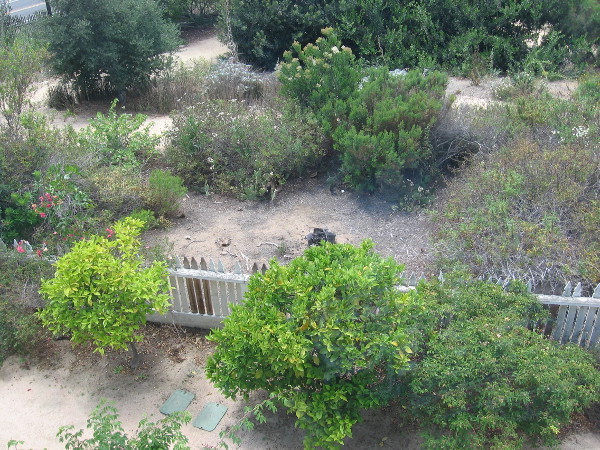
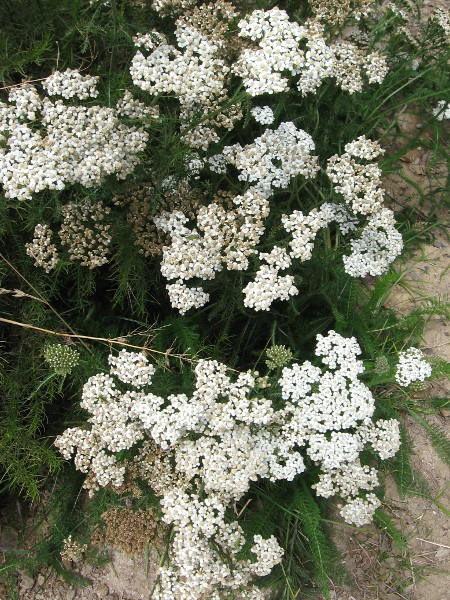
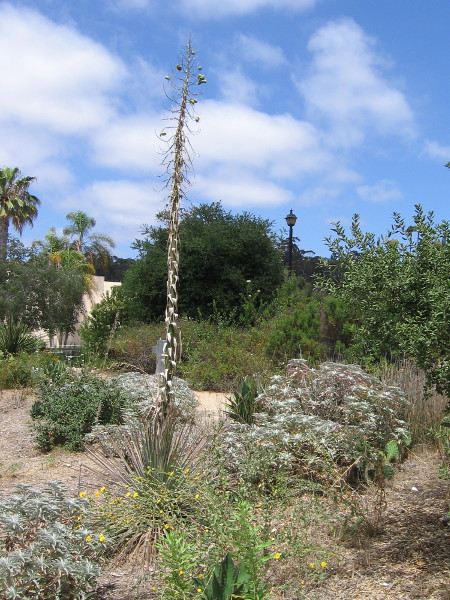
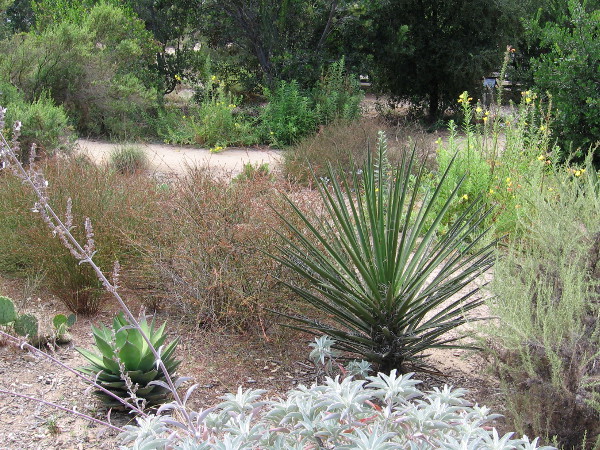
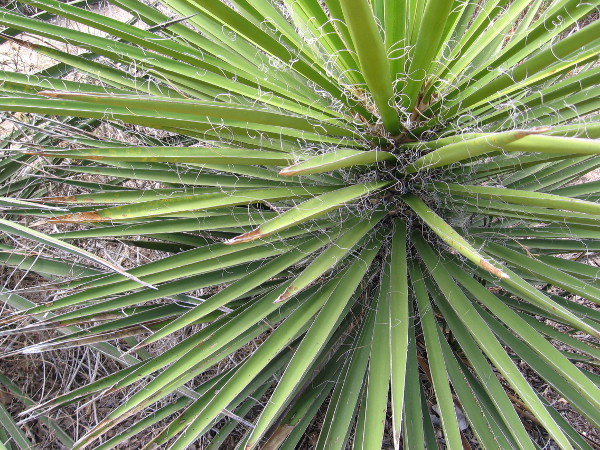
Plans of the Native Plant Garden in Old Town San Diego State Historic Park. Included are species used by the Native American Kumeyaay for food, shelter and medicine. Their village Cosoy was located here.Looking northwest from the second floor of the McCoy House Museum in Old Town San Diego. The Native Garden beyond the fence is a bit dry and scraggly–but that’s how local vegetation naturally appears.150 years ago the San Diego River flowed nearby, bringing explorers, settlers, boats and traders to Old Town. California native trees and shrubs have been planted that once grew along the riverbank.Dirt walking paths meander through the small Native Garden at the northwest corner of Old Town San Diego State Historic Park.Yarrow was used by the Kumeyaay as a treatment for various medical conditions, including burns, inflammation, and pain from toothache, headache and arthritis.Tall stalk of a yucca that already flowered still juts into the sky in Old Town San Diego.The Kumeyaay people have lived here for at least ten thousand years. Their innovations in managing San Diego’s resources in wet winters and dry summers are still used today.A variety of native plants found naturally in coastal San Diego’s semi-arid climate, including sages and prickly pear cactus.Fibers from the yucca were used by the Kumeyaay to produce cords, nets, shoes and other useful items.
…
I live in downtown San Diego and love to walk around with my camera! You can follow Cool San Diego Sights via Facebook or Twitter!
Scripps Institution of Oceanography’s new Research Vessel Sally Ride welcomes the public at San Diego’s Broadway Pier.
If you love science, technology and the study of our planet’s oceans, please enjoy the following photo tour of a very special ship. In this blog post we will visit the newest, most highly advanced oceanographic research ship in the world!
The world-famous Scripps Institution of Oceanography, a part of UC San Diego located in La Jolla, debuted their new research vessel Sally Ride this weekend at the Broadway Pier. Today the public was invited to come aboard and learn about the future work of scientists at sea.
The R/V Sally Ride is equipped with technologically advanced equipment, sensors, labs and computer systems. In the years ahead, it will be tasked with learning about and preserving the oceans, studying and protecting the environment, and inspiring the next generation. Using satellite communication and the scientists aboard, students and teachers throughout the world will actively participate in ocean exploration.
Except in documentary films, the public seldom sees the interior of an ocean-going research vessel. So today was an opportunity not to be missed!
Please read the photo captions where I’ve tried, to the best of my knowledge, to provide accurate details. But I’m no expert. If you’d like to leave a correction or useful information in a comment, please do!
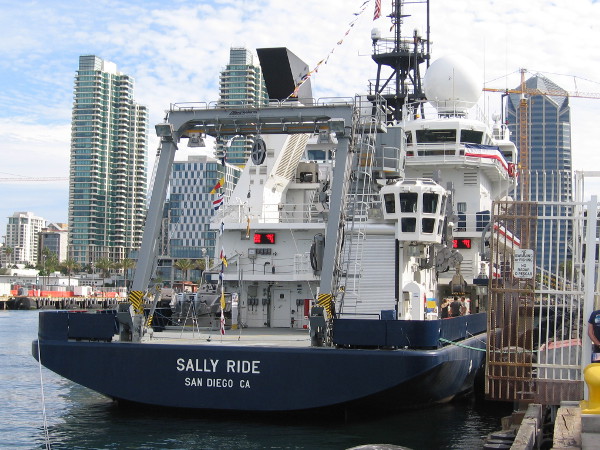
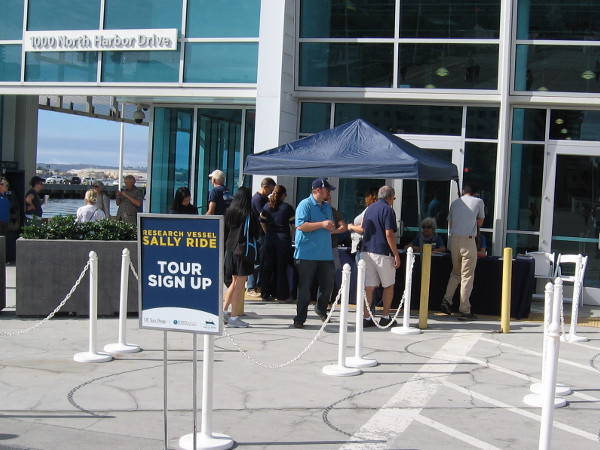
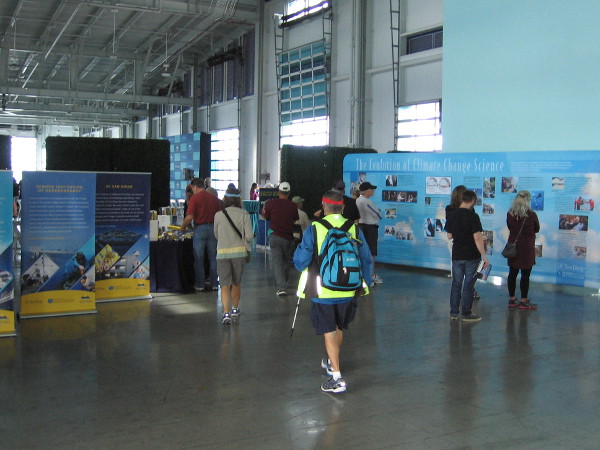
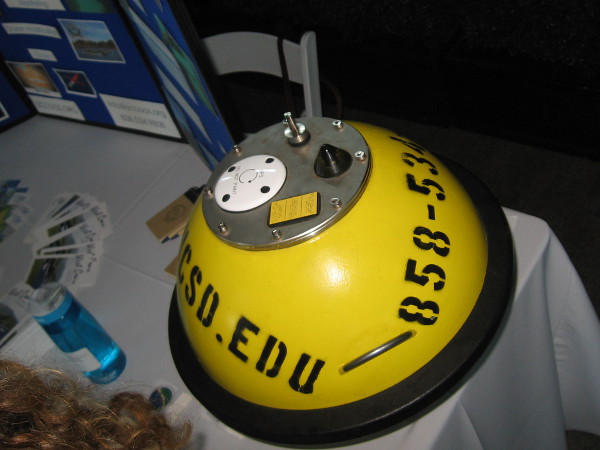
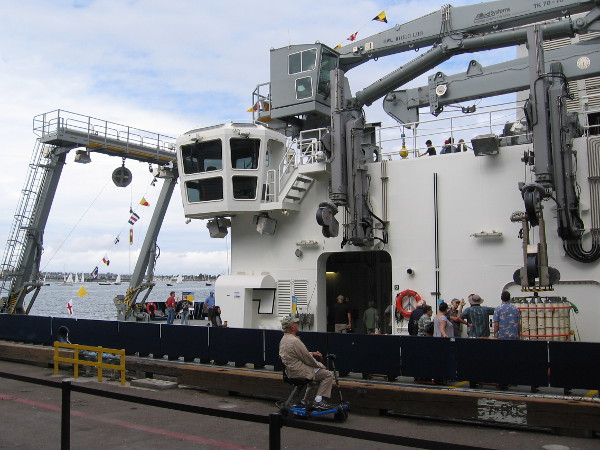
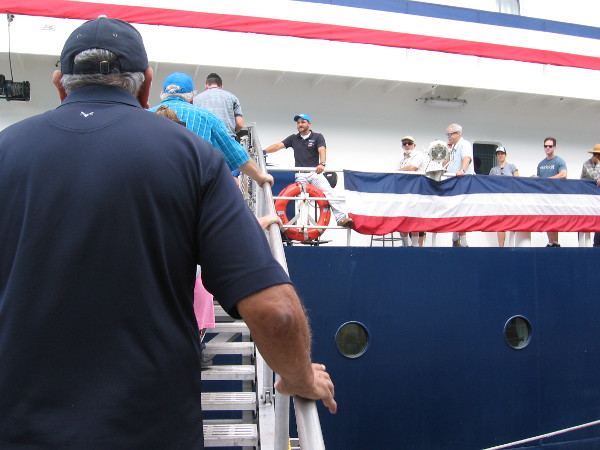
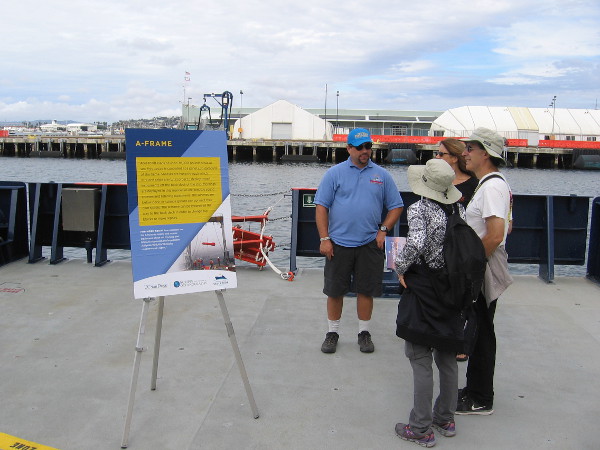
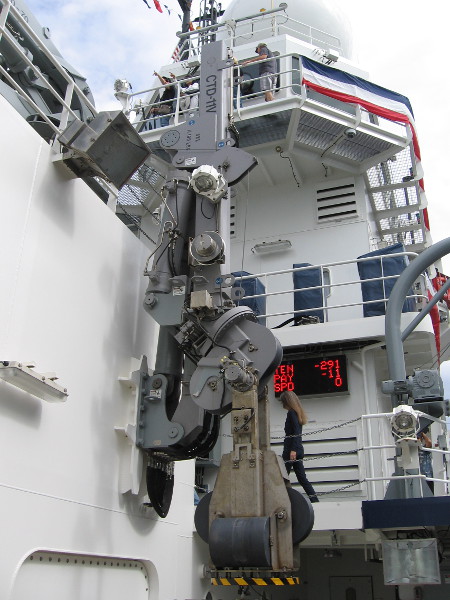
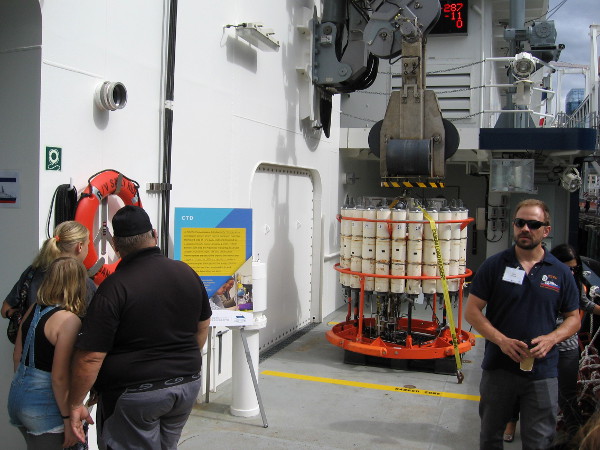
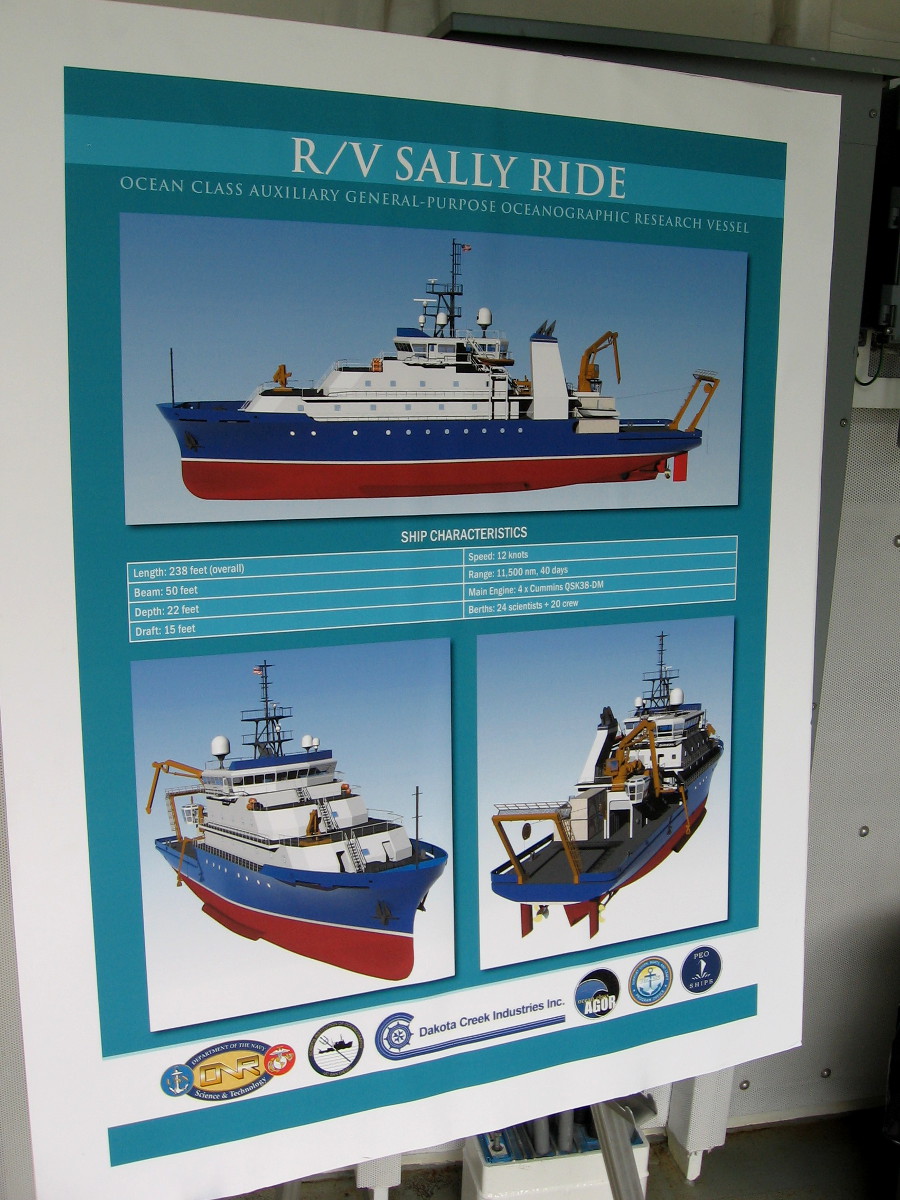
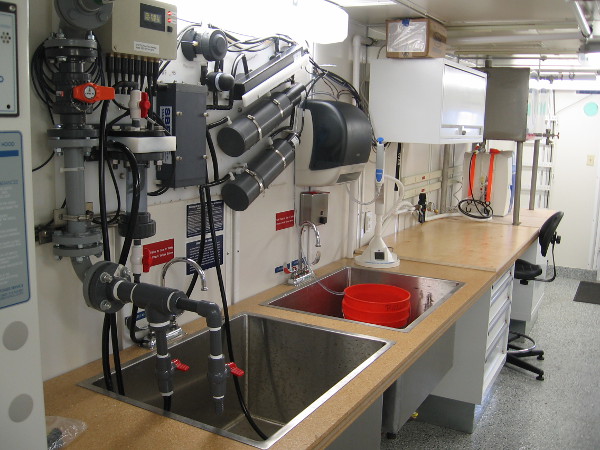
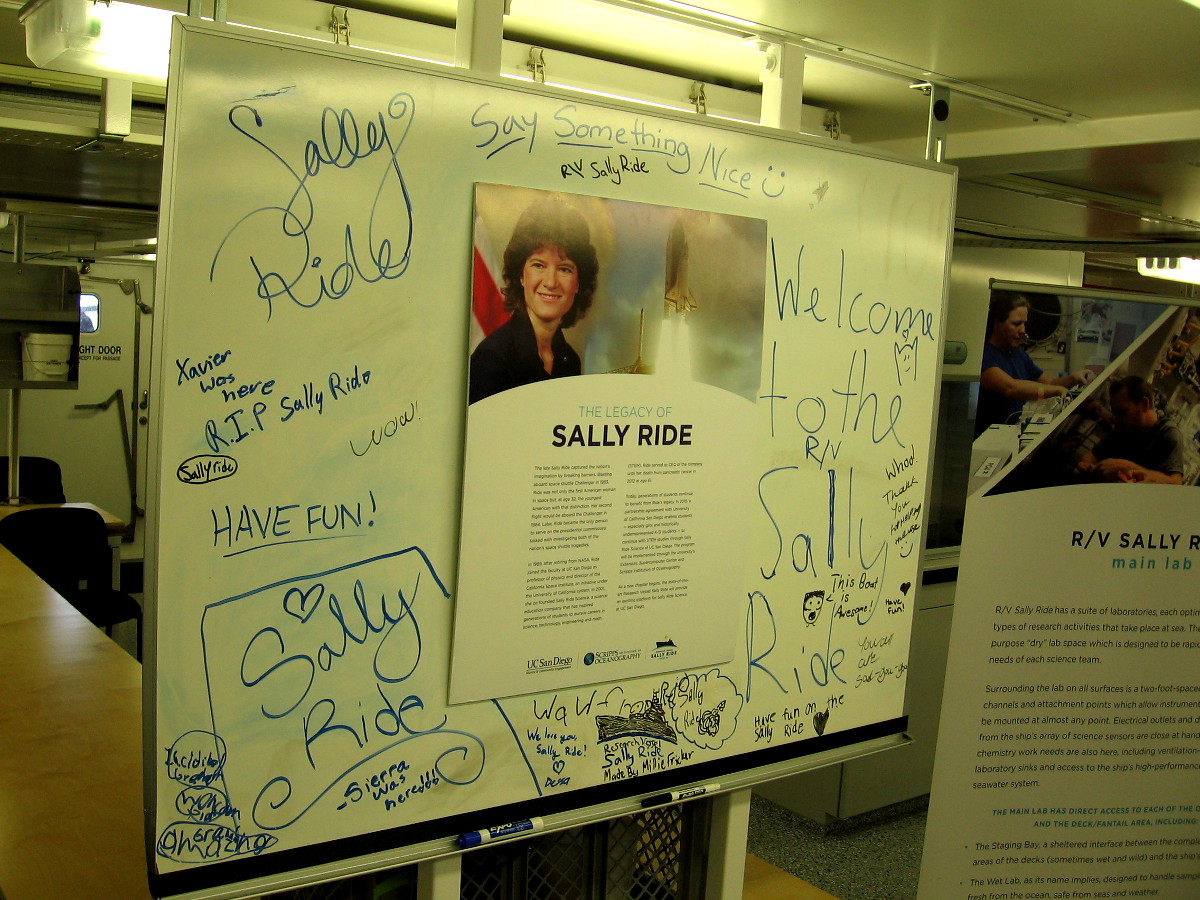
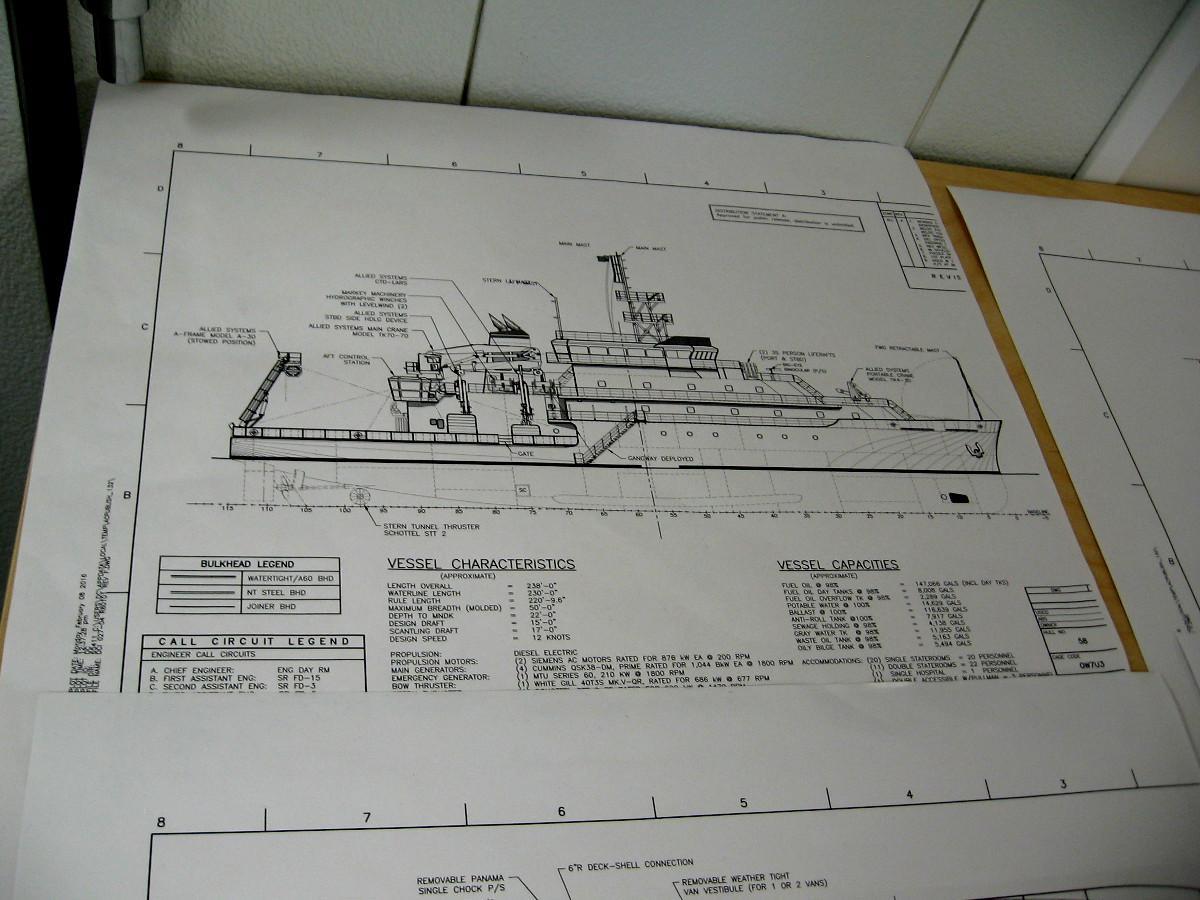
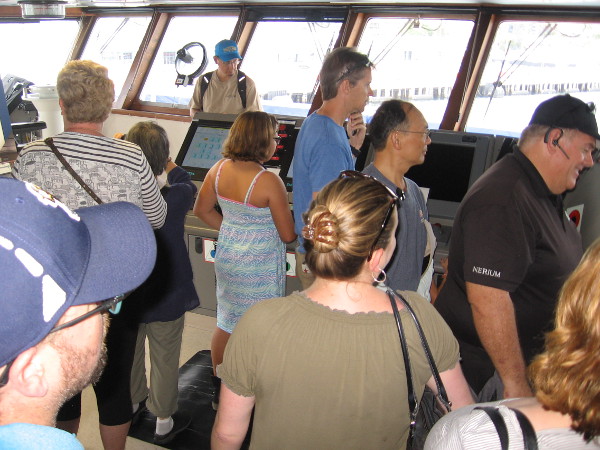
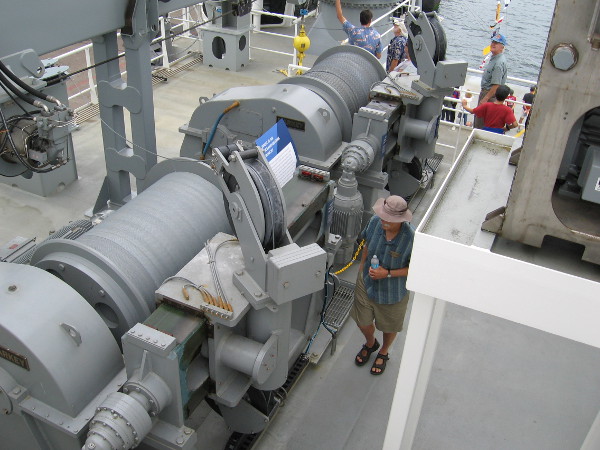
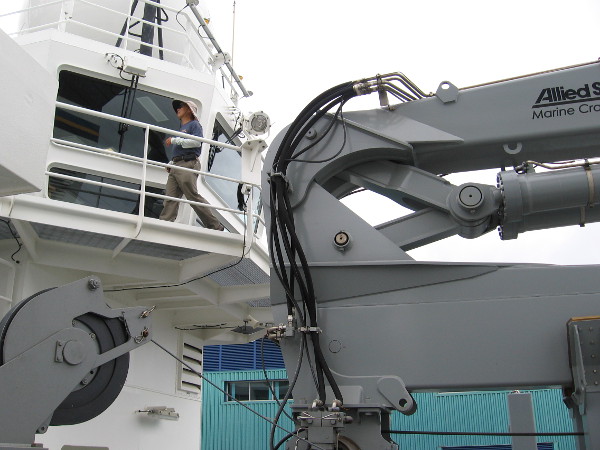
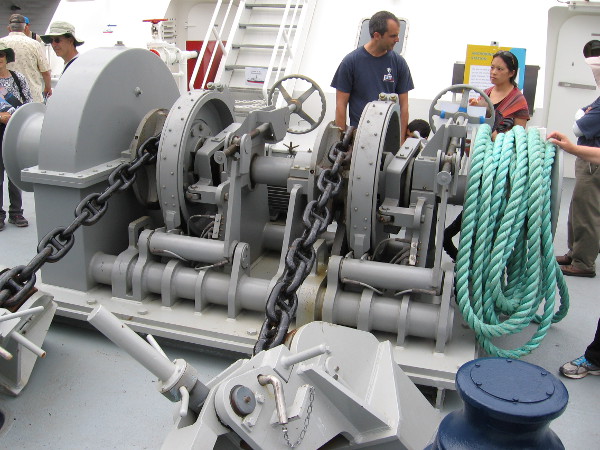
The public was invited to tour the new research ship Sally Ride. It was a rare opportunity to see how high tech exploration is carried out by UCSD Scripps scientists and oceanographers.The free public tours of R/V Sally Ride drew a good crowd on a Sunday in October, 2016. These people smartly arrived an hour early to reserve a time slot.The tour began inside the Port Pavilion on Broadway Pier. Many displays highlighted the work of UCSD’s Scripps Institution of Oceanography.UC San Diego embarks upon a new journey of exploration and boundary breaking with America’s newest research vessel R/V Sally Ride. Sally Ride was the first American woman in space.A large display goes over the history of The Evolution of Climate Change Science. UCSD scientists have made important contributions in this field.People inside the Port Pavilion learn about science and technology related to the understanding of planet Earth’s oceans.These examples of what is found when taking sediment cores on the ocean floor include tiny elegant Radiolaria.The Autonomously Deployed Deep-Ocean Seismic System’s Wave Glider is powered by solar and wave energy. It links with satellites and ocean bottom seismometers to help predict earthquakes and tsunamis.Some advanced visual equipment on display during the public debut of Research Vessel Sally Ride in San Diego. Multiple underwater photos can be taken in quick succession to form a 3-D model.Scripps Institution of Oceanography in La Jolla monitors climate variability and change, coastal hazards, marine operations, and ecosystems, fisheries and water quality.Floating device used to measure ocean wave characteristics.Peering out of the Port Pavilion at the R/V Sally Ride, docked at San Diego’s Broadway Pier.Photo aiming toward the stern of R/V Sally Ride. The big A frame, winch shack, extending crane, and two retractable arms on the starboard side of the ship are visible.Visitors eagerly head up the gangplank to explore America’s newest, most advanced research ship.Here we go!Looking down to our left.This rosette frame can be lowered into the water with a variety of mounted sensors. We’ll see it again in a bit.Heading down steep steps to the research ship’s fantail and work deck.We are halfway down. Many distant sailboats can be seen on San Diego Bay this beautiful but mostly overcast Sunday.R/V Sally Ride is equipped with shops, labs, winches, launch frames, booms and the newest scientific instruments and communication gear. The busy fantail and work deck are where science meets the sea.The gigantic A-Frame at the stern of RV Sally Ride can lift loads up to 30,000 pounds! Wire and cable deploy towed instruments. Moorings and acoustic equipment are also deployed in this manner.Visitors on the rear deck of R/V Sally Ride learn about science on the sea from a crewmember.Looking forward and up, we see several levels to the ship. If I understand correctly, the electronic display indicates a cable’s tension, payout and speed.Turning a bit to the right, we see the big crane atop a staging bay that is sheltered from the weather. Inside, equipment can be carefully prepared before deployment out in the elements.Now we are heading toward the windowed winch shack, along the starboard side of the ship toward the two retractable arms.One of two mechanical arms used to lower sensors, nets, and other oceanographic equipment into the water. They are called LARS, which stands for launch and recovery systems.A member of the public reads a sign explaining that the LARS are controlled from the winch shack. Wire or cable is used to lower equipment overboard.This rosette frame is holding a CTD, or conductivity, temperature and depth sensor. It can be lowered to a depth of nearly 4 miles! Niskin bottles attached to the frame can capture samples to be analyzed on the ship or at a later time.A poster inside the R/V Sally Ride’s staging bay details the ship’s main characteristics.Heading through a watertight door into the Wet Lab. Water samples are brought here for storage and analysis. There are drains in the floor!Another poster contains photos taken during RV Sally Ride’s construction. (Click image to enlarge.)A look inside the Wet Lab.R/V Sally Ride is the newest member of the Office of Naval Research’s fleet. These ships are owned by the U.S. Navy, but operated by university employees and professional mariners. Science teams rotate on a regular basis every two or three weeks.Heading from the Wet Lab into the Main Lab.Lab stations on the R/V Sally Ride are optimized for the different types of research activities that take place at sea.Visitors have written comments near a sign that describes the legacy of Sally Ride, our country’s first female astronaut. Sally was on the faculty of UC San Diego.A diagram of R/V Sally Ride with detailed information about the ship.Now we’ve arrived at the ship’s nerve center, the control station for CTD operations. Here scientists monitor ship location, sensor readouts, and trip bottles to collect samples.After quickly passing the no-nonsense mess deck and through two rather bare state rooms, visitors head up stairs to check out the pilot house.The high tech pilot house, or bridge, attracted a big crowd of curious visitors!One of the seats where the ship’s captain can place himself. When at sea or holding station, a deck officer is present on the bridge at all times.The huge computerized control console looks like it belongs on a spaceship!Aft of the starboard side of the bridge is the chart room, where navigational plans are made for each expedition. Old-fashioned maps are still used as an emergency backup!Heading around the pilot house, back toward the stern of R/V Sally Ride.Looking down at the telescoping knuckleboom crane and other outdoor machinery used to carry out research on the often stormy ocean.People examine an oceanographic winch. Drums can have upwards of 10,000 meters of wire or cable spooled on them.As I understand it, this sturdy telescoping knuckleboom crane can be extended in all directions for multiple purposes, including lifting the gangplank!Two impressive winches aboard R/V Sally Ride.Looking back up toward the rear of the pilot house.One last look at the aft deck and impressive A-Frame of the amazing new Research Vessel Sally Ride.I’m not the only one who is impressed.Heading forward along the ship’s port side. Downtown San Diego buildings rise across the water.We’ve arrived at the ship’s bow, just below the pilot house, where we find the anchoring station. The big windlass mechanism lowers and raises an anchor.R/V Sally Ride has three anchors, each weighing 5,000 pounds. Two are on either side of the bow and the third is a spare. Each anchor is connected to 720 feet of chain, which is stored below decks.An orange life ring reads R/V Sally Ride, San Diego.One last photo of R/V Sally ride during her debut at San Diego’s Broadway Pier. She begins her first research expedition in a matter of days!
…
I live in downtown San Diego and love to walk! You can follow Cool San Diego Sights via Facebook or Twitter!
You can easily explore Cool San Diego Sights by using the search box on my blog’s sidebar. Or click a tag! There are thousands upon thousands of fun photos for you to enjoy!
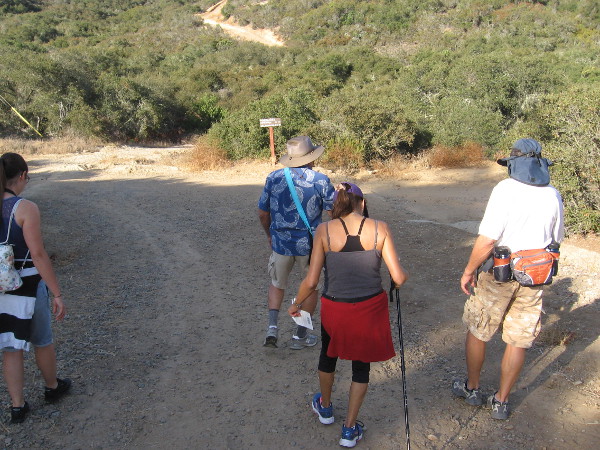
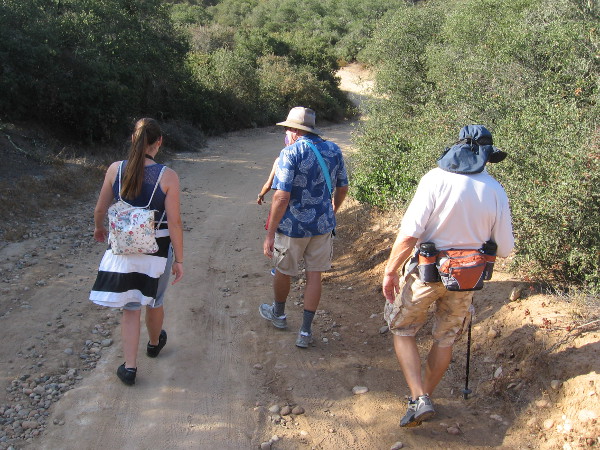
Naturalist Mike Kelly leads a small group of hikers into Los Peñasquitos Canyon Preserve from the Del Mar Mesa trailhead.
Free guided nature walks in the Los Peñasquitos Canyon Preserve introduce the public to unexpected wild beauty in the heart of San Diego. Yesterday I went on one of these easy walks.
Our guide, naturalist Mike Kelly, longtime member of the Friends of Los Peñasquitos Canyon Preserve, has been an advocate working to safeguard this beautiful and historic San Diego canyon for over three decades. He’s a friendly fellow whose knowledge of the canyon’s flora, fauna and fascinating history made for an extremely enjoyable hike.
Years ago, Mike and others fought to save Los Peñasquitos Canyon from development. Their efforts resulted in about half of the canyon being protected. Fortunately, the preserve is connected to other similar natural areas in San Diego through various corridors, allowing wildlife to move about and thrive. Owls, woodpeckers, hawks, raccoons, bobcats, coyotes, mule deer, even an occasional mountain lion make the canyon their home. Native trees, chaparral, grass and spring flowers are abundant and the source of endless enjoyment.
I learned there are also wildlife tracking hikes, plus night walks, when deer are frequently seen. There are also free guided tours of San Diego’s second oldest residence, which stands near the east end of the preserve, the Rancho Santa Maria de Los Peñasquitos adobe. To learn about all these wonderful adventures, which are ideal for families, click here.
To learn more about the Friends of Los Peñasquitos Canyon Preserve, click here! Perhaps you’d like to become a member!
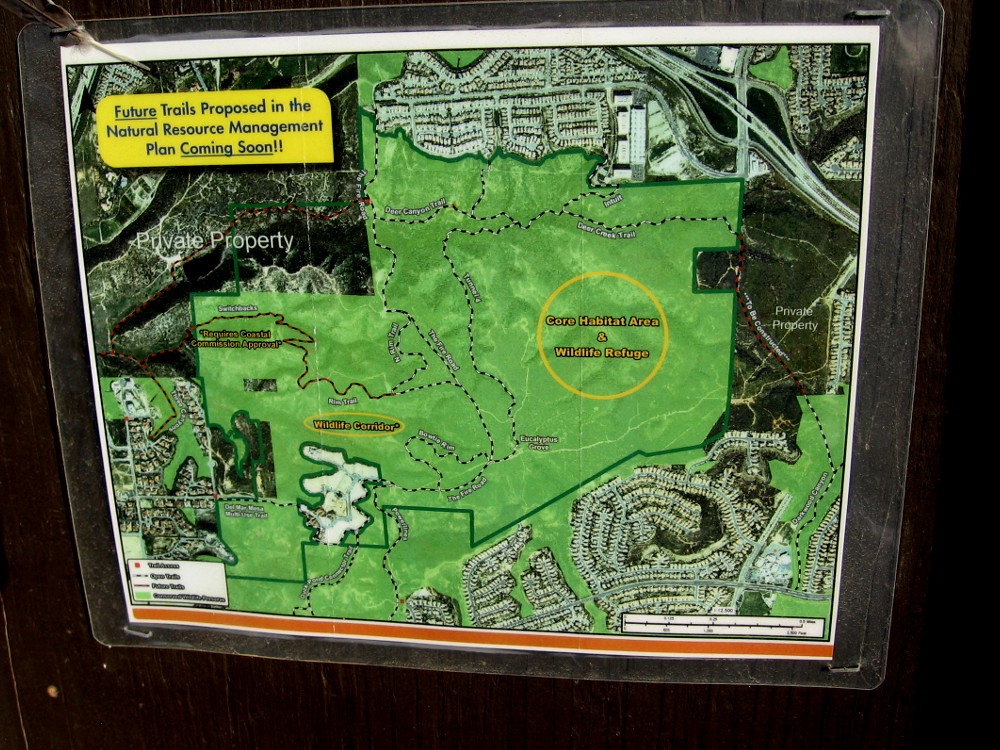
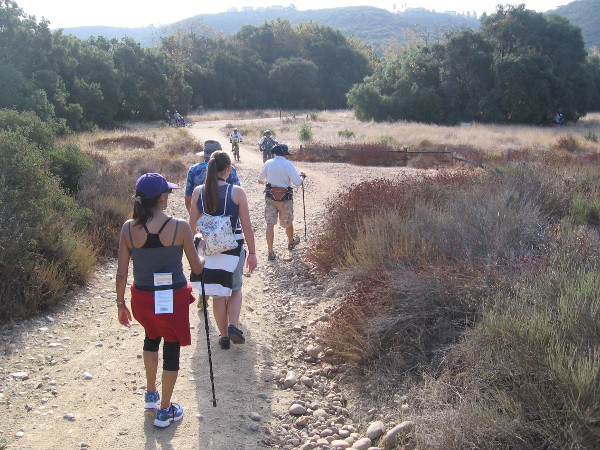
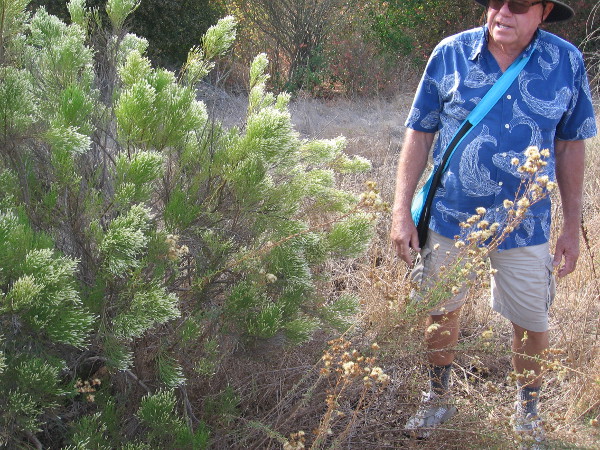
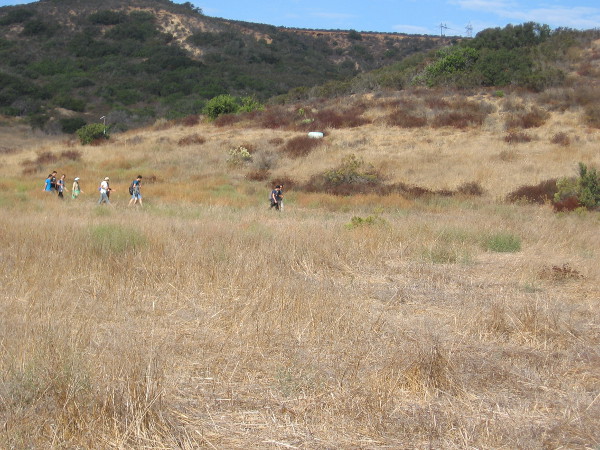
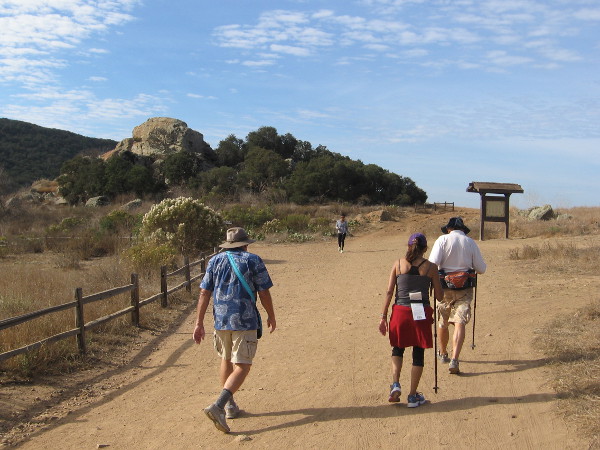
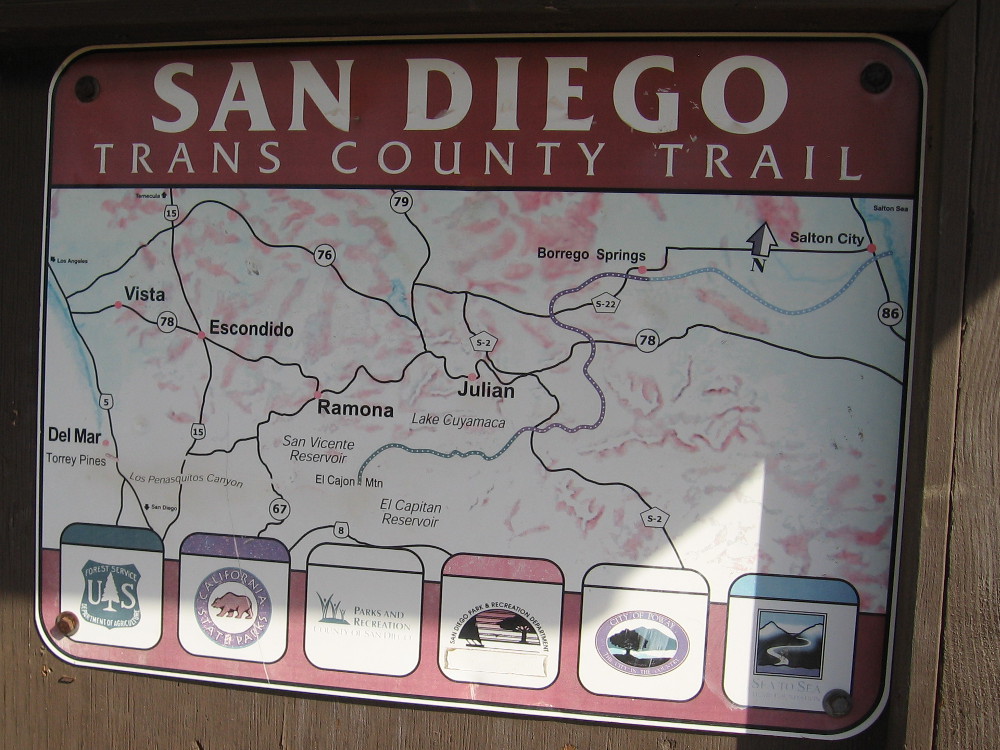
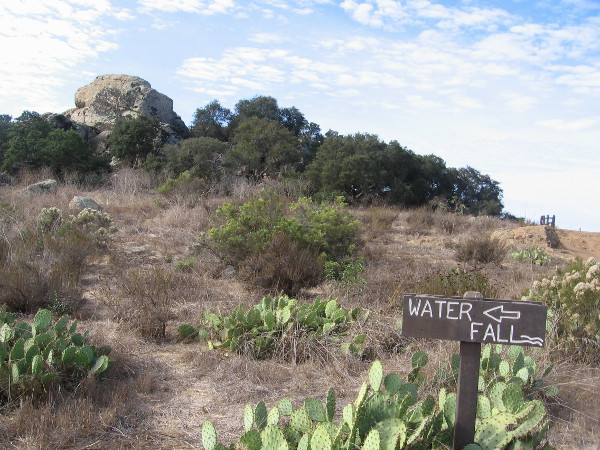
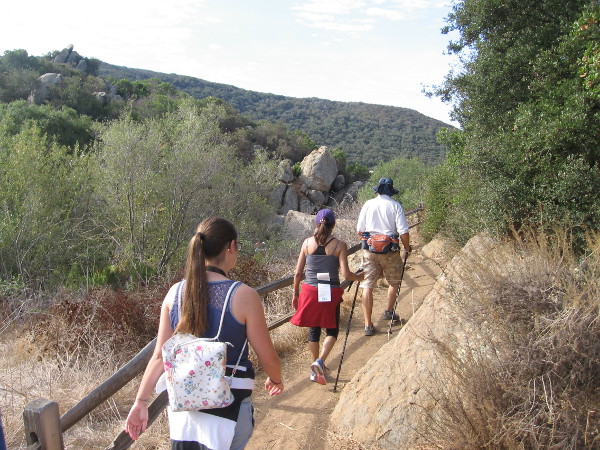
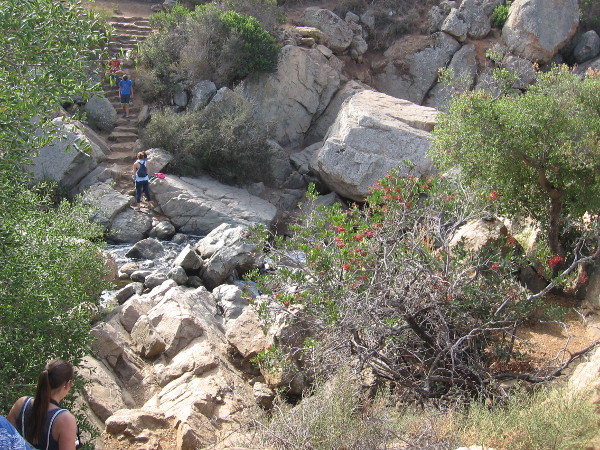
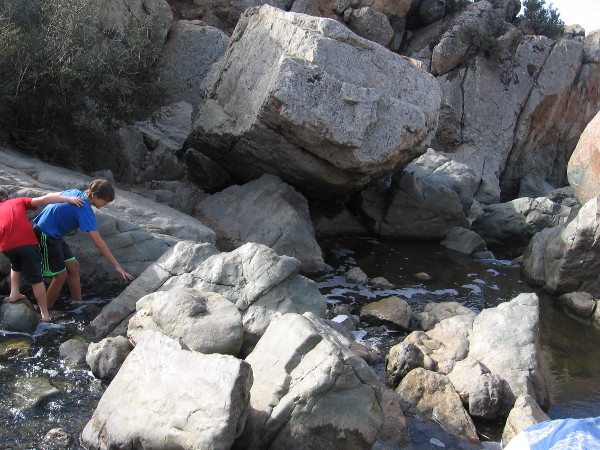
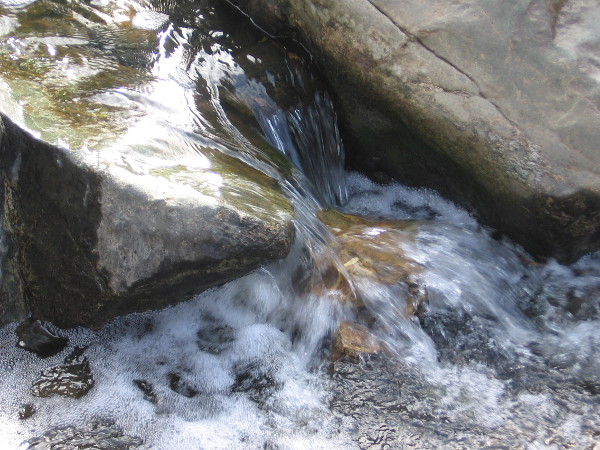
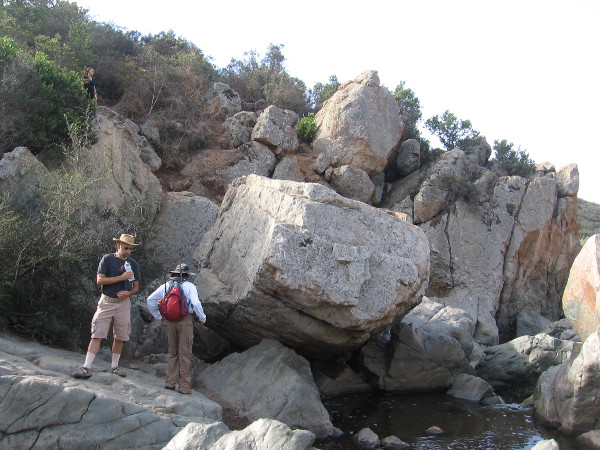
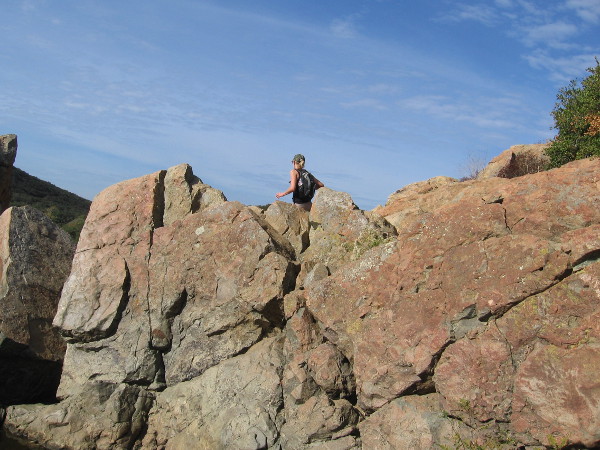
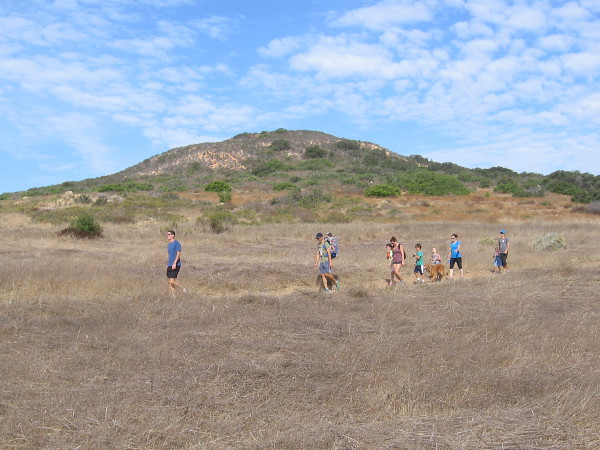
The Del Mar Mesa trailhead is located near suburban homes at the north edge of Los Peñasquitos Canyon.A sign posted at the trailhead shows future trails proposed in the Natural Resources Management Plan.Our small group of hikers heads down into the canyon through Coastal Sage Scrub habitat. We are passing California scrub oaks.We headed to Carson’s Crossing before checking out the popular waterfall.Approaching the central part of the long, narrow canyon, which runs from Poway west to Del Mar and the Pacific Ocean. Peñasquitos Creek lies beyond those coast live oaks in the distance.Carson’s Crossing is an historically important spot in Peñasquitos Canyon. Kit Carson crossed the creek here during the Mexican-American War. General Kearny’s US Army of the West was faced with formidable Californio lancers in San Pasqual, and the legendary frontiersman Kit Carson snuck away in the middle of the night to summon reinforcements from San Diego. He knew to come this way. The later 1857 Jackass Mail stagecoach line also ran through the canyon here enroute to San Diego.Heading west through the beautiful canyon in the shade of oaks, sycamores and willows. It’s an easy, pleasant hike.Looking north across a field in Los Peñasquitos Canyon Preserve in late October. Summers are very dry. Many leaves and flowers are now brown, awaiting winter rains.Walking slowly, senses alert. I smell the nearby sagebrush. I hear acorn woodpeckers and quail. I see beautiful clouds.Mike Kelly is a guide and activist whose knowledge of Peñasquitos is deep. Here he shows us some poison oak which is growing a short distance off the trail.A peaceful walk through nature. Over several decades, activists like Mike have worked hard to preserve the canyon and protect it from development. Today it is maintained by volunteers and both the City and County of San Diego.Mike Kelly shows us some California broom. Native American Kumeyaay and pioneers used the plant like a broom for sweeping.Los Peñasquitos Canyon Preserve is a very popular place for jogging, hiking and mountain biking. Even marathoners use it for training.Now we’re approaching a trail sign and a large rock outcropping, which I learned is volcanic.Sign shows proposed San Diego Trans County Trail, which when completed would run from the Pacific Ocean over the mountains east of San Diego and out to the Salton Sea in the desert.I see lots of prickly pear cacti. Now we are getting close to the popular waterfall!Approaching the Peñasquitos Creek waterfall from the east.Descending rough stone steps to the waterfall. I learned the steps were a project of an Eagle Boy Scout.The small waterfall and its rocky pools are located near the center of Los Peñasquitos Canyon. It is the destination of many hikes. A great place to relax, cool off, and listen to the soothing water.Water spills over rocks. It isn’t Niagara Falls, but it’s wonderful nonetheless.Hikers pause above a pool of water which is captured by large blocks of volcanic rock. When the creek crests, it can rise many feet and submerge this area.A hiker up above seems to walk in the sky.Families wander down a pleasant trail in Los Peñasquitos Canyon Preserve. There is much here to see and appreciate. So much to learn.Naturalist Mike Kelly shows us a poisonous flower of Datura. In nature, beauty and danger are often found together. One should be thoughtful when hiking, and be careful to wear sturdy footwear and bring water. We didn’t see any rattlesnakes or mountain lions!
…
This blog now features thousands of photos around San Diego! Are you curious? There’s lots of cool stuff to check out!
Here’s the Cool San Diego Sights main page, where you can read the most current blog posts. If you’re using a small mobile device, click those three parallel lines up at the top–that opens up my website’s sidebar, where you’ll see the most popular posts, a search box, and more!
To enjoy future posts, you can also “like” Cool San Diego Sights on Facebook or follow me on Twitter.
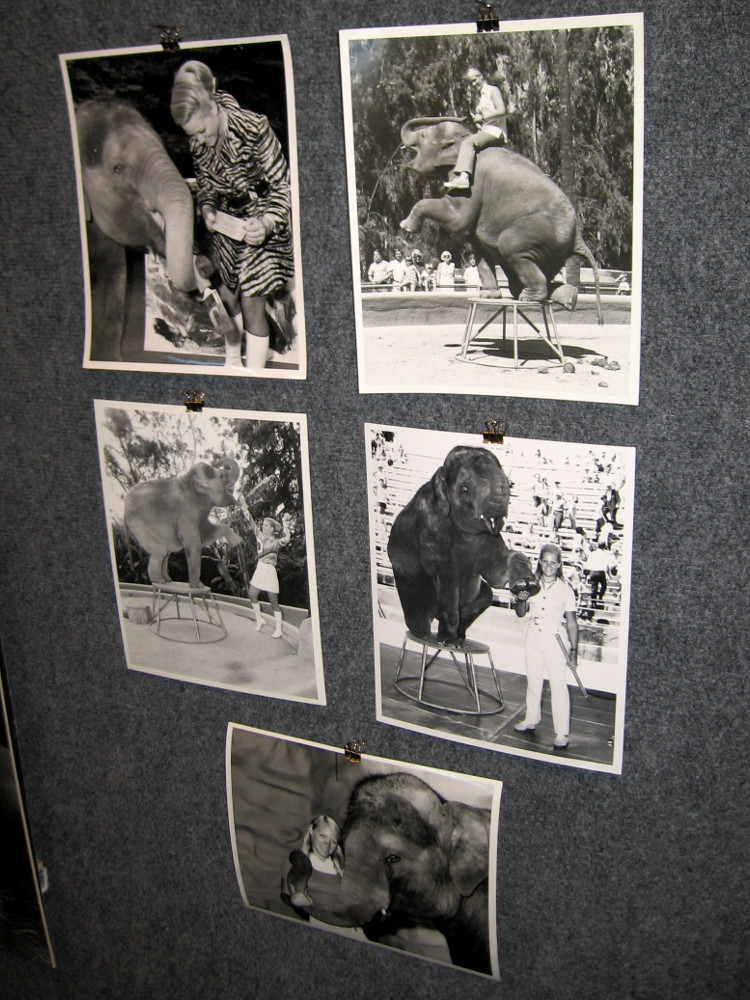
Joan Embery appears with Johnny Carson on the Tonight Show. Carol the Elephant paints on a canvas for the national television audience.
Who doesn’t know Joan Embery? As a frequent guest on the Tonight Show with Johnny Carson, as Goodwill Ambassador for the San Diego Zoo, and as an international spokesperson for animal conservation, Joan Embery is loved by people all around the world. She is truly a San Diego legend.
So it’s fitting that the Bonita Museum and Cultural Center is now showing an exhibition about her life and career, titled Joan Embery’s My Animal World.
It was my first visit to this museum, and I was surprised to discover such a fine exhibition. Viewing all the displays gave me a great deal of pleasure. They brought back so many San Diego memories.
These few photographs only provide a small taste of what you will see at the museum. If you’re in San Diego, you really ought to head over to Bonita and check it out. The exhibition runs through December 3, 2016.
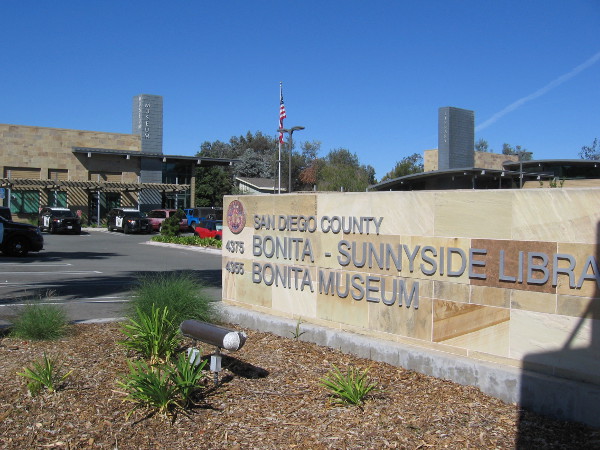
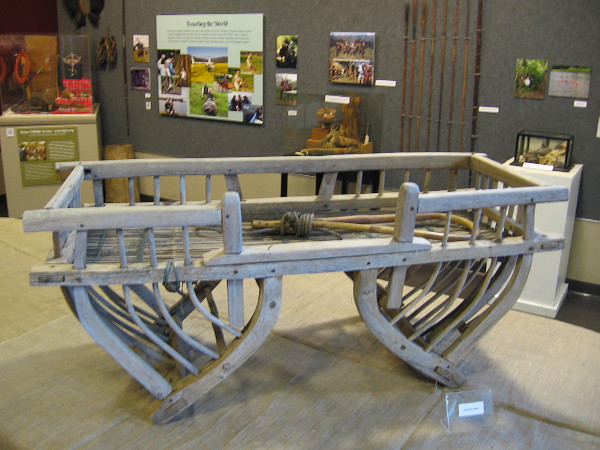
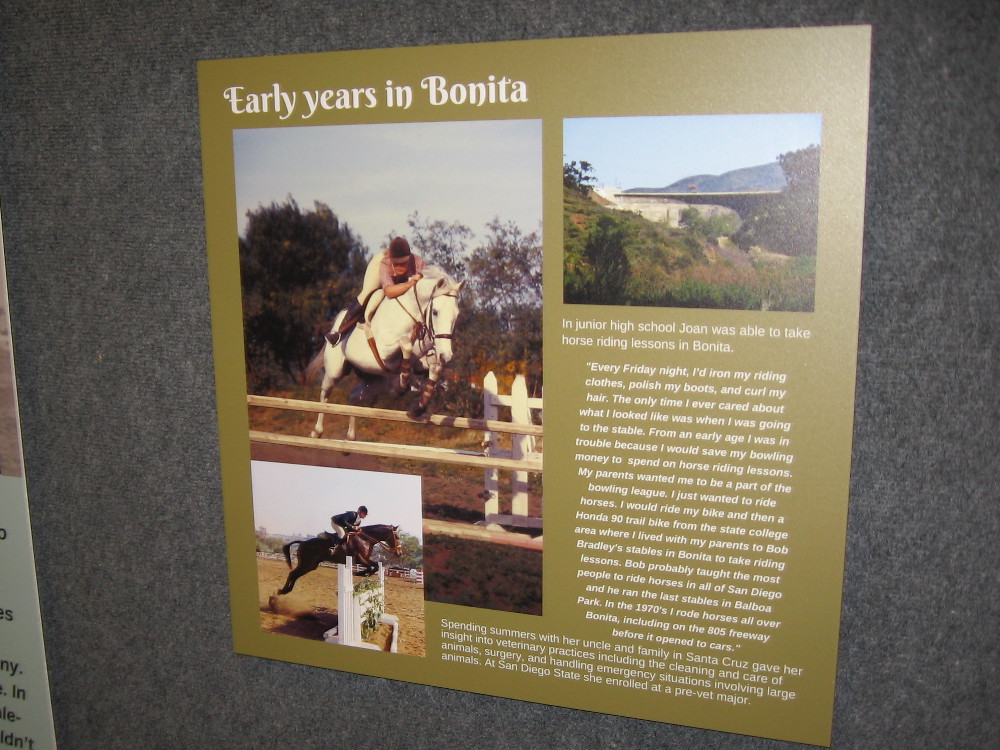
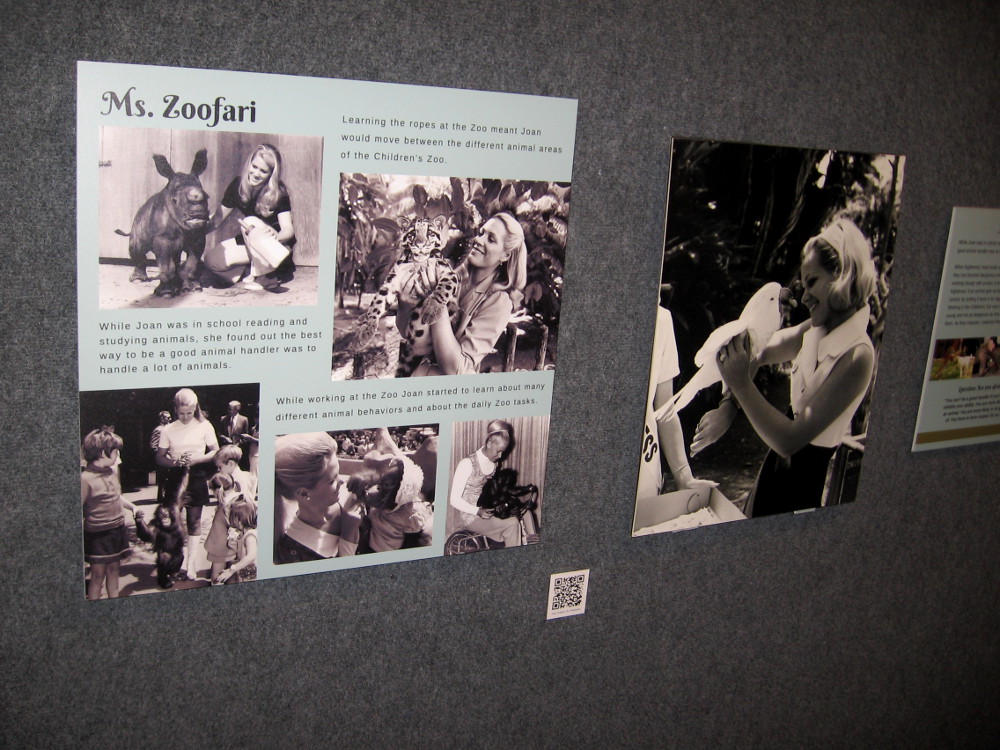
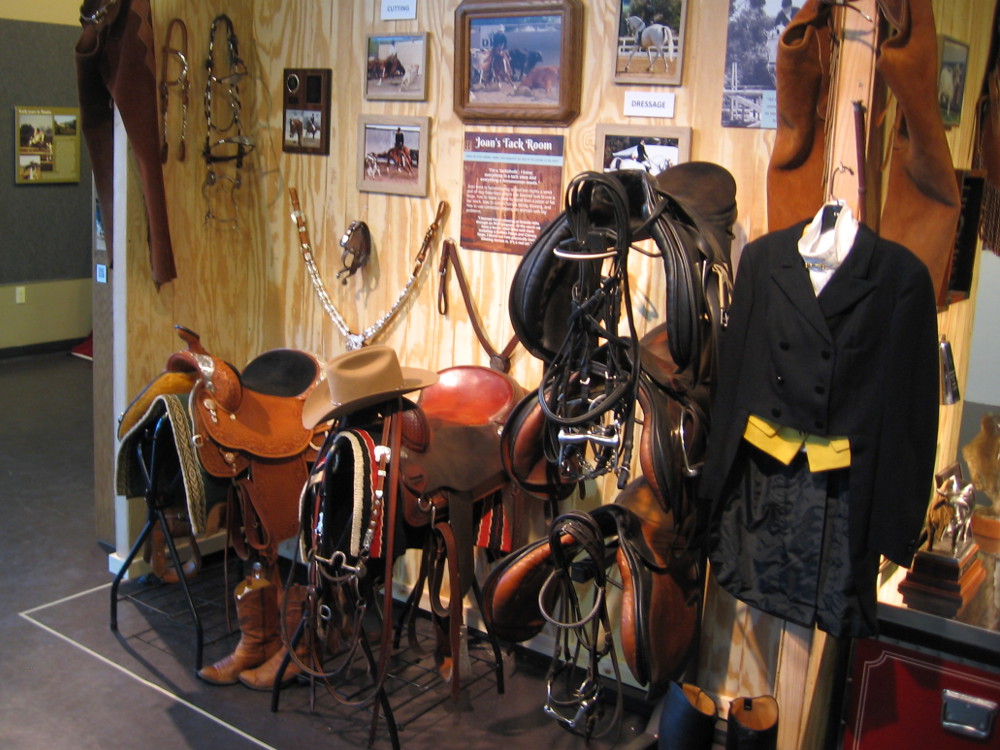
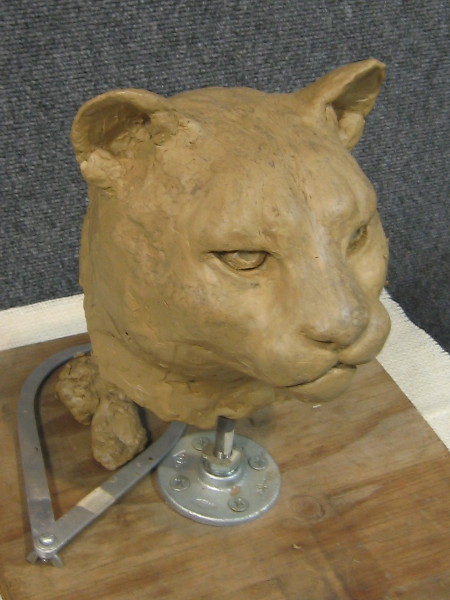
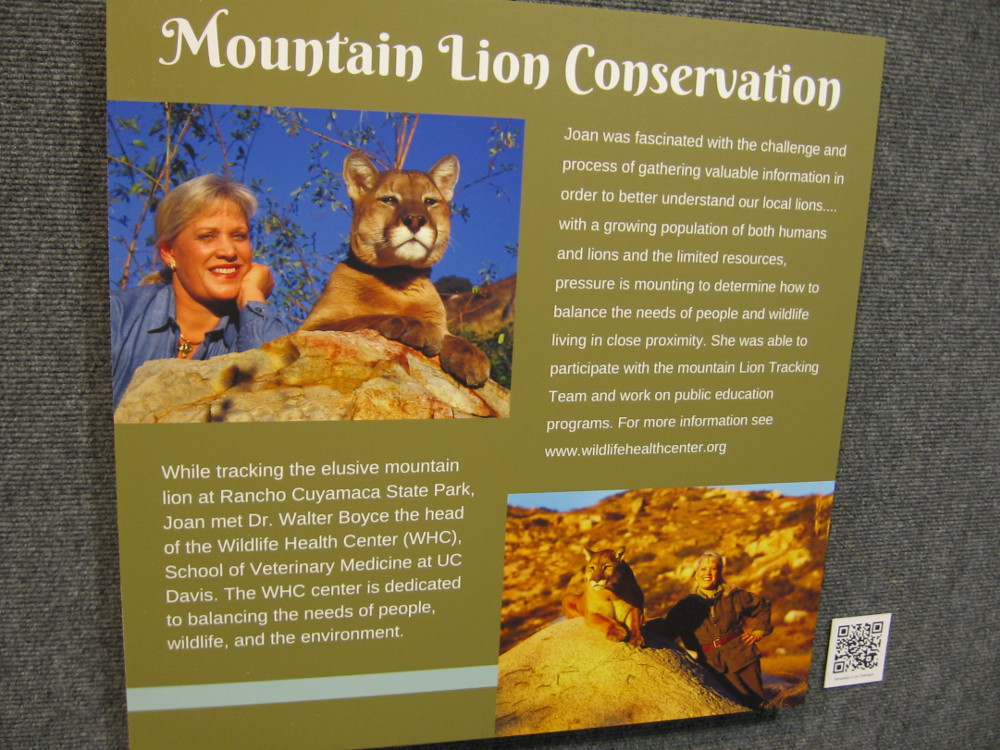
The Bonita Museum and Cultural Center is hosting a great exhibition about San Diego legend Joan Embery through December 3, 2016.An elephant saddle is one of many cool artifacts on display at the Joan Embery’s My Animal World exhibition.Many photos show Joan Embery through the years–in Bonita, at the San Diego Zoo and Wild Animal Park, travelling the world, and on the Pillsbury Ranch.Joan Embery was born in San Diego and was raised by a family who loved animals. As a kid, she never could get enough pets.In Junior High School, Joan Embery took horse riding lessons in Bonita. From an early age she dreamt of having her own horse.Wonderful photos of Joan Embery with Carol the Elephant. The two became good friends when Joan worked at the San Diego Zoo. She would become the zoo’s world-famous Goodwill Ambassador.Display at the Bonita Museum and Cultural Center documents a moment in the life and career of Joan Embery.Ms. Zoofari. While working at the San Diego Zoo, Joan learned about different animal behaviors and about daily zoo tasks.Today, the 50-acre Pillsbury Ranch is the home of Joan Embery and her husband Duane Pillsbury. Students visiting the ranch learn about the many different exotic animals that live there.Joan Embery’s Tack Room with many related photographs can be found at her museum exhibit in Bonita. Above all, she loves riding horses.Joan oversees The Embery Institute for Wildlife Conservation. She has been involved with many programs dedicated to animal and habitat conservation.Mountain lion head sculpted by Joan Embery’s talented artist husband, Duane Pillsbury.Joan Embery participated on a mountain lion tracking team at Rancho Cuyamaca State Park east of San Diego.Joan Embery is a San Diego legend loved by many around the world. She has appeared on numerous book covers, magazines and television shows.
…
I live in downtown San Diego and love to walk! You can follow Cool San Diego Sights via Facebook or Twitter!
You can easily explore Cool San Diego Sights by using the search box on my blog’s sidebar. Or click a tag! There are thousands upon thousands of fun photos for you to enjoy!
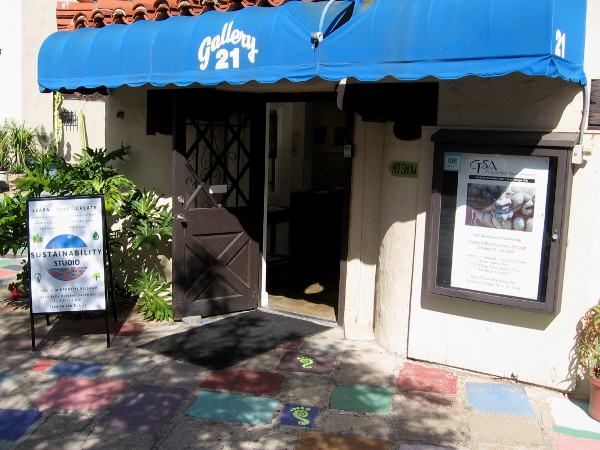
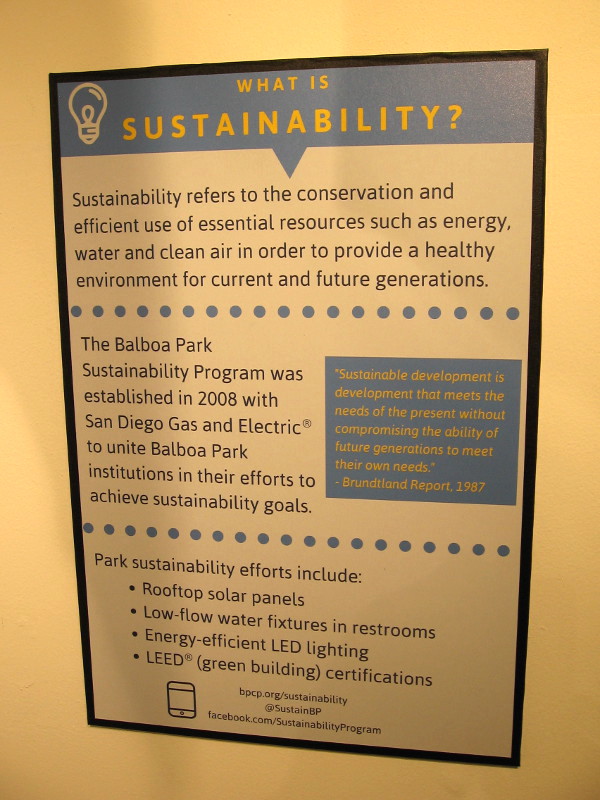
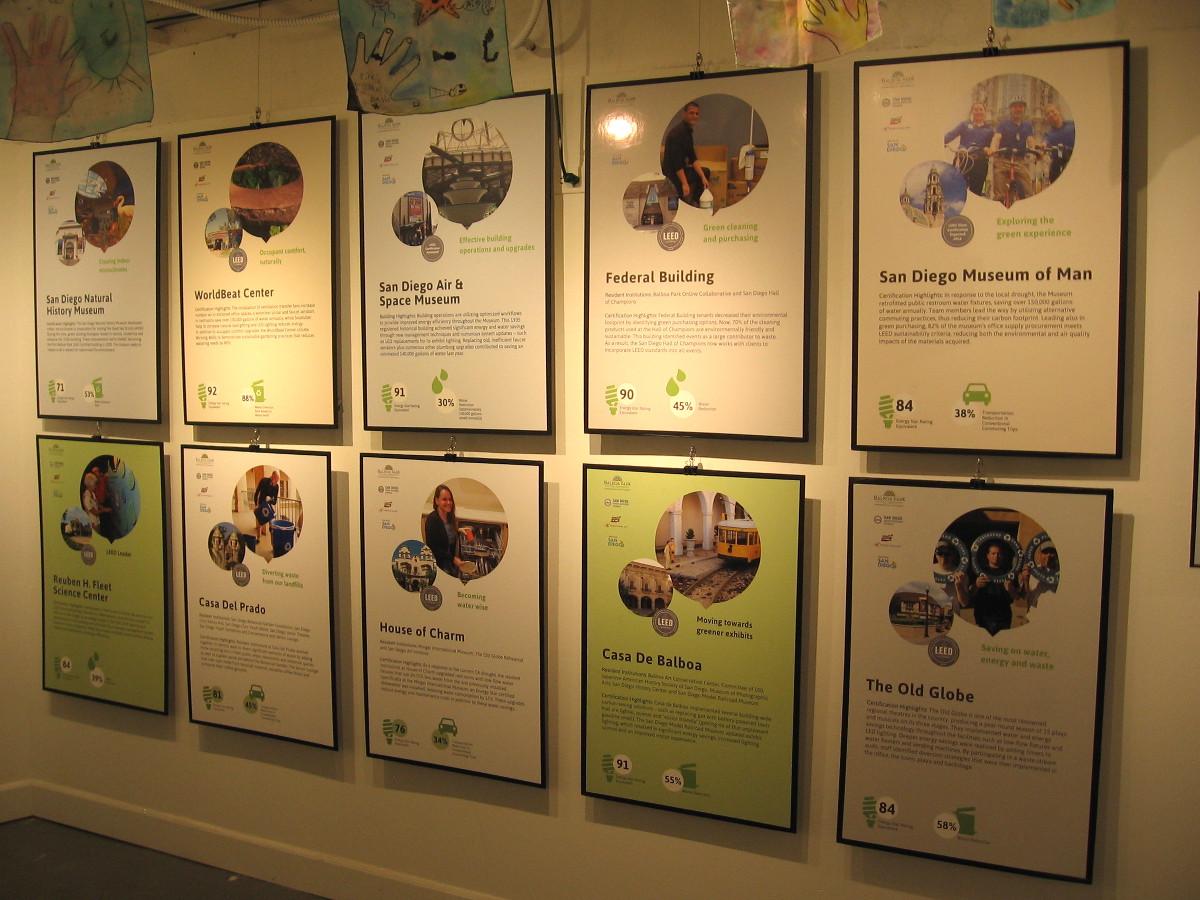
Gallery 21 in Balboa Park’s Spanish Village features a special environmental exhibit called Sustainability Studio!
I discovered a fascinating environmental exhibit in Balboa Park this weekend. The Sustainability Studio is located in Gallery 21 near the center of the Spanish Village Art Center.
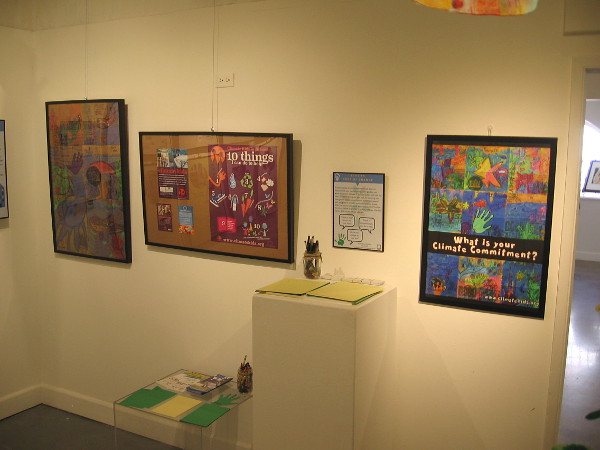
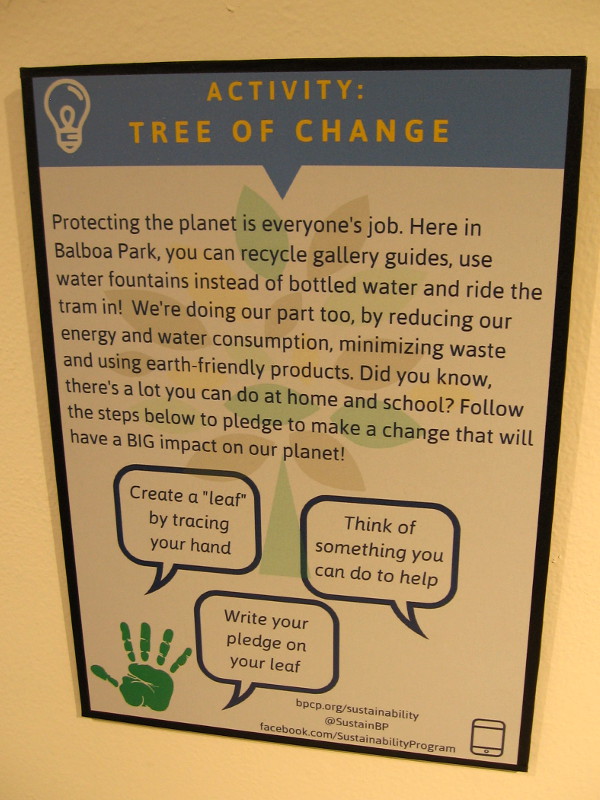
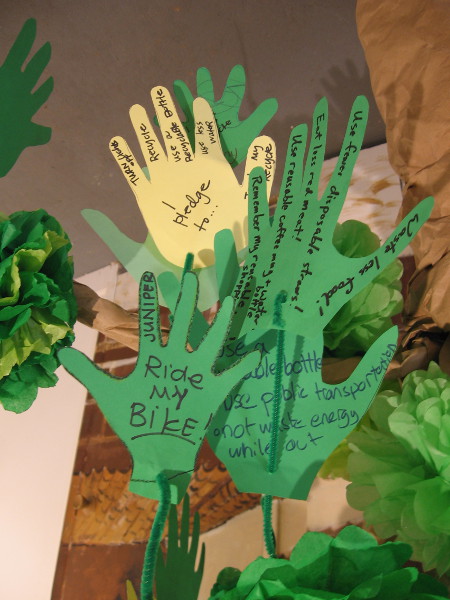
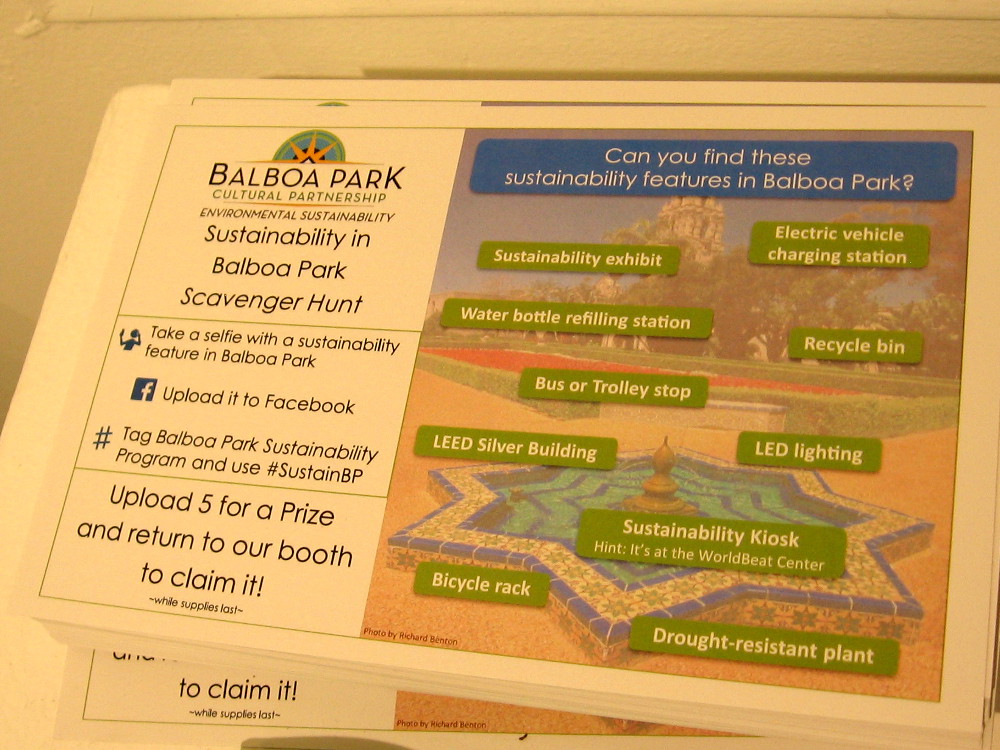
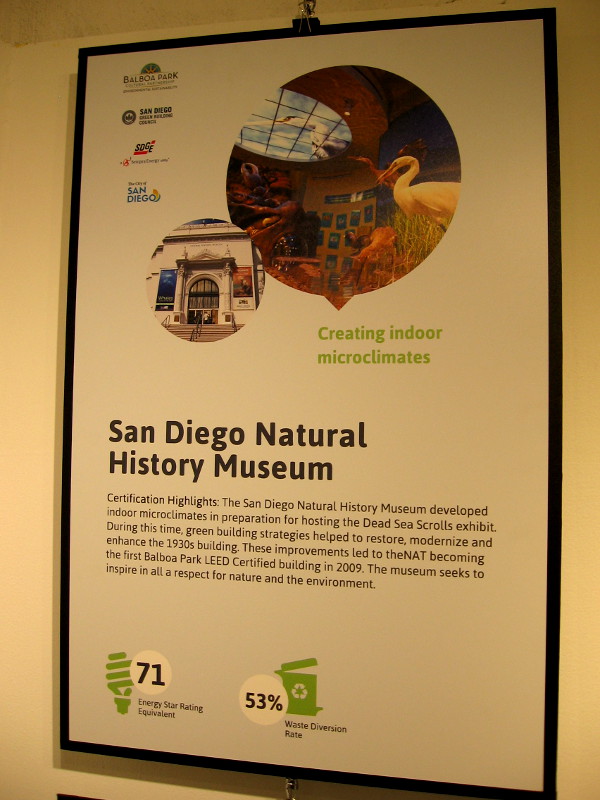
This small but information-packed exhibit discusses how various museums and buildings in Balboa Park are engaging in conservation efforts, by using solar panels, low-flow water fixtures, LED lighting, and the intelligent use of resources. The exhibit also encourages kids to think about the environment and pledge to protect it. Fun activities include making leaves for the Tree of Change and a Balboa Park scavenger hunt!
To read the signs, click the images and they will enlarge.
The Sustainability Studio will remain open to the public through December. Bring the kids! They can learn something new, create some fun art, and engage in the easy scavenger hunt and win a cool prize!
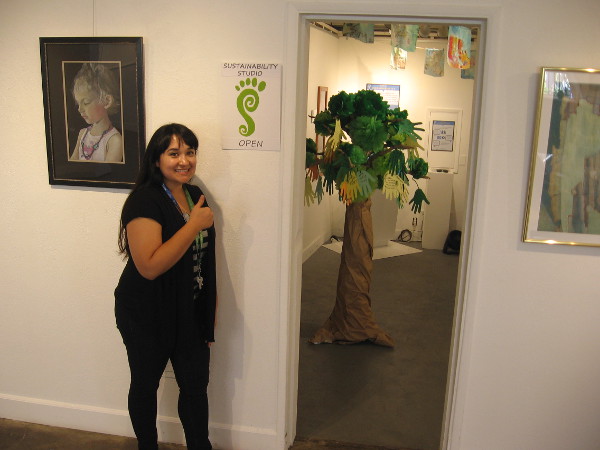
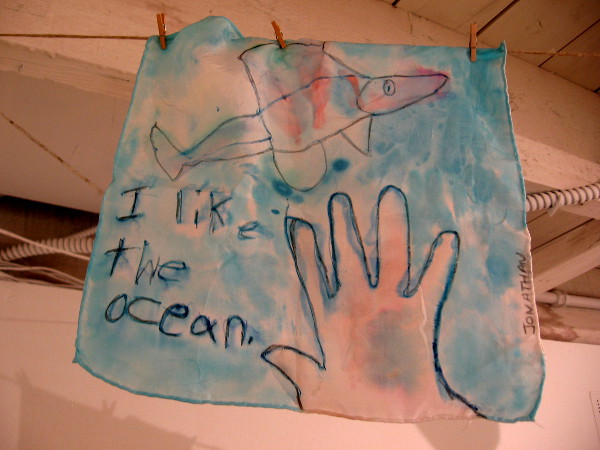
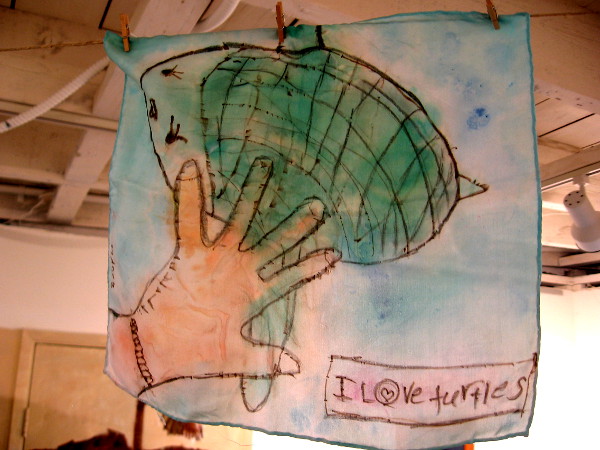
Rubi welcomes visitors into the Sustainability Studio, where one can learn about the conservation efforts of various organizations in Balboa Park.Signs and posters in the special exhibit raise awareness about various important environmental issues. Kids are provided with fun activities that promote activism and conservation.Sustainability refers to the conservation and efficient use of essential resources. Balboa Park’s efforts include solar panels, low-flow water fixtures and LED lighting.Kids visiting the exhibit are encouraged to make a leaf with a hand tracing, then inscribe it with an environmental pledge.Leaves on the Tree of Change. Kids pledge to ride bikes, turn off lights, recycle, use less water . . .A scavenger hunt is described on this flyer. Upload 5 selfies to Facebook that include a Balboa Park sustainability feature and claim a great prize!Various museums and buildings in Balboa Park are working to become more environmentally friendly.The San Diego Natural History Museum became the first Balboa Park LEED Certified building in 2009.The San Diego Air and Space Museum has increased energy efficiency and achieved significant water savings.Fun works of art produced by creative kids hang from the ceiling. I like the ocean!I love turtles!
I live in downtown San Diego and love to walk! You can follow Cool San Diego Sights via Facebook or Twitter!
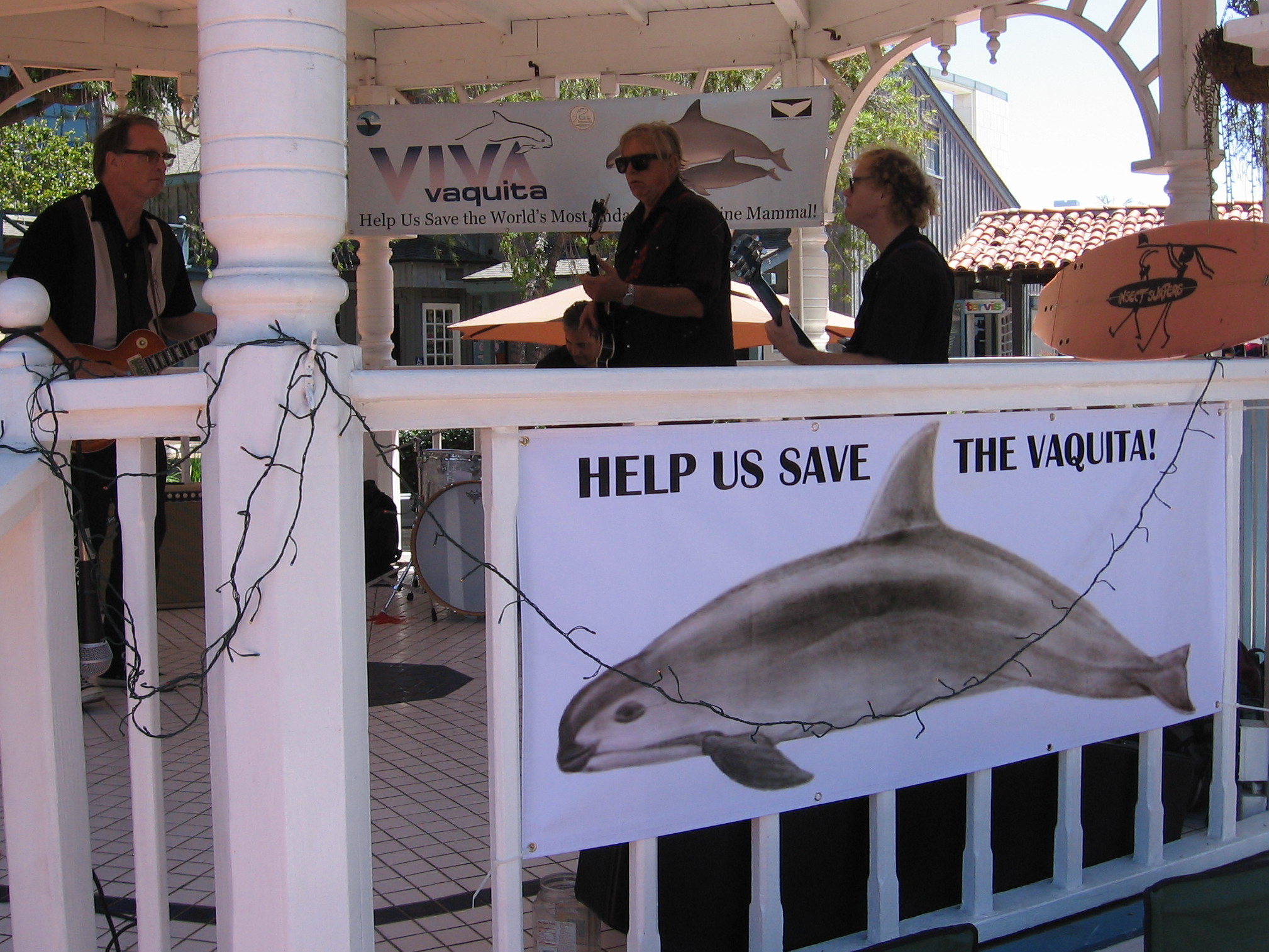
Help us Save the Vaquita display at the east gazebo of Seaport Village in San Diego. The band Insect Surfers was providing some music!
The Vaquita is the world’s most endangered marine mammal. It is thought that about 60 of the animals exist in the ocean today. This small species of porpoise (Phocoena sinus) lives in the warm waters of the eastern Pacific Ocean–specifically in the northern Gulf of California, in a small region east of Baja California not too distant from San Diego. According to the International Union for the Conservation of Nature, the Vaquita is classified as Critically Endangered.
International Save the Vaquita Day was observed today in San Diego and many other cities around the world. I swung by Seaport Village to see what efforts are underway to save Mexico’s “Panda of the Sea” and to learn a little about the Vaquita.
I learned that the Vaquita, thankfully, enjoys clean waters. Their big threat is being entangled in the gillnets of fishermen. A major effort is underway to eliminate these nets from the Vaquita’s natural habitat. But some fishermen, seeking to provide a living for themselves, use them anyway.
I learned there’s also an effort to inform consumers that some shrimp and fish that one finds in the grocery store is caught with gillnets. It is hoped enlightened shoppers will seek out and purchase seafood that isn’t caught with this type of net.
I learned that Vaquitas have never been held in aquariums, and has only been known to science since 1958.
If this species goes extinct, it will be gone forever.
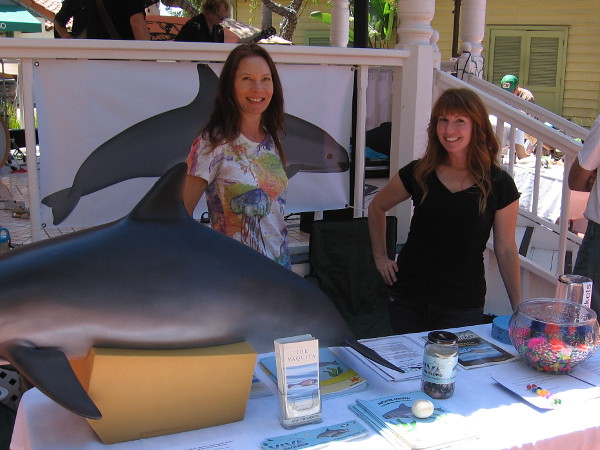
These nice ladies are working hard to save the Vaquita. It is hoped many others will join the effort, in any way possible. Time is very limited–perhaps a year or two–before the species might go extinct.Kids make art and learn about the critically endangered Vaquita, a marine mammal that clings to a tenuous existence not far from San Diego.
…
I live in downtown San Diego and love to walk! You can follow Cool San Diego Sights via Facebook or Twitter!
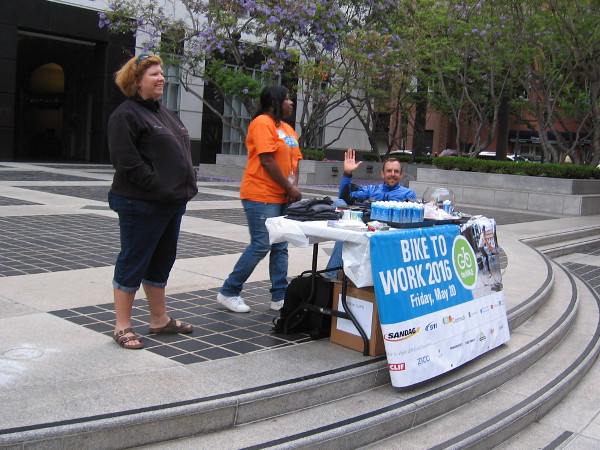
A San Diego Bike to Work Day pit stop in front of 550 West C Street early in the morning. Hello!
Today was Bike to Work Day in San Diego! There were over a hundred pit stops around the county, and I’ve learned that nearly ten thousand bicyclists participated!
This morning I started a bit earlier than usual so that I could walk past 5 pit stops downtown. (As followers of Cool San Diego Sights might know already, I happen to be a walk/trolley/bus to work person. Because I simply love walking and the outdoors, plus living downtown makes it very convenient.)
The city was still a bit sleepy as I headed west along B Street–about 6:30–and the morning light wasn’t ideal for photography when I passed two bicycle pits stops at The Donut Bar and the Wells Fargo building. I did manage to get some sharp pics once I arrived at Civic Center Plaza! Lots of people were smiling!
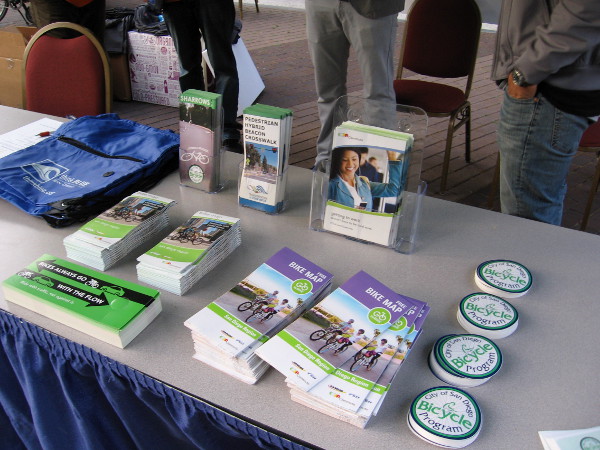
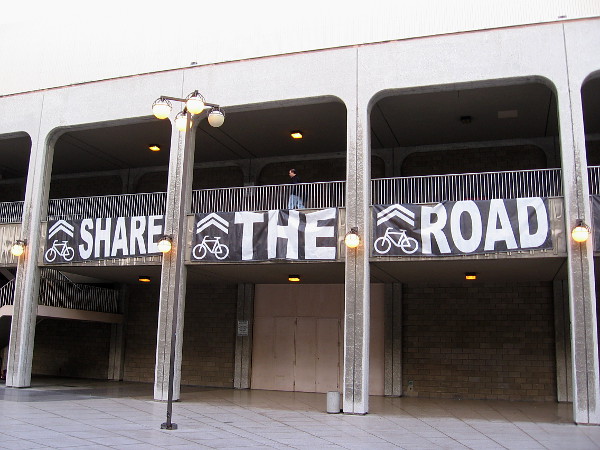
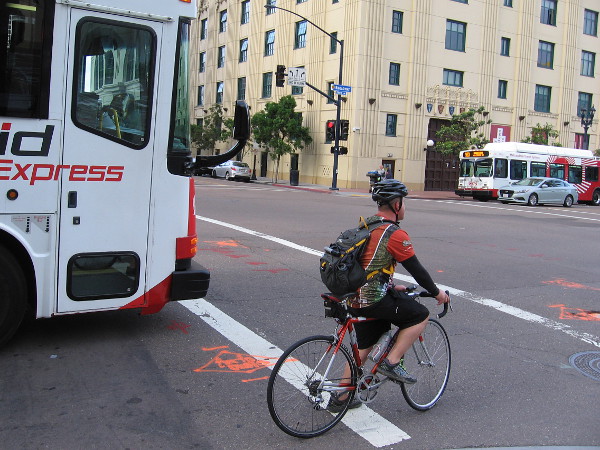
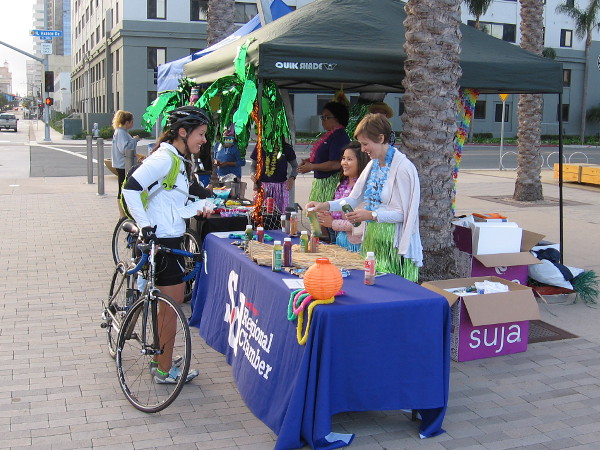
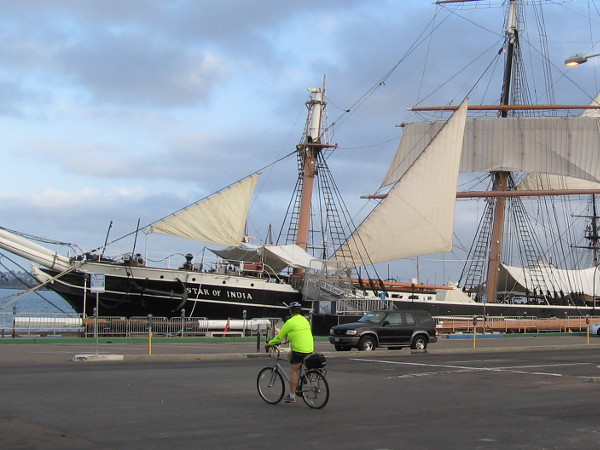
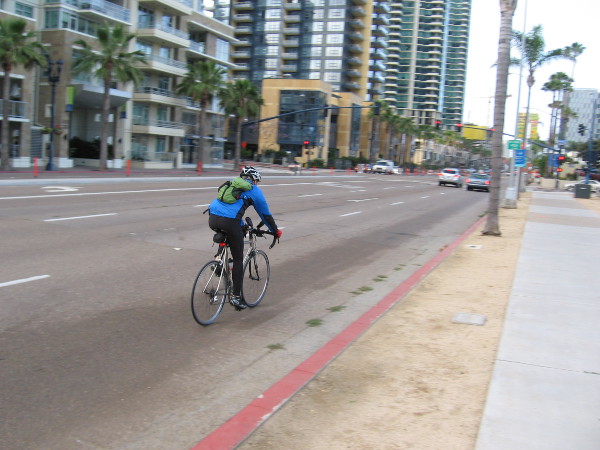
A couple of bicyclists pedal up Third Avenue near Civic Center Plaza during Bike to Work Day.This pit stop in Civic Center Plaza near City Hall was already seeing some incoming cyclists at this early hour. There is an active City of San Diego Bicycle Program.Bike maps, information and other goodies were given away to promote commuting by bicycle to work around San Diego.A huge Share The Road banner hung in Civic Center Plaza.Morning commuter on a bicycle waits alongside a bus for a traffic light on Broadway.On Harbor Drive at the Broadway Pier, a pit stop included a San Diego Regional Chamber of Commerce table.These friendly guys representing engineering company CH2M Hill did the wave for me, but I liked this photo of them smiling better!Someone pedals past San Diego’s historic tall ship Star of India. Another beautiful day has begun.A bicyclist rolls down Pacific Highway on the morning of San Diego’s Bike to Work Day.
…
I live in downtown San Diego and love to walk! You can follow Cool San Diego Sights via Facebook or Twitter!
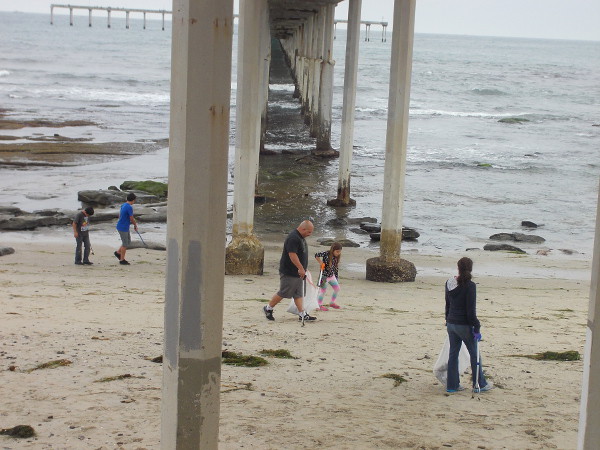
Cool people search under the Ocean Beach Municipal Pier for litter. I love a clean San Diego!
This morning I headed to the OB pier to take a bunch of photos. Some of them might end up being used in a book about the piers of California! (I’ll blog more about that later as events unfold.)
I was pleasantly surprised to see my visit to Ocean Beach happened to coincide with the Ocean Beach Pier Cleanup Day, which is organized by San Diego Coastkeeper and the Surfrider Foundation. I took some pics of awesome volunteers combing the sand for all sorts of nasty litter. Once again, I learned cigarette butts are a huge problem. One small team I spoke to collected literally hundreds of them from the beach.
Do you live in San Diego? Let’s help to keep our city clean and beautiful!
Many residents of Ocean Beach help to keep their community clean, collecting trash that damages the coastal environment.These guys using a metal detector were sifting the sand for precious treasure! In their own way, I suppose, they were helping to keep the beach clean, too!Plastic bags fill up with garbage as volunteers make Ocean Beach that more beautiful and inviting.These friendly volunteers found over 300 cigarette butts. Yikes. If only some people could be a little more thoughtful…Collected trash is recorded at the San Diego Coastkeeper station not far from the OB pier.Volunteers search the beach near the OB pier for litter during a cleanup day.
…
I live in downtown San Diego and love to walk! You can follow Cool San Diego Sights via Facebook or Twitter!
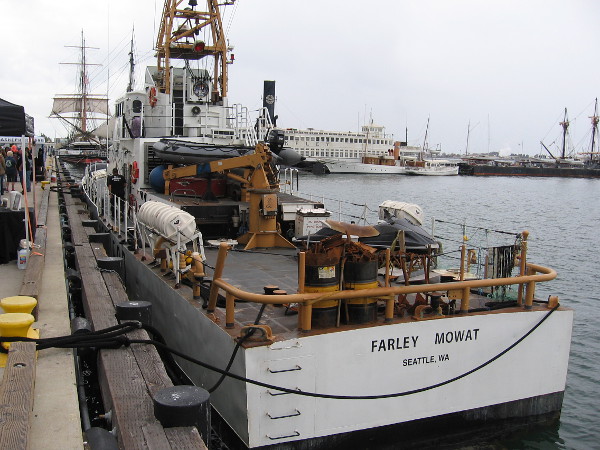
The Sea Shepherd Conservation Society’s old Coast Guard patrol boat, renamed M/V Farley Mowat, is docked this weekend on San Diego’s Embarcadero.
Yesterday after work, I noticed that an unusually decorated old U.S. Coast Guard patrol boat was docked along the Embarcadero, just north of the Maritime Museum of San Diego. Naturally, I had to investigate!
Turns out the renamed boat, M/V Farley Mowat, is now owned and operated by an organization called the Sea Shepherd Conservation Society, whose stated mission is to defend, conserve and protect marine ecosystems and species. They use direct-action tactics to expose and confront the illegal slaughter of marine wildlife at sea. I’d seen their exhibit aboard the steam ferry Berkeley during Earth Day on the Bay, where their representative explained that Sea Shepherd was like Greenpeace on steroids.
I spoke to a friendly crewmember near the Farley Mowat and learned they would be offering the public free tours on Saturday. The vessel has just returned from its second mission in the Sea of Cortez off Baja California–the wildlife defense campaign was titled Operation Milagro II. For a number of months, Sea Shepherd worked with the Mexican government in a marine refuge near San Felipe to identify and intercept illegal gillnet fishing which has reduced the population of the rare Vaquita Porpoise over the decades to just about 100 animals. This is commendable work! Sea Shepherd not only has permission from the Mexican government to patrol for poachers and pull up illegal fishing nets when encountered, but they are making observations concerning this endangered marine species. They are doing similar work to protect another rare fish in the region: the Totoaba Bass.
Working within the law in a positive way to protect these species is commendable and extraordinary! After doing some research at home, however, I learned that the organization is quite controversial. Some say they go too far. Some, including other environmental activists and organizations, have called them eco-terrorists. I don’t know enough to comment, but I do know that sometimes people with enthusiastic agendas and a sense of urgent purpose can lose their sense of humanity. The people I met yesterday and this morning when I walked again along the Embarcadero seemed like very nice people. I will say no more.
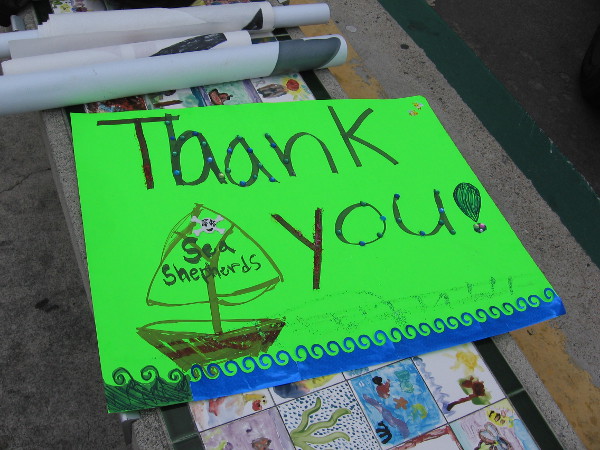
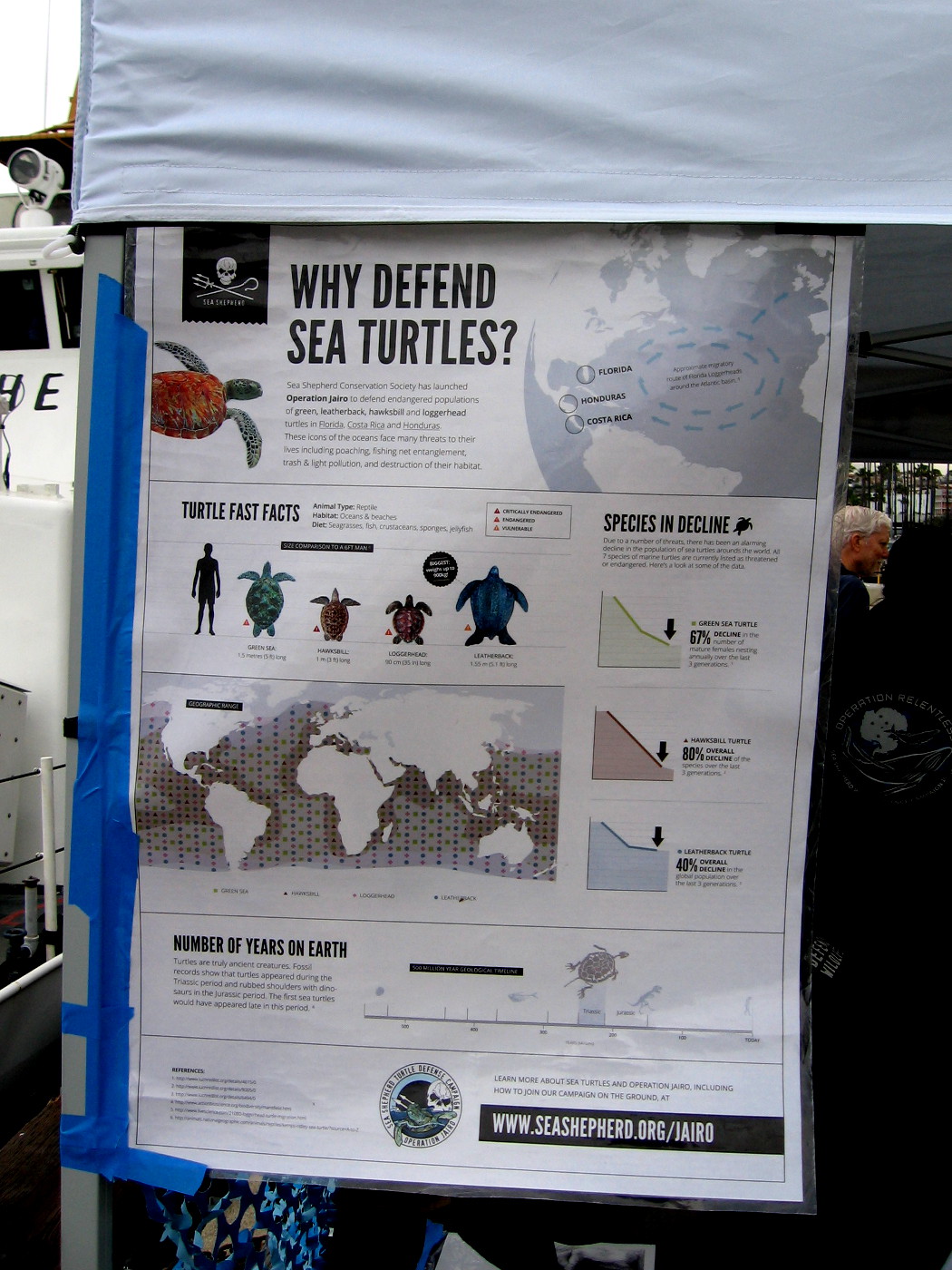
A very friendly, informative crewmember of Farley Mowat explained their recently completed mission, which was to defend the Vaquita Porpoise in Mexico’s Sea of Cortez.Photograph of M/V Farley Mowat the following cloudy morning. Visitors were being given tours aboard the vessel.Interested people and crew mingle before boarding the Sea Shepherd’s cool boat. Public tours of M/V Farley Mowat are being offered this weekend in San Diego.Looks like kids made some Thank You signs for Sea Shepherd!A tent near the boat featured gifts and information in support of Sea Shepherd. Defending Ocean Wildlife Worldwide.A detailed poster explains why sea turtles should be defended. Click to enlarge. San Diego’s South Bay has its own small group of migratory green sea turtles.Sea Shepherd stops in San Diego. They were featured in Animal Planet’s television show Whale Wars. M/V Farley Mowat will soon be on its way to another location on the high seas.
…
I live in downtown San Diego and love to walk! You can follow Cool San Diego Sights via Facebook or Twitter!
Do you like to read short pieces of thought-provoking fiction? You might enjoy checking out Short Stories by Richard.















































 Cool San Diego Sights!