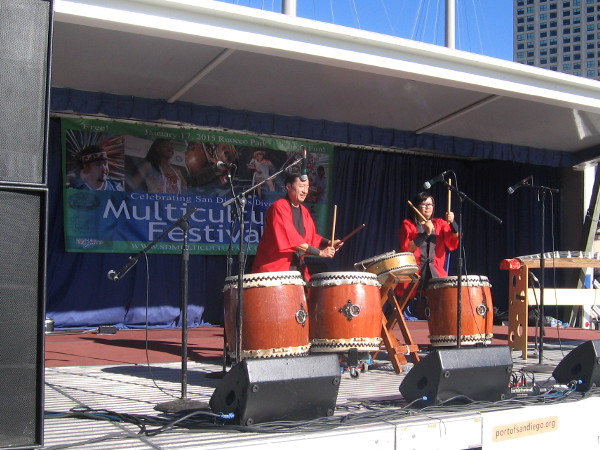
Japanese drummers add rhythm to the San Diego Multicultural Festival.
Today I directed my feet toward the Embarcadero, where the 17th Annual San Diego Sheila Hardin Multicultural Festival took place.
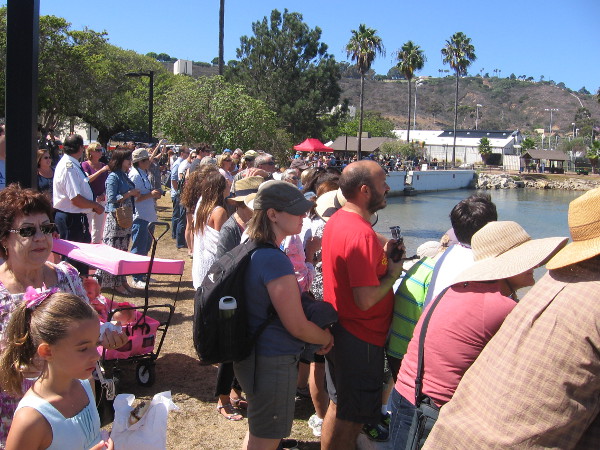
In partnership with the Port of San Diego, the World Beat Cultural Center, and other community organizations, the Multicultural Festival featured lots of diverse music, culture and perfect Southern California sunshine.
This annual festival used to take place along the narrow Martin Luther King Jr. Promenade, which is dedicated to the great civil rights leader. This year it was moved to Ruocco Park to provide more space. The relatively new park, just north of Seaport Village, seems like an ideal location, with lots of grass for kids to play on, throw a ball and just have fun. Personally, I love this park and often sit on one of the benches near the water to read and watch people.
Here are a few photos that I captured…
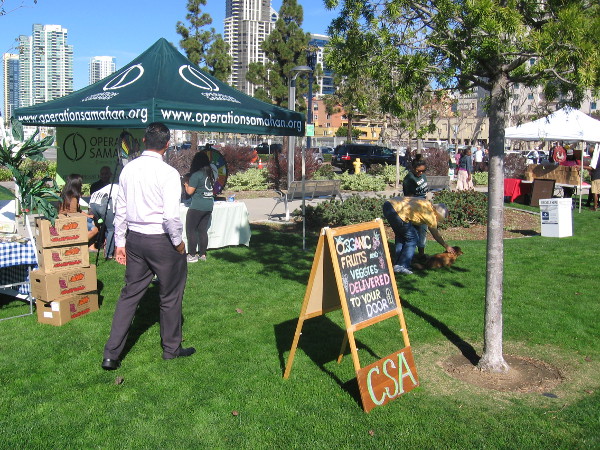
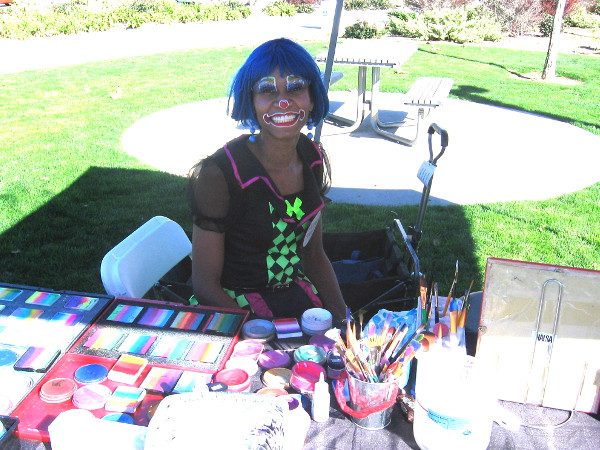
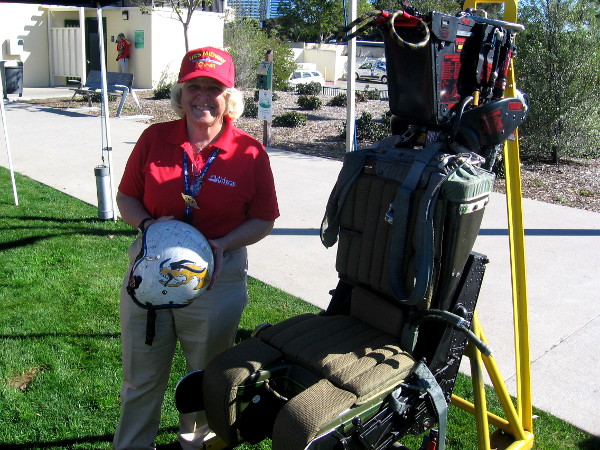
The annual festival took place this year in Ruocco Park, just north of Seaport Village.Lots of local organizations and vendors had cool stuff on display and for sale.Young lady with awesome smiling painted face was decorating other folks!A bubble blower floated globes of color across the grass, all the way to the stage!This nice lady from nearby USS Midway Museum helped me sit in this ejection seat!Among cool things on display were two gravity cars from the Soap Box Derby.A big pile of drums wait to make music in the waterfront park!Serviceman with child enjoys a sunny day at the Multicultural Festival in San Diego.
…
To enjoy future posts, you can “like” Cool San Diego Sights on Facebook or follow me on Twitter.
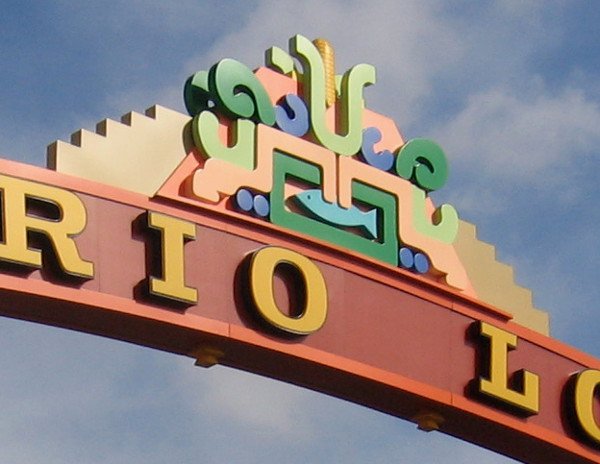
The colorful new Barrio Logan gateway sign arches over Cesar Chavez Parkway.
A little over a week ago, the new Barrio Logan gateway sign had a dedication ceremony. The welcoming sign, arching over Cesar Chavez Parkway between Harbor Drive and Interstate 5, is similar to others that can be spotted in various communities around San Diego. Its design, however, is notably different. The cornice contains a variety of symbolic elements inspired by this neighborhood’s complex history.
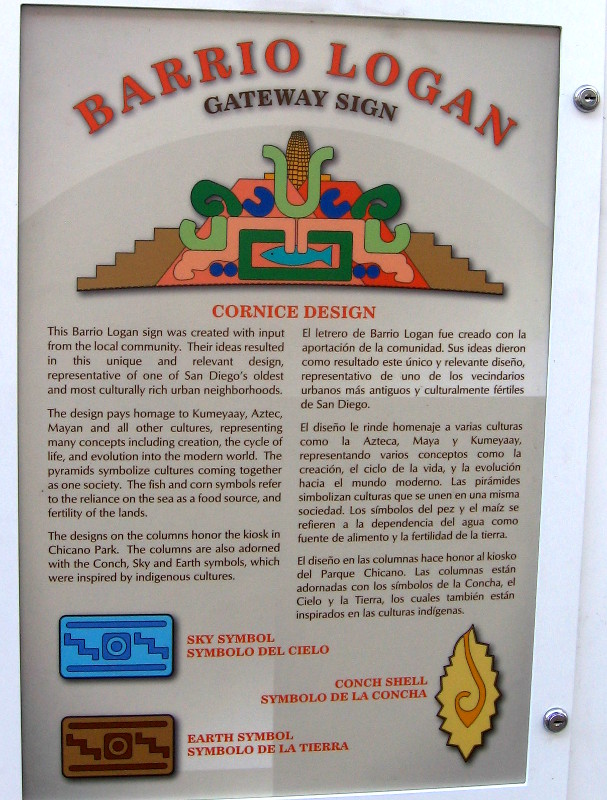
The cornice contains a variety of combined symbols that represent the community.One of two displays on either column that explains the design.
Small displays near the base of each column can be read from either sidewalk. They explain the significance of the cornice design:
“This Barrio Logan sign was created with input from the local community. Their ideas resulted in this unique and relevant design, representative of one of San Diego’s oldest and most culturally rich urban neighborhoods.
The design pays homage to Kumeyaay, Aztec, Mayan and all other cultures, representing many concepts including creation, the cycle of life, and evolution into the modern world. The pyramids symbolize cultures coming together as one society. The fish and corn symbols refer to the reliance on the sea as a food source, and fertility of the lands.
The designs on the columns honor the kiosk in Chicano Park. The columns are also adorned with the Conch, Sky and Earth symbols, which were inspired by indigenous cultures.”
View of the gateway sign as one approaches from the Barrio Logan trolley station.
…
To enjoy future posts, you can “like” Cool San Diego Sights on Facebook, or follow me on Twitter.
Young man with skateboard paints for donations on a San Diego sidewalk.
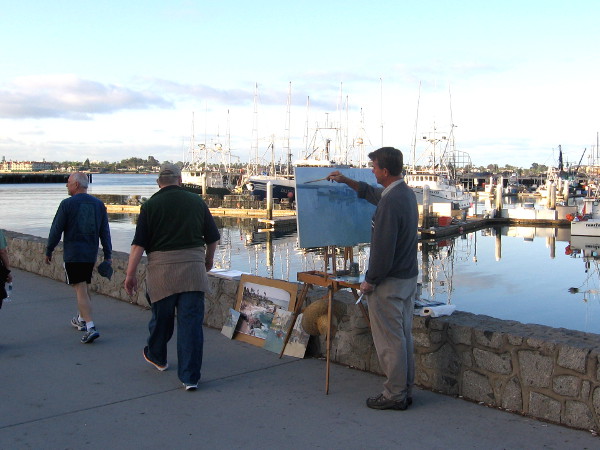
Once in a while my walks around San Diego take me past artists painting scenes from the big city. The artists might be working outside alone in a scenic or interesting place; or I might stumble upon a small crowd of art students working on many easels in a row. I love to pause and look over a shoulder for a few moments. I’m awed by human creativity.
Here are just a few pics that you might enjoy…
Artist in Balboa Park’s Spanish Village works on a canvas in the colorful courtyard.A painted guitarist seems to emerge from the sunny San Diego dappled brightness.An artist works next to Tuna Harbor as many people stroll past.Painter on the Embarcadero inspired by picturesque boats and reflections.Small painted boat seems to float in the nearby rippled water.
…
To enjoy future posts, you can “like” Cool San Diego Sights on Facebook. or follow me on Twitter.
Photograph of the Panama-California Exposition’s La Puerta del Oeste (west entrance) taken from Cabrillo Bridge. The dome and bell tower of the California State Building rise into the San Diego sky.
Balboa Park’s big Centennial celebration is approaching fast! The year-long event kicks off with the opening of December Nights on Friday, December 5th. Later this month, the celebration will continue with a grand New Year’s Eve procession and concert at the Spreckels Organ Pavilion!
The Balboa Park Centennial marks the hundred years that have passed since the opening of the Panama-California Exposition in 1915. While a large open space park near downtown San Diego (originally named City Park) was established in 1872, Balboa Park didn’t really take shape until many years later. Many of the buildings along El Prado which visitors enjoy today owe their existence to the development of the Panama-California Exposition, which covered 640 acres and promoted San Diego as the first United States port of call after a passage through the newly opened Panama Canal. Other parts of Balboa Park were created twenty years later for the California Pacific International Exposition–but that’s a different story.
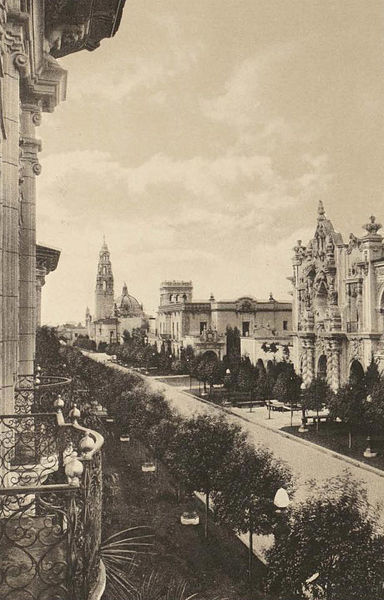
In honor of the Centennial–now just two days away–I figured I’d post a bunch of historical photographs of Balboa Park as it appeared a century ago. The following black-and-white photos are from Wikimedia Commons, and provide different views of the amazing Panama-California Exposition. I had to do a little detective work with some of the images. Since I’m by no means an expert, please leave a comment if I’ve written captions that require correction.
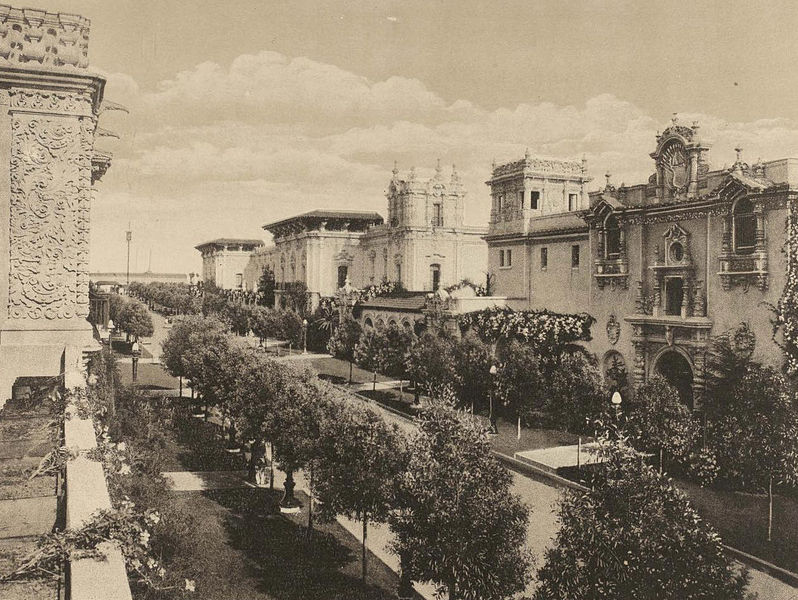
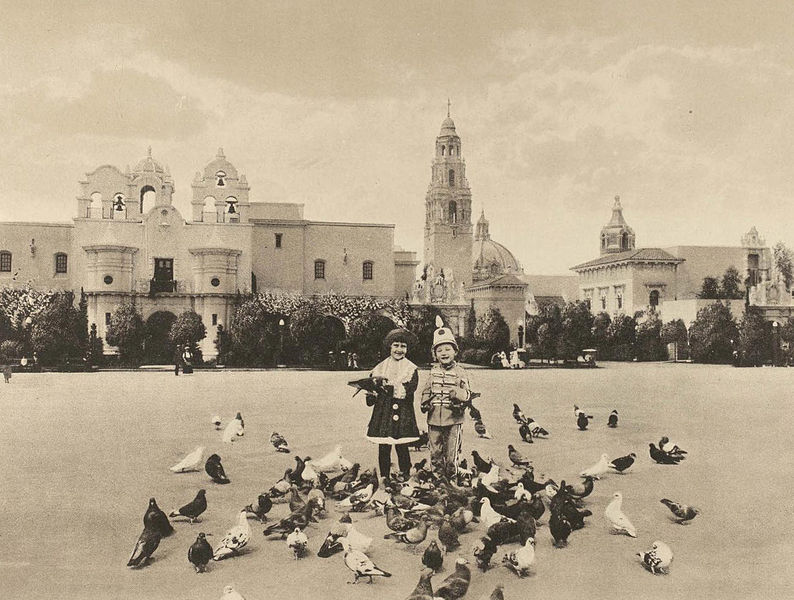
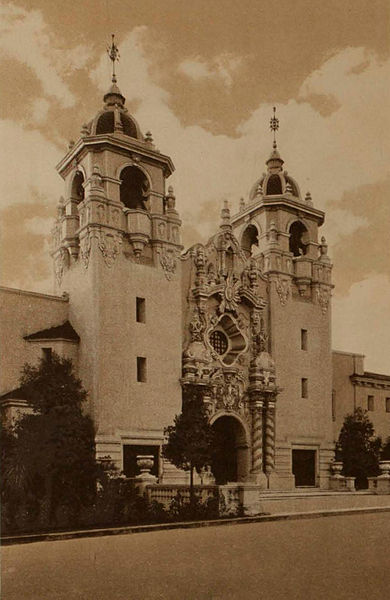
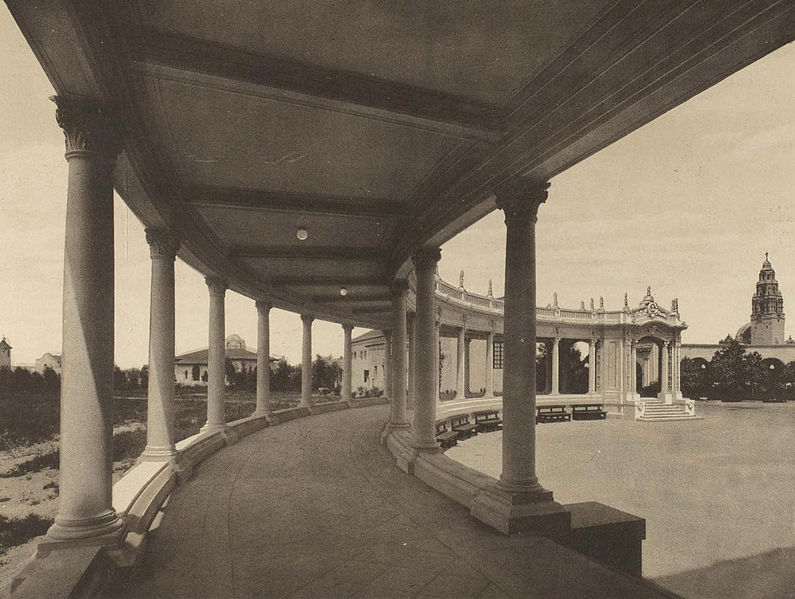
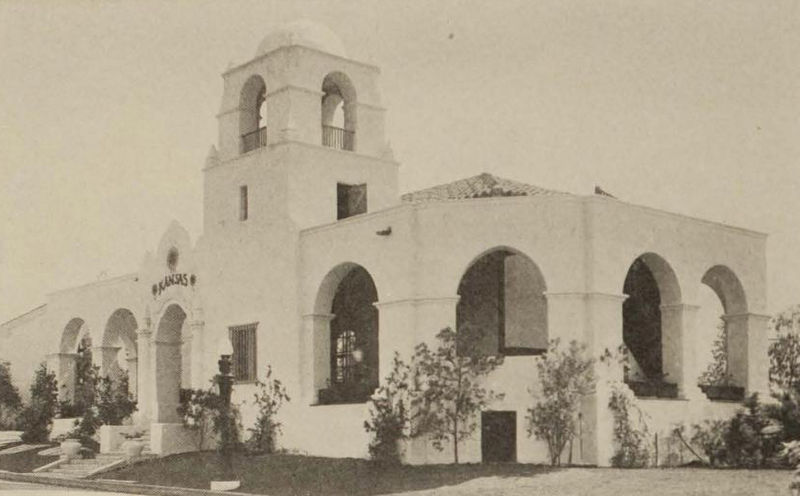
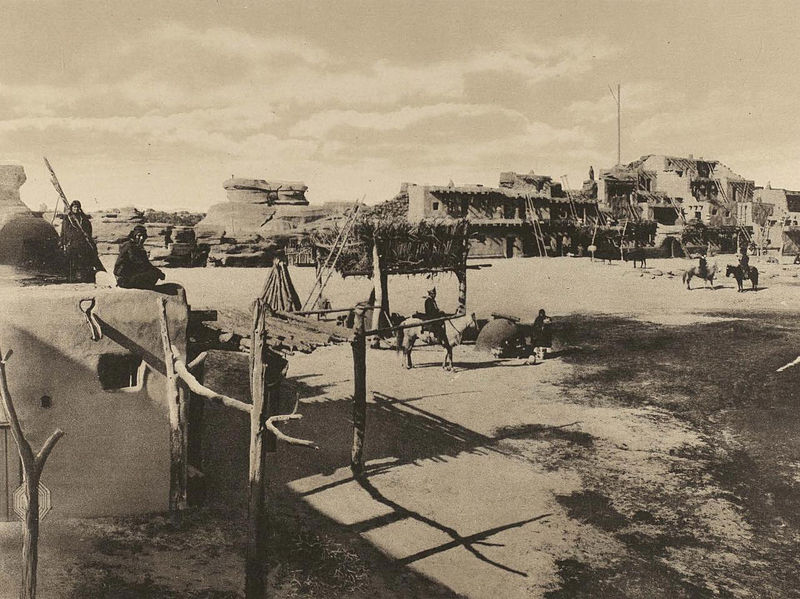
Cover of the 1915 Official Guide Book to San Diego’s Panama-California Exposition. The event celebrated the opening of the Panama Canal, and lasted through 1916.Aerial view from downtown San Diego of Balboa Park’s 1915 Panama-California Exposition. In 1910 San Diego had a small population of only 39,578.La Laguna Cabrillo lake and Camino Cabrillo road beneath Cabrillo Bridge. California State Route 163, a designated scenic highway, runs beneath the historic bridge today.Detailed 1915 map shows Panama-California Exposition ground plan in Balboa Park (originally named City Park).Photo taken of Balboa Park in 1915 from the California Tower provides panoramic view of many exposition buildings designed in the Spanish Colonial Revival architectural style.Looking west along El Prado through the heart of Balboa Park in 1915. At the exposition’s opening ceremony, President Woodrow Wilson activated the electric street lamps with a telegraphic signal.Commerce and Industries Building and Foreign Arts Building stand side-by-side on the south side of tree-lined El Prado. Today, the rebuilt structures are called the Casa de Balboa and House of Hospitality.Commerce and Industries Building. Rebuilt as Casa de Balboa, it’s now home of Museum of Photographic Arts, San Diego History Center, and San Diego Model Railroad Museum.View of shady pergola and the iconic 208 feet tall California Tower from Los Jardines de Montezuma (Montezuma Gardens) in 1915.Los Jardines de Montezuma (today named Alcazar Garden) at Balboa Park’s Panama-California Exposition.Spacious gardens near California State Building’s landmark dome and bell tower during the Panama-California Exposition.U.S. Navy ambulance parked near entrance of the California State Building, today the Museum of Man.Kids feed pigeons on the central Plaza de Panama. The Indian Arts Building with mission bells on left was renamed House of Charm and reconstructed in 1996. It now contains the Mingei Museum.Expansive gardens near the Food Products Building. Today’s enormous Moreton Fig Tree was planted in 1914 near this location.Elegant facade of Food Products Building, which was eventually reconstructed in 1971 as part of the Casa del Prado. It’s now the entrance to the San Diego Junior Theatre.View of La Laguna de las Flores, the reflecting pool (or lagoon) at the Panama-California Exposition. This area was called the Botanical Court.The Botanical Building, then and now one of the largest lath structures in the world. In 1915 its popular name was Lath Palace.Fountain by Botanical Building at the Panama-California Expositon in Balboa Park. The Botanical Court a hundred years later remains largely unchanged.Gazing over reflecting pool at Commerce and Industries Building and Foreign Arts Building. A favorite photographic spot for a century in San Diego.Food Products Building is reflected in tranquil lily pond directly in front of the large lath Botanical Building.View of tree-lined El Prado from second floor of Varied Industries Building, which is now part of the Casa del Prado.Varied Industries Building seen from the west a short distance. Rebuilt as a part of Casa del Prado, today it houses various art and botanical organizations.Home Economy Building (left of Foreign Arts Building), site of today’s Timken Museum of Art. A wicker Electriquette motor cart is visible among people in the Plaza de Panama.Fine photo across Esplanade of the Indian Arts Building, rebuilt in later years and renamed the House of Charm.One of many popular recitals in the Organ Pavilion at the Panama-California Exposition. (This venue is now called the Spreckels Organ Pavilion.)Organ Pavilion colonnade with California Bell Tower in distance. Trees and a large parking lot exist today on the left, behind the classic structure.View of Spreckels Organ in 1915, from a shady spot in the colonnade. Those wooden benches were replaced many years ago with benches made of steel.The distant Organ Pavilion appears in this photo between the San Joaquin Valley Building and the Kern and Tulare Counties Building.Kansas State Building at Panama-California Exposition. Most of these old state buildings no longer exist today, a hundred years later.Montana State Building, near the site of today’s International Cottages.People take a stroll past a handful of state buildings at the Panama-California Exposition in Balboa Park.Utah State Building at the Panama-California Exposition.Washington State Building at the Panama-California Exposition.Artillery practice at the exposition’s U.S. Marine Camp, which was located near the site of today’s Air and Space Museum.Southern California Counties Building, which stood a century ago in Balboa Park at the site of today’s Natural History Museum.Visitors back in 1915 enjoy the Southern California Counties Building’s elegant patio.Large area called the Painted Desert at the Panama-California Exposition. This unique attraction was near the site of today’s Veteran’s Memorial.The elaborate Taos pueblo in the Painted Desert was a fantastic sight at San Diego’s Panama-California Exposition.Realistic exhibit shows Zuni native life at the Panama-California Exposition in San Diego’s Balboa Park.The Pala gem mine was one of the amusements along the Isthmus north of El Prado, near today’s San Diego Zoo parking lot. It featured a 300 foot long tunnel filled with simulated gems.The Cawston Ostrich Farm was an Egyptian pyramid-shaped amusement on the Isthmus, a section of the expo popularly called the fun street.The Japanese Tea Pavilion, northeast of the Botanical Building in 1915. Today, the Tea Pavilion at the Japanese Friendship Garden is located elsewhere and appears entirely different.Citrus and other gardens in a wide north section of the Panama-California Exposition. This is near the entrance of today’s San Diego Zoo.The long Tractor Building was located near a tractor demonstration field, just west of the Painted Desert.California bungalow, surrounded by model farm at the 1915 exposition. Agricultural exhibits and demonstrations were an important part of the event.The Lipton Tea Gardens at the Panama-California Exposition, one more interesting image from San Diego’s rich history.
…
To enjoy future posts, you can “like” Cool San Diego Sights on Facebook, or follow me on Twitter.
Blacksmith at Fall Back Festival in San Diego’s Gaslamp works the bellows.
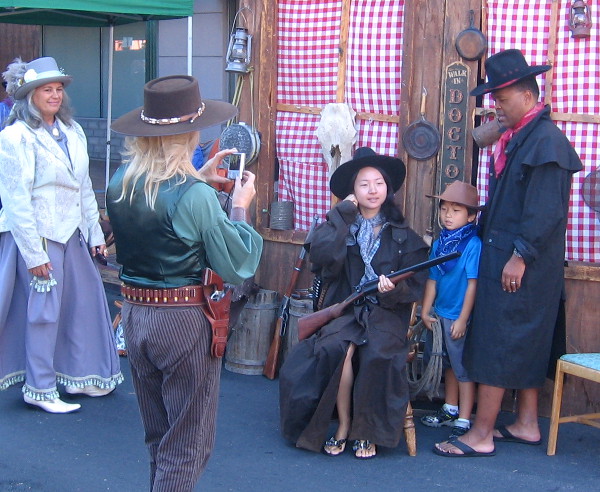
Today I checked out a great event in downtown San Diego’s Gaslamp Quarter. Called the Fall Back Festival: the Children’s Historical and Cultural Street Faire, this historical reenactment places visitors in a magical time machine, transporting them back to the 1880’s.
Three blocks of fun included a blacksmith, old western storefronts, pony rides, candle dipping and other educational activities. Many participants wore costumes and clothing from this early period in San Diego’s history. There was also an exciting High Noon shootout–which I unfortunately missed. But I did capture a few pics…
Lady in old-fashioned dress walks with her umbrella past Horton Grand Hotel.
I snapped the above photo as I headed toward the festival. The lady was just walking along through modern, shiny downtown San Diego like an image from the past.
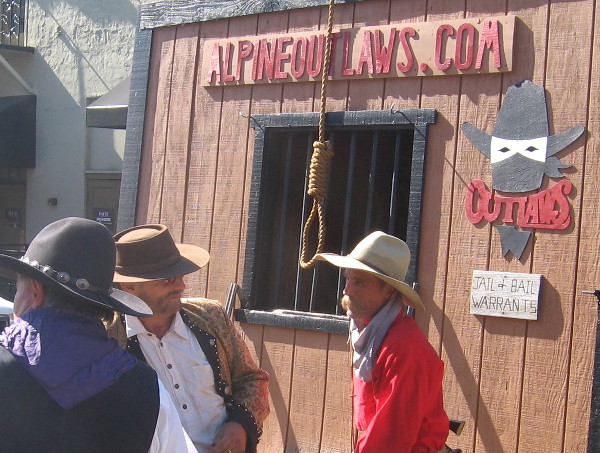
These cowboys, the Alpine Outlaws, have a jailhouse downtown and a hanging noose!
Yikes! The first thing I saw was a bunch of crafty outlaws!
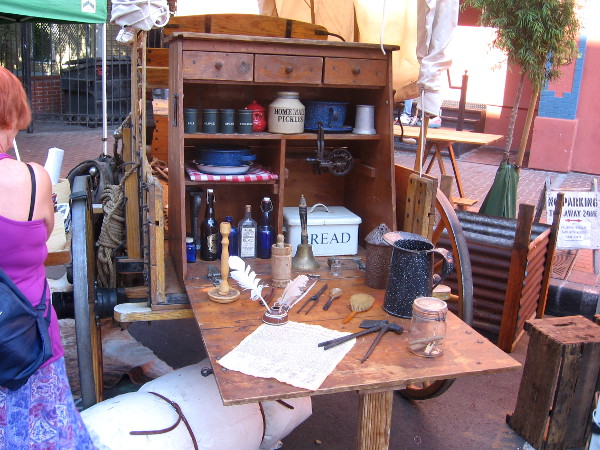
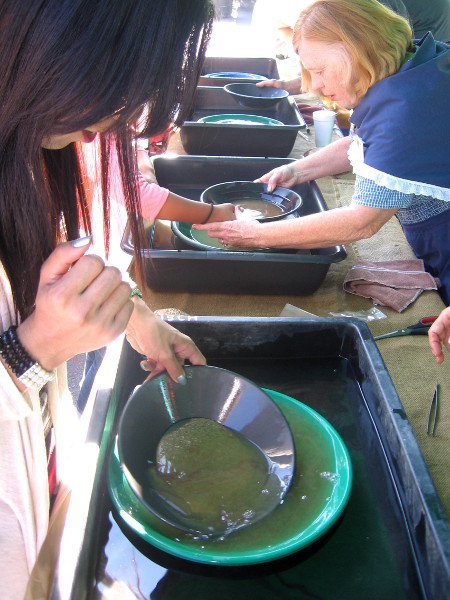
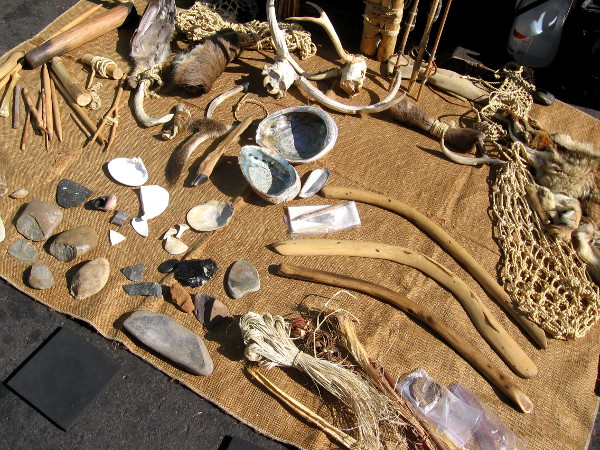
Festival celebrates the diverse and fascinating early history of San Diego.Wood cabinet at rear of wagon is packed with wares typical in 1880’s.A table full of rusty irons from the Old West!Temecula Valley Prospectors had kids panning for real gold.Realistic replicas of Native American tools and weapons were on display.
An interesting guy named Dave, of San Diego Survival History and Fitness, showed me a very cool display. He made all of the above implements and weapons by hand, using materials and techniques that were used by the Kumeyaay and earlier native peoples in the San Diego area. The Spaniards who built their first California Mission in San Diego feared the throwing sticks which you can see in the above photo. Shaped like a boomerang, they had the power to easily bring down a deer!
Historical exhibit has photos of Japanese settlers and community in San Diego.San Diego Model A Club had a row of old automobiles at the Fall Back Festival.Of course, there was live country western music for the crowd to enjoy!
…
To enjoy future posts, you can “like” Cool San Diego Sights on Facebook or follow me on Twitter.
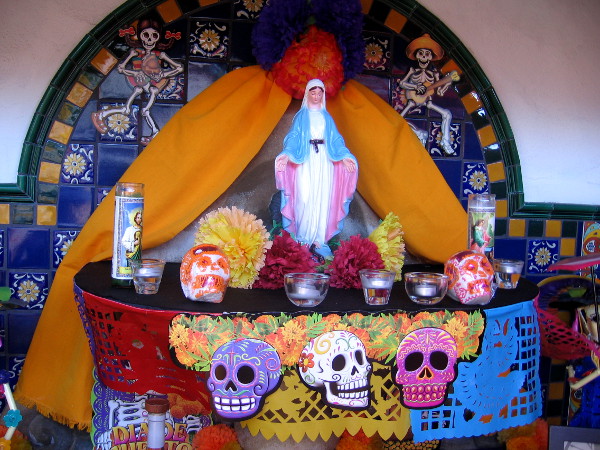
Día de los Muertos displays at Bazaar del Mundo are filled with life and color.
Día de los Muertos, also called Day of the Dead, is a popular holiday in Mexico and in many other cultures around the world. It’s a celebration that honors the memories and spirits of loved ones who have passed away. It closely follows Halloween, a holiday that is similar but actually quite different. Día de los Muertos, rich with images of skeletons and decorated skulls, is neither scary nor morbid; it is joyous!
This weekend, Old Town hosted its annual Day of the Dead special event. Altars, costumes and other sights that are common during the holiday could be found throughout the park and surrounding area. I took lots of photos!
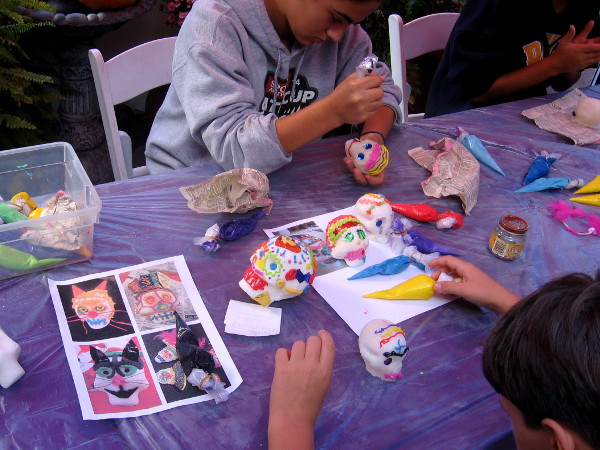
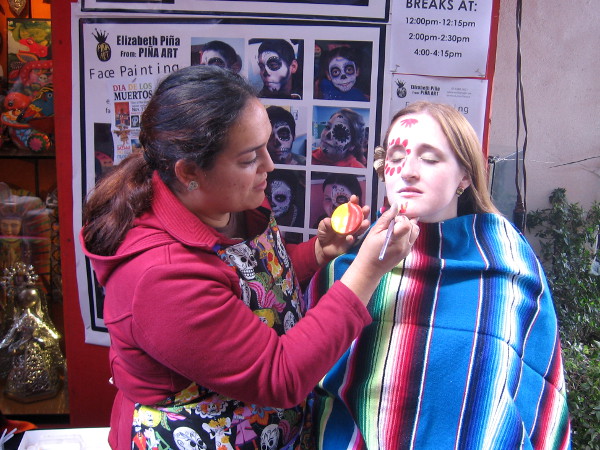
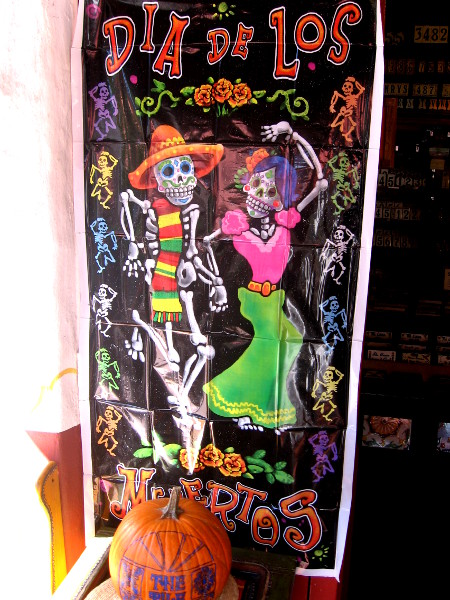
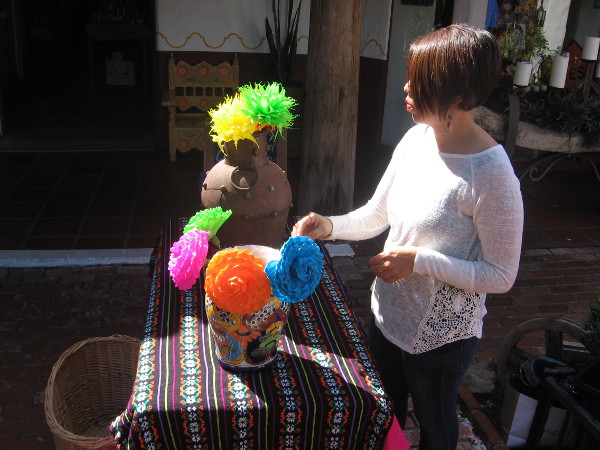
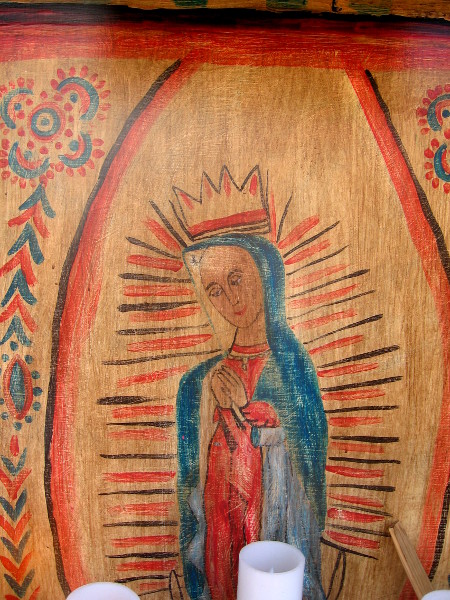
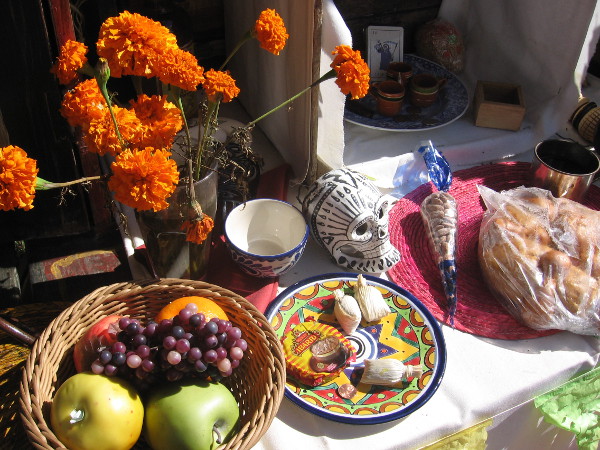
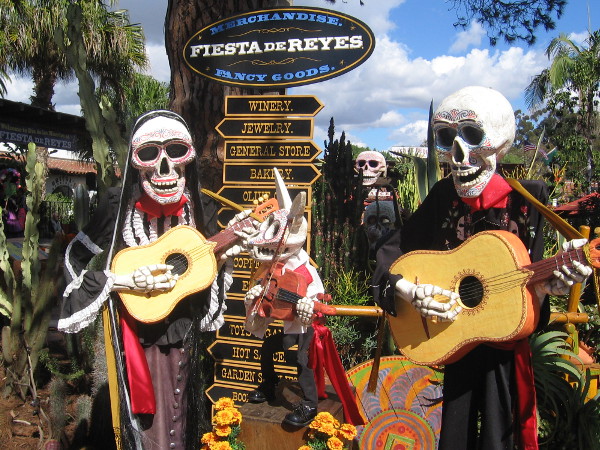
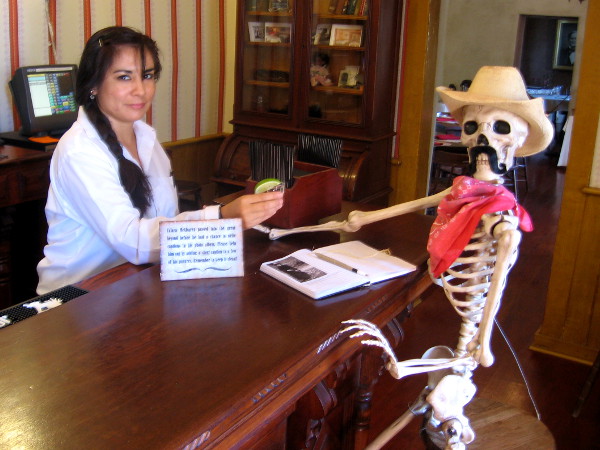
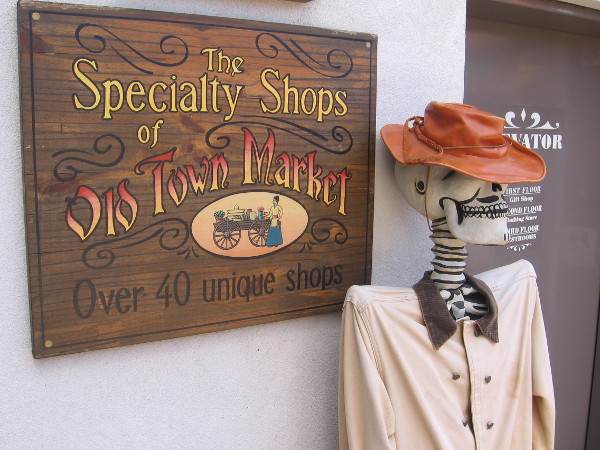
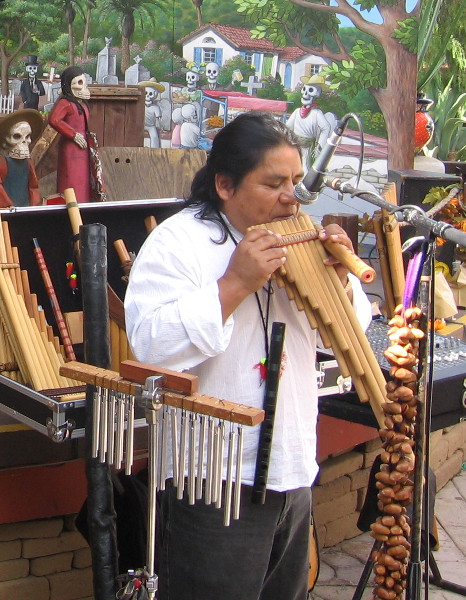
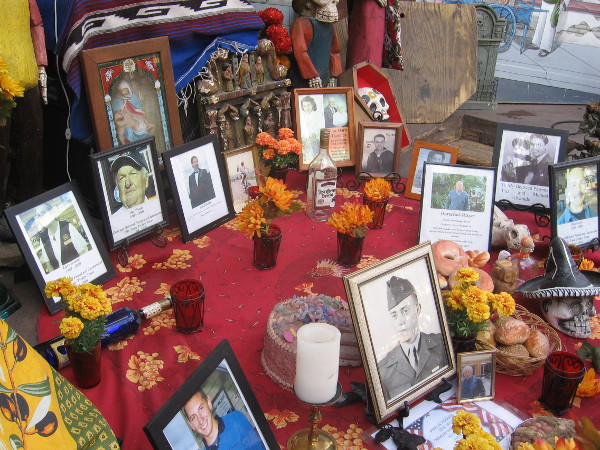
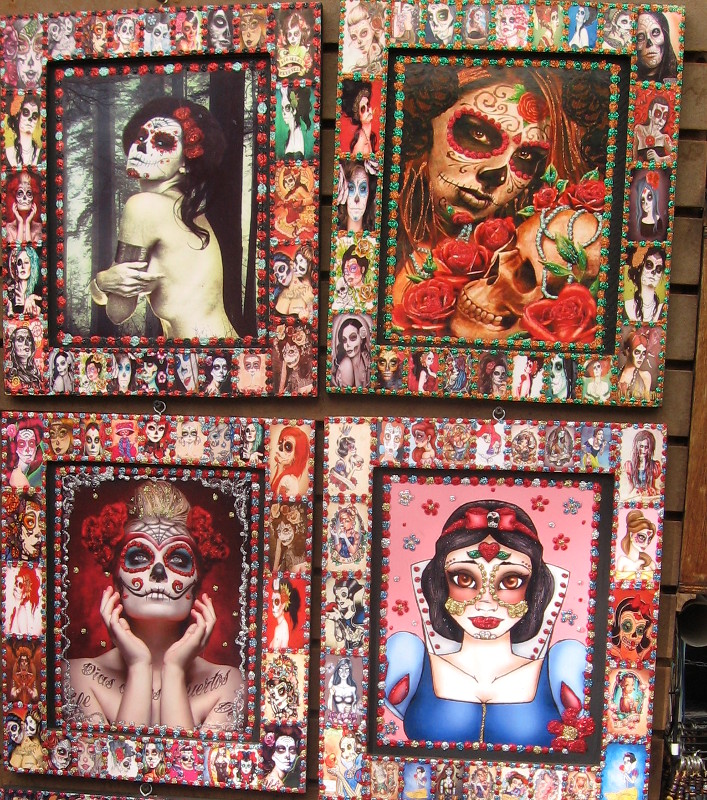
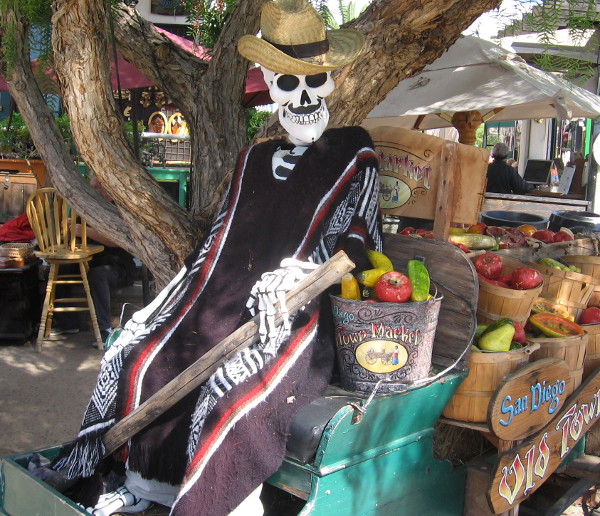
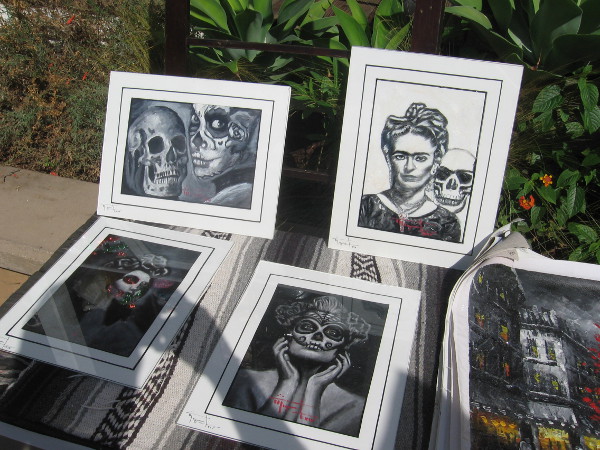
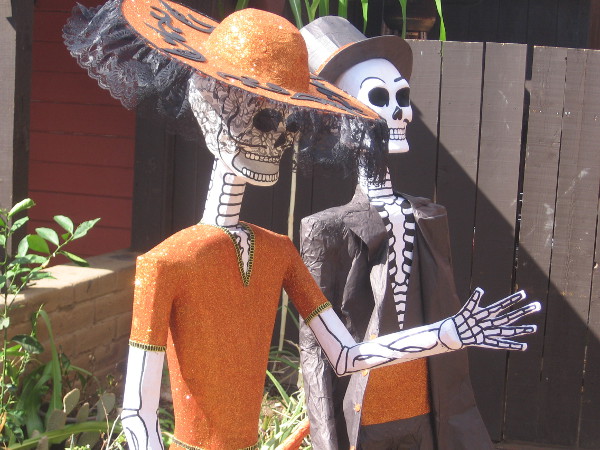
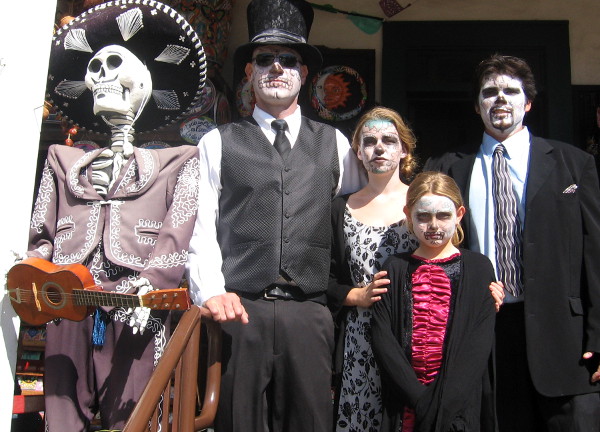
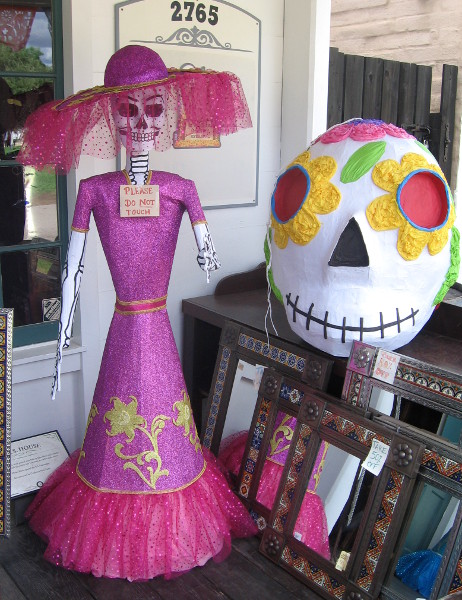
Día de los Muertos altar at Bazaar del Mundo in a corner of Old Town, San Diego.Kids decorate sugar skulls, a fun and tasty tradition of Day of the Dead.Ethnic and folk crafts are abundant at Bazaar del Mundo.Young lady has face painted to celebrate Día de los Muertos.A traditional Catrina. A female skeleton in old-fashioned hat and dress.Altar at Fiesta de Reyes features Virgin Mary and photos of departed loved ones.Fantastic sign above pumpkin shows lively, dancing skeletons.Lady working in San Diego’s Old Town arranges bright frilly flowers in the sun.Folk dancers on and off stage at Fiesta de Reyes during Día de los Muertos.This scarecrow and skeleton seem happy together on this perfect Autumn day!Bench at Fiesta de Reyes painted with sombrero-wearing, flower-bearing skeletons.Small crowned image in crude wooden frame in a larger altar.Prayers are directed toward radiant image of Virgin Mary above altar candles.Altars often contain food liked by the deceased, to entice their spirits back.Mariachi skeletons strum guitars at entrance to Fiesta de Reyes.This big flower and heart-covered calavera faces Old Town’s central square.Larger-than-life Day of the Dead mannequin wears a beautiful red dress.Dead couple sits in lobby of Old Town’s historic Cosmopolitan Hotel.Bartender offers drink to skeleton cowboy at the Cosmopolitan Hotel’s bar!The bony fellow at the bar was called Calaca McAlvarez!Stylish bystander is resting near one of the many Old Town shops.Musician entertains on pipes at Old Town’s Day of the Dead festivities.Día de los Muertos display with a strong Mexican flavor.Photographs remember loved ones who have passed into the spirit world after death.Snow White has been transformed into lavish Day of the Dead artwork.This guy is sitting on a wagon near popular entrance to Old Town State Historic Park.Sculptor recreates face of living tourist posing for a unique souvenir.Prints on display for the big crowds attending Old Town’s Day of the Dead.This elegant couple was spotted among the many historic buildings in Old Town.This well-dressed family all had their faces painted to resemble skulls!Author A. B. Curtiss was signing her acclaimed books at Día de los Muertos.
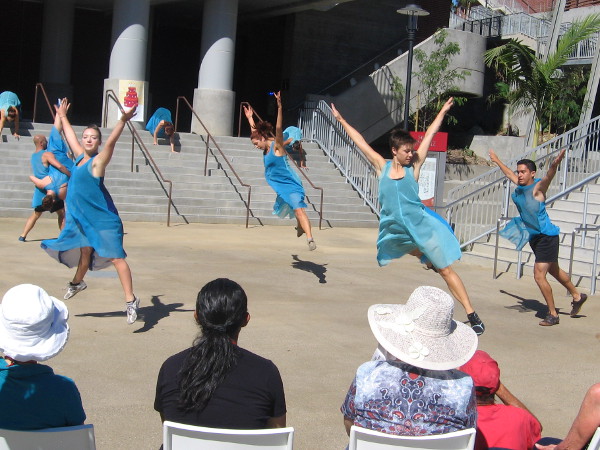
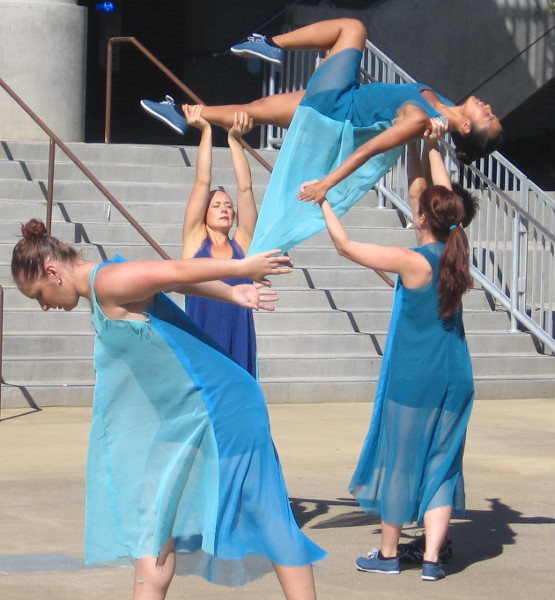
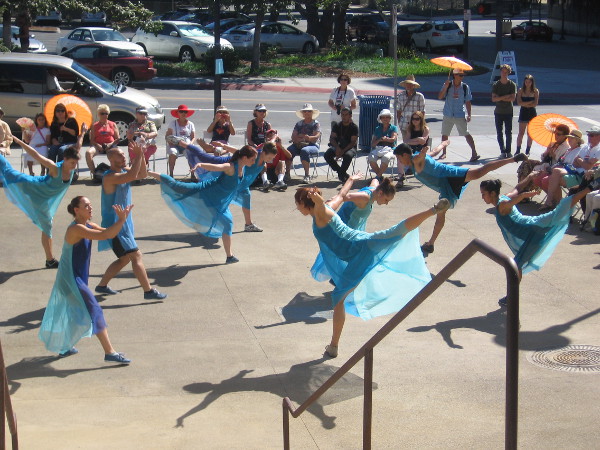
San Diego Dance Theater performs Trolley Dances at City College.
The Trolley Dances, a unique event put on by the San Diego Dance Theater, is being held this year at downtown’s City College. I live a short walk away, so I figured I’d head that way this morning before it became too hot. (We’re experiencing mild but very toasty Santa Ana weather here in Southern California.) I thought that perhaps I could snap a few pics as a casual bystander.
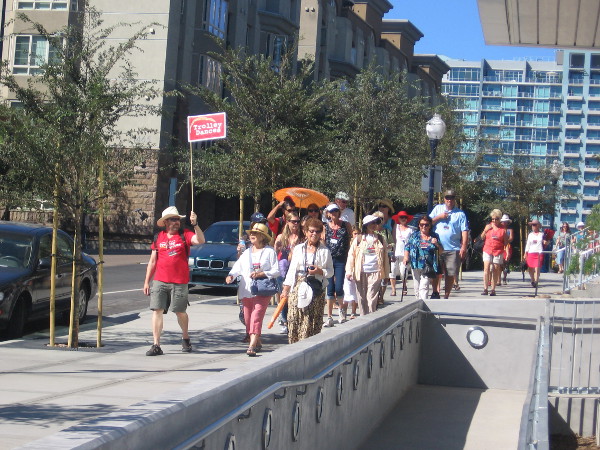
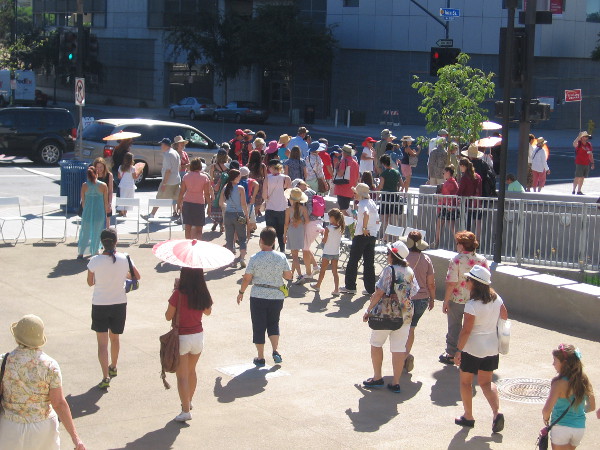
The Trolley Dances involves a mobile audience, which walks from venue to venue. The dances are staged in some of the most unexpected public places. Every year the locations change.
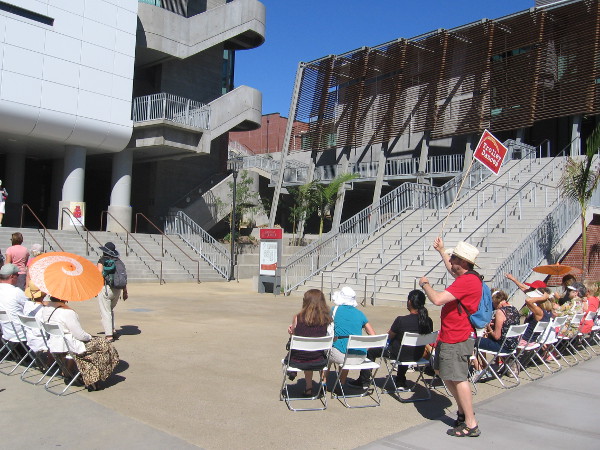
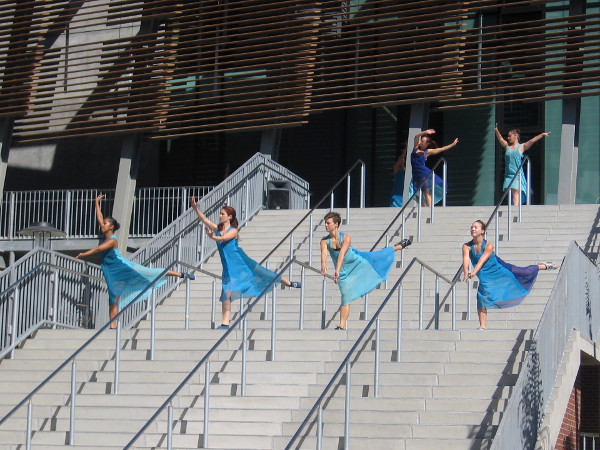
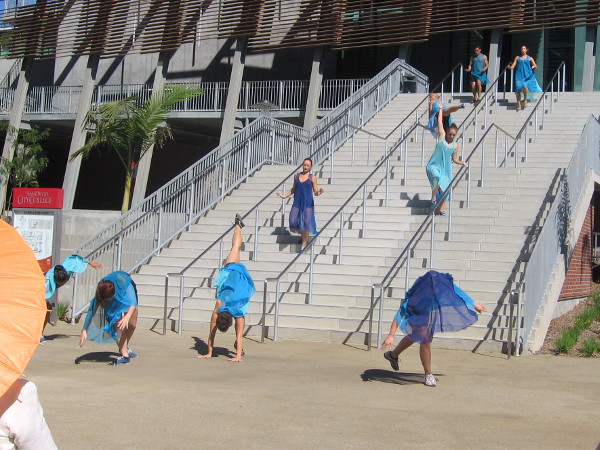
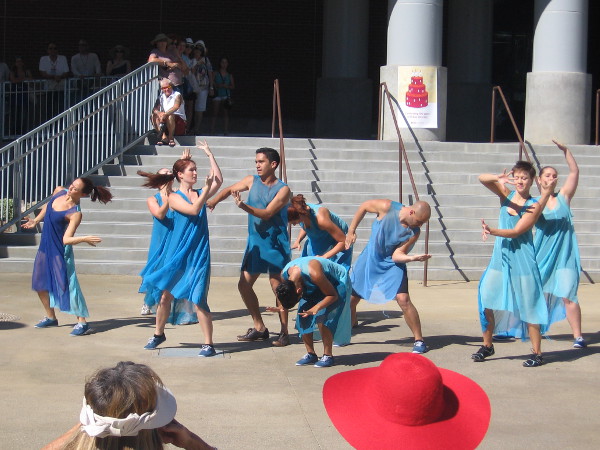
I was successful! These photos are of the third “stage” of the 2014 Trolley Dances…
One unusual venue, at bottom of steps on the campus of San Diego City College.Here come people who are enjoying a variety of surprising performances.Audience gets ready to watch the third dance of the 2014 Trolley Dances.Dancers in flowing blue appear at the top of the broad steps!Graceful dancers descend the high stairs in a grand entrance!The free form dance twirls and floats before the eyes of onlookers.Rhythmic energy fills the unusual stage on a sunny, quite warm day.Dancers perform many athletic, amazing moves.Beautiful dance delights a host of San Diegans.This performance was a carefree, joyful, very cool sight to behold!The dancers return to the stairs for a final few moments.The dancers retreat to prepare for the next group in a few minutes.This Trolley Dances group heads off to the next surprising location!The Trolley Dances is a cool, very unique tradition in San Diego!
…
To enjoy future posts, you can “like” Cool San Diego Sights on Facebook, or follow me on Twitter.
Juan Rodriguez Cabrillo discovered San Diego Bay for Spain in 1542.
San Diego’s 51st Annual Cabrillo Festival was held today. Taking place at Ballast Point near the south end of Naval Base Point Loma, the event allowed the public to view a reenactment of Juan Rodriguez Cabrillo’s entrance into San Diego Bay in 1542. Cabrillo, born in Portugal, commanded his voyage of discovery on behalf of Spain, sailing the galleon San Salvador up the west coast of America.
In addition to the colorful reenactment, the festival included a short ceremony, speeches, costumes, National Park exhibits, food and dance provided by various cultural groups, and just a lot of interesting local history. I took some photographs. Here they are!
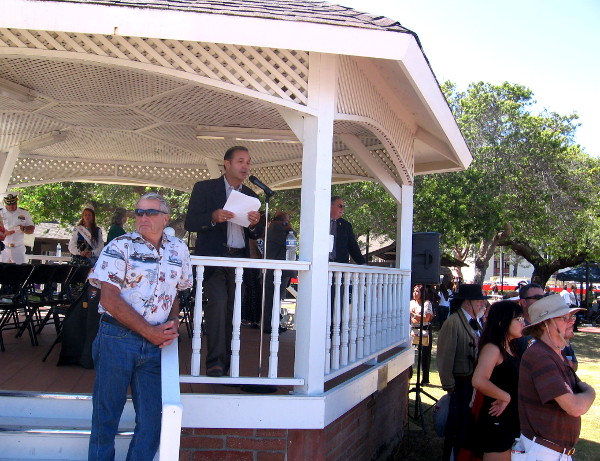
Visitors to the 51st Annual Cabrillo Festival await reenactment of historic event.People gather above the small beach at Ballast Point on Naval Base Point Loma.As people await a rowboat full of reenactors, event commentary is provided.
A short walk out to a point beside the bay provided a view of the San Diego Maritime Museum’s tall ship Californian, which portrayed Cabrillo’s galleon San Salvador.
Tall ship Californian, in the distance, serves during event as Cabrillo’s galleon San Salvador.
I took pictures of two signs by the above fenced archeological site…
Sign at Ballast Point tells about archeological site of old Spanish whaling station.Stones and tiles are remains of an old tryworks oven where whale oil was boiled.
I headed back to the gathered crowd to await the main event…
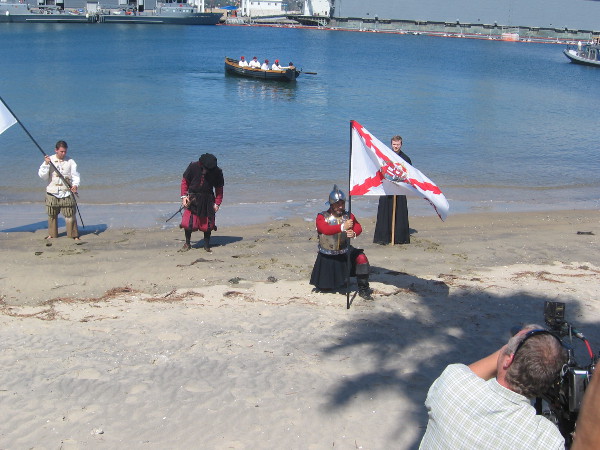
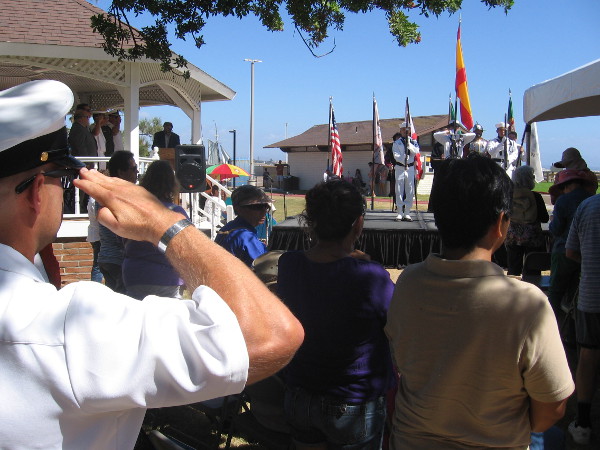
Here comes the rowboat containing explorer Cabrillo, a priest and crew members.People watching this recreation of history are snapping photos like crazy.Cabrillo leaps from the galleon’s small boat onto the shore!Cabrillo in armor raises his sword, while priest with cross stands behind him.Cabrillo now plants a Spanish Cross of Burgundy flag on soil of New World.A proclamation is read on behalf of Spain by Portuguese explorer Cabrillo.Actors depart the narrow beach and head up to join the onlookers.Kids pose with a modern day version of Juan Rodriguez Cabrillo.Many folks in costume were in the big crowd!Navy honor guard prepares for anthems of four nations and a moment of silence.Making an adjustment to costume from the Old World centuries ago.Anthems were played for Spain, Portugal, Mexico and the United States.
In addition to the four national anthems, a moment of silence honored the Native American Kumeyaay, who lived in this area long before Europeans arrived. Cabrillo spent a few days anchored in today’s San Diego Bay, a place he originally named San Miguel. He took on fresh water and traded with the native Kumeyaay people that he met.
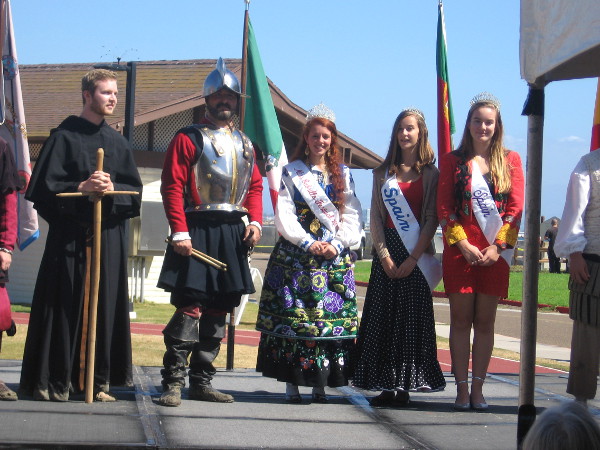
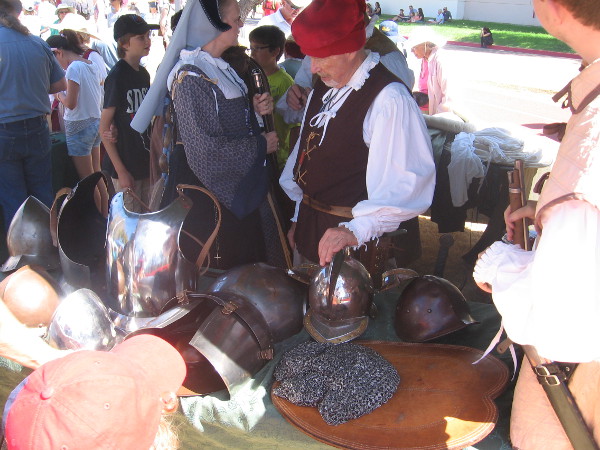
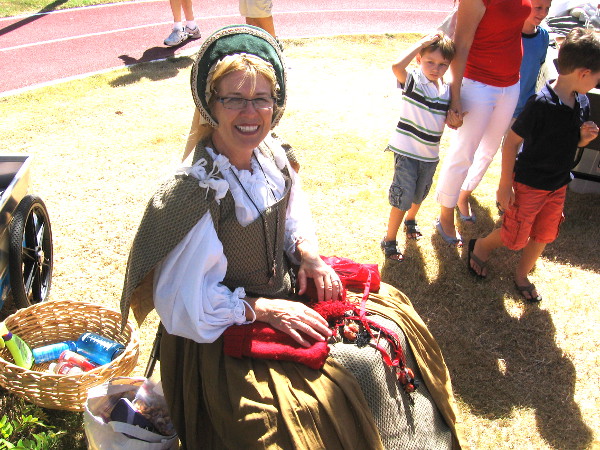
People watch with interest during the short ceremony that included several speeches.Several beauty queens appear on stage and smile for everyone.Exhibits included various parts of Spanish conquistador armor.Small boy tries on a surprisingly heavy steel helmet.Chainmail was being twisted with an apparatus at the end of this table.Biscuits, nuts and an astrolabe are typical items carried on a Spanish galleon.Scouts demonstrate rope making with an interesting machine.Friendly lady was making woolen caps to be worn under those heavy steel helmets!
…
To enjoy future posts, you can “like” Cool San Diego Sights on Facebook, or follow me on Twitter.
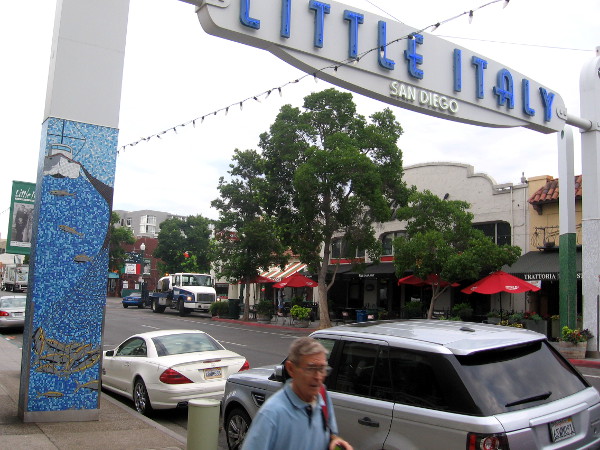
Pedestrian passes Little Italy sign on India Street in San Diego.
Today, if you were to walk through downtown San Diego’s historic Little Italy neighborhood, you’d probably see a number of very interesting street banners and plaques. These commemorate the Legends of Little Italy.
Early one morning while I walked to a nearby trolley station, I took a few quick photographs along India Street. You might enjoy looking at them. I transcribed much of what appears on the plaques.
Plaque explains the history of the Little Italy Landmark Sign.
The Little Italy Landmark Sign was dedicated and lit at the 7th Annual Little Italy Festa on the evening of October 8, 2000. The landmark sign was constructed as a tribute to this immigrant neighborhood which, until the late 1960s, was the hub of the world’s tuna fishing and canning industry. The nautical theme can be seen in the portholes at the top of the pillars, the blue neon of the lettering and the cable span which holds up the sign. The mosaic tile work on each side of the street tells how this immigrant community is historically tied to the bay, the church and the Italian homeland. This sign is a testament to the preservation of Little Italy’s cultural heritage and to the ongoing revitalization of this dynamic urban ethnic neighborhood in Downtown San Diego.
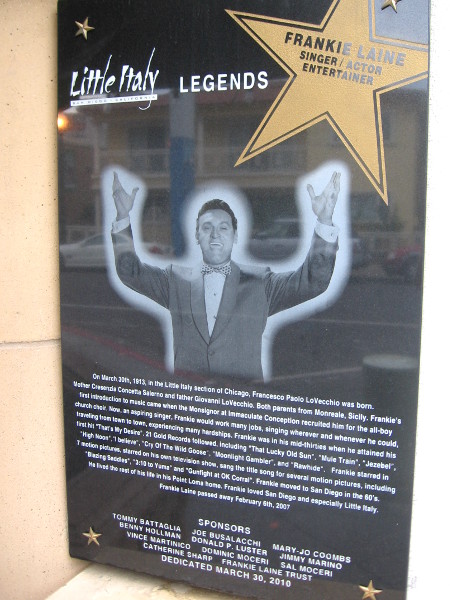
Mosaic tiles show the community’s ties to Italy and traditions.Singing and acting legend Frankie Laine lived in San Diego.
On March 30th, 1913, in the Little Italy section of Chicago, Francesco Paolo LoVecchio was born. Mother Cresenzia Concetta Salerno and father Giovanni LoVecchio. Both parents from Monreale, Sicily. Frankie’s first introduction to music came when the Monsignor at Immaculate Conception recruited him for the all-boy church choir. Now, an aspiring singer, Frankie would work many jobs, singing wherever and whenever he could, traveling from town to town, experiencing many hardships. Frankie was in his mid-thirties when he attained his first hit “That’s My Desire”. 21 Gold Records followed, including “The Lucky Old Sun”, “Mule Train”, “Jezebel”, “High Noon”, “I believe”, “Cry of the Wild Goose”, “Moonlight Gambler”, and “Rawhide”. Frankie starred in 7 motion pictures, starred in his own television show, sang the title song for several motion pictures, including “Blazing Saddles”, “3:10 to Yuma” and “Gunfight at OK Corral”. Frankie moved to San Diego in the 60’s. He lived the rest of his life in his Point Loma home. Frankie loved San Diego and especially Little Italy. Frankie Laine passed away February 6th, 2007.
Tony and Rose Bernadino used to live on Date Street.Tony Bernardini was an Italian immigrant who settled in San Diego.
Tony Bernardini left his native Bari, Italy to sail to America in 1907. He came with little money, but his heart was full of hope and enthusiasm for the opportunities that awaited him in his New World. Passing through Ellis Island, he quickly made his way to San Diego, where he found a climate and a neighborhood that reminded him of the place he had left. Tony took a job with the San Diego Electric Railway Company, maintaining the tracks for San Diego’s extensive streetcar lines. He worked hard, saved his money, and sent for his future wife, Rosa Monteleone, in 1911.
Tony and Rosa married shortly after her arrival in San Diego. They went on to have seven children; Clara, Fred, Lily, Vito, Matha, Nick, and Angelina. With hard work, Tony was able to bring several other members of their families to America to join them. In the early 1930’s, he got an opportunity to buy the building located on this corner from an acquaintance, who offered to finance the transaction for him. He opened the Civic Center Liquor House. Rosa and all of the children helped him run the business. During the first seven years he ran the business, he was only able to pay the interest on the Property’s note. But with the Declaration of World War II in 1941, San Diego’s economy heated up dramatically. Despite the fact that all three of their sons joined the Army to fight in the War, Tony, Rosa, and their daughters continued to work in the business, and by the end of the War, Tony had managed to pay off the note completely. he had achieved the American dream!
The story of love, hard work, and strong family life.
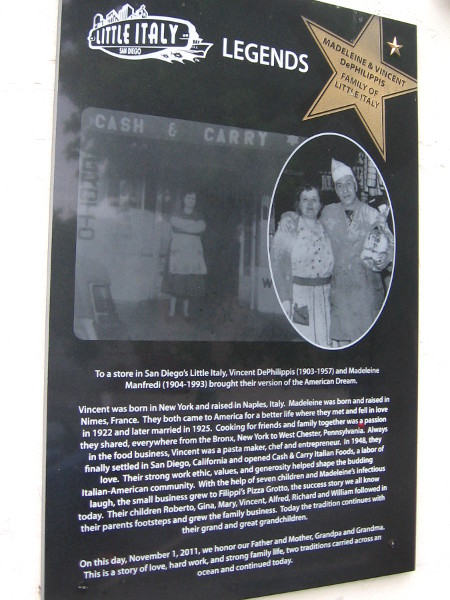
To a store in San Diego’s Little Italy, Vincent DePhilippis (1903-1957) and Madeleine Manfredi (1904-1993) brought their version of the American Dream.
Vincent was born in New York and raised in Naples, Italy. Madeleine was born and raised in Nimes, France. They both came to America for a better life where they met and fell in love in 1922 and later married in 1925. Cooking for friends and family together was a passion they shared, everywhere from the Bronx, New York to West Chester, Pennsylvania. Always in the food business, Vincent was a pasta maker, chef and entrepreneur. In 1948, they finally settled in San Diego, California and opened Cash & Carry Italian Foods, a labor of love. Their strong work ethic, values, and generosity helped shape the budding Italian-American community. With the help of seven children and Madeleine’s infectious laugh, the small business grew to Filippi’s Pizza Grotto, the success story we all know today. Their children Roberto, Gina, Mary, Vincent, Alfred, Richard and William followed in their parents footsteps and grew the family business. Today the tradition continues with their grand and great grandchildren.
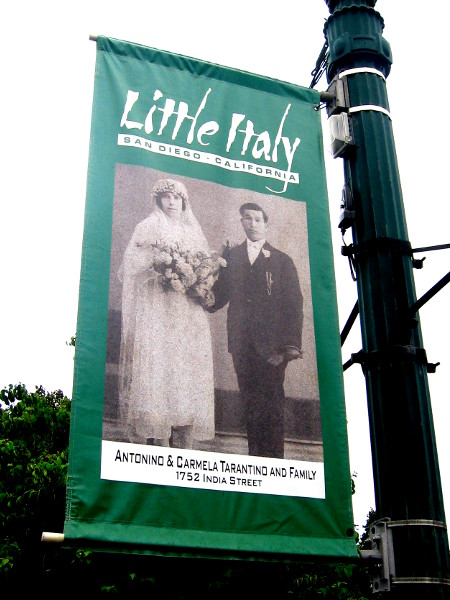
Banner on street lamp shows Tarantino family.Past lives become legends in the annals of Little Italy’s history.Morning coffee and companionship on a Little Italy sidewalk.
UPDATE!
During another walk through Little Italy I discovered another fascinating plaque:
Plaque shows Rose and Salvatore Cresci, Family of Little Italy.The story of Rose and Salvatore “Sal” Cresci, Little Italy Legends. (Click photo to enlarge for easy reading.)
UPDATE!
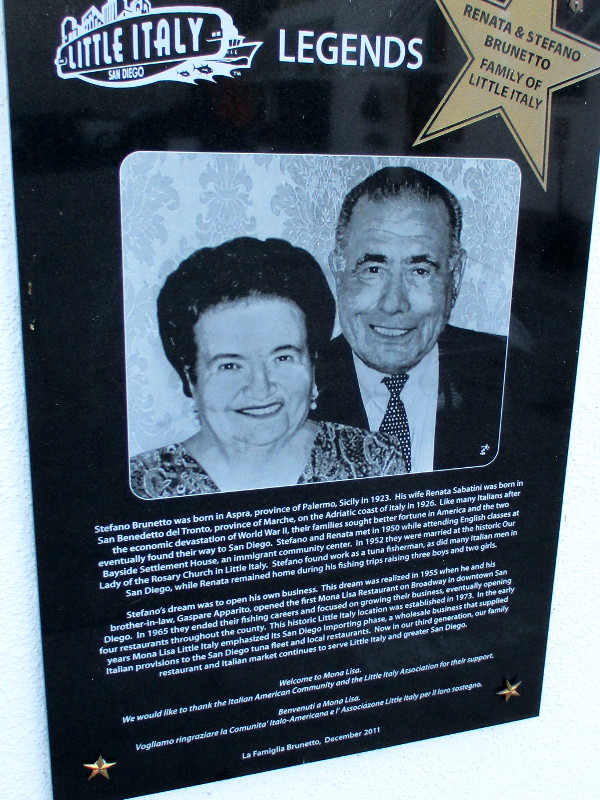
Here come two more signs that I found! The first concerns Pietro and Cristina Busalacchi, Italian immigrants who established restaurants in San Diego. The second concerns Renata and Stefano Brunetto. Stefano, a tuna fisherman, opened Mona Lisa Restaurant with his brother-in-law Gaspare Apparito.
…
To enjoy future posts, you can “like” Cool San Diego Sights on Facebook, or follow me on Twitter.
Public art at Lillian Place shows many facets of African-American history in San Diego.
Should you walk through downtown San Diego’s East Village in the vicinity of 14th and J Streets, you might be attracted to several large yellow panels along the sidewalk. This proud display of public art at Lillian Place was raised to commemorate how African-Americans have played an important role in building our diverse and beautiful city.
The artwork, created by Jihmye Collins and Nina Karavasiles, is titled “A San Diego African-American Legacy” and represents African-American contributions to San Diego’s development and rich history.
Cast metal parachute recalls 1943’s Top Black Owned Business in the United States.
Here’s a large portion of the text contained on the panels:
People of African decent were present in San Diego as early as the establishment of Presidio de San Diego in 1769, and played a role in settling the area now known as Old Town.
In the later decades of the 1800s, African-Americans began emigrating to Horton New Town, San Diego’s present-day downtown, relocating primarily from the southern US.
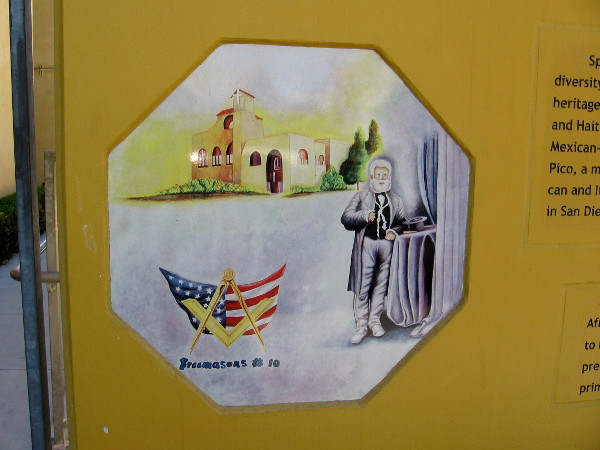
Religious institutions were, and continue to be a cornerstone of the African-American community. In 1887, the African Methodist Episcopal Church became the first organized African-American congregation in downtown San Diego, followed soon after by Calvary Baptist and Bethel AME. At the same time, African-American social and civic groups like the Violet Club, Acme Social Club and Fidelity Lodge #10 of the Prince Hall Masons became important organizations in the community.
San Diego was once the center of a thriving jazz, blues, and gospel music scene. The Creole Palace at the Douglas Hotel and the Crossroads Jazz Club were just two of the spots that hosted local and national talent playing to mixed audiences.
African-Americans have always played a major role in amateur and professional sports in San Diego. Local favorite Archie Moore fought at the city Coliseum as did other champions. San Diegan John Ritchey became the first black player in the Pacific Coast League when he was signed as a catcher to the then minor league padres in 1948.
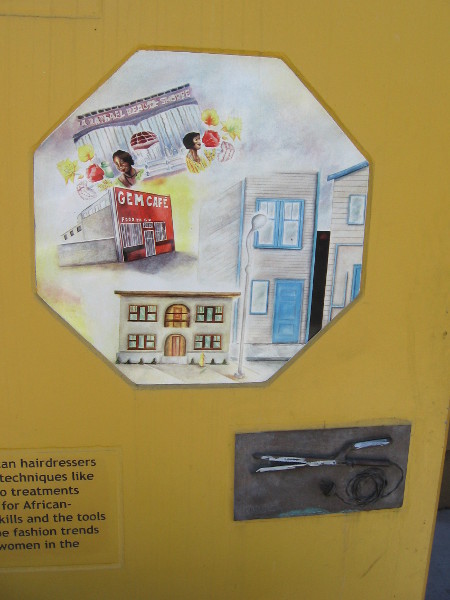
The entrepreneurial spirit of the African-American community flourished through the 20th century with doctor’s offices, hotels and clubs, barbers and beauty parlors, cafes and restaurants, ice cream parlors, laundries, jewelers and pool halls that served the African American community as well as other San Diegans.
During World War II, African-American stunt pilot and businessman Howard Skippy Smith owned the Pacific parachute Company factory on 8th Avenue. Named the Top Black Owned Business in the United States in 1943, Mr. Smith operated an integrated work place that reflected the ethnic and racial diversity of wartime San Diego.
On this block of J Street, African-American Lillian Grant owned multiple buildings, offering rooms to an ethnically mixed clientele during the time of segregation. Next door at the corner of 14th and J Streets sat the Vine/Carter Hotels. Known as the colored hotels, it was owned and operated by African-Americans Alonzo and Katie Carter from the 1930s to the 1950s.
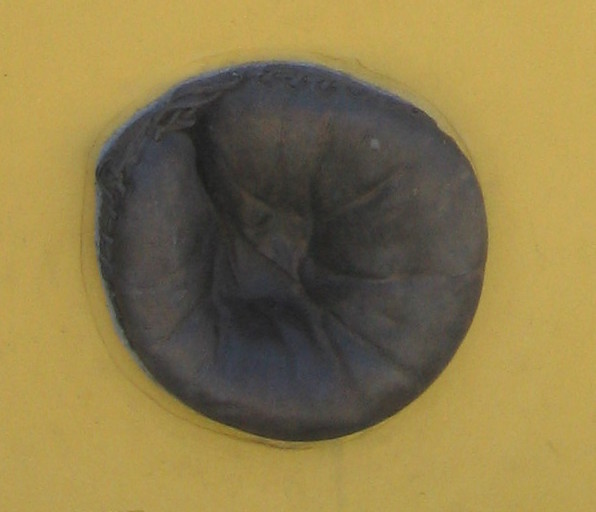
African-Americans helped to build religious institutions and community organizations.Exact duplicate of baseball catcher’s mitt from the 1940’s made of cast metal.Artwork shows San Diego as an important center of jazz, blues, and gospel music. Count Basie and Billie Holiday both played at the Creole Palace.Hair curling iron is a symbol of many thriving African-American entrepreneurs.
…
To enjoy future posts, you can “like” Cool San Diego Sights on Facebook, or follow me on Twitter.



























































 Cool San Diego Sights!