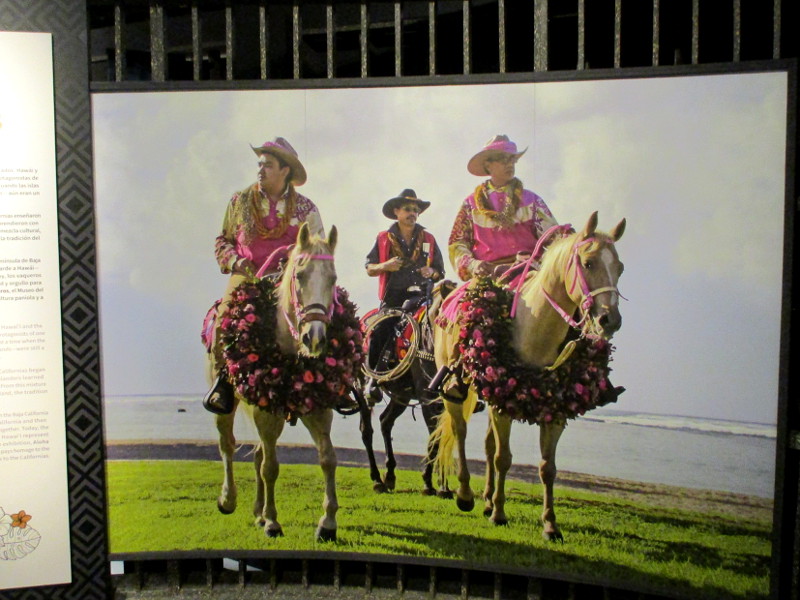
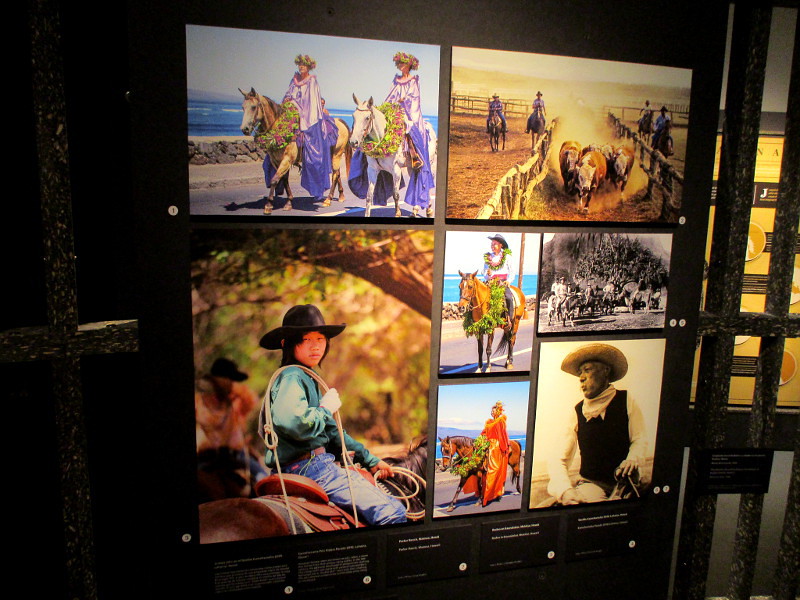
Did you know Hawaii has it own unique cowboy culture? Hawaiian cowboys are called paniolos. You might be surprised to learn that the origin of paniolos in Hawaii has a direct connection to San Diego’s early history, when our nascent city was part of Mexico and cattle ranches flourished!
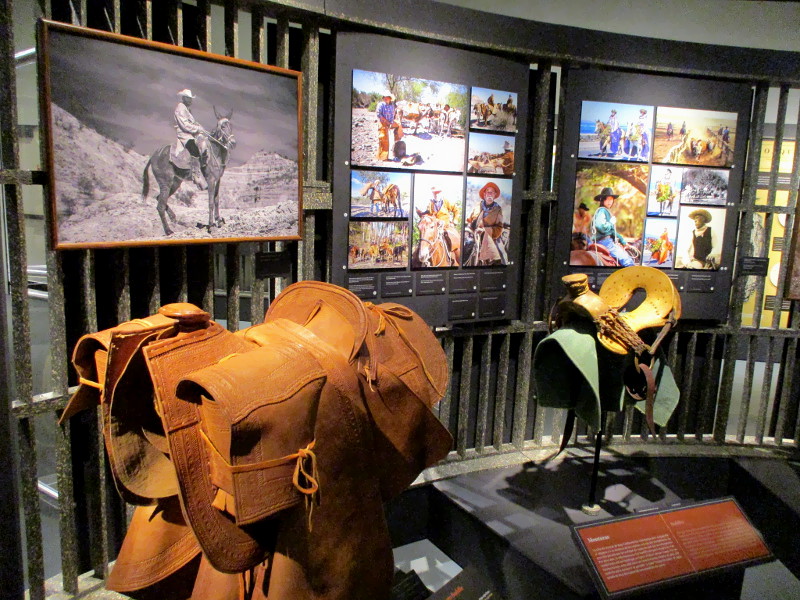
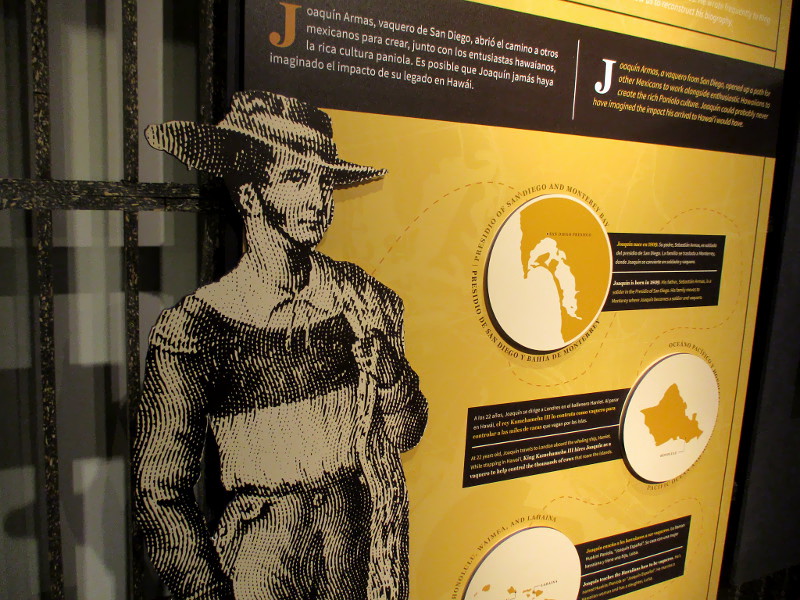
An extensive new exhibit at the San Diego History Center in Balboa Park has the unusual title Aloha Vaqueros. It recalls how several Mexican vaqueros (cowboys) from San Diego moved to Hawaii to help control an exploding population of cattle!
I’ve read Richard Henry Dana Jr.’s Two Years Before the Mast, and I do remember how sailors from the Sandwich Islands (later called Hawaii) participated in the cattle hide trade up and down California’s coast. Several Sandwich Islanders also lived on the beach near the hide houses in Point Loma at La Playa.
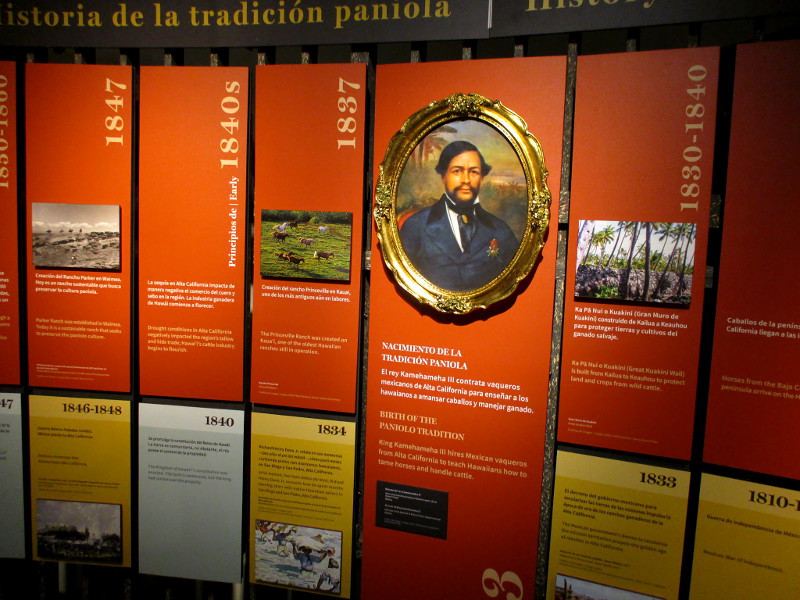
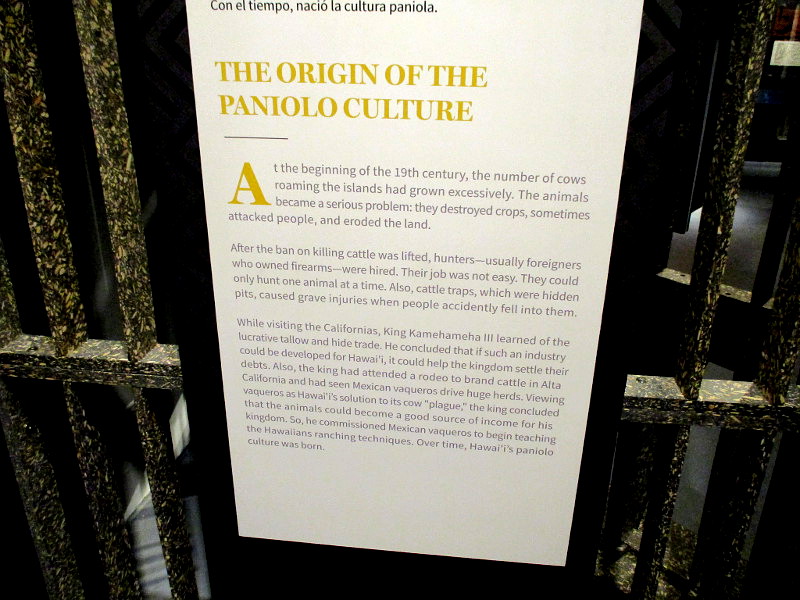
I was unaware, however, that in the early 1830s, Joaquín Armas, a soldier and vaquero born at Mission San Diego de Alcalá, was hired by Hawaiian King Kamehameha III as an advisor on how to control thousands of wild cattle that had multiplied on the islands. Armas would then recruit three other Mexican vaqueros from the San Diego region, helping to establish vaquero traditions in Hawaii!
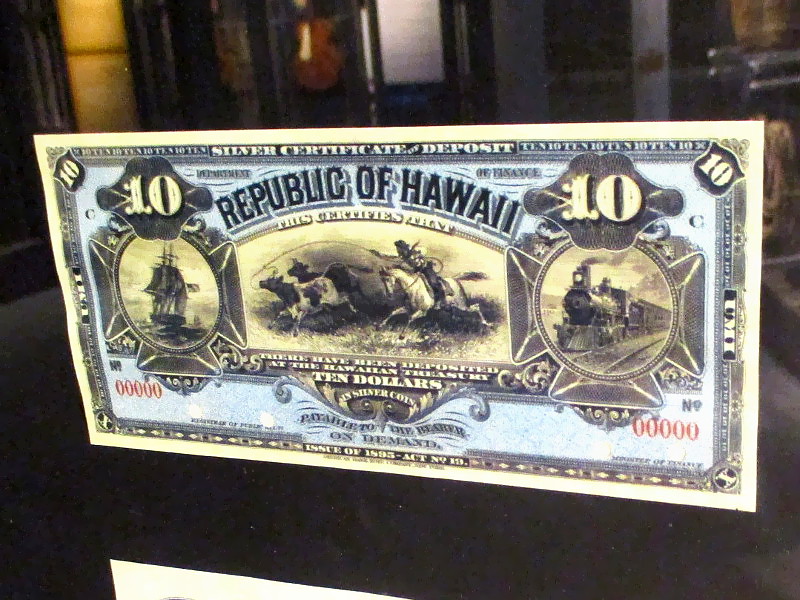
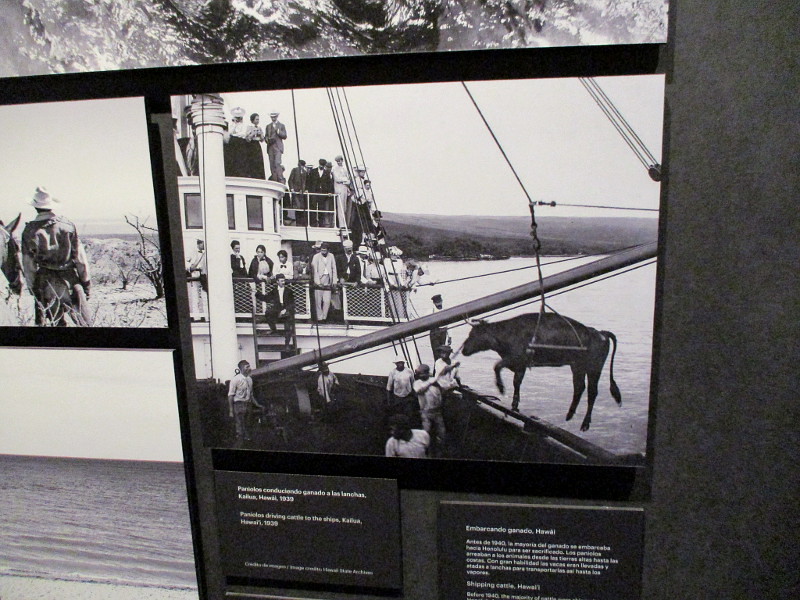
The thousands of environmentally destructive wild cattle had descended from long-horned cattle that were given by British Captain George Vancouver to King Kamehameha I in 1793. The wild cattle, evading hunters and traps, came under control about half a century later as vaquero-inspired ranches popped up on Hawaii’s islands. The cattle were valuable for the tallow and hide trade. Skilled ropers and riders were in demand, so many native Hawaiians would learn cowboy skills!
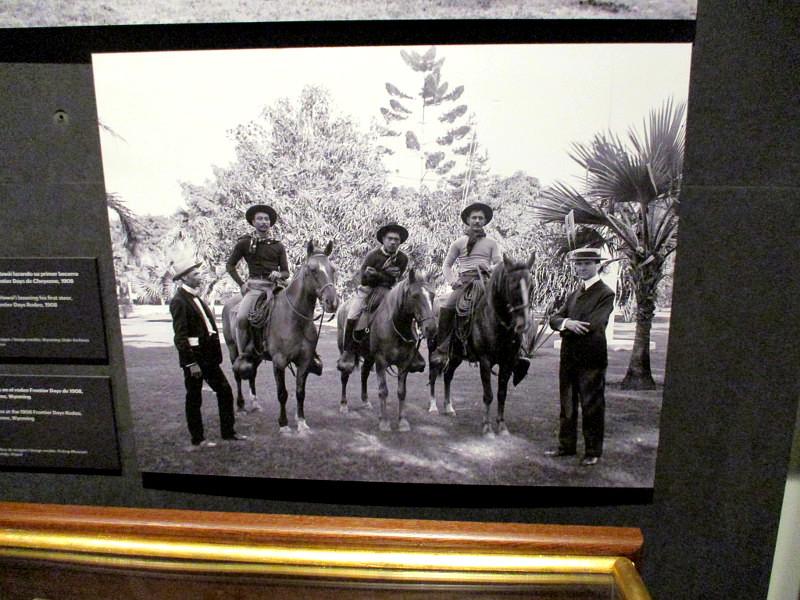
The paniolo experience would eventually become ingrained in Hawaiian culture. Take music, for example. One important development was Hawaiian open-tuning for the guitar called kihoʻalu, or slack-key.
Why are Hawaiian cowboys called paniolos? One theory is that the word is derived from español–the language spoken by the Mexican vaqueros.
If this very unique history fascinates you, go visit the San Diego History Center!
A few photos to provide a taste…
…
I post new blogs pretty often. If you like discovering new things, bookmark coolsandiegosights.com and swing on by occasionally!
I live in downtown San Diego and love to walk around with my camera! You can follow Cool San Diego Sights via Facebook or X.
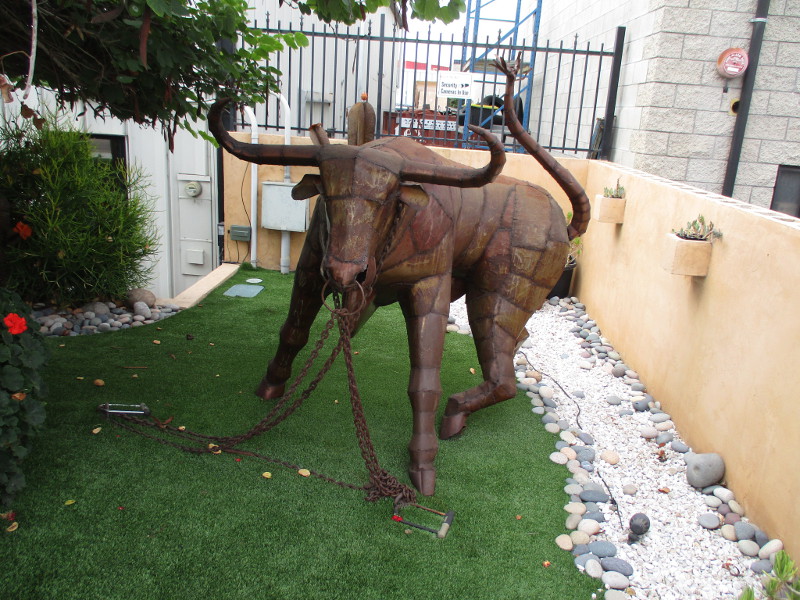
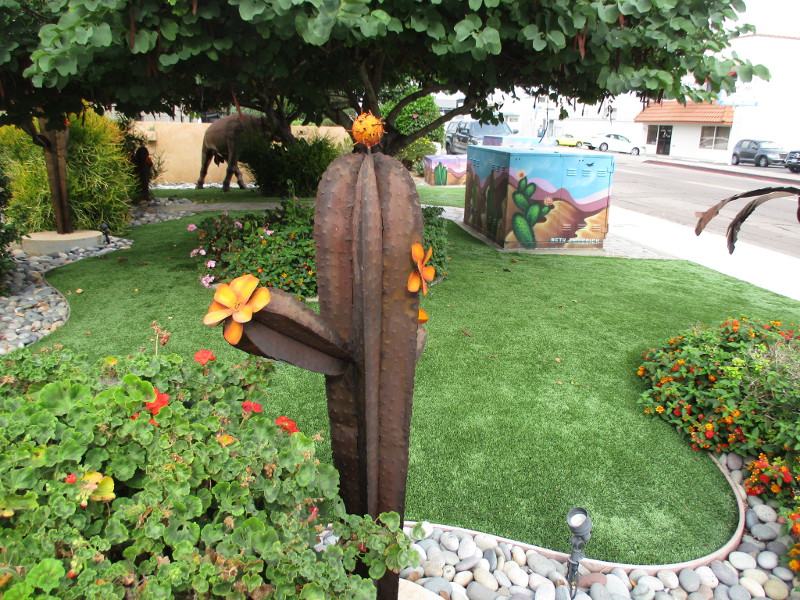
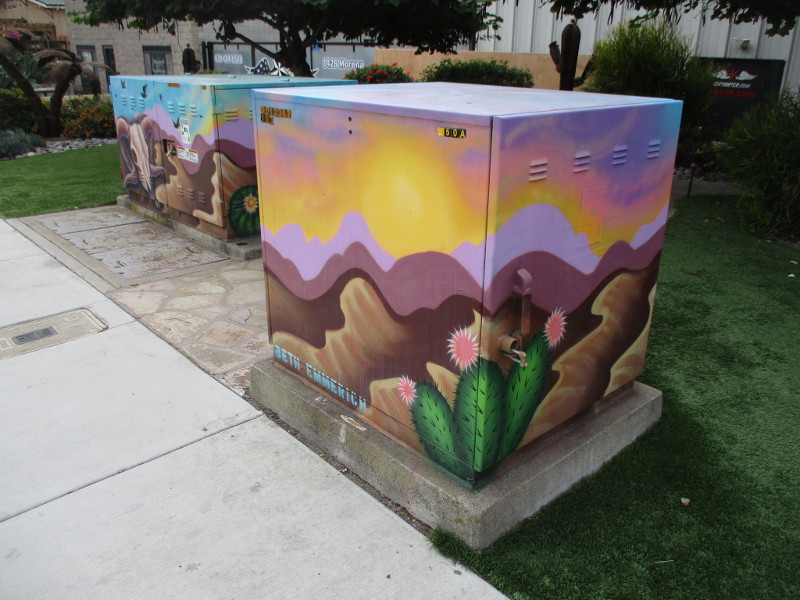
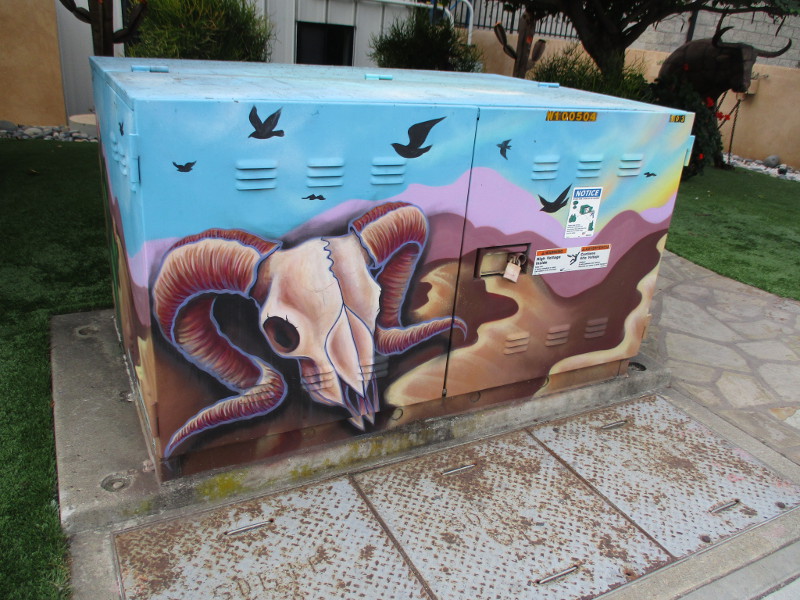
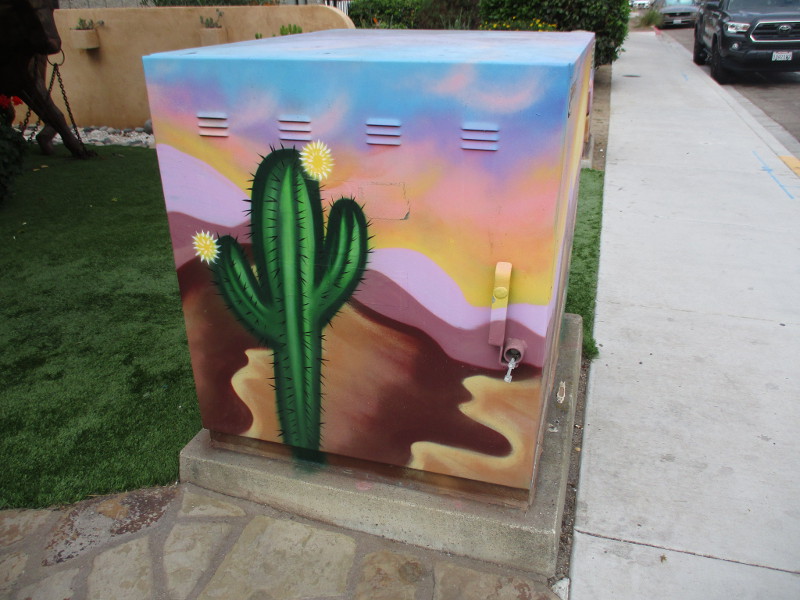
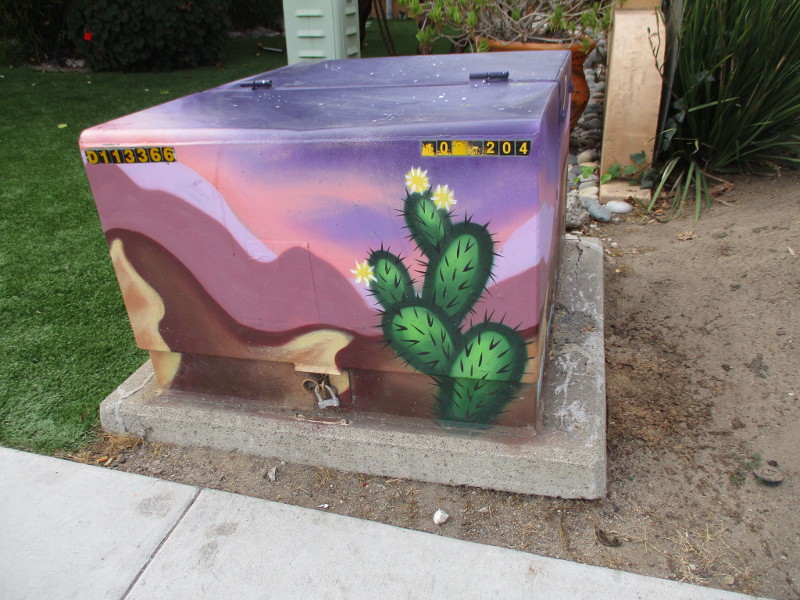
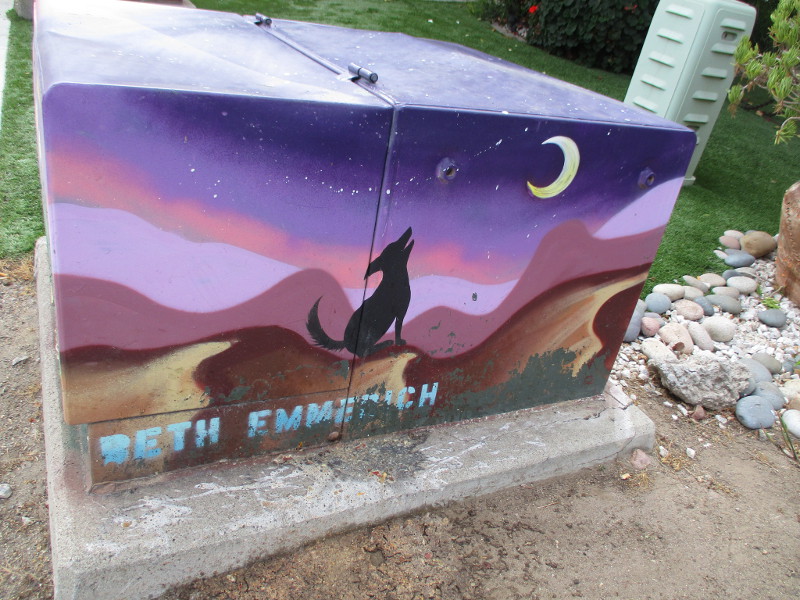
Fun art in San Diego’s Bay Park neighborhood celebrates elements of the American Southwest.
During a recent walk, I spotted the above bull sculpture, a saguaro cactus and other works of street art in front of San Diego Charter’s building on Morena Boulevard.
A coyote howling to the moon in Bay Park? Yes! Courtesy of artist Beth Emmerich.
…
Thanks for visiting Cool San Diego Sights!
I post new blogs pretty often. If you like discovering new things, bookmark coolsandiegosights.com and swing on by occasionally!
I live in downtown San Diego and love to walk around with my camera! You can follow Cool San Diego Sights via Facebook or X (formerly known as Twitter)!
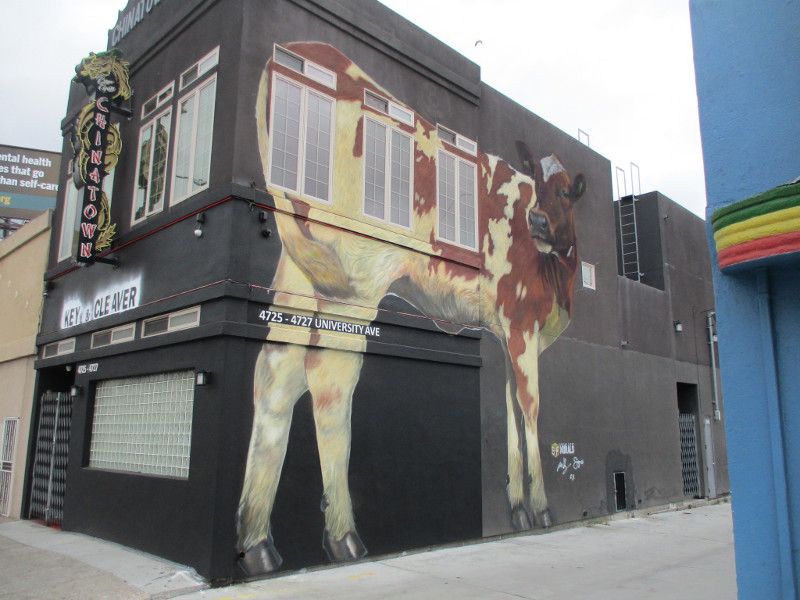
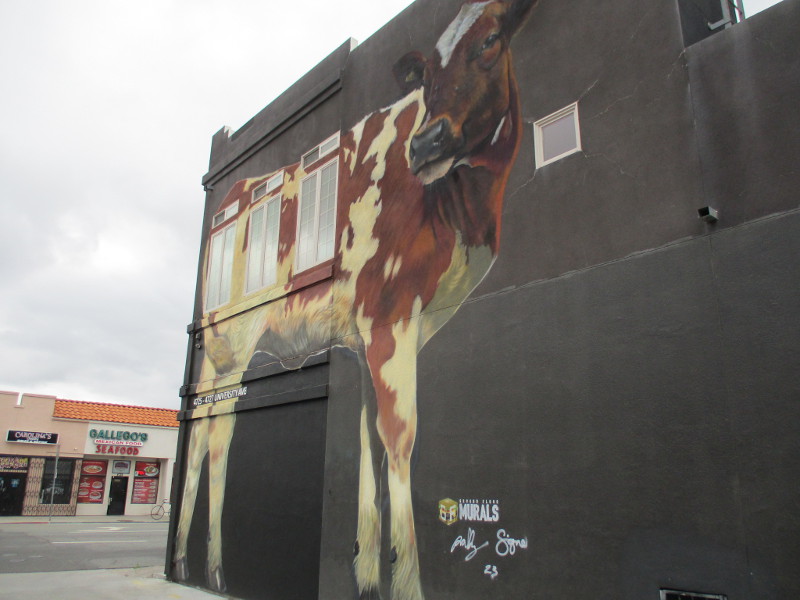
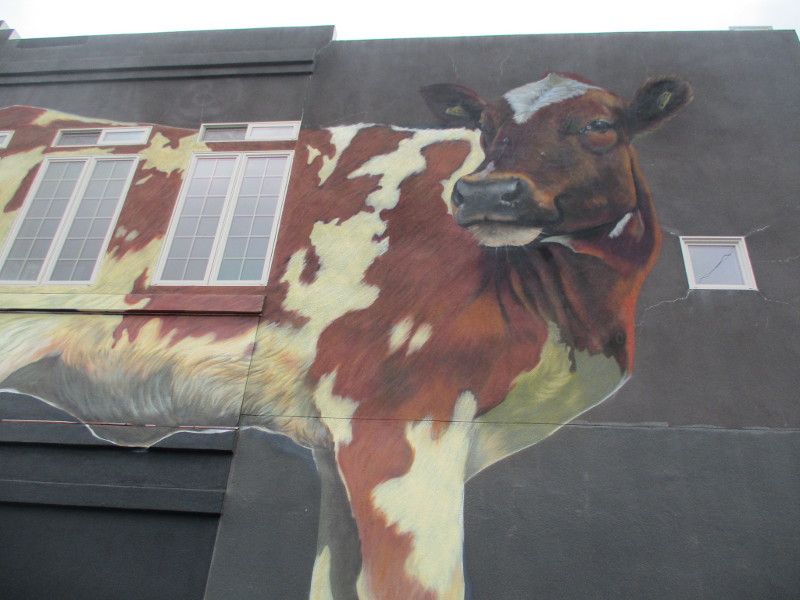
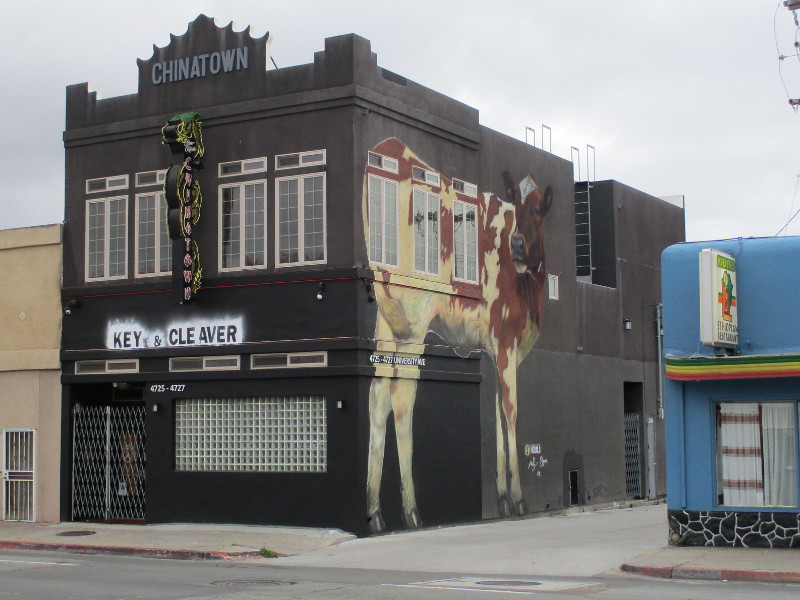
A gigantic cow wandered into City Heights a couple weeks ago. Drivers heading down University Avenue, a block west of the Euclid Tower, might spot the enormous bovine standing against the old Chinatown Bar building!
The cow mural was painted by Ground Floor Murals (@groundfloormurals). You can see the artists creating this eye-catching artwork on their Instagram page here.
The building is now home to Key and Cleaver, a sustainable farm-to-table burger restaurant. I can see why that gigantic cow is cautiously watching its back!
…
Thanks for visiting Cool San Diego Sights!
I post new blogs pretty often. If you like discovering new things, bookmark coolsandiegosights.com and swing on by occasionally!
I live in downtown San Diego and love to walk around with my camera! You can follow Cool San Diego Sights via Facebook or Twitter!
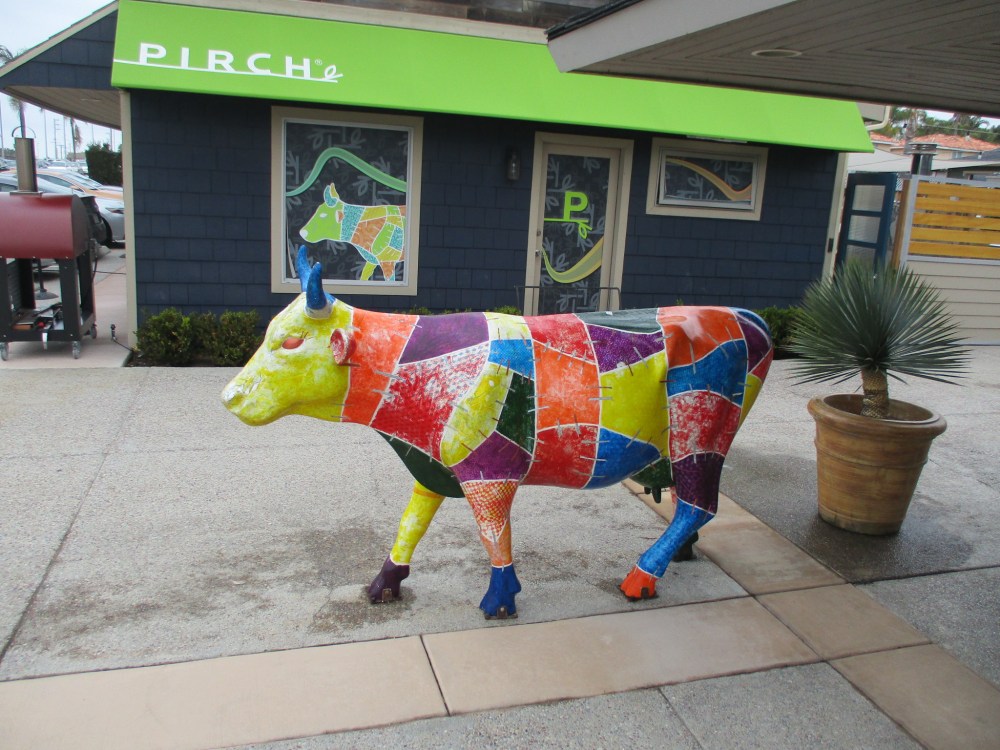
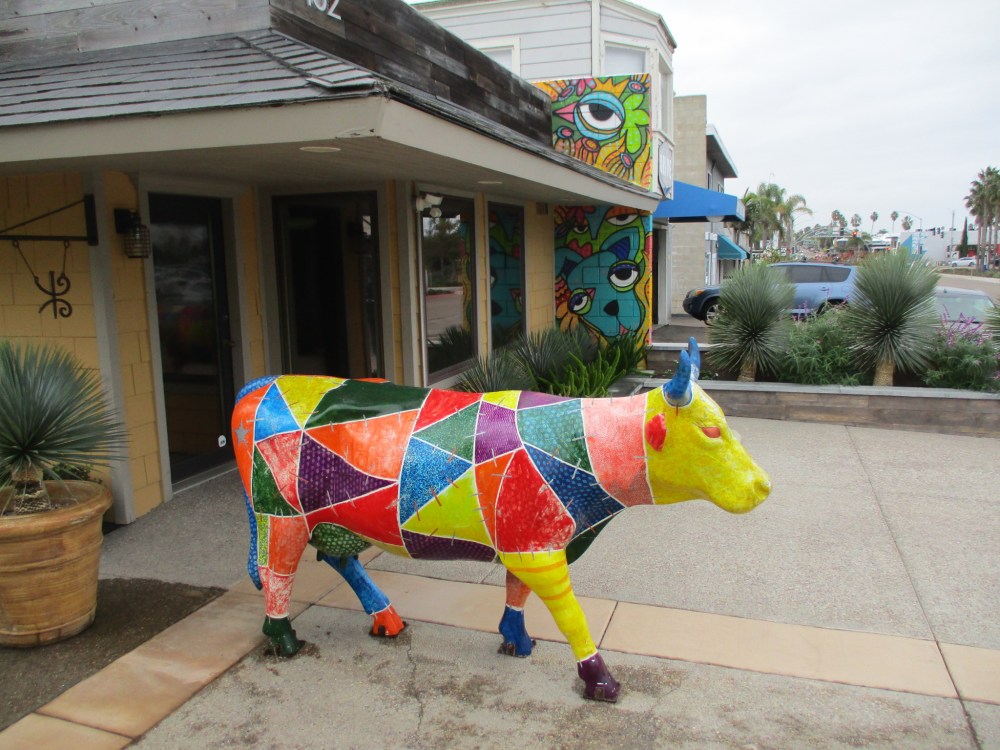
Travelers who stand outside the Solana Beach train station and look east are likely to be surprised. A very colorful bull and mural beckon from across Cedros Avenue!
I spotted this fun artwork the other day while walking around.
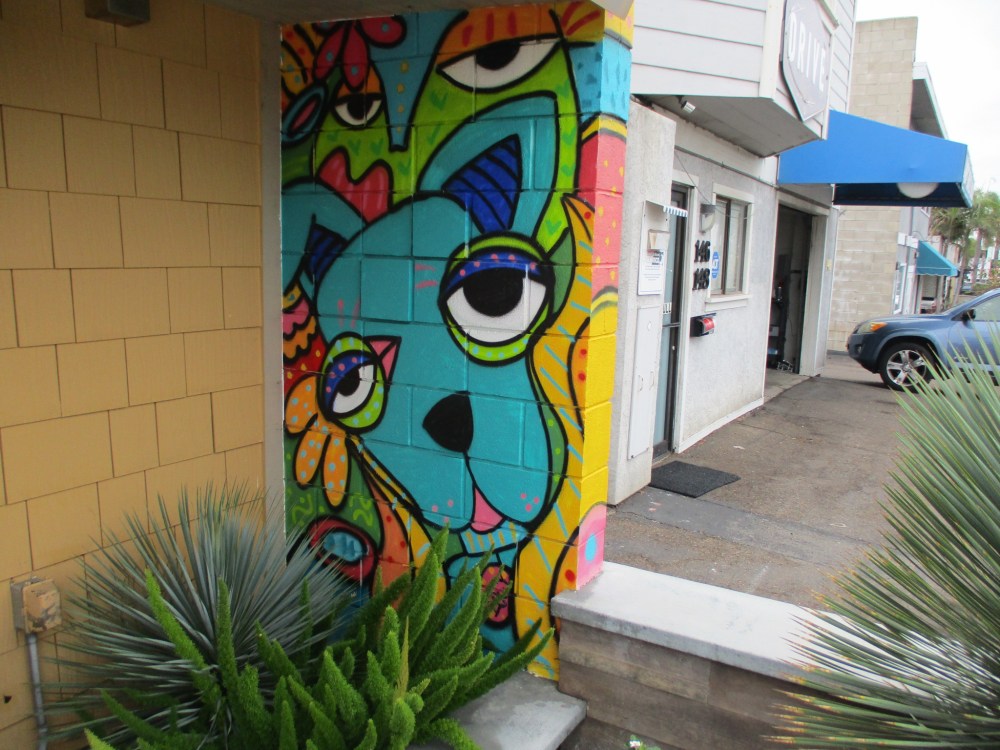
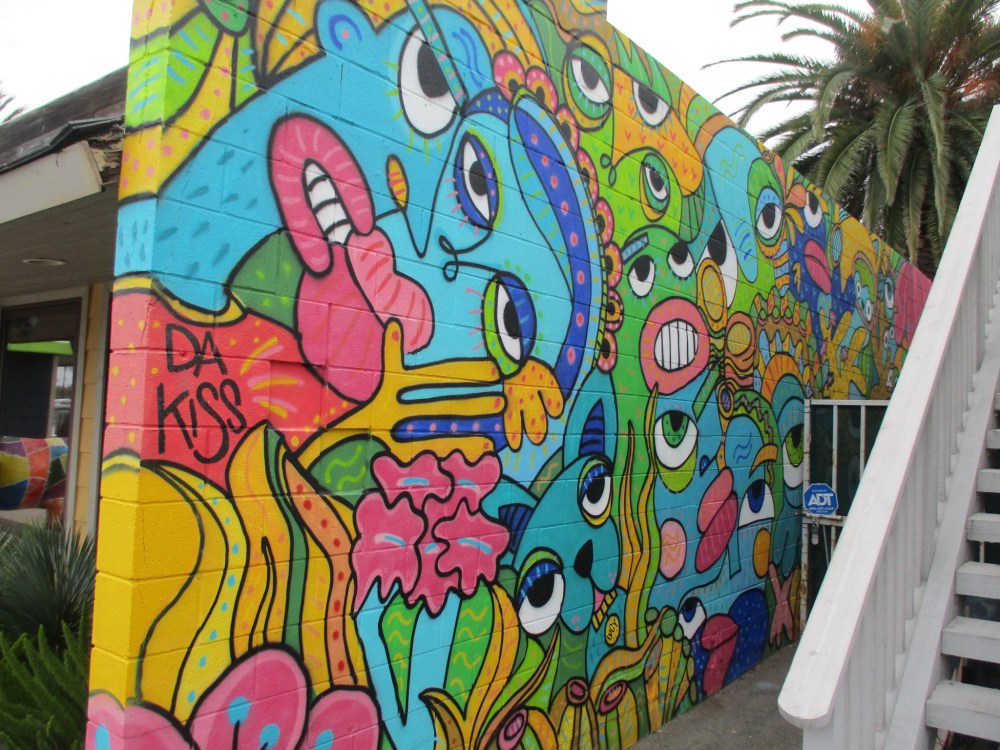
The “crazy quilt” bull sculpture and the mural featuring many faces can be found between Pirch North County San Diego and DRIVE AutoCare. I observed that the mural, which appears to be titled Da Kiss, was created by Sandra R. Escobar.
I immediately recognized the mural’s distinctive style. During the height of the COVID-19 pandemic, the Colombia-born artist painted this mural in City Heights!
…
Thanks for visiting Cool San Diego Sights!
I post new blogs pretty often. If you like discovering new things, bookmark coolsandiegosights.com and swing on by occasionally!
It’s easy to explore Cool San Diego Sights by using the search box on this website’s sidebar. Or click a tag. There’s a lot of stuff to share and enjoy!
I live in downtown San Diego and love to walk around with my camera! You can follow Cool San Diego Sights via Facebook or Twitter!
One of the most fascinating museums in San Diego County is located in the city of Lemon Grove.
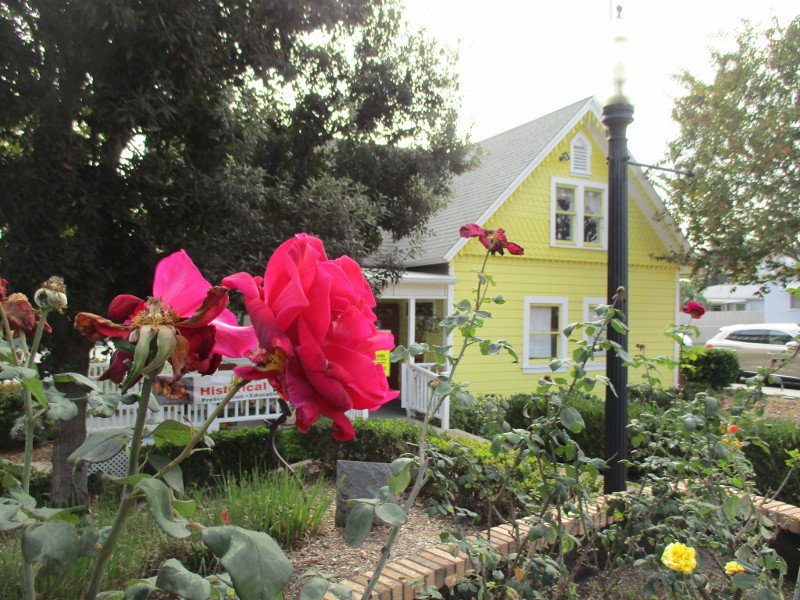
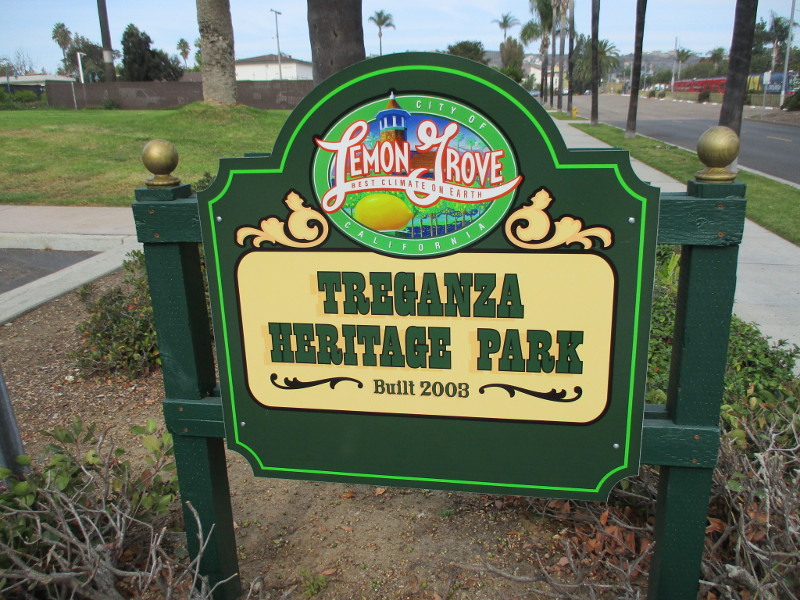
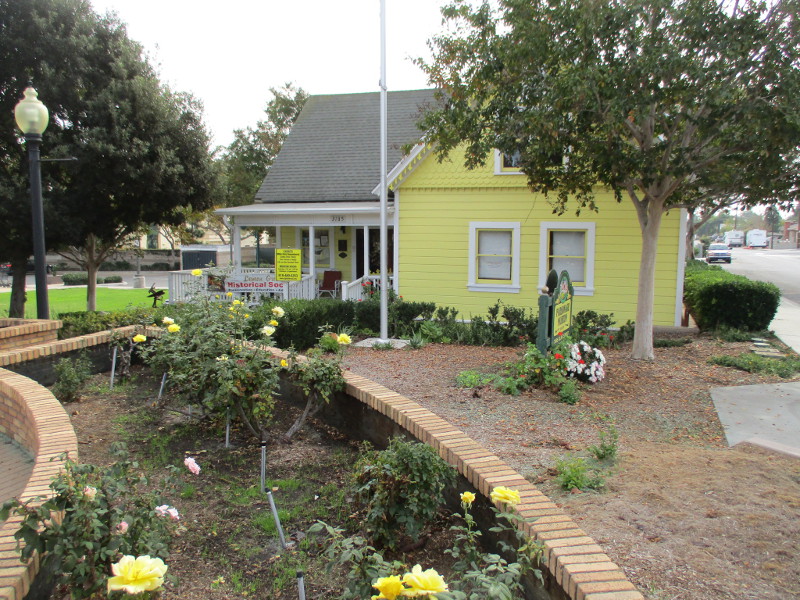
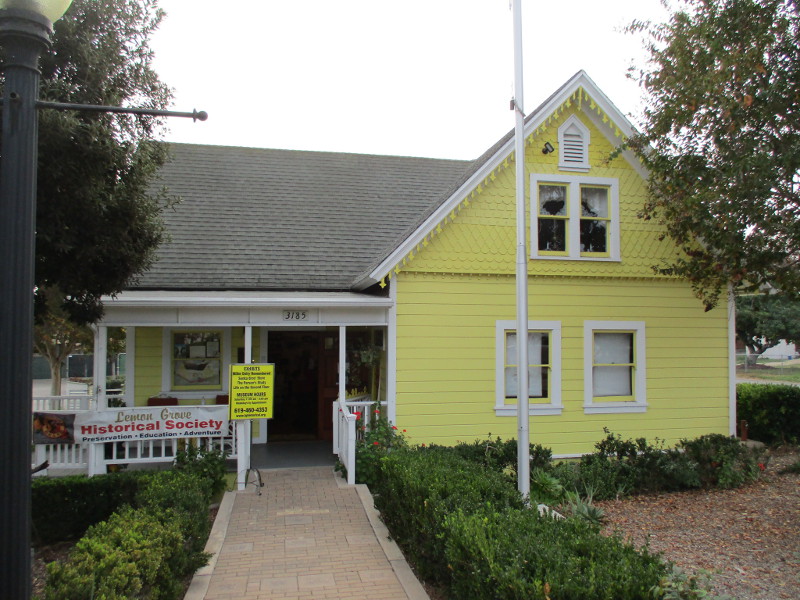
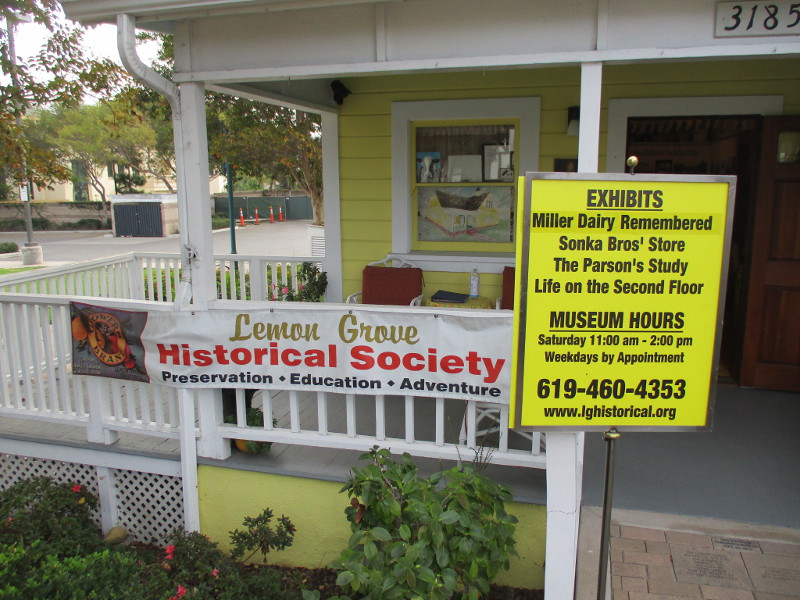
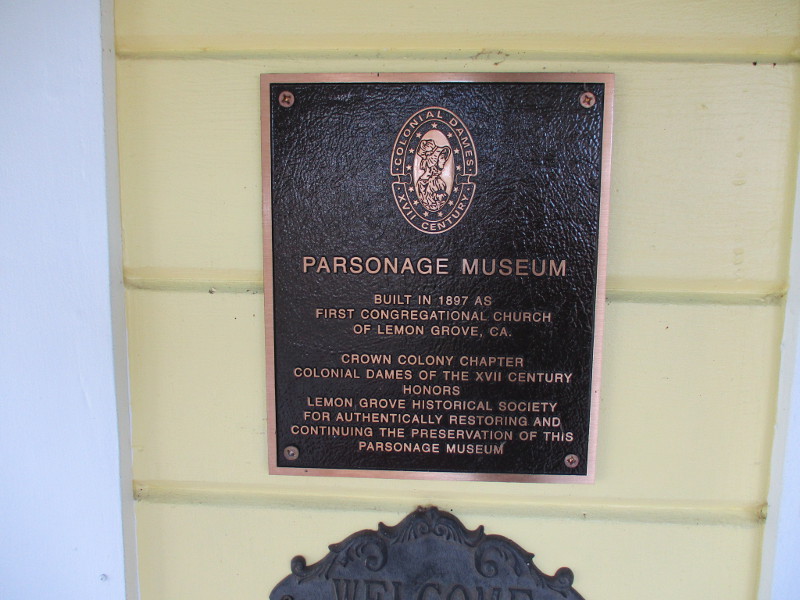
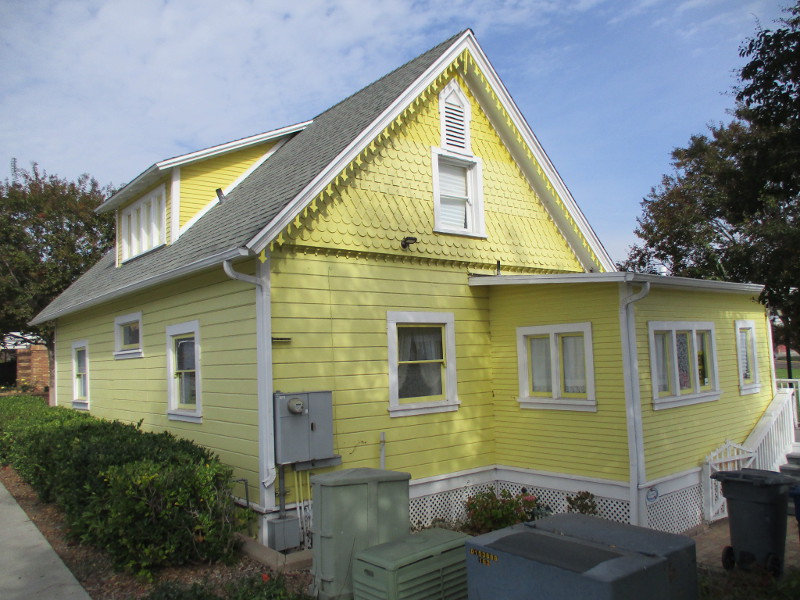
The Parsonage Museum, operated by the Lemon Grove Historical Society, occupies a beautifully restored Victorian building at Treganza Heritage Park. The building began as Lemon Grove’s first church, the 1897 Atherton Chapel.
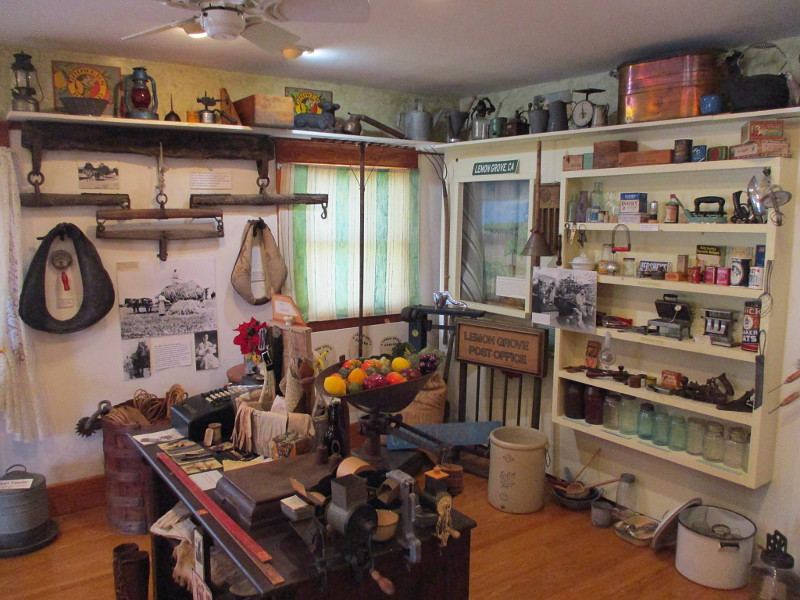
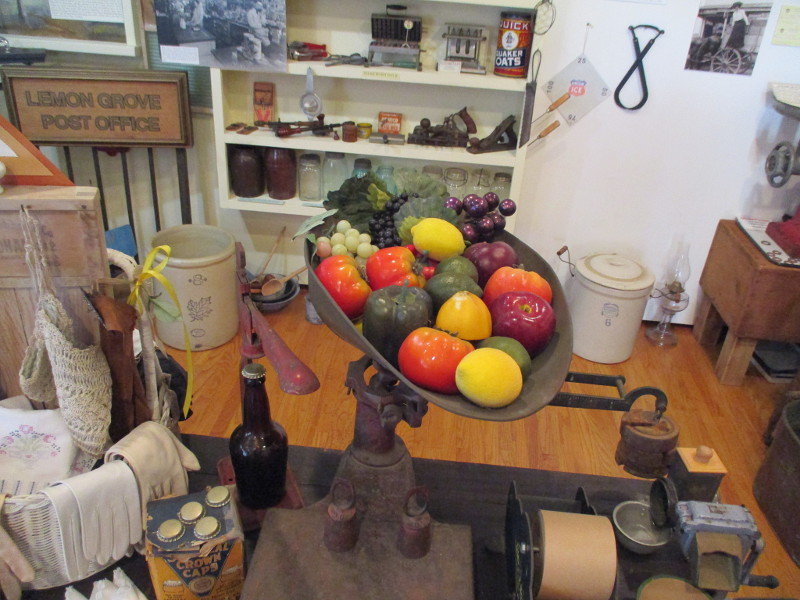
The old church was eventually moved from its original location, served as a community meeting hall, then became a private residence. Today it houses a museum whose exhibits recall a time when Lemon Grove was a small agricultural town with citrus orchards and packing houses, a general store, and a boast of the Best Climate on Earth!
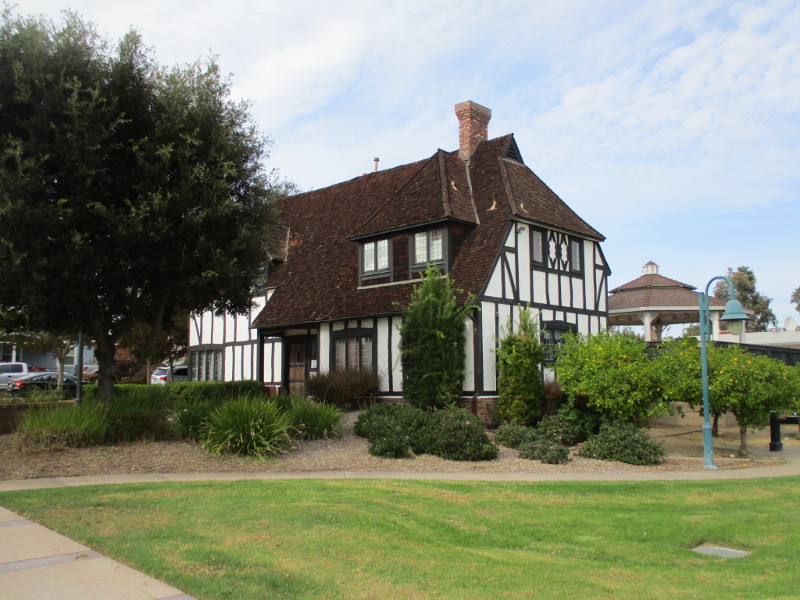
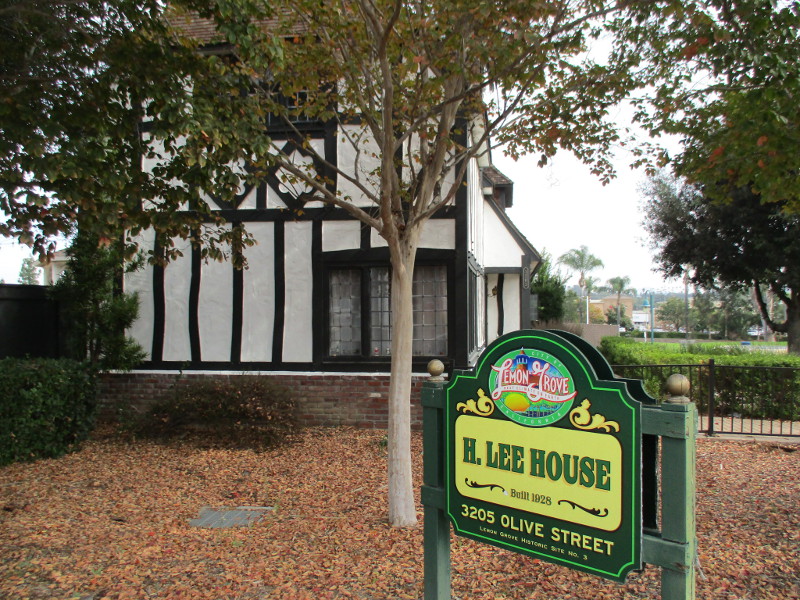
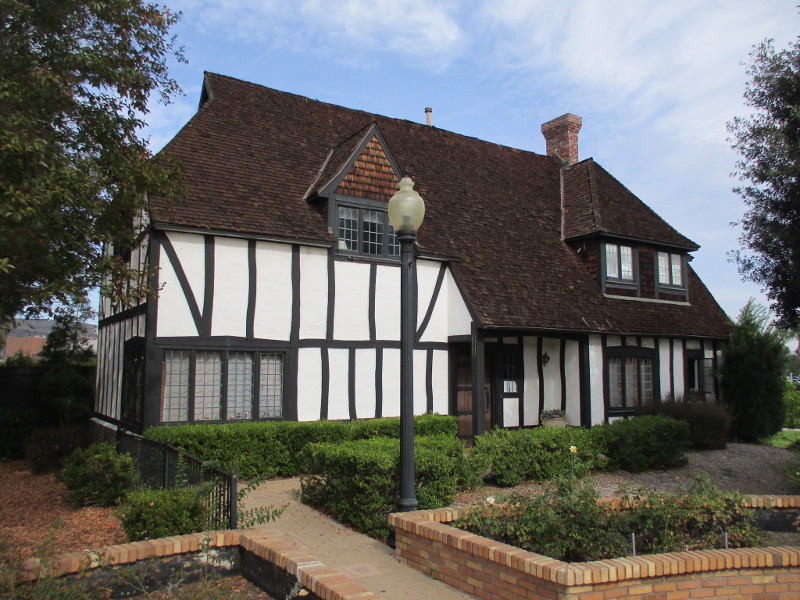
I walked about Treganza Heritage Park and visited the Parsonage Museum last weekend. I also took a quick look at the 1928 H. Lee House, a Tudor Revival structure that stands nearby in the park and serves as a cultural center.
I urge anyone interested in the history of San Diego and Lemon Grove to head to the Parsonage Museum on a day when they are open. See their website for more information here!
To get an idea of what you’ll discover, please read my photo captions!
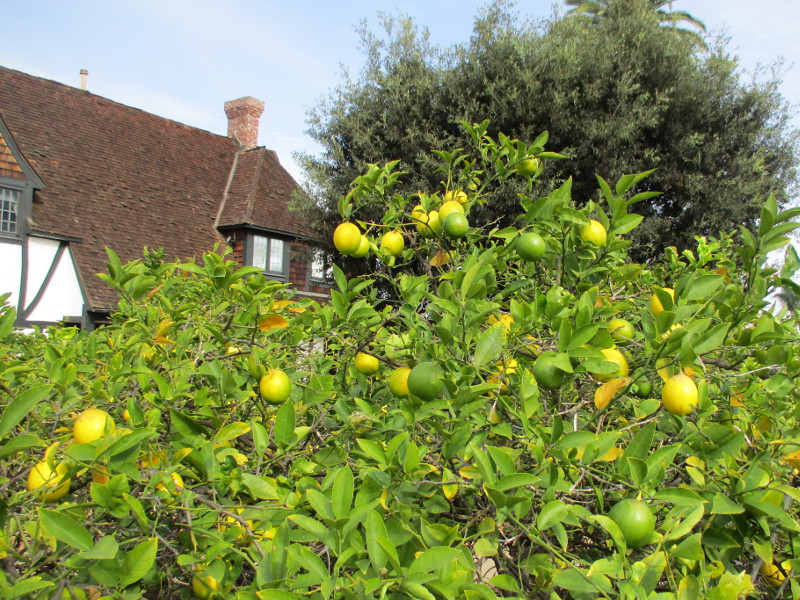
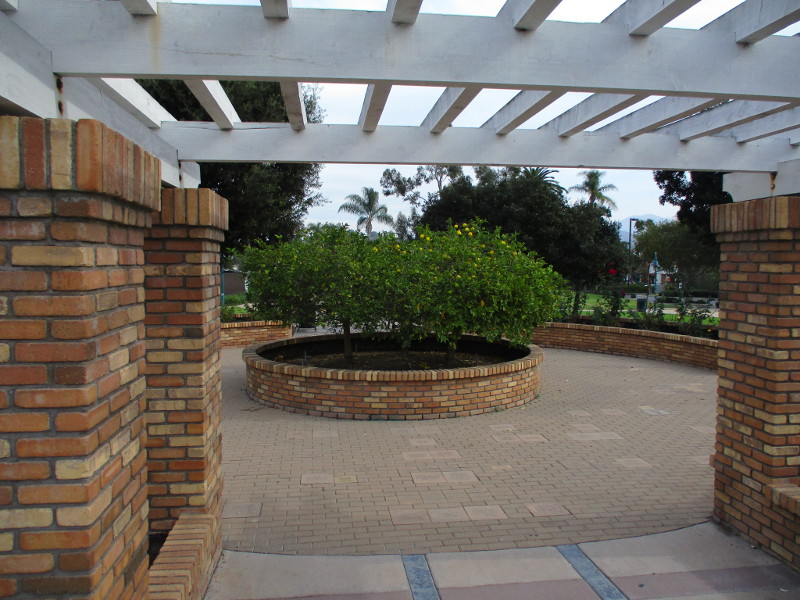
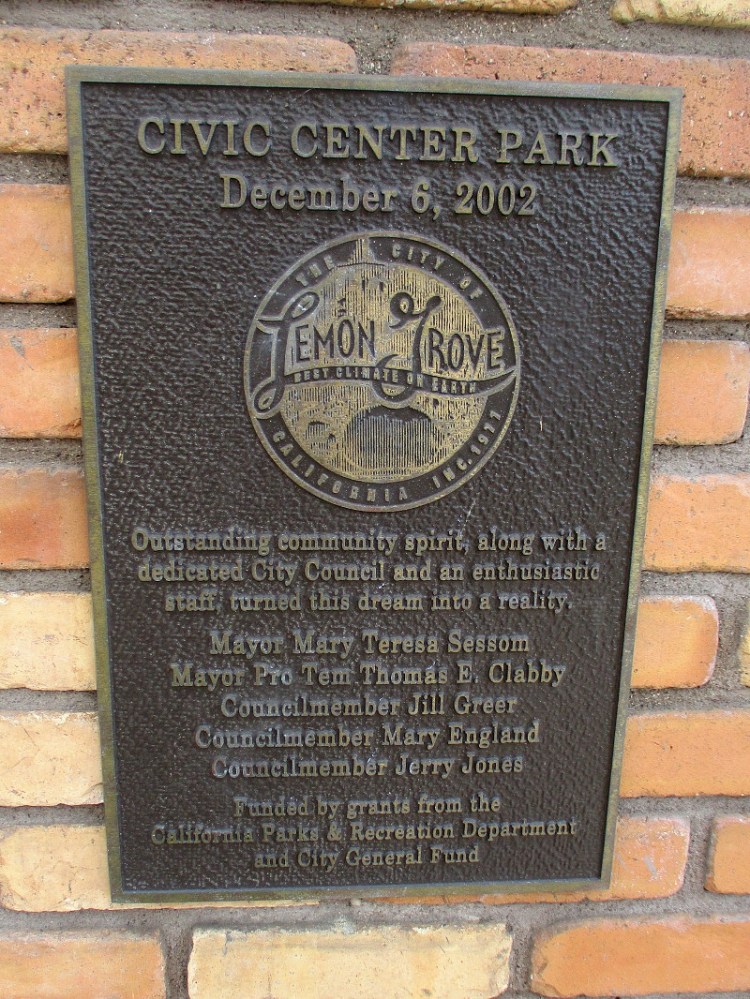
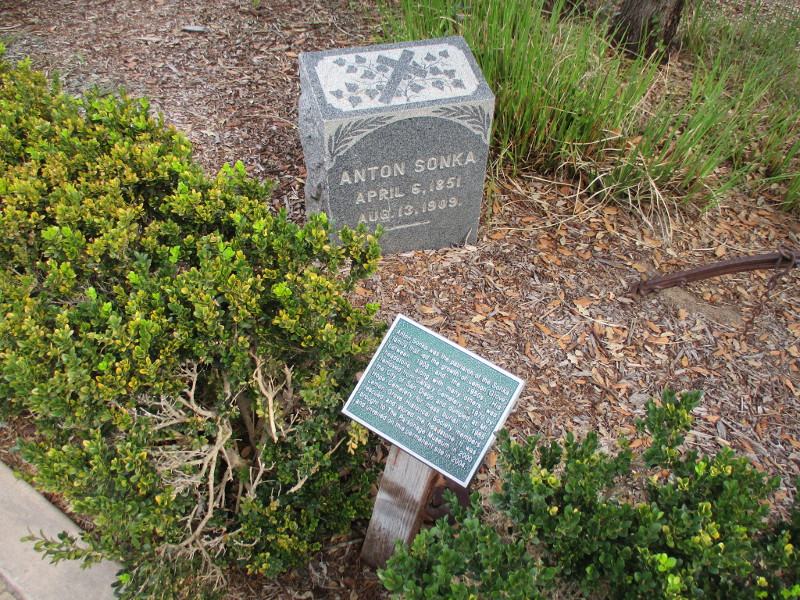
Treganza Heritage Park in Lemon Grove was first called Civic Center Park. It’s name was changed in 2020. The Treganza family was an influential pioneer family in Lemon Grove.A view of the H. Lee House. It was moved to this location to make way for the extension of State Route 125.The H. Lee House was built in 1928. It was designed by British architect Frederick C. Clemesha. Today it serves as a cultural center, where events such as History Alive lectures can be enjoyed. One more photo of the handsome H. Lee House.Lemon trees stand in a plaza between the H. Lee House and the Parsonage Museum.The small plaza welcomes visitors to Treganza Heritage Park.A 2002 dedication plaque from back when it was called Civic Center Park.Now turning to look at the Parsonage Museum. The restored Folk Victorian building, the 1897 Atherton Chapel, served as the only Lemon Grove church until 1912. Recovered grave marker of Anton Sonka just outside the museum entrance.
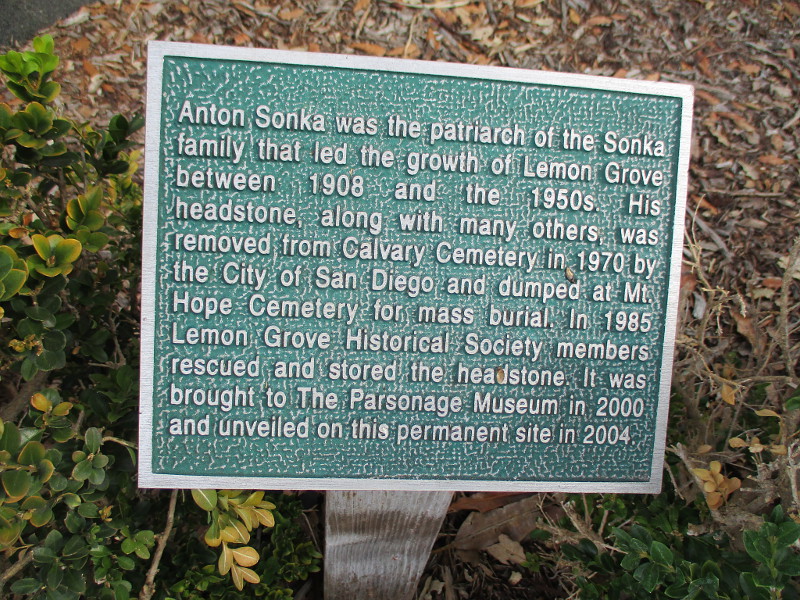
Anton Sonka was the patriarch of the Sonka family that led the growth of Lemon Grove between 1908 and the 1950s. His headstone, along with many others, was removed from Calvary Cemetery in 1970 by the City of San Diego and dumped at Mt. Hope Cemetery for mass burial. In 1985 Lemon Grove Historical Society members rescued and stored the headstone. It was brought to The Parsonage Museum in 2000 and unveiled on this permanent site in 2004.
(If you’d like to learn more about this callous dumping of gravestones, which were discovered in a gully at Mt. Hope Cemetery, I posted a blog concerning it here.)
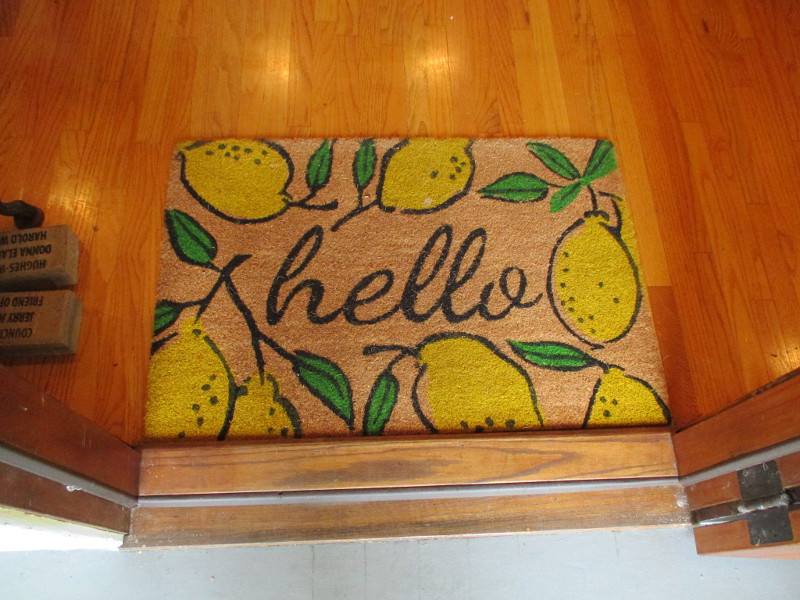
When I visited in November 2021, the Parsonage Museum was featuring several historical exhibits concerning Lemon Grove.The museum building was “Built in 1897 as First Congregational Church of Lemon Grove.”Stepping into the museum, greeted by a lemony, welcoming doormat!Look at what’s in the museum! A recreation of the Sonka Brothers General Store.Items on display recall Lemon Grove’s rural history, which includes general stores where the community would gather.
The Sonka Brothers General Store stood near the center of town for decades. You can see photos of the Lemon Grove History Mural that’s painted on the south side of the historic Sonka Brothers General Store building here!
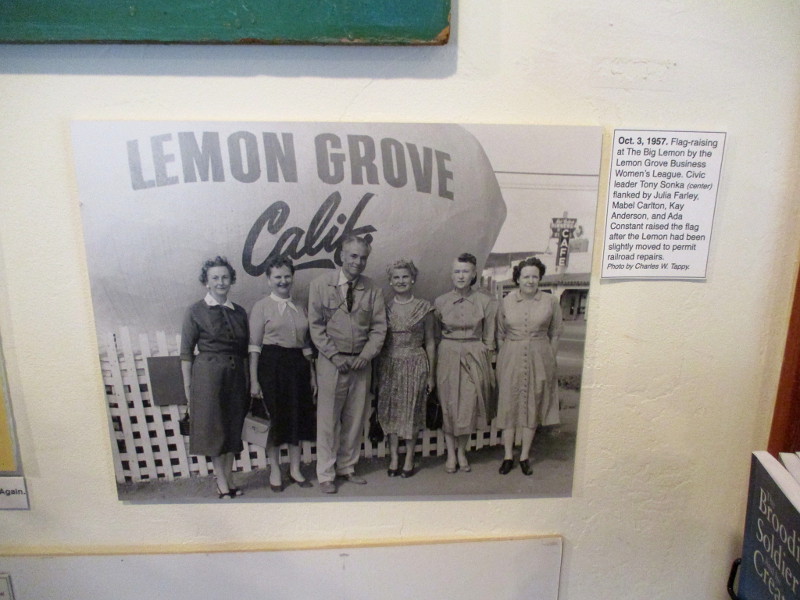
Photo from October 3, 1957 of The Big Lemon during a flag-raising. Civic leader Tony Sonka stands at the center.
If you like to see The Big Lemon today, which still stands on Broadway, check out these photos!
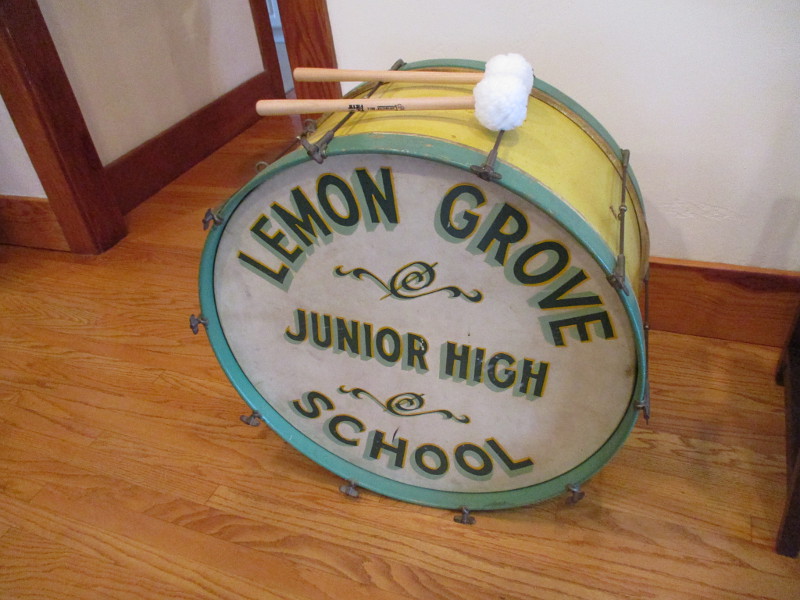
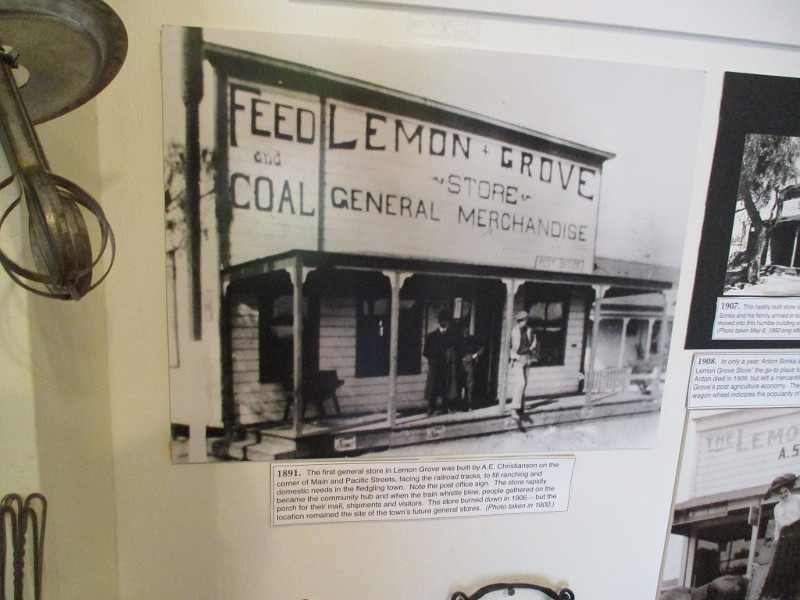
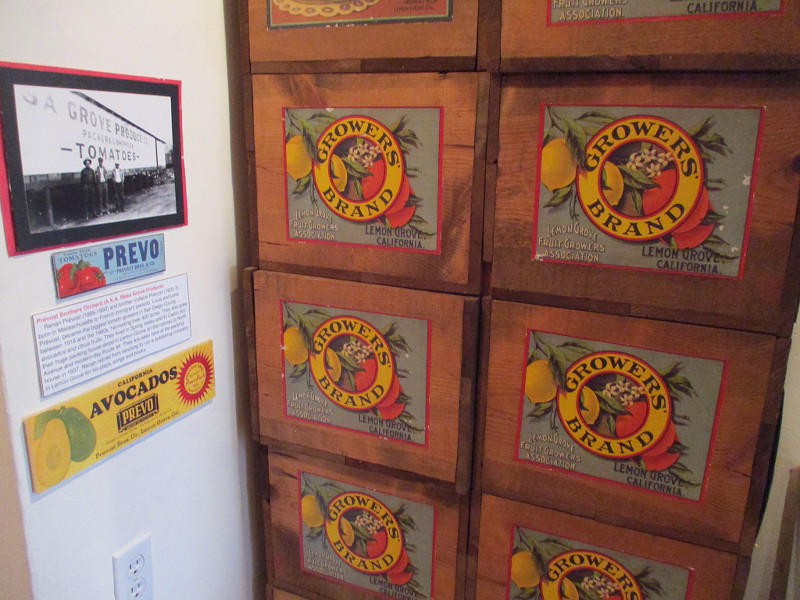
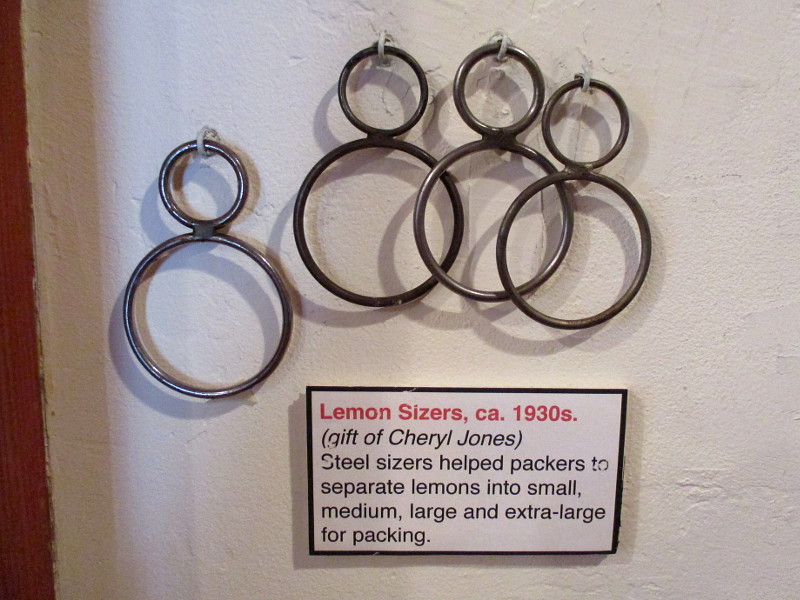
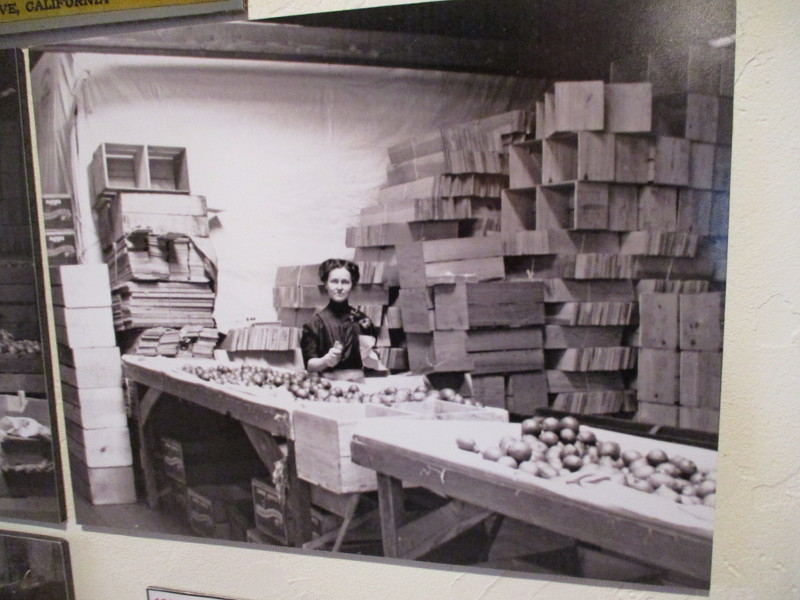
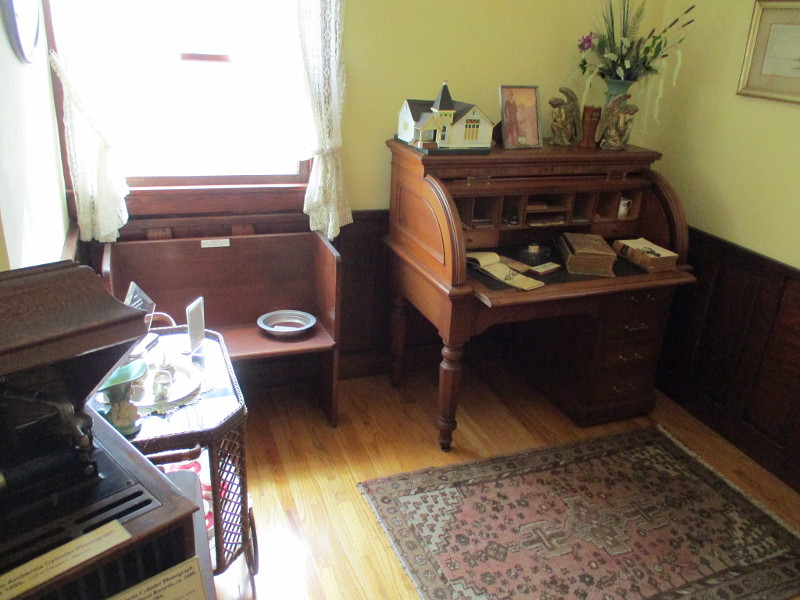
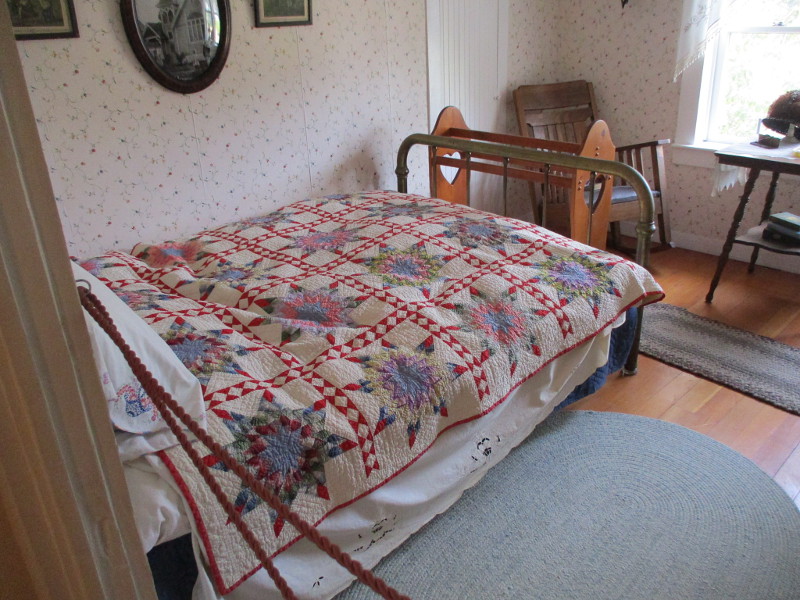
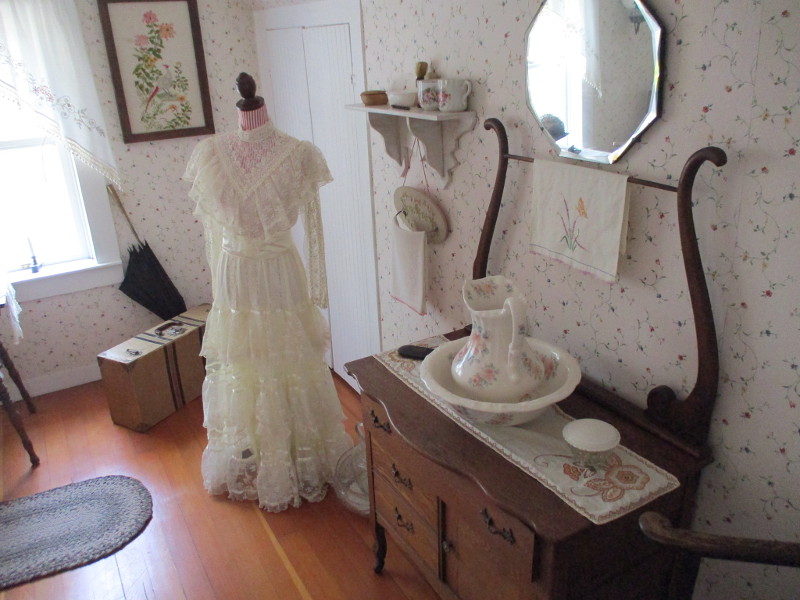
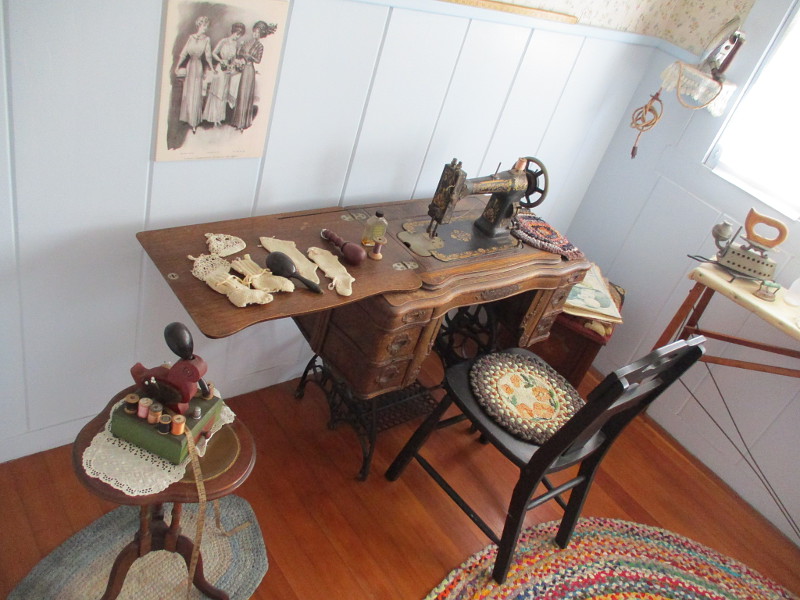
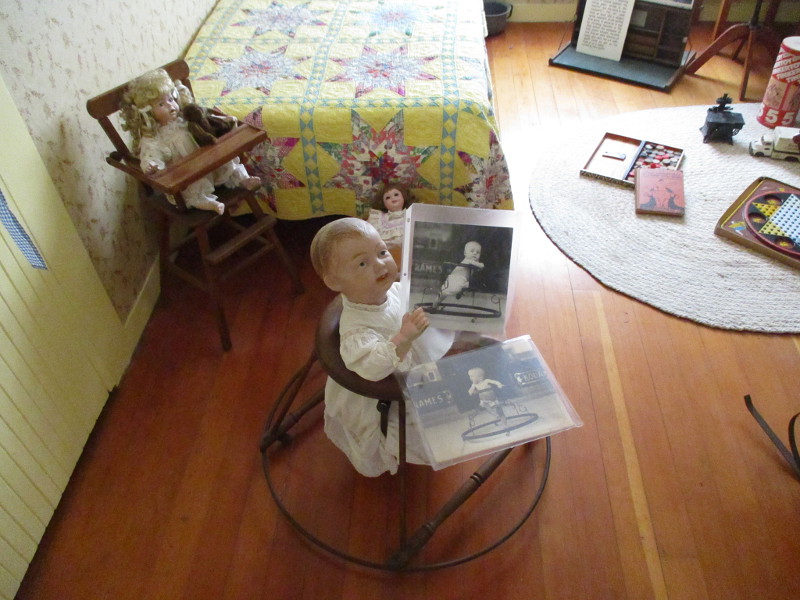
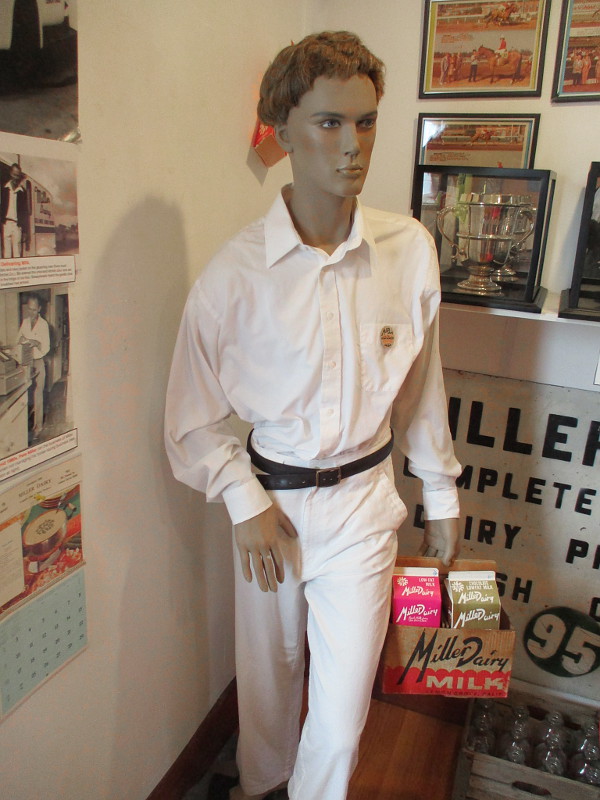
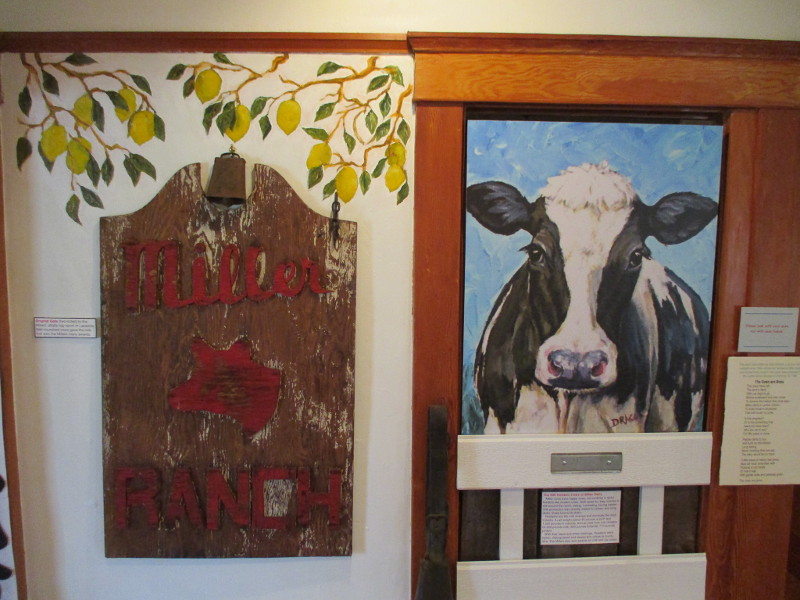
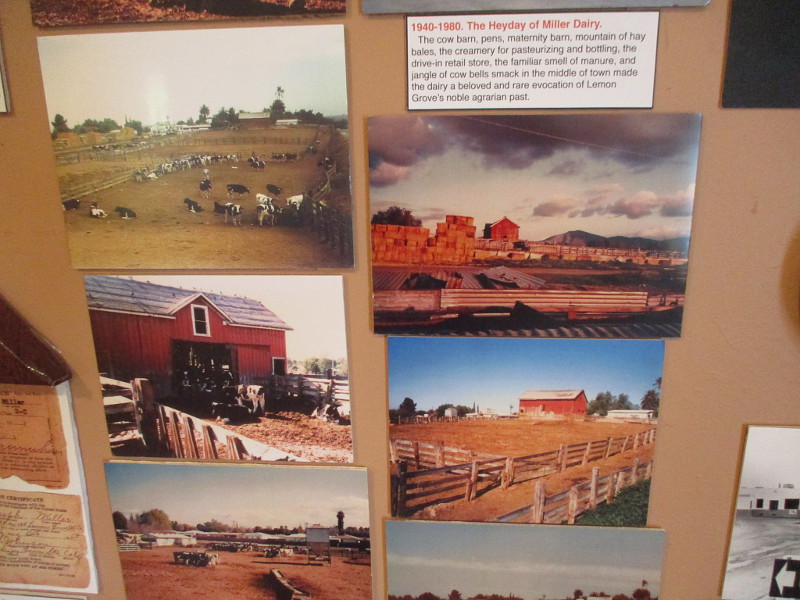
Old drum from the Lemon Grove Junior High School band.1891 photograph of the first general store in Lemon Grove, built by A. E. Christianson at Main and Pacific Streets.The many displays at the Parsonage Museum include these Lemon Grove Fruit Growers Association packing crates.Lemon sizers, circa 1930’s. Packers would separate lemons by size.Woman holding lemon sizer, with stacked ready-to-assemble crates nearby.A room on the ground floor of the Parsonage Museum recreates the Parson’s Study. Reverend Isaac Atherton established the First Congregational Church of Lemon Grove in 1894. The building was constructed in 1897.Several rooms can be viewed on the second floor of the Parsonage Museum, including this Parents’ Room, or bedroom.The Sewing Room.The Children’s Room.Back on the museum’s ground floor, in a corner gallery, the current exhibit is titled Miller Dairy Remembered. This local dairy sold its first milk in 1926. Houses were finally built on the ranch site in the 1980’s. An important chapter of Lemon Grove’s agrarian past is recalled.Lemon Grove’s old Miller Dairy and their 300 freely roaming Holstein cows are fondly remembered at the Parsonage Museum.Historical photos show the Miller Dairy in Lemon Grove, from 1940-1980.One last look at the lemon yellow Parsonage Museum!
…
I live in downtown San Diego and love to walk around with my camera! You can follow Cool San Diego Sights via Facebook or Twitter!
You can easily explore Cool San Diego Sights by using the search box on my blog’s sidebar. Or click a tag! There are thousands upon thousands of photos for you to enjoy!
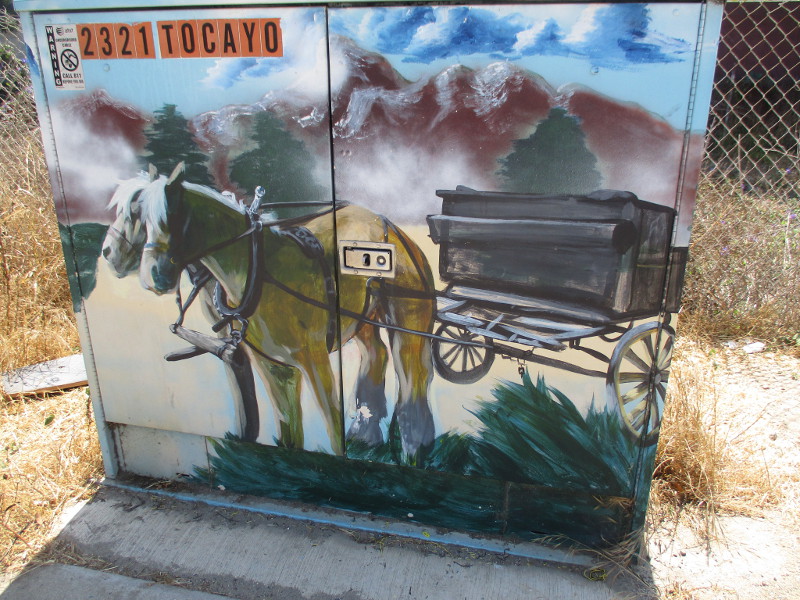
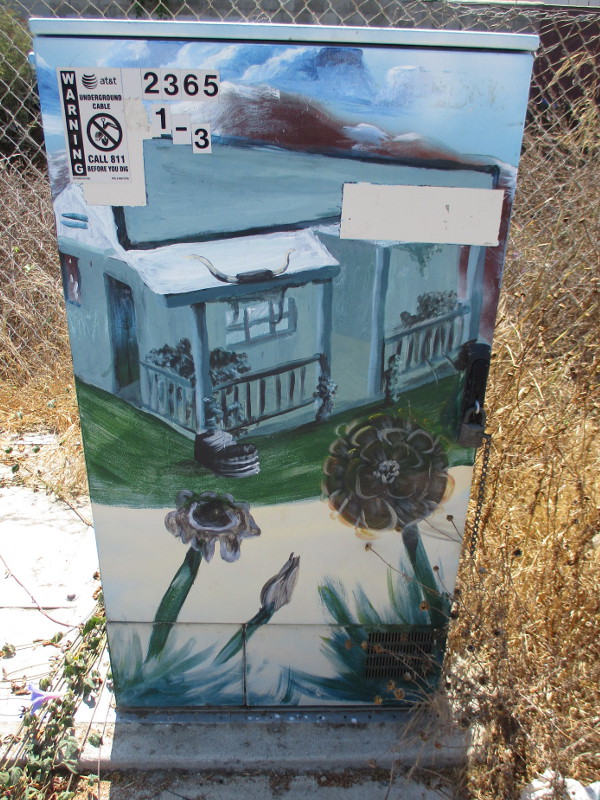
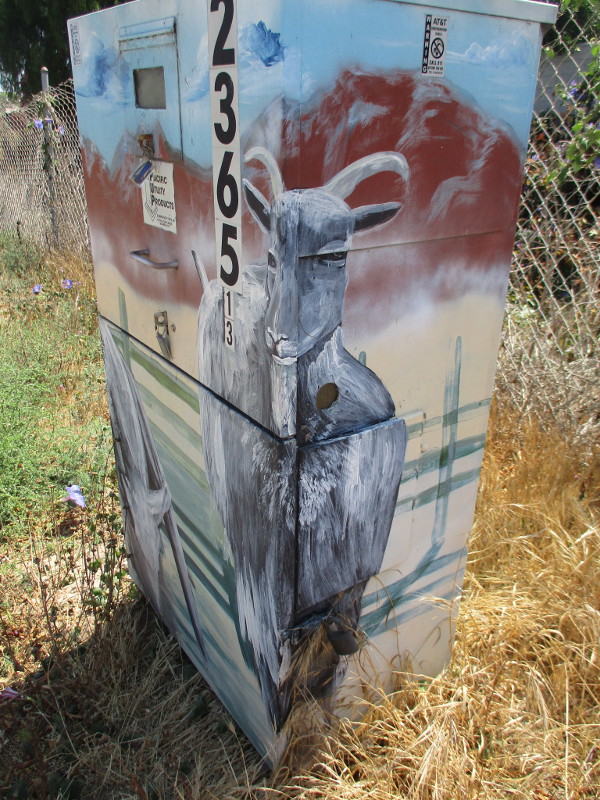
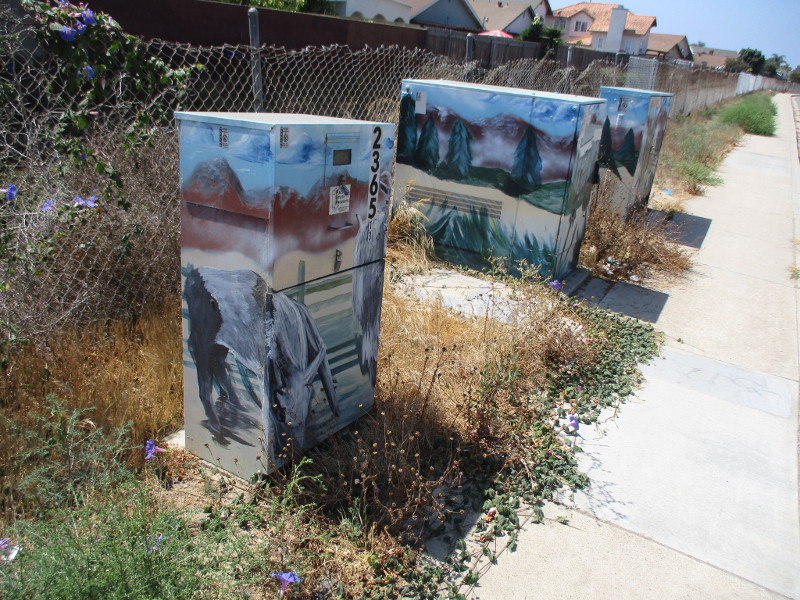
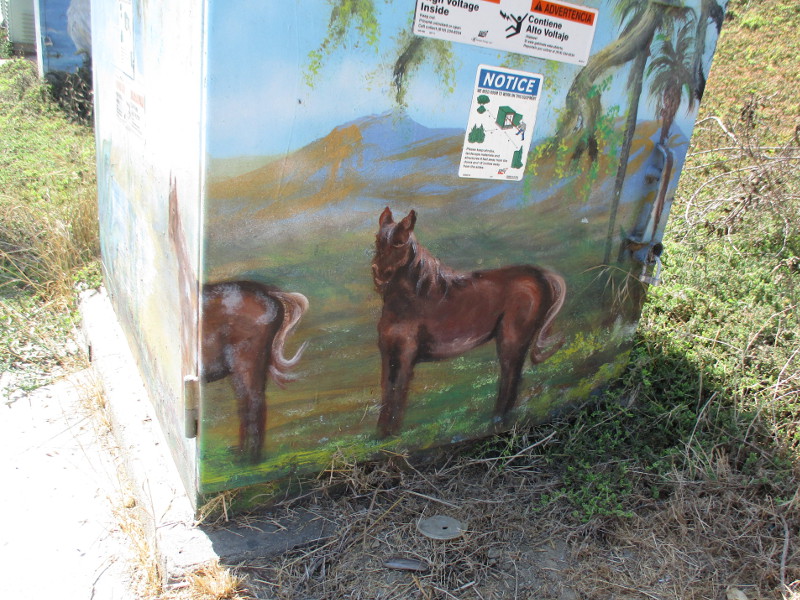
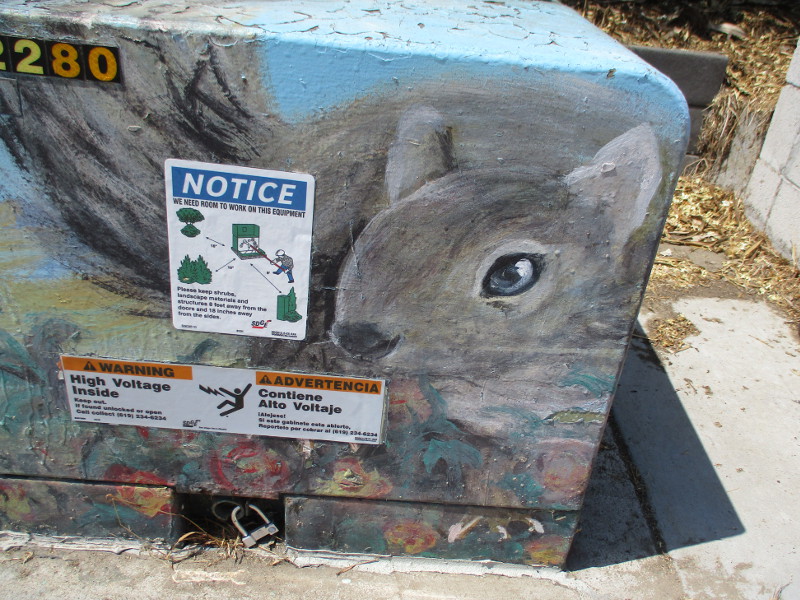
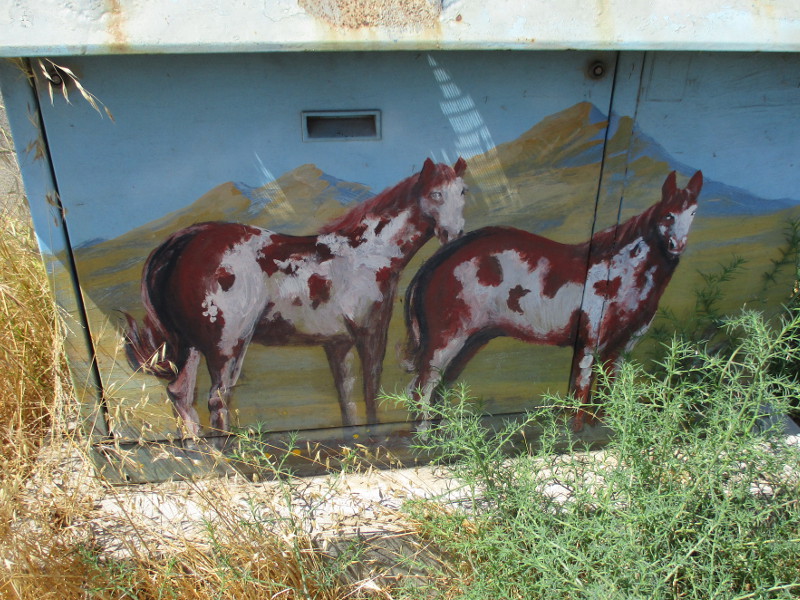
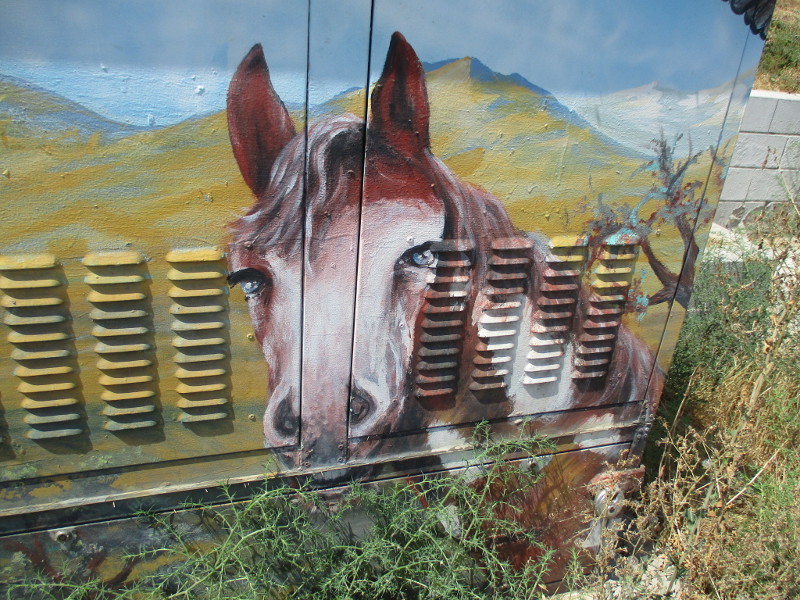
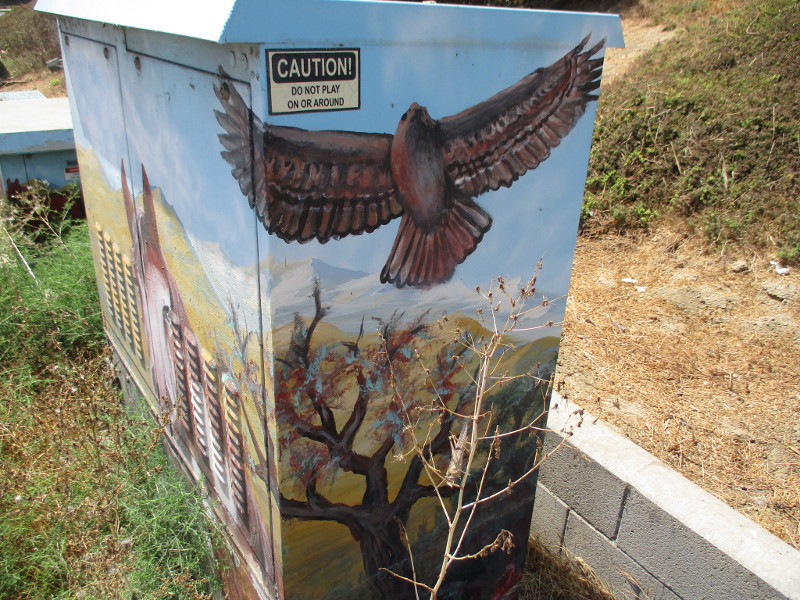
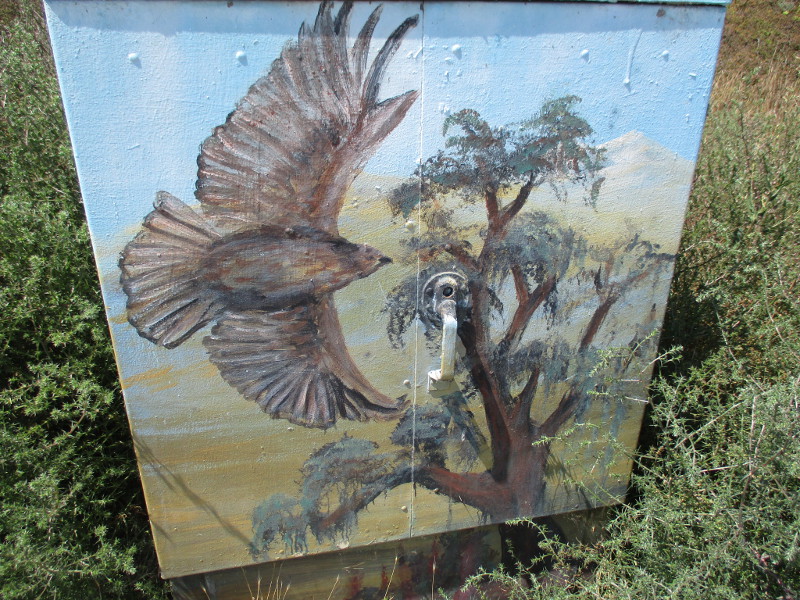
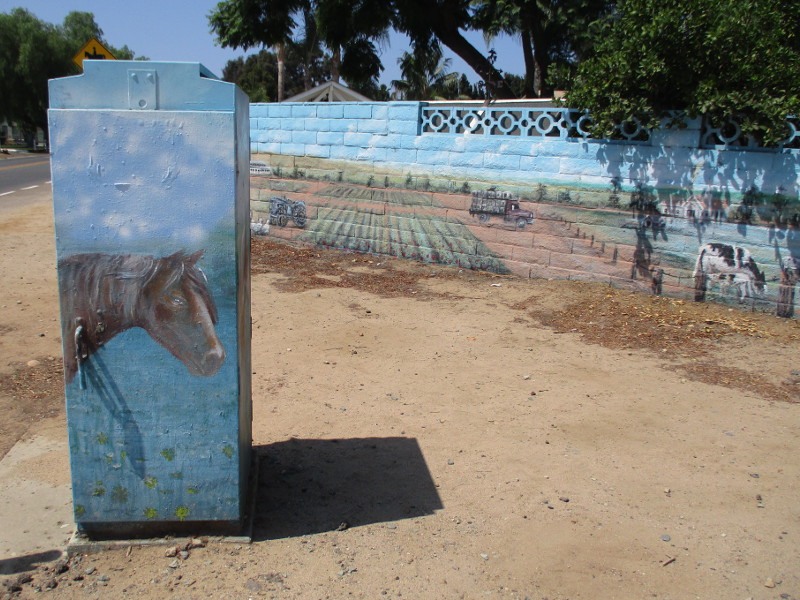
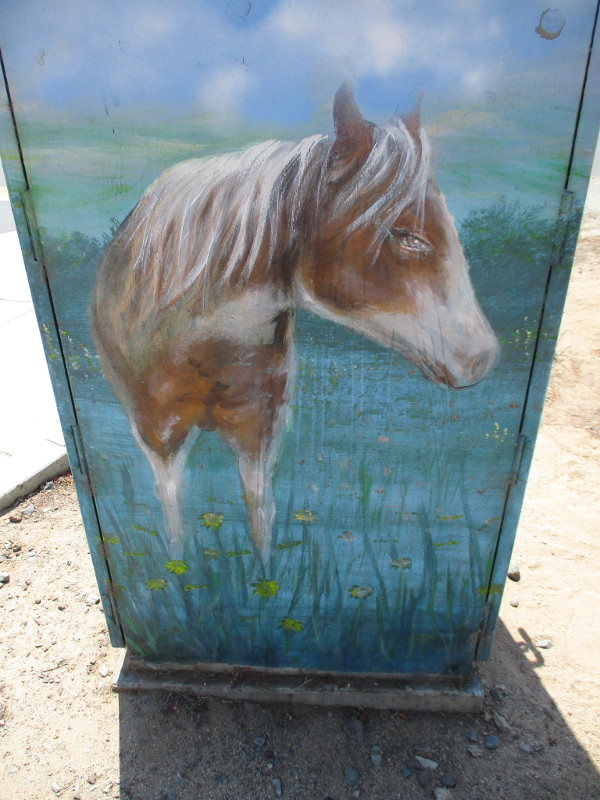
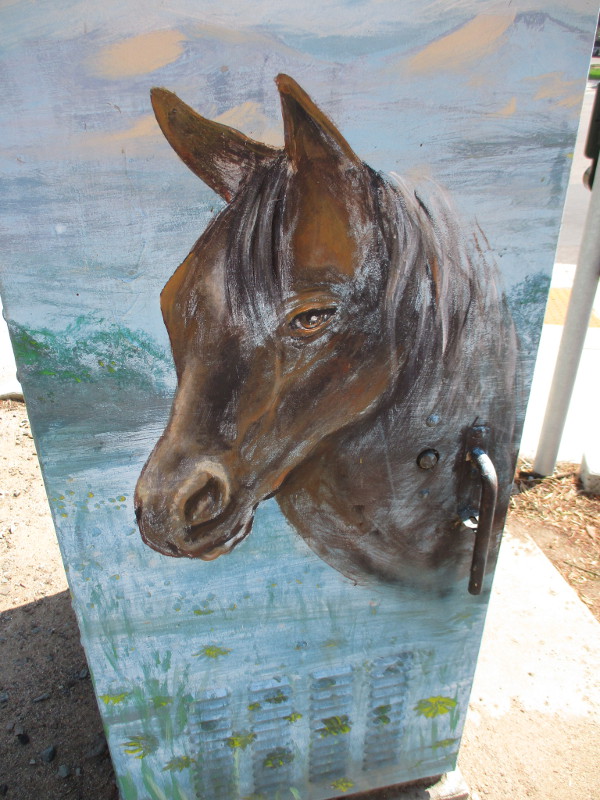
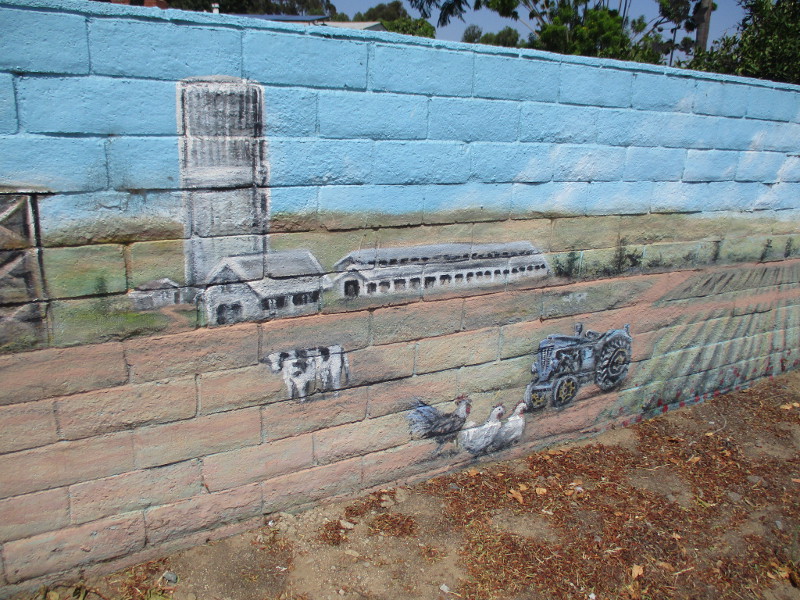
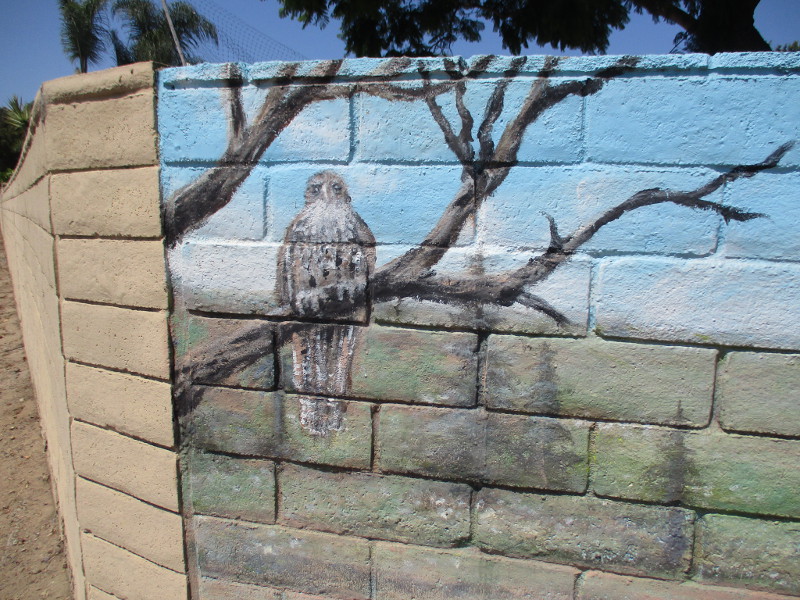
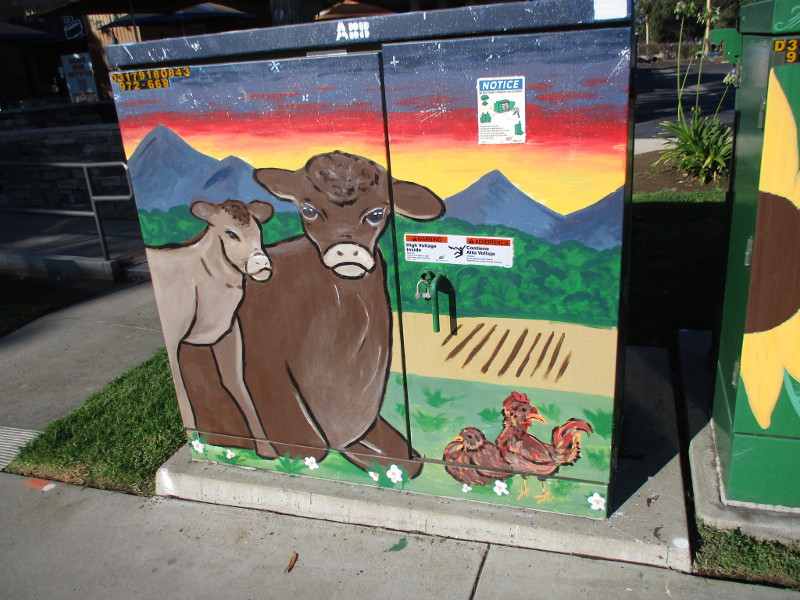
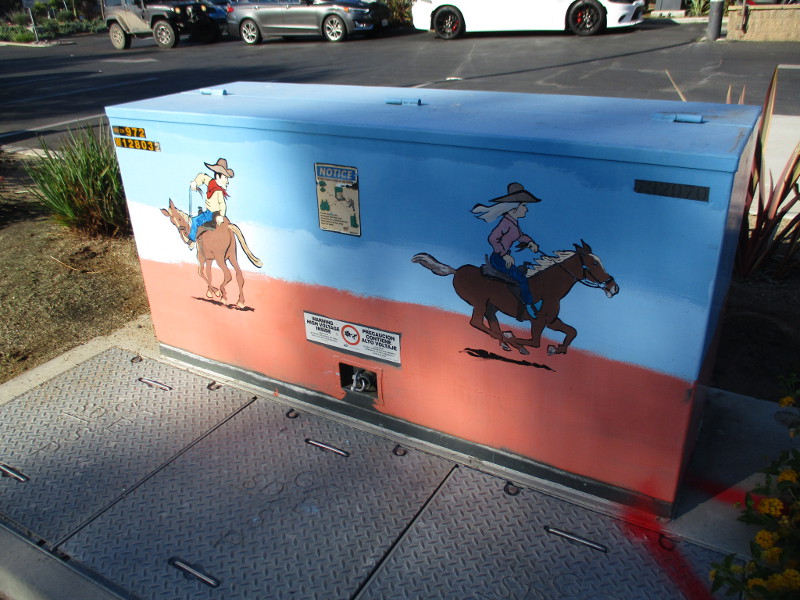
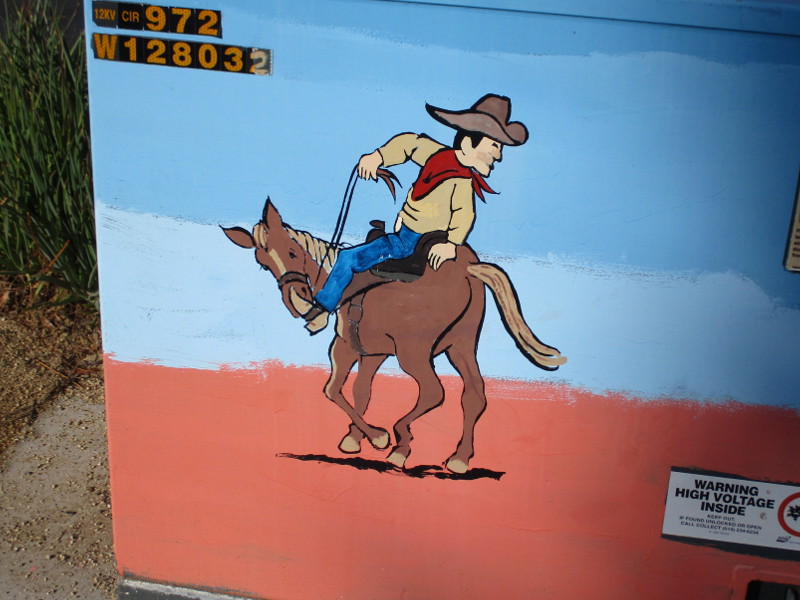
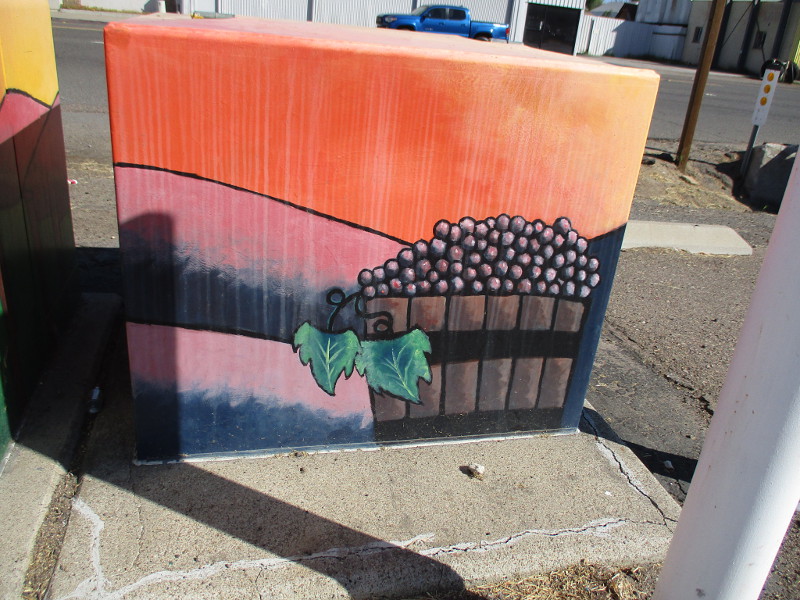
During my recent adventure in Nestor I was surprised to find an abundance of street art. As I walked west along Tocayo Avenue and north up Hollister Street to Leon Avenue, I kept spotting electrical boxes painted with farm imagery.
Nestor is a quiet residential community in San Diego’s South Bay. Before urban development covered the landscape with asphalt streets lined with houses, Nestor was mostly farmland. I believe this street art is a tribute to those olden days.
As I walked along, it seemed that goats, cows and horses, and wildlife in wide open spaces, had emerged from the brush by the sidewalk.
The only artist signature I could find appears to indicate David Williams, 2009. It was painted on the wall mural at the corner of Hollister and Leon that features a wide view of an old farm.
…
I live in downtown San Diego and love to walk around with my camera! You can follow Cool San Diego Sights via Facebook or Twitter!
You can easily explore Cool San Diego Sights by using the search box on my blog’s sidebar. Or click a tag! There are thousands upon thousands of photos for you to enjoy!
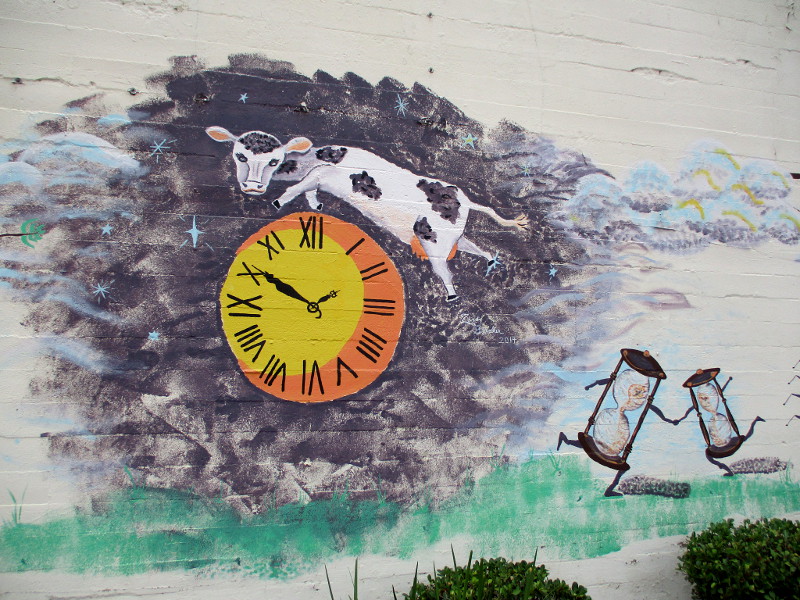
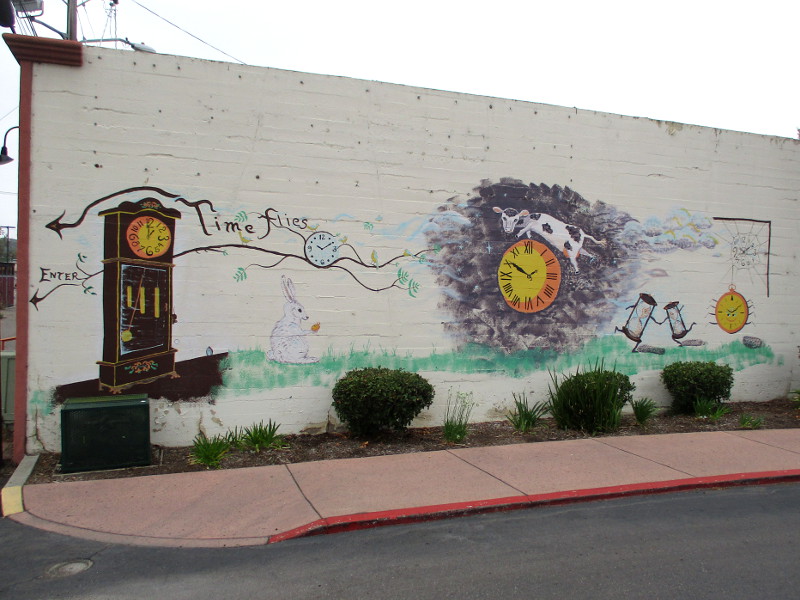
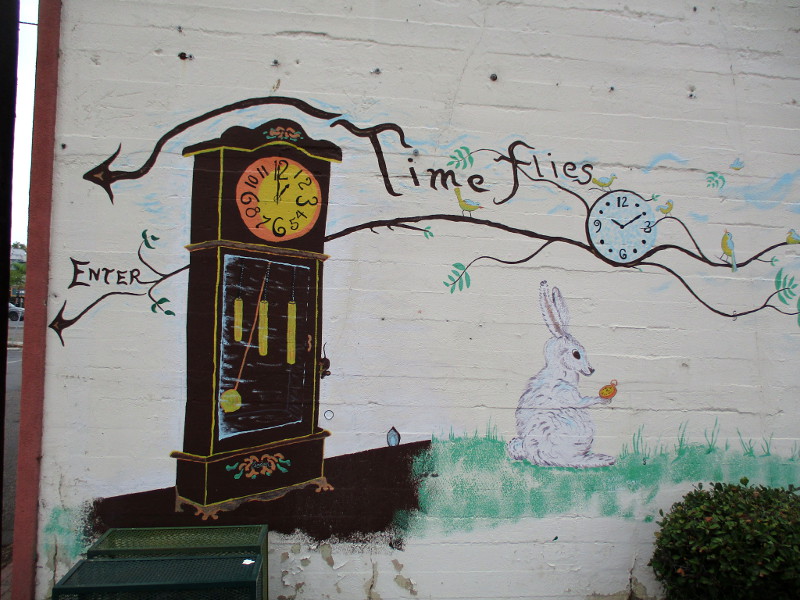
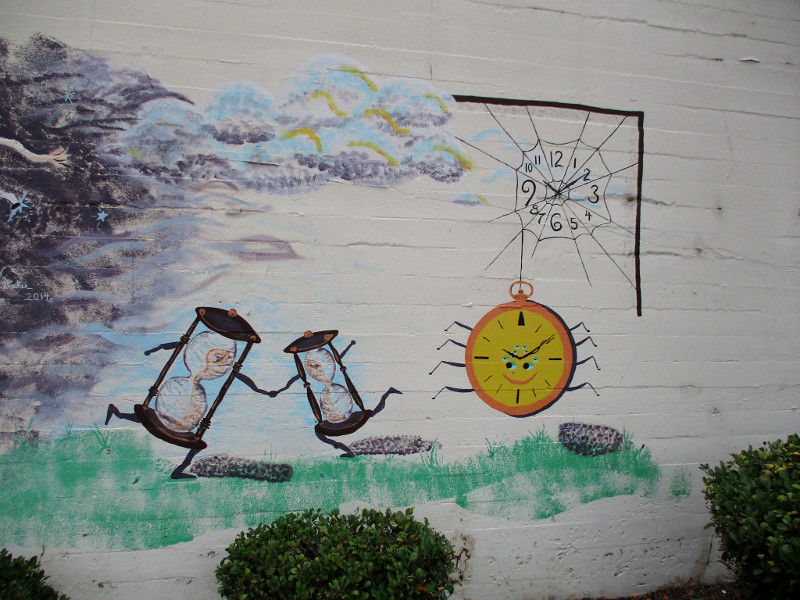
A mural featuring all sorts of fantastic Time-related imagery can be found on a wall behind Timekeepers of Escondido, a watch and clock repair shop on Grand Avenue.
I was walking around downtown Escondido, making my way to one particular alley that is filled with art, when I saw this Time Flies mural. It was painted by Zandy Gilmaher in 2014.
Stay tuned for more Escondido art discoveries!
…
I live in downtown San Diego and love to walk around with my camera! You can follow Cool San Diego Sights via Facebook or Twitter!
You can easily explore Cool San Diego Sights by using the search box on my blog’s sidebar. Or click a tag! There are thousands upon thousands of photos for you to enjoy!
Yesterday I arrived in Ramona in the morning, a couple hours before the start of the Ramona Country Fair.
I parked near the McDonald’s on 16th Street and walked east up Main Street to around 4th Street, watching for the many H.E.A.R.T. murals that have been painted in Ramona’s downtown. I found many and will be sharing those photographs before too long!
I also spotted a beautiful sculpture and an interesting historical building, but I’m not posting those photos quite yet, either.
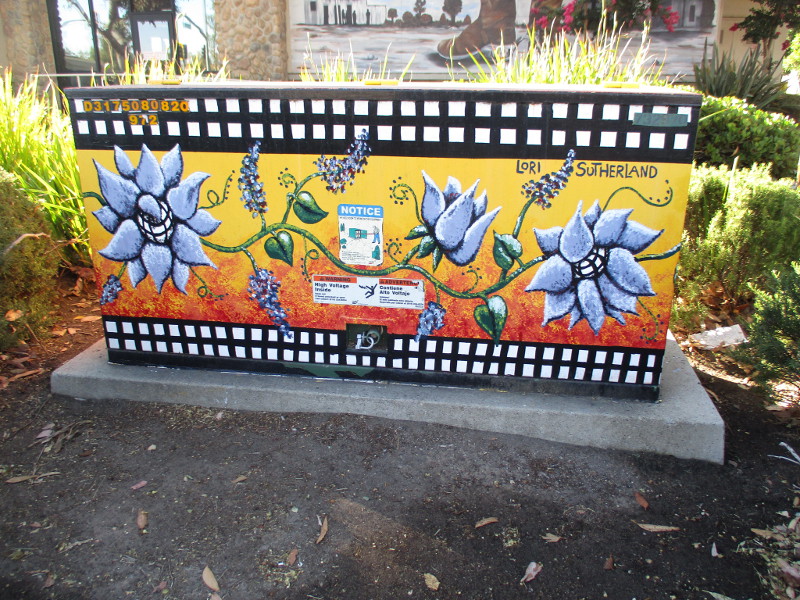
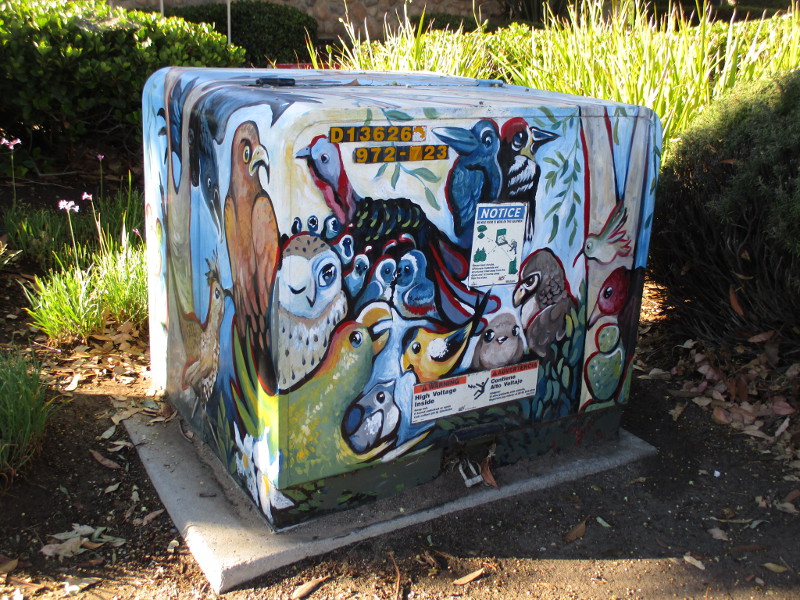
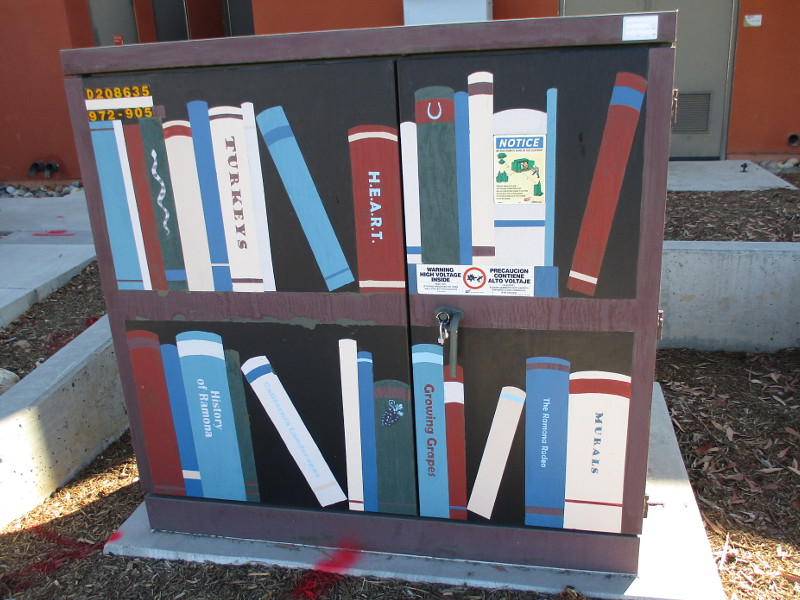
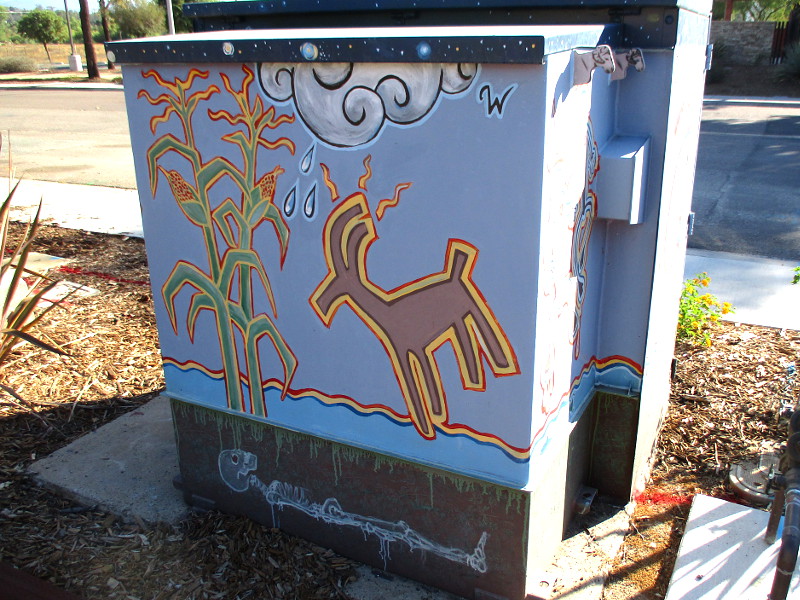
Today I’d like to share photographs of painted street art that decorates electrical boxes along and near Main Street! You can find artist names in a couple of the images.
I probably missed other colorful boxes, but you might enjoy the ones I found!
As you might guess, this street art was next to Ramona’s public library. Book titles on the painted shelves reflect unique aspects of this rural community.
…
I live in downtown San Diego and love to walk around with my camera! You can follow Cool San Diego Sights via Facebook or Twitter!
You can easily explore Cool San Diego Sights by using the search box on my blog’s sidebar. Or click a tag! There are thousands upon thousands of photos for you to enjoy!
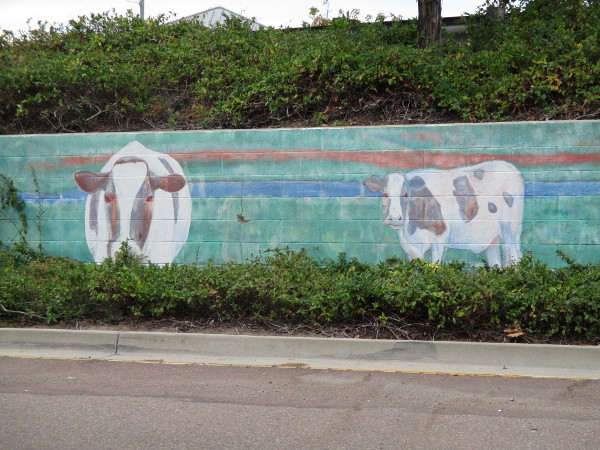
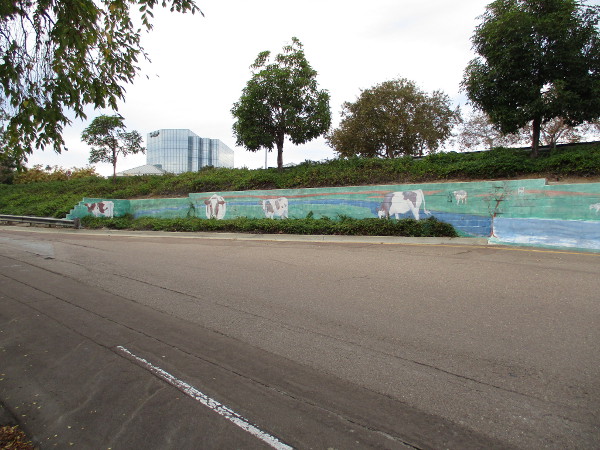
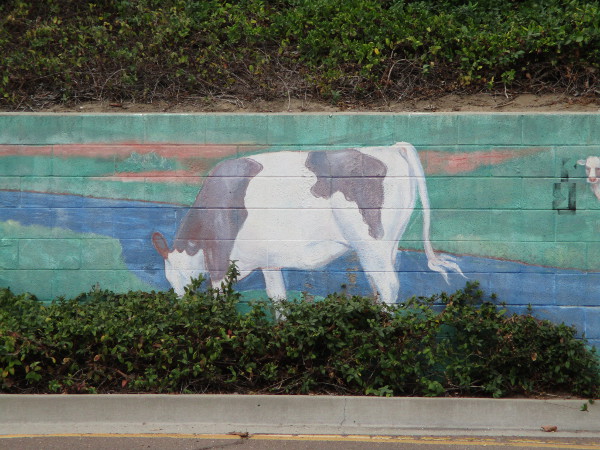
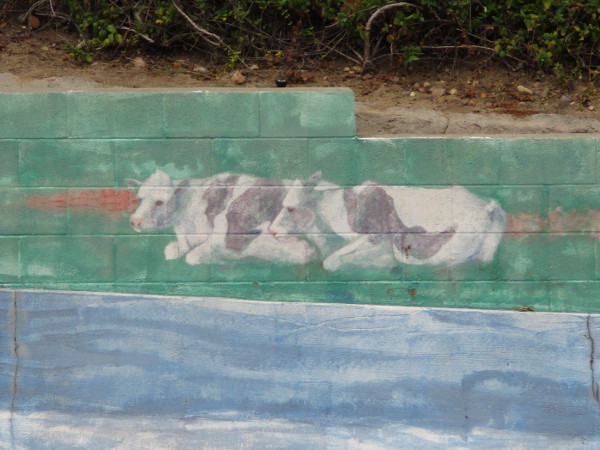
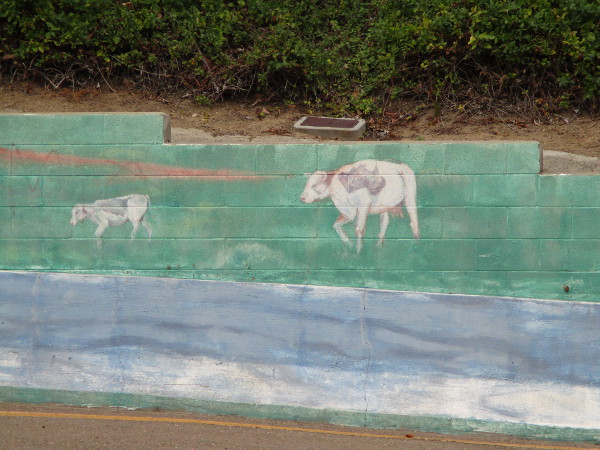
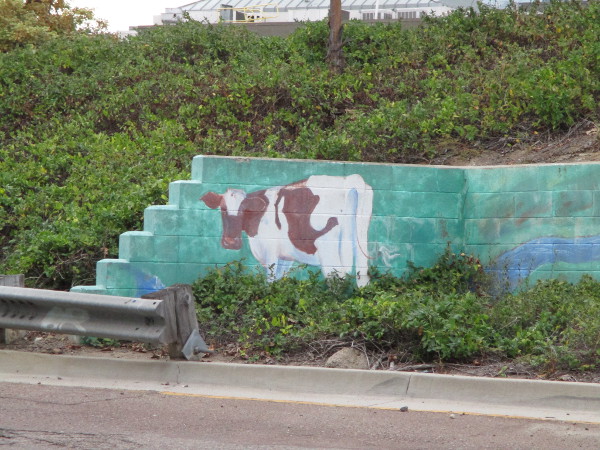
I don’t know who painted this mural. I do know I’ve seen it in Mission Valley near Friars Road for many years. You can see how faded it is.
The small herd of painted cows occupies a low wall beside lanes of traffic. You pass the old mural as you drive off eastbound Friars Road and approach Mission Center Road.
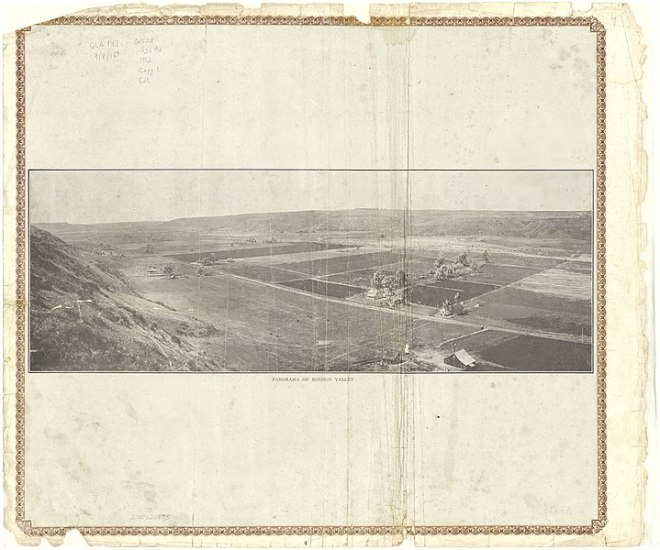
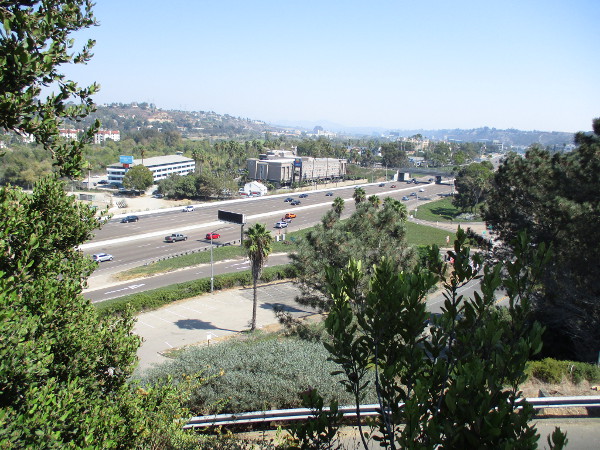
Those who drive through Mission Valley will also see miles of shopping malls, office buildings, hotels, condos and apartments, not to mention a gigantic sports stadium which is about to be demolished. But had you visited the valley in the first half of the 20th century, you would have seen acres and acres of dairy farms.
Cows began to rapidly multiply in Mission Valley in the 1880’s, beginning with the Allen dairy. As San Diego’s population grew, the demand for dairy products steadily increased, and by the 1920’s there were twenty commercial dairies. But in the mid-20th century city dwellers targeted Mission Valley for development. U.S. Highway 80–now Interstate 8–was built. Dairy farmers were enticed to sell their valuable land, and eventually all of the cows vanished.
So today, if you happen to see a small herd of cows grazing by a Mission Valley roadside, it’s probably because you’ve sped past this faded mural.
Panorama of Mission Valley, 1912. Farmland fills the valley in this historical photo. (Public domain image from Wikimedia Commons.)
A view of part of Mission Valley today.
…
I live in downtown San Diego and love to walk around with my camera! You can follow Cool San Diego Sights via Facebook or Twitter!
You can easily explore Cool San Diego Sights by using the search box on my blog’s sidebar. Or click a tag! There are thousands upon thousands of photos for you to enjoy!






 Cool San Diego Sights!