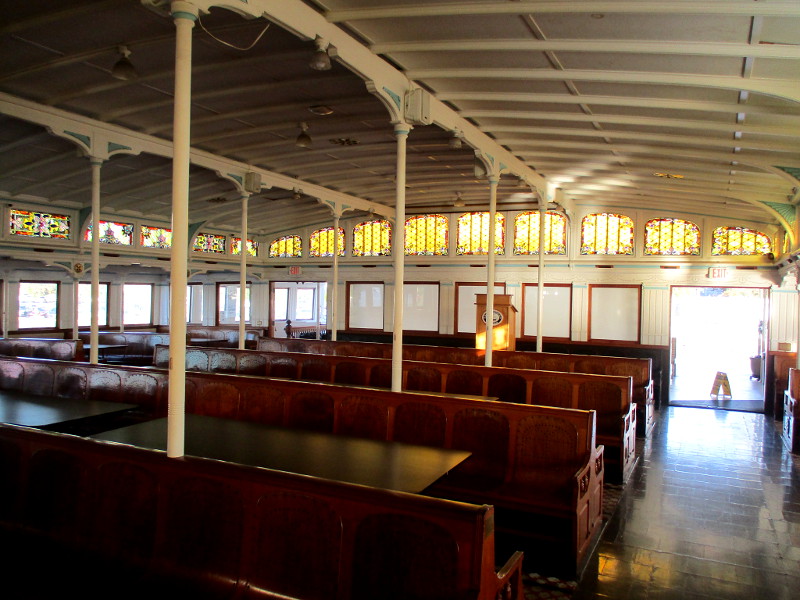
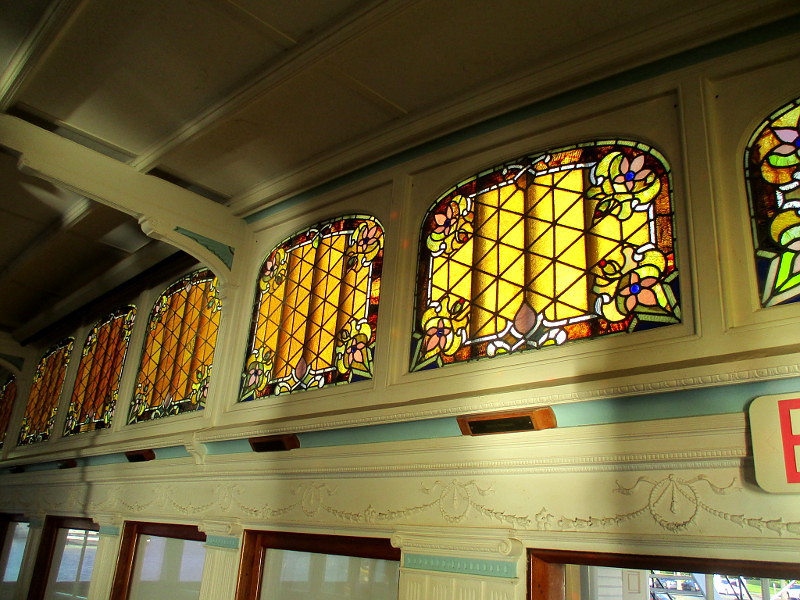
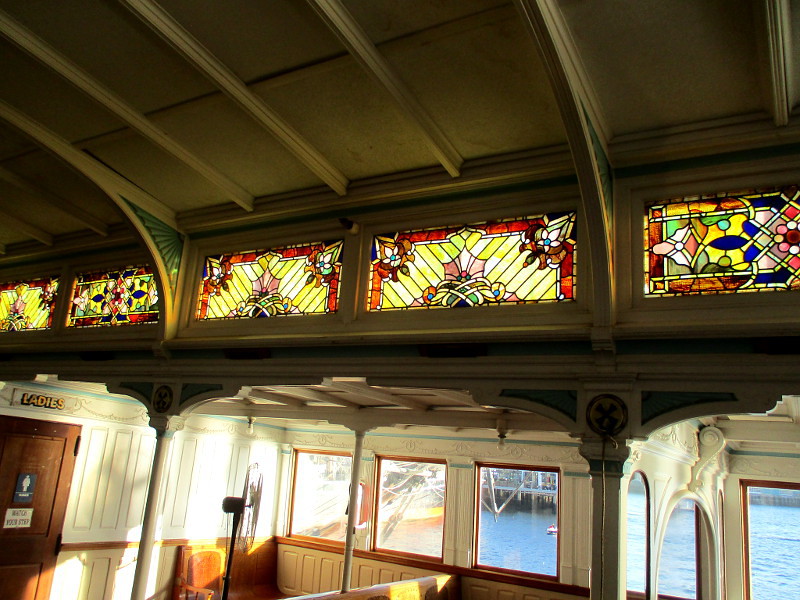
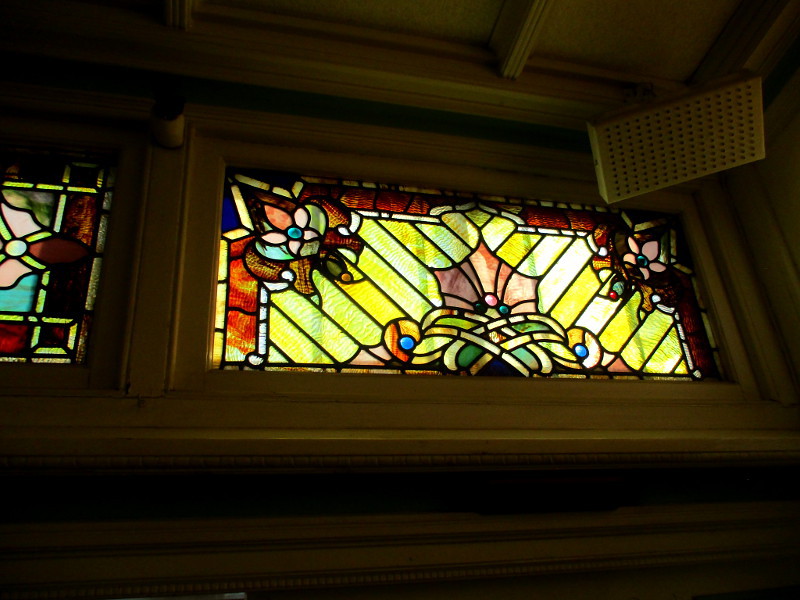
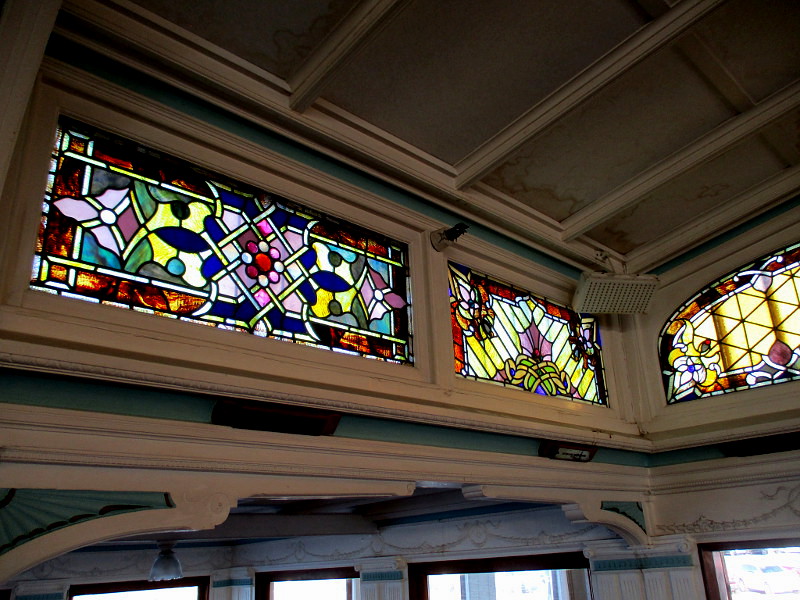
It reminds one of stained glass in a cathedral. Exquisite art glass windows, fabricated over a century ago, fill a historic ship in San Diego with golden sunlight.
If you’ve ever stepped onto the Dan McKinney Deck of the steam ferry Berkeley (part of the Maritime Museum of San Diego) you’ve experienced the beauty. The long polished wooden benches, the soft light and tranquil quiet–the atmosphere is indeed similar to that of a cathedral.
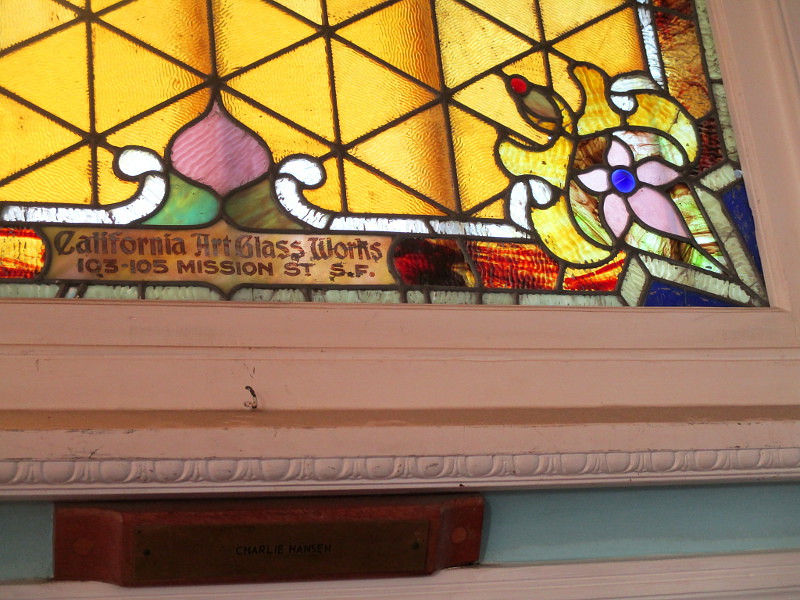
I noticed during a recent visit that the Berkeley’s art glass was created by California Art Glass Works in San Francisco. The 1898 steam ferryboat Berkeley was built to carry Southern Pacific Railroad passengers between Oakland and San Francisco.
Out of curiosity, I’ve tried to find information concerning California Art Glass Works. The factory was located on Mission Street in San Francisco. It was famous for the manufacturing of lodge and church memorial windows.
Here’s a link to a page on the Oakland Museum of California website that contains information about California Art Glass Works and the man behind it. Among other things, you’ll learn the glass company was founded in 1879 by William Schroeder, who had learned the craft in Germany. California Art Glass won a silver medal at the Paris Exposition of 1900 for the windows it exhibited there.
If you happen to know more about California Art Glass Works, please leave a comment!
…
Thanks for visiting Cool San Diego Sights!
I post new blogs pretty often. If you like discovering new things, bookmark coolsandiegosights.com and swing on by occasionally!
I live in downtown San Diego and love to walk around with my camera! You can follow Cool San Diego Sights via Facebook or X (formerly known as Twitter)!
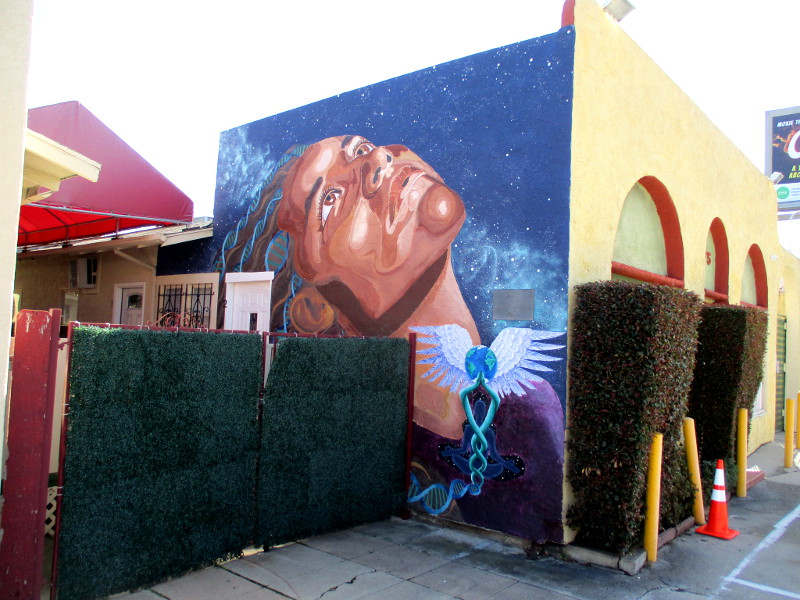
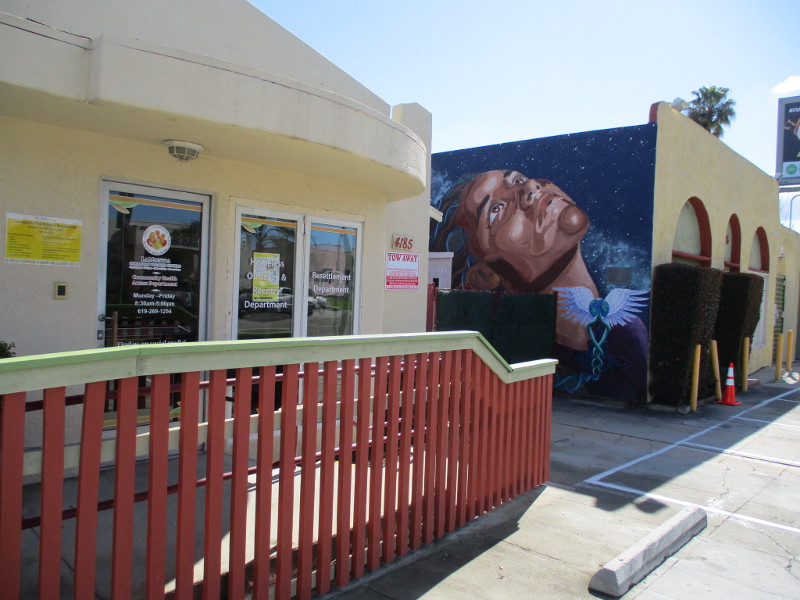
Should you walk down Fairmount Avenue, a block and a half north of University Avenue, you’ll find this beautiful mural. It was painted outside the La Maestra Community Health Center’s HOPE Clinic, which provides health care for the homeless.
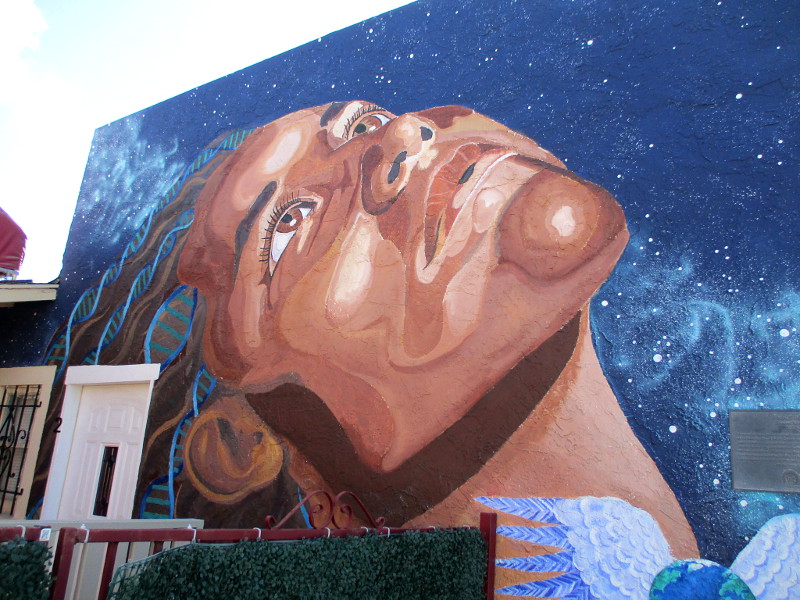
There’s a face gazing up at the stars. And a plaque…
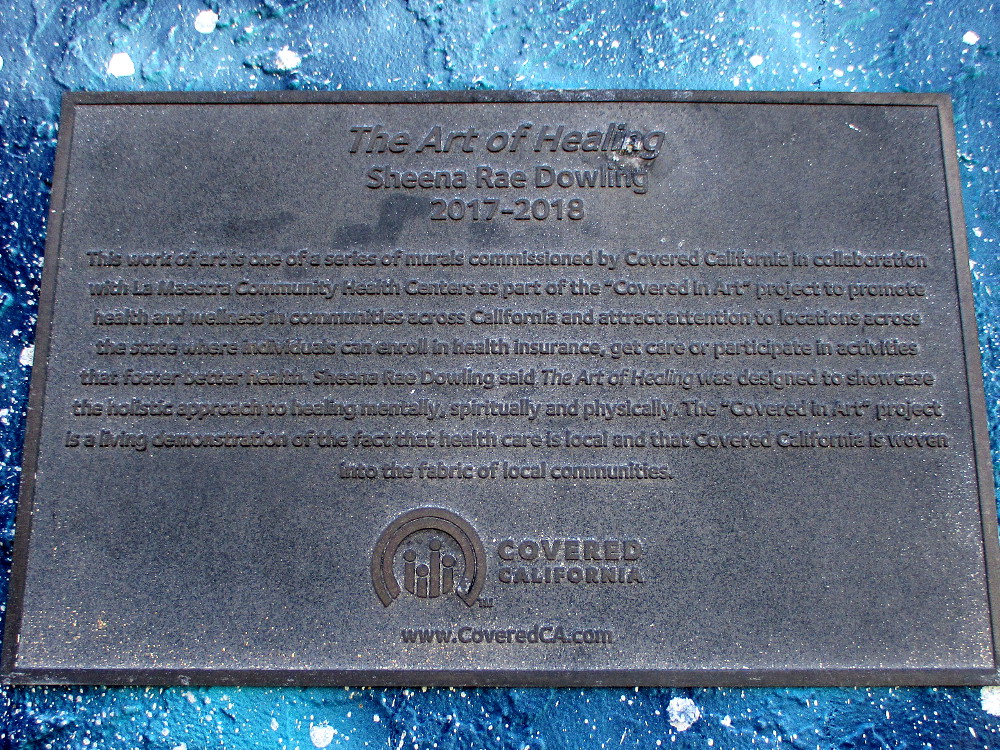
The Art of Healing, Sheena Rae Dowling, 2017-2018
This work of art is one of a series of murals commissioned by Covered California in collaboration with La Maestra Community Health Centers as part of the “Covered in Art” project to promote health and wellness in communities across California and attract attention to locations across the state where individuals can enroll in health insurance, get care or participate in activities that foster better health. Sheena Rae Dowling said The Art of Healing was designed to showcase the holistic approach to healing mentally, spiritually and physically. The “Covered in Art” project is a living demonstration of the fact that health care is local and that Covered California is woven into the fabric of local communities.
Sheena Rae Dowling is a San Diego artist whose work has been shown at exhibitions around Southern California. See her website here.
I’ve observed a couple of her great pieces at exhibitions years ago. If you’d like to see them, too, click here and here and read the photo captions.
…
Thanks for visiting Cool San Diego Sights!
I post new blogs pretty often. If you like discovering new things, bookmark coolsandiegosights.com and swing on by occasionally!
I live in downtown San Diego and love to walk around with my camera! You can follow Cool San Diego Sights via Facebook or X (formerly known as Twitter)!
Kids can have a ton more fun at the San Diego History Center, thanks to Girl Scout Audrey Weishaar!
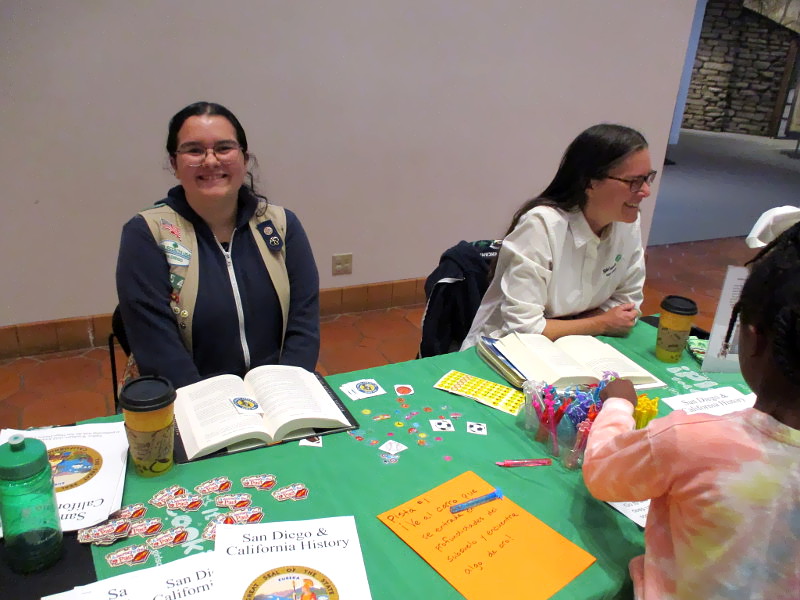
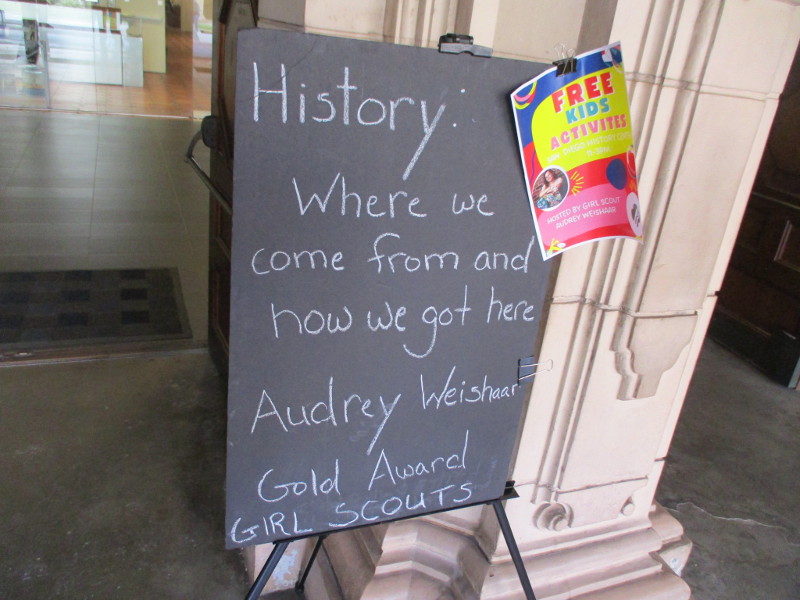
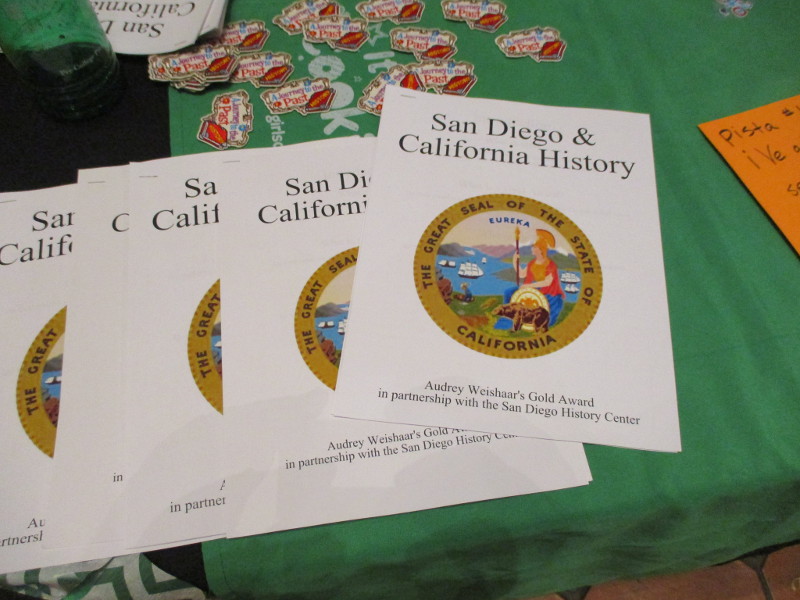
For the past couple weekends, tables full of activities have greeted visitors to the San Diego History Center in Balboa Park. It’s Audrey’s Gold Award project, which is titled History: Where We Come From & How We Got Here. As a sign explains, the Gold Award is the highest award one can earn in Girl Scouts, and the main point of it is to benefit your community.
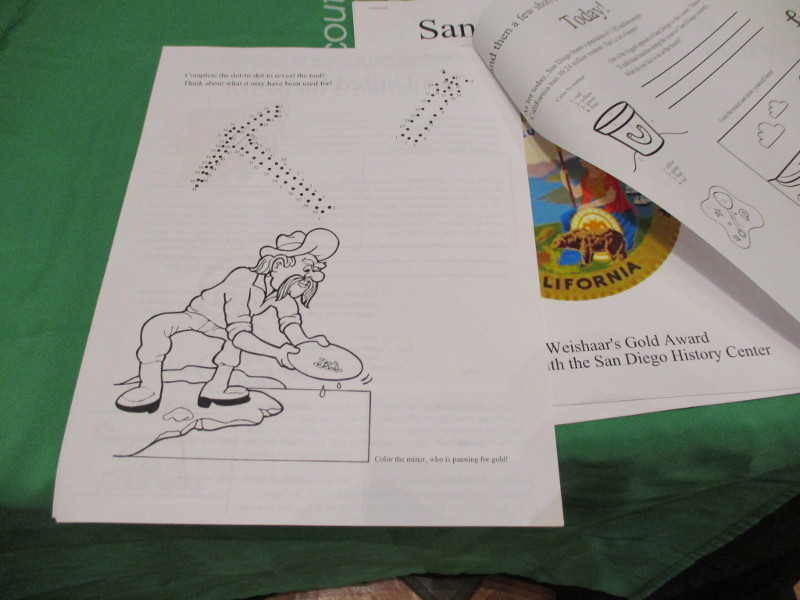
I saw a bunch of kids running about the museum, no doubt drawn by this awesome project. At the tables they can talk to Audrey, collect stickers, get a booklet about San Diego and California History (with connect-the-dot and coloring pages!), and use clues to solve a mystery. There are even several fun tongue twisters to try!
Want to have a fun, educational experience with the kids? Audrey will be smiling at her table inside the San Diego History Center for one more weekend: January 20 and 21, 11 am – 3 pm.
It’s free!
…
Thanks for visiting Cool San Diego Sights!
I post new blogs pretty often. If you like discovering new things, bookmark coolsandiegosights.com and swing on by occasionally!
I live in downtown San Diego and love to walk around with my camera! You can follow Cool San Diego Sights via Facebook or X (formerly known as Twitter)!
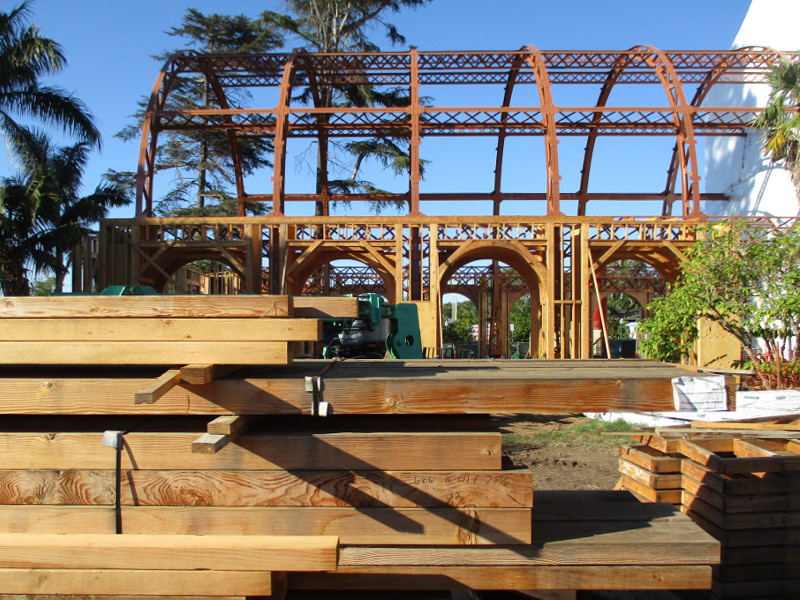
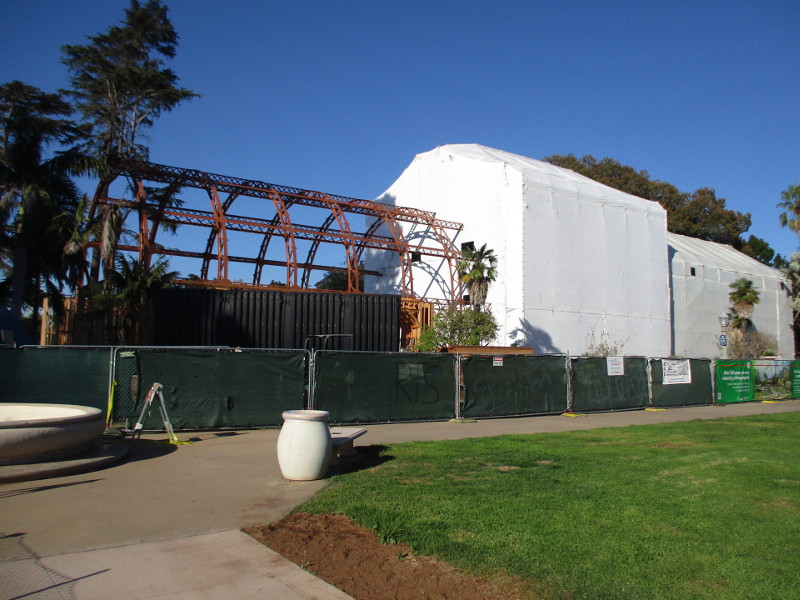
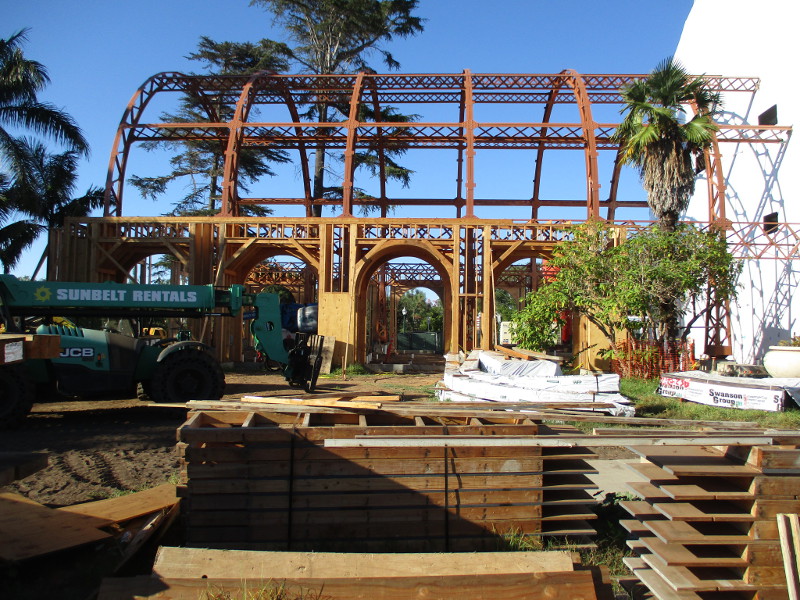
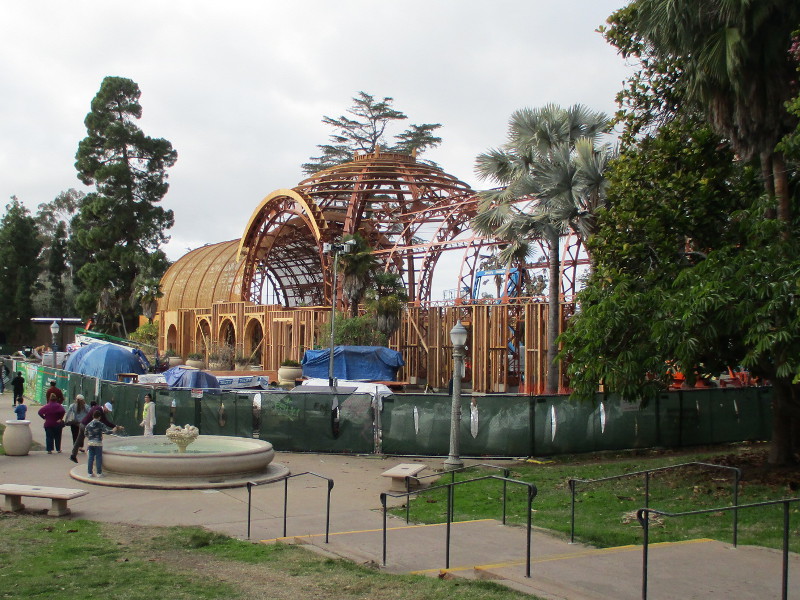
The restoration of Balboa Park’s monumental Botanical Building is proceeding right along. New wood is being used to beautifully recreate the historic structure!
When built for the 1915 Panama-California Exposition, the Botanical Building was one of the largest lath structures in the world. A century later, wood rot and termite damage had taken a severe toll. This project, supported by the National Park Service, State of California, City of San Diego, and Forever Balboa Park, includes the full restoration of the building to its original 1915 design, recreating the series of arched openings with Palladian windows and large doors, opening the inside space to the surrounding gardens as intended.
It will be fascinating to watch as new lath is applied to the large, supporting steel structure, which is also being renovated one section at a time.
Here’s another web page that describes the Botanical Building restoration and additional improvements, such as the reconstruction of a pergola that once stood on the west lawn near The San Diego Museum of Art.
UPDATE!
Here’s a photo showing great progress! I took this in January, 2024…
…
Thanks for visiting Cool San Diego Sights!
I post new blogs pretty often. If you like discovering new things, bookmark coolsandiegosights.com and swing on by occasionally!
I live in downtown San Diego and love to walk around with my camera! You can follow Cool San Diego Sights via Facebook or X (formerly known as Twitter)!
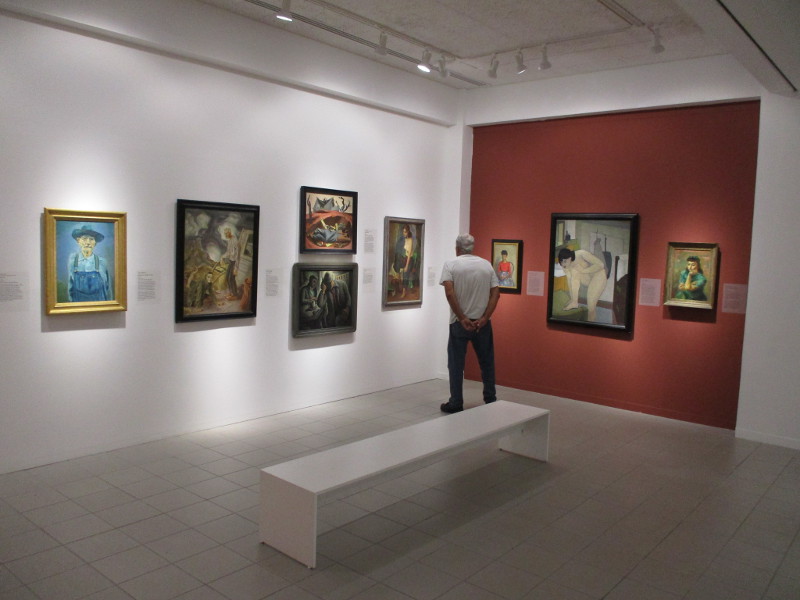
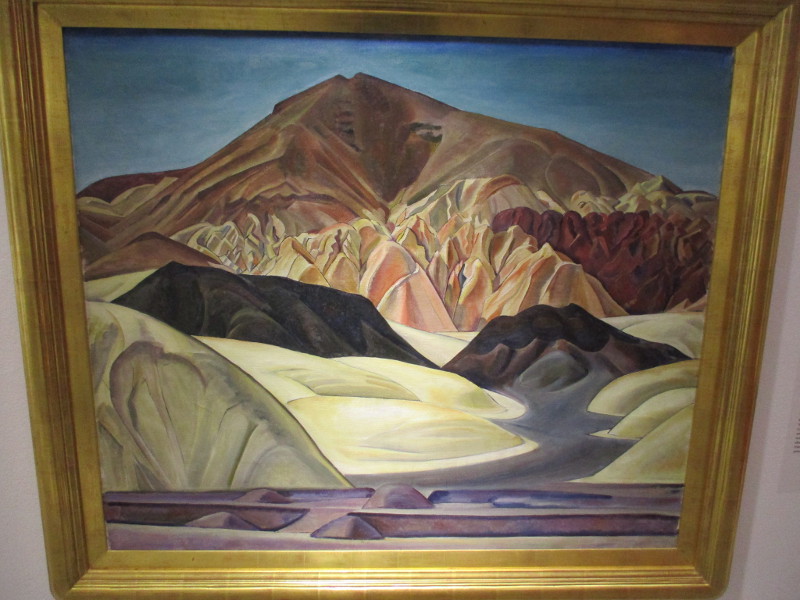
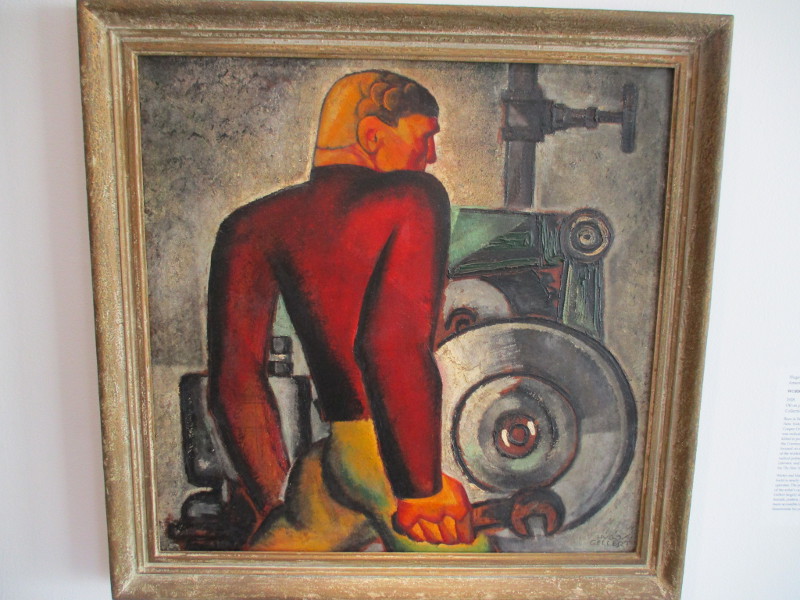
A very fine exhibition of American art from around the time of the Great Depression is now on view at the Oceanside Museum of Art.
Art for the People: WPA-Era Paintings from the Dijkstra Collection contains works that were created between the 1920s and the end of World War II. Many pieces by California artists are included, including San Diego’s own Charles Reiffel. The paintings are often dark, with images of poverty, violence and barren places. But there are glimpses of beauty, too, and of life’s striving, and inextinguishable humanity.
According to one sign: “Names for this art have ranged from Regionalism and American Scene Painting to Social Realism and American Expressionism.” I’m by no means an art expert, but I can tell you these diverse works are emotionally stirring. The artists, through the lens of their own experience, sought to capture true things from a difficult period of American history.
Enjoy a visit to the Oceanside Museum of Art no later than November 5, 2023. You’ll see how extraordinary this special exhibition is. It was organized by the Crocker Art Museum, Oceanside Museum of Art, and The Huntington Library, Art Museum and Botanical Gardens.
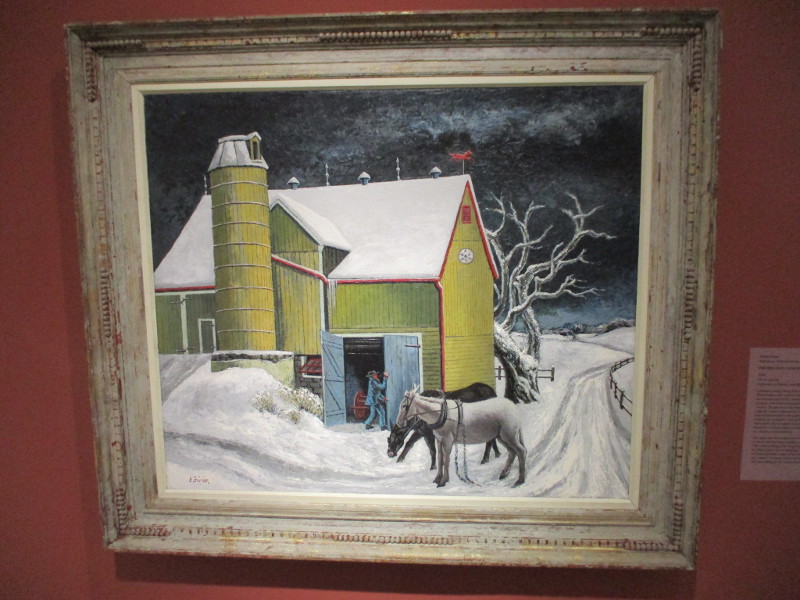
Hooverville on East Tenth Street, Louis Ribak, circa 1940. In the late 1930s, Ribak worked on several murals for the Works Progress Administration.The Hex Sign, Lancaster County, PA, Ernest Fiene, 1936.Harlem Cows, Jan Matulka, circa 1924. The depiction of cows evidences the artist’s exposure to Cubism.A Vale in Death Valley, Helen Forbes, 1939. The artist during the WPA era produced murals for post offices in Susanville, Merced and Monrovia, California.Worker and Machine, Hugo Gellert, 1928. The artist focused on the struggles of the working class. He was an illustrator for The New Yorker and New York Times.
…
Thanks for visiting Cool San Diego Sights!
I post new blogs pretty often. If you like discovering new things, bookmark coolsandiegosights.com and swing on by occasionally!
I live in downtown San Diego and love to walk around with my camera! You can follow Cool San Diego Sights via Facebook or X (formerly known as Twitter)!
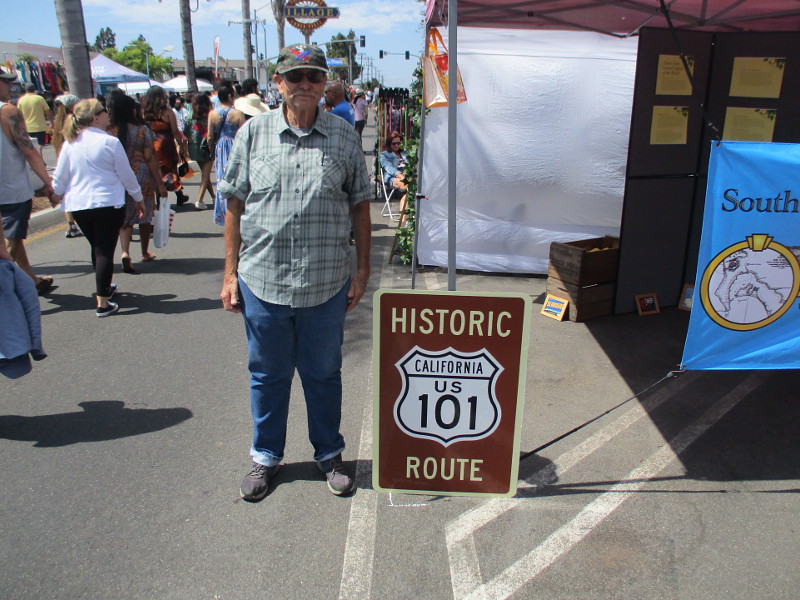
Jack Gechter stands next to Historic Route California US 101 sign at South Bay Historical Society booth during Chula Vista Lemon Festival.
A very cool project is now being undertaken by the South Bay Historical Society. I learned about it last Saturday as I explored the Lemon Festival in Chula Vista.
A number of Historic Route California US 101 signs (like the one you see above) have been created, to be installed in National City, Chula Vista and San Ysidro along those streets where the legendary highway used to run.
Old timers might recall how US 101 ran north from near the US/Mexico Border in San Ysidro, along Beyer Blvd toward Chula Vista, along National Avenue (now Broadway in Chula Vista and National City Blvd in National City) to 8th Street, then along 8th Street west to Harbor Drive, before heading up through downtown San Diego and eventually into North County. Old U.S. Route 101 during its history saw various realignments, before being entirely replaced south of Los Angeles by Interstate 5 in 1964.
Here’s a great article detailing where the historic highway ran through San Diego and the South Bay cities. You’ll see current photographs of those places where it ran. Here’s another article with a map depicting an earlier US 101 Route, running up today’s National City Blvd to Main Street.
Many similar Historic Route US 101 signs have already been installed in San Diego County, particularly through the coastal cities of North County.
Once these new signs are installed, they will add a fine, nostalgic touch to those South Bay communities that the old highway once connected to the rest of California. And they will resurrect many fond memories.
Historic 101 Route Sign in San Ysidro, California. Image courtesy Jack Gechter.
…
Thanks for visiting Cool San Diego Sights!
I post new blogs pretty often. If you like discovering new things, bookmark coolsandiegosights.com and swing on by occasionally!
I live in downtown San Diego and love to walk around with my camera! You can follow Cool San Diego Sights via Facebook or Twitter!
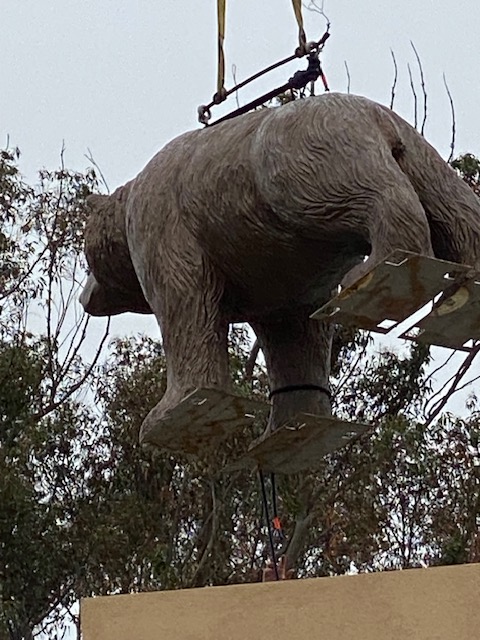
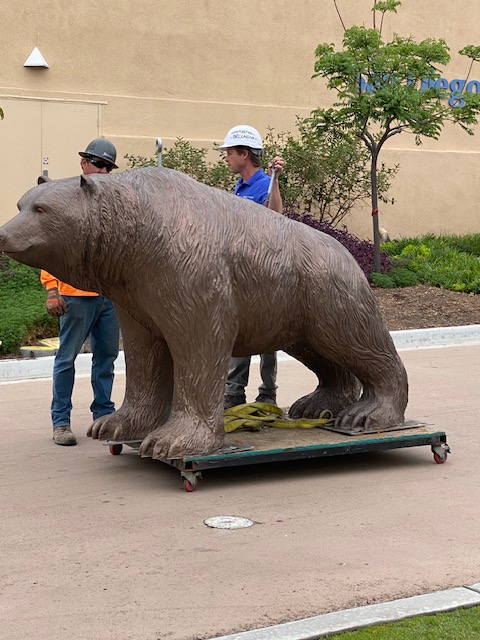
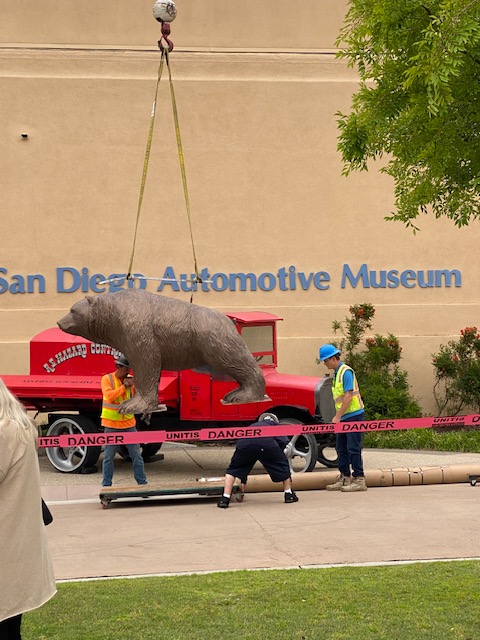
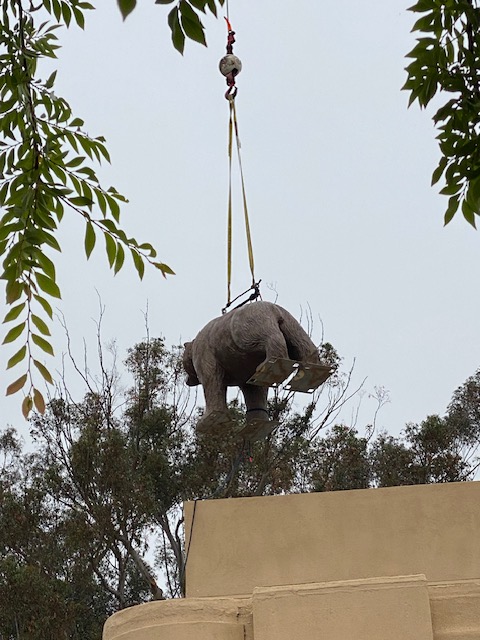
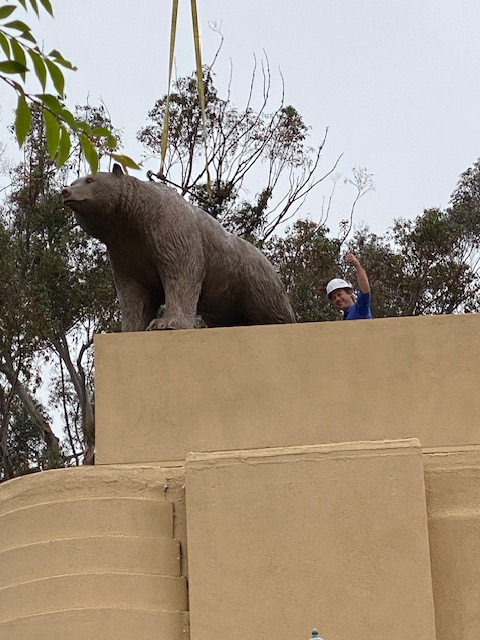
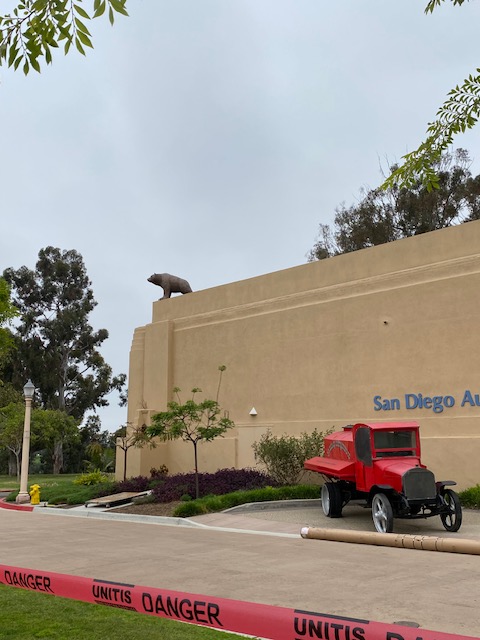
More history was made today! Two life-size grizzly bear sculptures were transported from the San Diego studio where they were made and lifted by crane to the roof of the San Diego Automotive Museum!
A golden grizzly bear now stands atop each front corner of the museum!
The San Diego Automotive Museum occupies the California State Building, which was built for the 1935-1936 California Pacific International Exposition in Balboa Park. These new bears help restore the historic building to its original appearance.
I wasn’t present for today’s “great bear lift” but I received these great photos to share! Not only were the two bears mounted on the reinforced rooftop, but two new flagpoles were installed above the building’s front entrance.
These landmark improvements to the Palisades area in Balboa Park are the work of the Committee of 100, who’ve been working to preserve Balboa Park’s historic architecture, gardens and public spaces since 1967.
Would you like to see these amazing bear sculptures up close? I was fortunate to get a very close look earlier this year! I posted those photographs and more fascinating details here!
…
Thanks for visiting Cool San Diego Sights!
I post new blogs pretty often. If you like discovering new things, bookmark coolsandiegosights.com and swing on by occasionally!
I live in downtown San Diego and love to walk around with my camera! You can follow Cool San Diego Sights via Facebook or Twitter!
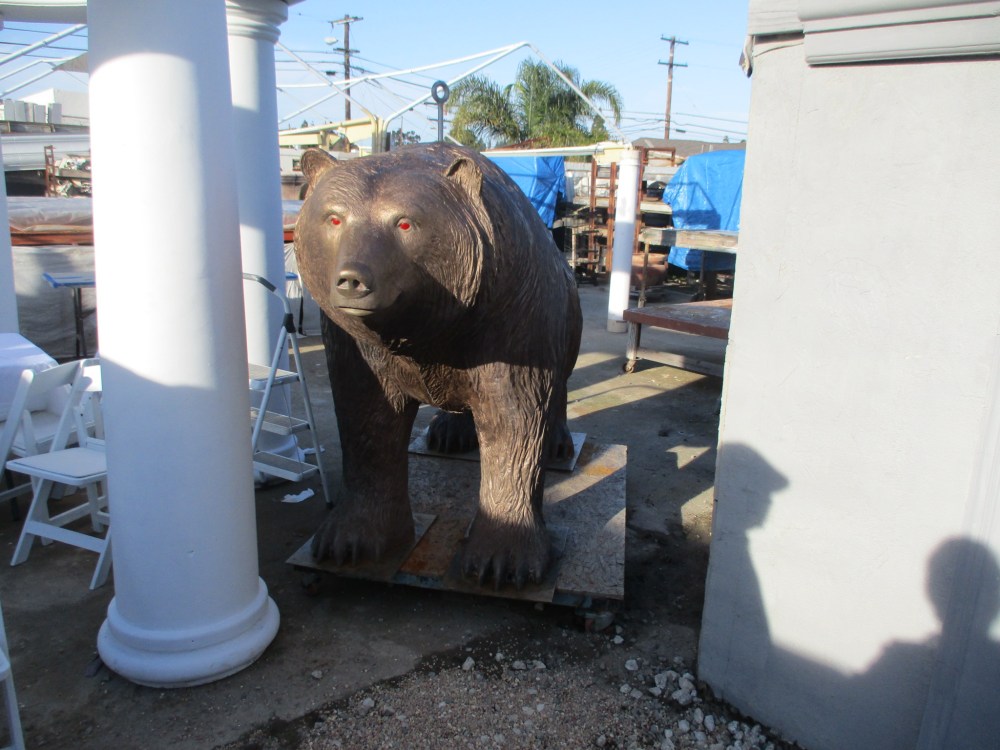
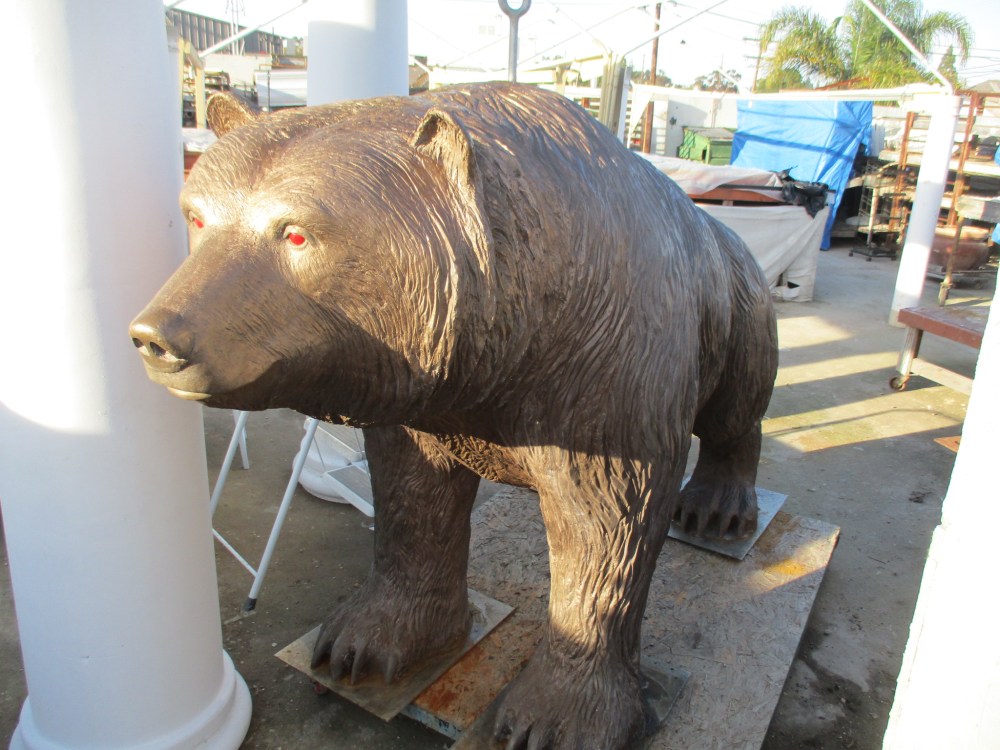
Two huge golden grizzly bears have come to life in San Diego, and are ready to stand on a Balboa Park rooftop!
Yesterday the two amazing sculptures were previewed. I took photographs!
The life-size bronze bears–weighing about 400 pounds–will soon be placed atop the roof of the 1935 California State Building, which today is home of the San Diego Automotive Museum. The sculptures will stand on the front corners of the building, as bears once did almost a century ago, back when the building debuted for the 1935-1936 California Pacific International Exposition.
Artists Mike and Kevin Matson of Bellagio Precast have been busy working on these new bear sculptures at their San Diego studio. Perhaps you remember my blog post from late 2021 with photos of one partially cold cast bronze bear.
The two huge bears are now one hundred percent finished and ready for transportation to Balboa Park! Once the roof of the San Diego Automotive Museum is structurally prepared for the heavy sculptures, they will be lifted by crane up to their respective corners. All of this should occur in April. Watch for it!
As I mentioned, the original 1935 bears were only temporary (likely made of plaster-like material) and disappeared long ago. A few old photographs show them atop the California State Building. Here’s one:
In the above enlarged photograph, you might also glimpse a flagpole over the building’s front entrance. Two flagpoles are also returning to the historic California State Building! Brackets for them have already been created:
The new bears and flagpoles are part of an ongoing effort by the Balboa Park Committee of 100 to restore the Palisades area of Balboa Park to something more like its original 1935 appearance. The organization has been working to preserve Balboa Park’s historic architecture, gardens and public spaces since 1967.
The Committee of 100’s initial undertaking in the Palisades was the reproduction of historical murals above the entrance to this same building. Perhaps you’ve seen those beautiful tile murals. If you haven’t, click here.
The California State Building’s new life-size bears have been years in the making. At yesterday’s event we were shown small working models that preceded the finished sculptures. Kevin Matson held them up for examination:
So how exactly were life-size cold cast bronze bears made?
Each of the finished bear sculptures has a Glass Fiber Reinforced Concrete skin that is about 3/8″ to 1/2” thick. Two sculpture halves are joined together with a stainless steel frame inside. Each bear’s volume is then filled with a high density urethane foam.
How awesome are these golden grizzlies? Take a look!
The Balboa Park Committee of 100 is engaged in another fantastic project! They are recreating a large historical mural that will be placed above the entrance of the Municipal Gymnasium building. It, too, will be breathtaking!
I’ll be blogging about that shortly!
…
Thanks for visiting Cool San Diego Sights!
I post new blogs pretty often. If you like discovering new things, bookmark coolsandiegosights.com and swing on by occasionally!
I live in downtown San Diego and love to walk around with my camera! You can follow Cool San Diego Sights via Facebook or Twitter!
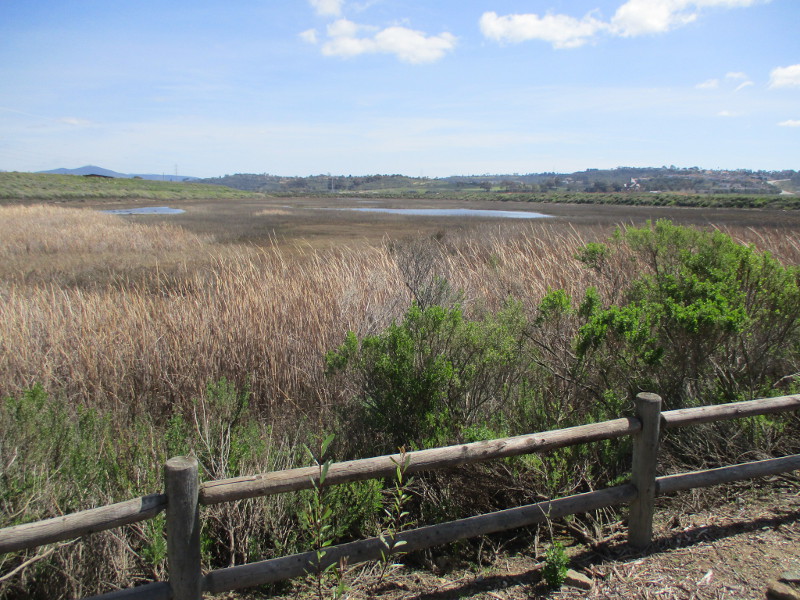
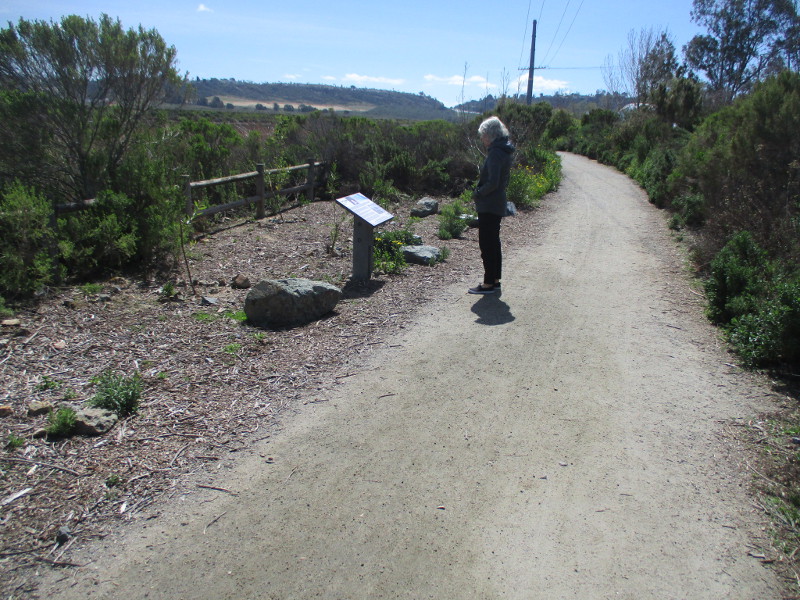
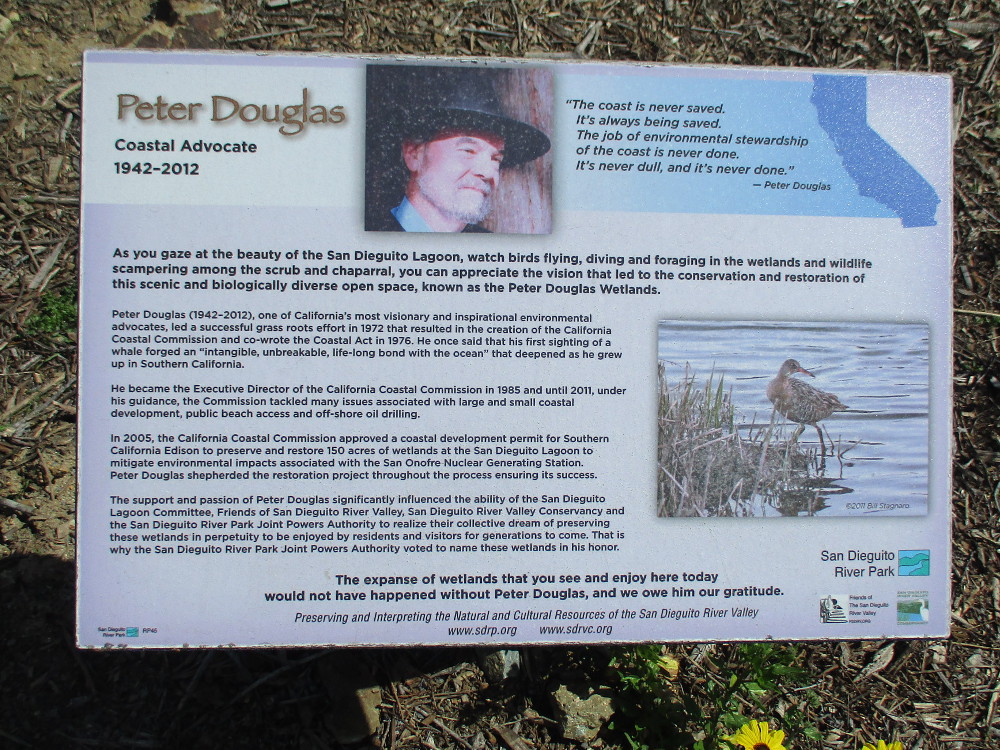
As I walked along the Coast to Crest Trail a couple days ago, a bit south of the San Andres Drive trailhead, I came upon a sign that pays tribute to Peter Douglas. He was an important coastal advocate who worked to protect the nearby San Dieguito Lagoon.
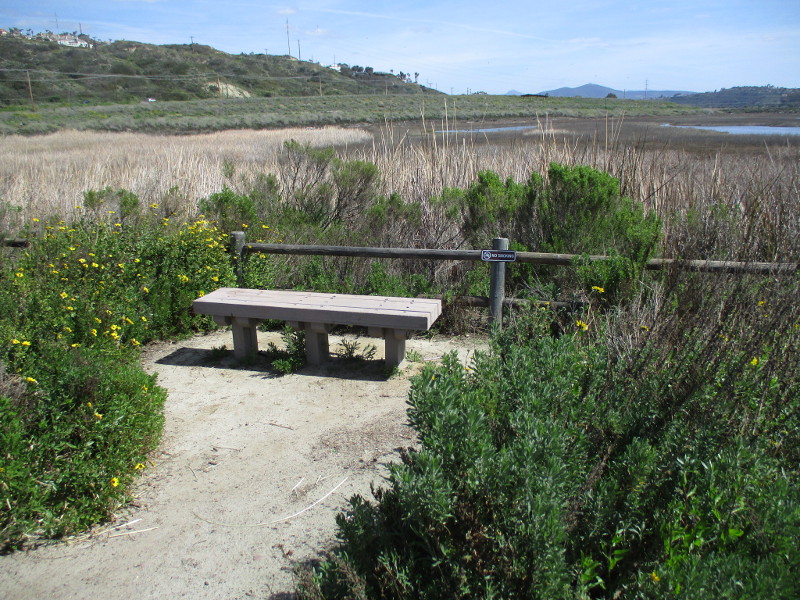
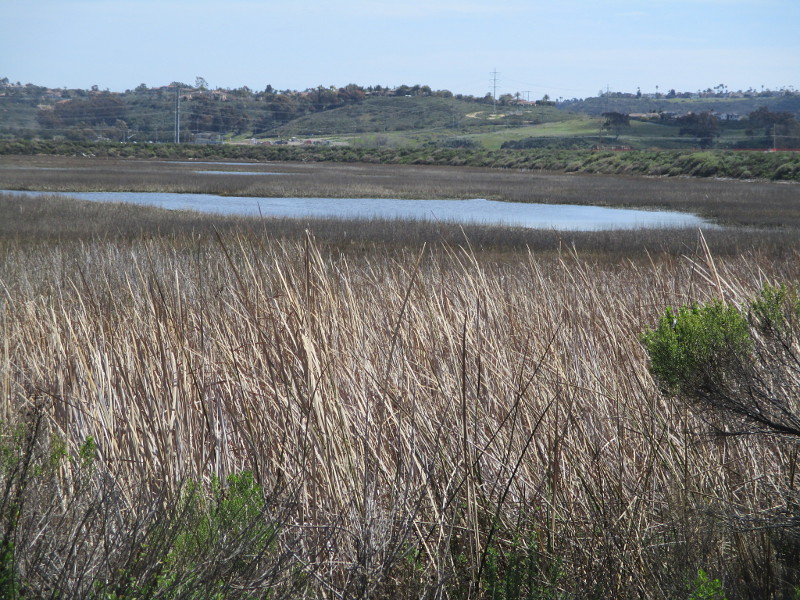
I learned that I was walking beside the Peter Douglas Wetlands.
As you gaze at the beauty of the San Dieguito Lagoon, watch birds flying, diving and foraging in the wetlands and wildlife scampering among the scrub and chaparral, you can appreciate the vision that led to the conservation and restoration of this scenic and biologically diverse open space, known as the Peter Douglas Wetlands.
Peter Douglas (1942-2012), one of California’s most visionary and inspirational environmental advocates, led a successful grass roots effort in 1972 that resulted in the creation of the California Coastal Commission…
The support and passion of Peter Douglas significantly influenced the ability…to realize (a) collective dream of preserving these wetlands in perpetuity…
…
Thanks for visiting Cool San Diego Sights!
I post new blogs pretty often. If you like discovering new things, bookmark coolsandiegosights.com and swing on by occasionally!
I live in downtown San Diego and love to walk around with my camera! You can follow Cool San Diego Sights via Facebook or Twitter!
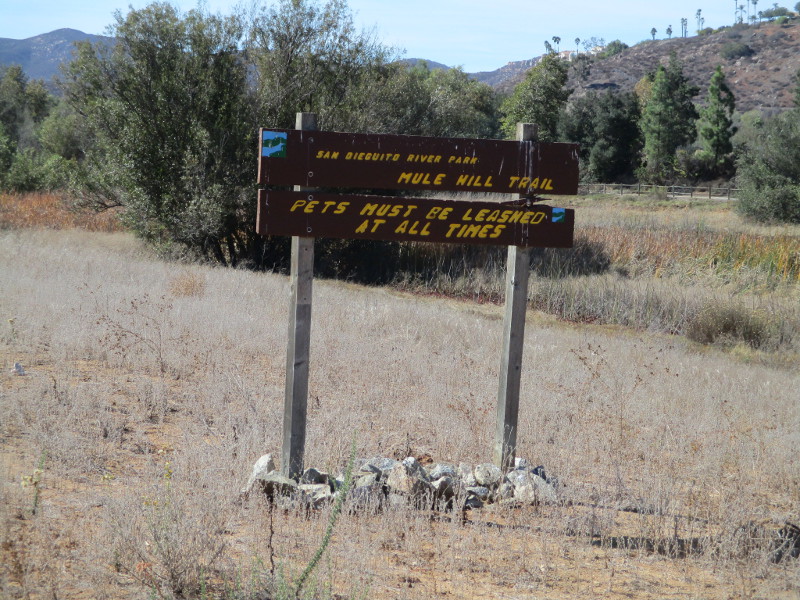
Walk down Mule Hill Trail at the south end of Escondido and you’ll find yourself stepping into history.
A while back I blogged about the forgotten town of Bernardo. A hundred years ago it was located in farmland near this trail, prior to the creation of Lake Hodges.
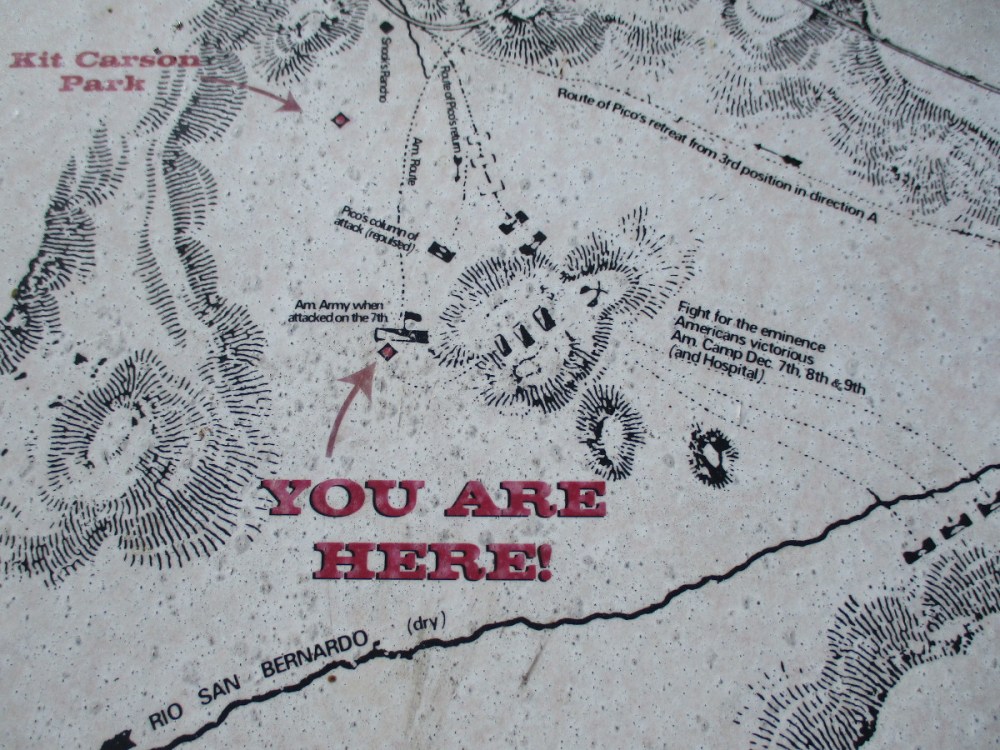
Down this same trail information signs mark the location of Mule Hill, where a skirmish took place during the Mexican-American War.
Seeking shelter among rocky outcroppings, General Kearny established a defensive position against pursuing Californios, as his U.S. Dragoons retreated toward San Diego after the Battle of San Pasqual.
The precise location of this skirmish was in debate for many years. Here are some interestingarticles.
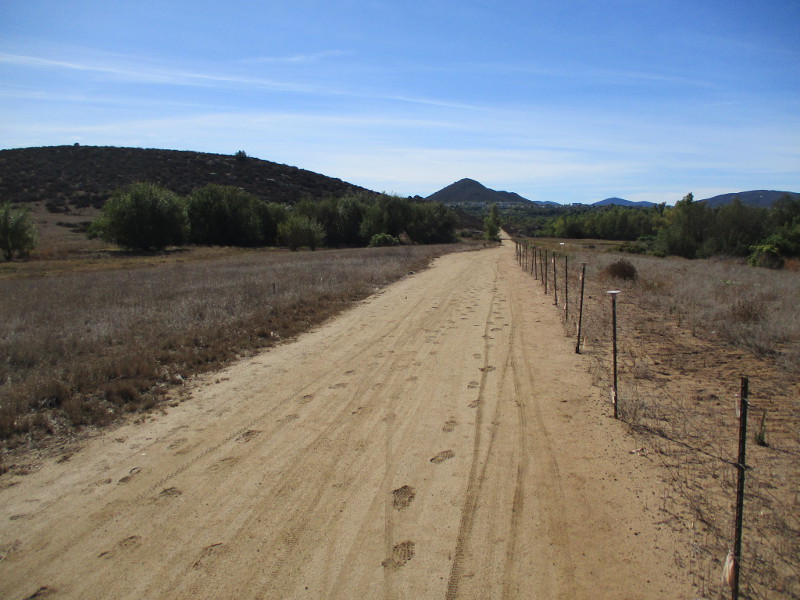
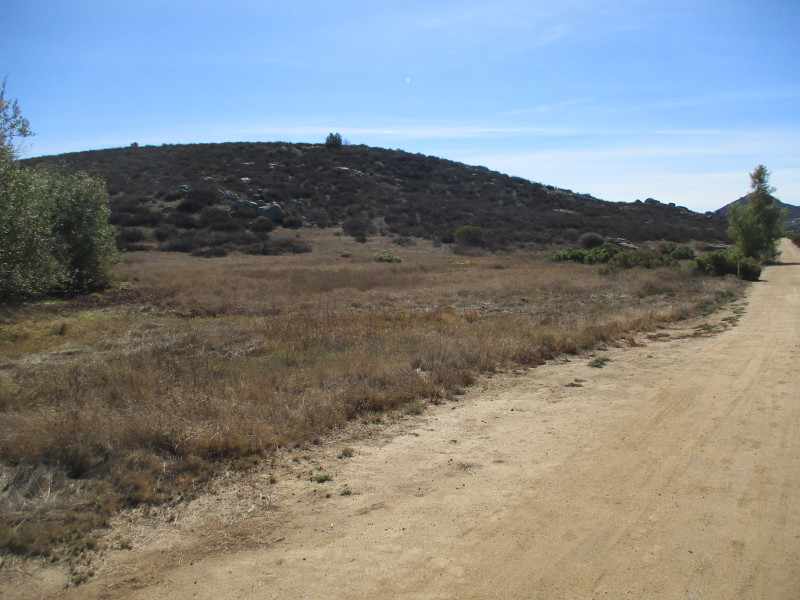
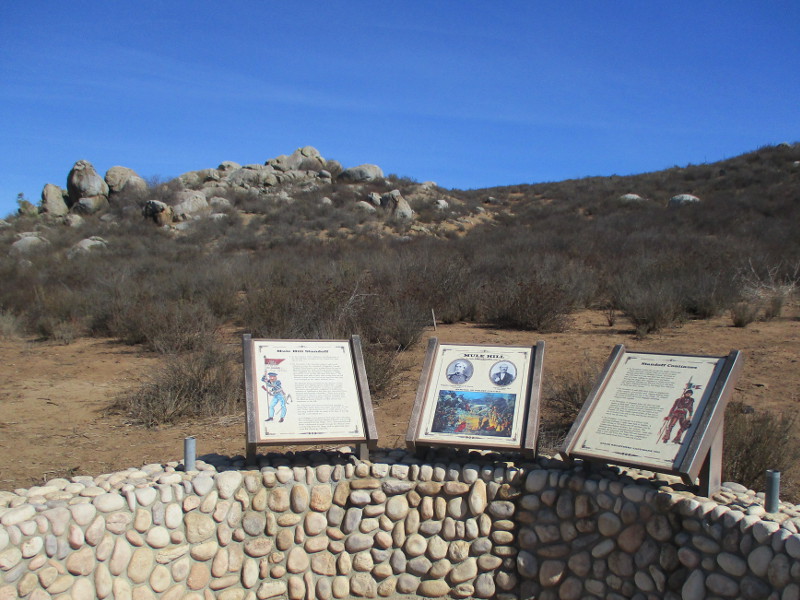
Today, after a short, easy walk south down Mule Hill Trail, you’ll see the outcroppings rising above several signs. You can find the wide dirt trail just east of Interstate 15, off Bear Valley Parkway, before Beethoven Drive.
Beginning south down Mule Hill Trail, part of the San Dieguito River Park.
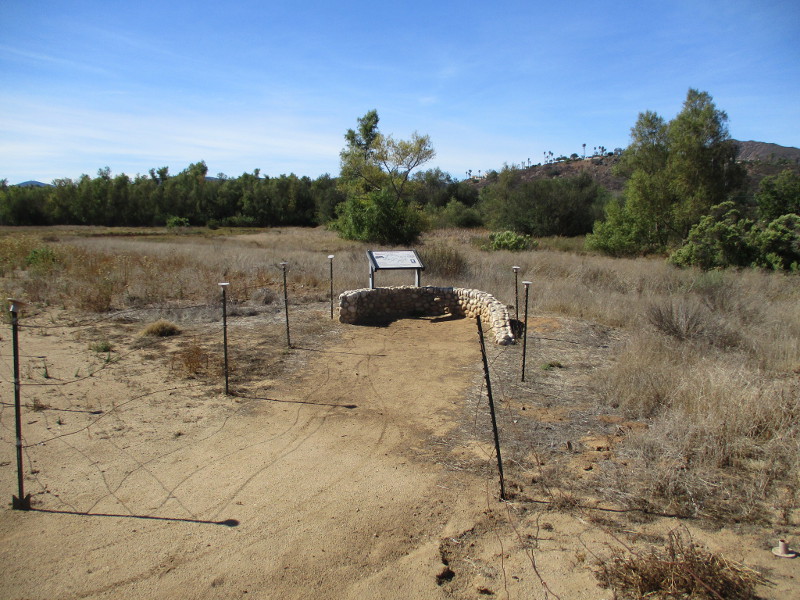
Off to the right near river trees, a solitary sign beckons.
Start of the Engagement, December 7, 1846
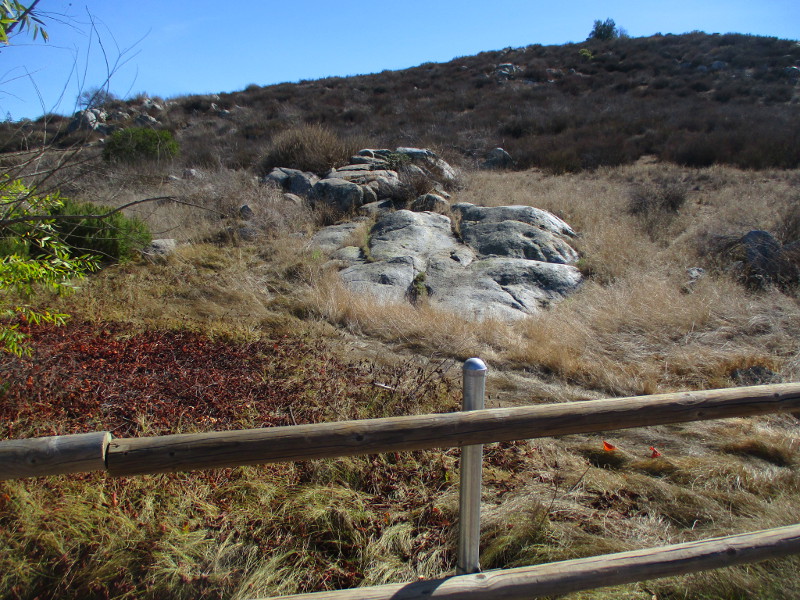
“Late in the evening, when we had arrived within about four hundred yards of the water where we intended to camp, they charged us, coming on in two bodies and compelling us to retreat to a pile of rocks about two hundred yards away on our left . . . ” source–Kit Carson’s Autobiography
Continuing our walk south. Jumbled boulders can be seen on the hill to our left.
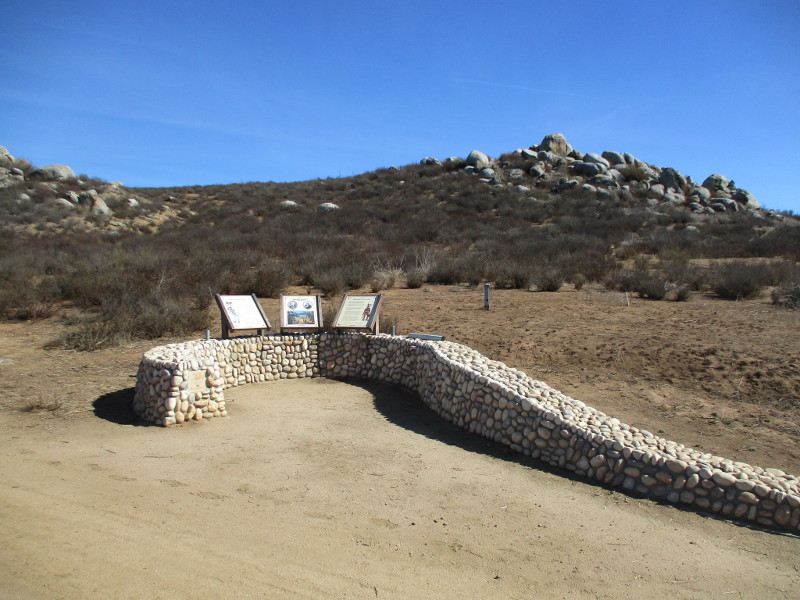
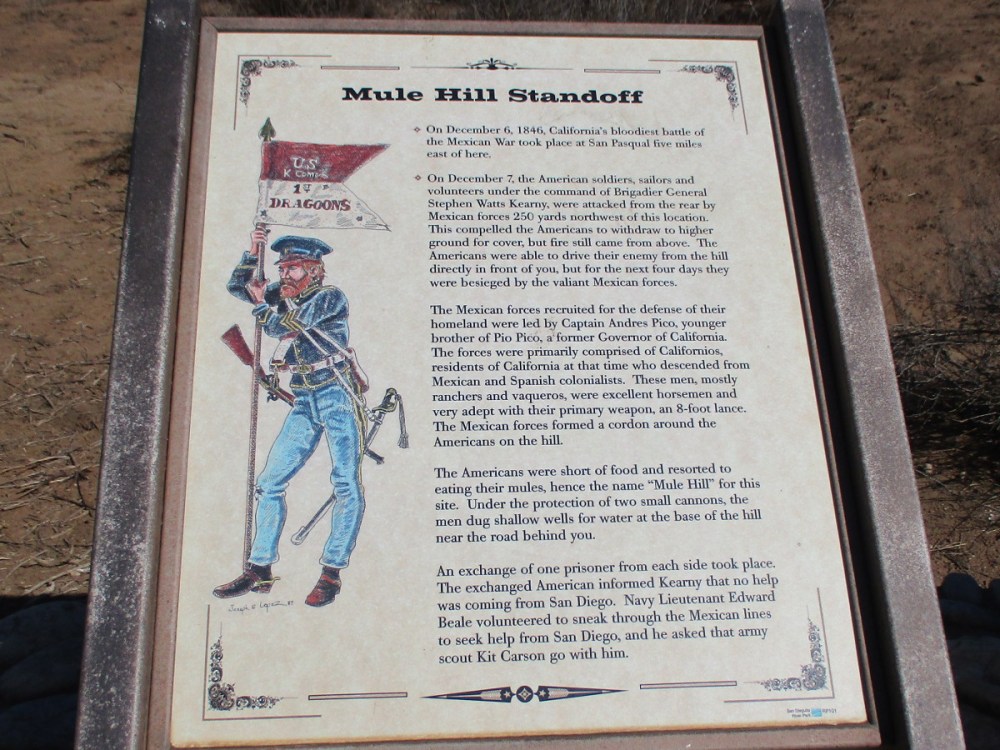
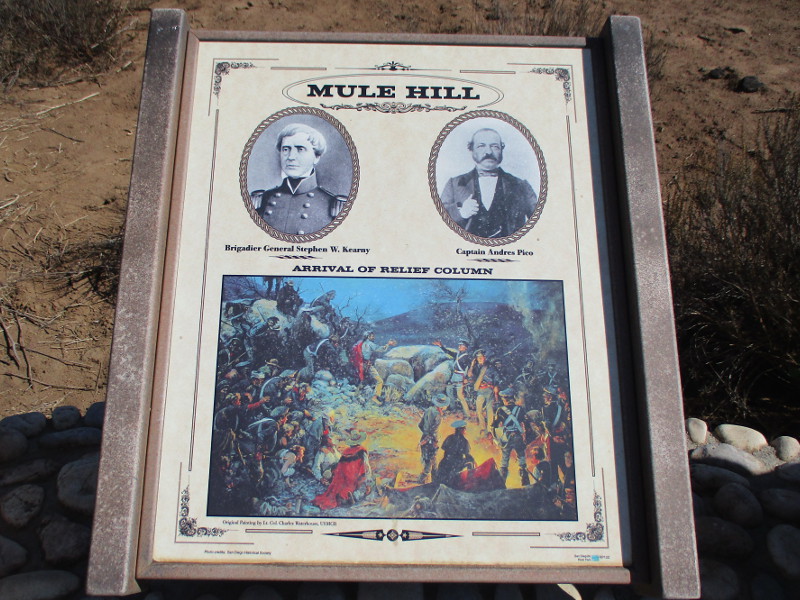
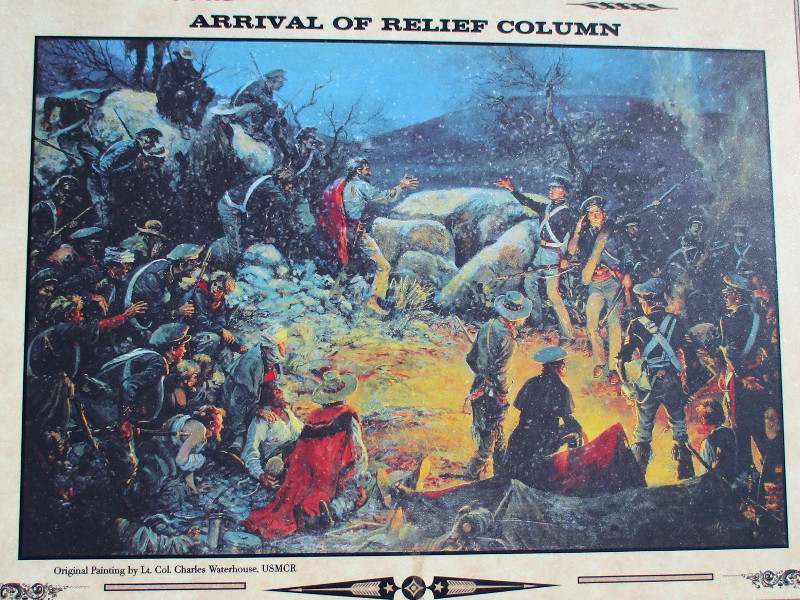
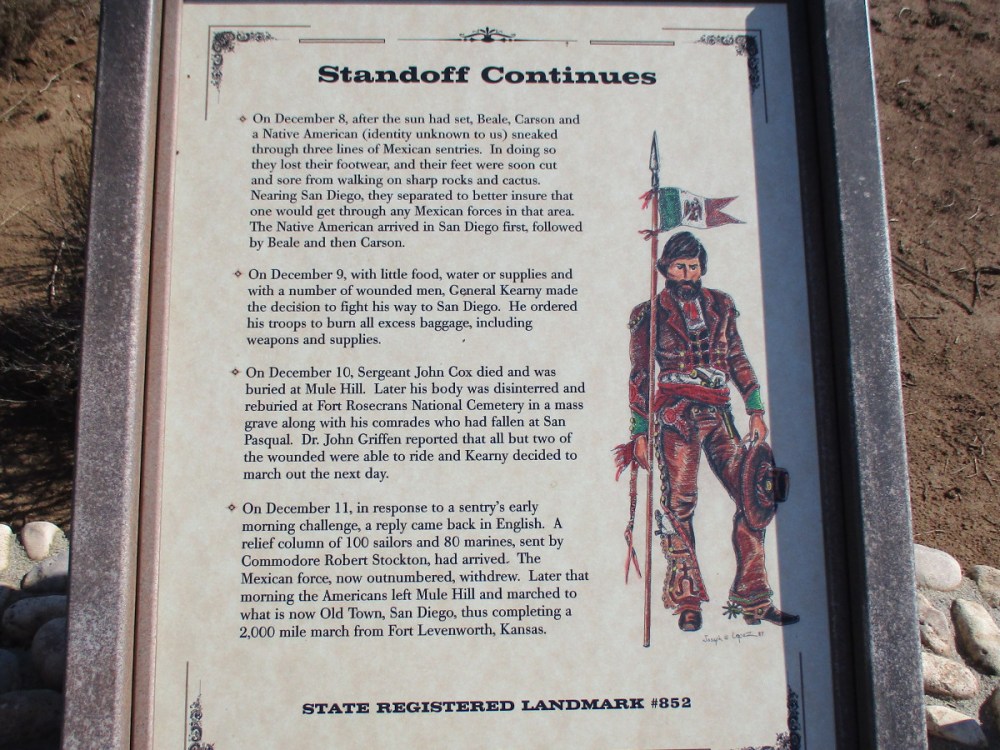
We’ve arrived at three signs near a pair of rock outcroppings that figure in the early history of San Diego. The signs explain what happened here at Mule Hill.
Mule Hill Standoff
On December 7, the American soldiers, sailors and volunteers under command of Brigadier General Stephen Watts Kearny, were attacked from the rear by Mexican forces 250 yards northwest of this location…
The Mexican forces recruited for the defense of their homeland were led by Captain Andres Pico . . . The forces were primarily comprised of Californios, residents of California at that time who descended from Mexican and Spanish colonialists…
The Americans were short of food and resorted to eating their mules, hence the name “Mule Hill” for this site…
…Navy Lieutenant Edward Beale volunteered to sneak through the Mexican lines to seek help from San Diego, and he asked that army scout Kit Carson go with him.
Standoff Continues
On December 8, after the sun had set, Beale, Carson and a Native American (identity unknown to us) sneaked through three lines of Mexican sentries…Nearing San Diego, they separated…The Native American arrived in San Diego first…
On December 9, with little food, water or supplies and a number of wounded men, General Kearny made the decision to fight his way to San Diego…
On December 10, Sergeant John Cox died and was buried at Mule Hill…
On December 11… A relief column of 100 sailors and 80 marines, sent by Commodore Robert Stockton, had arrived. The Mexican force, now outnumbered, withdrew. Later that morning the Americans left Mule Hill and marched to what is now Old Town, San Diego, thus completing a 2,000 mile march from Fort Leavenworth, Kansas.
…
Thanks for visiting Cool San Diego Sights!
I post new blogs pretty often. If you like discovering new things, bookmark coolsandiegosights.com and swing on by occasionally!
I live in downtown San Diego and love to walk around with my camera! You can follow Cool San Diego Sights via Facebook or Twitter!









 Cool San Diego Sights!