Arthur Putnam’s sculpture The Padre on Presidio Hill.
If one considers San Diego’s founding to have occurred in 1769, the year both Mission San Diego de Alcalá and the El Presidio Reál de San Diego were established on Presidio Hill, then 2019 will be our city’s 250th Anniversary!
That’s no small thing! One would suppose that huge celebrations are being planned!
Well, when I perform an internet search, I can find no plans for celebrations mentioned, apart from Mission Basilica San Diego de Alcalá’s announced church events, and a Founders’ Day Festival in Old Town.
It’s hard to believe, but I find almost no discussion of the city’s upcoming 250 year anniversary.
Unfortunately, as many of you might remember, the occasion of Balboa Park’s Centennial in 2015 was not celebrated with the fanfare that would have been appropriate.
I do hope that behind the scenes serious plans are being made for the appropriate celebration of San Diego’s 250th birthday! Or that plans will be made!
Just a thought from a silly blogger who loves San Diego!
UPDATE!
The City of San Diego has placed a huge 250th Anniversary banner on a sail of Star of India. You can see photos here!
UPDATE!
The City of San Diego has created a website dedicated to its 250th Anniversary. It lists several events that commemorate this special year. Visit the website here!
UPDATE!
In May, 2019, I noticed San Diego 250 banners have appeared along streets all over downtown!
UPDATE!
On July 1, 2019, a gigantic 250th anniversary banner appeared on the County Administration Building.
It celebrates the fact that San Diego was California’s first port and first city! I posted several photos of the banner here!
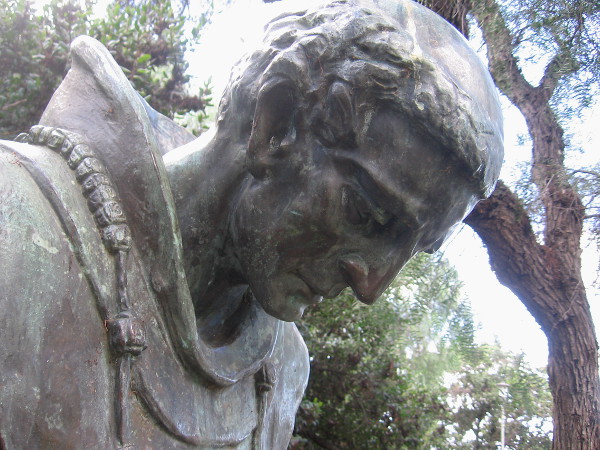
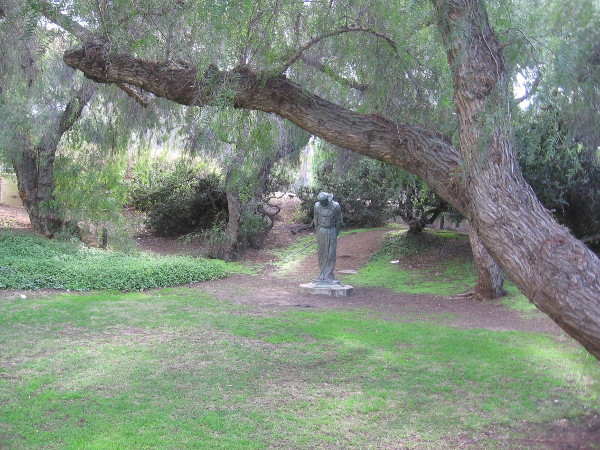
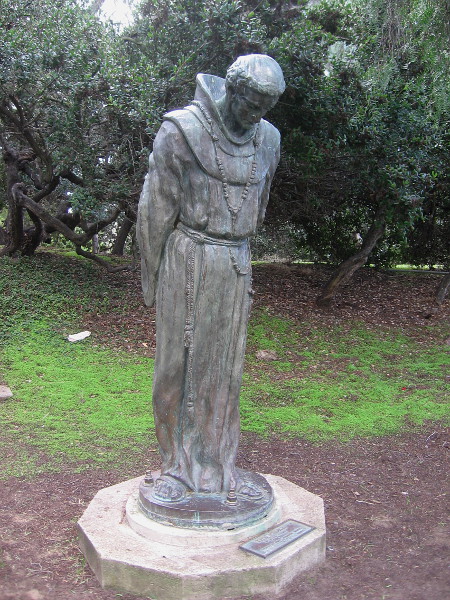
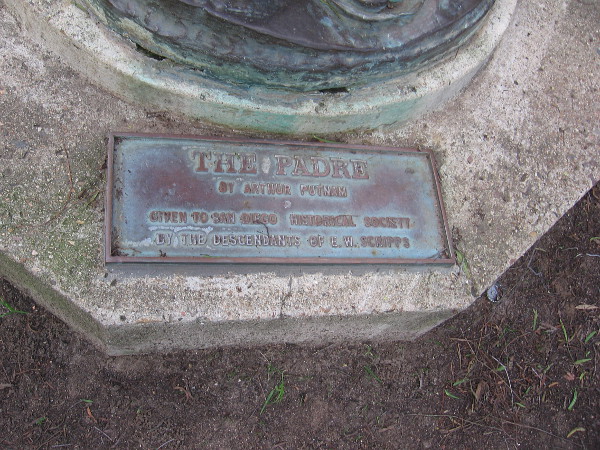
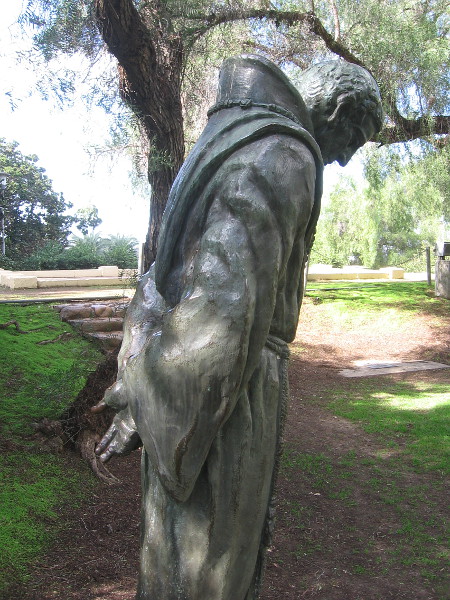
The Padre, by Arthur Putnam, 1908. The public artwork stands on a patch of grass among trees on Presidio Hill.
Walk up to the top of Presidio Park from Old Town and you’ll discover a variety of fascinating, historical sights. Possibly the most amazing, apart from the impressive Serra Museum building, are two extraordinary bronze sculptures, The Indian and The Padre, by renowned sculptor Arthur Putnam.
The Padre was cast in 1908. The figure of a Spanish friar stands in a small, quiet space among trees, not far from the spot where Junípero Serra founded Mission San Diego de Alcalá in 1769, which began as a temporary church at the Spanish presidio. Five years later the mission would be moved a few miles east up the San Diego River to its present location.
Here are photos of The Padre which show the sculpture’s quiet beauty.
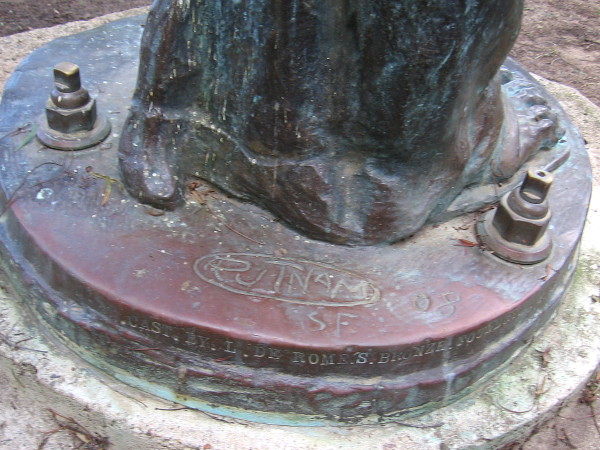
The Padre stands alone in a green, gentle place.A Spanish friar seems to walk out of San Diego’s very early history.The Padre by Arthur Putnam. Given to San Diego Historical Society by the descendants of E.W. Scripps.Markings at the sculpture’s base indicated it was cast by Louis de Rome’s bronze foundry in San Francisco, the city where Arthur Putnam lived for many years.A quiet bronze statue among trees near San Diego’s now ruined and vanished Presidio.A spider’s web and small fallen leaves above folded hands.The Padre seems to be lost in prayer or silent contemplation.Close photo of bowed head of The Padre on Presidio Hill.
…
I live in downtown San Diego and love to walk around with my camera! You can follow Cool San Diego Sights via Facebook or Twitter!
You can easily explore Cool San Diego Sights by using the search box on my blog’s sidebar. Or click a tag! There are thousands upon thousands of photos for you to enjoy!
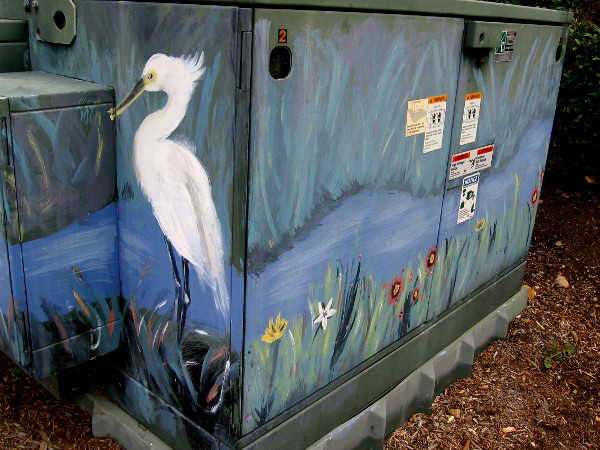
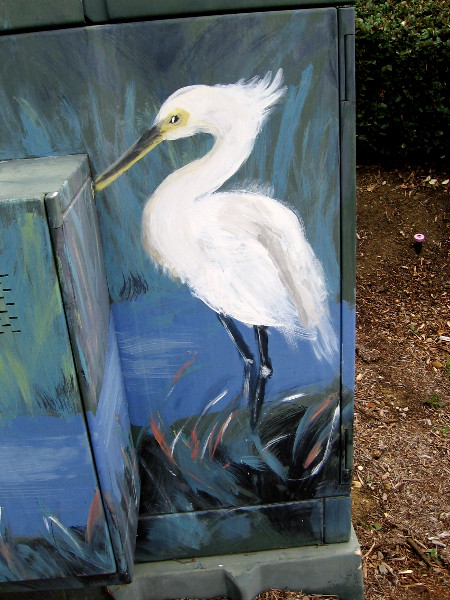
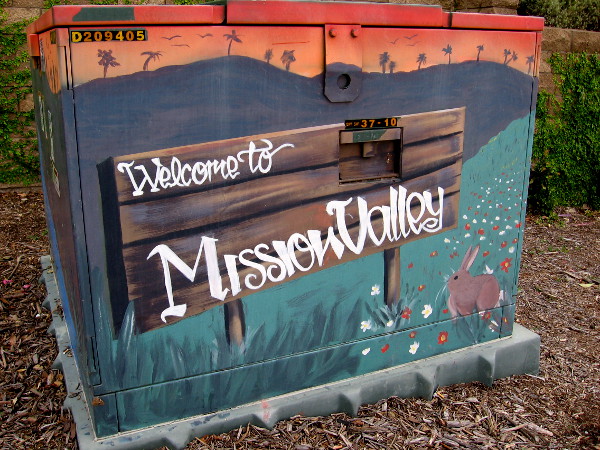
Street art on Mission Center Road north of Friars Road depicts wildlife along the nearby San Diego River.
Several electrical boxes on Mission Center Road just north of Friars Road have been painted with fun street art. This morning I took a small detour while walking to work to snap a few photos.
A snowy egret beautifully painted on a Mission Valley transformer.A mallard and three ducklings in some grass near the San Diego River.A funny sketch on an electrical box. A gull is carrying away a bag of chips!Welcome to Mission Valley. A rabbit greets drivers heading along Mission Center Road.This historic old building is located a few miles to the east. Mission Basilica San Diego de Alcala, founded in 1769, first Spanish mission in Alta California.
…
I live in downtown San Diego and love to walk around with my camera! You can follow Cool San Diego Sights via Facebook or Twitter!
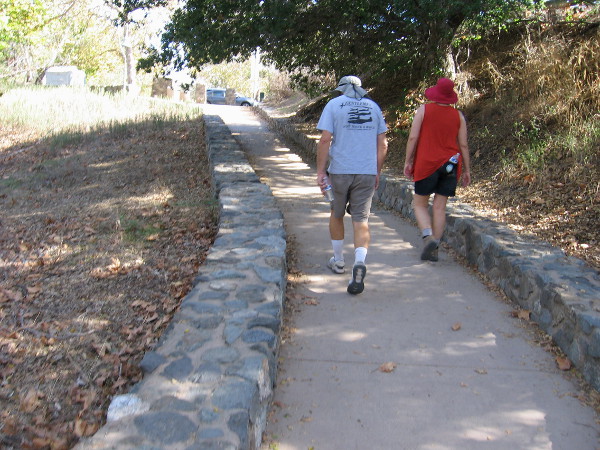
Hikers head from the Kumeyaay Campground at Mission Trails Regional Park toward a shady nature trail that runs beside Kumeyaay Lake.
I enjoyed an amazing walk last weekend at Mission Trails Regional Park. The guided hike met under the flagpoles of the Kumeyaay Campground, and started down a pleasant nature trail at nearby Kumeyaay Lake. The hike then proceeded at a leisurely, easy pace along several trails by the San Diego River, ending up at the Old Mission Dam.
Every month, anyone can go on a variety of free interpretative nature walks at Mission Trails Regional Park. The walks are led by experienced trail guides, who point out the native flora and fauna, and relate the fascinating history of this mountainous wilderness in the city. To learn more check out the park’s website.
Please enjoy my photos and read the descriptive captions to join me on a virtual hike. Not only will you experience natural beauty, but you’ll learn a bit about early San Diego history!
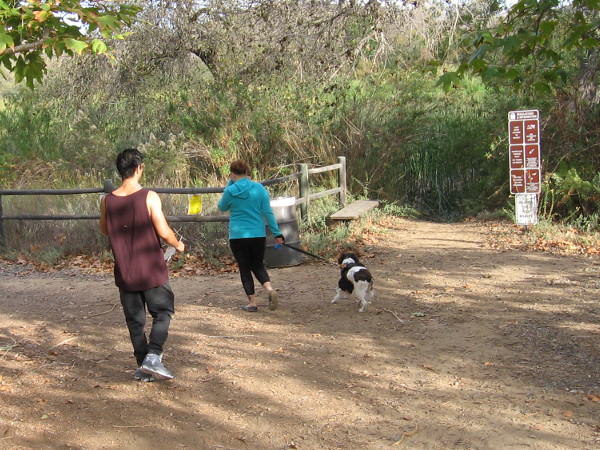
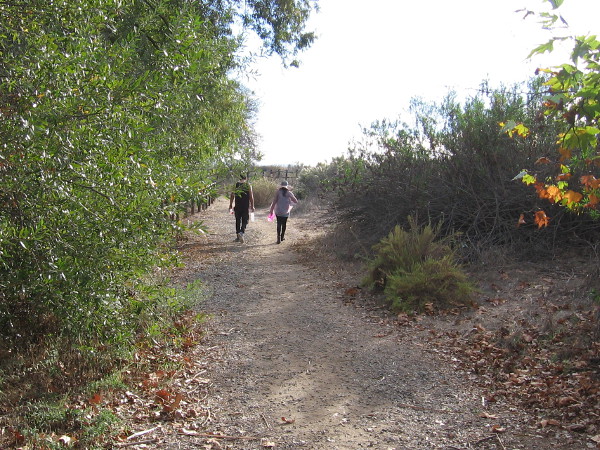
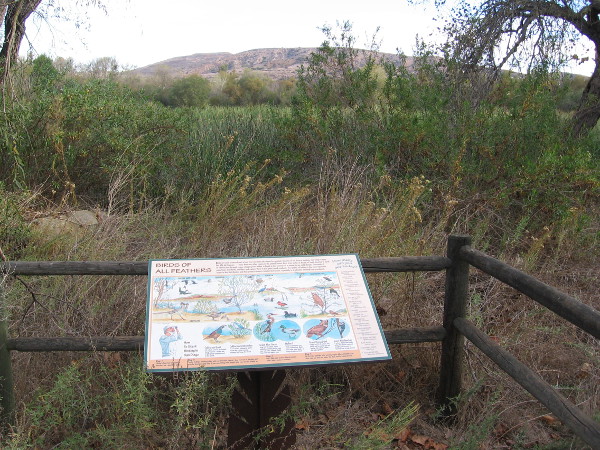
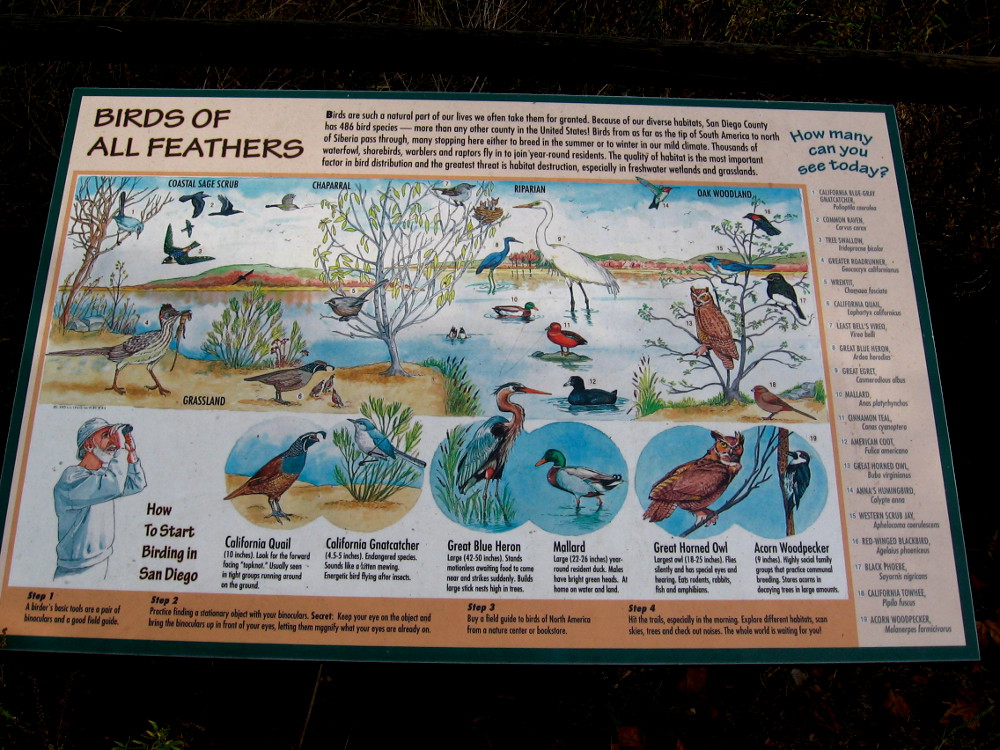
A couple walks slowly along the Kumeyaay Nature Trail, enjoying a beautiful November day.Signs along the nature trail include descriptions of wildlife that can be found around Kumeyaay Lake (once called Hollins Lake). Open water can be glimpsed beyond cattails.At Mission Trails Regional Park, birds of all feathers include quail, gnatcatchers, herons, egrets, ducks, woodpeckers, scrub jays, owls, and the endangered least Bell’s vireo!
The sign includes the following: “Because of our diverse habitats, San Diego County has 486 bird species–more than any other county in the United States! Birds from as far as the tip of South America to north of Siberia pass through, many stopping here either to breed in the summer or to winter in our mild climate.”
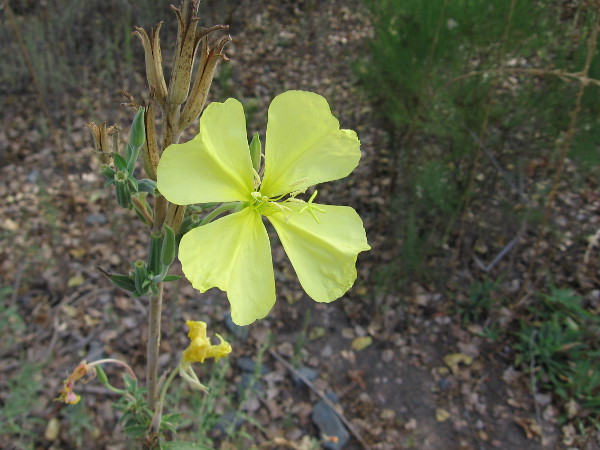
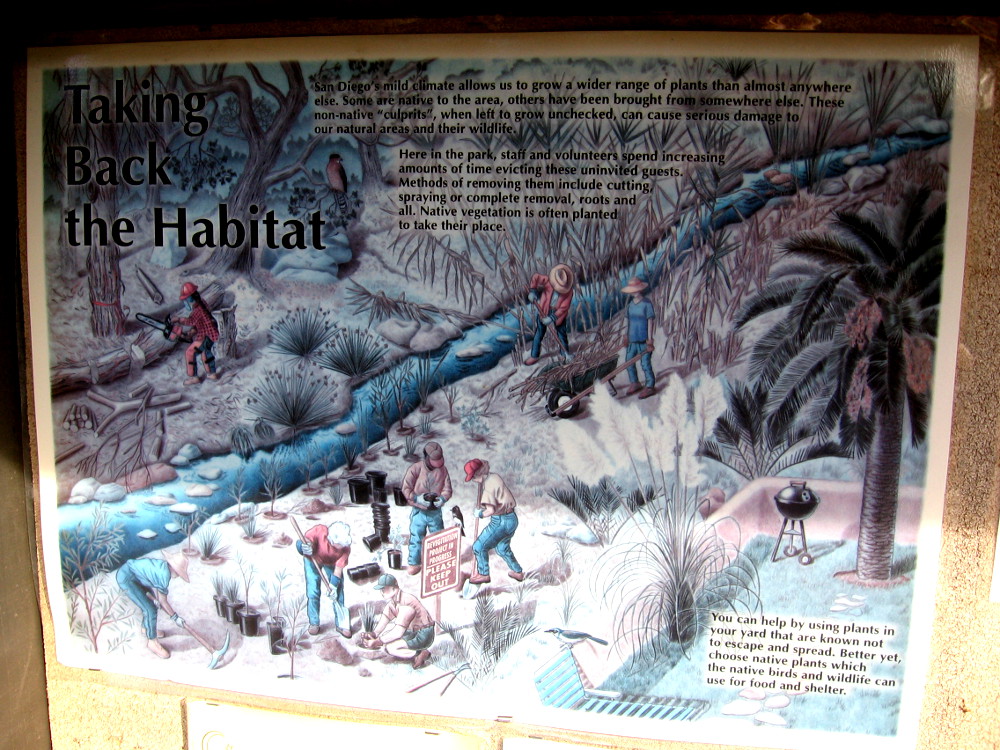
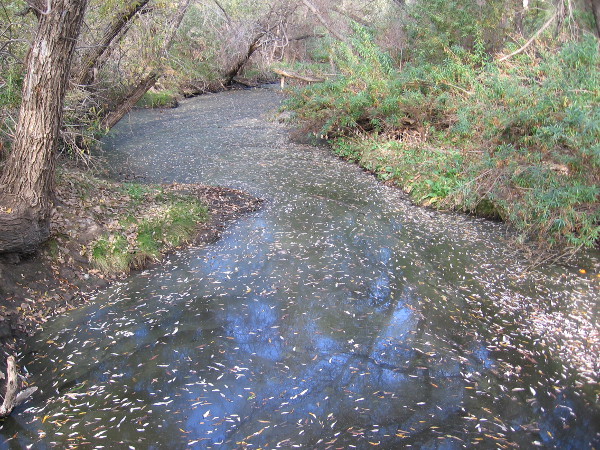
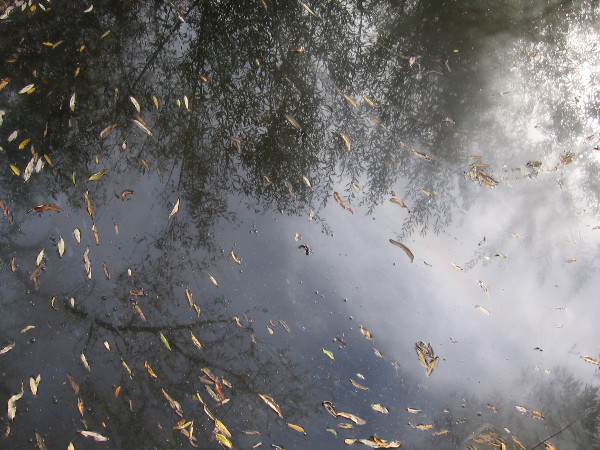
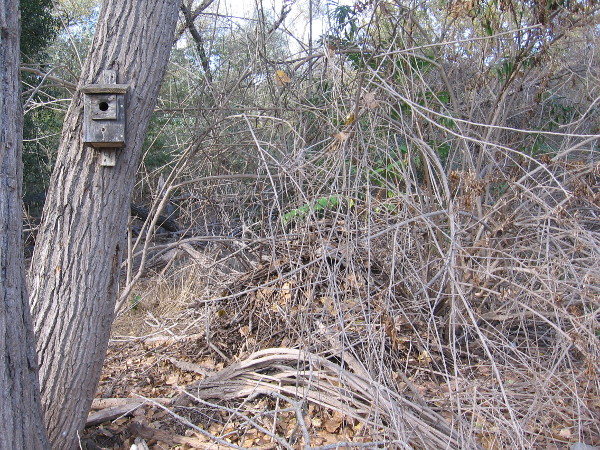
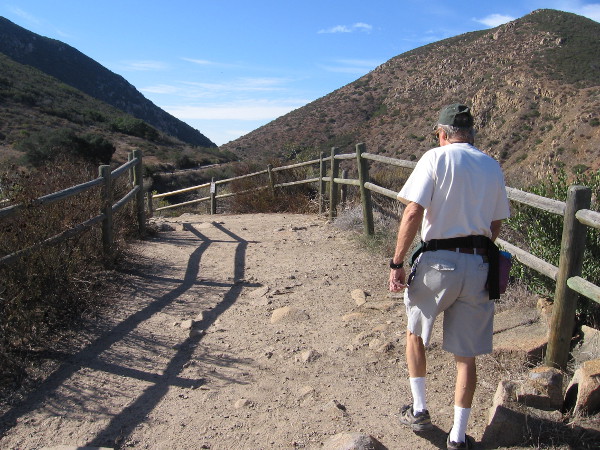
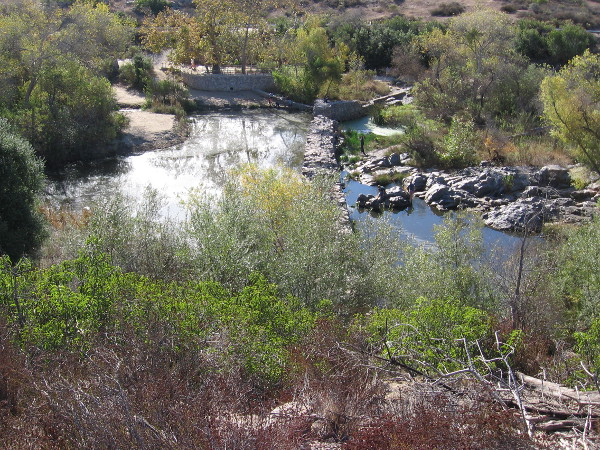
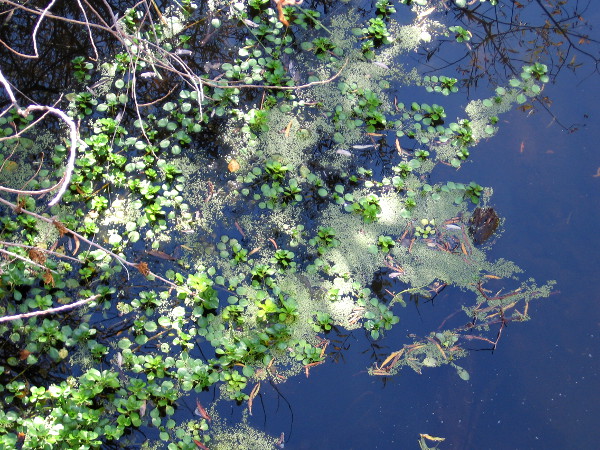
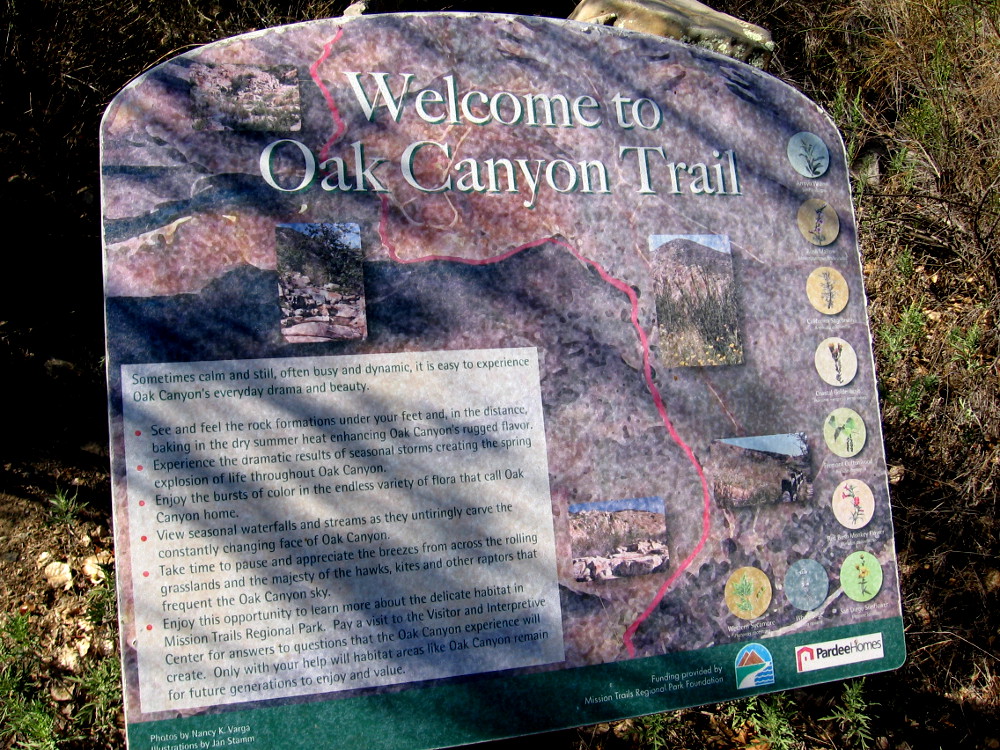
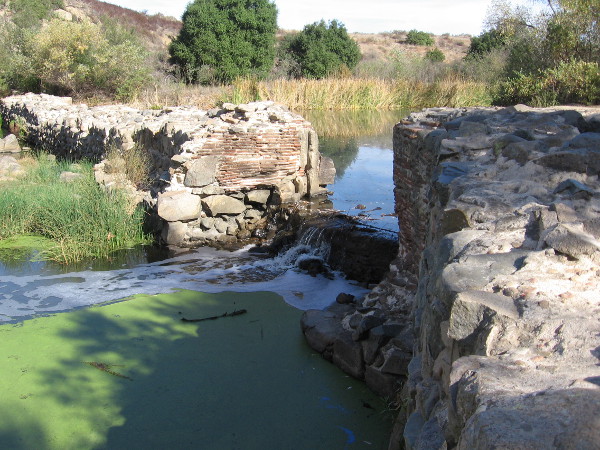
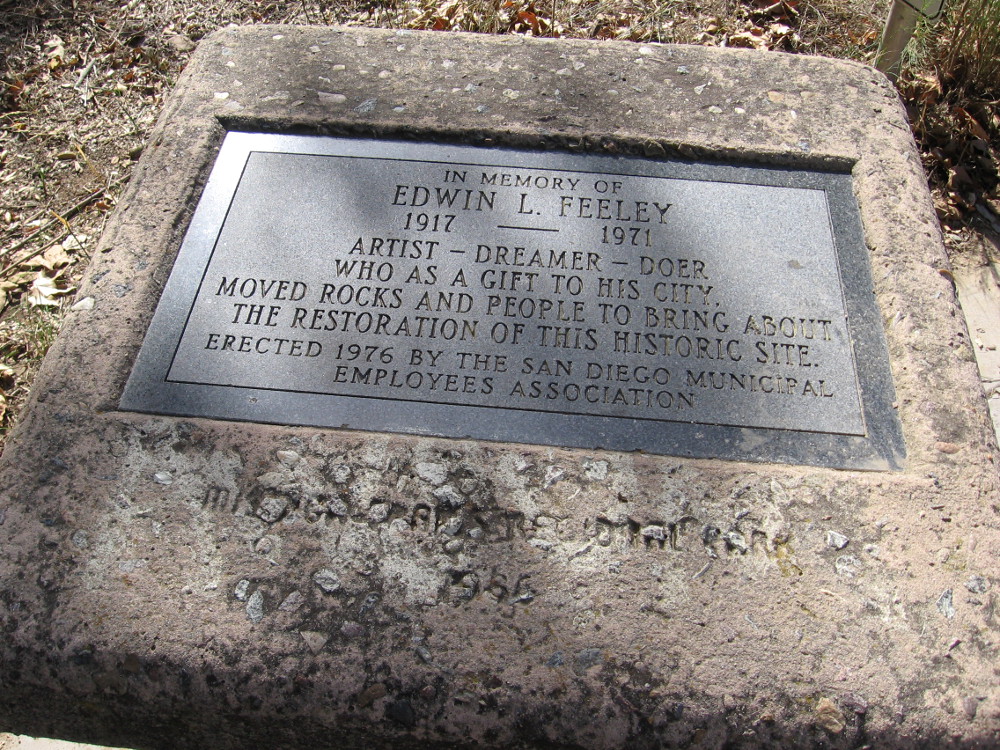
Photo of the San Diego River emerging from Kumeyaay Lake. This is near an outdoor amphitheater and fire pit. The park is a perfect place to learn about nature from rangers, and for stargazing at night!An Autumn wildflower at Mission Trails Regional Park.We head from the lake back toward the campground. Our pleasant hike has just begun.Non-native plants can cause serious damage to natural areas and wildlife. Park staff and volunteers work to protect the natural ecosystems.Hiking down the Grasslands Crossing Trail, my guide and I pass over the San Diego River. It has been a typically dry summer, and the pooled water here is still.Leaves and reflections of trees in the quiet water.We spied a wood rat’s nest of twigs and branches near the hiking trail. I learned these nests contain several rooms with different functions, not unlike a human home.Larry the trail guide showed me a photo of a wood rat.Now we are heading along the easy Grasslands Loop Trail, following the north bank of the San Diego River. Riparian trees such as willows, sycamores and cottonwoods thrive along the river.Mountain bikers enjoy a warm, sunny morning at Mission Trails Regional Park.Approaching an overlook of the Old Mission Dam.Photo of the Old Mission Dam from the north. The dam was built around 1813 and powered a water wheel that drove a grist mill. A tiled flume brought water to Mission San Diego de Alcala, about five miles away.Families play on the rocks near the Old Mission Dam at Mission Trails Regional Park.Lush trees along the San Diego River. Autumn leaves have yellowed a bit.We have descended onto Oak Canyon Trail, and are working our way down to the river and the historic dam.Standing on the north end of the Old Mission Dam. Materials used in constructing the dam include abundant volcanic rock found in this area.A slot in the dam wall where a water wheel was located. The river water, after driving the wheel, flowed along a tile-lined aqueduct south to the mission, where it was used to grow crops.Walking along the Oak Canyon Trail. Mission Trails Regional Park is like a small wilderness inside the city of San Diego. At 5,800 acres, it’s the largest city park in California.Riparian plants recover quickly after a fire because all are vigorous resprouters as long as they have a steady water supply.Granitic rocks seen along the trail.South Fortuna Mountain, elevation 1094 feet, rises to the south. Its sides are covered with native chaparral and sage scrub.Crossing the San Diego River via a steel footbridge.Looking down at the San Diego River. During rains, the river swells. The water runs down into Mission Valley and finally to the Pacific Ocean, sustaining an estuary near Mission Bay.Larry, my knowledgeable trail guide, informed me that the tiny green vegetation is duckweed, an aquatic plant that floats on the water’s surface.Sign at one end of the Oak Canyon Trail, near the Old Mission Dam.A cool 3-D model of the Old Mission Dam beside the trail. The dam was constructed from granite boulders and limestone mortar. At the gap there was a 12-foot wide floodgate.It’s possible to walk out onto the old dam, but one must be careful!A vertical groove in the dam wall shows where the floodgate used to exist. The dam was completed around 1813, and the long flume to Mission San Diego was completed several years later.Inscription in a boulder dated 1941, by the Daughters of the American Revolution. OLD MISSION DAM. Built 1813-1816. A part of the first permanent irrigation project by Padres and Indians in California.A plaque by the old dam. In memory of Edwin L. Feeley. 1917 – 1971. Artist – Dreamer – Doer who as a gift to his city, moved rocks and people to bring about the restoration of this historic site.Bright fluttering leaves of a river tree growing beside the Father Junipero Serra Trail, a road that leads past the Old Mission Dam.Walking to the parking lot by the Old Mission Dam, also called the Padre Dam.The site is a California historical landmark. A dam and flume system was finished between 1813 and 1816 by Indian laborers and Franciscan missionaries. It provided a reliable source of water for crops and livestock for Mission San Diego de Alcala. The system continued until 1831 when it fell into final disrepair.Beautiful hiking trails, and a fascinating look back at early San Diego and California history await at Mission Trails Regional Park.
…
I live in downtown San Diego and love to walk! You can follow Cool San Diego Sights via Facebook or Twitter!
You can easily explore Cool San Diego Sights by using the search box on my blog’s sidebar. Or click a tag! There are thousands upon thousands of fun photos for you to enjoy!
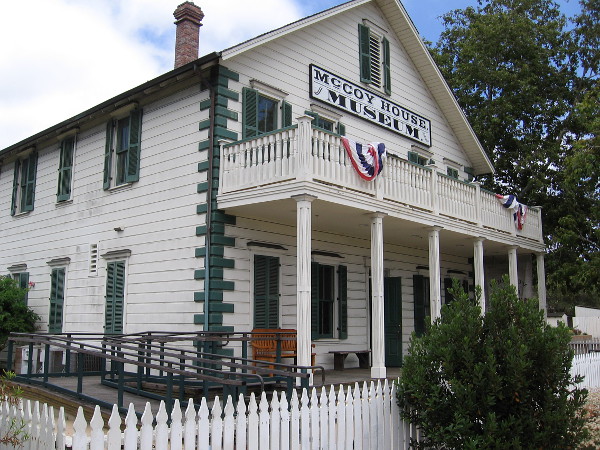
The McCoy House Museum, in Old Town San Diego State Historic Park, is a reconstruction of a home built in 1869 for Sheriff James McCoy.
While there are many small museums and historical attractions that visitors can enjoy in Old Town San Diego State Historic Park, the McCoy House Museum is the best place to see an extensive series of interpretive displays that describe the complete history of early San Diego.
The McCoy House, standing on the north end of Old Town, is a reconstruction of a home built in 1869 for Sheriff James McCoy and his family. James McCoy, who lived from 1821 to 1895, like many early San Diego residents was an ambitious man, working diverse jobs, filling many roles. At the age of 21 he sailed from Ireland to America seeking opportunity. He became a soldier, then a stagehand, then San Diego county assessor, then county sheriff in 1861. He acquired substantial real estate holdings and finally won election to the state senate in 1871.
The interpretive displays in the McCoy House Museum provide a good look back at San Diego’s formative years. They detail the life of the Native American Kumeyaay who’ve lived in the region for thousands of years, the first Spanish explorers, the establishment of the Spanish mission, the Mexican period and the subsequent American period.
If you’d like to read the displays, click my photographs to enlarge them.
This blog post covers the first floor of the museum. I’ll cover the second floor exhibits in a later post. After heading up some stairs, one can find information about the more prominent residents of Old Town, plus the town’s later history as it competed with New Town, which eventually rose to become downtown San Diego as we know it today.
Anyone who is a history buff must visit the McCoy House Museum. You’ll be transported back in time and see how life was exciting, difficult, and altogether different many, many years ago in San Diego.
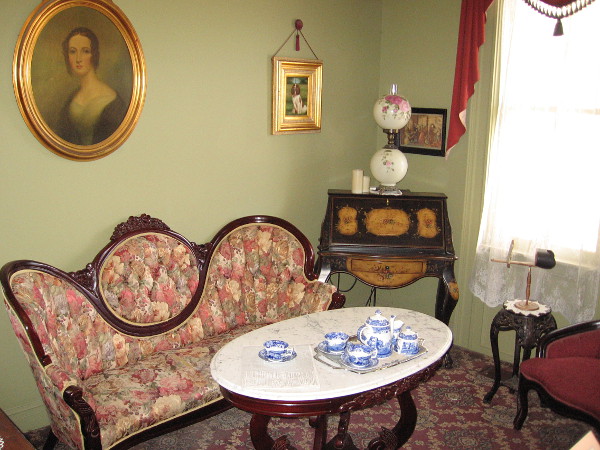
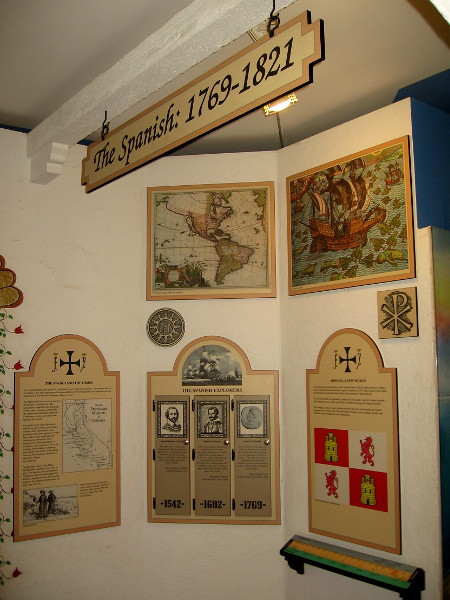
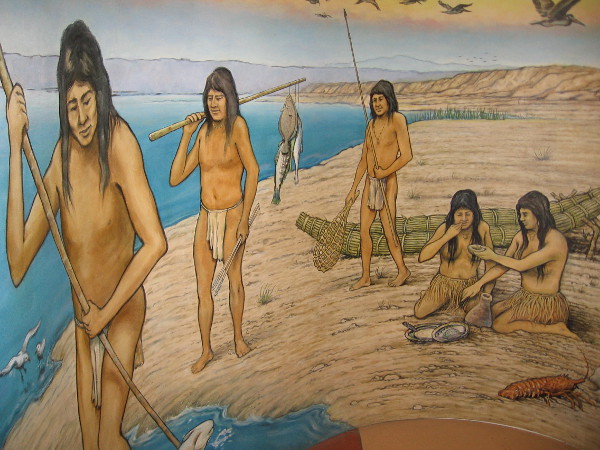
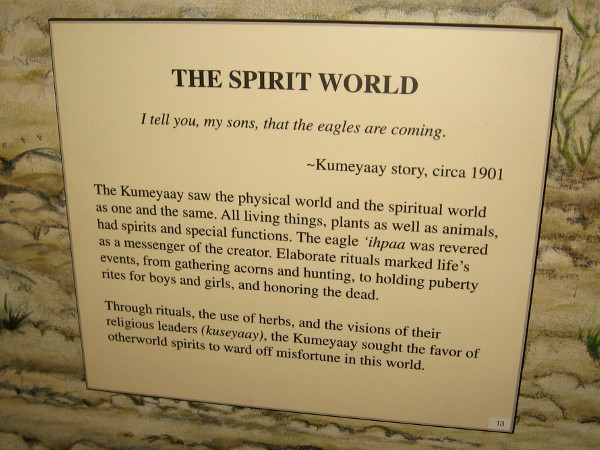
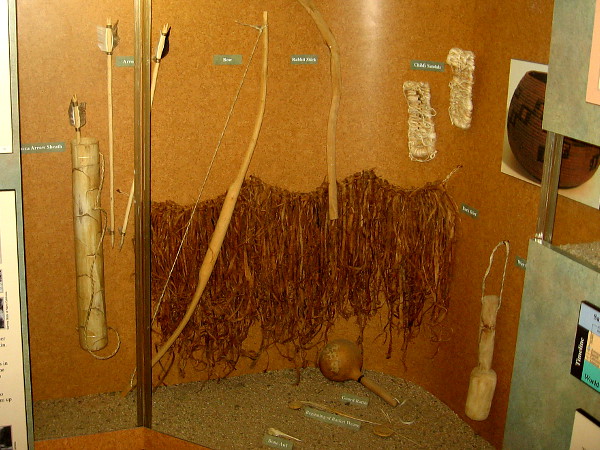
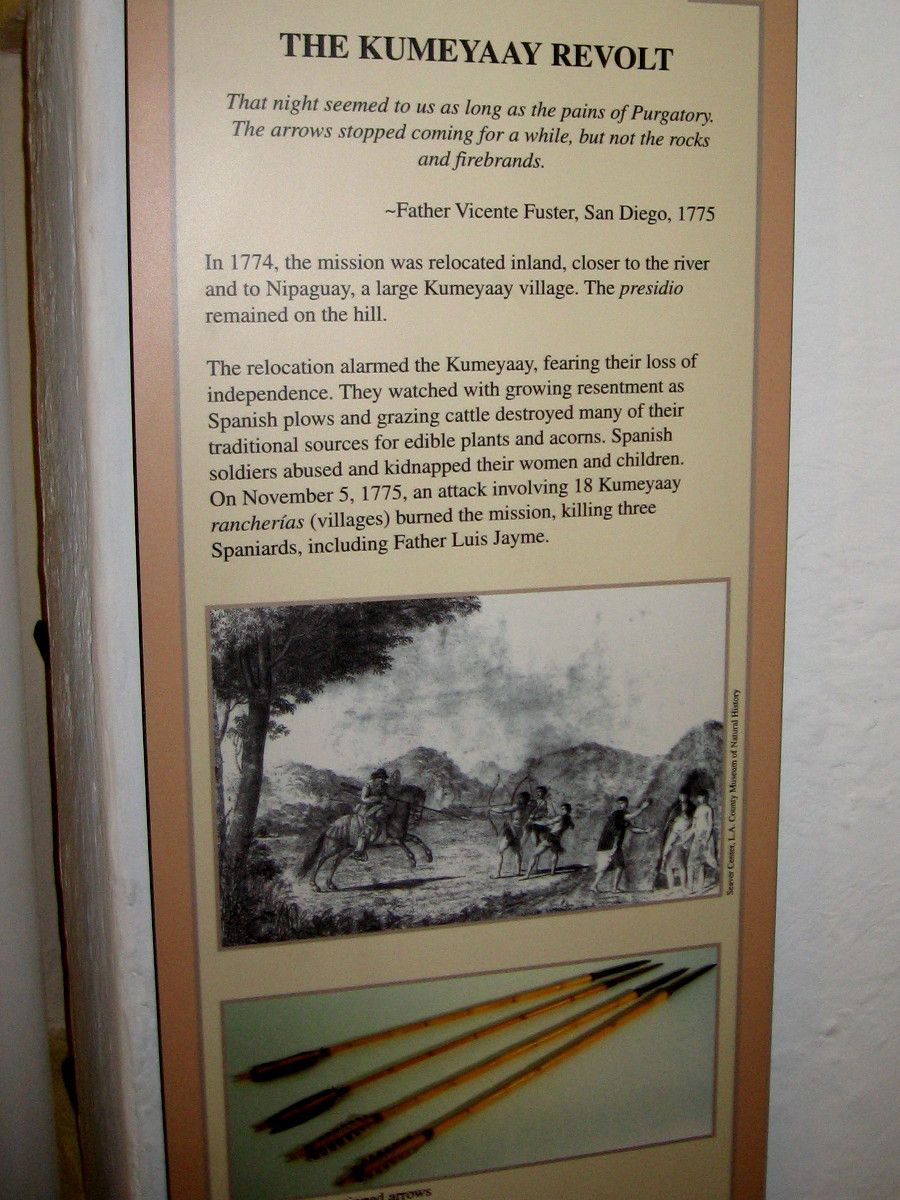
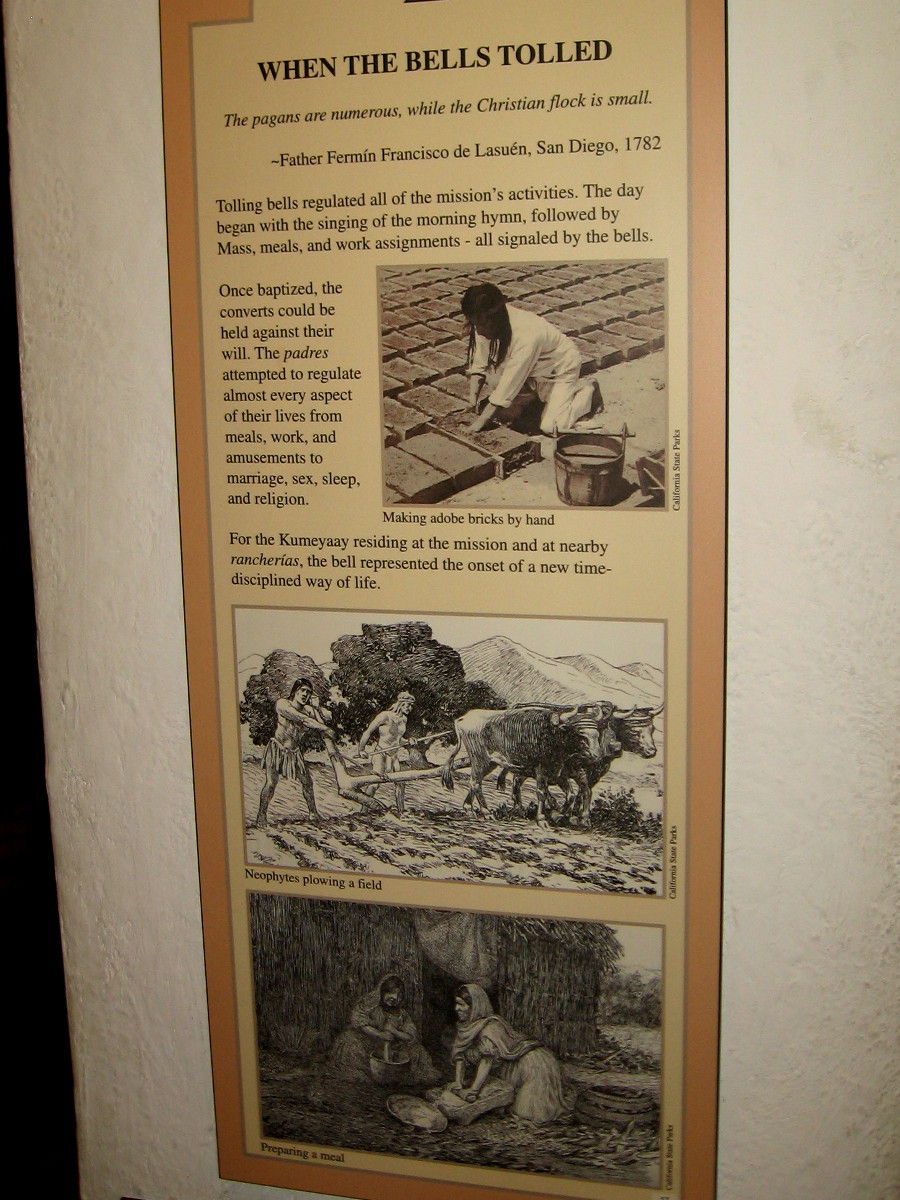
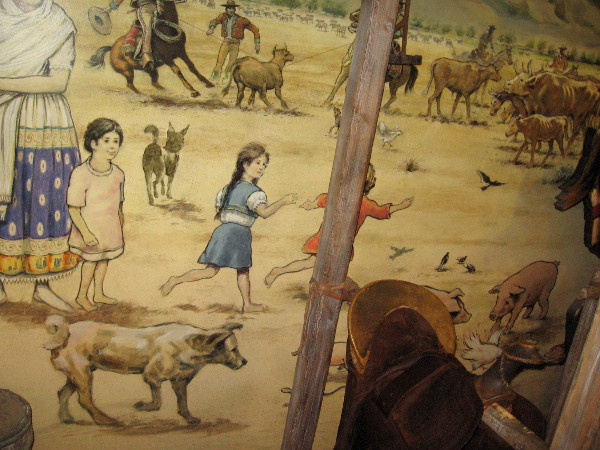
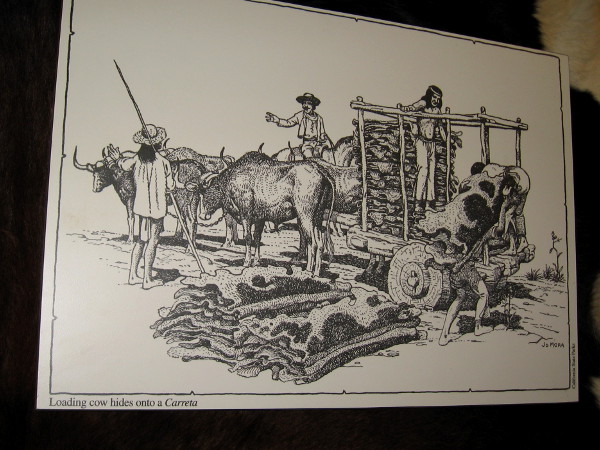
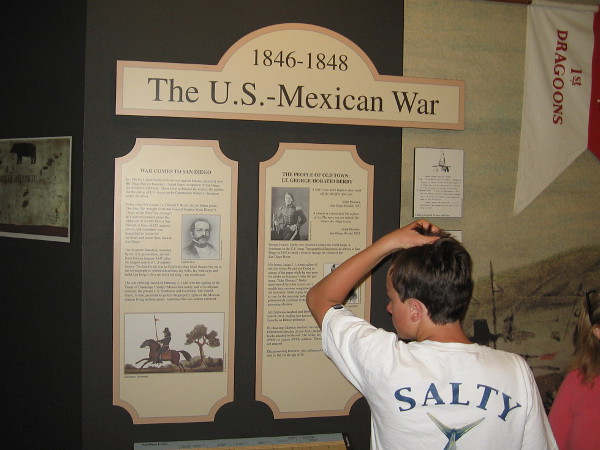
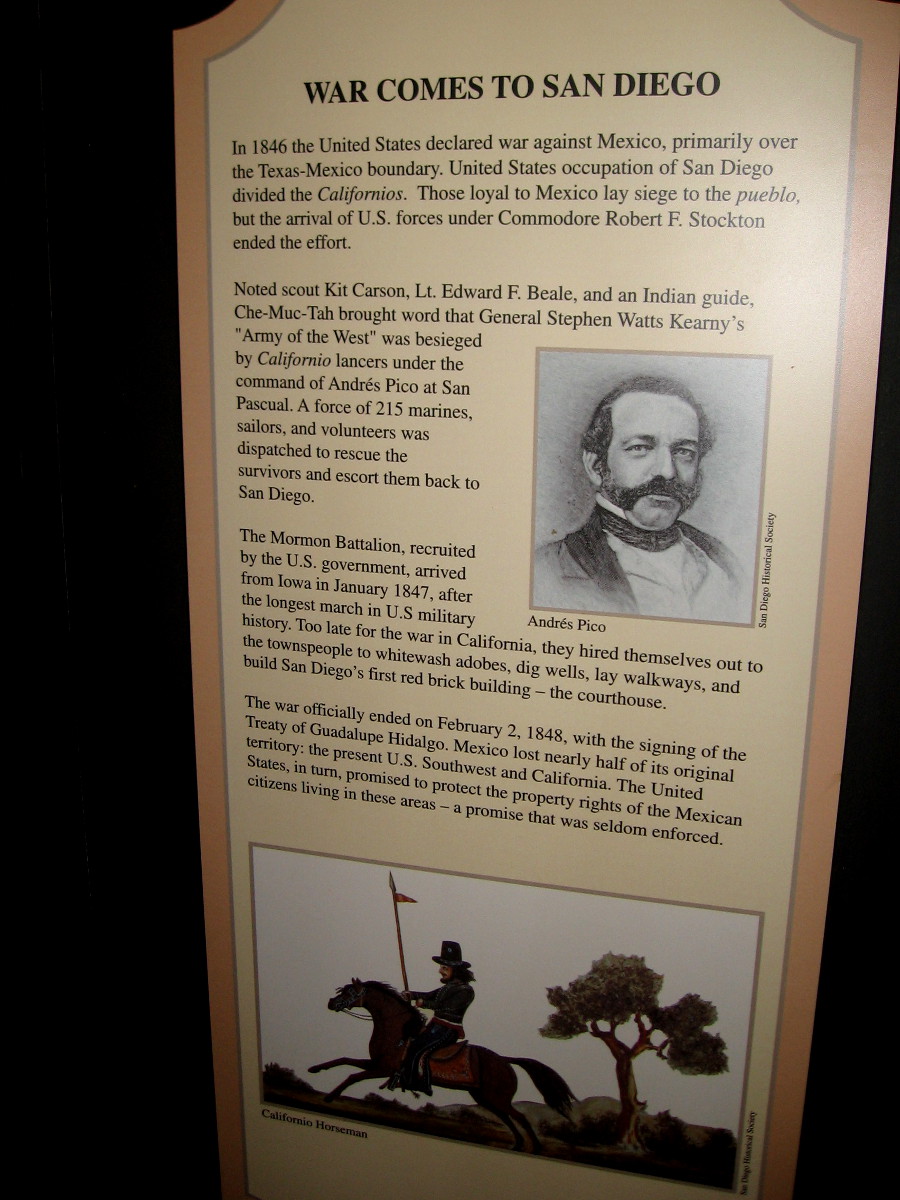
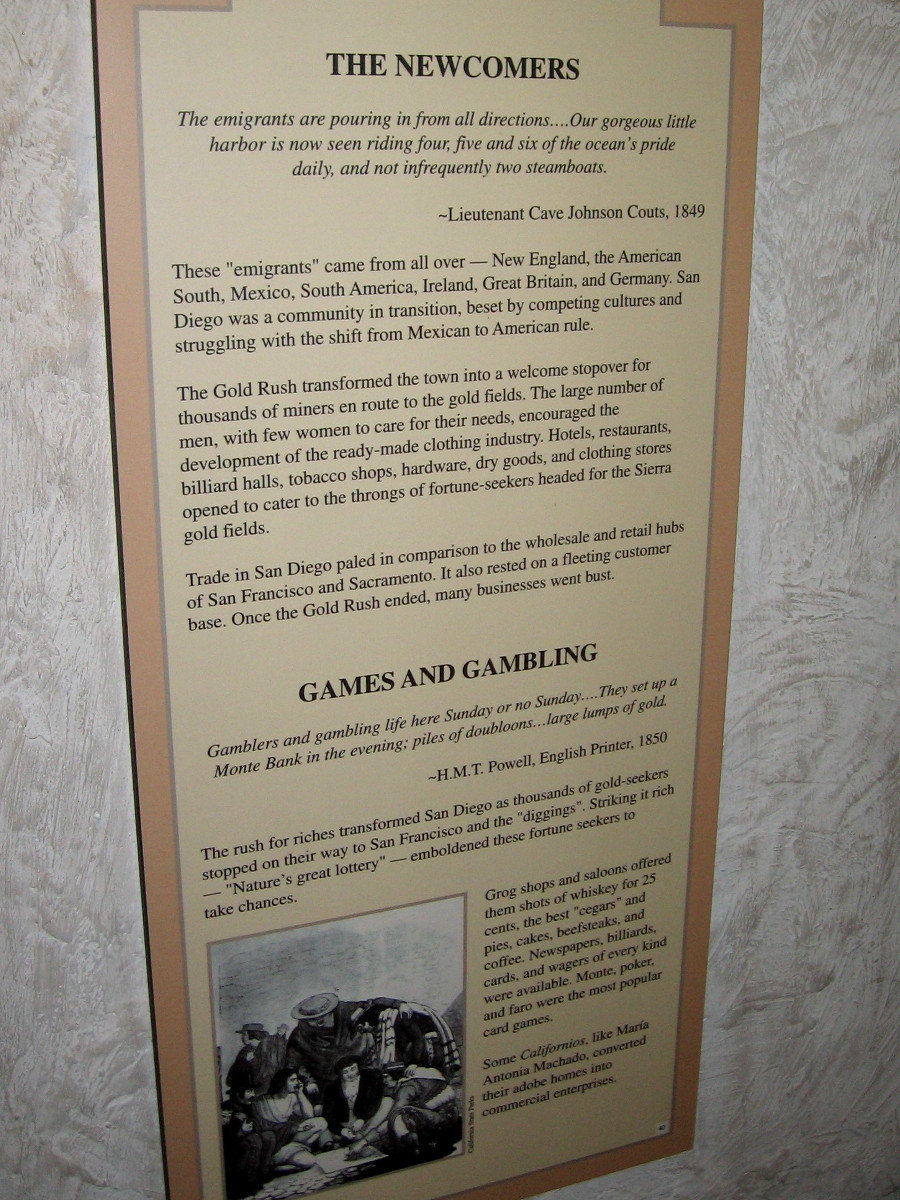
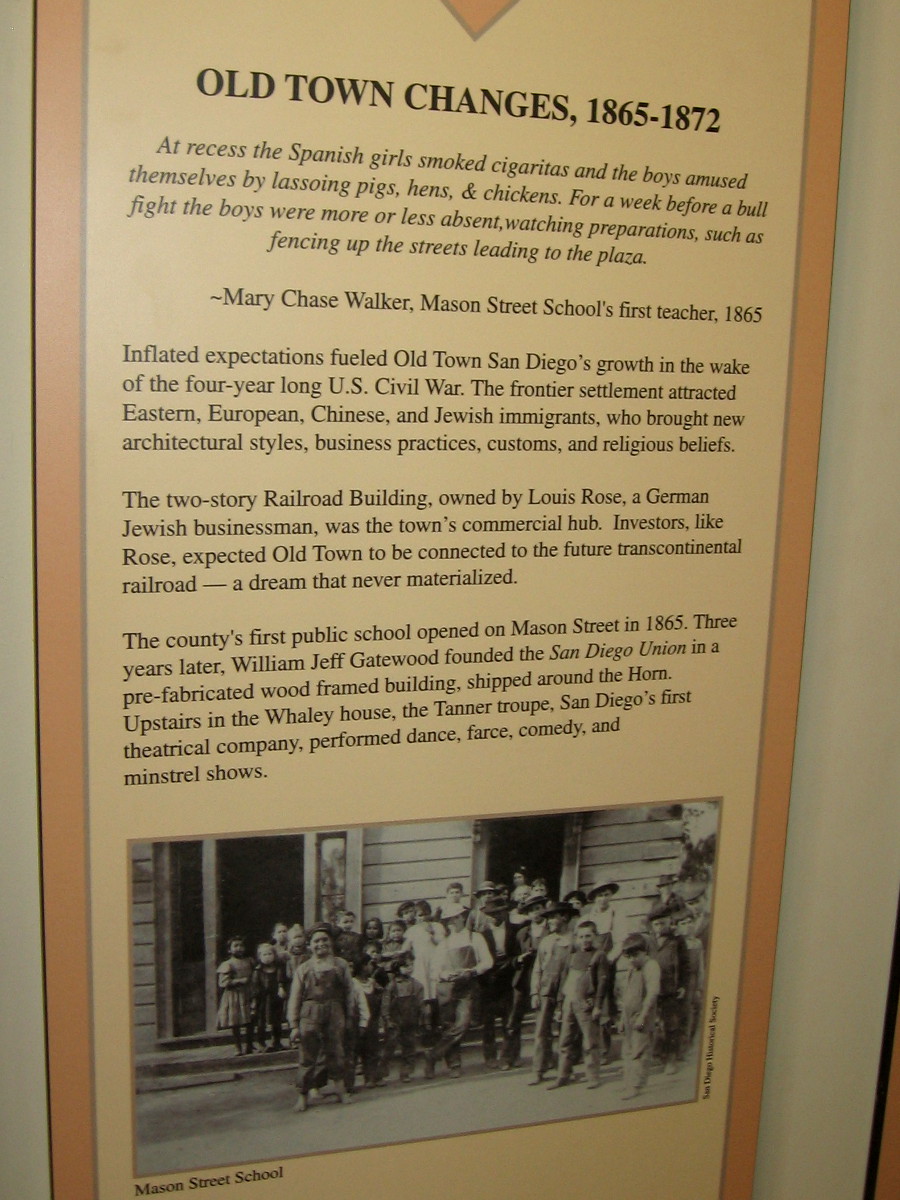
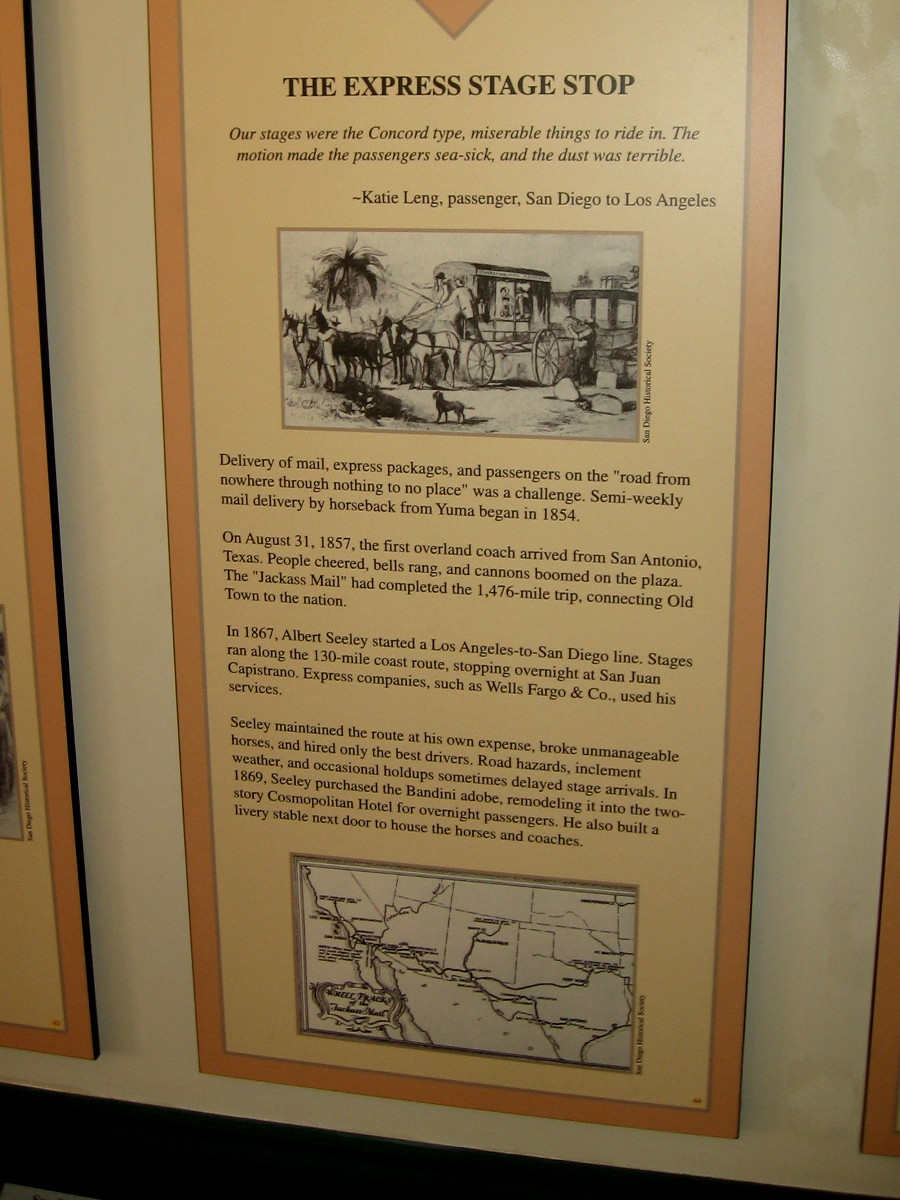
Sign lists important dates concerning the McCoy House. Today it’s a museum containing exhibits that explain the fascinating history of Old Town San Diego.Just inside the front door, this might have resembled the parlor of the original McCoy House, occupied by an upper middle class family in San Diego’s Old Town.Framed photo on one wall from the San Diego Historical Society shows the original McCoy House.Interpretive exhibits inside the McCoy House Museum begin with the Spanish period of San Diego, from 1769 to 1821.Quotes from the journeys of Juan Rodriguez Cabrillo, Sebastian Vizcaino and Gaspar de Portola.A string of missions was created by Spain in California to secure its claim to new territory. The first mission, in San Diego, was originally established on Presidio Hill near the native Kumeyaay village of Cosoy.An artistic representation of life among the Kumeyaay people. They often visited the nearby coast to hunt and gather food.For thousands of years, the Kumeyaay lived along the coast and interior valleys of what is now San Diego County. They moved with the seasons to take advantage of available resources.The Kumeyaay built dome-shaped houses from oak, willow or sycamore branches. The simple structures were called ee-wahs.The Kumeyaay saw the physical and spiritual world as one and the same.Exhibit in the McCoy House Museum shows artifacts associated with the Kumeyaay, including a bark skirt, arrows, rabbit stick, child’s sandals, gourd rattle and war club.The Kumeyaay revolted against the Spanish missionaries in 1775, a year after the San Diego mission was relocated inland very close to a large Kumeyaay village.Once baptized, converted Kumeyaay followed a strict life. Mission bells signaled the day’s activities, including the singing of hymns, Mass, meals and work assignments.Mexico gained its independence from Spain in 1821 after a decade of bloodshed. Changes included a decline in support for the presidio and freedom from Spain’s trade regulations.After the breakup of the Spanish missions, the era of the great ranchos began. Californios were often racially mixed descendants of soldier-settler families.Vaqueros were the original cowboys. They worked on the extensive ranches and handled the large herds of stock.A fanciful picture of life on a rancho, with vaqueros at work and children at play.The Californios loved to celebrate feast days, weddings and religious festivals.Cattle by the thousands roamed San Diego’s hills. Their dried hides were used in trade and were sometimes referred to as California banknotes.Illustration of loading cow hides onto a carreta. Hides were gathered by ships along the coast to be transported around Cape Horn to the eastern United States.Exhibit inside the McCoy House Museum recreates the small shop of a Boston trader. The brig Pilgrim of Two Years Before the Mast brought people aboard to buy wares and finished goods that weren’t available in San Diego.Illustrations of cow hides being cured. This activity took place at La Playa, a point on San Diego Bay near Ballast Point in Point Loma.Diagram of the brig Pilgrim, made famous in Richard Henry Dana Jr.’s classic Two Years Before the Mast. As an ordinary seaman, Dana collected cattle hides up and down the California coast.Exhibit in the McCoy House Museum details local history during the Mexican–American War from 1846 to 1848.During the war, U.S. occupation of San Diego divided the loyalty of the Californios. The two sides fought briefly at the Battle of San Pasqual.Around the time of the Gold Rush, San Diego saw an influx of emigrants from all over, including New England, the American South, Mexico, South America, Ireland, Great Britain and Germany.Old Town tales include the construction of the first jail in 1850. The walls were so poorly made, the first prisoner, Roy Bean, easily dug himself out, then celebrated at a nearby saloon!Grog shops became popular gathering places. They were a social hub of San Diego life, providing customers with news and provisions.A recreated Old Town grog shop can be found inside the McCoy House Museum.After the California Gold Rush of 1849, San Diego became more developed. A courthouse and newspaper were established. Transportation included clipper ships, stage lines and steamships.Poster advertises a new clipper ship route. A very quick trip may be relied upon!Between 1865 and 1872, Old Town San Diego continued to grow. The first public school opened, and the town welcomed its first theatrical company in the Whaley house.The first overland coach to San Diego began service in 1854. Additional stage lines came into existence, allowing for the delivery of mail, express packages and passengers.Visitors to the McCoy House Museum can step into a replica stage stop and see what life was like in Old Town during San Diego’s rugged early history.
…
I live in downtown San Diego and love to walk! You can follow Cool San Diego Sights via Facebook or Twitter!
You can easily explore Cool San Diego Sights by using the search box on my blog’s sidebar. Or click a tag! There are thousands upon thousands of interesting photos for you to enjoy!
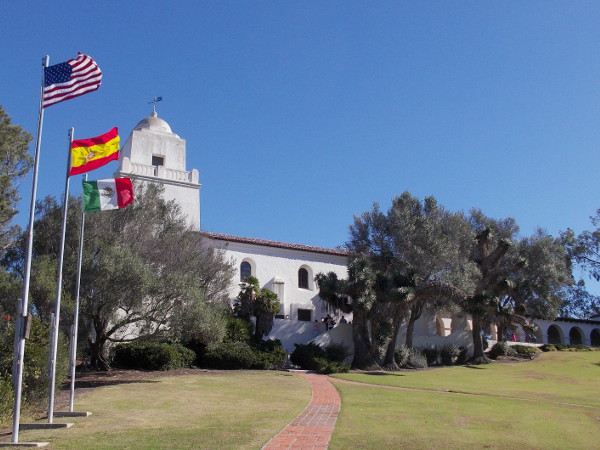
The Junipero Serra Museum of the San Diego History Center was built in 1928 on Presidio Hill, where European civilization was established in Alta California.
I recently visited one of San Diego’s most fascinating museums. The Junipero Serra Museum is located atop Presidio Hill, in a distinctive Mission Revival architectural style building overlooking San Diego Bay and the San Diego River, just east of Old Town. It stands near the site of San Diego’s historic Spanish presidio, built in 1769. The presidio was the birthplace of European civilization in Alta California.
The Serra Museum is operated by the San Diego History Center, which is headquartered today in Balboa Park. Back in 1929, when the building was dedicated, it became home of what was then called the San Diego Historical Society. The important San Diego institution was established by civic leader George W. Marston.
Can you believe it? I’ve lived in San Diego for 15 years . . . and this was the very first time I ventured into the Serra Museum. (I can thank my blog for that!)
What I discovered was an absolutely amazing place that both residents and visitors to San Diego should definitely not miss.
Here’s a sample of what you’ll see…
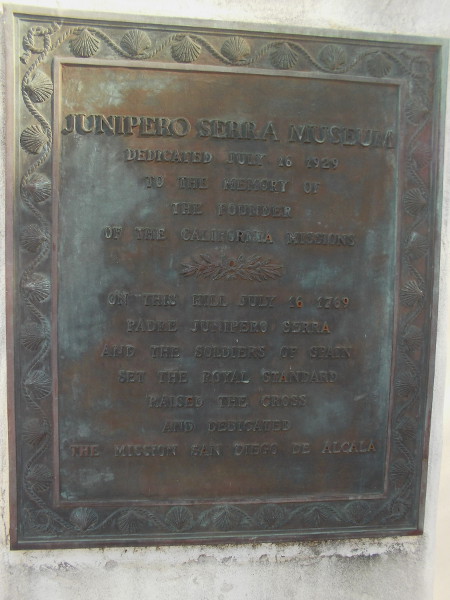
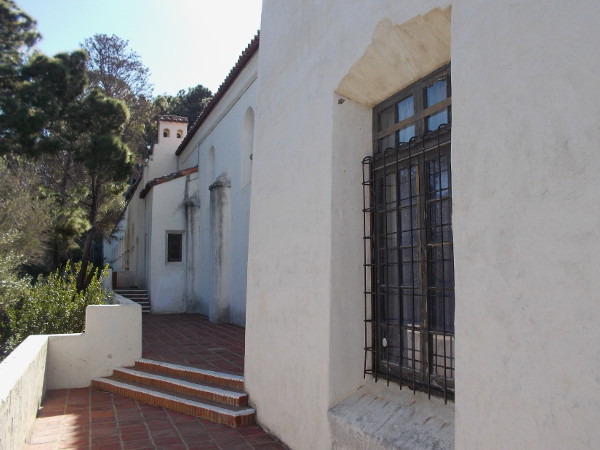
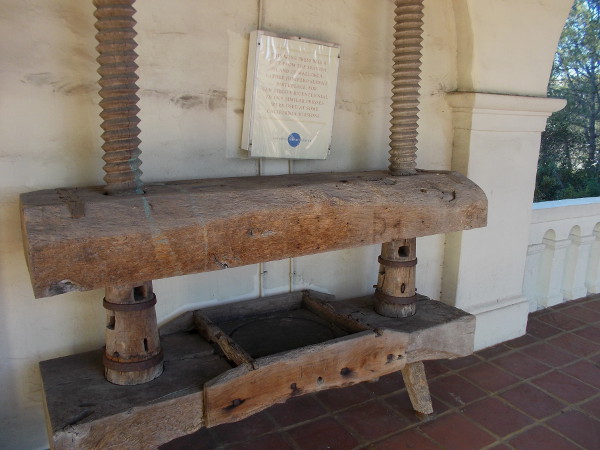
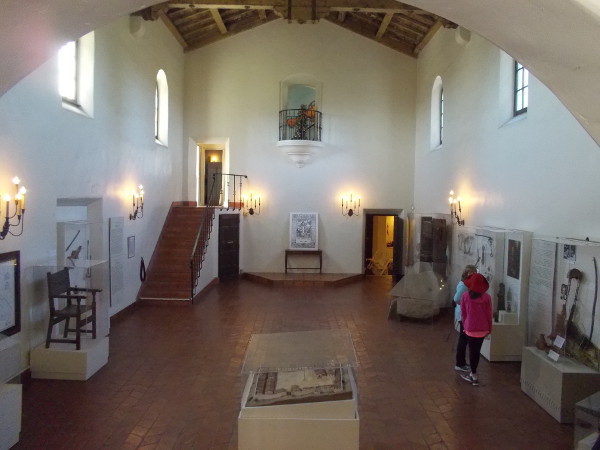
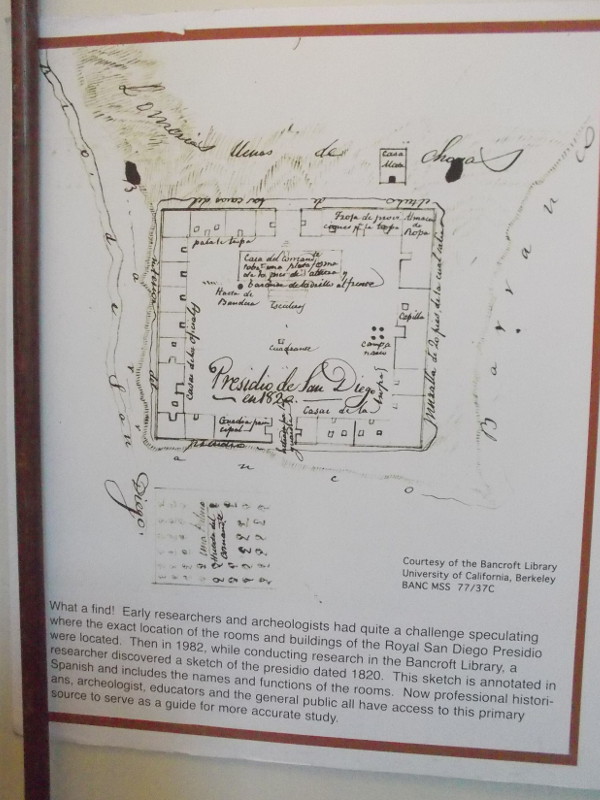
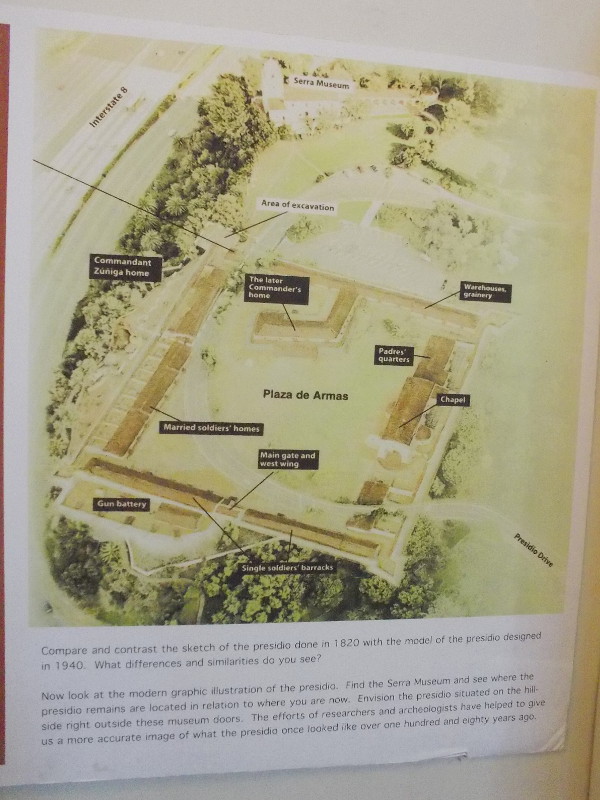
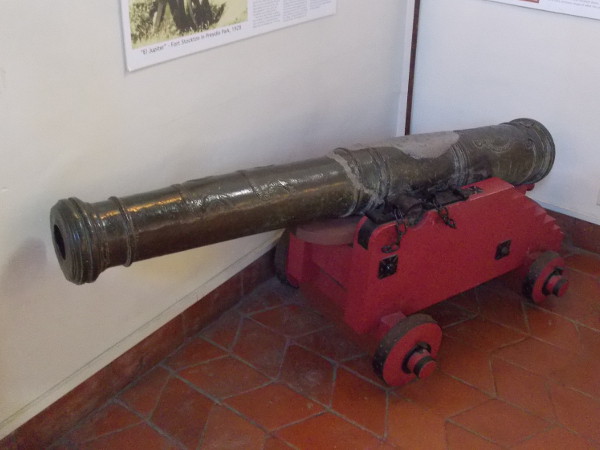
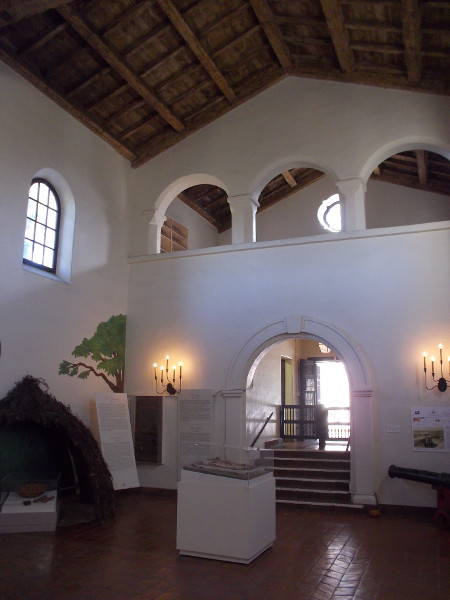
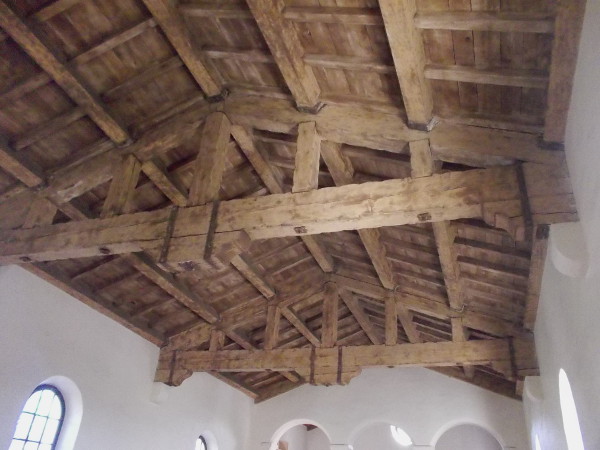
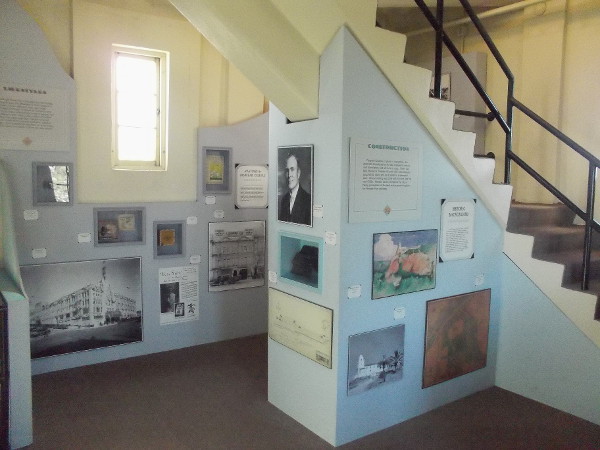
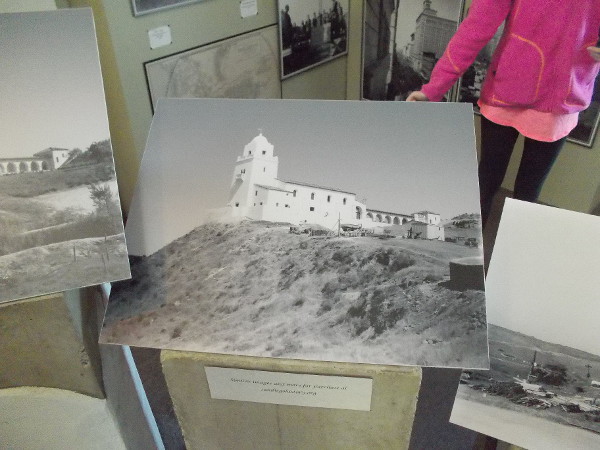
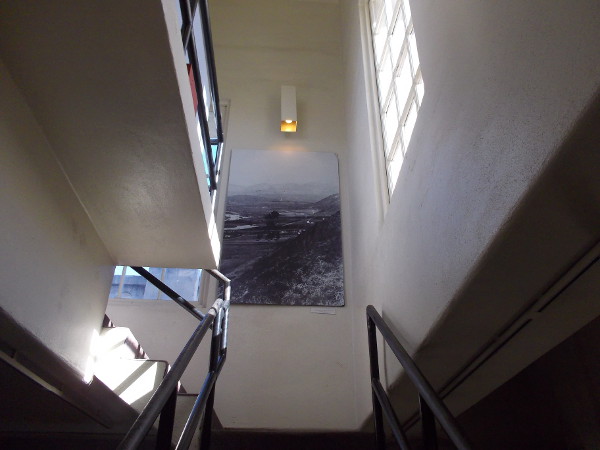
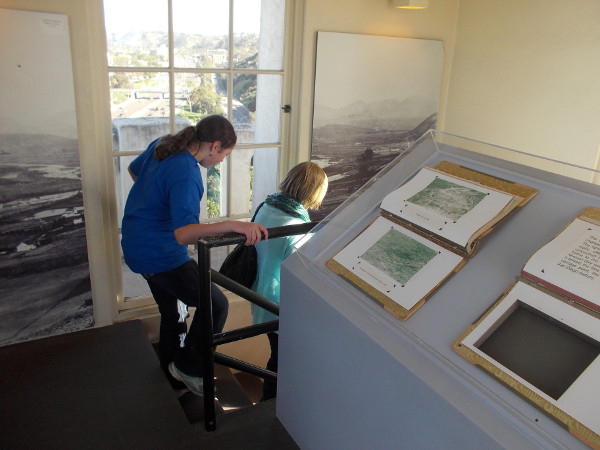
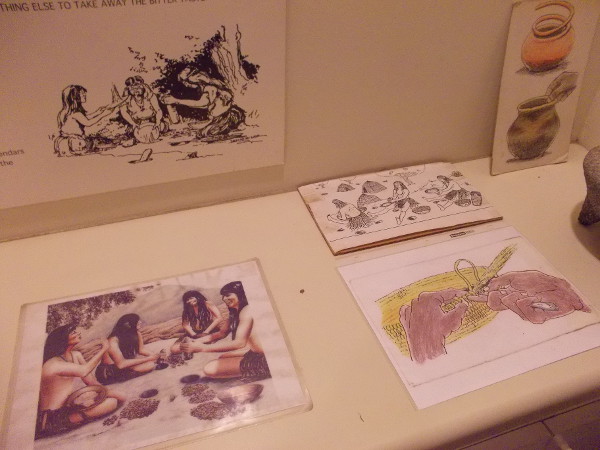
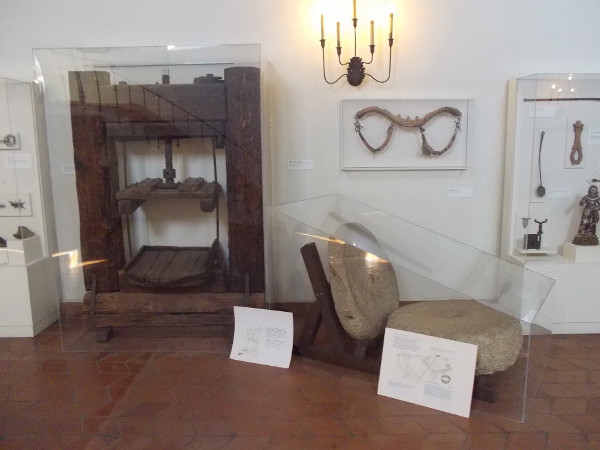
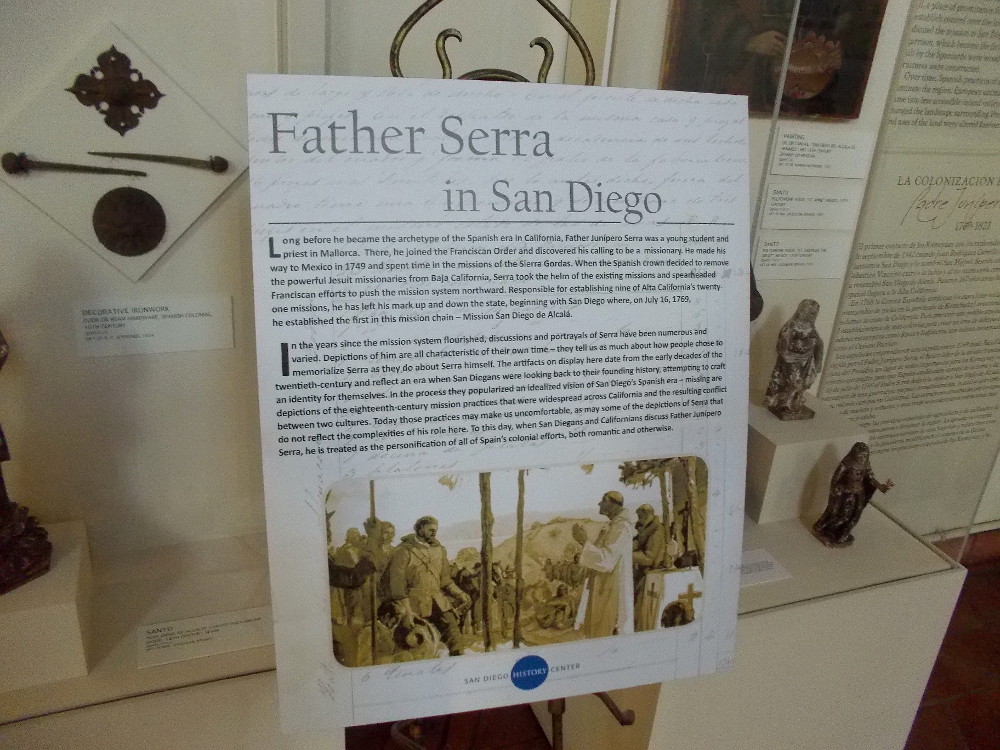
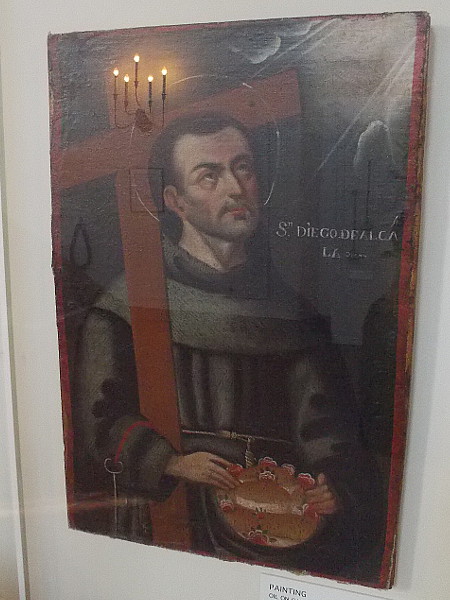
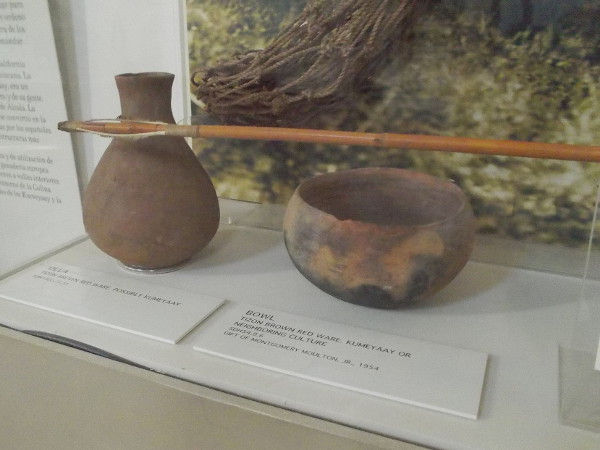
People arrive at the Serra Museum, where San Diego’s early Spanish history comes alive.Junipero Serra Museum dedicated July 16, 1929 to the memory of the founder of the California missions. The original Mission San Diego de Alcalá was established nearby in 1769.A quick look at the rear of the museum.The Serra Museum building was designed by noted architect William Templeton Johnson. It reflects Mission Revival style architecture.Large wine press in front of the museum was a gift from the Spanish island of Mallorca, Father Junipero Serra’s birthplace.Plaque near entrance reads George White Marston 1850-1946. FRIEND OF HIS FELLOW MEN – LOVER OF ALL GROWING THINGS. Piece by piece through many years he acquired these acres…Elegant interior of the Serra Museum contains many exhibits pertaining to San Diego’s early Spanish history.Researchers discovered this sketch of the Royal San Diego Presidio dated 1820. It shows the layout of the old buildings which no longer exist.Modern graphic illustration of the fortified presidio, which was located a short distance below the Serra Museum’s front entrance.Old Spanish cannon named El Jupiter, cast in Manila in the 18th century. El Jupiter stood in Fort Guijarros at Ballast Point, the first defensive fortifications for San Diego Bay.Leather armchair made in Catalan, Spain in the 17th century. This “friar’s chair” was part of the original Serra Museum’s furnishings.Old violin with bow, a branding iron used by rancheros to identify cattle, and iron spurs are among the many historical objects on display.Another look at the beautiful interior of the Serra Museum in San Diego.Large wooden beams in a truly amazing ceiling.Stairs lead up to the Serra Museum’s tower. Painted on the wall is a map showing the sea journey of the Spanish expedition which founded San Diego in 1769.March 9-20, 1769. Desperate to replace drinking water which leaked from the ship’s casks, Captain Vicente Vila commands the tacking Spanish galleon San Carlos near Isla de Cedros.A room halfway up the tower. Numerous displays recall San Diego’s history, most notably around the time when the Serra Museum was dedicated in 1929.Old photo of the crowd attending the Serra Museum’s dedication ceremony on July 16, 1929.A fascinating look at Presidio Hill almost a century ago.A lovely watercolor sketch of the Junipero Serra Museum atop Presidio Hill.On the wall are many historical photos and artifacts, including an image from around 1930 of a cigar factory on 4th Street in San Diego.A reproduction of the west elevation drawing of the Serra Museum by architect William Templeton Johnson.Now we’re heading up to the very top of the tower.Looking west from the Serra Museum tower along Interstate 8. Point Loma is on the left and Mission Bay is to the right.Looking east into Mission Valley.Visitors at the Serra Museum head back down from the tower, after looking at old photos which show a much less-developed surrounding landscape.A small theater in the Serra Museum contains additional exhibits about life in and around the old Presidio.Examples of what life was like for the Native American Kumeyaay, who occupied this region long before it was discovered by the Spanish.Stories of two people who lived on a local Rancho. Click the image to enlarge, if you’d like to read it.Map of the old Presidio’s archaeological site. You can see where the fort was located in relation to the Serra Museum.Explanation of the excavation process utilized by researchers. Some artifacts that were unearthed are on display in the museum.Artistic rendition of a Mexican presidio soldier circa 1830, and a horse bit.An olive press, granite mill stones, and an ox yoke.Small artifacts include this carved polychrome wood San Diego de Alcala Santo from 18th century Spain.Sign describes the life of Franciscan missionary Father Junipero Serra, and his work to establish the California Missions under the flag of Spain. He was recently made a Catholic Saint.Painting. Oil on canvas. San Diego del Alcala de Henares. Mid 18th century, Spanish or Mexican.Olla and bowl. Kumeyaay or neighboring culture.The Junipero Serra Museum in San Diego provides a fascinating look at our culturally diverse city’s very early history.
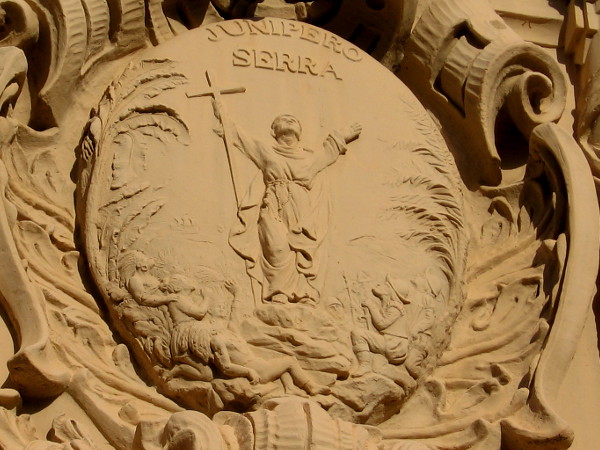
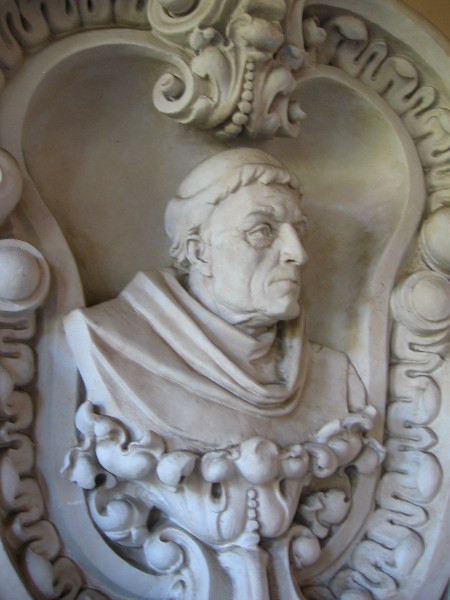
Molded plaster figure of Saint Junipero Serra at top of the California Building’s facade in Balboa Park. The Museum of Man occupies this landmark building. The ornate facade contains many sculpted historical figures and busts created by the Piccirilli brothers, famous marble carvers who immigrated from Italy in 1888.
Today, during Pope Francis’ historic first visit to the United States, Junipero Serra was canonized by the Roman Catholic Church. Father Serra was declared a saint by the Holy See at a ceremony conducted by Pope Francis at the Basilica of the National Shrine of the Immaculate Conception in Washington, D.C.
Saint Junipero Serra played a large role in San Diego’s early history. The Franciscan friar established the first nine of 21 Roman Catholic Spanish missions in what today is California. The very first of those nine, founded on July 16, 1769, was located in San Diego. The primary purpose of the missions was to convert the native peoples to Christianity; another purpose was to solidify a claim over this valuable corner of the New World for Spain.
The Mission Basilica San Diego de Alcalá is located in Mission Valley and remains to this day an active church. It’s popularity as a destination for tourists and the faithful will likely increase with the canonization of Serra.
Because of Saint Junipero Serra’s historical importance in San Diego, many images of him are found throughout our city. Some of the most prominent and well known representations can be seen in Balboa Park. The park’s Spanish Colonial Revival Style buildings created for the 1915 Panama-California Exposition include lavish ornamentation, with many illustrations of people and scenes important to San Diego history.
The following notable bits of art in Balboa Park depict Saint Junipero Serra during his time in San Diego.
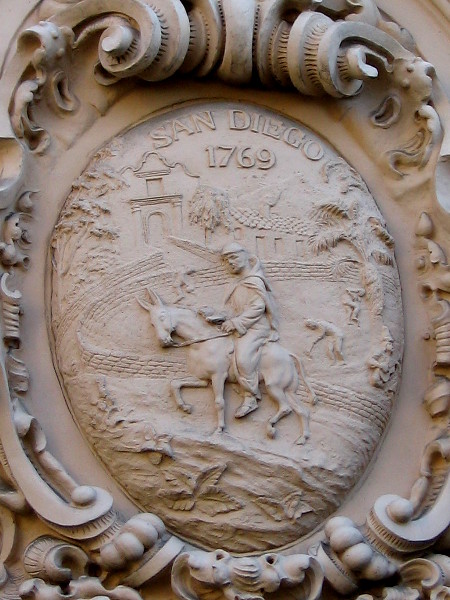
Ornamental art on Balboa Park’s Casa del Prado shows Saint Junipero Serra holding a cross among Spanish soldiers and native peoples in what today is California. In 1769, San Diego was part of Alta California in the Province of Las Californias in New Spain.More artwork seen on Balboa Park’s historic El Prado shows Franciscan friar on a horse near the Mission San Diego de Alcalá, which was built near the San Diego River, several miles inland from San Diego Bay.Junipero Serra Memorial, created in 1914. Staff plaster original ornamentation from the Food Products Building, of the Panama-California Exposition. This elegant work of art was preserved and is now located in the Casa del Prado’s Sculpture Court.
…
Follow this blog to see more photos related to San Diego’s fascinating history! Join me on Facebook or Twitter.
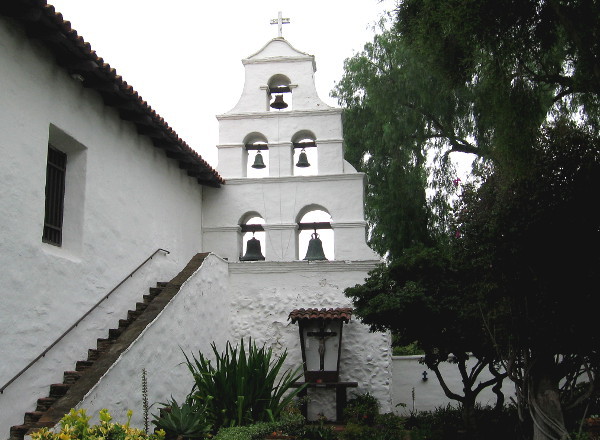
Five church bells hang in the distinctive facade of the historic Mission San Diego de Alcalá, founded by Junipero Serra.
Sometimes it’s easy to forget that our lives will soon become history. And that the lives of people, no matter how imperfect, create a rich, varied tapestry that reaches centuries back in time, and forward into the future.
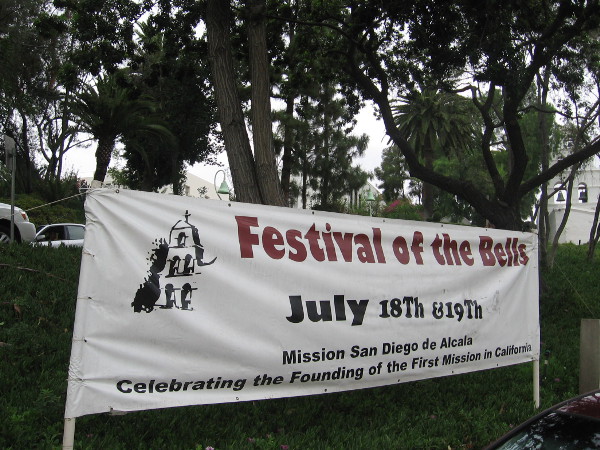
Young and old–representatives from several generations–came together this weekend in San Diego to again celebrate the Festival of the Bells. The annual event is held at Mission San Diego de Alcalá, the first Spanish mission to be built in California. Food, song and dancing accompanied colorful religious rituals such as the Blessing of the Bells and the Blessing of the Animals. Everyone was welcome to enjoy the free festival.
The original San Diego del Alcala was founded in 1769–almost 250 years ago–at the site of the old Spanish presidio, near the edge of San Diego Bay. The current mission building was erected by Father Serra in 1774, a few miles up the San Diego River where the land was more fertile.
The distinctive facade and bells of this historical landmark are often used as a symbol for our city, and the ringing of the bells are like echoes from a complex, often strife-filled, but fascinating past. The youngest generation, seeing this old world with fresh, optimistic eyes, jumping free and loving life in the festival’s bounce house, will remember today decades in the future as just another small moment in the journey of history. Hopefully that memory is good.
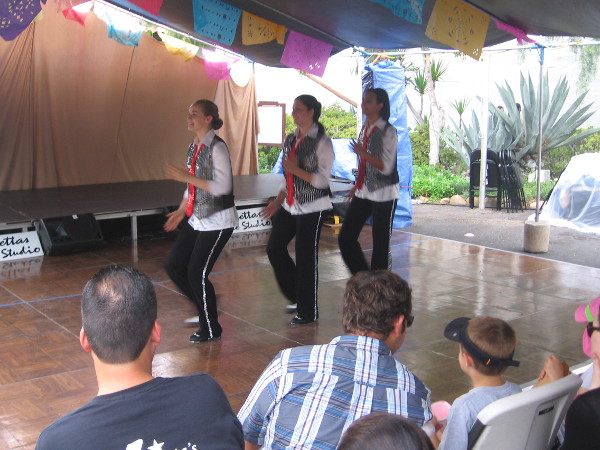
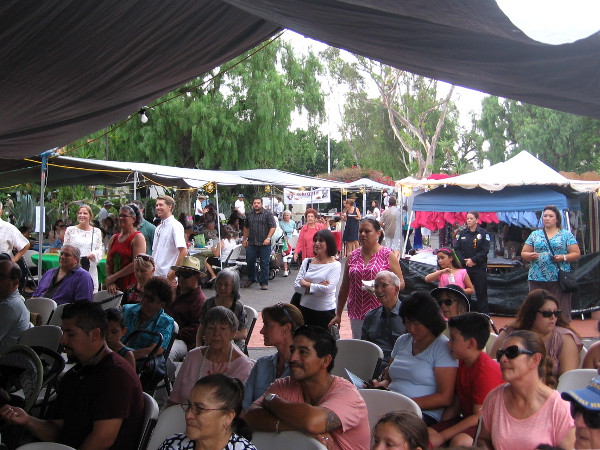
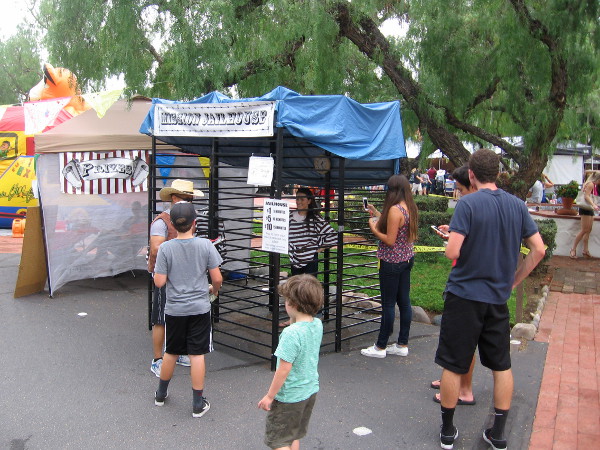
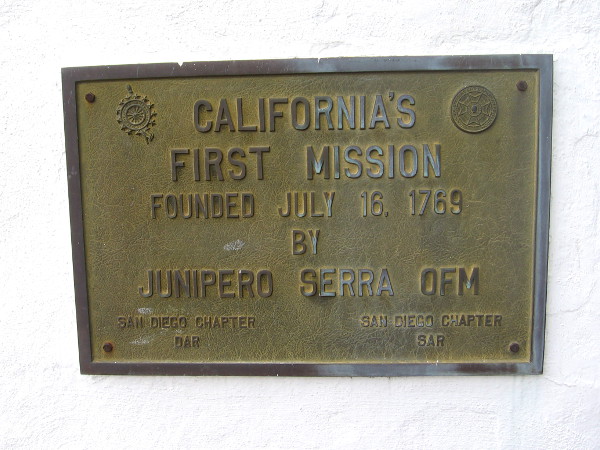
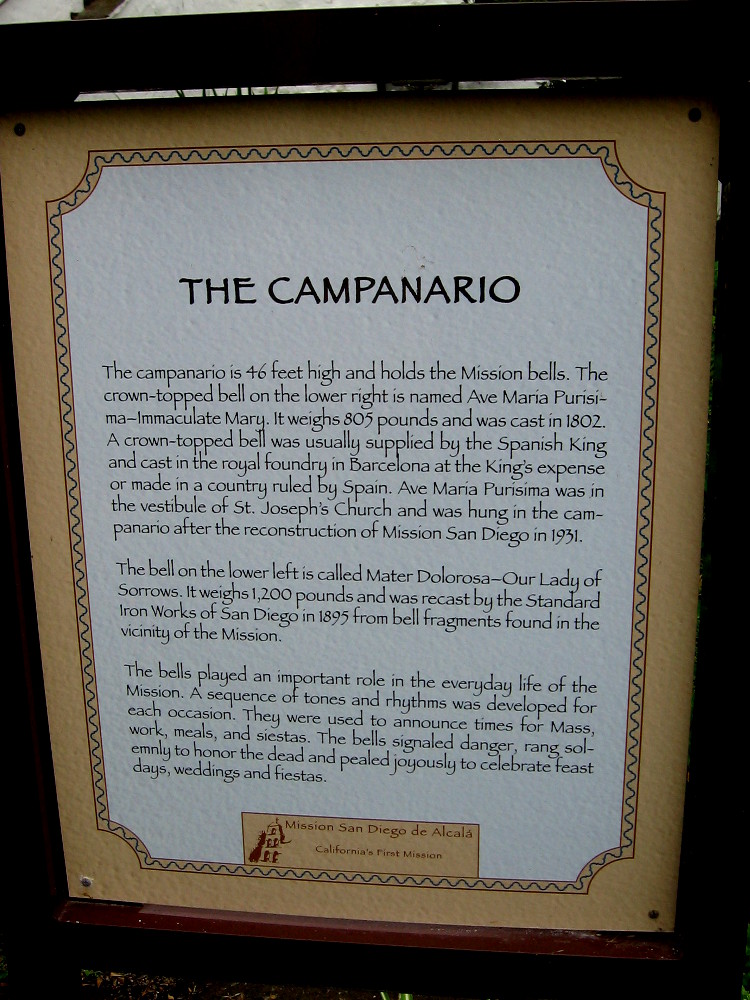
The Festival of the Bells is an annual celebration which memorializes the establishment and long history of California’s first Spanish mission.Young people provide family entertainment free to the public at the 2015 Festival of the Bells.A large audience had gathered in the mission’s spacious courtyard-like quadrangle, even as rain threatened on Sunday afternoon.Folks hang out around the central fountain, eating food and taking in sights, smells and sounds during a lively San Diego tradition.Proceeds from sales of food, crafts and gifts benefited Mission Basilica San Diego de Alcala, which is an active Catholic church.Who can resist root beer floats?Put a friend in the jailhouse to raise some money!San Diego de Alcalá was the first of 21 Spanish missions in California, established by Father Junipero Serra in 1769.Small statues along walkway at front of San Diego de Alcala depict Saints who inspired California mission names. This is for Mission Santa Clara de Asis, founded 1777.Sign in the mission’s garden explains The Campanario. (Click to enlarge.)
The campanario is 46 feet high and holds the Mission bells. The crown-topped bell on the lower right is named Ave Maria Purisima–Immaculate Mary. It weights 805 pounds and was cast in 1802 . . . The bells played an important role in the everyday life of the Mission . . . They were used to announce times for Mass, work, meals and siestas. The bells signaled danger, rang solemnly to honor the dead, and pealed joyously to celebrate feast days, weddings and fiestas.
Of the five church bells, one original bell dates back to 1802.
…
San Diego is an endlessly interesting place! You can enjoy photos from many varied walks by following on Facebook or Twitter.
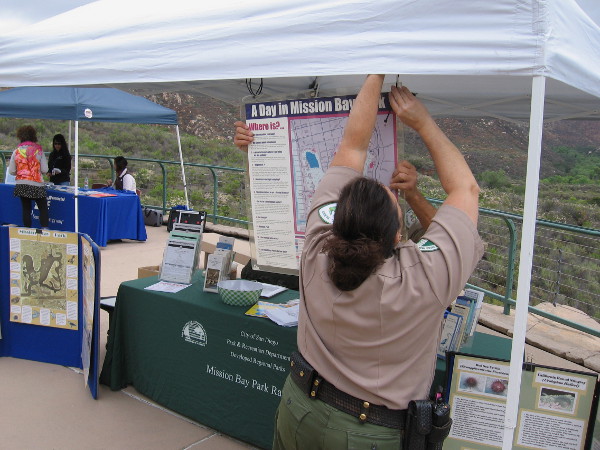
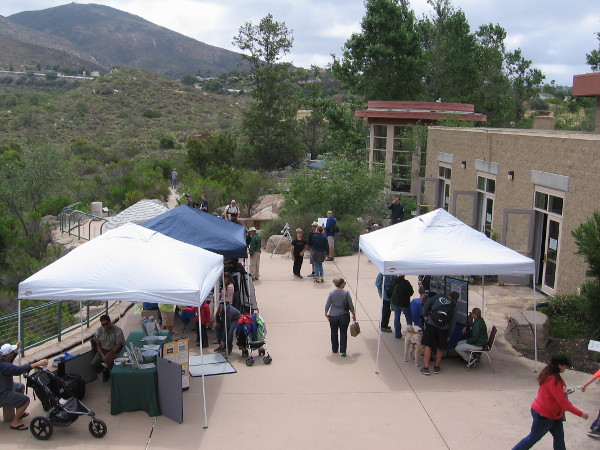
Park rangers and community organizations set up displays on the Visitor Center patio.
This morning I headed up Mission Gorge Road to check out the big annual Explore Mission Trails Day event!
Mission Trails Regional Park is a 6000-acre nature reserve located in San Diego’s East County. It’s one of the largest urban parks in the United States–basically a wide stretch of rugged, rocky wilderness within our large modern city! The San Diego River runs through the very heart of the park as it makes its way from higher inland elevations to the Pacific Ocean. I often drive past and gaze at the low chaparral-covered mountains and hills, and twice I’ve climbed Cowles Mountain, but this was the first time I’ve actually set foot inside the Visitor Center.
What an awesome place! How did I miss it all of these years?
Today I limited myself to the south end of the park, including a short but super cool hike from the Visitor Center to the Grinding Rocks. (That will be my next blog post!) There were additional Explore Mission Trails Day activities up by the Old Mission Dam and Kumeyaay Lake Campground, and by Mast Boulevard and Highway 52. I suppose I’ll have to go again next year!
My photos tell the story of what I saw…
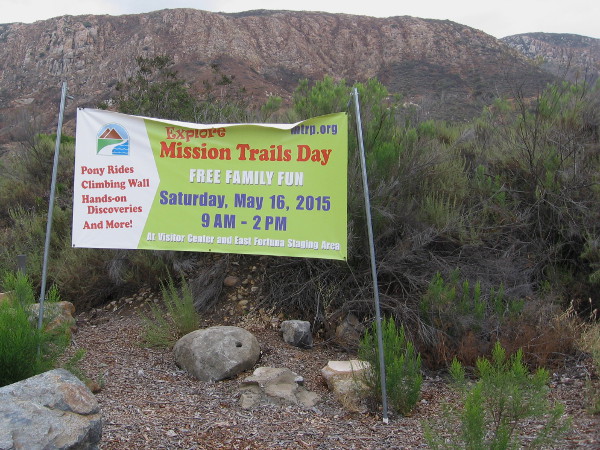
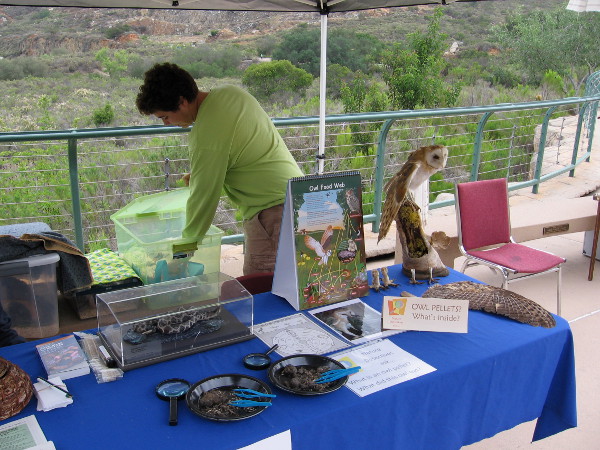
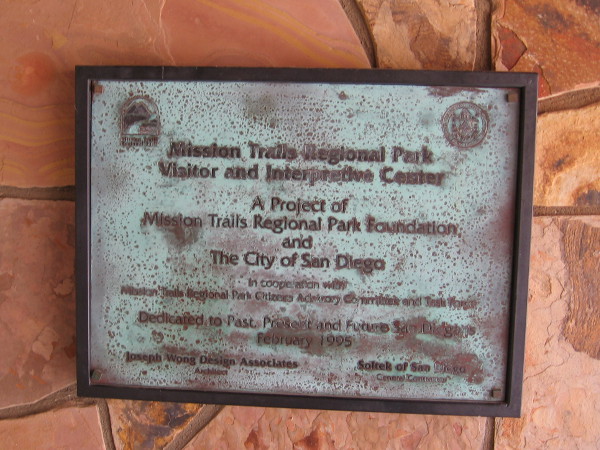
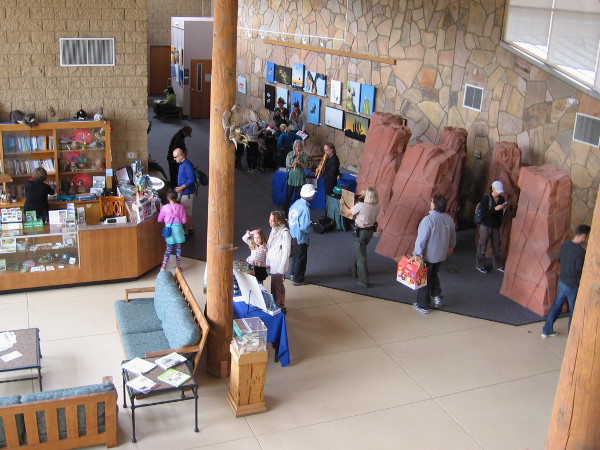
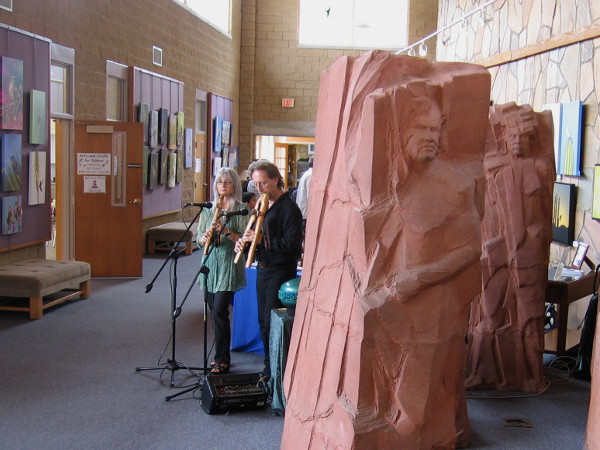
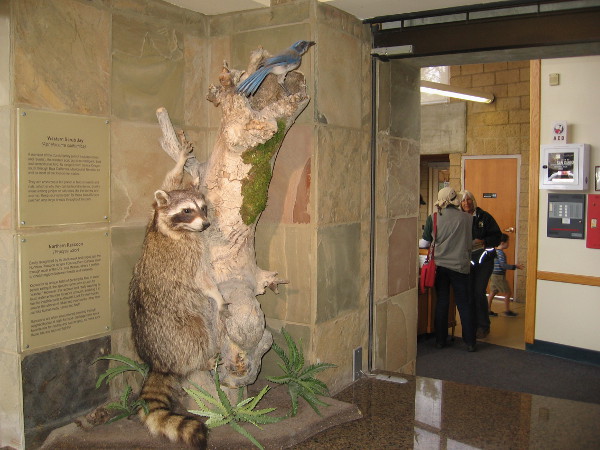
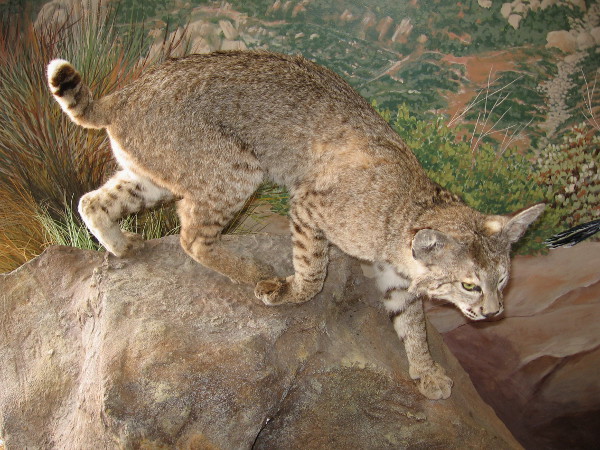
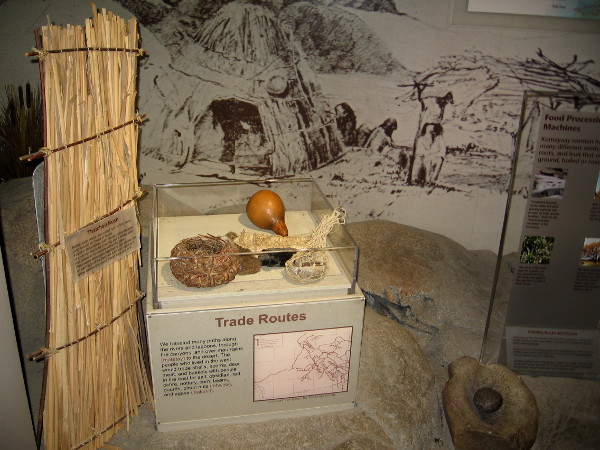
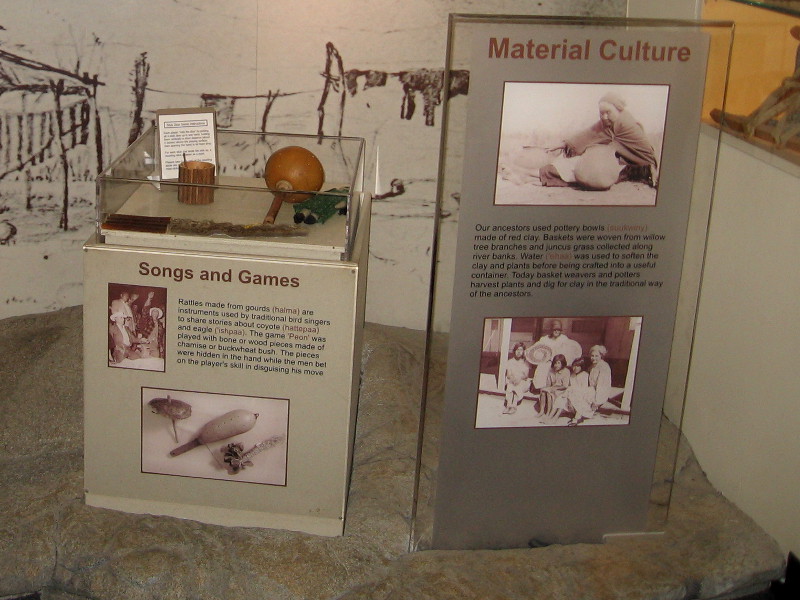
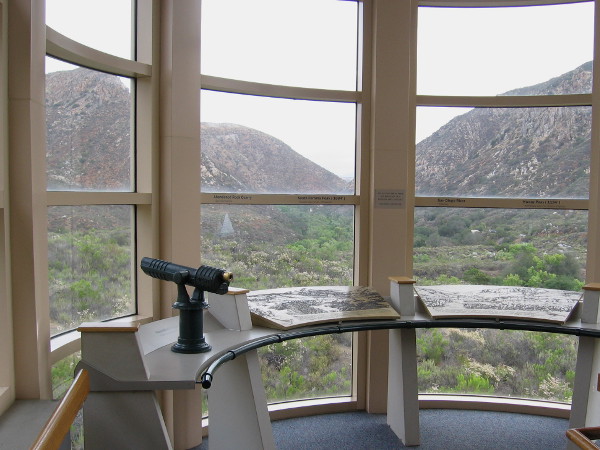
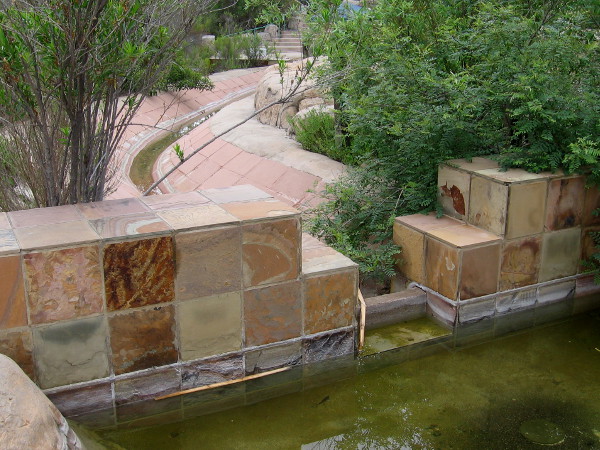
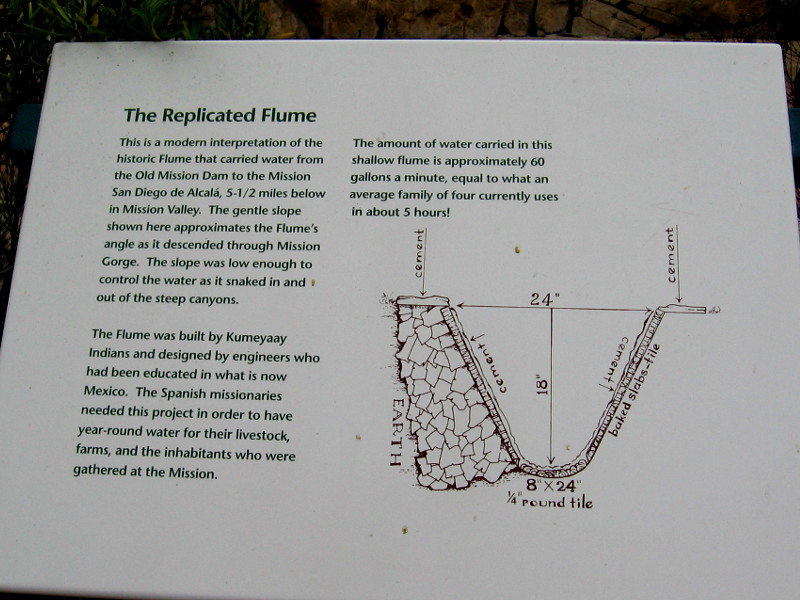
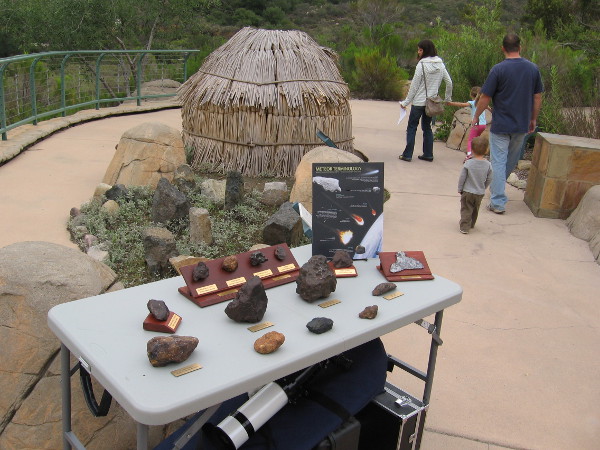
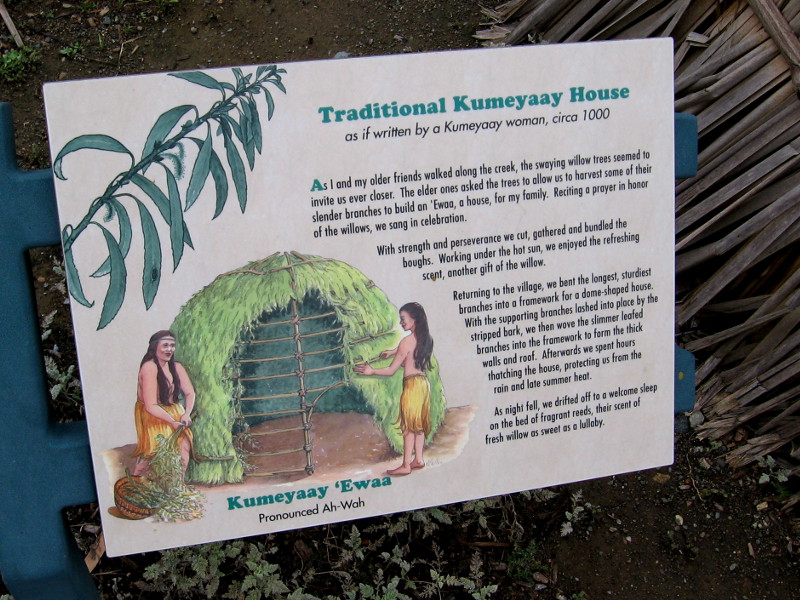
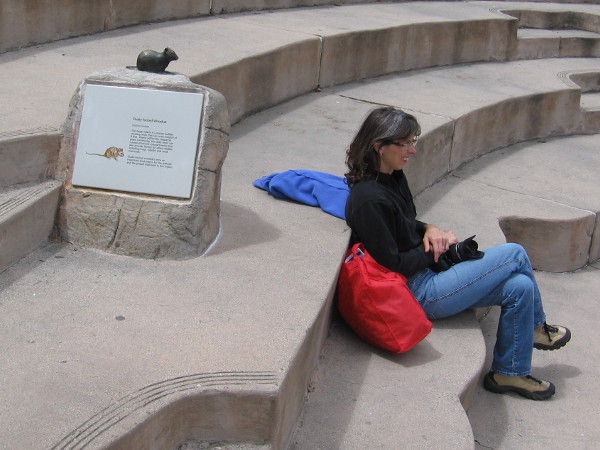
Banner beside Father Junipero Serra Trail announces Explore Mission Trails Day!There were opportunities to learn about nature, wildlife, science, history and the environment.Some folks near the main entrance of the Mission Trails Regional Park Visitor Center.Bronze sculpture of a golden eagle is perched above path near the Visitor Center entrance.Plaque by door dedicates the large open space park to past, present and future San Diegans.View inside the Mission Trails Visitor and Interpretive Center from second floor balcony.Flutists play near “Heritage” sculpture depicting native Kumeyaay elders. Amazing monumental artwork is by T.J. Dixon and James Nelson.The Art of Bird Photography is a special exhibition featuring the work of Blake Shaw.Roberta Labastida is the author of My Ancestors’ Village, which tells about the life of the Kumeyaay people who were here long before the arrival of Europeans.Numerous exhibits and activities could be found inside the Mission Trails Visitor and Interpretive Center.Western Scrub Jay and Northern Racoon are animals one might see in this very large San Diego urban park.Cleaning some chalk off where kids have been identifying animal tracks.The bobcat is often encountered in the hills and mountains of San Diego County. I once saw one while hiking around Mount Laguna!Historically, the Kumeyaay lived in large family groups, and moved about depending on the season and the availability of nature’s bounty.Exhibits in Visitor Center’s museum show different aspects of Kumeyaay culture, including songs, games and crafts.Very cool observation window allows visitors to look out upon South Fortuna and Kwaay Paay Peak.With the majestic chaparral-covered Fortuna Mountains as its backdrop, the coastal sage scrub habitat is highly adapted to our long hot summers.Looking back out at the rear patio. More people have arrived in the past few minutes while I explored inside.Now I’m outside again, coming down some steps. Another cloudy day, following San Diego’s latest storm!Replicated flume near Visitor Center is a modern interpretation of the man-made channel that carried water from the Old Mission Dam (a couple miles upriver) to Mission San Diego de Alcala.Sign by replicated flume details how it was engineered over two centuries ago. Water was used at the old historic Mission for livestock, farms and inhabitants.Cool table full of meteorites next to traditional Kumeyaay house made of willow branches.This sign tells the story of a fictional Kumeyaay woman, circa the year 1000. This primitive house was called an Ewaa.Large boulder moved to Visitor Center due to construction contains a mortar-like hole used by Kumeyaay to grind acorns, seeds, roots, herbs and other natural foods.A replicated solar calendar made of stones, used by Native Americans to mark the Winter Solstice. Only a couple have been found in San Diego County.This pink beauty is a California Wild Rose, found beside the patio. They’re more often found along streams.Lady rests in Visitor Center amphitheater by small bronze sculpture of a Dusky-footed Woodrat. This wild rodent can create a nest up to 8 feet high!Sculpture of a coyote, one the top predators of Mission Trails Regional Park. Even with human encroachment, they remain numerous today.Family checks out a very cool, life-size sculpture of a mountain lion at the amphitheater. This secretive animal is rarely seen around here.Ms. Frizzle was present at Explore Mission Trails Day! The event was an educational treat for both kids and adults!
…
To enjoy future posts, you can “like” Cool San Diego Sights on Facebook or follow me on Twitter.
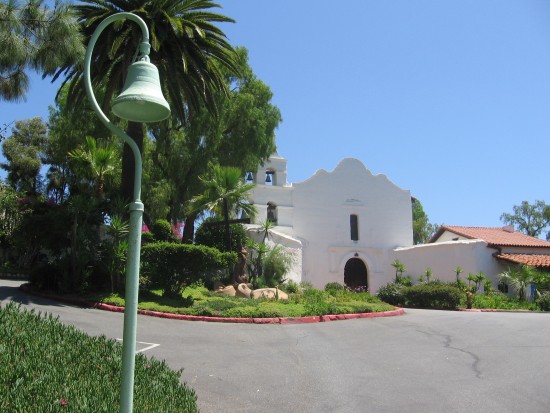
El Camino Real bell in front of California’s first Spanish mission.
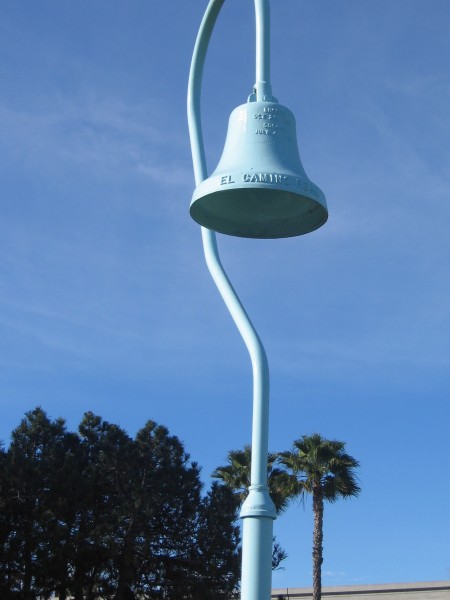
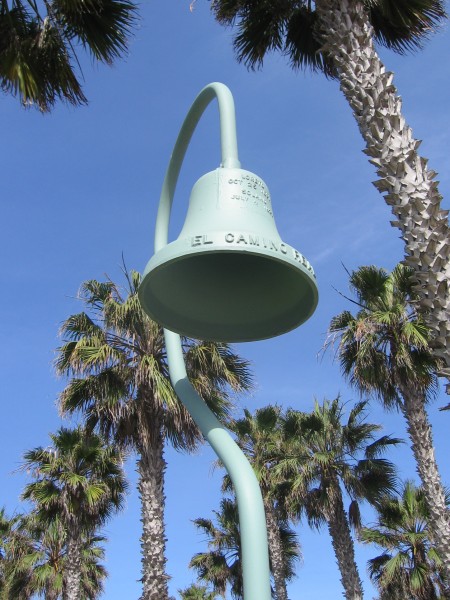
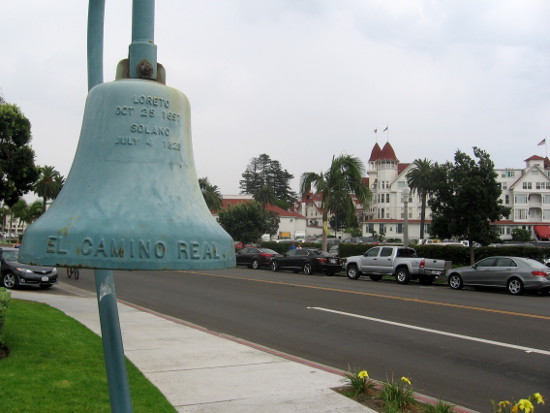
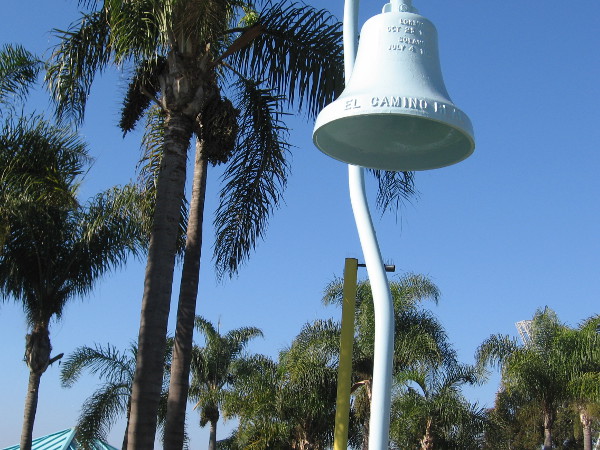
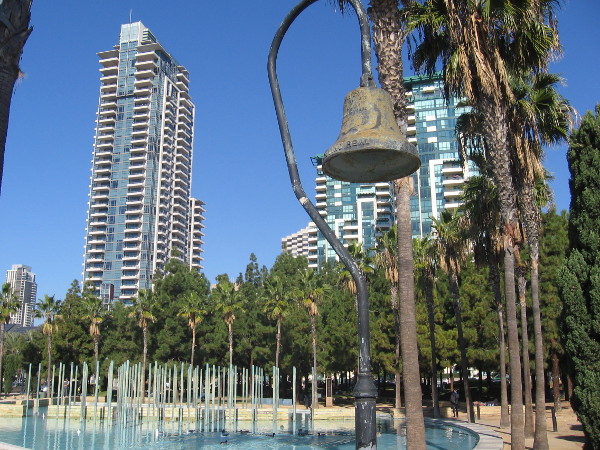
Here are just a few random pics of El Camino Real bells around San Diego. During my walks, I’m often surprised to discover a new bell.
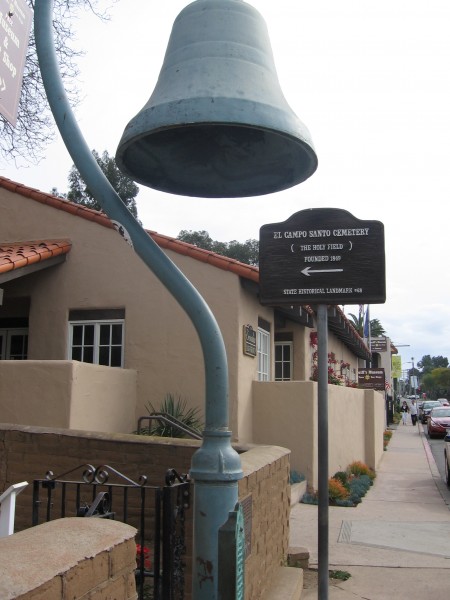
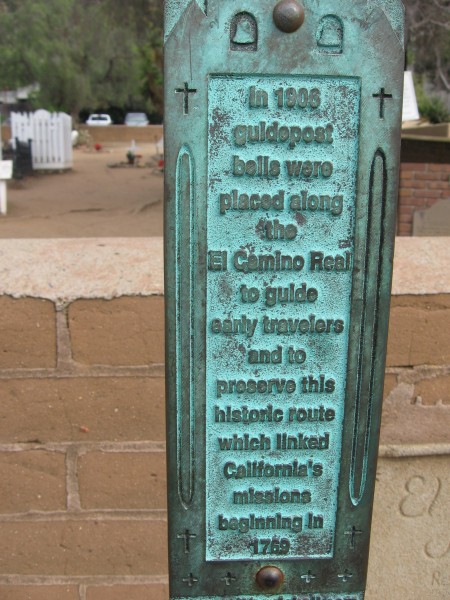
Many of these guidepost bells were placed in 1906 by the California Federation of Women’s Clubs. They marked the primitive roads that connected the old Spanish missions in California. El Camino Real, which means the Royal Road or King’s Highway in Spanish, led to 21 missions in Alta California, plus a variety of sub-missions, presidios and pueblos. The bells stand on tall posts in the shape of a shepherd’s crook. In subsequent years, bells have been removed or added to the California landscape.
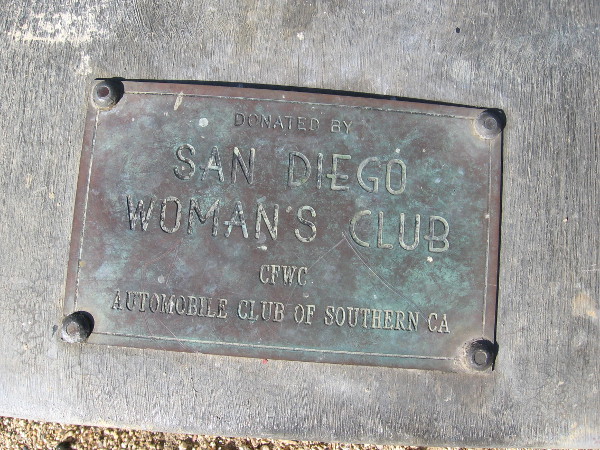
Bell in front of Old Town’s historic El Campo Santo cemetery.Plaque explains history of the guidepost bells.El Camino Real bell spotted on Harbor Island.El Camino Real bell by the downtown County Administration Building.Historic bell and palm trees in Imperial Beach.I found an El Camino Real bell near the Hotel del Coronado!El Camino Real bell in Cesar Chavez Park in Barrio Logan.Plaque on Harbor Drive reveals that a nearby bell was donated by San Diego Woman’s Club.
El Camino Real bell on Martin Luther King Jr. Promenade by Children’s Park.
…
To enjoy future posts, you can “like” Cool San Diego Sights on Facebook, or follow me on Twitter.


































































 Cool San Diego Sights!