Lots of fun at County Administration Center Waterfront Park.
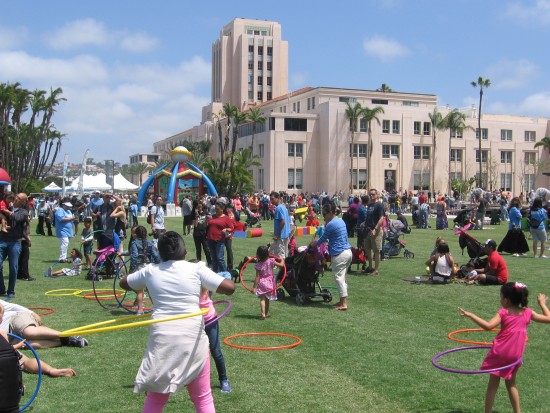
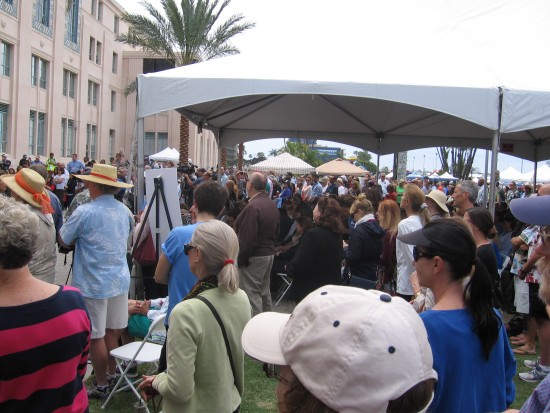
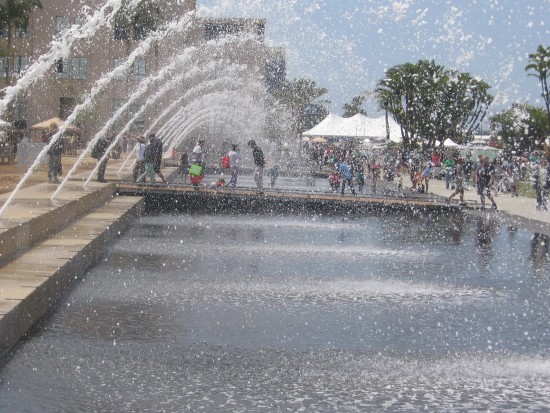
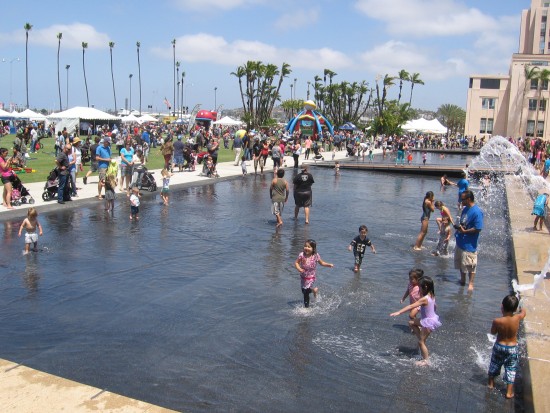
The brand new, very awesome County Administration Center Waterfront Park opened today! This spectacular city park stretches several blocks both north and south of the historic County Administration Building, replacing two ugly parking lots. It’s impossible to miss this expansive 12-acre park, located just across Harbor Drive from beautiful San Diego Bay.
You might have read my recent blog post about waterfront improvements, and seen some photos of this new park under construction. It’s now finished and it’s really fantastic!
I attended the grand opening this morning and got tons of cool pics!
Here we go…
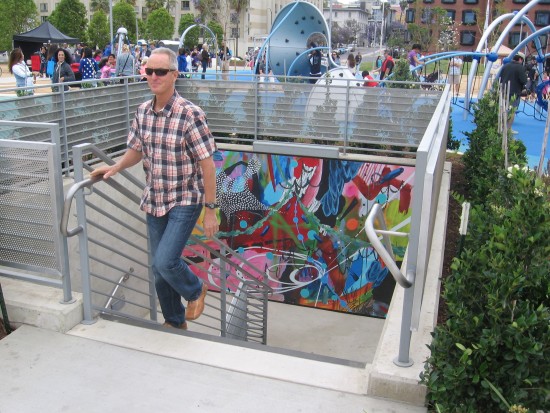
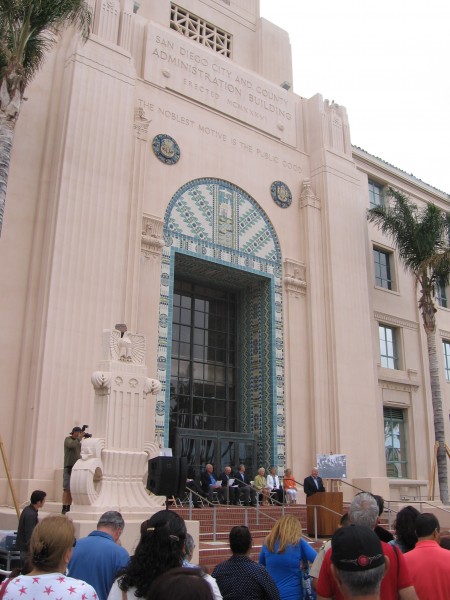
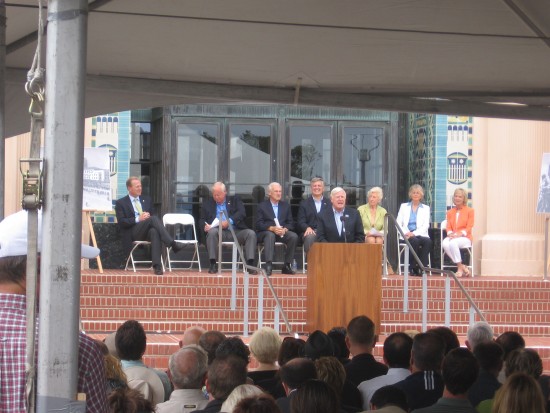
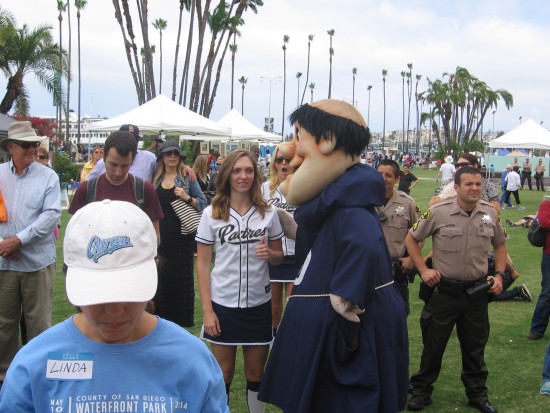
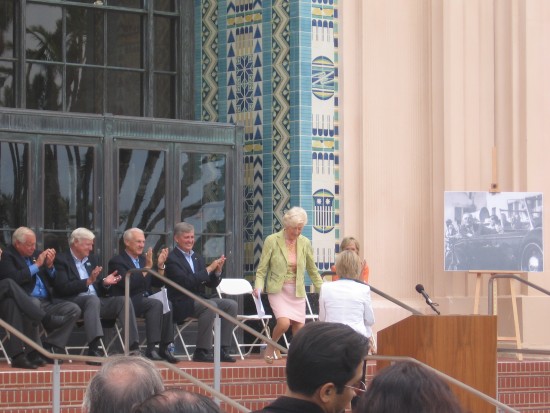
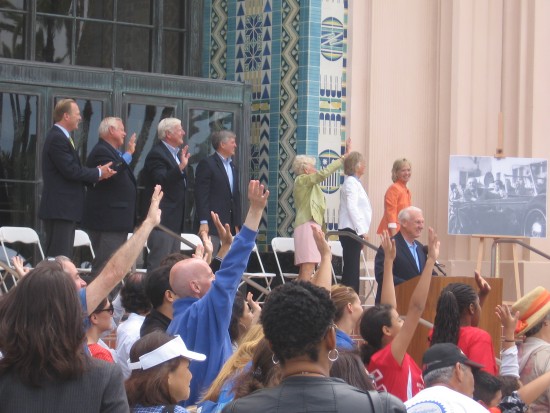
Someone arrives from parking structure beneath new park.Opening ceremony in front of County Administration Building.County Supervisor inaugurates new waterfront park.VIPs and the public listen to many speeches.The Padres’ friar mascot circulates in the crowd.Mary Roosevelt, daughter-in-law of President Franklin D. Roosevelt.
President Franklin D. Roosevelt dedicated the County Administration Building in 1938.
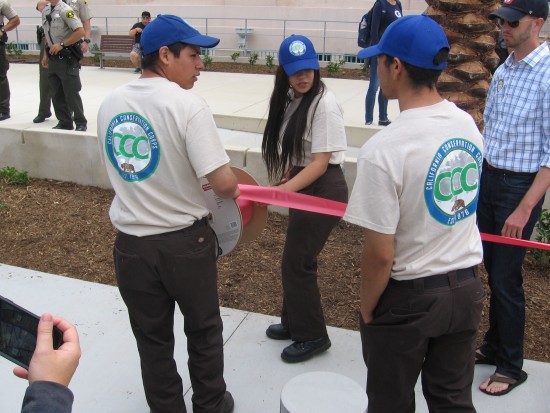
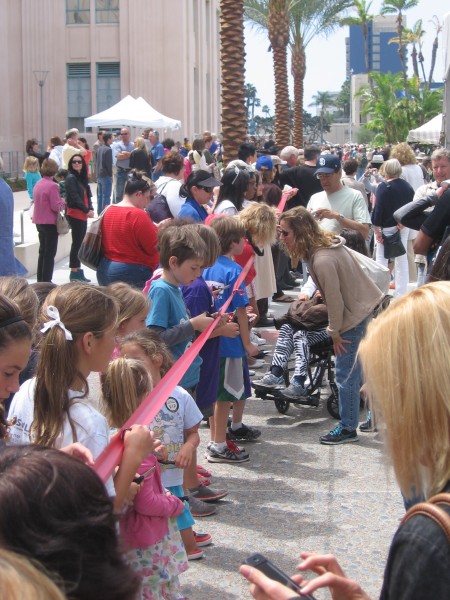
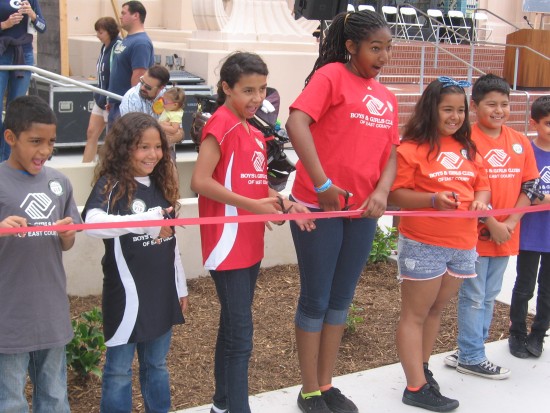
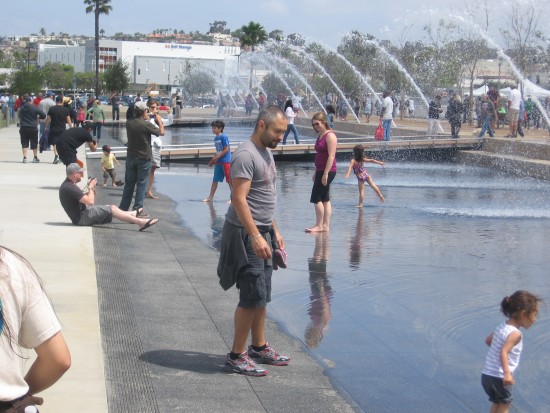
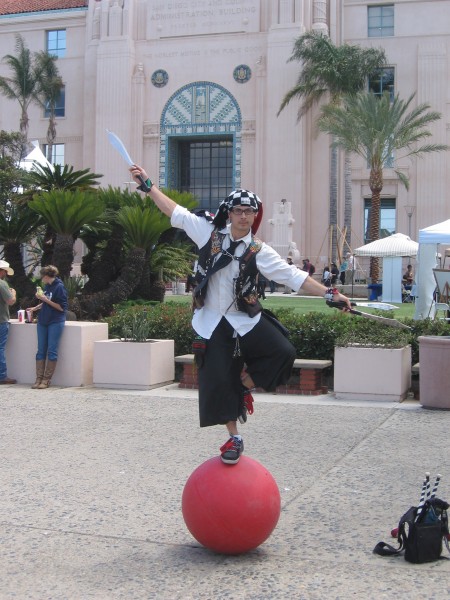
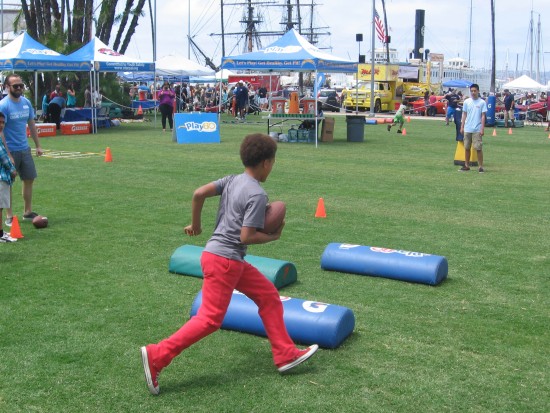
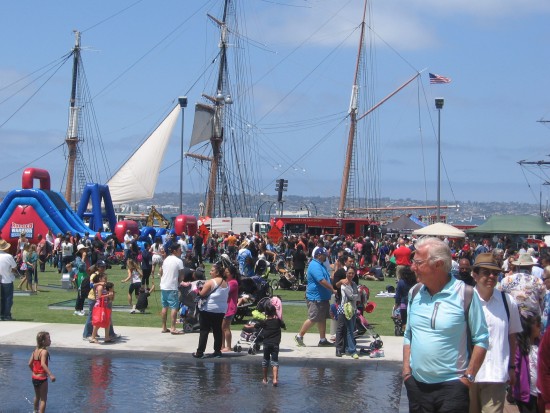
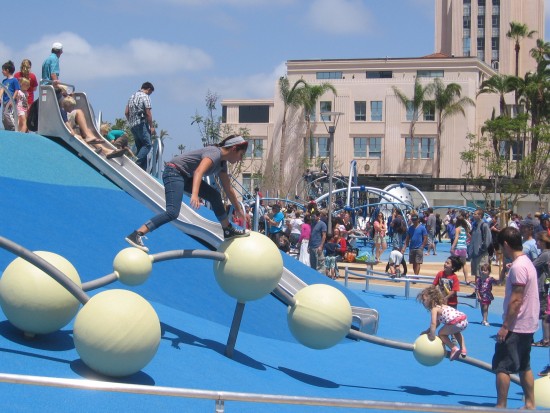
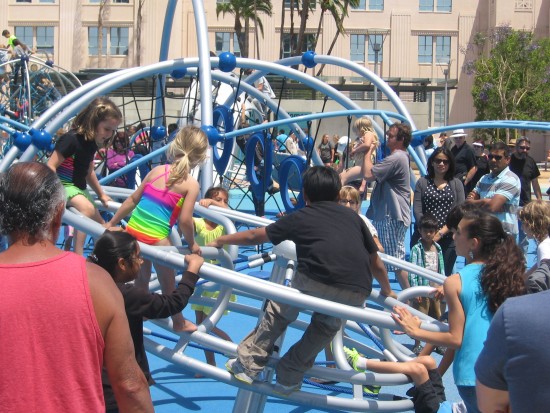
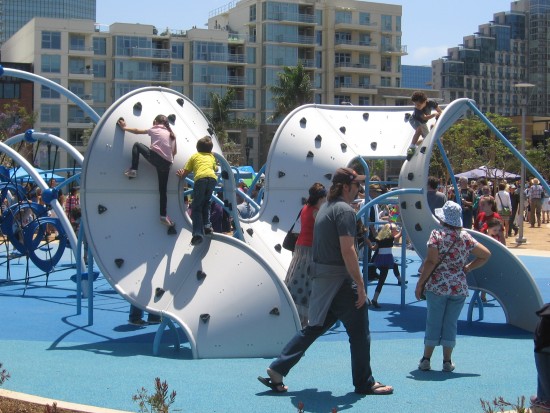
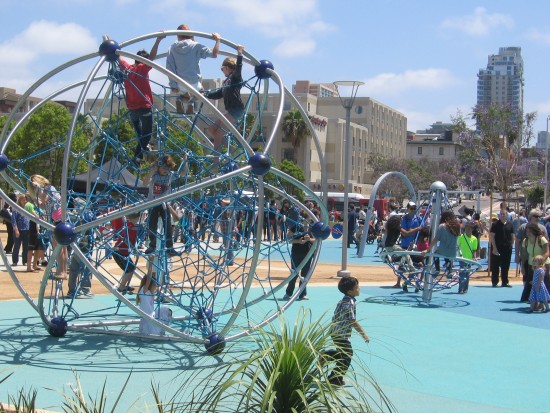
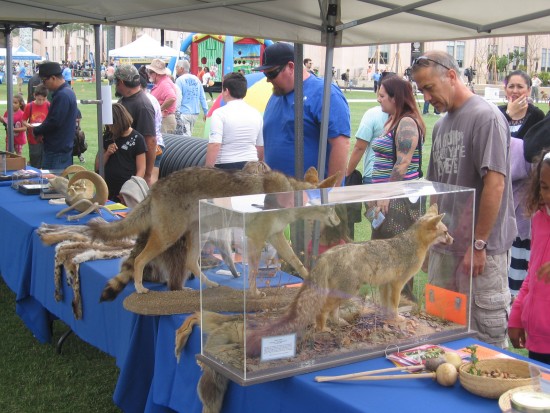
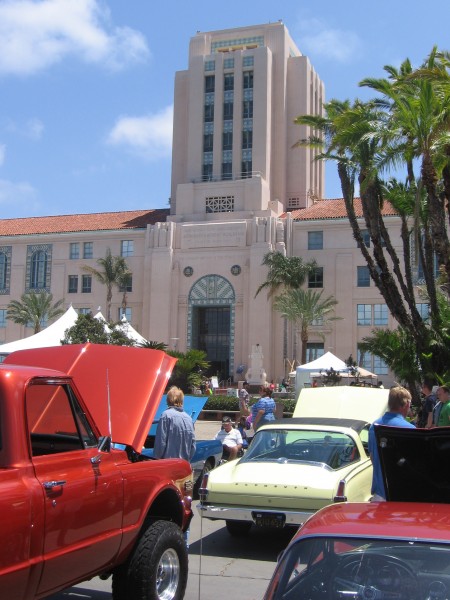
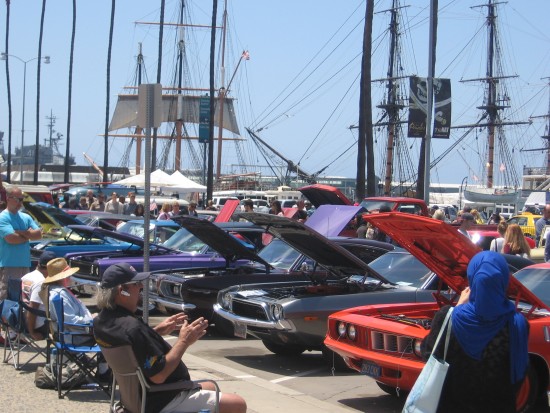
Everyone waves to photographer atop Star of India.Unrolling the 1600 foot long grand opening ribbon!Everyone positions to cut the park-length ribbon!Boys and Girls Clubs of East County helps to cut the ribbon.The fountains are turned on and wet fun begins!Looking through fountains on north side of park.Street performer in front of County Administration Building.Kid carries footfall through Play60 obstacle course.Kids play miniature golf on the grassy lawn.Trying to score against San Diego Sockers goalie!Star of India and waterfront behind opening day crowd.Cool hill with slides is part of the huge playground.Kids have loads of fun on the big playground.An awesome playground in downtown San Diego!Who wouldn’t love climbing in this net-filled sphere!The shallow fountain on the park’s south side is busy.Parks and Recreation had wildlife displays!Kid checks out a fire engine.A gigantic car show was held on Harbor Drive.San Diego Maritime Museum behind classic cars.A cool woodie with surfboard!
…
To enjoy future posts, you can “like” Cool San Diego Sights on Facebook, or follow me on Twitter.
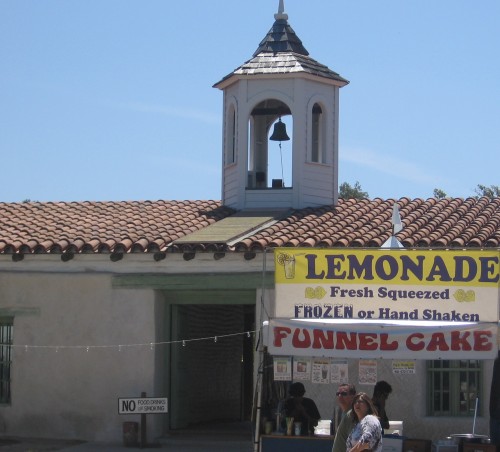
Front of Casa de Estudillo seen during Cinco de Mayo.
Ramona, written by Helen Hunt Jackson in 1884, is one of the most popular American novels in history. The book has had more than 300 printings. It’s been made into a movie four times. Today, few remember it.
Those who walk through La Casa de Estudillo in San Diego’s historic Old Town, however, are seeing with their own eyes a remnant of Ramona’s fame. Without that novel, and past generations’ fondness for its main character, this handsome old building and possibly others around it would have been torn down and utterly obliterated.
The Casa de Estudillo was built in 1827. It was the property of José María Estudillo, an early settler of San Diego. Captain Estudillo was twice Commandant of the Presidio of San Diego. This large, many-roomed adobe was one of finest houses in all of Mexican California, and remains one of the oldest surviving examples of Spanish Colonial architecture in California.
Shortly after the publication of Ramona, the house, in the hands of a caretaker, enjoyed a burst of popularity with tourists when San Diego’s newspaper, the San Diego Union, declared that the Estudillo house was the title character’s wedding place. Helen Hunt Jackson never stated this was so; the novel described a similar location, but was fictional.
As decades went by the old adobe fell into disrepair and might have been razed. In 1906, John D. Spreckels, owner of the San Diego Electric Railway Company and the Union newspaper, purchased the house and preserved it, transforming it into a true tourist attraction. He altered the building to make it seem more compatible with the description of Ramona’s marriage place, while adding electricity and other conveniences.
The building eventually was given National Historic Landmark status. It’s exaggerated association with the novel caused it to be officially described as “Casa Estudillo/Ramona’s Marriage Place.”
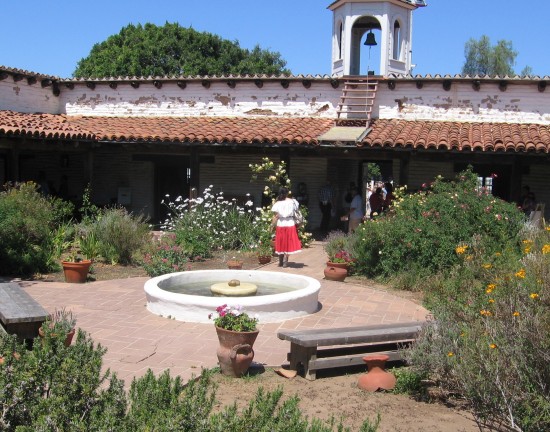
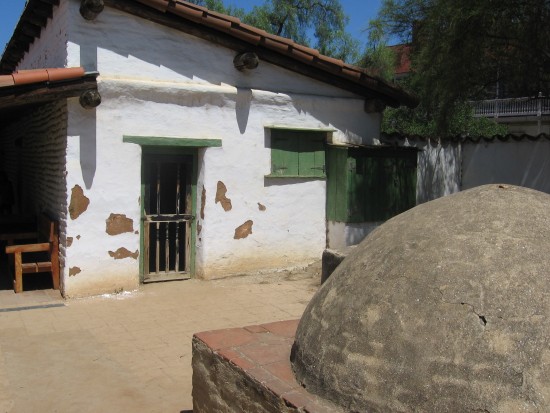
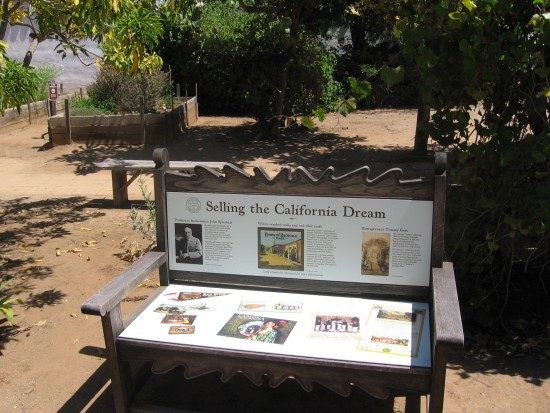
Just inside the courtyard looking up at bell tower.Courtyard fountain of historic Casa de Estudillo.Outdoor oven and one end of old U-shaped adobe house.The house was heavily promoted as the wedding place of Ramona.Walking along the outdoor corridor of old Spanish Colonial home.Camera’s flash illuminates one interior room.Trees and flowers in the beautiful courtyard.Ramona, a famous novel, saved history in Old Town.
…
To enjoy future posts, you can “like” Cool San Diego Sights on Facebook, or follow me on Twitter.
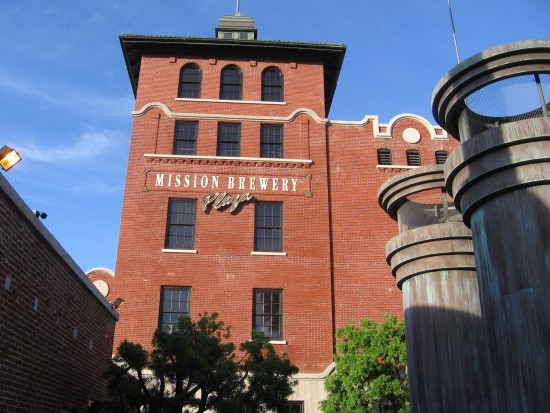
A very cool building is located in San Diego’s Middletown neighborhood, near the intersection of Washington Street and Interstate 5. Here are a few photos I took the other morning!
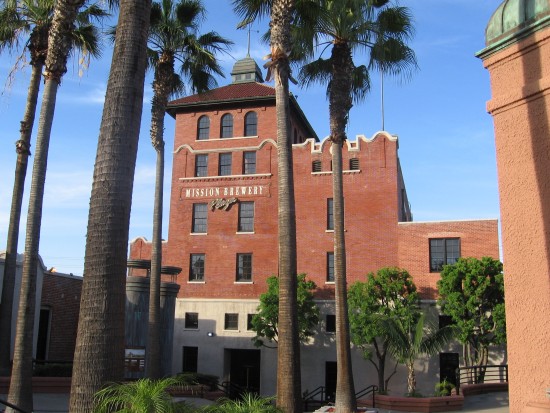
The historic building, dating from 1912, was the first brewery in the United States to be built in the Mission Revival Style. Today it remains the only Mission Revival industrial building in San Diego.
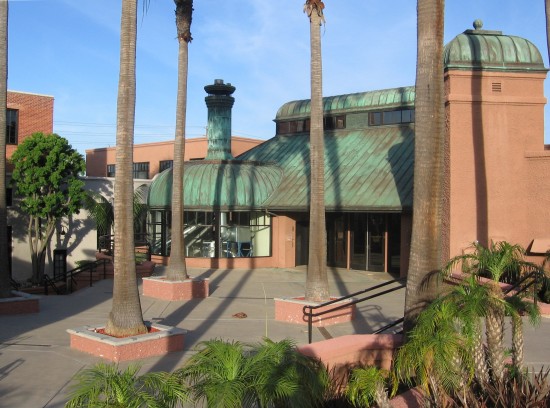
Briefly, prior to Prohibition, a non-alcoholic drink called Hopski was produced here. The large building then served as an isolation hospital during the 1918 flu pandemic. Later it was converted into an agar plant. Today the historic landmark is a part of Mission Brewery Plaza, whose buildings contains professional offices and a new craft brewery called Acoustic Ales Brewing Experiment.
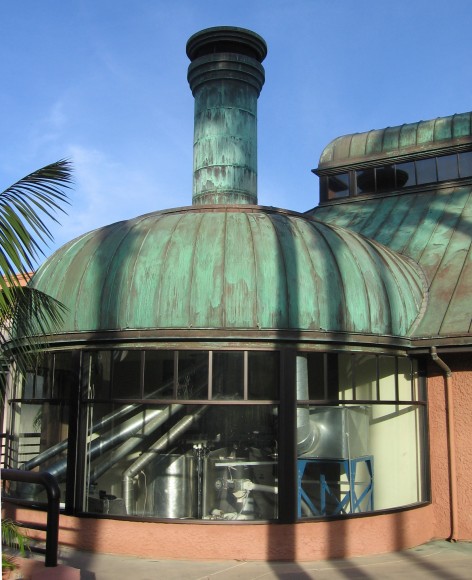
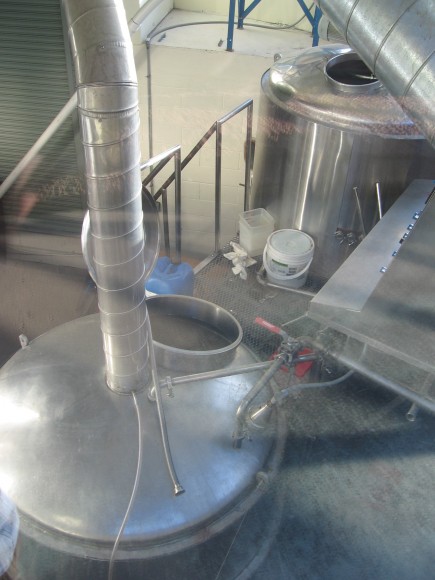
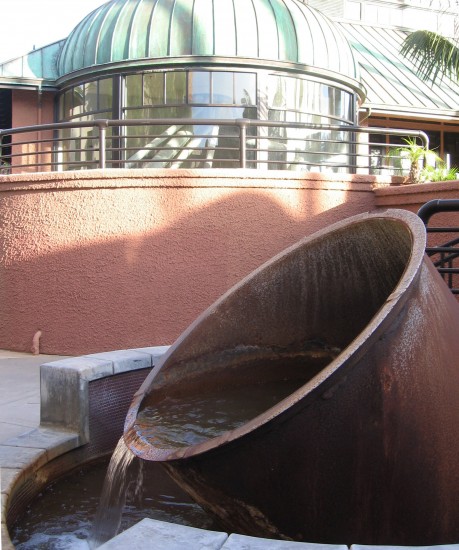
The building has served many purposes over the years.Acoustic Ales Brewing Experiment now occupies this area.Where beer is made today.Old production vat now is an outside fountain.A very cool building!
…
To enjoy future posts, you can “like” Cool San Diego Sights on Facebook, or follow me on Twitter.
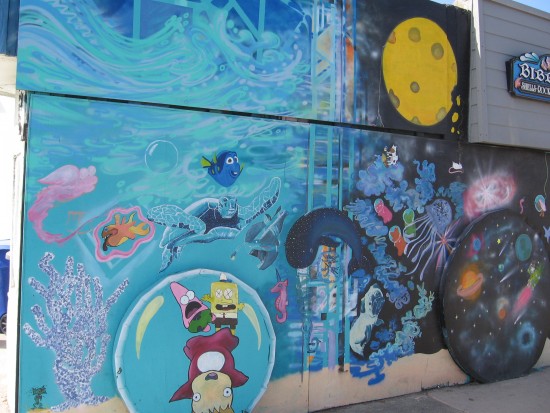
Bibbey’s mural includes Finding Nemo and SpongeBob.
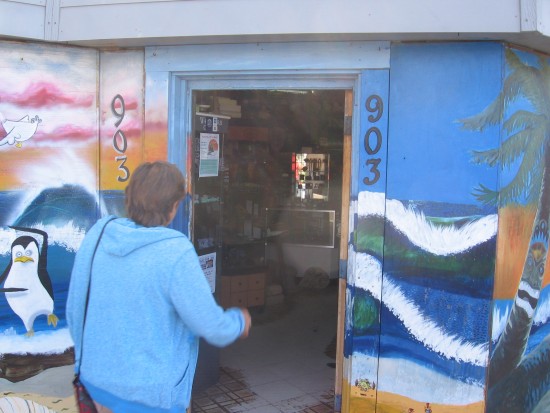
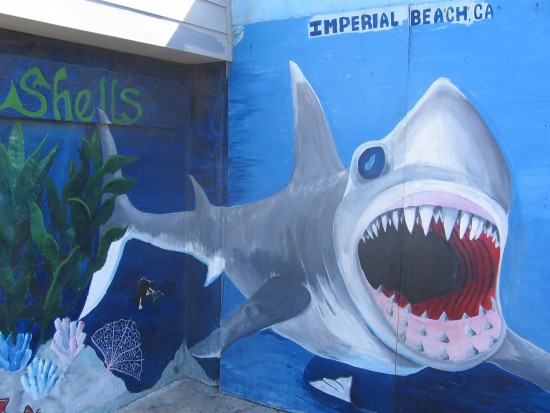
Bibbey’s gift shop, which sells sea shells, rocks and other great stuff, is located across the street from the Imperial Beach pier. It’s hard to miss. The building is one big crazy mural! Check out the wild creativity which blends images from television, movies and the popular culture.
Cosmic ocean fantasy and an Imperial Beach mural.Fierce octopus guards door of cool gift shop.A sexy mermaid, the Lorax and other fun elements.Kung Fu Panda and a surfing dragon!Madagascar penguins and Patrick.Someone enters Bibbey’s gift shop.Another great section of Bibbey’s crazy mural.Shark spotted on wall of Imperial Beach building!
…
To enjoy future posts, you can “like” Cool San Diego Sights on Facebook, or follow me on Twitter.
I hope you enjoyed my last blog post, where I described a hike around the Guy Fleming Trail in Torrey Pines State Reserve. Now I’d like to take you up to see the Lodge.
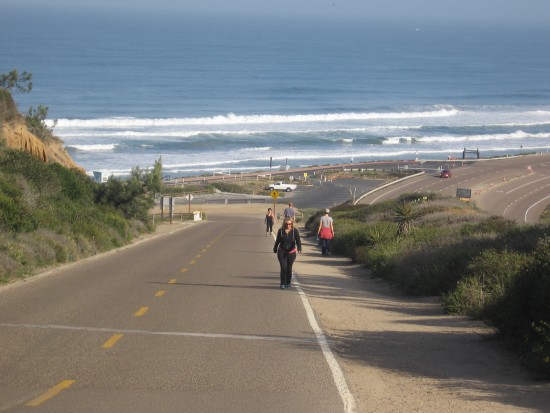
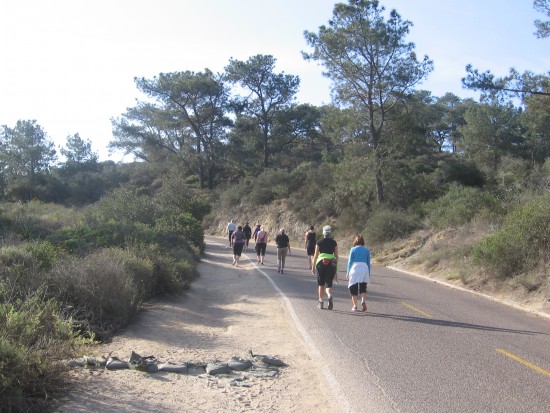
We’re going to start at the entrance of Torrey Pines State Reserve, just off the Pacific Coast Highway. We’ll be climbing the steep Torrey Pines Park Road all the way to the historic Lodge.
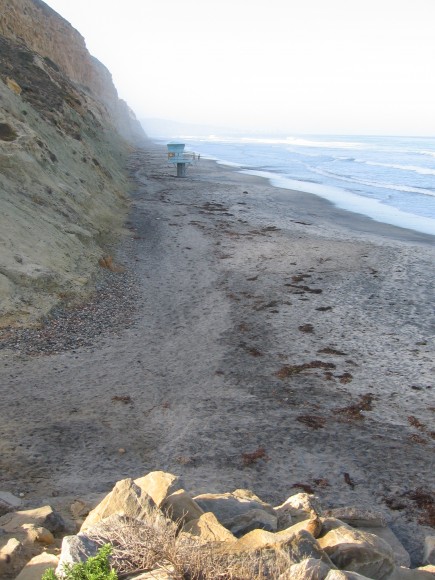
Looking south along Torrey Pines State Beach.
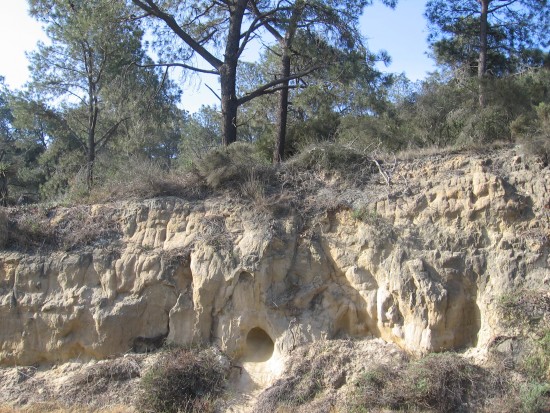
As we begin our climb we bend away from the beach, but pause for a moment to observe the high sandstone cliffs to our south. This wonderful beach, which extends for many miles, will be the subject of a future blog post!
Heading up steep Torrey Pines Park Road.Entering a zone full of endangered Torrey pines.Torrey pines stand atop eroded sandstone cliffs.
The Torrey pine is an endangered tree found only here and on Santa Rosa island. We’ll learn more about it shortly…
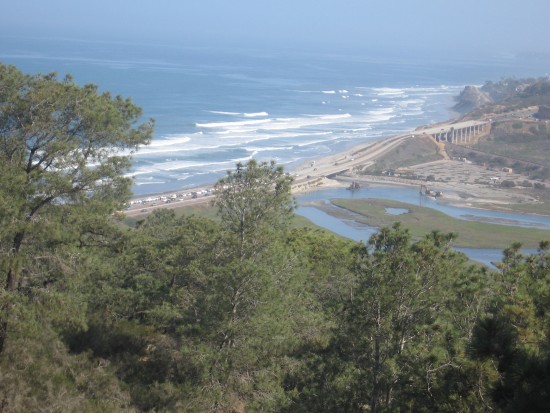
View of lagoon and ocean from High Point Overlook.
Near the top of the road we come to High Point Overlook, a short trail that heads up some steps for a 360 degree view. Here we’re looking north and seeing a bit of the Los Peñasquitos Lagoon.
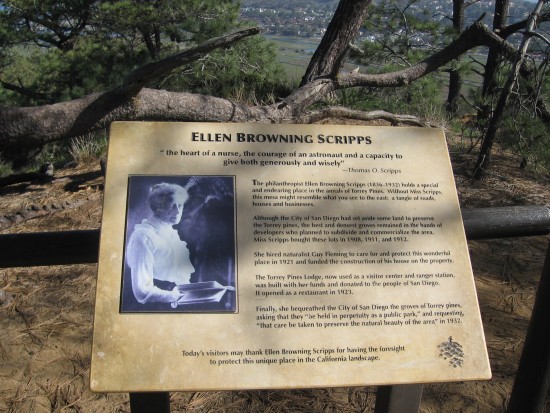
Sign about philanthropist Ellen Browning Scripps.
This sign stands among some Torrey pines at the top of the overlook. It reads:
The philanthropist Ellen Browning Scripps (1836-1932) holds a special and endearing place in the annals of Torrey Pines. Without Miss Scripps, this mesa might resemble what you see to the east: a tangle of roads, houses and businesses.
Although the City of San Diego had set aside some land to preserve the Torrey pines, the best and densest groves remained in the hands of developers who planned to subdivide and commercialize the area. Miss Scripps bought these lots in 1908, 1911, and 1912.
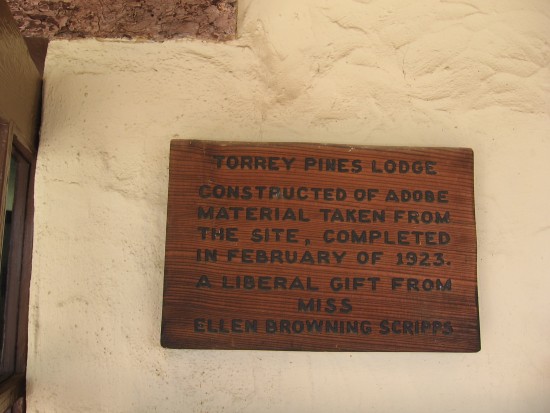
She hired naturalist Guy Fleming to care for and protect this wonderful place in 1921 and funded the construction of his house on the property.
The Torrey Pines Lodge, now used as a visitor center and ranger station, was built with her funds and donated to the people of San Diego. It was designed by noted architects Richard Requa and Herbert Lewis Jackson. It opened as a restaurant in 1923.
Finally, she bequeathed the City of San Diego the groves of Torrey pines, asking that they “be held in perpetuity as a public park,” and requesting, “that care be taken to preserve the natural beauty of the area” in 1932.
Today’s visitors may thank Ellen Browning Scripps for having the foresight to protect this unique place in the California landscape.
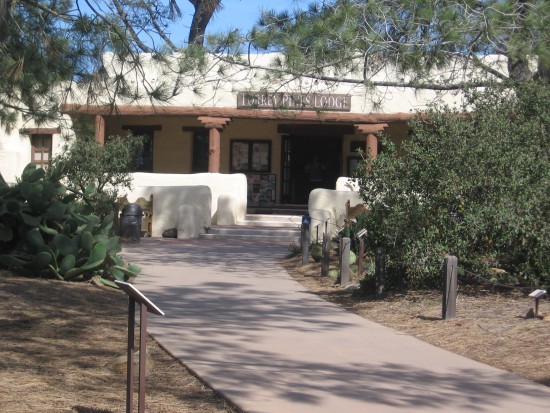
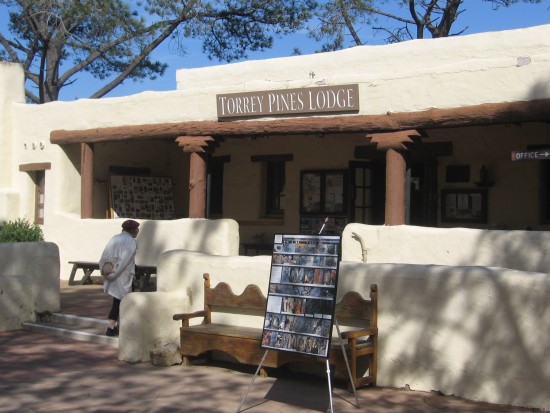
Nearing Torrey Pines State Reserve’s historic Lodge.
A little more walking takes us to our main destination, the Lodge. An old adobe built in 1922, it originally served as a restaurant! According to the official website, it had stumpy tables, chintz curtains, lampshades made of Torrey Pine needles, and a jukebox! Back in those days, Model T cars had difficulty going up the steep hill, because they didn’t have a fuel pump, and instead relied on a gravity system. When the steeply climbing cars conked out, drivers were told to continue up the hill in reverse!
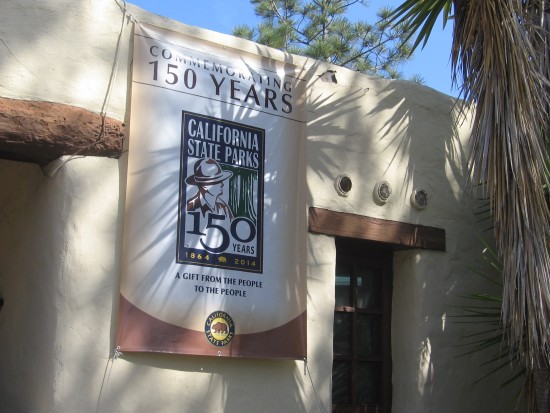
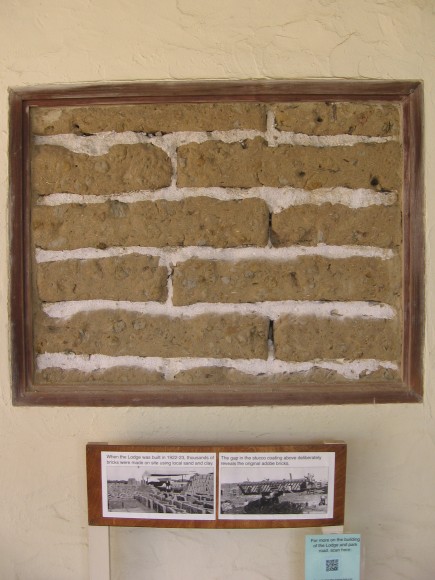
Banner commemorates 150 years of California State Parks.Gap in Lodge’s stucco shows original adobe bricks.
This is near the front door. The sign below reads:
When the Lodge was built in 1922-23, thousands of bricks were made on site using local sand and clay. The gap in the stucco coating above deliberately reveals the original adobe bricks.
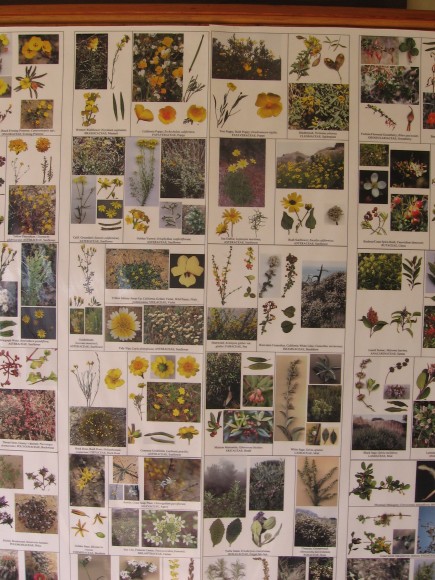
Portion of large sign outside describing coastal flowers.Interior of Lodge is a museum and visitor center.
I love the interior of the Lodge. There’s so much interesting stuff to see, and so much history and natural charm jammed into one place. The Lodge is open daily 9 AM to 6 PM during summer daylight saving time and 10 AM to 4 PM during winter standard time. Ranger guided hikes are available on weekends.
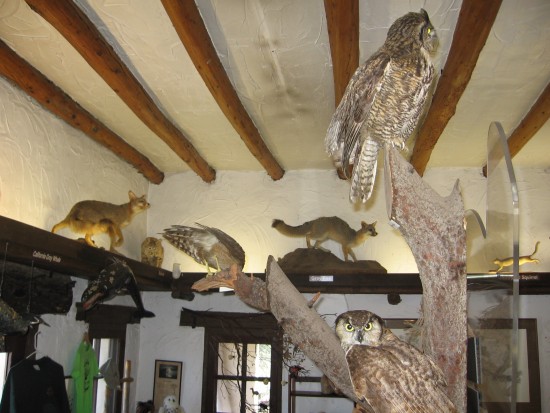
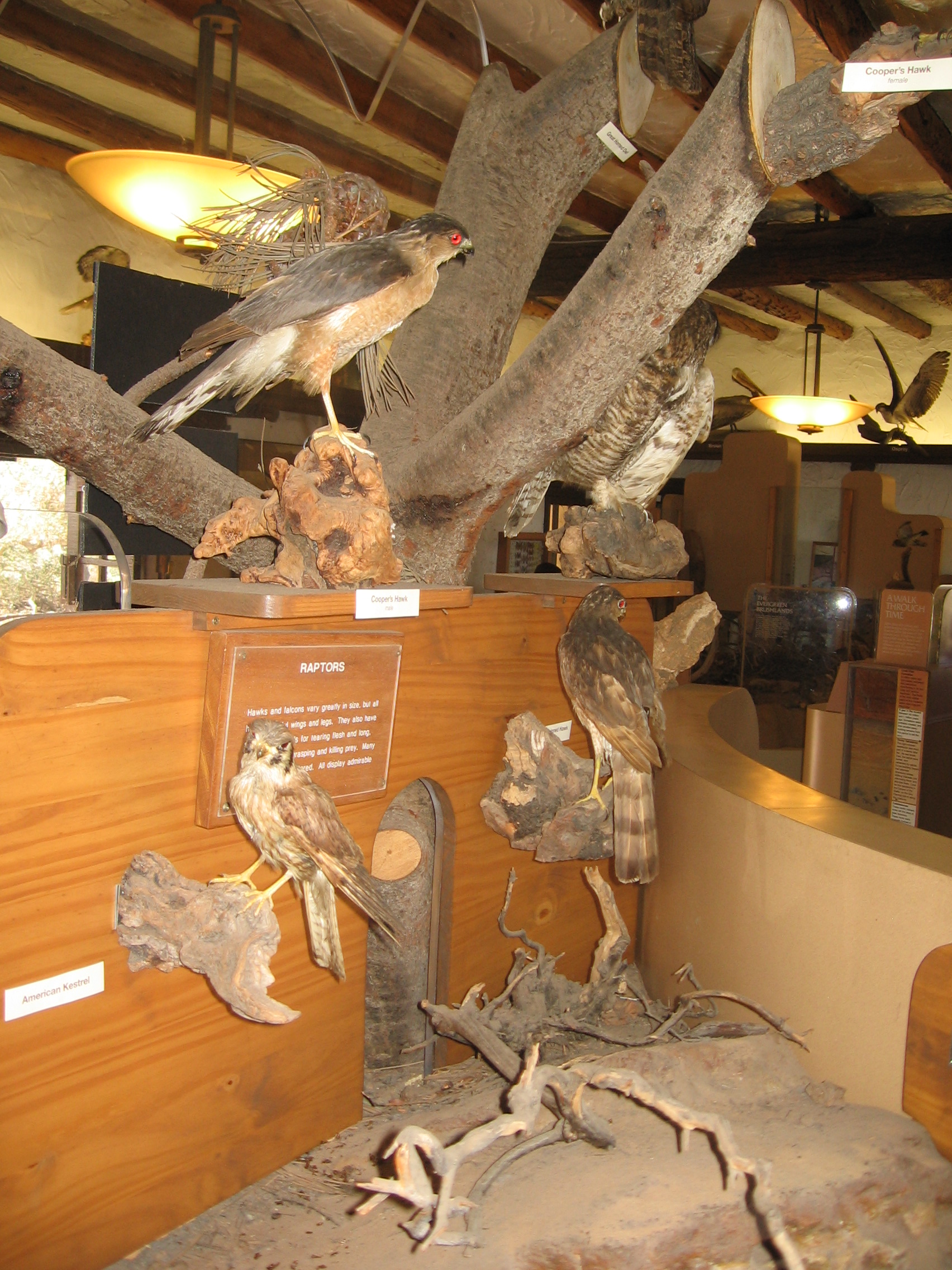
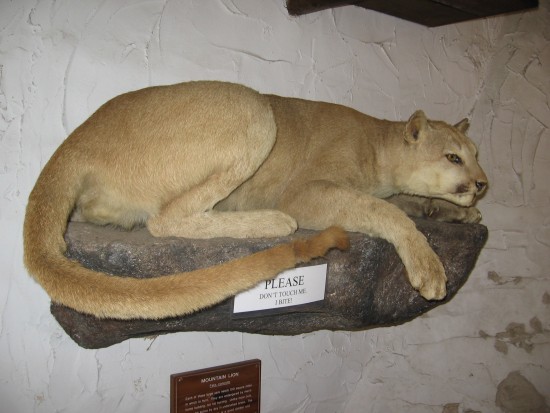
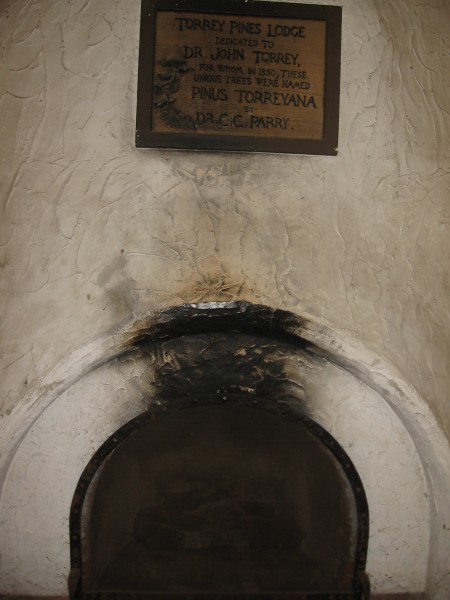
One of many educational exhibits.Mountain lion patiently watches visitors to the Lodge.Plaque in Lodge credits Ellen Browning Scripps.Old fireplace shows decades of use.
The plaque above the old fireplace reads:
Torrey Pines Lodge dedicated to Dr. John Torrey, for whom, in 1850, these unique trees were named Pinus torreyana by Dr. C. C. Parry.
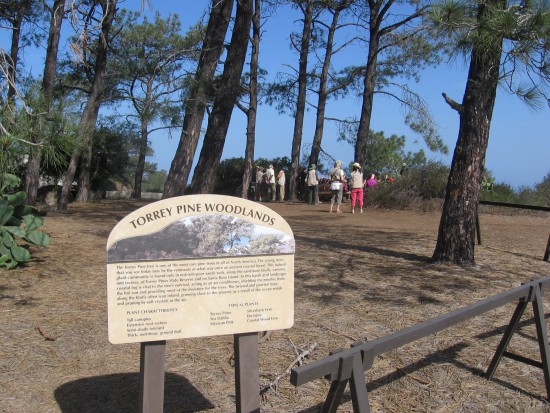
Sign behind Lodge describes Torrey Pine Woodlands.
Now we’ve headed back outside, around the back of the Lodge. Numerous Torrey pines are all around us, and benches are sprinkled here and there with sweeping views eastward toward developed Carmel Valley and Interstate 5.
This sign reads:
The Torrey Pine tree is one of the most rare pine trees in all of North America. The young trees that you see today may be the remnants of what was once an ancient coastal forest. This natural plant community is found only in nutrient-poor sandy soils, along the sandstone bluffs, canyons, and ravines, of Torrey Pines State Reserve and on Santa Rosa Island. In this harsh arid landscape, coastal fog is vital to the tree’s survival, acting as an air conditioner, shielding the needles from the hot sun and providing most of the moisture for the trees. The twisted and gnarled trees along the bluffs often lean inland, growing close to the ground, as a result of the ocean winds and pruning by salt crystals in the air.
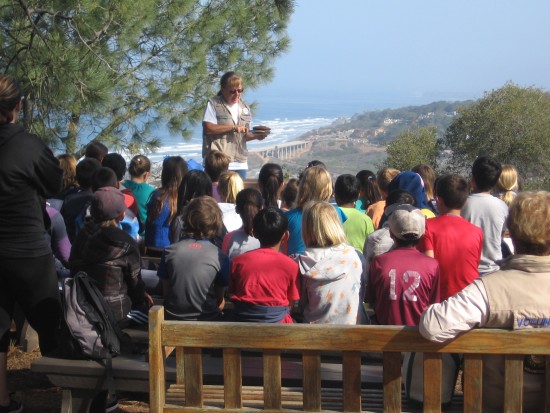
School kids learn about local flora and fauna.
A ranger was giving a bunch of school kids a talk about Torrey Pines State Reserve. They’ll remember this special place for the rest of their lives.
The Lodge at Torrey Pines State Reserve is a must see!
…
To enjoy future posts, you can “like” Cool San Diego Sights on Facebook, or follow me on Twitter.
Figures associated with books linger in relief above entrance of old San Diego Central Library. Literature East, by famed local artist Donal Hord, 1953.
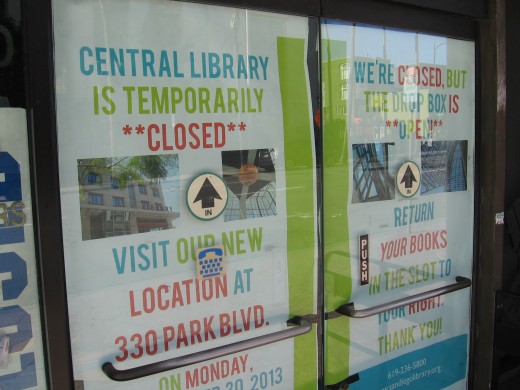
San Diego’s old Central Library on E Street was never really much to look at–in my opinion, at least. It was just a small, nondescript, almost colorless building across from the downtown Post Office. When the brand new gleaming Central Library opened in East Village, the doors of the old library were shut forever. But a few notable images–beautiful works of art near the entrance–still remain.
The classic Literature Panels at either side of the library entrance were created in 1953, when the building was new, by important San Diego artist Donal Hord, whose iconic works can be seen throughout the city. These reliefs depict readers and writers of books in human history.
Because of poor health as a child, he spent many hours in the San Diego Public Library and developed a love for reading.
Timeless art by an internationally renowned San Diego sculptor depicts books and their association with history, music and culture. Literature West, by Donal Hord, 1953.
Clock shows midnight on east side of closed San Diego library.
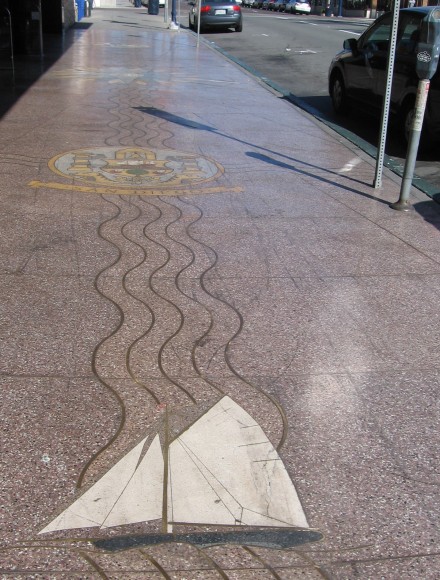
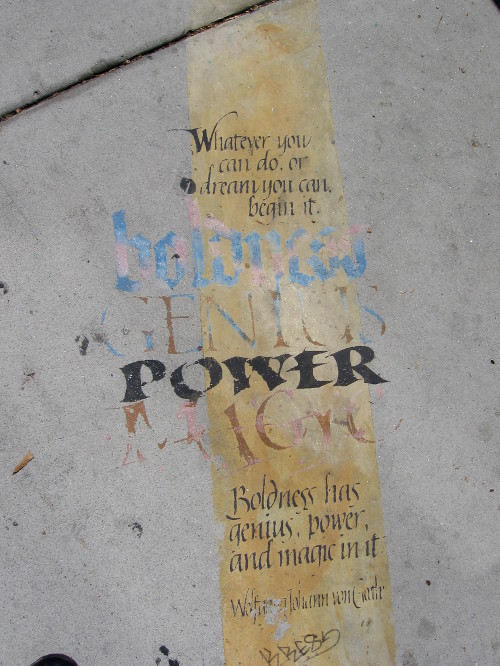
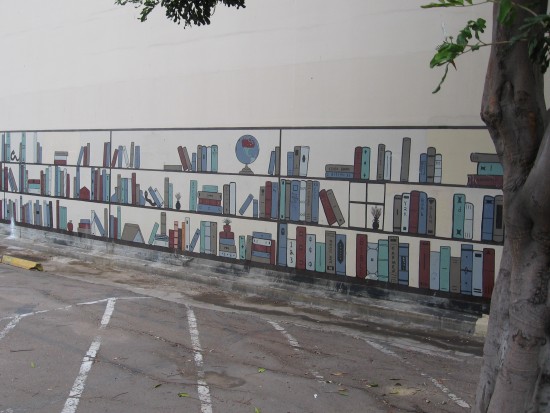
A lamp still burns on the vacant library’s front sidewalk.The empty sidewalk contains images once tread by many feet.Graphic on sidewalk in front of old library tells of dreams, boldness and genius.Books still line the parking lot behind vacant library.Little else remains to be seen at the old Central Library.
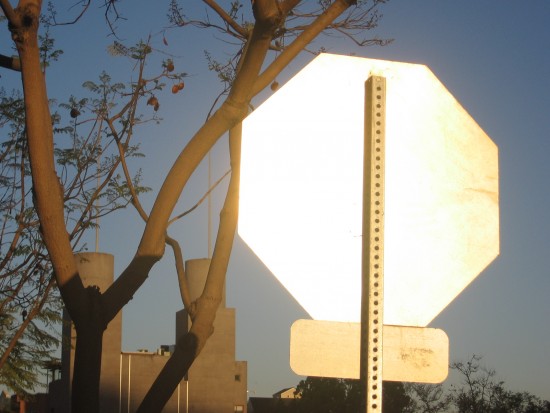
Back of stop sign flashes silver in the morning sunlight.
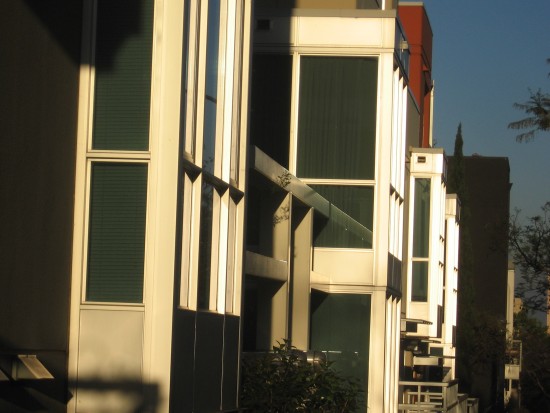
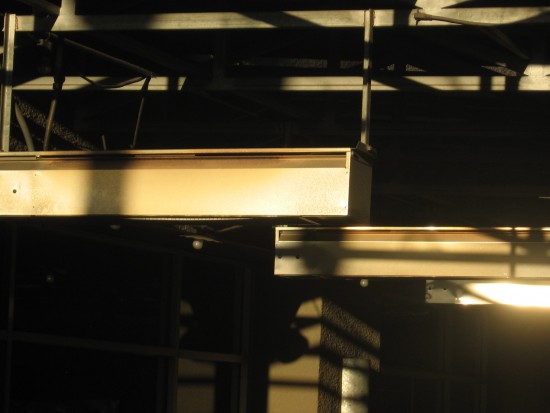
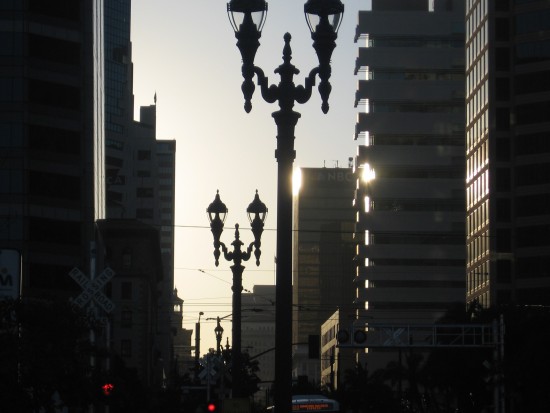
Early yesterday morning I walked west down Cedar to catch the trolley in Little Italy. The sun had just risen above the horizon and its rays were slanting through the cityscape almost horizontally. Metal surfaces were shining and shadows were still deep. It made for some very interesting photos!
Slanting sunshine on building highlights layered geometry.Light and shadow angled and entangled.Shadows on wall cast by tree and street light.Early sunlight begins to penetrate dark places.
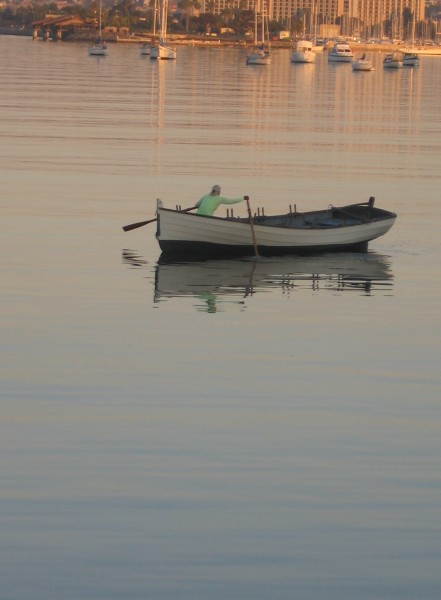
Lone rower on San Diego Bay in golden morning light.
I went for a walk bright and early yesterday morning. I got a few photographs of downtown San Diego along the waterfront.
The bay was quiet and very smooth. A lone rower was out slowing gliding across the water. The sun had just begun to rise in the cloudless sky behind shining skyscrapers…
Anthony Fish Grotto’s boat dock on a tranquil San Diego Bay.Sunrise touches downtown San Diego skyscrapers with light.An early morning look down Broadway in San Diego.
…
I live in downtown San Diego and love to walk around with my camera! You can follow Cool San Diego Sights via Facebook or Twitter!
The scene downtown is constantly fascinating. The kaleidoscope of colors, thousands of people on the move, the crazy, seemingly random whirl of activity…
Over the years, the buildings themselves participate in this dance of life. New structures rise into the shining skyline like spring flowers, and old, crumbling derelicts are torn down to make way.
The time-worn Brake Depot is being torn down. Once the pride of the block, it’s being swept away to make room for new development. Here are some photographs:
The now empty remains of Brake Depot on B Street.Instruments of urban destruction sit idle.Glass skyscraper shines behind a sadly destroyed wreck.A big hole in one wall of the former Brake Depot.
UPDATE!
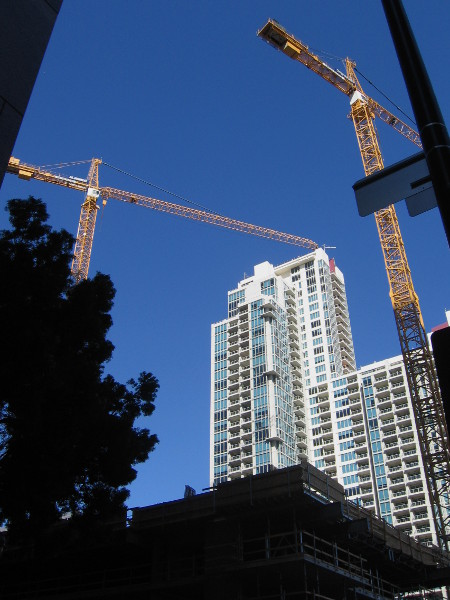
Brake Depot is long gone. But look what’s rising in late 2015!
A new downtown San Diego project, called Blue Sky, is rising where Brake Depot used to be. Blue Sky will be downtown’s largest apartment building, with 939 units!Blue Sky’s two towers will be located on B Street between Symphony Towers and Vantage Pointe (in the background), which is currently San Diego’s largest apartment complex.
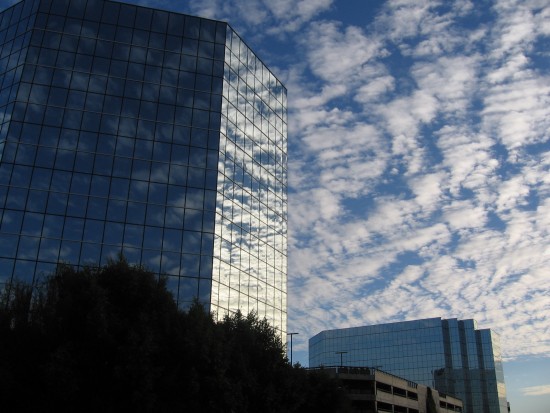
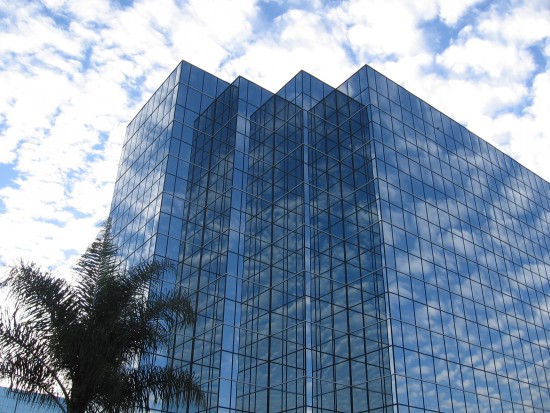
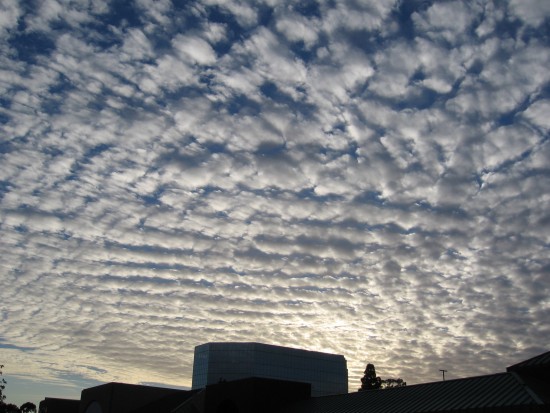
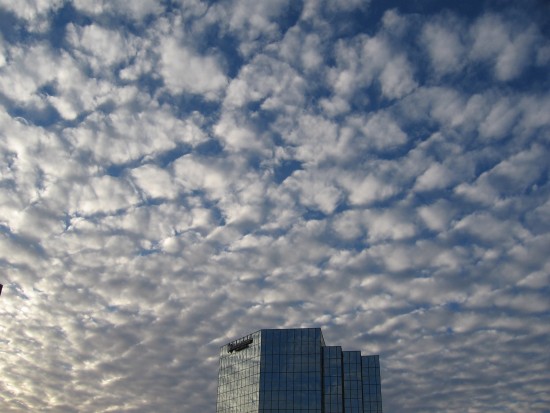
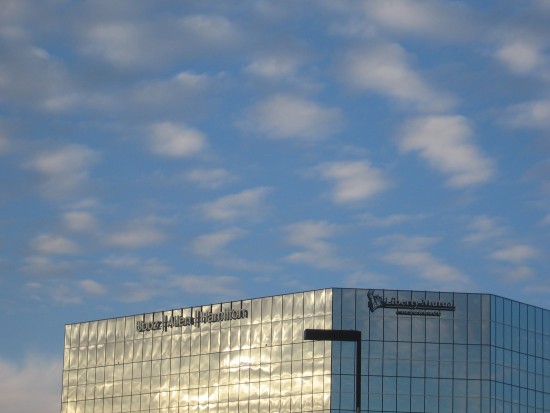
I snapped these photographs late Monday, a few minutes after five o’clock. I was walking in Mission Valley, near the intersection of Friars and Frazee. The sky was absolutely incredible!
Clouds and reflections on two office buildings.Sky and clouds on a grid of windows.Clouds reflected on several angled planes.Lines of radiant, gilded clouds.Looking upward at endlessly changing beauty.Gauzy clouds above a silver building.Straight washboard clouds seem unworldly.




























 Cool San Diego Sights!