A free walking tour of Old Town San Diego.

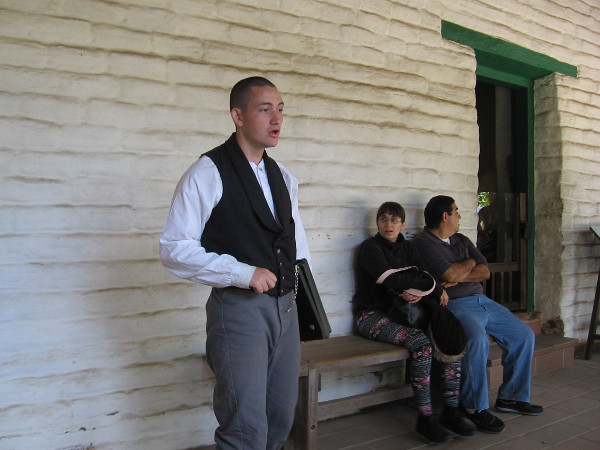
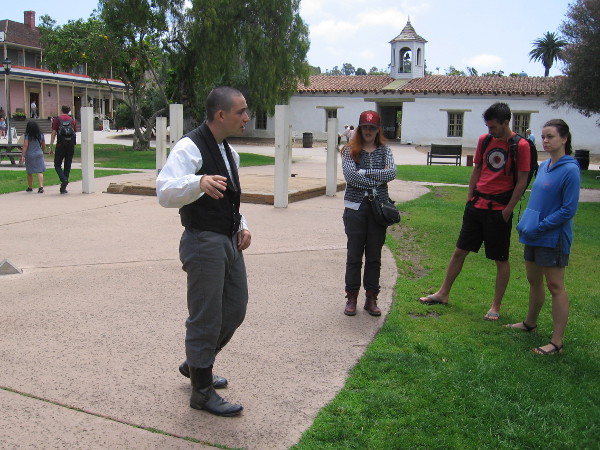
A small group on a free walking tour learns about the history of Old Town San Diego.

A free walking tour of Old Town San Diego State Historic Park is available every day at 11 am and 2 pm. The tours meet in front of the Robinson-Rose House Visitor Center, at the northwest end of Old Town’s large grassy plaza. (UPDATE! In late 2022, post-COVID, the tours were being offered Thursday and Friday at 11 am. Times are subject to change!)

When I visit Old Town San Diego, I’ll sometimes join the walking tour while it’s in progress. Last weekend I happened to be in front of the Robinson-Rose House right at eleven o’clock, so I decided to enjoy the full one hour tour!

During this easy walk a guide in period costume provides fascinating information about San Diego’s early history. Several different periods are covered, from the Spanish mission period, to the Mexican rancho period, to the early American period. The main interpretive period is 1821 to 1872.

Among the following photos are a few interesting bits of history…

Free walking tours begin daily at 11 and 2 in front of the Robinson-Rose House Visitor Center at Old Town San Diego State Historic Park.
Inside the Robinson-Rose House visitors can view a large model behind glass. It shows what Old Town San Diego looked like in 1872.
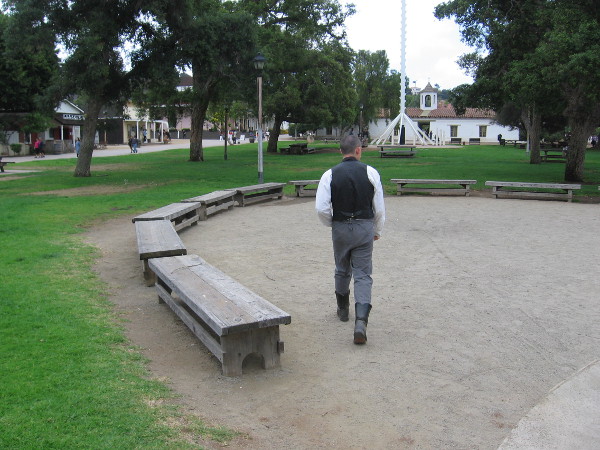
The tour guide leads our group out into Old Town's historic Plaza de las Armas.
The tour guide leads our group out into Old Town’s historic Plaza de las Armas.
We learn that the Native American Kumeyaay village of Cosoy was located right here, long before Old Town was established.

The Native American Kumeyaay village of Cosoy was located where Old Town San Diego’s plaza was established. Before the San Diego River was diverted in 1877, its water ran very close to Old Town and was an integral part of the life of early people in our desert-like Southern California coastal region.

Our tour now heads toward restored buildings that stand on the southwest side of the plaza.
We enter Casa de Machado y Silvas, where today visitors can view the small Commercial Restaurant museum.
Our tour guide talks about tiny San Diego during the Mexican rancho period. Trade goods were acquired from merchant ships in exchange for cattle hides, which were called California Banknotes.

When Mexico won its independence from Spain in 1821, the Spanish soldiers of the nearby San Diego Presidio switched their allegiance to Mexico, which couldn’t afford to pay them. For their service, they were given land at the foot of Presidio Hill, where many soldiers and their families built houses. That is how Old Town started.

You can learn more about La Casa de Machado y Silvas and the fascinating Commercial Restaurant museum here.

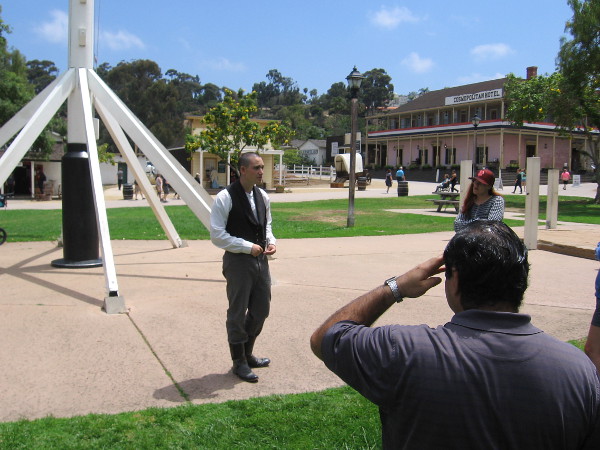
We head back outside into the plaza.
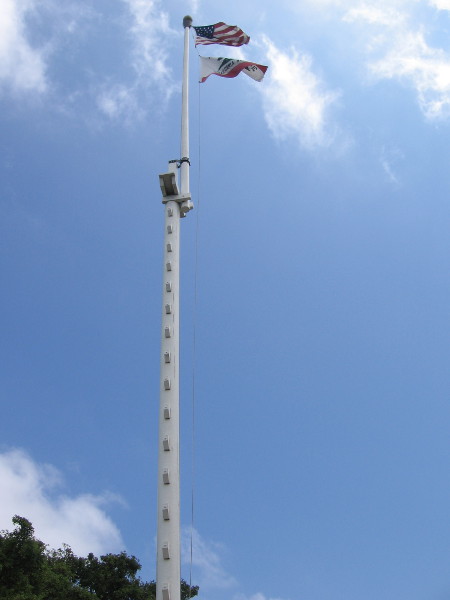
We learn more about Old Town by the unusual, tall flagpole.
We learn more about the history of Old Town by the unusual, tall flagpole.
Old Town's flagpole resembles a ship's mast!
Old Town’s flagpole resembles a ship’s mast!

You might notice the flagpole at the center of Old Town’s Plaza looks a lot like a ship’s mast. Because originally it was!

When an American force under Captain Samuel F. DuPont sailed into San Diego Bay in 1846 to take control of Old Town unopposed, the plaza had no flagpole, because most of the independent-minded Californios who lived here didn’t feel a strong attachment to Mexico. So a ship’s mast was used to raise the flag of the United States.

You can see a bronze plaque commemorating the event here.

You can learn more about the old Spanish cannon that sits in the middle of Old Town’s plaza near the flagpole here.
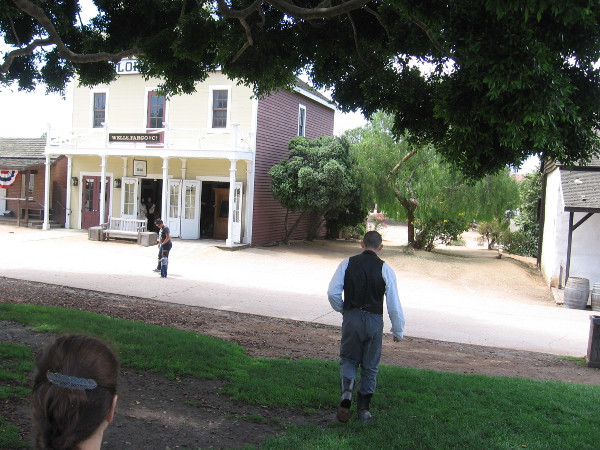
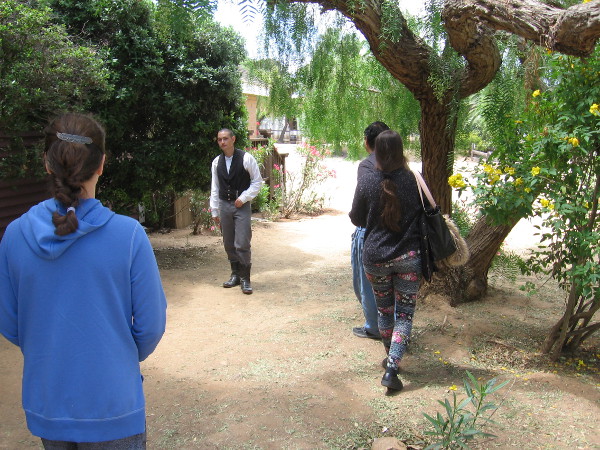
We head toward a tree that stands near the Colorado House.
This is where the Franklin House hotel once stood.

A vacant area of ground beside the Colorado House (now home of the Wells Fargo Museum) is where the Franklin House hotel used to stand. It was Old Town’s only three story building, notable for its relative elegance and its baths.

The Franklin House was destroyed during the great fire of 1872 along with several adjacent buildings including Old Town’s courthouse, ensuring that San Diego’s future would be located in Alonzo Horton’s New Town, which was then called Horton’s Addition.

To learn more about San Diego’s first courthouse, click here.

To learn more about Colorado House and the Wells Fargo Museum, click here.

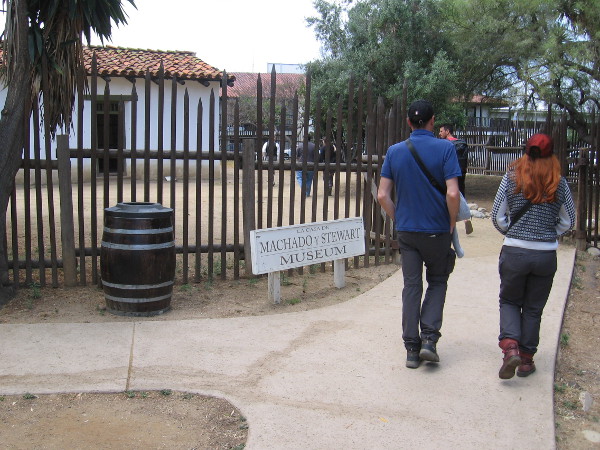
We head toward a beautifully restored adobe house that stands alone behind the plaza buildings.
Entering the grounds of La Casa de Machado y Stewart Museum.
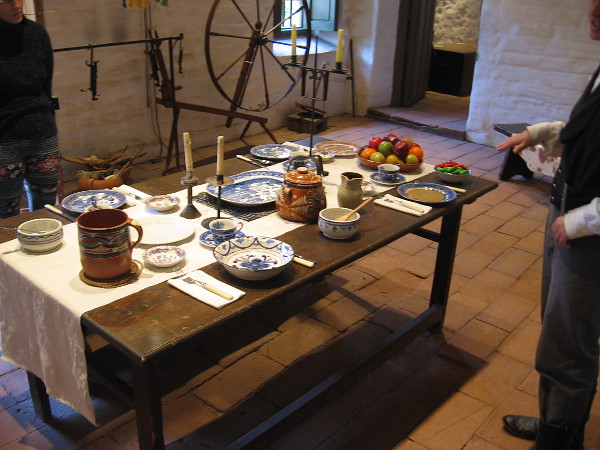
Many artifacts are displayed in the main living room of La Casa de Machado y Stewart. An adjacent bedroom is where parents and daughters slept. The sons slept outside in San Diego's temperate climate.
Many artifacts are displayed in the main living room of La Casa de Machado y Stewart. An adjacent bedroom is where parents and daughters slept. The sons slept outside in San Diego’s temperate climate.

Our tour group then walked over to Casa de Machado y Stewart. We learned many things, including the fact that the fancier china seen on the dining table came by merchant ships that crossed the Pacific from Asia.

The more simple items like candlesticks were made by local blacksmiths. Because iron was rare in San Diego, harpoons from a brief period of whaling in San Diego Bay were used to make a variety of furnishings and household utensils.

You can learn more about the Casa de Machado y Stewart here.

You can learn about Old Town’s blacksmith shop here.

We also learned that the art of brick-making was introduced to Old Town by members of the Mormon Battalion, whose arrival in San Diego you can learn about here.
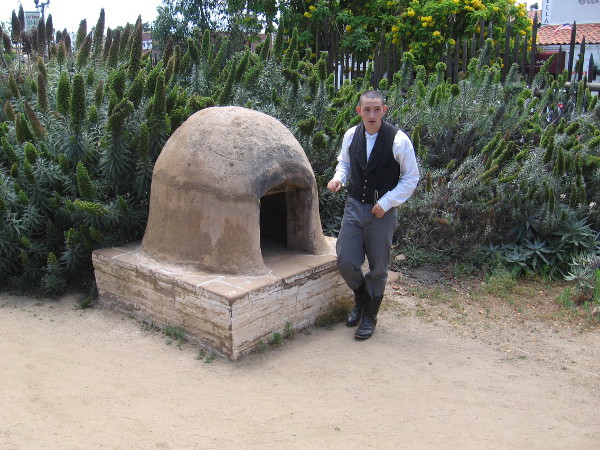
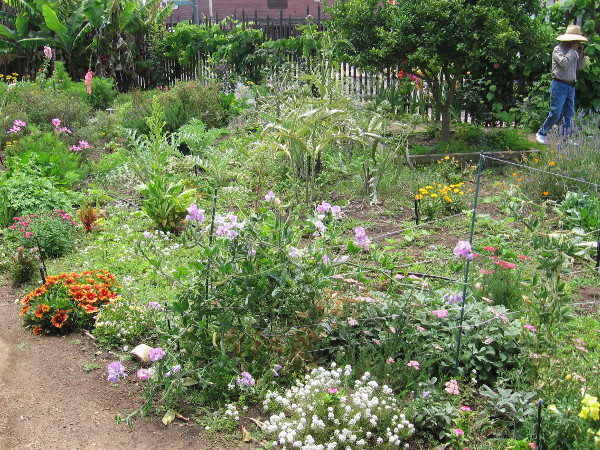
The outdoor oven was made of clay and adobe bricks. Cow manure provided fuel!
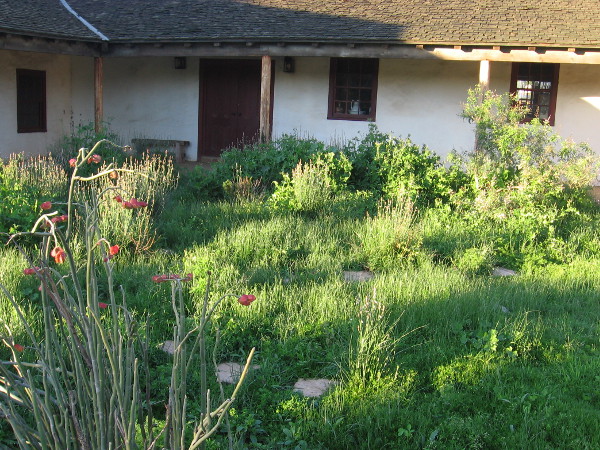
The garden outside La Casa de Machado y Stewart not only provided vegetables for eating, but native herbs used for medicine.
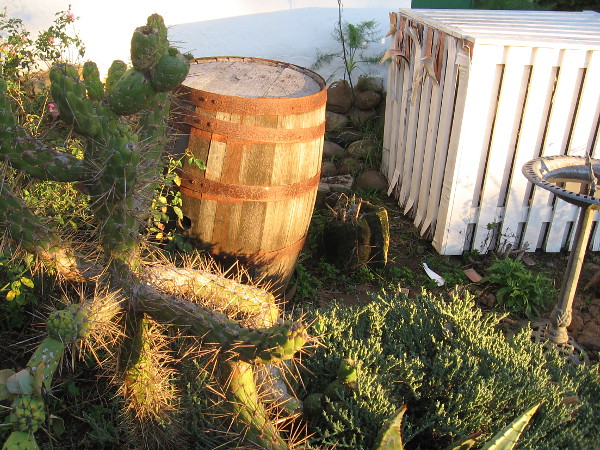
Our tour guide explains the uses of prickly pear. The cochineal beetle found on prickly pears is used to make red dye. That plant you see is about 150 years old!
Finally, we head over to the beautiful, iconic Casa de Estudillo.
The courtyard of the U-shaped Casa de Estudillo includes a simple fountain at the center.
Sitting on wooden benches, learning more about San Diego's unique early history.
Sitting on wooden benches, learning more about San Diego’s unique early history.

The walking tour concluded inside the courtyard of La Casa de Estudillo. In many respects, this beautiful house is the centerpiece of Old Town San Diego. Two past blog posts provide a great deal of information about La Casa de Estudillo.

You can peer into the house’s restored rooms and learn about their history here.

You can learn how a wildly popular novel saved this historic building from destruction here!

The walking tour is over. Now visitors to Old Town can roam wherever they fancy, and visit the numerous free museums around the plaza.
The walking tour is over. Now visitors to Old Town San Diego can roam wherever they fancy, and visit numerous free museums scattered around the plaza.

Finally, to enjoy a good overview of San Diego’s early history, I recommend a visit to Old Town’s excellent McCoy House Museum. You can check out my blog post featuring its many exhibits by clicking here!

UPDATE!

It’s not free anymore! I learned in December of 2025 that the same walking tour costs $10 for adults and $5 for children. I was told the change was made about a month ago.

The tour times have changed, too. They now start at 10 and 11:30 am and 2 and 3:30 pm.

You still meet at the Robinson-Rose Visitor Center.

I live in downtown San Diego and love to walk around with my camera! You can follow Cool San Diego Sights via Facebook or Twitter!

You can easily explore Cool San Diego Sights by using the search box on my blog’s sidebar. Or click a tag! There are thousands upon thousands of photos for you to enjoy!

A quiet Sunday walk down Sixth Avenue.

I enjoyed a slow, easy walk down Sixth Avenue around noontime today. As a rule, the quietest day in downtown is Sunday, but there’s still plenty in the city to discover.

If you’re familiar with San Diego, you might recognize some of the locations in these photos!

I live in downtown San Diego and love to walk around with my camera! You can follow Cool San Diego Sights via Facebook or Twitter!

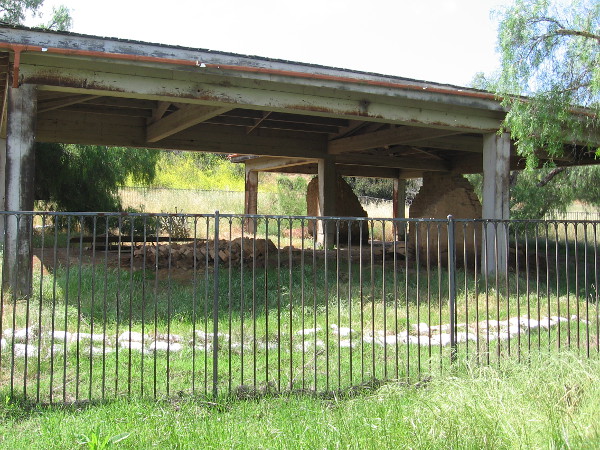
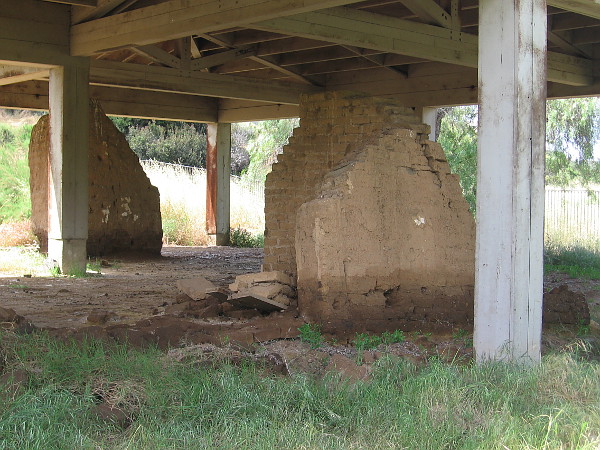
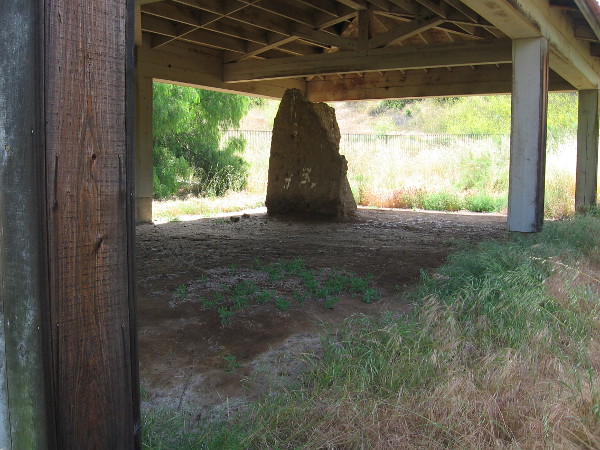
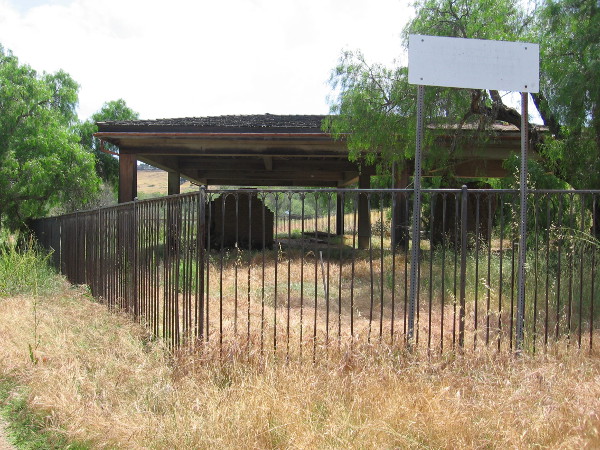
Photos of the historic El Cuervo adobe ruins.

I first saw the El Cuervo adobe ruins years ago. That was during a guided nature hike at the west end of Los Peñasquitos Canyon Preserve. But I haven’t been back down that trail in a very long time.

Yesterday the cool spring weather was perfect for a hike in the canyon, so I decided to once again visit the historic ruins.

In 1823 a large portion of Peñasquitos Canyon was granted to Francisco María Ruiz, the Commandante of San Diego’s presidio. It was the first Mexican land grant in this area. You can learn more of the history, and see photos of his original 1824 adobe ranch house and its later modifications by clicking here.

In 1834, Ruiz was granted additional land to the west for cattle grazing. This area of Peñasquitos Canyon was named El Cuervo. He built another adobe house near the place where Lopez Creek runs into Peñasquitos Creek.

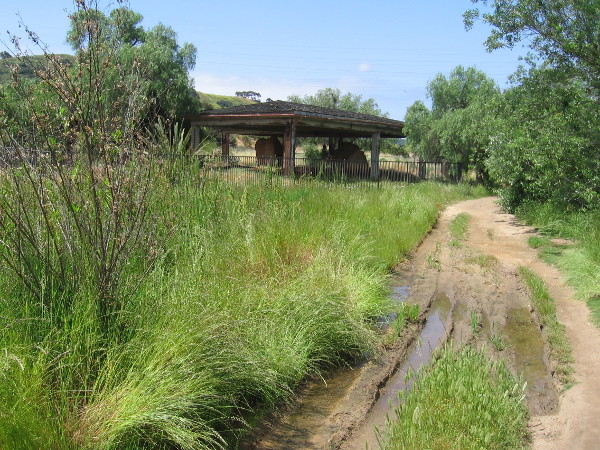
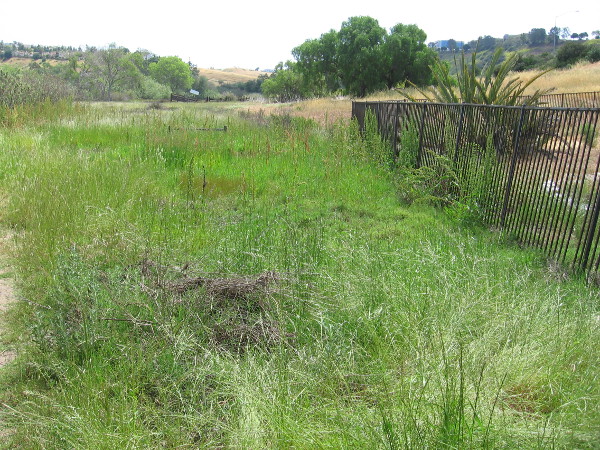
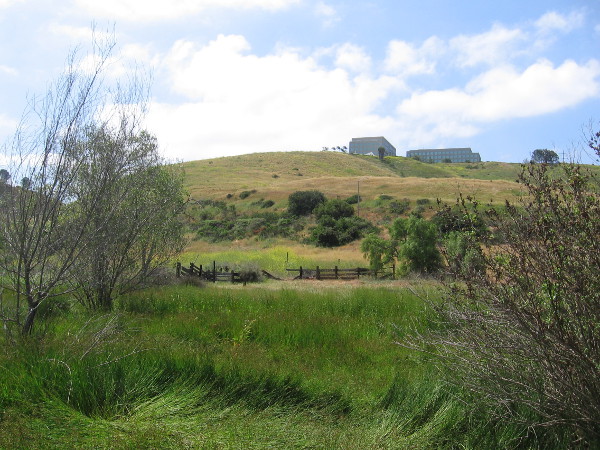
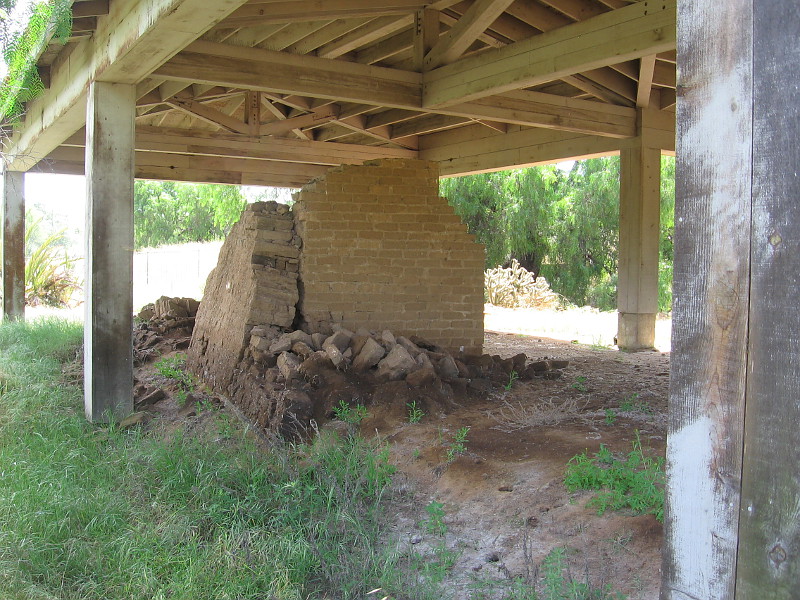
That second house today is in ruins. The crumbled adobe walls are protected by a steel fence and sheltering roof. A broken down corral can still be observed in the field to the east, as you can see in a couple of my photographs.

I live in downtown San Diego and love to walk around with my camera! You can follow Cool San Diego Sights via Facebook or Twitter!

You can easily explore Cool San Diego Sights by using the search box on my blog’s sidebar. Or click a tag! There are thousands upon thousands of photos for you to enjoy!
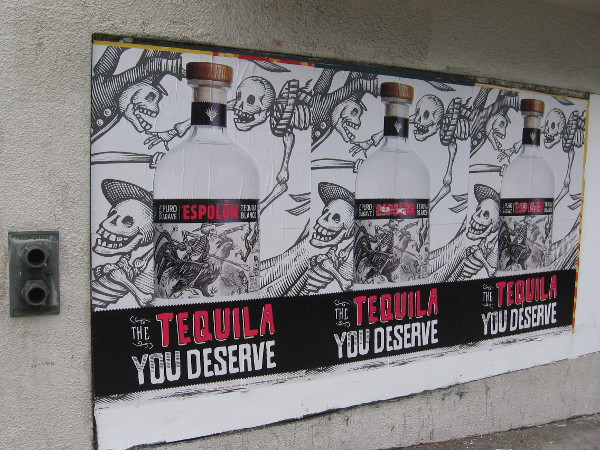
Slowly rising sunlight and a downtown walk.

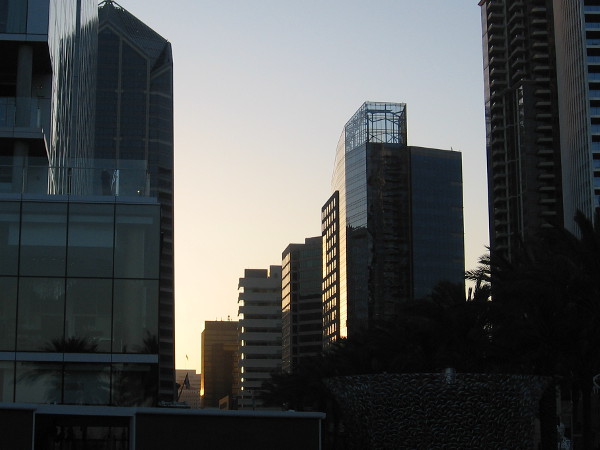
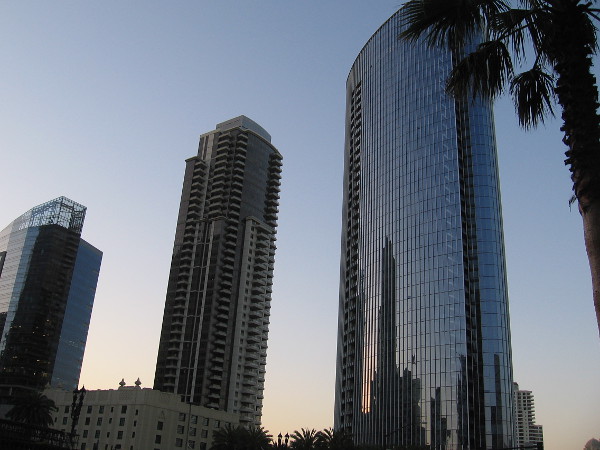
Sunlight gradually streamed into downtown early this morning. Like clear water, light rose in the long channels of glass and steel.

I wandered for a few minutes around Broadway, near Pacific Highway and Harbor Drive.

I live in downtown San Diego and love to walk around with my camera! You can follow Cool San Diego Sights via Facebook or Twitter!

Learning one’s letters in Old Town San Diego.

In the one room Mason Street School in Old Town San Diego, younger and older children sat together before the teacher and learned their letters.

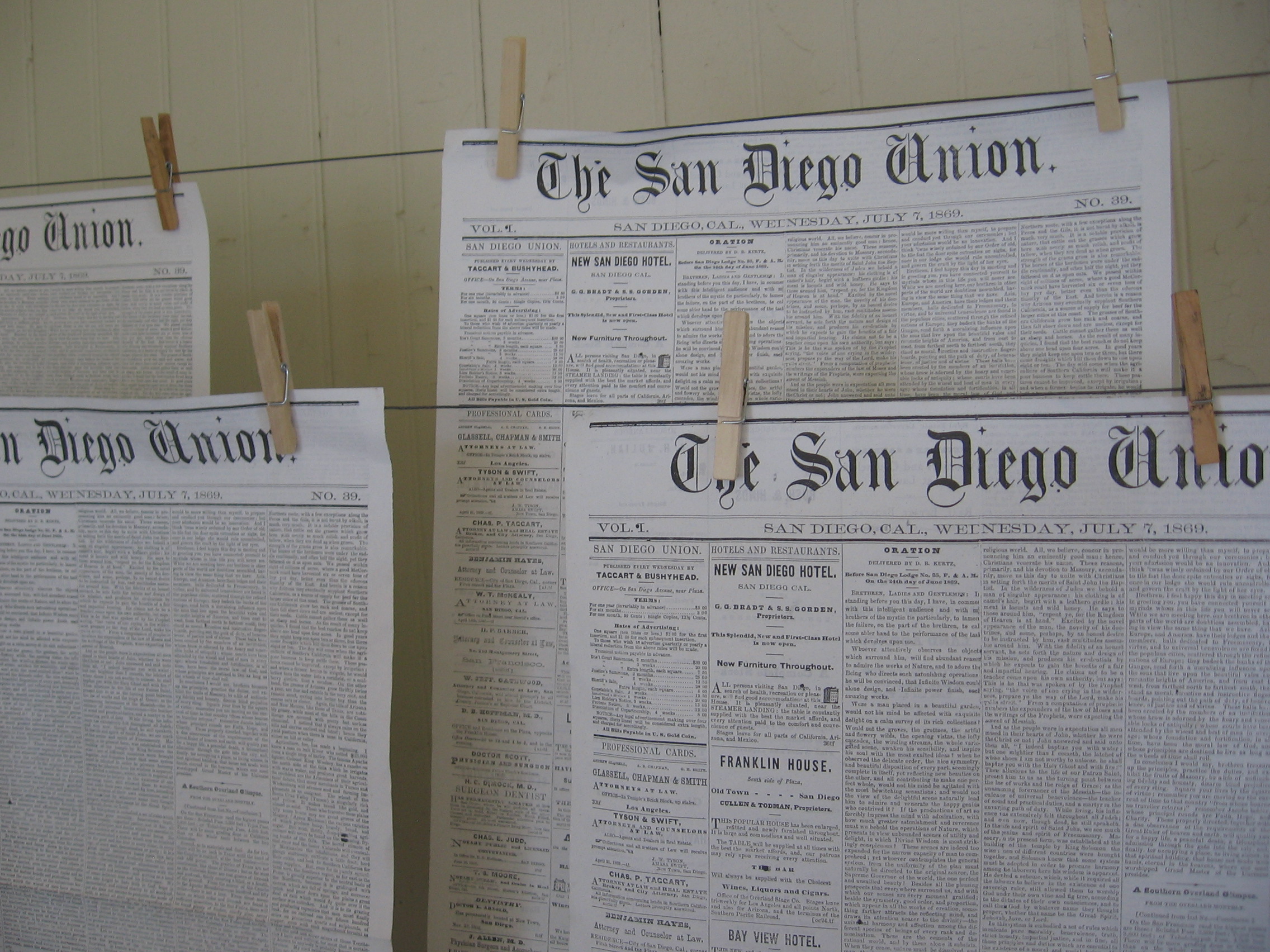
A cool theme developed during my walk through Old Town San Diego State Historic Park yesterday. First I wandered into the 1868 San Diego Union Building and observed ladies in 19th century dress practicing calligraphy. A short time later, as my eyes scanned the walls of the one room 1865 Mason Street Schoolhouse, I noticed a sheet on the wall titled First Lessons in Penmanship.

Turns out it was a great day to relearn the alphabet!

A super nice gentleman in the old print shop provided all sorts of tidbits of information concerning printing, publishing and life in early San Diego. I learned the original Washington hand press that was used by the San Diego Union newspaper is now in the collection of the Henry Ford Museum of American Innovation. And that setting up the tiny type for a single page of the newspaper took a keen-eyed person about 12 hours!

I posted photos of the old print shop and editor’s office four years ago. I also wrote a little about the San Diego Union’s history. You can revisit that blog post by clicking here.

You can see much more inside the old Mason Street School building and learn more about San Diego’s first school teacher, Mary Chase Walker, by clicking here!

Additional information that I learned yesterday is in my photo captions!

A sheet on the schoolhouse wall contains First Lessons in Penmanship. THE ALPHABET.
I'm given a small tour of the print shop inside the historic San Diego Union Building.
I’m given a small tour of the print shop inside the historic San Diego Union Building.
Like wet laundry, hundreds of newspaper sheets would be strung up all around the print shop so that the freshly impressed ink would dry!
A demonstration of assembled type and the finished impression.
A demonstration of assembled type and a finished impression.
Part of a large plate in the Washington hand press. Today school students often visit the historic print shop to learn about publishing long before the digital age.
Part of a large plate in the massive Washington hand press. Today school students often visit the historic print shop to learn about publishing long before the digital age.
Those students can rearrange these letters to spell words like SUPER.
To proof newspaper sheets as type was assembled, this huge heavy roll would be used to make a quick impression.
In the entrance of the San Diego Union Building, ladies sat at a desk practicing their penmanship.
A sample of elegant Copperplate Calligraphy.
This beautifully penned text is from Lewis Carroll's humorous Lobster Quadrille in Alice's Adventures in Wonderland.
This beautifully penned text is from Lewis Carroll’s humorous Lobster Quadrille in Alice’s Adventures in Wonderland.
Showing how to write fancy letters with a quill and inkwell!
Showing how to write fancy letters with an old-fashioned pen and inkwell.

I live in downtown San Diego and love to walk around with my camera! You can follow Cool San Diego Sights via Facebook or Twitter!

Do you love to read?

You can find small, thought-provoking works of fiction at my website Short Stories by Richard.

Splashes of morning light in the city.

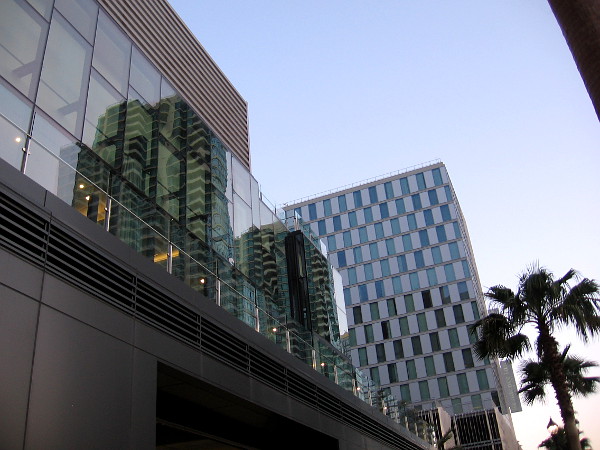
As I walked through downtown San Diego early this morning, my eyes climbed up the sides of walls and buildings. They found unexpected splashes of light.

Another adventure in the city!

I live in downtown San Diego and love to walk around with my camera! You can follow Cool San Diego Sights via Facebook or Twitter!

Baggage, a silvery orb, and contemporary art.

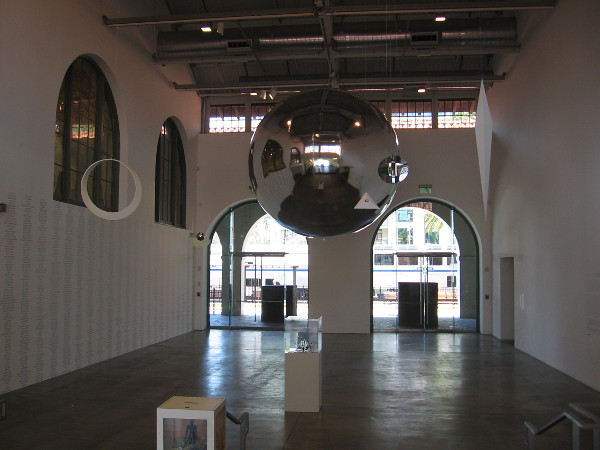
A large silvery orb is suspended from the ceiling of the Iris and Matthew Strauss Gallery, inside MCASD's historic Joan and Irwin Jacobs Building.
A large silvery orb is suspended from the ceiling of the Iris and Matthew Strauss Gallery, inside MCASD’s historic Joan and Irwin Jacobs Building.

On Sunday I headed to the Museum of Contemporary Art San Diego to enjoy a tour of their downtown Joan and Irwin Jacobs Building. This historic building was one of many fascinating sites that the public could explore during the San Diego Architectural Foundation’s 2019 OPEN HOUSE SAN DIEGO.

I arrived early and walked about the building’s spacious galleries, gazing up toward the high ceiling and around corners at intriguing artwork. The current exhibition is titled Trevor Paglen: Sites Unseen. Trevor Paglen, a MacArthur Award-winning artist who lived as a child on military bases, creates pieces that concern mass surveillance and individual privacy. According to the Museum of Contemporary Art San Diego website, he “blurs the lines between art, science, and investigative journalism to construct unfamiliar and at times unsettling ways to see and interpret the world around us . . . in Paglen’s photographs the infrastructure of surveillance is also apparent—a classified military installation, a spy satellite, a tapped communications cable, a drone, an artificial intelligence . . .”

When it was time for the architectural tour to begin, our small group gathered near the museum’s entrance and we learned a little about the very unique Joan and Irwin Jacobs Building.

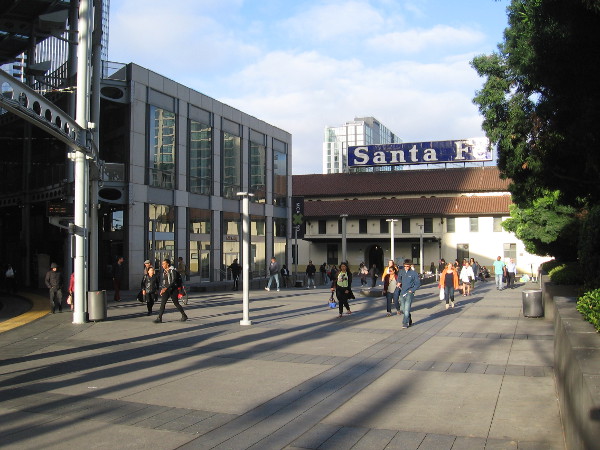
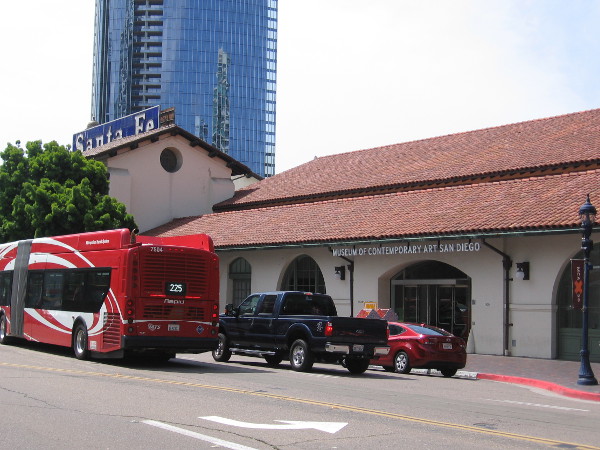
The building at first glance appears to be an extension of the Santa Fe Depot, San Diego’s downtown train station. In fact, what is now called the Joan and Irwin Jacobs Building used to be the baggage building of the depot, and is separated from the train station’s passenger waiting room by an arched outdoor breezeway. The Santa Fe Depot, which is now a transit center that also serves Amtrak, was built in 1915 by Bakewell & Brown to accommodate travelers coming to San Diego for the Panama-California Exposition held in Balboa Park.

As decades passed, and travel by train waned, much less space was required at the station for baggage. Because of its historical importance, the huge old baggage building couldn’t be torn down or substantially altered.

The enormous interior space, large beautiful windows and high ceilings were perfect for a unique downtown art gallery. In 2007, the structure was converted by Gluckman Mayner Architects into an extraordinary downtown space for the Museum of Contemporary Art San Diego.

The downtown MCASD usually features more experimental art than their La Jolla location, so the unusually large galleries can be put to good use. I learned that past exhibitions have included some monumental artwork, even a full-size translucent polyester fabric and stainless steel “New York” apartment, complete with major appliances!

To explore art inside the Joan and Irwin Jacobs Building is a remarkable experience. It’s like moving through a vast inner world where small dreams become large. Just as a museum should be!

Looking across Kettner Boulevard at the Santa Fe Depot. The old baggage building on the north side of the train station is now home to the Museum of Contemporary Art San Diego.
Looking west across Kettner Boulevard at the Santa Fe Depot. The old baggage building on the north side of the train station is now used by the Museum of Contemporary Art San Diego.
At the north end of the Joan and Irwin Jacobs Building is the modern three-story David C. Copley Building.
At the north end of the historic Joan and Irwin Jacobs Building is the modern three-story David C. Copley Building.
The David C. Copley Building has featured additional gallery space, but now houses administrative offices for MCASD while their La Jolla location is renovated and enlarged.
In the past the David C. Copley Building has provided additional gallery space. It now houses administrative offices for MCASD while their La Jolla location is renovated and enlarged.
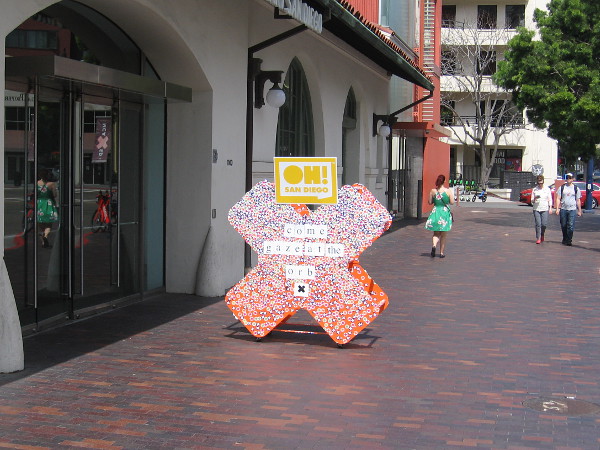
Sign in front of MCASD's entrance entices visitors to come in and gaze at the orb.
Sign in front of MCASD’s entrance invites passersby to come in and gaze at the orb.
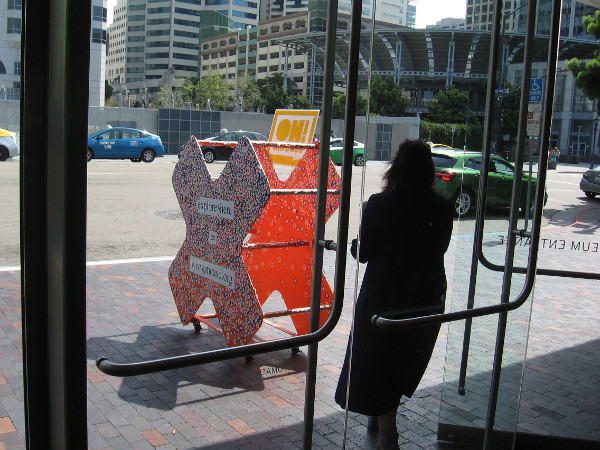
Looking from inside the museum across Kettner Boulevard toward the America Plaza trolley station. The building seen to the right is MCASD's original downtown location, now used by the museum for educational programs.
Looking from inside the museum across Kettner Boulevard toward the America Plaza trolley station. The two-story building seen to the right is MCASD’s original downtown location, now used by the museum for educational programs.
As visitors enter the museum, artwork inside the Iris and Matthew Strauss Gallery immediately catch the eye.
As visitors enter the museum, massive artwork inside the Iris and Matthew Strauss Gallery immediately catches the eye.
Looking west out glass doors at the Figi Family Concourse and trolley and train platforms at Santa Fe Depot.
Looking west out glass doors at the Figi Family Concourse, and trolley and train platforms at downtown’s Santa Fe Depot.
One of several large cubes outside the Joan and Irwin Jacobs Building, by artist Richard Serra, 2005
One of several large steel cubes outside the Joan and Irwin Jacobs Building, by artist Richard Serra, 2005.
Prototype for a Nonfunctional Satellite, by artist Trevor Paglen.
Prototype for a Nonfunctional Satellite, by contemporary artist Trevor Paglen.
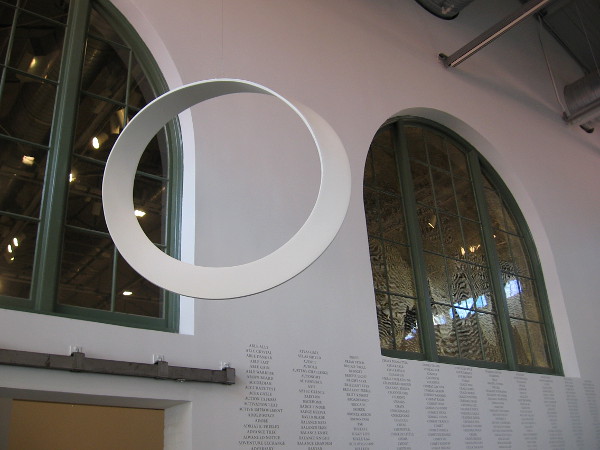
More artwork by the large arched windows of the old baggage building. This interior wall is part of MCASD's unique Iris and Matthew Strauss Gallery.
More artwork by the large arching windows of the old baggage building. This interior wall is part of MCASD’s unique Iris and Matthew Strauss Gallery.
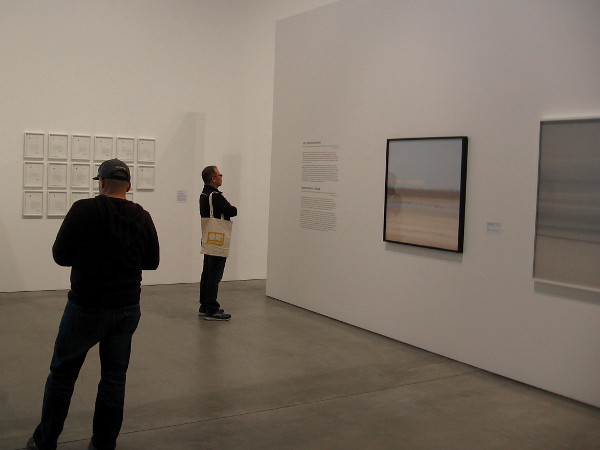
Visitors to the downtown Museum of Contemporary Art San Diego enjoy photographs and other pieces by Trevor Paglen.
Visitors to the downtown Museum of Contemporary Art San Diego view photographs and other pieces by Trevor Paglen.
Sign at MCASD explains the current exhibition Trevor Paglen: Sites Unseen. (click to enlarge)
Sign at MCASD explains the current exhibition Trevor Paglen: Sites Unseen. (Click photo to enlarge for easy reading.)
Autonomy Cube, 2015, Trevor Paglen. Working hardware that allows users to connect anonymously to the internet, by routing Wi-Fi traffic through the Tor network.
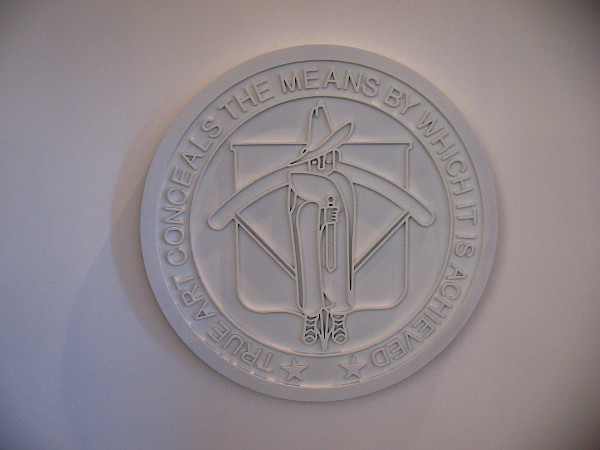
True Art ... (CIA Special Activities Staff), 2016, Trevor Paglen. High temp epoxy.
True Art … (CIA Special Activities Staff), 2016, Trevor Paglen. High temp epoxy.
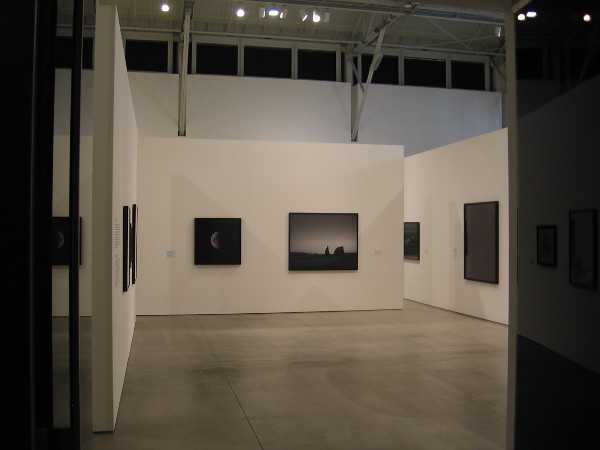
A look into a spacious art gallery inside MCASD's Joan and Irwin Jacobs Building.
A look into a spacious gallery inside MCASD’s Joan and Irwin Jacobs Building.
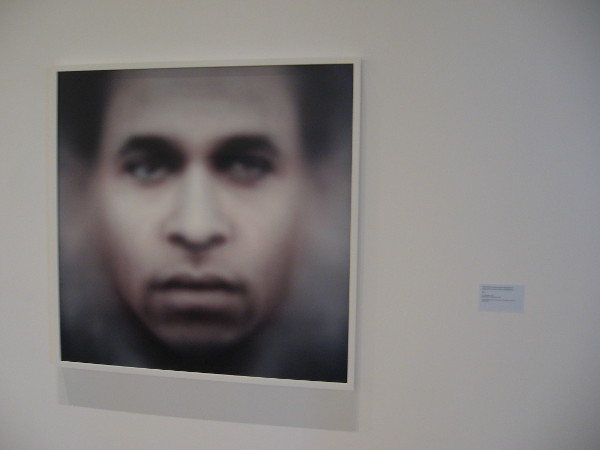
"Fanon" (Even the Dead Are Not Safe) Eigenface, 2017, Trevor Paglen. Dye sublimation print.
“Fanon” (Even the Dead Are Not Safe) Eigenface, 2017, Trevor Paglen. Dye sublimation print.
Amazing sights await eyes at downtown's Museum of Contemporary Art San Diego!
Astonishing sights await curious eyes at downtown’s Museum of Contemporary Art San Diego!

I live in downtown San Diego and love to walk around with my camera! You can follow Cool San Diego Sights via Facebook or Twitter!

You can easily explore Cool San Diego Sights by using the search box on my blog’s sidebar. Or click a tag! There are thousands upon thousands of photos for you to enjoy!

Inside the historic Portuguese U.P.S.E.S. Chapel.

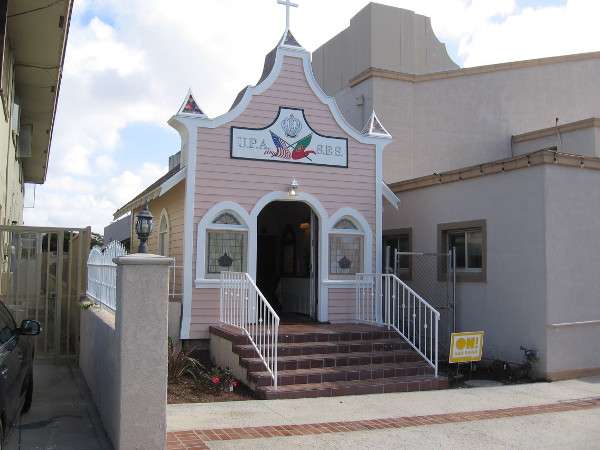
Today I enjoyed a look inside a beautiful Catholic chapel in Point Loma. The historic U.P.S.E.S. Chapel, located on Avenida de Portugal, was open to curious visitors for the San Diego Architectural Foundation’s 2019 OPEN HOUSE SAN DIEGO.

The small, nearly one hundred year old chapel stands in a neighborhood that once was the home to many Portuguese tuna fishermen. Many families that have descended from these seafaring fishermen still call this part of San Diego their home.

U.P.S.E.S. comes from União Portuguesa Açoreana Sociedade do Espírito Santo, which in English means the United Portuguese Azorean Society of the Holy Spirit.

According to the U.P.S.E.S. website, this building “was completed and inaugurated in 1922. The design of the Chapel is a facsimile of those that exist on the island of Terceira, Azores and follows the design of the chapels of that era. The interior reflects the design of the chapels that were found in the tuna vessels of that era. Today, as it was intended in 1922, the Chapel is used to house the Crown of the Holy Spirit during the Festa do Espirito Santo celebrations. On Pentecost Sunday, devotees of the Holy Spirit visit the Chapel to pray and offer a donation of money or Portuguese sweetbread to assure the continuation of this time honored ethnic religious celebration.”

The chapel stands adjacent to the United Portuguese SES Hall, directly across the street from the Portuguese Historical Center.

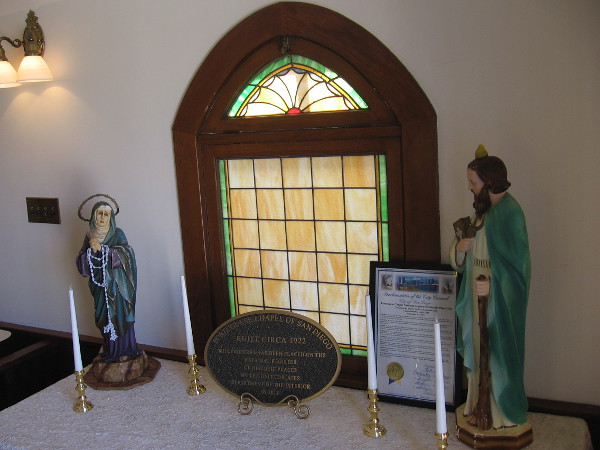
After walking up some steps and looking at memory-filled commemorative pavers, I stepped inside the chapel and took photos of its modest, elegantly beautiful interior.

I live in downtown San Diego and love to walk around with my camera! You can follow Cool San Diego Sights via Facebook or Twitter!

You can easily explore Cool San Diego Sights by using the search box on my blog’s sidebar. Or click a tag! There are thousands upon thousands of photos for you to enjoy!
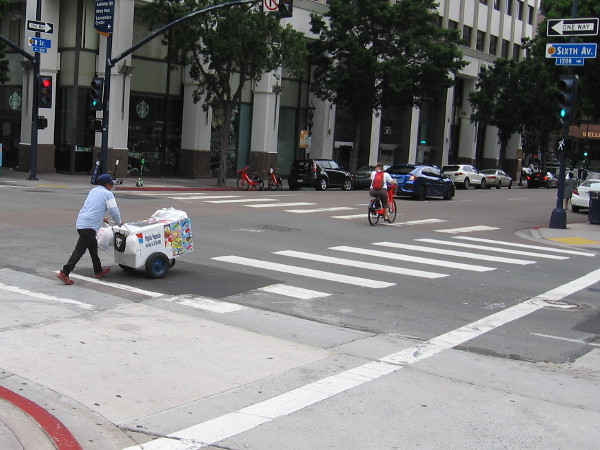
A fine morning walk down Ash Street.

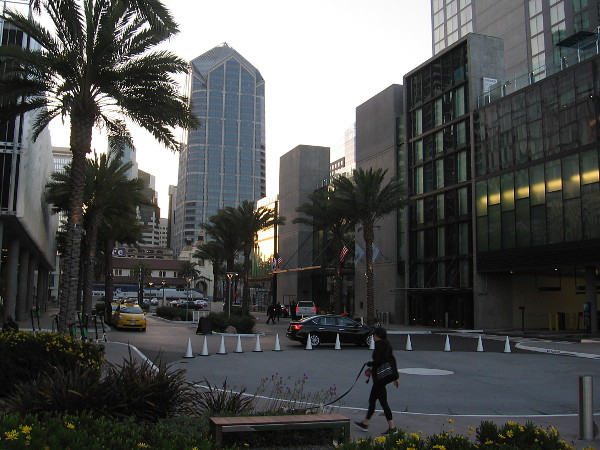
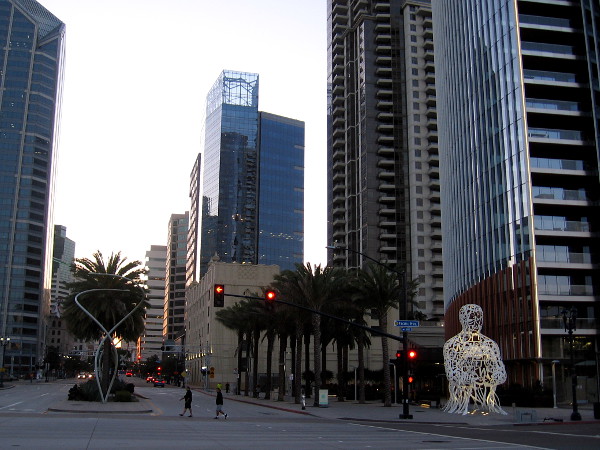
These photos are from early this morning. I pulled out my camera and began walking west down Ash Street from the top of Cortez Hill. I ended near the trolley and railroad tracks, just north of the Santa Fe Depot.

Over the years my blog has shown many of these downtown buildings. Often I provide description. Today I just want to share what it’s like to walk down Ash Street on a clear spring morning.

Here we go…

I live in downtown San Diego and love to walk around with my camera! You can follow Cool San Diego Sights via Facebook or Twitter!
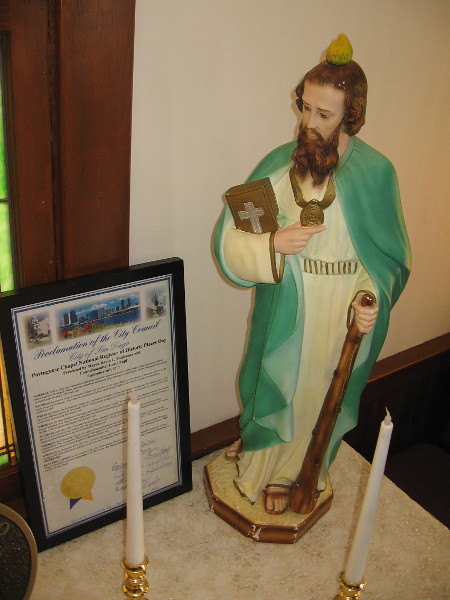
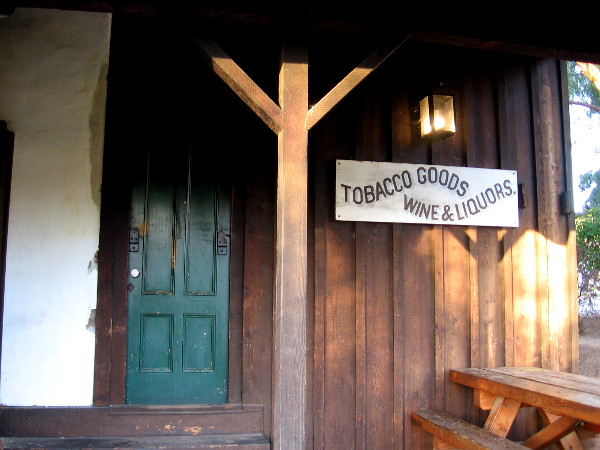
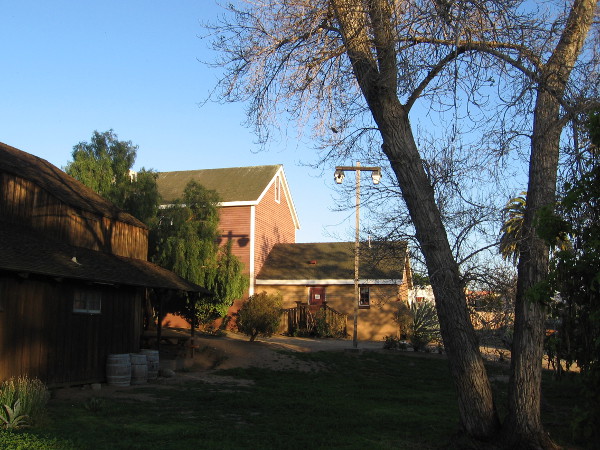
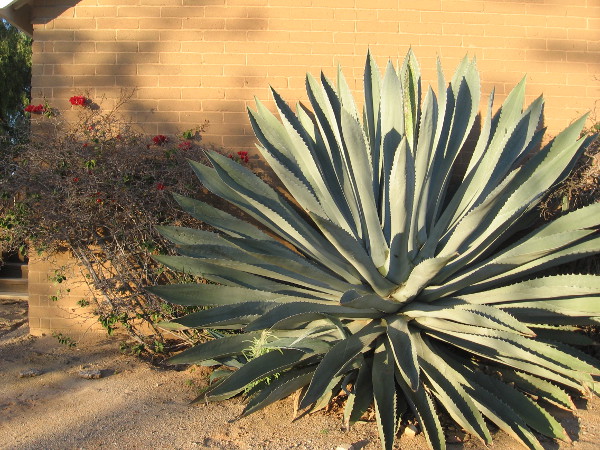
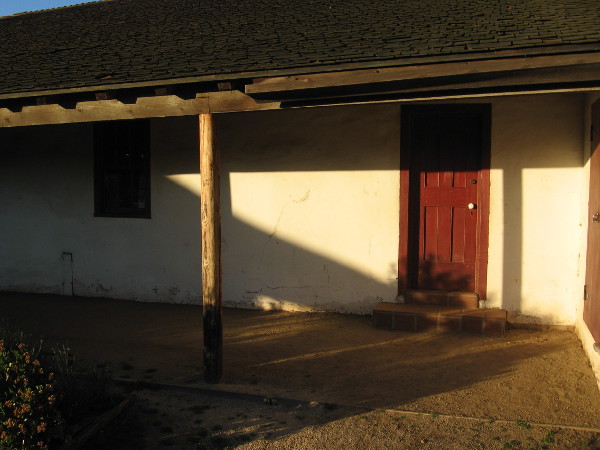
Magical light transforms Old Town backyards.

After work I got off the trolley at Old Town, crossed Congress Street, and headed into the State Historic Park. With the recent return to Daylight Saving Time, there’s an extra hour of light for a leisurely walk.

At first I wasn’t sure what I would photograph. Then, minutes before the sun might disappear behind the horizon, I found myself lingering near the backyards of several very early San Diego houses.

It was the golden, almost dreamlike light that caught my eyes.

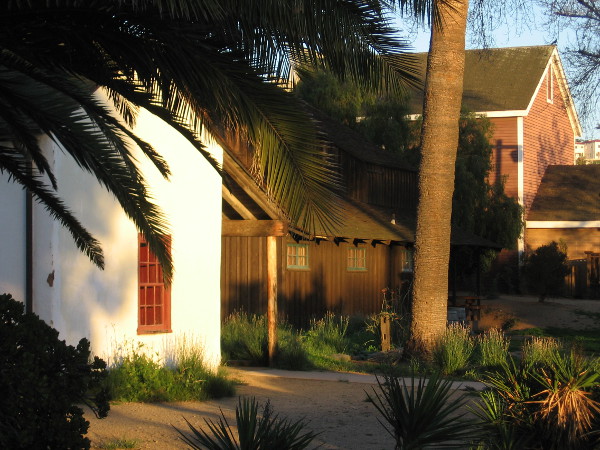
I walked along a quiet pathway that passes behind a row of historic structures, including Colorado House, La Casa de Machado y Silvas, U.S. House and San Diego House.

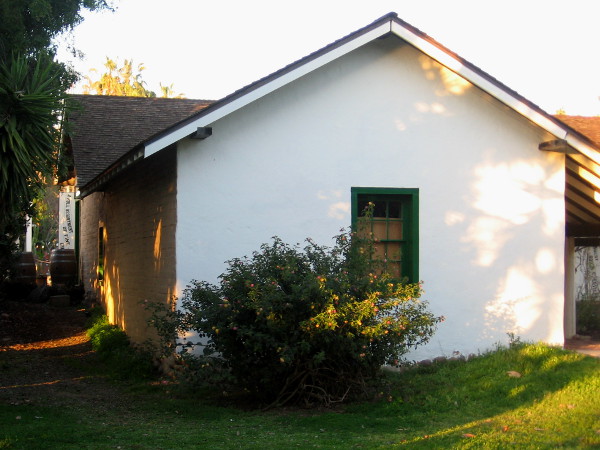
These backyards, back porches and gardens always appear a bit timeworn and scraggly, but the late light magically turned them into something wholly new.

I live in downtown San Diego and love to walk around with my camera! You can follow Cool San Diego Sights via Facebook or Twitter!