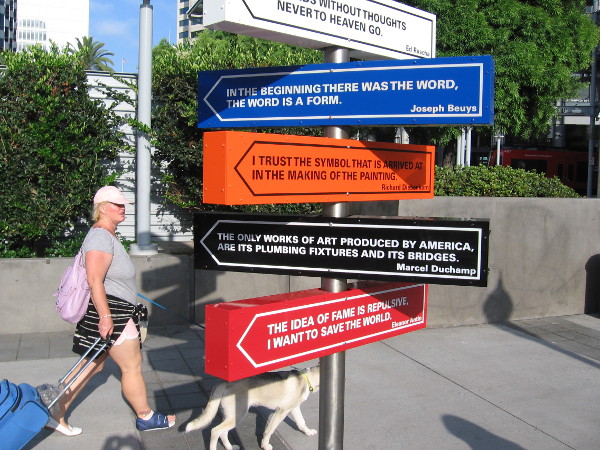
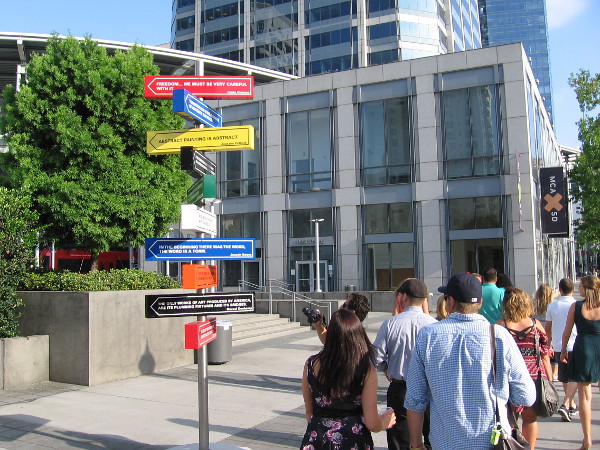
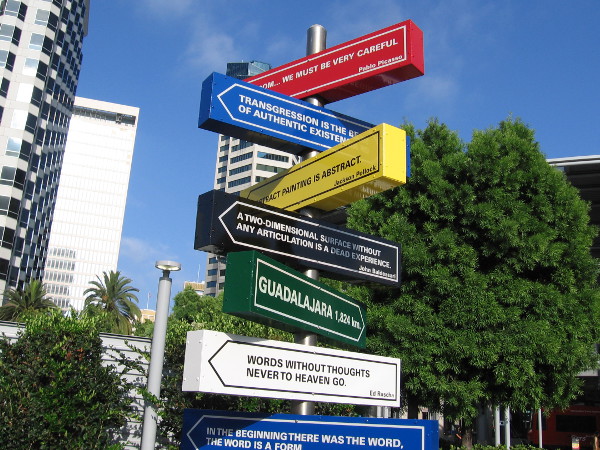
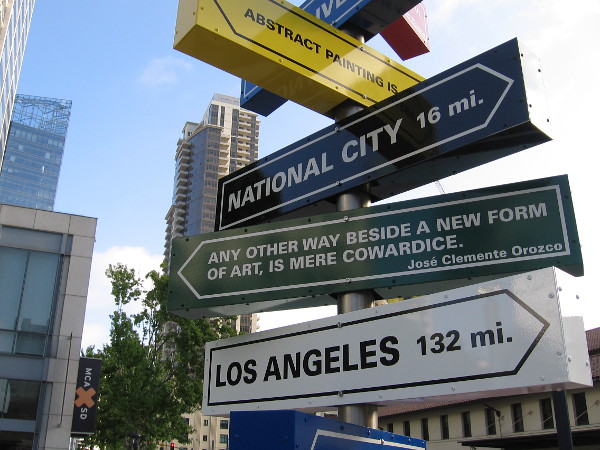
Unusual signs near America Plaza contain quotes from famous modern artists. This thought-provoking art was installed by the Museum of Contemporary Art San Diego, which is located across the street.
Look what I discovered this evening! I had disembarked from the trolley at the Santa Fe Depot and was making my way to America Plaza when my eyes were ensnared by a very cool sight.
At first glance I thought it was a cluster of directional signs that point every which way to cities around the world. Then I realized these signs were far more interesting!
On one side each sign contains a thought-provoking quote from a modern artist. The cities shown on the reverse side are those associated with the artists.
The modern artists quoted are: Pablo Picasso, Jeff Wall, Jackson Pollock, John Baldessari, Jose Clemente Orozco, Edward Ruscha, Joseph Beuys, Richard Diebenkorn, Henri-Robert-Marcel Duchamp and Eleanor Antin.
I walked back across Kettner Boulevard to the Museum of Contemporary Art San Diego and learned that these unusual signs were installed by the museum about two weeks ago!
People walk down the sidewalk along Kettner Boulevard. A few glance up at what appears to be a cluster of strangely colorful directional street signs.Quotes from ten notable modern artists are featured on the MCASD signs. The reverse side of each directional sign contains a city associated with the artist.Provocative public art rises from a downtown sidewalk, across the street from the Museum of Contemporary Art San Diego.
…
I live in downtown San Diego and love to walk! You can follow Cool San Diego Sights via Facebook or Twitter!
Carpenter’s Wheel quilt, Mennonite, about 1890. Made by Mrs. Miller in Easton, Pennsylvania.
My eyes opened wide with amazement last weekend, when my docent friend provided another special tour at the San Diego Museum of Art. This time we had a good look at a surprising exhibition of early American quilts from the Museum of Fine Arts, Boston.
These quilts, which date mostly from the 19th century, created in many instances by lone Amish and Mennonite quiltmakers, are so dazzling with brilliant colors and inventive, abstract designs that they seem thoroughly modern, like hung works of art by the greatest 20th century Abstract Expressionists.
I know relatively little about quiltmaking. All I know is that when I gazed at these vibrant works of art, I felt that I was peering into the inner life of a spiritual people, where joy, memories and dreams are represented with magically combined bits of color. These delights for the eye were created to be a warming family treasure, meant to last for generations.
In this blog post you can see just a few photos of the nearly 50 quilts on display. The craftmanship is intricate. I can’t imagine the many hours of persistent dedication, patience and love a quiltmaker required to create just one of these examples. They lived in a very different time and place. In their world living was more simple, and beauty was quietly formed from single threads.
All of these old quilts were discovered over several decades by collectors Gerald Roy and Paul Pilgrim, who also played an important role in the creation of the The National Quilt Museum in Paducah, Kentucky. Many of these quilts were collected solely for their aesthetic appeal. Paul Pilgrim, now deceased, was also an innovative quiltmaker.
Head to Balboa Park to visit the San Diego Museum of Art and you’ll be astounded by many of these quilts. If you do plan to visit, do so by September 5, 2016, when this very unique exhibition comes to an end.
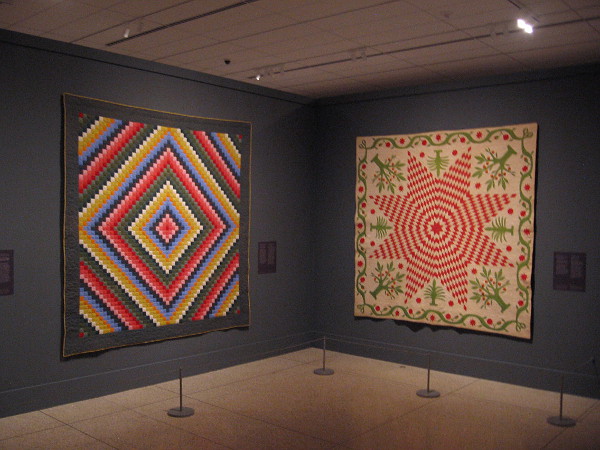
Quilts and Color from the Museum of Fine Arts, Boston. This special exhibition can be enjoyed at the San Diego Museum of Art in Balboa Park.Amazing early American quilts on display at the San Diego Museum of Art feature beautifully contrasted colors and fascinating abstract designs.Spider Web quilt dazzles the eye. Many of the quilts feature unique visual effects or optical illusions.Fans quilt, Amish, 1900-1910. Made in Pennsylvania.Field of Diamonds quilt, about 1860. The design is achieved by creatively combining differently colored hexagons.Close-up photograph of fantastic, radiant Sunburst quilt.
…
I live in downtown San Diego and love to walk! You can follow Cool San Diego Sights via Facebook or Twitter!
An amazing Wonder Woman mural is being painted for 2016 San Diego Comic-Con, at (Paradise) Island Avenue and Sixth Avenue
An awesome, multi-paneled outdoor mural depicting Wonder Woman is being painted during 2016 San Diego Comic-Con. Should you head a few blocks north of the convention center and find the intersection of Island and Sixth Avenue, your eyes will be astonished at what they discover!
Three Southern California artists are painting larger-than-life interpretations of Wonder Woman, DC Comic’s legendary super-heroine. The three colorful panels together compose a large bold mural, and Comic-Con fans can line up to have their picture taken with the artwork as a backdrop. The reason? It’s Wonder Woman’s 75th Anniversary!
How cool is this?
A small lot in downtown San Diego, several blocks from the convention center, has been converted into a celebration of DC Comic’s legendary character Wonder Woman and her 75th Anniversary!The left panel, depicting an abstract face of Wonder Woman, was painted by San Diego artist Katherine Brannock.2016 San Diego Comic-Con fans can have their photo taken with this very cool Wonder Woman mural as a backdrop.The center panel honoring Wonder Woman is being painted by another talented San Diego artist, Celeste Byers.And the right panel, the strong face of comic book heroine Wonder Woman, is being painted by Los Angeles artist Christina Angelina.
…
I anticipate having a few more Comic-Con adventures! Will you join me?
I live in downtown San Diego and love to walk! You can follow Cool San Diego Sights via Facebook or Twitter!
This is one of the Batmobiles used in the filming of Batman v Superman: Dawn of Justice. It’s on display across Harbor Drive from the convention center at 2016 San Diego Comic-Con.
Here comes yet another batch of cool photos!
2016 San Diego Comic-Con begins tomorrow, and I walked today–Wednesday–all over downtown to see what is rising outside for San Diego’s internationally famous pop culture event!
The answer: tons of cool stuff is popping up!
You might notice in some photos that many fans have arrived in San Diego already. Tonight is Preview Night inside the convention center. And tonight is also the world premiere of Star Trek Beyond, outside beside the water behind the convention center!
(To any of my blog’s readers who aren’t really into Comic-Con, hang on for a few more days! After Sunday, it’s on to other cool sights around San Diego! And as usual, I mostly don’t know what those sights will be! Walking randomly about results in many unexpected adventures!)
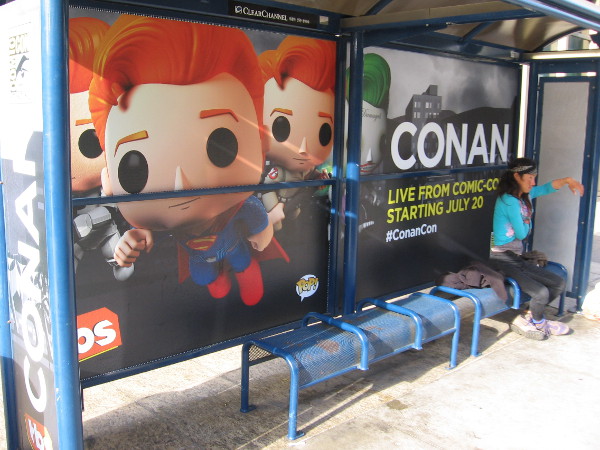
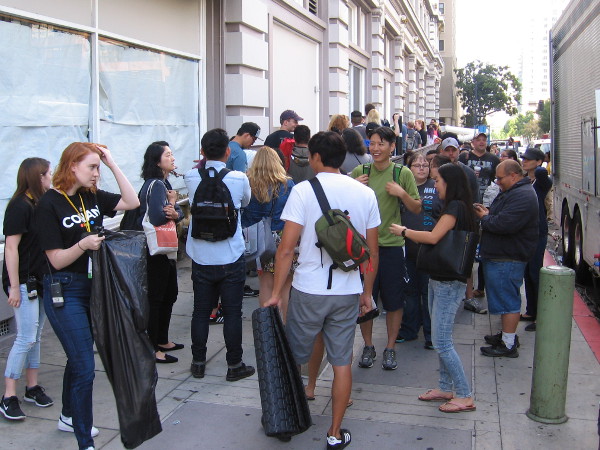
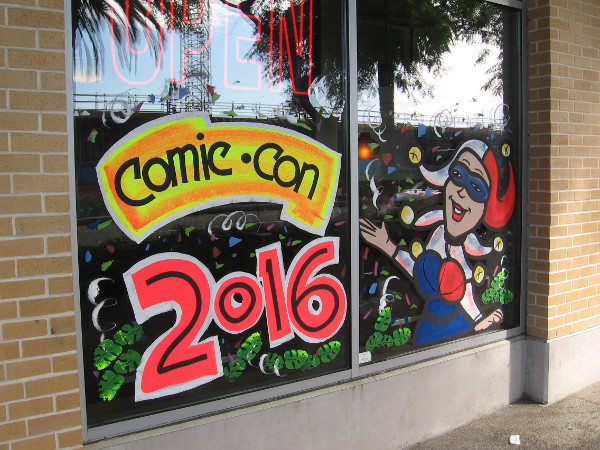
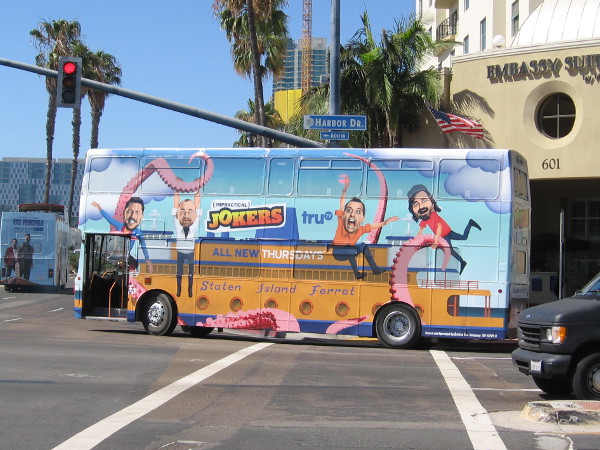
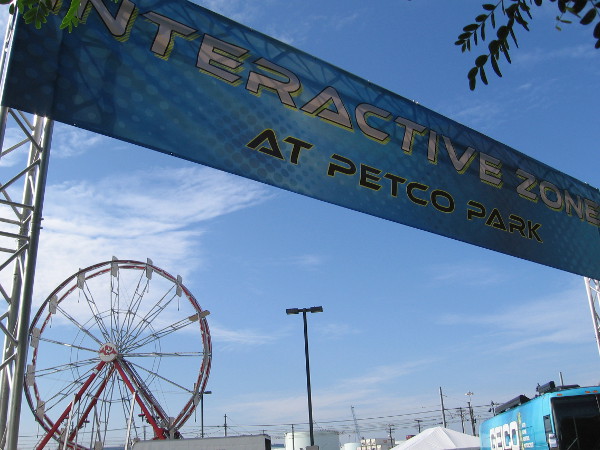
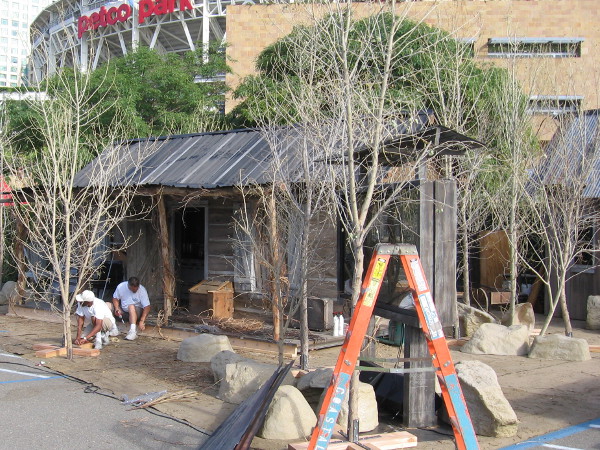
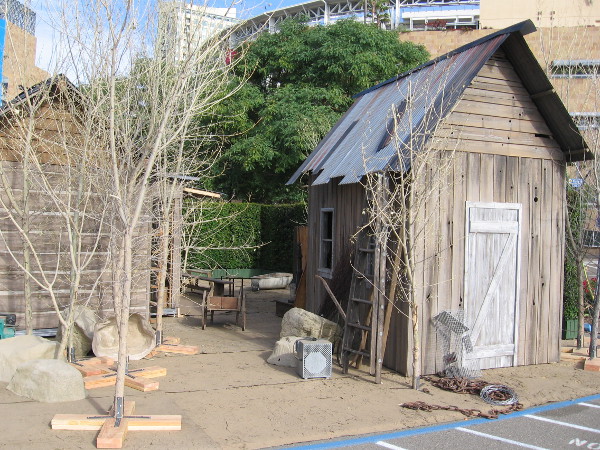
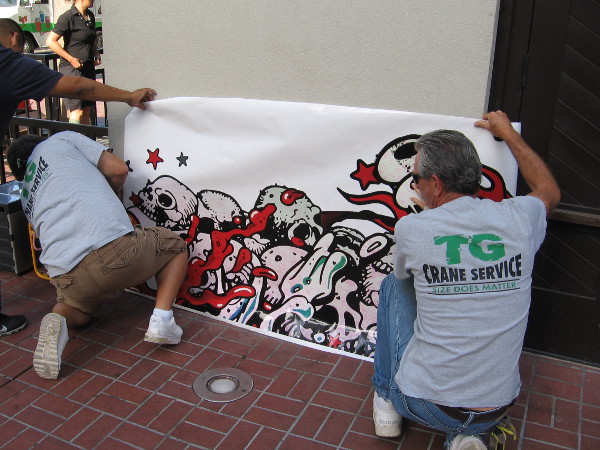
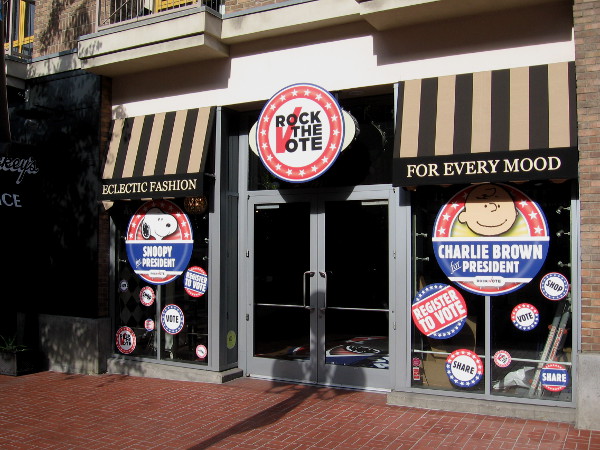
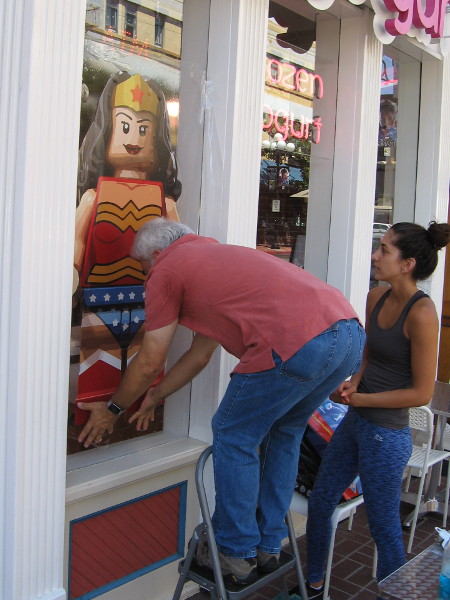
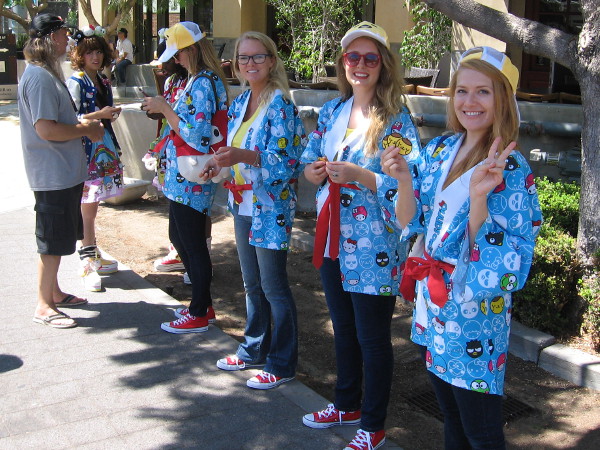
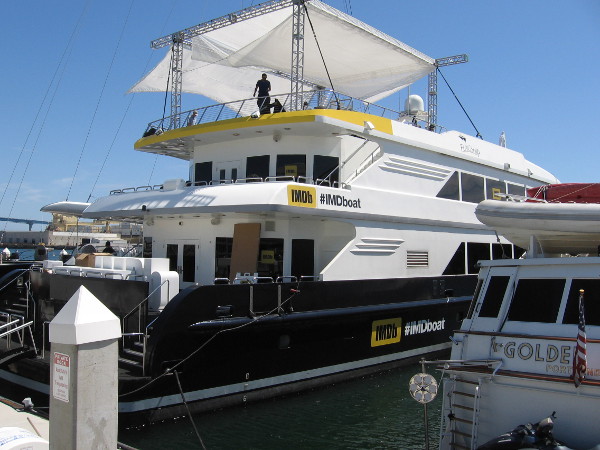
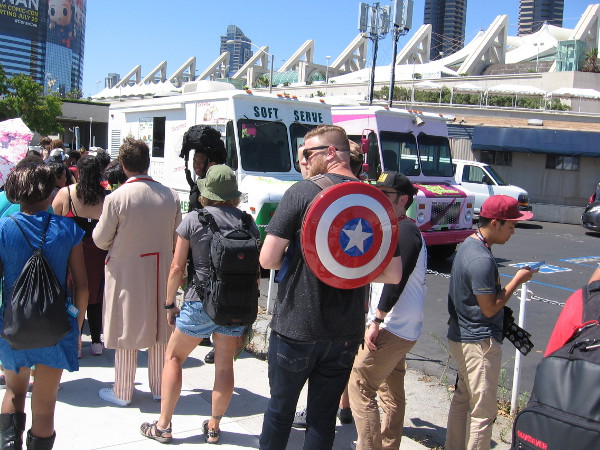
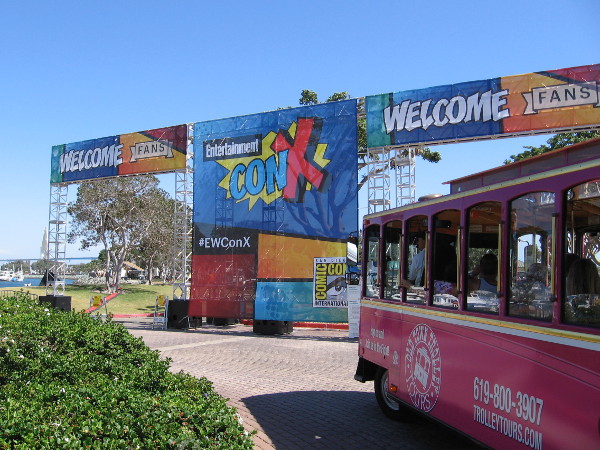
Conan O’Brien’s talk show is in San Diego for Comic-Con again. It starts tonight!Hundreds of people were in line early Wednesday morning to watch Conan perform at the Spreckels Theater.Most downtown businesses are now ready for Comic-Con fans. Here’s a window painting of Harley Quinn I spotted at Lolita’s near Petco Park.Various double-decker buses are going around decorated with big flashy wraps. This one promotes Impractical Jokers on the truTV channel.The Interactive Zone at Petco Park was still a work in progress on Wednesday–one day before the official start of 2016 San Diego Comic-Con.These rustic buildings in the Interactive Zone promote Ash vs Evil Dead on STARZ. I was impressed at how detailed and elaborate they appear!Another photo of the Ash vs Evil Dead setting in the 2016 San Diego Comic-Con Interactive Zone at Petco Park.These crane operators were putting up a gruesome banner next to the Suicide Squad movie venue, which remains unseen behind a wall at the Hard Rock Hotel.In the Gaslamp Quarter, Rock The Vote is encouraging people to register. Who would you prefer for president–Snoopy or Charlie Brown?A guy presses Wonder Woman’s feet to the window of a yogurt shop.Perhaps real superheroes will eat this week at Kansas City Barbeque, where scenes from the movie Top Gun were filmed.The Chuck Jones Gallery in the Gaslamp scored some big guests! Stan Lee and William Shatner!Two of the Powerpuff Girls were hovering mid-afternoon above the water at Children’s Park.Looks like a school bus pulled into San Diego from South Park, Colorado. I think I recognize some faces.These smiling ladies were out on the MLK Promenade promoting Hello Kitty!The video screen near the Tin Fish and the center of Comic-Con outdoor action is now operating.Here’s another look at the Batmobile on display near the Omni Hotel. It’s one of several that were used in the filming of Batman v Superman: Dawn of Justice.Okay, I headed over the Harbor Drive pedestrian bridge and now I’m near the Bayfront Hilton.A number of promotional signs are arranged along the walkway where thousands of Comic-Con fans will pass in the next four days.FX is present again in 2016 with their show Sex and Drugs and Rock and Roll. This is as close as I could approach the big red electric guitar.A huge stage is being built in the park behind the San Diego Convention Center, right in front of the Bayfront Hilton.Looks like IMDb is hosting a Comic-Con party on this big mega yacht behind the convention center!Not much cosplay spotted today, but I did catch a guy with Captain America’s shield waiting in line for some soft serve ice cream!The huge event today, Wednesday, is the world premiere of Star Trek Beyond. It’s taking place tonight right here in San Diego at Embarcadero Marina Park South.Looks like the red carpet was almost ready this afternoon for the world premiere of Star Trek Beyond!I assume this is just some boat owner having fun. I took this photo walking along the Marriott Marina.Entertainment Weekly will debut their unique Con-X tomorrow at Embarcadero Marina Park North. It’s billed as a place for Comic-Con goers to just chill and relax.Looks like Con-X has some huge comic book artist and animation guests. I see Jim Lee and Paul Dini! (Click to enlarge.)This blue guy made of Legos is sitting on a bench inside Con-X. I also spotted the back of a huge Jabba the Hutt sculpture. Wish I could’ve entered the event area. Looks cool!Is it Fire Lad of the Legion of Substitute Superheroes? No. It’s Murrugan the Mystic performing at Seaport Village. That flame is coming from his mouth! You might remember him on AMC’s Freakshow. He’s working to keep the carnival sideshow–an important part of Americana–alive.
…
I live in downtown San Diego and love to walk! You can follow Cool San Diego Sights via Facebook or Twitter!
This cool mural can be just glimpsed from the corner of Fifth Avenue and B Street in downtown San Diego. It adds color and life to an outdoor patio on the 3rd floor of the Union Bank building.
This fantastic mural has been seen up close by very few people. Today, with permission, I took a good look and got some photos!
If you ever stand on the west side of Fifth Avenue around B Street in downtown San Diego, and glance upward toward the Union Bank building, you might see a colorful splash in a hidden nook. That would be this mural!
It’s only two years old and utterly fantastic. Without further ado, I present to all urban art lovers: Inceptions Reflection!
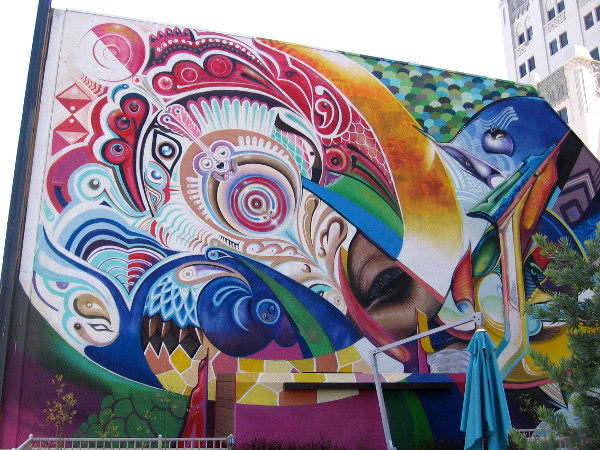
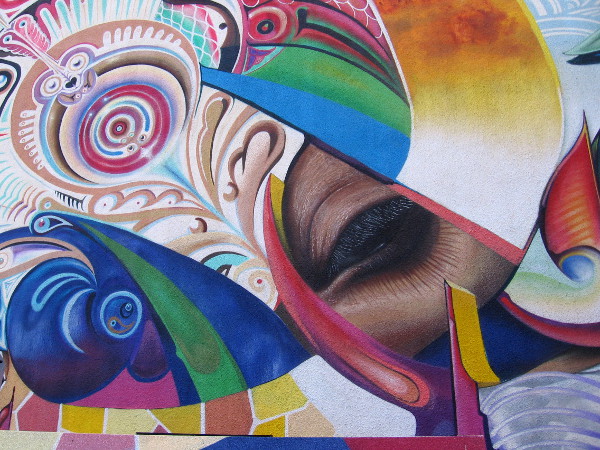
Inceptions Reflection, 2014. Daniel (Maxx Moses) Hopkins, Isaias Crow, Jari “WERC” Alvarez, Chor Boogie aka Joaquin Lamar Hailey.Photo of central portion of the dynamic artwork. Unusual forms and bold colors lead the delighted eye around this little-seen urban canvas.A happy spherical critter with horns blows hearts from the sunlit lower right corner of this awesome mural!A human eye behind the swirling, fantastic visions. Perhaps it is all a dream. Or the imaginative work of some very creative artists!
…
I live in downtown San Diego and love to walk! You can follow Cool San Diego Sights via Facebook or Twitter!
You can easily explore Cool San Diego Sights by using the search box on my blog’s sidebar. Or click a tag! There are thousands upon thousands of fun photos for you to enjoy!
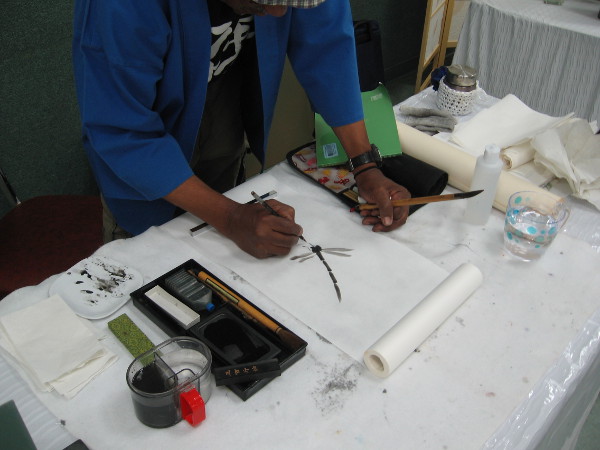
Gifted artist with a great laugh creates a beautiful dragonfly using ink. Demonstrations were part of this weekend’s free art show inside the Casa del Prado in Balboa Park.
I was wandering all over Balboa Park today when I saw a sign on El Prado. A free art show was being held inside the Casa del Prado!
What I discovered was pretty cool. Lots of really fine art, created by members of the Art Club of San Diego. Every year they have an exhibit in Balboa Park, and I was told taking photos was just fine. So here the photos are–and I hope many people enjoy them! Please note the name of the artist if you happen to be taken by a particular piece.
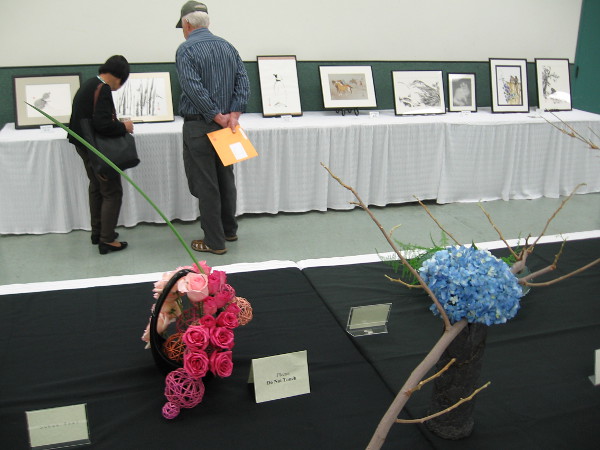
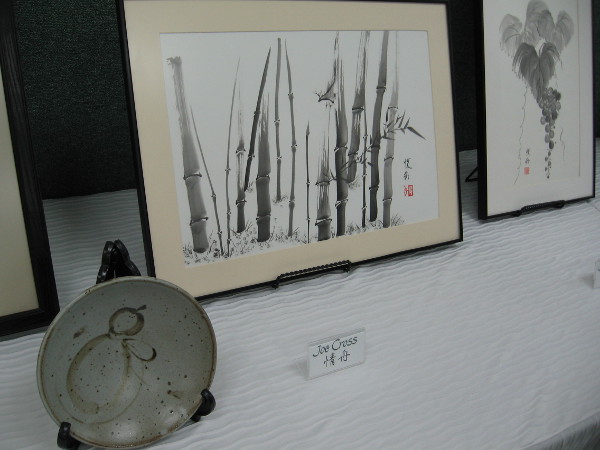
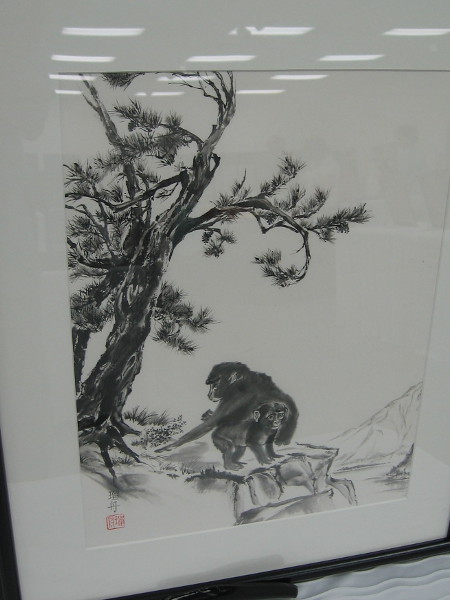
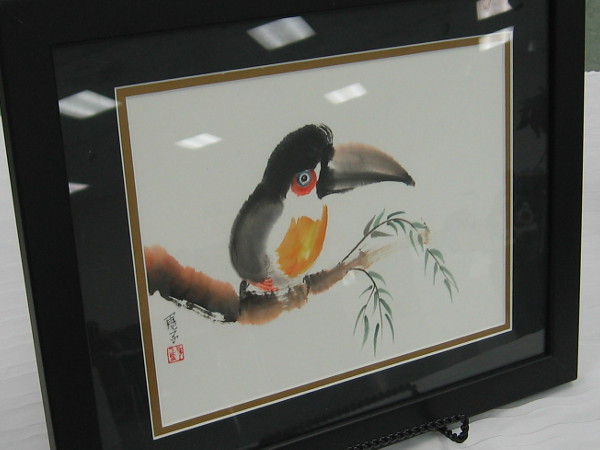
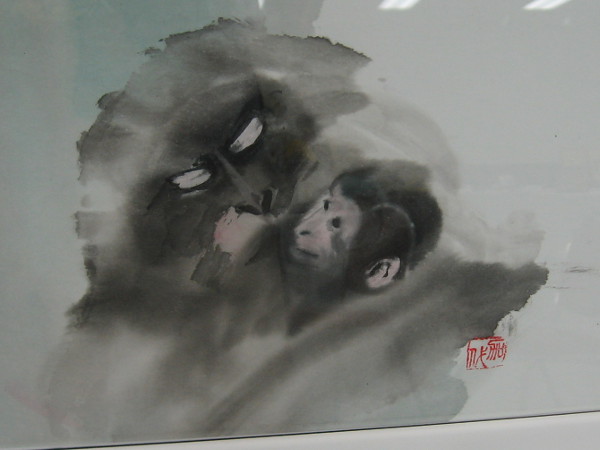
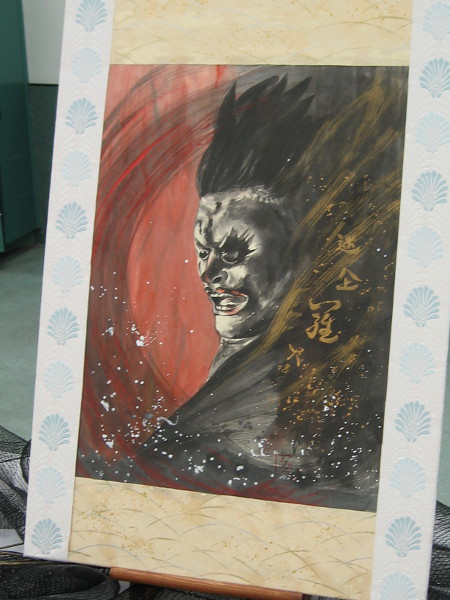
The Art Club of San Diego showcased the work of their artists in Balboa Park. Types of art included Sumi-e (Japanese ink wash painting), Ceramic and unusual, highly creative Art Forms.Many great pieces were out on view for anyone to enjoy. I was told taking photographs was fine. So here are some cool works of art! I’ve done my best to note the artists.I love this bear and the wild hills beyond! Artist Keiko Kitano.Some unusual but beautiful sculptures were part of this unique, once-a-year show.Beautiful artwork, everywhere I turned!I love this traditional bamboo. The artist is Joe Cross.Another fine work of art using ink and brush. Artist Louise Rendich.A colorful bird! Uh, oh. I didn’t get the artist. Sorry!I wasn’t the only one who was really enjoying these. You might want to watch for notices of the show next year.Mother monkey and offspring in a tender embrace. Fantastic. The artist is Kayo Beach.This one really caught my attention! The artist is Kayo Beach.One table had superb ceramic works arrayed upon it, all produced by Kazu Takahashi.According to a nearby sign, this Nihonga Japanese Style painting uses gansai Japanese colors on gold screen or dosa treated rice paper, or on silk.More beauty found in amazing Balboa Park. The Art Club of San Diego has some fine artists! Here we see the work of Kazue Knowlton.
…
I live in downtown San Diego and love to walk! You can follow Cool San Diego Sights via Facebook or Twitter!
Through this door is where the tour of the Villa Montezuma begins. Once inside, visitors turn left into a reception room, then proceed into truly magnificent performance and drawing rooms.
Four times a year, people are allowed inside the amazing Villa Montezuma. That’s part of the agreement between the City of San Diego Park and Recreation Department and the Friends of the Villa Montezuma, who are working hard to restore this historic gem in San Diego’s Sherman Heights neighborhood. I went on one of those half hour tours yesterday. Wow!
A couple years ago I walked past this eye-popping 1887 Queen Anne Victorian mansion, built by famed musican and spiritualist Jesse Shepard. I then posted a blog with a few outside photos. Well, guess what? All I can present today are more outside photos! Because photography isn’t allowed inside the Villa Montezuma at this time. But I can provide a little info about the tour, and try to convince you to go on one yourself.
Stepping into the Villa Montezuma is like stepping into a tiny royal palace. I’m not exaggerating. When I was young, I was fortunate to visit many of the most elegant palaces and chateaus of Europe, and the interior of Jesse Shepard’s home, which includes a splendid reception room, performance hall and drawing room, easily matches those esteemed places when it comes to lavish, luxurious decoration. Jesse Shepard (who later wrote under the pen name of Francis Grierson) was a pianist and composer who performed for many of Europe’s royalty, including the Czar of Russia and the Prince of Wales in England. So he was no stranger to a kingly lifestyle!
Should you enjoy an inside tour of the elaborate Villa Montezuma, which is built entirely of redwood, you’ll see fantastic art glass created by John Mallon of San Francisco. (Mallon also created the stained glass windows for San Diego’s 1889 courthouse, each window representing the Great Seals of the 42 states. You can see those windows today in downtown’s Hall of Justice.)
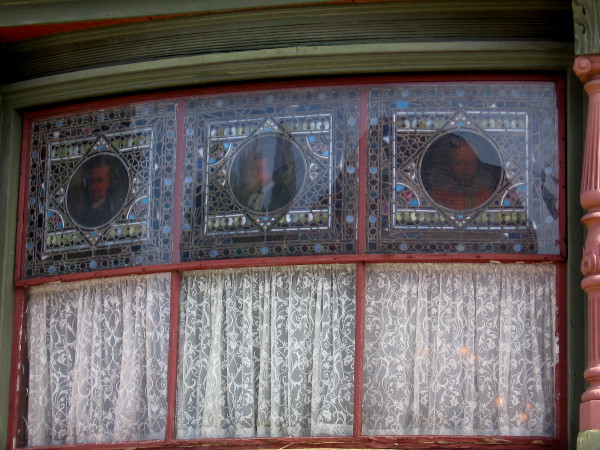
Jesse Shepard loved art, music and literature, and the stained glass windows in his mansion pay homage to his favorite artists. In the splendid room where he performed concerts for guests, windows feature the faces of Beethoven and Mozart, Raphael and Rubens; you’ll also see an expansive window devoted to Sappho, the classic Greek lyric poet, and four windows representing the four seasons. In the drawing room you can see more stained glass featuring Shakespeare, Goethe and Corneille.
The effect of these windows is truly astonishing. Their magical light shines on warm, ornate woodwork and wood floors, an embossed silvery ceiling, satin curtains, a variety of beautiful fireplaces, and artful touches that include influences from Innsbruck and Japonism. Stepping into the Villa Montezuma almost seems like falling into a dream of long ago.
Restoration of the Villa Montezuma is ongoing. The foundation was recently strengthened, along with the roof and chimneys. Still to go is the repainting of the exterior, fence restoration and landscaping the grounds. Once all is complete, it is hoped the mansion will be open full time as a permanent museum!
Meanwhile, go on a tour if you’re in San Diego. The guide was knowledgeable and entertaining. You’ll see much of the house, even some less elevated parts like the kitchen and washing room. You’ll learn all about Jesse Shepard, including strange mysteries concerning his life and the absolutely magnificent way he died!
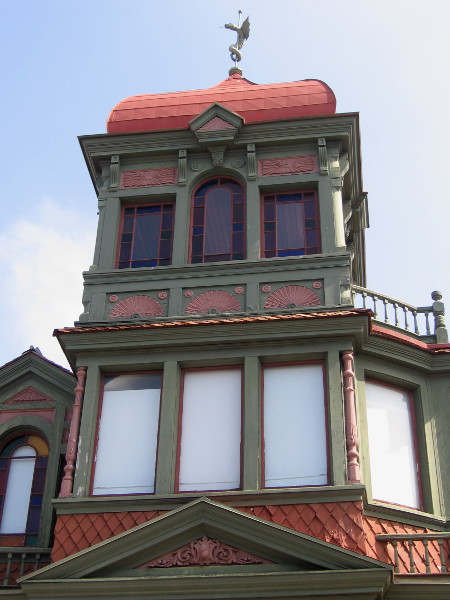
Folks gather for a free half hour tour. The public can venture inside the Villa Montezuma four times every year. (The upper floor isn’t open to the public yet.)The Friends of the Villa Montezuma is a nonprofit dedicated to restoring and maintaining the amazing Villa Montezuma mansion in San Diego.Photo of southeast corner of the Villa Montezuma Museum. The 1887 Queen Anne Victorian mansion contains numerous beautiful stained glass windows.Looking upward at the elaborate tower. I was allowed to closely approach this outside part of the Villa Montezuma on a tour day.A balcony just outside Jesse Shepard’s bedroom, which is adjacent to the elegant drawing room!Unusual curved bay window of the drawing room features stained glass images of Shakespeare, Goethe and Corneille. One must be inside to appreciate the grand effect.A light-filled chapel-like nook in one corner of Jesse Shepard’s performance room features stained glass depicting the four seasons.
…
I live in downtown San Diego and love to walk! You can follow Cool San Diego Sights via Facebook or Twitter!
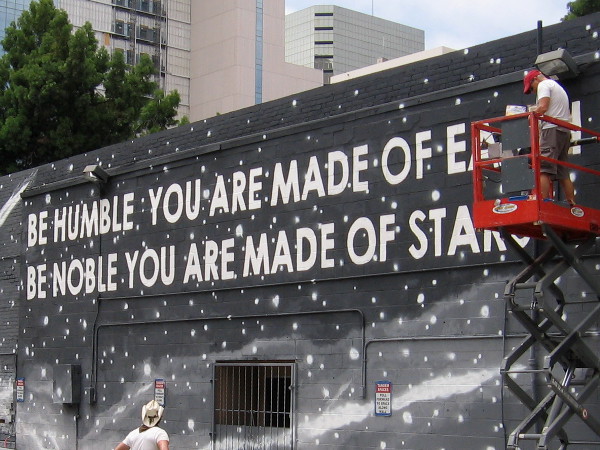
A new mural in downtown San Diego contains great wisdom, extolling two human values. Be humble. Be noble.
A new street mural in downtown San Diego is being completed even as I post this! It’s being painted on a large parking lot wall just south of C Street, between Front Street and 1st Avenue. Check it out!
The artist, Trek Thunder Kelly, who operates out of Venice Beach, California, is known for creating unique designs that mix oddly contrasting messages and images. The cool mural that he’s working on at this very moment is sponsored by the internet retail company Zappos, and it extols one of their stated core values: humility. I couldn’t help but notice the quote highlights another important human virtue: nobility.
Be humble. You are made of earth.
Be noble. You are made of stars.
These powerful true words come from a Serbian proverb.
When I spoke to Trek, it sounded like he’d paint some of the stars with glow-in-the-dark phosphorescent paint. At this point he has a limited supply, so it will have to be artistically applied. I can’t wait to see the completed artwork!
Be humble. You are made of earth. Be noble. You are made of stars.
…
I live in downtown San Diego and love to walk! You can follow Cool San Diego Sights via Facebook or Twitter!
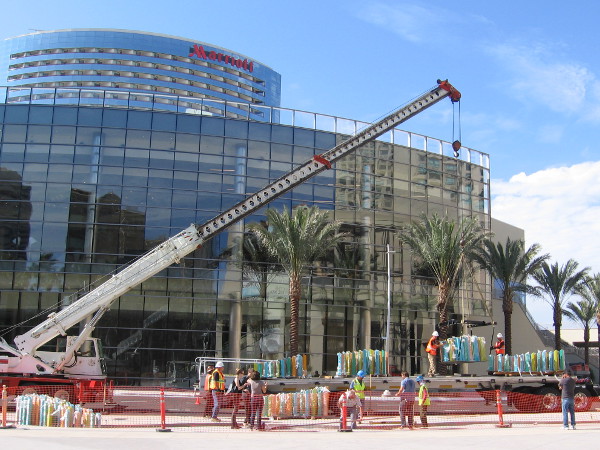
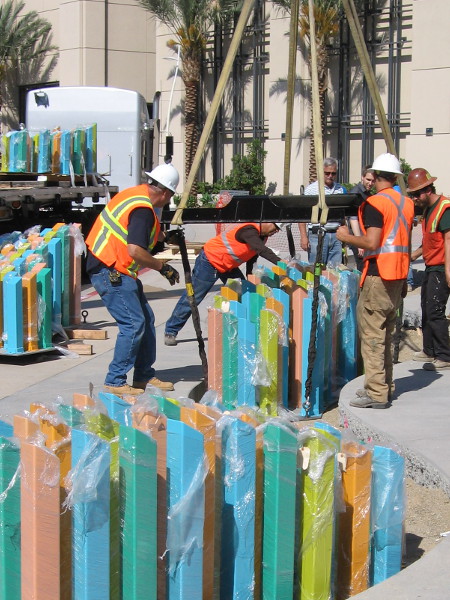
Construction workers carefully install new public art near the Marriott Marquis hotel’s recently completed conference center. These colorful vertical posts are part of a sculptural creation titled Tide.
Look at one of the cool things I stumbled upon during my walk around downtown San Diego this morning! New colorful public art is being installed in the plaza by the Marriott Marquis hotel’s new conference center! The bright, imaginative sculpture is titled “Tide”. You can see why in these photos. Looks to me like sunlight reflected from rolling water, creating a bright spectrum of rising colors! I can’t wait to see this piece finished!
I spoke for a moment to the artwork’s two creators: Katie MacDonald and Kyle Schumann of After Architecture. The friendly designers work out of Boston, Massachusetts and have created all sorts of cool stuff that can be enjoyed in public spaces around the country!
(There’s even more to come from a truly awesome morning adventure…)
The creators of “Tide” smile! That’s Kyle Schumann and Katie MacDonald of After Architecture.Looking along the wavy length of the colorful tide. The public art seems to undulate like water.A big crane lifts sections of the artwork into position on a sunny Saturday morning in San Diego. The Marriott Marquis’ brand new conference center shines in the background.The artists supervise the installation of their monumental art. It will be finished just in time for San Diego Comic-Con next month.San Diego continues to grow more interesting and beautiful as public art is installed near the waterfront!
…
I live in downtown San Diego and love to walk! You can follow Cool San Diego Sights via Facebook or Twitter!
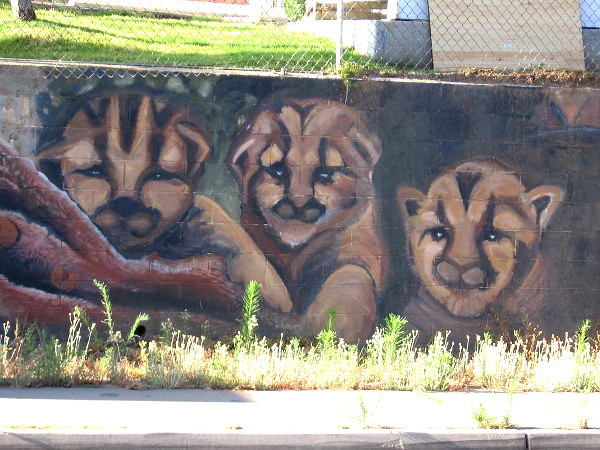
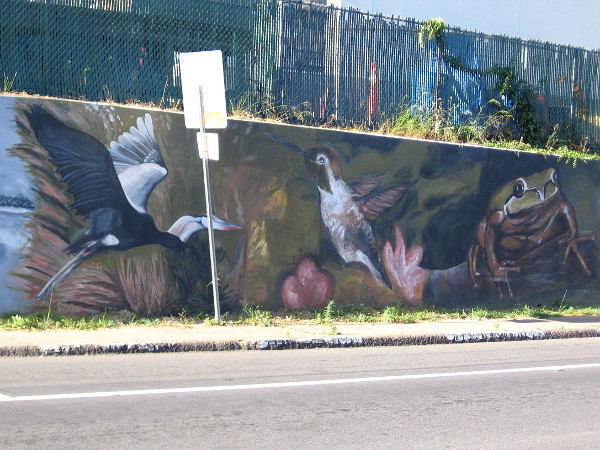
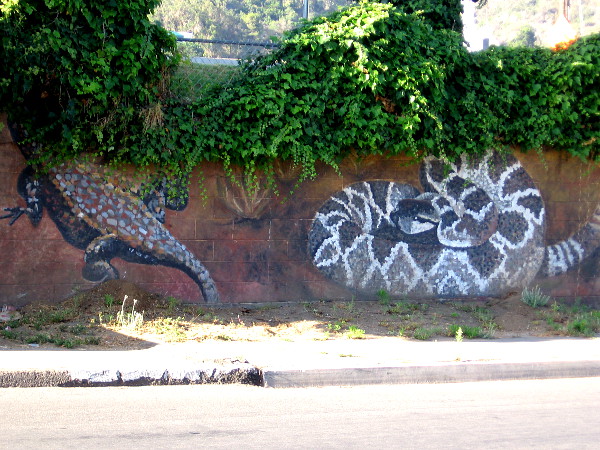
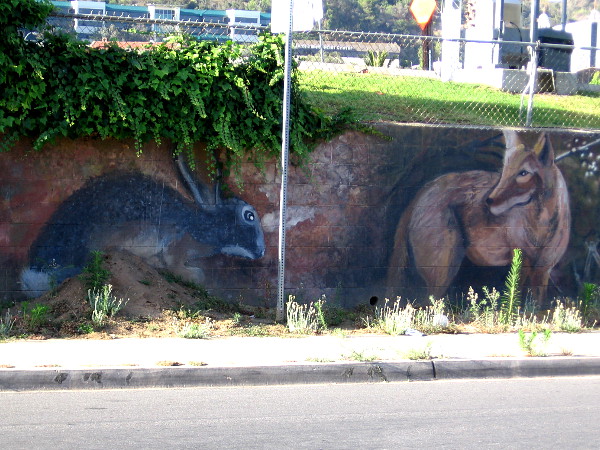
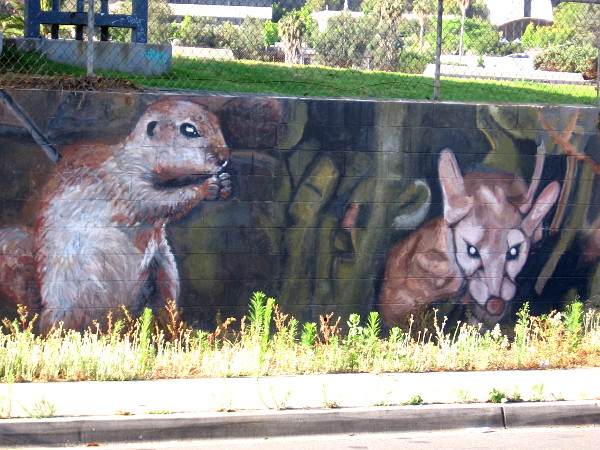
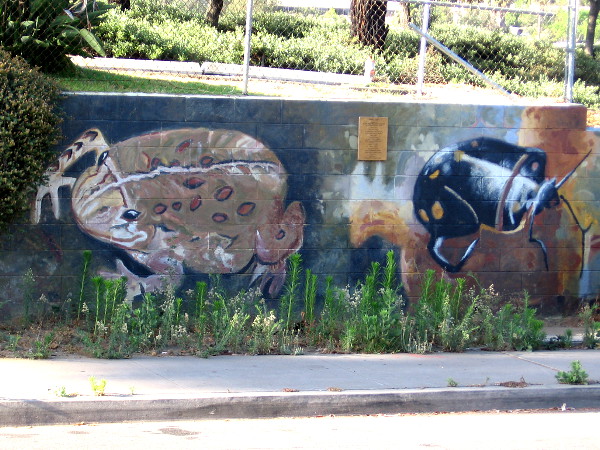
Faces peer from a wall near the San Diego River. The very long mural, titled River Life, contains images of wildlife one might find here–or have found here before urban development.
I love this mural in Mission Valley. I remember driving through the intersection at Qualcomm Way and Camino de la Reina years ago, and seeing a whole bunch of people painting wild river animals along the ugly low wall. A little research today tells me that memory was from late 2009.
“River Life” was completed by almost 200 volunteers over four days. The design came from artist Lori Escalera. It’s one of of six murals (so far) that the San Diego River Park Foundation has helped to create. I’ve featured others on my blog. Here are some links if you want to check out more of the beautiful San Diego River murals…
The left end of a long, colorful mural in Mission Valley. Birds of the air and water are featured here. The art was designed by Lori Escalera in 2009.A heron, hummingbird and frog. Down by the beautiful River Trail, just north of where we stand, many different birds can be spotted on the quiet surface of the San Diego River, and in thick reeds and overhanging tree branches.A butterfly, a fox (peeking from behind a transformer box on Camino de la Reina) and a raccoon.Some sort of lizard–perhaps a Gila monster–is half hidden by leaves, while a rattlesnake coils nearby!A jackrabbit and wild coyote.A skunk and perhaps kitten bobcats.I recognize a squirrel, but I’m not sure about the other animal whose eyes seem to be glowing in the dark.I believe that’s a Red-winged Blackbird and a moth.Looks to me like a toad and a beetle. If you can accurately identify these creatures, feel free to leave a quick comment!That looks to me like a turtle–or a tortoise! It’s obvious this blogger still has a whole lot to learn!
…
I live in downtown San Diego and love to walk! You can follow Cool San Diego Sights via Facebook or Twitter!
You can easily explore Cool San Diego Sights by using the search box on my blog’s sidebar. Or click a tag! There are thousands upon thousands of fun photos for you to enjoy!

































 Cool San Diego Sights!