If you’re a San Diego resident or visitor, I recommend going on a historical walking tour of Encinitas.
The free guided walks, which are led by a member of the Encinitas Historical Society, typically occur every two months and begin inside the society’s headquarters, a restored one-room 1883 schoolhouse. For the location, and to see the dates of upcoming walking tours, check out their website here.
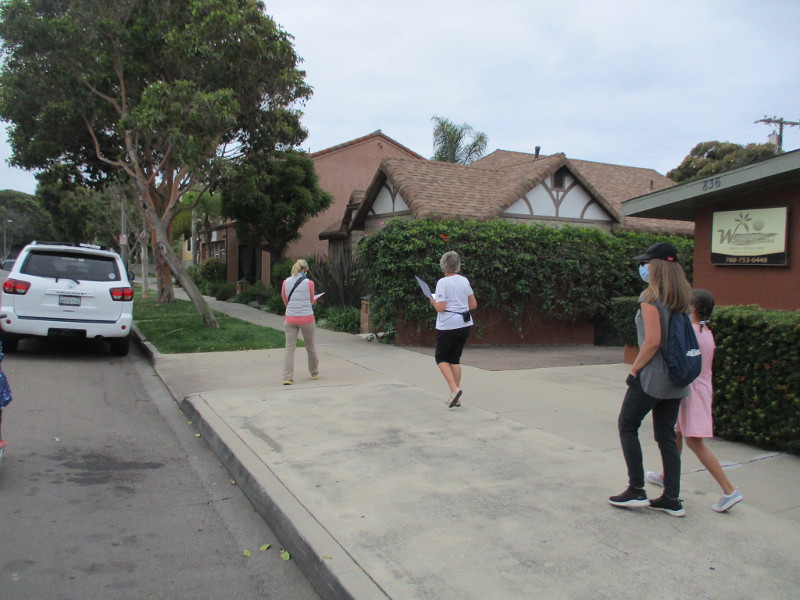
Last Saturday I and a couple dozen others gathered at the old schoolhouse for the tour. The sky was overcast with May gray, but the cool temperature was perfect for a very active one and a half hour walk.
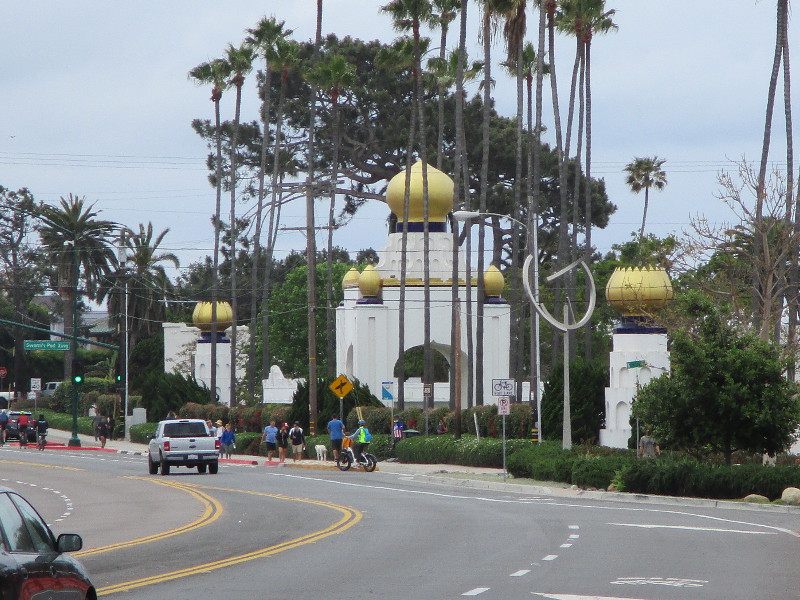
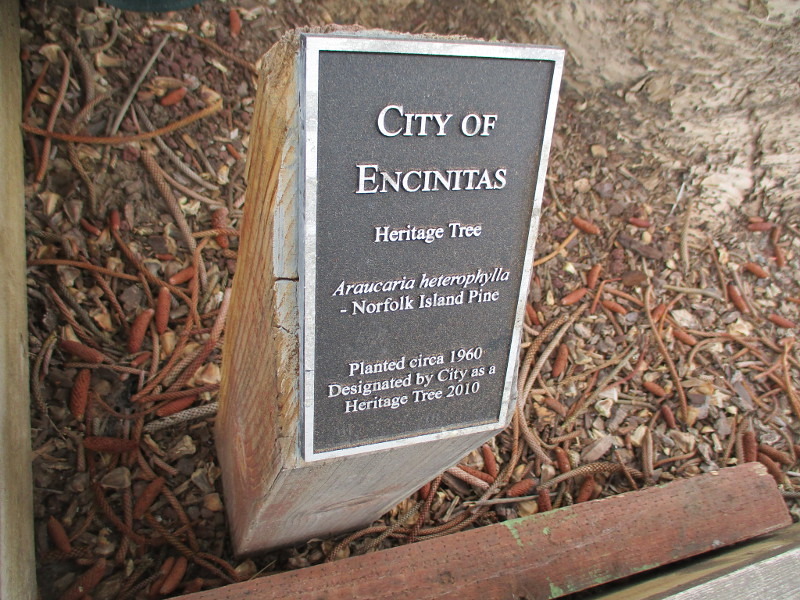
Our group headed south from the schoolhouse, checking out the two iconic Encinitas Boathouses and a few other historical homes and buildings. After a short eastward leg, we continued farther south down Coast Highway 101 to view the Golden Lotus Towers of the Self-Realization Fellowship from a distance, then headed back north passing numerous historical buildings until we reached Cottonwood Creek. Turning west, we followed the creek, climbed to a spot overlooking Moonlight Beach where we admired a Heritage Tree, then headed south a few blocks back to the old schoolhouse.
These photographs include sights I’d seen during a past walk in Encinitas. Back then I was on my own, wandering about randomly while knowing very little. The guided tour last weekend was extremely informative and I’ve provided a little bit of what I learned (and managed to jot down) in the photo captions.
If you want a great experience make sure to go on the tour yourself! Like every other beach city in San Diego’s North County, Encinitas has a rich history that is often surprising!
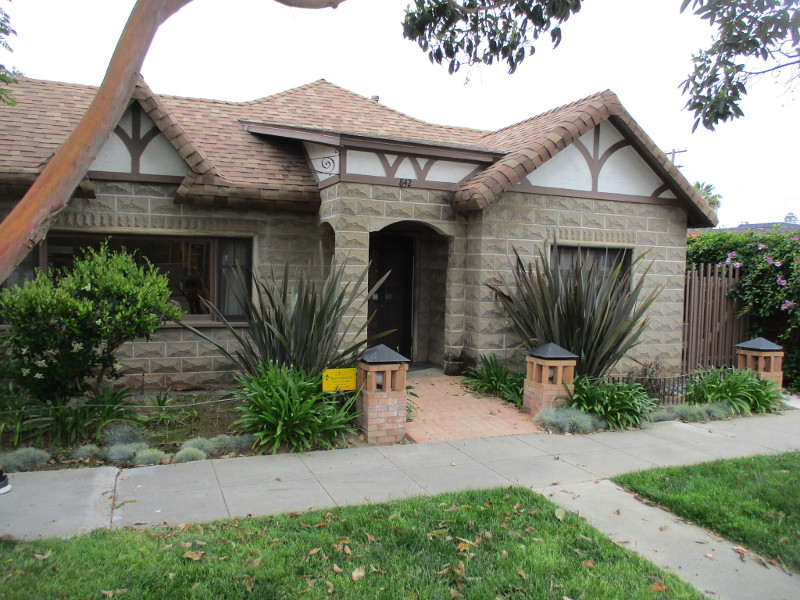
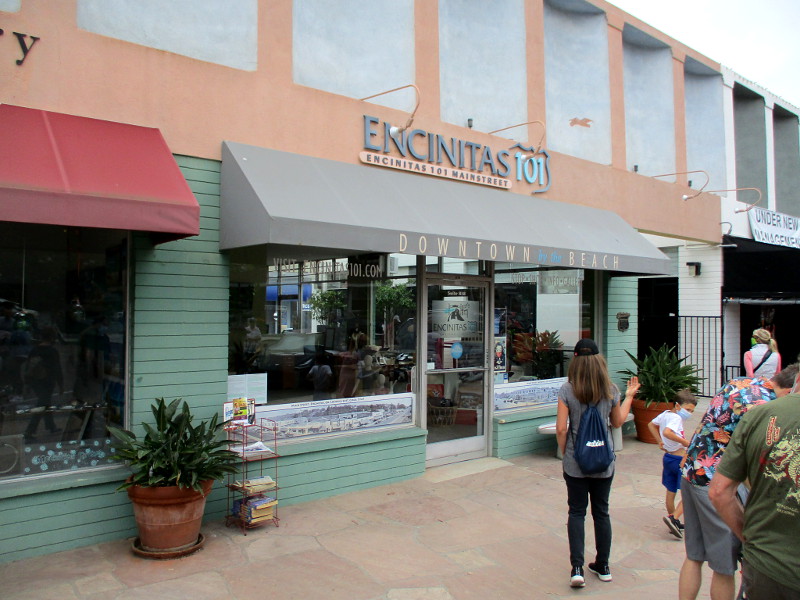
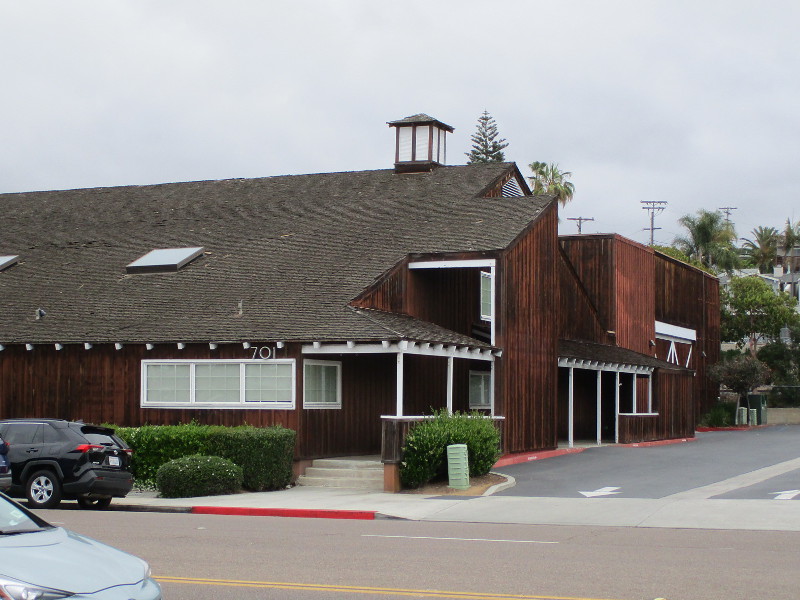
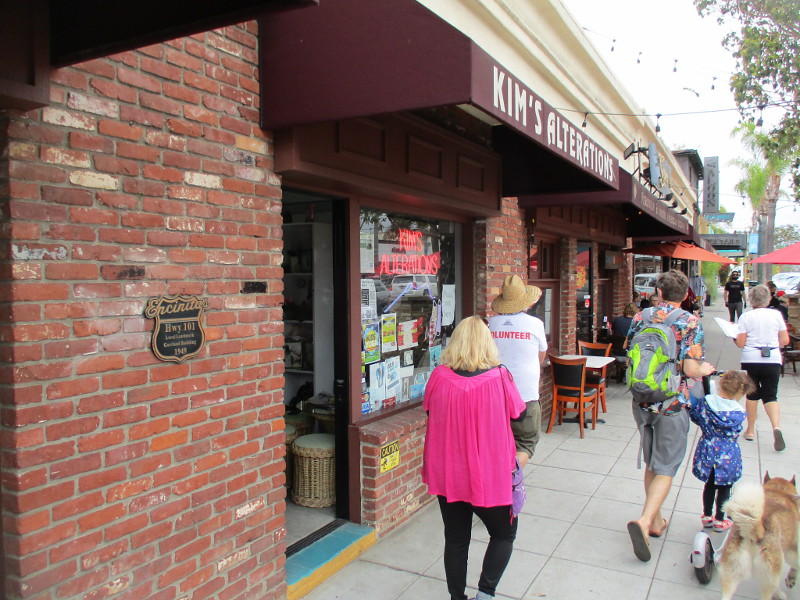
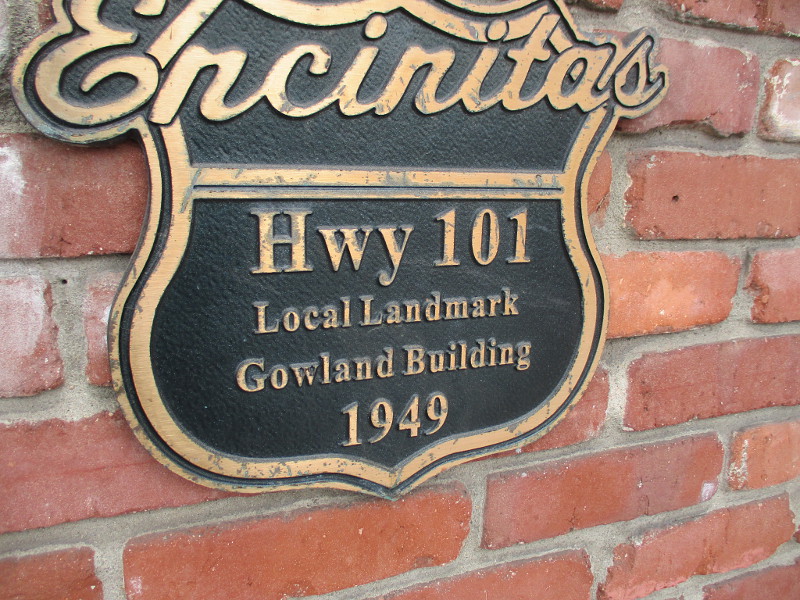
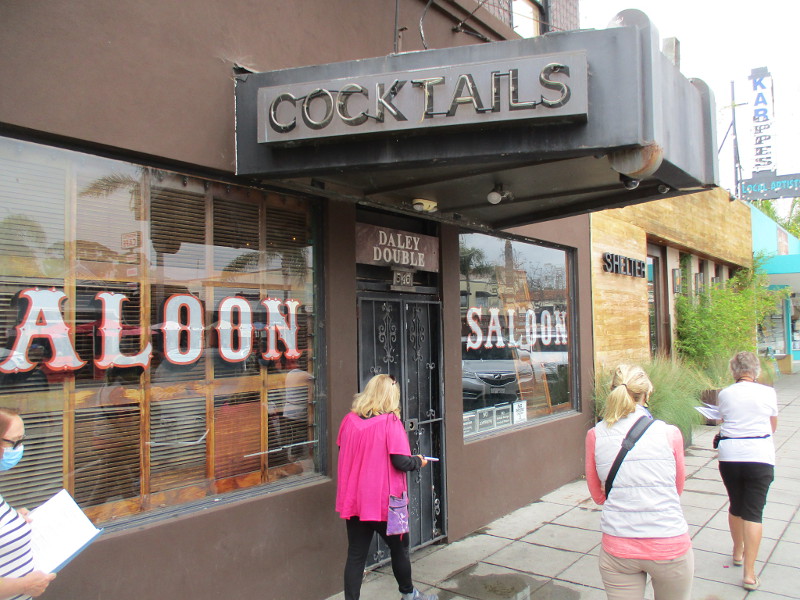
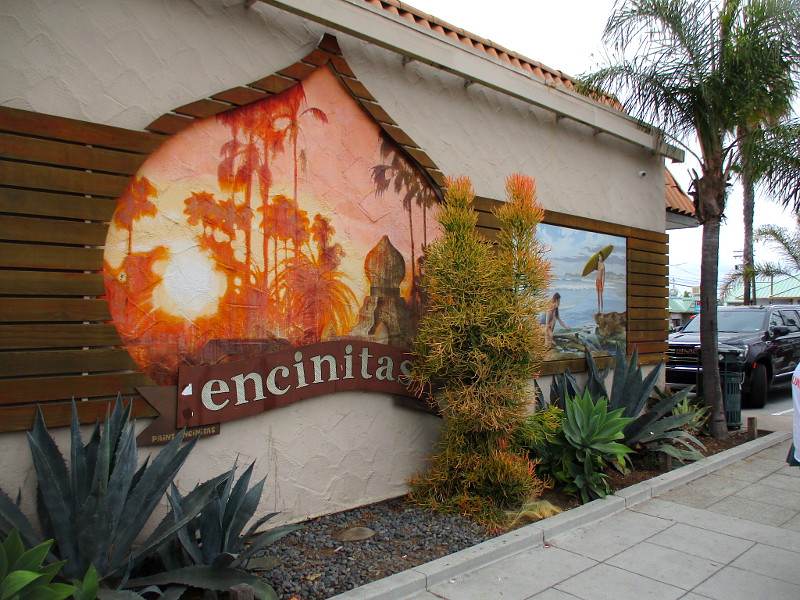
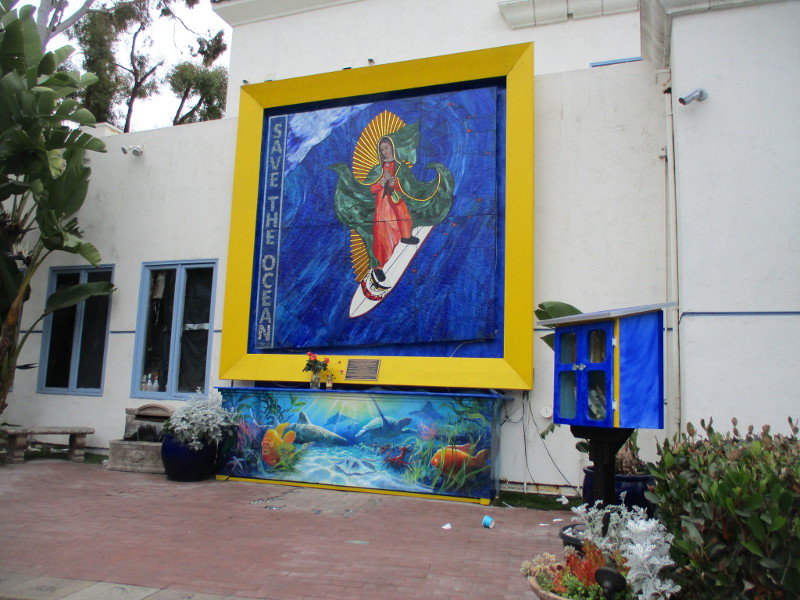
The unique Boathouses of Encinitas were built in 1927-1928 and were once called The Arks. They were constructed with recycled lumber from a dance pavilion and bath house that used to be located at Moonlight Beach.The Petrie House, in the Tudor-Cotswold Revival architectural style, was built in 1931. Every cement block was made by hand.The Self-Realization Fellowship Temple was originally the 1916 Mission School. The old Spanish architectural influences are still visible.To the south down Coast Highway 101 we could see the distinctive golden towers of the Self-Realization Fellowship ashram.The 1949 County Realty Building, now home of Encinitas 101 Main Street Association.A surfboard bench and photo of Main Street, Encinitas, California, looking west, circa 1947.Beautiful wood interior of the 1925 Payne Cleaners building. It is home to the longest laundry service business in San Diego County.Rustic-appearing buildings across the Coast Highway at The Lumberyard shopping center were inspired by history. Trains running on nearby tracks once delivered lumber to Encinitas here.Beautiful original glasswork decorates a historic building.The Daley Double saloon was called the Rendezvous in the 1930’s. It once housed an illegal poker parlor and boxing ring.Murals painted by Micaiah Hardison, born and raised in Encinitas.The original Encinitas sign was erected in 1928, removed in 1937 for a highway widening project, then duplicated and returned to the same location in 2000.The famous La Paloma Theater, also called Aubrey Austin Building, opened in 1928. Built in a Spanish Mission/Art Deco style.The sculpture Encinitas Child was created by local artist Manuelita Brown. A young girl was killed on the nearby road years ago.The popular, very colorful Surfing Madonna mural.
Last year I blogged about the Surfing Madonna mural with additional photos and information here.
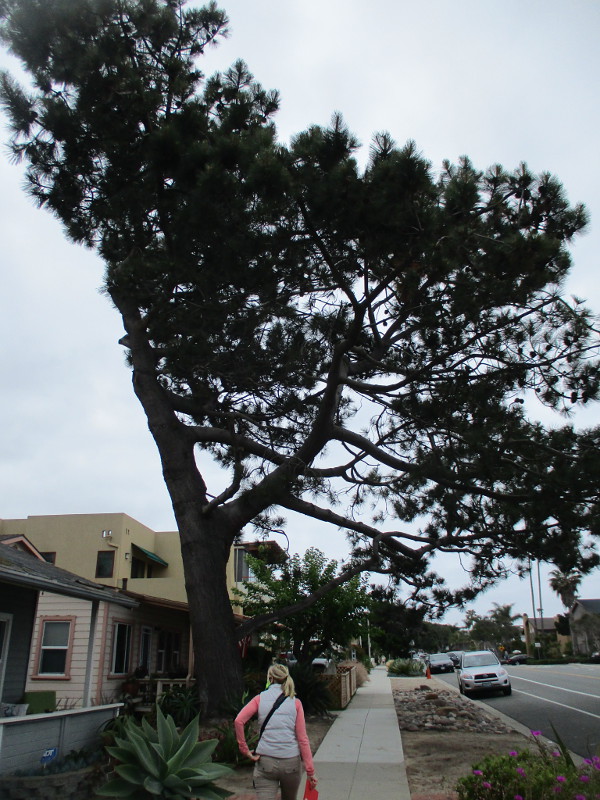
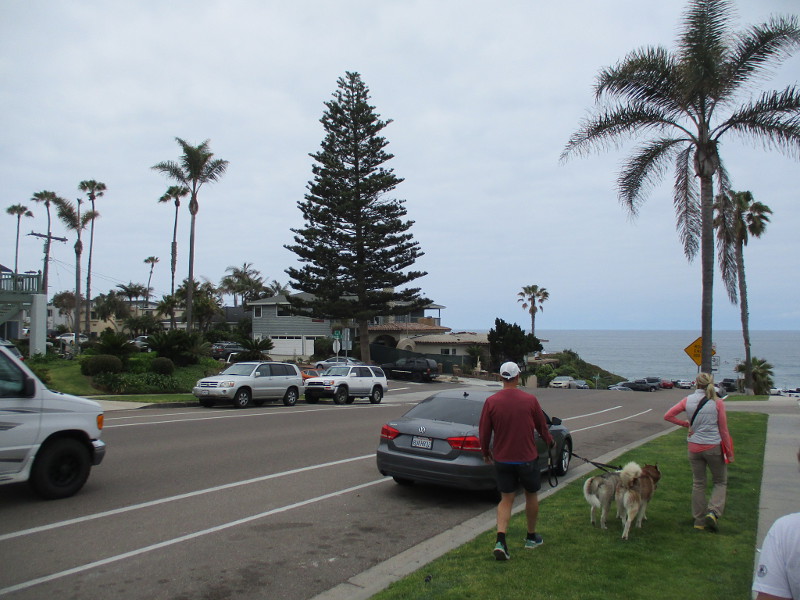
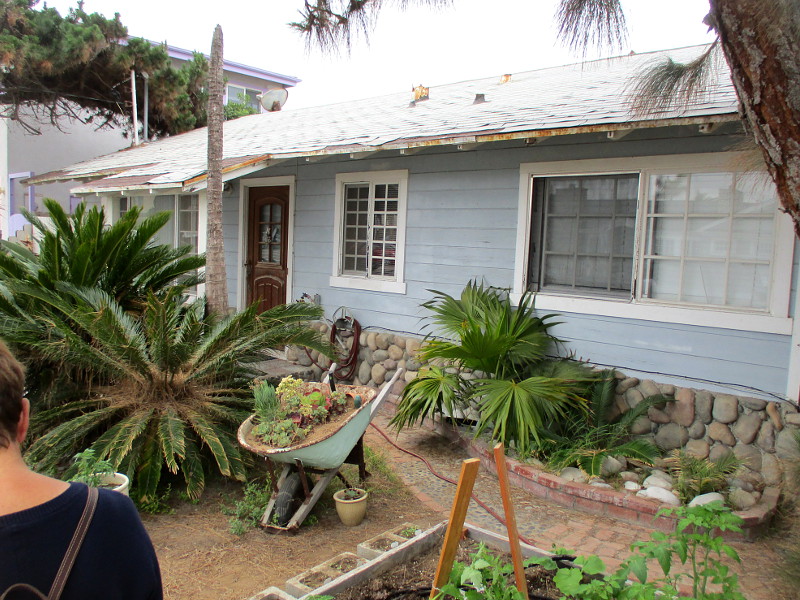
Encinitas owes its origin to Cottonwood Creek, a source of water and wood on San Diego’s arid north coast. Trains coming down from Los Angeles stopped here. In 1881 the town of Old Encinitas was established.Members of our tour group look down at a huge frog at the edge of the creek.A large, rare Torrey pine tree, on a hilltop not far from the Pacific Ocean.The 2nd Heritage Tree of Encinitas. Planted in 1952, the huge Star Pine is lit during the holidays and Santa arrives on a firetruck from nearby Fire Station One.One of many quaint beach cottages built by the ocean in Encinitas.
…
I live in downtown San Diego and love to walk around with my camera! You can follow Cool San Diego Sights via Facebook or Twitter!
You can easily explore Cool San Diego Sights by using the search box on my blog’s sidebar. Or click a tag! There are thousands upon thousands of photos for you to enjoy!
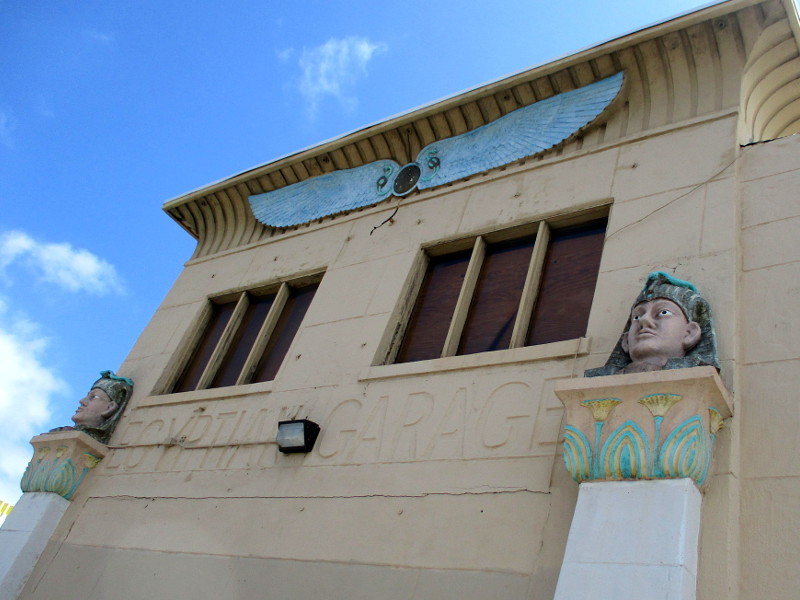
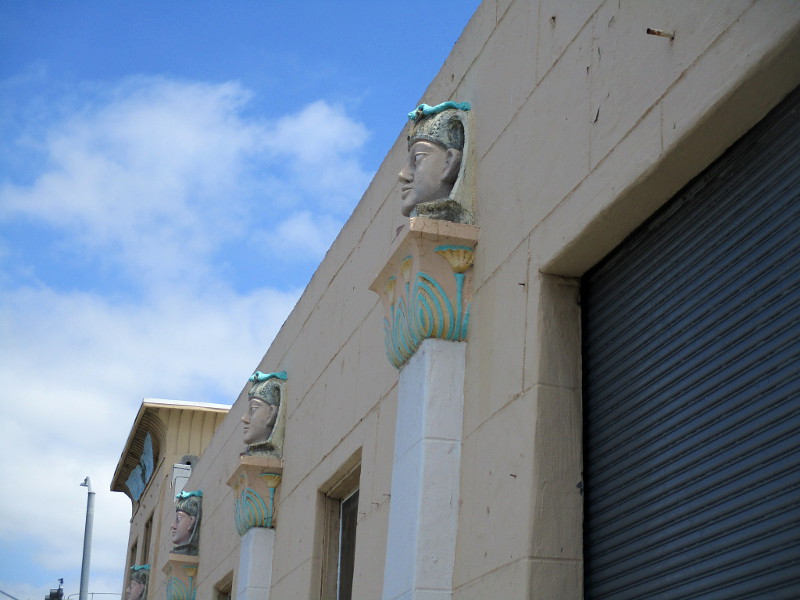
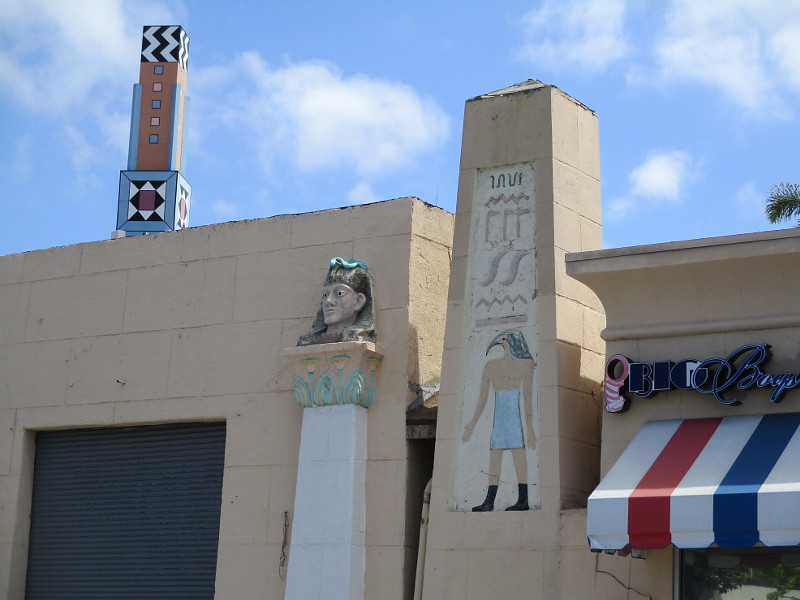
The Egyptian Garage building in City Heights is a fascinating example of Egyptian Revival architecture.
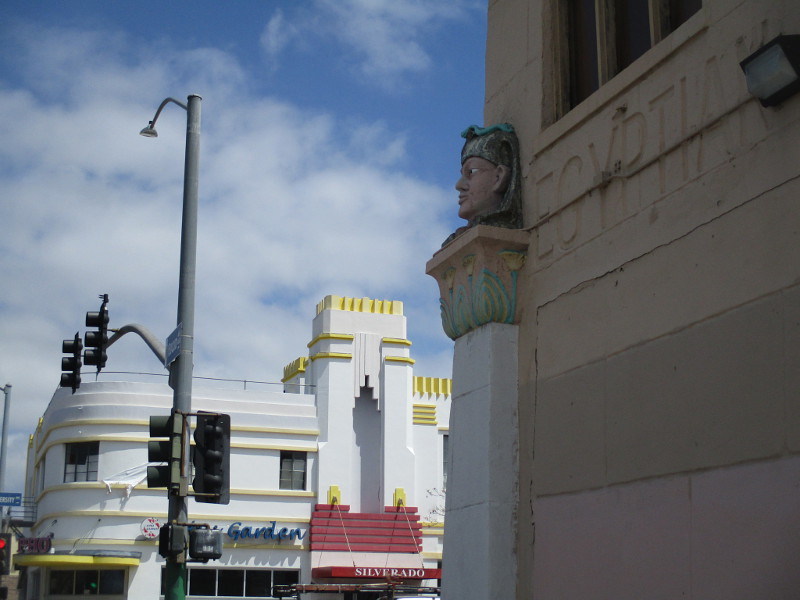
This building with a rather unexpected appearance is located at University Avenue and Euclid Avenue. It’s adjacent to two other unique, historical buildings–directly west of the prominent Euclid Tower, and south across the street from the Silverado Ballroom (both of which you can see in a few of the following photographs).
To learn about the history of the Egyptian Garage, I’ve had to sort out conflicting dates from several web pages. Apparently the building was constructed in 1923, at the end of the old East San Diego trolley line. It was one of three Egyptian Revival streetcar electrical substations that were built. It was sold only two years after beginning operation.
After a remodel in 1925 by David H. Ryan, the building served from 1926 to 1932 as the Egyptian Garage, complete with gas pumps in front. An addition was made on the south side in 1927. Since 1957 it has been the home of Big City Liquor.
Today you can see pharaoh heads atop pilasters on a couple sides of the building, horizontal vulture wings containing cobras and suns up by the rooftop, and an obelisk-like projection on the garage’s south end with a hieroglyphic design featuring ibis-headed Egyptian moon god Thoth.
To learn much more, you can read a detailed article about the Egyptian Garage building’s history and the phenomenon of Egyptian Revival architecture in the 1920’s here.
A few other examples of the Egyptian Revival architectural style can be found in San Diego, most notably in Hillcrest. Years ago I took some fun photos in Hillcrest’s Egyptian Quarter and posted them here.
…
This blog now features thousands of photos around San Diego! Are you curious? There’s lots of cool stuff to check out!
Here’s the Cool San Diego Sights main page, where you can read the most current blog posts. If you’re using a phone or small mobile device, click those three parallel lines up at the top–that opens up my website’s sidebar, where you’ll see the most popular posts, a search box, and more!
To enjoy future posts, you can also “like” Cool San Diego Sights on Facebook or follow me on Twitter.
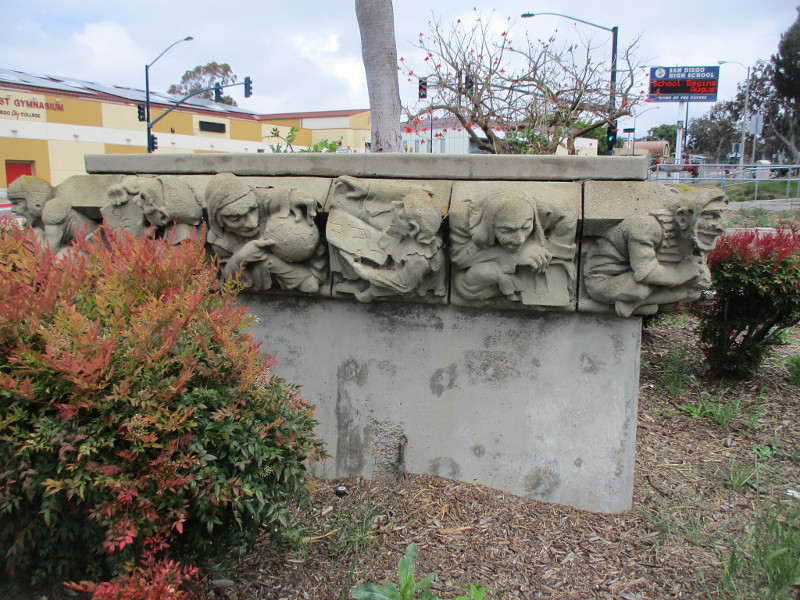
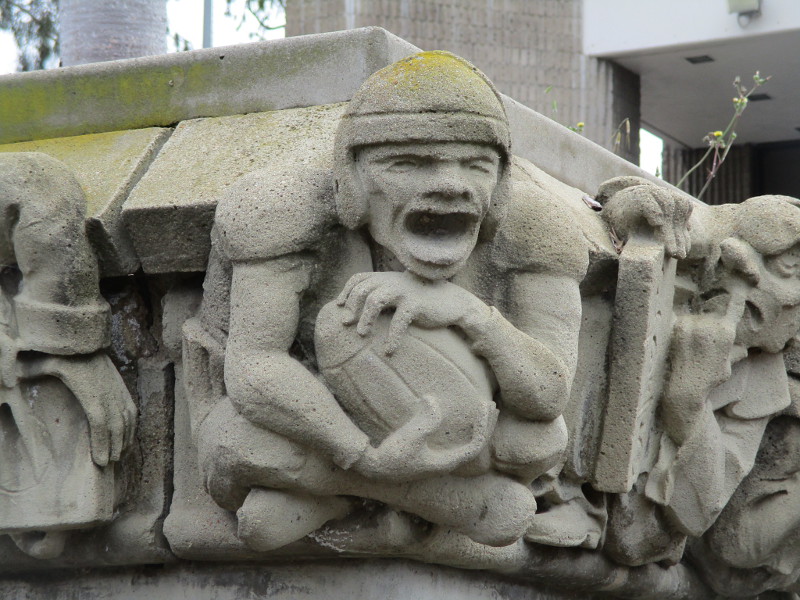
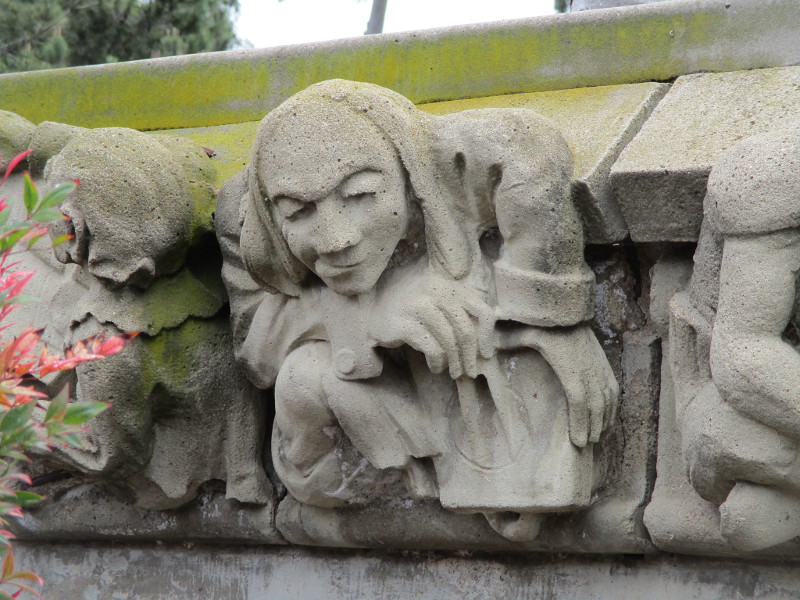
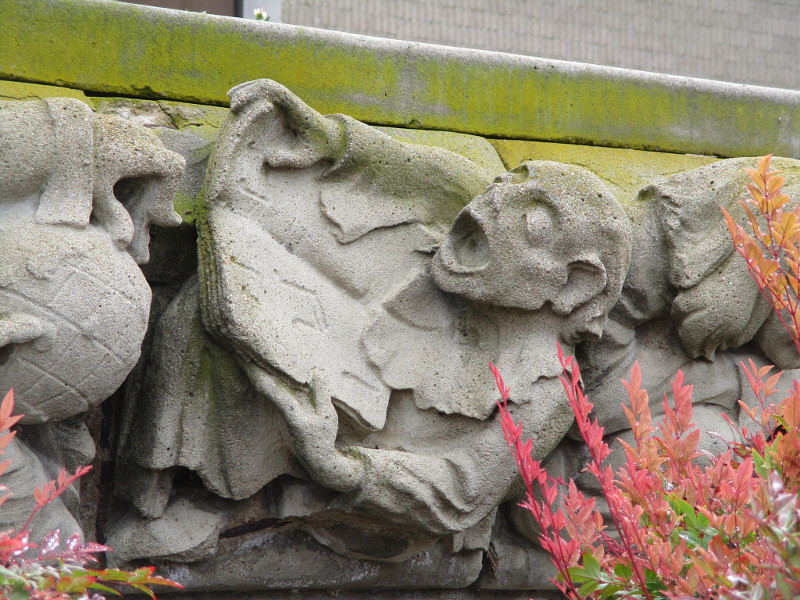
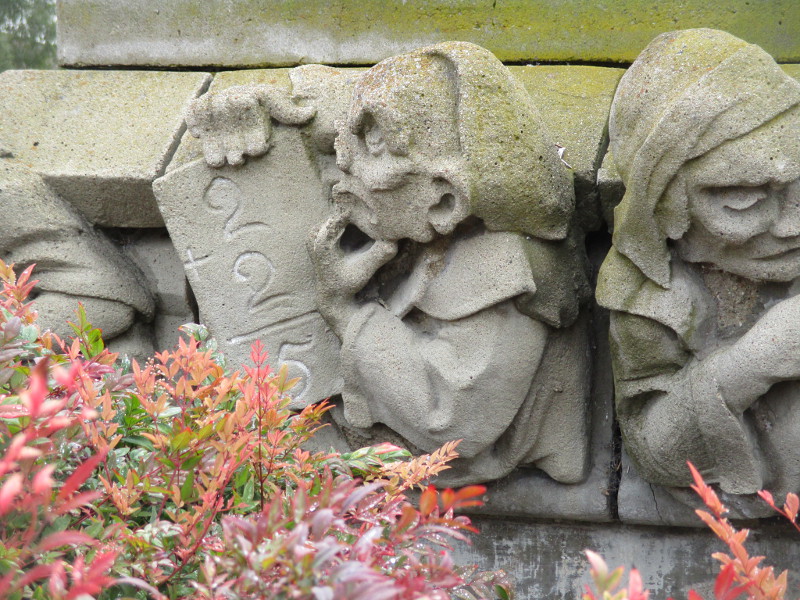
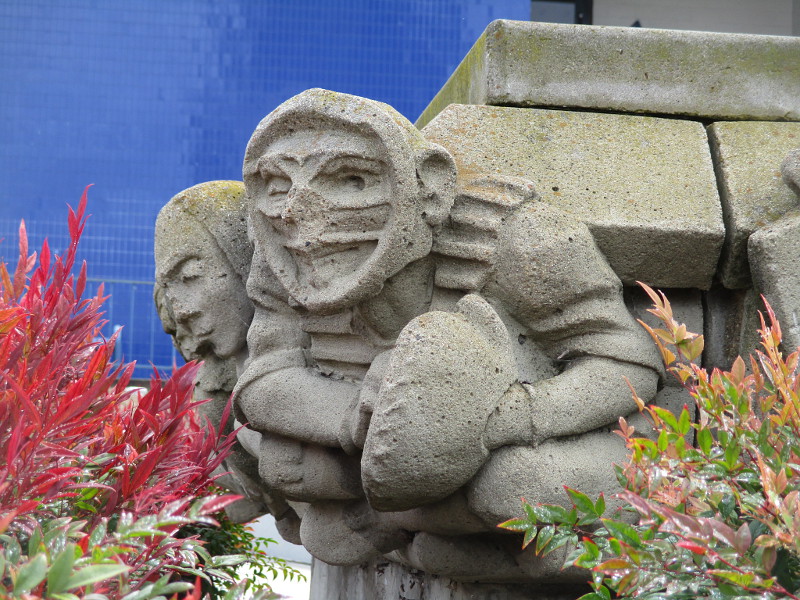
I’ve often wondered about these sculptural figures that surround the rim of a planter in front of San Diego High School. Depicting academic and athletic endeavors, the figures are very weathered.
San Diego High School, the oldest high school in our city, began as the Russ School in 1882. In 1907 a new building, often referred to as the Grey Castle, opened. South of the Grey Castle, Russ Auditorium was dedicated in 1926.
The Russ School, Grey Castle and Russ Auditorium are all long gone. You can read the fascinating history of San Diego High School here and here and here.
After searching the internet, I must assume these amusing figures are the gargoyles from the façade of Russ Auditorium mentioned in the first two articles. Was the planter at one time a fountain? I’ve searched for old photographs that might provide clues, but without success.
Do you know anything about these old figures, which are seen in front of San Diego High School’s entrance when heading up Park Boulevard? If you do, please leave a comment to help preserve a little history!
I live in downtown San Diego and love to walk around with my camera! You can follow Cool San Diego Sights via Facebook or Twitter!
You can easily explore Cool San Diego Sights by using the search box on my blog’s sidebar. Or click a tag! There are thousands upon thousands of photos for you to enjoy!
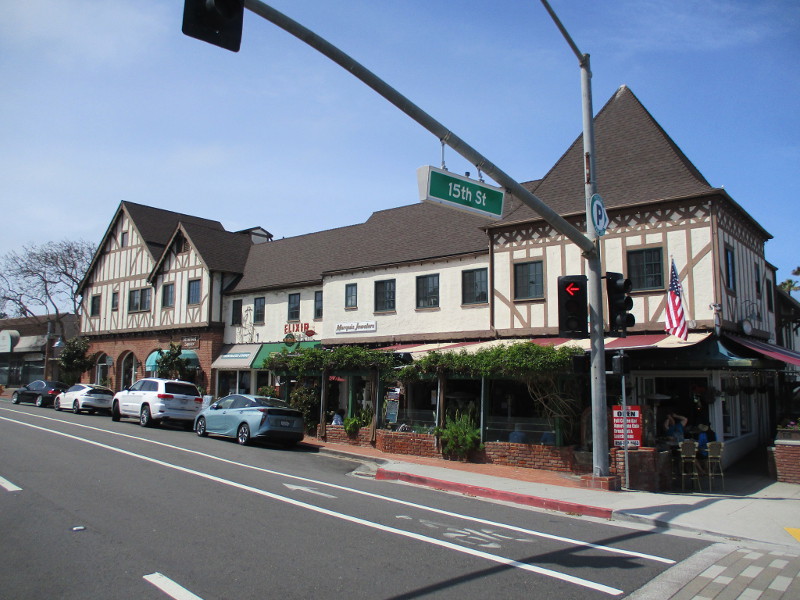
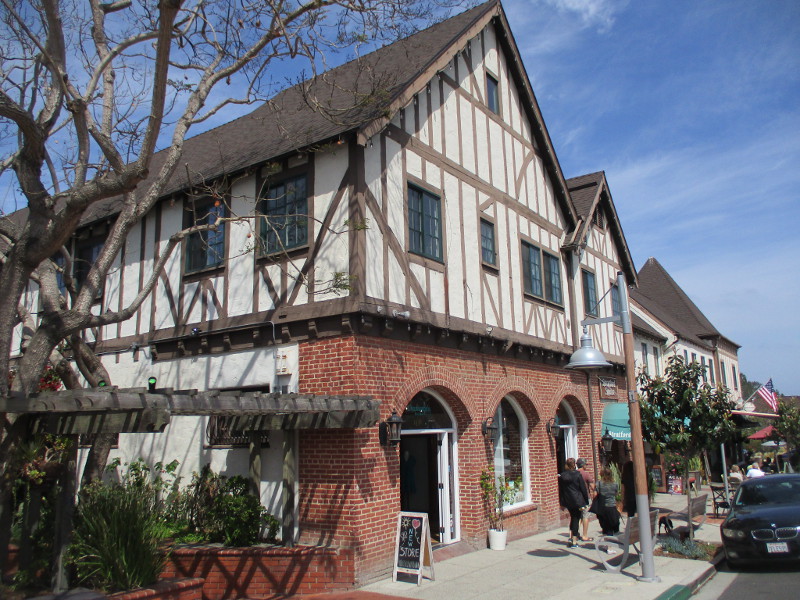
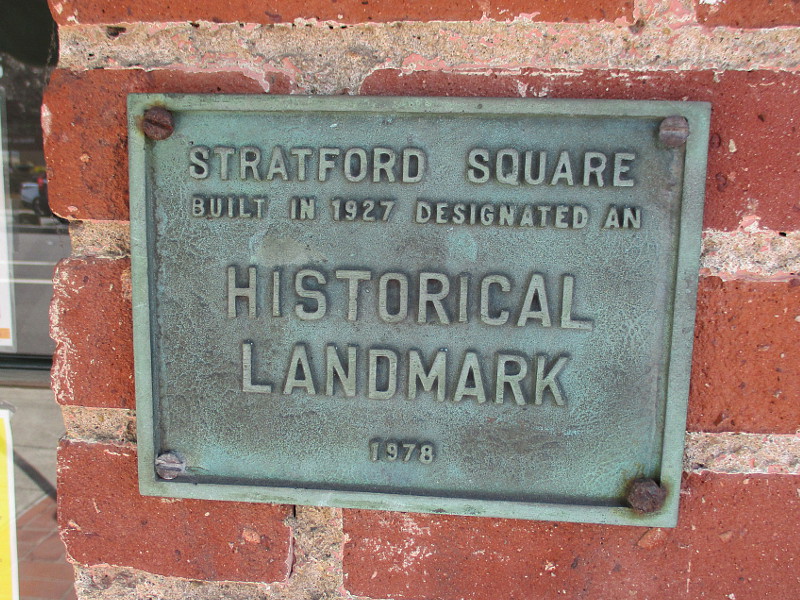
Possibly the most unique and well known building in Del Mar is Stratford Square. Located at Camino del Mar and 15th Street, the English Tudor style architecture makes Stratford Square instantly recognizable.
This historical landmark was constructed in 1927 and was originally called the Kockritz Building. Today it’s the home of a couple dozen offices and a few small shops and eateries.
Stratford Square was built across 15th Street from the now long-vanished 1909 Stratford Inn. The Stratford Inn, later called the Hotel Del Mar, had a very similar Tudor appearance. It became a gathering place for many of Hollywood’s stars after Bing Crosby built the Del Mar Racetrack.
The spot where the old Stratford Inn stood overlooking the Pacific Ocean is now the location of the L’Auberge Del Mar luxury hotel.
As you travel through Del Mar, you might notice a few other buildings with an English Tudor appearance. Like Stratford Square, they were inspired by the original Stratford Inn.
…
I live in downtown San Diego and love to walk around with my camera! You can follow Cool San Diego Sights via Facebook or Twitter!
You can easily explore Cool San Diego Sights by using the search box on my blog’s sidebar. Or click a tag! There are thousands upon thousands of photos for you to enjoy!
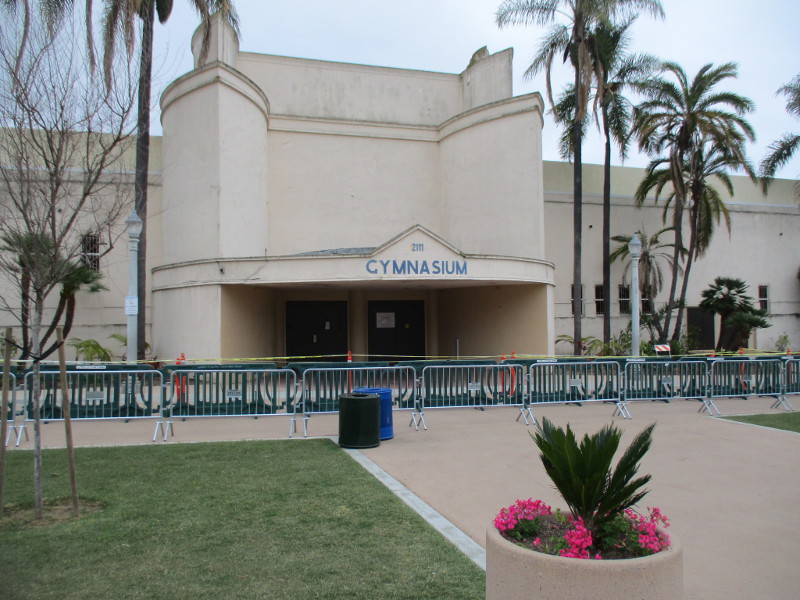
The Municipal Gymnasium in San Diego’s Balboa Park is a popular destination for local athletes playing basketball. I like to venture inside during a weekend to watch part of a game.
I often wonder if those playing hoops in the old gym know they’re inside a historically important building that was constructed for the 1935 California Pacific International Exposition in Balboa Park.
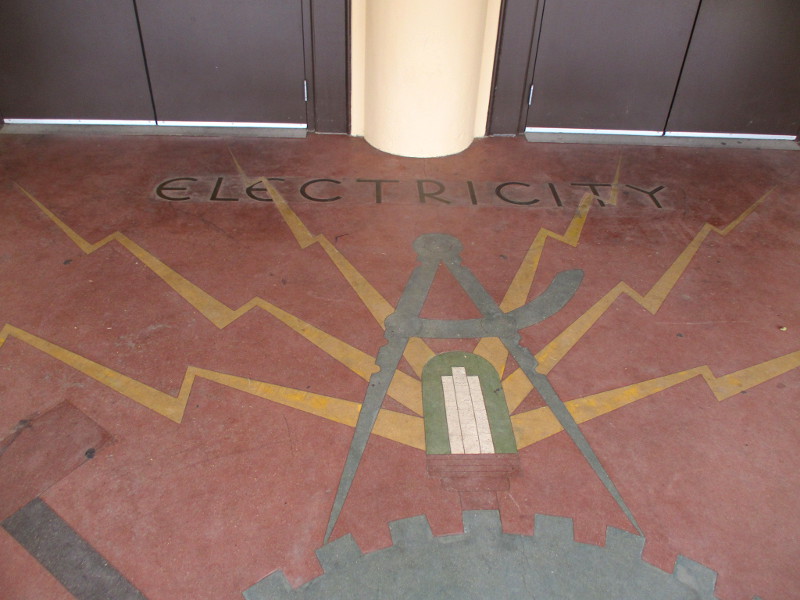
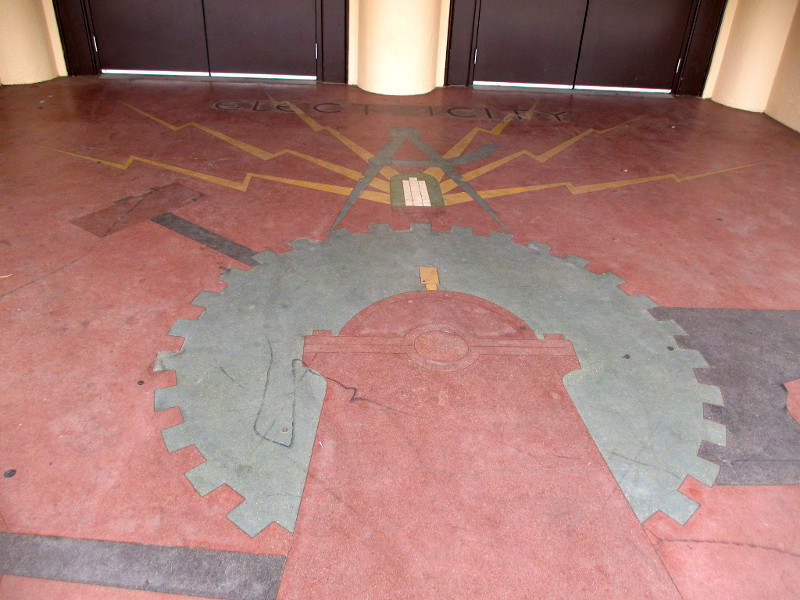
The Palace of Electricity and Varied Industries building–today’s gymnasium–still retains an indication of its unique origin. Look down as you approach the front door and you’ll see this artwork in the entry…
I learned yesterday from local architect Robert Thiele (whose many accomplishments include designing the beautiful rotunda fountain inside the San Diego Museum of Art) that big changes are coming to this historic building. Decorative elements of the 1935 Palace of Electricity and Varied Industries are being restored!
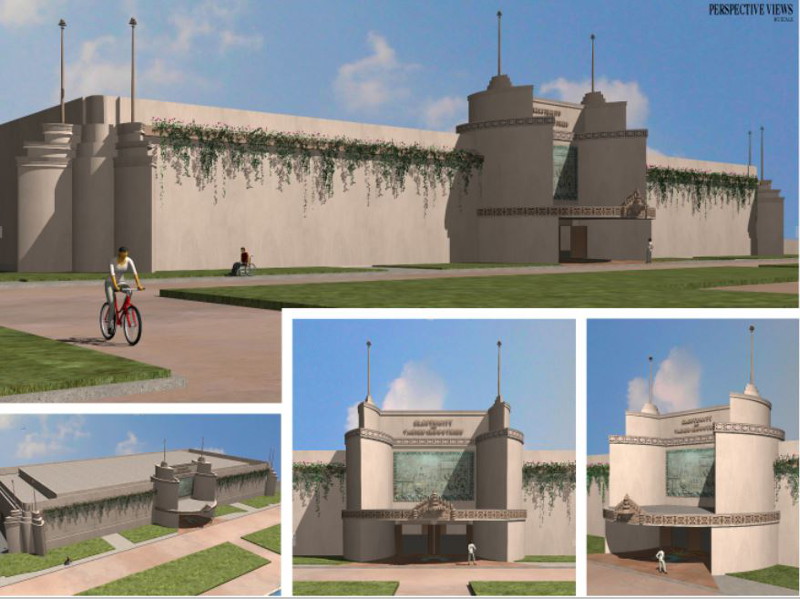
Once completed, a fantastic 12′ x 20′ cold cast bronze panel will be hung above the entrance with bands of ornamentation above and below. You can see an early model of the bronze panel in that very first photograph.
Several architectural visualizations show how Balboa Park’s Municipal Gymnasium will appear once the panel is installed. Grand ornamental flourishes will crown both the building’s entrance and panel. Compare the following images.
Quite an amazing difference!
I’ve asked people who might be knowledgeable if this historic building, located next to three important San Diego museums, will continue to be used as a gym in the future, but that seems uncertain at this point. If anyone has more information concerning the Municipal Gymnasium’s fate, please leave a comment!
…
I live in downtown San Diego and love to walk around with my camera! You can follow Cool San Diego Sights via Facebook or Twitter!
You can easily explore Cool San Diego Sights by using the search box on my blog’s sidebar. Or click a tag! There are thousands upon thousands of photos for you to enjoy!
Uniquely beautiful Mayan ornamentation has been added to the front of the San Diego Automotive Museum in Balboa Park!
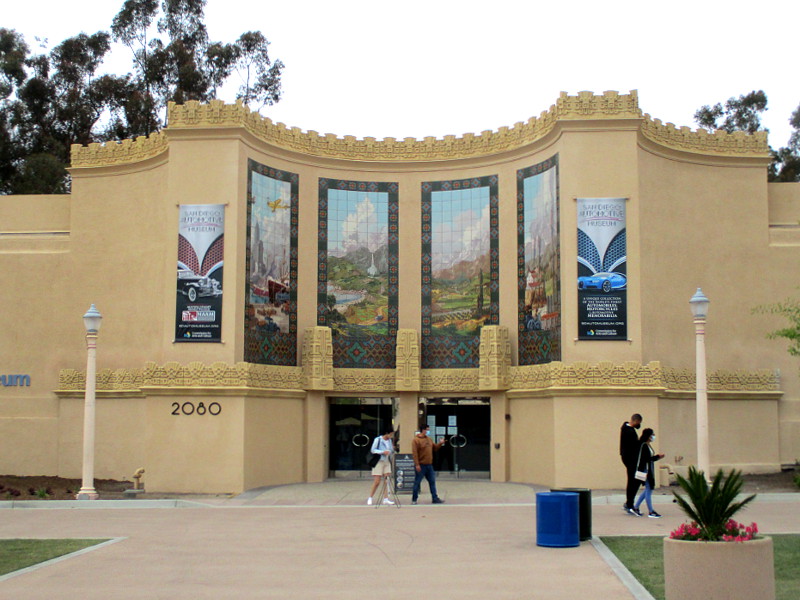
This sculptural artwork, completed recently, has made the Automotive Museum’s historic 1935 California State Building even more amazing!
A little over a month ago, four permanent tile murals were installed above the Automotive Museum’s front entrance. In my opinion the new Mayan designs frame and complement the murals handsomely. (To learn more about the colorful tile murals, and to compare how the California State Building looked before the addition of Mayan ornamentation, you can click here.)
One thing I noticed is that the Mayan decoration now aesthetically links the California State Building to the old Federal Building, which is also located in Balboa Park’s Palisades, but on the opposite side of Pan American Plaza.
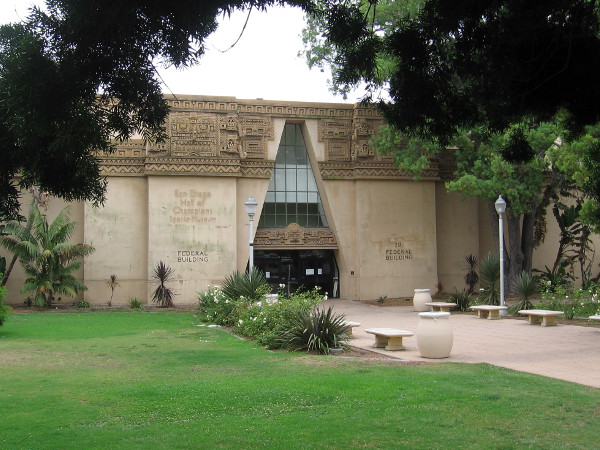
The Federal Building, future home of the Comic-Con Museum, has its own entrance uniquely graced with pre-Columbian style ornamentation. The 1935 California Pacific International Exposition architect Richard Requa, according to this web page, “had conceived an architectural plan for the Palisades showing how the forms of indigenous architecture in the American southwest and in Mexico could be used to produce a distinctive American style of architecture…”
For comparison, here’s an old photo of the Federal Building’s entrance after the closure of its last occupant, the San Diego Hall of Champions…
And here is the amazing new entrance to the San Diego Automotive Museum…
I also learned today that the Palisades’ nearby Municipal Gymnasium, which back in 1935 was the California Pacific International Exposition’s Palace of Electricity and Varied Industries, is also to be renovated and made equally amazing!
Stay tuned!
Here are two more pics I took this afternoon of the Automotive Museum..
UPDATE!
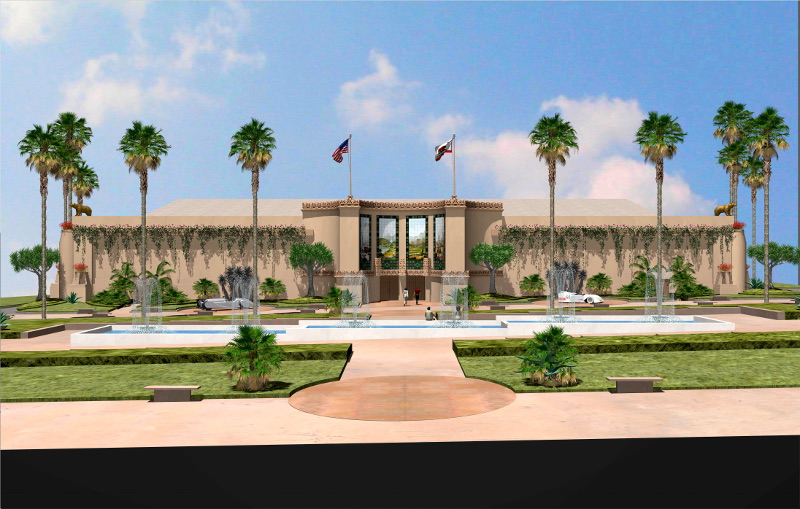
Here’s an architectural visualization I received of the California State Building with two flagpoles, and grizzly bears on the roof corners. In front of the building, at the center of a fully enlarged Pan American Plaza, you can see the proposed recreation of the 1935 Firestone Singing Fountains.
This is how the Automotive Museum might appear should plans finally come to fruition (without the palm trees and hanging vines)!
…
I live in downtown San Diego and love to walk around with my camera! You can follow Cool San Diego Sights via Facebook or Twitter!
You can easily explore Cool San Diego Sights by using the search box on my blog’s sidebar. Or click a tag! There are thousands upon thousands of photos for you to enjoy!
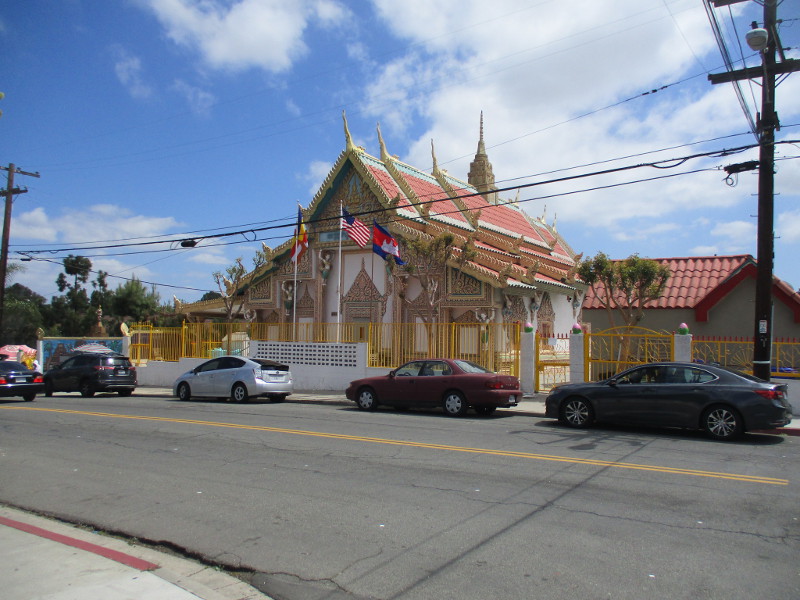
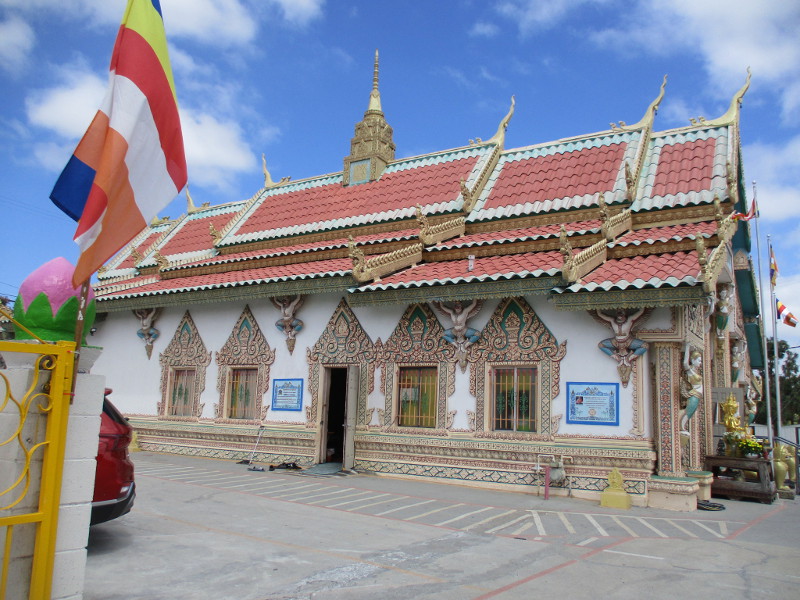
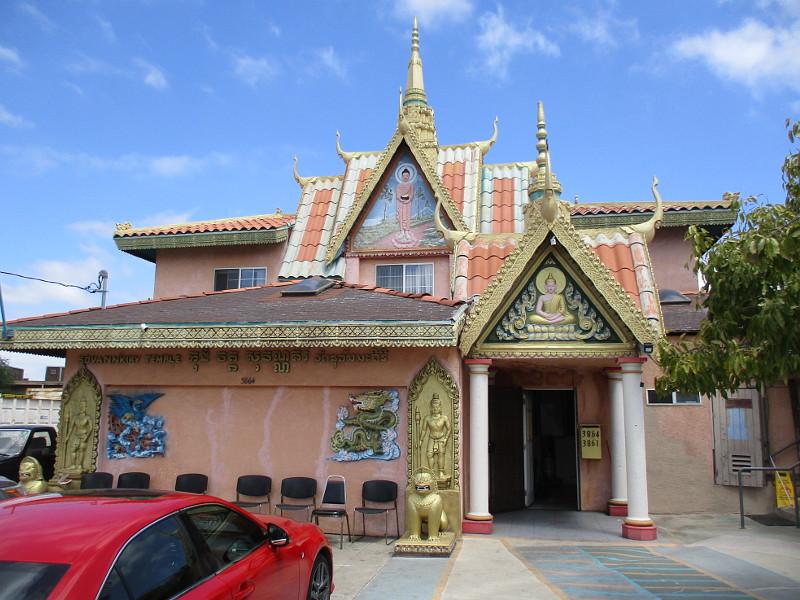
Last Sunday, during my walk in City Heights, I admired the exteriors of two amazing buildings near the corner of 52nd Street and Rex Avenue, one block south of University Avenue.
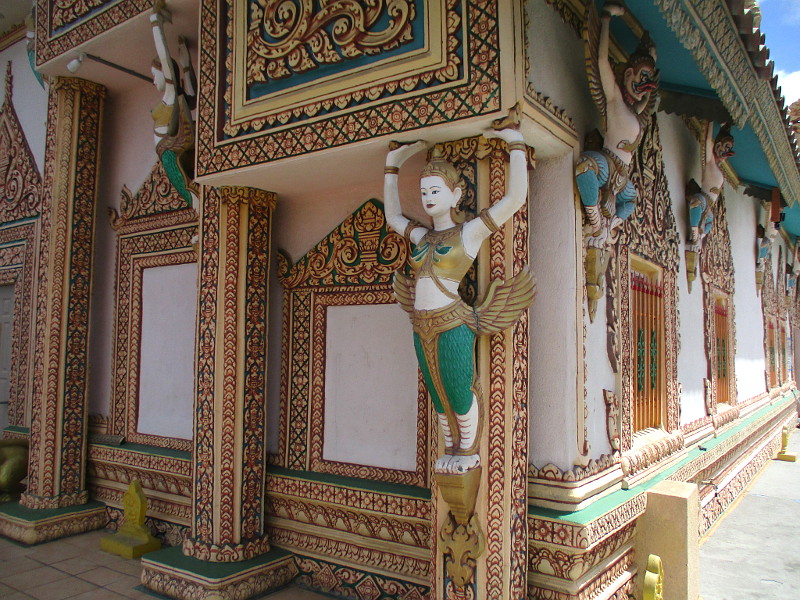
As far as I understand it, both beautiful buildings are Buddhist temples, and together they are called Wat Sovannkiry, Cambodian Buddhist Society San Diego. The head monk of Wat Sovannkiry is Reverend Father Khian Prom Attaguto of Cambodia, Abbot of Wat Suwan Khiri, San Diego.
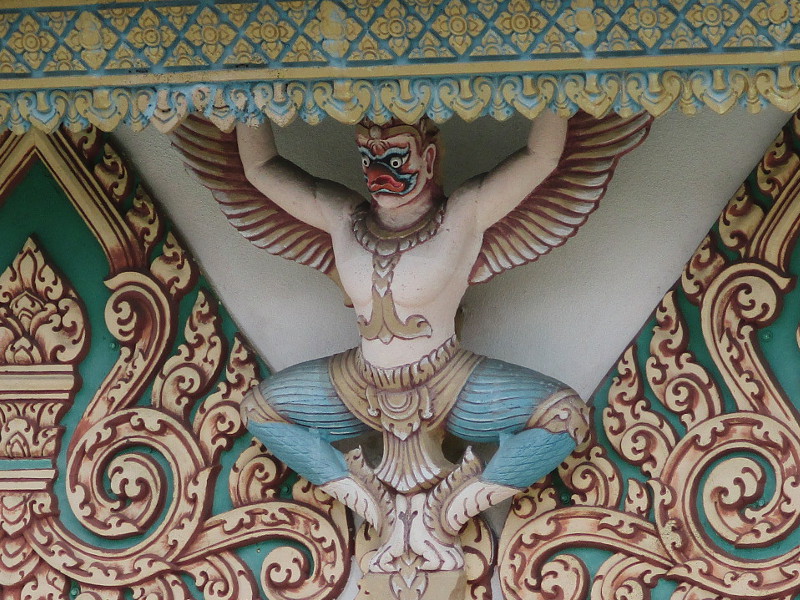
I’ve tried to ascertain more information concerning Wat Sovannkiry, but there is almost nothing online, and not all of what I read, including names and spelling, is consistent. I didn’t venture into either temple building because I didn’t want to intrude. But I did take photographs of the highly ornate exteriors.
Hidden San Diego has an article about Cambodian and Laotian temple Wat Sovannkiri which you can read here.
My first photographs are of the truly amazing building on the east side of 52nd Street…
The following photographs, also taken from the sidewalk, are of the second building, which is located just west of 52nd Street on Rex Avenue…
…
I live in downtown San Diego and love to walk around with my camera! You can follow Cool San Diego Sights via Facebook or Twitter!
You can easily explore Cool San Diego Sights by using the search box on my blog’s sidebar. Or click a tag! There are thousands upon thousands of photos for you to enjoy!
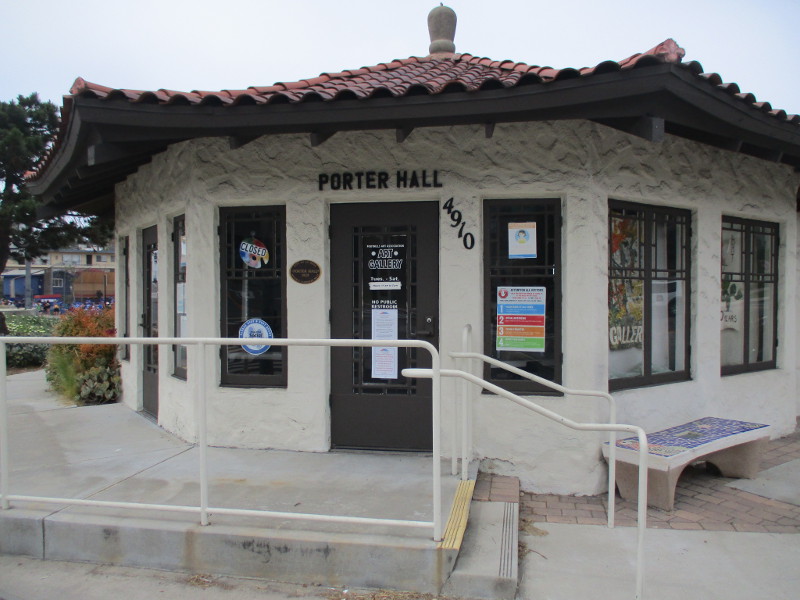
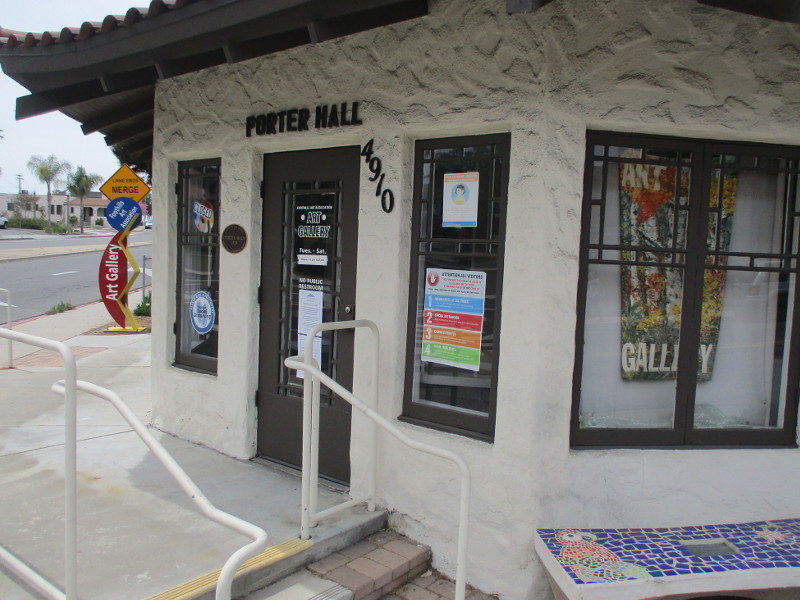
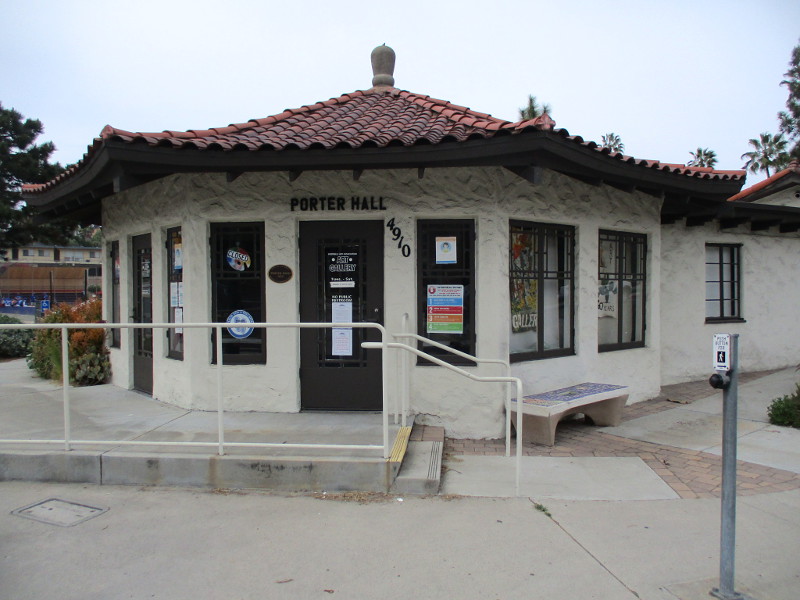
One of the most distinctive buildings in La Mesa can be found in MacArthur Park. The designated historic landmark, located at 4910 Memorial Drive, is called Porter Hall.
This small octagonal building, built by the Porter family in the late 1920’s, has an unusual tile roof that appears a little Chinese and a little Mexican. The roof’s exotic contours are explained by the fact that Henry and Elizabeth Chapin Porter had previously lived in China.
From 1932 to 1957 Porter Hall served as a San Diego County library.
Prior to 1974 the original octagonal structure stood on the other side of University Avenue. It was moved when the street was widened. Today the enlarged building is home of the Foothills Art Association.
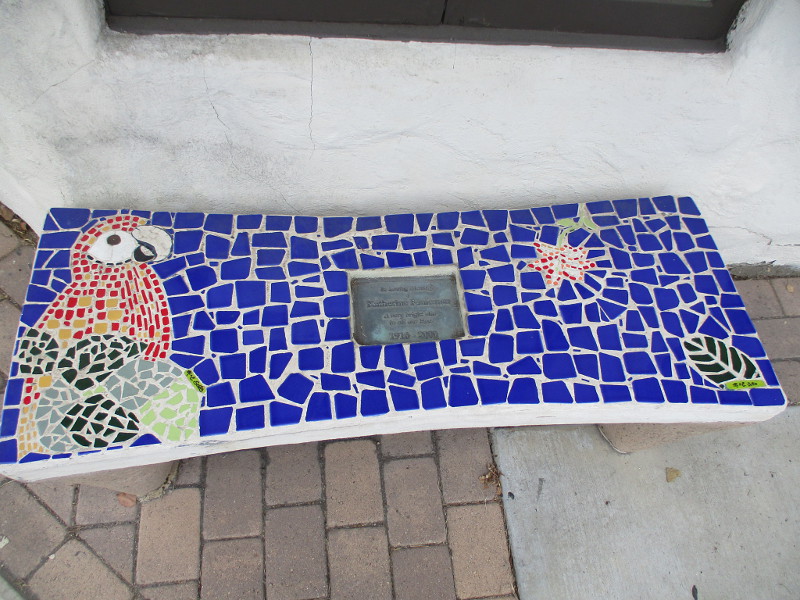
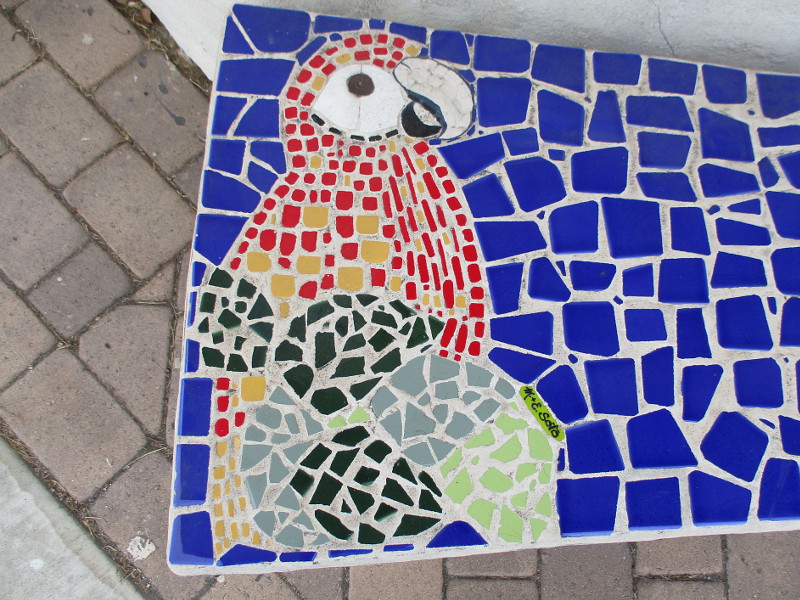
When I walked past Porter Hall a couple weekends ago, I took these photographs. Some artwork could be seen from the sidewalk, including a beautiful mosaic bench with a colorful parrot. A plaque dedicates the bench to Katherine Faulconer.
You can learn more about La Mesa’s influential Porter family by reading page 5 of an old La Mesa Historical Society publication here.
…
I live in downtown San Diego and love to walk around with my camera! You can follow Cool San Diego Sights via Facebook or Twitter!
You can easily explore Cool San Diego Sights by using the search box on my blog’s sidebar. Or click a tag! There are thousands upon thousands of photos for you to enjoy!
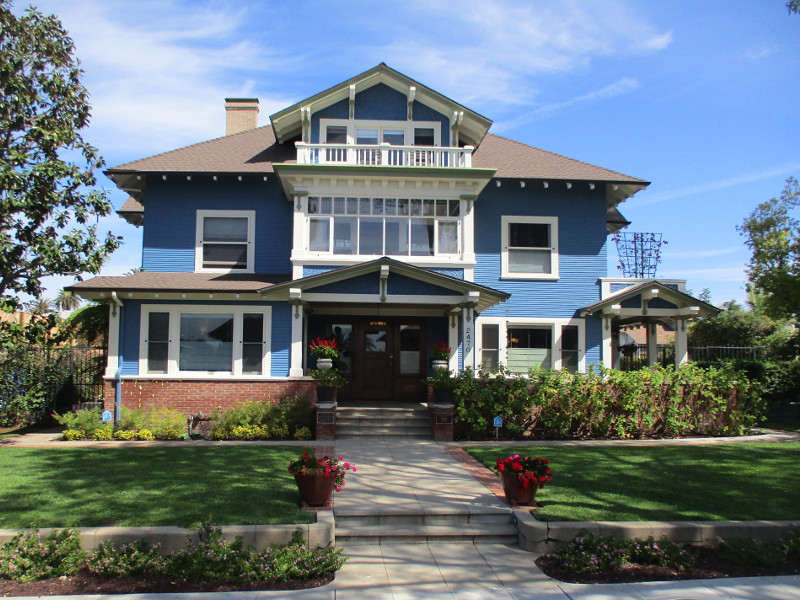
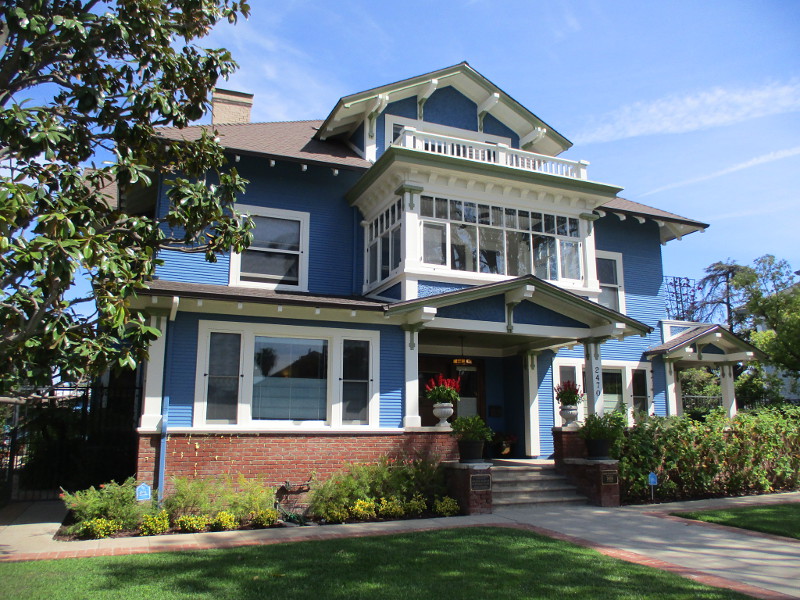
Yesterday my long walk included a stretch through Golden Hill. As I headed back down E Street, I enjoyed viewing the handsome exterior of the historic Alfred Haines House.
This renowned Craftsman-style home, built in 1908 for San Diego Judge Alfred Haines, is listed on the National Register of Historic Places. Master Architects William, Charles and Edward Quayle designed the house.
The Quayle Brothers are responsible for many other notable structures in San Diego, including the Neo-Classical style Salt Lake and Union Pacific Building, which used to stand east of the Organ Pavilion during the 1915 Panama‐California Exposition. They designed the North Park Theatre in 1928 and the San Diego Police Department in 1939. They also designed San Diego’s historic Balboa Stadium (originally called City Stadium) for the Panama-California Exposition. It was the second concrete stadium built west of the Mississippi River.
If you want to see photos of the Alfred Haines House’s very elegant interior, click here!
…
I live in downtown San Diego and love to walk around with my camera! You can follow Cool San Diego Sights via Facebook or Twitter!
You can easily explore Cool San Diego Sights by using the search box on my blog’s sidebar. Or click a tag! There are thousands upon thousands of photos for you to enjoy!
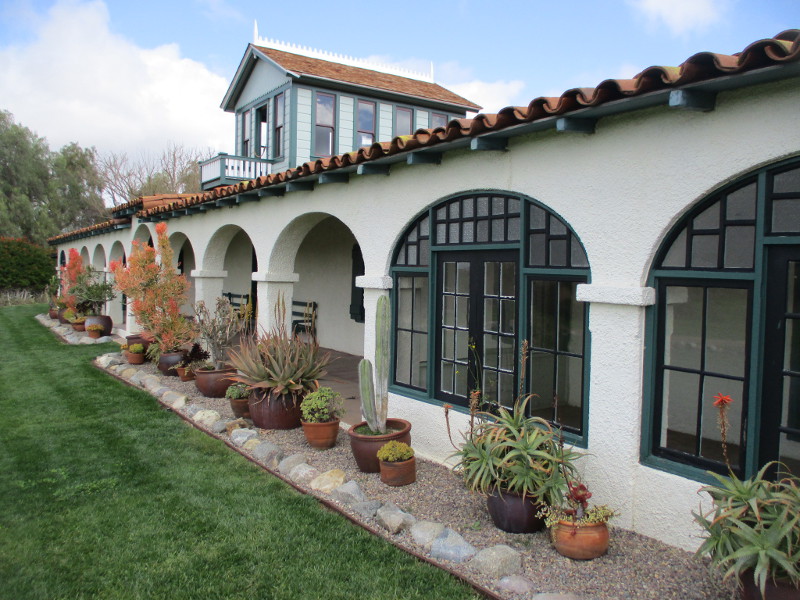
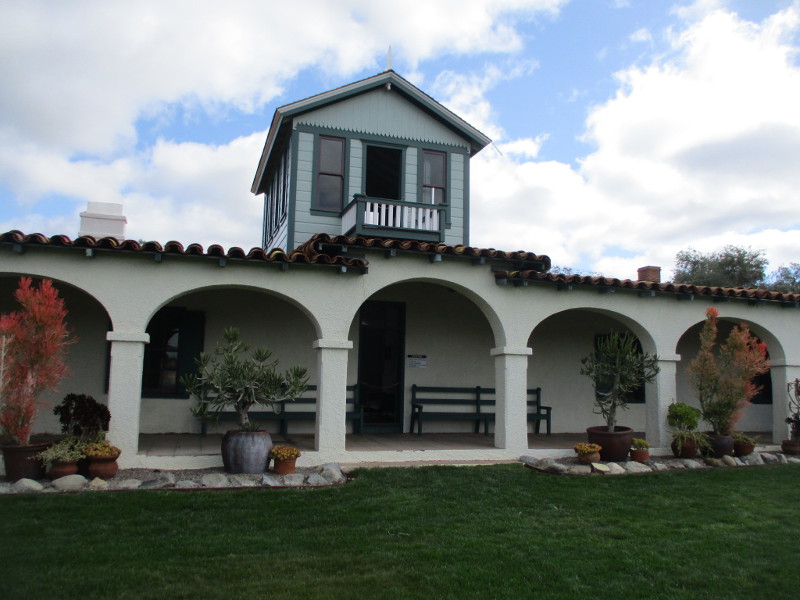
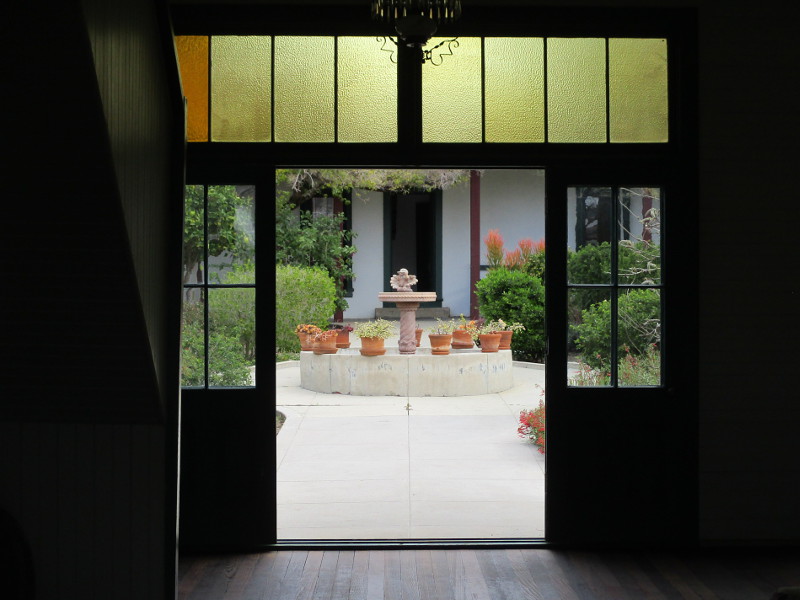
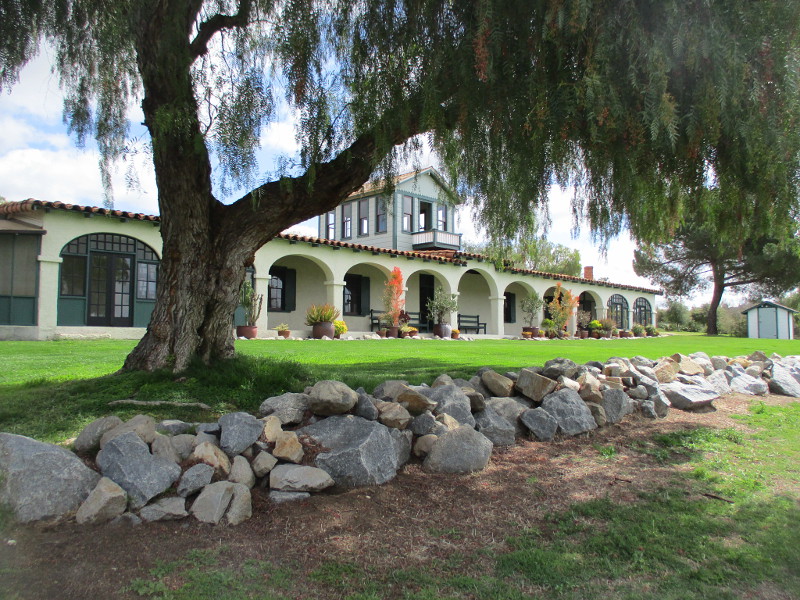
The Rancho Guajome Adobe is an architecturally and historically important 19th century ranch house located in Vista, California. I visited it a little over a week ago and walked around the grounds, learning about the fascinating history of the place while taking a few photographs.
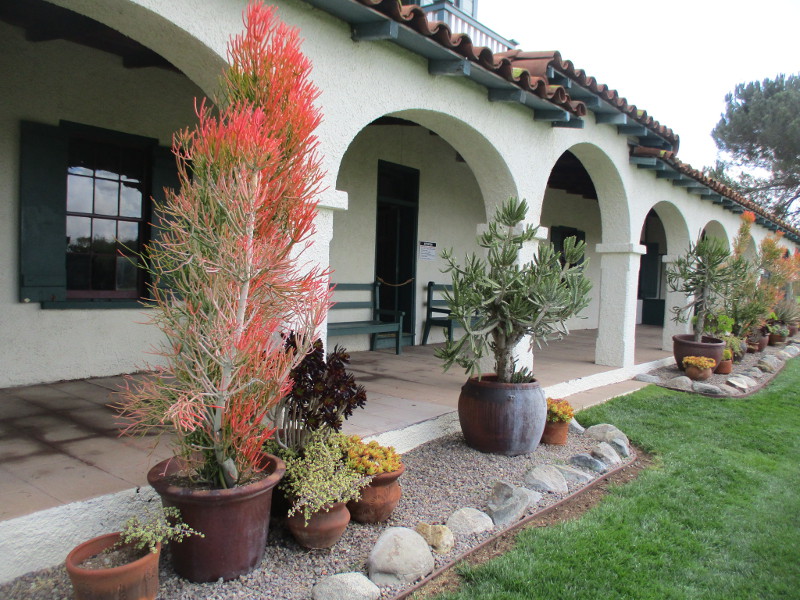
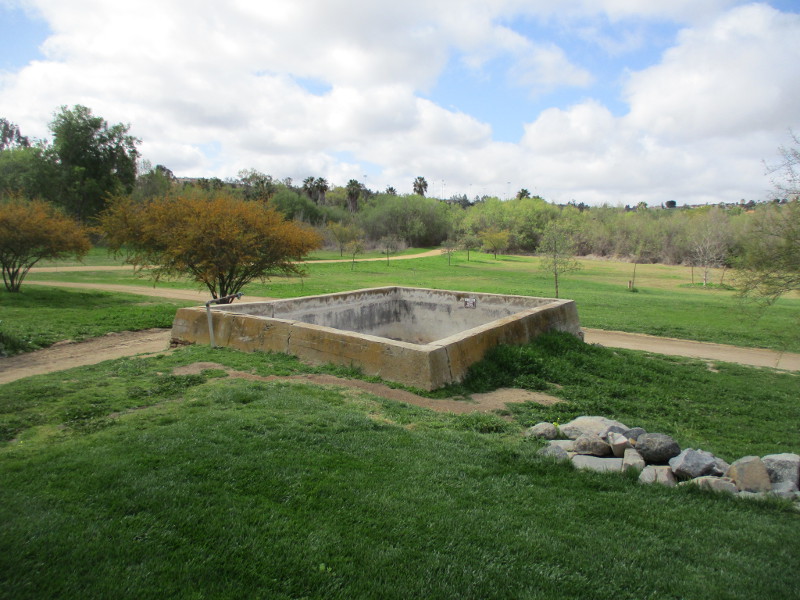
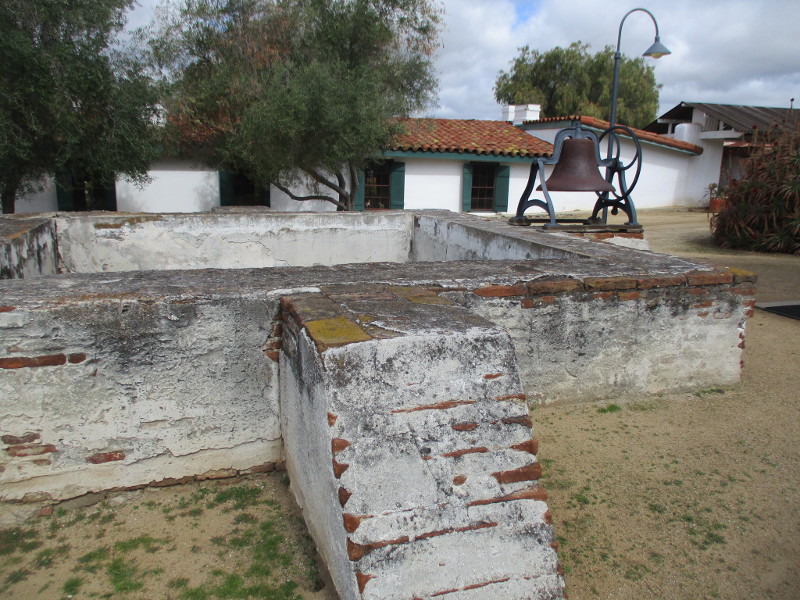
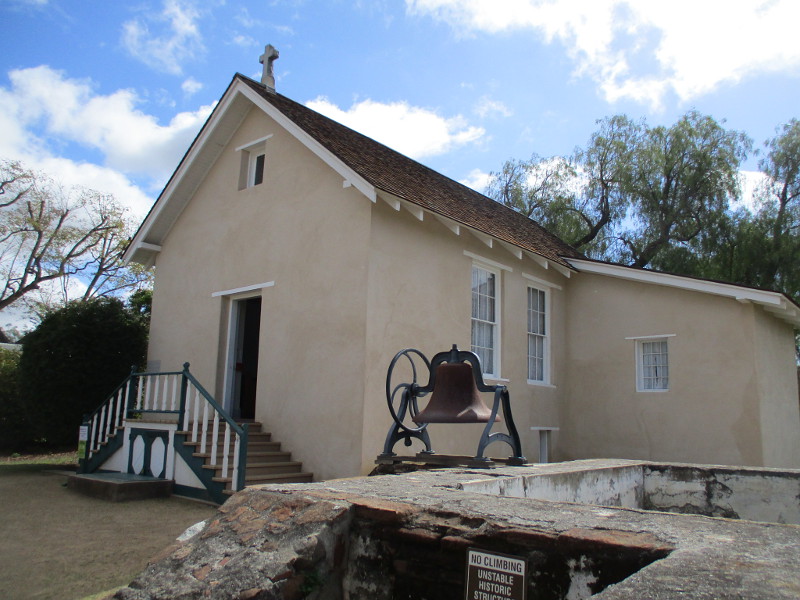
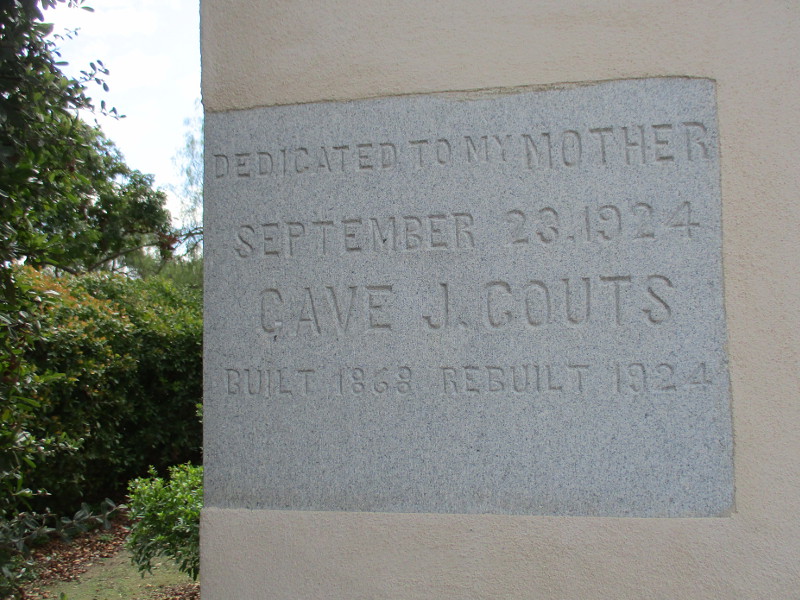
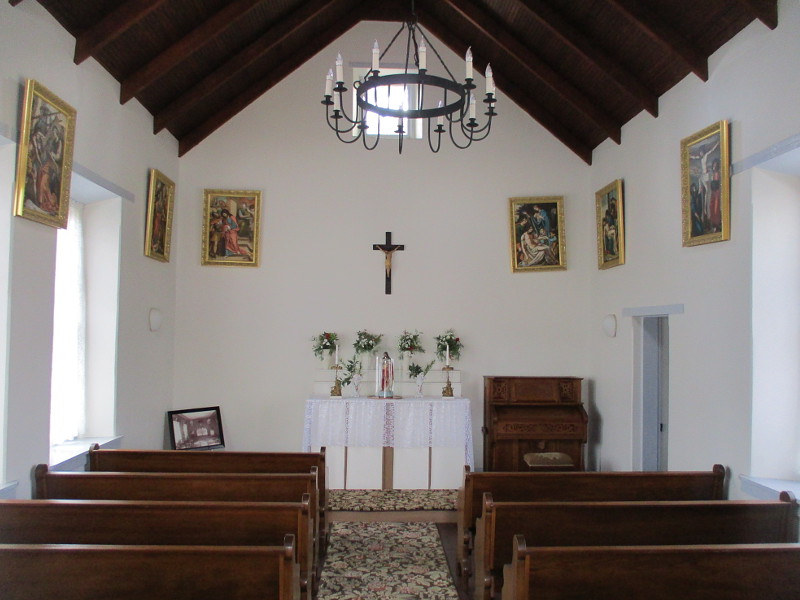
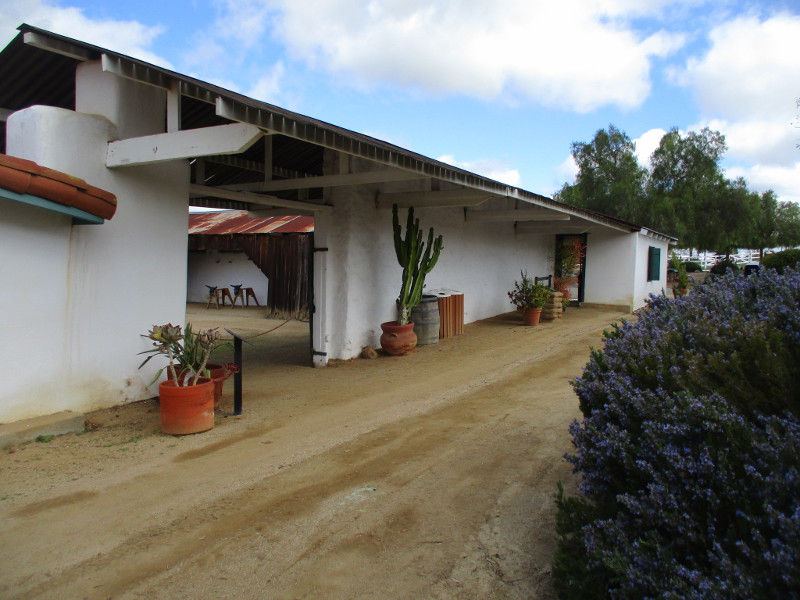
I approached the Guajome Ranch House from the Santa Fe Trail to its south, then circled counterclockwise around the complex, viewing the beautiful arcaded veranda, several cisterns fed by wells, the chapel, and other outbuildings. I spotted various signs and plaques relating the history of the ranch, which was once the home of prominent early San Diego resident Cave Johnson Couts and his wife Maria Ysidora Barbara Bandini.
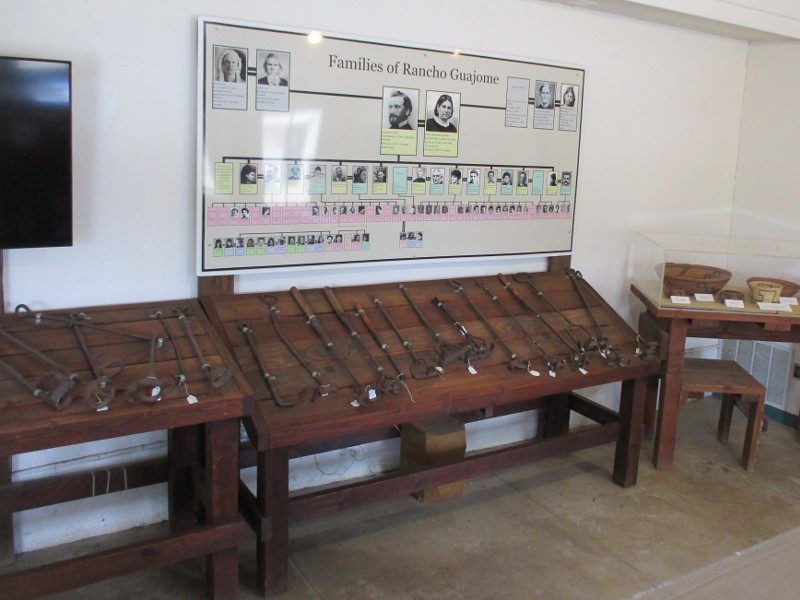
As you can see, I also stepped into a small museum. That’s where you can purchase tickets to guided and self-guided house tours.
According to Wikipedia: “The adobe was built in 1852 and served as the headquarters of Rancho Guajome, a Mexican land grant. Abel Stearns had given the rancho to Ysidora Bandini (sister of his wife Arcadia Bandini), as a wedding gift when she married Lieutenant Cave Johnson Couts in 1851. It was built with the profits from the cattle boom of the 1850s, when many California ranchos supplied the Gold Rush miners and associated new American immigrants with meat and leather. Couts was appointed sub-agent for the native Luiseño people (San Luis Rey Mission Indians) in 1853. He used their labor to improve his properties in the area, including this one and nearby Rancho Buena Vista and Rancho Vallecitos de San Marcos…”
I didn’t venture inside the 22-room hacienda, but I most likely will at some future time. The old ranch house is located in Rancho Guajome Adobe County Park. Check out the parks website here to learn more.
The following photos provide a taste of what you’ll see should you visit this historic place.
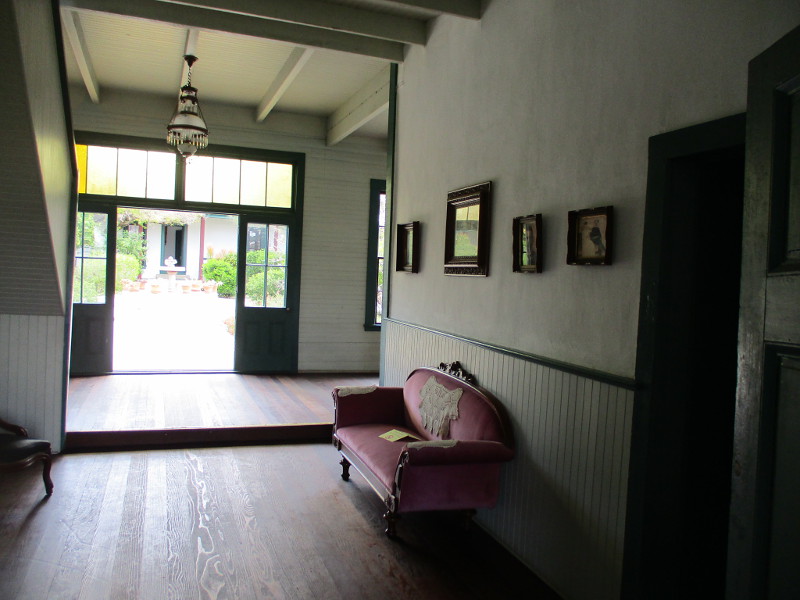
Peering from the veranda through an open door…
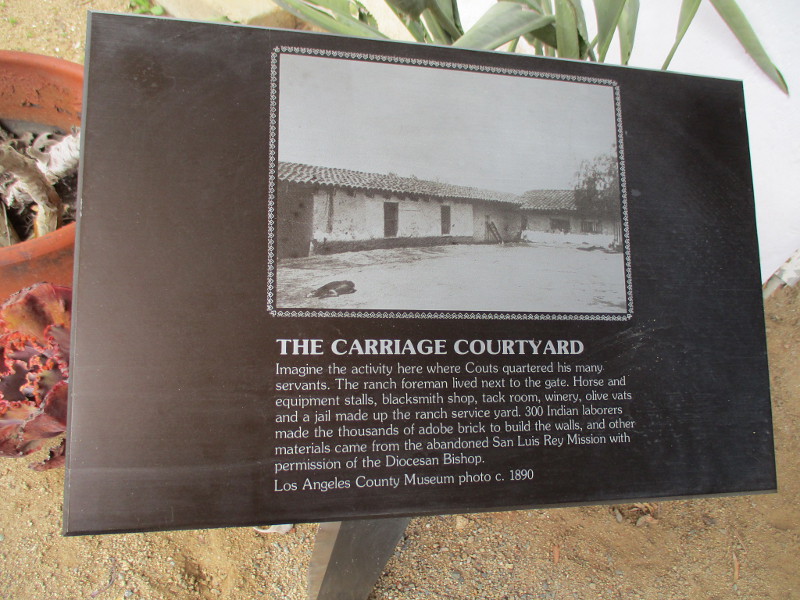
The sign reads:
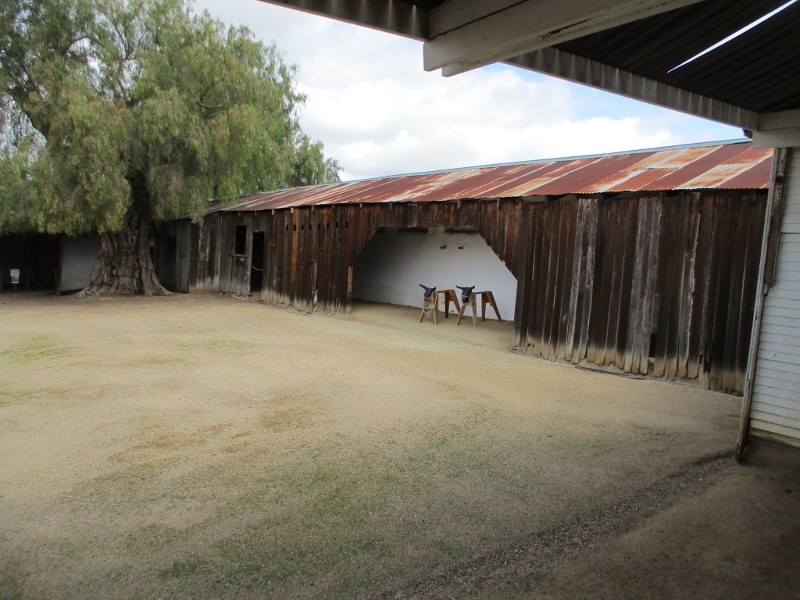
The Carriage Courtyard.
Imagine the activity here where Couts quartered his many servants. The ranch foreman lived next to the gate. Horse and equipment stalls, blacksmith shop, tack room, winery, olive vats and a jail made up the ranch service yard. 300 Indian laborers made the thousands of adobe brick to build the walls, and other materials came from the abandoned San Luis Rey Mission with permission of the Diocesan Bishop.
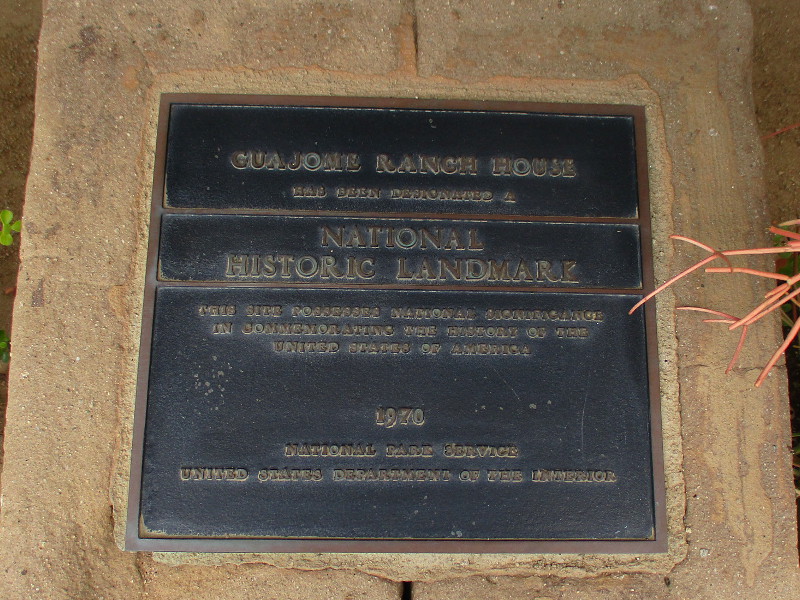
Guajome Ranch House has been designated a National Historic Landmark
This site possesses national significance commemorating the history of the United States of America
1970
National Park Service
United States Department of the Interior
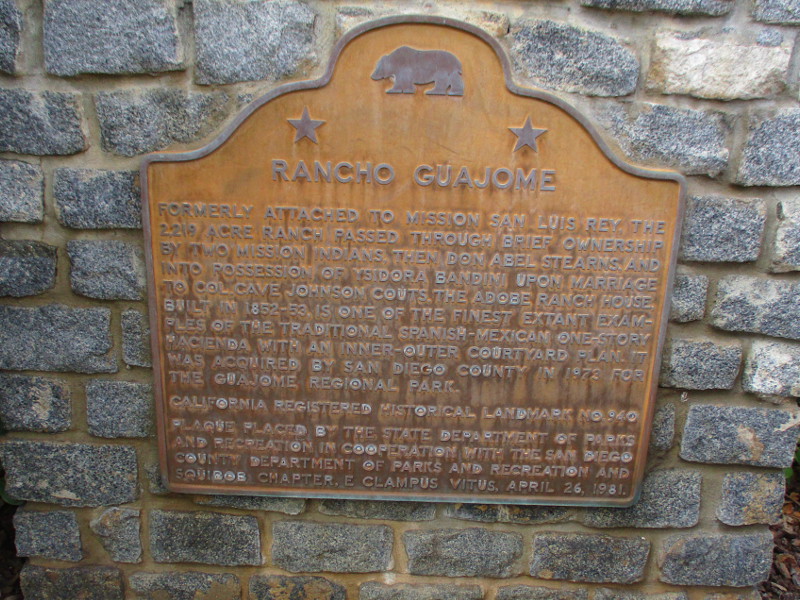
Rancho Guajome
Formerly attached to Mission San Luis Rey, the 2,219 acre ranch passed through brief ownership by two mission Indians, then Don Abel Stearns, and into possession of Ysidora Bandini upon marriage to Col. Cave Johnson Couts. The adobe ranch house built in 1852-53, is one of the finest extant examples of the traditional Spanish-Mexican one-story hacienda with an inner-outer courtyard plan. It was acquired by San Diego County in 1973 for the Guajome Regional Park.
California registered Historical Landmark No. 940
Plaque placed by the State Department of Parks and Recreation in cooperation with the San Diego County Department of Parks and Recreation and Squibob Chapter, E Clampus Vitus, April 26, 1981.
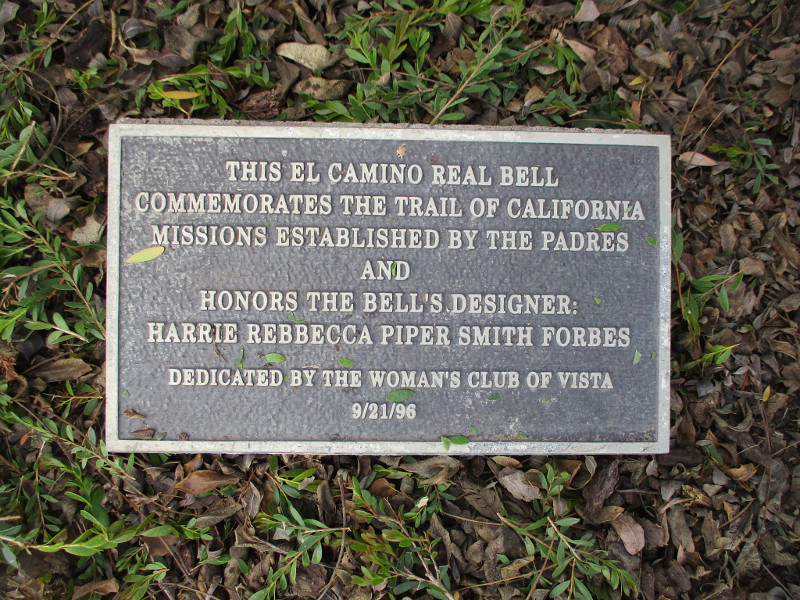
This El Camino Real Bell commemorates the trail of California missions established by the padres and honors the bell’s designer: Harrie Rebbecca Piper Smith Forbes
Dedicated by the Woman’s Club of Vista
9/21/96
At its beginning, Rancho Guajome was a working cattle ranch. Because the West was dry, cattle owners like Cave Couts would turn their cattle out on unfenced pastures. However, during this “open range” period, sometimes cattle from different ranchos intermixed, making it difficult to determine which cattleman owned which cattle. The branding iron was invented as a solution…
Cave Johnson Couts was born in 1821 in Springfield, Tennessee, and died in 1874 in San Diego at the Horton House. His wife Maria Ysidora Barbara Bandini was born in 1828 in San Diego, was married in 1851 at the Casa de Bandini in Old Town (now the Cosmopolitan Hotel), and died in 1897 in Los Angeles.
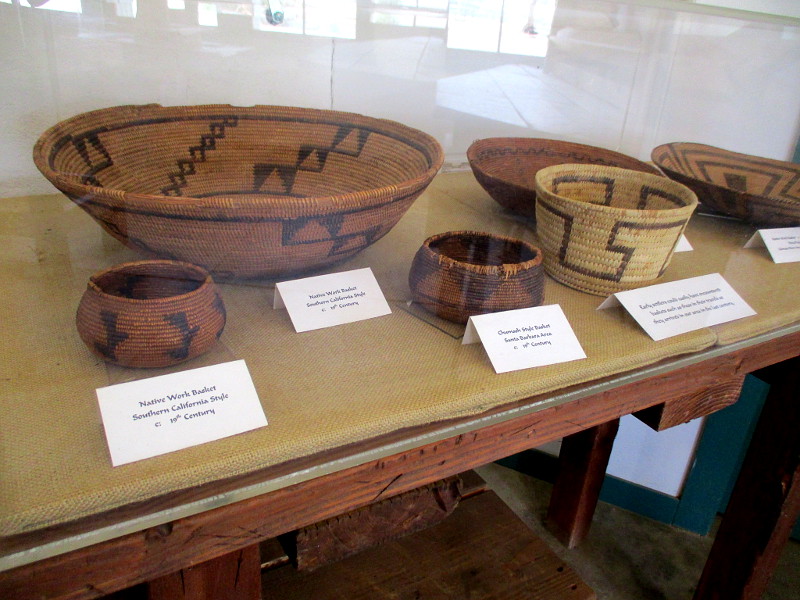
Included in the museum display are Native work baskets, Southern California style, circa 19th century.
Rancho Guajome Adobe farm equipment included a farm wagon, breaking carts for training horses, a broadcast seeder, a sulky used for racing horses, and a four-bottom Stockton plow used to turn soil to prepare fields for planting.
In the past I blogged about the Colorado House, a two-story hotel that was built in Old Town San Diego in 1851 by the very same Cave Couts. Today it serves as the Wells Fargo History Museum. Read that here.
I’ve also blogged about the El Campo Santo cemetery grave of Juan Mendoza, who was shot in the back by Cave Couts. See that here. (During one walk I spotted another mysterious wooden tombstone with the name Juan Mendoza by a parking lot, across the San Diego River from Old Town. Read that here!)
…
I live in downtown San Diego and love to walk around with my camera! You can follow Cool San Diego Sights via Facebook or Twitter!
You can easily explore Cool San Diego Sights by using the search box on my blog’s sidebar. Or click a tag! There are thousands upon thousands of photos for you to enjoy!













































 Cool San Diego Sights!