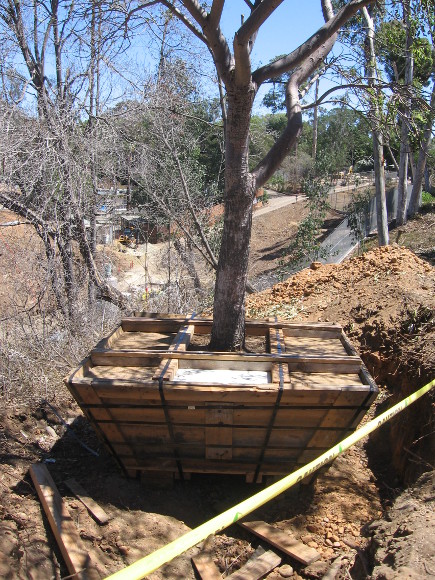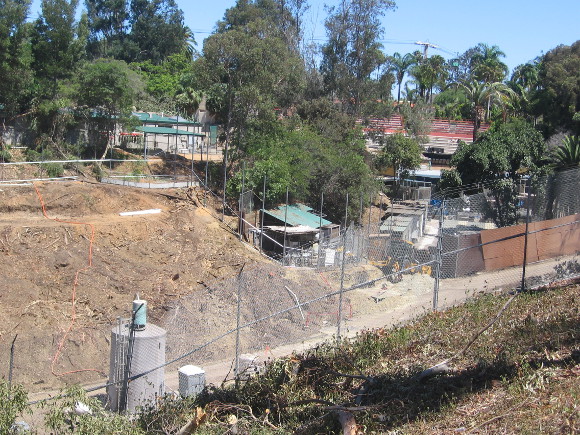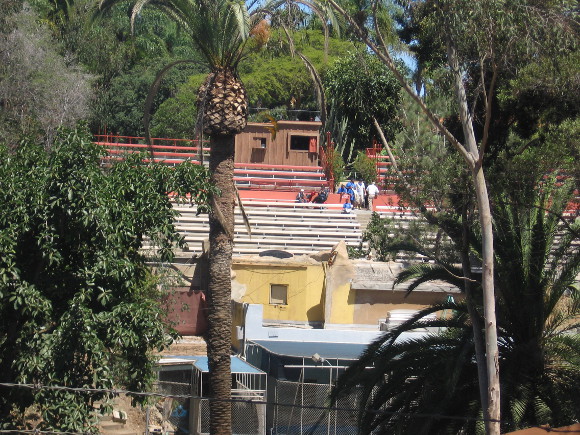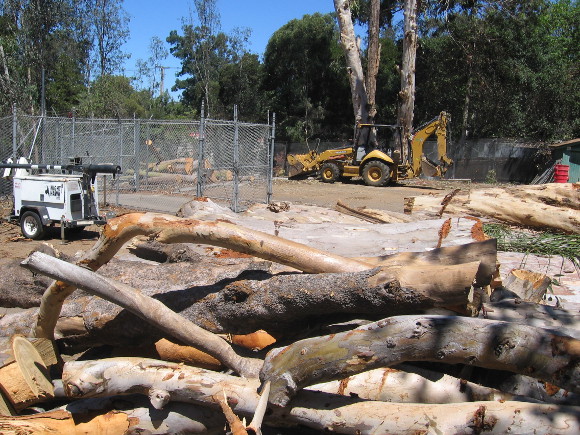
SILO in Makers Quarter is a cool venue in East Village.
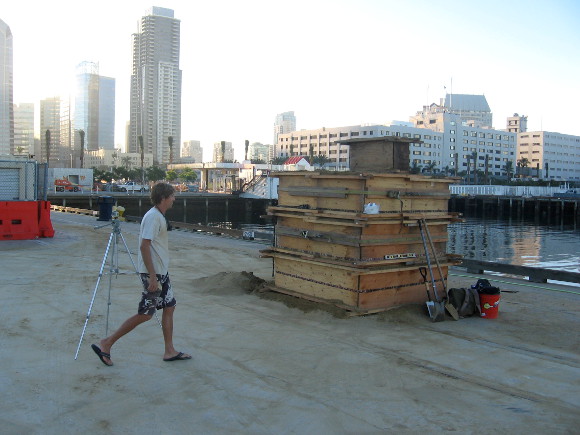
People entering downtown San Diego from Highway 94 might glimpse on their left what appears to be a large dirt lot full of odd items and graffiti. At first glance, I figured it was just a junky, neglected old vacant lot. Upon closer inspection, however, I realized the place was something completely unexpected, and pretty cool!
A large black silo rises near the center of the lot, hence the name of this interesting events venue: SILO in Makers Quarter. Beer festivals, bazaars, film festivals…these and other events are staged here in this neglected portion of East Village. According to the Makers Quarter website: SILO in Makers Quarter will be the launch pad to encourage the early adopters in San Diego to embrace the neighborhood and bring about positive change. SILO in Makers Quarter is being established as a year round event venue to bring collaborative community and creative culture to East Village.
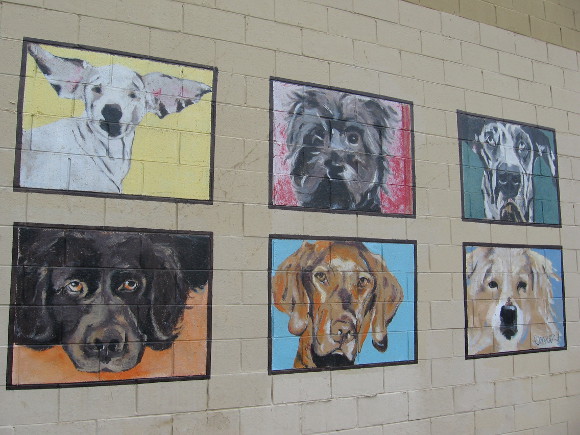
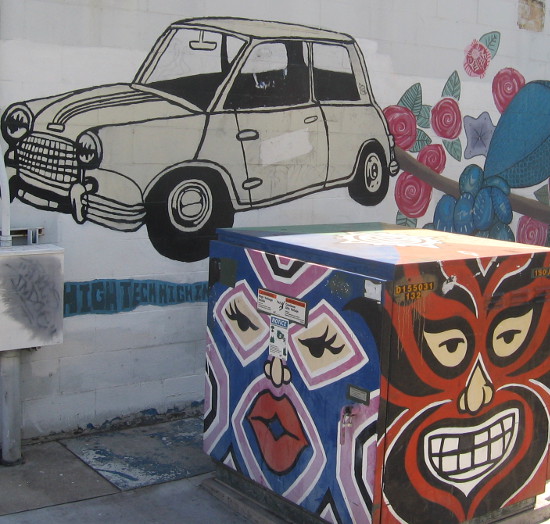
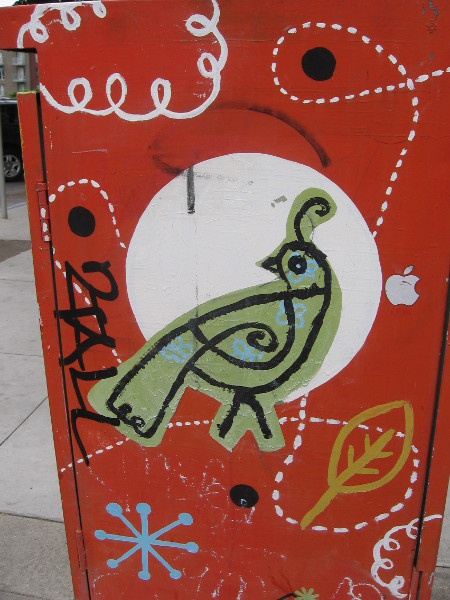
I took these photos through a surrounding fence. Very cool!
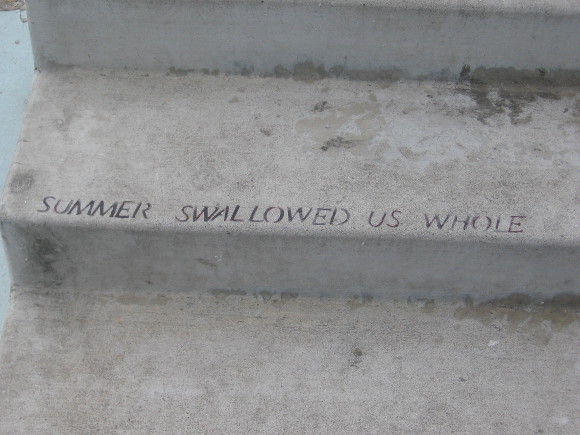
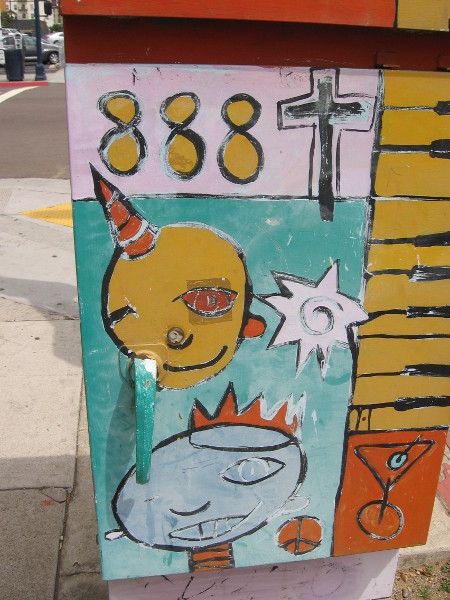
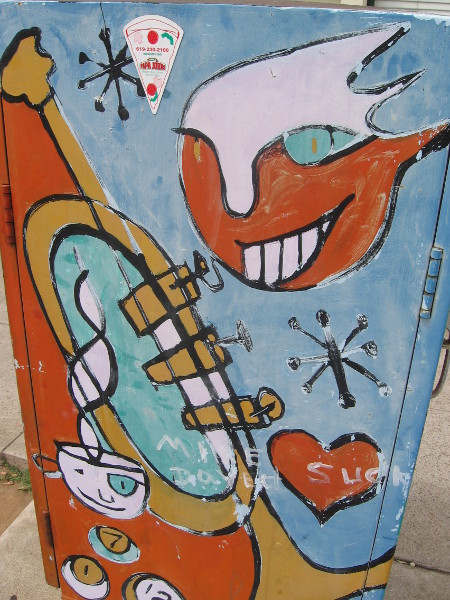
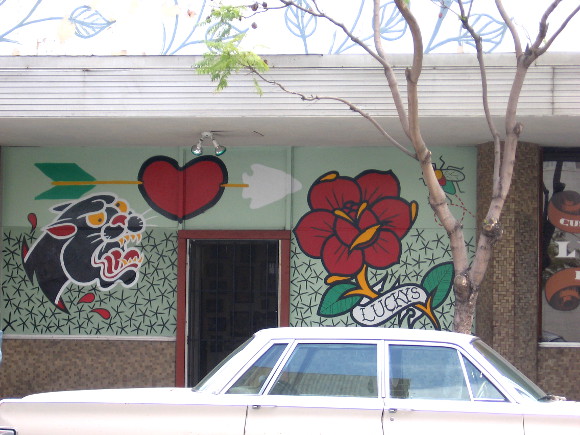
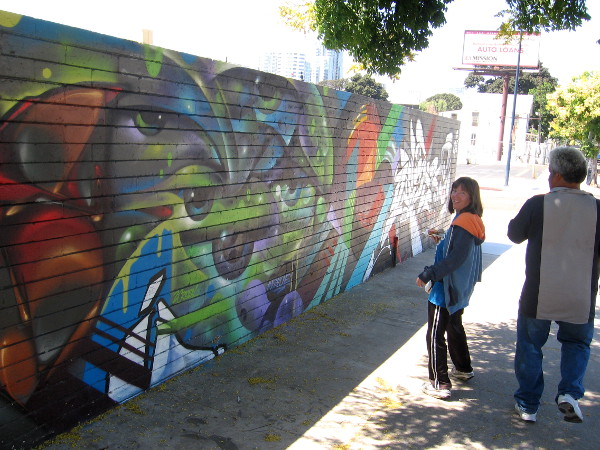
A black silo rises behind a smile!Painted on a building wall: You are important.Fun events are held in this unusual urban space.Large eye peers from behind chain link fence.Lots of fantastic street art at SILO in East Village.Another example of colorful street art.Makers Quarter’s goal is to attract energy to part of the city.Bold graphics seen from the nearby sidewalk.Photo taken through fence of twisted sculptures.Bales of hay, funky images create a party atmosphere.SILO in Makers Quarter on 15th Street in East Village.
…
To enjoy future posts, you can “like” Cool San Diego Sights on Facebook, or follow me on Twitter.
I hope you enjoyed my last blog post, where I described a hike around the Guy Fleming Trail in Torrey Pines State Reserve. Now I’d like to take you up to see the Lodge.
We’re going to start at the entrance of Torrey Pines State Reserve, just off the Pacific Coast Highway. We’ll be climbing the steep Torrey Pines Park Road all the way to the historic Lodge.
Looking south along Torrey Pines State Beach.
As we begin our climb we bend away from the beach, but pause for a moment to observe the high sandstone cliffs to our south. This wonderful beach, which extends for many miles, will be the subject of a future blog post!
Heading up steep Torrey Pines Park Road.Entering a zone full of endangered Torrey pines.Torrey pines stand atop eroded sandstone cliffs.
The Torrey pine is an endangered tree found only here and on Santa Rosa island. We’ll learn more about it shortly…
View of lagoon and ocean from High Point Overlook.
Near the top of the road we come to High Point Overlook, a short trail that heads up some steps for a 360 degree view. Here we’re looking north and seeing a bit of the Los Peñasquitos Lagoon.
Sign about philanthropist Ellen Browning Scripps.
This sign stands among some Torrey pines at the top of the overlook. It reads:
The philanthropist Ellen Browning Scripps (1836-1932) holds a special and endearing place in the annals of Torrey Pines. Without Miss Scripps, this mesa might resemble what you see to the east: a tangle of roads, houses and businesses.
Although the City of San Diego had set aside some land to preserve the Torrey pines, the best and densest groves remained in the hands of developers who planned to subdivide and commercialize the area. Miss Scripps bought these lots in 1908, 1911, and 1912.
She hired naturalist Guy Fleming to care for and protect this wonderful place in 1921 and funded the construction of his house on the property.
The Torrey Pines Lodge, now used as a visitor center and ranger station, was built with her funds and donated to the people of San Diego. It was designed by noted architects Richard Requa and Herbert Lewis Jackson. It opened as a restaurant in 1923.
Finally, she bequeathed the City of San Diego the groves of Torrey pines, asking that they “be held in perpetuity as a public park,” and requesting, “that care be taken to preserve the natural beauty of the area” in 1932.
Today’s visitors may thank Ellen Browning Scripps for having the foresight to protect this unique place in the California landscape.
Nearing Torrey Pines State Reserve’s historic Lodge.
A little more walking takes us to our main destination, the Lodge. An old adobe built in 1922, it originally served as a restaurant! According to the official website, it had stumpy tables, chintz curtains, lampshades made of Torrey Pine needles, and a jukebox! Back in those days, Model T cars had difficulty going up the steep hill, because they didn’t have a fuel pump, and instead relied on a gravity system. When the steeply climbing cars conked out, drivers were told to continue up the hill in reverse!
Banner commemorates 150 years of California State Parks.Gap in Lodge’s stucco shows original adobe bricks.
This is near the front door. The sign below reads:
When the Lodge was built in 1922-23, thousands of bricks were made on site using local sand and clay. The gap in the stucco coating above deliberately reveals the original adobe bricks.
Portion of large sign outside describing coastal flowers.Interior of Lodge is a museum and visitor center.
I love the interior of the Lodge. There’s so much interesting stuff to see, and so much history and natural charm jammed into one place. The Lodge is open daily 9 AM to 6 PM during summer daylight saving time and 10 AM to 4 PM during winter standard time. Ranger guided hikes are available on weekends.
One of many educational exhibits.Mountain lion patiently watches visitors to the Lodge.Plaque in Lodge credits Ellen Browning Scripps.Old fireplace shows decades of use.
The plaque above the old fireplace reads:
Torrey Pines Lodge dedicated to Dr. John Torrey, for whom, in 1850, these unique trees were named Pinus torreyana by Dr. C. C. Parry.
Sign behind Lodge describes Torrey Pine Woodlands.
Now we’ve headed back outside, around the back of the Lodge. Numerous Torrey pines are all around us, and benches are sprinkled here and there with sweeping views eastward toward developed Carmel Valley and Interstate 5.
This sign reads:
The Torrey Pine tree is one of the most rare pine trees in all of North America. The young trees that you see today may be the remnants of what was once an ancient coastal forest. This natural plant community is found only in nutrient-poor sandy soils, along the sandstone bluffs, canyons, and ravines, of Torrey Pines State Reserve and on Santa Rosa Island. In this harsh arid landscape, coastal fog is vital to the tree’s survival, acting as an air conditioner, shielding the needles from the hot sun and providing most of the moisture for the trees. The twisted and gnarled trees along the bluffs often lean inland, growing close to the ground, as a result of the ocean winds and pruning by salt crystals in the air.
School kids learn about local flora and fauna.
A ranger was giving a bunch of school kids a talk about Torrey Pines State Reserve. They’ll remember this special place for the rest of their lives.
The Lodge at Torrey Pines State Reserve is a must see!
…
To enjoy future posts, you can “like” Cool San Diego Sights on Facebook, or follow me on Twitter.
My very, very, very favorite place in all of San Diego County is Torrey Pines State Reserve. It’s located along the Pacific Ocean in northern La Jolla, between the famous Torrey Pines Golf Course and Del Mar. I took a trip there this morning! I got so many pics, I’ll break my visit up into several blog posts!
Let me start by taking you around the Guy Fleming Trail loop.
There are many hiking trails to explore in Torrey Pines State Reserve. Reaching this particular trailhead requires a short hike or drive from the entrance gate up steep Torrey Pines Park Road. As you head on up, you see numerous pine trees growing atop and clinging to eroded sandstone cliffs. These are the endangered Torrey pines (Pinus torreyana). They can only be found here and on the small island of Santa Rosa, off the coast of Santa Barbara. A good concentration of them can be seen on the Guy Fleming Trail.
Diversity amid adversity on the Guy Fleming Trail.
Here we’ve stepped onto the looping 2/3 mile easy level trail. We’re going to proceed counterclockwise. Look at the sign. It reads: The Guy Fleming Trail features a variety of habitats and rare plants. Where else in the world can you find cacti and ferns growing side-by-side under the canopy of a Torrey Pine tree? As you walk along this trail, consider the variety of biomes that you see and factors that create them. Not only must plants adapt to southern California’s climate of hot, dry summers and cool, wet winters, but also variables of solar exposure, salt-laden winds, and erosion.
Trail passes under many endangered Torrey pines.Wind-twisted branches of Torrey pines in the State Reserve.Walkers pause to enjoy a breathtaking ocean view.
Here we are emerging above the wide Pacific Ocean. These ladies are gazing off into the blue distance. As I came up to them today, they asked excitedly: “Did you see the whale?” A gray whale migrating back northward to the Bering Sea was lingering just beyond the breakers, touching the surface and spouting every few minutes! This whale seemed to be heading north from Mexico a bit late. It’s almost May!
Looking north near a scenic overlook on the Guy Fleming Trail.
This is one reason why Torrey Pines State Reserve is one of my all-time favorite places. Incredible views! You can see a portion of Los Peñasquitos Marsh Natural Preserve and Lagoon.
Torrey Pines State Reserve entrance gate far below.Mojave yucca grow beside amazing trail at edge of steep cliff.
Now we’re heading south along the edge of the cliff. Torrey Pines State Beach is far below. When it’s possible to spy beach-goers, they’re very tiny!
Yellow sea dahlias high above foaming breakers.
You can’t hear the crashing waves, but the mighty expanse of
ocean seen from above makes a lasting impression!
Pink sand verbenas add bright color to a beautiful walk.
It’s springtime and many native flowers are in bloom. These dry, brittle hillsides are covered with coastal sagebrush and chaparral and during the dry summer can appear quite brown and desolate.
Trail heading down toward another scenic overlook.Looking south over a sculpted sandstone canyon.
Another fantastic view. Many beautifully eroded sandstone canyons run through the State Reserve. You’ll see more in upcoming blog posts.
A glance back toward the ocean and a lone walker.
We’ve nearly come full circle. The sunshine and warm ocean breeze, the views, majestic Torrey pines, cacti and flowers…you really need to walk the Guy Fleming Trail to fully experience its magnificence!
…
To enjoy future posts, you can “like” Cool San Diego Sights on Facebook, or follow me on Twitter.
Abstract surfboards welcome people to Imperial Beach pier. This public art is titled Surfhenge, by local artist Malcolm Jones.
Imperial Beach lies south of downtown San Diego, at the extreme southwest corner of the continental United States. The Imperial Beach pier is just a few miles from Mexico. This beach community is a perfect example of laid-back southern California, mostly just locals kicking back, a smattering of tourists, and a good vibe all around. The days are sunny and people are friendly.
Come stroll with me toward the pier and let’s see what’s going on!
Colorful acrylic surfboard arches frame a pier visitor. Surfhenge was dedicated in 1999.Lifeguard tower behind palm trees and flags.Benches near the pier are made of many different style surfboards, representing different eras of the sport.Imperial Beach pier beckons from the sand.A few people on the beach on a spring weekday morning.Looking down the length of the Imperial Beach pier.Fisherman cuts bait at one of the public sinks.Gazing down at the blue Pacific on a nice day.Approaching the Tin Fish restaurant at the end of the pier.Window of Tin Fish restaurant at end of Imperial Beach pier.Pier pilings rise from an emerald ocean.
…
To enjoy future posts, you can “like” Cool San Diego Sights on Facebook, or follow me on Twitter.
Surfer rides a wave just below the Imperial Beach pier.
Wow! Check out this first cool pic! Did that come out great, or what?
I’m in the middle of my week off from work, and today I went to Coronado again and biked down the Silver Strand to Imperial Beach. I’ve got more photos than you can shake a stick at!
What a beautiful day. I stood on the pier at a spot between the beach and breaking waves and tried to photograph a group of surfers below. Most of action was too far away for my little camera, but a few pics seem worth sharing…
Surfers wait for the perfect wave near Imperial Beach pier.Surfer gets ready to go for a ride.Surfer riding a nice wave on a sunny day.Guy on surfboard just coasting along the foamy ocean surface.No fishing in the surf zone on Imperial Beach pier.
…
To enjoy future posts, you can “like” Cool San Diego Sights on Facebook, or follow me on Twitter.
Part of Museum of Outdoor Photographic Art’s mural on F Street.
On F Street, one block west of SMARTS farm (see my last blog post), San Diegans can enjoy a huge public mural. Created by the Museum of Outdoor Photographic Art (MOOPA), the photo ArtWall covers the upper portion of the old Jerome’s Warehouse between 14th and 15th Street.
The mural features the work of three photographers. Matt Black’s photos feature a village in the Mixteca, an impoverished area in Mexico. Susan Madden Lankford’s photos show the streets of San Diego and contain many diverse portraits. A simple photo of a cone flower in the center of the mural, linking north and south, is the work of Polly Lankford Smith.
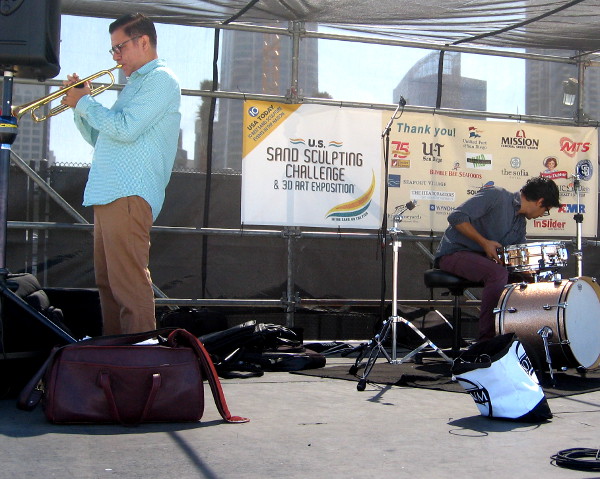
Face peers over treetops from large MOOPA ArtWall.Segment of gigantic mural in downtown San Diego.Walking along the rails on the upper wall of an old warehouse.Amazing photography records a face in time.Another example of art in downtown’s vibrant East Village.Old Jerome’s warehouse on F Street features the huge mural.Public art in San Diego’s East Village includes farm workers.Photo of child in a mask is part of MOOPA mural.Playing a tuba on F Street between 14th and 15th.Museum of Outdoor Photographic Art’s ArtWall is a very cool sight.East side of old Jerome’s warehouse across from SMART farms.
…
To enjoy future posts, you can “like” Cool San Diego Sights on Facebook, or follow me on Twitter.
A friendly greeting from the folks at downtown’s SMARTS Farm.
This morning I headed out for a short walk along F Street in downtown San Diego’s East Village, with the intention of photographing some awesome murals and street art. As I was strolling along, my feet carried me into a super cool place I really hadn’t noticed before.
SMARTS Farm is an urban garden run by the nonprofit organization Humane Smarts. In addition to being a community garden, SMARTS Farm offers educational programs aimed at local kids. Children plant their own produce, watch it grow and learn about our environment. Photography classes are also offered!
How appropriate that I randomly discovered this cool place on Earth Day!
Happiness is working in a beautiful urban garden.Lots of stuff to see, including some photo art.An educational community garden in the concrete jungle.SMARTS Farm is located on F Street in downtown San Diego’s East Village.Children learn to love gardening and being outside.New beds where salsa ingredients will be grown.Lots of fun stuff to see!Look at this big old tub of color!Grow, Cultivate, Learn, Share.
…
To enjoy future posts, you can “like” Cool San Diego Sights on Facebook, or follow me on Twitter.
Interesting contraption in a nook at artsy Spanish Village.
In a nook of Balboa Park’s Spanish Village, right next to the San Diego Mineral and Gem Society building, you’ll find this interesting contraption. Is it an antique device once used to navigate a ship? Is it a microscope? What is it?
It’s a kaleidoscope mounted above a revolving bowl of flowers! Instead of turning the kaleidoscope tube, you whirl the bowl of blooms and watch different colorful patterns form through the lens. Several mirrors in the tube create the complex symmetry.
Once I figured out what the contraption was, I tried putting my camera right up to the eyepiece. I got a bunch of interesting photos!
A kaleidoscope aimed at turning bowl of flowers.Mirrors of kaleidoscope turn flower blooms into art.Revolving the bowl turns flowers and leaves into amazing patterns.Infinite beauty created via the reflection of light.
…
To enjoy future posts, you can “like” Cool San Diego Sights on Facebook, or follow me on Twitter.
Bronze plaque in Coronado marks birthplace of naval aviation.
In Coronado’s beautiful Centennial Park, just north of the Coronado Ferry Landing, you can find this relatively new bronze plaque. It marks the birthplace of naval aviation, Rockwell Field, which no longer exists.
The historical marker reads:
BIRTHPLACE OF NAVAL AVIATION
In 1910, on the unoccupied brushland of North Coronado Island, inventor and entrepreneur Glenn Hammond Curtiss opened his winter flying school for prospective “aeroplane pilots.” Among his first class of students was Navy Lieutenant Theodore G. “Spuds” Ellyson, who would become the first Naval Aviator. In 1917, the U.S. Congress appropriated the island to support the World War I effort and two airfields occupied its sandy flats–the Navy’s “Camp Trouble” and the Army Signal Corps’ Rockwell Field. The Army vacated Rockwell Field in 1935, at which time the Navy expanded its operations to cover the whole island. Many aviation milestones originated from North Island including the first seaplane flight in the United States in 1911.
San Diego, California was designated the “Birthplace of Naval Aviation” by the Armed Services Committee of the United States House of Representatives on 24 March 1961.
Marker Placed By
California State Society, Daughters of the American Revolution
2011
Historical marker is located near east end of Centennial Park.Rockwell Field in 1924.
…
To enjoy future posts, you can “like” Cool San Diego Sights on Facebook, or follow me on Twitter.
Original Coronado ferry ticket booth remains as historical artifact.

About a block north of today’s touristy Coronado Ferry Landing, you’ll find the old ticket booth of Coronado’s original ferry. It stands beside a garden full of colorful roses and a pleasant walkway that runs from the end of Orange Avenue east to San Diego Bay. This beautiful area is called Centennial Park.
The original ferry was designed to transport horses and buggies; later ferries took automobiles across the bay. This vital link to downtown San Diego ran from 1886 to 1969, the year the Coronado Bay Bridge finally opened.
Looking over roses near the nostalgic old ticket booth.Sign reminds passersby of nearly a century of history.Plaque describes the history of the once vital Coronado ferry.Old Coronado ferry ticket booth surrounded by flowers.
…
To enjoy future posts, you can “like” Cool San Diego Sights on Facebook, or follow me on Twitter.