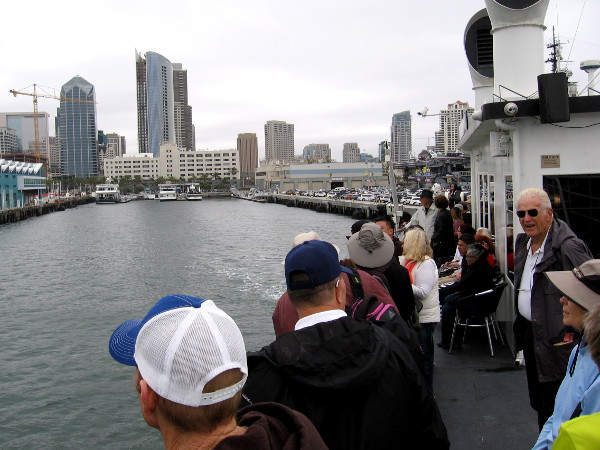
We pull away from the Embarcadero aboard the Admiral Hornblower, on a special harbor tour provided by the Port of San Diego.
Last Saturday I enjoyed a special boat tour of San Diego’s harbor. The free tour was created by the Port of San Diego for Maritime Month, which was actually May. (The earlier tours were so popular, an additional June date was added.) The main intention of these tours was to educate the public about the importance of San Diego Bay, and the waterfront’s many contribution’s to our local economy.
We set out on the Admiral Hornblower and checked out a number of fascinating facilities that are overseen by the Port of San Diego. The Port of San Diego manages San Diego Bay and a strip of surrounding waterfront land. Its five member cities are San Diego, National City, Chula Vista, Imperial Beach and Coronado.
According to their website “The port oversees two maritime cargo terminals, two cruise ship terminals, 20 public parks, the Harbor Police Department and the leases of hundreds of tenant and sub tenant businesses around San Diego Bay.”
Well, what exactly did we see and what did we learn?
I took a few notes, which I’ve placed in my photo captions. Let’s head out onto the water on an overcast day and see some fascinating sights!
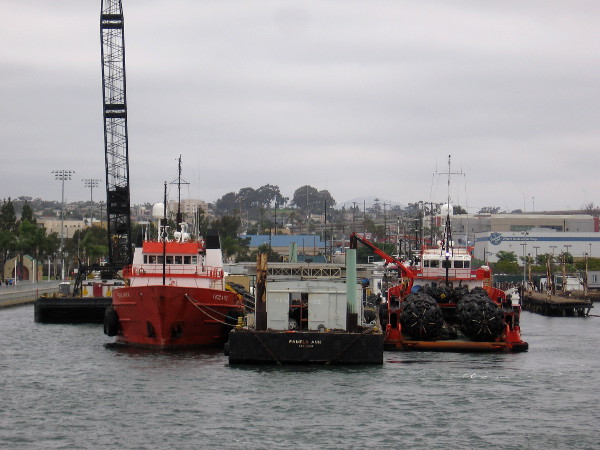
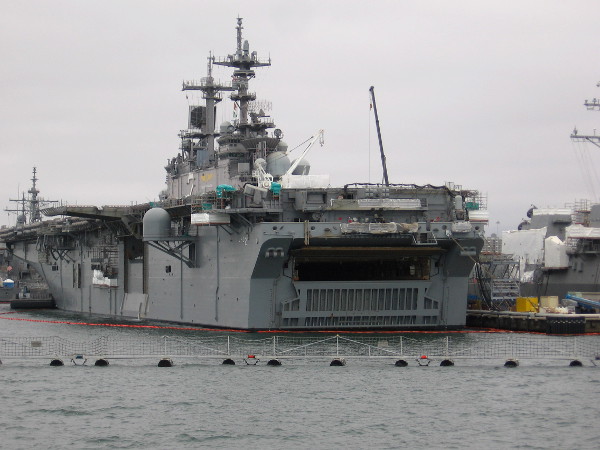
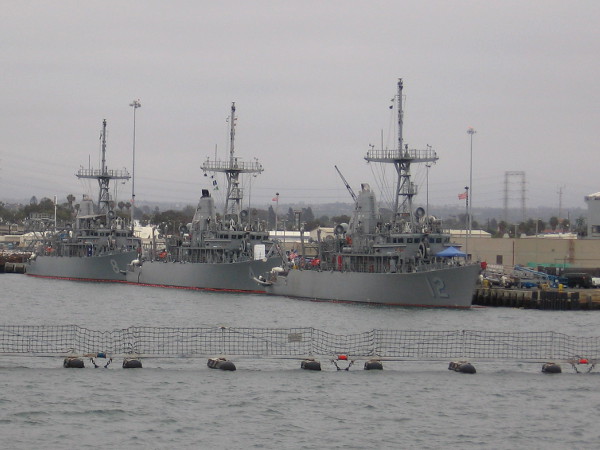
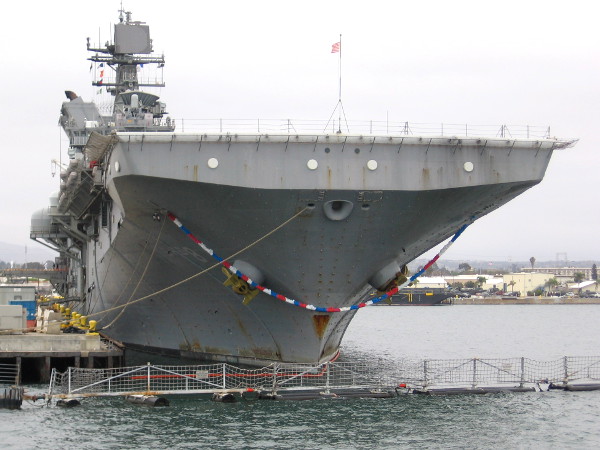
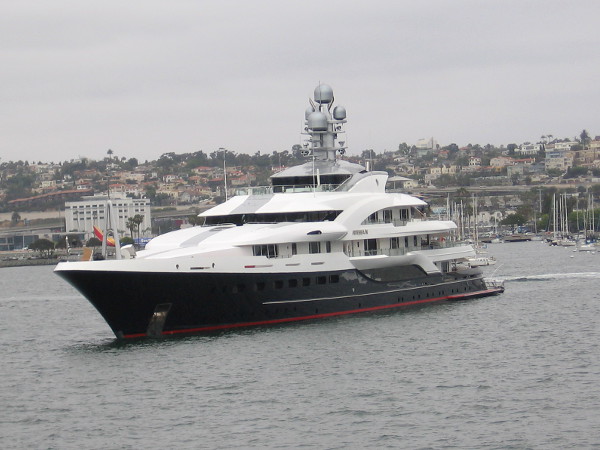
Looking back toward the Port Pavilion on Broadway Pier. This facility can host special events or welcome cruise ships. Every visiting cruise ship adds 2 million dollars to the San Diego economy.Someone enjoys recreating on San Diego Bay as we pass Tuna Harbor. Tourism and commercial fishing rely on San Diego’s versatile harbor.It’s Saturday morning, so the Tuna Harbor Dockside Market is open on Fish Harbor Pier near Seaport Village. It’s the place to go if you like fresh seafood.Now we are approaching the Tenth Avenue Marine Terminal. Most people associate it with those big yellow Dole ships that bring in about 185 million bananas and other fruit each month!The Tenth Avenue Marine Terminal is to undergo modernization. Some transit sheds will be removed, to create more flexible laydown space.These are windmill tower components.This part of the facility is used for transferring cement between ship and shore.This 1,800-ton-per-hour bulk loader handles soda ash, bauxite and fertilizer exports.Docked south of the Tenth Avenue Marine Terminal, beside the Cesar Chavez Park pier, are the vessels of Pacific Tugboat Service.Near the east end of the San Diego–Coronado Bridge is the first of three big shipyards–Continental Maritime of San Diego.Navy ships are undergoing repairs and modernization. The white plastic wrap prevents paint particles from entering the environment.The next shipyard as we head south is BAE Systems. They also provide repair and modernization services. This huge ship in one of two dry docks is completely concealed!This is a new type of stealth Navy ship–a guided missile Zumwalt-class destroyer. DDG-1000 is the first of its class. Its radar image is similar to that of a fishing boat.Another vessel is being worked on at the BAE Systems San Diego shipyard. You can see floating oil spill containment booms in many of these photos.Finally we are nearing the General Dynamics NASSCO shipyard. New ships are built here. It is the largest full service shipyard on the West Coast.It’s an overcast “June Gloom” late morning on San Diego Bay.As we continue into the South Bay, we see a large ship is being moved away from the shore by tugboat.It’s the Palmetto State, a fuel-efficient ECO Class tanker that was built at the NASSCO shipyard.Now we are beginning to pass Naval Base San Diego–what some refer to as 32nd Street Naval Station. It is the principal homeport of the U. S. Navy’s Pacific Fleet.This is the USS Essex (LHD-2), a Wasp-class amphibious assault ship.San Diego is home to these three Avenger-class mine countermeasures ships.The unusual white vessel is a barracks barge–where a crew lives while their Navy ship is undergoing major repairs.The USS Makin Island (LHD 8) returned from deployment recently. The gold anchors indicate this ship has earned the Navy’s Retention Excellence Award.Now we are past the Naval base and approaching the National City Marine Terminal.I see lots of cars. If you own an automobile imported from Japan or South Korea, there a good chance it arrived here.Vehicles of all type arrive here by huge roll-on/roll-off (RORO) ships, including trucks and tractors.Longshoremen drive hundreds of new vehicles off the ships. Warehouses nearby are used to install accessories. White wraps on cars protect them from dirty stuff like seagull poop! Some ospreys have nests atop those high lampposts.These totaled cars arrived from Hawaii! They’re headed to San Diego salvage yards.Half of the new cars are sent to their final destination by train, the other half by truck. This facility accommodates super long freight trains–120 cars long!We’ve turned about and have headed back to the North Embarcadero. Before we dock, we check out a superyacht temporarily moored in the middle of San Diego Bay.This is the Attessa IV, owned by Dennis R. Washington, 76th wealthiest person in the United States! The Port of San Diego accommodates all sorts of ships!
…
I live in downtown San Diego and love to walk around with my camera! You can follow Cool San Diego Sights via Facebook or Twitter!
You can easily explore Cool San Diego Sights by using the search box on my blog’s sidebar. Or click a tag! There are thousands upon thousands of fun photos for you to share and enjoy!
The Kennedy family is working hard to prevent suicide and brighten the world.
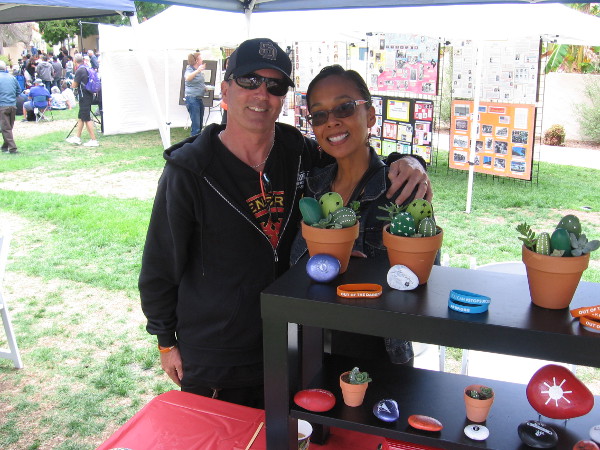
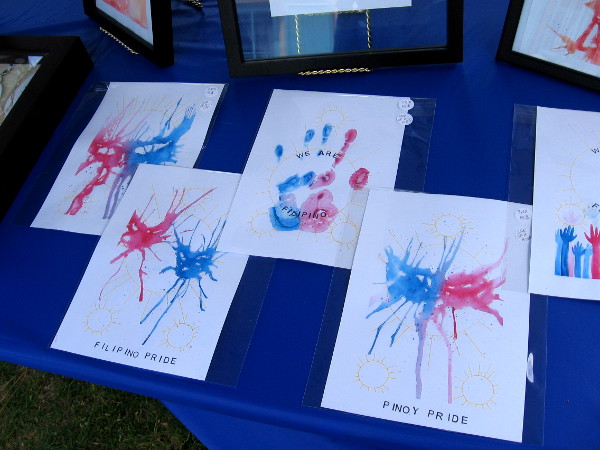
I was deeply moved yesterday. I met a family who is working for suicide prevention with beautiful art, walking and love. Their collective efforts were on display at the House of the Philippines lawn program in Balboa Park. (I posted photos of folk dancing at the event here.)
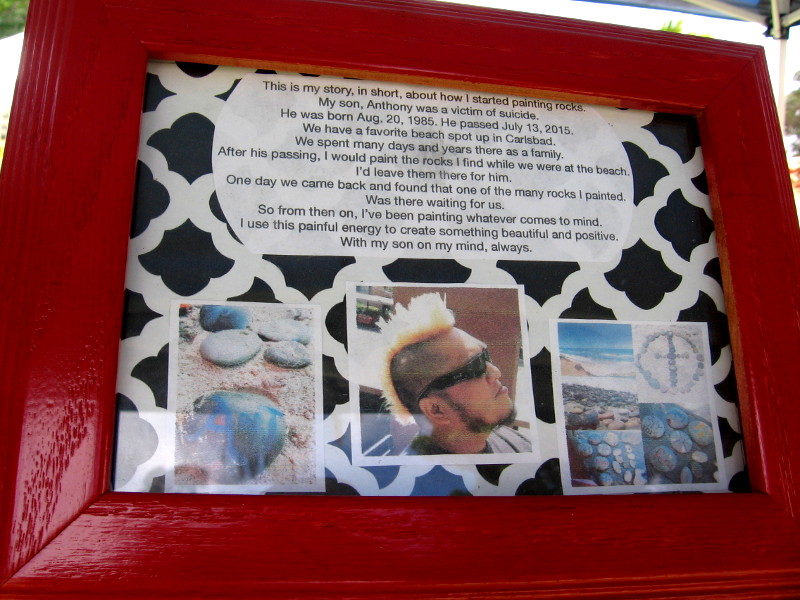
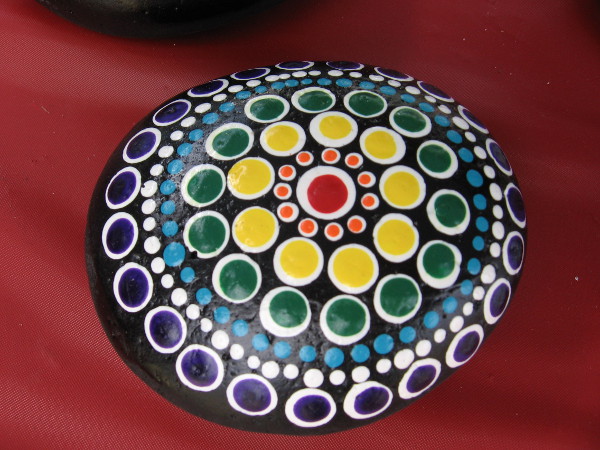
Elie Kennedy paints smooth rocks that she finds on a beach that her son Anthony loved. She paints those rocks on behalf of her son, who she lost to suicide in 2015. Her healing rocks radiate love. Money that she raises goes to the American Foundation for Suicide Prevention. She sometimes uses the hashtag #healingrocksforanthony.
The Kennedy family also raises funds for the foundation by participating in the San Diego Out of the Darkness Community Walk. You can walk, too. Such walks take place all around the United States. If you’d like, you can learn more or register for a walk here.
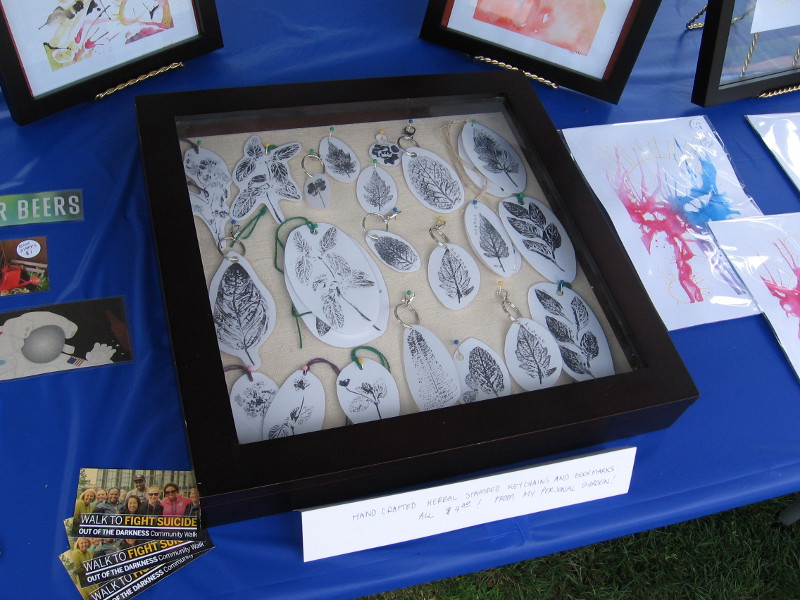
Positive energy flows from each member of this family. It all comes from the heart. Sin Kennedy presses leaves and creates a range of colorful artwork. Check out her Instagram page here.
Please learn more by clicking the American Foundation for Suicide Prevention. With treatment and knowledge many lives can be saved. The organization also helps those afflicted with a loss, advocates for suicide prevention, and funds scientific research to prevent future suicides.
Every single life is precious.
A story about Elie’s son. Painful energy is now used to create something beautiful and positive.A sample of the beauty that is created.Sin Kennedy is also an artist.Art reminds us that much in life is good.
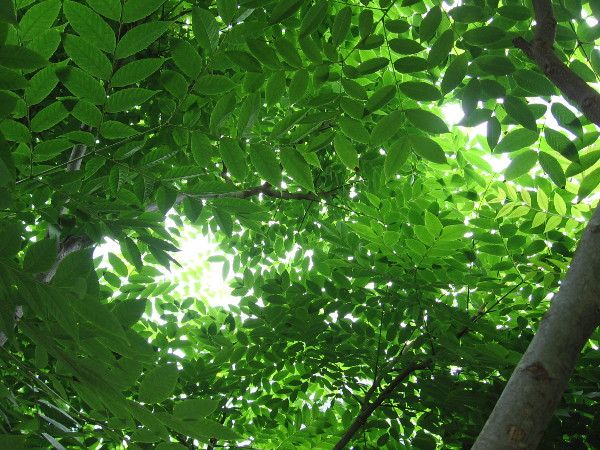
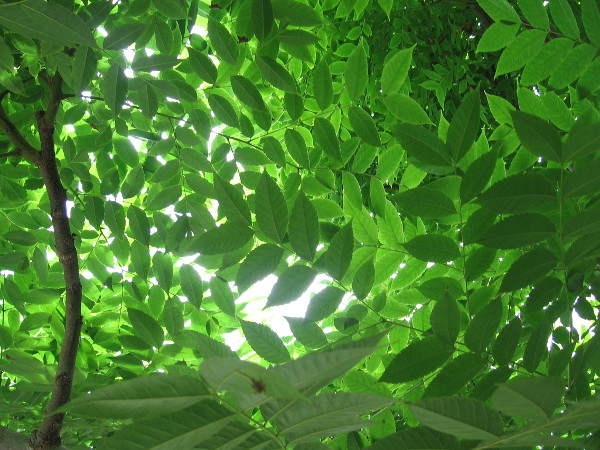
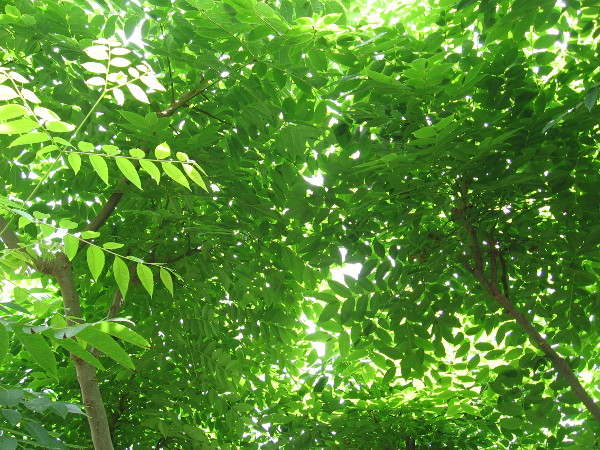
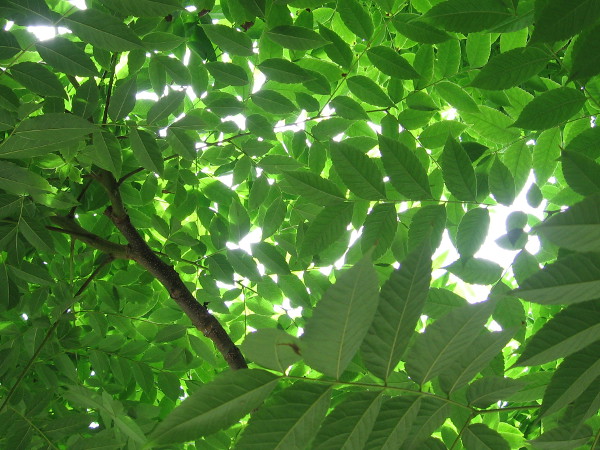
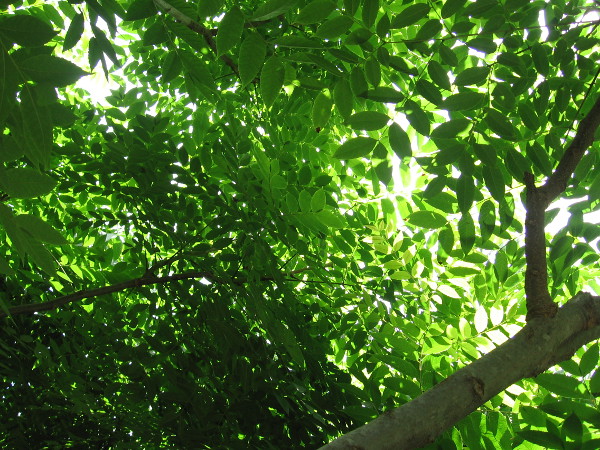
Here are some amazing photos that I captured today at the Japanese Friendship Garden in Balboa Park. During my slow walk into the Lower Garden, I halted beneath a tree and looked up at the leaves. Sunshine was beaming through, illuminating the many layers of green.
The complex patterns of leaves appear to me like swirling three-dimensional fractals. The patterns are strangely magical. They are beautiful.
Later in the afternoon, I ventured over to the International Cottages and enjoyed some colorful Philippine folk dancing. You can see those joyful photos on my special Beautiful Balboa Park blog by clicking here!
…
I live in downtown San Diego and love to walk around with my camera! You can follow Cool San Diego Sights via Facebook or Twitter!
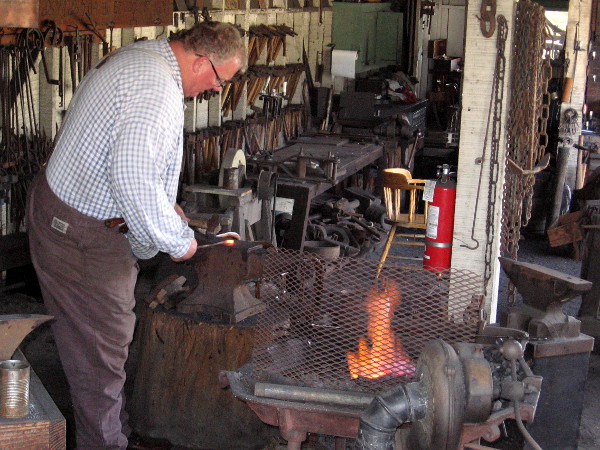
A blacksmith shapes red hot iron at a forge in San Diego’s historic Old Town.
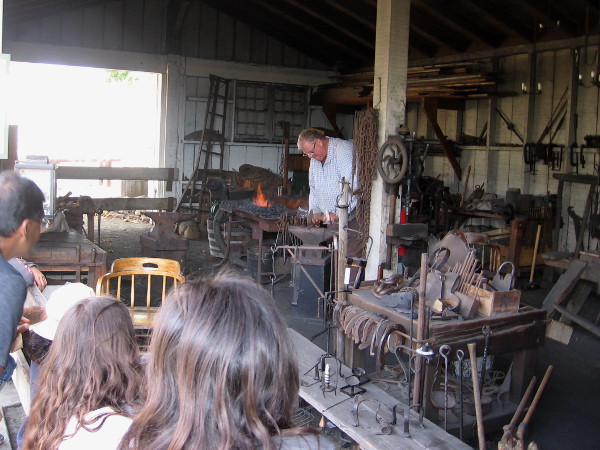
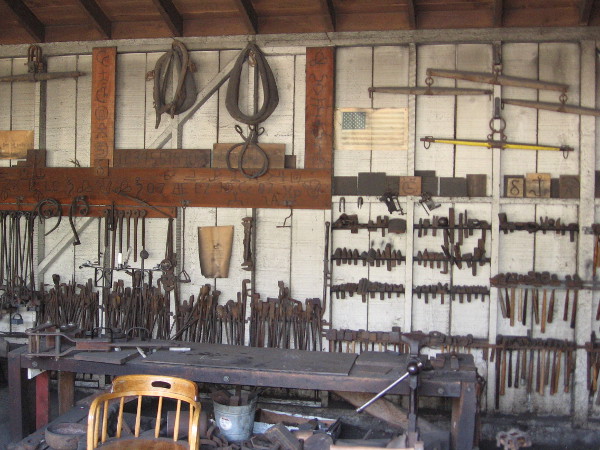
Yesterday I lingered for a few minutes at the Blacksmith Shop in Old Town San Diego State Historic Park. Two forges were operating. I watched as hammers swung, making sparks fly. It was fascinating to learn about blacksmithing and its vital role in San Diego’s history.
I chatted for a bit with one of the friendly gentlemen working in the Blacksmith Shop. These days the shop is used by a handful of skilled smiths to make all sorts of ornamental and useful metal items. They’ve made objects used for display elsewhere in the State Park. They make everything but horseshoes–and that’s because none of them know how to shoe a horse!
I was told that in 19th century San Diego there were several blacksmiths; this shop now in Old Town was probably located a bit to the east, on the outskirts of town (near today’s Presidio Hills Golf Course) because of the fire danger it presented to other buildings. No blacksmith shop back then would have been as large as the one visitors see today. A blacksmith would most likely do their work in the corner of a livery stable, using one modest forge.
Please read the photo captions to learn more!
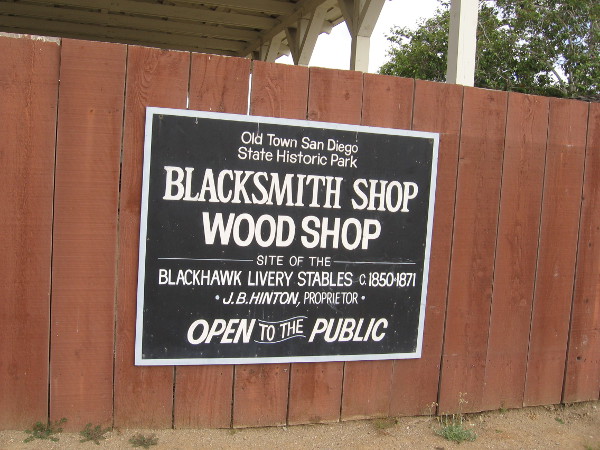
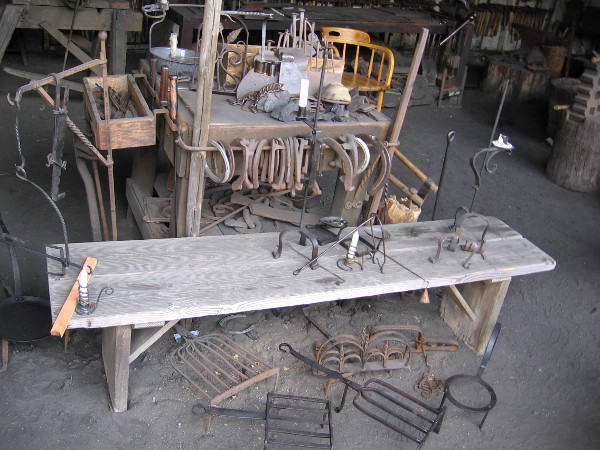
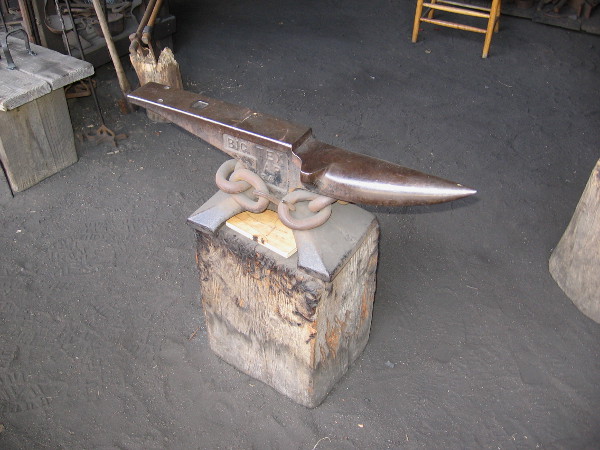
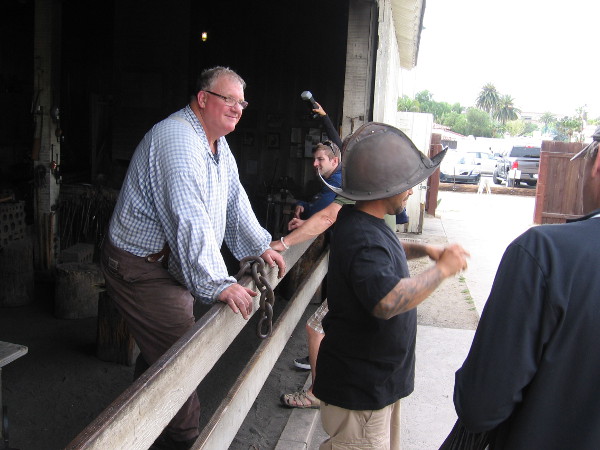
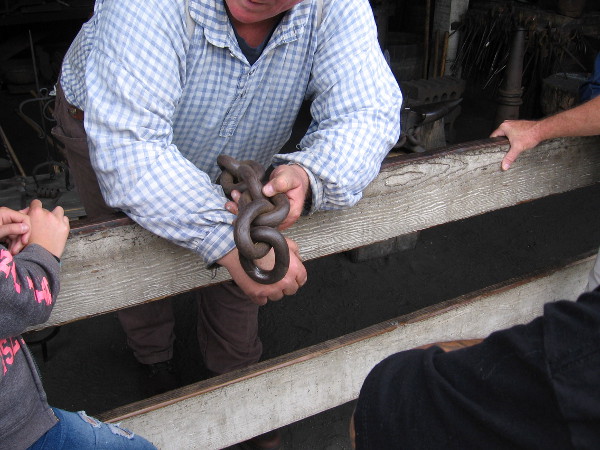
Old Town San Diego State Historic Park’s Blacksmith Shop and Wood Shop at the site of the Blackhawk Livery Stables, circa 1850-1871.Visitors to Old Town learn a little about life in San Diego during the mid 1800s. Blacksmiths created assorted metal objects, made repairs and shoed horses.This friendly blacksmith provided lots of fascinating information. Visitors watch with interest as he works to create a pot holder.I learned that in early San Diego blacksmiths typically burned charcoal in their forge, as coal was usually of poor quality and difficult to obtain in Southern California.A huge bellows provides oxygen for this brick furnace. A good working temperature is about 1800 degrees Fahrenheit.Products that were fashioned include iron grills, traps, candle holders, fish roasters, knives, shovels, chains, hinges, nails, cooking ladles and horseshoes.Hammers, bars, wrenches and various blacksmithing tools hang from the rear wall, in addition to harnesses and other items one might find in a livery stable.The gentleman showed me some devices used to suspend pots over a fire. Everything on this wall was made by local smiths in this shop.A shiny anvil.This wide grassy area behind nearby Seeley Stable was once used for anvil shoots. Gunpowder was placed in a hollow indentation between two anvils and ignited, sending one anvil high into the air with a loud bang! Anvils that did not shatter were considered sound.Old Town visitor tries on a Spanish conquistador helmet made in the Blacksmith Shop.A heavy anchor chain is shown. The welds must be as strong as the iron links themselves.A photo of living history. Skilled artisans used muscle, fire, metal and sweat to make everyday life easier for the early residents of San Diego.
…
I live in downtown San Diego and love to walk around with my camera! You can follow Cool San Diego Sights via Facebook or Twitter!
You can easily explore Cool San Diego Sights by using the search box on my blog’s sidebar. Or click a tag! There are thousands upon thousands of fun photos for you to share and enjoy!
Mormon Battalion flag flies during a special event in Old Town San Diego.
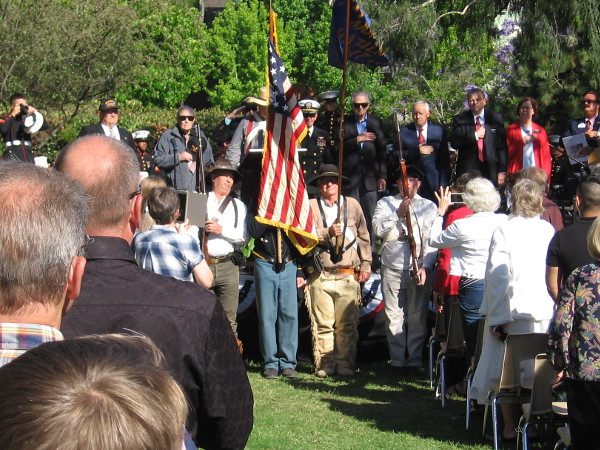
I was invited to a unique event that took place yesterday. A special Flag Day Ceremony was held at the Mormon Battalion Historic Site in San Diego’s Old Town. The event remembered World War I and saluted all American veterans.
During the ceremony five veterans from different military services were made honorary members of the Mormon Battalion. A cake was cut with a military saber and an American flag that has been flown over the U.S. Capital and over Fort Leavenworth (where the historic Mormon Battalion originated) was raised.
The patriotic ceremony was organized by The Church of Jesus Christ of Latter-day Saints, whose members composed the Mormon Battalion, the only religiously based unit in United States military history. Commanded by regular U.S. Army officers, members of the battalion marched almost 2,000 miles from Council Bluffs, Iowa, to San Diego, California to help secure the region during the Mexican–American War. Much of the difficult march was over mountains and through desert. They saw no fighting.
I have noticed that Mormons treasure liberty–religious freedom in particular. I’m not a Mormon–very far from it–but I do happen to be a strong believer in personal liberty. That’s because I’m a writer. Also, as a child I traveled with my family behind the Iron Curtain twice. I have briefly seen how dark life is without liberty.
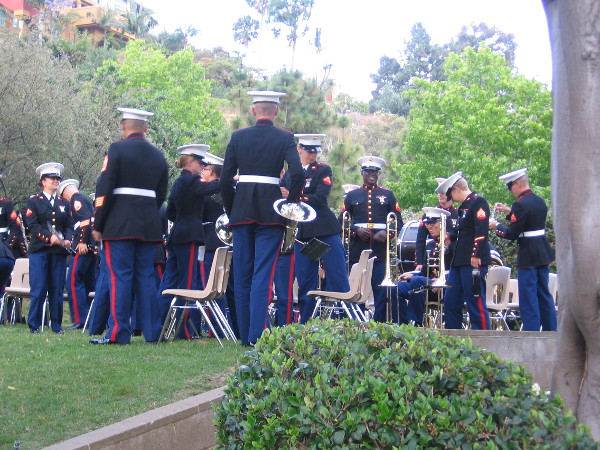
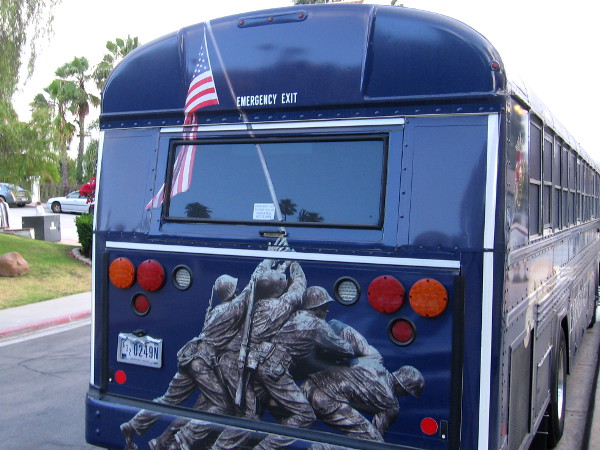
A friendly Mormon lady in pioneer dress welcomes guests to the Flag Day Celebration.This 2017 celebration of Flag Day honored veterans who served with distinction.Guests are welcomed by Director of the San Diego Mormon Battalion Historic Site, Elder Michael Hemingway.The United States flag is posted after the National Anthem.Folding of the flag. Each of the thirteen folds is invested with a special meaning.Four American veterans on stage are applauded and made honorary members of the Mormon Battalion.Keynote speaker General Bruce Carlson, USAF, Ret. talks about liberty. He is also made an honorary member of the Mormon Battalion.Many voices sing God Bless America.Young members of Marine Band San Diego after the ceremony.The United States Marine Corps bus contains an image of the flag being raised during the Battle of Iwo Jima.Pageantry and remembrance at a Flag Day Ceremony in Old Town San Diego.
…
I live in downtown San Diego and love to walk around with my camera! You can follow Cool San Diego Sights via Facebook or Twitter!
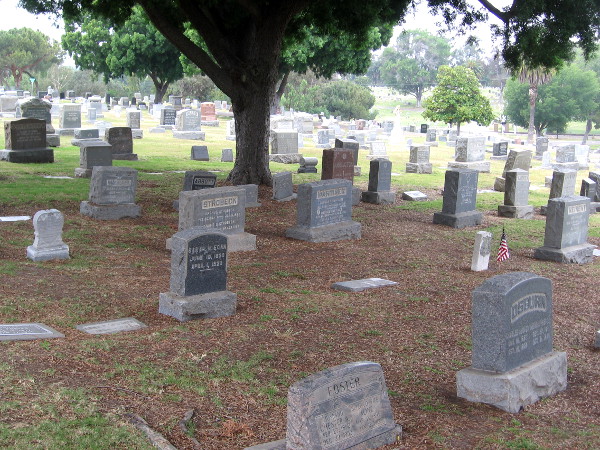
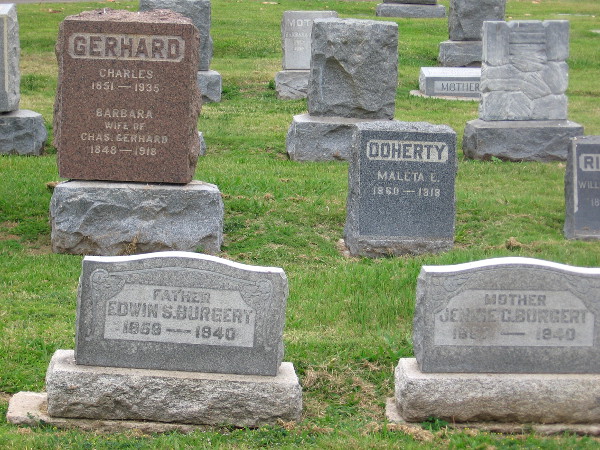
I happened upon a few notable names during a walk through Mount Hope Cemetery. I had over an hour before the Memorial Day ceremony would begin, so I just wandered down winding roads through fields of headstones.
Many early residents of San Diego are buried at Mount Hope. Among the jumble of names engraved in stone, one can find some of the city’s most influential citizens. Like Alonzo Horton, Kate Sessions, George Marston, Thomas Whaley, Ah Quin, E. S. Babcock, and Robert Waterman. (Not to mention the famous author Raymond Chandler!) But I didn’t have a map. So I just meandered through the hilly cemetery and gazed.
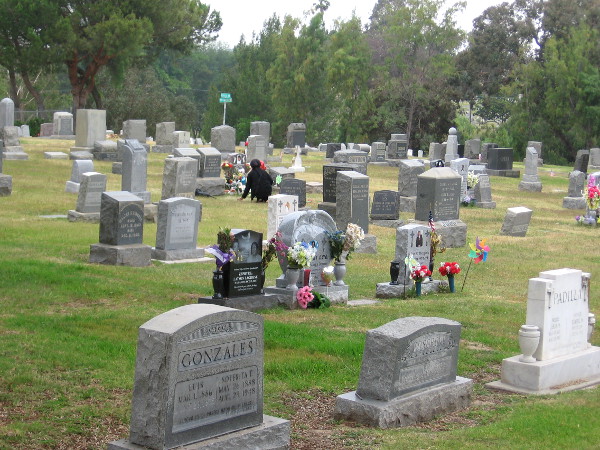
Thousands of gravestones.
Every life different. Every life important in its own way.
Some of the dates indicate long lives, others short. But isn’t it true that all of our lives are short?
Someone asked about my visit–if the cemetery felt spooky. No. The best word that comes to mind is bittersweet. A feeling of both joy and sadness.
Every single name has become a part of San Diego history.
(I did a bit of research for this blog post. Hopefully I got the following information right. If not, leave a comment!)
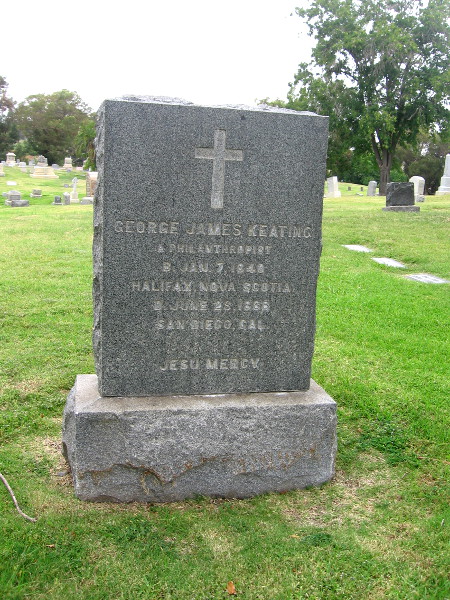
George James Keating
George James Keating was born in Halifax, Nova Scotia in 1840. He and his wife Fannie, owners of a farming company, eventually moved to San Diego in 1886. Keating made large investments in the city’s booming real estate market. After his death, Fannie oversaw the construction of the five-story Keating Building, which I blogged about several years ago here.
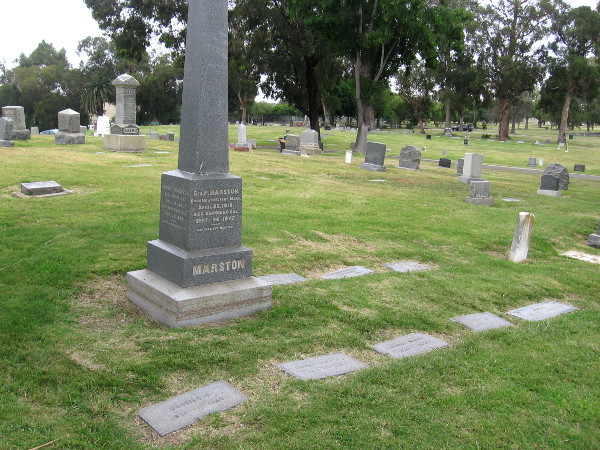
Graves of the Marston family.George White Marston
George W. Marston was often referred to as “San Diego’s First Citizen.”
A successful department store owner, he founded the San Diego Historical Society and was a prominent advocate for and planner of Balboa Park. He was a critical force in the establishment of the San Diego Public Library System and Presidio Park.
You can see a sculpture of George Marston on my blog here, and the garden of his beautiful, historic house, which is located in the northwest corner of Balboa Park, here.
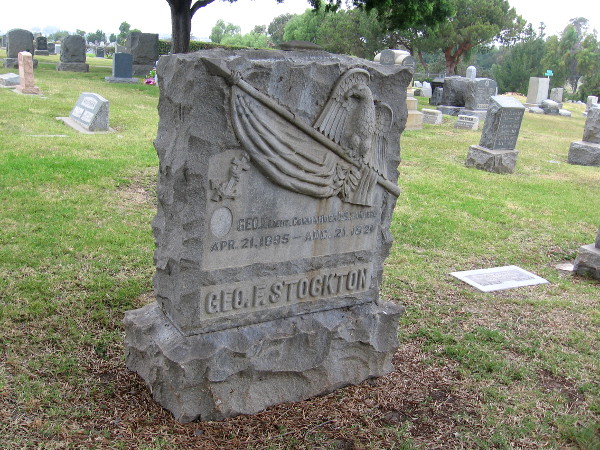
George F. Stockton
Lt. George F. Stockton’s tragic drowning on August 21, 1921 prompted the creation of the City of Oceanside Lifeguard Service. He was pulled out to sea by a rip current. He had served on the World War I ship USS San Diego.
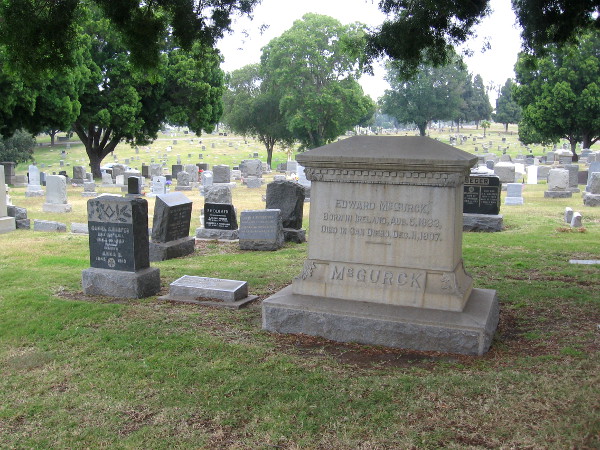
Edward McGurck
Col. Edward McGurck was born in Ireland. He purchased property on the northeast corner of Fifth Avenue and Market Street in 1876 for $50. In 1887 he developed the McGurck Block Building at that location.
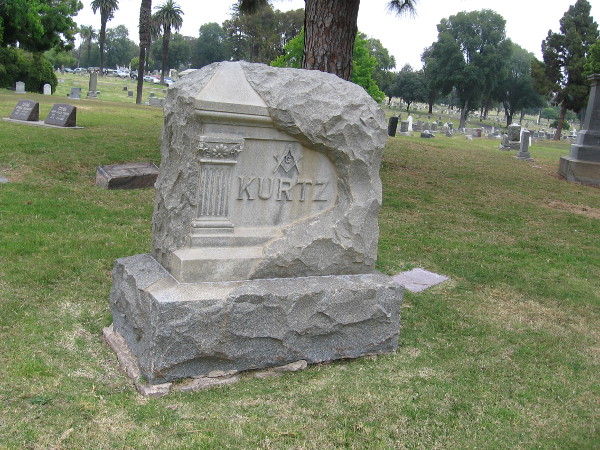
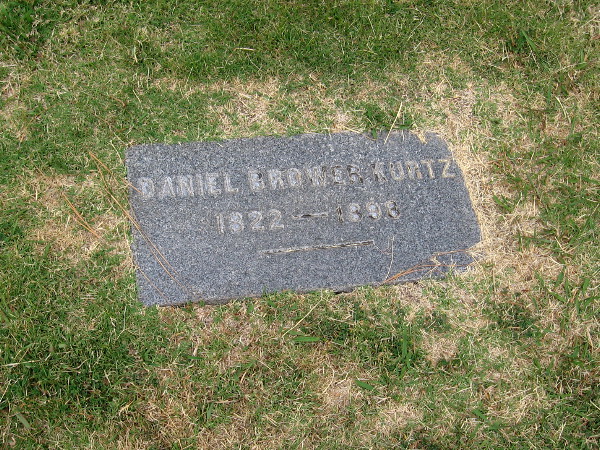
Monument to the Kurtz family.Daniel Brower Kurtz
Daniel Brower Kurtz has an important San Diego street named after him. He arrived in San Diego in 1850 and was elected second city mayor in 1851. He also served as a state senator, county judge, and assemblyman.
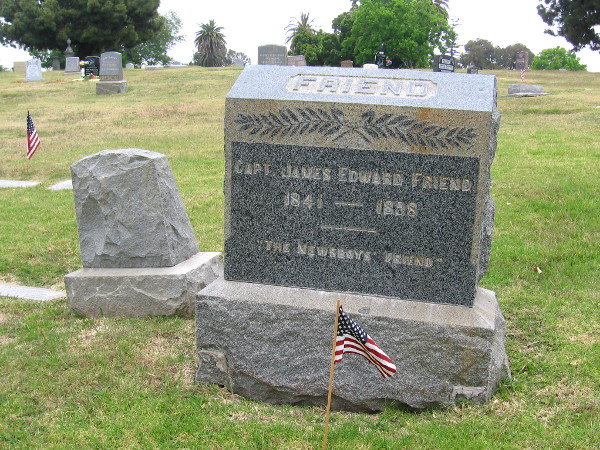
James Edward Friend
James Edward Friend was an enterprising reporter and newspaper publisher in the early days of San Diego.
Seeing his name brought a smile to my face. He was a good friend of Bum, San Diego’s Town Dog, and figured prominently in the wonderful book titled The Dog That Belonged to No One. Any young person living in San Diego should read this short book. It’s quite enjoyable, full of history and good humor.
Captain James Friend was also known as a friend and benefactor to San Diego’s newsboys.
You can read about Bum, San Diego’s lovable Town Dog, and see his sculpture in my blog post here.
…
I live in downtown San Diego and love to walk around with my camera! You can follow Cool San Diego Sights via Facebook or Twitter!
You can easily explore Cool San Diego Sights by using the search box on my blog’s sidebar. Or click a tag! There are thousands upon thousands of photos for you to share and enjoy!
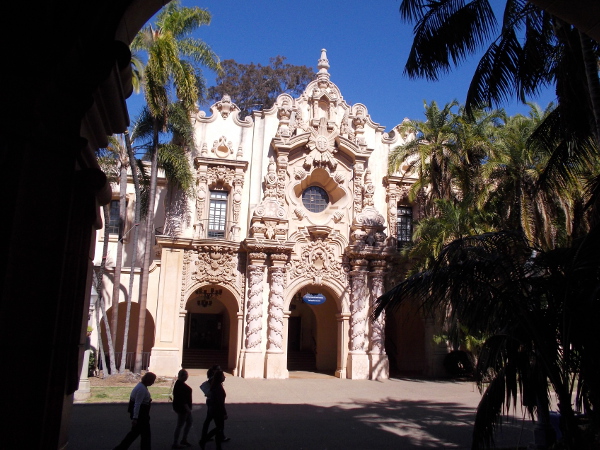
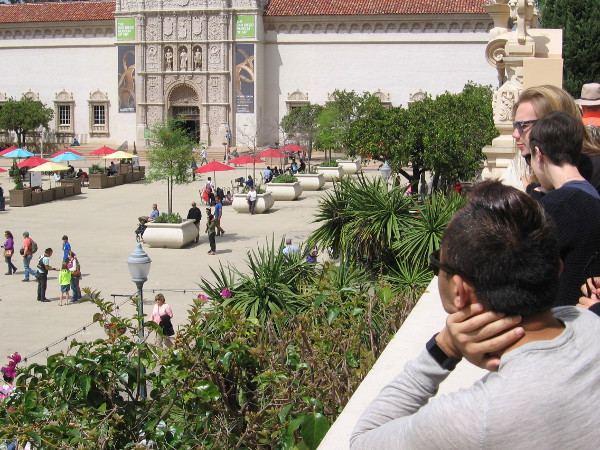
The facade of the Casa del Prado is just one of many wonders in Balboa Park.
Balboa Park is one of the most magical places in the world. Spells are cast, revealing life and wonder.
Please enjoy a few photos.
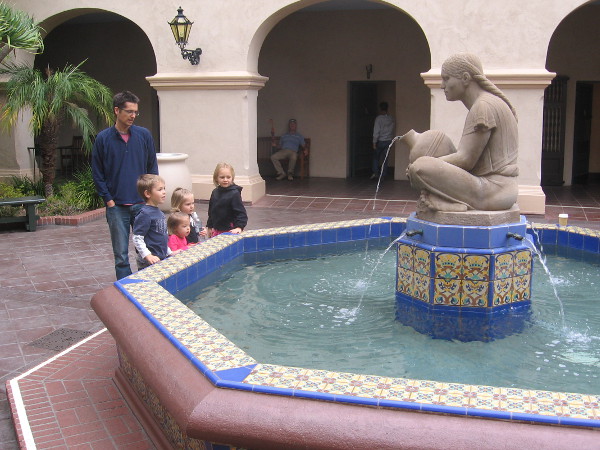
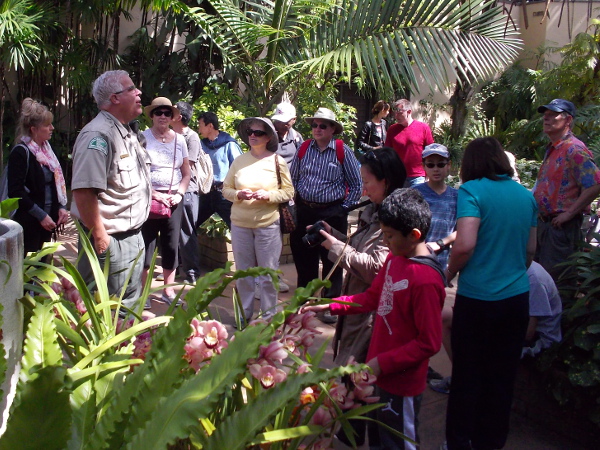
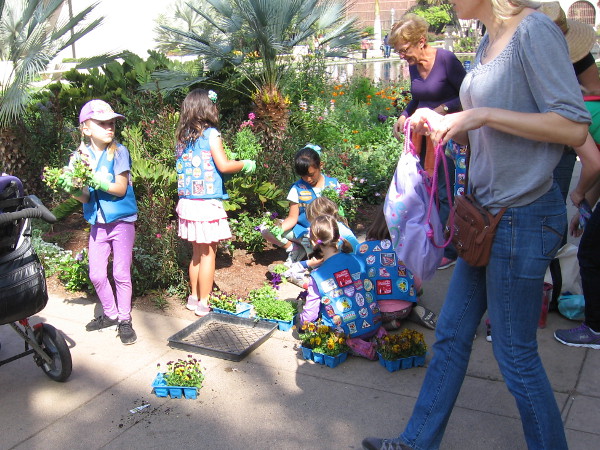
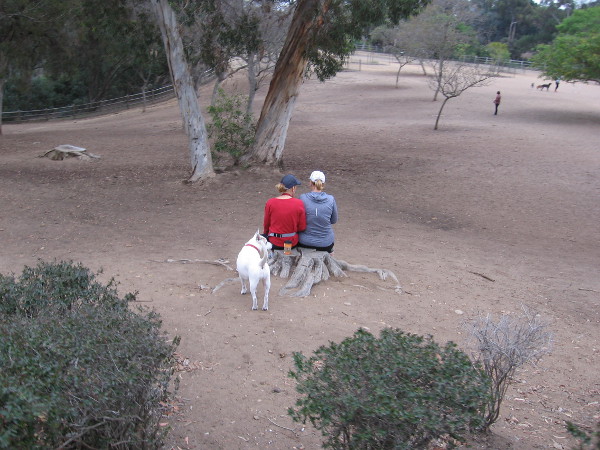
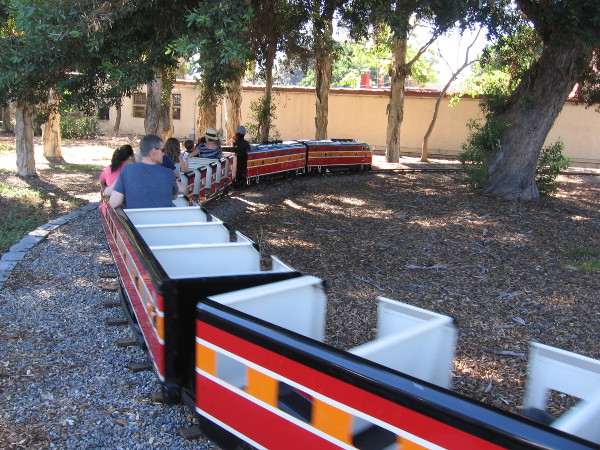
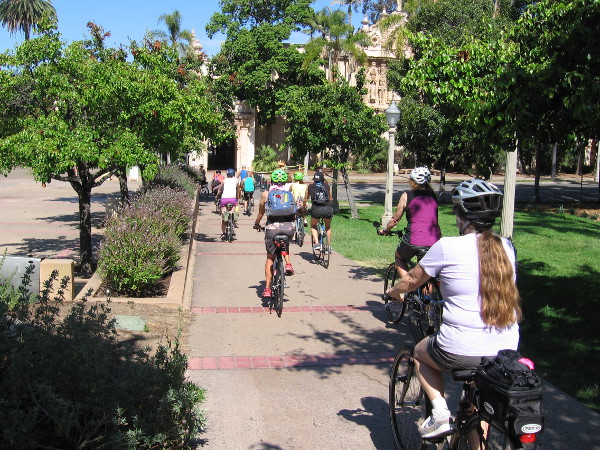
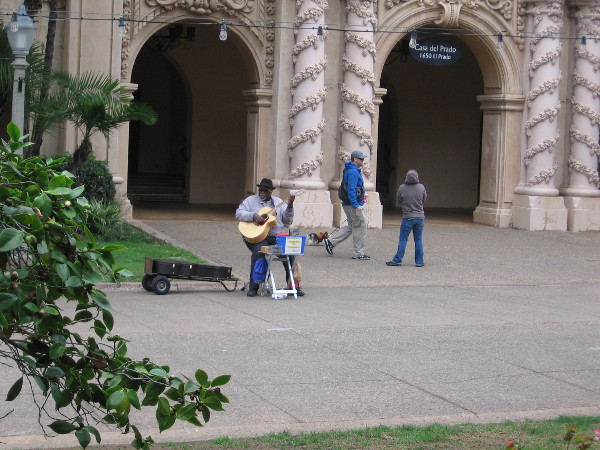
Another magical day in the park. The California Tower rises in the distance.Spirits are lifted by the Woman of Tehuantepec in the courtyard of the House of Hospitality.Ranger Kim relates the history of Balboa Park to a tour group. They stand by the original Administration Building, which was the first building erected for the 1915 Panama-California Exposition.Ranger Kim talks about the historic Botanical Building and its rich collection of beautiful flowers and plants.A wicker Electriquette slowly moves through the wonderful park.Daisy Girl Scouts plant living flowers by the reflecting pool.Photo from the Alcazar Garden of the House of Charm’s tower.Learning to tap dance at the Spreckels Organ Pavilion.Three life friends together at Nate’s Point Dog Park.A short but magical excursion on the Balboa Park Miniature Railroad.A view across El Prado of the San Diego Natural History Museum.The splashing Bea Evenson Fountain in the Plaza de Balboa attracts young and old.Gazing from a balcony of the House of Hospitality down at the life-filled Plaza de Panama and the San Diego Museum of Art.Bicycles and sunshine along El Prado.Big Slim plays guitar by the Casa del Prado.A musician strums in Spanish Village.A magic trick produces many smiles.
…
I live in downtown San Diego and love to walk around with my camera! You can follow Cool San Diego Sights via Facebook or Twitter!
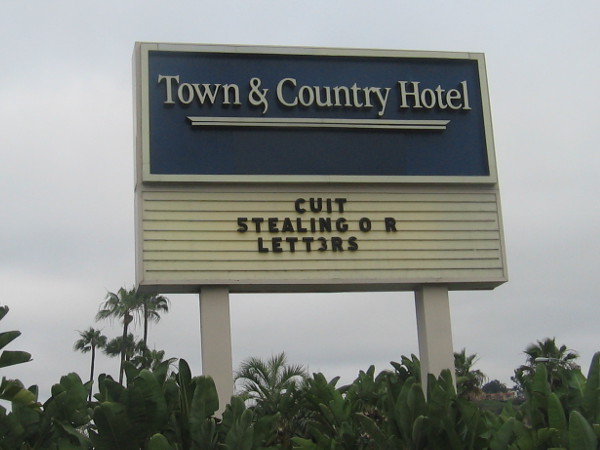
Town and Country Hotel sign reads: CUIT 5TEALING O R LETT3RS
I was heading home from work today when I spied something funny through the bus window. The big Town and Country Hotel sign now reads: CUIT 5TEALING O R LETT3RS. Either a crook has stolen the missing letters, or somebody is providing us with a good laugh!
…
I live in downtown San Diego and love to walk around with my camera! You can follow Cool San Diego Sights via Facebook or Twitter!
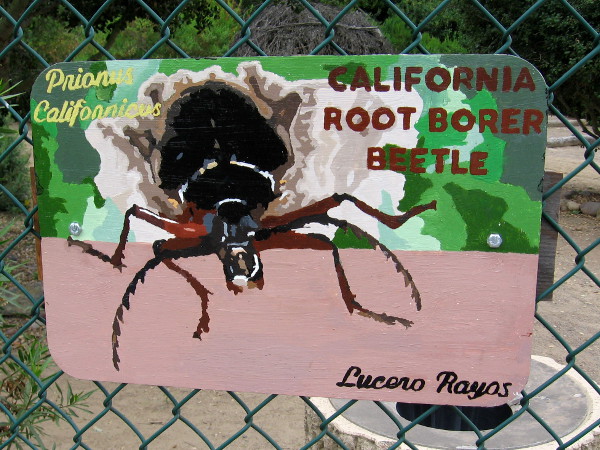
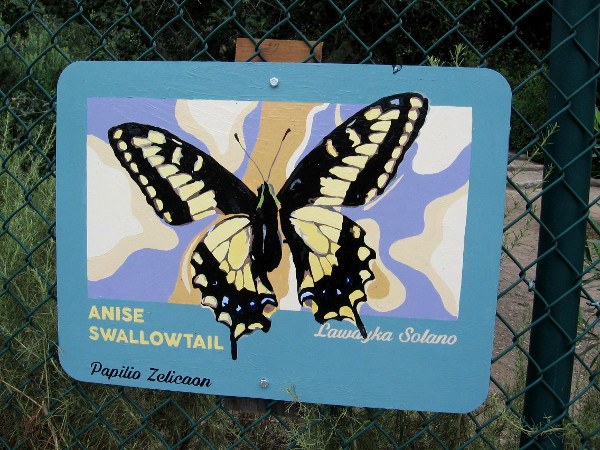
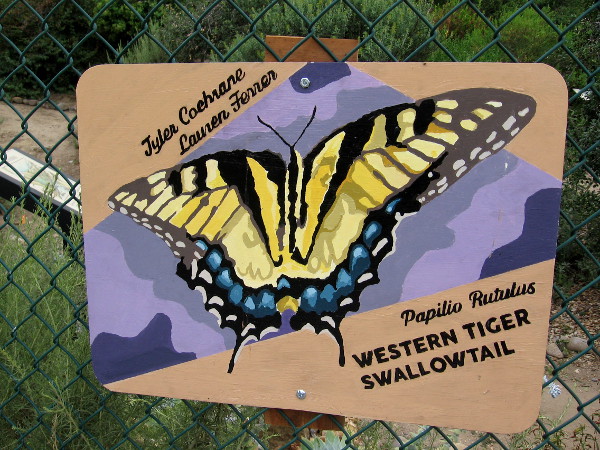
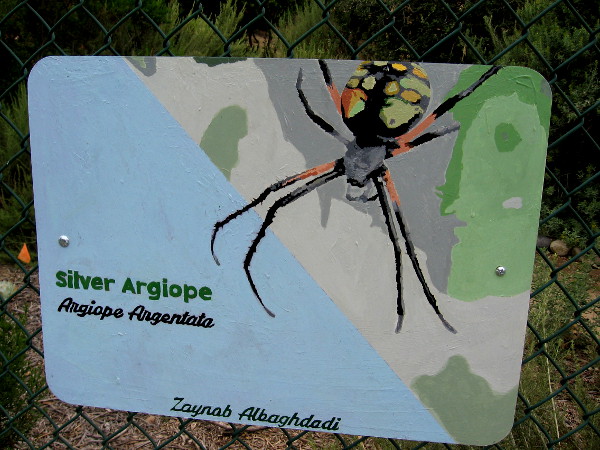
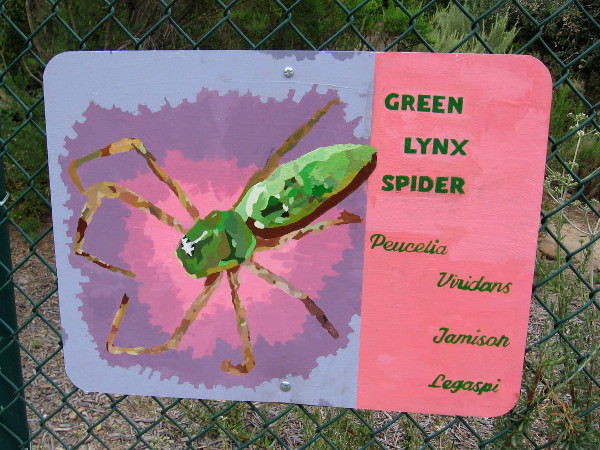
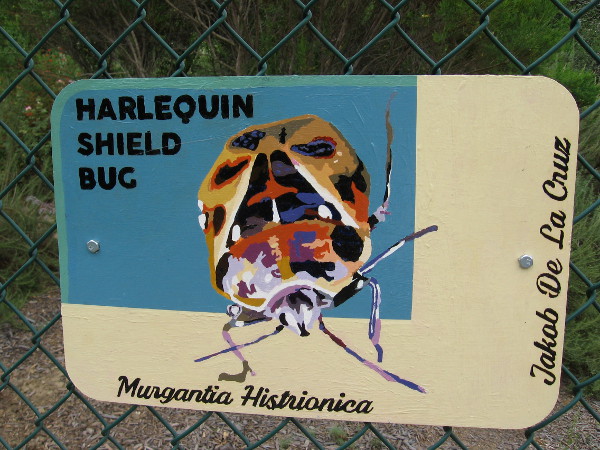
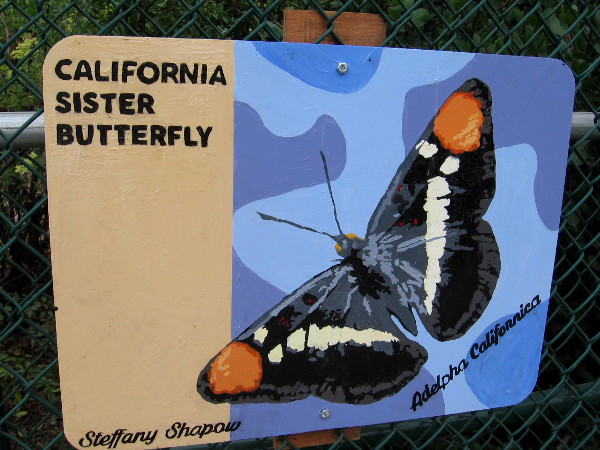
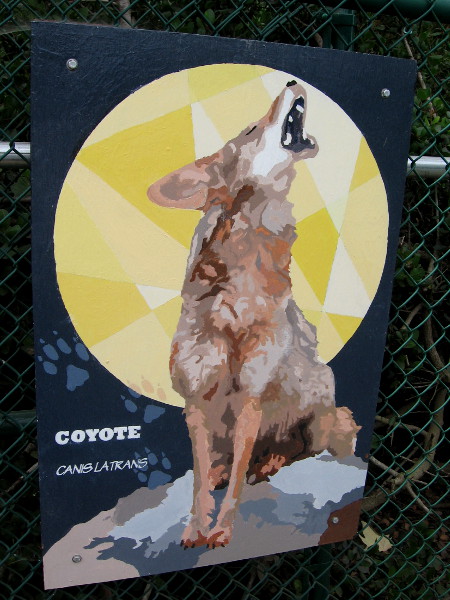
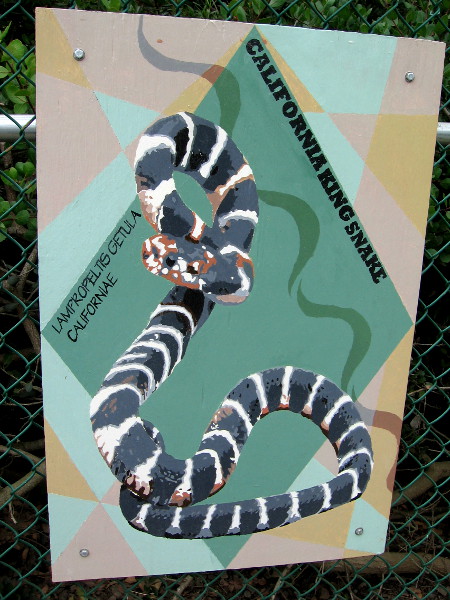
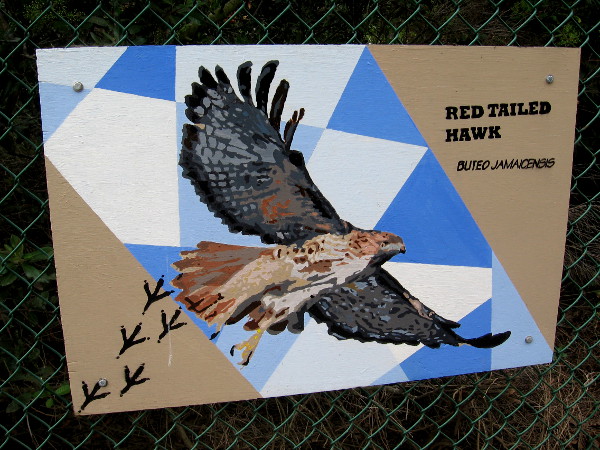
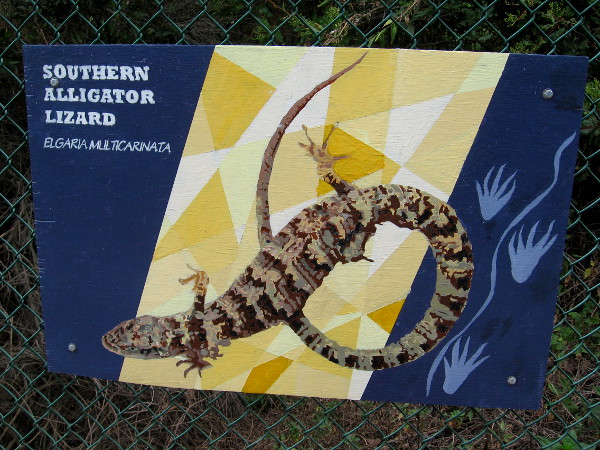
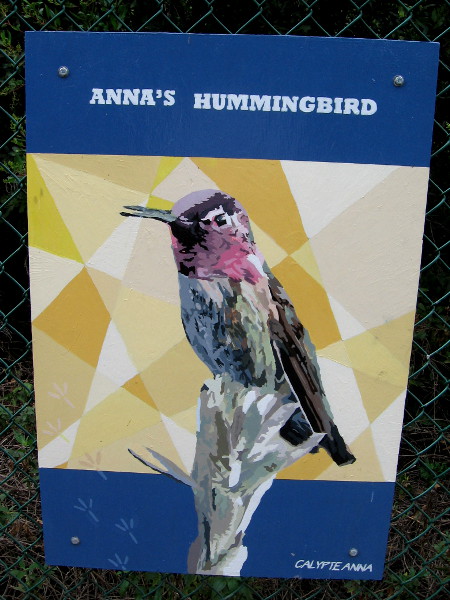
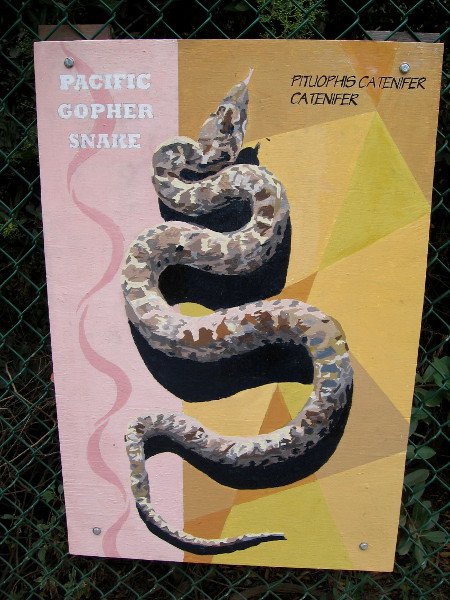
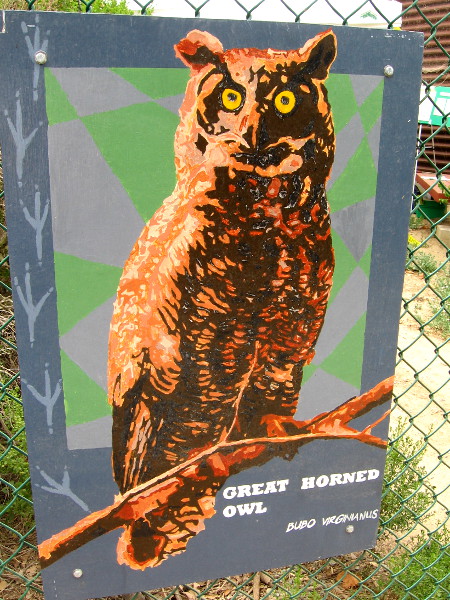
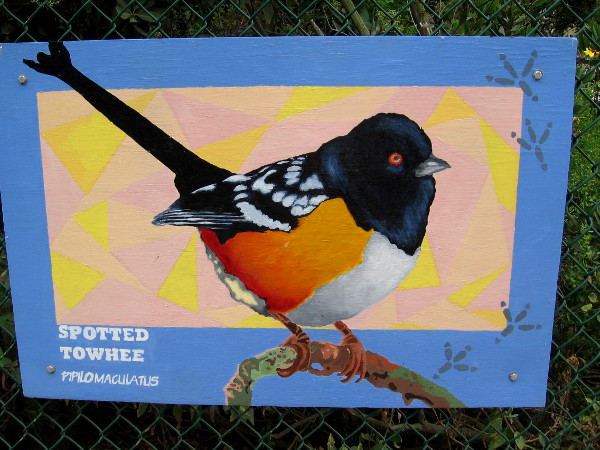
On a fence behind the Nature Center at Tecolote Canyon Natural Park one can find many colorful paintings of native wildlife. The fence follows a dirt road that leads to a hiking trail through Tecolote Canyon.
The paintings of spiders, butterflies, beetles and other insects were recently completed by students at University City High School. I believe the paintings of mammals, reptiles and birds have been on the fence for some time.
Colorful paintings of insects and other wildlife on a fence behind the Nature Center at Tecolote Canyon Natural Park.California Root Borer Beetle. Lucero Rayos.Black and Yellow Garden Spider. Nour Barbakh.Anise Swallowtail. Lawdyka Solano.Spotted Cucumber Beetle. Kayla Kenney.Tarantula Hawk. Andrea Angeles and Christian Covarrubias.Western Tiger Swallowtail. Tyler Coehrane and Lauren Ferrer.Darkling Stink Beetle. Morgan Boland.Roseate Skimmer. Issac Felcher.Silver Argiope. Zaynab Albaghdadi.American Lady. Aurora Godinez Quevedo.Green Lynx Spider. Jamison Legaspi.Harlequin Shield Bug. Jakob De La Cruz.Datura Weevil. Jacob Stoermer.Green Fruit Beetle. Makayla Srioudom.Vivid Dancer Damselfly. Miyoko Seldon and Andrew Bayot.Pruinose Squash Bee. Quincy Stone.California Sister Butterfly. Steffany Shapow.Coyote.California King Snake.Great Blue Heron.Striped Skunk.Southern Pacific Rattlesnake.Western Scrub Jay.Raccoon.Red Tailed Hawk.Southern Alligator Lizard.Anna’s Hummingbird.Bobcat.Pacific Gopher Snake.Gray Fox.Western Fence Lizard.Great Horned Owl.Spotted Towhee.
…
I live in downtown San Diego and love to walk around with my camera! You can follow Cool San Diego Sights via Facebook or Twitter!
You can easily explore Cool San Diego Sights by using the search box on my blog’s sidebar. Or click a tag! There are thousands upon thousands of fun photos for you to share and enjoy!
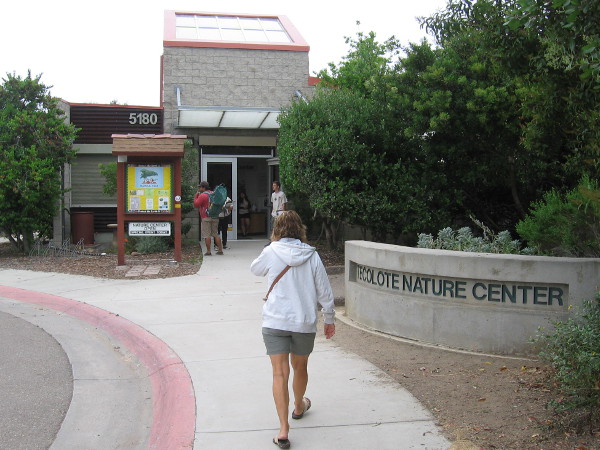
Someone walks toward the Nature Center on Tecolote Family Day.
Today I headed over to Tecolote Canyon Natural Park. While I frequently drive around this narrow San Diego city park, which serves as a nature preserve inside Tecolote Canyon east of Mission Bay, I’ve never taken a single step inside. When I saw that an event called Family Day would be happening today, I decided to pay a visit!
What did I discover? Read the photo captions to find out!
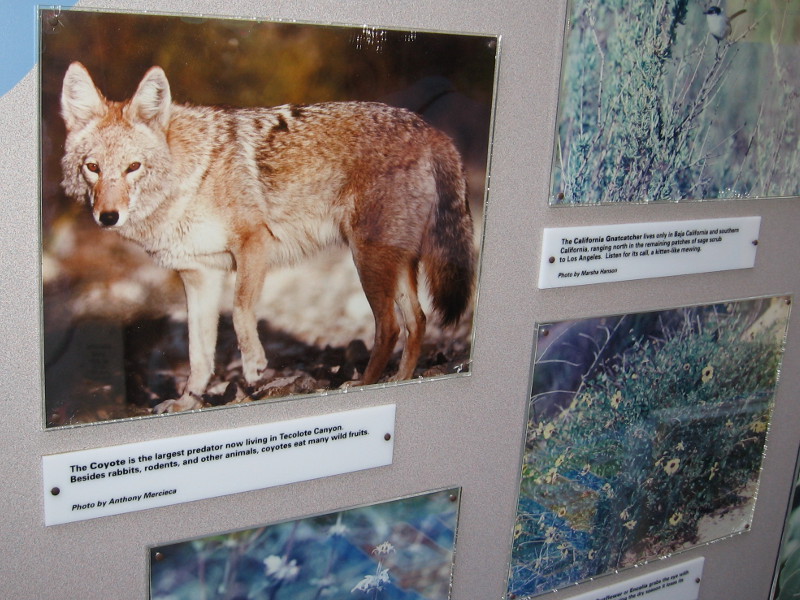
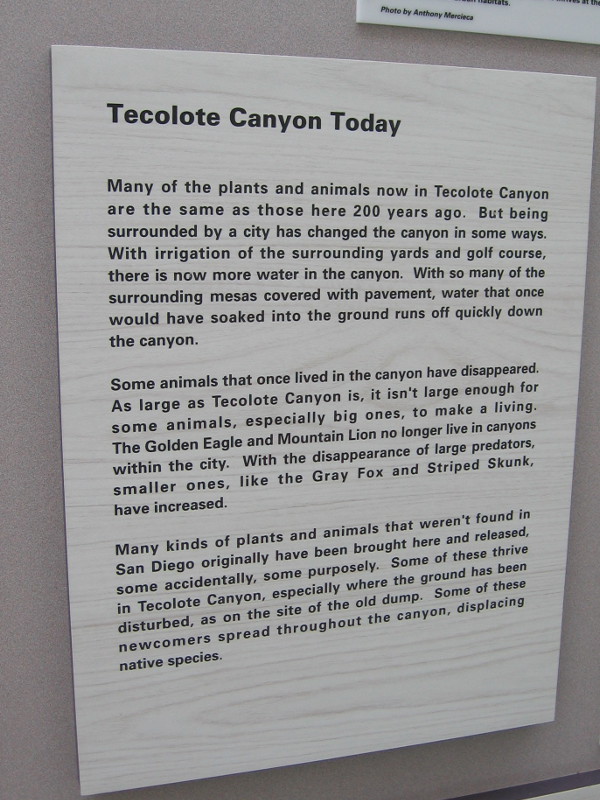
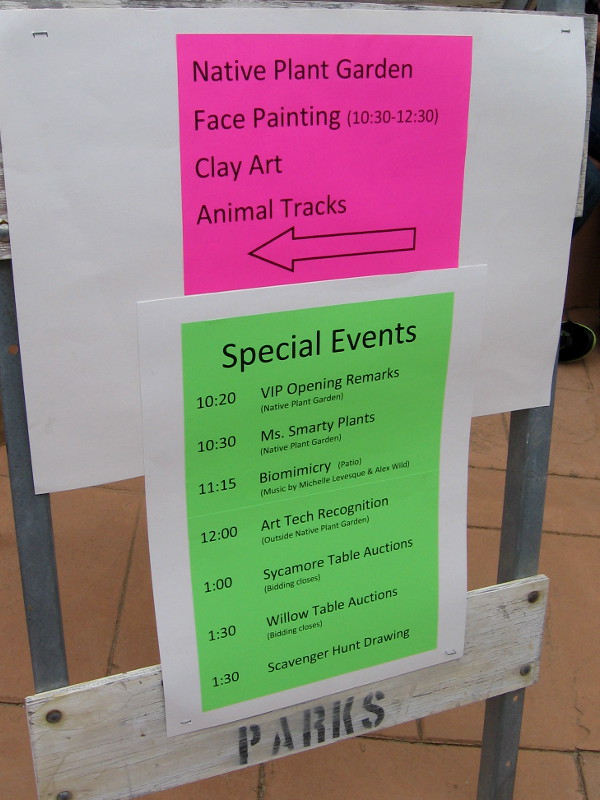
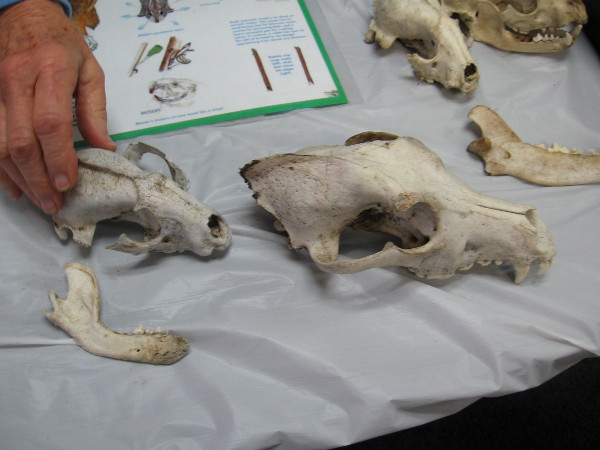
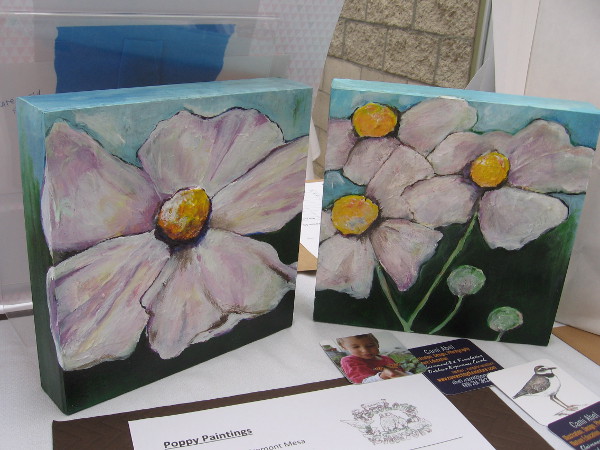
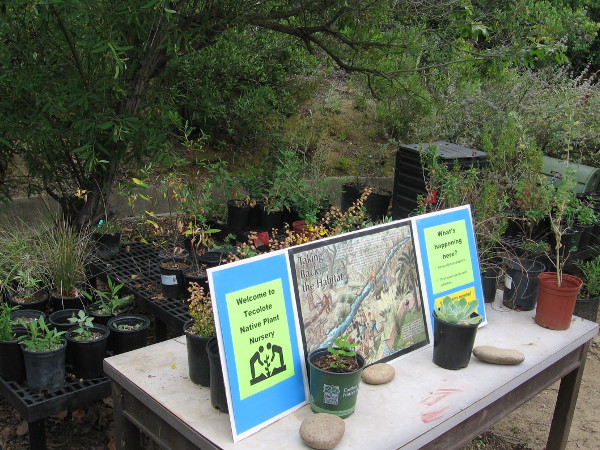
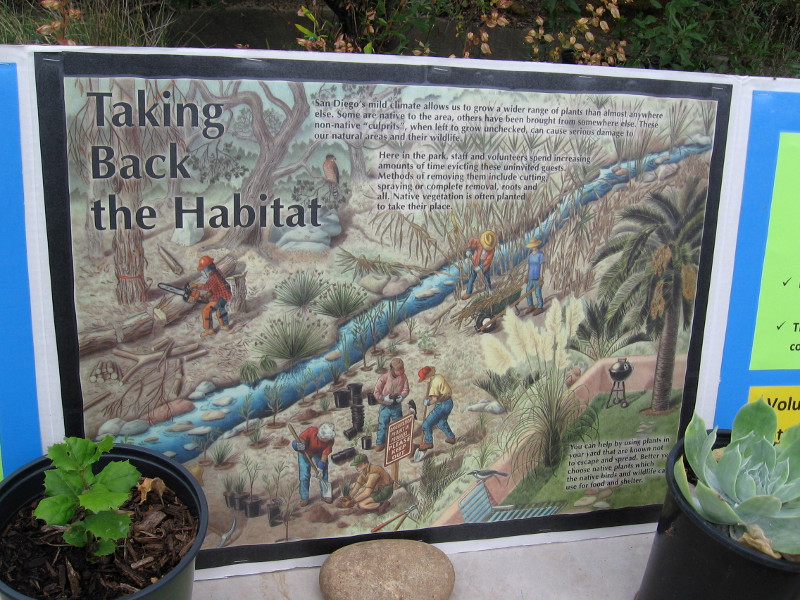
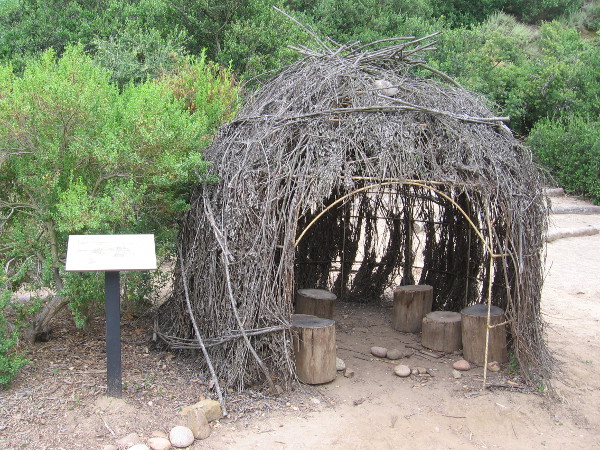
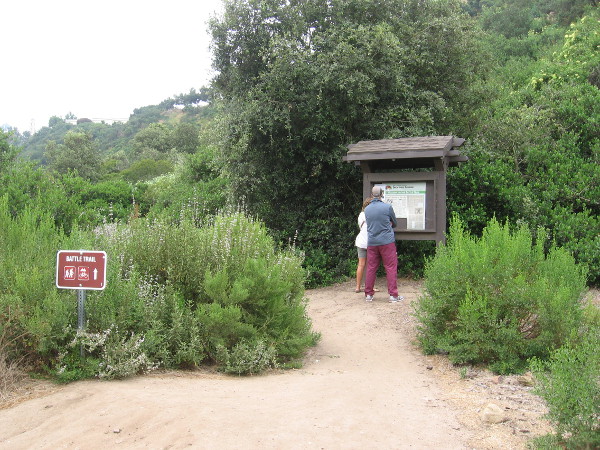
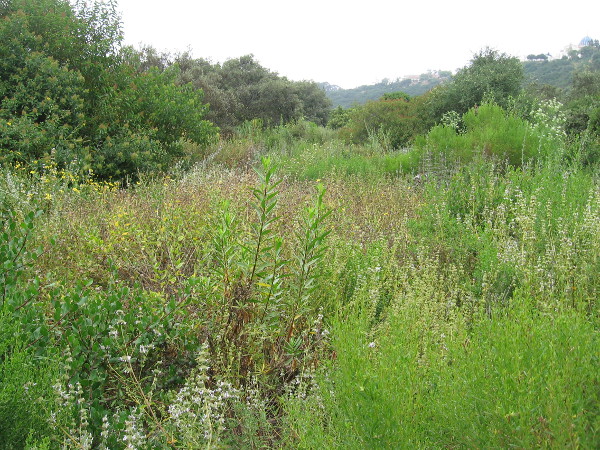
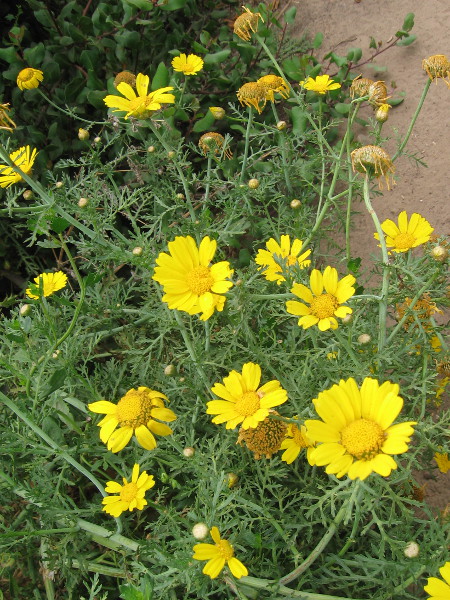
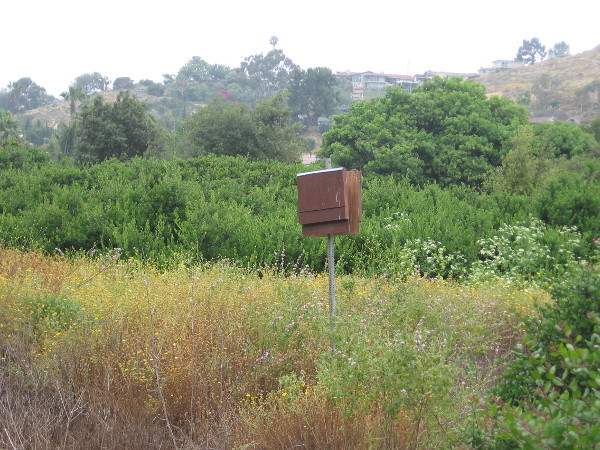
A sign near entrance to the Nature Center provides information about Tecolote Canyon Natural Park.A narrow strip of natural habitat preserved in San Diego. Tecolote Canyon features hiking trails and a refuge for wildlife.Sign inside the Tecolote Nature Center. The park was originally dedicated in 1977. Houses, yards and streets surround this area where the native environment still survives.Many interpretive displays can be found in the Nature Center. The coyote is Tecolote Canyon’s largest predator.One sign describes San Diego’s Coastal Sage Scrub habitat, which is found in a small part of the world, along the coast of Southern California into Mexico.The Brown Towhee is one of many birds one might spot in the canyon.Along Tecolote Creek lies the Riparian Woodland habitat. Water attracts animals from the dry hills, and native trees like willows, cottonwoods and sycamores grow near the creek’s banks.One of the displays shows Lemonadeberry (a common chaparral shrub in San Diego), Fuchsia Flowered Gooseberry, and a California Thrasher.A topographical representation of curving Tecolote Canyon, which you can see directly below Mission Bay. Up is west, right is north.Many of the plants and animals now in Tecolote Canyon are the same as those here 200 years ago. Golden eagles and mountain lions, however, have vanished because this natural space is too limited in size.Families enjoy a special day and learn about the canyon’s environment. It’s Tecolote Family Day! There were lots of educational displays and activities at the Nature Center.Activities at Tecolote Family Day included a scavenger hunt for kids, art, music, dance and a silent auction.Inside the Nature Center, one table had lots of displays concerning insects! Another one had snakes.At another table I was shown a coyote skull.I believe these beautiful poppy paintings were part of the silent auction.A friendly parrot was at a booth promoting Zovargo, a local business that offers animal summer camps for kids.These kids were dancing to a fun song about pollination!Nearby I discovered the Tecolote Native Plant Nursery.Work is ongoing to take back the native habitat from invading plant species.I saw some signs about the importance of composting. It enhances soil and protects watersheds.Behind the Nature Center, near an amphitheater and native garden, I saw this example of an e’waa, a simple willow branch structure built by the Native American Kumeyaay.A sign depicts the Tecolote Watershed. Pollutants can flow down the creek and enter the soil, Mission Bay and eventually the Pacific Ocean.Several signs can be found around the small native garden. This one, Aromas of the Canyon, depicts Black Sage, White Sage and California Sagebrush.On the way to the hiking trail that leads into Tecolote Canyon, one might spot this owl!Hikers read the sign at the Battle Trail trailhead.Welcome to the Battle Trail – Nature’s haven in the city.I start up the easy trail. The vegetation in Tecolote Canyon is still green in late spring, after a very rainy winter.This lush greenery will soon dry out in the Southern California summer and turn mostly brown.I am greeted by cheerful yellow flowers.I believe this house on a post is for bats. I’ve seen similar boxes in other open space parks around San Diego.A family heads into Tecolote Canyon to explore nature.
…
I live in downtown San Diego and love to walk around with my camera! You can follow Cool San Diego Sights via Facebook or Twitter!
You can easily explore Cool San Diego Sights by using the search box on my blog’s sidebar. Or click a tag! There are thousands upon thousands of fun photos for you to share and enjoy!
























































 Cool San Diego Sights!