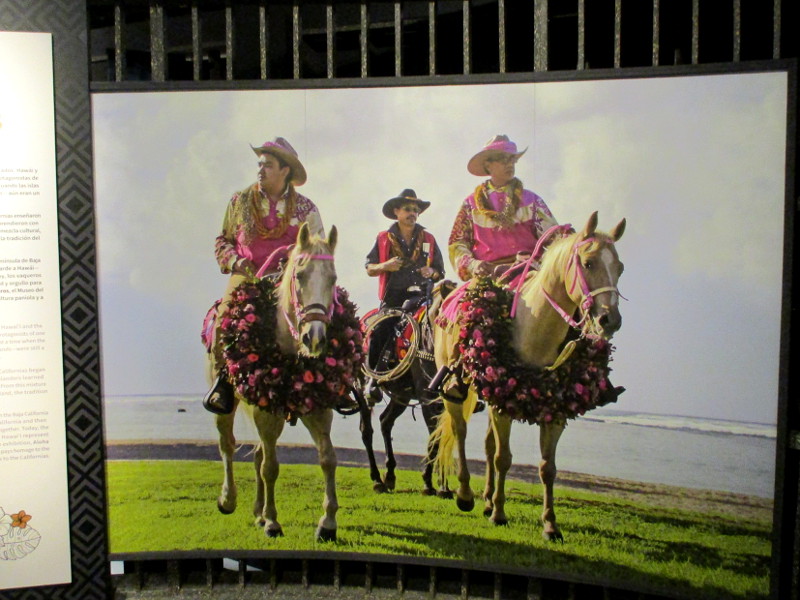
Did you know Hawaii has it own unique cowboy culture? Hawaiian cowboys are called paniolos. You might be surprised to learn that the origin of paniolos in Hawaii has a direct connection to San Diego’s early history, when our nascent city was part of Mexico and cattle ranches flourished!
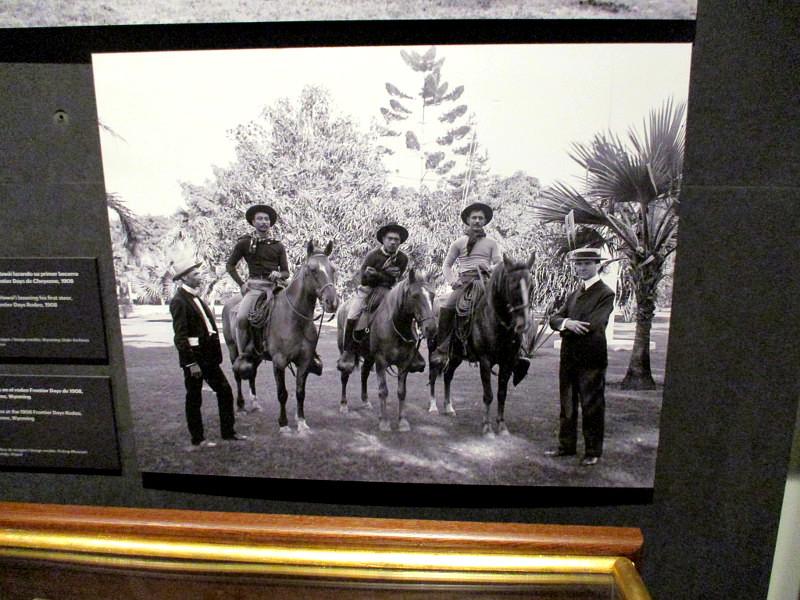
An extensive new exhibit at the San Diego History Center in Balboa Park has the unusual title Aloha Vaqueros. It recalls how several Mexican vaqueros (cowboys) from San Diego moved to Hawaii to help control an exploding population of cattle!
I’ve read Richard Henry Dana Jr.’s Two Years Before the Mast, and I do remember how sailors from the Sandwich Islands (later called Hawaii) participated in the cattle hide trade up and down California’s coast. Several Sandwich Islanders also lived on the beach near the hide houses in Point Loma at La Playa.
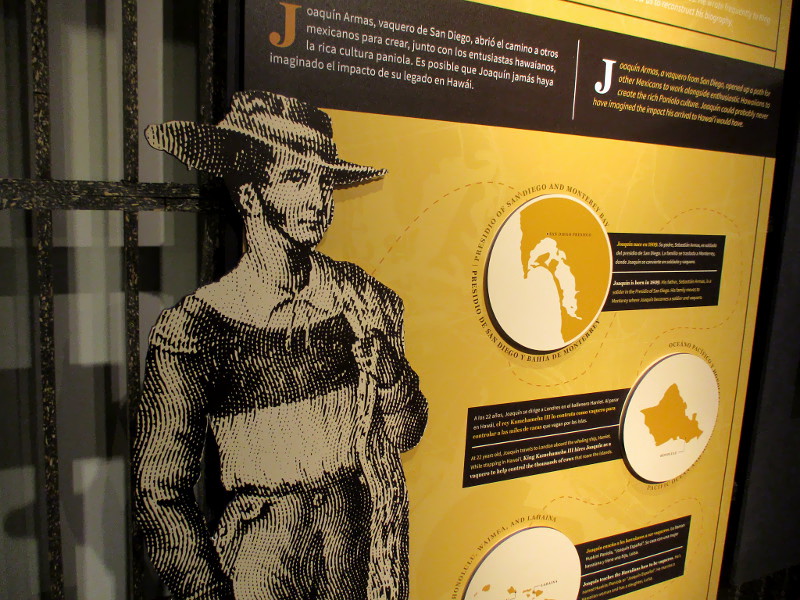
I was unaware, however, that in the early 1830s, Joaquín Armas, a soldier and vaquero born at Mission San Diego de Alcalá, was hired by Hawaiian King Kamehameha III as an advisor on how to control thousands of wild cattle that had multiplied on the islands. Armas would then recruit three other Mexican vaqueros from the San Diego region, helping to establish vaquero traditions in Hawaii!
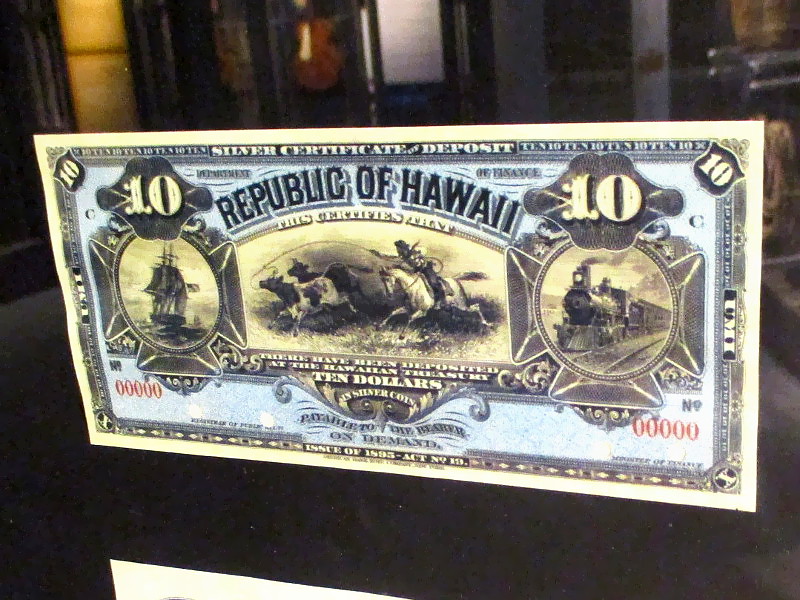
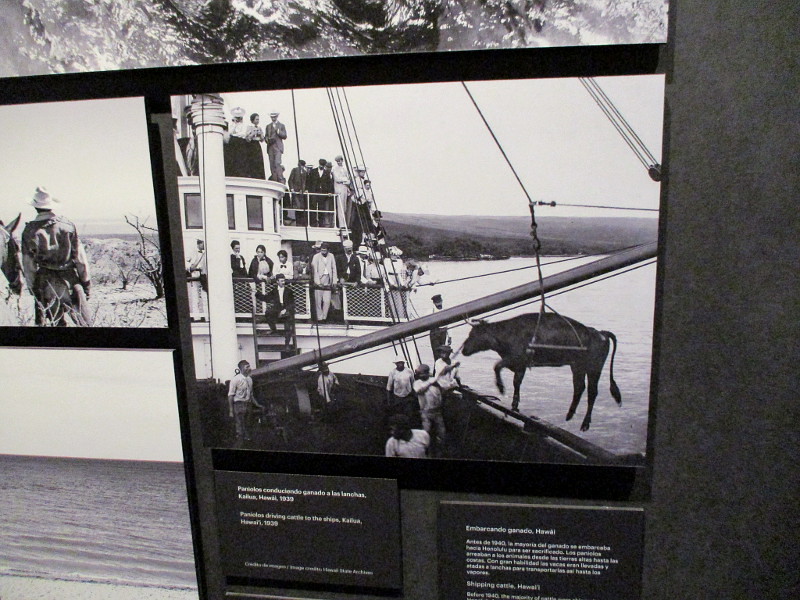
The thousands of environmentally destructive wild cattle had descended from long-horned cattle that were given by British Captain George Vancouver to King Kamehameha I in 1793. The wild cattle, evading hunters and traps, came under control about half a century later as vaquero-inspired ranches popped up on Hawaii’s islands. The cattle were valuable for the tallow and hide trade. Skilled ropers and riders were in demand, so many native Hawaiians would learn cowboy skills!
The paniolo experience would eventually become ingrained in Hawaiian culture. Take music, for example. One important development was Hawaiian open-tuning for the guitar called kihoʻalu, or slack-key.
Why are Hawaiian cowboys called paniolos? One theory is that the word is derived from español–the language spoken by the Mexican vaqueros.
If this very unique history fascinates you, go visit the San Diego History Center!
A few photos to provide a taste…
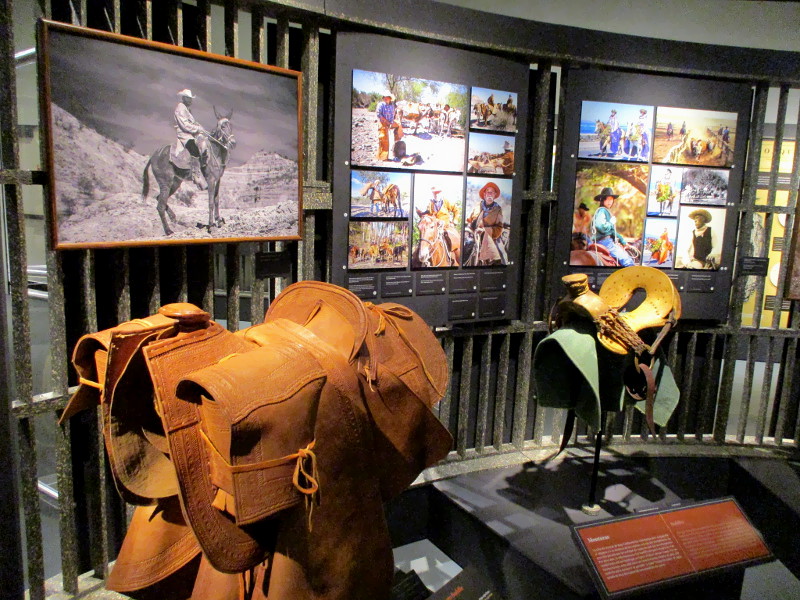
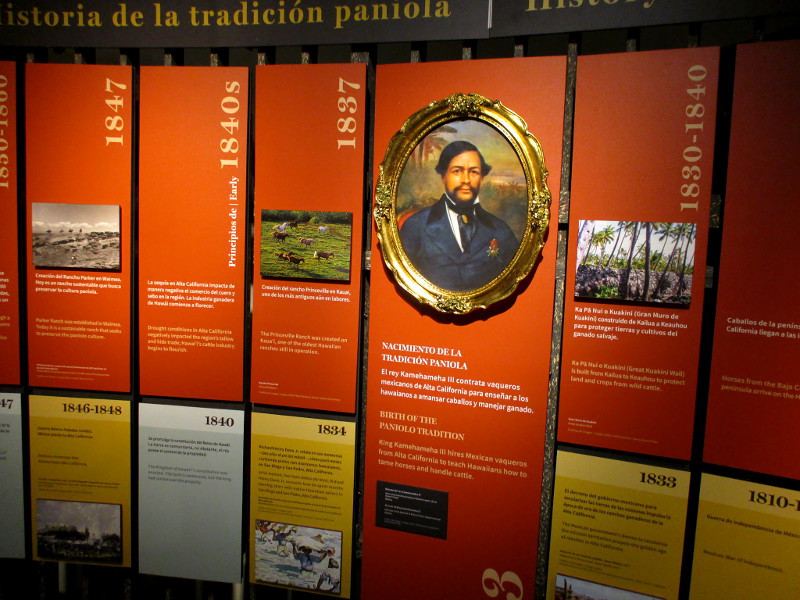
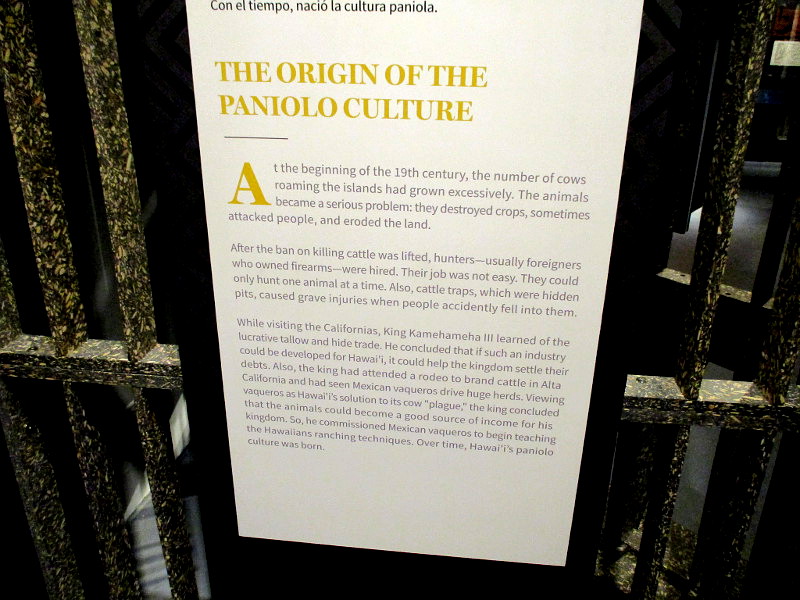
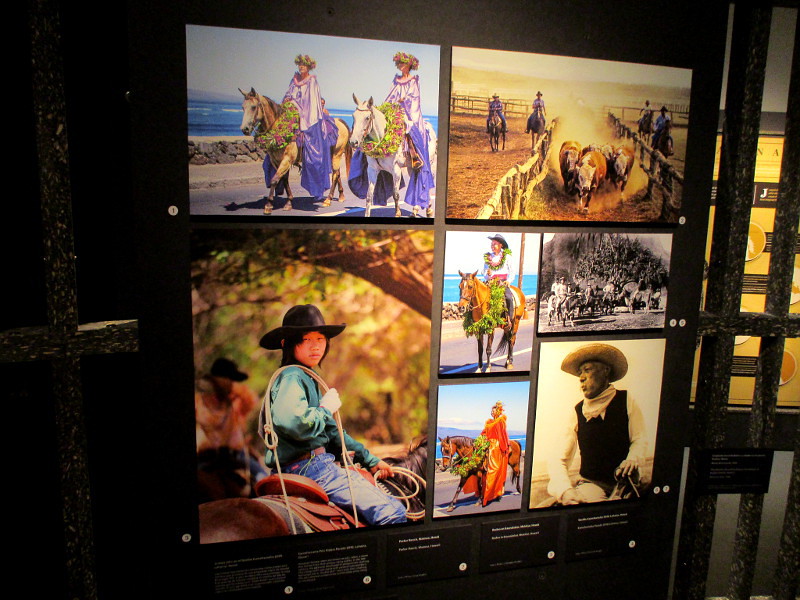
…
I post new blogs pretty often. If you like discovering new things, bookmark coolsandiegosights.com and swing on by occasionally!
I live in downtown San Diego and love to walk around with my camera! You can follow Cool San Diego Sights via Facebook or X.
Thank you for sharing!

 Cool San Diego Sights!
Interesting, Richard. I remember the huge Parker Ranch on the Big Island. I alamos went to work near there in 1967 when the Peace Corps wanted me to train Peace Corps Volunteers on a site near the ranch. I just looked up the Parker Ranch on the net and this it what it said about the name: A cowboy on the ranch is called a paniolo (Hawaiian language pronunciation of Spanish: Español), since the first cowboys were Spanish-speaking and came from Mexico.[7] The Hawaiian language does not have the “s” sound.
LikeLiked by 1 person
I didn’t realize the Hawaiian language has no s sound! That makes sense.
LikeLiked by 1 person
Thank you for this wonderful post! Having been born and raised in Hawaii, the story of the Paniolo is something close to my heart. In fact, I used to go to Waimea (we call it Kamuela) almost every other year to help a friend of mine. This is of course where Parker Ranch is located. I almost took a job there back in the early 90’s. I’m not sure if you listen to Podcasts; but you might find this one interesting (I have no stake in it):
https://asianamericanhistory101.libsyn.com/the-history-of-the-paniolo-aka-the-hawaiian-cowboy
I’ll definitely head on over to the San Diego History Center!
Thanks for all you do!
LikeLiked by 1 person
Thank you for the great comment. I’ll check out the podcast!
LikeLike