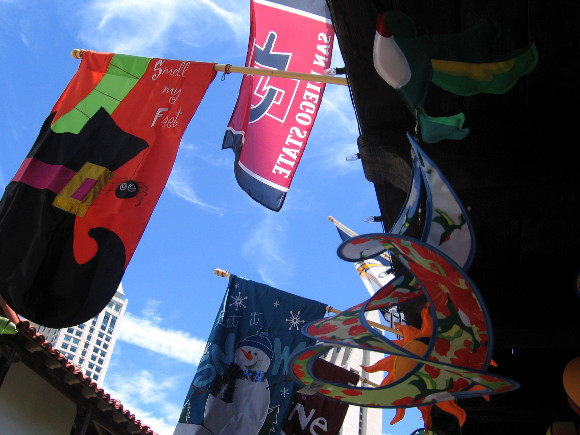
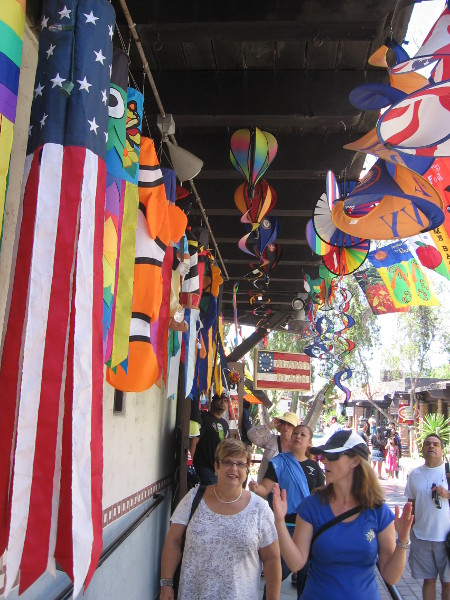
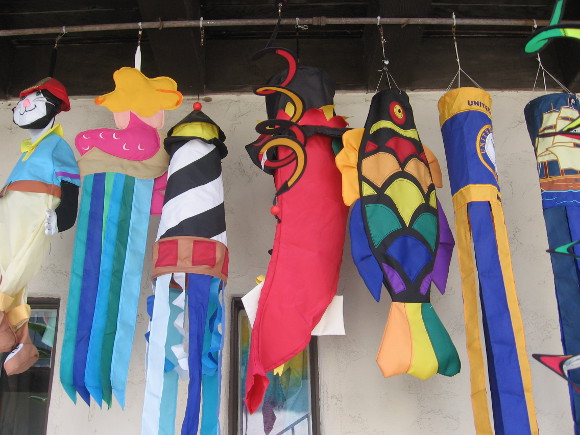
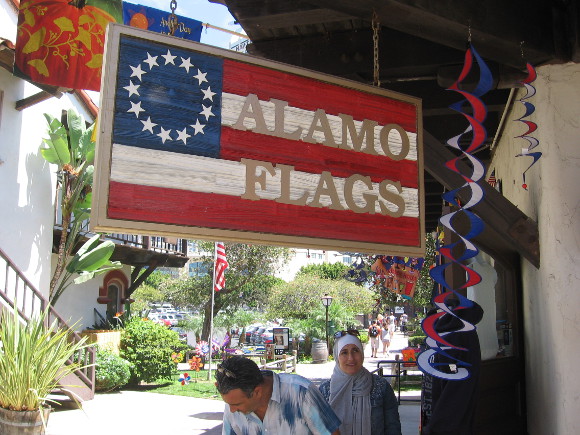
Alamo Flags in Seaport Village certainly has a few flags!
If you live in San Diego, there’s a good chance you’ve heard of Alamo Flags. The cheerful specialty shop near the center of Seaport Village has been known to give away large, beautiful American flags on the Fourth of July.
To express his gratitude for his country, the owner, Mike Ismail, has created a tradition of presenting Old Glory to lucky shoppers on Independence Day.
Recently, he was recognized for this patriotic tradition by local San Diego Chapter 472 of the Vietnam Veterans of America. Should you visit his colorful store, you’ll definitely see plenty of red, white and blue!
Bright flags and banners of every type flutter in the blue San Diego sky.An outdoor passage of brilliant colors.Mike Ismail in front of Alamo Flags in Seaport Village.Award above door from San Diego Chapter of Vietnam Veterans of America.Two young men check out window display of many flag pins.A variety of fanciful wind socks dazzles and delights the eye.Fun gifts shaped like hot air balloons seem to lift off.Stars and Stripes are a frequent sight.Alamo Flags stands proudly near the center of San Diego’s Seaport Village.
…
To enjoy future posts, you can “like” Cool San Diego Sights on Facebook, or follow me on Twitter.
Approaching the La Casa de Machado y Stewart Museum in Old Town.
It seems most of the tourists who visit Old Town San Diego State Historic Park enjoy the large central grassy plaza and the many interesting buildings immediately around its perimeter. Few, however, go slightly off the beaten track to investigate the several restored old structures that are scattered a few easy steps farther away.
In addition to a very cool one room schoolhouse dating from 1865 (which I remember visiting during a field trip as a child), there is a restored adobe house called Casa de Machado y Stewart which stands as an open museum to any passersby who are curious.
The Casa de Machado y Stewart dates from 1835. It was built by José Manuel Machado, a Spanish (then later Mexican) officer who served at the nearby presidio. Jack Stewart, an American shipmate of famous author Richard Henry Dana Jr., and a pilot on San Diego Bay, married Machado’s youngest daughter Rosa in 1845 and the two moved into the house. Over their many years of residence they made many improvements, including a clay tile roof and wood-paned windows. What today seems a very simple and almost primitive existence was back in those days living in the lap of luxury.
In 1932, the house became an official California Historic Landmark.
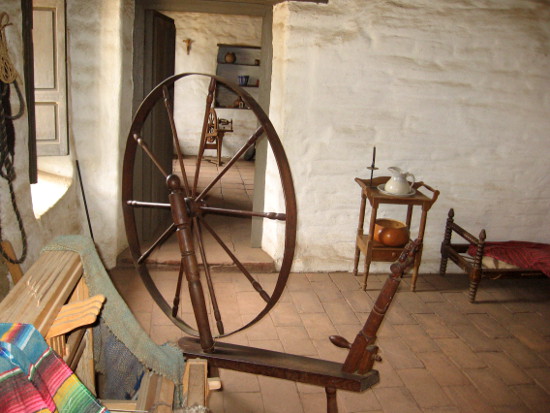
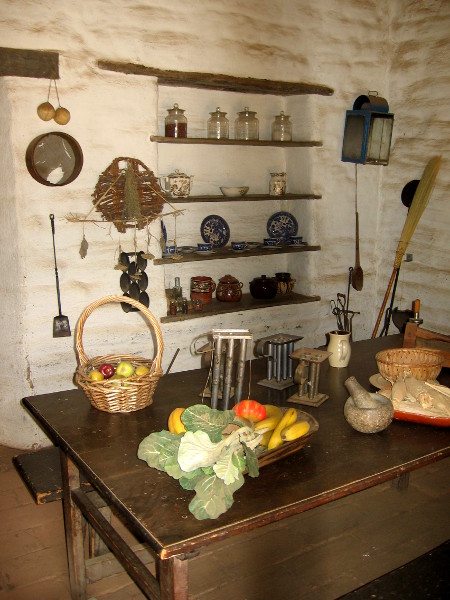
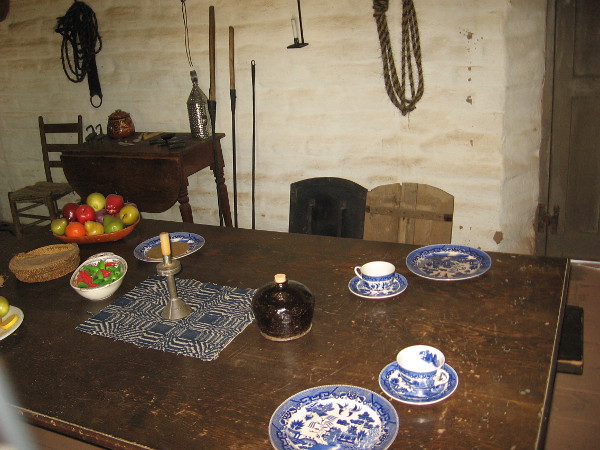
Restored 1835 adobe house in San Diego’s Old Town State Historic Park.Sign details history of La Casa de Machado y Stewart.House was built by a soldier from nearby presidio.A spinning wheel in one of the simple rooms suggests what life was like.A modest dining area as it appeared long ago.
UPDATE!
I visited La Casa de Machado y Stewart again in August, 2018, and noticed the exterior had been painted white. When I looked through the front door into the main living room, I observed that new furnishings and artifacts have been added, and others moved about.
I also peered through a window into what appears to be a bedroom.
Here are photos…
…
To enjoy future posts, you can “like” Cool San Diego Sights on Facebook, or follow me on Twitter.
Archway of Crystal Pier Hotel and Cottages at end of Garnet Avenue.
Many years ago (decades actually), I used to occasionally go fishing from Crystal Pier. It’s located in Pacific Beach, at the west end of Garnet Avenue, which I strolled along in my last blog post.
While it isn’t a very long pier, it’s definitely one hundred percent cool. One reason is because fishing from Crystal Pier is both free and amazingly productive. While I never seemed to catch anything but mackerel, I remember seeing nice catches of bonito, rock fish, sea bass, barracuda, guitar fish, sharks and even halibut! (One nice thing about pier fishing in San Diego is you legally don’t need a fishing license.)
Why else is this pier super cool? Because there are small cottages built right on it! The historic Crystal Pier Hotel and Cottages was built in 1930. Once known as Pickering’s Pleasure Pier, for a short time the privately owned pier featured a Crystal Ballroom and carnival midway out at its end!
If I were a tourist visiting San Diego, I’d absolutely want to stay here. At night the pier is closed to the public, and you can lie in bed listening to the ocean waves below. During the day you have easy access to the famous Pacific Beach boardwalk, which I’ll show you in my next blog post!
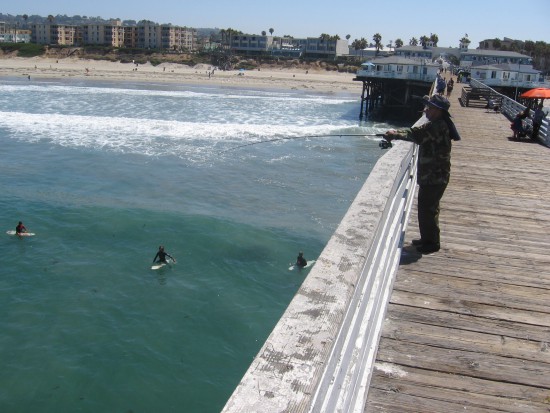
One of the small, quaint cottages actually on the pier!Looking along the short pier past fishermen and visitors.Turning back eastward toward the cottages.Surfers below Crystal Pier floating and waiting on their surfboards.This surfer caught a good ride on a nice wave.This pic shows fishing, surfing and the beach.Leaving Crystal Pier, to walk down the Pacific Beach boardwalk.
…
To enjoy future posts, you can “like” Cool San Diego Sights on Facebook, or follow me on Twitter.
Facade of old Mission San Diego seen from parking lot below.
A month or so ago I finally visited the famous Mission San Diego de Alcala. I’ve lived in San Diego for many years, and have driven past this important historical landmark many times, but I’d never stepped inside. Writing this blog compels me to check out new sights!
Built in 1774 by the Franciscan priest Junipero Serra, Mission San Diego de Alcala was first of 21 Spanish missions in California. It was constructed several miles inland of the Pacific Ocean near the San Diego River. (The very first mission was actually built in 1769 at the old Presidio, but later relocated to this more fertile location, where presidio soldiers were less likely to come. The soldiers often abused the native people who lived near the presidio.)
In 1775, just one year after it was built, the mission was burned to the ground by the native Kumeyaay people. Father Junipero Serra returned the next year to rebuild the church and mission buildings.
Over the years the San Diego Mission became very prosperous, with vineyards, orchards and thousands of cattle in its possession. Hundreds of baptized Native American Kumeyaay, whom the friars named Dieguenos, performed almost all of the labor.
History is rich here. The mission was claimed by Mexico in 1821, then used by the United States Cavalry after the US-Mexican War. As the original mission buildings have aged and decayed, they have been rebuilt and restored. Today the unique facade is one of the most iconic sights in San Diego. Unfortunately, the mission is located in a slightly out-of-the-way place that relatively few tourists visit.
In case you can’t stop by, I took a few photos!
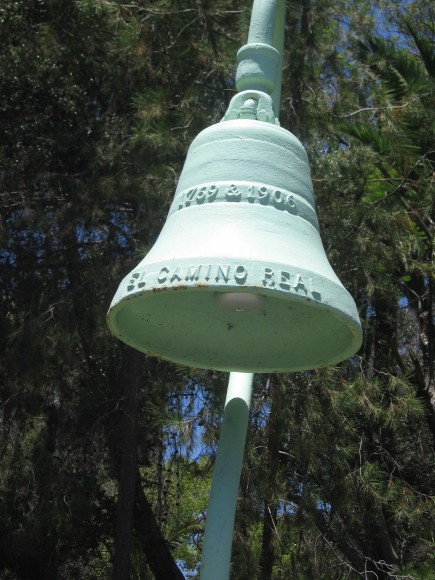
El Camino Real bell just outside California’s first mission.
These bells on posts mark the primitive road, the King’s Highway, that connected the Spanish missions in California.
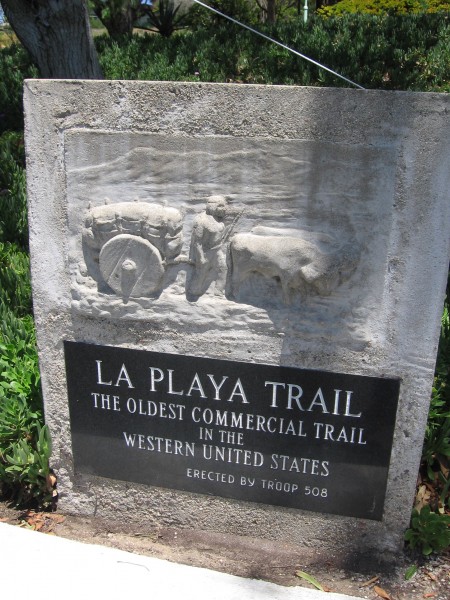
La Playa Trail ran along parts of San Diego Bay and the San Diego River.
Without realizing it, you might have read about the La Playa Trail in Two Years Before the Mast. Richard Henry Dana, Jr. would ride horseback down the trail to Old Town. With his friend, he also rode farther east to the old mission to enjoy a meal. The west end, La Playa, located just inside San Diego Bay, is the place where Dana worked for several months in 1835 drying cattle hides.
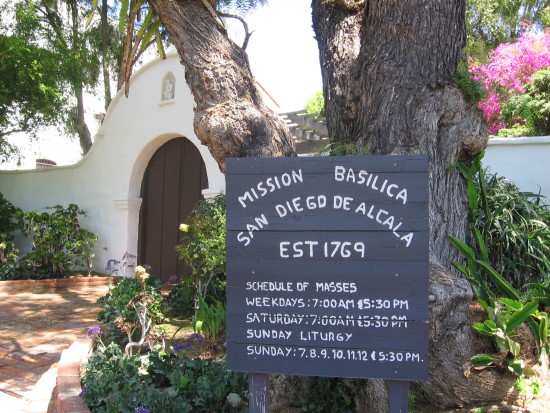
Sculpture of Padre Serra with cross in front of the campanario, containing the mission bells.Mission Basilica San Diego de Alcala holds regular Catholic Mass.
The historic church has remained active for many centuries.
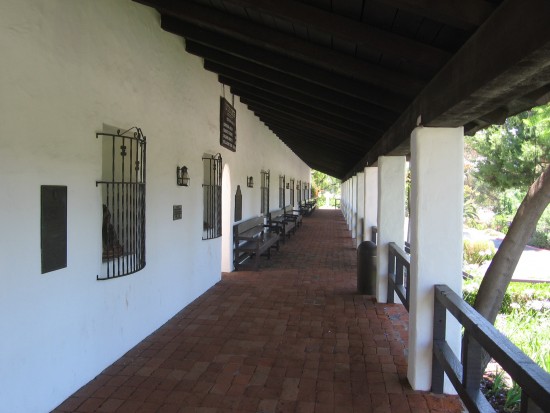
Corridor in front of mission has plaques and statues of saints.
Small statues of saints in the small nooks along the wall represent the nine missions that Father Junipero Serra founded.
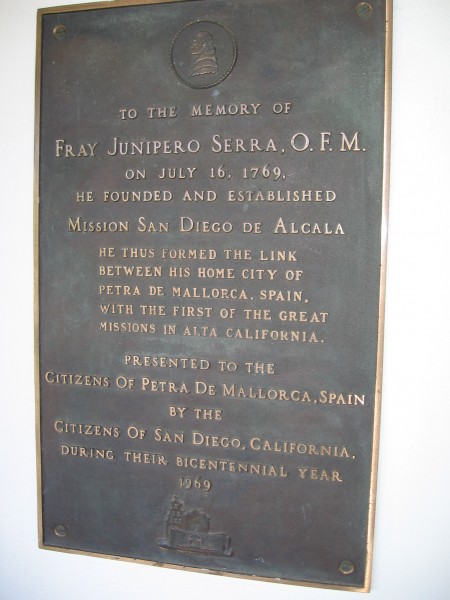
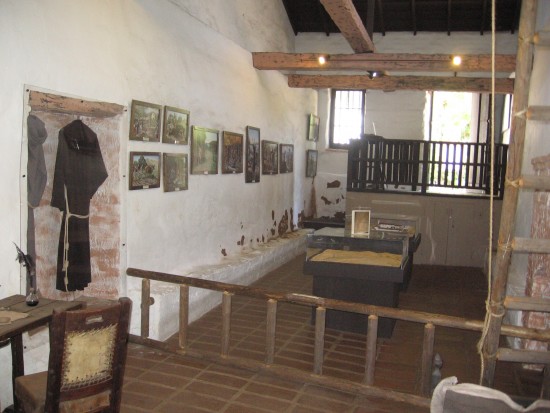
Petra de Mallorca, Spain linked to Father Junipero Serra.Padres’ living quarters with adobe walls and wooden beams.
Now we’re inside one of the various mission buildings. The self-guided tour proceeds clockwise around the central square.
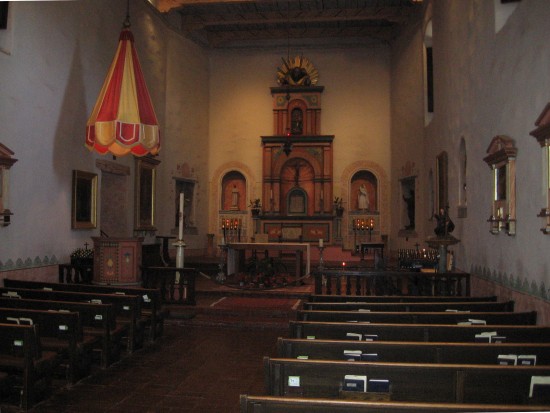
Beautiful radiant altar inside the quiet church sanctuary.
The church inside is beautiful and invites reflection.
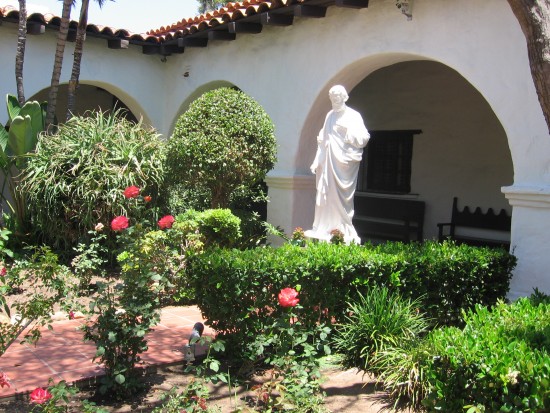
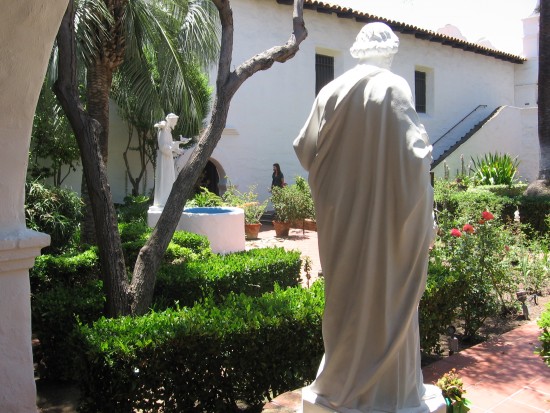
Garden courtyard by sanctuary contains sunlit statues.Flowers and peaceful walkways lead to holy figures.
Many birds were about and almost no weekend visitors.
Rear view of the Mission San Diego bell tower, or campanario.Small tile-roofed shine with Christ on the cross.Modern abstract mural lines wall above wood bench.
This and the following photo were taken in a space between the garden and a small one-room museum.
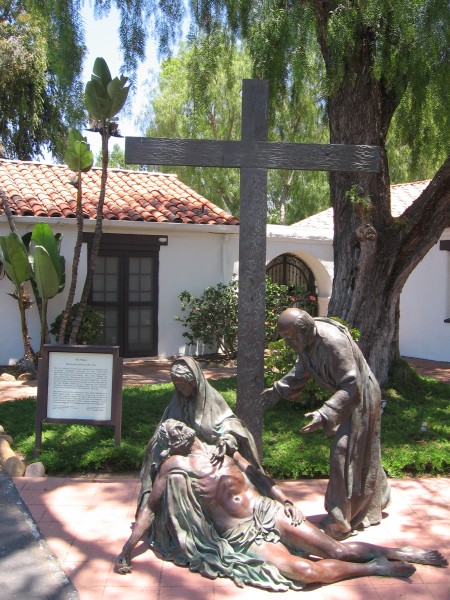
Sculpted Pieta with Virgin Mary and Jesus.Inside the small mission chapel.
This small chapel can be found at one corner of the central square.
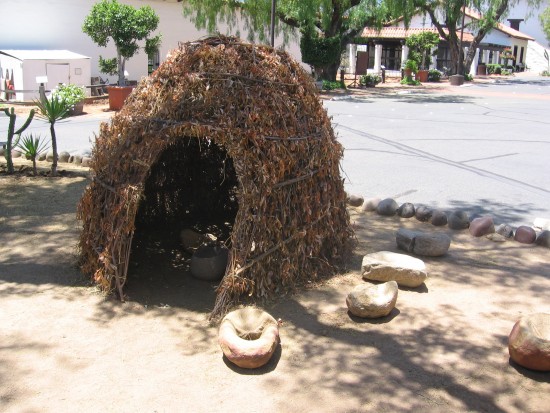
Fountain at center of San Diego mission’s central square.Moving sculpture of Christ after the crucifixion.Native American Kumeyaay hut built of willow branches.
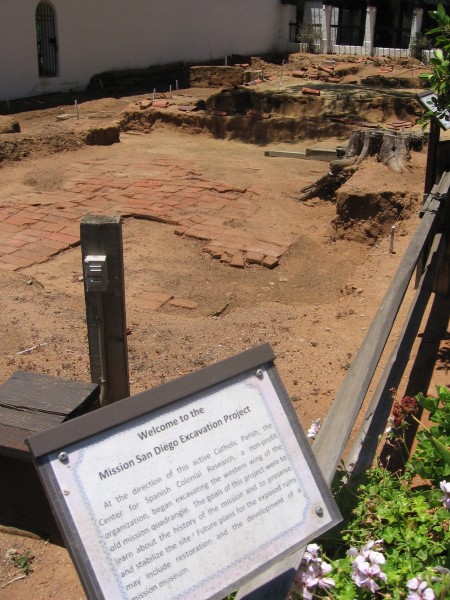
The local Kumeyaay provided the labor that enriched the mission. This hut near an excavation site is an example of where they lived while the friars enjoyed greater comforts.
Mission’s old foundation investigated by archaeologists.The distinctive facade of California’s first Spanish mission.
In San Diego, those who hunger for colorful sights and local history should remember to swing by California’s very first Spanish mission in–you guessed it–Mission Valley!
…
To enjoy future posts, you can “like” Cool San Diego Sights on Facebook, or follow me on Twitter.
Faded castle on side of San Diego’s old Hotel Churchill.
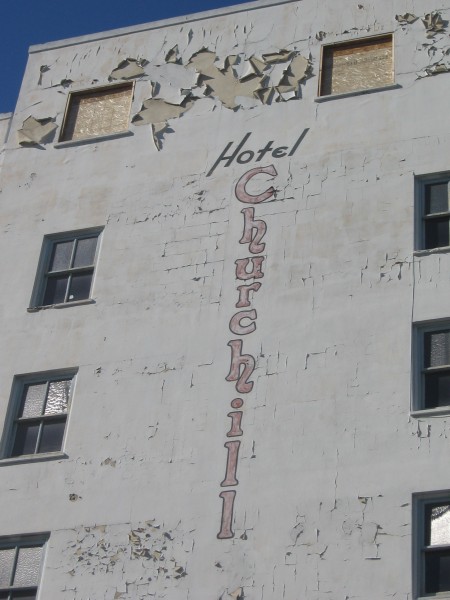
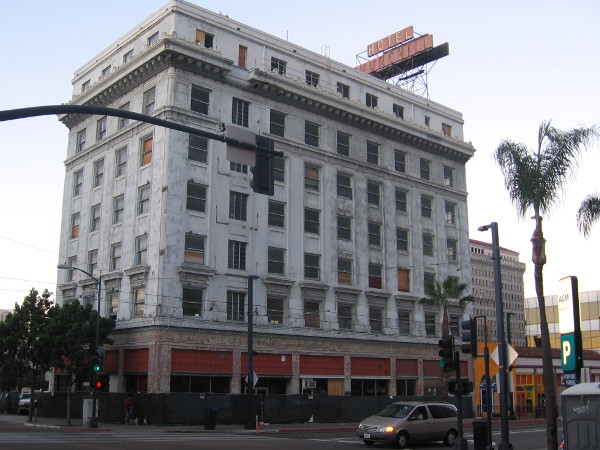
My walks through downtown often take me past a large, dilapidated building with a giant faded castle painted on its side. This now sad sight was once the splendid Hotel Churchill, the destination of tourists visiting San Diego a hundred years ago.
The Hotel Churchill was built to accommodate visitors to the 1915 Panama-California Exposition in nearby Balboa Park. The Arthurian theme made visitors feel like they’d entered Camelot, much like the Excalibur Hotel does in Las Vegas today. The building has been abandoned for many years. I remember watching the San Diego Fire Department using the tall edifice for practice, breaking through one window from the top of a firetruck’s ladder.
In 2003 the city designated the Hotel Churchill a local historical landmark. There are plans afoot to restore the old building and convert it into affordable housing.
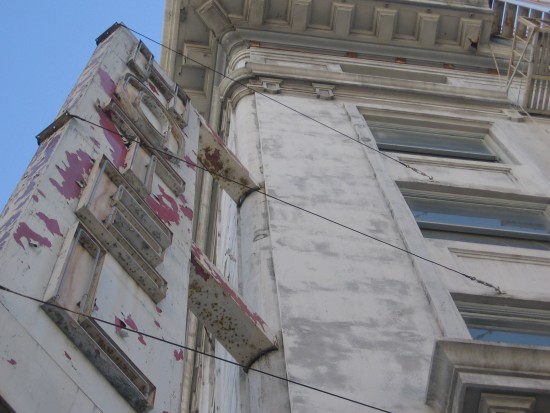
Touristy hotel was built for 1915 Panama California Exposition.Old door with fanciful drawbridge and portcullis is locked shut.Looking up a rusty old fire escape.Hotel Churchill, a local historical landmark, awaits restoration.
Here’s a pic I took in February 2015. The old hotel has been fenced off, awaiting restoration…
Hotel Churchill seen in early morning from across C Street.
…
To enjoy future posts, you can “like” Cool San Diego Sights on Facebook, or follow me on Twitter.
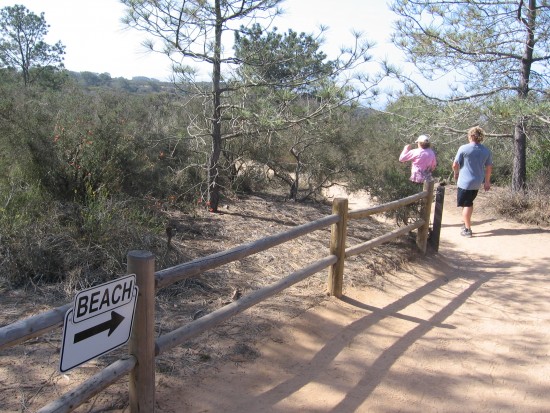
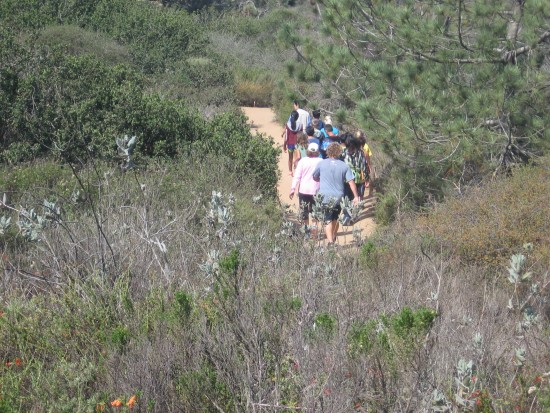
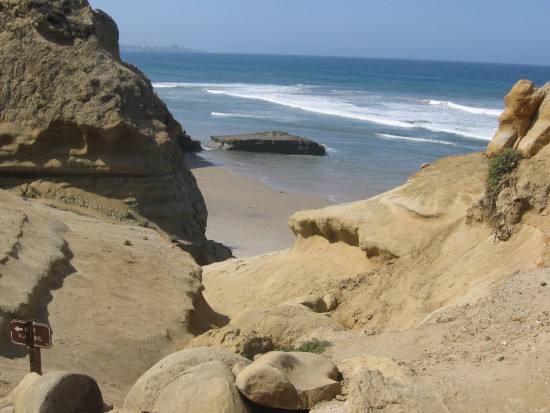
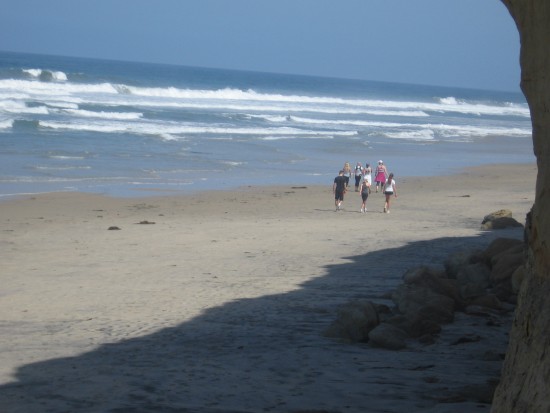
Hiking to the beach from a trailhead in Torrey Pines State Reserve.
Today is National Trails Day, so it seems the perfect time to blog about one hike I took recently at Torrey Pines State Reserve! The hike was down the Beach Trail, which is one of the most popular hikes in this beautiful place. The coming photos demonstrate why!
The 3/4 mile downhill Beach Trail begins at the edge of a small parking lot near the Torrey Pines State Reserve’s historic lodge, which serves as the visitor center. On this spring day, many small flowers were blooming along the trail, and lots of hikers were enjoying the sunshine as well. Should you ever go hiking here, make sure you wear good shoes because it can be a bit steep in places and the sand often makes slippery footing.
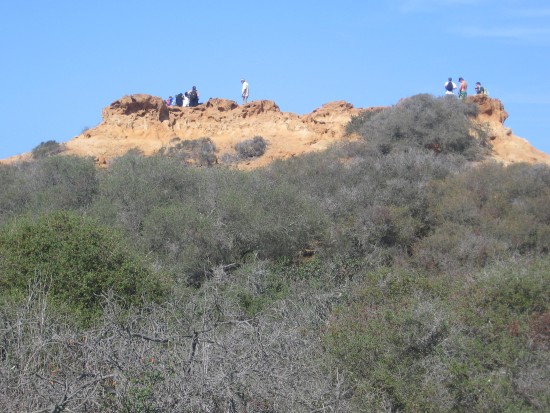
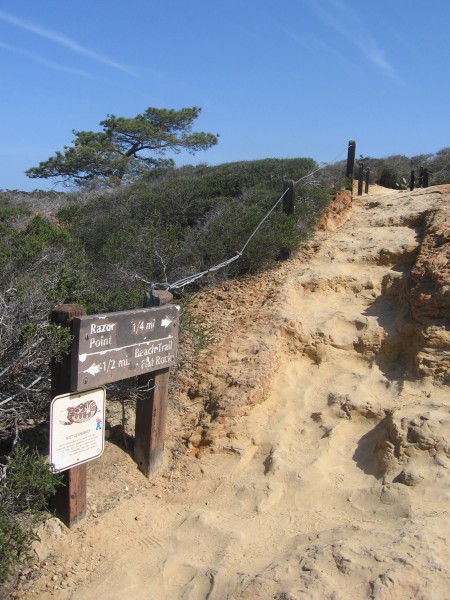
Hikers take beautiful trail through coastal chaparral.People enjoy vistas from atop sandstone formation.Endangered Torrey pine can be seen beyond fork in the trail.
You can observe many more examples of the endangered Torrey pine tree in the north part of the reserve. See my post about the Guy Fleming Trail!
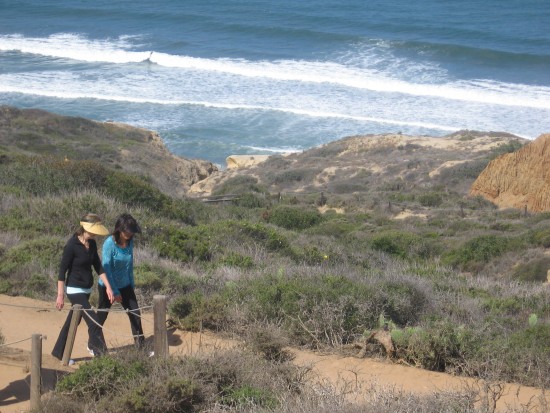
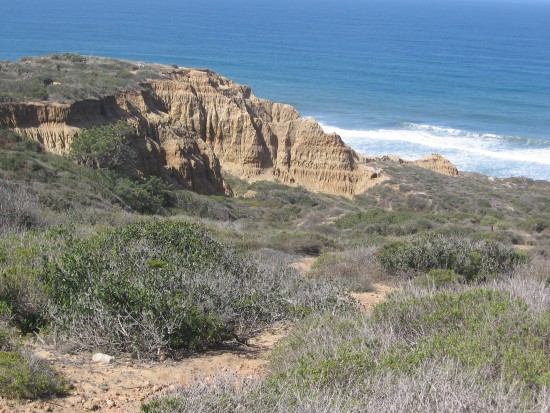
The blue Pacific Ocean comes into view!Typical rugged scenery along trails of Torrey Pines State Reserve.The Beach Trail is often covered in fine sand.Now we’re getting really close to our destination!
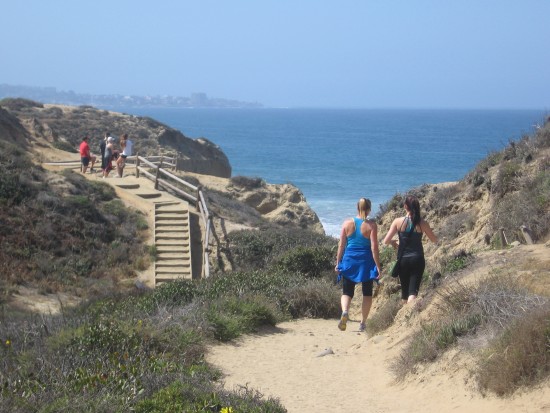
It gets much steeper as one approaches the ocean. You can see La Jolla way off in the hazy distance.
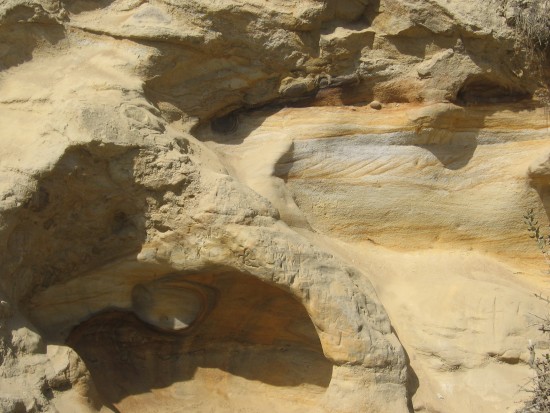
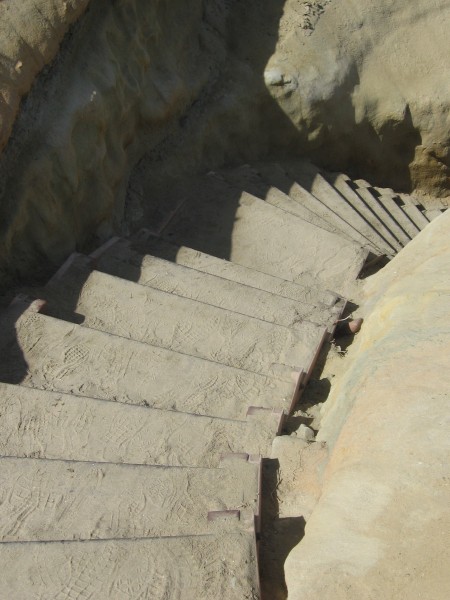
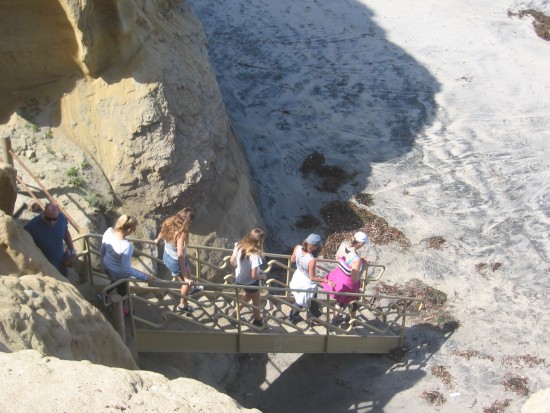
Erosion of layered sandstone creates unusual, fluid forms.Flat Rock can be seen below on Torrey Pines State Beach.Steps head steeply down from cliffs.Hikers arrive at the beach!
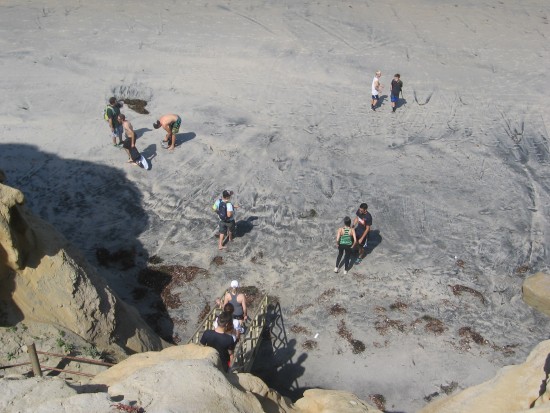
The transition from the reserve to the beach seems very sudden as you hike down from the cliffs. Suddenly you hear the surf and see many sea birds. It’s an amazing experience!
Down on the sand.People walk north along Torrey Pines State Beach.
A walk north along the beach about a mile or so brings one back to the main Torrey Pines State Reserve parking lot by the Pacific Coast Highway. If you’d like to enjoy a relatively easy nature hike, I’d highly recommend this one! (Going uphill is more difficult!)
…
To enjoy future posts, you can “like” Cool San Diego Sights on Facebook, or follow me on Twitter.
Front of Casa de Estudillo seen during Cinco de Mayo.
Ramona, written by Helen Hunt Jackson in 1884, is one of the most popular American novels in history. The book has had more than 300 printings. It’s been made into a movie four times. Today, few remember it.
Those who walk through La Casa de Estudillo in San Diego’s historic Old Town, however, are seeing with their own eyes a remnant of Ramona’s fame. Without that novel, and past generations’ fondness for its main character, this handsome old building and possibly others around it would have been torn down and utterly obliterated.
The Casa de Estudillo was built in 1827. It was the property of José María Estudillo, an early settler of San Diego. Captain Estudillo was twice Commandant of the Presidio of San Diego. This large, many-roomed adobe was one of finest houses in all of Mexican California, and remains one of the oldest surviving examples of Spanish Colonial architecture in California.
Shortly after the publication of Ramona, the house, in the hands of a caretaker, enjoyed a burst of popularity with tourists when San Diego’s newspaper, the San Diego Union, declared that the Estudillo house was the title character’s wedding place. Helen Hunt Jackson never stated this was so; the novel described a similar location, but was fictional.
As decades went by the old adobe fell into disrepair and might have been razed. In 1906, John D. Spreckels, owner of the San Diego Electric Railway Company and the Union newspaper, purchased the house and preserved it, transforming it into a true tourist attraction. He altered the building to make it seem more compatible with the description of Ramona’s marriage place, while adding electricity and other conveniences.
The building eventually was given National Historic Landmark status. It’s exaggerated association with the novel caused it to be officially described as “Casa Estudillo/Ramona’s Marriage Place.”
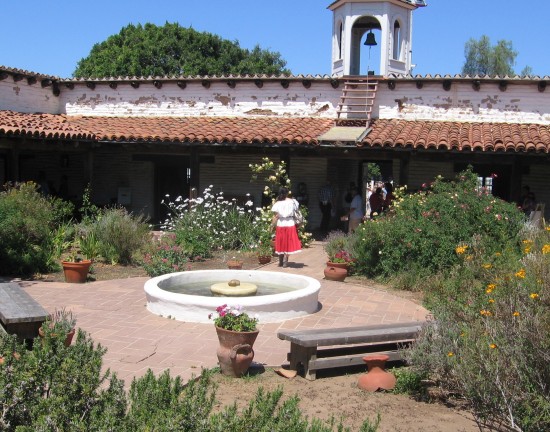
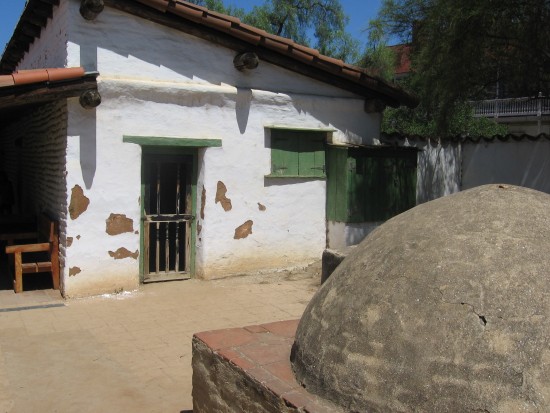
Just inside the courtyard looking up at bell tower.Courtyard fountain of historic Casa de Estudillo.Outdoor oven and one end of old U-shaped adobe house.The house was heavily promoted as the wedding place of Ramona.Walking along the outdoor corridor of old Spanish Colonial home.Camera’s flash illuminates one interior room.Trees and flowers in the beautiful courtyard.Ramona, a famous novel, saved history in Old Town.
…
To enjoy future posts, you can “like” Cool San Diego Sights on Facebook, or follow me on Twitter.
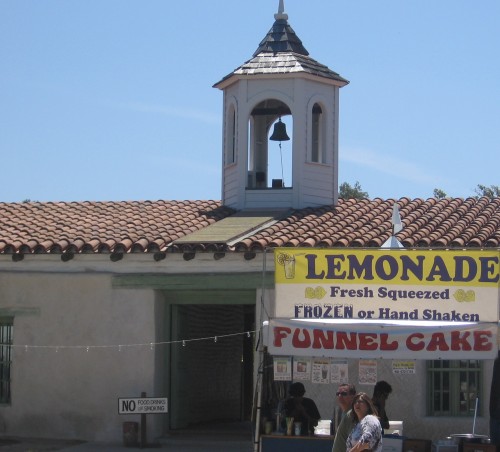
Everywhere you go in San Diego’s Old Town there are touristy shops selling Mexican curios. As I walked along one typical street last Sunday, I was struck by the dazzling array of patio ornaments on display outside a place called Miranda’s Courtyard.
I took several photos from the sidewalk. According to reviews on Yelp, Miranda’s Courtyard sells Mexican religious art, terra cotta suns, Talavera clay pottery, and just a huge bunch of colorful knick knacks.
Photo of suns and moons taken from sidewalk.Lots of colorful trinkets and home decorations.Seems you could spend a whole day at this place!Lady checks out Mexican curios at Miranda’s Courtyard.
…
To enjoy future posts, you can “like” Cool San Diego Sights on Facebook, or follow me on Twitter.
My very, very, very favorite place in all of San Diego County is Torrey Pines State Reserve. It’s located along the Pacific Ocean in northern La Jolla, between the famous Torrey Pines Golf Course and Del Mar. I took a trip there this morning! I got so many pics, I’ll break my visit up into several blog posts!
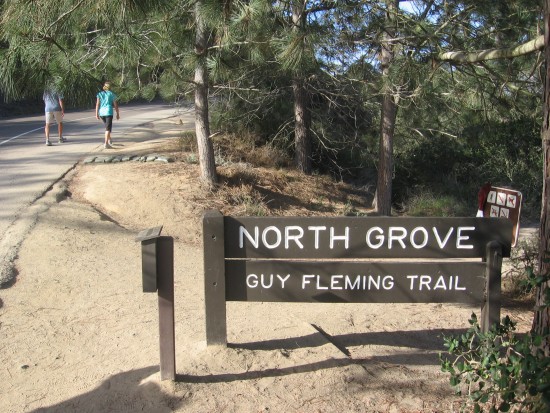
Let me start by taking you around the Guy Fleming Trail loop.
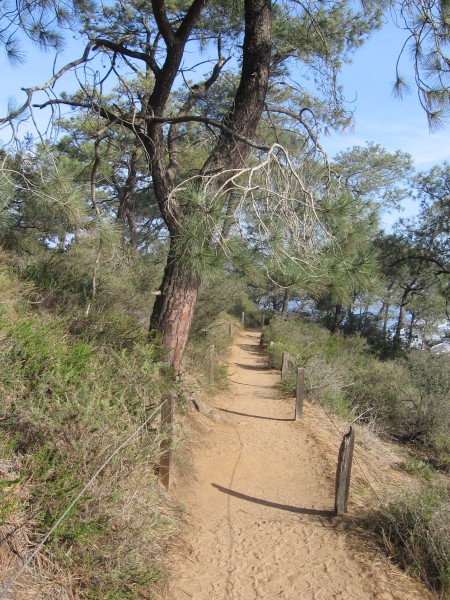
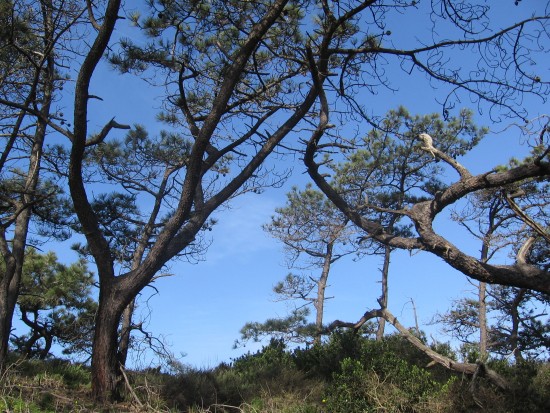
There are many hiking trails to explore in Torrey Pines State Reserve. Reaching this particular trailhead requires a short hike or drive from the entrance gate up steep Torrey Pines Park Road. As you head on up, you see numerous pine trees growing atop and clinging to eroded sandstone cliffs. These are the endangered Torrey pines (Pinus torreyana). They can only be found here and on the small island of Santa Rosa, off the coast of Santa Barbara. A good concentration of them can be seen on the Guy Fleming Trail.
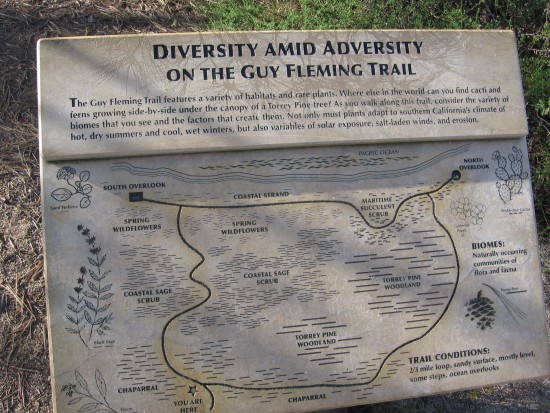
Diversity amid adversity on the Guy Fleming Trail.
Here we’ve stepped onto the looping 2/3 mile easy level trail. We’re going to proceed counterclockwise. Look at the sign. It reads: The Guy Fleming Trail features a variety of habitats and rare plants. Where else in the world can you find cacti and ferns growing side-by-side under the canopy of a Torrey Pine tree? As you walk along this trail, consider the variety of biomes that you see and factors that create them. Not only must plants adapt to southern California’s climate of hot, dry summers and cool, wet winters, but also variables of solar exposure, salt-laden winds, and erosion.
Trail passes under many endangered Torrey pines.Wind-twisted branches of Torrey pines in the State Reserve.Walkers pause to enjoy a breathtaking ocean view.
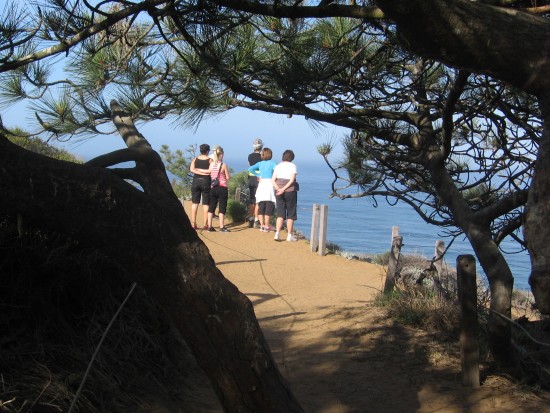
Here we are emerging above the wide Pacific Ocean. These ladies are gazing off into the blue distance. As I came up to them today, they asked excitedly: “Did you see the whale?” A gray whale migrating back northward to the Bering Sea was lingering just beyond the breakers, touching the surface and spouting every few minutes! This whale seemed to be heading north from Mexico a bit late. It’s almost May!
Looking north near a scenic overlook on the Guy Fleming Trail.
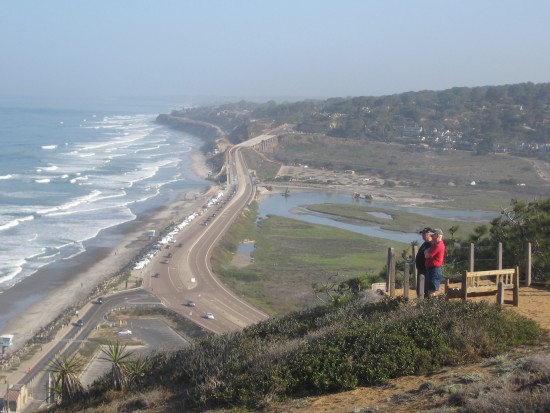
This is one reason why Torrey Pines State Reserve is one of my all-time favorite places. Incredible views! You can see a portion of Los Peñasquitos Marsh Natural Preserve and Lagoon.
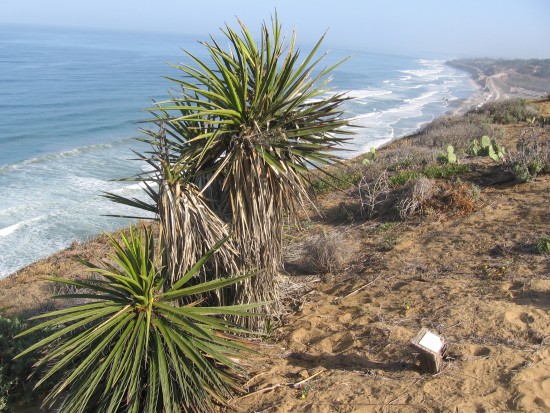
Torrey Pines State Reserve entrance gate far below.Mojave yucca grow beside amazing trail at edge of steep cliff.
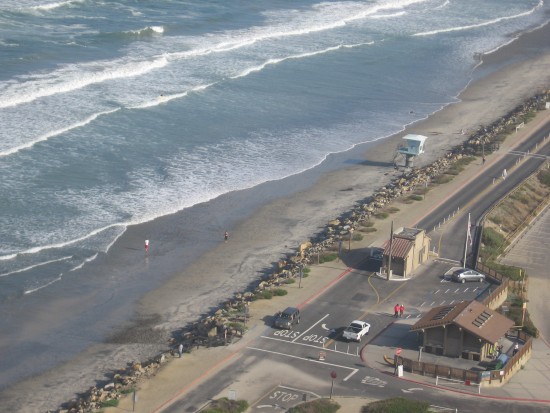
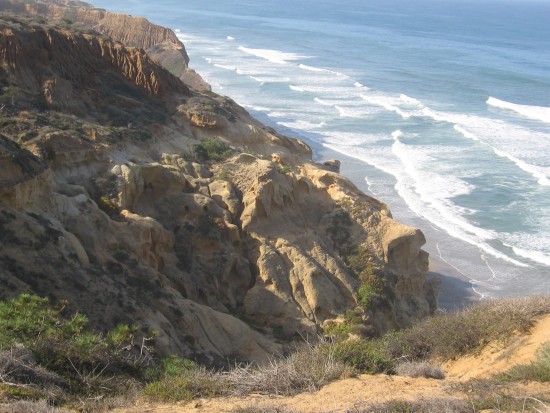
Now we’re heading south along the edge of the cliff. Torrey Pines State Beach is far below. When it’s possible to spy beach-goers, they’re very tiny!
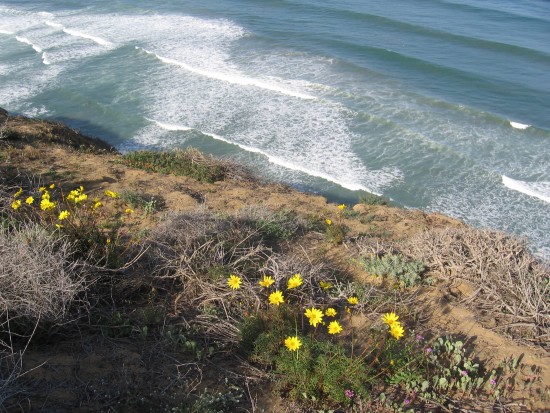
Yellow sea dahlias high above foaming breakers.
You can’t hear the crashing waves, but the mighty expanse of
ocean seen from above makes a lasting impression!
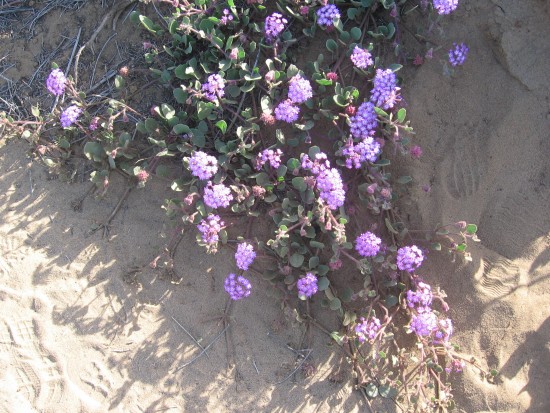
Pink sand verbenas add bright color to a beautiful walk.
It’s springtime and many native flowers are in bloom. These dry, brittle hillsides are covered with coastal sagebrush and chaparral and during the dry summer can appear quite brown and desolate.
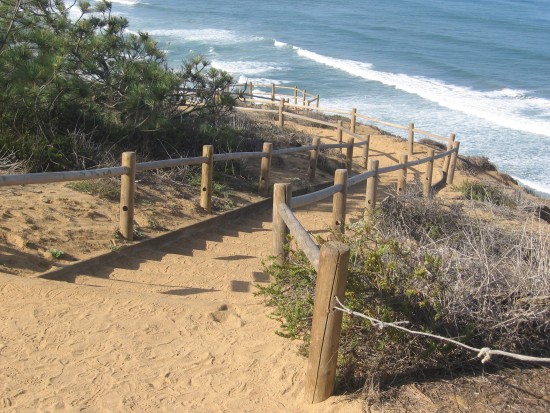
Trail heading down toward another scenic overlook.Looking south over a sculpted sandstone canyon.
Another fantastic view. Many beautifully eroded sandstone canyons run through the State Reserve. You’ll see more in upcoming blog posts.
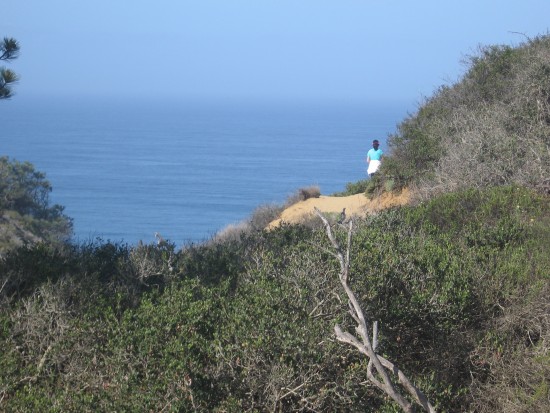
A glance back toward the ocean and a lone walker.
We’ve nearly come full circle. The sunshine and warm ocean breeze, the views, majestic Torrey pines, cacti and flowers…you really need to walk the Guy Fleming Trail to fully experience its magnificence!
…
To enjoy future posts, you can “like” Cool San Diego Sights on Facebook, or follow me on Twitter.
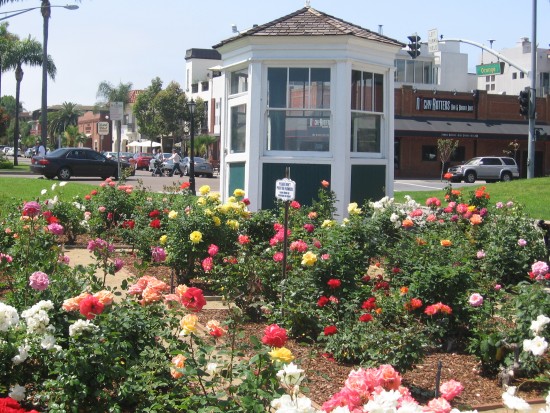
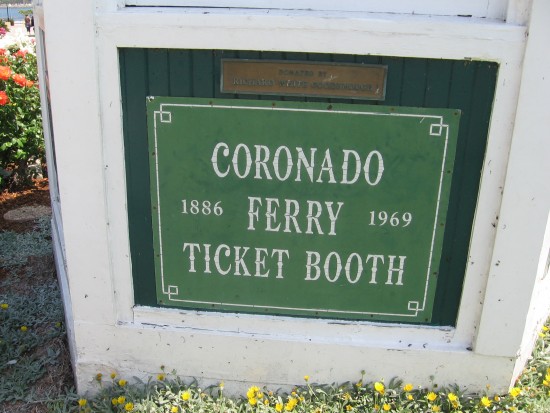
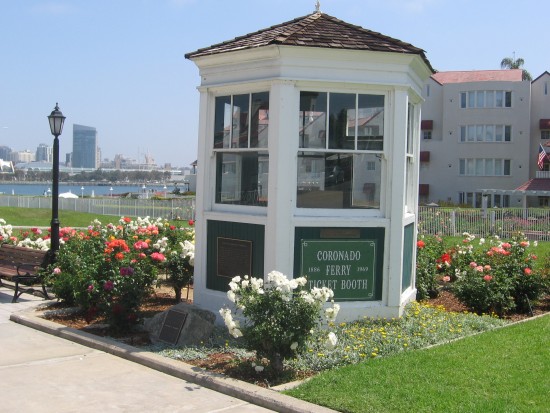
Original Coronado ferry ticket booth remains as historical artifact.
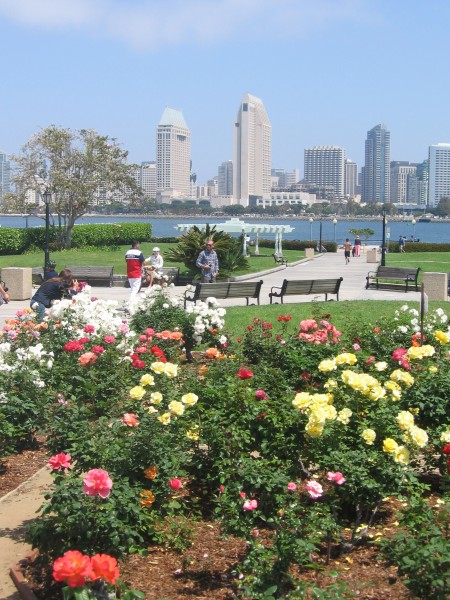
About a block north of today’s touristy Coronado Ferry Landing, you’ll find the old ticket booth of Coronado’s original ferry. It stands beside a garden full of colorful roses and a pleasant walkway that runs from the end of Orange Avenue east to San Diego Bay. This beautiful area is called Centennial Park.
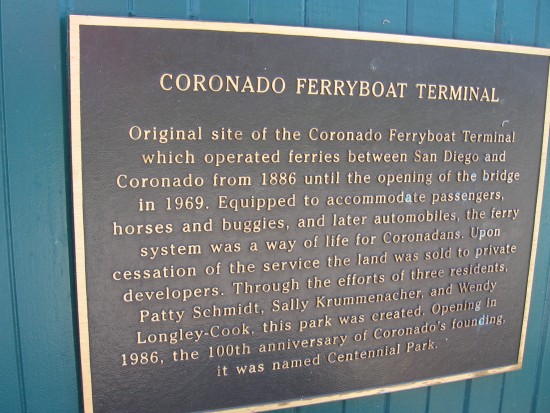
The original ferry was designed to transport horses and buggies; later ferries took automobiles across the bay. This vital link to downtown San Diego ran from 1886 to 1969, the year the Coronado Bay Bridge finally opened.
Looking over roses near the nostalgic old ticket booth.Sign reminds passersby of nearly a century of history.Plaque describes the history of the once vital Coronado ferry.Old Coronado ferry ticket booth surrounded by flowers.
…
To enjoy future posts, you can “like” Cool San Diego Sights on Facebook, or follow me on Twitter.



























 Cool San Diego Sights!