Art is alive (with growing strawberry plants) at The Garden Project!
Whenever I mosey down the Martin Luther King Jr. Promenade, I spy something new.
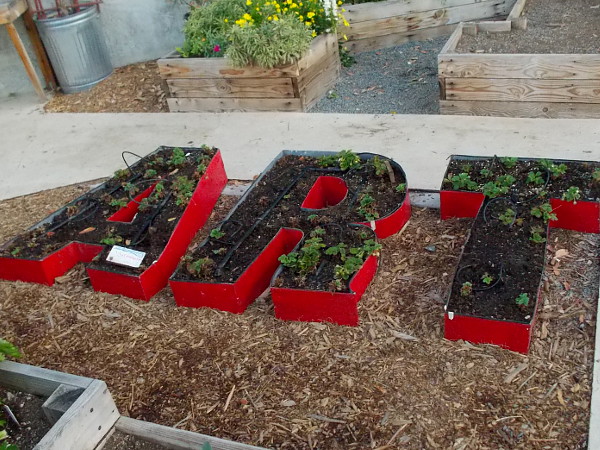
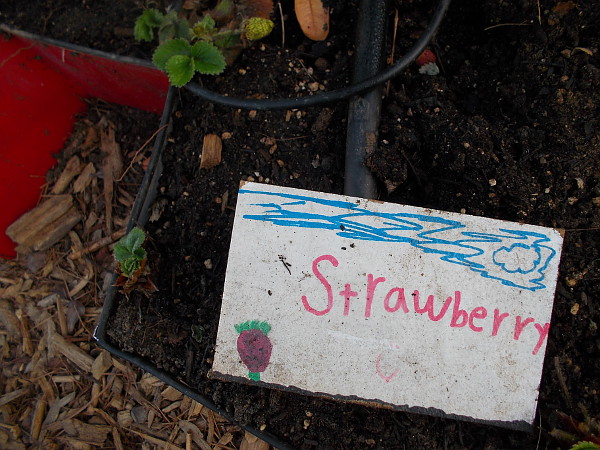
This morning I noticed that some fun art has sprung up near the New Children’s Museum, in both The Garden Project and the playground. Someone created beautiful chalk artwork on the playground’s concrete wall, and strawberries have been planted art-fully in the public garden! It reminds me that spring is coming!
(I increased the contrast of my third photograph so the chalk artwork could be more easily seen.)
Kids created this fun strawberry art.And young people created this chalk drawing on a playground wall. A heart encompasses the Earth and a puppy dog. Love is powerful.
…
I live in downtown San Diego and love to walk! You can enjoy more Cool San Diego Sights via Facebook or Twitter!
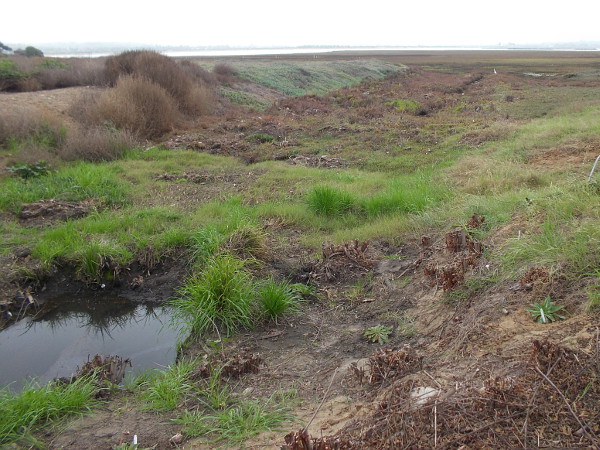
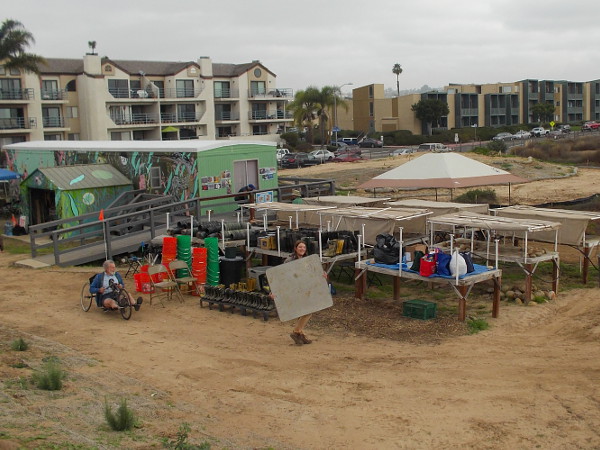
Love Your Wetlands Day took place in Pacific Beach at north Mission Bay’s small Kendall-Frost Marsh.
Late this morning I headed up to Pacific Beach to experience Love Your Wetlands Day. The annual event provides a once-a-year opportunity for the public to visit the protected Kendall-Frost Marsh, which lies in the north part of Mission Bay.
I was really impressed by the efforts underway by the San Diego Audubon Society and the UC Natural Reserve System to restore this wetland, and by all the people who showed up for the event. Hopefully my blog will help raise awareness about this very important project.
I definitely learned a lot! Please read the photo captions . . .
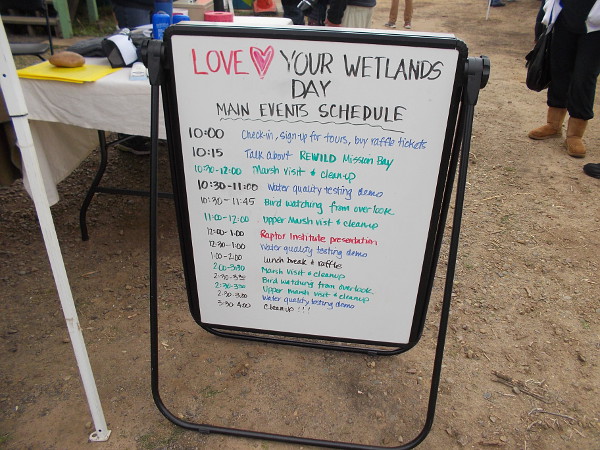
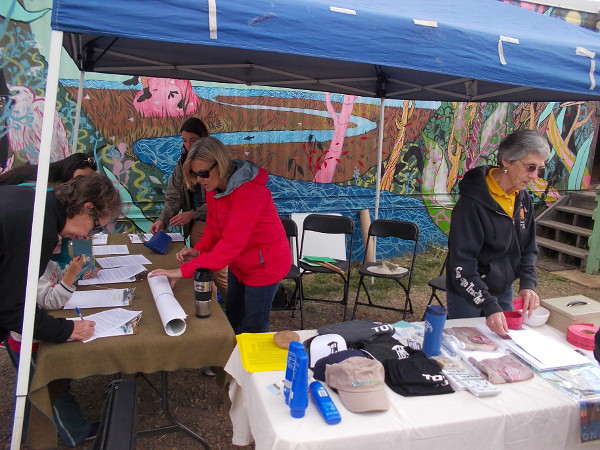
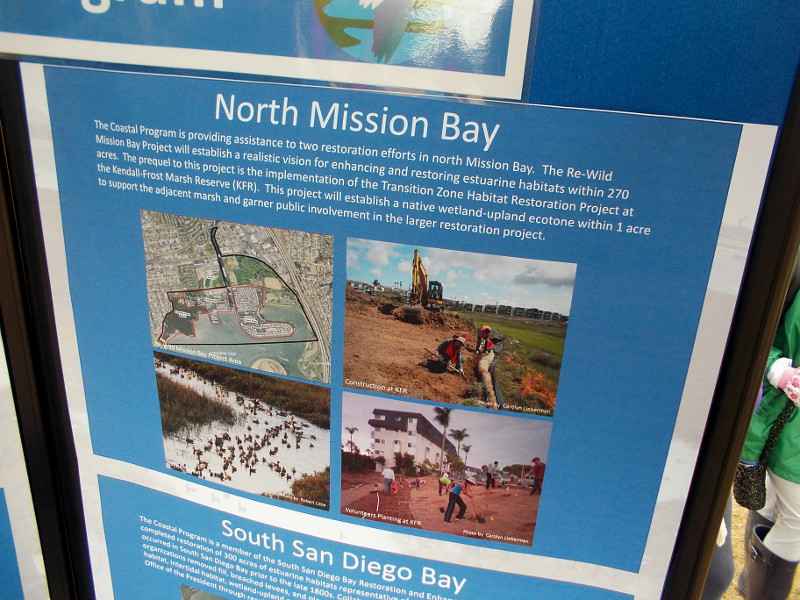
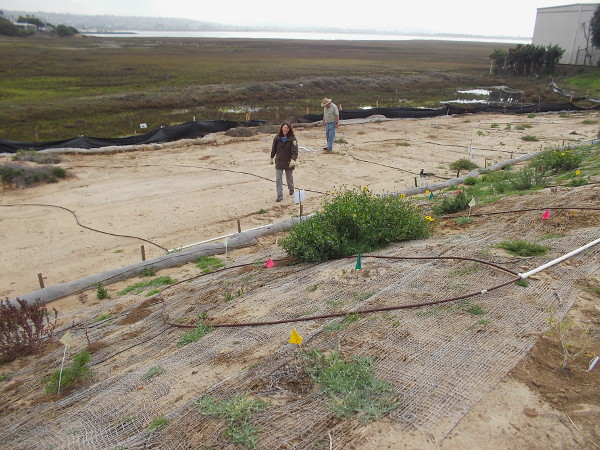
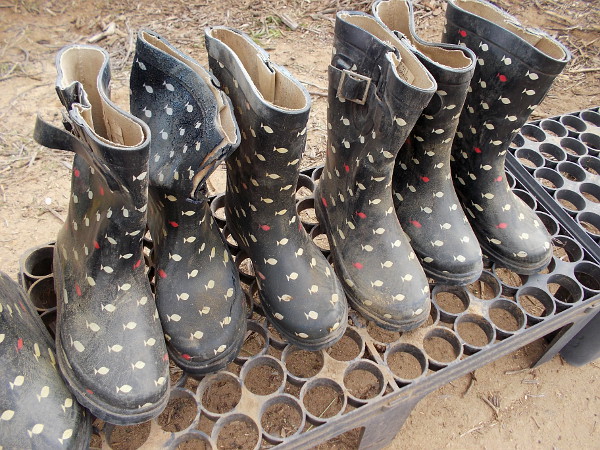
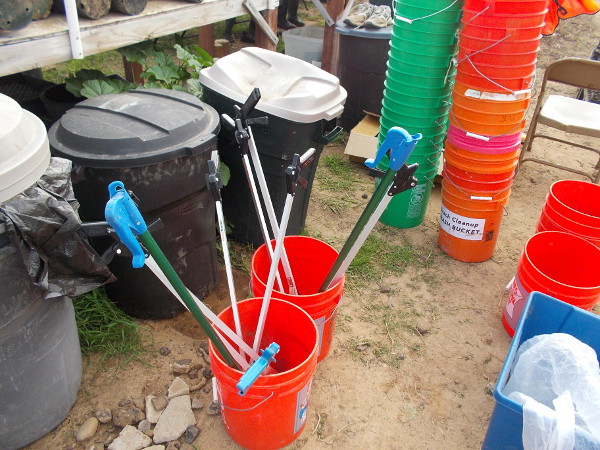
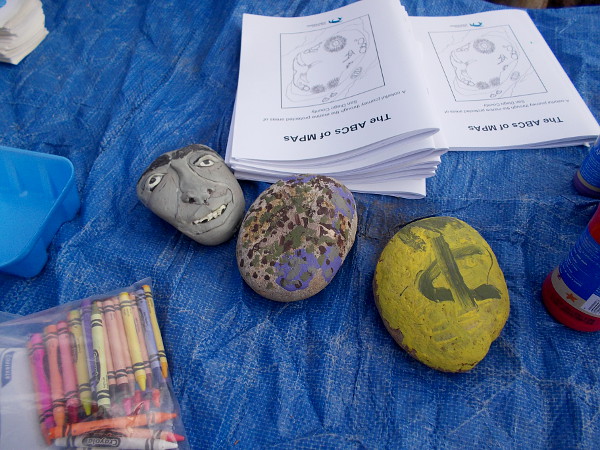
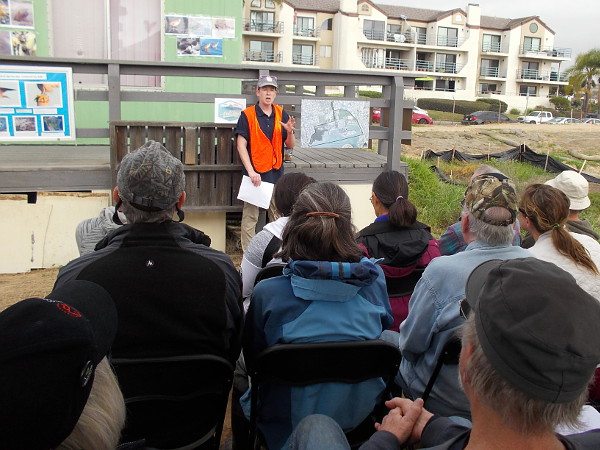
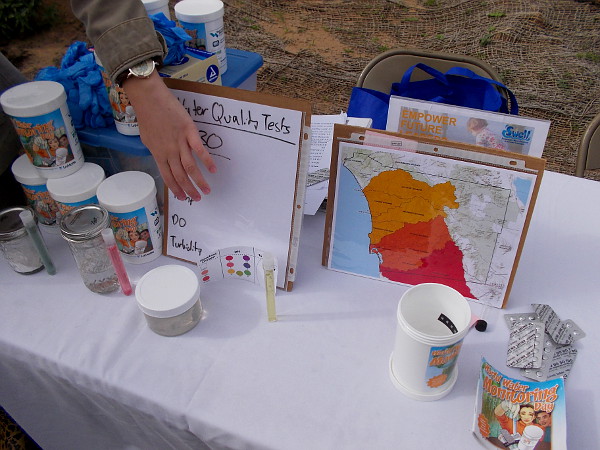
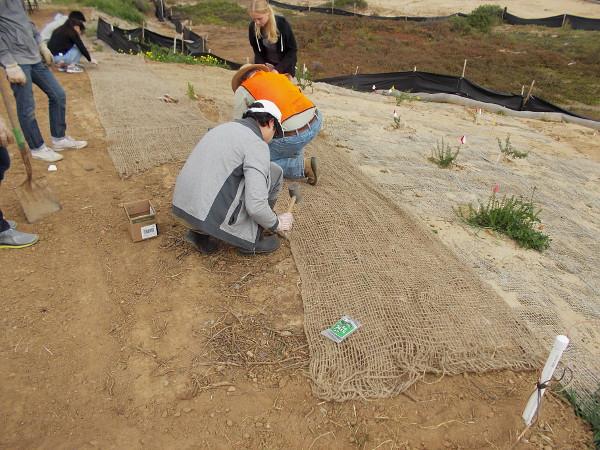
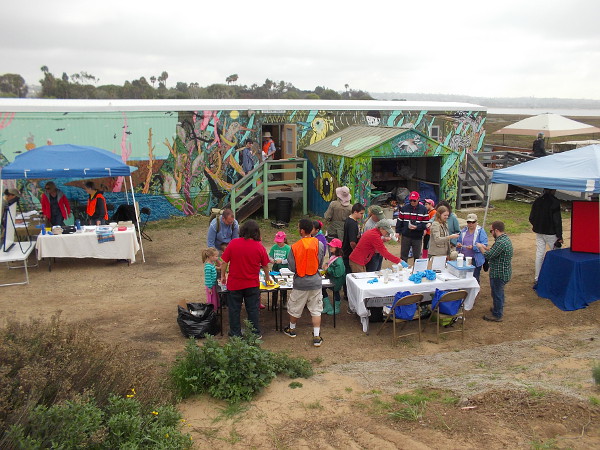
The Kendall-Frost Marsh is being restored into a healthy wetland by the San Diego Audubon Society and the UC Natural Reserve System with the help of volunteers.The slough is a prime location for birdlife. Many different birds can be spotted in this protected wildlife refuge, which is usually off-limits to the public.Photos of bird sightings on the surrounding fence.I arrived a bit early to the event, and watched from the nearby street as last-minute preparations took place.A sign welcomes visitors to Love Your Wetlands Day. Lots of activities included bird watching, a water quality testing demo, and a marsh clean-up.People sign in to the event. A few lucky attendees won raffle prizes!The San Diego Audubon Society had a table at the special outdoor event.Information at the U.S. Fish and Wildlife Service Coastal Program exhibit shows the marsh boundaries and restoration efforts.This super cool volunteer at a fun kids activity table gave me the thumbs up!A nearby area where native vegetation is being carefully restored.These plants will eventually be transplanted into the marsh.A look across the marsh southward, toward the greater part of Mission Bay, a large urban recreational park in San Diego.As the event gets underway, many energetic people arrive.Fun nature mural on side of the Kendall-Frost Reserve Trailer in Pacific Beach!Many photos around the exterior of the trailer show insects, flowers, birds and other wildlife that make the marsh their home.A row of waterproof boots awaits volunteers.Putting on some boots before heading out into the muddy, mucky marsh!Tools that are used to remove trash from the environmentally sensitive marshland.A fun art project for kids involved creatively decorating stones!Speaker describes how the ReWild project of the San Diego Audubon Society is working to restore important wetlands in the northeast corner of Mission Bay.A chart at one table shows types of pollutants found on the beaches of San Diego.Water quality tests include monitoring pH, temperature, oxygen content and turbidity.Folks are heading every which way, learning about the marsh and setting about to help restore it!Walking over to collect a water sample. The Kendall-Frost Mission Bay Marsh Reserve habitats include coastal sage scrub, south coastal salt marsh, tidal channels, salt flats and mudflats.Water from a storm drain is collected by volunteers for testing.After putting on boots and grabbing buckets, a gang of volunteers is out in the marsh seeing it up close and removing unwanted debris.Netting is laid down by more volunteers to help prevent erosion during rain. A big storm is coming tomorrow!Love Your Wetlands Day was a great opportunity for the public to help preserve and enhance the Kendall-Frost Marsh!
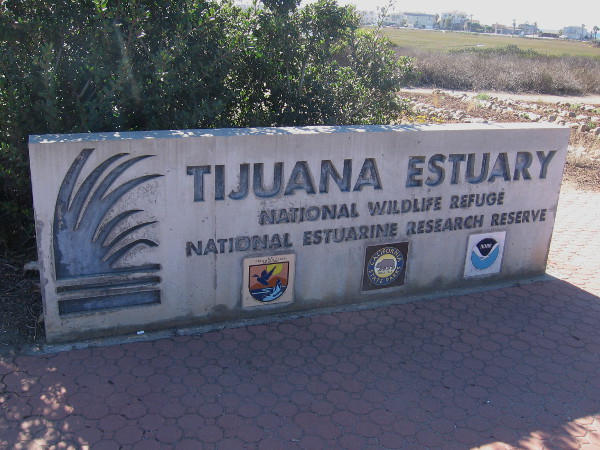
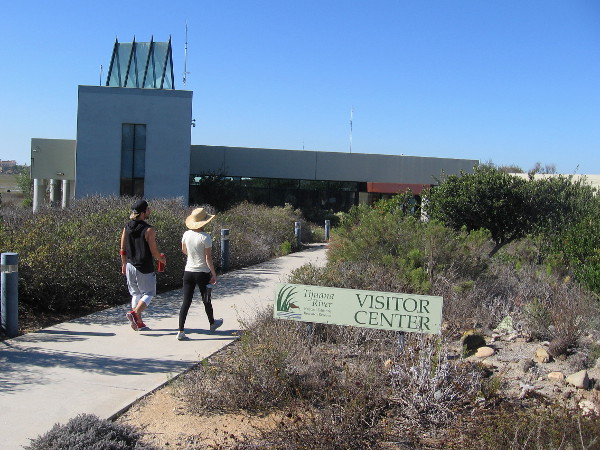
Sign near the entrance to Visitor Center of Tijuana Estuary, home of a National Wildlife Refuge and National Estuarine Research Reserve.
What place in North America officially contains the most plant and animal species? You don’t know? San Diego and the Northern Baja California region!
Yesterday I took a nature walk around and through the northern section of the Tijuana River Estuary. The large estuary, which is located at the extreme southwest corner of the continental United States, where the Tijuana River empties into the Pacific Ocean, contains abundant life which reflects San Diego’s amazing biodiversity and range of habitats.
The Tijuana Estuary is not only a place of tranquil beauty, but it’s a scientific laboratory, protective refuge, and outdoor classroom where the public can learn about our natural environment. It’s managed by several agencies, including the NOAA National Estuarine Research Reserve System, the California Department of Parks and Recreation, and the National Wildlife Refuge System under the U.S. Fish and Wildlife Service.
I absorbed so much information while walking about, reading signs, and listening to a volunteer guide during a short nature walk near the Visitor Center, that I couldn’t possibly convey it all on my blog. So I’ve selected some photos and have captioned them so you’ll get the gist of what I saw and learned. And hopefully you’ll want to visit, too!
Relatively few people partake of the scheduled weekend nature walks at the Tijuana Estuary Visitor Center. Joan, the plant expert, said that some days nobody shows up. What a shame. Because there’s so much beauty, so much to see.
I strongly encourage anyone who lives in the San Diego area to head down to Imperial Beach and take a long, leisurely walk where life thrives!
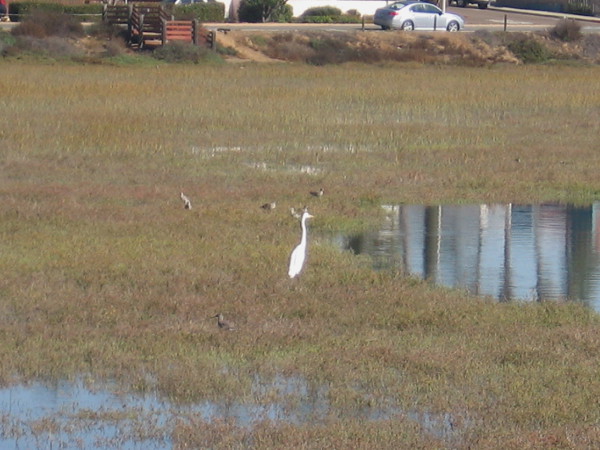
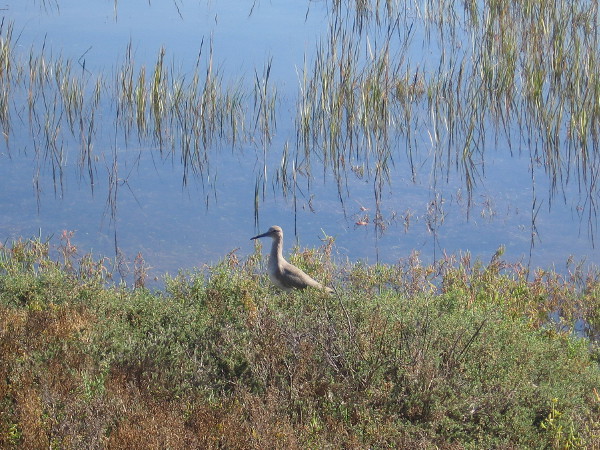
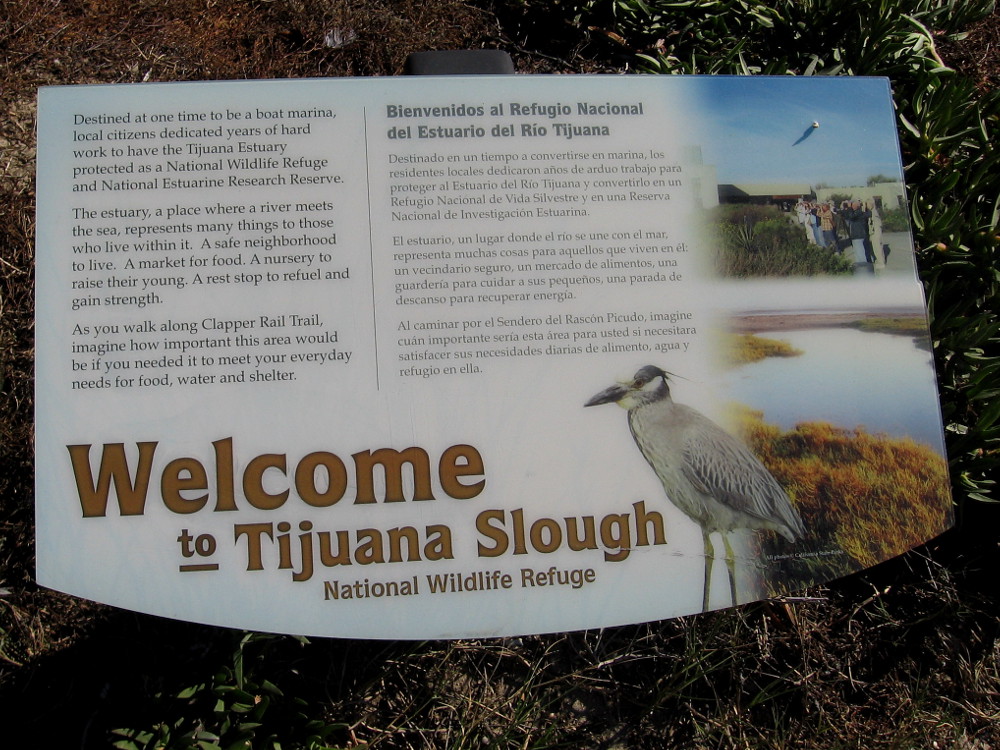
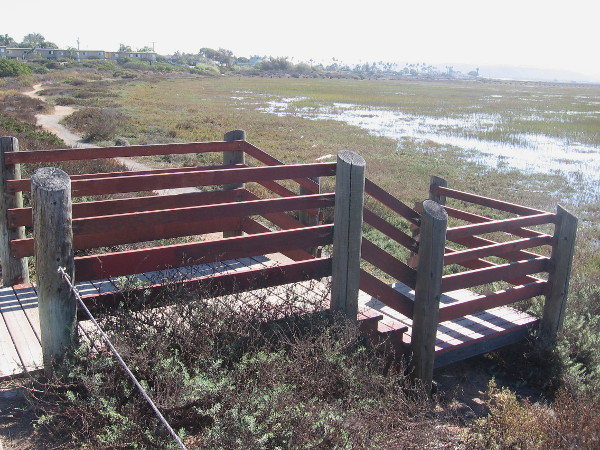
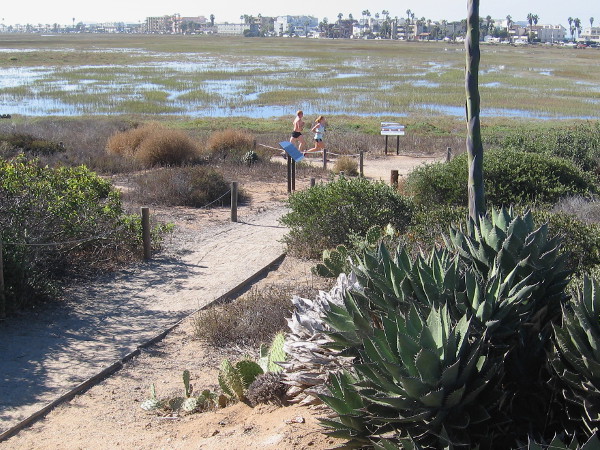
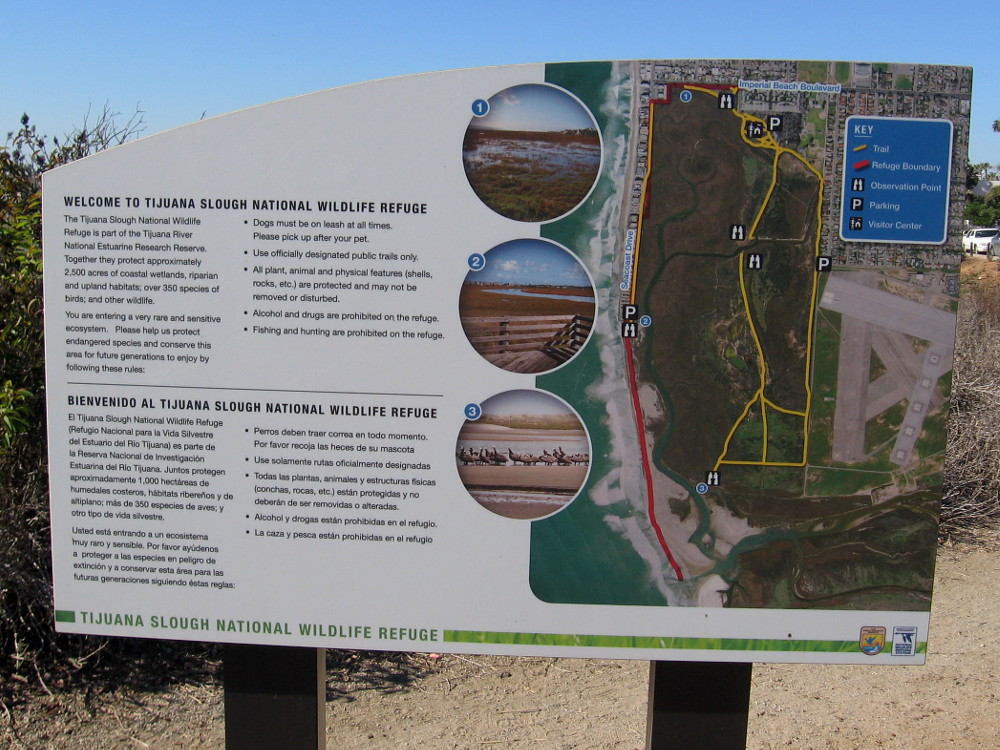
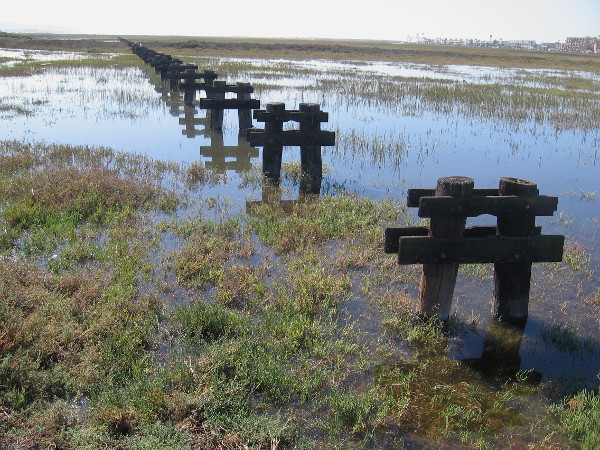
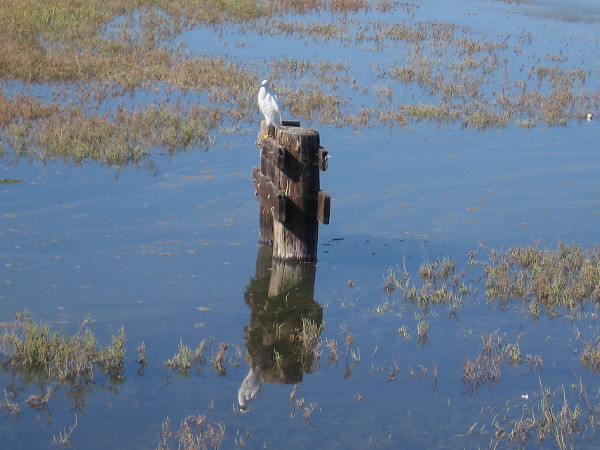
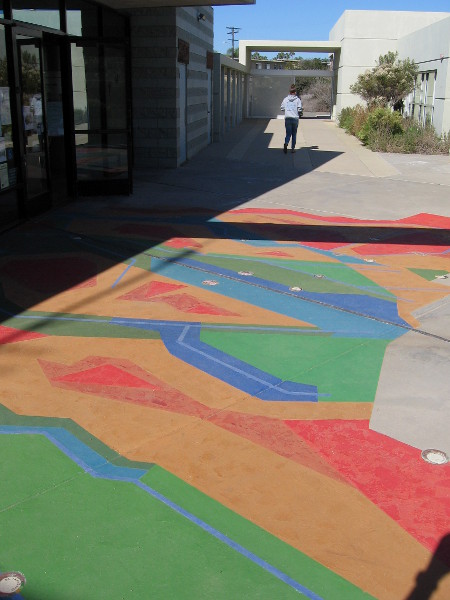
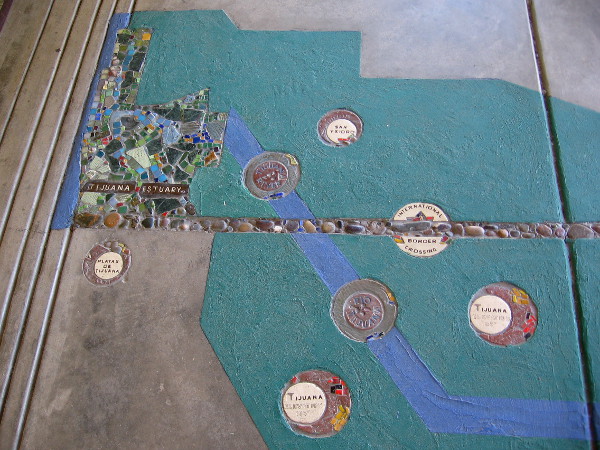
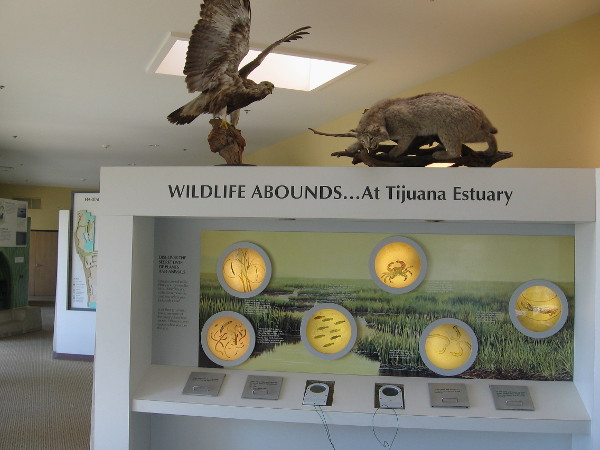
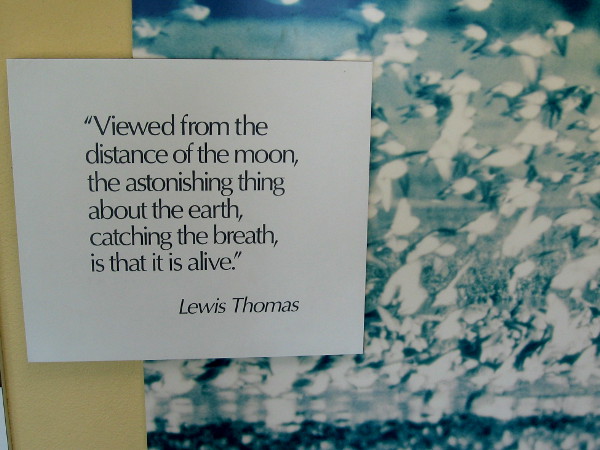
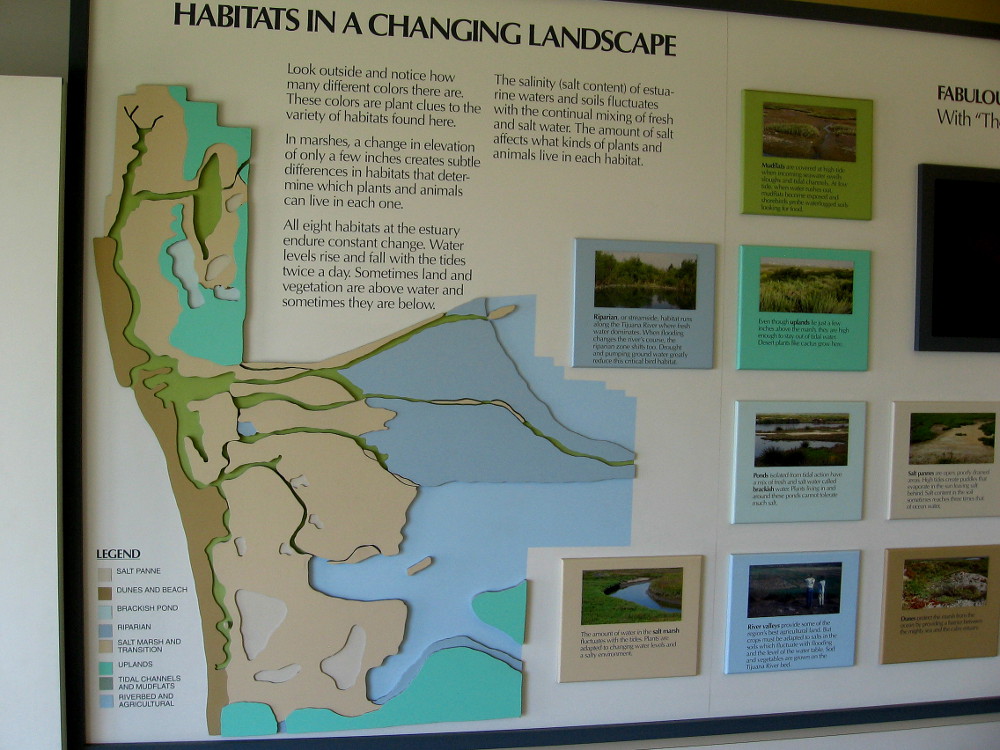
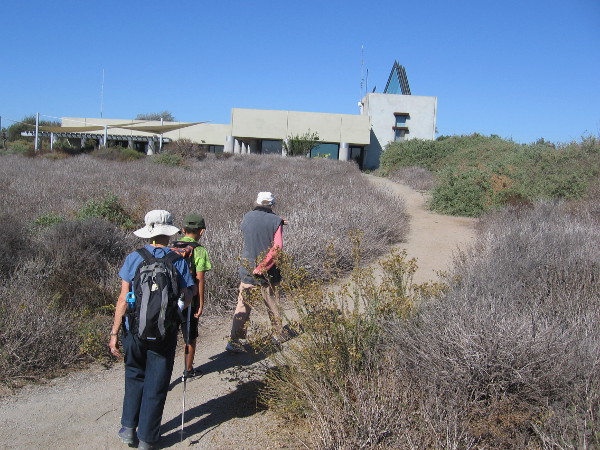
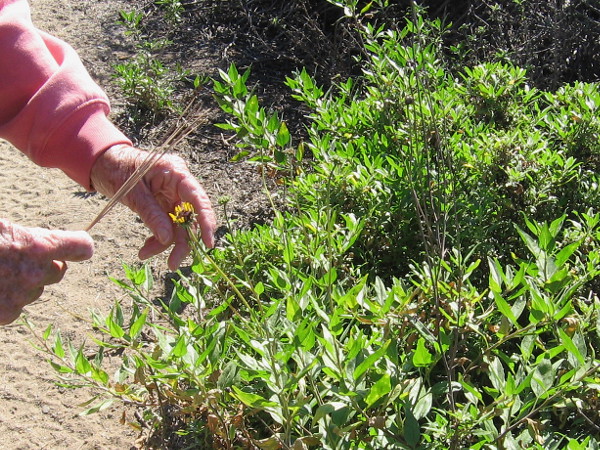
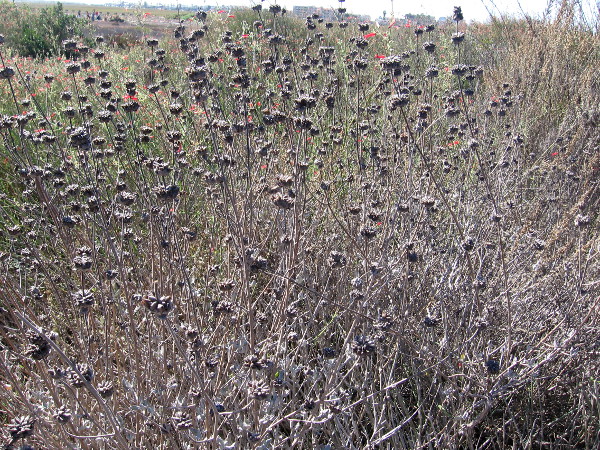
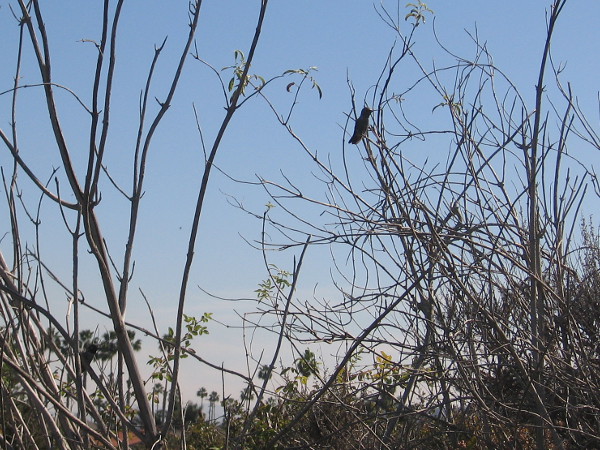
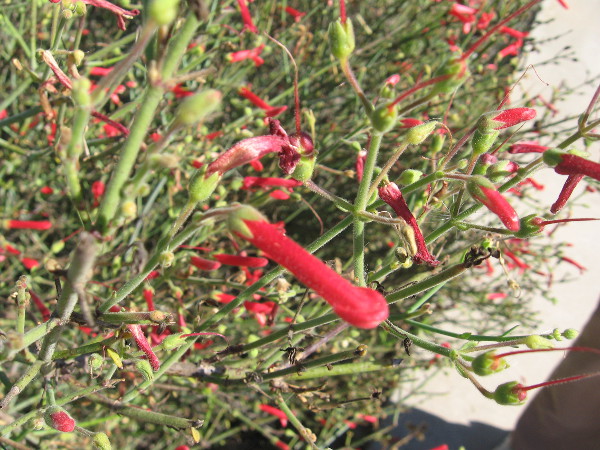
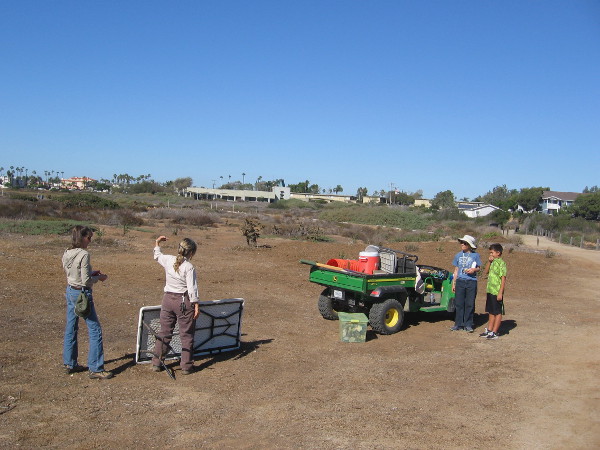
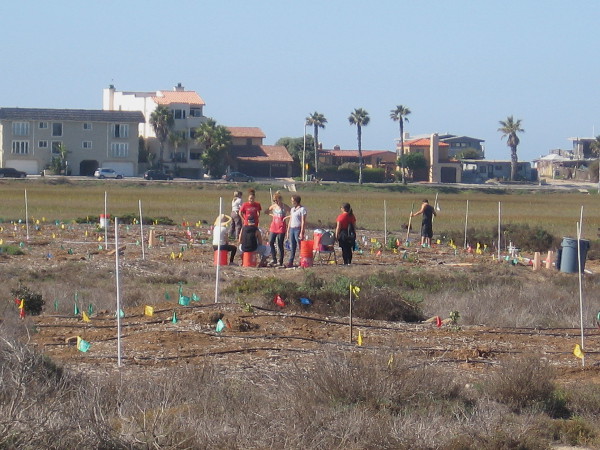
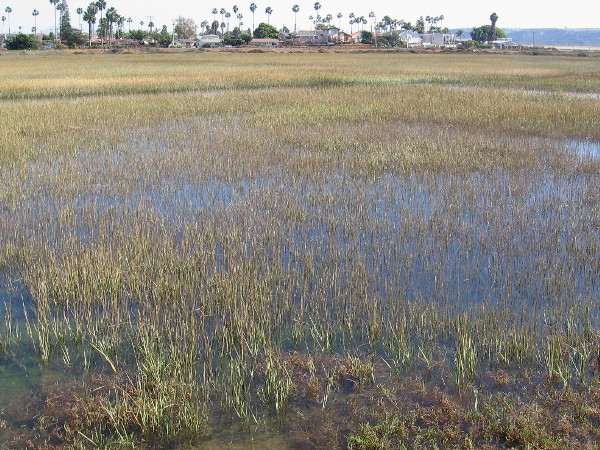
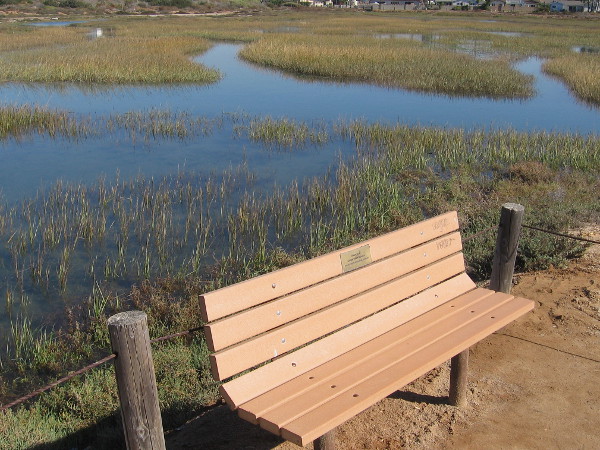
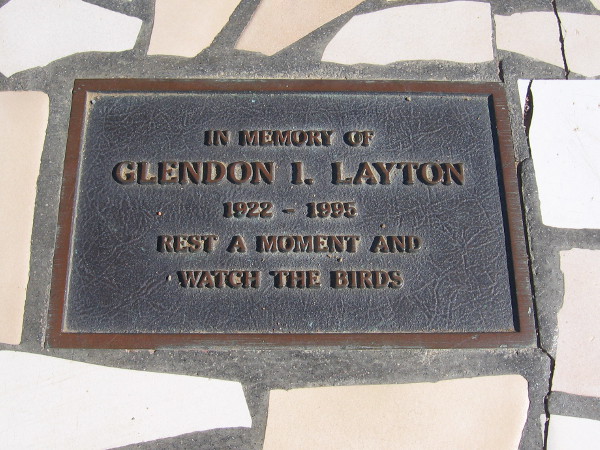
Ecoroute Bikeway and sidewalk along Seacoast Drive in Imperial Beach offers views of the north section of 2,500 acre Tijuana River Estuary.A white egret and other small birds enjoy the fertile, nutrient-rich environment created by this important coastal wetland.A shorebird equipped with a long bill, used to poke into sand and mudflats for food. Over 370 species of birds have been sighted in the wildlife reserve.Once a dump, and destined to be a boat marina, local citizens fought to have the Tijuana Estuary protected as a National Wildlife Refuge and National Estuarine Research Reserve.Steps lead down from Imperial Beach Boulevard to one of many trails in the fascinating, life-filled estuary.There are many habitats in the estuary including dune, salt panne, salt marsh, mudflat, brackish pond, riparian, coastal sage scrub, and vernal pool.Sign welcomes visitors to Tijuana Slough National Wildlife Refuge. Five endangered and two threatened species of birds are protected here in their natural habitat.I was told these old wooden pilings used to support a storm drain which ran out to the ocean.A Snowy Egret perches atop a post, perhaps watching the water for prey. Small fish, frogs, reptiles and insects are part of the food chain in a shallow river estuary.The path to the Tijuana Estuary Visitor Center passes through a garden of native plants often found along the coast of Southern California.This colorful abstract map at the Visitor Center entrance represents the 1,735 square mile watershed of the Tijuana River, reaching deep into Mexico.The edge of the map, inside the Visitor Center’s door, shows a part of San Diego and Tijuana. As it nears the Pacific Ocean, the Tijuana River crosses into the United States.One of many educational exhibits inside the cool Visitor Center. Wildlife abounds . . . at Tijuana Estuary!Viewed from the distance of the moon, the astonishing thing about the earth, catching the breath, is that it is alive.Habitats in a changing landscape. All eight habitats in the estuary endure constant change. Water levels rise and fall with the tides. Salinity of the water fluctuates.Visitors can jot notable sighting of birds on a board inside the Visitor Center. Buds and blooms are also listed.A few people out on a nature walk on a pleasant Saturday in November. The estuary is full of blooms, birds, and animal activity, even as winter approaches.Joan, a super nice park volunteer who is a plant expert (and author of a fun native plant book), shows us the yellow bloom of California bush sunflower.Even though the blue blooms of this pleasantly aromatic Cleveland Sage have dried, the seeds pods have a bluish tint.A tiny hummingbird is perched on the branch of a shrub.The Galvezia, or bush snapdragon, is common in Baja California. It has green stems, bright red tube flowers, and attracts hummingbirds.Hiking south down the North McCoy Trail in the Tijuana Estuary. Rising on the left horizon is Mexico. On the right horizon are the Coronado Islands in the Pacific Ocean.Ranger Debbie Good is super friendly. She answered a bunch of questions with a big smile. Here’s she’s putting away a table used to welcome volunteer workers.These volunteer students from SDSU are helping to plant native vegetation. Efforts to return the estuary to a natural state are ongoing. This area several decades ago was a dump.Looking across cordgrass and a beautiful wetland at the extreme southwest corner of the continental United States.A quiet bench on the North McCoy Trail invites walkers to relax and take in the sunshine and surrounding tranquility.Plaque on another bench at the south end of the trail. In memory of Glendon I. Layton. Rest a moment and watch the birds.The Tijuana River National Estuarine Research Reserve and Tijuana Slough National Wildlife Refuge is a place where amazing biodiversity and nature’s beauty thrive.
…
Follow this blog for more photos of cool stuff! Join me on Facebook or Twitter.















 Cool San Diego Sights!