Important stories from local history are preserved at the Women’s Museum of California.
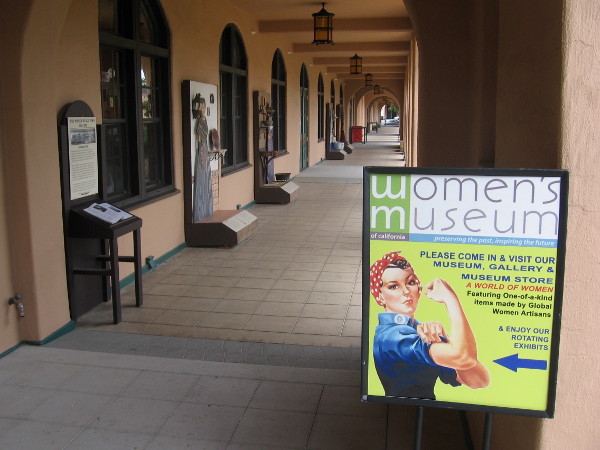
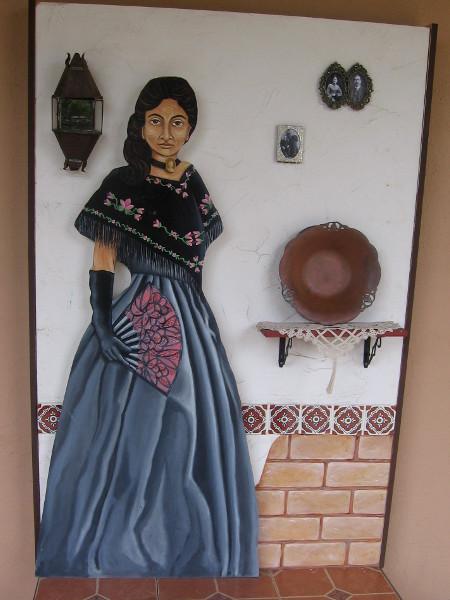
The Women’s Museum of California is one of many cultural attractions that can be enjoyed at Liberty Station in Point Loma. I took some photos of a historical exhibit just outside their front door.
This unique museum was founded by Mary Maschal, a collector of memorabilia and artifacts pertaining to women. The collection has moved to different locations and evolved over the years; today it has grown into an important museum that features art shows, live performances, lectures and other educational events. Its mission is summarized by the slogan: Preserving the past…inspiring the future.
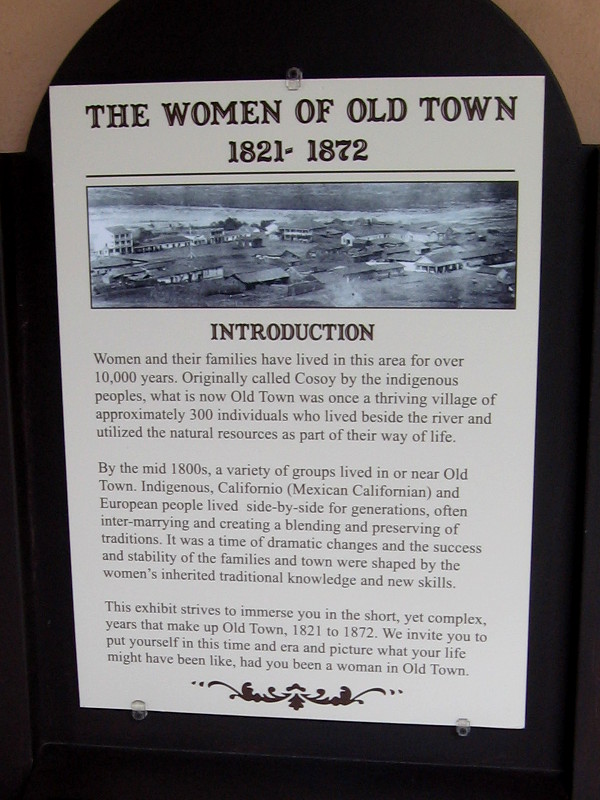
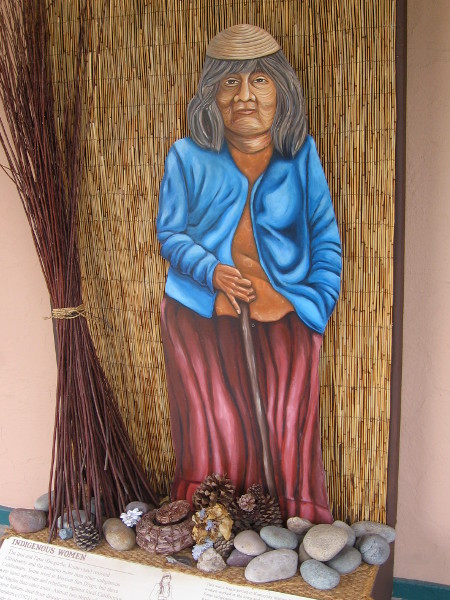
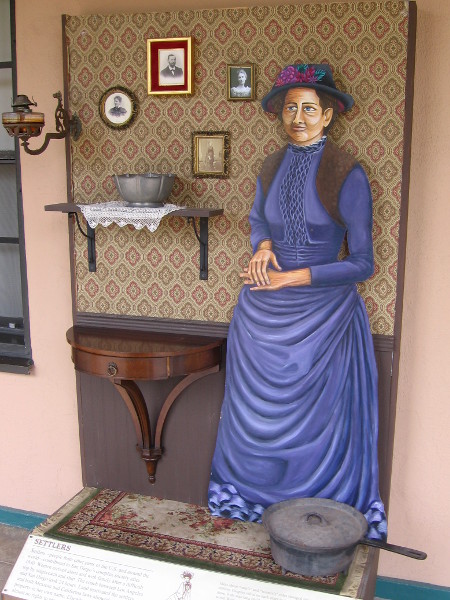
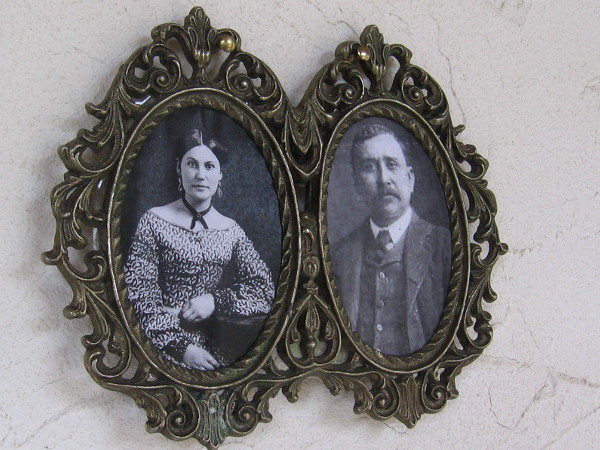
The women of Old Town, 1821-1872. Women and their families have lived in this area, called Cosoy by indigenous people, for over 10,000 years. This exhibit focuses on a short period.The historical experiences and accomplishments of local women are preserved at this unique San Diego museum.The Ipai and Tipai (Diegueño, Kumeyaay) resisted Christianity and the missions more than other indigenous Californians. Moved off their land, the women worked in the town and ranchos.The few women in Old Town had more opportunities to earn money than in the Eastern U.S. They did traditional work: laundry, baking, cooking, sewing, tending to children and livestock.Settlers contributed to San Diego’s complex society after 1830. Women arrived alone and with family after a difficult trip by stagecoach and ship.Californios were a diverse group whose culture created el pueblo San Diego. They were descendants of mixed Spanish and indigenous peoples, often given land grants by Mexico.Old photographs in an artifact help modern San Diegans remember their rugged, fascinating past.
…
To enjoy future posts, you can “like” Cool San Diego Sights on Facebook or follow me on Twitter.
Sculpture and cannon at entrance to the Mormon Battalion Historic Site.
Just east of Old Town San Diego State Historic Park one can find the Mormon Battalion Historic Site, an attraction created by The Church of Jesus Christ of Latter-day Saints. The location itself seems a bit arbitrary, as the Mormon Battalion manned Fort Stockton up on the hill by the old, abandoned Presidio when they arrived in San Diego in 1847.
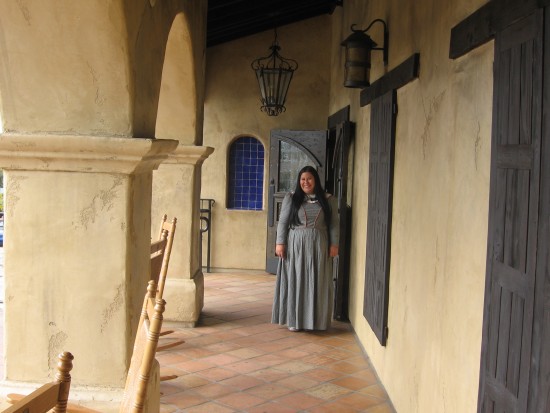
Young lady missionaries guide visitors through a series of rooms and outdoor areas which are designed to tell a sympathetic version of the Mormon Battalion’s difficult 2000 mile march from Iowa. The ulterior motive is to promote their beliefs, and there are frequent religious references, but there is no hard sell and the tour guides are warm and friendly. One can absorb a little bit of history while experiencing a good-humored, Disney-like presentation.
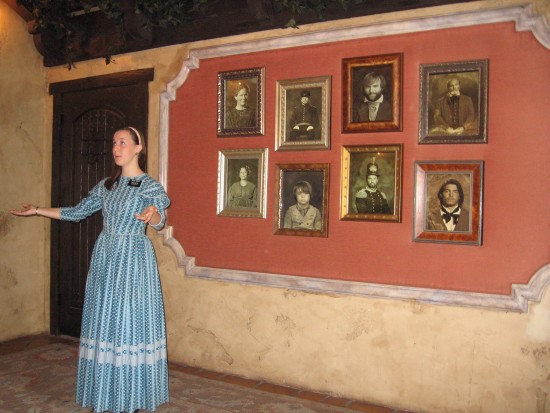
A friendly missionary lady comes outside to welcome a new visitor.Girl in a pioneer dress begins the tour with talking, moving portraits.
Much of the tour is spent watching professionally produced dramatic videos. Several real historical artifacts can be found near the tour’s end.
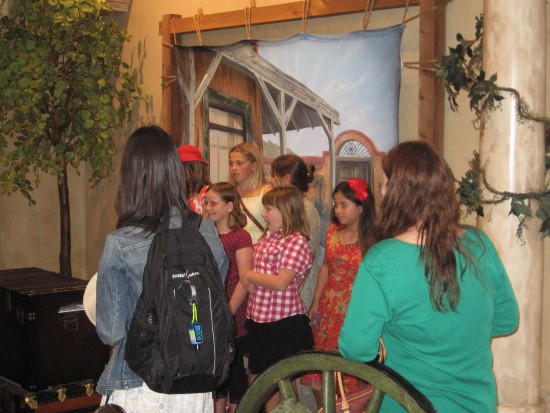
Taking pictures of visitors with a large antique camera.Girls pose for a picture in front of a western scene.
A lot of families and kids were smiling and enjoying the tour. Many appeared to be members of the LDS Church.
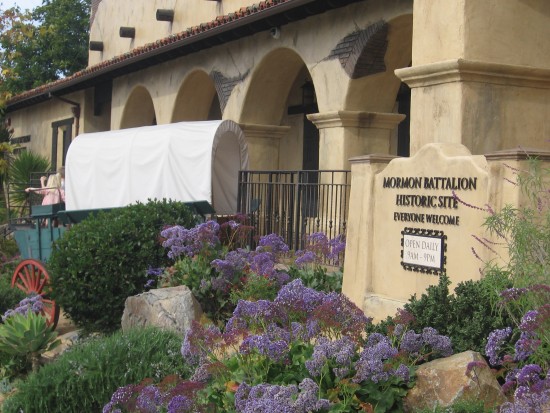
Young visitors near end of the tour pan for glittery iron pyrite.Covered wagon in front of the Mormon Battalion Historic Site.
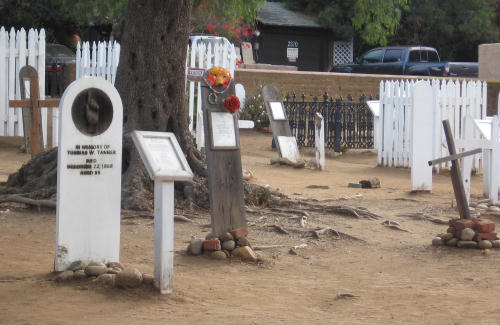
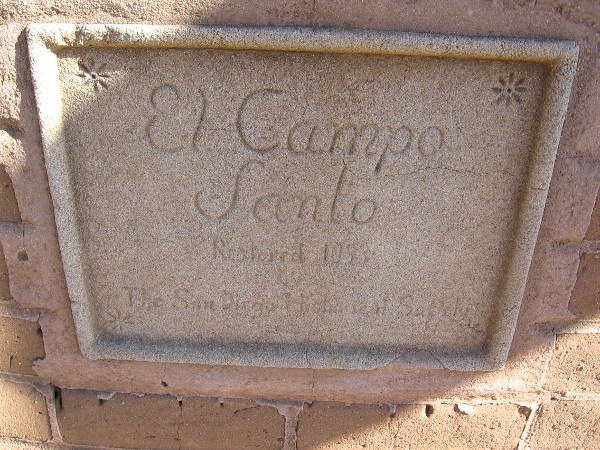
El Campo Santo (which means “The Holy Field” in Spanish) is a small Roman Catholic graveyard in Old Town, nestled between buildings several blocks south of the State Park. It contains a variety of weathered tombstones and crosses marking the final resting places of many early San Diego residents. It is designated California Historical Landmark #68.
Established in 1849, the cemetery reached full capacity in 1880. Today it is a popular attraction for passing tourists.
Walk about carefully and read the old inscriptions, and you’ll discover pioneer families, soldiers, politicians, small children, Mexicans, Native Americans, unknown people, rich and poor, educated and illiterate . . . buried side by side.
Nearly five hundred people were buried at El Campo Santo. One of the graves belongs to notorious Santiago “Yankee Jim” Robinson. He stole San Diego’s only row boat, and was hung at the site of the nearby Whaley House.
Supposedly all sorts of ghosts, vapors, hovering torsos, spectral figures and weird apparitions have been seen at this cemetery. And supposedly they set off car alarms along San Diego Avenue.
One ghost is said to be a prostitute who was denied burial. Another is said to be Antonio Garra, a notable Native American. As chief of the Cupenos tribe, Garra led an uprising in 1851 against the people of San Diego due to unfair taxation. When finally captured, he was made to stand beside an open grave and executed by firing squad.
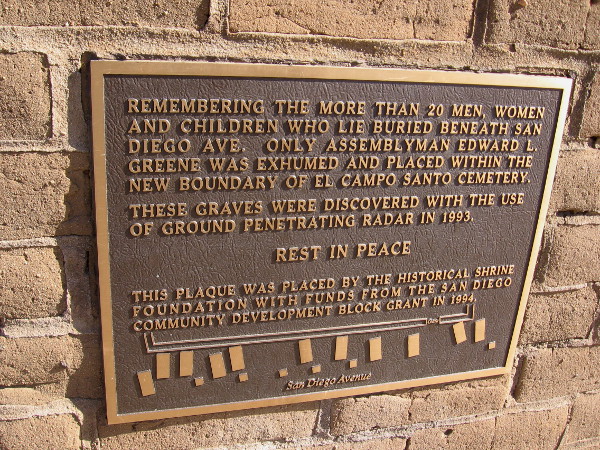
If such ghosts do exist, it seems they have one definite reason to be upset! In 1889 a horse-drawn streetcar line was built right through the hallowed cemetery. In 1942 the tracks were paved over with asphalt, creating the busy roadway. Today, according to a sign by the sidewalk, there are numerous graves directly under the street!
People read plaques and headstones in Old Town cemetery.Do not disturb the peace and tranquility of those who have reposed from earthly cares.More than 20 men, women and children lie buried beneath San Diego Avenue.Grave site marker embedded in San Diego Avenue asphalt.The Holy Field contains many of San Diego’s original residents.Sign in wall that encloses El Campo Santo.









 Cool San Diego Sights!